


Featured Application
The BPMN-based process formalization approach developed in this study can support maintenance-intensive organizations by improving corrective maintenance coordination, CMMS utilization, workflow traceability, and knowledge transfer between internal departments and external service providers, particularly in electricity distribution environments.
Abstract
Maintenance management increasingly depends on effective information flow and coordination between internal teams and external service providers. This study investigates the use of Business Process Model and Notation (BPMN) to support the formalization of Computerized Maintenance Management System (CMMS) workflows and improve transparency, decision-making, and interorganizational coordination. A single case study was conducted in the maintenance department of an electricity distribution company characterized by tacit knowledge, informal communication practices, and limited process formalization. Existing corrective maintenance workflows were analyzed and modeled using BPMN to identify inefficiencies, decision points, and opportunities for improvement. The proposed BPMN models were aligned with CMMS operational states associated with anomaly management and work-order execution processes and supported by a procedural manual. Results obtained during a three-month observation period suggest reductions in training time, email communications, and dependence on individual decision-makers, together with increased use of CMMS workflow functionalities and improved process traceability. These findings provide preliminary evidence, derived from operational indicators within a single case study, that BPMN-supported process formalization may contribute to workflow standardization, operational clarity, and knowledge management in maintenance-intensive environments. Given the single-case design and limited observation period, the results should be interpreted as context-specific and not directly generalizable to the broader energy sector.
1. Introduction
Maintenance management has become increasingly relevant in industrial organizations due to the growing complexity of operational systems, the intensification of asset utilization, and the increasing pressure to ensure reliability, availability, and cost efficiency [1,2,3,4,5]. In highly competitive and asset-intensive sectors, maintenance activities play a central role in minimizing operational disruptions, reducing lifecycle costs, and ensuring the long-term sustainability of critical infrastructures [1,5,6,7,8,9]. As maintenance costs continue to increase across industrial environments, organizations are progressively required to adopt more efficient management practices and information systems capable of supporting decision-making and operational coordination [3,6,10,11,12].
Despite the technological evolution of maintenance information systems, the literature consistently highlights persistent limitations associated with information flow management in maintenance environments [2,3,6,13]. Communication failures, fragmented workflows, insufficiently documented procedures, and poorly supported decision-making processes continue to negatively affect organizational performance [6,12,13,14]. In practice, these limitations are frequently associated with a strong dependence on informal communication mechanisms, unstructured information-sharing channels, and the concentration of operational knowledge and decision-making authority in a limited number of experienced employees [3,6,12,13]. Such conditions create significant organizational vulnerabilities, including reduced transparency, inefficient dissemination of critical information, loss of organizational knowledge caused by staff turnover, and lower resilience of maintenance systems when facing operational variability or unexpected events [13,14,15,16,17].
These challenges become particularly significant in the electricity distribution sector, where maintenance operations involve a high degree of interdependence between internal departments and external service providers [9,17,18,19]. The coexistence of multiple organizational actors, shared information systems, and parallel communication flows often results in fragmented coordination, delays in decision-making, and limited visibility regarding the actual status of field interventions [2,13,18,20]. In highly regulated environments, where service continuity, operational safety, and compliance with technical requirements are essential, organizations increasingly require structured approaches capable of improving process standardization, information flow transparency, and coordination among stakeholders [9,15,18,21,22].
Within this context, Business Process Model and Notation (BPMN) has emerged as one of the most widely adopted graphical standards for representing and modeling organizational processes [20,23,24,25,26,27]. BPMN facilitates the visualization, communication, and analysis of workflows by providing a standardized representation of activities, responsibilities, decision points, and information exchanges [20,21,23,25,28]. Nevertheless, BPMN should not be interpreted as a process improvement methodology by itself. Rather, it acts as a conceptual and visual mechanism that enables organizations to formalize processes, identify inefficiencies, externalize operational knowledge, and support broader process management and continuous improvement initiatives [13,22,23,27,28].
Previous studies have demonstrated the applicability of BPMN across different industrial and organizational contexts. Jasiulewicz-Kaczmarek et al. [29] highlighted its contribution to process visualization and operational clarity in the medical device industry. Salvadorinho and Teixeira [13] emphasized its role in knowledge retention and organizational learning within Industry 4.0 (I4.0) environments, while Muehlen and Ho [28] demonstrated its positive effects on communication and process redesign in complex industrial settings. Other studies have also explored the integration of BPMN with digital technologies, maintenance strategies, and operational workflows, reinforcing its relevance as a support mechanism for organizational process management [1,5,7,14,30,31].
However, despite these contributions, empirical research addressing the operational integration between BPMN-based process modeling and Computerized Maintenance Management Systems (CMMSs) remains limited, particularly in maintenance-intensive environments [2,3,6,32]. Existing studies predominantly focus on process representation or digital transformation initiatives, while comparatively little attention has been given to understanding how BPMN can support decision-making, improve information flow, and strengthen coordination between internal maintenance departments and external service providers through its alignment with CMMS operational states and workflows [2,10,13,18,21]. This gap becomes especially relevant in the electricity distribution sector, where effective coordination between the Maintenance Management Office (MMO) and subcontracted entities is essential to ensure service reliability, operational safety, and continuity of supply [9,15,17,18,19].
Effective communication represents a critical element in maintenance operations, particularly during incident management, task coordination, and interactions with external suppliers [13,17]. In such environments, maintenance information systems play a fundamental role in supporting the storage, processing, and use of operational data for decision-making purposes [3,10,11,12]. Nevertheless, the absence of standardized procedures and structured process documentation continues to limit the effective utilization of these systems, reinforcing dependence on tacit knowledge and individual experience [3,6,12,13,14]. Addressing these limitations requires the integration of information systems with process modeling approaches capable of improving workflow transparency, supporting process standardization, and strengthening organizational decision-making capabilities [2,7,13,29,33,34]. Based on this context, the present study addresses the following research questions (RQs):
RQ1: How can process-oriented approaches improve information flow and decision-making in maintenance environments?
RQ2: What organizational limitations affect information flow and coordination between maintenance stakeholders?
RQ3: How can BPMN integrated with CMMS workflows contribute to improving operational coordination and process formalization in maintenance management?
To address these questions, the study draws upon relevant literature and an in-depth case study conducted in a company operating in the electricity distribution sector. The research focuses on the application of BPMN-based process modeling in a single organizational context integrated with existing maintenance management systems to analyze its contribution to decision-making support, organizational coordination, employee training, and information flow management between the MMO and external service providers.
This study contributes to the literature in three main ways. First, it combines insights from the literature with empirical evidence from an industrial case study, bridging theoretical perspectives and operational practice in maintenance management. Second, it proposes a practical approach for aligning BPMN-based process models with CMMS operational workflows and decision points, contributing to improved coordination and information management in maintenance environments. Third, it provides empirical evidence from a single case study in the electricity distribution sector, offering insights into how process formalization may support operational efficiency, communication, knowledge transfer, and organizational resilience in maintenance-intensive contexts.
The contribution of this study does not lie in BPMN itself, but in demonstrating how BPMN-based process formalization aligned with CMMS operational states can support information governance, interorganizational coordination, workflow standardization, and decision-making consistency in maintenance-intensive environments.
The remainder of this paper is structured as follows. Section 2 presents the literature background and identifies the research gap, addressing maintenance information systems and CMMS, BPMN and process modeling in maintenance, and information flow challenges in maintenance environments. Section 3 describes the research methodology, including the research design, theoretical positioning, case study context, data collection procedures, process modeling and intervention approach, and validation methods. Section 4 presents the case study context and the current-state analysis, focusing on the organizational context, the existing maintenance management process, and the identified operational limitations. Section 5 introduces the BPMN-based process redesign and CMMS integration strategy, including operational states, BPMN process models and subprocesses, and the development of a procedural manual for knowledge transfer. Section 6 discusses the results and implications of the study, examining the operational and organizational impacts of BPMN implementation, process formalization, decision-making and interorganizational coordination, as well as implementation challenges, transferability, and research implications. Finally, Section 7 presents the conclusions of the study.
2. Literature Background and Research Gap
This section presents the theoretical background supporting the study. First, it discusses maintenance information systems, with particular emphasis on CMMS. Then, it examines BPMN and process modeling in maintenance contexts. Finally, it addresses information flow challenges in maintenance environments and synthesizes the main research gaps that justify the proposed study.
2.1. Maintenance Information Systems and CMMSs
Maintenance information systems play an important role in identifying, coordinating, and integrating internal and external information flows [2,5,11,12,29]. They support the collection, storage, processing, and use of data for planning, control, performance monitoring, and decision-making. Among these systems, CMMSs are widely used platforms based on centralized databases that facilitate the planning, control, and monitoring of maintenance activities across technical, financial, and organizational dimensions [11,12,35,36,37].
CMMSs enable the coordination of services, equipment, materials, and human resources by connecting different operational areas, including technical departments, administrative units, and warehouses. This integration allows organizations to obtain a broader view of maintenance operations, improving control over work orders (WOs), asset management, intervention histories, resource allocation, and maintenance-related costs [6,11,12,29].
However, the effectiveness of a CMMS depends strongly on the existence of standardized processes and structured communication practices. When these elements are absent, CMMSs tend to be used mainly as information repositories, without fully exploiting their potential for analysis, coordination, and decision support [15,17,25,28]. In such situations, the benefits of digital maintenance systems may be limited by fragmented workflows, inconsistent information entry, and insufficient alignment between system functionalities and actual operational practices.
Additional limitations are associated with the continued reliance on informal communication channels, particularly email, and with the absence of formalized procedures [2,6,12,14,31]. These limitations reduce transparency, make operational traceability more difficult, and weaken the overall efficiency of maintenance processes [6,14,31]. They are especially relevant in electricity distribution contexts, where coordination between internal maintenance teams and external service providers directly affects service continuity, safety, and operational responsiveness [7,9,14,17,18,19].
In this context, the literature suggests that the integration between CMMSs and process modeling tools, such as BPMN, remains insufficiently explored [2,5,6,14,29]. This limitation affects the ability of organizations to structure, visualize, and optimize maintenance-related information flows. Therefore, approaches combining digital maintenance systems with process formalization tools are needed to improve the use of CMMS functionalities and strengthen decision-making in maintenance management [2,6,14,20,27,35].
2.2. BPMN and Process Modeling in Maintenance
Process modeling is a relevant mechanism for improving operational efficiency and communication among maintenance stakeholders [22,23,25,28,33]. By representing activities, responsibilities, decisions, and information flows in a structured way, process modeling supports the analysis and improvement of organizational processes [14,22,23,29,33].
BPMN is a standardized graphical notation widely used to represent organizational processes through elements such as events, tasks, gateways, sequence flows, message flows, and lanes [20,22,23,24,30,31,38]. The main advantage of BPMN lies in its ability to translate complex processes into visual representations that can be understood by different stakeholders, regardless of their technical background [20,23,25,28,39]. The BPMN elements used in this study are summarized in Table A1.
Although BPMN is frequently associated with process improvement initiatives, it should not be considered a process improvement methodology in itself [13,20,25]. Rather, BPMN is a process representation tool that enables organizations to make operational practices explicit, identify inefficiencies, clarify responsibilities, and support broader improvement initiatives [7,13,14,20,23,24]. In this sense, BPMN differs from Business Process Management (BPM), which has a broader managerial and strategic orientation, and from process mining, which depends on event logs to discover and analyze actual process behavior [13,20,34].
In maintenance environments characterized by heterogeneous teams, limited data maturity, informal practices, and strong dependence on tacit knowledge, BPMN is particularly useful [2,3,7,13]. It enables the formalization of operational routines, supports the standardization of procedures, and facilitates communication between internal and external stakeholders [7,14,21,23,28]. This is especially relevant when maintenance activities involve multiple actors and decision points, as in incident management, WO validation, supplier coordination, and field intervention monitoring [2,14,18,21].
Several studies have associated BPMN with improved communication, greater clarity in task execution, and better alignment between organizational actors and information systems [11,13,26,28,29,31,36]. In energy-related contexts, BPMN has been applied to model complex processes such as incident management, operational coordination, and maintenance planning, contributing to reduced redundancy and more efficient resource allocation [9,14,18,19,21]. These characteristics make BPMN a promising tool for supporting the alignment between maintenance workflows and CMMS functionalities [5,7,13,29,36].
2.3. Information Flow Challenges in Maintenance Environments
Despite the increasing adoption of information systems, maintenance organizations continue to face significant challenges related to information flow management. These challenges are not only technological, but also organizational and behavioral [2,5,10,13].
One of the main challenges identified in the literature is the absence or undervaluation of information management roles. When responsibilities for organizing, validating, and disseminating information are not clearly defined, asymmetries in information flow may emerge between departments and between organizations. These asymmetries can reduce communication quality, increase the risk of information loss, and negatively affect decision-making [6,10,34,40,41,42,43].
Another relevant challenge concerns interdisciplinary collaboration, both internally and externally. Maintenance processes often involve actors with different objectives, technical languages, responsibilities, and operational priorities [14,17,28,31]. This diversity can hinder the implementation of structured solutions and limit the effective adoption of tools such as BPMN, flowcharts, Building information modeling (BIM), or digital workflow systems [8,14,24,28,44,45,46].
Resistance to change is also a recurrent barrier, particularly in organizations where knowledge is predominantly tacit and based on individual experience [10,12,13]. In such contexts, the formalization of processes may be perceived as a restriction on professional autonomy, making adoption more difficult. This situation can be intensified when employees are accustomed to informal procedures and when the value of process documentation is not clearly communicated [6,10,13,28,42].
The literature also highlights the lack of systematic data collection and analysis practices as an important limitation [3,14,43]. Inconsistent terminology, non-standardized records, and insufficient awareness of the purpose of collected data can hinder information integration and reduce the effective use of maintenance management systems [2,3,6,14,47]. These limitations may lead to operational inefficiencies, duplicated efforts, decision-making delays, and reduced responsiveness to incidents [3,13,14,36,43].
Therefore, improving information flow in maintenance requires more than the implementation of digital tools [2,5,13]. It requires structured models that clarify responsibilities, standardize communication, organize information exchange, and support coordination among stakeholders [2,5,13,14,43]. This reinforces the relevance of integrating process modeling approaches with maintenance information systems [2,5,6,13,14].
2.4. Literature Synthesis and Research Gap
The literature indicates [4,21,41,48,49,50,51] that process-oriented tools and digital maintenance systems have been increasingly adopted to improve information flow, operational coordination, and decision-making in industrial environments. BPMN, flowcharts, BPM, BIM, simulation, workflow management systems, and data-driven approaches have been applied across sectors such as energy, manufacturing, infrastructure management, and industrial services [17,18,39,52,53]. A comparative synthesis of representative studies is provided in Table A2. To provide a clearer synthesis of the reviewed literature, the studies were grouped according to five dominant research streams: (i) BPMN and workflow/process formalization and standardization, (ii) BPMN combined with simulation and decision-support tools, (iii) BPMN and digital transformation technologies, (iv) BPM, BIM, Enterprise Resource Planning (ERP), and Lean-based maintenance/process improvement approaches, and (v) CMMS and maintenance information flow studies. This thematic organization enables a more explicit comparison of application contexts, methodological approaches, contributions, and limitations relative to the present study.
Existing studies show that process-oriented tools contribute to improving information visibility, workflow standardization, communication, and operational coordination [33,43,46,54,55]. BPMN-based approaches are particularly relevant in contexts where organizations need to represent complex activities, clarify responsibilities, and support interactions among multiple stakeholders [32,34,44]. Similarly, digital systems such as CMMS and ERP platforms provide the technological infrastructure required for data storage, process monitoring, and operational control [6,47,56].
However, the literature also reveals important limitations. Many studies focus primarily on conceptual models, isolated process representations, or digital transformation initiatives without deeply examining how process models can be operationally aligned with maintenance information systems [30,38,57]. In particular, empirical evidence regarding the integration of BPMN-based process formalization with CMMS operational workflows remains limited, especially in maintenance-intensive environments involving both internal departments and external service providers [7,14,32,38,48,51].
This gap is particularly relevant in electricity distribution contexts, where fragmented communication, reliance on email, tacit knowledge, and unclear responsibilities may compromise operational coordination and reduce the effective use of maintenance information systems [17,18,21].
To improve readability, a synthesis of the reviewed literature is provided in Table 1. This table complements the detailed classification presented in Table A2 (Appendix A) by offering a high-level overview of the main research streams and their key limitations.
Table 1.
Compact synthesis of BPMN–CMMS literature streams and key limitations.
Based on the literature synthesis, Figure 1 presents a conceptual BPMN–CMMS integration framework for maintenance information flow management. The framework summarizes the main organizational challenges identified in maintenance environments, the role of BPMN-based process formalization, the alignment with CMMS operational workflows, and the organizational outcomes discussed in the literature regarding BPMN–CMMS integration.
Figure 1.
Conceptual BPMN–CMMS integration framework for maintenance information flow management.
The framework does not represent a validated theoretical model, but rather a conceptual synthesis intended to support the analytical positioning of the present study and to illustrate the relationships identified in the literature between maintenance challenges, process formalization, BPMN–CMMS integration, and organizational outcomes.
The framework follows a sequential logic linking organizational challenges, process formalization, BPMN–CMMS alignment, and operational outcomes. The first stage represents common maintenance management challenges identified in the literature, including dependence on tacit knowledge, fragmented workflows, informal communication practices, CMMS underutilization, and limited operational coordination. These challenges reduce process visibility, hinder information accessibility, and increase dependence on individual expertise.
In response, the second stage highlights BPMN-based process formalization as a mechanism for workflow standardization, responsibility clarification, structured information flow, and knowledge externalization. By making previously informal procedures explicit, BPMN supports the development of shared process representations and reduces ambiguity in maintenance execution.
The third stage represents the alignment between BPMN process models and CMMS operational workflows. Through the association of BPMN activities, decision points, and stakeholder responsibilities with CMMS operational states, organizations can improve workflow traceability, increase process visibility, and promote more consistent use of maintenance information systems. In this context, BPMN functions as a procedural and governance mechanism rather than as an automated software integration layer.
Finally, the framework suggests that the combined effect of process formalization and BPMN–CMMS alignment may contribute to improved decision-making, stronger interorganizational coordination, reduced dependence on informal communication channels, enhanced knowledge transfer, and greater process traceability. These relationships are presented as a conceptual synthesis derived from the literature and provide the analytical foundation for the empirical investigation conducted in this study.
Existing studies predominantly focus on process modeling, simulation, digital transformation initiatives, or maintenance information systems separately. Few empirical studies explicitly examine the operational alignment between BPMN-based process formalization and CMMS workflow states in maintenance-intensive environments involving both internal maintenance departments and external service providers to support information flow, decision-making, and interorganizational coordination. This limitation defines the specific research gap addressed by the present study.
Accordingly, the present study analyzes the integration of BPMN-based process modeling with CMMS operational workflows in a real electricity distribution company. Specifically, it examines how this integration supports information flow, decision-making, knowledge transfer, and coordination between the MMO and an external service provider [4,49,51].
3. Materials and Methods
This section presents the methodological approach adopted in the study, including the research design, theoretical positioning, case study context, data collection procedures, process modeling strategy, and validation approach used to assess the proposed solution.
3.1. Research Design
This study adopts a structured and sequential methodological approach aimed at identifying, analyzing, and implementing solutions to improve information flow management in maintenance environments. The methodological design was developed to consistently articulate a theoretical component, supported by a structured literature analysis, with an empirical component based on an applied case study, thereby ensuring both scientific rigor and practical relevance [58,59].
From an epistemological perspective, the study follows an action research approach, since the researcher assumes an active role in the diagnosis, modeling, and improvement of organizational processes in close collaboration with the professionals involved [60]. This approach is particularly suitable for the context under analysis, characterized by poorly formalized processes and a strong dependence on tacit knowledge. It allows not only the observation of organizational practices, but also direct intervention in their transformation and the evaluation of the implemented solutions [58,60].
The methodological process began with the definition of the research problem, supported by a preliminary diagnosis of the limitations associated with information flow management within the maintenance department of the organization under study. This diagnosis was conducted through initial interactions with organizational stakeholders and the analysis of existing operational practices, enabling the identification of weaknesses related to communication, information traceability, and process structuring [59]. Based on this analysis, the research questions that guided both the theoretical and empirical stages of the study were defined. The intervention evolved iteratively through repeated validation and adjustment cycles involving maintenance managers, technical personnel, and TSC representatives, consistent with action research principles. To ensure a structured progression between problem identification, theoretical grounding, empirical analysis, process intervention, and validation, the research was organized into six sequential phases. Table 2 summarizes the main phases of the methodological approach adopted in the study.
Table 2.
Main phases of the research methodology adopted in the study.
3.2. Literature Background and Theoretical Positioning
The theoretical foundation of the study was supported by a structured and targeted review of the literature aimed at identifying approaches, tools, and limitations associated with maintenance information systems and process modeling [61,62,63]. Although not conducted as a formal systematic literature review, the analysis followed a rigorous and selective approach, prioritizing recent and relevant studies aligned with the objectives of the research, particularly in the areas of CMMS, BPMN, and information flow management in industrial environments.
The findings obtained from the literature analysis contributed to positioning the research problem within the current state of knowledge and supported the selection of BPMN as the central approach for process modeling and process formalization [64,65]. The choice of BPMN was justified by its standardized nature, broad industrial adoption, and ability to represent complex processes involving multiple stakeholders and decision points in a clear and structured manner [13,23,28,29,38].
In particular, BPMN elements such as gateways and lanes allow the explicit representation of decision logic and responsibility distribution, which are critical aspects in maintenance processes characterized by strong interdependence between internal teams and external service providers [13,14,28,38]. Alternative approaches, including Data Flow Diagrams and Event-driven Process Chains, were also considered [23,28,31,40]. However, they were found to be less suitable for capturing the complexity, interaction dynamics, and coordination requirements associated with the analyzed maintenance processes [20,21,23,31,40].
3.3. Case Study Context
The empirical component of the study was developed through an in-depth case study conducted within the maintenance department of a company operating in the electricity distribution sector. The selection of this context was motivated by its operational relevance, the complexity of maintenance activities, and the strong dependence on coordination between different organizational entities.
The unit of analysis focused on incident management processes involving interactions between the internal MMO and an external service provider, identified in this study as the Technical Service Contractor (TSC). These processes involve multiple communication exchanges, operational validations, and decision points supported by the organization’s CMMS platform.
The electricity distribution sector represents a particularly relevant context for this study due to the critical importance of operational continuity, rapid incident response, regulatory compliance, and coordination between internal and external stakeholders. Furthermore, the coexistence of formal and informal communication practices makes this environment especially suitable for analyzing the role of process formalization in improving information flow and maintenance coordination.
3.4. Data Collection
Data collection followed the principle of methodological triangulation, combining multiple sources of evidence to increase the robustness and credibility of the findings. Three main data collection techniques were employed [58,59].
First, direct observation of operational activities was conducted to understand actual workflows, identify informal practices, and analyze interactions between the MMO and the external service provider. This approach enabled the identification of communication bottlenecks, redundancies, and operational dependencies not fully documented in formal procedures [58].
Second, documentary analysis was carried out using internal documentation and records extracted from the CMMS platform. These documents included anomaly records, WO records, workflow state histories, maintenance validation records, budgeting records, communication logs, and other process-related records, allowing the characterization of existing workflows, decision points, communication patterns, and system usage practices [59].
Third, semi-structured interviews were conducted with managers and technical personnel involved in maintenance operations. These interviews supported the collection of perceptions regarding existing limitations, process inefficiencies, communication practices, and improvement opportunities. They also contributed to validating the interpretation of observed workflows and understanding organizational dynamics associated with maintenance coordination and decision-making [58,60].
3.5. Process Modeling and Intervention
The intervention phase followed a classical process modeling approach based on the As-Is and To-Be cycle [64,65]. Initially, existing processes were mapped in their current state (As-Is) to identify inefficiencies, redundancies, communication gaps, and critical decision points affecting maintenance operations and information flow.
Based on the identified limitations, improved process models (To-Be) were developed using BPMN [64,66]. These models aimed to formalize workflows, clarify responsibilities, standardize communication practices, and improve coordination between the MMO and the external service provider.
The BPMN models were subsequently incorporated into a procedural manual intended to support the execution and standardization of maintenance activities. The developed models underwent iterative validation cycles with end users and organizational stakeholders to ensure technical consistency, operational applicability, and alignment with the practical needs of the organization [60]. As the study followed an action research approach, validation was conducted through successive stakeholder review sessions throughout the modeling phase whenever workflow refinements were proposed, rather than through a predefined number of formal validation cycles.
The BPMN models were developed iteratively by the authors in close collaboration with the Maintenance Manager, maintenance technicians, the Budgeting/Estimator specialist, and representatives of the TSC. During these review sessions, the proposed workflows were compared with actual operational practices and with the available Anomaly Analysis Module (AAM) and Work Order Control Module (WOCM) workflow states. Feedback from these sessions led to refinements in process sequencing, allocation of activities to the appropriate swimlanes, clarification of decision gateways, and adjustment of the correspondence between BPMN activities and CMMS status transitions. In particular, the reviews helped clarify when anomalies should move between AAM states, when WOs should be created or adjusted in WOCM, and which actor was responsible for each validation, budgeting, execution, and closure activity. This iterative process continued until stakeholders agreed that the models were consistent with the observed maintenance workflows and suitable for inclusion in the BPMN-based procedural manual.
This iterative approach enabled the refinement of process representations while promoting stakeholder involvement throughout the modeling and improvement stages, which is consistent with the principles of action research and collaborative process improvement [60].
3.6. Validation and Evaluation
The impact of the proposed solution was evaluated through a comparative analysis between the pre-implementation and post-implementation scenarios using both quantitative and qualitative performance indicators [58,59].
The evaluation was conducted over a three-month post-implementation observation period focusing on the corrective maintenance workflows within the scope of the BPMN intervention. Due to the absence of a systematically structured pre-intervention observation period, baseline data were obtained from the most recent available CMMS records immediately prior to implementation, corresponding to a one-month pre-implementation baseline period. These data were used as the reference for comparison with the three-month post-implementation observation period.
During this period, 108 maintenance occurrences associated with the analyzed anomaly management and WO execution processes were observed. These occurrences do not represent the total maintenance activity of the organization, but rather the subset of cases directly related to the workflows addressed in this study.
The evaluation involved six key stakeholders directly associated with the corrective maintenance process: one Maintenance Manager, two Maintenance Technicians, one Budgeting/Estimator specialist, and two representatives from the external TSC. Quantitative and qualitative evidence was collected from CMMS workflow records, organizational documentation, communication exchanges associated with maintenance occurrences, stakeholder meetings, and training activities conducted during the intervention.
The CMMS records included anomaly reports (AAM), work order records (WOCM), workflow-state histories, and status transition information associated with the analyzed maintenance occurrences. Given the exploratory nature of the study, the evaluation relied on descriptive operational indicators rather than inferential statistical testing.
The main indicators considered included the training time required for new employees, the volume of communications associated with each occurrence, the number of stakeholders involved in decision-making processes, and the level of utilization of CMMS functionalities. These indicators were selected due to their direct relationship with operational coordination, information flow efficiency, and maintenance decision-making performance [58].
Because direct measures of information flow quality, such as information completeness, timeliness, accuracy, information loss rate, and decision response time, were not systematically available within the organization, the evaluation relied on operational proxy indicators. Training time, communication volume, workflow state utilization, decision-making distribution, and workflow visibility were used as indirect indicators of information flow effectiveness because they reflect the accessibility, traceability, dissemination, and operational use of maintenance information throughout the process.
The evaluation process aimed to objectively assess the benefits associated with process formalization and to analyze the effects of integrating BPMN-based process models with the existing CMMS platform. Particular attention was given to improvements in operational efficiency, communication practices, knowledge transfer, and organizational decision-making capabilities within the maintenance environment [59,60].
To ensure transparency of the validation process and to link stakeholder feedback to design decisions, Table 3 summarizes the main categories of modifications introduced during the iterative refinement of the BPMN models. Rather than providing an exhaustive list of all micro-adjustments, the table focuses on the most relevant and recurrent types of changes identified across validation cycles. This structured overview highlights how stakeholder input influenced process redesign and CMMS alignment decisions, thereby reinforcing traceability between operational feedback and model evolution.
Table 3.
Summary of validation-driven modifications and stakeholder input during iterative BPMN–CMMS model refinement.
4. Case Study Context and Current State Analysis
This section presents the case study context and the current state analysis of the maintenance management process. It describes the organizational setting, the existing maintenance workflow, and the main operational limitations identified before the BPMN-based intervention.
4.1. Organizational Context
The organization analyzed in this case study operates in the energy sector and plays an essential role in ensuring the reliability and security of electricity supply, remaining anonymous for confidentiality reasons. The organization was selected due to its operational relevance and the maintenance management challenges identified in the context of the present research objectives.
Its organizational structure comprises three main departments. The Planning, Development and Operations Department is responsible for planning and expanding the electrical distribution network while ensuring operational efficiency, safety, and anticipation of future infrastructure needs. The Administrative Department integrates functions related to human resources, finance, and customer support, ensuring resource management and administrative coordination. The Maintenance Department, which constitutes the focus of this study, is responsible for supervising the electrical network and coordinating preventive and corrective maintenance activities together with an external strategic service provider.
The maintenance activities analyzed in this study involve strong interdependence between internal organizational units and external operational entities, particularly regarding incident management, anomaly resolution, maintenance validation, and WO execution. This context makes the organization particularly suitable for analyzing information flow management, process formalization, and the integration of BPMN-based workflows with maintenance information systems.
4.2. Current Maintenance Management Process
The organization’s maintenance activities mainly involve handling incidents, customer-reported failures, automated alerts, and operational problems identified during routine interventions. Among these activities, customer-reported incidents and automatically generated alerts represent the most operationally complex occurrences to monitor, plan, and execute due to the high volume of communications and the need for coordination between multiple stakeholders.
When an incident reaches the MMO, it is initially verified to ensure that the information provided is sufficiently clear and complete. If the anomaly description is incomplete, additional clarification is requested, typically through email communication. Once validated, the anomaly is registered in the organization’s anomaly management and maintenance activity system.
Maintenance interventions are executed by an external TSC, which operates using the same management platform shared with the company. After identifying and validating the anomaly, the responsible manager forwards the information to the TSC, which subsequently prepares the budget proposal and performs the required intervention.
The organization uses a maintenance management program specifically developed according to the operational requirements of both the company and the TSC. However, the use of the system remains limited to a small number of managers due to the specialized operational knowledge required to correctly interpret workflows, states, and decision logic. This limitation negatively affects operational efficiency and contributes to excessive dependence on individual experience.
The CMMS used in this study was a custom-developed platform jointly used by the company and the TSC, designed to support the operational requirements of both organizations rather than a commercial off-the-shelf solution. Although the platform already contained several workflow states and functionalities relevant to maintenance coordination, many of these capabilities were underutilized due to the absence of formalized procedures and the strong reliance on tacit operational knowledge.
To improve the use of the maintenance management system and optimize communication flows, a collaborative working group was established between the company and the TSC. The objective of this initiative was to identify the visible modules, operational states, and editable workflows within the shared maintenance management environment.
Within the corrective maintenance workflow, the AAM represents one of the central operational modules. This module contains all anomalies identified by field teams, including both provisional and definitive interventions. After technical analysis by the company’s maintenance technicians, a WO may be generated whenever additional intervention is required.
The external TSC accesses anomalies through specific workflow states, particularly the “TSC Pending” state, which indicates that intervention activities can be initiated. After execution, the anomaly status may be updated to “Maintenance Validation” for internal confirmation by the company. In parallel, the WOCM centralizes all WOs created and authorized by the organization, enabling workflow monitoring through predefined operational states.
The integration between the AAM and WOCMs allows information to be centralized within the shared management system, significantly reducing the need for parallel email communication between stakeholders. Each WO includes a direct connection to the associated anomaly, enabling operational traceability throughout the execution lifecycle until the automatic closure of the WO within the system.
To support process execution and improve workflow consistency, BPMN-based flowcharts were developed to guide managers and technical personnel during each stage of the process. These process models were designed to support operational standardization and reduce the exclusive dependence on individual managerial knowledge.
The developed BPMN flowcharts describe the main maintenance process and five associated subprocesses, covering activities from anomaly identification to final resolution. These subprocesses include scenarios involving provisional interventions, definitive interventions, budget requirements, maintenance validation, and WO authorization and confirmation workflows.
4.3. Identified Operational Limitations
The analysis of the existing maintenance workflows revealed several operational and organizational limitations affecting information flow management, maintenance coordination, and decision-making efficiency.
Although multiple maintenance processes existed within the organization, no formal procedural documentation or standardized operational records were available. Organizational knowledge was primarily embedded in the practical experience of individual employees and informally transferred to new personnel through direct supervision and day-to-day interaction. This strong dependence on tacit knowledge created significant operational vulnerabilities, particularly in situations involving staff turnover or changes in managerial responsibilities.
The absence of standardized workflows resulted in inconsistent operational practices, with different employees applying distinct methods to similar maintenance scenarios. This lack of procedural uniformity reduced process transparency and hindered the effective coordination of maintenance activities, especially when additional operational actors became involved in the decision-making process.
Another major limitation concerned the excessive reliance on email communication for operational coordination between the company and the TSC. The dispersion of information across multiple communication channels complicated the monitoring of intervention status, reduced traceability, and increased the likelihood of delays, duplicated communications, and inefficient resource allocation.
Furthermore, the maintenance management system itself was underutilized. Although the CMMS platform included several operational states and workflow functionalities, only a limited subset of these capabilities was effectively used in practice. This reduced the organization’s ability to fully exploit the system as a centralized coordination and decision-support platform.
The analysis also demonstrated that the maintenance process involved several different types of anomalies requiring distinct intervention approaches, including definitive interventions with or without additional costs, provisional interventions requiring future corrective actions, and activities associated with public lighting or critical electrical infrastructure. However, the absence of formalized decision logic complicated the consistent treatment of these operational scenarios.
To address these limitations and improve organizational competitiveness, the company identified the need to restructure the maintenance area through the optimization of information flows, process formalization, and workflow standardization. Following several meetings involving maintenance managers and organizational stakeholders, the development of a BPMN-based procedural manual was identified as the most viable solution considering implementation cost, preparation time, operational applicability, and ease of organizational adoption.
The literature further supports the use of BPMN for process formalization, coordination improvement, and workflow standardization in industrial environments [39,45,51,57,58,64,65,66,67]. In this context, BPMN was selected as the central process modeling approach to support the redesign and optimization of maintenance workflows within the organization.
Table 4 summarizes the main operational limitations identified in the existing maintenance process, the BPMN-based improvements proposed during the intervention phase, and the expected operational impacts associated with each improvement.
Table 4.
Relationship between identified operational limitations, BPMN-based improvements, and expected operational impacts.
5. BPMN-Based Process Redesign and CMMS Integration
This section presents the BPMN-based process redesign and its alignment with the existing CMMS environment. The developed BPMN models describe the corrective maintenance workflows, operational decision points, stakeholder responsibilities, and interactions between the company and the external service provider. Additionally, the section describes the development of the procedural manual designed to support process standardization, knowledge transfer, and maintenance management improvement.
5.1. BPMN Integration Strategy
Following the identification of operational limitations associated with the absence of formalized procedures and the excessive dependence on informal communication practices, a BPMN-based process redesign strategy was developed to improve maintenance coordination and information flow management within the organization.
The proposed intervention was centered on the alignment of BPMN process models with the existing CMMS workflow states, aiming to formalize workflows, standardize operational procedures, and improve coordination between the internal MMO and the external TSC.
The BPMN models did not implement an automated software interface or direct technical integration with the CMMS platform. Instead, BPMN was used to formalize and standardize maintenance workflows based on the existing CMMS environment. The modeling process contributed to harmonizing workflow terminology, stakeholder responsibilities, operational states, and decision criteria that were previously interpreted inconsistently across different actors. By aligning BPMN workflows with existing CMMS functionalities, the intervention improved process transparency, reduced dependence on individual experience, and supported a more consistent use of the system without requiring modifications to the underlying software.
To support this integration process, a collaborative working group was established involving maintenance managers, technical personnel, estimators, and representatives from the TSC. The objective of this group was to analyze the existing maintenance workflows, identify operational bottlenecks, and define the system modules and operational states required to support process standardization and shared decision-making.
Particular attention was given to the identification and alignment of two critical CMMS modules used in corrective maintenance activities: the AAM and the WOCM. The AAM was identified as the central module for anomaly registration, technical assessment, and maintenance validation, while the WOCM was responsible for WO management, execution tracking, and operational confirmation.
The integration strategy focused on aligning BPMN process flows with the operational logic of these modules, ensuring consistency between process activities, system states, and stakeholder responsibilities. This alignment enabled the formal representation of maintenance decision points, communication exchanges, and approval mechanisms directly associated with the CMMS operational environment.
Additionally, the BPMN models were designed to support process traceability and reduce the reliance on parallel communication channels, particularly email exchanges between the company and the TSC. By centralizing operational interactions within the CMMS environment, the proposed solution aimed to improve information accessibility, operational transparency, and workflow monitoring capabilities.
5.2. AAM and WOCM Operational States
The BPMN integration process required the definition and formalization of the operational states associated with the AAM and the WOCM. These states were mapped to the corresponding BPMN activities and decision gateways to ensure coherence between process execution and CMMS functionalities.
Within the AAM, anomalies progress through a predefined sequence of states associated with technical assessment, budgeting requirements, intervention execution, and maintenance validation. The operational states defined in this module allow the explicit identification of the current status of each anomaly and support the coordination between internal maintenance personnel and the TSC.
Table 5 presents the operational states identified in the AAM and WOCMs together with their respective utilities and responsibilities.
Table 5.
AAM and WOCM operational states and utilities.
The “Open” state represents the initial registration of an anomaly before technical analysis is initiated. Following preliminary assessment, anomalies may transition to “Maintenance assessment”, indicating that a technician is analyzing the occurrence. If additional intervention requiring budgeting is necessary, the anomaly progresses to the “Budget WO” state, resulting in the creation of a WO.
Once authorized by the maintenance manager, the WO becomes operationally active and transitions into execution-related states within the WOCM. In this module, responsibilities are explicitly distributed between the company and the TSC according to the current operational status of the WO. The “Start WO” state indicates that the intervention may begin, while “Adjust WO” and “WO executed to confirm” support post-execution validation and confirmation activities.
The operational logic established through these states enables the reduction in informal communication practices by centralizing process interactions within the CMMS environment. Furthermore, the explicit association between states, responsibilities, and process transitions contributes to improving operational traceability and decision-making consistency.
The alignment between BPMN workflows and CMMS operational states also facilitated the standardization of maintenance procedures, allowing stakeholders to clearly identify responsibilities, pending activities, and intervention progress throughout the maintenance lifecycle.
5.3. BPMN Process Models and Subprocesses
Based on the identified operational requirements and the integration strategy with the CMMS, BPMN models were developed to represent the corrective maintenance flows related to anomaly management and the execution of WOs. The objective of the corrective maintenance process is to ensure that all anomalies are addressed consistently and traceably, minimizing communication failures and ensuring proper use of the CMMS.
The BPMN diagrams present the complete process, from anomaly detection to final closure, including technical assessment activities, budgeting procedures, intervention authorization, execution, and validation. The model is structured into a main process and multiple subprocesses, each representing distinct operational scenarios, intervention requirements, budgeting conditions, and CMMS state transitions identified during the implementation phase.
To facilitate the interpretation of the BPMN models, Table 6 summarizes the operational characteristics associated with each subprocess, including intervention type, budgeting requirements, technical specifications, WO generation, and final operational state.
Table 6.
Summary of operational characteristics associated with the BPMN subprocesses.
Figure 2a presents the main corrective maintenance flow, highlighting the possible decision paths for anomaly resolution. This diagram shows interactions among stakeholders, binary or multiple decision gateways, communication flows, and the distribution of responsibilities between MMO and TSC. Initial activities include checking the anomaly status, determining the need for intervention with technical specifications, and directing the flow to the appropriate subprocess, ensuring that all steps are documented and traceable.
Figure 2.
BPMN-based corrective maintenance workflows: (a) main process presenting decision paths and subprocess allocation; (b) Subprocess 1 representing definitive interventions without WO generation or budgeting requirements.
Subprocess 1, shown in Figure 2b, corresponds to definitive interventions that do not require budgeting or WO generation. In this flow, the technician directly carries out the intervention and closes the anomaly after validation, updating the status in the CMMS AAM. Figure 2b details step by step the interactions between the technician and the system, visually highlighting decision flows, binary gateways, and status changes. The input of this subprocess is the detection of an open anomaly, and the output is the anomaly status updated to closed in the CMMS, ensuring traceability, consistency, and activity recording. Figure 2 presents the main process and Subprocess 1, showing an overview of the subprocess phases and the detailed actions of the technician.
Subprocess 2, presented in Figure 3, refers to definitive interventions requiring budgeting and formal WO processing. The flow includes technical analysis, entering information for budgeting, managerial authorization, execution by the TSC, and final confirmation by the maintenance manager before automatic closure of the WO. The decision gateways determine whether the intervention proceeds directly to closure or requires adjustments in the budget. The swimlanes highlight the responsibility of each entity, evidencing the interaction between the AAM and WOCM within the CMMS environment. The input of the subprocess is the identification of an anomaly requiring budgeting, and the output is the execution of the intervention, approval, and closure of the WO, ensuring full traceability of actions and decisions. Figure 3 illustrates the detailed phases of Subprocess 2, including technical analysis, budgeting, managerial authorization, and execution by the TSC, visually highlighting gateways and swimlane responsibilities.
Figure 3.
BPMN representation of Subprocess 2 for definitive interventions requiring budgeting and WO processing.
Subprocess 3, illustrated in Figure 4, addresses provisional interventions that require subsequent corrective actions without budgeting requirements. After re-evaluation by the technician, the TSC executes the intervention and updates the status to “Maintenance Validation.” If additional intervention requiring budgeting and technical specifications is identified, the flow transitions to Subprocess 3.1. This subprocess presents the interaction between technician assessment, TSC execution activities, and CMMS validation procedures associated with provisional interventions. The input of the subprocess is the open provisional intervention, and the output is either the updated status in the CMMS or transition to Subprocess 3.1, ensuring traceability and detailed recording of every decision and action. Figure 4 shows Subprocess 3, with provisional interventions and CMMS validation, highlighting gateways, swimlanes, and the temporal sequence.
Figure 4.
BPMN representation of Subprocess 3 for provisional interventions without budgeting requirements.
Subprocess 3.1, shown in Figure 5, corresponds to definitive interventions requiring budgeting and technical specifications. The flow details the entry of information for budgeting, authorization of execution, monitoring by the TSC, and final confirmation of activities. Binary gateways and interactions between the AAM and WOCM ensure process traceability and operational consistency. The input of the subprocess is the requirement for definitive intervention requiring budgeting approval and technical specifications, and the output is the completion of the intervention and the anomaly status updated in the CMMS. Figure 5 shows Subprocess 3.1, detailing definitive interventions involving WO authorization, budgeting approval, and technical specifications, highlighting gateways, swimlanes, and CMMS module transitions.
Figure 5.
BPMN representation of Subprocess 3.1 for definitive interventions requiring budgeting and technical specifications.
Subprocess 4, illustrated in Figure 6, concerns anomalies initially subjected to provisional intervention but requiring subsequent definitive intervention with budgeting requirements. This flow extends the operational logic of Subprocess 3.1 by incorporating a prior provisional intervention phase before definitive corrective actions requiring budgeting. The input is an anomaly previously subjected to provisional intervention, and the output is the execution and confirmation of the subsequent definitive intervention within the CMMS workflow. Figure 6 presents Subprocess 4, highlighting all decision points, swimlane responsibilities, and the temporal sequence of the intervention flow, ensuring traceability, consistency, and transparency of the process.
Figure 6.
BPMN representation of Subprocess 4 for provisional interventions followed by definitive interventions requiring budgeting.
The BPMN models allow explicit visualization of process dependencies, decision points, responsibilities, and temporal sequence, promoting greater transparency, traceability, and standardization of the workflow. The use of gateways and swimlanes facilitates interpretation of interactions among organizational entities and reduces ambiguities in decision-making processes.
The BPMN models not only represent workflows visually but also enhance process traceability and standardization, supporting consistent decision-making and reducing dependence on tacit operational knowledge. The structured depiction of subprocesses clarifies responsibilities and ensures that each action is documented systematically, providing a foundation for operational governance and continuous improvement.
5.4. Procedural Manual and Knowledge Transfer
The BPMN process models developed during the intervention phase were subsequently consolidated into a procedural manual intended to support the execution, standardization, and dissemination of maintenance procedures within the organization.
The procedural manual integrated the BPMN diagrams, operational guidelines, CMMS state descriptions, and decision-support instructions associated with each maintenance scenario. This document was designed to function both as an operational reference tool and as a knowledge transfer mechanism capable of reducing the organization’s dependence on tacit managerial knowledge.
Prior to the implementation of the proposed solution, maintenance activities relied heavily on the individual experience of specific managers and on informal communication practices. The absence of documented procedures contributed to operational inconsistencies, difficulties in onboarding new personnel, and limited process traceability.
The introduction of the procedural manual significantly improved knowledge accessibility by externalizing operational practices into formal process representations. The BPMN diagrams provided visual guidance regarding responsibilities, decision logic, and workflow sequencing, enabling employees to better understand maintenance procedures and CMMS interactions.
Additionally, the procedural manual contributed to supporting training activities for new employees, reducing the learning curve associated with the use of the CMMS platform and maintenance coordination procedures. The standardization of workflows also promoted greater consistency in process execution and reduced variability associated with individual operational practices.
From an organizational perspective, the procedural manual established a structured foundation for continuous process improvement by enabling periodic review and validation of maintenance workflows. The formalization of maintenance procedures through BPMN therefore contributed not only to operational efficiency but also to improving organizational learning, process governance, and long-term maintenance management capabilities.
In summary, the procedural manual complements the BPMN diagrams by consolidating operational guidelines, decision-support instructions, and CMMS interactions. This combination strengthens knowledge transfer and training for new employees, ensuring that expertise is embedded in structured documentation and process models, thereby reducing reliance on tacit knowledge and improving operational consistency.
6. Results and Discussion
This section discusses the results obtained after the implementation of the BPMN-based process models and their alignment with the existing CMMS workflows. The analysis focuses on operational impacts, process formalization, decision-making, interorganizational coordination, implementation challenges, and research implications.
6.1. Operational and Organizational Impacts of BPMN Implementation
The introduction of BPMN-based flowcharts was associated with observable improvements in the organization and systematization of maintenance processes within the analyzed department. The evaluation was conducted over a three-month observational period, focusing on 108 corrective maintenance occurrences associated with the anomaly management and WO execution workflows analyzed in this study. These occurrences did not represent the total maintenance activity of the organization, but rather the subset of cases directly related to the BPMN intervention. Data were collected before and after implementation.
Due to the absence of a systematically structured pre-intervention observation period, baseline data were obtained from the most recent available CMMS records immediately prior to implementation. This baseline window corresponds to a short pre-implementation operational period of a one-month pre-implementation baseline period. These data were used as the reference for comparison with the three-month post-implementation observation period. The pre-implementation phase was characterized by the absence of formalized procedures and a strong reliance on informal communication, whereas the post-implementation phase reflected the adoption of BPMN flowcharts and structured procedures. Although the observational period was limited and focused on a single case, these indicators provide preliminary evidence that process formalization and workflow standardization may support operational improvements in contexts with similar organizational characteristics [48,49].
Table 7 summarizes the main descriptive indicators used to compare the pre-implementation and post-implementation scenarios. The indicators were derived from CMMS records, communication exchanges, training activities, and stakeholder validation sessions conducted during the study. In particular, the number of actively used WOCM workflow states was used as an operational indicator of CMMS utilization, increasing from two states before implementation to all eight available states after implementation. A total of 108 corrective maintenance occurrences were observed in the post-implementation period, representing the scope of cases directly related to the BPMN intervention. No pre-implementation baseline exists for this indicator, hence the “Not applicable” entry in Table 7. Given the exploratory nature of this single-case study and the limited observation period, the results should be interpreted as descriptive operational evidence rather than statistically generalizable findings.
Table 7.
Comparative assessment of operational indicators before and after BPMN implementation.
For indicators reported as approximate values in Table 7, the reported figures represent descriptive operational estimates derived from multiple sources. Training time values were obtained from observed onboarding durations and validated through stakeholder feedback, representing the typical time required for new personnel to independently perform the workflow. The number of email exchanges per occurrence was derived from CMMS communication logs and reflects the average number of messages recorded per analyzed maintenance case. The number of personnel capable of independently managing the workflow was determined through stakeholder validation sessions and direct observation of task execution. In all cases, values correspond either to direct counts extracted from system logs or to average values calculated from recorded occurrences over the observation period. These values were used as operational indicators for comparative analysis and should not be interpreted as statistically precise measurements.
Direct measures of information flow quality, such as information completeness, information timeliness, information accuracy, decision response time, or information loss rate, were not systematically available within the organization during the observation period. Consequently, the evaluation relied on operational proxy indicators derived from CMMS records and communication activities, including communication volume, workflow visibility, decision traceability, CMMS state utilization, and distribution of decision-making responsibilities. These proxies provide indirect evidence of improvements in information management and coordination resulting from the BPMN intervention. Consequently, the results should be interpreted as evidence derived from operational proxy indicators of information flow effectiveness rather than direct measurements of information quality attributes. Future studies should complement these measures with direct assessments of information flow quality.
Operational observations conducted during the implementation period indicated that the average training time required for new employees decreased from approximately three days to one day after the introduction of the BPMN-based procedural manual and standardized workflows. These observations suggest that BPMN models can facilitate knowledge transfer and support onboarding, potentially reducing dependence on individual experience, as also highlighted by Mazzola et al. [39] and Salvadorinho and Teixeira [13], although the short observational window limits the ability to assess long-term sustainability of this effect.
Operational observations during the post-implementation period indicated a reduction in the average number of emails exchanged per occurrence, decreasing from approximately five to one after the centralization of interactions within the CMMS environment. Before implementation, email exchanges were frequently required to clarify missing information, workflow status, responsibilities, and intervention progress because CMMS fields and workflow states were not consistently completed or interpreted by all stakeholders. Following the BPMN-based formalization and the introduction of the procedural manual, the required information became more consistently recorded within the CMMS, allowing stakeholders to consult the system directly to identify the status of each occurrence and the corresponding process stage. As a result, the need for parallel email communication was significantly reduced. This change reflects the influence of subprocesses 2 and 3 on communication efficiency, consistent with Fernandes et al. [6] and Grambow et al. [44], but the result should be interpreted cautiously due to the study’s narrow timeframe and specific operational context.
The implementation of the BPMN-based workflows also appeared to broaden the number of qualified personnel capable of participating in maintenance decision-making processes, increasing from approximately one to three individuals during the observational period. Before implementation, the interpretation of CMMS workflows and maintenance decision logic was concentrated primarily in one experienced manager, creating a strong dependence on individual tacit knowledge. Following stakeholder involvement, training activities, and the introduction of the BPMN-based procedural manual, three employees became capable of independently interpreting and managing the analyzed workflow. This result suggests a broader distribution of operational knowledge within the maintenance team and a reduction in organizational dependence on a single experienced individual. These observations indicate that BPMN-based formalization may support decision-making quality in similar maintenance-intensive contexts [4,39], yet the generalizability remains limited to comparable organizational environments.
Similarly, observations indicated a broader utilization of the WOCM workflow functionalities. The number of actively used WOCM workflow states increased from two of the eight defined workflow states before implementation (25%) to all eight defined workflow states after implementation (100%). This change reflects the transition from partial use of the module to systematic use of workflow states associated with WO initiation, execution, adjustment, validation, confirmation, and closure, thereby improving process traceability and workflow visibility within the CMMS environment. This expansion in workflow-state utilization suggests that the BPMN-based formalization contributed to a more systematic and comprehensive use of the workflow capabilities available within the CMMS. This observation supports the potential of BPMN alignment with CMMS modules to enhance operational consistency [13,21], while acknowledging that results are context-dependent.
Overall, these findings indicate that BPMN models can act as structured representations supporting broader initiatives of process standardization and coordination. However, the limited duration of observation, focus on a single organization, and exclusive consideration of corrective maintenance workflows suggest that these results should be interpreted as preliminary evidence rather than definitive conclusions about broader operational effectiveness [13,29,39,48].
6.2. Process Formalization, Decision-Making and Interorganizational Coordination
Since the intervention combined BPMN modeling, process formalization, the development of a procedural manual, and alignment with existing CMMS workflows, the observed improvements cannot be attributed to a single intervention element in isolation. Table 8 summarizes the primary intervention component associated with each observed operational improvement.
Table 8.
Primary intervention components associated with the observed operational improvements.
The observed improvements resulted from the combined intervention rather than from a single isolated element. As shown in Table 8, different components contributed to different aspects of the observed operational improvements. BPMN models primarily contributed to workflow visualization, responsibility clarification, and process standardization. The procedural manual supported knowledge transfer and employee onboarding. The alignment between BPMN workflows and CMMS operational states improved traceability, workflow visibility, communication efficiency, and the utilization of CMMS functionalities. Consequently, the intervention should be interpreted as a complementary combination of process formalization, documentation, and workflow–system alignment.
The BPMN-based intervention contributed to making previously informal and experience-based workflows more explicit, reducing ambiguity in maintenance decision-making and supporting more consistent execution of corrective maintenance activities. Each subprocess was designed to support operational dimensions related to response time, CMMS utilization, decision-making autonomy, and decision traceability. Subprocess 1 was designed to reduce reliance on single technicians for definitive interventions [49]; Subprocess 2 was designed to improve budget handling, traceability, and time-to-decision [44]; Subprocesses 3 and 3.1 were intended to enhance coordination and validation of provisional and additional interventions [6]; and Subprocess 4 was developed to support follow-up and closure of multi-step interventions [39]. These results indicate that BPMN may assist in operational clarity and coordination in contexts with similar characteristics, although generalization remains limited.
This is particularly relevant in maintenance environments where knowledge is predominantly tacit. Before implementation, critical operational knowledge was concentrated in a few experienced managers, creating potential vulnerabilities in case of staff turnover. These conditions are consistent with Shimada et al. [49], Uhlmann et al. [48], and Joschko et al. [21]. BPMN and the procedural manual helped externalize this knowledge, potentially supporting knowledge sharing and organizational learning, as also noted by Salvadorinho and Teixeira [13]. Nevertheless, these benefits were observed within a single organizational setting and over a short timeframe, limiting the extent to which they can be assumed to apply in other contexts.
Workflow formalization also appeared to reduce information asymmetry by clarifying responsibilities, standardizing anomaly treatment, and improving visibility of maintenance status within CMMS, consistent with Bergh et al. [42], Coelho et al. [41], and de Carvalho Chrysostomo et al. [33]. This suggests a relationship between BPMN subprocesses and operational performance indicators [4,39], although the short observation period and focus on corrective maintenance require caution when extrapolating these effects.
The integration between the company and the TSC was reinforced. Centralization of information reduced reliance on informal emails, improved monitoring of anomalies and WOs, and increased traceability, aligning with findings from Shimada et al. [49], Fernandes et al. [6], Grambow et al. [44], Pereira et al. [52], Ladera-Mejía et al. [67], and Etemad et al. [47]. While these improvements suggest potential operational gains in similar contexts, their generalizability remains limited by the characteristics of the case studied.
Overall, the results indicate that BPMN can support improvements in intra- and interorganizational information flows, clarify responsibilities, and enhance coordination. However, limitations such as the short duration, focus on a single organization, and concentration on corrective maintenance workflows suggest that results should be interpreted cautiously and as indicative rather than definitive evidence for broader applications.
6.3. Implementation Challenges, Transferability and Research Implications
Resistance to change was observed among some employees, particularly regarding the transition from informal communication practices and experience-based decision-making to more structured and standardized workflows. Before implementation, it was common for personnel to rely directly on experienced managers or colleagues whenever doubts arose regarding maintenance procedures, workflow status, or decision criteria. The introduction of the BPMN-based procedural manual required a gradual shift from this informal knowledge-sharing approach to a more systematic consultation of documented procedures and CMMS workflow information. Some stakeholders initially expressed uncertainty regarding the interpretation of BPMN models, the use of CMMS workflow states, and the responsibilities associated with the newly formalized processes. In practice, this resistance was reflected in the continued preference of some employees for consulting experienced colleagues and exchanging emails rather than consulting the BPMN-based procedural manual and CMMS workflow states. These concerns were progressively mitigated through stakeholder participation in the modeling process, training activities, iterative validation sessions, and the availability of the procedural manual, which facilitated familiarity with the new procedures and reduced dependence on individual expertise. Over time, increased familiarity with the standardized workflows contributed to broader utilization of CMMS functionalities, greater autonomy among personnel, and wider acceptance of the formalized maintenance processes. This observation reinforces the importance of stakeholder involvement, change management, and continuous training, particularly in organizations with low familiarity with BPMN or limited technical skills to interpret process models [16,33,41,42,68].
BPMN models may introduce rigidity if not periodically reviewed and updated. Maintenance environments are dynamic, and changes in operational requirements, system functionalities, or contractual arrangements may necessitate adjustments to models and procedural manuals. Continuous monitoring and model revision cycles are essential to maintain relevance, as suggested by Fernandes [7] and Xu and Vrieze [18]. The responsibility for maintaining and updating the BPMN models and the associated procedural manual remains with the organizational stakeholders responsible for maintenance management and process coordination. Whenever significant changes occur in CMMS functionalities, workflow states, operational requirements, contractual arrangements, or maintenance procedures, the corresponding BPMN models and documentation should be reviewed and updated to ensure continued alignment between process representations and operational practice. Periodic stakeholder reviews may further support the identification of process deviations and the timely adaptation of BPMN models to evolving operational conditions. This review process should be incorporated into regular process governance activities to maintain consistency between documented workflows and operational execution over time.
Although promising results were observed, the study is constrained by its single organizational context, short observational period, and focus on corrective maintenance workflows. These limitations may affect the external validity of the findings and should be considered when interpreting the broader applicability of BPMN-based interventions [4,21,48,49].
Despite these constraints, the approach may be transferable to organizations with similar characteristics: high maintenance intensity, shared CMMSs, external service providers, informal communication practices, and low process formalization. In such contexts, BPMN may support process formalization, improve coordination, and facilitate knowledge transfer, but results should be interpreted cautiously.
The study contributes to literature by providing empirical evidence on how BPMN alignment with CMMS workflows can support information flow, decision-making, and interorganizational coordination. However, observed operational gains, such as reductions in training time, email exchanges, and improvements in CMMS utilization, should be considered preliminary evidence specific to the studied context rather than generalized conclusions.
7. Conclusions
Maintenance management critically depends on the effectiveness of information flows and the quality of communication between internal teams and external service providers, particularly in organizational contexts characterized by high operational complexity, strong reliability requirements, and substantial reliance on tacit knowledge. Within this context, the present study combines a structured literature analysis with an in-depth case study conducted in the energy sector. The findings suggest that BPMN, when integrated into a structured process formalization effort, may support improvements in operational governance, decision-making, and interorganizational coordination in organizations with similar characteristics.
The structured review of the literature revealed increasing interest in process-oriented tools such as BPMN, flowcharts, BIM, and simulation, particularly in sectors where process standardization, traceability, and maintenance reliability are critical. Among these approaches, BPMN is widely adopted for the formal representation of processes and information flows, offering a potential mechanism to clarify responsibilities, standardize workflows, and enhance information transparency.
Regarding RQ1, the findings indicate that process-oriented approaches can support information flow and decision-making by increasing workflow transparency, clarifying stakeholder responsibilities, standardizing operational procedures, and improving process traceability. In the analyzed workflows, BPMN-supported process models contributed to the formalization of maintenance practices, the reduction in operational ambiguities, and the reinforcement of decision traceability. BPMN modeling allowed previously informal practices, highly dependent on individual managerial experience, to be externalized into shared and structured workflows, promoting greater consistency and clarity in maintenance execution. Information flow improvements were reflected through proxy indicators associated with communication volume, workflow visibility, decision traceability, CMMS state utilization, and distribution of decision-making responsibilities. However, these observations are preliminary and were obtained over a short period in a single case, limiting the extent to which they can be generalized.
Concerning RQ2, the study identified several organizational limitations affecting maintenance coordination and information management, including dependence on tacit knowledge, fragmented communication practices, underutilization of CMMS functionalities, lack of standardized procedures, and resistance to change. These limitations reduced process visibility, hindered coordination among stakeholders, and increased dependence on individual expertise. The BPMN-based procedural manual helped mitigate these issues by externalizing operational knowledge into formal process artifacts and by providing a common reference for managers, technicians, estimators, and the external service provider. Stakeholder engagement and training helped overcome initial resistance to change, increasing familiarity with standardized procedures and adoption of CMMS functionalities. As a result, the intervention supported better organization of incident management, improved communication with the external service provider, reduced dependence on individual expertise, and increased autonomy within the internal maintenance team. These results should nevertheless be interpreted with caution due to the specific context of the case.
With respect to RQ3, the findings suggest that the alignment between BPMN process models and CMMS workflow states can support process formalization, operational coordination, and workflow governance without requiring automated software integration. In the analyzed case, BPMN acted as a procedural and visual guidance mechanism aligned with existing CMMS functionalities rather than as an automated interface. The conceptual alignment clarified responsibilities and workflow states while supporting decision-making, but it did not involve automated integration between the BPMN and CMMS. Observable outcomes included fewer email exchanges, broader utilization of CMMS workflow functionalities, increased autonomy among maintenance personnel, and greater consistency in workflow execution, reflecting improvements in workflow visibility, traceability, and coordination. These findings contribute to addressing a gap identified in the literature, where BPMN process modeling and CMMS-based maintenance management have frequently been examined separately, while evidence regarding their operational alignment in corrective maintenance environments remains limited. The present study provides empirical insights into this alignment within a maintenance-intensive environment involving both internal maintenance personnel and an external service provider. While these results indicate potential operational benefits, they should be interpreted within the context of a single case study and should not be generalized without further empirical validation.
Beyond operational indicators, the study suggests that BPMN may play a supporting role in process governance by facilitating articulation between information systems, organizational actors, and operational activities. The externalization of knowledge, increased transparency of decisions, and reinforcement of accountability may support organizational learning and robustness. Nonetheless, these conclusions are based on a limited case study focusing on corrective maintenance workflows, and the observed effects should not be overgeneralized.
In summary, BPMN, as a process modeling notation integrated into structured process management, appears to support the transformation of informal, tacit knowledge-dependent workflows into more organized, transparent, and replicable processes in similar contexts. Process formalization emerged as a relevant mechanism to enhance consistency, operational clarity, information traceability, and knowledge transfer. Future applications could explore the extension of BPMN-based formalization to preventive maintenance, asset criticality management, and other industrial domains. Future longitudinal evaluations using broader performance indicators, combined with assessments of digital maturity and employee technical competence, may contribute to strengthening the external validity and robustness of BPMN-supported maintenance interventions.
Author Contributions
Conceptualization, D.M., V.A., E.T., O.C. and J.M.; Methodology, D.M., E.T., H.V.G.N., R.F., O.C. and J.M.; Software, D.M., O.C., H.V.G.N. and E.T.; Validation, D.M., H.V.G.N. and J.M.; Formal Analysis, D.M., E.T., R.F. and V.A.; Investigation, V.A., D.M., E.T. and O.C.; Resources, E.T., V.A., R.F. and D.M.; Data Curation, D.M., E.T., V.A., R.F. and O.C.; Writing—Original Draft Preparation, D.M., E.T., V.A., O.C. and R.F.; Writing—Review and Editing, D.M., E.T., O.C. and V.A.; Visualization, D.M., E.T. and H.V.G.N.; Supervision, D.M., H.V.G.N., J.M. and O.C.; Project Administration, D.M., V.A., E.T. and O.C. All authors have read and agreed to the published version of the manuscript.
Funding
This work was funded by Instituto Politécnico de Setúbal, which covered the APC. The funder had no role in study design, data collection, analysis, interpretation, manuscript writing, or the decision to publish.
Institutional Review Board Statement
Not applicable.
Informed Consent Statement
Not applicable.
Data Availability Statement
The data presented in this study are not publicly available due to organizational confidentiality restrictions associated with the participating company. Requests for further information may be directed to the corresponding author.
Acknowledgments
The authors sincerely thank the anonymous editors and reviewers for their kind insights and constructive suggestions. The authors also express their gratitude for the support of the Polytechnic Institute of Setúbal, especially the Higher School of Technology of Setúbal. Helena Navas acknowledges Fundação para a Ciência e a Tecnologia, I.P., for its financial support via the project UID/00667: Unidade de Investigação e Desenvolvimento em Engenharia Mecânica e Industrial.
Conflicts of Interest
The authors declare no conflicts of interest.
Abbreviations
The following abbreviations are used in this manuscript:
| AAM | Anomaly Analysis Module |
| BEM | Building Energy Model |
| BIM | Building Information Modeling |
| BPaaS | Business Process as a Service |
| BPMN | Business Process Model and Notation |
| CMMS | Computerized Maintenance Management Systems |
| ERP | Enterprise Resource Planning |
| FMEA | Failure Mode and Effects Analysis |
| HVAC | Heating, Ventilating, and Air Conditioning |
| HBIM | Historical Building Information Modeling |
| I4.0 | Industry 4.0 |
| MMO | Maintenance Management Office |
| MRO | Maintenance, Repair and Operations |
| IPS2 | Product–Service Systems |
| RFID | Radio Frequency Identification |
| RQs | Research Questions |
| SOA | Service-Oriented Architecture |
| SPLE | Software Product Line Engineering |
| TSC | Technical Service Contractor |
| VSM | Value Stream Mapping |
| WOCM | Work Order Control Module |
| WOs | Work Orders |
Appendix A
Appendix A.1
Table A1 summarizes the main BPMN elements adopted in the process models developed in this study, adapted from Figl et al. [40].
Table A1.
Main BPMN elements used in this study, adapted from Figl et al. [40].






Appendix A.2
Table A2 summarizes the reviewed studies through a thematic synthesis organized by research stream, representative references, application contexts, tools/models used, main contributions, and limitations relative to the present study.
Table A2.
Thematic synthesis of reviewed studies on BPMN, maintenance management, and digital process integration.
References
- Mendes, D.; Gaspar, P.D.; Charrua-Santos, F.; Navas, H. Integrating TPM and Industry 4.0 to Increase the Availability of Industrial Assets: A Case Study on a Conveyor Belt. Processes 2023, 11, 1956. [Google Scholar] [CrossRef] [Scilit]
- Polenghi, A.; Roda, I.; Macchi, M.; Pozzetti, A. A Methodology to Boost Data-Driven Decision-Making Process for a Modern Maintenance Practice. Prod. Plan. Control 2023, 34, 1333–1349. [Google Scholar] [CrossRef] [Scilit]
- Gopalakrishnan, M.; Subramaniyan, M.; Skoogh, A. Data-Driven Machine Criticality Assessment–Maintenance Decision Support for Increased Productivity. Prod. Plan. Control 2022, 33, 1–19. [Google Scholar] [CrossRef] [Scilit]
- Alrabghi, A.; Tiwari, A. A Novel Approach for Modelling Complex Maintenance Systems Using Discrete Event Simulation. Reliab. Eng. Syst. Saf. 2016, 154, 160–170. [Google Scholar] [CrossRef] [Scilit]
- Shaheen, B.W.; Németh, I. Integration of Maintenance Management System Functions with Industry 4.0 Technologies and Features—A Review. Processes 2022, 10, 2173. [Google Scholar] [CrossRef] [Scilit]
- Fernandes, M.; Correia, D.; Teixeira, L. Lean Maintenance Practices in the Improvement of Information Management Processes: A Study in the Facility Management Division. Procedia Comput. Sci. 2024, 232, 2269–2278. [Google Scholar] [CrossRef] [Scilit]
- Fernandes, J.; Reis, J.; Melão, N.; Teixeira, L.; Amorim, M. The Role of Industry 4.0 and BPMN in the Arise of Condition-Based and Predictive Maintenance: A Case Study in the Automotive Industry. Appl. Sci. 2021, 11, 3438. [Google Scholar] [CrossRef] [Scilit]
- Lee, P.-C.; Wang, Y.; Lo, T.-P.; Long, D. An Integrated System Framework of Building Information Modelling and Geographical Information System for Utility Tunnel Maintenance Management. Tunn. Undergr. Space Technol. 2018, 79, 263–273. [Google Scholar] [CrossRef] [Scilit]
- Khuntia, S.R.; Rueda, J.L.; Bouwman, S.; van der Meijden, M.A.M.M. A Literature Survey on Asset Management in Electrical Power [Transmission and Distribution] System. Int. Trans. Electr. Energy Syst. 2016, 26, 2123–2133. [Google Scholar] [CrossRef] [Scilit]
- Bokrantz, J.; Skoogh, A.; Berlin, C.; Wuest, T.; Stahre, J. Smart Maintenance: A Research Agenda for Industrial Maintenance Management. Int. J. Prod. Econ. 2020, 224, 107547. [Google Scholar] [CrossRef] [Scilit]
- Shankar, L.; Singh, C.D.; Singh, R. Impact of Implementation of CMMS for Enhancing the Performance of Manufacturing Industries. Int. J. Syst. Assur. Eng. Manag. 2023, 14, 1599–1620. [Google Scholar] [CrossRef] [Scilit]
- Alemayehu, G.; Avvari, M.; Alemu, B.; Gebrekidan, A.M. Performance Evaluation of Faffa Food Share Company through Computerized Maintenance Management System (CMMS). J. Eng. 2023, 2023, 4856457. [Google Scholar] [CrossRef] [Scilit]
- Salvadorinho, J.; Teixeira, L. Organizational Knowledge in the I4. 0 Using BPMN: A Case Study. Procedia Comput. Sci. 2021, 181, 981–988. [Google Scholar] [CrossRef] [Scilit]
- Freire, G.; Vieira, M.; Mesquita, E. HBIM Protocol for Supporting the Management and Maintenance of Historic Buildings. J. Build. Eng. 2026, 124, 116053. [Google Scholar] [CrossRef] [Scilit]
- Asadzadeh, S.M.; Maleki, H.; Tanhaeean, M. A Resilience Engineering-Based Approach to Improving Service Reliability in Maintenance Organizations. Int. J. Syst. Assur. Eng. Manag. 2020, 11, 909–922. [Google Scholar] [CrossRef] [Scilit]
- Zyrianoff, W.; Kuniyoshi, M.S.; Gaspar, M.A.; do Nascimento, H. Práticas de Gestão Do Conhecimento e Capacidade Absortiva Aplicadas à Melhoria de Desempenho e Qualidade Na Manutenção Industrial. Res. Soc. Dev. 2021, 10, e47410212713. [Google Scholar] [CrossRef] [Scilit]
- de Vrieze, P.; Xu, L. Resilience Analysis of Service-Oriented Collaboration Process Management Systems. Serv. Orient. Comput. Appl. 2018, 12, 25–39. [Google Scholar] [CrossRef] [Scilit]
- Xu, L.; Vrieze, P.D. Supporting Collaborative Business Processes: A BPaaS Approach. Int. J. Simul. Process Model. 2018, 13, 57–72. [Google Scholar] [CrossRef] [Scilit]
- Froger, A.; Gendreau, M.; Mendoza, J.E.; Pinson, É.; Rousseau, L.-M. Maintenance Scheduling in the Electricity Industry: A Literature Review. Eur. J. Oper. Res. 2016, 251, 695–706. [Google Scholar] [CrossRef] [Scilit]
- Chinosi, M.; Trombetta, A. BPMN: An Introduction to the Standard. Comput. Stand. Interfaces 2012, 34, 124–134. [Google Scholar] [CrossRef] [Scilit]
- Joschko, P.; Widok, A.H.; Appel, S.; Greiner, S.; Albers, H.; Page, B. Modeling and Simulation of Offshore Wind Farm O&M Processes. Environ. Impact Assess. Rev. 2015, 52, 31–39. [Google Scholar] [CrossRef] [Scilit]
- Mursyada, A. The Role of Business Process Modeling Notation in Process Improvement: A Critical Review. Adv. Qual. Res. 2024, 2, 41–56. [Google Scholar] [CrossRef] [Scilit]
- Kocbek, M.; Jošt, G.; Heričko, M.; Polančič, G. Business Process Model and Notation: The Current State of Affairs. Comput. Sci. Inf. Syst. 2015, 12, 509–539. [Google Scholar] [CrossRef] [Scilit]
- Recker, J. Opportunities and Constraints: The Current Struggle with BPMN. Bus. Process Manag. J. 2010, 16, 181–201. [Google Scholar] [CrossRef] [Scilit]
- Vernadat, F. Enterprise Modeling in the Context of Enterprise Engineering: State of the Art and Outlook. Int. J. Prod. Manag. Eng. 2014, 2, 57–73. [Google Scholar] [CrossRef] [Scilit]
- Yousfi, A.; Bauer, C.; Saidi, R.; Dey, A.K. UBPMN: A BPMN Extension for Modeling Ubiquitous Business Processes. Inf. Softw. Technol. 2016, 74, 55–68. [Google Scholar] [CrossRef] [Scilit]
- Gonzalez-Huerta, J.; Boubaker, A.; Mili, H. A business process re-engineering approach to transform BPMN models to software artifacts. In E-Technologies: Embracing the Internet of Things; Aïmeur, E., Ruhi, U., Weiss, M., Eds.; Lecture Notes in Business Information Processing; Springer: Cham, Switzerland, 2017; Volume 289, pp. 143–158. [Google Scholar] [CrossRef] [Scilit]
- Muehlen, M.Z.; Ho, D.T. Service Process Innovation: A Case Study of BPMN in Practice. In Proceedings of the Proceedings of the 41st Annual Hawaii International Conference on System Sciences (HICSS 2008); IEEE: New York, NY, USA, 2008; p. 372. [Google Scholar] [CrossRef] [Scilit]
- Jasiulewicz-Kaczmarek, M.; Waszkowski, R.; Piechowski, M.; Wyczółkowski, R. Implementing BPMN in Maintenance Process Modeling. In Information Systems Architecture and Technology: Proceedings of 38th International Conference on Information Systems Architecture and Technology-ISAT 2017. ISAT 2017. Advances in Intelligent Systems and Computing, 656; Świątek, J., Borzemski, L., Wilimowska, Z., Eds.; Springer: Cham, Switzerland, 2018. [Google Scholar] [CrossRef] [Scilit]
- Massaro, A.; Santarsiero, F.; Schiuma, G. Advanced Electronic Controller Circuits Enabling Production Processes and AI-Driven KM in Industry 5.0. J. Ind. Inf. Integr. 2025, 45, 100841. [Google Scholar] [CrossRef] [Scilit]
- Schäffer, E.; Stiehl, V.; Schwab, P.K.; Mayr, A.; Lierhammer, J.; Franke, J. Process-Driven Approach within the Engineering Domain by Combining Business Process Model and Notation (BPMN) with Process Engines. Procedia CIRP 2021, 96, 207–212. [Google Scholar] [CrossRef] [Scilit]
- Hershowitz, B.; Hodkiewicz, M.; Bikaun, T.; Stewart, M.; Liu, W. Causal Knowledge Extraction from Long Text Maintenance Documents. Comput. Ind. 2024, 161, 104110. [Google Scholar] [CrossRef] [Scilit]
- de Carvalho Chrysostomo, G.G.; de Aguiar Vallim, M.V.B.; Da Silva, L.S.; Silva, L.A.; de Aguiar Vallim Filho, A.R. A Framework for Big Data Analytical Process and Mapping—BAProM: Description of an Application in an Industrial Environment. Energies 2020, 13, 6014. [Google Scholar] [CrossRef] [Scilit]
- Massaro, A. Advanced Control Systems in Industry 5.0 Enabling Process Mining. Sensors 2022, 22, 8677. [Google Scholar] [CrossRef] [Scilit] [PubMed]
- Marks de Chabris, A.; Timusk, M.; Lau, M.C. Operational Cycle Detection for Mobile Mining Equipment: An Integrative Scoping Review with Narrative Synthesis. Eng 2025, 6, 279. [Google Scholar] [CrossRef] [Scilit]
- Ariansyah, D.; Rosa, F.; Colombo, G. Smart Maintenance: A Wearable Augmented Reality Application Integrated with CMMS to Minimize Unscheduled Downtime. Comput.-Aided Des. Appl. 2020, 17, 740–751. [Google Scholar] [CrossRef] [Scilit]
- Balouei Jamkhaneh, H.; Khazaei Pool, J.; Khaksar, S.M.S.; Arabzad, S.M.; Verij Kazemi, R. Impacts of Computerized Maintenance Management System and Relevant Supportive Organizational Factors on Total Productive Maintenance. Benchmark. Int. J. 2018, 25, 2230–2247. [Google Scholar] [CrossRef] [Scilit]
- Lin, Q.; Zhang, L.; Zhou, X.; Chen, J.; Xu, X. Software-Defined Control: New Architecture and Practices in Building Automation. J. Build. Eng. 2025, 113, 114076. [Google Scholar] [CrossRef] [Scilit]
- Mazzola, L.; Kapahnke, P.; Klusch, M. Semantic Composition of Optimal Process Service Plans in Manufacturing with ODERU. Int. J. Web Inf. Syst. 2018, 14, 495–523. [Google Scholar] [CrossRef] [Scilit]
- Figl, K.; Mendling, J.; Strembeck, M. Towards a Usability Assessment of Process Modeling Languages. In Proceedings of the 8th GI-Workshop Geschäftsprozessmanagement mit Ereignisgesteuerten Prozessketten (EPK); CEUR-WS: Aachen, Germany, 2009; Volume 554, pp. 138–156. [Google Scholar]
- Coelho, P.; Silva, C.; Ferreira, L.M.; Franca, B. Operational Improvement of an Industrial Equipment Rental System Using Discrete Event Simulation. IFAC-PapersOnLine 2018, 51, 478–483. [Google Scholar] [CrossRef] [Scilit]
- Bergh, D.D.; Ketchen, D.J., Jr.; Orlandi, I.; Heugens, P.P.; Boyd, B.K. Information Asymmetry in Management Research: Past Accomplishments and Future Opportunities. J. Manag. 2019, 45, 122–158. [Google Scholar] [CrossRef] [Scilit]
- Siponen, M.; Haapasalo, H.; Harkonen, J. Maintenance, Repair, and Operations Inventory Reduction and Operational Development. Int. J. Ind. Syst. Eng. 2019, 32, 1–31. [Google Scholar] [CrossRef] [Scilit]
- Grambow, G.; Hieber, D.; Oberhauser, R.; Pogolski, C. A context and augmented reality BPMN and BPMS extension for industrial Internet of Things processes. In Business Process Management Workshops. Proceedings of the BPM 2021 International Workshops, Rome, Italy, 6–10 September 2021; Revised Selected Papers; Springer: Cham, Switzerland, 2022; pp. 379–390. [Google Scholar] [CrossRef] [Scilit]
- Ismail, Z.-A. The Requirements for Maintenance Management Systems (MMS) at Malaysian Polytechnic: A Case Study. J. Qual. Maint. Eng. 2022, 28, 768–790. [Google Scholar] [CrossRef] [Scilit]
- Leygonie, R.; Motamedi, A.; Iordanova, I. Development of Quality Improvement Procedures and Tools for Facility Management BIM. Dev. Built Environ. 2022, 11, 100075. [Google Scholar] [CrossRef] [Scilit]
- Etemad, A.; Zare, N.; Shafaat, A.; Bahman, A.M. Assessing Strategies for Retrofitting Cooling Systems in Historical Buildings. Energy Rep. 2024, 11, 1503–1516. [Google Scholar] [CrossRef] [Scilit]
- Uhlmann, E.; Gabriel, C.; Raue, N. An Automation Approach Based on Workflows and Software Agents for Industrial Product-Service Systems. Procedia CIRP 2015, 30, 341–346. [Google Scholar] [CrossRef] [Scilit]
- Shimada, Y.; Kitajima, T.; Fuchino, T.; Takeda, K. Process Safety Management Based on the Business Process Model of Engineering Activities. J. Chem. Eng. Jpn. 2015, 48, 609–618. [Google Scholar] [CrossRef] [Scilit]
- Sinnhofer, A.D.; Pühringer, P.; Kreiner, C. VarBPM-a Product Line for Creating Business Process Model Variants. In Proceedings of the Fifth International Symposium on Business Modeling and Software Design; SciTePress: Setúbal, Portugal, 2015; Volume 1, pp. 184–191. [Google Scholar] [CrossRef] [Scilit]
- Huesca Tortosa, J.A.; Torregrosa Fuentes, D.; Louis Cereceda, M.; Spairani-Berrio, Y. The façade of the Church of Nuestra Señora de la Asunción in Biar (Spain): From point cloud to HBIM. In Building Information Modelling (BIM) in Design, Construction and Operations II; WIT Press: Southampton, UK, 2017; pp. 69–77. [Google Scholar] [CrossRef] [Scilit]
- Pereira, M.T.; Silva, A.; Ferreira, L.P.; Sá, J.C.; Silva, F.J.G. A DMS to Support Industrial Process Decision-Making: A Contribution under Industry 4.0. Procedia Manuf. 2019, 38, 613–620. [Google Scholar] [CrossRef] [Scilit]
- Malagnino, A.; Mangialardi, G.; Zavarise, G.; Corallo, A. Process modeling for historical buildings restoration: An innovation in the management of cultural heritage. Acta IMEKO 2018, 7, 95–103. [Google Scholar] [CrossRef] [Scilit]
- Ayech, H.B.H.; Ghannouchi, S.A.; Amor, E.A.E.H. Extension of the BPM Lifecycle to Promote the Maintainability of BPMN Models. Procedia Comput. Sci. 2021, 181, 852–860. [Google Scholar] [CrossRef] [Scilit]
- Wan, H.; Liu, W.; Shi, Q.; Zhang, Y.; Wang, Y.; Zhang, S. Multi-Time-Step Rolling Optimization Strategy for Post-Disaster Emergency Recovery in Distribution System Based on Model Predictive Control. CSEE J. Power Energy Syst. 2022, 11, 243–254. [Google Scholar] [CrossRef] [Scilit]
- Duc, M.L.; Bilik, P.; Martinek, R. Reduce Power Energy Cost Using Hybrid Six Sigma Based on Fuzzy MADM: A Case Study in Mechanical Factory. IEEE Access 2024, 12, 71379–71405. [Google Scholar] [CrossRef] [Scilit]
- Myrzatay, A.; Rzayeva, L.; Bandini, S.; Shayea, I.; Saoud, B.; Çolak, I.; Kayisli, K. Predicting LAN Switch Failures: An Integrated Approach with DES and Machine Learning Techniques (RF/LR/DT/SVM). Results Eng. 2024, 23, 102356. [Google Scholar] [CrossRef] [Scilit]
- Creswell, J.W.; Creswell, J.D. Research Design: Qualitative, Quantitative, and Mixed Methods Approaches; Sage Publications: Thousand Oaks, CA, USA, 2017; ISBN 1506386695. [Google Scholar]
- Yin, R.K. Case Study Research and Applications; Sage: Thousand Oaks, CA, USA, 2018; Volume 6. [Google Scholar]
- Baskerville, R.L. Investigating Information Systems with Action Research. Commun. Assoc. Inf. Syst. 1999, 2, 19. [Google Scholar] [CrossRef] [Scilit]
- Tranfield, D.; Denyer, D.; Smart, P. Towards a Methodology for Developing Evidence-informed Management Knowledge by Means of Systematic Review. Br. J. Manag. 2003, 14, 207–222. [Google Scholar] [CrossRef] [Scilit]
- Booth, A.; Sutton, A.; Clowes, M.; Martyn-St James, M. Systematic Approaches to a Successful Literature Review; SAGE Publications: Thousand Oaks, CA, USA, 2021. [Google Scholar]
- Hart, C. Doing a Literature Review: Releasing the Research Imagination; Sage Publications: Thousand Oaks, CA, USA, 2018. [Google Scholar]
- Dumas, M.; La Rosa, M.; Mendling, J.; Reijers, H.A. Fundamentals of Business Process Management; Springer: Berlin/Heidelberg, Germany, 2018. [Google Scholar]
- Jeston, J. Business Process Management: Practical Guidelines to Successful Implementations; Routledge: London, UK, 2018. [Google Scholar]
- Aalst, W.V.D. Process Mining: Data Science in Action; Springer Publishing Company: Berlin/Heidelberg, Germany, 2016. [Google Scholar]
- Ladera-Mejia, A.G.; Pun-Gutierrez, X.S.; Quiroz-Flores, J.C.; Flores-Perez, A.E. Digital Transformation Model Based on Business Process Management and Lean Manufacturing to Increase the Productivity of the Administrative Area of a Peruvian Aeronautical Company. In Proceedings of the Proceedings of the 8th International Conference on Industrial and Business Engineering; ACM Digital Library: New York, NY, USA, 2022; pp. 145–153. [Google Scholar] [CrossRef] [Scilit]
- Olivier, S.; Pires, S.P.; Loures, E.R.F.; Santos, E.A.P.; Cestari, J.M.P.A. Knowledge management for sustainable performance in industrial maintenance. In Proceedings of the IIE Annual Conference and Expo 2015, Nashville, TN, USA, 30 May–2 June 2015. [Google Scholar]
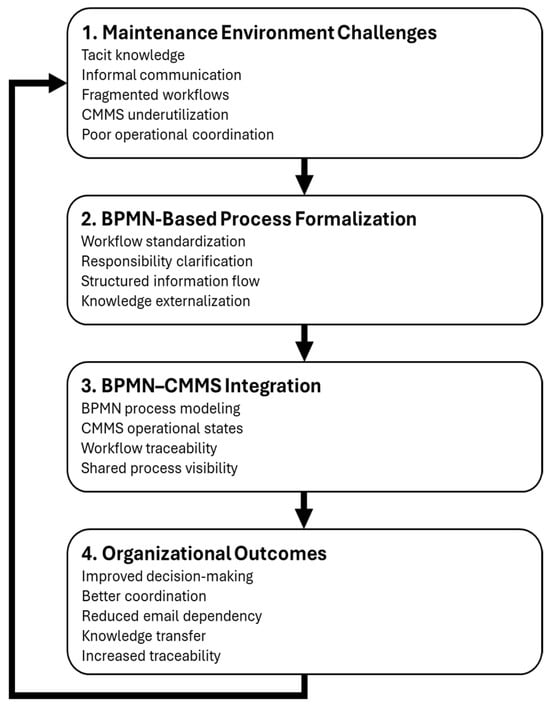
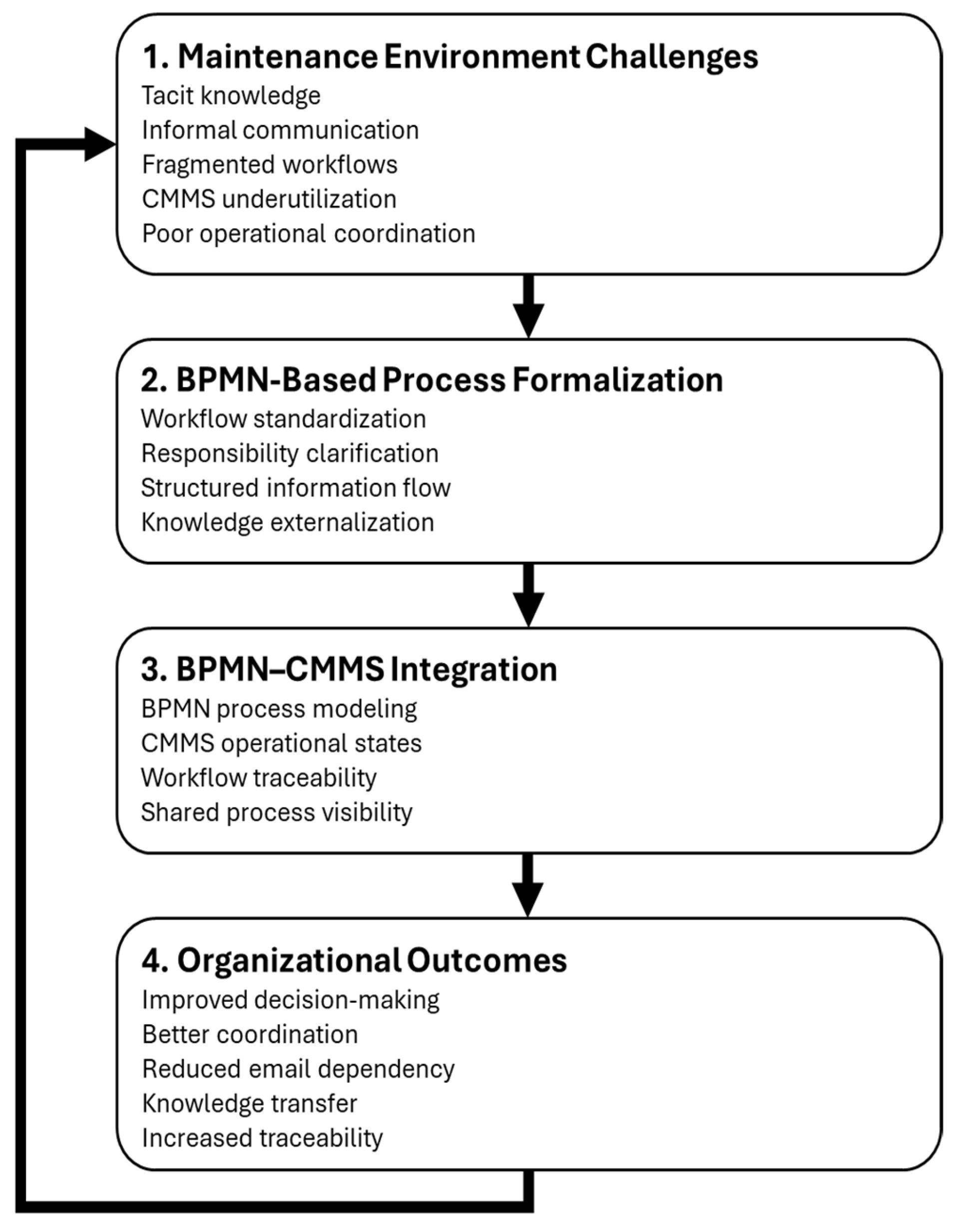
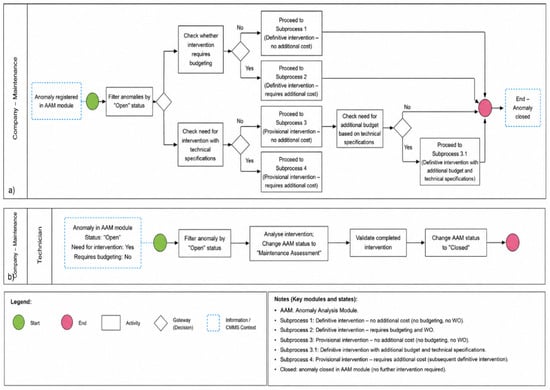
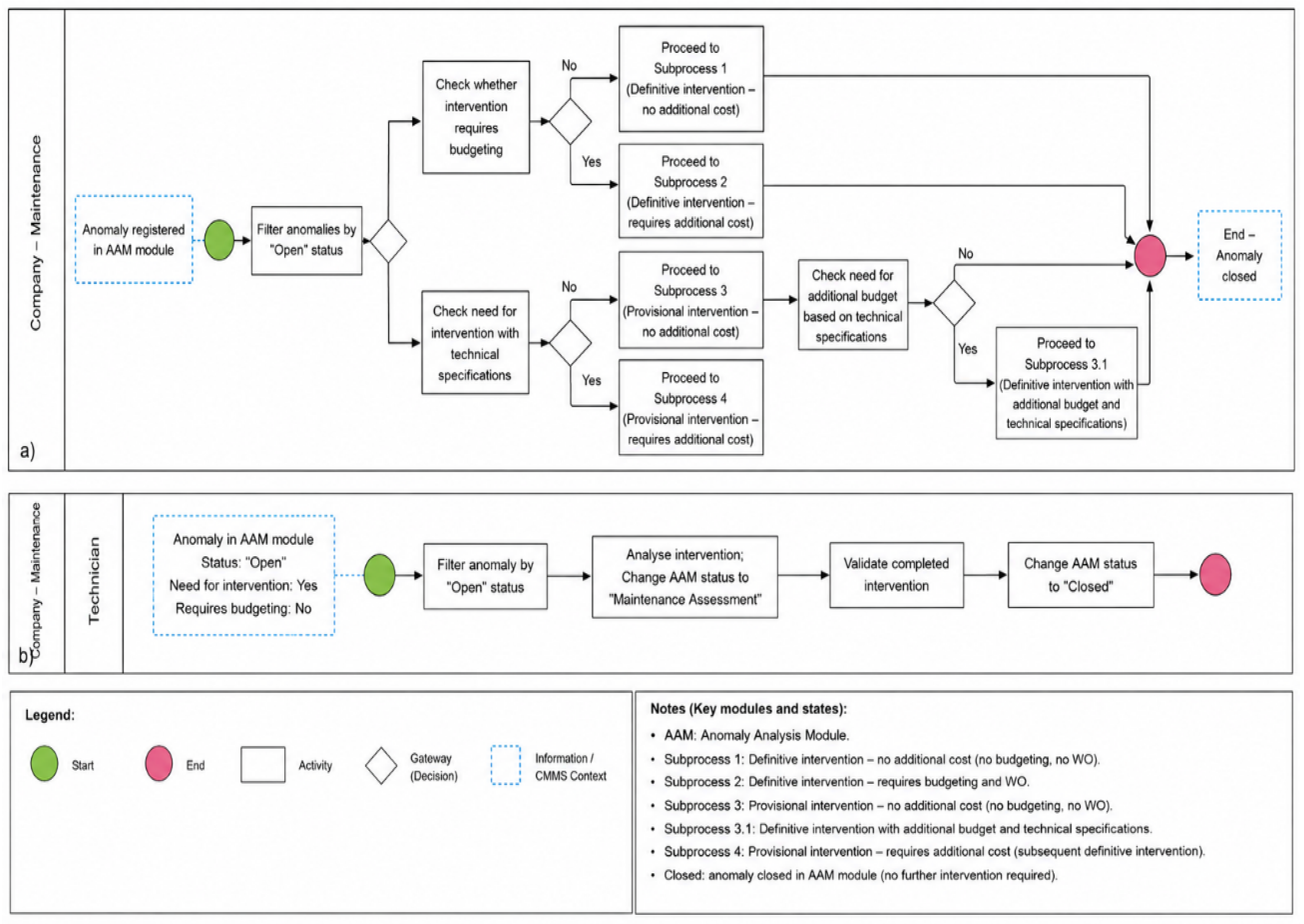
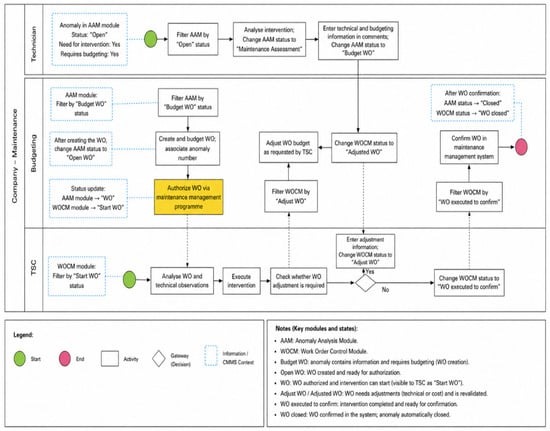
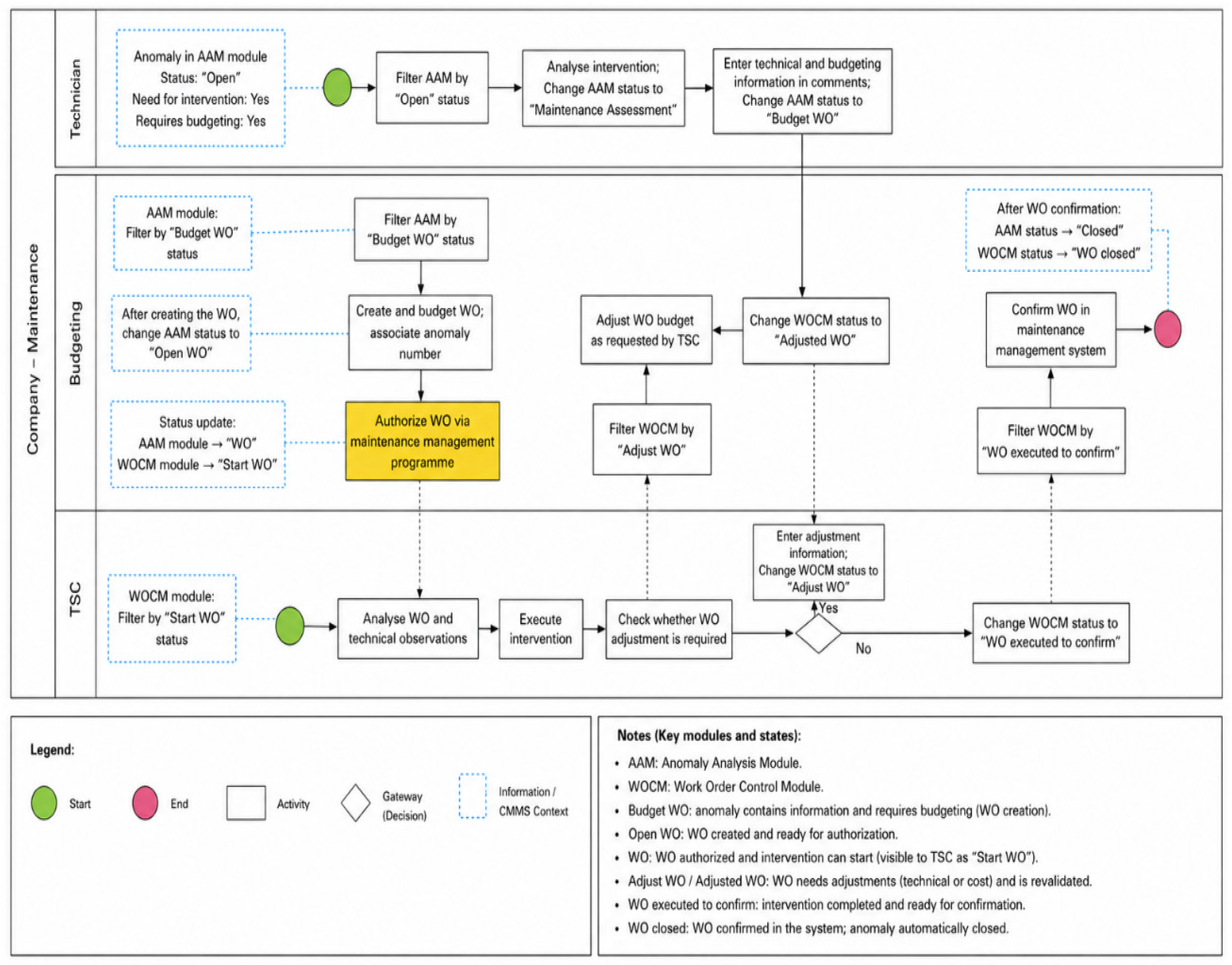
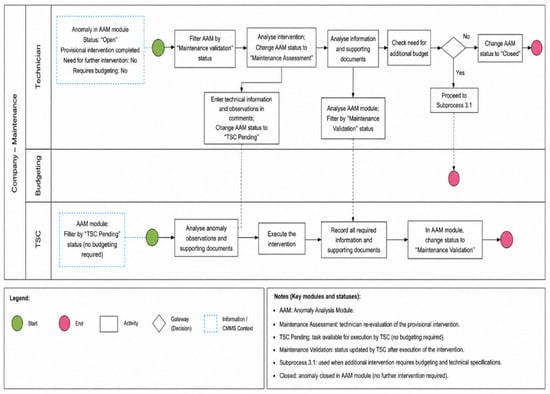
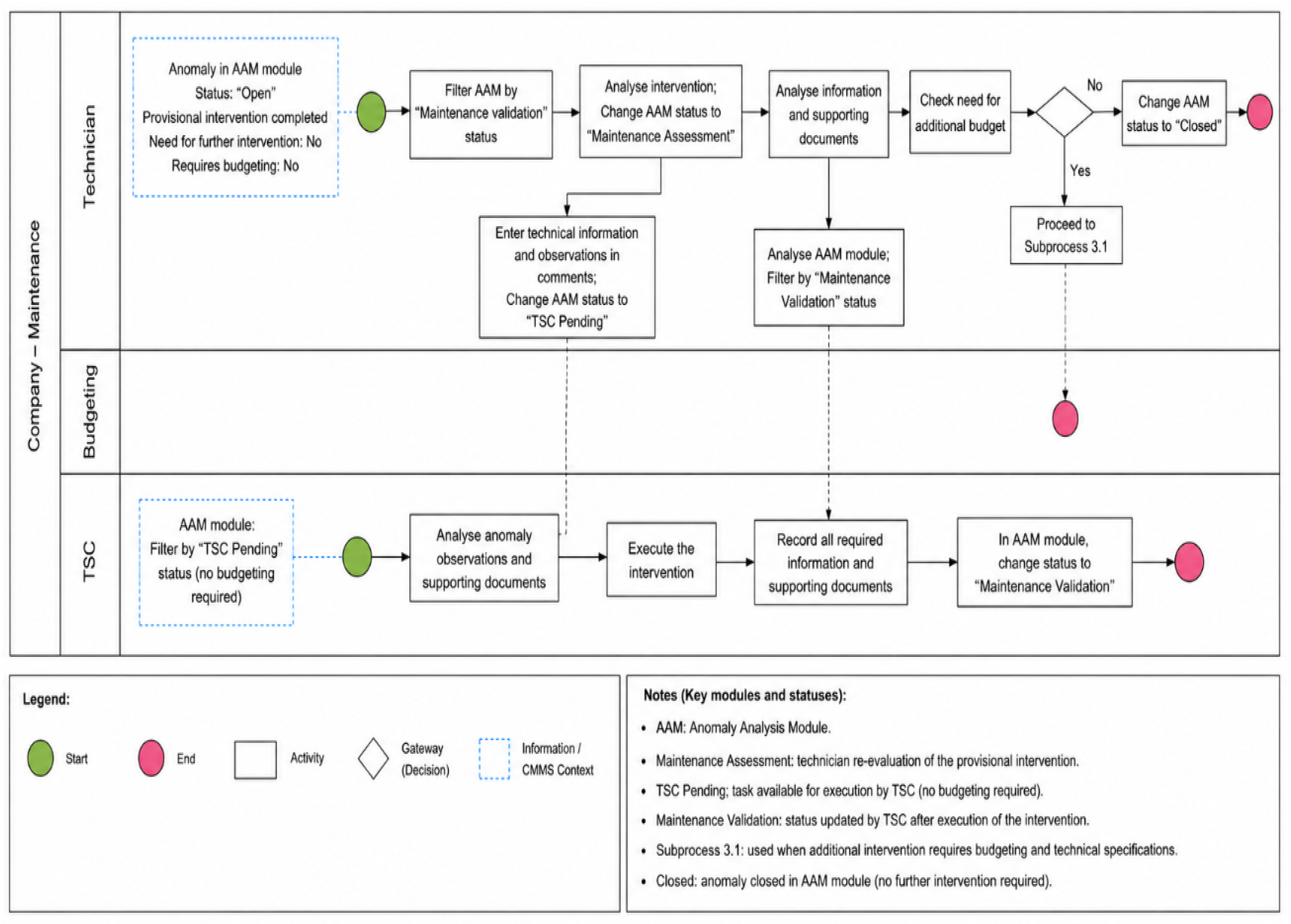
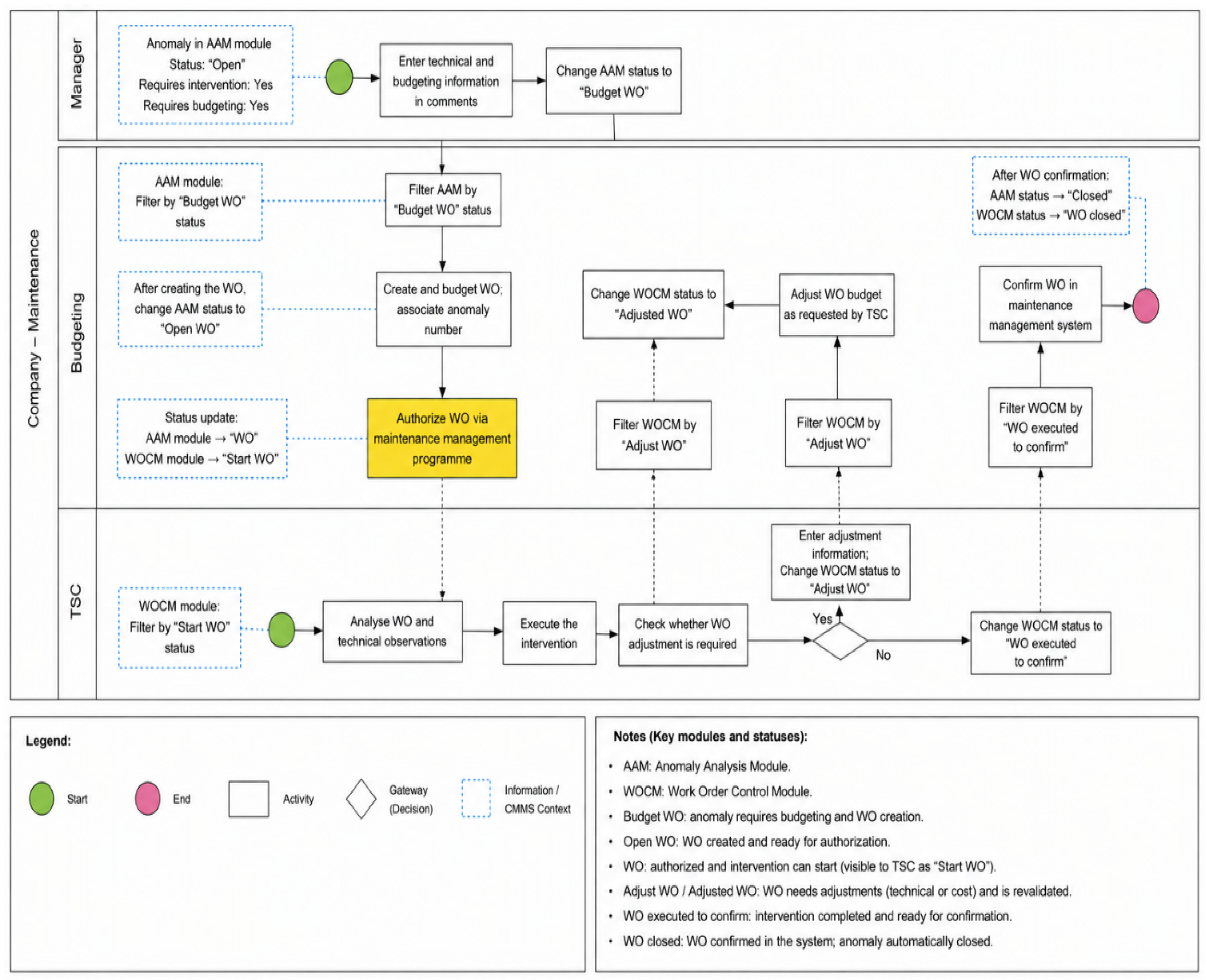
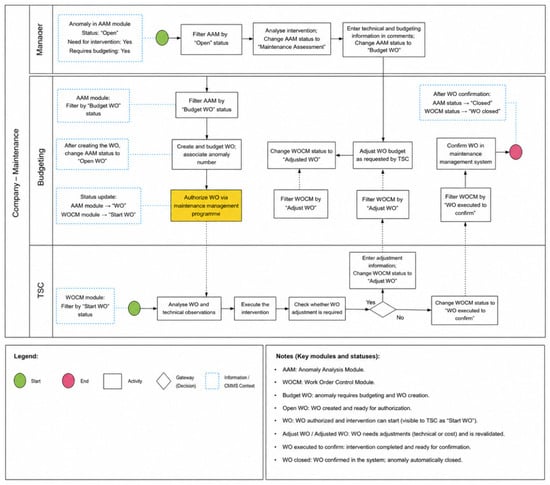
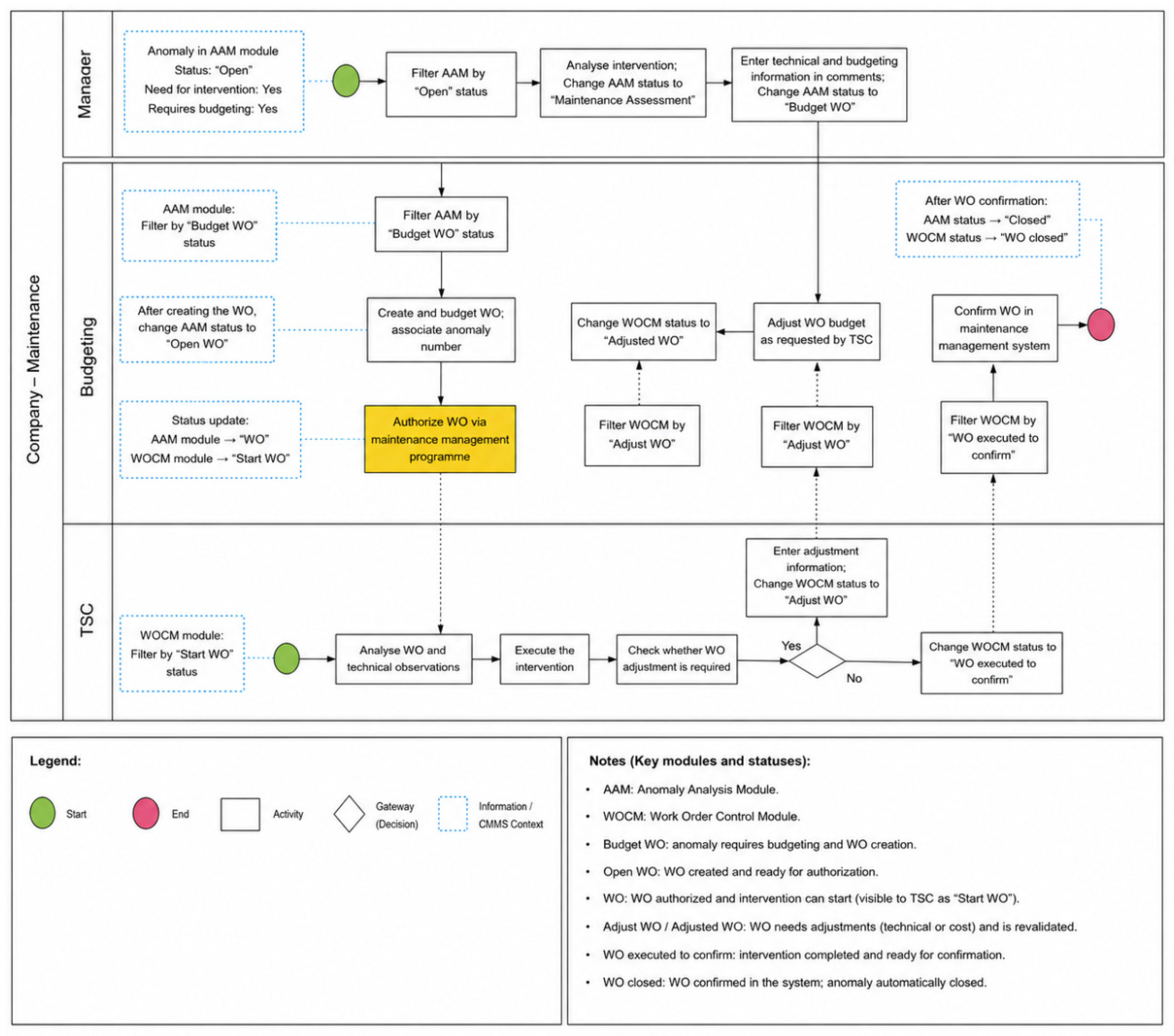

Disclaimer/Publisher’s Note: The statements, opinions and data contained in all publications are solely those of the individual author(s) and contributor(s) and not of MDPI and/or the editor(s). MDPI and/or the editor(s) disclaim responsibility for any injury to people or property resulting from any ideas, methods, instructions or products referred to in the content. |
© 2026 by the authors. Licensee MDPI, Basel, Switzerland. This article is an open access article distributed under the terms and conditions of the Creative Commons Attribution (CC BY) license.