Article

Three-Dimensional Canal Architecture of Mineralised Turkey Tendon as an Architectural Analogue of Cortical Bone


1
Department of Medicine and Technological Innovation, University of Insubria, 21100 Varese, Italy
2
Large Instruments Centre, University of Pavia, 27100 Pavia, Italy
*
Author to whom correspondence should be addressed.
Appl. Sci. 2026, 16(13), 6287; https://doi.org/10.3390/app16136287 (registering DOI)
Submission received: 9 May 2026 / Revised: 16 June 2026 / Accepted: 18 June 2026 / Published: 23 June 2026

Featured Application

Quantitative descriptors of the canalicular network in mineralised turkey tendon (porosity ~34.6%, connectivity density ~1.3 × 102 mm−3, fractal dimension 2.58, degree of anisotropy DA = 0.87 [BoneJ convention, range 0–1]) provide concrete design targets for biomimetic scaffolds intended to recapitulate the architectural organisation of mineralising collagen tissues, for example, scaffolds with porosity in the 30–40% range, connectivity density on the order of 102 mm−3, and a strongly anisotropic, longitudinally aligned channel network (DA ≈ 0.85–0.90). They also serve as validation benchmarks for computational models of diffusion in mineralising collagen matrices and as reference values for studies of pathological tendon calcification and the tendon–bone enthesis.

Abstract

Mineralising avian tendon is a widely used experimental model for studying collagen-guided mineralisation. Yet, the three-dimensional organisation and topology of its internal canal system have never been quantitatively characterised. We combined high-resolution micro-computed tomography (micro-CT) and scanning electron microscopy (SEM) to provide the first morphometric and topological analysis of the canalicular network in mineralised turkey gastrocnemius tendon. micro-CT revealed that unmineralised canals occupy approximately 34.6% of the mineralised tissue volume and form a single continuously connected network (99.8% of void volume), with a connectivity density of ~1.3 × 102 mm−3, a fractal dimension of 2.58, a degree of anisotropy DA = 0.87 [BoneJ convention, range 0–1], and a closed-loop topology. SEM revealed marked ultrastructural heterogeneity of the mineral phase across fascicle cross-sections, consistent with graded intrafibrillar-to-interfibrillar deposition. These findings establish the first quantitative morphometric framework for physiologically mineralising collagen tissue and support the use of turkey gastrocnemius tendon as a tractable model for studying mineralisation dynamics, enthesis biology, and the design of biomimetic scaffolds with controlled porosity and anisotropy.

1. Introduction

Biomineralisation is a fundamental biological process by which living organisms deposit inorganic minerals within organic matrices. In vertebrates, calcium phosphate, predominantly hydroxyapatite, is deposited within a pre-existing collagen framework to form hard tissues [1,2]. Unlike tooth enamel, which mineralises through a distinct secretory mechanism, all other vertebrate mineralised tissues share the same basic strategy: progressive infiltration of a fibrillar collagen scaffold by calcium phosphate crystals [1,2].
Among mineralised vertebrate tissues, bones have attracted the most research attention, yet direct imaging of its hierarchical organisation remains technically demanding [3,4,5,6]. The compact three-dimensional architecture of cortical bone and the irregular interweaving of its collagen fibrils make high-resolution visualisation challenging, often requiring destructive preparation techniques. To circumvent these limitations, researchers have turned to related tissues with simpler and more ordered collagen organisation. The fibrocartilaginous enthesis [7] and the calcifying tendons of birds [8,9,10,11,12,13] have proved particularly informative, as they share the essential features of collagen-guided calcium phosphate deposition while offering a more regular fibrillar geometry. Among these, the gastrocnemius tendon of the turkey (Meleagris gallopavo domesticus) occupies a privileged position: it undergoes progressive, physiological mineralisation along its length, providing simultaneous access to unmineralised, partially mineralised, and fully mineralised zones within a single specimen [8,11,14].
Previous studies on mineralised turkey tendon have addressed the ultrastructural relationship between collagen and minerals [3,15,16,17,18], the spatial distribution of mineral particles at the nanoscale [16,18,19], and the presence of a canalicular network [10,11]. The classical view that minerals are deposited exclusively within collagen fibrils [19] has been progressively refined, with extrafibrillar and transfibrillar models gaining experimental support [16,18]. At a larger scale, Landis and Silver first reported the presence of channels morphologically consistent with vascular spaces running through the mineralised turkey tendon [10], and Zou et al. (2020) later reconstructed the lacuno-canalicular system at nanometric resolution using FIB-SEM [11]. However, the three-dimensional organisation and quantitative topology of this canal network have never been systematically characterised.
Characterising the three-dimensional microarchitecture of mineralised tissues requires imaging methods capable of resolving structures across multiple scales. X-ray diffraction and Raman spectroscopy yield bulk compositional and crystallographic information but cannot directly image spatial organisation. Light, confocal, and second-harmonic generation microscopy are limited in resolution and penetration depth. Transmission electron microscopy provides nanometre-scale detail but requires prior decalcification and provides only two-dimensional cross-sections. FIB-SEM serial sectioning has partially overcome this constraint [4,6,11,13], but remains laborious, destructive, and restricted to sub-nanolitre volumes. Micro-CT fills a critical gap by enabling non-destructive three-dimensional reconstruction at the millimetre-to-micrometre scale, making it ideally suited to quantify canal network architecture within mineralised matrices [20,21,22].
We hypothesised that the canalicular network of mineralised turkey tendon, although operating at a coarser spatial scale, exhibits quantitative morphometric and topological features architecturally analogous to those of the Haversian and lacuno-canalicular systems of cortical bone. It should be noted that the 3 µm voxel resolution of the present micro-CT analysis captures the canal network at the tens-of-micrometres scale; the classical sub-micrometre lacuno-canalicular system of cortical bone is below this resolution and is therefore not resolved by the present analysis. The present study addresses this gap by combining high-resolution SEM and micro-CT to characterise the canalicular network in the mineralised turkey gastrocnemius tendon. SEM provides ultrastructural details of the mineral phase and its relationship with collagen fascicles across a wide range of magnifications. At the same time, micro-CT enables non-destructive three-dimensional reconstruction and quantitative morphometric analysis of the entire canal network. By integrating these complementary approaches, we provide the first quantitative characterisation of this system, including porosity, anisotropy, connectivity density, fractal dimension, and network topology.
This quantitative data provides, for the first time, a numerical basis for comparing the canalicular network of mineralised tendon with the Haversian and lacuno-canalicular systems of cortical bone. Beyond its descriptive value, this characterisation has direct implications for understanding mineralisation dynamics, enthesis biomechanics, pathological tendon calcification, and the design of biomimetic scaffolds with controlled porosity and transport properties.

2. Materials and Methods

Mineralising tendons were collected from the legs of seven turkeys (Meleagris gallopavo domesticus): four males and three females, with a mean age of 18 ± 3 weeks. Samples were harvested from the mineralising distal portion of the gastrocnemius tendon of the hind limb, close to the calcaneal (Achilles) insertion site. A total of n = 7 specimens were prepared for scanning electron microscopy (SEM) analysis (see Section 2.2) and micro-computed tomography (micro-CT). Inferential testing for between-sex differences (see Section 2.3) revealed no apparent sex-related trend; the study was, however, underpowered for definitive sex-specific inference, and the data were therefore pooled. The age range examined was too narrow to support a separate inferential analysis of age effects. In this paper, we will refer to the non-mineralised cavities observed within the mineralised tendon matrix as ‘unmineralised canals’, in accordance with previous descriptions [11]. In the earlier literature, these structures were described as “vascular spaces” or “vascular channels” [11,14]. However, since no direct evidence of vascular content is available, we prefer the neutral term “unmineralised canals” in the present study.

2.1. Micro-CT

Specimens were trimmed to a standardised size of approximately 3 × 5 × 10 mm before scanning, fixed in Karnovsky’s solution, dehydrated through a graded ethanol series, and dried with hexamethyldisilazane. Micro-CT measurements were performed at a nominal pixel size of 3 μm using a SkyScan 1276 scanner (Bruker, Billerica, MA, USA). The settings included a voltage-current combination of 55 kV and 72 μA for the X-ray source, along with the application of a 0.25 mm aluminium filter. The images were captured at 0.18° intervals through 180° of rotation, without camera pixel binning, and averaged over four frames. The Z-stack reconstruction was performed using the SkyScan NRecon software (v1.7.1.0) with the InstaRecon reconstruction engine, which activated a Gaussian Smoothing Kernel, ring artefact reduction, and beam hardening correction. Owing to the limited field of view at 3 µm voxel resolution, the reconstructed volume of interest on which all morphometric analyses were performed corresponded to a sub-region of approximately 6 mm3 extracted from the central calcified core of each specimen, chosen to exclude boundary artefacts. Z-stacks were converted to STL files using Mimics 21.0 (Materialise, Leuven, Belgium), and the resulting files were interactively rendered in 3D using Maya 2021 (Autodesk, San Francisco, CA, USA).
All 3D quantitative analyses were conducted on binarised micro-CT stacks using the Fiji platform, mainly with the BoneJ plugin. First, the total volume of the unmineralised canals was determined to assess the overall porosity. The morphology of individual canals was then characterised using the 3D Particle Analyser to measure their volume and surface area. To evaluate the network’s architecture and complexity, we calculated the degree of anisotropy, the fractal dimension (using the box-counting method), and the local thickness. The degree of interconnection was assessed through the Euler characteristic (χ) and the resulting connectivity density, computed in BoneJ as ConnD = (1 − χ)/V, following the convention of Odgaard & Gundersen (1993) [23]. Finally, to examine the network’s topology in detail, the binarised stack was converted into a single-voxel-thick skeleton using the Skeletonise (2D/3D) command. The resulting skeleton was analysed with the Analyse Skeleton (2D/3D) plugin to quantify the number of branches, junctions, and endpoints, as well as the average and maximum branch lengths.

2.2. Scanning Electron Microscopy

Tendons of the gastrocnemius muscle of seven turkeys were sourced at the slaughterhouse and immediately immersed in Karnovsky fixative (2% paraformaldehyde plus 2% glutaraldehyde in 0.1 M cacodylate buffer, pH 7.3). Smaller fragments (n = 3 per preparation technique) were obtained from the distal end of the tendon, fixed overnight, and assigned to the different preparation protocols described below.
For backscattered electron imaging of polished cross-sections, fragments were dehydrated in a graded ethanol series and embedded in Epon 812. The blocks were sawn orthogonally, ground flat with ultrafine sandpaper, and polished to a mirror finish with abrasive powder, all while avoiding any contact with water or aqueous solutions. The blocks were mounted on appropriate stubs as described above and carbon-coated using an Emitech K250 (EMitech Srl, Corato, Italy) flash coater.
Some specimens were frozen in solidifying propane at approximately −188 °C and then fractured under liquid nitrogen at −196 °C to obtain clean, unblemished surfaces. The specimens were then thawed in Karnovsky’s solution and dehydrated in a graded ethanol–hexamethyldisilazane series. Other fragments were briefly washed in 0.1 M phosphate buffer, thermally treated at 350 °C for 24 h to remove the cells and the soft matrix, and then slowly returned to room temperature. Both the cryofracture and the thermal deproteination procedures followed the preparation protocols previously established by our group for mineralised turkey tendon [8].
Cryo-fractured and thermally treated specimens were mounted on appropriate stubs with a colloidal silver glue and coated with gold–palladium in an Emitech K550 sputter-coater (Quorum, Laughton, UK) before SEM observation.
All specimens were observed under a Zeiss Gemini 360 FEG-SEM (Carl Zeiss, Oberkochen, Germany) using both secondary electron (SE) and backscattered electron (BSE) detectors. SE imaging was used for surface topography and ultrastructural details of cryo-fractured and thermally treated specimens; BSE imaging was used for compositional contrast on polished resin-embedded cross-sections. The accelerating voltage and working distance were optimised individually for each specimen and preparation technique, depending on coating, surface conductivity, and magnification; the values applied to each image are reported in the corresponding figure legend. Images were directly obtained as 8-bit, 2048 × 1536 TIFF files.

2.3. Statistical Analysis

All morphometric and topological parameters were computed independently for each of the seven specimens, on the reconstructed VOI (≈6 mm3) extracted from the central calcified core of the scan. Inter-individual variability is reported as cross-specimen mean ± standard deviation in the summary tables. Per-parameter exploratory comparisons between males (n = 4) and females (n = 3) were carried out by two-sample t-test on the seven per-specimen values; the resulting p-values are reported in Table 1, Table 2 and Table 3 for completeness, but the small subgroup sizes mean that the analysis is severely underpowered and cannot rule out the presence of true sex differences. Given the absence of any sex-related trend at this developmental stage, and the narrow age range examined (14–21 weeks), the seven specimens were treated as a single descriptive cohort for all subsequent analyses; inferential conclusions on sex- or age-related dimorphism would require a substantially larger and stratified sample. The analysis pipeline used a deterministic histogram-based threshold (anchored to the inter-modal valley between the unmineralised and mineralised Gaussian-like modes) and a full skeleton extraction without aggressive pruning to preserve the complete topological structure of the canalicular network. Both mean values and cross-specimen standard deviations reported in Table 1, Table 2 and Table 3 derive from the same n = 7 cohort analysis with this pipeline; absolute values and biological variability are therefore consistent within the same dataset. Statistical computations were carried out in Python 3.11 using NumPy 1.26, SciPy 1.11 and pingouin 0.5.

3. Results

3.1. Micro-CT Analysis

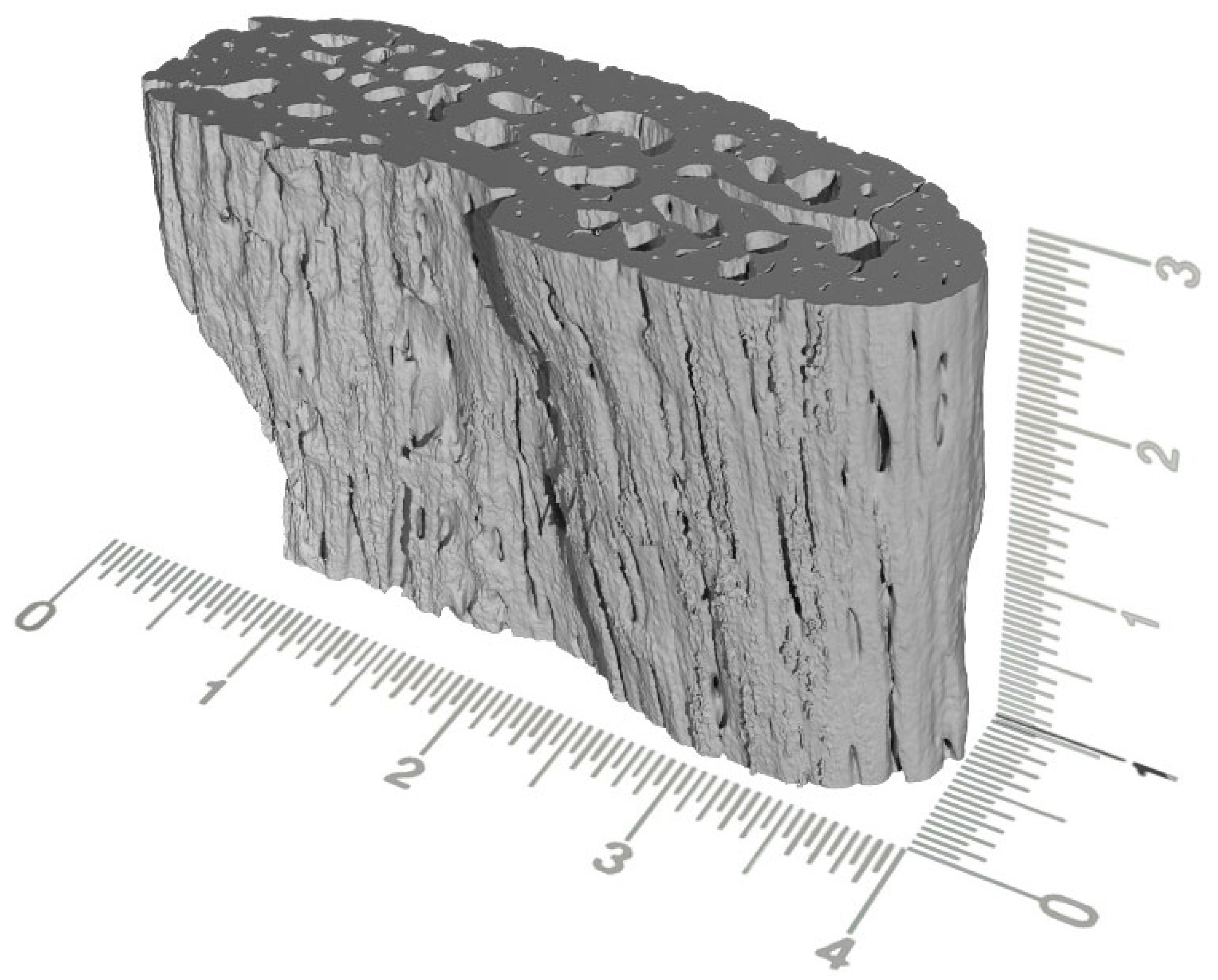
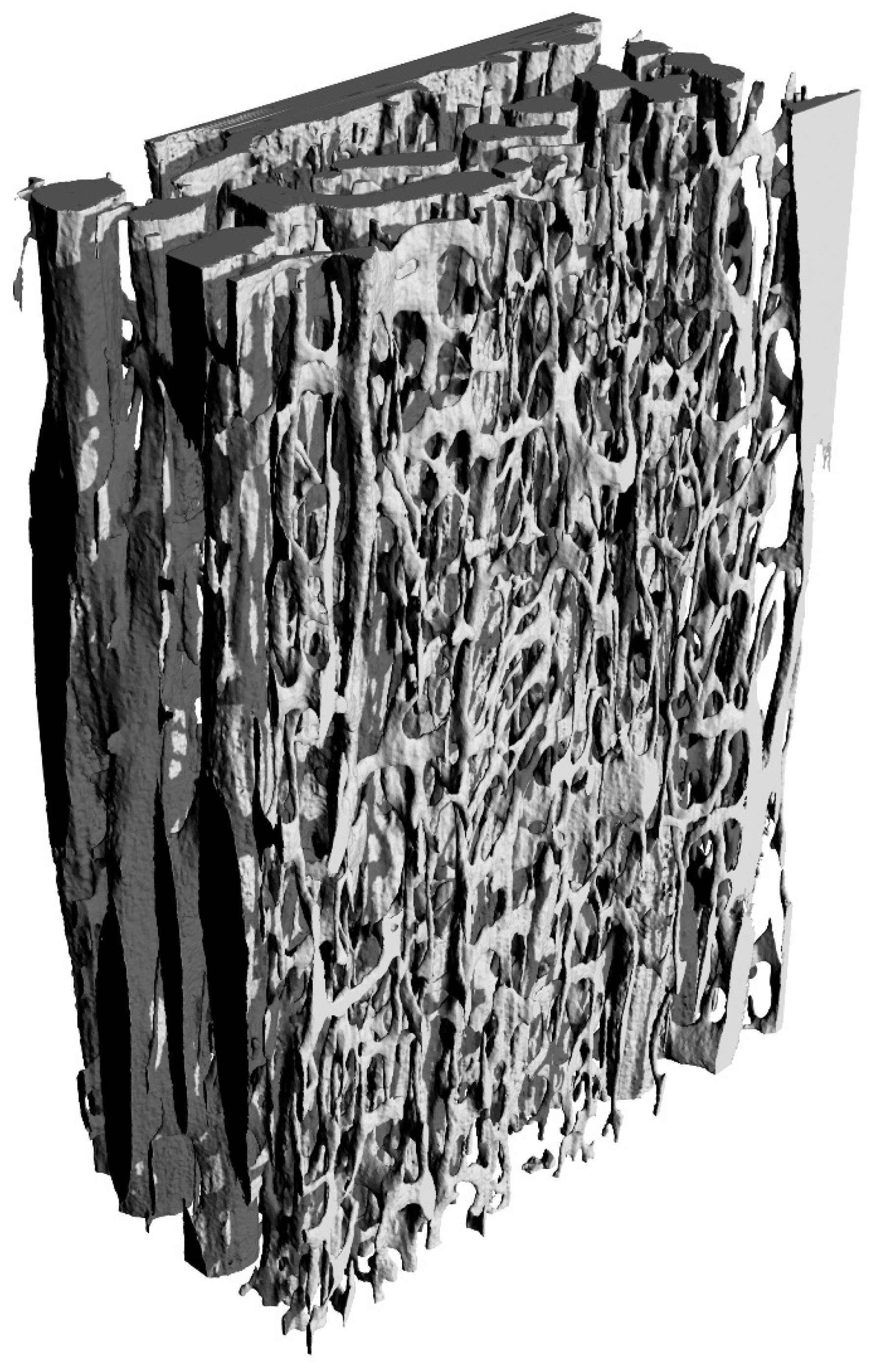
Micro-CT reconstruction of the mineralised tendon core (n = 7; representative specimen shown in Figure 1) immediately revealed the extent of the canalicular system: a simple voxel count showed that approximately one third of the mineralised volume is occupied by unmineralised canals. A virtual cast of the canal network (Figure 2), obtained by reverse thresholding, demonstrates that the larger longitudinal channels are interconnected by numerous finer canals of heterogeneous calibre, forming a three-dimensional network reminiscent of the Haversian and Volkmann systems of cortical bone.
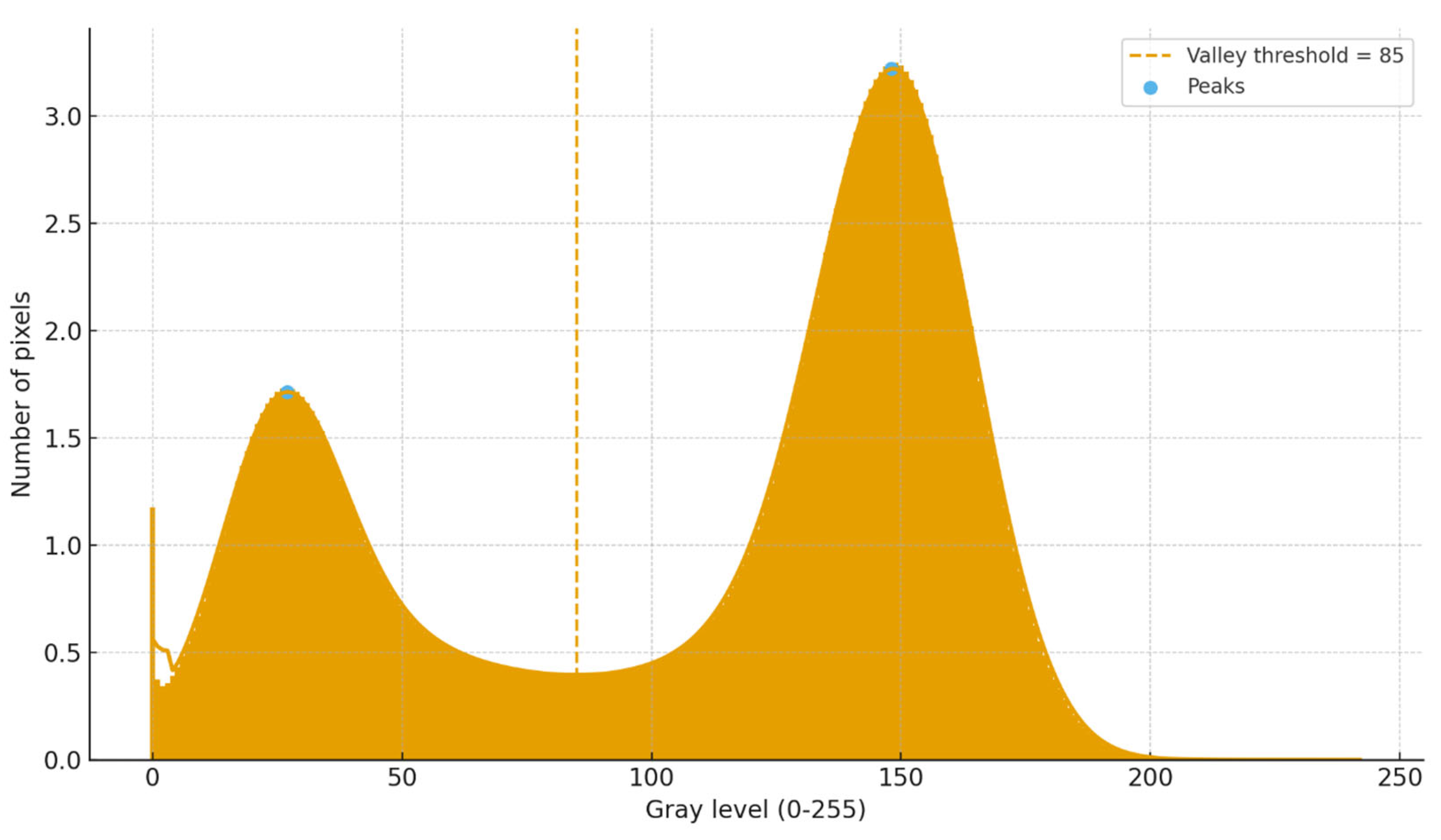
Grey-level histogram analysis revealed a clear bimodal distribution with two well-resolved Gaussian-like modes centred at approximately grey level 27 (unmineralised phase) and 149 (mineralised matrix). The threshold was set to the minimum of the valley between the two modes (grey = 80), a value determined mathematically by the bimodal histogram geometry rather than chosen by operator inspection. This data-driven, distribution-based criterion minimises operator dependence and provides a robust separation of the two compartments. Approximately one-third of the reconstructed volume corresponded to unmineralised canals. Out of 221,556,222 voxels, 76,656,883 (34.60%) fell at or below the threshold and were classified as unmineralised, whereas 144,899,339 voxels (65.40%) were above the threshold and classified as mineralised matrix. The bimodal histogram geometry, with two well-separated Gaussian-like modes, provides a deterministic anchor for the threshold at the minimum of the inter-modal valley, aligning with the expected bimodality between non-mineralised and mineralised compartments in micro-CT. A formal threshold sensitivity analysis (e.g., ±5–10 grey levels around the inter-modal valley) was not performed in the present study; the deterministic, distribution-based criterion mitigates but does not eliminate residual segmentation uncertainty arising from partial-volume effects, noise and beam-hardening residuals, especially at the canal-matrix boundary (Figure 3).
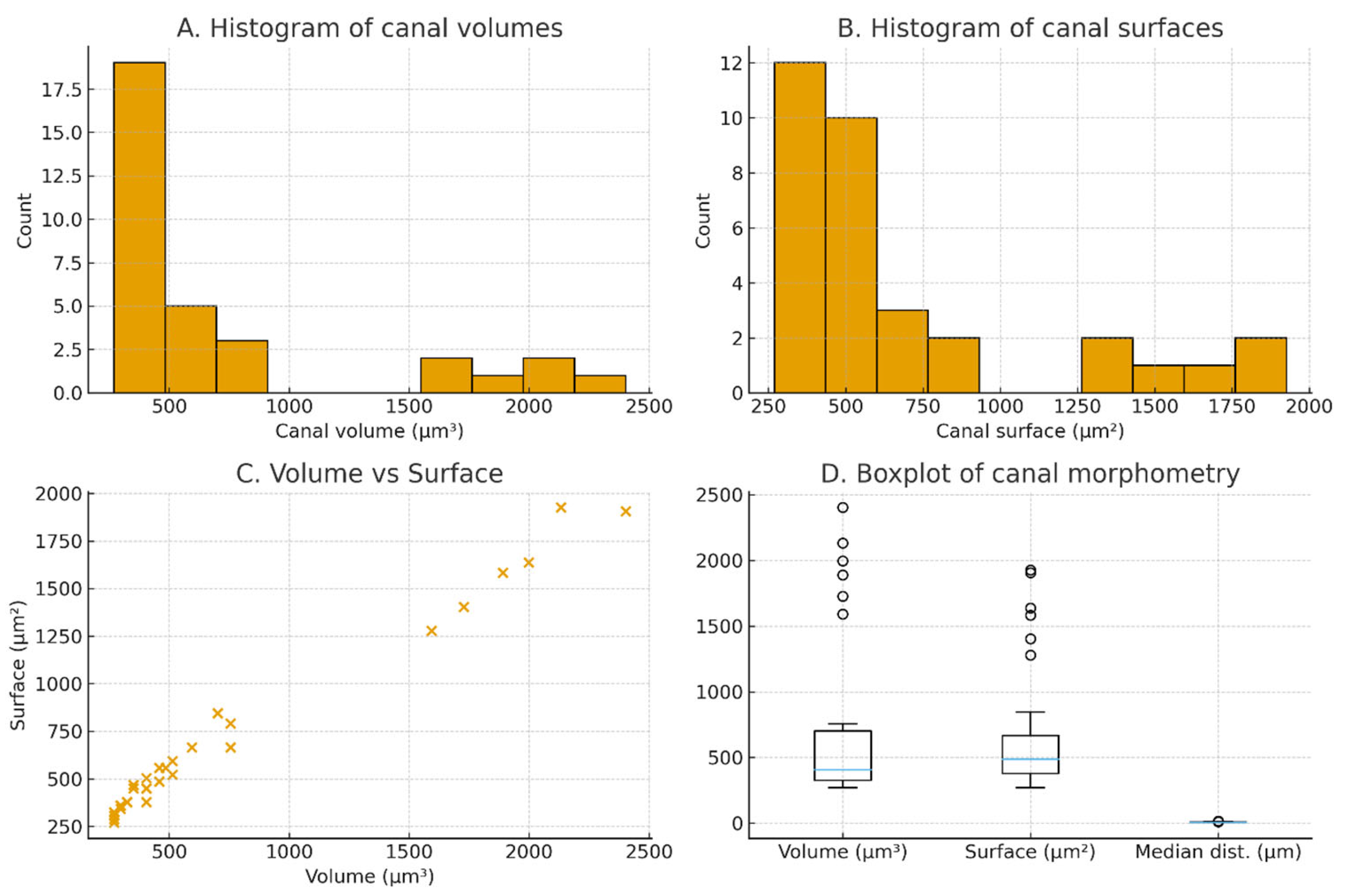
Connected-component analysis of the binarised micro-CT stacks identified 2215 distinct void objects. Of these, a single dominant component accounted for 99.8% of the total unmineralised volume (≈2.07 × 109 µm3, i.e., 2.07 mm3), confirming that the canalicular system constitutes one continuously interconnected network rather than a collection of isolated pores. The remaining 2214 fragments collectively accounted for only 0.16% of the void volume, with a median size of 27 µm3 (single voxel at 3 µm resolution, i.e., at the detection limit), and are consistent with sub-resolution segmentation residuals at the tissue boundary; they were excluded from subsequent morphometric analysis. The reported porosity refers exclusively to canals resolvable at the 3 µm voxel size and therefore represents a lower-bound estimate of the total void space, since the present imaging protocol does not capture any finer canaliculi below 3 µm. Morphometric characterisation of the dominant network revealed a canal mean thickness of 48.3 ± 23.0 µm (maximum 116.9 ± 11.7 µm) and a surface-to-volume ratio of 106 mm−1. The distribution of individual canal volumes is shown in Figure 4A as a histogram spanning several orders of magnitude in canal size; the distribution is strongly right-skewed, with the bulk of canals concentrated within the 270–675 µm3 range and a long tail of larger conduits extending up to several orders of magnitude. The corresponding distribution of canal surface areas (Figure 4B) follows the same overall shape, with most values lying between 270 and 630 µm2 and a comparable right-skewed tail, indicating that surface and volume distributions co-vary across the network.
The geometric coupling of canal volume and surface area is made explicit in Figure 4C, where individual canals are plotted as points in the volume–surface plane. The data follow a tight, approximately linear log–log scaling relationship spanning several orders of magnitude in both axes, with no detectable deviation between fine and coarse canals. This monotonic V-S relationship constitutes the key quantitative evidence that canal shape is preserved across calibres, with larger canals representing scaled-up versions of smaller ones rather than morphologically distinct objects.
A complementary summary of overall network variability is provided in Figure 4D, which displays side-by-side boxplots of canal volume, surface area, and median distance to the canal surface. All three variables show wide interquartile ranges and pronounced upper-tail outliers, consistent with the right-skewed organisation already evident in panels A and B. The boxplot of median surface distances additionally provides a measure of internal canal calibre, complementing the Tb.Th estimates from BoneJ. Overall, Figure 4A–D collectively describe a continuous, hierarchically organised population of canals in which numerous fine canals coexist with a smaller number of larger conduits, with consistent geometric scaling across the full-size range.
Connectivity analysis of the canalicular network yielded a corrected Euler characteristic of −768 ± 29 (β1 = 769 ± 30 independent loops). Given the analysed VOI volume of 5.99 ± 0.21 mm3, the resulting connectivity density was (1.29 ± 0.12) × 102 mm−3 (computed as ConnD = (1 − χ)/V, after Odgaard & Gundersen, 1993) [23]. This indicates that the canalicular system is not composed of isolated voids but instead forms a highly interconnected network. The relatively high density of connections reflects an architecture with multiple alternative pathways across the tissue volume (Table 1).
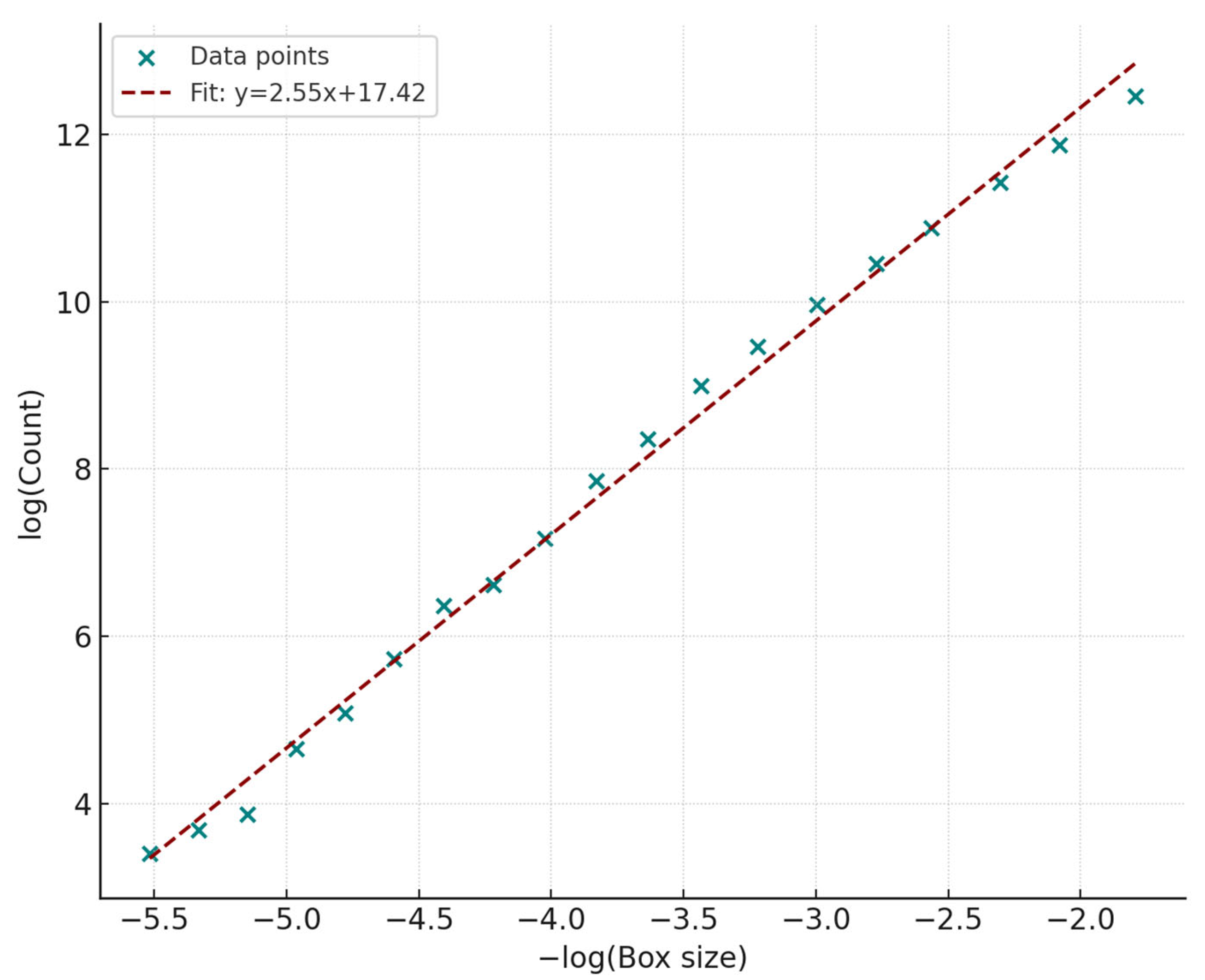
The canalicular system displayed a fractal dimension of 2.58, with an excellent regression fit (R2 = 0.996). The log–log plot of box size versus voxel count showed a linear trend across the range of scales accessible at 3 μm voxel resolution (approximately 6–600 μm), consistent with self-similar organisation at the micro-CT scale. FD values may be influenced by imaging resolution and segmentation parameters and should be interpreted as scale-specific estimates rather than absolute tissue properties. This confirms that the network is neither a simple surface (FD ≈ 2) nor a fully space-filling solid (FD ≈ 3), but an intermediate, ramified architecture. The high FD is consistent with the observation of a complex, ramified canal system within the mineralised tendon (Figure 5). It should be noted that FD = 2.58 is a scale-limited descriptor, valid over the linear range of box sizes resolved at the present voxel resolution (≈6–600 μm); it does not represent a universal property of the tissue and would be expected to depend on imaging resolution.
Quantitative 3D analysis of the micro-CT reconstructions confirmed the presence of a vast, highly interconnected, anisotropic canalicular network. The network exhibited a strong preferential orientation along the sample’s primary axis (principal eigenvector = −1.000, −0.007, 0.010), aligning with the tendon’s longitudinal direction. The degree of anisotropy, computed in BoneJ from the mean intercept length (MIL) ellipsoid as DA = 1 − (λmin/λmax) (where λ are the eigenvalues of the MIL fabric tensor; range 0–1, with 0 indicating isotropy and 1 full anisotropy), was 0.87, indicating a markedly anisotropic architecture aligned with the tendon’s longitudinal axis. The high degree of interconnection was evidenced by a negative Euler characteristic (χ) of −768 ± 29 (β1 = 769 ± 30 independent loops). The canals exhibited a mean thickness of 48.3 ± 23.0 µm, with a maximum of 116.9 ± 11.7 µm. As reported above, the connected-component analysis confirmed that a single dominant network accounts for 99.8% of the total unmineralised volume; residual fragments (0.16%) were excluded (Table 2).
To further characterise the network’s topology, a skeleton analysis was performed. The network exhibited a highly ramified organisation, comprising 10,550 ± 1055 branches, 5889 ± 589 junctions (including 5107 ± 511 triple points and 427 ± 43 quadruple points), and 2788 ± 279 endpoints within the analysed volume. All endpoints were located at the boundaries of the imaged volume, where canals exit the micro-CT field of view rather than terminating anatomically; no endpoints were identified within the tissue interior, indicating a fully integrated, closed-loop network architecture in which the canal system continues uninterrupted beyond the scanned volume. Skeleton-derived metrics (branch counts, junction density, branch lengths) are sensitive to ROI cropping, voxel size, and skeleton-pruning parameters; the values reported here should therefore be interpreted within the bounds of the analysed VOI and the imaging resolution rather than as absolute structural invariants. The average branch length was 29.2 ± 2.9 µm, while the maximum branch length reached 356.0 ± 35.6 µm, providing quantitative support for the hierarchical organisation of the network, which consists of numerous short connecting segments interspersed with fewer long-range conduits (Table 3).

3.2. Scanning Electron Microscopy

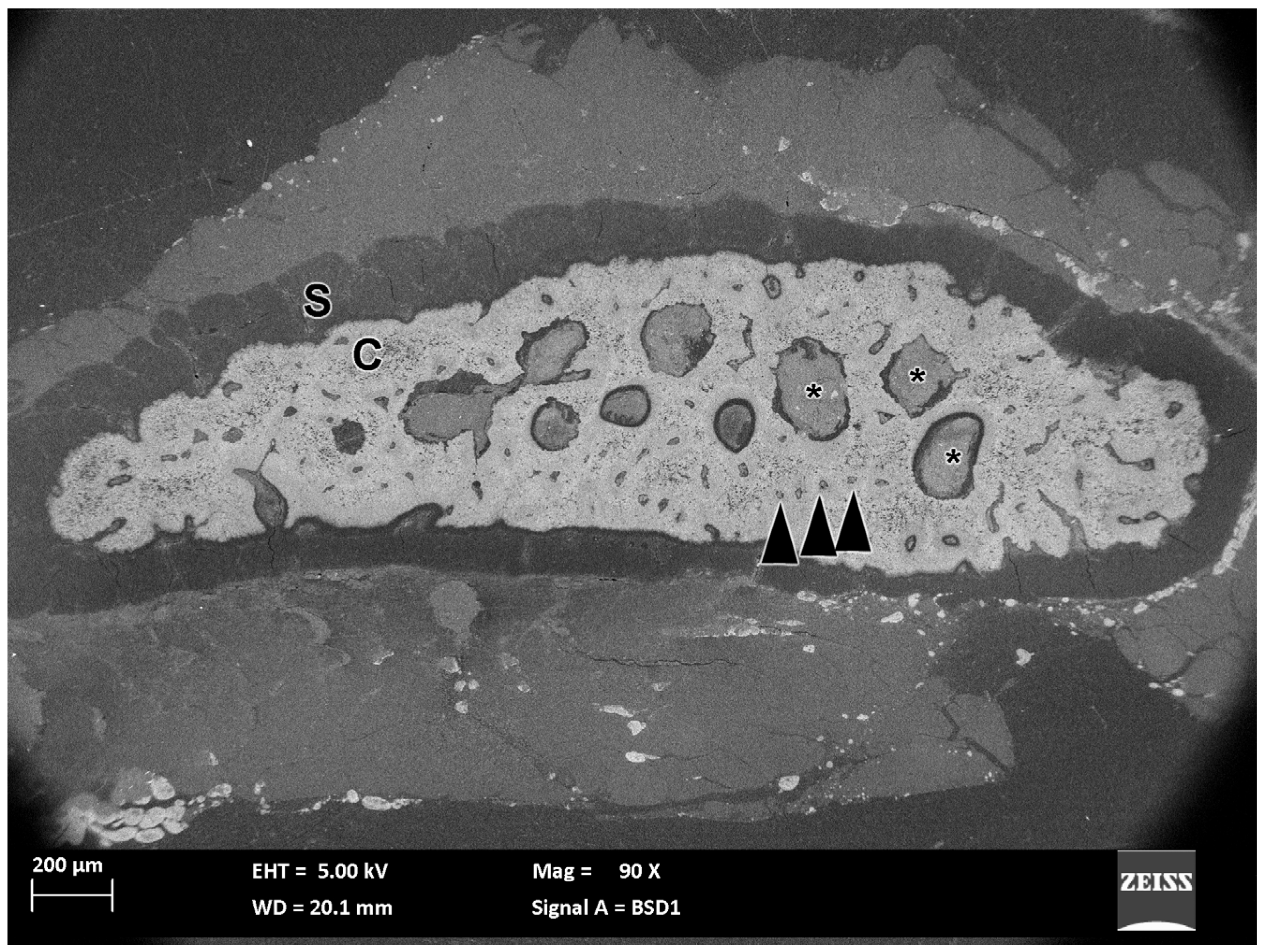
Backscattered electron imaging of polished cross-sections (Figure 6) enabled clear discrimination between the calcified tendon and surrounding soft tissue. Several smaller cavities and numerous micropores were visible in addition to the larger channels previously identified by micro-CT; occasional bright spots were attributed to abrasive particles trapped during polishing. This structural heterogeneity reflects a continuous distribution of canal dimensions, spanning from large cavities to fine canalicular elements, without evidence of discrete morphological subclasses.
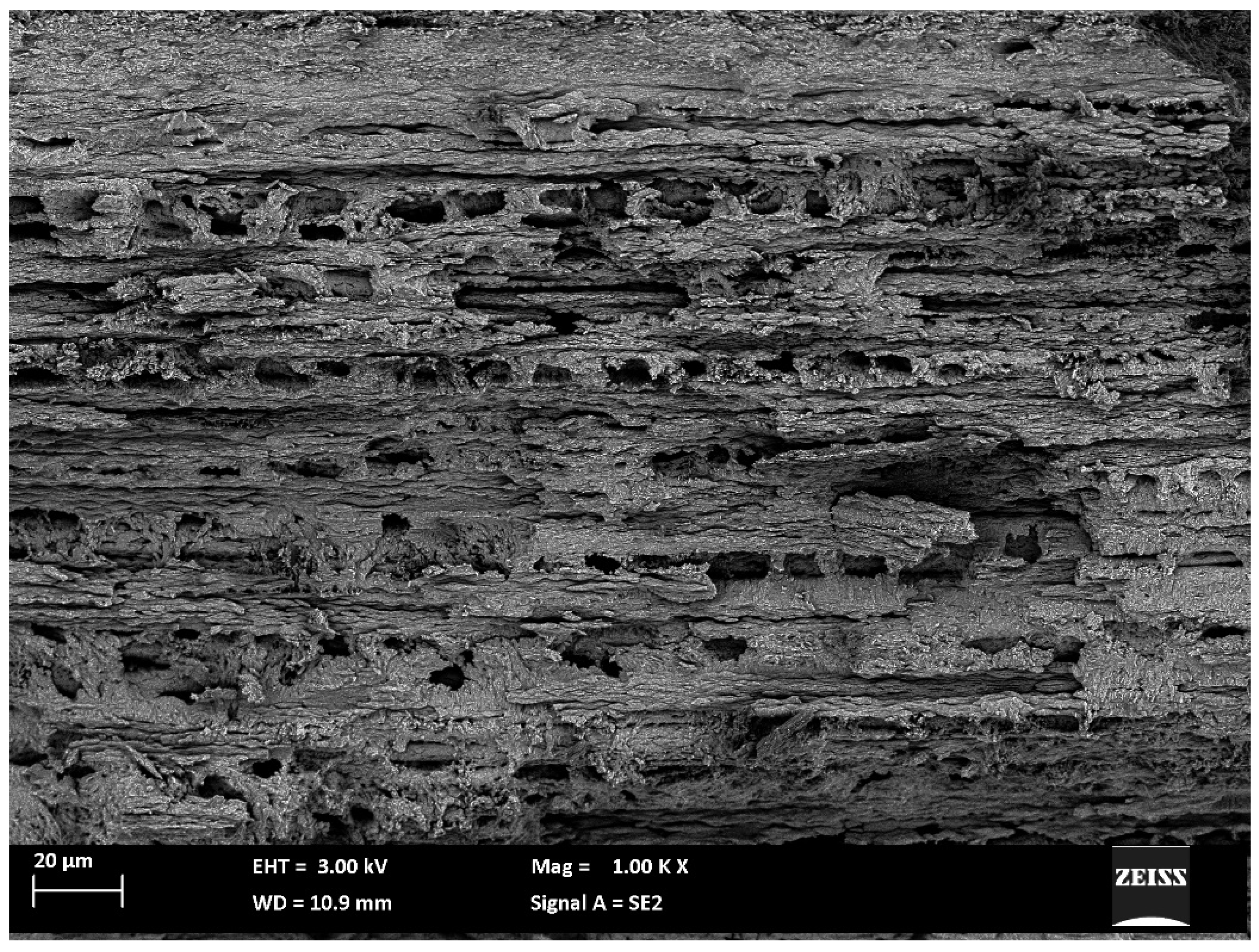
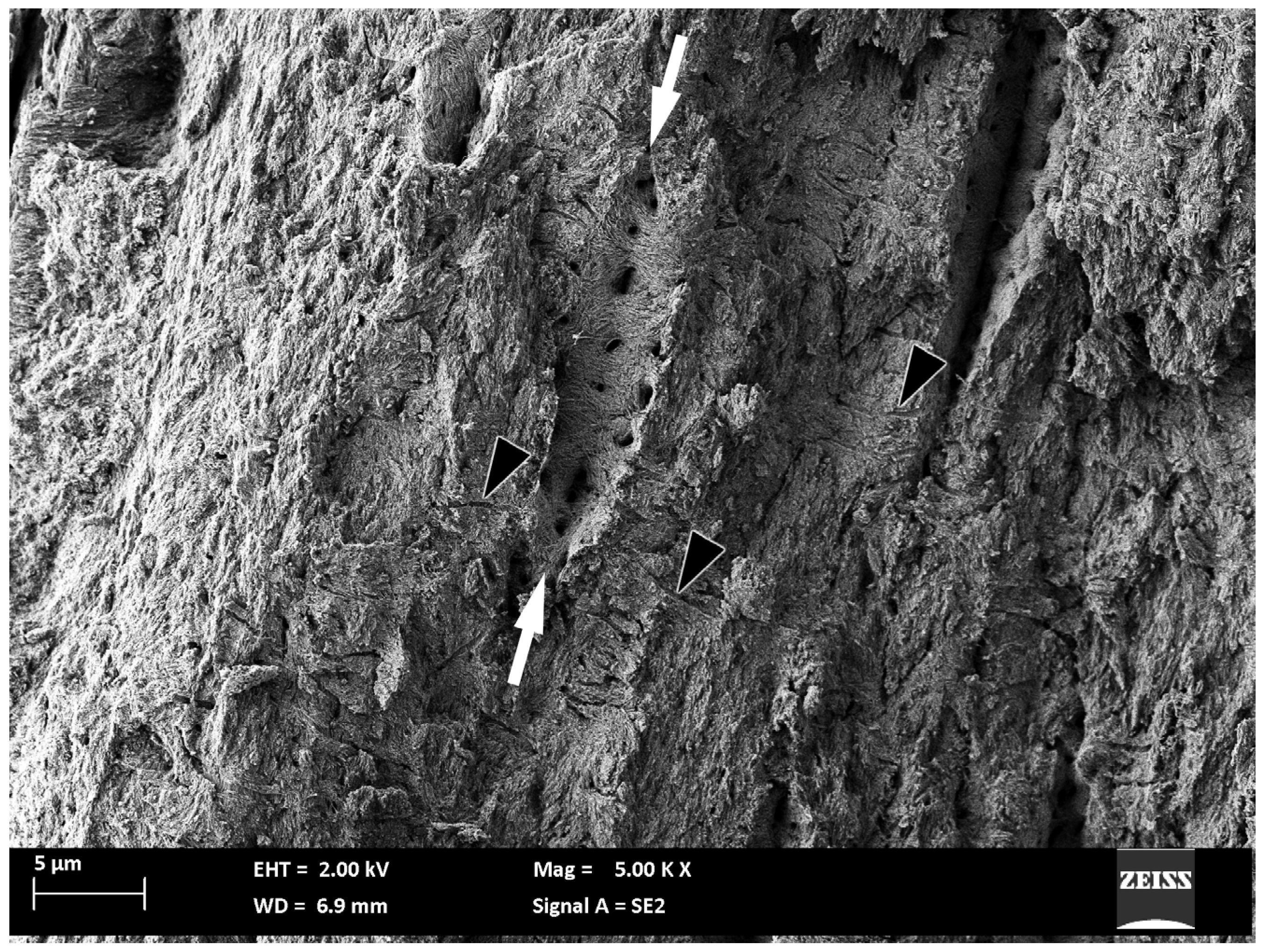
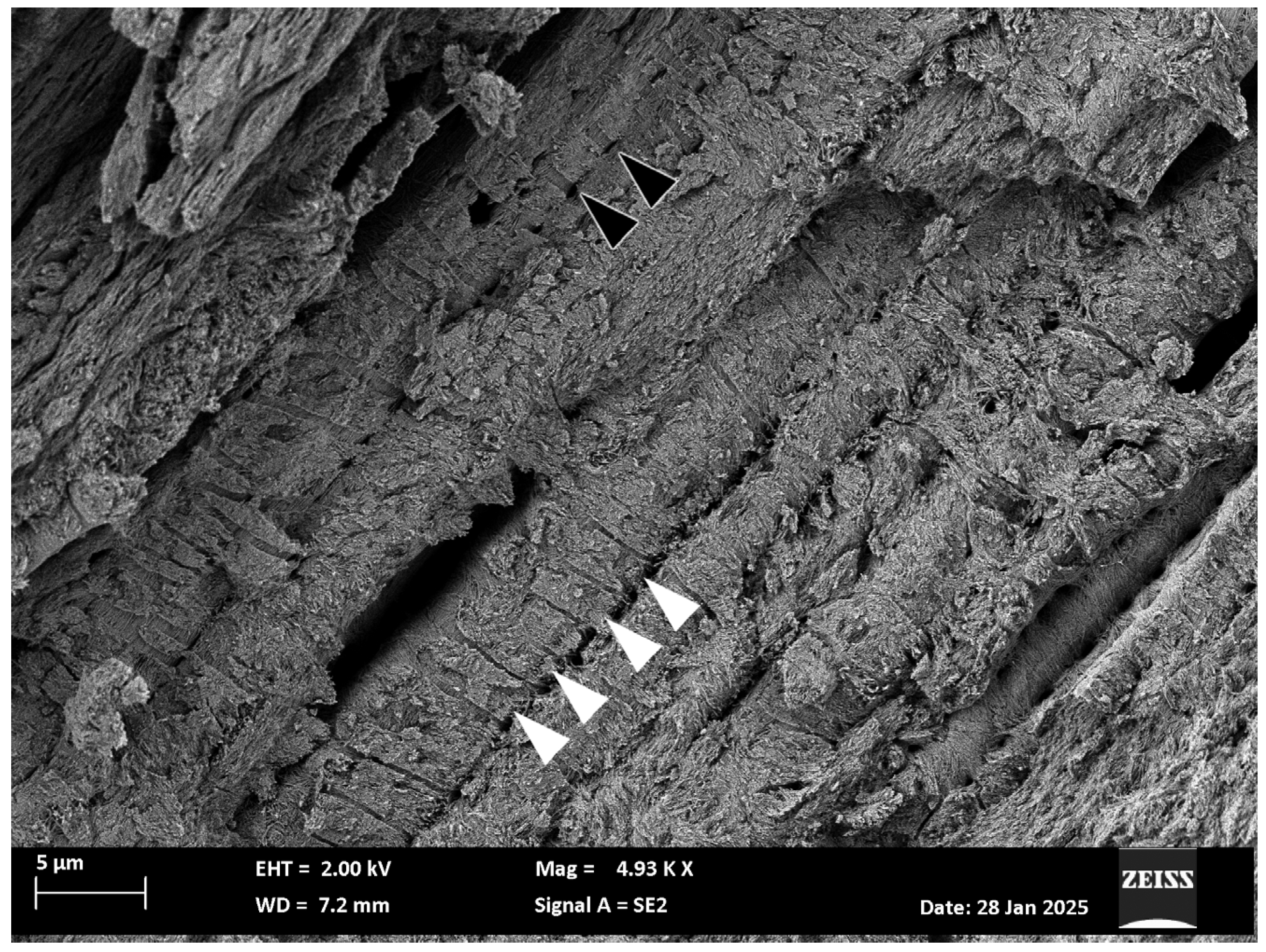
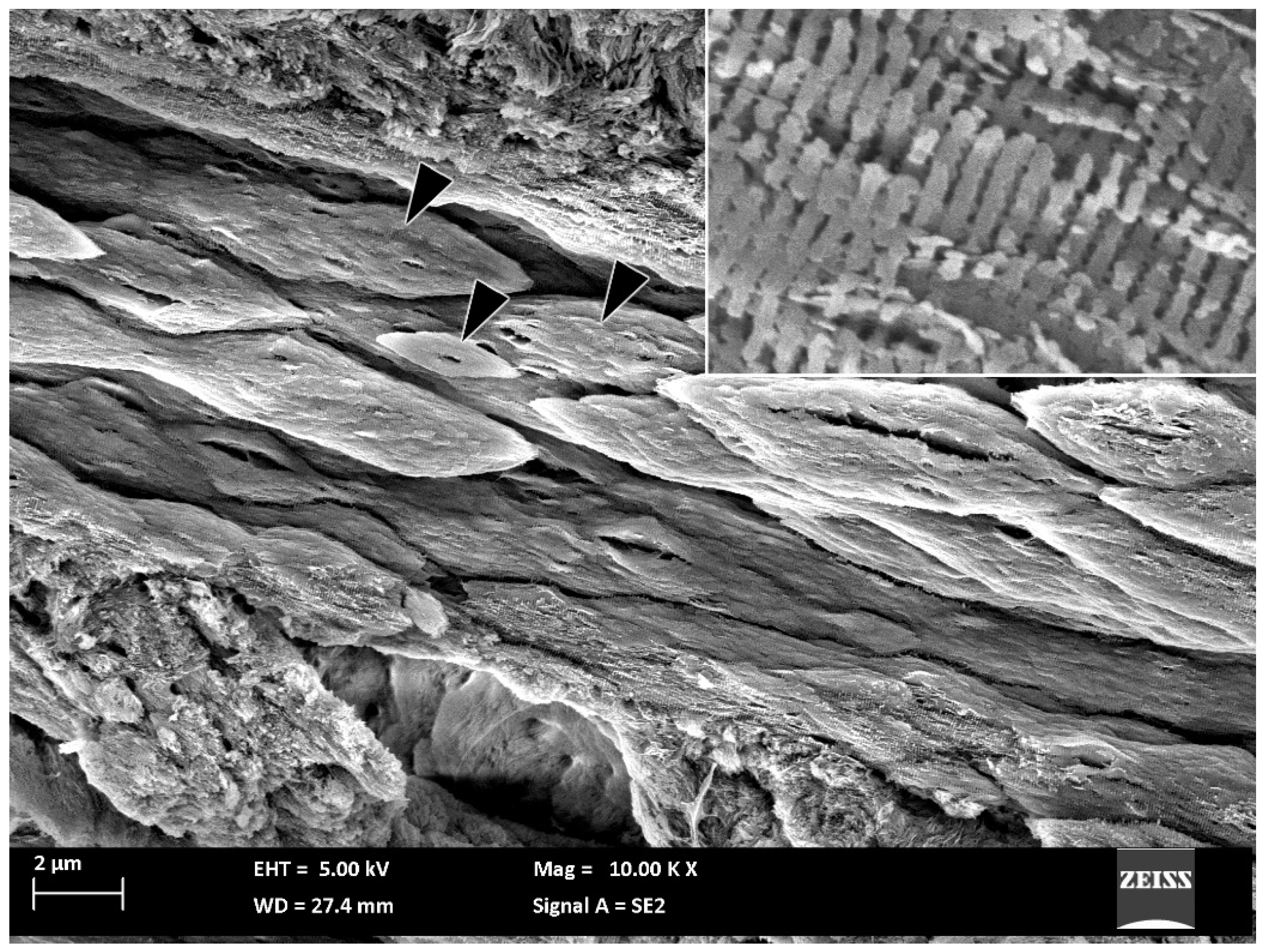
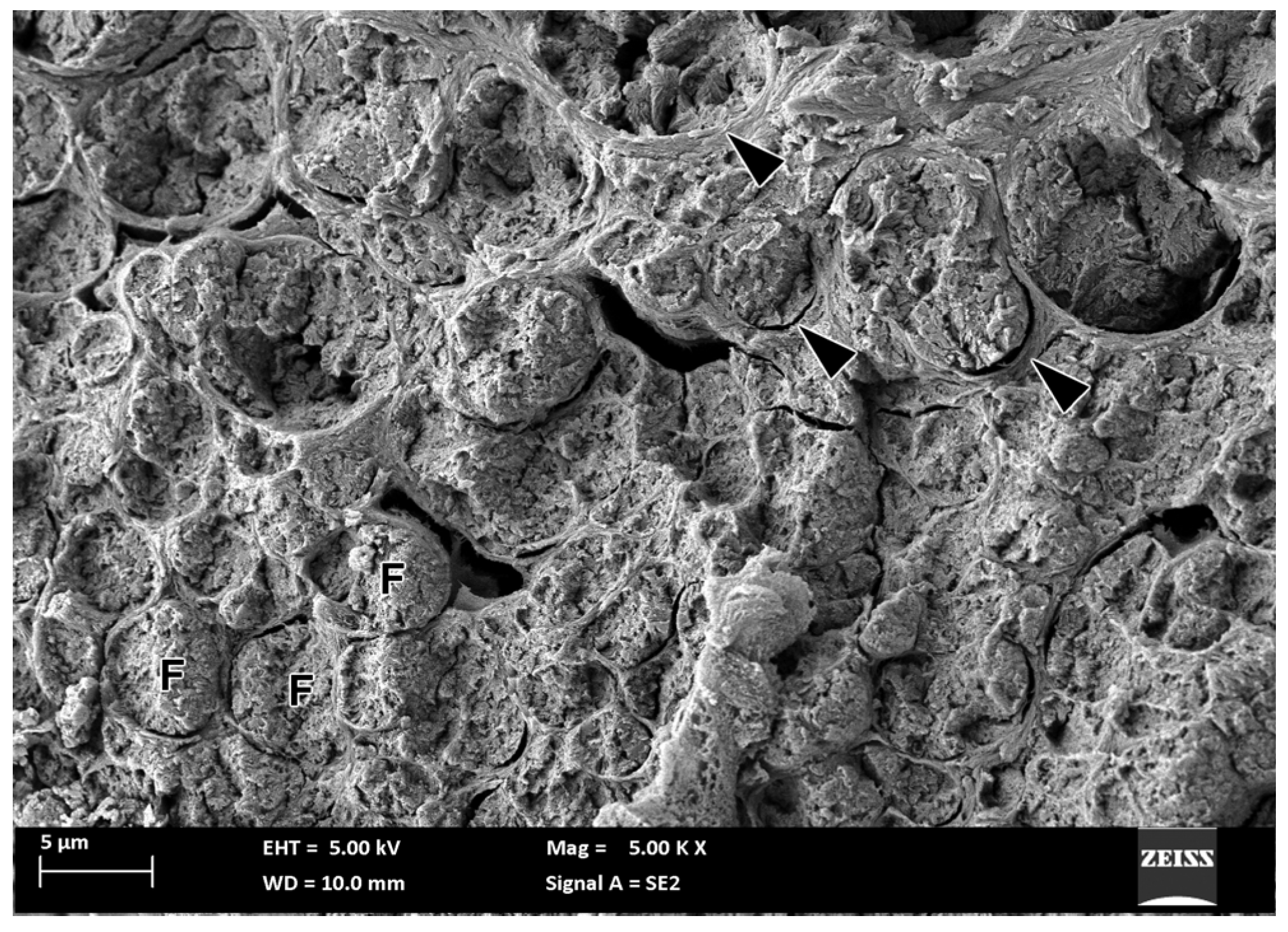
Thermal deproteination removed all cellular and soft matrix components, leaving an intact three-dimensional cast of the mineralised scaffold (Figure 7). The mineral phase retained its original size, shape, and spatial layout; collagen fibril periodicity remained recognisable from the preserved mineral arrangement. At higher magnification, the inner surfaces of unmineralised canals projected numerous fine lateral channels (Figure 8). At the same time, less-dense zones revealed straight fibrillar fascicles ensheathed by endotenon and encircled by small canalicular apertures (Figure 9). Spindle-shaped mineral clusters (tesselles) with regular collagen D-banding periodicity were also clearly resolved (Figure 10). Transversal cryofracture of fresh tendon (Figure 11) revealed a hierarchical architecture of tightly packed fascicles of variable diameter, surrounded by endotenon sheaths; each fascicle in turn comprised finer sub-fascicles of collagen fibrils.
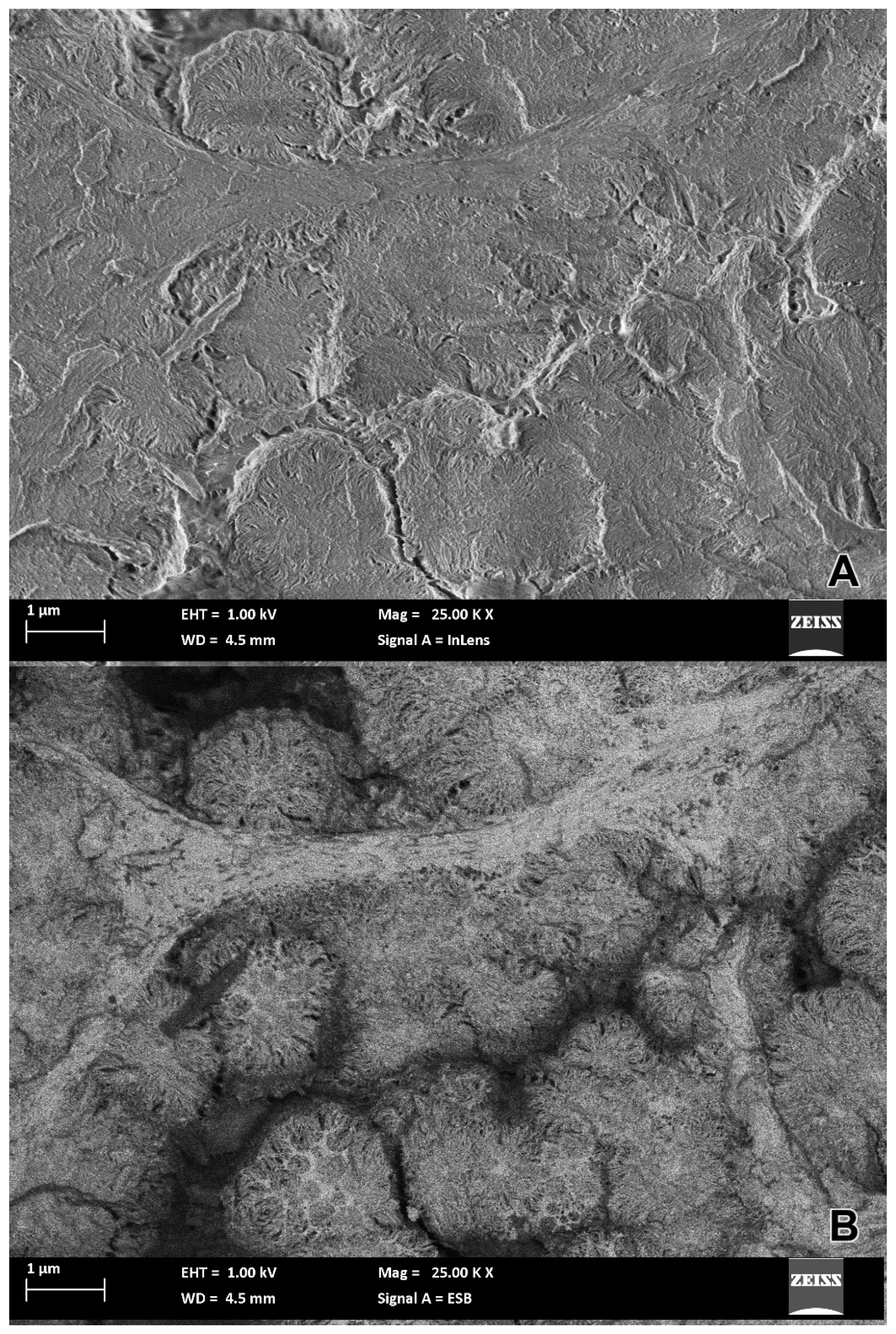
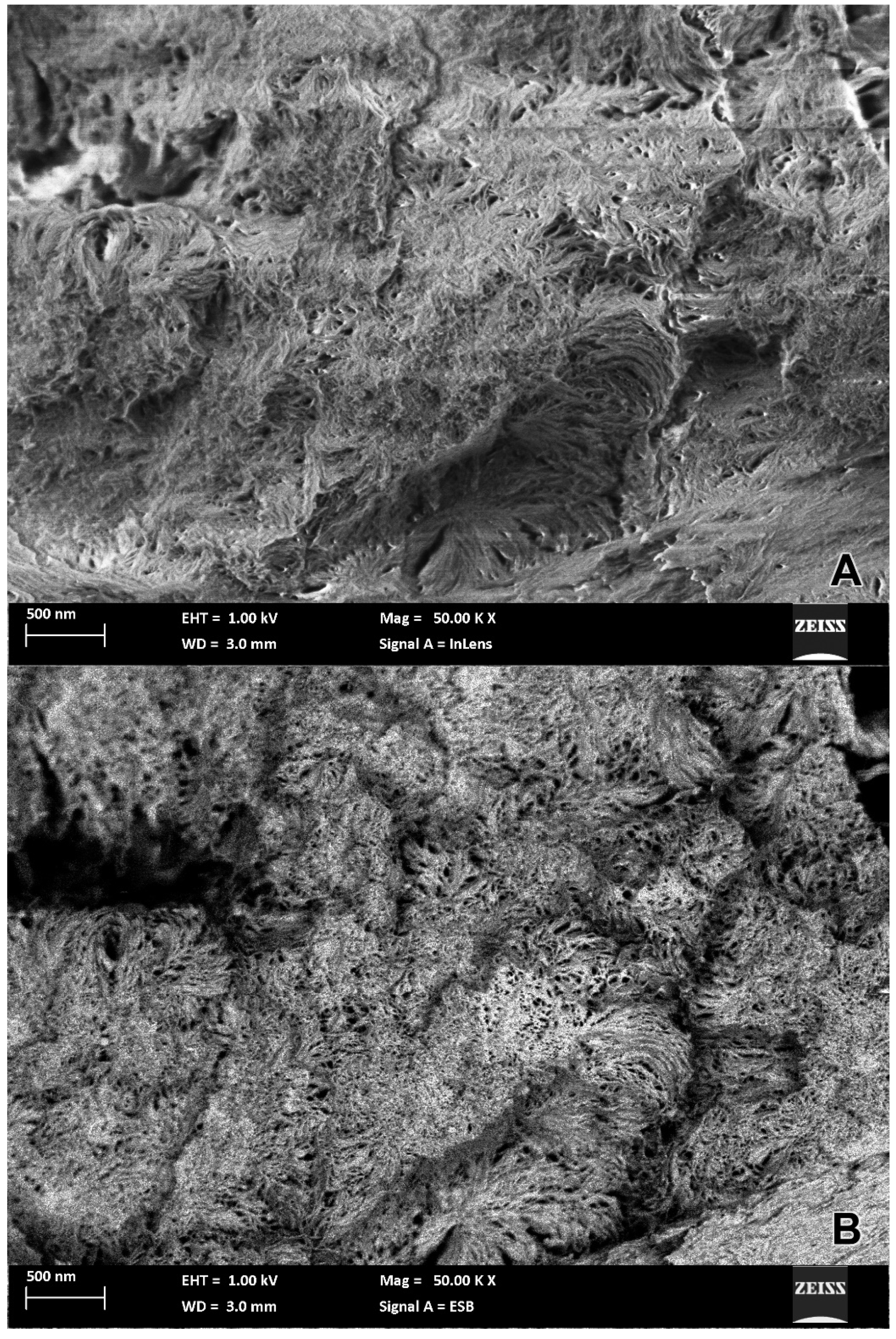
Cryofracture surfaces often formed relatively smooth planes, where secondary electron imaging provided limited structural detail (Figure 12A). In contrast, backscattered electron imaging of the same regions (Figure 12B) enabled clearer visualisation of the mineral phase. At higher magnification, both secondary and backscattered electron imaging consistently showed that the collagen bundles comprised a compact mineralised centre surrounded by a more diffuse peripheral region populated by curved plaquettes, with the curvature visible only in the cross-section (Figure 13).

4. Discussion

The primary aim of this study was to provide the first quantitative description of the canalicular network in mineralised turkey tendon as a model of collagen-guided mineralisation. Previous studies [10,11] had identified canals and the lacuno-canalicular system but lacked morphometric and topological quantification. The data presented here fill this gap and show that the transport infrastructure of a mineralising collagen matrix shares measurable architectural and topological similarities with cortical bone.
The most striking finding is the extent of the unmineralised canal system: approximately one-third of the tendon volume consists of void space. This value is likely conservative, as finer canaliculi fall below the micro-CT resolution limit (voxel size of 3 µm). Healthy tendons are largely avascular, with blood vessels mostly restricted to the myotendinous junction [24]. Consequently, tenocytes display a very low metabolic rate [25,26]. Information on tendon vascularisation remains scarce, with most studies focused on clinically relevant human tendons [27,28,29]. The presence of such an extensive canal system in mineralised tendon suggests a functional adaptation to meet the increased metabolic demands associated with mineralisation: mineral deposition enhances the elastic modulus and energy storage capacity of the tendon [30,31] but simultaneously requires greater nutrient and oxygen supply.
The structural organisation of mineralised tendon resembles that of cortical bone. The unmineralised canals are analogous to Haversian and Volkmann channels, and from them a canalicular network radiates that is comparable to the lacuno-canalicular system of bone [32,33]. This similarity likely reflects a shared functional constraint: mineralising collagen-based tissues requires an efficient transport network to sustain metabolic activity. Even at the nanoscale, collagen composition and mineralisation patterns are similar in tendon and bone [12,13,19,34].
Quantitative analysis supports this analogy beyond morphology. The canal network exhibits a connectivity density of ~1.3 × 102 mm−3 (computed in BoneJ as ConnD = (1 − χ)/V, following Odgaard & Gundersen, 1993) [23] and a fractal dimension of 2.58, indicative of a complex, ramified architecture broadly comparable in topological terms to the canal networks of cortical bone. The connectivity density of the mineralised tendon network is, however, markedly higher than that reported for the vascular (Haversian–Volkmann) canal network of human cortical bone at comparable micro-CT resolutions (typically a few mm−3 [35,36]), and several orders of magnitude lower than the connectivity density of the sub-micrometre lacuno-canalicular network resolved by synchrotron nanoCT (~105 mm−3 [20]). The mineralised tendon network therefore occupies an intermediate spatial scale and connectivity regime between these two cortical-bone systems. A side-by-side summary of the principal morphometric and topological parameters is provided in Table 4. Direct quantitative comparison across networks operating at substantially different spatial scales (canaliculi at the sub-micrometre scale, canals at the tens-of-micrometres scale) is inherently limited and should be interpreted as an architectural analogy rather than a metric equivalence. The porosity of mineralised tendon (∼34%) substantially exceeds that of cortical bone (1.8–28% in human femoral cortices, depending on age [35,37]; 2–8% in turkey cortical bone [38]). This difference is expected: mineralised turkey tendon lacks osteocytes in canonical bony lacunae, and its canal system is dominated by channels morphologically consistent with vascular spaces at the tens-of-micrometres scale rather than by the classical sub-micrometre osteocytic lacuno-canalicular meshwork, so a larger fraction of tissue volume is occupied by canals resolvable at the 3 µm voxel size. Consistent with this interpretation, the canal surface-to-volume ratio (106 mm−1) is markedly higher than typical surface-to-volume ratios reported for the Haversian canal network of human cortical bone at comparable micro-CT resolutions (≈15–35 mm−1 [35,36]), reflecting the higher fragmentation and frequency of canals in mineralised tendon, and mean canal thickness (48.3 ± 23.0 µm) lies within the range reported for turkey cortical bone (40–70 µm) and at the lower edge of the human range (50–90 µm) [35,36,38], although with markedly greater variability (CV 48%), consistent with the coexistence of fine canaliculi and larger conduits. The degree of anisotropy (DA = 0.87 [BoneJ convention, range 0–1]) sits at the upper end of the range reported for vascular/canal networks in cortical bone (DA ≈ 0.4–0.9 in the same convention) [35,37], consistent with the strong uniaxial alignment imposed by the tendon’s fibrillar organisation. These comparisons should be interpreted with caution, as imaging modality, voxel size, and segmentation criteria differ across studies, and the tendon canal network operates at a coarser spatial scale than the classical osteocytic lacuno-canalicular network. Hence, the analogy is architectural and topological rather than scale-matched. Moreover, identification of the mineral phase here rests on micro-CT density and backscattered electron contrast together with published compositional data, rather than on direct chemical or crystallographic confirmation (e.g., EDS, XRD, or FTIR), which lay outside the scope of this morphological and topological study.
Topological analysis further shows that the network is fully interconnected. Terminal endpoints were observed only at the boundaries of the imaged volume, reflecting truncation by the micro-CT field of view rather than anatomical terminations; no internal endpoints were detected, indicating a single-component, closed-loop architecture (99.8% of void volume in one connected network, Euler χ = −768, β1 = 769 loops). Such a configuration maximises redundancy and ensures multiple transport pathways across the tissue, architecturally consistent with the efficient distribution of diffusible molecules through the mineralising matrix [20,22,35,36,37,39,40].
The canal size distribution follows a strongly right-skewed pattern, indicating a two-level hierarchy: numerous fine canals (modal diameter ∼48 µm) and fewer large conduits that dominate the void volume. This organisation mirrors the Haversian–Volkmann hierarchy, in which small canals maximise the exchange surface with the matrix while larger ones minimise transport resistance. The approximately linear relationship between volume and surface area indicates geometric self-similarity across canal sizes.
At the ultrastructural level, mineral distribution varies radially within fascicles, indicating a graded transition from intrafibrillar to interfibrillar deposition. Such heterogeneity likely reflects mechanical optimisation rather than distinct mineralisation mechanisms [12,18,41,42,43].
The substantial differences in absolute porosity and feature scale between mineralised tendon and cortical bone do not diminish the value of the model for the applications envisaged here, because each of these applications depends on the architectural and topological organisation of the transport network rather than on its absolute metric dimensions. For the study of mineralisation dynamics, the relevant quantity is the spatial relationship between the mineralising matrix and the void channels that supply it, which is captured by connectivity, anisotropy and the closed-loop topology rather than by canal calibre. For enthesis biomechanics, the determinant of mechanical behaviour is the anisotropic, longitudinally aligned channel architecture that governs stress transfer across the mineralisation gradient, a feature that mineralised tendon reproduces irrespective of its higher void fraction. For pathological tendon calcification, the model provides a physiological reference architecture against which aberrant mineralisation patterns can be compared, again at the level of network organisation rather than absolute porosity. Finally, for biomimetic scaffold design the descriptors reported here function as architectural targets (relative anisotropy, connectivity regime, and self-similar branching) that can be rescaled to the dimensions required by a given construct. The differences in absolute scale are therefore a property of the two tissues that the present analysis explicitly quantifies, not a confound that invalidates the architectural analogy.
Beyond its structural significance, the combination of a dense canal network and heterogeneous mineral organisation suggests that mineralised tendon is adapted to balance mechanical performance with metabolic requirements. The resemblance to the tendon–bone enthesis supports the use of this tissue as a comparative model to investigate enthesis mechanics [7,13,44,45], the pathogenesis of degenerative tendinopathies [24] and heterotopic ossification [46], and the structural requirements for engineered tendon–bone interfaces and biomimetic scaffolds [40,47,48]. Throughout this manuscript, the term “unmineralised canals” refers strictly to void spaces observed in micro-CT and SEM images, without implying vascular content or specific cellular identity, in accordance with the neutral terminology adopted in previous studies [10,11].
Further limitations concern the micro-CT sample preparation protocol, which included graded ethanol dehydration and hexamethyldisilazane (HMDS) drying. Although this approach preserves microarchitectural features sufficiently for high-resolution X-ray imaging, dehydration and HMDS drying are known to induce some degree of isotropic tissue shrinkage in soft and collagen-based tissues, with the exact magnitude of mineralised tendon not independently quantified in the present work. Such shrinkage would lead to a modest overestimation of porosity and a corresponding underestimation of mineralised volume fraction; connectivity density, which is normalised by VOI volume, may also be marginally affected. Even under a conservative worst-case assumption of 15% linear shrinkage (≈39% volume contraction), the corrected porosity would remain ≈25%, still markedly higher than the 2–8% typical of healthy human cortical bone. Topological descriptors (anisotropy direction, fractal scaling, closed-loop architecture) are instead expected to be largely unaffected by isotropic shrinkage. The absolute values reported here should therefore be interpreted with this potential bias in mind. A separate limitation is the moderate sample size (n = 7) and the use of standardised specimens, which may not capture full spatial heterogeneity along the proximal-to-distal axis. The micro-CT resolution (3 µm voxel size) excludes sub-resolution canaliculi, likely underestimating porosity, connectivity, and the fractal dimension. Segmentation was based on a single data-driven threshold; although this approach minimises operator bias, the sensitivity of the morphometric outputs to threshold variation was not formally tested. Although cryo-fracturing preserves ultrastructure well, preparation artefacts such as canal widening or microcracks cannot be fully excluded. Future studies should address these limitations by using multiple ROIs per specimen to quantify intra-sample variability, performing threshold sensitivity analyses to bound uncertainty in porosity and connectivity, and using synchrotron-based nanoCT at sub-micrometre resolution to resolve the fine canalicular meshwork below the current detection limit [20]. Together, these methodological advances would transform the present descriptive framework into a statistically robust and resolution-complete characterisation of the mineralising tendon transport system.

5. Conclusions

This study provides the first quantitative 3D morphometric and topological characterisation of the canalicular network in mineralised turkey gastrocnemius tendon, combining micro-CT with SEM. The data indicate that this model tissue develops a transport infrastructure whose key parameters, including porosity (~34.6%), connectivity density (~1.3 × 102 mm−3), fractal dimension (2.58), degree of anisotropy (DA = 0.87 [BoneJ convention, range 0–1]), and closed-loop topology (Euler χ = −768, β1 = 769), are architecturally and topologically analogous to those reported for human cortical bone. Single-component connectivity analysis confirms that the canalicular system constitutes a topologically continuous network rather than a collection of isolated voids.
SEM revealed marked ultrastructural heterogeneity of the mineral phase at the fascicle level, consistent with a graded transition from intrafibrillar to interfibrillar deposition; detailed mechanistic investigation is beyond the scope of the present work but is supported by the quantitative framework reported here.
The quantitative descriptors reported here position mineralised turkey tendon as a tractable reference system for three lines of investigation: the mechanics and biology of the tendon–bone enthesis [7,13]; the pathophysiology of aberrant tendon calcification [24]; and the design of biomimetic scaffolds requiring controlled porosity, anisotropy, and transport capacity [40,47]. The combination of a geometrically ordered collagen framework with a canal architecture architecturally analogous to that of cortical bone makes this tissue a uniquely informative model for studying how mineralisation organises transport infrastructure in collagen-based matrices.

Author Contributions

Conceptualisation: M.B.; Data acquisition: M.R. (Mario Raspanti), M.B. and M.F.; Manuscript drafting: M.R. (Mario Raspanti); Manuscript editing: M.B. and P.A.Z.; Data analysis: R.G.; Project supervision: M.P. and M.R. (Marcella Reguzzoni). All authors have read and agreed to the published version of the manuscript.

Funding

This research received no external funding.

Institutional Review Board Statement

Not applicable. The tendon specimens analysed in this study were obtained as post-mortem material from animals (Meleagris gallopavo domesticus) routinely slaughtered for food; no live-animal experimentation was performed for the present work.

Informed Consent Statement

Not applicable.

Data Availability Statement

The data presented in this study are available upon reasonable request from the corresponding author.

Acknowledgments

Scientific support from the CRIETT centre of the University of Insubria (instrument code MIC02) and the Centro Grandi Strumenti of the University of Pavia is gratefully acknowledged.

Conflicts of Interest

The authors declare no conflicts of interest.

References

  1. Reznikov, N.; Hoac, B.; Buss, D.J.; Addison, W.N.; Barros, N.M.T.; McKee, M.D. Biological stenciling of mineralisation in the skeleton: Local enzymatic removal of inhibitors in the extracellular matrix. Bone 2020, 138, 115447. [Google Scholar] [PubMed]
  2. Sorokina, L.; Shahbazian-Yassar, R.; Shokhufar, T. Collagen biomineralisation: Pathways, mechanisms and thermodynamics. Emergent Mater. 2021, 4, 1205–1224. [Google Scholar]
  3. Reznikov, N.; Bilton, M.; Lari, L.; Stevens, M.M.; Kröger, R. Fractal-like hierarchical organization of bone begins at the nanoscale. Science 2018, 360, eaao2189. [Google Scholar] [CrossRef] [PubMed]
  4. McKee, M.D.; Buss, D.J.; Reznikov, N. Mineral tessellation in bone and the stenciling principle for extracellular matrix mineralisation. J. Struct. Biol. 2022, 214, 107823. [Google Scholar] [PubMed]
  5. Micheletti, C.; Hurley, A.; Gourrier, A.; Palmquist, A.; Tang, T.; Shah, F.A.; Grandfield, K. Bone mineral organization at the mesoscale: A review of mineral ellipsoids in bone and at bone interfaces. Acta Biomater. 2022, 142, 1–13. [Google Scholar] [CrossRef] [PubMed]
  6. Buss, D.J.; Kröger, R.; McKee, M.D.; Reznikov, N. Hierarchical organization of bone in three dimensions: A twist of twists. J. Struct. Biol. X 2022, 6, 100057. [Google Scholar] [PubMed]
  7. Schwartz, A.G.; Pasteris, J.D.; Genin, G.M.; Daulton, T.L.; Thomopoulos, S. Mineral Distributions at the Developing Tendon Enthesis. PLoS ONE 2012, 7, e48630. [Google Scholar] [CrossRef] [PubMed]
  8. Raspanti, M.; Reguzzoni, M.; Protasoni, M.; Congiu, T. Mineralization-related modifications in the calcifying tendons of turkey (Meleagris gallopavo). Micron 2015, 71, 46–50. [Google Scholar] [CrossRef] [PubMed]
  9. Taylor, R.W.; Mitchell, G.K.; Andrade, J.L.; Svoboda, K.K. Expression of Collagen Types I, II, IX, and X in the Mineralizing Turkey Gastrocnemius Tendon. Anat. Rec. 2020, 303, 1664–1669. [Google Scholar]
  10. Landis, W.J.; Silver, F.H. The structure and function of normally mineralising avian tendons. Comp. Biochem. Physiol. A Mol. Integr. Physiol. 2002, 133, 1135–1157. [Google Scholar] [CrossRef] [PubMed]
  11. Zou, Z.; Tang, T.; Macías-Sánchez, E.; Sviben, S.; Landis, W.J.; Bertinetti, L.; Fratzl, P. Three-dimensional structural interrelations between cells, extracellular matrix, and mineral in normally mineralizing avian leg tendon. Proc. Natl. Acad. Sci. USA 2020, 117, 14102–14109. [Google Scholar] [CrossRef] [PubMed]
  12. Maurya, A.K.; Parrilli, A.; Kochetkova, T.; Schwiedrzik, J.; Dommann, A.; Neels, A. Multiscale and multimodal X-ray analysis: Quantifying phase orientation and morphology of mineralized turkey leg tendons. Acta Biomater. 2021, 129, 169–177. [Google Scholar] [CrossRef] [PubMed]
  13. Buss, D.J.; Rechav, K.; Reznikov, N.; McKee, M.D. Mineral tessellation in mouse enthesis fibrocartilage, Achilles tendon, and Hyp calcifying enthesopathy: A shared 3D mineralization pattern. Bone 2023, 174, 116818. [Google Scholar] [CrossRef] [PubMed]
  14. Landis, W.J.; Hay Kraus, B.L.; Kirker-Head, C.A. Vascular-mineral spatial correlation in the calcifying turkey leg tendon. Connect. Tissue Res. 2002, 43, 595–605. [Google Scholar] [CrossRef]
  15. Zhou, H.W.; Burger, C.; Wang, H.; Hsiao, B.S.; Chu, B.; Graham, L. The supramolecular structure of bone: X-ray scattering analysis and lateral structure modelling. Acta Crystallogr. Sect. D Struct. Biol. 2016, 72, 986–996. [Google Scholar] [CrossRef] [PubMed]
  16. Micheletti, C.; Shah, F.A.; Palmquist, A.; Grandfield, K. Ultrastructure and nanoporosity of human bone shown with correlative on-axis electron and spectroscopic tomographies. ACS Nano 2023, 17, 24719–24724. [Google Scholar] [CrossRef] [PubMed]
  17. Zheng, K.; Zhong, J.; Hu, J.; Nebbiolo, E.; Sanchez-Weatherby, J.; Tengteng, T.; Landis, W.J.; Chen, J.; Winlove, P.; Sherlock, B.E.; et al. Effect of mineralisation on the hierarchical organisation of collagen—A synchrotron X-ray scattering and polarised second harmonic generation study. Interface Focus 2024, 14, 20230046. [Google Scholar] [PubMed]
  18. Schwarcz, H.P.; Nassif, N.; Kovacs Kis, V. Curved mineral platelets in bone. Acta Biomater. 2024, 183, 201–209. [Google Scholar] [CrossRef] [PubMed]
  19. Landis, W.J.; Hodgens, K.J.; Arena, J.; Song, M.J.; McEwen, B.F. Structural relations between collagen and mineral in bone as determined by high voltage electron microscopic tomography. Microsc. Res. Tech. 1996, 33, 192–202. [Google Scholar]
  20. Yu, B.; Gauthier, R.; Olivier, C.; Villanova, J.; Follet, H.; Mitton, D.; Peyrin, F. 3D quantification of the lacunocanalicular network on human femoral diaphysis through synchrotron radiation-based nanoCT. J. Struct. Biol. 2024, 216, 108111. [Google Scholar] [CrossRef] [PubMed]
  21. Chen, J.; Aido, M.; Roschger, A.; van Tol, A.; Checa, S.; Willie, B.M.; Weinkamer, R. Spatial variations in the osteocyte lacuno-canalicular network density and analysis of the connectomic parameters. PLoS ONE 2024, 19, e0303515. [Google Scholar] [CrossRef] [PubMed]
  22. Tommasini, S.M.; Trinward, A.; Acerbo, A.S.; De Carlo, F.; Miller, L.M.; Judex, S. Changes in intracortical microporosities induced by pharmaceutical treatment of osteoporosis as detected by high resolution micro-CT. Bone 2012, 50, 596–604. [Google Scholar] [CrossRef] [PubMed][Green Version]
  23. Odgaard, A.; Gundersen, H.J. Quantification of connectivity in cancellous bone, with special emphasis on 3-D recon-structions. Bone 1993, 14, 173–182. [Google Scholar] [CrossRef] [PubMed]
  24. Tempfer, H.; Traweger, A. Tendon vasculature in health and disease. Front. Physiol. 2015, 6, 330. [Google Scholar] [CrossRef] [PubMed]
  25. Heinemeier, K.M.; Schjerling, P.; Heinemeier, J.; Magnusson, S.P.; Kjaer, M. Lack of tissue renewal in human adult Achilles tendon is revealed by nuclear bomb 14C. FASEB J. 2013, 27, 2074–2079. [Google Scholar] [CrossRef] [PubMed]
  26. Lehner, C.; Gehwolf, R.; Ek, J.C.; Korntner, S.; Bauer, H.; Bauer, H.C.; Traweger, A.; Tempfer, H. The blood-tendon barrier: Identification and characterisation of a novel tissue barrier in tendon blood vessels. Eur. Cells Mater. 2016, 31, 296–311. [Google Scholar] [CrossRef] [PubMed]
  27. Schmidt-Rohlfing, B.; Graf, J.; Schneider, U.; Niethard, F.U. The blood supply of the Achilles tendon. Int. Orthop. 1992, 16, 29–31. [Google Scholar] [CrossRef] [PubMed]
  28. Ahmed, I.M.; Lagopoulos, M.; McConnell, P.; Soames, R.W.; Sefton, G.K. Blood Supply of the Achilles Tendon. J. Orthop. Res. 1998, 16, 591–596. [Google Scholar] [CrossRef] [PubMed]
  29. Stein, V.; Laprell, H.; Tinnemeyer, S.; Petersen, W. Quantitative assessment of intravascular volume of the human Achilles tendon. Acta Orthop. Scand. 2000, 71, 60–63. [Google Scholar] [CrossRef] [PubMed]
  30. Silver, F.H.; Freeman, J.W.; Horvath, I.; Landis, W.J. Molecular Basis for Elastic Energy Storage in Mineralized Tendon. Biomacromolecules 2001, 2, 750–756. [Google Scholar] [CrossRef] [PubMed]
  31. Freeman, J.W.; Silver, F.H. Analysis of Mineral Deposition in Turkey Tendons and Self-Assembled Collagen Fibers Using Mechanical Techniques. Connect. Tissue Res. 2004, 45, 131–141. [Google Scholar] [CrossRef] [PubMed]
  32. Ciani, C.; Doty, S.B.; Fritton, S.P. An effective histological staining process to visualize bone interstitial fluid space using confocal microscopy. Bone 2009, 44, 1015–1017. [Google Scholar] [CrossRef] [PubMed][Green Version]
  33. Pazzaglia, U.E.; Congiu, T. The cast imaging of the osteon lacunar-canalicular system and the implications with functional models of intracanalicular flow. J. Anat. 2013, 222, 193–202. [Google Scholar] [PubMed]
  34. McEwen, B.F.; Song, M.J.; Landis, W.J. Quantitative determination of the mineral distribution in different collagen zones of calcifying tendon using high voltage electron microscopic tomography. J. Comput. Assist. Microsc. 1992, 3, 201–210. [Google Scholar]
  35. Bala, Y.; Lefevre, E.; Roux, J.P.; Baron, C.; Lasaygues, P.; Pithioux, M.; Kaftandjian, V.; Follet, H. Pore network microarchitecture influences human cortical bone elasticity during growth and aging. J. Mech. Behav. Biomed. Mater. 2016, 63, 164–173. [Google Scholar] [CrossRef] [PubMed]
  36. Cooper, D.M.; Turinsky, A.L.; Sensen, C.W.; Hallgrimsson, B. Quantitative 3D analysis of the canal network in cortical bone by micro-computed tomography. Anat. Rec. Part B New Anat. 2003, 274, 169–179. [Google Scholar]
  37. Chappard, C.; Bensalah, S.; Olivier, C.; Gouttenoire, P.J.; Marchadier, A.; Benhamou, C.; Peyrin, F. 3D characterization of pores in the cortical bone of human femur in the elderly at different locations as determined by synchrotron micro-computed tomography images. Osteoporos. Int. 2013, 24, 1023–1033. [Google Scholar] [PubMed]
  38. Chen, Y.; Ramachandra, C.; Tewari, S.N. Structural differences in the cortical bone of Turkey tibia. J. Mater. Sci. 2004, 39, 207–214. [Google Scholar] [CrossRef]
  39. Hsu, J.T.; Chen, Y.J.; Ho, J.T.; Huang, H.L.; Wang, S.P.; Cheng, F.C.; Wu, J.; Tsai, M.T. A comparison of micro-CT and dental CT in assessing cortical bone morphology and trabecular bone microarchitecture. PLoS ONE 2014, 9, e107545. [Google Scholar] [CrossRef] [PubMed]
  40. van Tol, A.F.; Roschger, A.; Repp, F.; Chen, J.; Roschger, P.; Berzlanovich, A.; Gruber, G.M.; Fratzl, P.; Weinkamer, R. Network architecture strongly influences the fluid flow pattern through the lacunocanalicular network in human osteons. Biomech. Model. Mechanobiol. 2020, 19, 823–840. [Google Scholar] [PubMed]
  41. Grandfield, K.; Vuong, V.; Schwarcz, H.P. Ultrastructure of Bone: Hierarchical Features from Nanometer to Micrometer Scale Revealed in Focused Ion Beam Sections in the TEM. Calcif. Tissue Int. 2018, 103, 606–616. [Google Scholar] [CrossRef] [PubMed]
  42. Borgese, M.; Raspanti, M.; Protasoni, M.; Zecca, P.A.; Ortolani, F.; Reguzzoni, M. Ultrastructural aspects of physiological mineralization: A comparative study in different hard tissues. Biomolecules 2025, 15, 932. [Google Scholar] [CrossRef] [PubMed]
  43. Shen, M.; Zhang, C.; Zhang, Y.; Lu, D.; Yuan, J.; Wang, Z.; Wu, M.; Zhu, M.; Chen, Q. Mesoscale orchestration of collagen-based hierarchical mineralization. Nat. Commun. 2025, 16, 2041. [Google Scholar] [CrossRef] [PubMed]
  44. Tits, A.; Blouin, S.; Rummler, M.; Kaux, J.F.; Drion, P.; van Lenthe, G.H.; Weinkamer, R.; Hartmann, M.A.; Ruffoni, D. Structural and functional heterogeneity of mineralized fibrocartilage at the Achilles tendon-bone insertion. Acta Biomater. 2023, 166, 409–418. [Google Scholar] [CrossRef] [PubMed]
  45. Yang, Z.; Gordon, D.; Chen, Y.; Li, H.; Wu, Y.; Meng, Z. Understanding the effects of mineralization and structure on the mechanical properties of tendon-bone insertion using mesoscale computational modeling. J. Mech. Behav. Biomed. Mater. 2024, 160, 106735. [Google Scholar] [CrossRef] [PubMed]
  46. Ren, C.; Liu, F.; Zhang, S.; Xu, H.; Yang, P. The role of collagen matrix in the development and progression of heterotopic ossification in tendon and its biological mechanisms. FASEB J. 2025, 39, e70873. [Google Scholar] [CrossRef] [PubMed]
  47. van Tol, A.F.; Schemenz, V.; Wagermaier, W.; Roschger, A.; Razi, H.; Vitienes, I.; Fratzl, P.; Willie, B.M.; Weinkamer, R. The mechanoresponse of bone is closely related to the osteocyte lacunocanalicular network architecture. Proc. Natl. Acad. Sci. USA 2020, 117, 32251–32259. [Google Scholar] [CrossRef] [PubMed]
  48. Liu, Y.; Xu, J.; Yuan, J.; Guo, J.; Guan, G.; Zhao, J.; Mikos, A.G.; Wang, L. Gradient hydrogel with bioactive glass for tendon-bone interface regeneration: Enhancing biomechanical strength and synchronized tissue regeneration. Acta Biomater. 2025, 204, 643–656. [Google Scholar] [CrossRef] [PubMed]
Figure 1. Three-dimensional reconstruction of a 3 mm section of the mineralised core of the gastrocnemius tendon. All dimensions shown in the image are reported in millimetres (mm).
Applsci 16 06287 g001
Figure 2. Three-dimensional rendering of the unmineralised canalicular network within the mineralised turkey tendon.
Applsci 16 06287 g002
Figure 3. Grey-level histogram of the micro-CT dataset showing the bimodal distribution of pixel intensities corresponding to the mineralised matrix (right peak) and unmineralised canals (left peak).
Applsci 16 06287 g003
Figure 4. Morphometric analysis of unmineralised canals in the mineralised turkey tendon. (A) Histogram of canal volumes (µm3), right-skewed, with most canals in the 270–675 µm3 range. (B) Histogram of canal surface areas (µm2), with most values between 270 and 630 µm2. (C) Scatter plot of canal volume versus surface area on log–log axes, showing an approximately linear relationship consistent with geometric self-similarity across canal sizes. (D) Boxplots of canal volume, surface area, and median distance to surface (µm).
Applsci 16 06287 g004
Figure 5. Fractal dimension analysis of the canalicular network using the box-counting method.
Applsci 16 06287 g005
Figure 6. Zeiss Gemini 360 FEG-SEM; 5 kV; WD 20.1 mm; BSE detector. BSE-SEM micrograph of a cross-section of resin-embedded tendon, showing the calcified tissue (C), the surrounding soft tissue (S), small cavities (arrowheads) and barely visible micropores interspersed among the larger channels (asterisks) revealed by micro-CT in Figure 1 and Figure 2.
Applsci 16 06287 g006
Figure 7. Zeiss Gemini 360 FEG-SEM; 3 kV; WD 10.9 mm; SE detector. SEM image of a longitudinal section of mineralised tendon after thermal treatment. The treatment removes organic and cellular components while preserving the inorganic phase, revealing a porous, interconnected mineralised network with anisotropic organisation along the tissue axis.
Applsci 16 06287 g007
Figure 8. Zeiss Gemini 360 FEG-SEM; 2 kV; WD 6.9 mm; SE detector. SEM image of a longitudinal section of mineralised tendon after thermal treatment. Near the centre of the micrograph appears an elongated cellular cavity, whose major axis lies between the white arrows. From the cavity radiate a number of fine lateral channels that can be followed for several micrometres across the specimen surface (arrowheads).
Applsci 16 06287 g008
Figure 9. Zeiss Gemini 360 FEG-SEM; 2 kV; WD 7.2 mm; SE detector. A less dense zone in a thermally treated tendon reveals several straight fascicles of collagen fibrils, running from bottom left to top right, surrounded and ensheathed by endotenon (white arrowheads) interrupted by narrow spaces, perhaps previously occupied by cellular processes, which encircle the fascicles passing through tiny apertures (black arrowheads).
Applsci 16 06287 g009
Figure 10. Zeiss Gemini 360 FEG-SEM; 2 kV; WD 27.4 mm; SE detector. SEM image of a longitudinal section of mineralised tendon after thermal treatment. Some spindle-shaped clusters (tesselles) of mineralised fibrils are evident on the left (arrowheads), while more deeply they blend into one another. The regular periodicity of mineral particles (inset, magnified 10×) reflects their relationship with the collagen D-period. Their orthogonal layout indicates synchronisation between adjacent fibrils, suggesting increased mechanical coupling and fascicle stiffness.
Applsci 16 06287 g010
Figure 11. Zeiss Gemini 360 FEG-SEM; 5 kV; WD 10.0 mm; SE detector. A transversal cryofracture across a fresh mineralised tendon shows that the latter is structured into a hierarchy of tightly packed fascicles (F) of variable size, surrounded and sheathed by the endotenon (arrowheads).
Applsci 16 06287 g011
Figure 12. Zeiss Gemini 360 FEG-SEM; 1 kV; WD 4.5 mm. The cryofracture often forms a relatively smooth plane, where secondary electron imaging can hardly resolve further details (A). In contrast, backscattered electron imaging, which visualises only the mineral phase, provides a clearer view of the same area (B).
Applsci 16 06287 g012
Figure 13. Zeiss Gemini 360 FEG-SEM; 1 kV; WD 3.0 mm. In both secondary (A) and backscattered (B) electron images, the collagen bundles consistently exhibit a compact centre and a more diffuse peripheral region with curved plaquettes. Their curvature is only evident in cross-section.
Applsci 16 06287 g013
Table 1. Connectivity metrics of the canalicular network (mean ± SD, n = 7).
ParameterMean ± SDUnitp-Value
Corrected Euler characteristic (χ)−768 ± 29/0.41
First Betti number (β1, independent loops)769 ± 30/0.39
Analysed VOI volume5.99 ± 0.21mm30.47
Connectivity density [(1 − χ)/V](1.29 ± 0.12) × 102mm−30.44
Values are mean ± SD across n = 7 specimens. p-values from two-sample t-test for between-sex differences (males n = 4, females n = 3); all p > 0.30, supporting pooling.
Table 2. Quantitative morphometric parameters of the canalicular network (mean ± SD, n = 7).
ParameterMean ± SDUnitp-Value
Surface area (SA)(7.16 ± 0.72) × 107µm20.36
Enclosed volume (Encl. Vol)(2.07 ± 0.21) × 109µm30.42
Void volume fraction (porosity)0.346 ± 0.021 (34.6%)/0.44
Mean canal thickness (Tb.Th)48.3 ± 23.0µm0.51
Tb.Th coefficient of variation47.6 ± 4.8%0.50
Maximum canal thickness116.9 ± 11.7µm0.48
Surface-to-volume ratio (S/V)106 ± 11mm−10.39
Fractal dimension (FD)2.58 ± 0.05 (R2 = 0.996)/0.47
Degree of anisotropy (DA, BoneJ convention)0.87 ± 0.04/0.45
Major principal axis of the dominant void component2196.6 ± 219.7µm0.40
Intermediate principal axis of the dominant void component1266.4 ± 126.6µm0.43
Minor principal axis of the dominant void component484.7 ± 48.5µm0.46
Principal eigenvector (vX, vY, vZ)(−1.000 ± 0.003, −0.007 ± 0.004, 0.010 ± 0.005)/0.49
Values are mean ± SD across n = 7 specimens. p-values from two-sample t-test for between-sex differences (males n = 4, females n = 3); all p > 0.30, supporting pooling.
Table 3. Topological parameters of the canalicular network obtained from 3D skeleton analysis (mean ± SD, n = 7).
ParameterMean ± SDUnitp-Value
Number of branches10,550 ± 1055/0.38
Number of junctions5889 ± 589/0.41
Triple-point junctions5107 ± 511/0.42
Quadruple-point junctions427 ± 43/0.46
Endpoints (all at VOI boundary)2788 ± 279/0.44
Average branch length29.2 ± 2.9µm0.45
Maximum branch length356.0 ± 35.6µm0.43
Values are mean ± SD across n = 7 specimens. Junction subdivision (5107 triple-points and 427 quadruple-points) reflects voxel-based classification by the BoneJ Analyze Skeleton plugin; remaining junctions correspond to higher-order or aggregated voxel clusters not separately enumerated, which accounts for minor deviations from strict graph-theoretic identities.
Table 4. Comparative summary of morphometric and topological parameters of the mineralised turkey tendon canalicular network (this study, micro-CT 3 µm voxel) and two systems of the human cortical bone, the vascular Haversian–Volkmann canal network (resolved by micro-CT at 5–10 µm voxel) and the sub-micrometre lacuno-canalicular network (resolved by synchrotron nanoCT at 30–100 nm voxel). Values are intended as order-of-magnitude indicators rather than strict equivalences; quantitative comparisons across networks operating at different spatial scales should be interpreted accordingly. References as listed in the bibliography.
ParameterMineralised Turkey Tendon (This Study)Human Cortical Bone, Vascular Canal NetworkHuman Cortical Bone, Lacuno-Canalicular NetworkReferences
Porosity (V_void/V_total)34.6%~3–10%~1–2%[20,35,36]
Connectivity density (mm−3)1.29 × 10²~100–101~105[20,35,36]
Surface-to-volume ratio (mm−1)106~15–35not directly comparable (canalicular S ≈ 700cm2 per cm3 bone)[35,36]
Fractal dimension (3D box-counting)2.58 (range 6–600 µm)2.4–2.7 (network analyses)not reported at the sub-µm scale[35,36]
Degree of anisotropy (BoneJ convention, 0–1)0.870.4–0.7 (vascular canals, MIL-based)not directly comparable[35,36]
Mean canal thickness (µm)48.3 ± 23.0~25–35 (Haversian diameter, femoral midshaft)~0.3 (canalicular diameter)[20,35,36]
Imaging voxel size used in cited references (µm)35–10 (micro-CT)0.03–0.1 (synchrotron nanoCT)[20,35,36]
Disclaimer/Publisher’s Note: The statements, opinions and data contained in all publications are solely those of the individual author(s) and contributor(s) and not of MDPI and/or the editor(s). MDPI and/or the editor(s) disclaim responsibility for any injury to people or property resulting from any ideas, methods, instructions or products referred to in the content.