Review

Total Scaphoid Replacement: An Overview of Concepts, Materials, and Clinical Evidence


by
Philipp Honigmann
1,2,3,*,
Joris G. M. Oonk
3,
Johannes G. G. Dobbe
3,4,
Gustav J. Strijkers
3,
Geert J. Streekstra
3,4,5 and
Mathias Haefeli
3,6
1
Hand Center Northwestern Switzerland, 4133 Pratteln, Switzerland
2
Medical Additive Manufacturing Research Group (MAM), Department of Biomedical Engineering, University of Basel, 4123 Allschwil, Switzerland
3
Biomedical Engineering and Physics, Amsterdam UMC location University of Amsterdam, Meibergdreef 9, 1105 Amsterdam, The Netherlands
4
Musculoskeletal Health—Restoration and Development, Amsterdam Movement Sciences, 1105 Amsterdam, The Netherlands
5
Radiology and Nuclear Medicine, Amsterdam UMC location University of Amsterdam, Meibergdreef 9, 1105 Amsterdam, The Netherlands
6
Hand Surgery, Kantonsspital Graubünden, 7000 Chur, Switzerland
*
Author to whom correspondence should be addressed.
Appl. Sci. 2026, 16(13), 6285; https://doi.org/10.3390/app16136285 (registering DOI)
Submission received: 18 April 2026 / Revised: 7 June 2026 / Accepted: 11 June 2026 / Published: 23 June 2026
(This article belongs to the Section Biomedical Engineering)

Abstract

Background: This narrative literature review aims to evaluate the evolution, current concepts, indications and clinical evidence of total scaphoid replacement as a treatment option for non-reconstructable scaphoid pathology. Particular emphasis is placed on implant design, materials, fixation strategies, and the biomechanical rationale underlying modern patient-specific prosthetic approaches. Methods: A comprehensive literature search was performed in PubMed, Scopus, Embase, and Google Scholar and was supplemented by reference screening and relevant book chapters. Studies reporting full scaphoid replacement were included, while partial replacements, non-original articles, and publications outside predefined languages were excluded. Data were synthesized qualitatively with respect to anatomy, biomechanics, implant materials, surgical techniques, fixation strategies, and clinical outcomes. Results: A total of 397 records were identified through database and manual searches. After removal of duplicates, non-topic-related articles, and non-retrievable studies, 33 publications were included in the final analysis. Early acrylic and silicone prostheses showed high complication rates, with implant removal required in up to 70% of early acrylic series and secondary procedures reported in approximately 24% of silicone implant cases. Radiographic abnormalities, including cyst formation and carpal malalignment, were reported in up to 43% of silicone implants despite acceptable short-term clinical outcomes. Modern metallic and patient-specific prostheses demonstrated improved resultsand implant removal required in a minority of cases. Functional outcomes, assessed by DASH and PRWE scores where available, showed significant postoperative improvement, and pain relief was reported in more than 90% of patients in larger titanium implant series. However, follow-up durations varied widely, ranging from 6 months to 43 years, and most studies consisted of small retrospective case series. Conclusions: Total scaphoid replacement has progressed from a spacer-based salvage concept to a patient-specific reconstructive strategy informed by anatomy and biomechanics. Quantitative evidence suggests that modern prostheses can achieve high rates of pain relief and acceptable complication profiles in carefully selected patients. Nevertheless, the current literature is limited by small sample sizes, heterogeneous methodologies, and a lack of long-term prospective data. Further studies with standardized outcome measures and dynamic assessment of wrist kinematics are required to define the long-term role of total scaphoid replacement.

1. Introduction

A treatment option for complex pseudarthrosis or non-reconstructable scaphoids due to traumatic and avascular pathologies is the complete replacement of the scaphoid bone (Os scaphoideum) to maintain carpal mobility and restore wrist kinematics. The first descriptions of scaphoid replacement date back to 1945. The prostheses at that time were made of Vitallium, a cobalt-chromium-molybdenum alloy used in dentistry [1]. Over time, additional materials such as acrylic, silicone, titanium, and polyetheretherketone (PEEK) were introduced [2,3,4,5,6].
The scaphoid shows marked interindividual and gender-specific variation in size and shape. Male scaphoids are generally longer and wider than female scaphoids, with greater mid-width, while female scaphoids tend to be slimmer and proportionally longer relative to carpal size. Average scaphoid length has been reported at approximately 26 mm with a mean volume of 3389 mm3, highlighting substantial anatomical variability [7,8,9].
In recent years, patient-specific, three-dimensional (3D) printed prostheses based on mirrored healthy contralateral scaphoids have been studied and increasingly utilized [10,11,12]. However, the optimal fixation technique and choice of material remain subjects of ongoing debate, as does the continued controversy surrounding the concept of scaphoid replacement itself. This narrative literature review aims to evaluate the evolution, current concepts, indications and clinical evidence of total scaphoid replacement as a treatment option for non-reconstructable scaphoid pathology.

2. Materials and Methods

This study was conducted as a structured narrative literature review. Although not designed as a formal systematic review, the methodology followed key principles of the PRISMA 2020 guidelines to enhance transparency, reproducibility, and methodological rigor.
A comprehensive literature search was performed on 7 December 2025, using the electronic databases PubMed (MEDLINE), Scopus, Embase, and Google Scholar by three independent researchers. The primary search terms used were defined as follws and adapted for each database using the appropriate syntax and indexing systems, including Emtree terms for Embase and keyword-based approaches for Scopus and Google Scholar:
PubMed:
(scaphoid[Title]) AND (prosthesis[Title] OR implant[Title] OR arthroplasty[Title] OR replacement[Title])
Embase:
scaphoid:ti AND (prosthesis:ti OR implant:ti OR arthroplasty:ti OR replacement:ti)
Scopus:
(TITLE (scaphoid) AND TITLE (prosthesis OR implant OR arthroplasty OR replacement))
No restrictions regarding publication date were applied. To ensure completeness of the search, the electronic database search was supplemented by manual screening of reference lists from relevant articles, forward citation tracking using Web of Science and ResearchGate, and the inclusion of pertinent book chapters and gray literature.
Studies were considered eligible if they reported on total scaphoid replacement and represented original research, including clinical studies, case series, or experimental investigations addressing implant design, materials, surgical techniques, fixation strategies, or clinical outcomes. Publications were included if written in English, German, Dutch, French, Italian, or Spanish. Studies were excluded if they focused on partial scaphoid replacement, represented review articles, editorials, letters, conference abstracts, or personal communications, or if the full text was not accessible.
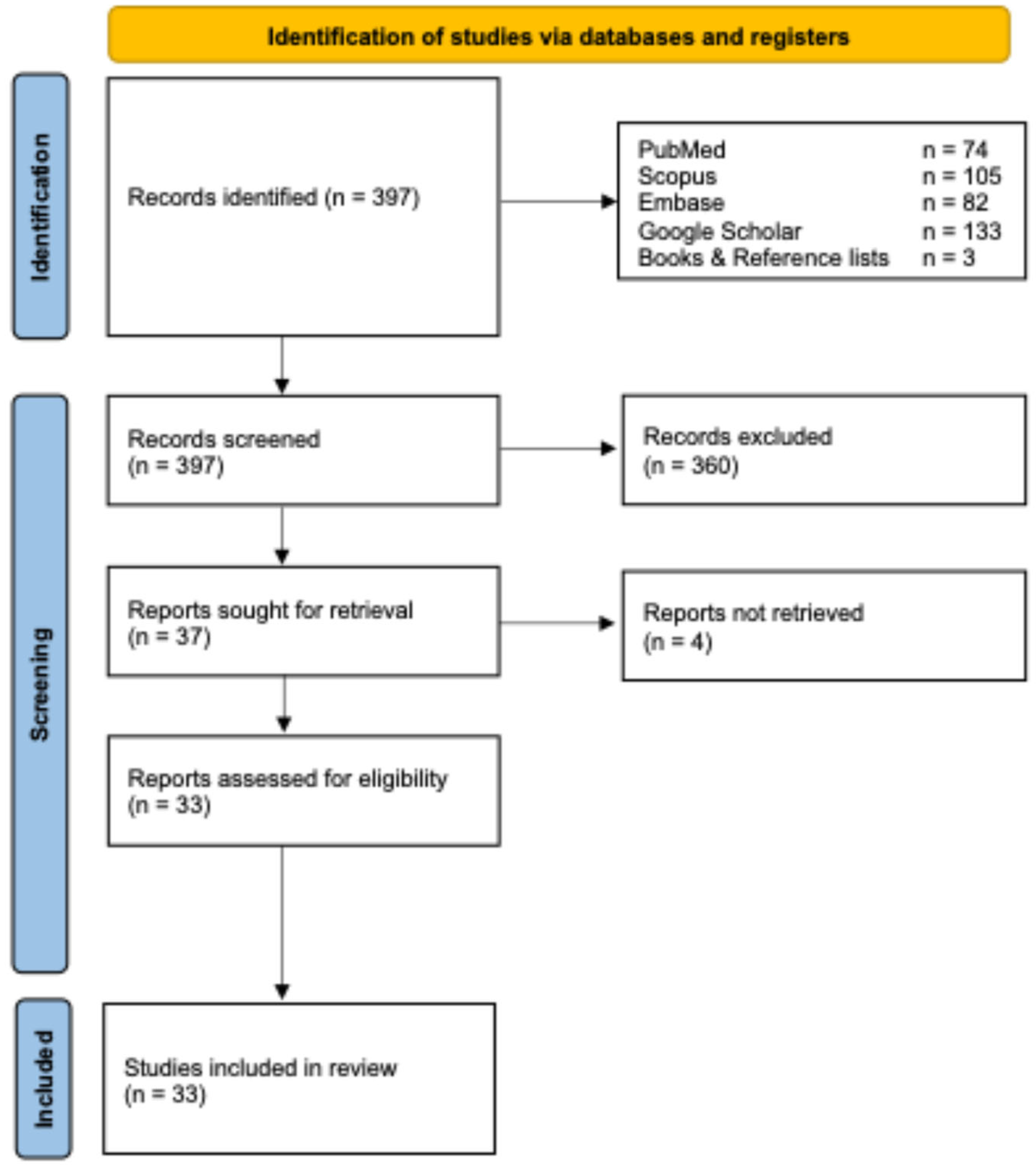
All identified records were exported and processed through a stepwise screening procedure. Initially, duplicates were removed across databases. Subsequently, titles and abstracts were screened for relevance to total scaphoid replacement. Articles considered potentially eligible underwent full-text assessment. Screening and selection were performed manually by the authors. A total of 397 records were initially identified through database searches and additional sources. After removal of duplicates and non-relevant records, 37 full-text articles were assessed for eligibility. Of these, four articles were excluded due to non-retrievable full texts, resulting in 33 studies included in the final qualitative synthesis (Figure 1).
Data extraction was performed manually and focused on predefined domains, including study characteristics, indications and contraindications, implant design and materials, surgical techniques, fixation and suspension strategies, clinical outcomes, and reported complications or revision procedures. Extracted data were cross-checked for consistency.
Due to the heterogeneity of study designs, implant concepts, and reported outcome measures, a quantitative meta-analysis was not feasible. Therefore, the findings were synthesized qualitatively using a structured narrative approach. The results were organized into thematic categories covering anatomy and biomechanics, indications, implant design and materials, surgical techniques, and clinical outcomes.

3. Results

A total of 397 records were identified through database searches, reference lists, and relevant book chapters. After removing non-topic-related papers, duplicates, study protocols, and an unrelated erratum, 37 papers remained. Four of these had no abstract and could not be retrieved, resulting in 33 studies included in the final review. A detailed overview of the included studies is presented in Figure 1.

3.1. Anatomy and Biomechanics

The scaphoid plays a central role in wrist biomechanics as a link and stabilizer between the proximal and distal carpal rows, ensuring physiological force transmission.
Primary bony stability is ensured by the scaphoid’s current shape, which, based on the oldest discovered skeleton of Ardipithecus ramidus (“Ardi”), is estimated to be approximately 4.4 million years old [14,15]. Secondary stability is provided by ligamentous connections (intrinsic and extrinsic ligaments) between the scaphoid and adjacent bones [16,17]. Injuries to these primary and secondary stabilizing structures, as well as scaphoid non-union, lead to decoupling of the carpal rows, carpal collapse, and the well-documented development of arthritis [18,19,20]. Therefore, a prosthetic replacement must adequately replicate not only the shape but also the kinematical and biomechanical properties of the native scaphoid-ligament compound.
Various theories of carpal biomechanics are discussed. Recently, Sandow proposed a “two-gear four-bar” model, contrasting with the traditional chain, column, intercalated segment, and ring theories [17,21,22,23,24]. Quantitative in vivo assessment of healthy or pathological carpal motion patterns following trauma or degenerative processes using cineradiography and fluoroscopy has shed some light on the biomechanical principles of the wrist but remains challenging due to superimpositions of anatomical structures visible in the images and the lack of quantifiable movement metrics for individual carpal bones [25,26,27,28].
Today, four-dimensional computed tomography (4D-CT) enables detailed and quantitative analysis of carpal bone mobility, particularly of the scaphoid and lunate. Initial applications in vitro and in vivo have been described by Carelsen, Tay, Halpenny, and Choi [29,30,31,32,33]. Technological advancements in recent years have improved the visualization of both healthy and pathological wrist kinematics. Recent studies have shown that the understanding of osseous scaphoid pathologies, such as fractures, pseudarthroses, and ligament injuries, has significantly evolved due to 4D-CT imaging [19,34].

3.2. Indications/Contraindications

Scaphoid replacement is indicated in cases of failed osteosynthesis or reconstruction, as a consequence of unsuccessful RASL procedures (Reduction and Association of the Scaphoid and Lunate), when the bone is unsuitable for reconstructive techniques, or when salvage procedures such as proximal row carpectomy (PRC) or partial wrist arthrodesis (e.g., four-corner fusion) are required. Spingardi and Rossello emphasize that successful scaphoid prosthetic replacement requires good wrist stability and the absence of degenerative changes in the radiocarpal or midcarpal joints [3]. Accordingly, the authors list the following contraindications: degenerative changes in the radial scaphoid facet; a prior radial styloidectomy; any evidence of carpal collapse; deformities of the distal radius due to displaced fractures; decreased carpal height; increased radiolunate angle; or degenerative arthritis of other carpal bones, particularly in the midcarpal joint (Table 1 and Table 2).

3.3. Patient-Specific Prosthesis Design and Materials

Initially, Waugh and Reuling had three implant sizes available intraoperatively for their patients, allowing them to select the best-fitting prosthesis during surgery [1]. Based on the data from Heinzelmann and Pichler [7,8], highlighting high interindividual size and volume differences, it logically follows that the scaphoid should be manufactured in an individualized manner.
Patient-specific prostheses, designed based on a mirrored 3D computed tomography (CT) scan of the contralateral wrist, using the mirrored healthy scaphoid as a model [40]. If both sides are affected, statistical shape models are used [41]. It is crucial to include cartilage thickness and avoid segmentation errors to achieve the right individual shape [42]. The individualized shape enables precise anatomical reconstruction tailored to the individual’s unique bone geometry, which improves the accuracy of implant placement, preserves carpal anatomy, and facilitates optimal ligament reconstruction, which is crucial for restoring wrist function and stability [11,12].

3.4. Implant Materials

The choice of material is a critical factor in total scaphoid replacement, as it influences implant biomechanics, biocompatibility, wear behavior, imaging characteristics, manufacturability, and the potential for biological integration with surrounding tissues. Since the first reported scaphoid prostheses, a wide range of materials—including acrylic, silicone, metals, high-performance polymers, and ceramics—have been investigated, each reflecting the technological possibilities and biomechanical concepts of its time. While historical materials primarily aimed to preserve carpal height and wrist motion, contemporary developments focus on patient-specific reconstruction and restoration of physiological wrist kinematics. To facilitate comparison, Table 3 summarizes the principal advantages and disadvantages of the materials used for total scaphoid replacement, including their biocompatibility, mechanical properties, imaging compatibility, wear characteristics, processability, and potential for ligament and soft-tissue integration.

3.4.1. Acrylic

Picaud et al. reported the replacement of the scaphoid with an acrylic prosthesis in a patient who had suffered a wrist trauma while playing soccer in 1939 and re-injured it in 1951 [2]. He used an acrylic prosthesis made by a dentist and implanted it via a dorsal snuffbox approach, additionally performing a radial styloidectomy. Although the scaphoid was incompletely removed, the remaining distal pole did not negatively affect wrist function, possibly due to the preserved scapho-trapezio-trapezoidal (STT) joint. The prosthesis served merely as a spacer but provided sufficient stability, allowing the patient to return to work as a butcher with nearly full range of motion and strength. Agner reported on seven patients: in five, the prosthesis required removal, while two achieved fair to good outcomes [43]. He attributed most failures to a strong foreign-body reaction and implant instability. Agerholm later presented results from a larger series of 13 patients (14 wrists) [44]. Only four wrists were completely pain-free; the remaining ten experienced pain triggered by strain, impact, or forced end-range motion, with six of these occurring in the dominant wrist. Despite this, all patients reported satisfaction with the procedure and noted symptomatic improvement following surgery. Interestingly, Barber reported acceptable clinical results in his long-term follow-up of the Agerholm patients but stated that besides these results, scaphoid replacement alone had not effectively preserved normal anatomy of the remaining carpus [45].
The longest follow-up (37 years) of only one patient with good clinical results with an acrylic prosthesis and PL anchovy due to instability was presented by Orsi [46]. Due to the well-documented foreign body reactions and associated complications, the use of acrylic prostheses has not been pursued.

3.4.2. Silicone

In 1970, Swanson introduced a silicone replacement for the scaphoid. However, this was often associated with fractures and foreign body reactions [47]. Due to the use of High Performance Silicone Elastomer, these implants could be fixed with sutures and K-Wires without fragmentation of the implant [48].
In a cohort of 89 patients with late follow-up ranging from five to twelve years, an uncomplicated clinical course was observed in 76% of cases, whereas 24% required secondary surgical procedures, including two wrist arthrodeses [49]. Wrist flexion–extension improved by an average of 10.9%, and radial–ulnar deviation by 15.0%. Mild restriction of the first carpometacarpal joint occurred in 24% of patients. Grip strength and lateral pinch were reduced by 32% and 25%, respectively.
Radiographically, intraosseous cyst formation or progression was noted in 43% of cases, although most patients remained asymptomatic. The authors found no evidence that the silastic material itself contributed to these changes. Osteoarthritic progression was minimal, and in some instances appeared to stabilize. Prosthesis positioning was satisfactory in 77% of cases, slightly displaced in 16%, and dislocated in 7%. Intracarpal angle changes were observed after five years, with most patients demonstrating signs of DISI, including increased scapholunate angles, reduced carpal height (−1.7 mm), and decreased trapezium–lunate distance (−3.7 mm).
Despite these radiographic alterations, the authors reported predominantly favorable clinical outcomes (65%) and concluded that silastic scaphoid replacement represented a preferable option compared with other palliative interventions available at the time.
However, upmentionned silicone-associated synovitis and joint destruction in the long-term ended the silicone era.

3.4.3. Polyetheretherketon (PEEK) and Polyetherketonketon (PEKK)

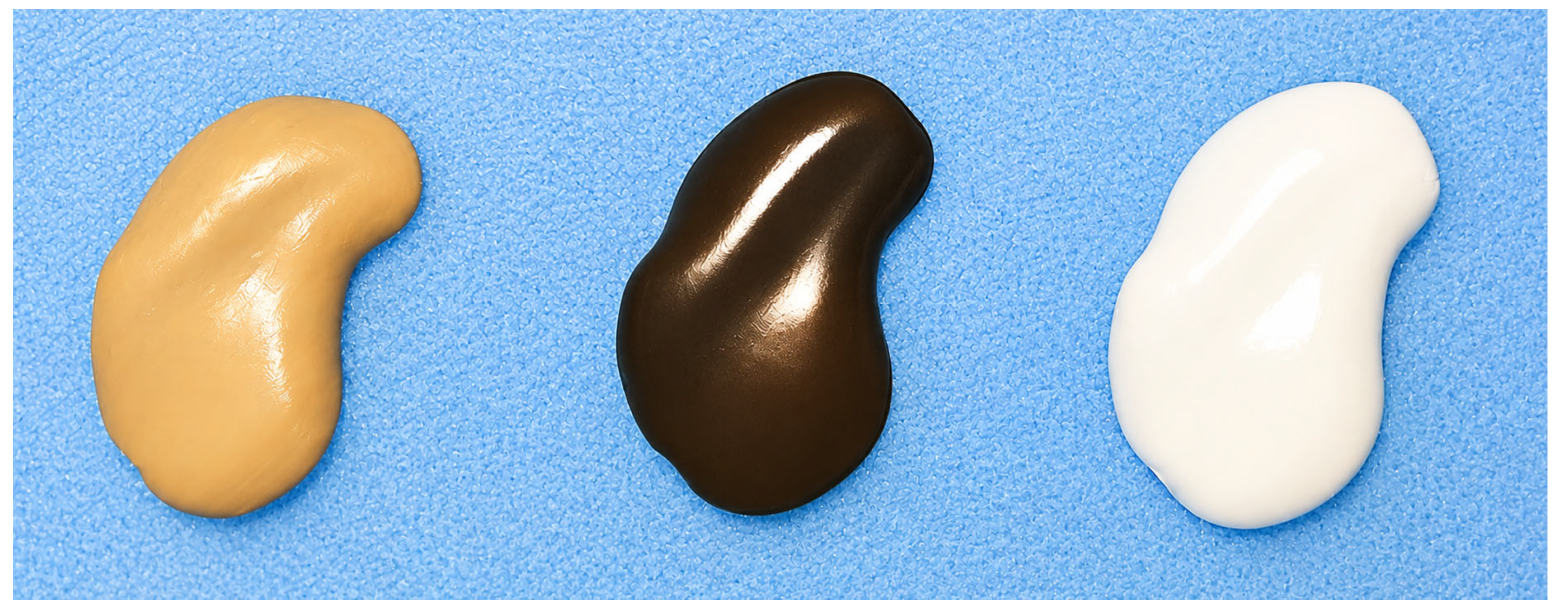
PEEK and PEKK are high-performance polymers widely used in large joint prosthestics and appreciated for their higher stiffness and radiolucency. Initial attempts to manufacture prostheses from 3D-printed medical-grade PEEK were successful, though in vivo data is still lacking [11] (Figure 2).

3.4.4. Teflon

Myrin’s report described the use of a Teflon scaphoid prosthesis for scaphoid bone replacement [50]. The report detailed the surgical technique involving excision of the diseased or nonviable scaphoid and implantation of a prosthesis fashioned from Teflon, a synthetic polymer. The rationale for using Teflon was its perceived biocompatibility and inertness, aiming to restore carpal alignment and preserve wrist motion in cases where the native scaphoid was non-reconstructable. Patient data and outcome were not available.

3.4.5. Metals

Waugh and Reuling were the first to document the short-term outcomes of implanting a scaphoid replica in three patients using a solid or hollow cobalt-chromium-molybdenum alloy (Vitallium) spacer [1]. Legge presented in 1950 the results of 7 cases with a follow-up of 2 months to 3 years [51]. Four of them had good and three excellent motion. Of the 7 patients, 4 were pain free. Metcalfe’s 1954 case report described a single patient who underwent scaphoid replacement [52]. Short-term outcomes indicated restoration of carpal alignment and preservation of wrist motion; however, no long-term follow-up was provided.
Cobalt-chromium-molybdenum (Vitallium) holds mainly historical significance and is no longer used in carpal prosthetics despite advantageous tribological properties.
Titanium alloys offer high strength and biocompatibility. Due to the problems associated with silicone prostheses, Swanson et al. developed a titanium spacer, which was stabilized by a hook at the distal pole anchored in a bony canal in the trapezium, and a transprosthetic suture to the lunate [6]. Despite these advancements, dislocations remained an issue [3].
Titanium implants can be manufactured from titanium powder (Ti-6Al-4V Grade 23, according to ASTM F 3001/F136 standards [53,54]) using the selective laser melting (SLM, Sisma MYSINT 100 RM) process, a 3D powder printing technique. Alternatively, milling is possible.
Geuskens et al. used 3D-printed titanium prostheses based on a patented design and manufactured using a selective laser sintering (SLS) printing process [10,55].

3.4.6. Ceramics

Ceramics offer excellent abrasion resistance but are brittle and have significant manufacturing limitations, as stress fractures may increase with size.
Overall, ceramics are most commonly used in prosthetics as coating rather than a full body prosthesis [56,57,58].

3.5. Surgical Technique

In first case reports, the prosthesis functioned solely as a spacer without any suspension.
More recent descriptions, however, detail various fixation strategies. Spingardi and Rossello utilized a prosthesis with a stem that was inserted into the trapezium, effectively blocking motion in the STT joint. Additional stability was achieved by suturing the prosthesis to the capitate [3]. Geuskens et al. employed a flexor carpi radialis (FCR) tendon strip to secure the prosthesis as suggested by Honigmann et al. [10,11].
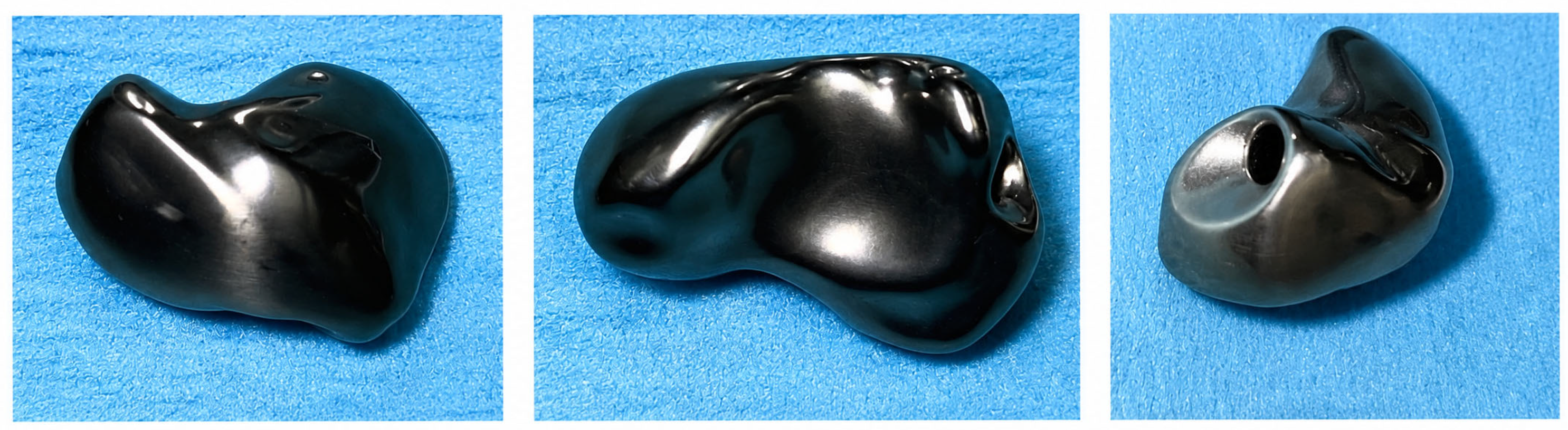
A detailed description of an alternative suspension technique was published by Honigmann et al. [12,59]. Following the technique promoted by Sandow, known as ‘Anatomical Anterior and Posterior Reconstruction of the Scapholunate Ligament’ (ANAFAB), they harvest the radial third of the tendon (2–2.5 mm) to create a distally based tendon strip and anchor a FiberTape® (Arthrex, Naples, Florida, USA) to the radial palmar trapezial facet using a 2.4 mm PushLock® anchor (Arthrex) [60]. An oblique channel with a diameter of 2.7–3.0 mm is drilled from the dorsoradial edge to the volar side of the lunate, along the insertion of the long radiolunate ligament (LRL), using a Kirschner wire and a cannulated drill. Additionally, a 2.7 mm channel is drilled from the palmar to the dorsal radius at the origin of the LRL. Both the FCR tendon strip and the FibreTape® are passed palmar-dorsally through a curved tunnel in the prosthesis and then looped back through the channel in the lunate (Figure 3). A 3 × 8 mm Biotenodesis® screw (Arthrex) is inserted dorsally in the lunate to decouple the dorsal SL ligament reconstruction from the LRL. The construct is carefully tensioned, and again, the FCR tendon and FibreTape® are passed from the palmar to dorsal aspect through the radial channel. Finally, another 3 × 8 mm Biotenodesis® screw is inserted.
To facilitate movement in the STT joint, the distal entrance of the curved channel in the prosthesis is designed in a funnel shape. The edges of both the entrance and exit of the channel are rounded to avoid impairing tendon or graft suspension (Figure 3).

3.6. Clinical Outcomes and Current Evidence

The longest reported follow-up period of an implanted scaphoid prosthesis is 43 years. Leslie et al. reported in 1991 on a scaphoid prosthesis implanted in 1948 following pseudarthrosis treatment in a member of the U.S. military [61]. At that time, the scaphoid was reconstructed using dental plaster and manufactured in Chicago from Vitallium. Forty-three years postoperatively, the range of motion was 48/0/29° in flexion/extension and 14/0/21° in radial/ulnar deviation.
Swanson had already reported his 10-year experience with carpal prosthetics in 1997 [6]. He described the outcomes of 102 titanium prostheses implanted in 95 patients (7 bilateral procedures). Seventy-eight patients with 85 procedures were available for follow-up after 1 to 10.8 years (mean follow-up: 5.7 years). The cohort included 63 men and 15 women aged 23 to 76 years (average age: 51 years). Surgical indications included: scaphoid pseudarthrosis (41 wrists), chronic scapholunate dissociation (30 wrists), and revision surgeries for failed silicone implants (14 wrists).
The severity of disease in 71 wrists without prior implant arthroplasty was classified according to the Swanson classification [6]: stage III in seven wrists, stage IV in 29 wrists, and stage V in 35 wrists. The original design with a rounded distal pole was used in 31 wrists, while a design with a distal peg to improve implant alignment was used in 54 wrists.
Concomitant intercarpal fusions were performed in 39 wrists as follows: lunocapitate fusion in 22 wrists, lunocapitate-hamate fusion in six wrists, and lunocapitate-hamate-triquetral fusion in 11 wrists.
The prosthesis was fixed with a spine in the Trapezium which blocked the STT-joint and small tunnel in the proximal pole of the prosthesis and the lunate for the fixation of a Dacron thread.
Preoperatively, all patients experienced severe pain limiting or preventing activity. After an average follow-up of 5.7 years, 97% of patients were extremely satisfied with their pain relief, ranging from complete pain relief (22 wrists) to mild discomfort after heavy or repetitive loading (60 wrists). Two patients continued to report pain that limited their activities.
The largest case series with 113 patients was published by Spingardi, who used a milled implant. The follow-up period ranged from 6 to 152 months. Follow-up data were available for 75 patients. Prosthesis dislocation occurred in five patients, and in two cases, the implants had to be removed. Suspension was performed using a peg on the prosthesis, which was distally anchored in the STT joint, a technique already described by Swanson in 1997. In our opinion, this peg restricts essential mobility in the STT joint, leading to a reduction in active range of motion. The SL ligament was refixed with sutures to the dorsal aspect of the prosthesis through two small channels.
A recently published case series of 12 patients by Geuskens, with a follow-up of 13–61 months, showed a significant improvement in DASH and PRWE scores, with a revision rate of one patient, in whom the prosthesis dislocated and had to be removed [10].

4. Discussion

This review demonstrates that scaphoid replacement has evolved from a purely spacer-based concept toward anatomically and biomechanically informed prosthetic reconstruction. Early acrylic, silicone, and metallic implants primarily aimed to preserve carpal height and wrist motion, with variable success and high complication rates related to material properties, implant instability, and foreign-body reactions. Contemporary approaches emphasize patient-specific implant design, improved biocompatibility, and advanced suspension techniques that aim to restore native scaphoid kinematics rather than merely providing a placeholder.
The available clinical evidence suggests that modern scaphoid prostheses can provide pain relief and functional improvement in a select group of patients, mainly for those where degenerative changes are limited to early-stage SNAC or SLAC wrists. Titanium-based implants currently represent the most used and best-documented material, while emerging alternatives such as PEEK, PEKK, and ceramics are promising but need further investigation. In addition to material choice, fixation and suspension strategies have emerged as a key factor in achieving clinical success.
The scaphoid’s unique anatomical shape, ligamentous suspension, and central biomechanical role within the carpus explain why replacement remains challenging. Prosthetic success depends not only on replicating osseous morphology but also on restoring dynamic stability between the proximal and distal carpal rows. Historical failures of silicone and acrylic implants highlight the consequences of inadequate material properties and insufficient stabilization, leading to implant migration, synovitis, and progressive carpal collapse.
Modern patient-specific prostheses derived from contralateral CT imaging represent a significant conceptual advance, allowing improved congruency with adjacent articular surfaces and more physiological force transmission. However, the literature suggests that overly rigid fixation, such as distal pegs blocking STT motion, may impair carpal kinematics and reduce range of motion. In this context, suspension techniques that aim to recreate scapholunate and radioscapholunate ligament function, rather than rigid anchoring, appear to be preferable from a biomechanical perspective.
Recent insights from 4D-CT studies have fundamentally improved our understanding of native scaphoid kinematics under dynamic conditions [19,35]. These findings underscore that scaphoid motion is complex, load-dependent, and highly individualized, reinforcing the notion that prosthetic reconstruction must accommodate motion rather than constrain it. Nevertheless, so far current clinical studies did not assess whether prosthetic implantation truly restores physiological kinematics.
Several limitations temper the interpretation of existing data. First, the majority of published studies are retrospective case series with heterogeneous indications, implant designs, suspension techniques, and outcome measures. Follow-up durations vary widely, and comparative or randomized data are entirely lacking. Second, radiographic assessment is often limited to static imaging, which fails to capture dynamic carpal behavior and may underestimate subtle kinematic disturbances. Third, many reports combine scaphoid replacement with additional procedures, such as intercarpal fusions, making it difficult to isolate the true effect of the prosthesis itself.
The scope of this review can be seen as somewhat limiting. Advancements in radiocarpal arthroplasty and lunate arthroplasty would have given a broader view of novel technologies and options in the treatment of complex wrist pathology. However, as the scaphoid is unique in geometry and its function within the carpus a concious choice was made to focus on scaphoid arthroplasty.
Given the narrative design of the review, no formal risk-of-bias assessment was conducted. Furthermore, the included literature predominantly consisted of retrospective case series with heterogeneous methodologies and variable follow-up durations. These limitations should be considered when interpreting the findings, although the structured search and transparent reporting were intended to minimize potential bias.
Future research should focus on four major areas. First, comparative biomechanical studies are needed to determine the optimal suspension strategy for total scaphoid replacement. In particular, rigid fixation concepts, such as distal peg fixation within the scaphotrapeziotrapezoidal joint, should be compared with ligament-based reconstruction techniques that aim to reproduce physiological scapholunate and radioscapholunate ligament function. Dynamic assessment using four-dimensional computed tomography (4D-CT) under physiological loading conditions may provide objective information regarding restoration of native wrist kinematics.
Second, material development remains an important area of investigation. While titanium alloys currently provide the strongest clinical evidence, alternative materials such as PEEK, PEKK, and advanced ceramics may offer advantages with respect to elastic modulus, imaging compatibility, and wear behavior. Prospective studies are required to evaluate their long-term performance in vivo.
Third, surface engineering approaches should be explored to enhance biological integration of the prosthesis. Porous structures, bioactive coatings, and surface modification technologies may improve ligament and soft-tissue attachment, thereby increasing implant stability and potentially reducing the risk of migration and loosening.
Finally, future clinical studies should incorporate standardized outcome measures, including DASH, PRWE, range of motion, grip strength, and dynamic imaging parameters. Multicenter prospective registries with long-term follow-up are required to determine implant survivorship, complication rates, and the relationship between prosthetic design, suspension technique, and restoration of physiological carpal biomechanics. Scaphoid replacement has transitioned from a salvage concept to a sophisticated reconstructive strategy grounded in anatomy, biomechanics, and advanced manufacturing. While modern patient-specific prostheses show promising clinical results in selected patients, long-term success likely depends on restoring dynamic carpal stability rather than relying on rigid fixation. Advances in suspension techniques, implant materials, and dynamic imaging, particularly 4D-CT, offer different promising opportunities to further refine the procedure. Development in these areas will define the future role of scaphoid replacement within treatment strategy for complex scaphoid pathology.

5. Conclusions

Although the concept of scaphoid replacement dates back nearly 80 years, contemporary designs and materials must still demonstrate clear clinical superiority and durable long-term outcomes to ensure carpal stability, restore physiological carpal kinematics, and prevent osteoarthritis.

Author Contributions

Conceptualization and writing—review and editing, P.H., M.H., J.G.M.O., G.J.S. (Geert J. Streekstra), G.J.S. (Gustav J. Strijkers) and J.G.G.D.; methodology, analysis, and visualization, P.H., M.H., G.J.S. (Geert J. Streekstra) and J.G.G.D. All authors have read and agreed to the published version of the manuscript.

Funding

This research received no external funding.

Institutional Review Board Statement

This study did not require an ethical board approval.

Informed Consent Statement

Not applicable.

Data Availability Statement

No new data were created or analyzed in this study. Data sharing is not applicable to this article.

Acknowledgments

During the preparation of this manuscript/study, the author(s) used OpenAI (Version 1.2026.153) for the purposes of text editing. The authors have reviewed and edited the output and take full responsibility for the content of this publication.

Conflicts of Interest

The authors declare no conflicts of interest.

Abbreviations

The following abbreviations are used in this manuscript:
PSIPatient-Specific Instrumentation
DASHDisabilities of the Arm, Shoulder and Hand (score)
PRWEPatient-Rated Wrist Evaluation
PEEKPolyetheretherketone
PEKKPolyetherketoneketone
3DThree-Dimensional
PRISMA Preferred Reporting Items for Systematic Reviews and Meta-Analyses
4D-CTFour-Dimensional Computed Tomography
CTComputed Tomography
RASLReduction and Association of the Scaphoid and Lunate
PRCProximal Row Carpectomy
SLACScapholunate Advanced Collapse
SNACScaphoid Nonunion Advanced Collapse
AVNAvascular Necrosis
STTScaphotrapeziotrapezoid (joint)
SLMSelective Laser Melting
ANAFABAnatomical Front And Back Repair
LRLLong Radiolunate Ligament
FCRFlexor Carpi Radialis (tendon)

References

  1. Waugh, R.L.; Reuling, L. Ununited fractures of the carpal scaphoid Preliminary report on the use of vitallium replicas as replacements after excision. Am. J. Surg. 1945, 67, 184–200. [Google Scholar] [CrossRef]
  2. Picaud, A. Traitement d’une pseudarthrose ancienne du scaphoïde carpien par prothèse acrylique. Mémoires Académie Chir. 1953, 79, 200–203. [Google Scholar]
  3. Spingardi, O.; Rossello, M.I. The total scaphoid titanium arthroplasty: A 15-year experience. Hand 2011, 6, 179–184. [Google Scholar] [CrossRef] [PubMed]
  4. Swanson, A.B. Silicone rubber implants for the replacement of the carpal scaphoid and lunate bones. Orthop. Clin. N. Am. 1970, 1, 299–309. [Google Scholar] [CrossRef]
  5. Swanson, A.B.; Swanson, G.d.G.; Maupin, B.K.; Moss, S.H.; Ganzhorn, R.W.; Crane, M.W.; Gonzalez, M.; Page, B. Scaphoid implant resection arthroplasty: Long-term results. J. Arthroplast. 1986, 1, 47–62. [Google Scholar] [CrossRef]
  6. Swanson, A.B.; Swanson, G.d.G.; DeHeer, D.H.; Pierce, T.D.; Randall, K.; Smith, J.M.; Van Gorp, C.C. Carpal bone titanium implant arthroplasty. 10 years’ experience. Clin. Orthop. Relat. Res. 1997, 342, 46–58. [Google Scholar] [CrossRef]
  7. Heinzelmann, A.D.; Archer, G.; Bindra, R.R. Anthropometry of the Human Scaphoid. J. Hand Surg. 2007, 32, 1005–1008. [Google Scholar] [CrossRef] [PubMed]
  8. Pichler, W.; Windisch, G.; Schaffler, G.; Heidari, N.; Dorr, K.; Grechenig, W. Computer-assisted 3-dimensional Anthropometry of the Scaphoid. Orthopedics 2010, 33, 85–88. [Google Scholar] [CrossRef] [PubMed]
  9. Kivell, T.L.; Guimont, I.; Wall, C.E. Sex-Related Shape Dimorphism in the Human Radiocarpal and Midcarpal Joints. Anat. Rec. Adv. Integr. Anat. Evol. Biol. 2013, 296, 19–30. [Google Scholar] [CrossRef]
  10. Geuskens, W.; Verstreken, A.; Stroobants, E.; Verstreken, F. Titanium patient-specific scaphoid replacement for unreconstructable nonunions: A case series study. J. Hand Surg. 2024, 50, 486–491. [Google Scholar] [CrossRef] [PubMed]
  11. Honigmann, P.; Schumacher, R.; Marek, R.; Büttner, F.; Thieringer, F.; Haefeli, M. A three-dimensional printed patient-specific scaphoid replacement: A cadaveric study. J. Hand Surg. 2018, 43, 407–412. [Google Scholar] [CrossRef] [PubMed]
  12. Honigmann, P.; Oonk, J.; Dobbe, J.; Strackee, S.; Streekstra, G.; Haefeli, M. Patient-specific scaphoid prosthesis: Surgical technique. Arch. Orthop. Trauma Surg. 2024, 145, 55. [Google Scholar] [CrossRef] [PubMed]
  13. Page, M.J.; McKenzie, J.E.; Bossuyt, P.M.; Boutron, I.; Hoffmann, T.C.; Mulrow, C.D.; Shamseer, L.; Tetzlaff, J.M.; Akl, E.A.; Brennan, S.E.; et al. The PRISMA 2020 statement: An updated guideline for reporting systematic reviews. Int. J. Surg. 2021, 88, 105906. [Google Scholar] [CrossRef] [PubMed]
  14. Lovejoy, C.O.; Simpson, S.W.; White, T.D.; Asfaw, B.; Suwa, G. Careful Climbing in the Miocene: The Forelimbs of Ardipithecus ramidus and Humans Are Primitive. Science 2009, 326, 70e1–70e8. [Google Scholar] [CrossRef]
  15. White, T.D.; Asfaw, B.; Beyene, Y.; Haile-Selassie, Y.; Lovejoy, C.O.; Suwa, G.; WoldeGabriel, G. Ardipithecus ramidus and the paleobiology of early hominids. Science 2009, 326, 64–86. [Google Scholar] [CrossRef]
  16. Buijze, G.A.; Lozano-Calderon, S.A.; Strackee, S.D.; Blankevoort, L.; Jupiter, J.B. Osseous and Ligamentous Scaphoid Anatomy: Part I. A Systematic Literature Review Highlighting Controversies. J. Hand Surg. 2011, 36, 1926–1935. [Google Scholar] [CrossRef] [PubMed]
  17. Taleisnik, J. The ligaments of the wrist. J. Hand Surg. 1976, 1, 110–118. [Google Scholar] [CrossRef] [PubMed]
  18. Nichols, J.A.; Bednar, M.S.; Havey, R.M.; Murray, W.M. Decoupling the Wrist: A Cadaveric Experiment Examining Wrist Kinematics Following Midcarpal Fusion and Scaphoid Excision. J. Appl. Biomech. 2017, 33, 12–23. [Google Scholar] [CrossRef] [PubMed]
  19. de Roo, M.G.A.; Dobbe, J.G.G.; van der Horst, C.M.A.; Streekstra, G.J.; Strackee, S.D. Carpal kinematic changes after scaphoid nonunion: An in vivo study with four-dimensional CT imaging. J. Hand Surg. 2019, 44, 1056–1064. [Google Scholar] [CrossRef] [PubMed]
  20. Taleisnik, J.; Watson, H.K. Midcarpal instability caused by malunited fractures of the distal radius. J. Hand Surg. 1984, 9, 350–357. [Google Scholar] [CrossRef] [PubMed]
  21. Von Bonin, G. A Note on the Kinematics of the Wrist-Joint. J. Anat. 1929, 63, 259–262. [Google Scholar] [CrossRef] [PubMed]
  22. Craigen, M.A.C.; Stanley, J.K. Wrist kinematics Row, column or both? J. Hand Surg. 1995, 20, 165–170. [Google Scholar] [CrossRef] [PubMed]
  23. Lichtman, D.M.; Schneider, J.R.; Swafford, A.R.; Mack, G.R. Ulnar midcarpal instability-clinical and laboratory analysis. J. Hand Surg. 1981, 6, 515–523. [Google Scholar] [CrossRef] [PubMed]
  24. Sandow, M.J.; Fisher, T.J.; Howard, C.Q.; Papas, S. Unifying model of carpal mechanics based on computationally derived isometric constraints and rules-based motion—The stable central column theory. J. Hand Surg. (Eur. Vol.) 2014, 39, 353–363. [Google Scholar] [CrossRef] [PubMed]
  25. Arkless, R. Rheumatoid Wrists: Cineradiography. Radiology 1967, 88, 543–549. [Google Scholar] [CrossRef] [PubMed]
  26. Gilula, L. Carpal injuries: Analytic approach and case exercises. Am. J. Roentgenol. 1979, 133, 503–517. [Google Scholar] [CrossRef] [PubMed]
  27. Linscheid, R.L.; Dobyns, J.H.; Beabout, J.W.; Bryan, R.S. Traumatic Instability of the Wrist: Diagnosis, Classification, and Pathomechanics. J. Bone Jt. Surg. 2002, 84, 142. [Google Scholar] [CrossRef] [PubMed]
  28. Protas, J.; Jackson, W. Evaluating carpal instabilities with fluoroscopy. Am. J. Roentgenol. 1980, 135, 137–140. [Google Scholar] [CrossRef] [PubMed]
  29. Carelsen, B.; Bakker, N.H.; Strackee, S.D.; Boon, S.N.; Maas, M.; Sabczynski, J.; Grimbergen, C.A.; Streekstra, G.J. 4D rotational x-ray imaging of wrist joint dynamic motion. Med. Phys. 2005, 32, 2771–2776. [Google Scholar] [CrossRef] [PubMed]
  30. Carelsen, B.; Jonges, R.; Strackee, S.D.; Maas, M.; Kemenade Pvan Grimbergen, C.A.; van Herk, M.; Streekstra, G.J. Detection of In Vivo Dynamic 3-D Motion Patterns in the Wrist Joint. IEEE Trans. Biomed. Eng. 2009, 56, 1236–1244. [Google Scholar] [CrossRef] [PubMed]
  31. Halpenny, D.; Courtney, K.; Torreggiani, W.C. Dynamic four-dimensional 320 section CT and carpal bone injury—A description of a novel technique to diagnose scapholunate instability. Clin. Radiol. 2012, 67, 185–187. [Google Scholar] [CrossRef] [PubMed]
  32. Choi, Y.S.; Lee, Y.H.; Kim, S.; Cho, H.W.; Song, H.-T.; Suh, J.-S. Four-Dimensional Real-Time Cine Images of Wrist Joint Kinematics Using Dual Source CT with Minimal Time Increment Scanning. Yonsei Med. J. 2013, 54, 1026–1032. [Google Scholar] [CrossRef] [PubMed]
  33. Tay, S.-C.; Primak, A.N.; Fletcher, J.G.; Schmidt, B.; Amrami, K.K.; Berger, R.A.; McCollough, C.H. Four-dimensional computed tomographic imaging in the wrist: Proof of feasibility in a cadaveric model. Skelet. Radiol. 2007, 36, 1163–1169. [Google Scholar] [CrossRef] [PubMed]
  34. Roo MGAde Muurling, M.; Dobbe, J.G.G.; Brinkhorst, M.E.; Streekstra, G.J.; Strackee, S.D. A four-dimensional-CT study of in vivo scapholunate rotation axes: Possible implications for scapholunate ligament reconstruction. J. Hand Surg. 2019, 44, 479–487. [Google Scholar] [CrossRef] [PubMed]
  35. Helbig, B.; Almeling, M. Long-term results of treatment of rare aseptic necrosis of the scaphoid bone (Preiser disease) with the Swanson implant. Handchir. Mikrochir. Plast. Chir. 1989, 21, 178–181. [Google Scholar] [PubMed]
  36. Didden, K.; Smet, L.D.; Vandenberghe, L.; Sciot, R.; Degreef, I. Avascular necrosis of the proximal carpal row of the wrist. A possible complication of bisphosphonate administration. Chir. Main 2012, 31, 355–357. [Google Scholar] [CrossRef] [PubMed]
  37. Afshar, A.; Shariyate, M.J.; Tabrizi, A. Concomitant Avascular Necrosis of the Lunate and Proximal Pole of the Scaphoid in a Thalassemia Minor Patient. Adv. Biomed. Res. 2022, 11, 93. [Google Scholar] [CrossRef] [PubMed]
  38. Bain, G.; MacLean, S.; Tse, W.; Ho, P.; Lichtman, D. Kienböck Disease and Arthroscopy: Assessment, Classification, and Treatment. J. Wrist Surg. 2016, 5, 255–260. [Google Scholar] [CrossRef] [PubMed]
  39. MacLean, S.B.M.; Hu, M.; Bain, G.I. The Pathoanatomy and Biomechanics of Kienböck Disease. Hand Clin. 2022, 38, 393–403. [Google Scholar] [CrossRef] [PubMed]
  40. Letta, C.; Schweizer, A.; Fürnstahl, P. Quantification of Contralateral Differences of the Scaphoid: A Comparison of Bone Geometry in Three Dimensions. Anat. Res. Int. 2014, 2014, 904275. [Google Scholar] [CrossRef] [PubMed]
  41. Berg, P.W.L.T.; Dobbe, J.G.G.; Strackee, S.D.; Streekstra, G.J. Three-Dimensional Assessment of Bilateral Symmetry of the Scaphoid: An Anatomic Study. BioMed Res. Int. 2015, 2015, 547250. [Google Scholar] [CrossRef] [PubMed]
  42. Honigmann, P.; Haefeli, M.; Streekstra, G.; Dobbe, J. From the Freezer to Implant: Does Cadaver Freezing Affect the Accuracy of 3D-Printed Scaphoid Prosthesis Models? Bioengineering 2025, 12, 1183. [Google Scholar] [CrossRef]
  43. Agner, O. Treatment of Non-United Navicular Fractures by total Excision of the Bone and the Insertion of Acrylic Prostheses. Acta Orthop. Scand. 1963, 33, 235–245. [Google Scholar] [CrossRef] [PubMed]
  44. Agerholm, J.C.; Lee, M.L.H. The Acrylic Scaphoid Prosthesis in the Treatment of the Ununited Carpal Scaphoid Fracture. Acta Orthop. Scand. 1966, 37, 67–76. [Google Scholar] [CrossRef] [PubMed]
  45. Barber, H.M. Acrylic Scaphoid Prostheses: A Long-Term Follow up. J. R. Soc. Med. 1974, 67, 1075–1078. [Google Scholar] [CrossRef] [PubMed]
  46. Orsi, R.; Tullio, V.D.; Brunelli, F. Results 37 years after insertion of an acrylic implant for scaphoid pseudoarthrosis. Ann. Chir. Main Memb. Supérieur 1995, 14, 214–217. [Google Scholar] [CrossRef]
  47. Kleinert, J.M.; Stern, P.J.; Lister, G.D.; Kleinhans, R.J. Complications of scaphoid silicone arthroplasty. J. Bone Jt. Surg. (Am.) 1985, 67, 422–427. [Google Scholar] [CrossRef]
  48. Swanson, A.B. Implant Arthroplasty in the Hand and Upper Extremity and Its Future. Surg. Clin. N. Am. 1981, 61, 369–382. [Google Scholar] [CrossRef] [PubMed]
  49. Förster, W.; Schlegel, E. Long-term results of endoprosthetic replacement of the scaphoid bone of the wrist joint. Handchir. Mikrochir. Plast. Chir. 1988, 20, 306–313. [Google Scholar] [PubMed]
  50. Myrin, S. Fractures of the Scaphoid. In The Proceedings of the Second Hand Club, 1956–1967; Stack, H.G., Bolton, H., Eds.; British Society for Surgery of the Hand: London, UK, 1975; p. 133. [Google Scholar]
  51. Legge, R. Vitallium prosthesis in the treatment of the carpal navicular fracture. West. J. Surg. Obstet. Gynecol. 1951, 59, 468–471. [Google Scholar]
  52. Metcalfe, J.W. The vitallium sphere prosthesis for nonunion of the navicular bone. J. Int. Coll. Surg. 1954, 22, 459–462. [Google Scholar] [PubMed]
  53. ASTM F136-26; Standard Specification for Wrought Titanium-6Aluminum-4Vanadium ELI (Extra Low Interstitial) Alloy for Surgical Implant Applications (UNS R56401). ASTM International: West Conshohocken, PA, USA, 2026.
  54. ASTM F3001-26; Standard Specification for Additive Manufacturing Titanium-6Aluminum-4Vanadium ELI (Extra Low Interstitial) with Powder Bed Fusion. ASTM International: West Conshohocken, PA, USA, 2026.
  55. Honigmann, P.; Thieringer, F.M.; Schumacher, R.; Haefeli, M. Scaphoid Prosthesis. EP 3170477 A1, 24 May 2017. [Google Scholar]
  56. Cooke, F.W. Ceramics in Orthopedic Surgery. Clin. Orthop. Relat. Res. 1992, 276, 135–146. [Google Scholar] [CrossRef]
  57. Lemons, J.E. Ceramics: Past, present, and future. Bone 1996, 19, 121S–128S. [Google Scholar] [CrossRef] [PubMed]
  58. Pina, S.; Rebelo, R.; Correlo, V.M.; Oliveira, J.M.; Reis, R.L. Bioceramics for Osteochondral Tissue Engineering and Regeneration. Adv. Exp. Med. Biol. 2018, 1058, 53–75. [Google Scholar] [CrossRef] [PubMed]
  59. Herbert, T.; Fisher, W. Management of the fractured scaphoid using a new bone screw. J. Bone Jt. Surg. 1984, 66, 114–123. [Google Scholar] [CrossRef] [PubMed]
  60. Sandow, M.; Fisher, T. Anatomical anterior and posterior reconstruction for scapholunate dissociation: Preliminary outcome in ten patients. J. Hand Surg. 2019, 45, 389–395. [Google Scholar] [CrossRef] [PubMed]
  61. Leslie, B.M.; O’Malley, M.; Thibodeau, A.A. A forty-three-year follow-up of a vitallium scaphoid arthroplasty. J. Hand Surg. 1991, 16, 465–468. [Google Scholar] [CrossRef] [PubMed]
Figure 1. Overview of the included studies according to the PRISMA-guidelines [13].
Applsci 16 06285 g001
Figure 2. 3D-printed prostheses made from PEEK (left), Titanium (middle) and Ceramic (right).
Applsci 16 06285 g002
Figure 3. Patient-specific prosthesis with FCR-tendon strip and Fibretape [12].
Applsci 16 06285 g003
Table 1. Indications.
Posttraumatic/DegenerativePostinterventional/IatrogenicDisease Associated
Complex Scaphoid non-unionFailed osteosynthesis [35]Avascular necrosis of Scaphoid (Preiser’s Disease)
Non-reconstructable
destroyed Scaphoid
Failed reconstructionCongenital Scaphoid pathologies associated with symptomatic carpal instability (i.e., bipartite Scaphoid)
Postinfectious destructionFailed reduction and association of SL with non-reconstructable scaphoid
Table 2. Relative and absolute contraindications for Scaphoid replacement.
Relative ContraindicationAbsolute Contraindication
SNAC/SLAC IISNAC/SLAC III/IV
Bisphosphonate therapy (increased risk of AVN of the entire proximal row) [36]Concomitant AVN of the scaphoid and lunate in thalassemia minor patients [37]
Diseases affecting the lunate (i.e., Kienböck’s disease) [38,39]
Skeletally immature patients
Table 3. Comparative overview of materials used for total scaphoid replacement.
MaterialBiocompatibilityElastic ModulusImaging CompatibilityWear CharacteristicsProcessability/CustomizationSoft Tissue/Ligament FixationMain Limitations
Acrylic (PMMA)Moderate; foreign-body reactions reportedHigher than cancellous boneRadiolucentAcceptable short-termEasy to manufactureLimited biological integrationImplant instability, foreign-body reactions, poor long-term preservation of carpal anatomy
SiliconeGood initial tolerance, but silicone synovitis reportedLow, elasticRadiolucentSusceptible to fragmentation and wearEasily moldedAllows suture fixation but no biological integrationSynovitis, implant fracture, carpal collapse, radiographic deterioration
Titanium alloys (Ti-6Al-4V)Excellent clinical biocompatibilityHigh stiffnessCT/MRI artifacts possibleExcellent wear resistanceWell suited for patient-specific 3D printing and millingCan incorporate fixation channels and porous surfacesPotential stress shielding, imaging artifacts
PEEK/PEKKExcellent biocompatibilityCloser to cortical bone than titaniumRadiolucent with minimal imaging artifactsFavorable theoretical wear profileSuitable for patient-specific manufacturingLimited intrinsic osseointegration without surface modificationLimited clinical evidence, uncertain long-term durability
CeramicsExcellent biocompatibilityVery high stiffnessMinimal imaging artifactsExcellent wear resistanceDifficult manufacturing for patient-specific implantsLimited soft-tissue integrationBrittleness, fracture risk, limited clinical experience
Disclaimer/Publisher’s Note: The statements, opinions and data contained in all publications are solely those of the individual author(s) and contributor(s) and not of MDPI and/or the editor(s). MDPI and/or the editor(s) disclaim responsibility for any injury to people or property resulting from any ideas, methods, instructions or products referred to in the content.