1. Introduction
Ensuring a stable supply of nutritious green feed during the winter season remains one of the major challenges in livestock production, particularly for small-scale farms located in northern regions. Green feed contains carotene, vitamins, and biologically active compounds that are essential for maintaining animal health and improving livestock productivity. However, many farms experience shortages of high-quality green feed during cold seasons due to limited silage and haylage production capacities.
One promising approach for improving feed quality and increasing the efficiency of green biomass cultivation is the use of biologically active additives and organomineral components based on sapropel. Sapropel, which consists of freshwater bottom sediments, contains mineral salts, trace elements, amino acids, and biologically active organic compounds that positively affect plant growth and nutrient medium properties. The combined use of sapropel and organic fertilizers can significantly improve the nutritional characteristics of feed mixtures and bioactive substrates used in agricultural production systems.
An important technological stage in the preparation of such multicomponent mixtures is the mixing process, which determines the uniform distribution of components throughout the material volume. At present, feed and organomineral mixtures are mainly prepared using mixers equipped with active working elements, including screw, paddle, blade, vibratory, and circulation systems. However, intensive mechanical agitation is usually associated with considerable energy consumption and increased operational loads. In addition, intensive mechanical impact of active mixing elements may negatively affect the structure of individual mixture components during prolonged processing.
Therefore, the development of energy-efficient mixing methods capable of achieving high mixture uniformity while minimizing energy consumption remains an important engineering challenge. One promising approach is gravity-based mixing, in which the movement and redistribution of components occur primarily under the action of gravitational forces without the use of energy-intensive active mixing elements.
Recent studies increasingly focus on improving the efficiency of mixing systems through optimization of chamber geometry, operating regimes, and numerical simulation methods. In particular, discrete element method (DEM) simulations are widely applied for investigating particle dynamics, mixture uniformity, and power consumption in industrial mixers [
1,
2,
3,
4,
5]. Long et al. [
1] investigated the influence of particle trajectories on the performance and power demand of planetary mixers, while Xu et al. [
2] analyzed the optimization of energy consumption in agricultural mixing systems. Pezo et al. [
3] presented a comprehensive review of DEM applications in mixing technologies and highlighted the importance of numerical approaches for optimizing mixer operating regimes. Castro and Ocon [
4] demonstrated that topology optimization combined with DEM analysis can improve the efficiency of mixer working elements while reducing power consumption. Alexander et al. [
5] investigated blend uniformity phenomena in continuous mixing systems.
Modern investigations also consider the development of passive, gravity-assisted, and low-energy mixing systems. Wang et al. [
6] proposed a gravity-based rotational mixer for laboratory applications, while Ferrari et al. [
7] introduced numerical methods for evaluating mixing intensity in rotating systems. Yang et al. [
8] investigated the operational performance of horizontal shaft mixers under different kinematic conditions, and Wilewska et al. [
9] studied the relationship between mixing intensity and power consumption in industrial mixers. Liu et al. [
10] demonstrated the effectiveness of numerical simulation methods for evaluating mixing processes in static mixers. Volynets [
11] investigated the influence of operating parameters on feed mixture uniformity in vibratory systems.
The objective of the theoretical and experimental investigations was to determine and substantiate the parameters of a novel gravity-based mixing method operating without active mixing elements and capable of reducing process energy consumption by up to 50% compared with conventional mixers used for feed and other materials.
In addition to modern DEM-based approaches, a number of investigations have examined practical designs of feed and bulk material mixers operating under different technological principles. Existing gravity feed mixers may use air-gravity mechanisms, in which the components move in descending flows at high rotational speeds of the working elements [
12]. However, fully passive gravity mixers operating without active mixing elements remain relatively uncommon in practical applications [
13].
Several studies have considered inclined-drum and inclined-chamber mixing systems. Braginets and Bakharev [
14] investigated the mixing process in an inclined chamber equipped with L-shaped working elements and experimentally substantiated their operating parameters. Screw mixers are also widely used in feed preparation technologies. Vorontsov and Vorontsov [
15] developed analytical relationships for determining the rational rotational speed and productivity of horizontal screw mixer-distributors. Aerodynamic mixing systems have additionally been proposed for bulk feed processing, where the material is mixed in a suspended state using air flow and mechanical circulation [
16].
A number of studies have focused on the energy efficiency and operating performance of feed mixers. Sviridova et al. [
17] evaluated several feed mixer-distributors and identified the most efficient design based on operating cost criteria. Studies devoted to compound feed production systems [
18,
19] reported that the specific energy consumption of conventional mixers commonly ranges from approximately 1.25 to 3.0 kWh/t [
19,
20]. At the same time, insufficient mixture uniformity may negatively affect feed consumption and feeding efficiency [
21].
Previous investigations also demonstrated that the rotational speed and operating regime of the mixer significantly influence mixture quality. Braginets et al. [
22] established rational rotational speed ranges for horizontal screw mixers, while Tokhtar Abilzhanuly et al. [
23] investigated the kinematic regimes of a screw mixer equipped with a leveling-mixing device. Vibratory mixers have also been investigated for blending dry feed components, where the oscillation amplitude and frequency considerably affect mixture uniformity [
24].
Despite the considerable progress achieved in the development of modern mixing technologies, most existing systems still rely on active working elements and relatively high rotational speeds, which considerably increase the energy intensity of the technological process. In many existing designs, the material is continuously lifted, forced, or mixed in a suspended state, resulting in additional power consumption and increased mechanical impact on the processed components.
In recent years, inclined-drum and gravity-assisted mixing systems have attracted growing scientific interest because of their relatively simple construction and potentially lower energy demand. Nevertheless, fully passive gravity mixers operating without active mixing elements remain insufficiently investigated, especially for the preparation of multicomponent mixtures based on sapropel, organic fertilizers, and feed components under small-scale farming conditions. In addition, the available scientific literature contains limited information regarding the analytical determination of the kinematic parameters, particle movement velocity, and power consumption of gravity mixers with inclined cylindrical chambers.
Therefore, the development of compact gravity mixers operating under low rotational speeds and based primarily on the gravitational redistribution of material inside an inclined cylindrical chamber remains an important scientific and engineering task.
The novelty of the present study lies in the development of a gravity mixer operating without active mixing elements, as well as in the derivation and experimental verification of analytical relationships for determining the critical rotational speed of the chamber, particle movement velocity, and power consumption during the preparation of sapropel-based organomineral mixtures.
The aim of this study was to develop and investigate a gravity mixer intended for the preparation of mixtures based on sapropel, organic fertilizers, and feed components, as well as to substantiate its structural and technological parameters in order to reduce the energy consumption of the mixing process and improve the efficiency of multicomponent mixture preparation.
2. Research Aim and Objectives
The aim of this study was to develop a compact gravity mixer for the preparation of mixtures based on sapropel, organic fertilizers, and feed components, providing reduced energy consumption and intensified mixing performance compared with conventional mixers equipped with active mixing elements.
To achieve this aim, the following research objectives were formulated:
to develop and substantiate the structural and technological design of a gravity mixer capable of ensuring efficient mixing of components while reducing energy consumption;
to determine the rational kinematic operating parameters of the mixer, including the rotational speed of the chamber and the velocity of gravitational material movement within the working chamber;
to derive analytical relationships for determining the critical rotational speed of the chamber and the power required for the gravity-based mixing process;
to conduct experimental studies to determine the optimal operating conditions of the mixer and to evaluate the uniformity of the resulting mixture;
to experimentally verify the validity of the developed theoretical relationships and assess the specific energy consumption of the gravity mixing process.
3. Materials and Methods
The study was based on a gravity-based mixing method in which component mixing occurs due to their movement under the influence of gravitational forces within a rotating inclined cylindrical chamber. During operation, the chamber was loaded with mixture components to 60% of its total volume and subsequently set into rotational motion.
During chamber rotation, the mixture components moved along the inner cylindrical surface in opposite directions with respect to the longitudinal axis while simultaneously performing circular motion along the chamber wall. In contrast to conventional mixers that rely on active mixing elements, the proposed gravity-based method utilizes the gravitational redistribution of material within the working chamber as the primary mixing mechanism.
The research hypothesis assumed that eliminating active mixing elements from the mixing process would reduce the energy consumption of the system while maintaining the required level of mixture uniformity.
The object of the study was the process of gravitational material movement inside the cylindrical chamber, as well as the formation of a homogeneous mixture under different operating conditions of the mixer.
To theoretically describe material movement, a particle motion analysis method based on the forces acting on the particles was applied. The mathematical model considered gravitational forces, friction forces, and centrifugal forces generated during chamber rotation. Based on this analysis, analytical relationships were derived to determine the particle movement velocity along the inner chamber surface and the power required for the gravity-based mixing process.
To verify the validity of the theoretical relationships, laboratory experiments were conducted to determine the movement velocity of various materials along an inclined surface and the friction coefficient of materials on a steel surface.
The experimental investigations also included the determination of power consumption, the optimal rotational speed of the mixer chamber, and the uniformity of the resulting mixture depending on the mixing duration.
The mixer was driven by a geared motor with a power rating of 0.55 kW and an output shaft rotational speed of 28 min−1. The rotational speed of the chamber was varied by replacing the sprockets of the chain transmission system.
The uniformity of the mixture was evaluated based on the distribution of a control component consisting of 0.6 kg of wheat grain. Sampling was performed during the controlled discharge of the mixed material from the mixer chamber. A total of ten samples were collected from different regions of the mixture to evaluate its uniformity. Mixing duration was measured using an electronic stopwatch. The control components were weighed using MW-II electronic scales manufactured by CAS (Yangju, Republic of Korea).
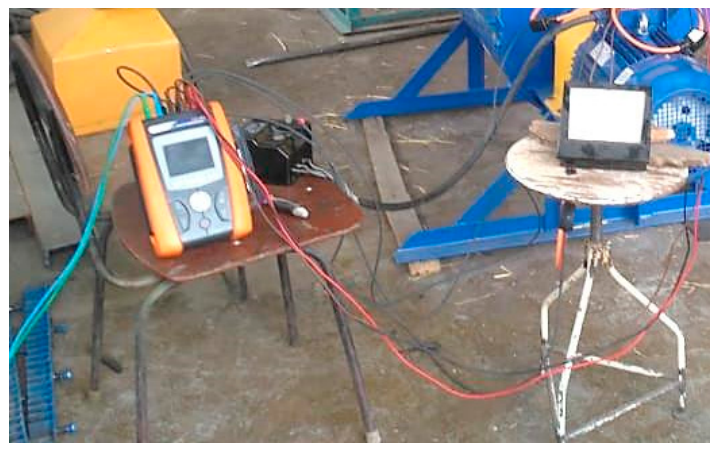
The energy consumption of the mixing process was measured using an AKE-824 power quality analyzer (HT Italia S.r.l., Faenza, Italy) (
Figure 1).
The main technical specifications of the AKE-824 power quality analyzer include the measurement of voltage (TRMS), current, frequency, active, reactive and apparent power, power factor, and energy. The instrument supports voltage measurements up to 1000 V (phase-to-phase) and 600 V (phase-to-neutral), current measurements up to 3000 A using flexible current probes, and harmonic analysis up to the 49th harmonic of voltage and current. It also records power quality disturbances, including voltage sags, overvoltages, and interruptions with a temporal resolution of 10 ms, and detects fast transient events ranging from 5 μs to 2.5 ms with amplitudes of up to 6000 V.
It should be noted that the blades installed inside the chamber do not perform active mixing of the material. Unlike screw or paddle mixers, the blades serve only as passive flow-guiding elements that separate the material streams and prevent the entire mass from moving as a single bulk volume. The mixing process itself is achieved primarily through gravitational redistribution of the material inside the rotating inclined chamber.
To ensure the reliability and reproducibility of the experimental results, each experimental series was performed in five replicates. The laboratory investigations initially focused on determining the moisture content of sapropel, the organic fertilizer, their mixture consisting of 40% sapropel and 60% organic fertilizer, and compound feed prepared according to formulation K-60-1.
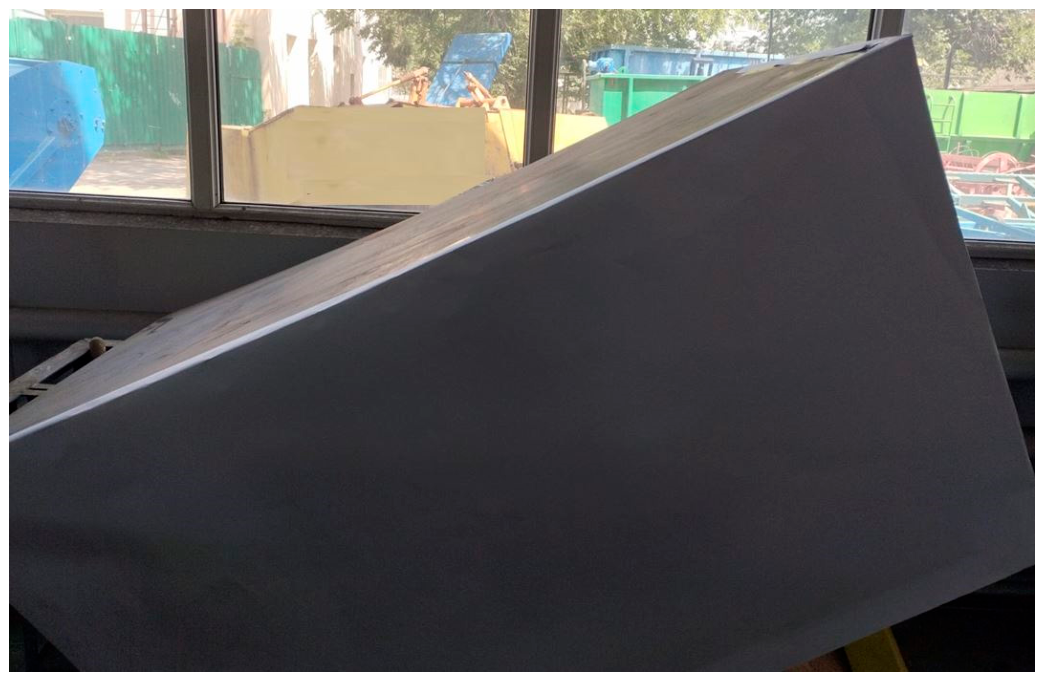
To determine the movement velocity of materials, a steel sheet with a length of 1400 mm inclined at an angle of 32° was used (
Figure 2). The flow behavior of sapropel, organic fertilizer, and compound feed on an inclined surface was experimentally investigated. The material velocity was determined from the time required to traverse a predetermined distance, which was measured using an electronic stopwatch.
It should be noted that the experimental investigation of the energy consumption associated with the mixing process was conducted during the preparation of compound feed formulated according to recipe K-60-1. Accordingly, the coefficients of kinetic friction were determined for compound feed, sapropel, organic fertilizer, and their combined mixture.
The experimental data were processed using statistical methods. Considering the number of degrees of freedom f = n − 1 and a confidence probability of p = 0.95, the corresponding Student’s t-value was determined. The confidence interval was then calculated as the product of the tabulated Student’s t-value and the standard deviation. Consequently, for each experiment, the confidence limits around the mean value were established, and the results of all replicates fell within the corresponding confidence interval. The average value obtained from each experimental series was used for graphical representation of the results.
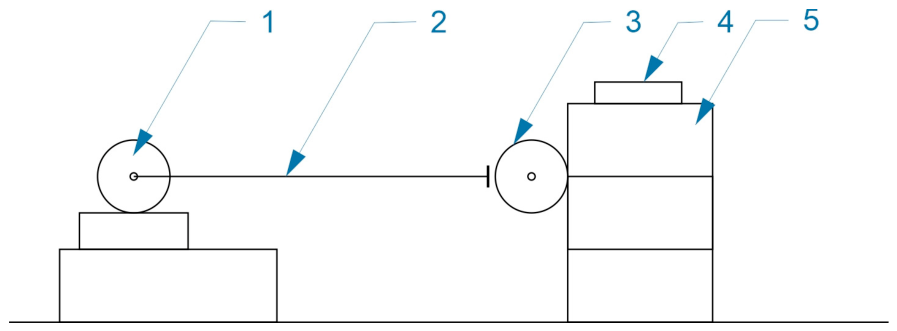
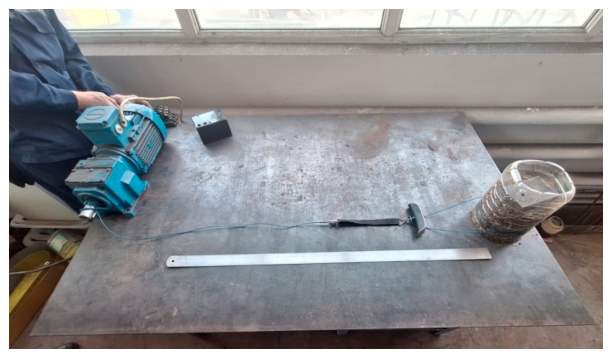
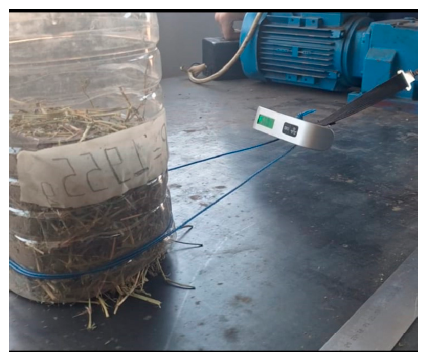
To verify the validity of the developed analytical relationships, additional experiments were conducted to determine the coefficient of kinetic friction of various feed materials on a steel surface. The experimental setup consisted of a bottomless plastic container filled with the test material. Prior to the experiment, the base of the container was covered with a thin sheet of paper, after which the mass of the loaded container was measured.
The loaded container was then placed on a steel plate surface. One end of a cord was attached to the container through an electronic dynamometer, while the other end was connected to the shaft of a gear motor. The gear motor was subsequently activated, causing the container to move along the steel surface. After the container had traveled a distance of 1.2 m, the motor was switched off (
Figure 3). The readings of the electronic dynamometer were recorded using video capture on a smartphone (
Figure 4 and
Figure 5). The velocity of movement of the bio-organic material and compound feed was maintained at 0.19 m s
−1 throughout the experiments.
Figure 5 presents a frame extracted from the recorded experiment, in which the mass of the compound feed contained in the cylinder together with the load was 1955 g, while the dynamometer reading was F = 0.7934 N. Under these conditions, the coefficient of friction of the compound feed was calculated as follows:
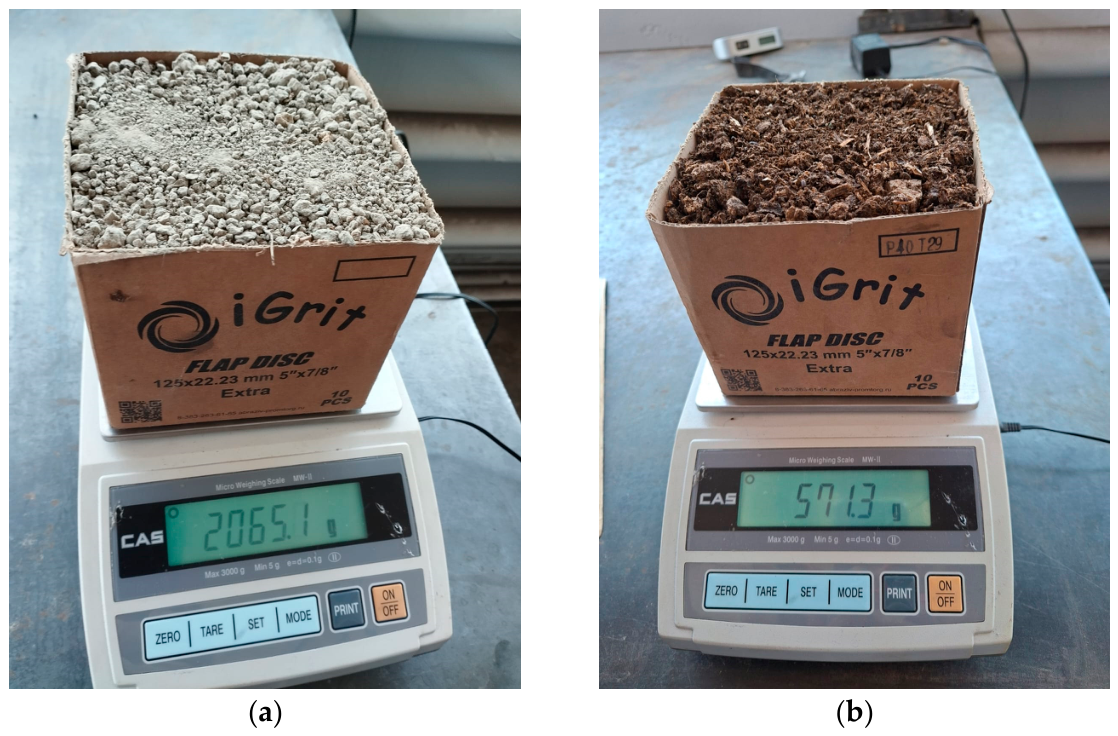
The bulk densities of sapropel, the organic fertilizer, their mixture, and the compound feed were also determined.
For density measurements, containers with a volume of 0.0019 m
3 and a tare mass of 39 g were prepared. The mass of the tested materials was measured using an MW-II electronic balance (CAS, Republic of Korea) (
Figure 6).
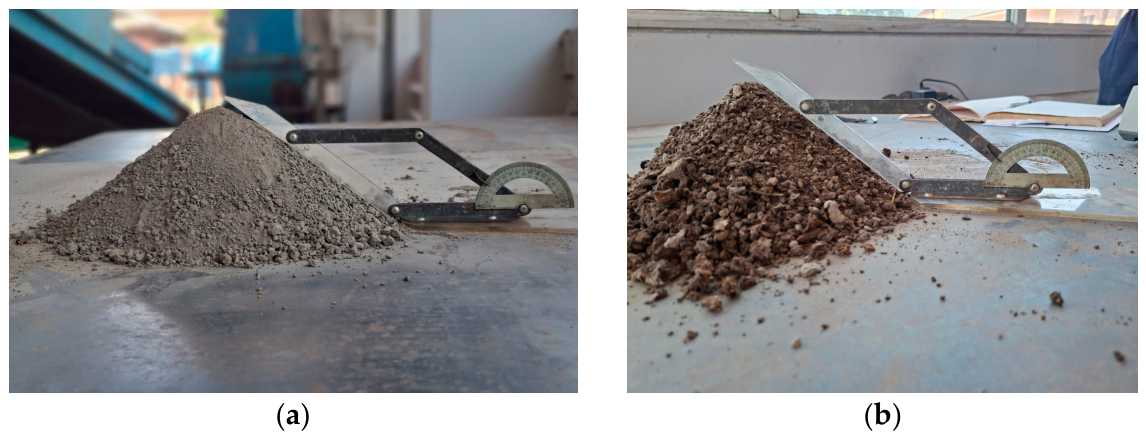
All experiments were conducted in five replicates. The bulk densities of the tested materials were determined first, followed by measurements of their angles of repose. The angle of repose was measured using a laboratory apparatus shown in
Figure 7.
4. Results of the Development of a Gravity Mixer for the Preparation of Mixtures Based on Sapropel and Organic Fertilizers
4.1. Substantiation of the Structural and Technological Design of the Gravity Mixer for Reducing Energy Consumption and Intensifying the Mixing Process
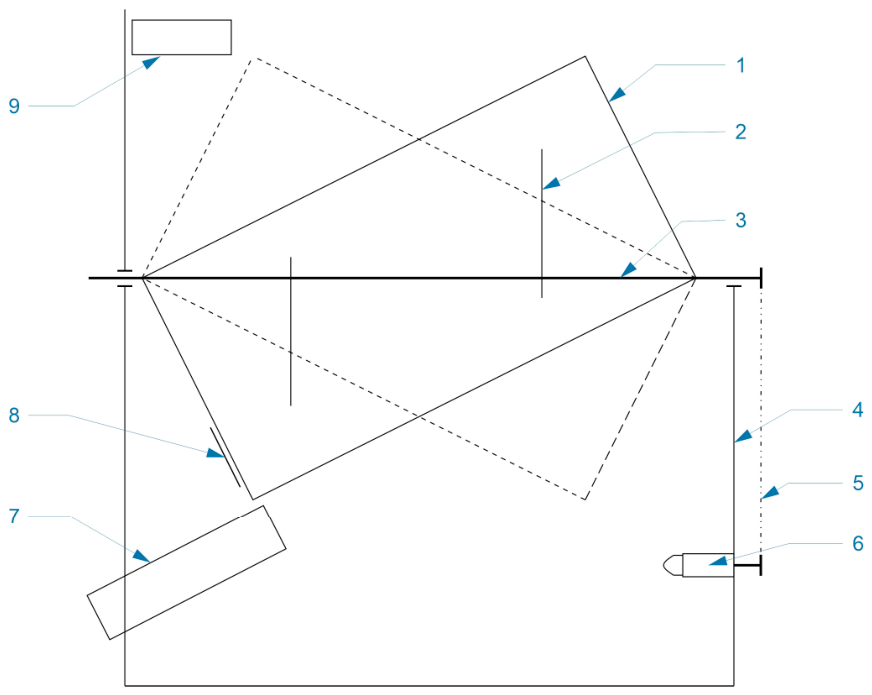
The developed gravity mixer is intended for the preparation of multicomponent feed and organomineral mixtures with reduced energy consumption. The design of the mixer is shown in
Figure 8.
The mixer consists of a cylindrical chamber (1), blades (2) rigidly mounted on a shaft (3), a frame (4), a chain transmission system (5), a geared motor (6), a discharge chute (7), a cover (8), and a loading chute (9).
To load the mixture components, the chamber cover is positioned upward and opened. The feed or organomineral mixture components are introduced into the chamber through the loading chute. After loading, the cover is closed and the mixer drive is activated. Upon completion of the mixing process, the cover is moved to the lower position opposite the discharge chute, after which the prepared mixture is discharged by gravity flow. Thus, the cover simultaneously performs the functions of both loading and unloading elements of the structure.
A patent of the Republic of Kazakhstan No. 11297, entitled “Feed Mixer for Livestock”, was granted for the developed design [
25].
The main difference between the developed mixer and conventional designs lies in the implementation of the mixing process primarily through the gravitational movement of material inside a rotating inclined chamber. During one revolution of the chamber, the mixture components move along the longitudinal axis of the cylinder in two opposite directions while simultaneously performing circular motion along the inner chamber surface.
As a result, the material simultaneously participates in multiple directions of movement, which promotes a more intensive redistribution of the mixture components. The additionally installed blades divide the material flows and prevent the mass from moving as a single bulk volume from one end of the chamber to the other. This contributes to improved mixing efficiency and accelerates the preparation of multicomponent mixtures.
To ensure the required regime of gravitational material movement, the rotational speed of the chamber should remain relatively low, and its optimal value should be determined through theoretical and experimental investigations. Under such operating conditions, the components move along the chamber axis under the action of gravitational forces without entering a regime in which the material rotates together with the cylindrical surface.
The development of the mixer was carried out within the framework of the grant-funded project IRN No. AP23488562 “Development of an Integrated System for the Production of Complete Feed Based on a Bioactive Medium under the Conditions of the ‘Chatuev’ Farm”.
Under farm conditions, green biomass is cultivated hydroponically in containers with a total cultivation area of 32 m
2 arranged in two tiers. The daily water consumption is:
According to technological recommendations, 2.5% sapropel should be added to the used water volume, which corresponds to 23.2 kg. For the preparation of the working mixture, a total mass of 60 kg was adopted, including 24 kg of sapropel and 36 kg of organic fertilizer.
Special experiments showed that the bulk density of sapropel was 1166 kg m−3, whereas that of the organic fertilizer was 269 kg m−3. The bulk density of the mixture containing 40% sapropel and 60% organic fertilizer was determined to be 473 kg m−3.
In addition, the mixer is intended to be used in small-scale farming operations for the preparation of compound feed. The compound feed formulated according to recipe K-60-1, consisting of ground wheat and barley grain, wheat bran, sunflower meal, vitamin–grass meal, feed phosphate, and salt, had a bulk density of 453 kg m−3. For the calculation of the mixer capacity, the average bulk density of the above-mentioned mixtures was adopted as 463 kg m−3.
Based on the above, the mixer volume was determined for the preparation of a 60 kg batch of sapropel, organic fertilizer, and compound feed, taking into account their average bulk density of ρ = 463 kg m−3.
Considering that the mixture should occupy approximately 60% of the internal chamber volume, the required working volume of the mixer was calculated using the following equation:
m—mixture mass, kg;
K—mixture filling coefficient;
—mixture density, kg/m3.
As a result of the calculations, the volume of the cylindrical chamber was selected as 0.24 m3.
The inclination angle of the inner chamber surface was selected as 32°. This value was determined based on preliminary observations showing that at this inclination angle various dry feed materials and bulk substances exhibit stable gravitational movement along the steel surface.
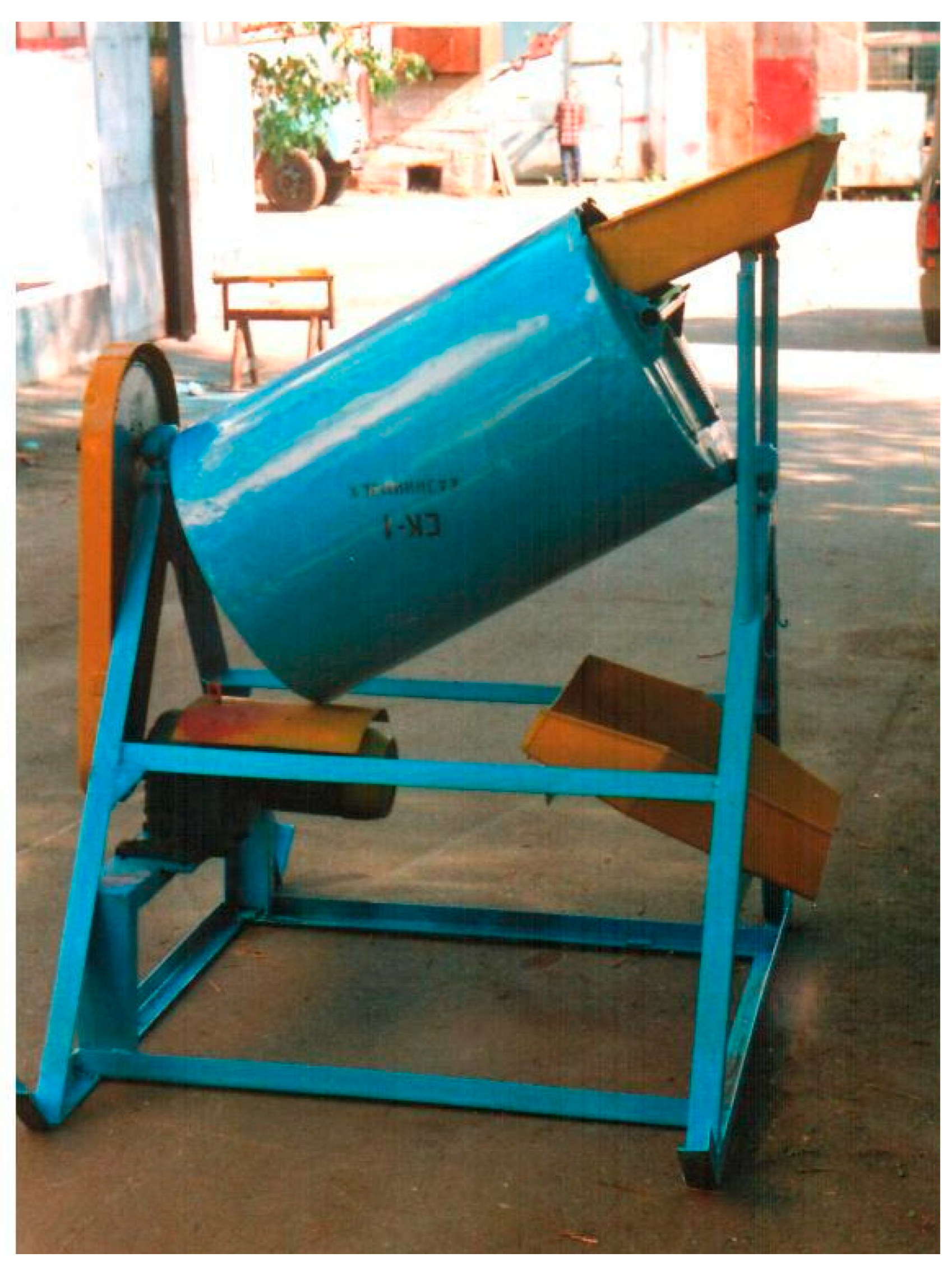
After determining the main structural parameters, the engineering documentation was developed and an experimental prototype of the gravity mixer was manufactured (
Figure 9).
Preliminary tests of the experimental prototype demonstrated stable operation of the drive mechanisms and confirmed the readiness of the unit for further theoretical and experimental investigations aimed at substantiating the rational parameters of the gravity mixing process.
4.2. Determination of the Rotational Speed of the Mixer Chamber, the Velocity of Gravitational Material Movement, and the Theoretical Power Requirement of the Mixing Process
4.2.1. Determination of the Rotational Speed of the Mixer Chamber and the Velocity of Gravitational Material Movement
Based on preliminary calculations, it was determined that for the preparation of a mixture consisting of sapropel and organic fertilizer, the batch mass of the loaded material should be 60 kg. Taking into account the mixture density and the filling coefficient of the working chamber, the volume of the cylindrical chamber was selected as 0.24 m3.
During mixer operation, one of the important parameters is the preparation time required for a single batch of mixture. At a mixing duration of 10–15 min, the productivity of the unit ranges from 240 to 359 kg/h, which corresponds to the requirements of small-scale farms with livestock populations of 80–120 cattle.
For effective mixing, the material particles should not rotate together with the inner chamber surface but instead move downward under the action of gravitational forces. At the same time, the particles must travel from the upper end of the cylinder to the lower end within a time interval corresponding to one-quarter of a chamber revolution (
Figure 10).
The time required for one-quarter of a chamber revolution is determined by the following expression:
where
nc and
n are the rotational speeds of the mixer chamber, s
−1 and min
−1, respectively.
In addition, the time required for the movement of feed particles over a distance H can be determined using the following equation:
H—height of the mixer chamber, m;
υ—velocity of feed particle movement along the chamber wall, m/s.
For normal mixer operation, the time required for particle movement along the chamber wall (tk), must be less than or equal to the time corresponding to one-quarter of the chamber revolution (ty). This is because, during one-quarter of the chamber rotation, the feed particles located near the upper end of the mixer chamber must reach the lower end of the chamber.
If the feed mixture is initially located in the left part of the mixer chamber, rotation of the cylinder by 90° brings the chamber into a horizontal position, while the main mass of the material remains concentrated on the left side. With a further rotation of the cylinder by 45°, intensive movement of the feed mixture toward the right part of the chamber begins. This movement should be completed before the lower right end wall of the chamber reaches a rotation angle of 45°. Therefore, during the chamber rotation time (ty), the feed mixture must reach the right side of the chamber; accordingly, the material movement time tk should be shorter than the time required for the chamber to rotate through 90°.
This condition can be written as follows:
From this condition, an approximate value of the critical rotational speed of the chamber can be determined:
According to Equation (5), it was assumed that the material moves from one end of the chamber to the other.
When the left end of the cylindrical chamber is positioned at the lowest point, the majority of the material occupies approximately half of the chamber volume, while a smaller portion is located in the right half. As the left end rises, the chamber passes through the horizontal position. With further rotation, the right side of the chamber moves downward, causing the material located in the right half to immediately migrate toward the lower right region of the chamber. Simultaneously, the material located in the central zone also shifts downward and toward the right side.
The material located to the left of the center of gravity moves toward the center of gravity of the right-hand portion of the chamber. Therefore, the principal mass transfer may be assumed to occur between the centers of gravity of the left and right portions of the chamber. Accordingly, the effective travel distance of the material can be approximated as 0.5
H.
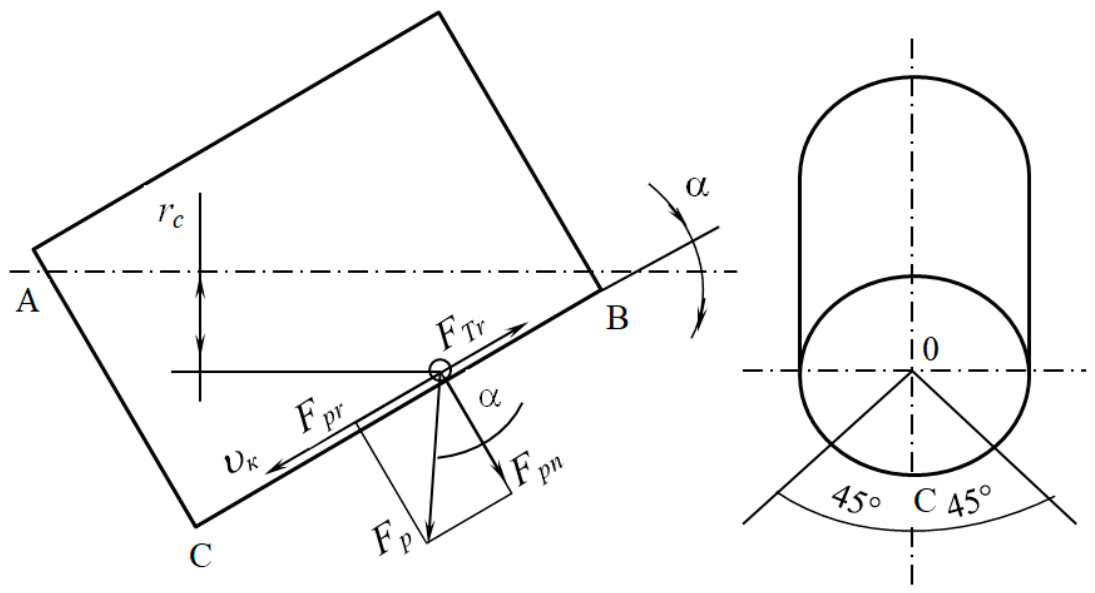
For a more accurate determination of the critical rotational speed, it is necessary to consider the forces acting on the material particles during chamber rotation. The particles are subjected to gravitational force and centrifugal force generated by the rotation of the cylindrical chamber.
In this case, the particles are affected by the resultant force
Fp (
Figure 4), which consists of the gravitational force acting on the particles and the centrifugal force generated during the rotational motion of the mixer chamber.
The resultant force is determined using the following equation:
where
m—mass of the components, kg;
ω—angular velocity of the mixer, rad/s;
r—radius of the mixer chamber, m.
The value of the resultant force determined using Equation (7) is valid when the axial line OC is positioned vertically (
Figure 3). In this case, the angle
α reaches its limiting position, and even a slight decrease in the angle α may stop the movement of particles along the wall BC of the chamber.
As shown in the figure, even a slight deviation of the vertical axis OC causes the angle α decrease relative to its initial value.
Therefore, to determine the maximum operating velocity of particle movement along the chamber wall, the resultant force was determined under the condition where the gravitational force and centrifugal force are directed along the same line OC.
Depending on the inclination angle of the cylindrical shell α, during chamber rotation and considering all forces acting on a feed particle, the differential equation of particle motion along the inner cylindrical surface can be written as follows:
where
—sliding friction coefficient of compound feed along the steel surface.
To solve this differential equation, it is necessary to determine the integration limits for the particle velocity along the cylindrical chamber wall and for the rotation time of the mixer chamber. The initial conditions are υo = 0, to = 0, while after the time interval , the particle velocity reaches the maximum value .
Considering the above integration limits and solving the equation for determining particle velocity, the equation takes the following form:
To determine the required rotational speed of the mixer chamber, laboratory experiments must be conducted to determine the movement velocity of mixture and compound feed particles along an inclined steel surface. Using the known particle velocity value for a given inclination angle of the steel surface, the required rotational speed of the feed mixer chamber can be determined using Equation (6).
Thus, as a result of the theoretical investigations, analytical expressions (6) and (10) were obtained for determining the optimal rotational speed of the feed mixer chamber.
4.2.2. Theoretical Determination of the Required Power of the Gravity Mixer
It is known that to ensure an efficient mixing process, the filling degree of the mixer working chamber should be approximately 60% of its internal volume [
26].
During the rotation of the cylindrical chamber, the distribution of material mass inside the working chamber becomes non-uniform, resulting in a resistance moment caused by the gravitational force acting on the material.
where
—moment generated by the gravitational force (
) of the compound feed located on both sides of the chamber, N·m;
—force arm, , m;
—mass of the compound feed loaded into the mixer chamber, kg.
The power required for the mixing process of compound feed components is determined by the following equation:
To accurately determine the power required for the mixer drive, it is necessary to determine the exact positions of the centers of gravity of the compound feed located on both sides of the chamber, i.e., the exact values of and .
To determine the required power during the operation of the gravity mixer, it is necessary to determine the difference between the centers of gravity of the lower and upper parts of the filled cylindrical chamber.
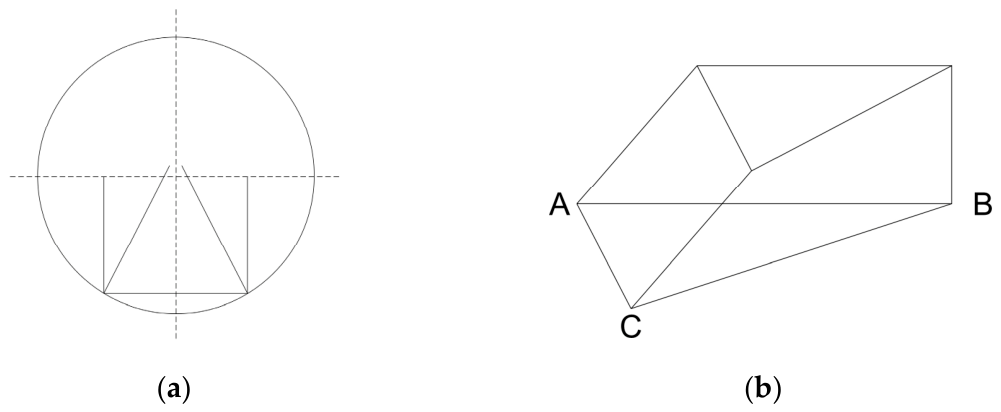
When observing the end cross-section of the mixer chamber, it can be noted that the arc length located perpendicular to the vertical axis of the circular end section within a 60° sector differs only slightly from a straight line (
Figure 11).
As shown in
Figure 11, the main portion of the mixture is concentrated in the lower part of the cylinder, i.e., within the prismatic volume. In this case, the cross-sectional area of triangle ABC is approximately equal to the projected area of the lower part of the inclined cylindrical chamber onto the vertical plane, i.e., equal to the area of triangle ABC shown in
Figure 11b.
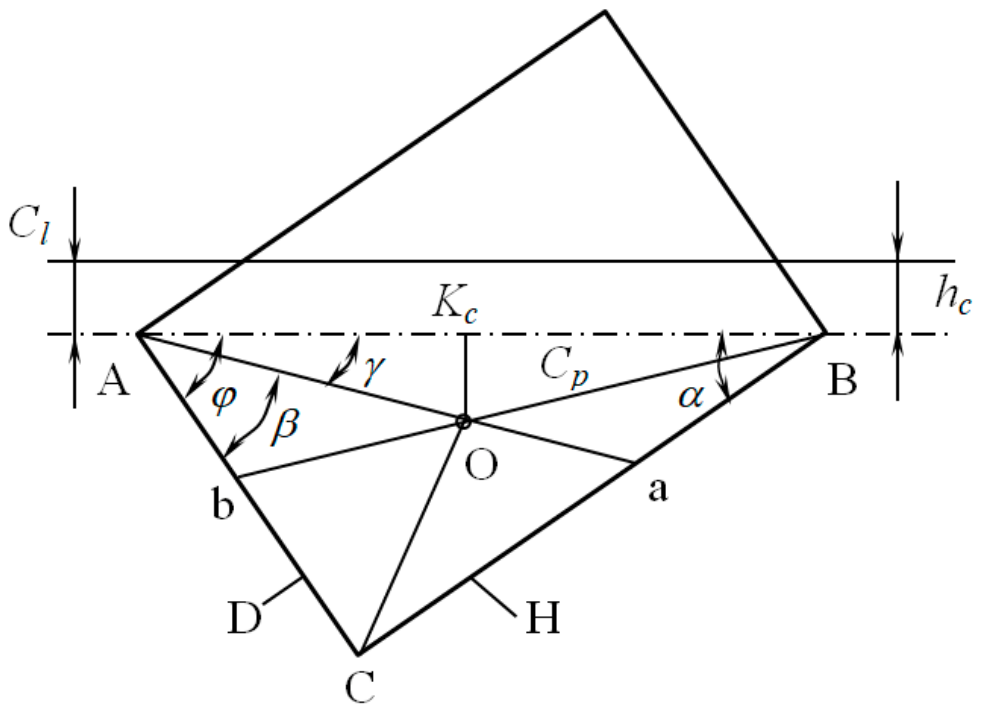
Therefore, the center of gravity of the lower part of the mixer chamber was determined as the center of gravity of triangle ABC (
Figure 12).
It is known that the center of gravity of triangle ABC is located at the intersection point of its three medians (point O). In this case, it is necessary to determine the length of segment OK, which represents the perpendicular distance from the center of gravity of the triangle to the horizontal axis of the mixer.
From triangle AOK, the required perpendicular distance can be determined as follows:
Here
From triangle AaC, its hypotenuse can be determined as:
It is known that the centroid of a triangle divides each median in a ratio of 2:1.
Therefore, the length of segment AO is determined using the following equation:
Substituting the value of AO into the equation yields:
When observing the upper surface of the feed loaded into the mixer chamber, its shape resembles a quadrilateral. Since the feed occupies 60% of the cylindrical chamber volume, the width of the rectangle was assumed to be equal to the cylinder diameter. The length of this rectangle is slightly smaller than the hypotenuse length of triangle ABC; therefore, with some approximation, it was taken as 0.8 AB.
In this case, the length of the horizontal axis is determined by the following equation:
Accordingly, the area of the quadrilateral is determined by:
The volume of feed
, located in the upper part of the chamber is determined by the following equation:
where
—mass of feed or material located in the upper part or on the left side of the chamber, kg.
In this case, the layer height
or the height of the parallelepiped with base area
is determined by:
In this case, the center of gravity of the parallelepiped is determined as half of the layer height:
Substituting the values of the centers of gravity
and
and
Thus, an analytical expression was obtained for determining the power required for the gravity-based mixing process of various materials and feed mixtures.
To evaluate the performance quality of the mixer and verify the validity of the obtained analytical expressions, experimental investigations were conducted.
4.3. Experimental Investigations for Determining the Optimal Parameters of the Gravity Mixing Process and Verifying the Validity of the Theoretical Relationships
4.3.1. Laboratory Investigations of Material Movement Velocity and the Friction Coefficient on a Steel Surface
During the laboratory experiments, the main physical and mechanical properties of sapropel, organic fertilizer, their mixture, and compound feed formulated according to recipe K-60-1 were determined.
The average values of moisture content, velocity of movement on an inclined surface, coefficient of kinetic friction, bulk density, and angle of repose were measured and analyzed. The results are presented in
Table 1.
As shown in
Table 1, the compound feed exhibited the lowest bulk density and coefficient of kinetic friction among the tested materials. Consequently, it demonstrated the highest velocity of movement along the inclined surface.
4.3.2. Experimental Determination of the Rational Parameters of the Gravity Mixer
The results of the laboratory investigations showed that the average particle movement velocity along the inclined surface was 1.21 m/s. Using the obtained values, the limiting rotational speed of the cylindrical mixer chamber was determined:
Consequently, the rational rotational speed of the chamber should be lower than the obtained value of n = 39 min−1.
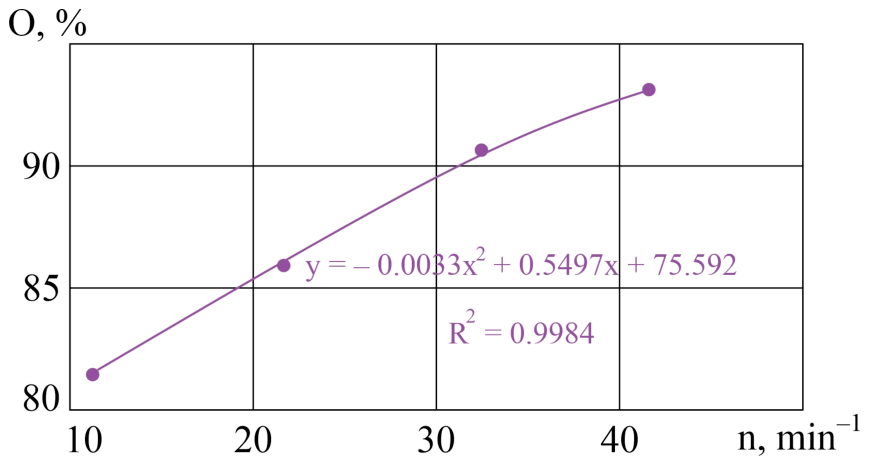
To determine the optimal operating regime, experimental investigations were conducted to evaluate the dependence of mixture uniformity on the rotational speed of the mixer chamber. The rotational speed was varied by replacing the sprockets of the chain transmission system. The following operating modes were investigated: n = 11, 22, 33, 43 min−1.
In each experiment, the chamber was loaded with a mixture consisting of 40% sapropel and 60% organic fertilizer. Wheat grain with a mass of 0.6 kg was used as the control component. The mixing duration was 6 min.
After completion of the process, 10 samples were collected from different zones of the mixture. Based on the analysis of the control component content, the standard deviation, coefficient of variation, and degree of mixture uniformity were determined.
The processed experimental results are presented in
Figure 13.
The experimental results showed that at a chamber rotational speed of n = 33 min−1, the mixture uniformity reached 90.42%.
For the preparation of compound feed containing various feed additives for different animal species, the mixture uniformity should be within 90–95%. The obtained results indicate that the rational rotational speed range of the chamber is within 33–40 min−1.
The main objective of the experimental study was to identify the rational rotational speed of the mixing chamber required to achieve the target mixture uniformity. Accordingly, the experimental program was designed to determine this operating parameter. Investigation of additional rotational speed regimes was not included in the study, since such experiments were not essential for addressing the research objectives.
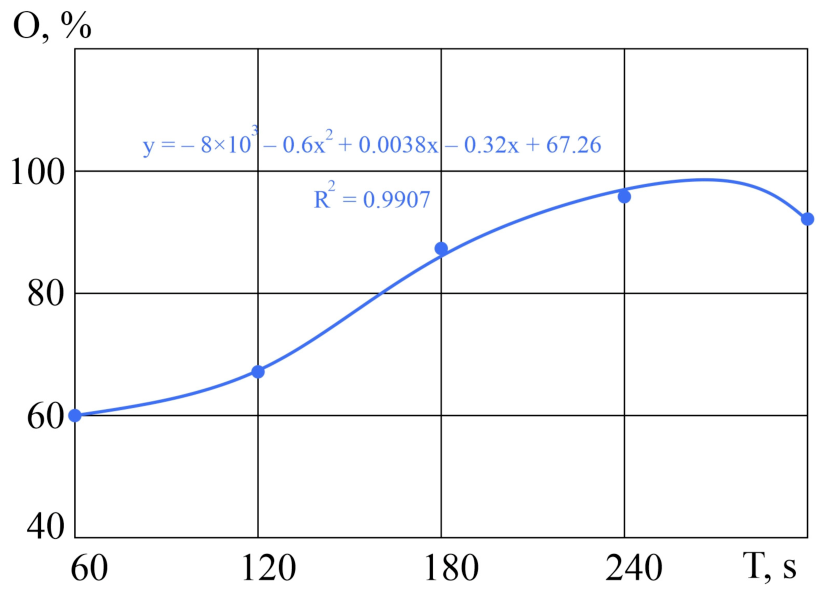
Experimental investigations were also conducted to determine the optimal mixing time for preparing compound feed according to recipe K-60-1, consisting of crushed barley and wheat, sunflower meal, wheat bran, vitamin-grass meal, feed phosphate, and salt.
During the experiments, samples were collected every 60 s of operation to determine mixture uniformity.
The experimental results are presented in
Figure 14.
The analysis of the graph shows that after 4 min of mixer operation, the mixture uniformity reached 95.7%. The mixing time was reduced by 33% compared with conventional feed mixers.
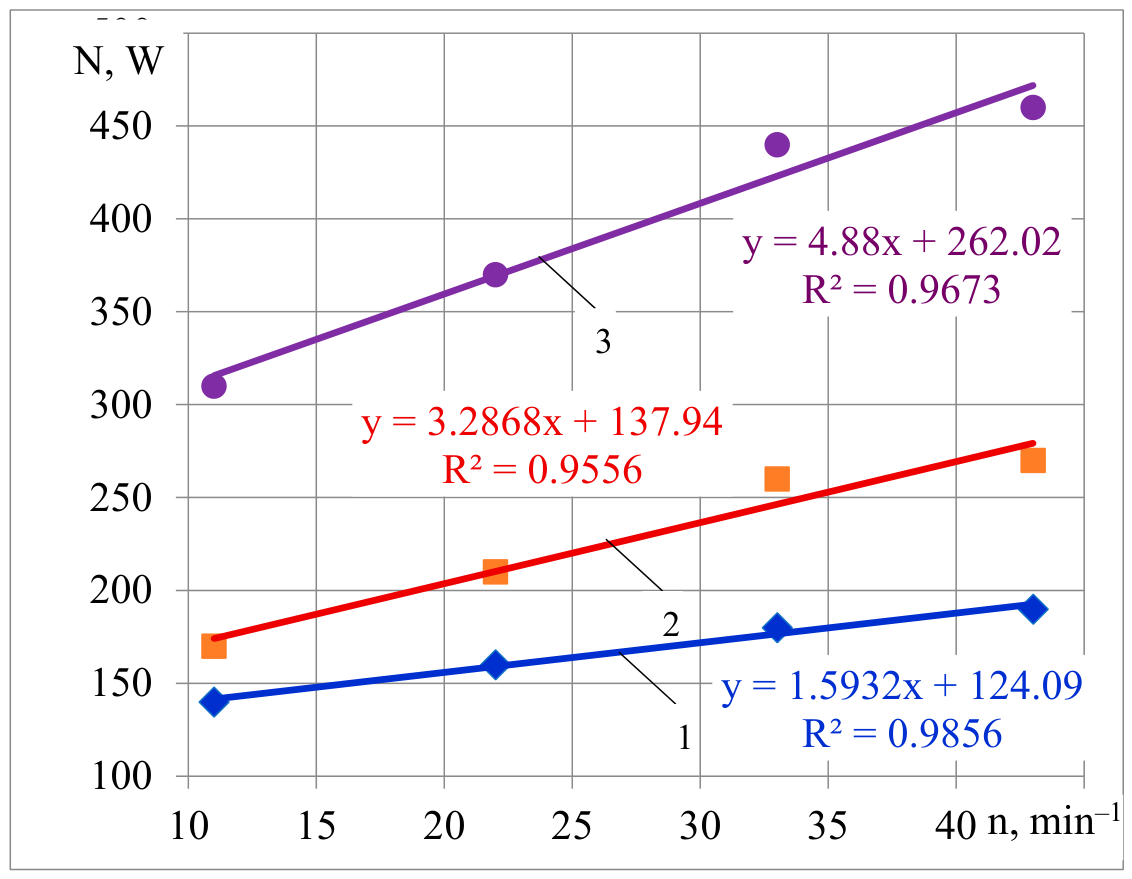
To determine the power required for the gravity mixing process as a function of the rotational speed of the mixer chamber, additional experiments were conducted. The chamber rotational speed varied within the range of 11–43 min−1.
Compound feed according to recipe K-60-1 for dairy cattle was prepared. The power required for feed preparation was determined using an AKE-824 power quality analyzer.
The experimental results are presented in
Figure 15.
The empirical models describing the dependence of idle, process, and total power consumption on chamber rotational speed demonstrated a linear trend and provided a satisfactory approximation of the experimental data.
At the optimal chamber rotational speed (n = 33 min−1), the required power was 440 W. The idle power consumption was 180 W, while 260 W was consumed directly by the mixing process.
To verify the validity of the obtained analytical expressions, calculations were performed to determine the particle movement velocity inside the mixer chamber installed at an inclination angle of α = 32°.
The theoretical particle movement velocity was determined using Equation (10). The following parameter values were used in the calculations:
The theoretical analysis predicted a particle movement velocity of 1.16 m s−1 within the mixer chamber.
The experimental value of particle movement velocity along the inclined plane positioned at an angle of 32° was equal to 1.21 m/s. Thus, the difference between the theoretical and experimental values was 4.13%, confirming the validity of the obtained analytical relationships.
When determining the velocity of particle movement inside the mixer chamber, the influence of centrifugal force was taken into account. According to Equation (7), the centrifugal force increases the resultant force acting on the particles. On the one hand, this increase enhances the tangential component of the resultant force, thereby accelerating particle motion. On the other hand, it also increases the normal component, which tends to reduce the velocity of particle movement within the mixer chamber due to the corresponding increase in frictional resistance.
However, because of the relatively low angular velocity of the mixer chamber, the effect of centrifugal force on particle movement appears to be limited. A comparison between the theoretical and experimental values of particle velocity on the inclined steel surface and inside the mixer chamber showed a difference of less than 5%. This result indicates that the variation in the resultant force caused by centrifugal effects is negligible under the investigated operating conditions.
To verify the validity of the analytical expressions for determining power consumption, the power value was calculated at a chamber rotational speed of n = 33 min−1.
Additional experiments showed that the average density of the compound feed prepared according to recipe K-60-1 was 453 kg/m
3. The following parameter values were used for the calculations:
The calculated power obtained from the analytical expressions was 270.49 W, while the experimental value was 260 W. The difference between these values was 10.49 W (4.03%), indicating the validity of the obtained analytical expression.
In the theoretical determination of the required power of the gravity mixer, the angular velocity of the chamber can be expressed through the theoretical particle movement velocity along the inclined chamber surface.
For this purpose, the theoretical maximum rotational speed of the mixer chamber is first determined:
Thus, the theoretical rotational speed of the mixer chamber was determined to be 37.5 rpm. Experimental investigations conducted at this rotational speed (
Figure 13) demonstrated that the mixture uniformity reached 95%, thereby confirming the validity and optimality of the calculated rotational speed.
Based on the theoretical analysis and experimental investigations, the optimal rotational speed range of the mixer chamber was established to be 35–37.5 rpm. Under these operating conditions:
The angular velocity of the mixer chamber can be calculated using the following equation:
Based on this, the final equation for the theoretical determination of the required power of the gravity mixer for bulk materials can be proposed:
Thus, as a result of the theoretical investigations and laboratory experiments, valid analytical expressions were obtained for determining the kinematic regimes and required power of the gravity mixing process. In addition, the optimal values of the main parameters of the gravity mixer for bulk feed and other materials were determined through theoretical and experimental investigations.
5. Discussion
The analysis of existing mixer designs used for the preparation of dry feed and organomineral mixtures showed that, in most cases, the mixing process is carried out using active working elements installed inside the working chamber. The use of screw mechanisms, blades, and other mixing devices ensures intensive material movement; however, it is accompanied by considerable energy consumption. According to the reviewed studies, the specific energy consumption of the mixing process in conventional mixers ranges from 1.25 to 3.0 kWh/t.
The obtained results are generally consistent with recent studies devoted to the optimization of mixing processes and a reduction in energy consumption in industrial and agricultural mixers [
1,
2,
3,
4,
5,
6,
7,
8,
9,
10,
11]. Similar to the findings reported by Long et al. [
1] and Yang et al. [
8], the present study confirms that the kinematic regime of particle movement significantly influences mixture uniformity and power consumption. At the same time, unlike conventional systems equipped with active mixing elements, the proposed gravity mixer operates mainly due to the gravitational redistribution of materials inside the inclined cylindrical chamber.
The reduced specific energy consumption obtained in this study supports the conclusions presented in recent investigations of passive and gravity-assisted mixing technologies [
6,
7]. The results also confirm the importance of optimizing chamber rotational speed and particle movement conditions for improving mixing efficiency while minimizing energy demand [
2,
9].
The results of the experimental investigations demonstrated that the developed gravity mixer is capable of preparing 60 kg of a multicomponent mixture within 4 min. The productivity of the unit reached 0.95 t/h, while the total power consumption was 440 W. The specific energy consumption of the mixing process was 0.5 kWh/t.
The obtained results indicate that the energy consumption of the proposed mixing process was reduced by approximately 2.5 times compared with conventional mixers equipped with active mixing elements.
These data correspond to the A9-DSG-0.5 compound feed mixer. The installed motor power of this equipment is 7.8 kW, indicating a relatively high energy demand of the mixing process.
The VLS-250 compact mixer, with a hopper volume of 0.25 m3, can be considered a prototype for comparison with the developed mixer. This paddle mixer achieves the required mixture uniformity of 95% within 2 min of operation. However, its installed motor power is 4.0 kW, which also indicates a relatively high energy consumption during mixing.
Therefore, the proposed gravity mixer is characterized by lower energy requirements and a simpler design compared with conventional compound feed mixers equipped with active mixing elements. As a result, the proposed design has the potential to reduce both energy consumption and manufacturing costs.
A limitation of the present study is that direct comparative experiments with commercially available feed mixers were not conducted. Nevertheless, the energy efficiency of the proposed mixer was assessed using the technical specifications and performance characteristics reported for existing feed mixers equipped with active mixing elements. These data provide a reasonable basis for evaluating the relative energy consumption of the proposed gravity-based mixing technology.
In addition to reducing energy consumption, a decrease in mixing time was also observed. In conventional mixers, the preparation time of the mixture is typically about 6 min, whereas in the developed gravity mixer the required mixture uniformity was achieved within 4 min, corresponding to a reduction in mixing time of approximately 33%.
The increased efficiency of the process can be explained by the specific pattern of material movement inside the inclined rotating cylindrical chamber. During rotation, the material simultaneously moves along the longitudinal axis of the chamber in two opposite directions while also performing circular motion along the inner cylindrical surface. This combined movement ensures intensive redistribution of the mixture components without the use of energy-intensive active mixing elements.
The blades installed inside the chamber additionally improve the mixing quality by separating material flows and preventing the movement of the mass as a single bulk volume. As a result, a more uniform distribution of the mixture components throughout the entire volume of the working chamber is achieved.
The validity of the developed analytical relationships was confirmed by the experimental results. The deviation between the theoretical and experimental values of particle movement velocity and power consumption did not exceed 4–5%, indicating sufficient accuracy of the developed mathematical model for engineering calculations and the design of this type of equipment.
It should also be noted that an additional advantage of the developed design is its relatively simple construction, which reduces manufacturing and operating costs. The absence of complex active mixing elements also contributes to lower operational loads and simplifies the maintenance of the mixer.
It should also be emphasized that the proposed mixer implements a fundamentally new mixing mechanism compared with the processes occurring in conventional mixers equipped with active mixing elements and in concrete mixers.
The novelty of the proposed design lies primarily in the mixing process itself rather than in structural complexity. During each revolution of the chamber, the material moves toward both end walls while simultaneously performing rotational motion along the inner surface of the chamber under the action of gravitational forces. Such a pattern of material movement is not characteristic of existing compound feed mixers and constitutes the technological novelty of the proposed mixing method.
Furthermore, the theoretical determination of the chamber rotational speed and particle movement velocity within the mixer provides the scientific basis for the proposed technology and represents the theoretical contribution of the present study.
The obtained results confirm the feasibility and effectiveness of the proposed gravity-based mixing method for the preparation of feed and organomineral mixtures in small-scale livestock and poultry farms. The developed analytical relationships can be used for the further design and optimization of gravity mixers for various applications.
6. Conclusions
To reduce energy consumption and intensify the mixing process of various materials and feed mixtures, a gravity-based mixing method was proposed. The method is based on the rotation of an inclined cylindrical chamber and operates without the use of active mixing elements. During rotation, the mixture components move toward both end walls of the chamber while simultaneously performing circular motion along the inner cylindrical surface. The movement of the material occurs without the use of active mixing elements, which contributes to reduced energy consumption and accelerated mixing.
The obtained results demonstrate that the proposed approach introduces a fundamentally different mixing mechanism compared with those employed in conventional mixers for compound feed and construction materials, thereby highlighting the technological novelty of the developed mixing process.
Considering the required batch mass of mixtures consisting of sapropel, organic fertilizers, and feed components intended for use in small-scale farms, the main parameters of the cylindrical mixer chamber were determined.
A structural and technological design and a complete set of engineering documentation for the gravity mixer intended for the preparation of various feed and organomineral mixtures were developed. An experimental prototype of the mixer was manufactured.
- 2.
Based on the analysis of particle motion along the inclined inner surface of the cylindrical chamber during its rotation, analytical relationships were derived for determining the critical rotational speed of the chamber and the velocity of material movement along the inner surface of the mixer.
The developed analytical expression provides a theoretical basis for determining the optimal rotational speed of the mixer chamber. The validity of the proposed relationship was verified through laboratory experiments involving the determination of the physical and mechanical properties of the organic fertilizer and compound feed.
The experimental results further confirmed the validity of the developed model, demonstrating that the theoretically predicted rotational speed of the mixer chamber ensured a mixture uniformity exceeding 90% after 4 min of operation.
Taking into account the mixer volume, the bulk density of the loaded materials, and the chamber rotational speed, analytical expressions were also derived for determining the power required for the gravity-based mixing of various materials and feed mixtures.
The experimental investigations additionally confirmed the validity of the developed analytical model for estimating the power requirements of the proposed gravity-based mixing process.
- 3.
As a result of the laboratory investigations, the principal physical and mechanical properties of the sapropel, organic fertilizer, and compound feed formulated according to recipe K-60-1 were determined. The average velocity of material movement along an inclined steel surface was found to range from 0.65 to 1.21 m s−1, the coefficient of kinetic friction from 0.40 to 0.91, the bulk density from 453 to 1116 kg m−3, and the angle of repose from 36° to 39°.
The obtained physical and mechanical characteristics provided an adequate basis for the theoretical description of particle motion within the mixer chamber and for estimating the energy requirements of the gravity-based mixing process. The results of the laboratory and experimental investigations confirmed the validity of the developed analytical relationships.
The experimental investigations showed that with an increase in the rotational speed of the mixer chamber up to n = 37.5 min−1, the mixture uniformity and power consumption increased and then stabilized. At this rotational speed, the mixture uniformity reached 90.4%, while the total power consumption was 440 W.
The maximum mixture uniformity required for the preparation of various feed mixtures and multicomponent compositions should be within 90–95%. Therefore, n = 33 min−1 can be considered the optimal rotational speed of the gravity mixer chamber.
The experimental results also showed that after 4 min of mixer operation, the mixture uniformity reached 95.7%, the mixer productivity was 0.95 t/h, and the specific energy consumption of the process was 0.5 kWh/t, which is 2.5 times lower than that of mixers equipped with active mixing elements.
The results of the theoretical and experimental investigations demonstrated the high efficiency of the proposed gravity-based mixing process and confirmed the validity of the developed mixer design and the corresponding theoretical models.
The conducted theoretical and experimental studies made it possible to substantiate the design and operating parameters of a gravity mixer with a working chamber volume of 0.24 m3. At the same time, it was established that increasing the chamber volume is accompanied by an increase in the kinetic energy of the material moving within the mixer. Therefore, future research should focus on determining the critical chamber volume of the gravity mixer at which optimal operating performance can be achieved. Determination of this parameter will expand the potential application range of the mixer and contribute to addressing practical challenges in both agricultural production and the construction industry.
7. Patents
The developed gravity mixer design is protected by Kazakhstan Patent No. 11297 “Feed mixer for livestock”.





 ,
,