Article

Reirradiation of Breast Cancer In-Field Recurrences with Curative Intent: Locoregional Practice Patterns, Toxicity, and Survival Outcomes


1
Department of Oncology, University of Calgary, Calgary, AB T2N 1N4, Canada
2
Department of Radiation Oncology, Arthur J.E. Child Comprehensive Cancer Center, Calgary, AB T2N 5G2, Canada
3
Department of Oncology, University of Alberta, Edmonton, AB T6G 2R3, Canada
4
Department of Medical Physics, Cross Cancer Institute, Edmonton, AB T6G 1Z2, Canada
5
Department of Medical Physics, Arthur J.E. Child Comprehensive Cancer Center, Calgary, AB T2N 5G2, Canada
6
Department of Radiation Oncology, Cross Cancer Institute, Edmonton, AB T6G 1Z2, Canada
*
Author to whom correspondence should be addressed.
Appl. Sci. 2026, 16(12), 6228; https://doi.org/10.3390/app16126228 (registering DOI)
Submission received: 14 May 2026 / Revised: 15 June 2026 / Accepted: 18 June 2026 / Published: 20 June 2026

Abstract

The growing number of breast cancer survivors is expected to increase the absolute number of locoregional recurrences requiring management, necessitating improvements in treating recurrences or tumours that occur within the initial radiation field (IFR). However, there are no guidelines on reirradiation (RT2) for breast cancer IFRs. We aimed to investigate locoregional practice patterns and outcomes. We retrospectively identified patients who received adjuvant RT1 for resected breast cancer and subsequently received curative-intent RT2 for IFRs at two large tertiary centres. A chart review obtained treatment, patient, and tumour characteristics. Descriptive statistics were calculated to characterize practice patterns, toxicity, and survival outcomes. Thirty-five patients met inclusion criteria across 18 years, with mean follow-up time of 43 months. Median time from RT1 to progression was 70.1 months. Most IFRs were in the breast or chest wall alone (48.6%). Regional nodal irradiation (RNI) was given in 23% of RT1 and 48.6% of RT2. Complete field overlap occurred in 60% of patients. Ten patients (28.6%) had a second recurrence (i.e., after RT2). Five-year OS was 65.4%, the median OS was not reached, and the mean OS was 73.7 months (95% CI 59.8–87.7 months). Freedom from recurrence (after RT2) was 71%. Shorter time to initial recurrence was associated with second recurrence (p = 0.018), and second recurrence was found to be predictive of death (p < 0.001). Four (11.4%) patients developed fibrosis, 75% of which developed after RT1. Eight (22.9%) patients developed lymphedema, 75% of which developed after RT1, all of which were documented as stable after RT2. Managing breast cancer IFRs with RT2 appears to be a feasible approach with reasonably consistent practice patterns in appropriately selected patients. Toxicity appears to be driven by the initial treatment course, and survival outcomes are acceptable.

1. Introduction

Breast cancer is the most common diagnosed malignancy in women. Locoregional recurrence remains an ongoing concern despite advancements in therapies, with recurrence risk estimated between 8 and 33% [1,2,3,4,5]. Breast cancer diagnoses and relapse rates are increasing due to an ageing population, earlier detection via screening, and improved cancer-directed therapy. As forecasts for the year 2045 estimate a 46% increase in breast cancer incidences compared to 2022, recurrence rates are expected to increase [6]. Treatment options for locoregional recurrences of breast cancer are limited, particularly in the 60–95% of cases where the recurrence is near the location of the initial cancer [7,8,9]. In-field recurrences (IFRs) are defined as a recurrence or new primary breast cancer that is within the initial radiation (RT1) field. Historically, the preferred approach to IFRs has been salvage mastectomy with or without reconstruction [10,11] due to the complexity of planning safe reirradiation (RT2), and the concern that chemotherapy may not adequately penetrate previously irradiated tissues, decreasing its efficacy [12,13].
RT2 is defined as a new course of RT delivered to part or all of a previously irradiated volume [14]. The barrier to widespread adoption of RT2 in treating IFRs for breast cancer is the theoretical elevated risk of treatment-related acute and late toxicity with repeat radiation exposure [15]. However, there is evidence that RT2 delivered within the initial field is a safe and effective approach to increasing locoregional control in the curative setting, and in the palliative setting it is already part of established standard practice [16]. Recent studies including a large systematic review have shown improved survival and recurrence outcomes when adding curative-intent RT2 to surgery in ipsilaterally recurrent breast cancer, while achieving acceptable cosmesis [17]. The treatment decisions surrounding breast cancer IFRs have been based on individual clinical experience and multidisciplinary discussion. To our knowledge there are no standardized recommendations regarding RT2 dose/fractionation, treatment technique, and target volume.
Our goal was to characterize the locoregional practice patterns, survival and recurrence outcomes, and toxicity rates after RT2 for breast cancer IFRs at two large Canadian cancer centres. Our specific outcomes were overall survival (OS), freedom from recurrence (FFR), patterns of failure, clinicopathologic factors associated with OS and FFR, as well as rates of lymphedema, fibrosis, and brachial plexopathy.

2. Materials and Methods

2.1. Inclusion and Exclusion Criteria

This was a retrospective cohort study of all patients across two tertiary, high-volume cancer centres who received initial curative-intent adjuvant radiotherapy (RT1) for resected breast cancer between 2010 and 2021 and subsequently received curative-intent reirradiation (RT2) for IFRs between 2010 and 2025. We first identified all instances of multiple treatment courses done for breast cancer in our radiotherapy planning software (Eclipse treatment planning system v18.00.10, Varian Medical Systems, Palo Alto, CA, USA) across the duration of its use at the two institutions. Cases were identified in which the breast cancer recurrence was within the previously irradiated field, as determined using the treatment planning software fields, imaging of recurrence (CT, MRI, or ultrasound), and biopsy results. Identification of in-field recurrences required a consensus among at least two of the authors. A chart review of these cases was done to ensure inclusion criteria was met. Patients were excluded if they did not complete RT1, RT1 or RT2 were palliative, or the patient had documented metastatic disease before RT2. Additional exclusion criteria were met if patients did not have an in-field recurrence, determined by dose comparisons of the radiation treatment plans within the Varian Eclipse software performed by a senior radiation oncology resident. This study was approved by the Health Research Ethics Board of Alberta with ID HREBA.CC-24-0357.

2.2. Chart Review

A complete review was then conducted on all eligible patients via the local electronic medical record system and Varian Eclipse. Data extracted included patient demographics, tumour characteristics, staging information, surgical details, pathology reports, systemic therapy details, assessment of RT1 and RT2 treatment fields’ degree of overlap, and any evidence of treatment toxicity (specifically lymphedema, brachial plexopathy, or fibrosis). Treatment toxicity was initially planned to be graded using the Common Terminology Criteria for Adverse Events (CTCAE); however, there was insufficient information in most charts to make adequate comparisons. Therefore, toxicity included any grade and had to be explicitly documented in the patient’s chart by the radiation oncologist. The presence of metastases or recurrence was defined using a combination of imaging suspicion and pathology confirmation, the latter being necessary in the case of a locoregional recurrence. Cause of death was recorded based on the reported cause of death in official chart documentation and marked as unknown if such documentation was not available or did not exist.

2.3. Data Analysis

Descriptive statistics were calculated to summarize practice patterns, toxicity, and oncologic outcomes. FFR was defined as the time from RT2 to subsequent locoregional and/or distant failure, with deaths being censored for statistical analysis. OS was measured from the last day of RT2 to death of any cause. OS and FFR were reported using the Kaplan–Meier method, and patients who did not meet the endpoint at last follow-up were censored. Logistic regression analyses assessing for clinicopathologic factors associated with death or second recurrence were performed using SPSS software (v29.0.2.0), for the purpose of hypothesis-generating given the small number of events. Toxicities were reported in terms of cumulative incidence, and whether they occurred pre- or post-RT2.

3. Results

A total of 35 patients met inclusion criteria across the two centres over 18 years. The cohort’s baseline characteristics and treatment details are summarized in Table 1. Median follow-up time was 43 months (range 4–98 months). The median time from the last day of RT1 to pathologically confirmed IFR was 68.2 months (IQR 43.1–93.9 months). The median time from IFR to the first day of RT2 was 6.4 months (IQR 2.9–9.9 months).
The initial histopathologic type was split between invasive ductal carcinoma (IDC) and ductal carcinoma in situ (4:1), and recurrent type was entirely IDC. Initial surgical pathology demonstrated node positivity in six (17.1%) patients, ranging from one to three positive nodes. Only four of the six node-positive patients received regional nodal irradiation (RNI), and both cases that did not receive RNI had nodal recurrences. Hormone receptor status changed between initial and recurrent tumour in 13 (37.1%) of patients, possibly indicating either transformation or a new primary. For the purpose of this study, all new tumours regardless of hormone receptor status have been termed IFRs.
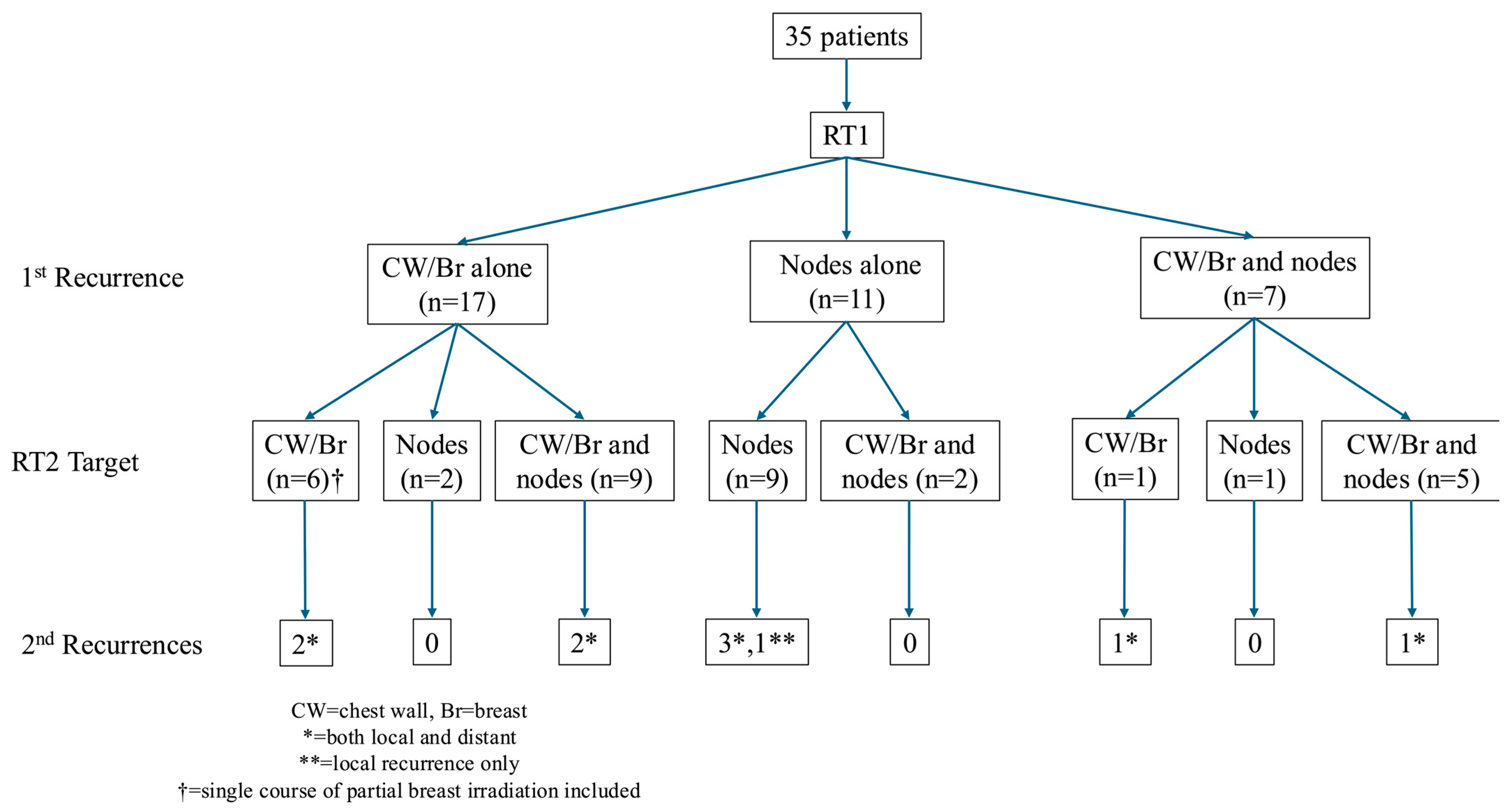
The most common RT1 dose and fractionation was 42.56 Gy in 16 fractions in 28 (80%) cases, with outliers including 27 Gy in five fractions partial breast irradiation (PBI) in two cases and 50 Gy in 25 in three cases. The dose and fractionation for RT2 was more heterogenous, with the most common being 50 Gy in 25 fractions in 14 (40%) cases, with outliers including a single PBI course (27 Gy in 5 fractions) and a variety of common regimens (dose range 40–50.4 Gy in 15–28 fractions). Boosts were more commonly given in RT1 (40%) than RT2 (5.7%). RNI was given in 23% of RT1 and 48.6% of RT2. Most patients received RT2 to the breast or chest wall alone (65.7%), with Figure 1 summarizing the distribution of RT targets across the population stratified by RT course. 3D conformal technique was used in most patients at RT2 (94.4%) (Table 1). Of note, two patients who recurred in the breast/chest wall received curative-intent nodal irradiation without primary site irradiation, which is not standard practice, but was rationalized at the time as being combined with sufficient oncologic resection (mastectomy with wide margins in both cases) and delivered in order to minimize field overlap with RT1 tangent-only fields. Complete RT field overlap was observed in 21 patients (60%), with partial RT field overlap in 14 patients (40%).

3.1. Patterns of Failure

Figure 1 shows the patterns of initial failure following RT1, the subsequent RT2 targets, and the second recurrences. By design, all 35 patients who met inclusion criteria received RT1 and then recurred: 17 recurred in the chest wall or breast alone, 11 in the nodes alone, and seven in both. Ten (28.6%) patients then had a second recurrence documented. The distribution of second recurrences after RT2 was evenly spread across initial recurrence groups in our small sample. None of the patients received a third course of radiation within the previously twice-irradiated fields.

3.2. Recurrence and Survival

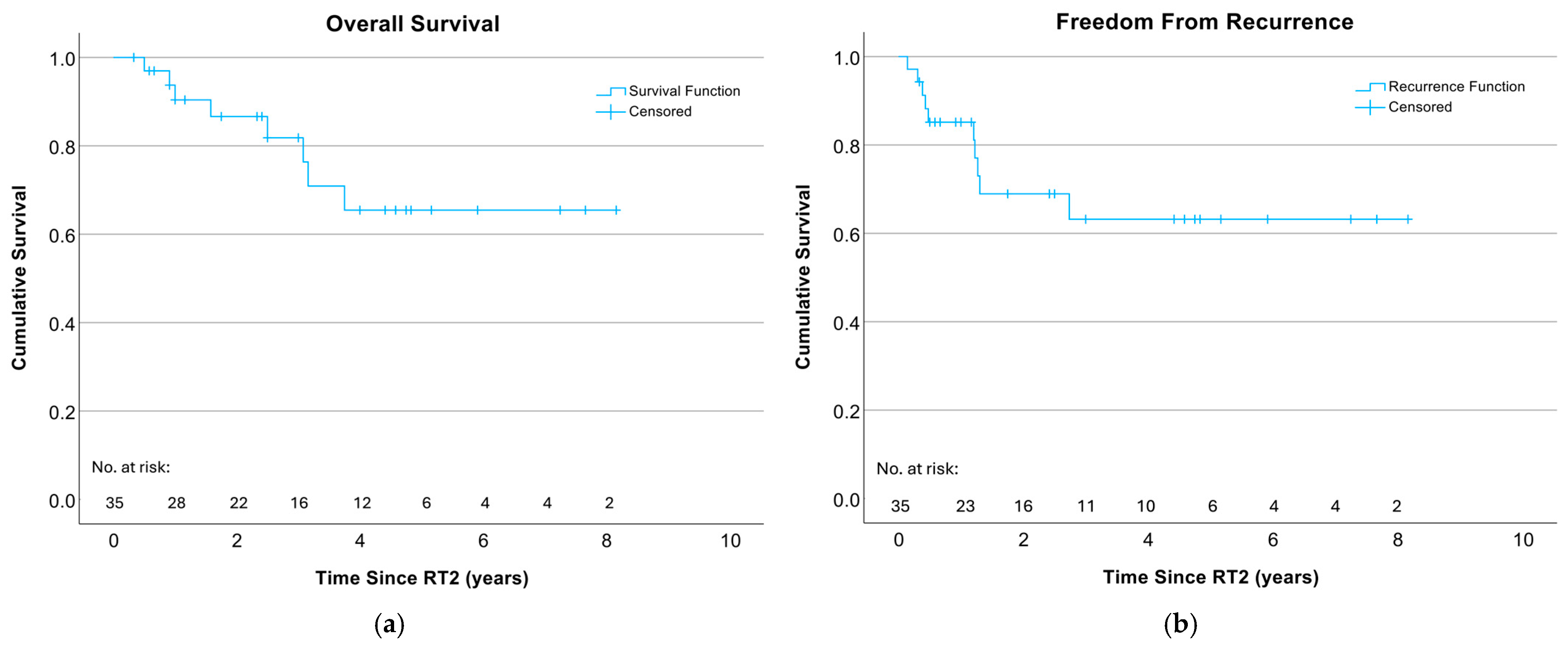
Figure 2 shows the OS and FFR for all patients since RT2. Using the Kaplan–Meier method, 5-year OS was 65.4% (95% CI 41.4–81.6%). The median OS was not reached, and the restricted mean OS was 73.7 months (95% CI 59.8–87.7 months). Causes of death were metastatic breast cancer (two patients, 25%), unknown (two, 25%), medical assistance in dying (motivated by metastatic breast cancer) (one, 12.5%), pneumonia (one, 12.5%), respiratory failure (one, 12.5%), and cardiopulmonary arrest (one, 12.5%). The latter three were considered independent of breast cancer and radiation therapy as documented by the most responsible healthcare provider.
The 5-year FFR was 63.2% (95% CI 41.1–78.9%) by Kaplan–Meier analysis. The Kaplan–Meier estimate stays flat at 63.2% after the last recurrence at 32.85 months, through last follow-up at 98 months. Median FFR was not reached, and the restricted mean FFR was 66.9 months (95% CI 51.0–82.7 months). In terms of crude summary statistics, second recurrence occurred in 10 patients (crude recurrence rate of 28.6%); nine were both distant and locoregional recurrences, and one patient recurred only locally. Among patients who developed recurrence, 4/10 (40%) were alive at last follow-up.
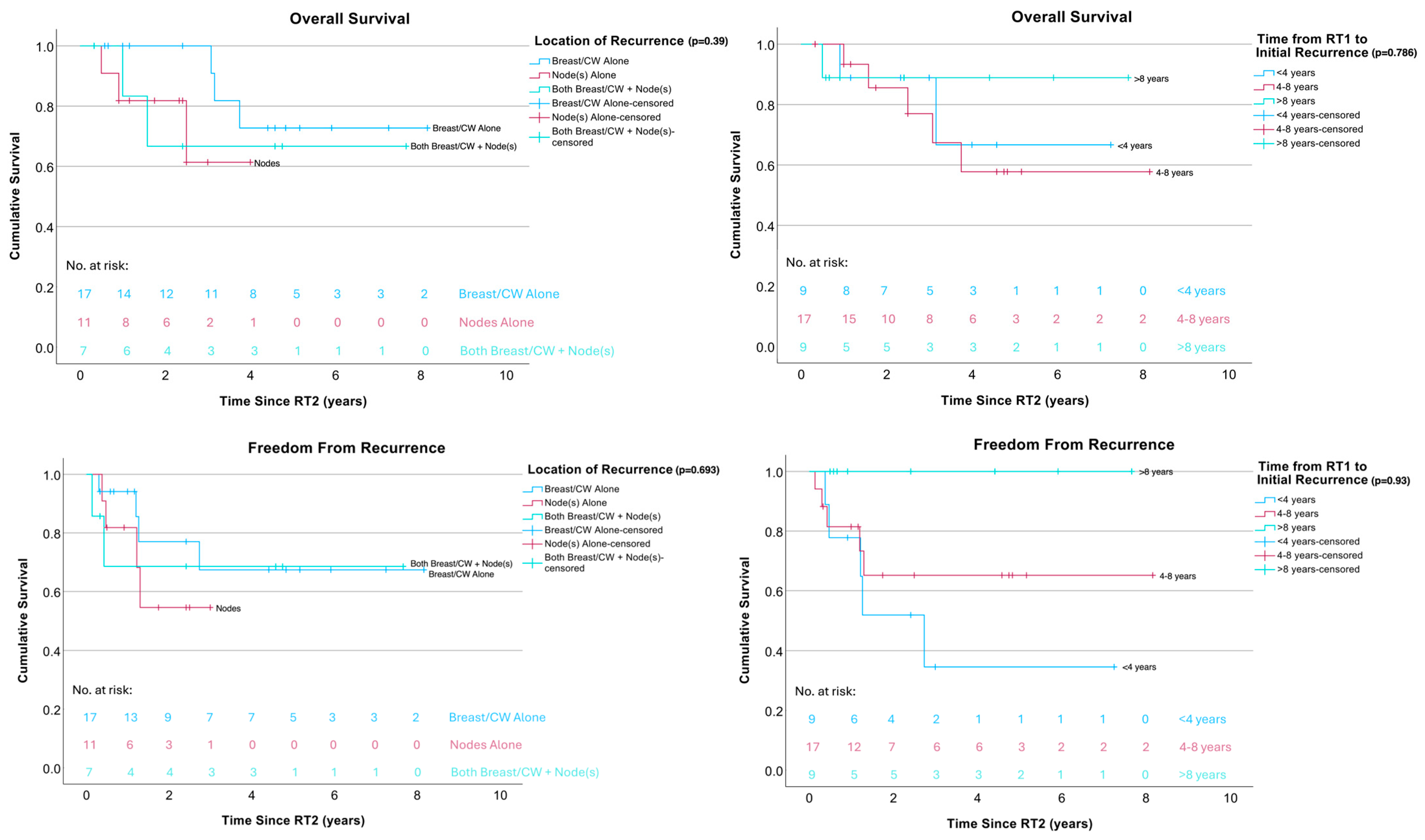
Figure 3 presents the OS and FFP stratified by location of recurrence or by time from RT1 to recurrence. When stratifying by location of recurrence, there was no statistically significant difference between groups in terms of OS (p = 0.39) or FFR (p = 0.693). When stratifying by time to recurrence, nominal categories of <4 years, 4–8 years, and >8 years were chosen to approximately equally distribute the data between nominal categories. OS rates were not statistically different when stratified for time to initial recurrence (p = 0.786). FFR rates were 44.4% for the <4 years to recurrence group, 70.6% for the 4–8-year group, and 100% for the group of patients who recurred >8 years after RT1 (p = 0.93). Although not statistically significant, there is a trend towards lower rates of second recurrence with longer time intervals between RT1 and initial recurrence.

3.3. Regression Analysis

The factors tested against death and recurrence after reirradiation on regression analysis include the luminal subtype, time to initial recurrence, size of recurrence, location of recurrence, dose of RT2, and in the case of OS only, second recurrence. Given the small number of death events, multivariable logistic regression was not performed. Univariable logistic regression was used to explore associations between clinical variables and the dependent variables, with results summarized in Table 2.
On univariable logistic regression with death as the dependent variable, recurrence after reirradiation was associated with significantly increased odds of death (OR 17.25, 95% CI 2.53–117.72, p = 0.004). Reirradiation dose, time to recurrence, recurrence size, recurrence location, and subtype were not significantly associated with death.
On univariable logistic regression with second recurrence as the dependent variable, longer time to first recurrence was associated with reduced odds of recurrence after reirradiation (OR 0.70 per 12 months, 95% CI 0.51–0.95, p = 0.020). Reirradiation dose, recurrence size, and recurrence location were not significantly associated with recurrence after reirradiation.

3.4. Toxicity

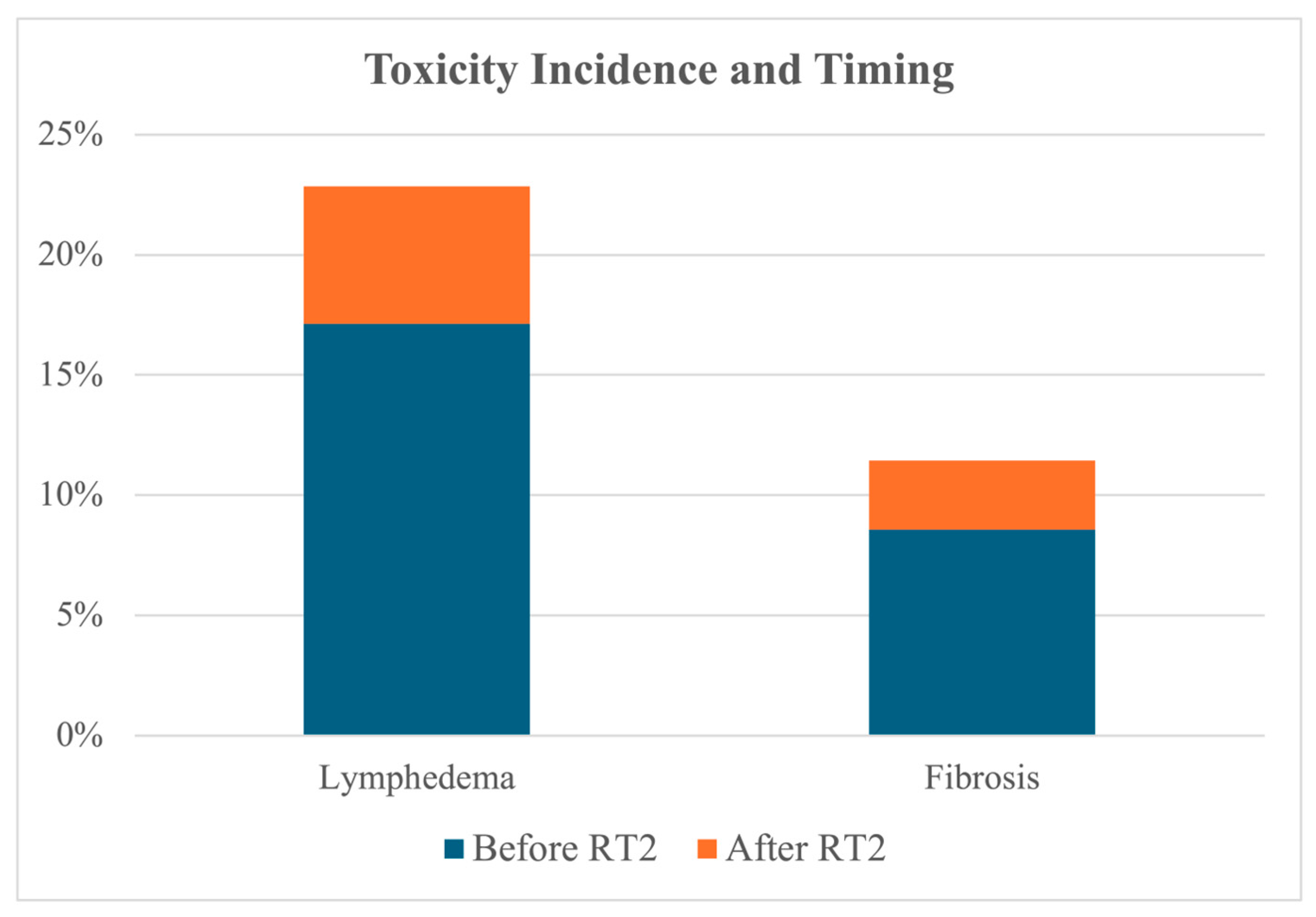
Figure 4 shows the incidence of lymphedema and fibrosis in terms of occurring before or after RT2, with the majority occurring in the interval between RT1 and RT2. Of the eight patients with lymphedema, six (75%) developed it after RT1, all of which were documented as stable after RT2, and two (25%) developed lymphedema only after RT2. Of the six patients who developed lymphedema after RT1, three of them had initial RNI. Both patients who developed lymphedema after RT2 had initial RNI.
Of the four patients with fibrosis, three (75%) developed it after RT1, all of which lacked charted comments on stability, and one (25%) did not develop fibrosis until after RT2. Of the patients who developed fibrosis after RT1, one initially treated with BR only tangents, one with tangents and RNI, and one with PBI.
None of the 35 patients had reported brachial plexopathy attributed to radiation therapy (48.6% of RT2 included regional nodal irradiation). Grading of toxicity was inconsistently included in documentation. No patients developed secondary malignancies according to the modified Cahan criteria during the follow-up period.

4. Discussion

The findings of this dual-institution study summarizing local practice patterns suggest that patients who receive a second course of curative-intent radiotherapy to an in-field breast cancer recurrence tend to remain free from second recurrence and that long-term survival is possible in most cases in this carefully selected cohort. The sample size was too small to draw conclusions on the optimal target volumes for RT2 based on location of recurrence, and we demonstrate a heterogenous approach to this decision in our regional practice. We were able to identify clinicopathologic factors associated with our primary outcomes, including time to initial recurrence predicting second recurrence, and second recurrence predicting death. However, this study should not be used to define a preferred therapeutic approach.
The incidence of common toxicities after breast radiotherapy appears, based on our limited data, higher after the initial radiation therapy treatment, with a minority of the toxicities occurring after RT2. There was documented stability of lymphedema after RT2. Although our sample size is low and should therefore be interpreted as hypothesis-generating only, our findings might suggest a higher therapeutic index for reirradiation of breast cancer in-field recurrences than previously believed. More work is necessary.

4.1. Comparison with Other Studies

Some studies exist that have examined RT2 alone following surgery. Merino et al. conducted a similar study to ours with 56 patients and found that RT2 had good locoregional control (62% and 50% at 1 and 2 years, respectively) and overall survival (73% and 67% at 1 and 2 years, respectively), which are similar to our reported outcomes but at a shorter follow-up interval. They also reported relatively low grade 3 or worse acute and late toxicities (7% and 12.5%, respectively) [18]. Their multivariate analysis suggested that time to local recurrence of less than 2 years predicted subsequent post-RT2 local recurrence, which is in accordance with our findings.
Fattahi et al. retrospectively assessed 72 patients who underwent RT2 and found there were different indications for RT2 (curative vs. palliative), and variable doses and techniques, which supports the non-standardized approach to RT2 found in our study [19]. They reported that grade 3 toxicity was experienced in 13% of patients within 22 months of RT2 (10% acute, 3% late). Time between RT courses was significantly associated with the development of grade 3 toxicity at any point, which our study was unable to demonstrate. Despite the heterogeneous approach, they reported recurrence-free survival of 74.6% and overall survival of 65.5% at 2 years, similar to our findings but with shorter follow-up.
In 2023, Baude et al. reported on their centres long-term single-centre in-field RT2 outcomes and tolerance [20]. In the identified 28 patients, only one acute and one late grade 3 toxicity event were recorded. Two-year relapse-free survival and overall survival were 59% and 79%, respectively. Eight patients (29%) remained relapse-free 5 years after RT2, significantly lower than our study’s 25 (71%) patients over a similar follow-up period. Their reported lower relapse free survival is explained by one third of their study population receiving palliative-intent RT2, whereas our study was entirely curative-intent RT2.
The most favourable results were recently reported in 2023 by Hannoun-Levi et al. who retrospectively identified 244 patients treated over 22 years with BCS plus RT2 for the recurrence and found a 94% relapse-free survival and a 94% overall survival at 10 years, in addition to only 6.2% grade 3 or worse late toxicity, which is numerically less than our toxicity incidence due our study including toxicity of any grade [21].
Overall, the literature on curative-intent RT2 for breast cancer IFRs suggests favourable outcomes, feasibility, and safety although only a limited number of studies exist with very little prospective data.

4.2. Variation in Practice Patterns

Despite the above evidence for an acceptable therapeutic index, there still lacks a single recommended approach to RT2 in the context of locoregionally recurrent breast cancer. Abeloos et al. summarized the different approaches to RT2 taken within their single institution as well as the contemporary studies on RT2, and found a wide variety of doses, fractionations, and techniques just as our dual-institution study [22].
To explore this issue more broadly, Willmann et al. conducted an international survey to better understand the patterns of RT2 for all tumour sites [23]. Breast tumour recurrence was the second rarest indication for RT2. The cited barriers to RT2 were higher toxicity (worse with shorter inter-RT interval) and variability in approach to organs at risk (OAR) dose constraints. Less than 20% of institutions had local RT2 guidelines in place. The authors concluded that there exists significant heterogeneity in RT2 practices globally and emphasized the need for prospective studies to guide treatment decision recommendations.
A review of the available literature for both breast and chest wall RT2 was performed by Siglin et al. in 2012 who concluded that there is still insufficient evidence to suggest a standardized approach, but that partial breast and chest wall directed RT2 showed promising results [3]. A large report from ESTRO-EORTC studying reirradiation patterns of 55 countries found increasing use of RT2, but with significant variability in what is deemed acceptable in terms of inter-treatment interval, OAR dose constraints, patient selection, and RT technique selection [23].

4.3. Published Recommendations and Guidelines

A more recent work by Sedeño et al. in 2023 summarized different RT techniques and recommended proceeding with BCS and RT2 together instead of salvage mastectomy in carefully selected patients by applying the GEC-ESTRO recommendations for PBI patient selection [24]. However, as shown in our study the locoregional practice patterns only utilize PBI in the minority of cases (1/35 [2.9%] over 18 years).
To our knowledge, only one set of guidelines exists regarding treatment recommendations for ipsilateral breast cancer locoregional recurrences, which is the DEGRO guidelines published in 2015 [25]. They conclude that salvage mastectomy is the standard of care and that in carefully selected patients BCS followed by mandatory partial breast irradiation (PBI) (with the most evidence to support brachytherapy) is a safe alternative. If the recurrence is unresectable, they strongly recommend RT2. Regarding RT planning, their recommendation is to cater the dose and fractionation to the inter-RT time interval, previous dose delivered, and existing clinical late toxicity. In patients with isolated axillary or supraclavicular recurrence, multimodality therapy is recommended with primarily surgery (where possible for curative intent) and RT2 together, which is what we show to be a common approach in our locoregional practice.

4.4. Limitations and Future Directions

This study was limited by its small sample size of 35 patients who met eligibility criteria over the 12-year period, as well as the heterogeneous treatment which limits the ability to draw practice-informing conclusions from the analysis. In addition, the finding that 37.1% of tumours had different hormone receptor profiles than the initial tumour is suggestive of new primaries rather than true recurrence. However, this study has the potential to contribute new information and spur future work in this otherwise under investigated topic of reirradiation for IFRs.
Most of the available literature is limited to in-breast recurrences post-BCS, and there is no established approach to in-field recurrences in terms of optimal dose-fractionation schedule, RT fields, or RT technique. In addition, there is a dearth of studies summarizing institutional approaches to recurrences in the chest wall and regional nodes, which we aim to contribute to via this study. Our institutions, like many internationally, lack a standardized approach to RT2 and are limited by specialized resources to treat recurrences such as breast brachytherapy, particle therapy, or hyperthermia. More work should be done to address these gaps in our understanding of this important and growing concern in the management of breast cancer recurrence.

5. Conclusions

This study summarizing institutional practice and outcomes suggests that patients who receive a second course of curative-intent radiotherapy to breast cancer in-field recurrences tend to remain free from second recurrence and that long-term survival is possible in most cases. Shorter time to initial recurrence is associated with second recurrence, and second recurrence is shown to be predictive of death. The incidence of common toxicities after breast radiotherapy appears to be driven by the initial course of radiotherapy, with a minority of the toxicities occurring after the second course. Although our sample size is low and should therefore be interpreted as hypothesis-generating only, our findings might suggest a higher therapeutic index for reirradiation of breast cancer in-field recurrences than previously believed. More work is necessary.
We hope to promote multinational collaboration as reirradiation becomes more prevalent with increasing cancer incidence and longer survival of individuals living with cancer. Our focus was on hypothesis generation and contribution to an understudied but important topic within oncology.

Author Contributions

C.B.: conceptualization, data curation, formal analysis, writing—original draft. A.R.: data curation, writing—review and editing. J.B.: data curation. D.S.: data curation, writing—review and editing. S.W.: data curation, methodology, writing—review and editing. H.M.: data curation, methodology, writing—review and editing. E.W.: conceptualization, methodology, writing—review and editing. N.L.: conceptualization, methodology, supervision, writing—review and editing. All authors have read and agreed to the published version of the manuscript.

Funding

This research received no external funding.

Institutional Review Board Statement

This study was approved by the Health Research Ethics Board of Alberta with ID HREBA.CC-24-0357. Initial approval 9 October 2024, renewal granted 3 October 2025.

Informed Consent Statement

Patient consent was waived due to the retrospective nature of this study.

Data Availability Statement

Data for these analyses were collected with ethics approval from the University of Calgary with the understanding that it would not be made available to those beyond the study team. If data sharing is requested, a new proposal can be discussed and submitted to the University of Calgary. If this is desired, please contact the corresponding author at conrad.bayley@ahs.ca.

Conflicts of Interest

The authors declare no conflicts of interest.

Abbreviations

The following abbreviations are used in this manuscript:
IFRIn-field recurrence
RT1First course of adjuvant radiotherapy
RT2Second course of adjuvant radiotherapy
RNIRegional nodal irradiation
OSOverall survival
FFRFreedom from recurrence
CTCAECommon terminology criteria for adverse events
IDCInvasive ductal carcinoma
PBIPartial breast irradiation

References

  1. Brewster, A.M.; Hortobagyi, G.N.; Broglio, K.R.; Kau, S.-W.; Santa-Maria, C.A.; Arun, B.; Buzdar, A.U.; Booser, D.J.; Valero, V.; Bondy, M.; et al. Residual Risk of Breast Cancer Recurrence 5 Years After Adjuvant Therapy. J. Natl. Cancer Inst. 2008, 100, 1179–1183. [Google Scholar] [CrossRef] [PubMed]
  2. Freedman, G.; Fowble, B. Local recurrence after mastectomy or breast-conserving surgery and radiation. Oncology 2000, 14, 1561–1581. [Google Scholar]
  3. Siglin, J.; Champ, C.E.; Vakhnenko, Y.; Anne, P.R.; Simone, N.L. Radiation Therapy for Locally Recurrent Breast Cancer. Int. J. Breast Cancer 2012, 2012, 571946. [Google Scholar] [CrossRef] [PubMed]
  4. Cheng, L.; Swartz, M.D.; Zhao, H.; Kapadia, A.S.; Lai, D.; Rowan, P.J.; Buchholz, T.A.; Giordano, S.H. Hazard of Recurrence among Women after Primary Breast Cancer Treatment—A 10-Year Follow-up Using Data from SEER-Medicare. Cancer Epidemiol. Biomark. Prev. 2012, 21, 800–809. [Google Scholar] [CrossRef] [PubMed]
  5. EBCTCG (Early Breast Cancer Trialists’ Collaborative Group); McGale, P.; Taylor, C.; Correa, C.; Cutter, D.; Duane, F.; Ewertz, M.; Wang, Y. Effect of radiotherapy after mastectomy and axillary surgery on 10-year recurrence and 20-year breast cancer mortality: Meta-analysis of individual patient data for 8135 women in 22 randomised trials. Lancet 2014, 383, 2127–2135. [Google Scholar] [CrossRef] [PubMed]
  6. World Health Organization; International Agency for Research on Cancer. Estimated Number of New Cases and Deaths from 2022 to 2045, Females, Age [0–85+] Breast. Available online: https://gco.iarc.fr/tomorrow/en/dataviz/isotype?sexes=2&single_unit=500000&cancers=20&years=2045 (accessed on 22 August 2024).
  7. Nielsen, H.M.; Overgaard, M.; Grau, C.; Jensen, A.R.; Overgaard, J. Study of Failure Pattern Among High-Risk Breast Cancer Patients with or without Postmastectomy Radiotherapy in Addition to Adjuvant Systemic Therapy: Long-Term Results from the Danish Breast Cancer Cooperative Group DBCG 82 b and c Randomized Studies. J. Clin. Oncol. 2006, 24, 2268–2275. [Google Scholar] [CrossRef] [PubMed]
  8. Fourquet, A.; Campana, F.; Zafrani, B.; Mosseri, V.; Vielh, P.; Durand, J.-C.; Vilcoq, J.R. Prognostic factors of breast recurrence in the conservative management of early breast cancer: A 25-year follow-up. Int. J. Radiat. Oncol. Biol. Phys. 1989, 17, 719–725. [Google Scholar] [CrossRef] [PubMed]
  9. Vicini, F.; Recht, A.; Abner, A.; Boyages, J.; Cady, B.; Connolly, J.L.; Gelman, R.; Osteen, R.T.; Schnitt, S.J.; Silen, W. Recurrence in the breast following conservative surgery and radiation therapy for early-stage breast cancer. J. Natl. Cancer Inst. Monogr. 1992, 647, 33–39. [Google Scholar]
  10. Bethke, K. Breast conservation: Predictors and treatment of local recurrence. Semin. Surg. Oncol. 1996, 12, 332–338. [Google Scholar] [CrossRef] [PubMed]
  11. Lindford, A.J.; Meretoja, T.J.; Von Smitten, K.A.J.; Jahkola, T.A. Skin-Sparing Mastectomy and Immediate Breast Reconstruction in the Management of Locally Recurrent Breast Cancer. Ann. Surg. Oncol. 2010, 17, 1669–1674. [Google Scholar] [CrossRef] [PubMed]
  12. Delanian, S.; Lefaix, J.L. Current Management for Late Normal Tissue Injury: Radiation-Induced Fibrosis and Necrosis. Semin. Radiat. Oncol. 2007, 17, 99–107. [Google Scholar] [CrossRef] [PubMed]
  13. Wapnir, I.L.; Price, K.N.; Anderson, S.J.; Robidoux, A.; Martín, M.; Nortier, J.W.; Paterson, A.H.; Rimawi, M.F.; Láng, I.; Baena-Cañada, J.M.; et al. Efficacy of Chemotherapy for ER-Negative and ER-Positive Isolated Locoregional Recurrence of Breast Cancer: Final Analysis of the CALOR Trial. J. Clin. Oncol. 2018, 36, 1073–1079. [Google Scholar] [CrossRef] [PubMed]
  14. Andratschke, N.; Willmann, J.; Appelt, A.L.; Alyamani, N.; Balermpas, P.; Baumert, B.G.; Hurkmans, C.; Høyer, M.; Langendijk, J.A.; Kaidar-Person, O.; et al. European Society for Radiotherapy and Oncology and European Organisation for Research and Treatment of Cancer consensus on re-irradiation: Definition, reporting, and clinical decision making. Lancet Oncol. 2022, 23, e469–e478. [Google Scholar] [CrossRef] [PubMed]
  15. Oldenborg, S.; Van Os, R.; Oei, B.; Poortmans, P. Impact of Technique and Schedule of Reirradiation Plus Hyperthermia on Outcome after Surgery for Patients with Recurrent Breast Cancer. Cancers 2019, 11, 782. [Google Scholar] [CrossRef] [PubMed]
  16. Schwaibold, F.; Fowble, B.L.; Solin, L.J.; Schultz, D.J.; Goodman, R.L. The results of radiation therapy for isolated local regional recurrence after mastectomy. Int. J. Radiat. Oncol. Biol. Phys. 1991, 21, 299–310. [Google Scholar] [CrossRef] [PubMed]
  17. Walstra, C.J.E.F.; Schipper, R.J.; Poodt, I.G.M.; van Riet, Y.E.; Voogd, A.C.; van der Sangen, M.J.; Nieuwenhuijzen, G.A. Repeat breast-conserving therapy for ipsilateral breast cancer recurrence: A systematic review. Eur. J. Surg. Oncol. 2019, 45, 1317–1327. [Google Scholar] [CrossRef] [PubMed]
  18. Merino, T.; Tran, W.T.; Czarnota, G.J. Re-irradiation for locally recurrent refractory breast cancer. Oncotarget 2015, 6, 35051–35062. [Google Scholar] [CrossRef] [PubMed]
  19. Fattahi, S.; Ahmed, S.K.; Park, S.S.; Petersen, I.A.; Shumway, D.A.; Stish, B.J.; Yan, E.S.; Remmes, N.B.; Mutter, R.W.; Corbin, K.S. Reirradiation for Locoregional Recurrent Breast Cancer. Adv. Radiat. Oncol. 2021, 6, 100640. [Google Scholar] [CrossRef] [PubMed]
  20. Baude, J.; Dendale, R.; Cao, K.; Fourquet, A.; Kirova, Y. Tolerance and Oncological Outcomes of In-Field Reirradiation for Locally Recurrent Breast Cancer: A Long-Term Single-Center Experience. Cancers 2023, 15, 4515. [Google Scholar] [CrossRef] [PubMed]
  21. Hannoun-Levi, J.M.; Gal, J.; Schiappa, R.; Chand, M.E. 10-Year oncological outcome report after second conservative treatment for ipsilateral breast tumor event. Clin. Transl. Radiat. Oncol. 2023, 38, 71–76. [Google Scholar] [CrossRef] [PubMed]
  22. Abeloos, C.H.; Purswani, J.M.; Galavis, P.; McCarthy, A.; Hitchen, C.; Choi, J.I.; Gerber, N.K. Different Re-Irradiation Techniques after Breast-Conserving Surgery for Recurrent or New Primary Breast Cancer. Curr. Oncol. 2023, 30, 1151–1163. [Google Scholar] [CrossRef] [PubMed]
  23. Willmann, J.; Appelt, A.L.; Balermpas, P.; Baumert, B.G.; de Ruysscher, D.; Hoyer, M.; Hurkmans, C.; Kaidar-Person, O.; Meattini, I.; Niyazi, M.; et al. Re-irradiation in clinical practice: Results of an international patterns of care survey within the framework of the ESTRO-EORTC E2-RADIatE platform. Radiother. Oncol. 2023, 189, 109947. [Google Scholar] [CrossRef] [PubMed]
  24. Pinar Sedeño, M.B.; Calín Lorca, A.; García Cabrera, L. Can breast cancer be reirradiated? Rev. Senol. Patol. Mamar. 2023, 36, 100497. [Google Scholar] [CrossRef]
  25. Harms, W.; Budach, W.; Dunst, J.; Feyer, P.; Fietkau, R.; Haase, W.; Krug, D.; Piroth, M.D.; Sautter-Bihl, M.-L.; Sedlmayer, F.; et al. DEGRO practical guidelines for radiotherapy of breast cancer VI: Therapy of locoregional breast cancer recurrences. Strahlenther. Onkol. 2016, 192, 199–208. [Google Scholar] [CrossRef] [PubMed]
Figure 1. Patterns of failure after curative-intent initial radiation (RT1) and second recurrences after a course of curative-intent reirradiation (RT2). Second recurrences are delineated as either local and distant (*) or local only (**). Abbreviations: CW = chest wall; Br = breast. A single course of RT2 partial breast irradiation (†) was documented.
Applsci 16 06228 g001
Figure 2. Overall survival (a) and freedom from recurrence (b) for all patients. Median follow-up was 4.0 years (IQR, 1.75–5.16) for OS and 2.5 years (IQR, 1.0–5.17) for FFR, estimated using the reverse Kaplan–Meier method. Abbreviation: RT2 = curative-intent reirradiation.
Applsci 16 06228 g002
Figure 3. Overall survival (top row) and freedom from recurrence (bottom row) for patients stratified by location of recurrence (left column) or time from initial radiation (RT1) to initial recurrence (right column). Abbreviations: RT1 = initial course of curative-intent radiation; RT2 = curative-intent reirradiation; CW = chest wall.
Applsci 16 06228 g003
Figure 4. Incidence of lymphedema and fibrosis, divided into events documented before (blue) or after (orange) reirradiation (RT2).
Applsci 16 06228 g004
Table 1. Baseline characteristics and treatment details for all patients (n = 35).
CharacteristicValue
Baseline Characteristics
Age (years), median (range), at diagnosis58.6 (35.4–83.5)
Follow-up time (months), median (range), from RT243 (4–98)
Neoadjuvant systemic therapy, n (%)3 (8.6)
Surgery and Pathology
Surgery type to primary, n (%)
  • -
    Breast-conserving surgery
    -
    Mastectomy

29 (82.9)
6 (17.1)
Surgery type to nodes, n (%)
  • -
    Axillary lymph node dissection
    -
    Sentinel lymph node biopsy
    -
    None

7 (20.0)
24 (68.6)
4 (11.4)
Initial histopathologic type, n (%)
  • -
    Invasive ductal carcinoma
    -
    Ductal carcinoma in situ

28 (80.0)
7 (20.0)
Molecular subtype, n (%)
  • -
    Luminal A
    -
    Luminal B
    -
    HER2 enriched
    -
    Triple negative

22 (62.9)
2 (5.7)
2 (5.7)
9 (25.7)
Positive nodes on pathology, n (%)6 (17.1)
LVSI on pathology, n (%)13 (37.1)
Adjuvant Treatment
RT1 dose (Gy in fractions), median (range)42.56 in 16 (27 in 5–50 in 25)
RT1 technique, n (%)
  • -
    3D conformal
    -
    Partial breast irradiation

33 (94.3)
2 (5.7)
RT1 boost, n (%)14 (40)
Adjuvant systemic therapy
  • -
    Endocrine therapy
    -
    Chemotherapy
    -
    Both
    -
    None

10 (28.6)
4 (11.4)
8 (22.9)
13 (37.1)
Recurrence and Re-Treatment
Recurrence location, n (%)
  • -
    Chest wall (CW) or breast alone
    -
    Lymph nodes alone
    -
    CW or breast and lymph nodes

17 (48.6)
11 (31.4)
7 (20.0)
Neoadjuvant systemic therapy, n (%)12 (34.3)
Surgery type to recurrence, n (%)
  • -
    Mastectomy
    -
    Breast conserving surgery
    -
    Nodal resection alone
    -
    Biopsy alone

16 (45.7)
5 (14.3)
7 (20.0)
7 (20.0)
Recurrence size (cm), median (range)2.5 (0.3–6.5)
Margins status, n (%)
  • -
    Negative
    -
    Close
    -
    Positive
    -
    Not reported/not applicable

21 (60.0)
3 (8.6)
1 (2.9)
10 (28.5)
Hormone receptors status in recurrence different from initial pathology, n (%)13 (37.1)
RT2 dose (Gy in fractions), median (range)50 in 25 (26 in 5–55 in 25)
RT2 technique, n (%)
  • -
    3D conformal
    -
    Partial breast
    -
    Volumetric arc

33 (94.4)
1 (2.8)
1 (2.8)
RT2 boost, n (%)2 (5.7)
Adjuvant systemic therapy, n (%)
  • -
    Endocrine therapy
    -
    Chemotherapy
    -
    Both
    -
    None

14 (40.0)
6 (17.1)
10 (28.6)
5 (14.3)
Table 2. Univariable logistic regression analyses for death and recurrence after reirradiation.
Candidate FactorScale/ComparisonDeath: OR (95% CI)p-ValueRecurrence After Re-RT: OR (95% CI)p-ValueInterpretive Note
Recurrence after Re-RTYes vs. no17.25 (2.53–117.72)0.004--Not tested as predictor because it is the outcome in the recurrence model
Reirradiation dosePer 1000 cGy1.41 (0.36–5.47)0.6190.92 (0.30–2.84)0.884
Time to first recurrencePer 12 months0.97 (0.76–1.22)0.7700.70 (0.51–0.95)0.020Longer interval was associated with lower odds of recurrence after Re-RT
Recurrence sizePer cm1.32 (0.89–1.96)0.1691.02 (0.69–1.49)0.933
Recurrence locationCategorical model-0.772-0.766Category-level ORs omitted for manuscript brevity
SubtypeCategorical model-0.469Not estimable-Sparse categories/zero events limited reliable estimation
Notes: OR = odds ratio; CI = confidence interval; Re-RT = reirradiation. Death model: N = 35, events = 8 deaths. Recurrence model: N = 35, events = 10 recurrences after Re-RT. For multi-level categorical predictors, the table reports the overall model p-value rather than individual category-level odds ratios for brevity. Results should be interpreted as exploratory because of the small number of outcome events. Statistically significant values are bolded, with an ⍺ of 0.05.
Disclaimer/Publisher’s Note: The statements, opinions and data contained in all publications are solely those of the individual author(s) and contributor(s) and not of MDPI and/or the editor(s). MDPI and/or the editor(s) disclaim responsibility for any injury to people or property resulting from any ideas, methods, instructions or products referred to in the content.