1. Introduction
Circular economy concepts and reduced carbon emissions are key priorities of the contemporary metallurgical industry. One of the most effective ways to achieve these objectives is the efficient processing of secondary aluminum resources, particularly machining chips. Aluminum machining chips represent a valuable but technologically challenging feedstock due to residual lubricants, surface oxide layers, and ferromagnetic contaminants. Their direct remelting leads to increased metal losses, intensive dross formation, and less metallurgical stability. Aluminum recycling is among the most energy-efficient metallurgical operations, as secondary production requires up to 95% less energy than primary aluminum production.
Cold pressing of machining chips into compact briquettes is a widely applied approach that improves handling, reduces melting losses, and enables the production of recycled aluminum materials with defined physical properties. Cold-pressed briquettes typically exhibit increased density, reduced bulk porosity, and improved handling characteristics, which may be beneficial for subsequent metallurgical processing. Aluminum is widely used as a deoxidizing agent in steelmaking due to its high affinity for oxygen. The applicability of recycled aluminum-based materials in metallurgical processing depends on factors such as density, remelting behavior, contamination level, and material recovery efficiency. Increasing requirements for material traceability, recycled content declaration, and environmental reporting further enhance the industrial relevance of recycled aluminum-based deoxidizers.
A key prerequisite for the use of recycled aluminum briquettes in steelmaking is their chemical homogeneity and compositional stability. Machining chips often originate from different alloy systems (e.g., AlSi or AlMgSi), which may lead to variations in the content of alloying elements and trace impurities. Collection, cleaning, and compaction processes can further affect elemental distribution, oxide content, and residual steel particle presence. Verification of chemical composition before and after remelting is essential for assessing suitability as deoxidizing additives, since variability in Fe, Mn, or Cr contents may promote intermetallic formation and affect metallurgical behavior.
Aluminum chip recycling, briquetting technologies, oxidation phenomena, and remelting behavior have been widely investigated. Aluminum chips are known to undergo significant oxidation already during machining and handling, which strongly influences their recyclability. Brocq et al. [
1] demonstrated that oxide layers develop complex morphologies and progressively increase in thickness with air exposure, while Chen et al. [
2] showed that appropriate chip pretreatment and controlled melting conditions can substantially improve the metallurgical quality of secondary aluminum alloys. Briquetting has been shown to effectively improve melting behavior [
3]. Pavlásek et al. [
4] reported reduced dross generation for high-density briquettes, and Penchev et al. [
5] demonstrated that impact-controlled briquetting enhances compaction and metallurgical efficiency. The influence of recycled material content on alloy performance has also been investigated; Vlach et al. [
6] showed that an appropriate fraction of recycled chips does not impair mechanical properties provided that material cleanliness and compositional homogeneity are maintained.
Composition-related aspects remain critical, particularly for secondary aluminum alloys. Oxidation, inclusion formation, and their interaction with the melt strongly influence metallurgical quality. Vallejo Olivares et al. [
7] demonstrated that compaction reduces oxidation reactions during melting, while Cinkilic et al. [
8] highlighted the importance of controlling Mg and Si levels in recycled Al–Si–Mg alloys. Iron contamination has been extensively studied by Nunes et al. [
9], who showed that excessive Fe promotes brittle intermetallic phase formation and increased porosity. Similar conclusions regarding intermetallic evolution and impurity control were reported by Javidani and Larouche [
10].
From the steelmaking perspective, aluminum deoxidation and inclusion behavior have been widely investigated. Sasai [
11] described the kinetics of Al
2O
3 inclusion formation in molten steel, Zhang and Thomas [
12] analyzed oxide behavior in melt streams, and Wu et al. [
13] demonstrated the influence of Mg on oxide morphology in Al-based deoxidation systems. Additional studies emphasize the importance of stable and compositionally uniform deoxidizers for controlling inclusion characteristics and minimizing reoxidation phenomena [
14,
15,
16,
17,
18]. In this context, recycled aluminum briquettes may represent a viable alternative to primary aluminum additives, provided that sufficient chemical purity and stability are ensured.
Despite this body of literature, most studies focus on mechanical properties, oxidation losses, or melting yield of recycled aluminum briquettes. Systematic post-remelting verification of spatial chemical homogeneity within individual recycled aluminum briquettes remains largely unaddressed, despite its importance for predictable metallurgical behavior and reliable use as chemically stable deoxidizing additives. In particular, studies combining spatially distributed bulk chemical analysis with localized microstructural verification at the scale of an individual briquette are scarce.
The novelty of this work lies in the systematic, spatially resolved verification of chemical homogeneity within individual recycled aluminum briquettes after remelting, achieved by combining spatially resolved ED-XRF measurements with local SEM–EDS analysis, rather than in the evaluation of melting yield or density alone. Accordingly, this study provides a material-level assessment of recycled aluminum briquettes in the pressed and remelted states. The specific objectives are to analyze the chemical composition of cold-pressed aluminum briquettes produced from recycled machining chips, evaluate spatial chemical homogeneity after remelting by comparing elemental distributions between core and peripheral regions, identify trace elements and potential contaminants, and assess physicochemical prerequisites for their potential use as deoxidizers in steelmaking. The current work is positioned as a pre-screening investigation, establishing a necessary foundation for future laboratory-scale or industrial steelmaking studies. Recent studies further emphasize the importance of controlled remelting and compositional stability of recycled aluminum materials, highlighting the influence of pretreatment, remelting conditions, and chemical uniformity on the metallurgical behavior of secondary aluminum alloys and their performance in steel deoxidation applications [
19,
20].
Although recycled aluminum materials may be considered for metallurgical reuse applications, the present study does not investigate direct deoxidation behavior under molten steel conditions. Instead, the work focuses on multi-scale characterization of physical properties, chemical composition, and microstructure, including density, porosity, and remelting behavior of cold-pressed aluminum chip briquettes, which represent key parameters for further metallurgical evaluation.
2. Materials and Methods
Aluminum briquettes produced by cold pressing recycled aluminum chips without binding additives were characterized using the procedures described below. The analyzed briquettes were selected from a larger batch produced under identical industrial processing conditions. For characterization of the pressed state (Sample A), representative briquettes prepared under identical conditions were analyzed. For remelting experiments (Sample B), three briquettes were independently remelted and cast under identical laboratory conditions.
Chemical analysis was performed to determine the elemental composition of the recycled aluminum briquettes, including major alloying elements (Mg, Si, Mn, Fe) and selected trace impurities.
The experimental workflow comprised material characterization in the pressed state and after remelting under controlled laboratory conditions. Measurements were conducted to evaluate elemental composition and local compositional variability after remelting.
2.1. Materials
The recycled aluminum briquettes were supplied by FENEGA Ltd. (Presov, Slovakia), which specializes in processing aluminum machining chips for metallurgical applications. The briquettes were manufactured from chips generated during the machining of AlSi- and AlMgSi-type alloys. The input material was collected from machining facilities and mechanically pretreated. Lubricants and coolant residues were removed by centrifugation, while ferromagnetic contaminants were eliminated using magnetic separation. This procedure significantly reduces the content of oils and steel particles that could otherwise negatively affect remelting behavior and increase dross formation.
After mechanical pretreatment, a limited amount of residual lubricants, coolants, and moisture may remain, which is typical for recycled machining chips. The applied centrifugation and magnetic separation correspond to standard industrial practice and significantly reduce organic and ferromagnetic contaminants. Although the exact quantitative determination of residual hydrocarbons and moisture was not the primary objective of this study, their influence is indirectly reflected in the measured metallurgical parameters, particularly the evolution of porosity, dross formation, and metallurgical yield during remelting.
Any remaining organic residues may contribute to gas evolution and increased oxidation during remelting, which can influence dross formation and overall metallic recovery.
After mechanical pretreatment, the chips were cold-pressed at 20–30 °C using a hydraulic press (FENEGA Ltd., Presov, Slovakia) operating at 100–160 MPa. Pressing without binding agents contributed to increased material compactness and stable briquette geometry. The resulting cylindrical briquettes measured 60.5 × 62.9 × 45.7 mm and had an average mass of 322.8 g.
The compaction process was carried out in a single-stage hydraulic cycle consisting of the following steps:
Filling of the pressing chamber with loose chips;
Precompression at a low pressure of approximately 10–20 MPa;
The main pressing step at 100–160 MPa;
Maintaining the pressure for 3–5 s to stabilize the shape and reduce elastic springback;
Pressure release and ejection of the briquette from the chamber.
The ram speed ranged from 5 to 15 mm·s−1, which is typical for chip compaction and ensures uniform venting and gradual densification. The total duration of a single pressing cycle was 12–20 s, depending on the chip type and bulk density.
The compaction cycle was designed to promote uniform briquette geometry and consistent densification.
Cold pressing was selected as an energy-efficient compaction method that limits additional oxidation and minimizes alteration.
The compaction process directly influences briquette density, porosity, and metallurgical yield. Compacting chips into a consolidated form significantly affects the melting behavior and overall metal recovery. Higher density and lower porosity lead to [
7,
20]:
Reduced oxidation during heating;
Limited metal loss in the form of fine particulate matter;
Improved handling and remelting characteristics;
Potentially higher metallic recovery depending on the melting conditions.
2.2. Sample Preparation
Two sample types were prepared for chemical composition and local compositional variability analysis:
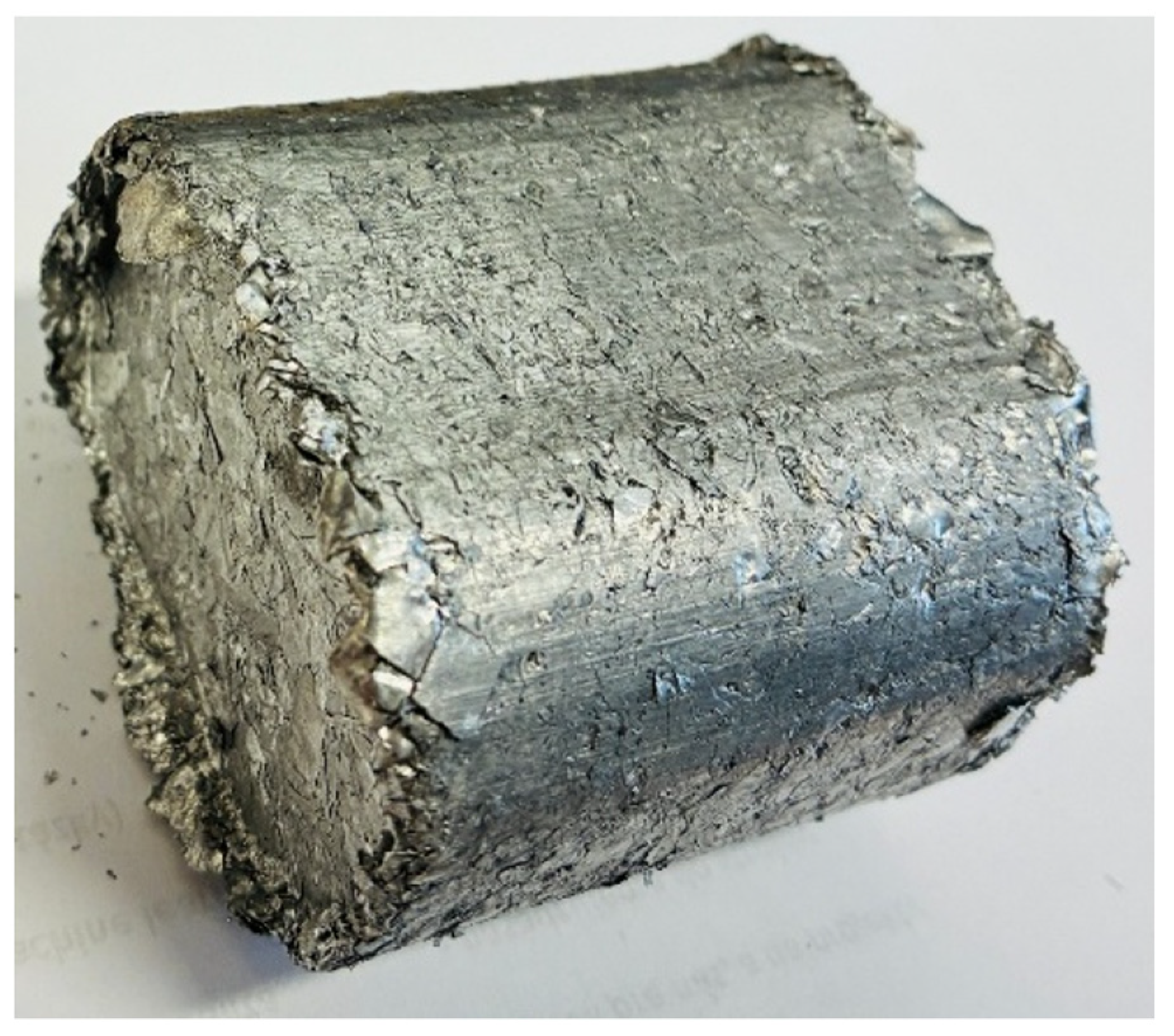
This sample represents an industrial briquette and was used for chemical composition, microstructural, and porosity analyses (
Figure 1). For Sample A, three individual briquettes were analyzed in the pressed state to evaluate variability of the measured chemical composition and physical parameters.
The dimensions of the pressed briquette were 60.5 × 62.9 × 45.7 mm with an average mass of 322.8 g.
The briquette was melted in a laboratory induction furnace at approximately 850 °C, held for 8–10 min after complete melting, and cast into a simple steel mold. No refining additions, degassing, fluxes, or protective atmospheres were applied during melting. The starting mass of the pressed briquette prior to remelting corresponded to the average briquette mass reported for Sample A. The difference between the average briquette mass (322.8 g) and the input mass used for remelting (290.25 g) reflects the selection of a representative specimen after surface cleaning and removal of loosely bound contaminants prior to melting.
Remelting was performed using representative briquettes prepared under identical processing conditions to evaluate post-remelting compositional variability under comparable laboratory conditions. A laboratory induction furnace operating in ambient air was used, and no inert gas bubbling, rotary degassing, or chemical refining agents were applied. Remelting was performed to evaluate the behavior of recycled chip-based briquettes during melting and resolidification under laboratory conditions representative of simplified remelting practice. Sample B had dimensions of 116.2 × 41.4 × 23.8 mm. The representative remelted sample used for mass balance calculations had a mass of 273.41 g.
Table 1 summarizes the mass balance of the remelting experiment.
The mass balance presented in
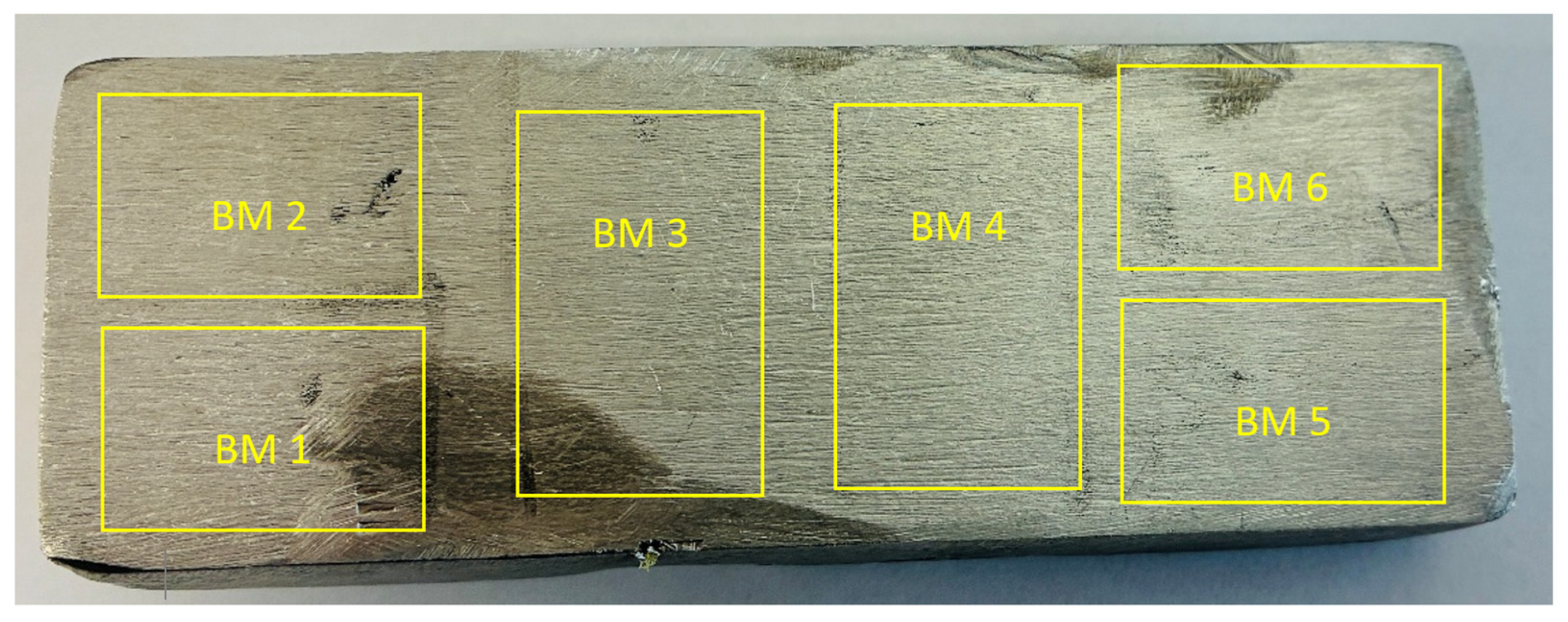
Table 1 corresponds to a representative remelting experiment. Although multiple briquettes were produced and tested to verify process consistency, a detailed mass balance is shown for one representative sample to ensure clarity. Six measurement points (four corners and two mid-side positions) were defined on the polished cross-section to evaluate local compositional variability after remelting.
2.3. Chemical Composition Analysis (XRF)
The chemical composition of the samples was analyzed using energy-dispersive X-ray fluorescence spectroscopy (ED XRF). Measurements were performed using a handheld XRF spectrometer (DELTA INNOV.X, Olympus Innov-X Systems Inc., Waltham, MA, USA). The instrument is equipped with a 4 W X-ray tube and a large-area SDD detector optimized for sensitivity to light elements (Mg, Al, Si). Handheld ED-XRF was applied as a bulk, non-destructive screening technique suitable for assessing spatial compositional variability at the millimeter scale of industrial briquettes, rather than for high-precision microanalytical determination. Local micro-scale assessment of local compositional variability and potential intermetallic phases was therefore carried out using SEM–EDS (JEOL JSM-7000F, JEOL Ltd., Tokyo, Japan). According to the manufacturer’s specifications, the effective X-ray interaction area (spot size) on the sample surface in Alloy mode was approximately 8 mm in diameter. Measurements were conducted in Alloy mode with an acquisition time of 60 s per point. For each measurement location, three consecutive XRF measurements were performed, and the reported value represents their arithmetic mean. Considering the instrumental uncertainty of the handheld ED-XRF method (approximately ±0.1–0.5 wt.%), the observed compositional variations fall within the expected measurement error. The variability between repeated measurements was low and consistent with the expected experimental uncertainty, confirming acceptable repeatability of the results. Therefore, the results indicate compositional uniformity within the limits of the applied method rather than strict chemical homogeneity. This procedure was independently applied to three different briquettes of the same sample type, resulting in a total of nine measurements per analyzed position. For Sample A, a central point in the core region was analyzed to minimize surface effects related to pressing. For Sample B, six measurement points were evenly distributed at the corners and mid-side positions of the polished cross-section (
Figure 2). The measurement points represent different regions of the sample, including central, edge, and surface locations, to capture potential spatial variability in chemical composition. This layout enabled evaluation of local compositional variability between core and peripheral regions after remelting.
The surfaces of the samples were ground using abrasive papers with grit sizes P600 → P1200 → P2500 and subsequently polished to minimize surface effects typical of XRF analysis. The surface was degreased with ethanol. According to the manufacturer’s specifications, detection limit for light elements (Mg, Al, Si) ranged from several to several tens of ppm. Spectra were evaluated using the manufacturer’s software with standard FP corrections and aluminum alloy calibration models. Measurements affected by pronounced surface contamination, unstable detector positioning, edge irregularities, or mechanically damaged surface regions were excluded according to predefined criteria. A total of 2 measurements out of 30 were discarded. No measurements were excluded solely on the basis of compositional deviations.
For each measurement location, the reported chemical composition represents the average value of three repeated measurements. The observed variability remained within the manufacturer-specified instrumental uncertainty range of the handheld ED-XRF instrument. The handheld ED-XRF technique provides semi-quantitative elemental analysis with limited spatial and compositional resolution compared with laboratory analytical methods such as ICP-OES or spark-OES.
2.4. Microstructural and Local Chemical Analysis (SEM–EDS)
Microstructural and local chemical analyses were performed using a field-emission SEM (JEOL JSM-7000F, JEOL Ltd., Tokyo, Japan) equipped with an SDD-type EDS detector (energy resolution 129 eV at Mn Kα). The measurements were performed at an accelerating voltage of 15 kV, a working distance of 10–12 mm, and an electron beam current of 10–15 µA.
Samples were ground, polished, degreased with ethanol, and analyzed without carbon coating. EDS acquisition was carried out with an exposure time of 60 s per point, and each measurement was conducted in duplicate.
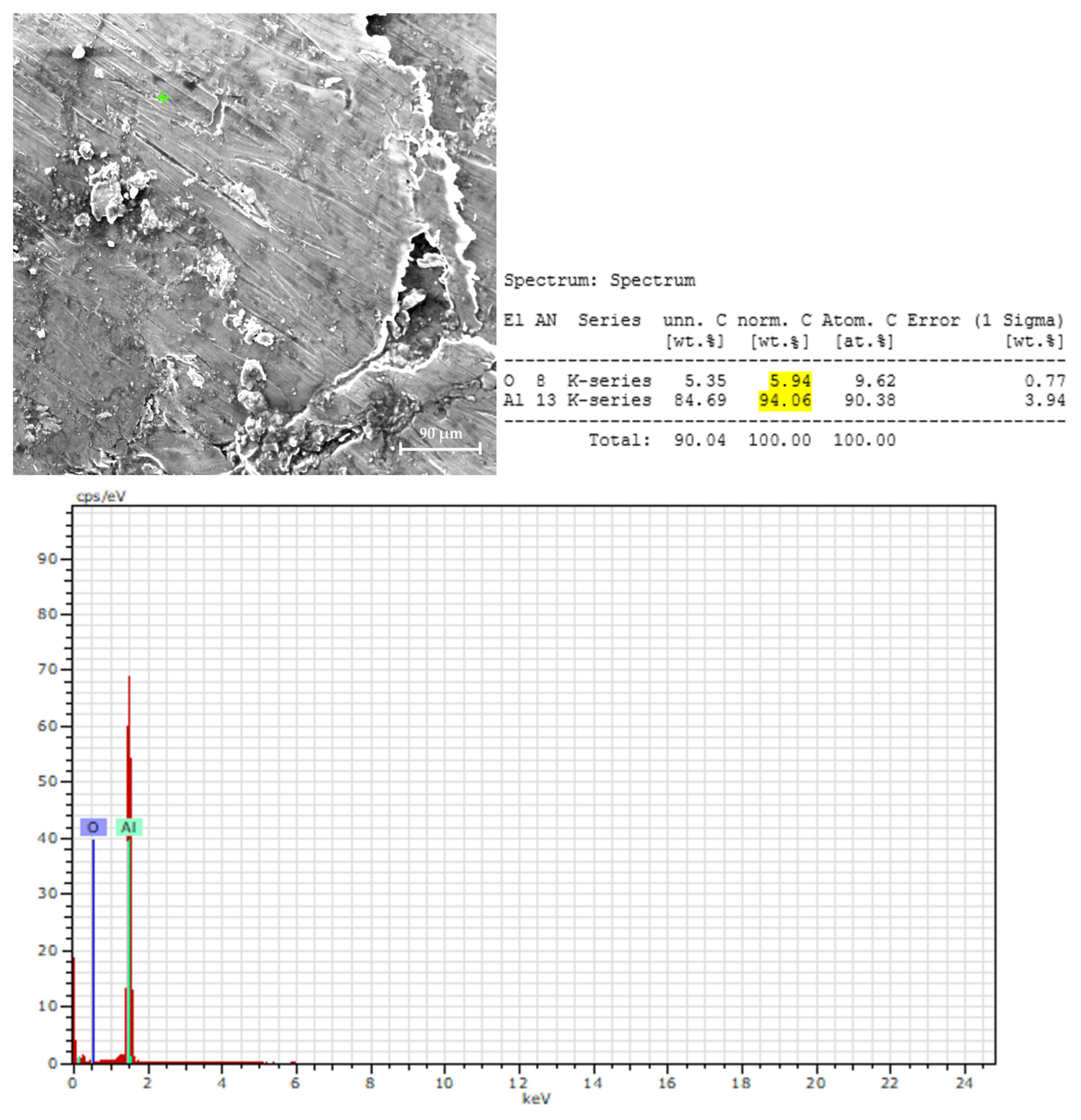
EDS spectra were processed using the manufacturer’s software with standard deconvolution and normalization procedures. SEM–EDS was used for local microstructural and compositional assessment, including evaluation of surface oxidation and potential intermetallic phase formation.
2.5. Surface Topography and 3D Profilometry
Macroscopic surface morphology was analyzed using a Keyence VHX-6000 digital microscope (Keyence Corporation, Osaka, Japan). Measurements were performed at magnifications between 50× and 200×, with a vertical resolution of approximately 1 µm.
Prior to analysis, sample surfaces were cleaned to ensure stable optical imaging. 3D models and height profiles were processed using the software supplied with the Keyence VHX-6000 digital microscope (Keyence Corporation, Osaka, Japan).
The method was used to identify surface pores and visible defects associated with briquette morphology and remelting behavior.
2.6. Density, Porosity and Compaction Analysis
Density, porosity, and the degree of compaction are important physical parameters influencing oxidation losses, dross formation, and metallurgical yield of recycled aluminum briquettes.
The reported porosity values reflect remelting without refining or degassing and therefore represent inherent characteristics of secondary aluminum rather than optimized casting conditions.
Multiple volume determination approaches, including geometrical measurement, hydrostatic weighing, and 3D CAD-based estimation, were used to verify density and porosity values. Repeated density determinations using independent methods showed deviations below ±1.5%, indicating good agreement between the applied measurement procedures for both pressed briquettes and remelted samples despite residual microporosity typical of secondary aluminum materials. The use of several methods was not motivated by discrepancies between results, but rather by the need for cross-validation and increased measurement reliability. All applied methods yielded density values consistent within the expected experimental uncertainty range.
When evaluating density, a distinction was made between the theoretical density of the fully dense alloy and the experimentally determined bulk density of the briquette, which is reduced due to residual porosity. The theoretical alloy density used for porosity and compaction calculations was determined using a rule-of-mixtures approach based on the experimentally measured chemical composition obtained by ED-XRF analysis. The calculation considered the major alloying elements (Al, Mg, Si, Mn, Cr, and Fe) using literature density values of the corresponding pure elements. Based on the average chemical composition determined for the pressed briquettes (Sample A), the theoretical density used for porosity calculations was estimated to be approximately 2.68 g·cm−3, which is consistent with literature values reported for Al–Mg–Si alloys of comparable composition.
The theoretical density was calculated according to the rule of mixtures using the reciprocal relationship:
where
is the weight fraction (expressed as a decimal fraction) and
is the density of the respective pure alloying element.
The density of Sample B was determined as the mean value obtained from three independently remelted and cast specimens prepared under identical laboratory conditions, with each specimen measured using the same procedure.
The geometrical method for determining the volume and density of a cuboid (referred to in the context of metallurgical briquettes as the determination of the apparent bulk density) is a non-destructive technique based on precise measurement of the linear dimensions of the body. The method assumes a regular specimen shape, with surface irregularities minimized through repeated measurements. The dimensions of each specimen (length, width, height, or diameter and height) were measured using a digital caliper at three points along each axis, and the final value was taken as the arithmetic mean. The volume of cylindrical briquettes was calculated according to the following equation:
For cuboid-shaped bodies according to the following relationship:
The bulk density was subsequently calculated as:
where m is the mass of the briquette determined using analytical scales. The resulting bulk density provides an indirect indication of the degree of compaction and residual void content formed during the chip pressing process.
To increase measurement accuracy, the volume of selected samples was also determined by hydrostatic weighing according to Archimedes’ principle:
The hydrostatic measurements were based on bulk sample behavior and did not allow separate quantification of open and closed porosity. Possible liquid penetration into surface-connected pores may have influenced the measured values.
The volumetric porosity was determined by comparing the measured density with the theoretical density of the alloy:
The reported porosity values should therefore be interpreted as approximate bulk estimates and do not distinguish between open porosity, closed porosity, oxide films, residual contaminants, or non-metallic inclusions.
The degree of compaction was defined as a dimensionless coefficient:
Interpretation of the values:
C < 0.70—low compaction, high porosity;
0.70 ≤ C ≤ 0.90—standard industrial compaction;
C > 0.90—highly compact briquettes.
Volume determination was further verified using digital metrology in the PTC Creo CAD (PTC Inc., Boston, MA, USA) environment. The volume was calculated based on 3D scanning and numerical integration, which allowed the elimination of errors caused by surface irregularities. The results for density and porosity were subsequently compared with 3D profilometry and microstructural observations indicating localized surface irregularities and regions of increased apparent porosity.
The metallurgical yield of aluminum was determined using a melting test in which the briquette was melted in a ceramic crucible and, after dross removal, cast into a mold. The yield was calculated as:
Reported metallic recovery values for compacted aluminum briquettes commonly depend on melting conditions, briquette density, and processing parameters. A comprehensive analysis of density, porosity, and compaction provides useful information for evaluating briquette quality and optimizing processing.
4. Discussion
The results from Samples A and B enable assessment of physical, chemical, and microstructural changes occurring during recycling of aluminum chips. This discussion synthesizes the key findings and compares them with established knowledge in the literature, particularly in the context of oxidation, remelting behavior, and compositional variability of secondary aluminum materials.
4.1. Changes in Density and Porosity During the Transition from Pressed Briquette to Casting
Sample A exhibits a relatively low density (2.29 g·cm−3) and high porosity (14.6%), typical of cold-pressed briquettes produced from aluminum alloy machining chips. This behavior is primarily associated with mechanical porosity between individual chips and residual processing contaminants. Such constituents do not contribute to the consolidated metallic fraction of the material—upon heating, gas evolution and decomposition of residual contaminants may contribute to mass loss and increased microporosity during remelting.
After remelting, Sample B reached a density of 2.388 g·cm−3 with reduced porosity (11%). This decrease suggests that a substantial portion of mechanically formed voids was reduced during remelting; the material becomes compacted, while residual porosity remained present within the remelted material. The remaining porosity may be associated with gas evolution and oxidation effects commonly occurring during chip remelting. This interpretation is consistent with literature describing rapid surface oxidation of aluminum chips and retention of gases within recycled feedstocks.
The density of the cold-pressed briquette (2.29 g·cm
−3) obtained in this work lies well within the range reported for industrially produced aluminum chip briquettes, where values between approximately 2.1 and 2.4 g·cm
−3 are typically achieved depending on pressing pressure, chip morphology, and residual lubricant content [
4,
5]. Similar density levels and porosities of 10–15% for cold-pressed aluminum chip briquettes have been reported by Pavlasek et al. and Penchev et al., who also attribute the remaining porosity primarily to intergranular voids formed during room temperature compaction [
4,
5]. After remelting, the density increases to 2.388 g·cm
−3 and the corresponding reduction in porosity to 11.% are consistent with literature data for secondary AlSiMg alloys remelted without melt refining, where residual gas-related porosity typically remains in the range of 5–10% [
7]. These results are consistent with densification and porosity reduction trends reported for recycled aluminum briquettes produced from machining chips.
However, the density of the casting remains lower than that of the theoretically fully dense alloy (2.68 g·cm−3), indicating that the secondary material may retain remnants of the original structural discontinuities and residual contamination. This phenomenon is also highlighted in studies on recycled AlSiMg alloys, where porosity persists as one of the limiting factors affecting the physical integrity and remelting behavior of secondary aluminum materials. Therefore, the measured porosity of approximately 10.9% in Sample B should not necessarily be interpreted as evidence of improper melting practice, but rather as a technologically expected consequence of non-refined remelting of recycled aluminum chip briquettes with residual gas-forming contaminants.
While surface-based pore analysis is meaningful for characterizing pressed chip briquettes, volumetric density-based porosity provides a suitable quantitative metric for evaluating remelted secondary aluminum materials.
4.2. Mechanisms of Oxidation and Dross Formation
The formation of dross and process-related metal losses represents an important aspect of remelting behavior of recycled aluminum briquettes. Sample B exhibits a dross fraction of 2.25%, a relative melting loss of 3.55%, and an overall metallurgical yield of 94.2%.
The metallurgical yield of 94.2% achieved in this study lies at the upper end of values reported for briquetted aluminum machining chips, where yields in the range of approximately 90–96% are typically observed depending on briquette density, chip pretreatment, and melting conditions [
4,
7,
20]. Pavlasek et al. reported that aluminum briquettes with densities above ~2.2 g·cm
−3 generally exhibit lower oxidation losses and improved remelting behavior compared with loose chips, which is in good agreement with the results obtained in this work [
4]. Similarly, Ulus et al. demonstrated that increasing briquette density leads to a substantial improvement in aluminum recovery, particularly when residual lubricants are effectively reduced prior to remelting [
20]. The measured dross fraction of 2.25% is consistent with literature data for cold-pressed aluminum briquettes remelted without fluxing or degassing, where oxide-related losses are commonly associated with the specific surface area of the original chips and the presence of pre-existing Al
2O
3 surface layers [
7,
20].
These values fall within the typical range reported for remelting of briquettes with densities between 2.15 and 2.40 g·cm−3 and are consistent with oxidation effects commonly observed during remelting of aluminum chips. During remelting, surface oxides originating from the chip surfaces are expected to contribute predominantly to dross formation rather than to the bulk metallic material.
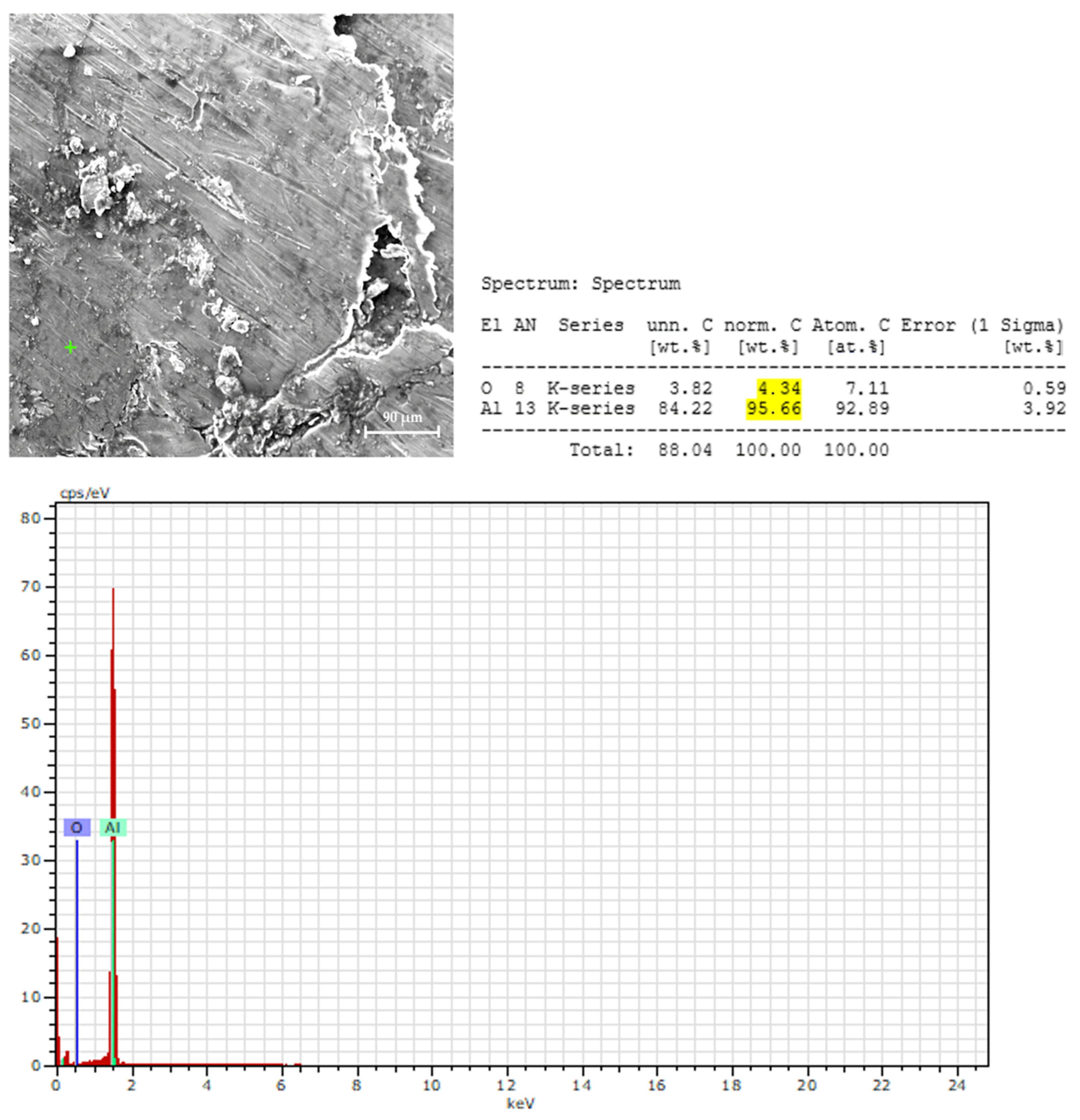
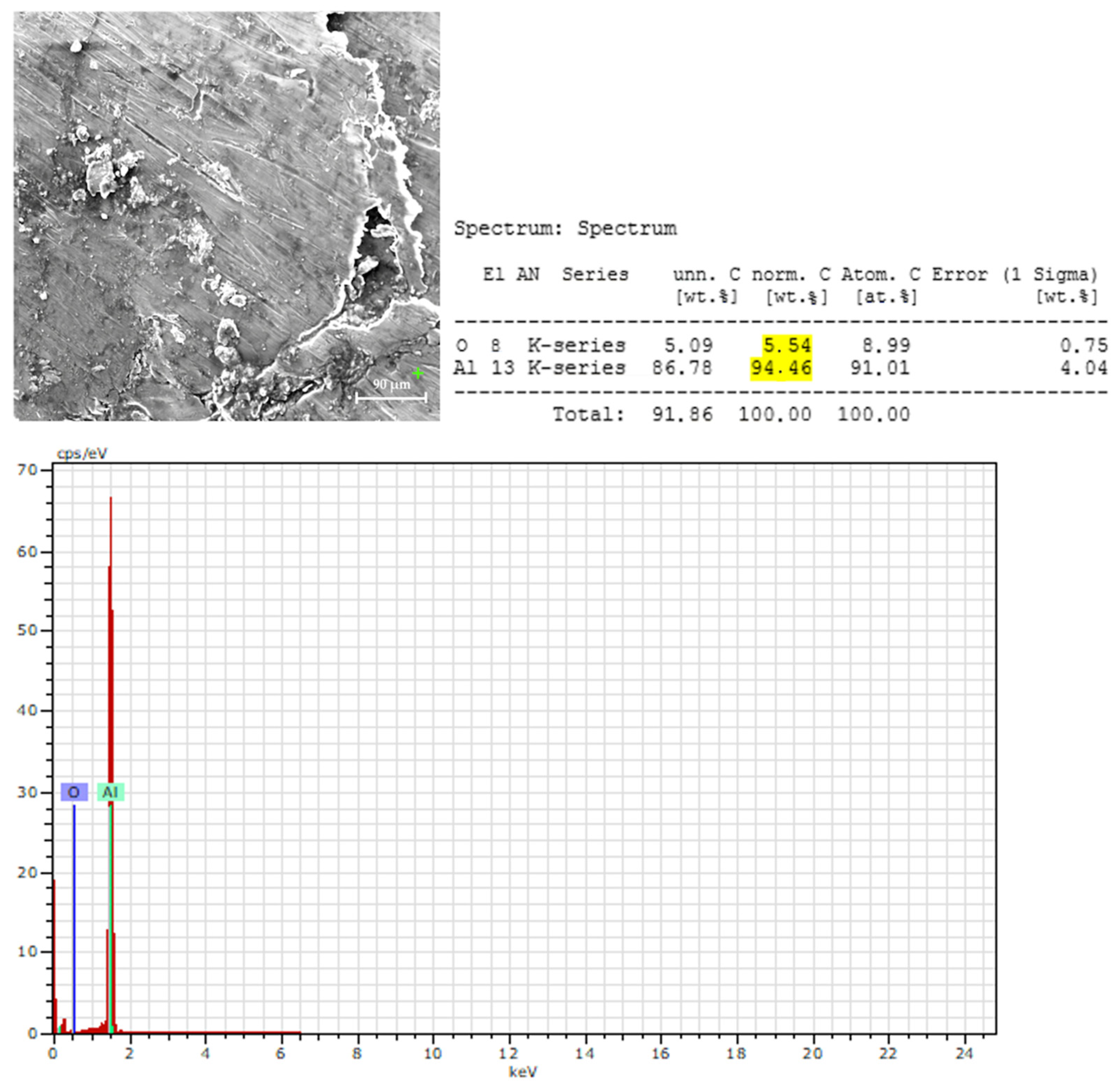
The literature describes how oxide layers on aluminum chips can develop during air exposure and contribute to metal losses during remelting. SEM–EDS analysis indicated oxygen signals in the range of 4.34–5.94 wt.% at the remelted surface, consistent with oxidized aluminum surfaces. Although primarily surface-related, such oxidation effects may contribute to observed dross formation and metallic losses during remelting. From a sustainability perspective, recent life-cycle assessments indicate that optimized recycling routes, including solid-state processing, can significantly reduce environmental impact compared with conventional remelting processes [
21].
4.3. Chemical Homogeneity After Remelting and Its Significance for Metallurgical Applications
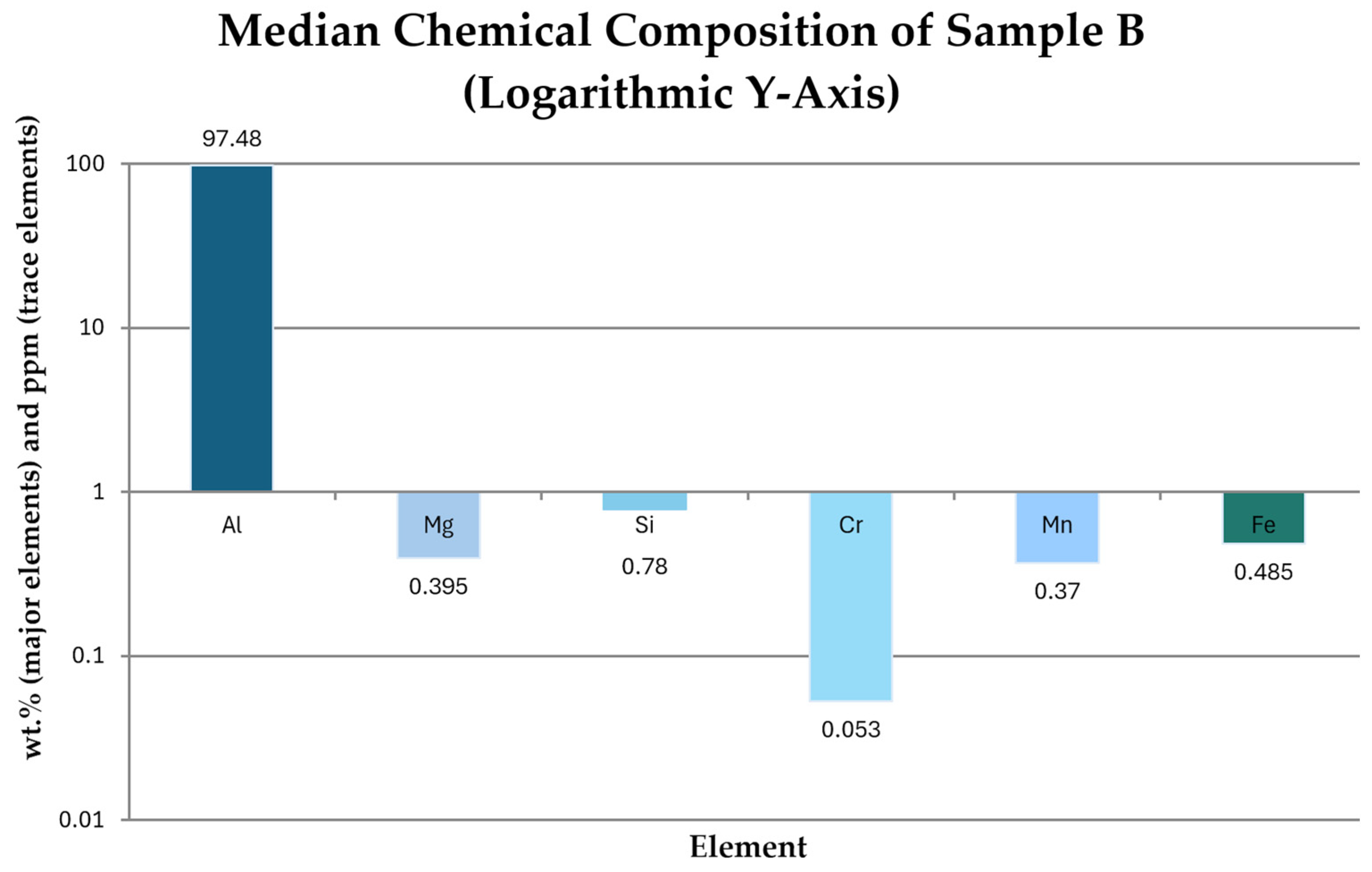
Chemical analysis of Sample B indicates reduced compositional variability after remelting compared with the initially heterogeneous chip-based material. Importantly, the observed compositional ranges are comparable to, or lower than, the manufacturer-specified uncertainty of handheld XRF analysis (±0.1–0.5 wt.% for major elements and approximately ±0.01 wt.% for trace elements). This suggests that the observed compositional scatter is comparable to the expected uncertainty range of handheld ED-XRF analysis and that no major compositional differences were detected within the analyzed measurement locations after remelting.
Accordingly, the conclusions are limited to internal chemical homogeneity within individual briquettes produced under stable industrial conditions. A statistical evaluation of batch-to-batch variability across different production campaigns or chip sources was beyond the scope of this work and will be addressed in future studies. Aluminum content (97.21–97.51 wt.%) shows minimal variation (±0.15%), with similarly low variability observed for Mg, Si, Mn, and Cr. The slight variability in Fe content may be associated with localized residual ferromagnetic contamination or compositional heterogeneity typical of recycled materials.
Unlike most previous studies reporting average chemical composition, the present approach evaluates local compositional variability within a single remelted briquette using multiple measurement locations. In the context of this study, the term chemical stability refers specifically to the relatively limited compositional variability observed within individual briquettes after remelting of an initially heterogeneous chip-based feedstock.
The applied analytical approach was therefore focused on evaluating local compositional variability within a single briquette and across the remelted volume. A systematic assessment of batch-to-batch compositional variability resulting from different machining shops, scrap sources, or production campaigns represents an important industrial aspect; however, such an analysis would require a substantially broader sampling strategy and lies beyond the scope of the present work.
EDS analyses did not reveal pronounced Fe-, Mn-, or Si-rich phases within the analyzed surface regions and no major compositional differences were observed between the analyzed edge and core regions. Relatively limited compositional variability may be beneficial for secondary metallurgical processing of recycled aluminum materials, although the present study does not evaluate behavior under real steelmaking conditions. These findings are consistent with current circular economy research, which highlights that alloy mixing, contamination, and compositional variability represent key limitations in maintaining high-quality secondary aluminum streams [
22].
Compared with literature reports describing segregation-related challenges in recycled materials, the analyzed sample exhibited relatively limited compositional variability within the investigated regions.
4.4. Influence of Process-Related Contaminants and Gas Porosity
A significant factor influencing the density of Sample A as well as the quality of the remelted material in Sample B is the presence of residual cutting emulsions and oils entrapped between the chips. These residual organic substances may reduce the effective density of the briquette and contribute to gas evolution, oxidation effects, and metallic losses during remelting.
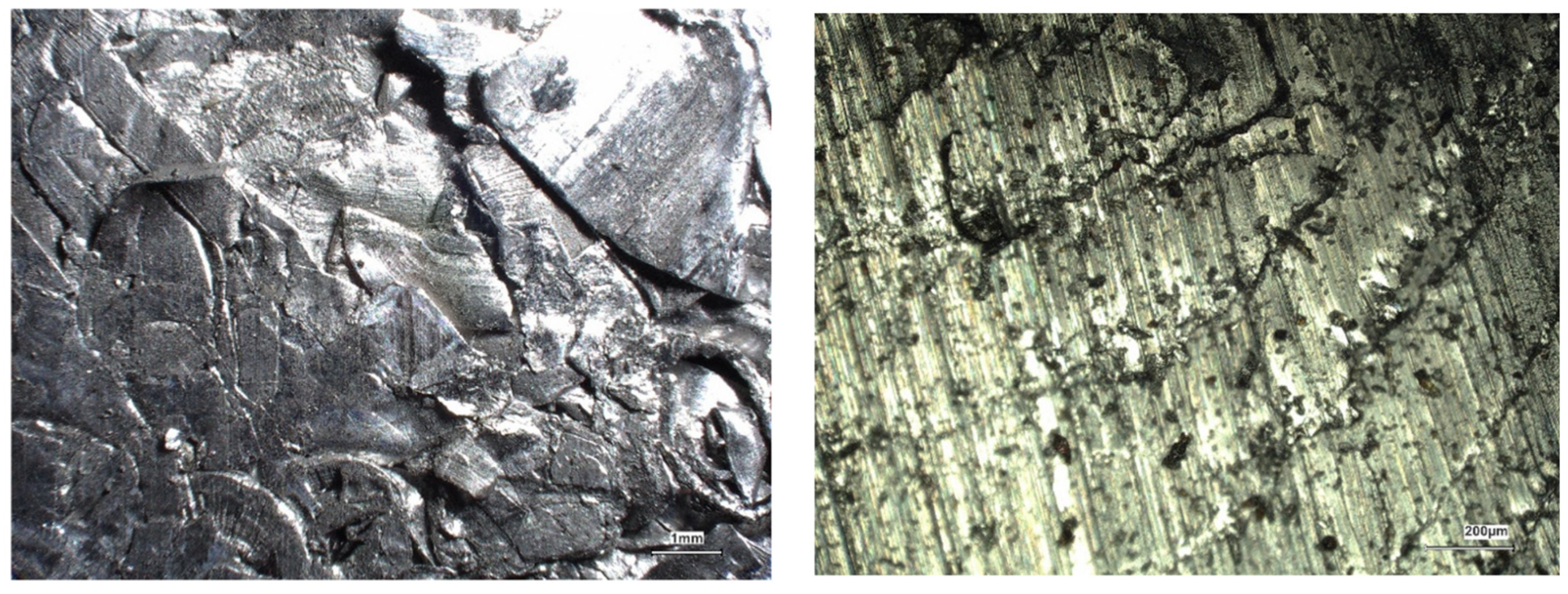
This phenomenon is consistent with the conclusions of modern research, which indicate that proper pretreatment of chips (drying, centrifuging, and degreasing) is essential for minimizing melting losses and improving the remelting behavior of secondary aluminum materials. The surface visualization of Sample A (Keyence VHX digital microscopy) confirms the presence of a highly complex lamellar structure formed by overlapping aluminum chips, multiple surface oxide sites, and a high density of surface-accessible pores characteristic of cold-pressed secondary aluminum materials.
Therefore, the porosity observed in Sample B is likely associated with residual contamination, gas evolution during remelting, and the original chip-based microstructure rather than with pronounced solidification segregation effects.
4.5. Industrial Implications for the Use of Recycled Briquettes
From the perspective of potential metallurgical reuse applications, two aspects are of primary importance:
According to literature reports and industrial practice, aluminum briquettes with densities between 2.20 and 2.40 g·cm−3 may exhibit favorable handling and remelting characteristics during metallurgical processing:
Improved compactness during handling;
Reduced tendency for excessive surface oxidation;
Favorable remelting behavior;
Metallic recovery values commonly reported for compacted recycled aluminum feedstocks.
These considerations represent general industrial observations related to remelting and handling behavior of compacted recycled aluminum. In this context, recent studies demonstrate that the choice and consistency of deoxidizing agents strongly influence the type, size, and distribution of non-metallic inclusions, which directly determine the final steel quality and mechanical performance [
23]. It should be emphasized, however, that the present study evaluates only material-level characteristics such as density, porosity, compositional variability, and remelting yield, rather than direct deoxidation behavior under molten steel conditions.
Although deoxidation performance under molten steel conditions was not evaluated in the present study, the physical characteristics of recycled aluminum briquettes may influence their behavior in steel baths. Elevated residual porosity may reduce the effective density of the briquette, increase its tendency to float, and limit the contact efficiency between aluminum and molten steel. Consequently, lower porosity and higher compaction may be advantageous for improving dissolution kinetics and promoting more efficient interaction with the melt. Verification of these effects, however, requires dedicated steelmaking experiments and remains a subject for future investigation.
At the same time, excessively high porosity and elevated oil content may contribute to unstable remelting behavior, increased gas evolution, and higher metallic losses. The results therefore highlight the need for thorough chip pretreatment and optimization of the pressing pressure to achieve higher briquette density and reduced porosity. It should be noted that aluminum briquettes are not intended to replace wire injection systems, which provide superior dosage and compositional control, but rather represent a potential form of recycled aluminum feedstock for selected secondary metallurgical processing applications where controlled addition practices are employed.
5. Conclusions
This study evaluated cold-pressed recycled aluminum briquettes produced from Al–Si–Mg machining chips and their behavior during subsequent remelting, with particular emphasis on density, porosity, compositional variability, and metallurgical yield. The pressed briquettes exhibited a bulk density of 2.29 g·cm−3 and an estimated porosity of 14.6%. After remelting, the density increased to 2.388 g·cm−3, while the estimated porosity decreased to 10.9%, indicating substantial material densification during remelting. The remelting process achieved a metallic recovery of 94.2% with a low dross fraction of 2.25%, demonstrating favorable remelting characteristics under the applied laboratory conditions.
Handheld ED-XRF analysis indicated limited compositional variability after remelting within the uncertainty range of the applied analytical method. SEM–EDS observations revealed Al-rich surface regions containing only minor oxygen contributions associated with naturally formed surface oxides and did not indicate pronounced intermetallic features within the analyzed surface regions. These findings suggest that appropriately preprocessed and compacted aluminum machining chips can be transformed into mechanically stable briquettes with favorable remelting behavior and potential applicability in secondary metallurgical processing.
The findings further underscore the importance of chip pretreatment, particularly the removal of residual oils and the reduction in surface oxidation, as well as the optimization of pressing conditions to increase briquette density and reduce residual porosity. However, the present work represents a material-level characterization rather than a direct assessment of steelmaking performance. Given the limited number of specimens investigated and the spatial nature of the measurements, the results should not be interpreted as population-based descriptors of industrial process variability, and their generalization to broader industrial populations should be made with caution.
Although deoxidation behavior under molten steel conditions was not evaluated, residual porosity and compaction may influence flotation tendency, dissolution kinetics, and contact efficiency in steel baths. Verification of these effects, together with the establishment of acceptance criteria for aluminum-based deoxidizers under practical steelmaking conditions, requires dedicated experiments and remains a subject for future investigation.