Review

Raman Hyperspectral Imaging of Nanofibers for Tissue Engineering Applications

by
Alexander Khmaladze
1,*,
Anna Sharikova
1,
Octavio Calvo-Gomez
2,3,
Shakhnozakhon Gaipova
4 and
Dilfuza Egamberdieva
2,5,†
1
Department of Physics, University at Albany, State University of New York, Albany, NY 12222, USA
2
Faculty of Biology, National University of Uzbekistan named after Mirzo Ulugbek, University Street 4, Tashkent City 100174, Uzbekistan
3
Faculty of Land Resources, National Research University TIIAME, Kari Niyazi Street, 39, Tashkent City 100000, Uzbekistan
4
Food Products Technology Department, Food Products Technology Faculty, Tashkent Institute of Chemical Technology, Navoiy Street, 32, Tashkent City 100011, Uzbekistan
5
Medical School, Central Asian University, Tashkent 111221, Uzbekistan
*
Author to whom correspondence should be addressed.
Current address: International Center for Strategic Development and Research (ISCAD), Ministry of Agriculture of Uzbekistan, Tashkent City 100140, Uzbekistan.
Appl. Sci. 2026, 16(12), 6009; https://doi.org/10.3390/app16126009 (registering DOI)
Submission received: 8 April 2026 / Revised: 1 May 2026 / Accepted: 9 June 2026 / Published: 13 June 2026
(This article belongs to the Special Issue Advanced Biomedical Imaging Technologies and Their Applications)

Abstract

Nanofiber scaffolds play a crucial role in bioengineering by providing structural support for tissue and organoid growth. For composite nanofibers, optimizing their properties for specific applications often requires analyzing the spatial distribution of their chemical structure. This review focuses on the applications of Raman hyperspectral imaging to the mapping of the chemical composition of nanofibers. While the technique is diffraction-limited to the size of the scanning beam, it is possible to decipher the nanoscale features of these fibers by employing oversampling during scanning. Subsequently, these oversampled data can be analyzed by a singular-value decomposition (SVD) analysis and classical least-squares (CLS) decomposition. In many cases, this technique is essential for verifying the spatial distribution of different chemical components within multi-component nanofibers.

1. Introduction

Raman spectroscopy has been widely employed in various fields, including the investigation of biocompatible polymers [1], forensic analyses of textile fibers [2], strain-induced conformational transitions in silkworm fibers [3], the characterization of carbon-based materials such as carbon nanotubes [4,5,6], and studies on bismuth black pigments [7].
Polymer nanofiber scaffolds are widely used in tissue engineering to support the growth of tissues [8]. Important properties of nanofibers, such as their polymer composition, spatial distribution, fiber thickness, and mechanical stiffness, greatly affect cell behavior and tissue development [9,10]. Ideally, these features should be adjusted for specific uses. However, the process of making nanofibers is complex and influenced by production conditions and environmental factors [11], requiring careful examination of fibers created in new environments.
To characterize nanofibers, researchers often combine Raman spectroscopy with imaging techniques like scanning electron microscopy (SEM) [12,13,14,15,16,17,18,19], transmission electron microscopy (TEM) [13,16,20,21,22,23], X-ray diffraction (XRD) [13], and atomic force microscopy (AFM) [9]. Some studies analyze spectral signatures based on sample uniformity [12,13,14,15,16,18], while others identify spatial distributions using non-chemical properties such as density [20] or surface roughness [9]. However, it is often hard to distinguish between different polymer components of nanofibers, as indirect methods, like those described in [9,20], may not always work. Specifically, techniques such as contact angle measurements [9] and TEM-based density analyses [20] require that nanofiber polymers have clear differences in hydrophobicity or density.
In contrast, confocal Raman microscopy (CRM) relies only on spectral differences between polymers, a criterion that is almost always met when nanofibers consist of different polymer types. This approach produces spatial maps where each pixel contains a Raman spectrum rather than merely light intensity. The spatial resolution of CRM is diffraction-limited, ranging from approximately 200 to 500 nm, depending on the excitation laser wavelength (typically between 400 and 1000 nm).
In this review, we focus on the confocal Raman microscopy applications analyzing the structure of inhomogeneous nanofibers composed of various polymers—an approach that is gaining popularity in tissue engineering. In many cases, resolving nanoscale features requires oversampling and extensive data processing, including classical least-squares (CLS) decomposition, the multivariate curve resolution-alternating least-squares (MCR-ALS) algorithm and a principal component analysis (PCA). The latter is often based on singular-value decomposition (SVD) algorithm. While CRM enables direct chemical detection of different polymers, its resolution often exceeds nanofiber thickness. Consequently, simple CRM mapping is insufficient, necessitating additional data processing (chemometrics) to determine the spatial distribution of components within nanofibers [24,25].
Tissue engineering blends diverse disciplines like engineering, biology, chemistry, and synthetic tissue growth. It provides renewable sources of tissue for transplantation [26] and blending. Scaffolds composed of polymer nanofibers are integral to supporting the development of growing tissues [8]. These scaffolds are meticulously crafted to replicate physiological conditions and foster the functional growth of complex tissues [27]. Extensive studies have demonstrated nanofiber applications in bone regeneration [28], wound healing [29], and drug delivery [30].
Despite advancements, creating scaffolds capable of promoting cell attachment and polarization remains a challenge. Scaffold designs must meet specific application-based requirements [31]. Many scaffold development techniques have been proposed: Scaffolds based on micro-particles [32], hydrogels [33] and polymers sponges [34] are among many examples. Among these, the scaffolds that mimic the basement membrane of live tissues [35,36] based on electrospinning [8,18,37,38] stand out for their ability to create nanofibers within a two-dimensional framework with a high surface area, which has proven remarkably effective in complex applications, including cardiac tissue engineering [39].
Nanofiber properties, such as the polymer composition, spatial distribution, fiber thickness, and mechanical stiffness, play a vital role in influencing cell behavior and tissue development [9,10]. These characteristics must be tailored to suit specific applications. However, nanofiber synthesis is a complex process that is sensitive to production conditions and environmental factors [11], necessitating detailed characterization under new fabrication environments.

2. Nanofiber Characterization by Confocal Raman Microscopy

2.1. Raman Microspectroscopy and Chemometrics Methods

Raman spectroscopy has been an invaluable tool for material characterization for decades [40]. Raman scattering occurs when an incident photon interacts with a molecule, making the technique highly sensitive to vibrational transitions within a sample. In other words, it enables nondestructive chemical analyses without the need for reagents, staining, or sample preparation.
In confocal Raman microscopy (CRM), the sample’s region of interest is scanned point by point with a confocal microscope while Raman data are collected at each location. The result is a hyperspectral image, a map of the sample’s Raman spectra for every point of the image. This method has a diffraction-limited resolution of about half a wavelength, or 200–500 nm for the typical excitation sources. It is suitable for the imaging of chemical properties on the micro- and nanoscopic scales, and studies have reported using CRM on textile fibers [41], cells [42,43,44] and carbon nanotubes [45,46,47]. Oversampling can improve the CRM resolution, but it assumes smoothly changing properties/spectra, since this approach averages the excitation volume.
Raman spectra typically contain sharp Raman peaks overlaid on a broad, slowly varying background due to other processes, such as fluorescence and Mie scattering. The absolute intensity of the signal is affected by many factors (source intensity, proximity to the substrate, local environment, etc.) that may be poorly controlled. The signal is also affected by a variety of noise types stemming from the light source, collection system, detector (camera), and environment. Frequently, these factors are on the order of a useful signal, or even greater. For these reasons, Raman data require careful preprocessing and thoughtful analyses to extract meaningful information.
Briefly, preprocessing is meant to eliminate unwanted signals before the data analysis. For Raman measurements, it usually means wavenumber calibration prior to the measurements; removal of cosmic ray spikes, which can be done during data acquisition; and baseline removal, smoothing, and normalization of the dataset after the measurements are completed. Multiple methods exist for each of these steps; for example, baseline removal can be done using polynomial fitting, by filtering in the frequency domain, by spectrum differentiation, or via a moving window. The choice of the method is dictated by the specific setup and sample type. A detailed discussion of Raman data preprocessing can be found in [48].
Even after preprocessing, Raman data remain very complex. Sometimes, it might be possible to rely on one or two characteristic peaks to distinguish different features or observe changes in a particular parameter, but usually the spectra consist of sets of overlapping peaks from different components, and a multivariate analysis is used to interpret the entire dataset.
Classical least-squares (CLS) is a linear regression analysis employed when samples consist of known ingredients with known spectra. Assuming that the sample spectrum is a linear combination of the spectra of the ingredients (a.k.a. reference spectra), CLS finds the coefficients that minimize the difference between the sample spectrum and the linear fit. The coefficients are contributions of each ingredient to the sample spectrum. If CLS is performed on a related spectral set, such as a time series or a spatial map, a plot of CLS coefficients shows how individual ingredients change over time or are distributed through the sample. The quality of the CLS fit is given by the fit residuals [49].
When sample ingredients and/or their spectra are either unknown or incomplete, the data analysis focuses on uncovering hidden spectral features associated with the property of interest. Unsupervised methods, such as SVD and PCA, project a large dataset on a subset of independent components with maximum variance associated with the signal, effectively removing low-variance noise through a dimensionality reduction. Once the spectral characteristics of the properties in question are known, classification models (linear discriminant analyses, support vector machines, etc.) can be used to sort the data into groups. The classification accuracy is described by confusion matrices (truth tables) and receiver operating characteristic (ROC) curves [48].
Finally, we will note that there are other forms of Raman spectroscopy, such as surface-enhanced Raman spectroscopy (SERS), tip-enhanced Raman spectroscopy (TERS), resonance Raman spectroscopy (RRS), and coherent anti-Stokes Raman spectroscopy (CARS), that can achieve significant signal enhancement compared to the regular RS, but they require either specialized materials, a greater system complexity, or special conditions. For example, ref. [50] reported a detection limit of 10−11 M for Rhodamine 6G. However, signal enhancement in SERS depends on the proximity of nanoparticles, and, therefore, is highly non-uniform. In this paper, we confine the discussion to the conventional Raman technique.
In this review, we first discuss carbon nanofibers, and then proceed to composite nanofibers made from natural degradable polymers, which are vital for tissue-engineering applications, where fibers are often used as scaffolds for growing tissue. We also discuss the fibers’ aqueous environment, which is essential for tissue growth in vivo. We also provide information on the use of specific microscopic Raman systems that were found to be suitable for these purposes, and also the use of open-source software to characterize the nanofibers.

2.2. Characterization of Carbon Nanotubes

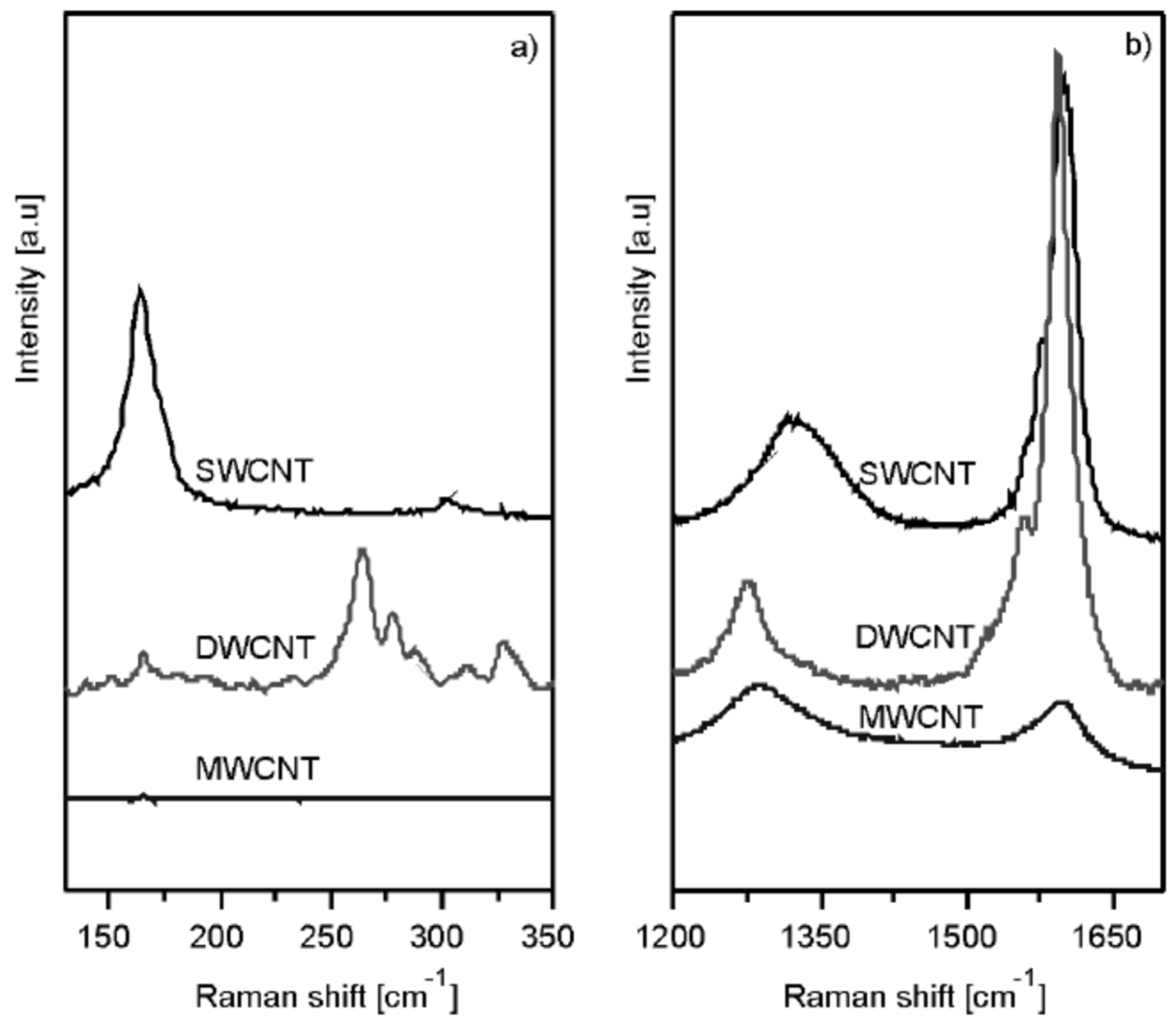
Carbon nanotubes (CNTs) serve as an excellent example of how Raman spectroscopy is utilized for analyzing one-dimensional (1D) structures [51,52,53]. This technique is particularly valuable for assessing the CNT size and overall sample quality [51,54]. Furthermore, Raman spectroscopy enables the differentiation between single-walled (SWCNT), double-walled (DWCNT), and multi-walled (MWCNT) carbon nanotubes within mixed CNT samples.
The G-line observed in the Raman spectrum corresponds to the atomic tangential vibration mode and signifies the presence of graphitic sheets. Meanwhile, defects or imperfections in these graphitic structures produce a D-line in the spectrum. The G-to-D peak ratio provides a measure of the overall quality of bulk CNT samples. Additionally, the diameter of the CNTs is determined from the peak linked to the radial breathing mode (RBM).
The Raman spectra of carbon nanotubes (CNTs) presented in Figure 1 illustrate diverse characteristics stemming from their sensitivity to chiral indices, which define the chiral vector representing the nanotube’s perimeter. The radial breathing mode (RBM) involves the synchronized radial displacement of all atoms in phase. In contrast, the G-band arises from the opposing motion of neighboring atoms along the CNT surface. The Raman lineshape of the G-band differs between semiconductor and metallic CNTs, allowing one to distinguish between the two types.
The G-band is composed of two components: low-frequency atomic oscillations along the CNT circumference, which depend on the nanotube diameter, and high-frequency oscillations along the CNT axis, which are diameter-independent [55]. Meanwhile, the D-band is associated with the dispersive disorder of graphene layers, such as scattering caused by defects. Both semiconductor and metallic single-walled carbon nanotubes (SWCNTs) contribute to the features observed in the D-band.
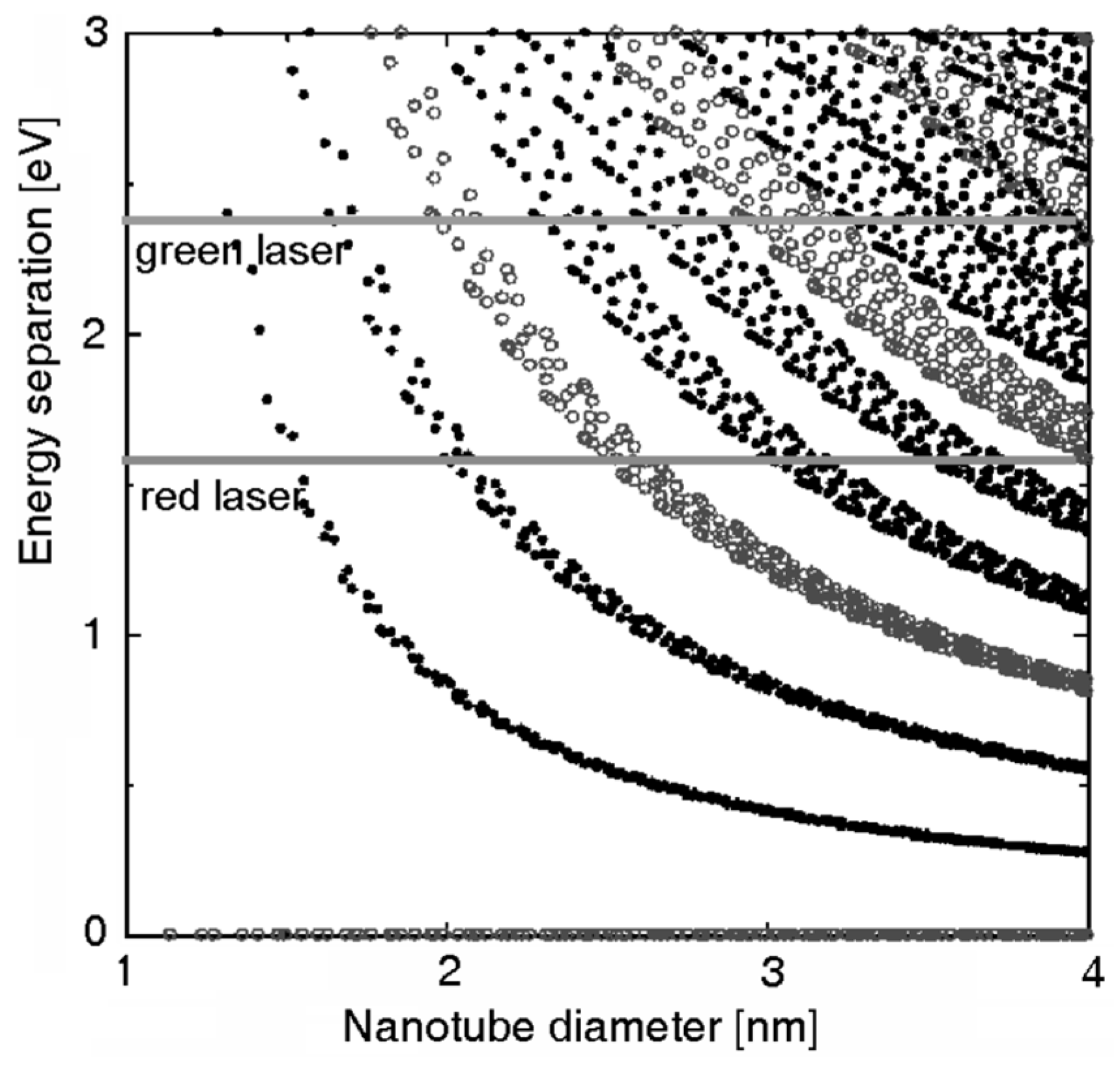
The use of different laser sources generates highly varied Raman spectra, with unique patterns for each sample set [56,57,58]. The relationship between a carbon nanotube’s band gap energy and its diameter is illustrated by the Kataura plot, presented in Figure 2. Due to its low energy, the first electron transition in semiconductor nanotubes could not be detected. Raman spectroscopy was employed to examine spectral variations with sample depth, enabling the identification of an optimal section based on G-band intensity. A depth of 1 μm was determined to produce the most robust signal.
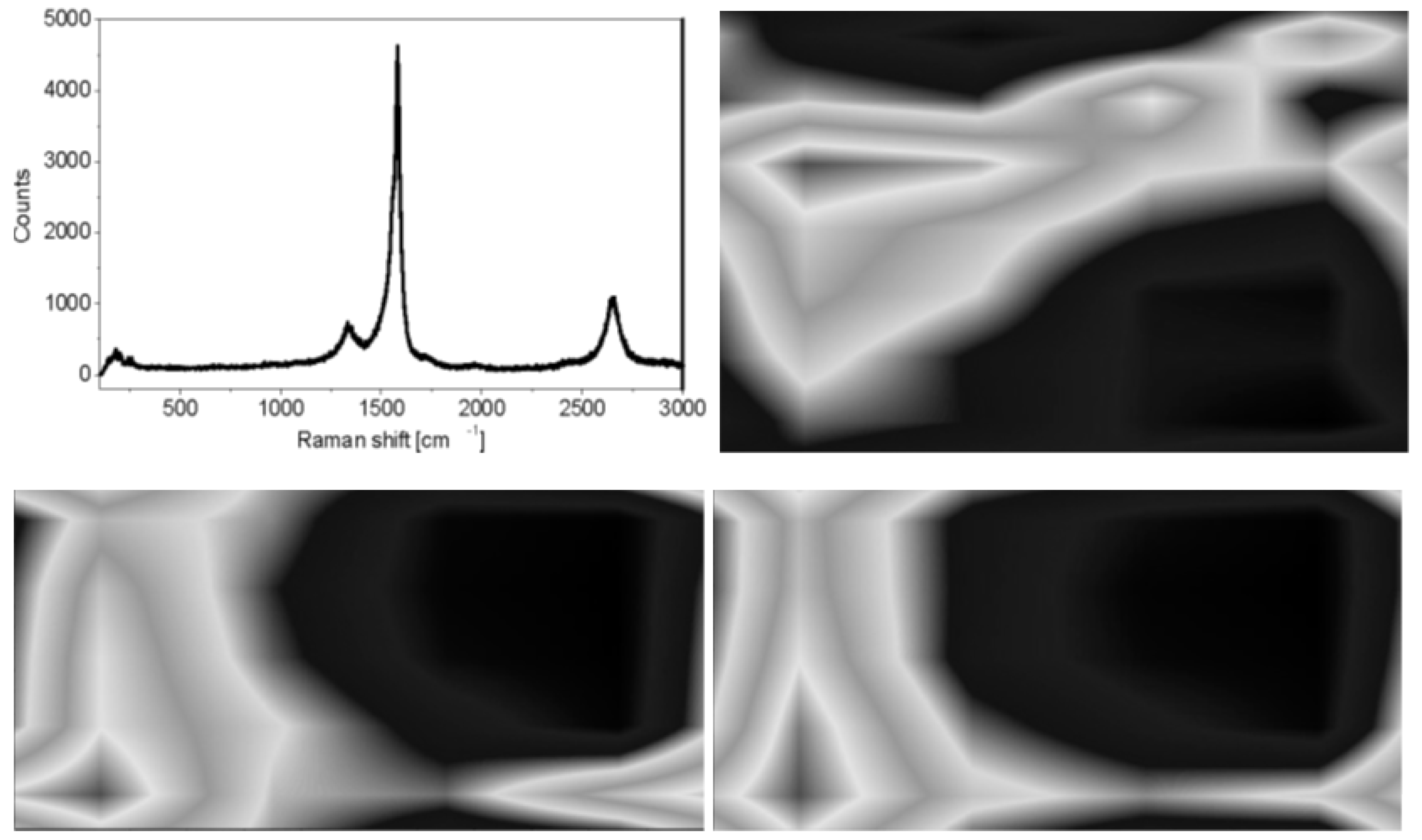
Sample scanning was conducted in multiple dimensions (Figure 3), with Raman microscopy advancing the CNT analysis by enabling area mapping and depth profile measurements, surpassing conventional spectral analyses. Moreover, the use of excitation lasers with varying energies provided additional critical insights, as seen in the Kataura plot.

2.3. 3D Characterization of Carbon Nanotube Polymer Composites

Stereoscopic SEM and CRM were used by Zhao et al. to characterize CNTs dispersed in a polymer in three dimensions. The 3D characterization of CNT nanocomposites is crucial for the determination of structure–property relationships [59]. These techniques can be employed in semiconductor manufacturing or in the monitoring of cells with endocytosed nanoparticles.
For SEM imaging, the samples were SWCNTs dispersed in an electroactive polyimide, resulting in 25 to 65 µm thick films. These samples did not require a conductive coating. The SEM system had two electron beams tilted at ±5°, and the 3D image was reconstructed from the two-dimensional images captured at these angles. An imaging depth of several hundred nanometers was achieved. It turned out that the imaging depth depended, among other factors, on the degree of SWCNT dispersion in the polymer matrix, with poorly dispersed samples having a greater imaging depth, due to the lower and less uniform charge density near the surface.
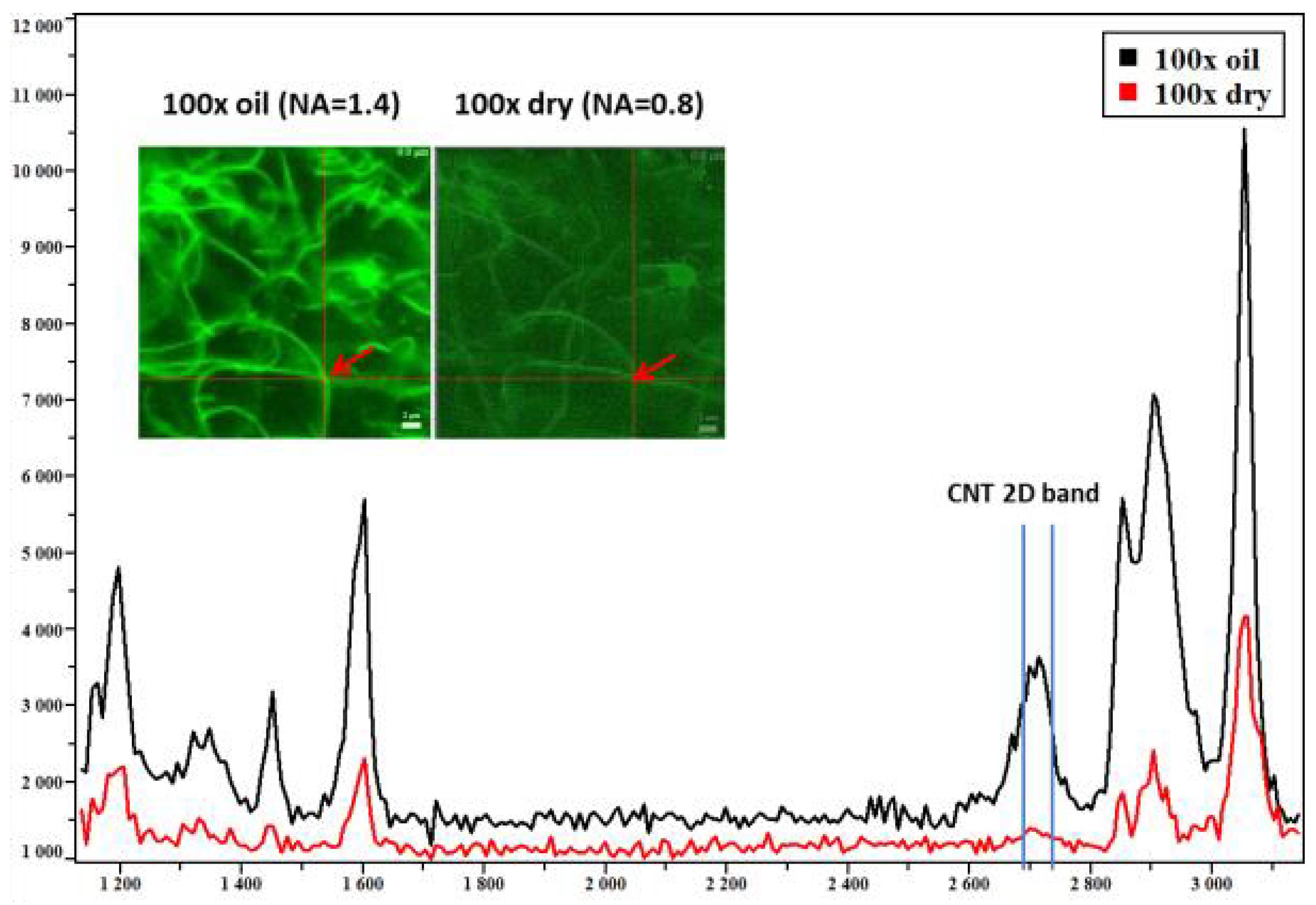
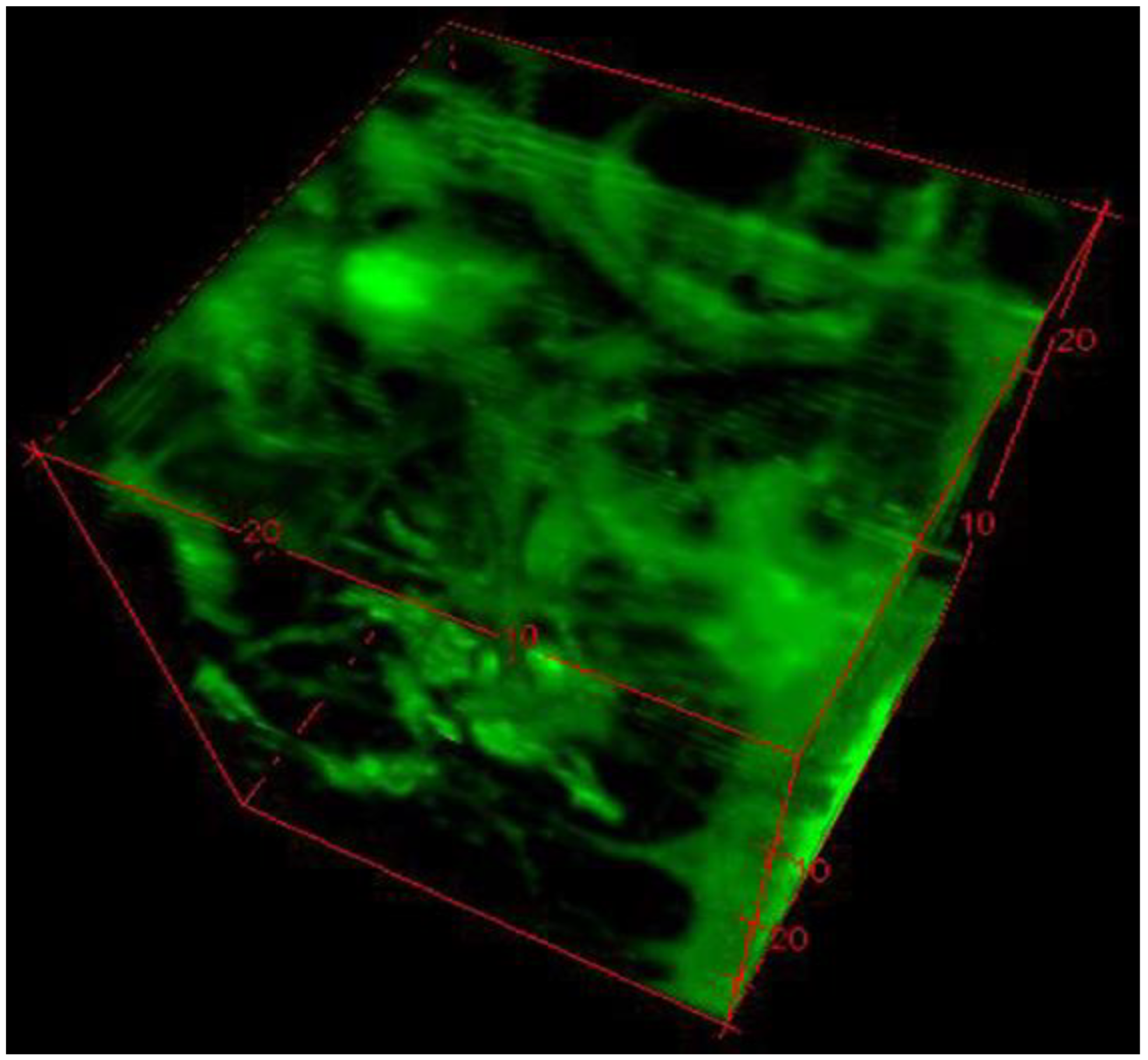
For CRM imaging, the samples were polystyrene (PS)/MWCNT composite films about 70 µm thick. The CRM system had a 514.5 nm Argon-ion excitation laser, and employed 100× microscope objectives. Raman images were produced by mapping the distribution of the CNT 2D band at 2660–2690 cm−1 (Figure 4). The 3D image was reconstructed by stacking two-dimensional maps obtained at different depths using the ImageJ software (Figure 5). The imaging depth was about 30 µm. A better signal-to-noise ratio and depth resolution were achieved with the oil-immersion objective, due to its better match with the index of refraction of the polymer matrix.
The two characterization techniques were found to be complementary, since CRM had a better imaging depth by about two orders of magnitude, while SEM had an order-of-magnitude better spatial resolution. CRM also had a significantly lower throughput [60].

2.4. Double-Emulsion Electrospun Nanofibers

Sharikova et al. utilized electrospinning to create nanofibers for tissue-engineering applications, about 0.37 μm in diameter, blending epidermal growth factor (EGF), ethyl cellulose (EC), elastin, and polylactic-co-glycolic acid (PLGA) in a solution [25]. A different kind of nanofiber was manufactured by emulsifying EGF and EC, and then adding it to PLGA and elastin before electrospinning. The purpose of these nanofiber scaffolds was controlled delivery of EGF to salivary glands. In addition, droplets of EC, EGF and PLGA on aluminum foil were used to obtain Raman spectra of pure nanofiber components.
The study used Raman mapping to verify the localization of EGF inside the blend and emulsion nanofibers. An XploRA Plus confocal scanning Raman microscope with a 533 nm laser source performed linear scans across and along the nanofibers with 0.1 and 0.05 μm steps, correspondingly.
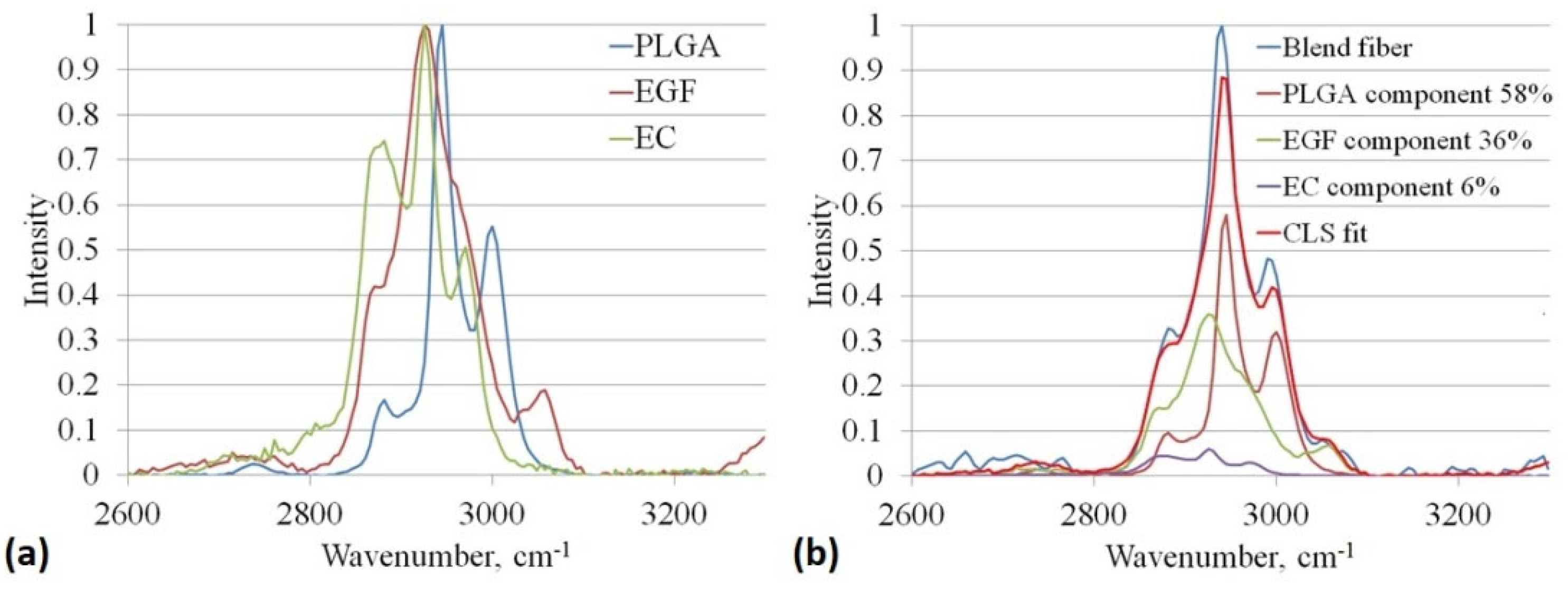
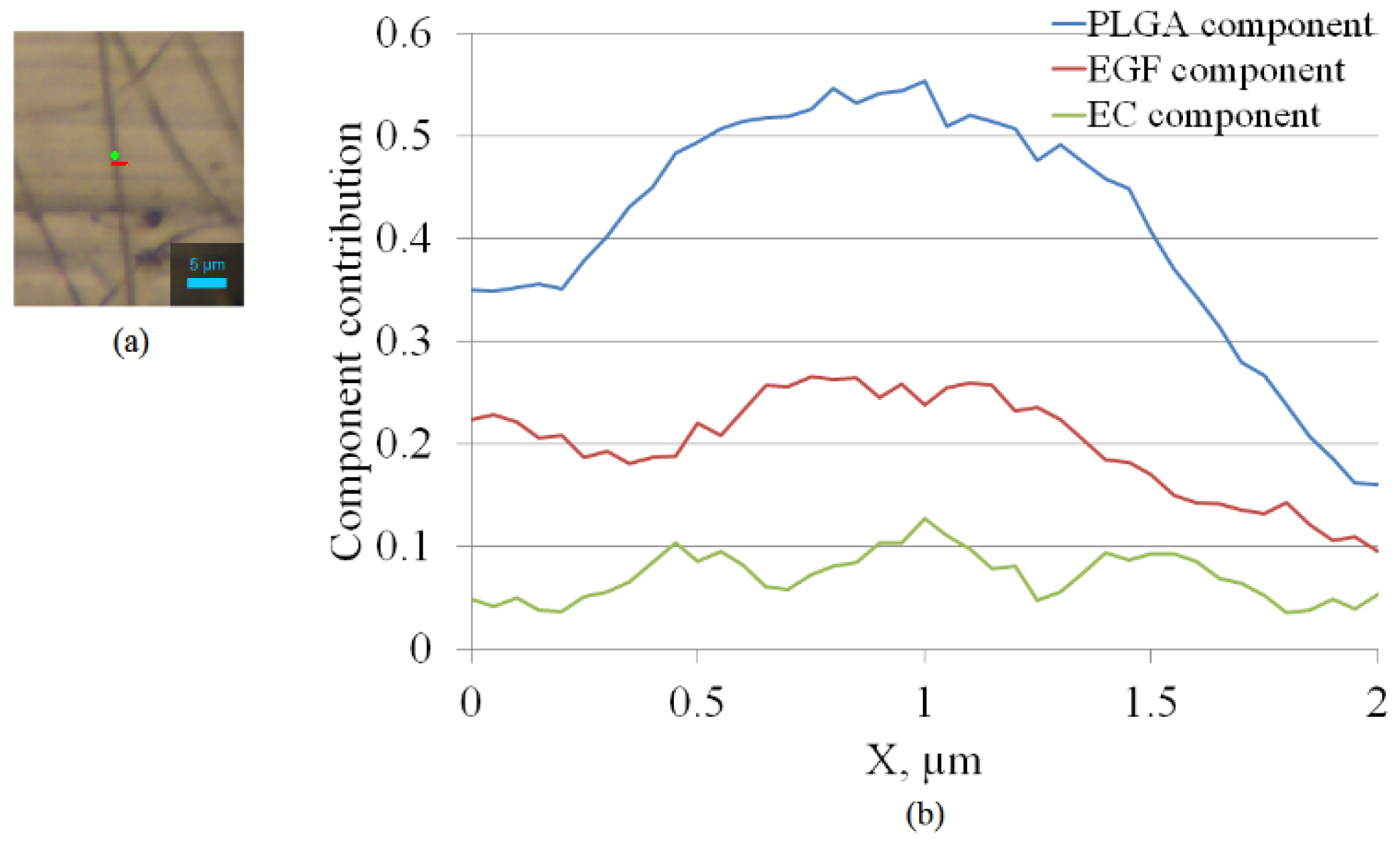
The spectra of PLGA, EC, and EGF droplets (Figure 6a) were employed as reference components in the CLS analysis [49]. In blend nanofibers, spectra from the center (Figure 6b) revealed the presence of PLGA, EC, and EGF, confirmed by the close match between the CLS fit and the measured spectrum. The relative contribution from all components remained almost unchanged in the linear scan across the blend fiber (Figure 7), confirming the fibers’ nearly uniform chemical composition (the overall increase in the signal towards the fiber center is explained by the greater amount of fiber material). Due to the laser spot size exceeding the fiber diameter, the Raman signature appeared broader than the actual fiber width.
In contrast, emulsion nanofibers were expected to feature localized “islands” of EGF. This was confirmed by linear scans across these fibers having an EGF signal in some sections, but not others. These findings suggest that blend electrospinning produced a uniform EGF distribution within nanofibers, whereas emulsion electrospinning successfully incorporated EGF into discrete embedded regions.

2.5. Core/Shell Nanofiber Characterization by Confocal Raman Microscopy with Nanoscale Resolution

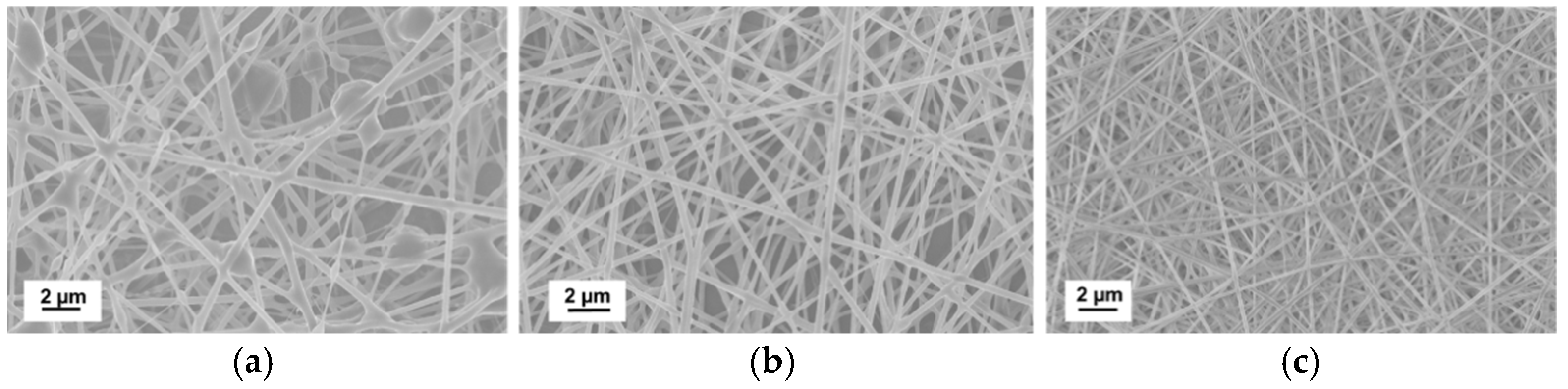
Another type of nanofiber structure, reported by Sfakis et al., consisted of fibers that were barely resolvable by an optical microscope. This important subset of fibers is utilized in tissue-engineering applications [24]. PGS/PLGA (polyglycerol-sebacate/polylactic-co-glycolic acid) nanofibers were electrospun with a coaxial core/shell spinneret. The PGS core enhanced biocompatibility, while the PLGA shell improved the mechanical properties of the polymer scaffold in this application. The flow rates of the core and shell solutions were varied to produce either nanofibers of a uniform thickness or nanofibers with PGS-rich beads. The average nanofiber diameter, as determined by SEM measurements, was about 0.24 ± 0.06 µm for the fibers of a uniform thickness and about 0.37 ± 0.15 µm for those with PGS beads (see Figure 8a,b). Controls—PLGA fibers of 0.17 ± 0.04 µm—were produced to measure the Raman spectrum of a pure PLGA component (Figure 8c). To obtain the Raman spectrum of a PGS-only component, a PGS film was employed, because pure PGS cannot form fibers.
Raman measurements (see Figure 9) of the core/shell nanofibers were made with a confocal scanning microscope (LabRAM HR Evolution, excitation wavelength of 473 nm). Linear scans were made either along (0.1 µm step) or across (0.05 µm step) individual fibers. All spectra went through the routine polynomial background subtraction performed with the LabSpec6 software.
Classical least-squares (CLS) regression was applied to the linear scan data, which then provided information about changes in the chemical composition along that direction.
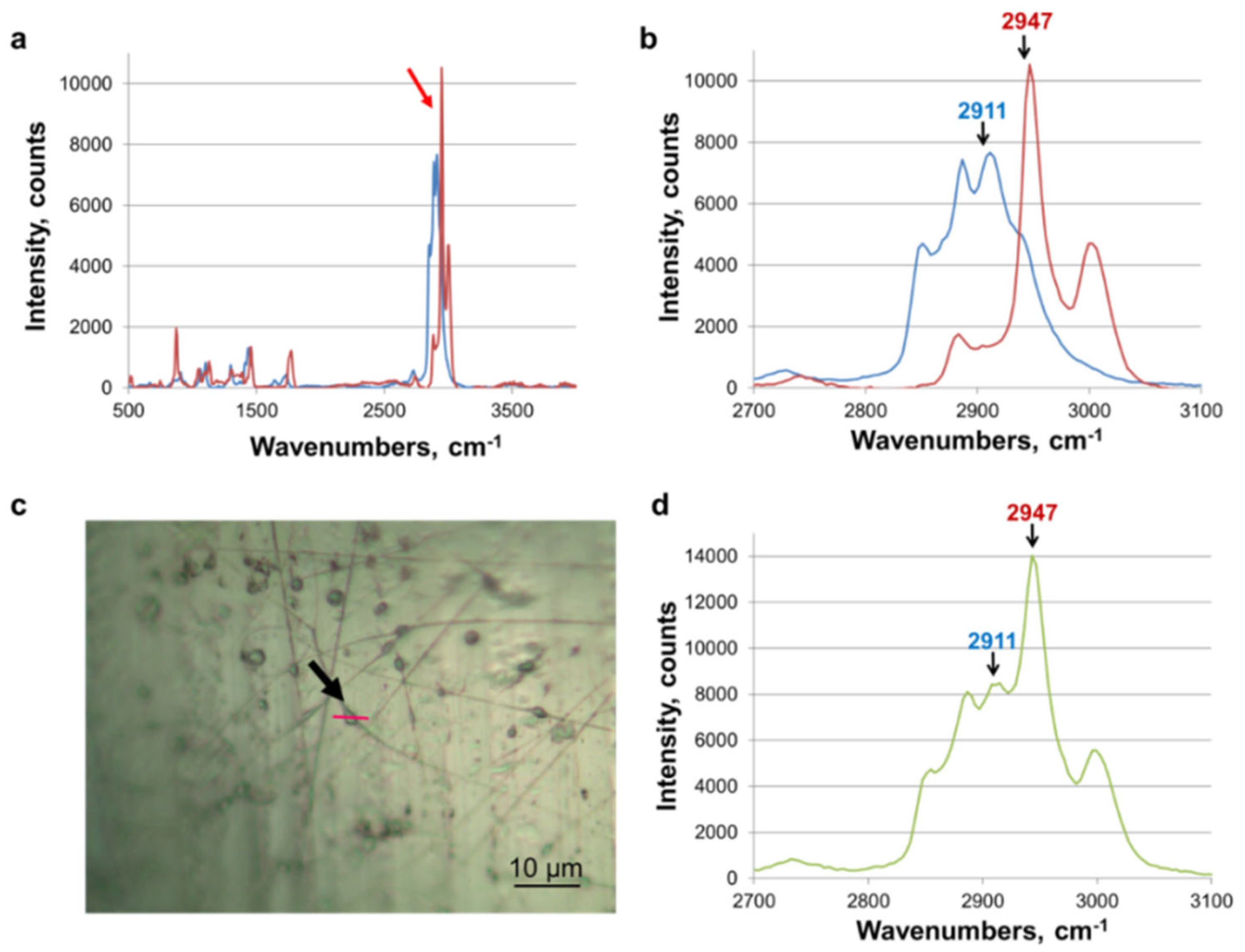
SVD [61,62,63] was applied to the cross-sectional scan data. In the core/shell study, the Raman spectra from the pure PGS and PLGA samples had multiple distinct features, with particularly strong signals in the CH region, around 3000 cm−1 (Figure 9a,b). The main PLGA peak was centered around 2947 cm−1, and PGS around 2911 cm−1. In Figure 9c, a PGS-rich bead, formed in the PGS/PLGA nanofiber due to a higher flow rate of the core PGS polymer, is shown. The Raman spectrum from the center of the bead (Figure 9d) had both 2911 cm−1 and 2947 cm−1 peaks, confirming that both polymers contributed to it. Spectra from the Raman mapped region, shown as a red line in Figure 9c, were separated into the PGS-only and PLGA-only components using CLS linear regression, demonstrating the presence of both polymers, as expected.
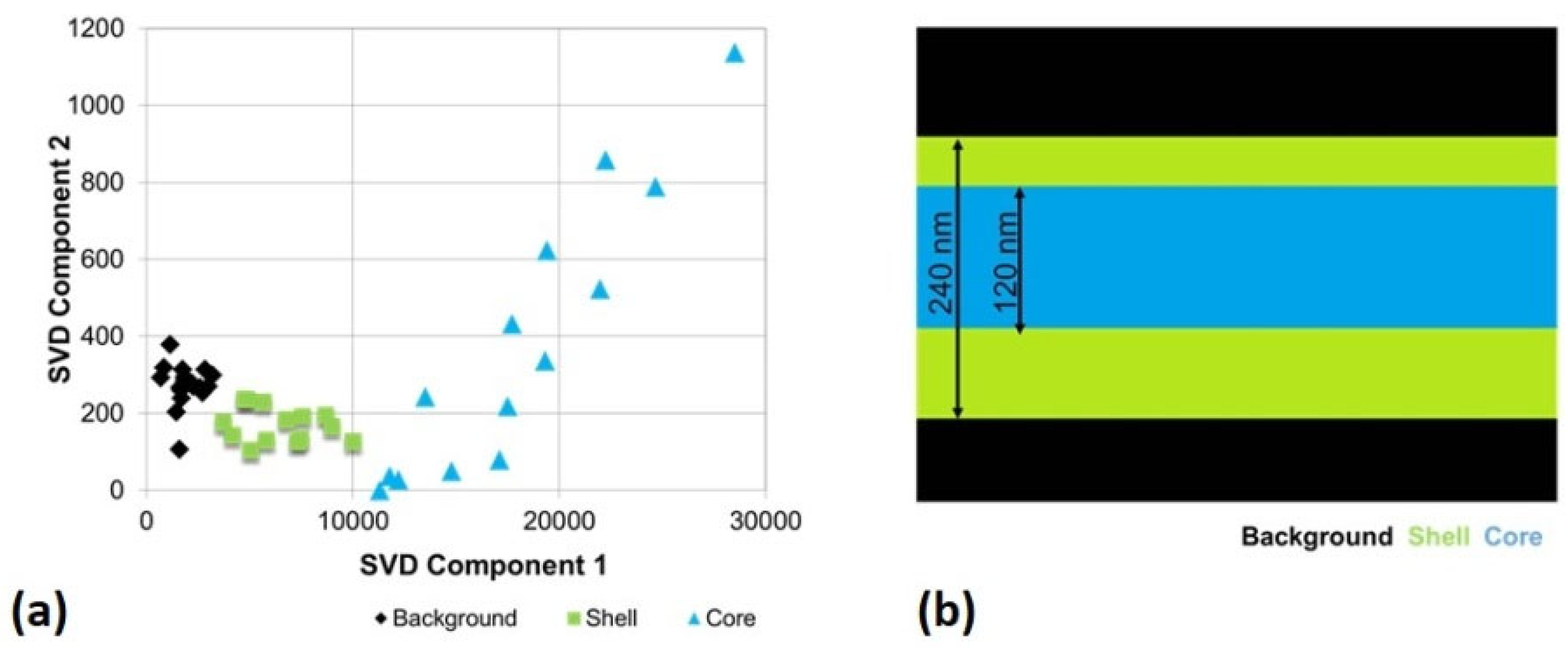
An SVD scatter plot derived from the linear scan across a core/shell fiber (Figure 10a) revealed three distinct spectral clusters corresponding to the background, the fiber shell, and the fiber core. The first two SVD components resembled the spectra of PLGA and PGS. Spectra collected from the center of the fiber showed contributions from both the core and the shell because the laser excitation volume encompassed shell layers above and below the core. Consequently, the core region in Figure 10a contained signals from both SVD components. In contrast, the spectra from the fiber edges contained only PLGA contributions, and regions outside the fiber exhibited minimal signals from either component.
After the spectral classification based on the SVD plot, the assigned groups were mapped back onto the original scan line (Figure 10b). This allowed for the identification of polymer-specific regions within the fiber. The technique was employed to estimate the thickness of the PLGA shell and PGS core, despite the inability to directly resolve fiber features due to the large laser spot size. The laser spot size (approximately 500 nm) caused the core and shell regions on both sides of the fiber to appear broader, as the shell spectrum remained detectable even with partial overlap of the laser spot with the fiber. Despite these limitations, it was possible to calculate the core diameter based on the SVD-derived map of the core and shell regions and the knowledge of the total diameter of the fiber measured by SEM. In this instance [24], the core diameter was approximately 120 nm, and represented around 50% of the fiber’s total thickness.

2.6. Dissolution of Polyethylene Oxide/Polycaprolactone Electrospun Nanofibers in Water

Raman imaging with a WITec confocal Raman microscope (532 nm laser source, 100× objective) was performed on 50:50 blend of polyethylene oxide (PEO) and polycaprolactone (PCL) electrospun nanofibers of 200–300 nm in size [37]. SEM images were also taken. The measurements, taken with sub-micron resolution, demonstrated that both polymers were evenly distributed within the nanofibers.
The dissolution of PEO from the blend fibers was observed after the fibers were submerged in Milli-Q water. The average percentage of the remaining mass for the pure PCL and PCL/PEO fibers after submersion, as well as the maps of each component after one day, showed that practically all of the PEO dissolved within the first 24 h. Smith et al. [37] presented Raman images collected from the PEO/PCL blend at day 1 (after the sample was incubated for one day), mapping the distribution of PCL and PEO and their corresponding Raman spectra.

2.7. Electrospun Nanofiber Heterogeneity Characterized by Open-Source Software

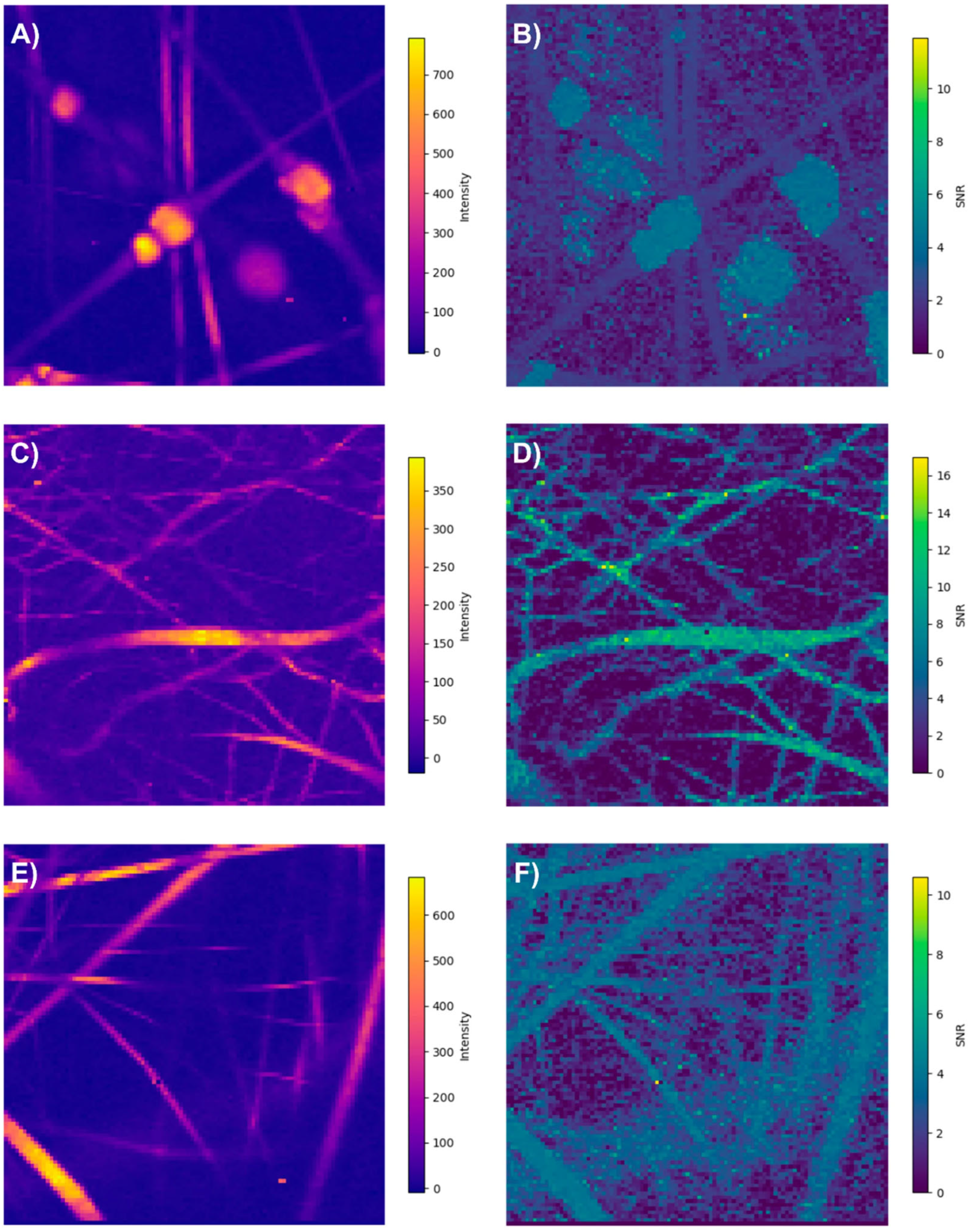
The hyperspectral Raman imaging in [38] was performed using a WITec Alpha 300 RA+ confocal micro-Raman spectrometer (532 nm laser, 20× and 50× objectives). Three polymer blends, PLA/HA (64.3% polylactic acid, 35.7% hydroxyapatite), PCL/collagen (98% polycaprolactone, 2% collagen), and PLA/PVA (95% polylactic acid, 5% polyvinyl alcohol), were imaged and analyzed using a special methodology proposed in the paper: first, the image and spectral segmentation identifies pixels and bands containing the relevant information about the compounds; then, an algorithm determines the end members (N-FINDR). Based on this, the software generates abundance maps, segmentation of the fiber component spatial distribution is performed, and average spectra are obtained. The algorithm was implemented in PYTHON, and could detect compounds at concentrations of 2–5% of the total mass. The method does not rely on the presence of strong Raman bands. Figure 11 shows the spectral intensity and SNR maps for the three fiber blends.

3. Discussion and Conclusions

Nanofiber characterization plays a pivotal role in validating and optimizing various nanofiber properties, tailored to specific applications. A variety of techniques can be employed, depending on the parameters to be determined. Often, a combination of methods is required to fully characterize nanofibers. Among these, techniques like scanning electron microscopy (SEM), transmission electron microscopy (TEM), atomic force microscopy (AFM), X-ray diffraction (XRD), and confocal Raman microscopy (CRM) have been extensively applied to diverse applications.
Although an in-depth discussion of diverse methods for nanofiber structure characterization exceeds the scope of this review, Table 1 provides a summary of different nanofiber structures and their corresponding characterization techniques.
For tissue-engineering applications, where fibers are often used as scaffolds for growing tissue, it is important to be able to characterize both carbon and polymer composite nanofibers in various environments, including aqueous environments, which is critical for tissue growth in vivo.
Nanofiber characterization, particularly for 3D imaging of composites or structures, presents unique challenges. The disparity in scale between the overall structure and the intricate nanofiber features creates difficulties in achieving precise imaging. Furthermore, the depth limitations of many imaging techniques exacerbate the problem, often requiring compromises on the resolution, the imaging volume, or the time needed to capture detailed images.
A totally new set of challenges arises when one is interested in resolving the structure of multi-component fibers that can only be distinguished by their chemical composition. Traditional CRM alone does not have a sufficient resolution for such a task, but with the aid of the data-processing algorithms discussed in this review, the structure of sub-resolution features can be inferred, making CRM an essential method for investigating nanofiber-based scaffolds. Table 2 summarizes the advantages and disadvantages of CRM.
Innovative approaches, such as combining multiple imaging techniques or integrating computational tools like machine learning and reconstruction algorithms, are being explored to mitigate these trade-offs. While progress is being made, these solutions often involve their own set of constraints, including an increased complexity, cost, or data-processing requirements. Overcoming these limitations remains a vital area of research in nanofiber characterization.

Author Contributions

Conceptualization, A.K. and A.S.; methodology, A.K., A.S., S.G. and O.C.-G.; software, A.K. and O.C.-G.; validation, A.S., S.G. and O.C.-G.; formal analysis, A.K., A.S. and O.C.-G.; investigation, A.K., A.S., S.G. and O.C.-G.; resources, A.K. and D.E.; data curation, A.K. and O.C.-G.; writing/original draft preparation, A.K. and A.S.; writing/review and editing, A.K., D.E. and O.C.-G.; visualization, A.K. and S.G.; supervision, A.K. and D.E.; project administration, A.K. and D.E.; funding acquisition, A.K. All authors have read and agreed to the published version of the manuscript.

Funding

This work was supported in part by the National Science Foundation, grant CBET 2348722 to A.K., and a Fulbright U.S. Scholar Award to A.K.

Institutional Review Board Statement

Not applicable.

Informed Consent Statement

Not applicable.

Data Availability Statement

No new data were created or analyzed in this study.

Conflicts of Interest

The authors declare no conflicts of interest.

Abbreviations

The following abbreviations are used in this manuscript:
CLSClassical Least-Squares
SVDSingular-Value Decomposition
CRMConfocal Raman Microscopy
SEMScanning Electron Microscopy
TEMTransmission Electron Microscopy
XRDX-Ray Diffraction
AFMAtomic Force Microscopy
CC BYCreative Commons Attribution
CNTCarbon Nanotube
SWCNTSingle-Walled Carbon Nanotube
DWCNTDouble-Walled Carbon Nanotube
MWCNTMulti-Walled Carbon Nanotube
RBMRadial Breathing Mode
PMMAPoly Methylmethacrylate
PVAPolyvinyl Alcohol
PLAPolylactic Acid
PLGAPolylactic Co-Glycolic Acid
EGFEpidermal Growth Factor
ECEthyl Cellulose
PGSPolyglycerol Sebacate
PSPolystyrene
1DOne-Dimensional
3DThree-Dimensional
CVDChemical Vapor Deposition
WAXDWide-Angle X-Ray Diffraction
HRTEMHigh-Resolution Transmission Electron Microscopy
ESCAElectron Spectroscopy for Chemical Analysis
SERSSurface-Enhanced Raman Spectroscopy
CNFCarbon Nanofiber

References

  1. Taddei, P.; Tinti, A.; Fini, G. Vibrational Spectroscopy of Polymeric Biomaterials. J. Raman Spectrosc. 2001, 32, 619–629. [Google Scholar] [CrossRef]
  2. Cho, L.-L. Identification of Textile Fiber by Raman Microspectroscopy. Forensic Sci. J. 2007, 6, 55–62. [Google Scholar]
  3. Rousseau, M.-E.; Beaulieu, L.; Lefèvre, T.; Paradis, J.; Asakura, T.; Pézolet, M. Characterization by Raman Microspectroscopy of the Strain-Induced Conformational Transition in Fibroin Fibers from the Silkworm Samia cynthia ricini. Biomacromolecules 2006, 7, 2512–2521. [Google Scholar] [CrossRef]
  4. Bokobza, L.; Bruneel, J.-L.; Couzi, M. Raman Spectroscopic Investigation of Carbon-Based Materials and Their Composites. Comparison between Carbon Nanotubes and Carbon Black. Chem. Phys. Lett. 2013, 590, 153–159. [Google Scholar] [CrossRef]
  5. Deldicque, D.; Rouzaud, J.-N.; Velde, B. A Raman–HRTEM Study of the Carbonization of Wood: A New Raman-Based Paleothermometer Dedicated to Archaeometry. Carbon 2016, 102, 319–329. [Google Scholar] [CrossRef]
  6. Pawlyta, M.; Rouzaud, J.-N.; Duber, S. Raman Microspectroscopy Characterization of Carbon Blacks: Spectral Analysis and Structural Information. Carbon 2015, 84, 479–490. [Google Scholar] [CrossRef]
  7. Trentelman, K. A Note on the Characterization of Bismuth Black by Raman Microspectroscopy. J. Raman Spectrosc. 2009, 40, 585–589. [Google Scholar] [CrossRef]
  8. Liu, H.; Ding, X.; Zhou, G.; Li, P.; Wei, X.; Fan, Y. Electrospinning of Nanofibers for Tissue Engineering Applications. J. Nanomater. 2013, 2013, 495708. [Google Scholar] [CrossRef]
  9. Chen, R.; Huang, C.; Ke, Q.; He, C.; Wang, H.; Mo, X. Preparation and Characterization of Coaxial Electrospun Thermoplastic Polyurethane/Collagen Compound Nanofibers for Tissue Engineering Applications. Colloids Surf. B Biointerfaces 2010, 79, 315–325. [Google Scholar] [CrossRef]
  10. Zhang, Y.; Huang, Z.-M.; Xu, X.; Lim, C.T.; Ramakrishna, S. Preparation of Core−Shell Structured PCL-r-Gelatin Bi-Component Nanofibers by Coaxial Electrospinning. Chem. Mater. 2004, 16, 3406–3409. [Google Scholar] [CrossRef]
  11. Wang, N.; Burugapalli, K.; Wijesuriya, S.; Far, M.Y.; Song, W.; Moussy, F.; Zheng, Y.; Ma, Y.; Wu, Z.; Li, K. Electrospun Polyurethane-Core and Gelatin-Shell Coaxial Fibre Coatings for Miniature Implantable Biosensors. Biofabrication 2013, 6, 015002. [Google Scholar] [CrossRef]
  12. Chuah, L.S.; Song, G.; Tang, G. Raman and SEM Characterization of Electrospun WO3 Nanofibers. Adv. Optoelectron. Mater. 2013, 1, 1–3. [Google Scholar]
  13. Maldonado-Orozco, M.C.; Ochoa-Lara, M.T.; Sosa-Márquez, J.E.; Olive-Méndez, S.F.; Pizá-Ruiz, P.; Quintanar-Sierra, J.J.C.; Espinosa-Magaña, F. Characterization of Mn-Doped Electrospun LiNbO3 Nanofibers by Raman Spectroscopy. Mater. Charact. 2017, 127, 209–213. [Google Scholar] [CrossRef]
  14. Park, S.K.; Dhakal, K.P.; Kim, J.; Kim, J.H.; Rho, H. Fabrication and Optical Characterization of Electrospun Poly(3-Buthylthiophene) Nanofibers. Synth. Met. 2011, 161, 1088–1091. [Google Scholar] [CrossRef]
  15. Sengupta, D.; Kottapalli, A.G.P.; Chen, S.H.; Miao, J.M.; Kwok, C.Y.; Triantafyllou, M.S.; Warkiani, M.E.; Asadnia, M. Characterization of Single Polyvinylidene Fluoride (PVDF) Nanofiber for Flow Sensing Applications. AIP Adv. 2017, 7, 105205. [Google Scholar] [CrossRef]
  16. Sundaray, B.; Babu, V.J.; Subramanian, V.; Natarajan, T.S. Preparation and Characterization of Electrospun Fibers of Poly(Methyl Methacrylate)-Single Walled Carbon Nanotube Nanocomposites. J. Eng. Fibers Fabr. 2008, 3, 155892500800300405. [Google Scholar] [CrossRef]
  17. Wang, C.; Yan, K.-W.; Lin, Y.-D.; Hsieh, P.C.H. Biodegradable Core/Shell Fibers by Coaxial Electrospinning: Processing, Fiber Characterization, and Its Application in Sustained Drug Release. Macromolecules 2010, 43, 6389–6397. [Google Scholar] [CrossRef]
  18. Wang, Y.; Serrano, S.; Santiago-Avilés, J.J. Raman Characterization of Carbon Nanofibers Prepared Using Electrospinning. Synth. Met. 2003, 138, 423–427. [Google Scholar] [CrossRef]
  19. Xu, B.; Li, Y.; Fang, X.; Thouas, G.A.; Cook, W.D.; Newgreen, D.F.; Chen, Q. Mechanically Tissue-like Elastomeric Polymers and Their Potential as a Vehicle to Deliver Functional Cardiomyocytes. J. Mech. Behav. Biomed. Mater. 2013, 28, 354–365. [Google Scholar] [CrossRef]
  20. Nguyen, T.T.T.; Chung, O.H.; Park, J.S. Coaxial Electrospun Poly(Lactic Acid)/Chitosan (Core/Shell) Composite Nanofibers and Their Antibacterial Activity. Carbohydr. Polym. 2011, 86, 1799–1806. [Google Scholar] [CrossRef]
  21. Pakravan, M.; Heuzey, M.-C.; Ajji, A. Core–Shell Structured PEO-Chitosan Nanofibers by Coaxial Electrospinning. Biomacromolecules 2012, 13, 412–421. [Google Scholar] [CrossRef]
  22. Zhang, Y.Z.; Venugopal, J.; Huang, Z.-M.; Lim, C.T.; Ramakrishna, S. Characterization of the Surface Biocompatibility of the Electrospun PCL-Collagen Nanofibers Using Fibroblasts. Biomacromolecules 2005, 6, 2583–2589. [Google Scholar] [CrossRef]
  23. Zhang, Y.Z.; Wang, X.; Feng, Y.; Li, J.; Lim, C.T.; Ramakrishna, S. Coaxial Electrospinning of (Fluorescein Isothiocyanate-Conjugated Bovine Serum Albumin)-Encapsulated Poly(ε-Caprolactone) Nanofibers for Sustained Release. Biomacromolecules 2006, 7, 1049–1057. [Google Scholar] [CrossRef]
  24. Sfakis, L.; Sharikova, A.; Tuschel, D.; Costa, F.X.; Larsen, M.; Khmaladze, A.; Castracane, J. Core/Shell Nanofiber Characterization by Raman Scanning Microscopy. Biomed. Opt. Express 2017, 8, 1025. [Google Scholar] [CrossRef]
  25. Sharikova, A.; Foraida, Z.I.; Sfakis, L.; Peerzada, L.; Larsen, M.; Castracane, J.; Khmaladze, A. Characterization of Nanofibers for Tissue Engineering: Chemical Mapping by Confocal Raman Microscopy. Spectrochim. Acta Part A Mol. Biomol. Spectrosc. 2020, 227, 117670. [Google Scholar] [CrossRef] [PubMed]
  26. Aframian, D.J.; Cukierman, E.; Nikolovski, J.; Mooney, D.J.; Yamada, K.M.; Baum, B.J. The Growth and Morphological Behavior of Salivary Epithelial Cells on Matrix Protein-Coated Biodegradable Substrata. Tissue Eng. 2000, 6, 209–216. [Google Scholar] [CrossRef]
  27. Chen, G.; Ushida, T.; Tateishi, T. Development of Biodegradable Porous Scaffolds for Tissue Engineering. Mater. Sci. Eng. C 2001, 17, 63–69. [Google Scholar] [CrossRef]
  28. Stachewicz, U.; Qiao, T.; Rawlinson, S.C.F.; Almeida, F.V.; Li, W.-Q.; Cattell, M.; Barber, A.H. 3D Imaging of Cell Interactions with Electrospun PLGA Nanofiber Membranes for Bone Regeneration. Acta Biomater. 2015, 27, 88–100. [Google Scholar] [CrossRef] [PubMed]
  29. Mahjour, S.B.; Fu, X.; Yang, X.; Fong, J.; Sefat, F.; Wang, H. Rapid Creation of Skin Substitutes from Human Skin Cells and Biomimetic Nanofibers for Acute Full-Thickness Wound Repair. Burns 2015, 41, 1764–1774. [Google Scholar] [CrossRef]
  30. Yoo, C.; Vines, J.B.; Alexander, G.; Murdock, K.; Hwang, P.; Jun, H.-W. Adult Stem Cells and Tissue Engineering Strategies for Salivary Gland Regeneration: A Review. Biomater. Res. 2014, 18, 9. [Google Scholar] [CrossRef]
  31. Drury, J.L.; Mooney, D.J. Hydrogels for Tissue Engineering: Scaffold Design Variables and Applications. Biomaterials 2003, 24, 4337–4351. [Google Scholar] [CrossRef] [PubMed]
  32. Oliveira, M.B.; Mano, J.F. Polymer-based Microparticles in Tissue Engineering and Regenerative Medicine. Biotechnol. Prog. 2011, 27, 897–912. [Google Scholar] [CrossRef]
  33. Khademhosseini, A.; Langer, R. Microengineered Hydrogels for Tissue Engineering. Biomaterials 2007, 28, 5087–5092. [Google Scholar] [CrossRef]
  34. Rodriguez, I. Tissue Engineering Composite Biomimetic Gelatin Sponges for Bone Regeneration. Doctoral Dissertation, Virginia Commonwealth University, Richmond, VA, USA, 2013. [Google Scholar]
  35. Cantara, S.I.; Soscia, D.A.; Sequeira, S.J.; Jean-Gilles, R.P.; Castracane, J.; Larsen, M. Selective Functionalization of Nanofiber Scaffolds to Regulate Salivary Gland Epithelial Cell Proliferation and Polarity. Biomaterials 2012, 33, 8372–8382. [Google Scholar] [CrossRef] [PubMed]
  36. Rho, K.S.; Jeong, L.; Lee, G.; Seo, B.-M.; Park, Y.J.; Hong, S.-D.; Roh, S.; Cho, J.J.; Park, W.H.; Min, B.-M. Electrospinning of Collagen Nanofibers: Effects on the Behavior of Normal Human Keratinocytes and Early-Stage Wound Healing. Biomaterials 2006, 27, 1452–1461. [Google Scholar] [CrossRef]
  37. Smith, G.P.S.; McLaughlin, A.W.; Clarkson, A.N.; Gordon, K.C.; Greg, F.; Walker, G.F. Raman microscopic imaging of electrospun fibers made from a polycaprolactone and polyethylene oxide blend. Vib. Spectrosc. 2017, 92, 27–34. [Google Scholar] [CrossRef]
  38. Uribe-Juárez, O.E.; Silva Valdéz, L.A.; Vivar Velázquez, F.I.; Montoya-Molina, F.; Moreno-Razo, J.A.; Flores-Sánchez, M.G.; Morales-Corona, J.; Olayo-González, R. Analysis of Chemical Heterogeneity in Electrospun Fibers Through Hyperspectral Raman Imaging Using Open-Source Software. Polymers 2025, 17, 1883. [Google Scholar] [CrossRef]
  39. Ravichandran, R. Cardiogenic Differentiation of Mesenchymal Stem Cells on Elastomeric Poly (Glycerol Sebacate)/Collagen Core/Shell Fibers. World J. Cardiol. 2013, 5, 28. [Google Scholar] [CrossRef]
  40. Colthup, N.B.; Daly, L.H.; Wiberley, S.E. Introduction to Infrared and Raman Spectroscopy, 3rd ed.; Academic Press: Cambridge, MA, USA, 1975. [Google Scholar]
  41. Cabrales, L.; Abidi, N.; Manciu, F. Characterization of Developing Cotton Fibers by Confocal Raman Microscopy. Fibers 2014, 2, 285–294. [Google Scholar] [CrossRef]
  42. Caspers, P.J.; Lucassen, G.W.; Puppels, G.J. Combined In Vivo Confocal Raman Spectroscopy and Confocal Microscopy of Human Skin. Biophys. J. 2003, 85, 572–580. [Google Scholar] [CrossRef] [PubMed]
  43. Klein, K.; Gigler, A.M.; Aschenbrenner, T.; Monetti, R.; Bunk, W.; Jamitzky, F.; Morfill, G.; Stark, R.W.; Schlegel, J. Label-Free Live-Cell Imaging with Confocal Raman Microscopy. Biophys. J. 2012, 102, 360–368. [Google Scholar] [CrossRef]
  44. Zhou, A.H.; McEwen, G.D.; Wu, Y.Z. Combined AFM/Raman Microspectroscopy for Characterization of Living Cells in near Physiological Conditions. In Microscopy: Science, Technology, Applications and Education; Formatex Research Center: Badajoz, Spain, 2010; Volume 1, pp. 515–522. [Google Scholar]
  45. Costa, S.; Borowiak-Palen, E.; Kruszynska, M. Characterization of Carbon Nanotubes by Raman Spectroscopy. Mater. Sci.-Pol. 2008, 26, 433–441. [Google Scholar]
  46. Hennrich, F.; Krupke, R.; Lebedkin, S.; Arnold, K.; Fischer, R.; Resasco, D.E.; Kappes, M.M. Raman Spectroscopy of Individual Single-Walled Carbon Nanotubes from Various Sources. J. Phys. Chem. B 2005, 109, 10567–10573. [Google Scholar] [CrossRef] [PubMed]
  47. Zhao, M.; Vladár, A.; Cannara, R.J.; Liddle, J. 3D Characterization of Carbon Nanotube Polymer Composites Using Scanning Electron Microscopy and Confocal Raman Microscopy. In Nanotechnology 2014: Graphene, CNTs, Particles, Films & Composites: Technical Proceedings of the 2014 NSTI Nanotechnology Conference and Expo; Nano Science and Technology Institute: Cambridge, MA, USA, 2014; Volume 1, pp. 33–36. [Google Scholar]
  48. Gautam, R.; Vanga, S.; Ariese, F.; Umapathy, S. Review of Multidimensional Data Processing Approaches for Raman and Infrared Spectroscopy. EPJ Tech. Instrum. 2015, 2, 8. [Google Scholar] [CrossRef]
  49. Mark, H.; Workman, J. Classical Least Squares, Part 1: Mathematical Theory. In Chemometrics in Spectroscopy; Elsevier: Amsterdam, The Netherlands, 2018; pp. 629–635. [Google Scholar]
  50. Cigarroa-Mayorga, O.E.; Gallardo-Hernández, S.; Talamás-Rohana, P. Tunable Raman Scattering Enhancement Due to Self-Assembled Au Nanoparticles Layer on Porous AAO: The Influence of the Alumina Support. Appl. Surf. Sci. 2021, 536, 147674. [Google Scholar] [CrossRef]
  51. Dresselhaus, M.S.; Dresselhaus, G.; Jorio, A.; Souza Filho, A.G.; Saito, R. Raman Spectroscopy on Isolated Single Wall Carbon Nanotubes. Carbon 2002, 40, 2043–2061. [Google Scholar] [CrossRef]
  52. Jorio, A.; Pimenta, M.A.; Fantini, C.; Souza, M.; Souza Filho, A.G.; Samsonidze, G.G.; Dresselhaus, G.; Dresselhaus, M.S.; Saito, R. Advances in Single Nanotube Spectroscopy: Raman Spectra from Cross-Polarized Light and Chirality Dependence of Raman Frequencies. Carbon 2004, 42, 1067–1069. [Google Scholar] [CrossRef]
  53. Kavan, L.; Dunsch, L. Spectroelectrochemistry of Carbon Nanotubes. ChemPhysChem 2011, 12, 47–55. [Google Scholar] [CrossRef] [PubMed]
  54. Astakhova, T.Y.; Vinogradov, G.A.; Menon, M. Symmetry and Selection Rules in the Raman Spectra of Carbon Nanotubes. Russ. Chem. Bull. 2003, 52, 823–831. [Google Scholar] [CrossRef]
  55. Dresselhaus, M.S.; Dresselhaus, G.; Saito, R.; Jorio, A. Raman Spectroscopy of Carbon Nanotubes. Phys. Rep. 2005, 409, 47–99. [Google Scholar] [CrossRef]
  56. Doorn, S.K.; O’Connell, M.J.; Zheng, L.; Zhu, Y.T.; Huang, S.; Liu, J. Raman Spectral Imaging of a Carbon Nanotube Intramolecular Junction. Phys. Rev. Lett. 2005, 94, 016802. [Google Scholar] [CrossRef] [PubMed]
  57. Kürti, J.; Kuzmany, H.; Burger, B.; Hulman, M.; Winter, J.; Kresse, G. Resonance Raman Investigation of Single Wall Carbon Nanotubes. Synth. Met. 1999, 103, 2508–2509. [Google Scholar] [CrossRef]
  58. Kuzmany, H.; Burger, B.; Thess, A.; Smalley, R.E. Vibrational Spectra of Single Wall Carbon Nanotubes. Carbon 1998, 36, 709–712. [Google Scholar] [CrossRef]
  59. Zhao, M.; Gu, X.; Lowther, S.E.; Park, C.; Jean, Y.C.; Nguyen, T. Subsurface Characterization of Carbon Nanotubes in Polymer Composites via Quantitative Electric Force Microscopy. Nanotechnology 2010, 21, 225702. [Google Scholar] [CrossRef]
  60. Govil, A.; Pallister, D.M.; Morris, M.D. Three-Dimensional Digital Confocal Raman Microscopy. Appl. Spectrosc. 1993, 47, 75–79. [Google Scholar] [CrossRef]
  61. Golub, G.; Kahan, W. Calculating the Singular Values and Pseudo-Inverse of a Matrix. J. Soc. Ind. Appl. Math. Ser. B Numer. Anal. 1965, 2, 205–224. [Google Scholar] [CrossRef]
  62. Khmaladze, A.; Jasensky, J.; Price, E.; Zhang, C.; Boughton, A.; Han, X.; Seeley, E.; Liu, X.; Holl, M.M.B.; Chen, Z. Hyperspectral Imaging and Characterization of Live Cells by Broadband Coherent Anti-Stokes Raman Scattering (CARS) Microscopy with Singular Value Decomposition (SVD) Analysis. Appl. Spectrosc. 2014, 68, 1116–1122. [Google Scholar] [CrossRef]
  63. Tubbesing, K.; Moskwa, N.; Khoo, T.C.; Nelson, D.A.; Sharikova, A.; Feng, Y.; Larsen, M.; Khmaladze, A. Raman microspectroscopy fingerprinting of organoid differentiation state. Cell. Mol. Biol. Lett. 2022, 27, 53. [Google Scholar] [CrossRef] [PubMed]
  64. Azad, A.M.; Noibi, M.; Ramachandran, M. Fabrication and Characterization of 1-D Alumina (Al2O3) Nanofibers in an Electric FIeld. Bull. Pol. Acad. Sci. Tech. Sci. 2007, 55, 195–201. [Google Scholar]
  65. Bai, J.; Yang, Q.; Wang, S.; Li, Y. Preparation and Characterization of Electrospun Ag/Polyacrylonitrile Composite Nanofibers. Korean J. Chem. Eng. 2011, 28, 1761–1763. [Google Scholar] [CrossRef]
  66. Ghaemi, F.; Ahmadian, A.; Yunus, R.; Ismail, F.; Rahmanian, S. Effects of Thickness and Amount of Carbon Nanofiber Coated Carbon Fiber on Improving the Mechanical Properties of Nanocomposites. Nanomaterials 2016, 6, 6. [Google Scholar] [CrossRef] [PubMed]
  67. Zussman, E.; Chen, X.; Ding, W.; Calabri, L.; Dikin, D.A.; Quintana, J.P.; Ruoff, R.S. Mechanical and Structural Characterization of Electrospun PAN-Derived Carbon Nanofibers. Carbon 2005, 43, 2175–2185. [Google Scholar] [CrossRef]
  68. Tatarko, P.; Puchy, V.; Dusza, J.; Morgiel, J.; Bastl, Z.; Mihaly, J. Characterization of Carbon Nanofibers by SEM, TEM, ESCA and Raman Spectroscopy. Kov. Mater. 2010, 48, 379–386. [Google Scholar] [CrossRef]
Figure 1. Intensity vs. Raman shift for SWCNT, DWCNT and MWCNT: (a) RBM; (b) D- and G-bands (excitation: 785 nm) [45].
Applsci 16 06009 g001
Figure 2. Kataura plot showing various resonance excitations as a function of different laser energies and nanotube diameters: full circles—semiconducting nanotubes, open circles—metallic nanotubes [45].
Applsci 16 06009 g002
Figure 3. Raman spectrum (upper left) of a CNT sample; Raman two-dimensional maps of RBM (upper right) and G-(lower left) and D-(lower right) bands. Laser excitation: 785 nm [45].
Applsci 16 06009 g003
Figure 4. Comparison of Raman spectra at the same location of the 0.1% CNT-PS film (red arrow) using a 100× oil immersion lens (NA = 1.4, black) and a 100× dry lens (NA = 0.8, red). The inset Raman image is a map of the CNT 2D band (2660–2690 cm−1), which consists of 101 × 101 pixels at a pixel size of 300 nm × 300 nm [47].
Applsci 16 06009 g004
Figure 5. 3D CRM image (30 × 30 × 30 μm) of 0.1% CNT-PS film by reconstruction of captured 2D sliced images from depth z = 0 to 30 μm using ImageJ [47].
Applsci 16 06009 g005
Figure 6. (a) Normalized Raman reference spectra of PLGA, EC and EGF films; (b) spectrum from the center of the blend fiber, containing all three materials, and the result of the CLS fit based on the PLGA, EC and EGF components. Reprinted with permission from [25].
Applsci 16 06009 g006
Figure 7. Raman mapping across blend nanofibers: (a) Optical image of the fiber. The red line marks where Raman mapping was done. (b) CLS analysis of the scan, indicating a nearly uniform blend of PLGA, EC and EGF components. A 3-point moving average was applied to reduce random noise. Reprinted with permission from [25].
Applsci 16 06009 g007
Figure 8. Scanning electron microscope (SEM) images of nanofiber mats: (a) PGS/PLGA core/shell fibers with PGS-rich beads; (b) PGS/PLGA core/shell fibers of uniform thickness; and (c) pure PLGA fibers [24].
Applsci 16 06009 g008
Figure 9. Raman spectra from PGS and PLGA: (a) PLGA (red) and PGS (blue) polymers. (b) The strongest peaks, indicated in (a) by arrow. (c) A 50× image of PGS/PLGA nanofibers with a PGS-rich bead structure at the center. The red line marks where Raman mapping was done. (d) Spectrum from the center of the bead structure, demonstrating the presence of both polymers; the peaks indicating PGS (blue) and PLGA (red) are shown with arrows [24].
Applsci 16 06009 g009
Figure 10. Raman mapping of a nanofiber cross-section by SVD: (a) SVD scatter plot shows separation of core and shell spectra into distinct groupings. (b) Hyperspectral Raman cross-sectional image of the fiber structure based on the SVD analysis. Blue indicates core (PGS) material, green indicates shell (PLGA) material, and black indicates a lack of chemical signature of either polymer [24].
Applsci 16 06009 g010
Figure 11. Recorded spectra with overall intensity and signal-to-noise ratio (SNR): (A,B) PLA/HA, (C,D) PCL/collagen, and (E,F) PLA/PVA [38].
Applsci 16 06009 g011
Table 1. Characterization methods used for different types of nanofibers.
Fiber TypeApplicationsProduction MethodDiameterCharacterizationSources
Al2O3 ceramic–polymer compositeBiological membranes for catalysts and enzymes, artificial blood vessels, wound-dressing materialsElectrospinning, heat treatment~500 nmRaman spectroscopy, SEM, TEM, XRD[64]
PVP/AMT and WO3 Electrospinning, annealing500–600 nmSEM, Raman spectroscopy[12]
Ag/PAN nanoparticles Electrospinning, heat treatment200–500 nmSEM, XRD,
SERS
[65]
CF-CNF/PPFillers in a polymer matrixCVD100–250 nm, ~10 µmSEM, Raman spectroscopy[66]
PAN-derived CNFFabrication of 1D devices, reinforcement of composite materialsElectrospinning, carbonization70–280 nmSEM, WAXD, Raman spectroscopy, mechanical resonance, pyrolysis[67]
CNFAdditives to ceramicsCVD50–600 nmSEM, HRTEM, ESCA,
Raman spectroscopy
[68]
SWCNT, DWCNT, MWCNT 2–4 nmRaman microspectroscopy[45]
polyimide/SWCNT, polystyrene/MWCNT CVD, high-pressure carbon monoxide decomposition, ablationa few nmSEM, CRM[59]
EGF/PLGA nanofibersControl of EGF delivery to salivary gland cellsDouble-emulsion electrospinning~500 nmSEM, CRM + CLS[25]
PGS/PLGA core/shell nanofibersTissue engineeringCoaxial electrospinning200–400 nmSEM, CRM + CLS, SVD[24]
Table 2. The advantages and disadvantages of confocal Raman scanning for composite nanofiber characterization.
Advantages
Label-free, so does not require chemical or immunostaining.
Capable of observing and characterizing three-dimensional structures.
Will work when the core and shell polymers have a similar density.
Will work when the core and shell polymers have a very similar hydrophobicity.
Does not require a vacuum; the samples can be analyzed with cells seeded on them.
Disadvantages
The resolution is diffraction-limited to the scanning beam size (on the order of hundreds of nanometers).
Relatively long signal acquisition time.
Difficulty in quantifying low-concentration components, especially if their spectral signatures overlap with one another.
Possibility of photobleaching of samples during measurements.
Need to remove the fluorescent background signal.
Disclaimer/Publisher’s Note: The statements, opinions and data contained in all publications are solely those of the individual author(s) and contributor(s) and not of MDPI and/or the editor(s). MDPI and/or the editor(s) disclaim responsibility for any injury to people or property resulting from any ideas, methods, instructions or products referred to in the content.