Article

Influence of Tectonic Activity Characteristics of the Permian–Triassic and Jurassic on Oil and Gas Migration Efficiency in the Luzhou Area—A Case Study of Fault Characteristics


1
School of Geosciences, Yangtze University, Wuhan 430100, China
2
Research Institute of Petroleum Exploration and Development, Beijing 100080, China
*
Author to whom correspondence should be addressed.
Appl. Sci. 2026, 16(12), 5977; https://doi.org/10.3390/app16125977 (registering DOI)
Submission received: 28 April 2026 / Revised: 3 June 2026 / Accepted: 10 June 2026 / Published: 12 June 2026

Abstract

In order to clarify the controlling effects of tectonic activity on hydrocarbon migration efficiency in the Permian–Triassic strata of the Luzhou area, Sichuan Basin, this study takes faults as the research objective. Using 3D seismic data, tectonic evolution records, and single-well test data, we systematically analyze the geometric characteristics, activity phases, classification by grade and type, and reservoir-controlling effects of faults. The results show that a total of 843 reverse faults have been identified in the study area. The major faults are distributed in a NE-SW trend, with eight planar combination styles developed, and the main cross-sectional styles are back-thrust and “Y”-shaped types. The faults experienced four phases of tectonic activity: Caledonian, Hercynian, Indosinian, and Yanshan–Himalayan. Among these, the Indosinian phase is the key formative phase, effectively connecting the source rocks and reservoirs. The faults are classified into three grades and four categories: source-connected faults, reservoir-modifying faults, damaging faults, and source-connected and damaging faults. Migration efficiency is jointly controlled by fault grade, activity phases, and the penetrated formations. Among them, third-order source-connected faults formed during the Indosinian phase exhibit the highest migration efficiency, while first-order damaging faults formed during the Yanshan phase tend to cause hydrocarbon dissipation. This study can provide a reference for hydrocarbon exploration and the prediction of favorable areas in the Luzhou area.

1. Introduction

The Sichuan Basin is one of the most important petroliferous basins in China, with abundant natural gas resources hosted in marine carbonate strata of the Permian and Triassic periods. The Luzhou area, located in the northern part of the southern Sichuan low–steep structural belt and sandwiched between the Huayingshan Fault Zone and the Qiyueshan Fault Zone, is a key exploration and development target in the southern Sichuan Basin [1,2,3,4,5]. The study area has experienced multi-stage and multi-directional tectonic movements, including the Caledonian, Hercynian, Indosinian, and Yanshan–Himalayan epochs, resulting in a complex and highly heterogeneous fault system. These faults have significantly controlled the formation, migration, and preservation of hydrocarbon reservoirs in the region, leading to strong spatial heterogeneity in hydrocarbon accumulation and large differences in single-well production performance [6]. For example, well D14 yields approximately 45 × 104 m3/d of gas, whereas well H14 yields only about 0.009 × 10⁴ m3/d, even within the same structural belt. Such dramatic production contrasts highlight the critical role of faults in controlling hydrocarbon enrichment in the study area.
Previous studies on the Luzhou area have mainly focused on reservoir characteristics, sedimentary facies, and hydrocarbon accumulation conditions, while the systematic analysis of fault characteristics, activity intensity, and their control on hydrocarbon migration efficiency remains insufficient. In particular, the relationships between fault hierarchical levels, episodic activity, and hydrocarbon migration pathways have not been fully clarified [7,8,9,10,11,12], which limits the understanding of the mechanisms behind the “scattered high-production wells and concentrated low-production wells” phenomenon.
Hydrocarbon migration efficiency is a key factor determining whether oil and gas can migrate and accumulate efficiently from source rocks to reservoirs. As the main migration carriers in the study area, faults exert direct control over migration efficiency through their distribution, activity timing, hierarchical levels, and matching relationships with source–reservoir–cap assemblages [13,14,15,16]. Therefore, systematically analyzing the influence of Permian and Triassic tectonic activity characteristics (taking faults as an example) on hydrocarbon migration efficiency in the Luzhou area and identifying the criteria for high-efficiency migration faults is of great theoretical and practical significance. This study aims to: (1) systematically characterize the geometric and hierarchical characteristics of the fault system; (2) quantitatively evaluate fault activity intensity during different tectonic stages; (3) classify faults based on their roles in hydrocarbon migration; and (4) clarify the control mechanisms of faults on hydrocarbon migration efficiency. The results of this study can provide a scientific basis for the evaluation of high-efficiency migration pathways and the optimization of exploration targets in the study area and also offer a reference for similar fault-controlled carbonate gas reservoirs in the southern Sichuan Basin.

2. Geological Background

2.1. Regional Tectonic Location

The Luzhou region is located in the southern Sichuan Basin, belonging to the Shunan low and steep tectonic belt. It borders the stable uplift zone of central Sichuan to the north, the northern Yunnan–Guizhou Depression to the south, the Longquan Mountain Fault Zone to the west, and the Qiyue Mountain Fault Zone to the east (Figure 1). The study area lies at the transitional zone between the high and steep fold–tectonic belt of southeastern Sichuan and the low and steep fold belt of southern Sichuan. Influenced by multi-directional and multi-phase intracontinental collision and compression, the tectonic features exhibit a complex pattern characterized by “NE-trending main fold structures + NW-trending second-order faults” [17,18,19].

2.2. Regional Stratigraphic Development and Tectonic Evolution Characteristics

The Luzhou area is situated in the northern segment of the Southern Sichuan Low–Steep Structural Belt within the Sichuan Basin, sandwiched between the Qiyueshan Fault Zone and the Huayingshan Fault Zone. Influenced by multi-stage tectonic movements from the Late Paleozoic to the Mesozoic, including the Hercynian and Indosinian orogenies, the basin maintained a relatively stable sedimentary environment, which facilitated the complete development of the Permian and Triassic strata. A complete source–reservoir–cap assemblage closely associated with hydrocarbon accumulation was formed, providing fundamental geological conditions for the generation, migration, and accumulation of regional oil and gas resources [21,22,23].
The Permian strata, in ascending order, comprise the Liangshan Formation (P1l), Qixia Formation (P1q), Maokou Formation (P1m), Longtan Formation (P2l), and Changxing Formation (P2c), which are dominated by marine deposits. The lithology is primarily composed of laterally persistent marine carbonate rocks, locally intercalated with coal-bearing mudstone and shale. The Liangshan Formation (P1l) is underlain by bauxite or iron-bearing mudstone, in parallel unconformable contact with the Silurian. It consists of interbedded limestone and mudstone–shale, with a thickness of 10–30 m and limited reservoir quality. The Qixia Formation (P1q) and Maokou Formation (P1m) are composed of thick-bedded bioclastic limestone and crystalline limestone. The upper part of the Maokou Formation was subjected to uplift and erosion during the Dongwu Movement, and intensive weathering and dissolution resulted in abundant dissolution vugs and fractures, with porosity ranging from 2% to 5%, rendering it the principal reservoir interval in the Permian [24,25]. The Longtan Formation (P2l) consists of marine-continental transitional coal-measure mudstone and shale, with a total organic carbon (TOC) content of 1.2–2.5% and vitrinite reflectance (Ro) of 1.3–2.0%, indicating mature to highly mature hydrocarbon generation potential and serving as a regional secondary source rock [21]. The Changxing Formation (P2c) is dominated by reef-bank facies bioclastic limestone and oolitic limestone. Under the influence of the embryonic Luzhou Paleouplift, primary pores were superimposed and enhanced by late-stage tectonic fractures, forming the other major Permian reservoir together with the Maokou Formation [26,27].
Tectonic evolution in the Luzhou area has been controlled by plate interactions since the Sinian and has undergone multiple episodes of modification. Four major tectonic stages exerted significant impacts on the Permian and Triassic fault systems and hydrocarbon migration networks. The Caledonian stage (Cambrian to Silurian) was characterized by a compressional tectonic setting. Regional uplift and erosion occurred in southern Sichuan, leading to the formation of an NEE-trending paleouplift. Tectonic activity was dominated by weak transpression, with only small-scale compensatory faults developed, exerting limited direct influence on subsequent hydrocarbon migration and accumulation. The Hercynian stage (Devonian to Permian) was marked by differential uplift of the basin basement induced by the Dongwu Movement, triggering the development of detachment faults along weak layers in the Longtan Formation. Although these faults did not fully connect source rocks and reservoirs, they established the basic structural framework for later source-connected faults. The Indosinian stage (Triassic) represented the key period for the stabilization of the regional tectonic framework. Under compressional stresses related to plate collision in the late Indosinian, the Luzhou Paleouplift was formed and finalized. Thrust faults were intensified and penetrated both source rocks and reservoirs, establishing major hydrocarbon migration conduits that enabled large-scale hydrocarbon migration and accumulation in the region. The Yanshan–Himalayan stage (Jurassic to Cenozoic) was characterized by persistent transpression, which reactivated pre-existing faults. Some faults cut through the Jurassic caprock, compromising the sealing integrity of the Leikoupo Formation gypsum-salt beds and causing the dissipation of early-accumulated hydrocarbons, which was detrimental to the preservation of oil and gas reservoirs [28,29,30,31,32].

3. Material and Methods

3.1. Data Source

This study is based on a comprehensive dataset acquired from the Luzhou area in the southern Sichuan Basin, including high-resolution 3D seismic reflection data, wireline well logging data, stratigraphic correlation profiles, and single-well production test data. The 3D seismic data cover the main structural units of the study area, providing a solid foundation for detailed fault geometry interpretation and structural analysis. In addition, regional geological and tectonic evolution frameworks were established by integrating previous studies, borehole stratigraphic records, and regional tectonic division results to provide a clear geological setting and stratigraphic control for subsequent fault interpretation and hydrocarbon-related analysis.

3.2. Seismic Interpretation and Fault Characterization

Based on the 3D seismic volume, systematic seismic interpretation was carried out using multi-attribute analysis techniques. Seismic attributes such as coherence, variance, and curvature were applied to highlight fault edges and improve the reliability of fault identification. Combined with well calibration and horizon tracking, the main stratigraphic interfaces and structural layers were interpreted, and the fault system was built by tracing fault planes both vertically and laterally. The geometric parameters of faults, including strike, dip direction, dip angle, extension length, vertical throw, and planar and sectional combination styles, were systematically identified, measured, and described. This process allowed us to build a complete fault system framework, which provided the basic spatial database for subsequent quantitative fault activity evaluation and functional classification.

3.3. Quantitative Methods for Fault Activity Evaluation

3.3.1. Growth Index (GI) Method

At present, a variety of methods are available for evaluating fault activity. In consideration of the extensional tectonic setting of the study area, this paper adopts the growth index method to quantitatively assess fault activity. This method can not only reflect the variation in fault activity intensity along different fault segments but can also incorporate the dimension of geologic time.
The fault growth index method is implemented by calculating the ratio of the thickness of the hanging wall to that of the footwall; the growth index can be used to assist in determining the timing of extension and compression [33,34].
The growth index method is a quantitative approach that judges the activity of a fault during the deposition of a given stratigraphic interval by comparing the thickness of the same marker horizon between the upthrown block and downthrown block of the fault. The calculation formula is as follows:
Growth index (GI) = Thickness of marker horizon in the downthrown block of the fault/Thickness of marker horizon in the upthrown block of the fault
In a geological context, if the growth index (GI) > 1, it indicates that fault activity resulted in greater subsidence of the downthrown block, providing greater accommodation space and thicker strata, which reflects intense fault activity during the deposition of this stratigraphic interval. If the growth index ≈ 1, it suggests extremely weak fault activity, with little difference in sedimentary environments between the upthrown and downthrown blocks and similar stratigraphic thicknesses. If the growth index < 1, it implies significant uplift of the upthrown block (often accompanied by compression and thrusting), leading to reduced sedimentary thickness or even erosion of the upthrown block [35]. For instance, the growth index of Indosinian-aged faults in this study is 0.81, which reflects the characteristics of upthrown block uplift and sedimentary thinning under thrusting.

3.3.2. Paleo-Fall Method

The paleo-fall method is an approach that quantitatively characterizes the activity magnitude of faults during a specific geological period by restoring the vertical displacement of the same marker horizon on both sides of a fault in geological history (based on the pre-or post-depositional stage of a given stratigraphic unit); the calculated value is defined as paleo-fall. In the calculation, a stable marker horizon that can be identified on both sides of the fault and has a clear depositional age is first selected. Then, paleostructures of the target geological period are restored using two-dimensional tectonic evolution profiles. Finally, the vertical height difference of the marker horizon across the fault is measured, which represents the paleo-fall.
Paleo-fall = Elevation of marker horizon in the hanging wall − Elevation of marker horizon in the hanging wall
The paleo-fall values were measured using the vertical distance tool in Petrel software (Petrel 2022.2), based on the interpreted horizons and fault surfaces from the 3D seismic dataset. Multiple measurements were taken along each fault plane, outliers were excluded, and the average value was adopted as the final paleo-fall for each marker horizon. This method provides a direct and accurate estimate of the vertical displacement accumulated during the corresponding geological period.
Paleo-fall directly quantifies fault activity intensity during a given period: a larger paleo-fall indicates more significant vertical displacement of the fault and stronger ability to displace and modify strata. Combined with the petroleum geological properties of the marker horizon, the role of faulting can be further determined. If the paleo-fall is large enough to break through the caprock, as seen in some faults of the Late Yanshanian in this study that penetrated the Zhenzhuchong Formation caprock of the Jurassic with a paleo-fall of 120.70 m, it will damage the sealing capacity of hydrocarbon accumulations and result in hydrocarbon dissipation. If the paleo-fall is moderate and connects source rocks and reservoirs, such as some Indosinian faults in this study that cut through the source rocks of the Permian Maokou Formation and the reservoirs of the Triassic Feixianguan Formation, it will provide efficient pathways for hydrocarbon migration.

3.4. Fault Classification Criteria

Two sets of classification schemes were employed in this study to systematically categorize the faults, providing a solid basis for analyzing their control on hydrocarbon migration and accumulation.
According to the geometric scale, vertical displacement, extension length, and regional tectonic influence, faults were divided into three hierarchical orders. First-order faults are large-scale regional structures with long extension, large displacement, and strong control over the overall tectonic framework and structural units. Second-order faults are medium-scale structures that control local structural traps and reservoir distribution within structural belts. Third-order faults are small-scale secondary faults with limited extension and minor displacement, mainly affecting local reservoir connectivity and small-scale hydrocarbon migration.
In addition, based on their roles in hydrocarbon migration, accumulation, and preservation, faults were further classified into four functional types. Source-connected faults act as dominant migration pathways, effectively linking source rocks and reservoirs and providing the main channels for hydrocarbon charging. Reservoir-modifying faults improve reservoir physical properties by generating fractures and enhancing permeability, thereby creating favorable reservoir conditions. Damaging faults penetrate caprocks and destroy reservoir sealing integrity, leading to hydrocarbon dissipation and poor preservation conditions. Caprock-affecting faults weaken the sealing ability of cap formations by cutting through them, resulting in hydrocarbon leakage and reduced trap effectiveness.

4. Results

4.1. Fault Distribution Characteristics

4.1.1. Planar Distribution Pattern

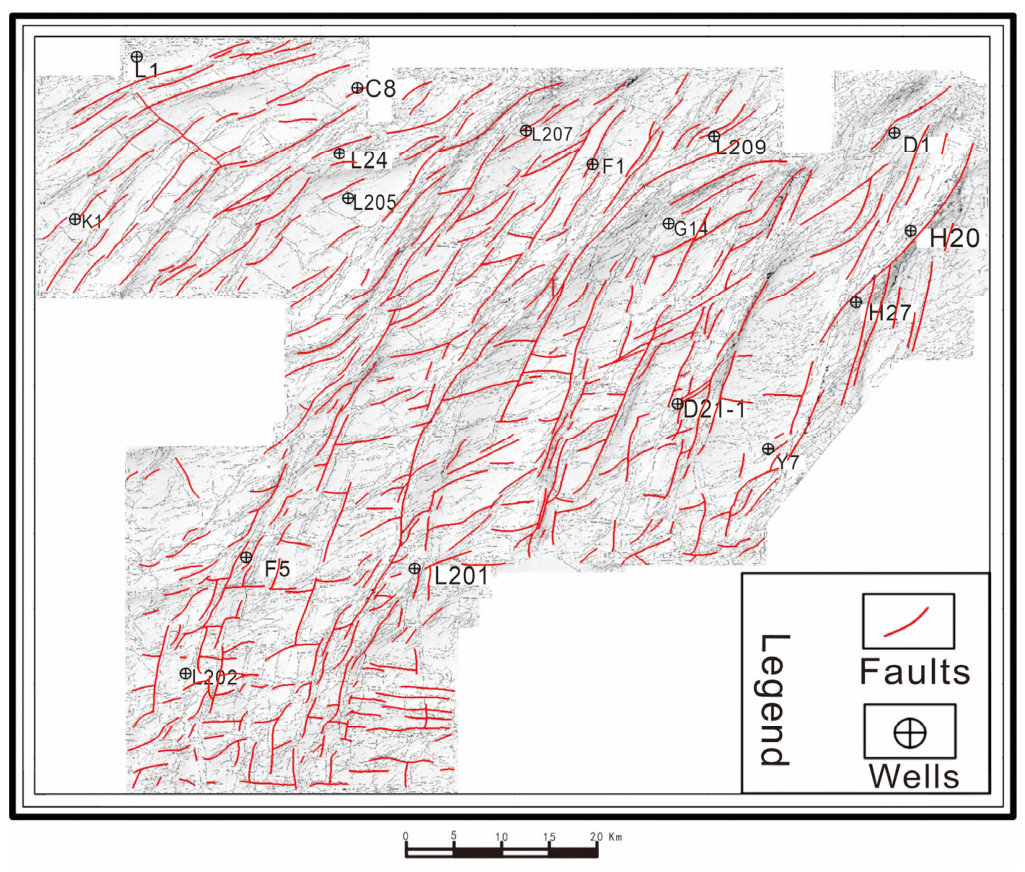
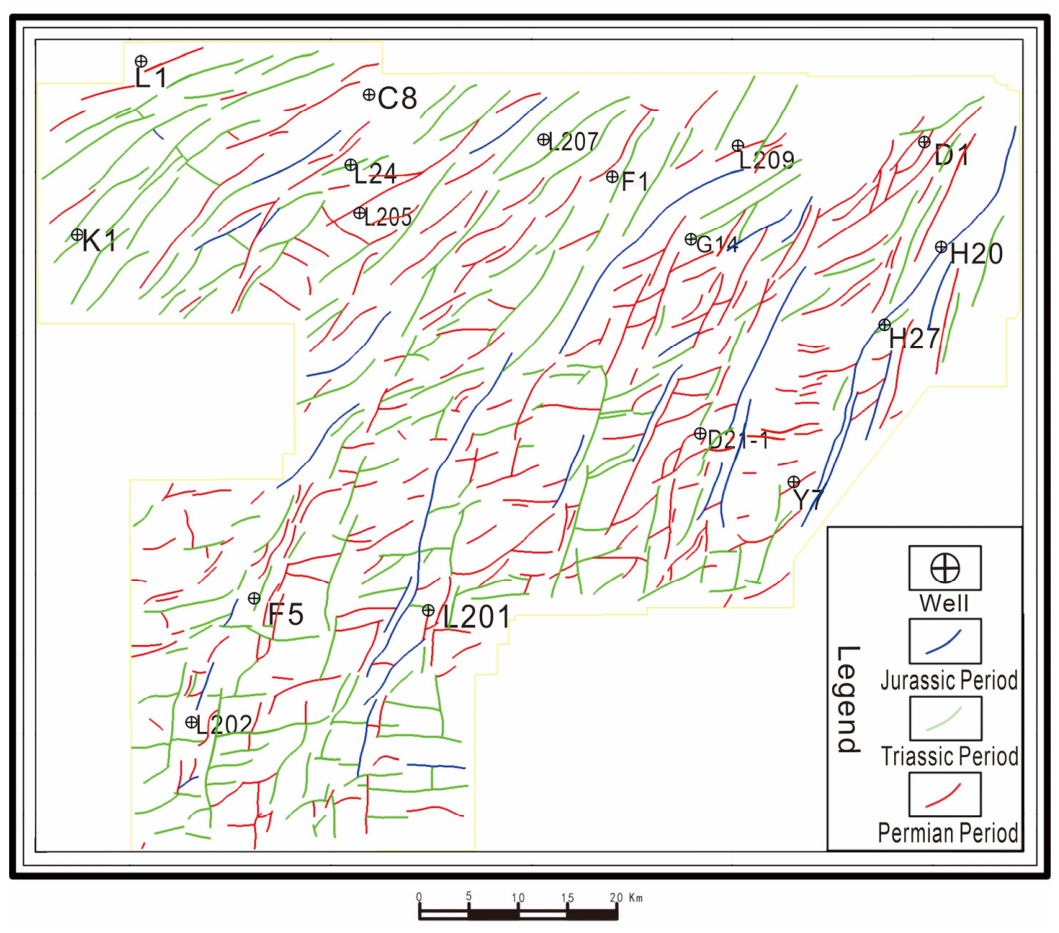
Based on the multi-attribute interpretation of 3D seismic data, a total of 843 Permian and Triassic faults were identified, all of which are reverse faults. From a macroscopic perspective, their planar distribution exhibits obvious directionality and zonation.
Based on the overall distribution characteristics of fault strikes in the Permian and Triassic strata of the Luzhou area, distinct directional differentiation is observed, and faults with different orientations exhibit significant differences in scale, nature and dynamic behavior.
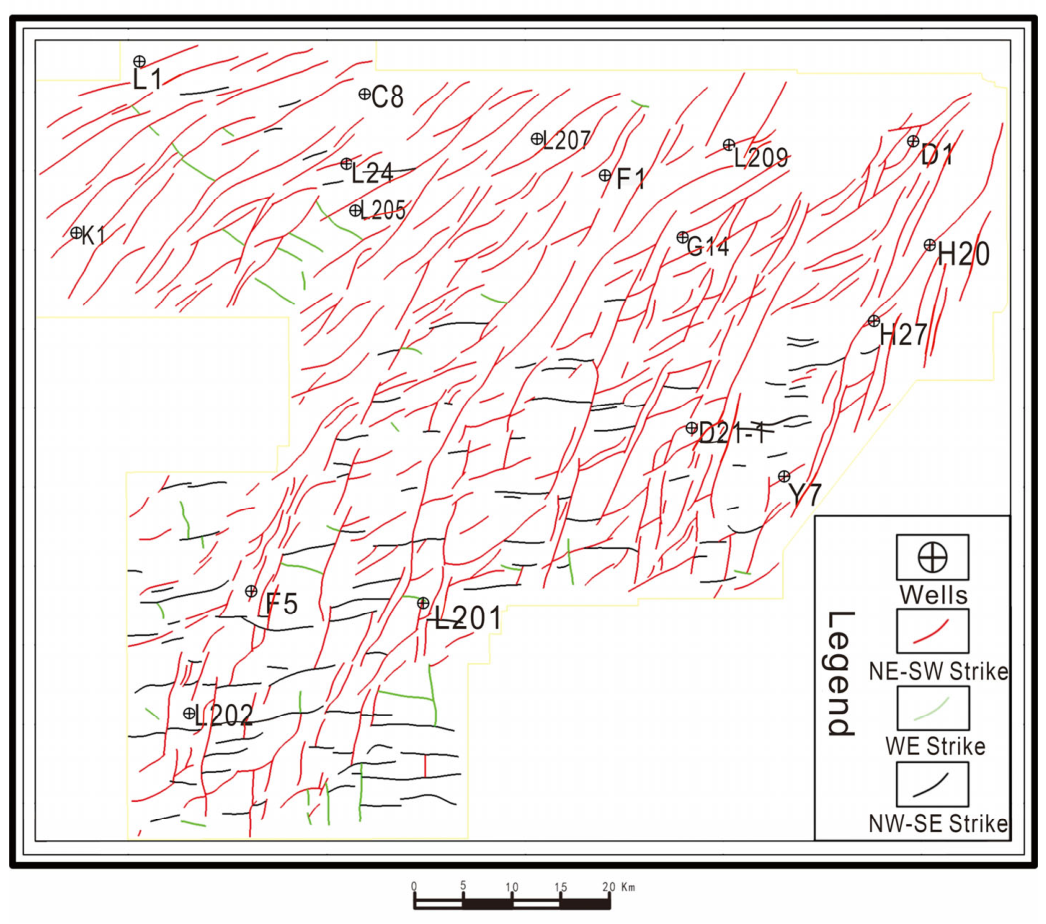
NE-SW-trending faults constitute the dominant fault system in the study area, accounting for approximately 65% of the total identified faults. Most of them are developed as major boundary faults, typified by Faults F4, F15 and F207. These faults are characterized by large extensional scales, with lengths ranging from 2.5 km to 11.96 km and an average length of 5.3 km. As the core structural system controlling the regional tectonic framework and hydrocarbon migration network, they play a key role in connecting source and reservoir intervals and enabling long-distance hydrocarbon migration within the Permian and Triassic successions.
NW-SE-trending faults are subordinate, accounting for roughly 25%, and mainly occur as secondary or subsidiary faults, represented by Faults F10 and F30. In contrast to the major NE-SW-trending faults, they have relatively small extensional scales, with lengths mainly ranging from 1.2 km to 4.8 km, and are mostly distributed between major fault zones. These faults mainly function to accommodate stress between major faults and improve the physical properties of local reservoirs, serving as important supplementary pathways in the regional hydrocarbon migration system.
Nearly WE-trending faults are the least abundant, accounting for only 10% of the total, and are dominated by accommodation faults, as typified by Faults F236 and F237. Characterized by short extensions and weak tectonic activity, these faults are mostly developed within local structural transfer zones. Their main role is to accommodate differential tectonic deformation between adjacent fault zones, with limited direct contribution to hydrocarbon migration; they only locally improve reservoir connectivity in a supplementary manner.
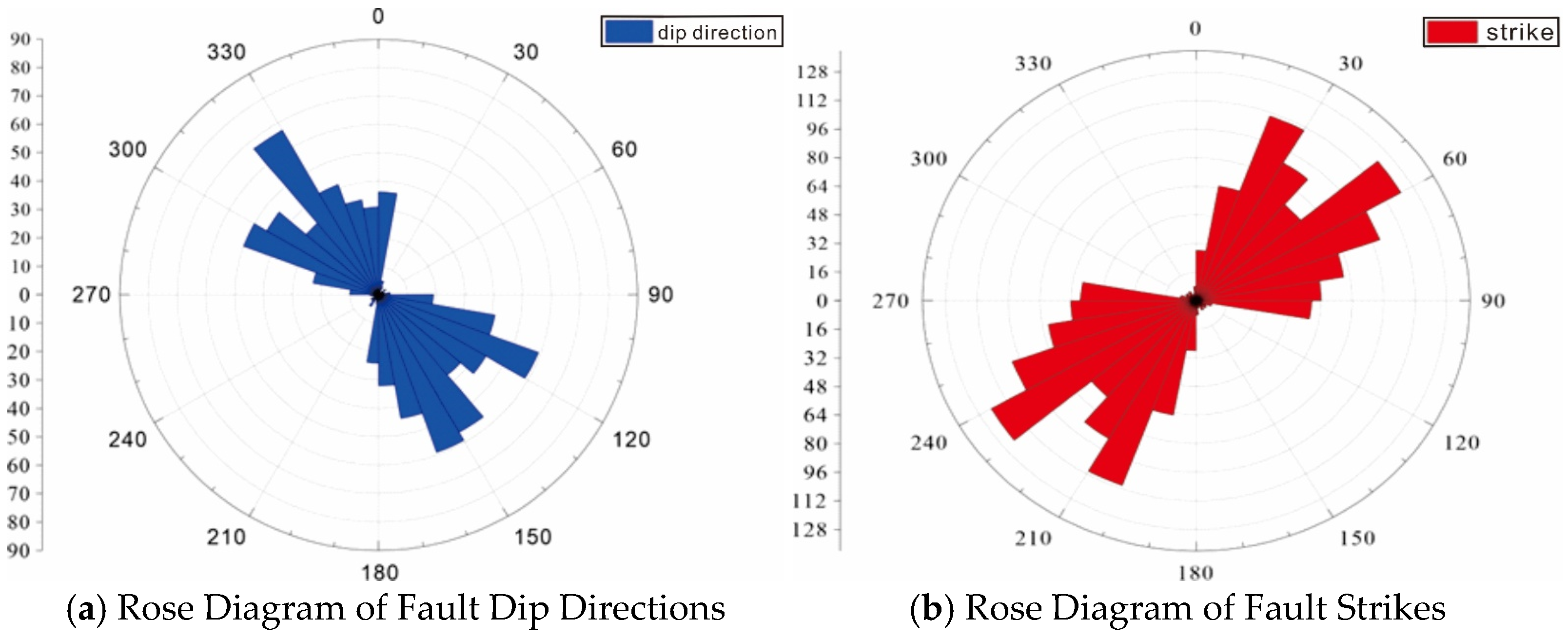
The dip directions and dip angles of Permian and Triassic faults in the study area also display distinct regularities, which are highly consistent with the regional tectonic stress field and the overall reverse-faulting nature (Figure 2a). In terms of dip direction, NW-SE-dipping faults are dominant, comprising 70% of all identified faults. Most of these faults are genetically associated with major NE-SW-trending faults (e.g., F4, F15), representing a typical structural response to strong compressive tectonic stress during the Indosinian. Their dip angles are mainly concentrated between 60° and 80°, with an average of 72°. Such steeply dipping geometries allow faults to effectively connect source rocks and reservoirs across multiple stratigraphic intervals in the vertical direction, thus providing favorable pathways for vertical hydrocarbon migration.
Meanwhile, the vertical displacements of Permian and Triassic faults in the study area exhibit a distinct correlation with fault hierarchy, displaying an overall decreasing trend as the lateral control range of faults reduces. Serving as the major faults that form the regional tectonic framework (e.g., NE-SW-trending F4, F15 and F207), these structures were subjected to intense compressive stress during the Indosinian, resulting in the largest vertical displacements ranging from 40 to 160 m with an average of 58 m. Such substantial displacements allow these faults to vertically penetrate the source rocks of the Permian Maokou Formation and reservoirs of the Triassic Feixianguan Formation–Jialingjiang Formation and even locally cut through the caprock of the Leikoupo Formation, thus acting as the principal conduits for efficient cross-formational hydrocarbon migration.
Second-order faults (e.g., NW-SE-trending F10 and F30) show significantly smaller vertical displacements of 15–40 m, with an average of 30 m. Although their displacements are smaller than those of major faults, these secondary faults are widely distributed laterally and commonly developed between major fault zones. They can help connect adjacent reservoirs and main migration conduits, improve local reservoir connectivity, and provide supplementary pathways for lateral hydrocarbon migration and accumulation.
Accommodation faults (e.g., nearly WE-trending F236 and F237) have the smallest vertical displacements: only 8–20 m with an average of 13 m. Their main function is to accommodate differential tectonic deformation between major and secondary faults. Restricted by limited displacement magnitudes and mostly confined within single stratigraphic intervals, they make little direct contribution to long-distance hydrocarbon migration and only locally improve reservoir permeability through small-scale fractures.

4.1.2. Planar and Cross-Sectional Combination Style

Faults in the Permian and Triassic strata of the Luzhou area are characterized by coordinated development in both planar and cross-sectional distributions in terms of spatial configuration. Different assemblage styles not only reflect the patterns of regional tectonic deformation but also exert corresponding impacts on the geometry and efficiency of hydrocarbon migration conduits.
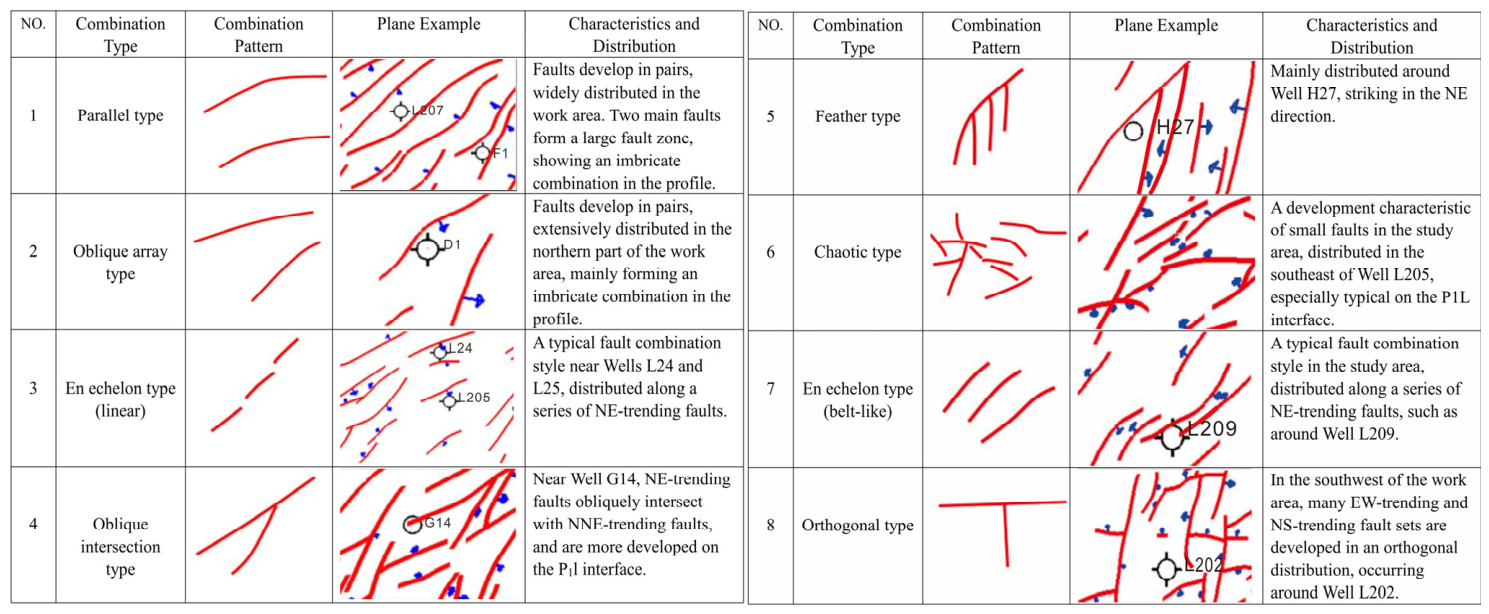
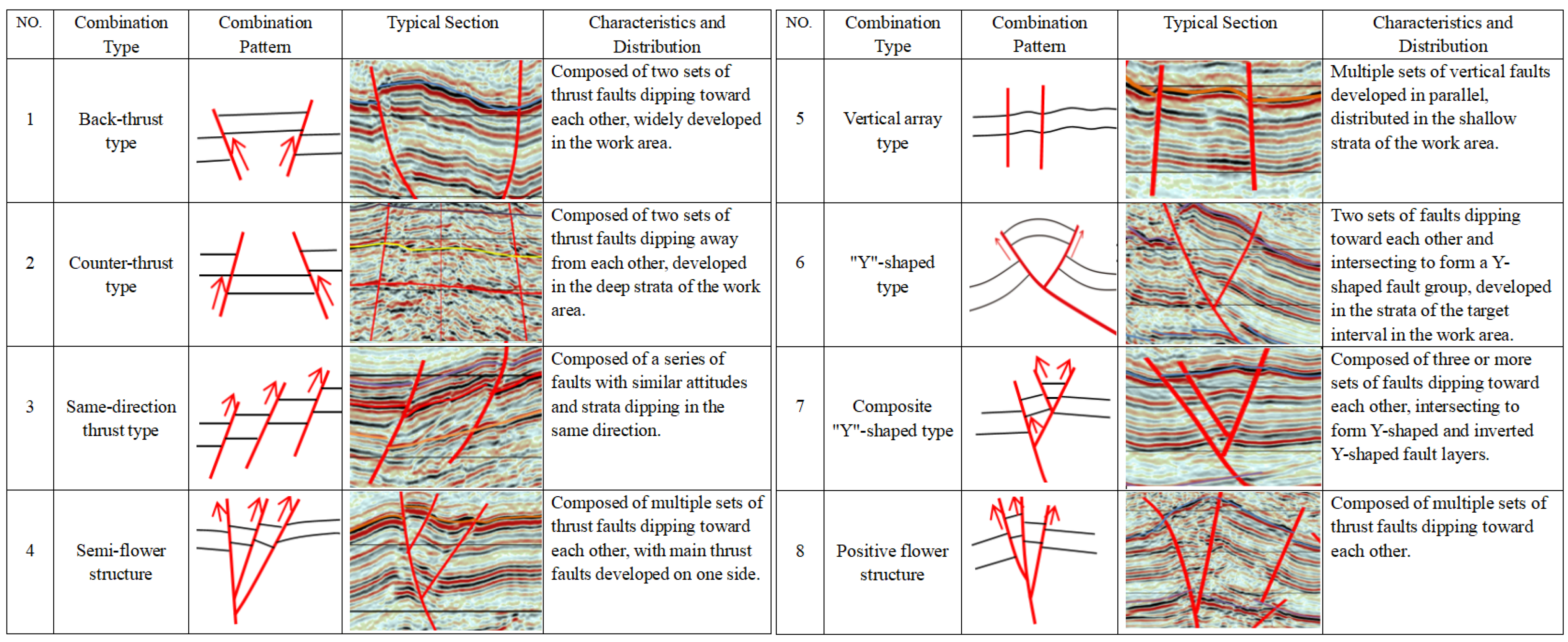
Taking planar assemblage styles as an example, eight types have been identified in the study area (Figure 3 and Figure 4), among which the parallel type, en echelon type (belt-like), and orthogonal type are dominant. Parallel-type faults are widely distributed in the work area, typified by the F1–F2 fault pair, which occurs in pairs to form large-scale fault zones and provides basic pathways for lateral hydrocarbon migration. En echelon (belt-like) faults are intensively developed around wells such as Well L209, distributed in belts along NE-trending major faults, and enhance hydrocarbon connectivity between different structural units. Orthogonal-type faults are mainly distributed in the southwestern part of the work area (e.g., around Well L202), consisting of intersecting WE- and NS-trending faults that further refine the migration network. These three major planar assemblage styles are interwoven and collectively control the “net-like” distribution pattern of hydrocarbon migration conduits, creating favorable conditions for multi-directional hydrocarbon migration and accumulation.
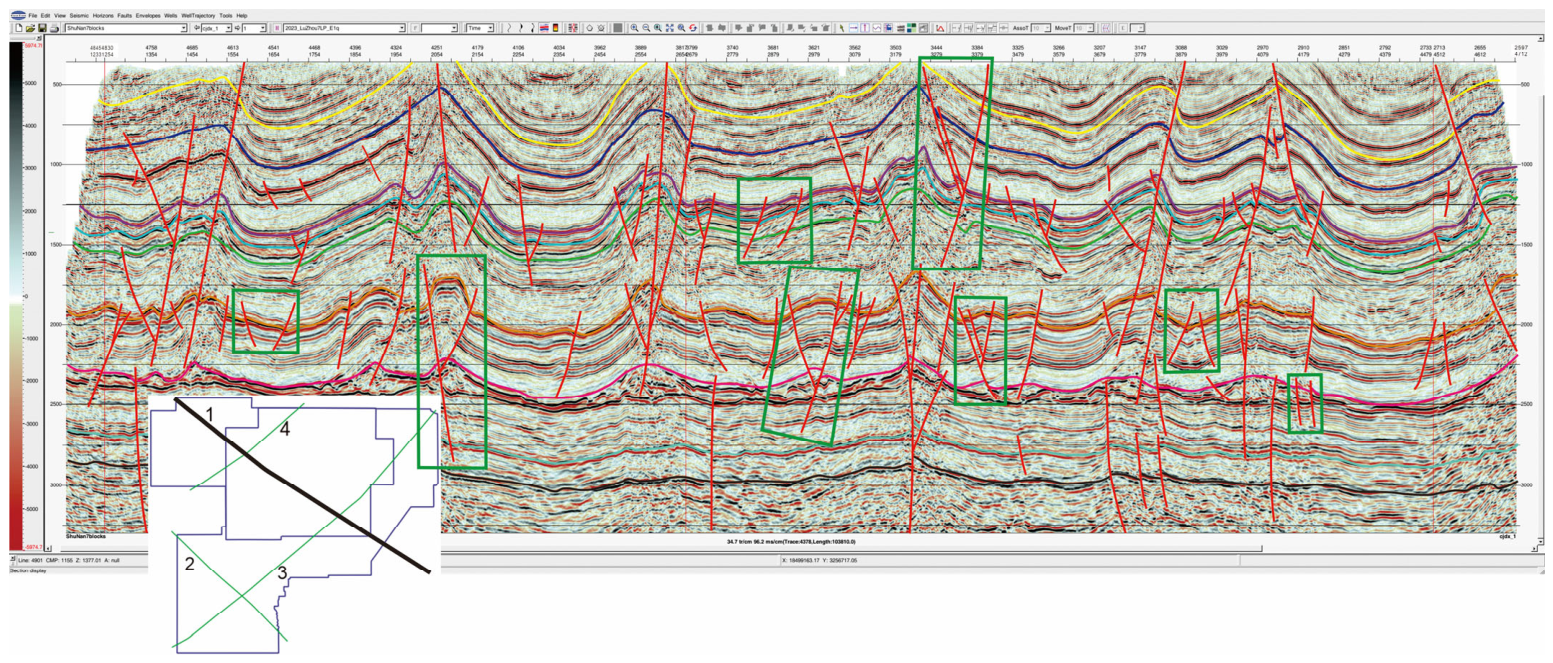
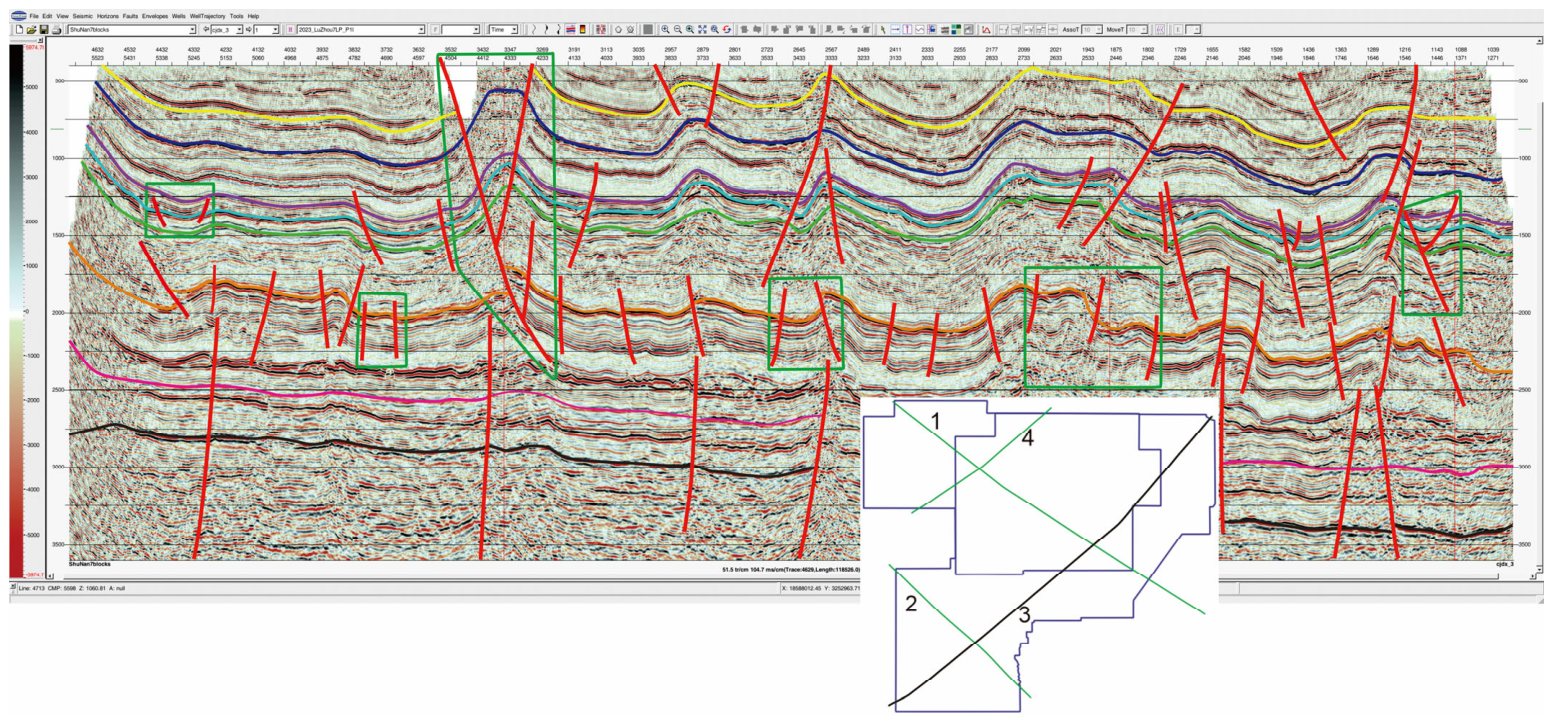
In terms of cross-sectional assemblage styles, faults are dominated by back-thrust type, thrust type, and “Y”-shaped type (see Figure 5, Figure 6 and Figure 7). The back-thrust assemblage consists of two sets of reverse faults dipping toward each other, which are widely developed in the study area and expand reservoir pore space through compressional uplift. The thrust assemblage comprises two sets of reverse faults dipping away from each other, mostly developed in deep strata, and mainly functions as a conduit for vertical cross-formational hydrocarbon migration. The “Y”-shaped assemblage is concentrated in the target intervals (main Permian and Triassic reservoirs), typified by the F7–F8–F15 fault group, forming a three-dimensional migration network through the intersection of major and secondary faults.
Among them, the back-thrust and “Y”-shaped assemblages play a particularly significant role in improving hydrocarbon migration efficiency. Both assemblages can induce abundant associated fractures in surrounding strata through fault activity, forming “fault-fracture reservoirs”. These structures not only enlarge reservoir storage space but also enhance reservoir connectivity, effectively improving hydrocarbon migration efficiency within reservoirs.
Regional seismic Profile 1 across the study area is shown, with red lines marking interpreted faults and green boxes highlighting typical fault combination patterns (e.g., back-thrust, “Y”-shaped, and composite “Y”-shaped types). The colored horizons represent key stratigraphic boundaries.
Regional seismic Profile 3 across the study area is shown, with red lines marking interpreted faults and green boxes highlighting typical fault combination patterns (e.g., counter-thrust, semi-flower structure, and same-direction thrust types). The colored horizons represent key stratigraphic boundaries.

4.2. Frequency and Activity of Fault Development Phases

4.2.1. Subanalysis of Fault Development Stages

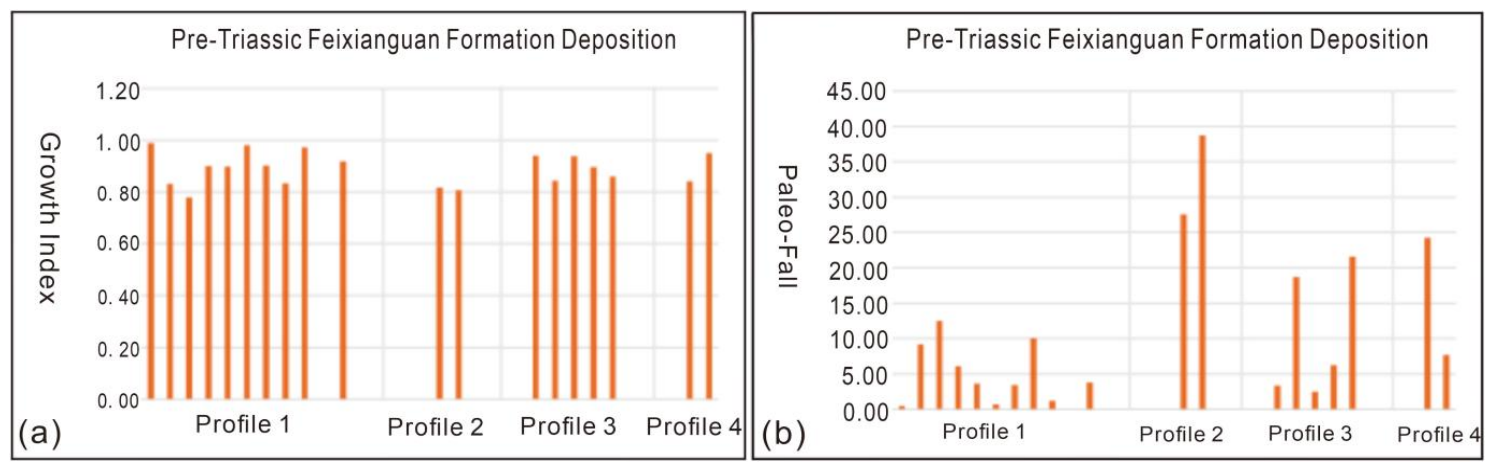
For the Luzhou area, the Indosinian epoch represents the peak stage of fault activity. Particularly, prior to the deposition of the Triassic Feixianguan Formation (T1f), influenced by the intense tectonic stress associated with the comprehensive collision and compression between the Yangtze Plate and North China Plate, the study area exhibited an overall prominent uplift trend, and the thrusting activity of faults reached its climax (Table 1). Taking Fault 2 in Profile 2 as an example (Figure 8), the paleo-fall of this fault during this period reached a high value of 38.71 m with a growth index of 0.81, highlighting its intense thrusting intensity. In terms of the stratigraphic intervals cut by faults, most of the faults developed during this epoch were able to penetrate the Permian Maokou Formation (main source rocks) and the Triassic Feixianguan Formation (high-quality reservoirs), achieving direct communication between source rocks and reservoirs. This not only established the core conduit network for regional hydrocarbon migration but also laid a critical geological foundation for subsequent efficient hydrocarbon migration and accumulation.
Fault activity parameters preceding the deposition of the Triassic Feixianguan Formation are shown in Figure 8: (a) shows the growth index of selected faults in four seismic profiles; (b) shows the paleo-fall of selected faults in four seismic profiles. Both parameters quantitatively characterize the fault activity intensity during the pre-Feixianguan Formation deposition period.
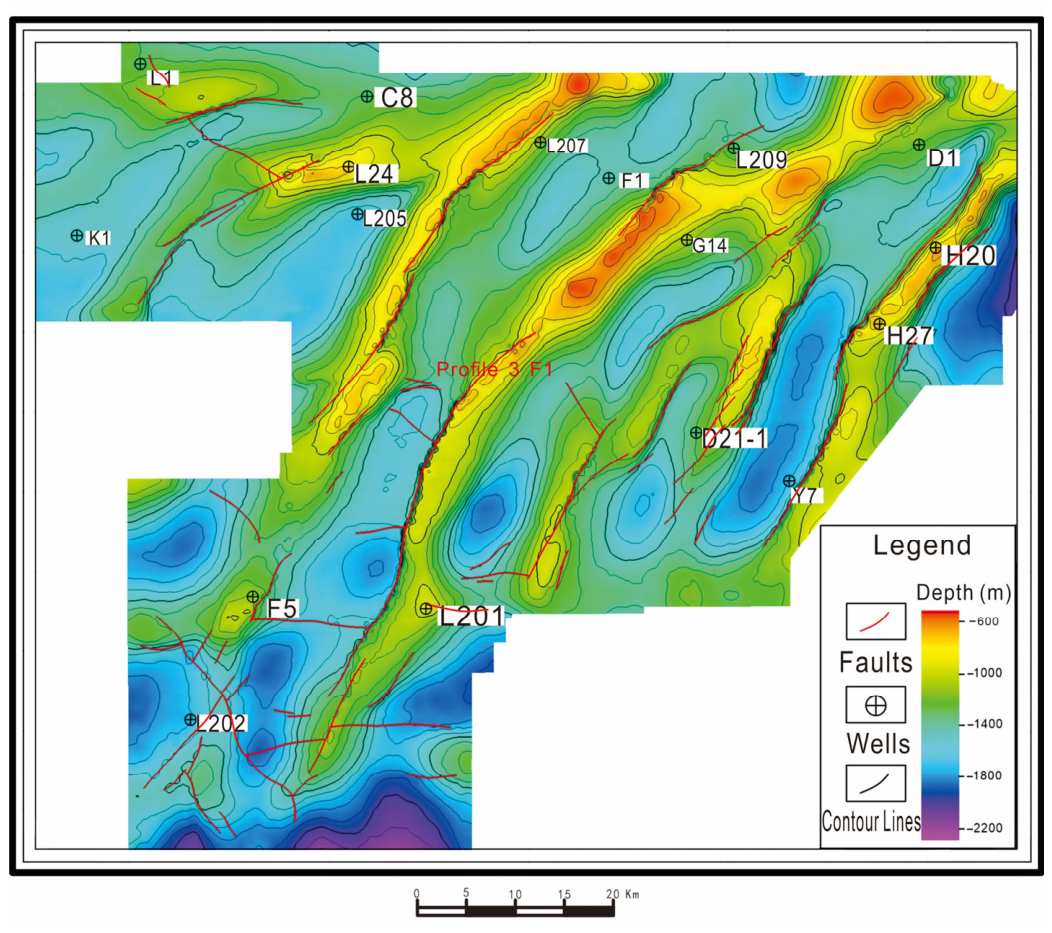
The Late Yanshanian epoch represents a critical stage during which the regional hydrocarbon migration system was modified and destroyed. The sustained transpression stress during this period led to the reactivation of numerous pre-existing early-stage faults, with activity intensities far exceeding those of previous epochs (Table 1 and Figure 9). NE-trending first-order faults are typical representatives: some faults cut upward through the mudstone–shale caprock of the Jurassic Zhenzhuchong Formation (J1z), destroying the regional sealing system originally formed by the gypsum-salt rocks of the Leikoupo Formation. For instance, the fault near Well H14 had a paleo-fall of 120.70 m during this epoch (Figure 10b). The intense fault activity caused the hydrocarbons already accumulated in the Permian–Triassic reservoirs to escape upward along the fault conduits, rendering the originally efficient hydrocarbon migration conduits completely ineffective and exerting a significantly adverse impact on the preservation of regional hydrocarbon accumulations.
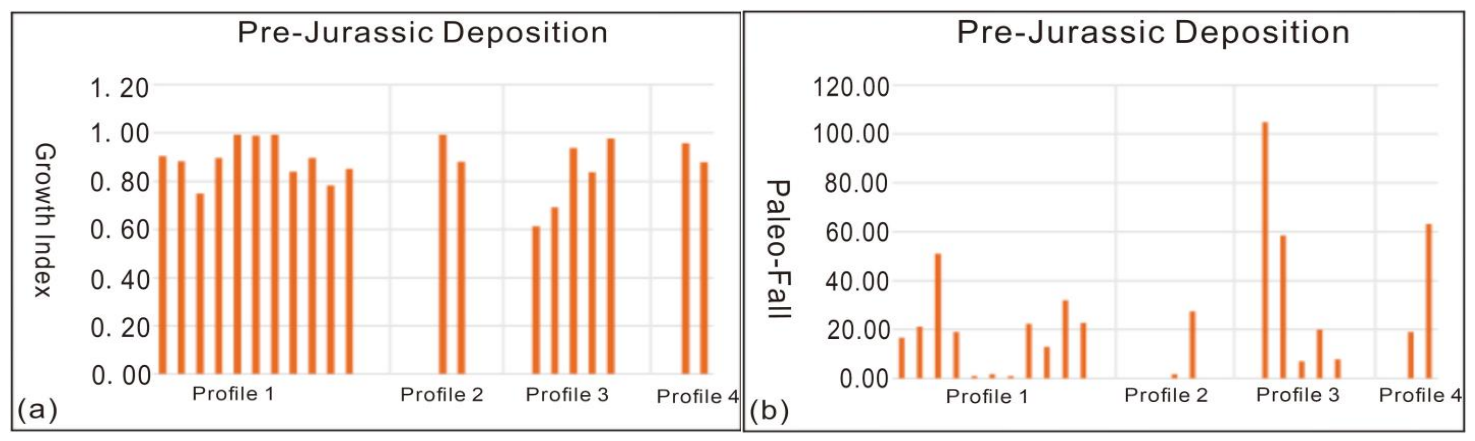
Fault activity parameters preceding the deposition of the Jurassic are shown in Figure 10: (a) is the growth index of selected faults in four seismic profiles; (b) is the paleo-fall of selected faults in the four seismic profiles. Both parameters quantitatively characterize the fault activity intensity during the pre-Jurassic deposition period.

4.2.2. Current Status of Fault Activity in the Study Area

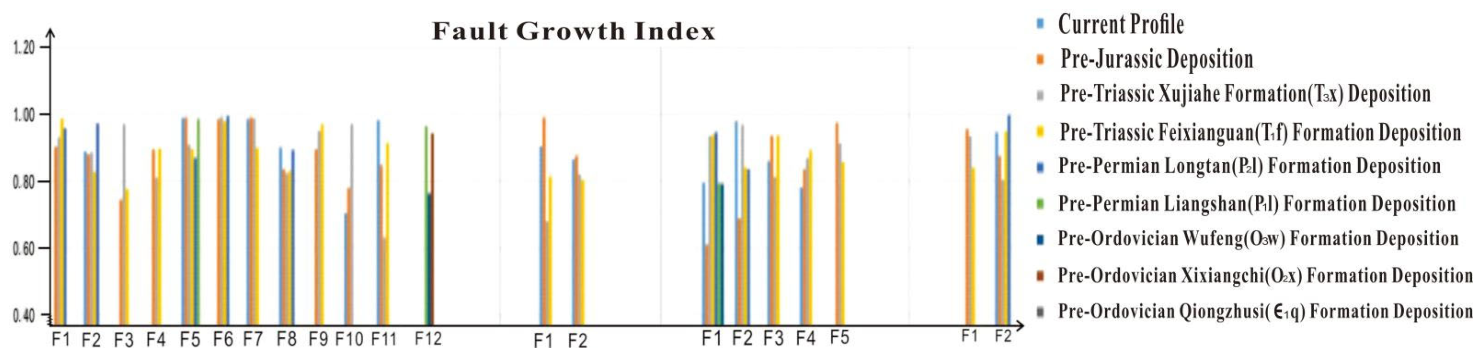
A comprehensive analysis and comparison of the four selected profiles in the study area reveals that the growth index values of faults generally fall within a relatively narrow range of 0.8–1.0, with some faults reaching 0.99. This indicates weak fault activity, suggesting that fault movement had nearly ceased. Taking Profile 3 as an example, Fault 1 exhibits the minimum growth index (as low as 0.61) prior to Jurassic deposition (Figure 11), reflecting relatively strong fault activity.
In this study, F1–F12 are 12 representative thrust faults selected from the interpreted fault system amount 843 faults, covering a full range of geometric scales, stratigraphic penetration, and deformation styles. Their key parameters are summarized in Table 2. They are all selected from different structural zones of the study area but cannot be labeled in the map due to data confidentiality requirements.
Bar chart showing the fault growth index of 12 selected faults in the Luzhou area, calculated for different pre-depositional periods (from the Pre-Ordovician to the current profile). The growth index reflects the fault activity intensity during each tectonic stage.
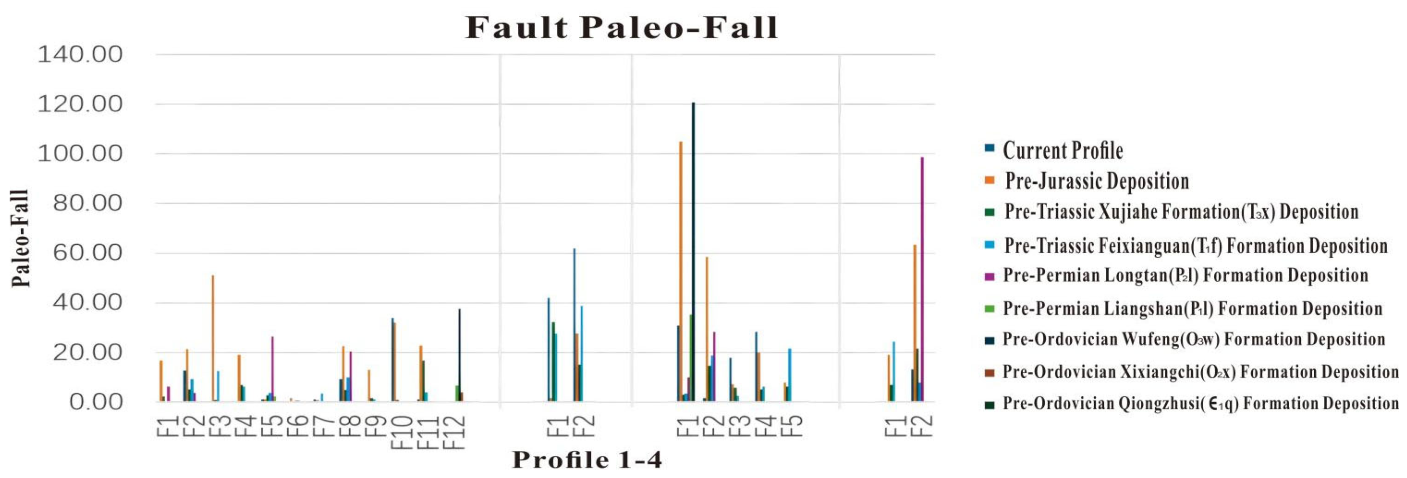
The periods before the deposition of the Jurassic and before the deposition of the Ordovician Wufeng Formation represent the stages of strongest activity for the representative fault (Fault 1) in Profile 3 (Figure 12 and Figure 13), with paleo-fall values reaching 104–121 m. In contrast, Fault 6 in Profile 1 shows the weakest activity before the deposition of the Triassic Xujiahe Formation, with a paleo-fall of only 0.16 m. Paleo-fall values display distinct variation trends across different profiles: an initial increase, followed by a decrease and then a renewed increase in Profile 1; a progressive increase in Profile 2; and a decreasing trend in Profile 3 [36,37]. Taking Profile 3 as an example, paleo-fall values of Fault 3 show a gradual increase with profile evolution, indicating that the fault activity rate and corresponding fault activity have intensified progressively during a series of tectonic events from the deposition of the Triassic Feixianguan Formation to the present. A similar increasing trend in paleo-fall is observed for faults in Profile 4 (Figure 12).
Bar chart showing the multi-stage paleo-fall of selected faults across seismic Profiles 1–4 in the Luzhou area, calculated for different pre-depositional periods from the Pre-Ordovician to the current profile. The paleo-fall values quantitatively reflect the fault activity intensity during each tectonic stage, with significant differences observed among different faults and profiles.

4.2.3. Summary of Fault Activity Patterns in the Study Area

Based on calculated results of fault paleo-fall and related data, fault activity characteristics vary across different periods and stages. An analysis of overall fault properties in the study area shows that fault activity can be classified into two types: time-dependent activity and segmented activity.
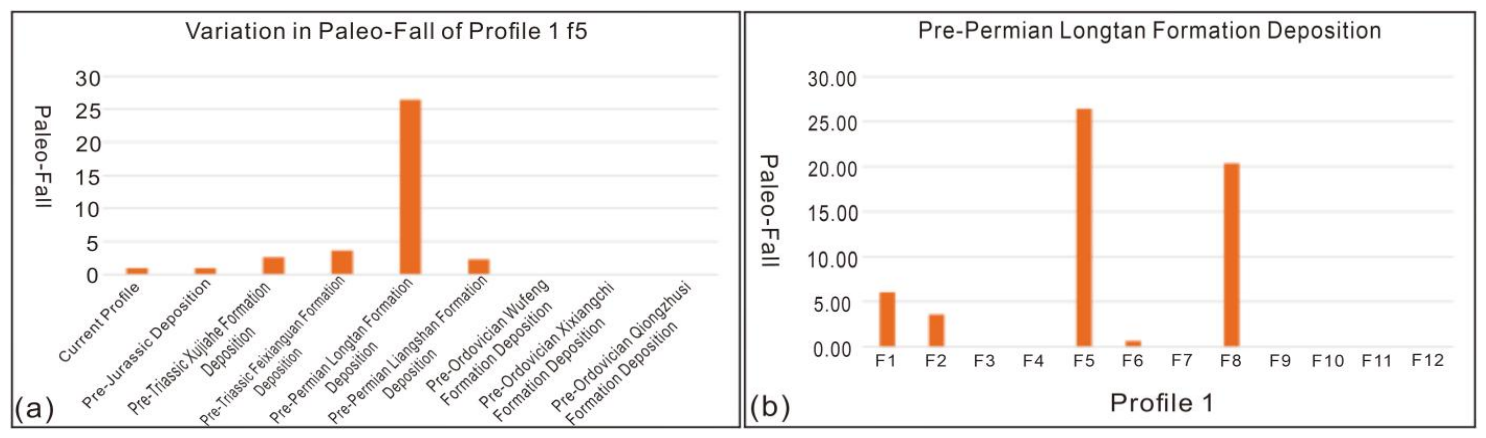
Differences in calculated fault throw values among different periods indicate variations in fault activity intensity, which reflects the time-dependent nature of fault activity [38]. For example (Figure 14a), during the tectonic evolution from before the deposition of the Permian Liangshan Formation to the present, the paleo-fall of Fault 5 in Profile 1 varies considerably. The maximum paleo-fall of this fault, reaching 26.44 m, is recorded before the deposition of the Permian Longtan Formation, indicating relatively strong fault activity during this period. In contrast, the paleo-fall values are only 0.99 m before Jurassic deposition and in the present tectonic stage, indicating the weakest fault activity.
Meanwhile, a statistical summary of key faults in Profile 1 before the deposition of the Permian Longtan Formation (Figure 14b) shows that faults did not move along their entire length simultaneously during the same period but only in partial segments. This demonstrates the segmented nature of fault activity. Specifically, the full extent of fault extension was not formed instantaneously within a single period but was gradually constructed and accumulated segment by segment through multi-stage tectonic movements.
Figure 14 depicts a bar chart showing the paleo-fall variation of Fault 5 on seismic Profile 1 across different geological periods, from the pre-Ordovician to the current profile. The peak paleo-fall occurs preceding the deposition of the Permian Longtan Formation, indicating the strongest fault activity during this period.

4.3. Fault Grading and Classification

4.3.1. Fault Grading

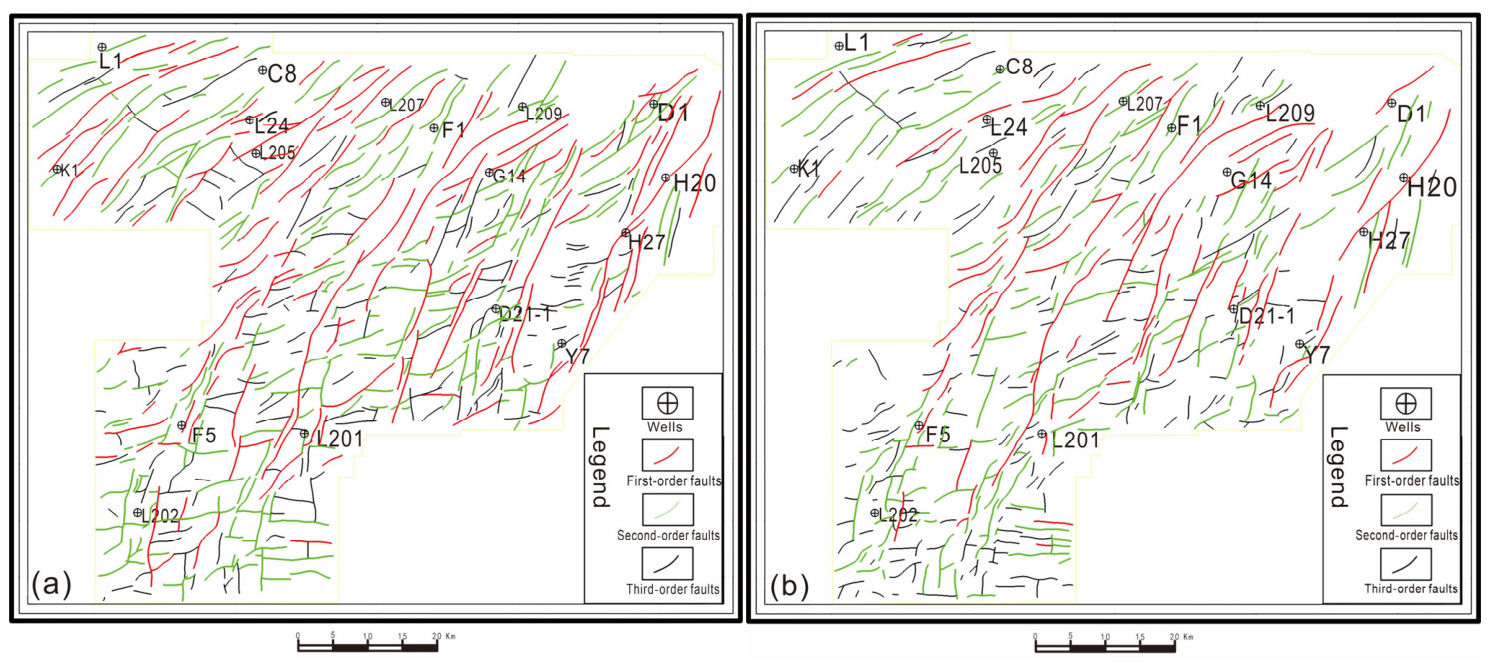
According to the structural positions of faults (main displacement zones, secondary structural zones, and structural transfer zones) and their geometric characteristics (extension length, fault displacement, and penetrated stratigraphic intervals), the Permian and Triassic faults in the study area are classified into three orders [39] (Table 3). This classification is validated by the correlation between fault order and well productivity data in the study area. Among them, first-order faults are the major faults controlling the regional tectonic framework and hydrocarbon migration. They are mainly distributed in main displacement zones and belong to inherited structures—that is, they continued to develop after experiencing multi-stage tectonic movements such as the Hercynian and Indosinian epochs and play a decisive role in dividing structural units of the study area (e.g., uplift areas and depression areas). In terms of parameters, first-order faults have an extension length ranging from 2.2 to 8.4 km with an average of 3.8 km, enabling large-scale lateral coverage. Their vertical displacement is generally 40–160 m with an average of 58 m, allowing them to penetrate multiple stratigraphic intervals (e.g., from the Permian directly to the Jurassic). The prominent function of such faults is cross-formational connection, which can vertically link deep source rocks and shallow reservoirs, and thus they serve as dominant pathways for long-distance hydrocarbon migration. Typical examples are NE-SW-trending major faults such as F4 and F207, which directly control the distribution of hydrocarbon accumulation units in the northern part of the study area.
Second-order faults serve as an important supplement to the regional hydrocarbon migration network. They are mainly developed in secondary structural zones and are also inherited structures, but their activity is confined within specific structural belts (e.g., a single anticlinal belt) and cannot extend across structural units. Their extension length ranges from 1.3 to 4.9 km with an average of 2.9 km. Although the coverage is smaller than that of first-order faults, they are more densely distributed laterally. The vertical displacement is generally 15–40 m with an average of 30 m, allowing them to cut only within the Permian and Triassic intervals without penetrating the overlying Jurassic caprock. The core function of second-order faults is to control structural traps. Through assemblage styles such as thrusting and back-thrusting, they form fault-block traps and anticlinal traps. Meanwhile, they connect first-order faults with reservoirs and direct hydrocarbons from first-order conduits into local traps for accumulation. Typical examples are NW-SE-trending secondary faults such as F10 and F30, which act as key auxiliary pathways for hydrocarbon enrichment in fault-block traps developed in the Well L209 area (Figure 15).
Third-order faults are local accommodation faults mainly distributed in secondary structural transfer zones (e.g., transition zones between anticlines and synclines, or branch segments of major faults). They are non-inherited structures mostly formed by short-term activity during a single tectonic period (e.g., the Late Indosinian). They have the shortest extension length, only 0.5–1.9 km with an average of 1.25 km, covering only small local areas. Their vertical displacement is generally 8–20 m with an average of 13 m, and these faults only offset target intervals of the Permian and Triassic (e.g., the Feixianguan Formation and Maokou Formation) without affecting other stratigraphic systems. The main role of such faults is to improve local reservoir connectivity—that is, to expand the pore network inside reservoirs by inducing associated fractures, facilitating short-distance hydrocarbon diffusion and enrichment within target intervals rather than long-distance migration. Typical examples are nearly WE-trending accommodation faults such as F236 and F237. In the Maokou Formation reservoir in the Well G14 area (Figure 15), they enhanced reservoir permeability by increasing fracture density, creating favorable conditions for local hydrocarbon accumulation.
Fault classification map of the Permian–Triassic strata in the Luzhou area is shown in Figure 15: (a) is the fault classification map at the base of the Permian; (b) is the fault classification map at the base of the Triassic. Different colors represent faults of different orders: first-order (red), second-order (green), and third-order (black). Selected wells are also marked to indicate the drilling locations.

4.3.2. Fault Classification

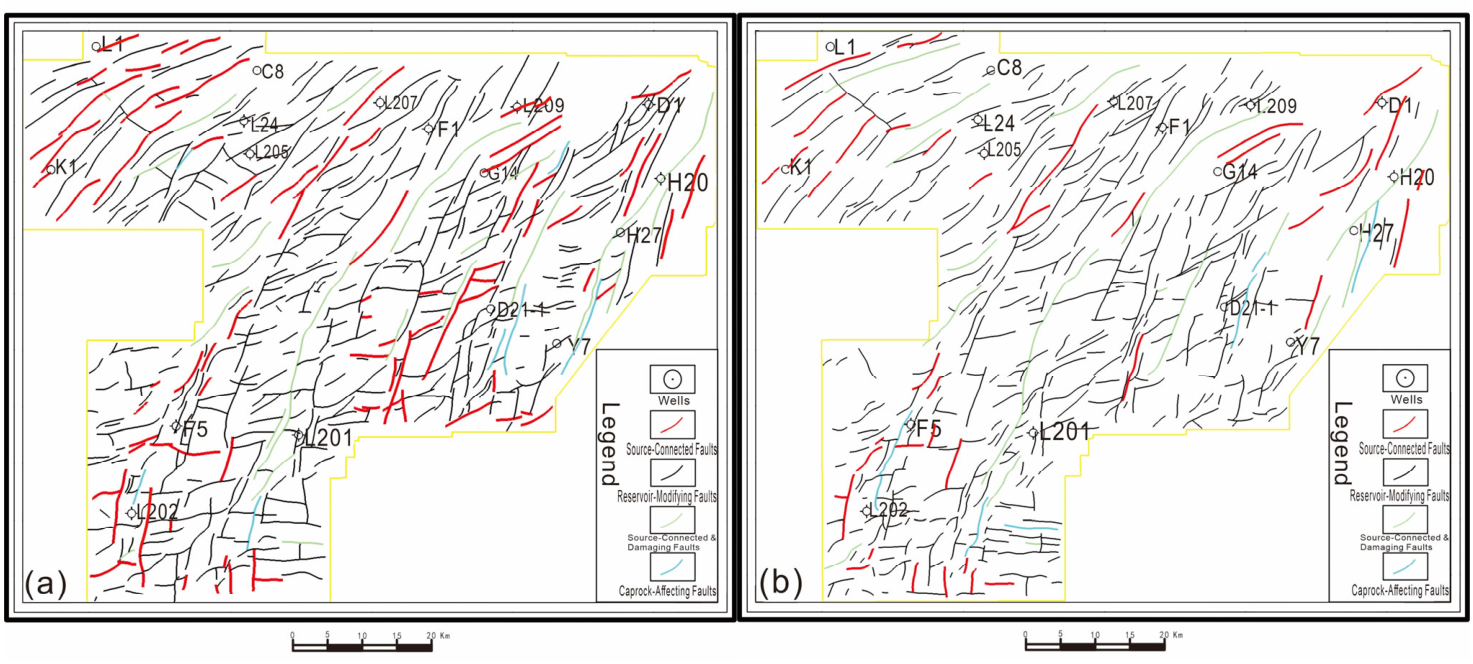
Based on the differences in the functions of faults in hydrocarbon migration and preservation within the Permian and Triassic strata of the Luzhou area, the faults in the region are classified into four categories. Different types of faults exhibit significant differences in penetrated stratigraphic intervals, mechanism of action, and hydrocarbon migration efficiency, and these differences have a direct impact on regional hydrocarbon accumulation (Figure 16).
Figure 16 shows a distribution map of fault systems in the Permian–Triassic strata of the Luzhou area: (a) is the fault system distribution at the base of the Permian; (b) is the fault system distribution at the base of the Triassic. Different colors represent faults with different hydrocarbon migration functions: source-connected faults (red), reservoir-modifying faults (black), source-connected and damaging faults (green), and caprock-affecting faults (light blue). Wells are marked to indicate drilling locations.
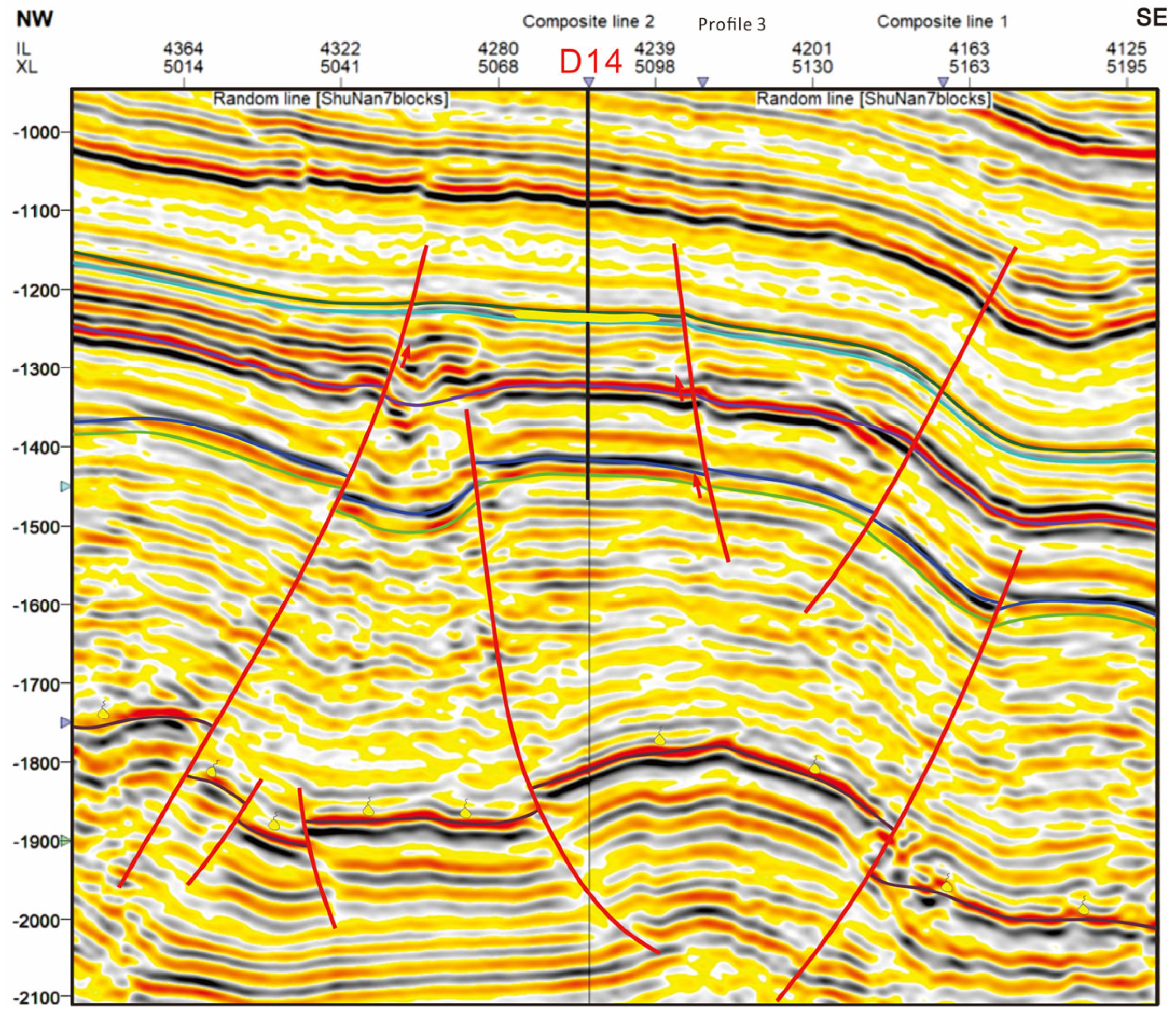
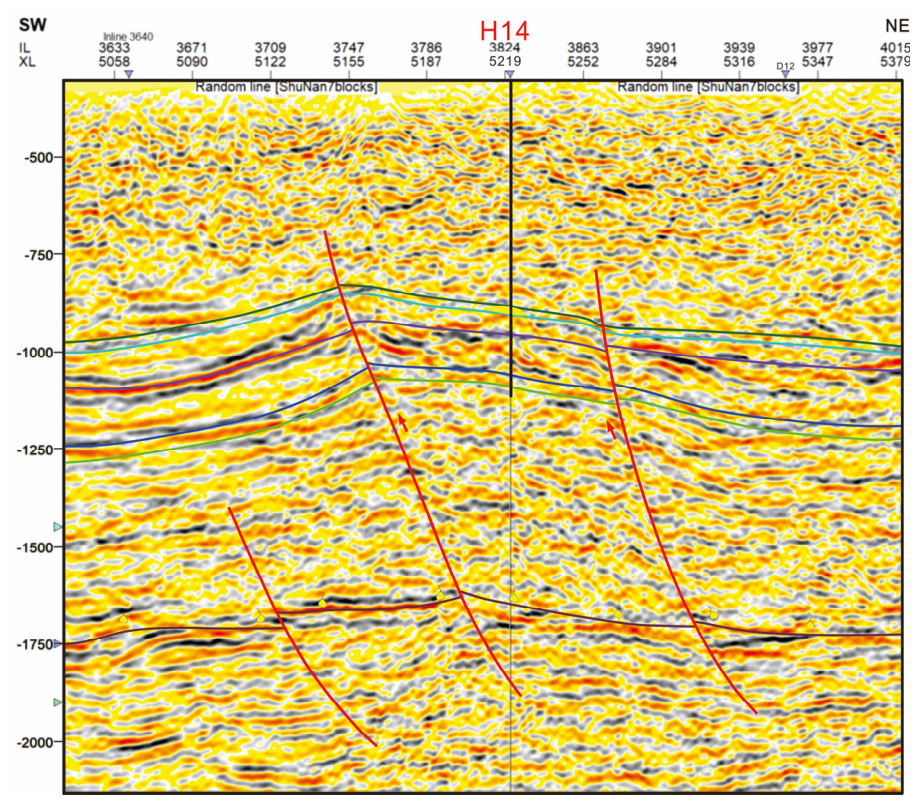
Source-connected faults are the core conduits for efficient hydrocarbon migration and accumulation in the study area. Their most prominent feature is deep penetration, extending downward from the Permian–Triassic to the Silurian and deeper strata, precisely connecting deep main source rocks (e.g., the Cambrian Qiongzhusi Formation mudstone–shale and the Silurian Longmaxi Formation shale) with Permian–Triassic reservoirs (e.g., the Maokou Formation limestone and the Feixianguan Formation oolitic limestone), forming a “direct source-reservoir” migration pathway. Most of these faults are third-order or second-order faults active during the Indosinian epoch, with stable fault activity and no damage to the overlying caprock. A typical example is the fault on both sides of Well D14: this fault vertically penetrates the Cambrian source rocks and the Permian Changxing Formation reservoirs, enabling efficient charging of natural gas generated from source rocks into the reservoirs, ultimately helping Well D14 achieve a high production rate of approximately 45 × 104 m3/d (Figure 17), with the highest migration efficiency among all classified fault types.
Figure 17 depicts a seismic profile showing the structural characteristics and interpreted faults controlled by Well D14 in the Luzhou area. Red lines mark the interpreted faults, with red arrows indicating the thrust direction. Colored horizons represent key stratigraphic boundaries, and the vertical black line marks the location of Well D14. The profile is oriented NW-SE, with depth ranging from approximately −1000 m to −2200 m.
The core function of reservoir-modifying faults is to improve reservoir physical properties rather than directly connect source rocks. Their penetrated range is confined only within the Permian and Triassic strata, without reaching the source rock intervals of the Silurian and deeper. Most of these faults are secondary faults active during the Early Yanshanian epoch. Through thrusting and shearing, they induce a large number of tectonic fractures within reservoirs, expand the reservoir pore network and connectivity, and indirectly enhance the diffusion efficiency of hydrocarbons in the reservoir. However, hydrocarbons can only achieve local enrichment via reservoir-modifying faults after being transported to the reservoir by other source-connected faults. For example, the faults near Well D12 only cut through the Triassic Feixianguan Formation and the Permian Maokou Formation, improving permeability by forming fracture zones in the Feixianguan Formation reservoirs.
Damaging faults are the main factor causing hydrocarbon dissipation in regional oil and gas reservoirs. These faults cut upward through the Permian and Triassic strata and extend into the Jurassic and overlying strata, directly destroying the sealing capacity of the regional caprock composed of gypsum-salt rocks in the Triassic Leikoupo Formation. Most such faults are first-order or second-order faults reactivated during the Late Yanshanian–Himalayan epoch, characterized by strong activity and large fault displacement (e.g., the paleo-fall of the fault near Well H14 reaches 120.70 m). They fail to form effective migration conduits; instead, they create leakage pathways in the caprock, causing hydrocarbons accumulated in Permian–Triassic reservoirs to migrate upward along faults into the Jurassic strata, which ultimately results in a significant reduction in gas content within the reservoirs. Taking Well H14 as an example, affected by nearby damaging faults, its tested gas production is only approximately 0.009 × 10⁴ m3/d (Figure 18), indicating extremely low migration efficiency.
Figure 18 depicts the seismic reflection profile showing the structural characteristics and interpreted faults controlled by Well H14 in the Luzhou area. Red lines mark the interpreted faults, with red arrows indicating the thrust direction, and colored horizons represent key stratigraphic boundaries. The vertical black line indicates the well location of H14. The profile is oriented SW-NE, with a depth range from approximately −500 m to −2000 m.
Source-connected and damaging faults exhibit dual properties of “favorable in the early stage but harmful in the late stage”. During the early fault activity stage (i.e., the Indosinian epoch), these faults show characteristics of source-connected faults: they penetrate downward from the Permian–Triassic to the Silurian and deeper strata, connecting source rocks and reservoirs to provide pathways for hydrocarbon charging. However, in the late stage (Late Yanshanian–Himalayan epoch), they were reactivated under sustained transpression stress, with their penetrated intervals extending upward into the Jurassic and overlying strata. This destroyed the sealing capacity of the caprock, resulting in the dissipation of early accumulated hydrocarbons and leading to highly unstable migration efficiency. A typical example is the fault near Well D6. During the Indosinian epoch, this fault facilitated hydrocarbon charging into the Permian Maokou Formation. Nevertheless, after reactivation in the Late Yanshanian, it cut through the Jurassic caprock and caused partial hydrocarbon dissipation from the reservoir. Consequently, the tested gas production of Well D6 is only approximately 0.955 × 10⁴ m3/d, reflecting the migration characteristic of “effective in the early stage but ineffective in the late stage”.

4.4. Reliability of the Results

The reliability of the results is validated through three aspects:
(1)
The fault activity intensity calculated by the growth index and paleo-fall methods shows consistent trends.
(2)
The fault classification matches well with the productivity data of wells D14 and H14.
(3)
The conclusions are consistent with regional tectonic evolution studies in the southern Sichuan Basin.

5. Discussion

The geometric characteristics of the Permian–Triassic faults in the Luzhou region result from the combined effects of regional tectonic stress fields, the superposition of multi-stage tectonic movements, stratigraphic lithological variations, and the development of slip layers, as well as the background of the Luzhou ancient uplift. These features collectively document the tectonic deformation and evolutionary processes of the study area from the Late Paleozoic to the Middle Cenozoic.
In terms of planar geometric characteristics, the faults exhibit distinct orientation and zoning patterns. The main faults predominantly run NE-SW trending, while second-order faults are primarily NW-SE trending, with limited development of nearly WE-oriented faults (Figure 19). This distribution pattern is mainly controlled by the NE-SE-trending compressional stress generated by the collision between the Yangtze Plate and North China Plate during the Indosinian Period. The principal stress governs the formation of NE-trending main faults, while secondary shear stress induces NW-trending adjustment faults, with localized stress conversion leading to minor nearly WE-oriented faults. The dominant fault orientation follows a NW-SE trend, with dip angles concentrated between 60° and 80°—consistent with the preferential occurrence of thrust faults under compressional environments. High dip angles not only accommodate intense tectonic uplift but also facilitate vertical communication between hydrocarbon source rocks and reservoirs. Fault extension lengths and vertical displacements demonstrate a significant hierarchical reduction pattern: first-order faults located in main displacement zones exhibit large-scale characteristics under strong regional stress control with extensive displacement; second-order faults situated in secondary structural zones show moderate scale constrained by local stress; and third-order faults in adjustment zones demonstrate weak activity and minimal scale. Additionally, weak layers such as Permian Longtan Formation coal-bearing mudshales and Triassic gypsum rocks provide conditions for interlayer sliding, further constraining the distribution range of fault displacements.
Planar assemblage styles are dominated by the parallel style, en echelon style, and orthogonal style, corresponding to different stress states. The parallel style is widely distributed and is a typical product of the parallel development of thrust faults under uniform compression. The en echelon style occurs in belts and is related to transpressional stress and oblique intersection with structural belt trends. The orthogonal style is concentrated in the southwestern part of the study area, formed by the combined action of multi-directional stress superposition and boundary constraints. These three styles intersect to form a network-like migration framework, which is a direct reflection of planar stress distribution and tectonic deformation.
Cross-sectional assemblage styles are dominated by the back-thrust style, thrust style, and “Y”-shaped style, whose genesis is closely related to compression mechanisms, detachment layer positions, and vertical stratigraphic architecture. The back-thrust style consists of two sets of oppositely dipping thrust faults, a typical pattern of bidirectional compression and symmetric uplift, widely developed in the cores of anticlines around the Luzhou Paleouplift. The thrust style is characterized by back-to-back thrusting, mostly developed in deep strata and controlled by deep stress-stratified deformation. The “Y”-shaped style is concentrated in target intervals, formed by the intersection of major and secondary faults, representing a stable deformation structure resulting from combined shallow bedding detachment and deep thrusting. The back-thrust and “Y”-shaped styles tend to form fault-fracture reservoirs, essentially representing the optimal distribution of compression and shearing in cross-sectional space.
From the perspective of tectonic evolution, the geometric characteristics of faults show obvious inheritance, episodic behavior, and segmented behavior. The Caledonian epoch was dominated by weak transpression, forming only small-scale fault rudiments. Affected by the Dongwu Movement during the Hercynian epoch, detachment faults developed along weak layers, laying the foundation for source-connected faults. The Indosinian epoch was the main period of deformation and stabilization: intense compression resulted in large-scale thrusting, extended fault length, and increased fault displacement, with planar and cross-sectional assemblage styles basically finalized. The Yanshanian–Himalayan epoch was dominated by reactivation and modification: early faults were reactivated and cut upward through the caprock, changing fault occurrence, displacement, and hydrocarbon transport function. Faults display significant differences in the paleo-fall and growth index among different periods, reflecting their episodic activity. Segmented fault activity and gradual segment linkage are related to the progressive nature of stress transfer and stratigraphic heterogeneity.
Compared with previous studies on fault-controlled hydrocarbon migration in the southern Sichuan Basin, this work exhibits obvious differences and novelties:
(1) Most previous studies focused on large-scale structural belts or single fault zones and paid more attention to qualitative descriptions of fault distribution and structural styles [6,8]. In contrast, this study systematically interpreted 843 faults based on high-resolution 3D seismic data and quantitatively evaluated fault activity using both growth index and paleo-fall methods, providing a more detailed and quantitative understanding of fault evolution and migration control mechanisms.
(2) Previous classifications mainly relied on fault scale or a single geometric parameter, lacking consideration of multi-stage activity and source–reservoir–cap assemblage relationships [4]. This study established a three-grade and four-category fault classification system integrating fault scale, vertical displacement, and multi-period activity differences, which can better reflect the differential control of faults on hydrocarbon migration efficiency.
(3) Previous studies in adjacent areas such as Changning and Weiyuan generally emphasized that large-scale faults dominate hydrocarbon migration and accumulation [6]. This study, however, clarifies that Indosinian third-order source-connected faults are the most efficient migration conduits in the Luzhou area. The unique tectonic superposition of the Luzhou Paleouplift leads to stronger control of medium–small faults on hydrocarbon accumulation [5], which is obviously different from the structural model of adjacent areas.
These findings not only enrich the understanding of fault-controlled hydrocarbon migration in the southern Sichuan Basin but also provide a reference for similar marine carbonate fault-controlled reservoirs worldwide. Meanwhile, this study presents a quantitative framework for fault activity evaluation and migration efficiency assessment, which can be applied to similar fault-controlled carbonate reservoirs beyond the study area. However, though this study provides new insights into fault-controlled hydrocarbon migration in the Luzhou Paleouplift area, a detailed global-scale quantitative comparison is currently limited by data availability and consistent international classification standards. The findings are most directly applicable to similar marine carbonate fault systems in Sichuan basin.
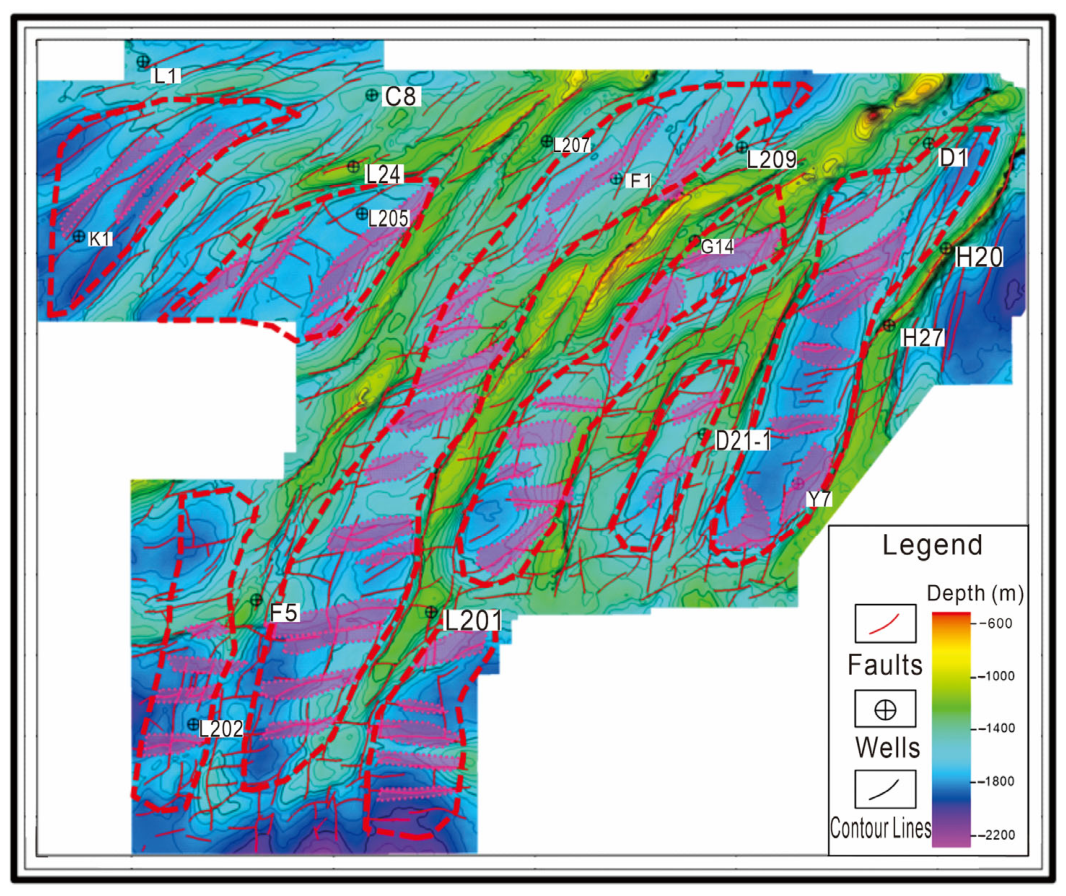
In summary, the geometric characteristics of Permian and Triassic faults in the Luzhou area are jointly controlled by the regional compressional stress field, multi-stage tectonic superposition, variations in lithology and detachment layers, and paleouplift evolution. Their geometric parameters not only reflect the process of tectonic deformation but also directly determine the controlling role of faults in hydrocarbon migration efficiency, reservoir modification, and hydrocarbon preservation (Figure 20).
Figure 20 shows a structural superposition map of favorable hydrocarbon accumulation zones at the base of the Permian in the Luzhou area. The color gradient represents the burial depth (from −600 m to −2200 m), with red lines marking interpreted faults, black lines representing structural contour lines, and circles indicating well locations. The red dashed lines outline the favorable hydrocarbon accumulation zones, and the purple shaded areas with sawtooth marks represent the distribution of structural traps.

6. Conclusions

(1) A total of 843 reverse faults have been identified in the Permian–Triassic strata of the Luzhou area. The faults are dominated by NE-SW-trending structures, with eight planar assemblage styles and three main sectional types (back-thrust, thrust, and “Y”-shaped), forming a complex fault network that controls hydrocarbon migration.
(2) Fault activity in the study area experienced four tectonic stages: Caledonian, Hercynian, Indosinian, and Yanshan–Himalayan. The Indosinian epoch is the critical period, with moderate growth indices (0.60–0.81) and paleo-fall values (27.54–38.71 m), when faults precisely connected Permian source rocks and Triassic reservoirs.
(3) Based on scale, displacement, and stratigraphic penetration, faults are classified into three grades and four functional types. Among them, Indosinian third-order source-connected faults show the highest migration efficiency, while Late Yanshanian first-order damaging faults easily cause hydrocarbon dissipation.
(4) Hydrocarbon migration efficiency in the study area is jointly controlled by fault grade, activity stage, and penetrated formations. The results clarify the differential control of faults on migration and provide practical criteria for high-efficiency migration pathways and favorable exploration targets in southern Sichuan.

Author Contributions

Conceptualization, Y.Y. and T.L.; methodology, J.Z.; software, J.Z.; validation, Y.Y., J.Z. and Y.S.; formal analysis, Y.X.; investigation, T.L.; resources, T.L.; data curation, Y.L.; writing—original draft preparation, Y.Y.; writing—review and editing, T.L.; visualization, J.Z.; supervision, S.W.; project administration, T.L.; funding acquisition, S.W. All authors have read and agreed to the published version of the manuscript.

Funding

This research received no external funding.

Institutional Review Board Statement

Not applicable.

Informed Consent Statement

Not applicable.

Data Availability Statement

All data and materials are available on request from the corresponding author. The data are not publicly available due to ongoing research using a part of the data.

Acknowledgments

The authors thank Bin Liu for his valuable suggestions and assistance during the investigation phase of this study.

Conflicts of Interest

The authors declare no conflicts of interest.

References

  1. Zhang, J.C.; Li, T.; Liang, H.G.; Fei, E.; Sun, Z.Y.; Yue, T. Strike-slip fault system in the Erbatai area, Tarim Basin. Geophys. Geochem. Explor. 2024, 48, 1588–1598. [Google Scholar]
  2. Liu, H.L.; Wang, H.C.; Li, X.B. Shale Gas Accumulation Characteristics of Wufeng Formation-Longmaxi Formation in Luzhou Area. Xinjiang Pet. Geol. 2024, 45, 19–26. [Google Scholar]
  3. Gu, Z.; Wang, X.; Nunns, A.; Zhang, B.; Jiang, H. Structural Styles and Evolution of a Thin-Skinned Fold-and-Thrust Belt with Multiple Detachments in the Eastern Sichuan Basin, South China. J. Struct. Geol. 2021, 142, 104191. [Google Scholar] [CrossRef]
  4. Li, C.; He, D.; Lu, G.; Wen, K.; Simon, A. Multiple Thrust Detachments and Their Implications for Hydrocarbon Accumulation in the Northeastern Sichuan Basin, Southwestern China. AAPG Bull. 2021, 105, 357–390. [Google Scholar] [CrossRef]
  5. Zhao, S.X.; Xu, W.Q.; Yang, X.F.; Yin, H.W.; Li, B.; Wang, W.; Zhang, C.L.; Jia, D.; Liu, Y.Y.; Xie, W.; et al. Structural Characteristics and Deformation Mechanisms of Multiple-detachments in Luzhou area, Southeastern Sichuan Basin. Geol. J. China Univ. 2023, 29, 726–734. [Google Scholar]
  6. Xie, L.F.; Chen, W.; Yu, Y.L. Identification of secondary faults and hydrocarbon significance in Luzhou area, southern Sichuan. Petrochem. Ind. Technol. 2023, 30, 152–154. [Google Scholar]
  7. Li, G.; Liu, H.-L.; Li, Z.-Q.; Jin, T.-F.; Su, G.-P.; Wang, X.; He, H.-Q.; Li, Q.-F.; Meng, S. Huayingshan Fault: Multi-Stage Segmented Activity and Controls on the Structural Evolution of the Sichuan Basin’s Sedimentary Cover, Southwest China. Open Geosci. 2025, 17, 20250960. [Google Scholar]
  8. Kalinin, D.F.; Egorov, A.S.; Bolshakova, N.V. Oil and Gas Potential of the West Kamchatka Coast and Its Relation to the Structural and Tectonic Setting of the Sea of Okhotsk Region Based on Geophysical Data. Russ. J. Pac. Geol. 2023, 17, S21–S34. [Google Scholar] [CrossRef]
  9. Baghirov, B.A.; Salmanov, A.M.; Heydarli, S.O.; Rajabli, O.V. Determining Tectonic Fault Characteristics in Oil and Gas Field Structures Using Juxtaposition Diagrams: A Case Study of the Darvin Bank. SOCAR Proc. 2024, si1, 1–6. [Google Scholar] [CrossRef]
  10. Minezaki, T.; Hisada, K.-i.; Hara, H.; Kamata, Y. Tectono-stratigraphy of Late Carboniferous to Triassic Successions of the Khorat Plateau Basin, Indochina Block, Northeastern Thailand: Initiation of the Indosinian Orogeny by Collision of the Indochina and South China Blocks. J. Asian Earth Sci. 2019, 170, 208–224. [Google Scholar] [CrossRef]
  11. Zamani, G.B. Geodynamics and Tectonic Stress Model for the Zagros Fold-Thrust Belt and Classification of Tectonic Stress Regimes. Mar. Pet. Geol. 2023, 155, 106340. [Google Scholar]
  12. Karimov, V.M.; Ganbarova, S.A.; Ismayilova, M.M. Analysis of Structural-Tectonic and Petrophysical Features of Productive Horizons of Mishovdag Fold. J. Geol. Geogr. Geoecology 2023, 32, 495–501. [Google Scholar] [CrossRef]
  13. Huang, R.G.; Luo, C.; Gong, Z.L.; Liu, A.D.; Cai, H.Y.; Liao, J. Between Fault System and Shale Gas Preservation Conditions: A Case Study of Luzhou Area. Shandong Chem. Ind. 2022, 51, 148–153+158. [Google Scholar]
  14. Sobolev, S.V.; Brown, M. Surface Erosion Events Controlled the Evolution of Plate Tectonics on Earth. Nature 2019, 570, 52–57. [Google Scholar] [CrossRef]
  15. Luo, C.; Li, J.X.; Li, Z.W.; Zhang, D.J.; Tong, K.L.; Dai, Y.; Hu, X.; Liu, A.D.; Ye, Y.H.; Zhong, K.S.; et al. Structural Deformation Characteristics and Formation Process of Luzhou Block in Sichuan Basin, China. J. Chengdu Univ. Technol. (Sci. Technol. Ed.) 2022, 49, 665–673. [Google Scholar]
  16. Yang, Z.; Ratschbacher, L.; Jonckheere, R.; Enkelmann, E.; Dong, Y. Late-Stage Foreland Growth of China’s Largest Orogens (Qinling, Tibet): Evidence from the Hannan-Micang Crystalline Massifs and the Northern Sichuan Basin, Central China. Lithosphere 2013, 5, 420–437. [Google Scholar] [CrossRef]
  17. Yang, X.; Shi, X.W.; Zhu, Y.Q.; Liu, J.; Li, Y.; He, L.; Xu, L.; Li, Y.Y.; Chen, Y.; Jiang, J.Y. Sedimentary Evolution and Organic Matter Enrichment of Katian-Aeronian Deep-water Shale in Luzhou Area, Southern Sichuan Basin. Acta Pet. Sin. 2022, 43, 469–482. [Google Scholar]
  18. Tribovillard, N.; Algeo, T.J.; Baudin, F.; Riboulleau, A. Analysis of Marine Environmental Conditions Based on Molybdenum-Uranium Covariation—Applications to Mesozoic Paleoceanography. Chem. Geol. 2012, 324, 46–58. [Google Scholar] [CrossRef]
  19. Feng, L.; Liu, H.; Tan, L.; Xia, J.W.; Wu, Y.; Chen, C.; Zeng, Y.X.; Yu, T. Karst Paleogeomorphology Restoration and Hydrocarbon Geological Significance: A Case Study of Middle Permian Maokou Formation in Luzhou Area of Sichuan Basin. Fault-Block Oil Gas Field 2023, 30, 60–69. [Google Scholar]
  20. Wang, X.J.; Hong, H.T.; Wu, C.J.; Liu, M.; Guan, X.; Chen, S.L.; Zhang, S.M.; Liang, Q.S.; Yang, T. Characteristics and Formation Mechanisms of Tight Sandstone Reservoirs in Jurassic Shaximiao Formation, Central of Sichuan Basin. J. Jilin Univ. (Earth Sci. Ed.) 2022, 52, 1037–1051. [Google Scholar]
  21. Xu, R. Karst Paleogeomorphology of the Maokou Formation in the Southern Shu-Nan Luzhou Area and Its Control on Reservoirs. Master’s Thesis, Northeast Petroleum University, Daqing, China, 2023. [Google Scholar]
  22. Mahboubi, A.; Moussavi-Harami, R.; Brenner, R.L.; Gonzalez, L.A. Diagenetic History of Late Palaeocene Potential Carbonate Reservoir Rocks, Kopet-Dagh Basin, NE Iran. J. Pet. Geol. 2010, 25, 465–484. [Google Scholar] [CrossRef]
  23. Bigoni, F.; Pirrone, M.; Pinelli, F. A Multi-Scale Path for the Characterization of Heterogeneous Karst Carbonates: How Log-to-Seismic Machine Learning Can Optimize Hydrocarbon Production. In Proceedings of the SPWLA 60th Annual Symposium, The Woodlands, TX, USA, 15–19 June 2019. [Google Scholar]
  24. Wang, X. The Study of Sequence Stratigraphy and Reservoir of Jialingjiang Formation of Triassic in Luzhou Paleohigh. Master’s Thesis, Chengdu University of Technology, Chengdu, China, 2007. [Google Scholar]
  25. Campbell, A.E. Shelf-Geometry Response to Changes in Relative Sea Level on a Mixed Carbonate-Siliciclastic Shelf in the Guyana Basin. Sediment. Geol. 2005, 175, 259–275. [Google Scholar] [CrossRef]
  26. Li, Y.J.; Zhang, W.J.; Li, Q.R.; Zhang, B.J.; Long, H.; Ma, Y.L. Geneses and Sources of Gas Resources in Upper Triassic Xujiahe Formation of Luzhou Area, Southern Sichuan Basin. Geol. China 2010, 37, 1747–1752. [Google Scholar]
  27. Tong, K.L.; Zhou, A.F.; Luo, Q.; Li, Y.D.; Hu, X.; Cheng, X.Y.; Guo, Y.; Fan, C.H.; Li, L.H.; Yue, W.H. Tectonic Fracture Stages and Evolution Model of Longmaxi Formation in Central Luzhou Area, Sichuan Basin. J. Northeast. Pet. Univ. 2024, 48, 17–26+132. [Google Scholar]
  28. Cai, J.S.; Yang, S.H.; Xue, M.; Zhao, H.Y.; Ma, S.J.; Luo, L.; Li, L.N.; Deng, X. Differences in Structural Deformation and Its Influence on Shale Gas Preservation in Changning and Luzhou Areas. Fault-Block Oil Gas Field 2024, 31, 177–186. [Google Scholar]
  29. Ghosh, S.; Galvis-Portilla, H.A.; Klockow, C.M.; Slatt, R.M. An Application of Outcrop Analogues to Understanding the Origin and Abundance of Natural Fractures in the Woodford Shale. J. Pet. Sci. Eng. 2018, 164, 623–639. [Google Scholar] [CrossRef]
  30. Castro-Alvarez, F.; Marsters, P.; Ponce De León Barido, D.; Kammen, D.M. Sustainability Lessons from Shale Development in the United States for Mexico and Other Emerging Unconventional Oil and Gas Developers. Renew. Sustain. Energy Rev. 2018, 82, 1320–1332. [Google Scholar] [CrossRef]
  31. Huang, H.Y.; He, D.F.; Li, Y.Q.; Li, J.; Zhang, L. Silurian Tectonic-Sedimentary Setting and Basin Evolution in the Sichuan Area, Southwest China: Implications for Palaeogeographic Reconstructions. Mar. Pet. Geol. 2018, 92, 403–423. [Google Scholar] [CrossRef]
  32. Ibrahim, M.I.M.; Hariri, M.M.; Abdullatif, O.M.; Makkawi, M.H.; Elzain, H. Fractures System within Qusaiba Shale Outcrop and Its Relationship to the Lithological Properties, Qasim Area, Central Saudi Arabia. J. Afr. Earth Sci. 2017, 133, 104–122. [Google Scholar] [CrossRef]
  33. Zhao, Y.T. Fault Characteristics and Its Effects on Hydrocarbon Migration in the Shinan Middle Zone, Bohai Basin. Master’s Thesis, China University of Petroleum (Beijing), Beijing, China, 2020. [Google Scholar]
  34. Song, J.Y.; Huo, Z.P.; Fu, G.; Hu, M.; Sun, T.W. Petroleum Migration and Accumulation in the Liuchu Area of Raoyang Sag, Bohai Bay Basin, China. J. Pet. Sci. Eng. 2020, 192, 107276. [Google Scholar] [CrossRef]
  35. Li, J.Z. Dominant Transport Channels and Their Control on Oil and Gas Distribution in the Middle Member of Es3 in Daliuquan Area of Langgu Sag. Master’s Thesis, Northeast Petroleum University, Daqing, China, 2021. [Google Scholar]
  36. Chen, N.Q.; Li, M.G.; Guan, B.W.; Song, Z.J.; Duan, J.B.; Li, X.D.; Liu, W.S.; Liu, Y.; Fan, P.F. Early Cretaceous Fault-Depression Development Characteristics of Western Tabei Sag, Erlian Basin. Geophys. Geochem. Explor. 2022, 46, 1149–1156. [Google Scholar]
  37. Guo, Z.X.; Shi, Y.P.; Yang, Y.T.; Jiang, S.Q.; Li, L.B. Inversion of the Erlian Basin (NE China) in the Early Late Cretaceous: Implications for the Collision of the Okhotomorsk Block with East Asia. J. Asian Earth Sci. 2018, 154, 49–66. [Google Scholar] [CrossRef]
  38. Zhang, L. Accumulation Characteristics of Biodegradation Gas from Heavy Oil in Sanhecun Subsag of Zhanhua Depression. Master’s Thesis, China University of Petroleum (East China), Dongying, China, 2016. [Google Scholar]
  39. Wang, B.J.; Ni, J.E.; Fang, D. Activity Analysis of Main Faults in Qianquan Area, Banqiao Sag. Xinjiang Oil Gas 2008, 4, 26–33+109. [Google Scholar]
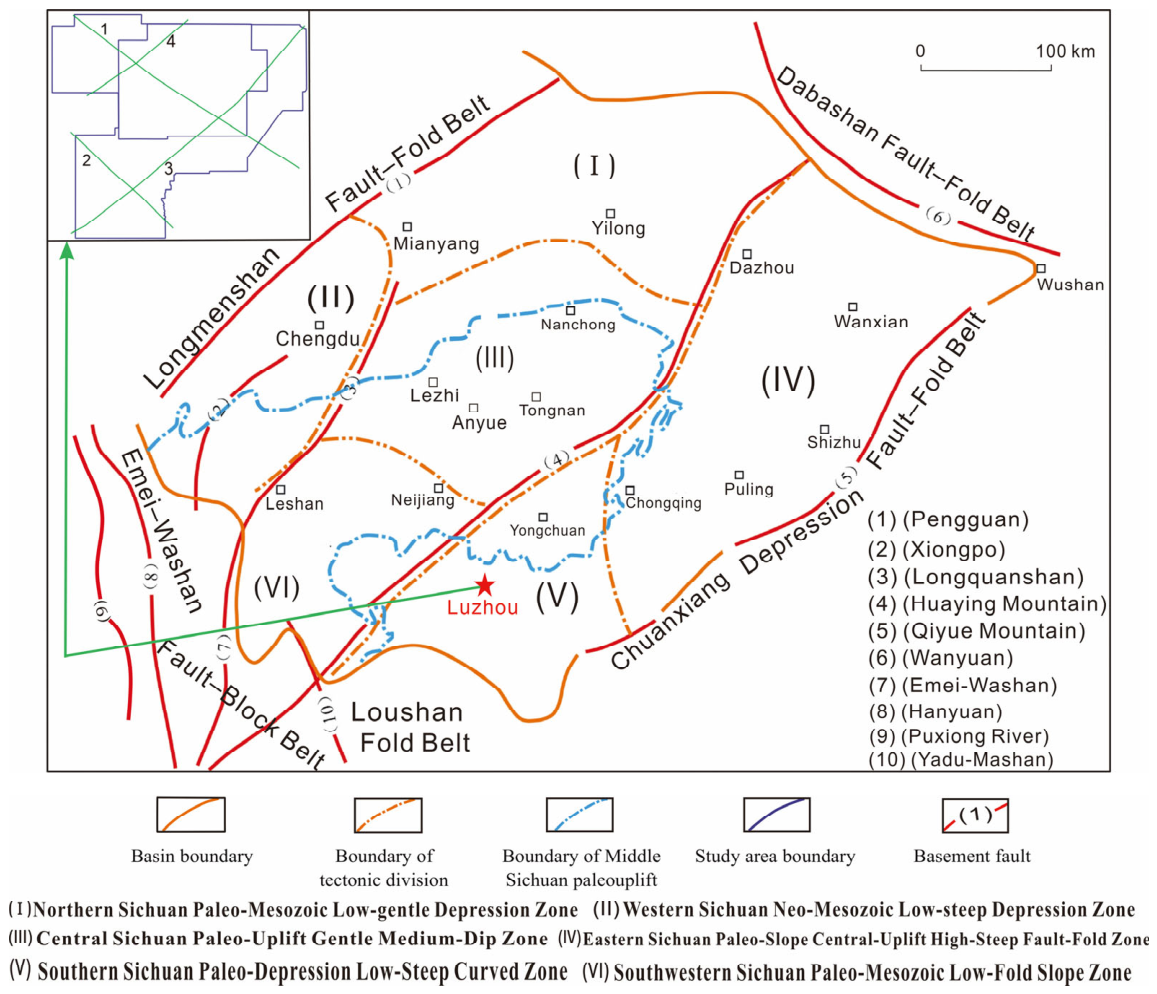
Figure 1. Structural Outline Map of the Sichuan Basin [20] (Modified from Wang X. J. et al., 2022, combined with open regional geological data published by CGS).
Applsci 16 05977 g001
Figure 2. Rose diagrams illustrating fault orientation characteristics in the study area.
Applsci 16 05977 g002
Figure 3. Thin attribute and fault superposition map at the base of the Triassic Liangshan Formation in the Luzhou area.
Applsci 16 05977 g003
Figure 4. Planar characteristics and distribution of fault combination patterns.
Applsci 16 05977 g004
Figure 5. Seismic Profile 1 with highlighted typical fault combination styles in the Luzhou area.
Applsci 16 05977 g005
Figure 6. Seismic Profile 3 with highlighted typical fault combination styles in the Luzhou area.
Applsci 16 05977 g006
Figure 7. Classification of fault combination styles in seismic profiles.
Applsci 16 05977 g007
Figure 8. Fault activity parameters preceding the deposition of the Triassic Feixianguan Formation: (a) growth index of selected faults; (b) paleo-fall of selected faults.
Applsci 16 05977 g008
Figure 9. Structural activity period division map of faults at the base of the Permian in the Luzhou area.
Applsci 16 05977 g009
Figure 10. Fault activity parameters preceding the deposition of the Jurassic: (a) growth index of selected faults; (b) paleo-fall of selected faults.
Applsci 16 05977 g010
Figure 11. Multi-stage fault growth index of selected faults in the Luzhou area.
Applsci 16 05977 g011
Figure 12. Multi-stage fault paleo-fall of selected faults in the Luzhou area.
Applsci 16 05977 g012
Figure 13. Structural map of the base of the Jurassic in the Luzhou area.
Applsci 16 05977 g013
Figure 14. (a) Paleo-fall evolution characteristics of Fault 5 on seismic Profile 1; (b) paleo-fall of selected faults preceding the deposition of the Permain Longtan Formation.
Applsci 16 05977 g014
Figure 15. Fault classification map of the Permian–Triassic strata in the Luzhou area: (a) fault classification map of the base of the Permian; (b) fault classification map of the base of the Triassic.
Applsci 16 05977 g015
Figure 16. Distribution map of fault systems at the Permian–Triassic strata in the Luzhou area: (a) fault systems at the base of the Permian; (b) fault systems at the base of the Triassic.
Applsci 16 05977 g016
Figure 17. Structural characteristics and controlled faults of Well D14.
Applsci 16 05977 g017
Figure 18. Structural characteristics and controlled faults of Well H14.
Applsci 16 05977 g018
Figure 19. Fault strike distribution map at the base of the Permian in the Luzhou area.
Applsci 16 05977 g019
Figure 20. Structural superposition map of favorable hydrocarbon accumulation zones at the base of the Permian in the Luzhou area.
Applsci 16 05977 g020
Table 1. Tectonic evolution and fault control on hydrocarbon migration in the Luzhou area.
Tectonic EpochGeological AgeFaulting Activity CharacteristicsGrowth Index RangePaleo-Fall Range (m)Impact on Migration Conduits
CaledonianCambrian–SilurianWeak transpression setting, extremely weak fault activity, only small-scale accommodation faults developed0.95~0.992.3~7.0No effective migration conduits formed
HercynianDevonian–PermianStrong detachment setting, development of detachment faults within Permian strata, some faults cutting through source rocks0.84~0.9230~98.48Formation of embryonic source-connected faults, initial connection to source rocks
IndosinianTriasCompressional setting, enhanced thrusting of faults, cutting through Permian–Triassic strata and connecting source–reservoir0.60~0.8127.54~38.71Formation of major migration conduits, initial hydrocarbon charging
Yanshan–HimalayanJurassic–CenozoicTranspression setting, reactivation of pre-existing faults, some faults cutting through Jurassic caprock0.61~0.990.99~120.70Partial destruction of conduits, hydrocarbon dissipation
Table 2. Elements of selected representative faults in the Luzhou area (F1–F12).
FaultTypeStrikeDip DirectionAverage Dip AngleUpper Dip AngleLower Dip AngleExtension Length (KM)Stratigraphic CutoffMaximum Vertical Throw (M)
F1Thrust fault67°157°33° 34°32°5.26P1L-S2H29
F2Thrust fault46°136°61°63°59°2.52P1L-OBOT52
F3Thrust fault38°308°43° 50°36°2.92P1L-S2H10
F4Thrust fault35°305°60° 67°52°6.96T1F1-OBOT130
F5Thrust fault22°292°63° 69°57°4.83T1F1-P1L85
F6Thrust fault75°345°32° 38°25°2.3T1F1-S2H47
F7Thrust fault70°340°50° 59°40°4.79P1L-S2H5
F8Thrust fault73°343°36° 26°45°1.32P1L116
F9Thrust fault70°160°48° 49°46°3.85T1F1-OBOT27
F10Thrust fault60°330°36° 40°31°2.56T1F1-OBOT50
F11Thrust fault91°54° 49°58°3.27T1F1-OBOT88
F12Thrust fault96°186°35° 50°20°6.96T1F1-OBOT19
Table 3. Quantitative classification and migration capacity of faults in the study area.
Fault LevelExtension Length (km)Vertical Displacement (m)Penetrated Stratigraphic IntervalsControl ScopeMigration Capacity
First-order fault2.2~8.4 (average 3.8)40~160 (average 58)Permian–Jurassic Tectonic unitsStrong, but prone to caprock damage
Second-order fault1.3~4.9 (average 2.9)15~40 (average 30)Permian–TriassicStructural trapsModerate, stable migration
Third-order fault0.5~1.9 (average 1.25)8–20 (average 13)Within the Permian local trapsWeak, only local migration
Disclaimer/Publisher’s Note: The statements, opinions and data contained in all publications are solely those of the individual author(s) and contributor(s) and not of MDPI and/or the editor(s). MDPI and/or the editor(s) disclaim responsibility for any injury to people or property resulting from any ideas, methods, instructions or products referred to in the content.