1. Introduction
The integration of Artificial Intelligence (AI) tools into educational practices creates new opportunities for teaching and learning. Generative Artificial Intelligence (GenAI) applications have the potential to support personalized learning, improve students’ understanding of complex topics, and encourage self-regulated learning [
1]. Many students use these tools as academic assistants to clarify difficult concepts, organize study material, prepare for examinations, or support writing tasks [
2]. As a result, GenAI tools are becoming part of students’ everyday academic activities and are gradually reshaping how learning is approached in higher education [
3,
4,
5].
At the same time, the increasing use of AI in education raises important concerns. Issues related to academic integrity, the authenticity of student work, and the risk of excessive reliance on automated systems have become central topics of discussion [
6]. The ability of GenAI tools to generate ready-made answers and written content challenges traditional assessment practices and raises questions about how educators can ensure that students remain cognitively and critically engaged with learning tasks rather than using AI-generated outputs as substitutes for their own reasoning and reflection. In this context, the term “passive role” does not suggest that student passivity is a new phenomenon caused by GenAI. Rather, it refers to the possibility that GenAI may reinforce pre-existing tendencies toward surface-level engagement when students rely on generated responses without critically evaluating, revising, contextualizing, or learning from them [
7].
The distinction between active and passive learning has long been central to pedagogical theory, with active learning emphasizing students’ cognitive engagement, reflection, application, and knowledge construction rather than the simple reception of ready-made information [
8]. In this context, GenAI tools should not be viewed as creating the problem of passive learning, but rather as introducing a new technological setting in which this long-standing pedagogical concern must be reconsidered. When used critically, such tools may support explanation, inquiry, and self-regulated learning; however, when used mainly to obtain ready-made answers, they may reinforce surface-level engagement by reducing students’ need to generate, test, and justify their own reasoning [
9]. Therefore, examining how students report using GenAI tools is important for understanding whether these technologies are being integrated as supports for active cognitive engagement or mainly as shortcuts for task completion.
The existing literature shows a growing interest in students’ and educators’ attitudes toward AI, as well as in the pedagogical and ethical implications of its use [
10,
11]. However, despite this increasing attention, empirical evidence remains limited regarding how students practically use Generative AI tools, how frequently they rely on them, and how they perceive their role in the learning process as stated in the work of Baek et al. [
12]. This study aims to contribute to this growing body of research by systematically investigating university students’ reported usage patterns, application contexts, and motivations related to the use of Generative Artificial Intelligence in higher education.
2. Related Work
The rapid expansion of GenAI in higher education has stimulated a growing body of research on how students perceive, adopt, and use such tools in their academic lives. Early discussions often focused on the disruptive potential of ChatGPT and similar systems, particularly with regard to assessment and academic integrity [
13,
14]. More recent studies, however, have moved beyond general debate and have begun to document concrete patterns of student use, perceived educational benefits, and emerging pedagogical concerns. As noted by Chan and Hu [
10], students do not approach GenAI merely as a novel technology, but as a potentially useful learning resource that may support writing, idea generation, research, and individualized assistance. In a similar vein, Ngo [
15] showed that students generally perceive ChatGPT as a convenient educational aid, while remaining aware of risks related to inaccuracy, dependence, and superficial learning.
Previous research indicated that student generally hold positive attitudes toward GenAI, while also expressing certain reservations [
16,
17]. For example, Chan and Hu [
10] reported that students recognized important advantages, such as immediate feedback, support for brainstorming, and help with academic tasks, but also expressed concerns about bias, misinformation, privacy, and the possible weakening of independent thinking. Similar conclusions were reached by Almassaad et al. [
18], who found that university students associated GenAI tools with improved efficiency and easier access to information, while at the same time identifying ethical and practical challenges, including overreliance and uncertainty regarding appropriate academic use. From a more learning-oriented perspective, Pavlenko and Syzenko [
19] reported that students tended to value ChatGPT mainly as a support tool for clarification, guidance, and understanding academic content, rather than as a replacement for their own learning process.
A related strand of research has examined students’ awareness of GenAI tools, their confidence in using them, and the extent to which their experiences differ across academic disciplines [
20]. Kelly et al. [
2], in one of the earlier large-scale quantitative studies in this area, demonstrated that awareness of generative AI tools among university students was already high, although confidence and intensity of use varied considerably. Their findings suggest that students differ not only in whether they are aware of GenAI tools, but also in how confidently and purposefully they use them for academic work. This distinction is especially relevant because it suggests a shift from simple awareness or occasional experimentation with GenAI tools toward more purposeful academic uses, such as clarifying difficult concepts, summarizing or organizing study material, generating ideas, supporting writing tasks, preparing for examinations, or checking the clarity of one’s own understanding. Malmström et al. [
21], in their survey of university students in Sweden, also showed that AI-supported learning was becoming increasingly normalized, while students remained attentive to questions of trust, reliability, and the educational implications of machine-generated content.
The literature further indicates that students tend to employ GenAI tools for predominantly pragmatic and academically functional purposes [
12,
22,
23]. Rather than using them primarily for entertainment or creative experimentation, students most often turn to them for information search, concept explanation, summarization, writing assistance, idea generation, language support, and exam preparation [
24]. This pattern is clearly reflected in the work of Chatzopoulos [
25], who discusses the growing presence of ChatGPT and related tools in university settings and emphasizes their role in reshaping how students search for knowledge, organize academic work, and interact with learning material. In parallel, Ngo [
15] showed that students often value ChatGPT because it simplifies difficult content and offers rapid support during the learning process, while Kelly et al. [
2] highlighted its growing use as a practical academic assistant across disciplinary contexts. From the findings in [
2,
15] one can infer that GenAI tools such as ChatGPT, suggest that GenAI is increasingly embedded in students’ study routines as a productivity and comprehension aid rather than solely as a text-generation mechanism.
A more specialized body of work has examined the role of GenAI in computing and software engineering education, where students frequently use such systems for coding-related tasks. Kharrufa et al. [
26] explored the integration of large language models into software engineering team projects and argued that these tools can take on multiple pedagogical roles, from assistant and explainer to collaborator and productivity enhancer. Likewise, Yabaku and Ouhbi [
27] found that students in software engineering generally viewed generative AI tools positively, especially in relation to programming support, efficiency, and problem-solving. At the same time, both studies caution that the educational value of these tools depends on the extent to which students remain cognitively engaged with the underlying reasoning process rather than simply accepting generated outputs. This concern is echoed in the broader review by Reihanian et al. [
28], which identifies accuracy, authenticity, and assessment as central challenges in the use of GenAI within computer science education.
Beyond individual empirical studies, recent synthesis work has begun to frame GenAI within wider transformations in university pedagogy [
29,
30,
31]. To this end, Mavroudi and Wagstaffe [
32] suggest that digital transformation in higher education should not be understood only as technological adoption, but as a broader pedagogical shift involving changing roles, expectations, and relationships between teachers, students, and knowledge practices. This perspective is highly relevant to the study of GenAI, as it places student use of artificial intelligence within a wider landscape of educational change rather than treating it as an isolated phenomenon. In this sense, the adoption of GenAI tools may be interpreted not simply as a matter of convenience, but as part of an ongoing reconfiguration of how academic support, learning autonomy, and knowledge production are experienced in higher education.
Overall, the existing literature points to several broad conclusions. First, student familiarity with GenAI tools has increased rapidly, and the technology is becoming normalized in higher education settings. Second, ChatGPT consistently emerges as the dominant platform, even when students are aware of alternatives such as Gemini, Copilot, Claude, or more specialized systems. Third, the most common uses of GenAI are strongly connected to academic support functions, especially information retrieval, conceptual clarification, writing-related assistance, and study efficiency. Fourth, positive perceptions are consistently accompanied by concerns related to reliability, dependence, authorship, and academic integrity. Finally, while the literature has made important progress in documenting student attitudes and experiences, relatively fewer studies provide detailed empirical evidence on how patterns of GenAI use differ according to demographic or educational variables, or how frequency, motivation, and academic purpose intersect within specific institutional contexts [
23,
33,
34,
35].
It is precisely at this point that the present study seeks to contribute. Building on previous findings mentioned in the aforementioned published literature works, this research examines not only whether students use GenAI tools, but also how frequently they use them, which tools they prefer, for which academic purposes they employ them, and what motivates their engagement. By focusing on a large sample of undergraduate students from a public university and by combining descriptive with correlational analyses, the study aims to provide a more detailed empirical picture of students’ attitudes, practices, and perceptions regarding GenAI use in higher education.
Taken together, these studies provide the conceptual and empirical background for the present work, while a selective comparison with representative studies is provided in
Section 5 to position the present findings against prior research.
3. Materials and Methods
3.1. Research Questions
This study aims to examine how university students use Generative Artificial Intelligence (GenAI) tools, with a particular focus on their perceptions, usage patterns, and perceived impact on everyday academic activities. To address this aim, the following research questions (RQs) were investigated:
RQ1: What is the frequency and preference of GenAI tool usage (e.g., ChatGPT, Gemini, DeepSeek, Copilot, etc.) among university students across demographics like age, gender, school, academic year and, professional status?
RQ2: How do students utilize GenAI tools in their academic tasks such as task automation, paper and code writing, concept understanding and learning, exam preparation, and personal assistance and what motivates these uses (i.e., productivity, learning, creativity, entertainment)?
3.2. Research Context and Participants
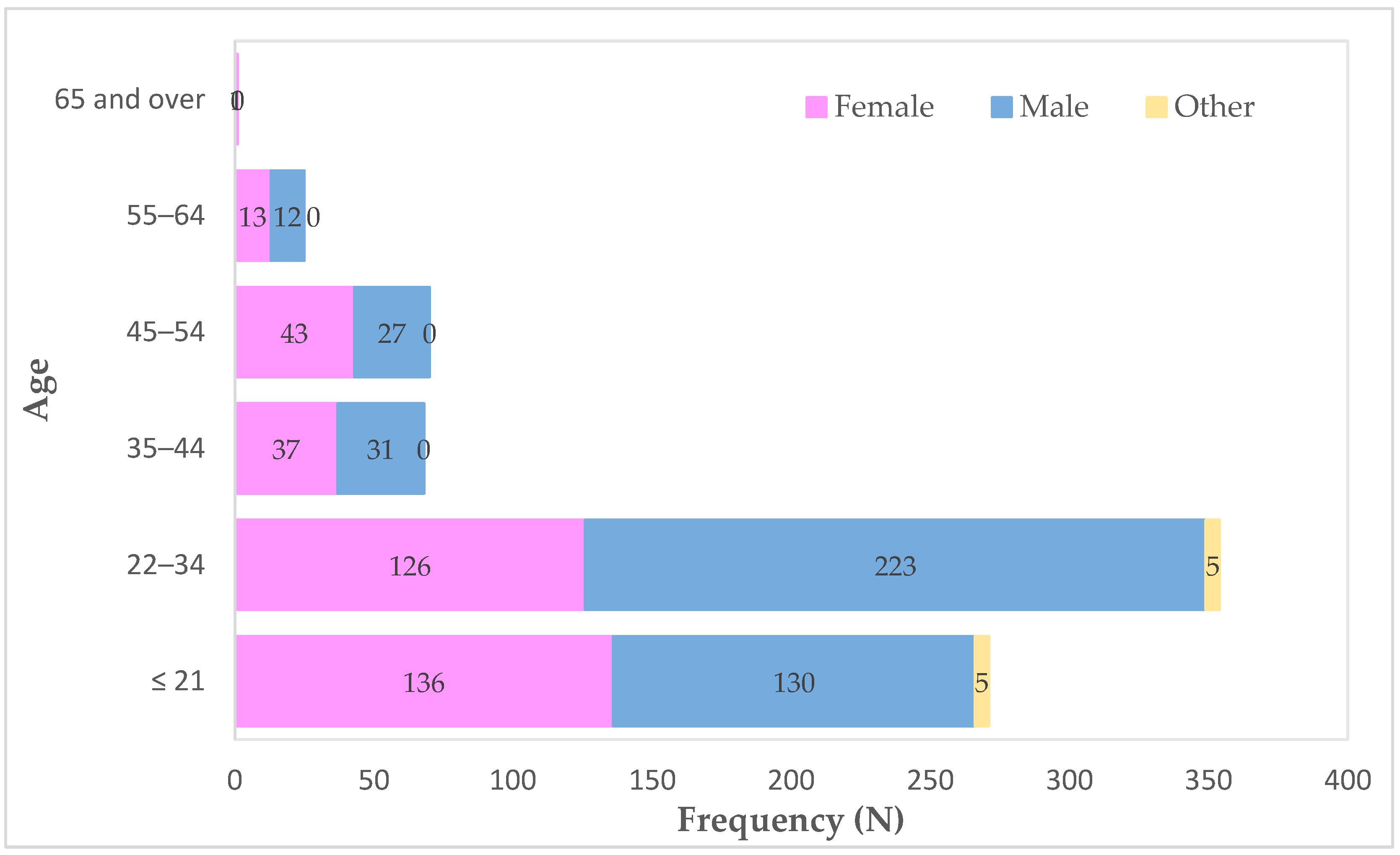
This study was conducted at the University of West Attica (UNIWA) during the period from April to November 2025. The participants were undergraduate students enrolled across all 27 departments and 6 academic schools of the university. The questionnaire was distributed online, and student participation was anonymous and voluntary. A total of 788 undergraduate students completed the questionnaire; 424 (53.8%) were male, 355 (45.1%) were female, and 9 (1.1%) identified as other. Participants were drawn from across the university’s 27 departments and 6 academic schools. However, because the questionnaire was distributed electronically and participation was voluntary, the exact number of students who received or viewed the invitation cannot be determined; therefore, a formal response rate cannot be calculated. Accordingly, the sample is treated as a large-scale institutional convenience sample. The findings are therefore interpreted as exploratory evidence of reported GenAI usage patterns within this specific university context, rather than as statistically representative of the entire undergraduate population.
3.3. Instrument Development
The research questionnaire (
Table 1) consisted of 51 items to answer the research questions (RQs). It consisted of both closed and open-ended questions. A Likert scale was used by many of the closed-ended questions to quantify responses, and the open-ended descriptive questions were used to express the students’ opinions and feelings about the GenAI tools, so plenty of feedback was collected.
The research instrument (
Table 1) consisted of three parts: (i) the demographic data (gender, age, educational status, professional status), (ii) questions about the use (frequency, preference) of GenAI tools by the students related to RQ1, and (iii) questions about the GenAI tool utilization and motivation related to RQ2.
The questionnaire was developed as a purpose-built exploratory instrument designed to map students’ reported GenAI usage patterns, preferred tools, application contexts, and motivations. It was not intended to function as a psychometric scale measuring latent constructs such as technology acceptance, perceived usefulness, perceived ease of use, or attitudes toward GenAI. Accordingly, the items were organized according to the study’s research questions rather than adapted from a single validated theoretical model such as TAM or UTAUT. The questionnaire mainly included categorical, checklist-type, and purpose-specific items. Therefore, several parts of the instrument captured distinct tools, uses, and motivations rather than repeated indicators of a single underlying construct. For this reason, reliability coefficients such as Cronbach’s alpha were not considered appropriate for all item groups. This methodological choice is acknowledged as a limitation of the study.
A 5-point (from 1 to 5) and 3-point (from 1 to 3) Likert scale were used to measure most of the research items, including:
Q8.1–Q8.11, were measured with a 5-point Likert scale where 1 was “Not at all—I don’t know”, 2 was “A little”, 3 was “Moderate”, 4 was “Quite a lot”, and 5 was “A lot”,
Q10 was measured with a 5-point Likert scale, where 1 was “Not at all”, 2 was “A little”, 3 was “Moderate”, 4 was “Very often”, and 5 was “Too much”,
Q12, had a slightly different 5-point scale whose answers were more relevant to these questions.
The full research instrument is presented below in
Table 1.
3.4. Data Collection
The research’s data collection was conducted via an electronic online questionnaire form built with the Microsoft Forms application, which is in accordance with European Law’s GDPR regulation. Before filling it, the students had to give their consent via this form. The form did not collect any personal data of the students, as it complied with the GDPR regulation of the European Union. The researchers did not have access to the students IP addresses or other data that could reveal them; moreover, the participants answers were not visible to others. For the statistical analysis of the research data, the statistical software Jamovi version 2.7.18.0 was used, which is open-source and free [
36,
37].
Because not all participants answered every demographic item, analyses were conducted using the valid responses available for the variables included in each test. Therefore, the valid sample size may differ slightly across tables. The total sample was N = 788, while analyses involving university school used N = 781 because seven respondents did not provide a valid school response. Where subgroup exclusions were applied, such as the exclusion of the small “Other” gender group from the male/female inferential comparison, the valid N is reported in the corresponding table.
3.5. Research Ethics, Methodological Considerations, and Scope of Interpretation
This study was conducted in accordance with the principles of the Declaration of Helsinki and with applicable data protection requirements. Ethical approval for the study was obtained from the Research Ethics Committee of the University of West Attica prior to data collection (Protocol No. 5112/25-01-2024). All participants were informed about the purpose of the study and provided electronic informed consent before completing the questionnaire. Data were collected through an anonymous online questionnaire administered via Microsoft Forms. Prior to participation, students were informed about the purpose of the study and provided their consent electronically. No personally identifiable information was collected, and the researchers did not have access to IP addresses or other data that could directly reveal participants’ identities. The handling and storage of the data were carried out in a manner consistent with the relevant data protection framework.
At the same time, certain methodological considerations should be taken into account when interpreting the findings. First, the study was conducted within a single public university in Greece. Although the sample size was substantial and included students from multiple departments and schools, the institutional specificity of the sample inevitably limits the extent to which the findings can be generalized to other higher education settings, disciplinary environments, or national contexts. In addition, the distribution of respondents across schools was uneven, with a stronger representation from Engineering-related disciplines, and this should be considered when interpreting the broader patterns observed.
Second, the study relied on self-reported questionnaire data. As in most survey-based research, the findings rely on participants’ self-reported practices, perceptions, and motivations, and therefore reflect stated rather than directly observed behaviour [
38]. It is therefore possible that some responses were influenced by recall bias, subjective interpretation of questionnaire items, or a tendency to present one’s practices in a more socially acceptable way. The anonymous and voluntary design of the survey was intended to support more candid responses, but such sources of response bias cannot be fully excluded.
The small number of respondents identifying as “Other” in terms of gender (n = 9) limited meaningful subgroup analysis. Therefore, gender-based inferential comparisons were restricted to male and female respondents, and future studies should include larger gender-diverse samples.
Third, the mode of questionnaire distribution may also have influenced participation. The survey was circulated electronically through institutional academic email, which may have affected its visibility among students and may have introduced a degree of self-selection into the final sample. Moreover, while the questionnaire was designed to capture a broad range of practices and perceptions regarding GenAI use, its length may have contributed to response fatigue for some participants. These issues do not invalidate the results, but they should be acknowledged as part of the practical conditions under which the data were collected.
Fourth, the questionnaire was developed as a purpose-built exploratory instrument for mapping students’ reported GenAI usage patterns, preferred tools, application contexts, and motivations. It was not designed as a psychometric scale for measuring latent constructs such as technology acceptance, perceived usefulness, perceived ease of use, or attitudes toward GenAI. Therefore, although the instrument was aligned with the study’s research questions, it was not subjected to full psychometric validation through pilot testing, exploratory factor analysis, or internal consistency assessment. This should be considered when interpreting the findings, which are best understood as descriptive and exploratory evidence rather than as results derived from a validated attitude or acceptance scale. Future research should build on this exploratory instrument by incorporating expert review, pilot testing, and psychometric validation procedures where the aim is to measure latent constructs or develop a reusable scale.
In addition, some Likert-scale responses were recoded into binary use/non-use categories to provide a simplified overview of GenAI tool adoption. Although this approach supported descriptive clarity, it reduced the granularity of the original ordinal data and limited the interpretive value of subsequent association tests. Future studies should retain the full ordinal structure of such responses and apply non-parametric or ordinal modelling approaches, such as Mann–Whitney U tests, Kruskal–Wallis tests, or ordinal logistic regression, to examine differences in GenAI-use intensity more precisely.
Furthermore, several subgroup association tests were conducted across demographic and educational variables. These analyses were exploratory and non-confirmatory. No formal correction for multiple comparisons, such as Holm or false discovery rate adjustment, was applied. Therefore, the reported p-values should be interpreted cautiously, especially where they are marginal and accompanied by weak or negligible effect sizes. For this reason, the manuscript does not treat these subgroup tests as confirmatory evidence of group differences, but as descriptive indications that may guide future research. Interpretation is based primarily on effect sizes, practical significance, and consistency with the descriptive patterns rather than on statistical significance alone.
Furthermore, the statistical analysis was primarily based on descriptive statistics and exploratory pairwise association tests. This approach was suitable for mapping broad patterns of GenAI use across the surveyed sample. However, it does not account for the simultaneous influence of multiple demographic, educational, or employment-related variables on the same outcome. More advanced multivariable approaches, such as ordinal regression or mixed-effects modelling, could provide a more integrated analysis of how several predictors jointly relate to GenAI-use frequency or application patterns. Future studies should therefore consider such models, especially when using the full ordinal structure of the data and more balanced samples across academic fields.
Finally, the study adopted a cross-sectional design and therefore captures student attitudes and practices at a specific moment in time. Given the rapid evolution of GenAI tools and their expanding presence in higher education, patterns of use, perceived benefits, and associated concerns may change considerably over relatively short periods. The present findings should therefore be understood as a structured empirical snapshot of an evolving educational landscape rather than as a fixed account of long-term student behaviour.
5. Discussion
The present study provides empirical evidence that GenAI tools have already become deeply embedded in the everyday academic life of undergraduate students at the University of West Attica. The study revealed a remarkably high adoption rate of 97.2%, suggesting that the focus in higher education has shifted from students’ utilization of these tools to the ways, frequency, and intentions with which they incorporate them into their learning methods. This discovery aligns with the expanding global body of research indicating the gradual normalization of generative AI tools in university environments [
55,
56].
To better position the present findings in relation to previous work,
Table 19 provides a selective comparison between the current study and representative studies on GenAI use in higher education. The table is not intended as a systematic review, but as a contextual basis for interpreting how the present results align with and differ from prior research.
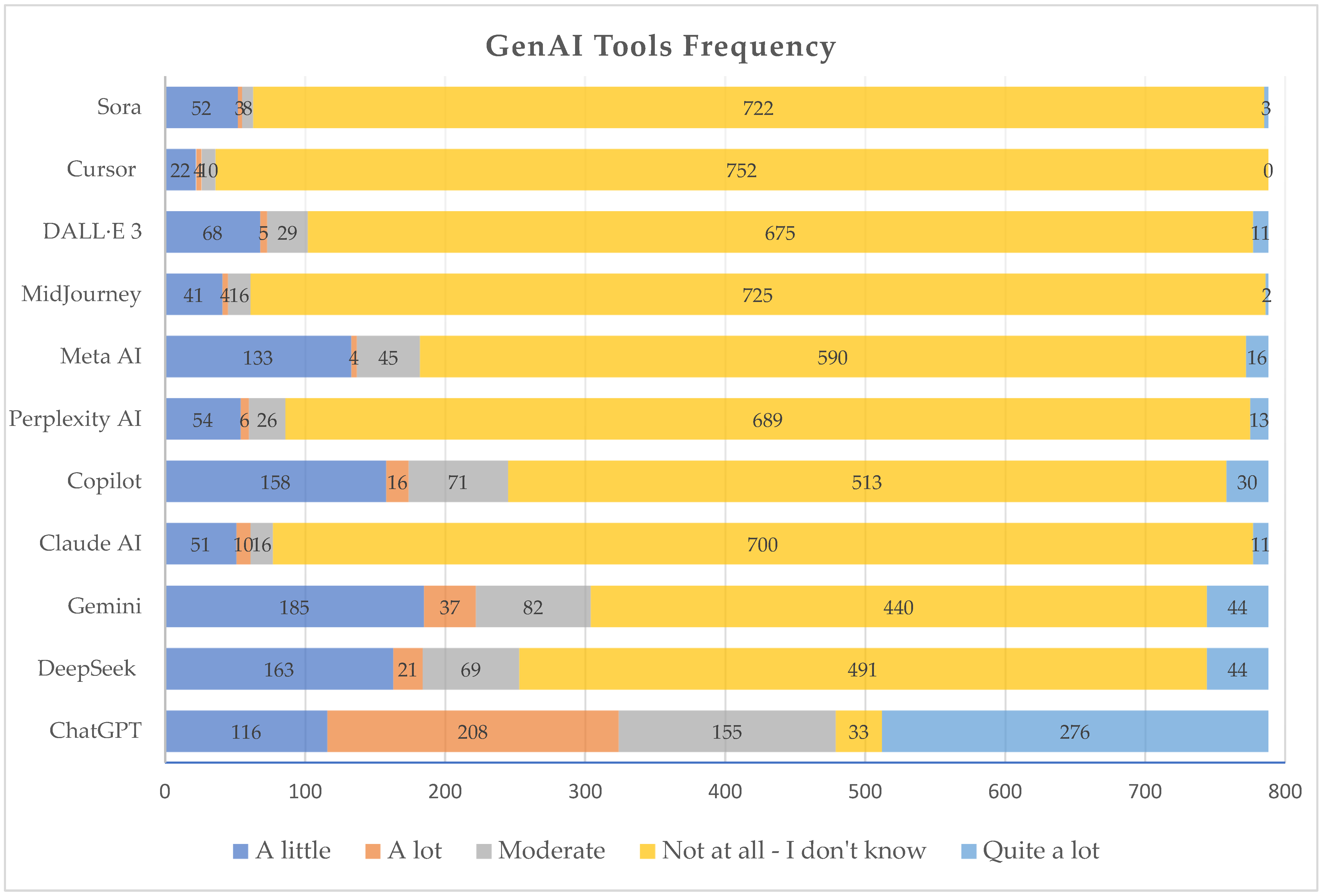
A particularly clear result is the dominance of ChatGPT over all other tools examined. Although students reported use of several systems, including Gemini, DeepSeek, Copilot, Claude, and Perplexity, ChatGPT was by far the most widely used platform. This likely reflects the preference of students for accessible, general-purpose tools that can support a broad range of academic tasks, in contrast to more specialized platforms requiring more specific use cases or greater familiarity.
The findings also show that while GenAI adoption is nearly universal, the intensity of use is more differentiated. A substantial proportion of students reported using these tools several times per week or even daily, whereas another large group used them only occasionally. This suggests that GenAI has already entered students’ study routines, but not in a uniform way. For some students it appears to function as a regular academic companion, while for others it remains a supplementary or situational aid.
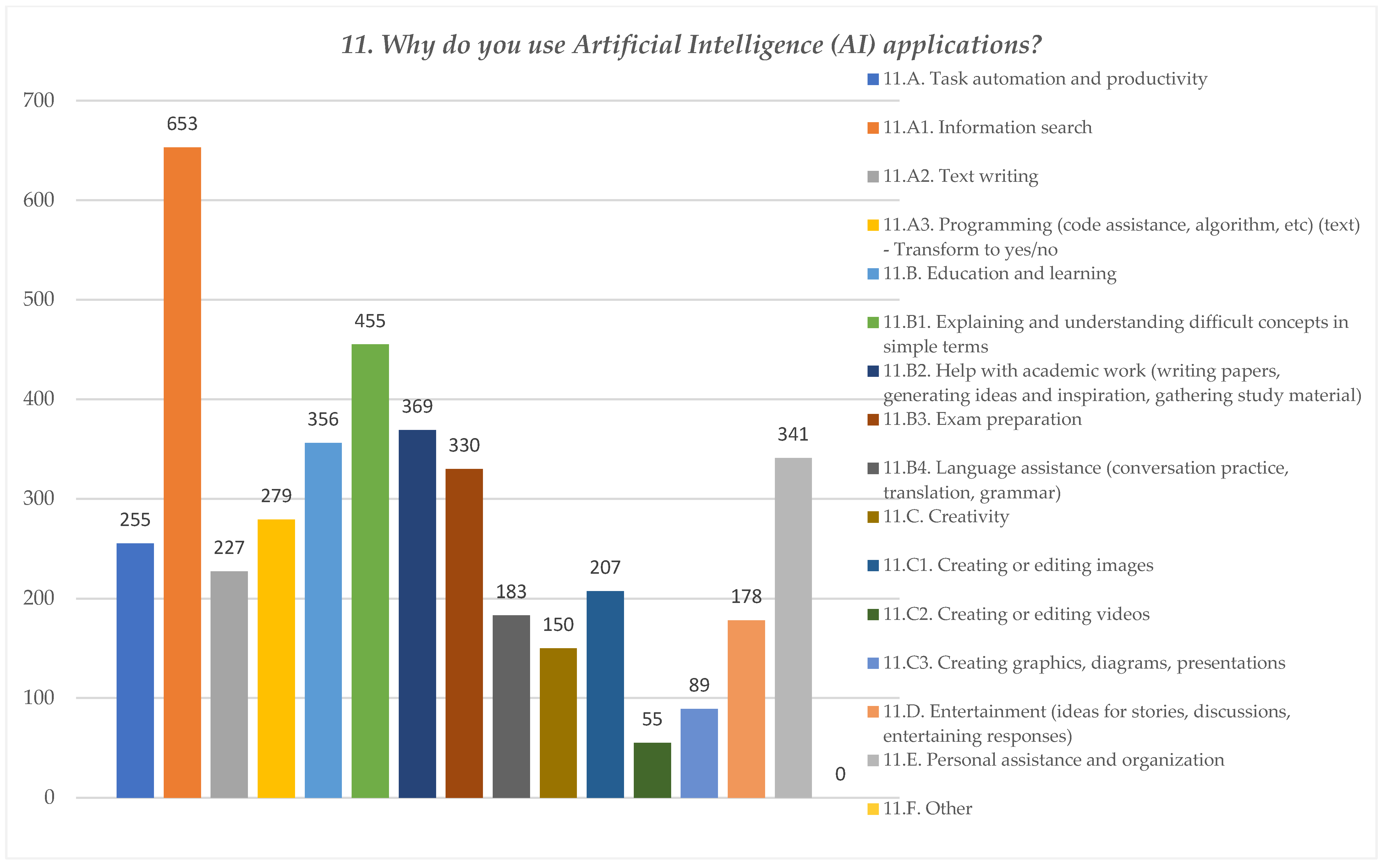
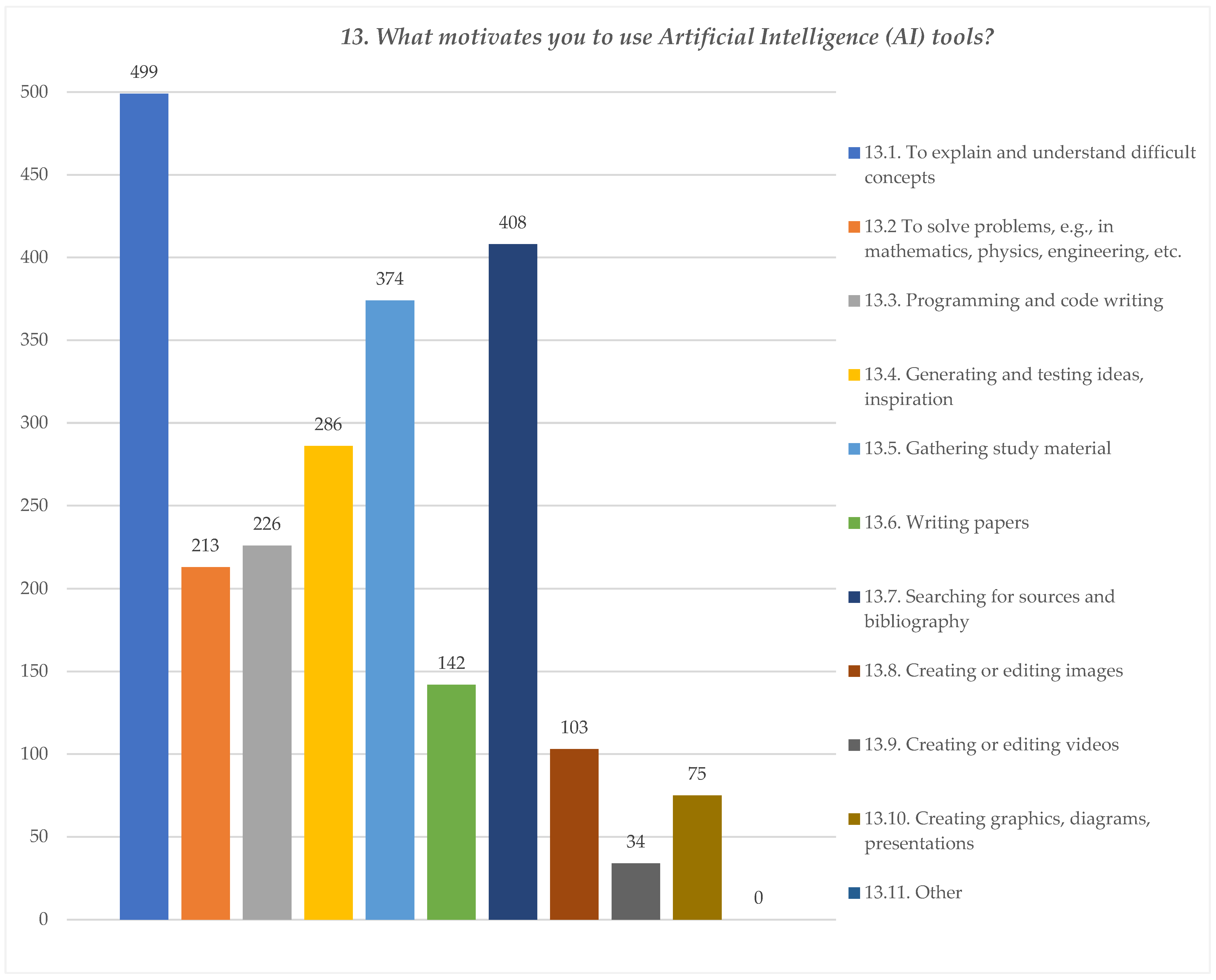
In terms of usage patterns, students appear to engage with GenAI primarily for pragmatic academic purposes rather than for creative production or entertainment. Information search emerged as the most common use, followed by support for understanding difficult concepts, help with academic work, exam preparation, and personal assistance or organization. Similarly, the strongest reported motivations concerned conceptual understanding, searching for bibliography, and gathering study material. These findings suggest that students mainly perceive GenAI as a functional support mechanism that helps them manage academic demands more efficiently.
The reported use of GenAI tools for source searching and bibliography preparation requires careful interpretation. References are not merely technical outputs, but the evidential basis through which academic arguments are built and connected to existing knowledge. GenAI tools may support early-stage academic work by suggesting keywords, clarifying concepts, or helping students map a topic; however, they cannot replace systematic searching, critical reading, and verification through peer-reviewed literature, academic databases, publisher platforms, library catalogues, and DOI-based checks. This distinction is important because GenAI systems may produce plausible but inaccurate information, including fabricated references. Therefore, universities should integrate GenAI use into explicit AI-literacy and information-literacy training, so that students treat AI outputs as provisional starting points rather than verified scholarly evidence [
57,
58,
59].
This pattern is especially important because it nuances the common assumption that students primarily use AI as a shortcut for producing ready-made answers. Although concerns about academic integrity, overreliance, and inappropriate use are widely highlighted in the literature, these issues were not directly measured in the present questionnaire. The present findings instead show that students report using GenAI mainly as a tool for information search, clarification, guidance, and study support rather than primarily for creative or entertainment-related purposes. Therefore, the discussion of academic integrity and overreliance should be understood as a literature-based pedagogical implication of widespread academic GenAI use, not as a direct empirical finding about students’ concerns [
60]. At the same time, this does not eliminate pedagogical concerns. The educational value of GenAI depends heavily on students’ ability to critically evaluate, verify, and meaningfully integrate the information it provides. Without such skills, reliance on AI may encourage superficial engagement or uncritical acceptance of inaccurate responses. For this reason, the findings further support the growing importance of AI literacy as part of contemporary higher education, as it enables students to critically evaluate AI-generated content, engage in reflective use of these tools, and address issues related to academic integrity and ethical responsibility.
A particularly important finding concerns the use of GenAI tools for searching sources and bibliography. While this suggests that students increasingly view GenAI as part of their academic workflow, it also raises important questions about source credibility, verification, and knowledge production. General-purpose GenAI platforms can assist students in identifying themes, keywords, search terms, and possible directions for literature exploration; however, they should not be treated as substitutes for academic databases, peer-reviewed sources, or systematic literature-search practices. A major concern is that GenAI tools may generate inaccurate, incomplete, or even fabricated references, while presenting them in a fluent and authoritative manner. This creates a risk that students may confuse plausible-looking output with verified scholarly evidence. Therefore, universities should not simply discourage the use of GenAI for literature-related tasks, but should explicitly teach students how to use such tools responsibly. This includes training students to use GenAI for preliminary orientation, keyword generation, and research-question refinement, while requiring them to verify all sources through credible academic databases, library catalogues, DOI checks, publisher websites, and indexing platforms. In this sense, the challenge is not only technological but pedagogical: higher education institutions need to bridge the gap between AI-assisted information access and academically rigorous knowledge production. Responsible GenAI integration should therefore be accompanied by AI literacy, information literacy, citation-verification practices, and clear institutional guidance on when and how AI-generated suggestions may be used in academic work.
Another notable result is that overall GenAI use was broadly distributed across the student population. No statistically significant associations were found between general use and gender, school of study, or age, while the relationship with professional status, although statistically significant, was practically negligible. This indicates that basic engagement with GenAI is no longer limited to particular student groups, but has become a widespread academic practice.
However, differences did emerge when frequency of use was examined. Gender, professional status, and school of study showed associations with usage frequency in the uncorrected analyses, although all reported effect sizes were small. These results should therefore be interpreted cautiously and as exploratory rather than confirmatory. Nevertheless, they are useful because they suggest that, while basic GenAI adoption is widespread, the intensity of use may vary according to students’ academic and social context. Similar patterns have been discussed in previous studies and technology-acceptance frameworks, which suggest that students’ use of AI-based academic support tools may vary according to user characteristics, AI literacy, perceived usefulness, readiness, and educational context [
61,
62,
63]. In the present study, male students appeared somewhat more likely to use AI more intensively, while employed students also showed slightly more frequent use. These differences may reflect variations in digital confidence, time pressure, disciplinary culture, or the perceived usefulness of GenAI for managing academic and practical demands. However, given the weak effect sizes and the exploratory nature of the pairwise analyses, these patterns should be understood as possible indications of context-sensitive use rather than strong demographic predictors. In this sense, the findings add nuance to the descriptive results: GenAI adoption appears widespread within the surveyed sample, but the degree to which students integrate these tools into their study routines may still differ modestly across groups.
Overall, the findings point to a transitional moment in the surveyed institutional context, where GenAI tools appear to be moving from peripheral technologies toward routine elements of students’ reported study practices [
64]. Their primary reported value lies in supporting comprehension, information retrieval, and study efficiency. While these patterns resonate with broader debates in higher education, they should be interpreted cautiously because the sample was drawn from a single public university and was strongly weighted toward Engineering-related disciplines. Therefore, the present study does not claim statistical generalizability to higher education as a whole, but provides exploratory evidence that can inform future multi-institutional and more discipline-balanced research [
55].
At the same time, the findings of this work point out towards several targeted directions for future research. A useful next step would be to examine similar questions across multiple institutions and with a more balanced disciplinary distribution, so that the extent to which the patterns observed here reflect broader developments in higher education can be assessed more robustly. Comparative studies of this kind would help clarify whether the widespread adoption of GenAI tools is now a general, sector-agnostic characteristic of the contemporary student experience, or whether it still varies in important ways according to institutional culture, field of study, or curriculum structure.
In addition, longitudinal and qualitative approaches would substantially deepen the present picture. Because GenAI tools evolve rapidly, repeated measurements over time could reveal changing patterns of use, trust, dependence, and perceived educational value. Qualitative methods, such as interviews or focus groups, could further illuminate how students interpret the benefits and limits of these tools in practice, how they evaluate their reliability, and how they perceive the boundary between helpful academic support and overdependence on these tools [
65].
6. Conclusions
This study examined reported GenAI usage patterns, application contexts, and motivations among undergraduate students at a single public university in Greece. Based on data collected from 788 undergraduate students across multiple schools and disciplines, the findings provide a comprehensive overview of how GenAI tools are currently integrated into students’ academic and daily activities.
The results indicate a high level of reported GenAI tool adoption among the surveyed students, with ChatGPT emerging as the most widely used application. Students primarily employ these tools to search for information, support their understanding of academic content, and assist with academic tasks such as writing, exam preparation, and problem-solving. In contrast, creative and entertainment-related uses were reported less frequently. Overall, students reported using GenAI tools mainly for academically oriented and functional purposes, particularly learning support, information search, academic task assistance, and efficiency enhancement.
At the same time, the broader literature highlights important concerns related to overreliance, inappropriate use, and academic integrity. Since these issues were not directly measured in the present questionnaire, they should not be interpreted as findings of this study. Rather, they provide an important context for interpreting the widespread academic use observed in the sample and reinforce the need for pedagogical guidance, AI literacy, and assessment practices that support responsible GenAI integration.
The study also revealed that GenAI tool usage is widespread across demographic groups, academic schools, and years of study, indicating that these technologies have become an integral part of the contemporary student experience rather than a niche or discipline-specific phenomenon. Differences observed in usage frequency across certain groups were generally small, suggesting a broadly shared pattern of adoption and use.
Overall, this research contributes empirical evidence to the growing body of literature on Generative AI in higher education by providing a large-scale, data-driven perspective on students’ reported real-world practices. At the same time, the findings should be interpreted in light of the study’s methodological limitations. The sample was drawn from a single public university and was strongly weighted toward Engineering-related disciplines, while participation was voluntary and based on self-reported data. In addition, the questionnaire was purpose-built for exploratory mapping rather than full psychometric validation, and some analyses relied on simplified use/non-use indicators and exploratory subgroup comparisons. These limitations do not undermine the value of the findings, but they define the scope within which they should be interpreted. Future research could build on this work in several ways. These include examining longitudinal trends, using multi-institutional and more discipline-balanced samples, retaining the full ordinal structure of survey responses, applying multivariable or ordinal modelling approaches, and incorporating qualitative perspectives from both students and educators.