1. Introduction
Precision pistol shooting is one of the most technically demanding Olympic sports, requiring athletes to maintain exceptional postural control, fine motor stability, and psychological regulation while executing movements within extremely narrow margins of error [
1,
2]. Performance depends on the ability to stabilise the pistol, minimise involuntary movement, and coordinate neuromuscular and perceptual processes during the aiming and triggering phases [
3]. Because of these constraints, even small variations in upper-limb strength, motor control, or fatigue can meaningfully influence shot dispersion and competitive outcomes [
4,
5].
China has been particularly successful in Olympic shooting, and since 1984 the national team has frequently secured the first gold medal of the Games. Across eleven Olympic appearances, Chinese shooters have won the first gold medal on eight occasions, including five times as the first gold medal of the entire Olympics. At the 2024 Paris Games, the team achieved its best historical performance with five gold, two silver, and three bronze medals. Olympic shooting awards fifteen gold medals across rifle, pistol, and shotgun disciplines, with five events in each category [
6]. Traditional perspectives have regarded psychological stability and technical proficiency as the primary determinants of shooting performance. Consequently, a substantial body of research on pistol shooting has focused on psychological and technical factors. Psychological studies have examined the effects of emotional arousal, attentional regulation, electroencephalographic activity, and central fatigue on shooting stability and performance. Neurophysiological evidence suggests that elite shooters demonstrate superior attentional control and reduced cortical noise during aiming and triggering phases compared with lower-level performers, highlighting the importance of neural efficiency and behavioral regulation in precision sports [
7,
8].
Technical analyses of air pistol shooting have shown that the shooting process consists of multiple phases, including pistol raising, preliminary aiming, fine aiming, holding, triggering, and recovery. Key technical variables such as aiming duration, pistol holding stability, aiming accuracy, trigger stability, and trigger time have been reported to explain approximately seventy-five to eighty percent of the variance in shooting performance [
9,
10]. In rifle shooting, the presence of a longer aiming baseline and additional stability provided by shooting suits reduces the physical demands placed on the upper limb. As a result, no significant sex differences have been observed in rifle shooting performance or aiming technique [
11]. In contrast, Olympic pistol shooting rules require athletes to shoot in a standing position without any external support while holding the pistol with one hand.
During competition, air pistol athletes are required to aim at a target with a diameter of 11.5 mm from a distance of 10 m, corresponding to an angular error tolerance of approximately 0.09 degrees according to International Shooting Sport Federation regulations. Under such highly constrained conditions, sufficient upper-limb-specific strength is required to stabilize the pistol and reduce lateral movement, thereby improving shooting accuracy [
4]. Unlike rifle shooting, pistol shooting lacks the stabilizing assistance of shooting suits and does not benefit from a large target area as in shotgun events. The single-handed shooting posture places substantial physical demands on the upper limb of the shooting side.
Several studies have indicated that pistol shooters may enhance shooting performance through scientifically designed physical training programs that improve muscular strength and control during the shooting task [
12]. Moreover, multiple investigations have reported significant associations between pistol shooting performance and upper-limb strength variables, particularly handgrip strength and arm strength [
1,
13]. However, pistol shooting requires the coordinated involvement of multiple upper-limb muscle groups during pistol holding and triggering. Previous studies have primarily focused on isolated strength indicators or agonist muscles such as the forearm flexors and shoulder abductors [
1,
13], while the potential role of antagonist and stabilizing muscles around the upper-limb joints has received less attention.
In summary, existing research on upper-limb strength in pistol shooters has typically examined a limited number of muscle groups and has not comprehensively accounted for the major agonist and antagonist muscles involved in the shooting action. Therefore, the purpose of the present study was to analyze the influence of upper-limb task-specific strength characteristics on competitive performance in elite Chinese air pistol athletes. We hypothesized that greater force and rate of force development in task-relevant agonist muscle actions would be positively associated with shooting performance, whereas excessive force or rapid force development in selected antagonist or stabilizing muscle actions would be negatively associated with performance. The findings may provide a theoretical basis for the design of targeted physical training programs and contribute to the scientific development of strength training strategies for pistol shooters.
2. Materials and Methods
2.1. Study Design
A prospective observational cohort study was undertaken for a period of four weeks in February 2025, Ningbo, China. Ethical approval was obtained from the Ethics Committee of Beijing Sport University. The methods are reported according to the
Supplementary Materials STROBE checklist for cohort studies.
Data collection occurred during a scheduled national air pistol shooting training camp. Upper-limb-specific strength assessments were performed over two consecutive days in the second week of the camp, using the strength and conditioning laboratory at the Ningbo training facility. Shooting performance data were derived from official results of the 2025 international selection competition, which took place one week after the strength assessments at the Guangxi Santang Sports Training Base, Nanning, China.
2.2. Setting
The study was conducted within the context of a four-week national training camp for elite air pistol athletes, held in Ningbo, China. The camp provided a controlled, high-level training environment with standardised daily schedules, coaching, nutrition, and recovery protocols for all participants.
Participant recruitment occurred during the first week of the camp, with eligible athletes approached during routine team meetings. Strength testing took place in a dedicated laboratory setting within the camp facility, under consistent environmental conditions (temperature-controlled room, standardised equipment setup). There was no defined exposure period, as the study was observational and examined naturally occurring upper limb strength characteristics in elite athletes.
Shooting performance data were collected under official competition conditions at the Guangxi Santang Sports Training Base one week following the strength assessments. The competition utilised a SIUS laser electronic scoring system in a regulated indoor shooting range, ensuring identical environmental and procedural conditions for all participants.
2.3. Participants
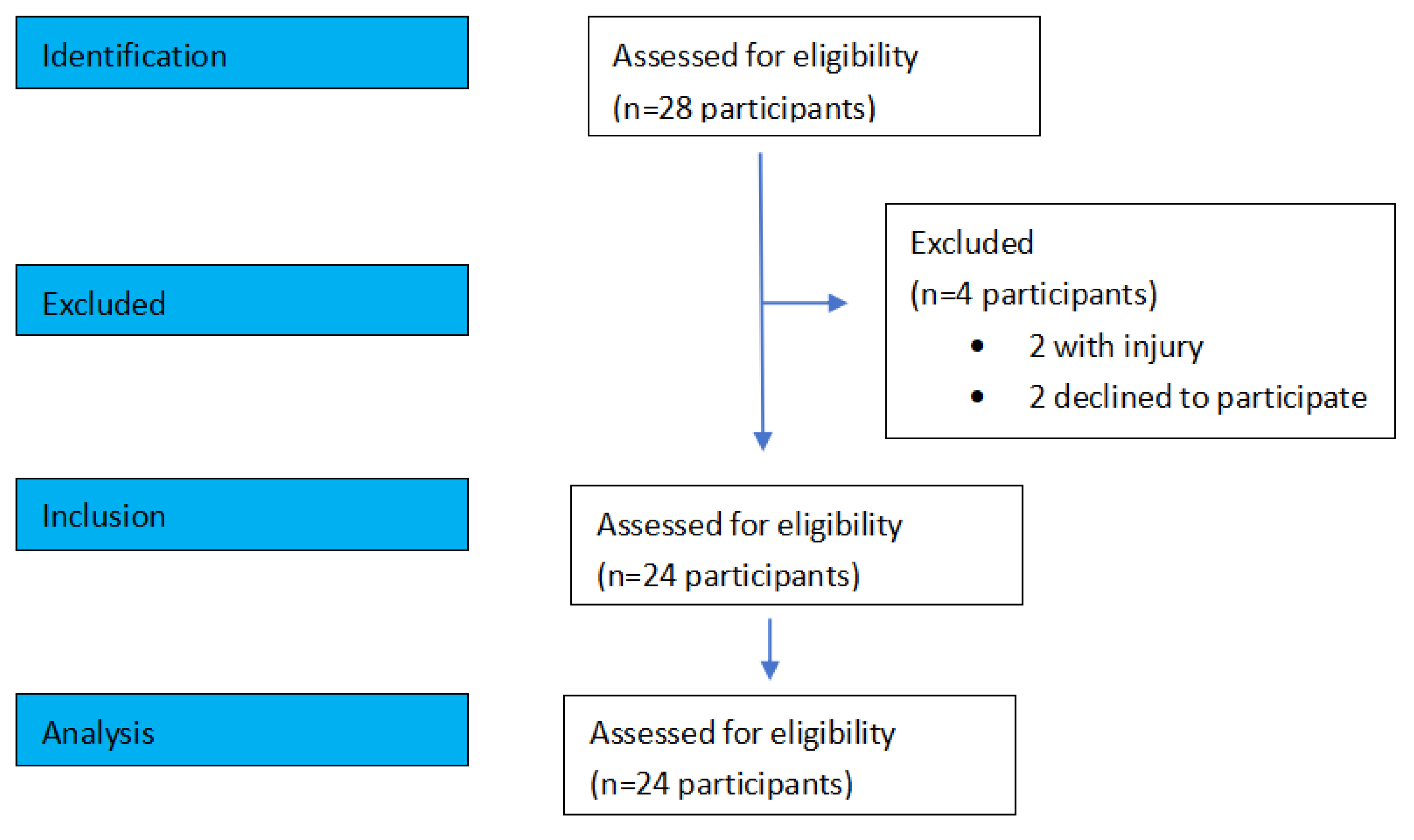
Participants were eligible for inclusion if they were enrolled in the 2025 national air pistol shooting training camp, which comprised elite athletes, including those selected for the Olympic team. There were no restrictions based on age or gender. Individuals were excluded if they had sustained a recent injury or were currently undergoing rehabilitation. A total of 24 elite air pistol athletes (14 males and 10 females) were recruited and completed the study, with no attrition or post-recruitment exclusions. The participant flow is illustrated in
Figure 1. All participants held national master or international master qualifications, representing the highest competitive level in the discipline. Demographic and training characteristics are summarised in
Table 1.
2.4. Testing Procedures
The testing protocol consisted of two components, including upper-limb-specific strength assessment and specialized shooting performance assessment using a laser electronic target system.
2.5. Upper-Limb-Specific Strength Assessment
Upper-limb task-specific strength was assessed using a Vald Dynamo handheld dynamometer (VALD Performance, Brisbane, Australia), which records force-time data at a sampling frequency of 1000 Hz. Strength assessments were performed over two consecutive days during the second week of the national training camp in a dedicated strength and conditioning laboratory at the Ningbo training facility. All testing was conducted during the scheduled morning laboratory testing period to minimize potential diurnal variation. Testing was completed before any high-intensity physical training on the same day, and no additional upper-limb strength training was performed before the strength assessments. During the week before the selection competition, all athletes followed the same standardized pre-competition training schedule arranged by the national team, including technical shooting practice, light physical preparation, coaching supervision, nutrition support, and recovery management.
Before formal testing, athletes completed a standardized warm-up consisting of 5 min of light upper-limb mobility exercises, dynamic shoulder and elbow movements, and progressive submaximal contractions of the tested muscle groups. Athletes then performed two submaximal familiarization trials for each muscle action to ensure that they understood the testing position, direction of force application, and verbal instructions. Familiarization trials were not included in the statistical analysis. Based on the functional demands of air pistol shooting, nine upper-limb muscle actions were selected for testing: handgrip, elbow flexion, elbow extension, shoulder flexion, shoulder extension, shoulder abduction, shoulder adduction, shoulder internal rotation, and shoulder external rotation. For each muscle action, isometric peak force and rate of force development were measured. All tests were performed on the dominant shooting arm, defined as the arm used by the athlete during official air pistol competition. Only the shooting-side limb was assessed because air pistol shooting is a unilateral task, and the shooting arm is primarily responsible for pistol stabilization, aiming, and trigger control during competition. Therefore, the shooting-side limb was considered the most functionally relevant limb for evaluating task-specific strength characteristics related to shooting performance. During testing, athletes maintained a standardized shooting-related posture to simulate the postural control demands of pistol aiming and holding. The examiner stabilized the trunk and adjacent body segments to minimize compensatory movement and ensure that force was produced primarily by the target muscle action. The dynamometer was positioned perpendicular to the tested segment at a standardized anatomical location for each movement. Standardized testing positions and force application directions were used for all muscle actions to ensure consistency across participants and facilitate reproducibility of the testing protocol.
For each muscle action, athletes completed three maximal voluntary isometric contractions. Each contraction lasted approximately 5 s, and athletes were instructed to push “as hard and as fast as possible” from the onset of contraction. A passive rest interval of at least 60 s was provided between repeated trials of the same muscle action, and a 2 min rest interval was provided between different muscle actions to minimize fatigue effects. The highest valid peak force value across the three trials was retained for subsequent analysis. Trials were repeated if clear compensatory movement, loss of testing position, or incorrect force direction was observed.
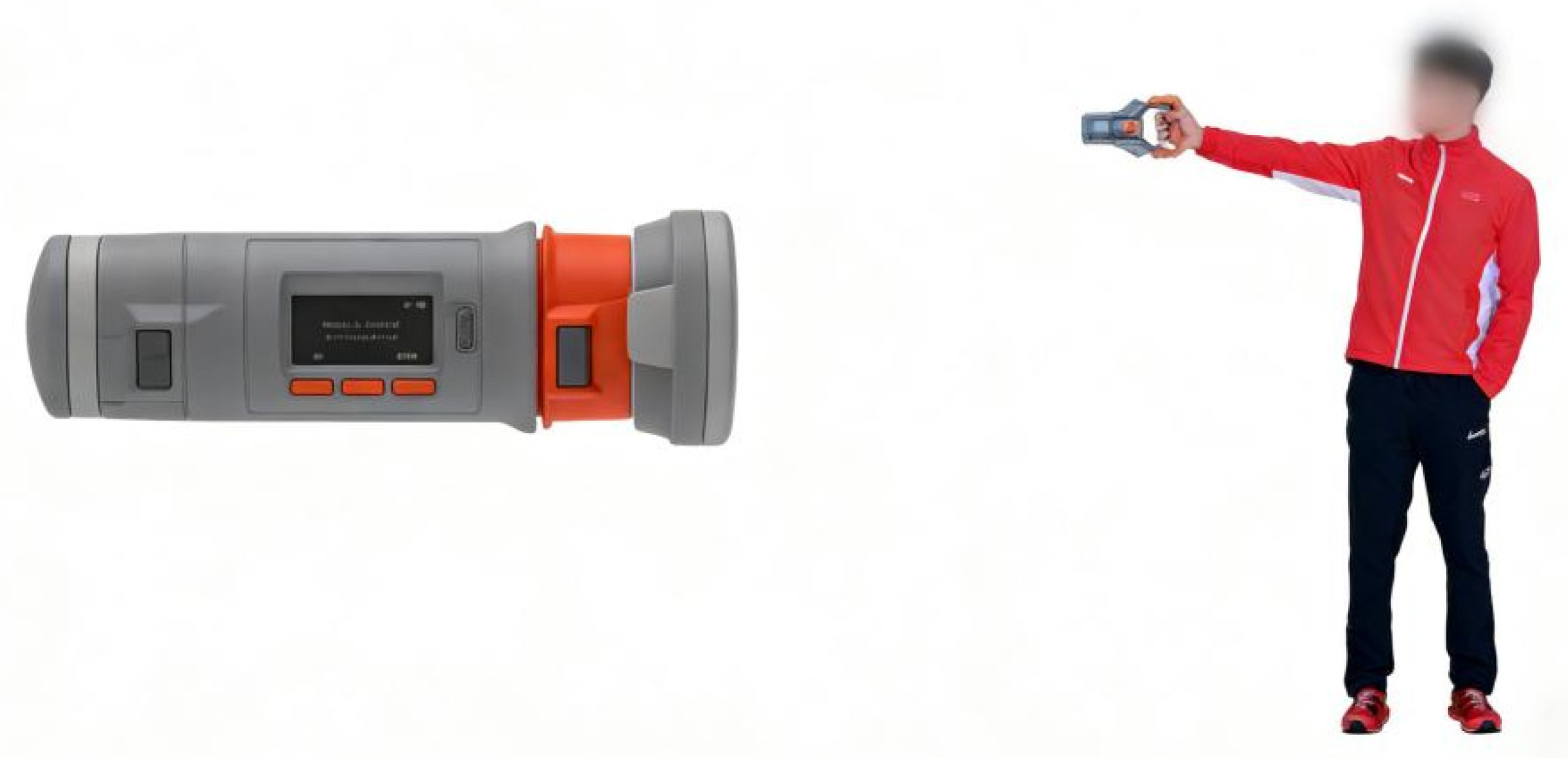
Peak force was defined as the highest force value recorded during the maximal voluntary isometric contraction. Rate of force development was calculated from the force-time curve as the maximal slope of force increase after contraction onset. Force onset was defined as the first point at which force exceeded baseline force by 5 N and continued to rise. RFD was calculated using the same algorithm for all muscle actions to ensure consistency across variables. The final RFD value retained for analysis was obtained from the valid trial with the highest peak force. The testing equipment and testing postures are illustrated in
Figure 2.
2.6. Specialized Shooting Performance Assessment Using a Laser Electronic Target
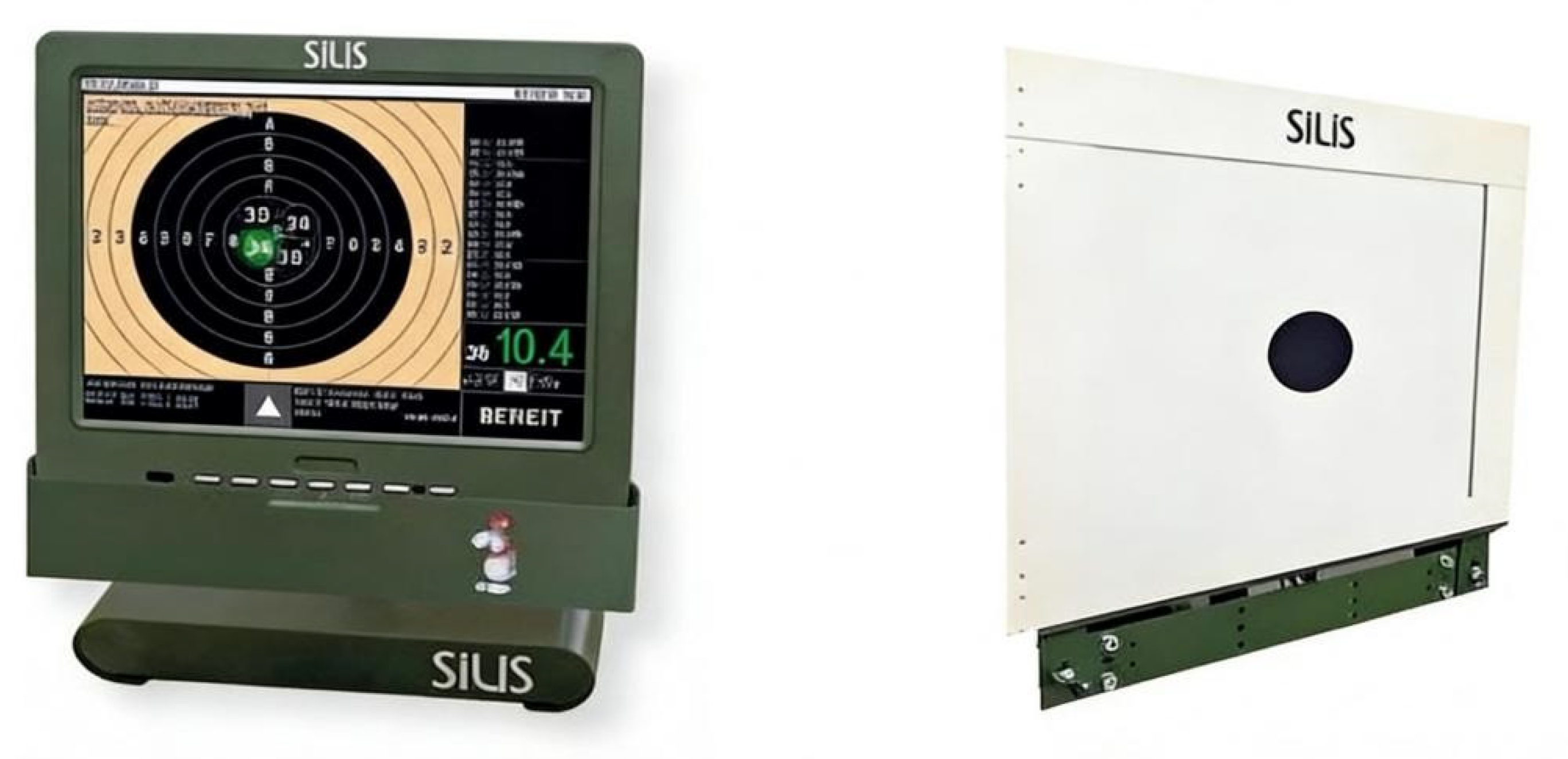
Shooting performance data were obtained from the 2025 international competition selection event. The competition was held at the Guangxi Santang Sports Training Base in China, and the shooting competition took place one week after the completion of the upper-limb-specific strength assessments. A SIUS laser electronic target system manufactured in Switzerland was used during the competition, as shown in
Figure 3.
Competition results were used as analytical data because all athletes competed under identical testing conditions, including the same shooting range and environmental settings. In addition, competition settings are more likely to elicit maximal competitive motivation from athletes compared with simulated testing conditions, thereby providing a more accurate reflection of athletes’ true competitive performance.
2.7. Sampling and Sample Size
A total population purposive sampling approach was undertaken.
2.8. Attempts to Reduce Bias
Several measures were taken to reduce potential sources of bias. All athletes followed a standardized training schedule under the supervision of the same coaching and support staff throughout the training camp. No major illness outbreaks or disruptions to training or competition occurred during the study period. Testing conditions, scoring technology, and environmental conditions were kept consistent for all participants.
2.9. Statistical Analysis
All statistical analyses were performed using SPSS AU software (version 25.0, China). No missing data were observed because all 24 participants completed both the strength assessments and the competition from which shooting performance scores were derived; therefore, no imputation or exclusion procedures were required. Data were screened for outliers and distribution characteristics prior to analysis. Descriptive statistics are presented as mean ± standard deviation (SD). Normality of continuous variables was assessed using the Shapiro–Wilk test and visual inspection of Q–Q plots. Pearson product–moment correlation coefficients were used for normally distributed variables, whereas Spearman rank-order correlation coefficients were used when the normality assumption was violated.
Because male and female athletes were analyzed together, all strength predictors were standardized within sex before regression analysis to reduce the potential confounding effect of sex-related differences in absolute force production. Multicollinearity among the 18 predictors was assessed using variance inflation factors (VIFs) and condition indices in the ordinary least squares model. Substantial multicollinearity was observed; therefore, ridge regression was used to stabilize coefficient estimates while retaining theoretically relevant predictors.
The ridge parameter k was selected by inspecting coefficient stabilization across k values from 0.01 to 0.10. The final model was estimated at k = 0.02 because coefficient trajectories were stabilized and all ridge-adjusted VIF values were below 10. Ridge regression results were interpreted exclusively using standardized ridge coefficients, coefficient direction, relative coefficient magnitude, and ridge-adjusted variance inflation indices. Predictor-specific statistical significance was not inferred because ridge coefficients are biased estimates and do not support ordinary least-squares style hypothesis testing. Individual OLS-style t tests and p values were not used to interpret ridge coefficients. Sensitivity analysis was conducted across k values from 0.01 to 0.10 to evaluate the stability of coefficient direction.
3. Results
3.1. Model Validation Results
Descriptive statistics for the upper-limb task-specific strength variables are presented in
Table 2 and
Table 3. Before fitting the ridge regression model, ordinary least squares (OLS) diagnostics were performed to evaluate multicollinearity among the 18 strength predictors. The OLS diagnostics demonstrated substantial multicollinearity, thereby supporting the use of ridge regression for coefficient stabilization. Subsequent interpretation focused exclusively on the standardized ridge model.
3.2. Results of the Ridge Regression Model
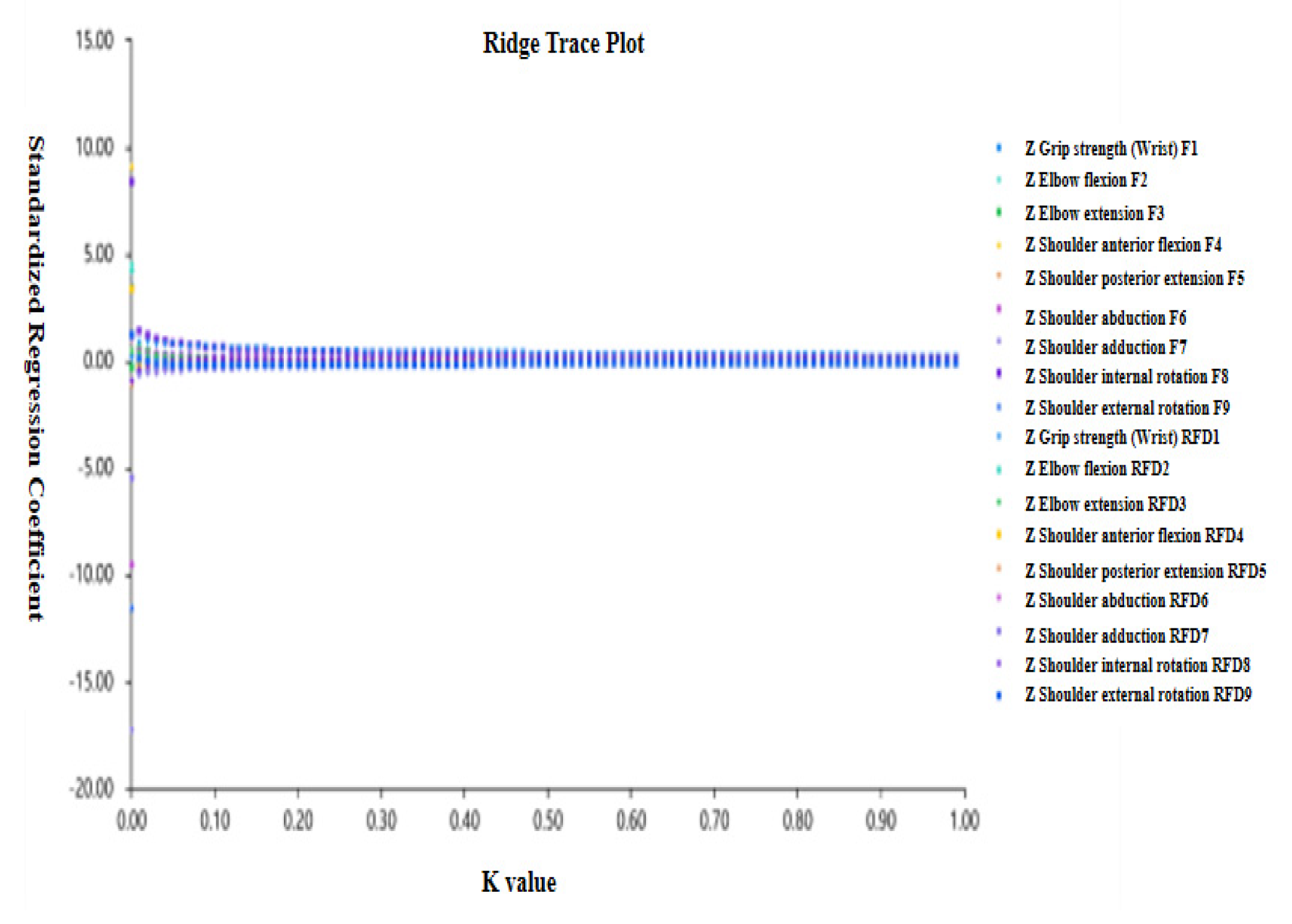
Ridge regression analysis was performed using peak force and rate of force development values obtained from different joint actions as independent variables, with total shooting score from the selection competition as the dependent variable. The resulting ridge trace plot is presented in
Figure 4. After comprehensively considering variance inflation factors and the appropriate range of the regularization parameter K, a value of K = 0.02 was selected.
The final ridge regression model was estimated at K = 0.02 (
Table 4). Because ridge regression introduces bias to reduce coefficient variance under multicollinearity, individual OLS-style
t tests and
p values were not used to interpret predictor-specific effects. Instead, the final model was interpreted using standardized ridge coefficients, coefficient direction, relative coefficient magnitude, and ridge-adjusted variance inflation indices.
Prior OLS diagnostics demonstrated substantial multicollinearity among the 18 strength predictors, with a maximum VIF of 147.20 and a maximum condition index of 64.98, thereby supporting the use of ridge regression. After ridge regularization at k = 0.02, the maximum ridge-adjusted VIF decreased to 7.74, indicating improved coefficient stability. The in-sample R2 of the standardized ridge model was 0.672. Given the small sample size and high predictor-to-sample ratio, the model was interpreted as exploratory rather than confirmatory. The largest positive ridge coefficients were observed for handgrip RFD, elbow flexion peak force, shoulder external rotation RFD, elbow extension peak force, and elbow flexion RFD. The largest negative ridge coefficients were observed for shoulder internal rotation RFD, handgrip peak force, shoulder extension RFD, elbow extension RFD, and shoulder internal rotation peak force. These coefficient patterns indicate that shooting performance was associated with a coordinated profile of upper-limb force and rapid force production rather than a simple increase in all strength variables.
In practical terms, the ridge coefficient pattern suggests that elite air pistol performance may be linked to a balanced profile of upper-limb strength characteristics rather than uniformly greater strength across all muscle actions. Variables showing the largest positive standardized ridge coefficients included handgrip RFD, elbow flexion peak force, and shoulder external rotation RFD, whereas shoulder internal rotation RFD, handgrip peak force, and shoulder extension RFD showed the largest negative coefficients. These findings may indicate that coaches should consider monitoring both force-producing capacity and the coordination of rapid force generation across relevant muscle groups. However, given the exploratory nature of the present model and the small sample size, these observations should be interpreted cautiously and should not be viewed as direct training prescriptions.
4. Discussion
The present findings partially supported our hypothesis. Ridge regression revealed distinct coefficient patterns across several task-relevant strength variables, supporting the view that elite air pistol performance may be related to upper-limb strength balance and neuromuscular regulation. However, the direction of several standardized ridge coefficients did not fully align with the initial agonist-versus-antagonist hypothesis, indicating that the relationship between upper-limb strength characteristics and shooting performance is more complex than a simple distinction between beneficial agonist strength and detrimental antagonist activation. Therefore, the present findings should be interpreted as exploratory evidence that strength balance, rather than generalized strength enhancement, may be relevant to elite air pistol performance.
4.1. Influence of Coordinated Upper-Limb-Specific Strength on Shooting Performance
Identifying the role of upper-limb-specific strength and rate of force development provides an important extension to existing performance models, particularly in precision sports such as air pistol shooting. Previous studies examining the relationship between strength characteristics and shooting performance have predominantly relied on simple linear correlation or regression approaches [
1,
10]. Although these methods offer initial insights, they frequently overlook the substantial multicollinearity that exists among strength-related variables, which is inherent to coordinated motor tasks [
14].
To address this limitation, ridge regression was employed in the present study. The results revealed pronounced multicollinearity among upper-limb strength indicators in elite air pistol athletes. When multicollinearity is present, ordinary least squares estimation can yield unstable coefficients and reduce model reliability [
14]. Ridge regression mitigates this issue by introducing a regularization parameter, allowing for a small bias while reducing coefficient variance and improving model stability [
15]. With the regularization parameter set to 0.02, the present model demonstrated improved stability and interpretability, thereby providing a more robust analytical framework for examining the influence of specific strength variables on shooting performance.
The findings indicate that upper-limb-specific strength plays a significant role in shooting performance, which aligns with the biomechanical characteristics of air pistol shooting that require highly coordinated neuromuscular control. During pistol aiming and triggering, muscle groups responsible for handgrip, elbow stabilization, and shoulder positioning operate in a tightly coupled manner under central nervous system regulation [
16,
17]. Efficient pistol raising and aiming are characterized by rapid yet controlled movements, which enhance postural stability and improve shooting accuracy [
4].
Within the final ridge model, a mixed pattern of standardized coefficients was observed across peak force and RFD variables. The largest positive standardized ridge coefficients were observed for handgrip RFD, elbow flexion peak force, and shoulder external rotation RFD, whereas the largest negative standardized ridge coefficients were observed for shoulder internal rotation RFD, handgrip peak force, and shoulder extension RFD. These findings suggest that elite air pistol performance may depend less on generalized upper-limb strength and more on the task-specific regulation of force production and force timing. Rate of force development, in particular, reflects the capacity of the neuromuscular system to generate force rapidly and has been shown to play a critical role in tasks requiring postural control and movement precision [
18,
19]. Higher rate of force development may reduce force onset delay and allow athletes to better counteract perturbations during the triggering phase.
In contrast, shoulder flexion, adduction, and external rotation peak force, as well as shoulder extension, adduction, and internal rotation RFD, demonstrated negative standardized ridge coefficients within the final model [
20]. These coefficient patterns suggest that greater force capacity or faster force development in some muscle actions may not necessarily be advantageous for precision shooting. Negative coefficients should not be interpreted as evidence that these muscle groups are detrimental per se. Rather, they may indicate that excessive or poorly timed activation of these muscles can increase co-contraction, joint stiffness, and neuromuscular noise during the aiming–holding–triggering sequence. In air pistol shooting, small involuntary oscillations of the upper limb may directly influence muzzle stability and shot accuracy, particularly during the final aiming and triggering phases [
4,
20,
21]. This mechanism may help explain why selected shoulder and handgrip variables showed negative ridge coefficients in the present model. Previous research has shown that excessive force production can impair movement accuracy in precision tasks by increasing neuromuscular noise and physiological tremor [
22].
4.2. Synergistic Effects of Psychological, Technical, and Physical Factors on Shooting Performance
Shooting performance emerges from the synergistic interaction of psychological stability, technical execution, and physical capacity. Advantages in any single dimension are insufficient to sustain elite level performance. Instead, the dynamic balance and mutual reinforcement among these factors enable athletes to maintain high accuracy under competitive pressure [
16].
Neurophysiological studies have demonstrated that elite shooters exhibit increased alpha band activity in the prefrontal cortex during shooting tasks, which is associated with enhanced attentional control and emotional regulation [
23]. Elite athletes also show reduced visual dependency when performing under stress, reflecting more efficient sensorimotor integration [
7]. Conversely, elevated psychological stress and anxiety can increase sympathetic nervous system activation, leading to heightened physiological tremor and reduced postural stability, which negatively affect pistol control and aiming accuracy [
21].
Elite shooters tend to display superior autonomic nervous system regulation, characterized by effective parasympathetic modulation and balanced sympathetic activation. This autonomic profile contributes to smaller heart rate fluctuations and greater physiological stability during competition [
24,
25]. Under stress conditions, rapid changes in autonomic activity can alter neuromuscular function. Athletes with higher rate of force development are better able to adapt to these changes, allowing muscles to respond quickly and maintain stability during critical moments of performance.
Technical execution in shooting is also deeply intertwined with physical capacity. Well designed physical training programs enhance specific strength, endurance, and neuromuscular control, thereby optimizing technical efficiency during aiming and triggering. A recent meta-analysis identified gun holding stability, aiming accuracy, trigger control precision, aiming time, and postural balance as key determinants of shooting performance [
26]. While sufficient upper-limb strength may contribute to weapon stability, excessive activation of the hand, forearm, or shoulder musculature may impair fine motor control and reduce shooting accuracy [
9]. This interpretation is consistent with the present finding that some strength and RFD variables were negatively associated with shooting performance. Rather than suggesting that these muscles are unimportant, these results indicate that elite shooting may depend on precise regulation of muscle activation and agonist–antagonist coordination. Training approaches emphasizing coordination and sensorimotor integration have been shown to improve movement consistency and precision in elite shooters [
27], and such adaptations may be mediated by neuroplastic changes that enhance neural control over muscular activity [
28].
In summary, elite shooting performance depends on the multidimensional synergy of psychological stability, technical execution, and physical capacity. Psychological regulation supports efficient neuromuscular functioning, while shooting-specific strength contributes to technical stability when appropriately balanced. Together, these factors form a dynamic system that underpins high level competitive performance in air pistol shooting.
4.3. Limitations and Future Directions
Although the present study provides preliminary evidence regarding the association between upper-limb task-specific strength balance and shooting performance in elite air pistol athletes, several limitations should be acknowledged. First, the sample size was restricted to 24 participants because of the limited number of elite athletes available. Although this sample represented a rare group of national-level air pistol athletes, the inclusion of 18 predictors in only 24 athletes created a high predictor-to-sample ratio and increased the risk of overfitting and unstable coefficient estimation. Ridge regression was used to reduce variance inflation and improve coefficient stability; however, it cannot fully overcome the limitations imposed by small sample size. Therefore, the present findings should be considered preliminary and require validation in larger independent cohorts. Consequently, the observed coefficient patterns should be interpreted as associations within an exploratory ridge-regression model and should not be considered evidence that modifying specific strength characteristics will necessarily improve shooting performance. Additionally, the sample comprised highly supported elite athletes with access to substantial resources, who may exhibit greater motivation and psychological resilience than non-elite or less-supported populations.
Second, as an observational study, causality cannot be inferred. The observed associations may also have been influenced by unmeasured confounding variables, including recent training load, injury history, handedness, repeated exposure to testing procedures, psychological state on the day of assessment, sleep quality, nutritional status, and equipment-related factors such as pistol configuration and grip adjustment. Because the competition was conducted in a regulated indoor shooting range, wind exposure was not a relevant external confounder; however, subtle environmental and equipment-related factors may still have influenced performance. Third, although the Vald Dynamo handheld dynamometer has demonstrated acceptable reliability and validity in prior studies, potential measurement bias inherent to handheld dynamometry (e.g., examiner strength and positioning consistency) cannot be entirely ruled out.
Therefore, the study focused solely on associative relationships and did not examine the effects of targeted strength training interventions or the underlying physiological and neuromuscular mechanisms driving these associations. Future research should aim to recruit larger samples, incorporate additional variables (e.g., training load monitoring, handedness assessment, and objective measures of psychological and recovery states), and employ longitudinal or randomised controlled intervention designs to establish causal relationships. Such studies would enable the development of more robust and comprehensive models describing the interaction between upper-limb strength characteristics, confounding factors, and shooting performance, ultimately informing evidence-based training prescriptions for air pistol athletes.
5. Conclusions
This study suggests that coordinated upper-limb task-specific strength balance is associated with competitive performance in elite air pistol athletes. Using ridge regression to address substantial multicollinearity, the results showed that shooting performance was related to distinct positive and negative coefficient patterns across upper-limb peak force and RFD variables. The largest positive standardized ridge coefficients were observed for handgrip RFD, elbow flexion peak force, and shoulder external rotation RFD, whereas the largest negative standardized ridge coefficients were observed for shoulder internal rotation RFD, handgrip peak force, and shoulder extension RFD.
These findings indicate that elite air pistol performance may depend on the regulation and coordination of upper-limb force production rather than maximal strength alone. Monitoring agonist–antagonist strength balance may help inform individualized conditioning and athlete monitoring strategies. However, because the present findings are based on an observational design and an exploratory ridge regression analysis, they should be interpreted as associations rather than evidence of causality. Longitudinal and intervention studies are required to determine whether modifying specific strength characteristics can improve shooting performance.




 ,
,