Article

Changes in Pitching Performance After Ulnar Collateral Ligament Reconstruction Differ Among Major League Baseball Starting and Relief Pitchers

1
Brooks College of Health Professions, Trine University, Fort Wayne, IN 46845, USA
2
Patriot Performance Laboratory, Frank Pettrone Center for Sports Performance, George Mason University, Fairfax, VA 22030, USA
3
Sport, Recreation, and Tourism Management, George Mason University, Fairfax, VA 22030, USA
4
Department of Nutritional Sciences, University of Connecticut, Storrs, CT 06269, USA
5
Bolton & Menk, Fargo, ND 58104, USA
6
School of Medicine and Public Health, University of Wisconsin—Madison, Madison, WI 53707, USA
7
Sports Medicine, Mayo Clinic Health System, La Crosse, WI 54601, USA
8
Exercise & Sports Science Department, University of Wisconsin–La Crosse, La Crosse, WI 54650, USA
*
Author to whom correspondence should be addressed.
Appl. Sci. 2026, 16(12), 5846; https://doi.org/10.3390/app16125846 (registering DOI)
Submission received: 8 May 2026 / Revised: 3 June 2026 / Accepted: 5 June 2026 / Published: 10 June 2026

Abstract

The primary aim of this study was to examine pitching performance metrics before and after ulnar collateral ligament reconstruction (UCLR) among Major League Baseball (MLB) starting and relief pitchers. The following information was extracted from the “Tommy John Surgery List” database regarding UCLR surgeries among MLB pitchers: UCLR date, pitcher type (starting pitcher, relief pitcher), and age at time of UCLR. Pitching performance metrics were extracted from the Baseball Savant online platform for the two seasons immediately prior to UCLR (pre) and the two seasons immediately following returning to pitching after UCLR (post). Fifty-nine pitchers were included in this study (29 starting pitchers, 30 relief pitchers). The outcome measures included the number of pitches thrown, earned run average (ERA), walks plus hits per inning pitched (WHIP), strikeout percentage, whiff percentage, walk percentage, batting average against, ground ball percentage, and fastball velocity. There was a pitcher type-by-time interaction effect for ERA (p = 0.01; η2 = 0.12) and WHIP (p = 0.01; η2 = 0.12). Starting pitcher ERA increased from 3.68 to 4.40 from pre- to post-surgery, while relief pitcher ERA decreased from 4.47 to 3.90. In addition, starting pitcher WHIP increased from 1.22 to 1.29 from pre- to post-surgery, while relief pitcher WHIP decreased from 1.38 to 1.28. There was a main effect of time for pitches thrown (p = 0.04; η2 = 0.07). Significant differences between starting and relief pitchers were observed for changes in ERA and WHIP following UCLR, whereas no pitcher type-by-time interactions were observed for the remaining performance metrics. Both starting and relief pitchers threw fewer pitches following UCLR, while fastball velocity and other key pitching performance metrics remained largely unchanged.

1. Introduction

Recent evidence indicates that throwing-related arm injuries are increasing among baseball pitchers, particularly injuries involving the ulnar collateral ligament (UCL) of the elbow [1,2,3]. Among Major League Baseball (MLB) pitchers, UCL injuries frequently require surgical intervention in the form of ulnar collateral ligament reconstruction (UCLR), commonly referred to as “Tommy John surgery” [1,4]. The increasing prevalence of UCLR has heightened interest in understanding not only return-to-play outcomes but also the extent to which pitchers regain their pre-injury performance levels following surgery. Such information is important for informing rehabilitation strategies, workload management decisions, and performance expectations among players, coaches, and sports medicine professionals [1,4].
A critical aspect of evaluating performance after UCLR is the assessment of key pitching metrics, including fastball velocity, earned run average (ERA), and walks plus hits per inning pitched (WHIP), along with variables related to pitching workload (e.g., pitches thrown, innings pitched) [5,6,7,8]. These variables provide insight into a pitcher’s effectiveness and durability, both of which are essential for long-term success. While some pitchers exhibit full recovery and even improved performance post-surgery, others may experience declines due to residual post-operative deficits, altered throwing biomechanics, or prolonged recovery timelines [7,9,10,11]. Identifying specific performance trends and potential risk factors for post-UCLR decline could enhance rehabilitation strategies and improve player outcomes.
Several studies have demonstrated that UCLR is associated with high return-to-play rates among MLB pitchers, with most reports indicating that more than 80% of pitchers successfully return to competition [7,8,12,13,14,15,16,17]. However, successful return to play does not necessarily equate to a full restoration of pitching performance. Moreover, preliminary evidence is mixed regarding metrics more indicative of performance-related outcomes or effectiveness following return-to-play after UCLR. For example, there have been reports that pitching performance metrics may reflect poorer performance or effectiveness in the years following UCLR [8,9,18,19], whereas others have found minimal differences in pitching performance metrics such as ERA and WHIP [7,10]. Given the variability in reported outcomes, further research is necessary to elucidate the factors that influence post-UCLR pitching performance, particularly beyond the physical throwing abilities, with a greater focus placed on pitching effectiveness and competitive outcomes.
One factor that warrants further investigation is pitcher role. Starting pitchers and relief pitchers are exposed to substantially different workload demands, with starting pitchers typically throwing more pitches, covering more innings, and experiencing greater cumulative workload stress over the course of a season [20]. These differences may influence the recovery process and the extent to which pitchers regain pre-injury performance following UCLR. Despite these distinct workload characteristics, relatively few studies have directly compared post-UCLR performance outcomes between starting and relief pitchers.
Therefore, the primary aim of this study was to examine pitching performance metrics before and after UCLR, among MLB starting and relief pitchers. By analyzing longitudinal performance data, this study aims to provide a comprehensive understanding of changes in pitching performance following UCLR among MLB pitchers. Our findings offer valuable insights for sports medicine professionals, coaches, and players navigating the recovery process following UCLR. As a secondary aim, we examined the extent to which pitcher age at the time of UCLR is related to changes in pitching performance after UCLR. Given the substantially greater pitching volume and endurance demands placed on starting pitchers compared to relief pitchers, we hypothesized that starting pitchers would demonstrate less favorable changes in pitching performance following UCLR, particularly for metrics related to pitching effectiveness (e.g., ERA and WHIP). We further hypothesized that both groups would exhibit reductions in pitching workload following surgery.

2. Materials and Methods

2.1. Study Design

For this study, information regarding UCLR surgeries among MLB pitchers was extracted from the “Tommy John Surgery List” database [21]. The extracted information from the Tommy John Surgery List database included the UCLR date, pitcher type (starting pitcher, relief pitcher), and pitcher age at the time they underwent UCLR. Pitching performance metrics were extracted for the two seasons immediately prior to UCLR (pre-1, pre-2) and the two seasons immediately following returning to pitching after UCLR (post-1, post-2). Pitchers who underwent UCLR surgery from 2017 to 2022 were eligible for inclusion. The Baseball Savant platform was created in 2015, and statistics are published from 2015 to present. For the current study, the 2017 season was selected as the starting point with 2022 serving as the ending point, thereby permitting inclusion of two full seasons post-UCLR (2023 and 2024 seasons). Pitcher type (starting or relief) was determined based on the player’s predominant career role and designation for that season.

2.2. Subjects

The Tommy John Surgery List is a publicly available open database that contains entries of all known UCLR surgeries among professional and collegiate baseball players from 1974 to present. The database includes players of all positions; however, for this project, only information for MLB pitchers was extracted. For pitchers to be included in the analysis, a minimum threshold of 200 pitches thrown was set for each of the four seasons (i.e., two seasons prior to (pre-1, pre-2) and following (post-1, post-2) UCLR). The pitch minimum was set in accordance with prior research to ensure that pitchers had thrown enough pitches in a season to achieve fairly stable performance metrics [7,8,10,22,23]. Because the data used for the present analysis were publicly available and de-identified, the Mayo Clinic Institutional Review Board determined the study to be exempt from review, and informed consent from participants was therefore not required in accordance with the Code of Federal Regulations, 45 CFR 46.102.

2.3. Pitching Metrics

Pitching performance/workload metrics were extracted from Baseball Savant, an online platform created by the MLB in 2015 [24]. Extracted variables included: number of pitches thrown, ERA (ERA = [earned runs/innings pitched] × 9), WHIP (WHIP = [walks + hits]/innings pitched), strikeout percentage (K% = [strikeouts/batters faced] × 100), whiff percentage (whiff% = [batter swings and misses/total swings] × 100), walk percentage (BB% = [walks/batters faced] × 100), batting average against (BAA = hits allowed/at-bats against), ground ball percentage (GB% = [ground balls/total batted balls] × 100), and fastball velocity. The selected metrics are commonly analyzed to assess different aspects of pitching performance and workload [5,7,10].

2.4. Statistical Analysis

We conducted preliminary paired t-tests to determine whether significant differences existed between the pre-2 and pre-1 time points or between the post-1 and post-2 time points. No significant differences were observed for any variable of interest (p = 0.10–0.70). Therefore, variables were averaged across the two seasons prior to UCLR (pre) and the two seasons following UCLR (post) to provide more stable estimates of pitching performance and reduce model complexity.
To address our primary aim, separate mixed-model analyses of covariance (ANCOVAs) were conducted for each variable of interest. Statistical models included a between-subjects factor of pitcher type (starting pitcher, relief pitcher), a within-subjects factor of time (pre, post), and age at the time of UCLR as a covariate. Assumptions related to residual normality were evaluated based on visual inspection of Q-Q plots and were considered acceptable across variables. Homogeneity of variance was evaluated using Levene’s test. Although unequal variances were observed for several pre-UCLR variables, analyses were considered sufficiently robust given the balanced and comparable sample sizes between pitcher groups. Homogeneity of regression slopes was also evaluated and deemed acceptable, as no significant pitcher type-by-age interactions were observed. Partial eta squared (η2) effect size statistics were generated to quantify the magnitude of observed effects and interpreted as follows: 0.01 = small effect, 0.06 = medium effect, and 0.14 = large effect [25]. Because the variables of interest represented related aspects of pitching performance, formal corrections for multiple comparisons across outcomes were not applied.
An independent t-test was conducted to compare age at the time of UCLR between starting and relief pitchers. To address our secondary aim, percent changes were calculated for each variable of interest (percent change = 100 × [post − pre]/pre) and correlated with pitcher age at the time of UCLR using Pearson product-moment correlations. Correlation coefficients (r values) were interpreted as follows: 0.10–0.30 = weak relationship, 0.30–0.50 = moderate relationship, and 0.50–0.70 = strong relationship [26]. Ninety-five percent confidence intervals (95% CIs) were also generated to provide additional information regarding the precision of the observed correlation coefficients. An alpha level of 0.05 was used for all null hypothesis significance tests. Statistical analyses were conducted using JASP software (Version 0.19.2).

3. Results

A total of 145 MLB pitchers underwent UCLR over the study period, with 59 pitchers (starting pitchers: n = 29; relief pitchers: n = 30) meeting the inclusion criteria. The average age at the time of UCLR for the starting pitchers and relief pitchers was 28.1 ± 3.5 years and 27.0 ± 2.7 years, respectively (p = 0.20). Table 1 includes descriptive statistics for pitching metrics.
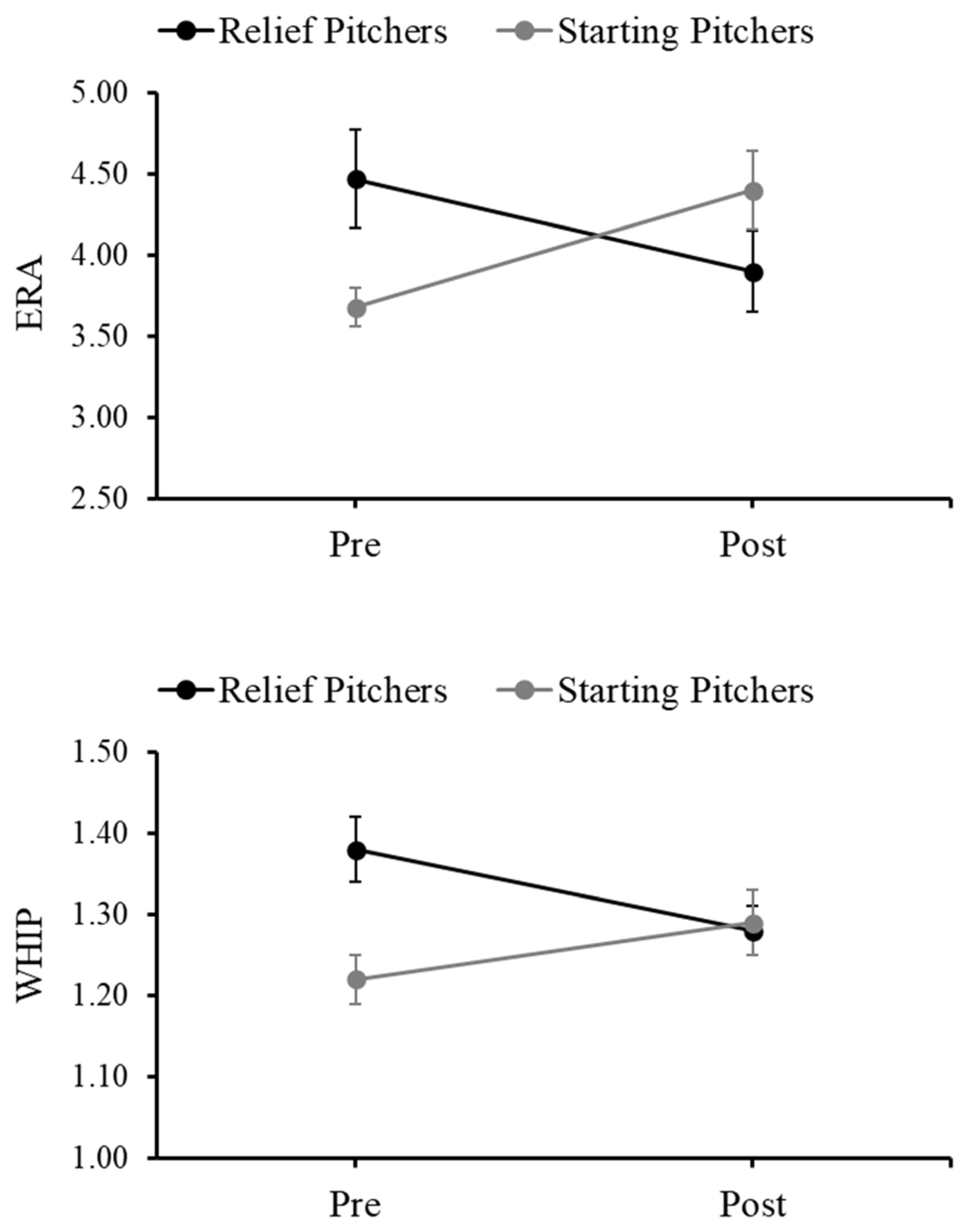
There was a pitcher type-by-time interaction effect for ERA (p = 0.01; η2 = 0.12) and WHIP (p = 0.01; η2 = 0.12) (Table 1; Figure 1). Starting pitcher ERA increased from 3.68 to 4.40 from pre- to post-UCLR, while relief pitcher ERA decreased from 4.47 to 3.90. In addition, starting pitcher WHIP increased from 1.22 to 1.29 from pre- to post-UCLR, while relief pitcher WHIP decreased from 1.38 to 1.28. There was no significant pitcher type-by-time interaction effect for any other pitching metric (p ≥ 0.14).
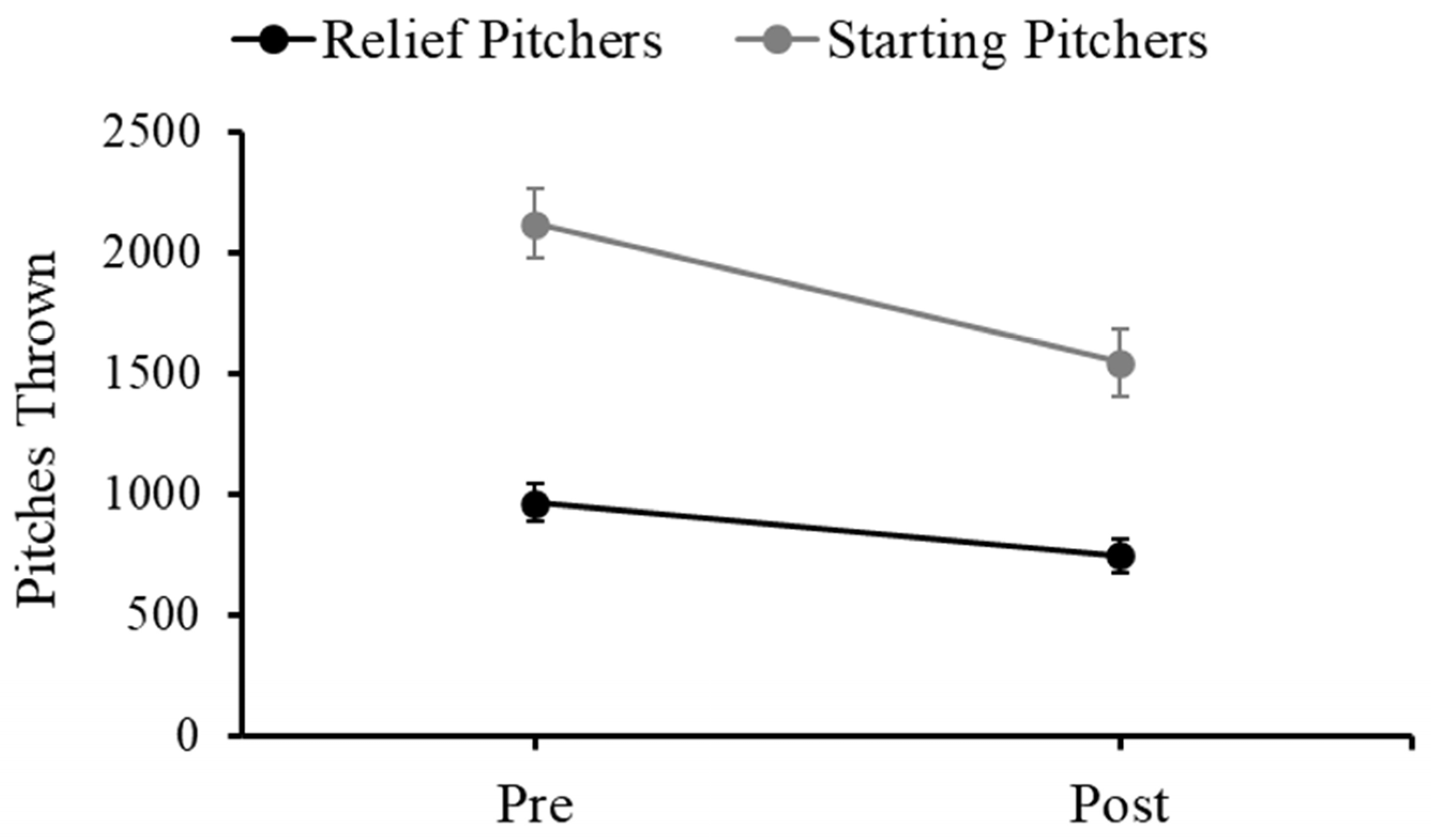
There was a main effect of time for pitches thrown (p = 0.04; η2 = 0.07). Starting pitchers and relief pitchers threw fewer pitches post-UCLR (Table 1; Figure 2).
There was a main effect of pitcher type for pitches thrown (p < 0.001; η2 = 0.50) and BB% (p = 0.003; η2 = 0.14) (Table 1). Starting pitchers threw more pitches and had a lower BB%, compared to relief pitchers.
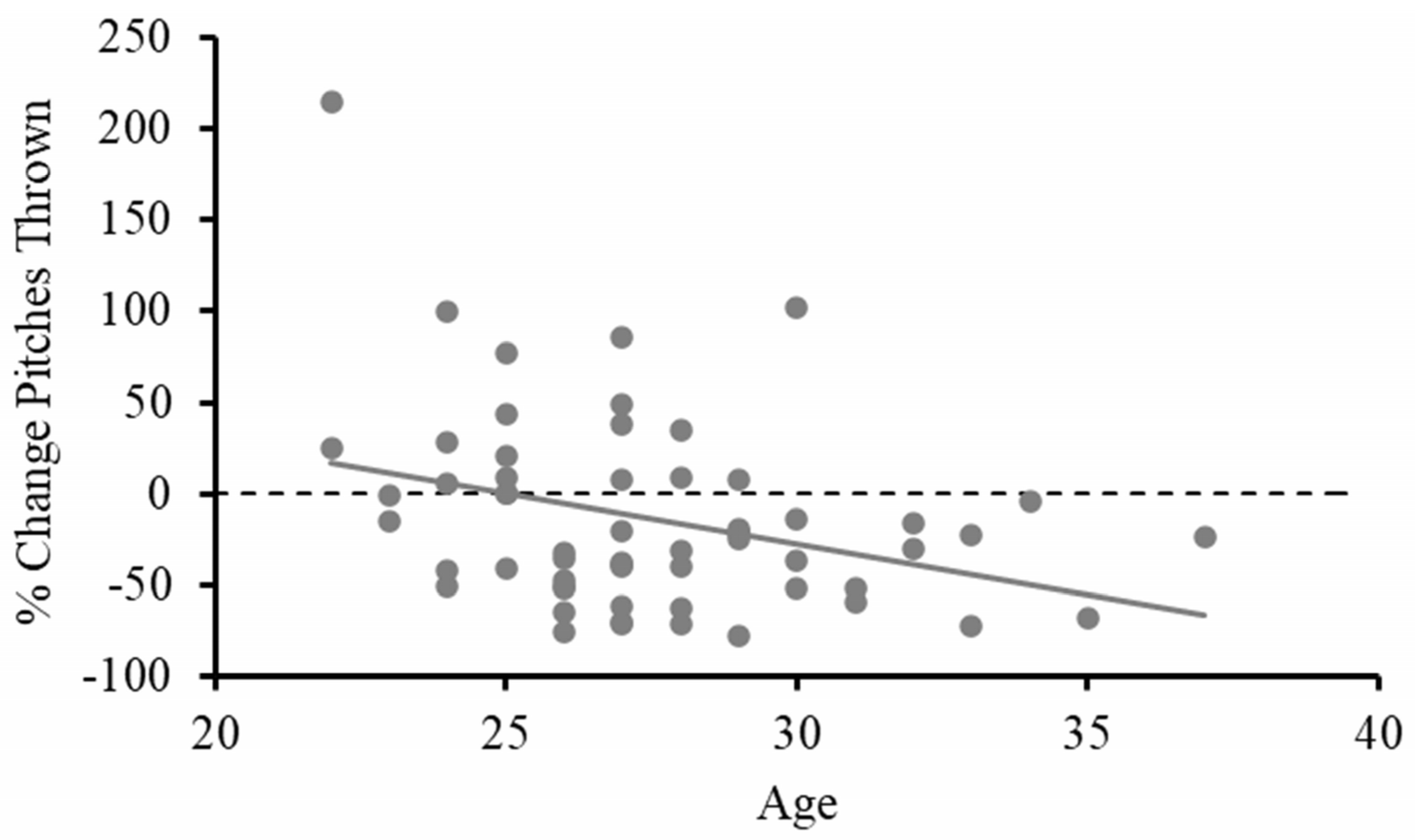
Lastly, pitcher age at the time of UCLR exhibited a weak, negative correlation with the percent change in pitches thrown from pre- to post-UCLR (r = −0.33; 95% CI: −0.54, −0.08; p = 0.01) (Figure 3). No other significant correlations were observed (p > 0.05).

4. Discussion

The primary aim of this study was to examine pitching performance metrics pre- and post-UCLR, among MLB starting and relief pitchers. Results showed starting pitchers exhibited increases in ERA and WHIP following UCLR, reflecting poorer pitching performance. In contrast, relief pitchers exhibited reductions in ERA and WHIP following UCLR, indicating that postoperative values were more favorable than preoperative values among those pitchers who successfully returned to MLB competition. However, these findings should not be interpreted as evidence that UCLR directly improved pitching performance. Multiple factors may have contributed to these observations, including selection bias among pitchers who returned to play, changes in role or workload following surgery, and normal variability in performance across seasons. Additionally, starting and relief pitchers both threw fewer pitches after undergoing UCLR, which reflects a reduction in workload volume. As a secondary aim, we examined the extent to which pitcher age at the time of UCLR is related to changes in pitching performance and workload after UCLR. Results showed a weak correlation, indicating that pitchers who underwent UCLR at an older age exhibited a greater workload reduction. However, pitcher age at the time UCLR was not significantly correlated with changes in any of the analyzed pitching performance metrics.
Previous studies examining changes in pitching performance metrics, such as ERA and WHIP, among MLB pitchers who have undergone UCLR report conflicting findings with various studies reporting that pitching performance returns to baseline, declines, or improves in the seasons after returning to pitching at the MLB level [5,7,9,10,18,19,27]. Importantly, the pitcher type-by-time interaction effects observed for both ERA and WHIP in the current study were associated with medium-to-large effect sizes (η2 = 0.12), suggesting that these differences may be practically meaningful despite the relatively modest absolute changes in the metrics themselves. Given that ERA and WHIP are widely used indicators of pitching effectiveness, even small shifts in these variables may influence player evaluation, roster decisions, and return-to-play expectations following UCLR. One prior study of pitching performance post-UCLR for MLB starting and relief pitchers [7] reported ERA and WHIP increased significantly in the first year after UCLR for starting pitchers, compared to the year prior to UCLR (ERA: pre = 4.36, post = 4.49; WHIP: pre = 1.35, post = 1.43); however, no significant changes were found among relief pitchers (ERA: pre = 4.05, post = 3.61; WHIP: pre = 1.48, post = 1.36) for the same time period [7]. Results from the current study support the previous findings of Marshall et al. [7] that starting pitchers may experience performance deficits after UCLR, and thus it is important to consider “pitcher type” when attempting to project a pitchers’ performance recovery post-UCLR.
The observed differences in pitching performance outcomes between starting pitchers and relief pitchers may be related to the distinct demands associated with these roles. Starting pitchers generally throw more pitches over a greater number of innings compared to relief pitchers [20]. However, because this was an observational study, the mechanisms underlying the divergent changes in ERA and WHIP cannot be determined. Factors such as workload demands, recovery trajectories, role modifications following return to play, and selection effects among pitchers who successfully returned to MLB competition may all have contributed to the observed findings. As a result, starting pitchers may face greater challenges related to workload tolerance and stamina when returning to competition following UCLR. For example, the 0.72 increase in ERA observed among starting pitchers following UCLR may represent a meaningful decline in run prevention ability over the course of a season, whereas the reduction in ERA and WHIP observed among relief pitchers suggests that performance outcomes following UCLR may differ according to pitching role. Consequently, consideration of effect size alongside statistical significance may provide a more complete understanding of the practical implications of post-UCLR performance changes. One possible explanation for the more favorable post-surgical outcomes observed among relief pitchers is the lower workload demands associated with that role. Consequently, a temporary transition to a relief role during the return-to-play process may represent a potential strategy worthy of future investigation. However, this hypothesis was not directly evaluated in the current study, and no conclusions can be drawn regarding its effectiveness. Future research should examine whether role-specific workload progression strategies influence performance recovery and long-term outcomes following UCLR.
Consistent with current findings, previous studies have reported that MLB pitchers tend to have a decreased workload (fewer pitches and fewer innings) in the seasons immediately after they return to pitching following UCLR [5,7,8,10,19,22,27,28]. This decrease in pitching workload after UCLR may be due to a reduction in a pitcher’s workload tolerance and/or a strategic decision to limit pitches in an attempt to prevent future injury or facilitate a more gradual return to pitching post-UCLR. Age at the time of UCLR may affect the pitcher’s timeline of return. Although a statistically significant relationship was observed between age at the time of UCLR and subsequent changes in pitches thrown, the magnitude of this association was weak (r = −0.33). Therefore, the practical significance of this finding should be interpreted with caution, as age accounted for only a modest proportion of the variability in post-surgical workload changes. Numerous factors not evaluated in the present study, including injury severity, rehabilitation progression, organizational workload strategies, and individual performance trajectories, may also influence post-UCLR pitching volume. Consequently, additional research is needed to determine whether age meaningfully contributes to post-surgical workload management decisions or long-term recovery outcomes among MLB pitcher.
In agreement with prior research, no significant change in fastball velocity was observed from pre- to post-UCLR [22,23,28,29]. Metrics related to fastball movement/spin were not examined in the current study. Recent studies have reported that MLB pitchers who have undergone UCLR exhibit changes in vertical/horizontal fastball movement after returning to pitching [22,28], which could impact their fastball’s effectiveness, even if thrown at the same velocity. Previous studies have also reported that pitchers tend to alter their pitch selection after UCLR, often opting to throw a lower proportion of fastballs [11,23]. This is important to consider, as regaining fastball velocity after UCLR is only one aspect that impacts a pitchers’ performance recovery. Pitch characteristics, such as velocity, spin, and movement of other pitches (e.g., sliders, curveballs), are worthy of future examination. Future studies could also examine pitch “command”, as it is also likely related to a pitcher’s effectiveness [30].
The findings from this study may provide key insights to consider when setting expectations for MLB pitchers who are returning to pitching after UCLR. However, there are limitations to the current study. First, a comparison group of pitchers who did not undergo UCLR was not included. Therefore, we are unable to determine the extent to which the changes we observed over time are due to UCL injury or natural aging. Additionally, the requirement that pitchers throw at least 200 pitches during each pre- and post-UCLR season may have introduced selection bias. While this threshold was chosen to ensure stable estimates of pitching performance and was consistent with previous research, it excluded pitchers who did not successfully return to MLB competition or who experienced limited post-surgical utilization. Consequently, the findings may preferentially reflect outcomes among pitchers who achieved a relatively successful return to play and may not be generalizable to all pitchers undergoing UCLR. Another limitation is that the final sample size was relatively modest, which may have limited statistical power for detecting smaller effects and reduced the precision of some estimates. Moreover, current findings provide limited insights into the underlying reasons for the observed changes in ERA, WHIP, and pitches thrown. There are numerous factors that could influence performance recovery after UCLR, including biomechanical changes to a pitcher’s throwing motion, psychological factors, and changes in pitch selection. Additionally, because data were obtained from publicly available databases, detailed clinical information was unavailable. As a result, factors such as surgical technique, graft type, injury severity, concomitant injuries, rehabilitation duration, return-to-play progression, and post-surgical complications could not be accounted for in the analyses. These factors may influence both workload and pitching performance following UCLR and could partially explain the variability observed among pitchers. However, the methods used are consistent with previous studies that have examined changes in pitching performance among MLB pitchers after UCLR [5,9,10]. Future research should seek to explore additional variables related to pitch selection, control, pitch-specific velocities/spin rates, etc.
It is also worth noting that although ERA and WHIP remain among the most widely reported indicators of pitching effectiveness, both metrics are influenced by factors beyond the pitcher’s direct control (e.g., defensive support, game context, and team-level characteristics). Consequently, the observed changes in these variables may not fully reflect changes in underlying pitching skill. Future studies should incorporate advanced fielding-independent and Statcast-based metrics, such as fielding independent pitching [FIP], expected earned run average [xERA], hard-hit rate, spin rate, etc., to provide a more comprehensive evaluation of post-UCLR performance recovery. Such measures may help distinguish changes attributable to the pitcher from those influenced by external contextual factors.
These findings indicate that pitching role, age, and workload demands meaningfully influence post–UCLR performance outcomes in Major League Baseball pitchers. Starting pitchers exhibited declines in ERA and WHIP following UCLR, whereas relief pitchers demonstrated improvements, suggesting that the greater workload and endurance demands placed on starters may complicate post-surgical performance recovery. Older pitchers tended to also experience greater reductions in pitch volume, highlighting the need for age-informed workload and recovery planning. Notably fastball velocity and most secondary pitching performance metrics remained largely unchanged from pre- to post-UCLR, indicating that restoration of throwing velocity and pitching effectiveness appears possible following injury.

5. Conclusions

Findings from the current study indicate that starting pitchers demonstrated increases in ERA and WHIP following UCLR, whereas relief pitchers exhibited improvements in these metrics. Starting pitchers may face greater challenges in regaining pitching effectiveness after surgery, potentially due to higher workload demands and endurance requirements. Additionally, the observed differences between starting and relief pitchers raise the possibility that role-specific return-to-play strategies may influence post-surgical performance recovery. However, this hypothesis remains speculative and was not directly examined in the present study. Future research should determine whether temporary modifications to pitching role or workload during the return-to-play process improve performance outcomes following UCLR. Both starting and relief pitchers threw fewer pitches following UCLR, indicating a consistent reduction in workload volume after a return to play, supporting the continued use of conservative workload progression strategies following UCLR, particularly during the initial seasons post-return. Similarly, the weak negative association between age at the time of UCLR and changes in pitches thrown suggests that older pitchers may experience greater post-surgical workload reductions, yet further work is needed to support this hypothesis. This highlights the importance of age-specific workload management and recovery strategies, as older pitchers may require additional time or modified usage patterns to safely sustain competitive performance following UCLR.
Strength and conditioning professionals and pitching coaches should account for role-specific differences when setting performance expectations and evaluating readiness to return to pre-injury roles. Post-injury, reduced pitch counts should be anticipated, and a gradual workload increase should be considered and tailored to individual tolerance rather than relying solely on historical pre-injury workloads. Collectively, these findings emphasize the need for individualized, role-specific, and age-informed approaches to post-UCLR rehabilitation and workload management. Integrating objective performance metrics with strategic workload planning may help optimize long-term performance outcomes and reduce the risk of performance decline following return to play.

Author Contributions

Conceptualization T.A., B.M. and A.R.J.; methodology, T.A., Z.K., C.D., J.K., B.M. and A.R.J.; formal analysis, T.A., Z.K., C.D., J.K., B.M. and A.R.J.; investigation, T.A., Z.K., C.D., J.K., B.M. and A.R.J.; data curation, T.A., Z.K., C.D., J.K., B.M. and A.R.J.; writing—original draft preparation, T.A., Z.K., C.D., J.K., M.T.J., J.B.F., M.H.B., B.M. and A.R.J.; writing—review and editing, T.A., Z.K., C.D., J.K., M.T.J., J.B.F., M.H.B., B.M. and A.R.J.; project administration, T.A., Z.K., C.D., J.K., M.T.J., J.B.F., M.H.B., B.M. and A.R.J. All authors have read and agreed to the published version of the manuscript.

Funding

This research received no external funding.

Institutional Review Board Statement

Not applicable.

Informed Consent Statement

Not applicable.

Data Availability Statement

All data used for this project is publicly available.

Conflicts of Interest

The authors declare no conflicts of interest.

References

  1. Conte, S.; Camp, C.L.; Dines, J.S. Injury Trends in Major League Baseball Over 18 Seasons: 1998–2015. Am. J. Orthop. 2016, 45, 116–123. [Google Scholar] [PubMed]
  2. Erickson, B.J.; Chalmers, P.N.; Bush-Joseph, C.A.; Romeo, A.A. Predicting and Preventing Injury in Major League Baseball. Am. J. Orthop. 2016, 45, 152–156. [Google Scholar]
  3. Almonroeder, T.; Jones, M.T.; Fields, J.B.; Erickson, J.L.; Taylor, W.A.; Bittner, M.H.; Jagim, A.R. Examining Changes in Ulnar Collateral Ligament Reconstruction Surgery Patterns Among Professional Baseball Players. Clin. J. Sport Med. 2024, 35, 465–470. [Google Scholar] [CrossRef]
  4. Conte, S.A.; Fleisig, G.S.; Dines, J.S.; Wilk, K.E.; Aune, K.T.; Patterson-Flynn, N.; ElAttrache, N. Prevalence of Ulnar Collateral Ligament Surgery in Professional Baseball Players. Am. J. Sports Med. 2015, 43, 1764–1769. [Google Scholar] [CrossRef]
  5. Erickson, B.J.; Gupta, A.K.; Harris, J.D.; Bush-Joseph, C.; Bach, B.R.; Abrams, G.D.; San Juan, A.M.; Cole, B.J.; Romeo, A.A. Rate of return to pitching and performance after Tommy John surgery in Major League Baseball pitchers. Am. J. Sports Med. 2014, 42, 536–543. [Google Scholar] [CrossRef]
  6. Marshall, N.E.; Keller, R.; Limpisvasti, O.; Schulz, B.; ElAttrache, N. Major League Baseball Pitching Performance After Tommy John Surgery and the Effect of Tear Characteristics, Technique, and Graft Type. Am. J. Sports Med. 2019, 47, 713–720. [Google Scholar] [CrossRef]
  7. Marshall, N.E.; Keller, R.A.; Limpisvasti, O.; ElAttrache, N.S. Pitching Performance After Ulnar Collateral Ligament Reconstruction at a Single Institution in Major League Baseball Pitchers. Am. J. Sports Med. 2018, 46, 3245–3253. [Google Scholar] [CrossRef] [PubMed]
  8. Marshall, N.E.; Keller, R.A.; Lynch, J.R.; Bey, M.J.; Moutzouros, V. Pitching performance and longevity after revision ulnar collateral ligament reconstruction in Major League Baseball pitchers. Am. J. Sports Med. 2015, 43, 1051–1056. [Google Scholar] [CrossRef]
  9. Keller, R.A.; Steffes, M.J.; Zhuo, D.; Bey, M.J.; Moutzouros, V. The effects of medial ulnar collateral ligament reconstruction on Major League pitching performance. J. Shoulder Elb. Surg. 2014, 23, 1591–1598. [Google Scholar] [CrossRef] [PubMed]
  10. Makhni, E.C.; Lee, R.W.; Morrow, Z.S.; Gualtieri, A.P.; Gorroochurn, P.; Ahmad, C.S. Performance, Return to Competition, and Reinjury After Tommy John Surgery in Major League Baseball Pitchers: A Review of 147 Cases. Am. J. Sports Med. 2014, 42, 1323–1332. [Google Scholar] [CrossRef]
  11. Makhni, E.C.; Lee, R.W.; Nwosu, E.O.; Steinhaus, M.E.; Ahmad, C.S. Return to competition, re-injury, and impact on performance of preseason shoulder injuries in Major League Baseball pitchers. Phys. Sportsmed. 2015, 43, 300–306. [Google Scholar] [CrossRef]
  12. Dodson, C.C.; Thomas, A.; Dines, J.S.; Nho, S.J.; Williams, R.J., 3rd; Altchek, D.W. Medial ulnar collateral ligament reconstruction of the elbow in throwing athletes. Am. J. Sports Med. 2006, 34, 1926–1932. [Google Scholar] [CrossRef]
  13. Andrews, J.R.; Timmerman, L.A. Outcome of elbow surgery in professional baseball players. Am. J. Sports Med. 1995, 23, 407–413. [Google Scholar] [CrossRef]
  14. Dines, J.S.; ElAttrache, N.S.; Conway, J.E.; Smith, W.; Ahmad, C.S. Clinical outcomes of the DANE TJ technique to treat ulnar collateral ligament insufficiency of the elbow. Am. J. Sports Med. 2007, 35, 2039–2044. [Google Scholar] [CrossRef]
  15. Paletta, G.A., Jr.; Wright, R.W. The modified docking procedure for elbow ulnar collateral ligament reconstruction: 2-year follow-up in elite throwers. Am. J. Sports Med. 2006, 34, 1594–1598. [Google Scholar] [CrossRef] [PubMed]
  16. Rohrbough, J.T.; Altchek, D.W.; Hyman, J.; Williams, R.J., 3rd; Botts, J.D. Medial collateral ligament reconstruction of the elbow using the docking technique. Am. J. Sports Med. 2002, 30, 541–548. [Google Scholar] [CrossRef]
  17. Thompson, W.H.; Jobe, F.W.; Yocum, L.A.; Pink, M.M. Ulnar collateral ligament reconstruction in athletes: Muscle-splitting approach without transposition of the ulnar nerve. J. Shoulder Elb. Surg. 2001, 10, 152–157. [Google Scholar] [CrossRef]
  18. Quinn, M.; Ge, J.; Ham, J.; Ahn, B.; Wu, A.; Milner, J.D.; Lemme, N.J.; Owens, B.D.; Verma, N.N. Effect of Ulnar Collateral Ligament Reconstruction on Performance in Major League Baseball Pitchers: A 2-Year Analysis of Advanced Pitching Statistics, Velocity, and Spin Rate. Am. J. Sports Med. 2025, 53, 1460–1468. [Google Scholar] [CrossRef] [PubMed]
  19. Gibson, B.W.; Webner, D.; Huffman, G.R.; Sennett, B.J. Ulnar collateral ligament reconstruction in major league baseball pitchers. Am. J. Sports Med. 2007, 35, 575–581. [Google Scholar] [CrossRef] [PubMed]
  20. Bullock, G.S.; Thigpen, C.A.; Collins, G.S.; Arden, N.K.; Noonan, T.K.; Kissenberth, M.J.; Shanley, E. Hazard of Arm Injury in Professional Starting and Relief Pitchers. J. Athl. Train. 2022, 57, 65–71. [Google Scholar] [CrossRef]
  21. Roegele, J. Tommy John Surgery List. Available online: https://docs.google.com/spreadsheets/d/1gQujXQQGOVNaiuwSN680Hq-FDVsCwvN-3AazykOBON0/edit#gid=0 (accessed on 15 March 2025).
  22. Fury, M.S.; Oh, L.S.; Linderman, S.E.; Wright-Chisem, J.; Fury, J.N.; Scarborough, D.M.; Berkson, E.M. Return to Performance After Ulnar Collateral Ligament Reconstruction in Major League Baseball Pitchers: A Case-Control Assessment of Advanced Analytics, Velocity, Spin Rates, and Pitch Movement. Orthop. J. Sports Med. 2021, 9, 23259671211035753. [Google Scholar] [CrossRef]
  23. Lu, Y.; Chen, P.; Sheu, H.; Yang, C.P.; Cheng, Y.H.; Chen, A.C.; Chiu, J.C. Fastball Quality After Ulnar Collateral Ligament Reconstruction in Major League Baseball Pitchers. Am. J. Sports Med. 2024, 52, 2611–2619. [Google Scholar] [CrossRef] [PubMed]
  24. Baseball, M.L. Baseball Savant. Available online: https://baseballsavant.mlb.com/ (accessed on 15 March 2025).
  25. Lakens, D. Calculating and reporting effect sizes to facilitate cumulative science: A practical primer for t-tests and ANOVAs. Front. Psychol. 2013, 4, 863. [Google Scholar] [CrossRef]
  26. Yagin, F.H.; Pinar, A.; Fernandes, M.S.S. Statistical Effect Sizes in Sports Science. J. Exerc. Sci. Phys. Act. Rev. 2024, 2, 164–171. [Google Scholar]
  27. Jiang, J.J.; Leland, J.M. Analysis of pitching velocity in major league baseball players before and after ulnar collateral ligament reconstruction. Am. J. Sports Med. 2014, 42, 880–885. [Google Scholar] [CrossRef]
  28. Gray, A.D.; Platt, B.; Worley, J.R.; Sherman, S.L.; Leary, E. Decreased Upward Vertical Movement for Fastballs After Ulnar Collateral Ligament Reconstruction in Major League Baseball Pitchers. Arthrosc. Sports Med. Rehabil. 2022, 4, e1693–e1701. [Google Scholar] [CrossRef] [PubMed]
  29. Platt, B.N.; Zacharias, A.J.; Uhl, T.; Freehill, M.T.; Conley, C.E.; Stone, A.V. Pitch break and performance metrics remain unchanged in pitchers who returned to the same level of play after ulnar collateral ligament reconstruction in Major League Baseball pitchers. J. Shoulder Elb. Surg. 2021, 30, 2406–2411. [Google Scholar] [CrossRef] [PubMed]
  30. Mastroianni, M.A.; Kunes, J.A.; El-Najjar, D.B.; Obana, K.K.; Desai, S.S.; Morrissette, C.R.; Alexander, F.J.; Rondon, A.J.; Trofa, D.P.; Popkin, C.A.; et al. Advanced Analytic and Pitch-Tracking Metrics Associated with UCL Surgery in Major League Baseball Pitchers: A Case-Control Study. Orthop. J. Sports Med. 2025, 13, 23259671241302432. [Google Scholar] [CrossRef]
Figure 1. Interaction plots showing the changes in earned run average (ERA) (top) and walks plus hits per inning pitched (WHIP) (bottom) for starting pitchers (gray) and relief pitchers (black), over the two seasons before (Pre) and two seasons after (Post) undergoing ulnar collateral ligament reconstruction. Error bars represent the standard errors.
Applsci 16 05846 g001
Figure 2. Interaction plots showing the changes in pitches thrown for starting pitchers (gray) and relief pitchers (black), over the two seasons before (Pre) and two seasons after (Post) undergoing ulnar collateral ligament reconstruction. Error bars represent the standard errors.
Applsci 16 05846 g002
Figure 3. Scatter plot showing the relationship between age at the time of ulnar collateral ligament reconstruction (Age: x-axis) and the percent change in the number of pitches thrown (post vs. pre) (% Change Pitches Thrown: y-axis). A positive percent change represents an increase in pitches thrown, while a negative percent change represents a decrease in pitches thrown. The dashed horizontal line is positioned at 0 percent change.
Applsci 16 05846 g003
Table 1. Descriptive statistics for pitching metrics.
Starting Pitchers (n = 29)Relief Pitchers (n = 30)
PrePostMean DiffPrePostMean Diff
Pitches thrown2119 ± 7681547 ± 746−572
(−914, −229)
968 ± 432749 ± 383−219
(−406, −31)
ERA3.68 ± 0.634.40 ± 1.270.72
(0.27, 1.17)
4.47 ± 1.613.90 ± 1.34−0.57
(−1.37, 0.23)
WHIP1.22 ± 0.161.29 ± 0.220.07
(0.01, 0.14)
1.38 ± 0.241.28 ± 0.16−0.10
(−0.21, 0.001)
K%24.42 ± 5.5624.01 ± 6.83−0.42
(−2.36, 1.53)
24.38 ± 6.6825.53 ± 5.761.14
(−1.07, 3.35)
Whiff%25.17 ± 4.7425.10 ± 4.81−0.07
(−2.10, 1.95)
26.58 ± 5.2927.66 ± 4.931.08
(−0.75, 2.92)
BB%7.46 ± 2.087.89 ± 2.750.43
(−0.62, 1.48)
9.32 ± 2.099.91 ± 3.880.59
(−0.86, 2.03)
BAA0.236 ± 0.0230.243 ± 0.0360.007
(−0.006, 0.020)
0.233 ± 0.0390.229 ± 0.035−0.004
(−0.020, 0.011)
GB%46.83 ± 6.0144.19 ± 7.35−2.63
(−5.19, −0.08)
43.96 ± 8.7343.02 ± 9.43−0.94
(−3.33, 1.46)
Fastball velocity
(mph)
93.92 ± 2.1893.36 ± 2.11−0.56
(−0.99, −0.13)
94.24 ± 2.9694.19 ± 2.81−0.05
(−0.61, 0.52)
n = number of pitchers; means ± standard deviations; Mean diff = mean difference (post − pre) with 95% CI (lower bound, upper bound); ERA = earned run average; WHIP = walks plus hits per inning pitched; K% = strikeout percentage; Whiff% = whiff percentage; BB% = walk percentage; BAA = batting average against; GB% = ground ball percentage.
Disclaimer/Publisher’s Note: The statements, opinions and data contained in all publications are solely those of the individual author(s) and contributor(s) and not of MDPI and/or the editor(s). MDPI and/or the editor(s) disclaim responsibility for any injury to people or property resulting from any ideas, methods, instructions or products referred to in the content.