Article

Simulation of Cabin Passengers’ Thermal Comfort Based on Objective Evaluation
1
School of Mechanical and Automotive Engineering, Anhui Polytechnic University, Wuhu 241000, China
2
Chery Automobile Co., Ltd., Wuhu 241000, China
*
Authors to whom correspondence should be addressed.
Appl. Sci. 2026, 16(12), 5785; https://doi.org/10.3390/app16125785
Submission received: 7 May 2026 / Revised: 3 June 2026 / Accepted: 5 June 2026 / Published: 8 June 2026

Abstract

Traditional evaluation indicators, including average air temperature, flow field distribution, and breathing-zone temperature, fail to fully characterize the actual effect of solar radiation on passenger thermal comfort. Therefore, based on the Fiala human physiological thermoregulation model and the Berkeley–Zhang thermal comfort evaluation criterion, this study develops a coupled simulation method for the objective evaluation of passenger thermal comfort. On this basis, the influence of front windshield solar radiation transmittance on passenger thermal comfort is preliminarily investigated. The results reveal that when the glass transmittance decreases from 0.52 to 0.37, the steady-state average cabin air temperature declines by approximately 0.5 °C, and the overall thermal comfort value increases from 0.67 to 1.2. In addition, the left crus receives the maximum solar radiation intensity, resulting in the poorest local thermal comfort. This verifies the feasibility and effectiveness of the method and provides a basis for the thermal comfort research of the vehicle cabin.

1. Introduction

The influence of thermal comfort on passengers in cars, planes and train compartments is very important and has been widely studied [1,2,3,4,5,6]. Thermal comfort refers to passengers’ subjective evaluation of satisfaction with the ambient thermal environment. Influenced by physiological, psychological, and environmental factors, thermal comfort cannot be measured directly. Conventionally, subjective questionnaire surveys serve as the primary approach to acquiring human thermal comfort evaluations of thermal environments [7,8,9]. Although the evaluation results obtained via this method are authentic and reliable, such surveys are time-consuming and cost-intensive, making them inapplicable to the product design and development stage [10,11,12].
At the design and development stage of new cars, CFD (Computational Fluid Dynamics) method is widely used to analyze the temperature field and flow field of key parts of the human body (such as head, feet, arms and breathing points), so as to evaluate whether the current scheme meets the thermal comfort requirements. Qi et al. [13] used equivalent homogeneous temperature, vertical and horizontal temperature differences, a CO2-based exposure index, EI (%), and heat removal efficiency (HRE) as the evaluation metrics to study the effects of dashboard ventilation, bottom ventilation, vertical attachment ventilation, and vertical and horizontal dual attachment ventilation on thermal comfort and occupant health in vehicle cabins. Chen et al. [14] proposed a new mathematical model (HNU Solar-V model) to calculate the detailed solar radiation distribution of human body parts in the cabin. Xu et al. [15] analyzed the correlation between local thermal sensation (LTS), local thermal comfort (LTC), car cabin thermal environment and skin temperature. The optimal combination of influencing factors was established in the prediction model of overall thermal sensation (OTS) and overall thermal comfort (OTC) of the car cabin. Zhang et al. [16] proposed an advanced control online prediction method to predict cabin temperature based on a physical data hybrid drive model. Passenger comfort is predicted based on human–computer interaction technology. Li et al. [17] established a comprehensive numerical model integrating human thermal regulation mechanism and dynamic environmental characteristics to calculate the thermal comfort of passengers through the thermal response to the dynamic environment. Chen et al. [18] established a comprehensive evaluation model of automobile intelligent cockpit comfort based on the support vector machine (SVM) algorithm in machine learning. Chen et al. [19] used CFD simulation method to study the driver’s thermal comfort under different air inlet positions according to the thermal comfort evaluation standard of equivalent temperature. Li et al. [20] proposed a data-driven decision-making model. Based on the annual thermal data recorded in the vehicle in the selected hot climate region of the Middle East, the study graded multiple climate scenarios corresponding to the change in compartment air temperature. On the basis of the identified climate grade, a comprehensive evaluation index (CEI) was proposed to characterize passenger satisfaction by selecting appropriate climate grade parameters. Zhang et al. [21] conducted an experimental study on the thermal environment and human thermal comfort under idling and driving conditions, analyzed the thermal environment refrigeration characteristics of the driver and rear passenger positions in the cab under refrigeration conditions, and analyzed the driver’s thermal comfort based on PMV model and TEQ model. Lv et al. [22] assessed passenger thermal comfort under extreme hot conditions using multiple indicators, including airflow distribution and breathing zone temperature. Bandi et al. [23] conducted three-dimensional transient numerical simulations via ANSYS (Commercial software Ansys ICEM CFD 18.1) Fluent to investigate the coupled flow and heat transfer characteristics inside vehicle cabins. Using the equivalent temperature (ET) and effective draft temperature (EDT) as evaluation indices, they quantitatively analyzed the influence of different vertical guide vane angles on cabin thermal comfort and determined the optimal vane configuration. To a certain extent, the aforementioned simulation approaches can effectively evaluate the thermal comfort of vehicle occupants. However, these methods fail to accurately characterize the genuine effect of solar radiation on thermal comfort and cannot provide quantitative indicators for the selection of glass optical properties during new vehicle development.
Currently, research on human thermal comfort based on human physiological thermoregulation models and objective thermal comfort evaluation criteria has become a mainstream research direction. With the rapid development of vehicle electrification, leading automotive manufacturers worldwide are actively promoting the engineering application of such technologies to improve product competitiveness and market performance. Numerous studies regarding human physiological thermoregulation models have been reported by domestic and international scholars. Representative existing models include the Wemer model [24], Tanabe model [25], and Fiala model [26,27,28]. Among them, the Fiala human thermoregulation model is widely applied in the automotive industry for passenger thermal comfort research. First proposed by Dr. Fiala in 1998, this model has undergone multiple optimizations and revisions. It has evolved into one of the most classic human thermoregulation models and is therefore adopted in the present study.
In terms of objective thermal comfort evaluation criteria, the PMV-PPD model is the most prevalently adopted approach. Nevertheless, this criterion neglects individual differences in gender, region, and age. It is suitable for relatively uniform thermal environments in building spaces but fails to fully adapt to the transient and non-uniform thermal environments inside vehicle cabins [29,30]. The Dynamic Thermal Sensation (DTS) evaluation criterion was developed by Fiala, which takes the deviation between the real-time average skin temperature and the standard skin temperature, as well as the rate of average skin temperature change, as core evaluation indicators [26]. Although this model enables the assessment of human overall thermal comfort under both steady and dynamic thermal conditions, it is incapable of analyzing local thermal comfort. On the basis of extensive experimental data, researchers from the University of California, Berkeley, developed the Berkeley–Zhang model. This model is capable of calculating human local and overall thermal sensations, as well as local and overall thermal comfort levels. It serves as a robust tool for evaluating the instantaneous psychological and physiological responses of the human body under diverse thermal environments and has become one of the most widely recognized thermal comfort evaluation criteria in current research [31,32,33,34].
Integrating human physiological thermoregulation models with objective thermal comfort evaluation criteria, numerous scholars have further investigated the thermal comfort characteristics of vehicle occupants. Chen et al. [35] proposed a coupled calculation method combining vehicle cabin thermal environment simulation and human thermoregulation modeling and analyzed the dynamic variations in average skin temperature at key thermal perception regions of passengers, including the head, chest, and limbs. Ye et al. [36] carried out experimental tests and numerical simulations to explore the cabin thermal comfort performance of a six-seat pure electric SUV. Cropper et al. [37] established a hybrid method that couples the Computational Fluid Dynamics (CFD) solver with a multi-segment human physiological model. This approach enables the prediction of airflow temperature and velocity distributions around the human body, as well as human physiological responses to ambient thermal conditions.
Based on the deficiencies of existing research, this study develops a coupled simulation method for the objective evaluation of in-cabin passenger thermal comfort based on the Fiala human physiological thermoregulation model and Berkeley–Zhang thermal comfort evaluation criterion. Using the proposed method, the influence of front windshield solar radiation transmittance on passenger thermal comfort is systematically investigated. The research methodologies and conclusions presented in this study can provide valuable references and technical guidance for the selection of automotive glass properties during the development of new vehicles.

2. Technical Route and Related Theories

2.1. Technical Route

This study proposes a coupled simulation method for the objective evaluation of in-cabin passenger thermal comfort based on the Fiala human physiological thermoregulation model and Berkeley–Zhang thermal comfort evaluation criterion. The technical flowchart of the proposed method is illustrated in Figure 1. Numerical simulations are performed using Theseus-FE 7.0 and STAR CCM+ 17.0 software platforms. The THERMAL module of Theseus-FE is embedded with a high-performance thermal solver capable of simulating conductive, convective, and radiative heat transfer. It also integrates a thermal manikin model and objective thermal comfort evaluation criteria, which is adopted in this study to calculate the heat exchange (including conduction, convection, and radiation) among the vehicle body, passengers, and ambient air. At each time step, the surface temperatures of the vehicle body and human body are transmitted to STAR CCM+ for subsequent calculation. STAR CCM+ is employed to solve the airflow and temperature fields within the vehicle cabin, and the fluid temperature and heat transfer coefficients at the interior wall surfaces and near-body regions are transferred back to Theseus-FE at the end of each time step. Upon completion of the coupled simulation, post-processing analysis is conducted separately on the two platforms. STAR CCM+ is used to analyze the in-cabin airflow field, average air temperature, and manikin surface velocity distribution, while Theseus-FE is utilized to evaluate the manikin temperature distribution, solar radiation intensity received by the human body, and local and overall thermal comfort of passengers.

2.2. Fiala Human Physiology and Thermal Comfort

The establishment of a human thermoregulation model enables theoretical investigations into the heat transfer between the human body and its surrounding environment, the intrinsic thermal characteristics of the human body, and the response behavior of the human thermoregulatory system. Developed based on the principles of biological heat transfer and cybernetics, the mathematical model of human thermal regulation can predict dynamic human physiological parameters, including transient body temperature distribution, sweat rate, and heart rate. In the present study, the Fiala Physiology and Comfort (FPC) model is employed for numerical simulations [26,27,28]. The core of human heat transfer is Pennes’ Bioheat Equation as shown in Equation (1) [26].
k ( 2 T r 2 + ω r T r ) + q m + ρ b l W b l c b l ( T b l , a T ) = ρ c T r
where T is tissue temperature (°C); r is tissue radius (m); ω is dimensionless geometric factors (0: flat plate, 1: cylinder, and 2: sphere); k is tissue thermal conductivity ( W · m 1 · K 1 ); q m is metabolic heat production rate ( W · m 3 ); ρ b l is blood density ( kg · m 3 ); W b l is blood perfusion rate ( s 1   ); c b l is specific heat capacity of blood ( J · kg · K 1 ); T b l , a is arterial blood temperature (°C); t is time (s); ρ is tissue density ( kg · m 3 ); and c is specific heat capacity of tissue ( J · kg 1 · K 1 ).
According to Equation (1), the item on the left represents the total heat obtained by the tissue and is composed of the following three parts: heat conduction—the first part describes the process of heat conduction from high temperature to low temperature in tissues; metabolism—the second part represents the basic heat generated by chemical reactions in cells; and blood heating—the third part describes the heat exchange brought by blood perfusion, as blood carries core heat to tissues through arteries. The right item represents the net heat gained by the tissue, which is called heat storage. This part of heat will eventually change the temperature of the tissue itself.
q m = q m , b a s , 0 + Δ q m
The metabolic heat production term q m consists of the basic value q m , b a s , 0 and the additional increase   Δ q m , Among them, the additional Δ q m can be subdivided into three parts.
Δ q m = Δ q m , b a s + Δ q m ,   s h + Δ q m ,     ω
where Δ q m , b a s is the change in basal metabolic rate that can be adjusted according to the “Q10 effect” according to the ambient temperature. Δ q m ,   s h is an additional metabolic heat generated by shivering, which is one of the active thermogenic reactions of the human body. Δ q m ,   ω is a metabolic heat generated by muscle working, corresponding to various physical activities.
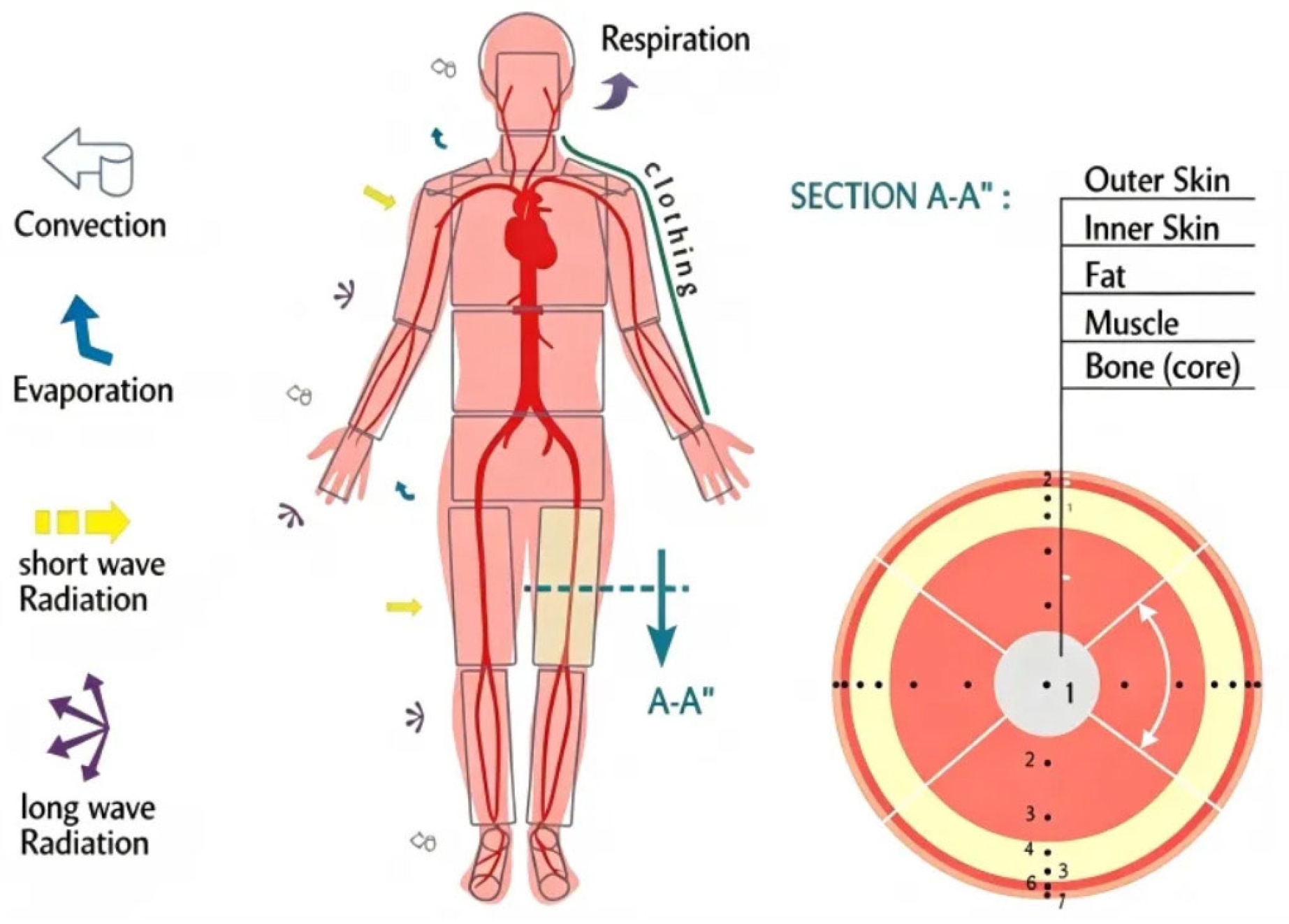
This model describes human thermoregulation as a combination of the following two interactive subsystems: active control and passive control. The passive subsystem replicates the physical characteristics of the human body and characterizes the internal and surface heat and mass transfer processes, whereas the active subsystem simulates human thermoregulatory behaviors to predict the corresponding responses of the central nervous system. The passive module of the FPC model adopts a multi-segment and multi-layer human body structure. Specifically, the human body is simplified into 20 spherical and cylindrical segments, including the head, face, neck, chest, abdomen, hip, a pair of shoulders, a pair of upper arms, a pair of forearms, a pair of hands, a pair of thighs, a pair of crura, and a pair of feet. Each segment consists of concentric annular tissue layers that possess the typical thermophysical properties and physiological functions of human tissues, namely the brain, lungs, bones, muscles, viscera, fat, and skin, as shown in Figure 2. Within the human body, metabolic heat is generated, stored, and transferred from high-temperature tissues to low-temperature regions and further distributed throughout the body via blood circulation. The model employs the Pennes’ Bioheat Equation in polar and spherical coordinates to simulate the dynamic heat transfer characteristics of human tissues.

2.3. Berkely–Zhang Objective Thermal Comfort Evaluation Criteria

The Berkeley–Zhang model is a data-driven thermal comfort model developed by researchers at the University of California, Berkeley, on the basis of extensive experimental tests. The starting point of the model is to calculate the local thermal sensation (( S l o c a l , i ) of 19 parts of the human body (such as head, face, neck, chest, back, hands, pelvis, upper arms, lower arms, thighs, lower legs, feet, and breathing zone). Its core calculation logic can be expressed as in Equation (4) [31,32,33].
S l o c a l , i = f ( T s k i n , i ,   T ¯ s k i n ,   d T s k i n , i / d t ,         d T c o r e / d t )
where local skin temperature T s k i n , i is the skin temperature of the ith body part, which is the main input of local thermal sensation; average skin temperature T ¯ s k i n is the average temperature of the whole body skin, representing the overall thermal state of the body; local skin temperature change rate d T s k i n , i / d t is used to describe the impact of transient environment (such as sudden temperature change) on human perception; and core temperature change rate d T c o r e / d t is used to capture the thermal response of the human body in an unsteady environment.
After calculating the local sensations ( S l o c a l , i ), the Berkeley–Zhang model further derives local comfort (LC) and overall comfort (OC). Therefore, this model is capable of quantifying human local and overall thermal sensations, as well as local and overall thermal comfort levels. It serves as a robust and efficient tool for evaluating the instantaneous psychological and physiological responses of the human body under varying thermal environments and has become one of the most widely adopted thermal comfort evaluation criteria in current research. The model takes local skin temperature, average skin temperature, variations in local skin temperature, and core temperature changes as input parameters, and outputs quantitative results of local and overall thermal comfort. The evaluation scales for thermal sensation and thermal comfort are presented in Table 1 and Table 2, respectively.

3. Simulation Model and Boundary Conditions

3.1. Simulation Model

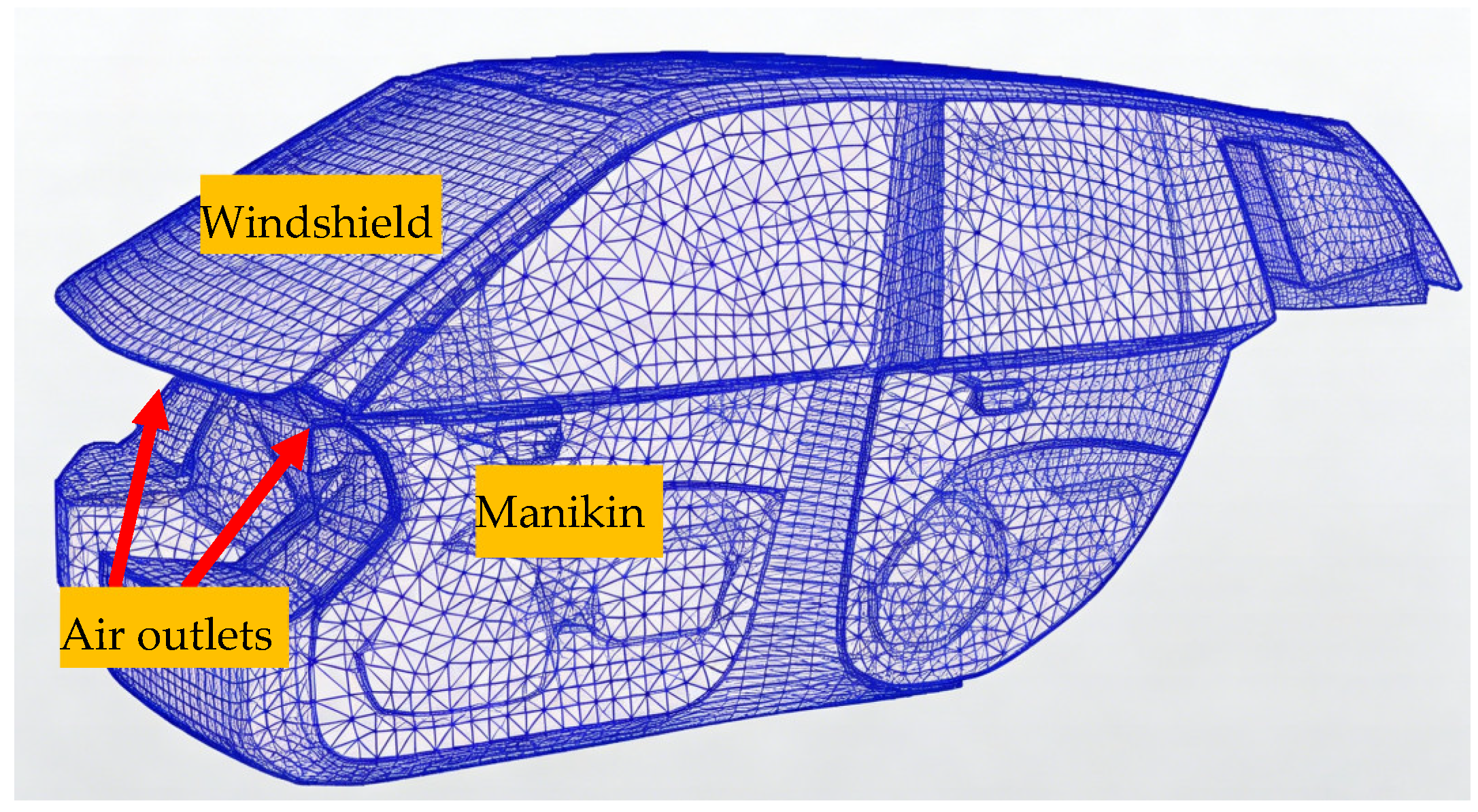
In this study, a real SUV vehicle model is selected as the research object to investigate the coupled simulation method for the objective evaluation of in-cabin passenger thermal comfort. Based on the proposed method, the influence of front windshield solar radiation transmittance on passenger thermal comfort is systematically explored. The geometric model of the vehicle passenger compartment is established via reverse modeling based on real vehicle measurements, followed by mesh generation performed in STAR CCM+. The meshed passenger compartment model is displayed in Figure 3; its volume is 2.3 mm3, grid size set 1 mm, tetrahedral grid, and total number of grids 3,601,549. Two air outlets are arranged at the front of the cabin, corresponding to the leg areas of the front left and front right passengers, with a thermal manikin placed in the driver’s seat for testing and analysis. The Realizable k-ε turbulence model is adopted to solve the internal flow field of the vehicle cabin for transient numerical analysis. To ensure data consistency in coupled simulation with Theseus-FE, the time step is set as 1 s and the total simulation duration is defined as 600 s.

3.2. Boundary Conditions

A typical vehicle cooling condition is selected for numerical analysis. The ambient temperature, initial in-cabin air temperature, and initial vehicle body structure temperature are all set to 40 °C, with a solar radiation intensity of 1050 W/m2, a solar altitude angle of 90°, and an external vehicle wind speed of 9 m/s. The cabin air outlet temperature is maintained at 5 °C with a mass flow rate of 0.05 kg/s. The thermal manikin is configured with typical summer clothing, including short sleeves, trousers, and summer shoes, and its detailed physiological parameters are listed in Table 3. The long-wave radiation emissivity of the front windshield and side window glass is 0.8. Correspondingly, the solar radiation absorptivity, transmissivity, and reflectivity of the glass are set to 0.43, 0.52, and 0.05, respectively.

4. Results and Discussion

4.1. Analysis of Cabin Flow Field

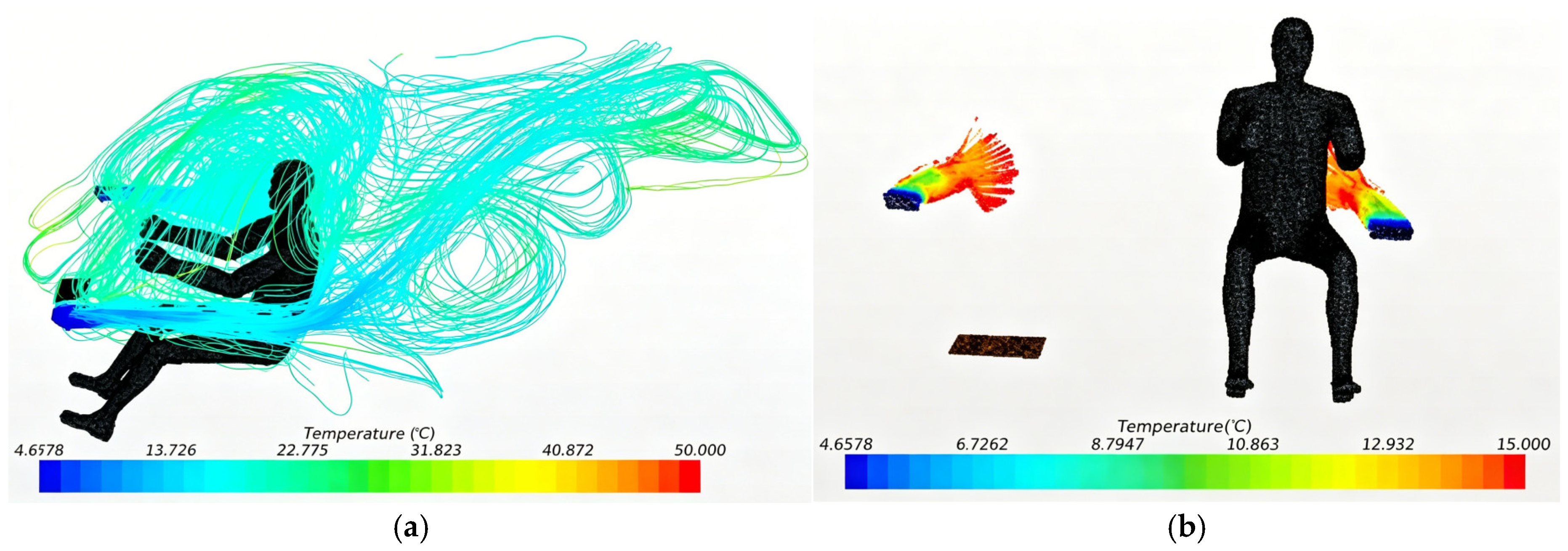
Post-simulation data processing in STAR CCM+ yields the in-cabin streamline distribution, temperature field distribution, and human body surface velocity distribution, as visualized in Figure 4 and Figure 5. At the steady state, Figure 4a indicates that cold airflow discharged from the air outlets fully circulates and covers the entire cabin space. As the airflow duration increases, the overall cabin temperature rises gradually. The maximum temperature of approximately 50 °C occurs at the rear cabin region and near the front windshield, while the air temperature in most cabin areas remains below 25 °C.
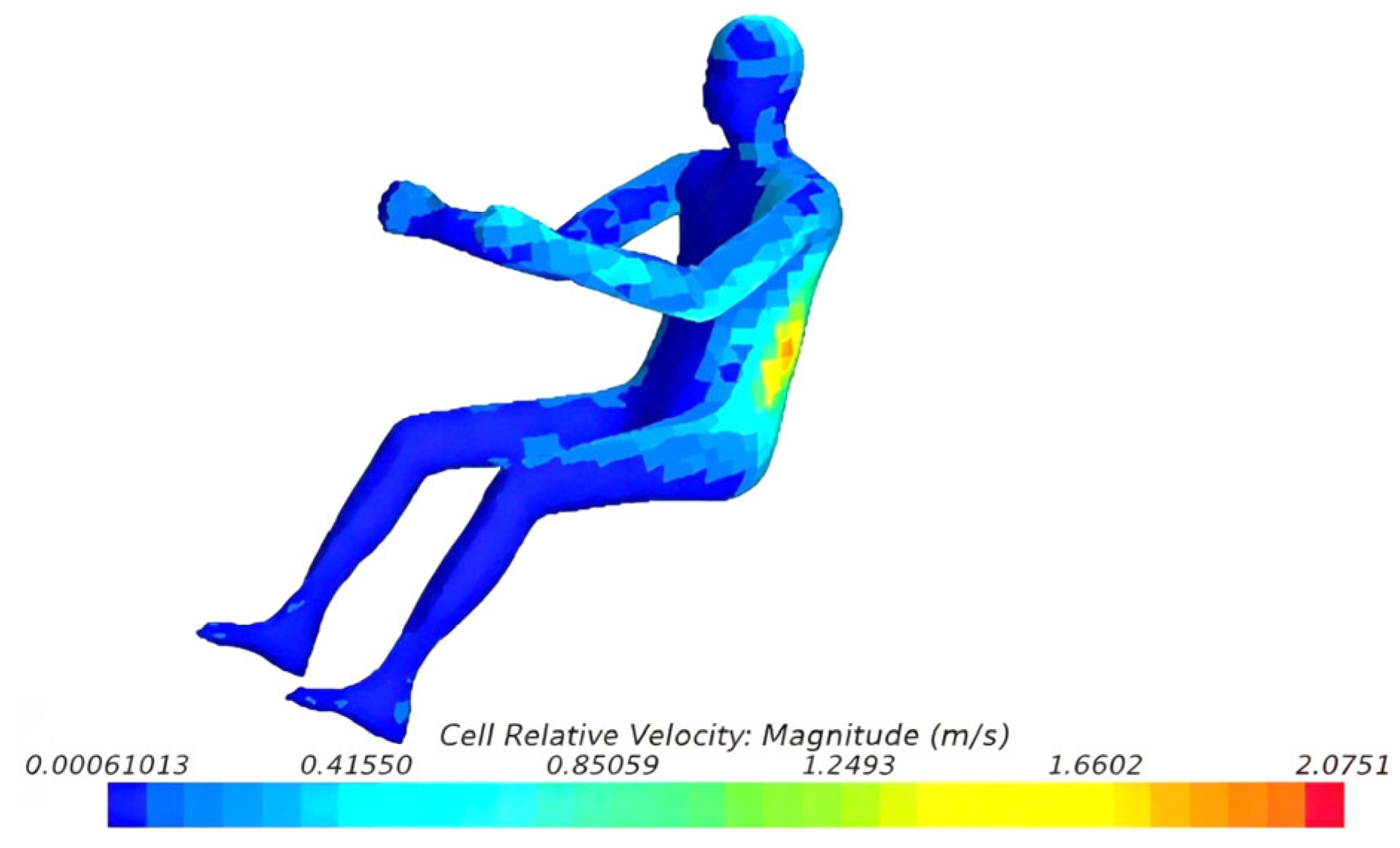
As observed from Figure 4b and Figure 5, cold airflow does not directly impinge on the human body. The maximum wind speed at the back of the thermal manikin reaches approximately 2.0751 m/s, while the wind speed at other body segments is extremely low and nearly close to zero. The relatively high wind speed at the manikin’s back is attributed to airflow diversion as follows: the cold airflow discharged from the left air outlet is deflected at the human waist, with a portion of the airflow flowing toward the back region. Based on subjective thermal perception principles and the Berkeley–Zhang model, such a flow field leads to unsatisfactory thermal comfort performance. In this case, the improvement in passenger thermal comfort merely relies on the reduction in the average cabin air temperature. One core objective of this study is to clarify the independent influence of solar radiation on human thermal comfort. The aforementioned flow field condition effectively eliminates the interference of other confounding factors, such as the variable wind speed and airflow temperature acting on the human body.

4.2. Passenger Surface Temperature Field

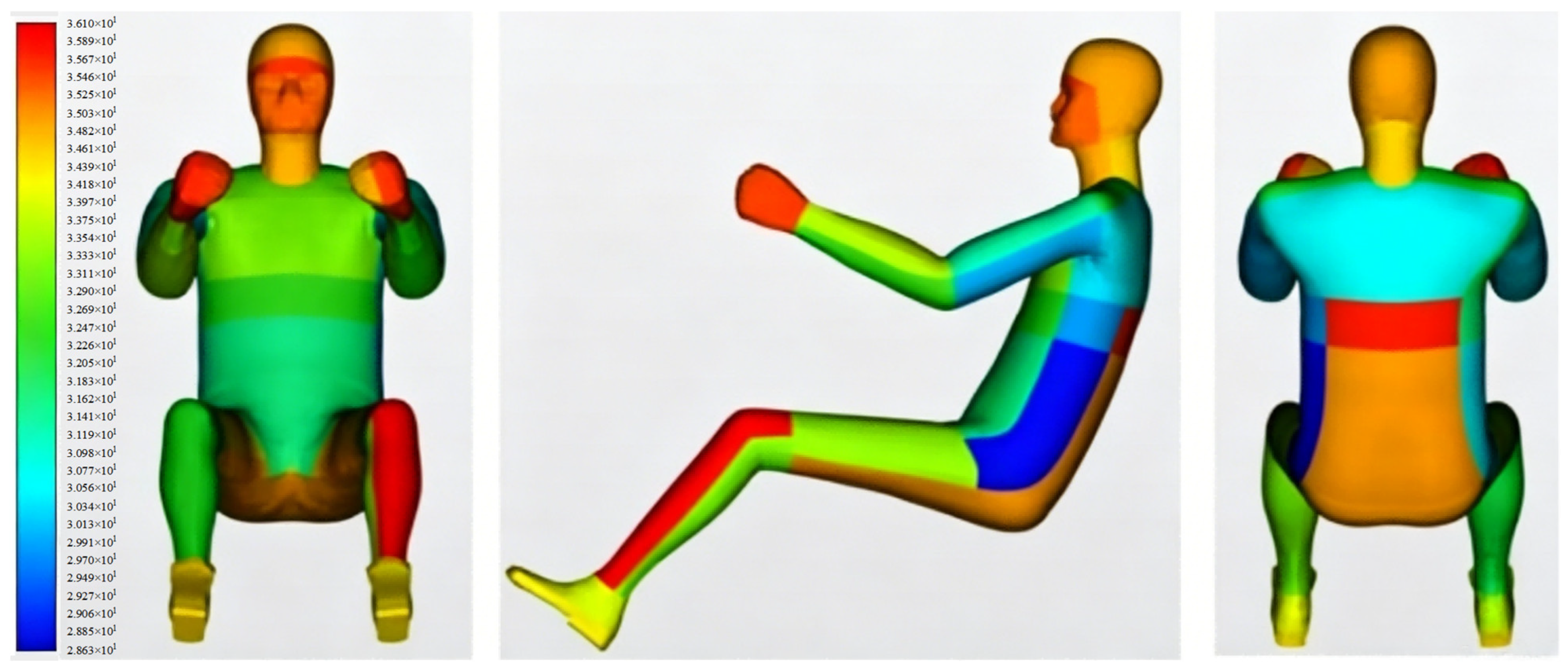
The surface temperature distribution of the thermal manikin is analyzed via Theseus-FE, as illustrated in Figure 6. The results show that the temperature of exposed body segments is relatively high, reaching approximately 36 °C, whereas the temperature of clothed regions decreases to around 28 °C due to the thermal insulation effect of clothing. Furthermore, elevated surface temperatures are observed at the manikin’s hands, left leg, and back. The higher temperatures of the hands and left leg are primarily induced by solar radiation, which is elaborated in Section 4.3. In comparison, the high temperature at the manikin’s back originates from the vehicle seat, which possesses a high initial temperature and large heat capacity and thereby continuously conducts heat to the human body.

4.3. Impact of Solar Radiation on Human Local Thermal Comfort

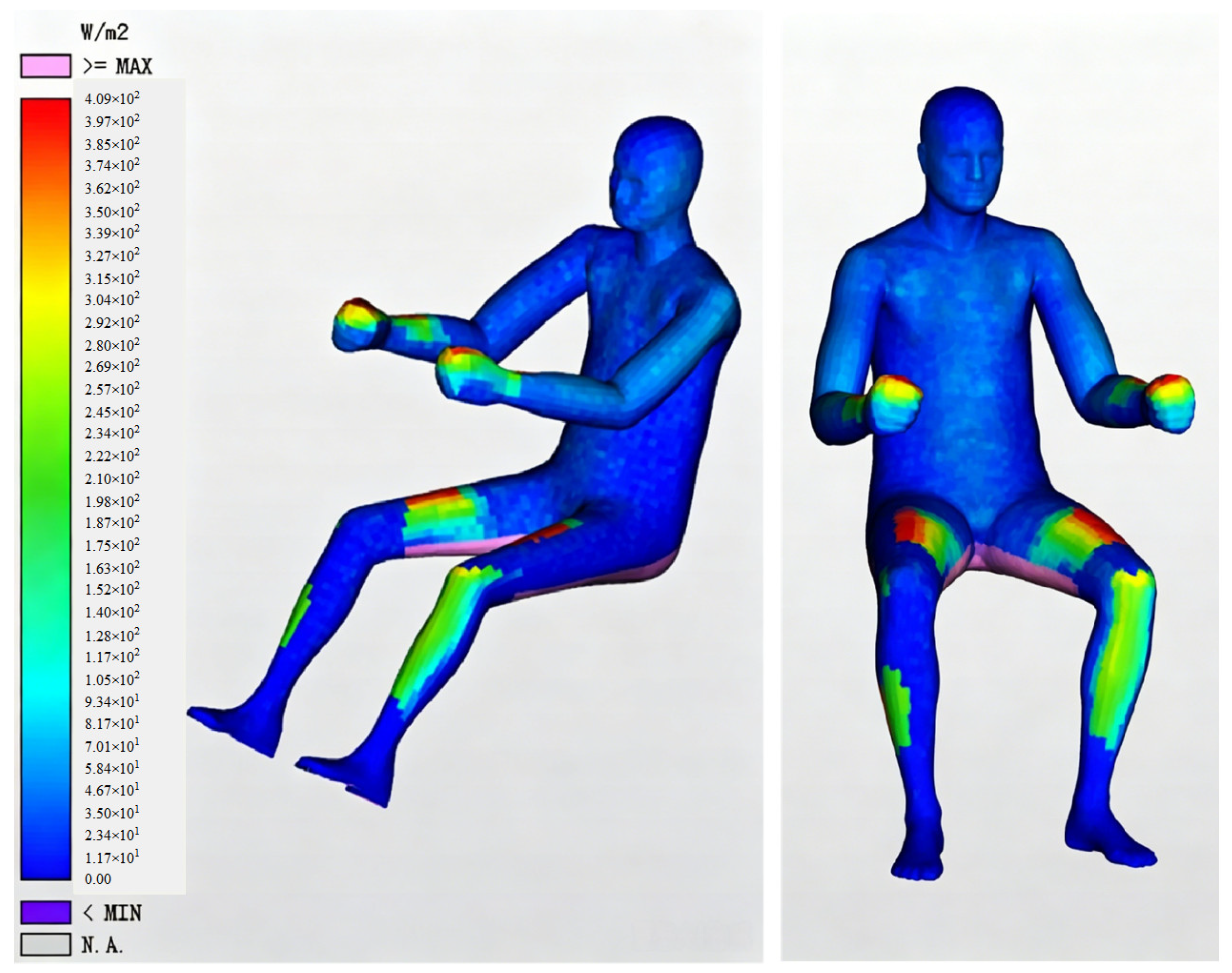
Solar radiation penetrates the vehicle cabin through the front windshield and side windows and irradiates the surface of the human body. The solar radiation intensity distributed on the thermal manikin under the current simulation conditions is presented in Figure 7. The simulation results indicate that the manikin’s hands, arms, and legs are exposed to relatively high solar radiation intensity, with the inner side of the left thigh receiving the largest irradiated area. In this simulation, the solar altitude angle is set to 90°, corresponding to vertical solar incidence relative to the ground. This vertical sunlight incidence contributes to the intensive solar radiation received by the aforementioned body segments.
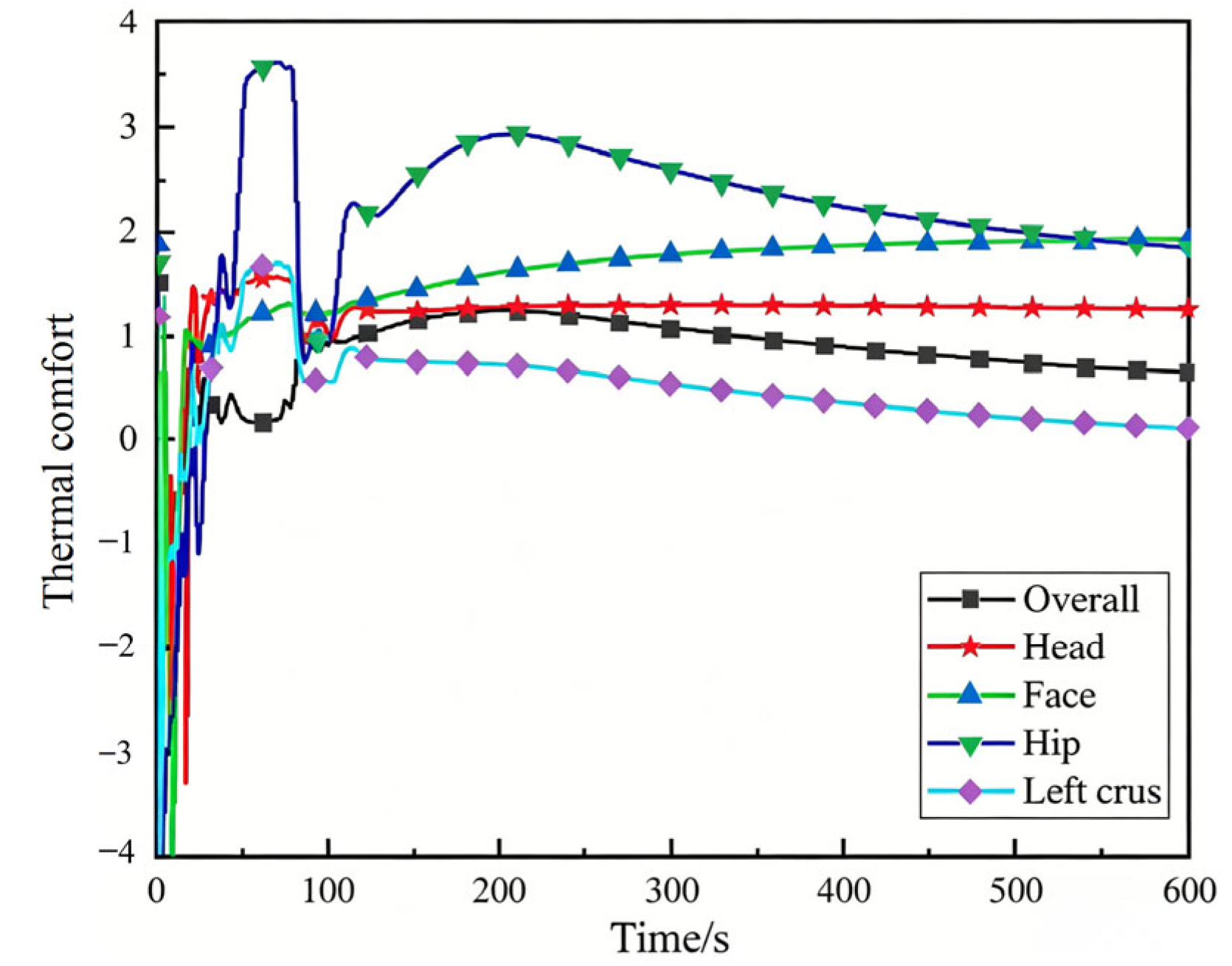
Furthermore, to explore the influence of solar radiation on passengers’ local thermal comfort, the thermal comfort characteristics of several typical human body segments are analyzed, as demonstrated in Figure 8. The results show that the overall thermal comfort value ranges from 0.7 to 1, with the left crus exhibiting the poorest thermal comfort and the back presenting the optimal thermal comfort performance. Specifically, the local thermal comfort value of the left crus varies between 0 and 0.6 and exhibits a continuous declining trend over simulation time. By contrast, the hip region maintains a relatively higher thermal comfort value ranging from 2 to 3, which also decreases gradually with time. The deterioration in the left crus thermal comfort is mainly attributed to persistent solar radiation exposure, whose adverse effect accumulates continuously over time. The superior thermal comfort of the hip originates from the relatively high local cooling airflow speed. Nevertheless, the progressively degraded local thermal comfort of the left crus caused by sustained solar radiation deteriorates the overall cabin thermal environment, thereby undermining the thermal comfort of the hip region.

4.4. Impact of Glass Transmissivity on Thermal Comfort of Passengers

As demonstrated in Section 4.3, solar radiation significantly affects human thermal comfort. It is urgent to explore feasible approaches for improving passenger thermal comfort by reducing the solar radiation transmittance of the front windshield. Accordingly, the present study modifies the optical properties of windshield glass. The long-wave radiation emissivity and solar radiation reflectivity remain unchanged at 0.8 and 0.05, respectively, while the solar radiation absorptivity is increased to 0.58 and the corresponding transmissivity is reduced to 0.37.
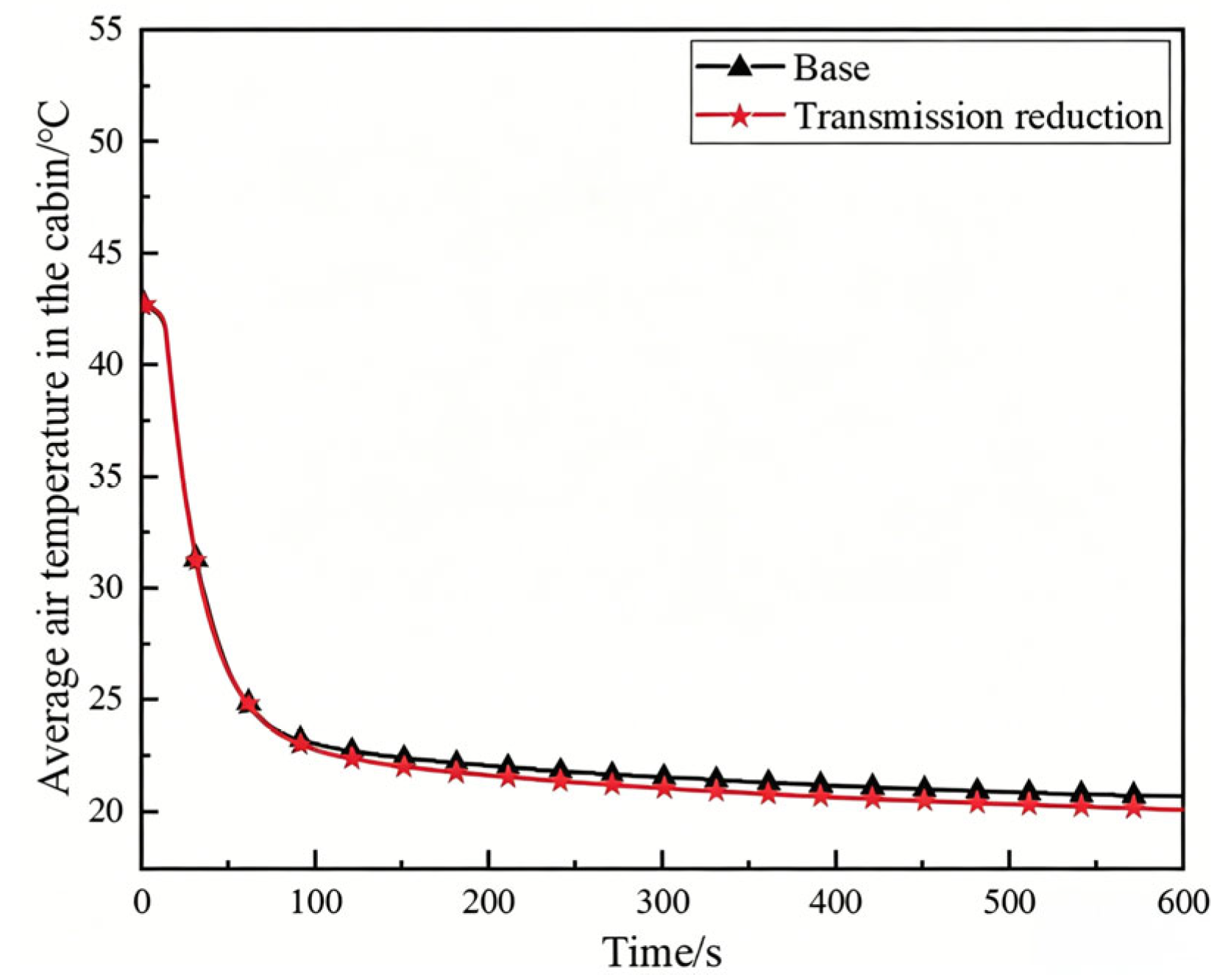
As shown in Figure 9, it indicates the variation in the average in-cabin air temperature throughout the simulation. The average cabin air temperature gradually decreases from the initial 40 to approximately 22 °C before reaching a stable state. Comparative analysis indicates that reducing the glass transmittance from 0.52 to 0.37 yields an insignificant temperature difference during the steady stage, with a slight drop of only 0.5 °C in the average cabin air temperature.
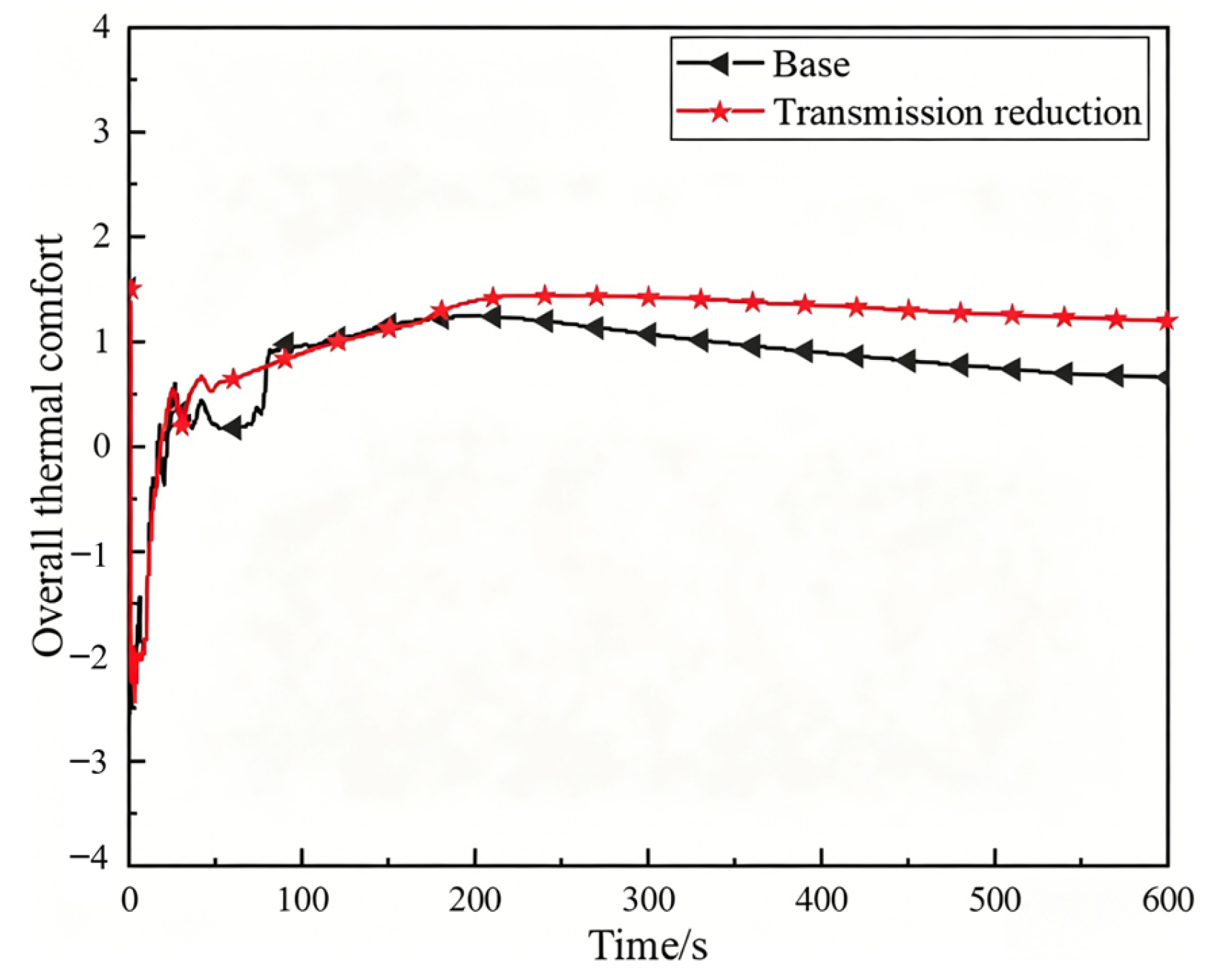
Figure 10 illustrates the variation in the overall thermal comfort of the in-cabin thermal manikin under different glass transmittance conditions. The results reveal that the reduction in windshield glass transmittance effectively improves overall passenger thermal comfort. At the steady simulation stage, the overall thermal comfort value increases from 0.67 to 1.2. Such a noticeable improvement in thermal comfort far outweighs the marginal reduction in cabin air temperature, demonstrating that cabin air temperature alone is insufficient to fully evaluate the influence of solar radiation on thermal comfort. Furthermore, the results verify that the solar transmittance of automotive glass serves as a critical factor affecting passenger thermal comfort. This study suggests that sufficient consideration should be given to solar radiation effects during the selection of vehicle glass properties, air conditioning system matching, and the formulation of automatic air conditioning control strategies in vehicle development processes.

5. Conclusions

This study conducts comprehensive research to establish an objective simulation evaluation method for vehicle cabin occupant thermal comfort and further explore the influence of solar radiation on occupant thermal performance. The primary conclusions drawn from this work are summarized as follows:
Based on the Fiala human physiological thermoregulation model and Berkeley–Zhang thermal comfort evaluation criterion, a coupled simulation method for the objective evaluation of in-cabin occupant thermal comfort is established using STAR CCM+ and Theseus-FE. This method enables efficient and convenient numerical simulation and objective assessment of vehicle cabin thermal comfort.
In summer, the thermal comfort of human body segments exposed to solar radiation deteriorates significantly, and this adverse effect gradually propagates to degrade passengers’ overall thermal comfort over time.
The solar transmittance of automotive glass plays a crucial role in determining passenger thermal comfort. When the glass transmittance is reduced from 0.52 to 0.37, the steady-state average in-cabin air temperature decreases by approximately 0.5 °C, while the overall thermal comfort value is improved from 0.67 to 1.2. Therefore, during vehicle development, the influence of solar radiation should be fully considered in the selection of automotive glass parameters, air conditioning system matching, and the formulation of automatic air conditioning control strategies.
This verifies the feasibility and effectiveness of the method and provides a basis for the thermal comfort research of the vehicle cabin. However, the simulation results need to be verified by experiments in the future.

Author Contributions

Conceptualization, H.W. and S.W.; methodology, S.W.; software, S.W.; validation, H.W., M.X. and S.W.; formal analysis, S.W.; investigation, H.W.; resources, H.W., S.W.; data curation, S.W.; writing—original draft preparation, H.W.; writing—review and editing, M.X.; visualization, S.W.; supervision, H.W.; project administration, H.W.; funding acquisition, H.W. All authors have read and agreed to the published version of the manuscript.

Funding

This research was funded by 2024 Anhui Province Postdoctoral Research Project (2024C976), Key Project of Excellent Young Teacher Cultivation in 2024 (YQZD2024018) and Industrial Collaborative Innovation Special Fund Project of Anhui Polytechnic University and Jiujiang District (2022cyxtb8), Anhui Intelligent Mine Technology and Equipment Engineering Research Center (AIMTEEL202201) and Open Fund Project of Anhui Province Joint Construction Discipline Key Laboratory for Quality and Reliability of Intelligent Equipment (IEQRKL2409 and IEQRKL2404). Anhui Province Key Laboratory of Advanced Numerical Control and Servo Technology, No. XJSK202506. Start-up Fund for Scientific Research (No. 2021YQQ028). Horizontal project (No. HX-2025-03-035).

Data Availability Statement

The data sets generated and supporting the findings of this article are obtainable from the corresponding author upon reasonable request.

Conflicts of Interest

Author Shuang Wang was employed by the Chery Automobile Co., Ltd. The remaining authors declare that the research was conducted in the absence of any commercial or financial relationships that could be construed as a potential conflict of interest.

References

  1. Zhao, Y.H.; Dan, D.; Zheng, S.Y.; Wei, M.S.; Xie, Y. A two-stage eco-cooling control strategy for electric vehicle thermal management system considering multi-source information fusion. Energy 2023, 267, 126606. [Google Scholar] [CrossRef] [Scilit]
  2. Ma, J.; Liu, A.; Zhang, P.; Chen, Y.; Cai, Y. Collaborative thermal management of power battery and passenger cabin for energy efficiency optimization. Energy Convers. Manag. 2023, 293, 117514. [Google Scholar] [CrossRef] [Scilit]
  3. Cui, W.; Wu, T.; Ouyang, Q.; Zhu, Y. Passenger thermal comfort and behavior: A field investigation in commercial aircraft cabins. Indoor Air 2017, 27, 94–103. [Google Scholar] [CrossRef] [Scilit]
  4. Su, C.Q.; Liang, X.X.; Wang, Y.P.; Yang, Y.F.; Su, J.J.; Liu, X. Analysis of Human Thermal Comfort in Bus Based on Thermoelectric Cooling Climate-Controlled Seats. Int. J. Energy Res. 2023, 2023, 6918866. [Google Scholar] [CrossRef] [Scilit]
  5. Maier, J.; Hans-Juergen, H.; Goerke, P.; Zierke, O. Thermal comfort of novel low-momentum ventilation concepts for passengers in long-distance trains. Indoor Built. Environ. 2023, 32, 1319–1334. [Google Scholar] [CrossRef] [Scilit]
  6. Maier, J.; Marggraf-Micheel, C.; Zinn, F.; Dehne, T.; Bosbach, J. Ceiling-based cabin displacement ventilation in an aircraft passenger cabin: Analysis of thermal comfort. Build. Environ. 2018, 146, 29–36. [Google Scholar] [CrossRef] [Scilit]
  7. Chen, B.; Lian, Y.; Xu, L.; Deng, Z.; Zhao, F.; Zhang, H.; Liu, S. State-of-the-art thermal comfort models for car cabin Environment. Build. Environ. 2024, 262, 111825. [Google Scholar] [CrossRef] [Scilit]
  8. Wang, S.; Ren, S.Y. Research on Automotive Seat Heating Strategy Based on Objective Thermal Comfort Evaluation. J. Therm. Sci. Eng. Appl. 2024, 16, 041008. [Google Scholar] [CrossRef] [Scilit]
  9. Quanten, S.; Van Brecht, A.; Berckmans, D. Comparison of thermal comfort performance of two different types of road vehicle climate control systems. Ergonomics 2007, 50, 364–378. [Google Scholar] [CrossRef] [Scilit] [PubMed]
  10. Wang, J.; Wang, Z.; De Dear, R.; Luo, M.; Ghahramani, A.; Lin, B. The Uncertainty of Subjective Thermal Comfort Measurement. Energy Build. 2018, 181, 38–49. [Google Scholar] [CrossRef] [Scilit]
  11. Wang, Z.; Wang, J.; He, Y.; Liu, Y.; Lin, B.; Hong, T. Dimension analysis of subjective thermal comfort metrics based on ASHRAE Global Thermal Comfort Database using machine learning. J. Bulid Eng. 2020, 29, 101120. [Google Scholar] [CrossRef] [Scilit]
  12. Simion, M.; Socaciu, L.; Unguresan, P. Factors which influence the thermal comfort inside of vehicles. Energy Procedia 2016, 85, 472–480. [Google Scholar] [CrossRef] [Scilit]
  13. Qi, D.; Zhai, Y.; Zhao, C.; Song, B.; Xu, L.; Li, A. Performance evaluation of attachment ventilation on thermal comfort and pollutant dispersion in automotive cabins. J. Build. Eng. 2026, 125, 116155. [Google Scholar] [CrossRef] [Scilit]
  14. Chen, Y.; He, Y.; Li, N.; Yang, C.; Cai, C.; Peng, Y.; Li, H.; Liu, L. A novel mathematical model for the detailed calculation of solar radiation on human body in vehicle cabins. Appl. Therm. Eng. 2026, 300, 131247. [Google Scholar] [CrossRef] [Scilit]
  15. Xu, X.; Zhao, L.; Yang, Z. Prediction Models of Overall Thermal Sensation and Comfort in Vehicle Cabin Based on Field Experiments. Int. J. Automot. Technol. 2025, 26, 269–282. [Google Scholar] [CrossRef] [Scilit]
  16. Zhang, C.; Hou, B.; Li, M.; Chen, Z.; Zhang, R.; Li, S.; Han, Z.; Li, X. A novel online prediction method for vehicle cabin temperature and passenger thermal sensation. Appl. Therm. Eng. 2024, 245, 122853. [Google Scholar] [CrossRef] [Scilit]
  17. Li, W.J.; Chen, J.Q.; Lan, F.; Zheng, X.; Zeng, W. Numerical Projection on Occupant Thermal Comfort via Dynamic Responses to Human Thermoregulation. Int. J. Automot. Technol. 2022, 23, 193–203. [Google Scholar] [CrossRef] [Scilit]
  18. Chen, F.; Shi, H.; Yang, J.; Li, Y.; Lai, Y. Intelligent Car Cockpit Comfort Evaluation Model Based on SVM. IEEE Access 2024, 12, 27566–27577. [Google Scholar] [CrossRef] [Scilit]
  19. Chen, S.; Xue, D.; Li, Q.; Du, B.; Fan, X. Thermal Comfort of Automobile Driver Based on Local Air Conditioning Vent Arrangement. Int. J. Automot. Technol. 2023, 24, 945–954. [Google Scholar] [CrossRef] [Scilit]
  20. Li, W.J.; Chen, J.Q.; Lan, F.C. Environmental conditions driven method for automobile cabin pre-conditioning with multi-satisfaction objectives. PLoS ONE 2022, 17, e0266672. [Google Scholar] [CrossRef] [Scilit]
  21. Zhang, L.; Qi, L.; Liu, J.; Wu, Q. Experimental study on dynamic thermal environment of passenger compartment based on thermal evaluation indexes. Sci. Prog. 2020, 103, 1–21. [Google Scholar] [CrossRef] [Scilit]
  22. Lv, H.B.; Chen, B.; Gao, T.Y.; Li, Y.Y.; Shi, J.Y.; Chen, J.P. Analysis on Thermal Comfort in Car Passenger Compartment Based on Flow Field and Temperature Field. Automot. Eng. 2020, 42, 234–239. [Google Scholar] [CrossRef]
  23. Bandi, P.; Manelil, N.P.; Maiya, M.P.; Tiwari, S.; Thangamani, A.; Tamalapakula, J.L. Influence of Flow and Thermal Characteristics on Thermal Comfort Inside an Automobile Cabin Under the Effect of Solar Radiation. Appl. Therm. Eng. 2022, 203, 117946. [Google Scholar] [CrossRef] [Scilit]
  24. Werner, J.; Webb, P. A Six-Cylinder Model for General Use on Human Thermoregulation Personal Computers. Ann. Physiol. Anthropol. 1993, 12, 123–134. [Google Scholar] [CrossRef] [Scilit] [PubMed]
  25. Tanabe, S.; Kobayashi, K.; Nakano, J.; Ozeki, Y.; Konishi, M. Evaluation of Thermal Comfort Using Combined Multi-Node Thermoregulation (65MN) and Radiation Models and Computational Fluid Dynamics (CFD). Energy Build. 2002, 34, 637–646. [Google Scholar] [CrossRef] [Scilit]
  26. Fiala, D. Dynamic Simulation of Human Heat Transfer and Thermal Comfort. Ph.D. Thesis, De Montfort University, Leicester, UK, 1998. [Google Scholar]
  27. Martinez, N.; Psikuta, A.; Kuklane, K.; Quesada, J.I.P.; de Anda, R.M.C.O.; Soriano, P.P.; Palmer, R.S.; Corberán, J.M.; Rossi, R.M.; Annaheim, S. Validation of the Thermophysiological Model by Fiala for Prediction of Local Skin Temperatures. Int. J. Biometeorol. 2016, 60, 1969–1982. [Google Scholar] [CrossRef] [Scilit]
  28. Lundgren, K.; Martinez, N.; Johansson, B.; Psikuta, A.; Annaheim, S.; Kuklane, K. Human Responses in Heat—Comparison of the Predicted Heat Strain and the Fiala Multi-Node Model for a Case of Intermittent Work. J. Therm. Biol. 2017, 70, 45–52. [Google Scholar] [CrossRef] [Scilit]
  29. Omidvar, A.; Kim, J. Modification of Sweat Evaporative Heat Loss in the PMV/PPD Model to Improve Thermal Comfort Prediction in Warm Climates. Build. Environ. 2020, 176, 106868. [Google Scholar] [CrossRef] [Scilit]
  30. Cheung, T.; Schiavon, S.; Parkinson, T.; Li, P.; Brager, G. Analysis of the Accuracy on PMV–PPD Model Using the ASHRAE Global Thermal Comfort Database II. Build. Environ. 2019, 153, 205–217. [Google Scholar] [CrossRef] [Scilit]
  31. Zhang, H.; Arens, E.; Huizenga, C.; Han, T. Thermal Sensation and Comfort Models for Non-Uniform and Transient Environments: Part I: Local Sensation of Individual Body Parts. Build. Environ. 2010, 45, 380–388. [Google Scholar] [CrossRef] [Scilit]
  32. Zhang, H.; Arens, E.; Huizenga, C.; Han, T. Thermal Sensation and Comfort Models for Non-Uniform and Transient Environments, Part II: Local Comfort of Individual Body Parts. Build. Environ. 2010, 45, 389–398. [Google Scholar] [CrossRef] [Scilit]
  33. Zhang, H.; Arens, E.; Huizenga, C.; Han, T. Thermal Sensation and Comfort Models for Non-Uniform and Transient Environments, Part III: Whole-Body Sensation and Comfort. Build. Environ. 2010, 45, 399–410. [Google Scholar] [CrossRef] [Scilit]
  34. Zhao, Y.; Zhang, H.; Arens, E.A.; Zhao, Q. Thermal Sensation and Comfort Models for Non-Uniform and Transient Environments, Part IV: Adaptive Neutral Setpoints and Smoothed Whole-Body Sensation Model. Build. Environ. 2014, 72, 300–308. [Google Scholar] [CrossRef] [Scilit]
  35. Chen, J.Q.; Zheng, X.J.; Lan, F.C.; Peng, R. An Analysis on Thermal Comfort in Passenger Compartment Based on Human Thermal Regulation Model. Automot. Eng. 2019, 41, 723–730. [Google Scholar] [CrossRef]
  36. Ye, L.; Zhang, M.Y. Research on thermal comfort of passenger compartment of an SUV vehicle. Heat. Vent. Air Cond. 2022, 52, 137–141. [Google Scholar] [CrossRef]
  37. Cropper, P.C.; Yang, T.; Cook, M.; Fiala, D.; Yousaf, R. Coupling a Model of Human Thermoregulation with Computational Fluid Dynamics for Predicting Human–Environment Interaction. J. Build. Perform. Simul. 2010, 3, 233–243. [Google Scholar] [CrossRef] [Scilit]
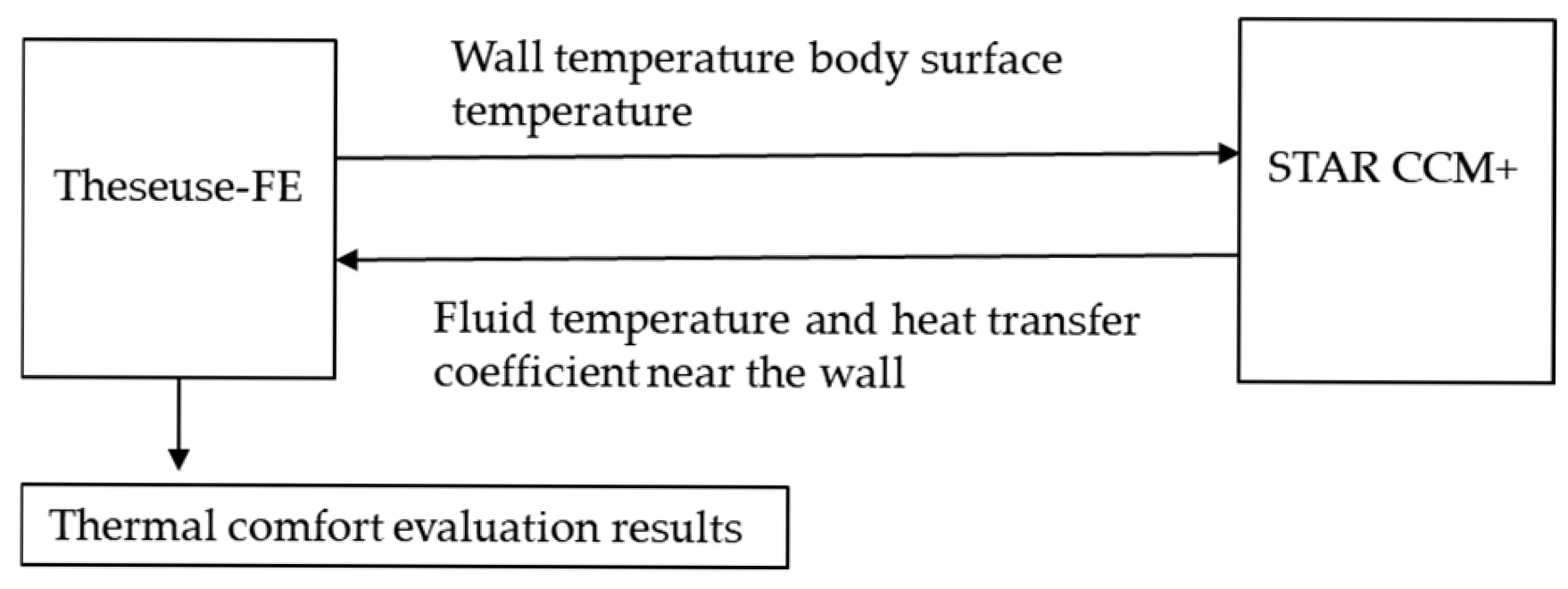
Figure 1. Technical route of coupling simulation.
Applsci 16 05785 g001
Figure 2. Fiala human physiological thermal regulation model.
Applsci 16 05785 g002
Figure 3. Passenger compartment model.
Applsci 16 05785 g003
Figure 4. Temperature distribution of cold air flow line in passenger compartment. (a) Maximum temperature 50 °C; (b) maximum temperature 15 °C.
Applsci 16 05785 g004
Figure 5. Cold air speed of warm body dummy.
Applsci 16 05785 g005
Figure 6. Temperature distribution of warm body dummy.
Applsci 16 05785 g006
Figure 7. Solar radiation intensity received by manikin.
Applsci 16 05785 g007
Figure 8. Local thermal comfort and overall thermal comfort of typical parts of manikin.
Applsci 16 05785 g008
Figure 9. Change in air temperature in the cabin.
Applsci 16 05785 g009
Figure 10. The change relationship of the overall thermal comfort of the cabin thermal manikin.
Applsci 16 05785 g010
Table 1. Thermal sense scale.
Ruler−4−3−2−101234
Thermal sensationVery coldColdCoolSlightly coolNeutralSlightly warmWarmHotVery hot
Table 2. Thermal comfort scale.
Ruler−4−3−2−101234
Thermal ComfortVery UncomfortableUncomfortableA Little UncomfortableJust UncomfortableNeutralJust ComfortableA Little ComfortableComfortableVery comfortable
Table 3. Basic parameters of dummy.
Volume/m3Weight/kgClothing Weight/kgFat/%Skin Area/m2
0.0922751.114.441.86
Disclaimer/Publisher’s Note: The statements, opinions and data contained in all publications are solely those of the individual author(s) and contributor(s) and not of MDPI and/or the editor(s). MDPI and/or the editor(s) disclaim responsibility for any injury to people or property resulting from any ideas, methods, instructions or products referred to in the content.