1. Introduction
Composite plug milling after hydraulic fracturing is a demanding well-intervention operation in which the bottom-hole assembly (BHA) is exposed to variable hydraulic and mechanical conditions. During milling, the tool must remove plug material while circulation must transport composite debris, cuttings, and possible metallic fragments out of the wellbore. If hole cleaning becomes insufficient, debris accumulation may increase drag, restrict drill string movement, and promote stuck-pipe tendencies. Such complications may significantly affect the cost, safety, and efficiency of drilling and well-intervention operations [
1,
2,
3,
4].
Stuck-pipe events and mechanical failures are often associated with the simultaneous occurrence of several unfavourable operational conditions rather than with one isolated factor. Previous studies have shown that abnormal torque and drag, unstable load response, wellbore uncleanliness, and insufficient monitoring of operational parameters may indicate increasing risk of stuck pipe or mechanical overload [
5,
6,
7,
8,
9,
10,
11,
12]. However, there is no single indicator present in all stuck-pipe incidents, which makes interpretation of field data strongly dependent on the operational context [
8].
In highly deviated wells, the risk of complications during plug milling may increase because solids transport is more difficult and the drill string is more prone to frictional contact with the casing or borehole wall. Ineffective hole cleaning, residual cuttings, composite plug debris, and repeated release attempts may lead to increasing drag and to the simultaneous action of axial and torsional loads on BHA components. Such conditions are particularly important for drill string connections, hydraulic release tools, and safety subs, which may become critical load-transfer points during stuck-pipe or near-stuck situations [
13,
14,
15,
16,
17,
18,
19].
The present study analyses a field case in which a hydraulic safety sub failed during composite plug milling after hydraulic fracturing operations. The failure sequence was reconstructed using field hook load and torque records, operational documentation, and inspection of damaged components recovered from the borehole. The objective of the paper is to identify the probable failure mechanism, relate characteristic operating points to the admissible working range of the connector, and formulate practical conclusions for safer plug-milling and stuck-pipe remediation operations in highly deviated wells. Recent studies on stuck-pipe prediction, wellbore uncleanliness, and real-time torque-and-drag monitoring provide direct support for interpreting abnormal drilling-load responses in operational context [
2,
3,
7,
12].
2. Mechanical Failures Relevant to Plug-Milling Operations
Mechanical failures during plug-milling operations should be interpreted primarily as the result of interacting mechanical and operational factors rather than as isolated material failures. In the present case, the most relevant factors are restricted drill string movement, insufficient hole cleaning, repeated release attempts, and the combined action of axial force and torque acting on BHA components. These conditions are particularly important for hydraulic release tools and safety subs, because such elements are installed in the BHA as controlled release components, but during stuck-pipe or near-stuck conditions they may also become critical load-transfer points.
The drill string and BHA connections are sensitive to repeated and combined loading. Fatigue is a cumulative and non-reversible condition induced by cyclic bending loads and tensile or buckled drill-pipe stresses [
20]. Although fatigue may occur even when cyclic stresses remain below the static strength limit, in plug-milling operations the risk is increased when axial loading is combined with torque, vibration, drag, and local stress concentrations. Failures in drill string and BHA components may also be associated with improper make-up torque, wear, poor manufacturing quality, or excessive operational loading [
21]. These mechanisms are relevant to the analysed case because the hydraulic safety sub was subjected to repeated attempts to continue milling and release the partially immobilized assembly.
Corrosion and erosion may additionally reduce the reliability of drill string and BHA components, especially when drilling fluids, cuttings, flow, and drill string rotation act simultaneously on metallic surfaces [
22,
23]. However, in the analysed event, corrosion is not treated as the primary failure mechanism. The main emphasis is placed on the mechanical effect of insufficient hole cleaning and restricted movement, which could increase drag and lead to unfavourable axial-torsional loading of the hydraulic safety sub.
For this reason, the present study focuses on the combined interpretation of hook load and torque records rather than on isolated peak values. A tensile load acting together with torsional moment may reduce the effective safety margin of the connector, especially in regions with geometric discontinuities and local stress concentrations. This focused background provides the basis for the field-data interpretation and the supporting strength assessment presented in the following sections.
3. Field Case Description and Failure Sequence
Understanding and addressing these mechanical failures is critical for improving the reliability and efficiency of drilling operations. By implementing robust design principles and adopting new technologies, the industry can better manage the risks associated with mechanical failures and ensure more sustainable operations. Monitoring T&D in real-time is critical in drilling operations, as it could help identify well depth conditions before they affect the operation and anticipate pipe stuck situations [
1,
7,
19]. Despite all the risks and causes mentioned above, mechanical failures are most frequently observed in the case of a drill string break. The authors described in the article the situation that was observed during the set-up of the plugs due to fracturing operations in the described well. The analysed operation was performed in a horizontal well after hydraulic fracturing treatments. For confidentiality reasons, detailed information on the well location, operator, formation name, exact inclination profile, and reservoir parameters cannot be disclosed. Nevertheless, the operational information necessary for reconstructing the failure sequence is provided, including casing size, plug depths, milling assembly, flow rate and pressure records, hook load and torque data, and post-failure inspection results. During the process of drilling composite plugs, which separate the fracturing intervals, set at the following depths: 1. 3648.0 m, 2. 3783.0 m, 3. 3798.0 m, 4. 3805.0 m, 5. 3965.0 m, 6. 4137.1 m, 7. 4291.0 m, complications occurred that caused the lower part of the drill string assembly to break off. The composite plugs left after the well fracturing operations were set in 4
(97.18 mm) casing with a wall thickness of 8.56 mm and a unit weight of 15.1 lb/ft. The well was cased to a final depth of 4510.0 m (MD), cemented in overlap to approximately 3125.0 m (MD). Analysing the process of running and setting the composite plugs, it should be noted that the first three composite plugs were correctly set from the bottom of the well (plug no. 7, plug no. 6, plug no. 5), at depths of 4291.0 m, 4137.1 m and 3965.0 m, respectively. The integrity of the plugs was confirmed by conducting sealing tests of the composite plugs, with results as follows: plug no. 7—365 bar/5 min, plug no. 6—358 bar/5 min, plug no. 5—350 bar/5 min. In each of these cases, after the perforation assembly was pulled to the surface, the firing of the perforation charges was confirmed. Subsequently, operations involved running additional Plug&Perf assemblies to perforate further isolated intervals. After running the aforementioned assembly to a depth of 3810.0 m (MD) and correlating the perforation interval, composite plug no. 4 was established at a depth of 3805.0 m (MD). A sealing test at 360 bar/5 min revealed a lack of sealing of the plug. A subsequent sealing test confirmed the lack of sealing. The locking tool did not contain the composite plug. A plug was left in the hole, which did not fulfil its tasks in the scope of the perforation work. Furthermore, it required drilling during the composite plug drilling process, during which the analysed drilling failure occurred after the fracturing treatments of the reservoir.
The analysed event occurred during the milling of composite plugs remaining in the well after hydraulic fracturing operations. After the fracturing fleet had been removed, the well was equipped with a snubbing unit and the milling assembly shown in
Table 1 was run into the borehole. The bottom-hole assembly included drill pipe sections, foundation subs, a ball-activated hydraulic safety sub, a double-circulation valve sub, a 2 7/8 in downhole motor, and a tricone bit. The operational objective was to mill the previously set composite plugs and restore access to the lower interval of the well.
The initial stage of the milling operation was completed without major difficulties. However, during subsequent trips and plug-milling stages, increasing resistance of the drill string was observed. The field records indicate that circulation parameters were modified in an attempt to improve hole cleaning and continue the operation. Despite these efforts, sticking tendencies became apparent in the lower interval, especially during further trip-in and milling operations. At the stage preceding the failure, increased pressure and restricted drill string movement were reported, followed by attempts to release the assembly by changing the operating parameters. These actions did not restore normal working conditions. After the assembly was pulled out of the hole, it was found that a part of the BHA, approximately 4.34 m long, had been lost. The separation occurred at the location of the hydraulic safety sub.
An important operational observation is that the flow rates used during the milling process remained below the optimum range specified for the bit used in the operation. This suggests that bottom-hole cleaning may have been insufficient, which in turn could have promoted the accumulation of cuttings and composite plug debris in the wellbore. Such conditions would increase drag, complicate free movement of the assembly, and intensify the mechanical loading transmitted through the BHA during subsequent attempts to continue milling and release the string.
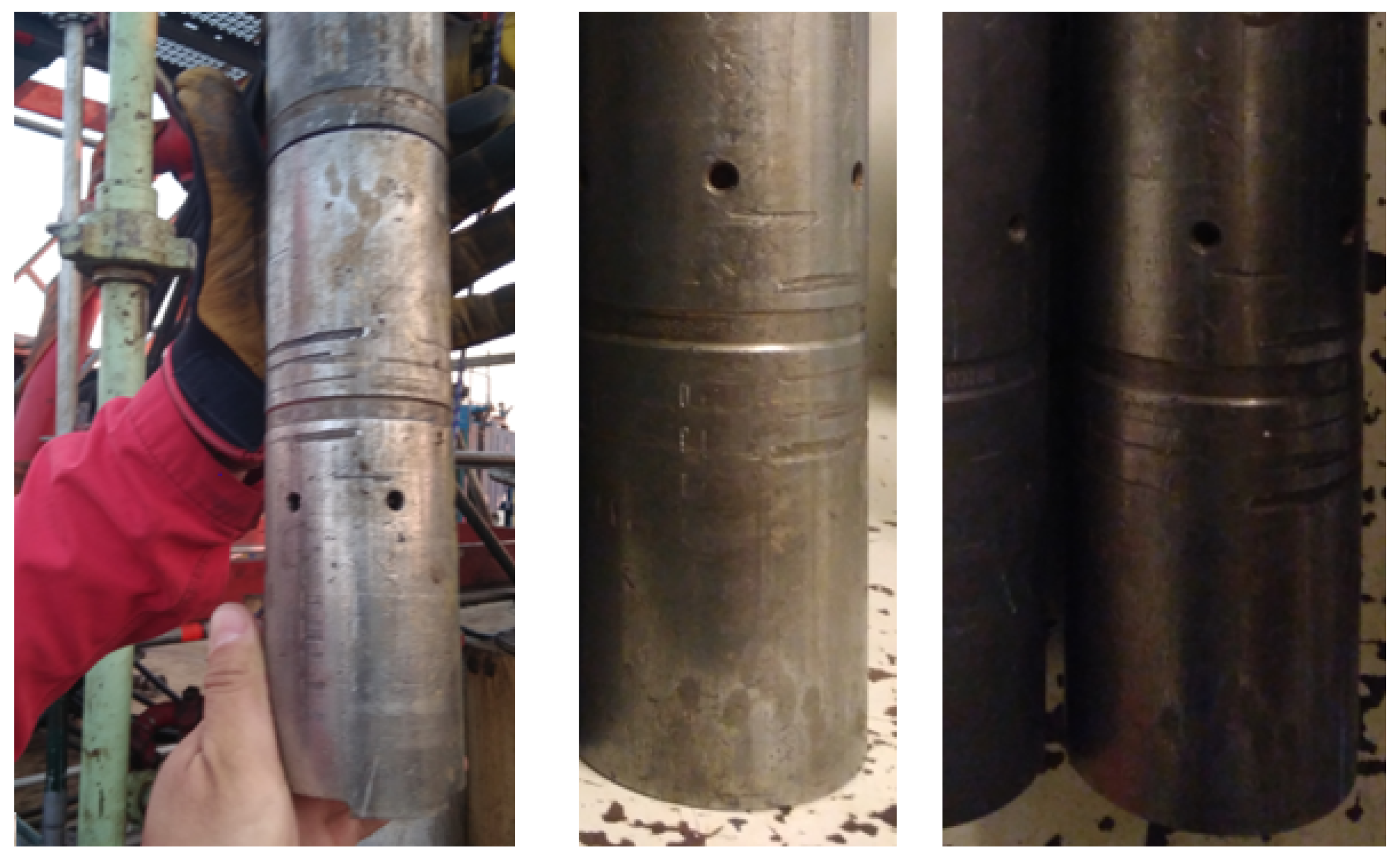
Inspection of the recovered components showed severe mechanical damage to the hydraulic safety sub and associated BHA parts. Both longitudinal and transverse marks were visible on the retrieved elements. The longitudinal damage is consistent with dragging or forced axial movement of the assembly against the wellbore or casing environment, whereas the transverse marks indicate that rotational motion was also applied during attempts to free the stuck drill string. Additional observations from the subsequent fishing operations confirmed the presence of residual cuttings and metallic debris in the borehole, which supports the interpretation that the wellbore was not effectively cleaned before the critical overload event occurred.
The problems presented with the installation and sealing of plugs 3 and 4 could have influenced the subsequent drilling process. Drilling works directly connected with milling out the installed plugs described began by equipping the borehole with a snubbing unit.
Table 2 describes the drill string component used during milling operations.
As summarized in
Table 1, the initial milling stage was completed under stable conditions. Plug no. 1 was milled at a flow rate of 300 L/min and a pressure of 220 bar. During the trip into plug no. 2, increased resistance was observed, and the flow rate was increased to 350 L/min to improve flushing and cleaning. Milling of plugs no. 3 and no. 4 proceeded without major difficulties. The critical stage developed during the trip into plug no. 5 at 3965.0 m, where drill string sticking was observed. Subsequent remedial actions included drilling plug scraps at 450 L/min and 270 bar, injecting and circulating 7 m
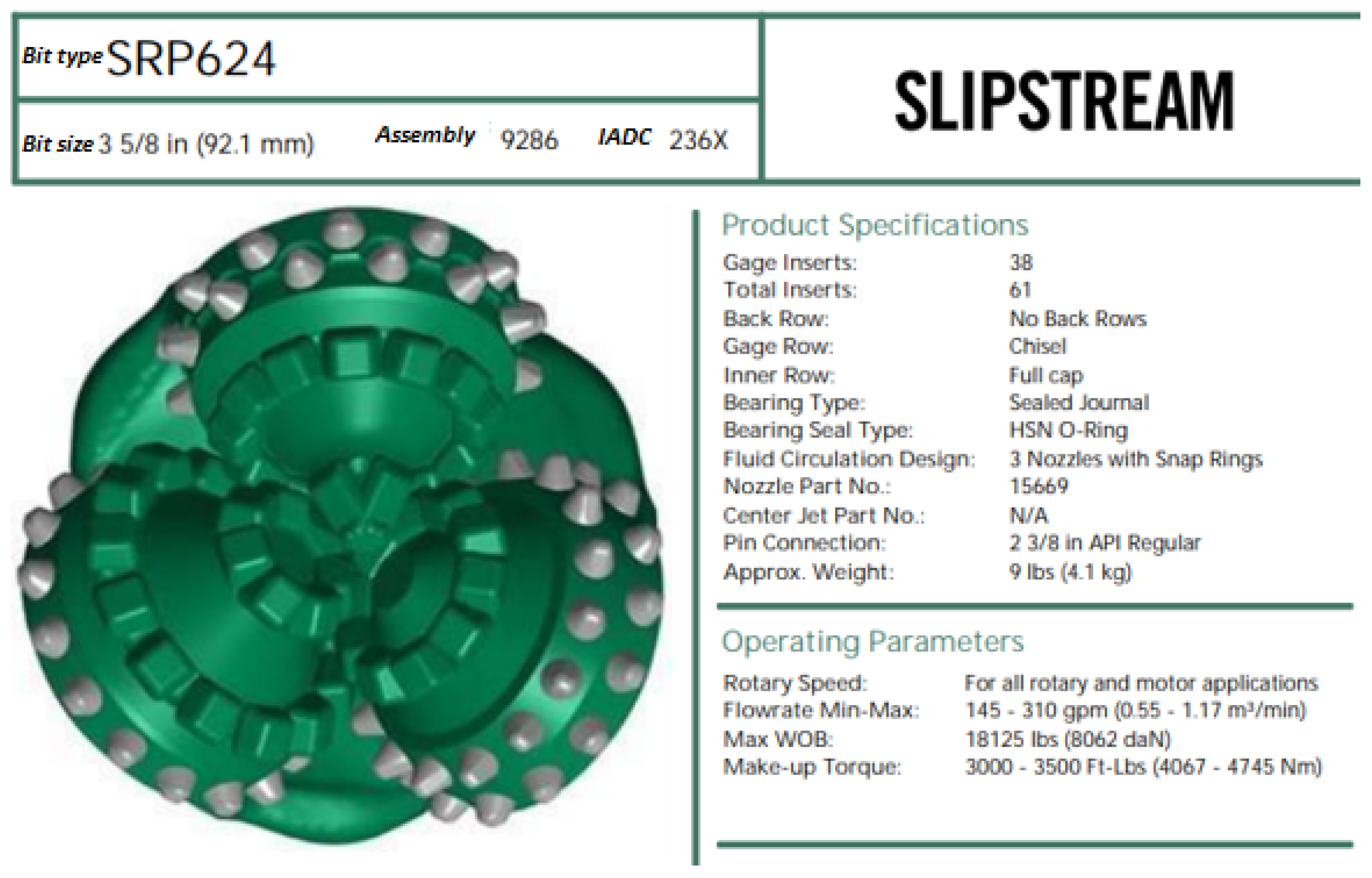
3 of HiVisPill, and further attempts to continue milling. During plug no. 5 milling, the pressure increased to 300 bar, and the drill string release attempts did not restore normal operating conditions. After tripping out, a 4.34 m section of the BHA was found to be lost at the hydraulic safety sub. It should be noted that the optimum flow-rate range recommended for the bit (
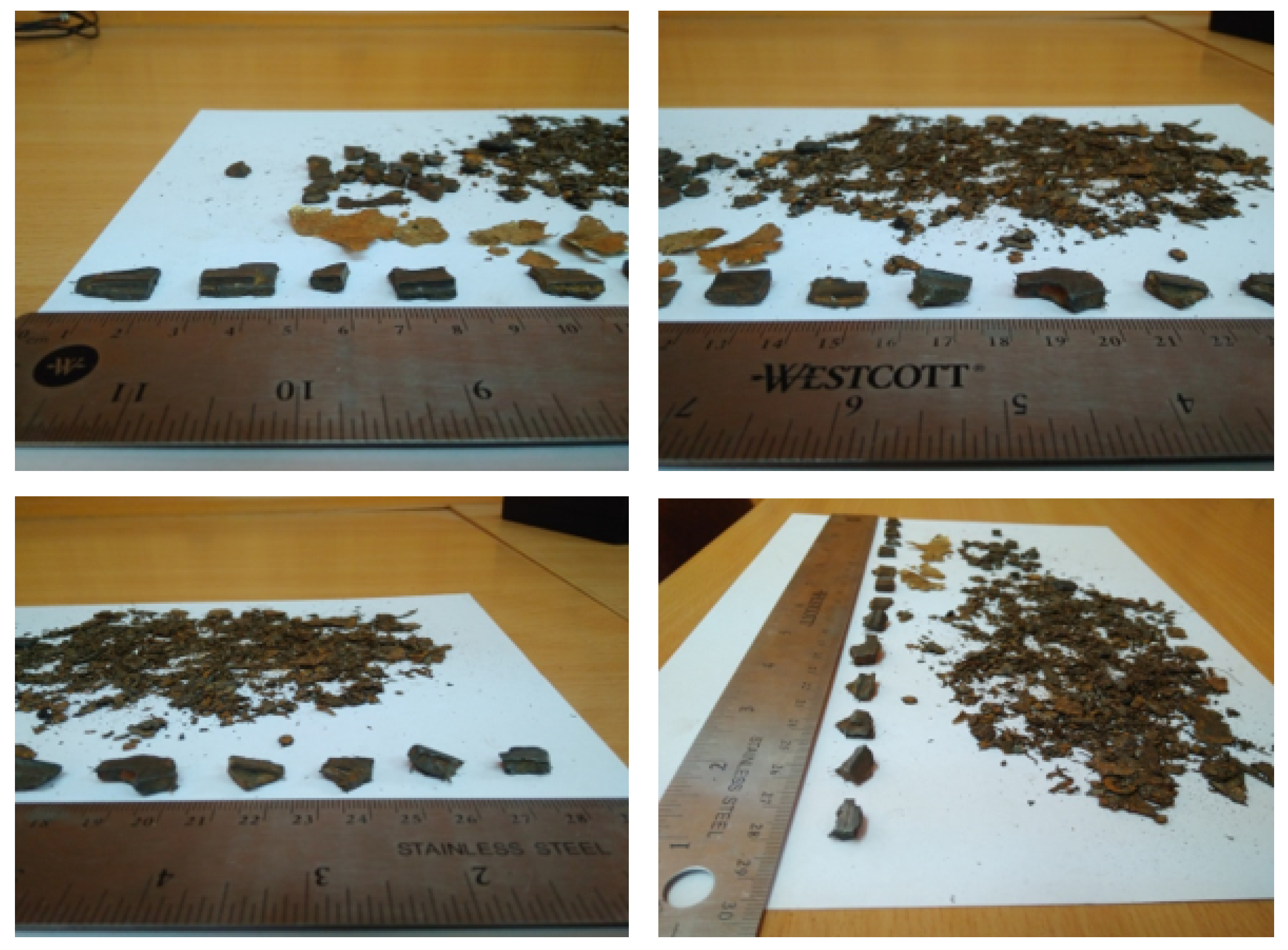
Figure 1) used in the operation was 550–1170 L/min. Therefore, even though several plugs were milled, the applied flow rates remained below the recommended range. This indicates that the hydraulic conditions at the bit face were probably insufficient for effective cleaning, which could have promoted the accumulation of cuttings and composite plug debris during the milling operation (
Figure 2). It is possible to see very strongly the mechanical nature of the wear on the BHA components, in particular the safety connector, which has deteriorated. Mechanical damage, both longitudinal and transverse, is evident on the entire surface of the fastener components that have been pulled out of the hole (
Figure 3).
4. Operational Load Analysis Based on Field Torque and Hook Load Data
The operational records of hook load and torque were analysed in separate time intervals rather than as one continuous data series. Such a division was necessary because the full record covered a long and operationally heterogeneous period, including normal trip-in, milling, circulation, and attempts to release the assembly. Segmenting the data made it possible to identify representative loading episodes and to indicate characteristic points associated with abnormal drill string response.
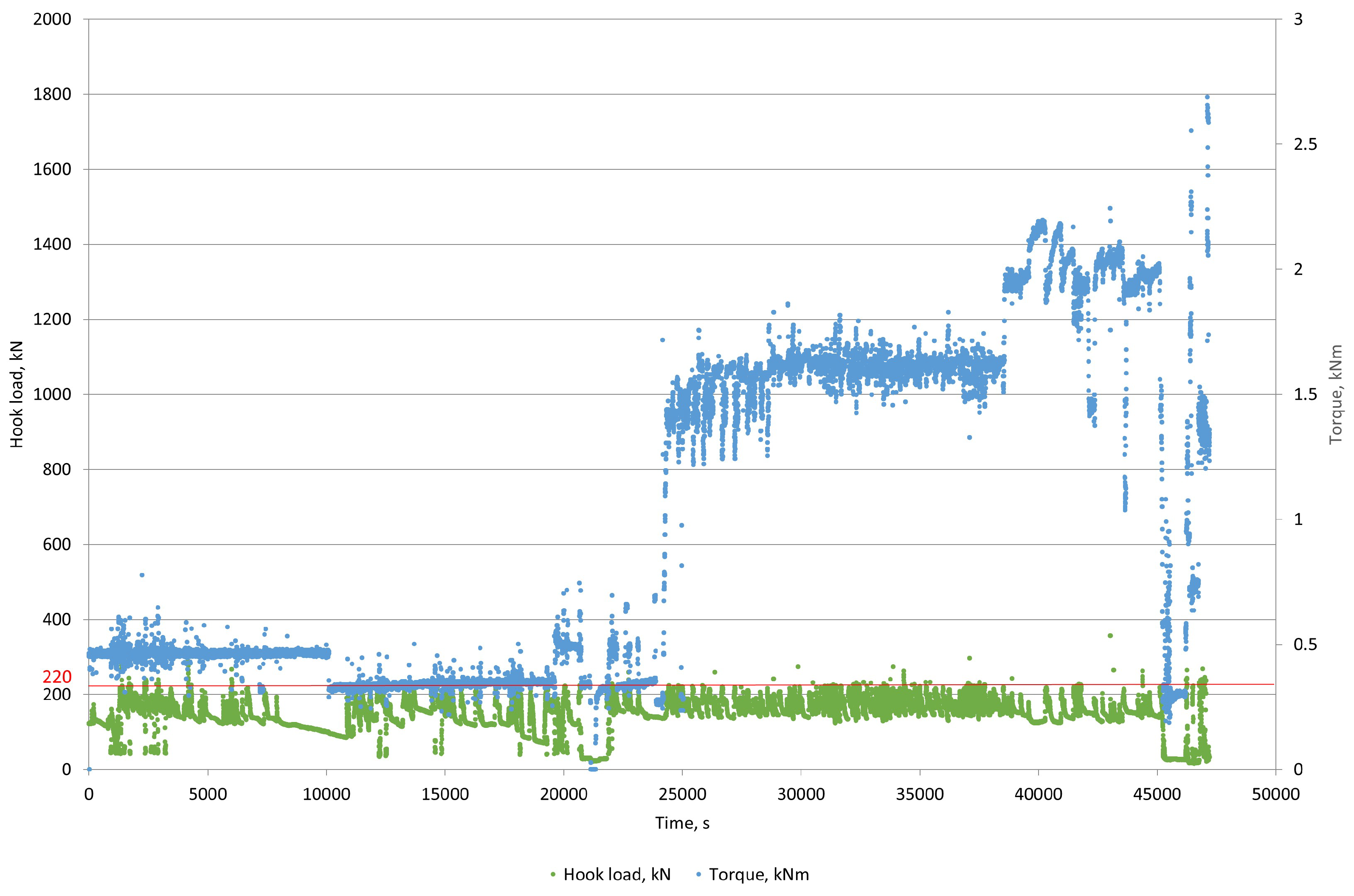
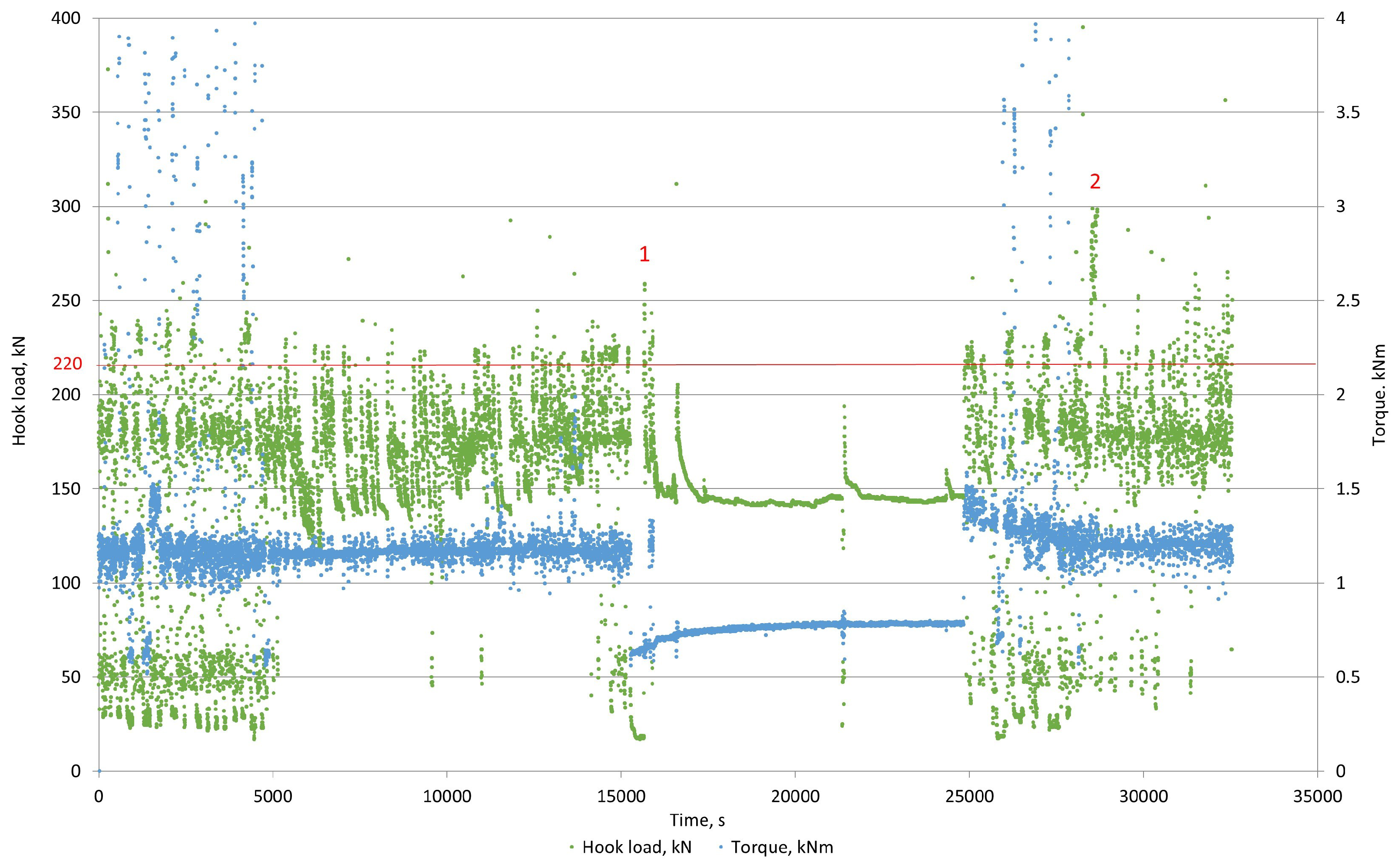
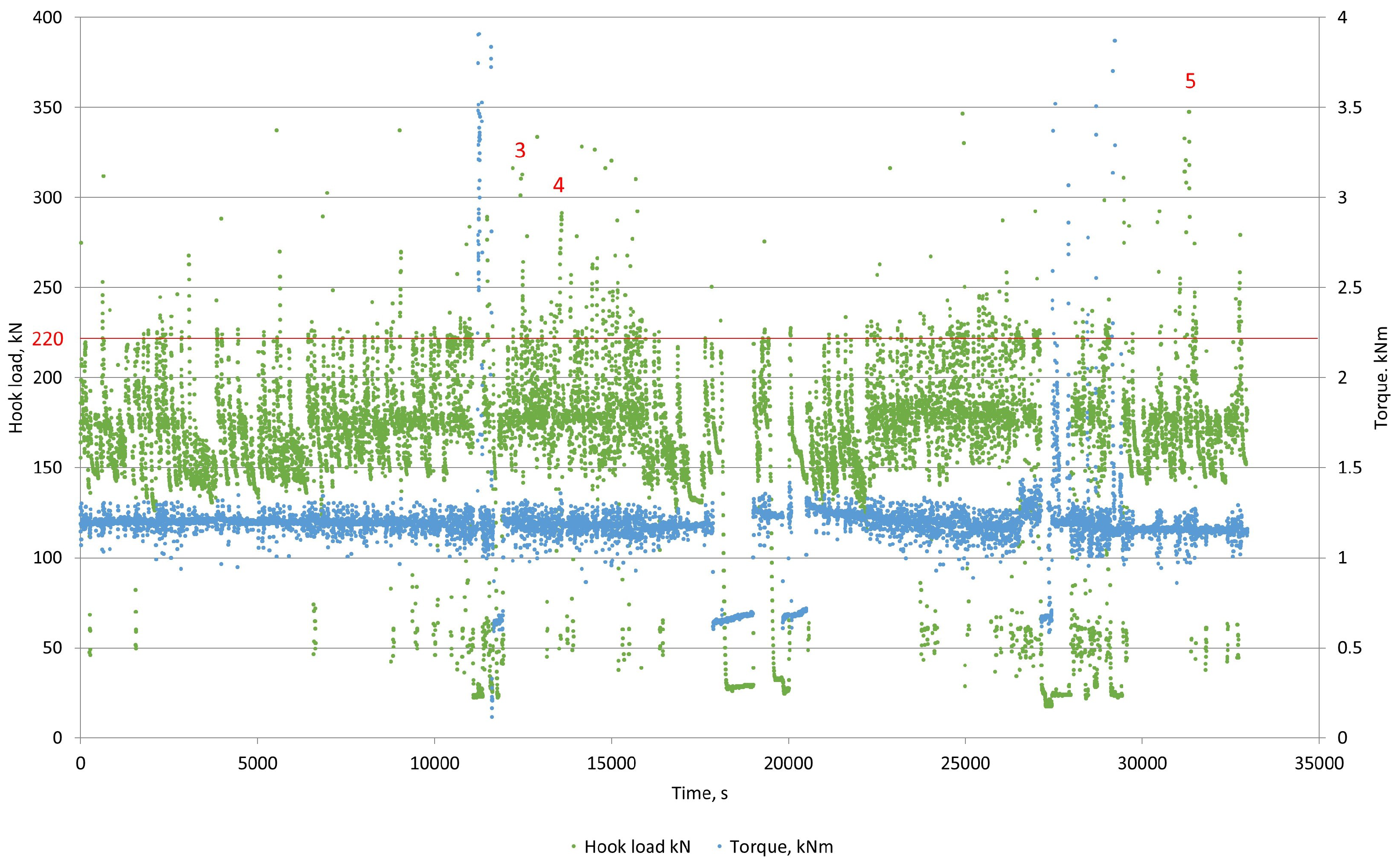
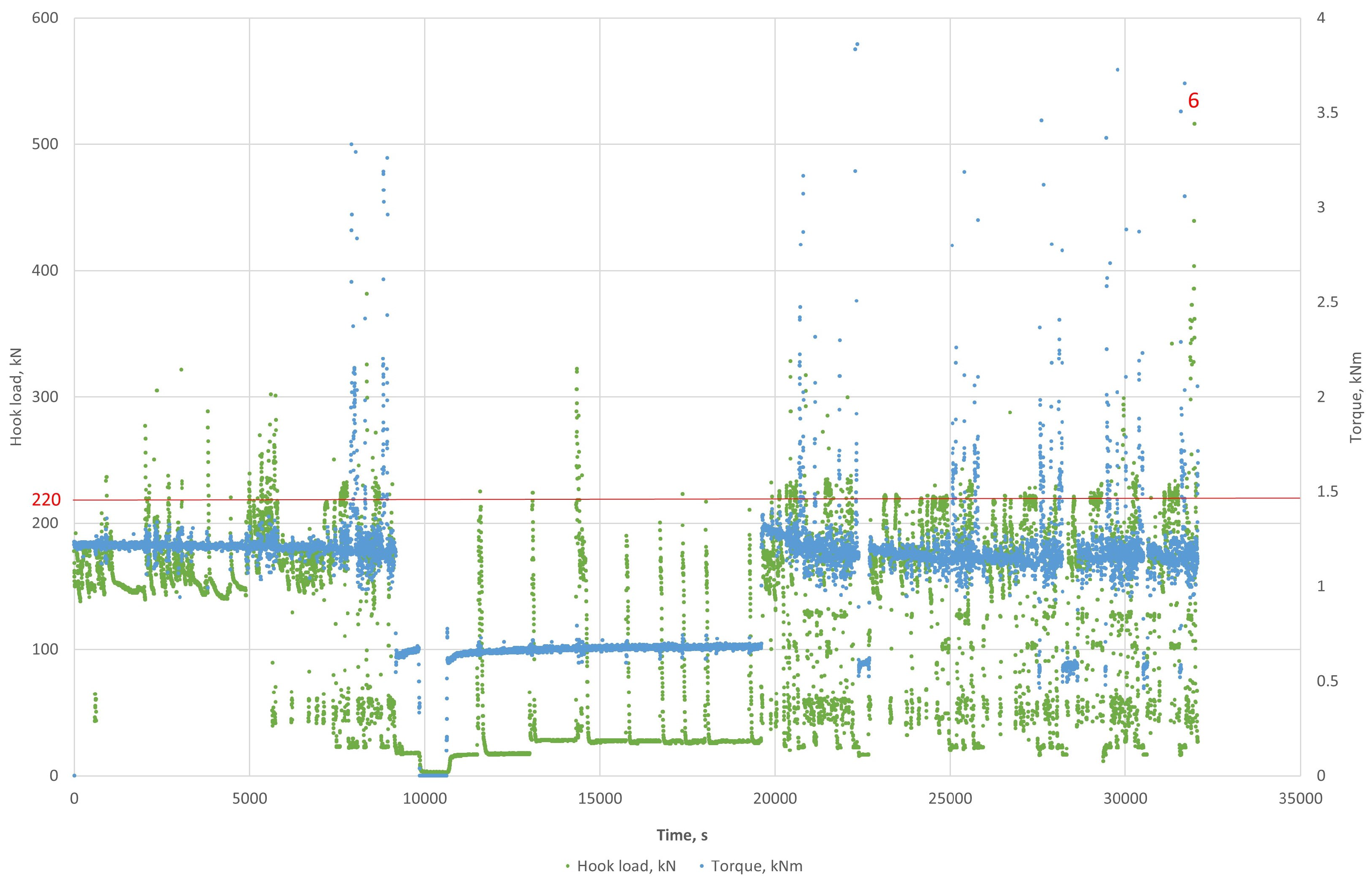
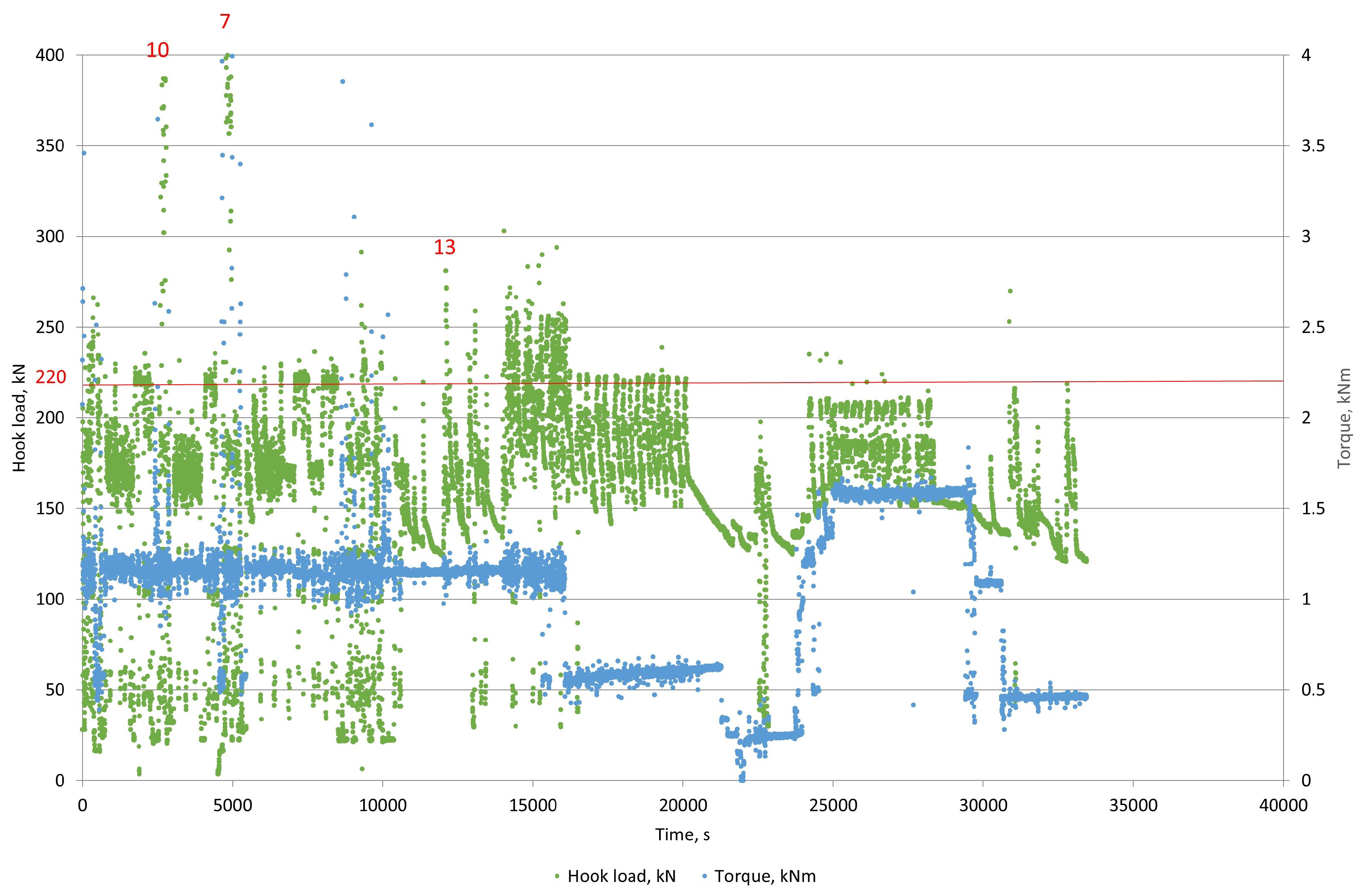
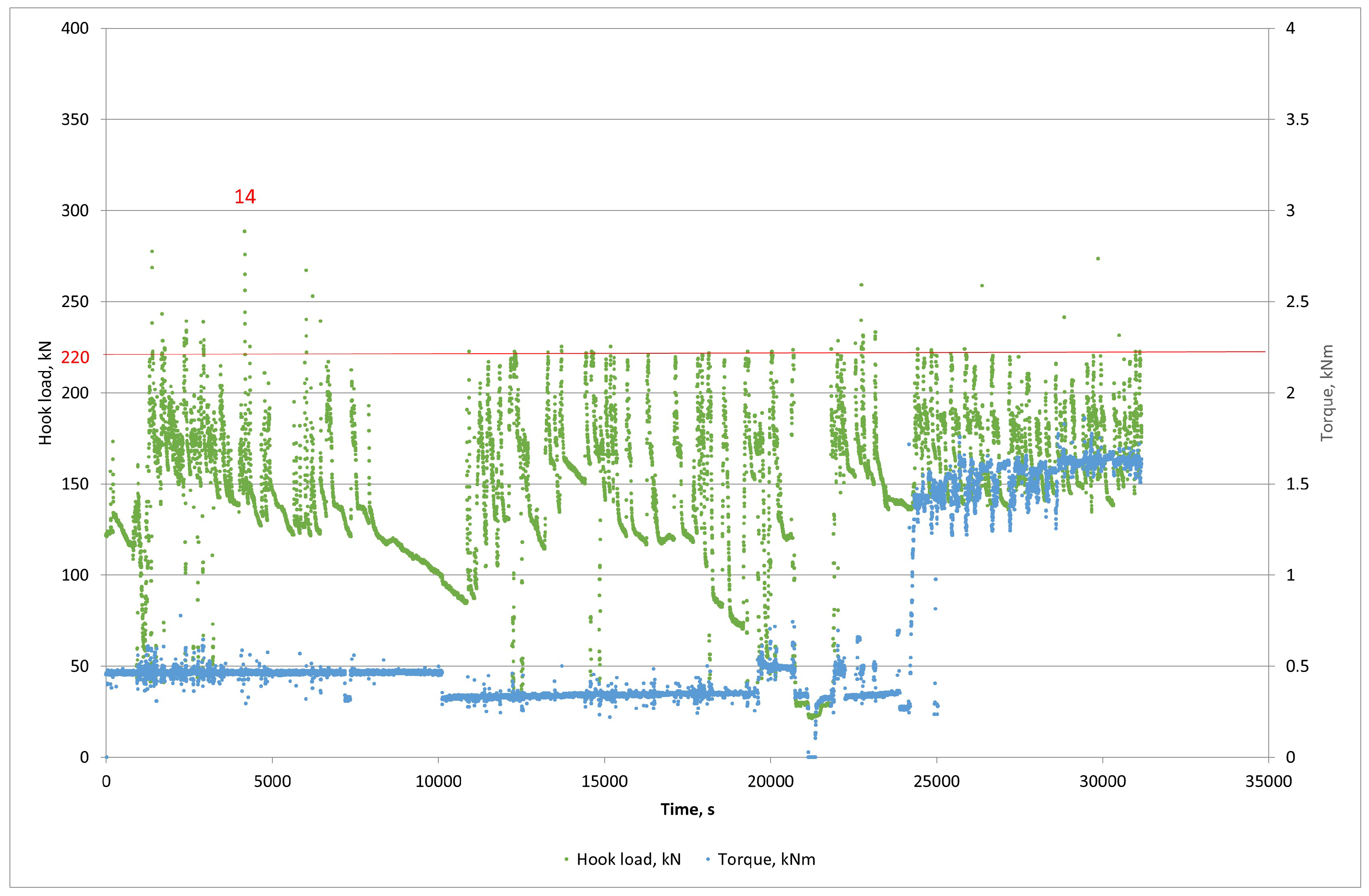
A hook load value of approximately 220 kN was adopted as the reference level for the analysed operation. This value corresponds to the approximate drill string weight observed during borehole work in the absence of active pushing or pulling with the snubbing unit, and it is shown in
Figure 4,
Figure 5,
Figure 6,
Figure 7,
Figure 8,
Figure 9 and
Figure 10 as a horizontal reference line. The purpose of introducing this baseline was not to interpret isolated instrument spikes, but to identify load episodes that reflected a meaningful increase in axial loading above the normal operational state.
Within the selected time windows, several characteristic intervals showed distinct increases in hook load and, in some cases, simultaneously elevated torque. These episodes are interpreted as periods of increased resistance to drill string movement, most likely associated with restricted motion of the assembly, deteriorating hole-cleaning conditions, and repeated attempts to restore progress or release the drill string. For this reason, the operational significance of the records should not be assessed from single values of hook load or torque considered separately. The critical issue is the simultaneous occurrence of axial overpull and torsional loading, because this combination produces the most severe loading condition for the hydraulic safety sub.
To support the subsequent strength assessment, characteristic operating points were selected from the time-segmented records and plotted later against the admissible load envelope of the hydraulic safety sub. In this way, the field measurements were not treated just as descriptive operational data, but as the basis for identifying whether the recorded load combinations approached or exceeded the safe operating range of the connector.
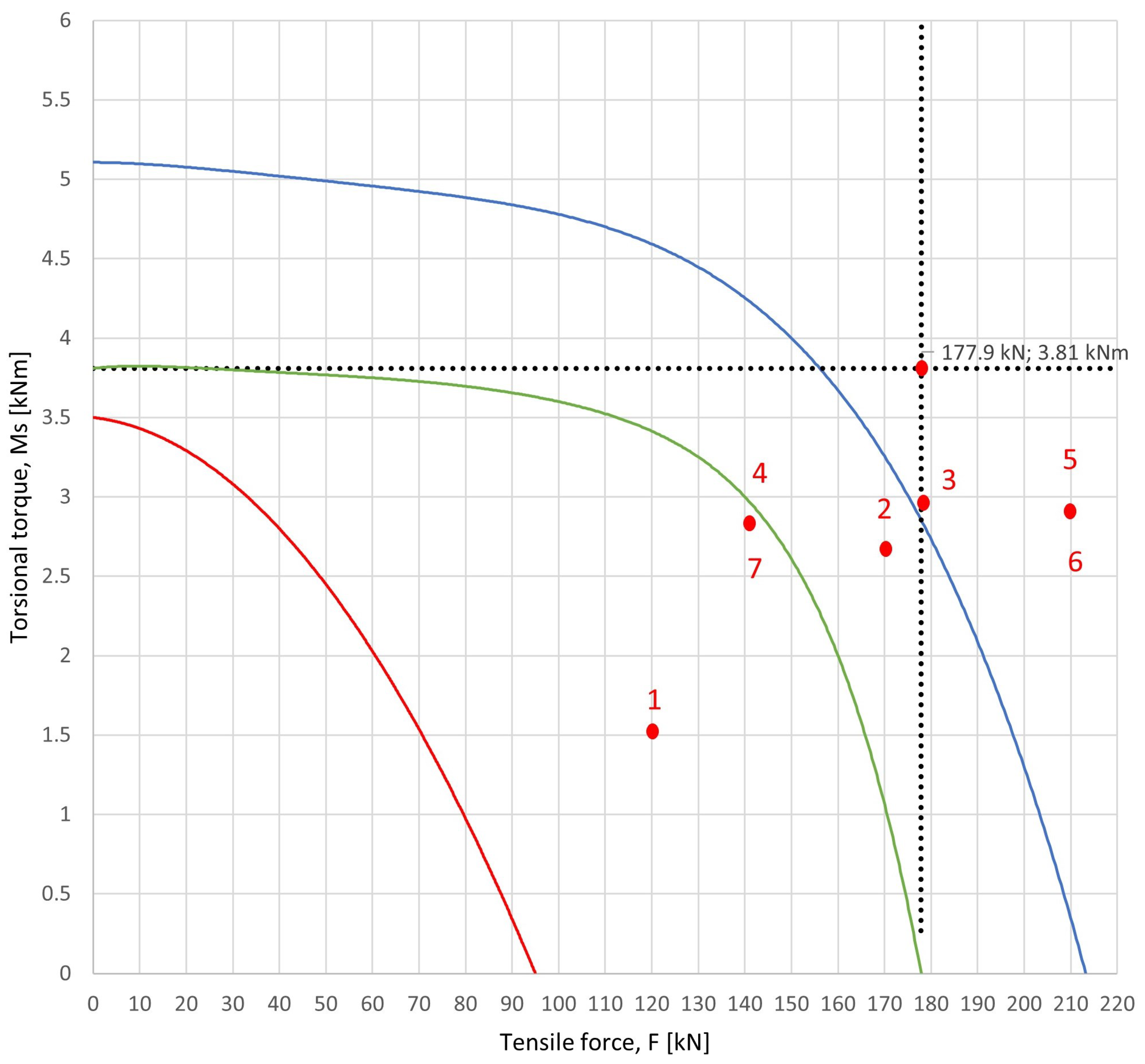
According to the supplied materials, the tensile strength of the hydraulic safety sub is 17,793 daN, which gives us, after conversion, 177,930 N or 18,137.61 kg. The maximum torsional torque of the PAC threaded connection is, according to the data in
Table 3, 381 daNm or 3810 Nm. Based on the analysis carried out, the weight on the hook during the work in progress in the well, when there is no trip-in or trip-out of the drill string with the snubbing unit, is approximately 220 kN. This has been marked in the drawings with a red line. All operations above this line, if they did not show linearity but only individual peaks of the apparatus, were omitted.
Figure 4 presents the first analysed time interval on 11 September and includes the initial characteristic abnormal points, marked as points 1 and 2. Although most of the interval represents relatively stable operation close to the reference hook load level, these two points indicate short-term deviations associated with increased mechanical resistance of the drill string. Therefore, this segment provides the first indication that the operating conditions were beginning to depart from normal milling behaviour.
Figure 5 shows the continuation of the operation, where further characteristic deviations of hook load and torque were observed. In this interval, the reader should note the occurrence of abnormal points indicating intermittent increases in drill string resistance, although the response had not yet developed into a continuous stuck-pipe condition.
Figure 4.
Torque and hook load 11-09 between 02:00–11:14 h.
Figure 4.
Torque and hook load 11-09 between 02:00–11:14 h.
Figure 5.
Torque and hook load 11-09 between 11:14–20:14 h.
Figure 5.
Torque and hook load 11-09 between 11:14–20:14 h.
Figure 6 presents a time interval which includes the transition from 11 to 12 September, in which the hook load response became more variable compared with the earlier stages. The identified abnormal points in this segment indicate that the drill string was subjected to repeated short-term increases in axial loading, which may be interpreted as symptoms of progressively increasing drag or restricted movement of the assembly.
Figure 6.
Torque and hook load 11-09/12-09 between 20:15–05:10 h.
Figure 6.
Torque and hook load 11-09/12-09 between 20:15–05:10 h.
Figure 7 illustrates a later stage of the operation, where the recorded hook load and torque response became increasingly irregular. The reader should focus on the abnormal loading episodes above the reference hook load level, as they suggest further deterioration of borehole conditions and increasing difficulty in maintaining free movement of the drill string.
Figure 7.
Torque and hook load 12-09 between 05:11–16:30 h.
Figure 7.
Torque and hook load 12-09 between 05:11–16:30 h.
The interval presented in
Figure 8 includes the transition from 12 to 13 September and shows the development of more severe operating conditions. In this segment, the combined changes in hook load and torque indicate that the assembly was no longer moving under stable conditions, and the risk of sticking was increasing.
Figure 8.
Torque and hook load 12-09/13-09 between 16:31–00:16 h.
Figure 8.
Torque and hook load 12-09/13-09 between 16:31–00:16 h.
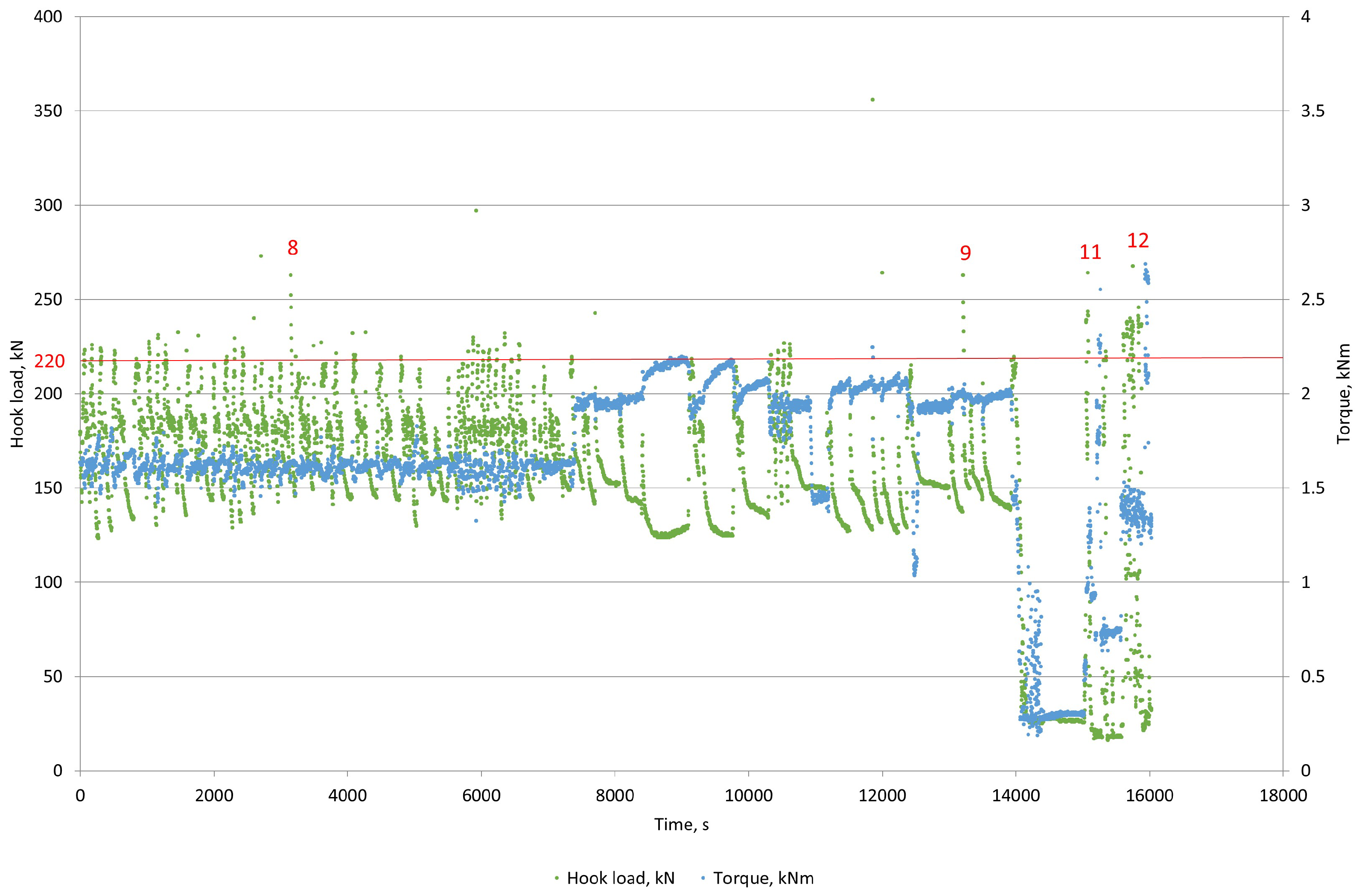
For a more detailed interpretation of the late-stage response, the analysed time interval was narrowed to the period in which the most relevant abnormal load combinations occurred. This narrowing made it possible to identify the subsequent characteristic points, marked as points 8, 9, 11, 12, and 14 in
Figure 9 and
Figure 10. These points represent selected episodes of abnormal hook load and torque response and were used as representative field load cases in the subsequent strength assessment of the hydraulic safety sub.
Figure 9.
Torque and hook load 13-09 between 00:17–12:47 h.
Figure 9.
Torque and hook load 13-09 between 00:17–12:47 h.
Figure 10 provides a closer view of the same late-stage interval and allows characteristic abnormal points 8, 9, 11, and 12 to be distinguished more clearly. This magnified view supports the selection of these points as representative abnormal load cases for comparison with the admissible load envelope of the hydraulic safety sub.
Figure 10.
Torque and hook load 13-09 between 02:27–07:02 h.
Figure 10.
Torque and hook load 13-09 between 02:27–07:02 h.
These points represent operational peaks, where locally increased loads may have generated elevated stress levels in the hydraulic safety sub, potentially affecting its correct performance. Consequently, they were adopted as reference load cases for the component-level strength assessment presented in the following section. The occurrence of these peaks demonstrates that, during the analysed period, the safety sub was not operating continuously within its normal working range.
5. Supporting Strength Assessment of the Hydraulic Safety Sub
The operational analysis presented in the previous section showed that the critical episodes during the plug-milling process were associated with the simultaneous occurrence of elevated hook load and torque. For this reason, the next stage of the study was focused on the hydraulic safety sub, i.e., the component at which the BHA separation occurred. The purpose of this part of the work was to assess whether the load combinations identified in the field records could have brought the connector into a critical stress state and to relate the selected operating points to the admissible working range of the tool.
In the following subsection, a component-level strength assessment is presented for the hydraulic safety sub under combined axial and torsional loading. The analysis was intended to support the interpretation of the failure mechanism observed in the field, rather than to reproduce the full dynamic behaviour of the entire drilling assembly.
Determination of the Safe Working Zone of the Hydraulic Safety Sub
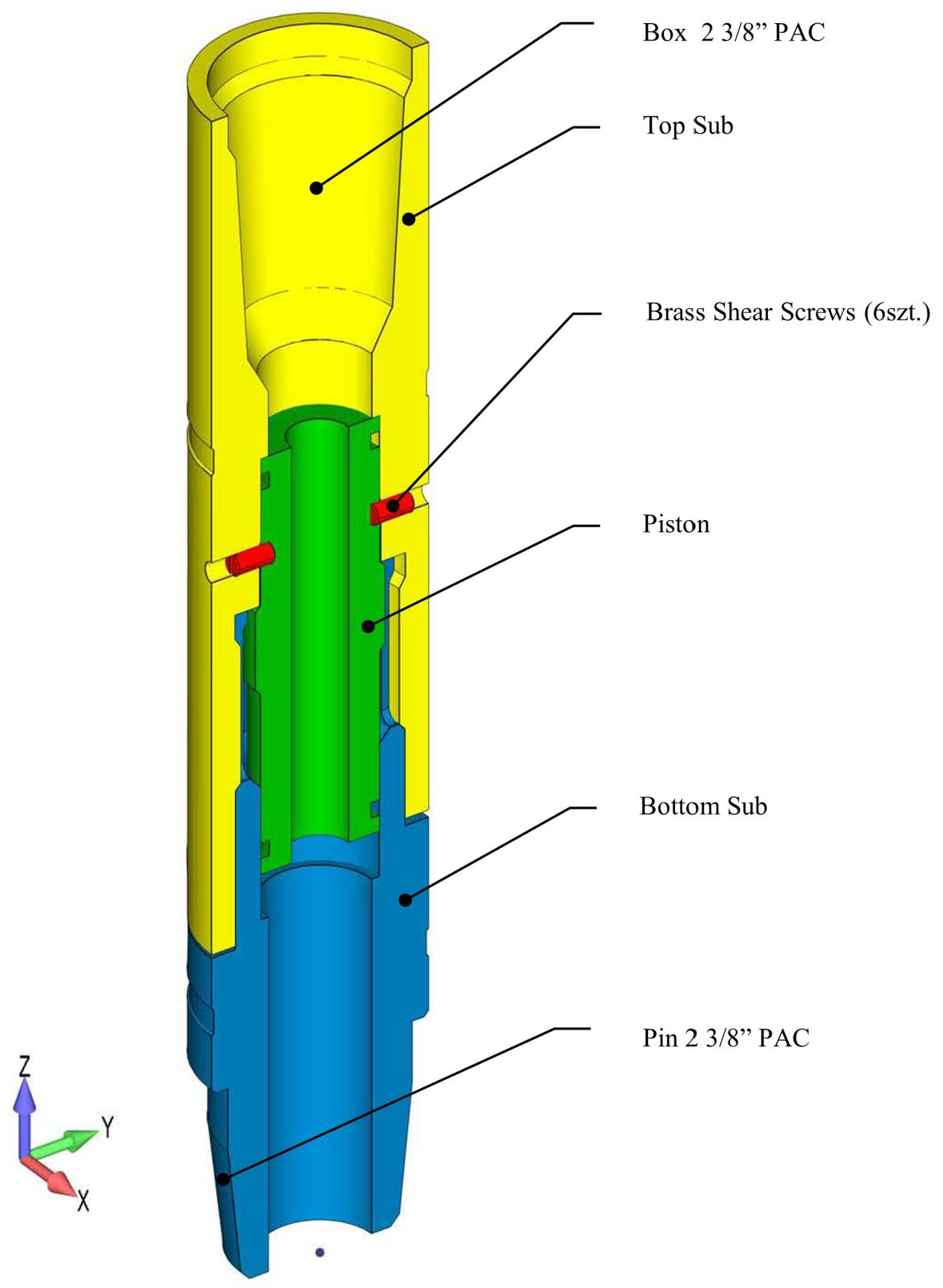
The geometric representation of the hydraulic safety sub was prepared on the basis of the product sheet for the 60 mm PAC Hyd Release Tool and the measurements of the damaged connector components recovered from the borehole. On this basis, a geometric model of the tool was developed for the purpose of the subsequent strength assessment (
Figure 11).
The analysis was focused on the response of the connector to the combined action of axial tensile force and torsional moment, as these two load components were identified in the field records as the most relevant to the analysed failure event. The objective of the assessment was to identify the critical stress concentration zones within the connector and to determine the admissible operating range of the hydraulic safety sub under combined loading.
The numerical model was prepared as a component-level strength assessment of the hydraulic safety sub and was not intended to reproduce the full dynamic response of the complete BHA in the wellbore. The lower part of the connector was constrained to represent its support through the remaining BHA components, while axial tensile force and torsional moment were applied to the opposite end of the model in accordance with the load components identified from the field hook load and torque records. The cooperating surfaces of the connector were defined as contact regions, whereas non-essential details that did not affect the global load transfer were simplified to improve numerical stability. The material was assumed to be homogeneous, isotropic, and elastic-plastic, with the yield strength of AISI 4340 steel adopted as the reference limit for the onset of yielding. The mesh was locally refined in the regions of expected stress concentration, especially near the finger bases, fillet regions, contact surfaces, and spline geometry. The refinement was continued until the location of maximum stress and the general stress distribution remained stable for the purpose of comparing the selected operating points with the admissible load envelope.
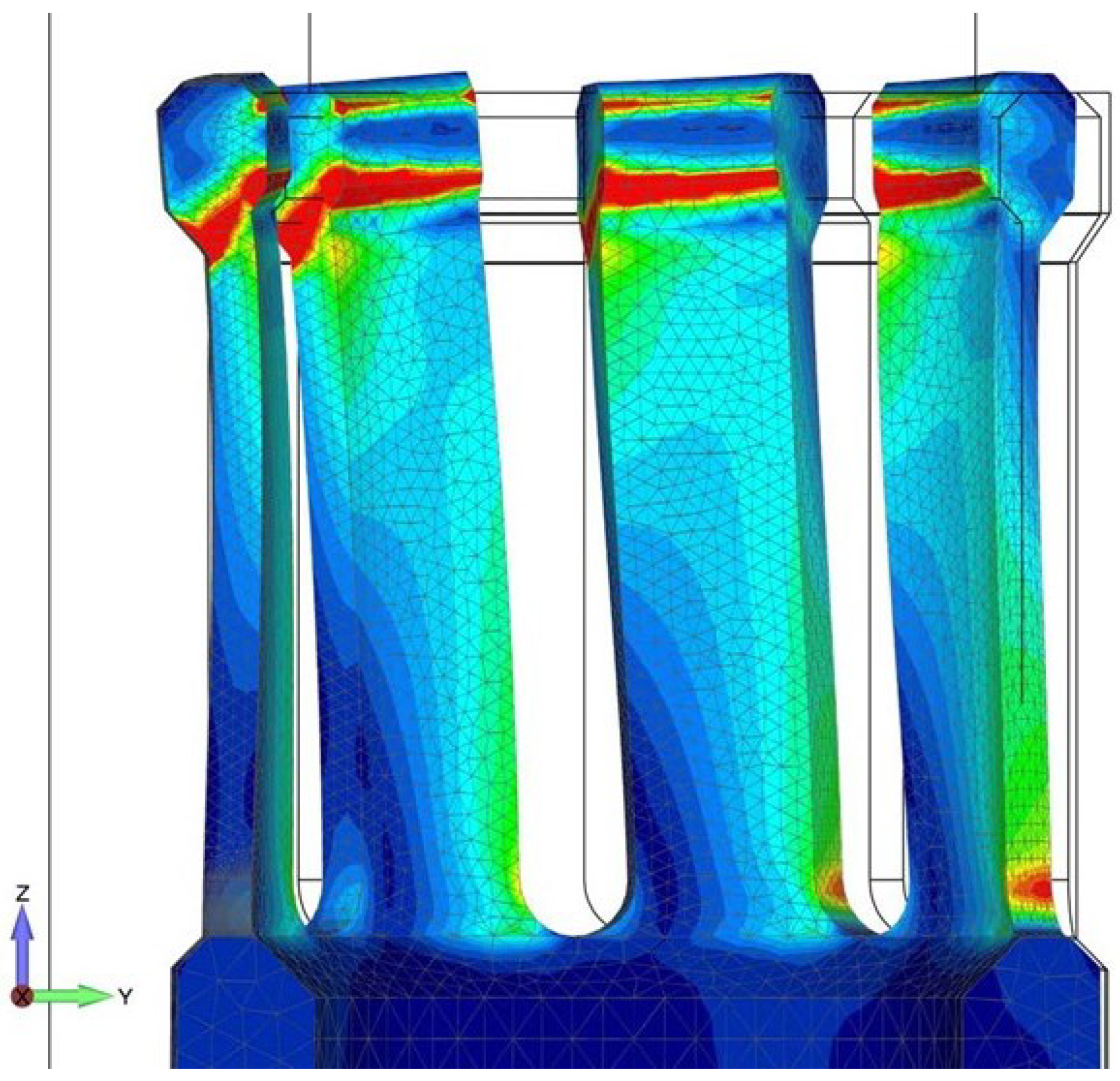
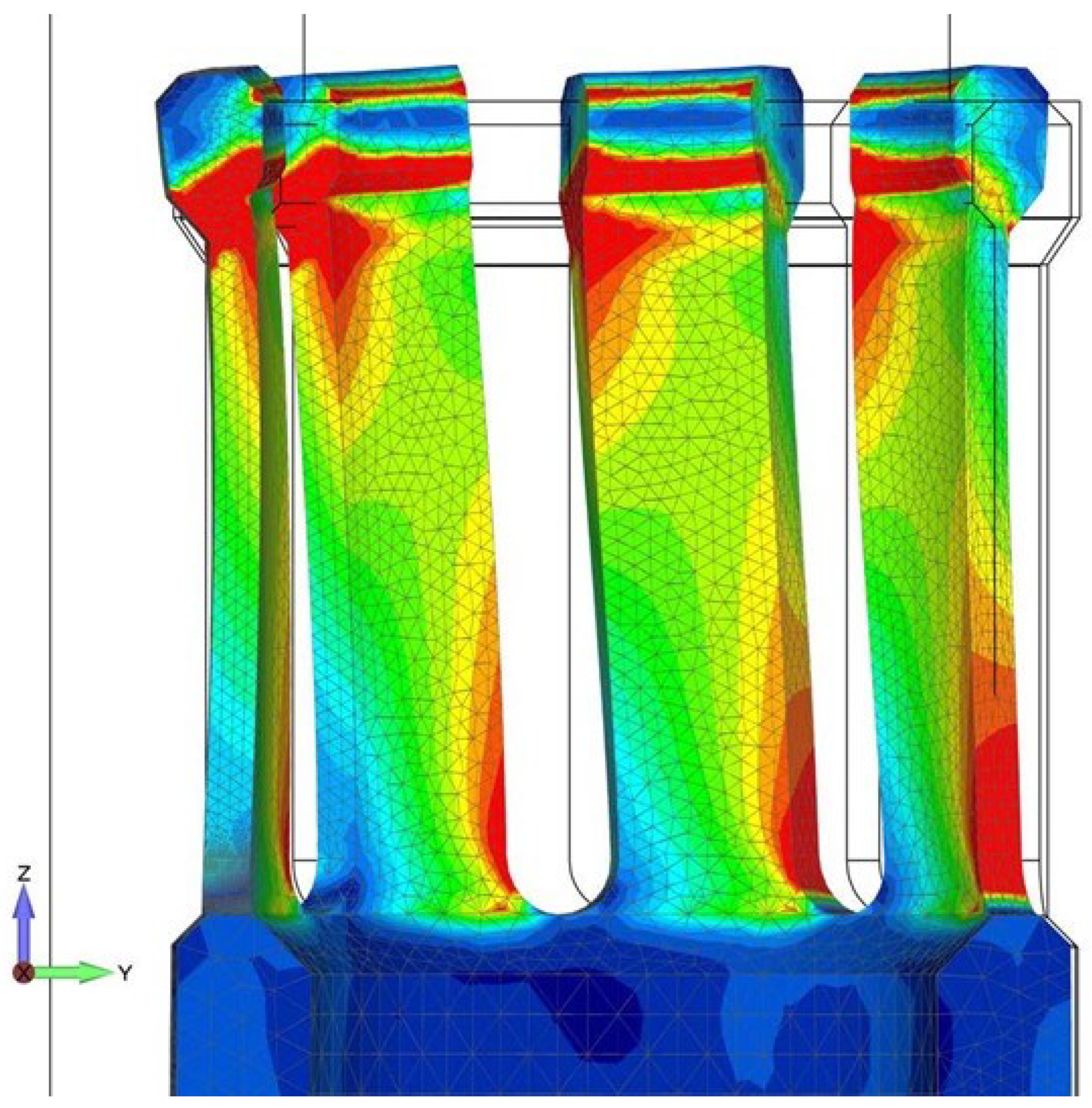
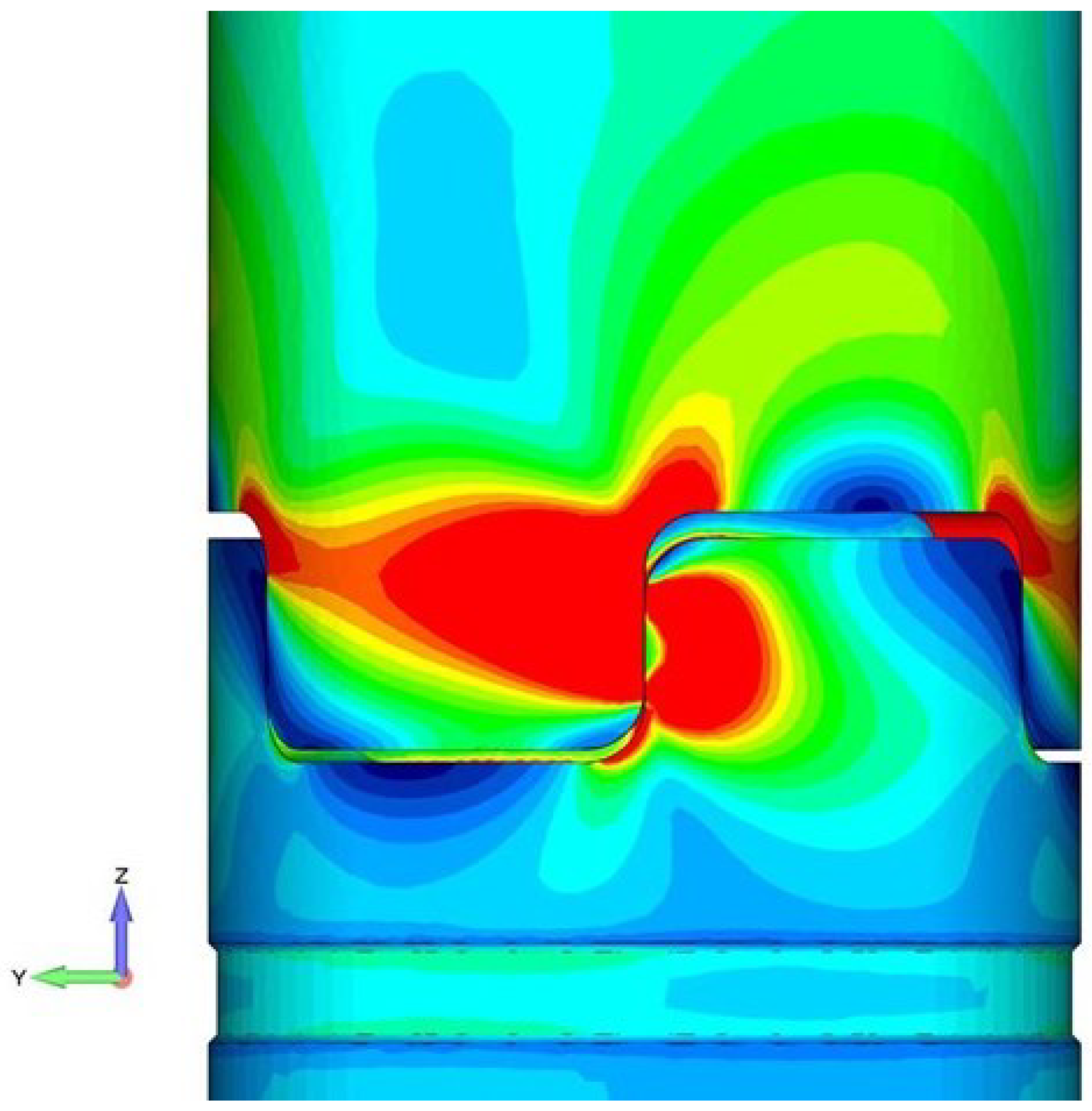
To evaluate the mechanical response of the connector, the stress level was analysed at three characteristic locations of the hydraulic safety sub: at the head of the finger, at the base of the finger in the fillet region, and at the contact surface of the Top Sub tabs, as indicated in
Figure 12,
Figure 13 and
Figure 14. These locations were selected because they represent the most probable stress concentration zones within the connector under the combined action of pull-up force and torque.
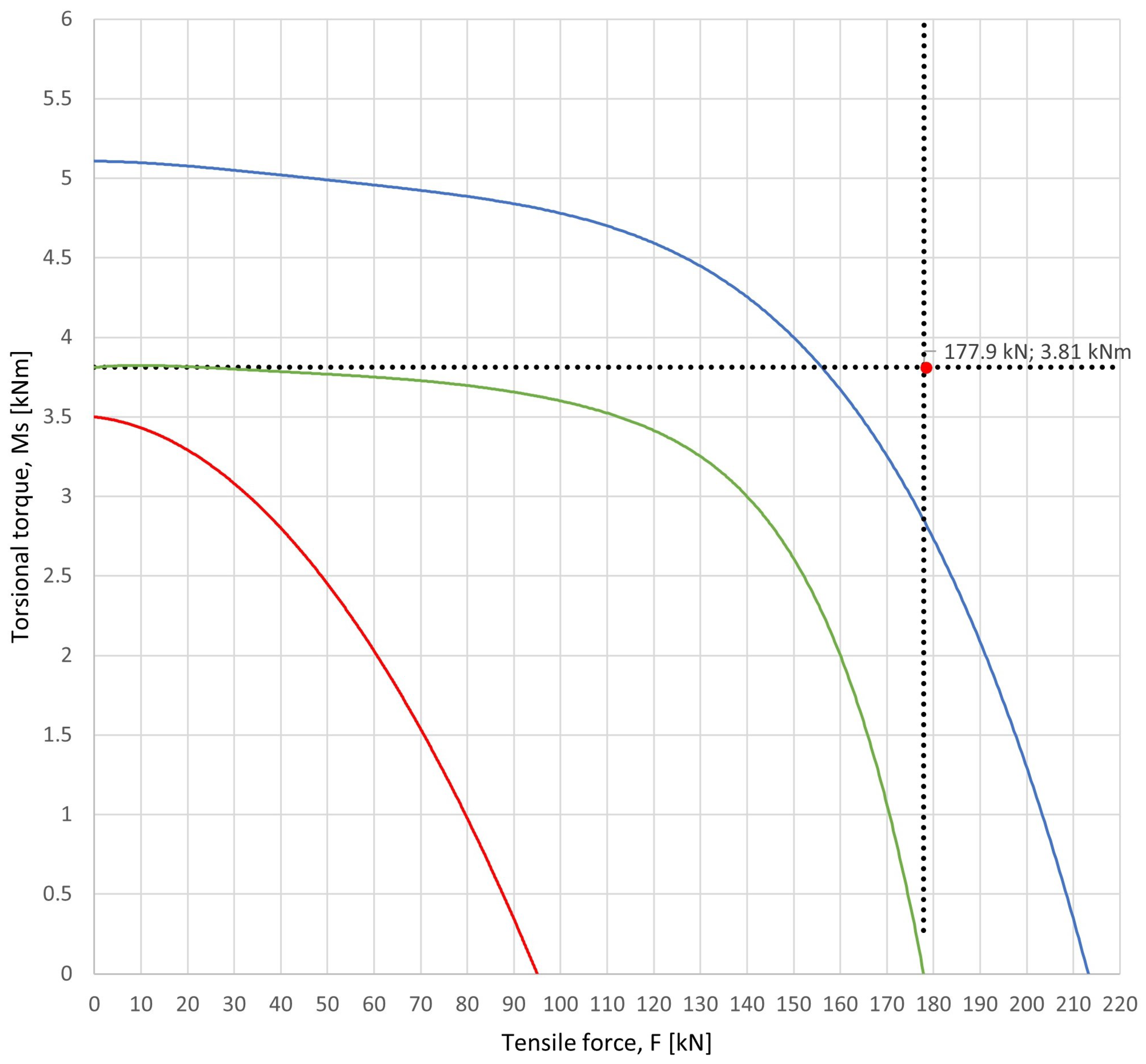
On this basis, the relationship between tensile load
F, torsional moment
, and the maximum equivalent stress level was determined, and the admissible working envelope of the connector was defined (
Figure 15). In the interpretation of the results, the yield strength
MPa, corresponding to AISI 4340 steel, was adopted as the reference limit for the onset of yielding in the analysed component.
Two limit curves were considered: an analytical limit and a numerical limit. Their different positions reflect the fact that the simplified analytical approach does not capture local geometric effects such as notch influence and secondary bending, whereas these effects are represented in the component-level numerical assessment. The admissible operating envelope shown in
Figure 15 was subsequently used as the reference framework for the interpretation of the field measurements discussed in
Section 4. The characteristic operating points selected from the hook load and torque records were plotted against this envelope in order to assess whether the recorded load combinations remained within the safe working range of the hydraulic safety sub or approached its limit state. In this way, the operational data were linked directly with the component-level strength assessment, making it possible to evaluate the mechanical significance of the most severe loading episodes identified during the plug-milling operation.
Figure 12.
Stresses and deformation bottom sub fingers due to torsional torque.
Figure 12.
Stresses and deformation bottom sub fingers due to torsional torque.
Figure 13.
Stresses and deformation bottom sub fingers due to torsional torque and tensile strength.
Figure 13.
Stresses and deformation bottom sub fingers due to torsional torque and tensile strength.
Figure 14.
Stress distribution in the top and bottom sub splines.
Figure 14.
Stress distribution in the top and bottom sub splines.
Figure 15.
Dependence of the stress level on the loading with force F and moment Ms. The red line represents the limit curve obtained from the adopted calculation model for different combinations of tensile force F and torque . It corresponds to load pairs for which the maximum calculated stress reaches the yield strength of AISI 4340 U steel, . The blue line represents the limit curve obtained from a simplified analytical model for the same yield strength, . In this case, stress concentrations were not included. The green line represents the allowable-load curve obtained from the simplified analytical model for a reduced stress level of . The safety factor of 1.25 was determined empirically from the ratio between the load values specified by the manufacturer in the product data sheet for the 60 mm PAC Hydraulic Release Tool and the maximum loads corresponding to on the blue curve. Stress concentrations were not included in this simplified analytical approach.
Figure 15.
Dependence of the stress level on the loading with force F and moment Ms. The red line represents the limit curve obtained from the adopted calculation model for different combinations of tensile force F and torque . It corresponds to load pairs for which the maximum calculated stress reaches the yield strength of AISI 4340 U steel, . The blue line represents the limit curve obtained from a simplified analytical model for the same yield strength, . In this case, stress concentrations were not included. The green line represents the allowable-load curve obtained from the simplified analytical model for a reduced stress level of . The safety factor of 1.25 was determined empirically from the ratio between the load values specified by the manufacturer in the product data sheet for the 60 mm PAC Hydraulic Release Tool and the maximum loads corresponding to on the blue curve. Stress concentrations were not included in this simplified analytical approach.

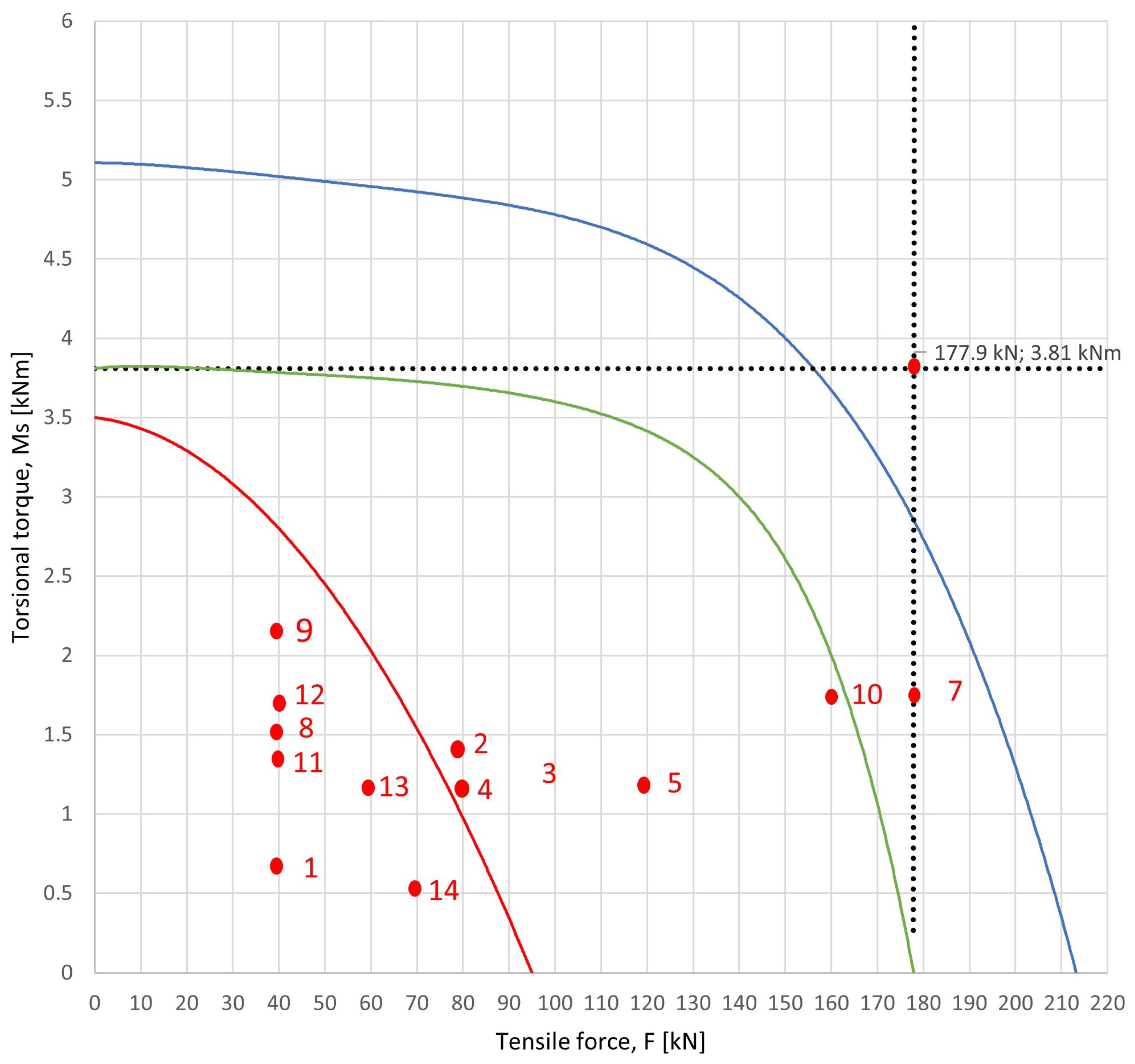
The comparison of the selected operating points with the admissible load envelope indicates that the most severe field load cases approached or exceeded the safe working range of the hydraulic safety sub. This finding should not be interpreted as evidence that the tool is inherently incapable of operating in demanding borehole conditions. Rather, it shows that the mechanical reliability of the connector depends on the combined loading state to which it is subjected during field operations. In the analysed case, the critical condition emerged not from a single excessive force or torque value considered in isolation, but from the cumulative interaction of several adverse factors, including insufficient hole cleaning, increased resistance to drill string movement, repeated remedial actions, and the simultaneous application of axial pull-up force and torsional moment. When such effects occur together, the effective operating margin of the connector may decrease considerably, and the risk of local yielding or permanent deformation becomes significantly higher.
Accordingly, the procedure illustrated in
Figure 15,
Figure 16 and
Figure 17 has practical value beyond the interpretation of the analysed accident. By relating characteristic operating points derived from field records to the admissible load envelope of the tool, it becomes possible to evaluate drilling events in terms of their actual combined mechanical severity. Such an approach may support more reliable operational decision-making, improve the selection and verification of BHA components, and contribute to safer planning of milling and stuck-pipe remediation operations in highly deviated wells.
Overall, the strength assessment presented in this section provides a mechanical framework for interpreting the failure of the hydraulic safety sub observed in the analysed operation. By combining the admissible load envelope of the connector with the characteristic operating points derived from the field torque and hook load records, it was possible to identify the loading conditions under which the available safety margin of the tool became markedly reduced. Considered together with the post-failure observations and the evidence of insufficient hole cleaning, these results indicate that the analysed event should be understood as the consequence of interacting operational and mechanical factors rather than of a single isolated overload episode. The broader implications of this interpretation for failure reconstruction and drilling practice are discussed in the following section.
Figure 17.
Characteristic points for drilling operations carried out on 11–13 September.
Figure 17.
Characteristic points for drilling operations carried out on 11–13 September.
6. Discussion
The failure analysed in this study should be interpreted primarily on the basis of field records and post-failure observations. The reconstructed sequence of events indicates that the loss of the BHA section was preceded by increasing resistance to drill string movement, signs of insufficient hole cleaning, and repeated attempts to continue milling and release the partially immobilized assembly.
The available operational data suggest that the critical condition developed progressively rather than as the result of a single instantaneous event. During the initial stage of the operation, plug milling proceeded without major difficulties. In the subsequent stages; however, the recorded hook load and torque behaviour became increasingly irregular, with characteristic episodes of elevated loading identified in the analysed time intervals. This evolution is consistent with deteriorating borehole-cleaning conditions and increasing resistance to drill string movement. The interpretation is further supported by the fact that the flow rates applied during the operation remained below the optimum range recommended for the bit used in the milling process.
The post-failure condition of the recovered components provides additional support for this interpretation. Longitudinal marks observed on the damaged elements are consistent with forced axial movement of the assembly under restricted borehole conditions, whereas transverse marks indicate that rotational motion was applied during attempts to restore progress or release the drill string. The presence of residual cuttings and metallic debris during subsequent fishing operations further supports the conclusion that the borehole had not been sufficiently cleaned before the critical loading stage developed.
Taken together, these observations indicate that the analysed failure resulted from the interaction of several adverse factors acting simultaneously. The most important of these were insufficient hole cleaning, increasing resistance to drill string movement, and repeated remedial actions involving pull-up force and rotation. In such conditions, the mechanical loading imposed on the hydraulic safety sub may increase cumulatively, and loss of tool integrity may occur even if no single operational parameter appears exceptional when considered in isolation. Qualitatively, insufficient hole cleaning should be regarded as the initiating and progressively developing factor, as it promoted cuttings accumulation, increased drag, and created the conditions for partial immobilization of the BHA. In contrast, the strong card-removal actions, involving elevated pull-up force and rotation, should be interpreted as the immediate loading factor that intensified the mechanical demand on the hydraulic safety sub under already unfavourable borehole conditions. Therefore, preventive measures should focus first on maintaining effective hole cleaning and early recognition of deteriorating transport conditions, while remedial actions to release a partially stuck assembly should be carefully limited and controlled to avoid excessive combined axial and torsional loading.
From an operational point of view, the analysed case shows that the interpretation of hook load and torque records should focus not only on peak values, but also on their operational context and concurrent occurrence. The time-segmented analysis used in this study made it possible to identify the intervals in which the combination of axial loading and torque became particularly unfavourable. This type of interpretation may support earlier recognition of hazardous operating conditions and improve decision-making during plug-milling and stuck-pipe remediation operations in highly deviated wells.
The case also highlights the importance of maintaining effective hole cleaning throughout milling operations. Once the transport of cuttings and debris becomes insufficient, further attempts to continue the operation without restoring proper borehole-cleaning conditions may lead to rapid escalation of drag, sticking tendency, and component overloading. For this reason, operational decisions should account not only for the immediate progress of milling, but also for the evolving mechanical condition of the BHA under deteriorating downhole conditions.
Accordingly, the principal value of the present study lies in the reconstruction of the failure sequence from field data and recovered-component observations and in translating that reconstruction into practical recommendations for drilling operations conducted in difficult borehole conditions.
7. Conclusions
The present study reconstructed the failure of a bottom-hole assembly section lost during composite plug milling in a highly deviated well after hydraulic fracturing operations. The analysis was based primarily on field hook load and torque records, operational documentation, and inspection of the damaged components recovered from the borehole.
The reconstructed sequence of events indicates that the failure developed progressively rather than as the result of a single isolated overload event. The available evidence shows that the critical condition was associated with increasing resistance to drill string movement, insufficient hole cleaning, and repeated attempts to continue milling and release the partially immobilized assembly.
Post-failure observations of the recovered components, including longitudinal and transverse damage marks, together with the presence of residual cuttings and metallic debris in the borehole during subsequent fishing operations, support the conclusion that the analysed event resulted from the interaction of several adverse operational factors acting simultaneously. In particular, the combined action of pull-up force and rotation under deteriorating borehole conditions appears to have played a decisive role in the loss of the BHA section at the hydraulic safety sub.
The study shows that the interpretation of hook load and torque data should not be limited to individual peak values considered separately. Greater practical value is obtained when these records are analysed in their operational context, especially with regard to the concurrent occurrence of elevated axial loading, torque, and symptoms of poor hole cleaning. Such an approach may improve the identification of hazardous operating conditions during plug-milling and stuck-pipe remediation operations.
The objective of the study was achieved in that the probable failure mechanism was identified and translated into practical operational conclusions. The principal contribution of the paper lies in the reconstruction of the failure sequence from field data and recovered-component observations, and in showing how such information can support safer planning and execution of drilling operations in difficult borehole conditions.
From a practical field perspective, the analysed case indicates that plug-milling operations should not be continued solely on the basis of short-term milling progress if symptoms of insufficient hole cleaning and increasing drill string resistance are observed. The applied flow rate should be verified against the recommended operating range of the bit and downhole motor, and any reduction below this range should be treated as a potential risk factor for debris accumulation. Hook load and torque records should be interpreted jointly, because the simultaneous occurrence of increased axial load and torsional moment is more critical for BHA connectors than either parameter considered separately.
The results also suggest that sustained abnormal hook load and torque behaviour should be used as an operational warning condition. In such cases, additional circulation, hole-cleaning procedures, or controlled tripping out of the assembly should be considered before further milling or release attempts are performed. The specific numerical thresholds for such actions should be defined individually for each operation, taking into account the well trajectory, BHA configuration, bit and motor specifications, mud properties, and operator procedures.




 ,
,