LEOPARD: Automated CAD-to-Synthetic Pipeline for 3D-Printed Firearm Detection in Civil Transit Security

 , , , and
Abstract
1. Introduction
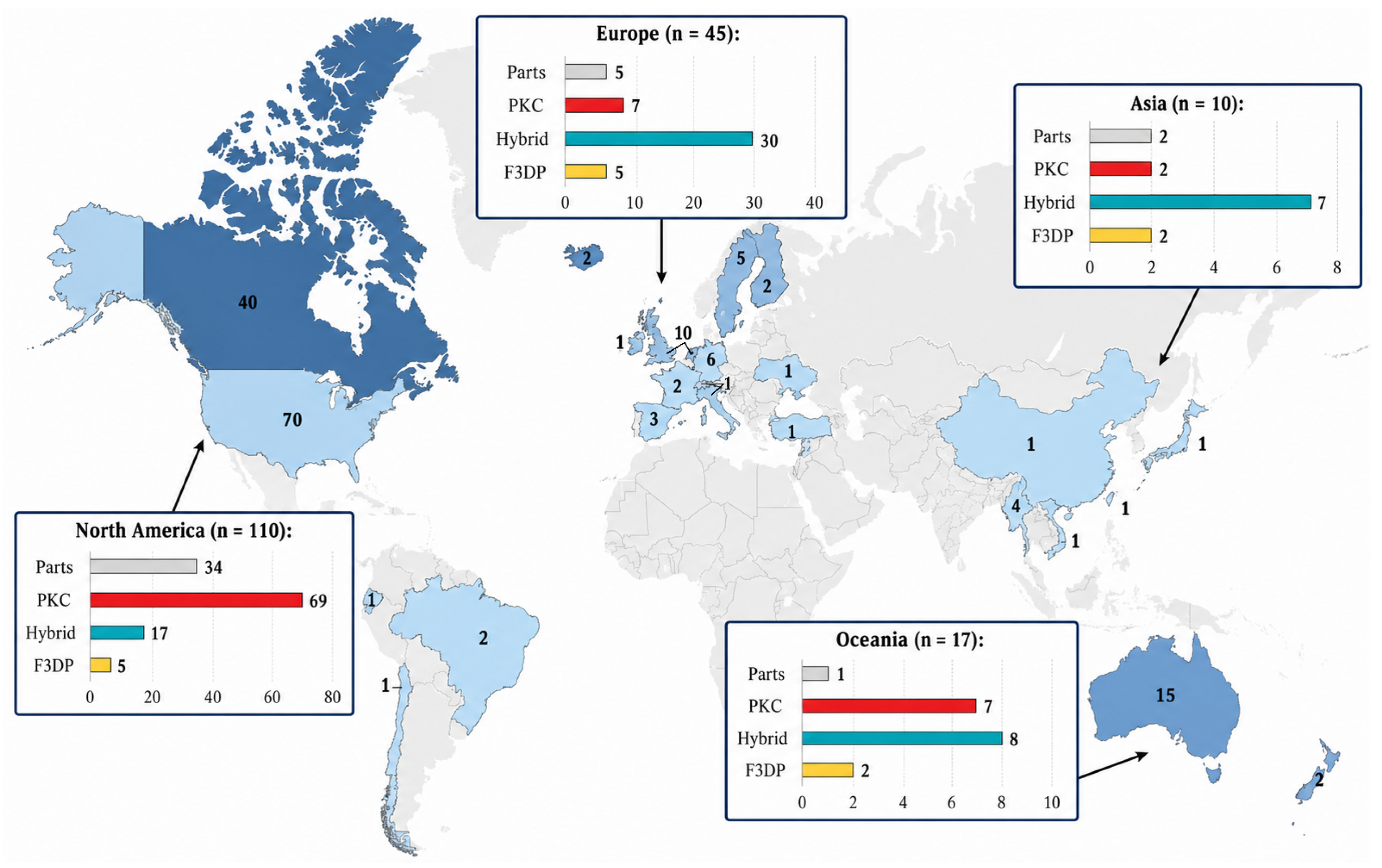
- Material Evasion: Common materials like PLA and PETG are radiolucent, making them virtually invisible to standard X-ray scanners.
- Untraceable Manufacturing: The absence of serial numbers or ballistic fingerprints renders forensic tracing impossible.
- Morphological Fluidity: Continuous online updates introduce new modular parts weekly, allowing disassembled weapons to resemble harmless objects.
- Detection Asymmetry: The traditional detection pipeline (physical production, scanning, annotation) cannot keep pace with the digital design cycle.
- Rapid design evolution, where new CAD models for parts are shared online daily, rendering any static dataset obsolete almost immediately.
- Component-based detection, as firearms are often trafficked or smuggled in a disassembled state.
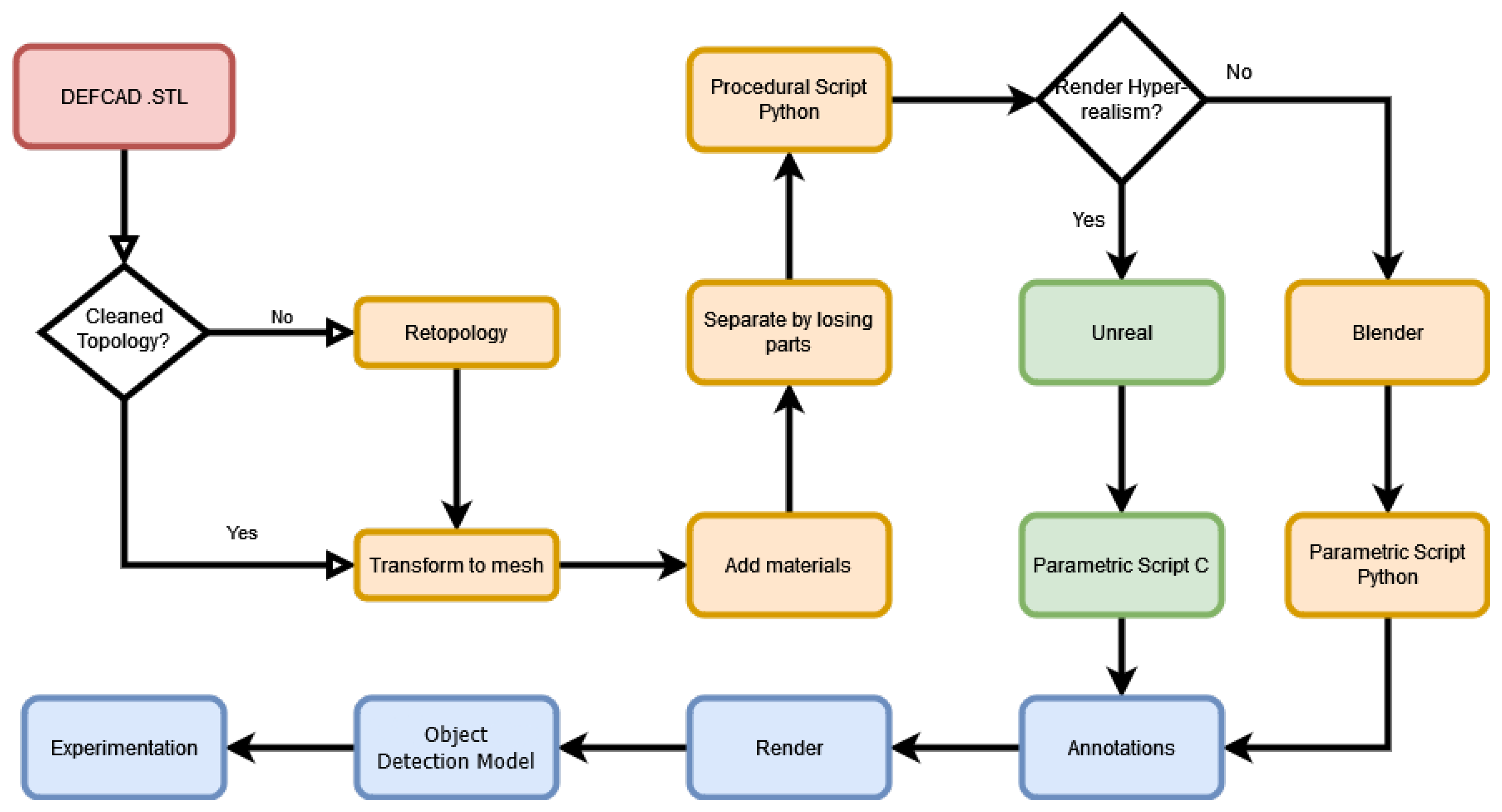
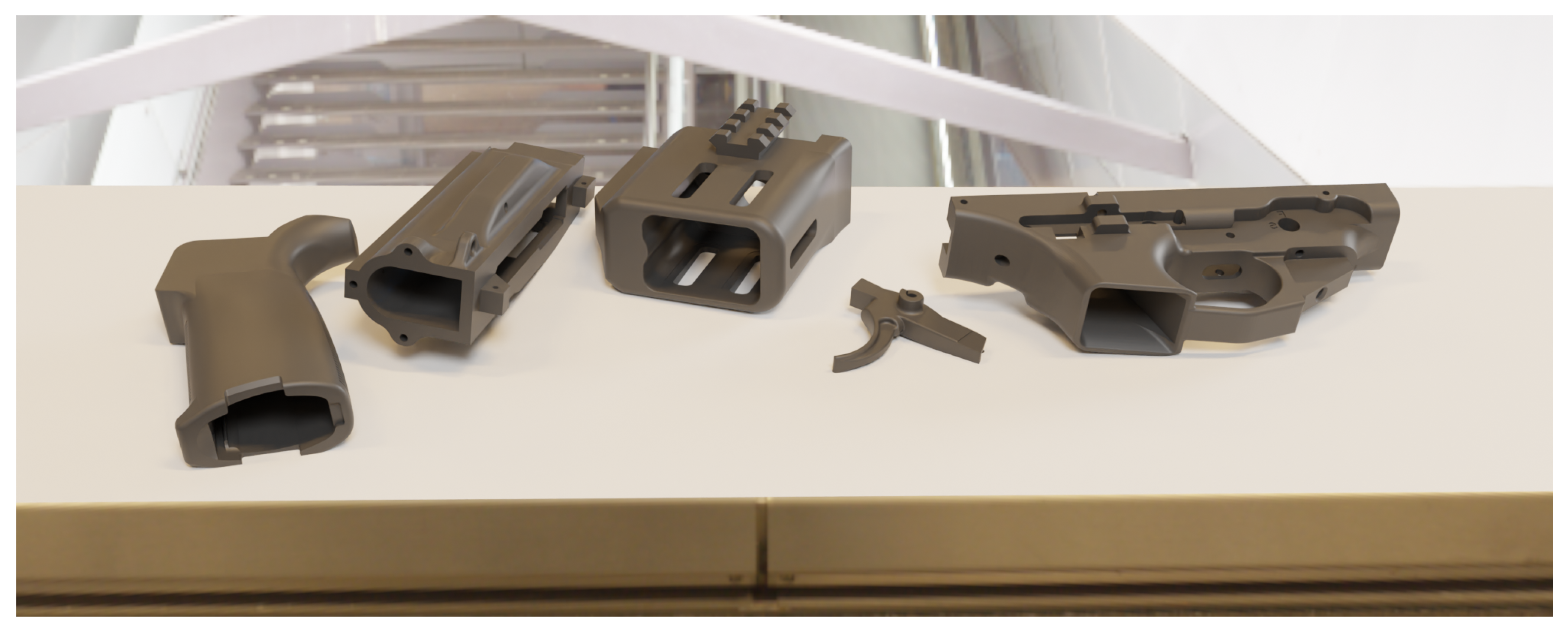
- Proposed Methodology: Enables the rapid creation of synthetic datasets for the purpose of detecting 3D-printed firearms components to train accurate detectors.
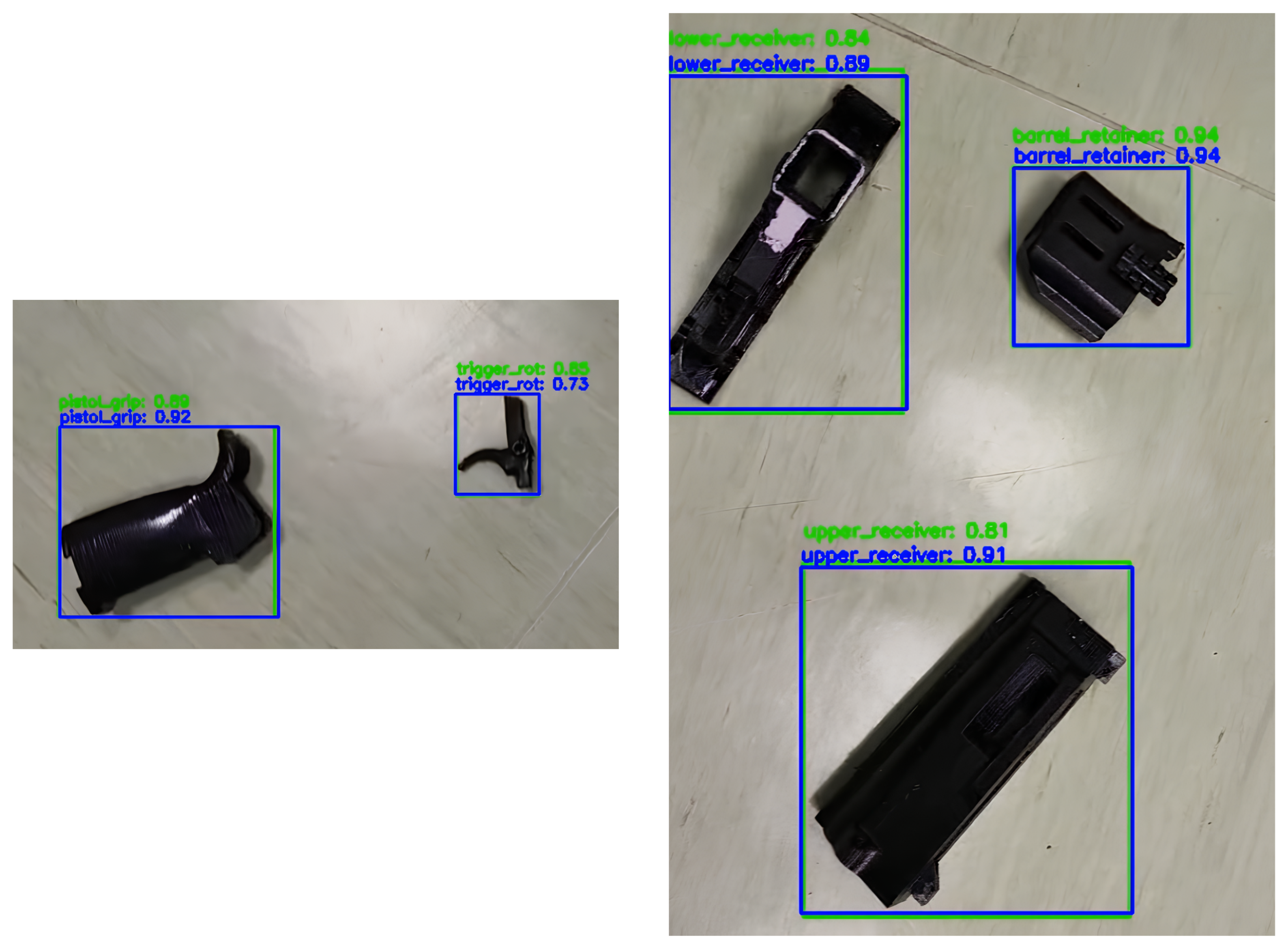
- Experimental Validation: Experiments have been conducted on a collection of real 3D-printed parts, surpassing 80% of all global metrics.
- Public Dataset Release: We make publicly available a dataset of synthetic and real RGB labeled images of 3D-printed firearm components to support research and development in this field.
2. Related Works
2.1. Synthetic Data Approaches
- Modular: This approach builds synthetic datasets by assembling assets from a fixed library of labeled components—such as objects, backgrounds, and actions, among others—according to predefined rules. An illustrative example is the synthetic image dataset of a chessboard [18], in which different chess pieces are distributed across a board to generate various game states.
- Parametric: Collections composed by adjusting specific visual properties—like lighting, color, texture, or viewpoint—while the shape and structure of the objects remain unaltered. A good example is UnrealCV [19], which demonstrates how changes in rendering settings can produce a wide range of appearances from a single 3D model.
- Procedural: This paradigm collects images generated by introducing slight alterations over a fixed set of predefined models. Each sample is built from scratch, often with parameters that control aspects such as shape or structure, which allows for a significant amount of variation within the same type of object. Ref. [20] shows how spontaneous variations, such as leaf aging, play an important role.
- Simulation: Modeling object interactions like collisions and fragmentations within controlled environments enables the creation of datasets where individual components of objects are labeled and tracked while maintaining their class relationships. Tools like Kubric, from [21], facilitate the scalable generation of complex simulated scenarios with precise annotations.
2.2. Synthetic Datasets for Firearm Detection
3. Methodology
3.1. LEOPARD Pipeline
3.1.1. Model Preparation and Selection Rationale
3.1.2. Procedural Variation
3.1.3. Material Parametrization
3.1.4. Scene Composition
3.1.5. Optimization
4. Experimentation
4.1. Datasets Specifications
4.1.1. LEOPARD-Zero: Synthetic
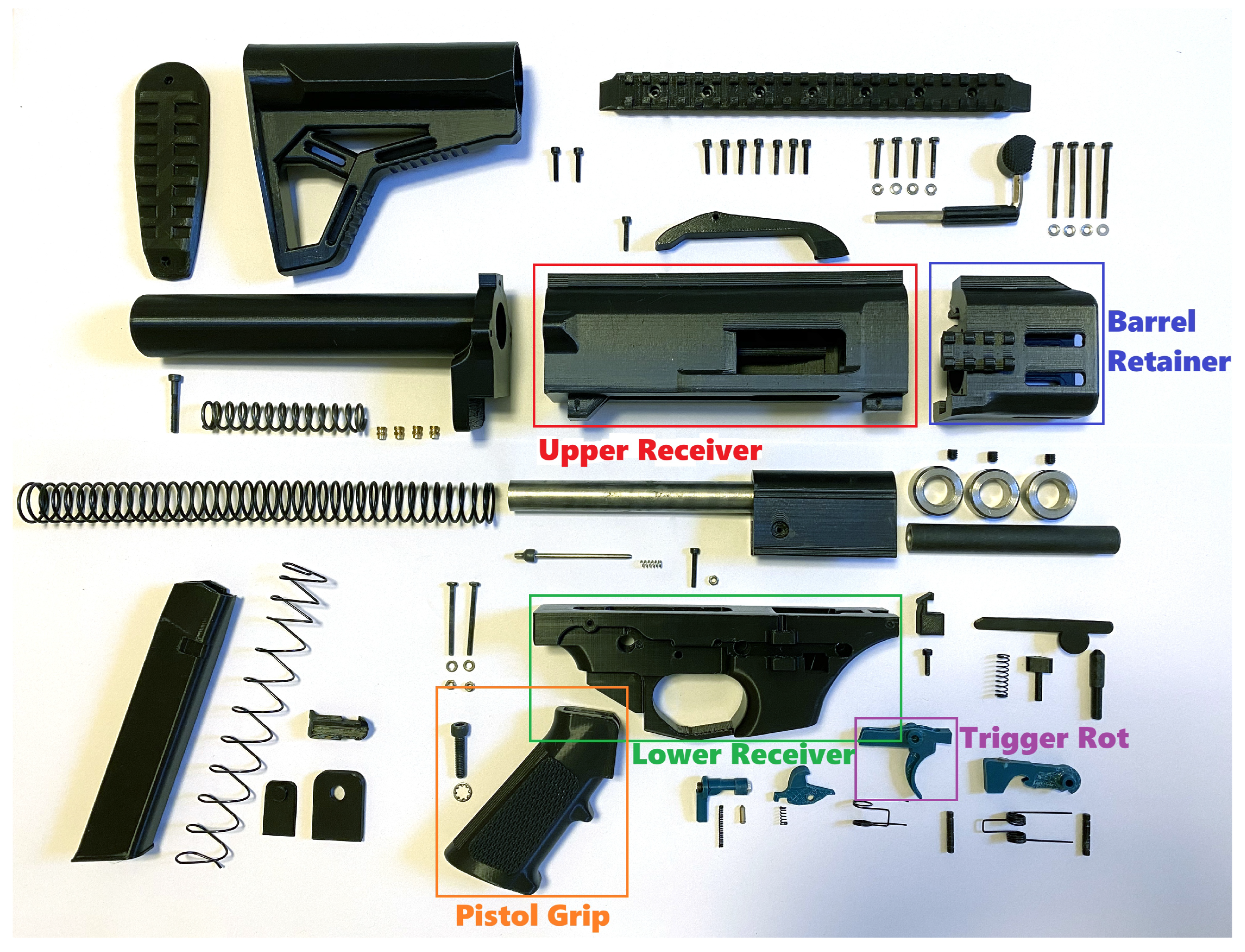
4.1.2. Manually Annotated Data from 3D-Printed Gun Parts
4.1.3. Training, Validation and Test Data
4.2. Experiment Environments Specifications
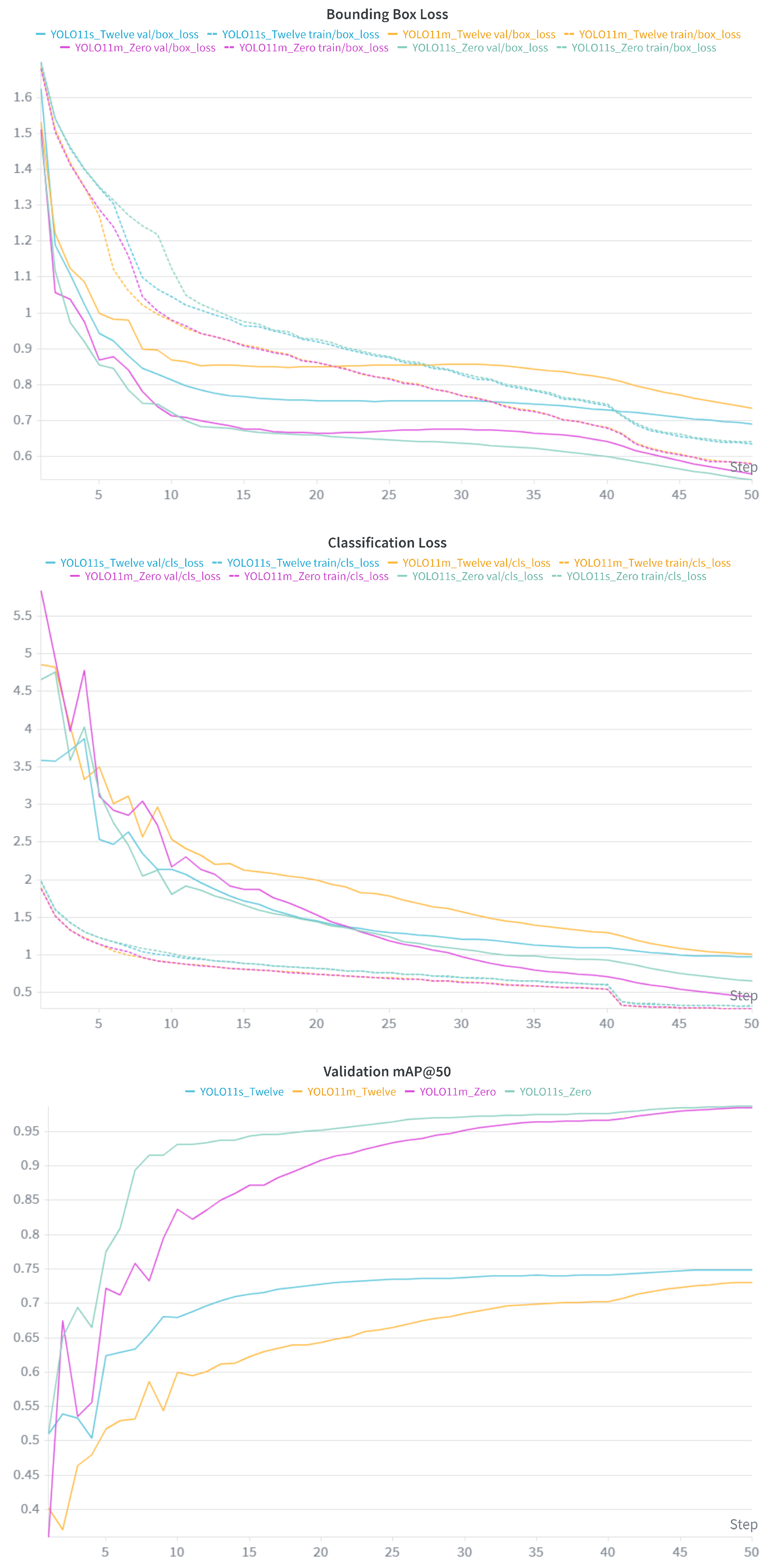
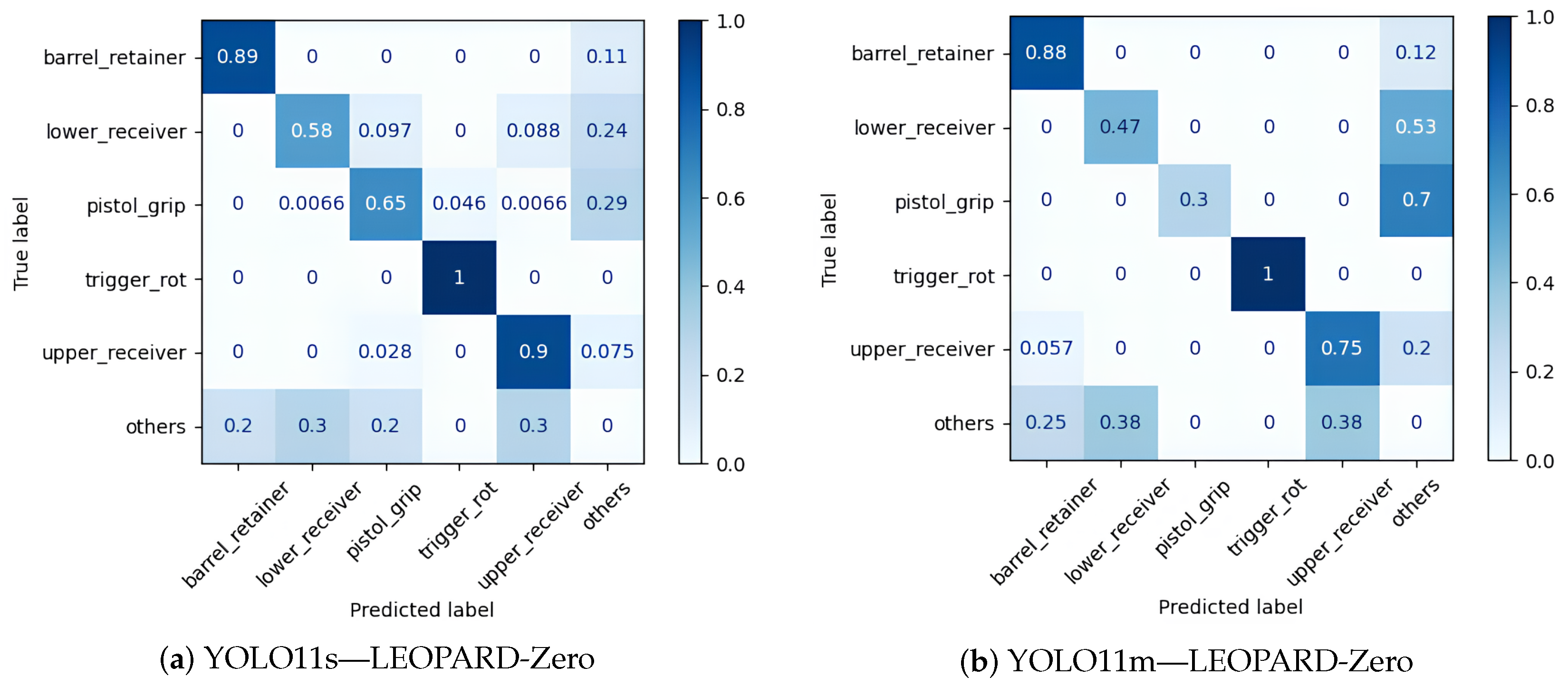
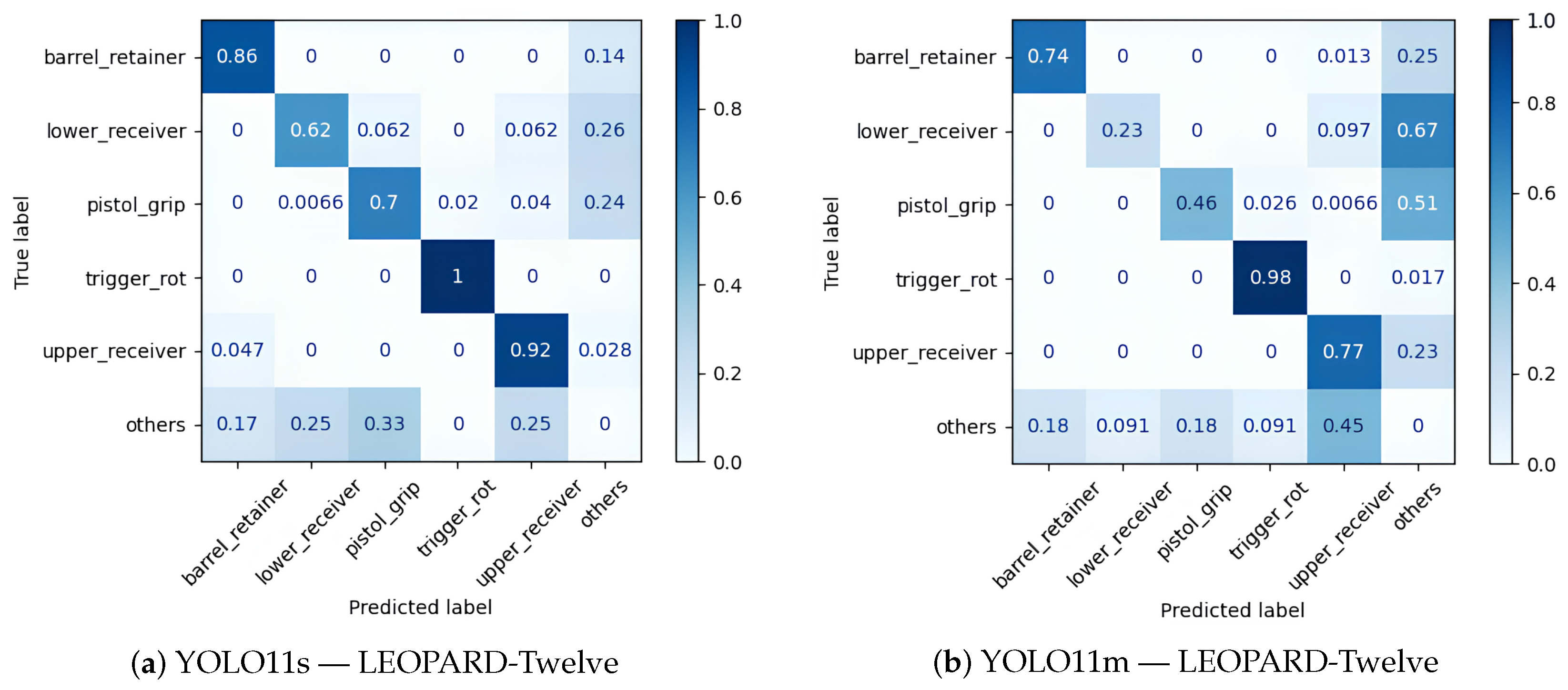
4.3. Results and Discussion
4.4. Synthetic Dataset Quality Analysis
4.4.1. Normalization Methodology
4.4.2. No-Reference Perceptual Quality: BRISQUE
4.4.3. Feature-Space Distribution: KID
4.4.4. Downstream Performance as Quality Proxy
5. Limitations
6. Conclusions and Future Works
- A drastic acceleration in the creation of datasets, transforming raw CAD files into training-ready data in just a few hours, compared to the weeks this would normally require.
- A realistic reproduction in material appearance and the usual 3D printing imperfections, which are essential for detecting weapons in real conditions.
- Specific datasets for training highly accurate object detection models to distinguish 3D-printed weapon parts
Author Contributions
Funding
Institutional Review Board Statement
Informed Consent Statement
Data Availability Statement
DURC Statement
Conflicts of Interest
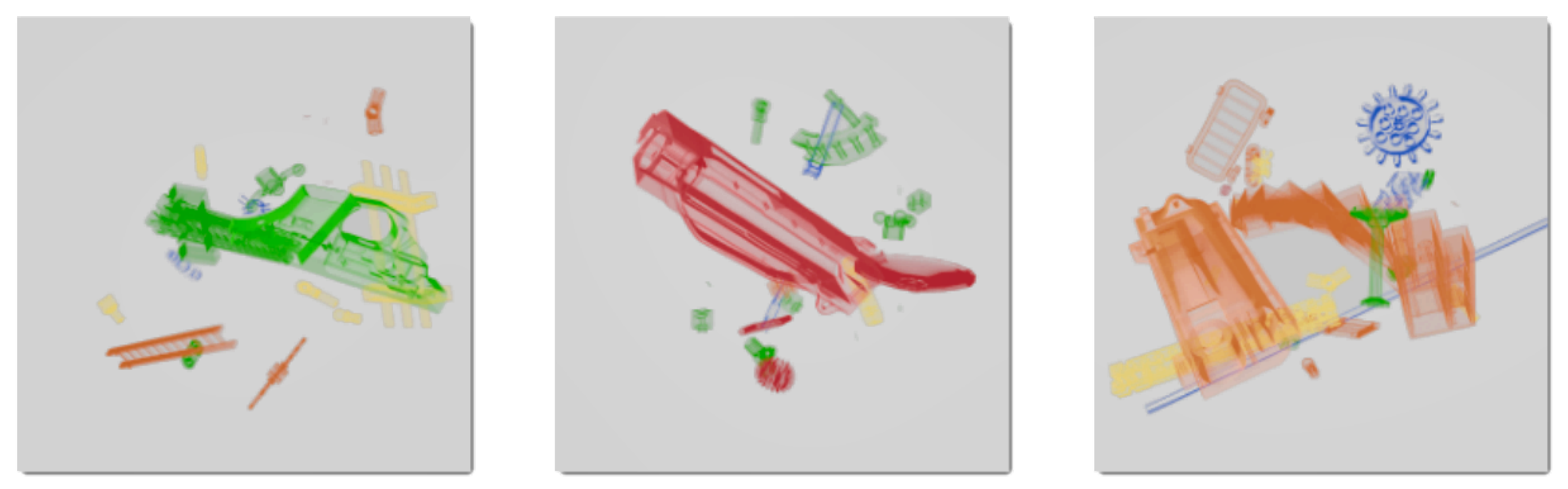
Appendix A. Generation of X-Ray-like Synthetic Images
References
- Lee, B. Where Gutenberg meets guns: The liberator, 3D-printed weapons, and the First Amendment. NCL Rev. 2013, 92, 1393. [Google Scholar]
- Veilleux-Lepage, Y. CTRL, HATE, PRINT: Terrorists and the Appeal of 3D-Printed Weapons. ICCT Perspective, 13 July 2021.
- Wilhelm, T. Ghost Guns: Untraceable, Deadly—and on Windsor’s Streets. Windsor Star, 15 March 2024.
- Schaufelbühl, S.; Florquin, N.; Werner, D.; Delémont, O. The Emergence of 3D-Printed Firearms: An Analysis of Media and Law Enforcement Reports. Forensic Sci. Int. Synerg. 2024, 8, 5. [Google Scholar] [CrossRef]
- Dass, R.A.S. The Rise of 3D-Printed Firearms. RSIS Commentaries, 19 December 2024.
- Toronto Police Service. Man Arrested in Firearm Manufacturing and Trafficking Investigation: Project CLUSTER, 2026. Available online: https://www.tps.ca/media-centre/news-releases/65793/ (accessed on 7 May 2026).
- Centro Superior de Estudios de la Defensa Nacional. Armas en 3D: Imprimiendo el Futuro del Tráfico Ilícito de Armas, 2025. Available online: https://www.defensa.gob.es/ceseden/-/armas_en_3d_imprimiendo_el_futuro_del_trafico_ilicito_de_armas (accessed on 7 May 2026).
- Australian Border Force. More Than 1000 Illicit Firearms and Parts, 3D Firearms and Parts Seized in Transnational Week of Action, 2025. Available online: https://www.abf.gov.au/newsroom-subsite/Pages/More-than-1000-illicit-firearms-and-parts-3D-firearms-and-parts-seized-in-transnational-week-of-action.aspx (accessed on 7 May 2026).
- Walther, G. Printing Insecurity? The Security Implications of 3D-Printing of Weapons. Sci. Eng. Ethics 2015, 21, 1435–1445. [Google Scholar] [CrossRef]
- Lindstrom, G. Why should we care about 3D-printing and what are potential security implications. GCSP Policy Pap. 2014, 6, 1–4. [Google Scholar]
- Taylor, G.R.; Chosak, A.J.; Brewer, P.C. OVVV: Using virtual worlds to design and evaluate surveillance systems. In Proceedings of the 2007 IEEE Conference on Computer Vision and Pattern Recognition (CVPR); IEEE: New York, NY, USA, 2007; pp. 1–8. [Google Scholar]
- Marin, J.; Vázquez, D.; Gerónimo, D.; López, A.M. Learning appearance in virtual scenarios for pedestrian detection. In Proceedings of the 2010 IEEE Computer Society Conference on Computer Vision and Pattern Recognition (CVPR); IEEE: New York, NY, USA, 2010; pp. 137–144. [Google Scholar]
- Gaidon, A.; Wang, Q.; Cabon, Y.; Vig, E. Virtual worlds as proxy for multi-object tracking analysis. In Proceedings of the IEEE Conference on Computer Vision and Pattern Recognition (CVPR); IEEE: New York, NY, USA, 2016; pp. 4340–4349. [Google Scholar]
- Richter, S.R.; Vineet, V.; Roth, S.; Koltun, V. Playing for data: Ground truth from computer games. arXiv 2016, arXiv:1608.02192. [Google Scholar] [CrossRef]
- Geiger, A.; Lenz, P.; Urtasun, R. Are we ready for Autonomous Driving? The KITTI Vision Benchmark Suite. In Proceedings of the Conference on Computer Vision and Pattern Recognition (CVPR); IEEE: New York, NY, USA, 2012; pp. 3354–3361. [Google Scholar]
- Tremblay, J.; Prakash, A.; Acuna, D.; Brophy, M.; Jampani, V.; Anil, C.; To, T.; Cameracci, E.; Boochoon, S.; Birchfield, S. Training deep networks with synthetic data: Bridging the reality gap by domain randomization. arXiv 2018, arXiv:1804.06516. [Google Scholar] [CrossRef]
- Prakash, A.; Boochoon, S.; Brophy, M.; Acuna, D.; Cameracci, E.; State, G.; Shapira, O.; Birchfield, S. Structured domain randomization: Bridging the reality gap by context-aware synthetic data. In Proceedings of the 2019 International Conference on Robotics and Automation (ICRA); IEEE: New York, NY, USA, 2019; pp. 7249–7255. [Google Scholar]
- Neto, A.d.S.D.; Campello, R.M. Chess position identification using pieces classification based on synthetic images generation and deep neural network fine-tuning. In Proceedings of the 2019 21st Symposium on Virtual and Augmented Reality (SVR); IEEE: New York, NY, USA, 2019; pp. 152–160. [Google Scholar]
- Qiu, W.; Yuille, A. UnrealCV: Connecting computer vision to Unreal engine. In Proceedings of the Computer Vision–ECCV 2016 Workshops: Amsterdam, The Netherlands, 8–10 and 15–16 October 2016; Proceedings, Part III 14; Springer: Berlin/Heidelberg, Germany, 2016; pp. 909–916. [Google Scholar]
- Barth, R.; IJsselmuiden, J.; Hemming, J.; Van Henten, E.J. Data synthesis methods for semantic segmentation in agriculture: A Capsicum annuum dataset. Comput. Electron. Agric. 2018, 144, 284–296. [Google Scholar] [CrossRef]
- Greff, K.; Belletti, F.; Beyer, L.; Doersch, C.; Du, Y.; Duckworth, D.; Fleet, D.J.; Gnanapragasam, D.; Golemo, F.; Herrmann, C.; et al. Kubric: A scalable dataset generator. In Proceedings of the IEEE/CVF Conference on Computer Vision and Pattern Recognition; IEEE: New York, NY, USA, 2022; pp. 3749–3761. [Google Scholar]
- Salazar-González, J.L.; Zaccaro, C.; Álvarez García, J.A.; Soria-Morillo, L.M.; Caparrini, F.S. Real-time gun detection in CCTV: An open problem. Neural Netw. 2020, 132, 297–308. [Google Scholar] [CrossRef] [PubMed]
- González, J.L.S.; Álvarez-García, J.A.; Rendón-Segador, F.J.; Carrara, F. Conditioned cooperative training for semi-supervised weapon detection. Neural Netw. 2023, 167, 489–501. [Google Scholar] [CrossRef] [PubMed]
- Torregrosa-Domínguez, A.; Álvarez García, J.A.; Salazar-González, J.L.; Soria-Morillo, L.M. Effective Strategies for Enhancing Real-Time Weapons Detection in Industry. Appl. Sci. 2024, 14, 8198. [Google Scholar] [CrossRef]
- Ruiz-Santaquiteria, J.; Velasco-Mata, A.; Vallez, N.; Bueno, G.; Alvarez-Garcia, J.A.; Deniz, O. Handgun detection using combined human pose and weapon appearance. IEEE Access 2021, 9, 123815–123826. [Google Scholar] [CrossRef]
- Olmos, R.; Tabik, S.; Herrera, F. Automatic handgun detection alarm in videos using deep learning. Neurocomputing 2018, 275, 66–72. [Google Scholar] [CrossRef]
- Bhatt, A.; Ganatra, A. Explosive weapons and arms detection with singular classification (WARDIC) on novel weapon dataset using deep learning: Enhanced OODA loop. Eng. Sci. 2022, 20, 252–266. [Google Scholar] [CrossRef]
- Haq, N.U.; Fraz, M.M.; Hashmi, T.; Shahzad, M. Orientation aware weapons detection in visual data: A benchmark dataset. Computing 2022, 104, 2581–2604. [Google Scholar] [CrossRef]
- Ohman, W. Data Augmentation Using Military Simulators in Deep Learning Object Detection Applications. Master’s Thesis, KTH, School of Electrical Engineering and Computer Science (EECS), Stockholm, Sweden, 2019. [Google Scholar]
- Waite, J.R.; Feng, J.; Tavassoli, R.; Harris, L.; Tan, S.Y.; Chakraborty, S.; Sarkar, S. Active shooter detection and robust tracking utilizing supplemental synthetic data. arXiv 2023, arXiv:2309.03381. [Google Scholar] [CrossRef]
- Bhowmik, N.; Wang, Q.; Gaus, Y.F.A.; Szarek, M.; Breckon, T.P. The good, the bad and the ugly: Evaluating convolutional neural networks for prohibited item detection using real and synthetically composited X-ray imagery. arXiv 2019, arXiv:1909.11508. [Google Scholar] [CrossRef]
- Ren, S.; He, K.; Girshick, R.; Sun, J. Faster R-CNN: Towards Real-Time Object Detection with Region Proposal Networks. In Proceedings of the 28th International Conference on Neural Information Processing Systems; MIT Press: Cambridge, MA, USA, 2015; pp. 91–99. [Google Scholar]
- Kaminetzky, A.; Mery, D. In-depth analysis of automated baggage inspection using simulated X-ray images of 3D models. Neural Comput. Appl. 2024, 36, 18761–18780. [Google Scholar] [CrossRef]
- Kang, M.; Sun, H. EthicalFab: Toward ethical fabrication process through privacy-preserving illegal product detection. Manuf. Lett. 2025, 44, 1425–1431. [Google Scholar] [CrossRef]
- Cani, J.; Mademlis, I.; Mancuso, M.; Paternoster, C.; Adamakis, E.; Margetis, G.; Chambon, S.; Crouzil, A.; Lechelek, L.; Dede, G.; et al. CEASEFIRE: An AI-Powered System for Combating Illicit Firearms Trafficking. In Proceedings of the 2024 IEEE International Conference on Big Data (BigData); IEEE: New York, NY, USA, 2024; pp. 2697–2705. [Google Scholar]
- Hasselgren, J.; Munkberg, J.; Lehtinen, J.; Aittala, M.; Laine, S. Appearance-Driven Automatic 3D Model Simplification. Proc. EGSR (DL) 2021, 29, 85–97. [Google Scholar]
- Liu, Z.; Zhang, C.; Cai, H.; Qv, W.; Zhang, S. A model simplification algorithm for 3D reconstruction. Remote Sens. 2022, 14, 4216. [Google Scholar] [CrossRef]
- Jocher, G.; Qiu, J. Ultralytics YOLO11, 2024. Available online: https://docs.ultralytics.com/models/yolo11 (accessed on 7 May 2026).
- Mittal, A.; Moorthy, A.K.; Bovik, A.C. Blind/Referenceless Image Spatial Quality Evaluator. In Proceedings of the 2011 Conference Record of the Forty Fifth Asilomar Conference on Signals, Systems and Computers (ASILOMAR); IEEE: New York, NY, USA, 2011; pp. 723–727. [Google Scholar] [CrossRef]
- Bińkowski, M.; Sutherland, D.J.; Arbel, M.; Gretton, A. Demystifying mmd gans. arXiv 2018, arXiv:1801.01401. [Google Scholar]







| Category | Training | Validation | Total |
|---|---|---|---|
| LW_NOCL | 7.00 k | 1.75 k | 8.75 k |
| DW_NOCL | 1.20 k | 0.30 k | 1.50 k |
| LW_OCL | 20.00 k | 5.00 k | 25.00 k |
| DW_OCL | 25.80 k | 6.45 k | 32.25 k |
| BG_OBJS | 6.00 k | 1.50 k | 7.50 k |
| Total | 60.00 k | 15.00 k | 75.00 k |
| Model | Dataset | mAP@50 | mAP@75 | Precision | Recall | F1-Score | mAP@0.5:0.95 |
|---|---|---|---|---|---|---|---|
| YOLO11s | LEOPARD-Zero | 83.12% (±2.48) | 81.13% (±2.13) | 86.13% (±4.58) | 75.29% (±5.18) | 80.33% (±2.88) | 72.26% (±2.37) |
| YOLO11m | LEOPARD-Zero | 79.87% (±7.27) | 77.92% (±6.02) | 91.97% (±7.15) | 67.41% (±6.20) | 77.79% (±6.26) | 66.93% (±5.92) |
| YOLO11s | LEOPARD-Twelve | 86.78% (±0.49) | 84.78% (±2.65) | 87.24% (±5.63) | 80.41% (±2.53) | 83.67% (±2.10) | 76.21% (±2.33) |
| YOLO11m | LEOPARD-Twelve | 80.41% (±4.72) | 78.73% (±4.57) | 89.17% (±2.35) | 68.50% (±6.63) | 77.47% (±4.90) | 66.79% (±4.06) |
| Class | Real Crops | Synthetic Crops |
|---|---|---|
| barrel_retainer | 1588 | 1000 |
| lower_receiver | 1686 | 1000 |
| pistol_grip | 1920 | 1000 |
| trigger_rot | 1572 | 1000 |
| upper_receiver | 1640 | 1000 |
| Total | 8406 | 5000 |
| Class | Real | Synthetic | Gap |
|---|---|---|---|
| barrel_retainer | |||
| lower_receiver | |||
| pistol_grip | |||
| trigger_rot | |||
| upper_receiver |
| Class | KID |
|---|---|
| pistol_grip | |
| lower_receiver | |
| barrel_retainer | |
| upper_receiver | |
| trigger_rot |
Disclaimer/Publisher’s Note: The statements, opinions and data contained in all publications are solely those of the individual author(s) and contributor(s) and not of MDPI and/or the editor(s). MDPI and/or the editor(s) disclaim responsibility for any injury to people or property resulting from any ideas, methods, instructions or products referred to in the content. |
© 2026 by the authors. Licensee MDPI, Basel, Switzerland. This article is an open access article distributed under the terms and conditions of the Creative Commons Attribution (CC BY) license.
Share and Cite
Benjumea-Bellott, C.; Torregrosa-Domínguez, Á.; Ramos-González, V.; Soria-Morillo, L.M.; Álvarez-García, J.A. LEOPARD: Automated CAD-to-Synthetic Pipeline for 3D-Printed Firearm Detection in Civil Transit Security. Appl. Sci. 2026, 16, 5104. https://doi.org/10.3390/app16105104
Benjumea-Bellott C, Torregrosa-Domínguez Á, Ramos-González V, Soria-Morillo LM, Álvarez-García JA. LEOPARD: Automated CAD-to-Synthetic Pipeline for 3D-Printed Firearm Detection in Civil Transit Security. Applied Sciences. 2026; 16(10):5104. https://doi.org/10.3390/app16105104
Chicago/Turabian StyleBenjumea-Bellott, Constantino, Ángel Torregrosa-Domínguez, Víctor Ramos-González, Luis M. Soria-Morillo, and Juan A. Álvarez-García. 2026. "LEOPARD: Automated CAD-to-Synthetic Pipeline for 3D-Printed Firearm Detection in Civil Transit Security" Applied Sciences 16, no. 10: 5104. https://doi.org/10.3390/app16105104
APA StyleBenjumea-Bellott, C., Torregrosa-Domínguez, Á., Ramos-González, V., Soria-Morillo, L. M., & Álvarez-García, J. A. (2026). LEOPARD: Automated CAD-to-Synthetic Pipeline for 3D-Printed Firearm Detection in Civil Transit Security. Applied Sciences, 16(10), 5104. https://doi.org/10.3390/app16105104