1. Introduction
Data transmission using laser radiation is a rather promising method of high-speed and noise-proof wireless communication between objects. The advantage of a laser communication channel compared to traditional radio communications is the possibility of narrow-band data transmission, which reduces the risk of natural and intentional interference and increases the secrecy of the information transmission channel. However, with narrowly directional data transmission, it becomes difficult to adjust the optical signal transmitter and receiver, because accurate pointing of laser radiation at the receiver, especially in conditions of mutual movement of subscribers, is a difficult technical task [
1,
2,
3].
Two factors can be identified that affect the efficiency (operability) of the laser communication channel:
- (1)
Technical characteristics of the receiving and transmitting system, including the size of the receiving aperture; angular divergence and transmission range of laser radiation; wavelength of radiation; accuracy and stability of the radiation guidance system to the receiver; data transmission rate and traffic volume, which determine the required duration of the communication session, etc.
- (2)
The characteristics of the atmospheric data transmission channel, which, on the one hand, affect the angle of divergence and the radiation energy, and on the other hand, can lead to deflection of the laser beam and “yawing” of the light spot in the receiver plane [
4,
5,
6].
For data transmission over relatively short distances (up to hundreds of meters), an incoherent radiation source, such as a light-emitting diode (LED), serves as a viable alternative to a laser transmitter. Hereinafter, these systems will be referred to as LED-based and laser-based communication channels, respectively. The broader beam divergence of an LED-based system presents a fundamental engineering trade-off. While this reduced directivity inherently compromises the channel’s signal stealth, noise immunity, and spatial radiation intensity at the receiver, it significantly relaxes the stringent requirements for pointing and tracking accuracy. The larger illumination footprint simplifies link establishment, whereas both LED and laser-based wireless links retain the critical advantage of electromagnetic compatibility (EMC), ensuring interference-free operation in radio-frequency (RF) congested environments.
Consequently, LED-based communication is highly suitable for localized information exchange between mobile nodes at short ranges. In such dynamic scenarios, raw transmission power is often less critical than the operational need to maintain a reliable link without relying on complex, high-precision Pointing, Acquisition, and Tracking (PAT) mechanisms [
7].
The primary objective of this work is to provide an empirical comparative analysis between two short-to-medium-range optical wireless communication channels: one utilizing an infrared (IR) LED and the other a visible-range semiconductor laser. Rather than focusing on high-speed data transfer, this study evaluates these systems under strict Size, Weight, Power, and Cost (SWaP-C) constraints to establish a practical baseline for ultra-low-complexity embedded architectures. The analysis investigates the maximum transmission range relative to the bit-error-rate (BER), the comparative resilience of each channel to ambient background illumination and localized interference sources, and the practical hardware trade-offs involved. Ultimately, these findings aim to inform the design of inexpensive, robust optical telemetry links optimized for sensor networks and constrained mobile platforms.
Both systems under consideration were implemented in a laboratory testbed with controlled environmental parameters, enabling evaluation of their key characteristics, including communication range, interference resistance, and maximum data transfer rate.
2. LED Communication Channel Layout
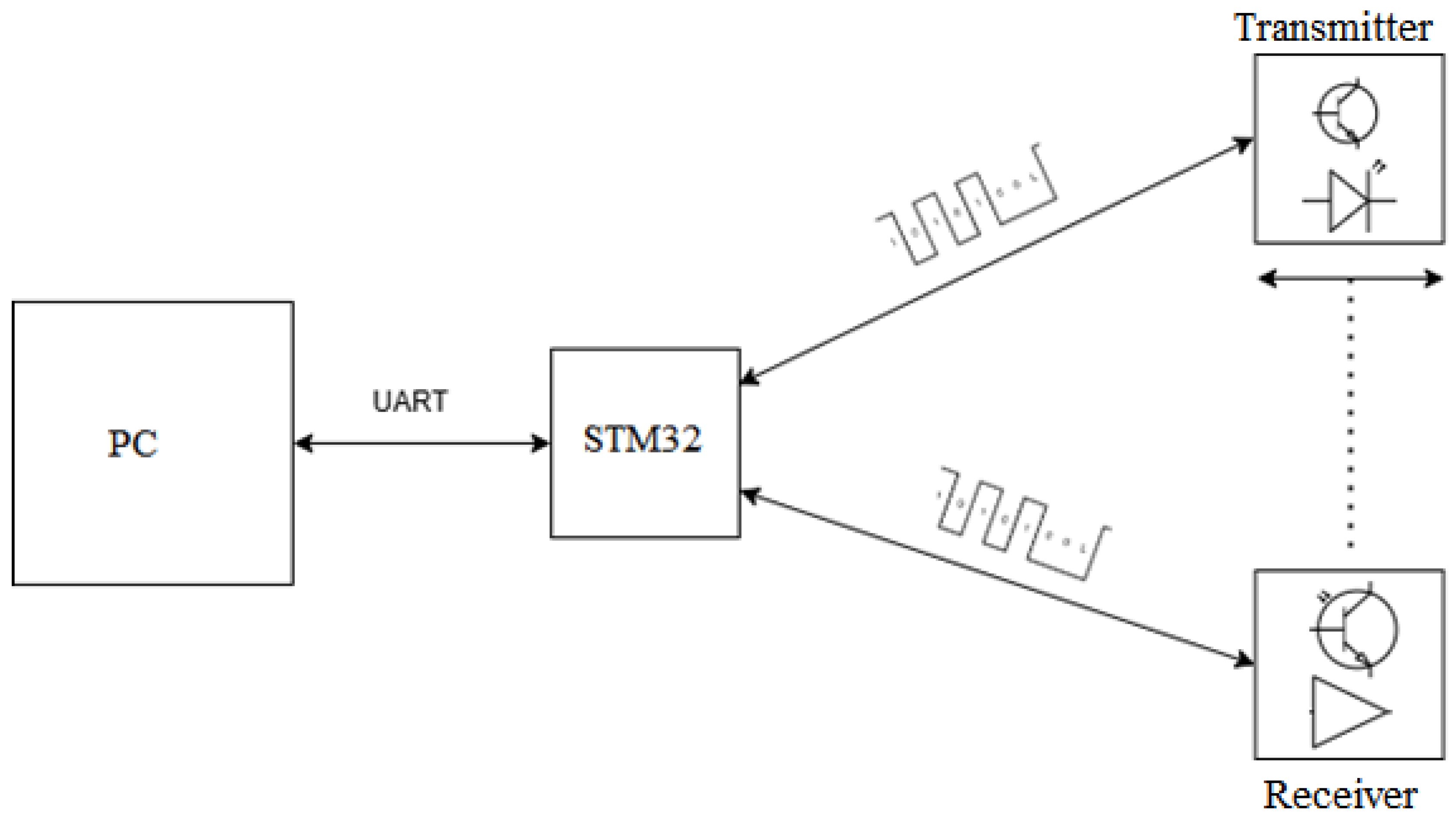
Let us consider the composition of a testbed for modeling an infrared (IR) communication channel. The transmitting module (
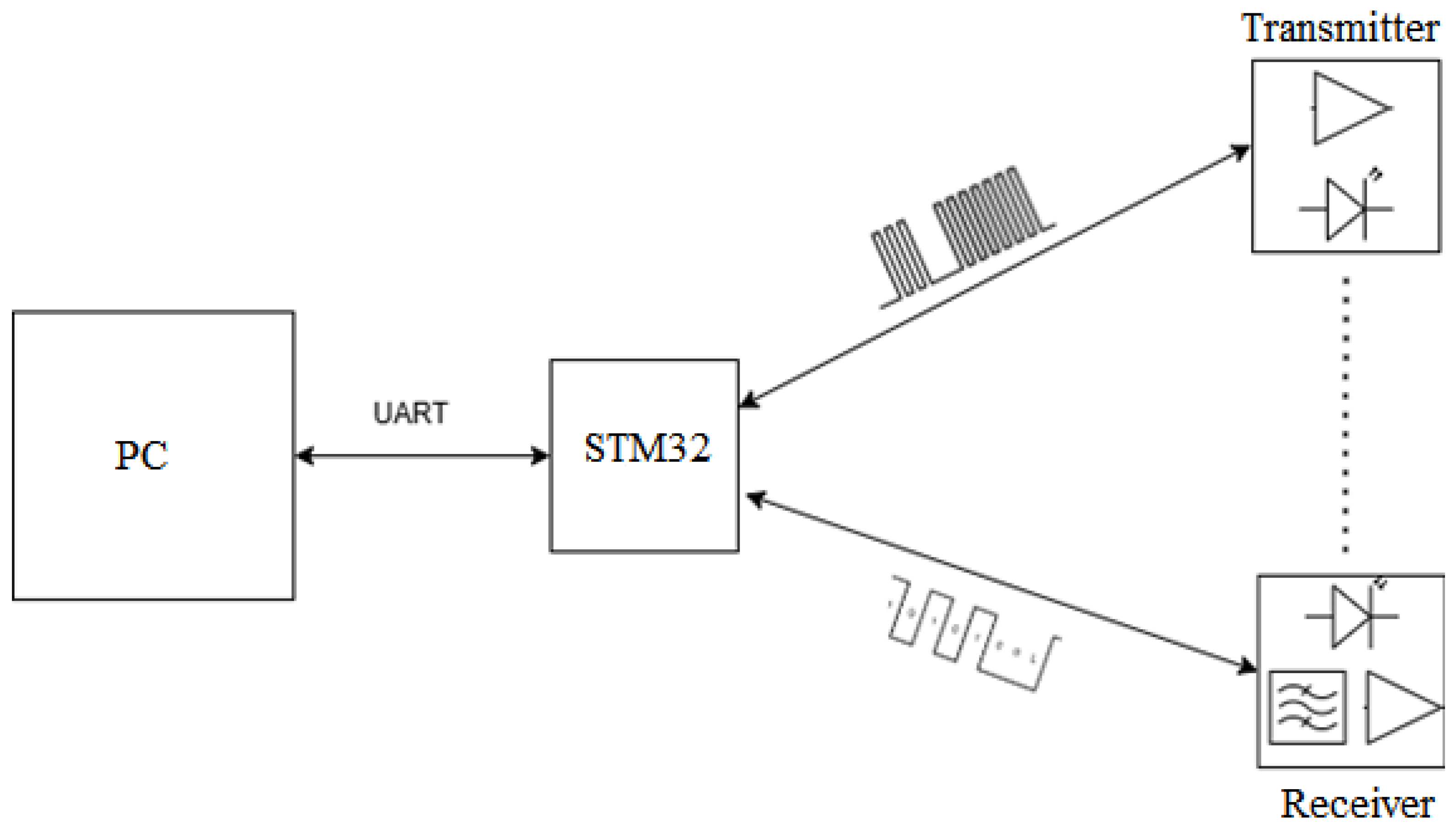
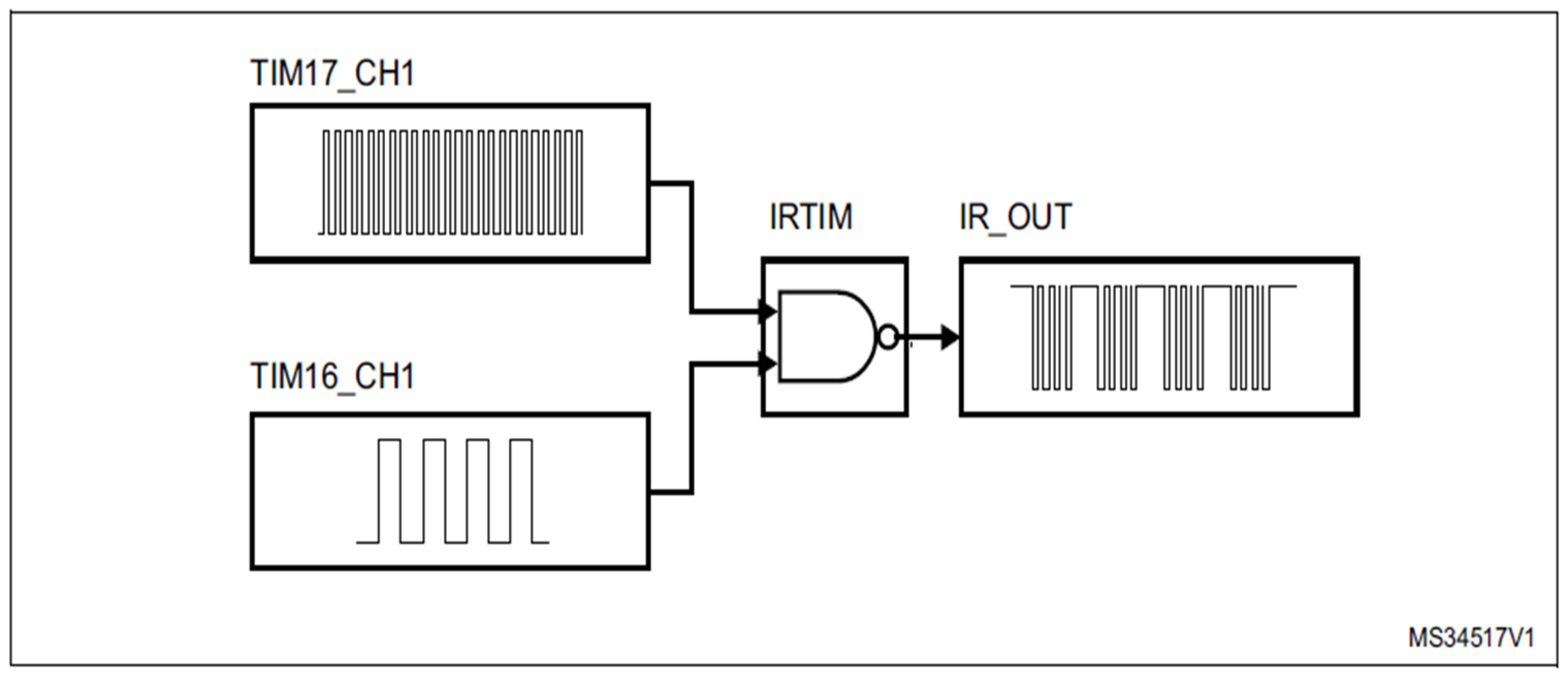
Figure 1) was implemented using an STMicroelectronics (Plan-les-Ouates, Geneva, Switzerland) STM32F405 microcontroller, in which a timer (TIM17_CH1) generated a 38 kHz carrier frequency, and the built-in UART provided the modulation data. The digital signal from the UART controlled the amplitude manipulation (OOK) of the IR LED (shown on
Figure 2), forming a modulated radiation (IR_OUT) with a power of 20 mW at a wavelength of 850 nm. The experimental setup is shown in
Figure 1.
The selection of On-Off Keying (OOK) modulation paired with the Universal Asynchronous Receiver-Transmitter (UART) protocol was driven by the objective to implement a low-complexity and highly reproducible architecture [
8,
9,
10]. OOK serves as a fundamental amplitude modulation scheme traditionally employed in infrared remote-control systems and low-power communication links. Furthermore, UART provides a standardized asynchronous interface between digital processing units (such as microcontrollers and PCs) and the transmitter front-end, thereby eliminating the computational overhead required to implement custom framing and synchronization protocols.
For the LED-based channel, modulation was executed in a small-signal regime to ensure signal integrity. Specifically, the LED was biased with a direct current to operate within the quasi-linear region of its current-voltage (I–V) characteristic. The amplitude of the modulating current was strictly limited to a minor fraction of this DC bias, effectively mitigating the inherent non-linearities of the emitter. This biasing strategy ensures that the modulated signal functions as a small-signal perturbation around a stable operating point, thereby validating the application of a linear channel model for subsequent system analysis.
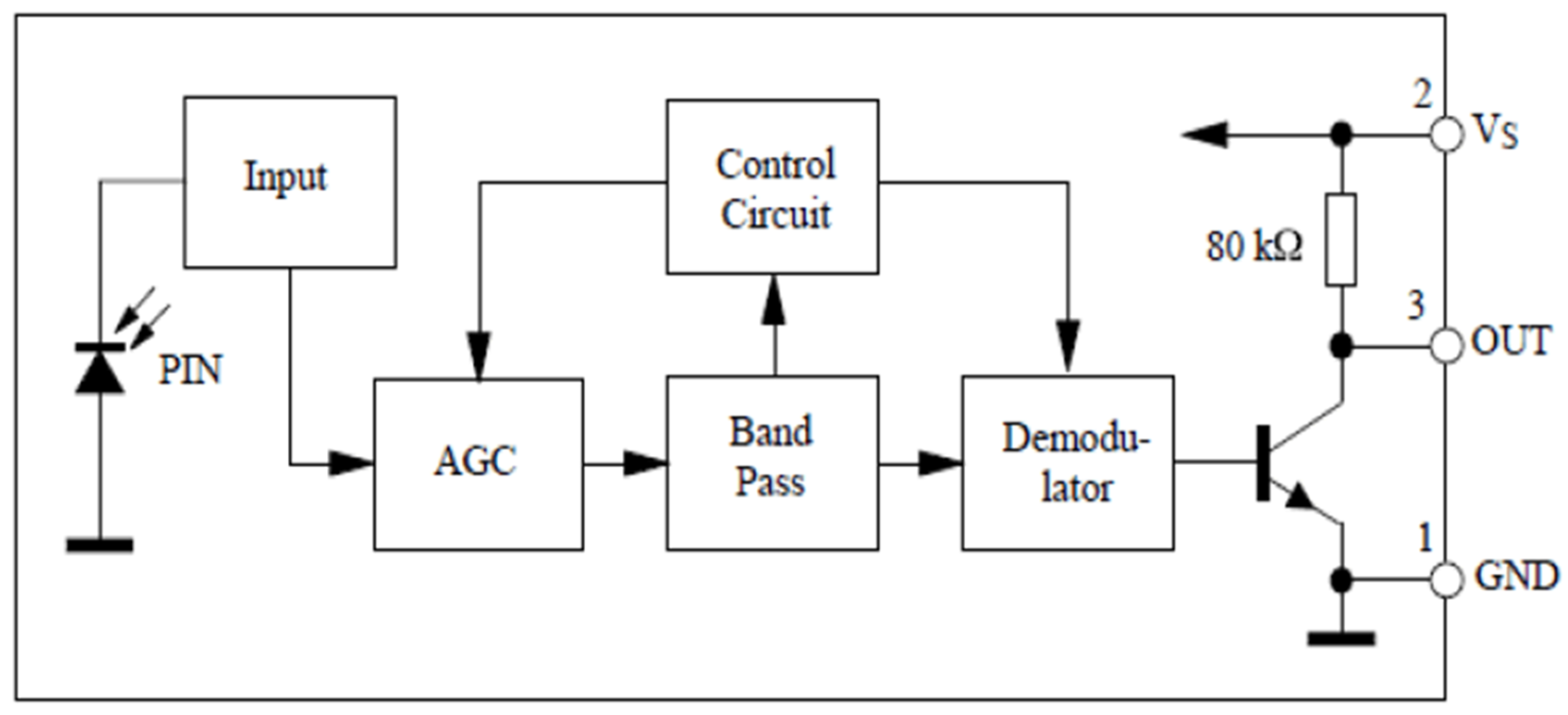
The receiving module was implemented using a highly integrated infrared receiver (Vishay (Malvern, PA, USA) TSOP1838), which consolidates the detection, amplification, and demodulation stages into a single component. The sensor incorporates a silicon PIN photodiode housed within a specialized epoxy package that acts as an optical pass-filter, effectively suppressing visible ambient illumination while optimizing sensitivity in the near-infrared spectrum (
Figure 3). The receiver features a wide half-angle directivity of approximately ±45 degrees, providing a broad effective receiving aperture for the incoming dispersed signal.
Upon optical-to-electrical conversion, the photocurrent is processed by the module’s internal circuitry. Rather than relying on fixed-gain stages, the TSOP1838 utilizes a transimpedance preamplifier coupled with an integrated Automatic Gain Control (AGC) system. This AGC dynamically adjusts the internal gain to compensate for free-space path loss and suppresses continuous background optical noise. The amplified signal is subsequently routed through an internal narrow-band active filter tuned to a central carrier frequency of 38 kHz, featuring a functional −3 dB bandwidth of approximately 4 kHz.
Finally, signal demodulation is executed internally via an envelope detector and a threshold comparator circuit, which digitizes the baseband signal into a clean, logic-level pulse train for direct asynchronous processing by the microcontroller [
11,
12].
3. Layout Design of the Laser Communication Channel
The laser communication channel included a semiconductor laser source and a phototransistor receiver. The transmitting part of the system was built on the basis of a semiconductor laser module operating at a wavelength of 650 nm with an output power of 2 mW. The laser emitter formed a narrowly focused beam with a divergence angle of about 2 mrad, which provided a stable spot with a diameter of approximately 10 mm at a distance of 5 m. The signal was modulated by directly controlling the laser current via a transistor switch, enabling a switching frequency of up to 20 kHz.
The experimental setup is shown in
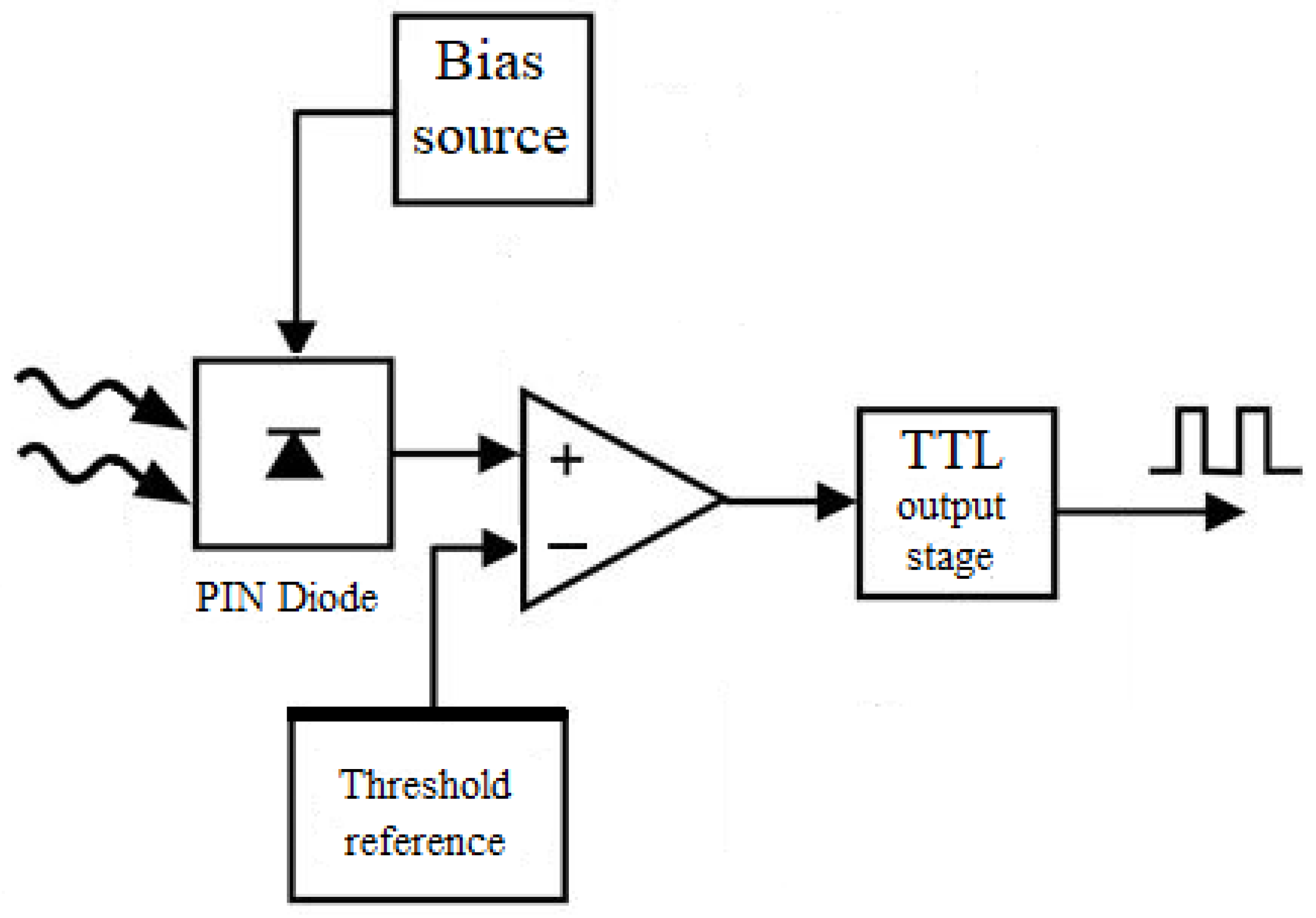
Figure 4. It includes a computer, a control microcontroller, a laser emitter with a modulator and lens, and a receiver with a p-i-n photodiode and a comparator (the circuit is shown in
Figure 5).
The receiving module for the laser communication channel (
Figure 5) was implemented using a Vishay (Malvern, PA, USA) BPW24R silicon PIN photodiode. This specific photodetector was selected for its fast response time, narrow half-angle of directivity (±12 degrees), and an effective radiant sensitive area of 0.78 mm
2. To process the received optical signal without the need for complex multi-stage analog amplification, the circuit utilized an Texas Instruments (Dallas, TX, USA) LM393 dual differential comparator. The photocurrent generated by the BPW24R was converted into a voltage and directly fed into the LM393. Operating with an extremely high open-loop voltage gain (typically 106 dB) and a rapid response time of approximately (yielding an effective switching bandwidth well exceeding 100 kHz), the comparator acts as a highly efficient, single-stage digitizer. It continuously compares the incoming signal against a tunable reference threshold, immediately resolving the varying optical intensities into discrete, logic-level pulses.
This hardware-level thresholding eliminated the need for analog-to-digital conversion (ADC) at the microcontroller stage. The digitized information pulses were read directly by the microcontroller’s digital input pins, where a software-based low-pass filter with a cutoff frequency of 30 kHz was applied to mitigate high-frequency jitter and transient noise. The fully demodulated signal was subsequently forwarded via the UART interface to a personal computer for bit-error evaluation.
The key feature of such a communication line is its high directivity, which protects against signal interception and minimizes the influence of scattered light.
The utilization of distinct wavelengths for the two systems—near-infrared (~850 nm) for the LED-based channel and visible spectrum (~650 nm) for the laser-based channel—was driven by the optimization of commercial off-the-shelf (COTS) components for low-complexity embedded applications. The near-infrared spectrum is highly optimal for LED communications because it falls outside the peak emission of typical visible indoor lighting, thereby inherently reducing background optical interference. Conversely, a standard visible-range semiconductor laser was selected to represent the low-cost optical sources commonly utilized in short-range alignment and telemetry modules. To ensure a rigorous system-level comparison despite these spectral and hardware differences, the integral performance metrics—specifically the bit-error-rate (BER)—were evaluated against normalized channel parameters, such as the received optical power and the signal-to-noise ratio (SNR).
The distinct architectures of the receiving modules reflect the inherent spatial and spectral characteristics of their respective emitters. For the IR LED channel, the integrated TSOP1838 receiver provides a wide-angle optical aperture optimized for the near-infrared region, making it highly effective at capturing a diverging radiation pattern. In contrast, the laser channel employs the BPW24R PIN photodiode; its smaller radiation-sensitive area and narrow half-angle are specifically tailored to intercept concentrated, highly directional laser beams while offering superior switching speeds. Although identical detectors are used for both systems, this would introduce severe performance bottlenecks in one channel due to optical mismatch. The respective amplification and thresholding circuits were calibrated to maintain comparable operational bandwidths and baseline self-noise levels.
4. Results of Experimental Modeling of Optical and Laser Communication Channels
The experimental evaluation of the LED-based communication channel demonstrated that the wide radiation pattern inherently provided a high tolerance to spatial misalignment between the transmitter and receiver. This robustness was empirically validated at distances up to 5 m. The integration of an optical IR pass-filter and an active narrow-band electrical filter effectively mitigated the impact of continuous, moderate-intensity ambient lighting. However, the system exhibited susceptibility to pulsed infrared interference operating near the 38 kHz carrier frequency—such as the pulse-width modulated (PWM) signals generated by household appliances—which caused false threshold triggering due to spectral overlap within the filter’s passband.
The maximum reliable data transmission rate for the system was established at 1200 bps. While this data rate is modest compared to high-bandwidth telecommunication standards, it is highly optimal for the targeted real-world applications, such as low-power IoT sensor networks, basic telemetry transmission, and localized drone swarm coordination, where power efficiency, narrow receiver bandwidths, and noise immunity are prioritized over high throughput. The primary limitation on the transmission speed was not the optical channel capacity nor the carrier frequency, but rather the transient response characteristics of the analog signal processing circuitry. Specifically, the narrow-band filter required to suppress out-of-band noise inherently reduced the signal’s slew rate, while the peak detector introduced a measurable time delay during demodulation.
Conversely, the laser-based communication channel demonstrated significantly different operational characteristics. Baseline testing confirmed highly stable data transfer at 1200 bps over a standard 5 m distance. Extended range testing revealed an absolute maximum stable communication range of 70 m, defined as the maximum distance before the signal degraded beyond the acceptable error threshold for unencoded telemetry. The highly directional nature of the laser restricted the permissible angular deviation to a strict margin of 0.5 degrees. Under standard indoor conditions, the channel maintained signal integrity under background illumination up to 200 lux without noticeable degradation.
However, the laser channel is constrained by several environmental sensitivities. Direct exposure to intense sunlight leads to the rapid saturation of the PIN photodiode, and atmospheric scattering agents such as heavy rain, fog, or smoke severely attenuate the 650 nm beam. Mechanically, the narrow-beam divergence requires rigid mounting, as minor vibrations or thermal drifts necessitate periodic spatial realignment. By comparison, while the LED-based channel is largely immune to atmospheric and vibrational disturbances due to its broad beam, it remains more susceptible to spectral interference.
To quantitatively evaluate the noise immunity of both communication channels, comprehensive Bit-Error-Rate (BER) testing was conducted [
13]. The methodology involved transmitting a predefined pseudorandom binary sequence (PRBS) across the physical channel and performing a bitwise comparison against the original sequence at the receiver. An automated error counter, implemented within the PC software, logged the bit discrepancies. To ensure statistical validity and reproducibility, each data point was derived from an average of 10 independent transmission runs. The duration of each test run was calibrated to accumulate hundreds to thousands of errors under adverse conditions. Standard deviations were calculated to establish confidence intervals for the reported data. For measurement regimes exhibiting exceptionally low bit errors, integral estimates derived from the empirical signal-to-noise ratio (SNR) were utilized.
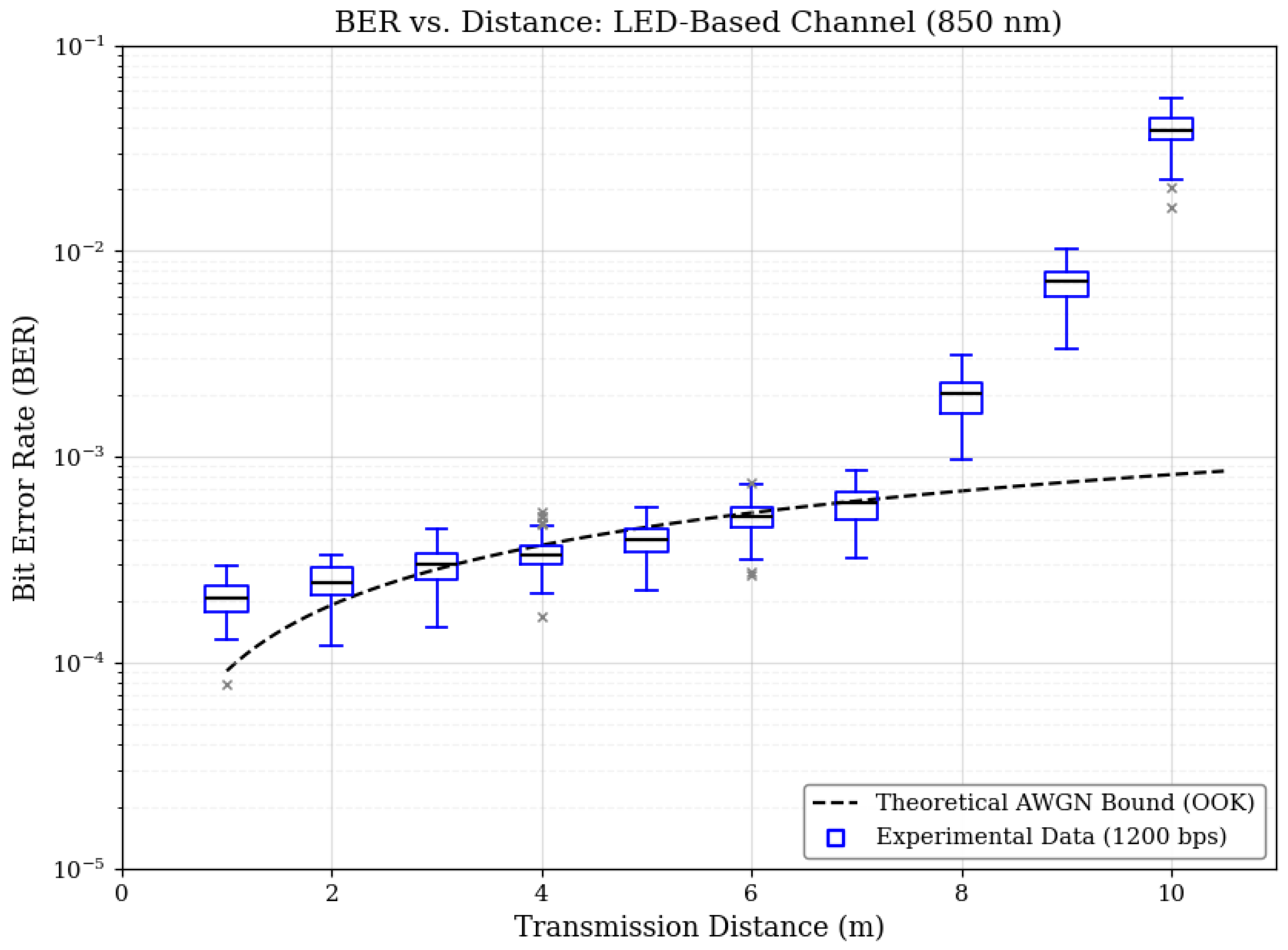
Figure 6 illustrates the dependence of the BER on the transmission distance for the LED-based system (850 nm, 38 kHz OOK modulation), plotted on a logarithmic scale. The statistical analysis shows that at a distance of 1 m under 300 lux of artificial lighting, the median BER was approximately 2 × 10
−4 (0.02%). At a distance of 5 m, the error rate gradually degraded to roughly 4 × 10
−4 (0.04%). As the distance extended to 7 m, the BER continued a steady increase—closely tracking the theoretical AWGN bound—reaching approximately 6 × 10
−4 (0.06%). However, as the distance extended to 8 m, the received optical power approached the absolute detection threshold of the integrated TSOP receiver, resulting in an exponential increase in the BER to 2 × 10
−2 (2%).
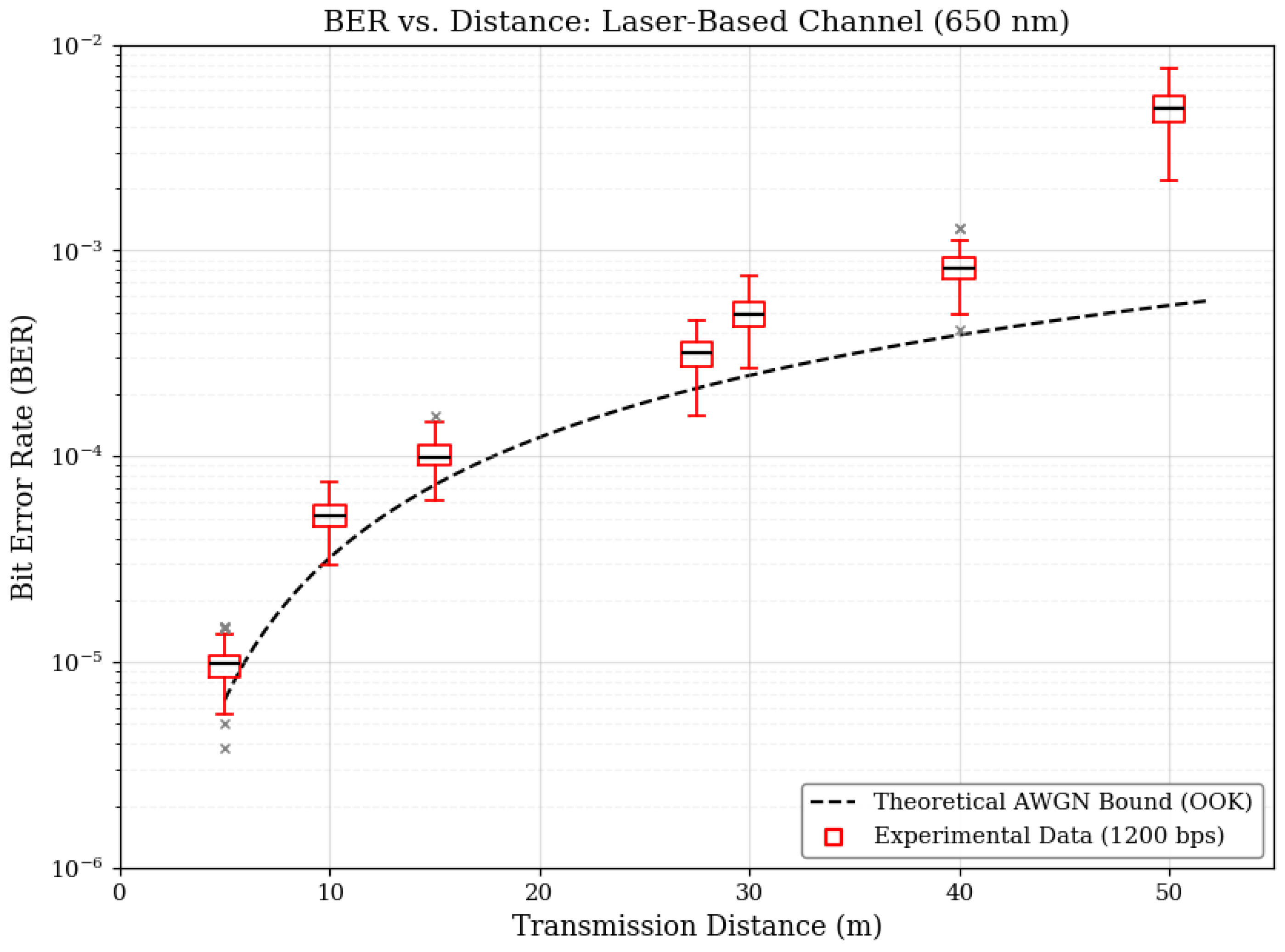
In the case of the 650 nm laser system, lower values were recorded; the measurement results of which are shown in
Figure 7.
An analysis of the BER as a function of transmission distance for the laser-based channel reveals a distinct, non-linear degradation trend. Within a range of up to 30 m, the probability of error increases gradually, corresponding to the expected free-space path loss of the transmitted optical power. However, at transmission distances exceeding 40 m, a sharp, exponential increase in the BER is observed. This steep degradation occurs as the received optical power falls below the threshold required for reliable analog comparator switching, leading to a critical deterioration of the signal-to-noise ratio (SNR) at the receiver input.
Under controlled conditions in a darkened environment, the BER of the laser-based channel at a distance of 5 m was measured at an exceptionally low 1 × 10⁻⁵ (0.001%), demonstrating high inherent noise immunity in the absence of external optical interference. As the transmission distance was extended to 50 m, the BER rose to 5 × 10⁻³. While this represents an increase, the error rate remains well within acceptable limits for baseline, unencoded telemetry (with functional, though degraded, synchronization maintained up to the absolute limit of 70 m). However, the introduction of bright ambient lighting at an illumination level of 2000 lux induced a severe deterioration in signal quality. Under these heavily illuminated conditions, the probability of bit errors surged to 1 × 10⁻² (1%)—an increase of more than an order of magnitude. This pronounced degradation highlights the high sensitivity of the unshielded PIN photodiode to continuous background visible light, which drastically reduces the operational SNR.
Furthermore, an examination of the error distribution topologies revealed fundamental differences in the physical failure modes of the two systems. In the LED-based (IR) channel, transmission errors predominantly manifested as burst errors—specifically, contiguous blocks of 3 to 5 erroneous bits. This phenomenon is a direct consequence of the transient inertia (time constants) inherent in the TSOP receiver’s internal automatic gain control (AGC) and peak-detection circuits, which require a recovery period after false threshold triggering. Conversely, the laser-based channel exhibited a uniform, statistically independent distribution of single-bit errors. Because the comparator-based laser receiver lacks multi-stage analog filtering and its associated temporal inertia, these isolated errors are primarily attributed to discrete, instantaneous interference events, such as localized shot noise or momentary fluctuations in background illumination.
5. Challenges and Future Work
Enhancing the operational characteristics of these communication links necessitates an integrated approach, encompassing both physical-layer optical refinements and digital signal processing methodologies [
14,
15,
16].
At the physical layer, the integration of ultra-narrow-band optical interference filters—precisely matched to the emission wavelength of the selected LED or laser—is a critical avenue for improvement. This hardware modification can significantly attenuate out-of-band ambient illumination, which can otherwise exceed the useful signal amplitude by several orders of magnitude under bright daylight conditions. From an analog signal processing perspective, performance can be further optimized by carefully matching the active filter bandwidths and detector time constants to the data rate. Furthermore, implementing an adaptive automatic gain control (AGC) system within the laser channel would ensure stable signal digitization under fluctuating environmental transmission conditions.
At the data link layer, the introduction of Forward Error Correction (FEC) algorithms and noise-resistant coding schemes—such as convolutional, cascade, or Low-Density Parity-Check (LDPC) codes—presents a highly effective method for recovering dropped packets. When combined with adaptive modulation and Automatic Repeat Request (ARQ) protocols, these digital techniques can dynamically regulate the transmission rate based on real-time channel state information [
17,
18,
19].
While the combined implementation of these measures would significantly extend the stable communication range and reduce bit error probability, it introduces a necessary trade-off in computational complexity. For the ultra-low-power embedded architectures targeted in this study—where the optical transceiver modules consume only on the order of tens of milliwatts, thereby preserving the battery endurance of the host platform—these enhancements must be carefully balanced against the strict Size, Weight, Power, and Cost (SWaP-C) constraints typical of unguided sensor networks and Unmanned Aerial Vehicles (UAVs).
6. Conclusions
The empirical evaluation presented in this study establishes clear operational boundaries and baseline hardware limits for low-complexity optical wireless channels. The experiments identify the primary constraints of both LED-based and laser-based systems relative to their respective hardware architectures and environmental conditions.
In dynamic scenarios characterized by short inter-node distances (e.g., <5 m), limited data traffic, and high relative mobility, the LED-based communication channel is fundamentally superior. Because the broad radiation pattern effectively eliminates the need for highly accurate guidance, LED-based links are optimal for constrained mobile applications. These include localized telemetry offloading, pre-flight sensor synchronization, and secure identification handshakes within autonomous drone swarms, where jamming resistance is required but precise mechanical alignment is impossible.
Conversely, as the required transmission range, data throughput, and signal fidelity increase, the laser-based channel becomes the necessary architecture. The highly directive nature of the laser beam minimizes geometric path loss, allowing for effective, longer-range signal propagation. However, this extreme directivity dictates that the unguided laser-based channel is strictly suited for highly stabilized or static applications—such as telemetry transmission from a hovering UAV to a fixed ground station. Without the integration of complex, active Pointing, Acquisition, and Tracking (PAT) mechanisms, the necessity of continuous, precise spatial alignment remains a severe operational limitation for deploying laser communication in highly mobile nodes [
20,
21].
Ultimately, the selection between LED-based and laser-based communication channels within low-complexity platforms hinges on specific operational parameters: the distance between subscribers, throughput requirements, platform mobility, and the availability of targeting mechanisms. LED-based systems remain the preferential choice for robust, short-range, dynamic data exchanges, whereas laser-based systems are uniquely capable of supporting extended-range, high-efficiency point-to-point links under strictly stabilized conditions.