Article

Influence of Top-Coal Stopping and Presplitting Roof Cutting on Stability of Withdrawal Channel in Final Mining of Fully Mechanized Top-Coal Caving Face in Extra-Thick Coal Seam


1
Key Laboratory of In Situ Modified Mining, Ministry of Education, Taiyuan University of Technology, Taiyuan 030024, China
2
Xiaojiawa Coal Mine, Shanxi Jinxing Energy Co., Ltd., Lüliang 033600, China
*
Author to whom correspondence should be addressed.
Appl. Sci. 2026, 16(10), 5016; https://doi.org/10.3390/app16105016
Submission received: 17 April 2026 / Revised: 15 May 2026 / Accepted: 15 May 2026 / Published: 18 May 2026

Abstract

With the increased extraction thickness in fully mechanized top-coal caving faces in extra-thick coal seams, the caved gangue in the goaf is unable to effectively support the roof, resulting in aggravated deformation of the pre-driven withdrawal channel. Taking the No. 221304 working face in the No. 13 coal seam of Xiaojiawa Coal Mine as the engineering background, this study combined theoretical analysis, numerical simulation, and field measurement to investigate the effects of the top-coal caving stopping position, suspended roof length, and presplitting roof cutting on the stress and deformation of the rock surrounding the withdrawal channel. The results indicate that the convergence of the roof and floor and that of the two ribs of the withdrawal channel decrease in a staged manner with the increase in the top-coal caving stopping distance, but increase nonlinearly with the increase in the suspended roof length. With the increase in the presplitting roof-cutting height, the surrounding rock deformation first decreases significantly and then tends to level off. When the roof-cutting height is 30.5 m, the reductions in roof displacement and rib convergence reach 33.46% and 37.76%, respectively. When the roof-cutting height is further increased to 35.0 m, the improvement becomes insignificant. Therefore, the reasonable roof-cutting height for the No. 13 coal seam is determined to be 30.5 m. Field monitoring results show that the convergence of the roof and floor and that of the two ribs of the withdrawal channel are reduced by 41.2% and 36.8%, respectively, and the distance between the stopping line and the terminal mining line is shortened by 15 m. The research results provide a useful reference for determining the top-coal caving stopping position and roof-cutting height, and for improving the stability of the surrounding rock of the support withdrawal channel during the final mining stage of fully mechanized top-coal caving faces with thick and hard roofs in extra-thick coal seams.

1. Introduction

To improve the withdrawal efficiency of hydraulic supports, the technology of pre-driven support withdrawal channels has been widely promoted and applied at the stopping line of fully mechanized mining and top-coal caving faces [1,2,3,4]. However, due to the effect of advanced abutment pressure ahead of the working face, particularly under the conditions of an extra-thick coal seam and a thick hard roof, the caved gangue in the goaf becomes increasingly incapable of providing effective support to the roof as the mining thickness increases. As a result, both the peak value and the influence range of the abutment pressure ahead of the working face increase. Under the sustained action of high stress, the pre-driven support withdrawal channel in front of the working face undergoes severe deformation, which not only affects its normal service performance but also reduces the withdrawal efficiency of the hydraulic supports [5,6,7].
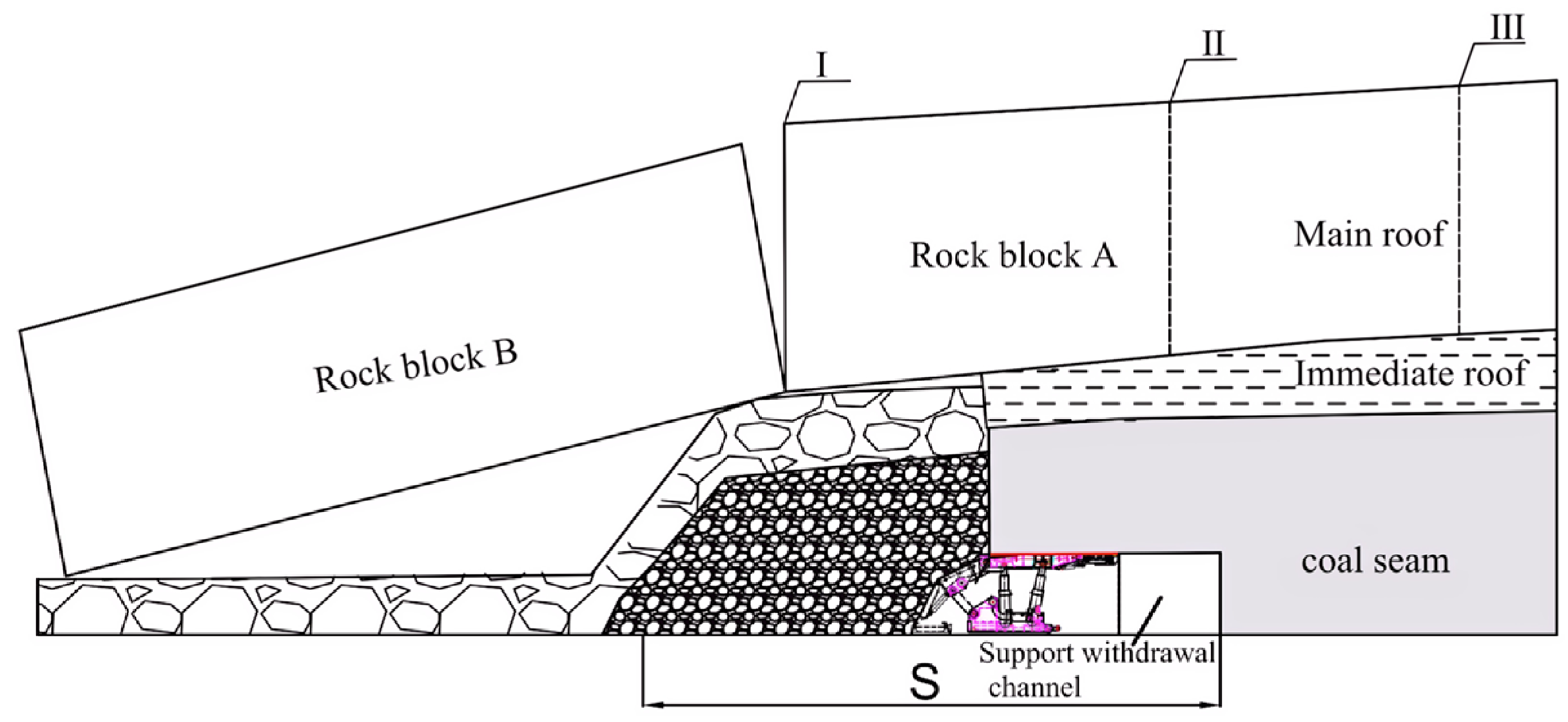
Numerous scholars, both domestically and internationally, have conducted extensive research on the stability of the surrounding rock of withdrawal channels during the final mining stage of fully mechanized top-coal caving faces [8,9,10]. As shown in Figure 1, the main research focuses have included the evolution law of stress in the coal pillar between the working face and the withdrawal channel, as well as the influence and underlying mechanisms of the main roof fracture position, top-coal caving stopping distance, and pre-splitting roof cutting on roadway stability [11,12,13,14,15]. With respect to the barrier coal pillar between the working face and the withdrawal channel, Zhu et al. [5] investigated the effects of stress evolution and failure characteristics of the surrounding rock of the withdrawal channel on channel stability during the final mining stage under the condition of extra-thick conglomerate overburden, and pointed out that the superimposed effect of advanced abutment pressure and lateral abutment stress is the primary cause of surrounding rock instability in the withdrawal channel. Feng et al. [12] conducted an in-depth analysis of the dynamic mechanical response of the surrounding rock of the pre-driven channel under superimposed stress and indicated that the barrier coal pillar undergoes three stages, namely, the initial stress distribution stage (Stage I), the stress superposition and growth stage (Stage II), and the stress transfer stage (Stage III). Shan et al. [13] proposed a method for determining the stable coal pillar width using an artificial neural network (ANN). By comparing the results of four models with the critical width of the stable coal pillar calculated based on limit equilibrium theory, they concluded that the CPSO-BP model can effectively determine the stable width of the coal pillar.
The fracture position of the main roof is a key factor affecting the stability of both the withdrawal channel and the coal pillar [14,15,16,17]. Wang et al. [2] investigated the effects of three different main roof fracture positions on the stability of the withdrawal channel and found that the surrounding rock of the withdrawal channel is most stable when the main roof fractures are behind the hydraulic supports. Li et al. [17] used UDEC numerical simulations to analyze the stress and deformation characteristics of the surrounding rock of the withdrawal channel under different main roof fracture positions, and pointed out that when the main roof fracture position is close to the withdrawal channel, deviatoric stress concentration and the development of shear fractures are likely to be induced, thereby leading to support failure.
In fully mechanized top-coal caving mining, both the top-coal caving stopping position and the stopping-line position have significant effects on the stability of the surrounding rock of the withdrawal channel. Xie [18] pointed out that when top-coal caving is terminated in advance before the mining stop, the top coal retained on the goaf side, together with the caved gangue, can provide a certain degree of support and restraint for the subsidence and rotation of the main roof above the withdrawal channel, thereby improving, to some extent, the stress distribution in the adjacent roof and coal wall of the withdrawal channel. Chen et al. [19] investigated the influence of the relative position between the stopping line of the lower coal seam and that of the upper coal seam on the stress arch structure of the overlying strata and the roof stress state of the withdrawal channel. The results indicated that under the inward-offset short-distance (ISUL-SD) condition, the roof pressure of the withdrawal channel is relatively small and the stability of the overlying structure is better, which is more favorable for the safe withdrawal of hydraulic supports.
For cantilever structures formed under thick, hard roof conditions, roof cutting pressure relief is commonly adopted during the final mining stage to reduce stress concentration in the rock surrounding the withdrawal channel, improve its stress environment, and mitigate disturbance to adjacent roadways [20,21,22,23,24]. Zheng [20] analyzed the fracture characteristics of the overlying strata under the conditions of a hard roof and large-mining-height fully mechanized top-coal caving and pointed out that the hard roof collapses in the form of a large-scale cantilever beam, which can easily release tremendous impact kinetic energy and induce dynamic disasters. The results showed that advanced hydraulic fracturing can effectively control the hanging roof length and reduce energy accumulation. Ma [23], in response to the problems of high stress and large deformation in the withdrawal channel of Halagou Coal Mine, adopted directional presplitting roof-cutting technology. The results indicated that after roof cutting, roof subsidence was controlled within 132.5 mm, and the resistance of the hydraulic supports remained stable at 1361 kN. Zha [24] analyzed, through numerical simulation, the effects of different roof-cutting heights and angles on stress and displacement evolution. The results showed that appropriate roof cutting can effectively interrupt the load transfer path, reduce the load borne by the support system, improve the stress environment of the surrounding rock, and significantly control roadway deformation.
In summary, existing studies have clarified the stress evolution of the barrier coal pillar between the working face and the withdrawal channel and have systematically examined the regulatory mechanisms of withdrawal channel stability in relation to main roof fracture position, top-coal caving stopping distance, hanging-roof effects of thick hard strata, and pressure relief induced by presplitting roof cutting. However, some limitations still remain. Current research on the influence of top-coal caving stopping distance has mainly emphasized the restraining role of retained top coal on the rotation angle and rotation rate of key blocks after main roof fracture, whereas the evolution mechanism of surrounding-rock stability under an unfractured main roof has not been sufficiently explored. Moreover, for fully mechanized top-coal caving faces in extra-thick coal seams with thick hard roofs, a systematic framework for determining key parameters, including top-coal caving stopping position, main roof hanging length, and presplitting roof-cutting height, is still lacking. To address these issues, this study takes the fully mechanized top-coal caving face of the No. 13 extra-thick coal seam in Xiaojiawa Coal Mine as the engineering setting. Through a combined approach involving theoretical analysis, numerical simulation, and field monitoring, the effects of top-coal caving stopping position, hanging-roof length, and presplitting roof-cutting height on the stability of the surrounding rock of the withdrawal channel are systematically evaluated. The results can provide a theoretical basis and practical reference for parameter design and stability control of withdrawal channels during the final mining stage under thick and hard roof conditions.

2. Engineering Background

2.1. Geological Overview

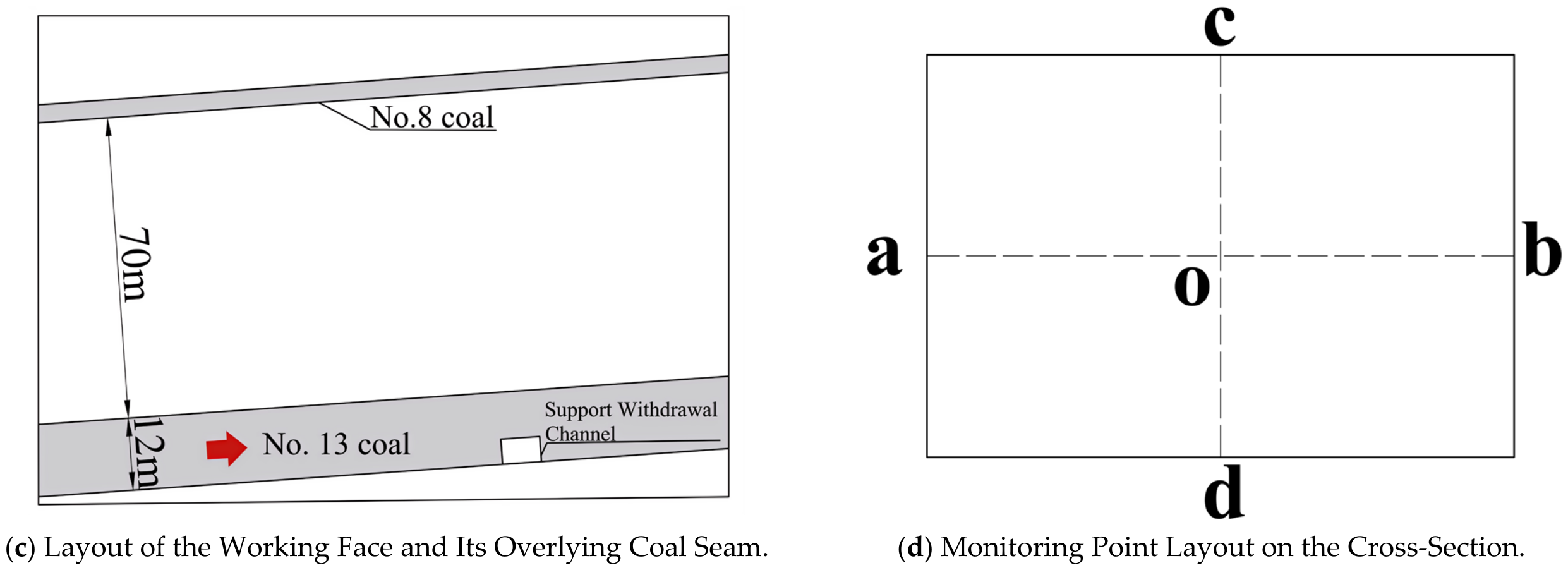
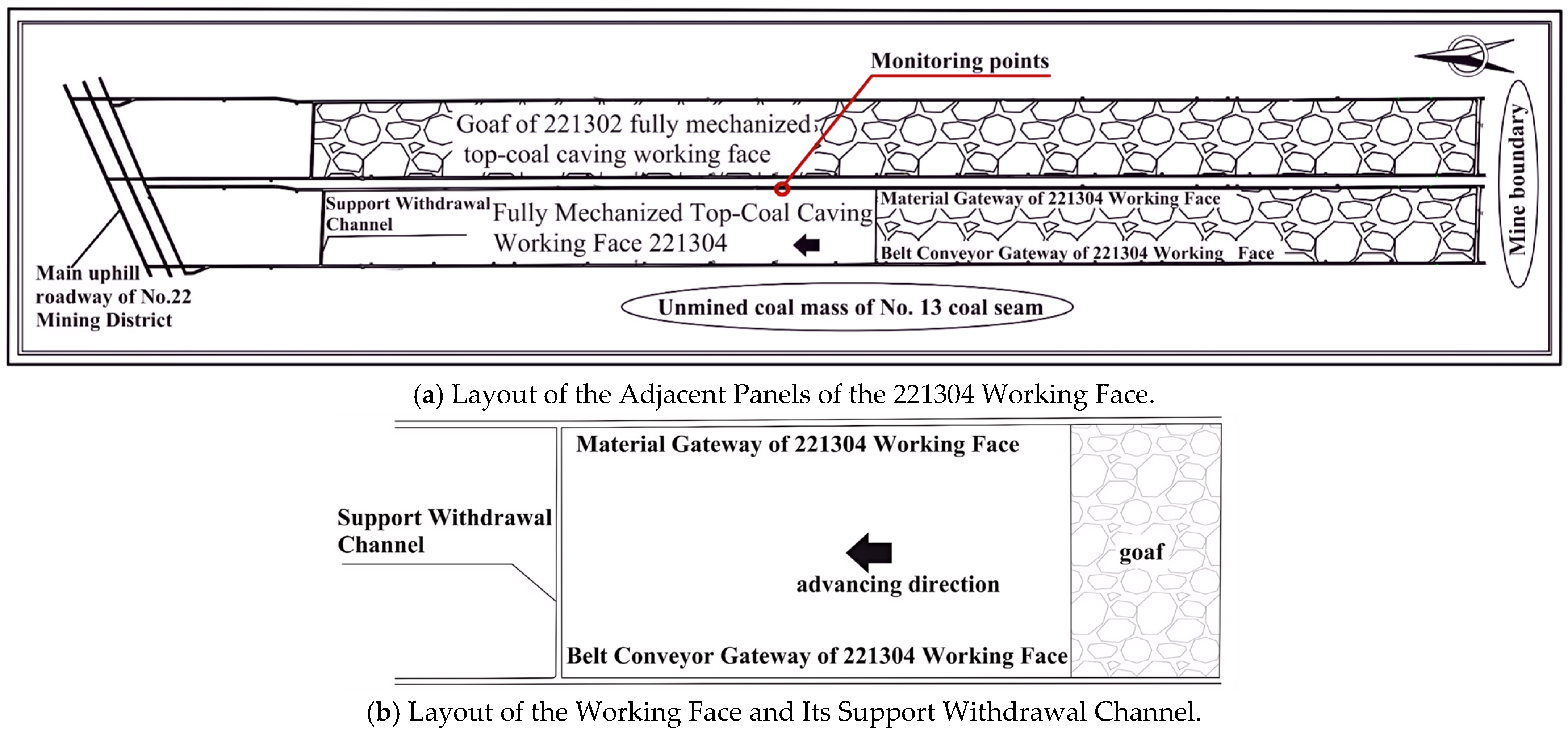
This study takes the No. 221304 working face in the extra-thick No. 13 coal seam as the research background. The working face adopts a conventional two-entry layout for mining. It is bounded to the north by the main uphill roadway of Panel 22, to the south by the mine boundary, to the west by unmined coal in the No. 13 coal seam, and to the east by the goaf of the No. 221302 working face. The layout of the adjacent working faces is shown in Figure 2a–c. The burial depth of the No. 13 coal seam ranges from 337 to 510 m, with an average of 425 m, and the coal seam thickness ranges from 10.90 to 13.20 m, with an average of 12 m.
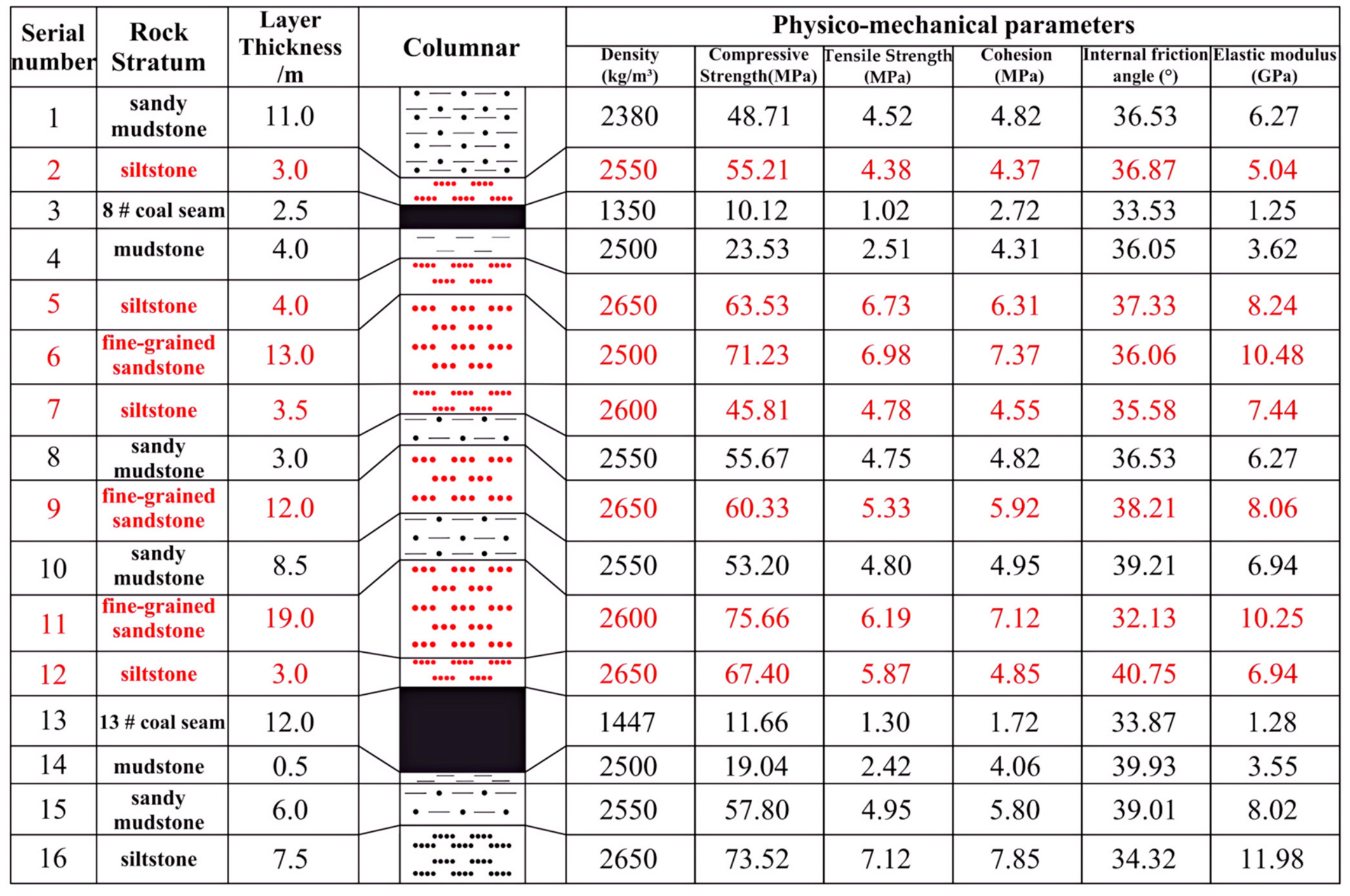
There are multiple layers of dense and hard sandstone in the roof of the coal seam, with individual layer thicknesses ranging from 3.0 to 19.0 m and a total thickness of 43.5 m. The lithology is mainly siltstone and fine-grained sandstone. Specifically, the immediate roof has an average thickness of 3.0 m and is dominated by siltstone, while the main roof has an average thickness of 19 m and is dominated by fine-grained sandstone, exhibiting strong strata pressure.According to the relevant project data and the results of a review of the published literature [25], the strength of siltstone and fine sandstone ranges from 45.81 to 75.66 MPa, that of sandy mudstone ranges from 28.70 to 71.23 MPa, and that of mudstone ranges from 19.04 to 23.53 MPa, indicating that most of the strata are moderately hard rocks. Affected by the 12 m extra-thick coal seam and the 19 m thick and hard main roof, strata pressure during the final mining stage of the working face is relatively intense, posing a significant threat to the stability of the rock surrounding the withdrawal channel. Therefore, considering the support and safety requirements of the pre-driven withdrawal channel, the original design specified a top-coal caving stopping position 30 m away from the stopping line.

2.2. Mine Pressure Monitoring During the Final Mining Stage

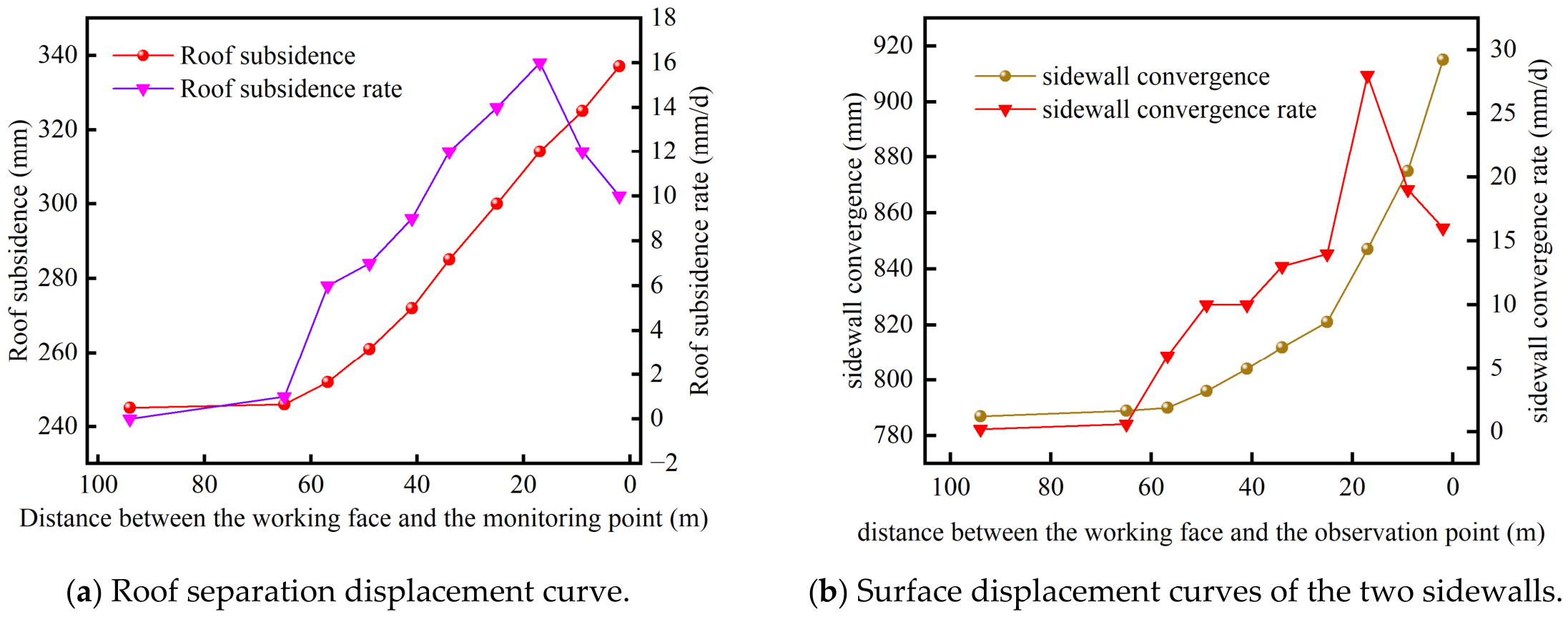
To investigate the law of surrounding rock movement in the 221304 working face of the Xiaojiawa Coal Mine, monitoring stations were arranged in the belt haulage roadway of the 221304 working face to observe the surface displacement of the surrounding rock. Taking the observed data on the surrounding rock surface displacement at the roadway position of 800 m as an example, the variation curves of roof separation and roadway surface displacement with respect to displacement, velocity, and the distance between the working face and the monitoring point can be plotted, as shown in Figure 3a,b.
Comprehensive monitoring of the surface displacement of the roadway surrounding rock was carried out using the cross-point layout method to establish monitoring stations, with the monitoring point locations shown in Figure 2a,d. The monitoring instruments included a measuring gun, measuring rod, convergence meter, measuring tape, and laser rangefinder. Specifically, the measuring gun had a range of 0–3000 mm, the measuring rod was 3 m long, the convergence meter had a range of 0–1000 mm, the measuring tape had a range of 0–5 m, and the laser rangefinder had a range of 0.05–50 m.
As shown in Figure 3a,b, the strata pressure monitoring results indicate that when the working face is 55–60 m from the monitoring point, the roadway begins to be significantly affected by the advanced abutment pressure, as reflected by a marked increase in the roof subsidence rate and the left-rib convergence rate. As the working face continues to advance, the advanced abutment pressure further intensifies. When the working face is 15–25 m from the monitoring point, the deformation rates reach their peak values: the roof subsidence rate peaks at 16 mm/d at a distance of 15 m, while the rib convergence rate peaks at 28 mm/d at a distance of 25 m. After the working face passes the monitoring point, the deformation rate of the surrounding rock gradually decreases.

2.3. Identification of Key Strata and Calculation of Periodic Weighting Interval

To reveal the overlying strata structure and the law of strata pressure behavior in the No. 13 coal seam working face, the key strata of the roof were identified based on the key stratum theory, combined with borehole columnar data and the mechanical parameters of the rock strata. On this basis, the periodic weighting interval of the working face was calculated. According to the borehole column shown in Figure 4, the roof of the No. 13 coal seam is mainly composed of interbedded siltstone, fine-grained sandstone, and sandy mudstone. Among them, the fine-grained sandstone layers and some siltstone layers are relatively thick and strong, providing the basic conditions for forming large-span rock beam structures, and are therefore more likely to become key strata.
Based on the above analysis, the relatively hard and thick siltstone and fine-grained sandstone layers were preferentially selected as candidate key strata. The main candidate key strata include Layer 2, 3.0 m siltstone; Layer 5, 4.0 m siltstone; Layer 6, 13.0 m fine-grained sandstone; Layer 7, 3.5 m siltstone; Layer 9, 12.0 m fine-grained sandstone; Layer 11, 19.0 m fine-grained sandstone; and Layer 12, 3.0 m siltstone. For ease of identification, these main candidate strata have been highlighted in red in the borehole column shown in Figure 4.
A key stratum is defined as a rock layer that plays a dominant controlling role in the movement of part of the overlying strata, or even the entire overburden up to the ground surface, within a mining field [26,27,28]. Whether a thick, hard rock layer in the overburden can be regarded as a key stratum depends on factors such as its thickness, stiffness, strength, and the load it bears. According to the definition and deformation characteristics of a key stratum, when the key stratum deforms, the overlying strata under its control deform synchronously with it, whereas the underlying strata do not deform in a coordinated manner. In other words, the load borne by the key stratum does not need to be shared by the underlying rock layers. According to the key stratum theory [24], the load criterion for identifying a key stratum can be expressed as
( q n + 1 ) j < ( q n ) j
where ( q n + 1 ) j and ( q n ) j are the loads acting on the j -th key stratum when the calculation is performed up to the ( n + 1 ) -th layer and the n -th layer, respectively. Among them, ( q n ) j can be expressed as
( q n ) j = E j h j 3 i = j n γ i h i i = j n E i h i 3
Taking Layer 1 as a possible key stratum for calculation, the results are ( q 1 ) 1 = 77.90   kPa , ( q 2 ) 1 = 1.54   kPa , and ( q 3 ) 1 = 1.99   kPa . It can be seen that ( q 2 ) 1 < ( q 1 ) 1 , indicating that when the movement of the overlying strata extends to the second layer of fine sandstone, the load acting on the first hard rock layer decreases instead. This suggests that the strata above Layer 1 are controlled by Layer 2, the 19.0 m thick fine sandstone. Therefore, Layer 2, the 19.0 m fine sandstone, can be identified as a possible key stratum.
By taking Layer 2 fine sandstone as the key stratum and calculating the overlying hard strata further upward, the following results are obtained: ( q 2 ) 2 = 484.61   kPa , ( q 6 ) 2 = 937.43   kPa , ( q 7 ) 2 = 922.57   kPa , and ( q 8 ) 2 = 960.11   kPa . It can be observed that ( q 7 ) 2 < ( q 6 ) 2 . Therefore, Layer 7, the 13.0 m fine sandstone, can be identified as a possible key stratum. In contrast, the loads corresponding to Layer 4, the 12.0 m fine sandstone, Layer 7, the 3.5 m siltstone, Layer 5, the 4.0 m siltstone, and Layer 2, the 3.0 m siltstone, do not satisfy the load criterion in Equation (1); therefore, these strata cannot be regarded as new possible key strata.
According to the key stratum theory, hard rock strata that satisfy the load criterion can only be regarded as possible key strata. Whether an overlying hard rock stratum can ultimately be identified as a key stratum further depends on whether its ultimate breaking span is greater than that of the underlying hard rock stratum, i.e., [28]:
L j < L j + 1
where L j is the ultimate breaking span of the j -th hard roof stratum, in m, and L j + 1 is the ultimate breaking span of the hard roof stratum immediately above it, also in m. L j can be expressed as
L j = h 2 R T q
It can be seen from the above equation that the ultimate breaking span L j of the j -th stratum is positively correlated with the main roof thickness h and tensile strength R T , but negatively correlated with the overlying load q . Substituting the parameters of Layer 1 and Layer 2 into Equation (4) gives L 1 = 36.84   m and L 2 = 73.42   m . The calculated ultimate breaking spans show that
L 1 < L 2
The results satisfy the ultimate span criterion of Equation (3), indicating that the 19.0 m fine sandstone in Layer 2 is capable of independently controlling the movement of the overlying strata and can therefore be identified as the low-level key stratum of the 221304 working face.
The periodic weighting interval is generally determined by treating the main roof as a cantilever beam structure, whose mechanical model can be simplified as a cantilever beam breakage for calculation. According to the strength of materials, σ = M Y / J . Here, the maximum bending moment is M m a x = q L 2 / 2 , Y is taken as h / 2 , and when σ is taken as the ultimate tensile strength R T , the calculation formula for the periodic weighting interval is as shown in Equation (5).
L = h R T 3 q
It is known that the coal seam thickness h is 12 m, the ultimate tensile strength R T is 6.19 MPa, and the uniformly distributed load q of the overlying strata is 0.94 MPa. Substituting these parameters into the calculation formula yields a periodic weighting interval of approximately 26.33 m for the working face.

3. Effects of Top-Coal Parking Position and Suspended Roof Length on the Stability of Surrounding Rock in the Recovery Channel

3.1. Effect of Parked Top Coal on the Load-Bearing Structure of the Main Roof

Previous studies have shown that when the same extra-thick coal seam is mined by slicing, the mining height of each slice is relatively small, and the overlying strata above the stope are more likely to form a relatively stable masonry beam structure. In contrast, under fully mechanized top-coal caving conditions, as the mining thickness in a single extraction increases significantly, the rotational space and fracture movement of the overlying key strata are markedly enhanced. As a result, the masonry beam structure that can be formed under slicing mining conditions is often difficult to maintain, and the main roof is more likely to evolve into a cantilever beam bearing structure [29,30]. For the extra-thick No. 13 coal seam considered in this study, affected by the 12 m mining height and the 19 m thick hard main roof, during the final mining stage of the working face, when no top coal is left or when the top-coal caving stopping distance is relatively short, the main roof above the withdrawal channel is more likely to form a cantilever beam structure because of its strong integrity. In contrast, when the top-coal caving stopping distance is relatively large, the overlying strata structure may transform into a more stable masonry beam structure.
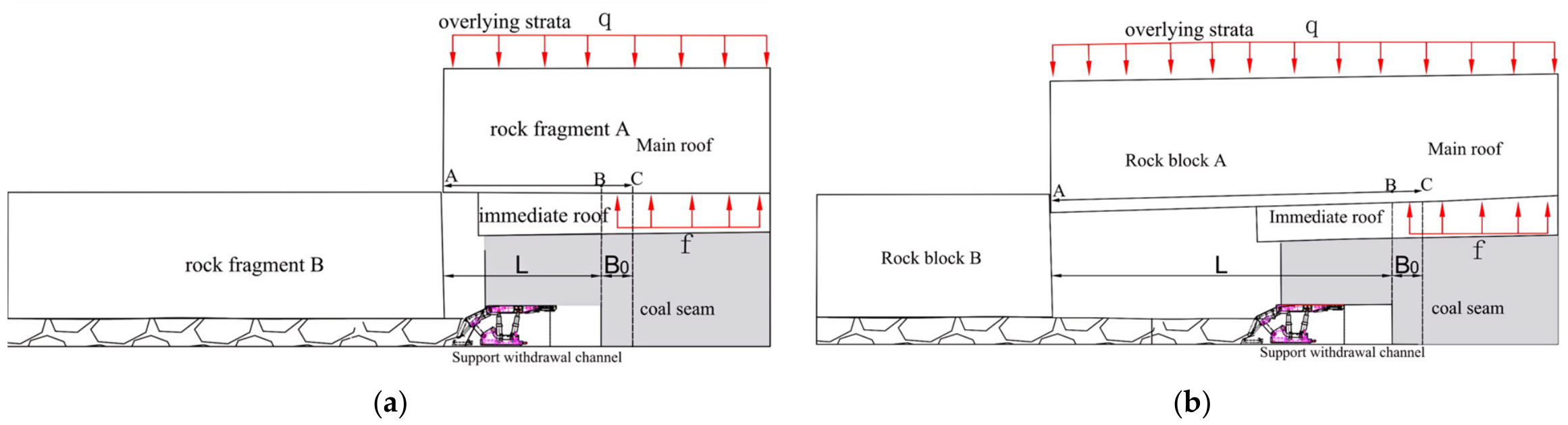
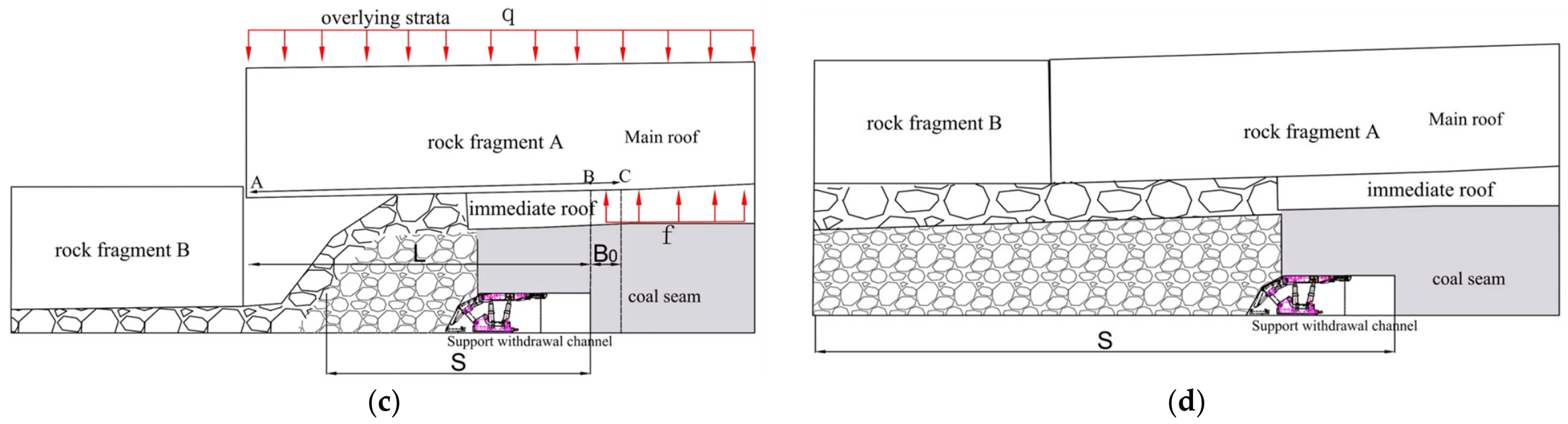
Figure 5a–d illustrates the evolution of the load-bearing structure of the main roof of the withdrawal channel under different top-coal caving stopping positions. As shown in Figure 5a–c, when the stopping position is close to the stopping line, or when no top coal is left, the roof exhibits a cantilever beam structure. Under this condition, the suspended roof length has a significant influence on the stability of the rock surrounding the withdrawal channel. When the suspended roof length is relatively small, as shown in Figure 5a, the cantilever span is limited, and the bending moment and deflection induced by the self-weight of the beam and the overlying load are both small. Consequently, the roof remains in a relatively stable state as a whole. Accordingly, the degree of stress concentration in front of the withdrawal channel is low, and there is no pronounced deformation in the surrounding rock. As the suspended roof length increases, the roof above the withdrawal channel gradually develops into a long cantilever beam. In this case, if the stopping position is excessively close to the stopping line, as shown in Figure 5b, the bending moment and deflection of the cantilever beam increase markedly, and the stress concentration ahead of the coal wall becomes significantly intensified. The deformation of the rock surrounding the withdrawal channel correspondingly increases substantially. As shown in Figure 5c, when the top-coal caving stopping distance is appropriately increased, the collapsed coal and gangue after top-coal caving can provide a certain degree of support to the cantilever beam, thereby restraining its bending and subsidence and improving the stress state of the rock surrounding the withdrawal channel.
With a further increase in the distance between the top-coal caving stopping position and the stopping line, as shown in Figure 5d, a stable hinged and extrusion relationship gradually forms between the key blocks above the goaf and the withdrawal channel. As a result, the load-bearing structure of the withdrawal channel’s main roof transforms from a cantilever beam into a masonry beam. Meanwhile, the compaction degree of the goaf is further enhanced, the stress concentration near the withdrawal channel is significantly alleviated, and the deformation of the surrounding rock is markedly reduced.

3.2. Establishment of the Numerical Model and Design of the Simulation Scheme

The numerical simulation was conducted using 3DEC 7.0, a three-dimensional distinct element code widely used for geotechnical and rock mechanics analyses. In this software, the rock mass is represented by deformable blocks, and the mechanical response of discontinuities between blocks can be explicitly simulated. This feature makes it suitable for modeling the deformation and failure behavior of jointed rock masses and mining-induced strata movement.
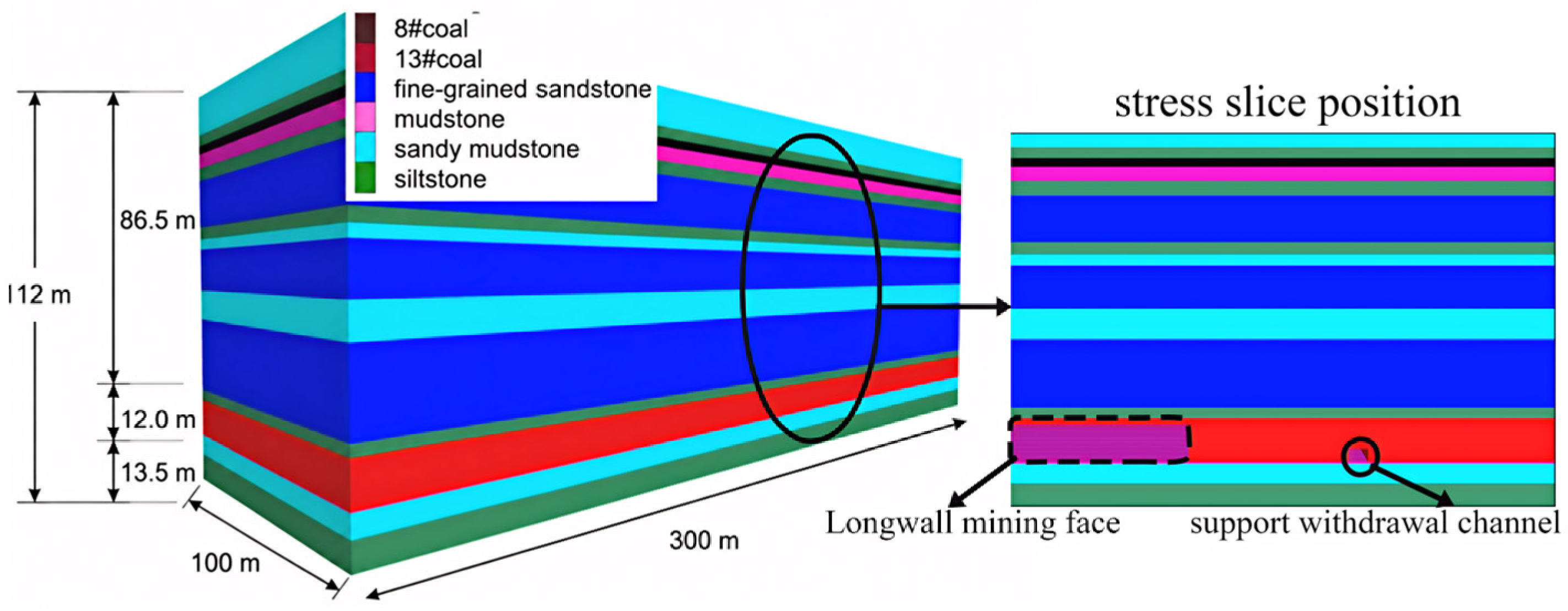
The required numerical model was established using 3DEC 7.0 discrete element numerical simulation software, based on the comprehensive stratigraphic column of the 221304 working face, as shown in Figure 6. The model is 300 m in length, 112 m in height, and 100 m in width, with a floor thickness of 13.5 m, a coal seam thickness of 12 m, and a roof height of 86.5 m. The rock blocks were simulated using the Mohr–Coulomb model, while the joints were modeled as Coulomb slip surfaces. The joints in the rock strata were simplified into two sets, namely, horizontal joints and vertical joints.
Considering that the problem is approximately symmetric with respect to the vertical plane through the center of the model, a symmetry boundary condition was applied along the central vertical plane. Specifically, displacement normal to the symmetry plane was restrained, whereas displacement parallel to the plane was allowed. The bottom boundary was fixed in the vertical direction, and the top boundary was treated as a free boundary. The 338.5 m thick unconsolidated overburden above the model was converted into an equivalent uniformly distributed load of 8.46 MPa and applied to the top boundary. The gravitational acceleration was set to 9.80 m/s2.
The excavation range of the working face was 0–200 m. During the normal mining stage of the fully mechanized top-coal caving face, the mining height was 12.0 m. During the final mining stage, after top-coal caving was stopped, the mining height was reduced to 3.5 m. The cross-sectional dimensions of the pre-driven withdrawal channel were set to 5.4 m × 3.5 m.
During numerical simulation, the overlying strata were allowed to undergo free caving under the combined effects of mining-induced stress disturbance and self-weight. The simulation schemes for different top-coal caving stopping positions were as follows: top-coal caving was stopped when the working face advanced to 50, 40, 30, 20, and 10 m from the stopping line, respectively, and the mining height of the coal seam was then adjusted to 3.5 m.
The simulation schemes for different suspended roof lengths were as follows: the roof exposure lengths were preset to 40, 30, 20, and 10 m, respectively. Top-coal caving was stopped when the working face advanced to 10 m from the stopping line, and the mining height was reduced to 3.5 m.

3.3. Effect of Top-Coal Parking Position on the Stability of Surrounding Rock in the Recovery Channel

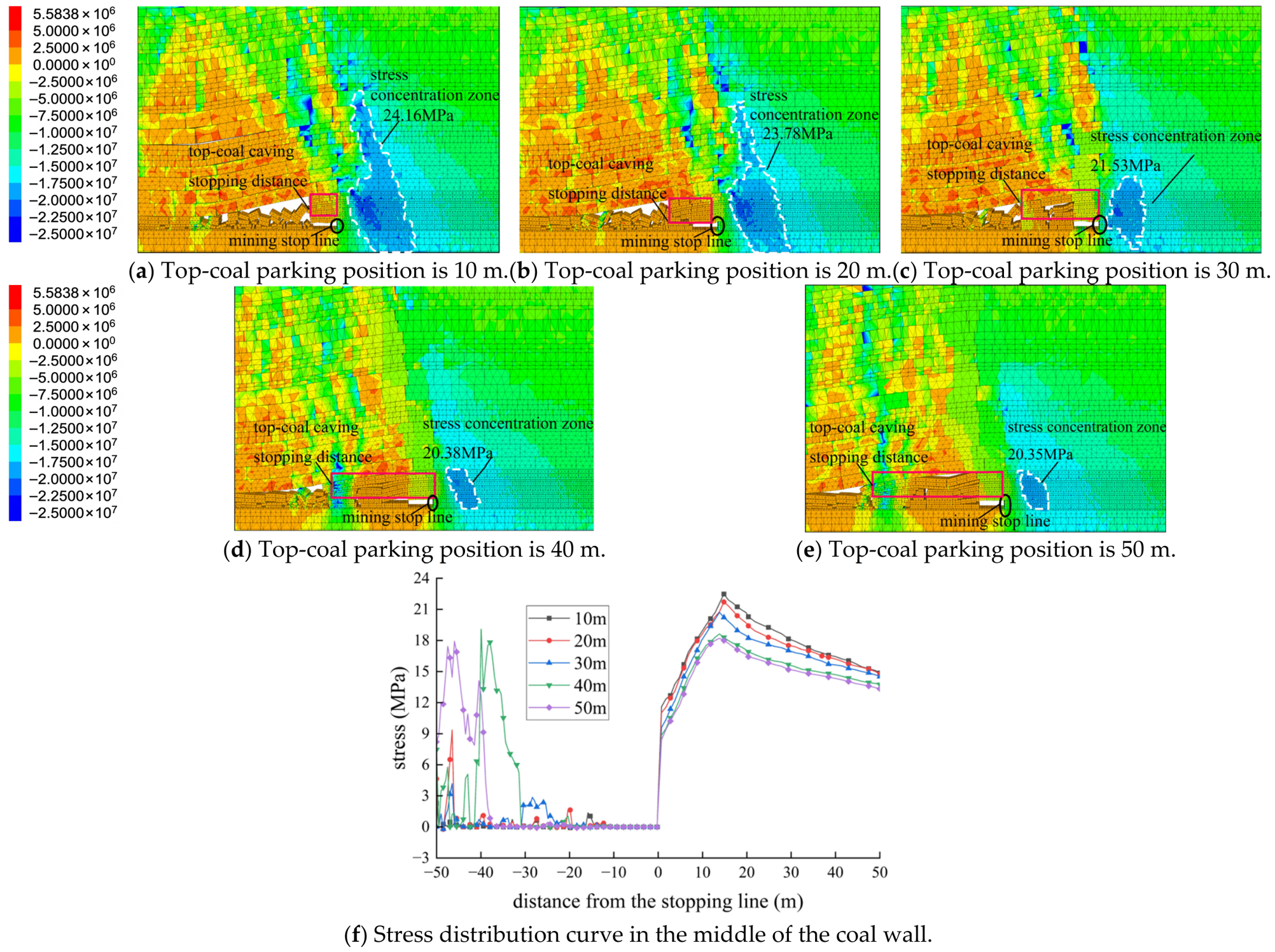
(1) Figure 7a–f shows the vertical stress contours after the working face advanced beyond the stopping line, together with the vertical stress distribution curves at the middle section of the coal wall under different top-coal caving stopping distances (10, 20, 30, 40, and 50 m). The results indicate that the evolution of the surrounding rock stability of the withdrawal channel under different top-coal caving stopping distances can be divided into three stages.
(i) Stable stage (stopping distance ≥ 40 m): When the top-coal caving stopping distance is relatively large, the degree of stress concentration in front of the withdrawal channel remains weak, and the surrounding rock is generally in a relatively stable state. At this stage, the caved coal and gangue in the goaf are relatively well compacted and can provide effective support to the main roof, thereby contributing to the overall stability of the overlying strata structure above the withdrawal channel.
(ii) Transitional stage (stopping distance of approximately 30 m): As the top-coal caving stopping distance decreases, the degree of stress concentration in front of the withdrawal channel begins to increase significantly, and the stability of the surrounding rock gradually declines. At this stage, the compaction degree of the caved coal and gangue in the goaf decreases, and their supporting effect on the main roof begins to weaken. Compared with the stable stage, the vertical stress behind the goaf decreases significantly, the roof rotation angle increases, and the deformation of the surrounding rock of the withdrawal channel shows an intensifying trend.
(iii) Instability stage (stopping distance ≤ 20 m): When the top-coal caving stopping distance is further reduced, the degree of stress concentration in front of the withdrawal channel increases markedly, and the stability of the surrounding rock deteriorates substantially. Under these conditions, the caved coal and gangue in the goaf can hardly be recompacted and are basically unable to provide effective support to the main roof, causing the surrounding rock of the withdrawal channel to enter a stage characterized by strong strata pressure behavior and large-deformation instability.
Overall, the numerical simulation results demonstrate that, as the distance between the top-coal caving stopping position and the stopping line decreases, the mechanical environment of the withdrawal channel continuously deteriorates. Specifically, the load-bearing capacity of the goaf gradually decreases, the stress concentration in front of the coal wall continuously intensifies, and the stability of the surrounding rock correspondingly declines.
These three evolutionary stages identified by the present numerical simulation are in good agreement with the existing understanding of the evolution law of overlying strata structures under varying coal seam extraction thicknesses. In other words, as the extraction thickness increases, the originally relatively stable load-bearing structure of the overlying strata is progressively weakened and evolves toward a structural state that is less favorable for the stability of the surrounding rock of the withdrawal channel [28].
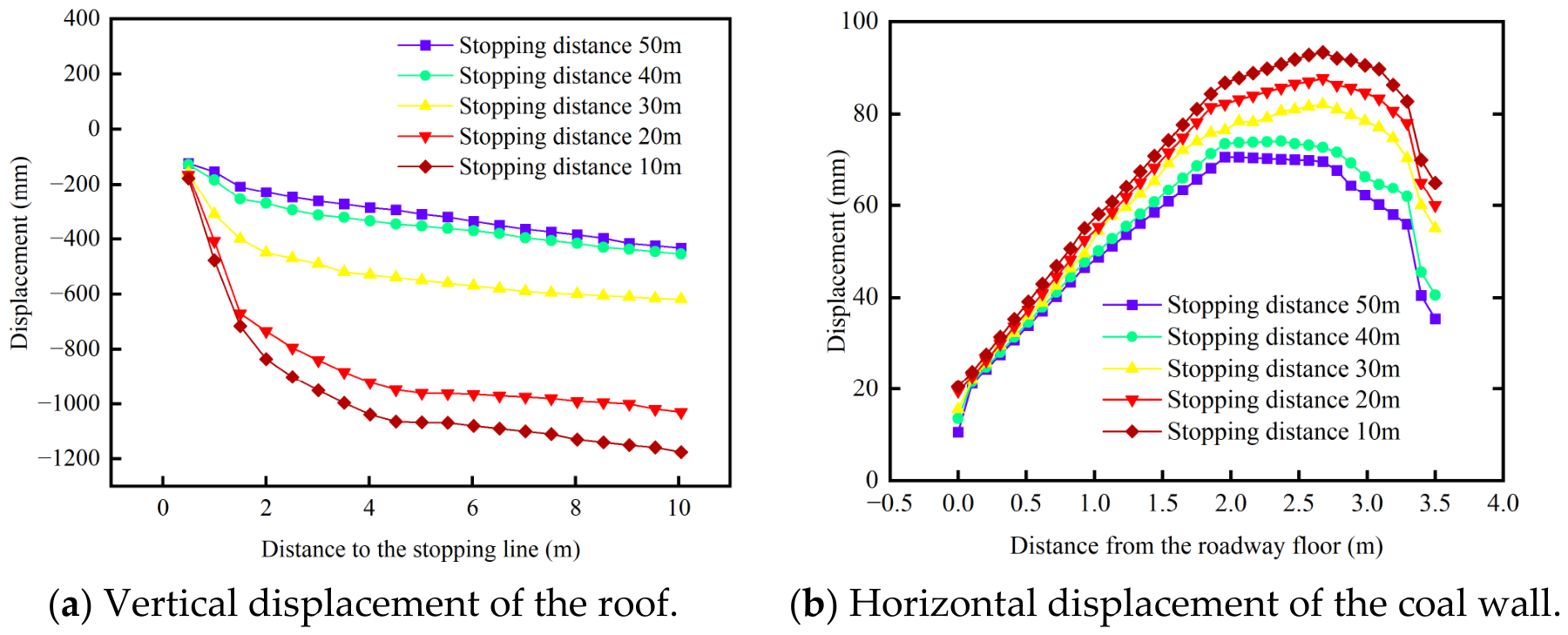
(2) The evolution of the displacement of the rock surrounding the withdrawal channel under different top-coal caving stopping positions is shown in Figure 8a,b. The numerical simulation results indicate that when the stopping positions are set at 10, 20, 30, 40, and 50 m, the maximum roof displacements of the withdrawal channel are 1178, 1114, 622, 374, and 360 mm, respectively, while the corresponding maximum coal wall displacements are 93, 88, 82, 74, and 71 mm, respectively. Overall, as the stopping position moves farther away, both the roof and coal wall displacements exhibit a decreasing trend, indicating that the deformation of the surrounding rock is effectively controlled.
In terms of the variation process, as the stopping distance increases from 10 to 20 m, roof subsidence decreases to some extent, although this reduction is relatively limited, whereas the coal wall displacement decreases more noticeably. Subsequently, when the stopping distance increases from 20 to 30 m and from 30 to 40 m, the change in roof displacement becomes pronounced. By contrast, when the stopping distance is further increased from 40 to 50 m, the roof displacement continues to decrease, but the magnitude of the reduction becomes significantly less pronounced. Taken together, the results show that the top-coal caving stopping position exhibits a clear stage-dependent influence on the stability of the rock surrounding the withdrawal channel, consistent with the previous analysis.

3.4. Effect of Suspended Roof Length on the Stability of Surrounding Rock in the Recovery Channel

From a mechanical perspective, a longer suspended roof means that the overlying load acts on a larger unsupported area, which reduces the structural constraint on the roof and makes the cantilever beam more prone to bending, rotation, and downward movement. The resulting roof subsidence not only directly compresses the surrounding rock of the withdrawal channel but also promotes lateral deformation of the coal wall under elevated abutment pressure. Consequently, the coordinated deformation of the roof and coal wall becomes more significant, leading to a progressive deterioration in the stability of the surrounding rock.
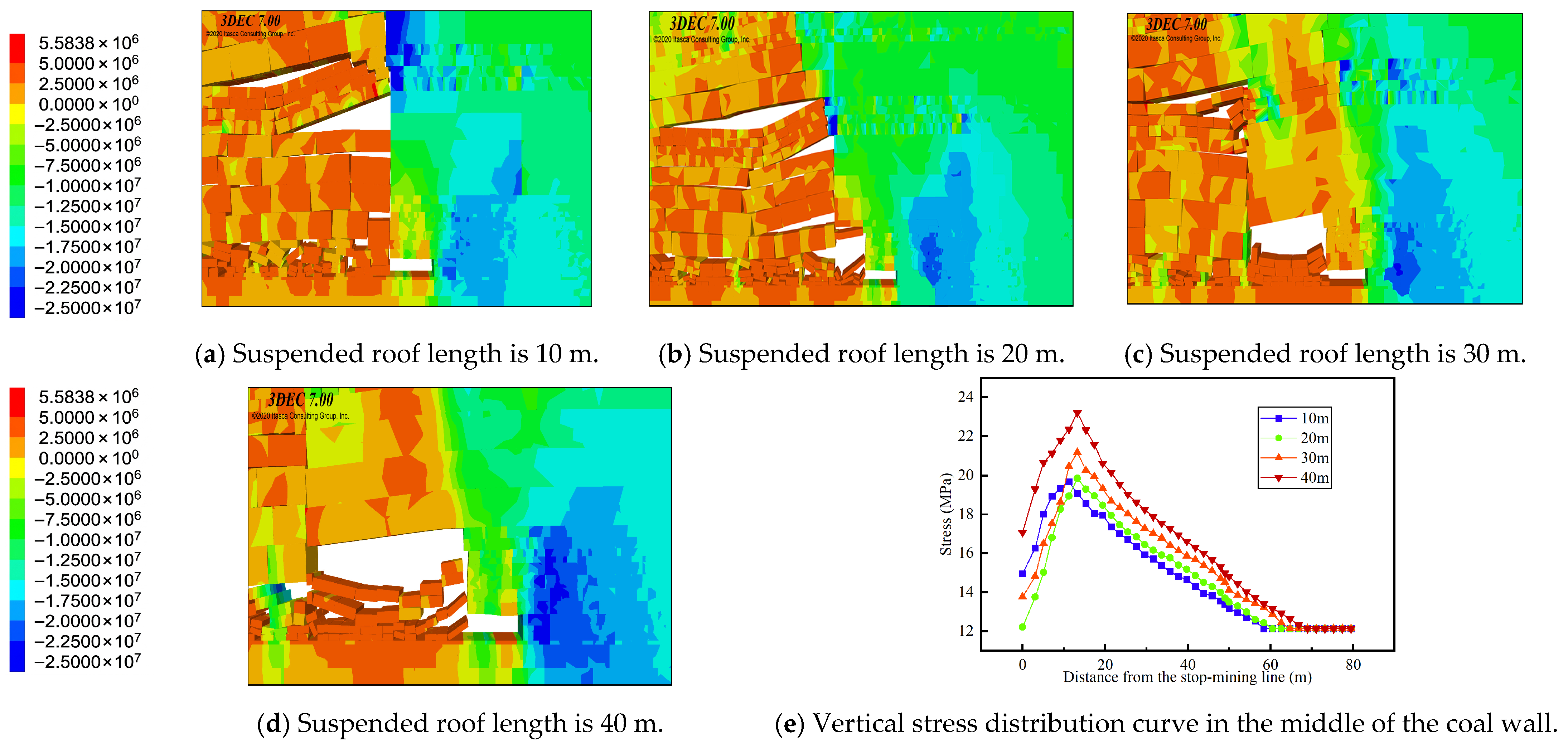
(1) Figure 9a–d shows the vertical stress contour maps for suspended roof lengths of 10, 20, 30, and 40 m at a top-coal caving stopping distance of 10 m, and Figure 9e presents the vertical stress distribution curves at the middle part of the coal wall under different suspended roof lengths. The results indicate that when the suspended roof length is 10, 20, 30, and 40 m, the peak vertical stress in the middle part of the coal wall is 19.57, 19.84, 21.18, and 23.21 MPa, respectively, indicating that the degree of stress concentration in front of the coal wall continuously intensifies with increasing suspended roof length. When the suspended roof length increases from 10 to 20 m, the increase in the stress peak is relatively small, suggesting that the roof cantilever effect on the vertical stress distribution is not yet pronounced. However, when the suspended roof length is further increased to 30 and 40 m, the peak vertical stress rises significantly, and the extent of the high-stress zone expands accordingly, indicating that the bending subsidence of the cantilever beam formed by the main roof becomes more severe as the roof exposure span increases. Therefore, the suspended roof length is an important factor affecting the stability of the rock surrounding the withdrawal channel. The greater the suspended roof length, the higher the peak abutment pressure in front of the coal wall, the wider the stress concentration zone, and the poorer the stability of the rock surrounding the withdrawal channel.
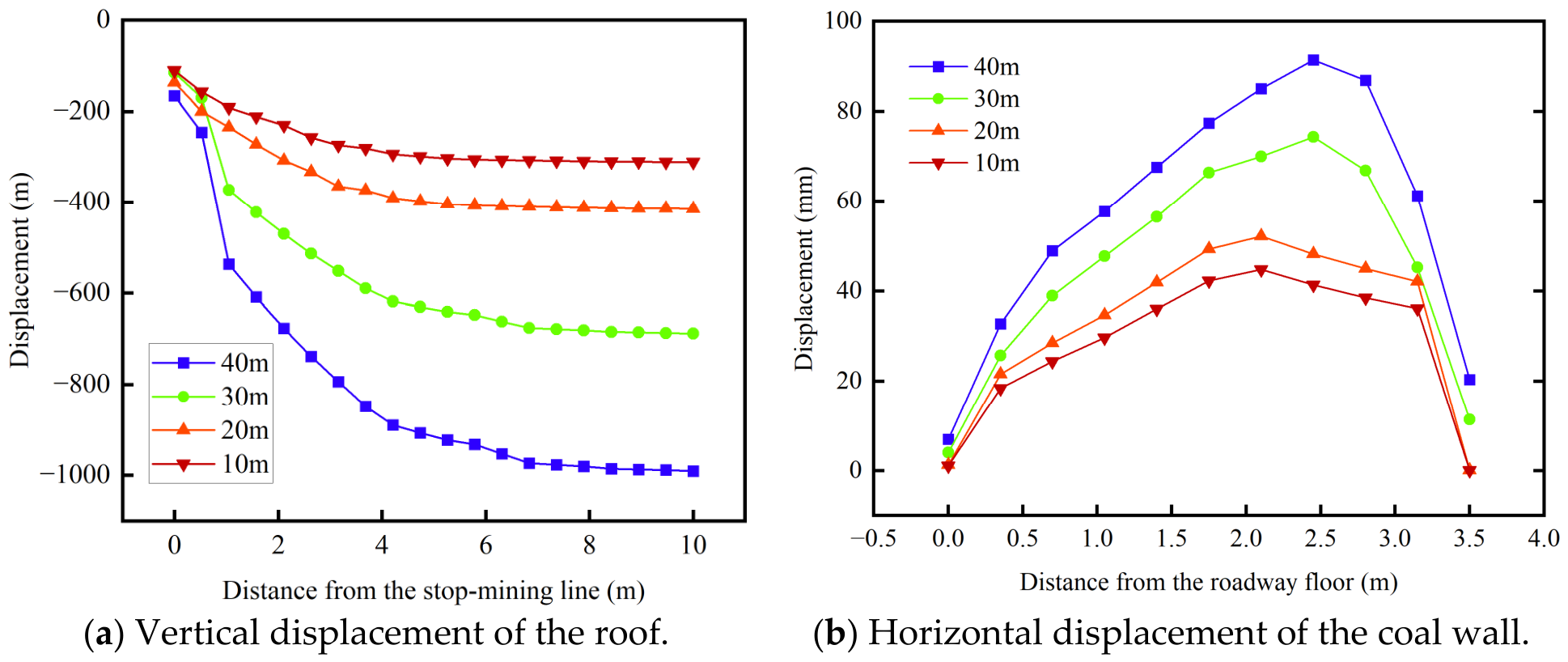
(2) Figure 10a,b shows the displacement curves of the roof and the non-mining sidewall for suspended roof lengths of 10, 20, 30, and 40 m at a top-coal caving stopping distance of 10 m. Overall, as the suspended roof length increases from 10 to 40 m, both the vertical displacement of the roof and the horizontal displacement of the coal wall increase significantly, indicating that an increase in suspended roof length markedly affects the stability of the rock surrounding the withdrawal channel. Specifically, roof subsidence gradually increases with increasing distance from the stopping line and then tends to stabilize, with maximum values of 311, 414, 687, and 991 mm, respectively. This indicates that, as the suspended roof length increases, the exposed roof span becomes larger, and the bending subsidence and rotational effects of the cantilever beam are significantly intensified. The horizontal displacement of the coal wall along the roadway height exhibits a distribution pattern of first increasing and then decreasing, with the peak values mainly located in the middle-upper part of the coal wall. The maximum values are 44, 52, 74, and 91 mm, respectively. Therefore, an increase in suspended roof length leads to greater roof subsidence and more severe coal wall deformation.

4. Effect of Presplit Roof Cutting on the Stability of Surrounding Rock in the Recovery Channel

4.1. Determination of Key Parameters for Roof Cutting and Pressure Relief

According to the preceding research results, when the overlying structure above the withdrawal channel takes the form of a short cantilever beam, the influence of top-coal caving stoppage on the stability of the rock surrounding the withdrawal channel is minimal. Therefore, in this section, a coordinated control method for improving the stability of the rock surrounding the withdrawal channel and reducing the top-coal caving stopping distance by constructing a short cantilever beam through roof presplitting is investigated, considering that this rock is already stable when the distance between the top-coal caving stopping position and the stopping line exceeds 40 m. In contrast, an excessively large stopping distance would result in top-coal loss. The effect of roof cutting on the rock surrounding the withdrawal channel is analyzed only for conditions where the stopping distance is less than or equal to 30 m.

4.1.1. Analysis of Roof-Cutting Angle and Height

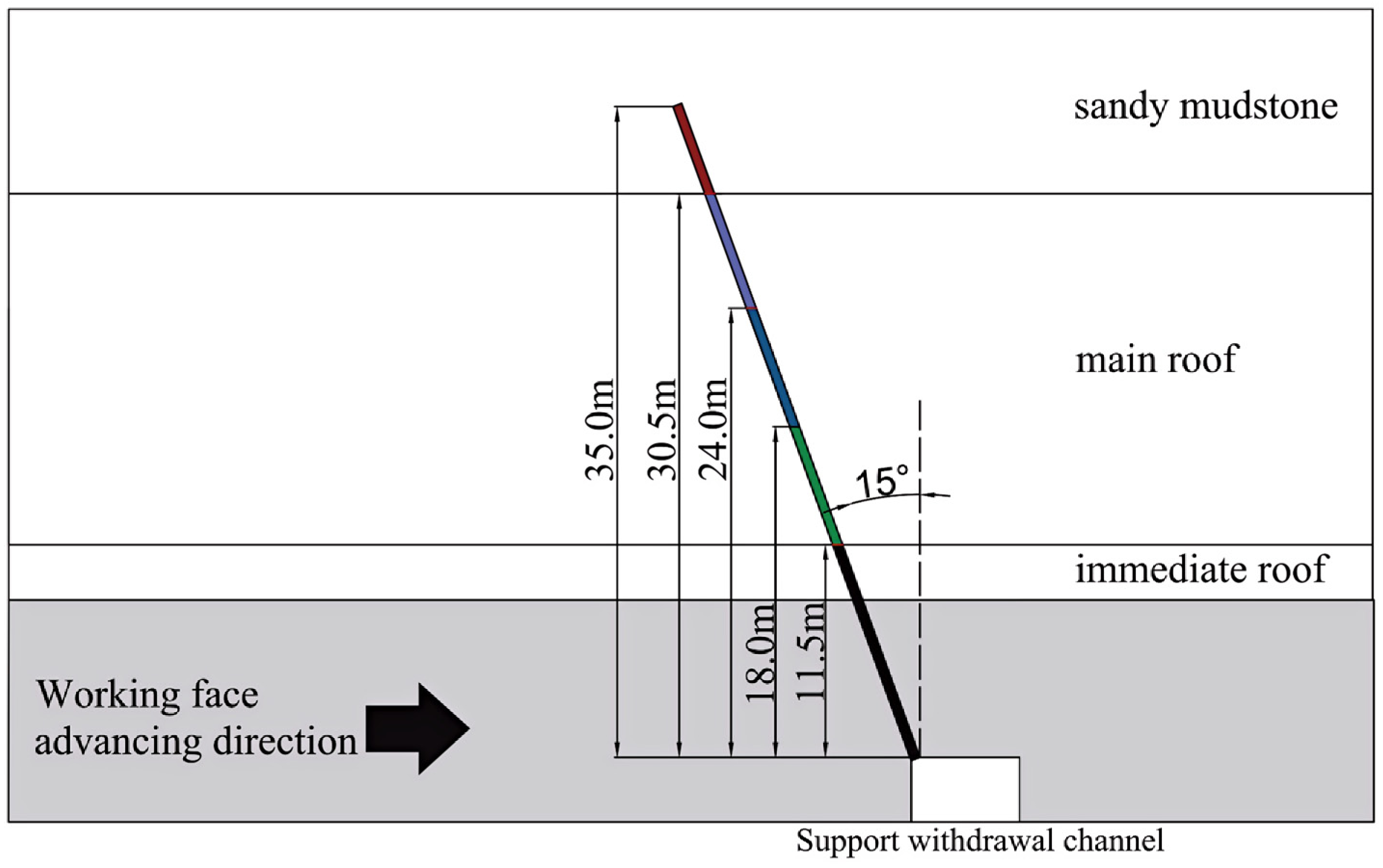
Determining the roof-cutting angle requires consideration of multiple factors. First, at the same roof-cutting height, the length of the cutting line should be minimized as much as possible. Second, it is necessary to ensure that, after cutting, the frictional resistance generated along the cutting plane during the subsidence of the fractured roof remains relatively small. Third, the suspended roof length on the mining side after cutting should be such that the roof breaks behind the supports, while avoiding an excessively large suspended span. Based on these considerations, the angle between the roof-cutting line and the direction normal to the roadway roof was determined to be 15°. In the inclined direction, to ensure that the main roof fractures at a reasonable position, the cutting line was preferentially inclined toward the longwall face.
In the load-bearing structure of the main roof at the 221304 working face, the thick, hard sandstone layer above the coal seam plays a key controlling role in the distribution of advanced abutment pressure and strata behavior [31]. As the working face advances, the thick and hard sandstone undergoes periodic breakage and caving, forming a “coal wall–goaf” bearing structure that jointly supports the load of the overlying strata. Because the load-bearing capacity of caved gangue in the goaf is relatively weak, especially when the distance between the top-coal caving stopping position and the stopping line is small, a larger portion of the overlying strata load is borne by the coal wall in front of the working face. At the same time, the force exerted by the roof strata above the goaf is also transferred forward through this structure, thereby increasing both the magnitude and the influence range of the advanced abutment pressure. The designed roof-cutting height is shown in Figure 11.
Combined with the structural characteristics of the roof strata in the working face, and in order to investigate the effect of roof-cutting height, the roof-cutting ranges in this study were set as follows: the entire immediate roof (11.5 m), one-third of the main roof thickness (18.0 m), two-thirds of the main roof thickness (24.0 m), the entire main roof (30.5 m), and part of the overlying sandy mudstone (35.0 m). Accordingly, a schematic diagram of the roof-cutting height for the working face was drawn, as shown in Figure 11.

4.1.2. Effect of Roof-Cutting Height on the Vertical Stress Distribution of the Surrounding Rock in the Recovery Channel

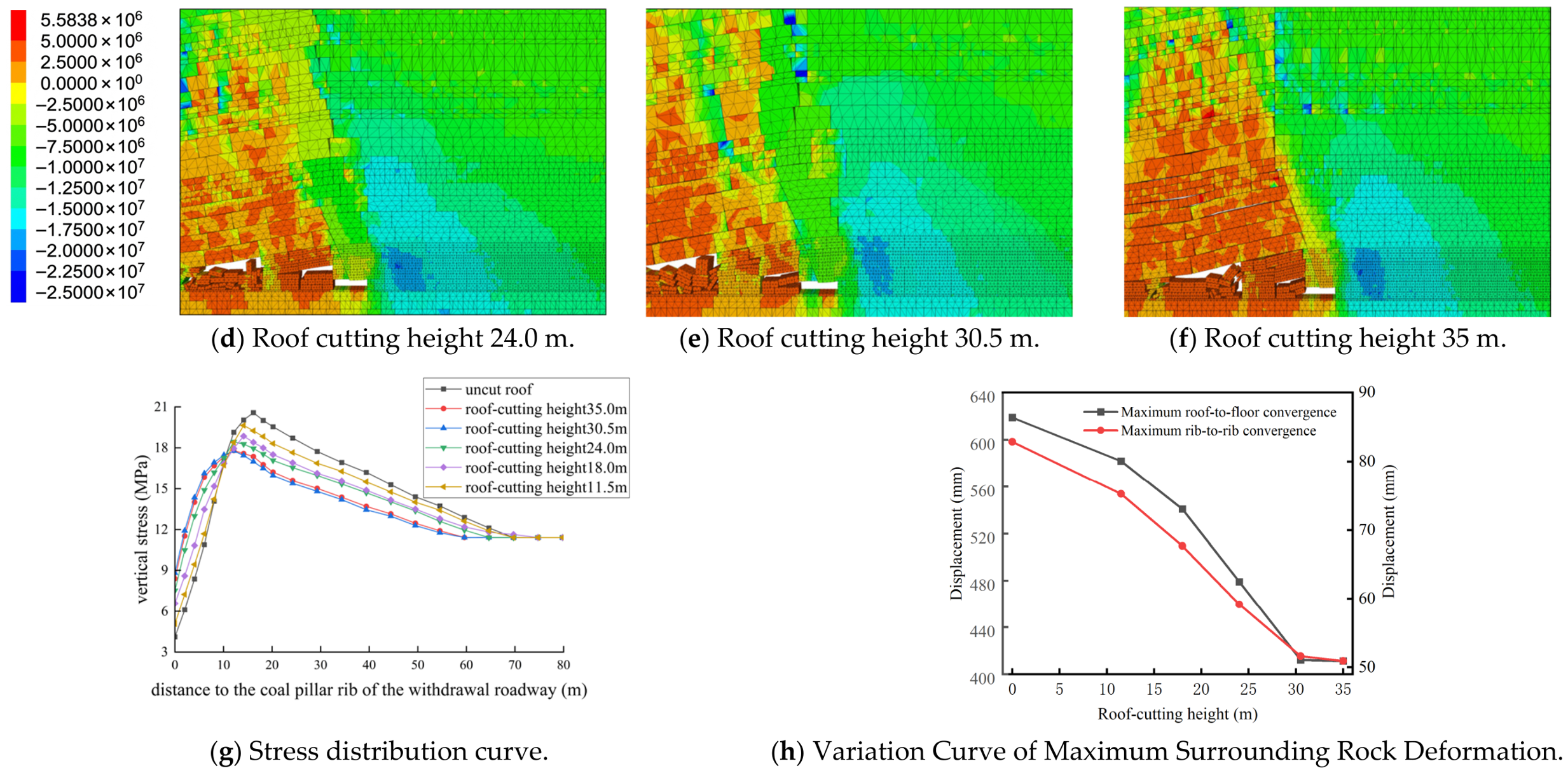
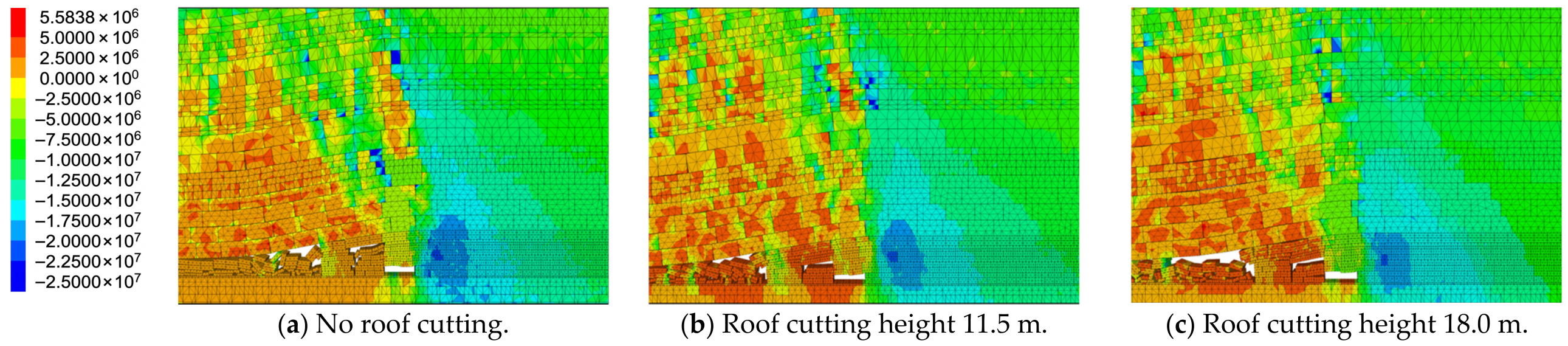
Numerical simulations were carried out for the conditions of no roof cutting and roof-cutting heights of 11.5, 18.0, 24.0, 30.5, and 35.0 m, based on the model described above. The main objective was to investigate the stress distribution characteristics under different roof-cutting heights. The numerical results are shown in Figure 12.
The simulation results indicate that, without roof cutting, the caved gangue is unable to provide effective rigid support for the key strata, causing the overlying load to transfer rapidly to the coal wall in front of the working face. As a result, a pronounced stress concentration develops ahead of the face, with a peak value of 21.53 MPa, which is 2.03 times the in situ stress. As the roof-cutting height increases, the advanced abutment pressure generally shows a decreasing trend, although the effect varies significantly with cutting height.
When the roof-cutting height is 11.5 m, only the top coal and immediate roof are cut, while the load-transfer structure of the key strata remains intact. In this case, the peak abutment pressure is 21.35 MPa, and the influence range of the advanced abutment pressure shows no obvious change, indicating that the pressure-relief effect is insignificant.
When the roof-cutting height increases to 18.0 m, a relatively large stress concentration zone still exists within the coal mass, with a peak stress of 21.03 MPa. The influence range of the advanced abutment pressure is only slightly reduced, indicating that cutting only about one-third of the main roof thickness still has a limited weakening effect on the stress transfer path of the thick, hard roof.
When the roof-cutting height is further increased to 24.0 m, the peak abutment pressure decreases to 20.35 MPa, and the influence range of the advanced abutment pressure is further reduced. This suggests that roof cutting has begun to inhibit load transfer to the coal mass ahead of the face, but the key load-bearing structure has not yet been completely disrupted.
When the roof-cutting height reaches 30.5 m, the main roof is effectively cut through, and the stress concentration in front of the working face is markedly alleviated. The peak stress decreases to 19.65 MPa, and the influence range of the advanced abutment pressure is significantly reduced, indicating the most pronounced pressure-relief effect. This shows that the integrity and continuity of the roof are effectively destroyed at this height, and the transmission path of the advanced abutment pressure is successfully interrupted.
When the roof-cutting height is further increased to 35.0 m, the peak abutment pressure is 19.83 MPa, and the influence range of the advanced abutment pressure shows no clear difference from that at a cutting height of 30.5 m, indicating that further increasing the roof-cutting height can hardly improve the pressure-relief effect any further.
As the roof-cutting height increased from 11.5 m to 30.5 m, the roof displacement decreased by 5.97–33.44%, while the convergence of the two ribs decreased by 9.17–37.76%, as shown in Figure 12h. However, when the roof-cutting height was further increased to 35.0 m, the roof subsidence and rib convergence were reduced by only 0.16% and 0.27%, respectively, compared with those at 30.5 m. This indicates that further increasing the roof-cutting height has a very limited effect on controlling the surrounding rock deformation and does not produce any significant optimization.
Overall, the results suggest that 30.5 m is a relatively reasonable roof-cutting height for this working face under conditions of a thick and hard main roof, as it can effectively weaken the roof structure while achieving a favorable advanced pressure-relief effect.

4.1.3. Determination of Reasonable Roof-Cutting Parameters

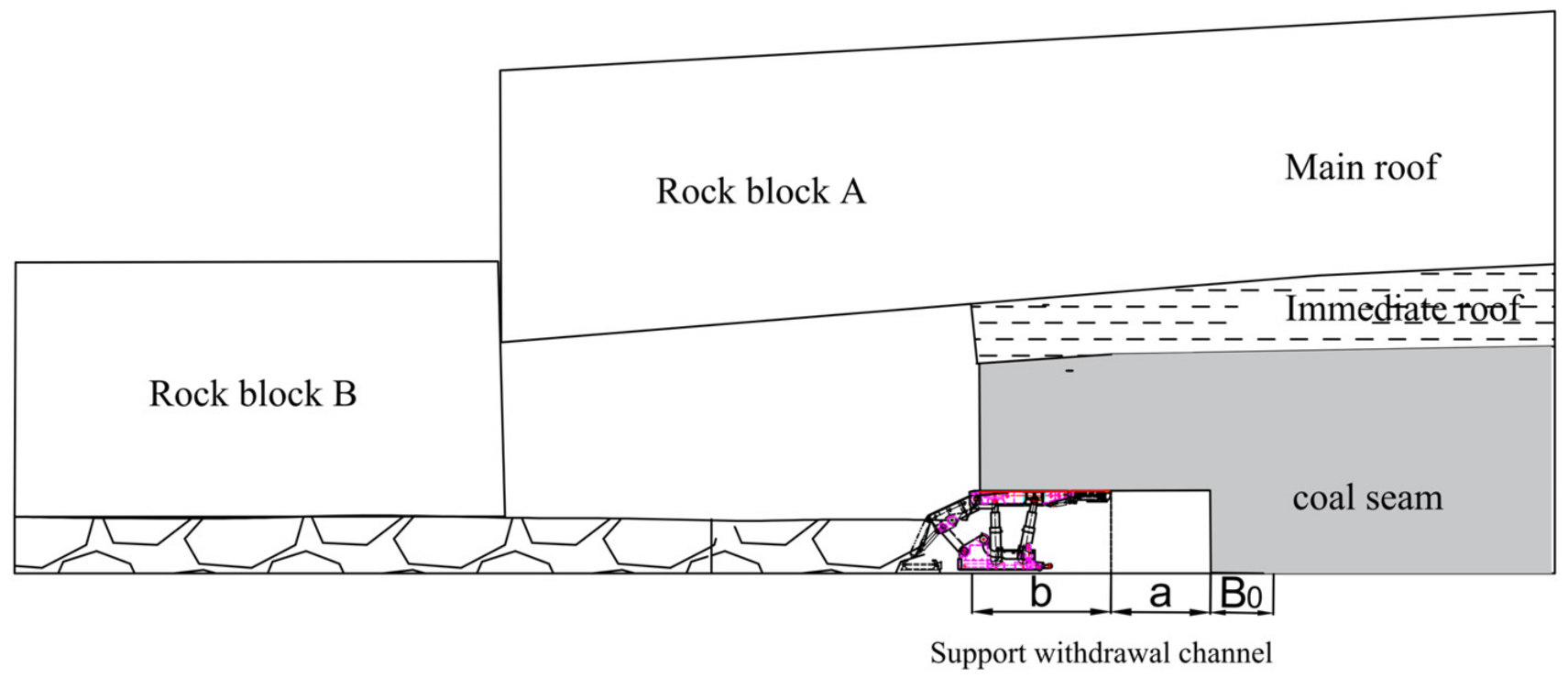
Previous studies have shown that, after the withdrawal channel is connected to the working face, if the fracture position of the main roof is located behind the face supports, the withdrawal channel and supports are generally situated beneath a relatively stable main roof block [2]. Under this condition, roof stability is relatively high, and sufficient space is available to lower the supports, facilitating rapid support withdrawal. Therefore, when the withdrawal roadway is connected with the working face, the main roof span should satisfy a reasonable condition, namely, Equation (7) [32]:
L > B 0 + a + b
where B 0 is the width of the fractured zone in the solid coal side, m; L is the periodic weighting interval of the main roof, m; b is the horizontal distance between the support tail beam and the fracture position of the main roof, m; and a is the width of the withdrawal channel, m as shown in Figure 13. According to the field geological and production conditions, L = 26 m, B 0 = 5.4 m, a = 5.4 m, and b = 5 m. Substituting these values into Equation (7) gives
26 > 5.4 + 5.4 + 5 = 15.8   m
indicating that the condition is satisfied.
The numerical simulation results presented above show that, when the roof-cutting angle is 15°, a roof-cutting height of 30.5 m provides the greatest pressure-relief effect. Based on the comprehensive analysis of the roof-cutting parameters, the corresponding roof exposure length is approximately 18.57 m. This value is greater than 15.8 m and less than 26 m, satisfying the requirement for a reasonable fracture position of the main roof. Therefore, it can effectively ensure the stability of the rock surrounding the withdrawal channel and provide sufficient space for support withdrawal.

4.2. Comparison of Vertical Stress Distribution of the Surrounding Rock in the Recovery Channel Under Different Top-Coal Parking Positions Before and After Roof Cutting

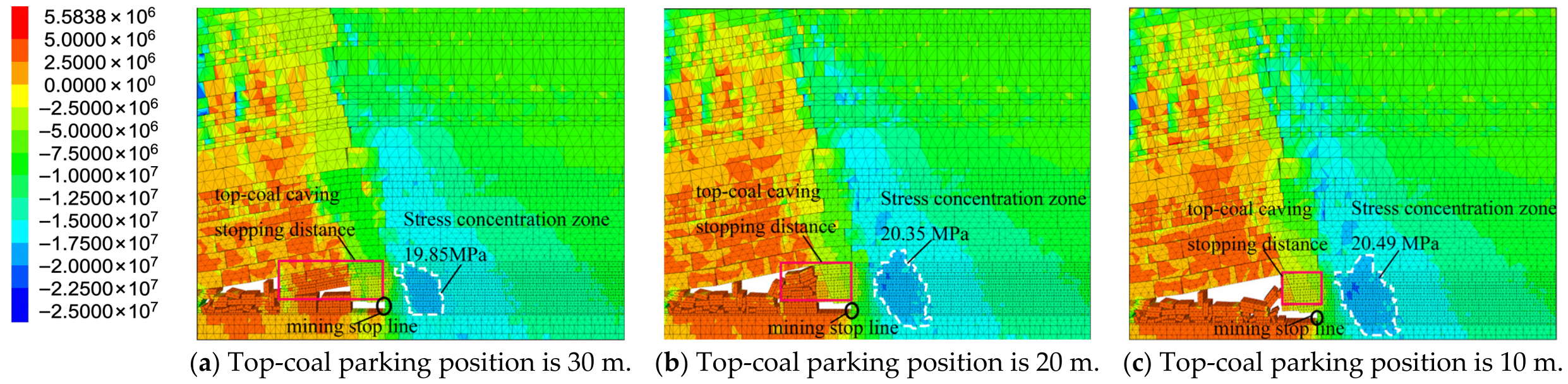
Figure 14a–c shows vertical stress contours at different distances from the stopping line after roof cutting, namely, 10, 20, and 30 m. It can be seen that roof cutting has a significant regulating effect on the vertical stress distribution in the rock surrounding the withdrawal channel. After roof cutting, as the top-coal caving stopping position decreases from 30 m to 10 m, the distribution range and concentration degree of the vertical stress in the stope are clearly reduced compared with those under the condition without roof cutting. The stress distribution in the roof above the withdrawal channel becomes more uniform, and the stress concentration on the coal wall side is alleviated.
Moreover, the stress regulation effect is most pronounced when the stopping distance falls within the instability stage. The original high-intensity stress concentration zone on the coal wall side is almost eliminated, and the peak vertical stress on that side is greatly reduced. These results indicate that roof cutting can effectively interrupt stress transmission and, at the same time, block the influence of severe rotational deformation of the main roof in the goaf on the withdrawal channel.
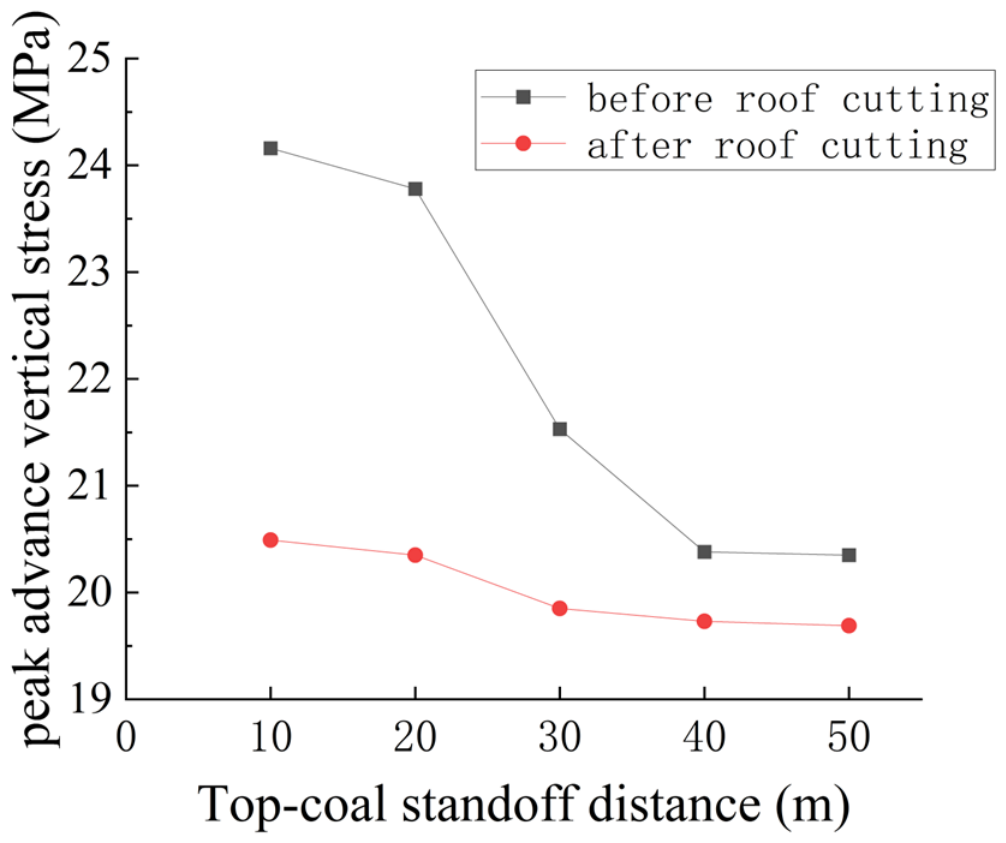
Figure 15 illustrates the changes in the distribution and peak values of advanced vertical stress before and after roof cutting under different top-coal caving stopping positions. As shown in the figure, after roof cutting, when the top-coal caving stopping position is gradually shortened from 50 m to 10 m, the peak vertical stress in the coal wall decreases from 20.35, 20.38, 21.53, 23.78, and 24.16 MPa to 19.69, 19.73, 19.85, 20.35, and 20.49 MPa, respectively.
This indicates that roof cutting and pressure relief can effectively reduce the degree of stress concentration in front of the coal wall and weaken the adverse impact of high stress on the surrounding rock stability of the withdrawal channel. Essentially, by artificially destroying the integrity of hard roof strata, roof cutting and pressure relief cut off the transfer path of overlying strata loads toward the coal wall. This enables the transfer and release of roof stress into the goaf, thereby reducing the stress concentration coefficient ahead of the coal wall and avoiding plastic failure of surrounding rock induced by high stress [22]. Meanwhile, the rational roof structure formed after roof cutting can effectively control the deformation of surrounding rock in the withdrawal channel [29]. It provides a safe guarantee for shortening the top-coal caving stopping distance, further reducing top coal loss and improving the coal recovery rate.

4.3. Comparison of Main Roof Rotation and Surrounding Rock Displacement in the Recovery Channel Under Different Top-Coal Parking Positions Before and After Roof Cutting

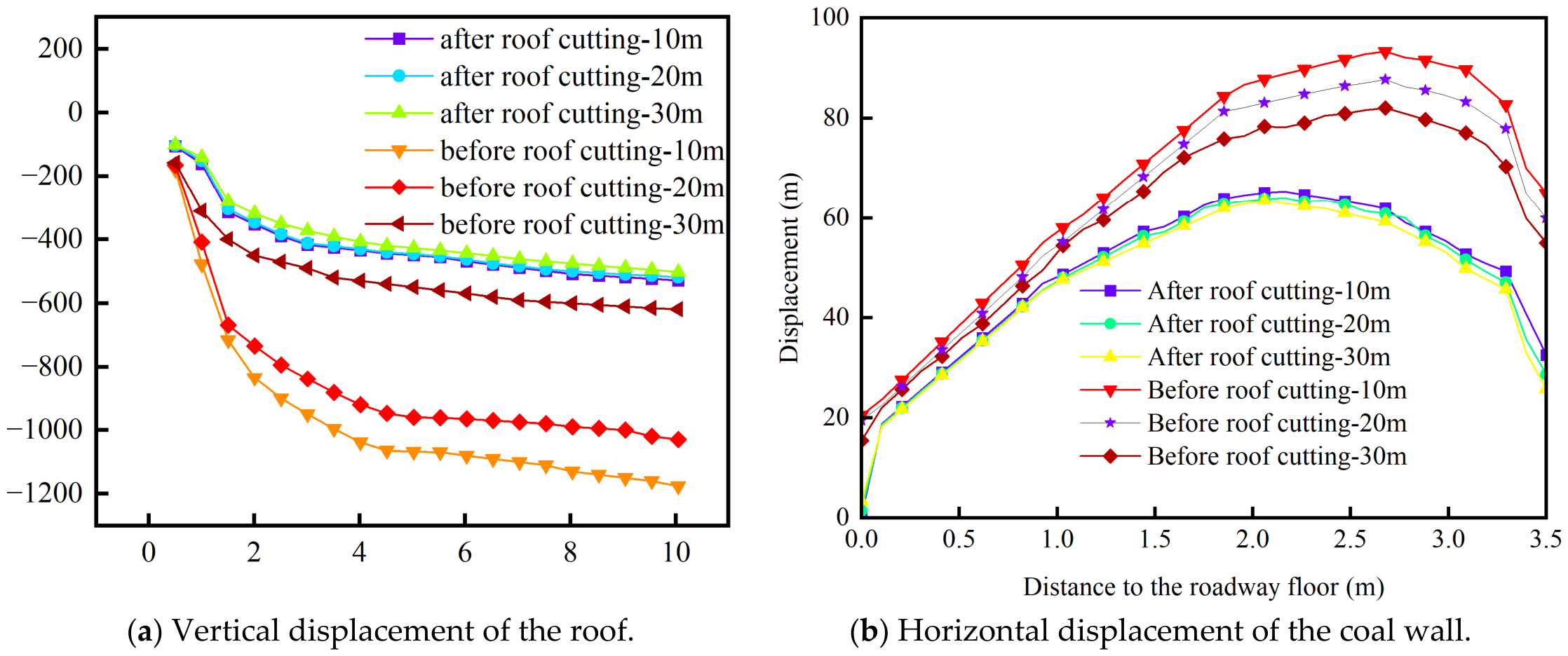
As shown in Figure 16, without roof cutting, when the top-coal caving stopping positions are 30, 20, and 10 m, the maximum vertical displacement of the withdrawal channel roof reaches −622, −1114, and −1178 mm, respectively. After roof cutting, the corresponding peak vertical displacements decrease to −507, −522, and −535 mm, representing reductions of 20%, 52%, and 55%, respectively.
At the same time, the maximum horizontal displacement of the coal wall decreases from 82, 88, and 93 mm to 64, 67, and 70 mm, corresponding to reductions of 22%, 23%, and 25%, respectively. These results indicate that roof cutting can effectively control the deformation of the rock surrounding the withdrawal channel, and its control effect becomes more pronounced at lower stopping positions. This further demonstrates that implementing roof cutting in advance can effectively reduce disturbance in the withdrawal channel’s roof, thereby improving the stability of the rock surrounding the withdrawal channel.

5. Field Application Effects

5.1. Hydraulic Fracturing Roof-Cutting Scheme

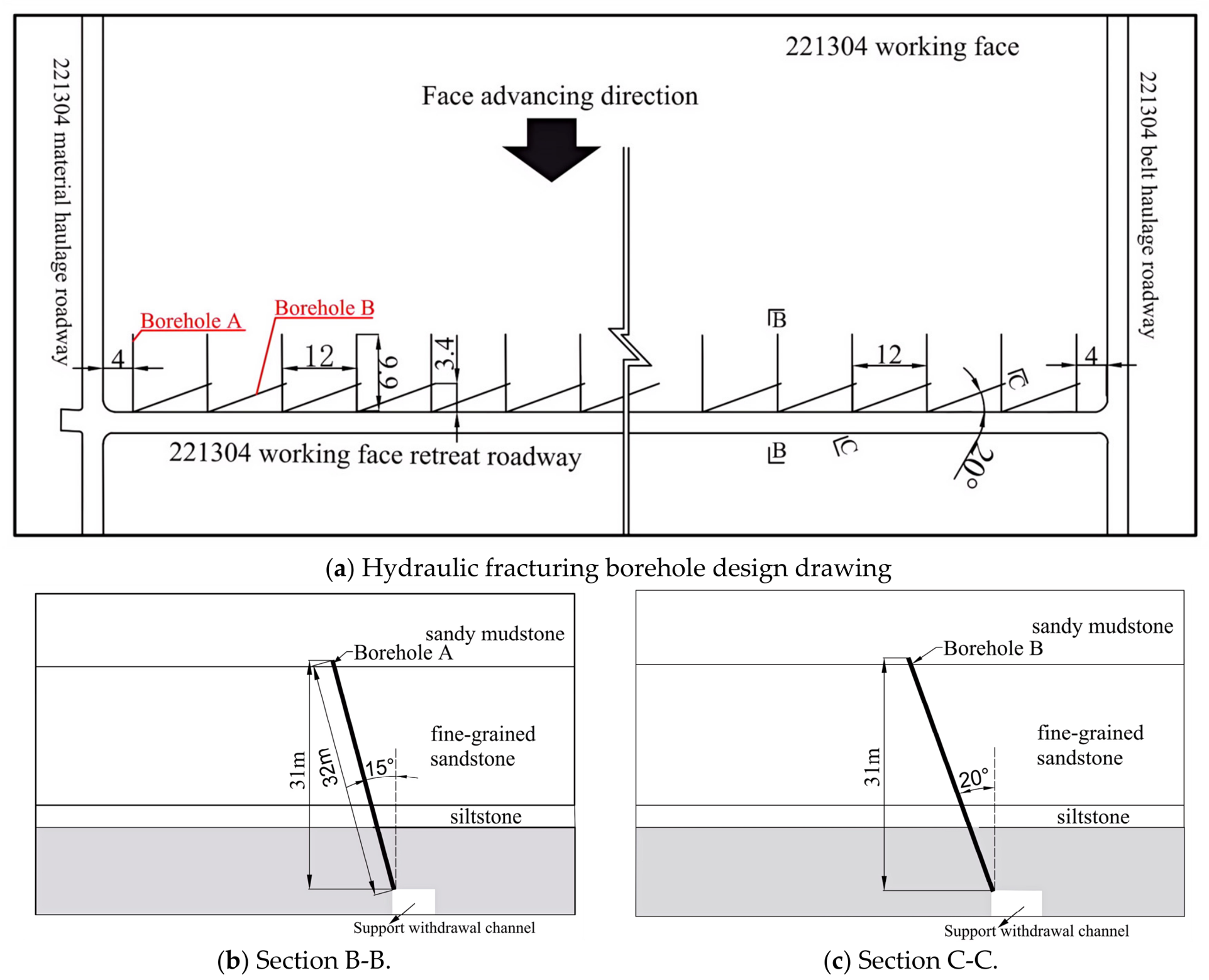
The hydraulic fracturing operation was conducted in the pre-driven support withdrawal channel at the final mining stage of the 221304 working face. The vertical roof-cutting height for the withdrawal channel was set at 31 m. In the field, a double-borehole group arrangement was adopted within the withdrawal channel, as shown in Figure 17. Fracturing borehole groups were uniformly arranged along the axial direction of the withdrawal channel so that hydraulic fractures could propagate and connect in the roof strata, thereby forming a continuous pressure-relief zone. To improve the propagation range and interconnection capacity of the hydraulic fractures in the roof, two types of boreholes with different orientations were arranged in each group within the withdrawal channel, namely, Borehole A and Borehole B. The former served as the main roof-cutting borehole and was mainly used to control the formation of the primary fracture along the designed roof-cutting direction, while the latter served as the auxiliary fracture extension borehole and was mainly used to expand the influence range of fractures and enhance the superposition and connectivity effect of fractures between adjacent boreholes. Through the combined arrangement of these two types of boreholes, a three-dimensional fracture network could be formed above the withdrawal channel, promoting fracture and caving of the roof along the predetermined horizon during support withdrawal, thereby weakening the influence of advanced concentrated abutment pressure on the withdrawal channel.
Borehole A was arranged on the goaf side of the withdrawal channel and drilled along the designed roof-cutting direction. The borehole was inclined 15° toward the goaf to ensure that fractures preferentially propagated along the target roof-cutting direction. Considering that the target roof-cutting height was 31 m, and taking into account borehole deviation during construction as well as terminal-hole allowance, the depth of Borehole A was set to 32 m. The borehole diameter was set at ϕ 65 mm, and the spacing between adjacent Borehole A holes in the withdrawal channel was 12 m.
Borehole B was arranged in the same group as Borehole A and mainly functioned to assist fracture extension and improve the spatial distribution of fractures. In plan view, Borehole B formed a certain angle with the axis of the withdrawal channel so as to enhance the cross-connection capability of fractures. Based on available field conditions, the angle between Borehole B and the axis of the withdrawal channel was determined to be 20°, with a 20° inclination toward the goaf. The spacing between adjacent Borehole B holes in the withdrawal channel was also 12 m.

5.2. Analysis of Fracturing Effectiveness

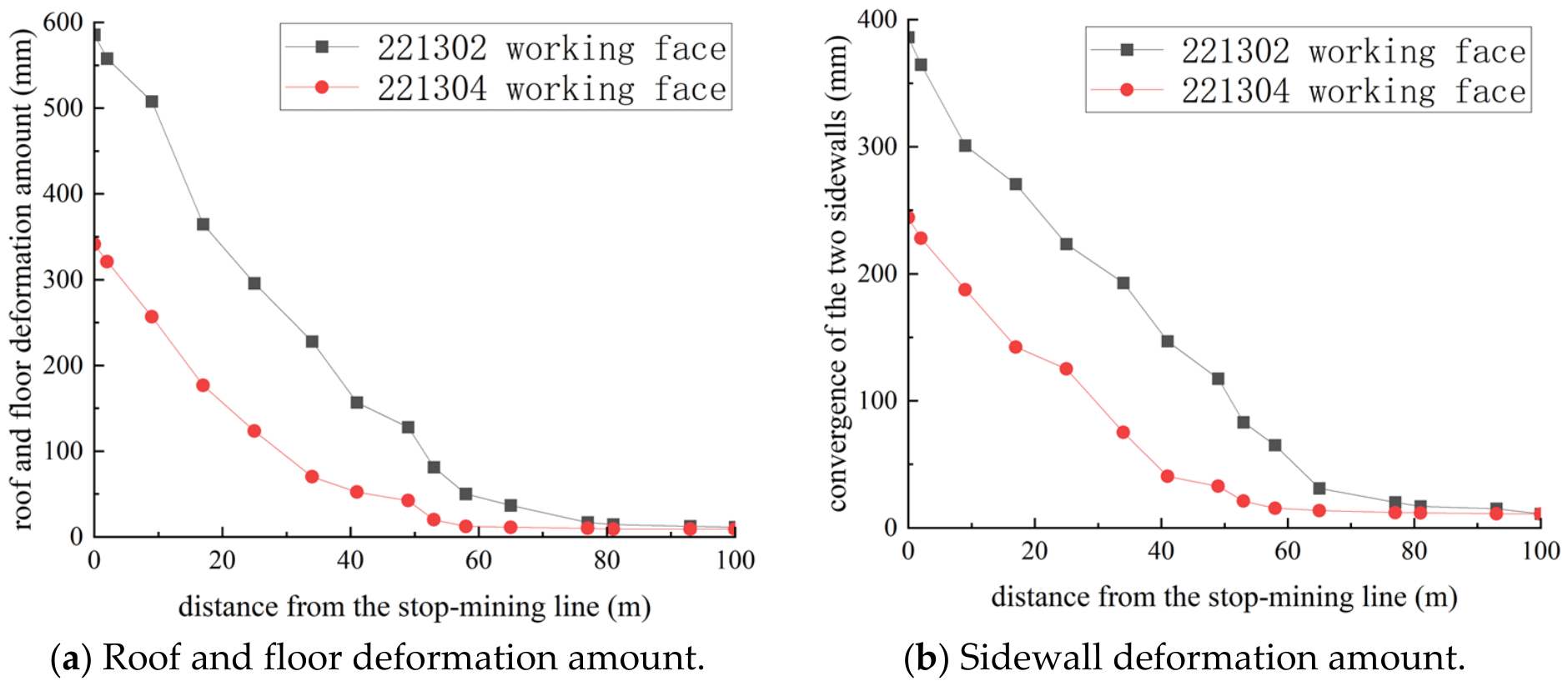
To verify the practical effectiveness of the hydraulic fracturing pressure-relief technology, the deformation of the rock surrounding the withdrawal channel in the 221304 working face after hydraulic fracturing was compared with that in the adjacent 221302 working face, where hydraulic fracturing was not implemented. The results are shown in Figure 18.
The results show that, without roof cutting, the deformation of the rock surrounding the withdrawal channel was relatively severe. As the working face approached the stopping line, the roof subsidence and rib convergence continued to increase, exhibiting clear large-deformation characteristics before and after breakthrough. In contrast, the deformation response of the surrounding rock in the roof-cutting zone was significantly weakened, and the growth trend of deformation became relatively gentle.
The monitoring results indicate that the maximum roof subsidence decreased from 585 mm under the condition without roof cutting to 341 mm after roof cutting, representing a reduction of 41.2%. Meanwhile, the maximum convergence between the two ribs decreased from 386 mm to 244 mm, corresponding to a reduction of 36.8%.
The results show that after roof cutting, the stress concentration degree of the surrounding rock is significantly reduced, and the deformation of the roof and two sidewalls of the withdrawal channel is effectively controlled, presenting an obvious pressure-relief effect of roof cutting. This is because the pre-splitting roof cutting technology can effectively block the stress propagation path of overlying strata and reduce the influence of high stress on the withdrawal channel. Meanwhile, the main roof fractures behind the hydraulic supports, which further optimizes the stress state of the surrounding rock and realizes effective control of surrounding rock deformation in the withdrawal channel [2]. Therefore, compared with the 221302 working face, the top-coal caving stopping distance of the 221304 working face can be safely shortened from 30 m to 15 m. On the premise of ensuring the surrounding rock stability of the withdrawal channel, top coal resource waste is reduced, which provides an engineering basis for reasonably reducing the stopping distance and improving the coal recovery rate under thick and hard roof conditions.

6. Conclusions

(1) The top-coal caving stopping position is a key factor affecting the evolution of the main roof bearing structure and the stability of the surrounding rock of the withdrawal channel. The numerical simulation results show that, as the top-coal caving stopping distance decreases, the stress and displacement fields of the surrounding rock of the withdrawal channel exhibit distinct stage-wise variations. According to the degree of influence, these variations can be divided into three stages: stable, transitional, and deterioration. Specifically, the surrounding rock remains in a stable stage when the stopping distance is ≥40 m, enters a transitional stage at 30 m, and deteriorates when the stopping distance is ≤20 m. These results are in good agreement with the theory that, as the extraction thickness increases, the main roof above the withdrawal channel transforms from a voussoir beam to a cantilever beam, thereby explaining the reason why the surrounding rock stability of the withdrawal channel exhibits a staged variation after top-coal retention.
(2) When the top-coal caving stopping distance is short, the cantilever-beam structure formed by the thick and hard roof is the dominant factor affecting the stability of the surrounding rock of the withdrawal channel. Moreover, an increase in hanging-roof length further strengthens the cantilever effect of the main roof, aggravates the stress concentration in the coal wall of the withdrawal channel, and intensifies the bending subsidence of the roof, thereby increasing the risk of surrounding rock instability.
(3) Pre-splitting roof cutting can weaken the influence of the concentrated abutment pressure in front of the working face on the withdrawal channel by actively changing the fracture position and stress transfer path of the thick and hard roof. At the same time, it ensures that the main roof breaks behind the hydraulic supports when the working face intersects with the withdrawal channel, thereby effectively improving the stress state of the surrounding rock of the withdrawal channel and controlling its deformation. The numerical simulation results show that, when the roof-cutting angle is 15° and the roof-cutting height is 30.5 m, the roof displacement and rib displacement are reduced by 33.44% and 37.76%, respectively, compared with those without roof cutting. When the roof-cutting height is further increased to 35.0 m, the roof displacement and rib displacement are reduced by only an additional 0.16% and 0.27%, respectively, indicating that further increasing the roof-cutting height has a very limited effect on controlling surrounding rock deformation and does not produce any obvious optimization effect.
(4) The field application results show that, after the implementation of pre-splitting roof cutting, the deformation of the roof and ribs of the withdrawal channel is effectively controlled, and the stress concentration in the surrounding rock is significantly alleviated. In addition, the top-coal caving stopping distance can be appropriately shortened while ensuring the stability of the withdrawal channel. The results indicate that, during the final mining stage of a fully mechanized top-coal caving face under the conditions of an extra-thick coal seam and a thick hard roof, key-stratum structure, top-coal caving stopping position, hanging-roof length, and roof-cutting parameters should be comprehensively considered in order to achieve coordinated optimization of withdrawal channel stability and coal recovery.
Research limitations: This study was carried out under the specific engineering conditions of the No. 13 extra-thick coal seam in Xiaojiawa Coal Mine. Therefore, the conclusions obtained are closely related to the thick-hard roof structure, fully mechanized top-coal caving mining conditions, and withdrawal channel layout of this working face. The universality of the identified staged evolution characteristics of the surrounding rock stability of the withdrawal channel and the optimized roof-cutting parameters for other mines or working faces with different burial depths, roof lithologies, seam occurrence conditions, and mining layouts still requires further verification. In addition, the numerical model established in this study involved necessary simplifications of the actual geological environment and thus cannot fully reflect the heterogeneity of the rock mass and its time-dependent mechanical behavior. Although the field application verified the effectiveness of the proposed control method, more engineering cases and long-term monitoring data are still needed to further validate and optimize the relevant conclusions.

Author Contributions

Conceptualization, T.K., X.L. and R.H.; validation, X.L.; formal analysis, X.L.; writing—original draft, X.L.; writing—review and editing, W.Z., W.S., G.Z. and J.Y.; supervision, T.K.; project administration, T.K.; funding acquisition, T.K. All authors have read and agreed to the published version of the manuscript.

Funding

This research was funded by the National Natural Science Foundation of China, grant number 42072203.

Institutional Review Board Statement

Not applicable.

Informed Consent Statement

Not applicable.

Data Availability Statement

The data presented in this study are available from the first author upon request. Contact address: lx13623523698@163.com.

Acknowledgments

This study was strongly supported by the General Program of the National Natural Science Foundation of China, to which the authors would like to express their sincere gratitude. The National Natural Science Foundation of China provided financial and technical support for the successful conduct of this research.

Conflicts of Interest

Author Wenchao Song is affiliated with both Taiyuan University of Technology and Xiaojiawa Coal Mine, Shanxi Jinxing Energy Co., Ltd. Since part of the field data and engineering information used in this study was provided by Shanxi Jinxing Energy Co., Ltd., this affiliation may be perceived as a potential conflict of interest. However, the company had no role in the design of the study; in the processing, analyses, or interpretation of data; in the writing of the manuscript; or in the decision to publish the results. The authors declare no other conflicts of interest.

References

  1. Bauer, E.R.; Listak, J.M.; Berdine, M. Assessment of Experimental Longwall Recovery Rooms for Increasing Productivity and Expediting Equipment Removal Operations; Bureau of Mines: Washington, DC, USA, 1989.
  2. Wang, B.N.; Mu, L.; He, M.M.; Gu, S.C. Mechanism Analysis of Roof Deformation in Pre-Driven Longwall Recovery Rooms Considering Main Roof Failure Form. Sustainability 2022, 14, 9093. [Google Scholar] [CrossRef]
  3. Kang, H.P.; Lv, H.W.; Zhang, X.; Gao, F.Q.; Wu, Z.G.; Wang, Z.C. Evaluation of the Ground Response of a Pre-driven Longwall Recovery Room Supported by Concrete Cribs. Rock Mech. Rock Eng. 2016, 49, 1025–1040. [Google Scholar] [CrossRef]
  4. Zhang, D.; Bai, J.B.; Tian, Z.J.; Zhang, Z.Z.; Guo, Y.H.; Wang, R.; Xu, Y.; Fu, H.; Yan, S.; Deng, M.; et al. Stability mechanism and control of the pumpable supports in longwall recovery room. Int. J. Min. Sci. Technol. 2024, 34, 957–974. [Google Scholar] [CrossRef]
  5. Zhu, R.J.; Yue, X.Z.; Gao, Y.D.; Liu, X.S.; Li, X.B.; Xie, C.C.; Wang, K. Study on the Stress Evolution and Strengthening Support Timing of the Retracement Channel under the Super-Thick Nappe. Sustainability 2023, 15, 15677. [Google Scholar] [CrossRef]
  6. Dai, X.; Li, X.Q.; Zhang, Y.G.; Li, W.P.; Meng, X.S.; Li, L.N.; Han, Y.B. A Prediction Model of Coal Seam Roof Water Abundance Based on PSO-GA-BP Neural Network. Water 2023, 15, 4117. [Google Scholar] [CrossRef]
  7. Gong, B.; Zhao, T.; Thusyanthan, I.; Tang, C.A. Modelling rock fracturing by a novel implicit continuous to discontinuous method. Comput. Geotech. 2024, 166, 106035. [Google Scholar] [CrossRef]
  8. Jia, C.; Lai, X.P.; Cui, F.; Xu, H.D.; Zhang, S.L.; Li, Y.H.; Zong, C.; Luo, Z. Mining Pressure Distribution Law and Disaster Prevention of Isolated Island Working Face Under the Condition of Hard “Umbrella Arch”. Rock Mech. Rock Eng. 2024, 57, 8323–8341. [Google Scholar] [CrossRef]
  9. Zhang, L.M.; Lai, X.P.; Pan, J.L.; Shan, P.F.; Zhang, Y.; Zhang, Y.; Xu, H.C.; Cai, M.F.; Xi, X. Experimental investigation on the mixture optimization and failure mechanism of cemented backfill with coal gangue and fly ash. Powder Technol. 2024, 440, 119751. [Google Scholar] [CrossRef]
  10. Zorkov, D.; Renev, A.; Filimonov, K.; Zainulin, R. The Roof Support Load Analysis for Pre-Driven Recovery Room Parameters Design. E3S Web Conf. 2020, 174, 01029. [Google Scholar] [CrossRef]
  11. Zhang, J.; Shi, Z.; Wu, C.; Xiao, F.; Shi, L. Research and application of pre-excavated double withdrawal channel technology without coal pillar abandonment. Sci. Rep. 2026; advance online publication. [CrossRef]
  12. Feng, G.R.; Li, S.Y.; Wang, P.F.; Guo, J.; Qian, R.P.; Sun, Q.; Hao, C.L.; Wen, X.Z.; Liu, J.N. Study on Floor Mechanical Failure Characteristics and Stress Evolution in Double Predriven Recovery Rooms. Math. Probl. Eng. 2020, 2020, 9391309. [Google Scholar] [CrossRef]
  13. Shan, P.F.; Meng, Z.; Lai, X.P.; Xue, X.F.; Li, C.W.; Wang, J.D.; Li, W.; Zhang, L.; Xi, B.J.; Jiang, H.J. A selection methodology on reasonable width of stabilized coal pillar for retracement channel in longwall working face. Front. Earth Sci. 2024, 12, 1430018. [Google Scholar] [CrossRef]
  14. Zhang, N.B.; Liu, C.Y.; Chen, B.B. A Case Study of Presplitting Blasting Parameters of Hard and Massive Roof Based on the Interaction between Support and Overlying Strata. Energies 2018, 11, 1363. [Google Scholar] [CrossRef]
  15. Cao, X.; Wu, S.S.; He, Q.Y. Investigation into Influences of Hydraulic Fracturing for Hard Rock Weakening in Underground Mines. Appl. Sci. 2024, 14, 1948. [Google Scholar] [CrossRef]
  16. Wang, B.; Dang, F.; Gu, S.; Hagan, P.C.; Huang, R. Method for determining the width of protective coal pillar in the pre-driven longwall recovery room considering main roof failure form. Int. J. Rock Mech. Min. Sci. 2020, 130, 104340. [Google Scholar] [CrossRef]
  17. Li, G.J.; Wang, X.Y.; Bai, J.B.; Zhang, Y.Q.; Zhang, F.T.; Li, M.L. Weighting Failure Mechanisms of Pre-Driven Recovery Rooms and Evaluation of Hydraulic Fracturing Applications: A Case Study. Appl. Sci. 2023, 13, 5116. [Google Scholar] [CrossRef]
  18. Xie, S.R.; Wu, Y.Y.; Ma, X.; Chen, D.D.; Guo, F.F.; Jiang, Z.S.; Li, H.; Zou, H.; Liu, R.P.; Zhang, X. Reasonable stopping method and retracement channel support at fully mechanized top coal caving working face of 15 m extra-thick coal seam: A case study. Energy Sci. Eng. 2022, 10, 4336–4357. [Google Scholar] [CrossRef]
  19. Chen, D.; Wu, Y.; Xie, S.; Guo, F.; He, F.; Liu, R. Reasonable location of stopping line in close-distance underlying coal seam and partition support of large cross-section roadway. Int. J. Coal Sci. Technol. 2022, 9, 55. [Google Scholar] [CrossRef]
  20. Zheng, K.G.; Liu, Y.; Zhang, T.; Zhu, J.Z. Mining-Induced Stress Control by Advanced Hydraulic Fracking under a Thick Hard Roof for Top Coal Caving Method: A Case Study in the Shendong Mining Area, China. Minerals 2021, 11, 1405. [Google Scholar] [CrossRef]
  21. Liu, H.; Chen, L.C.; Wang, X.F.; Gao, H.; Qian, C.L.; Chen, X.Y. Lateral Structure of Multi-Layer Thick Hard Roofs and Hydraulic Roof-Cutting Pressure Relief in Xiao Jihan Mine. Appl. Sci. 2026, 16, 1127. [Google Scholar] [CrossRef]
  22. Hu, C.W.; Wang, E.Y.; Li, Q.; Wang, Y.L.; Li, Y.Y.; Sha, X.F. Research on the Key Technology of Gob-Side Entry Retaining by Roof Cutting for Thick and Hard Sandstone Roofs. Sustainability 2022, 14, 9941. [Google Scholar] [CrossRef]
  23. Ma, X.G.; He, M.C.; Wang, Y.J.; Zhang, Y.; Zhang, J.B.; Liu, Y.X. Study and Application of Roof Cutting Pressure Releasing Technology in Retracement Channel Roof of Halagou 12201 Working Face. Math. Probl. Eng. 2018, 2018, 6568983. [Google Scholar] [CrossRef]
  24. Zha, M.L.; Li, C.; Zheng, Y.D.; Xia, H.; Sun, M.H.; Jiang, S.S. Study on Key Parameters of Roof Cutting and Surrounding Rock Control Technology for Gob-Side Entry Retaining in Fully Mechanized Top Coal Caving Mining of Thick Coal Seams. Appl. Sci. 2026, 16, 1293. [Google Scholar] [CrossRef]
  25. Li, Z.; Wang, J.; Zhang, W. Simulation study on the expansion law of fissure air leakage and spontaneous combustion hazard zones in small coal pillars of composite goafs. J. Taiyuan Univ. Technol. 2026. online publication. Available online: https://link.cnki.net/urlid/14.1220.N.20260428.1527.002 (accessed on 8 May 2026).
  26. Qian, M.G.; Miao, X.X.; Xu, J.L. Theoretical study of key stratum in ground control. J. Chin. Coal Soc. 1996, 21, 225–230. [Google Scholar]
  27. Wang, H.; Zhao, W. Directional Presplitting Roof Cutting for Surface Subsidence Control in Extra-Thick Longwall Top-Coal Caving Under Thick Unconsolidated Overburden. Processes 2026, 14, 1218. [Google Scholar] [CrossRef]
  28. Qian, M.G.; Shi, P.W.; Xu, J.L. Ground Pressure and Strata Control; China University of Mining and Technology Press: Xuzhou, China, 2010. (In Chinese) [Google Scholar]
  29. Zhu, S.S.; Li, H.C.; Yang, Z.F. Structure of the overlying coal and rock mass above a top-coal caving mining face. Chin. J. Rock Mech. Eng. 1996, 2, 55–59. [Google Scholar]
  30. Li, J.; Gao, F.; Lou, J.; Huang, Z.; Zhang, Z.; Yang, J.; Xi, C.; Li, P.; Le, F. Evolution characteristics of overlying strata fracture structure and mechanism of strong strata behavior in ultra-large mining height working faces with thick hard roof. J. China Coal Soc. 2026, 51, 2420–2435. [Google Scholar] [CrossRef]
  31. Lan, Y.W.; Gao, R.; Yu, B.; Meng, X.B. In Situ Studies on the Characteristics of Strata Structures and Behaviors in Mining of a Thick Coal Seam with Hard Roofs. Energies 2018, 11, 2470. [Google Scholar] [CrossRef]
  32. Qiao, G.; Zheng, H.; Lu, X.; Wang, Z. Research and application of hydraulic roof cutting technology in the 13102 withdrawal channel of Shengfu Coal Mine. Coal Technol. 2025, 44, 124–128. [Google Scholar] [CrossRef]
Figure 1. Schematic Diagram of influencing factors of withdrawal channel stability, including top-coal caving stopping distance S and main roof fracture positions I, II and III.
Applsci 16 05016 g001
Figure 2. Layout of the 13# coal seam working face. Note: The displacements at monitoring points a and b can be used to determine the convergence between the two sidewalls, while the displacements at points c and d can be used to determine the convergence between the roof and floor.
Applsci 16 05016 g002aApplsci 16 05016 g002b
Figure 3. Schematic diagram of roof separation and surface displacement curves.
Applsci 16 05016 g003
Figure 4. Comprehensive coal rock stratigraphic column of 221304 working face.
Applsci 16 05016 g004
Figure 5. Evolution of the overlying strata structure above the withdrawal channel under different top-coal parking positions. (a) Short cantilever beam structure; (b) long cantilever beam structure; (c) long cantilever beam structure supported by coal-gangue in the goaf; and (d) masonry beam structure. Note: The distance between points A and B denotes the cantilever length, L; the distance between points B and C denotes the width of the coal wall plastic zone, B0; and f represents the supporting force of the coal pillar.
Applsci 16 05016 g005aApplsci 16 05016 g005b
Figure 6. Numerical simulation model.
Applsci 16 05016 g006
Figure 7. Vertical stress distribution under different top-coal stopping distances.
Applsci 16 05016 g007
Figure 8. Surrounding rock displacement curves of the retracement channel under different top-coal stopping distances.
Applsci 16 05016 g008
Figure 9. Vertical stress distribution under different suspended roof lengths.
Applsci 16 05016 g009
Figure 10. Displacement variation curves of the rock surrounding the withdrawal channel under different suspended roof lengths.
Applsci 16 05016 g010
Figure 11. Schematic diagram of different roof-cutting heights.
Applsci 16 05016 g011
Figure 12. Vertical stress distribution under different roof-cutting heights.
Applsci 16 05016 g012aApplsci 16 05016 g012b
Figure 14. Vertical stress distribution under different top-coal stopping positions after roof cutting.
Applsci 16 05016 g014
Figure 15. Variation in the peak advanced vertical stress before and after roof cutting under different top-coal standing distances.
Applsci 16 05016 g015
Figure 16. Comparison curves of surrounding rock displacement in the retracement channel under different top-coal stopping distances before and after roof cutting.
Applsci 16 05016 g016
Figure 13. Schematic diagram of the reasonable span of the main roof.
Applsci 16 05016 g013
Figure 18. Monitoring curves of surrounding rock deformation.
Applsci 16 05016 g018
Figure 17. Site layout scheme of hydraulic fracturing borehole.
Applsci 16 05016 g017
Disclaimer/Publisher’s Note: The statements, opinions and data contained in all publications are solely those of the individual author(s) and contributor(s) and not of MDPI and/or the editor(s). MDPI and/or the editor(s) disclaim responsibility for any injury to people or property resulting from any ideas, methods, instructions or products referred to in the content.