Review

Recent Advancements in Aluminum Alloy Research: Integrating Traditional Metallurgy with Machine Learning and Data-Driven Approaches


by
Pooya Parvizi
1,
Alireza Mohammadi Amidi
2,3,
Mohammad Reza Zangeneh
3,
Mohammad Javad Beigrezaee
3,
Jordi-Roger Riba
4,* and
Milad Jalilian
3,5
1
Department of Mechanical Engineering, University of Birmingham, Edgbaston, Birmingham B15 2TT, UK
2
Department of Electrical Engineering, Razi University, Kermanshah 6714414971, Iran
3
Pooya Power Knowledge Enterprise, Tehran 1466993771, Iran
4
Department of Electrical Engineering, Universitat Politècnica de Catalunya, 08222 Terrassa, Spain
5
Department of Physics, Faculty of Science, Lorestan University, Khorramabad 4431668151, Iran
*
Author to whom correspondence should be addressed.
Appl. Sci. 2026, 16(10), 4830; https://doi.org/10.3390/app16104830
Submission received: 9 February 2026 / Revised: 3 May 2026 / Accepted: 5 May 2026 / Published: 13 May 2026
(This article belongs to the Section Materials Science and Engineering)

Abstract

Aluminum alloys are crucial for industries like aerospace, automotive, and electrical, among many others. Combining applied metallurgy with advancements in machine learning (ML) and data science is revolutionizing the alloy industry. This review highlights key breakthroughs, showing how ML can predict physical properties, optimize compositions, and simplify the integration of new alloys into manufacturing. Significant progress has been achieved in designing and discovering alloys using new computational methods, physics-informed neural networks, and active learning, with predictive accuracies over 92% and cost reductions exceeding 70% in alloy discovery. Challenges like data biases and model opacity still need to be addressed. Innovations in friction stir welding, additive manufacturing, and alloy recycling, paired with computational techniques, promise sustainable, high-performance alloys. The focus on high entropy alloys is just one example of new alloy development. This review emphasizes the growing role of ML in alloy design and the exciting potential for sustainable engineering.

1. Introduction

1.1. Background and Importance of Aluminum Alloys (AAs)

Due to their exceptional strength-to-weight ratio, corrosion resistance, and versatility, AAs have long been a key enabler in advancing technological frontiers across demanding industries such as aerospace, automotive, and electrical engineering. Their unique property combination makes them indispensable where weight savings and structural integrity are critical, exemplified by the 7xxx and 2xxx series alloys used in aerospace structural components [1], heat-treatable alloys that reduce vehicle weight and improve energy efficiency in transportation [2], and high-conductivity alloys essential for power transmission lines [3]. In AAs, properties are tailored by alloying with various elements; over twenty alloying elements are widely used, highlighting the immense compositional design space [4]. Driven by the ongoing need for improved properties, research continues to focus on developing novel compositions and advanced processing techniques, bridging traditional metallurgical knowledge with modern computational approaches to accelerate the discovery of next-generation AAs [5]. It is essential to note that reliance on conventional trial-and-error methods in the development of AAs leads to prolonged cycles, high costs, and suboptimal designs.

1.2. Evolution of Alloy Design Approaches

The design of AAs has undergone a transformative shift from empirical trial-and-error methods to sophisticated computational and data-driven approaches, driven by the need for rapid development and optimization of high-performance materials. Traditionally, alloy development relied on iterative experimentation to refine compositions and processing techniques, often limited by time and cost constraints [6,7,8]. The advent of materials informatics and ML has revolutionized this process, enabling predictive modeling and accelerated discovery of alloys with tailored properties [4,9]. Techniques such as neural networks (NN) [10], Bayesian optimization [11], and active learning [11] have facilitated the exploration of vast compositional spaces, reducing experimental workloads while enhancing precision in property prediction [6,10]. This evolution underscores a paradigm shift toward integrating physical metallurgy with advanced computational tools, setting the stage for a comprehensive review of how these methodologies are reshaping AA design.

1.3. Objectives and Scope of the Review

This review aims to synthesize recent advancements in AA design, bridging traditional metallurgical approaches with cutting-edge ML and data-driven methodologies to highlight their synergistic impact on developing high-performance materials. By integrating insights from conventional alloy development for industry applications with modern computational strategies, it seeks to provide a comprehensive perspective on optimizing mechanical, physical, and corrosion properties [4,6,12]. The scope encompasses the application of ML techniques, such as NNs and active learning, to predict and optimize alloy properties, alongside materials informatics for high-throughput data analysis [4,6,10]. This synthesis not only evaluates current trends but also identifies challenges and future directions, offering a roadmap for researchers to advance AA innovation. This paper reviews the advancements in using ML techniques for improving AL and AA properties, with particular emphasis on the past 5 years (i.e., 2021 to 2025), while also acknowledging the foundational work from earlier years.

2. Traditional AA Development

2.1. Aerospace Applications

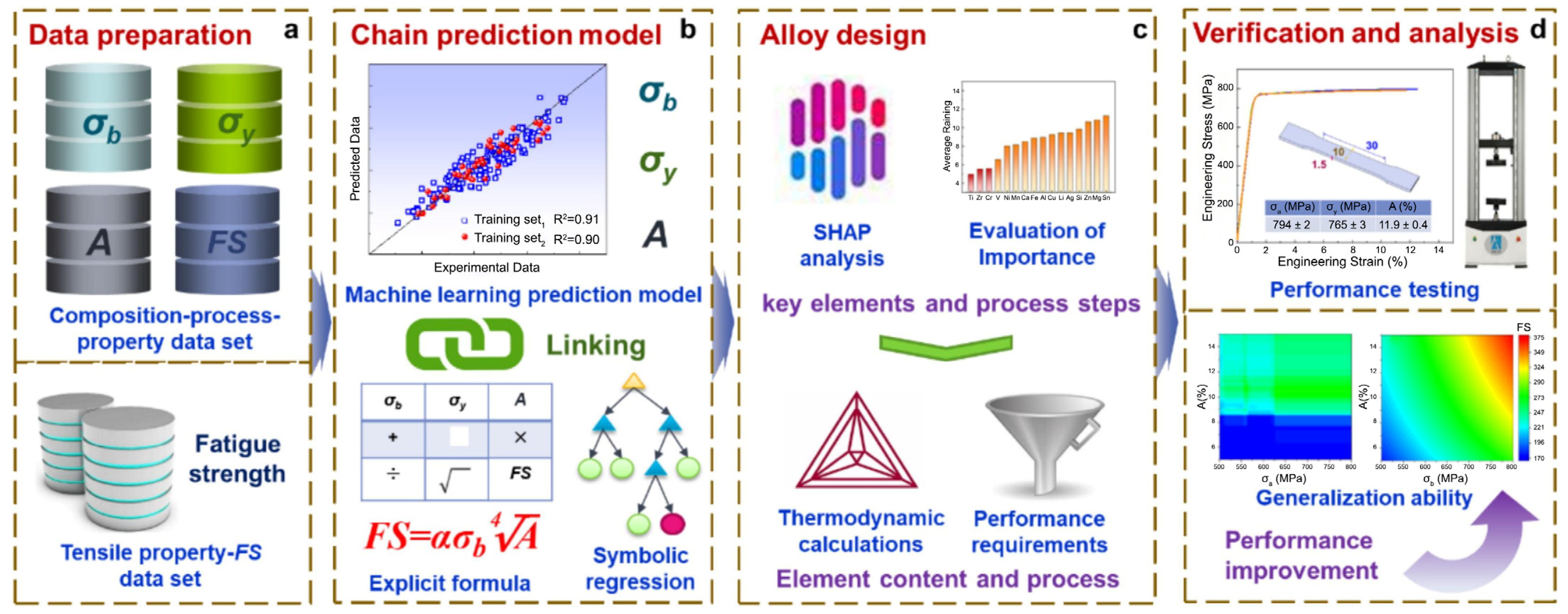
AAs, particularly the 7xxx and 2xxx series, are foundational to aerospace engineering due to their high strength-to-weight ratio, fatigue resistance, and ability to withstand extreme conditions, enabling lightweight designs critical for fuel efficiency and performance in aircraft structures [1]. Recent advancements have focused on optimizing compositions and processing to enhance strength, toughness, and corrosion resistance, with studies like Jiang et al. using interpretable ML to achieve ultra-high-strength 7xxx alloys by tailoring precipitate distributions and grain structures for improved damage tolerance [13,14]. Similarly, Zhang et al. accelerated the discovery of high-strength 2xxx alloys through ML, optimizing solute interactions with copper and lithium to enhance fracture toughness [7]. Precise microstructural engineering, guided by zinc and magnesium alloying, further improves fatigue life and stress corrosion resistance, bridging traditional metallurgy with computational approaches [15]. These developments lay the foundation for integrating data-driven methods to advance aerospace alloy performance. Figure 1 shows the interpretable chain-based ML strategy for ultra-high-strength alloy design with enhanced damage tolerance [13].

2.2. Automotive Applications

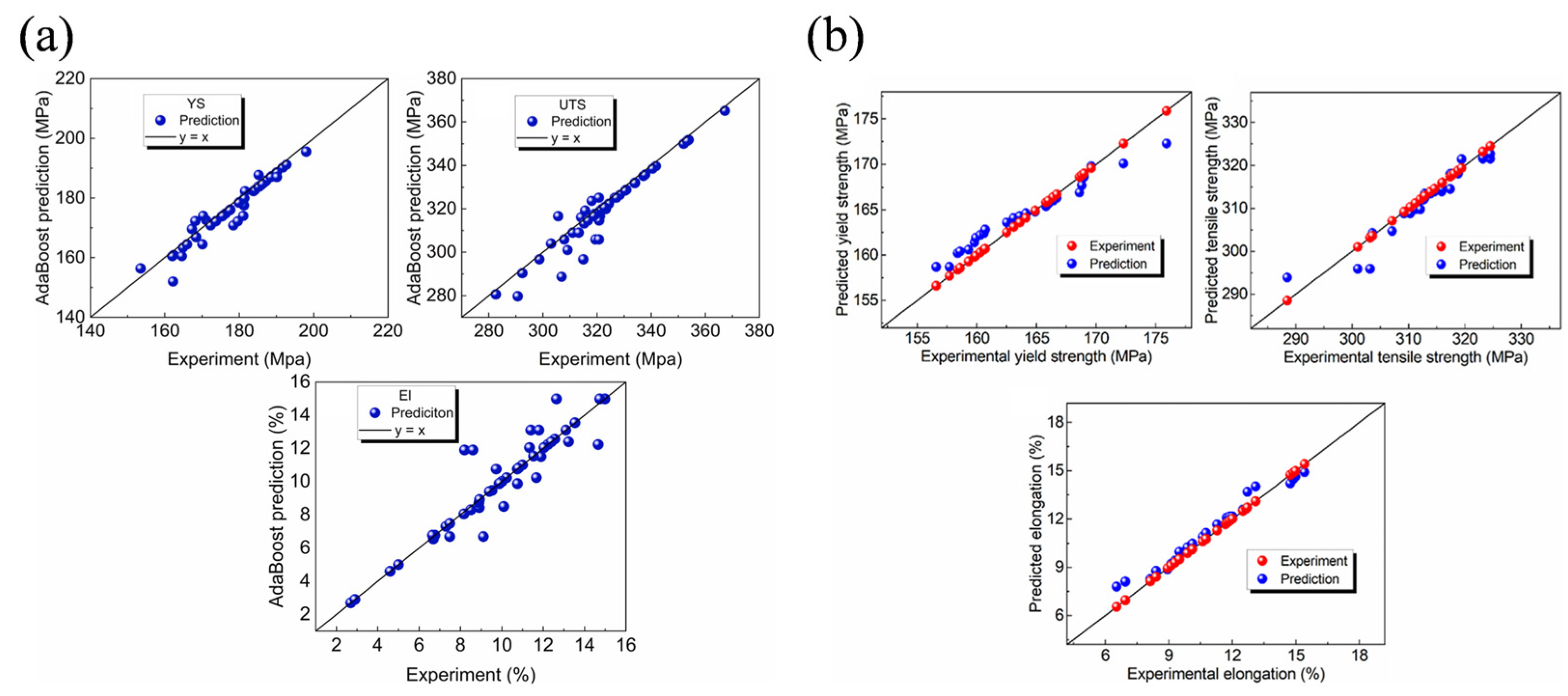
AAs have become integral to the automotive industry, driven by the need for lightweight materials to enhance fuel efficiency and reduce emissions in response to global sustainability demands [2]. However, the successful deployment of AAs in high-volume automotive manufacturing hinges not only on property optimization but also on cost-effective processing and consistent recyclability—challenges that traditional trial-and-error alloy design struggles to address efficiently. Recent developments have focused on optimizing Al-Mg-Si alloys for die-casting applications, improving mechanical properties like tensile strength and ductility to meet crashworthiness requirements [16,17]. Recycling of 6xxx series alloys has also gained attention, addressing sustainability by maintaining performance in recycled materials through controlled impurity levels, such as iron content [18]. A critical, yet frequently understated challenge in this domain is the progressive accumulation of impurity elements—most notably Fe and Mn—which facilitate the formation of brittle intermetallic phases. Therefore, the predictive management of these impurities is of paramount importance for closing the material loop within a circular economy framework, without incurring a detrimental impact on mechanical integrity. These advancements highlight the automotive industry’s reliance on traditional alloy design, setting the stage for exploring how ML enhances these efforts in later sections. Figure 2 shows two samples of comparison between the ML predicted results with the experiments in the literature [16,17].
Tiwari et al. demonstrated that computational optimization of alloying elements and processing parameters can enhance the recyclability of 6xxx series alloys, reducing energy consumption and material waste in automotive manufacturing [18]. Complementing this, Tiwari et al. employed ML classification to reduce the number of 6xxx grades, simplifying scrap sorting and boosting recycling efficiency by predicting tensile properties from compositions, thus minimizing down cycling losses [19]. Collectively, these studies signal a paradigm shift: from reactive alloy design—where experiments are validated after experiments—to proactive, ML-guided alloy discovery that simultaneously optimizes performance, recyclability, and process efficiency. Bridging the gap between computationally predicted and industrially achievable properties remains the next frontier for data-driven metallurgy. These efforts align with industry demands for eco-friendly materials, complementing advancements in die-casting and formability discussed earlier, and underscore the potential of integrating data-driven approaches to further refine automotive alloy performance.

2.3. Electrical Conductors Applications

AAs are widely utilized in electrical conductors due to their high electrical conductivity, lightweight nature, and cost-effectiveness, making them ideal for power transmission lines and electronic components. Beyond transmission lines, AAs serve numerous other electrical applications where weight and corrosion resistance are critical. For instance, AA bus-bars are common in electrical panels and substations due to their ease of fabrication and lower cost compared to copper. Alloys optimized for electrical applications, such as those in the 1xxx and 6xxx series, balance conductivity with mechanical strength and corrosion resistance to ensure reliable performance under varying environmental conditions [3]. Parvizi et al. reviewed the development of AAs for conductors, highlighting the role of alloying elements like magnesium and silicon in enhancing tensile strength without significantly compromising conductivity [3]. Additionally, studies have explored the impact of processing techniques, such as cold drawing and annealing, on optimizing microstructures for improved electrical and mechanical properties [20]. These advancements provide a foundation for integrating computational methods to further enhance alloy design for electrical applications, as discussed in later sections.

2.4. Overview to Microstructure and Mechanical Applications

The mechanical properties of AAs, such as strength, ductility, and fatigue resistance, are intricately linked to their microstructure, which is controlled by alloying elements, heat treatment, and processing techniques. Microstructural features like grain size, precipitate distribution, and phase composition significantly influence performance, particularly in aerospace and automotive applications [21]. Yu et al. demonstrated that irradiation-induced precipitates in ZrNb alloys enhance strength by altering dislocation dynamics, offering insights into tailoring AA microstructures for improved mechanical behavior [21]. Similarly, studies on Al-Mg-Si alloys have shown that natural aging and iron content affect precipitate formation, optimizing strength and ductility for die-casting applications [16,22]. Comprehensive analysis of composition–microstructure–property relationships, as explored by Ma et al. using multi-scale microstructure data, underscores the importance of precise microstructural engineering in achieving desired alloy performance [23]. These findings provide a critical foundation for integrating ML to predict and optimize microstructural effects, as discussed in later sections.
Processing techniques and alloying strategies play a pivotal role in tailoring the microstructure of AAs to achieve desired mechanical properties, such as hardness, tensile strength, and fatigue resistance. Heat treatment and tempering processes, as explored by Miller et al., significantly influence precipitate formation and grain refinement in 6xxx series alloys, enhancing strength for automotive applications [2]. Additionally, Shawon et al. demonstrated that compositional variations and tempering affect thermal conductivity and mechanical performance, particularly in Al-Mg-Si alloys, by modulating phase distributions [24]. Advanced characterization techniques, such as those used in laser powder bed fusion studies, reveal how process-induced porosity and microstructure affect alloy performance, providing critical insights for optimizing manufacturing [25]. These findings underscore the importance of integrating traditional processing knowledge with computational tools to further enhance microstructure-driven property optimization, as explored in subsequent sections.

3. ML in AA Design

3.1. Overview of ML Techniques

ML has emerged as a transformative tool in AA design, enabling predictive modeling and optimization of complex composition–property relationships with unprecedented efficiency. Techniques such as supervised learning, unsupervised learning, and semi-supervised learning have been applied to predict mechanical properties, optimize alloy compositions, and uncover hidden patterns in material data [9,26,27,28,29,30]. Schmidt et al. highlighted the use of NNs and decision trees to model solid-state material properties, demonstrating their ability to handle high-dimensional datasets for AAs [9]. Similarly, Rahman et al. reviewed diverse ML approaches, including random forests (RFs) and gradient boosting, for predicting tensile strength and corrosion behavior across various alloy systems [26]. These advancements mark a shift from traditional empirical methods, providing a foundation for exploring specific ML applications in alloy design, as discussed in subsequent subsections. The lack of standardized benchmarks, inconsistent feature engineering practices, and varying data quality across studies present significant challenges for reproducibility and fair evaluation. Additionally, many models prioritize predictive accuracy without sufficient attention to interpretability or physical consistency, which are critical for practical adoption in materials design. These gaps highlight the need for more systematic benchmarking, integration of physics-informed features, and development of hybrid modeling frameworks.

3.2. Prediction of Mechanical Properties

ML has significantly advanced the prediction of mechanical properties in AAs, enabling rapid and accurate modeling of complex behaviors such as tensile strength, fatigue life, and fracture toughness. Supervised ML models, including RFs and NNs, have been employed to predict tensile strength in alloys like 2024-T3 and AA2050-T8, leveraging datasets from experimental and computational sources [31,32]. For instance, Myśliwiec et al. utilized RF and XGBoost (XGB) techniques to optimize friction stir welding parameters for 2024-T3, achieving high accuracy in predicting ultimate tensile strength [31]. Similarly, Anandan et al. applied K-fold cross-validation with regression models to predict tensile strength in friction stir welded AA2050-T8 joints, demonstrating ML’s ability to handle process–property relationships [32]. These advancements highlight ML’s potential to streamline alloy design by reducing reliance on costly experimental trials, setting the stage for deeper exploration of specific property predictions. A closer comparison of these studies reveals important methodological differences and limitations. Tree-based ensemble models (e.g., RF and XGB) generally perform well on structured, small-to-medium datasets and provide robustness against overfitting, whereas NNs models can capture more complex nonlinear relationships but typically require larger datasets to achieve superior performance. Furthermore, most studies report high accuracy within specific datasets, but lack external validation across independent alloy systems, raising concerns about model generalizability and reproducibility.
Beyond tensile strength, ML has proven effective in predicting the fatigue life and fracture toughness of AAs, which are critical for ensuring reliability in aerospace and automotive applications. Studies have employed deep learning and knowledge-based ML models to forecast fatigue crack growth rates and ductile fracture initiation in alloys like 5052 and the 7xxx series, capturing complex dependencies on microstructure and loading conditions [33,34,35]. For example, Freed et al. developed ML models to predict crack growth rates in aeronautical AAs, achieving high accuracy by integrating microstructural data and stress intensity factors [33]. Similarly, Li et al. utilized ML-assisted parameter identification to model ductile fracture in 5052 alloys, enhancing predictions of failure under diverse loading scenarios [35]. These advancements demonstrate ML’s capability to address multifaceted mechanical behaviors, paving the way for integrated approaches combining fatigue and toughness predictions with alloy optimization strategies. These approaches also exhibit several limitations. Deep learning models used for fatigue and fracture predictions are often data-intensive and may suffer from overfitting when applied to limited experimental datasets. In addition, the incorporation of microstructural features improves predictive capability but introduces variability due to differences in characterization methods and data quality. Another key gap is the limited use of uncertainty quantification, which is essential for safety-critical applications such as aerospace structures.
ML has also been instrumental in predicting the hardness, ductility, and multiaxial fatigue properties of AAs, enabling comprehensive characterization for diverse applications. Advanced ML models, such as artificial NNs and gradient boosting, have been applied to alloys like AA7075 and the 6xxx series to model stress–strain behavior and multiaxial fatigue life under complex loading conditions [36,37,38]. Yasniy et al. utilized ML to accurately model the stress–strain diagram of 6061-T651 AA, incorporating microstructural features to enhance prediction reliability [36]. Similarly, Decke et al. demonstrated that ML models can predict flow stress in AA7075 with high precision, leveraging experimental data to capture strain hardening effects [38]. These efforts underscore the versatility of ML in addressing a wide range of mechanical properties, complementing earlier discussions on tensile strength and fatigue, and facilitating the transition to alloy composition optimization in subsequent sections. Despite these successes, comparative evaluation across different ML techniques remains limited due to inconsistencies in datasets, feature engineering strategies, and performance metrics. Moreover, many studies focus on forward prediction rather than integrating inverse design or physics-informed constraints. Addressing these challenges will require standardized datasets, consistent benchmarking protocols, and hybrid modeling approaches that combine data-driven learning with metallurgical knowledge.

3.3. Optimization of Alloy Composition

ML has revolutionized the optimization of AA compositions, enabling the design of high-strength, ductile, and sustainable alloys by efficiently navigating complex compositional spaces. Techniques such as active learning and Bayesian optimization have been employed to identify optimal Al-Mg-Si and 7xxx series alloy compositions, balancing strength, ductility, and process ability [39,40]. For instance, Hu et al. developed an active learning framework to mitigate data bias, achieving high-performance Al-Si-Mg alloys with enhanced mechanical properties for die-casting applications [39]. Similarly, Vahid et al. used Bayesian optimization to design high-strength 7xxx alloys from recycled Al, demonstrating the potential for sustainable alloy development [40]. These ML-driven approaches streamline the discovery of novel compositions, setting the stage for further exploration of multi-objective optimization and advanced alloy design strategies. However, a direct comparison between these approaches reveals important trade-offs. Active learning frameworks are particularly effective in data-scarce scenarios, as they iteratively select the most informative samples, thereby reducing experimental cost. In contrast, Bayesian optimization is more sensitive to the choice of surrogate model and acquisition function, and its performance can degrade when the underlying dataset is noisy or highly sparse. Moreover, most studies report improvements within specific alloy systems, limiting the generalizability of these methods across broader compositional spaces.
Multi-objective optimization using ML has enabled the simultaneous enhancement of multiple properties in AAs, such as strength, ductility, and electrical conductivity, by balancing trade-offs in compositional design. Approaches like genetic algorithms integrated with ML have been applied to Al-Si alloys, optimizing for high-strength die-casting applications while considering thermodynamic constraints [20,41]. Zhou et al. developed a multi-objective ML framework for Al-Si alloys, identifying compositions that achieve superior mechanical and thermal properties through CALPHAD-guided predictions [41]. Furthermore, Ye et al. utilized ML-assisted process optimization for Al-Mg-Si alloys, demonstrating improved formability and strength via targeted alloying adjustments [42]. These strategies highlight ML’s role in addressing complex optimization challenges, complementing single-objective efforts and advancing toward sustainable alloy development. Despite these advances, multi-objective frameworks face several limitations. The balance between competing objectives often depends heavily on the weighting strategy, which is not standardized across studies. Additionally, integrating thermodynamic constraint, for instance (CALPHAD), improves physical consistency but increases computational complexity and may introduce additional sources of uncertainty. As a result, comparing performance across different studies remains challenging due to variations in objectives, datasets, and evaluation metrics.
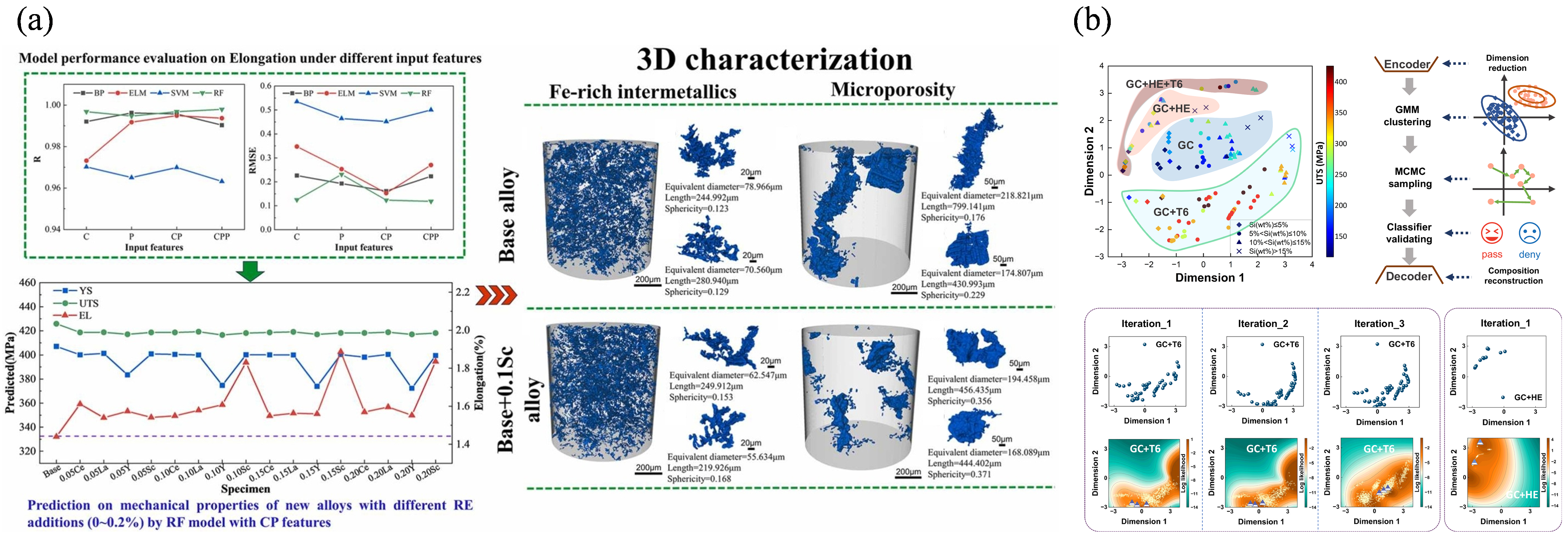
High-throughput computational approaches combined with ML have accelerated the discovery of novel AA compositions, particularly for Al-Zn-Mg-Cu and Al-Si-Mg alloys, by efficiently screening vast compositional spaces for optimal performance. Cai et al. developed a process-synergistic active learning framework for Al-Si-Mg alloys, identifying compositions with superior strength and ductility through iterative experimental and computational feedback [11]. Similarly, Yang et al. integrated computational thermodynamics with ML to design Al-Zn-Mg-Cu alloys, achieving enhanced mechanical properties and corrosion resistance for aerospace applications [43]. These high-throughput strategies, supported by sustainable design efforts for recycled alloys, demonstrate ML’s transformative potential in streamlining alloy development while addressing environmental considerations [44]. This comprehensive approach to composition optimization bridges traditional alloy design with advanced data-driven methodologies, paving the way for exploring corrosion and thermal property enhancements. Figure 3 depicts an overview of the recycled AA design and the active learning one. Nevertheless, high-throughput ML frameworks also reveal key challenges. First, their effectiveness strongly depends on the quality and consistency of input data, which are often limited in alloy research. Second, iterative experimental validation can be resource-intensive, partially offsetting the efficiency gains of ML. Third, most studies focus on forward prediction rather than inverse design with uncertainty quantification, limiting their applicability in real-world alloy development. These gaps highlight the need for standardized benchmarking, improved data-sharing practices, and the integration of uncertainty-aware and physics-informed ML models.

3.4. Corrosion Resistance and Thermal Properties

ML has significantly advanced the prediction and optimization of corrosion resistance and thermal properties in AAs, addressing critical challenges in harsh environments and high-performance applications. ML models, such as deep learning and ensemble methods, have been used to predict corrosion behavior in Al-Zn-Mg and 7xxx series alloys, identifying compositional and processing factors that enhance resistance to pitting and stress corrosion cracking [4,45]. Ji et al. combined artificial intelligence (AI) with high-throughput calculations to optimize Al-Mg-Zn alloy compositions, achieving superior corrosion resistance by tailoring solute interactions and surface oxide stability [4,45]. These advancements, alongside efforts to predict thermal conductivity in alloys like Al-Mg-Si, highlight ML’s role in developing durable and thermally efficient materials [24]. This subsection explores how ML-driven insights enhance alloy performance, complementing mechanical property predictions and composition optimization. However, despite these advances, most studies report model performance within isolated datasets, making direct comparison across different ML approaches challenging. For instance, while ensemble methods (e.g., RF and gradient boosting) often demonstrate strong performance on small, tabular alloy datasets, deep learning models typically require larger datasets to outperform traditional approaches. This inconsistency highlights a key limitation in the current literature: the absence of standardized benchmarks and cross-study validation. Furthermore, many studies focus on predictive accuracy without sufficiently addressing model interpretability or generalization across different alloy systems.
ML has also been pivotal in optimizing thermal properties and developing corrosion-resistant AAs, including high-entropy alloys, for advanced applications requiring thermal stability and durability. Huang et al. employed explainable ML to design heat-resistant Al-Mg-Si alloys, predicting thermal conductivity and stability by modeling microstructural effects under elevated temperatures [46]. Similarly, Sun et al. utilized ML to investigate the impact of iron content and natural aging on the thermal properties of recyclable Al5.5-Mg2-Si die-cast alloys, achieving enhanced heat dissipation for automotive components [17]. Additionally, ML-driven approaches have explored high-entropy alloys, with studies demonstrating improved corrosion resistance through compositional optimization, expanding the scope of Al-based materials for extreme environments [47]. These advancements underscore ML’s transformative role in tailoring alloys for multifunctional performance, bridging traditional property optimization with cutting-edge computational strategies.

4. Processing and Manufacturing Techniques

4.1. Friction Stir Welding and Processing

Friction stir welding (FSW) has emerged as a critical processing technique for AAs, enabling high-strength joints with minimal defects, particularly for aerospace and automotive applications. ML has enhanced FSW optimization by predicting weld quality and mechanical properties, such as tensile strength and hardness, based on process parameters like tool rotation and traverse speed [31,48]. Myśliwiec et al. applied RF and XGB models to optimize FSW parameters for 2024-T3 AAs, achieving precise predictions of ultimate tensile strength and weld integrity [31]. Similarly, Fuse et al. developed ML classification models to predict tensile strength in FSW joints, improving process efficiency for AA components [48]. These advancements highlight ML’s role in refining FSW, setting the stage for exploring other manufacturing techniques like additive manufacturing.
ML has further advanced FSW by optimizing process parameters to enhance joint quality and predict complex mechanical behaviors in AAs, such as fatigue and fracture properties. Dorbane et al. utilized deep learning to forecast the mechanical behavior of FSW Al sheets, accurately modeling stress–strain responses and failure mechanisms under various welding conditions [29]. Similarly, Yu et al. applied back-propagation NNs to predict mechanical properties in FSW 2195 AAs, optimizing weld strength and ductility through precise control of process inputs [49]. These ML-driven approaches not only improve weld performance but also address challenges like defect detection and process variability, complementing the tensile strength predictions discussed earlier and facilitating the transition to additive manufacturing and die-casting techniques.

4.2. Additive Manufacturing and Die Casting

Additive manufacturing and die casting have transformed AA production, enabling complex geometries and high-performance components, with ML enhancing process optimization and property prediction. Liu et al. applied ML to optimize laser powder bed fusion for Al-Si10-Mg alloys, predicting microstructure and mechanical properties to minimize porosity and enhance strength [25]. Similarly, Sun et al. used ML to develop heat treatment-free Al-Mg-Si die-cast alloys, achieving high strength and ductility by optimizing composition and natural aging processes [16]. These advancements demonstrate ML’s role in refining AM and die-casting processes, ensuring high-quality AA components for aerospace and automotive applications. This subsection explores how ML-driven strategies improve manufacturing efficiency and performance.
ML has also been applied to address defect mitigation and microstructure prediction in AM of AAs, enhancing printability and mechanical performance for complex components. Muhammad et al. developed a deep learning framework to predict process-induced surface roughness in additively manufactured AAs, achieving high accuracy in optimizing laser parameters to minimize defects like porosity and cracking [50]. Similarly, Yuta et al. utilized ML to analyze densification behavior and microstructures in selective laser melting of Al-10%Si-0.35Mg alloys, identifying optimal processing conditions for improved density and strength [51]. In die casting, Dong et al. integrated ML with experimental big data to develop high-strength, ductile Al-Si-Mg alloys, optimizing compositions for integrated manufacturing without heat treatment [52]. These ML-driven strategies not only improve manufacturing efficiency but also complement traditional die-casting advancements, facilitating scalable production for high-performance applications.

4.3. Other Manufacturing Processes

ML has extended its utility to diverse manufacturing processes for AAs, including incremental forming, laser welding, and end milling, optimizing parameters to enhance product quality and performance. Najm et al. employed ML to predict parametric effects in single-point incremental forming of Al-Mn1-Mg1 sheets, accurately modeling the pillow effect and wall profiles to improve formability and accuracy [53]. Similarly, Didi et al. investigated process variables in laser-welded AAs using ML, identifying optimal conditions to minimize defects and enhance joint strength [54]. In micro end milling, Sharma et al. integrated finite element modeling with ML to analyze residual stress and cutting forces, enabling precise control for high-precision components [55]. These applications demonstrate ML’s versatility across unconventional processes, bridging gaps in traditional manufacturing and supporting sustainable alloy production.
ML has further enhanced manufacturing processes like forging and hybrid joining techniques for AAs, improving efficiency and mechanical performance in specialized applications. Hu et al. developed a digital model for rapid prediction of die forging forces in AA aviation components, using ML to optimize process parameters for high-strength outcomes [56]. Similarly, Sandeep et al. applied ML to predict peak temperature values in friction lap welding of AA 7475 with Polyphenylene Sulfide (PPS) polymer, ensuring robust hybrid joints with minimal thermal defects [57]. Additionally, Talluri et al. utilized ML to evaluate the mechanical and tribological performance of B4C-reinforced Al composites, optimizing processing conditions to enhance wear resistance and strength [57]. These advancements highlight ML’s role in refining diverse manufacturing processes, complementing earlier discussions and transitioning to challenges in data quality and model interpretability.

4.4. Challenges and Limitations

Data quality and bias pose significant challenges in ML applications for AA design, as incomplete or skewed datasets can lead to inaccurate predictions and suboptimal compositions. Hu et al. highlighted that data bias in Al-Si-Mg alloy datasets, often due to limited experimental sampling, can be mitigated through active learning strategies that prioritize diverse data acquisition [39]. Similarly, Kim et al. emphasized the need for robust data augmentation techniques, such as transfer learning, to enhance dataset reliability for high-entropy alloy design, including Al-based systems [58]. These challenges underscore the importance of high-quality, representative datasets to ensure ML models generalize effectively across alloy systems. This subsection examines strategies to address data limitations, setting the stage for discussions on model interpretability and scalability.
Addressing data quality and bias in ML for AA design requires advanced techniques to ensure robust and generalizable models, particularly when datasets are limited or heterogeneous. Kusne et al. demonstrated that Bayesian active learning can dynamically select high-value experiments to enrich datasets, reducing bias in AA property predictions by prioritizing underrepresented compositional regions [59]. Similarly, Sun et al. employed elemental feature-based transfer learning to correct data biases in high-entropy alloy datasets, including Al-based systems, improving model accuracy across diverse alloy families [47]. These strategies not only enhance data quality but also enable more reliable ML-driven alloy discovery, complementing the active learning approaches discussed earlier and setting the stage for addressing interpretability challenges in ML models.
The interpretability of ML models remains a critical challenge in AA design, as black-box models often obscure the underlying mechanisms driving predictions, limiting their practical adoption. Jiang et al. developed interpretable ML models for ultra-high-strength AAs, using feature importance analysis to elucidate how alloying elements and processing conditions influence strength and toughness [13]. Similarly, Park et al. employed explainable AI to design high-strength AAs, providing insights into microstructural contributions to mechanical performance [60]. These interpretable approaches enhance trust in ML predictions, making them more actionable for alloy development. This subsection explores how explainable AI addresses interpretability challenges, building on data quality solutions.
Advanced interpretability techniques, such as explainable deep learning and feature engineering, have further enhanced the transparency of ML models in AA design, enabling researchers to link predictions to physical mechanisms. Huang et al. utilized explainable ML to design heat-resistant AAs, employing model-agnostic interpretation methods to reveal how microstructural features influence thermal stability [46]. Similarly, Jiang et al. applied interpretable ML to optimize strength, toughness, and corrosion resistance in high-end AAs, using SHAP values to quantify the impact of alloying elements like zinc and magnesium [14]. These interpretable frameworks not only improve model trustworthiness but also facilitate integration with experimental validation, complementing earlier discussions on data quality and paving the way for scalable alloy development strategies.
Scaling ML models for AA design from laboratory predictions to industrial applications presents significant challenges, particularly in ensuring experimental validation aligns with computational outcomes. Li et al. highlighted the need for hybrid approaches combining ML with key experiments to validate mechanical property predictions in 7xxx AAs, addressing discrepancies between simulated and real-world performance [61]. Similarly, Kusne et al. demonstrated that closed-loop discovery systems, integrating ML with high-throughput experiments, can validate AA compositions but face scalability issues due to experimental costs and resource constraints [59]. These challenges underscore the importance of robust validation frameworks to bridge computational predictions with practical manufacturing. This subsection examines strategies to overcome scalability barriers, building on interpretability solutions.
Addressing scalability and experimental validation challenges in AA design requires innovative frameworks that integrate ML with automated experimental platforms to ensure practical applicability. Pogue et al. developed a closed-loop superconducting materials discovery system, adaptable to AAs, which uses active learning to iteratively validate ML predictions, reducing the gap between computational models and industrial-scale production [62]. Similarly, Noh et al. implemented a high-throughput robotic platform with active learning for electrolyte formulations, demonstrating potential for AA validation by automating synthesis and testing to confirm mechanical and corrosion properties [63]. These automated validation strategies enhance scalability by minimizing experimental iterations, complementing hybrid approaches and paving the way for multi-scale modeling to further bridge computational and practical domains.
In addition, ML models for AA often work with small and noisy datasets, making uncertainty quantification and robust validation essential. Bayesian approaches—like Gaussian processes—and ensemble techniques—such as deep ensembles—can capture epistemic uncertainty, whereas quantile regression or conformal prediction handle aleatoric noise. Gaussian processes naturally yield prediction variance (though their computational cost scales cubically with dataset size) [9], whereas NN ensembles deliver scalable (but computationally heavier) uncertainty estimates [64,65]. Crucially, one should report both uncertainty types (with calibrated prediction intervals) and use careful validation: (e.g., group/stratified cross-validation) or leave-one-cluster-out (LOCO) to simulate new alloy chemistries [9,66], and fixed random seeds with nested cross-validation to avoid data leakage and overfitting [67].
Another key limitation in ML-assisted AA design is dataset size. In practice, alloy datasets are often quite small—typically only in the order of tens to a few hundred data points—which can severely limit model performance. For example, an Al–Si alloy study reported only 13–70 samples per processing route [11], and even after extensive literature mining Wu et al. had only ~100–200 entries per property [68]. As a result, “data-driven methods often face challenges due to limited datasets” in AAs [69], and general-purpose graph-based models (e.g., CGCNN/MEGNET) can fail to learn meaningful correlations when data are scarce [70]. Small datasets exacerbate overfitting and reduce statistical confidence in predictions. To mitigate these issues, researchers must therefore employ strategies such as physics-informed feature selection, transfer learning or data augmentation to effectively enlarge the “training set”. For instance, MODNET showed that carefully chosen descriptors and joint-learning allow accurate property predictions even for <1000 data points [70], and recent AA ML frameworks combine active learning and data augmentation to exploit every available sample. These approaches compensate for limited sample sizes and help the models generalize better across alloy compositions. Experimental data noise and outliers present another major challenge. Raw alloy measurements often contain errors or anomalies (due to inconsistent processing or reporting), so preprocessing is crucial. Unsupervised techniques like principal component analysis and clustering have been used to flag and remove anomalous alloy entries, thereby reducing noise in the dataset [71]. Similarly, Wu et al. systematically cleaned their compiled corrosion and hardness data—for example, electrochemical current density measurements were purified—to yield consistent datasets of 93–187 points [68]. In contrast, other studies deliberately inject controlled noise (e.g., via SMOTE with Gaussian perturbations) to simulate realistic compositional variability and enlarge sparse datasets [72]. Both approaches filtering out spurious data and thoughtfully adding variation—improve the fidelity of the training data. By ensuring high quality inputs, these noise processing strategies complement the bias/size remedies above and help ML models in AA design learn the true composition–property relationships more reliably. Table 1 provides a summary of the key benefits and drawbacks of ML methods for AA development.

4.5. Summary of ML Applications

ML has impacted AA development across alloy design, property prediction, processing optimization, modeling/simulation, and fatigue/fracture analysis in the last 5 years. In alloy design, high-throughput calculations combined with AI enhanced corrosion resistance in Al-Mg-Zn alloys [4], while Kriging enabled accelerated discovery of high-strength AAs [6]. Multi-targeted regression optimized inverse designs [7], and conditional Wasserstein autoencoders with XGB/NN yielded process-synergistic high-strength Al-Si alloys [11]. Interpretable chain-based ML discovered ultra-high-strength alloys with damage tolerance [12], and similar interpretable approaches synchronously improved strength, toughness, and SCC (stress corrosion cracking) resistance in high-end Al [14]. RFs facilitated knowledge-aware high-strength aviation Al designs [15], gradient boosting regression created high strength/conductivity alloys [20], and XGB designed Al-Li with high specific modulus/strength [30]. Active learning mitigated data bias for high-performance Al alloys [39], Bayesian optimization produced high-strength 7xxx from recycled Al [40], XGBt multi-objective optimized Al-Si [41], regression trees improved Al-Mg-Si processes [42], RFs accelerated Al-Zn-Mg-Cu designs [43], gradient boosting enabled high strength/ductile recycled Al [44], explainable ML with correlation screening/genetic algorithms designed heat-resistant Al [46], EFTGAN augmented features for high-entropy alloys [47], gradient boosting manipulated 7xxx mechanical properties [61] and assessed wrought Al design feasibility [73], RFs developed intelligent high strength/ductile Al-Si-Mg without heat treatment [52], boosting ML with thermodynamics rapidly conceptualized casting Al [74], XGB predicted/optimized fracture toughness [75], ELM-Gray Wolf accurately predicted Al strip mechanical properties [76], explainable AI designed high-strength Al [60], gradient boosting yielded high-performance Al [77], and active learning/CALPHAD accelerated Al-Si-Mg-Sc discovery [78] with CALPHAD-based Bayesian optimization for high-temp alloys [79].
For property prediction, XGB analyzed composition/aging effects on Al-Mg-Si microstructure/mechanics [16] and Fe/ageing in recyclable Al5.5Mg2Si [17], LSTM seq2seq predicted time-series microstructures [22], explainable deep learning established composition–microstructure–property links [23], XGB assessed thermal conductivity by composition/temper [24], SVR-RBF predicted wrought Al mechanical properties [27], various ML techniques informed Al predictions [28], ML identified ductile fracture initiation parameters in 5052 Al [35], modeled 6061-T651 stress–strain diagrams [36], CNN predicted 2024 Al properties [37], XGB forecasted AA7075 flow stress [38], RFs predicted 7XXX corrosion [45], XGB modeled tensile strength [80], image deep learning predicted Al-Zn-Mg mechanics/corrosion [81], ML coupled strain rate/temperature hardening in 5182-O [82], estimated plastic properties via ultrasonic/eddy current [83], NNs predicted Al alloy stress–strain at variable temperatures with failure [84], deep learning forecasted Al-Si properties varying Si [85], predictive ML evaluated Al-B4C mechanics/tribology [86], novel ML predicted piston Al transition fatigue lifetime [87], backpropagation (BP) NNs predicted/optimized 2195 Al FSW mechanics [49], machine algorithms identified Al via LIBS [88], transfer learning corrected LIBS predictions on irregular surfaces [89], and incremental learning forecasted Al corrosion fatigue crack growth [90].
In processing, K-means clustering/principal component analysis (PCA), optimized 6xxx recycling [18] and classified T6-tempered 6XXX [19], ML assisted LPBF optimization for AlSi10Mg microstructure/fracture [25], GRU forecasted FSW Al sheet mechanics [29], RF/XGB/MLP optimized 2024-T3 FSW [31], various regressions with K-fold predicted AA2050-T8 FSW tensile [32], supervised ML predicted dissimilar AA7075-AA5083 FSW tensile [91], Bayesian ML analyzed micro-milling residual stress/cutting force in Al alloys [55], GPR enhanced FSW Al mechanics predictions [92], MLP assessed incremental forming parametric effects in Al-Mn1-Mg1 [53], digital ML rapidly controlled aviation Al die forging force [56], ML probed laser weld process variables in Al alloys [54], ML predicted peak temperature in Al7475-PPS friction lap [57], adaptive boosting classified Al FSW tensile strength [48], genetic programming studied Al1050-Cu FSS alloying [93], exogenous ARMA ML modeled Al ball nose milling [94], NNs designed novel AM Al heat exchangers [95], and deep feedforward NN predicted AM Al surface roughness [50].
Modeling/simulation featured CatBoost exploring Al substrate solid solution strengthening [96], ML predicting SLM densification in Al-10%Si-0.35Mg from observations [51], deep neural networks developing Al-Tb interatomic potentials [97], NNs discovering robust Al potentials [98] and for Al-Cu-Mg(-Zn) [99], ML-aided high-throughput predicting μ phase formation energy [100], semi-supervised learning segmenting Al metallographic images [101], ML potentials revealing Al4C3 role in Al/graphene mechanics [102], ResNet DNN/genetic algorithms exploring material design space [58], Bayesian optimization (GPR) enabling on-the-fly closed-loop discovery [59], multi-level physics-informed neural network (PINN) solving structural mechanics partial differential equations (PDEs) [103], ML accelerating corrosion-resistant high-entropy discovery [104], BiLSTM-CRF extracting alloy synthesis/processing from literature [105], MatBERT/Cohere LLM high-throughput phase-property extraction [106], and physically informed artificial neural network (ANN) for atomistic modeling [107].
Fatigue/fracture applications included ML predicting aeronautical Al crack growth rates [33], knowledge-based ML forecasting Al fatigue life [34], and ML methods predicting general multiaxial fatigue life [108]. These advancements demonstrate ML’s role in data-driven, efficient Al alloy innovation. Table 2 shows the application of machine learning in AAs, including alloy systems, tasks, main methods, and key results. Additionally, Table 3 shows a comparative overview of ML approaches for AA design, highlighting the current knowledge gaps and future challenges for each method category.

5. Future Directions

The integration of multi-scale modeling with ML offers a promising future direction for AA design, enabling seamless connections between atomistic, microstructural, and macroscopic property predictions. Deng et al. developed data-driven physics-constrained NNs to model damage in AAs with process-induced porosity, linking microstructural defects to macroscopic mechanical behavior [109]. Similarly, He et al. utilized multi-level physics-informed deep learning to solve partial differential equations for structural mechanics, demonstrating potential for AAs by modeling stress distributions across scales [105]. These approaches promise to enhance the accuracy and applicability of alloy design by capturing complex interactions across length scales. This subsection explores how multi-scale modeling can advance alloy development, building on scalability solutions.
Advancements in multi-scale modeling for AAs are poised to leverage ML to simulate complex phenomena, such as fracture and corrosion, by integrating atomistic simulations with continuum mechanics. Wu et al. employed ML-driven atomistic simulations to reveal the role of Al4C3 in the mechanical behavior of Al/graphene composites, providing insights into nanoscale strengthening mechanisms that inform macroscale performance [102]. This approach enables precise prediction of alloy behavior under diverse conditions, enhancing design for applications like aerospace and automotive. By combining ML-driven atomistic potentials with continuum models, multi-scale frameworks can optimize alloy compositions and processing, addressing limitations in traditional single-scale approaches and complementing the scalability solutions discussed earlier. These developments set the stage for sustainable alloy design innovations.
Sustainability in AA design is a critical future direction, with ML facilitating the development of recyclable alloys to meet environmental and economic demands. Vahid et al. utilized Bayesian optimization to design high-strength 7xxx alloys from recycled Al, achieving comparable performance to primary alloys while reducing resource consumption [40]. Similarly, Li et al. applied ML to optimize recycled Al alloys, identifying compositions with high strength and ductility suitable for automotive applications, minimizing environmental impact [44]. These efforts highlight ML’s potential to enhance alloy recyclability, addressing global sustainability challenges. This subsection explores how ML-driven recycling strategies can transform alloy design, building on multi-scale modeling advancements.
Future advancements in ML for AA recycling will focus on optimizing scrap sorting and alloy redesign to maximize purity and recovery rates, further advancing circular economy principles. Tiwari et al. employed ML-based optimization to facilitate recycling of 6xxx series alloys, reducing 42 alloy grades to 10 optimized variants that maintain performance while enhancing scrap utilization [18]. Emerging AI-driven sorting technologies, such as deep learning integrated with laser-induced breakdown spectroscopy, enable 99.5% purity in alloy separation, minimizing downcycling and carbon emissions in secondary production. These innovations, combined with upfront recycling-oriented alloy design, promise to double Al scrap availability by 2050 while preserving material value. By addressing tramp elements and process inefficiencies, ML will drive sustainable alloy development, complementing multi-scale modeling and extending to emerging applications.
Emerging applications of ML in AAs will span high-entropy alloys and advanced manufacturing, unlocking novel compositions for extreme environments and multifunctional components. Zeng et al. accelerated the discovery of corrosion-resistant high-entropy alloys using ML, identifying Al-based systems with superior stability for aerospace and marine uses [104]. Similarly, Sun et al. applied ML to augment data for high-entropy alloys, enhancing predictions of mechanical and thermal properties through elemental feature transfer [47]. In manufacturing, Careri et al. integrated ML in additive manufacturing of novel Al alloys for heat exchangers, optimizing microstructures for high thermal efficiency [95]. These trends highlight ML’s role in expanding alloy capabilities, building on sustainability efforts for broader industrial impact.
To fully realize the potential of ML and data-driven approaches in AA design, addressing key challenges through innovative solutions is critical for advancing performance, sustainability, and scalability. Table 4 summarizes major challenges, proposed solutions, expected impacts, and timelines, synthesizing insights from data quality, model interpretability, and experimental validation to guide future research. By integrating advanced computational tools, interdisciplinary platforms, and automated discovery systems, these strategies promise to accelerate the development of next-generation AAs, bridging traditional metallurgy with cutting-edge methodologies.

6. Conclusions

This review highlights the transformative synergy of traditional metallurgy and ML in advancing AA design, achieving breakthroughs in mechanical performance, corrosion resistance, and sustainability for aerospace, automotive, and electrical applications. ML has revolutionized property prediction, composition optimization, and manufacturing processes, enabling rapid development of high-strength, recyclable alloys tailored for diverse needs. Despite challenges in data quality, model interpretability, and scalability, innovative approaches like active learning and multi-scale modeling are paving the way for future discoveries. By bridging empirical knowledge with data-driven insights, this field is poised to address global demands for efficient, eco-friendly materials, with emerging applications in high-entropy alloys and advanced manufacturing shaping the next generation of AAs.

Author Contributions

Conceptualization, P.P., M.J., M.R.Z., M.J.B. and J.-R.R.; methodology, P.P., M.J., M.R.Z., M.J.B. and J.-R.R.; software, A.M.A. and M.R.Z.; validation, P.P., M.J., M.J.B. and J.-R.R.; formal analysis, J.-R.R.; investigation, P.P., M.J., M.R.Z., M.J.B. and J.-R.R.; resources, P.P. and J.-R.R.; data curation, J.-R.R.; writing—original draft preparation, P.P., M.J., M.R.Z., M.J.B. and J.-R.R.; writing—review and editing, P.P., M.J., M.R.Z. and J.-R.R.; visualization, A.M.A.; supervision, J.-R.R.; project administration, P.P. and J.-R.R.; funding acquisition, J.-R.R. All authors have read and agreed to the published version of the manuscript.

Funding

This project received funding from grant PID2023-147016OB-I00, by MICIU/AEI/10.13039/501100011033/ and by ERDF “A way of making Europe,” by the European Union and from the Agència de Gestió d’Ajuts Universitaris i de Recerca-AGAUR (grant 2021 SGR 00392).

Institutional Review Board Statement

Not applicable.

Informed Consent Statement

Not applicable.

Data Availability Statement

No new data were created or analyzed in this study. Data sharing is not applicable to this article.

Conflicts of Interest

Authors M.J., A.M.A., M.J.B. and M.R.Z. were employed by Pooya Power Knowledge Enterprise. The remaining authors declare that the research was conducted in the absence of any commercial or financial relationships that could be construed as a potential conflict of interest.

References

  1. Zhang, X.; Chen, Y.; Hu, J. Recent advances in the development of aerospace materials. Prog. Aerosp. Sci. 2018, 97, 22–34. [Google Scholar] [CrossRef]
  2. Miller, W.S.; Zhuang, L.; Bottema, J.; Wittebrood, A.J.; De Smet, P.; Haszler, A.; Vieregge, A. Recent development in aluminium alloys for the automotive industry. Mater. Sci. Eng. A 2000, 280, 37–49. [Google Scholar] [CrossRef]
  3. Parvizi, P.; Jalilian, M.; Mirazizi, P.S.; Zangeneh, M.R.; Amidi, A.M. Mechanical and physical properties of aluminum and its alloys for electrical conductors: A review. Next Mater. 2025, 9, 101090. [Google Scholar] [CrossRef]
  4. Hu, M.; Tan, Q.; Knibbe, R.; Xu, M.; Jiang, B.; Wang, S.; Li, X.; Zhang, M.-X. Recent applications of machine learning in alloy design: A review. Mater. Sci. Eng. R Rep. 2023, 155, 100746. [Google Scholar] [CrossRef]
  5. Ji, Y.; Fu, X.; Ding, F.; Xu, Y.; He, Y.; Ao, M.; Xiao, F.; Chen, D.; Dey, P.; Qin, W.; et al. Artificial intelligence combined with high-throughput calculations to improve the corrosion resistance of AlMgZn alloy. Corros. Sci. 2024, 233, 112062. [Google Scholar] [CrossRef]
  6. Valizadeh, A.; Sahara, R.; Souissi, M. Alloys innovation through machine learning: A statistical literature review. Sci. Technol. Adv. Mater. Methods 2024, 4, 2326305. [Google Scholar] [CrossRef]
  7. Li, J.; Zhang, Y.; Cao, X.; Zeng, Q.; Zhuang, Y.; Qian, X.; Chen, H. Accelerated discovery of high-strength aluminum alloys by machine learning. Commun. Mater. 2020, 1, 73. [Google Scholar] [CrossRef]
  8. Bhat, N.; Barnard, A.S.; Birbilis, N. Inverse design of aluminium alloys using multi-targeted regression. J. Mater. Sci. 2024, 59, 1448–1463. [Google Scholar] [CrossRef]
  9. Schmidt, J.; Marques, M.R.G.; Botti, S.; Marques, M.A.L. Recent advances and applications of machine learning in solid-state materials science. npj Comput. Mater. 2019, 5, 83. [Google Scholar] [CrossRef]
  10. Hart, G.L.W.; Mueller, T.; Toher, C.; Curtarolo, S. Machine learning for alloys. Nat. Rev. Mater. 2021, 6, 730–755. [Google Scholar] [CrossRef]
  11. Cai, J.; Han, M.; Yan, X.; Chen, Y.; Li, D.; Zhao, K.; Zhang, D.; Hu, K.; Sua, H.H.; Jun, H.K.; et al. A process-synergistic active learning framework for high-strength Al-Si alloys design. npj Comput. Mater. 2025, 11, 228. [Google Scholar] [CrossRef]
  12. Fu, H.; Zhang, H.; Wang, C.; Yong, W.; Xie, J. Recent progress in the machine learning-assisted rational design of alloys. Int. J. Miner. Metall. Mater. 2022, 29, 635–644. [Google Scholar] [CrossRef]
  13. Jiang, L.; Zhang, X.; Zhoutai, W.; Han, Z.; Mao, M.; Xue, W.; Xie, J. Discovery of ultra-high strength aluminum alloys with high damage tolerance via interpretable chain-based machine learning. Mater. Des. 2025, 256, 114289. [Google Scholar] [CrossRef]
  14. Jiang, L.; Fu, H.; Zhang, Z.; Zhang, H.; Zhang, X.; Feng, X.; Xu, X.; Mao, M.; Xie, J. Synchronously enhancing the strength, toughness, and stress corrosion resistance of high-end aluminum alloys via interpretable machine learning. Acta Mater. 2024, 270, 119873. [Google Scholar] [CrossRef]
  15. Juan, Y.; Niu, G.; Yang, Y.; Dai, Y.; Zhang, J.; Han, Y.; Sun, B. Knowledge-aware design of high-strength aviation aluminum alloys via machine learning. J. Mater. Res. Technol. 2023, 24, 346–361. [Google Scholar] [CrossRef]
  16. Sun, J.; Dong, X.; Li, S.; Yang, H.; Ji, S. Effects of composition and natural ageing on microstructure and mechanical properties of Al-Mg-Si heat treatment-free die-cast alloys assisted with machine learning. Mater. Today Commun. 2025, 47, 113000. [Google Scholar] [CrossRef]
  17. Li, S.; Dong, X.; Sun, J.; Tang, Z.; Yang, H.; Ji, S. Effects of Fe Content and Natural Ageing on Microstructure and Mechanical Properties of Recyclable Al5.5Mg2Si Die-Cast Alloys Assisted with Machine Learning. Adv. Eng. Mater. 2025, 27, 2500485. [Google Scholar] [CrossRef]
  18. Tiwari, T.; Mendis, C.; Eskin, D. Facilitating Recycling of 6xxx Series Aluminum Alloys by Machine Learning-Based Optimization. J. Sustain. Metall. 2025, 11, 2323–2334. [Google Scholar] [CrossRef]
  19. Tiwari, T.; Jalalian, S.; Mendis, C.; Eskin, D. Classification of T6 Tempered 6XXX Series Aluminum Alloys Based on Machine Learning Principles. JOM 2023, 75, 4526–4537. [Google Scholar] [CrossRef]
  20. Liang, T.; Wang, J.; Xue, C.; Zhang, C.; Zhang, M. Design of high strength and electrically conductive aluminium alloys by machine learning. Mater. Sci. Technol. 2022, 38, 116–129. [Google Scholar] [CrossRef]
  21. Yu, Z.; Zhang, C.; Voyles, P.M.; He, L.; Liu, X.; Nygren, K.; Couet, A. Microstructure and microchemistry study of irradiation-induced precipitates in proton irradiated ZrNb alloys. Acta Mater. 2019, 178, 228–240. [Google Scholar] [CrossRef]
  22. Mao, Y.; Hasan, M.; Billah, M.M.; Li, Y.; Chakrabarty, S.; Lee, C.S.; Wang, K.; Kilic, M.N.T.; Gupta, V.; Liao, W.-K.; et al. An AI framework for time series microstructure prediction from processing parameters. Sci. Rep. 2025, 15, 24074. [Google Scholar] [CrossRef]
  23. Ma, J.; Zhang, W.; Han, Z.; Xu, Q.; Zhao, H. An Explainable Deep Learning Model Based on Multi-scale Microstructure Information for Establishing Composition–Microstructure–Property Relationship of Aluminum Alloys. Integr. Mater. Manuf. Innov. 2024, 13, 827–842. [Google Scholar] [CrossRef]
  24. Shawon, A.R.; Ghosh, R.; Islam, M.A. Analysis of thermal conductivity of aluminum alloys by compositions and tempering process using machine learning. Sci. Rep. 2025, 15, 33352. [Google Scholar] [CrossRef] [PubMed]
  25. Liu, Q.; Wu, H.; Paul, M.J.; He, P.; Peng, Z.; Gludovatz, B.; Kruzic, J.J.; Wang, C.H.; Li, X. Machine-learning assisted laser powder bed fusion process optimization for AlSi10Mg: New microstructure description indices and fracture mechanisms. Acta Mater. 2020, 201, 316–328. [Google Scholar] [CrossRef]
  26. Rahman, A.; Hossain, M.S.; Bin, S.A. Review: Machine learning approaches for diverse alloy systems. J. Mater. Sci. 2025, 60, 12189–12221. [Google Scholar] [CrossRef]
  27. Hu, M.; Tan, Q.; Knibbe, R.; Wang, S.; Li, X.; Wu, T.; Jarin, S.; Zhang, M.-X. Prediction of Mechanical Properties of Wrought Aluminium Alloys Using Feature Engineering Assisted Machine Learning Approach. Metall. Mater. Trans. A Phys. Metall. Mater. Sci. 2021, 52, 2873–2884. [Google Scholar] [CrossRef]
  28. Devi, M.A.; Prakash, C.P.S.; Chinnannavar, R.P.; Joshi, V.P.; Palada, R.S.; Dixit, R. An Informatic Approach to Predict the Mechanical Properties of Aluminum Alloys using Machine Learning Techniques. In 2020 International Conference on Smart Electronics and Communication (ICOSEC); IEEE: New York, NY, USA, 2020; pp. 536–541. [Google Scholar] [CrossRef]
  29. Dorbane, A.; Harrou, F.; Sun, Y. Exploring Deep Learning Methods to Forecast Mechanical Behavior of FSW Aluminum Sheets. J. Mater. Eng. Perform. 2023, 32, 4047–4063. [Google Scholar] [CrossRef]
  30. Li, H.; Li, X.; Li, Y.; Xiao, W.; Wen, K.; Li, Z.; Zhang, Y.; Xiong, B. Machine learning assisted design of aluminum-lithium alloy with high specific modulus and specific strength. Mater. Des. 2023, 225, 111483. [Google Scholar] [CrossRef]
  31. Myśliwiec, P.; Kubit, A.; Szawara, P. Optimization of 2024-T3 Aluminum Alloy Friction Stir Welding Using Random Forest, XGBoost, and MLP Machine Learning Techniques. Materials 2024, 17, 1452. [Google Scholar] [CrossRef]
  32. Anandan, B.; Manikandan, M. Machine learning approach with various regression models for predicting the ultimate tensile strength of the friction stir welded AA 2050-T8 joints by the K-Fold cross-validation method. Mater. Today Commun. 2023, 34, 105286. [Google Scholar] [CrossRef]
  33. Freed, Y. Machine Learning-Based predictions of crack growth rates in an aeronautical aluminum alloy. Theor. Appl. Fract. Mech. 2024, 130, 104278. [Google Scholar] [CrossRef]
  34. Lian, Z.; Li, M.; Lu, W. Fatigue life prediction of aluminum alloy via knowledge-based machine learning. Int. J. Fatigue 2022, 157, 106716. [Google Scholar] [CrossRef]
  35. Li, Y.; Sun, X.; Hu, X.; Cheng, Y.; Xue, F. Uncoupled ductile fracture initiation model for 5052 aluminum alloy with machine learning assisted identification of the material parameters. Eng. Fract. Mech. 2025, 320, 111090. [Google Scholar] [CrossRef]
  36. Yasniy, O.; Pastukh, O.; Didych, I.; Yatsyshyn, V.; Chykhira, I. Application of machine learning for modeling of 6061-T651 aluminum alloy stress−strain diagram. Procedia Struct. Integr. 2023, 48, 183–189. [Google Scholar] [CrossRef]
  37. Varol Özkavak, H.; İnce, M.; Bıçaklı, E.E. Prediction of Mechanical Properties of the 2024 Aluminum Alloy by Using Machine Learning Methods. Arab. J. Sci. Eng. 2023, 48, 2841–2850. [Google Scholar] [CrossRef]
  38. Decke, J.; Engelhardt, A.; Rauch, L.; Degener, S.; Sajadifar, S.V.; Scharifi, E.; Steinhoff, K.; Niendorf, T.; Sick, B. Predicting Flow Stress Behavior of an AA7075 Alloy Using Machine Learning Methods. Crystals 2022, 12, 1281. [Google Scholar] [CrossRef]
  39. Hu, M.; Tan, Q.; Knibbe, R.; Xu, M.; Liang, G.; Zhou, J.; Xu, J.; Jiang, B.; Li, X.; Ramajayam, M.; et al. Designing unique and high-performance Al alloys via machine learning: Mitigating data bias through active learning. Comput. Mater. Sci. 2024, 244, 113204. [Google Scholar] [CrossRef]
  40. Vahid, A.; Rana, S.; Gupta, S.; Vellanki, P.; Venkatesh, S.; Dorin, T. New Bayesian-Optimization-Based Design of High-Strength 7xxx-Series Alloys from Recycled Aluminum. JOM 2018, 70, 2704–2709. [Google Scholar] [CrossRef]
  41. Zhou, Y.; Wang, Z.; Tao, W.; Sun, Y.; Wu, J.; Wang, G.; Xiu, Y.; Ji, H.; Liu, Y.; Dong, A.; et al. Multi-objective optimization design of Al-Si alloys based on machine learning. Calphad 2025, 90, 102870. [Google Scholar] [CrossRef]
  42. Ye, J.; Zhao, H.; Zhang, B.; Li, M.; Liang, X. Machine Learning-Assisted Process Optimization of Al-Mg-Si Alloys. J. Mater. Eng. Perform. 2025, 34, 24401–24414. [Google Scholar] [CrossRef]
  43. Juan, Y.; Niu, G.; Yang, Y.; Xu, Z.; Yang, J.; Tang, W.; Jiang, H.-T.; Han, Y.-F.; Dai, Y.-B.; Zhang, J.; et al. Accelerated design of Al−Zn−Mg−Cu alloys via machine learning. Trans. Nonferrous Met. Soc. China 2024, 34, 709–723. [Google Scholar] [CrossRef]
  44. Li, Q.; Wang, J.; Xue, C.; Miao, Y.; Hou, Q.; Meng, Y.; Yang, X.; Li, X. Design of high strength and ductile recycled Al alloys by machine learning. Mater. Today Commun. 2025, 44, 111929. [Google Scholar] [CrossRef]
  45. Xiong, X.; Zhang, N.; Yang, J.; Chen, T.; Niu, T. Machine Learning-Assisted Prediction of Corrosion Behavior of 7XXX Aluminum Alloys. Metals 2024, 14, 401. [Google Scholar] [CrossRef]
  46. Huang, J.; Ando, D.; Sutou, Y. Heat-resistant aluminum alloy design using explainable machine learning. Mater. Des. 2024, 243, 113057. [Google Scholar] [CrossRef]
  47. Sun, Y.; Hou, C.; Tran, N.-D.; Lu, Y.; Li, Z.; Chen, Y.; Ni, J. EFTGAN: Elemental features and transferring corrected data augmentation for the study of high-entropy alloys. npj Comput. Mater. 2025, 11, 54. [Google Scholar] [CrossRef]
  48. Fuse, K.; Venkata, P.; Reddy, R.M.; Bandhu, D. Machine learning classification approach for predicting tensile strength in aluminium alloy during friction stir welding. Int. J. Interact. Des. Manuf. 2025, 19, 639–643. [Google Scholar] [CrossRef]
  49. Yu, F.; Zhao, Y.; Lin, Z.; Miao, Y.; Zhao, F.; Xie, Y. Prediction of Mechanical Properties and Optimization of Friction Stir Welded 2195 Aluminum Alloy Based on BP Neural Network. Metals 2023, 13, 267. [Google Scholar] [CrossRef]
  50. Muhammad, W.; Kang, J.; Ibragimova, O.; Inal, K. Experimental investigation and development of a deep learning framework to predict process-induced surface roughness in additively manufactured aluminum alloys. Weld. World 2023, 67, 897–921. [Google Scholar] [CrossRef]
  51. Yanase, Y.; Miyauchi, H.; Matsumoto, H.; Yokota, K. Densification Behavior and Microstructures of the Al-10%Si-0.35Mg Alloy Fabricated by Selective Laser Melting: From Experimental Observation to Machine Learning. Mater. Trans. 2022, 63, 176–184. [Google Scholar] [CrossRef]
  52. Dong, X.; Liu, Q.; Han, W.; Yang, H.; Shan, Z.; Ji, S. Intelligent development of high strength and ductile heat treatment-free Al-Si-Mg alloys for integrated die casting through the machine learning of experimental big data. J. Alloys Compd. 2025, 1021, 179769. [Google Scholar] [CrossRef]
  53. Najm, S.M.; Paniti, I. Investigation and machine learning-based prediction of parametric effects of single point incremental forming on pillow effect and wall profile of AlMn1Mg1 aluminum alloy sheets. J. Intell. Manuf. 2023, 34, 331–367. [Google Scholar] [CrossRef]
  54. Didi, F.; Pallathadka, H.; Abdullaev, S.; Asaad, R.R.; Askar, S.; Haroon, N.H. Probing the impact of process variables in laser-welded aluminum alloys: A machine learning study. Mater. Today Commun. 2024, 38, 107660. [Google Scholar] [CrossRef]
  55. Sharma, M.K.; Alkhazaleh, H.A.; Askar, S.; Haroon, N.H.; Almufti, S.M.; Al Nasar, M.R. FEM-supported machine learning for residual stress and cutting force analysis in micro end milling of aluminum alloys. Int. J. Mech. Mater. Des. 2024, 20, 1077–1098. [Google Scholar] [CrossRef]
  56. Hu, H.; Zhao, F.; Wu, D.; Wang, Z.; Wang, Z.; Zhang, Z.; Li, W.; Xie, J. Digital model for rapid prediction and autonomous control of die forging force for aluminum alloy aviation components. Int. J. Miner. Metall. Mater. 2025, 32, 2189–2199. [Google Scholar] [CrossRef]
  57. Sandeep, R.; Natarajan, A. Prediction of peak temperature value in friction lap welding of aluminium alloy 7475 and PPS polymer hybrid joint using machine learning approaches. Mater. Lett. 2022, 308, 131253. [Google Scholar] [CrossRef]
  58. Kim, Y.; Kim, Y.; Yang, C.; Park, K.; Gu, G.X.; Ryu, S. Deep learning framework for material design space exploration using active transfer learning and data augmentation. npj Comput. Mater. 2021, 7, 140. [Google Scholar] [CrossRef]
  59. Kusne, A.G.; Yu, H.; Wu, C.; Zhang, H.; Hattrick-Simpers, J.; DeCost, B.; Sarker, S.; Oses, C.; Toher, C.; Curtarolo, S.; et al. On-the-fly closed-loop materials discovery via Bayesian active learning. Nat. Commun. 2020, 11, 5966. [Google Scholar] [CrossRef]
  60. Park, S.; Kayani, S.H.; Euh, K.; Seo, E.; Kim, H.; Park, S.; Sung, H.; Jung, I.D. High strength aluminum alloys design via explainable artificial intelligence. J. Alloys Compd. 2022, 903, 163828. [Google Scholar] [CrossRef]
  61. Li, B.; Du, Y.; Zheng, Z.S.; Ye, X.C.; Fang, D.; Si, X.D.; Wang, Y. Manipulation of mechanical properties of 7xxx aluminum alloy via a hybrid approach of machine learning and key experiments. J. Mater. Res. Technol. 2022, 19, 2483–2496. [Google Scholar] [CrossRef]
  62. Pogue, E.A.; New, A.; McElroy, K.; Le, N.Q.; Pekala, M.J.; McCue, I.; Gienger, E.; Domenico, J.; Hedrick, E.; McQueen, T.M.; et al. Closed-loop superconducting materials discovery. npj Comput. Mater. 2023, 9, 181. [Google Scholar] [CrossRef]
  63. Noh, J.; Doan, H.A.; Job, H.; Robertson, L.A.; Zhang, L.; Assary, R.S.; Mueller, K.; Murugesan, V.; Liang, Y. An integrated high-throughput robotic platform and active learning approach for accelerated discovery of optimal electrolyte formulations. Nat. Commun. 2024, 15, 2757. [Google Scholar] [CrossRef]
  64. Lakshminarayanan, B.; Pritzel, A.; Blundell, C. Simple and scalable predictive uncertainty estimation using deep ensembles. In Advances in Neural Information Processing Systems; Curran Associates Inc.: Red Hook, NY, USA, 2017; Volume 30. [Google Scholar]
  65. Farris, R.; Telari, E.; Artrith, N.; Neyman, K.; Bruix, A. Bayesian Neural Networks versus deep ensembles for uncertainty quantification in machine learning interatomic potentials. arXiv 2025, arXiv:2509.19180. [Google Scholar] [CrossRef]
  66. Durdy, S.; Gaultois, M.W.; Gusev, V.V.; Bollegala, D.; Rosseinsky, M.J. Random projections and kernelised leave one cluster out cross validation: Universal baselines and evaluation tools for supervised machine learning of material properties. Digit. Discov. 2022, 1, 763–778. [Google Scholar] [CrossRef]
  67. Wang, A.Y.T.; Murdock, R.J.; Kauwe, S.K.; Oliynyk, A.O.; Gurlo, A.; Brgoch, J.; Persson, K.A.; Sparks, T.D. Machine learning for materials scientists: An introductory guide toward best practices. Chem. Mater. 2020, 32, 4954–4965. [Google Scholar] [CrossRef]
  68. Wu, T.; Wang, R.; Chen, G.; Yin, Y.; Shen, Y.; Lei, C.; Zhao, H. Machine learning-driven design of refractory high-entropy alloys with high performance of hardness and corrosion resistance. Mater. Des. 2026, 263, 115548. [Google Scholar] [CrossRef]
  69. Pichlmann, L.; Rafiezadeh, S.; Hofbauer, M.; Ocansey, E.D.; Österreicher, J.A. Predicting mechanical properties in aluminum alloys: A da-ta-driven framework leveraging LLM-based data extraction and physics-based feature engineering. Mater. Today Commun. 2025, 47, 112843. [Google Scholar] [CrossRef]
  70. De Breuck, P.P.; Hautier, G.; Rignanese, G.M. Materials property prediction for limited datasets enabled by feature selection and joint learning with MODNet. npj Comput. Mater. 2021, 7, 83. [Google Scholar] [CrossRef]
  71. Wenzlick, M.; Mamun, O.; Devanathan, R.; Rose, K.; Hawk, J. Assessment of Outliers in Alloy Datasets Using Un-supervised Techniques. JOM 2022, 74, 2846–2859. [Google Scholar] [CrossRef]
  72. Chen, W.; Zheng, H.; Jiang, Y.; Tan, F.; Wang, M.; Lei, Q.; Jiang, X.; Zhao, Z.; Yu, R.; Qin, Y.; et al. Data-augmented machine learning design and performance-enhancing qua-ternary synergistic mechanism of novel Cu-Be alloy. npj Comput. Mater. 2026, 12, 128. [Google Scholar] [CrossRef]
  73. Soofi, Y.J.; Rahman, M.A.; Gu, Y.; Liu, J. A feasibility study of machine learning-assisted alloy design using wrought aluminum alloys as an example. Comput. Mater. Sci. 2022, 215, 111783. [Google Scholar] [CrossRef]
  74. Yi, W.; Liu, G.; Gao, J.; Zhang, L. Boosting for concept design of casting aluminum alloys driven by combining computational thermodynamics and machine learning techniques. J. Mater. Inform. 2021, 1, 11. [Google Scholar] [CrossRef]
  75. Fatriansyah, J.F.; Satrio, M.R.R.; Federico, A.; Suhariadi, I.; Dhaneswara, D.; Gascoin, N. Machine learning-based forward and inverse designs for prediction and optimization of fracture toughness of aluminum alloy. Results Eng. 2024, 23, 102717. [Google Scholar] [CrossRef]
  76. Xiong, Z.; Li, J.; Zhao, P.; Li, Y.; Ares, A.E. Prediction of Mechanical Properties of Aluminium Alloy Strip Using the Extreme Learning Machine Model Optimized by the Gray Wolf Algorithm. Adv. Mater. Sci. Eng. 2023, 2023, 5952072. [Google Scholar] [CrossRef]
  77. Masood Chaudry, U.; Hamad, K.; Abuhmed, T.; Chaudry, U.M.; Hamad, K.; Abuhmed, T. Machine learning-aided design of aluminum alloys with high performance. Mater. Today Commun. 2021, 26, 101897. [Google Scholar] [CrossRef]
  78. Gao, J.; Zhong, J.; Liu, G.; Zhang, S.; Zhang, J.; Liu, Z.; Song, B.; Zhang, L. Accelerated discovery of high-performance Al-Si-Mg-Sc casting alloys by integrating active learning with high-throughput CALPHAD calculations. Sci. Technol. Adv. Mater. 2023, 24, 2196242. [Google Scholar] [CrossRef]
  79. Sundar, A.; Tan, X.; Hu, S.; Gao, M.C. CALPHAD-based Bayesian optimization to accelerate alloy discovery for high-temperature applications. J. Mater. Res. 2025, 40, 112–122. [Google Scholar] [CrossRef]
  80. Fu, K.; Zhu, D.; Zhang, Y.; Zhang, C.; Wang, X.; Wang, C.; Jiang, T.; Mao, F.; Meng, X.; Yu, H. Predictive Modeling of Tensile Strength in Aluminum Alloys via Machine Learning. Materials 2023, 16, 7236. [Google Scholar] [CrossRef]
  81. Ao, M.; Ji, Y.; Sun, X.; Guo, F.; Xiao, K.; Dong, C. Image Deep Learning Assisted Prediction of Mechanical and Corrosion Behavior for Al-Zn-Mg Alloys. IEEE Access 2022, 10, 35620–35631. [Google Scholar] [CrossRef]
  82. Shang, H.; Wu, P.; Lou, Y.; Wang, J.; Chen, Q. Machine learning-based modeling of the coupling effect of strain rate and temperature on strain hardening for 5182-O aluminum alloy. J. Mater. Process. Technol. 2022, 302, 117501. [Google Scholar] [CrossRef]
  83. Ryu, S.; Park, S.H.; Jhang, K.Y. Plastic properties estimation of aluminum alloys using machine learning of ultrasonic and eddy current data. NDT&E Int. 2023, 137, 102857. [Google Scholar] [CrossRef]
  84. Dorbane, A.; Harrou, F.; Anghel, D.C.; Sun, Y. Machine Learning Prediction of Aluminum Alloy Stress–Strain Curves at Variable Temperatures with Failure Analysis. J. Fail. Anal. Prev. 2024, 24, 229–244. [Google Scholar] [CrossRef]
  85. Murakami, Y.; Furushima, R.; Shiga, K.; Miyajima, T.; Omura, N. Mechanical property prediction of aluminium alloys with varied silicon content using deep learning. Acta Mater. 2025, 286, 120683. [Google Scholar] [CrossRef]
  86. Talluri, B.K.; Narasimha Rao, R.; Özcan, M.; Syam Prasad, P. Evaluating mechanical and tribological performance of B4C reinforced aluminum composites with predictive machine learning models. Results Eng. 2025, 27, 106503. [Google Scholar] [CrossRef]
  87. Matin, M.; Azadi, M. A novel machine learning-based model for predicting the transition fatigue lifetime in piston aluminum alloys. Int. J. Lightweight Mater. Manuf. 2024, 7, 641–647. [Google Scholar] [CrossRef]
  88. Dai, Y.; Zhao, S.; Song, C.; Gao, X. Identification of aluminum alloy by laser-induced breakdown spectroscopy combined with machine algorithm. Microw. Opt. Technol. Lett. 2021, 63, 1629–1634. [Google Scholar] [CrossRef]
  89. Shabbir, S.; Zhang, Y.; Sun, C.; Yue, Z.; Xu, W.; Zou, L.; Chen, F.; Yu, J. Transfer learning improves the prediction performance of a LIBS model for metals with an irregular surface by effectively correcting the physical matrix effect. J. Anal. At. Spectrom. 2021, 36, 1441–1454. [Google Scholar] [CrossRef]
  90. Peng, Y.; Zhang, Y.; Zhang, L.; Yao, L.; Guo, X. Prediction of corrosion fatigue crack growth rate in aluminum alloys based on incremental learning strategy. Int. J. Fatigue 2024, 187, 108481. [Google Scholar] [CrossRef]
  91. Mothilal, M.; Kumar, A. Supervised Machine learning models for predicting mechanical properties of dissimilar friction stir welded AA7075-AA5083 aluminum alloys. Measurement 2025, 246, 116653. [Google Scholar] [CrossRef]
  92. Dorbane, A.; Harrou, F.; Dursun, B.; Sun, Y. Enhancing Predictive Capabilities: Machine Learning Approaches for Predicting Mechanical Behavior in Friction Stir Welded Aluminum Alloys. J. Mater. Eng. Perform. 2025, 34, 3566–3584. [Google Scholar] [CrossRef]
  93. Pedrammehr, S.; Sajed, M.; Al-Abdullah, K.I.A.L.; Pakzad, S.; Zare Jond, A.; Chalak Qazani, M.R.; Ettefagh, M.M. Experimental and Machine Learning Study on Friction Stir Surface Alloying in Al1050-Cu Alloy. J. Manuf. Mater. Process. 2024, 8, 163. [Google Scholar] [CrossRef]
  94. Jatti, V.S.; Sekhar, R.; Shah, P. Machine Learning Based Predictive Modeling of Ball Nose End Milling using Exogeneous Autoregressive Moving Average Approach. In 2021 IEEE 12th International Conference on Mechanical and Intelligent Manufacturing Technologies (ICMIMT); IEEE: New York, NY, USA, 2021; pp. 68–72. [Google Scholar] [CrossRef]
  95. Careri, F.; Stella, L.; Khan, R.H.U.; Attallah, M.M. Application of machine learning in additive manufacturing of a novel Al alloy heat exchanger. Int. J. Adv. Manuf. Technol. 2025, 137, 4557–4572. [Google Scholar] [CrossRef]
  96. Huang, J.; Xue, J.; Li, M.; Cheng, Y.; Lai, Z.; Hu, J.; Zhou, F.; Qu, N.; Liu, Y.; Zhu, J. Exploration of Solid Solutions and the Strengthening of Aluminum Substrates by Alloying Atoms: Machine Learning Accelerated Density Functional Theory Calculations. Materials 2023, 16, 6757. [Google Scholar] [CrossRef]
  97. Tang, L.; Yang, Z.J.; Wen, T.Q.; Ho, K.M.; Kramer, M.J.; Wang, C.Z. Development of interatomic potential for Al-Tb alloys using a deep neural network learning method. Phys. Chem. Chem. Phys. 2020, 22, 18467–18479. [Google Scholar] [CrossRef] [PubMed]
  98. Smith, J.S.; Nebgen, B.; Mathew, N.; Chen, J.; Lubbers, N.; Burakovsky, L.; Tretiak, S.; Nam, H.A.; Germann, T.; Fensin, S.; et al. Automated discovery of a robust interatomic potential for aluminum. Nat. Commun. 2021, 12, 1257. [Google Scholar] [CrossRef]
  99. Marchand, D.; Curtin, W.A. Machine learning for metallurgy IV: A neural network potential for Al-Cu-Mg and Al-Cu-Mg-Zn. Phys. Rev. Mater. 2022, 6, 53803. [Google Scholar] [CrossRef]
  100. Su, Y.; Wang, J.; Zou, Y. Machine Learning-Aided High-Throughput First-Principles Calculations to Predict the Formation Energy of μ Phase. ACS Omega 2023, 8, 37317–37328. [Google Scholar] [CrossRef] [PubMed]
  101. Chen, D.; Sun, D.; Fu, J.; Liu, S. Semi-Supervised Learning Framework for Aluminum Alloy Metallographic Image Segmentation. IEEE Access 2021, 9, 30858–30867. [Google Scholar] [CrossRef]
  102. Wu, Y.C.; Chang, X.; Yu, Z.G.; Zhang, Y.W.; Shao, J.L. Revealing the role of Al4C3 in the mechanical behavior of aluminum/graphene composites through machine learning potential-driven atomistic simulations. Mech. Mater. 2025, 209, 105428. [Google Scholar] [CrossRef]
  103. He, W.; Li, J.; Kong, X.; Deng, L. Multi-level physics informed deep learning for solving partial differential equations in computational structural mechanics. Commun. Eng. 2024, 3, 151. [Google Scholar] [CrossRef]
  104. Zeng, C.; Neils, A.; Lesko, J.; Post, N. Machine learning accelerated discovery of corrosion-resistant high-entropy alloys. Comput. Mater. Sci. 2024, 237, 112925. [Google Scholar] [CrossRef]
  105. Wang, W.; Jiang, X.; Tian, S.; Liu, P.; Lookman, T.; Su, Y.; Xie, J. Alloy synthesis and processing by semi-supervised text mining. npj Comput. Mater. 2023, 9, 183. [Google Scholar] [CrossRef]
  106. Montanelli, L.; Venugopal, V.; Olivetti, E.A.; Latypov, M.I. High-Throughput Extraction of Phase–Property Relationships from Literature Using Natural Language Processing and Large Language Models. Integr. Mater. Manuf. Innov. 2024, 13, 396–405. [Google Scholar] [CrossRef]
  107. Pun, G.P.P.; Batra, R.; Ramprasad, R.; Mishin, Y. Physically informed artificial neural networks for atomistic modeling of materials. Nat. Commun. 2019, 10, 2339. [Google Scholar] [CrossRef] [PubMed]
  108. Pałczyński, K.; Skibicki, D.; Pejkowski, Ł.; Andrysiak, T. Application of machine learning methods in multiaxial fatigue life prediction. Fatigue Fract. Eng. Mater. Struct. 2023, 46, 416–432. [Google Scholar] [CrossRef]
  109. Deng, S.; Hosseinmardi, S.; Wang, L.; Apelian, D.; Bostanabad, R. Data-driven physics-constrained recurrent neural networks for multiscale damage modeling of metallic alloys with process-induced porosity. Comput. Mech. 2024, 74, 191–221. [Google Scholar] [CrossRef]
Figure 1. Interpretable chain-based ML strategy for the design of ultra-high-strength AAs with Enhanced damage tolerance: (a) systematic collection of compositional and processing data, (b) development of a chain-based predictive model linking composition, processing, and mechanical properties, (c) optimization of alloy composition and heat-treatment parameters, (d) experimental validation and comprehensive mechanical performance analysis [13].
Applsci 16 04830 g001
Figure 2. Two samples of comparison between the ML predicted results with the experiments in the literature: (a) comparison of the predicted results from AB model with the experiments [16], (b) comparison of the predicted results from RF model with the experiments [17].
Applsci 16 04830 g002
Figure 3. (a) An overview to the recycled AA design [44] and (b) an overview of the active learning framework for AA design [11].
Applsci 16 04830 g003
Table 1. Overview of benefits and key drawbacks of ML methods in AA development [39,46,47,53,54,55,58,59,61,62,63,64,65,66,67,68,69,70,71,72].
ML CategoryKey AdvantagesMain Limitations/Challenges
Supervised Learning—RegressionHigh accuracy with tabular data; handles non-linear relationships; feature importance available (tree-based models)Prone to overfitting with small datasets; requires careful feature engineering; black-box nature for some models
Supervised Learning—ClassificationEnables rapid sorting and quality control; interpretable boundariesRequires balanced labeled datasets; limited to discrete categories
Unsupervised LearningUseful for exploratory analysis; reduces data complexityDoes not provide direct predictions; results can be subjective
Deep LearningCaptures complex patterns in images and sequences; handles high-dimensional dataRequires large datasets; computationally expensive; limited interpretability
Active LearningReduces number of experiments; handles sparse data; mitigates biasRequires iterative experimentation; initial model dependence
Bayesian MethodsProvides uncertainty estimates; sample-efficientComputationally intensive; prior selection matters
Explainable AI (XAI)Enhances model transparency; identifies key featuresPost hoc explanations may not fully capture model behavior
Transfer Learning/Data AugmentationImproves generalization with limited data; leverages external dataDomain mismatch risk; requires careful validation
Hybrid Methods (ML + Physics)Incorporates domain knowledge; improves extrapolationComplexity in implementation; requires physics-based constraints
Table 2. Summary of ML application in AAs.
CategoryRef Alloy SystemTaskMain ML MethodKey Results
Alloy Design[5]Al-Mg-ZnImprove corrosion resistanceHigh-throughput calculations + AIEnhanced corrosion resistance
[7]AlAccelerated discovery high strengthKriging (Gaussian process)New high strength alloys
[8]AlInverse design multi-targetedMulti-targeted regressionOptimized properties
[11]Al-SiProcess-synergistic design high strengthConditional Wasserstein Autoencoder + XGBDT + NNHigh-strength Al-Si alloys
[12]AlUltra-high strength with damage toleranceInterpretable chain-based MLNew alloys discovered
[14]High-end AlEnhance strength/toughness/SCC resistanceInterpretable MLSynchronous improvements
[15]Aviation AlKnowledge-aware high strength designRFOptimized compositions
[20]AlHigh strength and conductivityGradient boosting regressionDesigned conductive alloys
[30]Al-lithiumHigh specific modulus/strengthXGBNew Al-Li alloys
[39]Al alloysHigh performance via active learningActive learningMitigated data bias
[40]7xxx recycledHigh strength from recycled AlBayesian optimizationNew 7xxx alloys
[41]Al-SiMulti-objective optimizationXGBOptimized Al-Si alloys
[42]Al-Mg-SiProcess optimizationRegression treeImproved properties
[43]Al-Zn-Mg-CuAccelerated designRFHigh-performance alloys
[44]Recycled AlHigh strength and ductileGradient boostingRecycled alloy designs
[46]Heat-resistant AlDesign using explainable MLCorrelation-based screening + genetic algorithmsHeat-resistant alloys
[47]High-entropyElemental features augmentationEFTGAN (InfoGAN + ECNet + MLP)Improved predictions
[61]7xxxManipulation mechanical propertiesGradient boostingEnhanced properties
[9]Wrought AlFeasibility ML designGradient boostingAlloy design framework
[52]Al-Si-MgIntelligent high strength/ductileRFHeat treatment-free alloys
[74]Casting AlConcept design thermodynamics + MLBoosting MLRapid alloy design
[75]AlFracture toughness predict/optimizeXGBOptimized toughness
[76]Al stripPredict mechanical propertiesELM + Gray WolfAccurate predictions
[60]AlHigh strength explainable AIExplainable AIDesigned alloys
[77]AlHigh-performance designGradient boostingHigh-performance alloys
[78]Al-Si-Mg-ScAccelerated discoveryActive learning + CALPHADHigh-performance casting
[79]Alloys high tempBayesian optimizationCALPHAD-based BO (GPR)Accelerated discovery
Property
Prediction
[16]Al-Mg-SiEffects composition/aging on microstructure/mechXGBProperty improvements
[17]Al5.5Mg2SiEffects Fe/aging on microstructure/mechXGBOptimized recyclable alloys
[22]GeneralTime series microstructure from parametersLSTM seq2seqMicrostructure prediction
[23]AlComposition–microstructure–propertyExplainable deep learningRelationship established
[24]AlThermal conductivity by composition/temperXGBAccurate analysis
[27]Wrought AlPredict mechanical propertiesSVR-RBFAccurate predictions
[28]AlPredict mechanical propertiesML techniquesInformatic predictions
[35]5052 AlDuctile fracture initiationML parameter identificationUncoupled model
[36]6061-T651Stress–strain diagram modelingMLModeled diagram
[37]2024 AlPredict mechanical propertiesCNNProperty predictions
[38]AA7075Predict flow stressXGBBehavior prediction
[45]7XXXPredict corrosion behaviorRFCorrosion predictions
[80]AlPredictive tensile strengthXGBTensile modeling
[81]Al-Zn-MgPredict mech/corrosion from imagesImage deep learningBehavior prediction
[82]5182-OStrain rate/temp on hardeningML basedCoupling modeled
[83]AlPlastic properties ultrasonic/eddyMLProperties estimated
[84]Al alloyStress–strain at variable tempNNPredictions with failure
[85]Al-SiMechanical property varied SiDeep learningProperty prediction
[86]Al-B4CMech/tribological performancePredictive ML modelsPerformance evaluation
[87]Piston AlTransition fatigue lifetimeNovel ML modelLifetime prediction
[49]2195 AlPredict mech/optimize FSWBP neural networkOptimized properties
[88]AlIdentification by LIBSMachine algorithmAlloy identification
[89]Solid materials (incl. Al alloys)LIBS prediction irregular surfaceTransfer learningCorrected predictions
[90]AlCorrosion fatigue crack growthIncremental learningRate prediction
Processing[18]6xxxRecycling optimizationK-means clustering + PCAFacilitated recycling
[19]6XXX T6Classification temperedK-means clusteringAlloy classification
[25]AlSi10MgLPBF process optimizationML assistedOptimized microstructure/fracture
[29]FSW Al sheetsForecast mechanical behaviorGRUBehavior forecast
[31]2024-T3 AAFSW optimizationRF, XGB, MLPOptimized parameters
[32]AA2050-T8 FSWPredict ultimate tensileVarious regression + K-FoldTensile prediction
[91]AA7075-AA5083 FSWPredict tensile dissimilarSupervised ML modelsJoint predictions
[55]Al alloys micro millingResidual stress/cutting forceBayesian MLImpact analysis
[92]FSW AlPredict mechanical behaviorGPREnhanced predictions
[53]AlMn1Mg1Incremental forming pillow/wallMLPParametric effects
[56]Aviation Al componentsDie forging force predict/controlDigital ML modelRapid control
[54]Al alloys laser weldProcess variables impactBML Variable probing
[57]Al7475-PPSPeak temp friction lapML approachesTemperature prediction
[48]Al FSWTensile strength classificationAdaptive Boosting ClassifierStrength approach
[93]Al1050-CuFSS alloyingGenetic ProgrammingAlloying study
[94]Al ball nose millingPredictive modelingExogeneous ARMA MLModeling prediction
[95]Al heat exchanger AMML applicationNNNovel design
[50]AM AlSurface roughness predictionDeep feedforward NNRoughness prediction
Modeling &
Simulation
[96]Al substratesSolid solutions strengtheningCatBoostStrengthening exploration
[51]Al-10%Si-0.35MgDensification SLMML from observationBehavior prediction
[97]Al-TbInteratomic potentialDeep neural networkPotential developed
[98]AlRobust interatomic potentialNNPotential discovered
[99]Al-Cu-Mg(-Zn)NN potentialNNPotential for metallurgy
[100]GeneralFormation energy μ phaseML-aided high-throughputEnergy prediction
[101]Al metallographicImage segmentationSemi-supervised learningSegmentation framework
[102]Al/grapheneMechanical behavior Al4C3ML potential atomisticRole revealed
[58]MaterialsDesign space explorationResNet DNN + genetic algorithmFramework exploration
[59]MaterialsClosed-loop discoveryBayesian optimization (GPR)On-the-fly discovery
[103]Structural mechanicsSolve PDEMulti-level PINNPDE solutions
[104]High-entropyCorrosion-resistant discoveryML acceleratedAlloy discovery
[105]AlloysSynthesis/processingBiLSTM-CRFLiterature-based
[106]MaterialsPhase-property relationshipsMatBERT + Cohere LLMHigh-throughput extraction
[107]MaterialsAtomistic modelingPhysically informed ANNPhysics-informed ML potentials are the most effective way forward for atomistic simulations.
Fatigue and Fracture[33]Aeronautical AlCrack growth ratesML-based predictionsGrowth rates
[34]AlFatigue lifeKnowledge-based MLLife prediction
[108]GeneralMultiaxial fatigue lifeML methodsLife prediction
Table 3. Comparison of ML approaches in AA design—knowledge gaps, and challenges [5,13,18,23,27,38,41,59,60,81,89].
ML ApproachIdentified Knowledge GapsFuture Challenges
RF/XGB/Gradient BoostingHow to optimally combine tree-based models with physical descriptors?; lack of uncertainty estimates in most studiesDeveloping robust tree-based models for datasets <100 samples; integrating physics-based constraints
Artificial NNs/Deep LearningHow to design deep learning architectures for small alloy datasets?; lack of physically meaningful latent representationsDeveloping interpretable deep learning methods; transfer learning from related alloy systems; uncertainty quantification
Active Learning/Bayesian OptimizationHow to handle multi-objective optimization with conflicting properties?; integration with high-throughput experimentsScaling to high-dimensional composition spaces; incorporating processing parameters simultaneously; active learning with noisy experimental data
Explainable AI/Interpretable MLLack of causal inference models for structure-property relationships; how to validate explanations experimentally?Developing inherently interpretable models (not post hoc); incorporating domain knowledge into model structure
Transfer Learning/Data AugmentationHow to select optimal source datasets for transfer?; lack of benchmarks for alloy systemsDeveloping alloy-specific pre-trained models; physics-constrained data augmentation
Graph Neural Networks (CGCNN, MEGNet)How to incorporate processing history and microstructure into graph representations?Developing GNNs that handle multi-scale information; integration with CALPHAD
Physics-Informed ML (PINNs, CALPHAD-ML)How to handle incomplete or uncertain physical knowledge?; integration of multiple physics modelsDeveloping user-friendly frameworks for PINNs in metallurgy; hybrid ML-physics for extrapolation
Unsupervised Learning (PCA, Clustering)How to combine unsupervised with supervised learning for alloy design?; lack of automated outlier detection standardsDeveloping unsupervised methods that incorporate physical constraints; integration with active learning
Table 4. ML challenges in AA design, proposed solutions, expected impacts, and implementation timelines.
ChallengeProposed SolutionsExpected ImpactTimeline
Data LimitationsOpen repositories, NLP extraction, GAN augmentation 10× dataset growth, 50% reduced preprocessing time1–2 years
Descriptor StandardizationAutomated libraries, physics-informed features30% improved model accuracy, universal applicability2–3 years
Uncertainty QuantificationBayesian ML, active learning Trustworthy deployment, 70% fewer validation experiments1–3 years
Interdisciplinary ToolsInformatic/ML techniques, reviews/education5× broader adoption among metallurgists1–2 years
Physical ConstraintsPINNs, hybrid CALPHAD-MLPhysically consistent predictions, 40% accuracy gain3–5 years
Closed-Loop DiscoveryActive learning + robotics70% cost reduction, 10× faster discovery3–5 years
Disclaimer/Publisher’s Note: The statements, opinions and data contained in all publications are solely those of the individual author(s) and contributor(s) and not of MDPI and/or the editor(s). MDPI and/or the editor(s) disclaim responsibility for any injury to people or property resulting from any ideas, methods, instructions or products referred to in the content.