The Effectiveness of Artificial Intelligence-Based Pet Therapy in Improving the Care of Patients: A Systematic Review

 , , , and
Abstract
1. Introduction
2. Materials and Methods
2.1. Search Strategy
2.2. Eligibility Criteria
2.3. Data Extraction
2.4. Critical Appraisal
3. Results
3.1. Study Characteristics and Intervention Modalities
3.2. Critical Evaluation of Articles
3.3. Thematic Synthesis of Included Studies
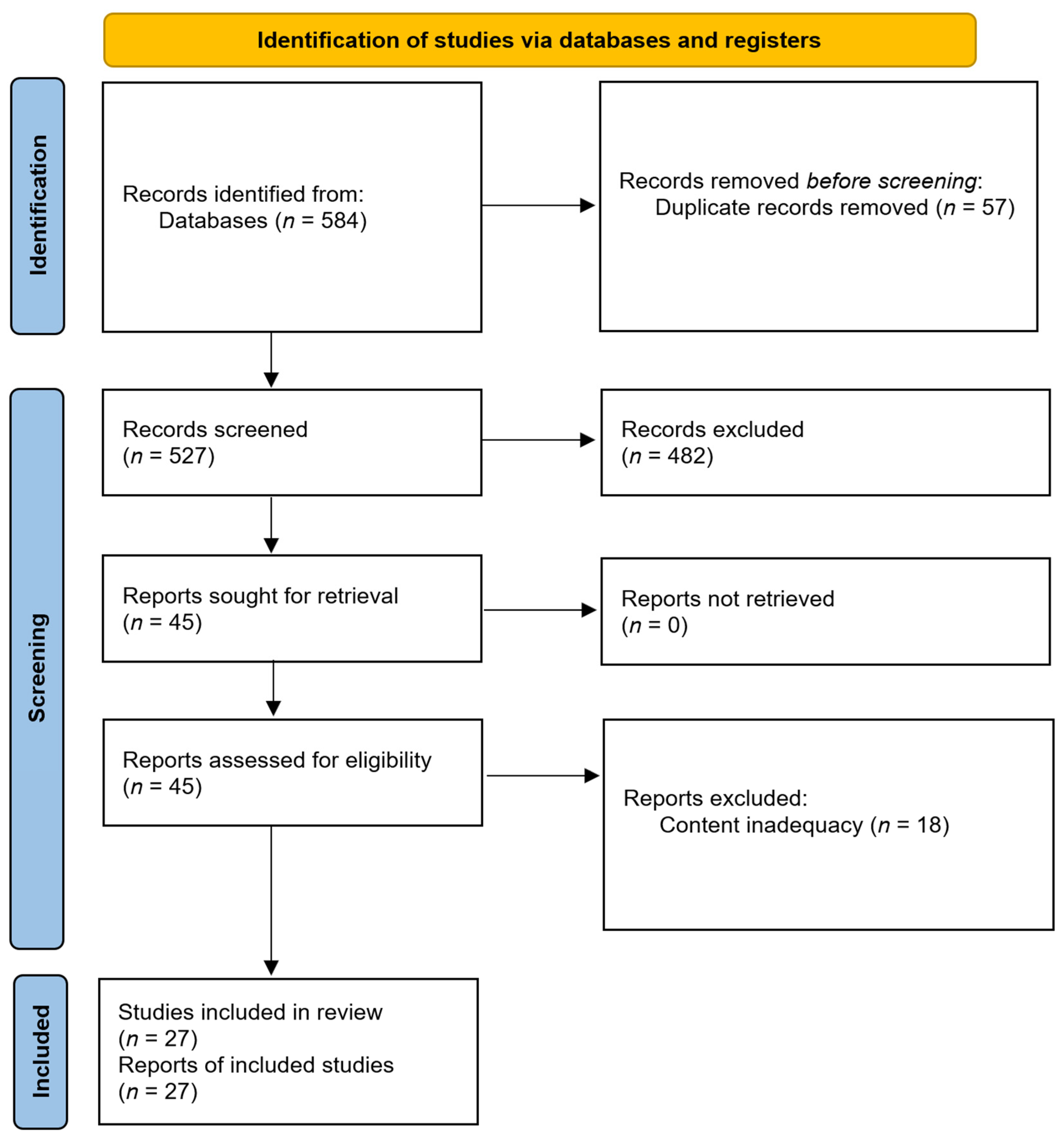
3.3.1. Study Selection
3.3.2. Characteristics of Included Studies
3.3.3. Target Populations and Settings
3.3.4. Intervention Characteristics
3.3.5. Main Patient-Related Outcomes
3.3.6. Adverse, Mixed, or Null Findings
4. Discussion
4.1. Comparison Between AAI and RAI
4.2. Effects Across Populations and Contexts
4.3. Mechanisms of Interaction and Engagement
4.4. Identified Gaps and Ongoing Challenges of the Included Studies
4.5. Future Perspectives and Development Pathways
4.6. Limitations of the Present Review
5. Conclusions
Supplementary Materials
Author Contributions
Funding
Institutional Review Board Statement
Informed Consent Statement
Data Availability Statement
Acknowledgments
Conflicts of Interest
Abbreviations
| AAT | animal-assisted therapy |
| AI | artificial intelligence |
| PRISMA | Preferred Reporting Items for Systematic Reviews and Meta-Analyses |
| RCT | randomized controlled trial |
| SAR | socially assistive robot |
| SR | systematic review |
References
- Fine, A.H.; Mackintosh, T.K. Animal-Assisted Interventions: Entering a Crossroads of Explaining an Instinctive Bond Under the Scrutiny of Scientific Inquiry. In Encyclopedia of Mental Health; Elsevier: Amsterdam, The Netherlands, 2016; pp. 68–73. [Google Scholar]
- Charry-Sánchez, J.D.; Pradilla, I.; Talero-Gutiérrez, C. Animal-assisted therapy in adults: A systematic review. Complement. Ther. Clin. Pract. 2018, 32, 169–180. [Google Scholar] [CrossRef]
- Pandey, R.P.; Mukherjee, R.; Chang, C.M. The role of animal-assisted therapy in enhancing patients’ well-being: Systematic study of the qualitative and quantitative evidence. JMIRx Med. 2024, 5, e51787. [Google Scholar] [CrossRef]
- Shoib, S.; Hussaini, S.S.; Chandradasa, M.; Saeed, F.; Khan, T.; Swed, S.; Lengvenyte, A. Role of pets and animal assisted therapy in suicide prevention. Ann. Med. Surg. 2022, 80, 104153. [Google Scholar] [CrossRef] [PubMed]
- Robino, A.E.; Corrigan, V.K.; Anderson, B.; Werre, S.; Farley, J.P.; Marmagas, S.W.; Buechner-Maxwell, V. College student mental health in an animal-assisted intervention program: A preliminary study. J. Creat. Ment. Health 2021, 16, 49–58. [Google Scholar] [CrossRef]
- Najdek, A.; Szewczyk, D.; Nowak, J.; Woźniak, A.; Cioch, M.J.; Mycyk, M.; Kaczmarska, U.; Oleksy, D.; Doman, K.; Hermanowicz, K.; et al. Animal-Assisted Interventions: A Literature Review on Diverse Applications of Animal-Assisted Interventions in selected medical entities in different age groups. J. Educ. Health Sport 2025, 78, 57671. [Google Scholar] [CrossRef]
- Spattini, L.; Mattei, G.; Raisi, F.; Ferrari, S.; Pingani, L.; Galeazzi, G.M. Efficacy of animal assisted therapy on people with mental disorders: An update on the evidence. Minerva Psichiatr. 2018, 59, 54–66. [Google Scholar] [CrossRef]
- Palomar-Ciria, N.; Bello, H.J. Equine-Assisted Therapy in Post-Traumatic-Stress Disorder: A Systematic Review and Meta-Analysis. J. Equine Vet. Sci. 2023, 128, 104871. [Google Scholar] [CrossRef]
- Seivert, N.P.; Cano, A.; Casey, R.J.; Johnson, A.; May, D.K. Animal assisted therapy for incarcerated youth: A randomized controlled trial. Appl. Dev. Sci. 2018, 22, 139–153. [Google Scholar] [CrossRef] [PubMed]
- Barak, Y.; Savorai, O.; Mavashev, S.; Beni, A. Animal-Assisted Therapy for Elderly Schizophrenic Patients: A One-Year Controlled Trial. Am. J. Geriatr. Psychiatry 2001, 9, 439–442. [Google Scholar] [CrossRef]
- Rodríguez-Martínez, M.d.C.; de la Plana Maestre, A.; Armenta-Peinado, J.A.; Barbancho, M.Á.; García-Casares, N. Evidence of Animal-Assisted Therapy in Neurological Diseases in Adults: A Systematic Review. Int. J. Environ. Res. Public Health 2021, 18, 12882. [Google Scholar] [CrossRef]
- Himanshu, K.; Gunjan, K.; Mukherjee, R.; Pandey, R.P.; Chang, C.M. A systematic analysis of the qualitative and quantitative evidence on the purpose of animal-assisted therapy in improving patients wellbeing. bioRxiv 2023. [Google Scholar] [CrossRef]
- Villarreal-Zegarra, D.; Yllescas-Panta, T.; Malaquias-Obregon, S.; Dámaso-Román, A.; Mayo-Puchoc, N. Effectiveness of animal-assisted therapy and pet-robot interventions in reducing depressive symptoms among older adults: A systematic review and meta-analysis. Complement. Ther. Med. 2024, 80, 103023. [Google Scholar] [CrossRef]
- Abbott, R.; Orr, N.; McGill, P.; Whear, R.; Bethel, A.; Garside, R.; Stein, K.; Thompson-Coon, J. How do “robopets” impact the health and well-being of residents in care homes? A systematic review of qualitative and quantitative evidence. Int. J. Older People Nurs. 2019, 14, e12239. [Google Scholar] [CrossRef]
- Dhimolea, T.K.; Kaplan-Rakowski, R.; Lin, L. Supporting Social and Emotional Well-Being with Artificial Intelligence. In Bridging Human Intelligence and Artificial Intelligence; Albert, M.V., Lin, L., Spector, M.J., Dunn, L.S., Eds.; Springer: Cham, Switzerland, 2022; pp. 125–138. [Google Scholar]
- Wang, J.; Chen, W.; Xiao, X.; Xu, Y.; Li, C.; Jia, X.; Meng, M.Q.-H. A survey of the development of biomimetic intelligence and robotics. Biomim. Intell. Robot. 2021, 1, 100001. [Google Scholar] [CrossRef]
- Gao, Z.; Shi, Q.; Fukuda, T.; Li, C.; Huang, Q. An overview of biomimetic robots with animal behaviors. Neurocomputing 2019, 332, 339–350. [Google Scholar] [CrossRef]
- Page, M.J.; McKenzie, J.E.; Bossuyt, P.M.; Boutron, I.; Hoffmann, T.C.; Mulrow, C.D.; Shamseer, L.; Tetzlaff, J.M.; Akl, E.A.; Brennan, S.E.; et al. The PRISMA 2020 statement: An updated guideline for reporting systematic reviews. BMJ 2021, 372, n71. [Google Scholar] [CrossRef]
- Trajbarič, T.; Muršec, D.; Svenšek, A.; Štiglic, G.; Gosak, L. The Effectiveness of Artificial Intelligence-Based Pet Therapy in Improving the Care of Patients: A Systematic Review; Open Science Framework: Charlottesville, VA, USA, 2026. [Google Scholar] [CrossRef]
- Barker, T.H.; Stone, J.C.; Sears, K.; Klugar, M.; Tufanaru, C.; Leonardi-Bee, J.; Aromataris, E.; Munn, Z. The revised JBI critical appraisal tool for the assessment of risk of bias for randomized controlled trials. JBI Evid. Synth. 2023, 21, 494–506. [Google Scholar] [CrossRef] [PubMed]
- Barker, T.H.; Habibi, N.; Aromataris, E.; Stone, J.C.; Leonardi-Bee, J.; Sears, K.; Hasanoff, S.; Klugar, M.; Tufanaru, C.; Moola, S.; et al. The revised JBI critical appraisal tool for the assessment of risk of bias quasi-experimental studies. JBI Evid. Synth. 2024, 22, 378–388. [Google Scholar] [CrossRef]
- Aromataris, E.; Fernandez, R.; Godfrey, C.; Holly, C.; Kahlil, H.; Tungpunkom, P. Summarizing systematic reviews: Methodological development, conduct and reporting of an umbrella review approach. Int. J. Evid. Based Healthc. 2015, 13, 132–140. [Google Scholar] [CrossRef]
- Lockwood, C.; Munn, Z.; Porritt, K. Qualitative research synthesis: Methodological guidance for systematic reviewers utilizing meta-aggregation. Int. J. Evid. Based Healthc. 2015, 13, 179–187. [Google Scholar] [CrossRef] [PubMed]
- Geva, N.; Hermoni, N.; Levy-Tzedek, S. Interaction Matters: The Effect of Touching the Social Robot PARO on Pain and Stress is Stronger When Turned ON vs. OFF. Front. Robot. AI 2022, 9, 926185. [Google Scholar] [CrossRef]
- Petersen, S.; Houston, S.; Qin, H.; Tague, C.; Studley, J. The Utilization of Robotic Pets in Dementia Care. J. Alzheimers Dis. 2017, 55, 569–574. [Google Scholar] [CrossRef]
- Valentí Soler, M.; Agüera-Ortiz, L.; Olazarán Rodríguez, J.; Mendoza Rebolledo, C.; Pérez Muñoz, A.; Rodríguez Pérez, I.; Osa Ruiz, E.; Barrios Sánchez, A.; Herrero Cano, V.; Carrasco Chillón, L.; et al. Social robots in advanced dementia. Front. Aging Neurosci. 2015, 7, 133. [Google Scholar] [CrossRef] [PubMed]
- Logan, D.E.; Breazeal, C.; Goodwin, M.S.; Jeong, S.; O’connell, B.; Smith-Freedman, D.; Heathers, J.; Weinstock, P. Social Robots for Hospitalized Children. Pediatrics 2019, 144, e20181511. [Google Scholar] [CrossRef]
- Du, H.; Bo, L.; Lai, X.; Zhu, H.; Huo, X. Network meta-analysis of comparative efficacy of animal-assisted therapy vs. pet-robot therapy in the management of dementia. Front. Aging Neurosci. 2023, 15, 1095996. [Google Scholar] [CrossRef]
- Scerri, A.; Sammut, R.; Scerri, C. Formal caregivers’ perceptions and experiences of using pet robots for persons living with dementia in long-term care: A meta-ethnography. J. Adv. Nurs. 2021, 77, 83–97. [Google Scholar] [CrossRef] [PubMed]
- Moerman, C.J.; van der Heide, L.; Heerink, M. Social robots to support children’s well-being under medical treatment: A systematic state-of-the-art review. J. Child Health Care 2018, 23, 596–612. [Google Scholar] [CrossRef]
- Lane, G.W.; Noronha, D.; Rivera, A.; Craig, K.; Yee, C.; Mills, B.; Villanueva, E. Effectiveness of a social robot, “Paro,” in a VA long-term care setting. Psychol. Serv. 2016, 13, 292–299. [Google Scholar] [CrossRef]
- Sung, H.-C.; Chang, S.-M.; Chin, M.-Y.; Lee, W.-L. Robot therapy for older adults. Asia-Pac. Psychiatry 2015, 7, 1–6. [Google Scholar] [CrossRef] [PubMed]
- Klumpe, S.; Mitchell, K.C.; Cox, E.; Katz, J.S.; Lazarowski, L.; Deshpande, G.; Gratch, J.; de Visser, E.J.; Ayaz, H.; Li, X.; et al. Social bonding between humans, animals, and robots: Dogs outperform AIBOs, their robotic replicas, as social companions. PLoS ONE 2025, 20, e0324312. [Google Scholar] [CrossRef]
- Barber, O.; Somogyi, E.; McBride, A.E.; Proops, L. Children’s Evaluations of a Therapy Dog and Biomimetic Robot: Influences of Animistic Beliefs and Social Interaction. Int. J. Soc. Robot. 2020, 13, 1411–1425. [Google Scholar] [CrossRef]
- Dinesen, B.; Hansen, H.K.; Grønborg, G.B.; Dyrvig, A.K.; Leisted, S.D.; Stenstrup, H.; Skov Schacksen, C.; Oestergaard, C. Use of a Social Robot (LOVOT) for Persons With Dementia: Exploratory Study. JMIR Rehabil. Assist. Technol. 2022, 9, e36505. [Google Scholar] [CrossRef]
- Harris-Gersten, M.L.; Davagnino, J.M.; Alcorn, E.R.; Hastings, S.N. Usability and Acceptability of Social Robot Pets Among Community-Dwelling Veterans Living with Dementia and Their Caregivers. Am. J. Alzheimers Dis. Other Demen. 2023, 38, 1–7. [Google Scholar] [CrossRef] [PubMed]
- Jung, M.M.; van der Leij, L.; Kelders, S.M. An Exploration of the Benefits of an Animallike Robot Companion with More Advanced Touch Interaction Capabilities for Dementia Care. Front. ICT 2017, 4, 16. [Google Scholar] [CrossRef]
- Pu, L.; Moyle, W.; Jones, C. How people with dementia perceive a therapeutic robot called PARO in relation to their pain and mood: A qualitative study. J. Clin. Nurs. 2020, 29, 437–446. [Google Scholar] [CrossRef]
- Yuan, S.; Coghlan, S.; Lederman, R.; Waycott, J. Social robots in aged care: Care staff experiences and perspectives on robot benefits and challenges. Proc. ACM Hum.-Comput. Interact. 2022, 6, 329. [Google Scholar] [CrossRef]
- Ihamäki, P.; Heljakka, K. Robot Pets as “Serious Toys”-Activating Social and Emotional Experiences of Elderly People. Inf. Syst. Front. 2024, 26, 25–39. [Google Scholar] [CrossRef]
- Pike, J.; Picking, R.; Cunningham, S. Robot companion cats for people at home with dementia: A qualitative case study on companotics. Dementia 2020, 20, 1300–1318. [Google Scholar] [CrossRef] [PubMed]
- Jang, S. Study on the Subjectivity of Medical Professionals Towards Pet Robots. Med.-Leg. Update 2020, 20, 1641–1645. [Google Scholar] [CrossRef]
- Koh, W.Q.; Toomey, E.; Flynn, A.; Casey, D. Determinants of implementing pet robots in nursing homes for dementia care. BMC Geriatr. 2022, 22, 457. [Google Scholar] [CrossRef]
- Koh, W.Q.; Vandemeulebroucke, T.; Gastmans, C.; Miranda, R.; Van den Block, L. The ethics of pet robots in dementia care settings: Care professionals’ and organisational leaders’ ethical intuitions. Front. Psychiatry 2023, 14, 1052889. [Google Scholar] [CrossRef]
- Li, Y.; Qu, J.G.; Fu, H. Me, pet, and robot: How home-based surveillance robot constructed different types of telepresence. Convergence 2025, 32, 196–213. [Google Scholar] [CrossRef]
- Abdi, J.; Al-Hindawi, A.; Ng, T.; Vizcaychipi, M.P. Scoping review on the use of socially assistive robot technology in elderly care. BMJ Open 2018, 8, e018815. [Google Scholar] [CrossRef]
- Koh, W.Q.; Ang, F.X.H.; Casey, D. Impacts of Low-cost Robotic Pets for Older Adults and People with Dementia: Scoping Review. JMIR Rehabil. Assist. Technol. 2021, 8, e25340. [Google Scholar] [CrossRef] [PubMed]
- Papadopoulos, I.; Koulouglioti, C.; Ali, S. Views of nurses and other health and social care workers on the use of assistive humanoid and animal-like robots in health and social care: A scoping review. Contemp. Nurse 2018, 54, 425–442. [Google Scholar] [CrossRef] [PubMed]
- Preuß, D.; Legal, F. Living with the animals: Animal or robotic companions for the elderly in smart homes? J. Med. Ethics 2017, 43, 407–410. [Google Scholar] [CrossRef]
- Shoesmith, E.; Surr, C.; Ratschen, E. Animal-assisted and robotic animal-assisted interventions within dementia care: A systematic review. Dementia 2023, 22, 664–693. [Google Scholar] [CrossRef] [PubMed]
- Nimer, J.; Lundahl, B. Animal-assisted therapy: A meta-analysis. Anthrozoös 2007, 20, 225–238. [Google Scholar] [CrossRef]
- Van Der Steen, S.; Kamphorst, E.; Griffioen, R.E. A randomized controlled trial of the effects of dog-assisted versus robot dog-assisted therapy for children with autism or Down syndrome. PLoS ONE 2025, 20, e0319939. [Google Scholar] [CrossRef]
- Bertin, L.; Katz, J.S.; Deshpande, G.; Krueger, F. Beyond the human touch: A critical review of the promise and challenges of animal-and robot-assisted therapy in loneliness and mental healthcare. Asian J. Psychiatry 2025, 110, 104615. [Google Scholar] [CrossRef]
- Geva, N.; Uzefovsky, F.; Levy-Tzedek, S. Touching the Social Robot PARO Reduces Pain Perception and Salivary Oxytocin Levels. Sci. Rep. 2020, 10, 9814. [Google Scholar] [CrossRef]
- McGlynn, S.A.; Kemple, S.; Mitzner, T.L.; King, C.-H.A.; Rogers, W.A. Understanding the Potential of PARO for Healthy Older Adults. Int. J. Hum.-Comput. Stud. 2017, 100, 33–47. [Google Scholar] [CrossRef]
- Wang, X.; Shen, J.; Chen, Q. How PARO can help older people in elderly care facilities: A systematic review of RCT. Int. J. Nurs. Knowl. 2022, 33, 29–39. [Google Scholar] [CrossRef]


| Inclusion Criteria | |
| Intervention or process or topic | AI-based pet therapy |
| Population/problem targeted | Patient |
| Type of study | No limit |
| Outcomes | Patient outcome |
| Language | No limit |
| Time frame | 10 years |
| Exclusion criteria | |
| Inadequate content, inadequate outcome, over 10 years old, duplicates | |
| Keywords | PubMed | CINAHL Ultimate | MEDLINE | Scopus | SAGE |
|---|---|---|---|---|---|
| (“artificial intelligence pet*” OR “artificial intelligence animal*” OR “artificial pet-assisted therapy” OR “artificial animal-assisted therapy” OR “artificial pet-assisted intervention” OR “artificial animal-assisted intervention” OR “robotic animal-assisted therapy” OR “robotic pet-assisted therapy” OR “robot pet*” OR “robot-animal*”) AND (“health status” OR “medical status” OR “disease symptom*” OR “health care” OR “patient care” OR “health outcome*”) | 567 | 2 | 3 | 6 | 6 |
| Checklist Question | Geva et al. [24] | Logan et al. [27] | Petersen et al. [25] | Valentí Soler et al. [26] |
|---|---|---|---|---|
| Q1 1 | yes | yes | yes | yes |
| Q2 2 | unclear | unclear | unclear | unclear |
| Q3 3 | yes | no | yes | no |
| Q4 4 | no | no | no | no |
| Q5 5 | no | no | no | no |
| Q6 6 | yes | no | no | yes |
| Q7 7 | no | no | no | yes |
| Q8 8 | yes | yes | yes | yes |
| Q9 9 | yes | yes | yes | yes |
| Q10 10 | yes | no | unclear | yes |
| Q11 11 | unclear | unclear | unclear | unclear |
| Q12 12 | yes | yes | yes | yes |
| Q13 13 | yes | yes | yes | unclear |
| Checklist Question | Du et al. [28] | Abbott et al. [14] | Moerman et al. [30] | Scerri et al. [29] |
|---|---|---|---|---|
| Q1 1 | yes | yes | yes | yes |
| Q2 2 | yes | yes | yes | yes |
| Q3 3 | yes | yes | yes | yes |
| Q4 4 | no | yes | yes | yes |
| Q5 5 | yes | yes | no | yes |
| Q6 6 | yes | yes | yes | yes |
| Q7 7 | yes | yes | unclear | yes |
| Q8 8 | no | yes | yes | yes |
| Q9 9 | yes | unclear | no | no |
| Q10 10 | yes | yes | yes | yes |
| Q11 11 | yes | yes | yes | yes |
| Checklist Question | Lane et al. [31] | Harris-Gersten et al. [36] | Barber et al. [34] | Dinesen et al. [35] | Sung et al. [32] | Klumpe et al. [33] |
|---|---|---|---|---|---|---|
| Q1 1 | yes | yes | yes | yes | yes | yes |
| Q2 2 | no | no | yes | no | no | yes |
| Q3 3 | no | yes | yes | unclear | no | yes |
| Q4 4 | unclear | unclear | yes | unclear | unclear | yes |
| Q5 5 | yes | no | unclear | yes | yes | yes |
| Q6 6 | yes | yes | yes | yes | yes | yes |
| Q7 7 | unclear | unclear | unclear | unclear | yes | yes |
| Q8 8 | unclear | unclear | unclear | yes | unclear | unclear |
| Q9 9 | yes | no | yes | yes | yes | yes |
| Checklist Question | Jung et al. [37] | Li et al. [45] | Pike et al. [41] | Yuan et al. [39] | Ihamäki and Heljakka [40] | Koh et al. [43] | Koh et al. [44] | Pu et al. [38] | Jang [42] |
|---|---|---|---|---|---|---|---|---|---|
| Q1 1 | unclear | unclear | yes | unclear | unclear | yes | yes | unclear | unclear |
| Q2 2 | yes | yes | yes | yes | yes | yes | yes | yes | yes |
| Q3 3 | yes | yes | yes | yes | yes | yes | yes | yes | yes |
| Q4 4 | yes | yes | yes | yes | yes | yes | yes | yes | yes |
| Q5 5 | unclear | yes | yes | yes | yes | yes | yes | yes | yes |
| Q6 6 | no | unclear | yes | no | unclear | unclear | yes | unclear | no |
| Q7 7 | no | unclear | yes | unclear | unclear | unclear | yes | unclear | no |
| Q8 8 | no | yes | no | yes | yes | yes | yes | yes | unclear |
| Q9 9 | yes | yes | yes | yes | unclear | yes | yes | yes | yes |
| Q10 10 | yes | yes | yes | yes | yes | yes | yes | yes | yes |
| Authors (Year) | Type of Study | Aim/Objectives | Population and Sample | Type of AI/Robotic Therapy | Intervention/Description of Therapy | Key Findings |
|---|---|---|---|---|---|---|
| Abdi et al. (2017) [46] | Scoping review | Examines the literature on the use of SAR (socially assistive robot) in elderly care and aims to establish the roles this technology may play in the future. | 61 final publications—describing 33 studies and including 1574 participants and 11 robots. | The types of AI/robotic therapy identified include affective therapy. | The interventions involved the use of social assistive robots (SAR) to support elderly care through various roles (e.g., improving mood and reducing agitation, enhancing cognitive function via training exercises and games, providing companionship, and in some cases influencing physiological measures like blood pressure). These interventions were delivered through robot-led activities or interactions. | Socially assistive robots (SAR) show promise in elderly care across five roles: affective therapy, cognitive training, social facilitation, companionship, and physiological therapy. Cognitive training and social facilitation had the most consistent positive effects. Group interactions were generally more effective than one-on-one. However, some benefits could be matched by simpler alternatives like soft toys or computer programs. Study quality varied, and further rigorous research is needed to confirm SAR’s clinical value and cost-effectiveness. |
| Abbott et al. (2019) [14] | Systematic review of qualitative and quantitative research | Collect evidence on the experiences of staff, residents, and relatives with robotic pets and their impact on the health and well-being of older people in nursing homes. | Nineteen studies—10 qualitative, 2 mixed methods, and 7 randomized trials | Five types of robopet were identified (robotic seal Paro, robotic cat JustoCat, robotic cat NeCoRo, robotic dog Aibo, robotic teddy bear CuDDler. | Most studies assessed participants’ effects/experiences during robotic-pet sessions delivered one-to-one or in groups, led by therapists/researchers or self-led. Sessions typically ran 10–40 min, 2–3 times per week, over 4 weeks to 4 months. | Robotic pets show mixed effects. Loneliness fell but not significantly (SMD −0.51). In dementia, Paro significantly reduced agitation (SMD −0.32). Depression and quality of life showed no significant change (depression SMD 0.09). Paro boosted verbal/physical engagement and beat a stuffed toy; anxiety mostly null, medication findings mixed, apathy inconsistent, and sleep unaffected. |
| Barber et al. (2020) [34] | Pre-post test | To investigate the potential effects of social interaction levels and biophilic beliefs on participants’ evaluations of two potential therapeutic additions, animals and robots, specifically dogs and the biomimetic robot MiRo-E. | Thirty-four individuals participated in the study: 18 boys and 16 girls aged 11 to 12 years. Participants were a voluntary sample from a cohort of 7th grade students in a regular secondary school in West Sussex, United Kingdom. | MiRo-E is a biomimetic, mammal-like robot from Consequential Robotics built for education and HRI research. It is designed to be appealing and runs a brain-inspired, three-layer control system—from reflexive behaviors to higher-level cognitive loops. | Participants first completed an online questionnaire, then entered a room with a therapy dog, a therapy robot, and a guide, and stood at the center of a grid. They had a five-minute, video-recorded free-play session (timed by a stopwatch) with the option to stop anytime; the researcher announced start and end. Afterward, they returned to the lobby to complete a post-session evaluation questionnaire. | Participants preferred the live therapy dog over the therapy robot (p < 0.001; two had no preference). Most strongly enjoyed both (dog: n = 32; robot: n = 21), but satisfaction was higher after the dog (M = 4.85 ± 0.61) than the robot (M = 4.32 ± 1.03; Z = −2.42, p = 0.02). Positive-emotion words were similar at baseline (dog: 8.00 ± 4.02; robot: 8.08 ± 5.72; p > 0.99), unchanged after the robot (8.84 ± 4.02; p = 0.27), but decreased after the dog session. |
| Dinesen et al. (2022) [35] | Quasi-experimental research | This study examined how the social robot LOVOT interacts with people with dementia and the experiences of healthcare professionals who use it to engage with this group. | 42 people with dementia, of whom 30 were assigned to group meetings and 12 to individual meetings | LOVOT is a 4.2 kg social robot by Groove X (28 × 43 × 26 cm) with AI for real-time, human-like movement. It has body-wide touch and distance sensors that detect warm/cold contact, respond to stimulation, and can even “fall asleep.” | The interaction between people with dementia and LOVOT was tested in individual and group sessions. The former lasted four weeks, while the latter lasted 12 weeks. | LOVOT did not produce clinically significant improvements in overall well-being for people with dementia, but it did boost immediate mood: facial expressions were more positive after sessions (individual or group). The effect was short-lived. Staff described LOVOT as fun and calming and noted it encouraged more communication and interaction with others and with staff. |
| Du et al. (2023) [28] | Systematic review of randomized clinical trials with meta-analysis | Compare and rank the effectiveness of animal-assisted therapy and robot-assisted therapy in treating dementia. | Nineteen randomized controlled trials (RCTs) | Robotic animals such as PARO | Interventions (with therapy dogs or robotic pets like PARO) combined hands-on contact (petting, feeding, grooming, play, talking) with simple cognitive tasks, motor/sensory exercises, and group social interaction. Sessions typically ran 30–60 min, delivered about 2–3 times per week. | Prior meta-analyses suggest animal-assisted therapy does not improve cognition, agitation, or quality of life, but may reduce depression—though these findings are weakened by study omissions and mixing designs. For robotic pets, evidence consistently shows reduced agitation, with mixed effects on depression and quality of life. A network meta-analysis found no significant difference between animal-assisted and robotic pet therapy in reducing agitation. |
| Geva et al. (2022) [24] | Quantitative methodology, Randomized experimental study | To determine whether the interactive features of the robotic seal PARO contribute to reducing pain and stress; to compare touch with the robot switched ON versus OFF | 60 healthy adults. Participants were randomly allocated into an interactive group (ON) or a non-interactive group (OFF) | Social assistive robot PARO—a plush robotic baby seal with dual processors, microphones, 12 tactile sensors, whiskers and actuators; when petted it moves its tail, opens its eyes and vocalizes like a seal pup | After calibrating heat stimuli, participants received mild and strong heat-pain stimulation on their forearm while touching PARO; the robot was either interactive (ON) or turned off. A 5 min familiarization session preceded the test; pain and stress were measured with a visual analogue scale before and during touch. | Only in the interactive group did stress decrease significantly (baseline 2.9 ± 2.5 vs. touch 1.8 ± 2.1). Mild pain decreased significantly only in the interactive group (Δ = −1.3 VAS), while strong pain decreased in both groups. Greater perceived pleasantness and willingness to meet PARO again correlated with larger pain reductions. The authors conclude that the robot’s interactive qualities contribute to pain and stress relief. |
| Harris-Gersten et al. (2023) [36] | Programmatic evaluation used within-subjects, pre-post design | The purpose of the study is to examine the usability (frequency of use, frequency of reminders from caregivers) and acceptability (usefulness, satisfaction) of social robot pets among veterans with dementia. | The study sample consisted of veterans aged 65 and older living in the community and their informal caregivers enrolled in the COACH (Caring for Older Adults and Caregivers at Home) program operated by Durham Veterans Affairs (VA). Twenty veterans were included. | Social robot pets (provided by the Triangle J Area Agency on Aging) | Families received a 10–15 min at-home orientation from COACH staff; caregivers were taught basic operation and encouraged to prompt and support veterans’ use based on tolerance. After 3 months, caregivers completed a structured phone interview using the Social Robot Pet Intervention Usability and Acceptability Tool. | Most veterans used the robot pet frequently or daily (80%); one did not use it over 3 months. Reported benefits were modest on average (M = 1.35, SD = 0.8). Caregivers largely found the pet very helpful for veterans (n = 13) and themselves (n = 12); 80% said it somewhat/greatly reduced difficult symptoms. Satisfaction was high—89% (n = 18) met the threshold and would recommend a social robot pet for dementia care. |
| Ihamäki & Heljakka (2021) [40] | Qualitative exploratory intervention study | The study examined whether a commercial robot dog can spark positive emotions, social connection, and wellbeing in older adults during intergenerational group sessions, capturing their immediate, firsthand responses in a day-center activity with preschoolers. | (n = 10) elderly people (ages 65–80 years, 3 males, 7 female) | A low-cost interactive robotic pet (by Hasbro), called “Joy for All Companion Pets”. The pet-like robot Golden Pup from the sence was selected for the play intervention.” | Intergenerational 80 min day-center session with the Golden Pup robot: 20 min pet reminiscence, 30 min facilitated free play, brief emotion interviews at the end; entire session video-recorded. | Golden Pup interactions lifted mood and emotional wellbeing, with touch and play sparking social interaction, reminiscence, and storytelling. The robot facilitated communication among older adults and between them, preschoolers, and caregivers. Overall, such robot pets show promise as meaningful companions that enhance social connection and wellbeing in elderly care. |
| Jang (2020) [42] | Q methodology | The objective of this study is to understand the subjectivity of medical professionals in their perception of pet robots, describe the characteristics of each subjectivity type and understand the categorization of pet robots. | Twenty medical professionals (doctors or nurses) currently employed in a clinical setting | Interactive pet robots used in robot-assisted animal therapy. | Participants were asked to categorize 56 statements on pet robots. Statements on robot pets were categorized on a 14-point scale. Then an interview was conducted with the subject on the statements on the polar ends. | The key findings of the study revealed three distinct perceptions among medical professionals towards pet robots: those who value the emotional benefits, those who emphasize the ease of pet management, and those who focus on the convenience brought by technological advancements. Most participants had a positive attitude towards using robot pets in clinical settings, seeing them as useful tools for emotional support and patient care. |
| Jung et al. (2017) [37] | Qualitative exploratory study | The aim of this study is to inform the development of animal like robot companions that can understand and respond to human touch. | 9 Dutch health-care providers from two facilities—4 without robot experience (layman) and 5 with Paro experience (experts). | Robot Paro | In this study, health-care providers were interviewed to explore their perceptions and experiences regarding the use of the animal like robot Paro in dementia care. The intervention involved introducing Paro to people with dementia as a social companion robot designed to engage patients through tactile interaction and auditory feedback. | Health-care providers generally have a positive attitude toward using Paro in dementia care, noting its potential to reduce patient stress and stimulate communication. The study also highlighted that patients primarily use gentle, affectionate touch gestures, while some negative touches tend to be accidental. |
| Klumpe et al. (2025) [33] | Quantitative methodology, cross-over design study | To compare social bonding between humans and real dogs versus a robot dog (AIBO). Assess urinary oxytocin (OXT) changes, self-reported attachment and evaluations of companionship. | 19 female psychology undergraduates from one US university. | Robotic dog AIBO ERS-1000: has multiple microphones, cameras, pressure sensors on the paws and touch sensors on head/back/chin. It can walk, sit, lie down, shake hands, dance; uses reinforcement learning and responds to visual, voice and tactile cues. | Participants were randomized to begin with either the dog or AIBO. Each month included twelve weekly interaction sessions (petting, play and commands). Urine samples were taken at the start, middle and end of each phase. Participants completed attachment questionnaires and rated companionship; AIBOs were reset before first use and customized by participants. | Mixed-effects analyses showed that OXT increased during interactions with dogs but decreased with AIBO. Participants reported significantly stronger attachment to dogs and rated them as better companions. The study highlights that current robot dogs do not yet evoke social bonds to the same extent as real dogs, and future designs may need to leverage unique robotic features rather than mimicking dogs. |
| Koh et al. (2021) [47] | Scoping review | The aim of this review is to synthesize evidence on the delivery and impact of low-cost, familiarly and realistically designed interactive robotic pets for older adults and people with dementia. | 9 studies | Low-cost and realistically and familiarly designed robotic pets (i.e., the Joy for All robotic cat and dog) | Low-cost Joy for All cats/dogs were used with older adults (including dementia) mainly at home or in long-term care for 2 weeks–6 months. Use was typically individual and self-directed with minimal staff/caregiver facilitation, though some studies added group or structured sessions. | The key findings indicate that robotic pets can effectively reduce loneliness and improve emotional well-being in older adults, especially those with dementia. They also promote social engagement and decrease agitation and anxiety. These benefits suggest that robotic pets are a valuable tool in supportive care. |
| Koh et al. (2022) [43] | A descriptive qualitative study | Study aims to explore the determinants of implementing pet robots for dementia care in nursing homes, from the perspectives of healthcare professionals and organizational leaders. | A total of 22 participants from eight nursing homes | Robotic pets equipped with interactive and responsive features designed to simulate real animal behavior. | Semi-structured interviews with healthcare professionals and organizational leaders were conducted. The intervention involves using pet robots as substitutes for live pet therapy in nursing homes to improve the psychosocial health of residents with dementia. | Key findings include that successful implementation of pet robots depends on their realistic design, affordability, and ease of cleaning; external factors like regulations and funding; alignment with nursing home care priorities; varied staff attitudes towards technology; and the importance of proper assessment and care planning. |
| Koh et al. (2023) [44] | A secondary qualitative analysis of data generated from in-depth, semi-structured interviews | To explore care professionals’ and organizational leaders’ ethical intuitions before and when implementing pet robots in nursing homes for routine dementia care. | 2 care professionals and organizational leaders from eight nursing homes in Ireland. | Pet robots | Implementation of pet robots for nursing home residents with dementia | Ethical themes fell into three layers: individual/relational (respect autonomy, tackle social isolation, manage psychological impacts), organizational (reduce caregiver burden, adapt workflows, varied openness to tech), and societal (beliefs about dementia care plus justice concerns over affordability and access). |
| Lane et al. (2016) [31] | Pilot study; there was no randomization nor use of control groups in research design | To evaluate the effectiveness of the Paro robot as a nonpharmacological intervention for managing dementia-related mood and behavior issues in veterans in a VA long-term care facility. | 23 veteran residents of a Veterans Affairs (VA) geropsychiatric long-term care facility | The Paro robot | The introduction and use of the Paro robot (a robotic pet) with veterans in a nursing home setting, observed during three periods—pre-Paro, during Paro, and post-Paro—to assess changes in mood and behavior related to interaction with the robot. | The study found that using the Paro robot increased positive mood and behaviors and reduced negative indicators in veterans with dementia. It was most effective with residents who were calm and approachable, suggesting that Paro is a promising nonpharmacological option for dementia care in VA long-term care facilities. |
| Li et al. (2025) [45] | Qualitative study using semi-structured interviews | To explore how telepresence via the mobile robot Enabot shapes users’ experiences and relationships with pets and others. Examine embodied projection (seeing the robot as an extension of oneself) and how this affects interactions. | 22 Chinese pet owners aged 21–34. | Enabot (EBO), a home-based telepresence robot | Participants used Enabot in their homes to remotely observe and interact with their pets via a smartphone app. Interviews focused on telepresence, embodied projection and social impacts. | Researchers developed a typology of “embodied projection”: when users viewed the robot as an extension of themselves, they actively drew their pets’ attention via the robot. This reshaped the human–pet relationship and users treated the robot as a tool for self-care (e.g., soothing guilt or anxiety when away). The study shows telepresence robots are not merely functional devices but mediate emotional connections and personal wellbeing. |
| Logan et al. (2019) [27] | Pilot randomized controlled trial (RCT) with a between-groups, open-label design | To (1) describe the introduction of SR technology into the pediatric inpatient setting through an innovative partnership among a pediatric teaching hospital, robotics development, and computational behavioral science laboratories, and (2) present feasibility and acceptability data. | 54 children medically or surgically hospitalized children ages 3 to 10 years | Social robot (SR) teddy bear and a tablet-based avatar of the bear; The Huggable robot was a plush teddy bear with a soft exterior, powered by an Android smartphone embedded inside. | Randomized trial with children (3–10 years): 30 min sessions in one of three arms—tele-operated Huggable robot, tablet-based avatar, or static plush bear. Child life specialists guided interactions; robot and avatar were “Wizard-of-Oz” controlled to appear autonomous. | The social robot intervention was feasible and well accepted, with most participants completing the study. Children exposed to the robot reported more positive affect and showed greater joy and agreeableness compared to those given a plush bear. Child life specialists also identified several potential emotional benefits of using social robots in pediatric care. |
| Moerman et al. (2019) [30] | Systematic state-of-the-art review | To inventory how socially assistive robots (SARs) are used in hospital settings to support children’s wellbeing during medical treatment and assess their effects. | 10 publications on 8 studies; six different robots (1 humanoid and 5 pet-like) were used with hospitalized children. | Various SARs—humanoid and animal-like robots (e.g., bear- or seal-shaped robots) designed to provide interactive support, distraction and emotional comfort. | Robots were used to distract children during medical procedures, offer emotional support during illness and enhance wellbeing during hospital stays. Interventions included interactive play, conversation or pet-like companionship. | Studies reported positive effects: robots aided distraction and engagement, reduced stress or pain, increased relaxation, smiling and communication. Some adolescents in a psychiatric ward felt unsafe. The authors conclude that SARs may positively influence children’s wellbeing, but more research is needed to measure effect sizes and integrate robots into clinical routines. |
| Papadopoulos et al. (2018) [48] | A scoping review | To provide an overview of the existing evidence related to the views of nurses and other health and social care workers about the use of assistive humanoid and animal-like robots | 19 articles; 4 used mixed methodology; 10 used qualitative methodology (semi-structured interviews or focus groups) and 5 used a quantitative methodology (survey or administration of a structured questionnaire) | Paro: an animal-like robot which takes the form of a Canadian harp seal. JustoCat: an interactive robotic cat with washable fur; Guide: a humanoid robot. Cafero: a humanoid robot Kompai: a humanoid robot Care-O-bot 3: a humanoid robotic assistant | In the 19 articles reviewed, researchers examined the views, attitudes, and perceptions of health and social care workers toward socially assistive humanoid and animal-like robots. 11 studies involved participants interacting directly with robots; 8 studies collected views without direct interaction, using surveys, questionnaires or scenarios. | Staff with hands-on robot experience were more positive; those without were unsure of clinical value. Views depended on perceived capability, reliability, and whether robots were companions or team members. Concerns included adjustment time for older adults, reduced human connection, and technical glitches. Most reported little workflow change, though some found work more engaging due to patient benefits; a few disliked sharing their workspace with robots. |
| Petersen et al. (2017) [25] | Randomized clinical trial | To assess the effectiveness of the PARO robotic pet, an FDA approved biofeedback device, in treating dementia-related symptoms. | 61 patients with mild to moderate dementia, with 77% females, average 83.4 years in age | PARO robotic pet | The intervention involved older adults with mild to moderate dementia engaging with the PARO robotic pet for 20 min, three times a week, over a three-month period. | Participants in the PARO group showed higher pulse oximetry and GSR levels, and lower pulse rates, indicating reduced physiological stress. Their RAID and CSDD scores improved, reflecting decreased anxiety and depression. Additionally, the PARO group required less pain and psychoactive medication compared to the control group, suggesting that the robotic pet had a therapeutic effect on emotional and physical well-being. |
| Pike et al. (2020) [41] | Qualitative multiple case study; Qualitative semi-structured interviews. | To explore the effects and acceptability of a commercially available robot companion cat for people living at home with dementia, considering its impact on mood, behavior, and communication. | 12 participants (people living at home with dementia symptoms, mostly female, older adults). | Ageless Innovation’ Joy for All Companion Cat: a non-programmable, interactive robot cat with movement, purring, and meowing responses to touch/light. | Participants were given a robot cat to keep at home. Initial interview after 2 weeks and follow-up at 3 months; use of photo elicitation with participants and families to explore experiences. | Robot cats, when accepted, improved communication, reduced withdrawal, provided distraction from repetitive behaviors, promoted calmness, and enhanced carer wellbeing. Benefits are most evident in moderate to severe dementia. Some rejections are due to dislike of cats or resistance to interventions. |
| Preuß & Legal (2017) [49] | Ethical analysis and literature review | To compare benefits and concerns of live animals versus robotic animal companions for elderly people in domestic smart home (AAL) settings, with ethical considerations. | N/A | Various animal shaped social robots (e.g., PARO seal, AIBO dog, NeCoRo/JustoCat cat, CuDDler polar bear, robotic rabbits) with interactive capabilities, sensors, and potential health. | Review of existing research and ethical considerations regarding replacing or supplementing live animals with robotic animal companions in domestic AAL settings. | Robotic animals can provide social interaction, reduce loneliness, improve mood, and avoid many drawbacks of live animals. Additional benefits include health monitoring via sensors. Concerns include loss of genuine human–animal bond, infantilization, deception, privacy risks, and cultural acceptance. |
| Pu et al. (2019) [38] | A qualitative study | To explore how people with mild to moderate dementia and chronic pain perceive PARO as an alternative intervention to manage their pain and mood | 11 participants with dementia and chronic pain from three residential aged care facilities | PARO robotic pet | They interacted with PARO for 30 min, 5 days a week over a 6-week period. Participants then completed individual semi-structured interviews at the end of intervention | The PARO intervention is a promising intervention to improve positive emotions and there is some anecdotal evidence that pain may be decreased from the perspectives of people living with chronic pain and dementia. Long-term care staff may incorporate PARO therapy into daily dementia care. |
| Scerri et al. (2020) [29] | Systematic literature review, Meta-ethnography | To explore formal caregivers’ perceptions and experiences of using pet robots for people with dementia in long-term care, and factors influencing their use. | 8 qualitative studies | Animal-like social robots (e.g., PARO seal, robotic cats, AIBO dog, JustoCat). | Use of pet robots in care routines and sessions varied by study (individual/group activities, tactile interaction, conversation facilitation). | Pet robots can reduce agitation, promote social interaction, increase comfort and engagement. Barriers include infection control, costs, stigma, ethical concerns. Successful adoption requires appropriate introduction, staff involvement, and ongoing support. |
| Sung et al. (2014) [32] | Pilot study using a one-group pretest–posttest design. | To evaluate the effect of robot-assisted therapy using (pet robot) PARO on social interaction and activity participation among institutionalized older adults. | 16 older adults recruited, 12 completed in a residential care facility in Taiwan. | PARO therapeutic seal robot. | 30 min group sessions twice weekly for 4 weeks, led by trained nurse. Interaction, tactile stimulation, facilitated conversation, cleaning PARO at session end. | Significant improvement in communication/interaction (p = 0.003) and activity participation (p = 0.008) after intervention. Supports feasibility of integrating PARO therapy in routine activities. |
| Valenti Soler et al. (2015) [26] | Quantitative methodology, Randomized controlled clinical trial, parallel groups | To compare effects of therapy sessions using humanoid robot (NAO), pet robot (PARO), and real dogs on behaviour, apathy, and quality of life in advanced dementia. | Nursing home: 101–110 patients (moderate/severe dementia). Day care: 17–20 patients. Various dementia diagnoses. | PARO (animal-like robot), NAO (humanoid social robot). | Therapy sessions twice weekly for 3 months. Structured cognitive, physical, and sensory activities. Robots/animals are integrated into standard therapy format. | NAO and PARO groups showed improvement in apathy (nursing home, Phase 1). PARO improved quality of life scores (Phase 2). NAO group saw cognitive decline in MMSE but not sMMSE. some benefits in NPI irritability (day care). Effects varied by dementia severity and setting. |
| Yuan et al. (2022) [39] | Qualitative (semi-structured interviews) | To identify the benefits and challenges of implementing different types of social robots in real-world aged care practice from care staff perspectives | 11 staff members working a different location across six Australian residential aged care organizations (care manager, lifestyle coordinator, therapists, care assistants, director) | Two types: robopets (Paro, JFA robotic cats and dogs) and humanoid robot Nao | Three participants have used both Nao and robopets and the other participants have used either Nao or robopets. | Robots in aged care can enhance both staff and older adults’ wellbeing, but their success depends on addressing training, ethical, and relational challenges within the care triad. |
Disclaimer/Publisher’s Note: The statements, opinions and data contained in all publications are solely those of the individual author(s) and contributor(s) and not of MDPI and/or the editor(s). MDPI and/or the editor(s) disclaim responsibility for any injury to people or property resulting from any ideas, methods, instructions or products referred to in the content. |
© 2026 by the authors. Licensee MDPI, Basel, Switzerland. This article is an open access article distributed under the terms and conditions of the Creative Commons Attribution (CC BY) license.
Share and Cite
Trajbarič, T.; Muršec, D.; Svenšek, A.; Štiglic, G.; Gosak, L. The Effectiveness of Artificial Intelligence-Based Pet Therapy in Improving the Care of Patients: A Systematic Review. Appl. Sci. 2026, 16, 4683. https://doi.org/10.3390/app16104683
Trajbarič T, Muršec D, Svenšek A, Štiglic G, Gosak L. The Effectiveness of Artificial Intelligence-Based Pet Therapy in Improving the Care of Patients: A Systematic Review. Applied Sciences. 2026; 16(10):4683. https://doi.org/10.3390/app16104683
Chicago/Turabian StyleTrajbarič, Tamara, Dominika Muršec, Adrijana Svenšek, Gregor Štiglic, and Lucija Gosak. 2026. "The Effectiveness of Artificial Intelligence-Based Pet Therapy in Improving the Care of Patients: A Systematic Review" Applied Sciences 16, no. 10: 4683. https://doi.org/10.3390/app16104683
APA StyleTrajbarič, T., Muršec, D., Svenšek, A., Štiglic, G., & Gosak, L. (2026). The Effectiveness of Artificial Intelligence-Based Pet Therapy in Improving the Care of Patients: A Systematic Review. Applied Sciences, 16(10), 4683. https://doi.org/10.3390/app16104683