Article

Triaxial Compression of Anisotropic Voronoi-Based Cellular Structures

Hephaestus Laboratory, School of Chemistry, Faculty of Sciences, Democritus University of Thrace, GR-65404 Kavala, Greece
*
Author to whom correspondence should be addressed.
Appl. Sci. 2026, 16(1), 471; https://doi.org/10.3390/app16010471 (registering DOI)
Submission received: 31 October 2025 / Revised: 21 December 2025 / Accepted: 26 December 2025 / Published: 2 January 2026
(This article belongs to the Special Issue Additive Manufacturing in Material Processing)

Abstract

This study examines the effect of geometrically controlled anisotropy on the compressive behaviour of additively manufactured Voronoi cellular structures. Three configurations—an isotropic reference and two anisotropic variants generated by scaling the design domain along the Z-axis—were fabricated by stereolithography using a tough photopolymer resin. All specimens exhibited an approximate nominal porosity of 80%. Compressive tests were conducted along the X, Y, and Z directions in accordance with ASTM D1621. The elongated structure showed enhanced stiffness and strength when loaded parallel to the scaling axis, whereas the compressed structure exhibited improved performance in the transverse directions. The isotropic structure displayed similar responses in all axes. These results demonstrate that geometric scaling effectively induces directional mechanical anisotropy without altering relative density, offering a simple route to tailor the load-bearing behaviour of lightweight architected materials.

1. Introduction

Architected cellular materials, including lattice and foam-type structures, have emerged as transformative solutions in lightweight structural design. Their exceptional combination of low density, high specific stiffness and strength, and tunable multifunctional properties are enabled by controlled topology and geometry [1,2]. The theoretical foundations for these materials were established by Gibson and Ashby, who related cell morphology, connectivity, and relative density to bulk mechanical performance [3].
Specifically, Voronoi geometries provide a closer resemblance to natural porous materials, enabling isotropic or anisotropic properties to be introduced through geometrical control with parametrically tunable features, such as porosity, wall thickness and connectivity [4,5,6,7,8]. Consequently, the field has evolved from empirical observation to computational and data-driven design of cellular solids for applications in biomedical engineering [9,10,11], aerospace [12,13,14] and energy absorption [15,16,17]. With the advent of additive manufacturing (AM) technologies, complex cellular structures are fabricated with unprecedented geometric accuracy, enabling a direct link between digital design, experimental performance and engineering applications [2,13,18,19].
Recent studies demonstrate how Voronoi morphology can be tuned for performance. Parametric workflows control seed density and wall thickness to target stiffness and permeability in scaffolds [4,6,18]; semi-controlled or selective randomness narrows variability in the compressive response while retaining the benefits of a stochastic layout [5,8,20,21]; and bio-inspired Voronoi structures emulate trabecular (cancellous) architectures for load-bearing designs [10,22]. Hossain et al. demonstrated that controlled anisotropy in AM stochastic lattices results in direction-dependent stiffness variations [21]. Deering et al. designed implants using selective Voronoi tessellation to induce controlled anisotropy [20]. Liu et al. recently showed that stress-field–driven Voronoi anisotropy enhances mechanical efficiency under directional loading [23]. These findings collectively highlight the importance of quantifying morphological orientation when predicting anisotropic responses in stochastic Voronoi architectures. However, most experimental reports on Voronoi lattices rely on uniaxial testing of nominally isotropic geometries, often along a single build direction, leaving open questions about how controlled geometric anisotropy at the design stage maps onto directional stiffness/strength at the component scale [5,8,20,21,24].
The present work introduces an experimental approach to investigate the effect of controlled geometrical anisotropy on the compressive behaviour of stochastic Voronoi cellular structures. The novelty of the study resides in the systematic design and quantitative evaluation of anisotropy achieved through uniaxial scaling of the Voronoi generation domain prior to tessellation, which induces directional morphological bias without altering porosity. This allows for a direct measurement of how geometric anisotropy influences the directional stiffness and yield strength. Comprehensive triaxial compression tests were performed along the principal axes, supported by statistical analysis of strut orientation distributions to correlate structure and mechanical response. The results demonstrate that controlled geometric scaling offers a simple and reproducible route to program anisotropy as a design variable, establishing a clear structure–property relationship for Voronoi lattices. This framework provides insight into the design of lightweight, anisotropic cellular materials in structural and biomedical applications.

2. Materials and Methods

2.1. Design of Voronoi Configurations

Three-dimensional (3D) Voronoi-based cellular architectures were designed to investigate the effect of geometrical anisotropy on the compressive mechanical response of additively manufactured structures. All geometries were designed using an algorithm developed in Grasshopper 7 (plug-in for Rhinoceros design software, Robert McNeel & Associates), generating 300 randomly distributed seed points within a cubic domain with nominal external dimensions of 50 × 50 × 50 mm3.
Three distinct Voronoi configurations were designed: isotropic, elongated, and compressed. The isotropic configuration (ISOTR) was generated within a regular cubic domain (50 × 50 × 50 mm3) without applying any directional scaling, resulting in an equiaxed cell morphology. In contrast, the anisotropic configurations were produced by applying a uniaxial geometric transformation along the Z-axis prior to Voronoi tessellation. Scaling was applied uniaxially along the Z-axis to all seed point coordinates. For the elongated configuration (ELONG), the domain was scaled down by 50% (scale factor 0.50) along the Z-axis (25 mm initial Z dimension) before Voronoi tessellation, followed by Voronoi regeneration and subsequent scaling back to the original dimensions. For the compressed configuration (COMPR), the domain was scaled up by 50% (scale factor 1.50) along the Z-axis (75 mm initial Z dimension) prior to tessellation, regenerated, and finally scaled down to the initial cubic size.
The scaling method, as rendered in Grasshopper, is illustrated in Figure 1, where the reference isotropic geometry is shown alongside the two anisotropic configurations derived through negative or positive Z-axis scaling. The ELONG configuration exhibits stretched cells oriented along the Z-axis, while the COMPR configuration shows flattened and more compact cell. Scaling was applied solely to the design domain before tessellation. The lattice was then generated within this scaled domain, ensuring that anisotropy arises naturally from the geometry and not from deforming a pre-existing structure.
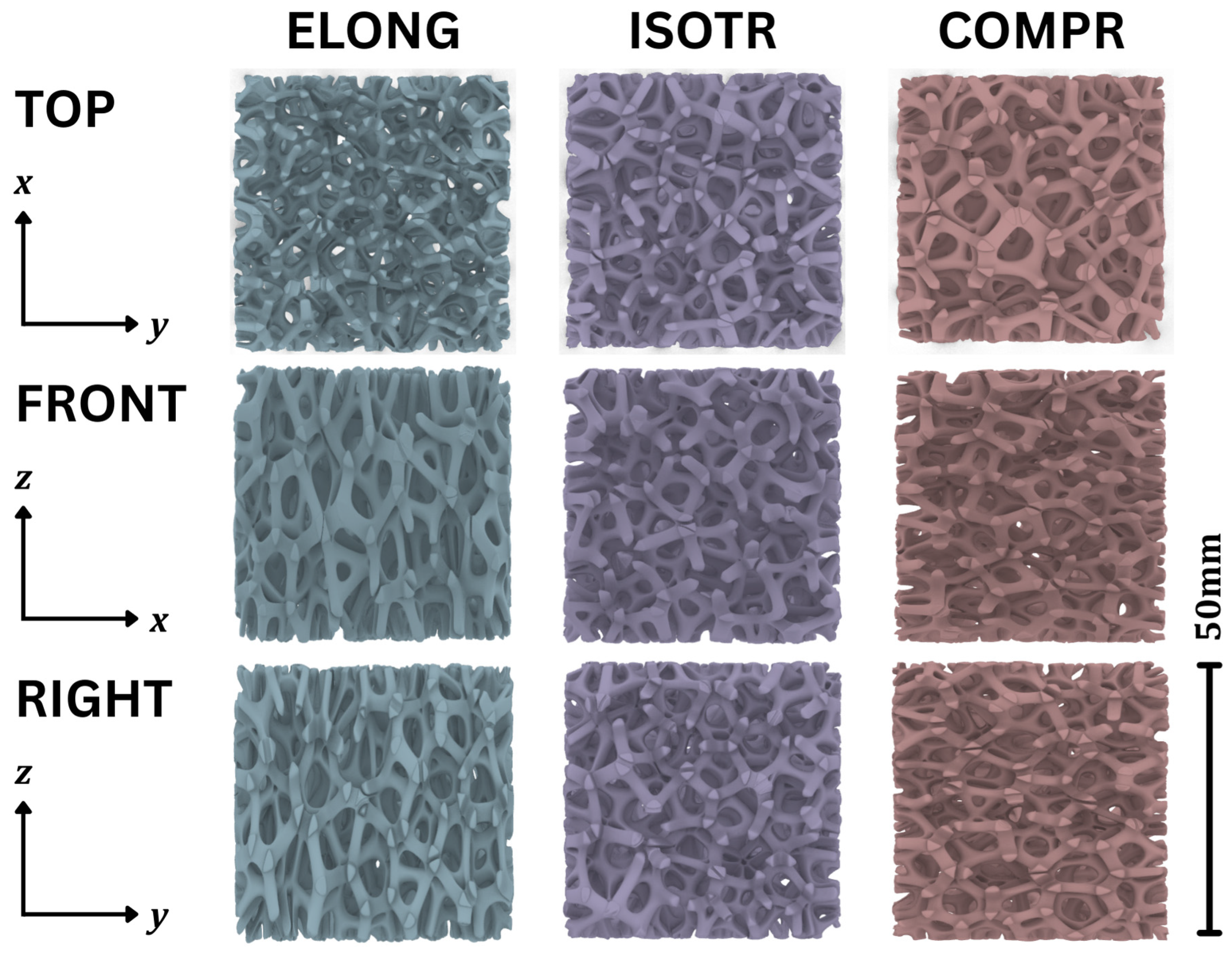
The resulting Voronoi structures that were generated in the Grasshopper environment are shown in Figure 2 in the three orthogonal planes: top (x,y), front (z,x) and right (y,z). The isotropic geometry (ISOTR) displays a uniform and random cellular distribution in all directions, whereas the anisotropic geometries clearly exhibit directionally dependent morphology. The ELONG configuration is characterised by vertically elongated struts and larger vertical pore channels, whereas the COMPR configuration shows a denser arrangement with horizontally expanded and vertically compressed cells. These differences confirm the effectiveness of the applied scaling transformation in controlling the geometric anisotropy of the Voronoi structures.

2.2. SLA 3D Printing Fabrication

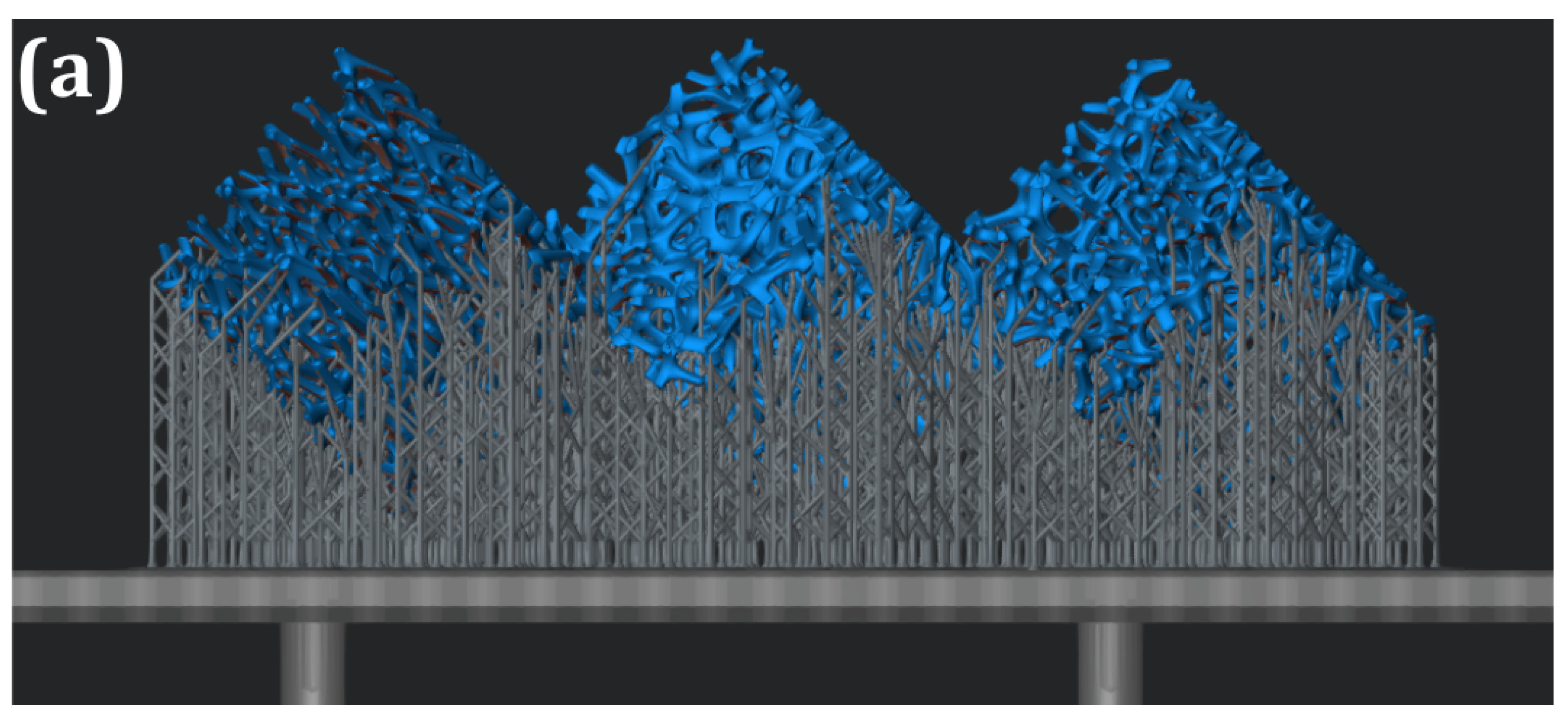
All Voronoi structures were fabricated using stereolithography (SLA) AM method. The models were oriented at a 45° inclination along both the X and Y axes during printing. This specific build orientation was chosen to ensure that the principal strut orientations were not aligned with the loading platens. This approach was intended to minimise shear effects and ensure that the applied load during compression testing acted predominantly in the desired axial direction.
Fabrication was carried out using a Phrozen Sonic Mega 8K printer (Phrozen Technology Co., Hsinchu City, Taiwan) with a layer thickness of 50 µm. A tough photopolymer resin (Resione K Tough Black; Dongguan Godsaid Technology Co., Ltd., Dongguan, China) was used for all specimens to maintain consistent material properties across all structures. The density of the resin in solid status, as given by the manufacturer’s data sheet, is 1197 g/mL. A total of 27 structures were produced, corresponding to the three Voronoi configurations (ISOTR, ELONG, and COMPR), the three loading directions (X, Y, and Z), and three replicate specimens for each condition.
After printing, the specimens were rinsed in isopropyl alcohol to remove uncured resin. To ensure consistent mechanical properties throughout the lattice, the samples were intentionally not subjected to UV post-curing. UV curing creates stiffness gradients, with over-hardened outer surfaces and under-cured interiors, which leds to brittle surface layers and non-uniform behaviour during compression testing [25].
The porosity values for each configuration were computed directly from the digital models in Grasshopper based on the solid volume fraction of the designed geometry, calculated by dividing the volume filled with material by the bulk volume of the cube.
The volume occupied by the solid lattice structure (Vlattice) was calculated via Equation (1), where the mass (m) is obtained from the weighing each of the printed sample on a precision scale and the density of the solid structure (dsolid) is acquired from the manufacturer’s data sheet equal to 1197 g/mL. Afterwards, Equation (2) was used to calculate the porosity (Pcalculated), where Vbulk is the volume occupied by a solid cube with sides equal to 50 mm. The deviation of the calculated porosity from the computed porosity was also determined [4].
V l a t t i c e = m d s o l i d
P c a l c u l a t e d = V b u l k V l a t t i c e V b u l k  
Table 1 summarises the initial Z-dimension used during the design stage, the computed porosity, the measured mass, the calculated porosity and the porosity deviation of the printed samples for the three Voronoi configurations remained low for all cases (≈2%), indicating excellent agreement between designed and experimentally derived porosities. It is confirmed that the geometric scaling applied to induce anisotropy did not affect the overall porosity or mass of the structures, ensuring that differences in mechanical performance can be attributed primarily to geometry-induced anisotropy rather than variations in porosity.
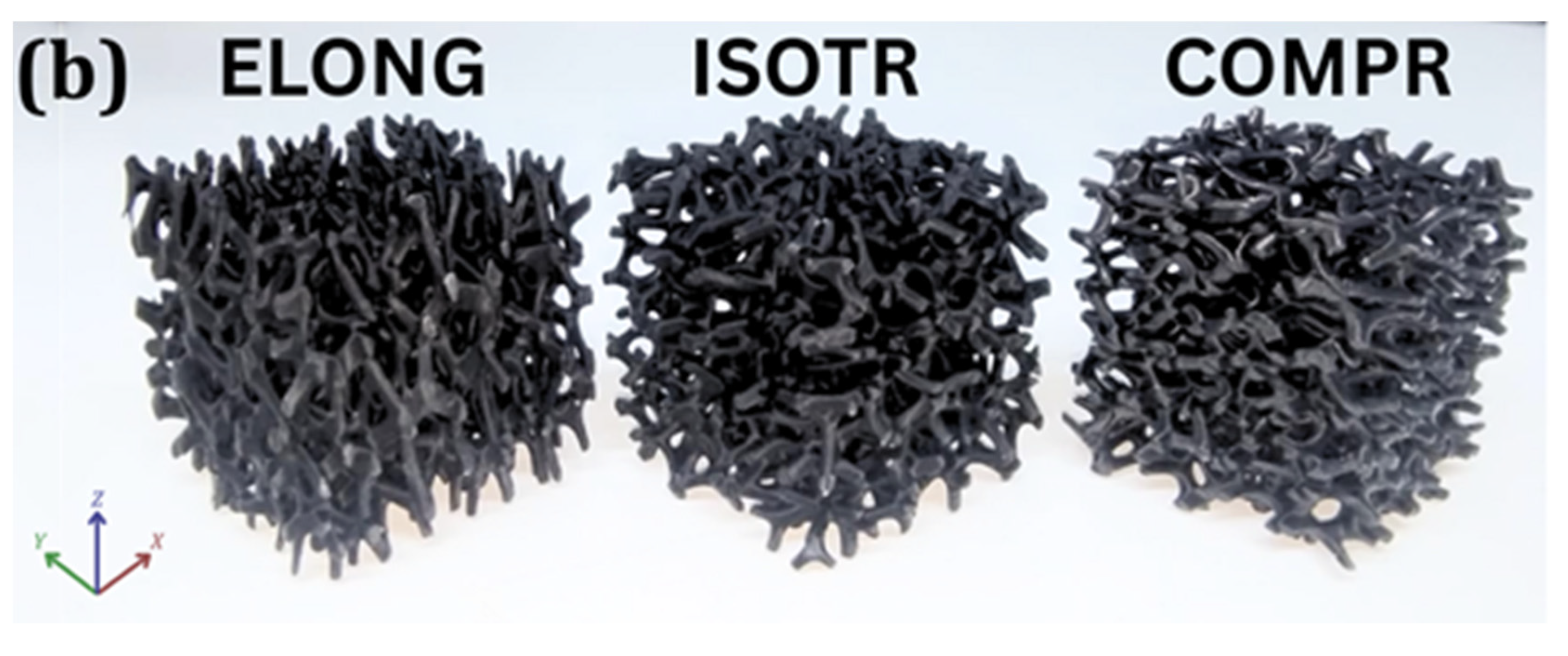
Figure 3 depicts the distinct morphological characteristics resulting from the geometric scaling procedure applied during the design stage, with ELONG showing vertically stretched cells, ISOTR presenting uniform isotropic morphology, and COMPR displaying flattened cells along the build direction.

2.3. Mechanical Testing

Compressive tests were conducted to evaluate the mechanical response of the structures along the principal axes. For each geometry type, three replicate specimens were tested in the X, Y, and Z directions, resulting in a total of nine tests for each type of structure. Testing was performed in accordance with the ASTM D1621 [26] standard for the compressive properties of rigid cellular plastics. A universal testing system (VTS model WDW-10) equipped with a 10 kN load cell was used to apply axial compression under displacement control at a constant crosshead speed. Based on the height (50 mm in every direction), the crosshead speed for the compression test was calculated to achieve a strain rate of 10%/min, in line with ASTM D1621. Accordingly, the deformation rate (Equation (3)) was set to:
S t r a i n   r a t e = 50   m m × ( 0.10 / m i n ) = 5   m m / m i n
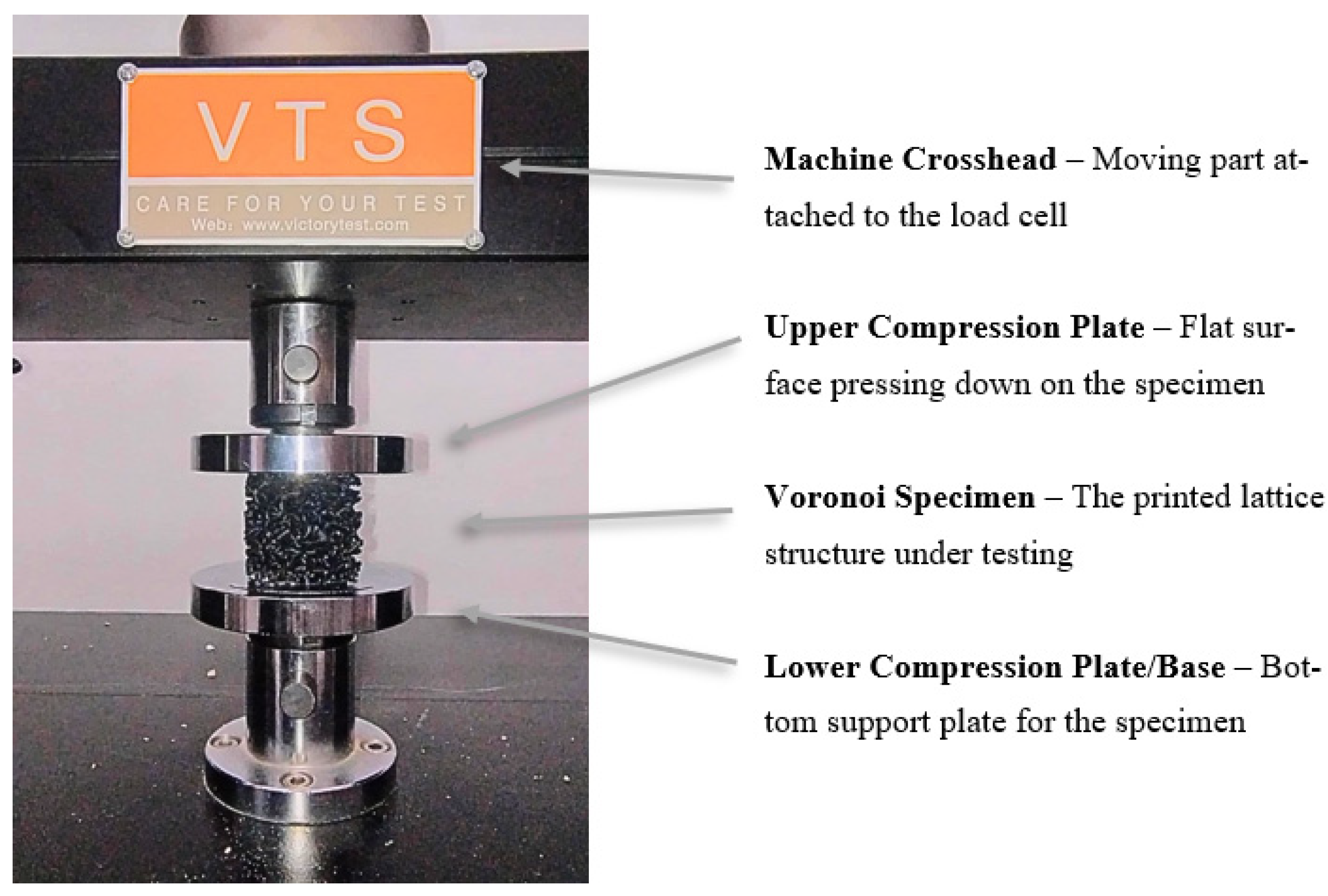
Compression tests were performed using steel plates and 50 N pre-load to ensure uniform contact, as shown in Figure 4. The specimens were positioned with their respective loading axis aligned with either the X, Y, or Z direction of the structure. Three replicates per loading direction and per type of structure (27 total specimens) were subjected under compression tests. Force–displacement data were continuously recorded and converted to engineering stress–strain curves. From these data, the elastic modulus and yield strength were determined. Energy absorption (area under the curve) and peak stress were also recorded. This testing procedure enabled a direct comparison of the compressive performance of isotropic and anisotropic Voronoi architectures as a function of loading orientation.

3. Results

3.1. Compressive Behaviour

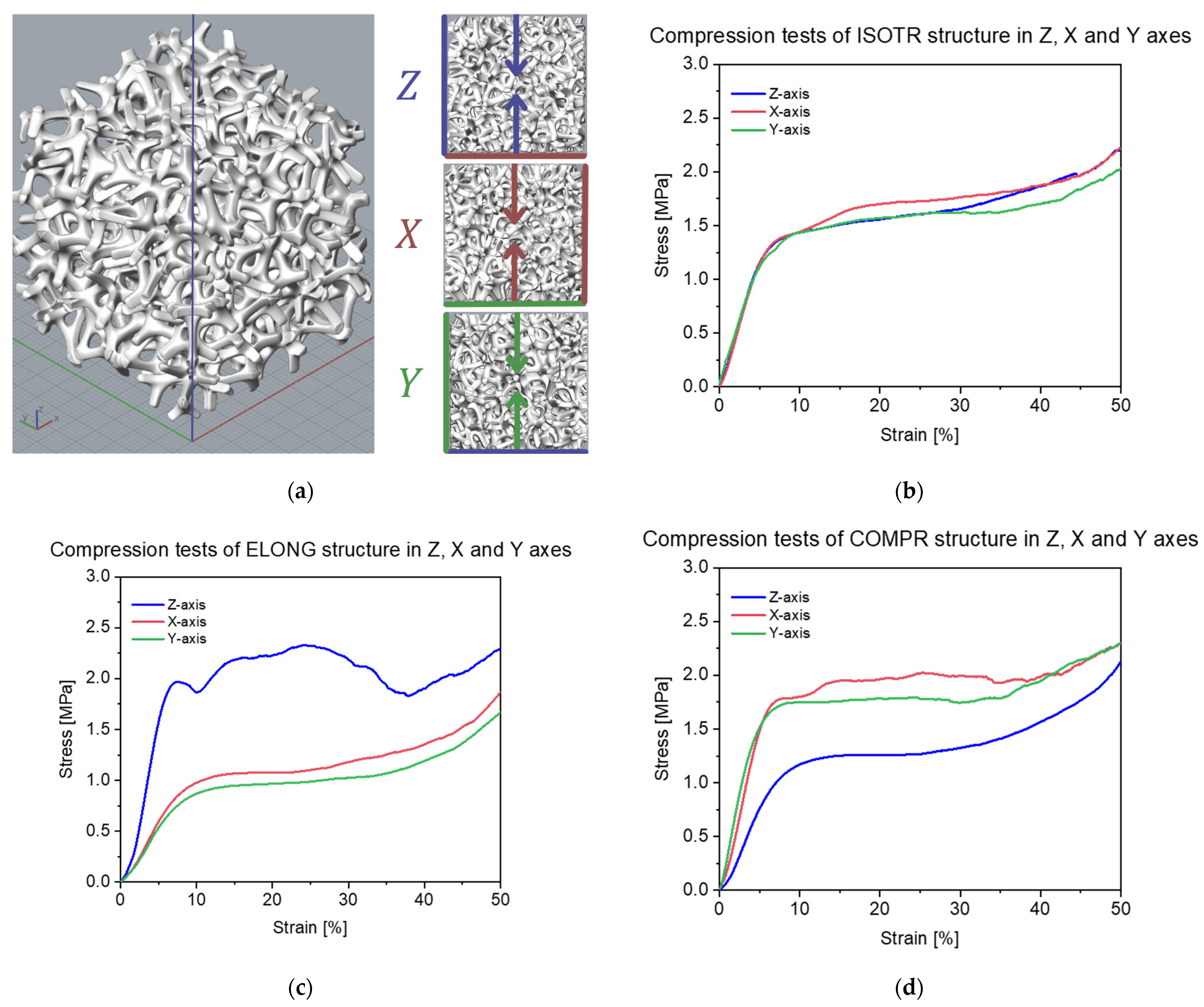
The mechanical response of the three Voronoi configurations under uniaxial compression along the X, Y, and Z axes is shown in Figure 5. All structures exhibited the characteristic three-stage deformation behaviour typical of open-cell lattice architectures: an initial linear elastic region, followed by a stress plateau associated with cell-wall buckling and progressive collapse, and finally a densification regime at higher strains.
The isotropic structure (ISOTR) showed a nearly identical stress–strain response along all three principal directions. This behaviour is consistent with its uniform strut orientation distribution. In contrast, the elongated (ELONG) and compressed (COMPR) structures exhibited direction-dependent mechanical responses.
For the ELONG structure, compression along the Z-axis (blue curve) resulted in a steeper initial slope and higher stress levels throughout the loading regime compared to the X and Y directions (red and green curves, respectively). This is attributed to the alignment of load-bearing struts along the loading direction, which enhances stiffness and strength in the vertical orientation.
Conversely, the COMPR structure displayed the opposite trend. When loaded along the Z-axis, the response was significantly more compliant, while the X and Y directions showed higher stiffness and plateau stresses. This is consistent with the predominance of horizontally oriented struts.
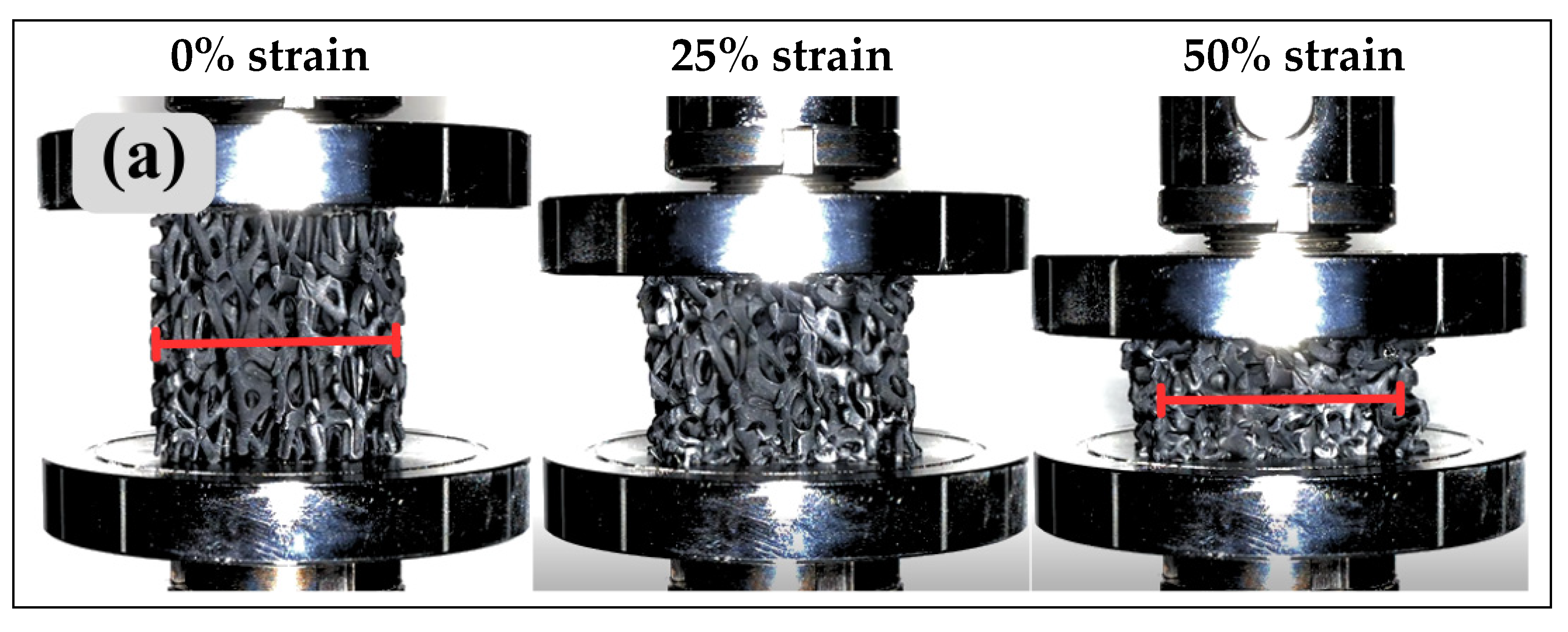
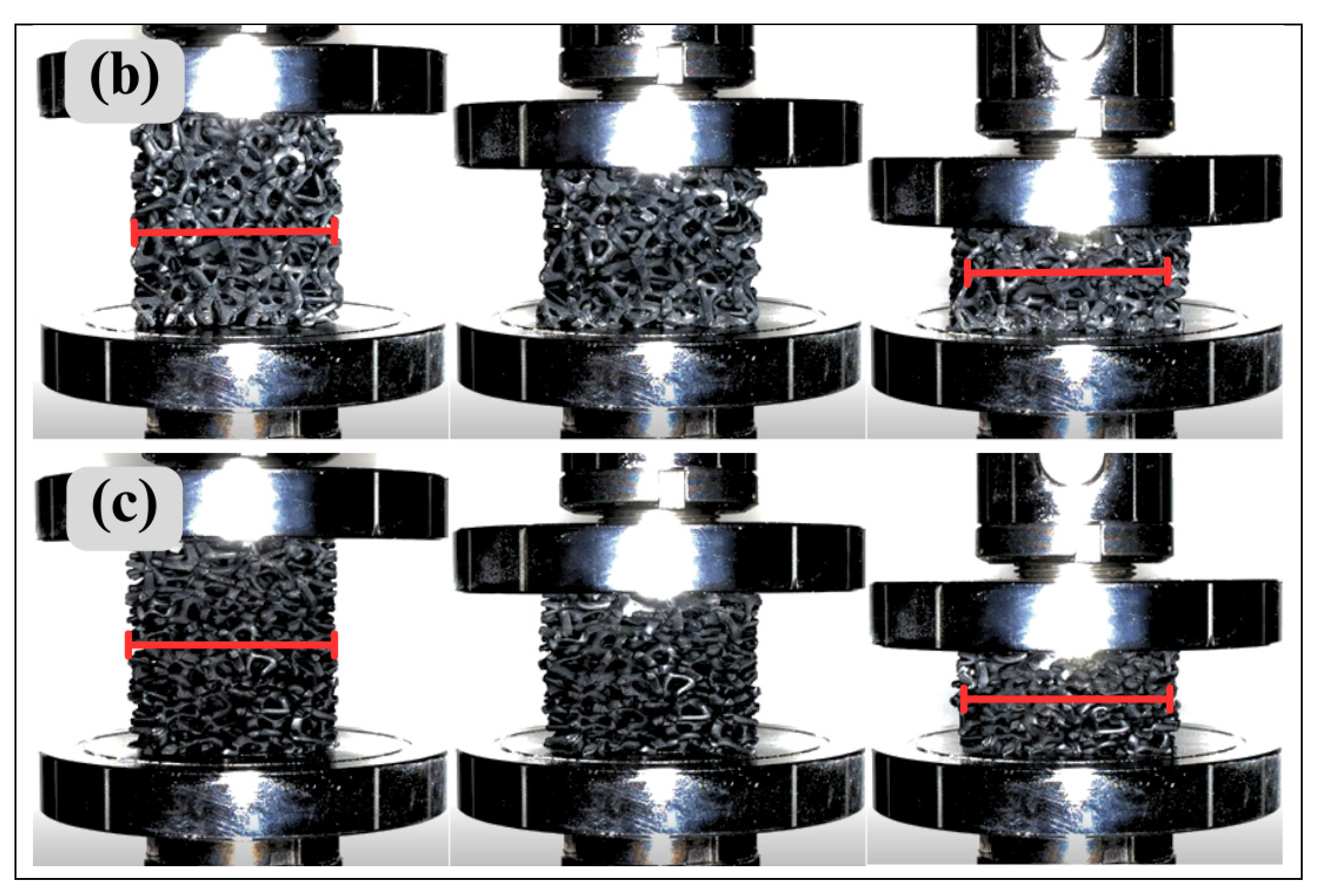
Qualitative assessment of the compression test video recordings for loading along the Z-axis—the direction of imposed geometric anisotropy—revealed a small but noticeable transverse expansion. This behaviour is illustrated in Figure 6 using identical horizontal reference markers (red line) with fixed length, which show a slight increase in specimen width relative to the undeformed state. An increase in specimen width is observed during compression, consistent with conventional (non-auxetic) deformation behaviour.

3.2. Mechanical Properties

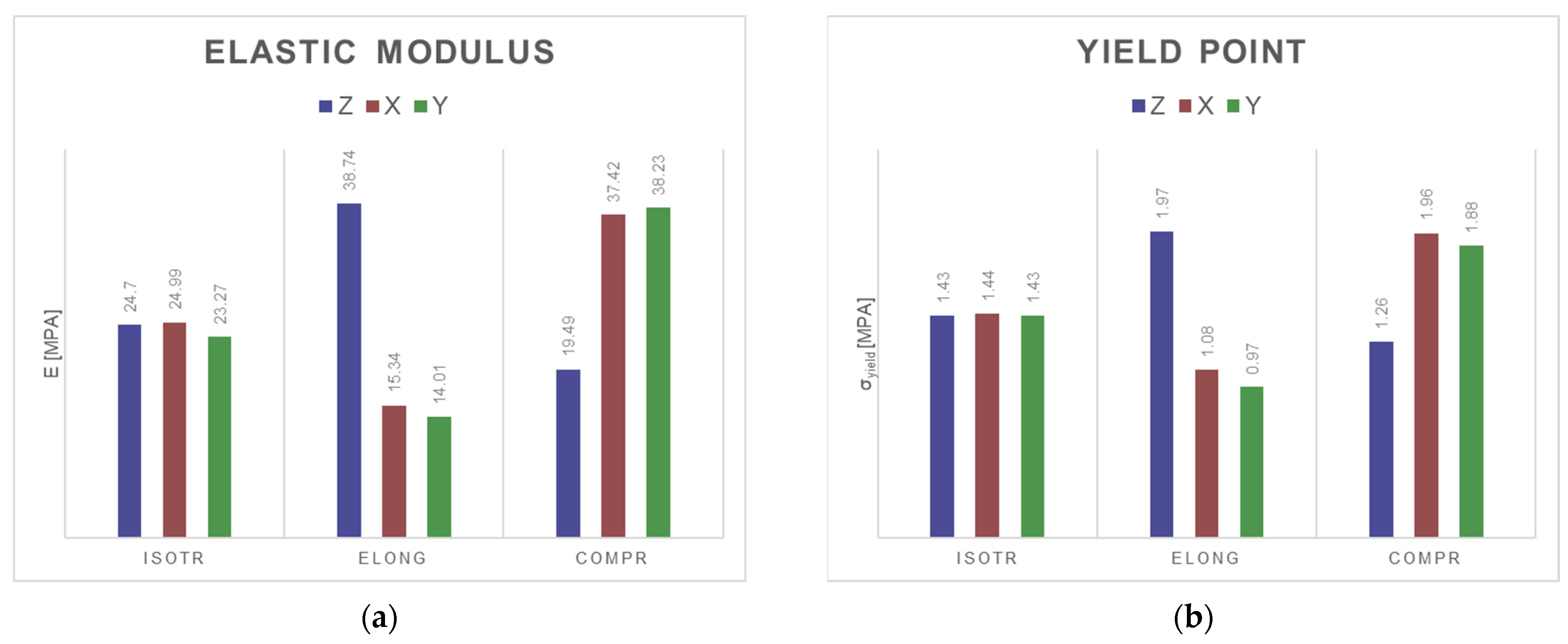
The extracted mechanical properties—elastic modulus and yield strength—are presented in Table 2. For the isotropic (ISOTR) structure, the elastic modulus and yield strength were nearly identical in the X, Y, and Z directions, reflecting its isotropic mechanical behaviour.
The ELONG structure demonstrated a pronounced directional dependence. The elastic modulus along the Z-axis (38.7 MPa) was higher than the measured ones in the transverse directions (15.3 MPa and 14.0 MPa for X and Y, respectively). A similar trend was observed for the yield strength, which reached 1.97 MPa along the Z-axis but decreased significantly in the X and Y directions. These results indicate that vertically oriented struts in the ELONG configuration dominate the load-bearing behaviour, enhancing stiffness and delaying plastic collapse along the principal build axis.
Conversely, the COMPR structure exhibited an inverted response. Its highest stiffness and yield strength were recorded in the X (37.4 MPa; 1.96 MPa) and Y (38.2 MPa; 1.88 MPa) directions, while the Z direction showed reduced values (19.5 MPa; 1.26 MPa). This behaviour directly corresponds to the geometric bias introduced by scaling the domain upward along Z prior to tessellation, resulting in a predominantly horizontal alignment of struts. Such alignment favours transverse load transfer, increasing stiffness and strength perpendicular to the build direction.
The results in Table 3 reinforce the anisotropic behaviour observed in the previous mechanical properties. The ELONG structure exhibited superior performance along the Z-axis, showing the highest peak stress (2.33 ± 0.17 MPa) and energy absorption (0.97 ± 0.06 MJ m−3) in that direction. This enhanced response is consistent with the presence of vertically elongated cells that promote stable deformation and delay densification under axial loading.
In contrast, COMPR demonstrated its strongest performance in the X and Y directions, where peak stresses exceeded 2.30 MPa and energy absorption reached 0.92 ± 0.06 MJ m−3 and 0.88 ± 0.03 MJ m−3, respectively. These higher values highlight the increased efficiency of transverse load transfer in geometries where cells are laterally expanded due to domain compression.
The isotropic structure (ISOTR) maintained similar peak stresses and energy absorption levels across all directions, as expected for a morphology without preferential geometric bias. This consistency further validates that directional differences in ELONG and COMPR arise solely from controlled geometric anisotropy rather than from variations in porosity or manufacturing effects.

4. Discussion

The mechanical response of the three Voronoi structures highlights the direct influence of geometric anisotropy on stiffness and strength (Figure 7). The isotropic (ISOTR) structure displayed uniform values of elastic modulus and yield strength along all axes, confirming the absence of preferential strut alignment and validating the stochastic uniformity of the design.
The anisotropic structures exhibited clear directional dependence. The ELONG structure showed its highest stiffness and yield strength along the Z-axis, corresponding to the alignment of vertically oriented struts that provided efficient load paths and delayed failure. This finding agrees with earlier studies demonstrating that cell orientation along the loading axis significantly enhances stiffness and yield performance in architected lattices [20,23,27]. Conversely, the COMPR structure exhibited superior mechanical properties in the X and Y directions, consistent with the horizontal alignment of its struts following domain expansion. The mechanical response can also be interpreted within the Gibson–Ashby [28,29] framework for cellular solids. Scaling the design domain modifies the effective slenderness ratio of the cell walls along specific directions, shifting deformation from bending-dominated to more stretching-dominated response. This explains the enhanced stiffness of ELONG along the Z axis and the improved transverse performance of COMPR., these changes arise solely from geometric reconfiguration, as relative density remains constant across all structures.
Energy absorption metrics further reinforce this anisotropic behaviour. ELONG absorbed substantially more energy along the Z-axis compared to its transverse directions, reflecting a more stable plateau region and delayed onset of densification. In contrast, COMPR exhibited its highest energy absorption in the X–Y plane, where the horizontally biassed morphology supports progressive collapse and efficient dissipation of mechanical work. The isotropic structure displayed uniform energy absorption in all directions, consistent with its equiaxed cell morphology.
A notable observation of the results is the relationship between the two anisotropic designs: the mechanical performance along Z in ELONG closely matches that of X–Y in COMPR, while the weaker X–Y response in ELONG is similar to the Z-direction behaviour of COMPR. These results confirm that directional alignment of struts determines the anisotropic response of stochastic Voronoi materials, with stiffness and strength maximised along the principal structural orientation. The present findings thus validate that geometric scaling prior to tessellation offers a simple yet effective method for tailoring directional properties in stochastic architected structures without altering porosity or material.

5. Conclusions

This study demonstrated that controlled geometric anisotropy has a pronounced effect on the compressive behaviour of additively manufactured Voronoi cellular structures. By scaling the design domain prior to tessellation, anisotropy was successfully introduced without altering porosity or overall dimensions. The ELONG configuration exhibited its highest stiffness, strength and absorbed energy along the Z-axis due to vertical strut alignment, whereas the COMPR structure showed superior performance in the transverse directions, reflecting its predominantly horizontal morphology. The isotropic structure displayed uniform mechanical behaviour across all axes, confirming the consistency of the design and fabrication process.
These findings confirm that the directional distribution of struts affects the anisotropic mechanical response in stochastic Voronoi lattices. The correlation between geometry and performance supports the use of indirect determination approaches based on morphological descriptors for predicting anisotropic properties. In conclusion, geometric scaling provides a simple yet effective tool for tailoring the stiffness and strength of lightweight architected materials, enabling their application in biomedical scaffolds, energy-absorbing systems and functionally graded structural components.

Author Contributions

Conceptualization, G.M. and S.K.; methodology, G.M.; writing—original draft preparation, S.K.; writing—review and editing, G.M. All authors have read and agreed to the published version of the manuscript.

Funding

This research received no external funding.

Institutional Review Board Statement

Not applicable.

Informed Consent Statement

Not applicable.

Data Availability Statement

The original contributions presented in this study are included in the article. Further inquiries can be directed to the corresponding author.

Conflicts of Interest

The authors declare no conflicts of interest.

References

  1. Pan, C.; Han, Y.; Lu, J. Design and Optimization of Lattice Structures: A Review. Appl. Sci. 2020, 10, 6374. [Google Scholar] [CrossRef]
  2. Yang, J.; Liu, H.; Cai, G.; Jin, H. Additive Manufacturing and Influencing Factors of Lattice Structures: A Review. Materials 2025, 18, 1397. [Google Scholar] [CrossRef]
  3. Gibson, L.J.; Ashby, M.F. Cellular Solids: Structure and Properties, 2nd ed.; Cambridge University Press: Cambridge, UK, 1997. [Google Scholar] [CrossRef]
  4. Lei, H.Y.; Li, J.R.; Xu, Z.J.; Wang, Q.H. Parametric design of Voronoi-based lattice porous structures. Mater. Des. 2020, 191, 108607. [Google Scholar] [CrossRef]
  5. Wang, G.; Shen, L.; Zhao, J.; Liang, H.; Xie, D.; Tian, Z.; Wang, C. Design and Compressive Behavior of Controllable Irregular Porous Scaffolds: Based on Voronoi-Tessellation and for Additive Manufacturing. ACS Biomater. Sci. Eng. 2018, 4, 719–727. [Google Scholar] [CrossRef]
  6. Zhao, Z.; Li, J.; Yao, D.; Wei, Y. Mechanical and permeability properties of porous scaffolds developed by a Voronoi tessellation for bone tissue engineering. J. Mater. Chem. B 2022, 10, 9699–9712. [Google Scholar] [CrossRef]
  7. Efstathiadis, A.; Symeonidou, I.; Tsongas, K.; Tzimtzimis, E.K.; Tzetzis, D. 3D Printed Voronoi Structures Inspired by Paracentrotus lividus Shells. Designs 2023, 7, 113. [Google Scholar] [CrossRef]
  8. Xu, S.; Shen, J.; Zhou, S.; Huang, X.; Xie, Y.M. Design of lattice structures with controlled anisotropy. Mater. Des. 2016, 93, 443–447. [Google Scholar] [CrossRef]
  9. Chen, H.; Han, Q.; Wang, C.; Liu, Y.; Chen, B.; Wang, J. Porous Scaffold Design for Additive Manufacturing in Orthopedics: A Review. Front. Bioeng. Biotechnol. 2020, 8, 609. Available online: https://www.frontiersin.org/article/10.3389/fbioe.2020.00609 (accessed on 17 September 2025). [CrossRef] [PubMed]
  10. Yamada, S.; Suzuki, H.; Sawada, K.; Okada, S.; Nishimura, A.; Todoh, M. Novel strut-based stochastic lattice biomimetically designed based on the structural and mechanical characteristics of cancellous bone. Mater. Des. 2025, 251, 113657. [Google Scholar] [CrossRef]
  11. Tuninetti, V.; Narayan, S.; Ríos, I.; Menacer, B.; Valle, R.; Al-lehaibi, M.; Kaisan, M.U.; Samuel, J.; Oñate, A.; Pincheira, G.; et al. Biomimetic Lattice Structures Design and Manufacturing for High Stress, Deformation, and Energy Absorption Performance. Biomimetics 2025, 10, 458. [Google Scholar] [CrossRef] [PubMed]
  12. Blakey-Milner, B.; Gradl, P.; Snedden, G.; Brooks, M.; Pitot, J.; Lopez, E.; Leary, M.; Berto, F.; Plessis, A.D. Metal additive manufacturing in aerospace: A review. Mater. Des. 2021, 209, 110008. [Google Scholar] [CrossRef]
  13. Obadimu, S.O.; Kourousis, K.I. Compressive Behaviour of Additively Manufactured Lattice Structures: A Review. Aerospace 2021, 8, 207. [Google Scholar] [CrossRef]
  14. Guo, Y.; Zhang, J.; Chen, L.; Du, B.; Liu, H.; Chen, L.; Li, W.; Liu, Y. Deformation behaviors and energy absorption of auxetic lattice cylindrical structures under axial crushing load. Aerosp. Sci. Technol. 2020, 98, 105662. [Google Scholar] [CrossRef]
  15. Ozdemir, Z.; Hernandez-Nava, E.; Tyas, A.; Warren, J.A.; Fay, S.D.; Goodall, R.; Todd, I.; Askes, H. Energy absorption in lattice structures in dynamics: Experiments. Int. J. Impact Eng. 2016, 89, 49–61. [Google Scholar] [CrossRef]
  16. Yang, C.; Li, Q.M. Advanced lattice material with high energy absorption based on topology optimization. Mech. Mater. 2020, 148, 103536. [Google Scholar] [CrossRef]
  17. Sengsri, P.; Fu, H.; Kaewunruen, S. Mechanical Properties and Energy-Absorption Capability of a 3D-Printed TPMS Sandwich Lattice Model for Meta-Functional Composite Bridge Bearing Applications. J. Compos. Sci. 2022, 6, 71. [Google Scholar] [CrossRef]
  18. Efstathiadis, A.; Symeonidou, I.; Tsongas, K.; Tzimtzimis, E.K.; Tzetzis, D. Parametric Design and Mechanical Characterization of 3D-Printed PLA Composite Biomimetic Voronoi Lattices Inspired by the Stereom of Sea Urchins. J. Compos. Sci. 2022, 7, 3. [Google Scholar] [CrossRef]
  19. Rouf, S.; Malik, A.; Singh, N.; Raina, A.; Naveed, N.; Siddiqui, M.I.H.; Haq, M.I.U. Additive manufacturing technologies: Industrial and medical applications. Sustain. Oper. Comput. 2022, 3, 258–274. [Google Scholar] [CrossRef]
  20. Deering, J.; Dowling, K.I.; DiCecco, L.A.; McLean, G.D.; Yu, B.; Grandfield, K. Selective Voronoi tessellation as a method to design anisotropic and biomimetic implants. J. Mech. Behav. Biomed. Mater. 2021, 116, 104361. [Google Scholar] [CrossRef]
  21. Hossain, U.; Ghouse, S.; Nai, K.; Jeffers, J.R. Controlling and testing anisotropy in additively manufactured stochastic structures. Addit. Manuf. 2021, 39, 101849. [Google Scholar] [CrossRef]
  22. D’Andrea, L.; Goretti, G.; Magrini, G.; Vena, P. Tuning the trabecular orientation of Voronoi-based scaffold to optimize the micro-environment for bone healing. Biomech. Model. Mechanobiol. 2025, 24, 1057–1071. [Google Scholar] [CrossRef]
  23. Liu, B.; Li, S.; Cao, W.; Lu, W.; Lu, P. Design of 3D anisotropic Voronoi porous structure driven by stress field. Comput. Methods Appl. Mech. Eng. 2024, 420, 116717. [Google Scholar] [CrossRef]
  24. Bi, G.; Toribio, J.; Kreši’c, I.K.; Kaljun, J.; Rašovi’c, N.R. Controlling the Mechanical Response of Stochastic Lattice Structures Utilizing a Design Model Based on Predefined Topologic and Geometric Routines. Appl. Sci. 2024, 14, 6048. [Google Scholar] [CrossRef]
  25. Guttridge, C.; Shannon, A.; O’Sullivan, A.; O’Sullivan, K.J.; O’Sullivan, L.W. Effects of post-curing duration on the mechanical properties of complex 3D printed geometrical parts. J. Mech. Behav. Biomed. Mater. 2024, 156, 106585. [Google Scholar] [CrossRef]
  26. ASTM D1621; Standard Test Method for Compressive Properties of Rigid Cellular Plastics. ASTM International: West Conshohocken, PA, USA, 2004.
  27. Herath, B.; Suresh, S.; Downing, D.; Cometta, S.; Tino, R.; Castro, N.J.; Leary, M.; Schmutz, B.; Wille, M.L.; Hutmacher, D.W. Mechanical and geometrical study of 3D printed Voronoi scaffold design for large bone defects. Mater. Des. 2021, 212, 110224. [Google Scholar] [CrossRef]
  28. Gibson, L.J. Modelling the mechanical behavior of cellular materials. Mater. Sci. Eng. A 1989, 110, 1–36. [Google Scholar] [CrossRef]
  29. Ashby, M.F. The properties of foams and lattices. Philos. Trans. R. Soc. A Math. Phys. Eng. Sci. 2006, 364, 15–30. [Google Scholar] [CrossRef] [PubMed]
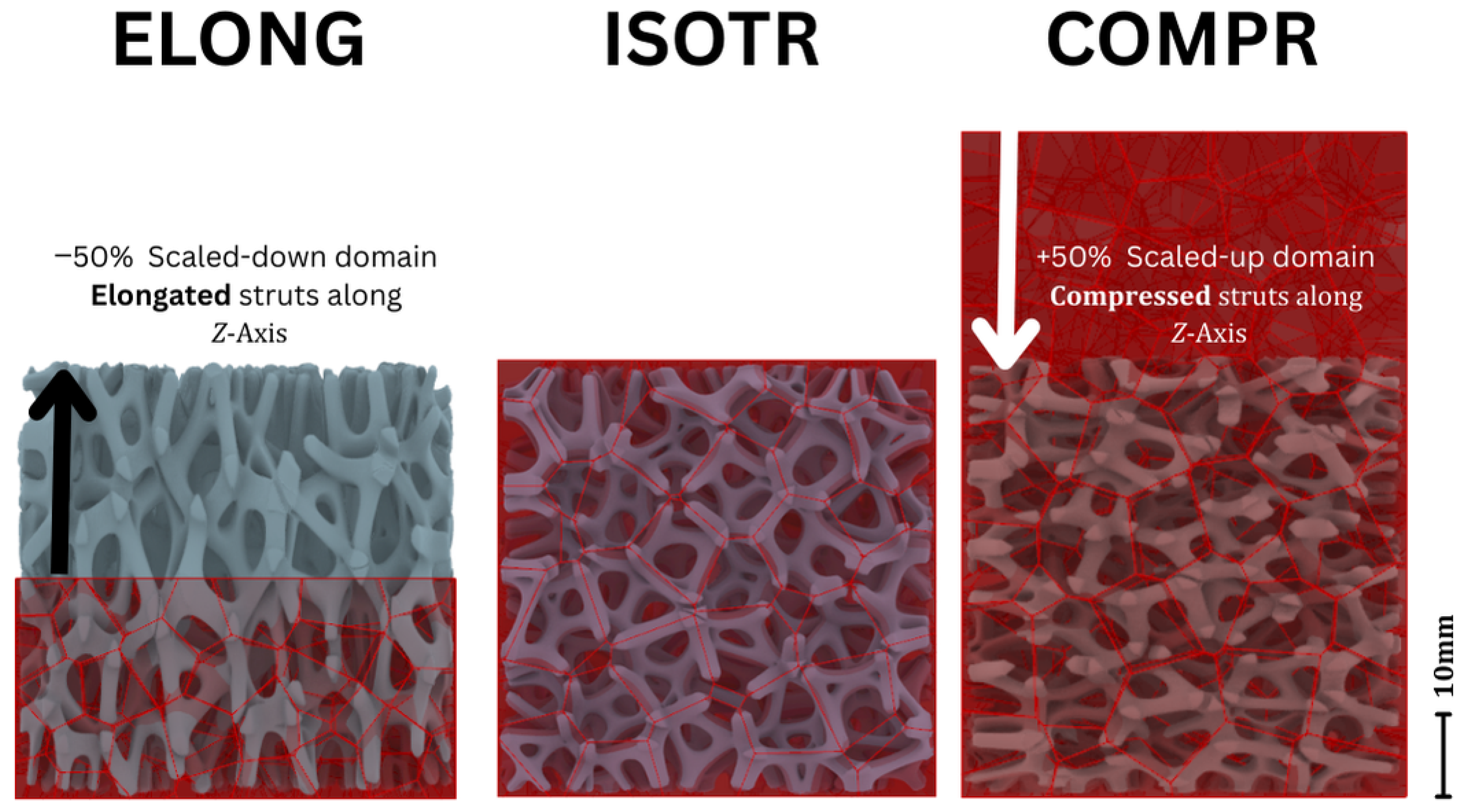
Figure 1. Schematic representation (Grasshopper) of the scaling procedure used to generate anisotropy in the Voronoi architectures. The ELONG structure was obtained by scaling the domain down by 50% along the Z-axis, the ISOTR structure was generated without scaling, and the COMPR structure was obtained by scaling the domain up by 50% along the Z-axis prior to Voronoi tessellation and regeneration.
Applsci 16 00471 g001
Figure 2. The resulting geometries from the top, front, and right views demonstrate the anisotropic cell morphology induced by the scaling procedure. The isotropic structure exhibits uniform cell orientation and shape across all planes, whereas the anisotropic structures reveal pronounced directional elongation or compression of the cell network along the Z-axis.
Applsci 16 00471 g002
Figure 3. (a) Visual representation of the supports beams on the slicer software (b) Photograph of the printed Voronoi cellular structures (50 mm × 50 mm × 50 mm) corresponding to the three design configurations: elongated (ELONG), isotropic (ISOTR), and compressed (COMPR).
Applsci 16 00471 g003aApplsci 16 00471 g003b
Figure 4. The compression testing apparatus on ISOTR structure.
Applsci 16 00471 g004
Figure 5. (a) Schematic representation of the coordinate system and the three principal compression directions (X, Y, and Z) applied to the Voronoi cellular structures. Compression along the Z-axis, X-axis, and Y-axis is indicated by blue, red, and green arrows, respectively. (b) Representative compressive stress–strain curves of the isotropic (ISOTR), (c) elongated (ELONG), (d) and compressed (COMPR) configurations, respectively, tested along the Z, X, and Y axes.
Applsci 16 00471 g005
Figure 6. Representative deformation sequence of the Voronoi cellular structures under axial compression at 0%, 25%, and 50% strain: (a) elongated configuration (ELONG), (b) isotropic configuration (ISOTR), and (c) compressed configuration (COMPR). The red horizontal lines indicate identical initial transverse reference lengths, used to qualitatively assess changes in specimen width during compression.
Applsci 16 00471 g006aApplsci 16 00471 g006b
Figure 7. (a) Comparison of elastic moduli for ISOTR, ELONG and COMPR structures under compression along Z, X and Y axes. (b) Comparison of yield strengths. The bar colours correspond to Z-axis (blue), X-axis (red) and Y-axis (green).
Applsci 16 00471 g007
Table 1. Porosity and mass of the fabricated Voronoi structures.
StructureInitial Z Dim. (mm)Computed Porosity (%)Mass (gr)Calculated Porosity (%)Porosity
Deviation (%)
ELONG2579.9632.53 ± 0.1278.262.13
ISOTR5080.1832.27 ± 0.1878.432.18
COMPR7579.8032.62 ± 0.1578.202.01
Table 2. Elastic modulus and yield strength of the ELONG, ISOTR, and COMPR Voronoi structures under compression along X, Y, and Z directions.
Elastic Modulus [MPa]Yield Point [MPa]
StructureZXYZXY
ISOTR24.70 ± 0.1124.99 ± 0.2423.27 ± 0.151.43 ± 0.021.44 ± 0.031.43 ± 0.02
ELONG38.74 ± 0.4115.34 ± 0.3514.01 ± 0.371.97 ± 0.051.08 ± 0.050.97 ± 0.04
COMPR19.49 ± 0.2437.42 ± 0.3038.23 ± 0.311.26 ± 0.051.96 ± 0.071.88 ± 0.05
Table 3. Peak stress and energy absorption density of the ELONG, ISOTR, and COMPR Voronoi structures under compression along X, Y, and Z directions.
Peak Stress [MPa]Energy Absorption Density [MJ m−3]
StructureZXYZXY
ISOTR2.21 ± 0.122.22 ± 0.112.02 ± 0.140.78 ± 0.030.81 ± 0.050.75 ± 0.04
ELONG2.33 ± 0.171.87 ± 0.141.67 ± 0.120.97 ± 0.060.55 ± 0.030.49 ± 0.04
COMPR2.13 ± 0.112.30 ± 0.182.30 ± 0.170.64 ± 0.020.92 ± 0.060.88 ± 0.03
Disclaimer/Publisher’s Note: The statements, opinions and data contained in all publications are solely those of the individual author(s) and contributor(s) and not of MDPI and/or the editor(s). MDPI and/or the editor(s) disclaim responsibility for any injury to people or property resulting from any ideas, methods, instructions or products referred to in the content.