
Article

Swirl Flame Stability for Hydrogen-Enhanced LPG Combustion in a Low-Swirl Burner: Experimental Investigation

by
Abdulrahman E. J. Alhamd
1,
Abdulrazzak Akroot
1 and
Hasanain A. Abdul Wahhab
2,*
1
Department of Mechanical Engineering, Faculty of Engineering and Natural Sciences, Karabuk University, 78050 Karabuk, Turkey
2
Training and Workshop Center, University of Technology-Iraq, Baghdad 35050, Iraq
*
Author to whom correspondence should be addressed.
Appl. Sci. 2026, 16(1), 347; https://doi.org/10.3390/app16010347 (registering DOI)
Submission received: 1 December 2025 / Revised: 24 December 2025 / Accepted: 25 December 2025 / Published: 29 December 2025
(This article belongs to the Special Issue Clean Combustion Technologies and Renewable Fuels)

Abstract

Recent progress in hydrogen combustion indicates that hydrogen could partially or fully replace traditional fuels in power plants, but maintaining stable flames remains a major challenge for many combustion systems. This study presents the effect of hydrogen enrichment of Liquid Petroleum Gas (LPG) on the low-swirl flame structure and flame temperature at different hydrogen mass fractions and equivalence ratios (φ = 0.501 and 1.04). The experimental observations for low-swirl flames under various conditions, including the effect of increasing hydrogen enrichment from 0% to ~20%, were discussed. Experiments were performed using a swirl burner, flame photography, and temperature measurements to evaluate the dynamic swirl flame, stability, and flame temperature distribution. The results show that moderate hydrogen enrichment (5–15%) improves flame stability and delays blow-off. In contrast, very high hydrogen concentrations may destabilize the flame due to higher reactivity and enhanced sensitivity to flow perturbations. Also, hydrogen enrichment up to ~20% enhances flame compactness, intensifies heat release, and reduces oscillatory instability without triggering blow-off or flashback, making hydrogen blending a promising strategy for stabilizing swirl flames at rich operating conditions. Finally, hydrogen enrichment consistently increases swirl flame temperature at both equivalence ratios.

1. Introduction

Premixed flames, especially lean ones, are widely used in modern gas turbine combustors to control flame temperature and reduce thermal NOx emissions [1]. In addition to turbulent swirl combustion, it is a widely used technique in industrial and energy applications, including gas turbines, combustion engines, and industrial burners [2]. The swirling flow stabilizes the flame, enhances air–fuel mixing, and reduces emissions, making it a key feature in combustion system design. Flame dynamics in turbulent swirl combustion, however, are complex due to the intricate interaction between turbulence, swirl-induced recirculation zones, and combustion instabilities. Swirl-induced recirculation zones play a crucial role in transporting hot combustion products back to the flame base, thereby promoting the ignition of the unburned mixture, enhancing flame stability, and increasing combustion efficiency [3]. For this reason, lean-premixed swirl combustion is extensively employed in gas turbines under diverse operating conditions [4]. Nonetheless, the high turbulence associated with swirl flows often generates strong flow field fluctuations in combustors, leading to local flame extinction or even Lean Blowout (LBO) [5], ultimately compromising the stable performance of gas turbines and aeroengines [6,7].
The use of swirling flows in combustion chambers creates a Central Recirculation Zone (CRZ), which stabilizes the flame by recirculating hot products that continuously ignite fresh reactants. The Swirl Number (S), defined as the ratio of the axial flux of angular momentum to the linear flux of linear momentum, is a critical parameter that influences the size and intensity of the CRZ. The simplified swirler geometry formula for vane-type swirlers is described [6]:
S = 2 3 × tan δ 1 D o D s 3
where δ, blade angle relative to the axial direction, Do is the diameter of the hub, and Ds is the outer diameter of the swirler. Recent studies have demonstrated that a low-swirl range of 0 to 0.3, as well as increasing the swirl number within the range of 0.7 to 1.0, improves flame stability, as stronger rotational flow enhances fuel–air mixing and promotes the formation of effective recirculation zones that feed hot gases back toward the flame, helping sustain combustion; however, this stabilizing effect is limited and does not continue indefinitely beyond this range [8], as shown in Figure 1. As the swirl number increases beyond that, turbulence intensity rises, leading to an increase in flame speed. This can reduce the flame surface area, leading to instability issues such as flashback and decreased combustion efficiency [9,10]. Excessive swirl can reduce oxygen concentrations in critical regions, further destabilizing the flame [11]. Increasing the swirl number enhances blow-off resistance but can worsen flashback tendencies, creating a complex stability map for different LPG mixtures [12].
Double swirl configurations enhance mixing and flame stabilization, with distinct flame structures observed under varying operational conditions [13]. Stone et al. [14] studied numerical simulations to examine the effect of three swirl numbers (S = 0.56, 0.84, and 1.12) on the stability of a lean-premixed gas turbine combustor. At higher swirl intensities, they reported negative axial velocity values along the centerline in the expansion region, signifying the occurrence of vortex breakdown. Similarly, Anacleto et al. [15] conducted experimental investigations on swirl flow dynamics and flame behavior in a lean-premixed burner. Their burner was equipped with a swirler featuring adjustable vanes, enabling operation at different swirl numbers. They showed that the vortex breakdown occurs at S = 0.5, and an Inner Recirculation Zone (IRZ) is formed at all higher swirl number values. They also identify the flame flashback limit, which occurs at S equal to 1.26. Mafra et al. [16] observed in an experimental study of LPG combustion that a mediocre equivalence ratio and low swirl numbers lead to the formation of an IRZ rich in fuel, which promotes a higher rate of unburned hydrocarbons. For higher swirl numbers, a more efficient combustion is observed in IRZ, with higher temperatures. Ying and Vigor [10] investigated the effect of swirling flow on combustion dynamics using the Large-Eddy Simulation (LES) technique. They recorded that when the swirl number exceeds a critical value, S = 0.44, vortex breakdown occurs, leading to the formation of an IRZ. At higher swirl numbers, flame flashback occurred because the turbulence intensity and the flame velocity increased. Martin et al. [17] studied the influence of swirl number on the structure of swirl-stabilized spray flames. By modifying the swirler design, they achieved different swirl configurations and found that higher swirl intensities promote combustion stabilization while also affecting the flame’s lifting behavior. Yilmaz [18] conducted a numerical study to investigate the effect of swirl number on combustion characteristics in a diffusion flame, finding that it significantly affects species concentrations and flame temperature. In a related study, Tsao and Lin [19] numerically modeled a can-type gas turbine combustor at two swirl numbers (S = 0.74 and 0.85). Their results showed that swirl momentum is directed toward the centerline, generating a vortex core whose strength is governed by the inlet swirl level. Mansouri et al. [8] presented a numerical study that utilizes a propane–air mixture to investigate the effects of swirl on flow and flame dynamics in a lean-premixed combustor. An Outer Recirculation Zone (ORZ) appears in the burner corner regardless of the swirl number. In contrast, beyond the critical value of swirl number 0.75, an IRZ appears due to vortex breakdown, resulting in flame flashback.
Hilares and Roberto [20] conducted a study on flame dynamics of a premixed axial swirl burner using extensive eddy simulations and system identification. They found that using a low-order network model, variations in thermal boundary conditions, power rating, combustor confinement, and swirled position affect flame dynamics. Al-Abdeli and Masri [21] studied swirling, turbulent flames of natural gas and fuel mixtures using a burner configuration. They found that the flame stability and blow-off behavior changed with the swirl number. The base-stabilized flames that blow off downstream were observed at low swirl, while a complete detachment of the flame from the burner base was observed at high swirl. Sellan and Balusamy [22] presented a study to investigate the topology of premixed and stratified LPG/air flames in a confined environment using a swirl-stabilized burner. They found that premixed flames are primarily influenced by the swirl number, which forms a V-shaped flame lift. In contrast, stratified flames are more compact and have a similar shape at higher stratification levels. The effects of mixture stratification, velocity ratio, and swirl on LPG/air flame structures are investigated by Sellan and Balusamy [23]. They found that the flame structure is robust to changes in mixture stratification but more sensitive to velocity ratio and swirler combination. Axial swirlers of the burner design significantly influence flame flow patterns. Taamallah [24] investigated vortical structures, dynamics, and interaction with a turbulent premixed flame in a swirl-stabilized combustor. It reveals columnar lifted flames with open inner recirculation zones, stagnation points, and bubble-type recirculation zones. As the equivalence ratio increases, combustion first occurs intermittently, then continuously, in the ORZ and the Outer Shear Layer (OSL). A helical vortex core rotates in place, maintaining structural integrity and coherent rotation. Dostiyarov et al. [25] found that increasing the proportion of hydrogen, the equivalence ratio, and the vane angle significantly improved flame stabilization in their work conducted on hydrogen–LPG combustion in a diffusion burner. Maximum flame stabilization was achieved at a vane angle of 60° and a hydrogen fraction of 40%, resulting in an equivalence ratio of 0.9, an 8.0% improvement over the baseline mode without hydrogen. Agostinelli et al. [26] employed LES with Conjugate Heat Transfer (CHT) simulations to investigate the impact of adding hydrogen to a methane–air swirling flame. They found that increasing the hydrogen fraction resulted in shorter flame lengths and more concentrated heat release, accompanied by bimodal thermoacoustic oscillations at 50% hydrogen. The flame length decreases with increasing hydrogen fuel fraction because, as the laminar flame speed increases, the heat-release rate distribution becomes more compact. Hassan et al. [27] investigated the impact of adding an acetylene/argon mixture to LPG on the temperature field and flame structure in a turbulent, lean-premixed burner. They found that inserting a fluidic oscillator increased flame length, decreased luminosity, altered temperature profiles, reduced NOx emissions by 52%, and improved combustion efficiency by 2.5%.
The main problem addressed in this study is maintaining flame stability in hydrogen-based combustion systems, particularly in power plants. The research investigates the influence of hydrogen enrichment in LPG on the structure and thermal characteristics of low-swirl flames, specifically at two equivalence ratios (φ = 0.501 and 1.04) and hydrogen mass fractions ranging from 0% to ~20%. A systematic experimental approach was employed, using a swirl burner setup in conjunction with flame photography and temperature measurements to capture the flame structure, stability, and temperature distribution. This approach enabled evaluation of how varying levels of hydrogen enrichment affect flame compactness, stability limits, blow-off tendencies, and overall heat release, thereby providing insights into the feasibility of hydrogen–LPG blends for stable, efficient combustion in power generation applications.

2. Experimental Setup

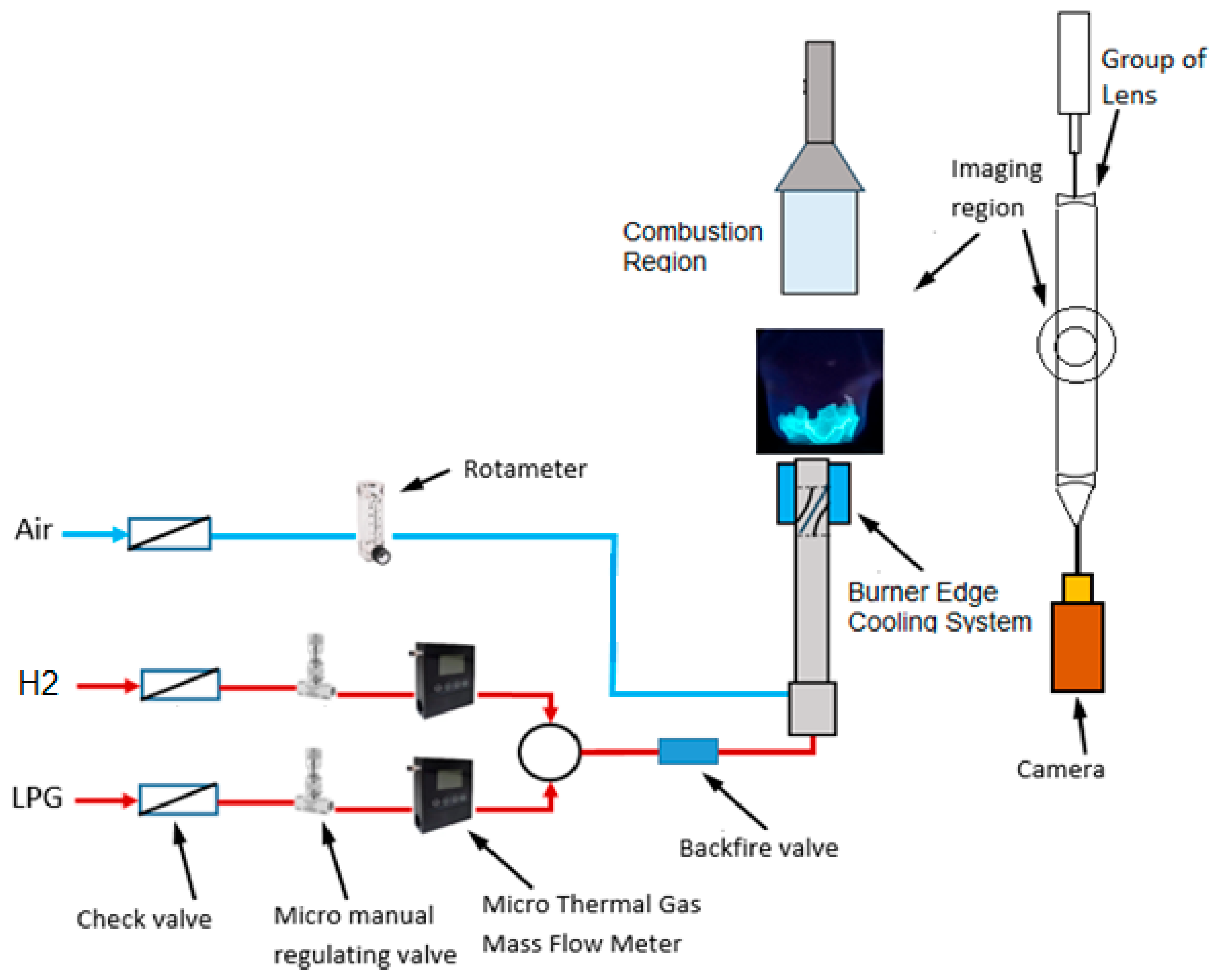
The experiments were conducted on a specially constructed rig to study a low-swirl flame. It consisted of a combustion unit, supply and control units for fuel and air, a measurement temperature unit, and a visual optical system. The LPG and H2/air flame test apparatus is illustrated schematically in Figure 2. The used combustion unit (the combustor system) consists of three basic parts: the primary premixing tubes, the vertical swirl burner, and the combustion region (which contains the flame). A vertical swirl burner was used to generate a premixed, low-swirl flame from a mixture of Iraqi liquefied petroleum gas (ILPG), hydrogen H2, and air. The burner was manufactured from steel and consisted of a 40 mm-diameter tube measuring 680 mm in length. Four steel strips were helically installed inside the tube, 50 mm from its upper edge, to induce a swirling flow pattern in the LPG–H2/air mixture. The strips were oriented at a 90° angle relative to the axial direction (because the 90° orientation maximizes tangential momentum relative to axial momentum, it produces one of the most vigorous possible swirl intensities for a given geometry, making it particularly effective when flame anchoring and recirculation are critical, e.g., lean-premixed combustion) [28]. To minimize ambient air interference during combustion, the flame region was enclosed by a transparent polycarbonate chamber. The burner was supplied with LPG and H2 from special gas cylinders and with air from a reciprocating compressor. LPG and H2 were injected together with air at the burner’s lower end. LPG and hydrogen microthermal gas mass flow meters with ±1.5% accuracy were used to measure their flow rates. The air volume flow rate was determined using a rotameter. A RITTER Drum-type device was used to calibrate the airflow meter at the outlet of the flow controllers, ensuring a precision of ±0.2% at the reference flow rate and ±0.5% across the entire measurement range.
The experiments were performed at ambient conditions of 1 atm and 303 K for the premixed fuel/air charge entering the combustion zone. A water jacket was used to prevent overheating at the burner exit and maintain the burner edge at ambient temperature. This jacket was incorporated near the upper edge to provide cooling during operation. To measure the swirl flame temperature, PEAK Sensors Type S thermocouples (Platinum 90%, Rhodium 10%) with a sensitivity of 6–12 μV/°C and an accuracy of ±1.0 °C were used. It is suitable for oxidizing atmospheres. A set of insulated thermocouples was arranged horizontally with equal spacing to form a linear thermal probe for flame temperature measurement within the combustion zone. It is distributed symmetrically to the left and right of the burner centerline at 5 mm intervals and located 20 mm above the burner exit. Flame temperature signals were recorded using a GRAPHTEC data logger with an accuracy of ±0.8% and 0.1 °C resolution, then stored on a computer.
The optical system used in this study consisted of a low-power (0.21 mW) He–Ne laser source with a 713 nm wavelength and a series of specialized lenses. High-speed imaging was performed using Phantom VEO 440 digital cameras operating at 1100 frames per second. Table 1 summarizes the geometrical dimensions of both the combustion system and the electromagnetic charger, as well as the operating conditions of the experiments.
To investigate the dynamics of swirl flames, videos of the swirl flames are captured at 1920 fps and 1280 × 720 pixels for various conditions of the conducted experiments. Approximately 900 sequential image frames were extracted from each video for each experiment, with a time interval of 0.52 μs between these frames, providing sufficient data for a convergence study. The images were efficiently processed using a MATLAB R2023b code developed to extract information from the recorded movie data. The dataset was analyzed incrementally, starting with the first 200 frames, then 400, and continuing up to 900, where each subset was processed independently. To verify whether the growth factor stabilized at 900 images, Statistical comparisons were then performed. The growth factor was employed as a measure of flame stability at the burner edge. The growth factor characterizes how a swirl flame evolves and how its spatial structure changes during this evolution. It is derived from a sequence of flame images captured at successive time instants, revealing the periodic distortion and oscillatory motion of the flame front. The growth factor measures the extent to which perturbations on the flame surface are amplified or damped, indicating whether the flame front dynamically expands or diminishes in response to flow instabilities.
The algorithm tracks the instantaneous radial displacement of the flame front, x(t), at a fixed axial position. At the same time, the root-mean-square (RMS) of its oscillatory component represents the characteristic amplitude of the fluctuations. An increasing RMS over time indicates that the oscillations are growing, whereas a decreasing RMS signifies damping of the oscillations [29,30]. The growth factor provides a convenient nondimensional representation of this variation, based on the measured flame-front displacement y(ti) at discrete sampling times t1, …, tn.
y ~ t i = y t i y ¯ l o c a l
where y ¯ l o c a l is a local mean (e.g., running mean or ensemble mean), so RMS catches the oscillatory part only. Compute RMS over a time frame F containing M samples [29].
R M S F = 1 M j = 1 M y ~ ( t j ) 2
Relative RMS growth factor normalized,
G F t = R M S ( t ) R M S ( t 0 )
where t0 is a reference time (e.g., the first frame), finally, estimate the growth rate Δ from RMS. (when Δ ~ 0, neutrally stable; Δ ˃ 0, unstable mode growth; and Δ ˂ 0, decaying mode)
= ln R M S t 2 l n ( R M S t 1 ) t 2 t 1
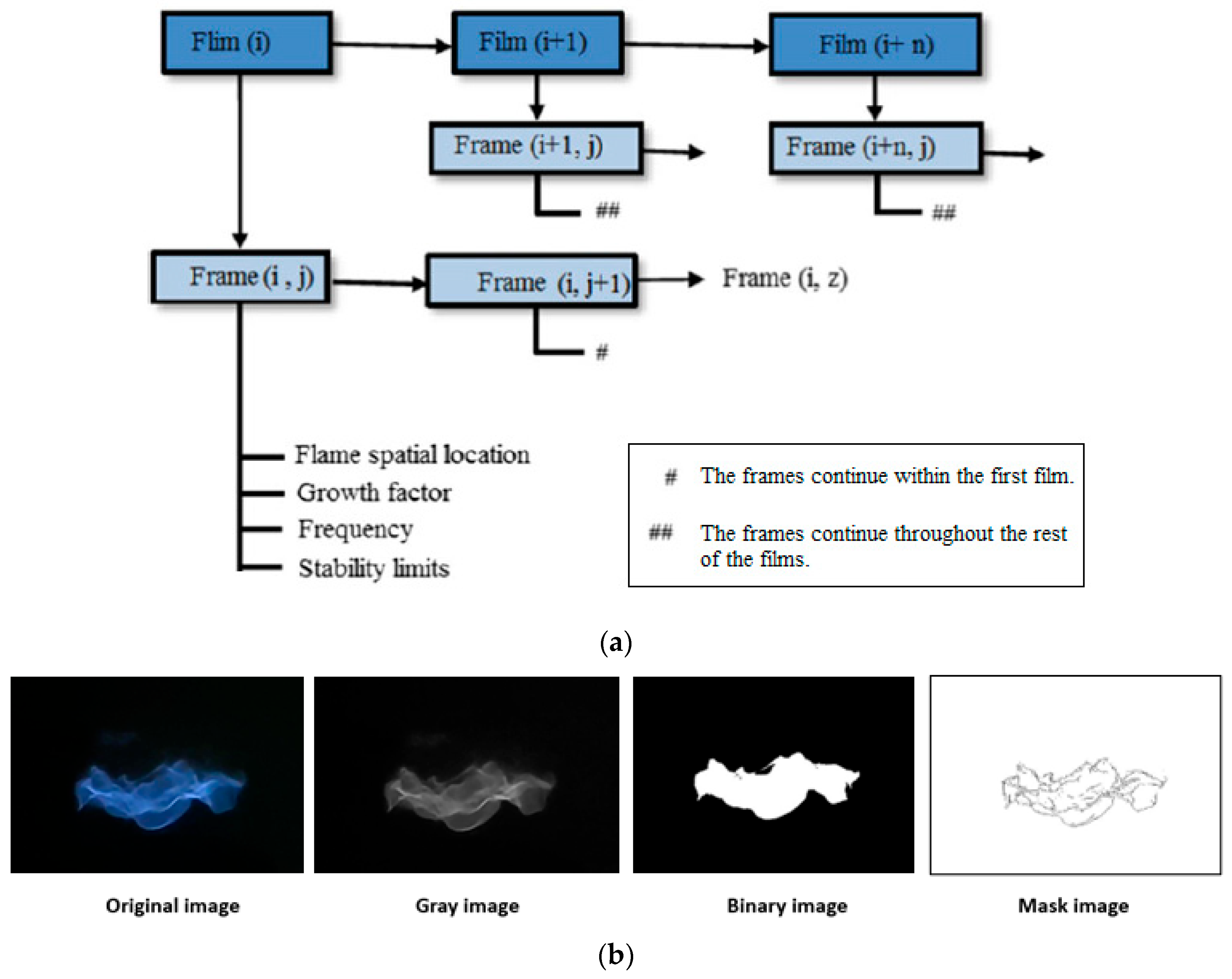
A MATLAB R2023b code was developed to extract information from the acquired movie, enabling efficient image processing. The swirl flame detection and verification of its properties are the main stages of the algorithm, as shown in Figure 3a. To identify the swirl flame front, several measures were taken to determine its basic parameters. These steps include the following: background extraction and noise reduction; obtaining a binary image and performing thresholding (threshold value of 0.7–0.85); and performing morphological operations on the binary image. Using flame-front images, the code quantified features such as the central and outer circulation zones, the propagation area, and the flame mask. The digital image processing procedure applied in this study is illustrated in Figure 3b. The conversion between the actual physical dimension (in millimeters) and the image resolution (in pixels) is represented by the calibration scale factor. Determining the calibration scale factor is one essential step in the flame-front identification process. In practice, the number of pixels corresponding to 1 mm was determined using a calibration image with a resolution of 5 pixels/mm.

Uncertainty Analysis

This section presents the uncertainty analysis of the experimental data. The evaluation of measurement errors was conducted to identify the potential uncertainties associated with each parameter. The precision of both the instrument and the sensor influences the overall measurement uncertainty. In the worst-case scenario, the accumulation of individual errors could result in a significantly higher total uncertainty. Nevertheless, it is improbable that all error sources will simultaneously reach their maximum values in the same direction. A more realistic estimation is obtained using the root-sum-of-squares (RSS) method, which calculates the combined uncertainty as the square root of the sum of the squared individual errors [28]. The accuracy levels and associated uncertainties of the measured parameters are presented in Table 2.

3. Results and Discussion

3.1. Dynamics of Swirl Flame for LPG

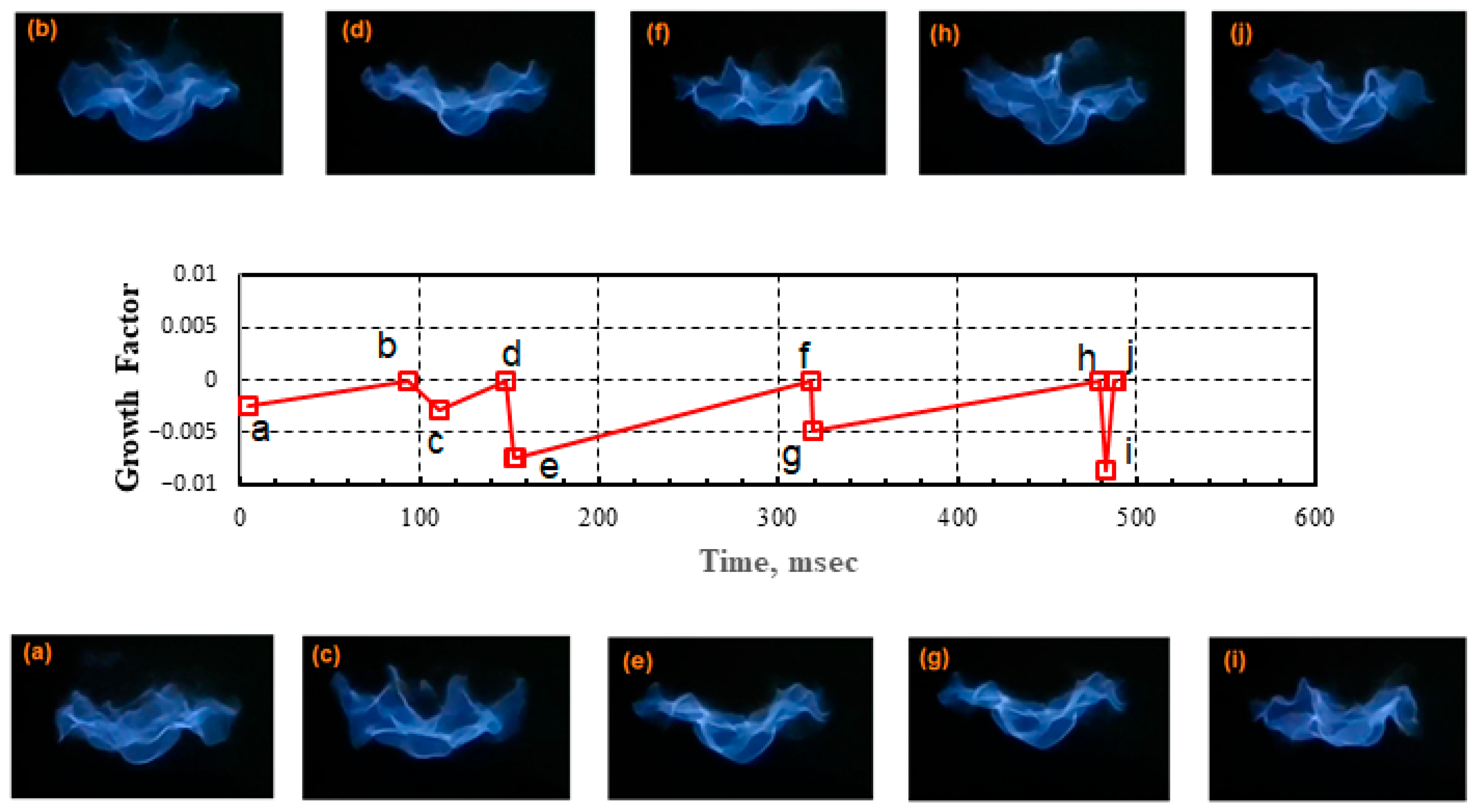
Figure 4 illustrates the temporal evolution of a swirl flame stabilized on LPG/air at a lean equivalence ratio of φ = 0.501, along with its corresponding variation in growth factor. The image arrangement combines instantaneous swirl flame images (labeled a–j) with a time-resolved plot of the growth factor, providing insight into the unsteady behavior of the swirl flame near blow-off conditions. The sequence of images reveals that the flame exhibits strong spatial and temporal fluctuations, with periodic stretching and wrinkling of the swirl flame front. At the beginning of the cycle (image a), the flame is relatively compact. Still, as time progresses (images b–d), the flame front elongates and becomes distorted, likely due to vortex shedding in the central recirculation zone. This leads to localized thinning of the flame front, making it more susceptible to local extinction. By frame (e), the flame luminosity is visibly reduced, corresponding to a minimum in the growth factor curve, indicating a decaying phase of flame energy. Subsequently, frames (f–h) capture the recovery phase, in which the flame re-anchors and regains luminosity, as reflected in the increase in the growth factor towards positive values. The final frames (i–j) show a partially stabilized flame state, though it still exhibits wrinkling, suggesting that the cycle may repeat. The growth factor plot shows alternating negative and positive values, representing the decay and growth of thermo-flame perturbations over time. The predominantly negative values indicate that the system is close to losing stability, with heat-release fluctuations failing to fully compensate for aerodynamic disturbances. The small excursions into positive growth suggest intermittent re-ignition and stabilization events, preventing complete flame blow-off during this observation period.
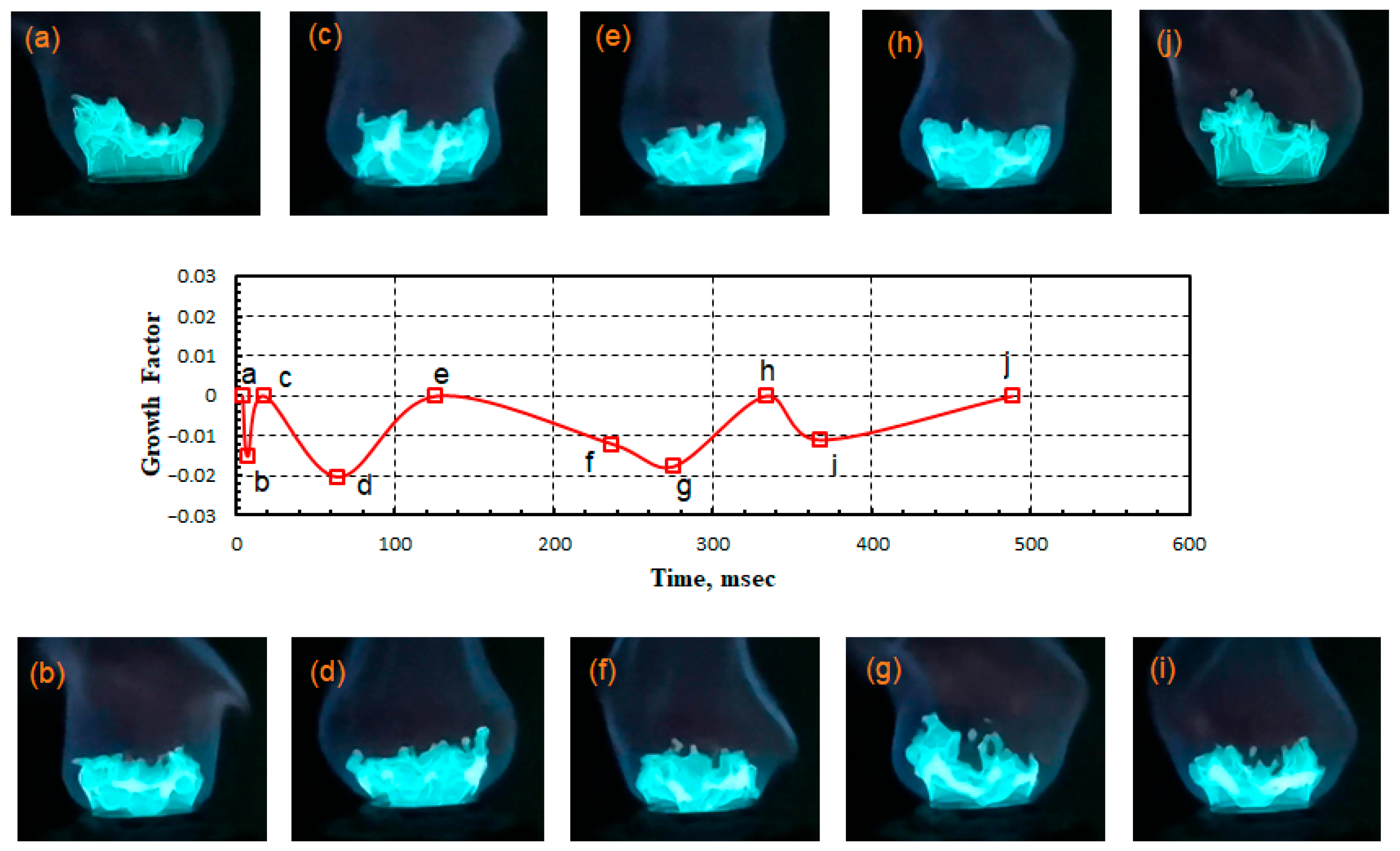
Figure 5 presents the temporal evolution of a swirl flame for LPG/air at an equivalence ratio of φ = 1.04, which roughly corresponds to the stoichiometric fuel-to-air ratio. The sequence of images (a–j) and the corresponding growth factor curve capture the temporal evolution of the swirl flame, highlighting the periodic nature of the vortex structures and their impact on flame stability. At this equivalence ratio, the flame appears to be firmly anchored in the recirculation zone generated by the swirling flow. The luminous blue flame indicates complete combustion of LPG with minimal soot formation, a characteristic of slightly fuel-rich conditions. The growth factor plot exhibits alternating positive and negative fluctuations, indicating periodic expansion and contraction of the swirl flame driven by vortex shedding. Images (a) and (b) show the flame in its initial development stage with noticeable turbulence and large-scale wrinkling near the base. By images (c)–(e), the flame front becomes more organized, and the heat release stabilizes. Frames (f)–(g) capture moments of slight contraction, possibly caused by local quenching or vortex impingement, while images (h)–(j) show regrowth and increased flame surface area, coinciding with the positive growth factor peaks.

3.2. Dynamics of Swirl Flame for Enriched LPG with H2

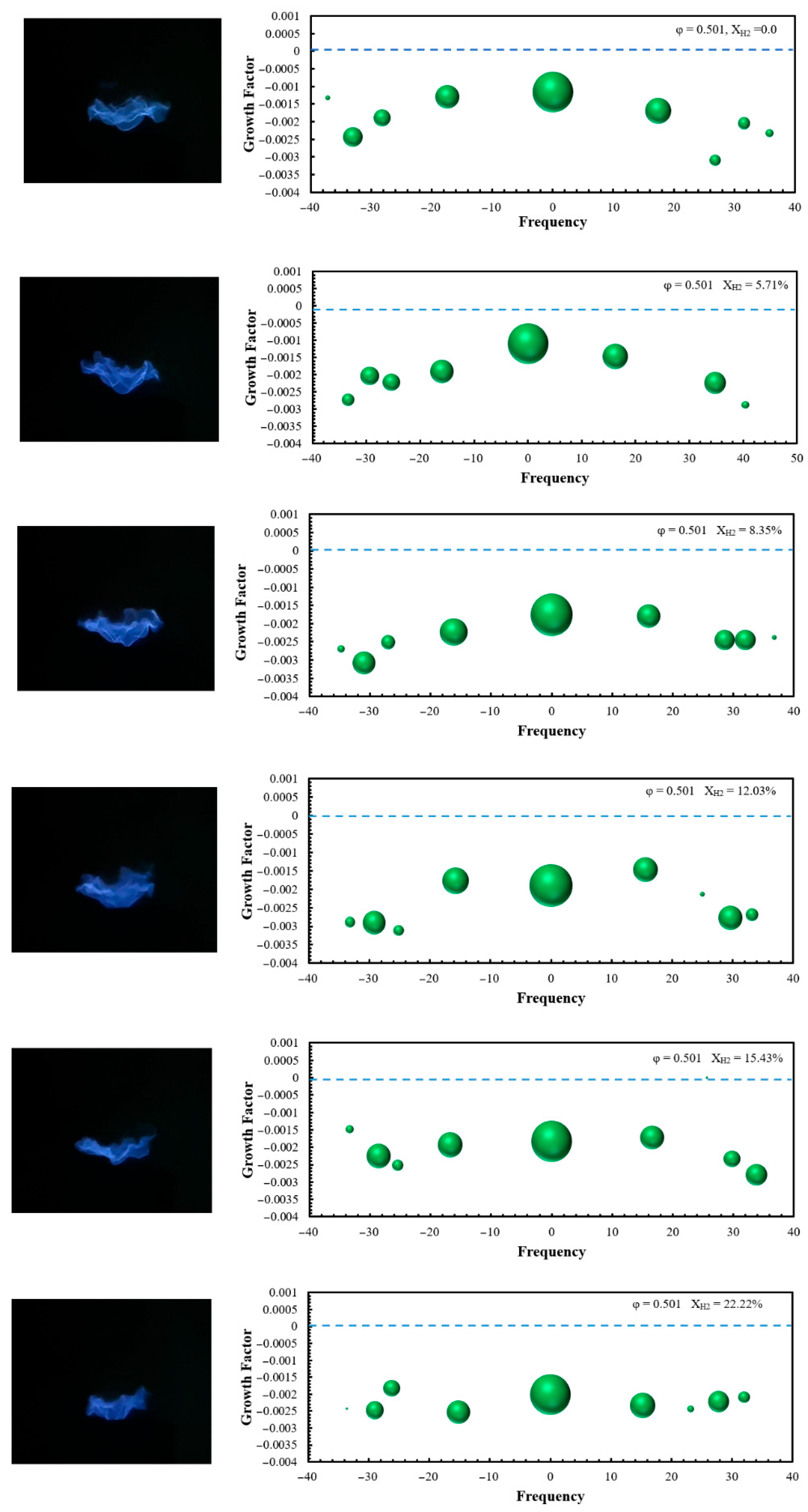
Figure 6 presents the blow-off behavior of a swirl-stabilized flame fueled by LPG and enriched with hydrogen at a fixed equivalence ratio of φ = 0.501, while varying the hydrogen mass fraction from 0.0% to 22.22%. It displays the swirl flame images that exhibit the highest growth factor frequency at various hydrogen mass fractions. From the swirl flame images, it is evident that hydrogen addition significantly influences flame stability. At 0.0% H2, the swirl flame appears relatively weak and closer to blow-off, with shorter, less intense luminosity. As hydrogen concentration increases to 5.71% and 8.35%, the swirl flame becomes brighter and more stable, suggesting improved burning velocity and enhanced stabilization. Specifically, hydrogen increases the burning velocity primarily due to its fast chemical kinetics and high molecular diffusivity. Hydrogen combustion proceeds through simple, highly reactive chain-branching reactions that rapidly generate H, O, and OH atoms, accelerating hydrogen oxidation and promoting the oxidation of LPG components (such as propane and butane). In addition, hydrogen has a very low molecular weight and a Lewis number less than unity, allowing it to diffuse toward the reaction zone faster than heat diffuses away, as remembered by Agostinelli et al. [26]. This preferential diffusion locally enriches the swirl flame front, raising the reaction rate and enhancing flame propagation, particularly under lean and strained conditions typical of low-swirl burners. The combined effects of rapid radical production, enhanced mass transport, and increased local temperature led to a higher flame speed, which, in turn, increased the overall burning velocity of the LPG–hydrogen mixture.
At intermediate levels (12.03% and 15.43%), the swirl flame maintains a more anchored position near the burner exit, indicating a higher resistance to blow-off. However, at the highest hydrogen content (22.22%), the swirl flame begins to elongate and exhibit increased fluctuations, which could be attributed to higher burning rates and enhanced turbulent interactions. The growth factor frequency further confirms this behavior. Across all hydrogen fractions, the dominant frequencies lie in the region of negative growth factor, indicating a decaying instability mode; however, the magnitudes of the most amplified modes change with the addition of hydrogen. The largest value size (representing the strongest mode energy) shifts slightly toward lower frequencies with moderate hydrogen enrichment (around 12–15%), indicating suppression of high-frequency instability modes and improved flame anchoring. At 22.22% hydrogen, the mode amplitudes increase again, suggesting that excessive hydrogen may reintroduce instability or lead to a transitional regime approaching flashback.
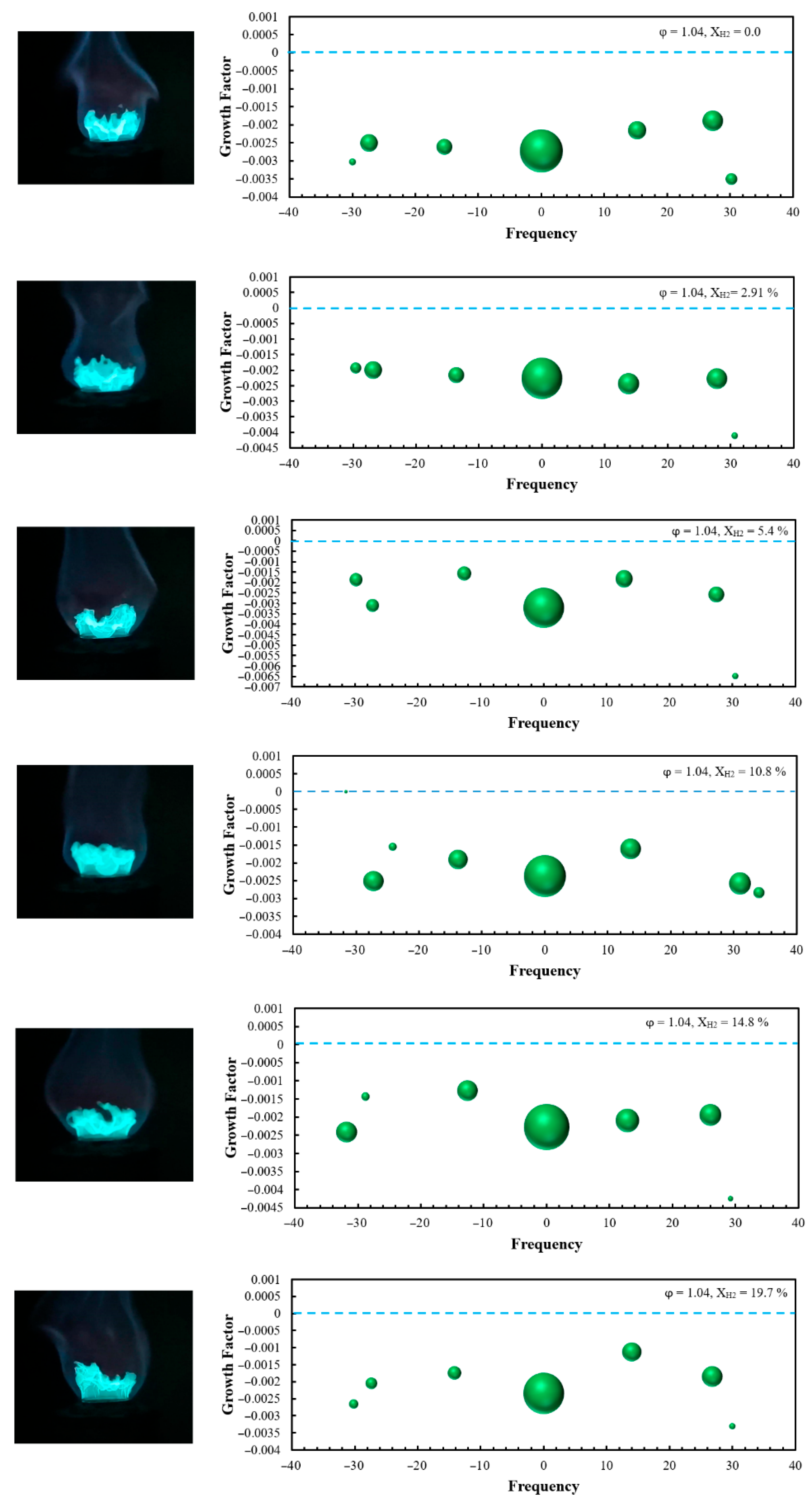
Figure 7 illustrates the appearance and dynamic response of a stable swirl-stabilized flame fueled by LPG and enriched with hydrogen at an equivalence ratio of φ = 1.04 and hydrogen mass fractions ranging from 0.0% to 19.7%. The figure displays the swirl flame images that exhibit the highest growth factor frequency at various hydrogen mass fractions. The swirl flame images demonstrate a clear transition in flame structure with hydrogen enrichment. At 0.0% hydrogen, the flame is large, vertically extended, and exhibits a smooth, symmetric shape, indicative of a well-anchored premixed flame under stoichiometric to rich conditions. As hydrogen is added (up to 5.4%), the swirl flame contracts slightly and becomes more compact, reflecting the increase in laminar burning velocity and heat release rate. This results in improved flame anchoring and enhanced stabilization within the recirculation zone. At 10.8% to 14.8% hydrogen, the swirl flame maintains a highly stable, symmetric M-shape, with brighter luminosity suggesting more intense combustion and a higher reaction rate. At the highest hydrogen fraction (19.7%), the flame becomes slightly elongated, although it still retains stability, indicating that even at high hydrogen enrichment, flashback is not yet occurring under these conditions. The growth factor values further confirm the high stability of the swirl flame across all hydrogen fractions. The dominant modes remain negative throughout, showing that the system is free of self-excited thermoacoustic instabilities. Interestingly, the magnitude of the dominant growth factors becomes slightly more negative with moderate hydrogen enrichment (≈5–15%), which implies that hydrogen addition helps dampen oscillatory behavior, thereby enhancing flame stability. The values of the size representing the mode energy also decrease slightly at intermediate hydrogen fractions, suggesting weaker coupling between flow perturbations and heat release. At 19.7% hydrogen, the mode energy increases marginally, which could indicate a higher susceptibility to flow–flame interaction at very high hydrogen levels, although the system remains stable.
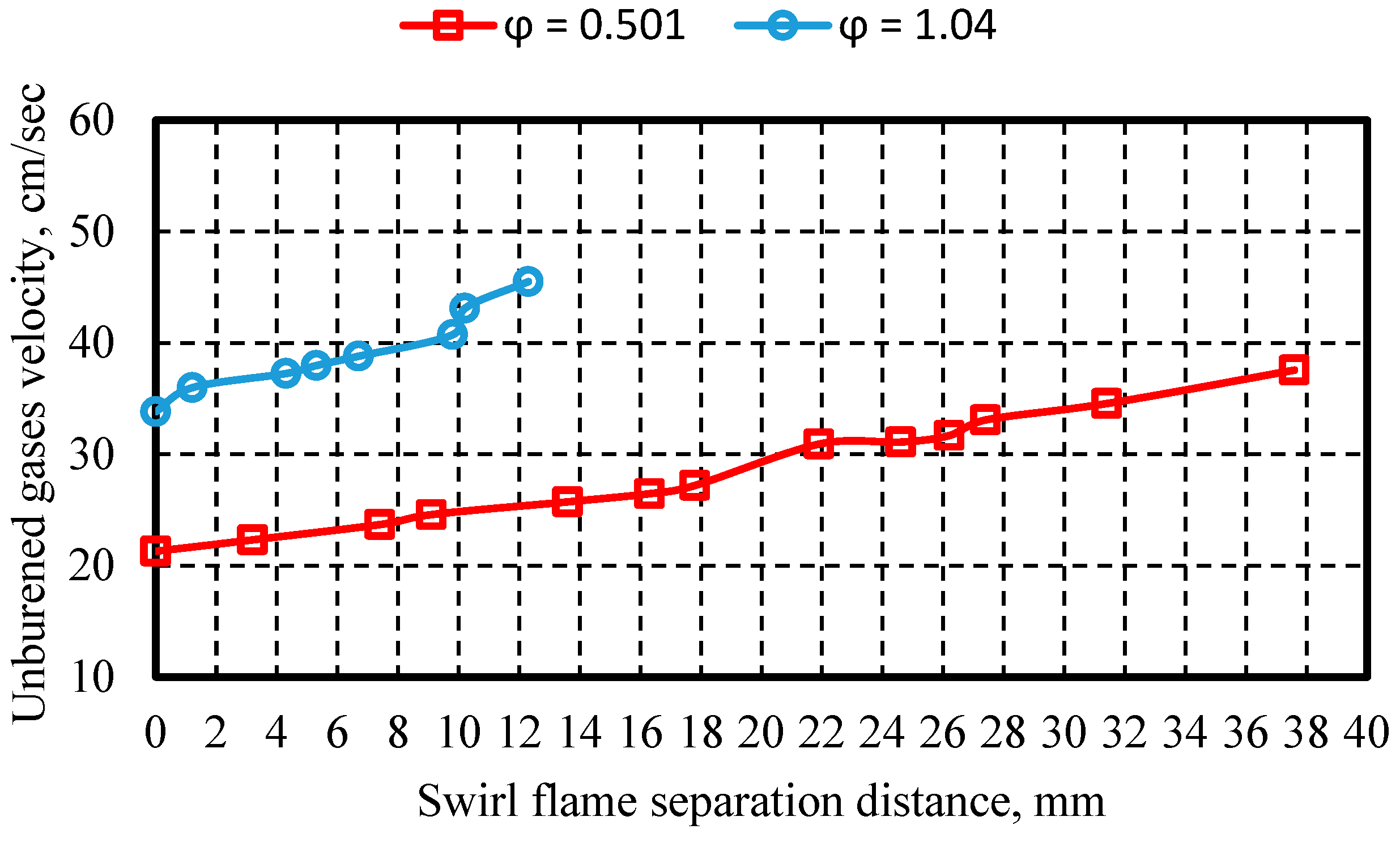
Experiments on LPG/air mixtures have shown that increasing the velocity of the unburned gases increases the swirl intensity, due to a greater tangential velocity component relative to the axial velocity component. So, the swirl flame separation distance from the burner edge increases with increasing unburned gas velocities, as shown in Figure 8. The variation appears in the swirl flame separation distance and the unburned gas velocity at equivalence ratios 0.501 and 1.04. As the unburned gas velocity increases, the separation distance increases slowly at φ = 0.501, whereas at φ = 1.04 the separation distance shortens. This is because the flame stabilization mechanism alters when the lift-off occurs.
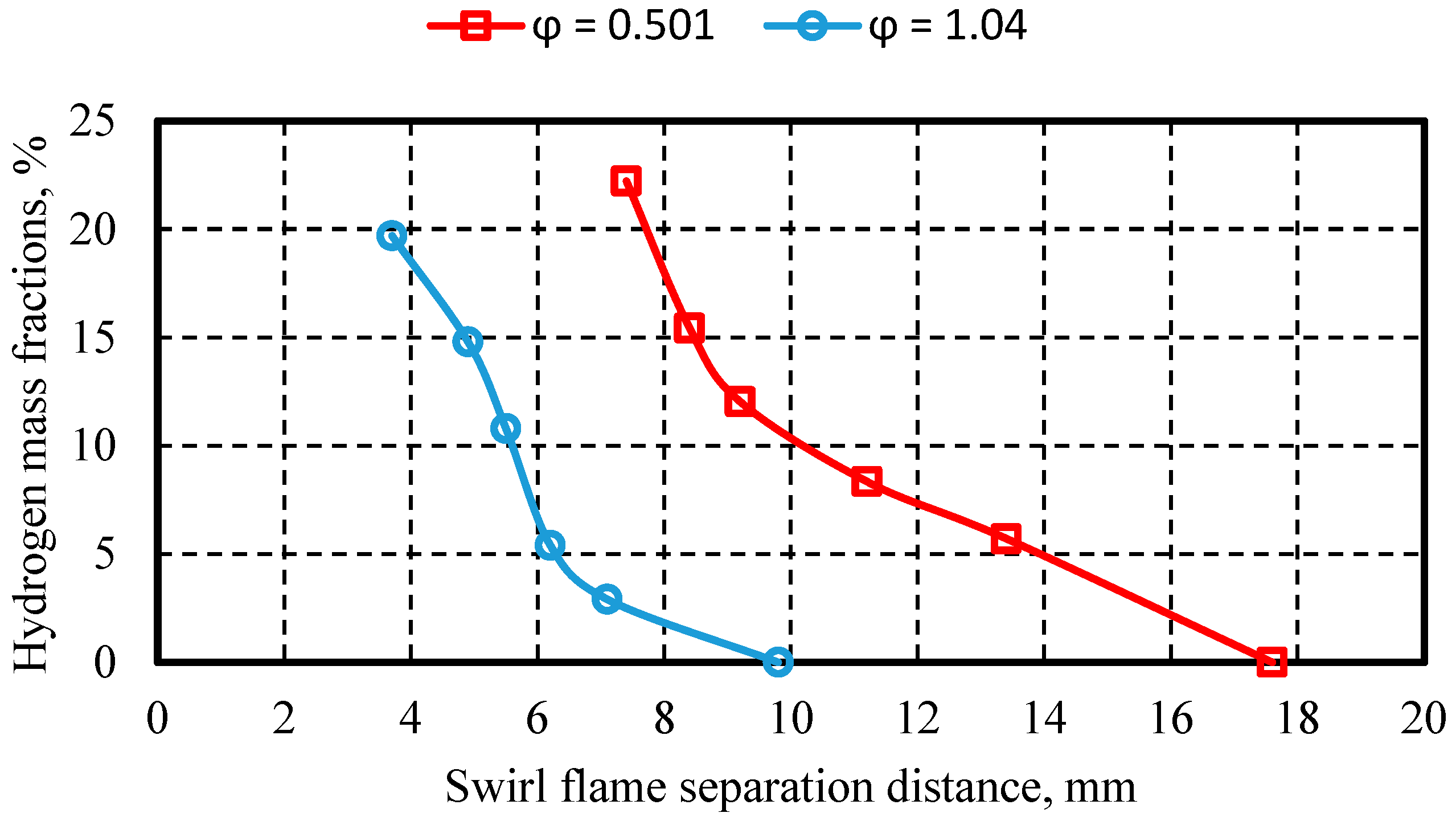
Figure 9 illustrates that hydrogen enhancement of LPG in a swirl burner generally leads to reduced or eliminated flame separation distance at the burner edge, resulting in a more compact, stable, and anchored flame. This effect is primarily due to the unique combustion properties of hydrogen. As is known, hydrogen-enhanced fuel results in increased burning speed and reactivity of the fuel mixture, broadening the overall flame stability limits, particularly the lean blow-off limits. This makes the flame more robust and less prone to separation or lift-off from the stabilizing point (often the burner edge or a CRZ).

3.3. Temperature Distribution in the Swirl Flame

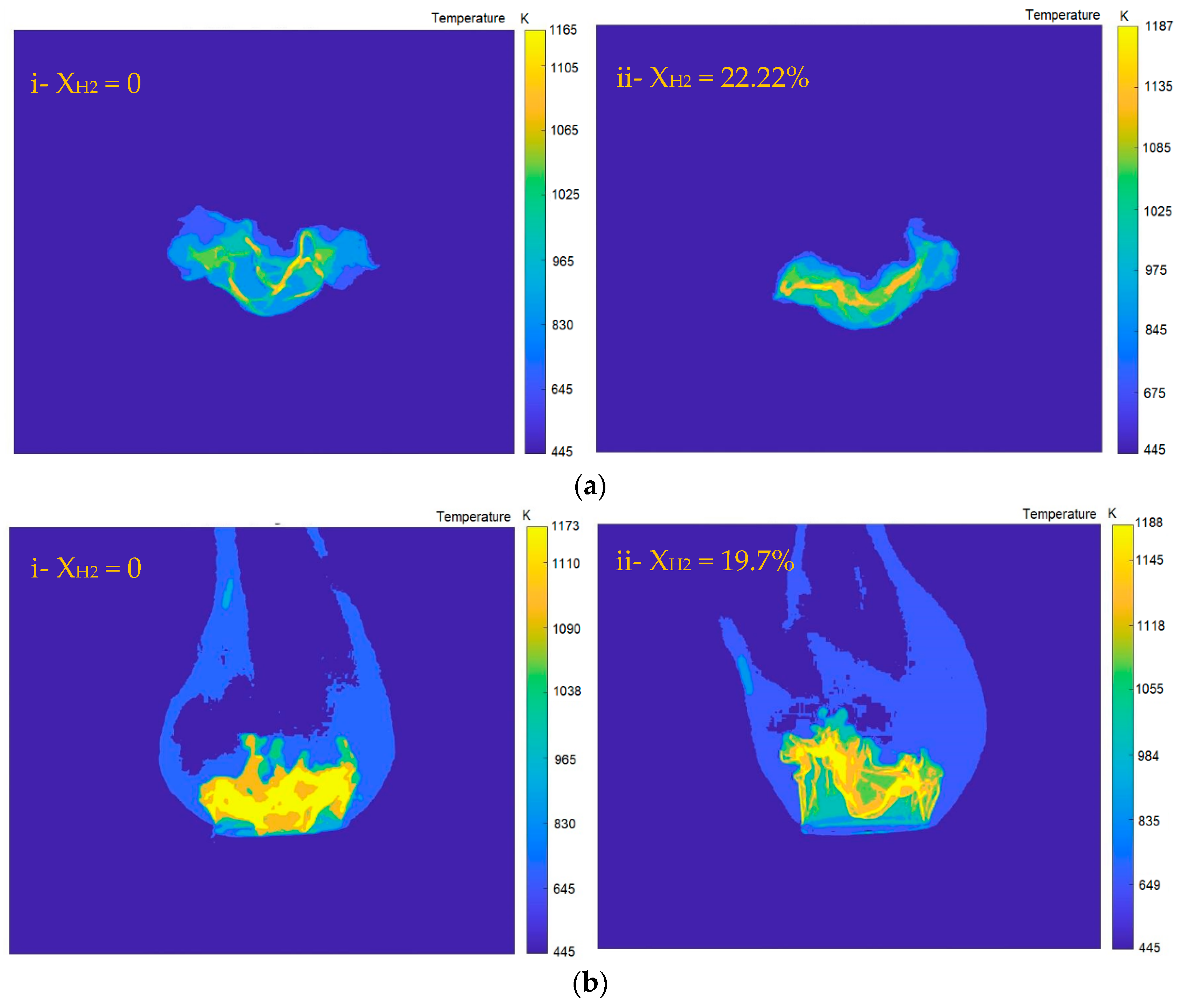
Figure 10 illustrates the flame temperature contours for swirl flames under two equivalence ratios (0.501 and 1.04) and different hydrogen mass fractions (XH2 = 0 and XH2 ≈ 20–22%). The figure provides a comprehensive insight into how both mixture strength and hydrogen enrichment influence swirl flame structure, thermal field distribution, and combustion intensity. In Figure 10a for φ = 0.501, the swirl flame appears relatively small and less luminous, with a maximum temperature just above 1100 K. At XH2 = 0, the flame is compact and confined near the burner exit, indicating limited heat release. When 22.22% hydrogen is added, the flame becomes longer, more stretched, and better anchored. This demonstrates hydrogen’s well-known effect of increasing burning velocity, allowing the flame to propagate faster and resist blow-off under lean conditions. The temperature field also shows a slight increase in peak values and more distributed heat release, which would enhance combustion stability. Figure 10b for φ = 1.04 (a slightly rich mixture) shows that the temperature distribution is much broader, with the peak temperature at 1100 K. At XH2 = 0, the swirl flame extends farther into the combustion zone, indicating more intense heat release. The introduction of 19.7% hydrogen further enhances the temperature field, producing a larger high-temperature core and extending the flame upwards. The contours suggest a more turbulent and wrinkled flame surface, which increases the effective reaction zone and promotes better mixing of fuel and air.
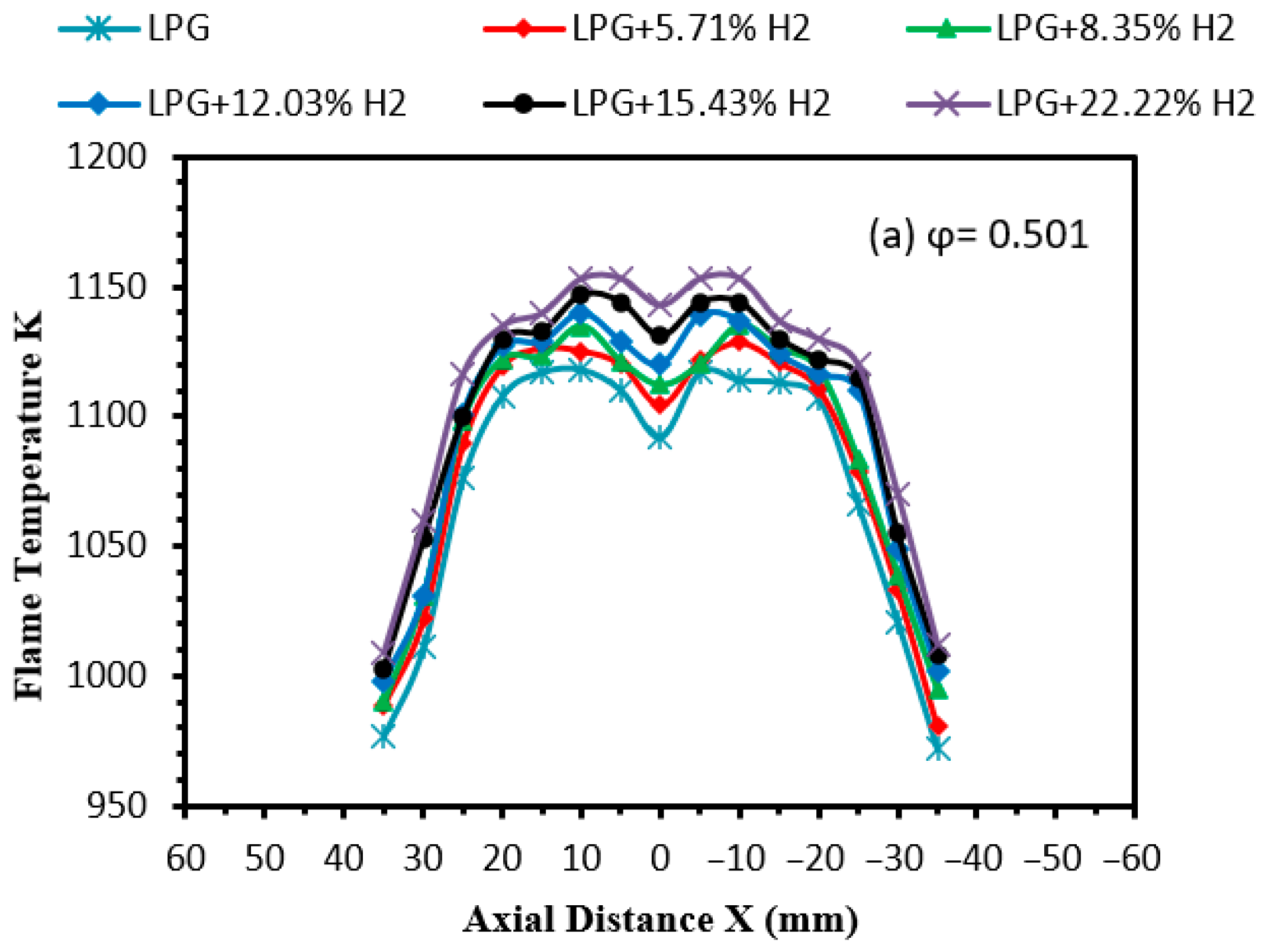
Figure 11 illustrates the axial distribution of flame temperature for swirl flames under different hydrogen enrichment levels, comparing two equivalence ratios: φ = 0.501 (lean) and φ = 1.04 (slightly rich). The curves clearly show how hydrogen addition affects the thermal field along the burner’s centerline and across the flame brush. Figure 11a at φ = 0.501 (lean mixture) shows that the baseline LPG swirl flame exhibits the lowest temperature profile, with a peak temperature of approximately 1100 K. As hydrogen content increases from 5.71% to 22.22%, there is a clear and consistent rise in flame temperature, with the peak temperature reaching closer to 1150 K at the highest hydrogen mass fraction. Compared to neat LPG, the addition of 5.71% H2 results in a modest increase in peak flame temperature of approximately 1.1–2.1% in the CRZ. As the hydrogen fraction increases to 8.35% and 12.03%, the peak temperature rise becomes more pronounced, reaching about 2.2–3.1%. Further enrichment to 15.43% and 22.22% H2 leads to the highest flame temperatures, with an overall increase of roughly 3.2–4.3% relative to pure LPG. The distribution also becomes slightly wider, suggesting better swirl flame stabilization and improved heat release across the cross-section. This result highlights hydrogen’s role in increasing burning velocity and reactivity, which is especially beneficial in lean conditions where swirl flame stability is typically poor.
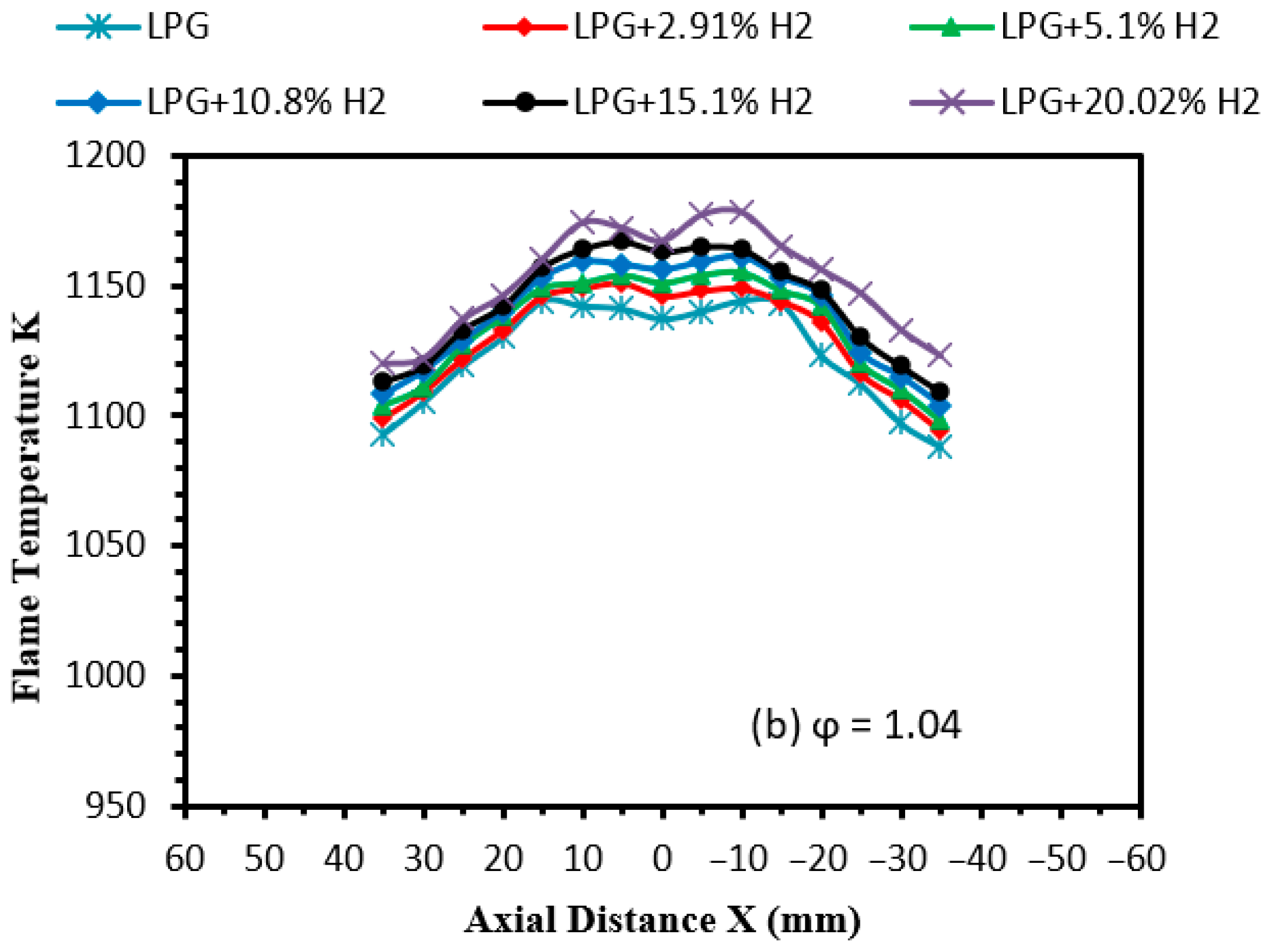
Figure 11b at φ = 1.04 (slightly rich mixture), the swirl flame temperature profiles are generally higher than in the lean state, even at zero hydrogen addition, due to more complete heat release. Hydrogen enrichment from 2.91% to 20.02% produces a noticeable temperature rise, with a relatively minor increase in temperature compared to the lean case. Compared to pure LPG, the addition of 2.91% H2 leads to a slight increase in peak flame temperature of about 0.53–1.1% along the CRZ. As the hydrogen content increases to 5.1% and 10.8%, the flame temperature rises further by approximately 1.12–2.2%, indicating a gradual enhancement in heat release. Higher hydrogen fractions of 15.1% and 20.02% result in a more noticeable temperature increase, with peak values elevated by roughly 2.06–3.14% relative to the LPG baseline. The curves indicate a broader and more uniform temperature distribution across the swirl flame zone, suggesting enhanced mixing and turbulent burning. The gain in peak temperature with hydrogen addition is more modest, as expected, since the swirl flame is already operating under near-optimal reaction conditions.

4. Conclusions

This study discusses the highly unsteady and transient nature of a premixed low-swirl flame at different conditions for LPG enriched with hydrogen. The following conclusions and recommendations are the result of the experimental analysis:
The hydrogen addition enhances the intensity of chemical reactions per unit volume within the swirl flame front. This leads to a more compact flame structure, changing its shape and reducing its overall size.
The results show that the growth factor changes in an oscillating manner. This behavior reflects a sensitive balance between airflow mixing and chemical reaction rates under lean mixture conditions (φ = 0.501). The findings also indicate that an equivalence ratio of 1.04 provides a practical compromise, offering sufficient flame speed while still benefiting from the stabilizing effects of the swirling flow.
The findings are that, as the unburned gas velocity increases, the separation distance from the burner increases slowly at φ = 0.501, whereas at φ = 1.04, the separation distance shortens. While hydrogen enrichment of LPG in a swirl burner generally reduces the flame separation distance at the burner edge, resulting in a more compact, stable, and anchored flame.
The analysis highlights that hydrogen enrichment up to ~20% enhances flame compactness, intensifies heat release, and sustains stability without triggering blow-off or flashback, making hydrogen blending a promising strategy for stabilizing swirl flames at rich operating conditions.
Hydrogen enrichment consistently increases swirl flame temperature, but the effect is more pronounced under lean swirl flames. At φ = 0.501, the addition of 5.71–22.22% H2 results in an increase in peak flame temperature of approximately 1.1–4.3% in the CRZ. While at φ = 1.04, the addition of 2.91–20.02% H2 results in an increase in peak flame temperature of approximately 0.53–3.14% in the CRZ. So, lean mixtures benefit more from hydrogen, as it counteracts the lower flame speed and prevents potential blow-off. While slightly rich mixtures show improved temperature uniformity and slight peak enhancement, which may enhance combustion efficiency.
As future work, this study will be extended through high-fidelity computational fluid dynamics (CFD) analysis to gain deeper insight into the unsteady behavior of premixed swirl flames fueled by LPG–hydrogen blends. The simulation approaches will be employed to resolve transient flow structures, swirl-induced recirculation zones, and flame–vortex interactions under varying hydrogen enrichment levels and operating conditions. The CFD results will be systematically validated against experimental measurements, enabling improved understanding of thermoacoustic coupling, flame dynamics, and emission formation mechanisms, and ultimately supporting the optimization of burner design and operating strategies for stable, low-emission hydrogen-enriched combustion.

Author Contributions

A.E.J.A.: Writing—original draft; Resources; Formal analysis; Data curation. A.A.: Supervision; Software; Investigation; Validation. H.A.A.W.: Writing—review and editing; Methodology; Investigation; Validation. All authors have read and agreed to the published version of the manuscript.

Funding

This research received no external funding.

Institutional Review Board Statement

Not applicable.

Informed Consent Statement

Informed consent was obtained from all subjects involved in the study.

Data Availability Statement

The data presented in this study are available on request from the corresponding author.

Acknowledgments

The authors are obliged to the University of Technology, Baghdad, Iraq, for providing the Energy and Renewable Energies Technology Center.

Conflicts of Interest

The authors declare no conflicts of interest.

References

  1. Abdul Wahhab, H.A. Influence of Swirl Flow Pattern in Single Tube Burner on Turbulent Flame Blow-Off Limit. In ICPER 2020: Proceedings of the 7th International Conference on Production, Energy and Reliability; Springer Nature: Singapore, 2023; pp. 17–34. [Google Scholar]
  2. Herff, S.; Pausch, K.; Loosen, S.; Schröder, W. Impact of non-symmetric confinement on the flame dynamics of a lean-premixed swirl flame. Combust. Flame 2022, 235, 111701. [Google Scholar] [CrossRef]
  3. Ghazal, R.M.; Akroot, A.; Abdul Wahhab, H.A.; Alhamd, A.E.J.; Hamzah, A.H.; Bdaiwi, M. The Influence of Gas Fuel Enrichment with Hydrogen on the Combustion Characteristics of Combustors: A Review. Sustainability 2024, 16, 9423. [Google Scholar] [CrossRef]
  4. Ghazal, R.M.; Akroot, A.; Abdul Wahhab, H.A. Flame Evolution Characteristics for Hydrogen/LPG Co-Combustion in a Counter-Burner. Appl. Sci. 2025, 15, 2503. [Google Scholar] [CrossRef]
  5. Stöhr, M.; Boxx, I.; Carter, C.; Meier, W. Dynamics of lean blowout of a swirl-stabilized flame in a gas turbine model combustor. Proc. Combust. Inst. 2011, 33, 2953–2960. [Google Scholar] [CrossRef]
  6. Wang, Z.; Hu, B.; Fang, A.; Zhao, Q.; Chen, X. Analyzing lean blow-off limits of gas turbine combustors based on local and global Damköhler number of reaction zone. Aerosp. Sci. Technol. 2021, 111, 106532. [Google Scholar] [CrossRef]
  7. Sun, Y.; Sun, M.; Zhao, D.; Chen, Y.; Ma, G.; Wan, M.; Sun, Y.; Zhu, J. Blow-off characteristics of a premixed methane/air flame response to acoustic disturbances in a longitudinal combustor. Aerosp. Sci. Technol. 2021, 118, 107003. [Google Scholar] [CrossRef]
  8. Mansouri, Z.; Aouissi, M.; Boushaki, T. A Numerical Study of Swirl Effects on the Flow and Flame Dynamics in a Lean Premixed Combustor. Int. J. Heat Technol. 2016, 34, 227–235. [Google Scholar] [CrossRef]
  9. Choi, M.; Choi, K.W.; Kang, D.W.; Muhammad, H.A.; Lee, Y.D. Experimental investigation of combustion characteristics of a CH4/O2 premixed flame: Effect of swirl intensity on flame structure, flame stability, and emissions. Case Stud. Therm. Eng. 2024, 55, 104069. [Google Scholar] [CrossRef]
  10. Huang, Y.; Yang, V. Effect of swirl on combustion dynamics in a lean-premixed swirl-stabilized combustor. Proc. Combust. Inst. 2005, 30, 1775–1782. [Google Scholar] [CrossRef]
  11. Abdulsada, M.; Griffiths, A.; Syred, N.; Morris, S.; Bowen, P. Effect of Swirl Number and fuel type upon the combustion limits in Swirl Combustors. In Proceedings of the ASME 2011 Turbo Expo: Turbine Technical Conference and Exposition, Vancouver, BC, Canada, 6–10 June 2011. [Google Scholar]
  12. Mahmood, A.S.; Saleh, F.A. Study of the Impact of LPG Composition on the Blowoff and Flashback Limits of a Premixed Flame in a Swirl Burner. J. Appl. Fluid Mech. 2024, 17, 616–627. [Google Scholar] [CrossRef]
  13. Sellan, D.; Balusamy, S. Turbulent Premixed LPG/air Flames Structures in Double Swirl Burner. In Proceedings of the AIAA SCITECH 2022 Forum, San Diego, CA, USA & Virtual, 3–7 January 2022. [Google Scholar]
  14. Stone, C.; Menon, S. Swirl control of combustion instabilities in a gas turbine combustor. Proc. Combust. Inst. 2002, 29, 155–160. [Google Scholar] [CrossRef]
  15. Anacleto, P.M.; Fernandes, E.C.; Heitor, M.V.; Shtork, S.I. Swirl flow structure and flame characteristics in a model lean premixed combustor. Combust. Sci. Technol. 2003, 175, 1369–1388. [Google Scholar] [CrossRef]
  16. Mafra, M.R.; Fassani, F.L.; Zanoelo, E.F.; Bizzo, W.A. Influence of swirl number and fuel equivalence ratio on NO emission in an experimental LPG-fired chamber. Appl. Therm. Eng. 2010, 30, 928–934. [Google Scholar] [CrossRef]
  17. Linck, M.B.; Gupta, A.K. Twin-fluid atomization and novel lifted swirl-stabilized spray flames. J. Propuls. Power 2009, 25, 344–357. [Google Scholar] [CrossRef]
  18. Yilmaz, I. Effect of swirl number on combustion characteristics in a natural gas diffusion flame. J. Energy Resour. Technol. 2013, 135, 042204. [Google Scholar] [CrossRef]
  19. Tsao, J.M.; Lin, C.A. Reynolds stress modelling of jet and swirl interaction inside a gas turbine combustor. Int. J. Numer. Methods Fluids 1999, 29, 451–464. [Google Scholar] [CrossRef]
  20. Hilares, L. Numerical Simulation of the Dynamics of Turbulent Swirling Flames. Ph.D. Thesis, Technische Universität München, München, Germany, 2012. [Google Scholar]
  21. Al-Abdeli, Y.M.; Masri, A.R. Stability characteristics and flow fields of turbulent non-premixed swirling flames. Combust. Theory Model. 2003, 7, 731–766. [Google Scholar] [CrossRef]
  22. Sellan, D.; Balusamy, S. Topology of turbulent premixed and stratified LPG/air flames. Aerosp. Sci. Technol. 2022, 120, 107253. [Google Scholar] [CrossRef]
  23. Sellan, D.; Balusamy, S. Experimental study of swirl-stabilized turbulent premixed and stratified LPG/air flames using optical diagnostics. Exp. Therm. Fluid Sci. 2021, 121, 110281. [Google Scholar] [CrossRef]
  24. Taamallah, S.; Dagan, Y.; Chakroun, N.; Shanbhogue, S.J.; Vogiatzaki, K.; Ghoniem, A.F. Helical vortex core dynamics and flame interaction in turbulent premixed swirl combustion: A combined experimental and large eddy simulation investigation. Phys. Fluids 2019, 31, 025108. [Google Scholar] [CrossRef]
  25. Dostiyarov, A.M.; Umyshev, D.R.; Kibarin, A.A.; Yamanbekova, A.K.; Tumanov, M.E.; Koldassova, G.A.; Anuarbekov, M.A. Experimental Investigation of Non-Premixed Combustion Process in a Swirl Burner with LPG and Hydrogen Mixture. Energies 2024, 17, 1012. [Google Scholar] [CrossRef]
  26. Agostinelli, P.W.; Laera, D.; Chterev, I.; Boxx, I.; Gicquel, L.; Poinsot, T. On the impact of H2 -enrichment on flame structure and combustion dynamics of a lean partially-premixed turbulent swirling flame. Combust. Flame 2022, 241, 112120. [Google Scholar] [CrossRef]
  27. Hassan, S.H.; Emara, A.A.; Elkady, M.A. An Influence of a Fluidic Oscillator Insertion in a Swirl-Stabilized Burner on Turbulent Premixed Flame. J. Eng. Gas Turbines Power 2019, 141, 061001. [Google Scholar] [CrossRef]
  28. Zavaleta-Luna, D.A.; Vigueras-Zúñiga, M.O.; Herrera-May, A.L.; Zamora-Castro, S.A.; Tejeda-del-Cueto, M.E. Optimized Design of a Swirler for a Combustion Chamber of Non-Premixed Flame Using Genetic Algorithms. Energies 2020, 13, 2240. [Google Scholar] [CrossRef]
  29. Han, X.; Lavadera, M.L.; Brackmann, C.; Wang, Z.; He, Y.; Konnov, A.A. Experimental and kinetic modeling study of NO formation in premixed CH4+O2+N2 flames. Combust. Flame 2021, 223, 349–360. [Google Scholar] [CrossRef]
  30. Zhou, Y.; Xu, S.; Xu, L.; Bai, X. FGM modeling of ammonia/n-heptane combustion under RCCI engine conditions. Proc. Combust. Inst. 2024, 40, 105601. [Google Scholar] [CrossRef]
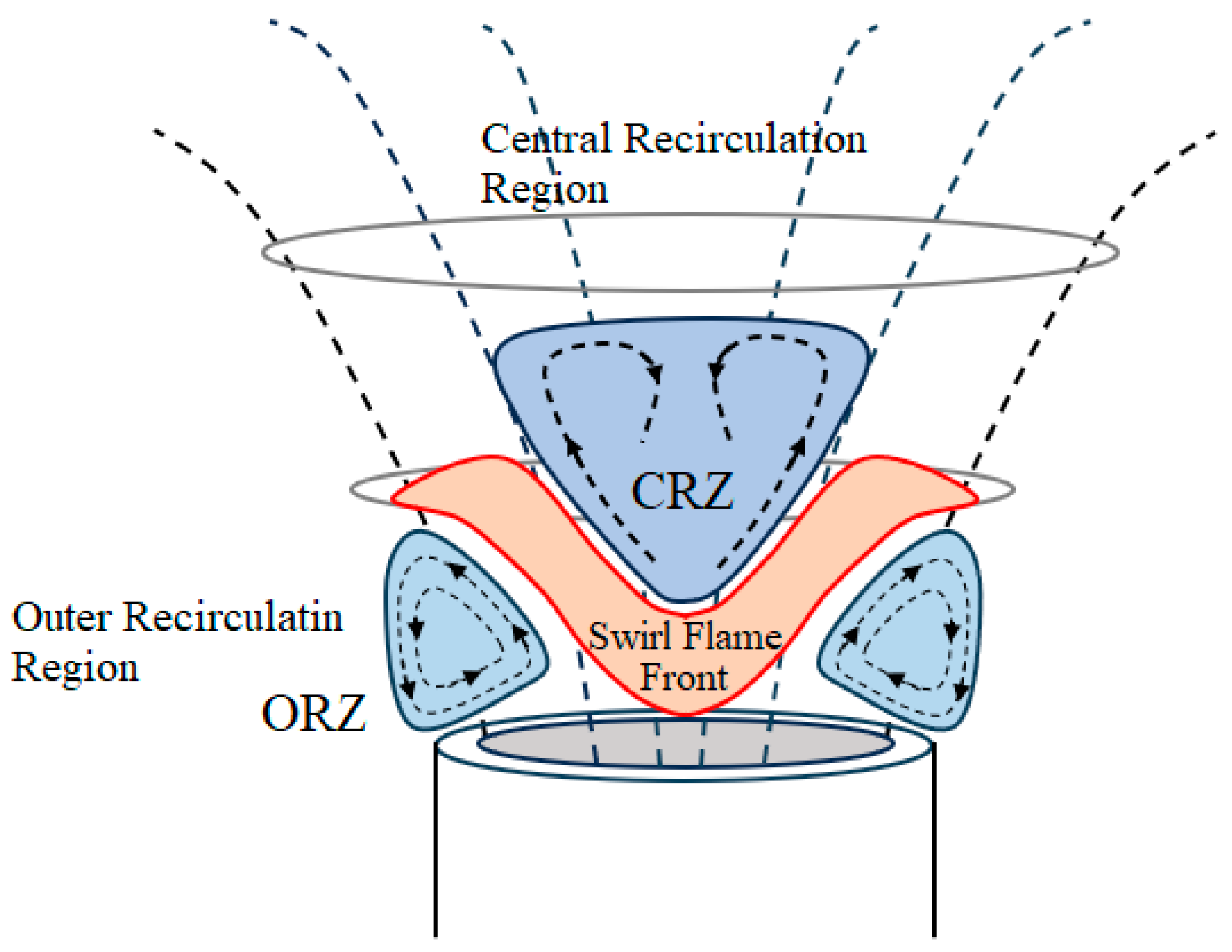
Figure 1. Analytical sketch of swirl flame regions.
Applsci 16 00347 g001
Figure 2. A schematic diagram of the experimental setup (including the combustion, optical, and measurement systems).
Applsci 16 00347 g002
Figure 3. Image processing procedures. (a) A swirl flame structure data and main parameters. (b) Digital image processing.
Applsci 16 00347 g003
Figure 4. The temporal evolution of the Swirl flame for LPG/air at equivalence ratio φ = 0.501.
Applsci 16 00347 g004
Figure 5. The temporal evolution of a swirl flame for LPG/air at equivalence ratio φ = 1.04.
Applsci 16 00347 g005
Figure 6. Blow-off swirl flame for LPG and hydrogen at equivalence ratio φ = 0.501 and different hydrogen mass fractions of 0.0 to 22.22%.
Applsci 16 00347 g006
Figure 7. Stable swirl flame for LPG and hydrogen at equivalence ratio φ = 1.04 and different hydrogen mass fractions of 0.0 to 19.7%.
Applsci 16 00347 g007
Figure 8. Variation in swirl flame separation distance with unburned gases velocity at equivalence ratios of 0.501 and 1.04.
Applsci 16 00347 g008
Figure 9. Variation in swirl flame separation distance with hydrogen mass fraction at equivalence ratios of 0.501 and 1.04.
Applsci 16 00347 g009
Figure 10. Contours of the swirl flame temperature distribution for different conditions. (a) Swirl flame temperature distribution for equivalence ratio φ = 0.501; i- XH2 = 0, ii- XH2 = 22.22%. (b) Swirl flame temperature distribution for equivalence ratio φ = 1.04; i- XH2 = 0, and ii- XH2 = 19.7%.
Applsci 16 00347 g010
Figure 11. Variation in the swirl flame temperature distribution for different conditions.
Applsci 16 00347 g011aApplsci 16 00347 g011b
Table 1. Geometrical dimensions of the combustion system and operational conditions of the experiments.
SymbolValue
Burner Geometry (for low swirl, S = 0–0.3 [28])Burner tube diameterD40 mm
Burner tube lengthL680 mm
Number of helical strips-4
Hub diameterDo7 mm
Relative blade angle with the axial directionδ17.3°
Swirl number S0.21
Gas Fuel, Liquid Petroleum Gas Iraqi (LPG)Propane -64.25 Mol %
n-Butane-24.22 Mol %
i-Butane-11.01 Mol %
Ethane -0.09 Mol %
Pentane-0.43 Mol %
Operation conditionsGas fuel (LPG) flow rateVf1.75 and 4.5 SLPM
Hydrogen flow rateVH0.1 to 0.98 SLPM
Air flow rateVa92 and 118 SLPM
Equivalence Ratioφ0.501 and 1.04
Mixture temperature Tm303 K
Table 2. Uncertainties of the measured parameters.
ParameterMin. for Recorded
Value
Max. for Recorded ValueAverage Error % (Uncertainty)
Air flow rate (L/min)92118±0.589
LPG flow rate (L/min)1.75 4.5±0.1456
Hydrogen flow rate (L/min)0.10.98±0.0221
Flame temperature (K)9771178±1.452
Disclaimer/Publisher’s Note: The statements, opinions and data contained in all publications are solely those of the individual author(s) and contributor(s) and not of MDPI and/or the editor(s). MDPI and/or the editor(s) disclaim responsibility for any injury to people or property resulting from any ideas, methods, instructions or products referred to in the content.