Intelligent Landslide Susceptibility Assessment Framework Using the Swin Transformer Technique: A Case Study of Changbai County, Jilin Province, China


Abstract
1. Introduction
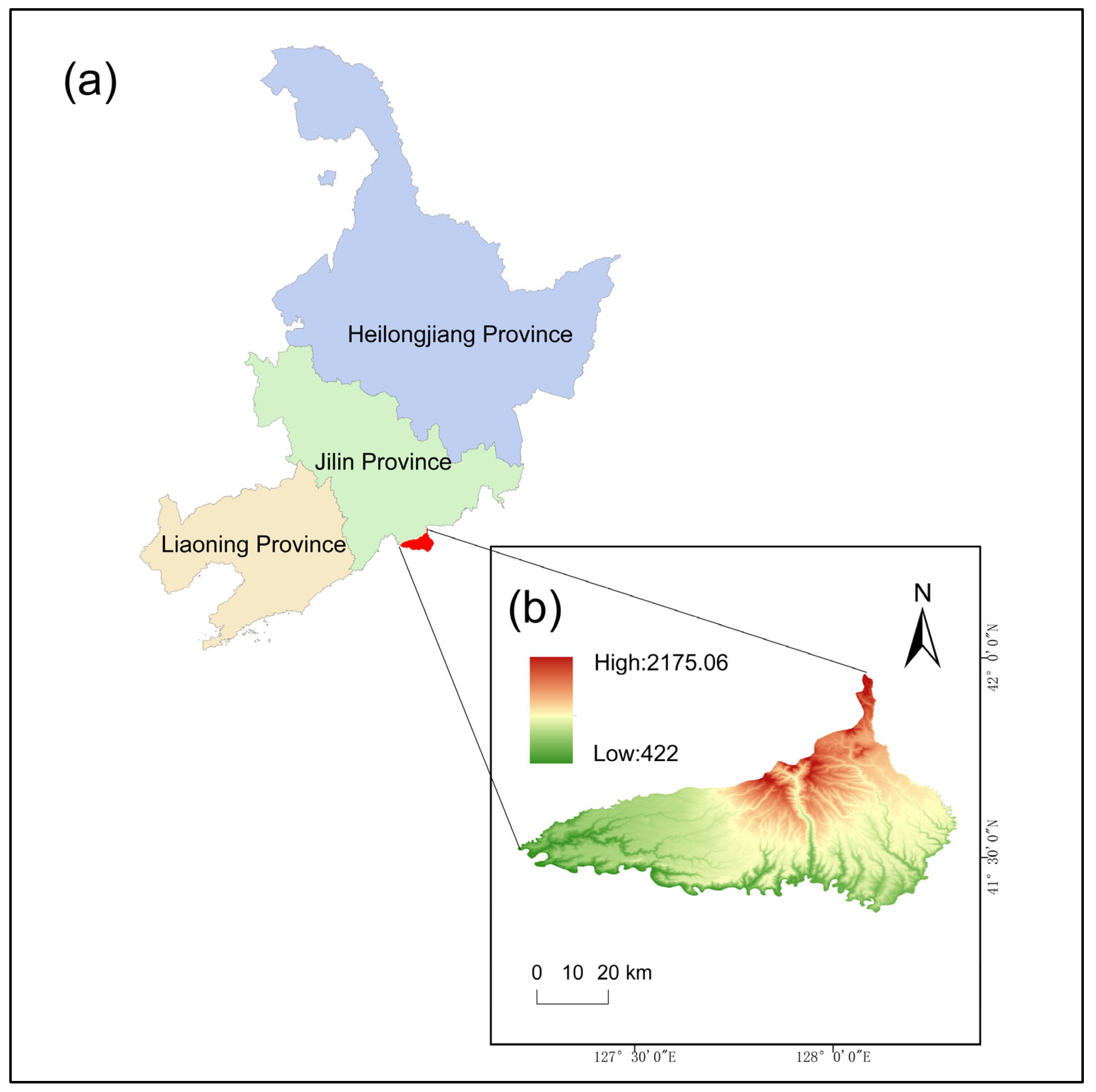
2. Geological Settings
3. Materials and Methods
3.1. Materials
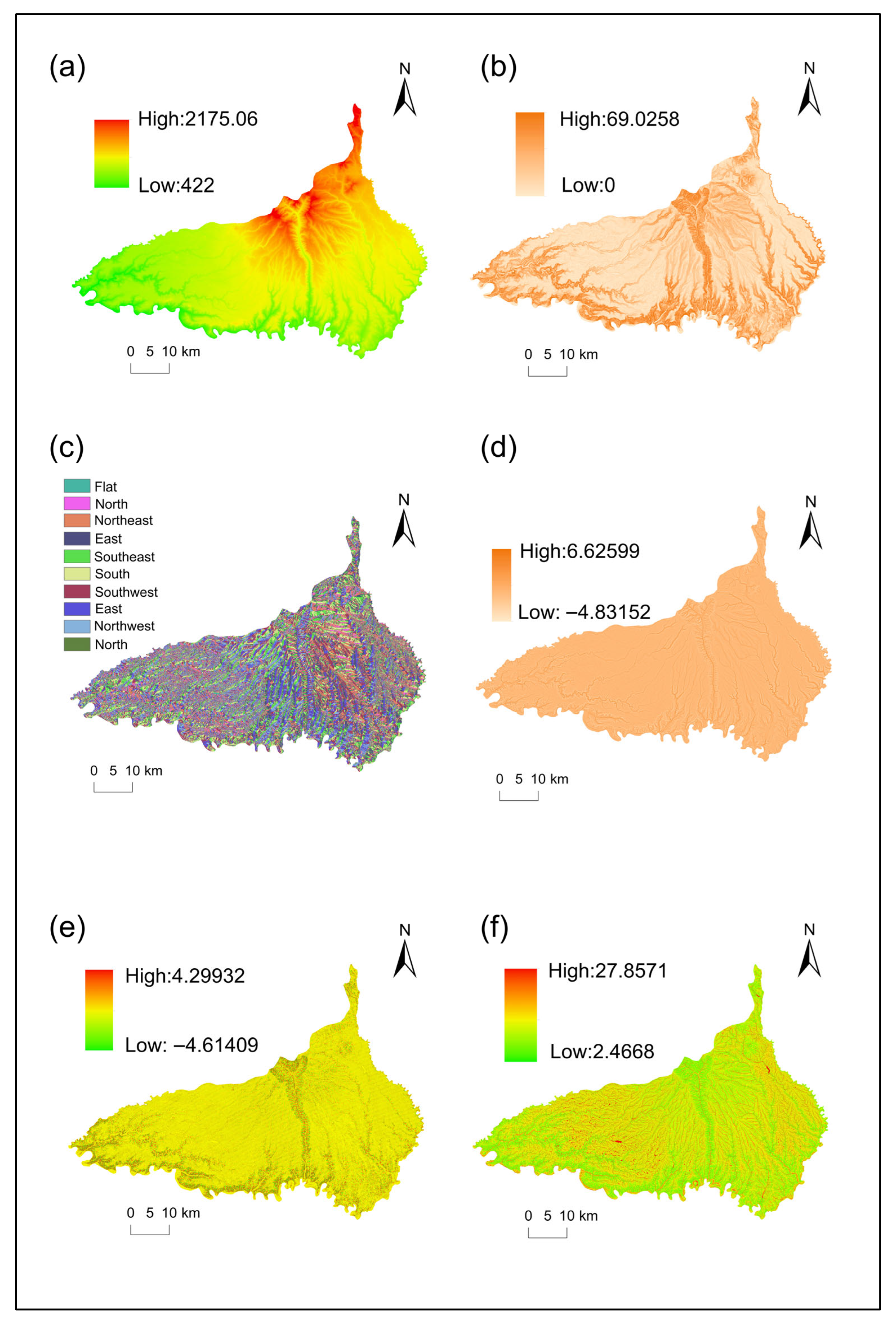
3.1.1. Topographic Characteristics
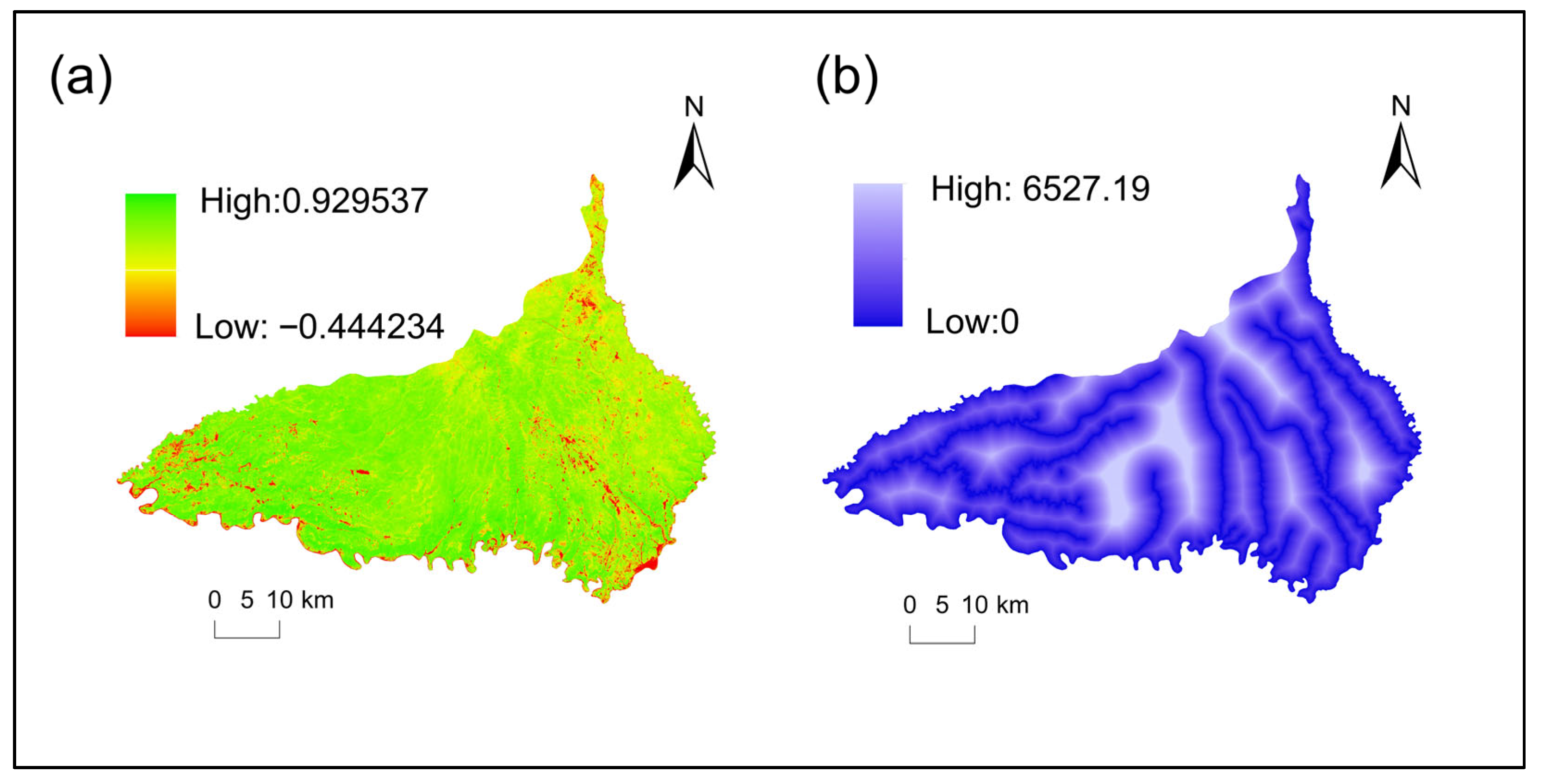
3.1.2. Environmental Factors
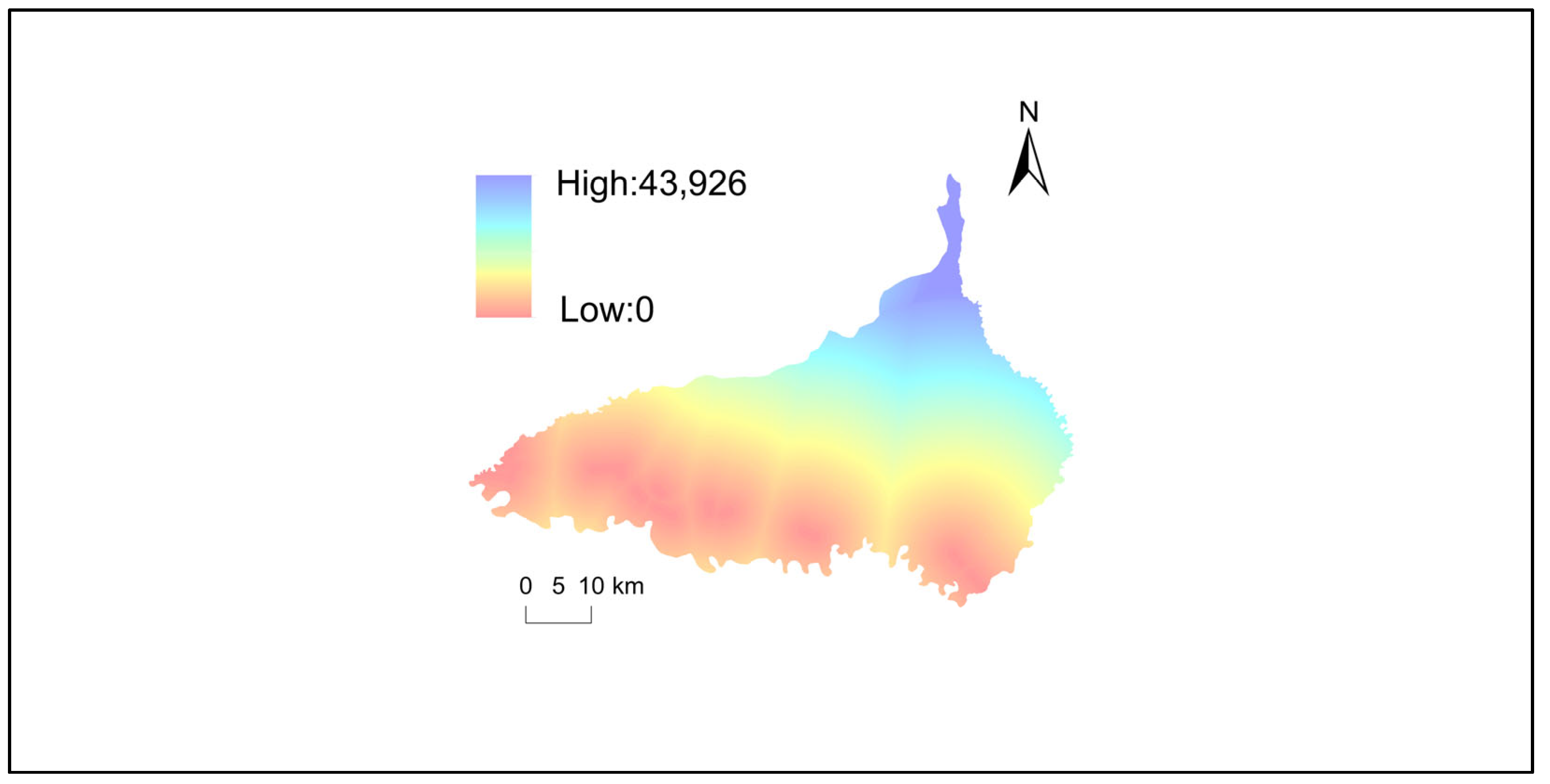
3.1.3. Geological Factors
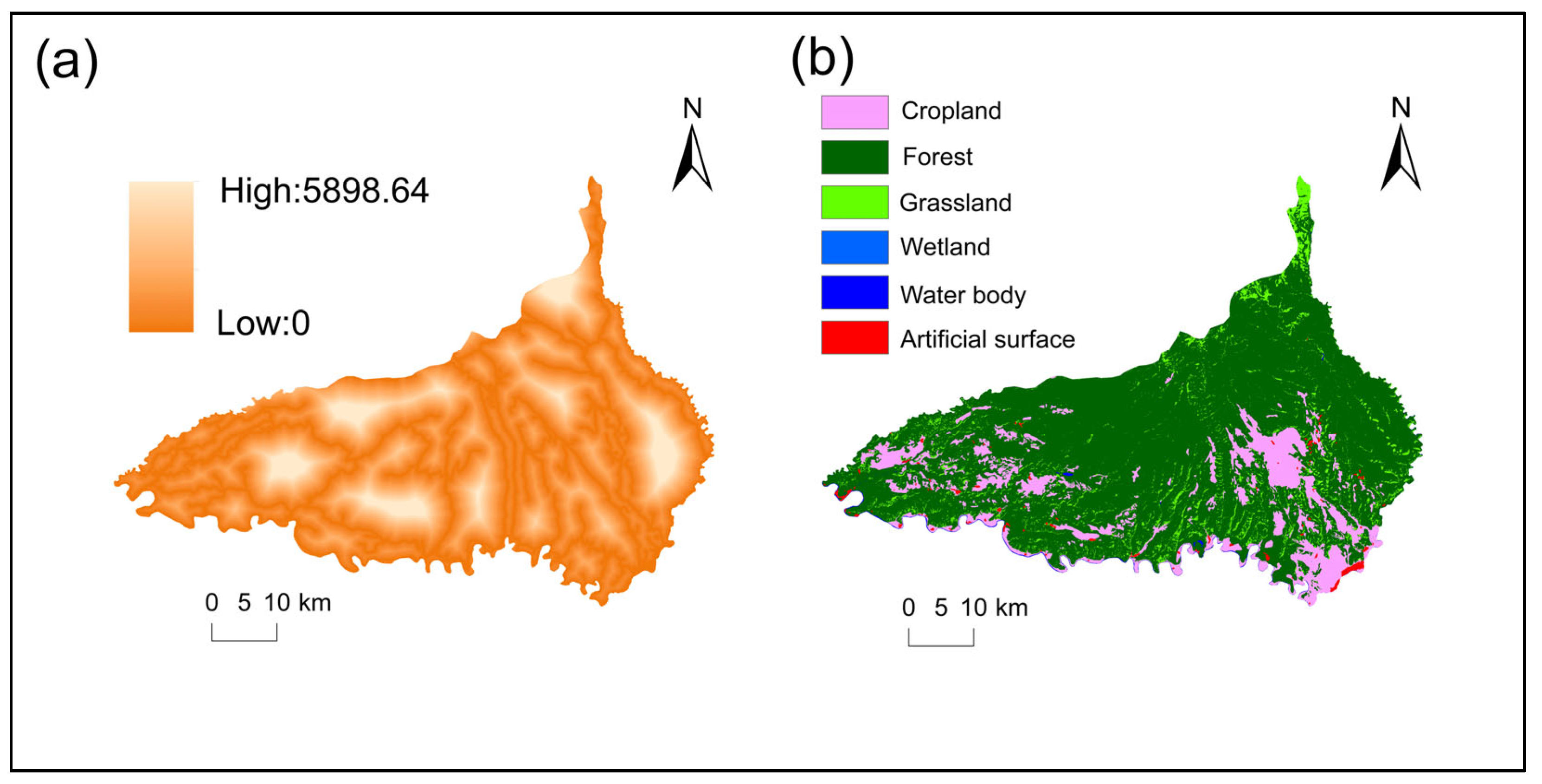
3.1.4. Human Activity Factors
3.1.5. Correlation Analysis
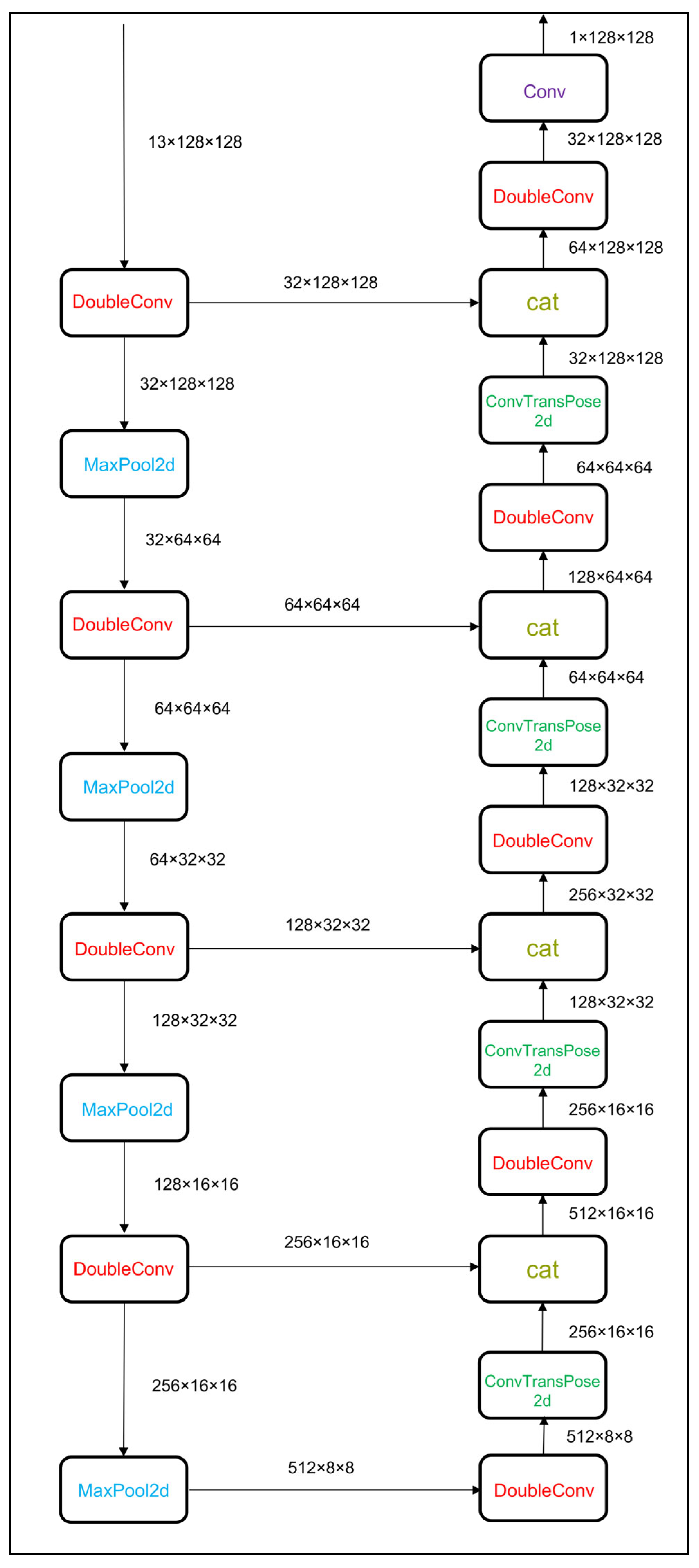
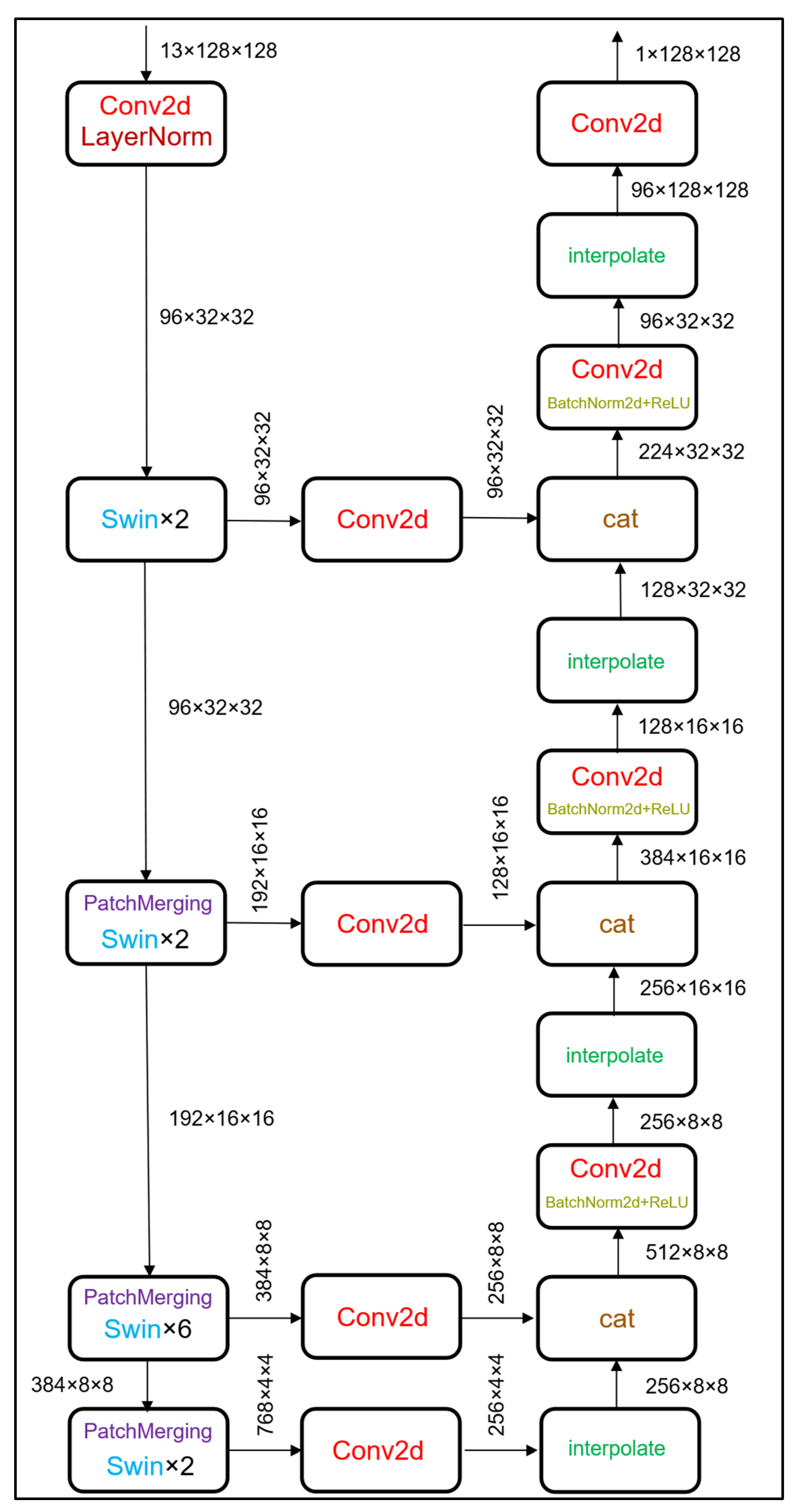
3.2. Methods
4. Results and Discussion
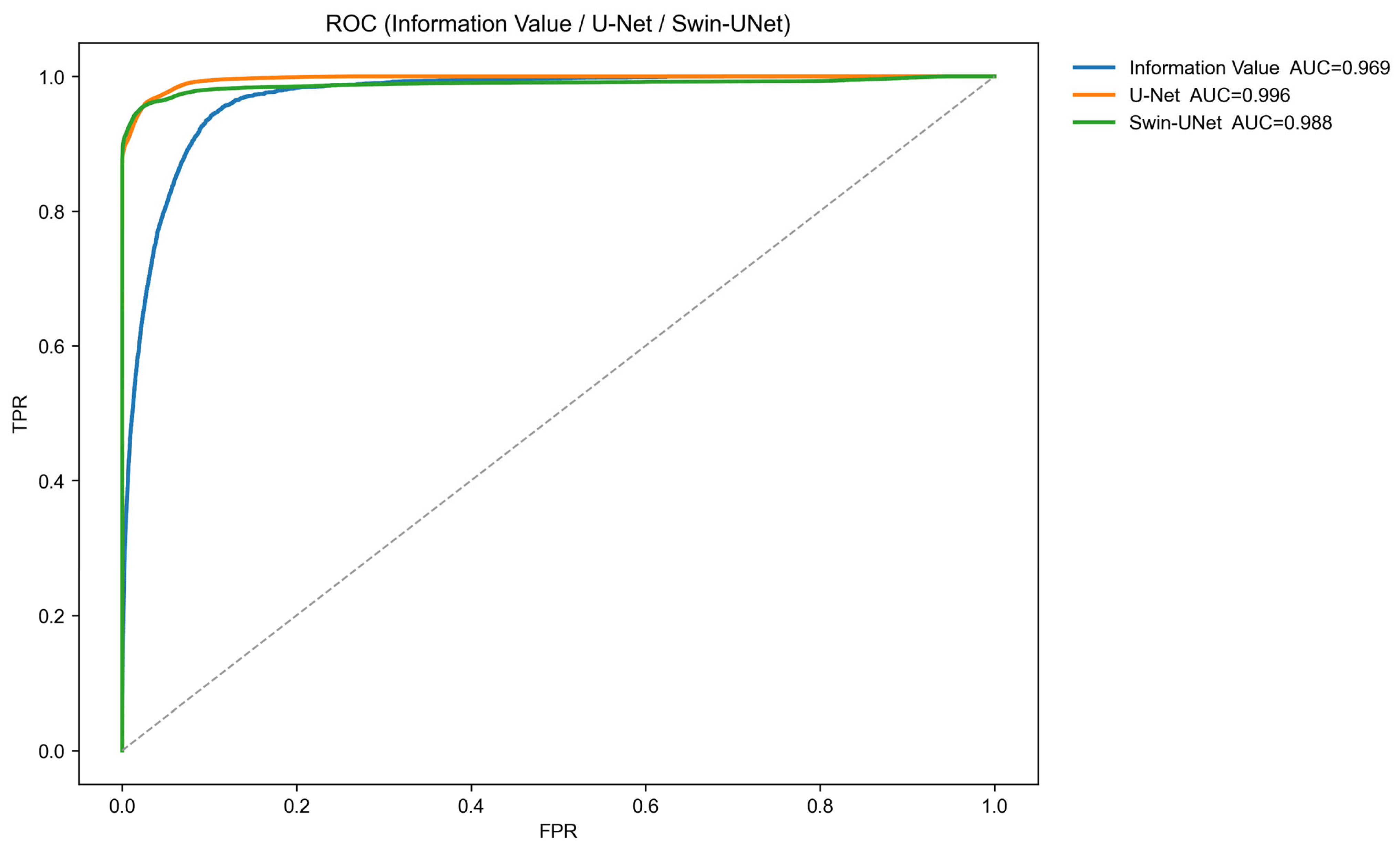
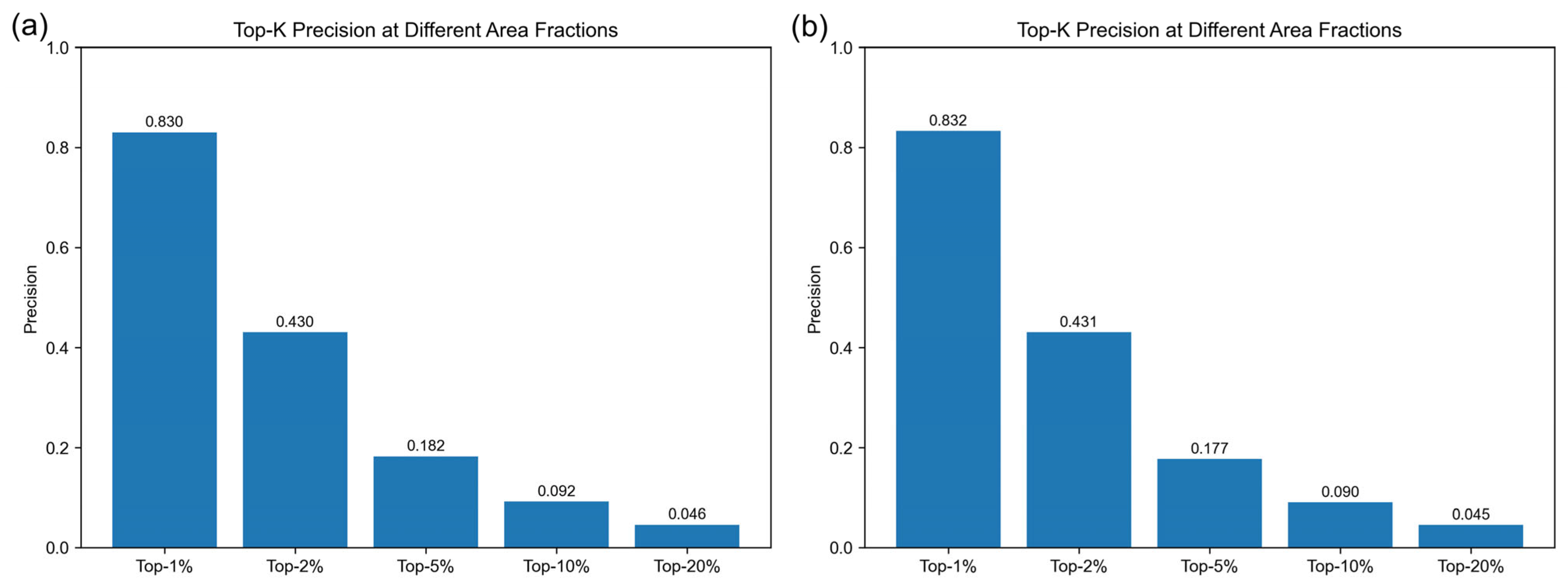
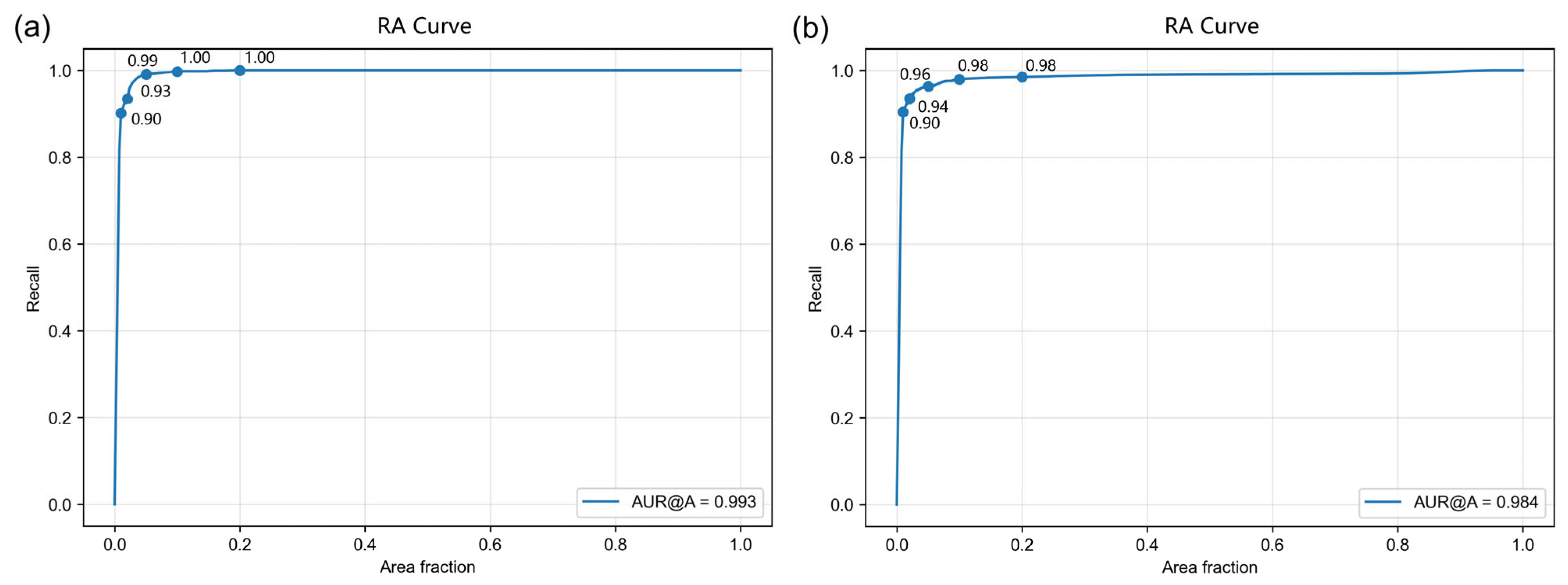
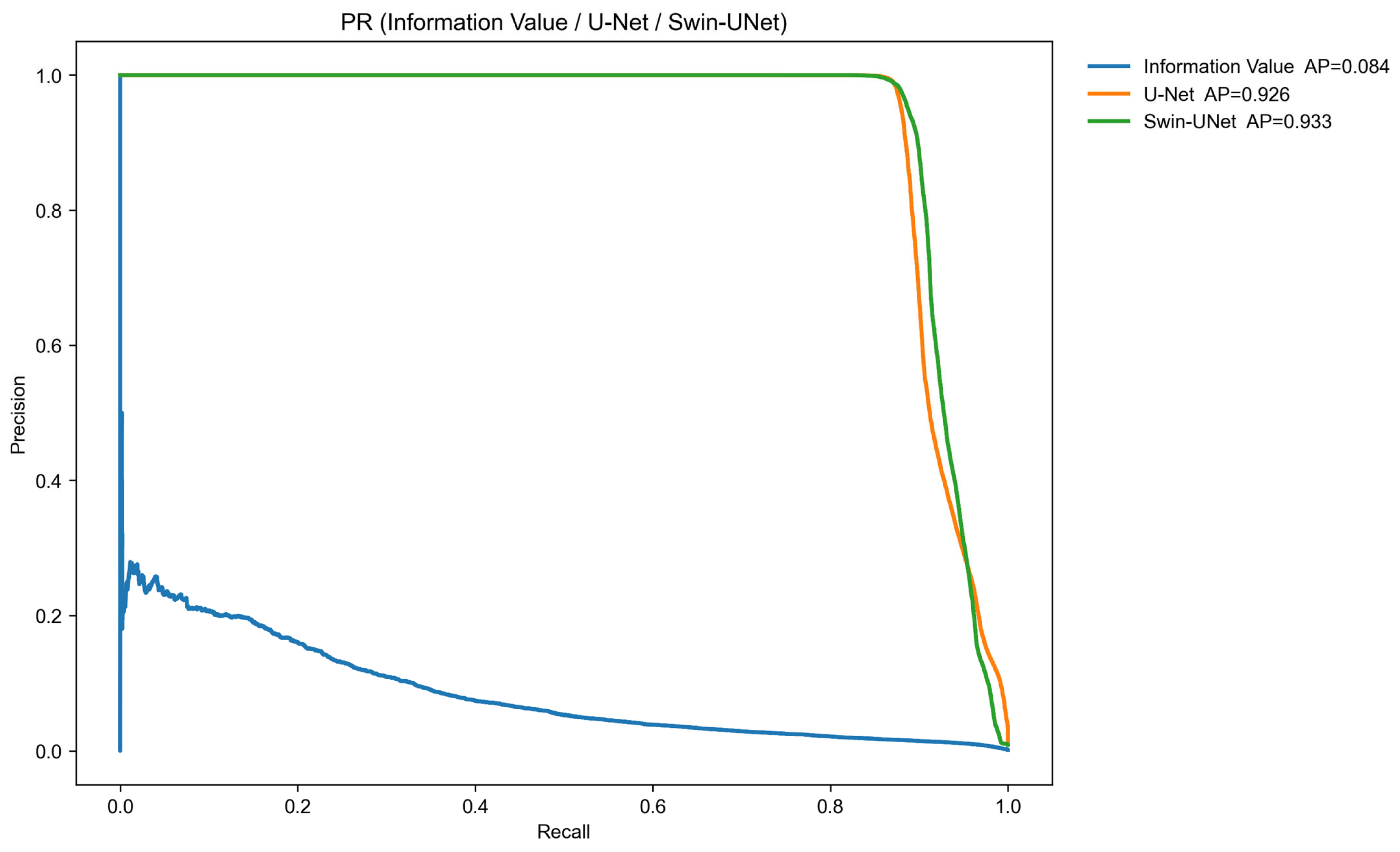
4.1. Comparative Analysis of Model Performance
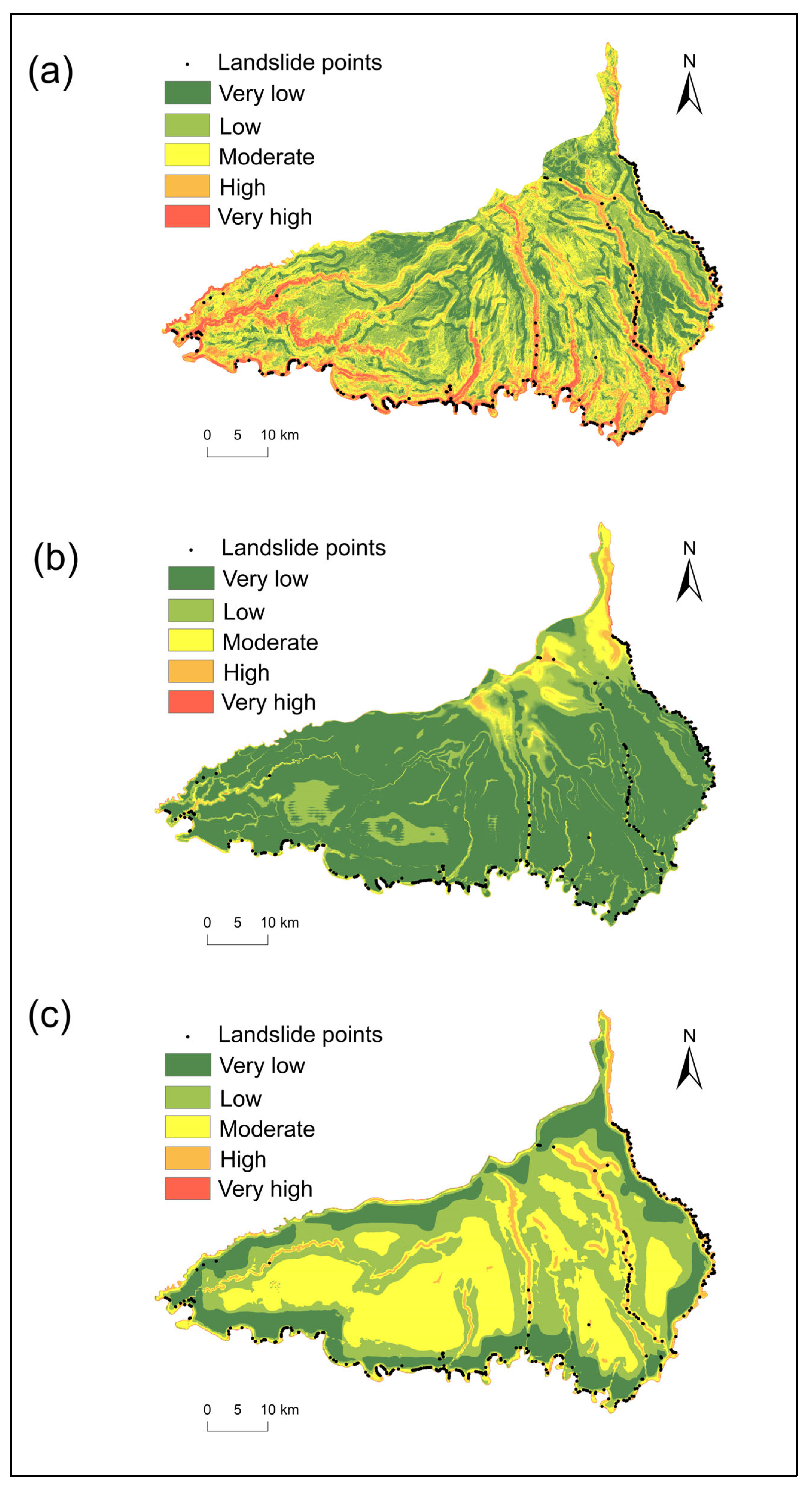
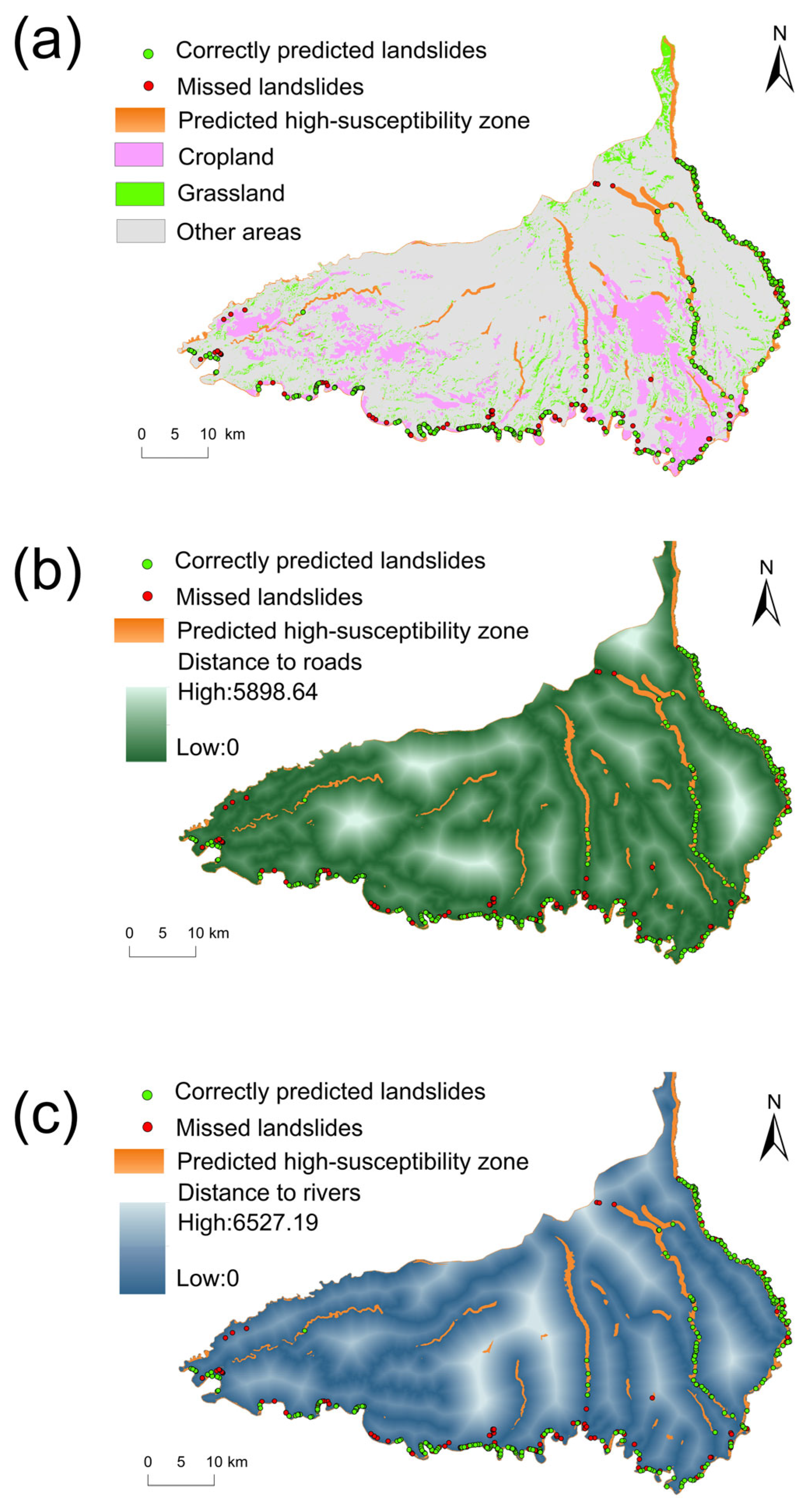
4.2. Susceptibility Zonation
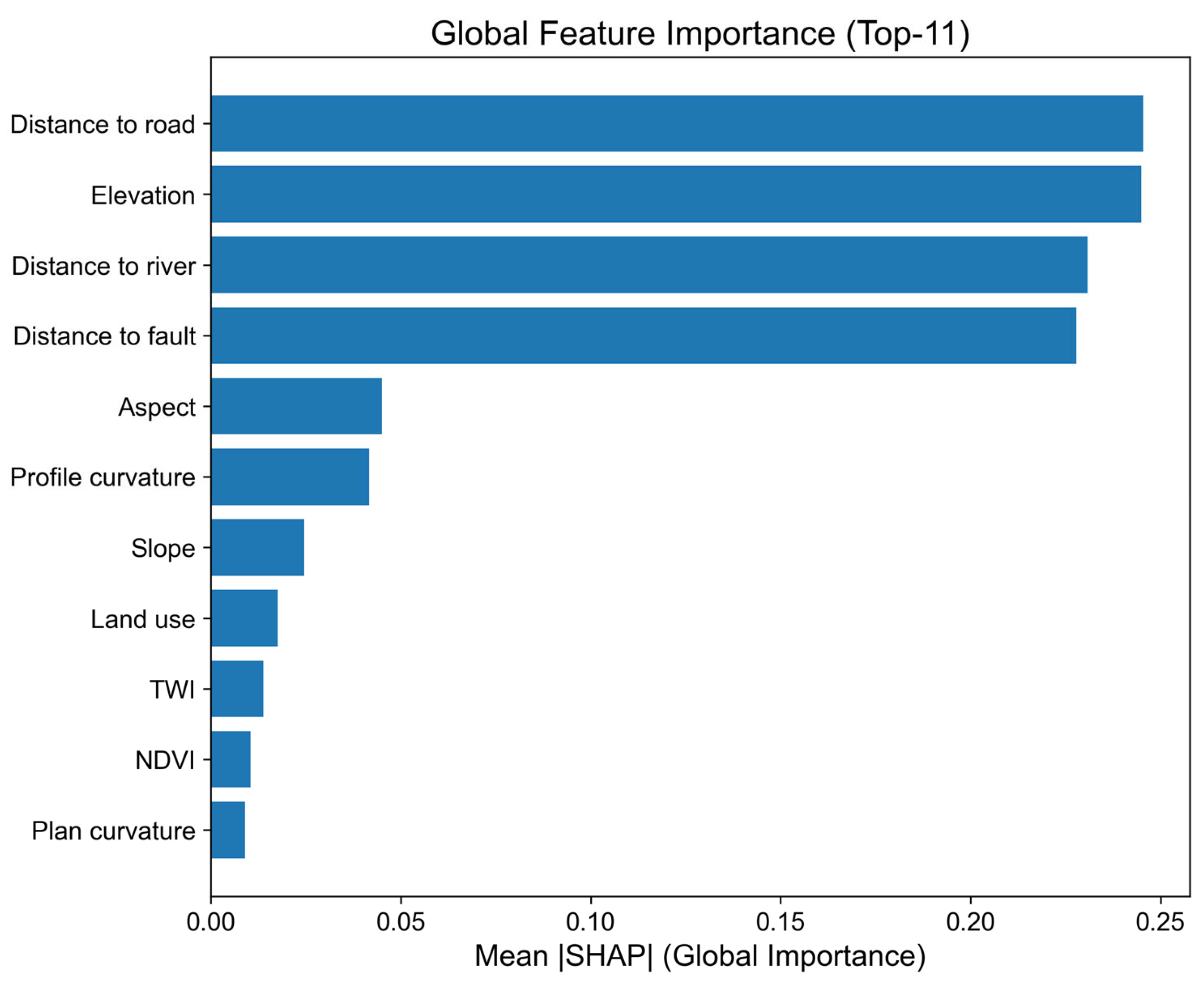
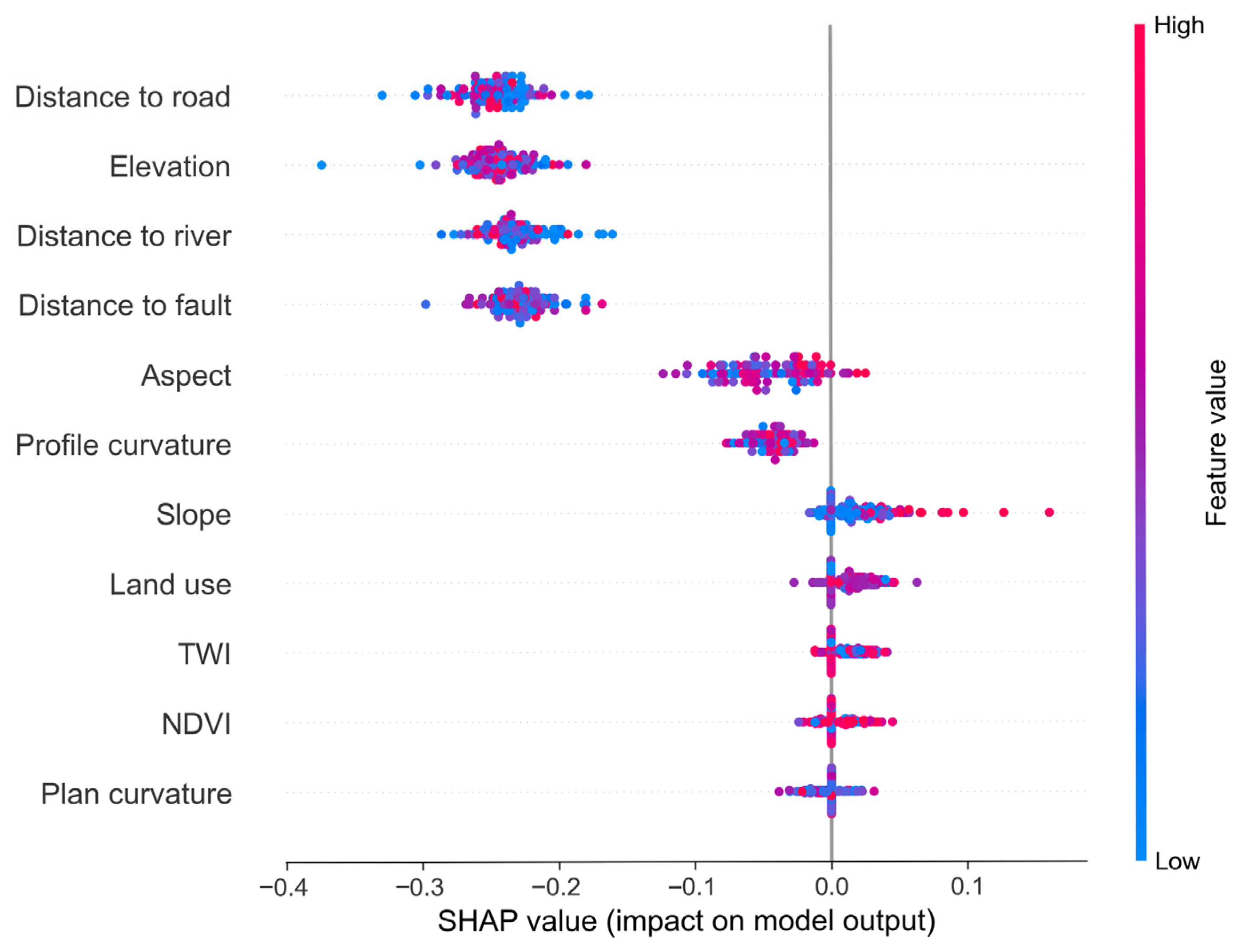
4.3. Model Interpretability Analysis
5. Conclusions
Author Contributions
Funding
Institutional Review Board Statement
Informed Consent Statement
Data Availability Statement
Acknowledgments
Conflicts of Interest
References
- Pacheco Quevedo, R.; Velastegui-Montoya, A.; Montalván-Burbano, N.; Morante-Carballo, F.; Korup, O.; Daleles Rennó, C. Land use and land cover as a conditioning factor in landslide susceptibility: A literature review. Landslides 2023, 20, 967–982. [Google Scholar] [CrossRef]
- Casagli, N.; Intrieri, E.; Tofani, V.; Gigli, G.; Raspini, F. Landslide detection, monitoring and prediction with remote-sensing techniques. Nat. Rev. Earth Environ. 2023, 4, 51–64. [Google Scholar] [CrossRef]
- Huang, F.; Xiong, H.; Jiang, S.-H.; Yao, C.; Fan, X.; Catani, F.; Chang, Z.; Zhou, X.; Huang, J.; Liu, K. Modelling landslide susceptibility prediction: A review and construction of semi-supervised imbalanced theory. Earth-Sci. Rev. 2024, 250, 104700. [Google Scholar] [CrossRef]
- Reichenbach, P.; Rossi, M.; Malamud, B.D.; Mihir, M.; Guzzetti, F. A review of statistically-based landslide susceptibility models. Earth-Sci. Rev. 2018, 180, 60–91. [Google Scholar] [CrossRef]
- Zhang, J.; Ma, X.; Zhang, J.; Sun, D.; Zhou, X.; Mi, C.; Wen, H. Insights into geospatial heterogeneity of landslide susceptibility based on the SHAP-XGBoost model. J. Environ. Manag. 2023, 332, 117357. [Google Scholar] [CrossRef]
- Forman, E.H.; Gass, S.I. The Analytic Hierarchy Process—An Exposition. Oper. Res. 2001, 49, 469–486. [Google Scholar] [CrossRef]
- Zadeh, L.A. Fuzzy sets. Inf. Control 1965, 8, 338–353. [Google Scholar] [CrossRef]
- Liu, X.; Shao, S.; Shao, S. Landslide susceptibility zonation using the analytical hierarchy process (AHP) in the Great Xi’an Region, China. Sci. Rep. 2024, 14, 2941. [Google Scholar] [CrossRef]
- Ahmad, M.S.; Lisa, M.; Khan, S. Comparative analysis of analytical hierarchy process (AHP) and frequency ratio (FR) models for landslide susceptibility mapping in Reshun, NW Pakistan. Kuwait J. Sci. 2023, 50, 387–398. [Google Scholar] [CrossRef]
- Shano, L.; Raghuvanshi, T.K.; Meten, M. Landslide susceptibility evaluation and hazard zonation techniques—A review. Geoenviron. Disasters 2020, 7, 18. [Google Scholar] [CrossRef]
- Yilmaz, I. Landslide susceptibility mapping using frequency ratio, logistic regression, artificial neural networks and their comparison: A case study from Kat landslides (Tokat—Turkey). Comput. Geosci. 2009, 35, 1125–1138. [Google Scholar] [CrossRef]
- Yu, L.; Wang, Y.; Pradhan, B. Enhancing landslide susceptibility mapping incorporating landslide typology via stacking ensemble machine learning in Three Gorges Reservoir, China. Geosci. Front. 2024, 15, 101802. [Google Scholar] [CrossRef]
- Ba, Q.; Chen, Y.; Deng, S.; Wu, Q.; Yang, J.; Zhang, J. An Improved Information Value Model Based on Gray Clustering for Landslide Susceptibility Mapping. ISPRS Int. J. Geo-Inf. 2017, 6, 18. [Google Scholar] [CrossRef]
- Wang, Q.; Guo, Y.; Li, W.; He, J.; Wu, Z. Predictive modeling of landslide hazards in Wen County, northwestern China based on information value, weights-of-evidence, and certainty factor. Geomat. Nat. Hazards Risk 2019, 10, 820–835. [Google Scholar] [CrossRef]
- Breiman, L. Random Forests. Mach. Learn. 2001, 45, 5–32. [Google Scholar] [CrossRef]
- Cortes, C.; Vapnik, V. Support-vector networks. Mach. Learn. 1995, 20, 273–297. [Google Scholar] [CrossRef]
- Friedman, J.H. Greedy Function Approximation: A Gradient Boosting Machine. Ann. Stat. 2001, 29, 1189–1232. [Google Scholar] [CrossRef]
- Guo, Z.; Tian, B.; Zhu, Y.; He, J.; Zhang, T. How do the landslide and non-landslide sampling strategies impact landslide susceptibility assessment?—A catchment-scale case study from China. J. Rock. Mech. Geotech. Eng. 2024, 16, 877–894. [Google Scholar] [CrossRef]
- Taalab, K.; Cheng, T.; Zhang, Y. Mapping landslide susceptibility and types using Random Forest. Big Earth Data 2018, 2, 159–178. [Google Scholar] [CrossRef]
- Chen, W.; Xie, X.; Wang, J.; Pradhan, B.; Hong, H.; Bui, D.T.; Duan, Z.; Ma, J. A comparative study of logistic model tree, random forest, and classification and regression tree models for spatial prediction of landslide susceptibility. CATENA 2017, 151, 147–160. [Google Scholar] [CrossRef]
- Li, Y.; Liu, X.; Han, Z.; Dou, J. Spatial Proximity-Based Geographically Weighted Regression Model for Landslide Susceptibility Assessment: A Case Study of Qingchuan Area, China. Appl. Sci. 2020, 10, 1107. [Google Scholar] [CrossRef]
- Blaschke, T. Object based image analysis for remote sensing. ISPRS J. Photogramm. Remote Sens. 2010, 65, 2–16. [Google Scholar] [CrossRef]
- Zhang, K.; Wu, X.; Niu, R.; Yang, K.; Zhao, L. The assessment of landslide susceptibility mapping using random forest and decision tree methods in the Three Gorges Reservoir area, China. Environ. Earth Sci. 2017, 76, 405. [Google Scholar] [CrossRef]
- Trigila, A.; Iadanza, C.; Esposito, C.; Scarascia-Mugnozza, G. Comparison of Logistic Regression and Random Forests techniques for shallow landslide susceptibility assessment in Giampilieri (NE Sicily, Italy). Geomorphology 2015, 249, 119–136. [Google Scholar] [CrossRef]
- Lundberg, S.; Lee, S.-I. A Unified Approach to Interpreting Model Predictions. arXiv 2017, arXiv:1705.07874. [Google Scholar] [CrossRef]
- Li, J.; Cai, Y.; Li, Q.; Kou, M.; Zhang, T. A review of remote sensing image segmentation by deep learning methods. Int. J. Digit. Earth 2024, 17, 2328827. [Google Scholar] [CrossRef]
- Azarafza, M.; Azarafza, M.; Akgün, H.; Atkinson, P.M.; Derakhshani, R. Deep learning-based landslide susceptibility mapping. Sci. Rep. 2021, 11, 24112. [Google Scholar] [CrossRef]
- Thi Ngo, P.T.; Panahi, M.; Khosravi, K.; Ghorbanzadeh, O.; Kariminejad, N.; Cerda, A.; Lee, S. Evaluation of deep learning algorithms for national scale landslide susceptibility mapping of Iran. Geosci. Front. 2021, 12, 505–519. [Google Scholar] [CrossRef]
- Alzubaidi, L.; Zhang, J.; Humaidi, A.J.; Al-Dujaili, A.; Duan, Y.; Al-Shamma, O.; Santamaría, J.; Fadhel, M.A.; Al-Amidie, M.; Farhan, L. Review of deep learning: Concepts, CNN architectures, challenges, applications, future directions. J. Big Data 2021, 8, 53. [Google Scholar] [CrossRef]
- Ronneberger, O.; Fischer, P.; Brox, T. U-Net: Convolutional Networks for Biomedical Image Segmentation. In Medical Image Computing and Computer-Assisted Intervention–MICCAI 2015; Navab, N., Hornegger, J., Wells, W.M., Frangi, A.F., Eds.; Springer International Publishing: Cham, Switzerland, 2015; pp. 234–241. [Google Scholar] [CrossRef]
- Han, K.; Wang, Y.; Chen, H.; Chen, X.; Guo, J.; Liu, Z.; Tang, Y.; Xiao, A.; Xu, C.; Xu, Y. A Survey on Vision Transformer. IEEE Trans. Pattern Anal. Mach. Intell. 2023, 45, 87–110. [Google Scholar] [CrossRef]
- Liu, Z.; Lin, Y.; Cao, Y.; Hu, H.; Wei, Y.; Zhang, Z.; Tang, Y.; Xiao, A.; Xu, C.; Xu, Y.; et al. Swin Transformer: Hierarchical Vision Transformer using Shifted Windows. arXiv 2021, arXiv:2103.14030. [Google Scholar] [CrossRef]
- Khan, B.A.; Jung, J.-W. Semantic Segmentation of Aerial Imagery Using U-Net with Self-Attention and Separable Convolutions. Appl. Sci. 2024, 14, 3712. [Google Scholar] [CrossRef]
- Kugelman, J.; Allman, J.; Read, S.A.; Vincent, S.J.; Tong, J.; Kalloniatis, M.; Chen, F.K.; Collins, M.J.; Alonso-Caneiro, D. A comparison of deep learning U-Net architectures for posterior segment OCT retinal layer segmentation. Sci. Rep. 2022, 12, 14888. [Google Scholar] [CrossRef] [PubMed]
- Zhang, H.; Jiang, Z.; Zheng, G.; Yao, X. Semantic Segmentation of High-Resolution Remote Sensing Images with Improved U-Net Based on Transfer Learning. Int. J. Comput. Intell. Syst. 2023, 16, 181. [Google Scholar] [CrossRef]
- Alom, M.Z.; Hasan, M.; Yakopcic, C.; Taha, T.M.; Asari, V.K. Recurrent Residual Convolutional Neural Network based on U-Net (R2U-Net) for Medical Image Segmentation. arXiv 2018, arXiv:1802.06955. [Google Scholar] [CrossRef]
- Zhang, Z.; Liu, Q.; Wang, Y. Road Extraction by Deep Residual U-Net. IEEE Geosci. Remote Sens. Lett. 2018, 15, 749–753. [Google Scholar] [CrossRef]
- Oktay, O.; Schlemper, J.; Folgoc, L.L.; Lee, M.; Heinrich, M.; Misawa, K.; Mori, K.; McDonagh, S.; Hammerla, N.Y.; Kainz, B. Attention U-Net: Learning Where to Look for the Pancreas. arXiv 2018, arXiv:1804.03999. [Google Scholar] [CrossRef]
- Zhou, Z.; Rahman Siddiquee, M.M.; Tajbakhsh, N.; Liang, J. UNet++: A Nested U-Net Architecture for Medical Image Segmentation. In Deep Learning in Medical Image Analysis and Multimodal Learning for Clinical Decision Support; Stoyanov, D., Taylor, Z., Carneiro, G., Syeda-Mahmood, T., Martel, A., Maier-Hein, L., Tavares, J.M.E.S., Bradley, A., Paulo Papa, J., Belagiannis, V., Eds.; Springer International Publishing: Cham, Switzerland, 2018; pp. 3–11. [Google Scholar] [CrossRef]
- Çiçek, Ö.; Abdulkadir, A.; Lienkamp, S.S.; Brox, T.; Ronneberger, O. 3D U-Net: Learning Dense Volumetric Segmentation from Sparse Annotation. In Medical Image Computing and Computer-Assisted Intervention–MICCAI 2016; Ourselin, S., Joskowicz, L., Sabuncu, M.R., Unal, G., Wells, W., Eds.; Springer International Publishing: Cham, Switzerland, 2016; pp. 424–432. [Google Scholar] [CrossRef]
- Huang, H.; Lin, L.; Tong, R.; Hu, H.; Zhang, Q.; Iwamoto, Y.; Han, X.; Chen, Y.-W.; Wu, J. UNet 3+: A Full-Scale Connected UNet for Medical Image Segmentation. In Proceedings of the ICASSP 2020—2020 IEEE International Conference on Acoustics, Speech and Signal Processing (ICASSP), Barcelona, Spain, 4–8 May 2020; IEEE: New York, NY, USA, 2020; pp. 1055–1059. [Google Scholar] [CrossRef]
- Zhou, Z.; Siddiquee, M.M.R.; Tajbakhsh, N.; Liang, J. UNet++: Redesigning Skip Connections to Exploit Multiscale Features in Image Segmentation. IEEE Trans. Med. Imaging 2020, 39, 1856–1867. [Google Scholar] [CrossRef]
- Vaswani, A.; Shazeer, N.; Parmar, N.; Uszkoreit, J.; Jones, L.; Gomez, A.N.; Kaiser, L.; Polosukhin, I. Attention is All you Need n.d. arXiv 2017, arXiv:1706.03762. [Google Scholar]
- Zamir, S.W.; Arora, A.; Khan, S.; Hayat, M.; Khan, F.S.; Yang, M.-H. Restormer: Efficient Transformer for High-Resolution Image Restoration. In Proceedings of the 2022 IEEE/CVF Conference on Computer Vision and Pattern Recognition (CVPR), New Orleans, LA, USA, 18–24 June 2022; IEEE: New York, NY, USA, 2022; pp. 5718–5729. [Google Scholar] [CrossRef]
- Zheng, W.; Lu, S.; Yang, Y.; Yin, Z.; Yin, L. Lightweight transformer image feature extraction network. PeerJ Comput. Sci. 2024, 10, e1755. [Google Scholar] [CrossRef]
- Wang, W.; Xie, E.; Li, X.; Fan, D.-P.; Song, K.; Liang, D.; Lu, T.; Luo, P.; Shao, L. PVT v2: Improved baselines with pyramid vision transformer. Comput. Vis. Media 2022, 8, 415–424. [Google Scholar] [CrossRef]
- Liang, J.; Cao, J.; Sun, G.; Zhang, K.; Van Gool, L.; Timofte, R. SwinIR: Image Restoration Using Swin Transformer. In Proceedings of the 2021 IEEE/CVF International Conference on Computer Vision Workshops (ICCVW), Montreal, BC, Canada, 11–17 October 2021; IEEE: New York, NY, USA, 2021; pp. 1833–1844. [Google Scholar] [CrossRef]
- Liu, Z.; Hu, H.; Lin, Y.; Yao, Z.; Xie, Z.; Wei, Y.; Ning, J.; Cao, Y.; Zhang, Z.; Dong, L.; et al. Swin Transformer V2: Scaling Up Capacity and Resolution. In Proceedings of the 2022 IEEE/CVF Conference on Computer Vision and Pattern Recognition (CVPR), New Orleans, LA, USA, 18–24 June 2022; IEEE: New York, NY, USA, 2022; pp. 11999–12009. [Google Scholar] [CrossRef]
- Liu, Z.; Ning, J.; Cao, Y.; Wei, Y.; Zhang, Z.; Lin, S.; Hu, H. Video Swin Transformer. In Proceedings of the 2022 IEEE/CVF Conference on Computer Vision and Pattern Recognition (CVPR), New Orleans, LA, USA, 18–24 June 2022; IEEE: New York, NY, USA, 2022; pp. 3192–3201. [Google Scholar] [CrossRef]
- Jiang, J.; Zhu, J.; Bilal, M.; Cui, Y.; Kumar, N.; Dou, R.; Su, F.; Xu, X. Masked Swin Transformer Unet for Industrial Anomaly Detection. IEEE Trans. Ind. Inform. 2023, 19, 2200–2209. [Google Scholar] [CrossRef]





| I | II | III | IV | V | VI | VII | VIII | IX | X | XI | |
|---|---|---|---|---|---|---|---|---|---|---|---|
| I | 1.00 | 0.076 | 0.180 | −0.182 | 0.044 | −0.013 | −0.009 | 0.071 | −0.001 | 0.122 | 0.376 |
| II | 0.076 | 1.00 | 0.794 | −0.040 | −0.128 | −0.008 | −0.006 | −0.007 | 0.073 | −0.110 | 0.092 |
| III | 0.180 | 0.794 | 1.00 | −0.133 | −0.090 | −0.087 | 0.005 | −0.032 | 0.002 | 0.007 | 0.363 |
| IV | −0.182 | −0.040 | −0.133 | 1.00 | −0.030 | −0.005 | 0.037 | −0.453 | 0.068 | 0.192 | −0.227 |
| V | 0.044 | −0.128 | −0.090 | −0.030 | 1.00 | 0.003 | −0.001 | −0.003 | −0.004 | 0.048 | 0.019 |
| VI | −0.013 | −0.008 | −0.087 | −0.005 | 0.003 | 1.00 | −0.386 | 0.292 | 0.040 | −0.071 | −0.025 |
| VII | −0.009 | −0.006 | 0.005 | 0.037 | −0.001 | −0.386 | 1.00 | −0.394 | −0.024 | 0.009 | −0.017 |
| VIII | 0.071 | −0.007 | −0.032 | −0.453 | −0.003 | 0.292 | −0.394 | 1.00 | 0.020 | −0.166 | 0.054 |
| IX | −0.001 | 0.073 | 0.002 | 0.068 | −0.004 | 0.040 | −0.024 | 0.020 | 1.00 | −0.256 | −0.045 |
| X | 0.122 | −0.110 | 0.007 | 0.192 | 0.048 | −0.071 | 0.009 | −0.166 | −0.256 | 1.00 | 0.076 |
| XI | 0.376 | 0.092 | 0.363 | −0.227 | 0.019 | −0.025 | −0.017 | 0.054 | −0.045 | 0.076 | 1.00 |
| Factor | VIF | TOL |
|---|---|---|
| Distance to roads | 1.208 | 0.828 |
| Distance to faults | 3.275 | 0.305 |
| Elevation | 3.718 | 0.269 |
| Slope | 1.481 | 0.675 |
| Aspect | 1.023 | 0.978 |
| Profile curvature | 1.241 | 0.806 |
| Plan curvature | 1.342 | 0.745 |
| TWI | 1.626 | 0.615 |
| Land use type | 1.096 | 0.912 |
| NDVI | 1.207 | 0.829 |
| Distance to rivers | 1.487 | 0.673 |
| Parameter | Value | Function | Selection Rationale |
|---|---|---|---|
| Optimizer | AdamW | Parameter update | Provides stable convergence for segmentation tasks and is commonly paired with Transformer encoders. |
| Learning rate | 3 × 10⁻⁴ | Gradient step size | Determined through multiple trials; larger values cause oscillations, while smaller values slow convergence. |
| Weight decay | 0.05 | Overfitting suppression | Tuned through multiple experiments; 0.05 effectively suppresses overfitting. |
| Epochs | 50 | Total training iterations | After tuning, 50 epochs are sufficient to achieve stable performance. |
| Batch size | 8 | Number of samples per training step | A trade-off between Graphics Processing Unit (GPU) memory usage and gradient stability. |
| Data loading workers | 4 | DataLoader parallelism | Typical configuration considering Windows Operating System (OS) and Solid State Drive (SSD) performance. |
| Loss function | BCE + Dice (weighted) | Optimizes pixel classification and region overlap | Dice is more stable under class imbalance, while BCE preserves probability separability. |
| BCE weight | 0.3 | Controls the contribution of BCE | Emphasizing region overlap can improve spatial continuity and IoU. |
| Dice weight | 0.7 | Controls the contribution of Dice | Same as above |
| Experimental Platform | Specification |
|---|---|
| Central Processing Unit (CPU) | AMD Ryzen 9 7945HX with Radeon Graphics (Manufacturer: Advanced Micro Devices, Inc., Santa Clara, CA, USA) |
| GPU | NVIDIA GeForce RTX 4060 (Manufacturer: Nvidia Corporation, Santa Clara, CA, USA) |
| GPU Memory (GRAM) | 8 GB |
| OS | Windows 11 |
| Development Environment | Python3.10.18 + PyTorch2.7.1 |
| Evaluation Metric | Information Value Method | U-Net Model | Swin-UNet Model |
|---|---|---|---|
| AUROC | 0.136 | 0.996 | 0.988 |
| AUPRC | 0.18 | 0.926 | 0.933 |
| F1 | 0.155 | 0.941 | 0.927 |
| IoU | 0.084 | 0.889 | 0.864 |
Disclaimer/Publisher’s Note: The statements, opinions and data contained in all publications are solely those of the individual author(s) and contributor(s) and not of MDPI and/or the editor(s). MDPI and/or the editor(s) disclaim responsibility for any injury to people or property resulting from any ideas, methods, instructions or products referred to in the content. |
© 2025 by the authors. Licensee MDPI, Basel, Switzerland. This article is an open access article distributed under the terms and conditions of the Creative Commons Attribution (CC BY) license.
Share and Cite
Liu, J.; Ran, X.; Wang, X. Intelligent Landslide Susceptibility Assessment Framework Using the Swin Transformer Technique: A Case Study of Changbai County, Jilin Province, China. Appl. Sci. 2026, 16, 301. https://doi.org/10.3390/app16010301
Liu J, Ran X, Wang X. Intelligent Landslide Susceptibility Assessment Framework Using the Swin Transformer Technique: A Case Study of Changbai County, Jilin Province, China. Applied Sciences. 2026; 16(1):301. https://doi.org/10.3390/app16010301
Chicago/Turabian StyleLiu, Jiachen, Xiangjin Ran, and Xi Wang. 2026. "Intelligent Landslide Susceptibility Assessment Framework Using the Swin Transformer Technique: A Case Study of Changbai County, Jilin Province, China" Applied Sciences 16, no. 1: 301. https://doi.org/10.3390/app16010301
APA StyleLiu, J., Ran, X., & Wang, X. (2026). Intelligent Landslide Susceptibility Assessment Framework Using the Swin Transformer Technique: A Case Study of Changbai County, Jilin Province, China. Applied Sciences, 16(1), 301. https://doi.org/10.3390/app16010301