Analytical Calculation Method for Anti-Slip of Main Cables in Three-Tower Suspension Bridges with Spatial Cable Systems

Abstract
1. Introduction
2. Theoretical Analysis
- (1)
- The geometric shape of the main cable under dead load is parabolic.
- (2)
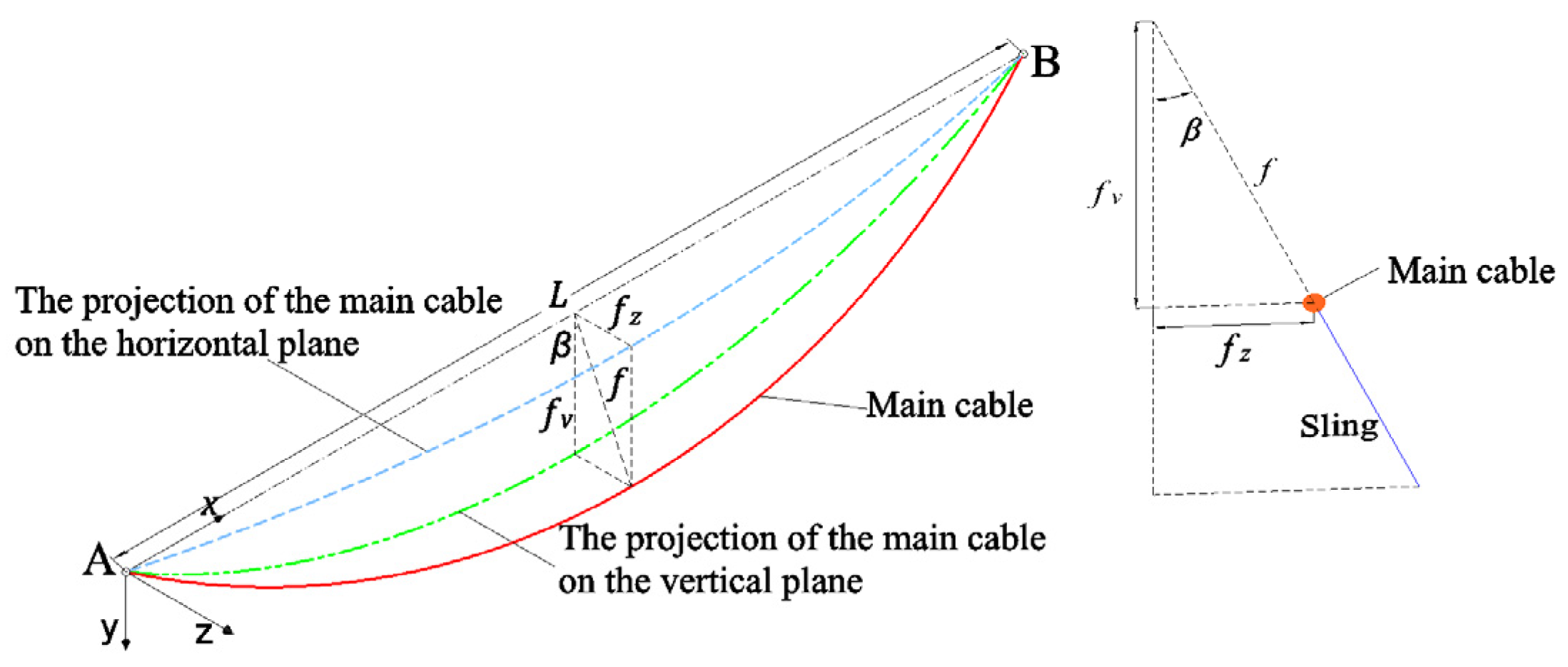
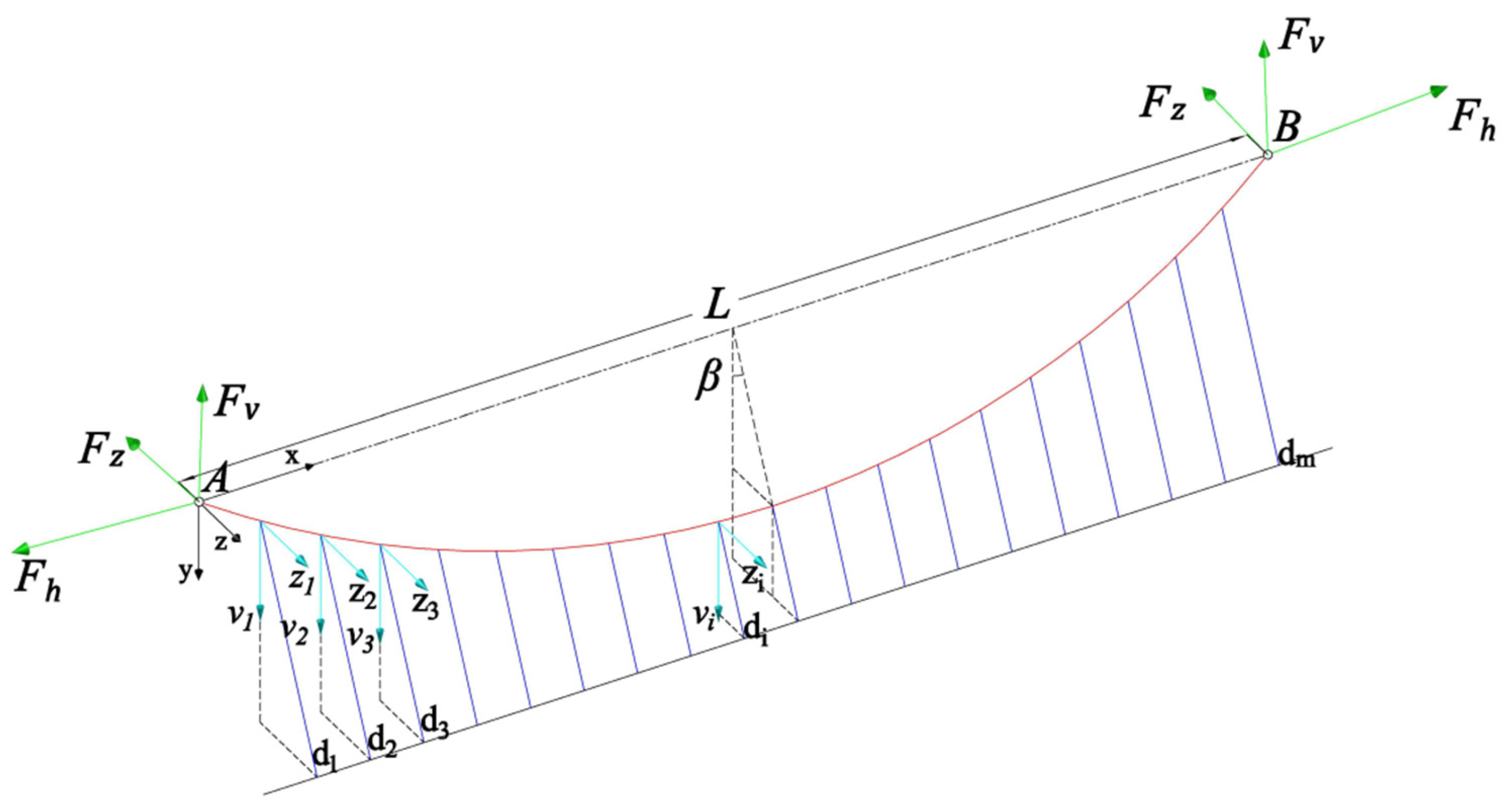
- The main cable and the hangers lie within the same inclined plane.
- (3)
- The self-weight of the cable clamps, hangers, and stiffening girders is equivalently distributed as a uniform load along the bridge length.
- (4)
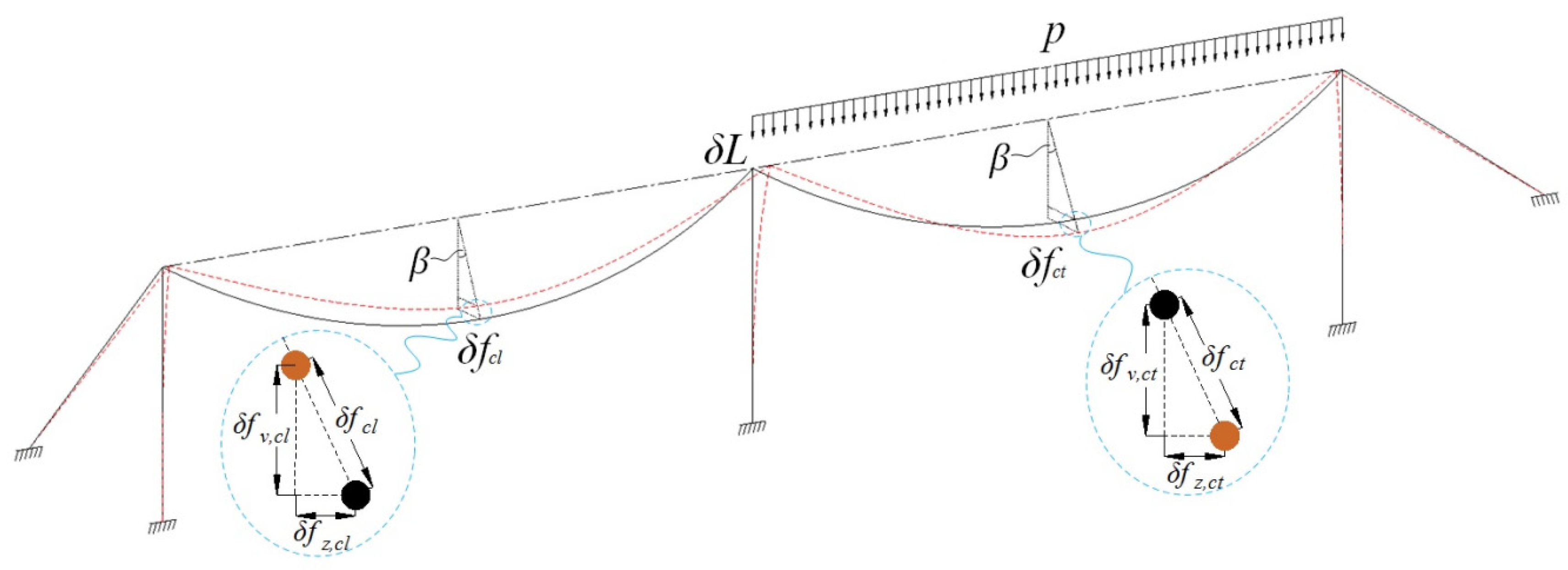
- Considering the strong restraint from the side-span cable, the displacement of the side tower under live loads is assumed to be equal to zero.
- (5)
- A fully floating system is adopted, with no longitudinal restraints provided between the tower and the girder.
2.1. Calculation of the Slip Resistance Safety Factor for Spatial Main Cables
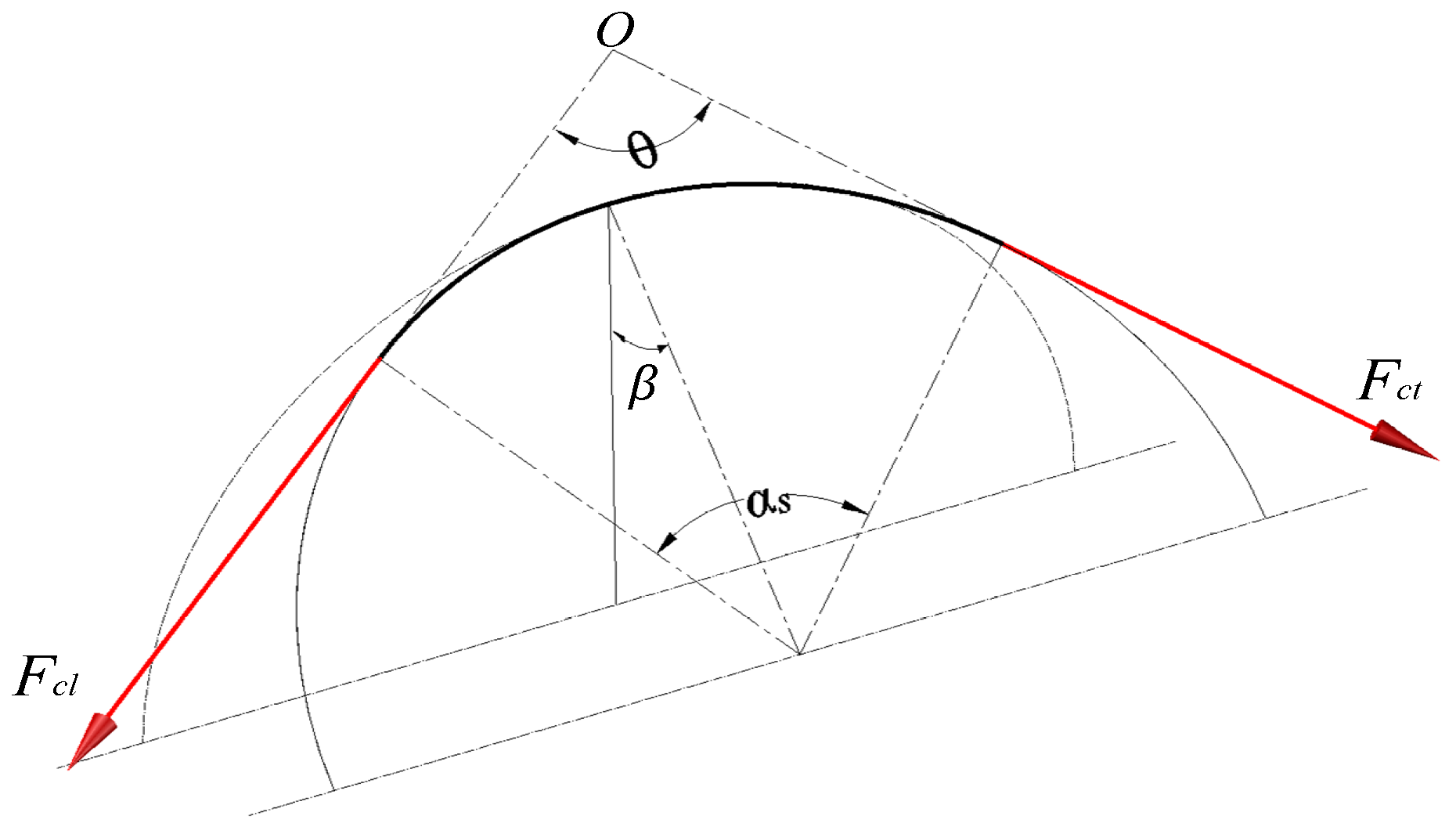
2.1.1. Calculation of the Wrap Angle αs
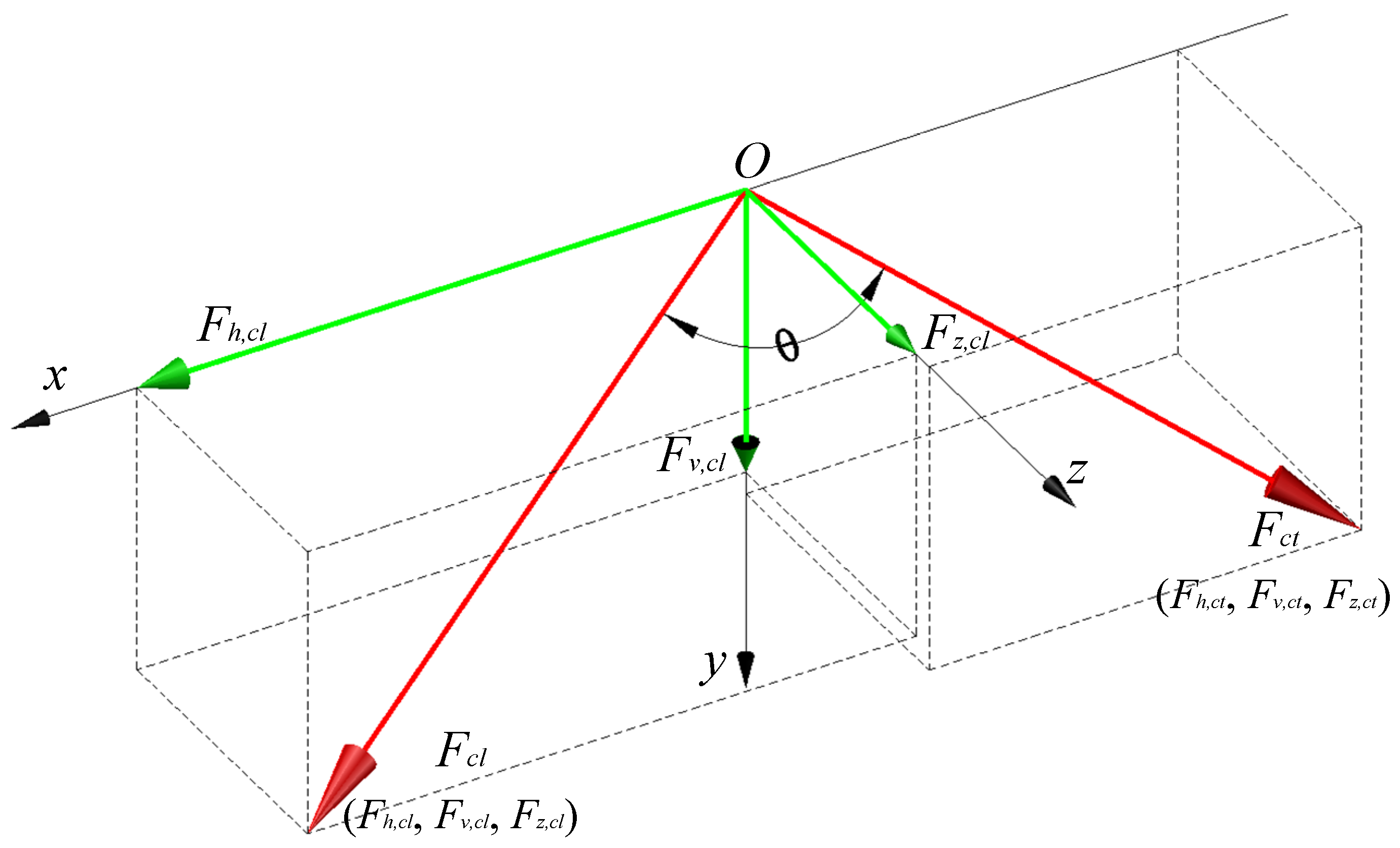
2.1.2. Calculation of Main Cable Forces at the Intermediate Tower Saddle Under Live Load
2.1.3. Calculation of Main Cable Profile Changes Under Live Load
2.2. Calculation Procedure
2.3. Case Study and Analysis
3. Analysis of Influencing Factors
3.1. Friction Coefficient Between the Main Cable and the Saddle μ
3.2. Spatial Cable Inclination Angle β
3.3. Tower–Cable Stiffness Ratio and Sag-to-Span Ratio
- (1)
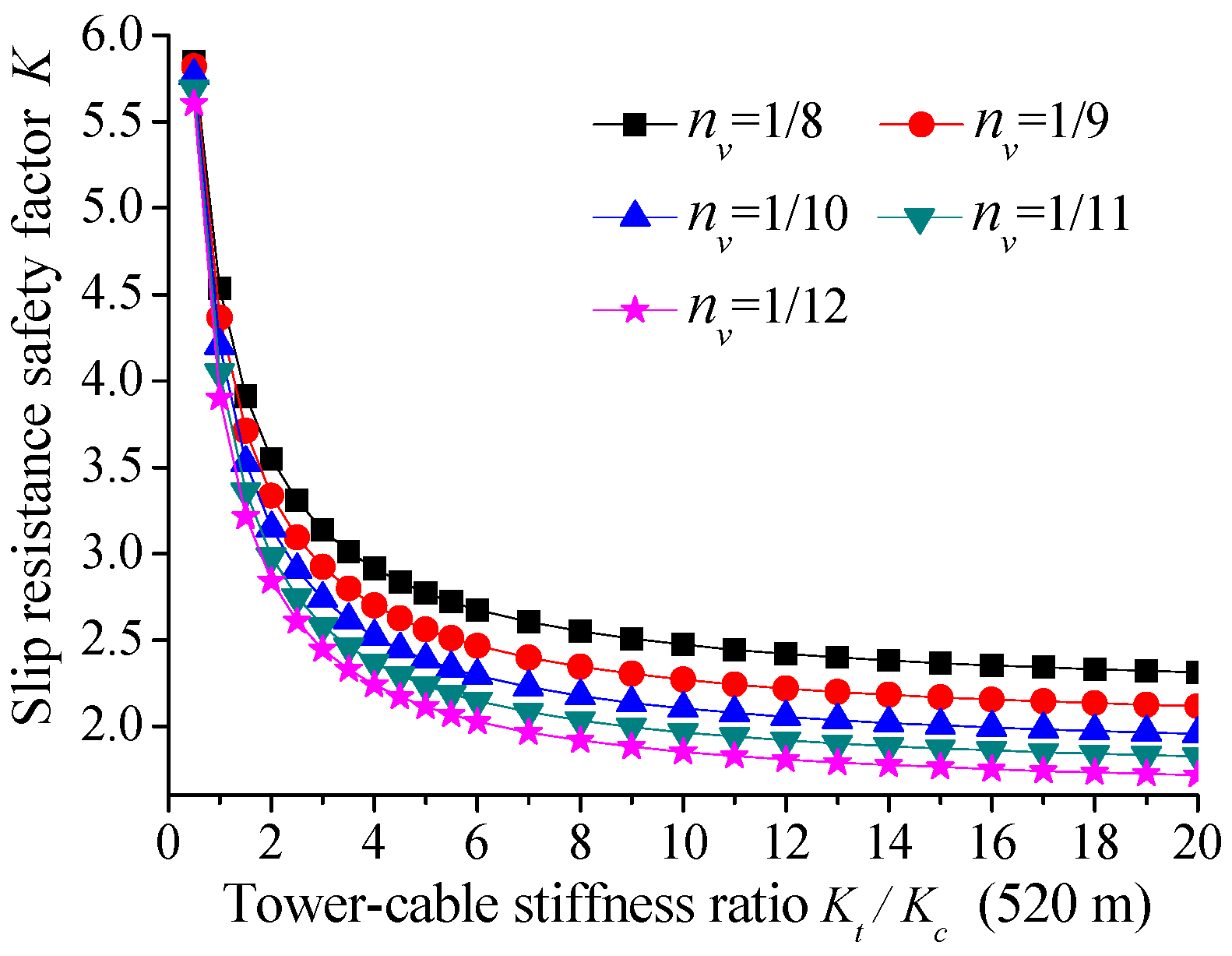
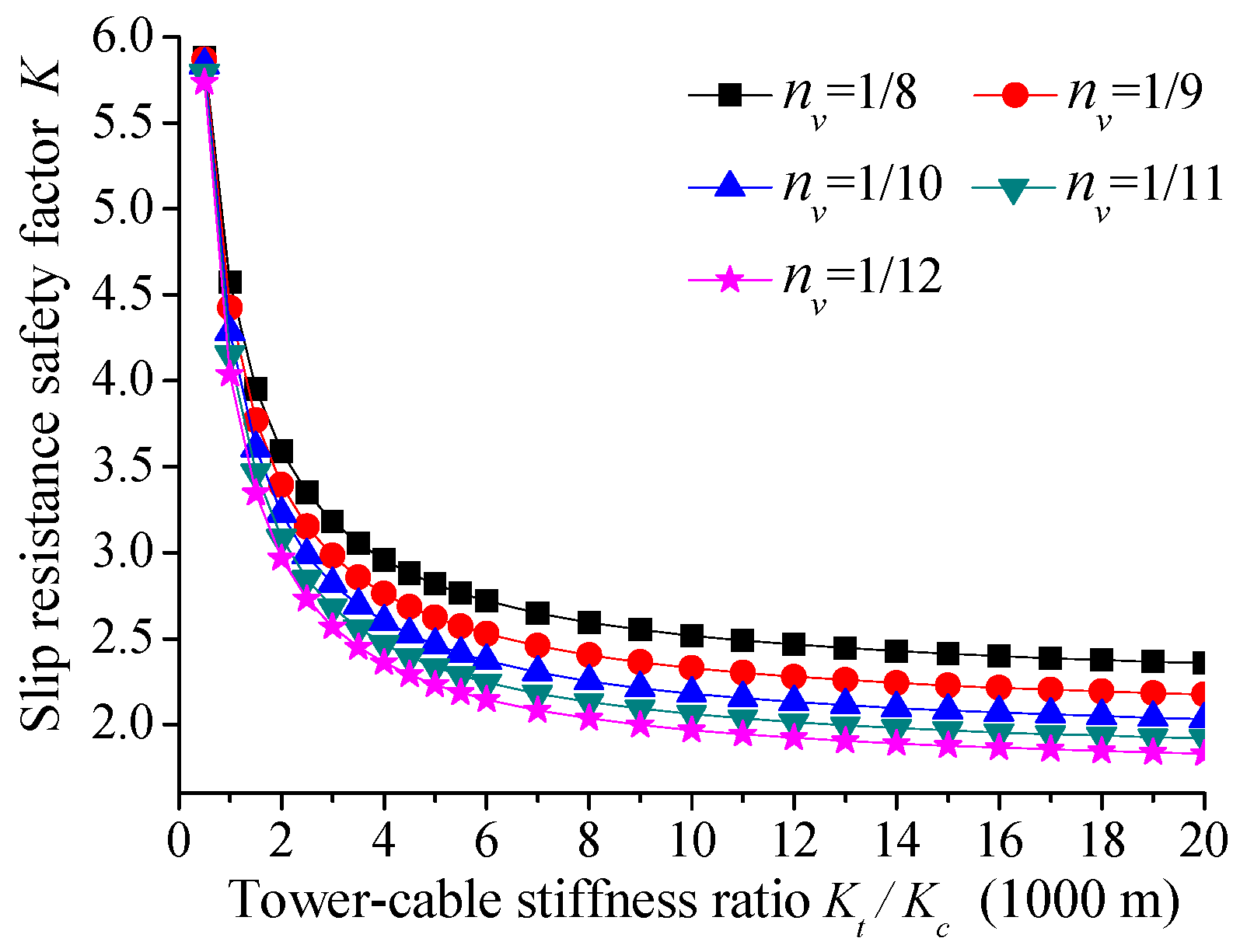
- The anti-slip safety factor of main cables exhibits an inverse correlation with the tower-to-cable stiffness ratio. When Kt/Kc < 3, the safety factor K decreases rapidly with increasing stiffness ratio. Within the range of 3 < Kt/Kc < 12, the influence of stiffness ratio variation on K diminishes significantly, demonstrating a rate of change below 5%. For stiffness ratios exceeding Kt/Kc > 12, further enhancement of the tower’s longitudinal stiffness yields negligible impact, with the alteration rate of K remaining less than 1%.
- (2)
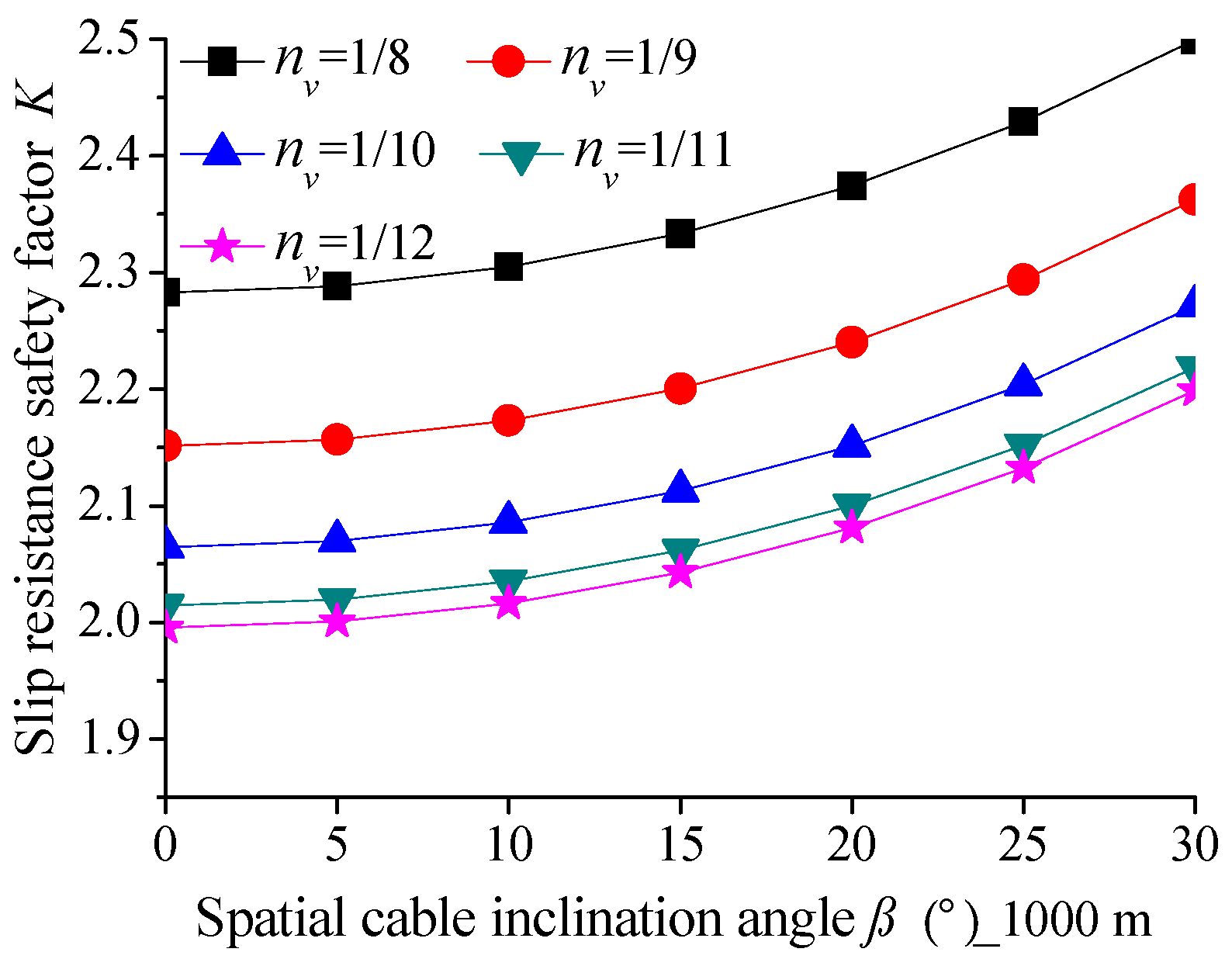
- The anti-slip safety factor of the main cable exhibits a positive correlation with the sag–span ratio under a fixed tower-to-cable stiffness ratio (Kt/Kc). When Kt/Kc > 3, the sag–span ratio demonstrates a pronounced linear influence on the anti-slip safety factor. Specifically, an increase in the sag–span ratio from 1/9 to 1/8 elevates the safety factor by approximately 8%. Expanding the sag–span ratio from 1/12 to 1/8 results in a 30% enhancement of anti-slip performance. Increasing the main cable’s sag-to-span ratio alters the structural stiffness and increases the vertical deformation of the deck under asymmetric loads. Therefore, the selection of the sag-to-span ratio must also consider its effect on structural stiffness.
3.4. Ratio of Dead Load to Live Load
3.5. Span Length
4. Conclusions
- (1)
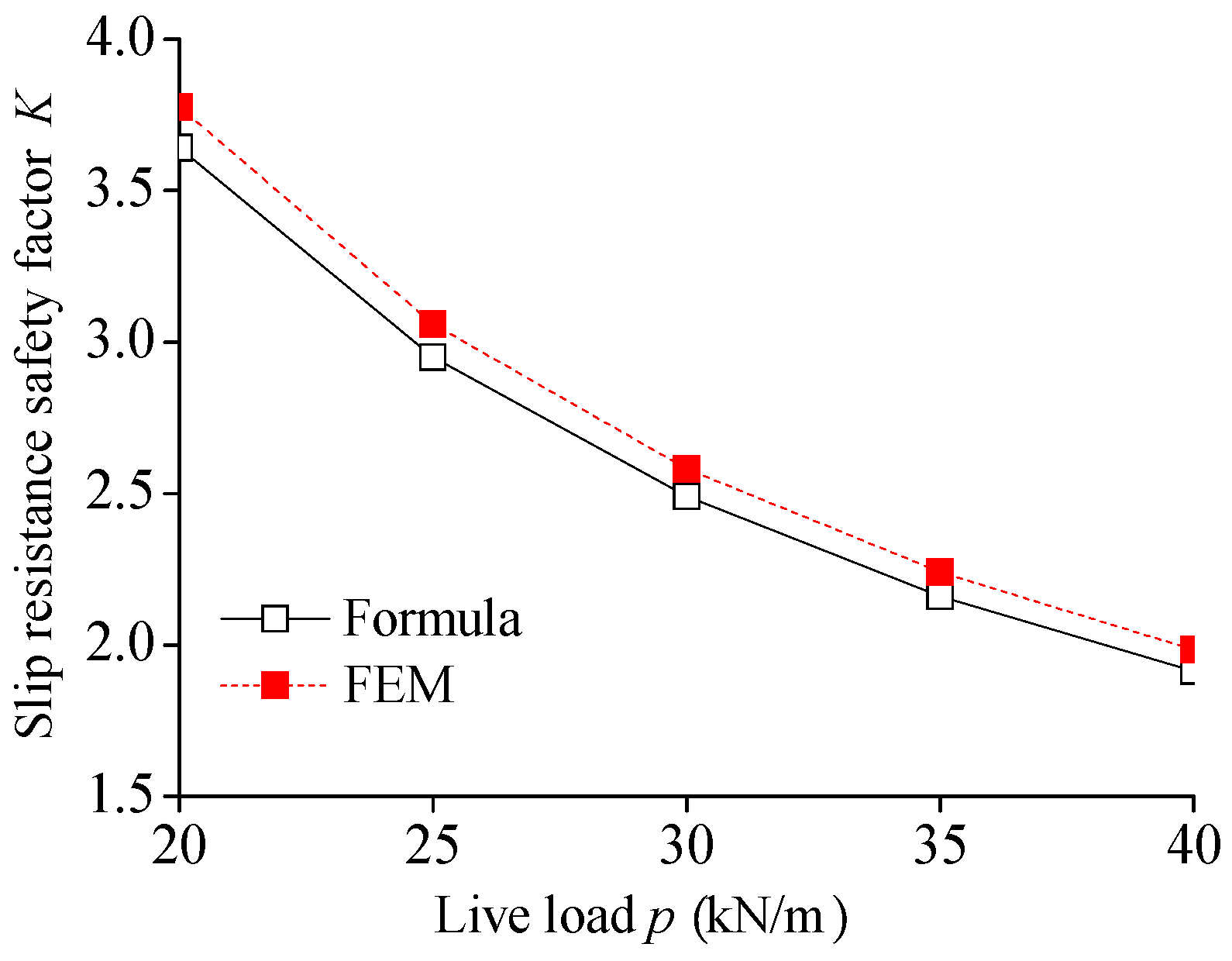
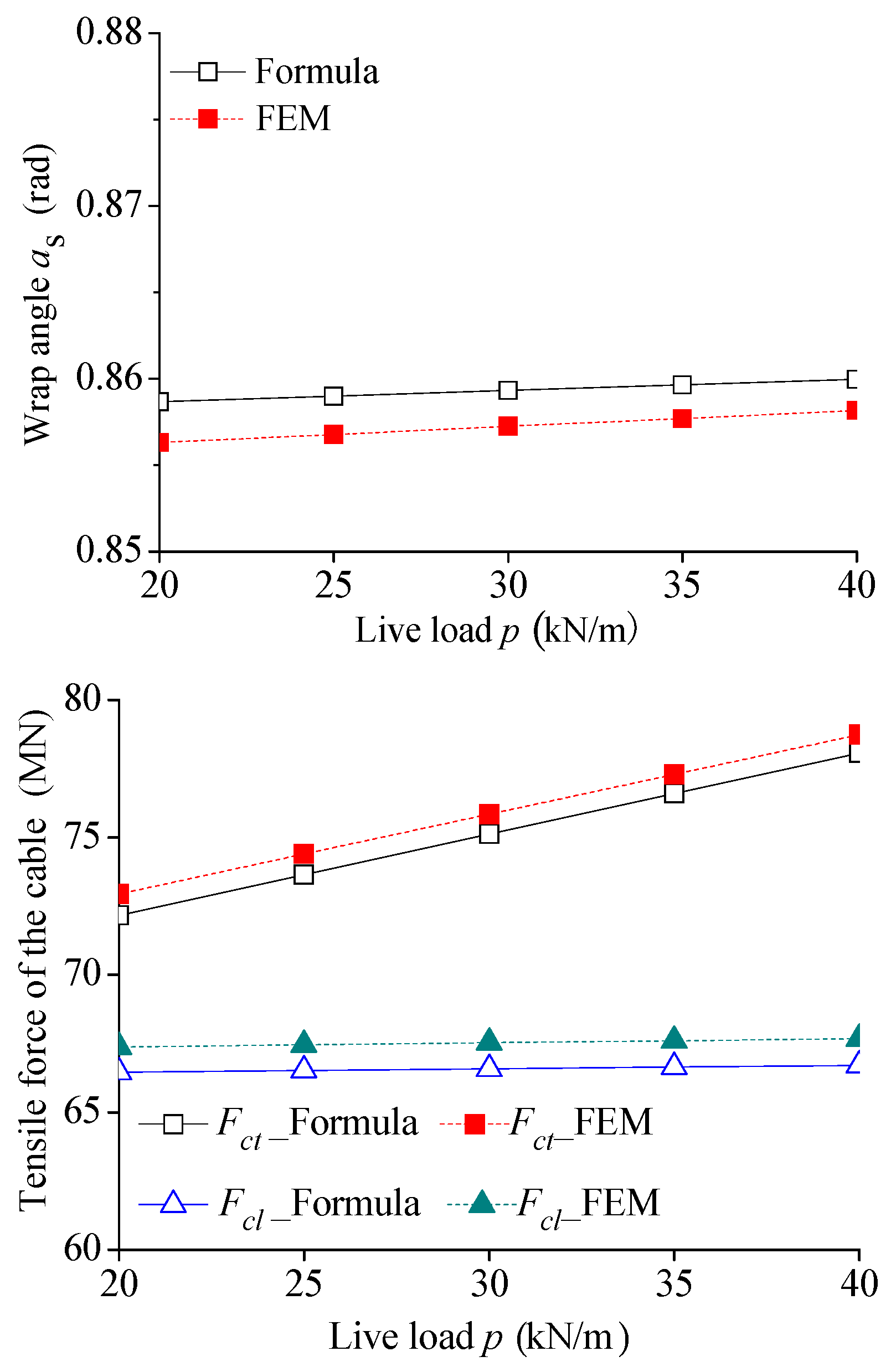
- An analytical method for calculating the anti-slip safety factor of main cables in multi-tower suspension bridges with spatial cable systems is proposed in this study. The derived formula for the anti-slip safety factor of spatial cables is validated through comparison with finite element results, demonstrating high computational accuracy. The proposed method is applicable to the preliminary design of multi-tower suspension bridges with spatial cable systems.
- (2)
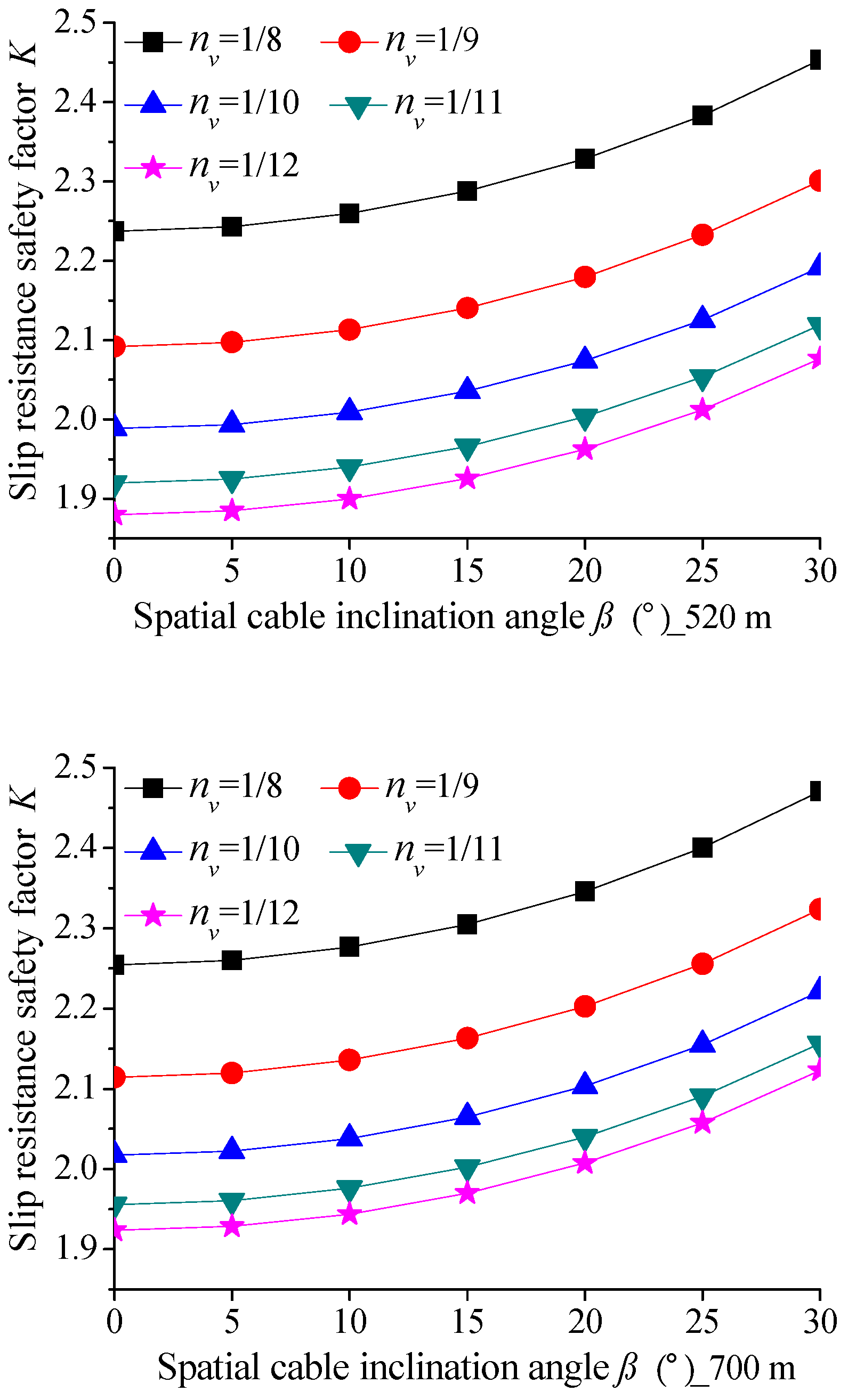
- The adoption of spatial cables improves the anti-slip stability of the main cable, and the anti-slip safety factor increases with the spatial inclination angle of the main cable. The anti-slip safety factor decreases as the tower–cable stiffness ratio increases. When the tower–cable stiffness ratio Kt/Kc < 3, an increase in the stiffness ratio results in a rapid decline in the anti-slip safety factor K. When the tower–cable stiffness ratio exceeds 12, further increases in the stiffness ratio have a minimal impact on the anti-slip safety factor.
- (3)
- The anti-slip stability of spatial main cables increases with a larger sag-to-span ratio. When the tower–cable stiffness ratio Kt/Kc is in the range of 0.5 to 3, variations in the sag-to-span ratio have a limited effect on the anti-slip safety factor. When Kt/Kc > 3, the sag-to-span ratio significantly influences the anti-slip safety factor. Increasing the sag-to-span ratio from 1/12 to 1/8 results in an approximately 30% increase in the anti-slip safety factor. From the perspective of enhancing the anti-slip stability of the main cable, a larger sag-to-span ratio is recommended in the design.
- (4)
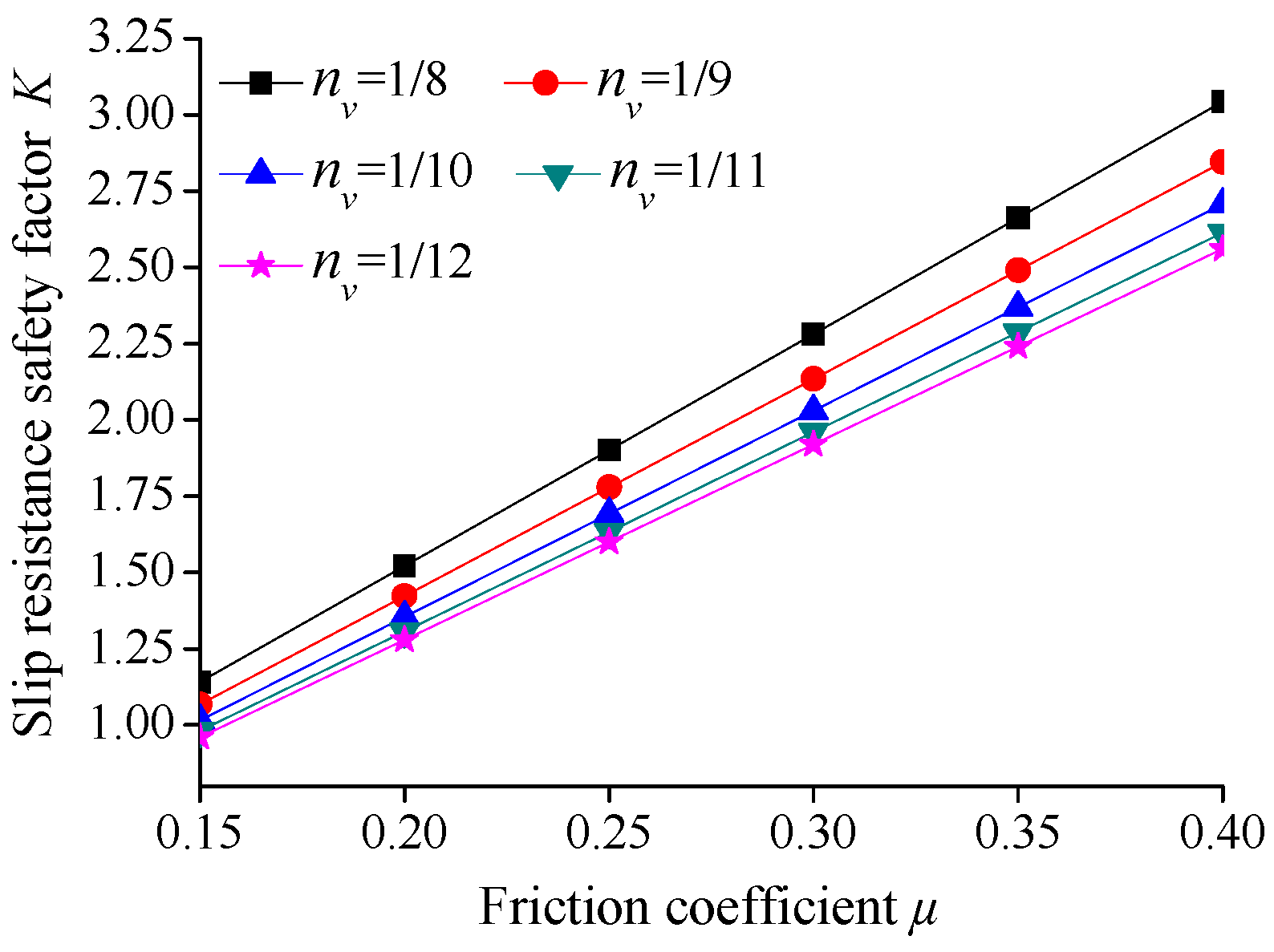
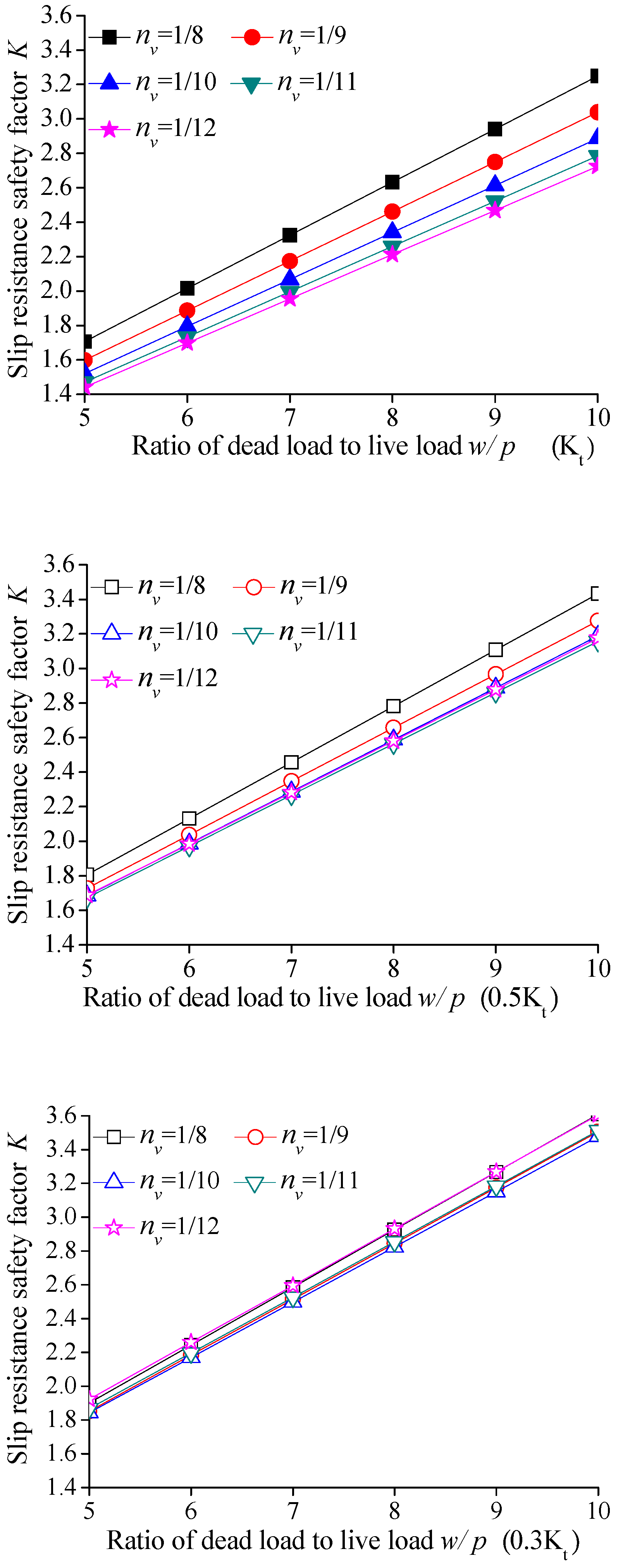
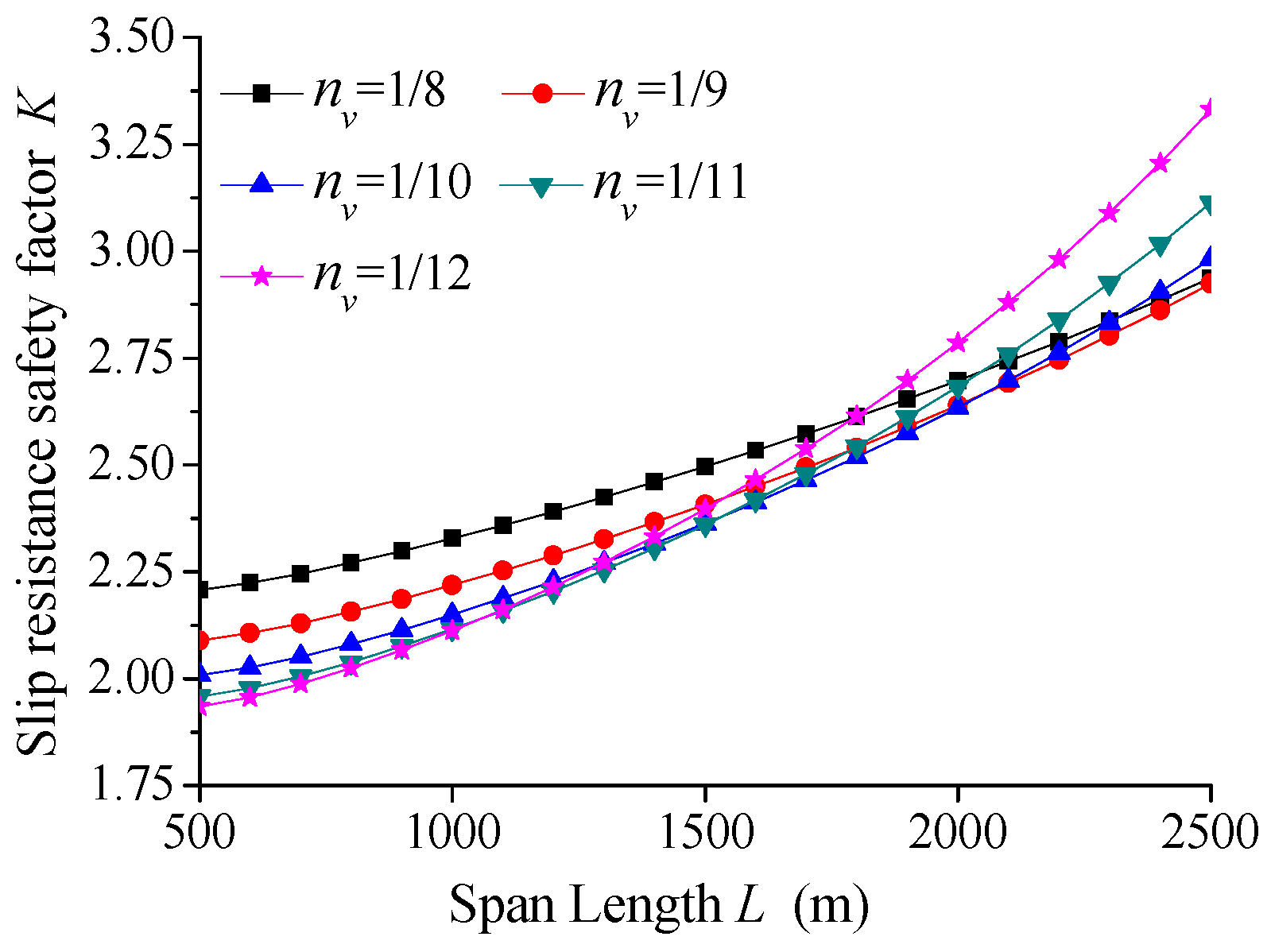
- The anti-slip safety coefficient of the main cable increases approximately linearly with the growth of the friction coefficient between the main cable and saddle, as well as the dead-to-live load ratio. The anti-slip safety coefficient of spatial main cables increases with span length, and cables with smaller sag-to-span ratios exhibit a more pronounced acceleration in anti-slip performance enhancement as the span expands.
Author Contributions
Funding
Institutional Review Board Statement
Informed Consent Statement
Data Availability Statement
Conflicts of Interest
References
- Gimsing, N.J.; Georgakis, C.T. Cable Supported Bridges: Concept sand Design, 3rd ed.; John Wiley & Sons: Chichester, UK, 2013. [Google Scholar]
- Forsberg, T. Multi-span suspension bridges. Int. J. Steel Struct. 2001, 1, 63–73. [Google Scholar]
- Luo, X.H.; Xiao, R.C.; Xiang, H.F. Cable shape analysis of suspension bridge with spatial cables. J. Tongji Univ. 2004, 32, 1349–1354. [Google Scholar]
- Sha, Z.F.; Xu, W.P. Modal Characteristics of Two Kinds of 5000 m Mixed-Cable Suspension Bridges with Ruled Curved Surface Cable Net. J. Highw. Transp. Res. Dev. 2021, 15, 59–66. (In Chinese) [Google Scholar]
- Yuan, W.W.; Xu, W.P. Wind Stability Analysis of 4000m-Span Suspension Bridge with Carbon Fiber Spatial Cable System. IOP Conf. Ser. Earth Environ. Sci. 2021, 719, 7. [Google Scholar] [CrossRef]
- Xu, W.P.; Li, B.; Ping, P.X.; Wu, Y.; Kang, Z.X. Design of 800-m Hillside-Anchored Pedestrian Suspension Bridge with Univalent Hyperboloid Space Cable Net. J. Highw. Transp. Res. Dev. 2022, 16, 51–58. (In Chinese) [Google Scholar] [CrossRef]
- Zhang, J.Q.; Qu, Z.L.; Song, J.Y.; Yang, Y. Two principal control indexes of multi-pylon suspension bridge and related calculation cases. J. Highw. Transp. Res. Dev. 2011, 28, 95–99. (In Chinese) [Google Scholar]
- Hasegawa, K.; Kojima, H.; Sasaki, M.; Takena, K. Frictional resistance between cable and saddle equipped with friction plate. J. Harbin Inst. Technol. 1995, 121, 1–14. [Google Scholar] [CrossRef]
- Cheng, Z.Y.; Zhang, Q.H.; Bao, Y.; Jia, D.; Bu, Y.; Li, Q. Analytical models of frictional resistance between cable and saddle equipped with friction plates for multispan suspension bridges. J. Bridge Eng. 2018, 23, 04017118. [Google Scholar] [CrossRef]
- Wang, L.; Shen, R.L.; Zhang, S.H.; Bai, L.; Zhen, X.; Wang, R. Strand element analysis method for interaction between cable and saddle in suspension bridges. Eng. Struct. 2021, 242, 112283. [Google Scholar] [CrossRef]
- Guo, L.; Liu, H.; Lan, J.; Chen, Z. Study on anti-sliding performance of cable clamps under and after elevated temperature. Structures 2023, 58, 105414. [Google Scholar] [CrossRef]
- Zhang, W.M.; Zhang, X.Y.; Tian, G.M. Determining anchor span strand tensions in the completed state of a suspension bridge: An analytical algorithm. J. Bridge Eng. 2023, 28, 04023097. [Google Scholar] [CrossRef]
- Wang, X.L.; Chai, S.B.; Xu, Y. Sliding Resistance of Main Cables in Double-Cable Multispan Suspension Bridges. J. Bridge Eng. 2017, 22, 06016011. [Google Scholar] [CrossRef]
- Chai, S.B.; Xiao, R.C.; Wang, X.L.; Ren, X. Analytic Method for Calculating Anti-slip Safety Factor Between Main Cable and Saddle in Multi-tower Suspension Bridge. J. Tongji Univ. 2016, 29, 59–66. (In Chinese) [Google Scholar]
- Chai, S.B.; Xiao, R.C.; Wang, X.L. Approximate calculation for deformation of multi-tower suspension bridges. Struct. Eng. Int. 2016, 26, 45–51. [Google Scholar] [CrossRef]
- Wang, L.; Shen, R.L.; Wang, T.; Bai, L.H.; Zhou, N.J.; Gu, S. A methodology for nonuniform slip analysis and evaluation of cable strands within saddle. Eng. Struct. 2024, 303, 117551. [Google Scholar] [CrossRef]
- Wang, L.; Tan, Z.J.; Bai, L.H.; Zhou, N.J.; Shen, R.L.; Gu, S.; Zou, X.W. Sliced numerical model for lateral interaction of cable-saddle system considering sufficient wire-discretization. Constr. Steel Res. 2024, 219, 108761. [Google Scholar] [CrossRef]
- Wang, X.L.; Xu, Y.; Chai, S.B. Simplified calculation method of anti-slip stability between main cable and saddle of three-tower suspension bridges. J. Harbin Inst. Technol. 2016, 48, 70–75. (In Chinese) [Google Scholar]
- Chai, S.B.; Xiao, R.C.; Li, X.N. Longitudinal restraint of a double-cable suspension bridge. J. Struct. Eng. 2014, 19, 06013002. [Google Scholar] [CrossRef]
- Chai, S.B.; Xiao, R.C.; Sun, B. Deformation characteristics of main cable in suspension bridge caused by live load. J. Tongji Univ. 2012, 40, 1452–1457. (In Chinese) [Google Scholar]







| Item | Symbol | Value |
|---|---|---|
| Length of main span (m) | L | 520 |
| Sag-to-span ratio | nv | 1/9 |
| Area of the cable (m2) | Ac | 2 × 0.133 |
| Unit weight of the deck (kN·m−1) | q | 185 |
| Unit weight of the cable (kN·m−1) | g | 20.86 |
| Unit weight of the dead load (kN·m−1) | w | 205.86 |
| Elastic modulus of cable (GPa) | Ec | 195 |
| Unit volume weight of cable and stiffening girder (kN·m−3) | γ | 78.5 |
| Live load (kN·m−1) | p | 20; 25; 30; 35; 40 |
| The angle between the inclined plane of the main cable and the vertical plane/rad | β | 0.245 |
| Longitudinal thrust resistance stiffness of the bridge tower (kN·m−1) | Kt | 71,429 |
| Friction coefficient | μ | 0.35 |
Disclaimer/Publisher’s Note: The statements, opinions and data contained in all publications are solely those of the individual author(s) and contributor(s) and not of MDPI and/or the editor(s). MDPI and/or the editor(s) disclaim responsibility for any injury to people or property resulting from any ideas, methods, instructions or products referred to in the content. |
© 2025 by the authors. Licensee MDPI, Basel, Switzerland. This article is an open access article distributed under the terms and conditions of the Creative Commons Attribution (CC BY) license.
Share and Cite
Wang, X.; Chai, S.; Wang, M.; Wu, Q.; Huang, K. Analytical Calculation Method for Anti-Slip of Main Cables in Three-Tower Suspension Bridges with Spatial Cable Systems. Appl. Sci. 2026, 16, 279. https://doi.org/10.3390/app16010279
Wang X, Chai S, Wang M, Wu Q, Huang K. Analytical Calculation Method for Anti-Slip of Main Cables in Three-Tower Suspension Bridges with Spatial Cable Systems. Applied Sciences. 2026; 16(1):279. https://doi.org/10.3390/app16010279
Chicago/Turabian StyleWang, Xiulan, Shengbo Chai, Maoqiang Wang, Qian Wu, and Kaijie Huang. 2026. "Analytical Calculation Method for Anti-Slip of Main Cables in Three-Tower Suspension Bridges with Spatial Cable Systems" Applied Sciences 16, no. 1: 279. https://doi.org/10.3390/app16010279
APA StyleWang, X., Chai, S., Wang, M., Wu, Q., & Huang, K. (2026). Analytical Calculation Method for Anti-Slip of Main Cables in Three-Tower Suspension Bridges with Spatial Cable Systems. Applied Sciences, 16(1), 279. https://doi.org/10.3390/app16010279