Article

An Analysis of Applicability for an E-Scooter to Ride on Sidewalk Based on a VR Simulator Study


1
Department of Transportation Engineering, University of Seoul, Seoul 02504, Republic of Korea
2
Department of Smart Cities, University of Seoul, Seoul 02504, Republic of Korea
3
Seongbuk District Office, Seoul 02848, Republic of Korea
*
Author to whom correspondence should be addressed.
Appl. Sci. 2026, 16(1), 218; https://doi.org/10.3390/app16010218
Submission received: 24 November 2025 / Revised: 16 December 2025 / Accepted: 22 December 2025 / Published: 24 December 2025
(This article belongs to the Section Transportation and Future Mobility)

Abstract

E-scooters have rapidly become a popular option for first- and last-mile mobility, yet their integration into urban transportation systems has raised significant safety concerns. This study investigates the feasibility of permitting E-scooter riding on sidewalks under controlled conditions to minimize pedestrian conflicts. Analysis of E-scooter crashes in Daejeon, South Korea, showed that 98.09% of crashes were caused by rider negligence, with “Failure to Fulfill Safe Driving Duty” as the leading factor. To investigate the applicability of safe sidewalk usage, a VR-based simulator experiment was conducted with 41 participants across four scenarios with varying sidewalk widths and pedestrian densities, under speed limits of 10, 15, and 20 km/h. Riding behaviors—including speed stability, braking, steering, and conflict frequency—and gaze behaviors were measured. Results showed that riding at 10 km/h improved riding stability and minimized conflicts. Regression analysis identified pedestrian density as the strongest predictor of conflicts, followed by sidewalk width and riding speed. These findings suggest specific policy needs: ensuring a minimum sidewalk width of 4 m for safe shared use, restricting operation to environments with low-to-moderate pedestrian density, and implementing a 10 km/h speed limit. This study provides evidence-based recommendations for safer integration of E-scooters into pedestrian environments.

1. Introduction

In the late 2010s, as electric-powered micro-mobility emerged as a new transport, Electric scooters (E-scooters) began to spread globally as a representative of shared mobility for first- and last-mile travel [1]. Due to their ease of use for short trips and the convenience of being able to easily drop them off near the destination, their adoption has been rapid, especially among younger users [2,3,4]. This phenomenon has been more prominent in major cities [5,6]. As a result, E-scooters are now considered a similar form of means to bicycles, and institutional frameworks allowing them to operate on bicycle lanes have been established [7].
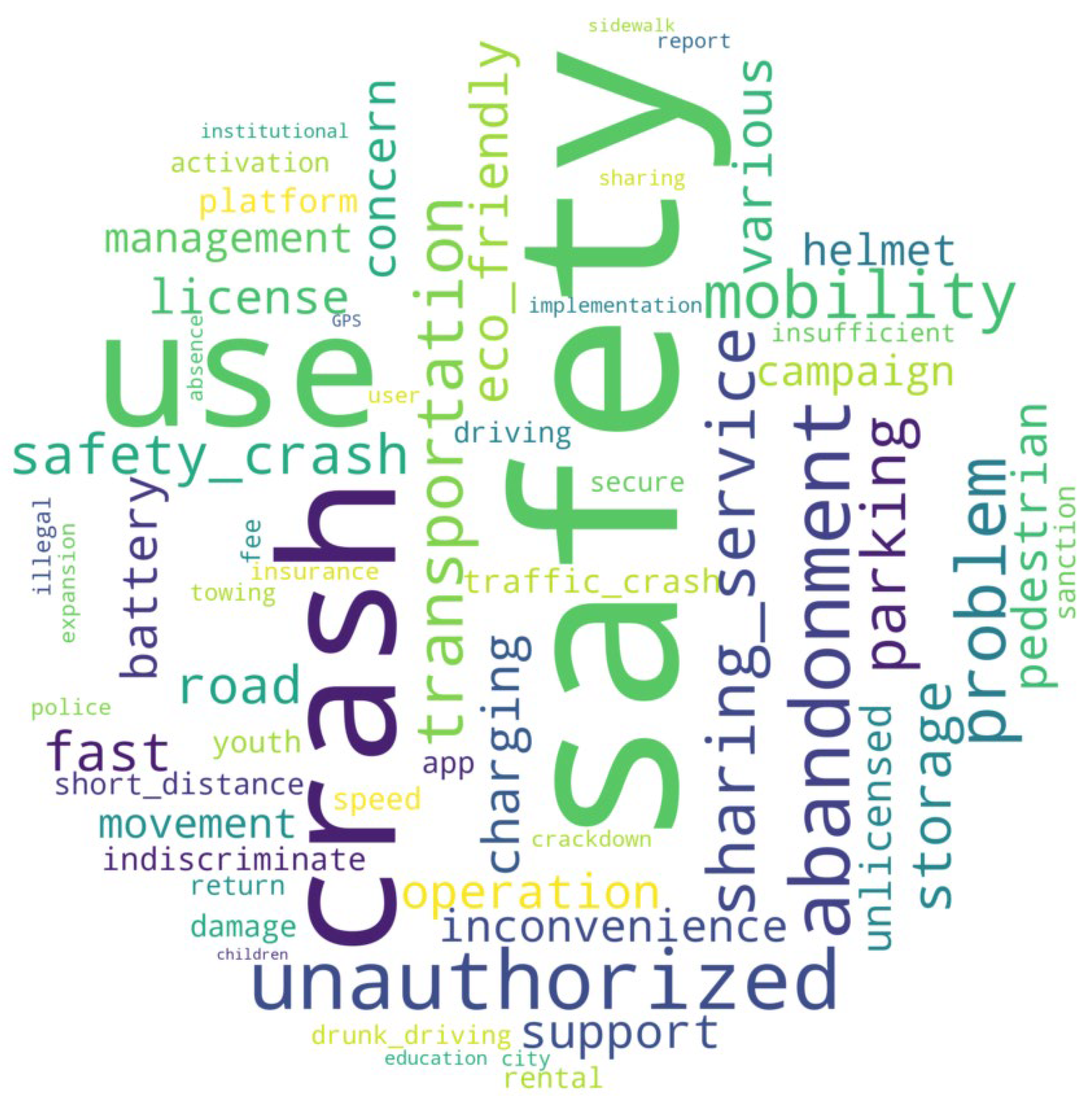
However, with the rapid spread of E-scooters, various social problems arose, such as safety issues, parking problems, and collisions with other road users due to reckless riding behaviors, leading to the spread of negative perceptions [6,8]. This perception has been further intensified by some negative experiences of those who have not had a full experience with E-scooters, as well as media reports focusing on crashes [9,10]. In fact, an analysis of public opinion related to E-scooters in Korea using a word cloud revealed that negative keywords such as “Crash”, “Abandonment,” and “Problem” were prominently featured (Figure 1).
In Korea, where bicycle lane infrastructure is insufficient in urban areas, laws were enacted restricting E-scooters to bicycle lanes and roads, causing most users who felt unsafe riding on roads to enter sidewalks [11]. Furthermore, even though the riding behaviors of E-scooter users were identified through empirical analysis [12], excessive operating regulations were introduced without fully reflecting these findings, resulting in reckless riding behaviors and deepening negative social perceptions.
Regulatory measures are being implemented in response to crashes and negative perceptions, such as the immediate towing of illegally parked E-scooters in Seoul and the official ban on the operation of shared E-scooters in Paris [13]. However, these measures are based on judgments focused on the negative aspects of E-scooters and merely limit their role and potential as future mobility, failing to provide a fundamental solution. Rather, it is necessary to first create a safe environment for the safe use of E-scooters as a first- and last-mile mobility by closely analyzing the causes of crashes and understanding the actual riding behaviors of users.
Previous studies can be categorized into: (1) crash/medical data analyses, (2) survey-based perception studies, and (3) observational studies of rule violations [5,14]. Analyses using crash and medical data identified user carelessness and lack of device operation skills as major factors, leading to calls for enhanced education, policy improvements, and infrastructure upgrades. For example, a survey of 459 residents in Paris and its suburban areas in France found that safety rule violations such as smart device use, driving under the influence, and not wearing a helmet were mainly observed among young male users [15]. A study that predicted the likelihood of speeding, not wearing a helmet, and driving under the influence of alcohol among 262 Australian college students and analyzed US crashes confirmed that high-speed riding and not wearing a helmet were major crash factors, noting that the proportion of head injuries was more than twice that of cyclists [16]. As such, many studies have consistently pointed out that E-scooter-related crashes stem from deviant behaviors such as individual carelessness and a lack of awareness of safety norms. These risky behaviors have also been confirmed in observational studies. Observational studies conducted in areas like LA, Berlin, and Seoul revealed that, in addition to a lack of compliance with traffic laws such as not wearing helmets and wrong-way riding, conflicts with pedestrians due to infrastructure constraints and difficulties in perceiving and evading obstacles due to high speeds were major problems [11,17,18].
These studies attribute dangerous E-scooter behaviors primarily to personal factors like user carelessness or norm violations. However, these behaviors are also closely linked to environmental and institutional factors, not just individual issues [17,18,19]. Specifically, insufficient infrastructure, such as bicycle or dedicated E-scooter lanes, often forces users onto roads and sidewalks, increasing rule violations and risky behaviors. Given the difficulty of establishing adequate infrastructure in the short term, policy discussions have increasingly focused on managing or limiting sidewalk use [20].
Japan and the Queensland state government in Australia have implemented such alternatives by allowing E-scooters to use sidewalks under limited conditions. Japan allows sidewalk riding at speeds of 6 km/h or less with the principle of pedestrian priority in areas without bicycle lanes, and the Queensland state government similarly allows sidewalk riding at speeds of 12 km/h or less, provided that pedestrian safety is ensured [21,22]. While road use is preferable for safety [20], limited sidewalk access can be a realistic alternative where sufficient bicycle lanes are lacking. However, risks like pedestrian anxiety and speeding remain [19,23], necessitating institutional designs that account for traffic conditions, speed limits, sidewalk width, and user behaviors.
Although prior studies have provided valuable insights into crash factors, user perceptions, and observed violations, they share inherent limitations. Crash or medical data analyses focus on post-crash outcomes and cannot capture real-time behavioral indicators such as conflict distance, steering adjustments, or gaze allocation. Survey-based studies rely on users’ subjective perceptions rather than their actual riding behavior, and observational studies—while conducted in naturalistic environments—cannot experimentally control key environmental variables such as speed, pedestrian density, or sidewalk width. Consequently, there remains a clear research gap: no existing study has experimentally examined how these environmental factors interact to influence safety outcomes for sidewalk riding.
Addressing this gap requires a method capable of capturing real-time behavioral responses under controlled yet realistic conditions. A VR-based riding simulator provides such an environment by allowing for safe and ethical manipulation of speed limits, pedestrian density, and sidewalk width—conditions that cannot be experimentally imposed in real-world settings. Unlike surveys or crash data, VR enables the collection of precise behavioral metrics, including braking frequency, steering patterns, gaze dispersion, and measurable conflicts based on distance thresholds (e.g., 50 cm). This approach allows for causal interpretation of how specific sidewalk conditions influence rider behavior and pedestrian safety.
Therefore, in this study, an E-scooter riding simulator was developed, and experiments were conducted using it to quantitatively analyze the riding behaviors of E-scooter users. Riding behaviors were analyzed according to speed limits, as well as changes in user behaviors when riding on sidewalks. Unlike previous studies, which mainly focused on surveys and observations, this study supplements prior limitations by collecting experimentally controlled behavioral data. In particular, detailed crash factors identified from police-reported crash data were reviewed, and based on these findings, the feasibility of allowing E-scooters on sidewalks under specific conditions was examined in terms of riding stability, conflict frequency, evasive behaviors, and gaze patterns. The results confirmed that sidewalk riding can be a viable alternative under certain environmental conditions, and this study contributes to establishing evidence-based considerations for the safe integration of E-scooters into pedestrian spaces.

2. Research Methodology

2.1. E-Scooter Crashes Analysis

This study analyzed the characteristics of E-scooter crashes using traffic crash data that occurred in Daejeon, South Korea, over five years, from August 2017 to August 2022. Daejeon, one of Korea’s major metropolitan cities, was chosen for its relatively flat terrain, which is favorable for E-scooter use, and its high concentration of universities, which means a large population of young people, a key user group.
For this purpose, detailed police reports for 157 E-scooter-related crashes in Daejeon were utilized. The collected data included information often unavailable in general traffic crash data, such as detailed crash causes, violations. This allowed for the identification of specific factors contributing to E-scooter crashes that are difficult to confirm with publicly available data, as well as a comparison with the results of all vehicle traffic crashes that occurred during the same period. The main objective of this analysis was to identify the characteristics and contributing factors of real-world E-scooter crashes.

2.2. Experiments with a VR Simulator

Based on the crash factors derived from the E-scooter crash analysis, this study conducted VR simulator experiments to quantitatively analyze the link between individual riding behaviors and crash risks. The experiment specifically focuses on rider behaviors in sidewalk environments to assess the feasibility of conditional sidewalk access. This study aims to establish an evidence-based foundation for defining safe riding conditions on sidewalks.

2.2.1. Apparatus

To ensure that riding behaviors could be measured under controlled yet realistic conditions, a customized simulator linking an actual E-scooter to a VR environment was developed. This setup allowed for experimental manipulation of environmental variables—such as speed, pedestrian density, and sidewalk width—that cannot be safely reproduced in real-world riding environments.
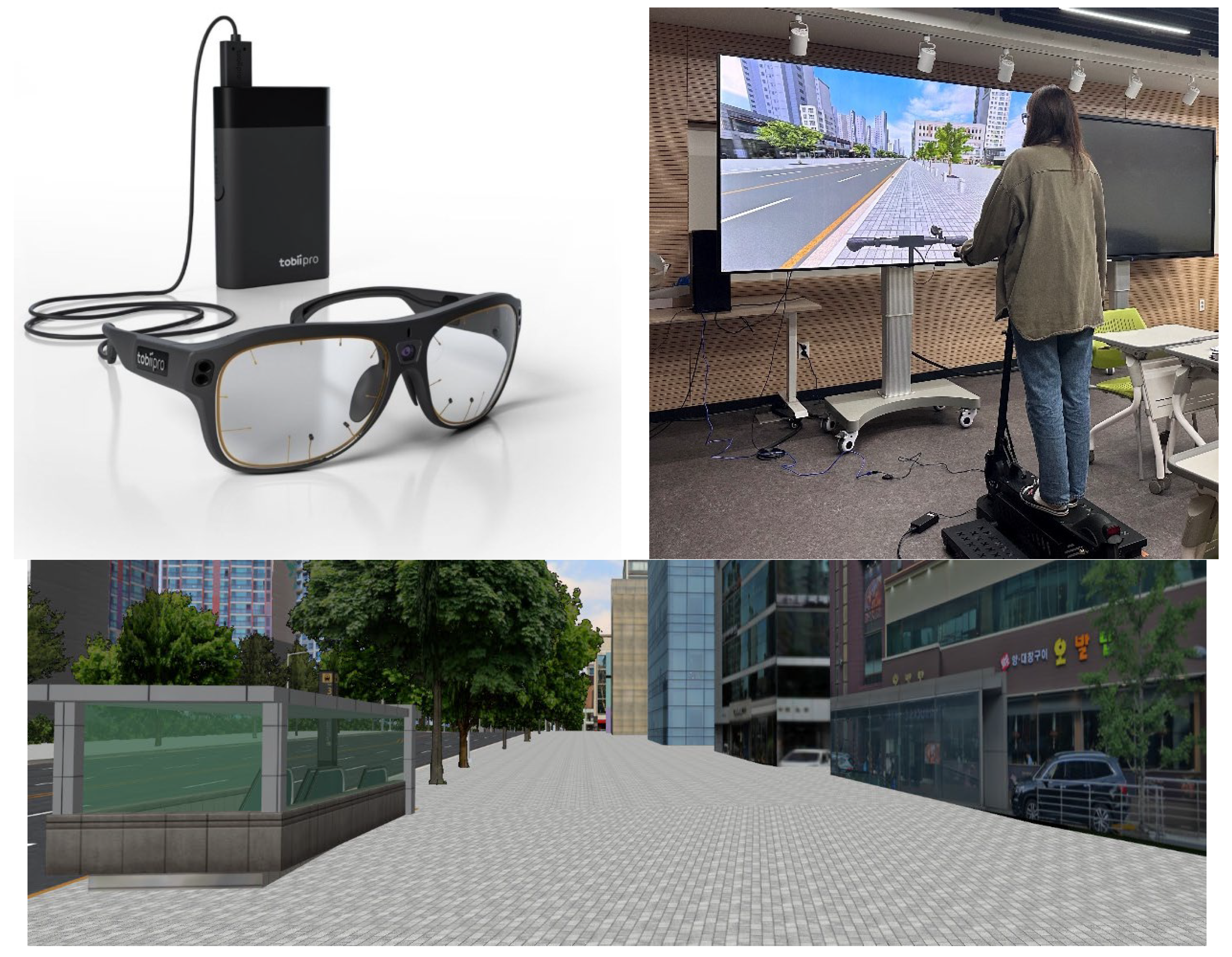
A customized simulator linking an actual E-scooter to a VR environment was developed and used to analyze the behaviors of E-scooter riders on sidewalks. The simulator platform is equipped with actual acceleration, braking, and steering controls, similar to a commercial E-scooter, and its dimensions are also similar to commercially available E-scooter products (1200 (L) × 650 (W) × 1160 (H) mm). This design allowed participants with E-scooter experience to feel as if they were riding a real E-scooter even in the VR-based environment. To enhance participant immersion, a large 98-inch monitor was used, positioned so that the monitor screen filled the participant’s forward field of view.
The VR riding environment and scenarios were implemented using Forum 8’s UC-win/Road (ver. 14.2), a program often utilized in simulator experiments due to its ease of editing road geometries and traffic scenarios. During the experiment, riding behaviors such as the participant’s riding speed, braking, and steering operations were collected in real-time and recorded in data files, enabling the analysis of various riding behaviors. This characteristic is widely utilized in the transportation field for analyzing user behaviors, as it allows for the safe reproduction of scenarios that are difficult to implement on actual roads [24].
Additionally, the Tobii Pro Glasses 3 eye-tracker was used to analyze participants’ gaze behaviors during the experiments (Figure 2). This eye-tracking device is designed to be worn comfortably like ordinary glasses and measures and records gaze points and pupil size at 1-millisecond intervals. This enables a precise analysis of the visual behaviors exhibited by participants during the experiment.
By integrating the eye tracker with the VR simulator, this study was able to capture both physical riding actions and corresponding gaze responses simultaneously—an aspect that conventional survey or observational methods cannot provide [25].

2.2.2. Experimental VR Scenario Design

To analyze E-scooter riding and gaze behaviors on sidewalk, experiments using VR driving simulator were conducted, which can investigate drivers’ behavior responding given conditions directly. In designing the scenarios, current Korean sidewalk traffic conditions and relevant laws, along with E-scooter usage behaviors identified in previous studies, were comprehensively considered. Specifically, to address with the study’s objective of determining the conditions for safe sidewalk access, three main variables—sidewalk width, pedestrian density, and speed limit—were selected.
First, sidewalk widths were selected based on Korean standards: 2 m, the legal minimum for residential areas, and 4 m, the recommended width for securing a comfortable walking environment. 2 m is the minimum width generally applied in residential and other neighborhood roads in Korea, and 4 m is the width primarily secured in commercial areas or pedestrian-centered specialized roads, judged to be representative for analyzing characteristics based on sidewalk width differences [26].
Pedestrian densities were set to reflect the differences in pedestrian flow for each sidewalk width. For the 4 m sidewalk section, densities of 20 people/min and 40 people/min were set to reflect conditions where pedestrians can move relatively freely and where congestion increases, respectively. To ensure scientific validity, the simulation parameters were derived from the Korea Highway Capacity Manual (KHCM) [27]. According to these standards, we adopted the criteria for LOS A–B (5 people/min/m) and LOS C–D (10 people/min/m). Consequently, for a 2 m sidewalk, the input volumes were calculated as 10 people/min and 20 people/min to align with these scientifically established density levels. It reflects that the feeling of congestion may be greater even at the same density when the sidewalk width is narrower. Based on these criteria, a total of four scenarios were created:
  • Scenario 1: 4 m width, 20 people/min
  • Scenario 2: 4 m width, 40 people/min
  • Scenario 3: 2 m width, 10 people/min
  • Scenario 4: 2 m width, 20 people/min
In the VR environment, pedestrian avatars were generated randomly according to the assigned density for each scenario. To simulate a dynamic street environment, these avatars were programmed to move randomly in all directions, incorporating both longitudinal and lateral trajectories. While the simulation included pedestrian-to-pedestrian interactions to prevent conflicts among avatars, it did not support interactive responses to the E-scooter. Thus, pedestrian avatars did not react to the participant’s vehicle. Consequently, the interaction was one-way, requiring the participant to visually identify the pedestrian density displayed on the screen and actively perform evasive maneuvers to prevent conflicts.
The road environment for the experiment was a 250 m sidewalk section for each scenario. Additionally, trials without pedestrians were conducted to analyze users’ gaze behaviors under varying speed limits, free from pedestrian influence.
The study also set the speed limits at three conditions, 10 km/h, 15 km/h, and 20 km/h, and participants were instructed to ride each scenario at these limits. These values were determined through a comprehensive review of relevant regulations and actual usage patterns. According to Bicycle Facility Design Manual [28], the design speed is established at 30 km/h for bicycle-only paths and 20 km/h for both shared bicycle-pedestrian paths and bicycle-only lanes. While the legal maximum speed for E-scooters is 25 km/h according to current regulations [29], some local governments have recently restricted it to 20 km/h or less for safety [30]. Furthermore, prior studies analyzing the average riding speed of actual E-scooter users suggested speeds of approximately 10 km/h and 13 km/h [31,32]. Based on these analysis results, this study set the speed limit conditions at 10 km/h, 15 km/h, and 20 km/h to analyze behavioral differences according to speed limits.

2.2.3. Participants

The experiment was conducted with 41 participants selected to reflect the demographics of actual E-scooter users. According to prior research, 60% of nationwide users in 2020 were male, with those in their 20s and 30s accounting for 44.1% and 21.4%, respectively [33]. Furthermore, 2022 data from Seoul indicates that males comprised 77% of total users, while the 20–30 age group represented 70.8% [34]. Based on these statistics, the participants were composed mainly of experienced users in their 20s and 30s, with a higher proportion of males. Consequently, the final group consisted of 21 males and 9 females in their 20s, and 7 males and 4 females in their 30s.

2.2.4. Experiment Procedure

The experiment proceeded as follows. Upon arrival at the testing site, participants were briefed on potential risks, safety precautions, data collection, and other relevant details of the experiment. After the experimenter confirmed their willingness to participate, consent forms were signed. Participants then completed a preliminary riding test to become familiar with the simulator equipment and environment. If the experimenter determined that a participant was not yet familiar with operating the device during the preliminary test, additional practice was provided. Once familiarization was complete, the experimenter randomly assigned one of the three speed limit conditions (10 km/h, 15 km/h, or 20 km/h) and proceeded with the main experiment in a randomized order.

2.2.5. Analysis Method

This study analyzed participants’ riding behaviors and gaze behaviors using the following methods based on the data collected from the experiments. For riding behaviors analysis, real-time speed data in km/h were used, and braking and steering frequencies were calculated by counting the instances when participants performed each action.
To assess the risk level associated with E-scooter riding on sidewalks, the frequency of conflicts between the E-scooter and pedestrians was analyzed across experimental conditions. The definition of conflict between the E-scooter and pedestrians was based on prior studies. One study considered an approach closer than 50 cm when an E-scooter was overtaking a pedestrian as a situation with a high possibility of physical conflicts, and analyzed that E-scooter users exhibit evasive behaviors such as reducing speed or changing path in such close proximity [35]. Another study also revealed that E-scooter users’ defensive actions significantly increased when approaching within 50 cm of a pedestrian [36]. Accordingly, this study defined conflicts as a situation where the distance between the E-scooter and a pedestrian was 50 cm or less, and the conflict frequency was calculated by tracking the real-time positional coordinates of the two objects in the VR simulation and counting the number of entries into the conflict radius. Additionally, the frequencies of braking and steering actions chosen by participants to evade danger at the moment of conflict were calculated to examine what choices were made depending on the riding conditions and environment.
For gaze behaviors, gaze data collected via Tobii Pro Glasses 3 were analyzed using the dedicated analysis program (Tobii Pro Lab x64). Using the gaze point coordinates recorded in the experimental sections without pedestrian influence, the distance (cm) from the center point was calculated, and the average gaze distance for each speed limit was computed to analyze changes in gaze attention based on speed limit conditions.
A Repeated Measures ANOVA (Analysis of Variance) was used to test the differences in riding behaviors across the speed limit conditions (10 km/h, 15 km/h, and 20 km/h) for each scenario. Since the same participants rode the same section repeatedly under different speed conditions in this experiment, repeated measures ANOVA was deemed an appropriate method for testing statistical differences [37]. Additionally, a multiple regression analysis was performed to identify factors affecting the frequency of conflict between the E-scooter and pedestrians, confirming how sidewalk width, pedestrian density level, and E-scooter riding speed influence conflict frequency. This method was selected because the objective was not merely to identify associations, but to estimate the effect of each environmental factor on conflict frequency while controlling for other variables. This approach is particularly suitable for the controlled experimental design of this study, as it allows for disentangling how specific conditions—sidewalk width, pedestrian density, and riding speed—individually contribute to the generation of conflicts between E-scooters and pedestrians. The dependent variable was set as the frequency of conflict with pedestrians per scenario, and the independent variables included pedestrian density (low: 0, high: 1), sidewalk width (2 m: 0, 4 m: 1), and pre-conflict speed (km/h). Pedestrian density and sidewalk width were treated as dummy variables, and speed was treated as a continuous variable. Since the scenarios were established with binary density levels (high vs. low) in accordance with the Level of Service (LOS) criteria provided in the Korea Highway Capacity Manual (KHCM), pedestrian density was modeled as a dummy variable in the analysis. Additionally, the pre-conflict speed was normalized to a range of 0 to 1 to investigate the comparative degree of effects among the independent variables. The fit of the regression model was evaluated using R-square, and the statistical significance of the independent variables was tested at the p < 0.05 level.

3. Results

3.1. Results for Detailed Analysis of Traffic Crash Data

Based on crash data from the Daejeon Police Agency, an analysis of the causes of E-scooter traffic crashes showed that 154 (98.09%) of the total 157 crashes were caused by rider negligence, with other causes accounting for only 3 cases (1.91%) (Table 1). This indicates that the main cause of traffic safety issues related to E-scooters lies in user behaviors rather than the devices themselves.
The most common cause of rider negligence was “Failure to Fulfill Safe Driving Duty,” accounting for 69 cases (43.95%). This is also the most common cause of crashes recorded in all general traffic crashes (56.53%) and is classified as the rider’s personal fault. It is noteworthy that “Violation of Traffic Regulations” ranked second, with a total of 21 cases (13.38%). This figure is approximately that observed in general traffic crashes (6.49%), indicating the necessary to analyze the causes from various perspectives, such as road infrastructure and operation systems, beyond simple rider negligence. The current road infrastructure is primarily designed for bicycles and cars, failing to provide adequate traffic space for E-scooter users. This has caused riders to engage in inappropriate riding behaviors, such as entering sidewalks and wrong-way riding [11]. The frequent occurrence of crashes caused by traffic violations suggests a lack of appropriate road environments and infrastructure that allow E-scooter users to ride safely in accordance with legal standards.
Meanwhile, the analysis of specific crash factors showed that “Failure to Keep Lookout” recorded the highest number of crashes at 66 cases (42.04%). This result is consistent with previous studies, showing that E-scooter riders have difficulty perceiving the situation ahead while riding [38]. Therefore, further research is needed on the effect of riding speed on the rider’s gaze behaviors, especially within the current legal speed limit of 25 km/h.
Based on these findings, this study analyzed the characteristics of participants’ gaze and riding behaviors through VR simulator experiments to address structural limitations and explore realistic alternatives. Through this process, the safety of E-scooters on sidewalks was objectively assessed, and the feasibility of safe space sharing with pedestrians was examined.

3.2. Results for Investigation of E-Scooter Rider Behavior

3.2.1. Gaze Behavior Analysis

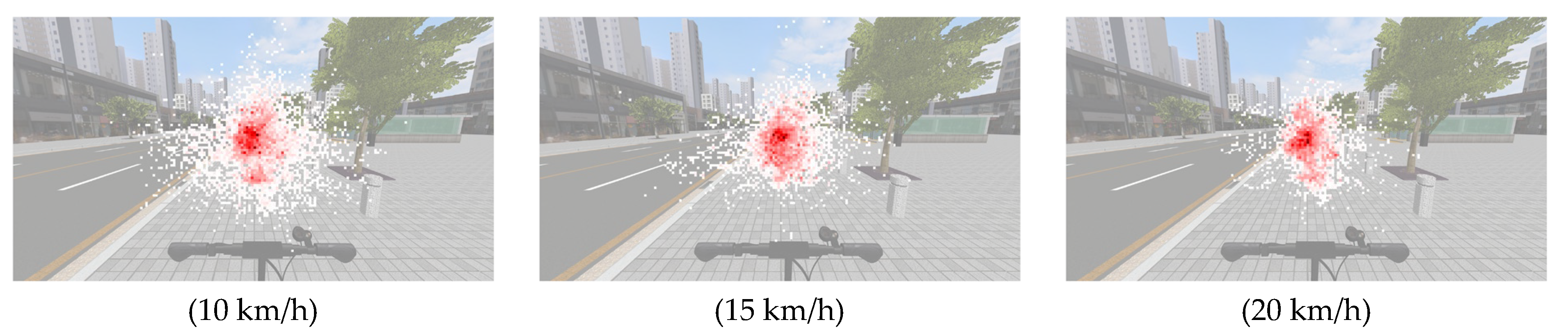
To investigate the specific behavioral characteristics related to “Failure to Keep Lookout,” which was identified as a major crash factor in the previous analysis, participants’ gaze distribution was analyzed according to riding speed to identify the gaze behaviors of E-scooter users. The analysis results showed that as riding speed increased, the gaze range tended to become more concentrated toward the center. When the riding speed was 10 km/h, the gaze area was relatively dispersed, while when the riding speed was 20 km/h, the gaze behaviors were more concentrated in the center compared to the 10 km/h condition (Figure 3). This trend is consistent with the gaze behaviors of general vehicle drivers [39].
Quantitative analysis of participants’ visual behaviors and comparison across speed limit conditions showed that when riding at 10 km/h, participants exhibited a broader visual scanning range, looking both forward and around. As can be seen in Table 2, the gaze duration was longest at 10 km/h, at approximately 16.10 cm, and tended to decrease as the riding speed increased. A Repeated Measures ANOVA analysis revealed statistically significant differences depending on riding speed (p < 0.001). Paired t-tests between speed limits showed significant differences between the 10 km/h condition and both the 15 km/h condition (p = 0.002) and the 20 km/h condition (p < 0.001) but not between the 15 km/h and 20 km/h conditions (p = 0.198).

3.2.2. Riding Behaviors Analysis

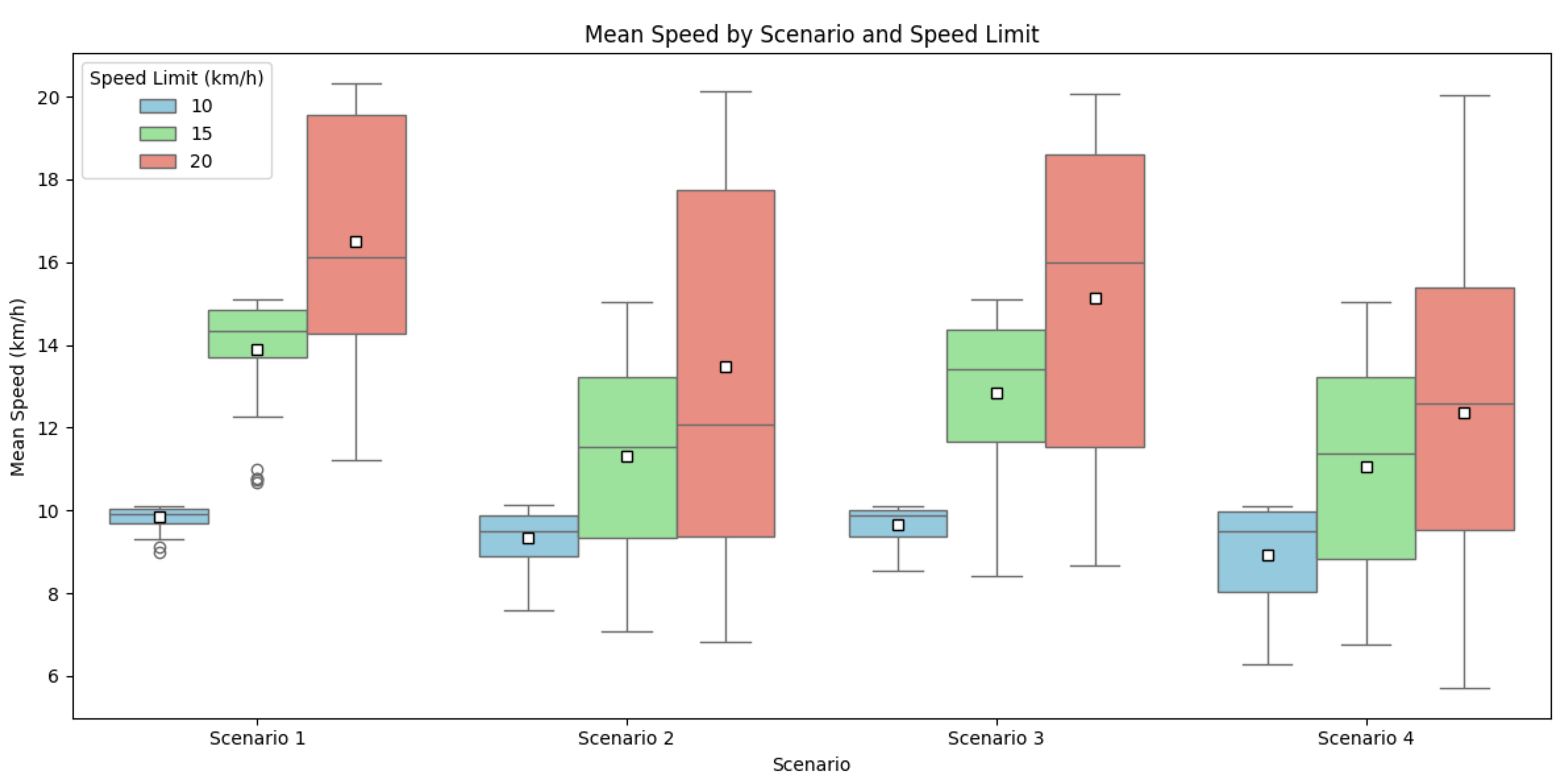
Next, E-scooter riding behaviors (riding speed, braking, steering, and conflict) were analyzed in four scenarios under different speed limit conditions. First, analyzing the average and standard deviation of actual riding speeds according to speed limit conditions, as shown in Figure 4, participants exhibited relatively consistent riding speeds within the speed limit in all scenarios under the 10 km/h speed limit condition, largely unaffected by sidewalk width and pedestrian volume. Conversely, under the 15 km/h and 20 km/h speed limit conditions, it was found that the deviation in riding speed increased relatively depending on the sidewalk width and pedestrian volume. This suggests that the 10 km/h speed limit condition contributes to improved riding stability by enabling participants to maintain consistent riding speeds compared to other conditions.
As shown in Table 3, the standard deviation ranged from 0.28 to 1.19 under the 10 km/h speed limit condition, exhibiting the smallest variation across all scenarios. In contrast, under the 15 km/h and 20 km/h speed limit conditions, the standard deviation increased depending on the scenario, indicating inconsistent riding speeds and instability. An analysis of the differences in riding speed standard deviation by speed limit condition across all scenarios revealed that the differences in riding speed standard deviation were statistically significant across all scenarios (p < 0.001). Additionally, paired t-test analysis between speed limit conditions revealed significant differences in all scenarios, confirming that the 10 km/h speed limit condition offers advantages in terms of riding stability based on speed consistency.
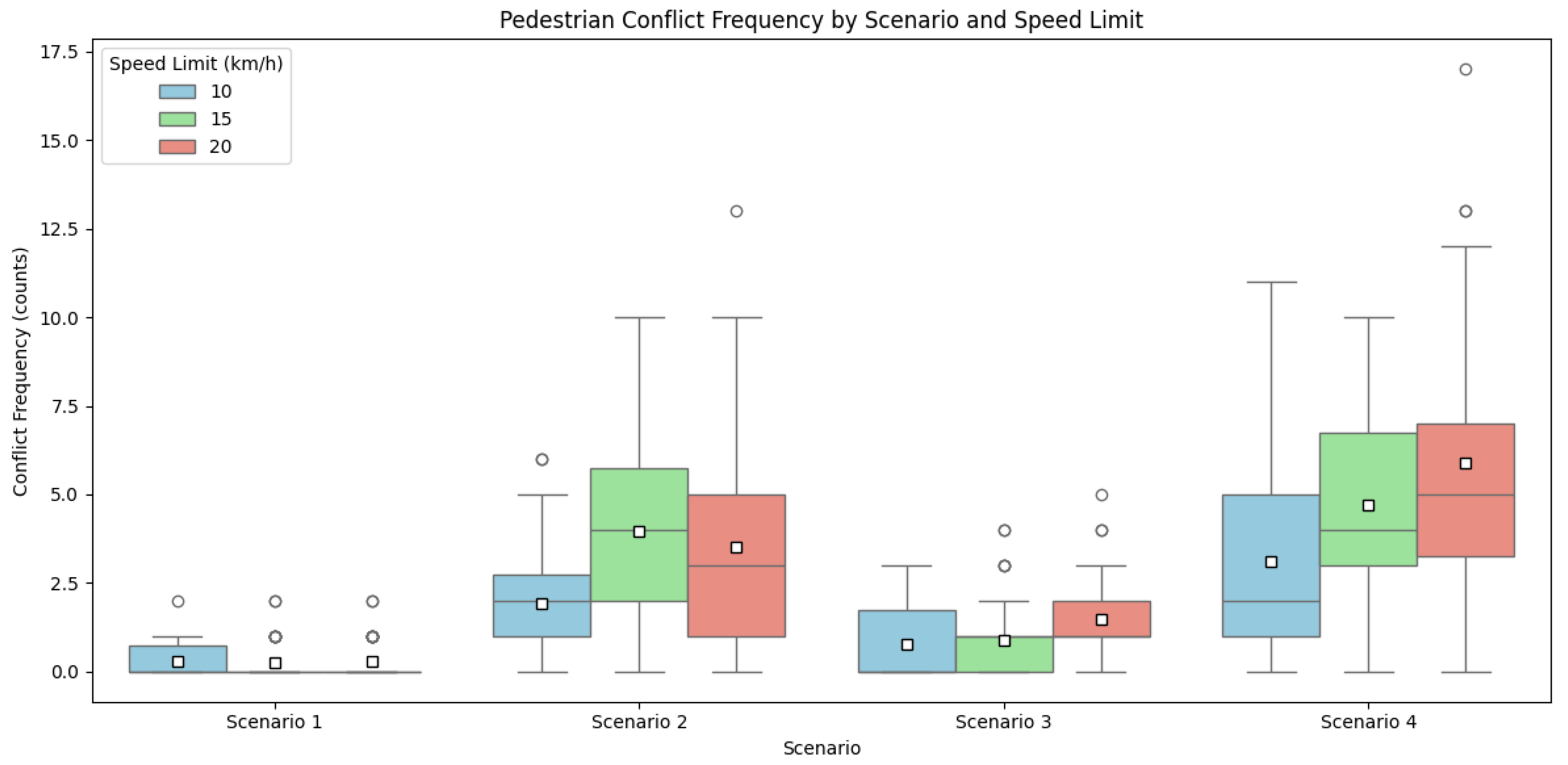
To determine the frequency of situations requiring evasive actions such as braking or steering, the frequency of conflicts was analyzed for every scenario across speed limit conditions. The analysis results, as shown in Figure 5 and Table 4, indicate that in Scenario 1 (4 m sidewalk width, 20 people/min pedestrian density), the average number of conflicts ranged from approximately 0.29 to 0.39, showing the lowest overall frequency across all speed limit conditions. In contrast, in Scenario 4 (2 m sidewalk width, 20 people/min pedestrian density), the average number of conflicts ranged from approximately 2.82 to 5.83, showing the highest conflict frequency.
Under the same sidewalk width conditions, an increase in pedestrian density was found to have a relatively significant impact on the conflict frequency. When comparing Scenario 1 (pedestrian density 20 people/min) and Scenario 2 (pedestrian density 40 people/min), both designed with a sidewalk width of 4 m, the frequency of conflicts increased by approximately 517% to 1525% depending on the riding speed under different speed limit conditions. Additionally, when comparing Scenario 3 (pedestrian density 10 people/min) and Scenario 4 (pedestrian density 20 people/min) with the same sidewalk width of 2 m, the conflicts frequency increased by approximately 297% to 480% depending on the speed limit conditions.
When analyzing the differences in conflict frequency by speed limit condition across scenarios, significant differences were observed in all scenarios except Scenario 1, where conflicts were virtually nonexistent. In detail, in Scenario 2 and Scenario 4, where pedestrian traffic was relatively heavy, there was a significant difference between 15 km/h and 20 km/h when the speed limit was 10 km/h, confirming that the risk of conflict was relatively low when the speed limit was 10 km/h.
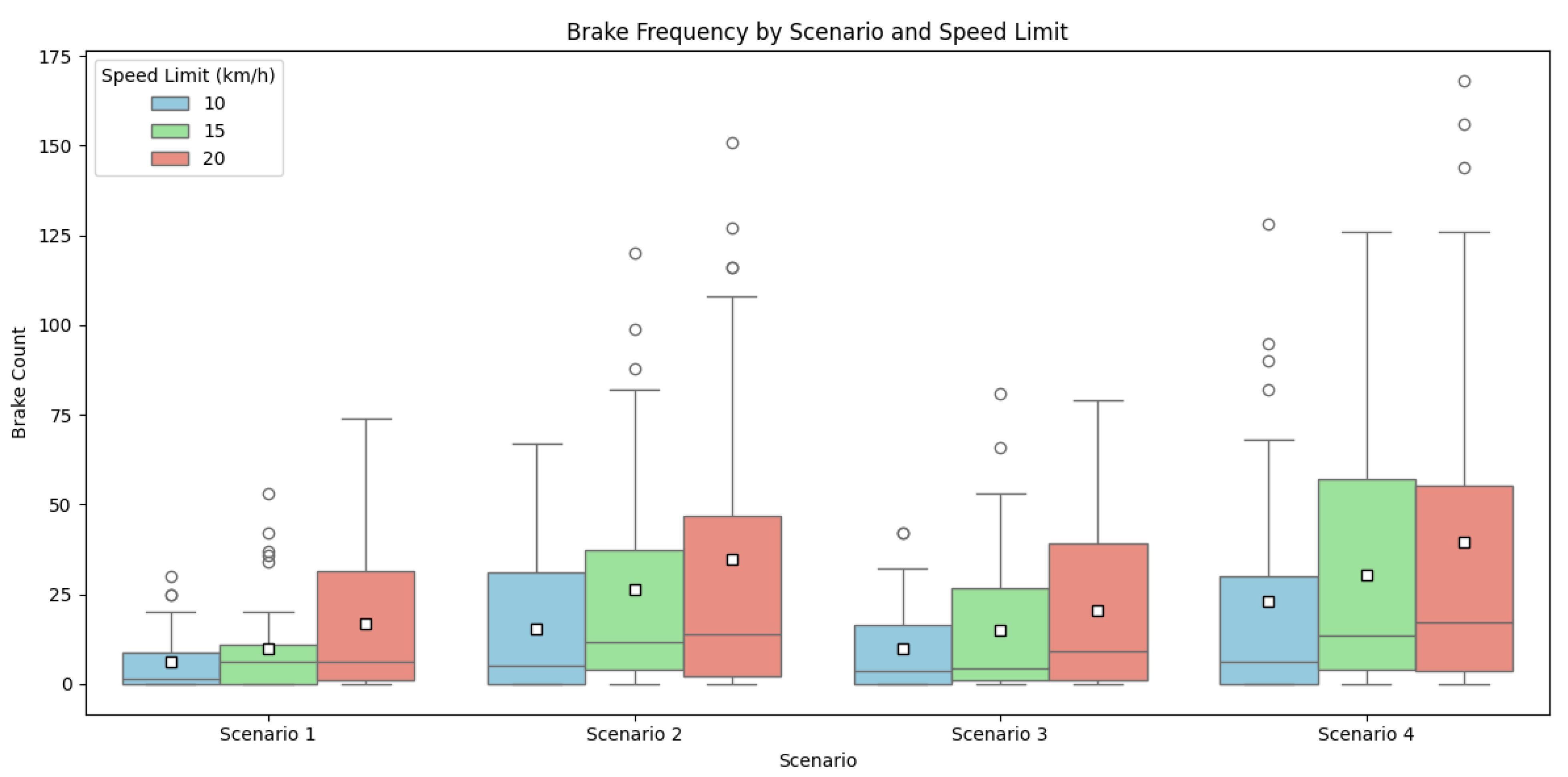
To verify riding stability, the frequency of brake use, one of the evasive actions, was analyzed according to the speed limit condition. As shown in Figure 6, the brake frequency tended to increase as the riding speed increased. As shown in Table 5, under a speed limit of 10 km/h, the participants showed a brake usage frequency ranging from approximately 6.32 times (Scenario 1) to approximately 22.87 times (Scenario 4), while under a speed limit of 20 km/h, the average frequency ranged from approximately 16.68 times (Scenario 1) to approximately 39.45 times (Scenario 4).
Statistical analysis of these results confirmed that there were statistically significant differences in the frequency of brake use according to the speed limit condition in all four scenarios. Specifically, when the speed limit was 10 km/h, there were statistically significant differences between three scenarios (except for Scenario 4) and the scenarios with a speed limit of 15 km/h, as well as between all scenarios with a speed limit of 20 km/h. On the other hand, when the speed limit was 15 km/h or 20 km/h, statistically significant differences were observed only in Scenario 1. This suggests that participants exhibited relatively stable riding behaviors under the 10 km/h speed limit condition.
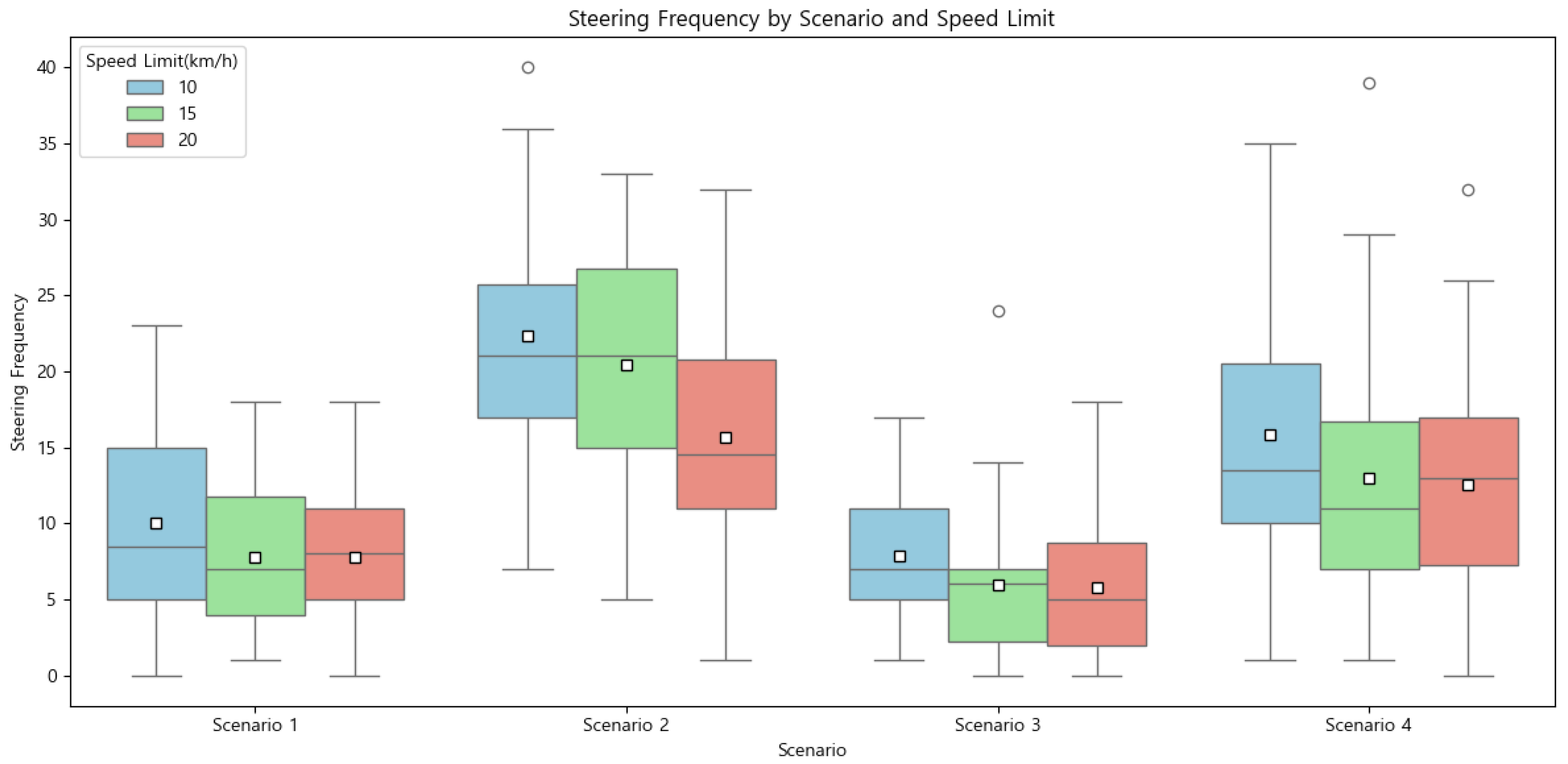
Steering frequency, another risk evasion behaviors analyzed for riding stability, was shown to be opposite to that of brake frequency. As can be seen in Figure 7 and Table 6, under a speed limit of 10 km/h, the average steering frequency ranged from approximately 7.87 times (Scenario 3) to approximately 22.37 times (Scenario 2), indicating that relatively frequent steering behaviors occurred in all scenarios. On the other hand, steering frequency tended to decrease as the overall speed limit increased. This can be interpreted as reflecting the characteristics that when riding speeds are lower, subtle path adjustments like steering may be the preferred evasive behaviors, and participants respond more sensitively to changes in the surrounding environment.
By scenario, Scenario 2, which had relatively wide sidewalks and high pedestrian density, showed relatively high steering frequency under all speed limit conditions, while Scenario 3, which had narrow sidewalks and low pedestrian density, showed the lowest steering frequency. A statistical analysis of the differences in steering frequency across the four scenarios by speed limit condition revealed significant differences in Scenario 2 (p < 0.001) and Scenario 3 (p = 0.037). In Scenario 1, which had relatively wide sidewalks and low pedestrian traffic, and Scenario 4, which had narrow sidewalks and high pedestrian traffic, no significant differences were observed depending on the speed limit conditions. This result can be interpreted as showing that steering is not effective for evading conflicts with pedestrians while maintaining riding speed in sections with narrow sidewalks and high pedestrian traffic.
To specifically analyze participants’ evasive behaviors in direct conflict situations with pedestrians, we analyzed the patterns of brake and steering operations during the two seconds before and after the moment of conflict. As shown in Table 7, evasive behaviors varied depending on the speed limit conditions. Under the 10 km/h speed limit condition, evasion through steering was generally more frequent than evasion using brakes alone. In particular, in Scenario 2, which had relatively high pedestrian density and wide sidewalks, the number of cases where steering alone was used was the highest at 21. In contrast, under the 20 km/h condition, the number of instances where only brakes were used during conflicts was relatively higher, and there was a tendency toward an increase in cases where both brakes and steering were used simultaneously or where no evasive actions were taken despite the occurrence of a conflict. These results indicate that steering is preferred over braking for evasion when the speed limit is low, and particularly under a 10 km/h speed limit, there is a strong tendency to evade conflicts using steering alone while maintaining riding consistency without braking.
Based on the E-scooter riding behaviors variables analyzed above, factors affecting conflicts between E-scooters and pedestrians were quantitatively analyzed using a multiple regression model to identify riding environment conditions that allow safe passage on sidewalks. The independent variables were pedestrian density, sidewalk width, and speed immediately before the conflict (km/h), and they were normalized to 0 to 1. This is because the main objective of developing the regression model is to investigate the comparative degree of effects of the independent variables. For model development, 480 data points selected as the training set from a total of 492 data points collected through VR simulator experiments were utilized.
As shown in Table 8, pedestrian density was identified as the independent variable with the greatest influence on conflict frequency, with a standardized coefficient of 1.875. These results support the importance of pedestrian density management suggested in previous studies [40,41]. Following pedestrian density, the standardized coefficient for sidewalk width was −0.562, and the standardized coefficient for the speed just before the conflict was 0.490. Through the developed model, it can be concluded that the risk of conflicts increases as pedestrian volume increases, sidewalk width decreases, and riding speed increases when E-scooters ride on sidewalks. The developed model was confirmed to have no autocorrelation, and its predictive performance was evaluated, showing an R-square value of 0.722, indicating stable predictive capability.
Based on the above analysis results, when riding on sidewalks, participants’ gaze distribution tended to narrow the forward gaze area as the speed limit increased, and the frequency of braking and steering also responded sensitively to the speed limit and pedestrian environment. In particular, as pedestrian density increased and sidewalk width decreased, the frequency of conflicts significantly increased. When conflicts occurred, riders tended to prefer evasion by changing direction without reducing speed in a relatively low-speed riding environment, while evasion through speed reduction rather than changing direction was preferred in a high-speed riding environment. Additionally, multiple regression analysis was used to compare the relative effects of pedestrian density, sidewalk width, and riding speed on the occurrence of conflicts with pedestrians.

4. Discussion

In recent years, E-scooters have rapidly spread across urban areas, but the lack of infrastructure tailored to their characteristics has led to growing safety concerns, such as crashes caused by traffic violations and indiscriminate parking. This trend is clearly reflected in the crash analysis results of this study, where 154 (98.09%) of all 157 E-scooter crashes in Daejeon were attributed to rider negligence, and “Failure to Fulfill Safe Driving Duty” alone accounted for 43.95% of all cases. These findings demonstrate that current safety issues are predominantly behavior-driven rather than device-related, and that the absence of safe and appropriate riding environments further amplifies risky behaviors. Such negative aspects of E-scooters have been highlighted in media reports, strengthening negative public perception and leading to the adoption of stricter regulations. However, E-scooters are smart mobility devices that offer high utility for first- and last-mile travel, which can contribute to the revitalization of public transportation networks in urban areas. Therefore, it is essential to develop a safe road network that utilizes the benefits of E-scooters while ensuring the safety of both E-scooter users and existing road users [36]. While securing physical infrastructure through the creation of dedicated E-scooter lanes is desirable, there are realistic spatial and financial constraints. Thus, this study explored the feasibility of “conditional sidewalk access for E-scooters” as a way for E-scooters and other road users to coexist safely within the existing road system.
Some countries, such as Japan and Australia, already permit E-scooter sidewalk riding under limited speed conditions [31,32]. Japan allows sidewalk riding within a speed limit of 6 km/h, and the Queensland state government in Australia allows it within 12 km/h, both conditions are intended to ensure the safety of road users in terms of riding speed. Accordingly, this study considered not only various speed limit conditions but also sidewalk characteristics, namely sidewalk width and pedestrian density as conditions for allowing E-scooter sidewalk riding. In particular, this study adds a behavioral perspective by empirically testing how actual riding patterns—such as speed stability, braking, steering behaviors, and pedestrian conflict frequency—change depending on these environmental variables.
The experimental results confirmed that under the 10 km/h speed limit condition, the variation in riding speed was relatively small across all sidewalk widths and pedestrian density levels, suggesting that riding stability can be secured by maintaining consistent riding speeds on sidewalks [42]. Specifically, the standard deviation of riding speed ranged only from 0.28 to 1.19 km/h at 10 km/h, whereas it increased to 1.31–2.38 km/h at 15 km/h and 2.99–4.62 km/h at 20 km/h, showing markedly greater instability at higher speeds. Furthermore, the conflict frequency with pedestrians was lower compared to other speed limit conditions. Under the 10 km/h speed limit condition, when the sidewalk width was 4 m and the pedestrian density was 20 people/min (LOS A), only 11 conflicts occurred across all 41 participants over the entire riding section, confirming that conflicts were rare. Even when conflicts did occur, participants mostly showed a tendency to evade pedestrians using steering—consistent with the finding that steering-only evasions occurred 21 times in Scenario 2, whereas braking-only evasions were minimal—indicating a relatively low risk of severe conflicts with pedestrians.
Gaze analysis also revealed that under the 10 km/h speed limit condition, the reduction in participants’ gaze distance and the narrowing of visual distribution were minimal. Quantitatively, the mean gaze dispersion reached 16.10 cm at 10 km/h—significantly larger than that at 15 km/h (13.88 cm) and 20 km/h (13.07 cm)—with statistical significance confirmed by a repeated-measures ANOVA (p < 0.001). This implies that this condition mitigates the issue of reduced cognitive capacity caused by gaze distribution narrowing, which has been raised in previous research [43]. These results indicate that the visual capacity to broadly perceive the surrounding situation is secured under the 10 km/h condition, contributing to safer interaction with nearby pedestrians.
These experimental results suggest that E-scooter travel may be permissible on sidewalks with sufficient width (above a certain size) and low pedestrian volume, under a speed limit of 10 km/h or less. The E-scooter speed limit of 10 km/h proposed in this study does not show a significant difference compared to the E-scooter sidewalk access conditions currently enforced in Japan and Australia (speed limits of 6 km/h and 12 km/h). Furthermore, prior studies reported that the average riding speed of E-scooter users in Korea is between approximately 10 km/h and 13 km/h [31,32], suggesting that the 10 km/h speed limit proposed in this study would not cause significant inconvenience regarding actual riding speed and travel time perceived by users. Additionally, the regression analysis conducted in this study provides empirical justification for conditional sidewalk access: pedestrian density (β = 1.875) was the strongest predictor of conflicts, followed by sidewalk width (β = −0.562) and pre-conflict speed (β = 0.490), indicating that managing environmental conditions is even more critical than simply reducing speed.
The findings of this study suggest that allowing sidewalk access under conditional terms can be a realistic alternative that satisfies both the usability of E-scooters and the safety of all road users. However, to institutionalize this approach, it is necessary to design supporting measures, such as technical means to enforce speed compliance, rider education, enhanced awareness of riding rules on sidewalks.
In particular, policy measures should reflect the study’s quantitative finding that conflict frequency increases by 297–1525% when pedestrian density doubles. This sharp increase highlights the necessity of conditional access policies where E-scooter operation is restricted or prohibited in environments exceeding specific pedestrian density thresholds, rather than permitting unconditional access. These measures will contribute to building a system that enhances the utility of E-scooters while ensuring the safety of all road users within urban transportation networks.

5. Conclusions

This study investigated the feasibility of permitting E-scooters on sidewalks by analyzing riding and gaze behaviors through a VR-based simulator experiment. Based on the experimental results, three environmental conditions were identified as important considerations for safe sidewalk use: (1) a 10 km/h operational speed limit, which showed the most stable riding patterns and lowest near-miss frequency; (2) a minimum sidewalk width of approximately 4 m, where conflicts were substantially reduced; and (3) sidewalk segments with low-to-moderate pedestrian density, given that density was the strongest predictor of near-miss events. These findings offer specific thresholds that can support policy discussions on conditional sidewalk access for E-scooters in dense urban environments.
While these results suggest practical infrastructure and regulatory implications, they should be interpreted with caution. The regression model demonstrated stable explanatory power (R2 = 0.772), indicating that although sidewalk width, pedestrian density, and speed significantly influence safety outcomes, additional environmental or behavioral factors remain unobserved. Furthermore, the VR-based near-miss metric (<50 cm proximity) represents a conservative safety indicator rather than an actual collision; therefore, it should be understood as a behavioral warning signal rather than a direct crash prediction.
Several limitations must be acknowledged. First, the VR environment necessarily simplified the complexity of real sidewalks and did not incorporate contextual differences across commercial districts, residential areas, or school zones. Real-world variables—such as weather, lighting, or unexpected obstacles—could not be fully replicated. Although prior research suggests that behavioral metrics derived from driving simulators show only slight deviations from real-world vehicle experiment [44], the gap between virtual and real road environments remains a constraint.
Critically, limitations existed in the representation of pedestrian behavior and flow. While pedestrians in the simulation were generated with randomized multi-directional movements (incorporating both longitudinal and lateral shifts), this approach could not fully capture the discontinuous nature of real-world pedestrian streams. Furthermore, due to simulator constraints, interaction was modeled as one-way, and only the E-scooter was able to detect and avoid pedestrians, while pedestrian avatars remained non-reactive to the approaching vehicle. Consequently, the simulation did not account for pedestrians’ behavioral variations based on age and environmental context.
Regarding participants, although the pool was structured to reflect the demographics of the main E-scooter user base (males in their 20s and 30s), this focus may limit the generalizability of the findings to other age groups or less frequent users. While the sample represents current usage trends, the results should be interpreted with caution when applied to broader environments where diverse age groups interact.
To address these constraints, future research should incorporate a wider variety of sidewalk contexts—including commercial, residential, and school zones. Technologically, studies should utilize advanced simulation environments capable of modeling realistic pedestrian distributions and two-way interactions, where pedestrian avatars actively react to E-scooters and exhibit behaviors based on age and situation.
Furthermore, subsequent studies should expand participant diversity beyond the main user base to include a broader range of age groups and riding experiences. Crucially, to ensure more objective outcomes and policy applicability, future research should perform cross-validation with experiments conducted in real-world environments.
In conclusion, this study evaluated the feasibility of allowing E-scooters on sidewalks under restricted, conditional terms. The findings indicate that permission for E-scooter riding should be determined by applying specific criteria regarding sidewalk width, pedestrian density, and speed limits. Although the results should be applied cautiously, they offer a foundational basis for developing infrastructure design guidelines and policy frameworks that support the safe and sustainable integration of E-scooters into pedestrian spaces.

Author Contributions

Author Contributions: Conceptualization, J.L. and D.L.; methodology, J.K. and D.L.; formal analysis, J.K.; data collection, J.K. and S.K.; writing—original draft preparation, J.K. and S.H.; writing—review and editing, J.K., J.L. and D.L.; project administration, D.L.; funding acquisition, D.L. All authors have read and agreed to the published version of the manuscript.

Funding

This research was funded by Seoyoung Engineering Co., Ltd., through the project ‘Policy Analysis for the Yongin–Seongnam Expressway Private Investment Project’. The APC was funded by Seoyoung Engineering Co., Ltd.

Institutional Review Board Statement

Ethical review and approval were waived for this study because personal identification information was not collected or used for any analysis in this study, as defined by the Korean Bioethics and Safety ACT Enforcement Regulation and due to restrictions arising from the COVID-19 pandemic.

Informed Consent Statement

Informed consent was obtained from all subjects involved in the study.

Data Availability Statement

The data supporting the findings of this study are not publicly available due to privacy and ethical restrictions.

Acknowledgments

This work is financially supported by Korea Ministry of Land, Infrastructure and Transport (MOLIT) as 「Innovative Talent Education Program for Smart City」. During the preparation of this manuscript, the authors used ChatGPT-4o (OpenAI) and Gemini 3 (Google) for grammar correction and assistance in improving clarity of expression. The authors have reviewed and edited all AI-generated text and take full responsibility for the content of this publication.

Conflicts of Interest

The authors declare that this study received funding from Seoyoung Engineering Co., Ltd. The funder was not involved in the study design, collection, analysis, interpretation of data, the writing of this article or the decision to submit it for publication.

References

  1. Haworth, N.; Schramm, A.; Twisk, D. Changes in Shared and Private E-scooter Use in Brisbane, Australia and Their Safety Implications. Accid. Anal. Prev. 2021, 163, 106451. [Google Scholar] [CrossRef]
  2. Christoforou, Z.; de Bortoli, A.; Gioldasis, C.; Seidowsky, R. Who Is Using E-scooters and How? Evidence from Paris. Transp. Res. Part D Transp. Environ. 2021, 92, 102708. [Google Scholar] [CrossRef]
  3. Distefano, N.; Leonardi, S.; Kieć, M.; D’aGostino, C. Comparison of E-scooter and Bike Users’ Behavior in Mixed Traffic. Transp. Res. Rec. J. Transp. Res. Board 2024, 2679, 505–518. [Google Scholar] [CrossRef]
  4. Mitra, R.; Hess, P.M. Who Are the Potential Users of Shared E-scooters? An Examination of Socio-Demographic, Attitudinal and Environmental Factors. Travel Behav. Soc. 2021, 23, 100–107. [Google Scholar] [CrossRef]
  5. Mehranfar, V.; Jones, C. Exploring Implications and Current Practices in E-scooter Safety: A Systematic Review. Transp. Res. Part F Traffic Psychol. Behav. 2024, 107, 321–382. [Google Scholar] [CrossRef]
  6. Tuncer, S.; Brown, B. E-scooters on the Ground: Lessons for Redesigning Urban Micro-Mobility. In Proceedings of the 2020 CHI Conference on Human Factors in Computing Systems, Honolulu, HI, USA, 25–30 April 2020; ACM: Honolulu, HI, USA, 2020; pp. 1–14. [Google Scholar]
  7. Kazemzadeh, K. Assessing E-scooter Rider Safety Perceptions in Shared Spaces: Evidence from a Video Experiment in Sweden. Accid. Anal. Prev. 2025, 211, 107874. [Google Scholar] [CrossRef]
  8. Das, S.; Chakraborty, R.; Mimi, M.S. Unraveling Crash Causation: A Deep Dive into Non-Motorists on Personal Conveyance. In Proceedings of the International Conference on Transportation and Development 2024, Atlanta, GA, USA, 15–18 June 2024; pp. 47–58. [Google Scholar]
  9. Useche, S.A.; O’HErn, S.; Gonzalez-Marin, A.; Gene-Morales, J.; Alonso, F.; Stephens, A.N. Unsafety on Two Wheels, or Social Prejudice? Proxying Behavioral Reports on Bicycle and E-scooter Riding Safety—A Mixed-Methods Study. Transp. Res. Part F Traffic Psychol. Behav. 2022, 89, 168–182. [Google Scholar] [CrossRef]
  10. Yang, H.; Ma, Q.; Wang, Z.; Cai, Q.; Xie, K.; Yang, D. Safety of Micro-Mobility: Analysis of E-scooter Crashes by Mining News Reports. Accid. Anal. Prev. 2020, 143, 105608. [Google Scholar] [CrossRef]
  11. Kim, Y.W.; Lee, S.C.; Yoon, S.H. Exploring E-scooter Riders’ Risky Behaviour: Survey, Observation, and Interview Study. Ergonomics 2024, 68, 1371–1387. [Google Scholar] [CrossRef]
  12. Korea Road Traffic Authority. A Study on the Safety Evaluation of Bicycle Road Use by Personal Mobility Devices; Korea Road Traffic Authority: Wonju, Republic of Korea, 2017. [Google Scholar]
  13. Seoul Metropolitan Government. Guidelines for the Installation and Management of Personal Mobility in Seoul; Seoul Metropolitan Government: Seoul, Republic of Korea, 2018. [Google Scholar]
  14. Useche, S.A.; Gonzalez-Marin, A.; Faus, M.; Alonso, F. Environmentally Friendly, but Behaviorally Complex? A Systematic Review of E-scooter Riders’ Psychosocial Risk Features. PLoS ONE 2022, 17, e0268960. [Google Scholar] [CrossRef]
  15. Gioldasis, C.; Christoforou, Z.; Seidowsky, R. Risk-Taking Behaviors of E-scooter Users: A Survey in Paris. Accid. Anal. Prev. 2021, 163, 106427. [Google Scholar] [CrossRef]
  16. Phipps, D.J.; Hamilton, K. Predicting Undergraduates’ Willingness to Engage in Dangerous E-scooter Use Behaviors. Transp. Res. Part F Traffic Psychol. Behav. 2024, 103, 500–511. [Google Scholar] [CrossRef]
  17. Todd, J.; Krauss, D.; Zimmermann, J.; Dunning, A. Behavior of Electric Scooter Operators in Naturalistic Environments. In SAE Technical Paper; SAE International: Warrendale, PA, USA, 2019. [Google Scholar]
  18. Siebert, F.W.; Hoffknecht, M.; Englert, F.; Edwards, T.; Useche, S.A.; Rötting, M. Safety-Related Behaviors and Law Adherence of Shared E-Scooter Riders in Germany. In Proceedings of the International Conference on Human-Computer Interaction, Online, 24–29 July 2021; Springer: Cham, Switzerland, 2021. [Google Scholar]
  19. Sexton, E.G.; Harmon, K.J.; Sanders, R.L.; Shah, N.R.; Bryson, M.; Brown, C.T.; Cherry, C.R. Shared E-scooter Rider Safety Behaviour and Injury Outcomes: A Review of Studies in the United States. Transp. Rev. 2023, 43, 1263–1285. [Google Scholar] [CrossRef]
  20. Ma, Q.; Yang, H.; Mayhue, A.; Sun, Y.; Huang, Z.; Ma, Y. E-scooter Safety: The Riding Risk Analysis Based on Mobile Sensing Data. Accid. Anal. Prev. 2021, 151, 105954. [Google Scholar] [CrossRef]
  21. Road Traffic Act (Japan), Article 17-2. Available online: https://www.japaneselawtranslation.go.jp/en/laws/view/2962/en (accessed on 1 December 2025).
  22. Transport Operations (Road Use Management—Road Rules) Regulation 2009 (Queensland, Australia). Available online: https://www.legislation.qld.gov.au/view/html/inforce/current/sl-2009-0194 (accessed on 1 December 2025).
  23. Šucha, M.; Drimlová, E.; Rečka, K.; Haworth, N.; Karlsen, K.; Fyhri, A.; Wallgren, P.; Silverans, P.; Slootmans, F. E-scooter Riders and Pedestrians: Attitudes and Interactions in Five Countries. Heliyon 2023, 9, e14740. [Google Scholar] [CrossRef]
  24. Matsuura, H.; Utsumi, A.; Yamazoe, H. Preliminary Comparative Analysis of E-scooter and Pedestrian Speed Perception in a VR Environment. In Proceedings of the APMAR’24: The 16th Asia-PacificWorkshop on Mixed and Augmented Reality, Kyoto, Japan, 29–30 November 2024. [Google Scholar]
  25. Goedicke, D.; Haraldsson, H.; Klein, N.; Zhou, L.; Parush, A.; Ju, W. ReRun: Enabling Multi-Perspective Analysis of Driving Interaction in VR. In Proceedings of the Companion of the 2023 ACM/IEEE International Conference on Human-Robot Interaction, Stockholm, Sweden, 13–16 March 2023; pp. 889–890. [Google Scholar]
  26. Ministry of Land, Infrastructure and Transport. Rules on Standards for Road Structure and Facilities; Ministry of Land, Infrastructure and Transport: Sejong, Republic of Korea, 2021. [Google Scholar]
  27. Korea Road & Transportation Association. Korean Highway Capacity Manual; Korea Road & Transportation Association: Seoul, Republic of Korea, 2013. [Google Scholar]
  28. Ministry of the Interior and Safety; Ministry of Land, Infrastructure and Transport. Rules on Standards for Structure and Facilities of Bicycle Utilization Facilities; Article 4; Ministry of the Interior and Safety; Ministry of Land, Infrastructure and Transport: Sejong, Republic of Korea, 2017. [Google Scholar]
  29. Ministry of Public Administration and Security. Enforcement Rule of the Road Traffic Act; Ordinance No. 554, Article 2–3; Effective 20 March 2025; Ministry of Public Administration and Security: Sejong, Republic of Korea.
  30. Lee, J.M. Incheon City Reduces Shared E-scooter Speed to 20 km/h and Mandates Age Verification for Under 16. Maeil Ilbo, 5 February 2024.
  31. Kim, S.; Lee, G.; Choo, S. Study on Shared E-scooter Usage Characteristics and Influencing Factors. J. Korean ITS Soc. 2021, 20, 40–53. [Google Scholar] [CrossRef]
  32. Kim, H.; Lee, S. Analysis of Factors Influencing the Route Choice of E-scooter Users: Focusing on the Discrepancy between Actual Usage Paths and Shortest Paths. J. Korean Soc. Transp. 2025, 43, 311–331. [Google Scholar] [CrossRef]
  33. Kim, N. 4 out of 10 Shared E-scooter Users are in their 30s and 40s. E-Today, 18 April 2021.
  34. SK Telecom. Analysis of Shared E-scooter Usage in Seoul; SK Telecom Geovision Puzzle: Seoul, Republic of Korea, 2022. [Google Scholar]
  35. Pazzini, M.; Cameli, L.; Lantieri, C.; Vignali, V.; Dondi, G.; Jonsson, T. New Micromobility Means of Transport: An Analysis of E-scooter Users’ Behaviour in Trondheim. Int. J. Environ. Res. Public Health 2022, 19, 7374. [Google Scholar] [CrossRef]
  36. Jafari, A.; Liu, Y. Pedestrians’ Safety Using Projected Time-to-Collision to Electric Scooters. Nat. Commun. 2024, 15, 5701. [Google Scholar] [CrossRef]
  37. Pirdavani, A.; Bajestani, M.S.; Bunjong, S.; Delbare, L. The Impact of Perceptual Road Markings on Driving Behavior in Horizontal Curves: A Driving Simulator Study. Appl. Sci. 2025, 15, 4584. [Google Scholar] [CrossRef]
  38. Cho, M. Assessment and Importance Analysis of Driving Environment for Shared Personal Mobility Safety. Ph.D. Dissertation, Seoul National University, Seoul, Republic of Korea, 2022. [Google Scholar]
  39. Li, Q.; Dong, L.-L.; Xu, W.-H.; Zhang, L.-D.; Leon, A.S. Influence of Vehicle Speed on the Characteristics of Driver’s Eye Movement at a Highway Tunnel Entrance during Day and Night Conditions: A Pilot Study. Int. J. Environ. Res. Public Health 2018, 15, 656. [Google Scholar]
  40. Han, D.; Kim, E.; Ji, M. Analysis of Severity Factors in Personal Mobility (PM) Traffic Accidents. J. Korean Soc. Transp. 2020, 38, 232–247. [Google Scholar] [CrossRef]
  41. Maiti, A.; Vinayaga-Sureshkanth, N.; Jadliwala, M.; Wijewickrama, R.; Griffin, G. Impact of E-scooters on Pedestrian Safety: A Field Study Using Pedestrian Crowd-Sensing. In Proceedings of the 2022 IEEE International Conference on Pervasive Computing and Communications Workshops, Pisa, Italy, 21–25 March 2022. [Google Scholar]
  42. Garber, N.J.; Gadiraju, R. Factors Affecting Speed Variance and Its Influence on Accidents. Transp. Res. Rec. 1989, 1213, 64–71. [Google Scholar]
  43. Lehsing, C.; Ruch, F.; Kölsch, F.M.; Dyszak, G.N.; Haag, C.; Feldstein, I.T.; Savage, S.W.; Bowers, A.R. Effects of Simulated Mild Vision Loss on Gaze, Driving and Interaction Behaviors in Pedestrian Crossing Situations. Accid. Anal. Prev. 2019, 125, 138–151. [Google Scholar] [CrossRef]
  44. Park, J.; Lim, J.; Ju, S.; Lee, S. A Study on the Compensation of the Difference of Driving Behavior between the Driving Vehicle and Driving Simulator. Int. J. Highw. Eng. 2015, 17, 107–122. [Google Scholar] [CrossRef]
Figure 1. Result of Word Cloud Analysis.
Applsci 16 00218 g001
Figure 2. Eye-tracking Devices and E-scooter Simulator used in the experiment.
Applsci 16 00218 g002
Figure 3. Comparison of Gaze Area by Speed Limit. Darker red colors indicate higher levels of gaze intensity.
Applsci 16 00218 g003
Figure 4. Mean and Standard Deviation of Riding Speed by Speed Limit and Scenario. Scenario 1: Sidewalk width 4 m, pedestrian density 20 people/min. Scenario 2: Sidewalk width 4 m, pedestrian density 40 people/min. Scenario 3: Sidewalk width 2 m, pedestrian density 10 people/min. Scenario 4: Sidewalk width 2 m, pedestrian density 20 people/min. Symbols: Square indicates mean value, circle indicates standard deviation.
Applsci 16 00218 g004
Figure 5. Mean and Standard Deviation of Pedestrian Conflict Frequency by Speed Limit and Scenario. Symbols: Square indicates mean value, circle indicates standard deviation.
Applsci 16 00218 g005
Figure 6. Mean and Standard Deviation of Braking Frequency by Speed Limit and Scenario. Symbols: Square indicates mean value, circle indicates standard deviation.
Applsci 16 00218 g006
Figure 7. Mean and Standard Deviation of Steering Frequency by Speed Limit and Scenario. Symbols: Square indicates mean value, circle indicates standard deviation.
Applsci 16 00218 g007
Table 1. Results of E-scooter Crash Factor Analysis and Comparison with All Vehicle Traffic Crashes.
CategoriesCrash FactorsSpecific FactorsNumber of
E-Scooter Crashes (%)
Number of All Vehicle Traffic Crashes (%)
Careless or Illegal DrivingSignal Violation14 (8.92)6475 (14.47)
Centerline ViolationWrong-way Driving10 (6.37)1339 (2.99)
Improper Overtaking and Turning3 (1.91)
Subtotal13 (8.28)
Driving Under the Influence (DUI)18 (11.46)-
Violation of Traffic RegulationsImproper Intersection Proceeding9 (5.73)2823 (6.31)
Failure to Stop at Crosswalk12 (7.64)80 (0.18)
Subtotal21 (13.38)2903 (6.49)
Failure to Fulfill Safe Driving DutyInattention4 (2.55)25,291 (56.53)
Distractions Due to Using a Smart Device1 (0.64)
Failure to Keep Lookout49 (31.21)
Loss of Vehicle Control15 (9.55)
Subtotal69 (43.95)
Failure to Yield to PedestrianFailure to Keep Lookout17 (10.83)1659 (3.71)
Loss of Vehicle Control1 (0.64)
Subtotal18 (11.46)
Failure to Maintain Safe Distance1 (0.64)4738 (10.59)
Subtotal154 (98.09)42,405 (94.78)
Road Surface and Mechanical Defect3 (1.91)3 (0.01)
Others-2333 (5.21)
Subtotal3 (1.91)2336 (5.22)
Total157 (100.00)44,741 (100.00)
Table 2. Riders’ Gaze Distance from Centerline: Descriptive Statistics, Repeated Measures ANOVA, and Paired t-test Results by Speed Limit.
Descriptive Statistics of Riders’ Gaze Distance from Centerline by Speed Limit (Unit: cm)
Speed LimitMeanS.D.
10 km/h16.105.84
15 km/h13.885.63
20 km/h13.075.88
Repeated Measures ANOVA by Speed Limit Conditions
F-test (p-value)11.51 (<0.001 **)
Post hoc Paired t-tests (p-value)
10 km/h vs. 15 km/h3.26 (0.002 **)
10 km/h vs. 20 km/h4.59 (<0.001 **)
15 km/h vs. 20 km/h1.31 (0.198)
** ρ < 0.01.
Table 3. E-scooter Riding Speed: Descriptive Statistics, Repeated Measures ANOVA, and Paired t-test Results by Speed Limit.
Descriptive Statistics of E-Scooter Riding Speed by Experimental Conditions (Unit: km/h)
Speed LimitScenario #1Scenario #2Scenario #3Scenario #4
MeanS.D.MeanS.D.MeanS.D.MeanS.D.
10 km/h9.840.289.340.669.650.468.931.19
15 km/h13.991.3111.542.2013.041.7711.342.38
20 km/h16.792.9913.744.6215.613.5712.733.84
Repeated Measures ANOVA by Speed Limit Conditions
F-test (p-value)130.43 (<0.001 **)20.69 (<0.001 **)63.28 (<0.001 **)19.28 (<0.001 **)
Post hoc Paired t-tests (p-value)
10 km/h vs. 15 km/h−21.41 (<0.001 **)−6.92 (<0.001 **)−12.90 (<0.001 **)−8.51 (<0.001 **)
10 km/h vs. 20 km/h−14.74 (<0.001 **)−6.22 (<0.001 **)−10.99 (0.001 **)−7.64 (<0.001 **)
15 km/h vs. 20 km/h−5.88 (<0.001 **)−4.13 (<0.001 **)−5.13 (<0.001 **)−3.51 (<0.001 **)
** ρ < 0.01.
Table 4. Descriptive Statistics of Pedestrian Conflict Frequency and Results of Repeated Measures ANOVA and Paired t-tests by Scenario-specific Speed Limits.
Descriptive Statistics of Pedestrian Conflict Frequency by Experimental Conditions (Unit: Count)
Speed LimitScenario #1Scenario #2Scenario #3Scenario #4
MeanS.D.MeanS.D.MeanS.D.MeanS.D.
10 km/h0.290.521.791.680.710.982.823.08
15 km/h0.240.543.902.630.851.134.932.81
20 km/h0.390.673.613.131.461.325.833.54
Repeated Measures ANOVA by Speed Limit Conditions
F-test (p-value)0.03 (0.972)8.31 (0.001 **)4.44 (0.015 *)12.36 (<0.001 **)
Post hoc Paired t-tests (p-value)
10 km/h vs. 15 km/h-−3.89 (<0.001 **)−0.61 (0.548)−2.67 (0.011 *)
10 km/h vs. 20 km/h-−3.38 (0.002 **)−2.64 (0.012 *)−5.88 (<0.001 **)
15 km/h vs. 20 km/h-0.73 (0.468)−2.14 (0.039 *)−1.98 (0.055)
** ρ < 0.01, * ρ < 0.05.
Table 5. Braking Frequency: Descriptive Statistics, Repeated Measures ANOVA, and Paired t-test Results by Speed Limit.
Descriptive Statistics of Brake Frequency by Experimental Conditions (Unit: Count)
Speed LimitScenario #1Scenario #2Scenario #3Scenario #4
MeanS.D.MeanS.D.MeanS.D.MeanS.D.
10 km/h6.328.5115.3719.959.7112.6322.8733.55
15 km/h9.6813.4026.3932.5315.0520.6530.3234.68
20 km/h16.6821.9934.7942.7520.6124.3639.4549.08
Repeated Measures ANOVA by Speed Limit Conditions
F-test (p-value)7.43 (0.001 **)8.76 (<0.001 **)6.80 (0.002 **)5.84 (0.004 **)
Post hoc Paired t-tests (p-value)
10 km/h vs. 15 km/h−1.79 (0.081 *)−3.23 (0.003 **)−2.33 (0.025 *)−2.01 (0.052)
10 km/h vs. 20 km/h−3.24 (0.002 **)−3.43 (0.002 **)−3.64 (0.001 **)−2.85 (0.007 **)
15 km/h vs. 20 km/h−2.35 (0.024 *)1.83 (0.076)−1.60 (0.118)−1.90 (0.066)
** ρ < 0.01, * ρ < 0.05.
Table 6. Steering Frequency: Descriptive Statistics, Repeated Measures ANOVA, and Paired t-test Results by Speed Limit.
Descriptive Statistics of Steering Frequency by Experimental Conditions (Unit: Count)
Speed LimitScenario #1Scenario #2Scenario #3Scenario #4
MeanS.D.MeanS.D.MeanS.D.MeanS.D.
10 km/h10.036.1622.377.367.874.2815.828.97
15 km/h8.275.3521.027.916.325.3513.598.70
20 km/h8.635.1116.007.546.495.4213.378.59
Repeated Measures ANOVA by Speed Limit Conditions
F-test (p-value)2.72 (0.072)10.59 (<0.001 **)3.44 (0.037 *)2.85 (0.064)
Post hoc Paired t-tests (p-value)
10 km/h vs. 15 km/h-1.20 (0.238)2.16 (0.037 *)-
10 km/h vs. 20 km/h-4.25 (<0.001 **)2.40 (0.021 *)-
15 km/h vs. 20 km/h-3.59 (0.001 **)0.15 (0.884)-
** ρ < 0.01, * ρ < 0.05.
Table 7. Frequency of Braking and Steering Actions in E-scooter–Pedestrian Conflict Events.
Brake OnlySteering OnlyBrake and SteeringNoneTotal
10 km/hScenario #1024511
Scenario #21321211166
Scenario #37712329
Scenario #438214019118
15 km/hScenario #140509
Scenario #230515524160
Scenario #311136535
Scenario #453278042202
20 km/hScenario #1228416
Scenario #228228018148
Scenario #3151422960
Scenario #473427549239
Table 8. Multiple Regression Analysis Results for E-scooter–Pedestrian Conflict Frequency (N = 41).
VariableCoefficientStd. Errorβp-Value
Pedestrian Density
(Low, High)
4.0870.2081.875<0.001 **
Sidewalk Width
(2 m, 4 m)
−0.5050.174−0.5620.004 **
Pre-Conflict Speed
(km/h)
0.1450.0170.490<0.001 **
R20.722
Adjusted R20.720
F-statistics (p-value)412.43 (<0.001 **)
AIC2157.15
N480
** ρ < 0.01.
Disclaimer/Publisher’s Note: The statements, opinions and data contained in all publications are solely those of the individual author(s) and contributor(s) and not of MDPI and/or the editor(s). MDPI and/or the editor(s) disclaim responsibility for any injury to people or property resulting from any ideas, methods, instructions or products referred to in the content.