
Article

Electromagnetic Disintegration of Water Treatment Sludge: Physicochemical Changes and Leachability Assessment


by
Izabela Płonka
1,*,
Barbara Pieczykolan
1 and
Maciej Thomas
2,*
1
Department of Water and Wastewater Engineering, Faculty of Energy and Environmental Engineering, Silesian University of Technology, Konarskiego 18, 44-100 Gliwice, Poland
2
Department of Environmental Technologies, Faculty of Environmental Engineering and Energy, Cracow University of Technology, Warszawska 24, 31-155 Kraków, Poland
*
Authors to whom correspondence should be addressed.
Appl. Sci. 2026, 16(1), 110; https://doi.org/10.3390/app16010110
Submission received: 21 November 2025 / Revised: 16 December 2025 / Accepted: 18 December 2025 / Published: 22 December 2025
(This article belongs to the Special Issue Water Pollution and Wastewater Treatment Chemistry)

Abstract

This paper presents the results of the study of electromagnetic disintegration of sludge in a microwave oven at power levels 180 W, 360 W, 540 W, 720 W and 900 W applied at 30 s intervals from 30 to 300 s, originating from a water treatment process where polyaluminum chloride ([Al2(OH)nCl6-n]m) as a coagulant was applied. The selected physicochemical parameters of water treatment sludge, including the total solids content (TS), volatile solids content (VS), capillary suction time (CST), settleability, chemical oxygen demand (COD), heavy metals (Cu, Zn, Ni, Pb, Cd, Cr) and macro elements (K, Na, Ca) in the water extract and in the sludge liquid were measured. The results indicated that after 24 h of sedimentation, the sediment volume was within the range of 50–60 mL for almost all the samples, CST decreased to 23.06 and 25.72 s (for 720 and 900 W, respectively) and the COD increased to approximately 140 mg O2/L when the microwave exposure time was extended at least to 120 s. The degree of disintegration of the water treatment sludge increased to 13.4–14.3% for 540–720 W and 270–300 s irradiation time. Heavy metals are not leached from the sludge after microwave disintegration in concentrations that could pose a threat to the environment. The use of electromagnetic disintegration is the viable option for the treatment of sludge from water treatment process.

1. Introduction

Sludge generated during the water treatment process (WTS—water treatment sludge) is a byproduct of coagulation, flocculation, sedimentation, and filtration. The primary components of this sludge are amorphous aluminum and iron hydroxides (Al(OH)3 and Fe(OH)3), to which organic and mineral particles such as clay, sand, and silt adhere. The chemical composition of WTS varies depending on the type of coagulant used—most commonly, aluminum sulfate (Al2(SO4)3) or polyaluminum chloride ([Al2(OH)nCl6-n]m, PACl)—as well as the quality of the raw water [1,2,3]. Scanning electron microscopy (SEM) analyses revealed that these sludges have a porous, irregular structure with a large specific surface area, which enhances their ability to adsorb various contaminants [2,3]. Fourier transform infrared (FTIR) studies confirmed the presence of functional groups such as –OH, Al–O, and Si–O, indicating the existence of aluminum hydroxide, oxides, silica (SiO2), and some organic compounds [1,3].
This sludge typically has a very high water content, ranging from 95% to 99%. It contains both organic and inorganic matter, with the proportion and nature of these components being influenced by the quality of the raw water and the type of coagulant used. The organic matter mainly comes from natural impurities found in surface water, such as humic substances, plant debris, and microorganisms, which are adsorbed onto the particles of the flocculent suspension formed during coagulation. Conversely, the inorganic fraction primarily consists of oxides and hydroxides of Al, Fe, Si, Ca, and Mg derived from the coagulants used and the mineral suspensions present in the raw water. The water in that kind of sludge exists in mechanically retained, capillary, and adsorbed forms. Owing to their poor dewaterability, mechanical dewatering and thermal drying are often necessary for their treatment [2,3,4,5].
Water treatment sludge, including alum sludge, is currently the focus of extensive research and is being utilized in various sectors of the economy in accordance with circular economy principles. In addition to its use in the production of lightweight aggregates and cement [1,3,6,7,8], there is growing interest in its application for soil reclamation and improvement [9]. This sludge enhances the sorption capacity, stabilizes heavy metals, and reduces phosphorus leaching [9]. Studies have demonstrated that owing to its high aluminum oxide (Al2O3) and iron oxide (Fe2O3) contents, this sludge can effectively adsorb phosphates (PO43−, HPO42−, H2PO4), and heavy metals, achieving phosphorus removal efficiencies exceeding 90% and organic and inorganic compounds [10,11,12]. Furthermore, coagulants—especially aluminum salts—can be recovered from WTS and reused in water treatment and wastewater treatment processes after regeneration [10,13,14,15]. Recent research has also developed technologies to convert WTS into chemically activated biochar, which has a specific surface area of 439 m2/g and a strong adsorption capacity for dyes and organic compounds. This makes it a promising material for wastewater treatment applications [16].
Sludge disintegration is the process of breaking down the structure of flocs and cells. This breakdown increases the solubility of organic matter and enhances processes such as methane fermentation and resource recovery [17,18,19]. Various methods are used for disintegration, including mechanical, physical, and chemical approaches. Among the physical methods, thermal and ultrasonic treatments are the most common. These techniques improve dewaterability and increase biogas production, although they can be energy intensive [17,19]. Chemical methods, such as alkaline and acidic treatments, effectively decompose lipids and polysaccharides but also pose a risk of the release of secondary pollutants [17,19]. Mechanical methods are straightforward and do not produce emissions; however, they often have lower efficiency and usually need to be combined with other techniques to achieve optimal results [18,19].
Garlicka [20] investigated the hydrodynamic disintegration of sludge during codigestion with maize silage. This process increased methane (CH4) production efficiency by 15%; however, it did not achieve a positive net energy gain, and the microbiological structure remained unchanged. Further research by Jery et al. [21] demonstrated that ultrasound at frequencies of 30–50 kHz enhances sludge hydrolysis and dewatering. This technique increased the amount of soluble volatile fraction by up to 72% and reduced the capillary suction time by 29% within a short sonication period. In contrast, studies by Kavitha et al. [22] showed that applying dispersive-microwave technology significantly improved sludge solubilization and biodegradability, resulting in increases of up to 22% and a biodegradability of 0.28 g COD/g COD, respectively. Moreover, this process was shown to be economically feasible, with costs estimated at 104.8 USD per ton of dry solids.
Research has been conducted to assess the effects of various pretreatment methods for activated sludge, including sonication, chemical treatment, thermal processes, and combined approaches, on the degree of sludge solubilization [19]. The most effective method was combined alkaline-thermal treatment (at pH 12 and 75 °C), which achieved a total solids (TS) solubilization of 9.6% and a volatile solids (VS) solubilization of 17.2%. This method also led to a significant increase in soluble chemical oxygen demand (COD) and protein levels, indicating its effectiveness in supporting sludge valorization. Furthermore, the remaining solid fraction demonstrated an energy potential of 10 to 11.82 MJ/kg [19]. Another study by Usman et al. [23] focused on enhancing the efficiency of microwave sludge disintegration by first removing extracellular polymeric substances (EPSs) via ammonium persulfate ((NH4)2S2O8). This removal allowed for better microwave penetration, increasing the degree of COD solubilization from 23.4% to 37.9%. Additionally, this approach significantly reduced both the treatment time and energy consumption. It also improved hydrogen production and ensured a positive energy balance, confirming its potential for efficient sludge disintegration [23].
One method for disintegrating sludge is microwave irradiation, commonly referred to as microwave disintegration. This technique employs both thermal and nonthermal factors—such as electric, magnetic, and chemical influences—that contribute to the breakdown of extracellular polymeric substances (EPSs) and microbial cells within the sludge. Microwave exposure leads to rapid heating and disruption of biological structures, which enhances hydrolysis and increases the solubility of organic compounds. Research indicates that by carefully selecting microwave power and exposure time, sludge biodegradability can be improved by more than 30%, and methane production can increase by approximately 20%. Energy parameters play a crucial role in this method. For example, increasing the energy dose to 300 kJ/g of volatile solids (VS) results in a linear increase in soluble COD (SCOD). However, at higher energy levels, a significant increase in solubilization—up to 10–20 times—can be observed. The advantages of microwave disintegration include high efficiency in structural disintegration, accelerated anaerobic digestion, and the potential to reduce the treatment time to less than 10 min. The primary drawback is the high energy requirement, which, under unfavorable conditions, may result in a negative energy balance and generate poorly biodegradable byproducts at elevated temperatures. The recommended operating conditions for microwave treatment include an energy input of 20–30 kJ/g total solids (TS), maintaining temperatures below 100 °C, and ensuring treatment durations shorter than 10 min. These conditions strike a balance between effectiveness and energy consumption, confirming the method’s potential for efficient sludge disintegration [24].
The microwave disintegration of sewage sludge is commonly used to increase its biodegradability and improve the efficiency of methane (CH4) fermentation. Gil et al. [25] demonstrated that compared with untreated sludge, microwave pretreatment of sludge increased its biodegradability by 70% and its methane yield by 20%. Ebenezer et al. [26] reported that applying deflocculation before microwave exposure increased the solubility of organic matter by 31% (measured as COD) and increased the biogas yield, indicating improved sludge hydrolysis. Bozkurt et al. [27] reported that the addition of carbon nanofibers during microwave treatment improved solubilization and increased biogas production by 24% relative to that of untreated sludge. Kodom et al. [28] reported that microwave irradiation effectively reduces the presence of pathogenic microorganisms in sludge while preserving its agronomic value. In their review of more than 70 studies, Bozkurt and Apul [29] reported that microwave technology is one of the most efficient methods for sludge disintegration, leading to a significant increase in the soluble organic load (SCOD). Furthermore, Alqaralleh et al. [30] demonstrated that applying microwaves in the codigestion of sludge and fats (TWAS:FOG) increases the methane yield by 137%, although the overall energy balance of the process may be negative. Although the microwave disintegration process has been extensively studied and applied to the treatment of sewage activated sludge, it has not yet been investigated or implemented for the treatment of water treatment sludge.
This publication reports on research conducted to investigate the use of microwave irradiation for the disintegration of sludge produced during the surface water treatment process. This study analyzed how varying the microwave power and irradiation time influenced the structure and physicochemical properties of the sludge examined. Due to the fact that surface waters may be characterized by a significant degree of pollution due to the discharge of inadequately or even untreated industrial wastewater, there is a need to carry out a full physicochemical characterization of the sediments and perform a leaching test before deciding on their further use. In turn, the use of microwave radiation for sludge treatment may, on the one hand, contribute to its disintegration and faster release of potential nutrients, but on the other hand it may also cause the release of toxic pollutants. The use of microwaves is a very attractive method of sludge disintegration, but one should take into account not only its advantages but also certain limitations in the context of further use of the disintegrated sludge. Post-coagulation sludge is not as rich in organic matter as sewage sludge, but it is still possible to use it in accordance with the ideas of circular economy and sustainable development. The presented research results fill a research gap; owing to their reagent-free treatment, these methods fit into the ideas of green chemistry, circular economy and sustainable development, contributing to the discussion of how to make WTS more sustainable.

2. Materials and Methods

The subject of the study was postcoagulation sludge from a water treatment plant located in southern Poland. Water treatment technology involves coagulation, rapid filtration, and disinfection. The resulting sludge is directed to a tank where it thickens. The coagulation process uses PACl [AL2(OH)nCl6-n]m (pH 4.4 ± 0.1, d 1.125 ± 0.113 g/mL, Al3+ 11.5 ± 0.1%, Cl 6.5 ± 0.1%, alkalinity 80.1 ± 0.1%) (Dempol Eco Ltd., Opole, Poland). For research, 30 samples with a volume of 2 L each were taken. Samples of thickened sludge were taken directly from the tank. The samples taken were mixed to standardize their composition. The samples were stored at 4 °C prior to use.

2.1. Physicochemical Analysis of the Water Treatment Sludge

For the purpose of characterizing the water-treated sludge, both before and after the microwave disintegration process, the following parameters were determined: total solids (TS), volatile solids (VS), pH, capillary suction time (CST), and changes in the sedimentation properties (settling curves).
The hydration and total solids (TS) content were determined by drying the sample at 105 ± 1 °C to a constant weight according to PN-EN 12880:2004 (uncertainty ± 10%) [31] The volatile solids (VS) content was determined by burning the sample at 550 °C in a muffle furnace (CZYLOK FCF 22SM, Jastrzębie-Zdrój, Poland) according to PN-EN 12879:2004 (uncertainty ± 10%) [32]. The pH value was measured electrometrically (CPC-401, Elmetron®, Zabrze, Poland) (uncertainty ± 0.1) The capillary suction time (CST) was determined according to PN-EN 14701:2007 (uncertainty ± 0.01 s) [33]. Settling curves were determined on the basis of observations of sludge volume changes over time. The settling tests were conducted in 100 mL graduated cylinders. Sludge volume changes were observed over a 24 h period (uncertainty ± 1.0 mL). In the sludge mixture, the COD was determined via the cuvette test method (Merck, Darmstadt, Germany) according to ISO 15705:2002 (uncertainty 20% for COD 10–50 mg O2/L and 15% for COD > 50 mg O2/L) [34]. All analyses were repeated three times, and the results presented are the arithmetic mean of three repetitions.
Furthermore, for selected sludge samples both before the disintegration process and for those subjected to microwave disintegration under the selected (and experimentally determined) process parameters, microscopic observations were performed via an OPTA-TECH N-180 microscope with microscope digital camera OPLENIC OPTRONICS Pro-MicroScan (OPTA-TECH, Warsaw, Poland)

2.2. Disintegration of Water Treatment Sludge

The water treatment sludge was subjected to disintegration via electromagnetic waves. A microwave oven with a microwave power of 900 W was used for disintegration. Power levels of 20, 40, 60, 80, and 100% were set at times ranging from 30 to 300 s in 30 s intervals. Table 1 shows the energy used in the disintegration process.

2.3. Metal Analysis of the Sludge and Water Extracts

During the study, heavy metal concentrations were also measured both in the sludge liquid and in the water extract. These analyses were carried out only for selected sludge samples subjected to the disintegration process using the process parameters established during the experiments.
The sludge liquid was collected directly from above the water treatment sludge after a 24 h sedimentation period. In contrast, the water leachate (water extract) was prepared according to PN-EN 12457-2:2006 [35] (total solids: deionized water 1 kg:10 L, overhead shaker (Rotax 6.8, Velp Scientific, Usmate, Italy), 24 h, 20 rpm, 20 ± 1 °C). After shaking, the water extract was separated via a vacuum filter (0.45 µm, Cytiva, Wilmington, DE, USA).
The concentrations of metals (Cd, Cr, Cu, Ni, Pb, Zn, Na, K, and Ca) were quantified via FAAS (SolaarS4 AA Series Spectrometer®, Thermo Fisher Scientific®, Waltham, MA, USA) after acidification (in the case of water extracts) by nitric acid (HNO3, 65%, 2 mL/L) or mineralization (in the case of sludge) according to PN-ISO 8288:2002 [36]. The determination of total metal content in sludge was preceded by mineralization of the samples using aqua regia (HCl+HNO3 3:1) under reflux cooling (120 min at the boiling point of the mixture). The calibration curves for each metal were prepared via five standard solutions (Certipur®, Merck®, Darmstadt, Germany). The R2 values were no less than 0.9990 (Ni), 0.9995 (Cu), 0.9990 (Pb), 0.9995 (Cr), 0.9985 (Cd), and 0.9990 (K), 0.9950 (Ca) and 0.9950 (Na). A segmented calibration curve fit with a minimum curvature of −4% and a maximum curvature of 7% was used for Zn determination. The expanded uncertainties in metals determination were ±10% for conc. > 1 mg/L, 20% for conc. 0.2–1 mg/L and ±25% for conc. ≤ 0.2 mg/L.

3. Results

3.1. Disintegration of Water Treatment Sludge

3.1.1. Effect of Disintegration on Settling Properties of the Sludge (Settleability)

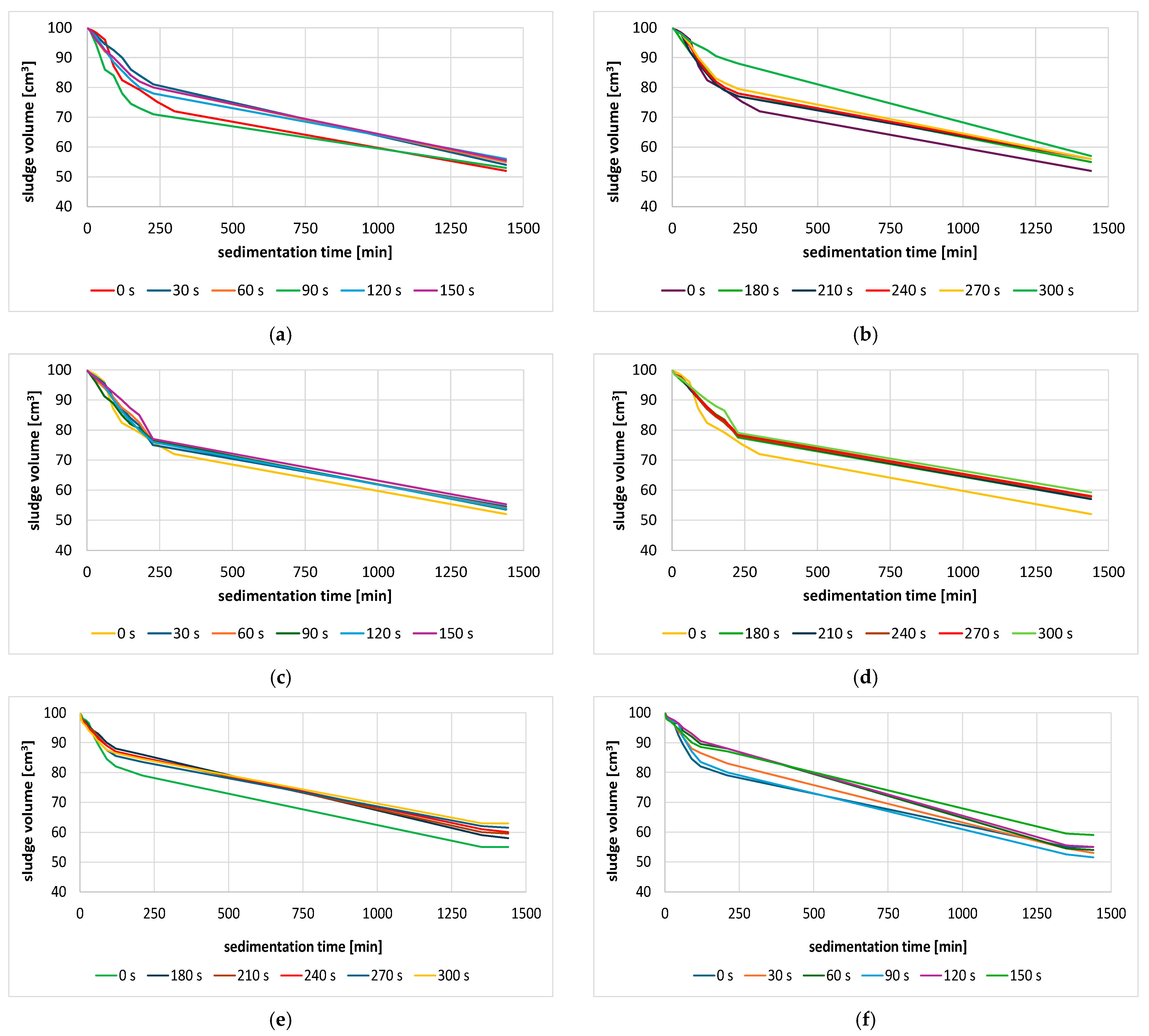
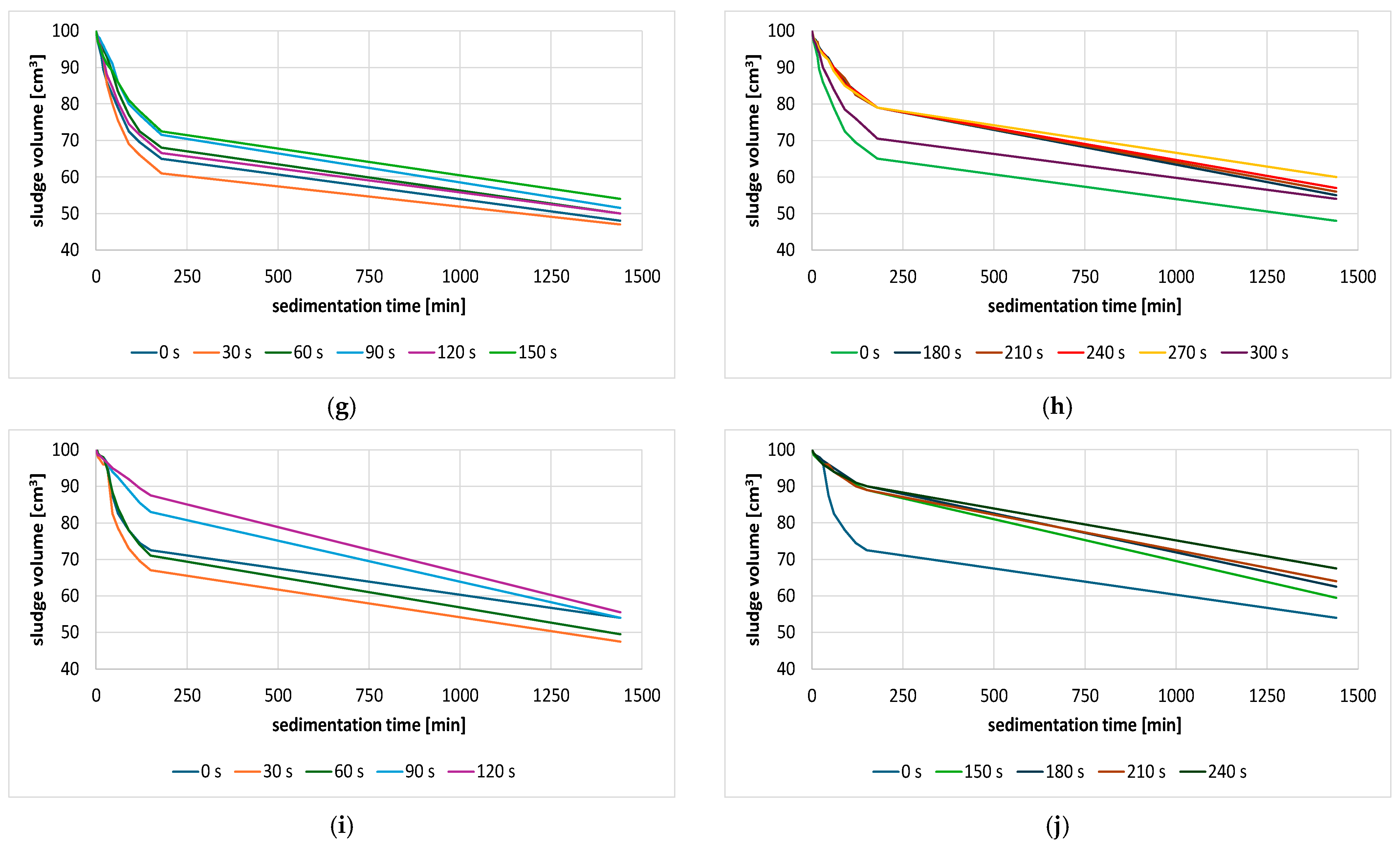
Studies on the influence of microwave disintegration parameters on the settleability of sludge have shown that the duration of the process plays an important role in its effectiveness. Figure 1 presents the settling properties of water treatment sludge before and after the disintegration process, expressed as a function of sludge volume vs. sedimentation time. With increasing duration of the process, a deterioration in the sedimentation properties of the sludge was generally observed for all the microwave power levels used. This was manifested by a greater sludge volume in the measuring cylinder after 24 h of sedimentation for samples subjected to longer microwave exposure times within the range of all the tested microwave powers. Furthermore, the longer the disintegration time was, the slower the sedimentation rate, and the slower the sludge gravity-thickening process; changes in the thickened sludge volume were also observed. However, these studies did not observe a significant effect of the applied microwave power on sludge sedimentation. Generally, after 24 h of sedimentation, the sediment volume was within the range of 50–60 mL for almost all the samples.
The results obtained regarding the deterioration of sedimentation properties with the extension of the process duration are related to the increase in the degree of fragmentation of sludge flocs and thus to the reduction in their specific density and ability to settle freely.

3.1.2. Effect of Disintegration on the CST Value

This study also examined the effect of the disintegration process on the water release capacity of sludge via CST measurements. The experiments revealed that, within the specific microwave power settings used, the duration of microwave exposure had no significant effect on the CST value relative to the value for raw sludge. Generally, increasing the process time resulted in a slight increase in the CST. Furthermore, no significant differences were observed between the CST values measured in the sludge samples after the application of different microwave powers. The obtained average CST values for the individual power levels indicate that the use of 540 W, 720 W and 900 W microwave power contributed to a slight decrease in the CST relative to that of the raw sludge (Table 2). However, at 180 W and 540 W, the mean CST values slightly increased relative to those of the raw sludge. Higher CST values after the disintegration process relative to the CST of raw sludge indicate a deterioration in the water release capacity of the disintegrated sludge. The studies indicated that the water release capacity of the sludge deteriorated after disintegration when lower microwave powers (180 W and 360 W) were used. However, at higher microwave powers, a slight improvement in the water release capacity was observed.

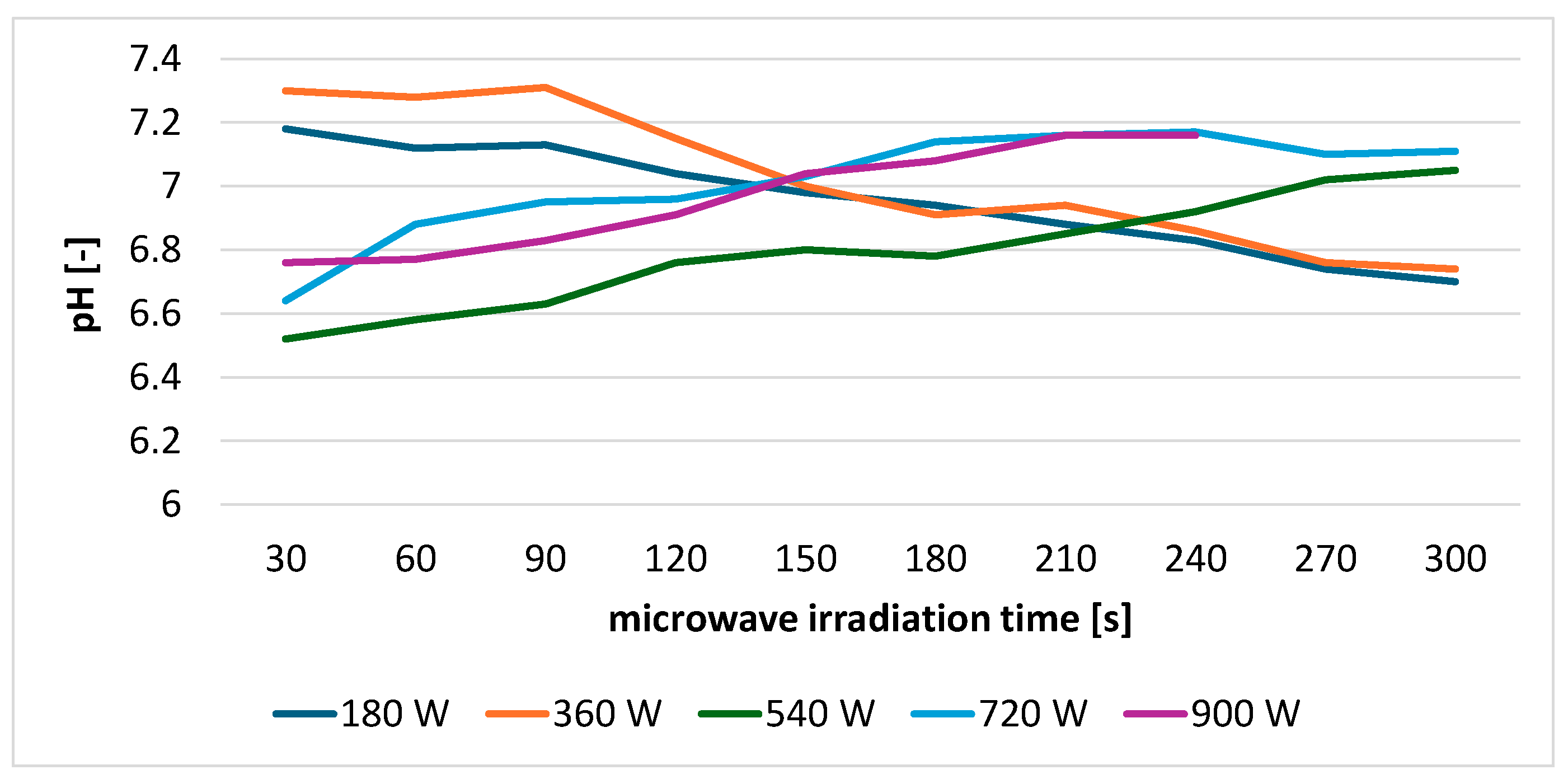
3.1.3. Effect of Disintegration on pH Value

To analyze the changes in the physicochemical properties of the sludge subjected to the disintegration process, the pH of the sludge was measured. The studies revealed that when the two lowest microwave powers used during the tests (180 W and 360 W) were used, an increase in exposure time led to a decrease in the pH of the sediments (Figure 2). At a power level of 180 W, within the investigated irradiation time intervals, the pH value decreased from 7.18 to 6.70, whereas at 360 W it decreased from 7.28 to 6.74. However, when the three remaining microwave powers (540 W, 720 W, and 900 W) were used, the opposite trend in changes in this parameter was observed; that is, with increasing processing time, the pH increased. For the above-mentioned power levels, within the investigated irradiation time intervals, the pH increased from 6.52, 6.64, and 6.76 to 7.05, 7.11, and 7.16, respectively, for power levels of 540 W, 720 W, and 900 W. However, the measured pH values varied only slightly, with the difference between the highest and lowest values at a given power level being approximately 0.5 pH units. Furthermore, all pH values fluctuated around a relatively neutral pH (ranging from 6.5 to 7.3).

3.1.4. Effect of Disintegration on the COD Value

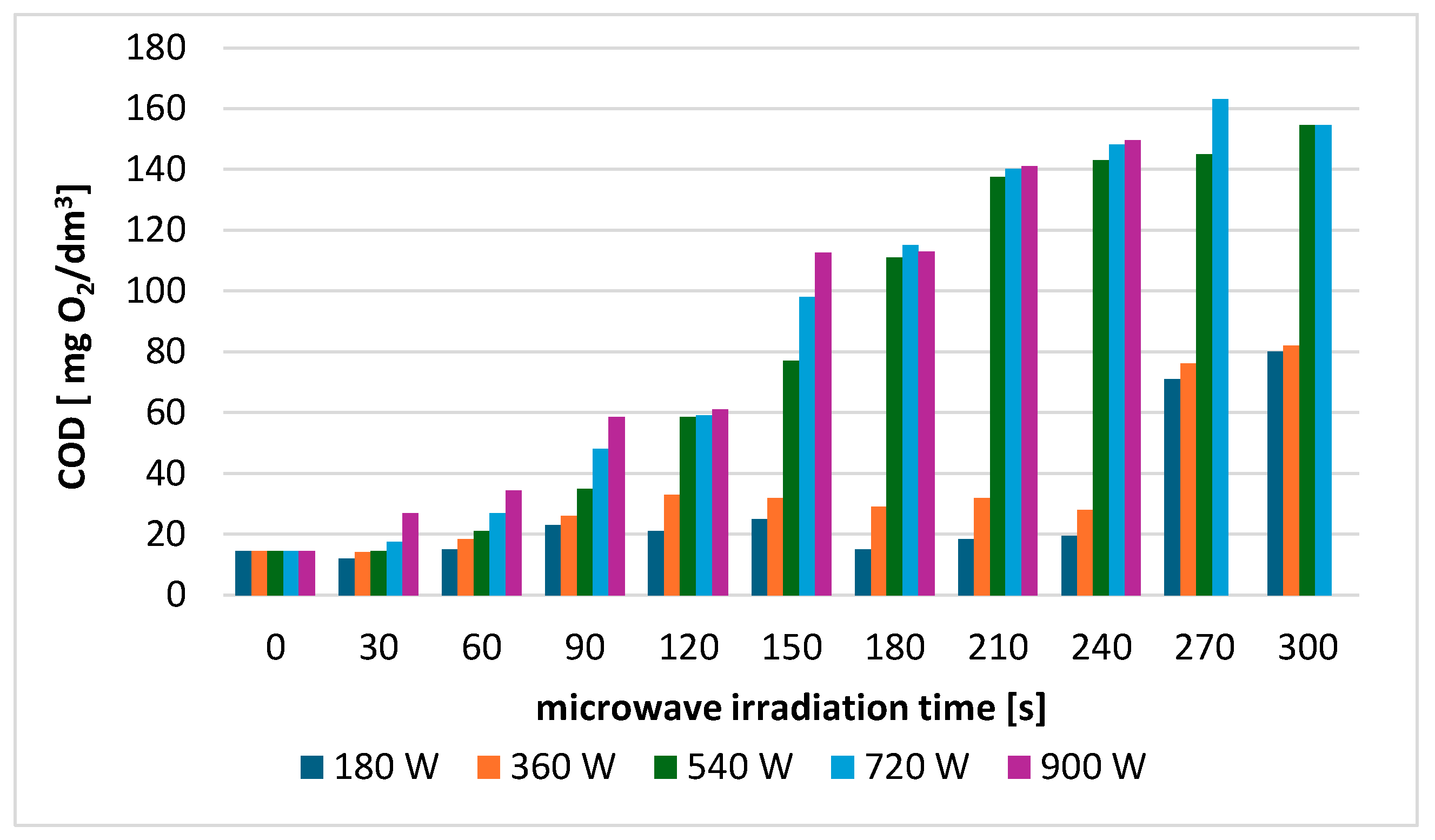
The conducted studies indicate that with increasing microwave exposure time for all power levels, an increase in the COD values was observed relative to the COD of the supernatant liquid from the sludge before disintegration (Figure 3). Furthermore, increasing the microwave power also contributed to more organic compounds, measured as COD, in the sludge liquid. At microwave powers of 540 W, 720 W, and 900 W and with an irradiation time of 180 s, the measured COD values were slightly above 110 mg O2/L. However, when the microwave exposure time was extended to 120 s or more, the COD increased to approximately 140 mg O2/L, indicating an almost tenfold increase in this parameter compared with that of the raw sludge not subjected to disintegration. Notably, for the two lowest applied powers (180 W and 360 W), a significant increase in the COD of the sludge liquid was observed only at the longest process durations (270 s and 300 s). For the remaining microwave power levels, a gradual increase in COD occurred much earlier—already at 120 s of treatment—after which the COD value rose sharply (up to 210 s of disintegration) and subsequently stabilized at approximately 145 mg O2/L. These phenomena are directly related to the process of progressive sludge disintegration, the breakdown of sludge structures, and the release of dissolved organic compounds into the sludge liquid [37]. The results therefore indicate that, for the investigated water treatment sludge, microwave disintegration at 180 W and 360 W resulted in partial degradation of organic compounds and the release of their soluble fractions into the sludge liquid only when the longest exposure times (within the range applied in these experiments) were used.

3.1.5. The Disintegration Degree of Water-Treated Sludge After Microwave Disintegration

The COD of the dissolved matter in the sludge liquid was used to determine the degree of disintegration of the water treatment sludge. The degree of disintegration (DD) (according to Equation (1)) was very low (Table 3). For microwave powers of 180 W–720 W and t = 30 s, it was zero. DD increased with increasing microwave power and process duration. For t = 150 s, it varied from 1% to 9.4% depending on the microwave power. The highest degree of disintegration of 14.3% was obtained for a power of 720 W and t = 270 s.
D D = C O D 1 C O D 2 C O D 3 C O D 2 × 100 %
where:
  • DD—degree of disintegration according to Müller [%];
  • COD1—supernatant COD of the disintegrated sludge [mg O2/L];
  • COD2—supernatant COD of the undisintegrated sludge [mg O2/L];
  • COD3—the maximum COD release in the supernatant after chemical disintegration (0.5 M NaOH, ratio of 1:1 for 22 h at 20 °C).

Table 3. Degree of disintegration of the water treatment sludge.
Microwave Power [W]Microwave Irradiation Time [s]
306090120150180210240270300
180 W−0.20.00.80.61.00.00.40.55.46.3
360 W0.00.41.11.81.71.41.71.35.96.5
540 W0.00.62.04.26.09.311.812.312.513.4
720 W0.31.23.24.38.09.612.012.814.313.4
900 W1.21.94.24.59.49.512.113.0

3.1.6. Effect of Disintegration on the TS and VS Values

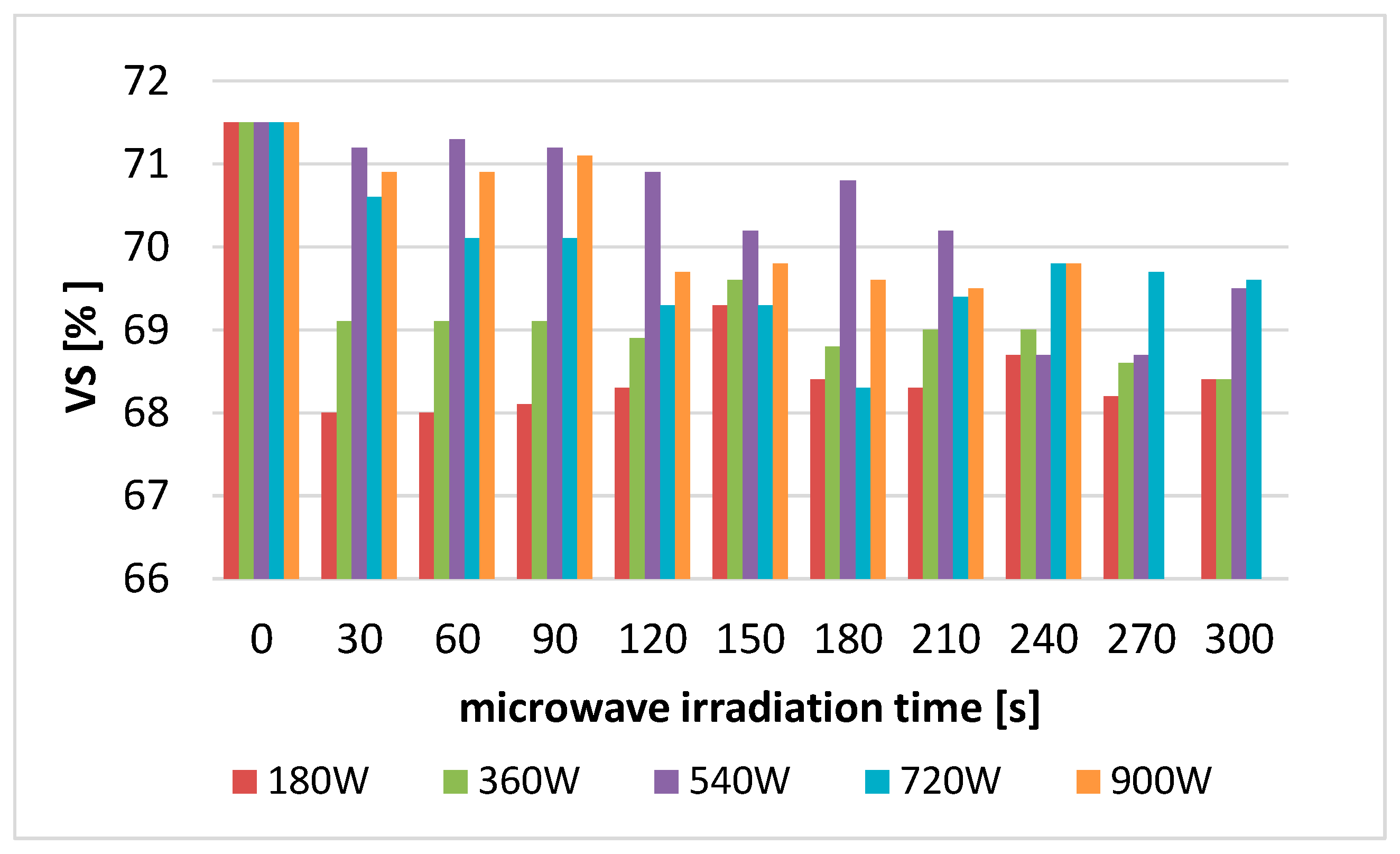
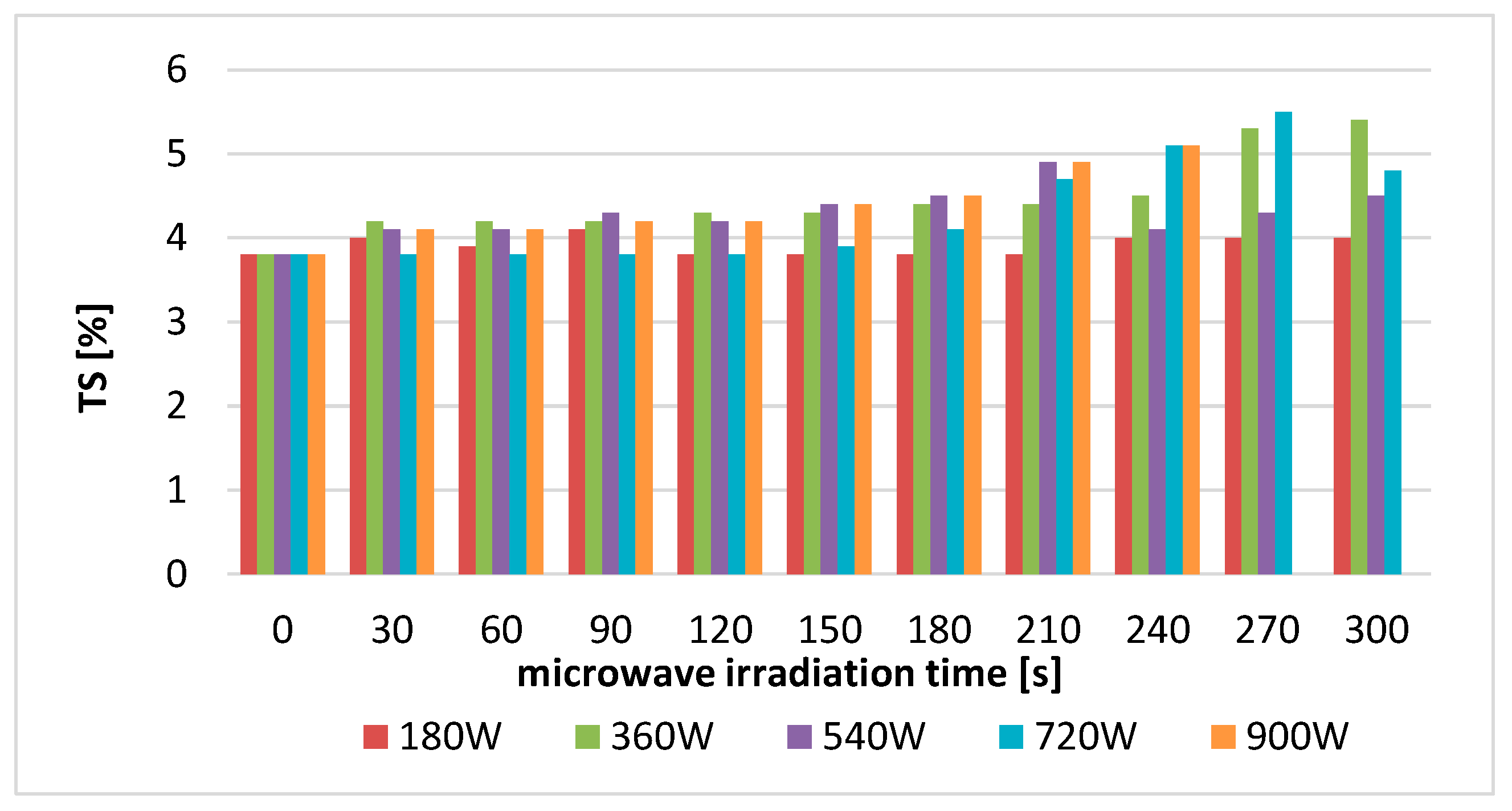
The physicochemical characteristics of the water treatment sludge were as follows: total solids (TS)—3.8%, volatile solids (VS)—71.5%, and hydration—96.2%. The disintegration process caused a change in some of the physicochemical properties of the tested sludge. The changes depended on the microwave power and irradiation time (Figure 4). At the lowest power of 180 W, the changes in TS and therefore hydration were insignificant; TS varied from 3.8% to 4.1%, and hydration ranged from 95.9% to 96.2%, regardless of the process duration. The highest TS content was observed at a power of 360 W: 5.3% for 270 s, 5.4% for 300 s, and 5.5% for 720 W and 270 s. A disintegration time that was too short, i.e., less than 150 s, resulted in virtually no changes in the TS content or hydration.
The obtained test results indicate slight changes in the VS content in the water-treated sludge. The content of organic compounds in the sludge (VS) decreased by a maximum of 3.5% (Figure 5). The greatest decrease in VS was obtained for the lowest power of 180 W, and the VS changed from 68% after 30 s to 68.4% after 300 s. Furthermore, in the case of the remaining device powers used, no effect of time on the reduction in VS was observed.

3.1.7. Microscopy Images of the Water Treatment Sludge

As part of the conducted research, microscopy images were taken for both the raw sludge and the disintegrated sludge using the selected (most favorable) process parameters:
  • Microwave power = 180 W and t = 270 s;
  • Microwave power = 360 W and t = 270 s;
  • Microwave power = 540 W and t = 180 s;
  • Microwave power = 900 W and t = 150 s.
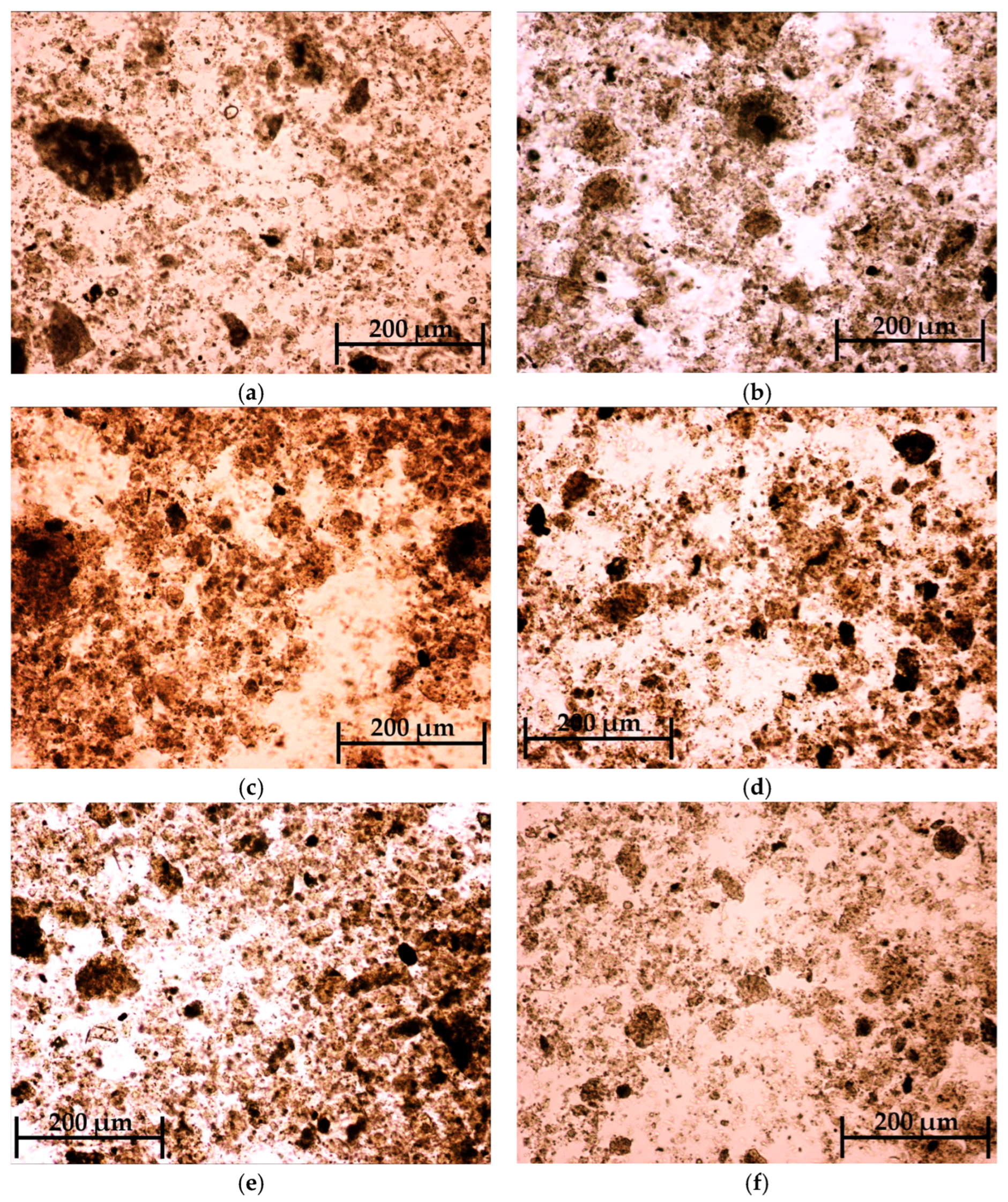
The microscopy images taken at 100× magnification are presented in Figure 6. The microscopy images of the water treatment sludge before and after the disintegration process indicate a similar floc morphology, with only subtle differences in their fragmentation and degree of dispersion. The applied process parameters result in slight changes in the structure of the observed agglomerates.

3.2. Metal Concentrations in the Sludge Liquid

A physicochemical analysis of the sludge liquid before and after the disintegration process of sludge from the water treatment plant was performed (Table 4). The post disintegration sludge liquid was analyzed for the following process parameters:
  • Microwave power = 180 W and t = 270 s;
  • Microwave power = 360 W and t = 270 s;
  • Microwave power = 540 W and t = 180 s;
  • Microwave power = 900 W and t = 150 s.
The sludge liquid before disintegration was characterized by K and Na contents of 3.13 mg/L and 8.68 mg/L, respectively. However, after the disintegration process, their contents increased with increasing microwave power and process duration. In the case of K, it ranged from 3.25 mg/L for 180 W to 9.49 mg/L for 540 W and 180 s (longer process duration) and 7.75 mg/L for 900 W and 150 s (shorter process duration). The concentration of Na varied from 11.78 mg/L for the highest power of 900 W and the shortest process duration of 150 s to 13.10 mg/L for the power of 360 W and the longest process duration of 270 s. Furthermore, the sludge liquid of the samples before the disintegration process was characterized by a lack of heavy metal content. However, analyzing the obtained test results, it can be concluded that the action of electromagnetic waves affects the release of metals from the sludge, but these effects are quite insignificant. In the case of Zn, the concentration ranged from <0.02 mg/L for a power of 180 W to 0.09 mg/L for a power of 360 W, 540 W and time = 180 s. The Pb concentration varied from <0.03 mg/L to 0.06 mg/L (the longest time = 270 s and the lowest microwave power = 180 W). The release of individual components, including metals, into the sludge liquid is influenced by both the microwave power used and the duration of the process.

3.3. Metal Concentrations in the Water Extract

To conduct leachability studies, water extracts were prepared for selected samples. Physicochemical analyses were performed on the water extracts before and after the disintegration process of the sludge from the water treatment plant (Table 5). The water extracts were analyzed after the disintegration process for the selected disintegration process parameters:
  • Microwave power = 180 W and t = 270 s;
  • Microwave power = 360 W and t = 270 s;
  • Microwave power = 540 W and t = 180 s;
  • Microwave power = 720 W and t = 150 s;
  • Microwave power = 900 W and t = 150 s.
The water extracted before the disintegration process of the water treatment plant sludge had Ca and K contents of <0.04 mg/L and 1.92 mg/L, respectively. The K content was almost 5-fold lower than that in the sludge liquid. The K content in the water extract increased from 2.17 to 2.74 mg/L depending on the applied microwave power. However, after the disintegration process, the Ca content did not change. However, no increase in the heavy metal content was noted. The Ni, Pb, Cd, and Cr contents remained at the same level as those in the water extract of the sludge before the disintegration process: Ni < 0.02 mg/L, Pb < 0.03 mg/L, Cd < 0.04 mg/L, and Cr < 0.05 mg/L. Moreover, a slight increase in the Cu concentration was observed for the lowest microwave power of 180 W and t = 270 s, which was 0.04 mg/L, and for 360 W and t = 270 s, which was 0.06 mg/L. The analysis of the obtained test results revealed that the microwave disintegration process does not increase the leachability of metals from the sludge.

4. Discussion

After microwave disintegration, the water treatment sludge exhibited poorer sedimentation properties regardless of the microwave power used. Furthermore, these properties deteriorate further with longer process durations. This is related to increased floc fineness, decreased specific density, and decreased free settling capacity. However, improved settleability after disintegration was demonstrated by He et al. [38]. In the case of the freeze-thaw process, improved sedimentation and settleability were achieved, reducing the SV30 from 99.1% to 52.0%. However, ozonation and Fe2+–S2O82− reduced the SV30 to only 82.3% and 88.6%, respectively. The effectiveness of the freeze-thaw process results from the swelling and disintegration of flocs, as well as cell lysis during freezing [38]. Ultrasonic disintegration of sludge can also improve its settleability, as the cavitation induced by ultrasonic waves disrupts floc structures, releases intracellular matter, and increases sludge homogeneity [39]. The use of disintegration processes, including microwave disintegration, may not always result in operational benefits through improved particle sedimentation.
A similar tendency was observed for the CST, a measurement characterizing dewaterability, in the water treatment sludge. The disintegration process parameters used (microwave power and time) had no significant effect on the CST value compared with the value for raw sludge. This phenomenon of deteriorated sludge dewaterability, manifested by an increase in CST values, was observed in studies by Tytła [40], who subjected activated sludge to ultrasonic disintegration. In this case, the application of more energy also caused an increase in the CST.
Sludge pH measurements showed negligible variation, with the difference between the highest and lowest values at a given power level being approximately 0.5 pH units. The pH values varied from 6.5 to 7.3. The decrease in pH may be caused by the release of H+ ions as a result of biosolid disintegration [41]. On the other hand, the use of higher microwave power combined with a longer irradiation time leads to greater heating of the sludge subjected to disintegration and consequently to the removal of CO2 during the degassing process, which in turn contributes to an increase in the sludge pH [42].
In the case of COD, the study revealed that with increasing microwave exposure time at all power levels, the COD values increased relative to the COD of the supernatant liquid from the sludge before disintegration. Increasing the microwave power also resulted in an increase in the COD. The research presented in our publication describes the disintegration of water treatment sludge formed during the coagulation/flocculation process of surface water. In natural waters, the content of organic compounds is not very high; therefore, the concentration of these compounds in the liquid phase of sludge resulting from the treatment of such water is also relatively low. In the “raw” sludge, not yet subjected to disintegration processes, organic compounds are mainly bound within the structure of sludge flocs, which results in low COD values in the supernatant liquid. However, the significant increase in COD values in the sludge liquor after the disintegration process indicates the disruption of floc structures due to microwave treatment and the consequent release of organic compounds into the sludge water. These observations clearly demonstrate that both microwave power and irradiation time are key factors influencing the degree of organic matter solubilization. Higher power levels and longer exposure durations intensify the breakdown of sludge flocs and enhance the release of intracellular and extracellular organic compounds, leading to markedly elevated COD values in the supernatant liquid.
The same dependency of COD values on the applied microwave power and exposure time was obtained in the studies of Grübel & Machnicka [43]. They subjected waste activated sludge to microwave disintegration, and when the microwave exposure time was increased from 30 to 360 s, an approximately twelvefold increase in COD was observed. Moreover, studies on the effects of microwaves on the physicochemical properties of activated sludge conducted by Yu et al. [44] revealed that with increasing applied power and prolonged microwave exposure time, the COD and soluble COD (SCOD) increased. The same dependency of COD values on the applied microwave power and exposure time was obtained in the studies of Grübel & Machnicka [43]. They subjected waste activated sludge to microwave disintegration, and when the microwave exposure time was increased from 30 to 360 s, an approximately twelvefold increase in COD was observed. Moreover, studies on the effects of microwaves on the physicochemical properties of activated sludge conducted by Yu et al. [44] revealed that with increasing applied power and prolonged microwave exposure time, the COD and soluble COD (SCOD) increased.
Changes in the concentration of organic matter in the sludge mixture are used as indicators of disintegration effects. In the microwave disintegration of the water treatment sludge process, a disintegration degree of 11.8% was obtained at 270 s and 540 W. In the case of chemical disintegration with sodium hydroxide, the degree of disintegration of the excess sludge ranged from 12–59%, depending on the reagent dose [45]. According to Tytła et al. [46], the degree of disintegration of no thickened excess sludge ranged from 0.7–2.0% and 0.8–3.4% for sample volumes obtained via ultrasonic disintegration.
Studies of TS changes following microwave disintegration revealed a dependence on the microwave power and exposure time, with these changes being insignificant. The highest TS content was observed for an exposure time of 300 s and a power of 360 W—5.4%, and for an exposure time of 270 s and a power of 720 W—5.5% and 270 s. The observed TS increase ranged from 1% to 1.7%. The VS analysis results also indicate slight changes in the organic compound content in the sludge after the disintegration process. The maximum reduction in VS was 3.5%. The VS value in the sludge after the disintegration process varied from 71.2% to 68%.
The concentrations of metals in the water extracted from the sludge, which are crucial for soil contamination, ranged from less than 0.04 mg/L for Cd to less than 0.1 mg/L for Cr, 0.06 mg/L for Cu and 0.15 mg/L for Zn. On the basis of the criteria for acceptance of waste disposal in landfills (2003/33/EC), the concentration of Zn in the water extract at a liquid-to-soil ratio of 10 L/kg was lower than the permissible value for neutral waste, whereas the concentrations of Cu, Ni, Pb and Cd did not exceed the permissible values for hazardous waste.

5. Conclusions

Microwave disintegration is primarily based on the rapid, volumetric heating of sludge particles. This leads to the rupture of cell membranes and the release of intracellular components. Other phenomena, such as molecular polarization and electrical changes, also occur. After microwave disintegration, the total solids (TS) undergo only a minor change, while some of the solids dissolve, leading to an increase in the soluble organic fraction. The highest TS content was observed at a power of 360 W: 5.3% for 270 s, 5.4% for 300 s, and 5.5% for 720 W and 270 s. The organic compound content (VS) decreases. The greatest decrease in VS was obtained for the lowest power of 180 W, and the VS changed from 68% after 30 s to 68.4% after 300 s. Disintegration may slightly improve sludge dewaterability and sedimentation properties. However, in this type of sludge, microwave disintegration mainly deteriorates these properties. Nevertheless, similar to dewaterability, the effect depends on the microwave power used and the process duration.
A key research step is assessing the effects of the disintegration process by conducting leachability tests. This allows for the determination of potential environmental hazards and the suitability of water treatment sludge for land application. Both the sludge liquid and the water extracted from the sludge before and after the disintegration process were analyzed for metal content. The study revealed that the highest metal concentrations in sludge liquid were recorded for non-toxic Zn (0.09 mg/L). In water extracts from water treatment sludge before and after the disintegration process, the highest metal concentrations were recorded for zinc (0.15 mg/L). In both cases, the concentrations of Cu, Ni, Pb, Cd, and Cr were below detection limits or at negligible levels. This suggests that heavy metals are not leached from the sludge after microwave disintegration in concentrations that could pose a threat to the environment. This is an important aspect when using sludge for agricultural purposes or land reclamation.

Author Contributions

Conceptualization: I.P.; methodology: I.P. and M.T.; software: M.T.; validation: B.P. and M.T.; formal analysis: I.P.; investigation: I.P., B.P. and M.T.; resources: I.P., B.P. and M.T.; data curation: M.T.; writing—original draft preparation: I.P.; writing—review and editing: B.P.; visualization: B.P.; supervision: I.P.; project administration: I.P., B.P. and M.T.; funding acquisition: I.P. and B.P. All authors have read and agreed to the published version of the manuscript.

Funding

This work was financed by the Ministry of Science and Higher Education of Poland through the statutory funds of the Silesian University of Technology in 2025 and under the research activities of the Pro-Quality Project of the Silesian University of Technology ‘Breakthrough Research’ 2024–2026.

Institutional Review Board Statement

Not applicable.

Informed Consent Statement

Not applicable.

Data Availability Statement

Data available on request due to restrictions (e.g., privacy, legal or ethical reasons).

Conflicts of Interest

The authors declare no conflicts of interest.

References

  1. Mañosa, J.; Formosa, J.; Giro-Paloma, J.; Maldonado-Alameda, A.; Quina, M.J.; Chimenos, J.M. Valorisation of Water Treatment Sludge for Lightweight Aggregate Production. Constr. Build. Mater. 2021, 269, 121335. [Google Scholar] [CrossRef]
  2. Ahmad, T.; Ahmad, K.; Ahad, A.; Alam, M. Characterization of Water Treatment Sludge and Its Reuse as Coagulant. J. Environ. Manag. 2016, 182, 606–611. [Google Scholar] [CrossRef]
  3. Tony, M.A. Valorization of Undervalued Aluminum-Based Waterworks Sludge Waste for the Science of “The 5 Rs’ Criteria”. Appl. Water Sci. 2022, 12, 20. [Google Scholar] [CrossRef]
  4. Nair, A.T.; Ahammed, M.M. The Reuse of Water Treatment Sludge as a Coagulant for Post-Treatment of UASB Reactor Treating Urban Wastewater. J. Clean. Prod. 2015, 96, 272–281. [Google Scholar] [CrossRef]
  5. Płonka, I.; Adamkowska, M. Application of Ultrasonic Disintegration of Post-Coagulation Sludge Zastosowanie Dezintegracji Ultradźwiękowej Dla Osadu Pokoagulacyjnego. Instal 2024, 2, 49–52. [Google Scholar]
  6. Shamaki, M.; Adu-Amankwah, S.; Black, L. Reuse of UK Alum Water Treatment Sludge in Cement-Based Materials. Constr. Build. Mater. 2021, 275, 122047. [Google Scholar] [CrossRef]
  7. Jing, C.; Liu, S.; Meng, X. Arsenic Leachability and Speciation in Cement Immobilized Water Treatment Sludge. Chemosphere 2005, 59, 1241–1247. [Google Scholar] [CrossRef]
  8. De Carvalho Gomes, S.; Zhou, J.L.; Zeng, X.; Long, G. Water Treatment Sludge Conversion to Biochar as Cementitious Material in Cement Composite. J. Environ. Manag. 2022, 306, 114463. [Google Scholar] [CrossRef]
  9. Zwane, Q.I.; Tshangana, C.S.; Mahlangu, O.T.; Snyman, L.W.; Msagati, T.A.M.; Muleja, A.A. Hierarchical Approach to the Management of Drinking Water Sludge Generated from Alum-Based Treatment Processes. Processes 2024, 12, 1863. [Google Scholar] [CrossRef]
  10. Kuldeyev, E.; Ospanov, K.; Andraka, D.; Merkýreva, S. Experimental Study on the Application of Sludge from Water Treatment Plant as a Reagent for Phosphate Removal from Wastewater. Water 2023, 15, 2691. [Google Scholar] [CrossRef]
  11. Pająk, M. Alum Sludge as an Adsorbent for Inorganic and Organic Pollutants Removal from Aqueous Solutions: A Review. Int. J. Environ. Sci. Technol. 2023, 20, 10953–10972. [Google Scholar] [CrossRef]
  12. Ren, B.; Lyczko, N.; Zhao, Y.; Nzihou, A. Alum Sludge as an Efficient Sorbent for Hydrogen Sulfide Removal: Experimental, Mechanisms and Modeling Studies. Chemosphere 2020, 248, 126010. [Google Scholar] [CrossRef] [PubMed]
  13. Yu, B.; Li, X.; Yan, H.; Zhang, M.; Ma, J.; Lian, K. Recycling of Sludge Residue as a Coagulant for Phosphorus Removal from Aqueous Solutions. Environ. Monit. Assess. 2024, 196, 576. [Google Scholar] [CrossRef]
  14. Ayoub, M.; Afify, H.; Abdelfattah, A. Chemically Enhanced Primary Treatment of Sewage Using the Recovered Alum from Water Treatment Sludge in a Model of Hydraulic Clari-Flocculator. J. Water Process Eng. 2017, 19, 133–138. [Google Scholar] [CrossRef]
  15. Shawal, N.B.M.; Razali, N.A.; Hairom, N.H.H.; Yatim, N.I.I.; Rasit, N.; Harun, M.H.C.; Kasan, N.; Hamzah, S. Parametric Study of Coagulant Recovery from Water Treatment Sludge towards Water Circular Economy. Water Sci. Technol. 2023, 88, 3142–3150. [Google Scholar] [CrossRef] [PubMed]
  16. Pieczykolan, B. Investigation of Adsorption Kinetics and Isotherms of Synthetic Dyes on Biochar Derived from Post-Coagulation Sludge. Int. J. Mol. Sci. 2025, 26, 7912. [Google Scholar] [CrossRef]
  17. Bułkowska, K.; Zielińska, M. Thermal Disintegration of Waste-Activated Sludge. Energies 2024, 17, 4447. [Google Scholar] [CrossRef]
  18. Dong, L.; Zhao, T.; Cui, Y.; Zhang, Z.; Chen, L. New Strategies and Mechanisms for Enhancing Sludge Disintegration Using Waste Heat-Enhanced Circulating Fluidisation Method. Chem. Eng. J. 2025, 519, 165608. [Google Scholar] [CrossRef]
  19. Babu, R.; Capannelli, G.; Comite, A. Effect of Different Pretreatments on Sludge Solubilization and Estimation of Bioenergy Potential. Processes 2021, 9, 1382. [Google Scholar] [CrossRef]
  20. Garlicka, A.; Umiejewska, K.; Nielsen, P.H.; Muszyński, A. Hydrodynamic Disintegration of Thickened Excess Sludge and Maize Silage to Intensify Methane Production: Energy Effect and Impact on Microbial Communities. Bioresour. Technol. 2023, 376, 128829. [Google Scholar] [CrossRef]
  21. El Jery, A.; Kosarirad, H.; Taheri, N.; Bagheri, M.; Aldrdery, M.; Elkhaleefa, A.; Wang, C.; Sammen, S.S. An Application of Ultrasonic Waves in the Pretreatment of Biological Sludge in Urban Sewage and Proposing an Artificial Neural Network Predictive Model of Concentration. Sustainability 2023, 15, 12875. [Google Scholar] [CrossRef]
  22. Kavitha, S.; Rajesh Banu, J.; Vinoth Kumar, J.; Rajkumar, M. Improving the Biogas Production Performance of Municipal Waste Activated Sludge via Disperser Induced Microwave Disintegration. Bioresour. Technol. 2016, 217, 21–27. [Google Scholar] [CrossRef] [PubMed]
  23. Usman, T.M.M.; Kavitha, S.; Ravi, Y.K.; Banu, J.R.; Adishkumar, S. Impact of Exopolymeric Substance Removal on Microwave Disintegration of Waste Activated Sludge for Enhanced Biohydrogen Production. Int. J. Hydrog. Energy 2025, 145, 197–204. [Google Scholar] [CrossRef]
  24. Zhou, P.; Li, D.; Zhang, C.; Ping, Q.; Wang, L.; Li, Y. Comparison of Different Sewage Sludge Pretreatment Technologies for Improving Sludge Solubilization and Anaerobic Digestion Efficiency: A Comprehensive Review. Sci. Total Environ. 2024, 921, 171175. [Google Scholar] [CrossRef] [PubMed]
  25. Gil, A.; Siles, J.A.; Martin, M.A.; Chica, A.F.; Estevez-Pastor, F.S.; Toro-Baptista, E. Effect of Microwave Pretreatment on Semi-Continuous Anaerobic Digestion of Sewage Sludge. Renew. Energy 2018, 115, 917–925. [Google Scholar] [CrossRef]
  26. Ebenezer, A.V.; Kaliappan, S.; Kumar, S.A.; Yeom, I.; Banu, J.R. Bioresource Technology Influence of Deflocculation on Microwave Disintegration and Anaerobic Biodegradability of Waste Activated Sludge. Bioresour. Technol. 2015, 185, 194–201. [Google Scholar] [CrossRef]
  27. Bozkurt, Y.C.; Lafaille, R.; Lu, D.; Zhang, X.; Giles, R.; Apul, G. Bioresource Technology Reports Effects of Carbonaceous Susceptors on Microwave Pretreatment of Waste Activated Sludge and Subsequent Anaerobic Digestion. Bioresour. Technol. Rep. 2021, 13, 100641. [Google Scholar] [CrossRef]
  28. Kodom, P.; Aragón-Barroso, A.J.; Koledzi, E.K.; Segbeaya, K.; González-López, J.; Osorio, F. Microwave Treatment of Three Different Types of Sewage Sludge Based on Their Solar Drying Exposure Time: Effect on Microorganisms, Water Content and Agronomic Aspects. Water 2024, 16, 321. [Google Scholar] [CrossRef]
  29. Bozkurt, Y.C.; Apul, O.G. ScienceDirect Critical Review for Microwave Pretreatment of Waste-Activated Sludge Prior to Anaerobic Digestion. Curr. Opin. Environ. Sci. Health 2020, 14, 1–9. [Google Scholar] [CrossRef]
  30. Alqaralleh, R.M.; Kennedy, K.; Delatolla, R. Microwave vs. Alkaline-Microwave Pretreatment for Enhancing Thickened Waste Activated Sludge and Fat, Oil, and Grease Solubilization, Degradation and Biogas Production. J. Environ. Manag. 2019, 233, 378–392. [Google Scholar] [CrossRef]
  31. PN-EN 12880:2004; Characterization of Sludges—Determination of dry Residue and Water Content. European Committee for Standardization: Brussels, Belgium, 2004; (Polish version).
  32. PN-EN 12879:2004; Characterization of Sludges—Determination of the Loss on Ignition of Dry Mass. European Committee for Standardization: Brussels, Belgium, 2004; (Polish version).
  33. PN-EN 14701:2007; Characterization of Sludges—Filtration Properties—Part 1: Capillary Suction Time (CST). European Committee for Standardization: Brussels, Belgium, 2007; (Polish version).
  34. ISO 15705:2002; Water Quality—Determination of the Chemical Oxygen Demand Index (ST-COD)—Small-Scale Sealed-Tube Method. International Organization for Standardization: Geneva, Switzerland, 2002.
  35. PN-EN 12457-2:2006; Characterisation of Waste. Leaching. Compliance Test for Leaching of Granular Waste Materials and Sludges. European Committee for Standardization: Brussels, Belgium, 2006; (Polish version).
  36. PN-ISO 8288:2002; Water Quality—Determination of Cobalt, Nickel, Copper, Zinc, Cadmium and Lead—Flame Atomic Absorption Spectrometric Methods. International Organization for Standardization: Geneva, Switzerland, 2002; (Polish version).
  37. Li, Y.; Campos, L.C.; Hu, Y. Microwave Pretreatment of Wastewater Sludge Technology—A Scientometric—Based Review. Environ. Sci. Pollut. Res. 2024, 31, 26432–26451. [Google Scholar] [CrossRef]
  38. He, H.; Xin, X.; Qiu, W.; Li, D.; Liu, Z.; Ma, J. Waste Sludge Disintegration, Methanogenesis and Final Disposal via Various Pretreatments: Comparison of Performance and Effectiveness. Environ. Sci. Ecotechnology 2021, 8, 100132. [Google Scholar] [CrossRef]
  39. Szaja, A.; Szulżyk-cieplak, J.; Łagód, S.; Kuzioła, E. Recent Developments in the Application of Ultrasonication in Pre-Treatment of Municipal Sewage Sludge. J. Ecol. Eng. 2023, 24, 223–234. [Google Scholar] [CrossRef]
  40. Tytła, M. The Effects of Ultrasonic Disintegration as a Function of Waste Activated Sludge Characteristics and Technical Conditions of Conducting the Process—Comprehensive Analysis. Int. J. Environ. Res. Public Health 2018, 15, 2311. [Google Scholar] [CrossRef] [PubMed]
  41. Aslan, S.; Alhraishawi, A. Improving the Energy Balance between Microwave Pretreatment and Anaerobic Digestion with Centrifuged Biosludge. Bioresour. Bioprocess. 2025, 12, 109. [Google Scholar] [CrossRef] [PubMed]
  42. Vialkova, E.; Obukhova, M.; Belova, L. Microwave Irradiation in Technologies of Wastewater and Wastewater Sludge Treatment: A Review. Water 2021, 13, 1784. [Google Scholar] [CrossRef]
  43. Grubel, K.; MacHnicka, A. Impact of Microwave Disintegration on Activated Sludge. Ecol. Chem. Eng. S 2011, 18, 75–82. [Google Scholar]
  44. Yu, Q.; Lei, H.; Li, Z.; Li, H.; Chen, K. Physical and Chemical Properties of Waste-Activated Sludge after Microwave Treatment. Water Res. 2010, 44, 2841–2849. [Google Scholar] [CrossRef]
  45. Zawieja, I.; Wolyn, L. Wpływ Stopnia Dezintegracji Osadów Ściekowych Poddanych Alkalicznej Modyfikacji Na Wartość Jednostkowej Produkcji Biogazu. Inżyneria Ochr. Sr. 2014, 17, 503–512. [Google Scholar]
  46. Tytła, M.; Zielewicz, E. The Effect of Ultrasonic Disintegration Process Conditions on the Physicochemical Characteristics of Excess Sludge. Arch. Environ. Prot. 2016, 42, 19–26. [Google Scholar] [CrossRef]
Figure 1. Settling properties of water treatment sludge after disintegration process for: (a) 180 W (0–150 s); (b) 180 W (0 s and 180–300 s); (c) 360 W (0–150 s); (d) 360 W (0 s and 180–300 s); (e) 540 W (0–150 s); (f) 540 W (0 s and 180–300 s); (g) 720 W (0–150 s); (h) 720 W (0 s and 180–300 s); (i) 900 W (0–120 s); (j) 900 W (0 s and 150–240 s).
Applsci 16 00110 g001aApplsci 16 00110 g001b
Figure 2. Effect of the disintegration process on the pH.
Applsci 16 00110 g002
Figure 3. The effect of the disintegration process on the COD value in the supernatant liquid.
Applsci 16 00110 g003
Figure 4. Changes in total solids content in post-coagulation water treatment sludge before and after of disintegration process.
Applsci 16 00110 g004
Figure 5. Changes in volatile solids content in post-coagulation water treatment sludge before and after of disintegration.
Applsci 16 00110 g005
Figure 6. Microscopy image (at 100× magnification) of water treatment sludge before disintegration at various process parameters: (a) raw sludge, (b) 180 W, 270 s; (c) 360 W, 270 s; (d) 540 W, 180 s; (e) 720 W, 150 s; and (f) 900 W, 150 s.
Applsci 16 00110 g006
Table 1. Characteristics of an electromagnetic disintegrator.
Power [%]Power [W]
100900
80720
60540
40360
20180
Table 2. The CST values before and after the disintegration process.
CST Value [s]Microwave Power [W]
1803605407209000
average33.0729.5128.6623.0625.7229.11
min30.3322.1420.9319.9622.6628.08
max34.6237.3931.6229.4727.3429.51
Table 4. Metal contents in the sludge liquid before and after disintegration.
ParameterBefore
Disintegration
After Disintegration Process
180 W 270 s360 W
270 s
540 W
180 s
900 W
150 s
K [mg/L]3.133.253.239.497.75
Na [mg/L]8.6813.0213.1012.3611.78
Cu [mg/L]<0.02<0.020.02<0.02<0.02
Zn [mg/L]<0.02<0.020.020.090.04
Ni [mg/L]<0.02<0.020.030.040.03
Pb [mg/L]<0.030.06<0.030.03<0.03
Cd [mg/L]<0.04<0.04<0.04<0.04<0.04
Table 5. Physicochemical analysis of water extracted from water treatment sludge before and after disintegration.
ParameterBefore
Disintegration
After Disintegration Process
180 W 270 s360 W 270 s540 W 180 s720 W 150 s900 W 150 s
Ca [mg/L]<0.04<0.04<0.04<0.04<0.04<0.04
K [mg/L]1.922.172.172.372.332.74
Cu [mg/L]<0.020.040.060.020.020.02
Zn [mg/L]0.050.020.150.040.070.04
Ni [mg/L]<0.02<0.02<0.02<0.02<0.02<0.02
Pb [mg/L]<0.03<0.03<0.03<0.03<0.03<0.03
Cd [mg/L]<0.04<0.04<0.04<0.04<0.04<0.04
Cr [mg/L]<0.05<0.05<0.05<0.05<0.05<0.05
Disclaimer/Publisher’s Note: The statements, opinions and data contained in all publications are solely those of the individual author(s) and contributor(s) and not of MDPI and/or the editor(s). MDPI and/or the editor(s) disclaim responsibility for any injury to people or property resulting from any ideas, methods, instructions or products referred to in the content.