1. Introduction
Flash-boiling of the injected liquid occurs when the liquid’s vapour pressure is sufficiently lower than the ambient pressure. Depending on how big that difference is, the effects will be different. As shown already in 1962 by Brown and York [
1], the profound effects related to rapid vaporisation of the injected liquid are not observed immediately after exceeding the boiling temperature. This observation concerned both the global jet structure and droplet sizes. When the superheating is sufficiently high, the spray characteristics can change significantly. Then the vapour bubbles are generated inside the liquid phase, they expand rapidly and lead to micro-explosions of liquid structures. During those micro-explosions, the liquid structures are disintegrated into smaller versions [
1]. Moreover, the rapid expansion of the bubbles leads to a higher radial-to-axial momentum ratio. Therefore, an increased jet’s spreading angle is observed. As the smaller droplets exchange momentum with the ambient gas more efficiently, the spray penetration may become strongly reduced. The smaller mean diameter of the injected fluid increases homogeneity and the injection angle [
2]. Due to those reasons, flash-boiling has been considered an alternative method (to increasing injection pressure) to improve atomisation and mixture formation in engines and other practical applications, such as exhaust-gas aftertreatment systems. As reported by Bar-Kohany et al. [
3], the number of publications related to flash-boiling has strongly increased in the last decade. This effect could be related to the wide introduction of direct fuel injection, with its early intake injection, and the application of alternative fuels exhibiting lower vapour pressure, such as ammonia [
4]. Moreover, it is documented that the potential of improving mixture formation in engines through flash-boiling refers to both conventional and alternative fuels. According to Nour et al. [
5], flash-boiling injection of acetone–butanol–ethanol mixtures (ABE) remarkably reduced emissions of saturated hydrocarbons, aromatic hydrocarbons, aldehydes, and nitrogen oxides. Moreover, the authors suggested that flash-boiling can also significantly reduce particulate emissions.
In most practical applications, the injected medium is usually composed of several components, and it is rarely a pure substance. This aspect makes understanding the flash-boiling process and its effect on sprays more difficult than for a single-component liquid. For a pure substance, the boiling temperature is clearly defined and directly dependent on pressure. For a mixture of two or more substances with different boiling temperatures, two temperatures are defined. The first is the bubble temperature, where the first bubble can be observed during the heating of the liquid. The second is the dew point temperature—a temperature at which the first condensation nuclei are observed during the cooling of a substance in the gaseous form. Between these two temperatures, the vapour compositions over the liquid surface are different from the composition of the liquid. Above the dew point temperature, the vapour will have the same composition as the liquid. This difference can cause a distinct behaviour of the injected liquid experiencing flash-boiling. Therefore, it should also be considered to investigate the bubble and dew points at different mixture compositions. However, among these two parameters, the most important is the bubble point, since flash-boiling atomisation is driven by the formation and growth of vapour bubbles within the liquid phase. As shown in a study by Hutchison and Wallace [
6], focused on the volatility of different fuels, the bubble point pressure values well matched the measured DVPE (dry vapour pressure equivalent). Therefore, they used bubble point pressures as representative vapour pressures to assess the superheat of different multi-component fuels.
After the introduction of alternative fuels and new fuel blends (especially gasoline with alcohols), many studies were focused on the altered phase change properties and related consequences for spray formation and engine operation. Neroorkar and Schmidt [
7] developed a model capable of predicting vapour–liquid equilibrium for gasoline–ethanol blends. They compared their results with experimental data measured earlier by Pumphrey et al. [
8] and Kar et al. [
9] and obtained very good agreement. Their intention was to use the model for further numerical investigation of flash-boiling injection. Furuyama et al. [
10] investigated the effect of the injection of methanol and methanol–gasoline blends using ultrasonic injection. They observed a positive effect of flash-boiling on the fragmentation of the injected fluid. They also observed no influence of atmospheric pressure on the injection time, but there was an observable influence on the spray cone angle.
Negro et al. [
11] investigated methanol and ethanol blends with gasoline as alternative fuels for the Direct Injection Engine. They defined that a 35% methanol blend with gasoline is an azeotropic mixture. In this research, a positive effect of flash-boiling on the fragmentation of liquid and the mean droplet diameter was also observed. Zeng et al. [
12] investigated the injection of ethanol and methanol as alternative fuels for engines. The investigation was conducted at temperatures ranging from 25 to 90 °C and ambient pressures of 40 and 100 kPa. They observed a positive effect of flash-boiling on the atomisation and evaporation of fuel.
While most of the studies related to flash-boiling injection of multi-component fuels, including alcohols, were focused on ethanol, methanol mixtures have not been investigated so deeply. Nevertheless, there are some studies which focus on pure methanol sprays. Liu et al. [
13] investigated the influence of ambient temperature on the macroscopic characteristics of the methanol spray. Experiments were conducted at two ambient temperatures (25 °C and 85 °C) and three methanol temperatures (25 °C, 55 °C, and 85 °C). They conclude that the ambient temperature and density have a significant influence on spray shape and velocity. Additionally, the correlation between spray velocity and air-fuel density ratio, Weber number, and Reynolds number was presented. Also, the influence of ambient temperature on methanol spray was investigated by Li et al. [
14] Their focus is on the low temperature of the environment and its impact on the macroscopic and microscopic properties of the spray. They observed that at extremely low temperatures (243 K), flash-boiling, condensation, and re-flash-boiling processes were observed.
As for the binary mixtures of methanol, very recently, Dacanay et al. [
15] considered mixing methanol (instead of water) with triethanolamine to reduce the boiling point of a solvent used in a carbon-capture system. It allowed them to reach flare-flash-boiling atomisation at the investigated conditions (liquid temperature 120 °C, ambient CO
2 pressure 0.1 MPa).
One may notice that most of the studies related to methanol blends concerned gasoline, gasoline-alcohol blends, which have several main components. The studies using binary mixtures are usually also focused on hydrocarbons or their mixtures with alcohols. Eventually, mixtures of two alcohols. On the other hand, the water–methanol mixture is a prospective knock suppressant when port-injected into the intake manifold of an engine operating on gasoline [
16]. Port fuel injection at low injection pressure results in relatively large droplets, which have a tendency to interact with a wall and form a wall film [
17]. It might be argued that the anti-knock properties can be achieved by pure methanol [
18,
19] or pure water [
20]. However, using a water–methanol mixture enables reaching a very similar knock peak-to-peak distribution as for the engine working on gasoline only [
21].
It might be argued that there are more effective ways to improve atomisation (while avoiding the disadvantages of flash-boiling, such as spray collapse), like air-assisted spray formation [
22]. They, however, require an additional air system. In contrast, for mixtures with a high methanol content, even direct use of engine coolant (with additional heating only at cold-start conditions) may be sufficient. Therefore, this study investigates the flash-boiling potential in droplet size reduction in sprays formed by the injection of binary mixtures of water–methanol blends at various compositions.
Moreover, there is a lack of systematic studies on flash-boiling with binary mixtures based on methanol, which exhibits different boiling and dew points, that could explain the effect of mixture composition on spray formation and droplet size reduction. The water–methanol mixture is non-azeotropic, meaning that the bubble temperature is lower than the dew temperature for all possible blends. In contrast, an ethanol-water mixture is azeotropic, and at standard pressure, a mixture with a methanol content of 95.629% by weight has only one boiling point, with no difference between the dew and bubble temperatures.
This study aims to fill the knowledge gap and provide insight into the potential reduction in droplet size through flash-boiling water–methanol sprays at varying volume fractions. Moreover, its goal is to elucidate the effects of mixture composition on flash-boiling-related droplet size reduction for the binary water–methanol mixtures.
2. Materials and Methods
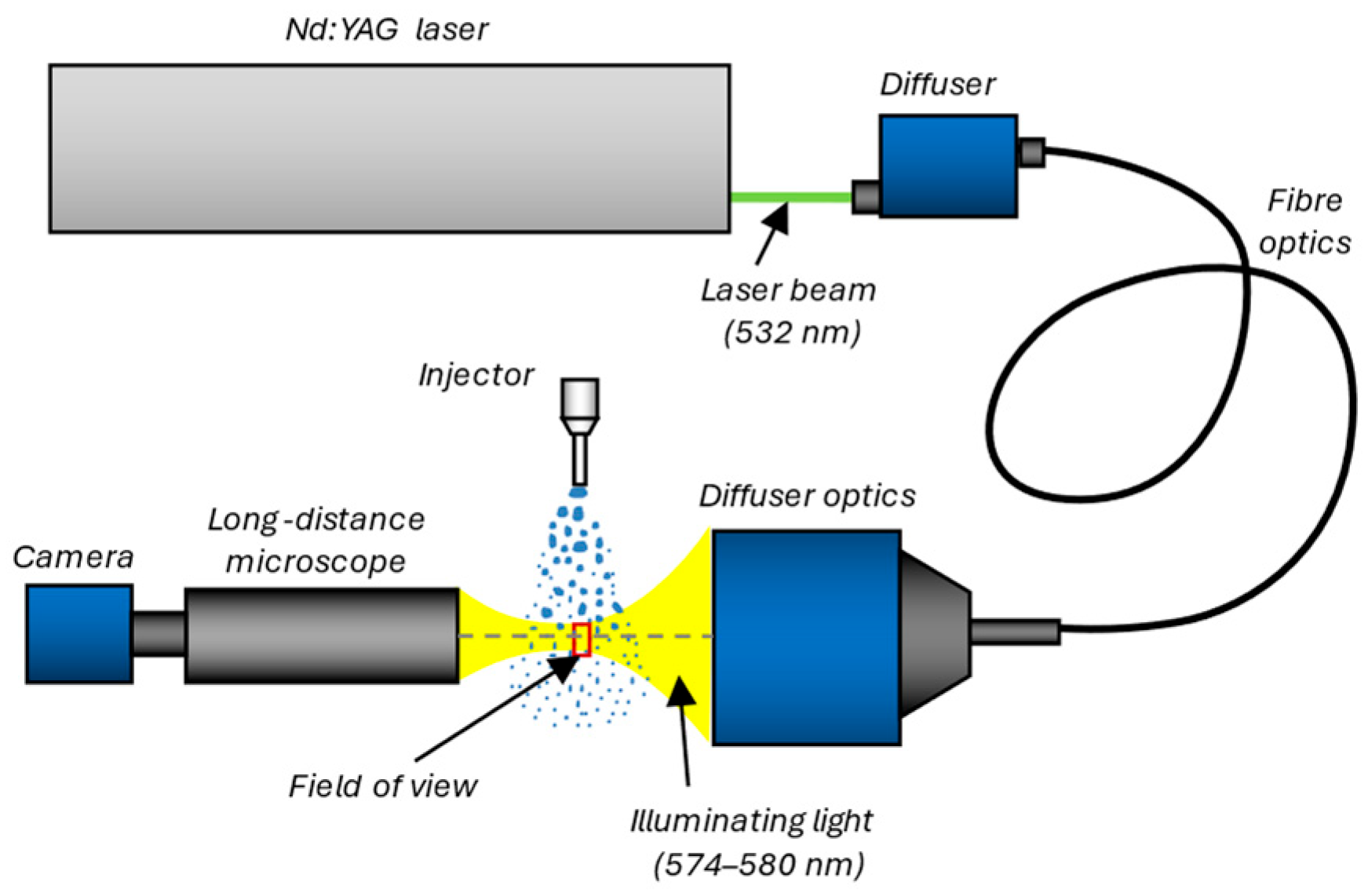
In this research, droplet size in sprays generated by the injection of water–methanol blends was measured using a shadowgraph technique with a long-distance microscope. The visualisation system was based on an Nd:YAG laser (Spectra Physics Quanta-Ray Pro-230, Santa Clara, CA, USA), with a second harmonic generator, which produces a 532 nm wavelength. The laser light was then directed towards a dye plate in a diffuser, where the wavelength was changed to 574–580 nm. Next, the light was emitted into the measurement space by an illuminating optics. The light passing through the measurement space was then captured by an sCMOS camera (LaVision GmbH, Gottingen, Germany) equipped with a long-distance microscope. Image acquisition, light emission from the Nd:YAG laser, and the injection were synchronised. The injector was positioned in the focal plane between the illuminating optics and the long-distance microscope, which was mounted on the sCMOS camera. The schematic diagram of the droplet measurement set-up is presented in
Figure 1.
The operation of the laser system, measurements, and post-processing were performed using Davis v8.4 software, which was provided with the laser system by LaVision (Gottingen, Germany). Before the measurements, the measurement system was calibrated to account for the depth-of-field (DoF) effects. This procedure was based on the observation and recognition of model droplets (with diameters ranging from 20 to 400 µm) printed on an opaque plate. During the calibration, the plate was moved from −10 to 10 mm from the focal point (along the observation direction. Based on the capability to recognise droplets of different sizes located outside the focal point, the statistical weights were assigned. The spatial resolution of the imaging system was 4.4 μm/pix. The accuracy of the measurements should be associated with that resolution. To minimise the impact on the conclusions, the reference measurements for the subcooled case were taken during the same experimental campaign using the same experimental set-up.
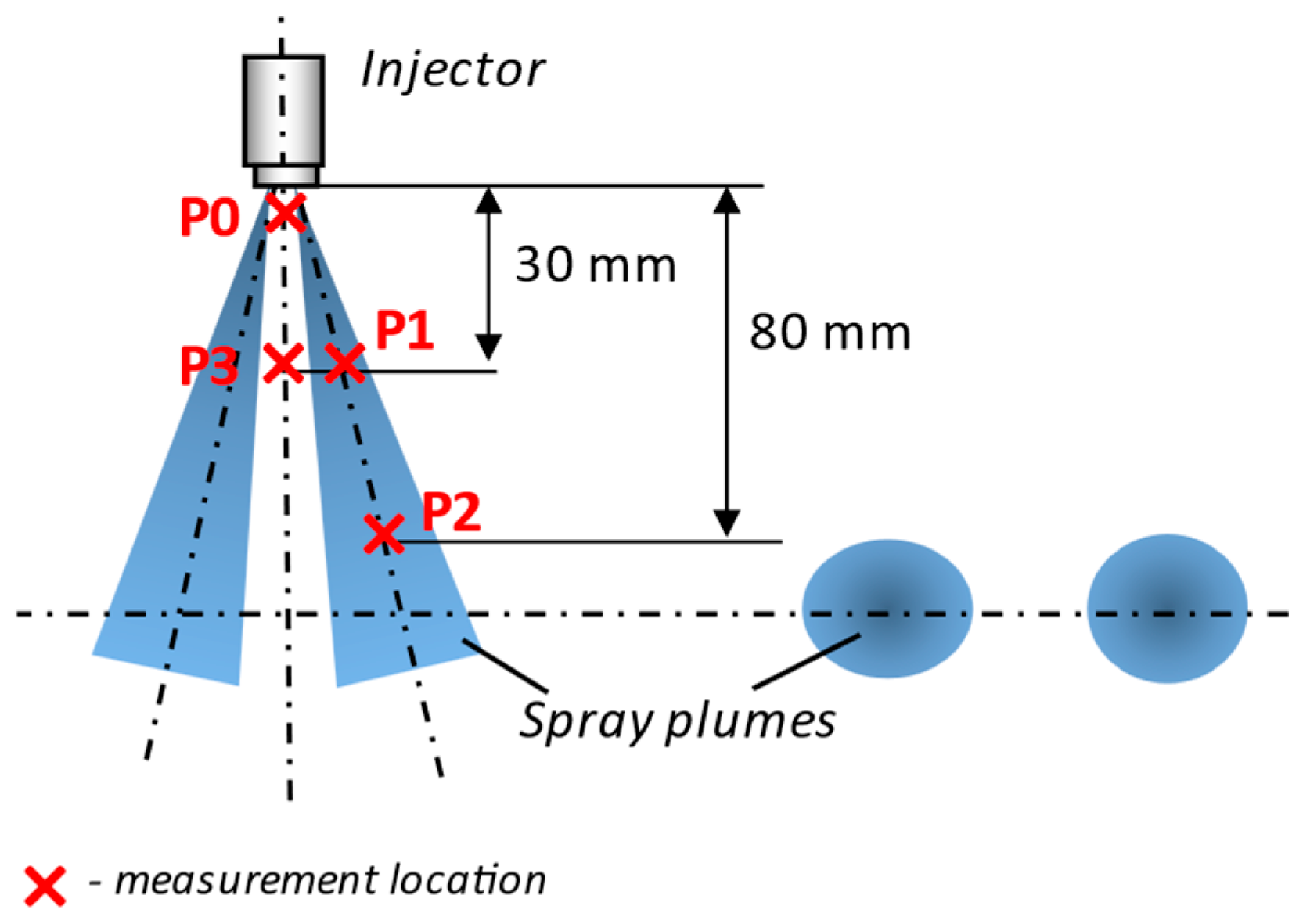
The measurements were performed at four different locations, which were the same as those in the previous study conducted for water and urea-water solution [
23]. P0 was placed just below the injector and allowed to assess the number of droplets that detach from the jet in the near-nozzle area. P1 was placed at a distance of 30 mm below the injector in the axis of a single nozzle. P2 was placed 80 mm below the injector in the axis of a single nozzle (the same nozzle as P1). The last measurement point was P3, which was placed 30 mm below the injector in the axis of the injector. That point was included to assess the capability of the flash-boiling to alter the spatial droplet distribution. A schematic diagram presenting the distribution of the measurement locations in the spray cloud is shown in
Figure 2.
The current test utilised a two-hole commercial injector (Bosch 0444025030) with round nozzles of diameter ~137.5 µm [
24]. The injector was equipped with a cooling jacket, which was used to maintain the injector at a constant temperature. The temperature of the coolant was controlled using a cooling bath thermostat with a circulator (Huber KISS K6). It should be noted that the temperature of the heating/cooling liquid,
, was higher than the desired temperature of the injected liquid,
, due to heat losses. The relation between these two temperatures was determined previously [
23], and it is shown in Equation (1):
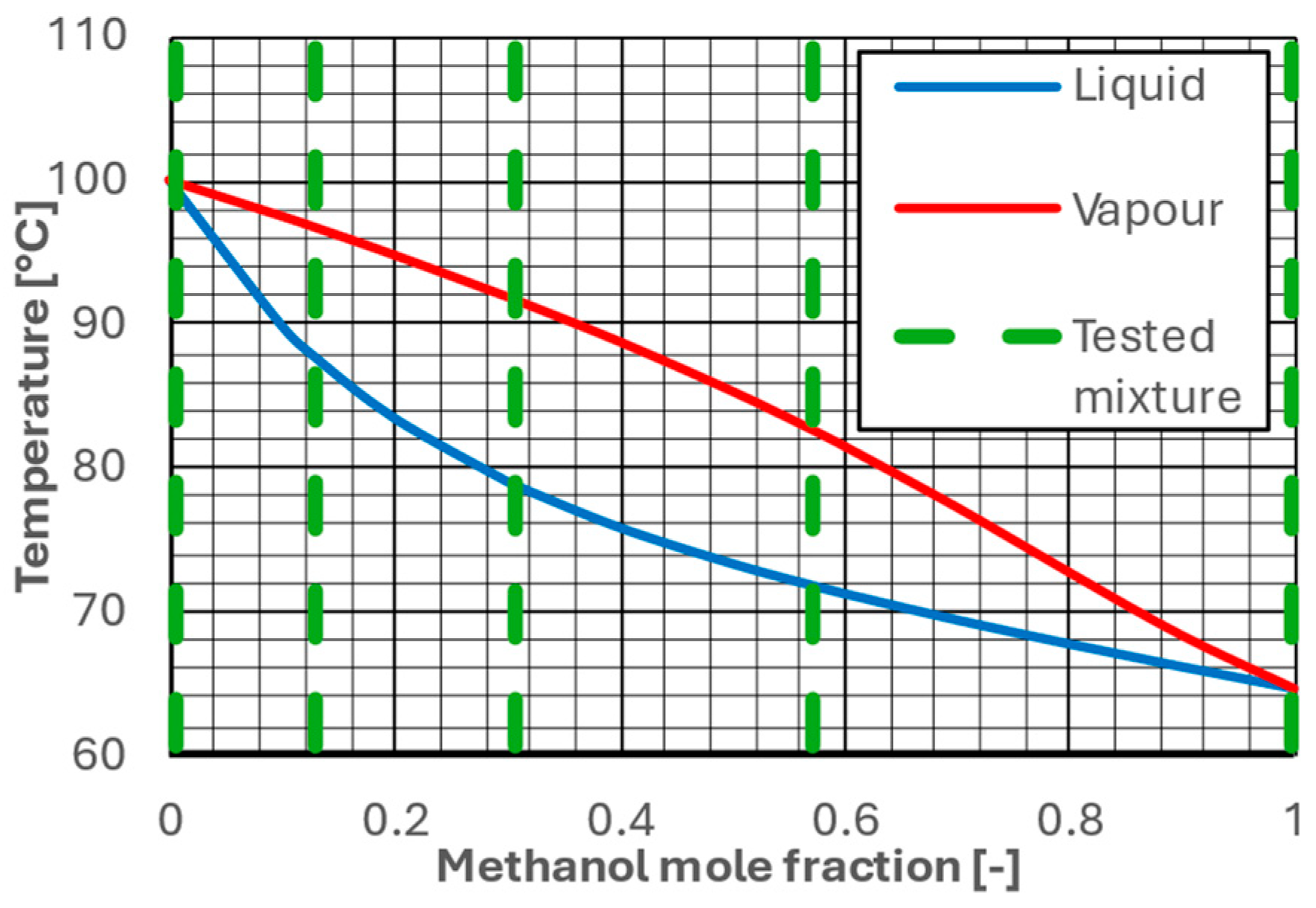
Blends of water and methanol were created at volumes of 25%, 50%, and 75%, corresponding to mole fractions of 12.9%, 30.8%, and 57.2% methanol in water. Measurements were taken for the three blends, as well as for pure water and pure methanol for reference purposes. To determine the dew and bubble temperatures, REFPROP v9.0 [
25] was utilised. The dew (red) and bubble (blue) temperature curves for a water–methanol mixture at 1 atm, corresponding to the ambient conditions (to which injection occurs), are presented in
Figure 3. Based on this data, a bubble temperature was defined for each of the blends. The mixtures considered in the study are indicated in the graph by green dashed lines.
The injection pressure was 0.5 MPa (absolute). To prevent overheating of the liquid, which could lead to boiling inside the injector, the maximum temperature of the cooling jacket had to be determined. Therefore, using the same software [
25], bubble temperatures for water–methanol blends (and pure substances) were also calculated for 0.5 MPa (absolute), which was the pressure inside the injector. The calculated values, which served as limiting temperatures, were as follows: 112.4, 121.8, 130.8, 141.1, and 152.8 °C, respectively, for mixtures with 100%, 75%, 50%, 25%, and 0% methanol volume fractions.
Additionally, a dew temperature was defined for each mixture at environmental pressure. A list of measurement points was defined based on the following requirements:
For each mixture, a measurement point should be at the bubble temperature;
For each mixture, a measurement point should be at the dew temperature;
One measurement point should be between the bubble and the dew temperature;
For pure substances, one of the measurements should be at the boiling temperature;
A minimum of three measurements should be below the bubble temperature;
For each substance, measurements should be provided at the same temperature;
Each measurement point should be at least 5 °C below the boiling temperature at 0.5 MPa (absolute);
The selected temperature levels should enable the comparison of the results (at least some of them) for all mixtures at similar saturation-to-ambient pressure ratios Rp (Equation (2)).
Based on these requirements, a list of measurement points was defined. The expected flash-boiling intensity for the measurement points was evaluated by the saturation-to-ambient pressure ratio
Rp, defined according to the following equation:
where
is the saturation pressure (or bubble-point pressure for a mixture) at a given liquid temperature
, and
is the ambient pressure.
The desired liquid temperatures and corresponding saturation-to-ambient pressure ratios
Rp are presented in
Table 1.
For pure methanol (99.9%), the boiling point was 64.5 °C. For pure water, the boiling point was equal to 100 °C. For a mixture, there exist dew and bubble temperatures. For mixtures, i.e., 75/25, 50/50, and 25/75 methanol-to-water volume ratios, the bubble temperatures were 71.7, 78.7, and 87.7 °C, respectively. These values were then used to calculate the Rp parameter, as they refer to the ambience in which the injection occurred.
The measurement points with
Rp < 1 can be considered as subcooled injection. The points with
Rp > 3.33 shall be considered as flare-flash-boiling cases. Everything between should be regarded as transitional flash-boiling cases. The
Rp value of 3.33 is important in analyses related to the flash-boiling effect on sprays, as usually, around and above this value, flash-boiling is considered to be fully developed, which means that no further significant droplet size reduction is expected [
26]. Below that value in the transitional regime, an increase in superheat has a strong influence on droplet size reduction.
3. Results and Discussion
The results obtained for different substances were analysed and compared for similar
Rp values. As indicated by Lamanna et al. [
27], the
Rp parameter can be directly related to the difference in chemical potential, which is the driving factor leading to the phase change. The phase change manifested by bubbles’ nucleation and growth, in turn, is responsible for flash-boiling-related jet breakup. According to Sher et al. [
2], the bubble size at the nozzle exit is one of the most critical parameters that affect the jet disintegration process.
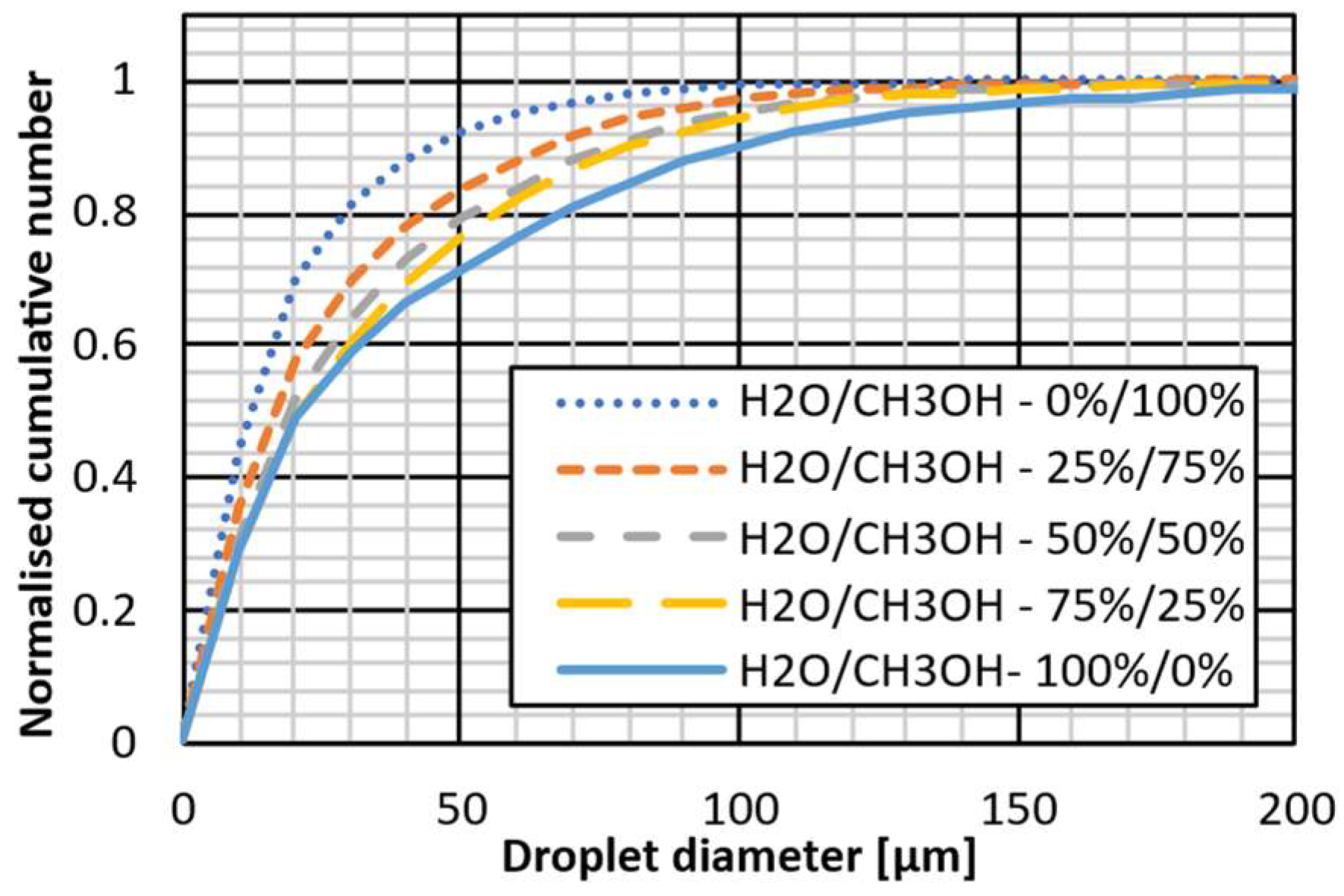
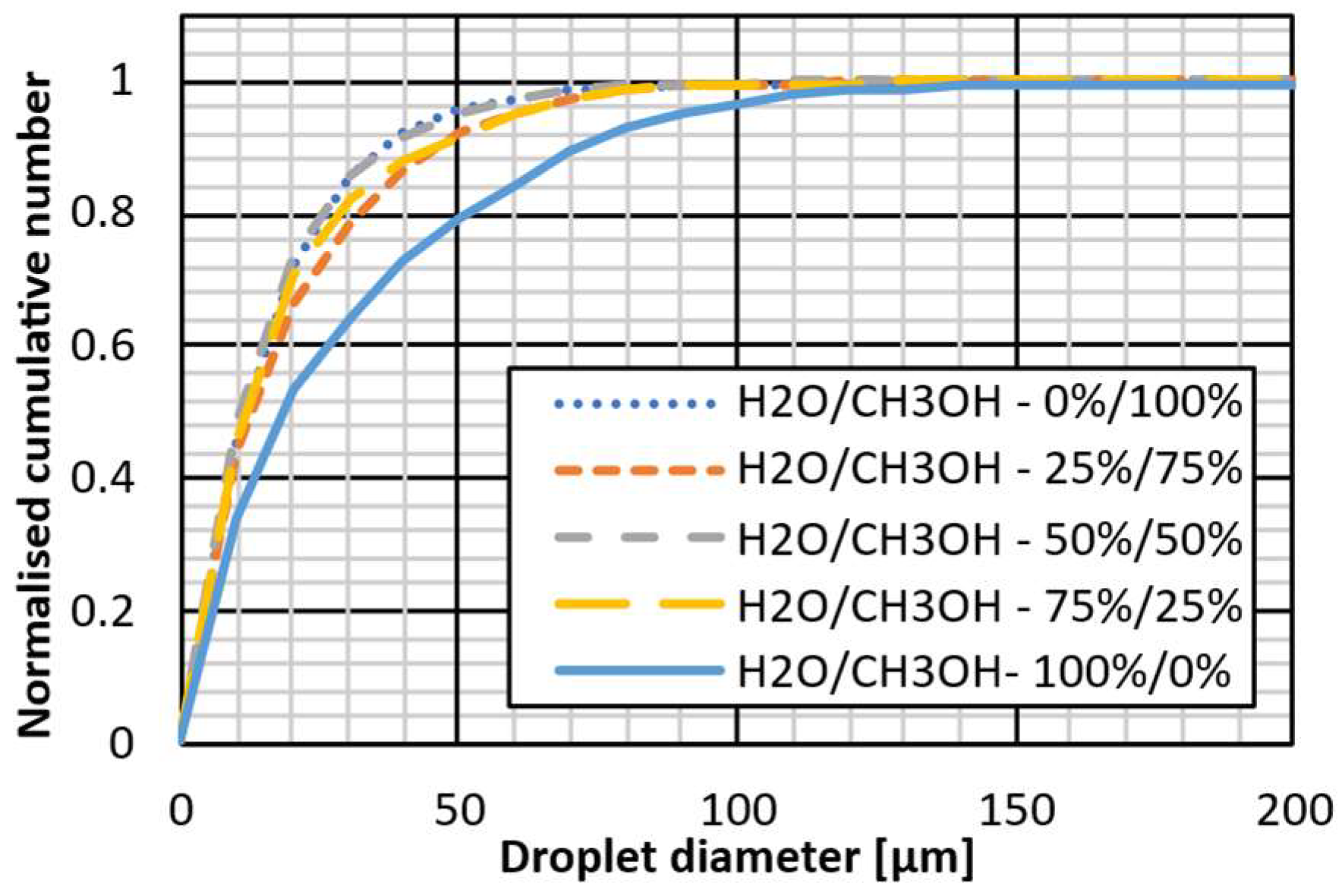
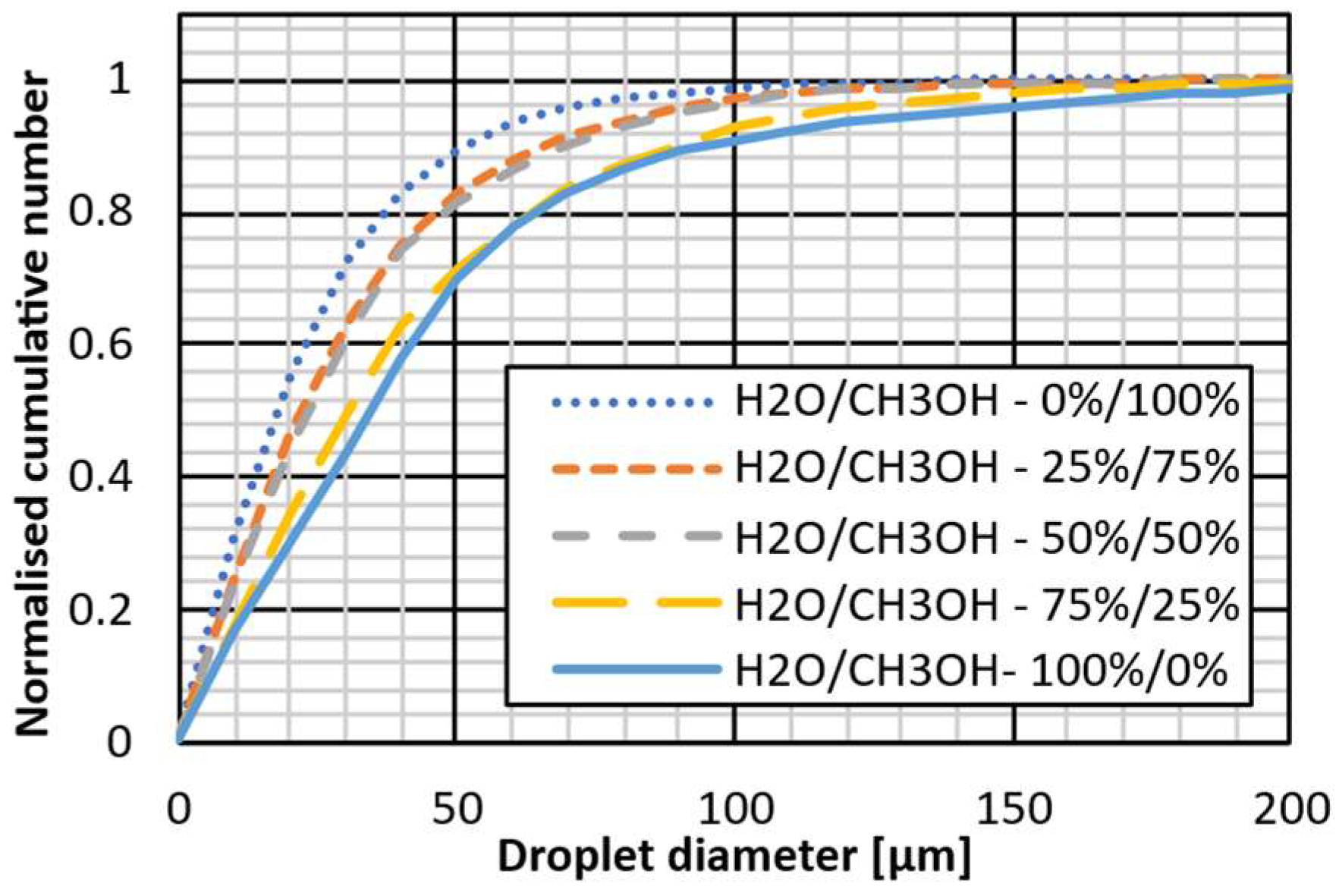
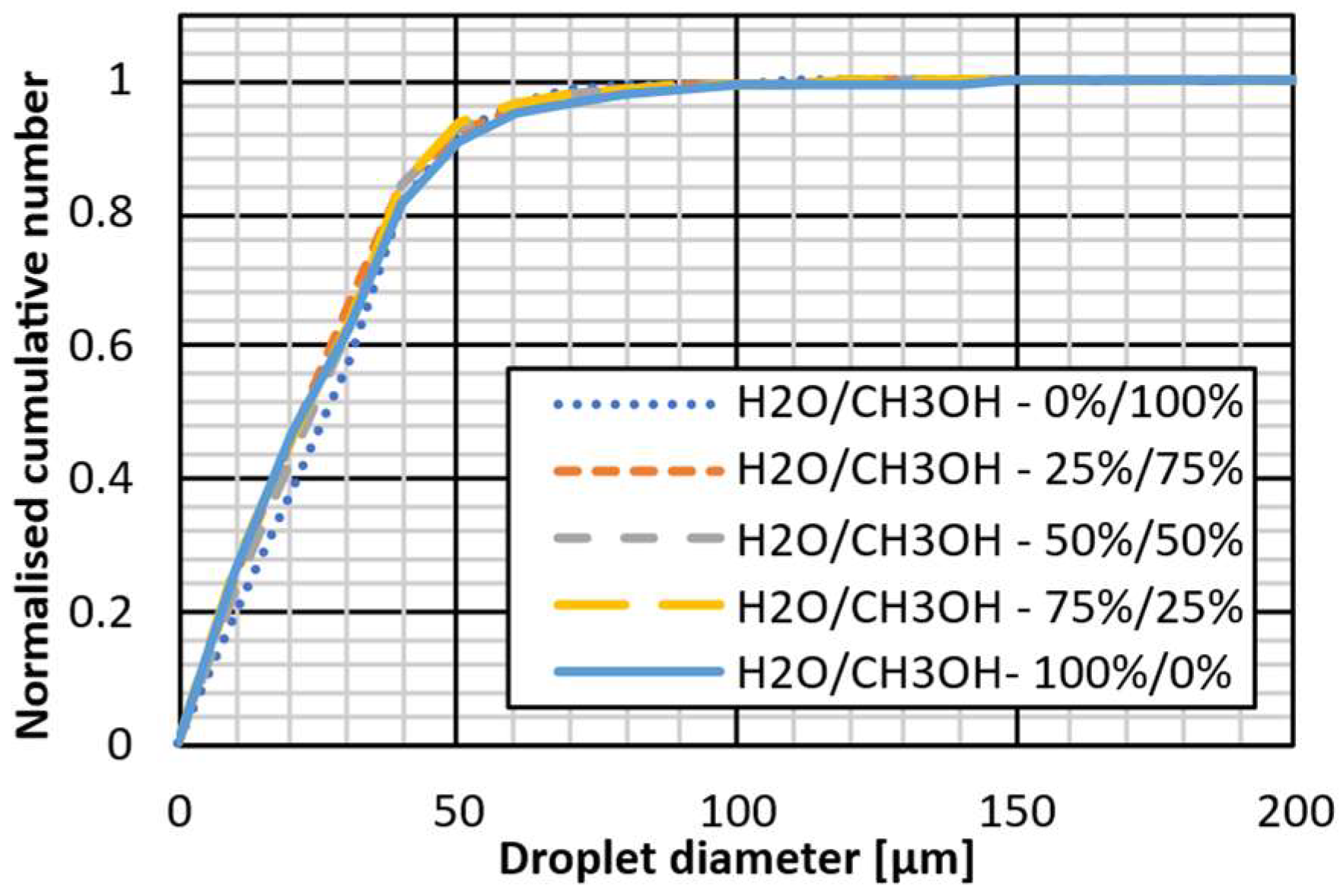
Figure 4 presents the normalised number-based cumulative droplet size distribution for the
Rp values around 0.5 (±0.05) in the P1 location. The results show that the line sequences correspond to the methanol content in the blend. Injections with higher methanol content increase the fraction of smaller droplets. It may be additionally observed that curves for mixtures are located between the lines for pure substances in the order corresponding to mixture composition.
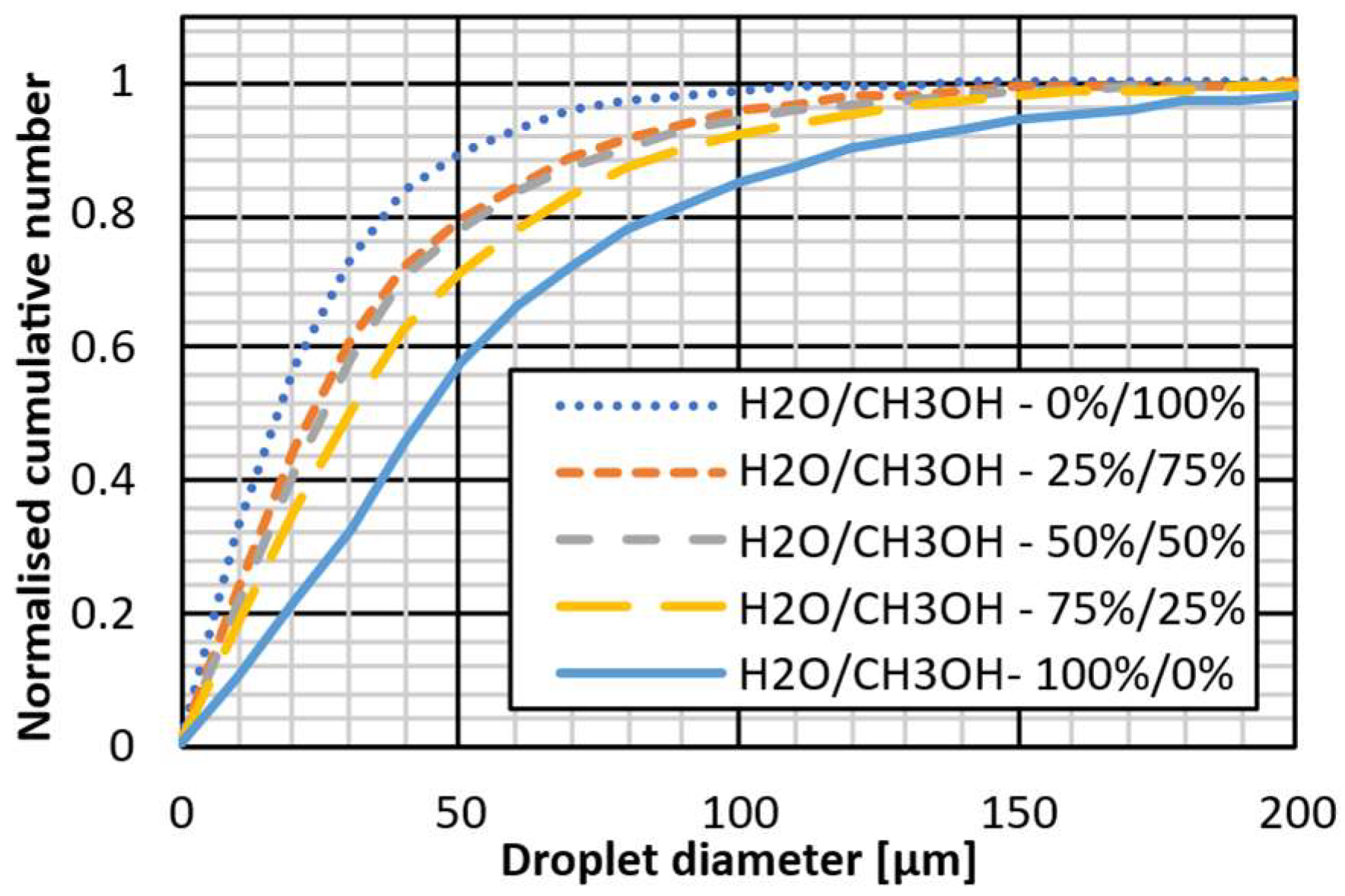
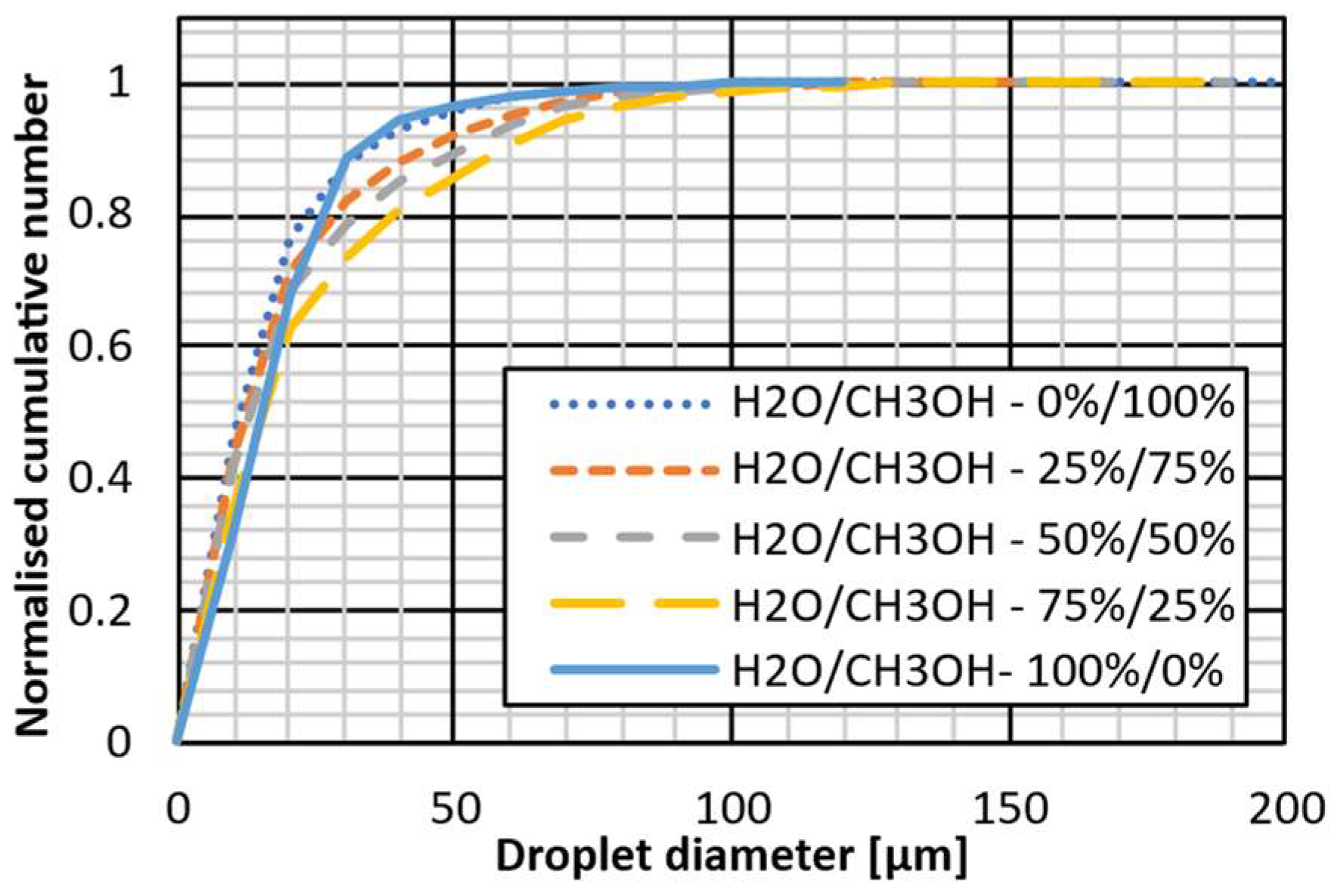
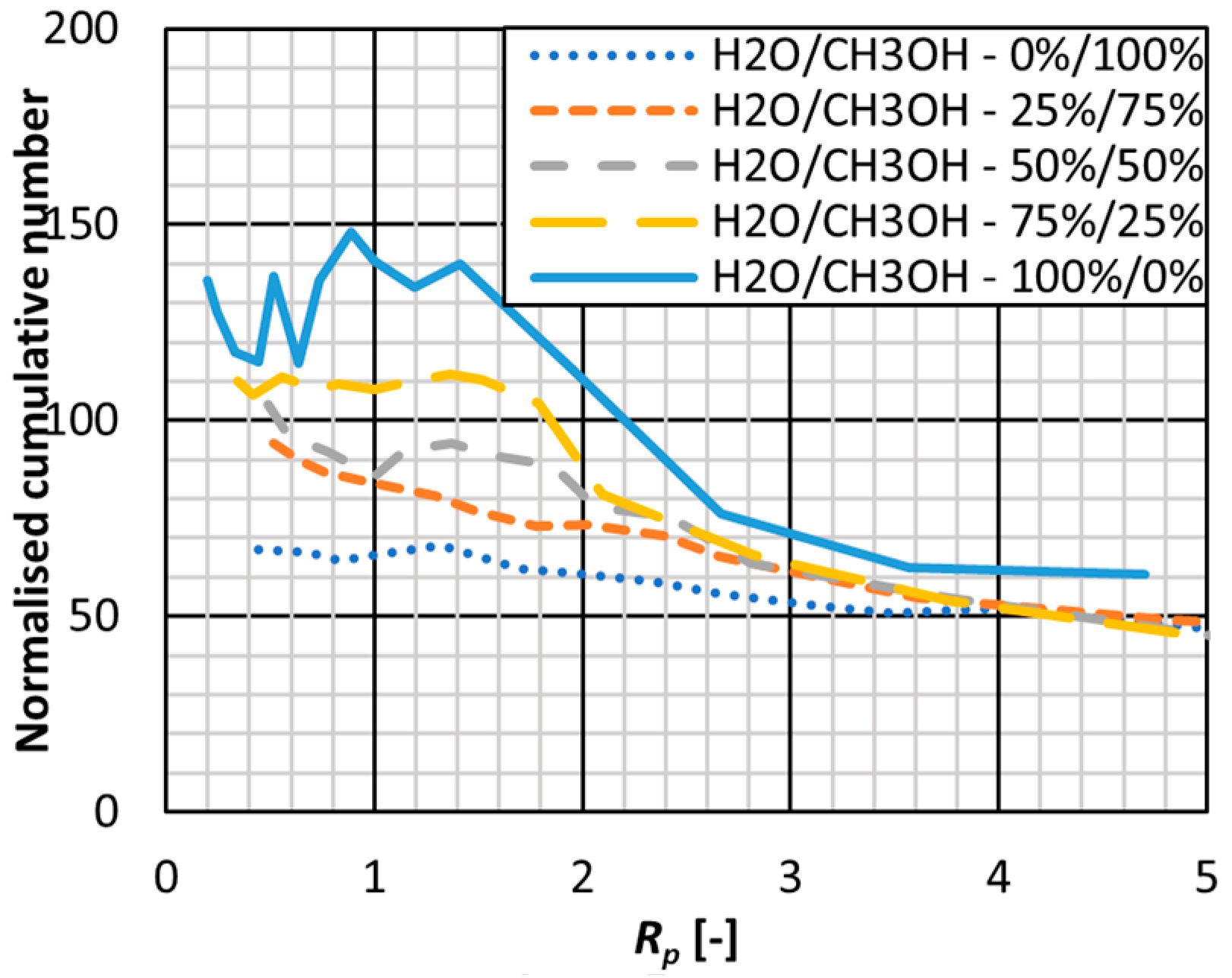
The results obtained in P0 (
Figure 5) should be interpreted with caution, as it is the region where the jet disintegrates into ligaments and droplets. Nevertheless, they may be used to conclude on the atomisation process. The curves presented in that figure show that pure water behaves similarly to that in P1, exhibiting a low fraction of small droplets. It is due to poor atomisation of the water jet. At this location, a long, unbroken liquid column was formed, with only a limited number of droplets detaching from its surface.
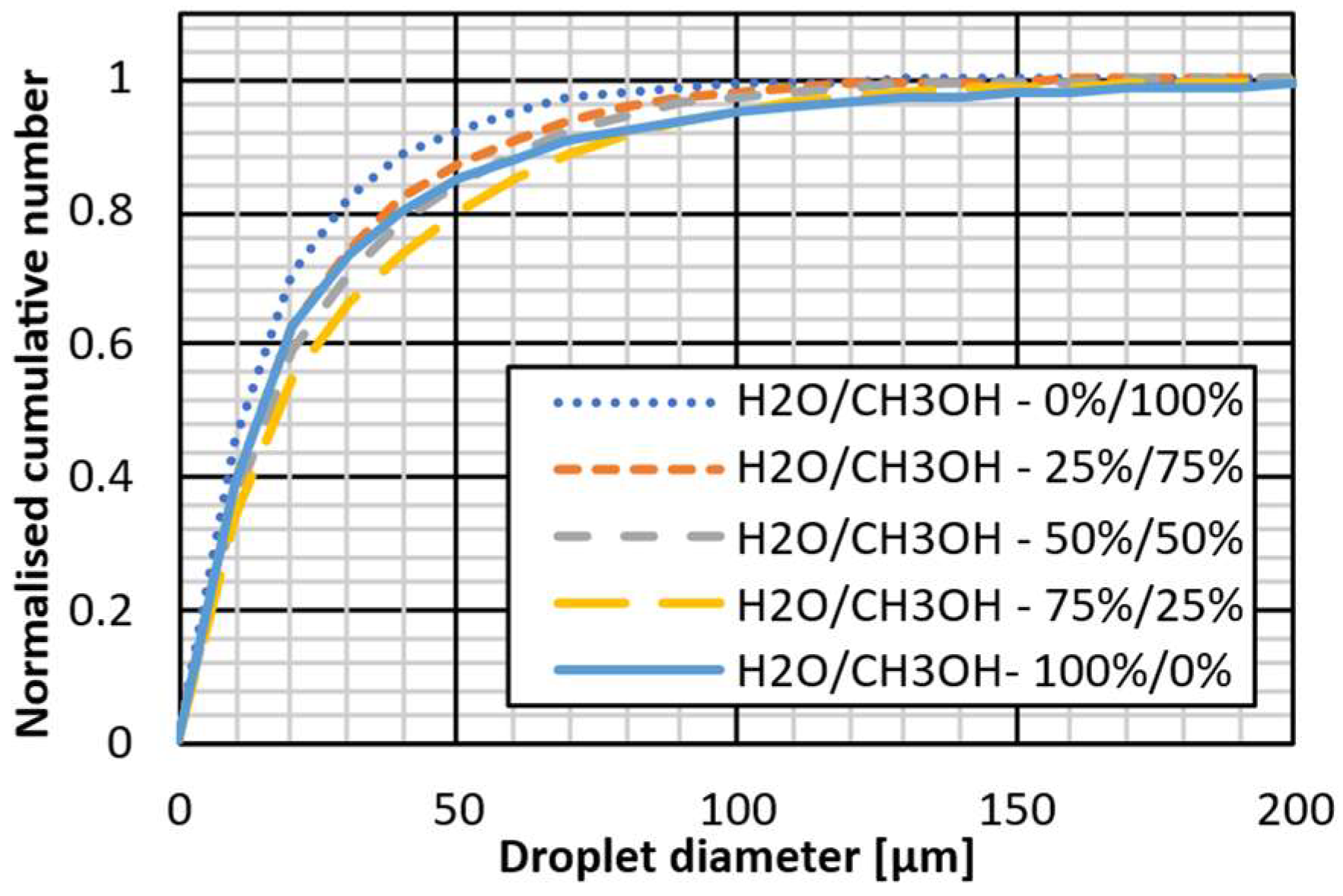
For P2 (
Figure 6), the effect of methanol content was similar to that in P1. The only difference is that two of the curves (25/75 and 50/50, water-to-methanol) were almost identical.
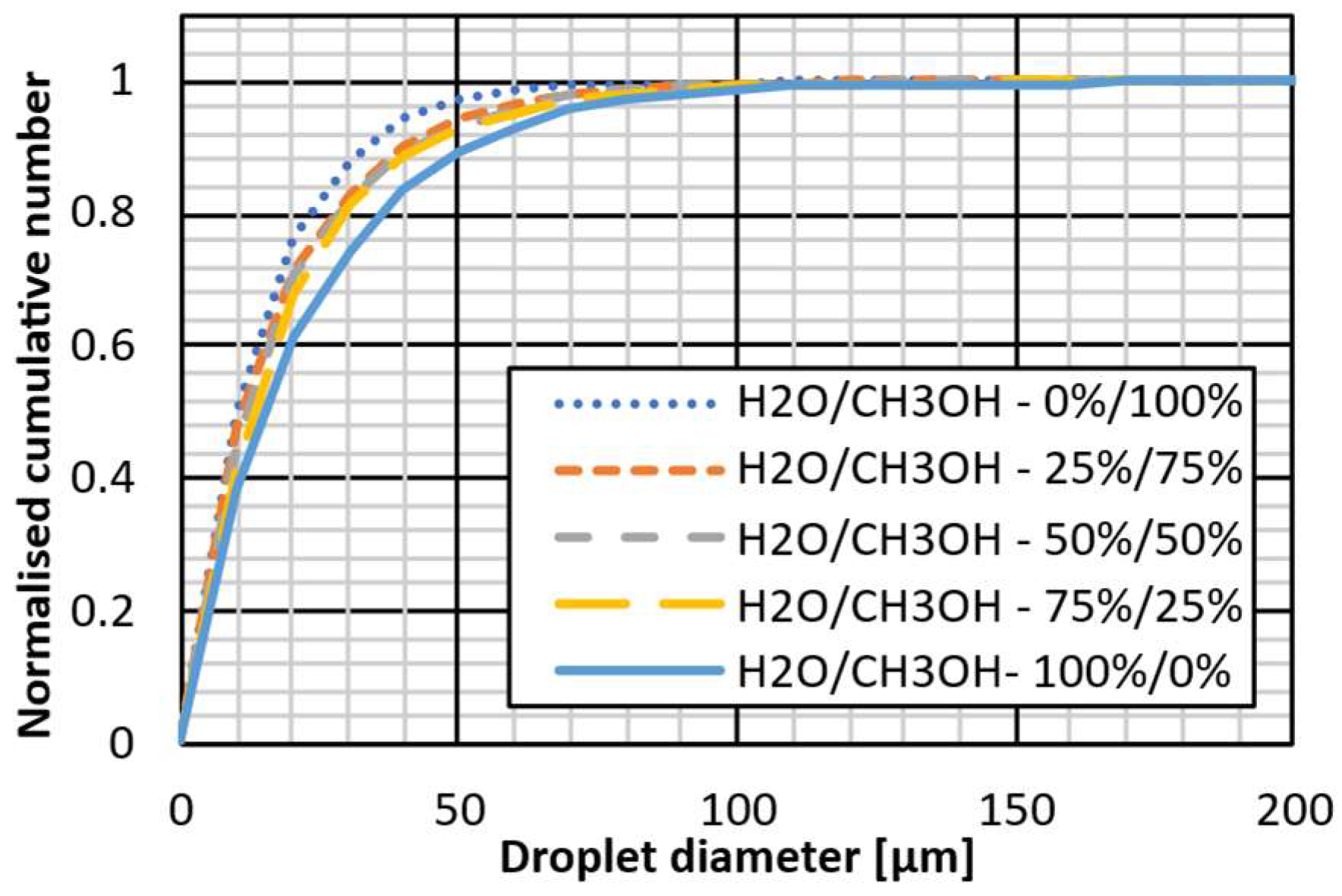
Figure 7 shows that as the
Rp parameter increases, the difference between the mixtures becomes reduced. Additionally, all curves have steeper slopes compared to the subcooled conditions.
For P0 (
Figure 8), the curves become more similar compared to the subcooled case, shown in
Figure 5, where the curve obtained for water was substantially different from the other mixtures. This is presumably the effect of the increased temperature, which leads to the faster disintegration of the liquid column.
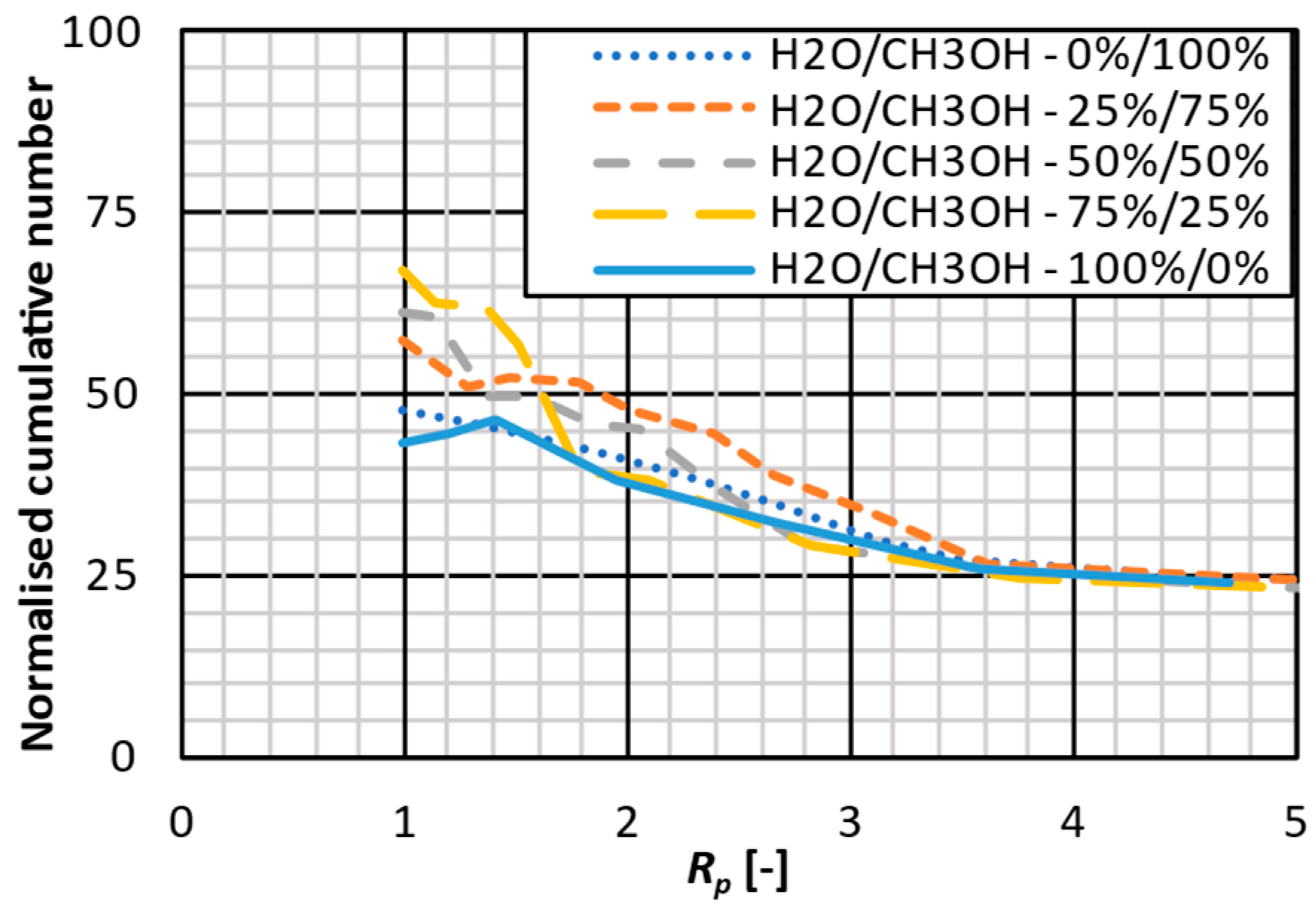
Similarly to
Rp ≈ 0.5, droplets in P2 at
Rp ≈ 1 (
Figure 9) are larger than those in P1. Again, the biggest droplets are created by water injection.
Figure 10 shows a normalised number-based cumulative droplet size distribution for
Rp ≈ 1 measured in P3. The curves start to intersect, which may result from different boiling characteristics influencing the detachment of small droplets, which drift away from the nozzle axis, but also due to the relatively low number of droplets detected at this point (for pure water, it was only ~2600, while in P1 it was ~10,700).
Figure 11 shows the results for
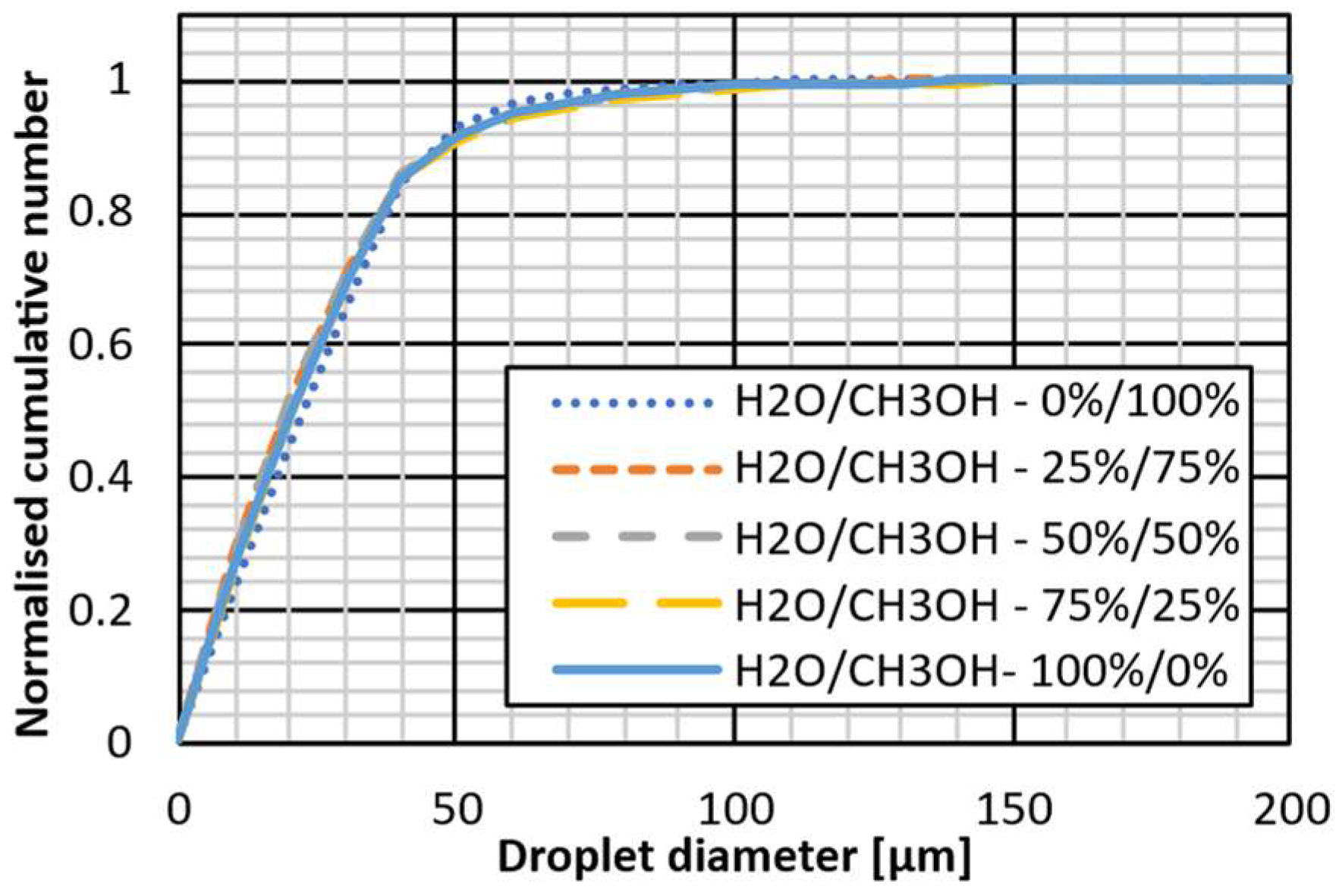
Rp ≈ 3 at P1, where the fully developed flash boiling is expected. The lines of the normalised cumulated particle number have similar shapes, indicating that the primary influence on the jet breakup intensity is the temperature corresponding to saturation pressure, and that the methanol content in the blend has a marginal effect.
Upon closer examination of the Sauter mean diameters (SMD) presented in
Table 2, it becomes apparent that under this condition, some differences, depending on the composition of the injected fluid, exist.
In
Figure 12, again, a slight difference in the normalised cumulative particle number can be observed. With increasing methanol content in the mixture, droplets become statistically smaller.
Similarly to other cases measured in P2, for
Rp ≈ 3 (
Figure 13), the observed droplets are larger than in P1. Notably, at this location, farther from the injection point along the streamline, the difference in droplet size appears less dependent on the mixture composition.
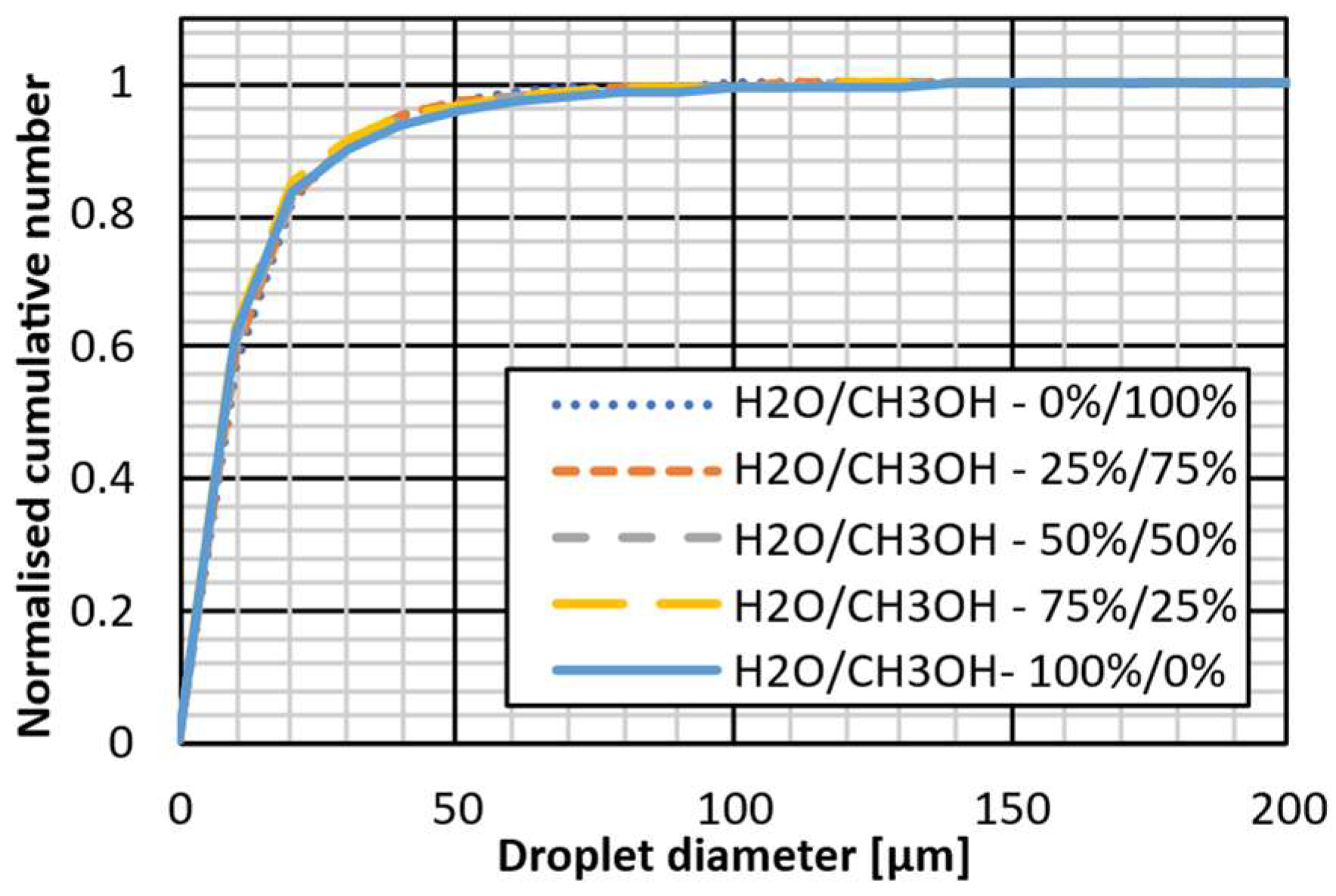
In
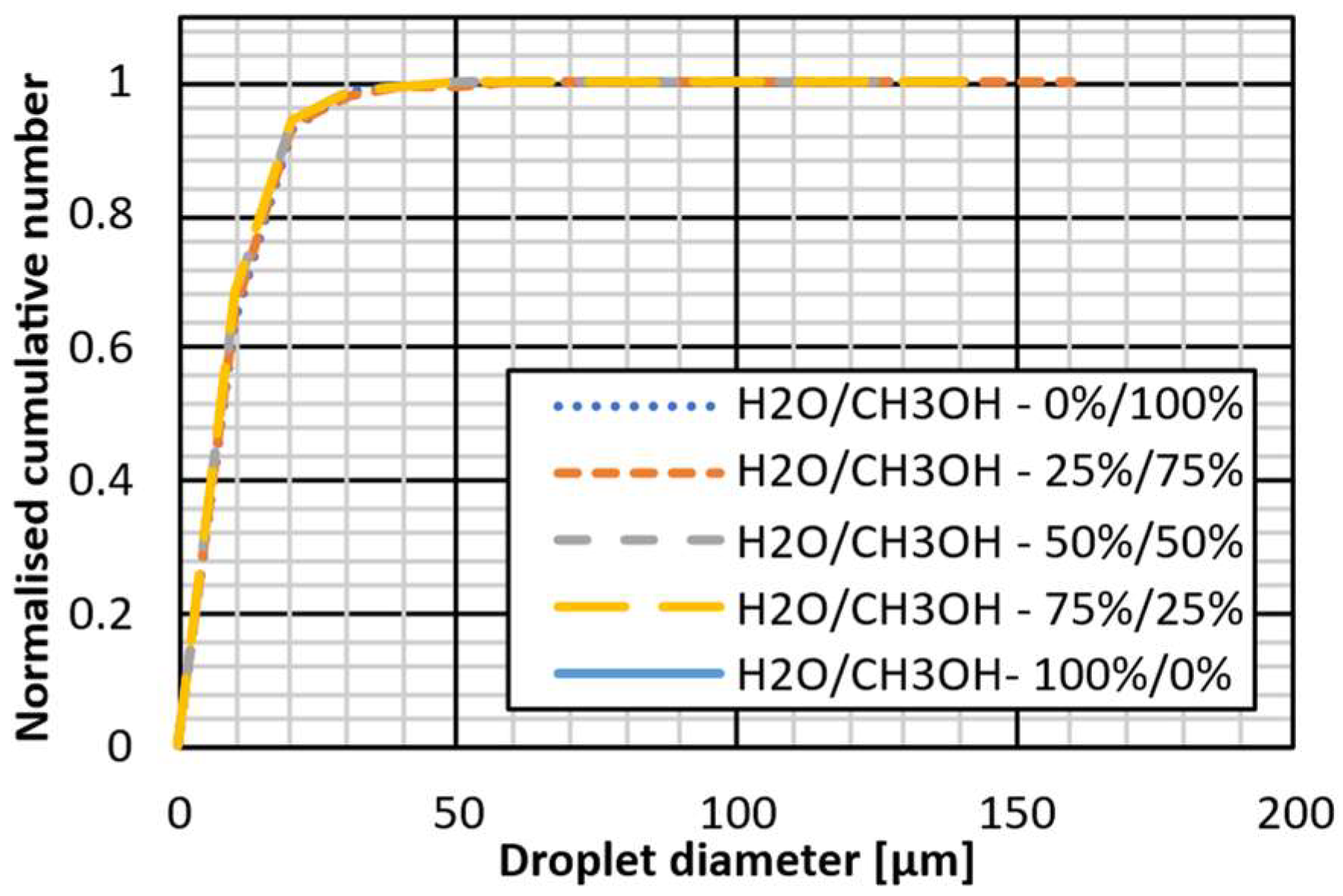
Figure 14, which represents injection at
Rp ≈ 3, which can be interpreted as a fully developed flash-boiling injection, and it was measured in the symmetry axis of the injector, 30 mm below the injector tip, one can observe that more than 90% of the droplets have a diameter lower than 20 µm. Next, most of the remaining 10% have a diameter between 20 and 70 µm.
Figure 15 illustrates that further increasing the injection temperature results in a decrease in droplet size. However, the composition of the blend still has a marginal effect on droplet size distribution measured in P1.
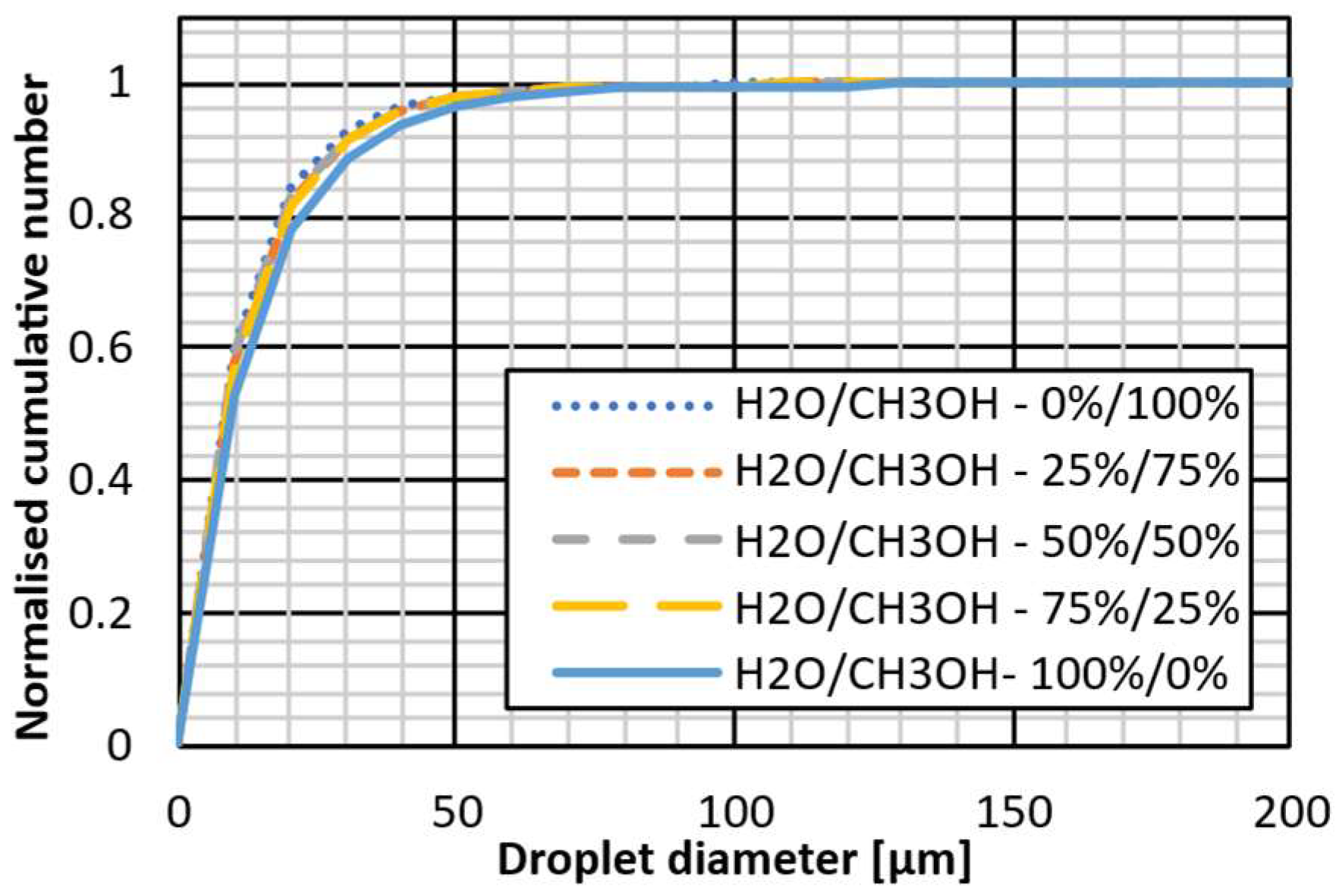
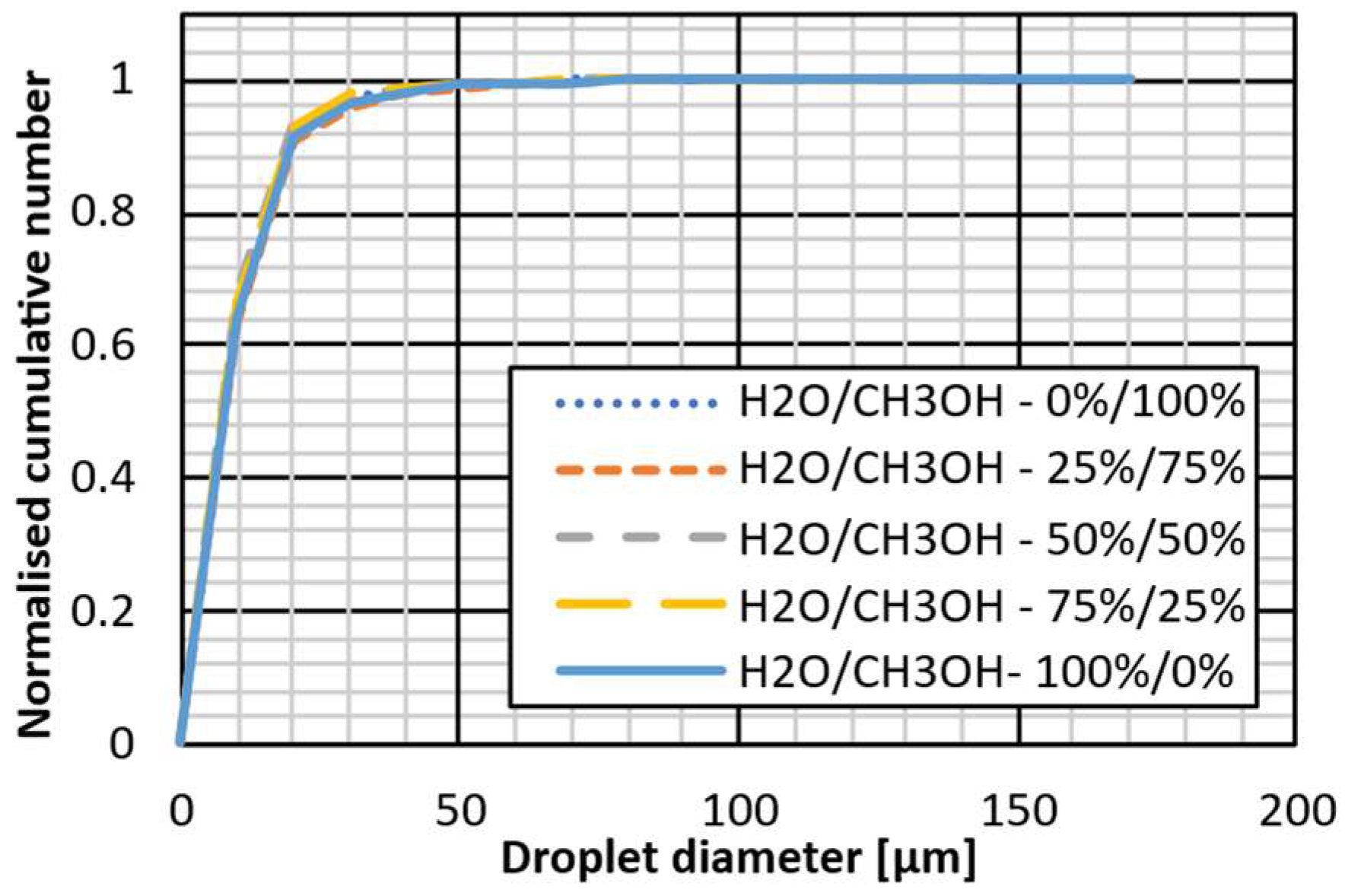
In
Figure 16, the characteristics obtained near the nozzle (P0) begin to overlap almost entirely, and the distributions exhibit a very weak dependence on mixture composition. This observation suggests that at this superheat (
Rp ≈ 4.15), flash boiling has a dominant effect on the jet breakup.
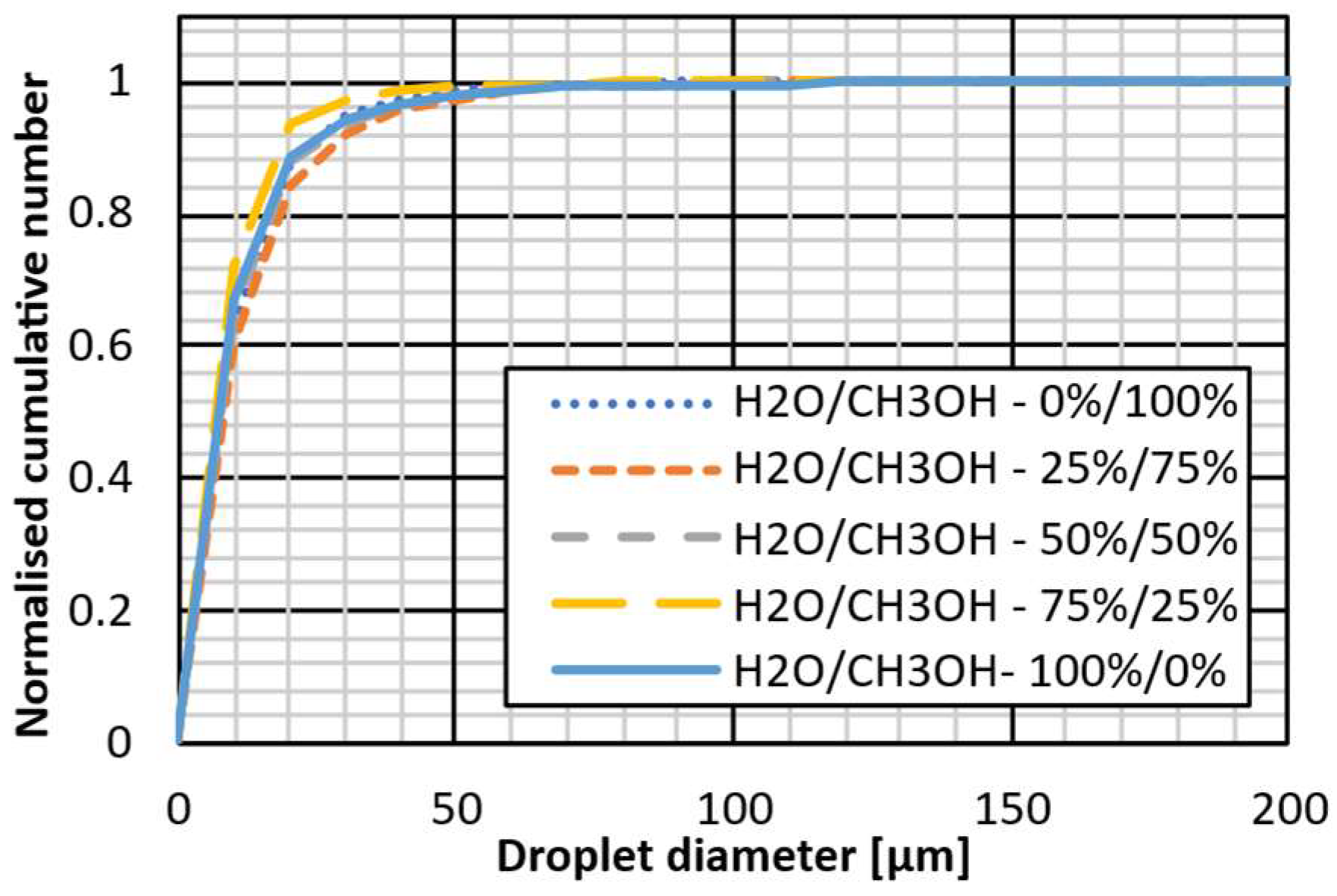
Similar conclusions can be drawn for the measurement point P2 (
Figure 17). Similarly to other measurements taken at this location, the droplets are larger than those detected at points P1 and P3. This observation suggests that the largest droplets in the spray (even though they are much smaller than in subcooled cases) tend to retain their original momentum and travel along the nozzle axis, even in the flare-flash-boiling regime.
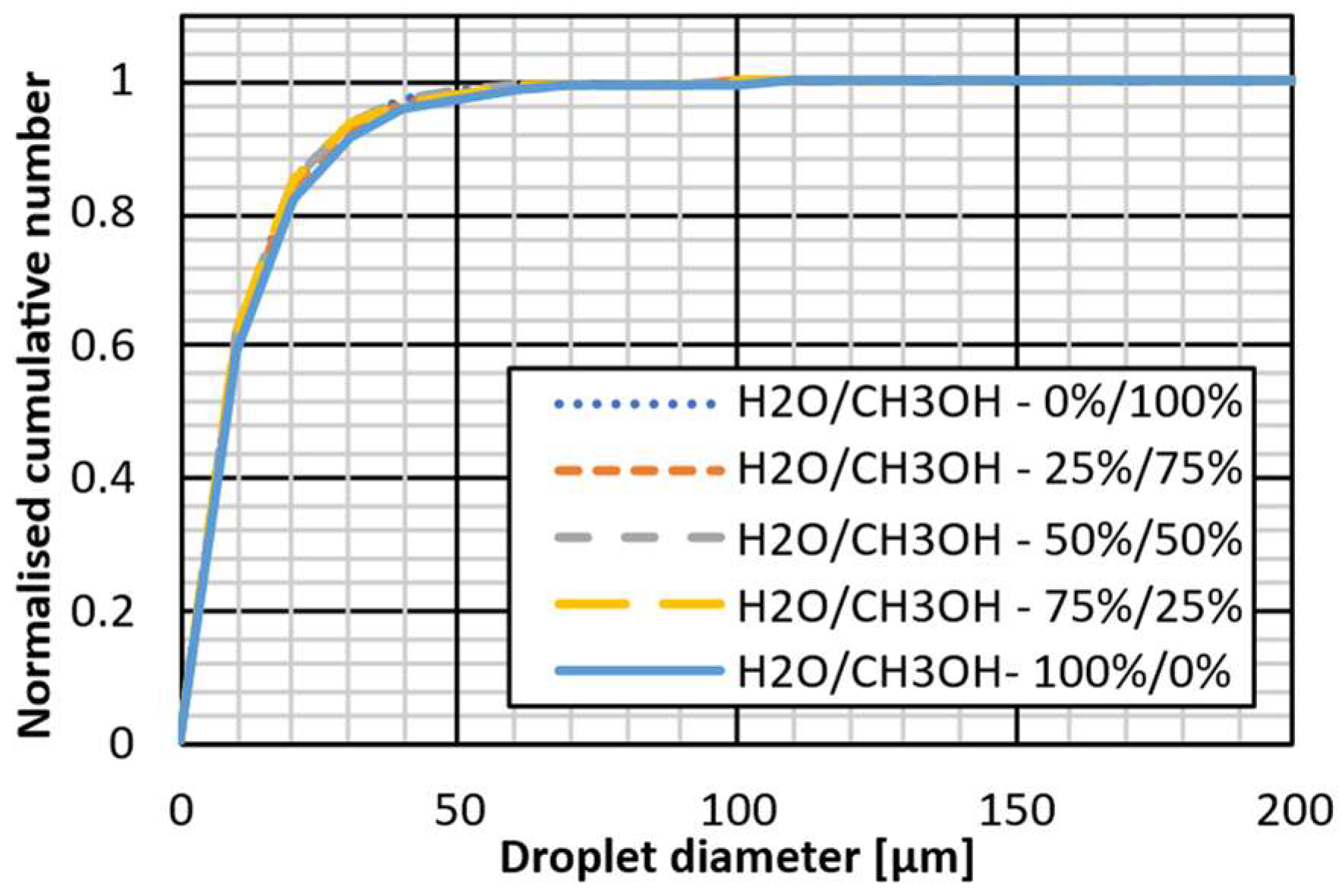
For
Rp ≈ 4.15, more than 95% of droplets measured at P3 were not larger than 20 μm (
Figure 18). Again, the size of measured droplets does not depend on the composition of the mixture.
Figure 19 shows the Sauter mean diameter as a function of the
Rp parameter. This graph illustrates that, for the injection of non-superheated liquid, the droplet diameter is highly dependent on the composition and physical parameters of the fluid. With increasing overheating, the droplet size is more dependent on the
Rp parameter than on the composition of the injected liquid.
Critical characteristics that help understand the observed dominant effects of flash-boiling over the mixture composition under high
Rp (despite very different characteristics under subcooled conditions) are shown in
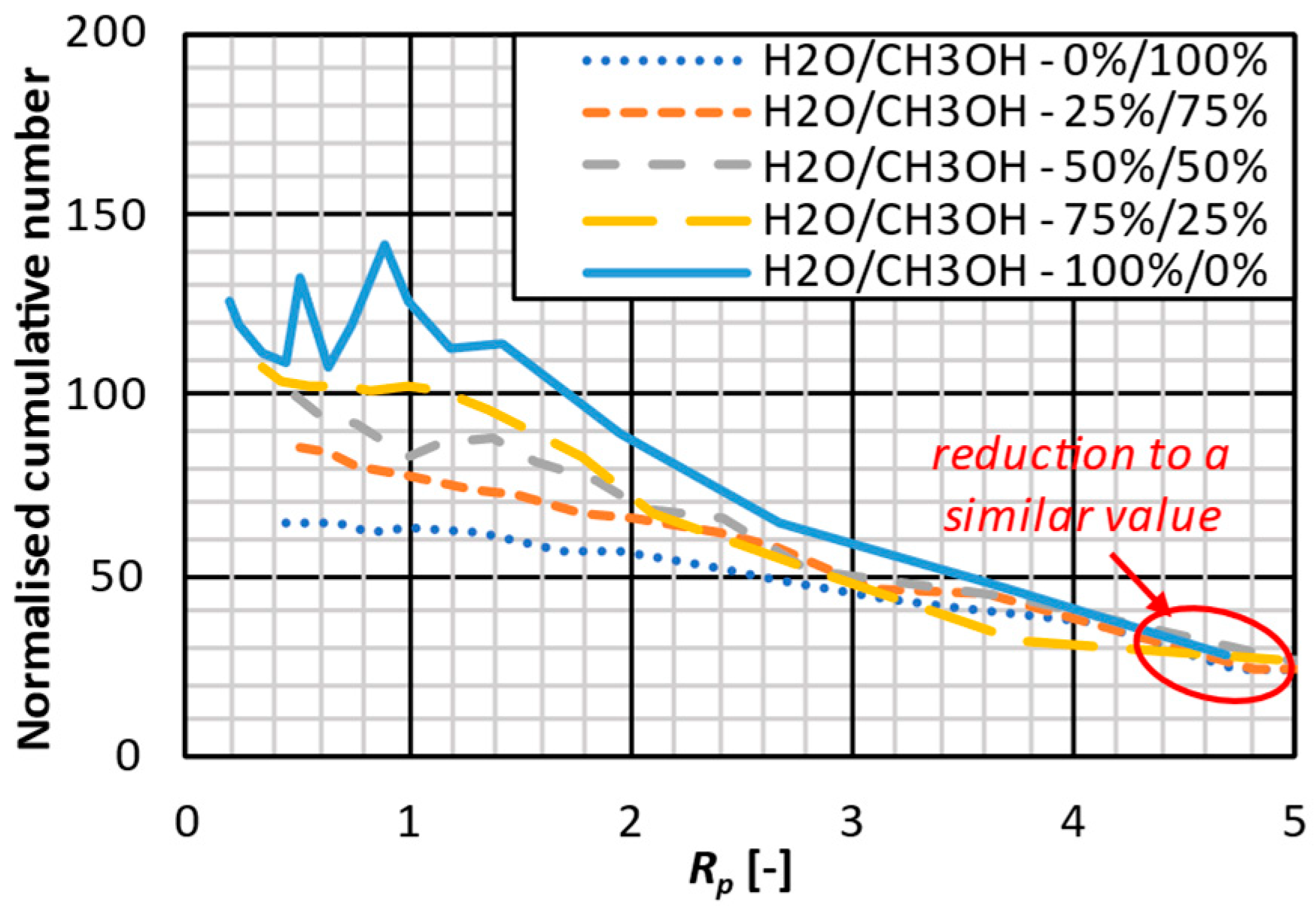
Figure 20. It refers to the near-nozzle area, in which, under subcooled conditions, a long unbroken liquid column and ligaments are present. In the graph, similar behaviour is observed to that presented in
Figure 19, i.e., at high superheat, the SMD values become similar regardless of the mixture. It proves that flash-boiling dominates the jet breakup, which is crucial for the distributions determined at farther locations. Due to the lack of secondary breakup and quiescent conditions, those distributions directly depend on what is happening at the nozzle exit.
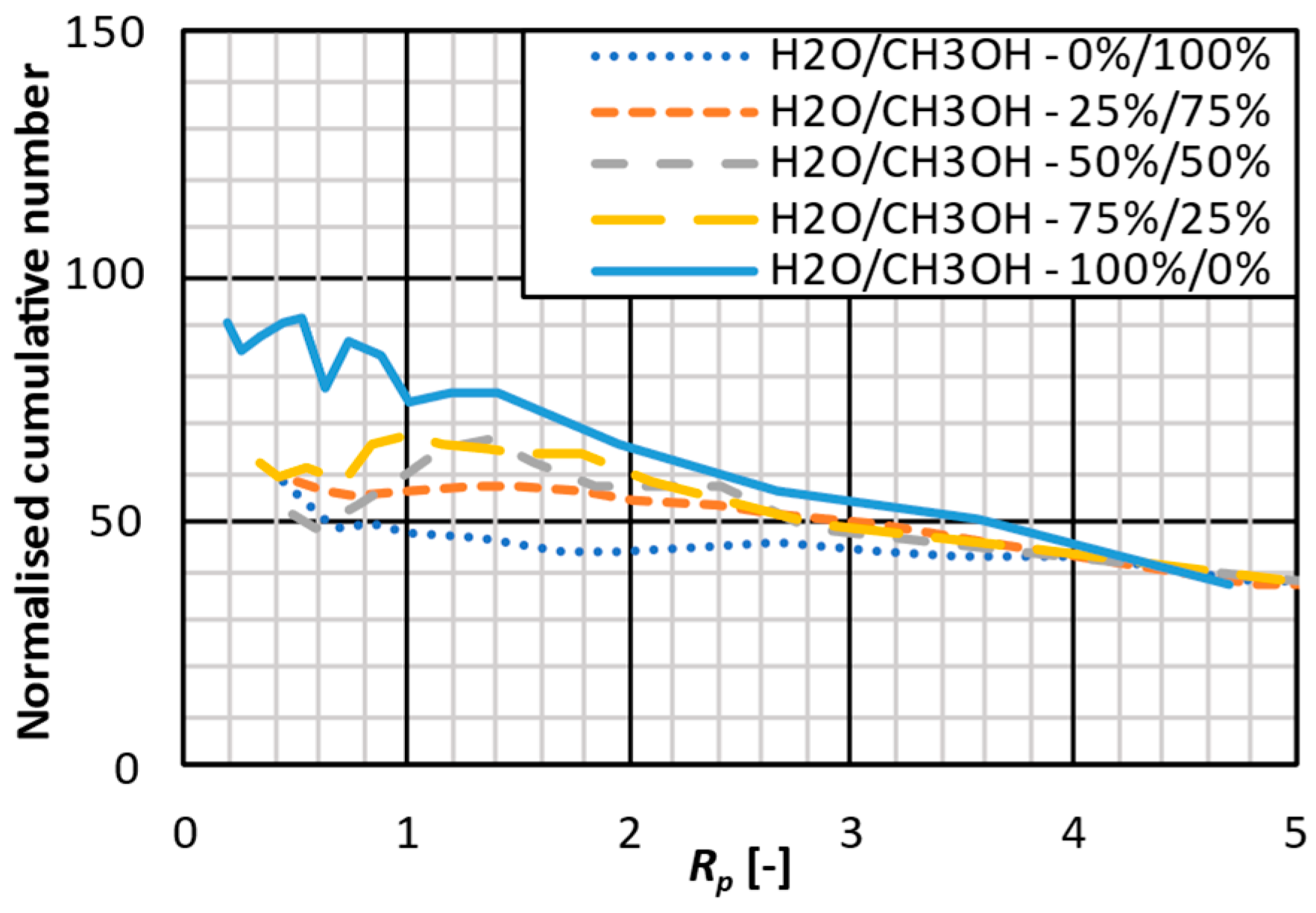
A similar dependence was observed at the measurement point P2 for 1 <
Rp < ~1.8 (see
Figure 21). In this area (for
Rp between ~1.8 and ~3.6), a rapid decrease in SMD was observed. Finally, the characteristics of SMD start to decrease slowly for
Rp > ~3.6.
At measurement point P3, a relatively smooth SMD reduction with
Rp was observed (see
Figure 22). The characteristics can be divided into two areas. The first one (
Rp < ~3.6) has a stable, quite fast decrease in the SMD. The second one exhibits a slight decrease in SMD with further superheating of the injected liquid.
From a statistical point of view, it is also important to report the number of observed droplets in each point.
Table 3 presents the number of droplets detected during 100 injections in the measurement points. It should be noted that for
Rp ≈ 0.5 and
Rp ≈ 1, the largest droplet was observed in P1, next in P2, and then in P0. For
Rp ≈ 3, the highest number of droplets was observed in P0, i.e., close to the nozzle. The number of droplets observed in P3 and P2 was of a similar order. These two observations presumably result from the improved spatial distribution of droplets under flash-boiling conditions [
23]. Moreover, many more droplets were observed in P3 than in P2 for
Rp ≈ 4.15.
The Sauter mean droplet diameter results presented in
Table 2 indicate that under non-flash-boiling conditions, increasing the water concentration causes an increase in droplet diameter. With further temperature increases, these effects are reduced. For
Rp ≈ 4.15, the SMD seems to be independent of the concentration of water in the mixture. For each measurement condition, the droplet diameter in P2 was the largest. The reason for this situation is the dominance of larger droplets, which have higher momentum and tend to travel along the nozzle axis. In P3, droplets for flash-boiling conditions have similar diameters, independently of the water concentration. However, the size of droplets in the centre of the spray cloud (P3) is dependent on temperature. As for the number of droplets (
Table 3), it can be observed that the dependence of observed droplets on the mixture composition holds for all measurement points for
Rp ≈ 0.5 and
Rp ≈ 1. For higher
Rp, this relation is weaker for the P3 measurement point; the number of observed droplets does not depend strongly on the mixture composition.
Consistent with observations reported by other researchers, an increase in superheating leads to a reduction in droplet size. The droplet size distribution significantly depends not only on the superheating but also on the observation location. With increasing distance from the injection point, a broader spatial dispersion of small droplets is observed; these droplets are more difficult to detect by the optical measurement system than larger ones.
Furthermore, the present study revealed that, for some measurement points, a superheat region (1 < Rp < ~1.8) exists, in which droplet size changes relatively little (compared to high Rp levels). This region requires a more detailed investigation, including a larger number of recorded injections and a finer resolution of superheating levels within the specified range, to exclude the possible influence of measurement inaccuracies and statistical uncertainties on the obtained results, due to a low number of detected droplets.