1. Introduction
Modern wireless communication systems increasingly favor miniaturized antennas for their seamless incorporation into Internet of Things (IoT) devices, and advanced communication infrastructure while maintaining efficiency and reliability. Additionally, miniaturization helps to reduce material costs, and enhances system design flexibility, making it a critical advancement in next-generation wireless technologies. The electrical size of an antenna is typically defined in terms of
kr, where
k is the wave number (2π/λ) and
r is the radius of the smallest sphere that encloses the antenna [
1]. In addition to compact size, high gain is another key feature of interest, as it enables a longer transmission distance, higher signal-to-noise ratio (SNR), and reduced interference, among other benefits [
2,
3]. Parasitic elements are commonly used in antenna design to enhance gain, with the Yagi-Uda antenna being one of the most well-known examples, renowned for its simplicity, low-cost, and high directional gain. A basic Yagi-Uda antenna consists of a driver, a reflector, and a director. In [
4], a design guide for the Yagi antenna is presented, and for a simple 3-element monopole Yagi antenna, the optimal driver length is slightly shorter than λ/4 at the center frequency and the optimal spacing between elements is around λ/4. In [
5], spherical top loading is used to reduce the size of each element in a 15-element Yagi antenna by 45% while maintaining similar high gain and bandwidth performances to the full-sized version. Top-loading techniques are also used in [
6] for antenna size reduction. In [
7], a compact parasitic antenna is presented by introducing a folding technique to improve impedance matching, mitigating the impact of a very close inter-element spacing of 0.02λ. However, the −10 dB impedance bandwidth is narrow, with a value of around 1.3%. In [
8], a broader −10 dB impedance bandwidth of up to 12.44% is achieved with a larger inter-element spacing of 0.053λ, resulting in a
kr of 1.43. An electrically small parasitic dual-band monopole array is presented in [
9] through the use of bent driver and director elements. The bent shapes result in a
kr of 0.8, and the use of two helical director elements provides directive radiation patterns at both operational bands (1.8% for the lower band and 0.5% for the higher band).
Beyond dual-band operation, wideband antennas are attractive in various applications because they offer several advantages, including flexible frequency coverage, allowing a single device to be used for various applications, high data rate capabilities, lower latency, and improved spectral efficiency [
10]. The relationship between the bandwidth–efficiency product and the electrical size of an antenna, also known as the Wheeler–Chu limit, demonstrates that reducing an antenna’s electrical size imposes greater limitations on its bandwidth-efficiency product [
1,
11,
12]. An antenna that uses more of its encompassing sphere provides a higher bandwidth efficiency product [
13]. Thus, three-dimensional cone-shaped antennas, or conical antennas, have been widely used in broadband applications [
14,
15,
16,
17]. However, a conical antenna has a radiation pattern similar to that of a monopole, which is omnidirectional in the azimuth plane (H-plane, which is the plane perpendicular to the plane that the antenna lies in). The radiation of power in all directions results in a relatively low gain. Various studies on improving the gain of conical antennas are reported and incorporating parasitic elements stood out as a promising method [
18,
19]. Despite these promising implementations, significant challenges in achieving both broadband and stable high gain in a single, electrically small antenna design still exist. Additionally, balancing high gain with a stable radiation pattern over a wide bandwidth remains a fundamental challenge in antenna design.
Parasitic antennas are well known for providing high gain and strong directivity. However, these advantages typically come at the cost of narrow impedance bandwidth, making them unsuitable for broadband or multi-standard operation [
20,
21]. On the other hand, broadband conical and biconical antennas offer wideband impedance performance, but their radiation patterns remain predominantly omnidirectional, limiting their usefulness in applications requiring directional coverage or high front-to-back ratios [
22,
23]. As a result, existing parasitic antennas lack bandwidth, and existing directive, broadband conical antennas require large antenna sizes or have unstable realized gain throughout the bandwidth.
In this paper, a miniaturized, broadband, high-gain, directive parasitic antenna array is introduced. The wideband feature is achieved through shaped elements, a conical driver, a conical director element, and a spherical reflector element, which result in frequency shifts, generating a wide bandwidth. The use of these parasitic elements provides a steady gain and consistent radiation pattern throughout the bandwidth. The use of a spherical-shaped reflector also limits the electrical size to close to a
kr of 1. All simulations are performed using Altair FEKO 2020 software in conjunction with MATLAB 2020a. The antenna elements are printed using 3D printing, then wrapped with copper sheets. In
Section 2, the design procedure is discussed. In
Section 3, the simulation and measurement results of the proposed miniaturized wideband antenna array are presented. The proposed antenna’s performance is also compared with other three-dimensional miniaturized, broadband, high-gain antennas. Finally, the conclusion is discussed in
Section 4.
2. Antenna Design Procedure
Each antenna in this Section is simulated in FEKO using the Method of Moments (MoM) solver. To enhance simulation accuracy, a fine meshing strategy is adopted with a maximum triangle edge length and wire segment length of λ/100 calculated using 600 MHz, near the lower end of the −10 dB impedance bandwidth of the final proposed miniaturized, wideband parasitic array antenna, which will be introduced in
Section 3. The wire elements are modeled with a radius of 0.512 mm (corresponding to 18 AWG). The antenna is excited through a discrete port on a wire segment with a 1 mm feed gap, with the lower end connected to the ground plane and an internal resistance of 50 Ω. Because the physical size of an SMA connector is electrically small relative to the wavelength at around 1 GHz, the SMA connector does not significantly affect the antenna performance. Therefore, a full 3D SMA connector model is not included in simulations of the SMA connector for the feed. The bottom conductor of the feed port is directly connected to the center of the ground plane in the FEKO model, ensuring a consistent and well-defined return path. As the MoM formulation calculates radiation into free space via Green’s functions, open boundary conditions are automatically applied. Convergence criteria are established through a mesh refinement study; the grid is densified until
S11 parameters from consecutive iterations demonstrate negligible variation. First, a single conical-shaped monopole antenna is designed for a center frequency of 1.0 GHz by using a genetic algorithm (GA) for the maximum bandwidth, by maximizing the realized gain in the desired bandwidth. The cost function for the optimization is as follows:
where
RGtarget is the target realized gain, 5 dBi, which is the theoretical peak realized gain for a single monopole antenna.
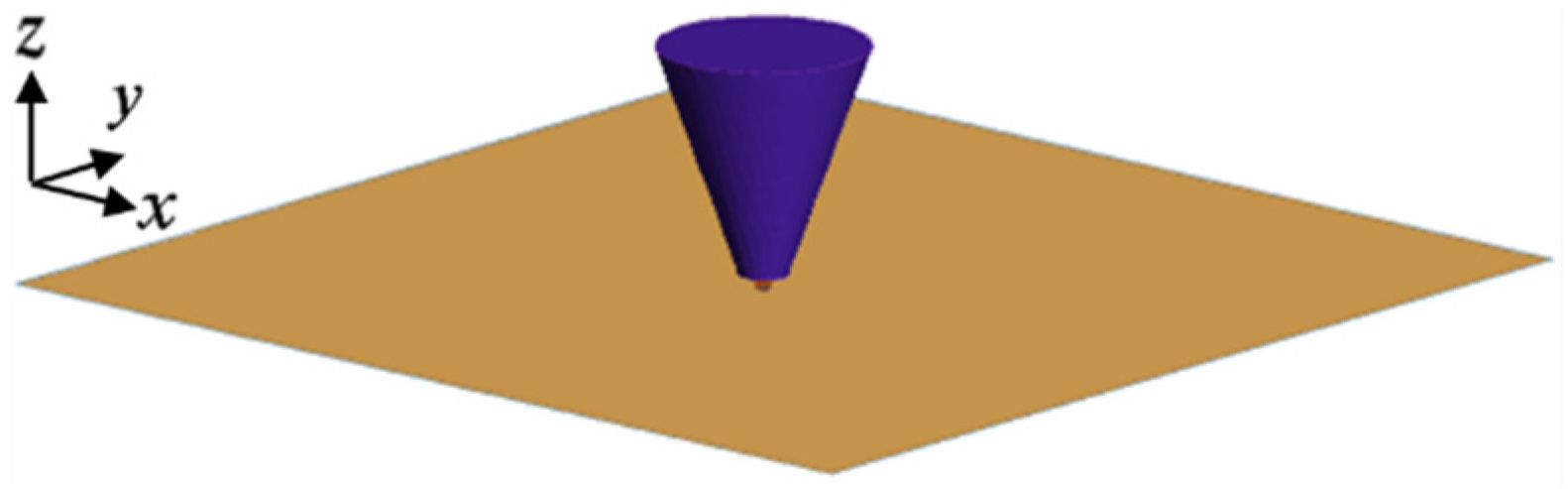
Realized Gainave is the average maximum realized gain of five equally spaced frequencies within the desired operating band (0.5–1.5 GHz). The optimization is carried out with a population size of 200 (double-vector population type) and an elite count of 8. The crossover fraction is set to 0.8, and the mutation operator is the adaptive feasible mutation. Migration is allowed in both directions. The parameters varied in the optimization are [the top radius of the cone, the base radius of the cone, the height of the cone]. The lower bounds for each parameter in the optimization are [20 mm, 3 mm, 50 mm], and the upper bounds are [30 mm, 9 mm, 65 mm]. The resulting optimized conical-shaped monopole antenna (referred to as single cone) has a height,
h, of 57 mm, base radius of 6 mm, and top radius of 26 mm, as shown in
Figure 1. The flare angle (which is directly related to the top radius and height through the Pythagorean theorem) helps with achieving a wide bandwidth, enabling the matching of the characteristic impedance of 50 Ω over various frequencies.
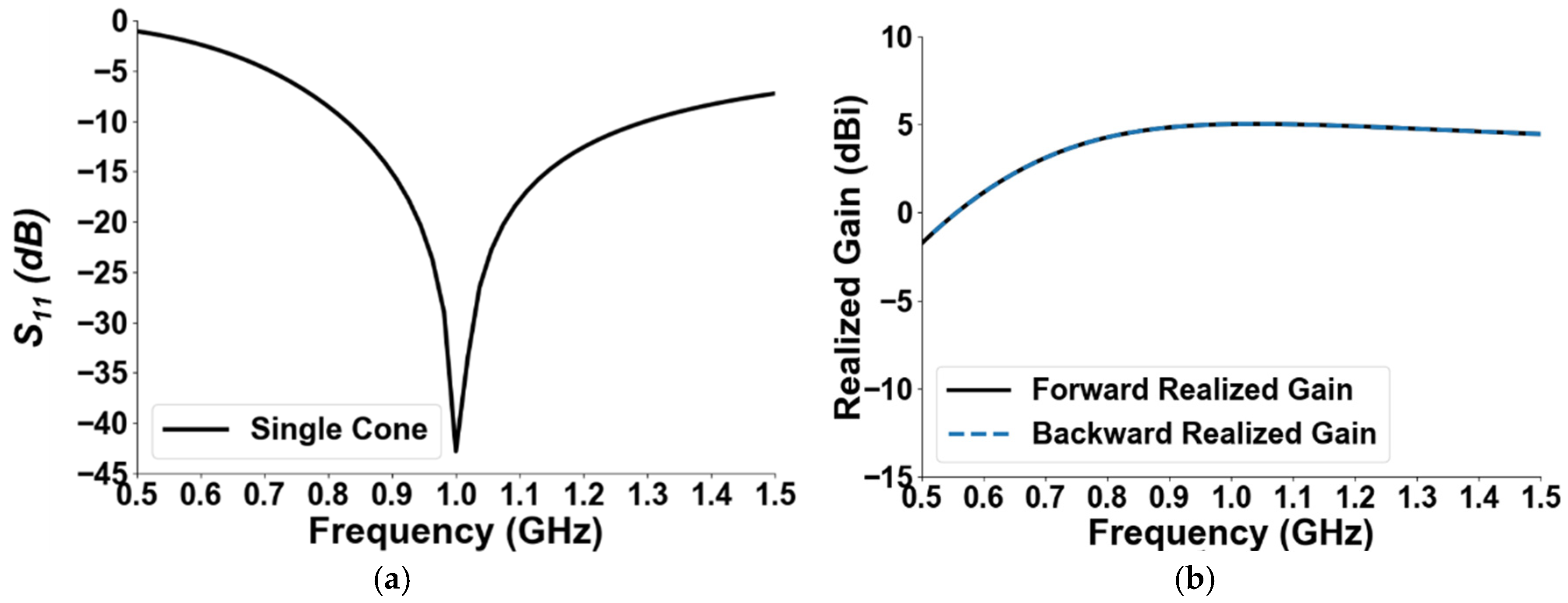
The simulated
S11 for the single cone, monopole antenna is shown in
Figure 2a. The antenna has a −10 dB impedance bandwidth of 0.83–1.29 GHz (47%) centered at 1.0 GHz. The solid black line and the dashed-blue line in
Figure 2b depict the simulated realized gain in the forward (+
x) direction and in the backward (−
x) direction, respectively. These results demonstrate that the antenna has a radiation pattern similar to that of a monopole antenna with omnidirectional radiation in the direction perpendicular to the plane of the antenna, and it has an average realized gain of 4.90 dBi across its −10 dB impedance bandwidth. The maximum front-to-back ratio (FBR) of the omnidirectional single cone design is 0 dB, as expected.
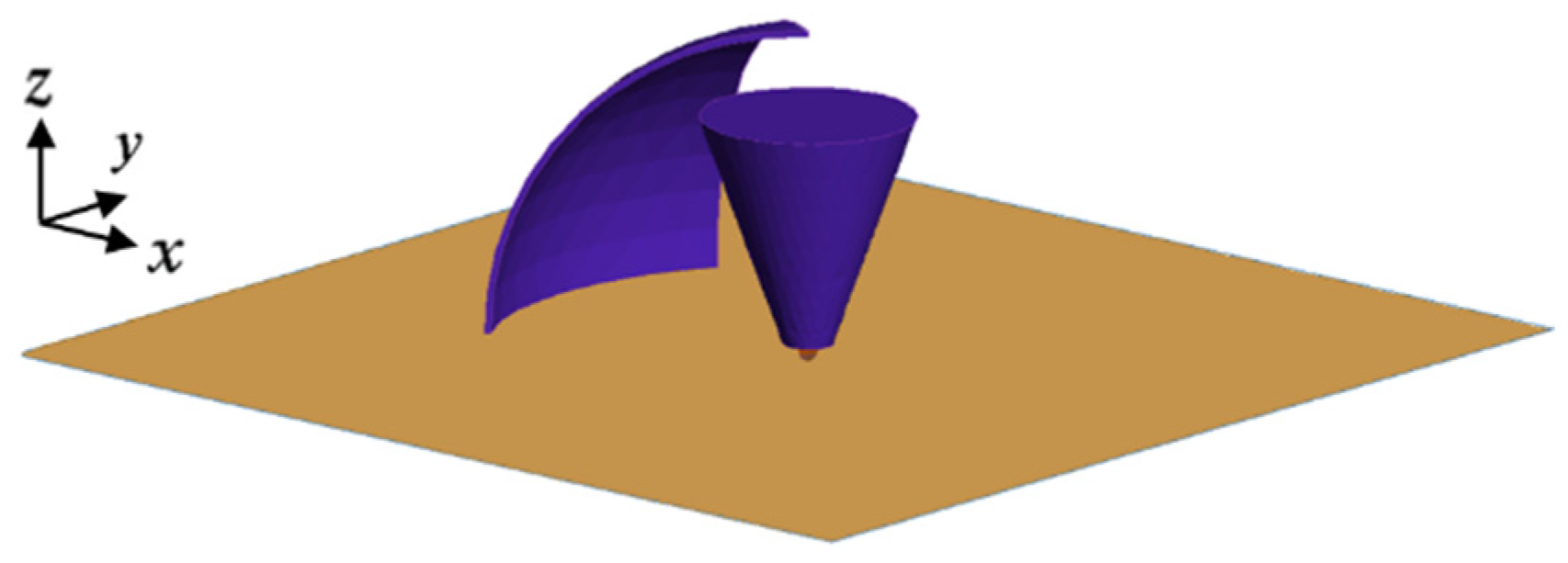
Next, to generate a directive radiation pattern, parasitic elements are investigated. Design I, illustrated in
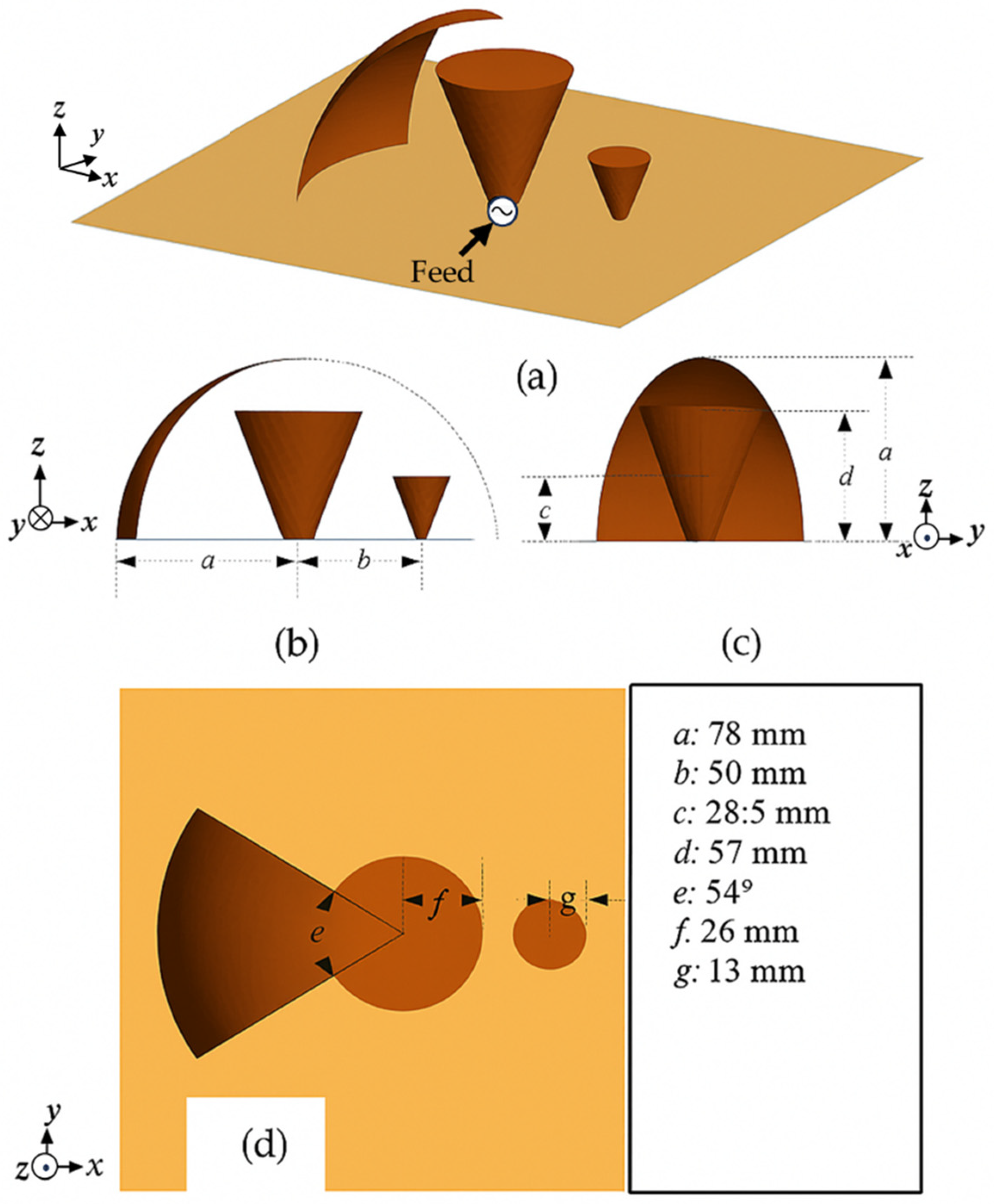
Figure 3, investigates the addition of a spherically shaped reflector element. The reflector element is important for shaping the radiation pattern to be directive in the direction of the driver element. A spherical shape is chosen for the reflector element to utilize more of the encompassing sphere of the antenna rather than increasing the electrical size with a rectangular or three-dimensional reflector element. The radius (centered at the feed point of the cone-shaped driver) and angle of the spherical reflector are chosen through GA optimization with the goal of maximizing a stable realized gain over the bandwidth. The dimensions of the driver element are fixed at the same values as the single cone design. The same cost function as in (1) is used, except that the
RGtarget in Equation (1) is changed to 10 dBi, which is the maximum realized gain of a parasitic antenna consisting of two elements in monopole form. A key constraint is that the reflector must fully enclose the driven cone to minimize the antenna’s electrical size (
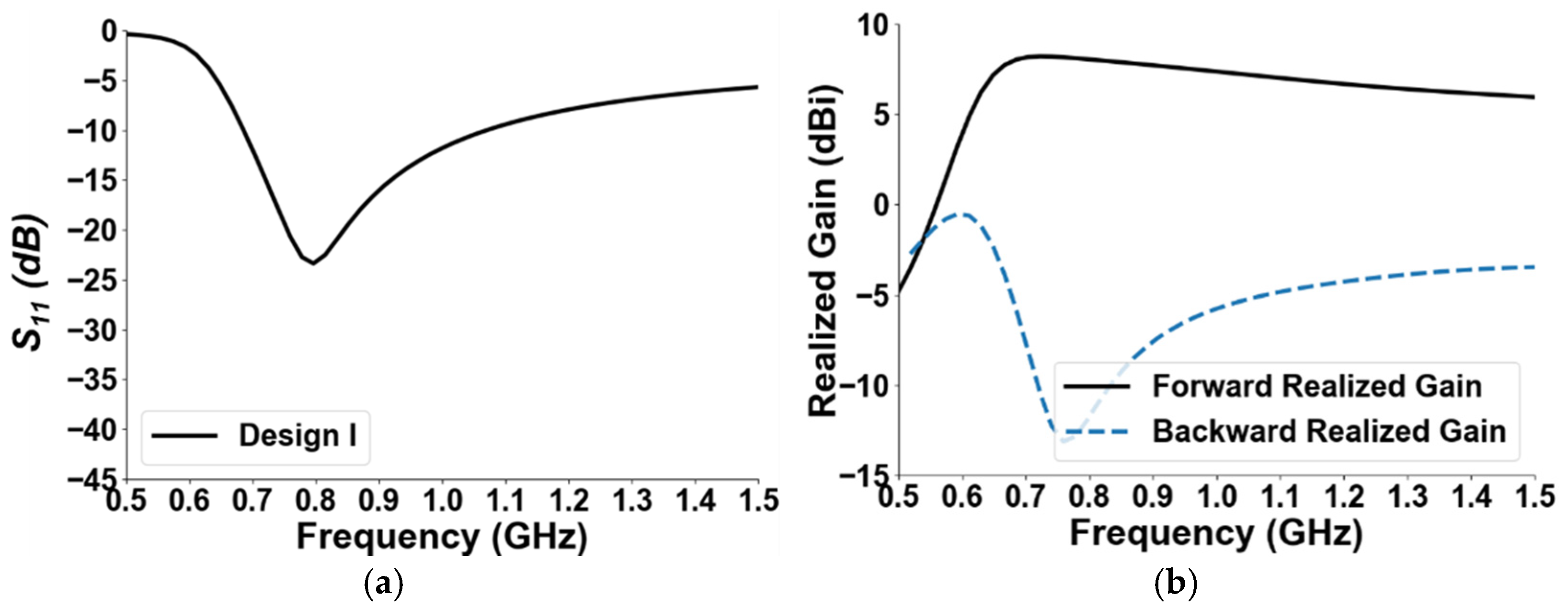
kr). The variable parameters, [reflector angle, reflector radius], are limited on the lower end by [30°, 60 mm] and on the upper end by [90°, 90 mm]. During the GA optimization process, several smaller-sized candidate designs are identified; however, these designs are not chosen since they exhibit low average realized gain, FBR, and bandwidth. The chosen optimized design trades a slightly larger antenna electrical size for a significantly improved FBR, realized gain, and bandwidth. The optimal spherical reflector design has a radius of 78 mm and an angle of 64°. The simulated
S11 results for Design I are shown in
Figure 4a. The −10 dB impedance bandwidth is 38.6% (0.68–1.07 GHz). A slight downward shift in resonant frequency to 797 MHz is observed with the addition of the larger, spherical reflector element. The simulated realized gain for Design I is shown in
Figure 4b. The forward-realized gain of Design I (driver direction) reach 7–8 dBi in the −10 dB impedance bandwidth. The maximum realized gain for Design I is located at the lower end of its bandwidth, correlating to the addition of a larger element. The addition of the reflector element (Design I, blue-dashed line) significantly reduces backward radiation, demonstrating its importance for generating the directive radiation pattern, with a maximum FBR of 20 dB.
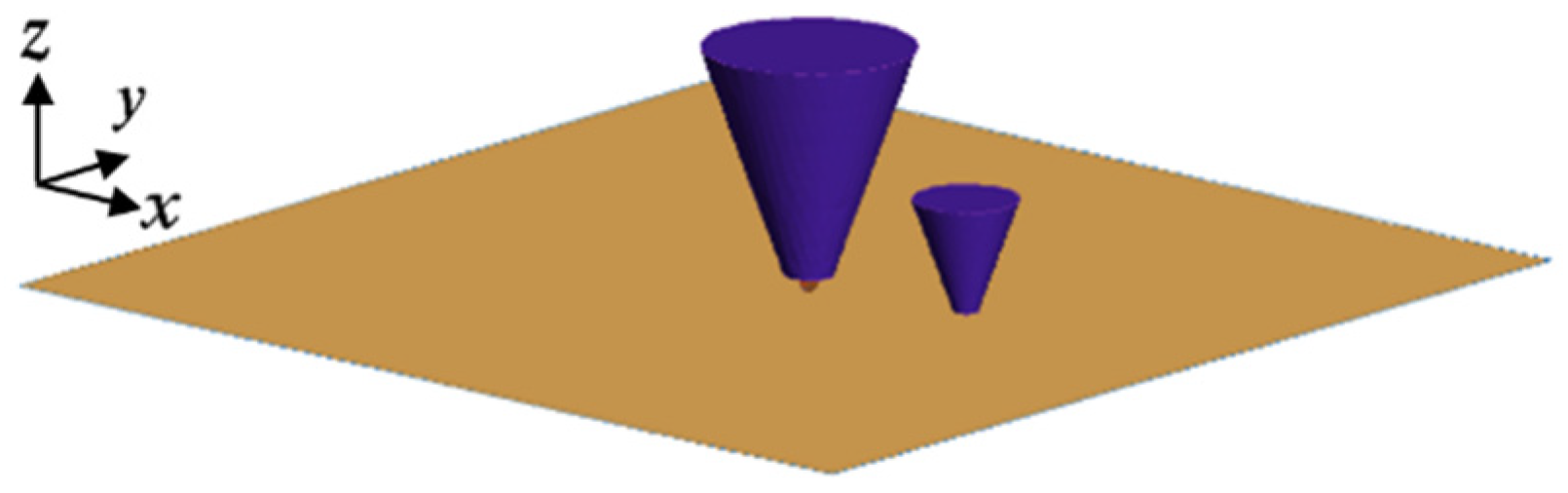
Design II, illustrated in
Figure 5, explores the addition of a conical-shaped director element for preserving the wideband characteristic while maintaining the electrical size. Design II is also optimized by GA (using (1)) for a wide bandwidth and high gain in the forward direction (direction of the director). The parameters varied in this optimization are the scale factor of the director and the distance between the driver and director elements. Constraints ensure the two cones do not intersect and that the smaller cone remains inside the spherical boundary established by Design II. The variable parameters in the optimization [scale factor for the director, distance between the driver and director elements] were bounded on the lower end by [0.3, 30 mm] and on the upper end by [0.7, 70 mm]. The director size is limited to fit within the optimal radius of the spherical reflector in Design II, to minimize
kr. The chosen optimal values result in a director height and director top radius of 28.5 mm and 13 mm, respectively. The simulated
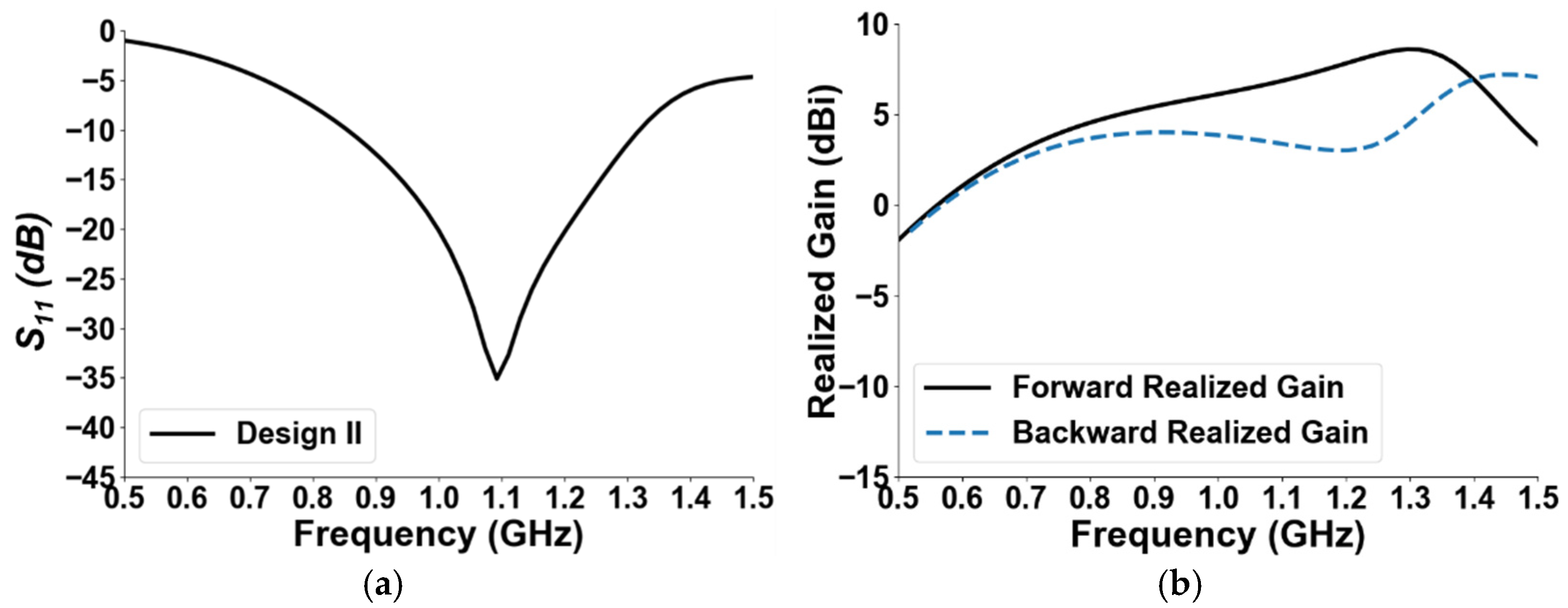
S11 result for Design II is shown in
Figure 6a. The −10 dB impedance bandwidth is 47% (0.85–1.32 GHz). A slight upward shift in resonant frequency to 1.08 GHz is observed with the addition of the smaller conical-shaped director element. The simulated realized gain for Design II is shown in
Figure 6b. The forward realized gain for Design II (director direction) reached 7–8 dBi in its respective −10 dB impedance bandwidth. The maximum realized gain for Design II is located at the upper end of its bandwidth, correlating to the addition of a smaller element. The maximum FBR of Design II is 3.5 dB.
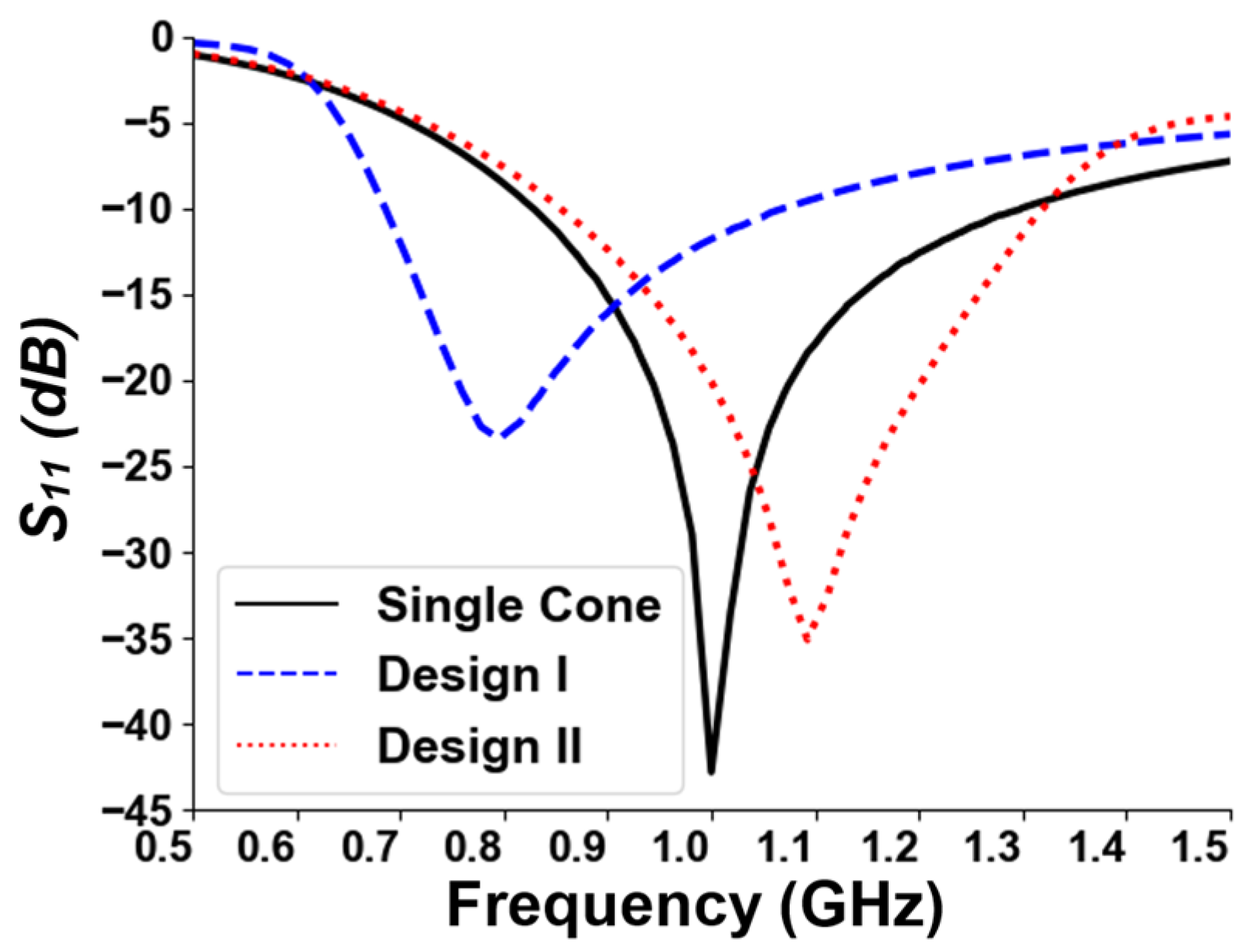
The simulated
S11 results for each design step in the design procedure are shown in
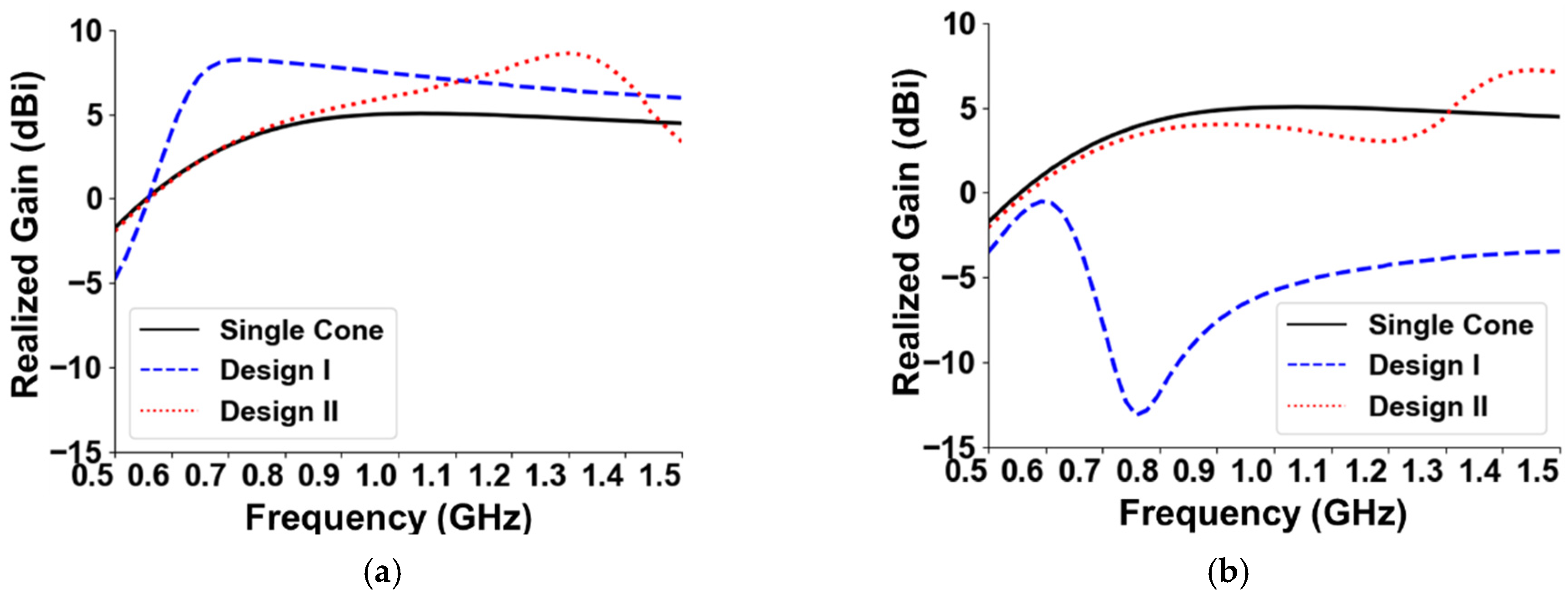
Figure 7, for comparison. The slight downward shift in resonant frequency observed with Design I and the slight upward shift in resonant frequency observed in Design II are evident. Similarly, the simulated realized gains for each step in the design procedure are shown in
Figure 8, for comparison. It highlights the role of the spherical reflector in Design II in generating a directive radiation pattern, since backward radiation is suppressed most effectively in Design I, demonstrating its higher FBR.
Finally, based on the findings of the parasitic element study, the proposed antenna geometry is chosen as a combination of Designs I and II, as illustrated in
Figure 9. In
Figure 9b, the remaining part of the sphere is sketched to demonstrate that the director is inside the sphere of the reflector. When combined, the shifted resonant frequencies of Designs I (797 MHz) and Design II (1.08 GHz) are expected to produce a broader overall bandwidth, with Design I covering the lower end of the bandwidth and Design II covering the higher end, along with stable and highly directive radiation patterns exhibiting high gain.
3. Simulation and Measurement Results
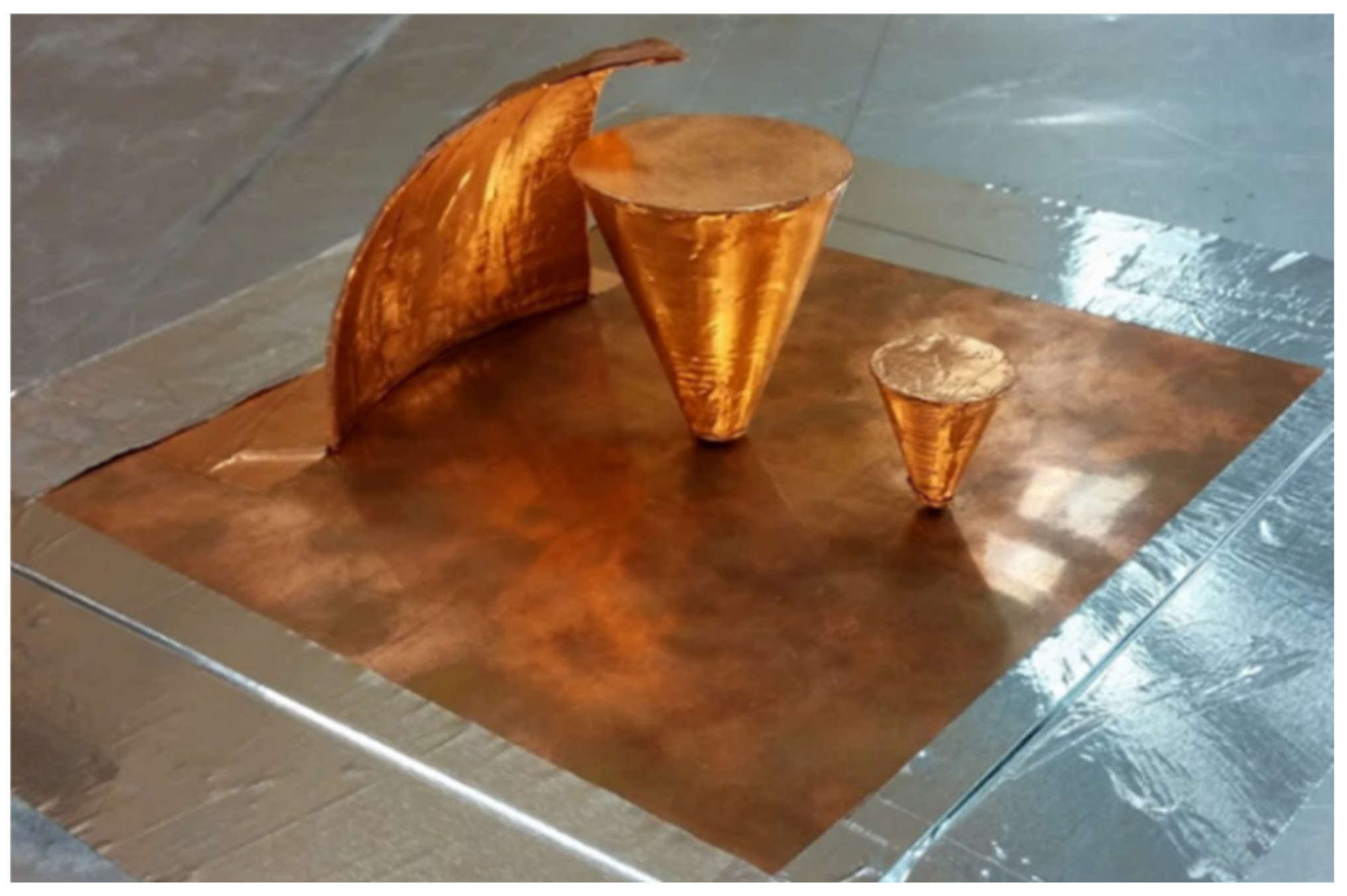
The prototype of the miniaturized, wideband parasitic array antenna is shown in
Figure 10. First, the models of the antenna elements (reflector, driver, director) are fabricated using 3D printing technology using Acrylonitrile Butadiene Styrene (ABS) material (
ε = 2,
μ = 0.005). Copper tape is then wrapped around the 3D printed models of the driver, director, and reflector, as a conductive coat. The structures are shielded completely in a continuous manner, allowing current to flow steadily. The size of the copper ground plane is 20.5 cm × 20.5 cm × 1.6 mm (0.44λ × 0.44λ × 0.03λ, where λ is calculated with the lowest frequency of the measured −10 dB impedance bandwidth discussed in the next paragraph). The antenna is fed using a standard female-to-female SMA connector. On one end of the connector, the outer conductor is cut, bent outwards, and soldered directly to the bottom of the ground plane. The center conductor is attached to the tip of the conical driver; the spacing between the cone and the ground plane is about 1 mm, replicating the simulation model. To emulate an infinite ground plane for
S11 measurement, a large, 100 cm × 70 cm × 1.6 mm (2.16λ × 1.51λ × 0.03λ), aluminum ground plane is added as shown in
Figure 10. A good connection between the antenna ground plane and the aluminum sheet is established using aluminum tape.
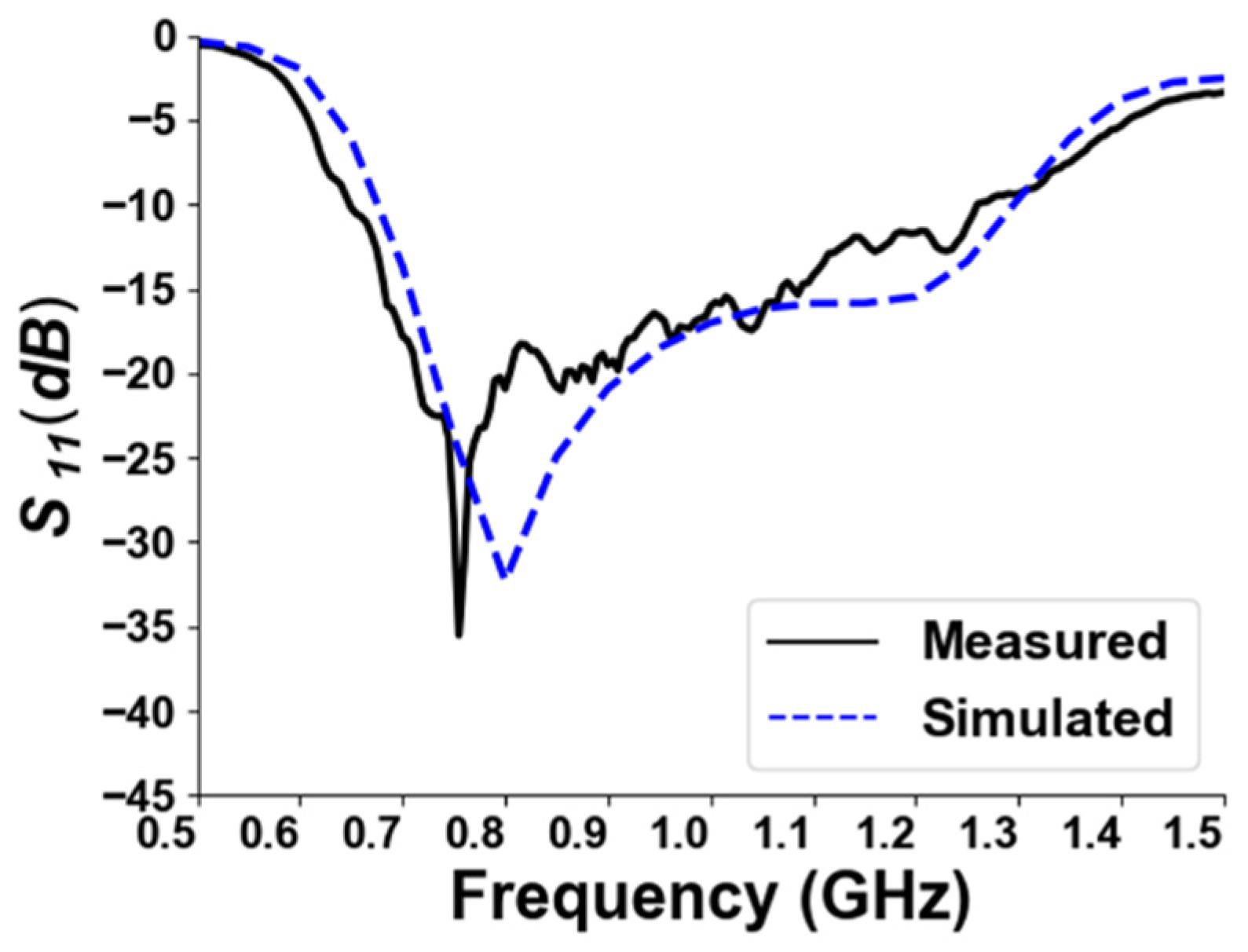
The simulated and measured
S11 results are shown in
Figure 11. The −10 dB impedance bandwidth is 62.6% (680 MHz–1.30 GHz) in simulation and 64% (646 MHz–1.26 GHz) in measurement, demonstrating good matching. The minor difference between the simulation and measurement, with a leftward shift in frequency, can be attributed to the effect of lossy solder (which slightly alters the effective electrical length and current distribution due to the addition of conductive material), also observed in [
15]. Since the antenna operates at such a low frequency range, centered at 1 GHz, the effects of surface roughness and tiny discontinuities in the copper tape are negligible. Simulation results comparing a version of the antenna with no mechanical support with the miniaturized, wideband parasitic array supported by ABS show a negligible difference in
S11 and realized gain performance, demonstrating that the effects of the ABS material are negligible. As expected, combining Design I (
Figure 3) and Design II (
Figure 5) results in an enhanced bandwidth—a combination of the
S11 results in
Figure 11. The overall antenna size of the antenna is a
kr of 1.05, calculated at the lowest measured frequency (646 MHz) in the antenna’s −10 dB impedance bandwidth, demonstrating a relatively small electrical size. The radiation efficiency of the antenna remains between 99.95% and 99.99% throughout the −10 dB bandwidth.
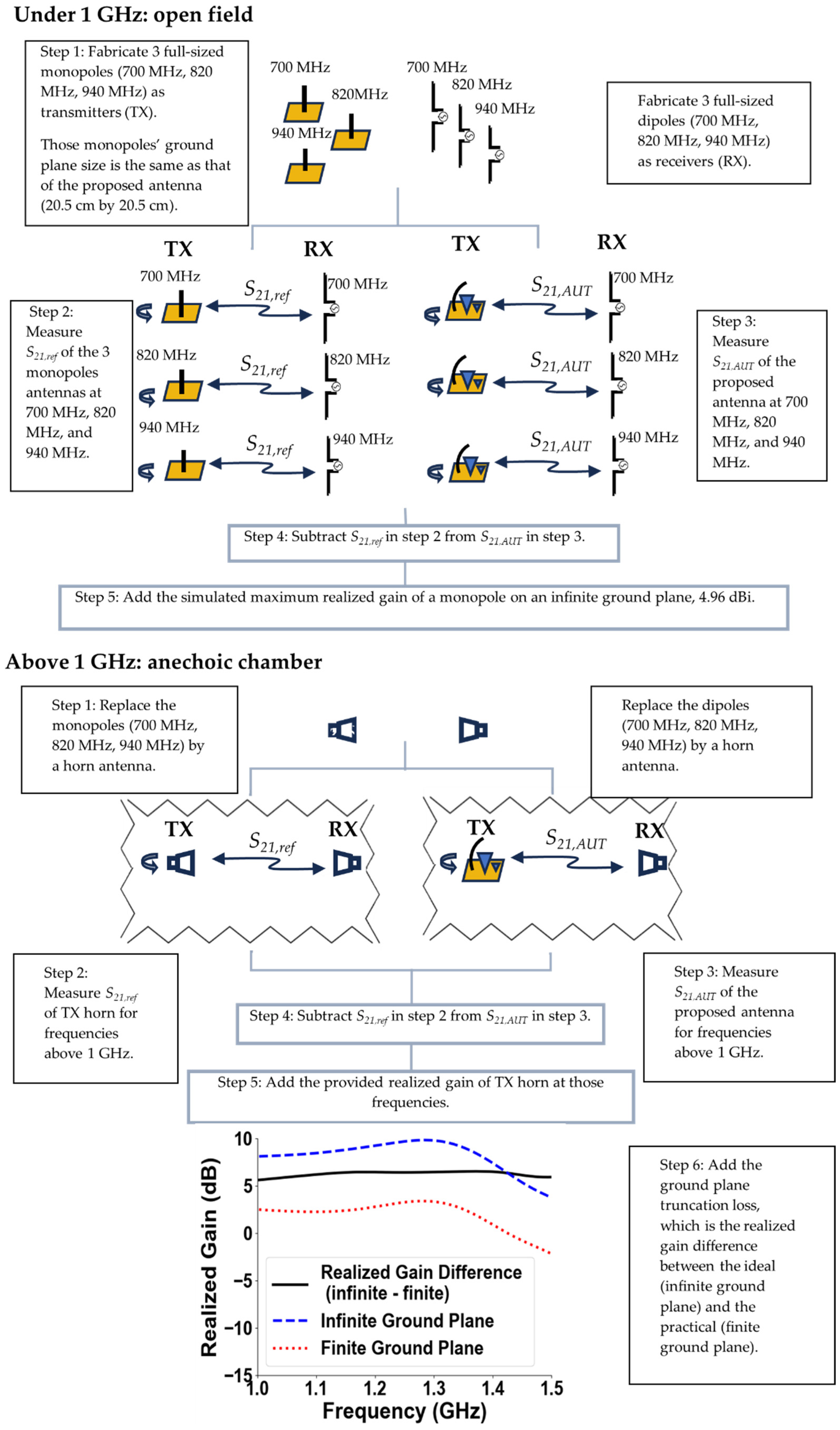
Figure 12 describes the methods used in the realized gain measurements and to remove the finite-ground-plane effect following the procedure proposed in [
24]. The antenna is measured in an open field outside for frequencies below 1 GHz, using full-sized monopoles and dipoles for reference as antennas, due to the limited frequency ranges of the anechoic chamber (>880 MHz) and of the horn antennas (>1 GHz). First, the full-sized monopole antennas resonating at 700 MHz, 820 MHz, and 940 MHz are fabricated on a finite ground plane the same size as the one of the miniaturized wideband parasitic array (20.5 cm by 20.5 cm) and are used as transmitting antennas (TX). Three dipoles, tuned to the same frequencies as the three full-sized monopoles, are used as the receiving antenna (RX). The transmission coefficient between each monopole–dipole pair,
S21,ref, is measured. The monopole is then replaced with the miniaturized wideband parasitic array, and a second transmission coefficient is measured,
S21,AUT. The difference between the two,
S21,AUT -
S21,ref, isolates the contribution of the miniaturized, wideband parasitic array and removes the effects of the environment and the reference antenna (with the finite ground plane). The simulated maximum realized gain of a monopole on an infinite ground plane, 4.96 dBi, is added to the result to convert the relative power measurements to a realized gain value.
For frequency ranges of more than 1 GHz, measurement is performed in an anechoic chamber. The same concept is applied, but standard TDK horn antennas are used for reference antennas. A horn-to-horn measurement,
S21,ref, is performed, and
S21,AUT is obtained by replacing the TX horn antenna with the miniaturized, wideband parasitic array. The realized gain is then calculated by subtracting the two measurements and adding the manufacturer-provided realized gain of the TX horn antenna. Finally, to account for the finite ground plane, a correction factor derived from simulated results is applied. Simulated realized gains for infinite and finite ground planes are compared, and the difference between them, representing the truncation loss, is added to the measured realized gain. The simulated and measured realized gains over frequency are shown in
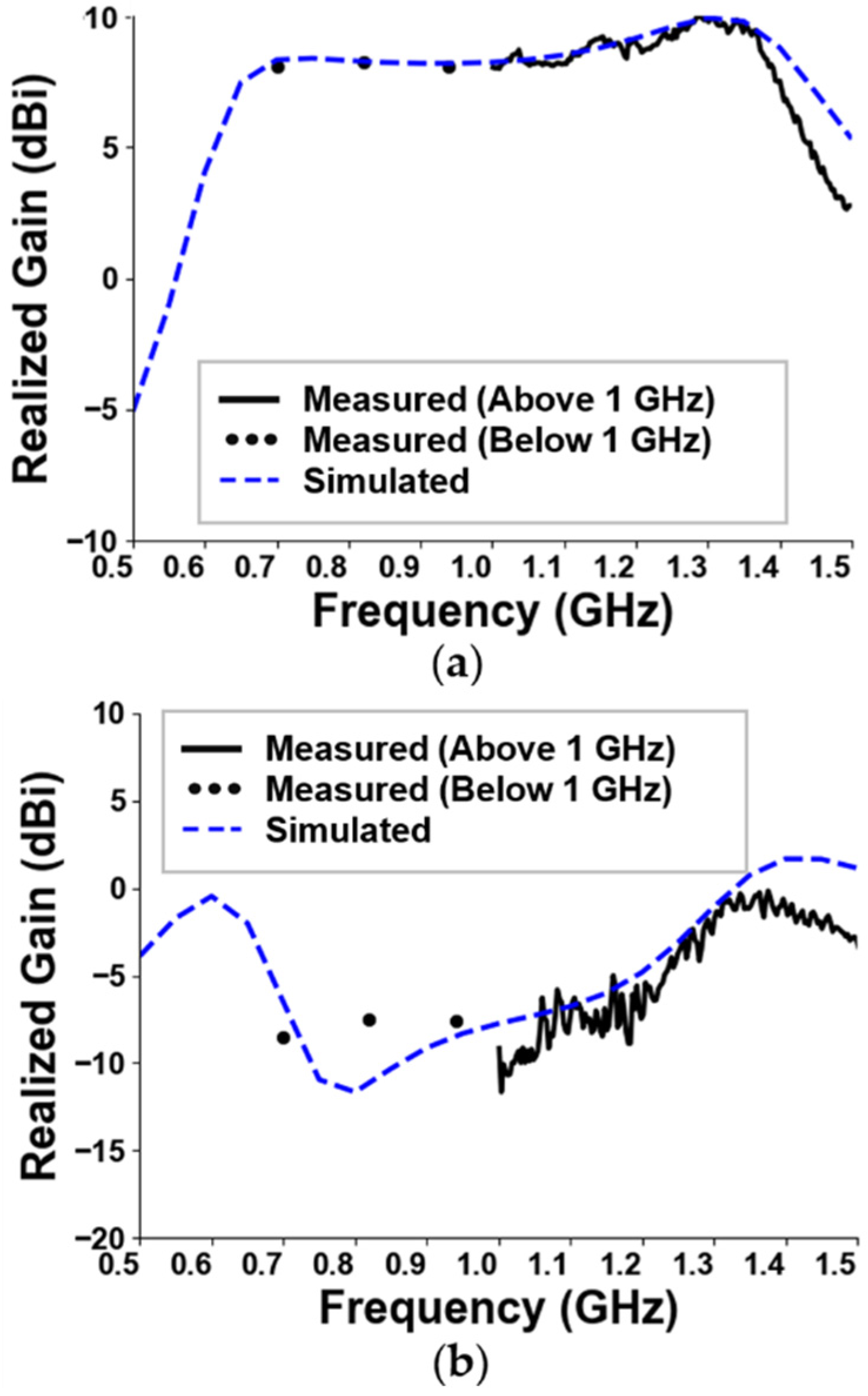
Figure 13, in (a) the forward direction and (b) the backward direction, with solid black circles used for discrete measurements under 1 GHz (at 700 MHz, 820 MHz, and 940 MHz) using the monopoles. The simulation and measurement results agree well, demonstrating a forward realized gain higher than 8 dBi throughout the −10 dB impedance bandwidth. The maximum realized gain is 9.5 dBi at 1.3 GHz in simulation and 9.5 dBi at 1.26 GHz in measurement, correlating to the previously mentioned leftward shift in
S11. The FBR is at least 10 dB across the entire bandwidth.
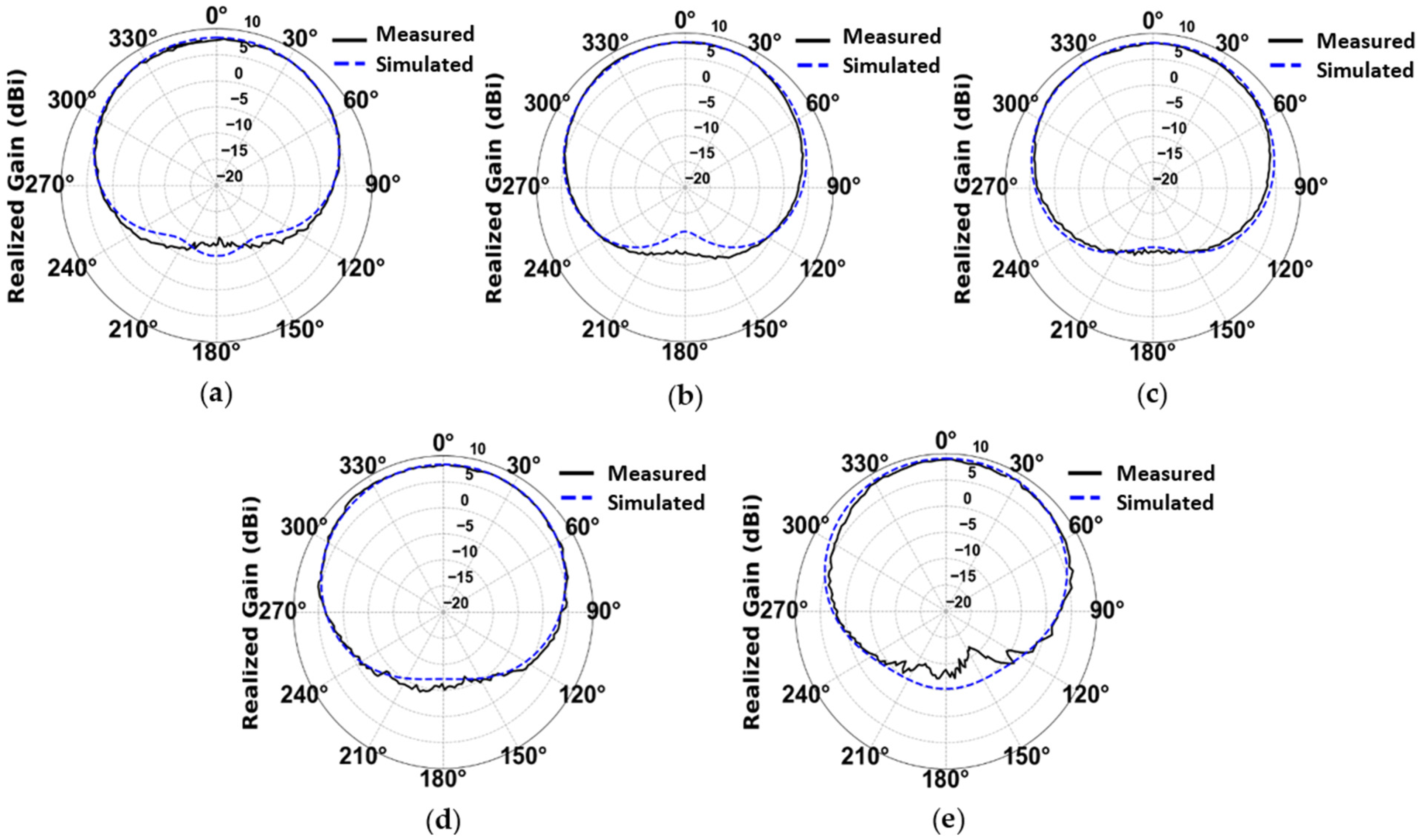
The simulated and measured realized gain patterns in the XY plane are shown in
Figure 14. Five equally spaced frequencies within the measured −10 dB impedance bandwidth at 700 MHz, 820 MHz, 940 MHz, 1.06 GHz, and 1.18 GHz are chosen. Good agreement is shown between the simulation and measurement results, as well as directive patterns at all investigated frequencies.
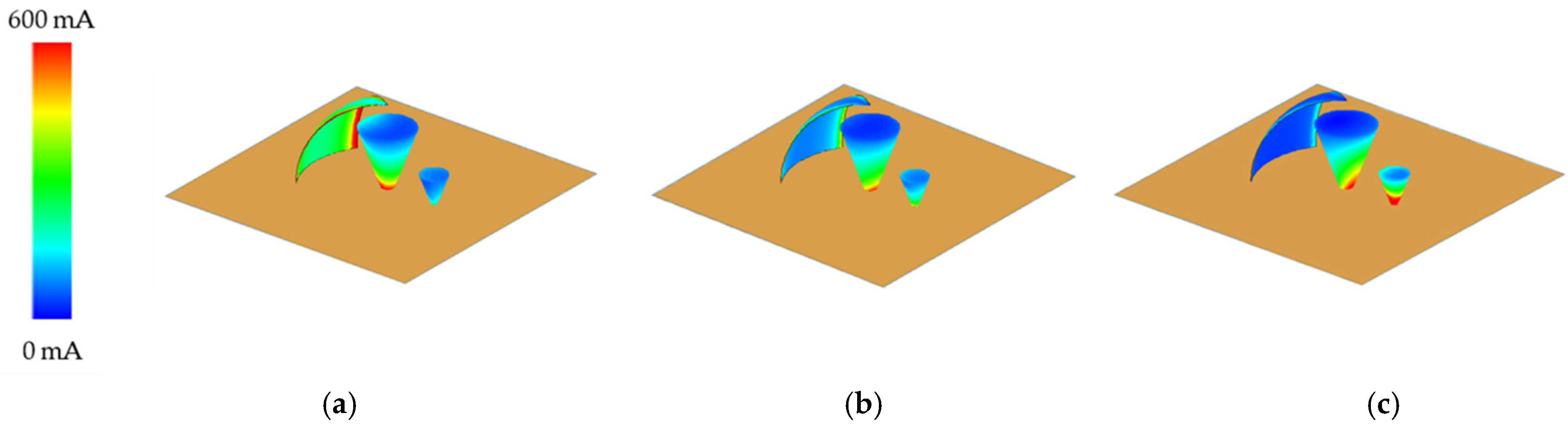
The current distributions at three different frequencies within the simulated −10 dB impedance bandwidth are shown in
Figure 15. At 680 MHz, the lowest frequency of the simulated −10 dB impedance bandwidth (
Figure 15a), strong currents are concentrated on the spherical reflector and driver elements, with minimal currents on the director element. This indicates that performance at the lower end of the bandwidth is dominated by the reflector element (Design I), with minimal influence from the director element. At 900 MHz (
Figure 15b), which lies in the midrange of the −10 dB impedance bandwidth, the current is more evenly distributed across all antenna elements. At 1.30 GHz, the highest frequency of the simulated −10 dB impedance bandwidth (
Figure 15c), strong currents appear on the driver and director elements, with minimal currents on the spherical reflector. This demonstrates that at the upper end of the bandwidth, the reflector becomes less influential while the driver and director elements dominate antenna performance. This coincides with the previous statement that the overall bandwidth of the antenna is a combination of Design I and Design II, where Design I (consisting of a reflector) performs at a lower-shifted frequency and Design II (consisting of a director) performs at a higher-shifted frequency.
Table 1 provides a comparative summary of wide-band, directive antenna designs based on the electrical size (
kr), measured −10 dB impedance bandwidth, and realized gain range (or gain where realized gain is not provided). The proposed antenna demonstrates the smallest
kr compared to the previously published wide-band directive antenna designs. In this small antenna size, a 64.0% −10 dB impedance bandwidth (0.65–1.26 GHz) is achieved, which is comparable to or broader than the previously published wide-band directive antenna designs, except for [
23,
25,
26], where the antennas show much larger
kr than that of the proposed antenna. It also, in comparison to these references, provides comparable or higher realized gain, of 8.0–9.5 dBi. The realized gain is also more stable throughout its bandwidth compared to [
23,
26].