1. Introduction
With the integration of distributed energy sources such as photovoltaic and wind power, power systems are imposing increasingly higher requirements on power quality. As common loads for accommodating new energy sources, a multi-pulse rectifier (MPR) based on a phase-shifting transformer and a diode-bridge offers distinct advantages such as a simplified structure, high reliability, a superior overload capacity, and lower overall costs. These characteristics make them particularly suitable for high-power rectification applications for the accommodation of new energy sources, including hydrogen production, high-voltage direct current transmission, urban rail transit power supply, and metal smelting [
1,
2,
3,
4]. However, harmonic pollution resulting from the nonlinear behaviors of rectification devices adversely affect the power quality on both the grid and output sides.
To improve the harmonic suppression abilities of MPRs, DC link harmonic suppression methods are proposed, and these methods are divided into active methods and passive methods. The active methods employ magnetic devices and controllable switches, while the passive methods rely on magnetic devices and diodes. In MPRs, the size and cost of the magnetic components are primarily determined by their required rated apparent power, which is referred to as the capacity of the device. To enable a fair comparison across different designs, this capacity is conventionally normalized and expressed as a percentage of the system’s total output power. A lower percentage indicates a more compact and cost-effective magnetic design.
The active methods in [
5] used a two-stage auxiliary circuit at the DC link of the MPRs to reduce the harmonics to an acceptable level. The THD of the input currents was approximately 3.6%, and the capacity of the magnetic device of the auxiliary circuit was approximately 3.1% of the output power. Although effective in reducing THD, this approach does not reduce output voltage ripple and requires complex control circuitry, increasing design complexity and cost, and thus, the passive methods are proposed. The existing passive methods are divided into pulse-doubling methods (single-passive harmonic suppression methods) and pulse-tripling methods (dual-passive harmonic suppression methods). The pulse doubling method in [
6] used a double-tap changer and two diodes to modulate the 12-pulse rectifier into a 24-pulse rectifier. The suppression circuits of the pulse-doubling methods in [
7,
8] used the IPRs with the secondary windings and the diodes (one secondary winding with four diodes or two secondary windings with two diodes) to suppress harmonics. The pulse-tripling methods in [
9,
10] were the combination of the above two types of pulse-doubling methods (the suppression circuits consisted of a double-tap changer with a secondary winding and six diodes or a double-tap changer with two secondary windings and four diodes). In recent years, a variety of novel harmonic suppression circuit topologies with low loss and low capacity have been proposed [
11,
12,
13,
14,
15,
16,
17,
18]. However, in theory, existing passive harmonic suppression circuits can only reduce the harmonic content of a rectifier to between one-half and one-third of the original level, resulting in limited performance.
A delta-connected auto-transformer (DCT) offers a significant reduction in system volume and a higher power density with a low capacity [
19,
20,
21]. Owing to these advantages, it has been widely adopted as the phase-shifting transformer in MPRs.
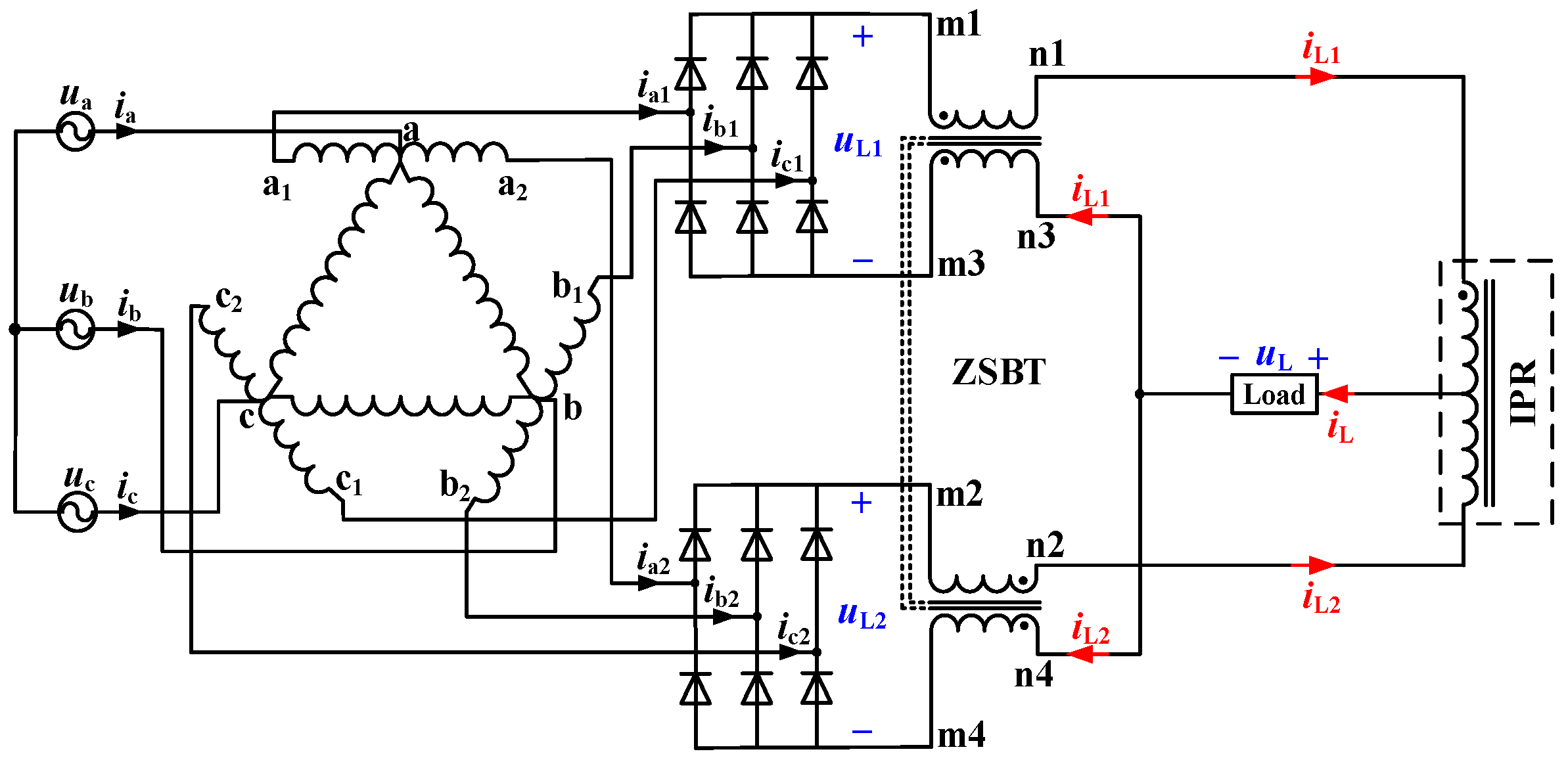
Figure 1 shows a typical 12-pulse delta-connected rectifier based on a DCT. It can be seen that the two rectifier bridges are connected in parallel by the IPR to power the load.
This paper proposes a novel triple-passive harmonic suppression method which employs three passive harmonic suppression circuits to significantly enhance the performance of the twelve-pulse rectifier shown in
Figure 1. The proposed approach transforms the 12-pulse rectifier into a 48-pulse system with a simplified structure. The proposed triple-passive harmonic suppression circuit (TPHSC) consists of only eight diodes and two compact interphase reactors (IPRs), with a combined capacity of as low as 2.3% of the output power, while effectively quadrupling the pulse number. The experimental results demonstrate that the proposed 48-pulse rectifier achieves an input current THD of 3.99%, significantly lower than the 13.90% THD of the conventional delta-connected rectifier.
Compared with existing passive harmonic suppression methods, the proposed design improves harmonic suppression performance by one-third while simultaneously reducing the total capacity of the magnetic components. The proposed 48-pulse rectifier is suitable for applications involving the accommodation of new energy sources, where it can effectively reduce the grid-side harmonic content.
2. Topology and Characteristic Analysis of the Proposed Parallel-Connected 48-Pulse Rectifier
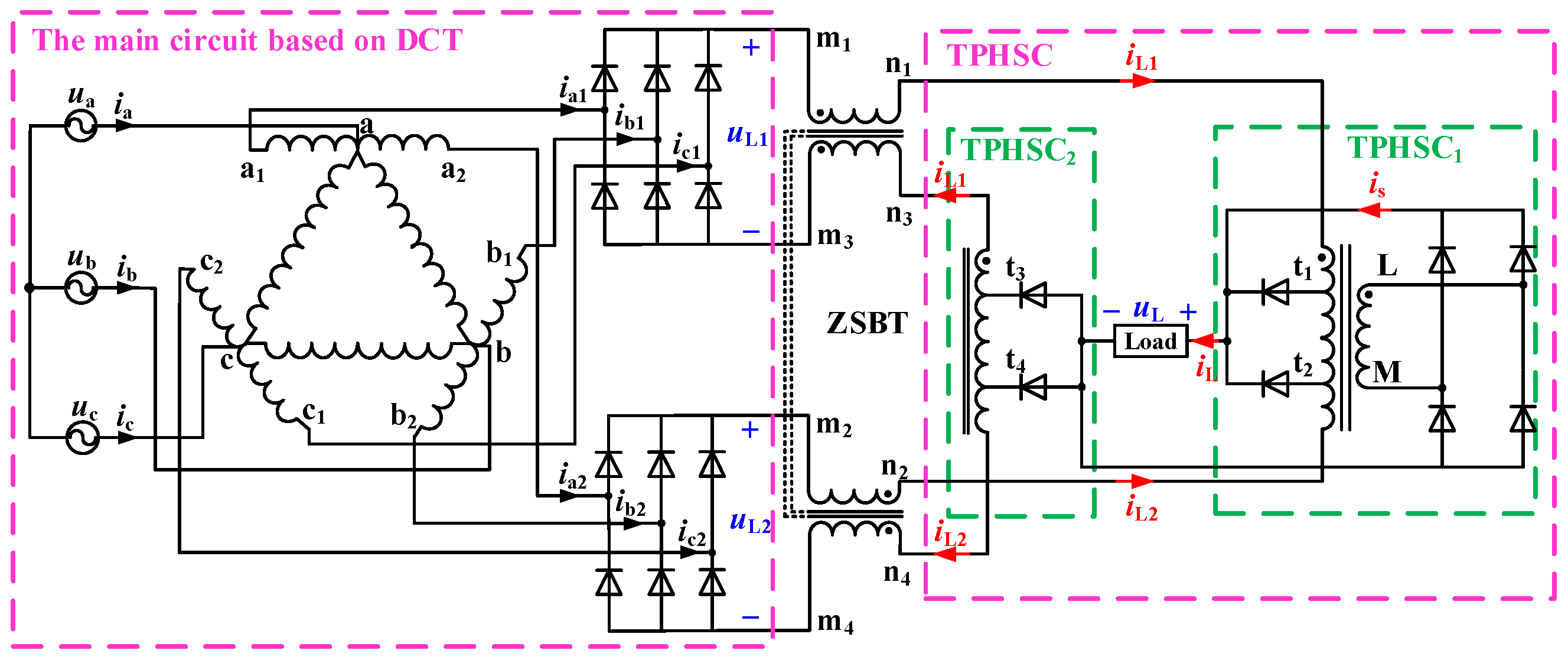
Figure 2 shows the circuit configuration of the proposed 48-pulse rectifier. It consists of the main circuit based on a DCT with two three-phase diode-bridge rectifiers, the zero sequence blocking transformer (ZSBT), the TPHSC, and the load.
Based on
Figure 2, it can be seen that
uL and
iL represent the output voltage and current of the proposed 48-pulse rectifier, respectively;
uL1 and
uL2 represent the output voltages of the main circuit;
iL1 and
iL2 represent the output currents of the main circuit; and
is represents the output current of the secondary side full-bridge rectifier of the TPHSC
1.
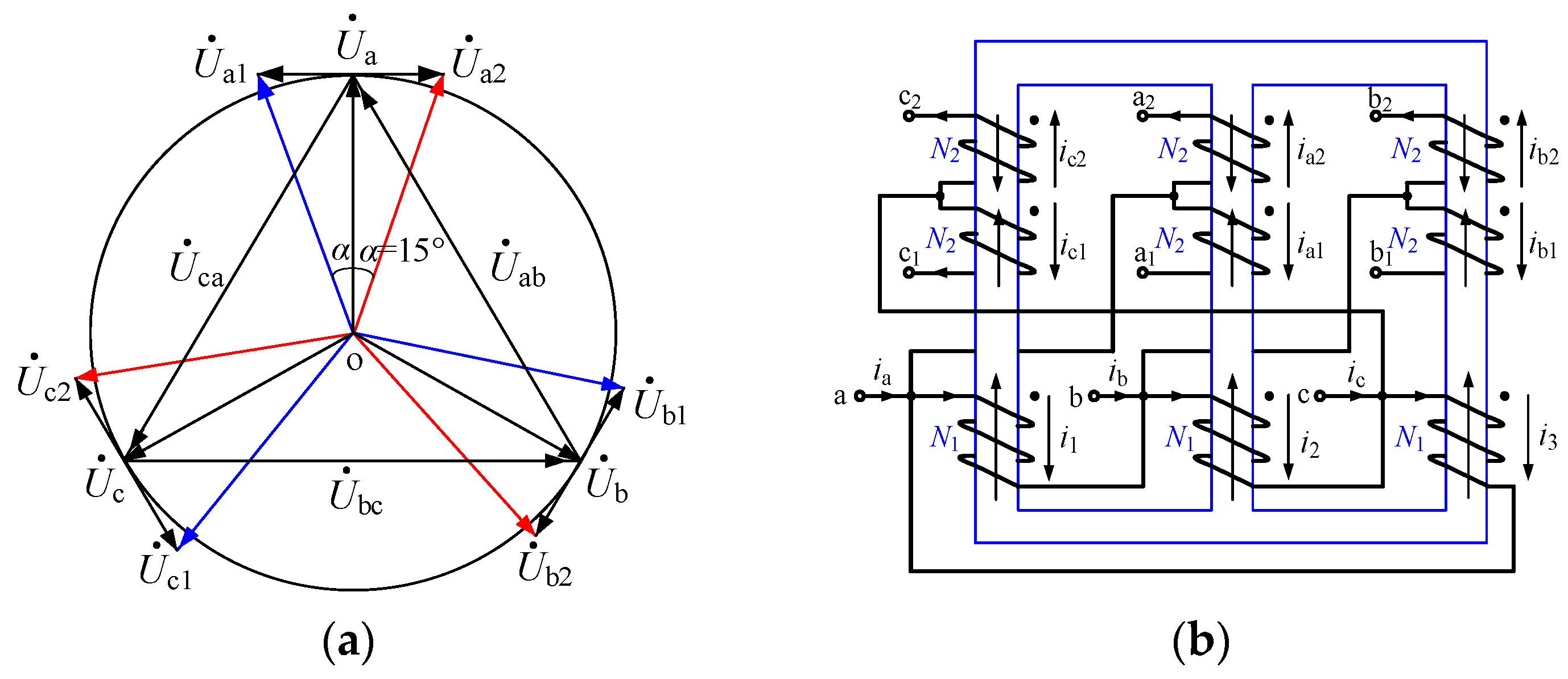
The phasor diagram of the DCT is shown in
Figure 3a, and its winding structure is described in
Figure 3b. The 12-pulse rectifier requires a 30° phase shift between the two sets of three-phase voltages supplied by the DCT. To meet this requirement, the angle
α in
Figure 3a is set to 15°. Thus, in
Figure 3b, the winding turns ratio of the DCT can be obtained such that
.
In
Figure 2, the three-phase input voltage is shown as follows:
where
E is the RMS value of the input voltage.
In
Figure 3a, the two sets of three-phase output voltage of the DCT are calculated as follows:
According to the KCL and the principle of ampere-turns balance, the input current
ia of the rectifier is obtained as follows:
where
Sa1,
Sa2,
Sb1,
Sb2,
Sc1, and
Sc2 represent the switch functions of phases a
1, a
2, b
1, b
2, c
1, and c
2, respectively.
According to (3), the expression of
ia within a quarter of a period is obtained as follows:
In
Figure 2, the TPHSC consists of the TPHSC
1 and the TPHSC
2. The TPHSC
1 consists of the IPR
1 with secondary winding and six diodes, while the TPHSC
2 consists of the IPR
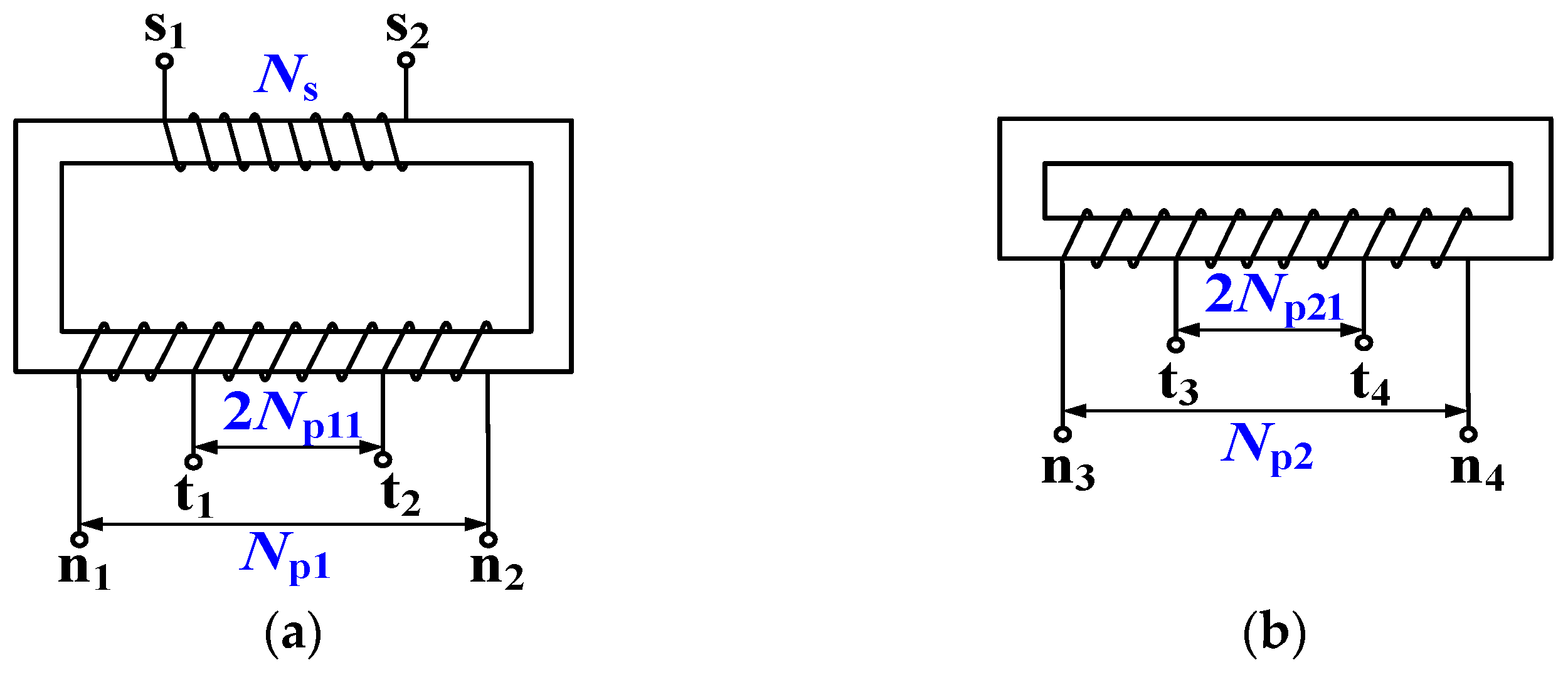
2 with two diodes. The winding structures of the IPR
1 and IPR
2 are shown in
Figure 4.
As shown in
Figure 4, the primary winding (n
1–n
2) of IPR
1 has
Np1 turns with the terminal voltage
up1, and its secondary winding (s
1–s
2) has
Ns turns with the terminal voltage
us. For IPR
2, its primary winding (n
3–n
4) has
Np2 turns with the terminal voltage
up2. It is obvious that
us:
up1 =
Ns:
Np1. The primary tap winding (t
1–t
2) of IPR
1 has 2
Np11 turns, and the primary tap winding (t
3–t
4) of IPR
2 has 2
Np21 turns. Thus, the tap turns-ratio parameters
am1 and
am2 and the secondary-to-primary turns ratio
m are defined as follows:
Based on
Figure 2, when supplied with a three-phase voltage, the rectifier’s main circuit generates two sets of output currents,
iL1 and
iL2, which share the same waveform but are phase-shifted by 30°. According to the difference between
iL1 and
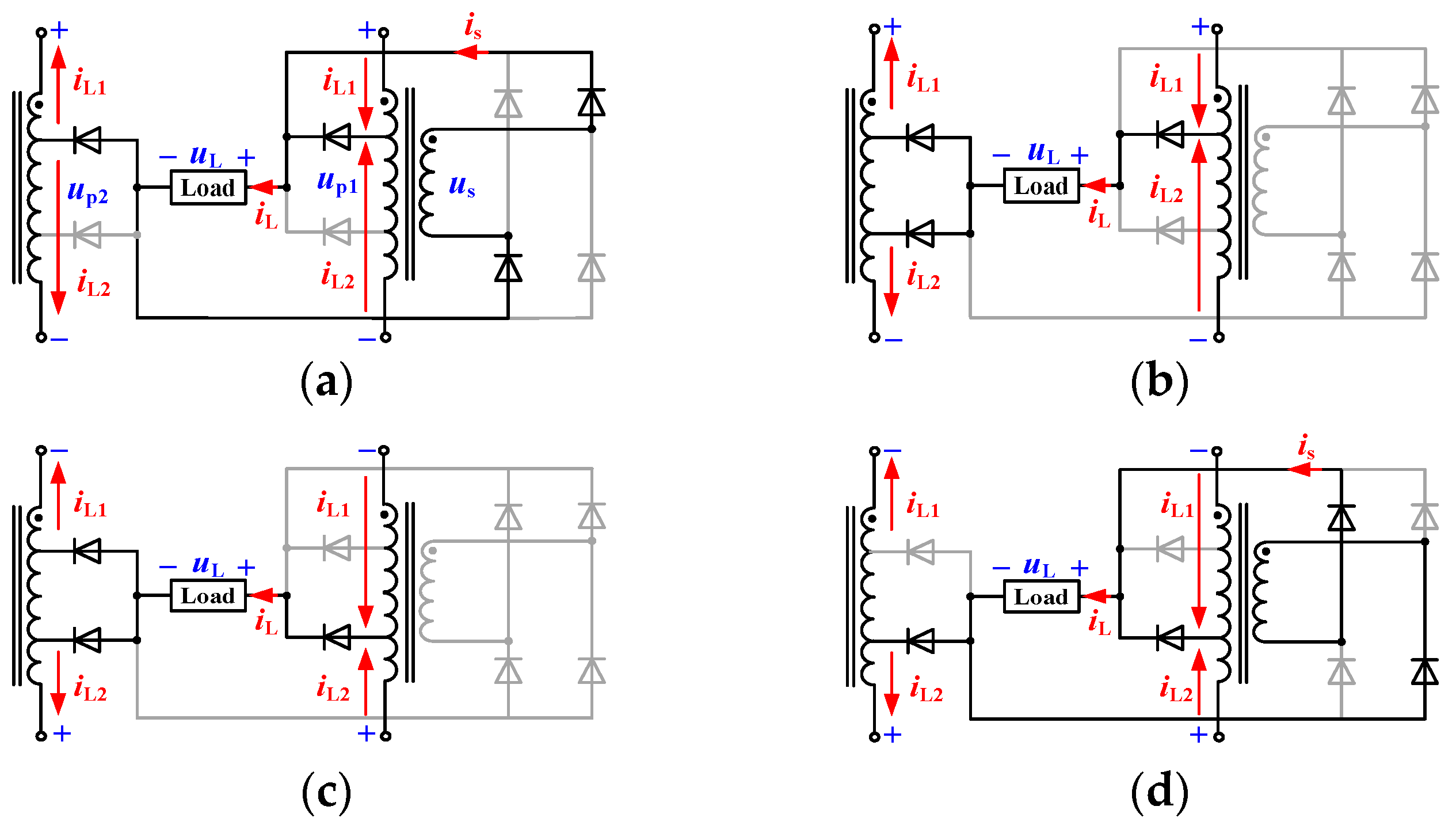
iL2, the four operating modes of the TPHSC are as described in
Figure 5.
- (1)
Mode1: When
iL1 >
iL2, the TPHSC operates as per
Figure 5a. According to the operating principle of the transformer, the KCL, and the principle of ampere-turns balance, it is obtained that:
- (2)
Mode2: As
iL1 decreases and
iL2 increases, the secondary side full-bridge rectifier of TPHSC
1 turns off, and the TPHSC operates as per
Figure 5b.
iL1 and
iL2 can be shown as follows:
- (3)
Mode3: Similarly, when
iL2 increases and
iL1 decreases until
iL2 >
iL1, the TPHSC operates as per
Figure 5c, and
iL1 and
iL2 are calculated as follows:
- (4)
Mode4: As
iL1 decreases and
iL2 increases, the secondary side full-bridge rectifier of TPHSC
1 turns on and the TPHSC operates as per
Figure 5d, and
iL1 and
iL2 can be shown as follows:
Based on Equations (6)–(9),
iL1 and
iL2 are calculated as follows:
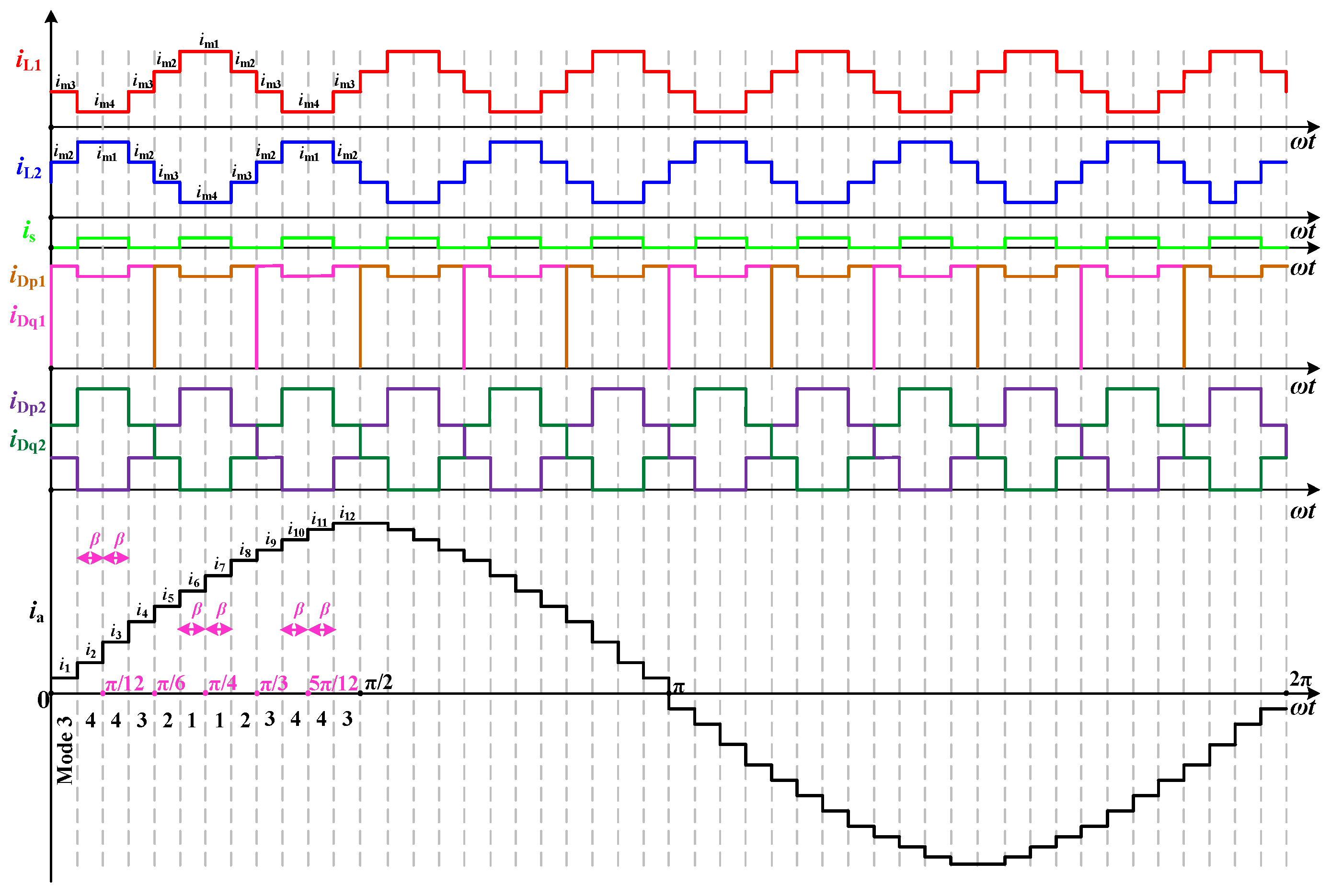
As can be seen from Equation (10), iL1 and iL2 are eight-step waves with a phase difference of 30° and four current levels.
Based on (6)–(9), the output current
is of the secondary side full-bridge rectifier of IPR
1 is calculated as follows:
It is specified that the direction of current flowing from tap t
1 (t
3) to t
2 (t
4) is positive, and thus, the expressions for the circulating currents in the windings between the two taps on the primary sides of IPR
1 and IPR
2 can be obtained as follows:
Based on (4) and (10), the input current
ia of the rectifier within a quarter of the period [0, π/2] is calculated as follows:
In Equation (13), the interval width
β for mode1 and mode4 satisfy the following constraint conditions:
According to (10)–(14), based on symmetry, the operating current waveforms of the proposed 48-pulse rectifier are as described in
Figure 6.
Taking the minimum THD of the input current
ia as the optimization objective, the turns-ratio parameters (
am1,
am2, and
m) of the IPRs are optimized and designed. The input current THD of
ia can be calculated as follows:
where
Ia represents the RMS value of the input current
ia, and
Ia1 represents the fundamental RMS value of
ia.
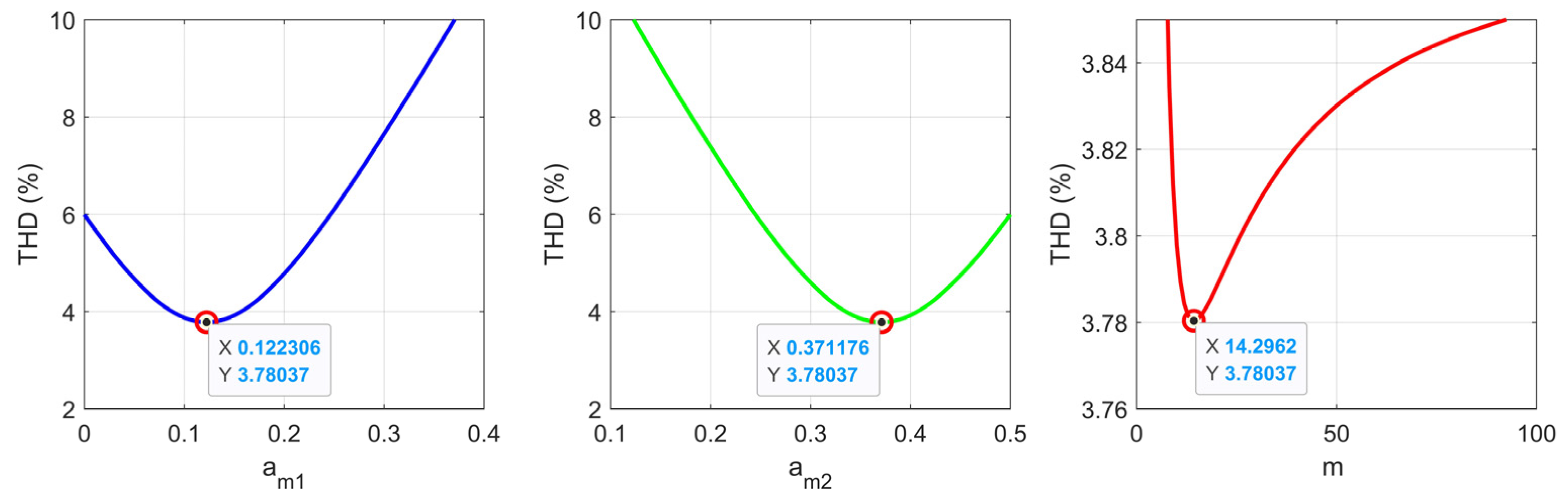
By substituting Equations (10), (13) and (14) into Equation (15) and solving with MATLAB R2020b, the optimal turns-ratio parameters that minimize the THD are obtained. The results are shown in
Figure 7. From
Figure 7, it can be seen that the THD of the input current
ia reaches the theoretical minimum value 3.78% when the turns-ratio parameters are
am1 = 0.122,
am2 = 0.371, and
m = 14.3. In this optimal case, according to (14), it can be calculated that
β = π/24.
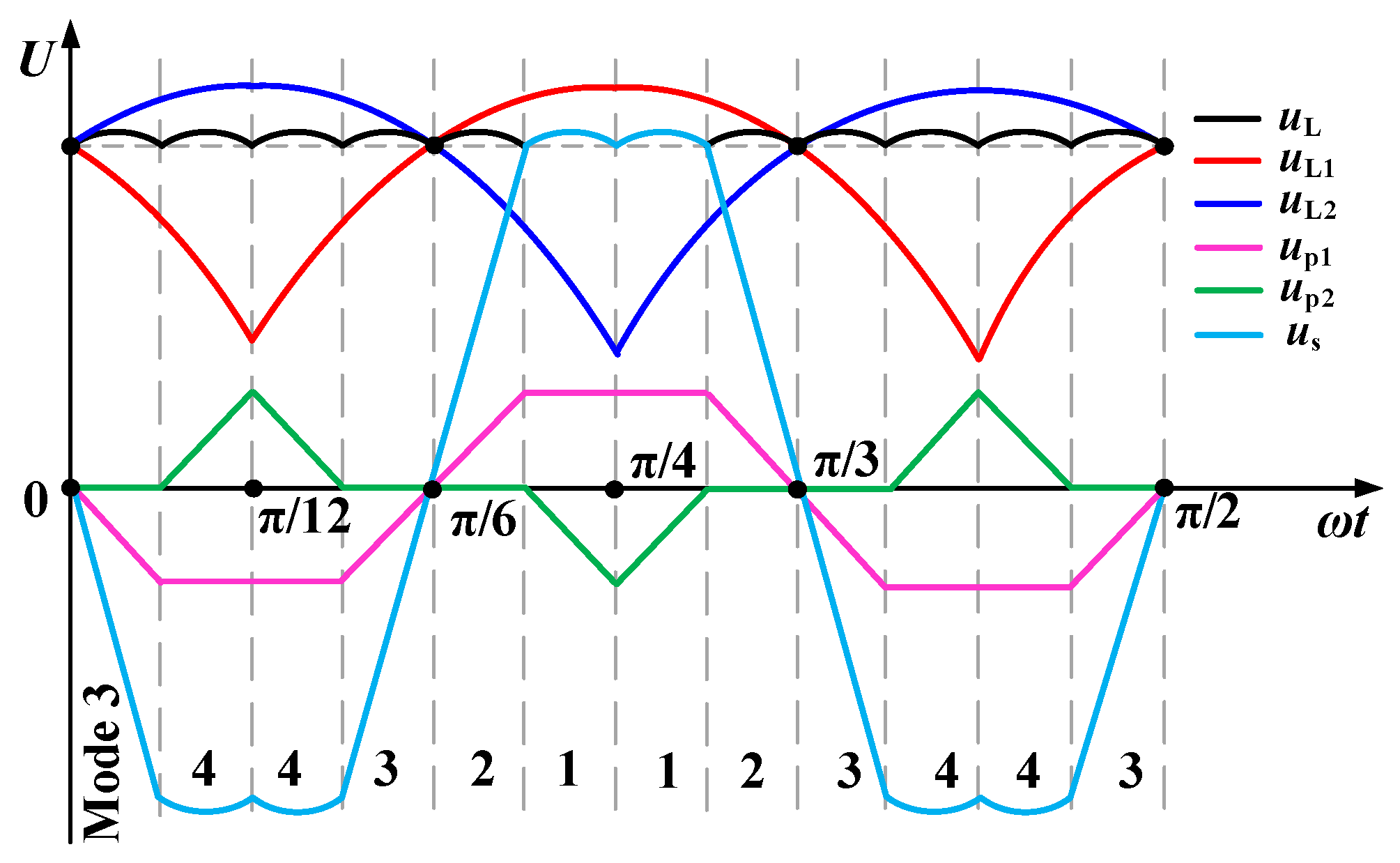
Figure 8 shows the operating voltage waveforms of the proposed 48-pulse rectifier when using the optimal turns ratio. According to
Figure 2 and Kirchhoff’s Voltage Law (KVL), it can be obtained that
where the linearized waveform of
up is a triangular wave with a frequency of 300 Hz.
From
Figure 8, it can be seen that, based on symmetry, the load voltage
uL has 48 pulses within [0, 2π], which can be seen as a constant value.
4. Simulation and Experimental Results
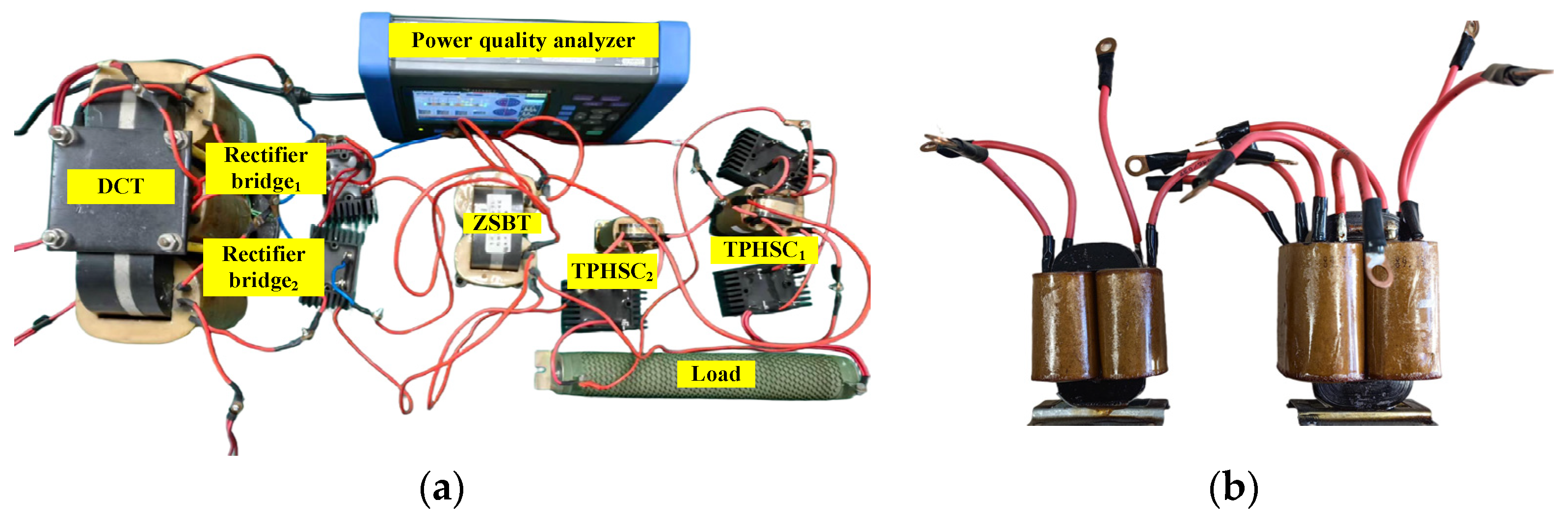
A 1 kW experimental platform (Harbin Transformer Factory, Harbin, China) was constructed to validate the performance of the proposed 48-pulse rectifier. The overall setup is shown in
Figure 9a, with the implemented IPRs prototypes detailed in
Figure 9b.
In the experimental setup, the three-phase input voltage was supplied by a Chroma-61702 programmable AC power source (Chroma ATE Inc., Taoyuan City, Taiwan), with waveforms captured by a HIOKI-PW3198 power quality analyzer (HIOKI E.E. Corporation, Ueda City, Japan). For the rectifier bridges, SQL60A1600V diode modules (CHUNZ Co., Ltd., Shanghai, China) were employed, which provided a significant safety margin over the nominal operating voltage to ensure robustness and prevent failures during laboratory testing.
To facilitate the analysis, the theoretical and simulation studies were conducted under idealized conditions, assuming a balanced three-phase operation and neglecting parameters such as transformer leakage inductance and diode voltage drops. The detailed simulation and experimental parameters are provided in
Table 1.
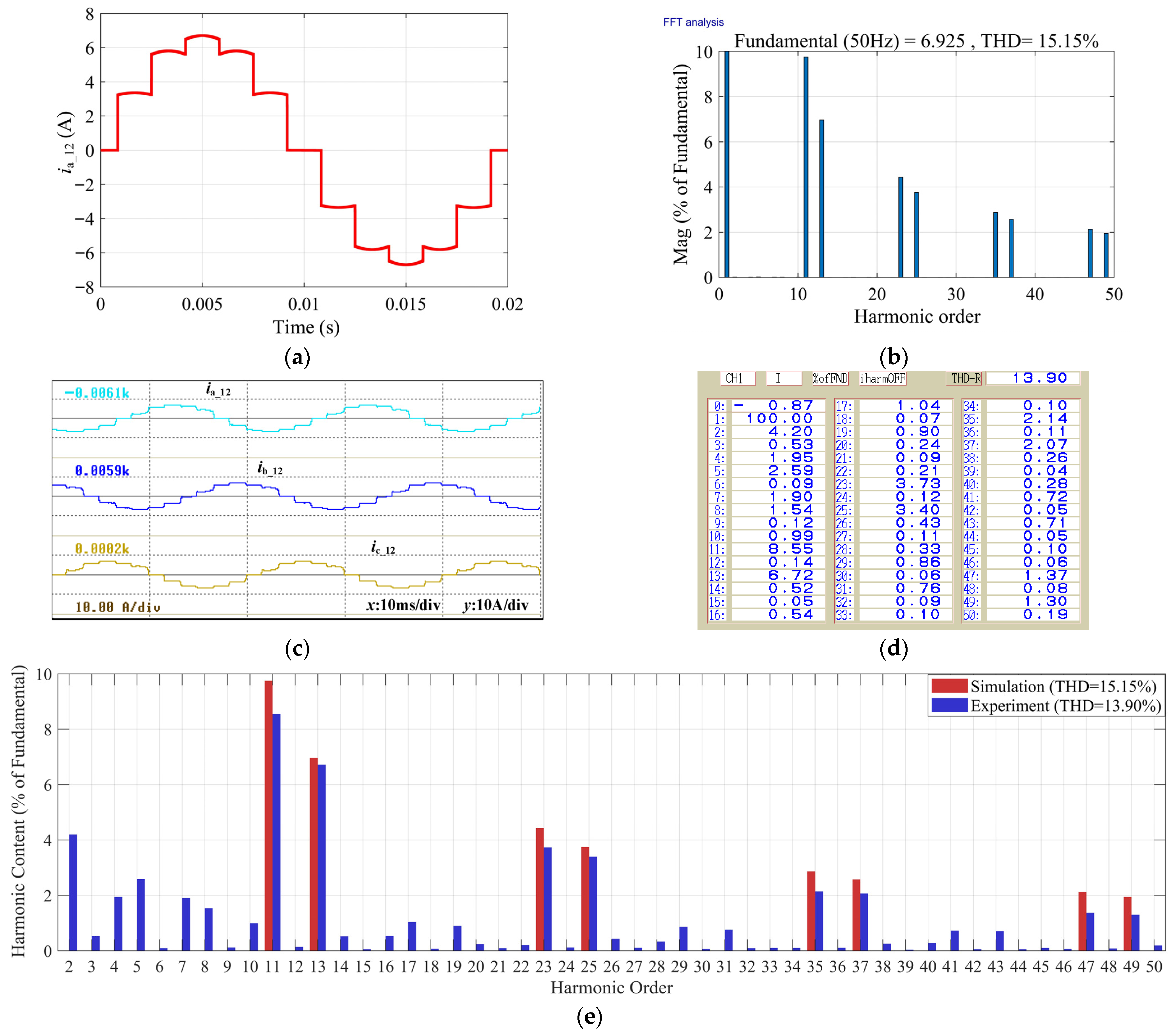
Figure 10 shows the input current
ia and its harmonic spectrum for the 12-pulse rectifier without the TPHSC. The simulated waveform in
Figure 10a exhibits a clear 12-step profile, approximating a sinusoidal shape. Correspondingly, the simulated spectrum in
Figure 10b confirmed the following theoretical performance: the input current THD was 15.15% and the harmonics were concentrated at the characteristic (12
k ± 1)th orders (e.g., 11th, 13th, 23rd, and 25th), with no significant low-order or even-order harmonics present. This result aligned with the theory under ideal conditions.
In contrast, the experimental measurement in
Figure 10c,d shows a 12-step wave with a THD of 13.90%. Based on
Figure 10b,d,
Figure 10e shows the harmonic spectrum comparison between the simulation and the experimental results. In
Figure 10e, the key difference lies in the appearance of the low-order, non-characteristic harmonics (such as the 2nd, 4th, 5th, and 7th) in the experimental spectrum. This discrepancy arose from the inevitable non-idealities in any physical setup, including slight imbalances in the three-phase supply, manufacturing tolerances and imbalance factors in the transformer and the IPR, and variations in the diode characteristics. These practical factors disturbed the precise current sharing and phase relationships required for perfect harmonic cancellation.
Critically, however, the experimental deviations shown in
Figure 10 do not undermine the primary validation objective. The measured THD of 13.90% remains largely consistent in magnitude with the theoretical prediction of 15.15%. More importantly, the dominant harmonics in the experiment are still unequivocally concentrated at the characteristic (12
k ± 1)th orders, which validates the fundamental operating principle. The presence of additional low-order harmonics, while indicative of practical non-idealities, represents a secondary effect. Therefore, the experimental results successfully capture the essential harmonic profile and provide a valid baseline for evaluating the proposed TPHSC.
Figure 11 and
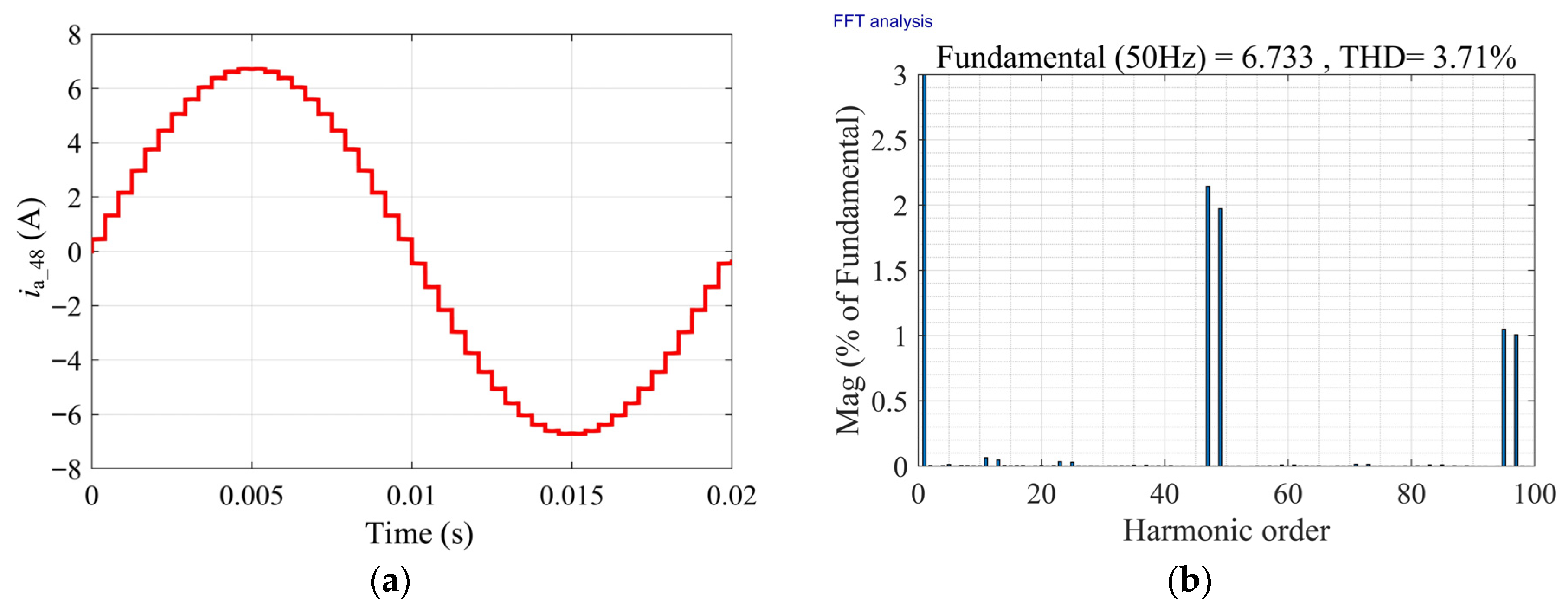
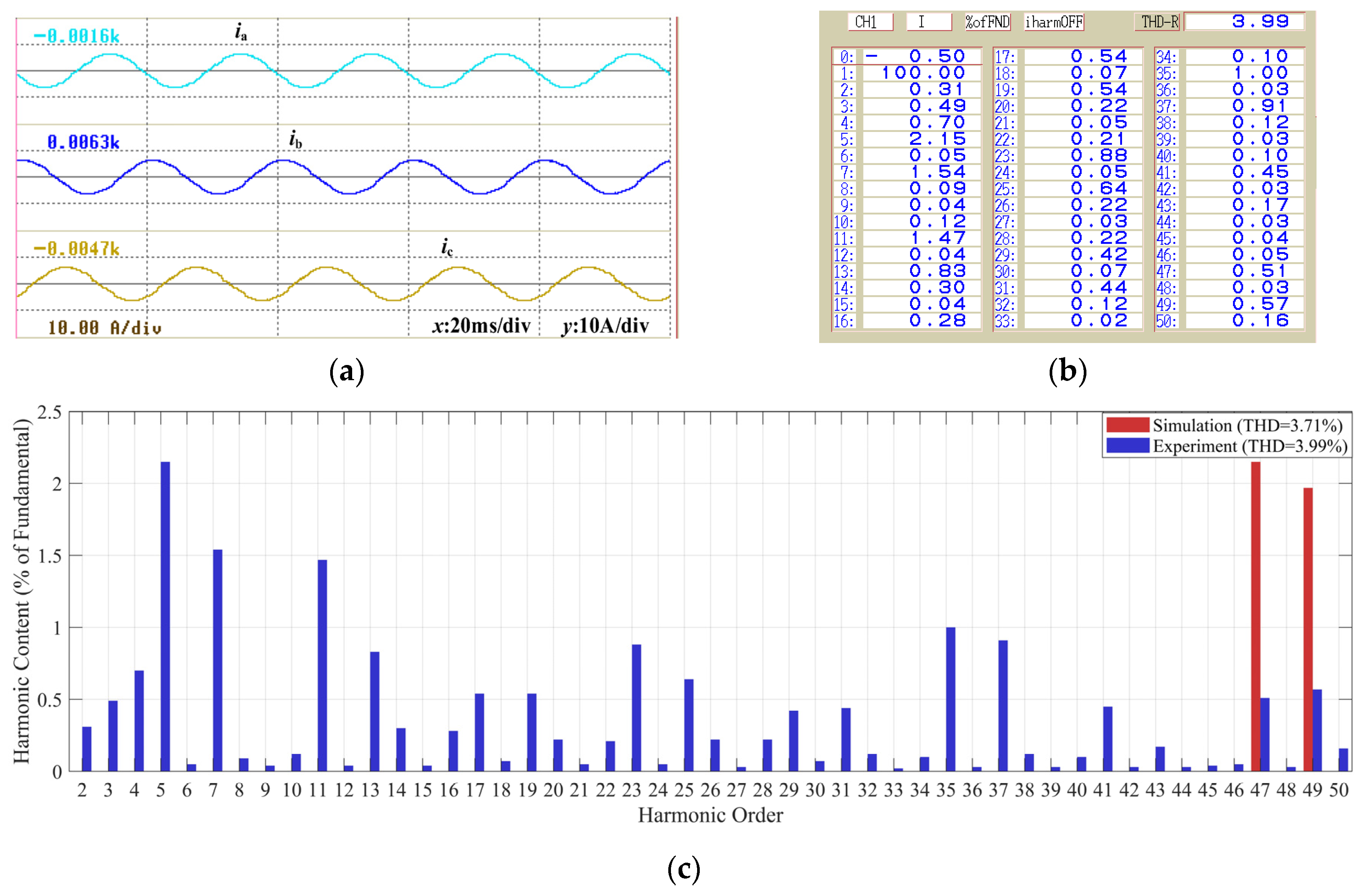
Figure 12 show the simulation and experimental results of the 48-pulse rectifier after implementing the TPHSC. As seen in
Figure 11, the input current was successfully modulated into a 48-step waveform, which was closer to sine. The simulated THD was reduced to 3.71%, while the experimental measurement showed a slightly higher value of 3.99%.
The results confirmed the core theoretical function of the TPHSC: the dominant characteristic harmonics of the original 12-pulse rectifier (e.g., the 11th, 13th, 23rd, and 25th) were effectively suppressed, as evidenced by the experimental spectrum.
Figure 12c shows the comparison between
Figure 11b and
Figure 12b. As shown in
Figure 12c, the perfect cancellation of low-order harmonics was not achieved in the experiment. The residual harmonics stemmed from practical non-idealities inherent to the physical system, including slight imbalances in the three-phase supply and manufacturing tolerances and imbalance factors in the transformer and the TPHSC. These factors introduced slight deviations in current sharing and phase relationships, thereby limiting the complete annihilation of low-order harmonic components as predicted by the ideal simulation.
From
Figure 12c it can be obtained that, although the TPHSC was theoretically designed to cancel specific higher-order harmonics (e.g., 11th and 13th), its implementation also led to a significant reduction in low-order non-characteristic harmonics (e.g., 2nd and 4th). This directly resulted from the improved system symmetry introduced by the TPHSC. In MPRs, the presence of even-order harmonics (like the 2nd and 4th) is a classic indicator of system imbalance, originating from asymmetries in three-phase voltages, transformer windings, or diode characteristics. By providing more balanced and interleaved current paths, the TPHSC effectively mitigated these inherent asymmetries. Consequently, the sources of the low-order, non-characteristic harmonics were suppressed, leading to their observed reduction in the input current spectrum.
In
Figure 11b, the simulated spectrum shows distinct peaks at the theoretical 47th and 49th harmonics, whereas their magnitudes were negligible in the experiment. This discrepancy was attributed to the frequency-dependent parasitic effects of the real passive components. Although the TPHSC operates by reconstructing a multi-step waveform at the DC side to modulate the AC input current, the practical balancing reactors possess inter-winding capacitance and exhibit a significant increase in equivalent series resistance at high frequencies due to skin and proximity effects. These parasitics alter the network’s high-frequency impedance, causing the physical TPHSC to function as an effective low-pass filter. Consequently, the very high-order harmonic currents crucial for the ideal 48-step waveform are strongly attenuated before reaching the grid side. This effect, combined with the non-ideal switching characteristics of practical diodes, explains the observed deviation.
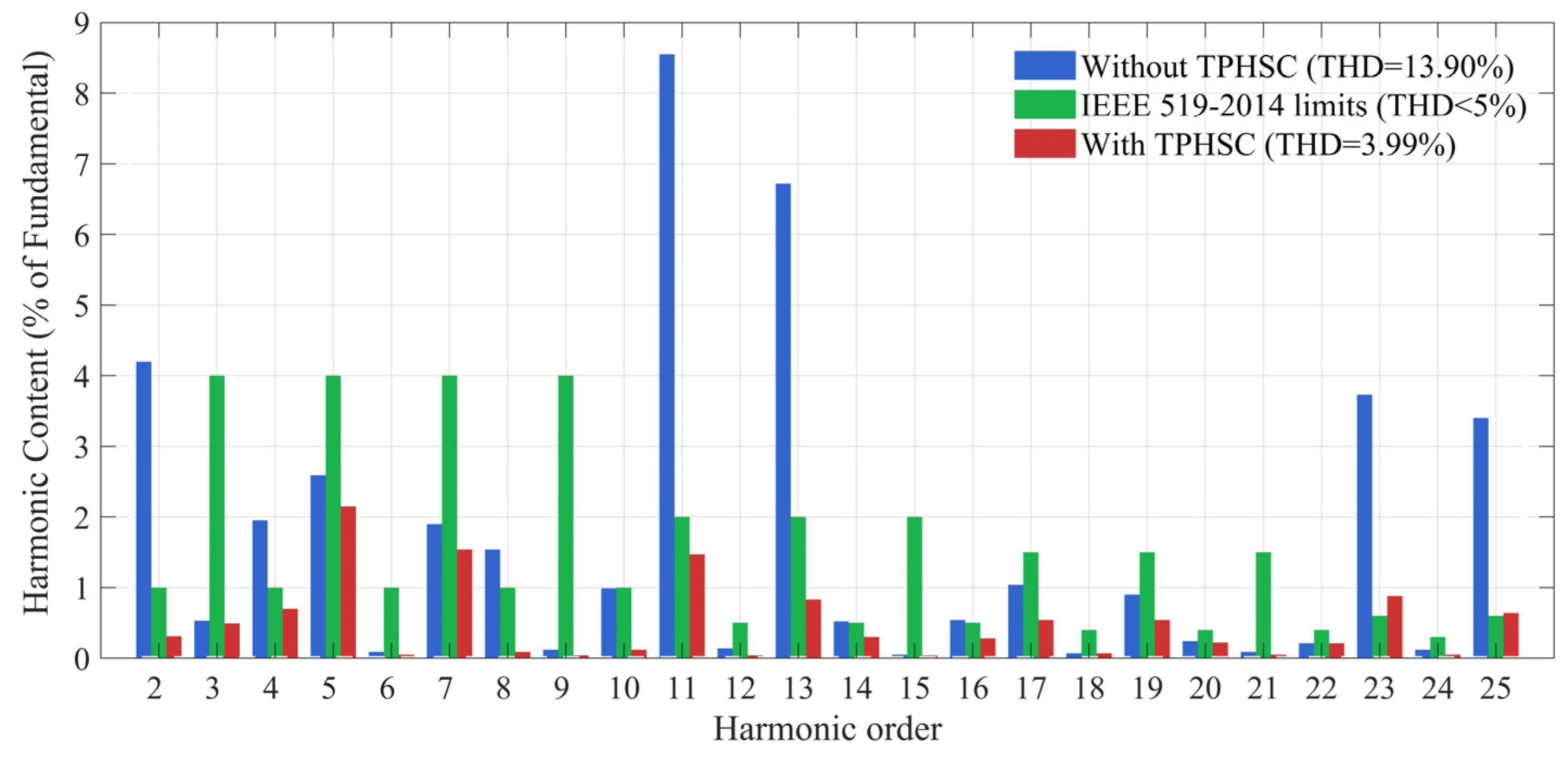
Ultimately, the deviations between the ideal simulation and the experimental measurements primarily stemmed from the inevitable tolerances and parasitic effects inherent in practical manufacturing processes. However, these practical deviations do not detract from the validation of the proposed method. Firstly, the substantial suppression of the primary target harmonics (11th, 13th, 23rd, and 25th) were unequivocally achieved. Secondly, the final measured THD of 3.99% represents an improvement which fell within the 5% limit of the IEEE 519-2014 standard [
22], as visually consolidated in the comparative chart of
Figure 13.
Based on the harmonic spectra in
Figure 10d and
Figure 12b,
Figure 13 presents a comparative analysis of the harmonic contents up to the 25th order under three conditions. This range was selected as it aligns with the scope of key industrial standards and represents the dominant low-order harmonics of practical concern. The comparison included the original 12-pulse rectifier without the TPHSC, the proposed 48-pulse rectifier with the TPHSC, and the corresponding limits of IEEE 519-2014 (defined for systems with a short-circuit ratio of 20–50 and a THD limit of 5%).
From
Figure 13, it can be obtained that the proposed TPHSC achieved a remarkable performance improvement. The input current THD was reduced from 13.90% to 3.99%. More specifically, the characteristic harmonics of the 12-pulse rectifier (11th and 13th) were suppressed by 82.8% and 87.6%, respectively. Furthermore, the low-order non-characteristic harmonics, which primarily originated from system imbalances (e.g., 2nd and 4th at 4.20% and 1.95% initially), were significantly attenuated to 0.31% and 0.70%, respectively.
A critical observation is that after applying the proposed suppression method, the harmonic contents of all orders from second to twentieth fell below the limits set by IEEE 519-2014. This confirmed that the proposed topology not only enhances power quality theoretically but also ensures compliance with stringent industrial grid codes.
Figure 14 shows the experimental results of the input three-phase phase voltages (
ua,
ub, and
uc) and output voltages (
uL1 and
uL2) of the main circuit. From
Figure 14a, it can be seen that the RMS value of the input phase voltage was 71 V. From
Figure 14b, it can be seen that
uL1 and
uL2 were six-pulse waves with a 30° phase difference, meeting the design requirements of the main circuit based on the DCT.
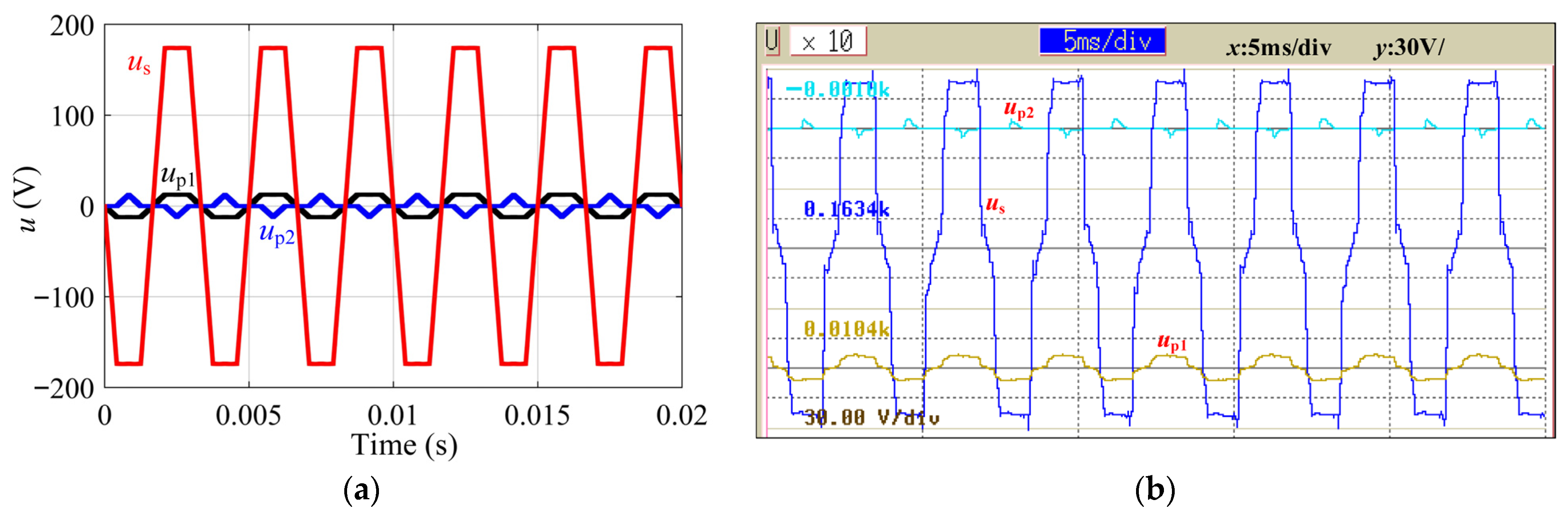
Figure 15 shows the simulation and experimental results of the waveforms of the IPRs’ terminals voltages
up1,
up2 and
us. From
Figure 15, it can be obtained that
up1 and
us were trapezoidal waves with the same phase and
m-times difference in amplitude, and
up2 is a triangular wave with a 0.5 duty cycle, which was complementary to
up1. The results are consistent with the theoretical analysis.
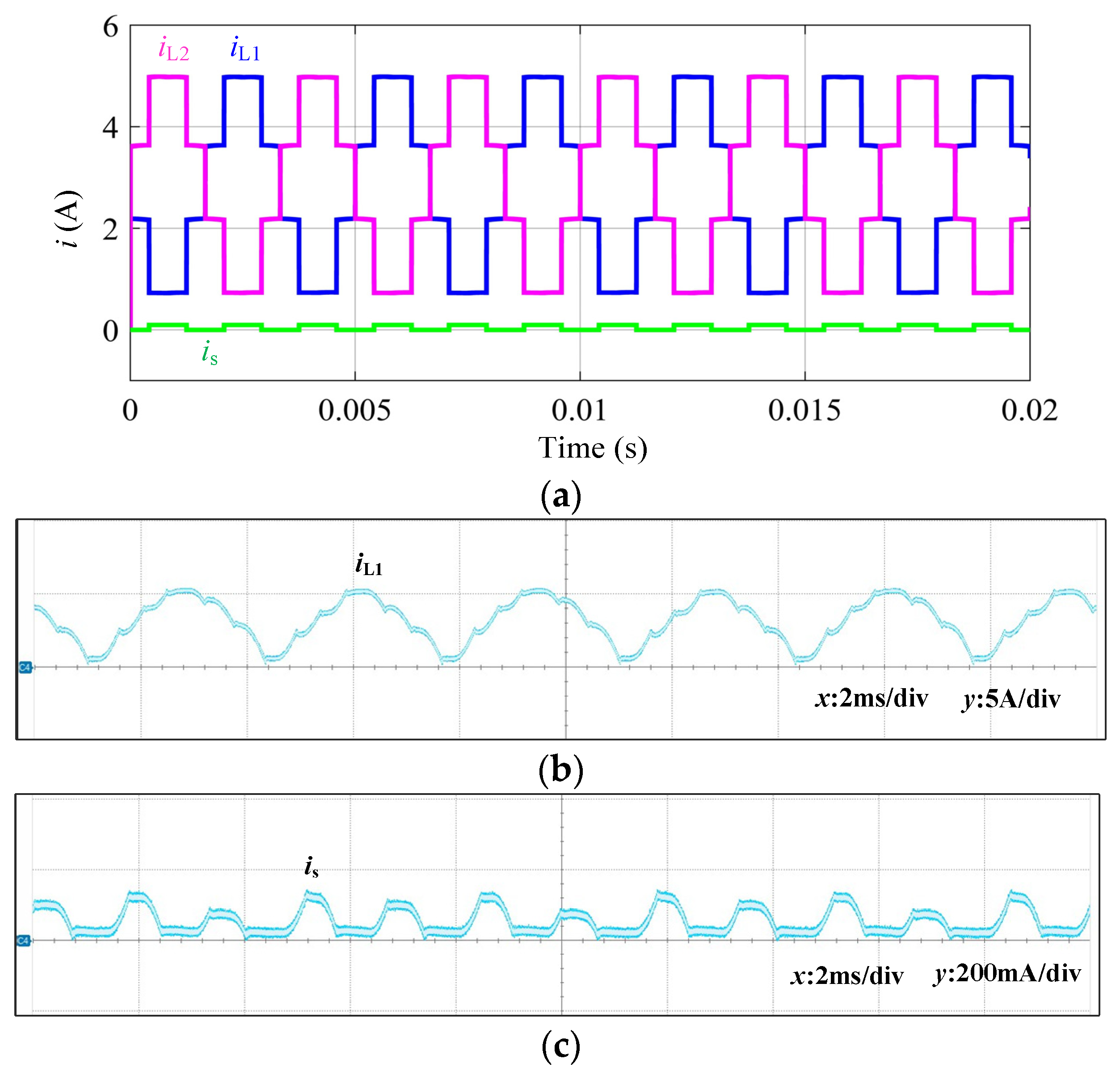
Figure 16 shows the simulation and experimental results of the waveforms of
iL1,
iL2, and
is. From
Figure 16a, it can be obtained that
iL1 and
iL2 exhibited eight-step waves with a 30° phase difference, and
is was close to a square wave with a 0.5 duty cycle, which is consistent with the theoretical analysis. Due to the filtering effect of leakage inductance from the transformer, the experimental results of
iL1 and
is shown in
Figure 16b,c were smoother than the simulation results.
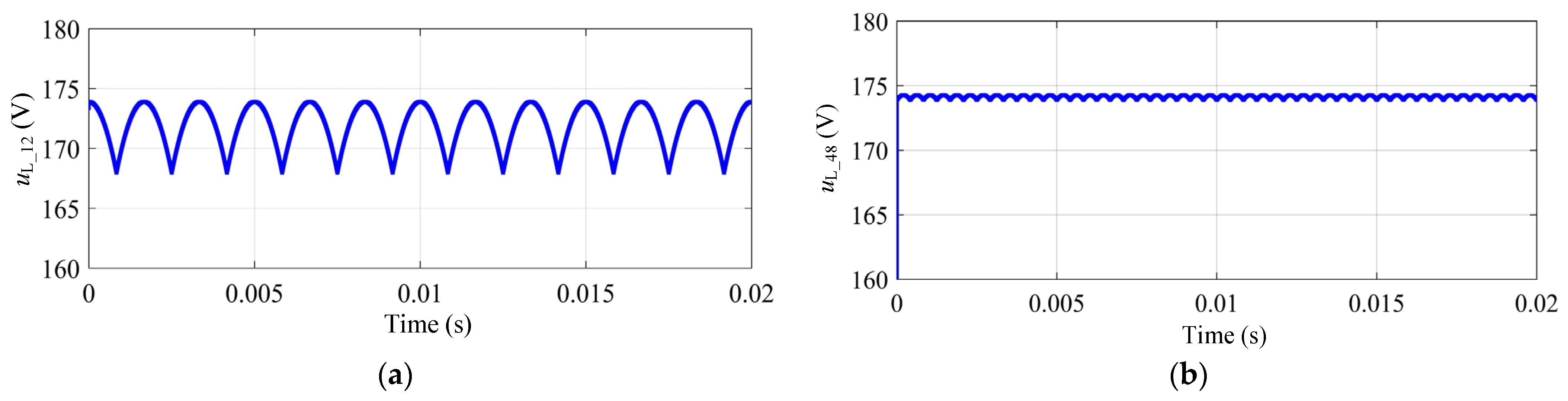
Figure 17 shows the simulation and experimental results of the load voltage before using the TPHSC, and
Figure 18 shows the simulation and experimental results of the load voltage and current after using the TPHSC. Comparing
Figure 17a,b, it can be obtained that after using the TPHSC, the pulse number of the load voltage increased from 12 to 48 pulses within a power cycle, and the voltage ripple was greatly reduced, which indicated that the TPHSC had the function of pulse-number quadrupling. From
Figure 18a,b, it can be seen that in the experiment, the output voltage and current of the proposed rectifier were approximately constant.
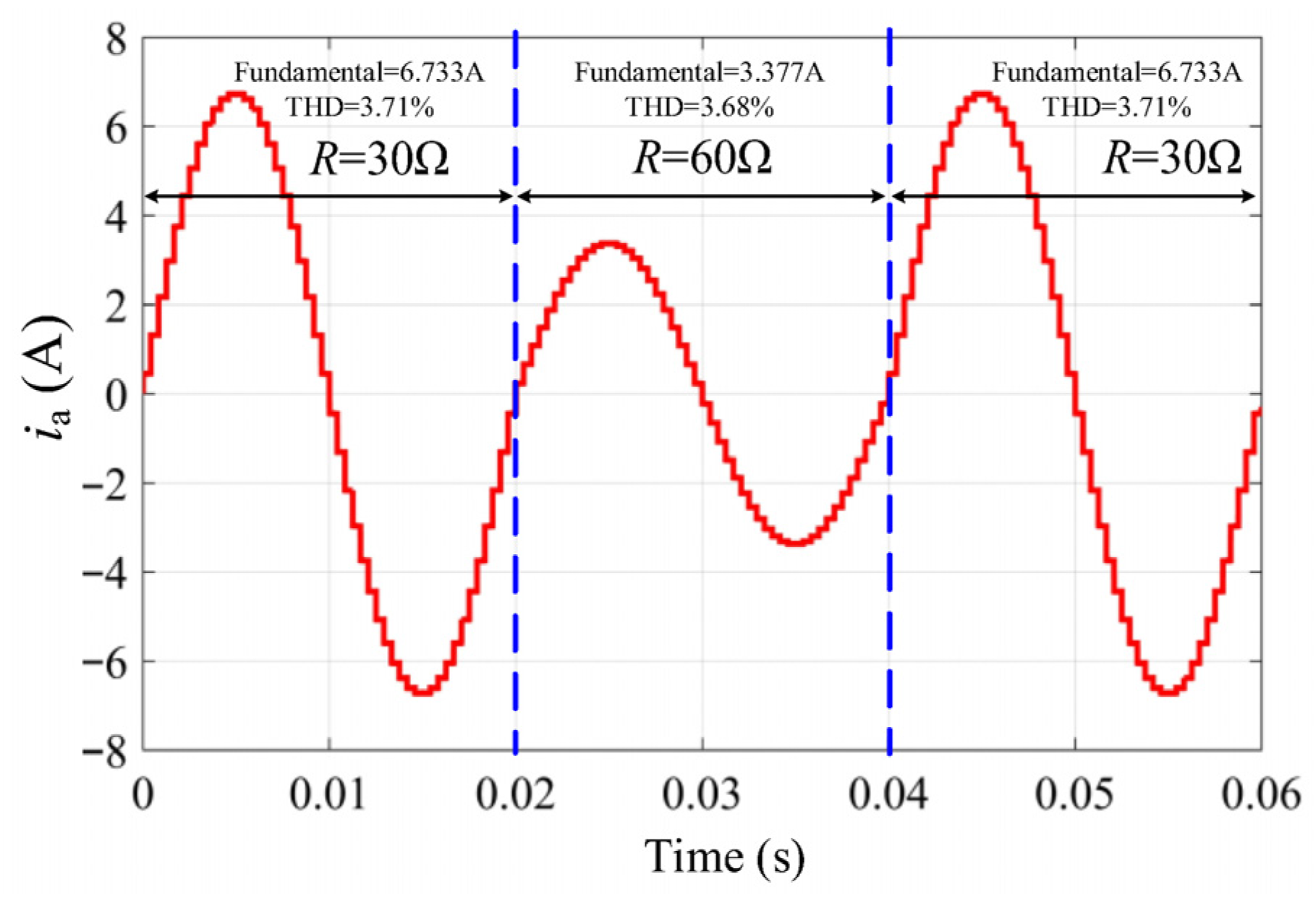
To evaluate the robustness of the proposed 48-pulse rectifier and its harmonic suppression circuit under dynamic operating conditions, a simulation study on load-step changes was conducted. In the simulation, the load resistance was stepped from 30 Ω to 60 Ω at 0.02 s, and then it was stepped back to 30 Ω at 0.04 s, thereby simulating the typical dynamic processes of output power halving and recovery.
Figure 19 shows the load-step simulation waveform of the input current
ia. During the load transients at 0.02 s and 0.04 s, the amplitude of the input currents adjusted smoothly with the power change. Most importantly, the 48-step waveform characteristic of the input currents remained well preserved throughout the entire transient process and in the new steady states, with no observable waveform distortion or significant increase in low-order harmonics. In conclusion, the load-step simulation result demonstrates that the proposed rectifier system not only achieved excellent harmonic suppression performance in a steady state but also ensured highly stable input-current waveform quality and harmonic characteristics when facing load dynamics.
Table 2 presents a performance comparison between the proposed 48-pulse rectifier and previous studies. Compared with the rectifier in [
20], the proposed topology eliminated the need for additional control, featuring higher reliability, a lower cost, and a more stable reduction in grid-side harmonic contents in the delta-connected rectifiers. Compared with the rectifiers and the harmonic suppression circuits reported in [
7,
9,
10,
15] and [
19], the proposed TPHSC exhibited significantly enhanced harmonic suppression capability. Although its diode loss increased slightly, the total capacity of the IPRs was substantially reduced, which indicated a low cost for harmonic suppression.
5. Conclusions
This paper has proposed and validated a novel 48-pulse rectifier topology based on a delta-connected transformer (DCT) and a triple-passive harmonic suppression circuit (TPHSC). The core innovation lies in the TPHSC, which has the function of pulse-number quadrupling, effectively reconstructing the input current into a 48-step waveform. This design offers a superior harmonic cancellation capability compared to conventional passive methods while maintaining simplicity and reliability.
A comprehensive theoretical analysis was employed to determine the optimal turns-ratio parameters for the IPRs, minimizing the magnetic component requirements. The calculated total capacity of the magnetic devices accounted for only 26% of the output load power, indicating a compact and potentially cost-effective magnetic design.
The simulation and experimental results conclusively demonstrate the effectiveness of the proposed system:
- (1)
The input current waveform was successfully transformed from a 12-step to a 48-step shape.
- (2)
A significant reduction in harmonic pollution was achieved. The measured THD of the input current was reduced to 3.99%, a substantial improvement from the 12-pulse benchmark of 13.90%. This final THD value falls below the 5% threshold stipulated by the IEEE 519-2014 standard, demonstrating the practical efficacy of the topology in meeting stringent grid-connection requirements.
A detailed analysis of the discrepancies between ideal simulation and experimental measurements offered valuable engineering insights. The presence of low-order, non-characteristic harmonics in experiments was explained in the context of practical system imbalances. The attenuation of higher-order characteristic harmonics (e.g., 47th and 49th) was reasonably attributed to the parasitic effects of magnetic components at elevated frequencies (a common phenomenon in practical high-order passive filtering). Furthermore, the supplementary simulations verified that the system exhibits a robust dynamic performance under load step-change conditions.
In summary, the proposed 48-pulse rectifier with the TPHSC offers a simple, reliable, and fully passive solution for high-power-quality AC-DC conversion, characterized by superior harmonic suppression and verified to be in compliance with IEEE 519, with a robust operation. These attributes make it a competitive option for industrial applications where grid power quality and cost-effectiveness are critical.