3.2. Analysis of Orthogonal Experiment Results
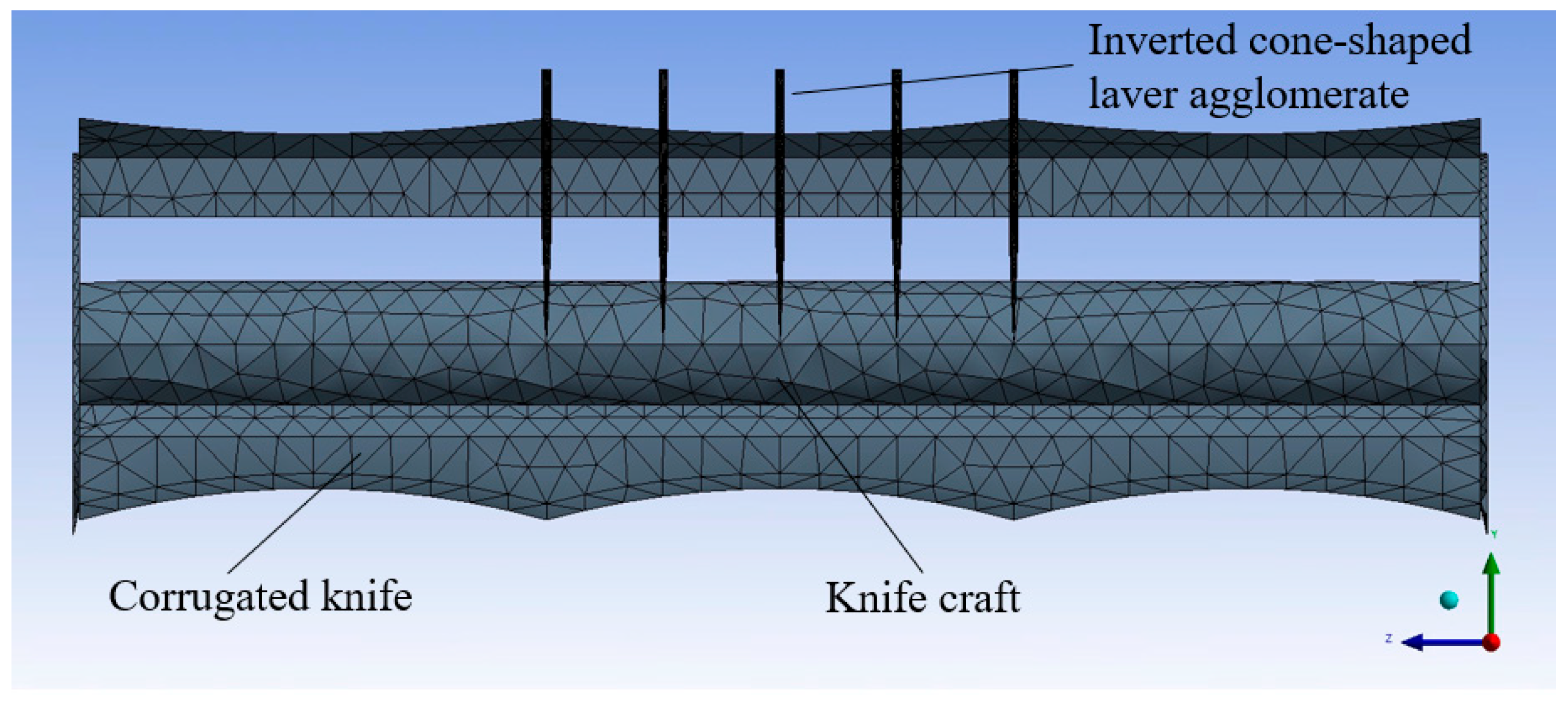
The tool blade in this simulation is corrugated, so at different points in the blade, the laver and tool contact force is also different. So, this simulation test analyses five laver pieces, with laver between the same spacing in the arrangement of the tool’s arc edge, to determine the final test results of the absolute force average value for the five sheets of laver. The test results are shown in
Table 5.
- (1)
Fx Response surface test analysis
The simulation data in
Table 5 were analyzed by ANOVA to obtain the significance ANOVA table for
, as shown in
Table 6. In
Table 6, the
p-value of the model is less than 0.0001, so the effect of the model on
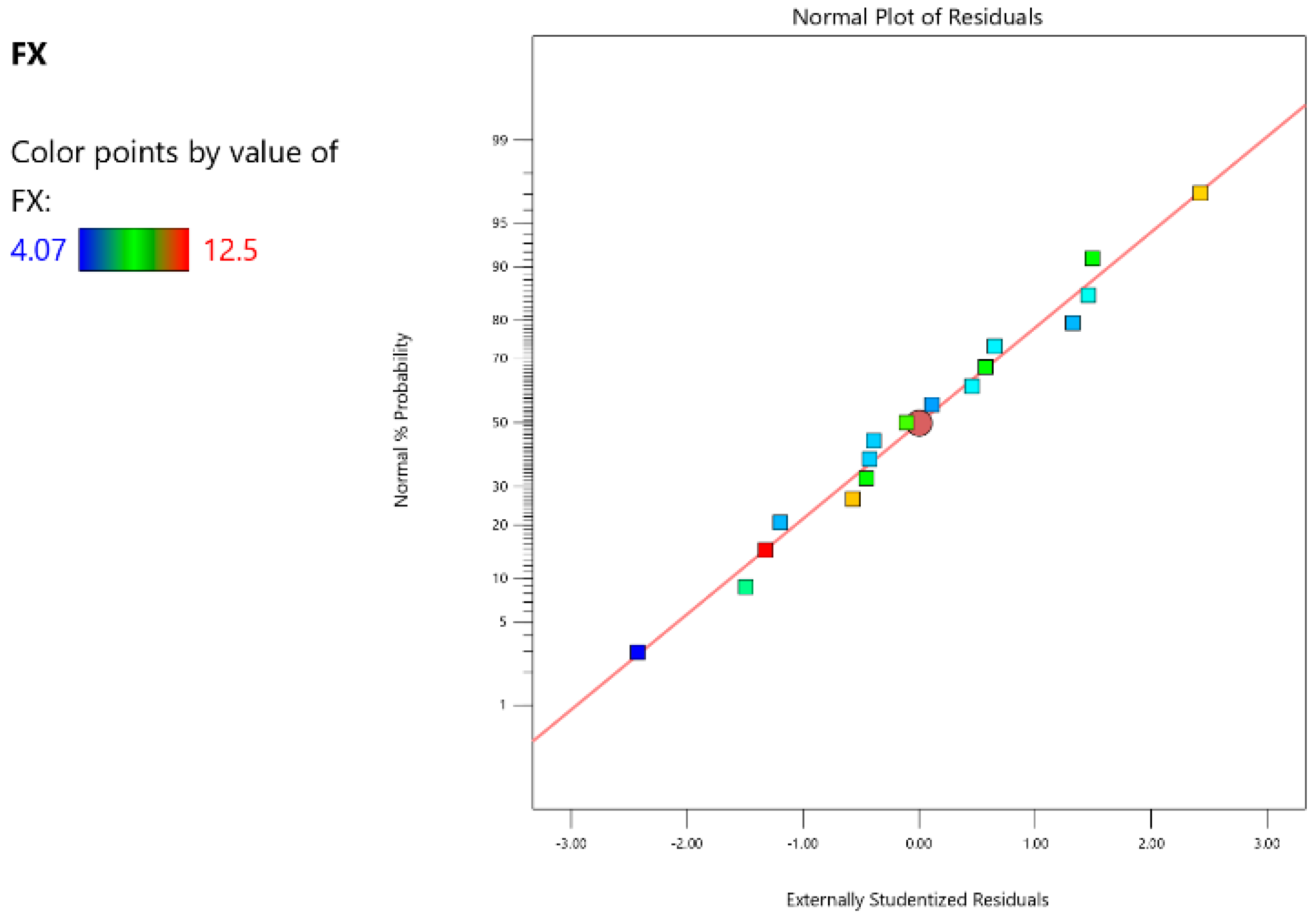
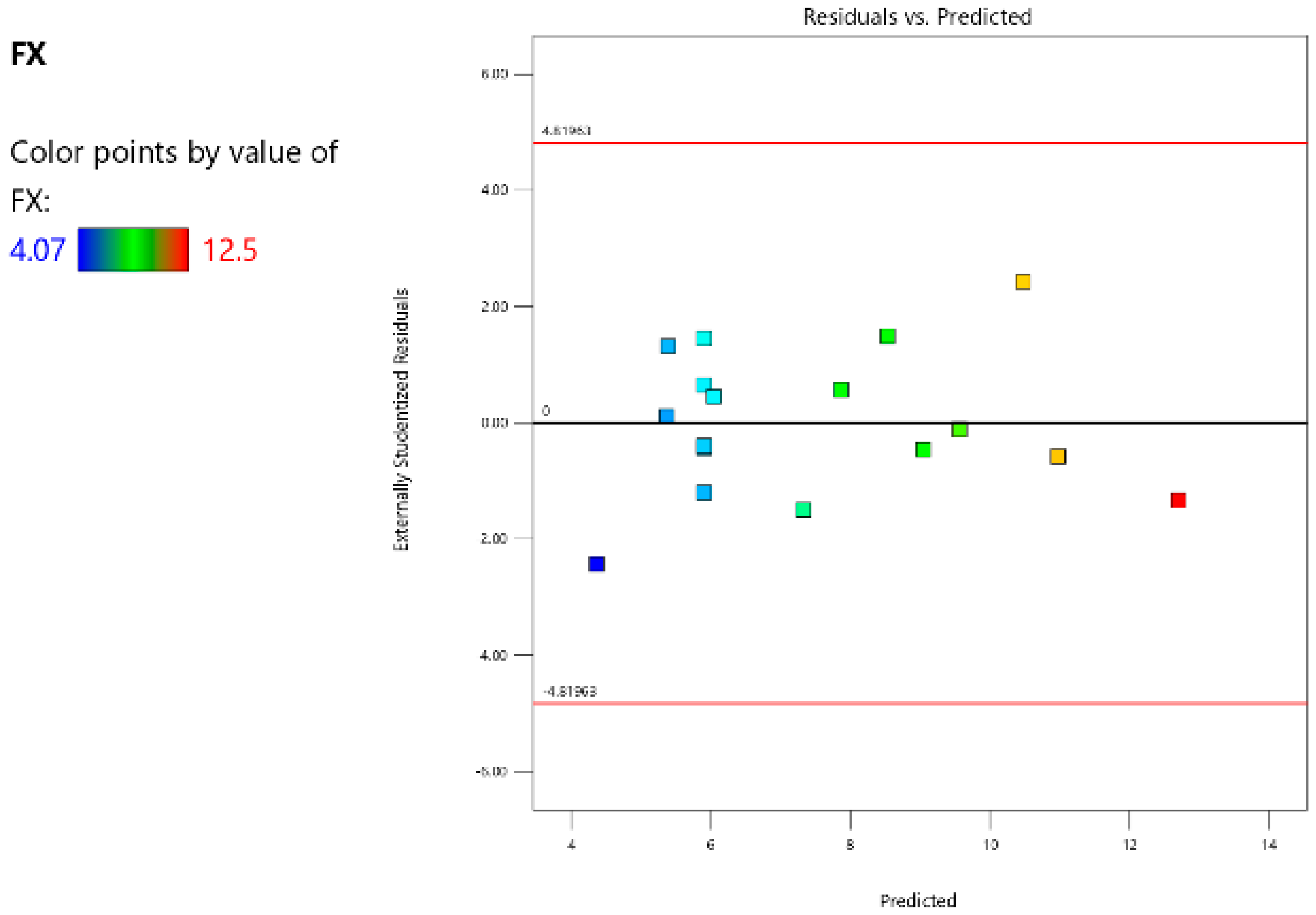
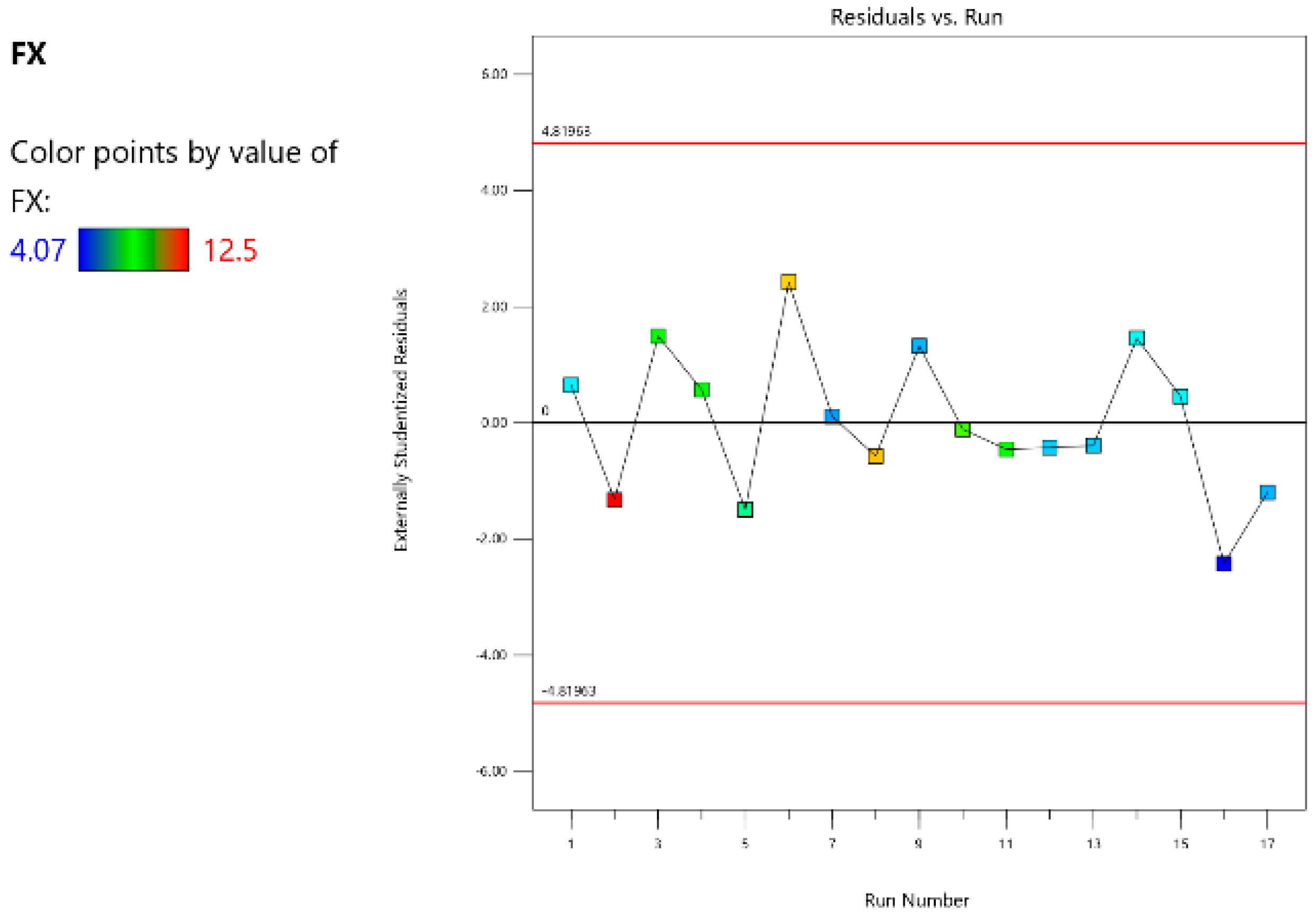
is highly significant, and the model usability is high. In addition, the reliability of the model was validated through regression diagnosis (see
Appendix A,
Figure A1,
Figure A2 and
Figure A3 for details). The diagnosis of all F
X responses showed that their residuals followed a normal distribution, had homogeneity of variance, and were independent of each other, and no strong outliers were found. This indicates that the mathematical model established in this article is effective, and its statistical inference conclusions are reliable. The value of
p for the entire model misfit term is 0.3293 > 0.05, and the model has a high degree of fit. The larger the F value, the greater the contribution of the factors. From this, it can be determined that the contributions of each factor to
have the following order of precedence: slip angle (A) > curved edge angle (C) > tool inclination angle (B).
The significance is determined based on the
p-value, which is obtained from
Table 6:
p-values of factors A, B, C, AC, BC, A
2, B
2, and C
2 are less than 0.01 for highly significant effects, and the
p-value of AB is more than 0.05, so it is not significant. Therefore, multivariate fitting of the simulation test results was performed to obtain the radial force
. The fitting equation for each factor is shown in Equation (16):
The fitted equations were analyzed by performing ANOVA on the
response surface regression model, and after excluding insignificant factors, the fitted equation was obtained, as shown in Equation (17):
where A is the slip angle, B is the tool inclination angle, and C is the curved edge angle.
After removing the insignificant term AB, the adjusted R2 of the simplified model slightly increased from 0.9824 to 0.9845, indicating that the explanatory power of the model for the experimental data was not affected and was slightly improved. More importantly, the predicted R2 significantly increased from 0.9278 to 0.9507, indicating that the simplified model’s predictive ability for new data has been further enhanced. Meanwhile, the standard deviation of the residuals decreased from 0.3156 to 0.2957, indicating an improvement in the accuracy of the model.
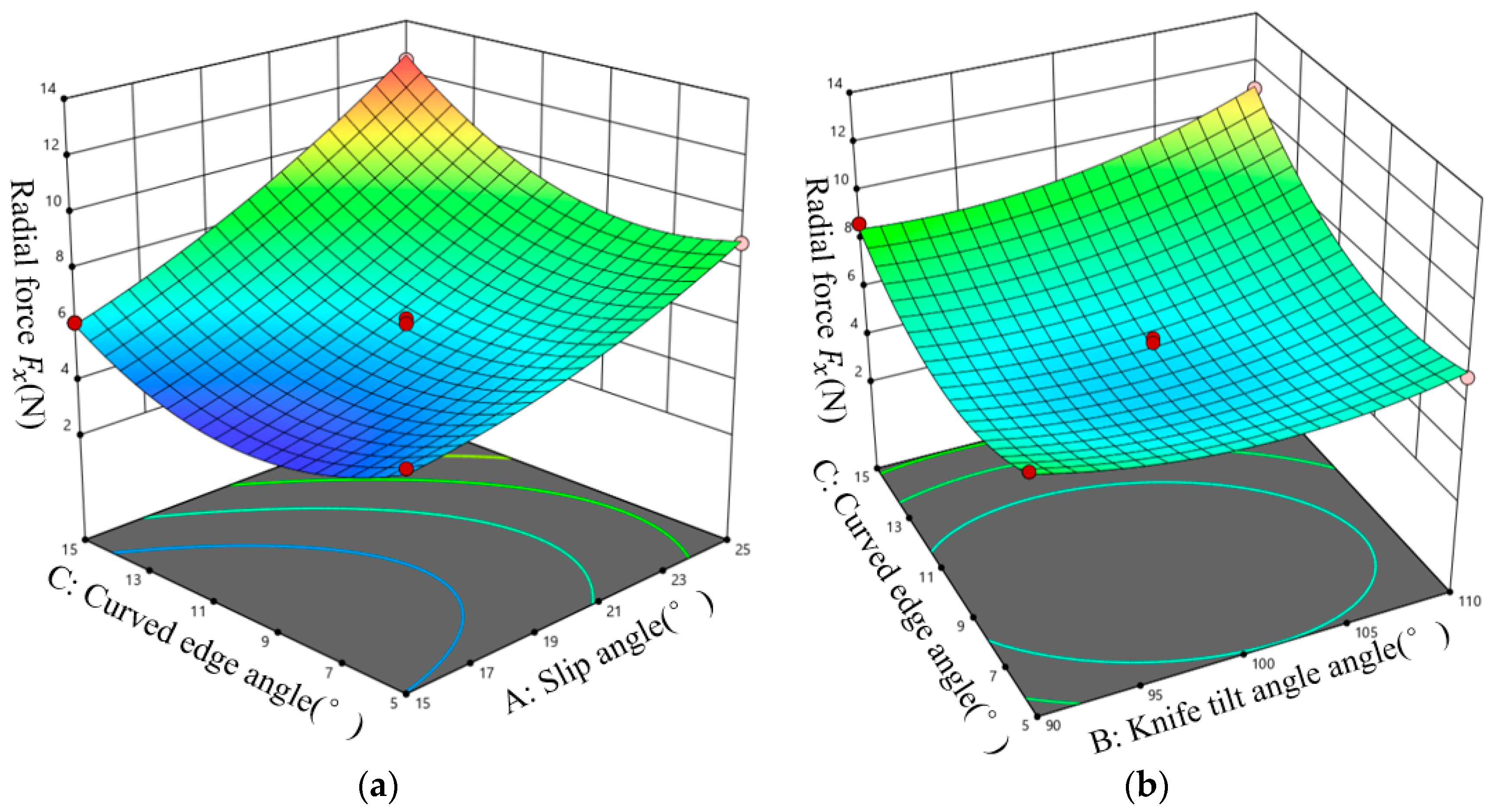
Figure 16a shows the effect of slip angle (A) and curved edge angle (C) on radial force
interaction. It can be seen that at the test level, the two factors have a large influence on
, and there is an interaction effect. In the case of constant slip angle, with the increase in tool curved edge angle,
shows a trend of a slow decrease followed by a gradual increase.
The change in the curved edge angle implies a change in the curved portion of the blade, which may alter the effective rake angle at the moment of impact, thereby affecting the size of . In the case of a constant curved edge angle, with the increase in slip angle, the shows an increasing trend. This is because as the slip angle increases, the blade end becomes sharp and the contact area between the blade and the laver decreases, the pressure increases, and thus the radial cutting force increases. The interaction between the two (AC) reflects the coupling effect of “sharpness” and “cutting angle” on cutting force. This also corresponds with the core innovation of the corrugated blade—turning positive cutting into sliding cutting. Meanwhile, the slip angle and the edge curved edge angle jointly determine the sliding component of the blade relative to the laver, which is the key to reducing cutting resistance and improving cutting quality. When the curved edge angle is between 9 and 11° and the slip angle is 15°, the radial force on the laver is small. When the slip angle is 25° and the curved edge angle is 15°, the radial force on the laver is maximum. From the figure, it can be found that the rate of change of along the direction of slip angle is faster, so the effect of slip angle on is greater than the effect of curved edge angle on .
Figure 16b shows the effect of tool inclination (B) and curved edge angle (C) on the
interaction, from which it can be seen that the response surface plots of two factors on
exist, and there is an interaction. In the case of a constant tool inclination angle, with the increase in curved edge angle,
shows a smooth and then gradually increasing trend. In the case of a constant curved edge angle, with the increase in blade inclination angle,
shows a trend of decreasing first and then gradually rising. At a blade inclination angle between 95 and 105° and a curved edge angle between 9 and 11°,
is smaller, which may be due to the fact that the angle of contact between the laver and the blade edge is smaller, and the radial force is reduced under that condition. At a blade inclination angle of 110° and a curved edge angle of 15°,
is maximum.
The slip angle (A) mainly affects the sharpness of the cutting edge, while the tool inclination angle (B) mainly affects the spatial decomposition of the cutting force. The direct impact paths of the two on the force mechanism of laver are relatively independent, so it is reasonable that their interaction (AB) is not statistically significant.
- (2)
Response surface test analysis
Regression analysis was performed on the simulation data in
Table 5 to obtain the ANOVA results table of F
y. As shown in
Table 7, the
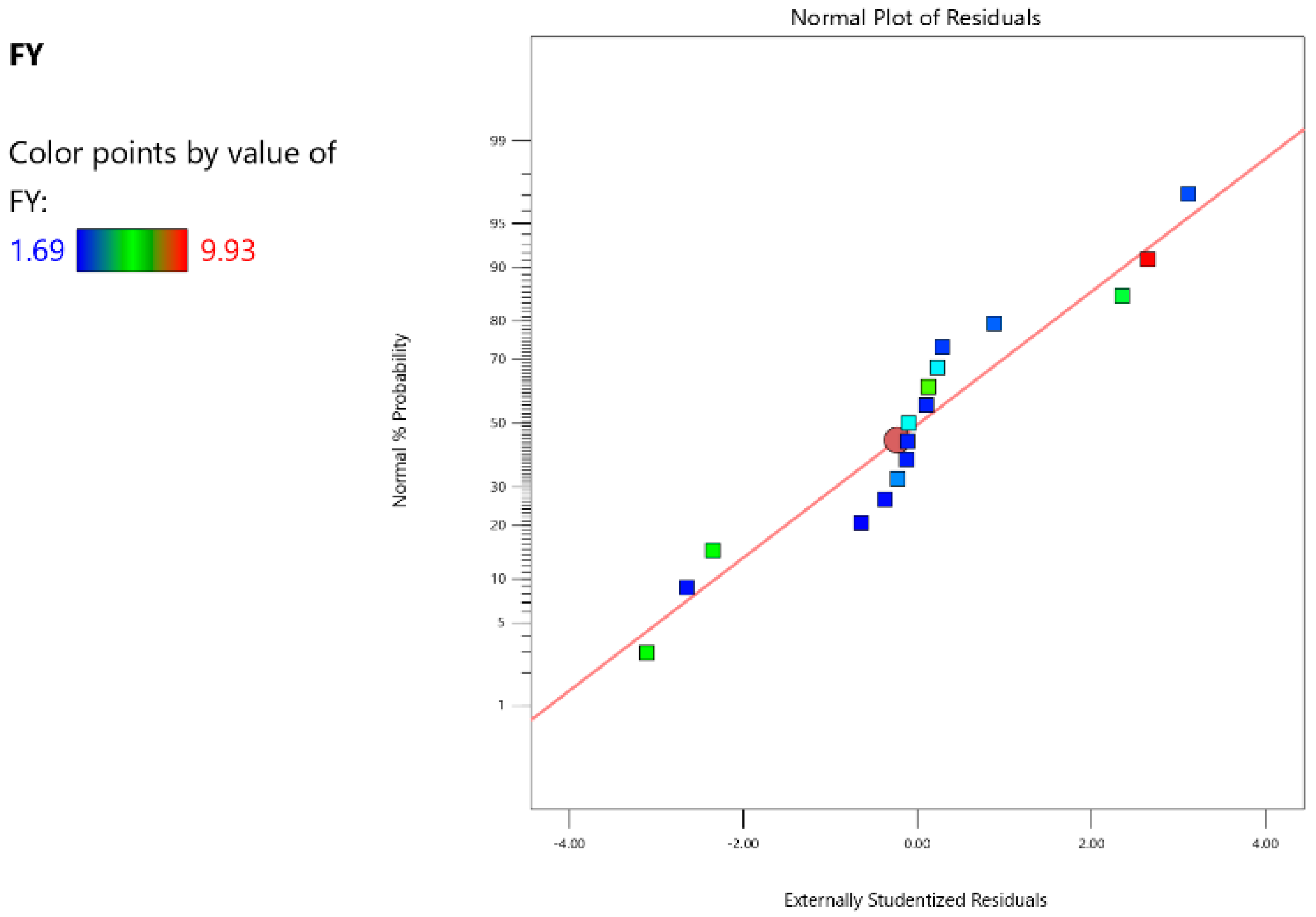
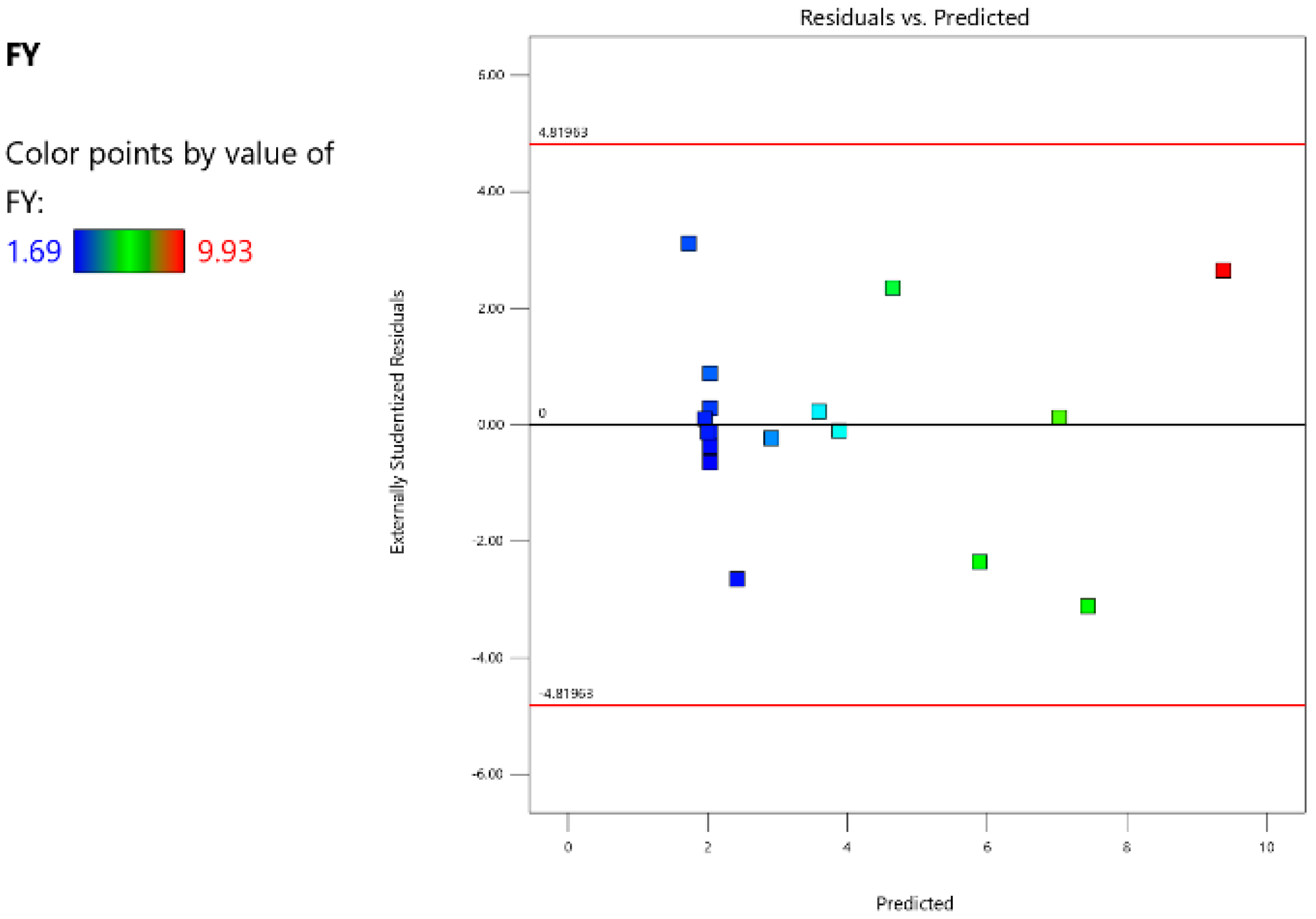
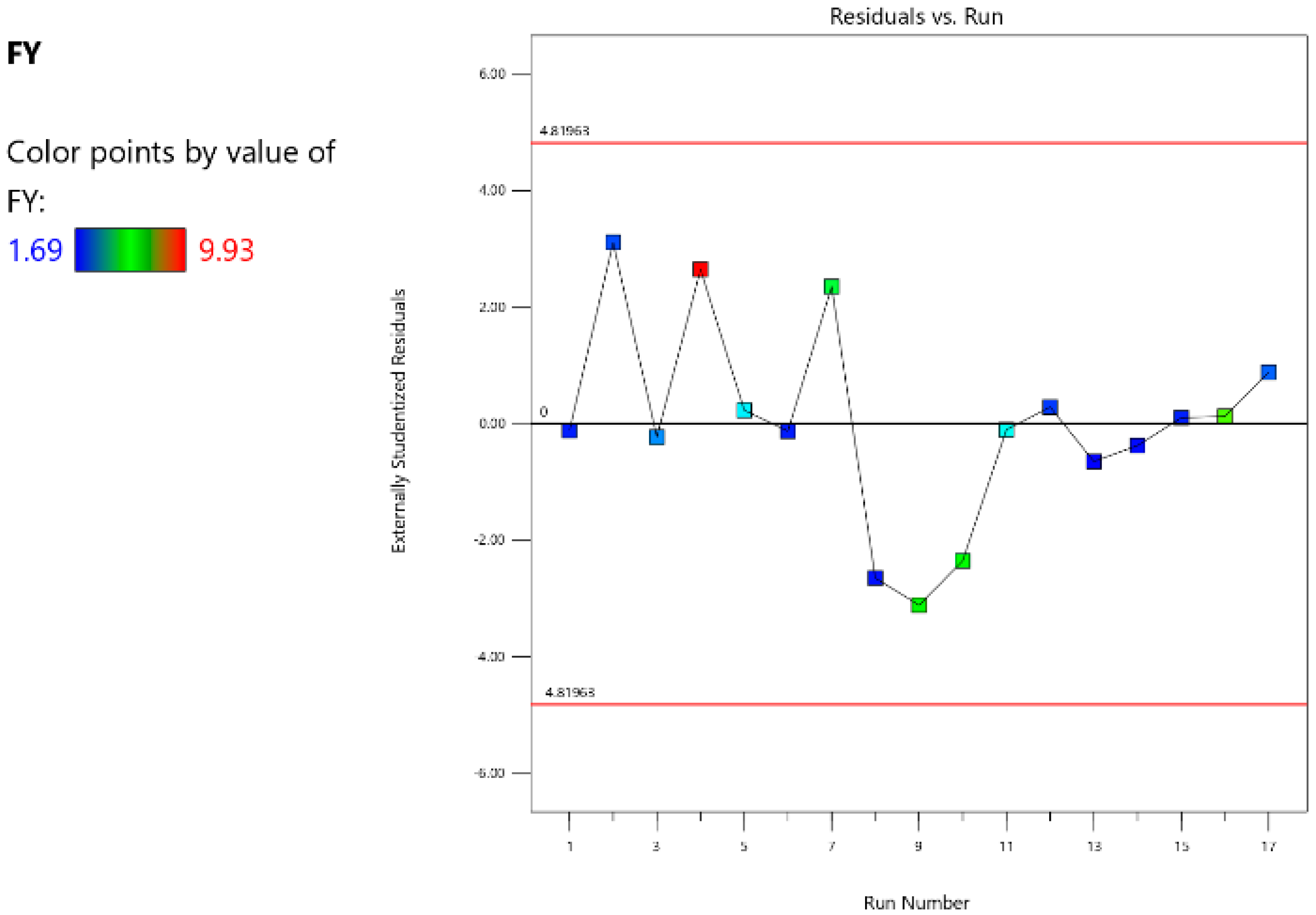
p-value of the regression model is less than 0.0001, indicating that the model is highly significant, the out-of-fit term is not significant, and the model is usable. The reliability of the model was validated through regression diagnosis (see
Appendix A,
Figure A4,
Figure A5 and
Figure A6 for details). Based on the F-value, the influence order of each factor is determined as: curved edge angle (C) > tool inclination angle (B) > slip angle (A).
The degree of significance was determined based on the p-value where factors A, B, C, A2, B2, and BC are highly significant, factors AC and C2 are significant, and AB is not significant, so there is a quadratic relationship between the factors and the response values.
Multivariate fitting of the simulation test results was performed to obtain the effect of the
fitting equation, as shown in Equation (18):
where A is the slip angle, B is the tool inclination angle, and C is the curved edge angle.
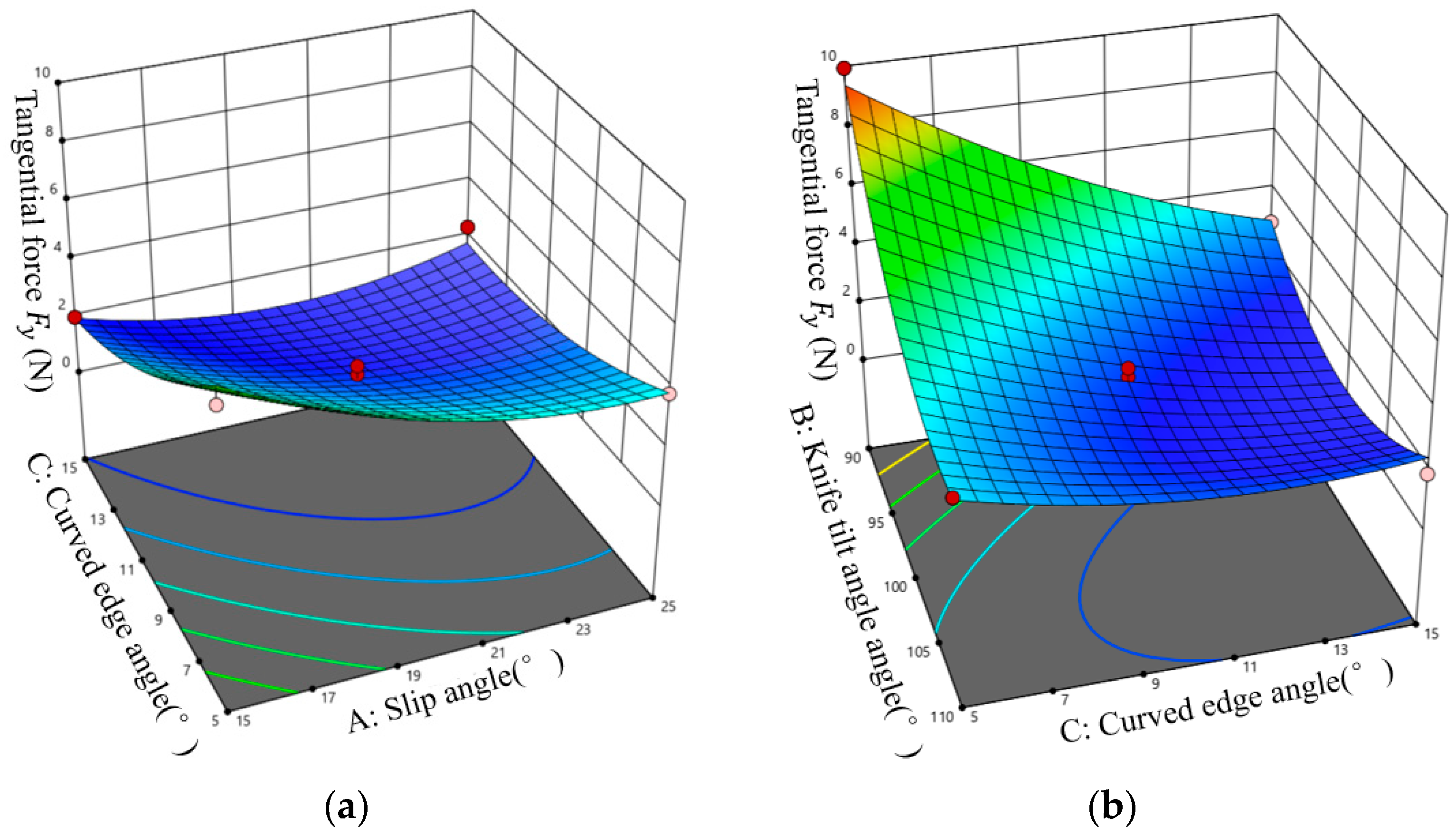
Figure 17a shows the effects of slip angle (A) and curved edge angle (C) on the
interaction, from which it can be seen that a constant curved edge angle and gradually increasing slip angle
shows a tendency of decreasing first and then decreasing smoothly. With a constant slip angle and increasing curved edge angle, the
firstly decreases and then remains steady. When the slip angle is 15°, the curved edge angle is 5°, and
is maximum. The radial force generated by the tool is the largest at this time; the tool provides the largest downward force to the laver and produces the strongest stretching effect on the laver, so the laver may be pulled apart and cause splash loss, which may increase the rate of harvesting loss. When the curved edge angle is between 13 and 15° and the slip angle is between 20° and 25°,
is smaller; this is because when the slip angle of the tool is between 20~25° and the curved edge angle is between 13~15°, it is easier for the tool to cut the laver, and the laver is cut off, so it suffers less tangential force. At this time, more broken laver has been cut off, which plays a positive role in realizing the low-loss harvesting of laver.
Figure 17b shows the effect of tool inclination angle (B) and curved edge angle (C) on the
interaction, and it can be seen that the two factors have a great influence on
and there is an interaction effect. Among them, when the tool inclination angle is small, with the gradual increase in the curved edge angle,
shows a significant decrease and then tends to flatten out. This may be because with an increase in the curved edge angle, the blade and laver slip-cutting angle increases, making it is easier for the blade to cut into the laver, so the relative friction displacement between the blade and the laver is smaller, and the tensile force on the laver is smaller. At a curved edge angle of 5° and a blade inclination angle of 90°, the
is maximum, and at this time, the laver is more inclined to be pulled off. At a curved edge angle of 9~11° and a blade inclination angle of 100~105°,
is smaller.
- (3)
Fz Response surface test analysis
Regression analysis was performed on the simulation data in
Table 5 to obtain the significance ANOVA table of
, as shown in
Table 8. The regression model has a
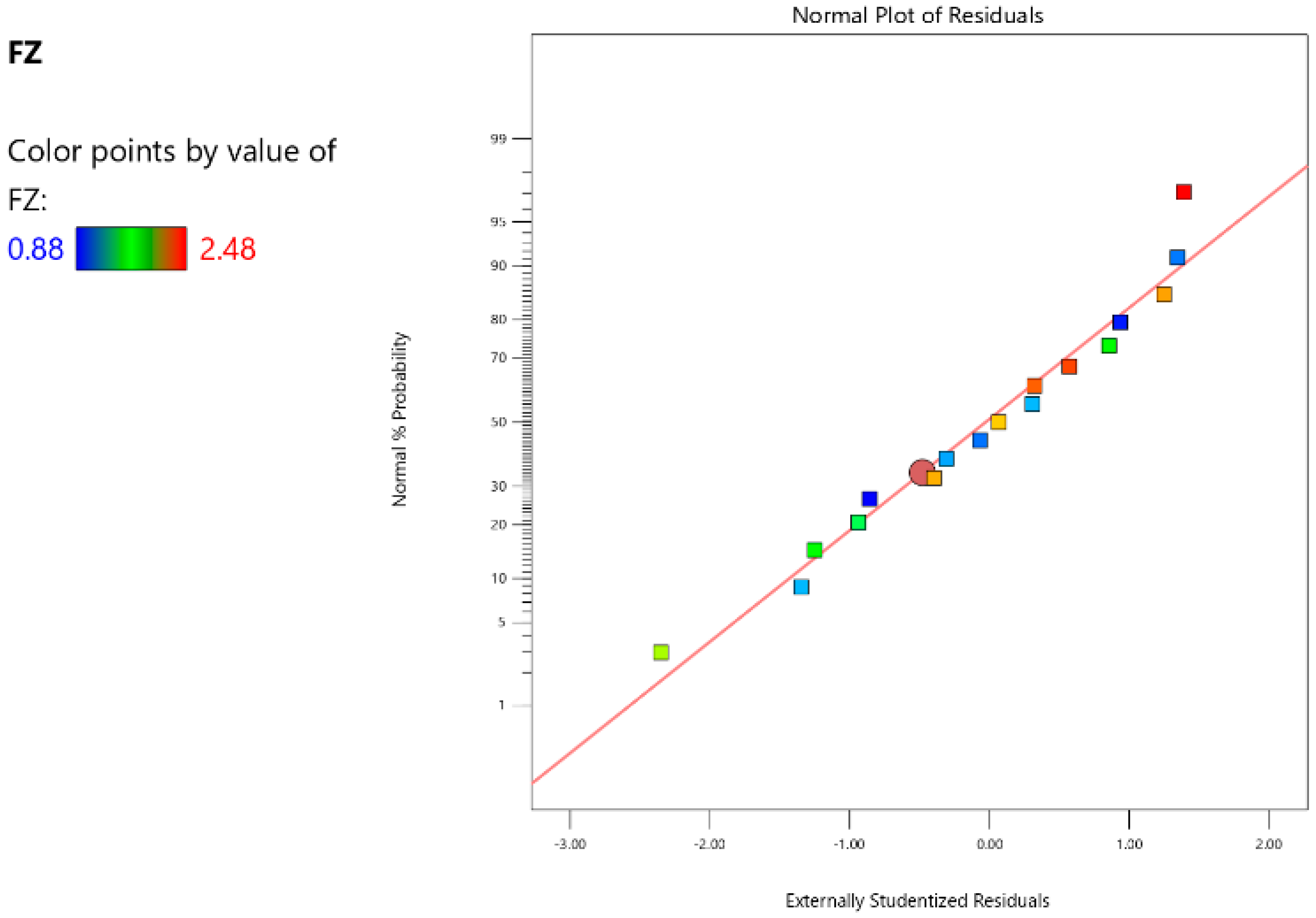
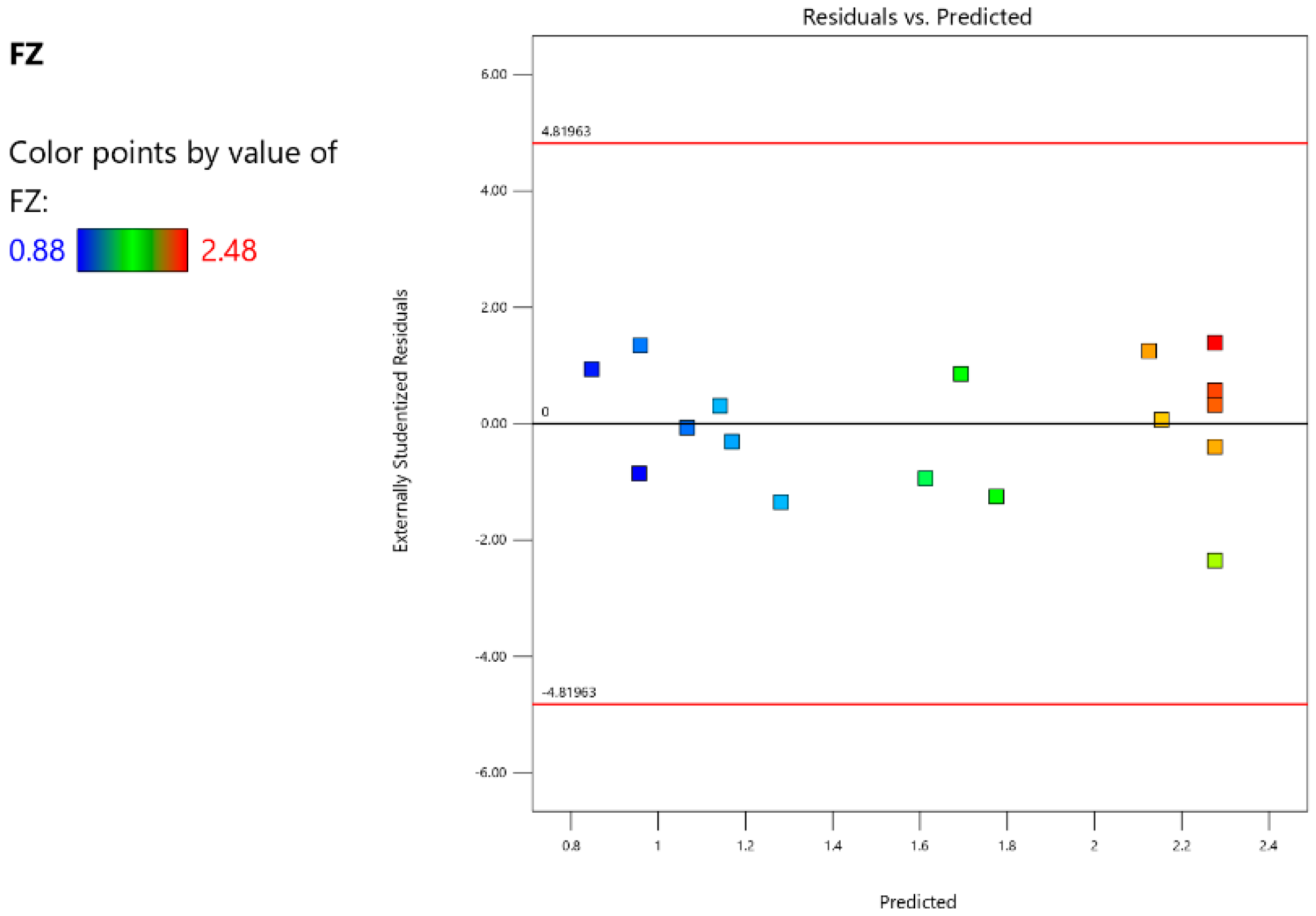
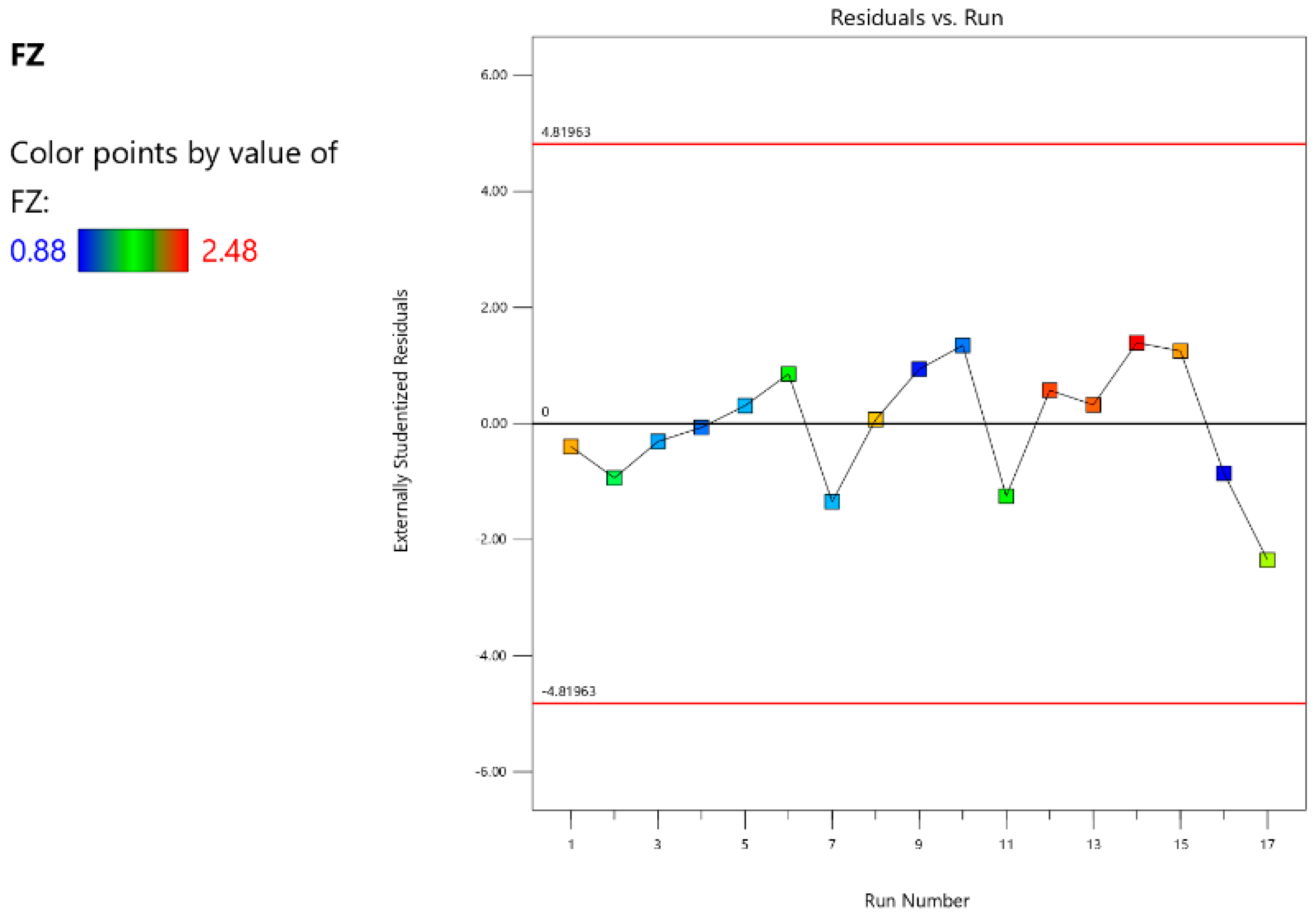
p-value of 0.0005, suggesting that the model has a significant effect on Fz. The reliability of the model was validated through regression diagnosis (see
Appendix A,
Figure A7,
Figure A8 and
Figure A9 for details). The order of influence of each factor on Fywas determined as follows: curved edge angle (C) > tool inclination (B) > slip angle (A).
The significance was determined based on the
p-value, and it can be obtained from
Table 8: B, C, A2, B2, and AC are highly significant effects, BC and C2 are significant effects, and A and AB are not significant. The simulation test results were multivariate fitted using Design-Expert 13.0 software to obtain the effect of
on the fitting equation, as shown in Equation (19):
where A is the slip angle, B is the tool inclination angle, and C is the curved edge angle.
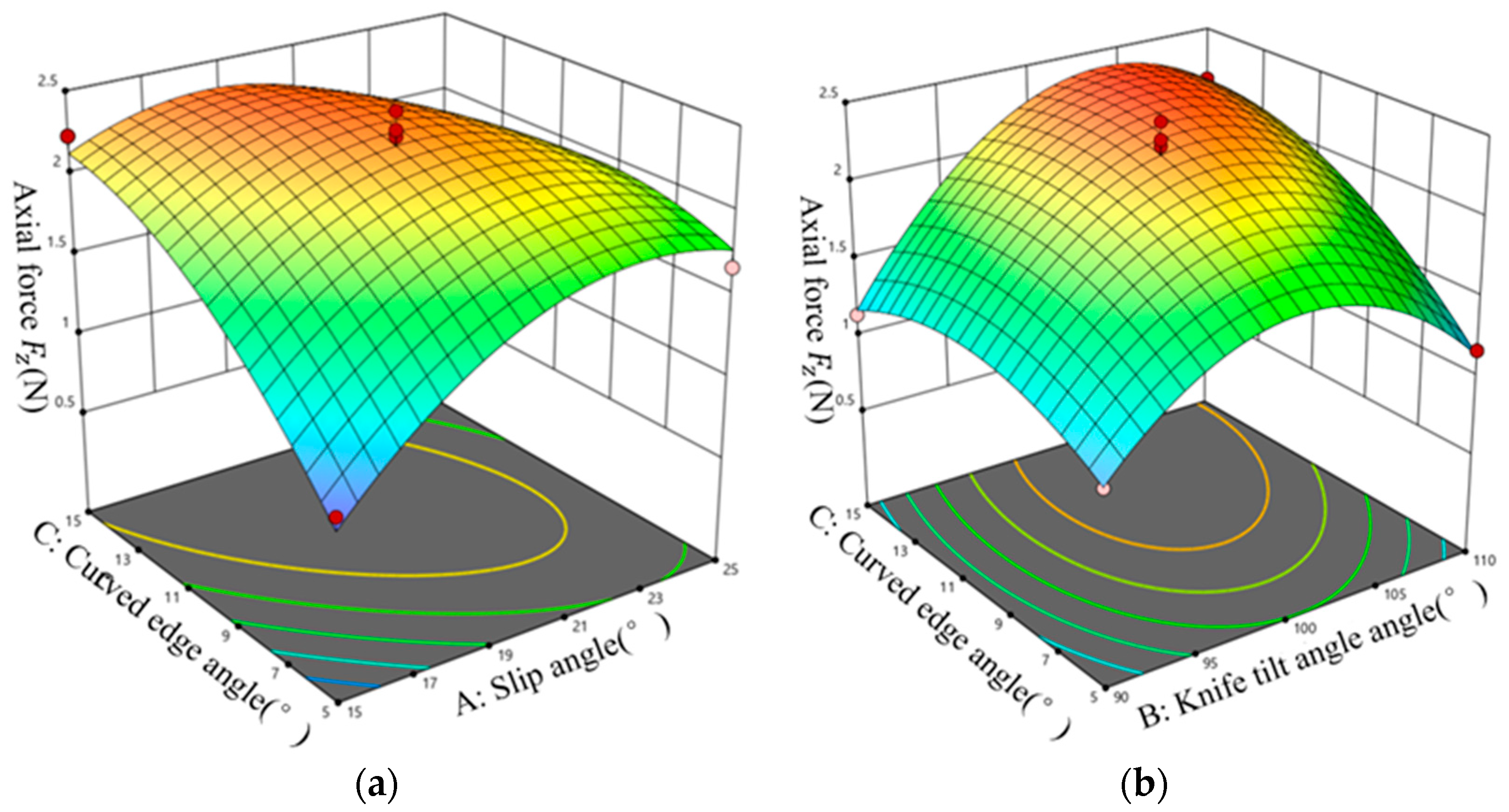
Figure 18a shows the effect of slip angle (A) and curved edge angle (C) on the
interaction, from which it can be seen that at the test level, the two factors have a large influence on
and there is an interaction effect. With a gradual increase in the slip angle,
is sharply increased first, and then the region is flat. When the slip angle is 21~25°, the axial force
is larger, because when the slip angle is small, the tool struggles to cut into the laver. The axial force is the auxiliary force of the blade cutting into the laver to produce a slip cut, so the axial force generated at this time is small. When the slip angle is larger, the tool can cut off the laver smoothly; the laver and tool’s relative slip cut becomes larger, and the axial force increases. In the case where the slip angle is less than 20°, as the curved edge angle gradually increases,
shows an upward trend. In the case where the slip angle is greater than 20°, as the curved edge angle gradually increases,
shows a tendency of first flattening and then slowly decreasing. From the figure, it can be found that the rate of change of
along the direction of the slip angle is much faster than that along the direction of the curved edge angle, so the effect of slip angle on the
angle is greater than the effect of the curved edge angle on
.
Figure 18b shows the effect of tool inclination angle (B) and curved edge angle (C) on the
interaction, from which it can be seen that the two factors have an interaction effect. Among them, in the process of gradually increasing the curved edge angle,
shows a trend of first gently increasing and then gently decreasing. In the process of gradually increasing the tool inclination angle,
showed a tendency of rising and then falling. When the curved edge angle is 11~13° and the tool inclination angle is 15~105°,
is larger, and at this time, the slip-cutting effect on laver is better.
- (4)
Parameter optimization
Based on the obtained multiple regression equations, the corrugated blade parameters were optimized using numerical optimization design with Design-Expert13.0 [
25]. In order to form a more effective shear effect and to cut more laver instead of pulling it apart, the model of laver was subjected to the
minimum, and the
and
maximum as the optimization principle. The limiting range of each factor is as follows: the slip angle is 15–25°, the tool inclination angle is 90–110°, and the curved edge angle is 5–15°.
Determine the effect on the laver models subjected to and . Perform constrained objective maximization optimization for the laver model subjected to . Minimization optimization is performed to obtain the optimization objective function and constraints as follows.
By optimizing the parameters of the corrugated blade (the results are shown in
Table 9), reducing F
y and increasing F
z in the process of laver harvesting is more meaningful for the low-loss harvesting of laver, so the fourth group of optimized result values, i.e., a slip angle of 21.41°, blade inclination angle of 106.40°, and curved-edge angle of 15°, are selected. In order to facilitate tool machining, the optimized parameters were rounded, resulting in the following: a slip angle of 21°, tool inclination angle of 106°, and curved edge angle of 15°. Under these conditions, F
x, F
y, and F
z are 10.95 N, 1.40 N, and 2.26 N, respectively. The slip-cutting mowing force suffered by the laver is 11.18 N and the tensile force is 1.4 N. Compared with the three-stage rolling cutter harvesting equipment designed by Tang Jiahong et al. [
19], the cutting force of laver given by the corrugated blade increased by 45.26% compared to the three-stage straight-blade harvesting equipment, and the tensile force decreased by 68.35%.
3.3. Bench Test Analysis of Results
- (1)
Tool rotation speed influence test
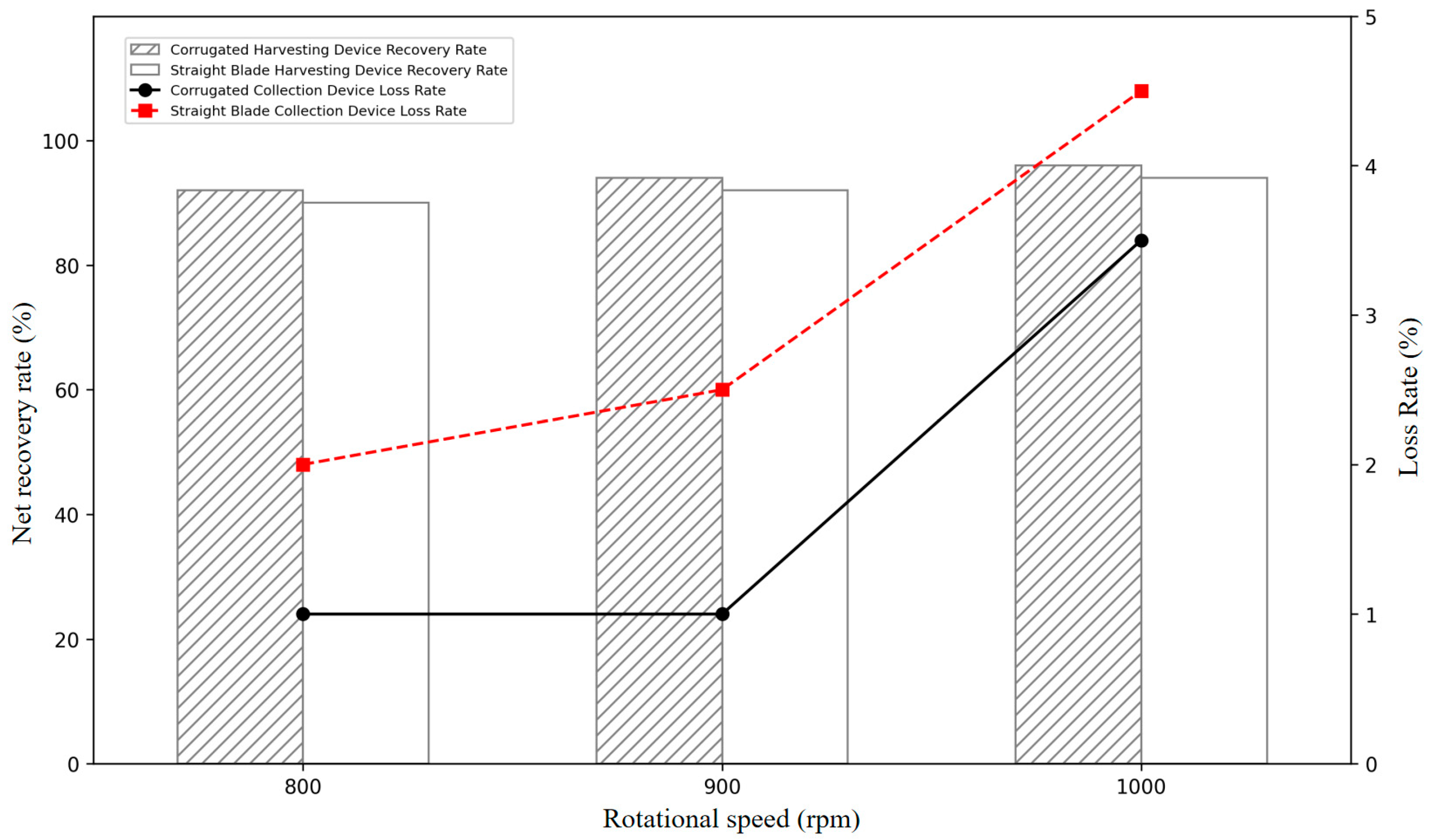
The traveling speed was fixed at 0.51 m/s to study the change rule of net picking rate and loss rate under different rotational speeds of corrugated blades, and the results are shown in
Table 10. When the rotational speeds of the blades were 800 rpm, 900 rpm, and 1000 rpm, the net recovery rate of the corrugated blades was 98.98%, 98.49%, and 98.91%, and the loss rate was 1.16%, 1.27%, and 3.38%, respectively.
To evaluate the statistical significance of the impact of different operating parameters on harvesting performance, one-way analysis of variance (ANOVA) was performed on loss rate and net recovery rate. Single factor analysis of variance showed that the rotational speed had no significant effect on the net recovery rate of laver within the testing range of 800 rpm to 1000 rpm (F = 3.332, p = 0.106). The net recovery rate of the corrugated blade reached over 98% at all three speeds, indicating a good harvesting effect, and that the corrugated blades are easy to cut laver with during the harvesting process.
The tool speed has a significant impact on the loss rate (F = 190.648, p < 0.001). In the post hoc test, Bonferroni’s test showed that the loss rate at 1000 rpm (3.38 ± 0.20%) was significantly higher than that at 800 rpm (1.16 ± 0.13%, p < 0.001) and 900 rpm (1.27 ± 0.13%, p < 0.001), while there was no significant difference in loss rate between 800 rpm and 900 rpm (p = 1.0). This result indicates that controlling the tool speed below 900 rpm can effectively reduce losses.
Compared with the straight blade designed by Tang et al. [
27], the net harvesting rate of the straight blade is 89% at a speed of 800 rpm, which is significantly lower than that of the corrugated blade. This indicates that the corrugated blade harvesting equipment is more capable of harvesting laver at a low rotational speed, which can reduce the splash of laver and energy loss. So, corrugated blade harvesting equipment can use appropriately reduced rotational speeds to harvest laver, meaning it can reduce the splash loss of laver without affecting the net recovery rate. As shown in
Figure 19, at the same rotational speed, the recovery loss rate of corrugated blades is lower than that of straight blades [
27]. However, when the rotational speed reaches 1000 rpm, there is a significant increase in the recovery loss rate of both corrugated and straight blades. This indicates that both corrugated and straight blades will produce high splash losses after the speed exceeds 1000 rpm.
- (2)
Travel speed impact test
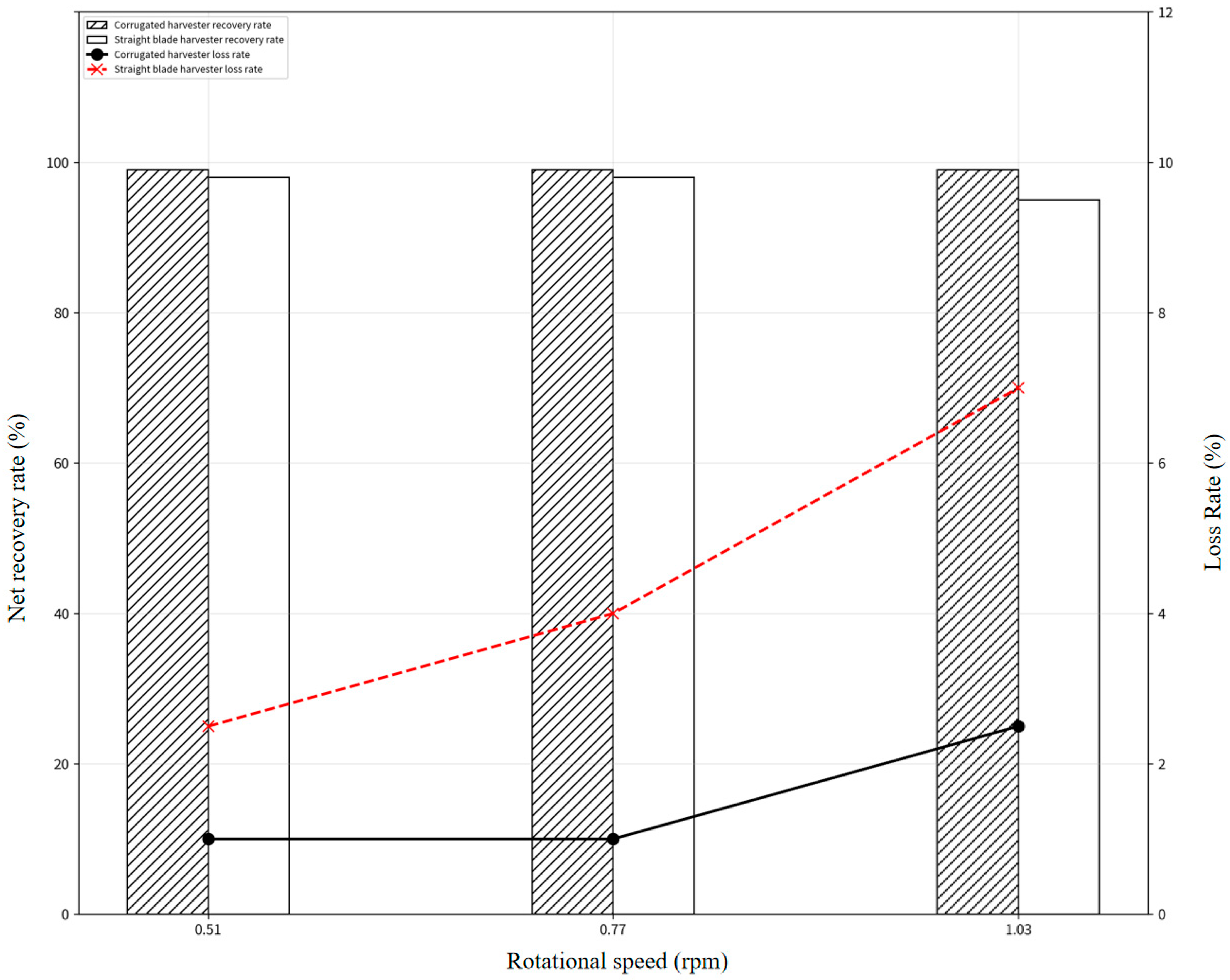
Fix the rotational speed of the tool at 900 rpm, and study the change rule of the net recovery rate and loss rate of the corrugated blade under different traveling speeds. The results are shown in
Table 11. It can be seen from the figure that when the traveling speed of the net curtains is 0.51 m/s, 0.77 m/s, and 1.03 m/s, the net recovery rate of the corrugated blade is 98.49%, 98.87%, and 98.51%, respectively, and the loss rate is 1.27%, 1.19%, and 2.24%, respectively. As shown in
Figure 20, at different travel speeds, the net recovery rate of corrugated blades is higher than that of straight blades [
27]. When the traveling speed of the net curtain was between 0.51 and 1.03 m/s, the net recovery rate of laver did not vary much and was higher than 98%, which indicated that the net recovery rate of the corrugated blade was not significantly affected by the traveling speed. This is also similar to the results of ANOVA (F = 1.268,
p = 0.347). However, the net recovery rate of straight blades shows a decreasing trend with the increase in traveling speed. When the traveling speed increased from 0.51 m/s to 0.77 m/s, the change in harvest loss rate of the corrugated blade was not large. And when the traveling speed increases from 0.77 m/s to 1.03 m/s, the loss rate increases more. As shown in the ANOVA results, traveling speed has a significant impact on the loss rate (F = 228.966,
p < 0.001). In the post hoc test, Bonferroni’s test showed that the traveling speed at 1.03 m/s (2.24 ± 0.06%) was significantly higher than that at 0.51 m/s (1.27 ± 0.07%,
p < 0.001) and 0.77 m/s (1.19 ± 0.07%), while there was no significant difference in traveling speed between 0.51 m/s and 0.77 m/s (
p = 0.54). The fluctuation of its observed values is mainly due to random factors during the experimental process, and 1.03 m/s is more like a critical value. Under different speeds of the net curtain, the harvesting loss rate of the corrugated blade is lower than that of the straight blade. Therefore, the use of corrugated blade harvesting equipment for laver harvesting operations can slightly increase the traveling speed of the vessel, which can increase the harvesting efficiency of laver without affecting the net recovery rate.
In the comprehensive analysis, the average net recovery rate of laver harvested by corrugated blade was 98.75%, and the average loss rate was 1.85%; both are better than those of the straight cutter harvesting equipment, which reached the requirements of laver harvesting, and the corrugated blade was more favorable for the harvesting of low-loss laver. In the process of harvesting laver by corrugated blade, the net recovery rate of laver is less affected by the rotational speed of the blade and the traveling speed of the net curtain, and the loss rate is more significantly affected. Thus, the rotational speed of the blade can be appropriately reduced, and the boat can be improved in the process of harvesting, so as to increase the efficiency of harvesting of laver, and to reduce the splash loss and the energy loss of the equipment. Therefore, when the rotational speed of the tool is 900 rpm and the speed of the boat is 0.71 m/s, it can meet the requirements of the loss rate and the net recovery rate of laver harvesting, and also have a high harvesting efficiency.




 ,
,