
Article

Influence of Noise Level and Reverberation on Children’s Performance and Effort in Primary Schools


by
Ilaria Pittana
1,
Cora Pavarin
1,
Irene Pavanello
2,
Antonino Di Bella
3,
Piercarlo Romagnoni
1,4,
Pietro Scimemi
2 and
Francesca Cappelletti
1,4,*
1
Department of Architecture and Arts, Iuav University of Venice, 30135 Venice, Italy
2
Department of Neuroscience, University of Padova, 35122 Padova, Italy
3
Department of Industrial Engineering, University of Padova, 35122 Padova, Italy
4
Building Physics Laboratory, Iuav University of Venice, 30135 Venice, Italy
*
Author to whom correspondence should be addressed.
Appl. Sci. 2025, 15(24), 13213; https://doi.org/10.3390/app152413213
Submission received: 17 November 2025 / Revised: 4 December 2025 / Accepted: 10 December 2025 / Published: 17 December 2025
(This article belongs to the Special Issue Musical Acoustics and Sound Perception)

Abstract

Classroom acoustics and noise exposure significantly impact students’ emotional, cognitive, and academic well-being. This study investigates how classroom noise and acoustics affect auditory and cognitive performance among 131 children in three primary schools in northeast Italy. Student performance was assessed using standardised tests evaluating working memory, verbal short and long-term memory, and visuospatial memory. Children were tested under two distinct acoustic conditions: ambient classroom noise and artificially induced noise (comprising a sequence of typical internal and external classroom sounds, intelligible speech, and unintelligible conversations). Prior to testing, hearing threshold was assessed, in order to reveal any existing impairments. Following each experimental session, children rated their perceived effort and fatigue in completing the tests. Acoustic characterisation of empty classrooms was performed using Reverberation Time (T20), Clarity (C50), and Speech Transmission Index (STI), while noise level was measured during all testing phases. Regression analysis was employed to correlate noise levels and reverberation times with class-average performance and perception scores. Results indicate that noise significantly impaired both verbal working memory and visual attention, increasing perceived effort and fatigue. Notably, both ambient and induced noise conditions exhibited comparable adverse effects on attentional and memory task performance. These findings underscore the critical importance of acoustic design in educational environments and provide empirical support for developing classroom acoustic standards.

1. Introduction

Environmental noise in educational settings adversely affects children’s cognitive performance, particularly in tasks requiring working memory and speech processing. School environments, where children spend 5–6 h daily, frequently exceed 70 dB (A), with background sound levels reaching this threshold in canteens and playgrounds [1,2]. Such noise levels have been demonstrated to impair verbal working memory span tasks, visual–spatial memory performance, and speech intelligibility in school-aged children [3,4,5]. Children aged 7–11 are particularly vulnerable to these adverse effects because their cognitive control systems continue to mature throughout middle childhood, with attentional capacity typically reaching adult-like levels only around ages 11–13 [6]. During this developmental period, noise exposure not only disrupts ongoing task performance but may also compromise the consolidation of learning [7,8], with evidence suggesting that chronic exposure can induce long-term cognitive deficits [9].

1.1. Effects of Noise on Auditory Processing and Working Memory

International research examining noise effects on children’s academic performance has identified specific vulnerabilities in auditory and non-auditory cognitive processes [10,11]. Critically, noise impacts both the auditory processing pathways necessary for speech perception and the domain-general executive functions supporting working memory. Regarding auditory processing, classroom noise has been shown to significantly reduce children’s ability to perceive speech accurately, particularly when background babble or environmental sounds mask the target speech signal [3,12,13]. Studies using speech-in-noise tests with children aged 5–8 years have documented substantial intelligibility decrements at noise levels commonly found in classrooms, with younger children showing greater susceptibility to masking effects [14,15]. This degradation in speech intelligibility directly impedes comprehension and learning [7,16]. Research on verbal working memory has demonstrated that both digit span and Listening Span tasks—which require children to encode, maintain, and recall sequences while processing information—are significantly impaired under noisy conditions compared to quiet environments [4,17,18]. These effects are particularly pronounced when irrelevant speech or multitalker babble interferes with phonological rehearsal mechanisms [17,19].
Beyond auditory verbal tasks, research has established that noise exposure impairs visual–spatial working memory. The Corsi block-tapping task, a well-established measure of visuospatial working memory that requires participants to reproduce sequences of spatial locations [20,21], has been shown to be vulnerable to noise exposure despite not depending on auditory processing [22,23]. This cross-modal interference suggests that elevated ambient noise creates a high cognitive workload that reduces available attentional resources for both verbal and non-verbal tasks [24,25], indicating domain-general disruption of executive function rather than solely auditory interference.

1.2. Experimental Studies to Measure Noise Effects on Auditory Processing and Working Memory

Experimental studies have examined the relationship between noise exposure and children’s performance in tasks measuring working memory and speech perception in educational contexts [1,2,5].
Regarding verbal working memory, noise exposure has been demonstrated to impair span tasks requiring the encoding, maintenance, and recall of verbal information [4,7,8]. The Digit Span task, in which participants must recall sequences of numbers in forward or backward order, shows consistent performance decrements under noisy conditions, with effects attributable to interference with phonological rehearsal mechanisms [17,18,26]. Similarly, more complex span tasks such as the Listening Span—which requires simultaneous processing and storage of verbal information—exhibit significant impairment when background noise is present [4,17]. A recent study examining unintelligible multitalker babble found that children aged 8–10 years showed reduced accuracy in both low-demand (Digit Span) and high-demand (Reading Span) verbal working memory tasks when exposed to classroom-typical noise levels [17]. These effects are particularly pronounced when the noise contains irrelevant speech, which appears to disrupt the phonological loop processes essential for maintaining verbal information in working memory [17,19].
Speech intelligibility represents another domain critically affected by noise. Systematic reviews of classroom acoustics research have established that speech intelligibility scores decrease significantly with poor signal-to-noise ratios and long reverberation times [12,13,15]. When target speech is presented against background noise, children show marked reductions in word recognition accuracy, with younger children (ages 5–8) requiring higher signal-to-noise ratios than older children to achieve comparable intelligibility [14,15]. Studies using the Word Intelligibility by Picture Identification test and similar speech-in-noise assessments have documented that all children experience difficulty understanding speech at noise levels commonly found in classrooms, with performance varying systematically as a function of noise intensity and acoustic quality [14,16]. This degradation occurs because noise masks the acoustic phonetic features of speech, requiring listeners to allocate additional cognitive resources to perceptual processing [3,7,16].
Visual–spatial working memory, assessed through tasks such as the Corsi block-tapping test, has also been shown to be vulnerable to noise exposure [22,23,27]. The Corsi task, which measures participants’ ability to reproduce sequences of spatial locations and is widely used to assess visuospatial working memory capacity [20,21], exhibits performance decrements in noisy environments despite not requiring auditory processing [22,23]. Studies examining classroom acoustic quality have found that children’s visuospatial working memory performance is sensitive to variations in reverberation time and background noise [23]. This cross-modal interference indicates that noise disrupts domain-general attentional control mechanisms: elevated noise levels appear to create a general cognitive load that impairs executive attention regardless of task modality [24,25,26]. The finding that both verbal and visuospatial memory systems are compromised by noise suggests competition for limited attentional resources [27,28].

1.3. Literature Gaps and Aim of the Study

Despite this growing body of evidence, a critical gap remains in understanding how noise exposure relates to children’s subjective experience of cognitive fatigue during task performance. What emerges from the literature is that cognitive effort reflects the mental resources allocated to overcoming listening difficulties [29,30], but identifying appropriate measurement indicators remains challenging. Cognitive load theory posits that task demands can be assessed through both objective performance measures and subjective ratings of mental effort [28,31]. While previous studies have documented objective performance decrements in working memory span tasks and speech intelligibility under noisy conditions, the relationship between noise, task performance, and children’s perceived effort and fatigue has not been systematically examined. Research on cognitive effort in children has shown that subjective ratings of task difficulty and mental effort can provide important insights into cognitive processing demands [28,32,33], yet these measures have rarely been applied to noise exposure paradigms. Understanding this relationship is essential because perceived fatigue may mediate the impact of noise on sustained attention and learning over the course of a school day.
Moreover, the reviewed literature establishes that classroom noise impairs multiple cognitive systems critical for learning: verbal working memory, speech perception in noise, and visual–spatial working memory. However, the concurrent assessment of these domains alongside subjective fatigue to determine whether children’s perceived effort corresponds to objective performance decrements remains unexplored. The present study fills this gap by measuring both objective performance across these specific cognitive domains and subjective ratings of fatigue in real classes. Moreover, this research, contrasting with other methodological approaches, has been entirely carried out in classrooms without the use of headphones, testing students in their typical environment, thus limiting any isolation effect.
A standardised battery of tests was used to evaluate children’s performance in both auditory and non-auditory tasks in two different acoustic conditions (i.e., ambient noise and artificially induced noise). Specifically, the investigation was designed to examine whether exposure to different conditions would impair (1) verbal working memory, assessed through Listening Span and Digit Span tasks; (2) speech intelligibility in noise; and (3) visual–spatial working memory, measured with the Corsi block-tapping task. The sample comprised students from the third to fifth grade of the primary school, who had acquired basic literacy skills yet remained sensitive to the cognitive effects of noise exposure. Statistical regression analysis was conducted by analysing and comparing children’s responses across these conditions. The original outcome of the study consists of a series of regression curves that provide quantitative information about the extent to which increments in noise level and reverberation time influence the mean performance and perceived effort ratings of children with normal hearing (children with hearing impairment were excluded from the analysis).

2. Materials and Methods

2.1. Case Studies: Experimental Setup and Classrooms Characteristics

A series of activities was carried out in four primary schools located in northern Italy, during the 2024–2025 winter season. In each school, two classes of the same grade participated in the experimental protocol. A total of 133 children, aged between 8 and 10 years, were enrolled in the study. Informed consent was obtained from the parents or guardians of all participants. The research protocol received ethical approval from the Ethics Committees of Iuav University of Venice, in conjunction with the Department of Neuroscience at the University of Padova (protocol number 92229, dated 8 November 2024).
The experiment consisted of two main steps: (i) an individual auditory screening in the laboratory and (ii) a collective test activity at a school (Figure 1).
In the first activity, all participants underwent a tablet-based air conduction audiometry procedure in order to evaluate monaural hearing thresholds for warble stimuli delivered monaurally at 0.5, 1, 2, 4, 8, and 12 kHz (hearTest, hearX). The purpose of this procedure was to exclude or assess potential hearing loss, which could adversely impact perceptual and academic outcomes, as well as test performance. Data collected from children with hearing impairment or learning disabilities were not used in this study.
During the second main activity, children were tested in their classroom, sitting at their own desks. Classrooms were naturally ventilated, but during the tests, the windows were closed to minimise the entry of external noises. The heating system consists of a hydronic system with radiators. The lighting system was on during the tests.
A total of 131 children participated in the experimental campaign; all of them were tested at school in the Ambient Noise condition, while only 129 of them were assessed in the Induced Noise condition.
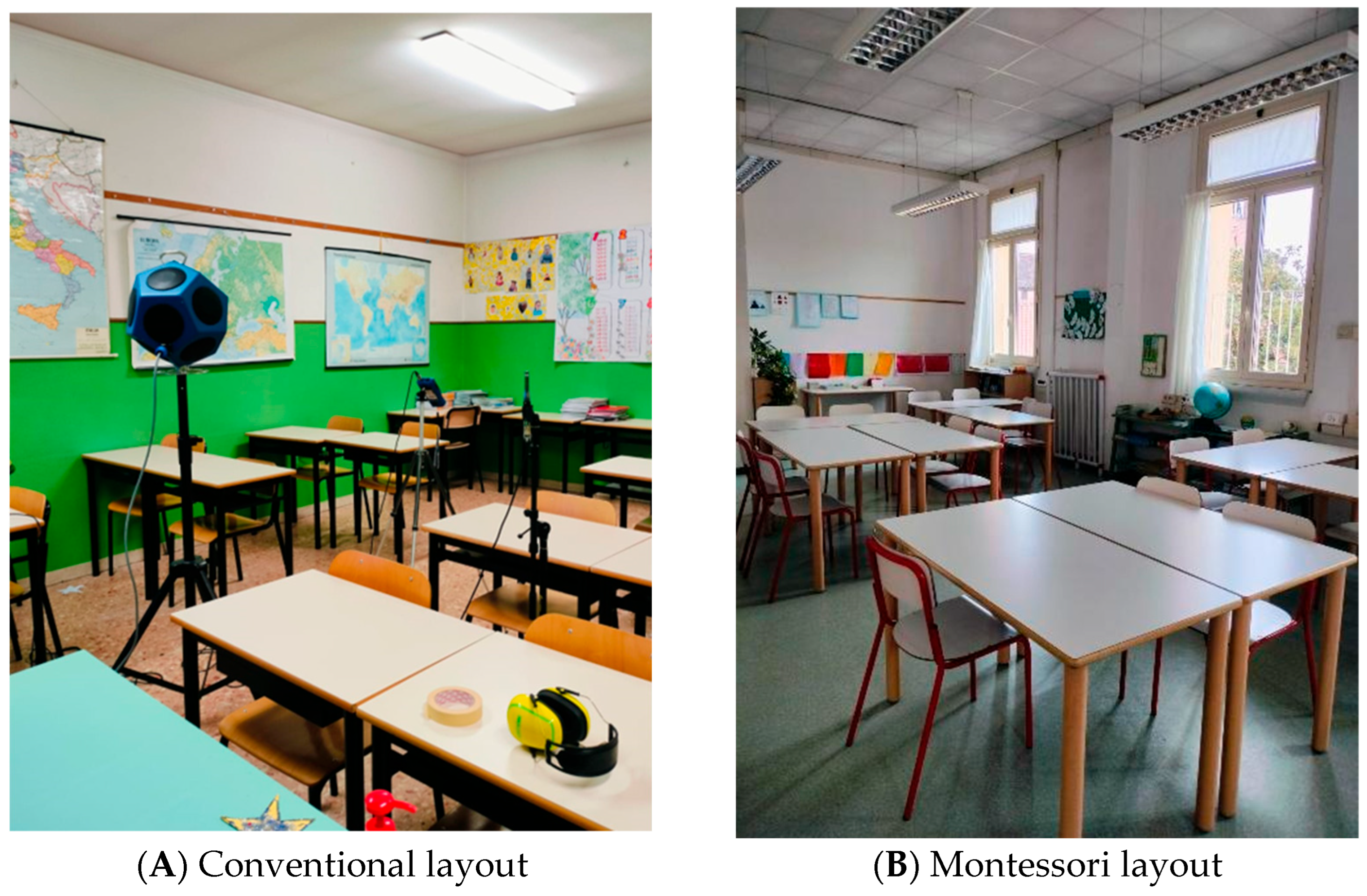
Table 1 summarises participant distribution according to school grade and experimental campaign type. In the “Class” column of Table 1, the initial two letters denote the respective school, followed by an alphanumeric code specifying each class. Classrooms in schools DG, MA, and DE have a conventional layout, typical of the majority of Italian schools, comprising students’ desks, oriented toward a whiteboard, and a teacher’s desk positioned at the front of the room (Figure 2A). In contrast, classrooms in school MO follow Montessori principles, featuring desk arrangements in clusters and teachers circulating among students (Figure 2B).
Prior to initiating the experimental campaigns, the acoustic properties of all eight classrooms were systematically characterised in vacant conditions according to standardised protocols. Three objective metrics were assessed: Reverberation Time (T20), Speech Transmission Index (STI), and Clarity (C50). T20 measurements were conducted in compliance with ISO 3382-2 [34], at three distinct receivers for two separate sound source positions, using an omnidirectional dodecahedron source. STI was assessed utilising a loudspeaker emitting a signal compliant with IEC 60268-16 standard requirements [35]. This source was positioned adjacent to the teacher’s desk at the central point between the lateral walls. Measurement procedures adhered to the UNI 11532-2 guidelines for Italian educational facilities [36], which specify the number and placement of measurement points; specifically, three points were aligned with the talk box, while one was situated at the acoustically least advantageous location. For the C50 assessment, the same microphone positions used for STI were utilised, employing a talk box as the sound source and sweep signal analysis through the Odeon Room Acoustics 13 software. A detailed summary of classroom acoustical characteristics is provided in Table 2 and Table 3.
Comprehensive analysis of these acoustic parameters revealed substantial disparity in classroom acoustic quality. Classrooms DG-3B, MO-5A, and MO-5B exhibited superior performance, characterised by low median reverberation times (T20 < 0.7 s across the critical speech frequencies from 500 Hz to 4 kHz), high clarity indices (C50 > 5 dB in mid-high frequency range), and elevated STI values (0.88–0.90), indicating near-optimal conditions for speech intelligibility and teaching. In contrast, classrooms DE-4A and DE-4B present significant acoustical deficiencies with notably high reverberation (T20 up to 1.96 s at 125 Hz), substantially negative C50 values in the crucial speech bands (500 Hz to 2 kHz), and low STI scores (as low as 0.72), each below generally accepted standards for teaching environments. The remaining classrooms (MA-4A, MA-4B, DG-3A) demonstrated intermediate acoustic quality, with acceptable STI (>0.79) but variable frequency-dependent C50 performance, particularly at lower frequencies.

2.2. Cognitive and Listening Performance Tests

A series of standardised auditory and non-auditory cognitive tests were conducted (Table 4). The purpose of these assessments was to evaluate speech intelligibility, verbal working memory, verbal short-term memory, and visuospatial short-term memory. All tests were adapted for administration in a group setting within the classroom, preceded by a dedicated training session to ensure procedural familiarity.

2.2.1. Listening Span Test

The Listening Span Test provides a robust assessment of verbal working memory by engaging participants in complex cognitive processing. Building on the foundational work of Daneman and Carpenter [37], who conceptualised working memory as an active system for retaining and manipulating information essential for higher-order cognition, this measure probes capacities beyond conventional short-term memory tasks such as digit span. Traditional short-term memory assessments are often insufficient predictors of academic achievement, particularly concerning logical reasoning and reading comprehension. The Listening Span Test, as introduced by Daneman and Carpenter [37], bridges this gap by requiring the processing of spoken information (Listening Span Test) or written material (Reading Span Test), coupled with the recall of specific elements embedded within the presented material.
Extensive research has established a strong association between high performance on verbal working memory tasks, notably the Reading Span Test (RST), and advanced written comprehension and logical reasoning abilities, a relationship substantiated across various age groups and educational contexts, as reported by De Beni et al. [38]. The significance of this working memory measurement primarily resides in its intrinsic composition, which closely mirrors the complexity of routine learning demands in the scholastic environment. Furthermore, it furnishes valuable metrics that embody the core constituents of the test.
In this study, a paper-based adaptation of Palladino’s Listening Span Test (2005) was utilised [23], allowing concurrent administration within classroom settings. Participants listened to a sequence of sentences, evaluated the veracity of each, and indicated their response via true/false marking. After completing a set of sentences, students were then prompted to recall and write the final word of each statement in designated spaces.
The primary metric considered was the accuracy of the appraisals of the truthfulness of the statements. This measure, indicated by the count of errors, offers insight into the efficacy of verbal processing and the capacity to manage available cognitive resources. The evaluation of memory capacity employed a secondary indicator, namely the total count of words recalled by each child. In consideration of the validity and standardisation indices proposed by Palladino [39], with particular reference to mean and standard deviation, it was possible to compute each participant’s performance relative to their academic level. Therefore, the standard deviation of the resultant performance, when juxtaposed with the reference performance (medium target), was utilised as a metric in the statistical analysis.

2.2.2. Digit Span Test

The digit span test is a well-established assessment of short-term verbal memory in children and constitutes a component of the BVN-5-11 battery [40], a second-level clinical instrument for neuropsychological evaluation in developmental age. The test evaluates immediate serial recollection of a sequence of numbers. In the direct span task, the child is required to reproduce the series of numbers in the exact order presented by the examiner. For the present study, a paper-based adaptation of the direct digit span task was implemented to enable concurrent administration within classroom settings. Children listened to prerecorded number sequences and transcribed each item into the designated locations on standardised protocol sheets, maintaining the serial order as presented.
Performance was evaluated according to BVN-5-11 battery norms, referencing both raw scores and age-based standards. Standardised deviations were calculated relative to a normative mean of 100 and a standard deviation of 15. The magnitude of deviation from the normative mean, expressed in standard deviation units, quantifies the discrepancy between individual performance and age-expected outcomes. Conventionally, scores falling two or more standard deviations below the mean are interpreted as clinically significant and may indicate a possible deficiency in the respective ability. For statistical analyses, standardised scores were employed to determine the impact of classroom noise exposure on digit span performance.

2.2.3. Speech-in-Noise Test

Speech intelligibility in noise was assessed using a newly developed web application, EQNoise v.1. This tool, adapted from the TIPI-2 battery [41], was specifically designed for children aged 6 to 11 years and evaluates the ability to identify bisyllabic words presented in noise conditions. During each trial, the participant was required to select the correct image corresponding to the heard word from four options displayed on a tablet, disregarding semantic or phonological distractors. For each target word, three distractor images were presented. EQNoise automatically records the number of correct responses, errors, and selected distractors, and computes reaction times, providing precise and reproducible data for subsequent analysis.

2.2.4. Visual–Spatial Attention Test

According to the theoretical model proposed by Baddeley [42,43], working memory is understood to be a cognitive system that facilitates the temporary storage and manipulation of information. This capacity is critical for comprehending and mentally representing environmental context, retaining experiential data, acquiring new information, solving problems, and establishing connections to achieve specific objectives [44]. The visuospatial subcomponent of working memory is particularly pivotal in mathematical processing—including number line estimation, counting, and problem-solving—as well as text comprehension and the development of geographic knowledge [45].
To assess visuospatial memory in a sequential format, the memory of sequential matrices subtest from the BVS-Corsi-2 battery [46], as adapted from [47], was employed. Each participant was provided with a tablet displaying a 5-by-5 grid of cells, and sequences of X symbols appeared in succession, beginning with sequences of two and incrementally increasing according to performance. Pupils were instructed to recall and select the cells corresponding to the Xs in the correct order. Progression through the test levels depended upon correctly answering two consecutive trials at the preceding step. Prior to the test, instructions were clarified and demonstrated through examples to ensure comprehension. Scoring was automated and results reported as both averages and standard deviations, referenced to chronological age rather than school grade. This approach follows current evidence indicating age as the primary determinant of performance on this task, rather than formal educational level. Studies indicate that the mean score for children aged 8 to 11 years typically falls between three and six correct sequences.

2.3. Cognitive Perceived Effort and Fatigue Questionnaire

At the end of each experimental campaign, the children were requested to evaluate their cognitive effort and fatigue resulting from the tests, utilising a child-oriented five-point scale (1 = “not at all”; 2 = “a little”; 3 = “moderately”; 4 = “very”; 5 = “extremely”) [9,25]. The assessment of self-reported cognitive effort and fatigue was conducted using a series of six items as shown in Table 5. The initial four questions, which had been adapted from existing sources [9], focused on subjective feelings of tiredness, headache, and perceptions of test difficulty. The final two questions, derived from [48], regard auditory and memory experience. For the purpose of statistical analysis, the mean score for each item (calculated across children within the same class) was employed to correlate perceived effort with environmental conditions.

2.4. Acoustic Conditions Experimented During Tests

The experimental campaigns were conducted twice in each classroom under two distinct noise conditions: (i) typical classroom noise (Ambient Noise) and (ii) exposure to a composite, induced noise condition (Induced Noise). Tests were administered twice to the same group of pupils, with a minimum interval of two weeks between sessions.
In the Ambient Noise condition, the primary auditory signal was emitted from a single loudspeaker positioned on the teacher’s desk and calibrated to deliver a level 5 dBA higher than the background noise of the classroom with quiet children inside. In all the tested classrooms, the background noise was about 60 dBA. In the Induced Noise condition, the primary auditory signal level was set at 70 dBA at one metre from the source, while two additional loudspeakers at the rear of the classroom supplied noise at 65 dBA each (also measured at a one-metre distance).
The Induced Noise comprised a background auditory stimulus synthesised from a range of environmental cues, including passing vehicles, lawnmowers, unintelligible vocalisations, flowing water, barking dogs, bells, and ambulance sirens. Each element of the soundscape lasted between 8 s (e.g., coughing) and 30 s (e.g., lawnmowers), separated by 30 s periods of silence. All acoustic stimuli were recorded at a sampling frequency of 96 kHz and a 24-bit depth in stereo, and subsequently stored in WAV format. For the visual–spatial short-term memory assessment (Corsi Block-Tapping Test), the concurrent auditory input comprised comprehensible narratives spoken by young speakers.
Throughout all measurement sessions, equivalent continuous sound pressure level (LAeq) was monitored at the centre of the classroom using a Class 1 sound level metre (Nti XL2 model). Acoustic data for each campaign are summarised in Table 6 (Ambient Noise) and Table 7 (Induced Noise).

2.5. Data Analysis

Performance indicators and perceived effort measures (e.g., score standard deviation, number of errors, mean reaction time, and subjective vote) were statistically correlated with classroom acoustic conditions, specifically the equivalent sound pressure level (LAeq) during test sessions and the reverberation time (T20) for each class.
Pearson correlation analysis was carried out to examine the presence of a linear correlation between acoustic variables and individual pupil performance indicators and subjective votes. The Pearson coefficient, ρ, was interpreted according to standard thresholds: values from ±0.50 and ±1 represent a strong correlation, values from ±0.30 to ±0.49 indicate a moderate correlation; values from ±0.2 to ±0.3 are considered weak, and values near zero suggest no relationship.
Where correlation was observed, linear regression analysis was performed to model the relation between sound pressure level and class mean performance or effort rating for the class. A confidence level of 95% was used to evaluate model fit, with p-values less than 0.05 indicating statistically significant regression. Statistical analyses were conducted under both noise conditions, i.e., Ambient Noise and Induced Noise.

3. Results

3.1. Tests Performed in Ambient Noise

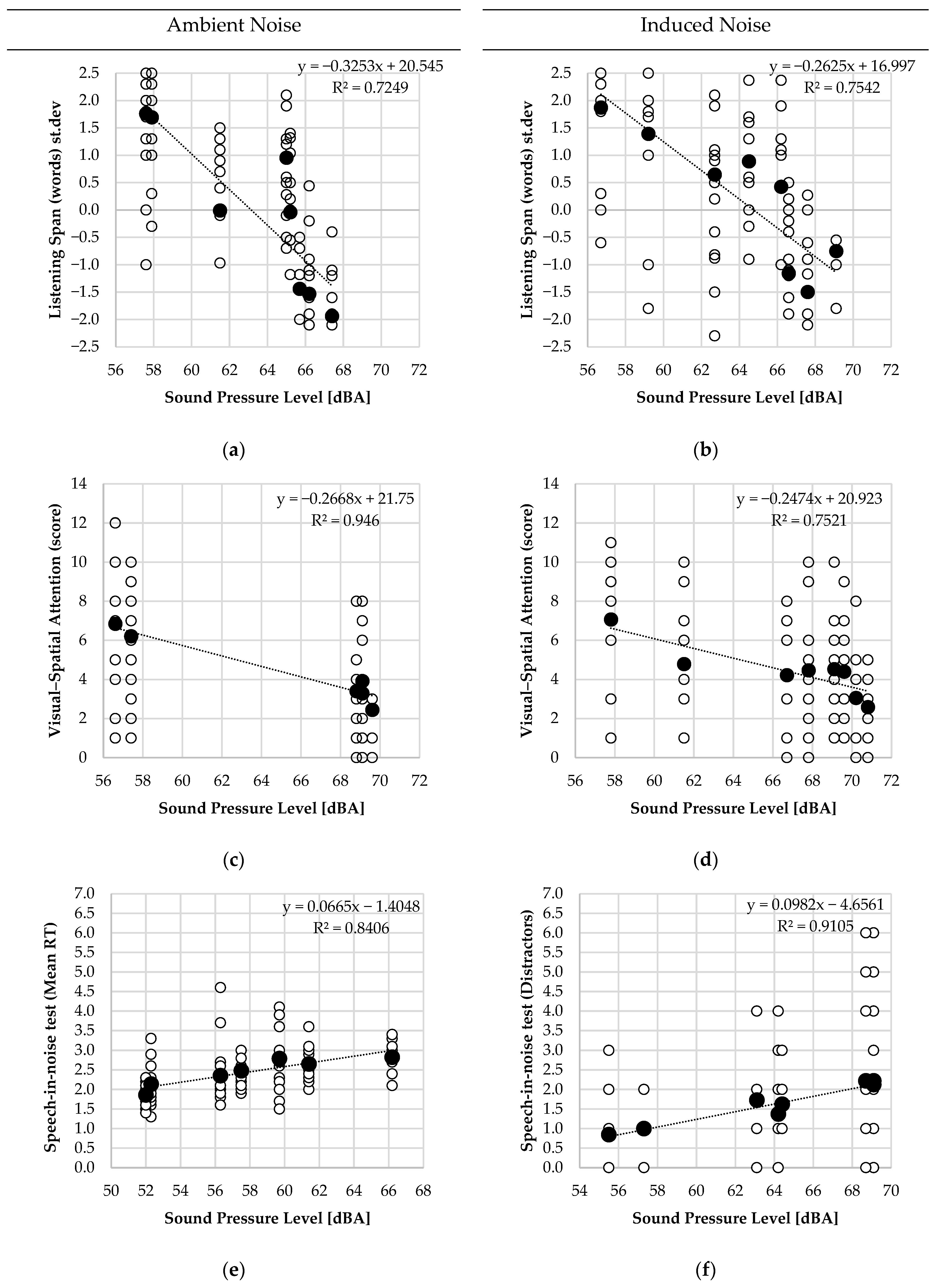
Table 8 shows the results of a Pearson correlation analysis between LAeq and task performance in Ambient Noise. Examination of the Pearson coefficient, ρ, indicates a strong correlation between the physical parameter and the results of the Listening Span test (specifically word recall), as well as the Visual Spatial Attention test, and a moderate correlation with the mean reaction time (mean RT) during the speech-in-noise test. No correlation is observable with the Digit Span test. Where a correlation is present, linear regression analysis was performed to characterise the relationship between sound pressure level and the selected mean performance indicator. The slope, s, the p-value, and the coefficient of determination, R2, of the regressions between the mean score and the average condition for each test are summarised in Table 8. Results show that word recall in the Listening Span test is strongly influenced by noise level, with a notably good coefficient of determination. Both visual–spatial attention and speech-in-noise test results exhibit significant and linear correlations with noise level (p-value < 0.05), yielding coefficients of determination greater than 0.8 for both regressions. Conversely, analyses show that the ability to correctly discern words is not substantially linearly correlated with noise level, as evidenced by the lower R2 values in regressions investigating the number of correct answers, total errors, and the number of distractors selected rather than the correct word. Linear regression graphs depicting the strongest Pearson correlations are reported in Figure 3a,c,e). In those graphs, empty circles represent individual performance and black circles indicate the mean performance of each class. The regression line (black dotted line) has been drawn considering the average values of classes weighted according to class numerosity (i.e., it is likely that all students in one class would have obtained an average performance score).
Table 9 shows the outcomes of Pearson correlation analyses between T20 and task performance in Ambient Noise. No correlation emerges between classroom reverberation and Listening Span or Digit Span results. A moderate correlation is observed between T20 and Visual Spatial Attention, wherein regression with mean performance is significant, with a coefficient of regression equal to 0.4. Similarly, T20 shows a moderate correlation with Speech in noise performance, whether evaluated by the number of correct responses, distractors, or mean response time. Nonetheless, for these regressions, the coefficients of determination are comparatively lower than those obtained with the sound level.

3.2. Perceived Effort and Fatigue Self-Assessment in Ambient Noise

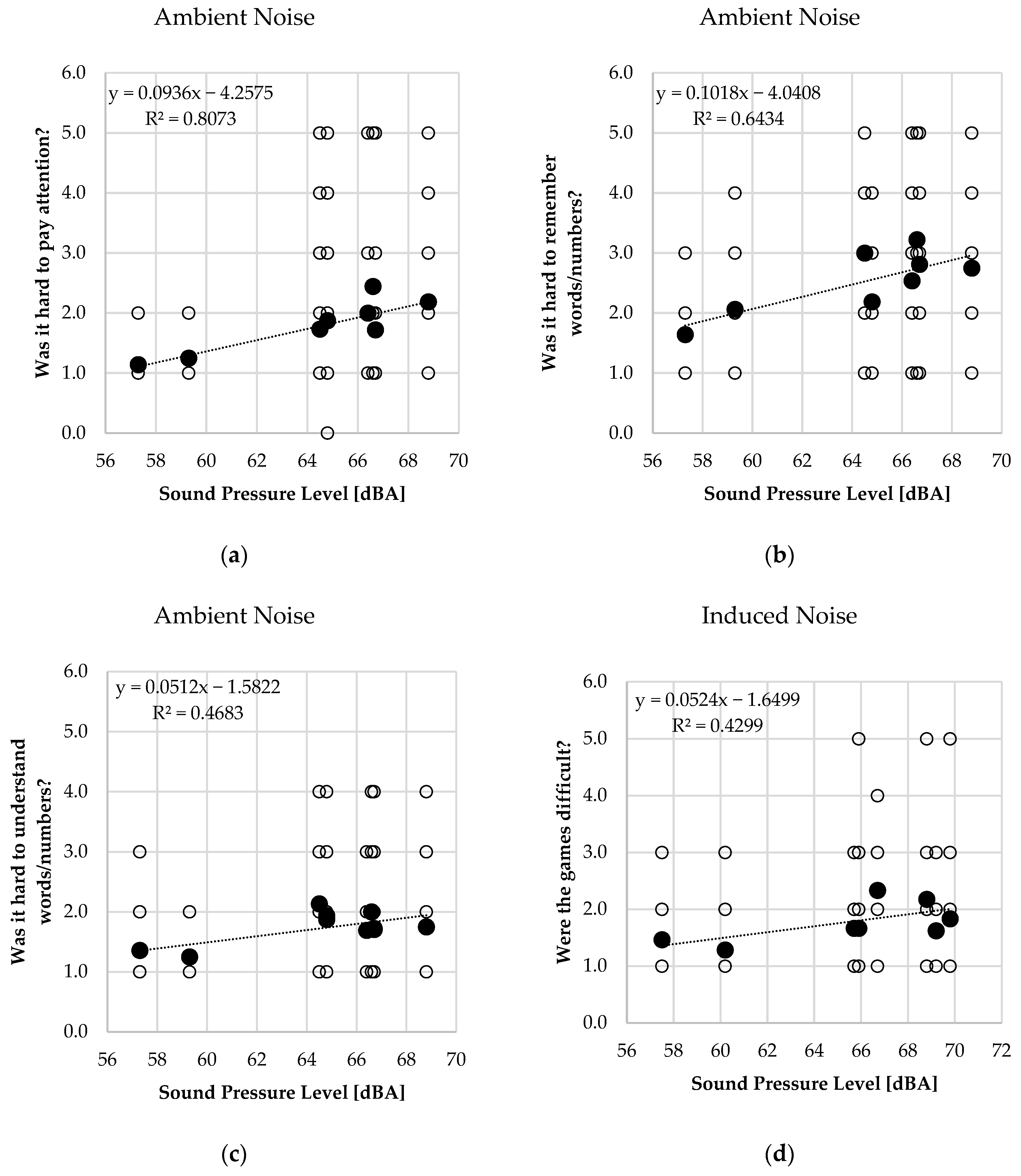
Table 10 reports the results of the correlation analysis between LAeq and self-reported cognitive effort in Ambient Noise. The findings indicate that responses to question #4 (i.e., Was it hard to pay attention?), question #5 (i.e., Was it hard to understand words/numbers?), and question #6 (i.e., Was it hard to remember words/numbers?) are weakly correlated with the equivalent sound pressure level, but nevertheless reflect an increase in perceived effort as noise level rises. In contrast, subjective ratings regarding tiredness, headache, or perceived game difficulty do not demonstrate any significant correlation with noise level. Linear regression graphs of statistically significant correlations are presented in Figure 3a,c,e.

3.3. Tests Performed in Induced Noise

Table 11 presents the results from the correlation analysis between LAeq and task performance in the Induced Noise condition. The Pearson coefficient, ρ, highlights a strong correlation between noise level and word recall in the Listening Span test, as well as the Visual Spatial Attention test. A moderate correlation is identified with Speech in Noise performance indicators, with the exception of response time. No correlation is observed for the Digit Span test. Slopes, p-values, and coefficients of determination for relevant regressions are reported in Table 11. For the Listening Span test, Visual Attention, and speech in noise (distractors), linear regressions are significant (p-value < 0.05) and reveal high coefficients of determination (i.e., 0.75, 0.75, and 0.91, respectively). The regression graphs depicting these correlations are illustrated in Figure 3b,d,f.
Table 12 shows the results of the correlation analysis between T20 and task performance in Induced Noise; in this scenario, no correlation is found between reverberation time and performance in this condition.

3.4. Perceived Effort and Fatigue in Induced Noise

Table 13 provides the results from correlation analyses between LAeq and self-reported cognitive effort in Induced Noise. Here, only responses to question 3 (“Were the games difficult?”) show a weak but statistically significant correlation with sound pressure level, indicating a slight increase in perceived game difficulty as noise increases. Notably, the variability in responses is reduced at lower noise levels compared with higher noise exposure.

4. Discussion

Results have shown that there exists a considerable degree of variability in the performance of children within the same class at the same noise level. However, this variability is observed to increase in proportion to the increase in noise level. This observation serves to substantiate the hypothesis that noise has the capacity to amplify the disparities in skills exhibited by students. The statistical analysis has demonstrated that the average performance of the classes is highly dependent on the noise level rather than the reverberation time. In particular, noise level has a significant impact on the recall of words in the Listening Span test. This finding serves to confirm that noise has a detrimental effect on long-term working memory, as demonstrated by other studies [2,24].
Regarding the type of analysis carried out on the correlation between noise level and performance, the aim of the regression analysis was not to find a model, since the prediction of the mean performance of a class from the noise level may not have practical implications, while regression analysis is useful to understand the relation between noise and performance in a quantitative way. In particular, this sort of analysis allows the thresholds for the environmental parameters that could guarantee good performance to be found. In this sense, regressions were drawn considering the average performance of a class of students, despite their individual skills. The use of the average response in such an analysis is derived from studies about the indoor comfort of people exposed to the same indoor environment [49], which have the aim of finding comfort ranges that comply with the expectations of groups of people. Similarly, the linear models presented in this study have been used to analyse the entity of the effect of noise through the slopes of the curves and to suggest which are the reference noise levels that can improve or negatively affect the student’s performance and well-being. In fact, looking at Figure 3a, the regression line in the ambient condition indicates that the average performance of the classes in the Listening Span test is higher than the standard one until the noise is maintained lower than 63 dBA, while exceeding that level, the average performance does not reach the standard one. This trend is analogous in both Ambient and Induced Noise conditions. However, in the latter case, the standard average performance is obtained at 64.5 dB, as denoted in Figure 3b. This could suggest the presence of a sort of reference noise level between 63 and 65 dB, but this is just a preliminary conclusion since more data would be essential to support the statistical robustness of this finding. The type of noise in such a test has minimal impact on the trend, slightly reducing the slope of the regression curve. However, Figure 3a,b shows that an increase of 3 dB in the noise level leads to a decrease of about 1 point in the standard deviation of the Listening Span test.
With regard to the Visual Spatial Attention (Figure 3c,d), the calculated score is found to decrease in proportion to the increase in noise level. In particular, the average score of the classes falls within the standard range for children of grades 3rd to 5th (i.e., score between 6 and 8) at the minimum measured noise level, and decreases to 4 at approximately 70 dBA both in Ambient and in Induced Noise conditions. In this instance, too, Ambient and Induced Noise have a similar impact on the test results, with comparable regression slopes. Consequently, it may be concluded that in this case study, the noise frequency composition does not affect visual–spatial attention. This result could be considered in contrast with the findings of Dockrell et al. [50], who concluded that performance in verbal tasks was significantly worse only in the babble condition, while performance in non-verbal tasks was much worse in the babble condition plus environmental noises. Nevertheless, it is important to note that the composition of the induced noise tested in this study is not the same as the noise signal used in [50].
Regarding the speech-in-noise test, it has been shown that even though the Ambient Noise condition is correlated with the number of errors and the number of distractors selected during the tests, the response time is the variable most strongly correlated to the noise level, exhibiting a notably high coefficient of determination in the linear regression analysis (Table 8). However, as the noise level increases, the average time taken by children to respond increases by about 0.05 s per 1 dBA (Figure 3e). This is due to the fact that it is more difficult for children to understand words and to select the correct answer. Otherwise, in the Induced Noise condition, the number of distractors selected in lieu of the correct word is the primary variable influenced by the result, as shown by the high coefficient of determination of the regression line (Table 11). This indicator exhibits a strong linear correlation with the sound level, indicating a proportional relationship between the two variables. It appears that the variability of the background induced noise has a greater impact on children’s listening perception than the sound level itself.
Finally, no correlation was found between noise levels and performance in the Digit Span test. This finding may be attributable to the nature of the exercise, as it was proposed to a group of children instead of individually, allowing children to implement strategies to remember the numbers, with the help of their fingers. We may conclude that the administration of such a test to multiple children concurrently is impractical, due to the challenges inherent in regulating their behaviour.
With regard to reverberation, this acoustic parameter is correlated with both the auditory perception and the visual–spatial attention in ambient conditions. However, the correlations between the average performance and the reverberation time are not as good as the ones with the noise level, resulting in lower coefficients of determination (Table 9). Furthermore, the experimental data collected in the Induced Noise condition does not corroborate these results. This finding could suggest that reverberation time should be treated as a factor, instead of an independent variable, to explain the impact of noise on students’ performance. So in this study, reverberation alone cannot adequately describe the decrease in performance. With a wider database, reverberation time could be investigated as a factor to study its role in intensifying or soothing the effect of noise of students’ good execution of different tasks. However, in this study, this kind of analysis has not been pursued because of the inadequate variability of reverberation times (i.e., two classrooms with 0.5 s, three classrooms with 1 s, and two classrooms with 1.5 s).
Finally, data collected about the effort perceived by students show a weak correlation between the noise level and their perception in the Ambient Noise condition (Table 10). Additionally, an increase in the noise level does not result in significant variation in the mean vote for the different aspects investigated, i.e., difficulty in paying attention, in understanding, and in remembering, as shown by the regression slope (Figure 4). However, it is evident that there is a variability in children’s responses, which increases in proportion to the increase in noise level (Figure 4a–c). The type of noise affects the investigated attributes influenced by the noise level according to the children’s subjective responses; while the Ambient Noise condition is weakly correlated with mental focus work, intelligibility, and memory, the Induced Noise condition is correlated with the perceived difficulty in performing the tests.

5. Conclusions

This study revealed strong correlations between classroom noise and average performance, as well as perceived effort, across a range of cognitive and auditory tasks in two different noisy environments.
A linear correlation is found between the equivalent continuous noise level, measured in dBA, during the tests and children’s individual performance in the Listening Span test, testing auditory working memory; in the Visual Spatial Test, measuring non-auditory working memory; and in the speech-in-noise test, testing auditory processing or perception.
Some quantitative results are summarised in the following bullet points:
  • Auditory working memory is significantly dependent on the equivalent continuous noise level measured during the tests. Despite the type of noise, condition regression analysis shows that at about 58 dBA, the average class performance is 2 points higher than the reference performance, which is the medium target for that kind of test. Moreover, an increment of 3 dBA determines a decrement of 1 point on the average performance of the class. In the tested conditions, the increase in noise level augments the performance variability, leading to the average performance exceeding the target value when classes are exposed to noise levels over 63–65 dBA (depending on the noise condition). Thus, this range may constitute a critical threshold for optimal classroom acoustic conditions, even though more statistical investigation is needed to support the finding.
  • Visual–spatial working memory is significantly dependent on the equivalent continuous noise level measured during the tests, both in the Ambient and Induced Noise conditions. The mean performance score of the classes reaches the target score for 3rd to 5th school grades at 57 dBA in the Ambient Noise condition and 58 dBA in the Induced Noise condition, and it decreases with a slope of 2 points per 9 dBA. At 71 dBA, the mean score is about 2, which is very low considering that the students’ best performance does not exceed the score of 5, which is under the target value.
  • Auditory processing in the speech-in-noise test is significantly dependent on the equivalent continuous level in both the Ambient and Induced Noise conditions. In the Ambient Noise condition, the mean response time was about 1.8 s at 52 dBA and about 3 s at 66 dBA. In the Induced Noise condition, the most correlated indicator was the number of distractors; in this case, the average number was 0.8 of distractors at 55 dBA and about 2 at 69 dBA, even if some children selected up to 6 distractors at the highest noise level.
Regarding cognitive effort, despite the average rating of the difficulty in paying attention, the difficulty in understanding or remembering words does not change much with the increasing of noise; however at the highest noise level (69 dBA), some children considered the tasks “extremely” hard, while at the lowest noise level (57 dBA), the maximum rate was “moderately” hard. This result proves a strong variability in children’s perceptual sensitivity.
It is important to consider these findings in light of certain limitations of the study, both internal and external:
  • The limited number of classes restricts the generalisation of the results, despite meeting the minimum recommended sample size of eighty pupils, as determined by the sample size calculation [51].
  • Direct comparison with other research is constrained by variation in experimental protocols, noise typologies, test delivery approaches, and field versus laboratory conditions.
  • Despite the implementation of the regressions in the two noise conditions, no statistical test was carried out to directly compare the two conditions (e.g., using a repeated-measures ANOVA with Noise Condition as a factor). The only comparison between the two conditions was based on the results of the regression analysis.
  • Unexpected behaviours among children, particularly in group settings, may confound results. This highlights the importance of distinguishing between individual and group testing in cognitive research.
Further research should address the intersection between noise level, reverberation, noise composition, and individual pupil characteristics to extend and refine the understanding of acoustic impacts within the educational environment.

Author Contributions

Conceptualization, F.C. and P.S.; methodology, F.C., P.S. and A.D.B.; data analysis, I.P. (Ilaria Pittana), C.P. and F.C.; data collection, I.P. (Ilaria Pittana), C.P. and I.P. (Irene Pavanello); data curation, I.P. (Ilaria Pittana), I.P. (Irene Pavanello) and C.P.; writing—original draft preparation, I.P. (Ilaria Pittana), C.P. and I.P. (Irene Pavanello); writing—review and editing, F.C.; supervision, F.C., P.S., P.R. and A.D.B.; funding acquisition, F.C., P.R., P.S. and A.D.B. All authors have read and agreed to the published version of the manuscript.

Funding

This research work is funded by European Union–Next Generation EU, PNRR Mission 4-C2-Investment 1.1 Tender PRIN 2022–Italian Government D.D. n. 104 del 02-02-2022. Project: “Indoor Environmental QUALITY in classrooms: children’s listening comfort for inclusive learning”; CUP: F53D23001890006; Project Code: 2022PEL99F.

Institutional Review Board Statement

The study was conducted in accordance with the Declaration of Helsinki and approved by the Ethics Committee of Iuav University of Venice (protocol number 92229, dated 8 November 2024).

Informed Consent Statement

Informed consent was obtained from all subjects involved in the study.

Data Availability Statement

Data is unavailable due to privacy and ethical restrictions.

Conflicts of Interest

The authors declare no conflicts of interest.

References

  1. Studd, B.M.; Dockrell, J.E. The effects of environmental and classroom noise on the academic attainments of primary school children. J. Acoust. Soc. Am. 2008, 123, 133–144. [Google Scholar] [CrossRef] [PubMed]
  2. Klatte, M.; Bergström, K.; Lachmann, T. Does noise affect learning? A short review on noise effects on cognitive performance in children. Front. Psychol. 2013, 4, 578. [Google Scholar] [CrossRef] [PubMed]
  3. Klatte, M.; Meis, M.; Sukowski, H.; Schick, A. Effects of irrelevant speech and traffic noise on speech perception and cognitive performance in elementary school children. Noise Health 2007, 9, 64–74. [Google Scholar] [CrossRef] [PubMed]
  4. Spicciarelli, G.; Gheller, F.; Celli, M.; Arfè, B. The effect of unintelligible speech noise on children’s verbal working memory performance. Front. Psychol. 2025, 16, 1565112. [Google Scholar] [CrossRef]
  5. Jianxin, P.; Peng, J. The Effects of the Noise and Reverberation on the Working Memory Span of Children. Arch. Acoust. 2018, 43, 477–485. [Google Scholar] [CrossRef]
  6. Spandita, H.L.; Jain, C. Developmental trends of verbal working memory in typically developing children. Egypt. J. Otolaryngol. 2025, 41, 55. [Google Scholar] [CrossRef]
  7. Rudner, M.; Lyberg-Åhlander, V.; Brännström, J.; Nirme, J.; Pichora-Fuller, M.K.; Sahlén, B. Listening effort and fatigue in school-age children who use bilateral cochlear implants and children with normal hearing: A comparison in classroom-like listening conditions. Ear Hear. 2019, 40, 639–648. [Google Scholar]
  8. Reed, H.; Gomerdinger, A.E.; Herzberg, D.W.Y. How Long Can They Focus in School-Age Children with Hearing Loss. J. Educ. Audiol. 2014, 20, 20–32. [Google Scholar]
  9. Bess, F.H.; Gustafson, S.J.; Hornsby, B.W.Y. How Hard Can It Be to Listen? Fatigue in School-Age Children with Hearing Loss: A Preliminary Study. J. Speech Lang. Hear. Res. 2014, 57, 2113–2124. [Google Scholar]
  10. Gheller, F.; Spicciarelli, G.; Scimemi, P.; Arfé, B. The Effects of Noise on Children’s Cognitive Performance: A Systematic Review. Environ. Behav. 2023, 55, 698–734. [Google Scholar] [CrossRef]
  11. Visentin, C.; Pellegatti, M.; Garraffa, M.; di Domenico, A.; Prodi, N. Be Quiet Effects of Competing Speakers and Acoustic Conditions on Working Memory in Hearing-Impaired Children. Environ. Res. Public Health 2023, 20, 5066. [Google Scholar]
  12. Prodi, N.; Visentin, C.; Feletti, A. Systematic Review of Literature on Speech Intelligibility and Classroom Acoustics in Elementary Schools. Lang. Speech Hear. Serv. Sch. 2023, 54, 322–335. [Google Scholar] [CrossRef]
  13. Rabelo, A.T.V.; Santos, J.N.; Oliveira, R.C.; Magalhães, M.D.C. Effect of classroom acoustics on the speech intelligibility of students. CoDAS 2014, 26, 360–366. [Google Scholar] [CrossRef]
  14. Bradley, J.S.; Sato, H. Speech intelligibility of young school-aged children in the presence of real-life classroom noise. J. Acoust. Soc. Am. 2004, 115, 2413. [Google Scholar]
  15. Prodi, N.; Visentin, C.; Peretti, A.; Griguolo, J.; Bartolucci, G.B. Investigating listening effort in classrooms for 5- to 7-year-old children. Lang. Speech Hear. Serv. Sch. 2019, 50, 196–210. [Google Scholar] [CrossRef] [PubMed]
  16. Magimairaj, B.M.; Nagaraj, N.K. Speech perception in noise, working memory, and attention in children: A scoping review. Int. J. Audiol. 2023, 62, 795–809. [Google Scholar]
  17. Sullivan, J.R.; Carrano, C.; Osman, H. Working memory and speech recognition performance in noise: Implications for classroom accommodations. Commun. Disord. Deaf Stud. Hear. Aids 2015, 3, 136. [Google Scholar] [CrossRef]
  18. St Clair-Thompson, H.L.; Gathercole, S.E. Executive functions and achievements in school: Shifting, updating, inhibition, and working memory. Q. J. Exp. Psychol. 2006, 59, 745–759. [Google Scholar] [CrossRef]
  19. Elliott, E.M. Irrelevant speech effect and children: Theoretical implications of developmental change. Mem. Cogn. 2002, 30, 478–487. [Google Scholar] [CrossRef]
  20. Corsi, P.M. Human Memory and the Medial Temporal Region of the Brain. Ph.D. Thesis, McGill University, Montreal, QC, Canada, 1972. [Google Scholar]
  21. Kessels, R.P.; Van Zandvoort, M.J.; Postma, A.; Kappelle, L.J.; De Haan, E.H. The Corsi block-tapping task: Standardization and normative data. Appl. Neuropsychol. 2000, 7, 252–258. [Google Scholar] [CrossRef]
  22. Waye, K.P.; Van Kamp, I.; Dellve, L. Validation of a questionnaire measuring preschool children’s reactions to and coping with noise in a repeated measurement design. BMC Public Health 2013, 13, e002408. [Google Scholar]
  23. Di Leonardo, L.; Secchi, S.; Vettori, G.; Bigozzi, L. The sound of silence: Children’s own perspectives on their hearing and listening in classrooms with different acoustic conditions. Eur. J. Psychol. Educ. 2024, 39, 3803–3823. [Google Scholar] [CrossRef]
  24. Vettori, G.; Di Leonardo, L.; Secchi, S.; Astolfi, A.; Bigozzi, L. Primary school children’s verbal working memory performance in classrooms with different acoustic conditions. Appl. Acoust. 2023, 203, 109256. [Google Scholar] [CrossRef]
  25. Massonnié, J.; Frasseto, G.L.; Mareschal, D. Is Classroom Noise Always Bad for Children? The Contribution of Age and Selective Attention to Creative Performance in Noise. Front. Psychol. 2019, 10, 381. [Google Scholar] [CrossRef]
  26. Vander Ghrist, S.K.; Bourgignon, M.; Niesen, M.; Wens, V.; Hassid, S.; Choufani, G.; Joanisse, V.; Hari, R.; Goldman, S.; De Tiège, X.; et al. Impact of prematurity and co-morbidities on the auditory system and its development. Neuroscience 2019, 389, 2938–2950. [Google Scholar]
  27. Klatte, M.; Hellbrück, J. Effects of noise on children’s reading, writing and creative performance in a classroom-like setting. Appl. Acoust. 2013, 74, 133–142. [Google Scholar]
  28. Chen, O.; Castro-Alonso, J.C.; Paas, F.; Sweller, J. Evaluation of children’s cognitive load in processing and storage of their spatial working memory. Front. Psychol. 2022, 13, 918048. [Google Scholar] [CrossRef] [PubMed]
  29. McGarrigle, R.; Munro, K.J.; Dawes, P.; Stewart, A.J.; Moore, D.R.; Barry, J.G.; Amitay, S. Listening effort and fatigue: What exactly are we measuring? A British Society of Audiology Cognition in Hearing Special Interest Group ‘white paper’. Int. J. Audiol. 2014, 53, 433–440. [Google Scholar] [CrossRef] [PubMed]
  30. Hicks, C.B.; Tharpe, A.M. Listening Effort and Fatigue in School-Age Children With and Without Hearing Loss. J. Speech Lang. Hear. Res. 2002, 45, 573–584. [Google Scholar] [CrossRef]
  31. Sweller, J.; Van Merriënboer, J.J.; Paas, F.G. Cognitive architecture and instructional design. Educ. Psychol. Rev. 1998, 10, 251–296. [Google Scholar] [CrossRef]
  32. Paas, F.; Van Merriënboer, J.J. The efficiency of instructional conditions: An approach to combine mental effort and performance measures. Hum. Factors 1993, 35, 737–743. [Google Scholar] [CrossRef]
  33. Chevalier, N.; Horne, J.; Barber, A.; Lindqvist, S. Willing to Think Hard? The Subjective Value of Cognitive Effort in Children. Child Dev. 2017, 88, 1283–1295. [Google Scholar] [CrossRef]
  34. ISO 3382-2; Acoustics—Measurement of Room Acoustic Parameters—Part 2: Reverberation Time in Ordinary Rooms. International Organisation for Standardisation: Geneva, Switzerland, 2008.
  35. CEI EN IEC 60268-16; Apparecchiature per Sistemi Elettroacustici, Parte 16: Metodi di Valutazione Dell’intelligibilità del Parlato per Mezzo Dell’indice di Trasmissione del Parlato. International Electrotechnical Commission (IEC): Geneva, Switzerland, 2021.
  36. UNI 11532-2; Caratteristiche Acustiche Interne di Ambienti Confinati—Metodi di Progettazione e Tecniche di Valutazione—Parte 2: Settore Scolastico. Italian National Organisation for Standardisation: Milan, Italy, 2020.
  37. Daneman, M.; Carpenter, P.A. Individual differences in working memory and reading. J. Verbal Learn. Verbal Behav. 1980, 19, 450–466. [Google Scholar] [CrossRef]
  38. De Beni, R.; Palladino, P.; Pazzaglia, F.; Cornoldi, C. Increases in intrusion errors and working memory deficit of poor comprehenders. Q. J. Exp. Psychol. 1998, 51, 305–320. [Google Scholar] [CrossRef]
  39. Palladino, P. Listening span test for children. J. Educ. Psychol. 2005, 97, 215–229. [Google Scholar]
  40. Bisiacchi, P.S.; Cendron, M.; Gugliotta, M.; Tressoldi, P.E.; Vio, C. BVN 5-11: Batteria Neuropsicologica per l’età Evolutiva; Erickson: Trento, Italy, 2005. [Google Scholar]
  41. Arslan, E.; Genovese, E.; Orzan, E.; Turrini, M. Valutazione Della Percezione Verbale nel Bambino Ipoacusico; Ecumenica Editrice: Bari, Italy, 1997. [Google Scholar]
  42. Baddeley, A. Working memory. Curr. Biol. 2010, 20, 136–140. [Google Scholar] [CrossRef]
  43. Baddeley, A.; Logie, R.H. Working memory: The multiple component model. In Models of Working Memory; Cambridge University Press: Cambridge, UK, 1999; pp. 28–61. [Google Scholar]
  44. Borella, E.; De Ribaupierre, A. The role of working memory in text comprehension. J. Cogn. Psychol. 2014, 26, 785–799. [Google Scholar]
  45. Giofrè, D.; Mammarella, I.C.; Cornoldi, C. Visualspatial working memory in mathematics. Learn. Individ. Differ. 2013, 26, 9–14. [Google Scholar]
  46. Mammarella, I.C.; Stefani, F.N.; Giofrè, D.; Toso, C. BVS-Corsi-2. Batteria per la Valutazione Della Memoria di Lavoro Visuospaziale (8-12 Anni); Erickson: Trento, Italy, 2023. [Google Scholar]
  47. Brännström, K.J.; Rudner, M.; Carlie, J.; Sahlén, B.; Gulz, A.; Andersson, K.; Johansson, R. Listening effort and fatigue in native and non-native primary school children. J. Exp. Child Psychol. 2021, 210, 105203. [Google Scholar] [CrossRef] [PubMed]
  48. Massonnié, J.; Frasseto, P.; Ng-Knight, T.; Gilligan-Lee, K.; Kirkham, N.; Mareschal, D. Children’s Effortful Control Skills, but Not Their Prosocial Skills, Relate to Their Reactions to Classroom Noise. Int. J. Environ. Res. Public Health 2022, 19, 8815. [Google Scholar] [CrossRef]
  49. Morandi, F.; Gasparella, A.; Tzempelikos, A.; Pittana, I.; Cappelletti, F. Impact of personal and contextual factors on multi-domain sensation in classrooms: Results from a field study. Build. Environ. 2025, 280, 112892. [Google Scholar] [CrossRef]
  50. Dockrell, J.E.; Shield, B.M. Acoustical barriers in classrooms: The impact of noise on performance in the classroom. Br. Educ. Res. J. 2006, 32, 509–525. [Google Scholar] [CrossRef]
  51. Walter, S.D.; Eliasziw, M.; Donner, A. Sample size and optimal designs for reliability studies. Stat. Med. 1998, 17, 101–110. [Google Scholar] [CrossRef]
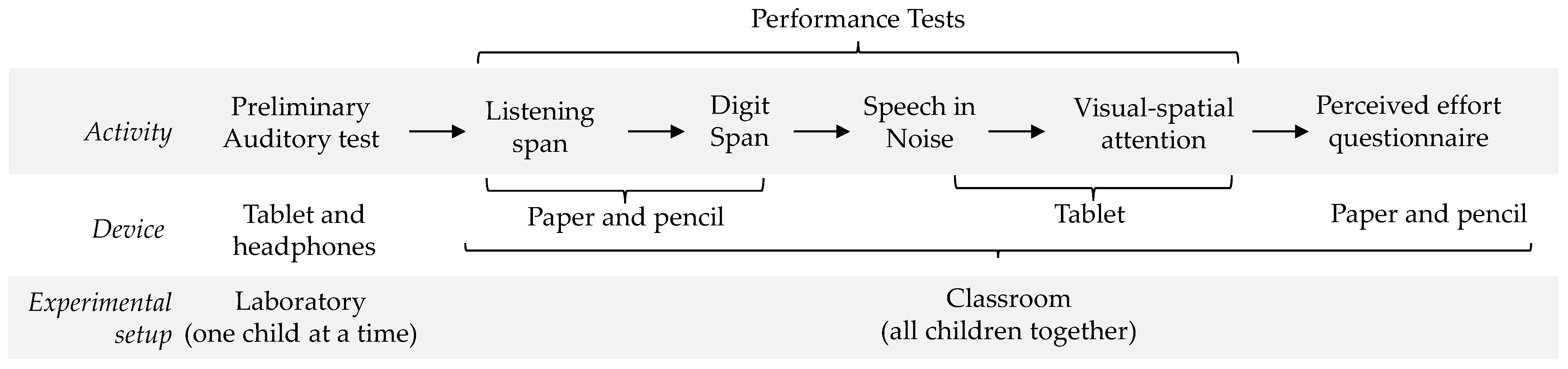
Figure 1. Methodology workflow: activities and experimental setup.
Applsci 15 13213 g001
Figure 2. Layouts of the monitored classrooms.
Applsci 15 13213 g002
Figure 3. (a,b) Listening span test: regressions between the standard deviation and LAeq. (c,d) Visual attention: regressions between number of correct responses and LAeq. (e) Speech-in-noise test: regressions between the mean reaction time and LAeq. (f) Speech-in-noise test: regressions between the number of selected distractors and LAeq. White dots represent students’ single performance; black dots represent the average performance of each group of students.
Applsci 15 13213 g003
Figure 4. Significant regressions between the mean perceived effort and LAeq in ambient (ac) and induced noise (d). White dots represent students’ single performance; black dots represent the average performance of each group of students.
Applsci 15 13213 g004
Table 1. Distribution of participating children by campaign type and school grade.
School GradeClassAmbient NoiseInduced Noise
nF/M (%)nF/M (%)
3rdDG-3A1953/472050/50
DG-3B2060/401958/42
4thMA-4A1747/531650/50
MA-4B1242/581050/50
DE-4A1553/471856/44
DE-4B1573/271669/31
5thMO-5A1759/411563/37
MO-5B1650/501553/47
Table 2. T20 [s] across frequencies (Hz) for unoccupied classrooms. The background colors from red to green indicate increasing acoustic quality.
T20 [s]
Classroom125 Hz250 Hz500 Hz1 kHz2 kHz4 kHz
MA-4A0.840.91.081.191.210.96
MA-4B0.830.830.991.030.970.8
DE-4A1.961.521.531.511.381.16
DE-4B1.861.61.81.621.491.22
DG-3A1.471.441.171.060.870.72
DG-3B1.051.030.580.490.50.51
MO-5A0.570.520.510.450.460.45
MO-5B0.650.480.450.520.550.51
Table 3. C50 [dB] across frequencies (Hz) and STI for each classroom. The background colors from red to green indicate increasing acoustic quality.
C50 [dB]STI
Classroom125 Hz250 Hz500 Hz1 kHz2 kHz4 kHz
MA-4A3.23.310.61.83.20.79
MA-4B34.21.51.62.74.50.8
DE-4A−5.9−4.2−3−2.1−0.90.30.72
DE-4B−5.1−2.2−2.4−1.8−0.31.30.74
DG-3A0.11.20.71.64.66.30.8
DG-3B235.67.29.19.40.88
MO-5A3.87.88.98.58.99.90.9
MO-5B3.68.610.59.39.510.60.9
Table 4. Cognitive and listening performance tests administered.
Test TypeCognitive/Listening FunctionType of CheckPerformance Indicator
Auditory testsListening SpanVerbal working memoryNumber of correct true/false responsesScore standard deviation
Number of correctly recalled wordsScore standard deviation
Digit SpanVerbal working memoryNumber of correct responsesCalculated score
Speech in noiseIntelligibilityAccuracy and response timeNumber of errors
Number of distractors
Response time
Non-auditory testCorsi visual–spatial testVisual–spatial working memoryNumber of correct responsesCalculated mean score
Table 5. Cognitive effort and fatigue questionnaire statement and evaluation scale. First column report the question number.
#StatementEvaluation Scale
1Do you feel tired?1 = “not at all”
2 = “a little”
3 = “moderately”
4 = “very”
5 = “extremely”
2Do you have headache?
3Were the games difficult?
4Was it hard to pay attention?
5Was it hard to understand words/numbers?
6Was it hard to remember words/numbers?
Table 6. Equivalent continuous sound pressure level (LAeq) at the centre of the classroom: Ambient Noise condition.
ClassroomLAeq [dBA] During Test/Questionnaire
Listening SpanDigit SpanVisuospatial AttentionSpeech in NoiseCognitive Effort
MA-4A65.066.4-56.364.8
MA-4B67.568.0-66.266.6
DE-4A65.266.569.159.766.4
DE-4B61.565.069.657.564.5
DG-3A67.469.669.1-68.8
DG-3B66.267.068.861.466.7
MO-5A57.957.957.452.357.3
MO-5B57.664.356.652.059.3
Table 7. Equivalent continuous sound pressure level (LAeq) at the centre of the classroom: Induced Noise condition.
ClassroomLAeq [dBA] During Test/Questionnaire
Listening SpanDigit SpanVisual–Spatial AttentionSpeech in NoiseCognitive Effort
MA-4A64.564.867.863.165.7
MA-4B69.170.866.769.169.2
DE-4A62.765.269.168.766.7
DE-4B66.267.669.664.465.9
DG-3A67.668.870.264.268.8
DG-3B66.671.470.869.169.8
MO-5A59.259.561.557.360.2
MO-5B56.758.857.855.557.5
Table 8. Statistical analysis of the noise level and the children’s performance at each test: Pearson correlation coefficient, r, regression slopes, s, p-value, and coefficient of determination, R2, of the regressions in Ambient Noise. Acronym n.c. means that regression coefficients have not been calculated because statistical correlation has not been found. The star symbol (*) highlights significant correlation.
Test TypePearson Analysis (131 Scores)Regression Analysis (8 Mean Values)
ρSlopep-ValueR2
Listening Span (T/F)−0.01n.c.n.c.n.c.
Listening Span (recalled words)−0.67−0.3253<0.001 *0.73
Digit Span0.00n.c.n.c.n.c.
Visual–spatial attention−0.55−0.2668<0.001 *0.95
Speech in noise (correct ans.)−0.28−15850.003 *0.30
Speech in noise (# distractors)0.270.10460.004 *0.27
Speech in noise mean RT0.480.0665<0.001 *0.84
Table 9. Statistical analysis of reverberation time and the children’s performance at each test: Pearson correlation coefficient, r, regression slopes, s, p-value, and coefficient of determination, R2, of the regressions in Ambient Noise. Acronym n.c. means that regression coefficients have not been calculated because statistical correlation has not been found. The star symbol (*) highlights significant correlation.
Test TypePearson Analysis (131 Scores)Regression Analysis (8 Mean Values)
ρSlopep-ValueR2
Listening Span (T/F)−0.11n.c.n.c.n.c.
Listening Span (recalled words)−0.15n.c.n.c.n.c.
Digit Span0.00n.c.n.c.n.c.
Visual–spatial attention−0.36−2.156<0.001 *0.40
Speech in noise (correct ans.)−0.34−1.886<0.001 *0.44
Speech in noise (# distractors)0.351.318<0.001 *0.45
Speech in noise mean RT0.250.336<0.001 *0.22
Table 10. Statistical analysis of children’s self-evaluation of perceived effort: Pearson correlation coefficient, r, slopes, s, p-value, and coefficient of determination, R2, of the regressions (Ambient Noise). Acronym n.c. means that regression coefficients have not been calculated because statistical correlation has not been found. The star symbol (*) highlights significant correlation.
Cognitive Effort/FatiguePearson Analysis (131 Scores)Regression Analysis (8 Mean Values)
ρSlopep-ValueR2
1. Do you feel tired?0.03n.c.n.c.n.c.
2. Do you have headache?0.02n.c.n.c.n.c.
3. Were the games difficult?0.11n.c.n.c.n.c.
4. Was it hard to pay attention?0.300.0940.001 *0.81
5. Was it hard to understand words/numbers?0.210.0510.026 *0.47
6. Was it hard to remember words/numbers?0.310.1020.001 *0.64
Table 11. Statistical analysis of the noise level and the children’s performance at each test: Pearson correlation coefficient, r, regression slopes, s, p-value, and coefficient of determination, R2, of the regressions (Induced Noise). Acronym n.c. means that regression coefficients have not been calculated because statistical correlation has not been found. The star symbol (*) highlights significant correlation.
Test TypePearson Analysis (131 Scores)Regression Analysis (8 Mean Values)
ρSlopep-ValueR2
Listening Span (T/F)0.11n.c.n.c.n.c.
Listening Span (words recalling)−0.56−0.2625<0.001 *0.75
Digit Span−0.04n.c.n.c.n.c.
Visual–spatial attention−0.38−0.2474<0.001 *0.75
Speech in noise (correct ans.)−0.27−0.15020.012 *0.56
Speech in noise (# distractors)0.320.09820.003 *0.91
Speech in noise mean RT)0.02n.c.n.c.n.c.
Table 12. Statistical analysis of reverberation time and the children’s performance at each test: Pearson correlation coefficient, r, regression slopes, s, p-value, and coefficient of determination, R2, of the regressions in Induced Noise. Acronym n.c. means that regression coefficients have not been calculated because statistical correlation has not been found.
Test TypePearson Analysis (131 Scores)Regression Analysis (8 Mean Values)
ρSlopep-ValueR2
Listening Span (T/F)0.07n.c.n.c.n.c.
Listening Span (recalled words)0.04n.c.n.c.n.c.
Digit Span0.10n.c.n.c.n.c.
Visual–spatial attention−0.08n.c.n.c.n.c.
Speech in noise (correct ans.)−0.15n.c.n.c.n.c.
Speech in noise (# distractors)0.10n.c.n.c.n.c.
Speech in noise mean RT−0.10n.c.n.c.n.c.
Table 13. Statistical analysis of children’s self-evaluation of perceived effort: Pearson correlation coefficient, r, slopes, s, p-value, and coefficient of determination, R2, of the regressions (Induced Noise). Acronym n.c. means that regression coefficients have not been calculated because statistical correlation has not been found. The star symbol (*) highlights significant correlation.
Cognitive Effort/FatiguePearson Analysis (131 Scores)Regression Analysis (8 Mean Values)
ρ Slopep-ValueR2
1. Do you feel tired?0.14n.c.n.c.n.c.
2. Do you have headache?0.08n.c.n.c.n.c.
3. Were the games difficult?0.220.0524<0.001 *0.43
4. Was it hard to pay attention?0.08n.c.n.c.n.c.
5. Was it hard to understand words/numbers?0.13n.c.n.c.n.c.
6. Was it hard to remember words/numbers?0.11n.c.n.c.n.c.
7. Have you been bothered by noises?−0.02n.c.n.c.n.c.
Disclaimer/Publisher’s Note: The statements, opinions and data contained in all publications are solely those of the individual author(s) and contributor(s) and not of MDPI and/or the editor(s). MDPI and/or the editor(s) disclaim responsibility for any injury to people or property resulting from any ideas, methods, instructions or products referred to in the content.