Article

A Surface Subsidence Monitoring Method for Narrow and Elongated Mining Areas by Combining InSAR and the Improved Probability Integral Method

1
School of Mining and Coal, Inner Mongolia University of Science and Technology, Baotou 014010, China
2
Inner Mongolia Key Laboratory of Mining Engineering, Baotou 014010, China
3
Inner Mongolia Research Center for Coal Safety Mining and Utilization Engineering and Technology, Baotou 014010, China
4
Inner Mongolia Cooperative Innovation Center for Coal Green Mining and Green Utilization, Baotou 014010, China
*
Author to whom correspondence should be addressed.
Appl. Sci. 2025, 15(24), 13086; https://doi.org/10.3390/app152413086
Submission received: 6 November 2025 / Revised: 10 December 2025 / Accepted: 10 December 2025 / Published: 12 December 2025

Abstract

Surface subsidence, a major geological hazard induced by mining activities, severely compromises the sustainable economic development of mining areas and the safety and stability of residents’ livelihoods. Consequently, long-term and effective monitoring and prediction of mining areas are essential. Aiming to identify the key characteristic of narrow and elongated mining areas—where the strike length is significantly greater than the dip length—this study proposes a surface subsidence monitoring method integrating Small Baseline Subset Interferometric Synthetic Aperture Radar (SBAS-InSAR) and the Improved Probability Integral Method (IPIM). Specifically, this method utilizes SBAS-InSAR technology to acquire cumulative subsidence results of low-gradient deformation zones in mining areas. To address the issue of excessively fast edge convergence in traditional Probability Integral Method (PIM) applications for narrow and elongated mining areas, the traditional PIM is adjusted by modifying the dip-direction influence radius parameter; this adjustment alters the shape of the dip-direction subsidence curve at the edge of the subsidence basin, thereby resolving the convergence problem. Meanwhile, based on the InSAR deformation gradient theory, the subsidence edge and subsidence center are identified, and the corresponding threshold is determined. The results of SBAS-InSAR and IPIM are then fused via the inverse distance squared weighting (IDSW) method to eliminate discontinuous boundaries in fused results and obtain complete surface subsidence data of the mining area. Taking the 31109-1 working face of the Lijiahao Coal Mine as the study area, 14 scenes of Sentinel-1A imagery and field leveling data of the working face were used to validate the feasibility and accuracy of the proposed method. The results indicate that a distinct rectangular subsidence basin was formed in the working face during the monitoring period. The maximum subsidence measured by the integrated method is 3453 mm, and the location, subsidence curve, and variation trend of the monitored subsidence basin are basically consistent with actual mining conditions. The maximum relative errors of subsidence in the strike and dip directions are 5.2% and 4.1%, respectively. This method can effectively compensate for the limitations of SBAS-InSAR and PIM when applied individually to surface subsidence monitoring in narrow and elongated mining areas, enabling the acquisition of refined subsidence information for the entire mining basin. The research results provide a scientific basis for subsidence monitoring and early warning, disaster prevention and mitigation, and the rational development and utilization of resources in mining areas.

1. Introduction

Surface subsidence induced by mining activities exhibits the characteristics of suddenness, concealment, and cumulativeness, and may trigger secondary disasters such as ground collapse [1,2], slope instability [3], and roadway deformation [4]. These disasters pose a severe threat to human life and property safety, as well as social and economic development. Accurate monitoring of such subsidence is a core requirement for mine safety assessments and disaster prevention and mitigation [5]. Interferometric Synthetic Aperture Radar (InSAR) is an emerging technology for ground subsidence monitoring, which can achieve centimeter-level or even millimeter-level deformation monitoring over a large area. Compared with traditional surveying methods, it offers the advantages of all-time, all-weather, and large-scale surface deformation monitoring [6,7,8,9]. On this basis, Small Baseline Subset Interferometric Synthetic Aperture Radar (SBAS-InSAR) technology has been proposed. This technology improves the accuracy of deformation phases and ultimately enables the acquisition of temporal sequence deformation information of the ground surface. Compared with traditional surveying methods, SBAS-InSAR has unique advantages: it can quickly obtain the overall deformation information of mining areas, thereby providing new ideas and technical support for ground subsidence monitoring in mining areas [10,11,12,13,14,15,16]. However, surface subsidence caused by mining activities is characterized by high speed and large magnitude. Due to the line-of-sight (LOS) deformation projection characteristics and phase unwrapping algorithms of SBAS-InSAR, the technology is prone to decorrelation in areas with large-gradient subsidence (e.g., subsidence centers). This decorrelation leads to data gaps or amplified errors [17,18,19].
Meanwhile, the Probability Integral Method (PIM), as the mainstream model for mining area subsidence prediction, was proposed by Chinese scholars such as Liu Baochen and Liao Guohua based on the stochastic medium theory [20]. It boasts high prediction accuracy and strong adaptability, achieving high monitoring precision in the center of subsidence basins [21,22]. However, mining areas are typically covered with unconsolidated layers. During actual mining operations, these unconsolidated layers have poor compressive strength. Under tensile stress, cracks form above coal pillars, and obvious plastic flow toward the goaf center is generated. These phenomena enhance the subsidence deformation above coal pillars, thereby causing excessively rapid edge convergence of PIM in mining area subsidence monitoring. In contrast, the traditional PIM neglects the impact of unconsolidated layers on mining areas [23,24]. Meanwhile, for narrow and elongated mining areas, the entire mining zone is relatively narrow and elongated (strip-shaped), with the strike length being 10 times or even dozens of times the dip length. This further aggravates the problem of excessively rapid subsidence edge convergence along the mining area’s dip direction. Wang Ning et al. [25] proposed a parameter adjustment method to modify the edge convergence of PIM, and case studies verified that the unconsolidated layer influence coefficient is positively correlated with the main influence radius. Li et al. [26] established a geometric model similar in shape to PIM but with a larger boundary value based on the Cuckoo Search Algorithm, which improves the edge convergence performance of mining areas. However, studies have shown that the thickness of unconsolidated layers varies across different mining areas. Adjusting the influence radius based on a fixed given value will affect the final results, leading to a certain degree of empiricism.
Additionally, in the process of fusing the results of SBAS-InSAR and the PIM, we are confronted with the challenge of discontinuous regions emerging at the fusion boundaries. Chen Yang et al. [27] combined D-InSAR with the PIM and proposed a refined monitoring method for mining area surface subsidence. By calculating the cumulative mean square error between the benchmarks and the results of D-InSAR as well as PIM, they obtained the fused monitoring results after weighted averaging. Chi Fengmei et al. [18] combined SBAS-InSAR technology with the PIM. Based on the deformation gradient theory and fusion performed according to specific thresholds, they obtained complete surface subsidence information of the mining area. However, no explanation was provided regarding the fusion boundaries.
Considering the respective advantages and disadvantages of SBAS-InSAR technology and PIM in mining area subsidence monitoring and aiming to identify the unique characteristics of narrow and elongated mining areas where “the strike length is much larger than the dip length”, this study proceeds as follows. Firstly, taking advantage of the high monitoring accuracy of SBAS-InSAR technology in small-gradient deformation areas, the temporal subsidence data of the mining area subsidence edge is obtained. Secondly, addressing the defect of traditional PIM where the subsidence curve at the dip line edge of narrow and elongated mining areas converges too quickly, the shape of the subsidence curve at the dip line edge is adjusted by modifying the subsidence influence radius, so as to complete the correction of the traditional PIM formula and further accurately invert the subsidence value of the large-gradient deformation center. Finally, based on the deformation gradient theory, the inverse distance squared weighting (IDSW) method is adopted to realize the boundary fusion between the SBAS-InSAR edge monitoring results and the inverted results of the Improved Probability Integral Method (IPIM) at the center. Eventually, complete subsidence basin information covering the whole area is acquired. The research results indicate that the proposed IPIM in this study enhances the monitoring accuracy at the edges of narrow and elongated mining areas. The fusion of SBAS-InSAR and IPIM not only offsets the limitations of individual technologies but also serves as a low-cost and efficient monitoring approach. Compared with traditional boundary fusion methods, the proposed method realizes the synergistic inversion of parameter a and the core parameters of IPIM via the Bat Algorithm (BA), which improves the fitting accuracy of the model in complex mining areas. This method can provide guidance for the rational control of surface subsidence and disaster prevention and mitigation in narrow and elongated mining areas.

2. Materials and Methods

2.1. Overview of the Study Area

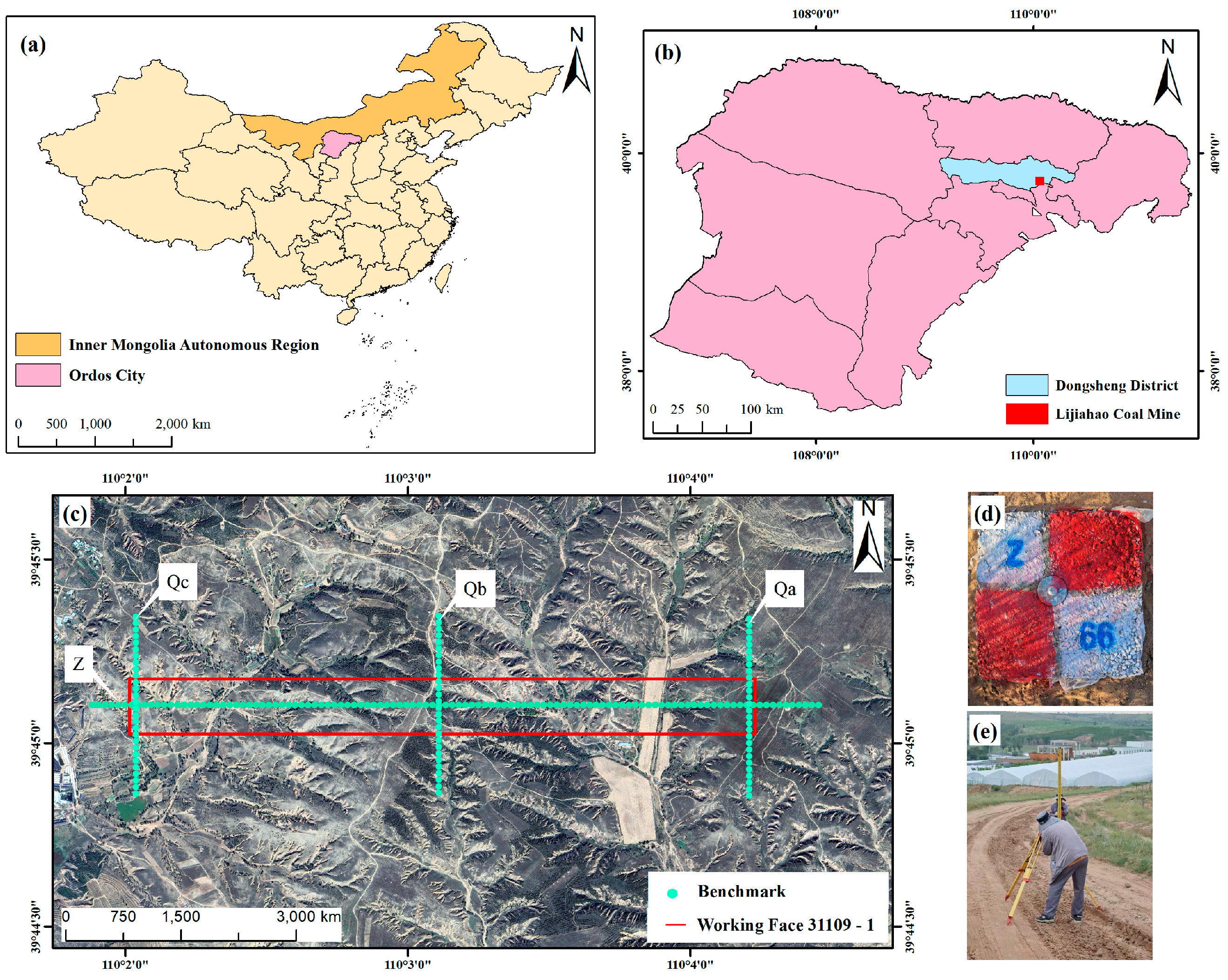
For the experiment, the 31109-1 working face of Lijiahao Coal Mine in Ordos City, Inner Mongolia, was selected as the study area. Specifically, it is located in the southeast of Dongsheng District’s urban area, approximately 2 km away from the district. Its geographical coordinates range from 110°01′00″ E to 110°06′30″ E and 39°43′45″ N to 39°48′40″ N, as shown in Figure 1a,b. The mining method adopted in the study area is underground mining, with a mining elevation ranging from +1480 m to 940 m and a total mining area of 67.545 km2. The working face has a strike length of 3354.3 m and a dip length of 243 m and is generally distributed in a narrow and elongated shape along the east–west direction, with its strike length approximately 14 times the dip length. Additionally, the mining depth of the working face ranges from 200 m to 245 m, the coal seam dip angle is 3°, and the average coal seam thickness is 5.5 m.
One monitoring line was deployed along the strike direction of the working face, and three monitoring lines were deployed along the dip direction (one in the open-off cut area, one in the middle area, and one in the stopping line area). Specifically, 195 leveling points were laid along the strike direction from east to west, designated as Z1 to Z195. Along the dip direction from north to south, a total of 114 benchmarks were laid, designated as Qa1 to Qa38, Qb1 to Qb38, and Qc1 to Qc38, respectively, as shown in Figure 1c,d. The measurement work commenced on 8 July 2023, and concluded on 30 October 2024, covering a total of 25 periods. The leveling measurement is illustrated in Figure 1e.

2.2. Selection of SAR Image Data

Sentinel-1 is equipped with C-band Synthetic Aperture Radar (SAR) technology, featuring all-time and all-weather imaging capabilities. To acquire ground subsidence information of the mining area, 14 scenes of Sentinel-1A ascending orbit data—collected from 22 April 2023, to 15 June 2024—were selected for this experiment. The imaging mode is IW strip map mode with vertical polarization, and the spatial resolution is 5 m × 20 m (azimuth × range). Detailed parameters are listed in Table 1. InSAR technology requires simulating topographic phases with an external digital elevation model (DEM). For this experiment, the SRTM-1 Version 3 DEM was selected to simulate topographic phases, which is used to eliminate interference from topographic phases and flat-earth effects.

2.3. The Basic Principle of the Improved Probability Integral Method (IPIM)

2.3.1. Probability Integral Model

The PIM is currently recognized as the most widely used method for calculating surface subsidence. This method treats surface movements induced by mining subsidence as a random events, while discretizing the entire mining area into numerous micro-units. Surface subsidence is the sum of contributions from all mining units to the ground surface, and its calculation can be directly solved using integral methods [20]. According to the PIM principle, when the coal seam roof subsidence is mqcosα, the subsidence W (x, y) at any point A (x, y) on the surface—induced by full mining—can be expressed as Formula (1).
W ( x , y ) = m q cos α W 0 ( x ) W 0 ( y ) ,
In Formula (1),
W 0 ( x ) = 1 π 0 π x tan β H 0 e u 2 d u 0 π ( x l ) tan β H 0 e u 2 d u W 0 ( y ) = 1 π 0 π y tan β H 1 e u 2 d u 0 π ( y L ) tan β H 2 e u 2 d u r = H tan β ,
In the formula, W0(x) and W0(y) are, respectively, the subsidence distribution coefficients of the projection points of the point to be solved on the main sections along the strike and dip directions; m is the coal seam thickness; q is the subsidence coefficient; α is the coal seam dip angle; u is the mining unit of the probability integral; r is the main influence angle radius; H0 is the average mining depth; H1 and H2 are the mining depths of the downhill and uphill, respectively; tanβ is the tangent value of the main influence angle; l and L are the effective mining influence distances along the strike and dip directions, respectively, and their expressions are shown in Formulas (3) and (4).
l = D 3 S 3 S 4 ,
L = ( D 1 S 1 S 2 ) sin ( θ + α ) sin θ ,
In the formula, D3 is the strike length of the working face; D1 is the dip length of the working face; S1 and S2 represent the offset distances of the inflection points of the downhill and uphill, respectively; S3 and S4 represent the offset distances of the inflection points of the left strike and right strike, respectively; θ is the propagation angle of mining influence.

2.3.2. Improved Probability Integral Method

Traditional PIM only accounts for the influence of overlying rock layers on mining areas, which often results in excessively rapid convergence of subsidence edges in the basin subsidence data obtained from mining area surface subsidence monitoring. Particularly in narrow and elongated mining areas—where the strike length is dozens of times larger than the dip length—this issue is exacerbated, further accelerating the convergence of edge subsidence along the dip direction. Analysis indicates that the excessively rapid convergence of subsidence edges (a problem in traditional PIM-based mining area surface subsidence monitoring) is closely related to the influence radius r. Hou et al. [28] addressed this issue by suggesting that the convergence of the subsidence curve can be controlled by adjusting the influence radius r to the form of kr, and provided a coefficient k with a value range of 0.2–0.4. Building on this research, this study further extends the range of parameter r by considering the variations in loose layer thickness across different mining areas. When a > 1, the subsidence curve becomes excessively gentle, deviating from the stress transfer law of actual strata; when a < 0, the problem of excessively fast convergence at the dip edges is exacerbated, which contradicts the field-observed subsidence morphology. Therefore, the initial range of a is set to 0–1 to comprehensively investigate and optimize the convergence issue at the subsidence edges of narrow and elongated mining areas. In Formula (2), parameter a is introduced into the subsidence value formula for the main dip section, thereby constructing the IPIM formula, as shown in Formula (5).
W 0 ( y ) = 1 π 0 π y ( tan β H 1 a tan β H 1 ) e u 2 d u 0 π ( y L ) ( tan β H 2 a tan β H 2 ) e u 2 d u ,
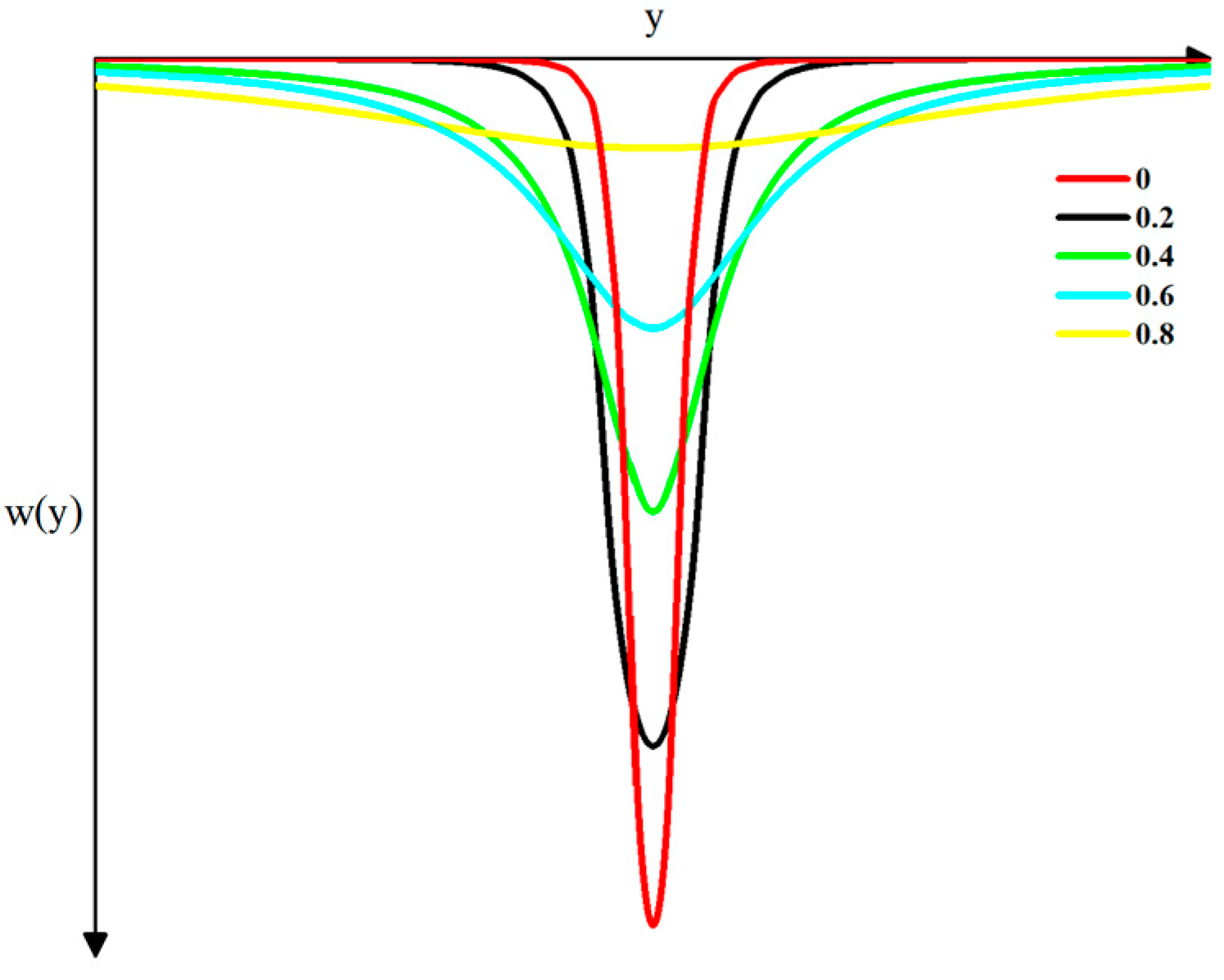
In the formula, a denotes a surrogate indicator for the thickness of the loose layer, and its value is positively correlated with the ratio of “loose layer thickness of the mining area to mining depth”. Figure 2 presents the simulated subsidence curves when parameter a takes values of 0, 0.2, 0.4, 0.6, and 0.8, respectively. As observed in the figure, as the value of a changes, the shape of the curve at the subsidence basin edge exhibits significant changes, and the convergence rate of the subsidence edge area slows down gradually. This indicates that the convergence of the mining area’s subsidence edge can be optimized by adjusting the value of parameter a. Therefore, this study incorporates parameter a into the parameter inversion process of the IPIM.
Considering the characteristics of the IPIM—high nonlinearity and a large number of unknown parameters—this study adopts the BA for parameter inversion to ensure the accuracy of parameter solution. The BA is a global swarm intelligence optimization algorithm that simulates the echolocation and foraging behavior of microbats. Due to its efficient global search capability and excellent convergence performance, it demonstrates significant advantages in solving complex parameter inversion problems. When applied to the parameter inversion of the PIM, suppose mining is conducted at any point (x, y) on the working face, where Wxy denotes the actual subsidence value of this mining point. The predicted parameters inverted by the BA are substituted into Formulas (1) and (5) to obtain the predicted subsidence value Wxy of the mining point. A fitness function is constructed with the goal of minimizing the sum of squared differences between the predicted subsidence value and the subsidence values of selected characteristic points, as shown in Formula (6).
min f = W x y W x y 2 ,
Let P = [q, tanβ, S1, S2, S3, S4, θ, a] be the search space for the optimal bat position in the BA. Next, encoding and population generation are performed. In accordance with the principle of minimizing the fitness function value, once the algorithm’s termination condition is satisfied, the optimal bat position P is output. Based on the optimal parameters derived from P, the subsidence results of the entire mining area basin are computed via the IPIM, following Formulas (1)–(5).

2.4. Fusion Principle of SBAS-InSAR Technology and IPIM

2.4.1. InSAR Maximum Deformation Gradient Theory

InSAR technology is an efficient means to obtain mining area subsidence and can effectively acquire the edge information of subsidence. However, due to the fact that SAR images are affected by factors such as atmospheric delay and noise, when the subsidence amount in the center of the mining area is too large, even reaching the meter level, it will lead to poor coherence or decorrelation of the interferometric image pairs. Moreover, the phase information contained in the interferometric fringes is not the absolute phase but the relative phase between each pixel, which cannot reflect the real deformation. To address this, Massonnet and Feigl [29] proposed in 1998 that the maximum detectable deformation gradient within a single pixel by InSAR is equivalent to one fringe cycle. They also provided the expression for the maximum monitorable deformation gradient, as shown in Formula (7).
d max = λ 2 μ ,
In the formula, dmax represents the maximum deformation gradient value that can be theoretically monitored by InSAR, λ denotes the radar wavelength, and μ is the pixel size.
However, the maximum monitorable deformation gradient proposed by Massonnet et al. does not take into account the influences of various decorrelation factors, such as orbital errors, spatiotemporal decoherence, and atmospheric delay effects, which leads to the fact that the monitored maximum deformation gradient is often smaller than the theoretical value. Ireneusz Baran et al. [30] incorporated coherence into the InSAR detectable deformation gradient model, thereby deriving a maximum deformation gradient model with real practical significance, whose expression is shown in Formula (8).
D max = d max + 0.002 ( γ 1 ) ,
In the formula, Dmax is the actual maximum monitorable deformation gradient by InSAR, and γ is the interferometric coherence coefficient.

2.4.2. Specific Steps for Fusion

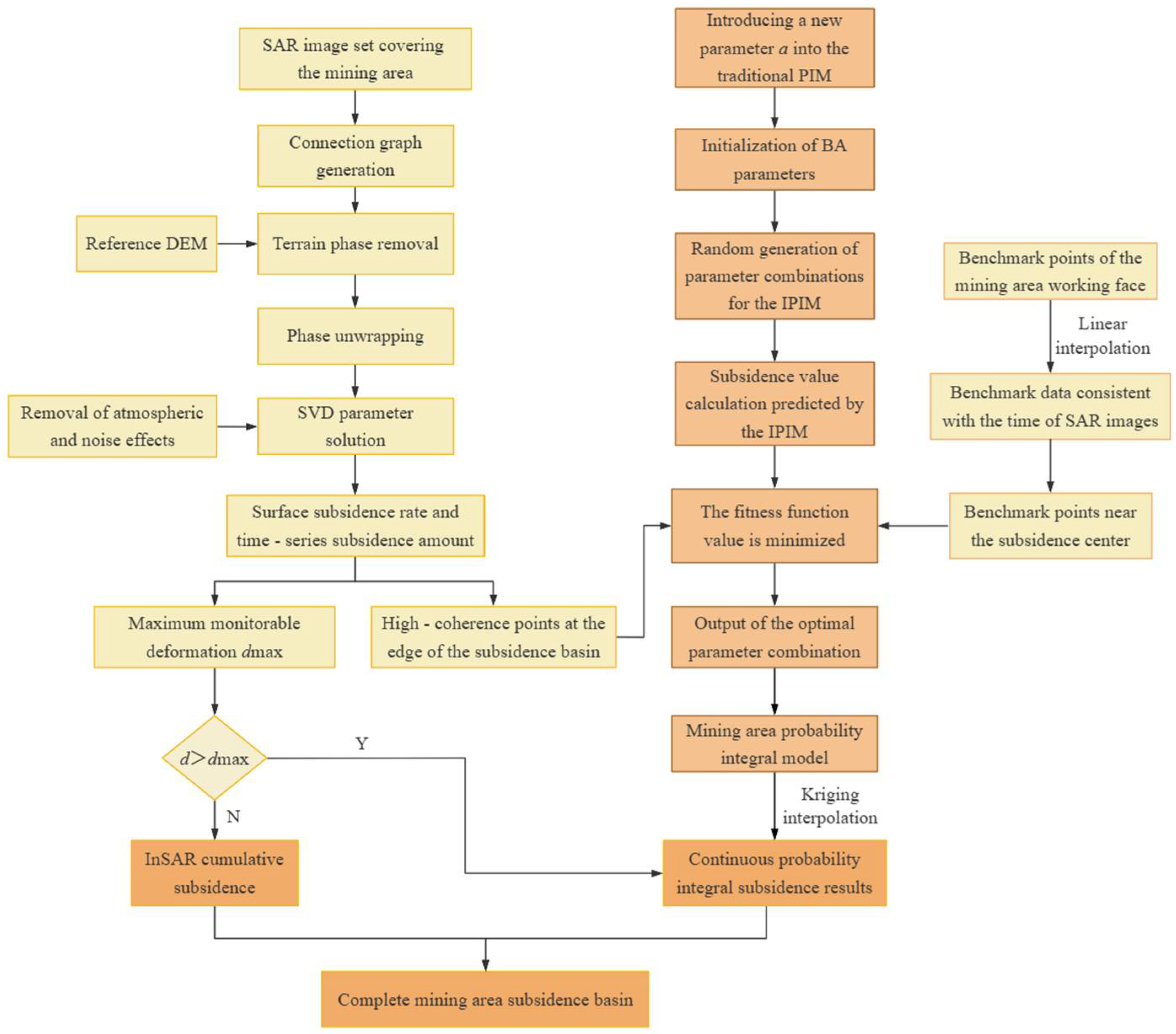
By integrating the advantages of the IPIM and SBAS-InSAR technology, accurate and complete information on surface subsidence in mining areas can be obtained. The specific steps are as follows:
(1) Select SAR images covering the mining area for SBAS-InSAR processing to obtain the deformation information in the radar LOS direction of the mining area, denoted as dLOS. Then, convert the LOS direction deformation into vertical deformation dInSAR, as shown in Formula (9).
d I n S A R = d L O S / cos θ 1 ,
In the formula, θ1 is the radar incidence angle.
(2) To achieve temporal consistency between InSAR data and leveling data, piecewise linear interpolation is performed on the elevation values of benchmarks in the time domain, so that the actual subsidence information of each benchmark at the SAR imaging time can be obtained [27], as shown in Formula (10).
d l e v i n g = T l e v i n g T I n S A R T I n S A R T I n S A R d I n S A R + T l e v i n g T I n S A R T I n S A R T I n S A R d I n S A R ,
In the formula, dleving is the subsidence information of the benchmark at the SAR imaging time; Tleving is the observation date of the benchmark; TInSAR and TInSAR are the nearest SAR imaging dates before and after the observation date of the benchmark, respectively; dInSAR and dInSAR are the InSAR subsidence monitoring results of the benchmark on these two SAR imaging dates, respectively.
(3) First, high-coherence points near the subsidence edge (derived from SBAS-InSAR) and interpolated leveling data near the subsidence center are selected as feature points. Based on these feature points, the prediction parameters of the IPIM are solved using the BA. Subsequently, a mining area probability integral subsidence model is established using the inverted probability integral parameters. The subsidence results of this model are then converted into a unified coordinate system. Finally, the Kriging interpolation method is employed to obtain continuous predicted subsidence values of the IPIM, denoted as dIPIM.
(4) Calculate the average coherence coefficient γ of N interferometric pairs. According to Formula (8), the maximum subsidence value DMAX obtained by SBAS-InSAR monitoring under this coherence condition can be derived. Based on the deformation gradient theory, the maximum subsidence value dtheory that can be monitored using N interferometric pairs is calculated, as shown in Formula (11).
d t h e o r y = μ D max N ,
dtheory and the maximum subsidence value dreal actually monitored by SBAS-InSAR are taken as the thresholds for fusing the subsidence results of InSAR and the IPIM. When the subsidence amount is less than dtheory, the SBAS-InSAR monitoring value is used as the final subsidence result; when the subsidence amount is greater than dreal, the predicted subsidence value of the IPIM is taken as the final subsidence result. When the subsidence amount is between the two thresholds, partial overlap occurs. Therefore, in the overlapping area, the IDSW method is applied to weigh the SBAS-InSAR monitoring values and IPIM-predicted subsidence values, yielding the final complete subsidence basin. The fusion principle is illustrated in Formulas (12) and (13).
d = d I n S A R d < d t h e o r y d I n S A R × P I n S A R + d I P I M × P I P I M d t h e o r y d d r e a l d I P I M d > d r e a l ,
P I n S A R = d I n S A R 2 d I n S A R 2 + d I P I M 2 P I P I M = d I P I M 2 d I n S A R 2 + d I P I M 2 ,
In the formulas, dInSAR denotes the InSAR-monitored subsidence value at this point; dIPIM represents the subsidence value predicted by the IPIM at this point; dtheory is the theoretically maximum subsidence value that can be monitored by InSAR; dreal refers to the actually maximum subsidence value monitored by InSAR.; PInSAR and PIPIM are the weight coefficients in the weighting process.
The data processing flow chart is shown in Figure 3.

3. Results

3.1. SBAS-InSAR Process and Analysis

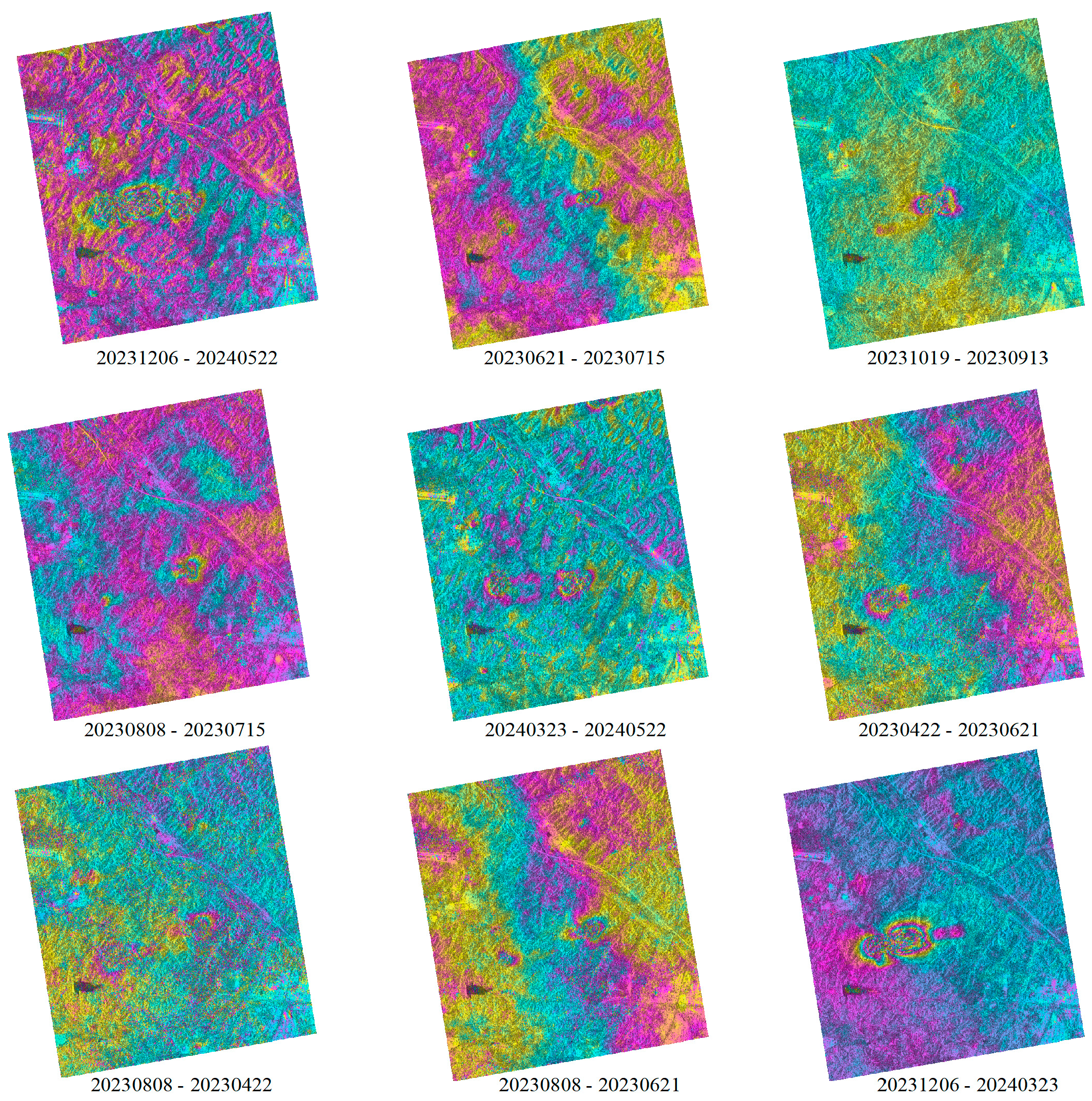
SBAS data processing was conducted using the SARscape module in ENVI 5.6.2 software. To improve data processing efficiency, SAR images and DEM data were cropped to match the scope of the working face. Next, the spatiotemporal baseline combination was configured, with a temporal baseline threshold of 180 days and a spatial baseline threshold of 45%. The super master image date was automatically selected as 19 October 2023, generating a total of 31 interferometric pairs. Subsequently, external DEM data was used to simulate and subtract the topographic phase. All image pairs in the connection graph underwent interferometric processing: the minimum cost flow method was adopted for phase unwrapping, and the Goldstein method was used for filtering. During this process, the coherence threshold for unwrapping was set to 0.15. The obtained interferometric results were visually inspected, and low-quality interferometric pairs were manually excluded. Eventually, 22 interferometric pairs were retained, with some illustrated in Figure 4. Afterward, the unwrapped phases were subjected to optimization, orbital refinement, and reflattening operations, followed by secondary unwrapping. Finally, geocoding was performed to obtain the deformation rates and time-series subsidence amounts in the radar’s LOS direction under the geographic coordinate system.
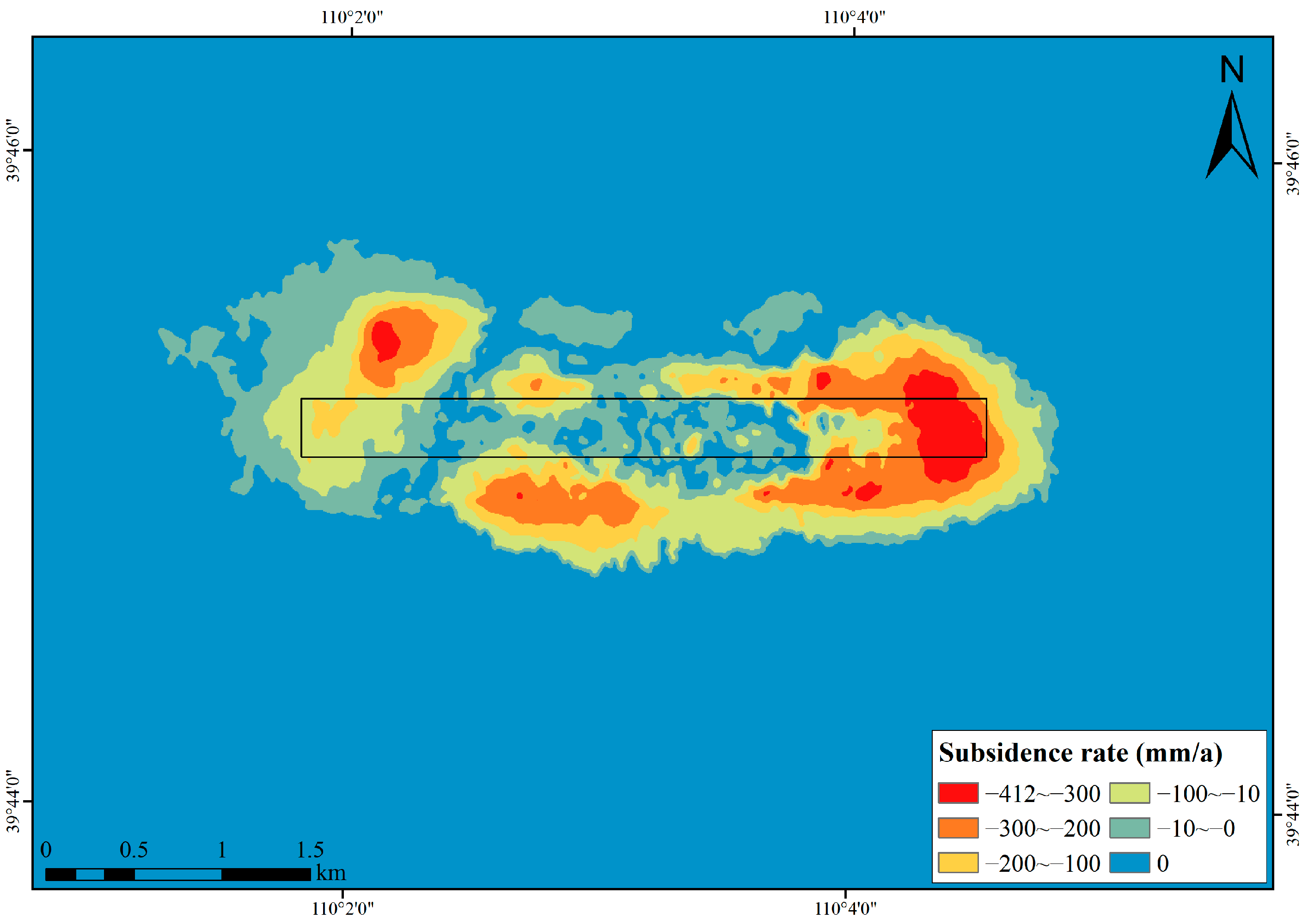
After processing 14 scenes of Sentinel-1A image data using SBAS-InSAR, the LOS deformation was converted to vertical deformation according to Formula (9). This yielded the subsidence rate map of the working face for the period from 22 April 2023 to 15 June 2024, as shown in Figure 5. As observed in Figure 5, affected by the ongoing mining activities of the 31109-1 working face, a distinct rectangular subsidence basin formed in the study area during the monitoring period, with the maximum subsidence rate reaching −412 mm/a. Combined with the working face’s mining information, it is found that the surface deformation area exhibits high consistency with the working face’s mining scope.
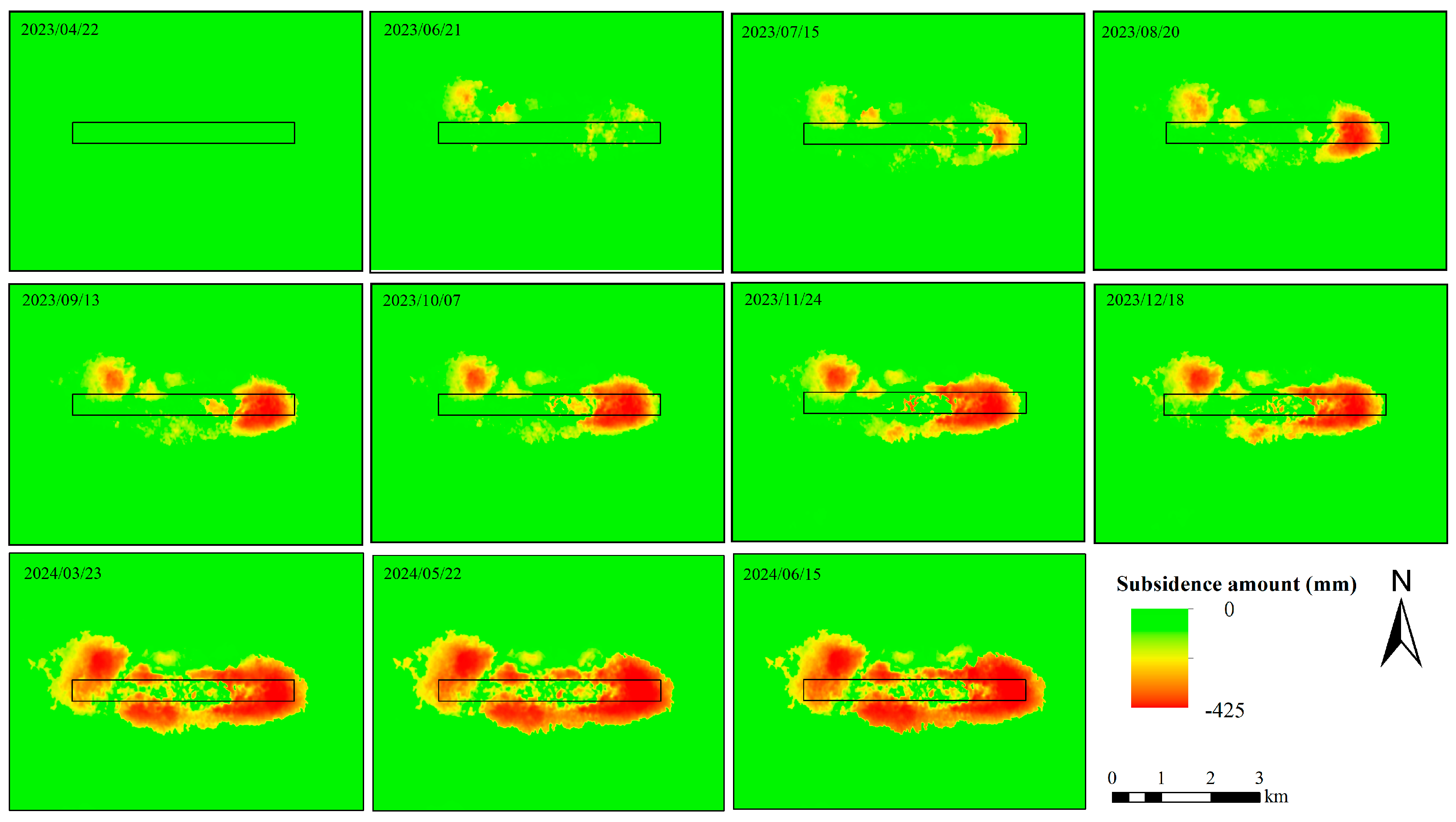
To intuitively reflect the development trend of surface subsidence in the study area, the time-series cumulative subsidence map of the study area was obtained—taking the deformation amount on 22 April 2023 as the initial reference point—as shown in Figure 6. Analysis of Figure 6 reveals that significant ground subsidence had already occurred in the study area within 2 months relative to the initial reference time, and the affected range was continuously expanding. Subsequently, due to the continuous advancement of the mining face, full mining was achieved on 22 May 2024. At this point, the magnitude of surface subsidence decreased significantly. However, under the load of the overlying strata, fractures in the overlying strata were further compacted, leading to secondary surface subsidence. By 15 June 2024, surface subsidence had basically stabilized, with the maximum monitored subsidence amount reaching 425 mm. It can be seen from this that the location, scope, and spatiotemporal distribution characteristics of the subsidence basin monitored by SBAS-InSAR are consistent with the actual mining situation of the working face. However, an obvious “void” phenomenon appears in the subsidence center. According to on-site measured leveling data, as of June 2024, the maximum subsidence value of the working face had reached 3685 mm—a value significantly different from the subsidence amount monitored by SBAS-InSAR. Therefore, it is judged that this phenomenon is caused by two factors: first, the high-gradient ground subsidence exceeds the maximum deformation monitoring capacity of SBAS-InSAR, resulting in decorrelation in the subsidence basin center; second, the subsidence of this working face occurred rapidly within one year of mining, so this technology cannot capture the complete deformation field of mining subsidence in the study area.

3.2. Selection of Feature Points

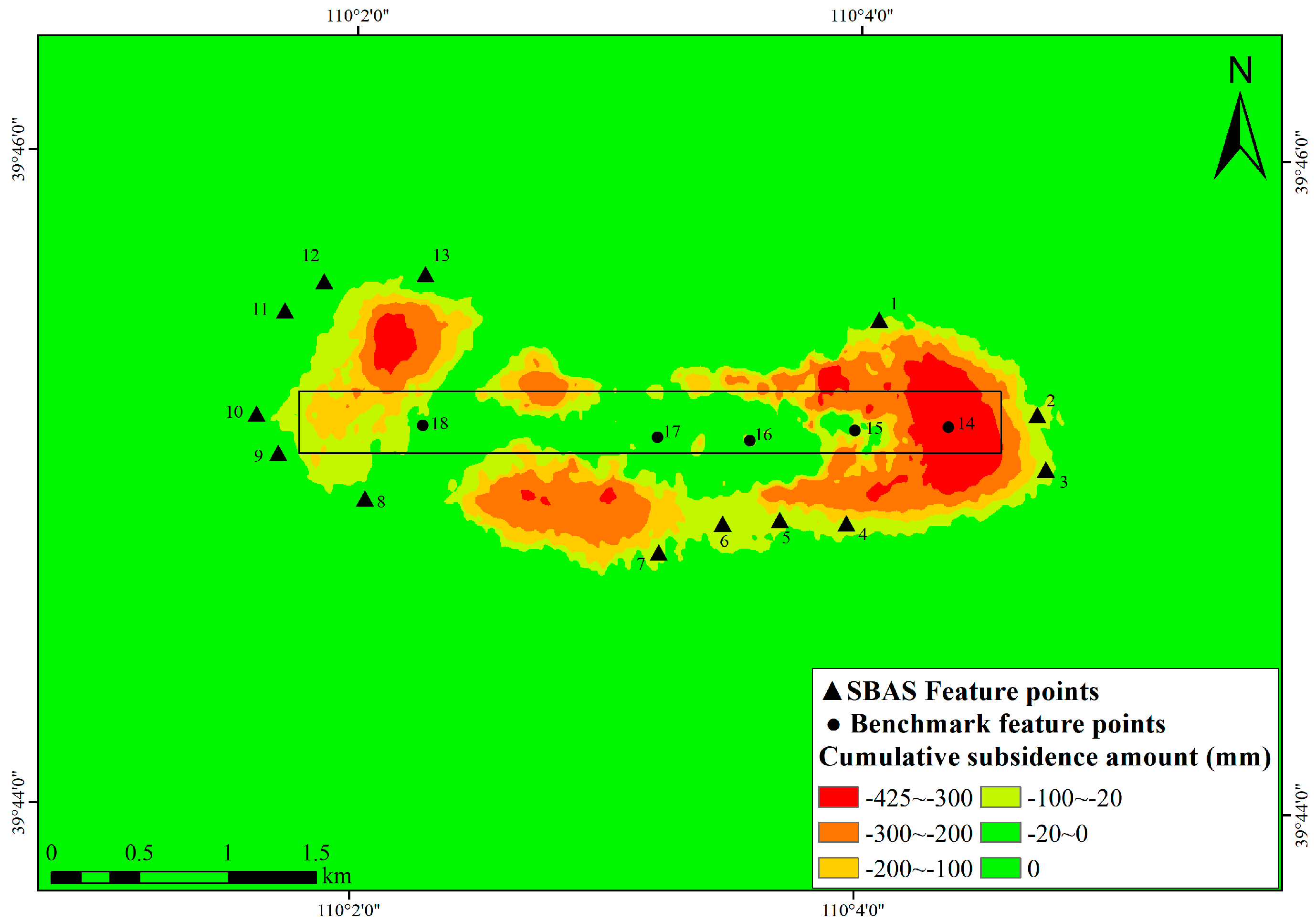
Theoretically, Sentinel-1 images processed via multi-looking can monitor a deformation gradient of 1.4 × 10⁻³. As indicated by Formula (8), the higher the image coherence, the greater the magnitude of actual monitorable deformation. There is a specific coherence threshold where Dmax equals zero—meaning surface deformation cannot be monitored when image coherence is less than 0.3. To construct the probability integral model and effectively extract deformation information in the mining area, it is necessary to extract multiple high-coherence feature points from the cumulative subsidence map obtained via SBAS technology. Based on the spatial coherence of images in the study area, a coherence threshold of 0.5 was set here. Thirteen points with coherence coefficients greater than 0.5 were selected as feature points. Additionally, 5 benchmarks—including the maximum subsidence point and inflection points of the working face—were chosen based on measured data. In total, 18 feature points were obtained. Their distribution overlaid on the working face is shown in Figure 7, and their coherence coefficients, along with subsidence information, are presented in Table 2.

3.3. Analysis of Subsidence Monitoring Results Based on the IPIM

Based on the 18 selected feature points, the BA was employed to invert the parameters of the IPIM for the 31109-1 working face. (1) Preliminary experiments were conducted to test the convergence effects under different population sizes. When the population size was set to 400, it not only ensured population diversity (covering the key regions of the parameter search space) but also avoided excessive computational load. When the population size was further increased, the improvement in convergence accuracy was not significant; therefore, the population size was determined to be 400. (2) Convergence curves of fitness values corresponding to different iteration numbers (50, 80, 100, 150) were plotted. It was observed that the fitness value decreased sharply in the first 50 iterations, and the rate of decline slowed down during iterations 50 to 80. After 80 iterations, the curve basically stabilized; when the iteration number reached 100, the fluctuation range of the fitness value was less than 0.001. Therefore, the iteration number was determined to be 100. (3) A single run may fall into a local optimum due to the randomness of the initial population. To verify the stability of the inversion results, multiple repeated runs were conducted to test the variance of results under different repetition times (5, 10, 15). When the number of repetitions was set to 10, the variance of the inverted parameters was less than 0.005, and the stability of the results met the engineering requirements.
Meanwhile, to demonstrate the effectiveness of the method proposed in this study, the PIM parameters were also solved, and surface subsidence monitoring was implemented based on the PIM. The results of parameter inversion are presented in Table 3.
The convergence curves of 10 repeated runs gradually converged after 80 iterations; the final fitness values of PIM and IPIM at characteristic points concentrated in the range of 0.145–0.155, with a variance of only 0.002 and an RMSE numerical difference of less than 3%. This demonstrates that multiple repeated runs effectively mitigate the impact of initial population randomness, and the results exhibit excellent stability. Meanwhile, the “sum of squared residuals (SSR) between the actual leveling data and the predicted subsidence values” was adopted as the indicator of fitting performance. When parameter a was set to 0.43 and 0.53, the differences in the sum of squared residuals were both less than 0.01. This indicates that minor variations in parameter a around its optimal value result in marginal changes in the fitting performance of the leveling data, which not only verifies the stability of the optimal value (a = 0.48) but also reflects that the Improved Probability Integral Method (IPIM) has low sensitivity to parameter a, with the inversion results demonstrating high reliability.
It can be seen from Table 3 that the introduction of an additional unknown parameter in the IPIM leads to differences in parameter calculation results between the PIM and IPIM. In terms of numerical values, the maximum difference for Parameter S is 20 m—this parameter exhibits low sensitivity and has minimal overall impact—while the differences for other parameters are relatively small. Overall, the difference between the calculation results of the PIM and IPIM is not significant. This confirms that although the new parameter a is introduced, the established parameter range does not need to be adjusted during actual parameter solving, which also reduces the complexity of the method.
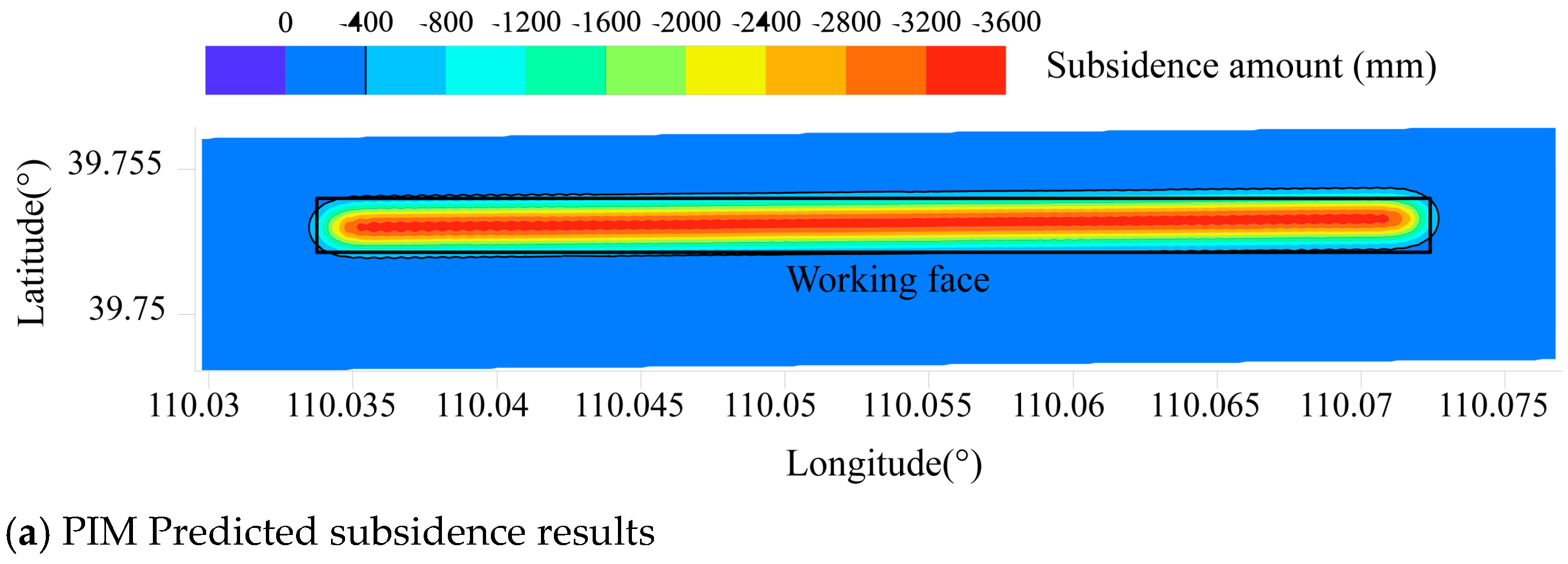
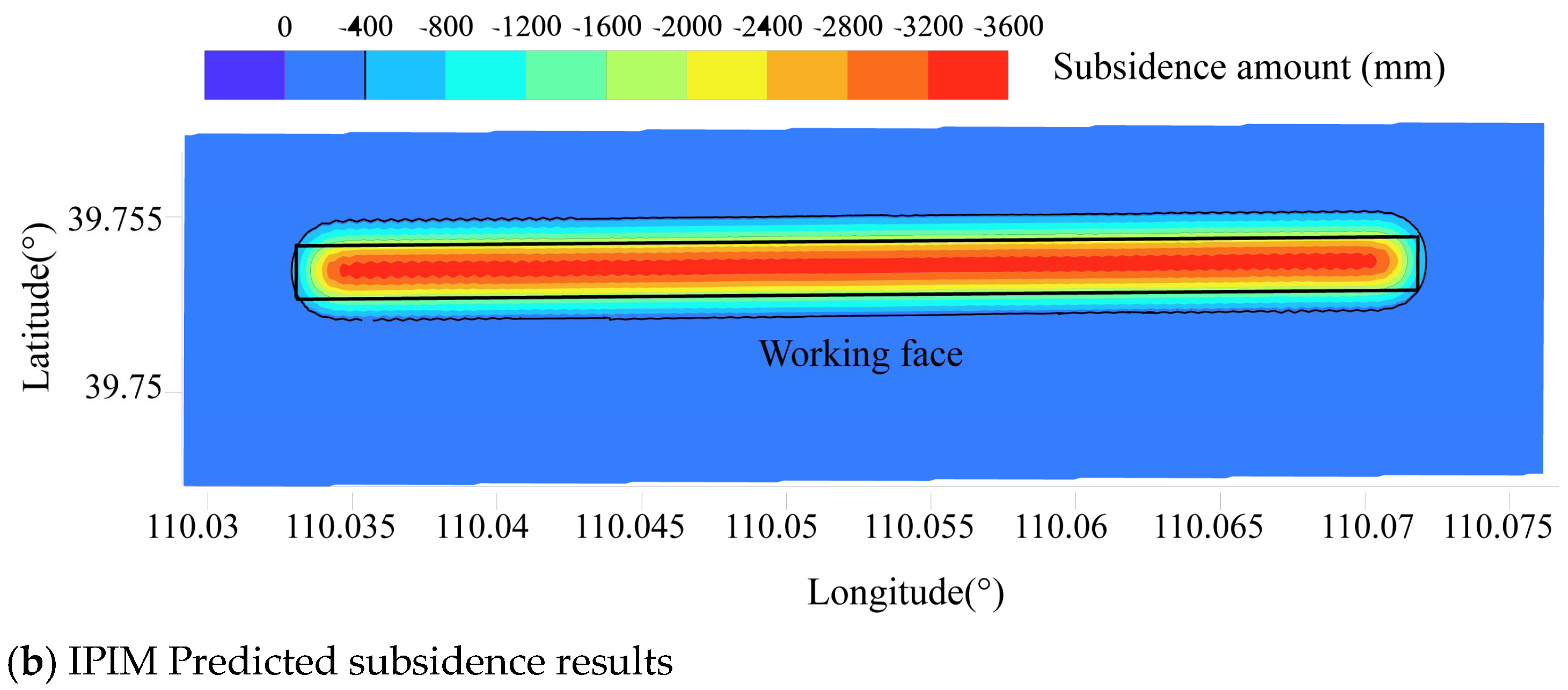
Based on the solved parameters, the PIM and IPIM were constructed separately for surface subsidence prediction. The subsidence values of 10,000 equidistant feature points on the working face were calculated, respectively, and the Kriging interpolation method was adopted to perform optimal estimation of regionalized subsidence. The spatially continuous predicted subsidence results after interpolation are presented in Figure 8.
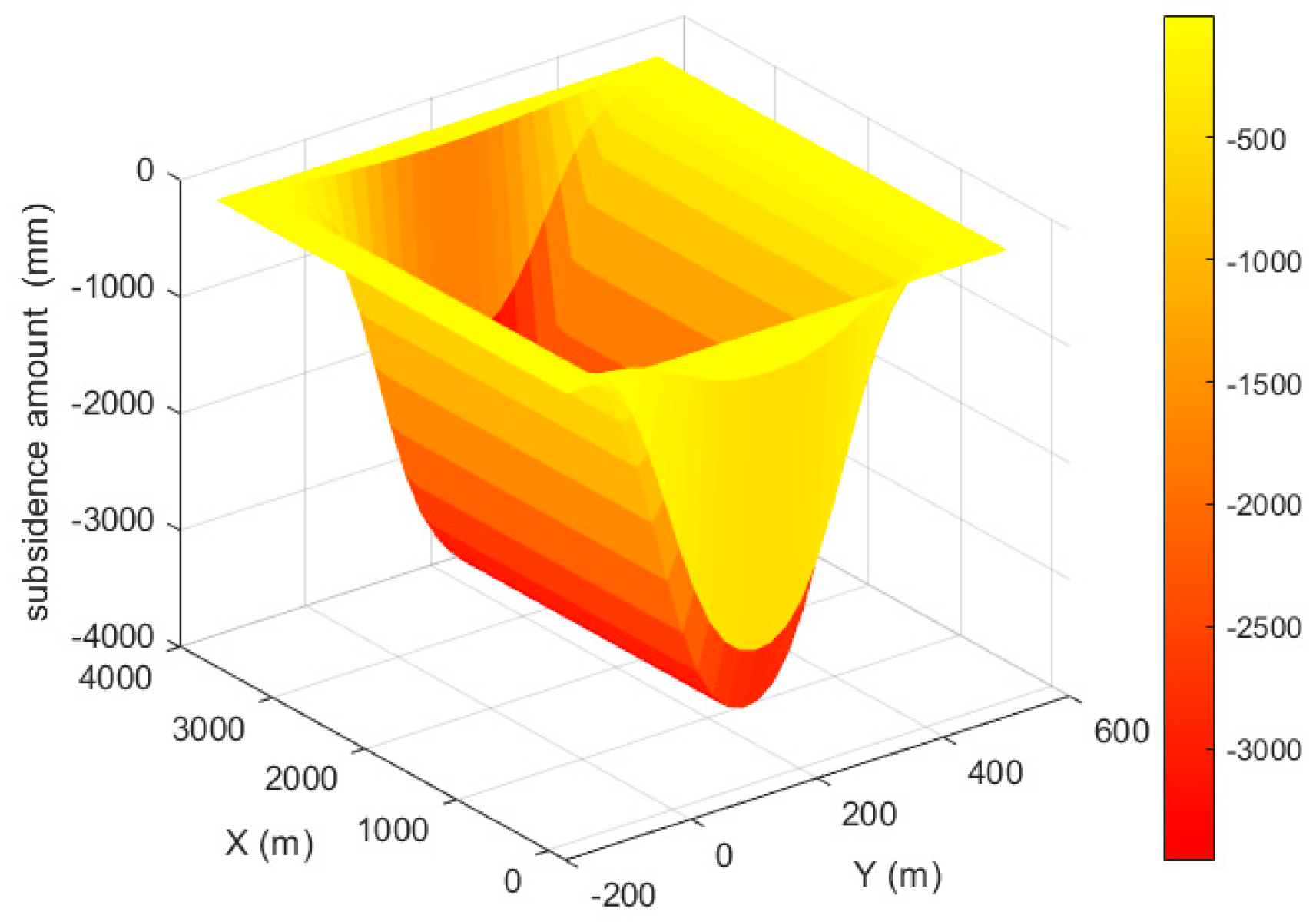
It can be seen from Figure 8 that the locations of the subsidence results from the PIM and IPIM match those of the cumulative subsidence amounts obtained via SBAS-InSAR and are consistent with the actual location of the working face. However, a comparison of the two sets of results in Figure 8 reveals that mining-induced subsidence in the study area affects the surrounding surface. Although the predicted shapes of the PIM and IPIM are similar to the monitored shape from SBAS-InSAR, with relatively continuous subsidence in the surrounding area, one notable difference emerges: in the dip direction, the subsidence range of the IPIM results is significantly larger than that of the PIM. This confirms that the IPIM effectively improves the issue of excessively fast convergence at subsidence edges. To more intuitively observe subsidence in the study area, the 3D predicted subsidence basin of the working face was calculated based on the IPIM parameters, as shown in Figure 9.
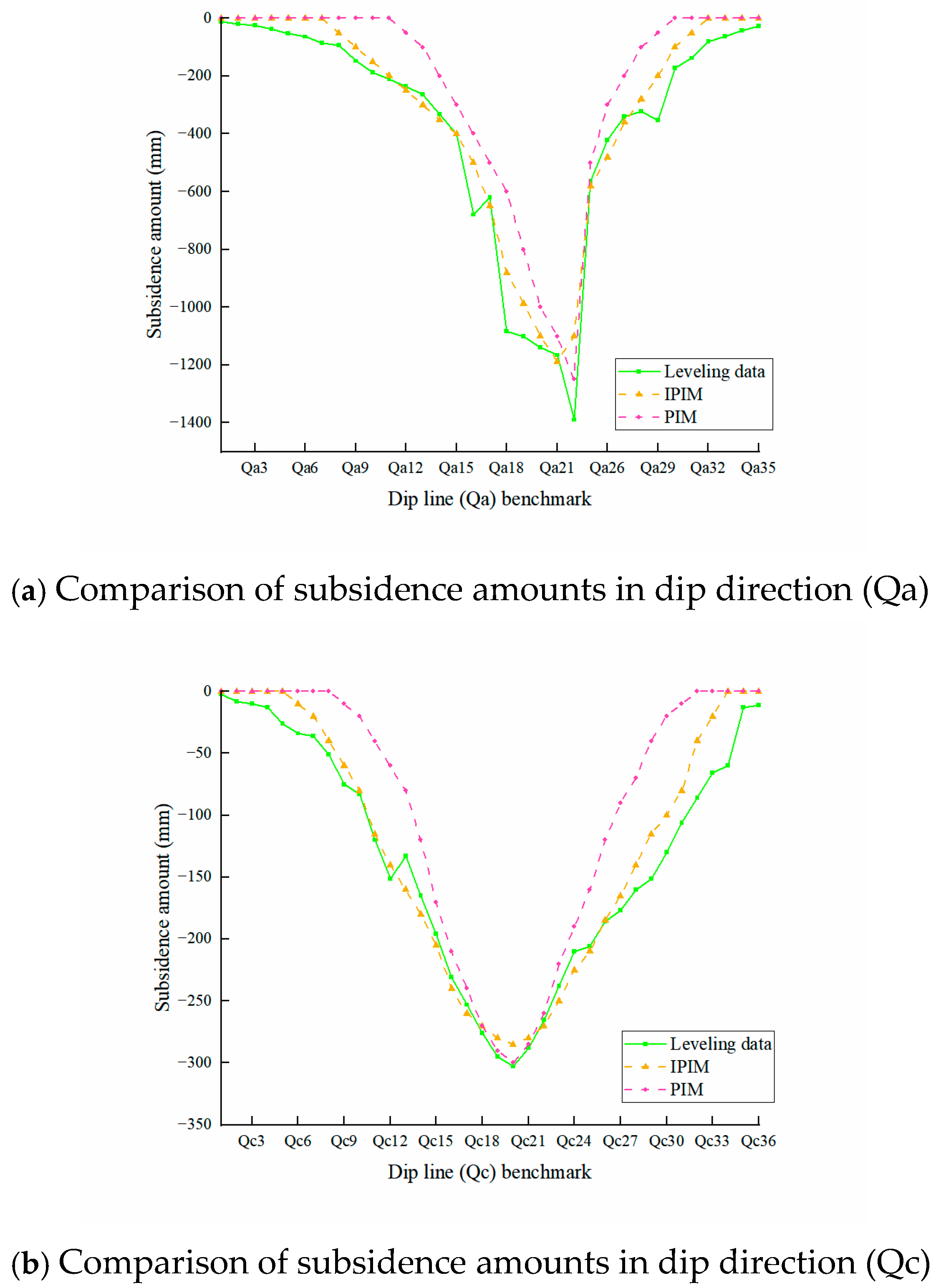
To verify the accuracy and reliability of the proposed IPIM at the dip line edges of narrow and elongated mining areas, benchmarks on both sides of the working face were selected, leveling data were collected, and the results of the PIM and IPIM were compared. The accuracy comparison is presented in Figure 10.
It can be seen from Figure 10 that the variation trends of the PIM and IPIM result curves are basically consistent with that of the leveling data curve. However, the subsidence along the dip line in the PIM results converges excessively quickly, while the IPIM results are significantly more consistent with the leveling data. The main reason is the introduction of the unknown parameter a in Formula (5). This parameter adjusts the subsidence influence radius, increases the value of W0(y) at the edges, and ultimately makes the predicted subsidence values of W (x, y) at the mining area edges more consistent with actual mining conditions. It indicates that the added parameter can significantly improve the excessively fast convergence at the dip edges, while having little impact on the strike line—proving that the proposed IPIM is superior to the traditional PIM in predicting subsidence in narrow and elongated mining areas. In addition, compared with the maximum subsidence value predicted by the PIM, the IPIM’s predicted maximum subsidence value has a larger difference from the leveling data. This is mainly because the newly added parameter reduces the central subsidence value while adjusting the boundary value effect.

3.4. Monitoring Results of the Combined Method for Subsidence

To achieve refined subsidence monitoring of the mining area, the SBAS-InSAR results obtained above and the results of the IPIM were fused to acquire the complete subsidence basin of the mining area. Based on the coherence results of each interferometric pair, the average coherence coefficient γ of the 22 interferometric pairs was calculated to be 0.51. To improve monitoring accuracy, 9 interferometric pairs with coherence coefficients lower than the average value were excluded, and the average coherence coefficient γ of the remaining 13 interferometric pairs was recalculated to be 0.57. With N = 13, λ = 5.6 cm, and μ = 20 m, combined with Equations (8) and (11), the maximum deformation value dtheory detectable by SBAS-InSAR at this time was calculated to be 141 mm. Taking this value as the fusion threshold, the SBAS-InSAR monitoring results were adopted for areas with subsidence amounts less than 141 mm, while the subsidence results predicted by the IPIM were used for areas with subsidence amounts greater than 425 mm.
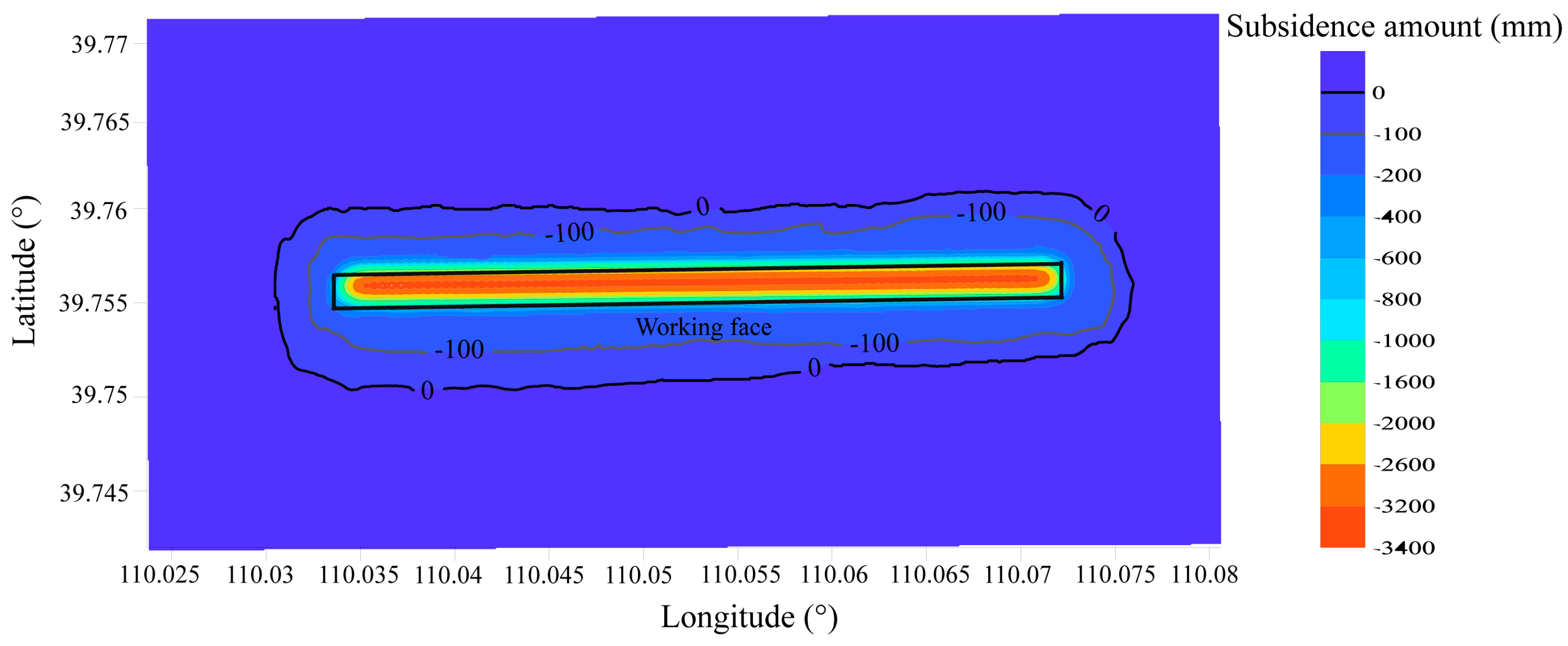
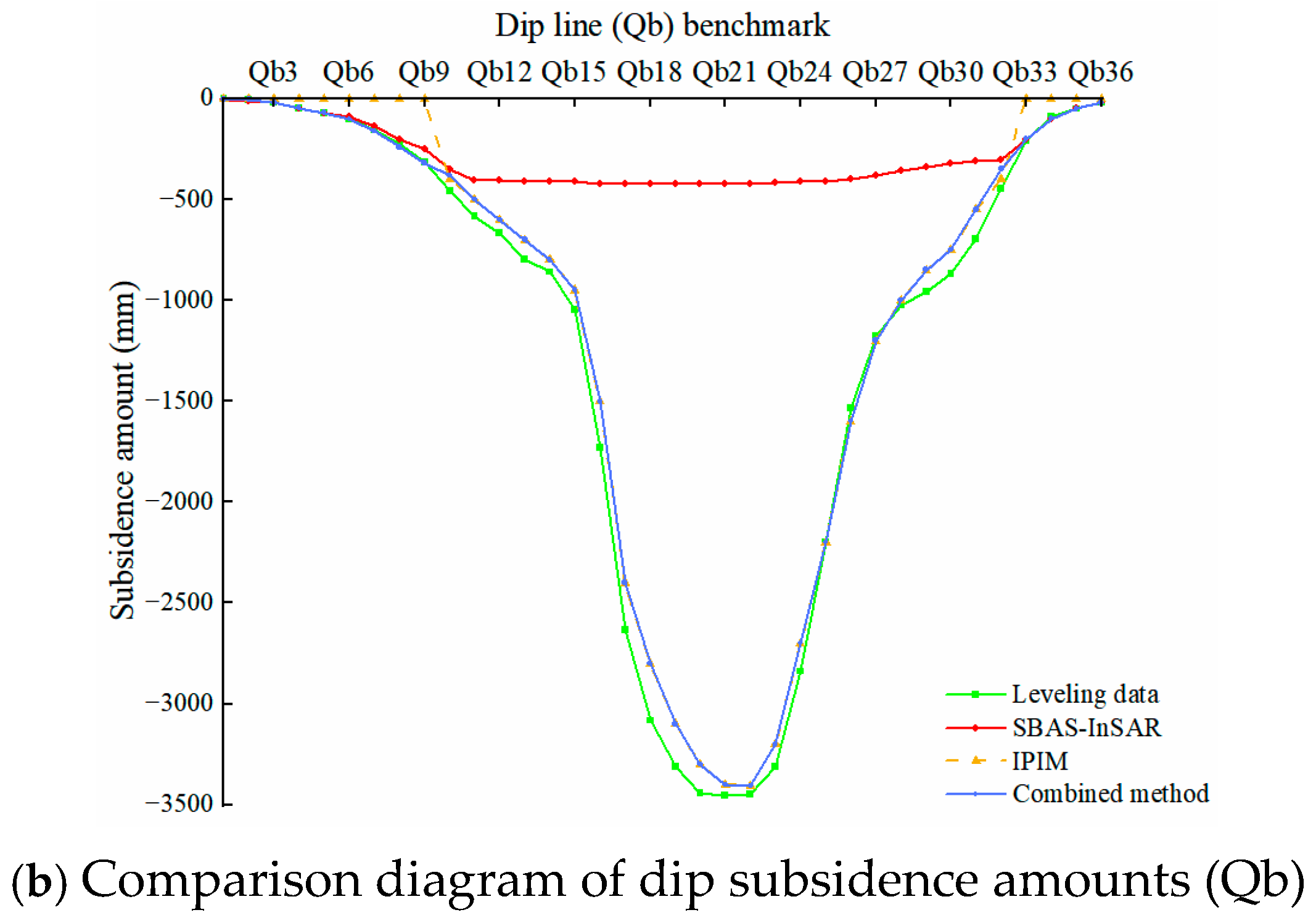
For the intermediate gradient deformation area, the IDSW method was adopted for boundary fusion. The principle of this method is that the side with a larger subsidence value has a higher weight, which is more consistent with the actual situation: in areas close to the subsidence edge, dInSAR is closer to the true value; in areas close to the subsidence center, dIPIM is closer to the true value. Pixel bands with subsidence values ranging from 141 to 425 mm form an annular zone surrounding the center of the subsidence basin. To ensure continuity at the boundary of the fused results of the two methods, weighted calculation is performed on the SBAS-InSAR and IPIM results within this zone, thereby determining the complete subsidence basin. There were 25 benchmarks with subsidence amounts ranging from 141 mm to 425 mm; according to the fusion principle, the fused subsidence value for each point could be obtained. Taking the Qb6 benchmarks along the dip line as an example, the SBAS-InSAR monitored subsidence value of this point was 220 mm, and the IPIM-predicted subsidence value was 400 mm. Using Formula (13), the weight coefficients PInSAR and PIPIM were calculated as 0.23 and 0.77, respectively. Then, according to Formula (12), the fused subsidence value of this point was 358 mm. After performing a weighted calculation on these 25 benchmarks, the complete subsidence basin of the mining area was obtained, with the results presented in Figure 11.

4. Discussion

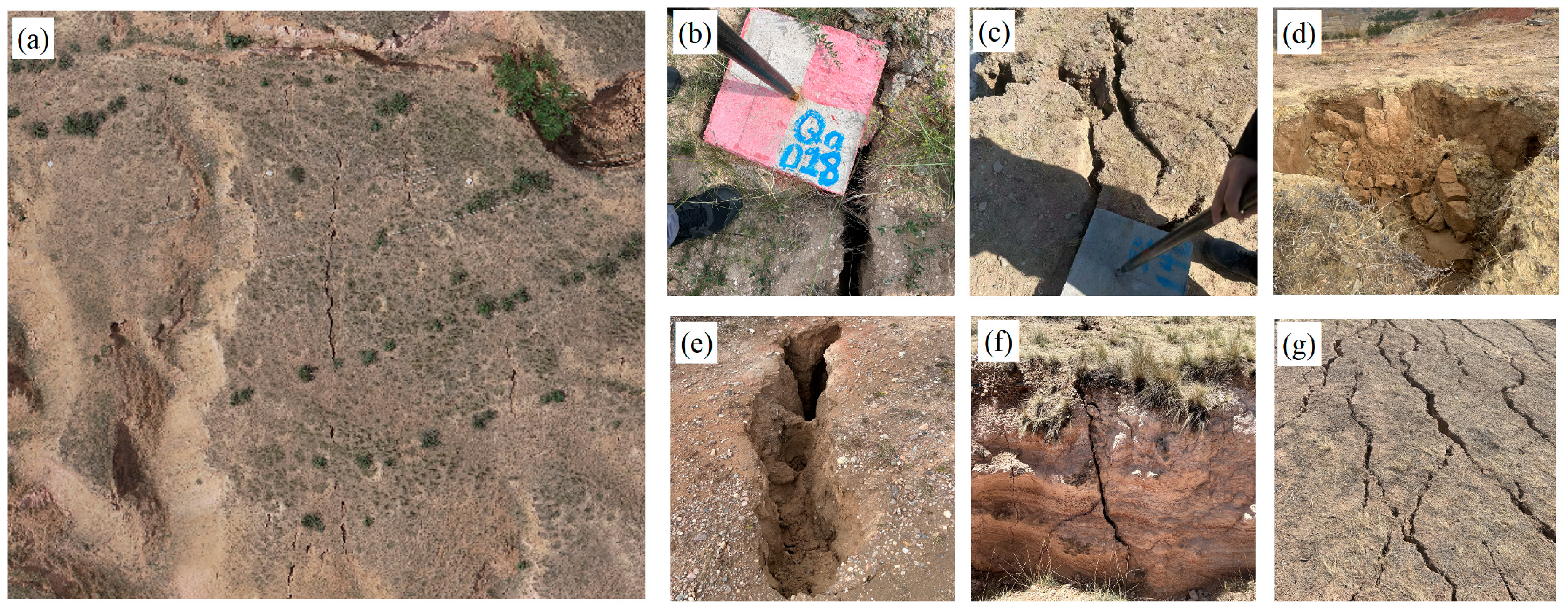
To verify the reliability of the deformation extraction results, field investigations were conducted in the study area using unmanned aerial vehicles (UAVs). Digital orthophotomaps (DOMs) obtained via UAV oblique photogrammetry were used to identify several areas with severe surface subsidence on the working face, which were highly consistent with the monitoring results of the combined method. The subsidence types are mainly characterized by ground fissures, ground collapses, and mountain fissures, among others. The longest fissure detected by the UAV is 4.8 m; some collapse pits are 2 m in length, with their depth far exceeding the measuring range of the 5 m tape used in the survey. In addition, some benchmarks have been damaged, and the field verification results are presented in Figure 12a–g. The main cause of these geological disasters is the damage to the overlying strata, which is induced by stress redistribution resulting from coal mining. The unique topography and structure of the loess hilly and gully landform exacerbate the uneven surface subsidence. In areas with thicker overlying rock layers (which bear greater geotechnical mass), the magnitude of mining-induced surface subsidence is typically larger.
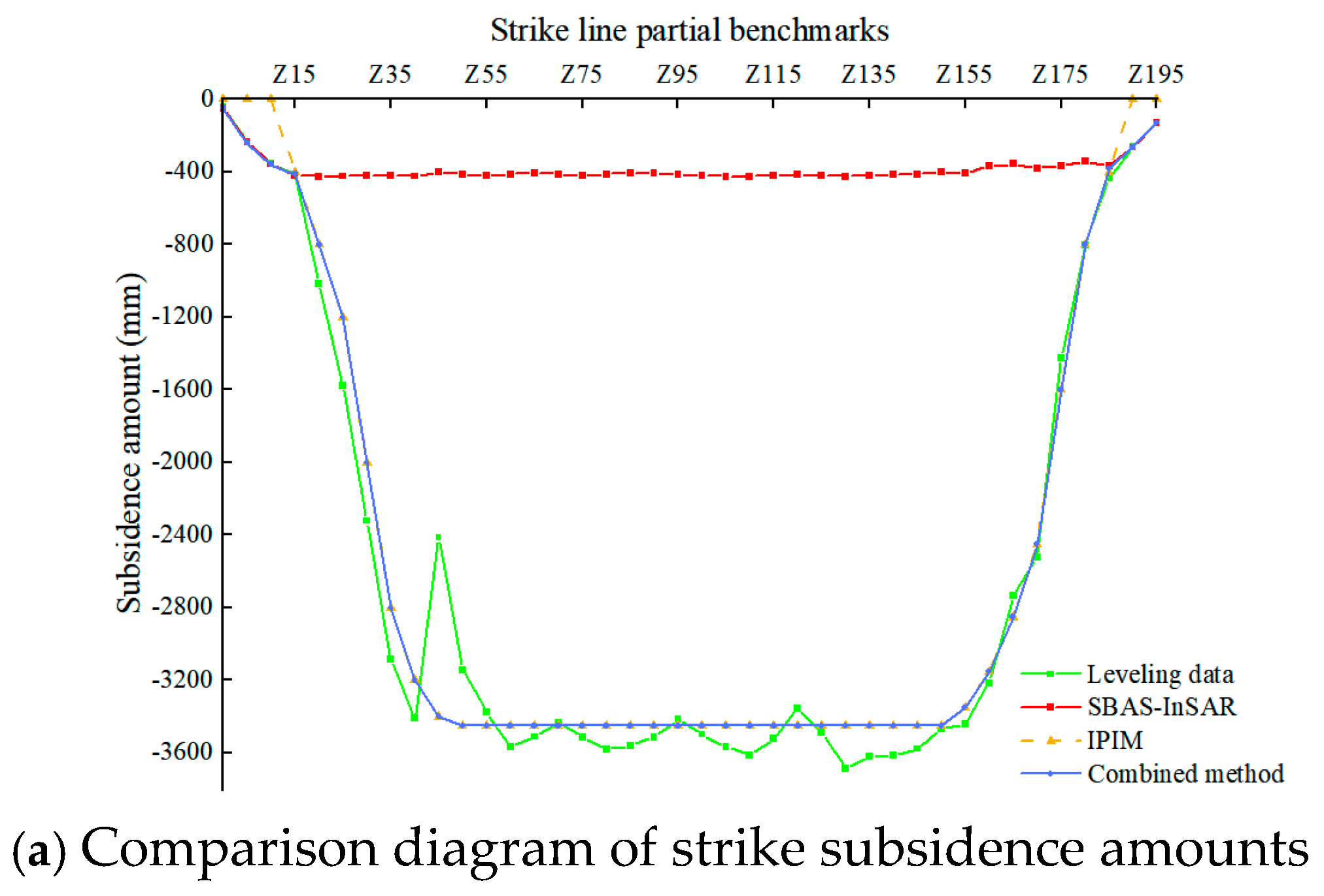
To further verify the accuracy of the combined method (SBAS-InSAR fused with IPIM) for subsidence monitoring, a total of 76 benchmarks were selected from the 31109-1 working face—including 40 strike points and 36 dip points. Based on the measured leveling data, a comparative analysis of the results from the three monitoring methods was performed, as shown in Figure 13. Analysis of Figure 13 reveals that, compared with SBAS-InSAR and IPIM, the results of the combined method show better agreement with the leveling data. The maximum subsidence monitored by the combined method is 3453 mm, which differs by 232 mm from the leveling result. This discrepancy is due to the IPIM not accounting for the impact of external conditions on subsidence during parameter inversion.
Based on the comparison between the fused monitoring results along the strike and dip directions and the measured benchmarks, a comparative error analysis was conducted. Among these results, the monitored subsidence near the Z40 benchmark along the strike direction is significantly reduced. This is because the surrounding area is residential farmland; the stratum in this area has better elasticity and buffering capacity, allowing it to disperse the stress generated by rock movement more evenly. Therefore, the benchmarks near the farmland were excluded from the error analysis, with the results presented in Table 4.
Compared with PIM results, the combined method (SBAS-InSAR + IPIM) demonstrates a higher degree of consistency with leveling measurement results at subsidence edges. Analysis of the two methods’ monitoring results along the strike line and dip line (see Figure 10) shows that there are still areas with no subsidence at the edges of the subsidence curves. This is because IPIM does not consider the influence of external conditions on subsidence during inversion, resulting in insensitivity to subsidence caused by faults. However, compared with traditional PIM, its accuracy at subsidence edges has been improved. Compared with SBAS-InSAR results, the combined method shows a significant improvement in monitoring large gradients at the subsidence center. As shown in the monitoring results in Figure 11, although SBAS-InSAR also identifies this area as the subsidence center, there is a considerable discrepancy between its detected maximum subsidence point and the leveling measurement results. The maximum absolute error reaches 3273 mm compared with the leveling data. This is mainly attributed to two factors: first, the subsidence gradient at the mining area’s subsidence center is excessively large, exceeding the actual monitoring capacity of Sentinel-1A images; second, surface vegetation, noise, and other factors degrade SAR image quality. Together, these factors prevent SBAS-InSAR from capturing true subsidence information at the subsidence center. Compared with SBAS-InSAR and PIM, the combined method’s overall monitoring accuracy is significantly improved, enabling it to obtain surface subsidence results that are more consistent with actual conditions.
Based on the above verification, compared with traditional fusion methods, this combined method adopts the IDSW method for boundary fusion, which significantly improves the overall monitoring accuracy and enables the acquisition of surface subsidence results more consistently with the actual situation. This method can provide guidance for surface subsidence monitoring in similar narrow and elongated mining areas, yet it still has certain limitations. First, precision surface leveling has limitations in terms of coverage and density, which prevent the validation of SBAS-InSAR monitoring results over a larger area. Second, this study mainly analyzed the surface monitoring results of narrow and elongated mining areas and did not conduct an in-depth discussion on the deformation mechanism of rock strata by combining the geological background and stratigraphic structure of other mining areas. Additionally, it failed to analyze the intrinsic mechanism of mining-induced surface deformation. Finally, structures such as faults, joints and weak interlayers are not only abrupt interfaces for the mechanical properties of rock masses, but also core factors governing the morphology and evolution law of surface subsidence [31]. The current model assumes the rock mass as a homogeneous random medium and does not explicitly incorporate geological structure constraints, which may lead to potential deviations such as smoothing of subsidence morphology, overestimation of parameter values and distortion of boundary prediction.
Therefore, future research can further expand the monitoring scope and time scale, conduct surface deformation monitoring on a larger scale and over a longer time series by integrating precision surface leveling, and acquire Digital Surface Model (DSM), Digital Elevation Model (DEM), and 3D point cloud data via UAV mapping to generate 3D topographic survey maps, thereby improving the accuracy and integrity of deformation analysis. Meanwhile, based on geological survey data and combined with the subsidence anomaly characteristics identified by SBAS-InSAR, a zoned heterogeneous medium model can be constructed, the PIM formula can be improved by introducing structural correction factors, and a verification system for multi-source data fusion can be established.

5. Conclusions

Aiming to identify the existing shortcomings of SBAS-InSAR and PIM, respectively, for monitoring surface subsidence in narrow and elongated mining areas, this paper modifies the traditional PIM and fuses the monitoring results of the two technologies (SBAS-InSAR and IPIM). By conducting a comparative analysis with synchronous in situ leveling data, the main conclusions are drawn as follows:
(1) By applying SBAS-InSAR technology, time-series processing was conducted on 14 scenes of Sentinel-1A data from the Lijiahao Coal Mine (April 2023–June 2024), successfully acquiring the surface subsidence rate and time-series cumulative subsidence amounts of the 31109-1 working face. An obvious rectangular subsidence basin was formed in the study area, with a monitored maximum subsidence amount of 425 mm and a maximum subsidence rate of −412 mm/a. This study shows that SBAS-InSAR technology can accurately identify the location of surface subsidence, exhibiting high monitoring accuracy in the edge areas of surface subsidence but low accuracy in areas with large-gradient surface subsidence.
(2) To address the characteristics of narrow and elongated mining areas, this paper modifies the traditional PIM by introducing a parameter that controls the influence radius, which changes the curve shape of the dip line at the edges of the subsidence basin. The results show that the proposed IPIM in this paper can effectively improve the problem of excessively fast convergence at the subsidence edges of the PIM in narrow and elongated mining areas, making the subsidence situation more consistent with the actual conditions.
(3) Taking Working Face 31109-1 as the study area, this study integrated the two subsidence monitoring results of SBAS-InSAR and the IPIM, fused these results based on the deformation gradient theory, and resolved the discontinuity of fusion boundaries via the IDSW method to obtain the complete subsidence field. Based on the comparative analysis between the measured leveling data and the monitoring results of the combined method, the maximum absolute error, average absolute error, and RMSE on the strike line of the working face are 232 mm, 91 mm, and 118 mm, respectively, with the maximum relative error of subsidence being 5.2%. On the dip line, the maximum absolute error is 193 mm, the average absolute error is 68 mm, the RMSE is 98 mm, and the maximum relative error of subsidence is 4.1%. Monitoring accuracy meets the requirements of practical engineering.

Author Contributions

Conceptualization, Z.Z.; Methodology, Z.Z.; Software, Z.Z.; Validation, Z.Z.; Formal analysis, Z.Z.; Investigation, Z.Z.; Resources, H.D.; Data curation, H.D.; Writing—original draft, Z.Z.; Writing—review & editing, H.D.; Visualization, H.D.; Supervision, H.D.; Project administration, H.D.; Funding acquisition, H.D. All authors have read and agreed to the published version of the manuscript.

Funding

This research received no external funding.

Institutional Review Board Statement

Not applicable.

Informed Consent Statement

Not applicable.

Data Availability Statement

The original contributions presented in this study are included in the article. Further inquiries can be directed to the corresponding author.

Conflicts of Interest

The authors declare no conflict of interest.

References

  1. Lee, S.-J.; Yun, H.-S.; Kim, T.-Y. Monitoring of High-Speed Railway Ground Deformation Using Interferometric Synthetic Aperture Radar Image Analysis. Appl. Sci. 2025, 15, 4318. [Google Scholar] [CrossRef]
  2. Witkowski, W.T.; Łucka, M.; Guzy, A.; Sudhaus, H.; Barańska, A.; Hejmanowski, R. Impact of mining-induced seismicity on land subsidence occurrence. Remote Sens. Environ. 2024, 301, 113934. [Google Scholar] [CrossRef]
  3. Luo, R.; Li, G.; Chen, L.; Zeng, L.; Pei, K.; Yu, X. Rock Slope Instability Mechanism Induced by Repeated Mining in Mountain Mining Areas. Appl. Sci. 2024, 14, 9634. [Google Scholar] [CrossRef]
  4. Peng, W.; Feng, S. Research on the Support Technology for Deep Large-Section Refuge Chambers in Broken Surrounding Rock in a Roadway. Appl. Sci. 2024, 14, 7527. [Google Scholar] [CrossRef]
  5. Song, J.; Han, C.; Li, P.; Zhang, J.; Liu, D.; Jiang, M.; Zheng, L.; Zhang, J.; Song, J. Quantitative prediction of mining subsidence and its impact on the environment. Int. J. Min. Sci. Technol. 2012, 22, 69–73. [Google Scholar] [CrossRef]
  6. Wang, F.; Liu, Q.; Li, R.; Wang, S.; Wang, H.; Wang, J.; Ma, X.; Zhou, L.; Wang, Y. Surface Deformation Monitoring and Prediction of InSAR-Hybrid Deep Learning Model for Subsidence Funnels. Remote Sens. 2025, 17, 2972. [Google Scholar] [CrossRef]
  7. Wang, Z.; Ren, J.; Fan, C.; Liu, J.; Lei, Y.; Feng, T. Applicability analysis of sentinei-1A in surface subsidence monitoring in southwest coal mining area. Prog. Geophys. 2021, 36, 2339–2350. [Google Scholar]
  8. Zhang, K.; Wang, Y.; Zhao, F.; Ma, Z.; Zou, G.; Wang, T.; Zhang, N.; Huo, W.; Diao, X.; Zhou, D.; et al. An Underground Goaf Locating Framework Based on D-InSAR with Three Different Prior Geological Information Conditions. Remote Sens. 2025, 17, 2714. [Google Scholar] [CrossRef]
  9. Wang, P.; Chen, H.; Wang, X. Research on the application of D-InSAR and SBAS-InSAR technologies in the monitoring of ground subsidence in mining areas. China Min. Mag. 2024, 33, 133–141. [Google Scholar]
  10. Ashraf, T.; Yin, F.; Liu, L.; Zhang, Q. Land Subsidence Detection Using SBAS- and Stacking-InSAR with Zonal Statistics and Topographic Correlations in Lakhra Coal Mines, Pakistan. Remote Sens. 2024, 16, 3815. [Google Scholar] [CrossRef]
  11. Bai, Z.; Zhao, F.; Wang, J.; Li, J.; Wang, Y.; Li, Y.; Lin, Y.; Shen, W. Revealing Long-Term Displacement and Evolution of Open-Pit Coal Mines Using SBAS-InSAR and DS-InSAR. Remote Sens. 2025, 17, 1821. [Google Scholar] [CrossRef]
  12. Zhang, F.; Chang, L.; Xun, Z. Surface deformation monitoring in Yanghuopan Mining Area based on SBAS-InSAR technology. China Min. Mag. 2024, 33, 152–159. [Google Scholar]
  13. Wang, F.; Tao, Q.; Chen, Y.; Han, Y.; Guo, Z. Monitoring and early-warning of surface deformation in mine goaf based on InSAR. Saf. Coal Mines 2022, 53, 195–203. [Google Scholar]
  14. Xue, X.; Ji, J.; Li, G.; Li, H.; Cao, Q.; Wang, K. Time Series Analysis of Mining-Induced Subsidence Using Small Baseline Subset Interferometric Synthetic Aperture Radar (Wanli Mining Area, Inner Mongolia, China). Appl. Sci. 2025, 15, 3998. [Google Scholar] [CrossRef]
  15. Zhang, X.; He, L.; Liu, C.; Wang, X.; Tang, Y.; He, R. Monitoring and Analysis of Coal Mining Subsidence based on SBAS-InSAR Method. Remote Sens. Technol. Appl. 2022, 37, 1021–1028. [Google Scholar]
  16. Xie, Y.; Bagan, H.; Tan, L.; Te, T.; Damdinsuren, A.; Wang, Q. Time-Series Analysis of Mining-Induced Subsidence in the Arid Region of Mongolia Based on SBAS-InSAR. Remote Sens. 2024, 16, 2166. [Google Scholar] [CrossRef]
  17. Tao, Q.; Liu, R.; Li, X.; Gao, T.; Chen, Y.; Xiao, Y.; He, H.; Wei, Y. A method for monitoring three dimensional surface deformation in mining areas combining SBAS-InSAR, GNSS and probability integral method. Sci. Rep. 2025, 15, 2853. [Google Scholar] [CrossRef]
  18. Chi, F.; Liu, G.; Tao, Q.; Xiao, Y. Subsidence monitoring and analysis of Yuncheng coal mine combined with SBAS-InSAR and probability integral model. Prog. Geophys. 2025, 40, 484–494. [Google Scholar]
  19. Ma, J.; Yang, J.; Zhu, Z.; Cao, H.; Li, S.; Du, X. Decision-making fusion of InSAR technology and offset tracking to study the deformation of large gradients in mining areas-Xuemiaotan mine as an example. Front. Earth Sci. 2022, 10, 962362. [Google Scholar] [CrossRef]
  20. Liu, B.; Dai, H. Research development and origin of probability integral method. J. Min. Strat. Control Eng. 2016, 21, 1–3. [Google Scholar]
  21. Wang, D.; Wang, Z.; Li, Y.; Wang, Y. Ground Subsidence Prediction and Shaft Control in Pillar Recovery During Mine Closure. Processes 2025, 13, 3274. [Google Scholar] [CrossRef]
  22. Zhang, J.; Zhang, P.; Ji, X.; Li, Y. Prediction of surface subsidence in Gequan coal mine based on probability integral and numerical simulation. Acad. J. Eng. Technol. Sci. 2024, 7, 8–15. [Google Scholar] [CrossRef]
  23. Jiang, C.; Liu, W.; Wang, L.; Zhu, X.; Tan, H. A Probability Integral Parameter Inversion Method Integrating a Selection-Weighted Iterative Robust Genetic Algorithm. Appl. Sci. 2025, 15, 8102. [Google Scholar] [CrossRef]
  24. Zhou, B.; Li, S.; Kang, J.; Zhang, L.; Zhang, J.; Li, M. A probability integral method modified model for accurately characterizing subsidence at the boundary of a mining area. Sci. Rep. 2025, 15, 21014. [Google Scholar] [CrossRef] [PubMed]
  25. Wang, N.; Wu, K.; Qin, Z. Prediction model of mining subsidence with probability integration method based on thickness influences of loose layer. Coal Sci. Technol. 2012, 40, 10–16. [Google Scholar]
  26. Li, J.; Yu, X.; Chen, D.; Fang, X. Research on the establishment of a mining subsidence prediction model under thick loose layer and its parameter inversion method. Earth Sci. Res. J. 2021, 25, 215–223. [Google Scholar] [CrossRef]
  27. Chen, Y.; Tao, Q.; Liu, G.; Wang, L.; Wang, F.; Wang, K. Detailed mining subsidence monitoring combined with InSAR and probability integral method. Chin. J. Geophys. 2021, 64, 3554–3566. [Google Scholar]
  28. Hou, Z.; Yang, K.; Li, Y.; Gao, W.; Wang, S.; Ding, X.; Li, Y. Dynamic prediction model of mining subsidence combined with D-InSAR technical parameter inversion. Environ. Earth Sci. 2022, 81, 307. [Google Scholar] [CrossRef]
  29. Massonnet, D.; Feigl, K.L. Radar interferometry and its application to changes in the Earth’s surface. Rev. Geophys. 1998, 36, 441–500. [Google Scholar] [CrossRef]
  30. Baran, I.; Stewart, M.; Claessens, S. A new functional model for determining minimum and maximum detectable deformation gradient resolved by satellite radar interferometry. IEEE Trans. Geosci. Remote Sens. 2005, 43, 675–682. [Google Scholar] [CrossRef]
  31. Li, Y. Spatial distribution of strain energy changes due to mining-induced fault coseismic slip: Insights from a rockburst at the Yuejin coal mine, China. Rock. Mech. Rock. Eng. 2025, 58, 1693–1706. [Google Scholar] [CrossRef]
Figure 1. Figure of study area overview. (a,b) Geographic location and scope of the mining area; (c,d) Figure of working face geographical location and benchmark examples; (e) Leveling measurement.
Applsci 15 13086 g001
Figure 2. Comparison of dip subsidence curves for different values of parameter a.
Applsci 15 13086 g002
Figure 3. Data processing flow of mine subsidence monitoring data by combining SBAS-InSAR and IPIM.
Applsci 15 13086 g003
Figure 4. Partial interferograms of the study area.
Applsci 15 13086 g004
Figure 5. Figure of subsidence rate in the study area (22 April 2023–15 June 2024).
Applsci 15 13086 g005
Figure 6. Time-series cumulative subsidence map of the study area (22 April 2023–15 June 2024).
Applsci 15 13086 g006
Figure 7. Figure of feature point distribution for inverting PIM parameters.
Applsci 15 13086 g007
Figure 8. Comparison diagram of subsidence results between PIM and IPIM.
Applsci 15 13086 g008aApplsci 15 13086 g008b
Figure 9. Three-dimensional map of the subsidence basin of the mining area predicted by the IPIM.
Applsci 15 13086 g009
Figure 10. Accuracy comparison of subsidence results between PIM and IPIM in the dip direction.
Applsci 15 13086 g010
Figure 11. Subsidence monitoring results of the combined SBAS-InSAR and IPIM (22 April 2023–15 June 2024).
Applsci 15 13086 g011
Figure 12. Geological disasters caused by coal mining. (a,g) The longest fissure detected by UAV; (b,c) damaged benchmarks; (d,e) ground collapses; (f) mountain fissure.
Applsci 15 13086 g012
Figure 13. Comparison diagram of monitoring results among SBAS-InSAR, IPIM, and the combined method versus leveling results.
Applsci 15 13086 g013aApplsci 15 13086 g013b
Table 1. SAR image data parameters.
ParameterCorresponding Value
Acquiring satelliteSentinel-1A
Resolution (m)5 × 20
Radar wavelength (mm)5.6
Polarization modeVV
Image timeApril 2023–June 2024
Number of images (scene)14
Table 2. Coherence coefficient and subsidence information of the feature points.
Point No.Subsidence
(mm)
Coherence CoefficientPoint No.Subsidence
(mm)
Coherence Coefficient
1430.6110120.77
2350.5711180.64
3380.6812190.68
4400.5113220.60
5320.81142878
6410.76153065
7390.53163256
8210.65173685
9250.51182912
Table 3. Comparison results of parameter calculation between PIM and IPIM.
Methodqθ (°)tanβS1 (m)S2 (m)S3 (m)S4 (m)a
PIM0.7186.1°1.32020−40−40
IPIM0.8187.7°1.488−20−200.48
Table 4. Error analysis of leveling data with SBAS-InSAR, IPIM and the combined method.
Directional PositionMethodMaximum Absolute Error (mm)Average Absolute Error (mm)Root Mean Square Error (mm)Maximum Subsidence Relative Error (%)
Strike lineSBAS-InSAR32603015311288.4
IPIM2321751936.2
Combined method232911185.2
SBAS-InSAR30672810290187.8
Dip line
(Qb)
IPIM1931121545.5
Combined method19368984.1
Disclaimer/Publisher’s Note: The statements, opinions and data contained in all publications are solely those of the individual author(s) and contributor(s) and not of MDPI and/or the editor(s). MDPI and/or the editor(s) disclaim responsibility for any injury to people or property resulting from any ideas, methods, instructions or products referred to in the content.