Article

Investigation of Granular Organic Fertilizer Distribution Uniformity in Disk-Type Spreaders with Standard and Modified Vane Configurations

by
Gražvydas Juodišius
1,*,
Raimonda Zinkevičienė
1,
Eglė Jotautienė
1,
Davut Karayel
1,2 and
Ramūnas Mieldažys
1
1
Department of Agricultural Engineering and Safety, Faculty of Engineering, Agriculture Academy, Vytautas Magnus University, Studentu Str. 15A, Kaunas District, LT-53362 Akademija, Lithuania
2
Department of Agricultural Machinery and Technologies Engineering, Faculty of Agriculture, Akdeniz University, Konyaalti, 07070 Antalya, Turkey
*
Author to whom correspondence should be addressed.
Appl. Sci. 2025, 15(24), 13076; https://doi.org/10.3390/app152413076
Submission received: 3 October 2025 / Revised: 3 December 2025 / Accepted: 5 December 2025 / Published: 11 December 2025
(This article belongs to the Section Agricultural Science and Technology)

Abstract

Organic granular fertilizers are increasingly used in sustainable agriculture, yet their physical properties and spreading behavior remain underexplored. This study aimed to evaluate the mechanical resistance and field distribution efficiency of grain husk granules compared to poultry manure granules, using a disk-type spreader (Kuhn MDS 9.19). Laboratory tests assessed the granule geometry, density, moisture content, and compressive strength, while field experiments measured distribution patterns under controlled conditions. Two disk configurations were tested: the manufacturer’s original design and a modified version with custom-designed vanes. The results showed that grain husk granules had sufficient compressive strength (189.45 ± 92.53 N) for practical use; however, it was lower than poultry manure granules (382.56 ± 78.08 N). The distribution analysis revealed that grain husk granules provided more uniform lateral coverage, while poultry manure granules exhibited higher central accumulation. Modified vanes significantly improved the spreading uniformity and application rates for both fertilizer types. A statistical analysis confirmed that differences in the distribution were driven by granule properties and the vane geometry. This study concludes that grain husk granules are a viable alternative organic fertilizer and that spreader design optimization can enhance application efficiency and reduce environmental risks. These findings contribute to the development of more precise and sustainable fertilization technologies.

1. Introduction

In recent years, the classification and comparative evaluation of fertilizer types have gained increasing attention in agricultural research. Distinct categories—organic, inorganic, biofertilizers, and nanofertilizers—demonstrate varying effects on soil fertility, plant nutrition, and environmental sustainability. Emphasis is placed on the adoption of sustainable fertilization practices to mitigate nutrient leaching, greenhouse gas emissions, and soil degradation. Additionally, region-specific examples and integrated nutrient management strategies are highlighted as essential components in the transition toward more resilient and eco-friendly farming systems [1]. Increasing attention has been directed toward the application of organic fertilizers and cover crops to enhance soil biological activity, improve soil structures, and maintain a balanced nutrient cycle. The research also emphasizes that organic fertilizers can reduce the impact of heavy metals, suppress pathogen activity, and promote plant growth. Furthermore, the detrimental effects of chemical fertilizers have been discussed, and alternative approaches have been proposed for advancing sustainable farming practices [2].
It is well established that granulated poultry manure is an effective and eco-friendly alternative to chemical fertilizers, offering a lower environmental footprint. It helps reduce phosphate and nitrate runoff, improves the soil structure, and maintains organic matter levels. Additionally, granulation enables the safe and efficient use of animal waste, supporting sustainable farming practices [3]. Granulated grain husks, a by-product of grain cleaning processes, are increasingly recognized for their versatile applications in agriculture and industry. Their uses range from livestock feed—where they offer fiber-rich, low-starch nutrition—to soil amendments, bioenergy production, and even industrial absorbents. This multifunctionality highlights their potential as a sustainable resource within circular agricultural systems [4]. In 2022, following the outbreak of war in Ukraine, Lithuania implemented restrictions on the import and transit of certain fertilizers originating from Russia and Belarus, contributing to a significant rise in fertilizer prices. In response, farmers began actively seeking alternative soil amendment solutions. One such emerging practice involves the use of granulated grain husks—previously intended for feed or biofuel—as a substitute for organic fertilizers. This study therefore focuses on evaluating these pellets to determine whether their physical properties influence field spreading mechanisms compared to other commonly used granulated organic fertilizers.
Comparative trials and meta-analyses indicate that organic amendments can match or improve soil health relative to mineral fertilizers, but their effects on crop yield and nutrient availability are context-dependent [5,6,7,8]. Several field studies report that organic fertilizers and substituted organic regimes increase soil organic carbon contents, microbial biomass, and enzyme activities, yielding longer-term benefits for the soil structure and resilience, while mineral fertilizers often produce higher short-term yields due to more immediately available nutrient forms [7]. The temporal patterns of nutrient release differ markedly: organic amendments tend to provide a slower, more prolonged nutrient supply, which can reduce leaching losses but may require higher application rates or complementary mineral inputs to meet peak crop demands [5,9]. Moreover, the physical form of the amendment—granulated versus loose—and pellet properties, such as bulk density, the particle size distribution, and friability, have been shown to modify both spreading behavior and post-application nutrient dynamics, creating agronomic trade-offs that justify material characterization and spreader compatibility testing in comparative trials [5,8].
The uniformity of the fertilizer distribution on the soil surface is influenced by a variety of physical, technical, and environmental factors. One of the most important is the physical properties of the fertilizer granules—such as their size, shape, density, and moisture content—which determine their flight trajectory and spread pattern in the field [5]. Additionally, the design of the spreading equipment, particularly the disk rotation speed and blade angle, directly affects the distribution radius and uniformity [6]. Jotautienė et al. [10] emphasize that different types of fertilizers require different application rates, 200 kg/ha for mineral fertilizers and 600 kg/ha for organic ones, indicating that fertilizer type is also a critical factor. Finally, external conditions such as wind, terrain irregularities, and the soil structure can distort the spreading pattern, making precision technologies and variable-rate systems essential for effective and sustainable fertilization [7].
In disk-type fertilizer spreaders, the spreading mechanisms are determined by a complex interaction of physical and technical factors, in which the disk geometry, rotational speed, and vane position play a crucial role. Studies show that the angle and shape of the vanes directly affect the trajectory and uniformity of the granule distribution. Bivainis et al. [11] found that the vane geometry has the greatest influence on spreading uniformity, while the disk’s flow position has a smaller effect [8]. Computational modeling by Bulgakov et al. [12] demonstrated that disk inclination and fertilizer feed location determine the particle velocity and spreading distance [9]. Przywara et al. [13] experimentally confirmed that vane configuration and disk speed explain over 90% of the variation in the spreading radius, with dust fractions significantly affecting distribution uniformity. These processes are governed by fundamental mechanical laws, especially the centrifugal force and friction between granules and vane surfaces. Therefore, optimal spreading requires the precise adjustment of the vane angle, disk speed, and feed position, taking into account the physical properties of the granules and the desired spreading width [14,15].
Given the growing interest in sustainable fertilization solutions and the need to reduce dependence on imported fertilizers, this study focuses on analyzing granulated grain husk waste as a new alternative to conventional organic fertilizers, such as poultry manure. Grain husks, as a by-product of agricultural processing, offer broad applicability and considerable sustainability potential, and their granulation enables safe and efficient use, which contributes to soil improvement. In contrast, poultry manure granules are already recognized as an eco-friendly and effective fertilization method, making their comparison with grain husks valuable for assessing the practical suitability of emerging materials. Since the uniformity of the fertilizer distribution is significantly influenced by the physical properties of granules and the parameters of spreading mechanisms, a newly configured disk was selected for this study. This enables a more precise evaluation of how different materials interact with the vane geometry, disk rotational speed, and feed position. Such a methodology not only helps assess the spreading efficiency of alternative fertilizers but also contributes to the advancement of more sustainable agricultural technologies.
Building on the study of fertilizer types, spreading mechanics, and the growing need for sustainable, locally available alternatives, this study aims to evaluate granulated grain husk waste as a potential organic fertilizer and to determine how material properties interact with spreading system geometry. Specifically, the objectives of this study are as follows:
  • To evaluate and compare the physical properties (particle size, density, and moisture content) of custom-produced grain husk granules and commercial poultry manure granules.
  • To quantify the effect of vane geometry modifications on spreading performance by measuring the spread width, distribution uniformity, and mass flow using a custom-designed vane installed on the distribution machine.

2. Materials and Methods

This study investigated organic granular fertilizers (Figure 1). Poultry manure granules were selected as the control material because they are among the most utilized organic fertilizers, and their physical, mechanical, and spreading behavior properties have been relatively well characterized in peer-reviewed research [14]. Comparison with this control was necessary to assign a baseline for evaluating the effects of altered granule properties on spreading uniformity. Alongside the control, grain husk granules were examined, enabling a direct analysis of differences in granule geometry and material strength and their impact on distribution performance. In the present study, grain husk granules were included as an object of investigation due to their novelty and the limited amount of scientific knowledge available regarding their characteristics. To date, neither their agronomic potential nor their influence on soil properties and spreading performance have been comprehensively assessed. Therefore, the evaluation of this fertilizer provides an opportunity to identify its possible advantages and limitations, as well as to broaden the current understanding of alternative organic fertilizer materials.
Fertilizer samples were collected before the spreading experiment and transported to the laboratory for parameter analysis. The following characteristics of fertilizer granules were investigated: moisture content, length, diameter, mass, volume, area, density, and strength. The granules were not specially manufactured for this study; commercially available pelletized fertilizers, among the most widely distributed in Lithuania and obtainable from major retail stores, were used. This approach ensured that the tested products reflected materials commonly used in practice and enabled an assessment of their behavior under real-world conditions.

2.1. Laboratory Tests

To determine the dimensions of the fertilizers, diameter and length measurements were performed on a random selection of 10 individual granules. These measurements were conducted using a Mitutoyo 500-196-30 digital caliper (Mitutoyo, Kanagawa, Japan) 150 mm (accuracy of 0.01 mm). The density of the fertilizer granules was subsequently calculated based on the recorded length, diameter, and weight data according to ISO 18847:2024 standard [16]. Granule weights were obtained using a Kern EWJ (Kern&sohn GmbH, Ettenheim, Germany) electronic laboratory balance, accurate to 0.01 g.
Dry matter was calculated based on the moisture content of the granules and expressed as a percentage. Moisture content was determined following the standard methodology outlined in EN 12048:1999 [17]. The initial weight and the weight after drying in a laboratory drying chamber at a temperature of 105 °C for 24 h were determined.
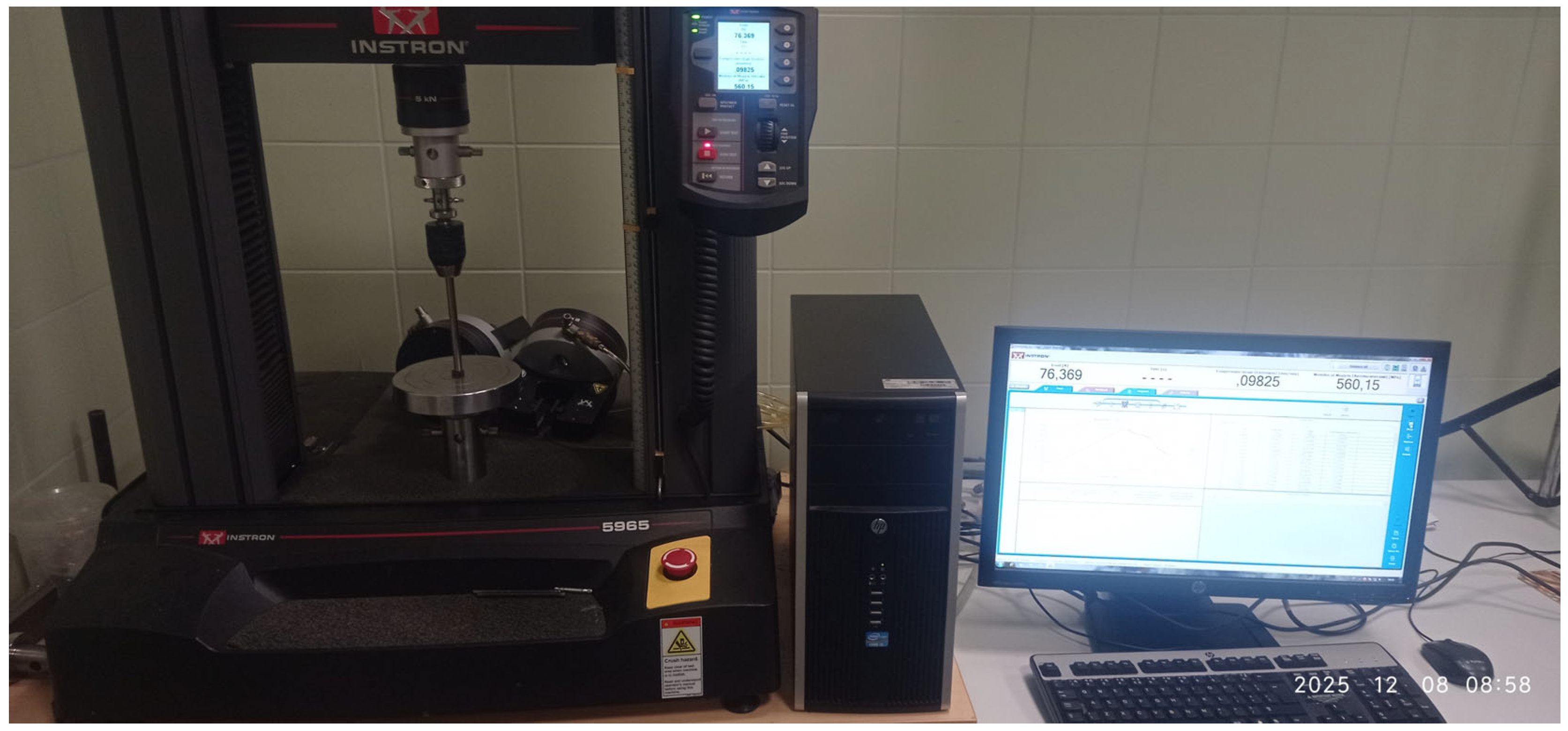
The mechanical properties of the granular fertilizers were evaluated through compression testing. These tests were carried out using an Instron 5960 (ITW, Norwood, MA, USA) universal testing machine (5 kN load capacity) in conjunction with the “Bluehill” (version 3.11.1209) data acquisition software (Figure 2).
Each granule was subjected to compression testing horizontally while centered on a circular loading plate. Testing continued until structural failure occurred. The compressive strength, defined as the peak load at fracture (N), was recorded alongside corresponding deformation (mm). A 7.92 mm diameter die was used to apply the compressive load at a rate of 20 mm/min, a rate categorized as quasi-static to minimize inertial effects. Granule compressive strength (N) was determined as the maximum force recorded when compressing the granule at fracture. At that moment, the limiting force (load, N) and extension (deformation, mm) were recorded. Each testing configuration was repeated five times per horizontal orientation to ensure statistical reliability.
Chemical elemental composition was determined according to standards. The pH of the new granules was determined according to standard EN 13037-2012 [18], “Soil improvers and growing media—Determination of pH”. Organic matter was determined according to standard EN 13039:2012 [19], “Soil improvers and growing media—Determination of organic matter content”. Nitrogen (N) was determined according to standards LST EN 13654-2002 [20], “Soil improvers and growing media—Determination of nitrogen Modified Kjeldahl method”, and ISO 11261:1995 [21], “Soil quality—Determination of total nitrogen—Modified Kjeldahl method. Phosphorus (P) and Potassium (K) contents were determined according to standard EN 13650:2006 [22], “Soil improvers and growing media—Extraction of aqua regia soluble elements”, and LST ISO 6878-2004 [23], “Water quality—Determination of phosphorus—Ammonium molybdate spectrometric method”.

2.2. Field Tests

The spreading experiment was performed at Marijampole Vocational Education and Training Centre. The field experiments were repeated five times, and the results were presented and analyzed as mean values calculated across the five repetitions; this repetition was performed to ensure the statistical reliability of the findings.
The environmental conditions during the experiment were as follows: air quality index—32; air humidity—49%; temperature—18–23 °C; wind speed—5 km/h; and wind direction—west to east.
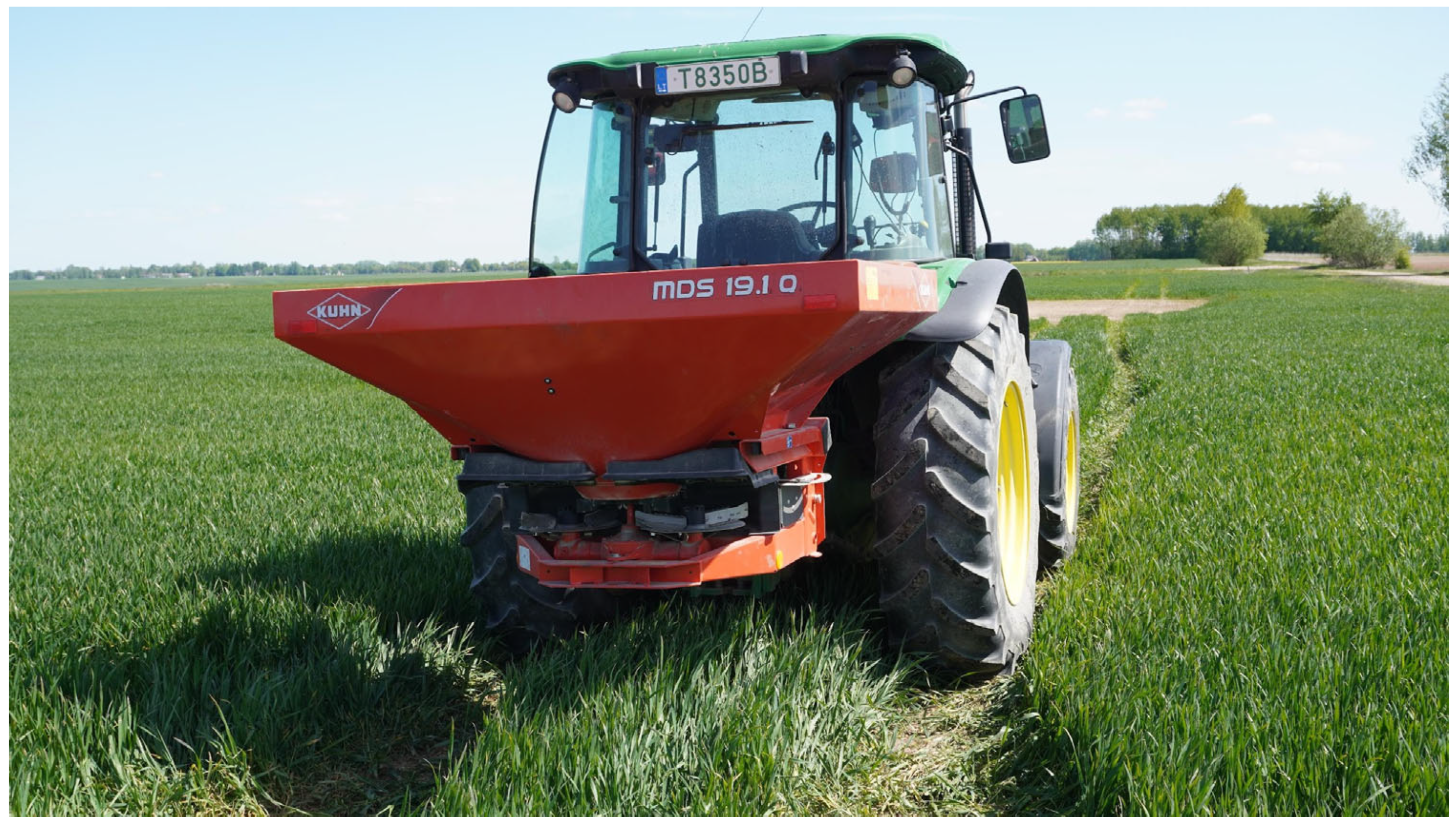
The experiment was conducted using a John Deere 3015 tractor equipped with a Kuhn MDS 9.1 Q spreader (Figure 3). To minimize the effect of wind, the tractor moved in the same direction as the wind (west to east). The operational parameters were as follows: tractor speed—11 km/h; rotational speed of the power take-off shaft—540 rev/min; working width of the spreader—14 m; and spreading rate—300 kg/ha.
The flow factor was set to 1, and the blade settings were adjusted to X3-D3, with spreader parameters A and B fixed at 0.85 m.
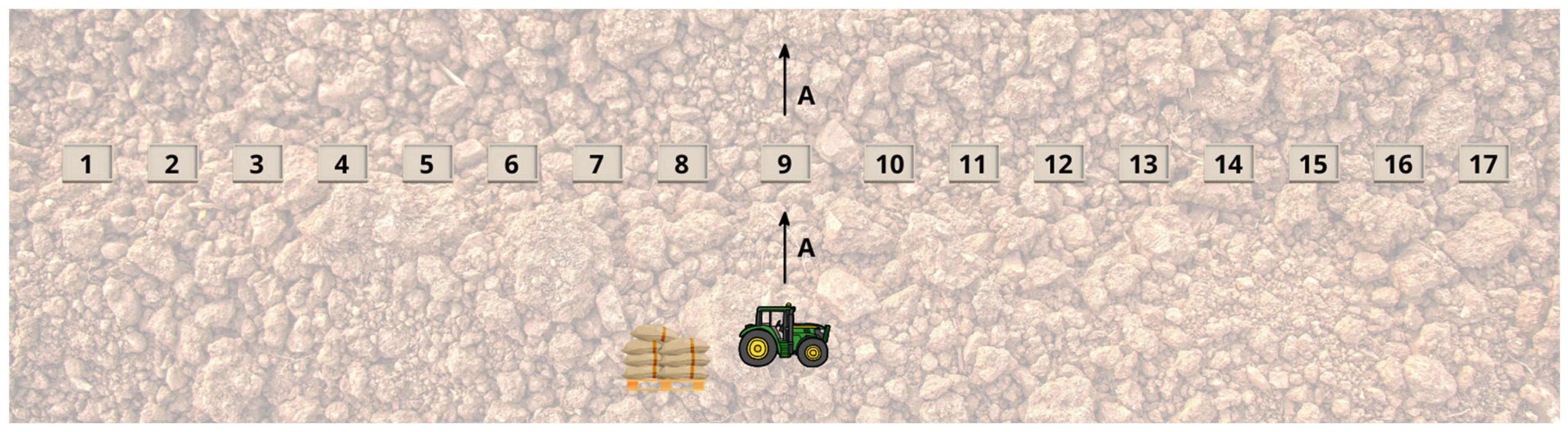
For fertilizer collection, seventeen collectors were used (Figure 4), each measuring 0.36 × 0.48 × 0.11 m.

2.3. Design and Configuration of Spreader Disks

Two disk configurations were evaluated during the field experiments (Figure 5):
  • The reference setup employed the manufacturer’s original disk equipped with its standard vane arrangement, which served as the control.
  • The second configuration used the same disk body; however, the vanes were replaced with custom-designed elements developed and fabricated by the research team.
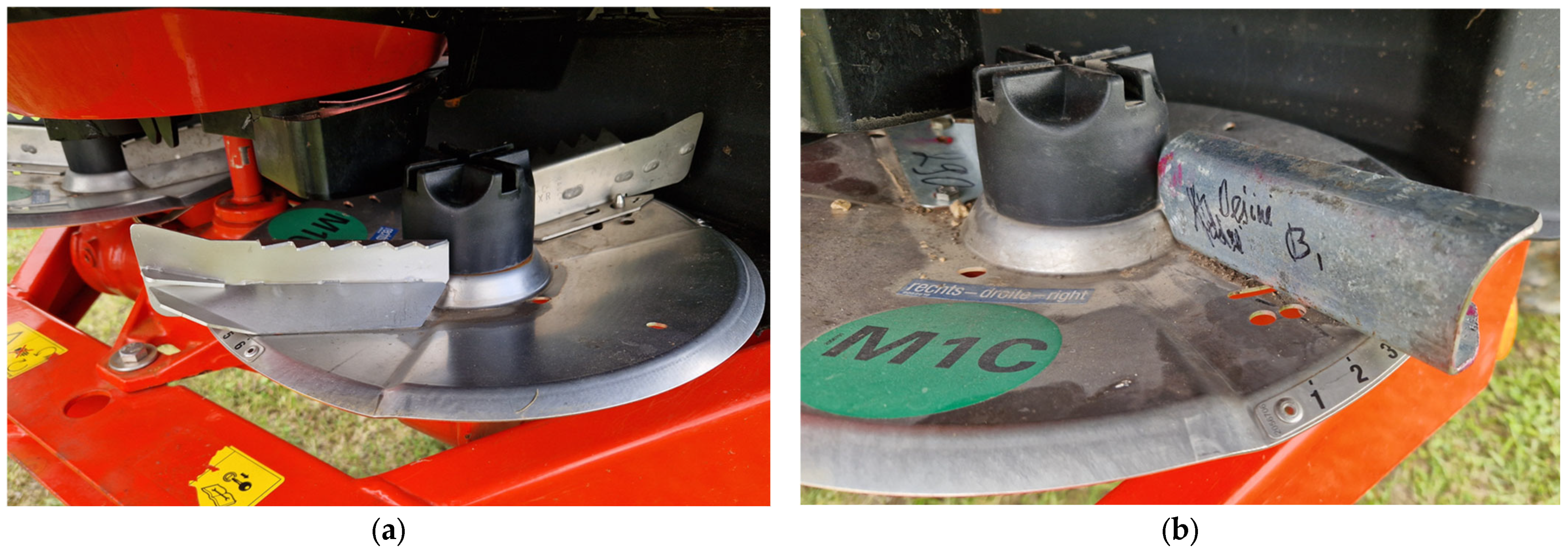
Figure 5. General view of disk configurations evaluated during the field experiments: (a) manufacturer’s original disk with standard vane arrangement (control) and (b) modified disk with custom-designed vanes developed by the research team.
Applsci 15 13076 g005
After conducting an initial comparison of the vane form with the standard one, it can be stated that the vertical side walls of custom-designed vanes prevent granules from spilling sideways. This makes it easier to carry and spread evenly. The bent tip at the front acts like a guide or deflector, allowing the vanes to direct where the granules fall (Figure 5b).
In both cases, the vanes were fixed in the third mounting position, a setting commonly applied for medium spreading widths and considered to provide stable operating conditions for comparative testing. The modified vanes were specifically engineered to alter the trajectory of fertilizer particles with the objective of enhancing distribution uniformity across the working width. This experimental design enabled a direct comparison between the standard manufacturer’s configuration and the custom-engineered alternative under identical operating conditions.
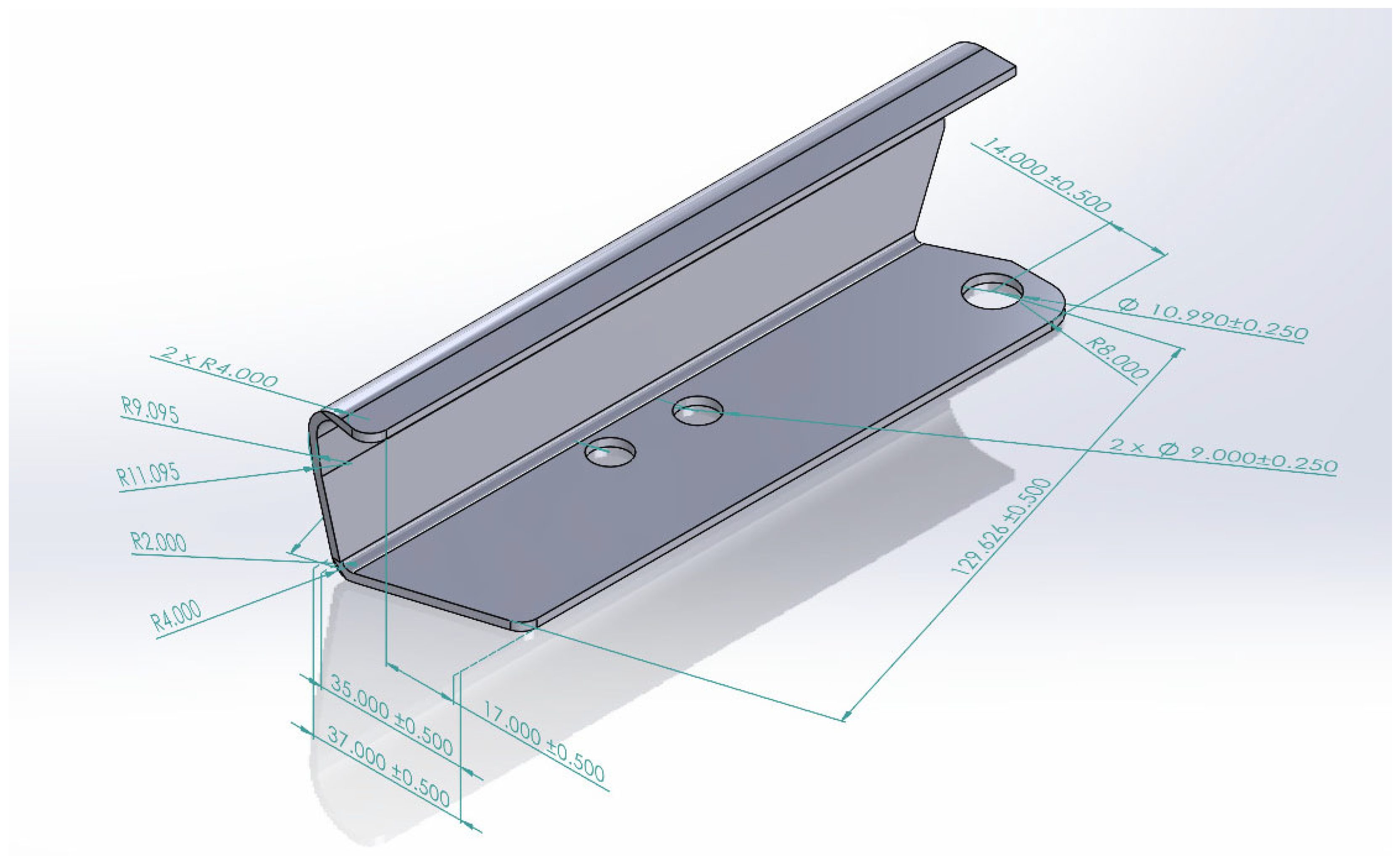
Figure 6 presents a 3D rendering of the metal bracket-like vane, showing its bent profile with a flat base plate, three circular mounting holes, and an upright mounting flange, with chamfered/rounded edges and dimensional specifications used for manufacture and installation as the modified key element of the spreading disk. Fertilizer granules land on the inner side of the vane. Due to the rotor’s angular speed (ω), they acquire centripetal acceleration. Because of the vane shape—particularly the gentle curvature near the root—the fertilizer particles spread more evenly across the vane width and attain a more uniform velocity. The more uniformly the vane is curved, the less random rebound occurs and the more consistent the spreading uniformity.
Upon reaching the vane edge, the granules are ejected under the action of centrifugal force [19,20]:
F c = m ω 2 r
where r is the distance to the disk center, and ω is the angular velocity. The ejection angle depends on the vane inclination (e.g., 35–40°). This angle determines the fertilizer throw distance and the spreading width.

2.4. Statistical Analysis

Granule properties (length, diameter, mass, density, and strength) were analyzed by calculating mean values, standard deviations, and relative errors. Measurement uncertainty was estimated based on instrument precision (±0.01 mm; ±0.01 g). The compression test’s repeatability was evaluated using a 95% confidence interval (CI). Data processing was performed in MS Excel 2021.

3. Results

3.1. Physical and Mechanical Properties of Fertilizer Granules

The efficiency of centrifugal spreading systems largely depends on the physical and mechanical characteristics of the fertilizer granules. Parameters such as the particle size, shape, mass, and density directly influence the flowability of the material, the spreading pattern, and, ultimately, the uniformity of the field application [21]. In addition, the mechanical strength of the granules determines their resistance to fragmentation during handling and spreading, which is critical for maintaining a consistent distribution [22]. To provide a comprehensive characterization, the present study evaluated the geometric dimensions, mass, density, and compressive strength of granular cereal manure fertilizers. The results of these analyses are summarized in the following tables and figures.
The average dimensions and mass of granular grain husk fertilizers are summarized in Table 1. The poultry manure granule’s parameters are provided as a control for comparison [24].
During this study, a chemical analysis of the grain husk granules was conducted, revealing their pH level, organic matter content, and concentrations of key nutrients—such as nitrogen, phosphorus, and potassium. The chemical composition of grain husk granules indicates that this natural material can serve as a valuable organic fertilizer. According to the research data, the granules have a pH of 5.6, suggesting a mildly acidic environment suitable for various soil types. The organic matter content reaches 4.21%, contributing to an improved soil structure and enhanced microbial activity. Additionally, the granules contain significant amounts of essential plant nutrients: the total nitrogen is 2.36%, phosphorus (P2O5) is 1.89%, and potassium (K2O) is 1.13%. These values confirm that grain husk granules can be used as a complex organic fertilizer, supporting plant nutrition and promoting sustainable agricultural practices.
Table 2 summarizes the chemical composition of the two fertilizer types. The granular grain husk exhibited a mildly acidic pH of 5.6, a low organic matter content (4.21%), and moderate nutrient concentrations: the total nitrogen was 2.36%, phosphorus (P2O5) was 1.89%, and potassium (K2O) was 1.13%. In contrast, the commercially available poultry manure granules (control) were closer to neutral (pH 6.9), contained substantially higher levels of organic matter (65%), and showed elevated nutrient levels: total nitrogen 4.0%, phosphorus (P2O5) 3.0%, and potassium (K2O) 2.8%. These differences indicate that poultry manure granules provide a greater immediate nutrient supply and organic matter input, while grain husk granules offer lower nutrient concentrations but could still contribute to soil fertility when applied at appropriate rates. In this study, the measured values were used to interpret the spreading performance and potential agronomic effects.
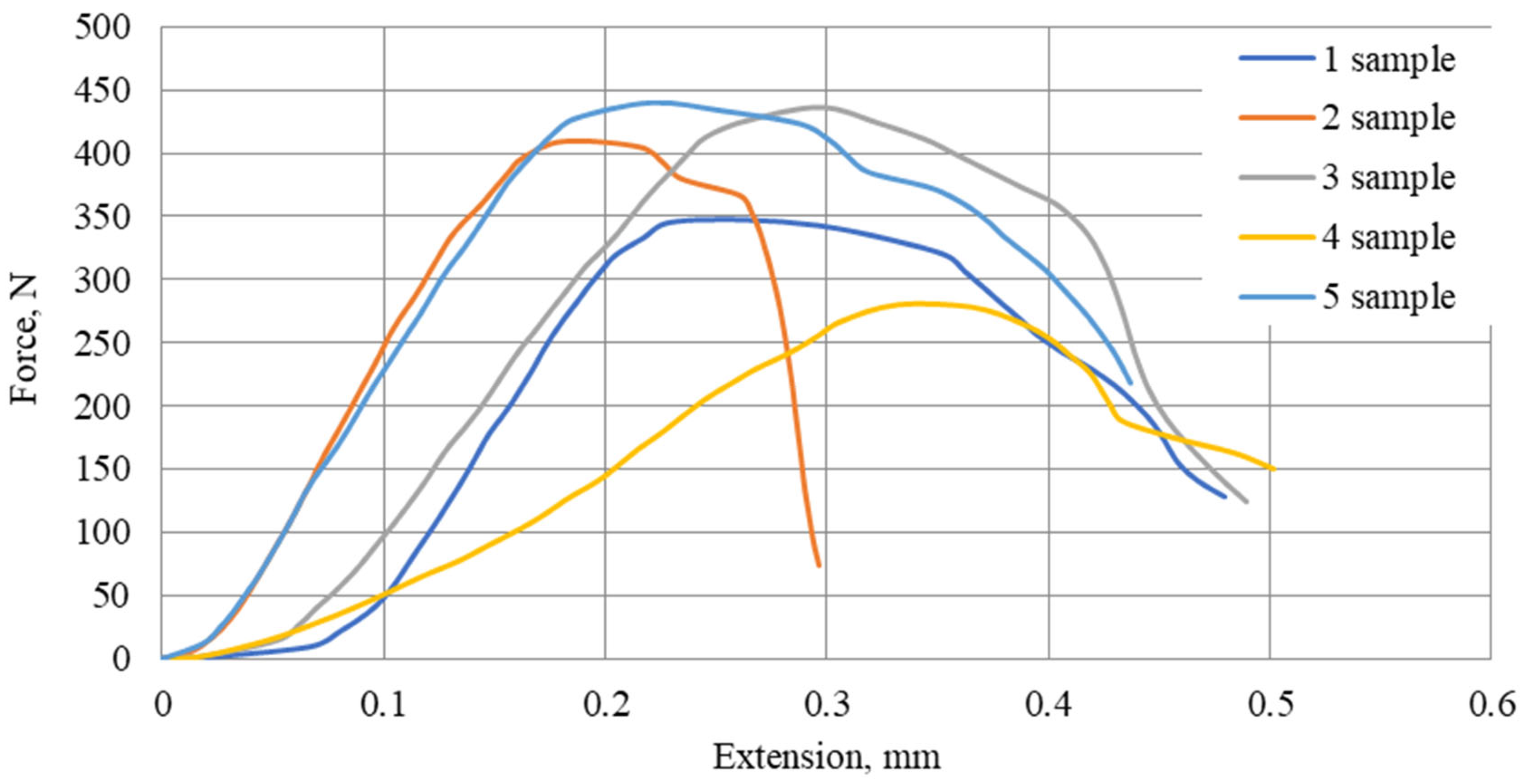
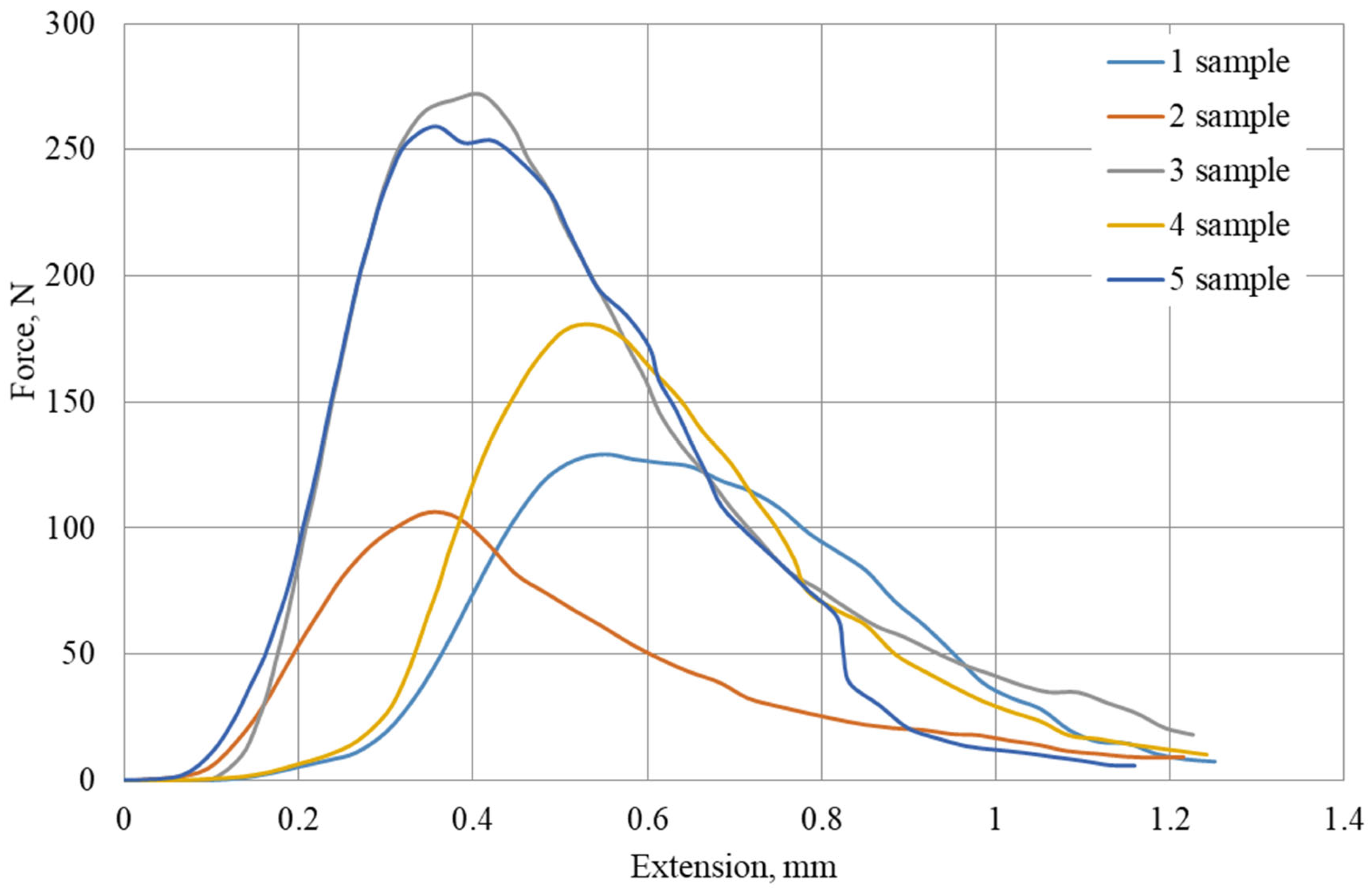
The compressive strength of the granular grain husk fertilizer was evaluated under horizontal conditions. In this orientation, the load–displacement analysis showed that the maximum crushing force exceeded 270 N, with deformation limited to 0.2–0.4 mm before the completion of the structural disintegration. The experimental results demonstrate that the granular grain husk fertilizer series exhibited an average compressive strength of 189.45 ± 92.53 N in the horizontal orientation (Figure 7).
By analyzing the deformation curves, we observed that the maximum crushing force in the horizontal direction was more than 440 N, with deformation ranging from 0.15 mm to 0.4 mm until the granules completely disintegrated in the poultry manure fertilizer granule series (in the five-sample case). For comparison, granular poultry manure fertilizers achieved 382.56 ± 78.08 N in the horizontal direction. According to other research results, cattle manure compost granules of different origins achieved 341.77 ± 26.86 N [23]. Therefore, it can be said that the poultry manure granules were more mechanically stable compared to grain husk fertilizer granules (Figure 8).
The mechanical integrity of the grain husk granules should ensure an adequate resistance to storage conditions, operational stresses, and handling or transport processes, thereby preventing premature structural failure. Considering the mechanical resistance and physical properties of the granules, this study determined that they are suitable for use with the disk-type spreader Kuhn MDS 9.19.

3.2. Experimental Assessment of Granule Distribution in Field Application

3.2.1. Experimental Results of Granular Grain Husk and Granular Poultry Manure Fertilizer Distribution

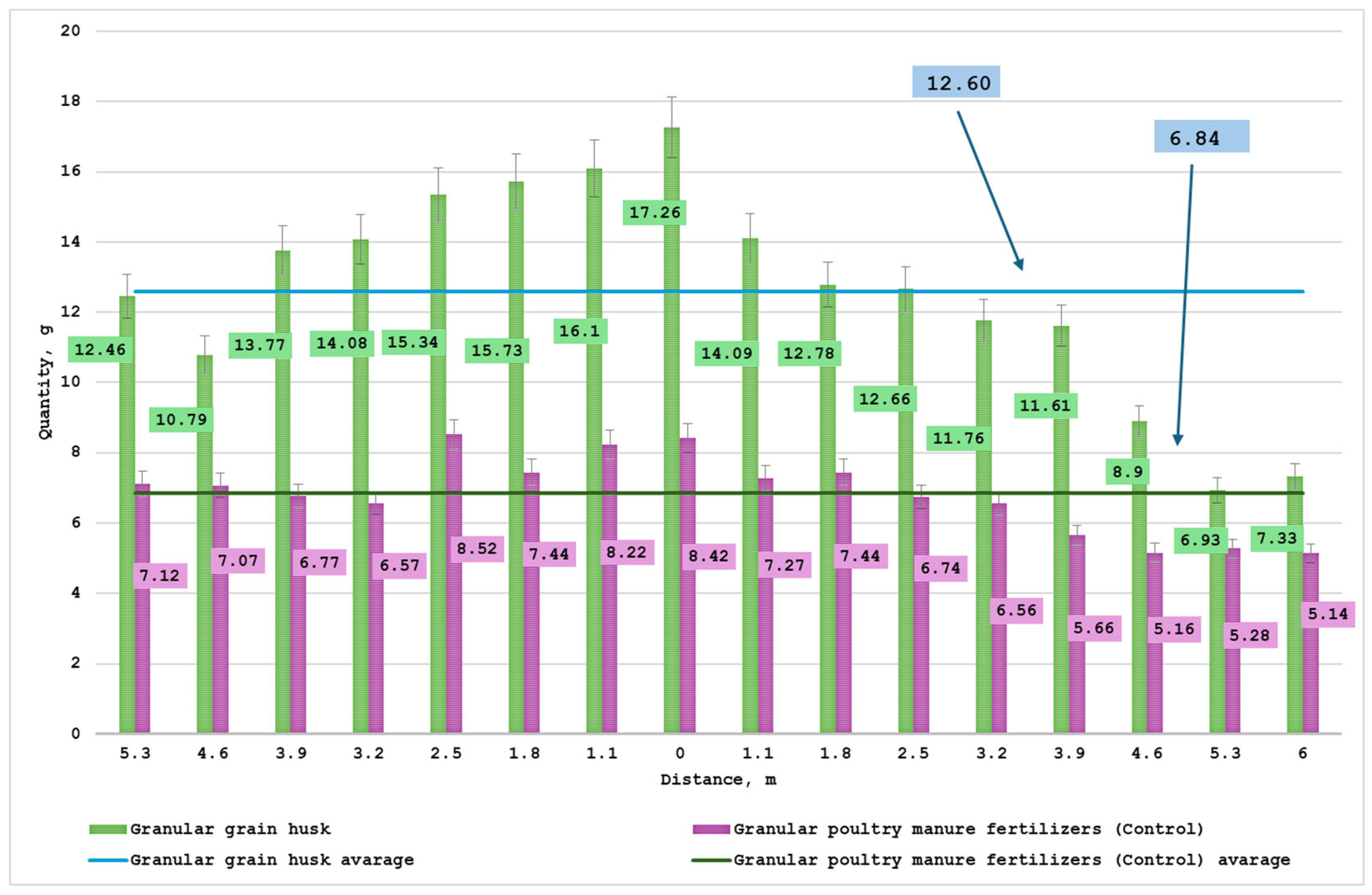
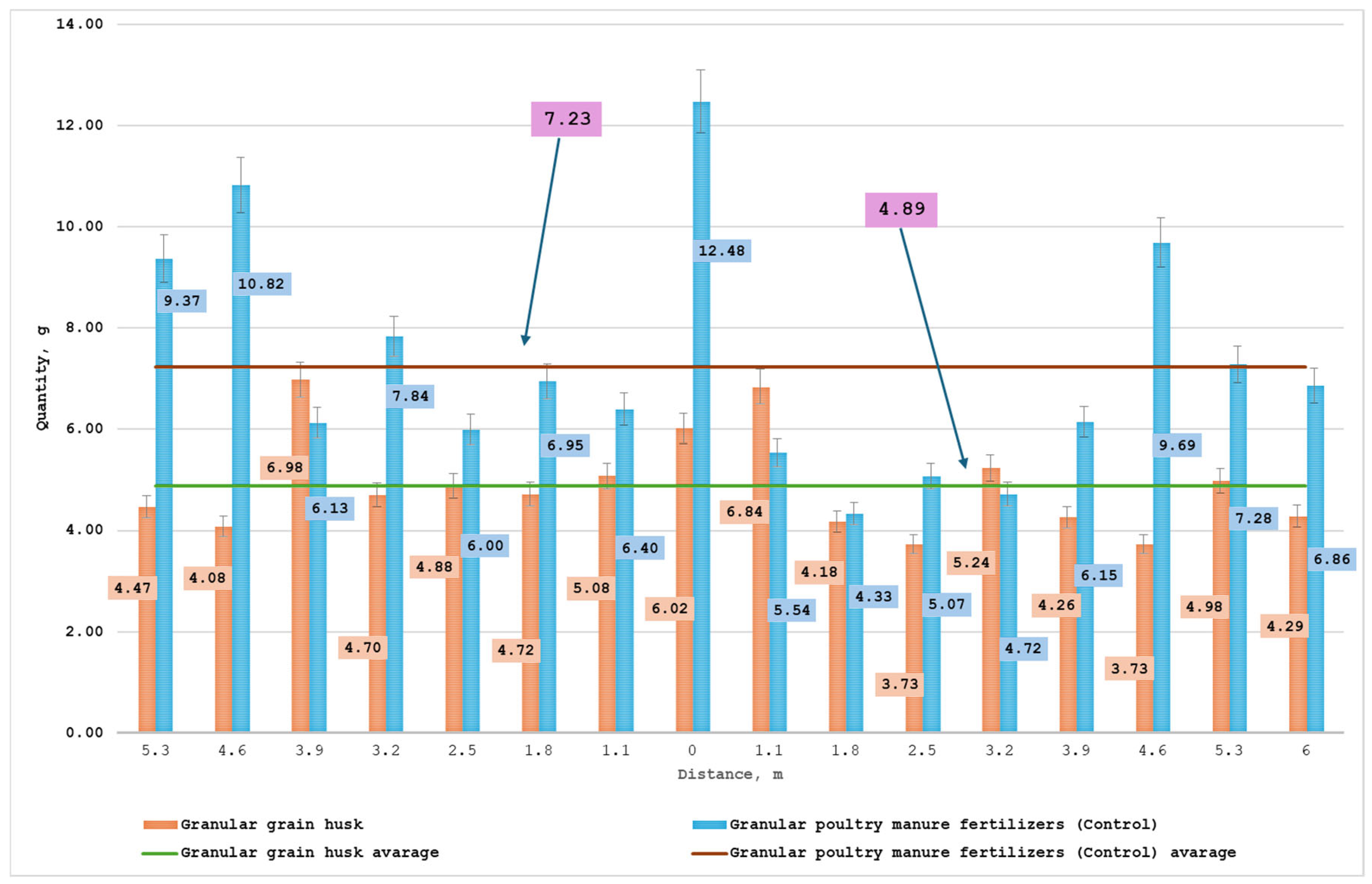
The results presented in Figure 9 illustrate the distribution of two types of fertilizers, granular grain husk and granular poultry manure, when applied using the manufacturer’s original disk with the standard vane arrangement. Clear differences in the distribution uniformity and application rate between the two fertilizer types were observed.
The granular poultry manure fertilizer (control) exhibited consistently higher application rates, with peak values exceeding 12 g at the central application point (0 m). This pattern indicates a strong central concentration, with quantities gradually declining toward the outer distances. In contrast, the granular grain husk demonstrated lower application rates overall, with quantities generally ranging between 3 and 7 g. Importantly, its distribution appeared more balanced across the tested distances, avoiding the central peak observed with the poultry manure fertilizer.
These findings highlight the influence of the fertilizer type on spreading performance. The higher mass accumulation of poultry manure granules in the central area suggests poorer lateral distribution and potential risks of over-application near the spreader’s trajectory. Conversely, the grain husk granules showed a more uniform spread pattern, which may contribute to improved field coverage and a reduced risk of nutrient hotspots.
Overall, the data suggest that the physical and aerodynamic properties of the fertilizers strongly affect their dispersion when applied with the same spreading mechanism. While the poultry manure fertilizer ensures greater nutrient delivery per unit area, the grain husk fertilizer provides better spatial uniformity—an important consideration for optimizing nutrient use efficiency and minimizing environmental impacts.
The uniformity of the fertilizer distribution is commonly assessed using the coefficient of variation (CV), with values below 10 percent generally considered acceptable for achieving agronomically efficient and environmentally safe applications [24]. The granular grain husk series demonstrated a coefficient of variation of approximately 7.89 percent, indicating a more uniform distribution across the test area. In contrast, the granular poultry manure (control group) exhibited a higher coefficient of variation of approximately 16.26 percent, reflecting greater variability in spreading performance. This difference suggests that the grain husk material provides more predictable spreading behavior, while poultry manure granules show moderate heterogeneity that may require more careful spreader adjustments to achieve uniform field distribution.
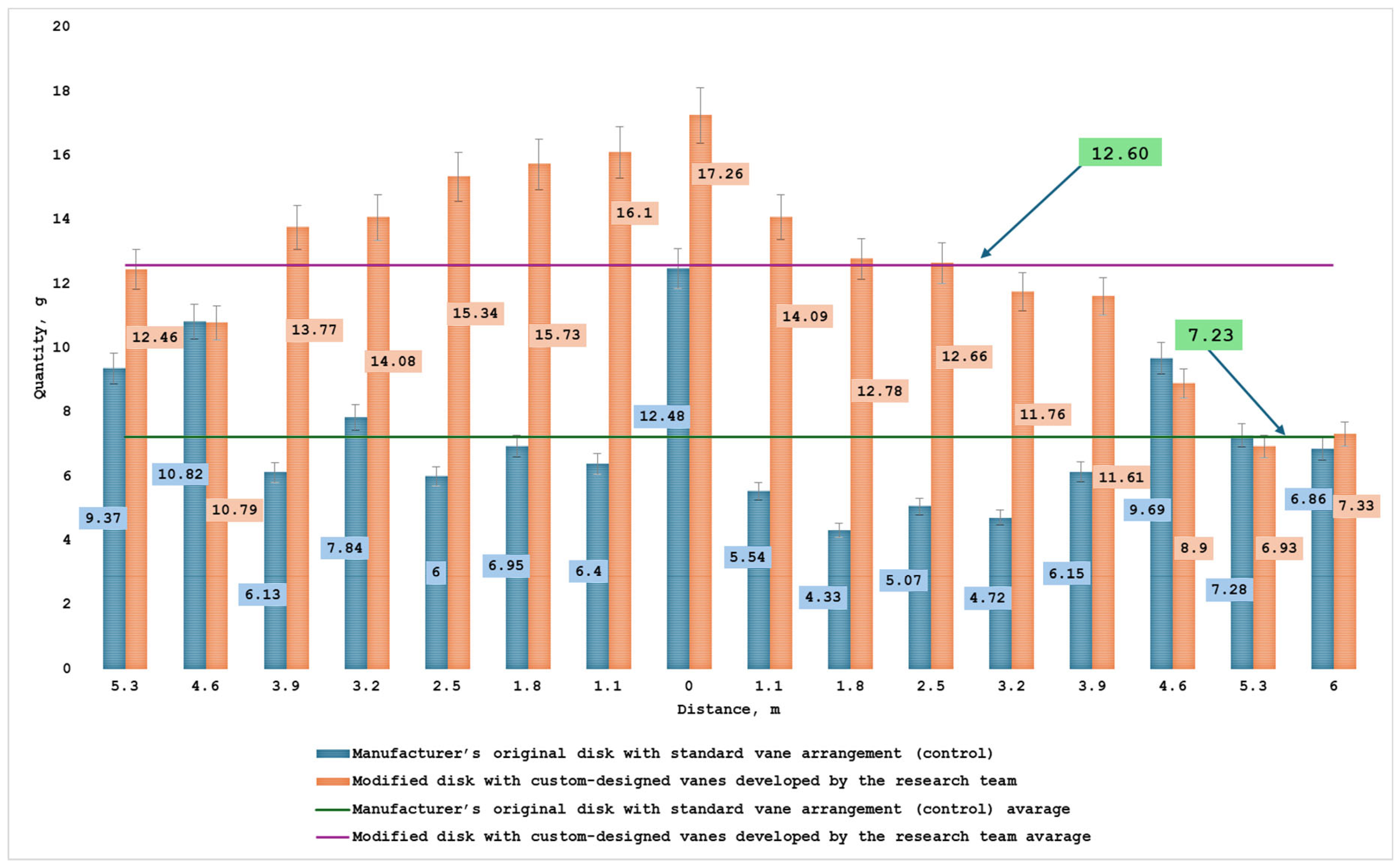
The distribution profiles shown in Figure 10 demonstrate clear contrasts in spreading behavior between the granular grain husk and granular poultry manure fertilizer when applied with the manufacturer’s original disk and the standard vane arrangement.
The granular grain husk displayed significantly higher application rates across all tested distances, with peak values reaching approximately 17–18 g at the central application point (0 m). The distribution followed a bell-shaped curve, with a pronounced central accumulation and gradually decreasing quantities toward the outer distances (5–6 m). This indicates strong central deposition and less uniform coverage across the working width.
In contrast, the granular poultry manure fertilizer exhibited lower application rates overall, with quantities generally ranging between 5 and 10 g. The distribution pattern was relatively flat compared to the grain husk granules, without a distinct central peak, although values still declined slightly toward the outer spreading distances.
These results highlight the role of the fertilizer’s physical characteristics in determining distribution patterns. The higher density and flowability of the grain husk likely enhanced its projection distance and deposition rate, producing greater central accumulation. Meanwhile, the more irregular particle size and shape of the poultry manure granules contributed to lower discharge rates and a comparatively even, but less efficient, distribution.
From an agronomic perspective, the grain husk may provide greater nutrient delivery per unit area, but its uneven distribution raises concern regarding localized nutrient surpluses and potential environmental risks. Conversely, the poultry manure fertilizer, while applied in lower amounts, offered a more consistent lateral spread, which may support more balanced nutrient availability across the field.
Poultry manure granules exhibited significantly higher spreading values, while grain husk granules were distributed over shorter distances and showed a more concentrated spread pattern. This suggests that factors such as the density, shape, and aerodynamic behavior of the granules influence their performance during spreading. These findings are important for evaluating the practical suitability of alternative organic fertilizers and for optimizing spreader parameters to ensure uniform field distributions.
The granular grain husk demonstrated a coefficient of variation of approximately 7.81%, confirming a more uniform distribution across the test area. In comparison, the granular poultry manure (control) exhibited a higher coefficient of variation of approximately 10.68%, reflecting greater variability in the spreading performance. These results consistently indicate that the grain husk material ensures more predictable spreading behavior, while poultry manure granules present moderate heterogeneity that may necessitate additional spreader adjustments under field conditions.
Taken together, these results demonstrate that the influence of the vane design interacts with the properties of the fertilizer material. When using the manufacturer’s original disk, differences in CV values primarily reflect the inherent characteristics of the fertilizers, with grain husks spreading more uniformly than the poultry manure. With the modified disk, however, the reduction in the CV for the poultry manure indicates that vane adjustments can substantially improve its distribution, while the grain husk remains consistently uniform regardless of the disk type. This highlights that spreader optimization should be tailored to the specific material in order to achieve the most efficient and stable application.
In summary, a comparative analysis of Figure 9 and Figure 10 demonstrates that the type of granular fertilizer strongly influences both the application rate and spatial distribution when using the same spreading mechanism. The poultry manure fertilizer provided lower but more balanced lateral coverage, minimizing risks of nutrient hotspots but potentially limiting the overall nutrient supply. In contrast, the grain husk achieved higher delivery rates but exhibited pronounced central accumulation, which may compromise distribution uniformity and increase the risk of localized over-application. These results emphasize that physical and aerodynamic fertilizer properties must be carefully considered to optimize nutrient use efficiency and reduce environmental impacts.

3.2.2. Assessment of Experimental Test Results Granular Grain Husk and Granular Poultry Manure Fertilizer Distribution

The results presented in Figure 11 demonstrate the impact of vane design on the distribution of the granular poultry manure fertilizer when applied with two different disk configurations: the manufacturer’s original disk with the standard vane arrangement (control) and a modified disk with custom-designed vanes developed by the research team.
The distribution obtained with the control setup achieved lower application rates overall, typically ranging between 4 and 12 g, and demonstrated a pronounced central accumulation at 0 m with reduced deposition toward the outer distances. This pattern reflects a limited projection capacity and uneven lateral coverage. In contrast, the modified disk with custom-designed vanes significantly enhanced both the quantity and spread uniformity of the applied fertilizer. Application rates reached peak values of approximately 17–18 g at the center while maintaining higher deposition levels across the lateral distances (up to 6 m). The resulting distribution followed a smoother, bell-shaped curve, suggesting improved projection dynamics and more efficient particle lateral transport.
These findings indicate that vane geometry plays a critical role in fertilizer spreading efficiency. The custom-designed vanes improved both the delivery rate and field coverage compared to the standard configuration, thereby reducing the risk of under-application in peripheral zones while also ensuring more even nutrient availability. From an agronomic perspective, this enhanced distribution pattern supports better nutrient use efficiency, potentially leading to higher crop productivity and reduced environmental losses.
The coefficients of variation calculated for the two disk designs indicate that the manufacturer’s original disk exhibited greater dispersion (CV = 16.26%) compared to the modified disk with custom-designed vanes (CV = 10.68%). This reduction in relative variability for the modified disk suggests improved consistency in the granule discharge and a more uniform spreading pattern, likely resulting from vane-induced changes in the particle trajectory and airflow dynamics. These findings imply that the vane modification enhances operational uniformity and should be considered when refining the spreader geometry to achieve a more consistent field application. The modified disk with custom-designed vanes demonstrated significantly higher spreading values compared to the standard manufacturer’s disk. This indicates that the vane geometry and positioning within the disk have a substantial impact on the granule distribution uniformity and range. These findings confirm that technical solutions based on experimental data can significantly improve fertilizer spreading efficiency and contribute to more precise and sustainable field applications.
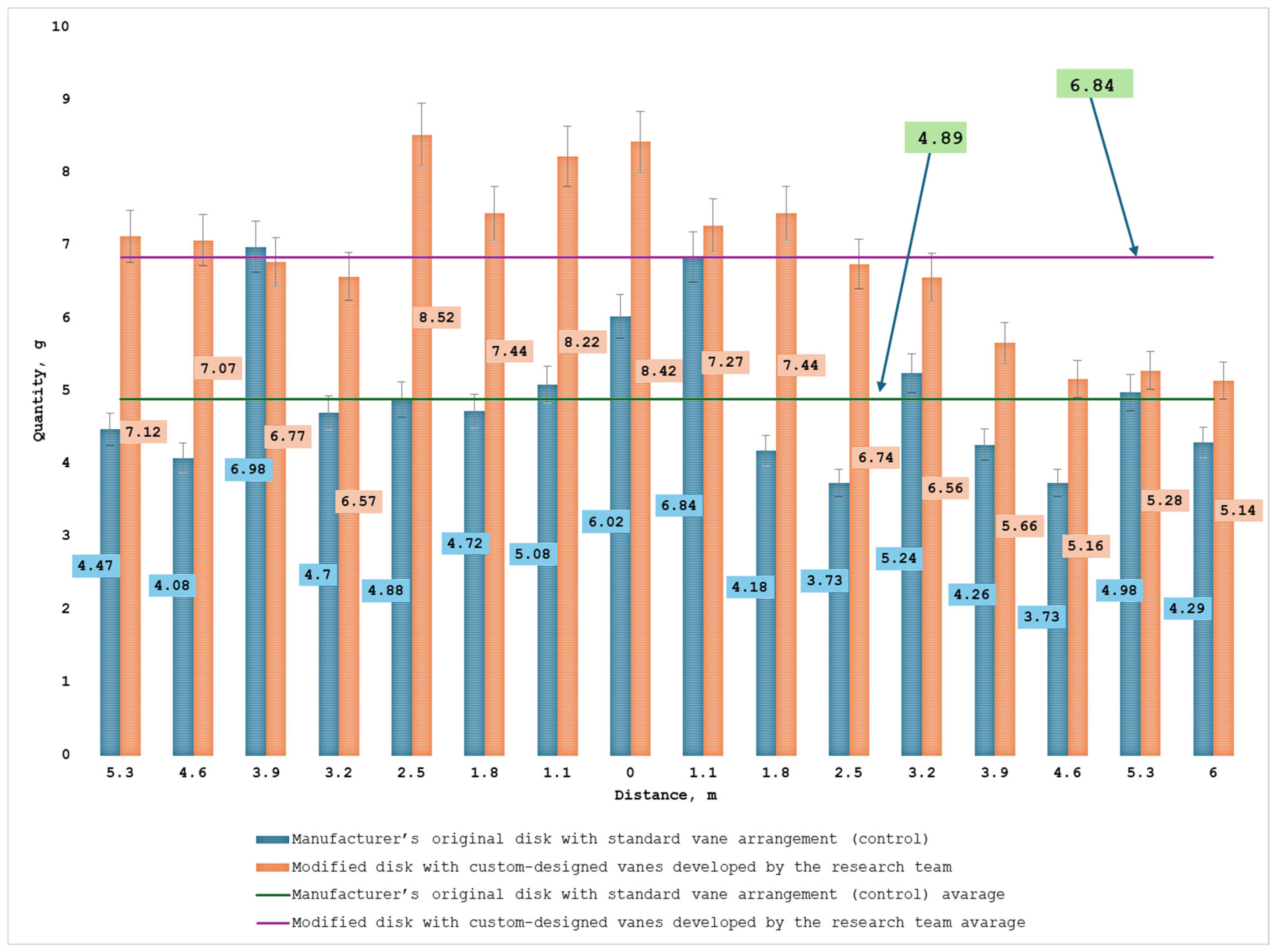
Figure 12 illustrates the comparative distribution patterns of granular poultry manure fertilizers obtained using two different disk configurations: the manufacturer’s original disk with the standard vane arrangement (control) and a modified disk with custom-designed vanes developed by the research team. The x-axis represents the distance from the spreader outlet (m), while the y-axis indicates the deposited fertilizer quantity (g). The results demonstrate a clear difference in the spreading uniformity between the two vane configurations. The control disk produced a lower and more irregular deposition profile, with quantities ranging between approximately 2.5 and 7 g depending on the distance. This pattern suggests a non-uniform fertilizer distribution, which could negatively affect field application efficiency and lead to localized under- or over-fertilization.
In contrast, the modified vane arrangement consistently resulted in higher fertilizer deposition values, ranging from approximately 5.5 to 8.5 g across the measured distances. More importantly, the distribution curve obtained with the modified disk was considerably smoother, indicating an improved spread uniformity. Such uniformity is critical for ensuring optimal nutrient delivery, minimizing losses, and improving the environmental sustainability of manure application.
Overall, the results suggest that the custom-designed vanes significantly enhanced the distribution performance of the spreader compared to the manufacturer’s original design. This highlights the potential of vane geometry optimization for improving the efficiency of organic fertilizer application systems.
The coefficients of variation computed from the presented data show that the manufacturer’s original disk exhibited a CV of 7.89%, while the modified disk with custom-designed vanes achieved a slightly lower CV of 7.81%. Although this difference is marginal, it suggests that the vane modification may contribute to a modest improvement in granular discharge consistency and spreading uniformity. This subtle enhancement could be attributed to refined particle trajectory control and reduced sensitivity to minor variations in granule properties. As such, even small adjustments in the vane design may support more stable field application and warrant consideration in precision spreader optimization.
The modified disk with custom-designed vanes demonstrated significantly higher spreading values compared to the standard manufacturer’s disk. This indicates that vane geometry and positioning within the disk have a substantial impact on the granule distribution uniformity and range. These findings confirm that design improvements based on experimental data can significantly enhance fertilizer spreading efficiency and contribute to more precise and sustainable field applications.
Taken together, the results from Figure 11 and Figure 12 clearly demonstrate that the vane design has a decisive influence on the distribution efficiency of the granular poultry manure fertilizer. While the standard manufacturer’s vane configuration produced lower deposition rates and irregular coverage patterns, the custom-designed vanes developed by the research team significantly improved both the quantity and uniformity of the spread. The smoother distribution curves achieved with the modified disks indicate enhanced projection dynamics and more effective lateral coverage, thereby reducing the risks of nutrient under- or over-application. From both agronomic and environmental standpoints, these improvements highlight the potential of vane optimization as a practical engineering solution to increase fertilizer use efficiency, support crop productivity, and minimize nutrient losses to the environment.

4. Discussion

The results of this study revealed that both the physical–mechanical properties of organic granular fertilizers and the structural design of the spreader significantly influence spreading efficiency and uniformity. Although poultry manure granules exhibited higher average compressive strength (382.56 ± 78.08 N), grain husk granules also demonstrated sufficient mechanical resistance (189.45 ± 92.53 N), with peak crushing forces exceeding 270 N and minimal deformation (0.2–0.4 mm). This confirms that grain husk granules are suitable for practical use with a disk-type spreader, such as the Kuhn MDS 9.19, maintaining structural integrity during storage, handling, and field application [15].
Field experiments showed that spreading uniformity depends not only on the granule density and shape but also on the geometry of the spreader vanes. A comparison between the manufacturer’s original disk with standard vaned and the modified disk with custom-designed vanes developed by the research team revealed that the latter significantly improved both the quantity and uniformity of the fertilizer distribution. The modified disk achieved higher application rates (up to 17–18 g at the center) and a more balanced spread across the working width, with a smooth bell-shaped distribution curve indicating improved particle projection and lateral coverage. For example, Mingjin Xin et al. [25] study on spreader designs demonstrated that technical solutions related to the geometry of fertilizer spreading mechanisms can significantly improve distribution efficiency and reduce losses. Their work emphasizes that even under challenging conditions, well-designed components—such as the shape and angle of separator arcs—enable the optimization of the fertilizer spreading trajectory and help minimize uneven distributions. This insight aligns with the findings of our study, which show that modifications to vane geometry can have a decisive impact on spreading uniformity [16].
Vane geometry optimization is an effective engineering solution for enhancing the efficiency of organic fertilizer applications, reducing nutrient losses, and supporting more sustainable fertilization practices.
In summary, this study demonstrated the following:
  • Grain husk granules, despite their lower density, possess adequate mechanical strength and can serve as viable alternative organic fertilizers.
  • Modified vanes significantly improve the spreading uniformity and quantity, especially when working with irregularly shaped or low-density granules.
  • Both the fertilizer properties and spreader design must be evaluated holistically to optimize field performance.
Future research directions should include the following:
  • Modeling granule dispersion under varying meteorological conditions.
  • Assessing long-term effects on soil structures and crop yields.
  • Developing algorithms for vane geometry optimization tailored to specific granule characteristics.
  • Evaluating the economic and environmental efficiency of alternative fertilizer applications.
  • Understanding the importance of the interaction between structural design solutions, the physical properties of granules, and the mechanisms of fertilizer distribution.
Future research is recommended to deepen the understanding of granule–vane interactions under dynamic conditions, integrate digital modeling into spreader design, and evaluate the long-term impact on soil health and crop productivity. Such a multi-level analysis would support the development of advanced, sustainable, and efficient fertilization technologies.

5. Conclusions

Granulated grain husk fertilizers demonstrate sufficient mechanical resistance and are suitable for practical application using disk-type spreaders. Poultry manure granules deliver higher application rates, while grain husk granules provide more uniform distributions. Modified vanes significantly improve spreading uniformity and reduce the risk of over-application or uneven fertilizer distribution. Our statistical analysis (ANOVA) confirmed significant differences between fertilizer types and disk configurations, indicating that both the fertilizer material properties and vane design influence spreading performances.

Author Contributions

Conceptualization, G.J., R.Z. and E.J.; methodology, G.J., R.Z., E.J., D.K. and R.M.; software, G.J., R.Z., E.J., D.K. and R.M. validation, G.J., R.Z., E.J., D.K. and R.M.; formal analysis, G.J., R.Z. and E.J.; investigation, G.J., R.Z., E.J., D.K. and R.M.; resources, G.J., R.Z., E.J., D.K. and R.M.; data curation, G.J., R.Z. and E.J.; writing—original draft preparation, G.J., R.Z., E.J., D.K. and R.M.; writing—review and editing, G.J., R.Z., E.J., D.K. and R.M.; visualization, G.J., R.Z., E.J., D.K. and R.M.; supervision, G.J., R.Z. and E.J.; project administration, G.J., R.Z. and E.J.; funding acquisition, G.J., R.Z. and E.J. All authors have read and agreed to the published version of the manuscript.

Funding

This research received no external funding.

Data Availability Statement

Data will be made available on request.

Conflicts of Interest

The authors declare no conflicts of interest.

References

  1. Goodarzi, S.; Shafieinia, A. Review of Fertilizer Types, Benefits, and Sustainable Use in Modern Agriculture; Qom Azad University: Qom, Iran, 2025; Available online: https://hal.science/hal-05096247v1/document (accessed on 20 September 2025).
  2. Khan, M.T.; Aleinikovienė, J.; Butkevičienė, L.M. Innovative Organic Fertilizers and Cover Crops: Perspectives for Sustainable Agriculture in the Era of Climate Change and Organic Agriculture. Agronomy 2024, 14, 2871. [Google Scholar] [CrossRef]
  3. Kiss, N.É.; Tamás, J.; Mannheim, V.; Nagy, A. Comparing the Environmental Impact of Poultry Manure and Chemical Fertilizers. Front. Built Environ. 2023, 9, 1237476. [Google Scholar] [CrossRef]
  4. Jancewicz, L.J.; Gibb, D.J.; Swift, M.L.; Penner, G.B.; McAllister, T.A. Digestibility and Growth Performance of Feedlot Cattle Fed Pelleted Grain Screenings. Can. J. Anim. Sci. 2017, 97, 716–726. [Google Scholar] [CrossRef]
  5. Thomas, C.L.; Acquah, G.E.; Whitmore, A.P.; McGrath, S.P.; Haefele, S.M. The Effect of Different Organic Fertilizers on Yield and Soil and Crop Nutrient Concentrations. Agronomy 2019, 9, 776. [Google Scholar] [CrossRef]
  6. Martín-Lamerding, D.; Gabriel, J.L.; Zambrana, E.; Santín-Montanyá, I.; Tenorio, J.L. Organic Amendment vs. Mineral Fertilization under Minimum Tillage: Changes in Soil Nutrients, Soil Organic Matter, Biological Properties and Yield after 10 Years. Agriculture 2021, 11, 700. [Google Scholar] [CrossRef]
  7. Allam, M.; Radicetti, E.; Quintarelli, V.; Petroselli, V.; Marinari, S.; Mancinelli, R. Influence of Organic and Mineral Fertilizers on Soil Organic Carbon and Crop Productivity under Different Tillage Systems: A Meta-Analysis. Agriculture 2022, 12, 464. [Google Scholar] [CrossRef]
  8. Kolbe, H. Comparative Analysis of Soil Fertility, Productivity and Sustainability of Organic Farming in Central Europe—Part 1: Effect of Medium Manifestations on Conversion, Fertilizer Types and Cropping Systems. Agronomy 2022, 12, 2001. [Google Scholar] [CrossRef]
  9. Yu, Z.; Guo, B.; Sun, T.; Li, R.; Zhao, Z.; Yao, L. Effects of Organic Fertilizer Substitution for Mineral Fertilizer on Soil Fertility, Yield, and Quality of Muskmelons. Agronomy 2025, 15, 639. [Google Scholar] [CrossRef]
  10. Jotautienė, E.; Juostas, A.; Vaiciukevicius, E.; Domeika, R. Experimental Investigation on Dynamics of Precision Spreading of Granular Fertilizers. In Proceedings of the 24th International Scientific Conference Engineering for Rural Development, Jelgava, Latvia, 21–23 May 2025; pp. 1021–1028. [Google Scholar]
  11. Bivainis, V.; Jotautienė, E.; Juodišius, G.; Zinkevičienė, R. A Study of the Effect of Disc Geometry and Flow Rate on the Spread Uniformity of Organic Granular Fertiliser. In Proceedings of the AGBIOL VI International Conference, Edirne, Turkey, 25–27 April 2024. [Google Scholar]
  12. Bulgakov, V.; Rucins, A.; Holovach, I.; Adamchuk, O.; Aboltins, A.; Zabolotnyi, H.; Kolomiiets, L.; Polishchuk, S. Computer Investigation of Mineral Fertiliser Particle Movement Along Centrifugal Spreader Disc Inclined Under Angle to Horizontal Plane. In Proceedings of the 22nd International Scientific Conference Engineering for Rural Development, Jelgava, Latvia, 24–26 May 2023; pp. 663–670. [Google Scholar]
  13. Przywara, A.; Santoro, F.; Kraszkiewicz, A.; Pecyna, A.; Pascuzzi, S. Experimental Study of Disc Fertilizer Spreader Performance. Agriculture 2020, 10, 467. [Google Scholar] [CrossRef]
  14. Bivainis, V.; Jotautienė, E.; Lekavičienė, K.; Mieldažys, R.; Juodišius, G. Theoretical and Experimental Verification of Organic Granular Fertilizer Spreading. Agriculture 2023, 13, 1135. [Google Scholar] [CrossRef]
  15. Xie, Y.; Liu, H.; Shang, J.; Guo, L.; Zheng, G. Effect of Angle Between Center-Mounted Blades and Disc on Particle Trajectory Correction in Side-Throwing Centrifugal Spreaders. Agriculture 2025, 15, 1392. [Google Scholar] [CrossRef]
  16. ISO 18847:2024; Solid Biofuels—Determination of Particle Density of Pellets and Briquettes. ISO: Geneva, Switzerland, 2024.
  17. EN 12048:1999; Solid Fertilizers and Liming Materials—Determination of Moisture Content—Gravimetric Method by Drying at (105 ± 2) °C (ISO 8190:1992 Modified). CEN: Brussels, Belgium, 1999.
  18. EN 13037:2012; Soil Improvers and Growing Media—Determination of pH. CEN: Brussels, Belgium, 2012.
  19. EN 13039:2012; Soil Improvers and Growing Media—Determination of Organic Matter Content and Ash. CEN: Brussels, Belgium, 2012.
  20. LST EN 13654-2002; Soil Improvers and Growing Media—Determination of Nitrogen—Modified Kjeldahl Method. LST: Vilnius, Lithuania, 2002.
  21. ISO 11261:1995; Soil Quality—Determination of Total Nitrogen—Modified Kjeldahl Method. ISO: Geneva, Switzerland, 1995.
  22. EN 13650:2006; Soil Improvers and Growing Media—Extraction of Aqua Regia Soluble Elements. CEN: Brussels, Belgium, 2006.
  23. LST ISO 6878:2004/ISO 6878:2004; Water Quality—Determination of Phosphorus—Ammonium Molybdate Spectrometric Method. LST: Vilnius, Lithuania, 2004.
  24. Gaudutis, A.; Jotautienė, E.; Mieldažys, R.; Bivainis, V.; Jasinskas, A. Sustainable use of biochar, poultry and cattle manure for the production of organic granular fertilizers. Agronomy 2023, 13, 1426. [Google Scholar] [CrossRef]
  25. Xin, M.; Jiang, Z.; Chen, T.; Song, Y.; Wang, Y.; Huang, W. Design and experiment of the fertilizer centrifugal broadcaster with guiding chute for paddy field. Trans. Chin. Soc. Agric. Eng. 2023, 39, 67–75. [Google Scholar] [CrossRef]
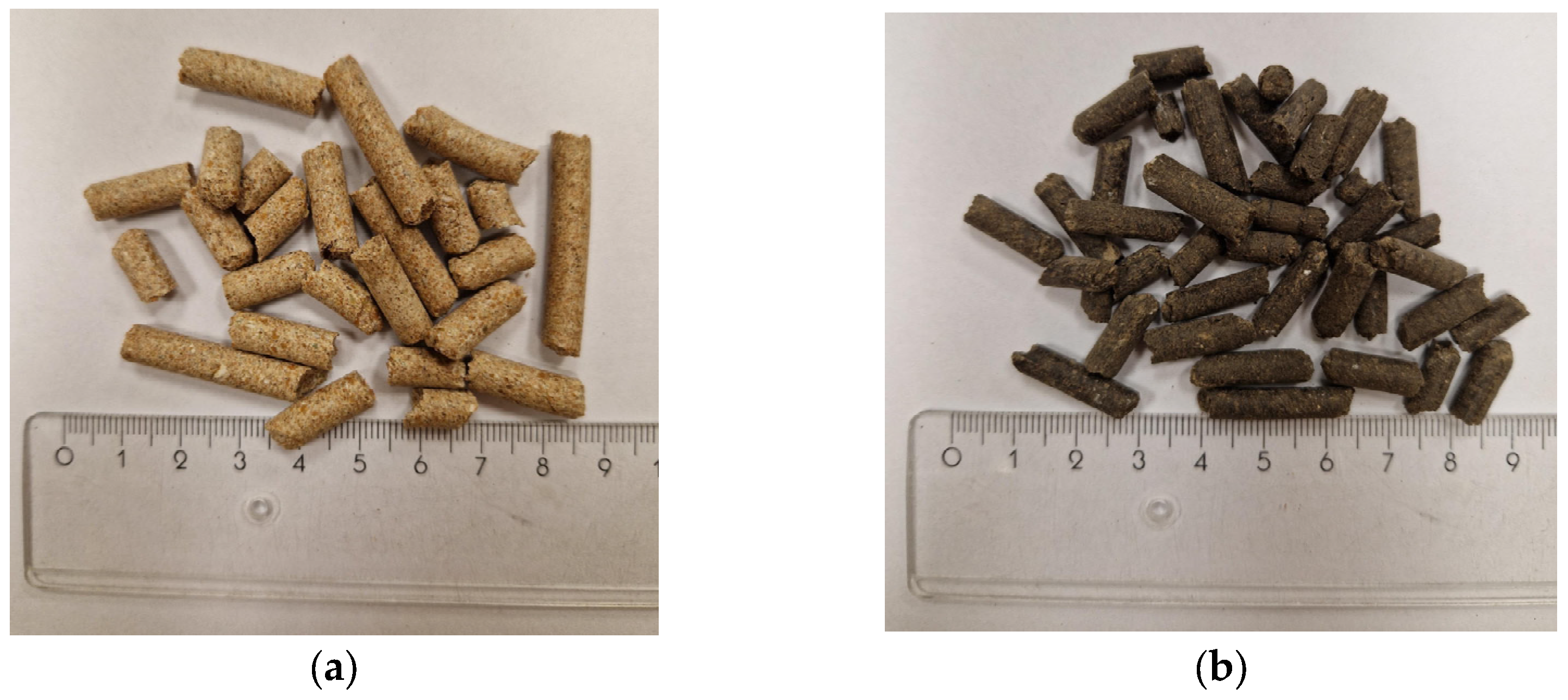
Figure 1. Granular organic fertilizers spread during this study: (a) granular grain husk and (b) granular poultry manure fertilizers.
Applsci 15 13076 g001
Figure 2. Granular organic fertilizer strength testing using the Instron 5960 universal testing machine.
Applsci 15 13076 g002
Figure 3. Granular organic fertilizer spreader, Kuhn MDS 9.1 Q.
Applsci 15 13076 g003
Figure 4. Layout of fertilizer collectors (1–17) and trajectory of spreader movement (A).
Applsci 15 13076 g004
Figure 6. A 3D model of a custom-designed vane.
Applsci 15 13076 g006
Figure 7. Curves of granular grain husk fertilizer strength test in horizontal direction.
Applsci 15 13076 g007
Figure 8. Curves of granular poultry manure fertilizer strength test in horizontal direction.
Applsci 15 13076 g008
Figure 9. Granular grain husk and granular poultry manure fertilizer spread using the manufacturer’s original disk with the standard vane arrangement (control).
Applsci 15 13076 g009
Figure 10. Granular grain husk and granular poultry manure fertilizer spread using the custom-designed vane.
Applsci 15 13076 g010
Figure 11. The vane influence to the granular poultry manure fertilizers’ (control) distribution.
Applsci 15 13076 g011
Figure 12. The vanes influence the granular grain husk fertilizers distribution.
Applsci 15 13076 g012
Table 1. Average length, diameter, and mass of fertilizer granules.
Granular Grain HuskGranular Poultry Manure Fertilizers (Control)
Length, l, mm19.9 ± 1.8212.11 ± 0.99
Diameter d, mm6.34 ± 0.066.10 ± 0.02
Mass, g0.76 ± 0.070.45 ± 0.05
Density, kg.m−31205.61 ± 34.461279.96 ± 62.23
Dry matter, %9191.3
Table 2. Chemical composition of fertilizer granules: pH, organic matter, total nitrogen (N), total phosphorus (P2O5), and total potassium (K2O).
Granular Grain HuskGranular Poultry Manure Fertilizers (Control)
pH5.66.9
Organic matter, %4.2165
Total nitrogen (N), %2.364
Total phosphorus (P2O5), %1.893
Total potassium (K2O), %1.132.8
Disclaimer/Publisher’s Note: The statements, opinions and data contained in all publications are solely those of the individual author(s) and contributor(s) and not of MDPI and/or the editor(s). MDPI and/or the editor(s) disclaim responsibility for any injury to people or property resulting from any ideas, methods, instructions or products referred to in the content.