You are currently viewing a new version of our website. To view the old version click .
Applied Sciences
  • Article
  • Open Access

8 December 2025

Examination of Conductive WC-Ni and Thermal Barrier Coatings Using an Eddy Current Probe

,
,
,
and
1
Faculty of Automatic Control, Electronics and Computer Science, The Silesian University of Technology, Akademicka 16, 44-100 Gliwice, Poland
2
Research and Development Laboratory for Aerospace Materials, Rzeszow University of Technology, Żwirki i Wigury 4, 35-959 Rzeszów, Poland
3
School of Mechanical Science and Engineering, Huazhong University of Science and Technology, Wuhan 430074, China
4
School of Mechatronics Engineering, University Electronics Science and Technology of China, Chengdu 611731, China
This article belongs to the Special Issue Current Advances in Eddy Current Testing

Abstract

In many industrial applications, engine, turbine, and rotor components are coated with thin layers that protect them from corrosion, high temperatures, or pressure. This paper presents a fast and effective method for testing such protective coatings. For this purpose, an eddy current probe consisting of a single coil was designed and constructed. The high sensitivity of the probe was achieved by using a pot core, which significantly reduced magnetic flux losses. In addition to the substrate, the test samples also contained carbide coatings or thermal barrier coatings (TBCs), which were sprayed with an Axial III triple-plasma torch or a single-electrode torch. The use of different process parameters made it possible to obtain coatings of varying thickness, which were determined using a scanning electron microscope (SEM). Measurements of the probe impedance components were performed in the frequency range from 500 Hz to 50 kHz. In all cases, based on the analysis of changes in resistance and reactance, it was possible to distinguish each of the tested samples. Even slight changes in thickness of only 9 μm caused significant changes in probe impedance, enabling effective testing of carbide coatings and TBCs.

1. Introduction

Thermal spraying processes have been used for over 100 years, but their greatest development is associated with their use in the aerospace industry, particularly in turbine engines [1]. In the aviation industry, the most commonly used coatings are tungsten carbide-based metal–ceramic coatings [2] and thermal barrier coatings (TBCs) [3]. The basic method of producing these coatings in aviation is APS plasma spraying [1].
Metallic–ceramic coatings based on tungsten carbide, which acts as a strengthening layer, most often contain a matrix based on Ni, Cr, and Co in various combinations of these elements and their overall content in the coating [4]. These coatings are characterized by a combination of high abrasion and corrosion resistance [5].
Thermal Barrier Coatings have been the primary method of protecting the surfaces of combustion chambers, blades, and stators made of nickel superalloys in jet engines and industrial gas turbines for several decades [6]. These coatings have a complex structure and consist of at least two layers [7]. The inner metallic layer has two main functions: it compensates for differences in the thermal expansion coefficient between the top coat and the base material [8] and protects the substrate material from corrosion by forming a layer of thermally grown oxides (TGO) [9]. In turn, the TGO layer, which is mainly composed of aluminum and/or chromium oxides, bonds the bond coat to the outer ceramic layer [10]. Adhesive coatings based on MCrAlY alloys are typically used as bond coats. They are most often plasma sprayed [11] or applied as NiAl-based aluminide diffusion layers, which can be modified with other elements, usually Pt [12]. The classic outer top coat is based on yttria-stabilized zirconia and is deposited using two methods: atmospheric plasma spray [13] (usually in combustion chambers and stators) and Electron Beam Physical Vapor Deposition (EB-PVD), which allows for columnar layers to be obtained on rotating blades [14]. Currently, the development of TBC technology is focused on the use of new materials and coatings, including Plasma Spray Physical Vapor Deposition (PS-PVD) technology [15].
One of the fundamental problems in the production of plasma spray coated components in aviation is the assessment of their thickness. The basic method is a destructive metallographic method involving the preparation of a metallographic specimen and its evaluation under a light microscope or scanning electron microscope (SEM) [16]. This method causes damage to the sprayed component, and the use of a test sample does not fully reflect the thickness of the coating. Non-destructive methods can be used as an alternative. Due to the different properties of the ceramic layer in TBCs, various measurement methods have been developed using ultrasonic [17,18], microwave [19], or thermal imaging [20]. However, when using these methods, there are numerous difficulties in measuring coatings on a metallic substrate, such as metal–ceramic coatings based on WC carbides or bond coats in thermal barrier coatings.
The use of components coated with carbide coatings and TBCs often takes place in difficult operating conditions, such as high pressure or high temperature. The stringent requirements for reliability and durability that are imposed on such products make it necessary to carry out regular inspections of the technical condition of the coatings. A suitable method should enable quick and non-contact testing of the structure of thin layers. In the tests presented in this paper, these requirements were met thanks to the use of the eddy current technique. Until now, this technique has not been widely used in the testing of very thin components due to the high sensitivity required of the probe. Typical solutions such as air-core probes [21,22,23], I-core probes [24,25], and T-core probes [26,27] used to test thicker elements have proven insufficient. Sensitivity can be improved by using probes consisting of several coils operating as transmitters–receivers [28,29,30,31,32,33]. However, such systems have larger geometric dimensions and a more complex design. The novelty of this work is an effective measurement method based on the eddy current technique, which meets all these requirements. The authors constructed an eddy current probe with a single coil. High sensitivity was achieved by using a pot core, which reduces magnetic flux leakage and directs it directly towards the conductor. The inspection is carried out by measuring the impedance of the probe attached to the surface of the material being tested. The results are compared with the correct impedance values measured for the reference sample. In this way, it is possible to detect corrosion, delamination, thinning, and any structural changes in the conductive coating that alter the distribution of the magnetic field generated by the probe. In addition, the tested coating can be covered with additional layers such as insulation, varnish, or paint. Inspections are performed on any electrically conductive materials, both magnetic and non-magnetic.
The tests were carried out using a constructed eddy current probe for operating frequencies from 500 Hz to 50 kHz. The coatings were sprayed using different powders and process parameters. Based on scanning electron microscope (SEM) images, the thickness of the resulting coatings was measured, which in the case of the tested conductive layer ranged from 60 μm to 300 μm. The results of the probe impedance component measurements allowed for a clear differentiation of all samples. Even slight differences in coating thickness caused a significant change in the impedance value of the probe. The tests confirmed that the eddy current probe with a single coil can be used to effectively detect changes in the structure of thin carbide coatings and TBCs.

2. Materials and Methods

2.1. Eddy Current Method

The tests described in this paper were carried out using the eddy current method. This method is based on the phenomenon of electromagnetic induction. A coil-shaped probe, powered by alternating current, generates a primary magnetic field. Bringing the probe close to a conductive material causes eddy currents to be generated in it. The secondary magnetic field generated by the eddy currents causes a change in the impedance of the probe. The intensity of the magnetic field depends on the material parameters of the tested object (electrical conductivity [34,35] and its magnetic permeability [36]), its geometric dimensions [37,38,39], and the distance between the probe and the conductive surface (lift-off) [40]. Thus, any change in the values of these parameters causes a change in the magnetic field. This property allows for the determination of changes in the parameters of the tested material and also enables the detection of defects and structural changes. This is due to the fact that a defect in the conductor disturbs the flow of eddy currents, resulting in a change in the impedance of the probe [41].
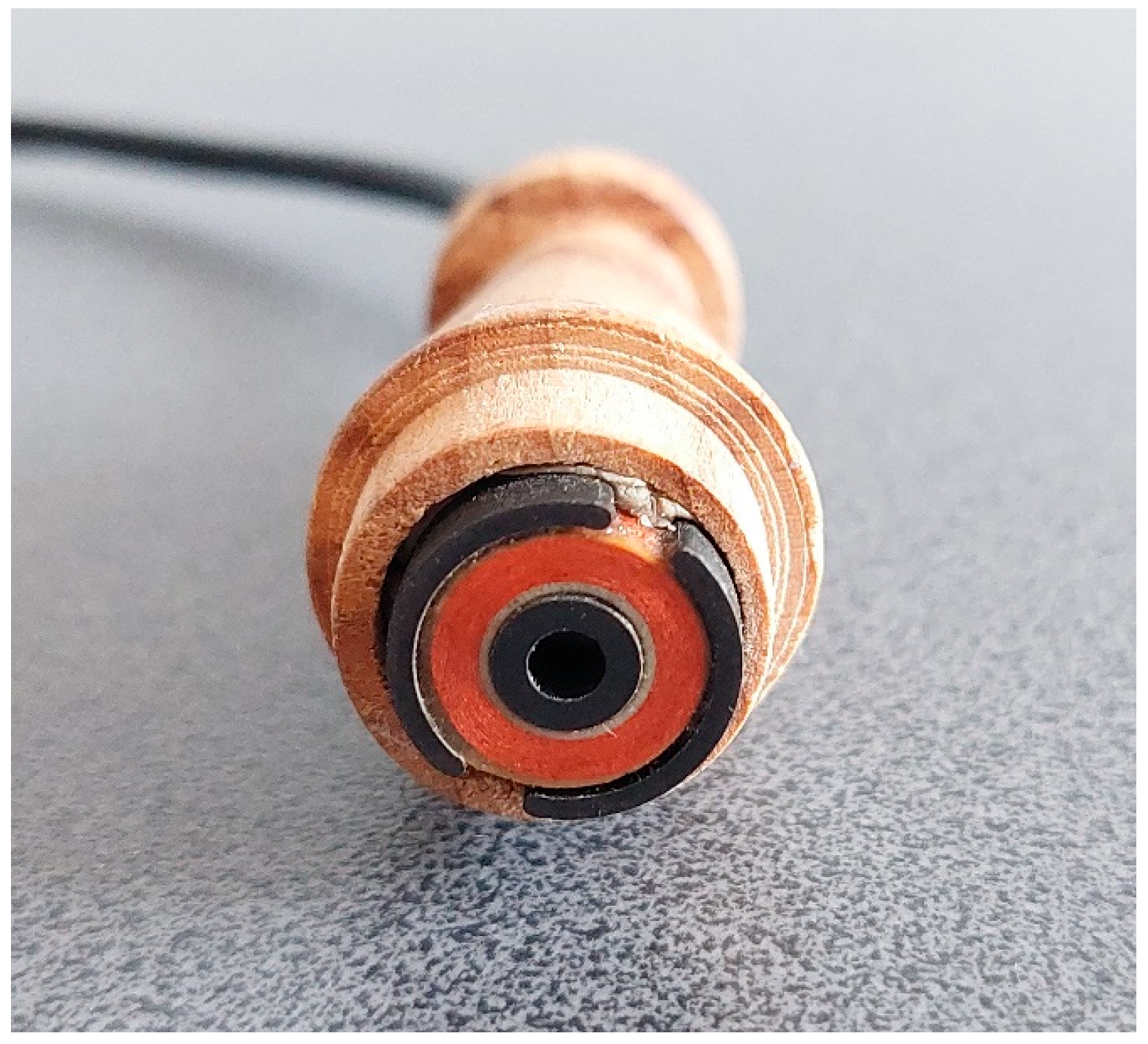
For the purposes of conducting eddy current testing, the authors designed and then constructed an eddy current probe (Figure 1). The coil was wound onto a frame and secured with epoxy resin. The coil was then placed inside a pot core and mounted in a head to facilitate inspection. The dimensions of the coil, core, and samples were measured using calipers and are shown in Table 1.
Figure 1. Pot core probe used in experiments.
Table 1. Parameters of the coil, core and samples.

2.2. Carbide Coatings

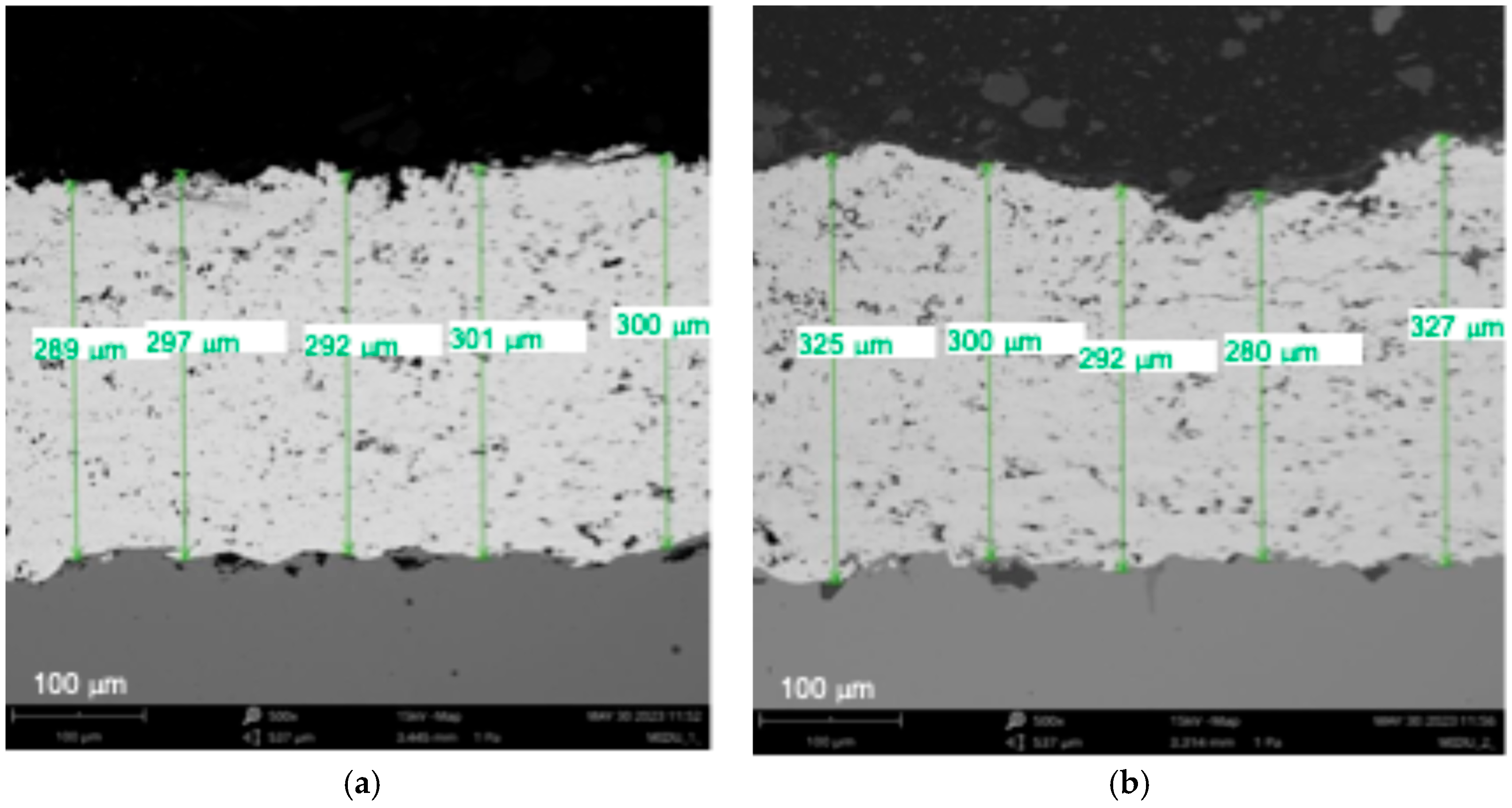
Carbide coatings were sprayed using the HV-APS (High Velocity–Atmospheric Plasma Spray) method. In this process, the plasma stream together with powder particles reaches supersonic speed thanks to the use of high gas flow rate and a suitably selected burner nozzle. These requirements are met by the Axial III plasma torch integrated with the Thermico control system. Woka 3302—WC10Ni powder was used as the coating material. The spraying parameters were selected on the basis of our previous studies [42]. Two samples were made, which were sprayed with two sets of spraying parameters differing in the flow rate of hydrogen and argon, expressed in normalized liters per minute (NLPM) (Table 2). Metallographic sections were prepared from the coatings and observed using a Phenom XL scanning electron microscope (SEM). The microstructures of the coatings are shown in Figure 2a,b.
Table 2. The plasma spraying parameters of the bond coat and the top coat of WC10Ni coating, expressed in normalized liters per minute (NLPM) and amperes (A).
Figure 2. Microstructure of WC-10Ni carbide coating sprayed using the HV-APS method at different Ar/H2 flow rate parameters (NLPM) (a) 160 Ar/20H2—sample 1, (b) 170/10—sample 2 (Table 2).

2.3. TBCs

The thermal barrier coatings were sprayed using the conventional APS plasma spraying method. The coatings were sprayed using a Thermico A60 single-electrode torch (Thermico, Dortmund, Germany) integrated with a control system from the same company. The bond coat was produced from AMDRY 386 NiCoCrAlY powder (Oerlikon-Metco, Wohlen, Switzerland) powder with the follow composition: Ni22Co17Cr12Al0.5Hf0.5Y0.4Si (Amdry, Sulzer Metco Inc., New York, NY, USA), while the top coat was made using Metco 204 ZrO2*8Y2O3 powder (Oerlikon-Metco, Wohlen, Switzerland) from the same manufacturer. Four different sets of bond coat and top coat spraying parameters (marked 3–6) were used, based on the results of our previous tests [43]. The spraying parameters for both powders are presented in Table 3.
Table 3. The plasma spraying parameters of the bond coat and the top coat of TBCs, expressed in normalized liters per minute (NLPM) and amperes (A).
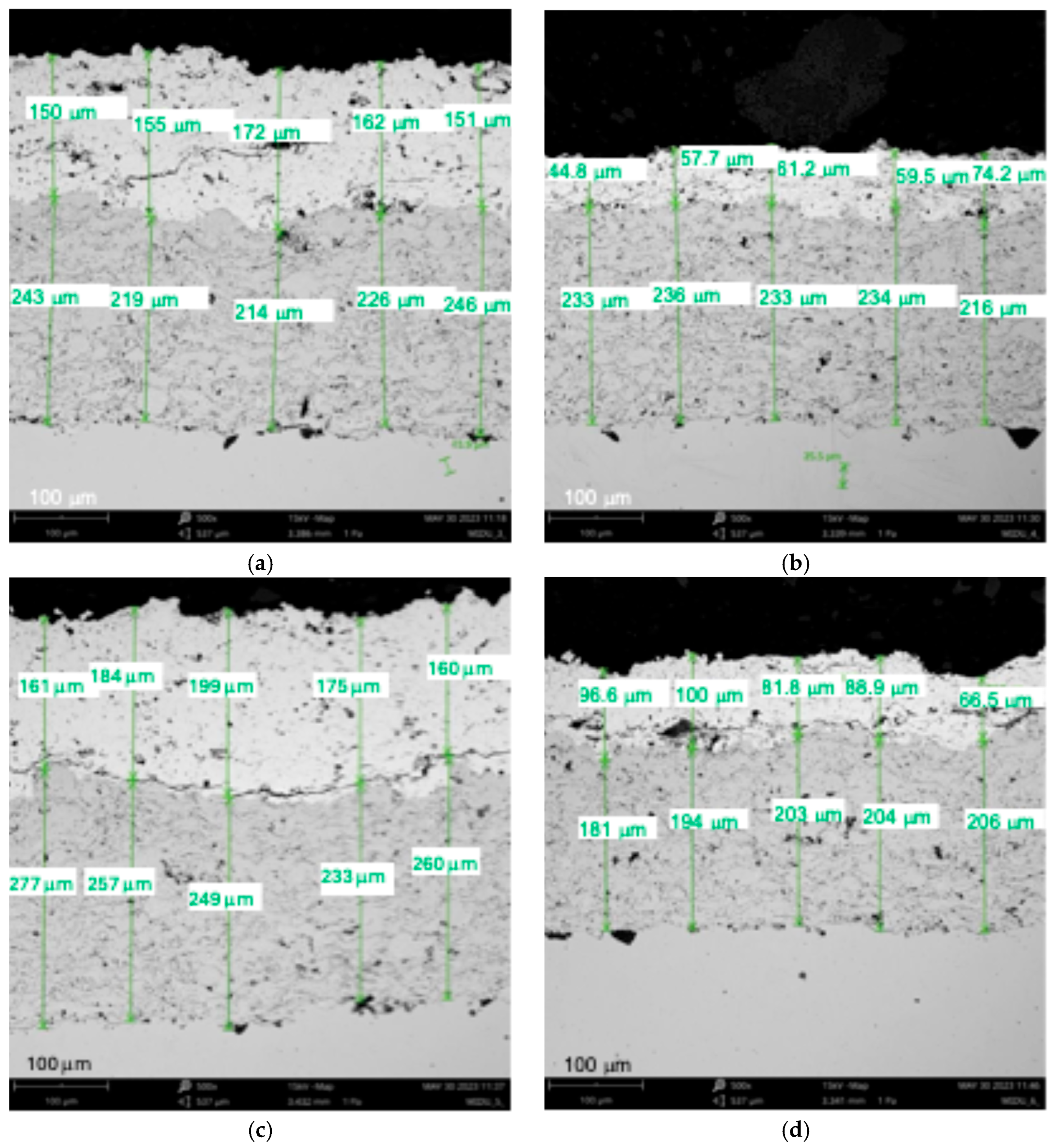
After the coatings were made, metallographic sections were prepared from each sample. Then, observations were made using a scanning electron microscope and the thickness of the coatings was measured. Photographs of the microstructures of samples 3–6, together with the thickness measurement results, are shown in Figure 3a–d.
Figure 3. Microstructure of a plasma-sprayed thermal barrier coating using an A60 torch with different spraying parameters for samples: (a) “3” (b) “4”, (c) “5”, (d) “6”.

3. Results

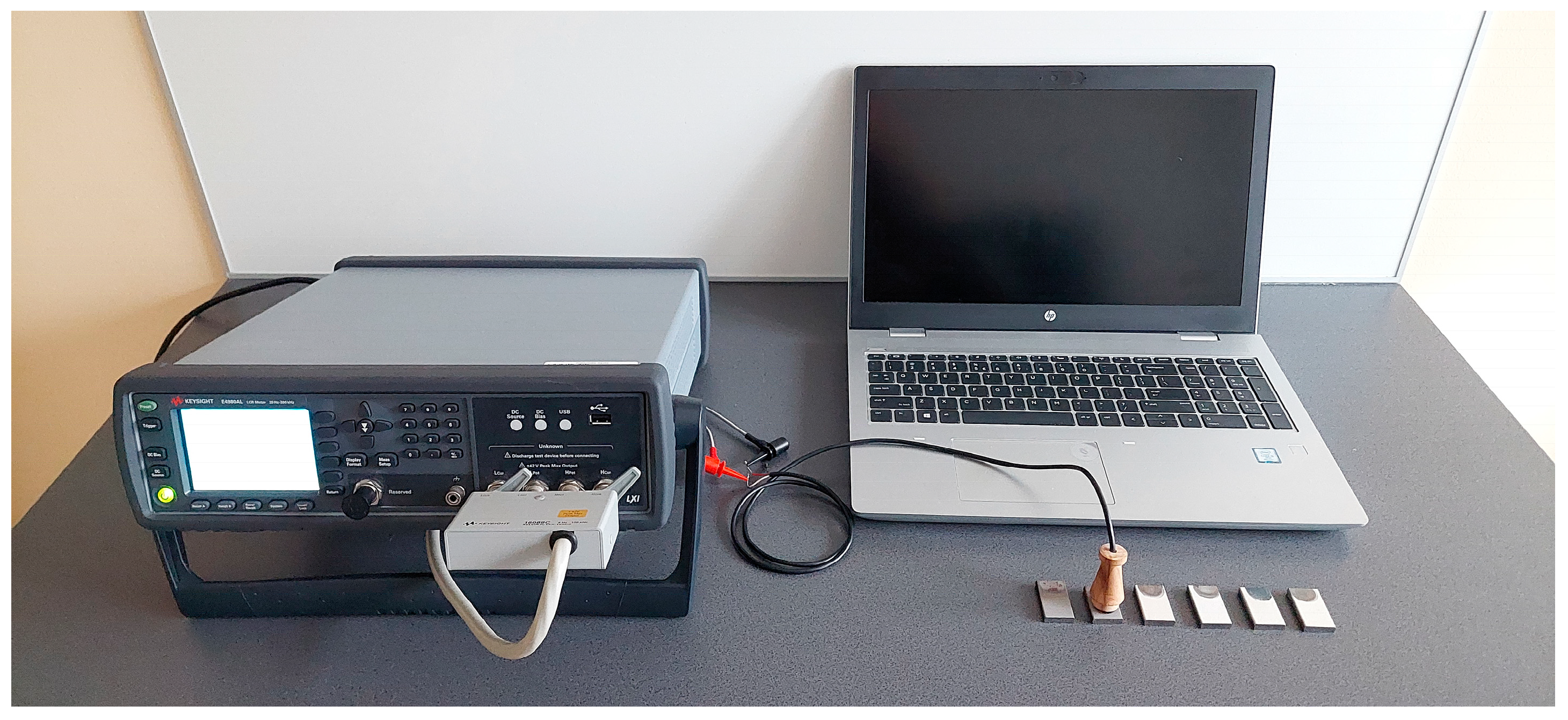
The experimental setup used for testing the prepared samples is shown in Figure 4. The measurement system consisted of an eddy current probe connected to a Keysight E4980A precision LCR meter and a personal computer. The measurement results were displayed on the computer using Keysight BenchVue 2024 software. The eddy current probe was powered by an alternating current with a frequency ranging from 500 Hz to 50 kHz. Impedance measurements were performed with an accuracy of +/− 0.05%.
Figure 4. The experimental setup.
Photographs of the coatings taken using a scanning electron microscope (Figure 2 and Figure 3) clearly show that the thickness of each layer varies significantly. For this reason, the arithmetic mean of the obtained measurements of the thickness of the outer layer and the bond coat was calculated. Microscopic thickness measurements were taken in the middle of the sample, halfway up its height. A total of 5 measurements were taken on each of the 3 cross-sections. The average thickness of both layers for each sample was determined in this way and presented in Table 4.
Table 4. The plasma spraying parameters of WC10Ni and TBCs.
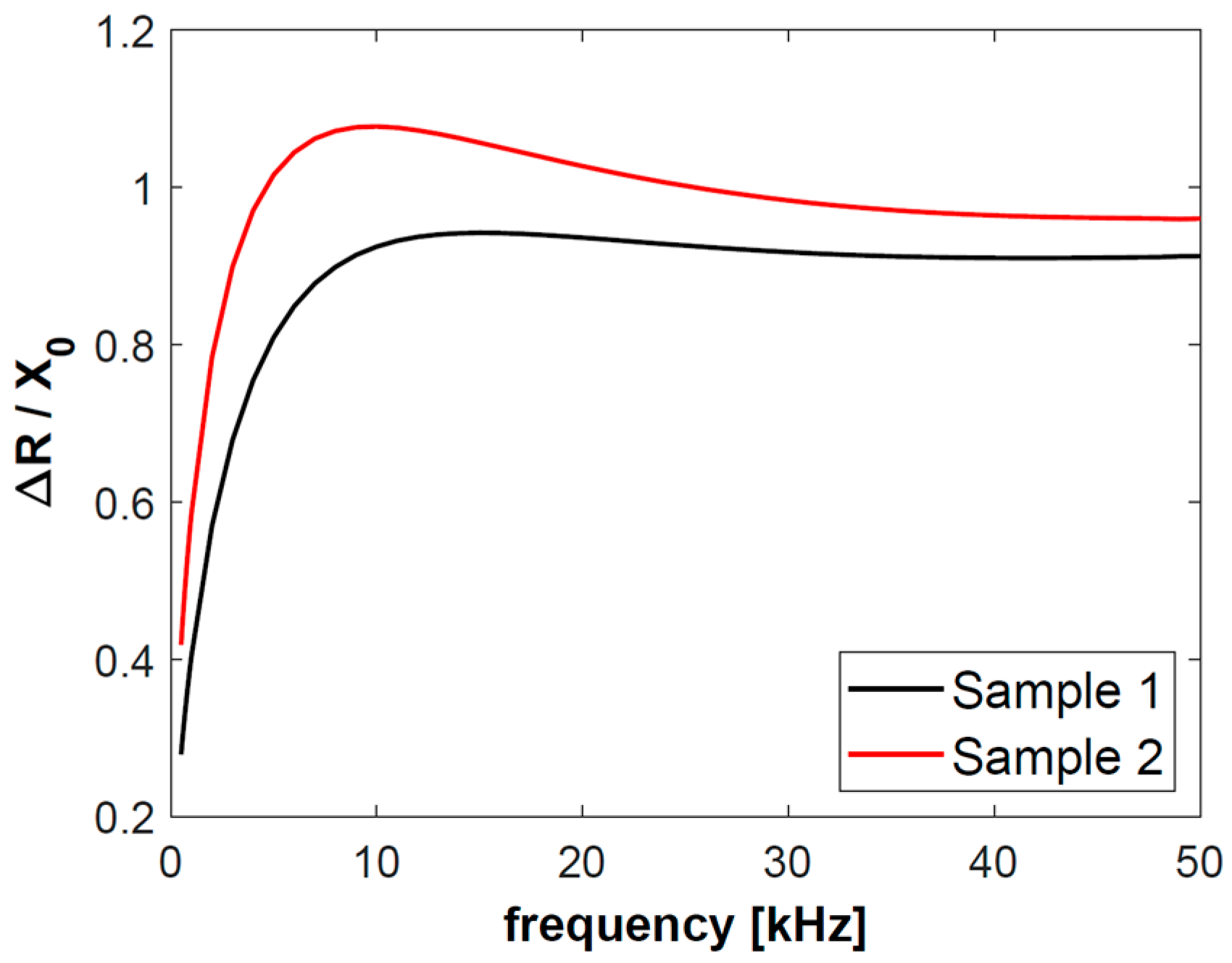
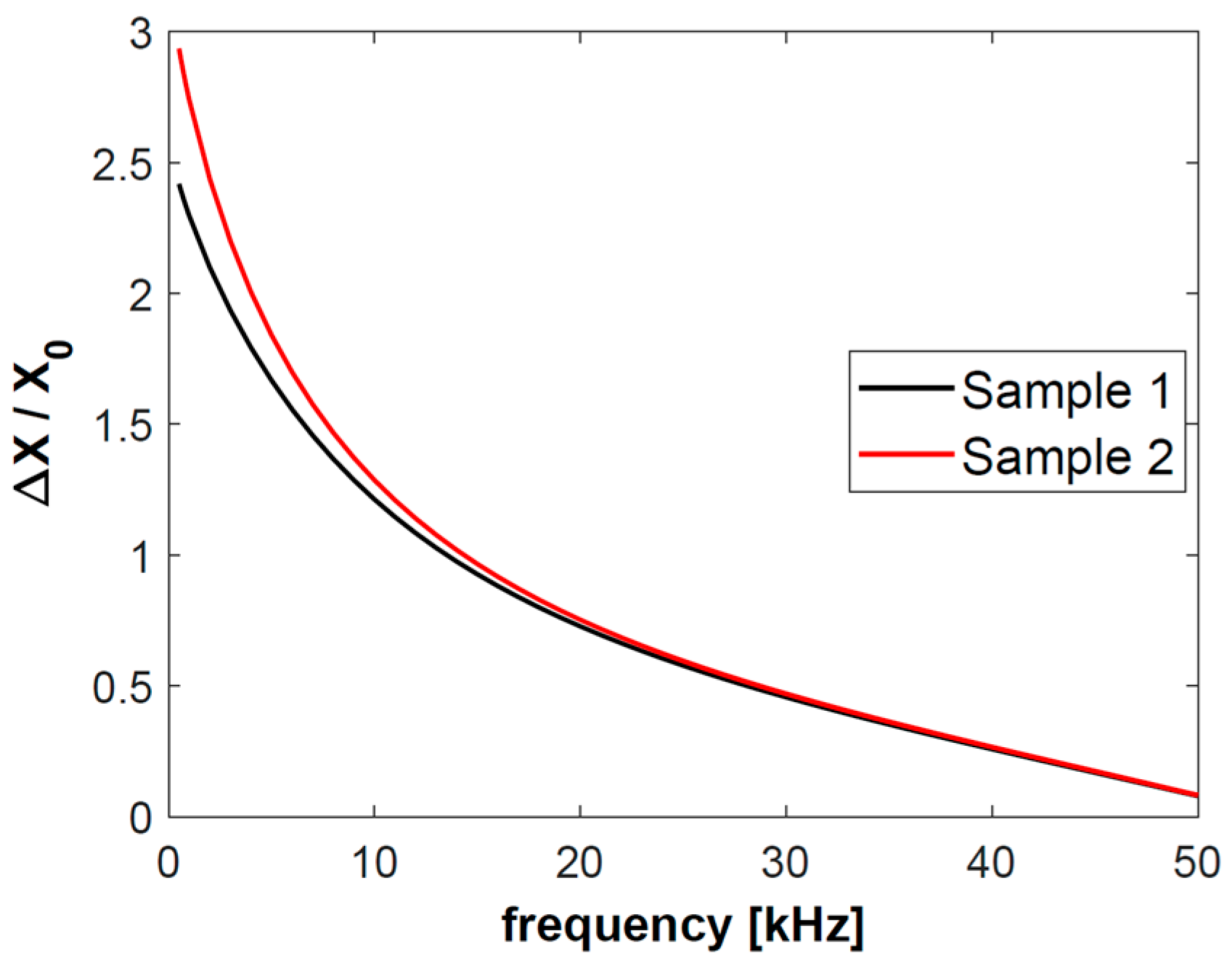
Next, measurements of the impedance components of the eddy current probe were performed for all samples. First, the resistance R0 and reactance X0 values of the probe placed in air were measured. In the next step, the probe was placed on the surface of the test sample and its resistance R and reactance X were measured. Changes in resistance ΔR = RR0 and changes in reactance ΔX = XX0 were normalized relative to X0. The results obtained for carbide coatings are shown in Figure 5 and Figure 6.
Figure 5. Normalized probe resistance changes obtained for carbide coatings.
Figure 6. Normalized changes in probe reactance obtained for carbide coatings.
In order to compare the impedance values obtained for the two samples, the relative resistance difference δR and the relative reactance difference δX were defined. The values of both coefficients were expressed as percentages. The highest values of these parameters obtained in the applied frequency range were named δRMAX and δXMAX.
The resistance R and reactance X values obtained for samples 1 and 2 are presented for several selected frequencies in Table 5.
Table 5. Values of impedance components and coefficients δR, δX obtained for samples 1–2.
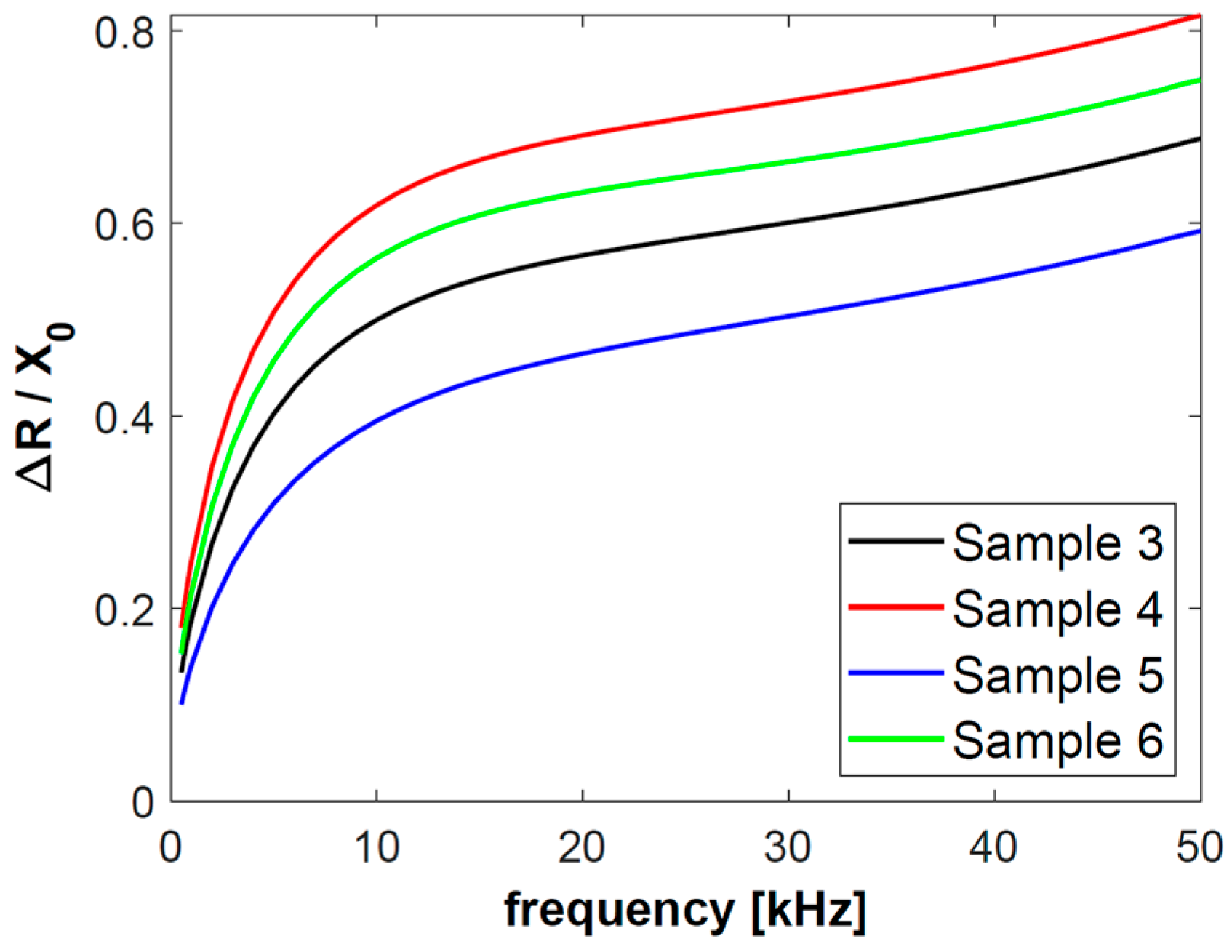
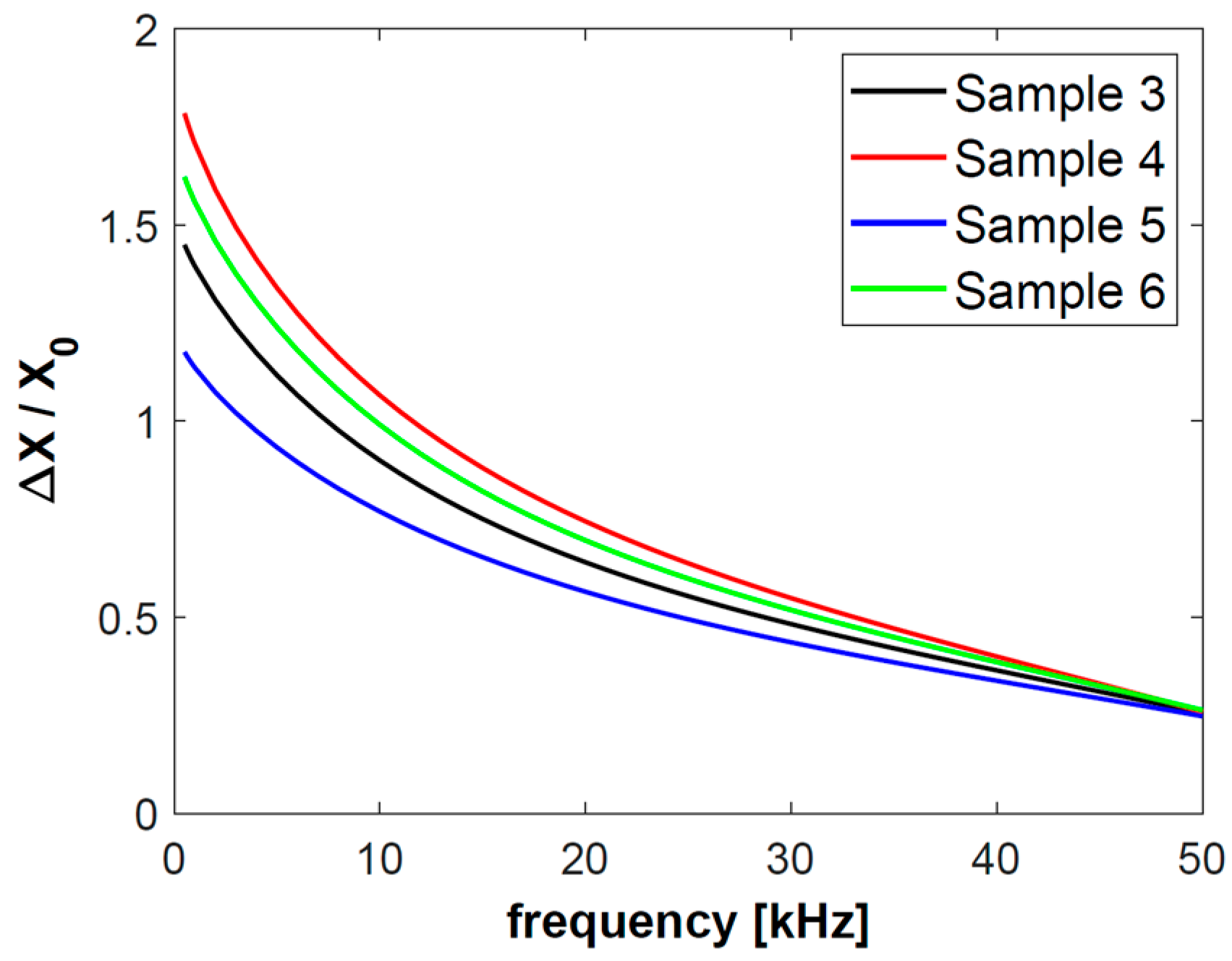
The normalized resistance changes measured for samples with TBCs, marked from 3 to 6, are shown in Figure 7, and the reactance changes in Figure 8. Next, for several selected frequencies, the numerical values of the impedance components obtained during the measurement of samples with TBCs are shown (Table 6).
Figure 7. Normalized probe resistance changes obtained for TBCs.
Figure 8. Normalized changes in probe reactance obtained for TBCs.
Table 6. Values of impedance components and coefficients δR, δX obtained for samples 3–5.
In order to determine the limitations of the proposed method, tests were conducted to examine the effect of the distance between the probe and the tested surface (lift-off) on the relative differences δR and δX. The measurements were performed using non-conductive pads under the core with a thickness ranging from 0.2 mm to 2 mm. Samples 1 and 2 with WC coatings were selected for testing. In the first step, resistance measurements were performed for an operating frequency of f = 3 kHz, for which the highest δR values of 23.2% were obtained. The results are presented in Table 7.
Table 7. Relative difference δR obtained for various lift-off values.
In the next step, measurements of the probe reactance X were performed. For this purpose, an operating frequency of f = 0.5 kHz was used, for which the relative reactance difference δX values were the highest and amounted to 15.13%. The measurement results are shown in Table 8.
Table 8. Relative difference δX obtained for various lift-off values.

4. Discussion

Increasing the Ar/H2 ratio from 8 NLPM (sample 1) to 17 NLPM (sample 2) resulted in an increase in the average thickness of the carbide coating by more than 9 μm (Table 4). The aim of the eddy current probe test was to check whether it was possible to detect this change, i.e., to distinguish between the two samples. The authors set the acceptable change in the probe impedance components at 5%, which corresponds to the standard approach used in tests of thin layers. Based on the results obtained (Table 5), it was found that an increase in the average thickness of the WC10Ni coating by more than 9 μm caused an increase in both the resistance and reactance of the probe across the entire tested frequency range f. The largest value of the resistance difference δRMAX was 23.2% (for f = 3 kHz), and the largest value of the reactance difference δXMAX was 15.1% (for f = 0.5 kHz). The initial value of the probe’s operating frequency range f = 0.5 kHz was also the local maximum of the δX parameter. This means that as the value of f decreased below 0.5 kHz, the value of the δX parameter also decreased. Such large values of resistance and reactance component differences obtained allow for unambiguous differentiation of the tested samples.
According to the authors, analyzing resistance changes is much more effective than analyzing reactance changes. The δRMAX coefficient takes on higher values than δXMAX, which means that in some studies, reactance changes are too small. Furthermore, the value of the δXMAX coefficient is highest when reactance values are lowest, i.e., at low frequencies. This relationship is caused by the significant influence of undesirable factors, which decreases as the reactance value increases. The influence of undesirable factors was partially eliminated by determining the normalized changes in impedance components ΔR/X0 and ΔX/X0. The results presented in Figure 6 show that the normalized changes in reactance are small, and for frequencies above 10 kHz they are negligible. Meanwhile, the difference in normalized resistance changes takes on much larger values, and for higher frequencies (35–50 kHz) remains more or less constant (Figure 5).
Samples with TBCs were made for different values of technological process parameters, including argon content, hydrogen content, and plasma torch current intensity. Based on the measurements, it was found that increasing the current intensity significantly increased the thickness of both the MCrAlY bond coat and the YSZ ceramic top coat. On the other hand, increasing the Ar to H2 ratio resulted in a slight increase in the thickness of the bond coat and a significant decrease in the thickness of the ceramic top coat. Too little hydrogen in the plasma resulted in a reduction in the energy of the stream, a reduction in the amount of molten powder particles, and, consequently, a decrease in the thickness of the top coat by more than half.
The purpose of further eddy current tests was to distinguish between samples with TBCs of different thicknesses and to correctly interpret the values of the probe impedance component obtained. The results of the layer thickness measurements are presented in numerical form in Table 4. It was found that in each case the maximum resistance difference values δRMAX were greater than the δXMAX values. The smallest values of these parameters (δRMAX > 9%, δXMAX > 6.2%) occurred when comparing the results of measurements of samples 6 and 4. On the other hand, these coefficients had the highest values when comparing samples 4 and 5 (δRMAX > 32%, δXMAX > 22%). The smallest values of resistance and reactance of the probe were obtained for sample 5, followed by increasingly larger values for samples 3, 6, and 4, respectively. This order is inversely proportional to the average thickness of the ceramic top coat. In the case of sample 5, the thickness of the top coat is the greatest (175.8 μm), so the distance between the lower edge of the probe and the surface of the bond coat is also the greatest. The smallest thickness of the top coat occurs in sample 4 (59.5 μm), for which the highest values of R and X were obtained. Thus, the thinner the top coat, the closer the probe is to the electrically conductive layer (bond coat), and therefore the higher the resistance and reactance values of the probe. This property makes it possible to distinguish between TBCs containing ceramic top coats of different thicknesses.
Analysis of the impact of lift-off distance on the relative differences δR and δX allowed us to observe important correlations and determine the limitations of the method used. The data presented in Table 7 and Table 8 show that lift-off has a very significant impact on the impedance components of the probe. In the case of resistance, an increase in lift-off by 1 mm resulted in a decrease in the value of R by 55% (sample 1) and 58% (sample 2), respectively. At the same time, the value of the δR parameter decreased from 23% to 16%, which still allows for a clear distinction between samples 1 and 2. Further increasing the lift-off distance allowed for the determination of the limit value of this parameter to be approximately 2 mm. The δR value obtained in this case slightly exceeds 6% and is greater than the acceptance threshold of 5% adopted by the authors. It is worth mentioning that the dynamics of δR changes increase with the increase in lift-off distance. This means that if the probe is very close to the tested coating, its removal has less impact on δR values than when the probe is placed at a large distance from the coating.
The effect of lift-off distance on the reactance X of the probe is only slightly less than that on resistance. Moving the probe 1 mm away from the coating surface resulted in a decrease in reactance of 49% (sample 1) and 50% (sample 2). Meanwhile, the value of the δX parameter decreased only from 15% to 12.5%, allowing for a clear distinction between the two samples. Only when the lift-off distance was increased to 2 mm did the value of the δX coefficient reach 6.43%, which is slightly more than the 5% value required by the authors. In the case of reactance, the influence of the lift-off distance on the measurement results was also smaller when the probe was close to the tested sample. Throughout the analyzed range of lift-off distance changes (from 0 mm to 2 mm), the decrease in the value of the δX parameter (from 15.13% to 6.43%) was smaller than in the case of the δR parameter (from 23.16% to 6.21%). This may be an important indication of which of these parameters should be used in relation to the distance of the probe from the tested material during the inspection.

5. Conclusions

In this work, the eddy current technique was used to test thin protective coatings applied to conductive materials. Measurements were performed on samples with a magnetic substrate coated with carbide (1–2) or TBC (3–6) coatings of varying thicknesses. The proposed method is based on a comparative analysis of the impedance values of the eddy current probe. The high sensitivity of the constructed probe, which is required in this type of inspection due to the small thickness of the coatings, was achieved by using a pot core, which significantly reduces magnetic flux leakage. The tests were carried out in the frequency range from 500 Hz to 50 kHz. In the case of carbide coatings differing in average thickness by only 9 μm, resistance values differing by more than 23% and reactance differences exceeding 15% were obtained. In the case of TBCs, the prepared samples differed primarily in the thickness of the ceramic top coat, with the smallest difference in the average thickness of this layer for the two compared samples being 9 μm. In all measurement configurations, differences in the probe impedance components exceeding the expected value of 5% were obtained. Thus, for both carbide and TBCs, the proposed method allows for the detection of changes in the thickness of thin layers.
Tests can be carried out as early as the coating application stage by comparing the probe impedance values with reference results. The second, extremely important application is the inspection of components subjected to long-term operation. Partial wear or damage to the coating causes it to cease to fulfill its function, which can result in failure or damage to the entire component. Inspection using the presented method allows even slight changes in coating thickness to be detected. At the same time, this method is much faster and cheaper than the tests carried out using a microscope. The small geometric dimensions of the probe mean that inspections can be carried out even in hard-to-reach places, usually without the need to dismantle the tested component.
Of particular significance in this study is the development of a novel measurement method capable of characterizing very thin coatings, with thicknesses of just a few micrometers. This was enabled by the design of a highly effective eddy current probe, featuring a single pot-core coil, which demonstrated high sensitivity in terms of precisely detecting impedance variations caused by differences in coating structure. The systematic analysis of the operational frequency and lift-off distance revealed their critical impact on inspection efficacy, allowing for the determination of optimal parameter ranges and the identification of operational limitations for the proposed technique when applied to different coating types like WC and YSZ/TBC.
In the future, further work is planned to improve the presented solution, aimed at developing a measuring scale that will allow for effective determination of the thickness of the tested layers and coatings.

Author Contributions

Conceptualization, G.T.; methodology, G.T., T.K. and M.G.; validation, G.T., T.K. and M.G.; formal analysis, B.F.; investigation, G.T.; resources, T.K. and M.G.; data curation, G.T., T.K. and M.G.; writing—original draft preparation, G.T., T.K. and M.G.; writing—review and editing, B.F. and Y.Y.; visualization, G.T., T.K. and M.G.; supervision, Y.Y.; project administration, G.T. and M.G. All authors have read and agreed to the published version of the manuscript.

Funding

This research received no external funding.

Institutional Review Board Statement

Not applicable.

Data Availability Statement

The data presented in this study are available on request from the corresponding author. The data are not publicly available due to privacy.

Conflicts of Interest

The authors declare no conflicts of interest.

References

  1. Kumar, M.; Ramachandran, C.S.; Sharma, V. Thermal spray coatings on high-temperature oxidation and corrosion applications—A comprehensive review. Surf. Interfaces 2024, 40, 103340. [Google Scholar]
  2. Savarimuthu, A.C.; Taber, H.F.; Megat, I.; Shadley, J.R.; Rybicki, E.F.; Cornell, W.C.; Emery, W.A.; Somerville, D.A.; Nuse, J.D. Sliding wear behavior of tungsten carbide thermal spray coatings for replacement of chromium electroplate in aircraft applications. J. Therm. Spray Technol. 2001, 10, 502–510. [Google Scholar] [CrossRef]
  3. Vaßen, R.; Bakan, E.; Mack, D.E.; Guillon, O. A perspective on thermally sprayed thermal barrier coatings: Current status and trends. J. Therm. Spray Technol. 2022, 31, 685–698. [Google Scholar] [CrossRef]
  4. Yuan, G.X.; Wang, S.H.; Geng, J.L. Plasma Sprayed Tungsten Carbide Coating; SAE Technical Paper, 840822; SAE International: Warrendale, PA, USA, 1984. [Google Scholar] [CrossRef]
  5. Li, X.; Zhang, Y.; Wang, J. Microstructure and tribological properties of plasma-sprayed WC–17Co coatings with different carbide grain size distribution. J. Therm. Spray Technol. 2024, 63, 1234–1245. [Google Scholar]
  6. Jude, S.A.A.; Winowlin Jappes, J.T.; Adamkhan, M. Thermal barrier coatings for high-temperature application on superalloy substrates—A review. Mater. Today Proc. 2022, 60, 1670–1675. [Google Scholar] [CrossRef]
  7. Vagge, S.T.; Ghogare, S. Thermal barrier coatings: Review. Mater. Today Proc. 2022, 56, 1201–1216. [Google Scholar] [CrossRef]
  8. Wei, Z.-Y.; Cai, H.-N.; Li, C.-J. Comprehensive dynamic failure mechanism of thermal barrier coatings based on a novel crack propagation and TGO growth coupling model. J. Therm. Spray Technol. 2018, in press. [Google Scholar] [CrossRef]
  9. Shi, J.; Zhang, T.; Sun, B.; Wang, B.; Zhang, X.; Song, L. Isothermal oxidation and TGO growth behavior of NiCoCrAlY-YSZ thermal barrier coatings on a Ni-based superalloy. J. Alloys Compd. 2020, 844, 156093. [Google Scholar] [CrossRef]
  10. Doleker, K.M.; Ozgurluk, Y.; Karaoglanli, A.C. TGO growth and kinetic study of single and double layered TBC systems. Surf. Coat. Technol. 2021, 415, 127135. [Google Scholar] [CrossRef]
  11. Hejran, E.; Sebold, D.; Nowak, W.J.; Mauer, G.; Naumenko, D.; Vaßen, R.; Quadakkers, W.J. Isothermal and cyclic oxidation behavior of free-standing MCrAlY coatings manufactured by high-velocity atmospheric plasma spraying. Surf. Coat. Technol. 2017, 313, 191–201. [Google Scholar] [CrossRef]
  12. Swadźba, R.; Hetmańczyk, M.; Sozańska, M.; Witala, B.; Swadźba, L. Structure and cyclic oxidation resistance of Pt, Pt/Pd-modified and simple aluminide coatings on CMSX-4 superalloy. Surf. Coat. Technol. 2011, 206, 1538–1544. [Google Scholar] [CrossRef]
  13. Tahir, M.; Qasim, M.; Ahmed, N.; Satti, A.N.; Malik, A.E.; Khan, Z.S.; Anwar, M. Impact of atmospheric plasma spraying parameters on microstructure, mechanical properties and thermal cycling performance of YSZ coatings. Ceram. Int. 2024, 50, 53976–53986. [Google Scholar] [CrossRef]
  14. Swadźba, R.; Wiedermann, J.; Swadźba, L.; Hetmańczyk, M.; Witala, B.; Schulz, U.; Jung, T. High temperature oxidation of EB-PVD TBCs on Pt-diffused single crystal Ni superalloy. Surf. Coat. Technol. 2014, 260, 2–8. [Google Scholar] [CrossRef]
  15. Pędrak, P.; Dychtoń, K.; Drajewicz, M.; Góral, M. Synthesis of Gd2Zr2O7 coatings using the novel reactive PS-PVD process. Coatings 2021, 11, 1208. [Google Scholar] [CrossRef]
  16. Smith, J.; Kumar, A. Porosity and its significance in plasma-sprayed coatings. Surf. Coat. Technol. 2020, 385, 125412. [Google Scholar]
  17. Guo, W.; Zhao, Y.; Qiao, L.; Deng, K.; Yang, Y.; Chen, X.; Xie, S. High precision thickness evaluation of thermal barrier coating with high frequency eddy current testing method. NDT E Int. 2023, 132, 102963. [Google Scholar] [CrossRef]
  18. Sun, L.; Lin, L.; Lei, M. Ultrasonic characterization of elastic constants of plasma sprayed Al2O3 coatings based on simulated annealing algorithm. NDT E Int. 2022, 123, 102584. [Google Scholar] [CrossRef]
  19. Yang, Y.; He, C.; Wu, B. Non-destructive microwave evaluation of plasma sprayed TBCs porosity. NDT E Int. 2013, 58, 102–108. [Google Scholar] [CrossRef]
  20. Cernuschi, F.; Bison, P. Thirty Years of Thermal Barrier Coatings (TBC), Photothermal and Thermographic Techniques: Best Practices and Lessons Learned. J. Therm. Spray Technol. 2022, 31, 716–744. [Google Scholar] [CrossRef]
  21. Yang, X.; Luo, Y.; Kyrgiazoglou, A.; Zhou, X.; Theodoulidis, T.; Tytko, G. Impedance variation of a reflection probe near the edge of a magnetic metal plate. IEEE Sens. J. 2023, 23, 15479–15488. [Google Scholar] [CrossRef]
  22. Ai, J.; Zhou, Q.; Zhang, X.; Li, S.; Long, B.; Bai, L. Improving magnetic field response of eddy current magneto-optical imaging for defect detection in carbon fiber reinforced polymers. Appl. Sci. 2023, 13, 4541. [Google Scholar] [CrossRef]
  23. Li, C.; Guo, Z.; Zhen, M.; Liu, L.; Xu, A.; Xue, W.; Gao, L.; Xiong, J. A non-contact rotational speed sensor for bearing cages in a high-temperature and high-speed environment. IEEE Sens. J. 2024, 24, 22773–22780. [Google Scholar] [CrossRef]
  24. Tytko, G.; Dziczkowski, L. An analytical model of an I-cored coil located above a conductive material with a hole. Eur. Phys. J. Appl. Phys. 2018, 82, 21001. [Google Scholar] [CrossRef]
  25. Cabral-Miramontes, J.; Gaona-Tiburcio, C.; Maldonado-Bandala, E.; Vera Cervantes, D.; Nieves-Mendoza, D.; Mendez-Ramirez, C.T.; Lara-Banda, M.; Baltazar-Zamora, M.A.; Olguin-Coca, J.; Almeraya-Calderon, F. Comparative method between eddy current and optical microscopy in the determination of thickness of 6063 aluminum alloy anodization. Appl. Sci. 2025, 15, 9025. [Google Scholar] [CrossRef]
  26. Zhang, S. An analytical model of a new T-cored coil used for eddy current nondestructive evaluation. Appl. Comput. Electromagn. Soc. J. 2020, 35, 1099–1104. [Google Scholar] [CrossRef]
  27. Zhang, S. Modeling of a novel T-core sensor with an air gap for applications in eddy current nondestructive evaluation. Sensors 2024, 24, 7931. [Google Scholar] [CrossRef]
  28. Syasko, M.; Solomenchuk, P.; Soloviev, I.; Ampilova, N. A technique for multi-parameter signal processing of an eddy-current probe for measuring the thickness of non-conductive coatings on non-magnetic electrically conductive base metals. Appl. Sci. 2023, 13, 5144. [Google Scholar] [CrossRef]
  29. Frankowski, P.K.; Majzner, P.; Mąka, M.; Stawicki, T. Non-destructive evaluation of reinforced concrete structures with magnetic flux leakage and eddy current methods—Comparative analysis. Appl. Sci. 2024, 14, 11965. [Google Scholar] [CrossRef]
  30. Meng, B.; Zhuang, Z.; Ma, J.; Zhao, S. Research on the detection method for feeding metallic foreign objects in coal mine crushers based on reflective pulsed eddy current testing. Appl. Sci. 2024, 14, 11704. [Google Scholar] [CrossRef]
  31. Zhang, S.; Cao, S.; Wang, M. Research and analysis of carbon fiber-reinforced polymer prepreg detection based on electromagnetic coil sensors. Appl. Sci. 2024, 14, 10807. [Google Scholar] [CrossRef]
  32. Zhou, Y.; Ye, B.; Cao, H.; Zou, Y.; Zhu, Z.; Xing, H. High-sensitivity detection of carbon fiber-reinforced polymer delamination using a novel eddy current probe. Appl. Sci. 2024, 14, 3765. [Google Scholar] [CrossRef]
  33. Gorbunov, A.; Syasko, V.; Solomenchuk, P.; Umanskii, A. Methods and means of eddy current testing of soldered lap joints of electrical machines. Appl. Sci. 2025, 15, 2036. [Google Scholar] [CrossRef]
  34. Liu, Y.; Zhang, Z.; Yin, W. A novel conductivity classification technique for nonmagnetic metal immune to tilt variations using eddy current testing. IEEE Access 2021, 9, 135334. [Google Scholar] [CrossRef]
  35. Ma, H.; Wang, D.; Zhang, Z.; Yin, W.; Chen, H.; Zhou, G. A simple conductivity measurement method using a peak-frequency feature of ferrite-cored eddy current sensor. NDT E Int. 2024, 142, 103024. [Google Scholar] [CrossRef]
  36. Deng, Z.; Wang, Y.; Shi, Q.; Guo, J. 2-D analytical model of sinusoidal eddy current field based on permeability distortion. IEEE Sens. J. 2024, 24, 14392–14403. [Google Scholar] [CrossRef]
  37. Li, Y.; Xiao, Q.; Peng, L.; Huang, S.; Ye, C. A precise oxide film thickness measurement method based on swept frequency and transmission cable impedance correction. Sensors 2025, 25, 579. [Google Scholar] [CrossRef]
  38. Tytko, G.; Adamczyk-Habrajska, M.; Li, Y.; Pengpeng, S.; Kopec, M. Eddy current method in non-magnetic aluminide coating thickness assessment. J. Nondestruct. Eval. 2025, 44, 65. [Google Scholar] [CrossRef]
  39. Zhao, G.; Huang, Y.; Zhang, W. Advances in high-precision displacement and thickness measurement based on eddy current sensors: A review. Measurement 2025, 243, 116410. [Google Scholar] [CrossRef]
  40. Feng, B.; Xie, S.; Xie, L.; Deng, K.; Wang, S.; Kang, Y. Analysis of the lift-off effect in motion-induced eddy current testing based on semi-analytical model. IEEE Trans. Instrum. Meas. 2023, 73, 6002008. [Google Scholar] [CrossRef]
  41. Tytko, G.; Dziczkowski, L. Calculation of the impedance of an E-cored coil placed above a conductive material with a surface hole. Meas. Sci. Rev. 2019, 19, 43–47. [Google Scholar] [CrossRef]
  42. Kubaszek, T.; Góral, M.; Słyś, A.; Szczęch, D.; Gancarczyk, K.; Drajewicz, M. The influence of HV-APS process parameters on microstructure and erosion resistance of metalloceramic WC-CrC-Ni coatings. Ceram. Int. 2023, 49, 18007–18013. [Google Scholar] [CrossRef]
  43. Kubaszek, T.; Góral, M.; Pędrak, P. Influence of air plasma spraying process parameters on the thermal barrier coating deposited with micro- and nanopowders. Mater. Sci.-Pol. 2022, 40, 80–92. [Google Scholar] [CrossRef]
Disclaimer/Publisher’s Note: The statements, opinions and data contained in all publications are solely those of the individual author(s) and contributor(s) and not of MDPI and/or the editor(s). MDPI and/or the editor(s) disclaim responsibility for any injury to people or property resulting from any ideas, methods, instructions or products referred to in the content.

Article Metrics

Citations

Article Access Statistics

Multiple requests from the same IP address are counted as one view.