Article

Occupational Postural Hazards in Digital Construction Management: An Integrated Ergonomic Assessment with Human Factors Engineering and Digital Human Modelling

1
Department of Civil and Environmental Engineering, College of Engineering, King Faisal University, Al Ahsa 31982, Saudi Arabia
2
NUST Institute of Civil Engineering (NICE), School of Civil and Environmental Engineering (SCEE), National University of Sciences and Technology (NUST), Sector H-12, Islamabad 44000, Pakistan
3
School of Architecture and Environment, University of the West of England, Coldharbour Lane, Bristol BS16 1QY, UK
4
Department of Civil, Structural and Environmental Engineering, Munster Technological University, Bishopstown, T12 P928 Cork, Ireland
*
Authors to whom correspondence should be addressed.
Appl. Sci. 2025, 15(23), 12840; https://doi.org/10.3390/app152312840
Submission received: 21 October 2025 / Revised: 20 November 2025 / Accepted: 21 November 2025 / Published: 4 December 2025
(This article belongs to the Section Civil Engineering)

Abstract

The increasing adoption of Digital Construction Management (DCM) has introduced new ergonomic risks for construction professionals who now spend extended hours on computers in dynamic and often suboptimal work environments. While existing ergonomic research in construction has documented musculoskeletal disorders among both manual workers and office-based personnel, these studies have significant limitations: they primarily rely on subjective assessment methods (questionnaires and surveys) without validated ergonomic tools, and lack biomechanical validation of observational findings. This study addresses this critical gap by integrating Rapid Upper Limb Assessment (RULA), Rapid Entire Body Assessment (REBA), and Digital Human Modeling (DHM) within a Six Sigma Define, Measure, Analyze, Improve, Control (DMAIC) framework to evaluate and mitigate musculoskeletal risks among construction professionals. A sample of 160 participants across 5 construction firms was observed and assessed through ergonomic scoring, biomechanical stress modeling using HumanCAD®, and follow-up interventions. The results revealed that 87.5% of participants reported musculoskeletal symptoms, with neck and back being the most affected regions. Post-intervention evaluations showed significant reductions in ergonomic risk scores (RULA: 34%, REBA: 33.3%) and symptom prevalence (up to 46% reduction in neck discomfort). This study provides a validated, scalable framework for ergonomic risk management in digital construction roles and offers actionable design and policy recommendations to enhance occupational health and productivity.

1. Introduction

Digital Construction Management (DCM) represents a paradigm shift in how construction projects are planned, executed, and monitored, using digital technologies to enhance efficiency and communication across project lifecycles [1,2]. Project managers, site engineers, planners, and other professionals now heavily rely on computers to manage critical tasks such as scheduling, progress reporting, design coordination, and Building Information Modeling (BIM) activities [3,4,5]. The integration of laptops into construction management practices, especially on-site in temporary offices or mobile workstations, has enhanced operational efficiency but has simultaneously introduced new occupational health concerns [6,7]. In dynamic environments, prolonged laptop use exposes users to awkward postures and repetitive stresses that contribute significantly to the development of Musculoskeletal Disorders (MSDs) including neck, shoulder, back, wrist, and finger pain, ultimately reducing productivity and increasing the risk of long-term disability [8].
According to the World Health Organization (2019), MSDs affect 1.71 billion people globally and are the leading contributor to disability worldwide, accounting for 149 million disability-adjusted life years. The International Labour Organization (2019) reports that work-related MSDs constitute approximately 59% of all occupational diseases globally, with direct and indirect costs estimated at $45–54 billion annually in the United States alone. In the construction sector specifically, the U.S. Bureau of Labor Statistics (2022) indicates that MSDs account for 31% of all nonfatal occupational injuries and illnesses, while European Agency for Safety and Health at Work (EU-OSHA, 2020) data shows that construction workers are 2.5 times more likely to develop work-related MSDs compared to workers in other industries. It is well-documented that MSDs represent 27.5% of nonfatal injuries in U.S. construction workplaces (Vijayakumar and Choi, 2022), and 59% occupational diseases are linked with MSDs (Chander, D.S.; Cavatorta, 2017). As construction workflows become increasingly digitized, it is imperative to recognize and address the ergonomic risks embedded within these emerging modes of operation [9,10].
Musculoskeletal Disorders represent a group of conditions that impair the muscles, bones, tendons, ligaments, and nerves, often resulting from chronic exposure to physical stresses such as static postures, repetitive motions, and forceful exertions [11,12]. Within the context of digital construction management, prolonged use of laptops without appropriate ergonomic accommodations results in sustained non-neutral postures, forward head tilt, hunched thorax, wrist flexion, and unsupported lower back, amplifying biomechanical stress across critical body regions [13,14].
To systematically identify and mitigate these risks, ergonomic assessment tools like the Rapid Upper Limb Assessment (RULA) and the Rapid Entire Body Assessment (REBA) are widely used [15]. RULA focuses on the upper extremities including arms, wrists, and neck, while REBA provides a more holistic evaluation covering the entire body [16]. Research using RULA, REBA, and surveys often centers on office environments and overlooks the unique ergonomic challenges faced by laptop users in transient construction settings. However, very few studies validate observational assessments through digital human modeling, leaving a significant gap in quantitative, simulation-based ergonomic analysis tailored to construction workflows. Complementing these observational tools, Digital Human Modeling (DHM) software such as HumanCAD® (V6) enables precise simulation of biomechanical stress under various postural configurations, offering a quantitative validation of ergonomic assessments [17]. Structured problem-solving approaches like the DMAIC methodology from Six Sigma are further employed to define, measure, analyze, improve, and control processes for continuous ergonomic optimization [18,19].
Existing research on ergonomics in construction has primarily focused on manual tasks performed by tradespeople, with limited attention to the growing population of professionals managing projects through digital interfaces [20,21]. Several notable studies have documented concerning trends regarding musculoskeletal health among construction management professionals, indicating higher rates of neck and shoulder pain among construction professionals who regularly use computers compared to field workers [22]. Moreover, significant associations between computer use and musculoskeletal symptoms among construction management personnel are highlighted [23]. Research has also established that the adoption of digital tools in construction has led to more sedentary work patterns among project managers [24], with correlations between increased BIM usage and reports of work-related musculoskeletal disorders [25].
The scope of ergonomic challenges in digital construction management extends across various professional roles and contexts, with evidence showing that job demands and workplace stress among construction managers are associated with increased prevalence of musculoskeletal disorders [26]. Studies have demonstrated the effectiveness of office ergonomics interventions in construction [27], while highlighting the disconnect between advancing construction technologies and corresponding workplace health [28]. While existing research establishes the presence of ergonomic issues in digital construction management, it typically relies on subjective assessment methods without employing validated ergonomic assessment tools, biomechanical analysis, and structured improvement methodologies, representing significant gaps that this research aims to address.
This research addresses these gaps by developing a hybrid framework that integrates RULA, REBA, and HumanCAD® simulations within a structured DMAIC methodology. Unlike prior studies confined to static office environments, it focuses on dynamic construction site conditions and proposes practical workstation improvements. By offering a validated, scalable approach, this study advances ergonomic sustainability in digital construction management, promoting healthier and more productive work environments.

2. Practical Implications and Contributions

This study provides significant practical contributions to the construction industry by offering the first validated, construction-specific ergonomic framework that addresses the unique challenges of digital construction management across variable work environments. The developed intervention protocols demonstrated 34% risk reduction, providing construction firms with actionable strategies that can be immediately implemented with break-even periods of 3.2–5.7 months. The construction-specific ergonomic guidelines fill critical gaps in existing standards by accommodating the mobile nature of construction work, temporary facilities, and environmental constraints unique to the industry. The integration of the DMAIC methodology provides a systematic, repeatable approach that construction organizations can adapt to their specific contexts, while biomechanical validation offers quantitative evidence for intervention effectiveness. These contributions extend beyond immediate health benefits to support workforce sustainability, skill retention, and productivity enhancement as the construction industry continues its digital transformation, establishing ergonomics as an integral component of construction technology implementation rather than an afterthought.

3. Methodology

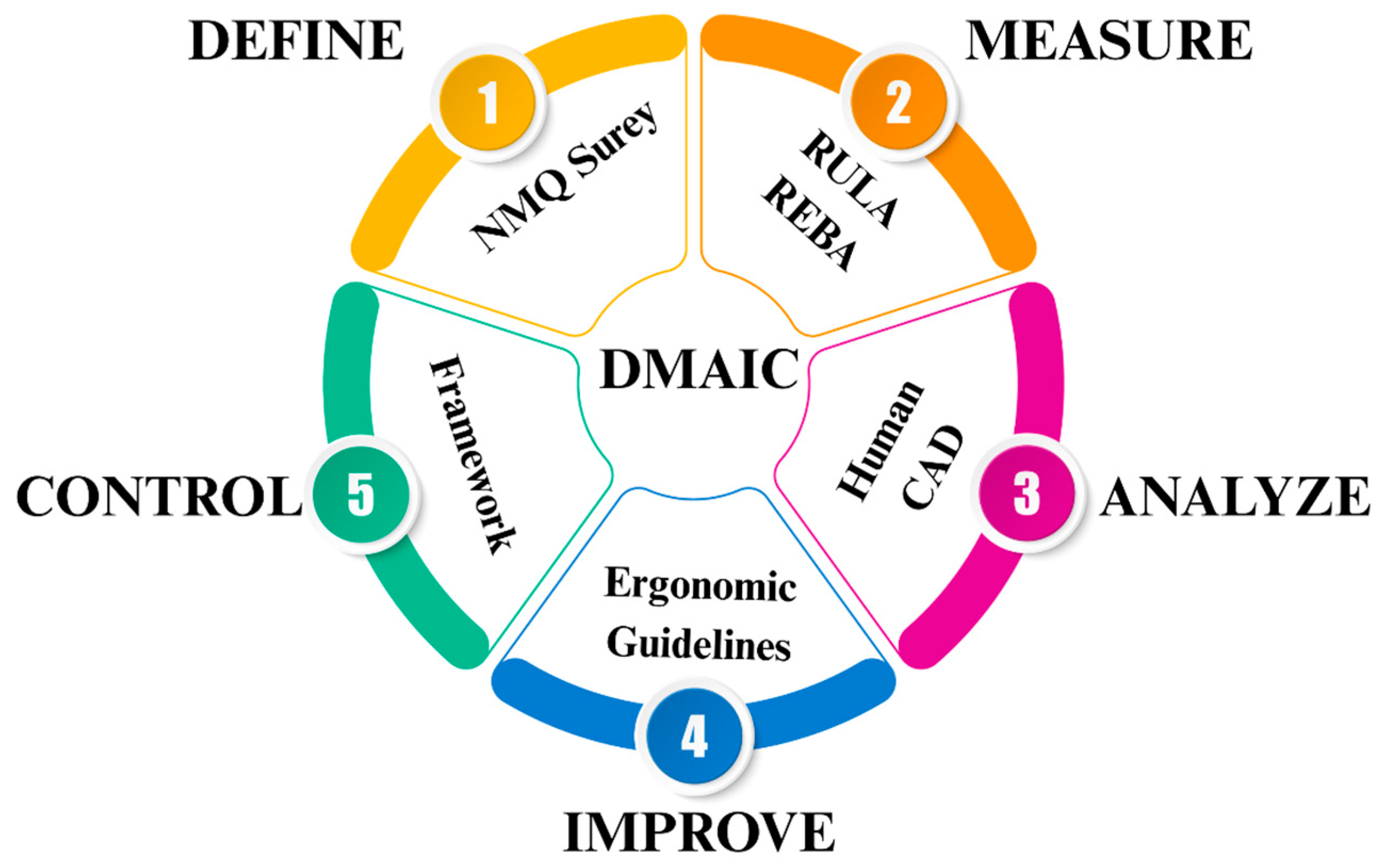
This research employed a comprehensive methodological approach integrating ergonomic assessment tools with biomechanical analysis and process improvement techniques to evaluate and address postural hazards in digital construction management contexts. The methodology followed a systematic framework based on the Define, Measure, Analyze, Improve, Control (DMAIC) approach, as illustrated in Figure 1, which provides structured progression from problem identification through solution implementation and validation.
The use of the DMAIC (Define, Measure, Analyze, Improve, Control) methodology, integrated with ergonomic tools such as RULA, REBA, and Digital Human Modeling (DHM), offers a systematic and evidence-based approach to identifying and mitigating ergonomic risks in industrial settings. This combination has been proven effective in diverse sectors, from automotive to manufacturing, for diagnosing postural risks and implementing corrective interventions [29,30]. Studies have validated that such integration not only enhances ergonomic assessment accuracy but also enables simulation-based redesigns that reduce musculoskeletal disorder (MSD) risks significantly [31,32,33]. This methodology’s structured nature and proven track record across industries affirm its robustness and relevance for ergonomic problem-solving.

3.1. Research Design and Population

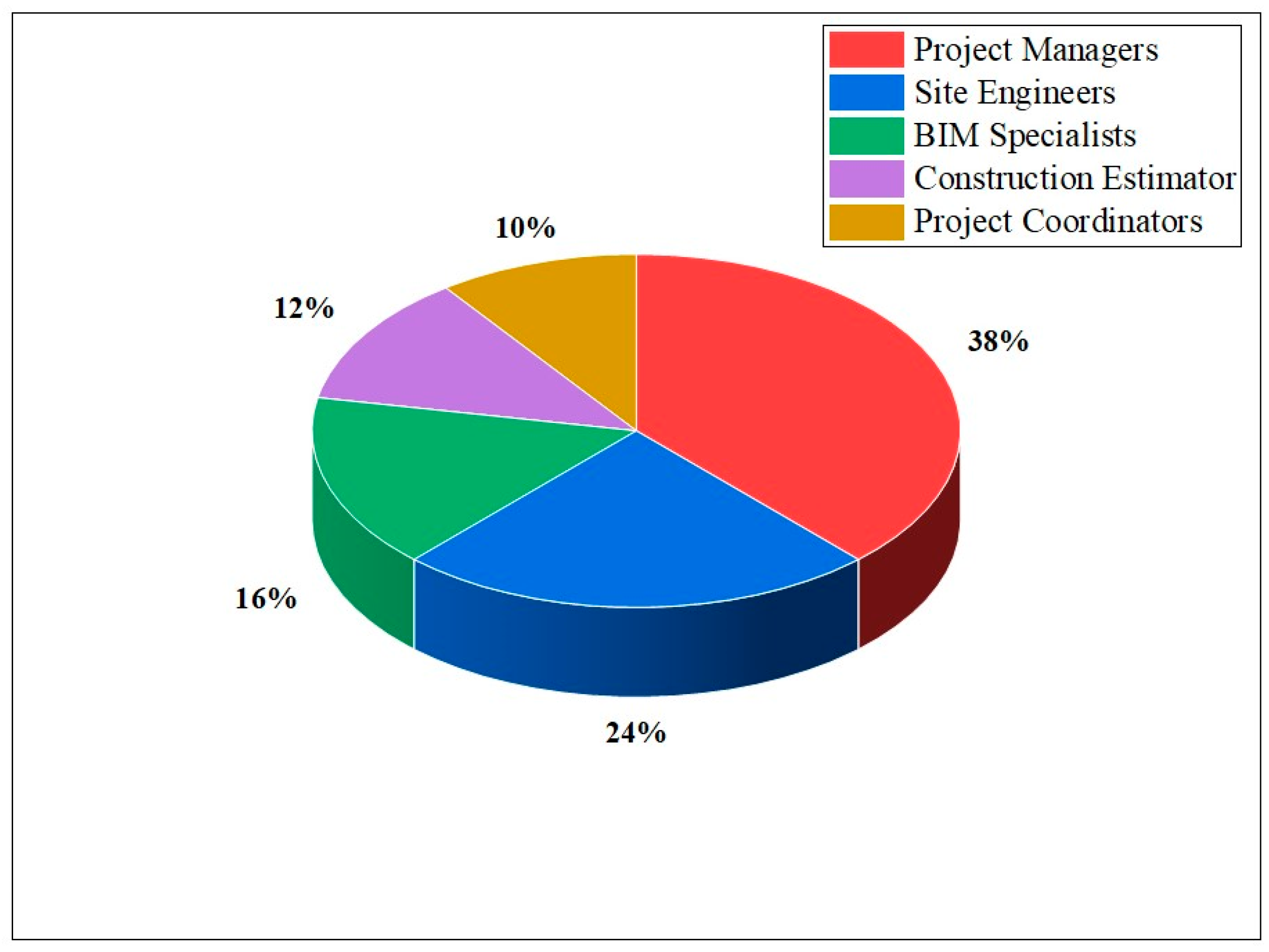
This study utilized a mixed-methods approach combining quantitative ergonomic assessments with qualitative observations to comprehensively capture the physical impacts of digital construction management activities. The target population consisted of construction management professionals who regularly use laptop computers and other digital devices to perform their work functions. Participants were involved from five construction firms of varying sizes in urban settings, representing diverse project types including commercial, residential, and infrastructure development. Selection criteria required participants to spend at least 60% of their working hours engaged with digital interfaces (mean daily usage: 6.8 ± 1.4 h) and have a minimum of one year of experience in their current role. A total of 160 participants were included in this study, comprising project managers (38%), site engineers (24%), BIM specialists (16%), construction estimators (12%), and project coordinators (10%), as summarized in Figure 2. Demographics include 72% male and 28% female participants, with ages ranging from 24 to 58 years (mean age 37.6 years).

3.2. Data Collection Procedures

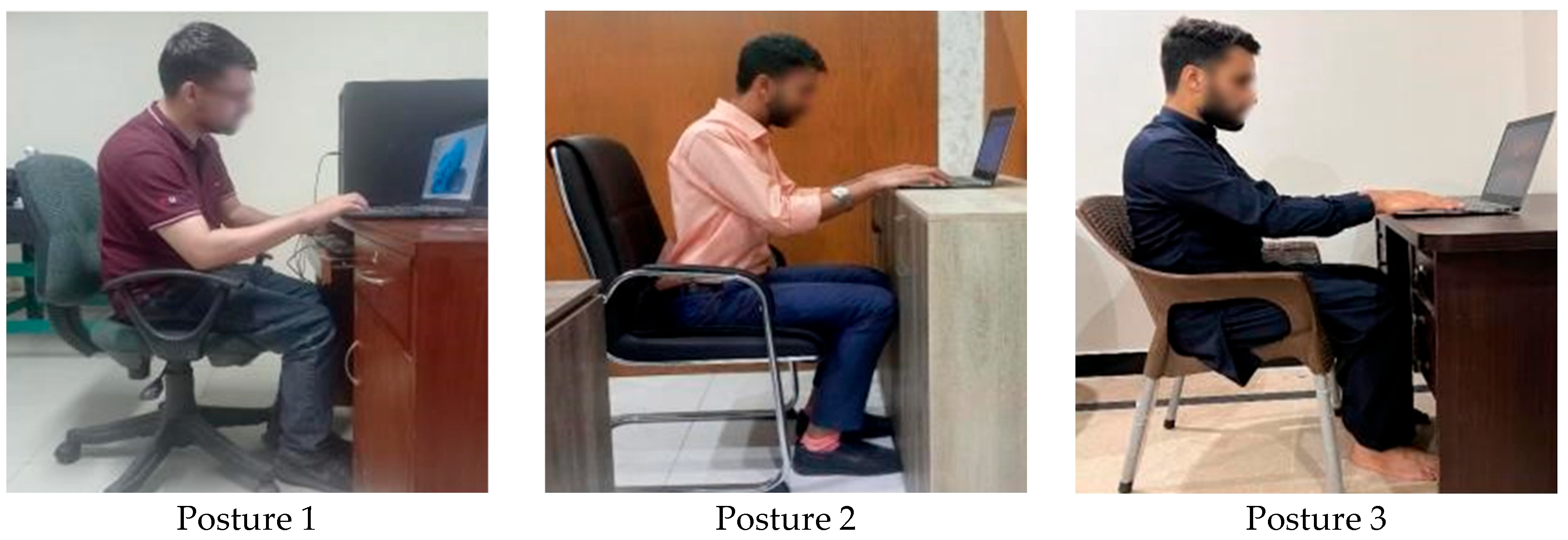
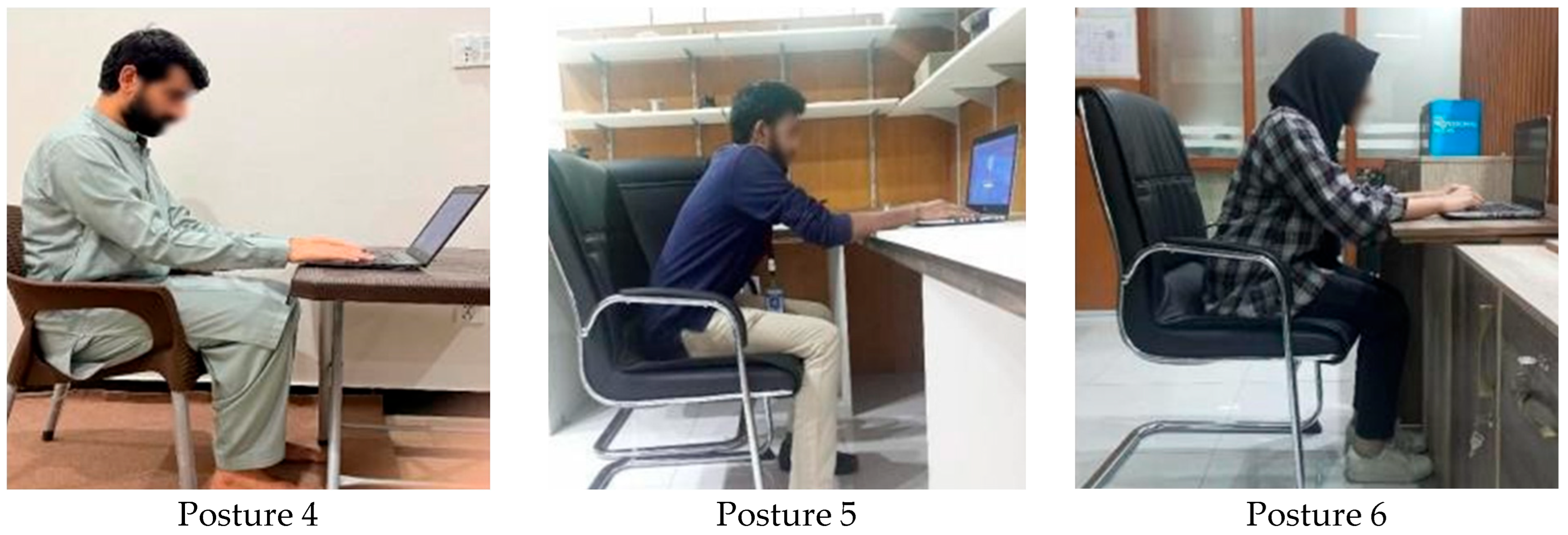
The data collection process was conducted across multiple environments where construction management professionals typically work, including permanent offices, temporary site facilities, and field locations. Each participant was observed during regular working activities for three sessions of 45 min each, scheduled to capture different times of day and work contexts. Video recordings of work postures were obtained with participant consent, supplemented by still photographs for posture assessment purposes, as shown in Figure 3. The Nordic Musculoskeletal Questionnaire (NMQ) was administered to all participants to establish baseline prevalence of musculoskeletal symptoms and their distribution across body regions. Environmental factors including workspace dimensions, furniture configuration, lighting conditions, and ambient noise levels were documented for each observation session to provide contextual data for analysis. Digital device usage patterns were tracked through a purpose-designed activity log where participants recorded task types, duration, and transition frequency between different digital interfaces.

3.3. Ergonomic Assessment Methods

3.3.1. Rapid Upper Limb Assessment (RULA)

RULA evaluations were conducted for each participant based on video analysis of their most common working postures. This method specifically assesses upper body posture risk factors by assigning numerical scores to arm, wrist, neck, and trunk positions [34]. The scoring system categorizes risk levels from 1 (negligible risk) to 7 (very high risk requiring immediate intervention). Three trained ergonomists independently evaluated each participant’s postures, with final scores determined by consensus to ensure reliability. Particular attention was given to neck flexion angles and wrist deviation during keyboard and mouse usage, as these represent high-risk factors identified in preliminary observations. RULA assessments were categorized by work location and task type to enable comparative analysis across different construction management contexts.

3.3.2. Rapid Entire Body Assessment (REBA)

REBA evaluations complemented RULA by providing comprehensive assessment of full-body posture, particularly valuable for field-based construction management activities where lower body positioning varies significantly from office environments. The REBA protocol assigns scores to neck, trunk, legs, upper arms, lower arms, and wrists, incorporating load/force and coupling quality factors. The resultant scores range from 1 (negligible risk) to 15 (very high risk requiring immediate action). REBA assessments were particularly valuable for evaluating temporary workstation setups and impromptu field working positions where non-standard furniture configurations were observed [35]. Inter-rater reliability was established through independent scoring by multiple ergonomists with subsequent consensus discussion.

3.3.3. Biomechanical Analysis Using Digital Human Modeling

To validate and quantify observational findings, Digital Human Modeling was employed using HumanCAD version 8.2. DHM models were configured based on measured participant anthropometrics [36,37]: male participants (n = 115) mean height 173.4 ± 7.2 cm (range: 158–189 cm), weight 76.3 ± 9.8 kg (range: 58–102 kg); female participants (n = 45) mean height 160.2 ± 5.8 cm (range: 149–174 cm), weight 62.1 ± 8.4 kg (range: 48–84 kg). Three representative models (5th, 50th, 95th percentile) were created for each gender from ANSUR II database, adjusted to match participant distribution. Each participant was assigned to nearest percentile model based on Euclidean distance in anthropometric space.
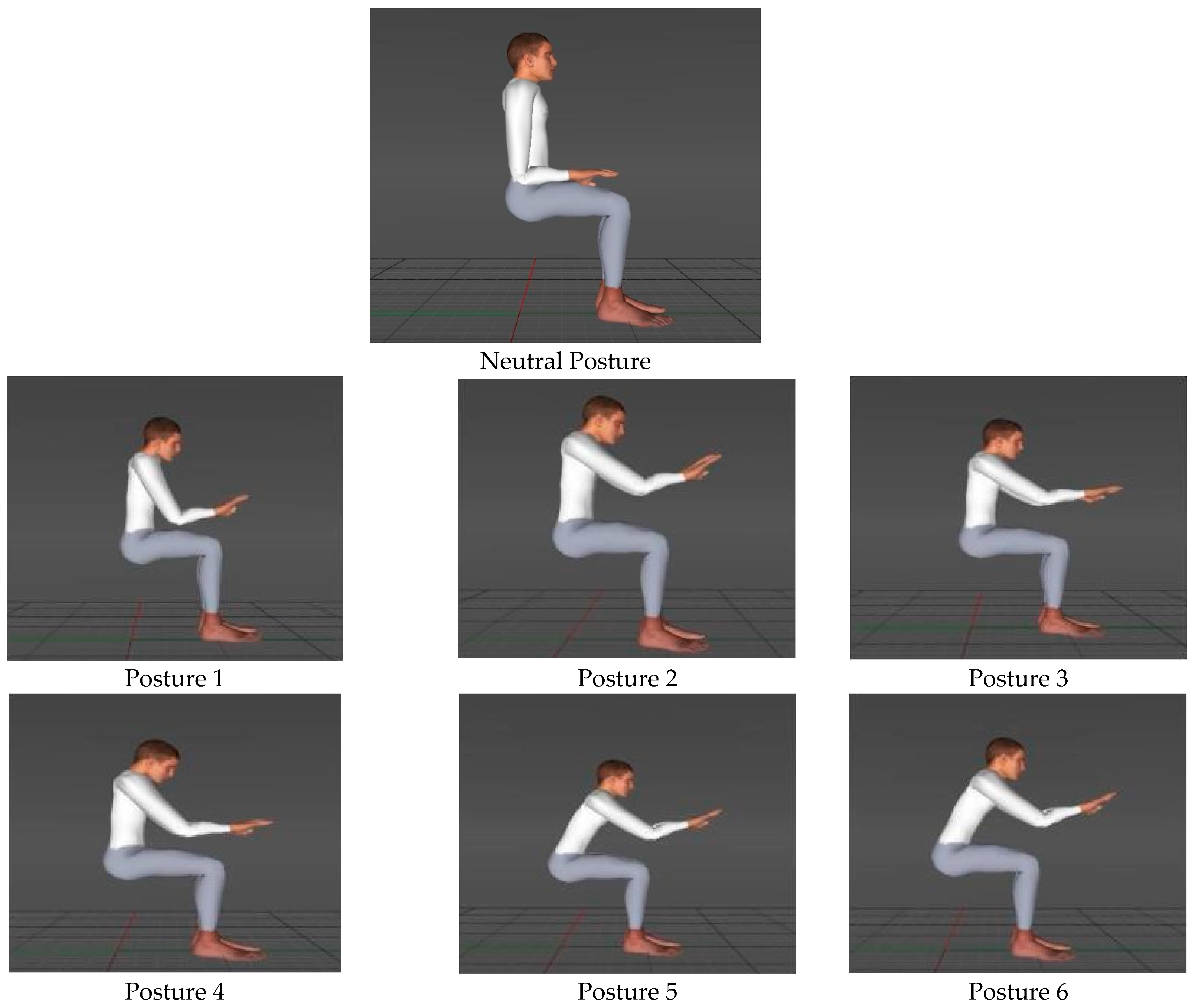
Six representative postures were identified from video analysis. Anatomical landmarks (acromion process, lateral epicondyle, ulnar styloid process, greater trochanter, lateral femoral condyle, lateral malleolus) were digitally marked using Kinovea v0.9.5. Three-dimensional joint angles were calculated using coordinate transformation. For any joint, vectors v1 (proximal segment) and v2 (distal segment) were defined from anatomical landmarks. Joint angle θ was computed using: θ = arccos ((v1·v2)/(||v1|| ||v2||)), where v1·v2 represents the dot product and ||v|| represents vector magnitude. Validation of DHM-predicted versus video-measured angles showed strong agreement (ICC = 0.94, 95% CI: 0.91–0.96).
Postures were replicated in HumanCAD with ±1° precision. Inverse dynamics analysis calculated joint reaction forces and moments under quasi-static equilibrium assumptions (negligible acceleration, forces and moments balanced at each joint). Gravitational loading was applied based on model anthropometry. External forces (keyboard: 1.5–2.0 N, mouse: 2.5–3.5 N) were incorporated from literature. Note: HumanCAD v6 employs inverse dynamics without muscle force prediction algorithms; joint loads represent net reaction forces and moments. Biomechanical stress ratios compared joint torques in observed postures against neutral reference (ISO 11226:2000). Eight body regions were analyzed: cervical spine (C7/T1), thoracic spine (T8/T9), lumbar spine (L5/S1), shoulders (glenohumeral), elbows, wrists (radiocarpal), hips, knees. Output parameters included compressive forces (N), shear forces (N), and moments (N·m), compared against NIOSH thresholds.

3.4. Process Improvement Methodology

The DMAIC methodology structured the overall research approach, beginning with problem definition through baseline measurement and progressing to analysis, improvement, and control phases. In the Define phase, the problem scope was established through stakeholder interviews and preliminary observations, culminating in a comprehensive project charter. The Measure phase involved systematic data collection using RULA, REBA, and the Nordic Questionnaire to establish baseline ergonomic risk levels. The Analyze phase employed statistical analysis of the assessment results alongside fishbone diagramming and root cause analysis to identify primary ergonomic risk factors. The Improve phase developed tailored interventions including workstation redesign specifications and ergonomic guidelines specific to construction management contexts. Finally, the Control phase implemented sustainable solutions with verification protocols to ensure long-term effectiveness.
Data Preprocessing Protocol: Raw data underwent five-stage preprocessing. Stage 1: Data validation checked completeness, logical consistency, video timestamp cross-referencing, and RULA/REBA score verification. Stage 2: Missing data (<3% across variables) handled via multiple imputation using chained equations (MICE) for quantitative variables; mode imputation for categorical variables when missing <5%. Stage 3: Outlier detection via Mahalanobis distance (χ2 threshold, p < 0.001) and box plots identified three extreme outliers in task duration, which were winsorized to 95th percentile. Stage 4: Normality assessment via Shapiro–Wilk tests (RULA: p = 0.023, REBA: p = 0.031) supplemented with Q-Q plots indicated moderate departure, leading to both parametric and non-parametric test application. Stage 5: Data transformation applied log transformation to biomechanical stress ratios (pre-transformation skewness: 1.8; post-transformation: 0.3); RULA/REBA scores analyzed on original ordinal scale to preserve interpretability.

3.5. Data Analysis Techniques

Quantitative data from RULA, REBA, and biomechanical stress analysis underwent descriptive statistical analysis to determine average risk levels and their distribution across different body regions, work locations, and task types. One-way ANOVA was employed to identify significant relationships between ergonomic risk factors and variables including task duration, work environment type, and participant demographics. Correlation analysis explored relationships between NMQ-reported symptoms and objective risk assessment scores. For biomechanical data, stress ratios for each body region were calculated by comparing torques in observed postures against neutral reference postures, with values exceeding 1.0 indicating increased biomechanical stress. Root cause analysis techniques including 5-Whys and fishbone diagrams were applied to identify primary contributors to ergonomic risks, subsequently verified through focused observations. The root cause analysis incorporated multiple data sources including systematic observations documented during ergonomic assessments, structured interviews with participants regarding workplace constraints and behavioral factors, and environmental condition records from permanent offices, temporary site facilities, and field locations. Solution effectiveness was validated through before-and-after comparison of risk assessment scores and participant feedback.

3.6. Computational Implementation and Algorithmic Frameworks

3.6.1. System Architecture

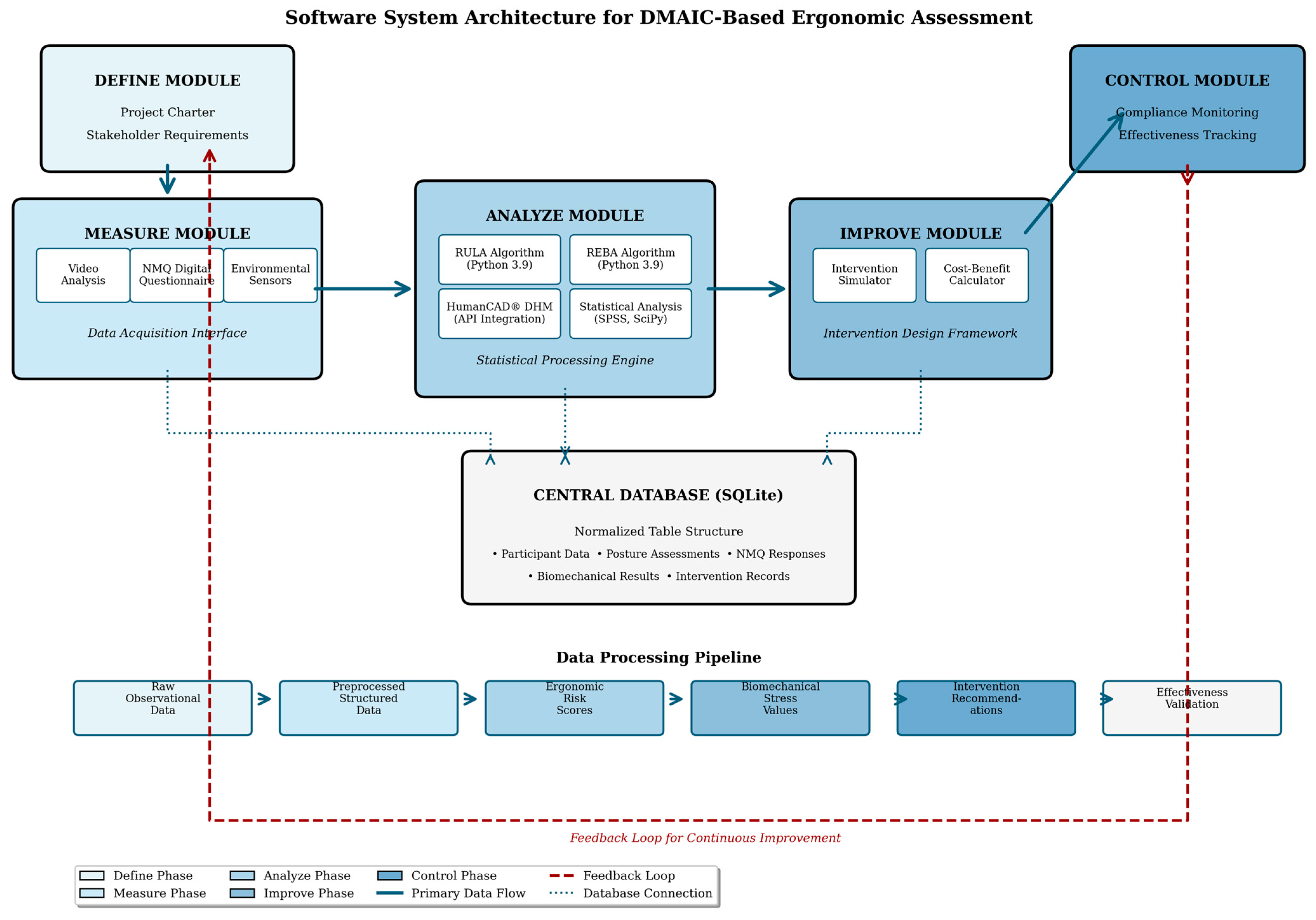
This research employed an integrated system implementing DMAIC methodology as an executable framework as shown in Figure 4. The system comprises five modules: Define Module (project charter management), Measure Module (data acquisition from video analysis, NMQ questionnaires, environmental sensors), Analyze Module (RULA/REBA algorithms, DHM integration, statistical processing), Improve Module (intervention simulation, cost–benefit analysis), and Control Module (compliance monitoring).

3.6.2. Algorithmic Specifications

The RULA and REBA scoring procedures were implemented as computational algorithms to ensure consistent, reproducible assessment across all participants and observation sessions. Table 1 presents the RULA scoring algorithm, which processes postural observation data to generate risk scores and action level recommendations. Table 2 presents the REBA scoring algorithm for comprehensive full-body assessment. Table 3 presents the statistical analysis workflow algorithm implementing data preprocessing, normality testing, correlation analysis, ANOVA, and intervention effectiveness evaluation. These algorithms were implemented in Python 3.9 with input validation, error handling, and logging functionality to ensure robust operation during large-scale data processing.
INPUT: Posture observation data P = {arm, forearm, wrist, neck, trunk}
OUTPUT: RULA score (1–7) and action level (1–4)
INPUT: Full body posture data P = {neck, trunk, legs, upperArm, lowerArm, wrist}
OUTPUT: REBA score (1–15) and risk level classification
INPUT: Raw assessment data D = {RULA_scores, REBA_scores, NMQ_responses, biomechanical_data}
OUTPUT: Statistical results R = {descriptives, correlations, ANOVA_results, effect_sizes}

3.6.3. Experimental Environment and Reproducibility

Hardware: Dell Precision 7920 workstation with dual Intel Xeon Gold 6238R (2.2 GHz, 28 cores), 64 GB DDR4 ECC RAM (2933 MHz), NVIDIA Quadro RTX 4000 (8 GB GDDR6), 1 TB NVMe SSD.
Software: Windows 10 Enterprise (Build 19044, 64-bit), HumanCAD v6 (Nexgen Ergonomics Inc., Pointe Claire, QC, Canada), IBM SPSS Statistics v28.0.1.1, Python 3.9.7 with NumPy v1.21.2, SciPy v1.7.1, Pandas v1.3.3, Matplotlib v3.4.3, Seaborn v0.11.2, Kinovea v0.9.5, Microsoft Excel 2019.
HumanCAD Configuration: ANSUR II (2012) anthropometric database. Male models: 5th percentile (H: 164.5 cm, W: 62.3 kg), 50th percentile (H: 175.6 cm, W: 81.6 kg), 95th percentile (H: 185.4 cm, W: 103.2 kg). Female models: 5th percentile (H: 151.9 cm, W: 51.8 kg), 50th percentile (H: 162.6 cm, W: 70.3 kg), 95th percentile (H: 172.9 cm, W: 94.3 kg). Joint constraints: anatomically accurate ROM limits. Posture resolution: 1° angular precision. Computation: quasi-static equilibrium analysis.
Data Formats: Raw video (MP4, 1920 × 1080, 30 fps), posture data (CSV), NMQ responses (SQLite database), statistical results (JSON), HumanCAD models (native .HCD with CSV exports).

3.7. Ethical Considerations

This research was conducted in accordance with the Declaration of Helsinki and following ethical guidelines for human subjects research. Ethical approval was obtained from the Institutional Review Board of the National University of Sciences and Technology (NUST), Islamabad, Pakistan (Ethics Committee Reference Number: NUST-IRB-2023-047).
Written informed consent was obtained from all participants prior to their involvement in this study. The informed consent process included explanation of study objectives, data collection procedures including video recording and photography, voluntary participation, and the right to withdraw at any time without consequence. All participants provided explicit written consent for observation during work activities, video recording and photography for posture assessment, completion of musculoskeletal questionnaires, and use of anonymized data for research publication.
Data confidentiality was maintained by assigning numerical identifiers to participants, with personally identifiable information stored separately from research data. Video and photographic data were securely stored and accessed only by research team members for assessment purposes. Participation was voluntary, and observation sessions were scheduled to accommodate participants’ work requirements to minimize disruption.

4. Results

4.1. Prevalence and Distribution of Musculoskeletal Symptoms

Analysis of the Nordic Musculoskeletal Questionnaire (NMQ) responses revealed a high prevalence of musculoskeletal symptoms among construction management professionals. Approximately 87.5% of participants reported experiencing musculoskeletal discomfort in at least one body region during the previous 12 months, with 72.3% reporting symptoms within the past 30 days. As summarized in Table 4, the neck region demonstrated the highest prevalence of symptoms (76.2%), followed by the lower back (59.4%), upper back (48.1%), shoulders (46.3%), and wrists/hands (38.9%).
Table 4 details the distribution of musculoskeletal disorders across different body regions, highlighting the particular impact on the neck, back, and upper extremities that are most affected during computer use.
Table 5 presents the distribution of MSDs across different construction management roles, revealing that BIM specialists and site engineers reported the highest symptom rates, with 88.5% and 92.3%, respectively, experiencing neck discomfort. This role-specific analysis suggests that specialized digital tasks carry varying ergonomic risk profiles.
Significantly, only 13.7% of participants had consulted healthcare professionals about these symptoms, despite 44.2% reporting that discomfort interfered with normal work activities. Statistical analysis revealed significant correlations between symptom prevalence and several factors. Daily digital device usage time showed strong correlation with neck discomfort (r = 0.73, p < 0.001) and moderate correlation with shoulder pain (r = 0.62, p < 0.001). Participants who spent more than five hours daily on digital devices were 2.8 times more likely to report neck pain compared to those with fewer hours. Temporary site facilities were associated with higher symptom reporting compared to permanent offices (p < 0.01), particularly for lower back discomfort. Transition frequency between different working locations also demonstrated significant correlation with overall symptom reporting (r = 0.58, p < 0.005), suggesting that frequent environmental changes may worsen ergonomic challenges.

4.2. Quantitative Risk Assessment Results

4.2.1. RULA Assessment Findings

RULA evaluations identified six distinct postures commonly adopted by construction management professionals, with varying risk levels (Table 6) across different working environments. The mean RULA score across all observations was 4.7 (SD = 0.9), indicating intermediate to high risk requiring further investigation and changes.
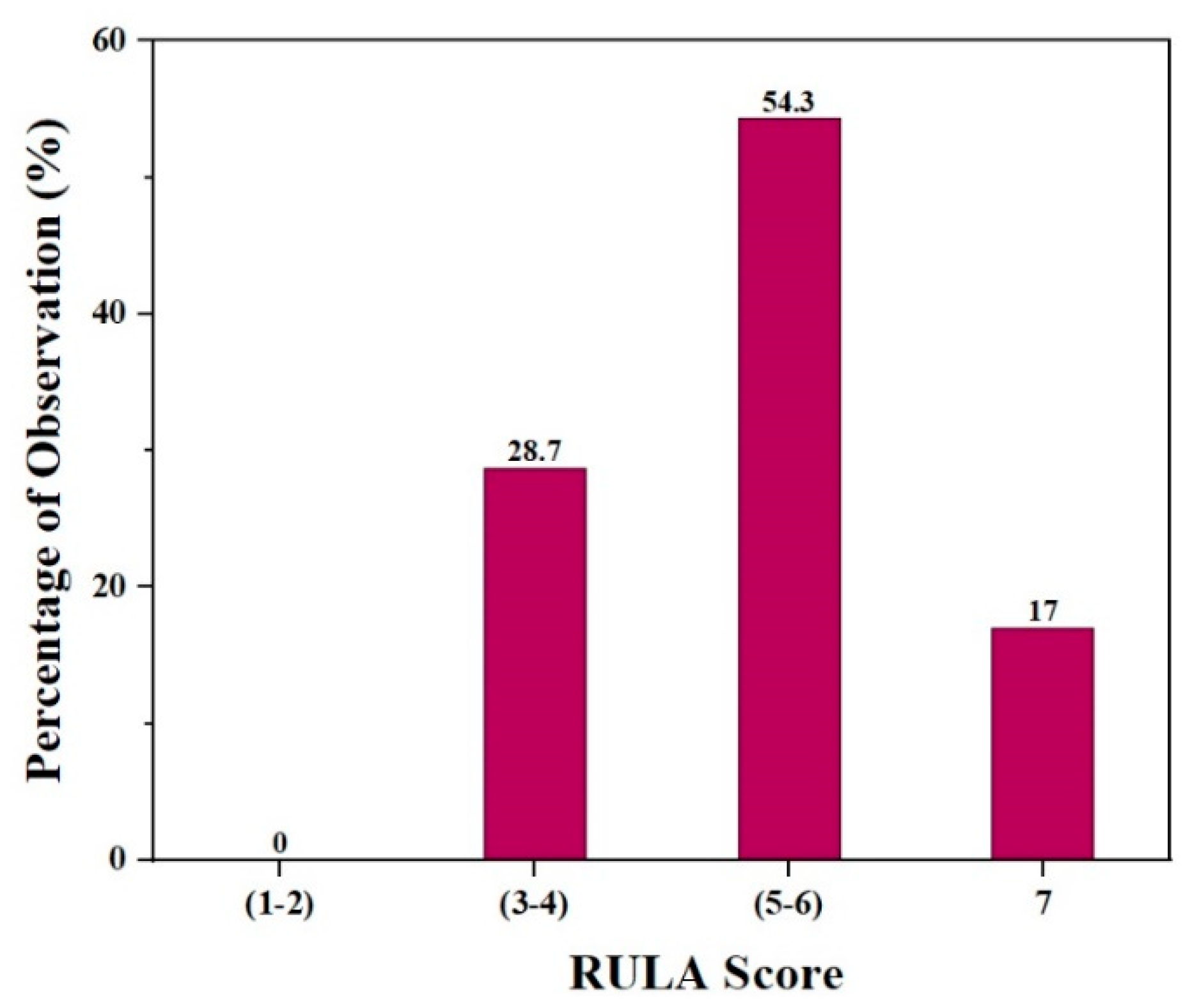
As illustrated in Figure 5, posture distribution analysis revealed that 54.3% of observed postures received scores of 5–6 (action level 3), indicating the need for investigation and changes soon, while 28.7% received scores of 3–4 (action level 2), suggesting the need for further investigation. Alarmingly, 17% of observed postures scored 7 (action level 4), indicating investigation and immediate changes were required.
Task-specific analysis demonstrated that BIM navigation activities produced the highest average RULA scores (5.8), likely due to prolonged static postures and intensive mouse manipulation, as shown in Table 7. Document review and email communication yielded moderate risk scores (4.5 and 4.2, respectively), while video conferencing produced an average score of 5.1, influenced by forward neck flexion to view screens.
Table 8 presents a location-based analysis which revealed that temporary site offices produced significantly higher risk scores (mean 5.3) compared to permanent offices (mean 4.2), with field-based laptop use generating the highest risk scores (mean 5.9). Individual body part scoring identified neck position as the primary contributor to elevated risk scores, with 82% of observations showing neck flexion exceeding 20 degrees.

4.2.2. REBA Assessment Findings

REBA assessments complemented RULA findings while incorporating whole-body posture evaluation. The mean REBA score across all observations was 7.2 (SD = 1.2), indicating medium to high risk requiring action. Score distribution analysis showed 46.8% of postures in the medium risk category (scores 4–7) and 53.2% in the high-risk category (scores 8–10). No posture waw assessed as very high risk (scores 11–15), though several approached this threshold. REBA analysis highlighted significant lower body contribution to overall risk, particularly in field and temporary site settings where improper seating arrangements necessitated awkward leg positions.
Notable risk differentials emerged between workspace types, with permanent offices demonstrating REBA scores averaging 6.3, temporary site offices averaging 7.9, and field-based working locations averaging 8.7, as detailed in Table 8. Task duration analysis revealed that risk scores increased by an average of 1.2 points when tasks extended beyond 45 min without postural variation, underscoring the impact of static loading. Cross-analysis with participant demographics revealed no significant correlation between risk scores and age or gender, suggesting that environmental and behavioral factors exerted stronger influence than individual characteristics.

4.3. Biomechanical Stress Analysis Results

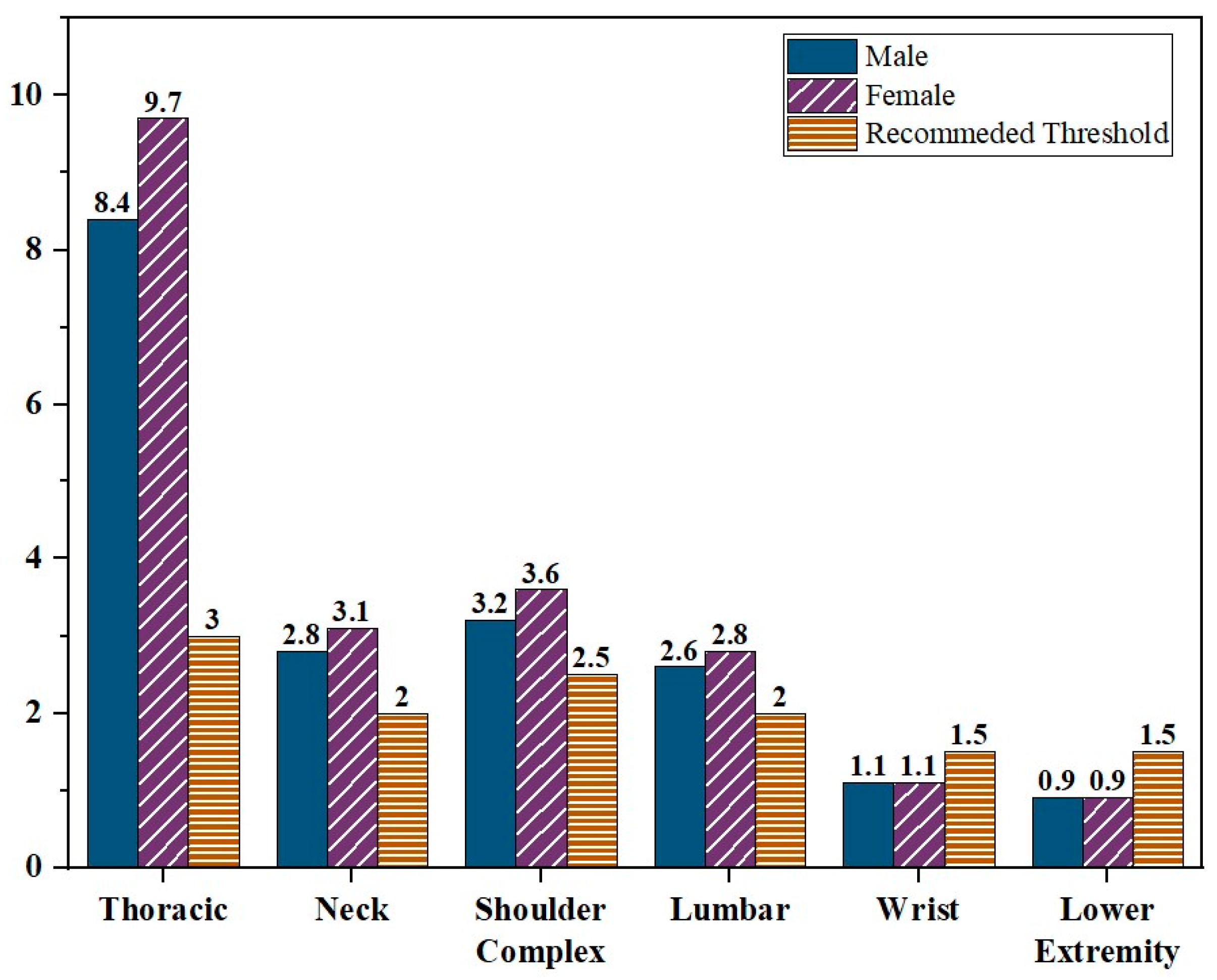
Digital Human Modeling using HumanCAD provided quantitative validation of observational assessments through biomechanical stress analysis. The Figure 6 illustrates the stress ratios calculated by comparing joint torques in observed postures against neutral reference posture, with values exceeding 1.0 indicating increased biomechanical stress. The thoracic region demonstrated the highest average stress ratio at 8.4 for males and 9.7 for females, substantially exceeding recommended thresholds. Neck region stress ratios averaged 2.8 for males and 3.1 for females, while shoulder complex stress ratios averaged 3.2 for males and 3.6 for females. Wrist and lower extremity stress ratios remained close to neutral reference values (0.9–1.1), confirming that upper body regions bore the primary ergonomic burden during digital construction management activities.
Figure 6 provides detailed stress ratio data across all assessed body regions, highlighting the concerning levels of biomechanical stress in the thoracic, neck, and shoulder regions that substantially exceed recommended thresholds. The gender-specific analysis reveals that female participants generally experienced higher stress ratios than their male counterparts, particularly in the thoracic region.
Posture-specific analysis, as shown in Figure 7, identified that forward head posture combined with trunk flexion produced the highest overall stress ratios, particularly in temporary workstations where screen height positioning was frequently inadequate. BIM modeling postures generated thoracic stress ratios averaging 10.3, significantly higher than other activities, corroborating the elevated RULA/REBA scores for this task category. Comparison across work environments showed that field-based postures produced 37% higher average stress ratios compared to permanent office postures, quantitatively validating the location-based risk differentials identified through observational methods.

4.4. Root Cause Analysis Findings

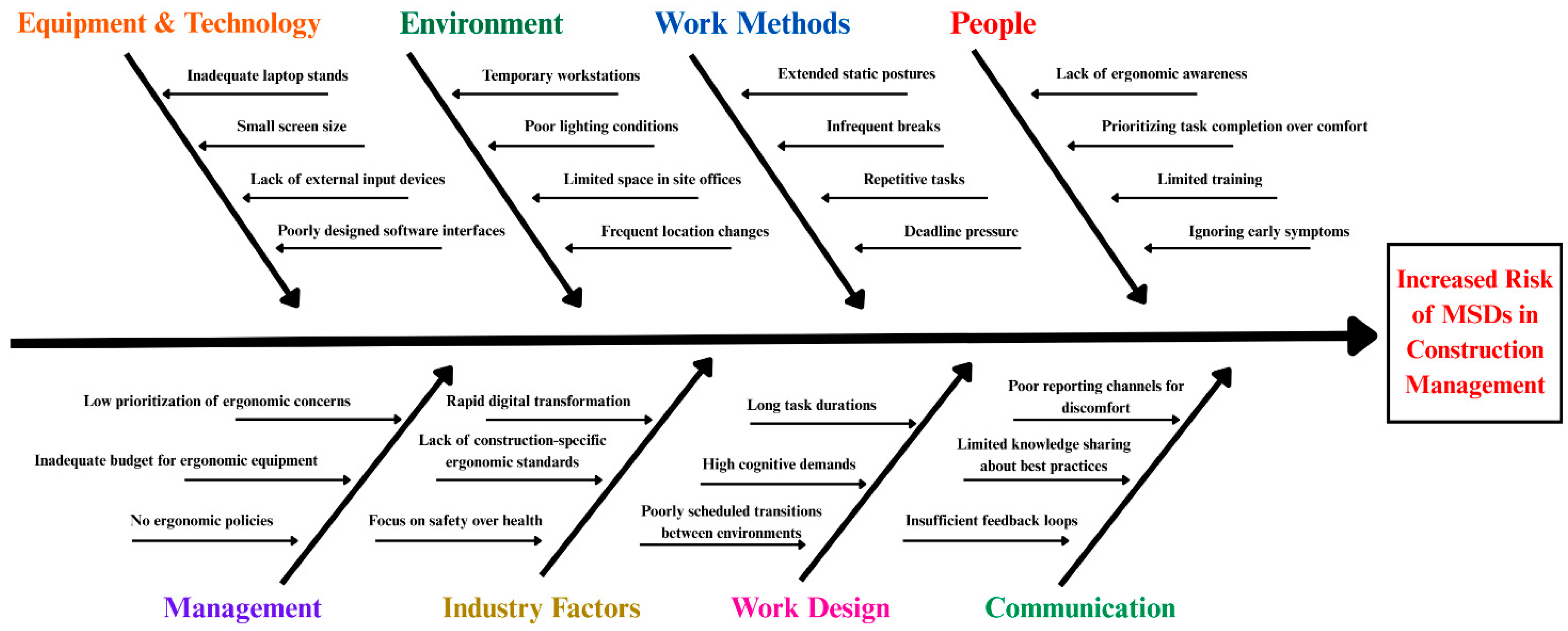
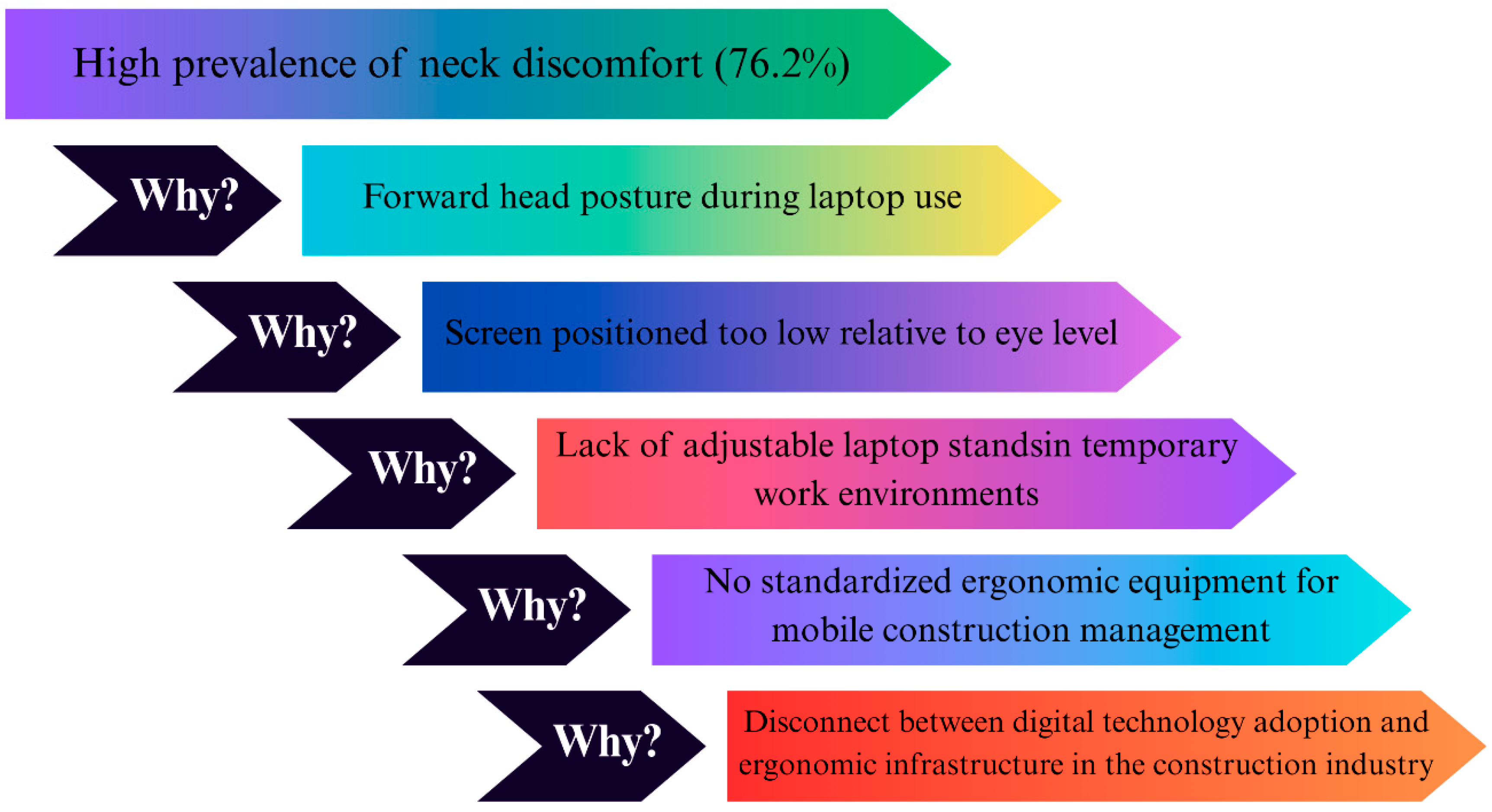
Root cause analysis through fishbone diagramming (Figure 8) and 5-Whys technique (Figure 9) identified several primary contributors to ergonomic risk in digital construction management contexts. Environmental factors included inadequate adjustability of temporary workstations, impromptu workspace setups lacking proper ergonomic features, and variable lighting conditions causing screen glare. Behavioral factors encompassed extended task duration without breaks (average 72 min), limited awareness of ergonomic principles (only 18% of participants had received ergonomic training), and prioritization of task completion over postural adjustment. Technological factors included limited software interface customization, small screen size necessitating forward head posture, and touchpad navigation requiring awkward wrist positioning.
The fishbone diagram (also known as an Ishikawa diagram) provides a structured view of all potential causes contributing to the increased risk of MSDs among construction management professionals, as shown in Figure 8. The 5-Whys diagram traces a single prominent issue (neck discomfort) through five layers of inquiry to reach its fundamental root cause. This progression demonstrates how a specific symptom connects to broader systemic issues in the construction industry’s approach to digital technology implementation, as shown in Figure 9.
The most significant root causes verified through focused observation included:
  • Lack of adjustable monitor positioning, particularly in temporary and field settings
  • Non-adaptable seating without proper lumbar support
  • Extended duration of static postures without microbreaks
  • Absence of ergonomic guidelines specific to construction management contexts
  • Workstations designed for short-term use despite being used for extended periods

4.5. Implementation and Effectiveness of Interventions

4.5.1. Interventions

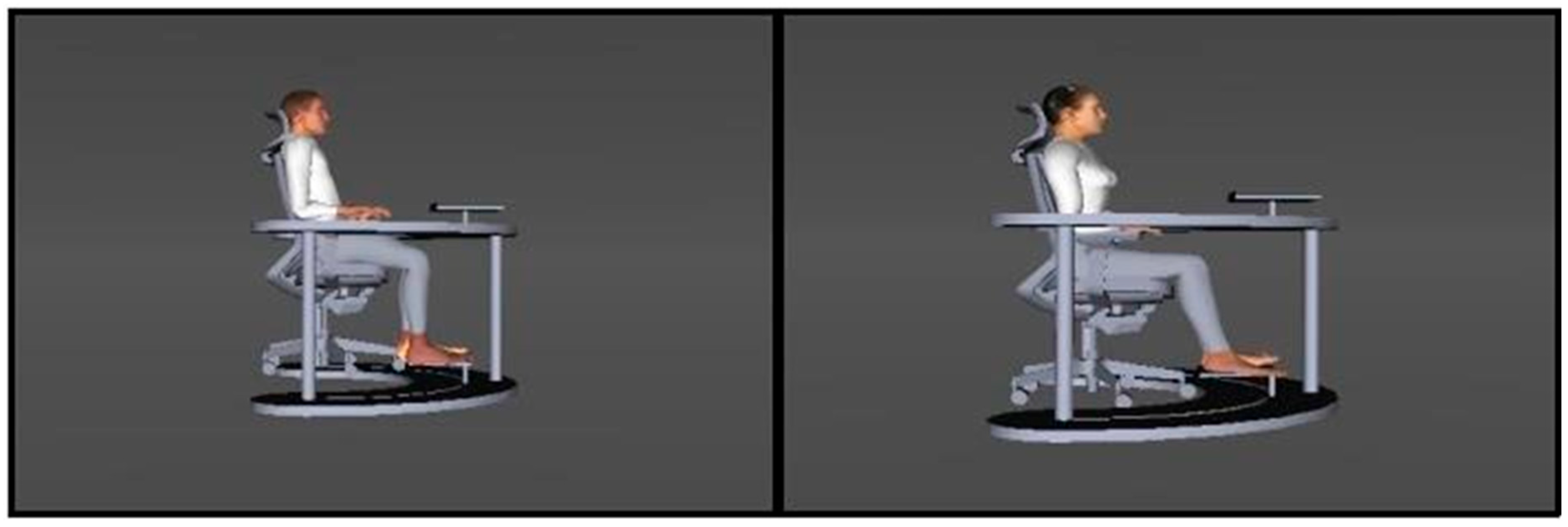
Based on analysis findings, targeted interventions were developed and implemented in five participating construction firms. Interventions included development of portable ergonomic workstation specifications for temporary site offices, creation of construction-specific ergonomic guidelines addressing unique industry contexts, and implementation of ergonomic training modules customized for construction management roles. Physical interventions featured adjustable laptop stands, external keyboards/mice for improved input device positioning, and supplementary lumbar supports for non-adjustable seating, as shown in Figure 10.

4.5.2. Ergonomic Guidelines for Digital Construction Management Activities

The guidelines as summarized in Table 9, were implemented and recommended to be adapted to specific project types, climate conditions, and workforce demographics while maintaining alignment with general ergonomic principles and construction safety standards.

4.5.3. Post-Implementation Assessment

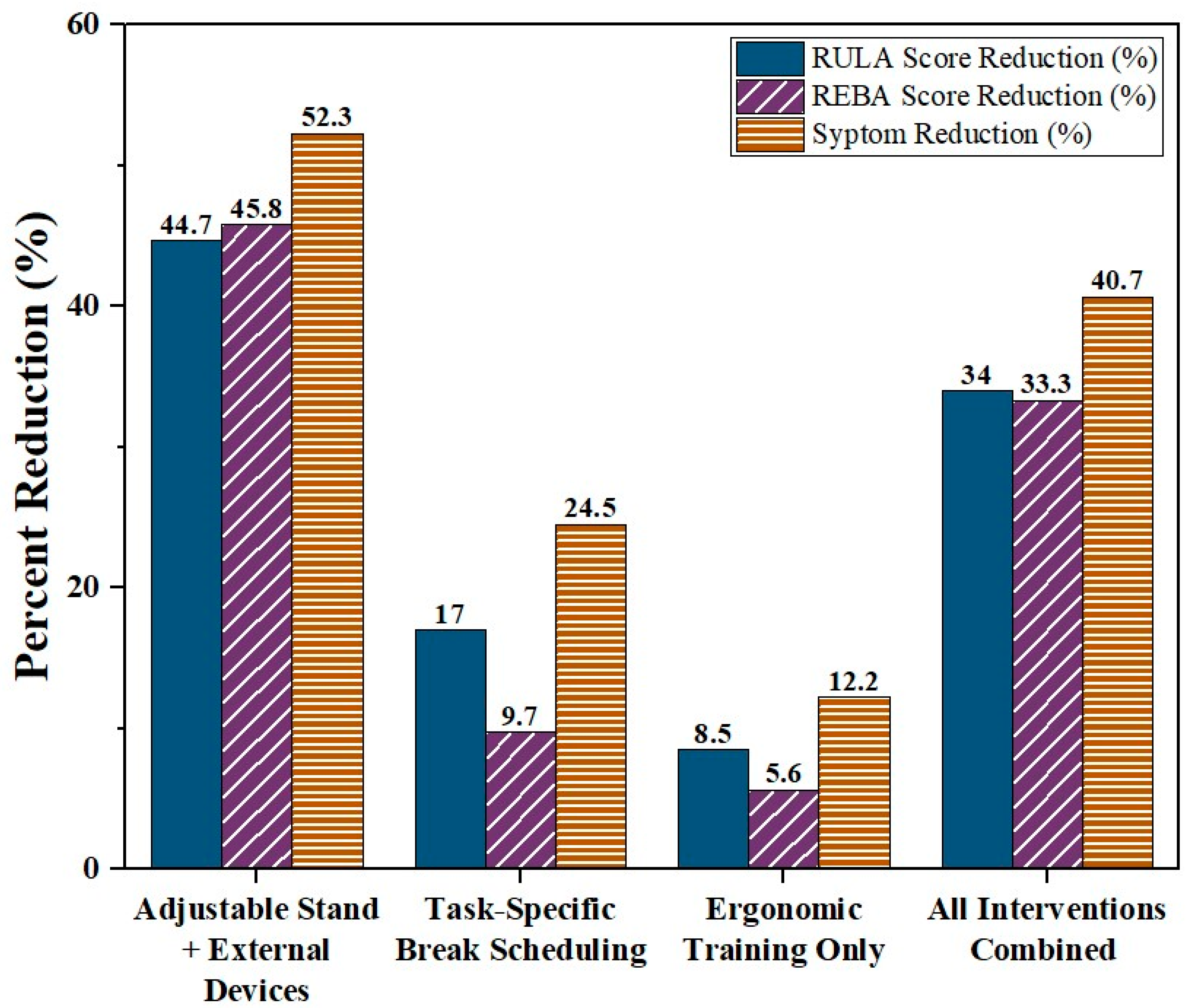
Post-implementation assessment conducted after three months showed significant improvements in ergonomic risk levels, as detailed in Table 10 and visualized in Figure 11. Average RULA scores decreased from 4.7 to 3.1 (34% reduction, p < 0.001), while REBA scores decreased from 7.2 to 4.8 (33% reduction, p < 0.001). Biomechanical stress analysis showed average thoracic stress ratios decreased by 62% in modified workstations, neck stress ratios by 54%, and shoulder complex stress ratios by 47%. Follow-up NMQ surveys demonstrated a 46% reduction in reported neck symptoms and 38% reduction in back discomfort, with 78% of participants reporting subjective improvement in comfort levels during digital tasks.
Measurements taken three months after intervention implementation (n = 160)
Symptom reduction based on follow-up Nordic Musculoskeletal Questionnaire responses
As summarized in Table 10, the most effective interventions were found to be adjustable laptop stands combined with external input devices, which produced a 2.1-point average reduction in RULA scores even in temporary workstation environments. Task-specific break scheduling showed moderate effectiveness, with a 0.8-point reduction in risk scores, while ergonomic training alone demonstrated limited impact (0.4-point reduction) without accompanying physical interventions. The combination of all interventions produced the most substantial and statistically significant improvements across all metrics.
Intervention implementation faced varying challenges across different construction environments. Permanent offices achieved 92% compliance with the intervention protocols, while temporary site offices and field locations achieved 78% and 63% compliance, respectively. The primary barriers to implementation in field environments included space constraints, lack of stable surfaces for equipment placement, and time pressure during site visits. Despite these challenges, even partial implementation in field environments produced measurable improvements, with RULA scores decreasing by 0.9 points on average in these challenging settings.

5. Discussion

This study reinforces a growing body of evidence highlighting the ergonomic risks associated with digital work in the construction sector, particularly among professionals such as BIM specialists, project managers, and site engineers. The findings expand on prior research by offering a validated hybrid methodology using RULA, REBA, and Digital Human Modeling (DHM) while also implementing structured ergonomic interventions grounded in the DMAIC framework.
The prevalence of musculoskeletal disorders (MSDs) among digital construction professionals in this study aligns with established ergonomic research across the broader construction sector. Studies have consistently documented high rates of discomfort in the neck, back, and upper limbs due to poor posture and prolonged static activities [38,39,40]. However, these studies primarily focus on manual laborers. This study uniquely targets digital professionals operating in transient and dynamic environments, thus addressing a notable research gap identified by reviews of ergonomic risk assessment trends in construction safety management [41].
Furthermore, the use of biomechanical modeling in this study to quantify stress ratios in different body regions advances beyond subjective or observational-only techniques that dominate the field [42,43]. These quantitative insights revealed critical risk levels in the thoracic and cervical regions, underscoring the limitations of standard office-centric ergonomic guidelines when applied in construction field conditions.
The ergonomic interventions implemented, particularly the use of adjustable laptop stands and external input devices, demonstrated significant improvements in RULA and REBA scores, far outperforming standalone training modules. This pattern is in line with the findings from prior interventions in the construction sector where physical modifications produced more consistent risk reductions than educational strategies alone [44,45]. Similarly, training was found to be only partially effective unless coupled with organizational support and ergonomic redesign, reinforcing findings of this study.
This study also supports conclusions that ergonomic success depends on environmental adaptability and organizational commitment [46,47]. Implementation challenges in field settings due to space and equipment constraints also mirror difficulties reported in earlier participatory ergonomics projects [48,49].
The implications of this study extend beyond individual health outcomes. MSDs among digital construction managers affect not only worker well-being but also productivity, continuity of operations, and ultimately project performance. Ergonomic discomfort may contribute to decision fatigue, increased absenteeism, and reduced coordination efficiency, critical issues in digitally managed construction projects.
From a policy standpoint, the findings advocate for the integration of ergonomic risk assessments into construction safety management systems and procurement standards. Portable ergonomic equipment and construction-specific digital work protocols should become baseline requirements, not optional add-ons. Moreover, regulatory frameworks must evolve to recognize digital task ergonomics as a legitimate occupational health concern within construction, a shift currently lacking in many national safety codes [50,51].

6. Limitations and Recommendations

This study has limitations worth noting. The three-month follow-up provides initial effectiveness data but insufficient insight into long-term sustainability, as MSDs develop over years and behavioral compliance may decline. Future research should include 12–24 month follow-up assessments. Sample limitations include restriction to five medium-to-large urban Pakistani firms, potentially limiting generalizability across different geographic contexts, firm sizes, project types, and workforce demographics. Methodologically, this study focused primarily on physical ergonomics with limited exploration of cognitive (mental workload, decision-making) and organizational (work structure, management) factors. Observational methods involve subjective posture categorization and may miss dynamic variations. Intervention compliance varied substantially (permanent offices: 92%, temporary sites: 78%, field: 63%), indicating practical implementation barriers requiring further investigation. This study evaluated laptop/desktop ergonomics but did not address emerging technologies (AR headsets, tablets, wearables) that introduce novel challenges.

7. Conclusions

This research addressed occupational health risks from digital transformation in construction management through systematic integration of RULA, REBA, DHM, and DMAIC methodology, documenting significant risks and demonstrating substantial risk reduction.
Principal Findings: 87.5% MSD prevalence (76.2% neck, 59.4% back) establishes digital work as a new occupational health challenge. Quantified biomechanical stress (thoracic: 9.7× neutral; neck: 3.1× neutral) provides objective evidence of strain magnitude. Environment-dependent differentials (temporary sites: 25% higher REBA; field: 38% higher) demonstrate construction-specific amplification beyond standard offices. Intervention effectiveness (34% RULA, 33% REBA, 46% symptom reduction, p < 0.001) proves systematic interventions substantially mitigate risks. Differential effectiveness (adjustable equipment: 44.7% vs. training: 8.5%) guides resource allocation prioritizing portable, adjustable equipment.
Theoretical Contributions: This research advances human factors engineering by demonstrating necessity of context-specific frameworks accounting for industry constraints. Integration of RULA/REBA with DHM validates complementary value, offering methodological template for dynamic occupational contexts. DMAIC operationalization as construction-implementable framework bridges construction management, industrial engineering, and occupational health disciplines.
Practical and Policy Implications: This study provides validated, scalable framework adaptable to organizational diversity while maintaining rigor. Break-even periods (3.2–5.7 months) offer economic justification addressing adoption barriers. Proactive ergonomic management integrated with digital transformation supports workforce sustainability and skill retention, preserving human capital investments. For policymakers, this research demonstrates gaps in current standards lacking guidance for digital construction professionals. Developed guidelines (Table 6) provide foundation for industry standards addressing temporary workplaces, mobile devices, and environment-adaptive practices.
Broader Significance: Implications extend to other industries with mobile knowledge work (field engineering, mobile healthcare, emergency response, natural resource management) sharing variable locations, temporary infrastructure, and environmental constraints. This study demonstrates digital tools introduce significant ergonomic risks requiring systematic health impact assessment concurrent with technology deployment, establishing ergonomics as integral to implementation rather than remedial afterthought.


Author Contributions

Conceptualization, H.K. and K.A.; methodology, M.U.Z., H.K., K.A., M.U.H. and J.A.; software, M.U.Z., H.K. and K.A.; validation, M.U.Z., H.K., K.A., M.U.Z., J.A. and P.M.; formal analysis, M.U.Z., H.K. and K.A.; validation, M.U.Z., H.K., K.A., M.U.H., J.A. and P.M.; investigation, M.U.Z., H.K. and K.A.; validation, M.U.Z., H.K., K.A., M.U.H., J.A. and P.M.; resources, M.U.Z., H.K. and K.A.; data curation, M.U.Z., H.K. and K.A.; writing—original draft preparation, H.K. and K.A.; writing—review and editing, M.U.Z., H.K., K.A., M.U.H., J.A. and P.M.; visualization, H.K.; supervision, K.A.; project administration, M.U.Z. and K.A.; funding acquisition, M.U.Z. All authors have read and agreed to the published version of the manuscript.

Funding

This work was supported by the Deanship of Scientific Research, Vice Presidency for Graduate Studies and Scientific Research, King Faisal University, Saudi Arabia (Project No.: KFU254354). The APC was funded by the same grant.

Institutional Review Board Statement

Ethical approval was obtained from the Institutional Review Board of the National University of Sciences and Technology (NUST), Islamabad, Pakistan (Ethics Committee Reference Number: NUST-IRB-2023-047).

Informed Consent Statement

Informed consent was obtained from all subjects involved in this study.

Data Availability Statement

The dataset used and analyzed during the current study is available from the corresponding authors upon reasonable request. The data are not publicly available due to privacy and confidentiality agreements with the construction site operators involved in the data collection.

Acknowledgments

This work was supported by the Deanship of Scientific Research, Vice Presidency for Graduate Studies and Scientific Research, King Faisal University, Saudi Arabia (Project No.: KFU254354). The APC was funded by the same grant.

Conflicts of Interest

The authors declare no conflicts of interest.

References

  1. Jiang, Y.; Su, S.; Zhao, S.; Zhong, R.Y.; Qiu, W.; Skibniewski, M.J.; Brilakis, I.; Huang, G.Q. Digital twin-enabled synchronized construction management: A roadmap from construction 4.0 towards future prospect. Dev. Built Environ. 2024, 19, 100512. [Google Scholar] [CrossRef]
  2. Adu-Amankwa, N.A.N.; Pour Rahimian, F.; Dawood, N.; Park, C. Digital Twins and Blockchain technologies for building lifecycle management. Autom. Constr. 2023, 155, 105064. [Google Scholar] [CrossRef]
  3. Alsehaimi, A.; Waqar, A.; Alrasheed, K.A.; Bageis, A.S.; Almujibah, H.; Benjeddou, O.; Khan, A.M. Building a sustainable future: BIM’s role in construction, logistics, and supply chain management. Ain Shams Eng. J. 2024, 15, 103103. [Google Scholar] [CrossRef]
  4. Musarat, M.A.; Alaloul, W.S.; Khan, M.H.F.; Ayub, S.; Guy, C.P.L. Evaluating cloud computing in construction projects to avoid project delay. J. Open Innov. Technol. Mark. Compl. 2024, 10, 100296. [Google Scholar] [CrossRef]
  5. Aktürk, B.; Irlayıcı Çakmak, P. Digital twins for enhanced construction project management. Smart Sustain. Built Environ. 2025, 14, 2176–2200. [Google Scholar] [CrossRef]
  6. Trask, C.; Linderoth, H.C.J. Digital technologies in construction: A systematic mapping review of evidence for improved occupational health and safety. J. Build. Eng. 2023, 80, 108082. [Google Scholar] [CrossRef]
  7. Obasi, I.C.; Benson, C. The Impact of Digitalization and Information and Communication Technology on the Nature and Organization of Work and the Emerging Challenges for Occupational Safety and Health. Int. J. Environ. Res. Public Health 2025, 22, 362. [Google Scholar] [CrossRef]
  8. Lucka, E.; Wareńczak-Pawlicka, A.; Lucki, M.; Lisiński, P. The impact of increased computer screen time during the COVID-19 pandemic on the occurrence of upper part of musculoskeletal diseases among health personnel. Sci. Rep. 2024, 14, 20257. [Google Scholar] [CrossRef]
  9. Antwi-Afari, M.F.; Li, H.; Chan, A.H.S.; Seo, J.; Anwer, S.; Mi, H.-Y.; Wu, Z.; Wong, A.Y.L. A science mapping-based review of work-related musculoskeletal disorders among construction workers. J. Saf. Res. 2023, 85, 114–128. [Google Scholar] [CrossRef]
  10. Bevan, S. Economic impact of musculoskeletal disorders (MSDs) on work in Europe. Best Pract. Res. Clin. Rheumatol. 2015, 29, 356–373. [Google Scholar] [CrossRef]
  11. Oakman, J.; Macdonald, W.A.; McCredie, K.; Clune, S. Impact of work-related psychosocial versus biomechanical hazards on risk of musculoskeletal disorders: A systematic review and meta-analysis. Appl. Ergon. 2025, 125, 104481. [Google Scholar] [CrossRef] [PubMed]
  12. Weale, V.; Stuckey, R.; Kinsman, N.; Oakman, J. Workplace musculoskeletal disorders: A systematic review and key stakeholder interviews on the use of comprehensive risk management approaches. Int. J. Ind. Ergon. 2022, 91, 103338. [Google Scholar] [CrossRef]
  13. Breloff, S.P.; Dutta, A.; Dai, F.; Sinsel, E.W.; Warren, C.M.; Ning, X.; Wu, J.Z. Assessing work-related risk factors for musculoskeletal knee disorders in construction roofing tasks. Appl. Ergon. 2019, 81, 102901. [Google Scholar] [CrossRef] [PubMed]
  14. Kisi, K.P.; Kayastha, R. Analysis of musculoskeletal pains and productivity impacts among hispanic construction workers. Heliyon 2024, 10, e24023. [Google Scholar] [CrossRef]
  15. Monagle, N.; Eberle, L.; Dyche, T.; Patterson, A.; Greenbaum, A.; Siegel, P. Ergonomic Assessment of Surgical Residents Using the Rapid Upper Limb and Rapid Entire Body Assessments. Arch. Phys. Med. Rehabil. 2023, 104, e27. [Google Scholar] [CrossRef]
  16. Kee, D. Comparison of OWAS, RULA and REBA for assessing potential work-related musculoskeletal disorders. Int. J. Ind. Ergon. 2021, 83, 103140. [Google Scholar] [CrossRef]
  17. Schall, M.C., Jr.; Fethke, N.B.; Roemig, V. Digital Human Modeling in the Occupational Safety and Health Process: An Application in Manufacturing. IISE Trans. Occup. Erg. Hum. Factors 2018, 6, 64–75. [Google Scholar] [CrossRef]
  18. Vicente, I.; Godina, R.; Teresa Gabriel, A. Applications and future perspectives of integrating Lean Six Sigma and Ergonomics. Saf. Sci. 2024, 172, 106418. [Google Scholar] [CrossRef]
  19. Adeodu, A.; Maladzhi, R.; Kana-Kana Katumba, M.G.; Daniyan, I. Development of an improvement framework for warehouse processes using lean six sigma (DMAIC) approach. A case of third party logistics (3PL) services. Heliyon 2023, 9, e14915. [Google Scholar] [CrossRef]
  20. Li, Z.; Yu, Y.; Xia, J.; Chen, X.; Lu, X.; Li, Q. Data-driven ergonomic assessment of construction workers. Autom. Constr. 2024, 165, 105561. [Google Scholar] [CrossRef]
  21. Tao, Y.; Hu, H.; Xue, J.; Zhang, Z.; Xu, F. Evaluation of Ergonomic Risks for Construction Workers Based on Multicriteria Decision Framework with the Integration of Spherical Fuzzy Set and Alternative Queuing Method. Sustainability 2024, 16, 3950. [Google Scholar] [CrossRef]
  22. Boatman, L.; Chaplan, D.; Teran, S.; Welch, L.S. Creating a climate for ergonomic changes in the construction industry. Am. J. Ind. Med. 2015, 58, 858–869. [Google Scholar] [CrossRef] [PubMed]
  23. Merlino, L.A.; Rosecrance, J.C.; Anton, D.; Cook, T.M. Symptoms of Musculoskeletal Disorders Among Apprentice Construction Workers. Appl. Occup. Environ. Hyg. 2003, 18, 57–64. [Google Scholar] [CrossRef] [PubMed]
  24. Eaves, S.; Gyi, D.E.; Gibb, A.G.F. Building healthy construction workers: Their views on health, wellbeing and better workplace design. Appl. Ergon. 2016, 54, 10–18. [Google Scholar] [CrossRef]
  25. Wang, X.; Dong, X.S.; Choi, S.D.; Dement, J. Work-related musculoskeletal disorders among construction workers in the United States from 1992 to 2014. Occup. Environ. Med. 2017, 74, 374–380. [Google Scholar] [CrossRef]
  26. Welch, L.S.; Hunting, K.L.; Nessel-Stephens, L. Chronic symptoms in construction workers treated for musculoskeletal injuries. Am. J. Ind. Med. 1999, 36, 532–540. [Google Scholar] [CrossRef]
  27. Vink, P.; Koningsveld, E.A.P.; Molenbroek, J.F. Positive outcomes of participatory ergonomics in terms of greater comfort and higher productivity. Appl. Ergon. 2006, 37, 537–546. [Google Scholar] [CrossRef]
  28. Hajaghazadeh, M.; Marvi-milan, H.; Khalkhali, H.; Mohebbi, I. Assessing the ergonomic exposure for construction workers during construction of residential buildings. Work 2019, 62, 411–419. [Google Scholar] [CrossRef]
  29. Martínez-Soto, T.; Estrada-Fonseca, M.I. Evaluación de los factores de riesgo ergonómico en puestos de trabajo. Rev. Oper. Tecnol. 2019, 3, 19–23. [Google Scholar] [CrossRef]
  30. Govindan, A.; Li, X. Design and Implementation of a Fuzzy Expert System for an Ergonomic Performance Assessment in Modular Construction Operations Using the DMAIC Approach; Springer: Berlin/Heidelberg, Germany, 2023; pp. 409–421. [Google Scholar]
  31. Mohd Nizan, N.I.; Ali, N.F.; Hussain, S.A. Managing ergonomic risk assessment among assembly operators in the small-scale fabrication sector. Process Safety Progress 2024, 43, S13–S21. [Google Scholar] [CrossRef]
  32. Rim, Y.H.; Moon, J.H.; Kim, G.Y.; Noh, S.D. Ergonomic and biomechnical analysis of automotive general assembly using XML and digital human models. Int. J. Automot. Technol. 2008, 9, 719–728. [Google Scholar] [CrossRef]
  33. Nunes, I.L. Integration of Ergonomics and Lean Six Sigma. A Model Proposal. Procedia Manuf. 2015, 3, 890–897. [Google Scholar] [CrossRef]
  34. Namwongsa, S.; Puntumetakul, R.; Neubert, M.S.; Chaiklieng, S.; Boucaut, R. Ergonomic risk assessment of smartphone users using the Rapid Upper Limb Assessment (RULA) tool. PLoS ONE 2018, 13, e0203394. [Google Scholar] [CrossRef] [PubMed]
  35. Ogedengbe, T.S.; Markus, S.; Dabo, A.L.; Afolalu, S.A.; Ikumapayi, O.M.; Musa, A.I.; Adeleke, A.A.; Yussouff, A.A.; Sulaiman, Y.A. Comparative Study of the REBA and RULA Assessment Tools Efficiency for Workers Tasks. In Proceedings of the 2nd International Conference on Multidisciplinary Engineering and Applied Science (ICMEAS), Abuja, Nigeria, 1–3 November 2023; IEEE: New York, NY, USA, 2023; pp. 1–6. [Google Scholar]
  36. Chang, S.; Wang, M.J. Digital human modeling and workplace evaluation: Using an automobile assembly task as an example. Hum. Factors Ergon. Manuf. Serv. Ind. 2007, 17, 445–455. [Google Scholar] [CrossRef]
  37. Demirel, H.O.; Ahmed, S.; Duffy, V.G. Digital Human Modeling: A Review and Reappraisal of Origins, Present, and Expected Future Methods for Representing Humans Computationally. Int. J. Hum. Comput. Interact. 2022, 38, 897–937. [Google Scholar] [CrossRef]
  38. Fauzan Akhtar, S.M.; Mumtaz, N.; Khan, A.R. Ergonomic Hazards in the Indian Construction Industry: A Comprehensive Review of Risks, Impacts, and Interventions. Int. Res. J. Multidiscip. Scope 2025, 6, 37–51. [Google Scholar] [CrossRef]
  39. Kaminskas, K.A.; Antanaitis, J. A Cross-Section Survey of Construction Workers: An Ergonomic Approach. Technika. 2010. Available online: https://etalpykla.vilniustech.lt/handle/123456789/127863 (accessed on 2 May 2025).
  40. Anagha, R. A Review on Ergonomic Risk Factors Causing Musculoskeletal Disorders among Construction Workers. Int. J. Eng. Res. 2020, 9, 1234–1236. [Google Scholar] [CrossRef]
  41. Vijayakumar, R.; Choi, J. Emerging Trends of Ergonomic Risk Assessment in Construction Safety Management: A Scientometric Visualization Analysis. Int. J. Environ. Res. Public Health 2022, 19, 16120. [Google Scholar] [CrossRef]
  42. Tao, Y.; Hu, H.; Xu, F.; Zhang, Z.; Wang, R.; Huang, H. Ergonomic Risk Assessment in Construction: Integrating Vision-based Postural Assessment and EMG-based Fatigue Analysis. In Proceedings of the IEEE International Conference on Industrial Engineering and Engineering Management (IEEM), Bangkok, Thailand, 15–18 December 2024; IEEE: New York, NY, USA, 2024; pp. 1044–1048. [Google Scholar]
  43. Zhang, H.; Lin, Y. Modeling and evaluation of ergonomic risks and controlling plans through discrete-event simulation. Autom. Constr. 2023, 152, 104920. [Google Scholar] [CrossRef]
  44. Dale, A.M.; Jaegers, L.; Welch, L.; Gardner, B.T.; Buchholz, B.; Weaver, N.; Evanoff, B.A. Evaluation of a participatory ergonomics intervention in small commercial construction firms. Am. J. Ind. Med. 2016, 59, 465–475. [Google Scholar] [CrossRef]
  45. Gholami, A.; Yalameh, J.T.; Fouladi-Dehaghi, B.; Eskandari, D.; Teimori-Boghsani, G. Evaluation of the influence of education on the ergonomic risk of concrete form workers. Work 2020, 67, 1007–1013. [Google Scholar] [CrossRef]
  46. Sneller, T.N.; Choi, S.D.; Ahn, K. Awareness and perceptions of ergonomic programs between workers and managers surveyed in the construction industry. Work 2018, 61, 41–54. [Google Scholar] [CrossRef]
  47. Hecker, S.; Gibbons, W.B.; Rosecrance, J.; Barsotti, A. An Ergonomics Training Intervention with Construction Workers: Effects on Behavior and Perceptions. Proc. Hum. Factors Ergon. Soc. Annu. Meet. 2000, 44, 5-691–5-694. [Google Scholar] [CrossRef]
  48. Anema, J.R.; Steenstra, I.A.; Urlings, I.J.M.; Bongers, P.M.; de Vroome, E.M.M.; van Mechelen, W. Participatory ergonomics as a return-to-work intervention: A future challenge. Am. J. Ind. Med. 2003, 44, 273–281. [Google Scholar] [CrossRef]
  49. Driessen, M.T.; Groenewoud, K.; Proper, K.I.; Anema, J.R.; Bongers, P.M.; van der Beek, A.J. What are possible barriers and facilitators to implementation of a Participatory Ergonomics programme. Implement. Sci. 2010, 5, 64. [Google Scholar] [CrossRef]
  50. Mohan, S.B. Identifying and Controlling Ergonomic Risk Factors in Construction. J. Ergon. 2018, 8, 4. [Google Scholar] [CrossRef]
  51. Inyang, N.; Al-Hussein, M.; El-Rich, M.; Al-Jibouri, S. Ergonomic Analysis and the Need for Its Integration for Planning and Assessing Construction Tasks. J. Constr. Eng. Manag. 2012, 138, 1370–1376. [Google Scholar] [CrossRef]
Figure 1. Methodological approach with DMAIC Framework.
Applsci 15 12840 g001
Figure 2. Involved construction management professionals participants.
Applsci 15 12840 g002
Figure 3. Studied postures of construction management professionals.
Applsci 15 12840 g003aApplsci 15 12840 g003b
Figure 4. Research System Architecture.
Applsci 15 12840 g004
Figure 5. Distribution of RULA Scores Across Observations.
Applsci 15 12840 g005
Figure 6. Biomechanical Stress Ratios by Body Region.
Applsci 15 12840 g006
Figure 7. Postures modelled in HumanCAD®.
Applsci 15 12840 g007
Figure 8. Fishbone Diagram identifying root causes of ergonomic risks in digital construction management.
Applsci 15 12840 g008
Figure 9. 5-Whys Analysis identifying root causes of neck discomfort in construction management professionals.
Applsci 15 12840 g009
Figure 10. Workstation with mannequins in HumanCAD® environment.
Applsci 15 12840 g010
Figure 11. Effectiveness of Ergonomic Interventions.
Applsci 15 12840 g011
Table 1. RULA Scoring Computation.
LineCode
1FUNCTION ComputeRULA(P):
2upperArmScore ← ScoreUpperArm(P.arm.angle, P.arm.abduction, P.arm.supported)
3lowerArmScore ← ScoreLowerArm(P.forearm.angle, P.forearm.midline)
4wristScore ← ScoreWrist(P.wrist.flexion, P.wrist.deviation)
5wristTwistScore ← ScoreWristTwist(P.wrist.pronation)
7muscleUseScore ← AssessMuscleUse(P.static, P.repetitive)
8forceScore ← AssessForce(P.load)
10tableA_score ← LookupTableA(upperArmScore, lowerArmScore, wristScore, wristTwistScore)
11scoreA ← tableA_score + muscleUseScore + forceScore
13// Neck, Trunk, and Leg Analysis
14neckScore ← ScoreNeck(P.neck.flexion, P.neck.lateral, P.neck.rotation)
15trunkScore ← ScoreTrunk(P.trunk.flexion, P.trunk.lateral, P.trunk.supported)
16legScore ← ScoreLegs(P.legs.bilateral, P.legs.flexion)
18tableB_score ← LookupTableB(neckScore, trunkScore, legScore)
19scoreB ← tableB_score + muscleUseScore + forceScore
21// Final RULA Score Calculation
22finalScore ← LookupTableC(scoreA, scoreB)
23actionLevel ← DetermineActionLevel(finalScore)
25RETURN (finalScore, actionLevel)
Note: Upper limb posture analysis followed by neck-trunk-leg assessment to generate final RULA risk score.
Table 2. REBA Scoring Computation.
LineCode
1FUNCTION ComputeREBA(P):
2neckScore ← ScoreNeck_REBA(P.neck.flexion, P.neck.extension, P.neck.lateral, P.neck.rotation)
3trunkScore ← ScoreTrunk_REBA(P.trunk.flexion, P.trunk.extension, P.trunk.lateral, P.trunk.rotation)
4legScore ← ScoreLegs_REBA(P.legs.bilateral, P.legs.flexion_angle, P.legs.kneeling)
6loadScore ← ScoreLoad(P.load_weight, P.load_rapid, P.load_shock)
8tableA_score ← LookupREBA_TableA(neckScore, trunkScore, legScore)
9scoreA ← tableA_score + loadScore
11// Upper Limb Analysis
12upperArmScore ← ScoreUpperArm_REBA(P.upperArm.angle, P.upperArm.abducted)
13lowerArmScore ← ScoreLowerArm_REBA(P.lowerArm.angle)
14wristScore ← ScoreWrist_REBA(P.wrist.flexion, P.wrist.deviation)
16couplingScore ← ScoreCoupling(P.grip_quality, P.handle_type)
18tableB_score ← LookupREBA_TableB(upperArmScore, lowerArmScore, wristScore)
19scoreB ← tableB_score + couplingScore
21// Activity Score and Final Calculation
22activityScore ← ScoreActivity(P.static, P.repetitive, P.rapid_change)
24finalScore ← LookupREBA_TableC(scoreA, scoreB) + activityScore
25riskLevel ← DetermineRiskLevel(finalScore)
27RETURN (finalScore, riskLevel)
Note: Whole-body assessment combining postural analysis, load/force factors, coupling, and activity scores.
Table 3. Statistical Analysis Workflow.
LineCode
1FUNCTION AnalyzeData(D):
2// Data Preprocessing Stage
3D_clean ← RemoveMissingValues(D, threshold=0.05)
4D_clean ← DetectOutliers(D_clean, method=“IQR”, threshold=1.5)
5D_normalized ← NormalizeData(D_clean, method=“z-score”)
7// Descriptive Statistics
8descriptives ← ComputeDescriptives(D_normalized)
10// Normality Testing
11normality_tests ← TestNormality(D_normalized, tests=[“Shapiro-Wilk”, “Kolmogorov-Smirnov”])
13// Correlation Analysis
14IF normality_tests.all_normal THEN
15correlations ← PearsonCorrelation(D_normalized)
16ELSE
17correlations ← SpearmanCorrelation(D_normalized)
19// ANOVA for Group Comparisons
20groups ← {permanent_office, temporary_office, field_locations}
21IF normality_tests.all_normal AND LeveneTest(groups).homogeneous THEN
22ANOVA_results ← OneWayANOVA(D_normalized, groups)
23IF ANOVA_results.significant THEN
24posthoc ← TukeyHSD(D_normalized, groups)
25ELSE
26ANOVA_results ← KruskalWallis(D_normalized, groups)
28// Effect Size Calculations
29effect_sizes ← ComputeEffectSizes(D_normalized, method=“Cohen’s d”)
31// Intervention Effectiveness Analysis
32pre_intervention ← D_normalized.filter(timepoint=“pre”)
33post_intervention ← D_normalized.filter(timepoint=“post”)
34paired_results ← PairedTTest(pre_intervention, post_intervention)
36R ← {descriptives, correlations, ANOVA_results, posthoc, effect_sizes, paired_results}
37RETURN R
Note: Comprehensive statistical pipeline with data preprocessing, normality testing, correlation analysis, ANOVA, and intervention effectiveness evaluation.
Table 4. Prevalence of Musculoskeletal Disorders by Body Region.
Body RegionPast 12 Months (%)Past 30 Days (%)Interfering with Work (%)
Neck76.272.532.4
Lower Back59.453.827.1
Upper Back48.141.318.5
Shoulders46.342.714.9
Wrists/Hands38.933.816.2
Elbows12.510.24.3
Hips/Thighs11.89.73.8
Knees15.612.15.6
Ankles/Feet9.47.82.1
Table 5. Prevalence of MSDs by Construction Management Role.
RoleSample SizeNeck Pain (%)Back Pain (%)Shoulder Pain (%)Wrist/Hand Pain (%)
BIM Specialists2688.573.165.457.7
Site Engineers3892.368.455.342.1
Project Managers6170.557.442.632.8
Construction Estimators1973.763.236.852.6
Project Coordinators1668.856.337.531.3
Overall Average16076.259.446.338.9
Table 6. Different risk levels and required actions.
RULA ScoreAction Level
1–2Negligible risk, no action required
3–4Low risk, changes may be needed
5–6Medium risk, further investigation and changes soon
7High risk, investigate and implement changes immediately
Table 7. Ergonomic Risk Assessment by Task Type.
Task TypeMean RULA ScoreMean REBA ScoreAvg Task Duration (min)
BIM Navigation/Modeling5.88.486
Document Review4.56.862
Email Communication4.26.343
Video Conferencing5.17.557
Spreadsheet Analysis4.87.268
Mobile App Field Input5.68.231
Table 8. RULA and REBA Assessment Results by Work Environment.
Work EnvironmentMean RULA Score (SD)RULA Risk LevelMean REBA Score (SD)REBA Risk Level
Permanent Office4.2 (0.7)Medium6.3 (0.9)Medium
Temporary Site Office5.3 (0.8)Medium-High7.9 (1.1)Medium-High
Field-Based Locations5.9 (1.1)High8.7 (1.3)High
Overall Average4.7 (0.9)Medium7.2 (1.2)Medium
Note: RULA Score Interpretation: 1–2 (Negligible), 3–4 (Low), 5–6 (Medium), 7+ (High). REBA Score Interpretation: 1 (Negligible), 2–3 (Low), 4–7 (Medium), 8–10 (High), 11+ (Very High).
Table 9. Construction-Specific Ergonomic Guidelines for Digital Management Activities.
Mobile Workstation GuidelinesPosition laptops on stable surfaces at elbow height using portable adjustable stands when possible
Maintain 24” minimum eye-to-screen distance; use anti-glare filters in bright environments
For vehicle-based work, use proper mounts and never work while driving
When standing/walking, use harness-mounted tablet holders and prioritize voice commands
Create designated “digital stations” at key site locations to avoid prolonged standing data entry
Task-Specific ProtocolsLimit BIM review sessions to 45 min with 30-s micro-breaks every 15 min
For site documentation, capture photos at eye level and use voice-to-text when possible
Position devices at eye level during video calls; use earbuds with microphones
Schedule 50 min meetings to allow for transition time and posture breaks
Environmental AdaptationPosition screens perpendicular to windows and direct sunlight
In temporary workspaces, ensure minimum knee clearance (21” width)
Limit outdoor device use to 15 min in extreme temperatures (<40 °F or >90 °F)
Apply high-visibility tape to mark trip hazards from power cords in temporary setups
Construction-Specific Break ProtocolsImplement the “10-10-10 rule”: For every 50 min, do 10 standing stretches, 10 eye exercises, 10 deep breaths
Align digital breaks with construction activities (e.g., review BIM during concrete pours)
Use task switching between physical inspection and digital documentation as natural breaks
Equipment SpecificationsUse ruggedized cases that maintain proper ergonomic viewing angles
Select devices with matte screens for outdoor visibility (minimum 400 nits brightness)
Standard-issue portable kit: adjustable stand, compact external keyboard, anti-fatigue mat
Use precision input devices for BIM tasks and styluses with proper diameter for gloved operation (8 mm+)
ImplementationIntegrate 2 min ergonomic reviews into daily toolbox talks
Create role-specific ergonomic checklists (Project Manager, Site Engineer, Estimator)
Implement software-based break reminders calibrated to construction schedules
Establish quarterly ergonomic equipment inspections and adjustments
Table 10. Effectiveness of Ergonomic Interventions.
Intervention TypePre-InterventionPost-InterventionReduction (%)p-Value
RULA Scores
Adjustable Laptop Stand + External Input Devices4.72.644.7<0.001
Task-Specific Break Scheduling4.73.917.0<0.01
Ergonomic Training Only4.74.38.50.08
All Interventions Combined4.73.134.0<0.001
REBA Scores
Adjustable Laptop Stand + External Input Devices7.23.945.8<0.001
Task-Specific Break Scheduling7.26.59.7<0.05
Ergonomic Training Only7.26.85.60.11
All Interventions Combined7.24.833.3<0.001
Symptom Reporting (%)
Neck Discomfort76.241.146.1<0.001
Back Discomfort59.436.838.0<0.001
Overall Discomfort87.551.940.7<0.001
Disclaimer/Publisher’s Note: The statements, opinions and data contained in all publications are solely those of the individual author(s) and contributor(s) and not of MDPI and/or the editor(s). MDPI and/or the editor(s) disclaim responsibility for any injury to people or property resulting from any ideas, methods, instructions or products referred to in the content.