Research on Construction Countermeasures for Freeze–Thaw Deformation of Permafrost Subgrade in Forest Regions of Northeast China


Abstract
1. Introduction
2. Materials and Methods
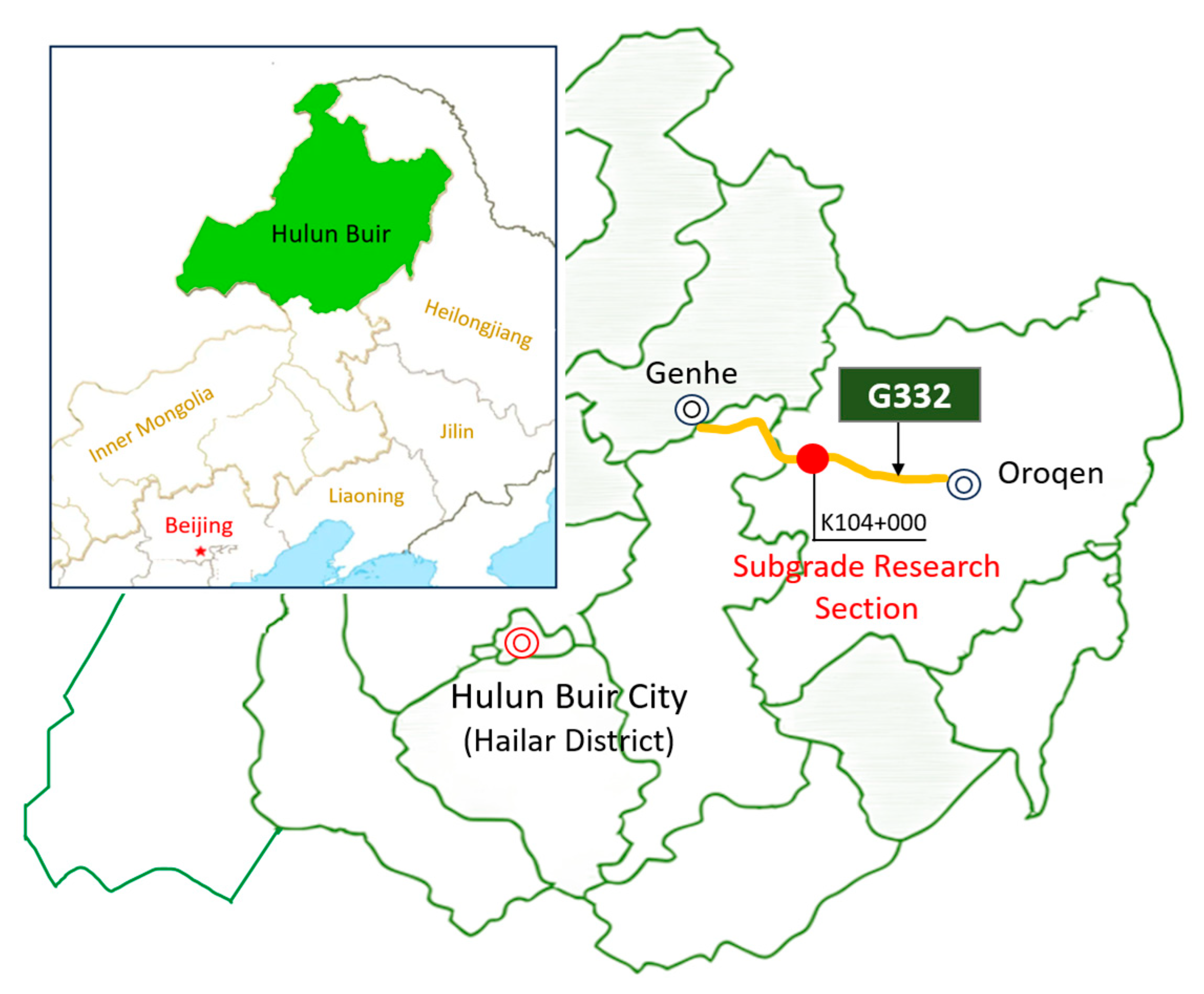
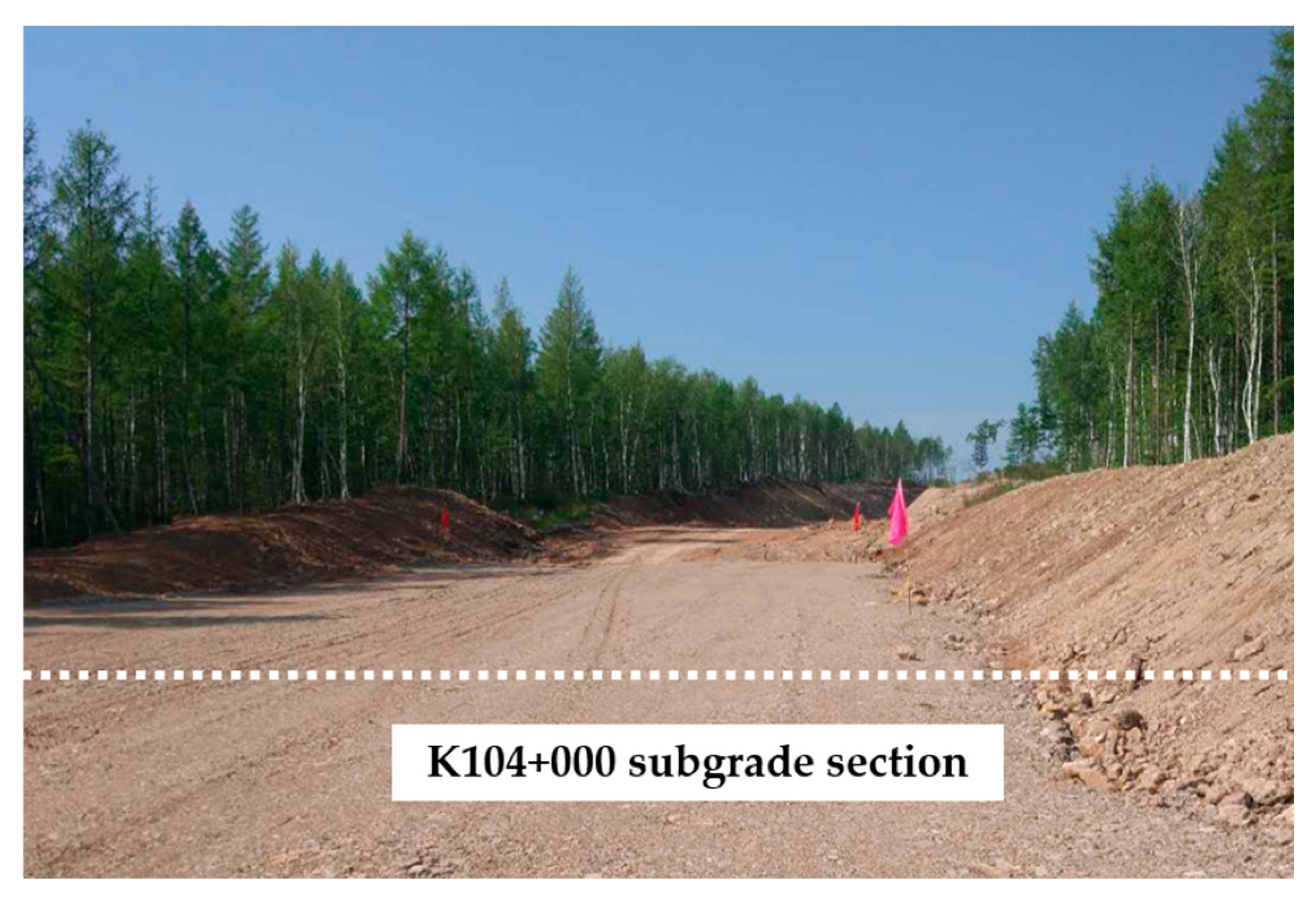
2.1. Study Area
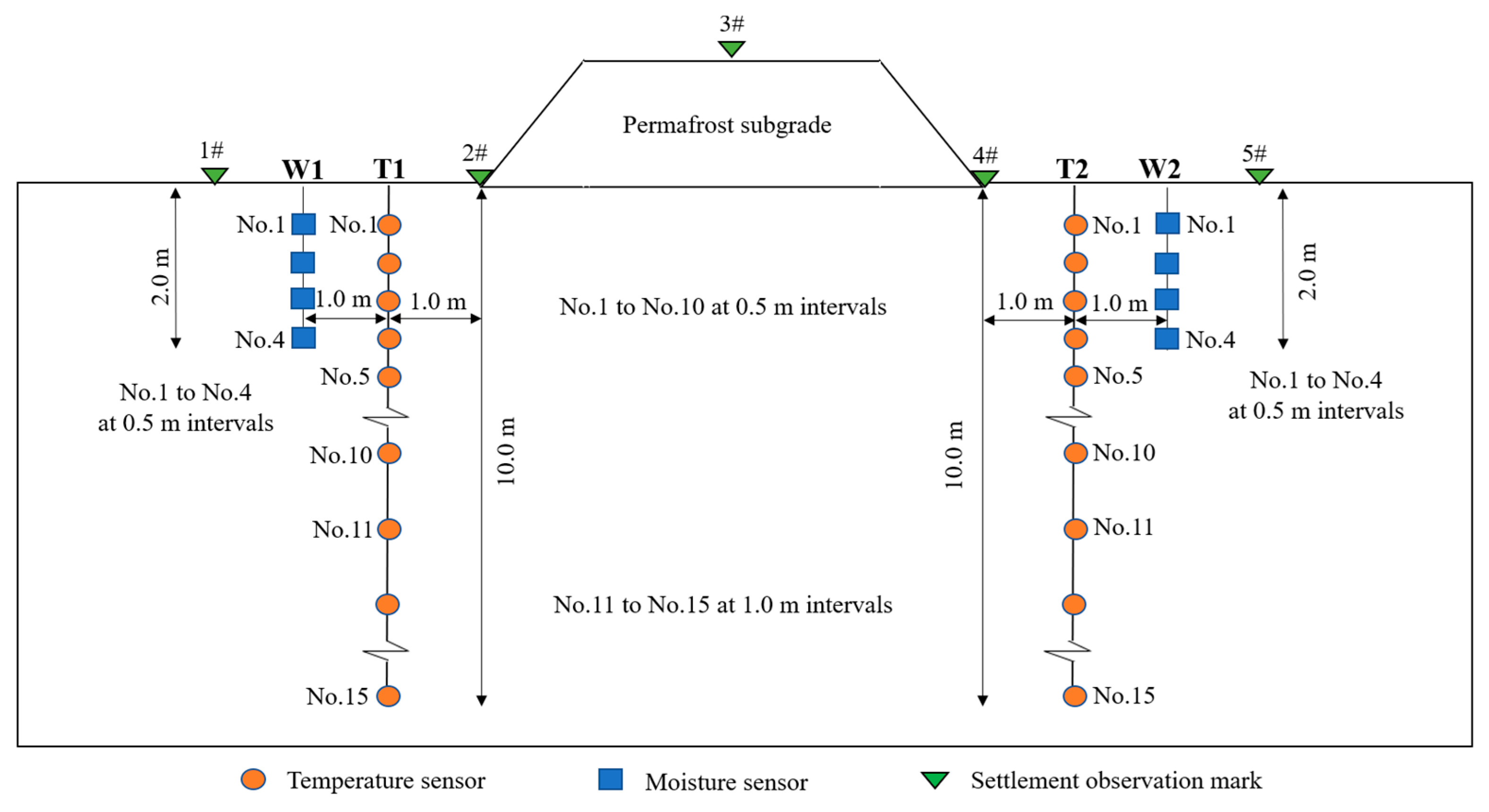
2.2. Field Observation Methods
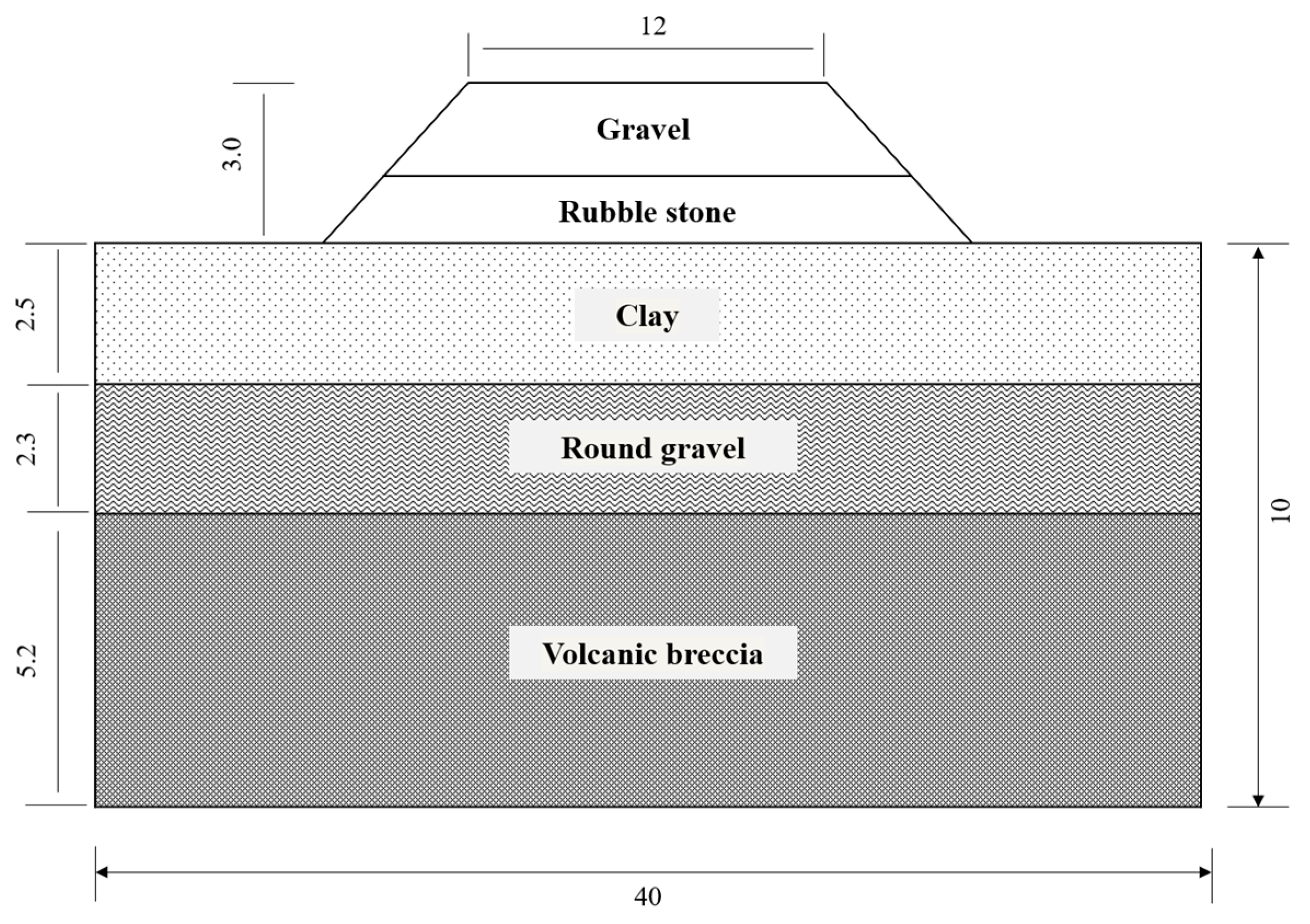
2.3. Establishment of a Numerical Model for Permafrost Subgrade
2.4. Material Parameters
3. Results
3.1. Numerical Model Validation
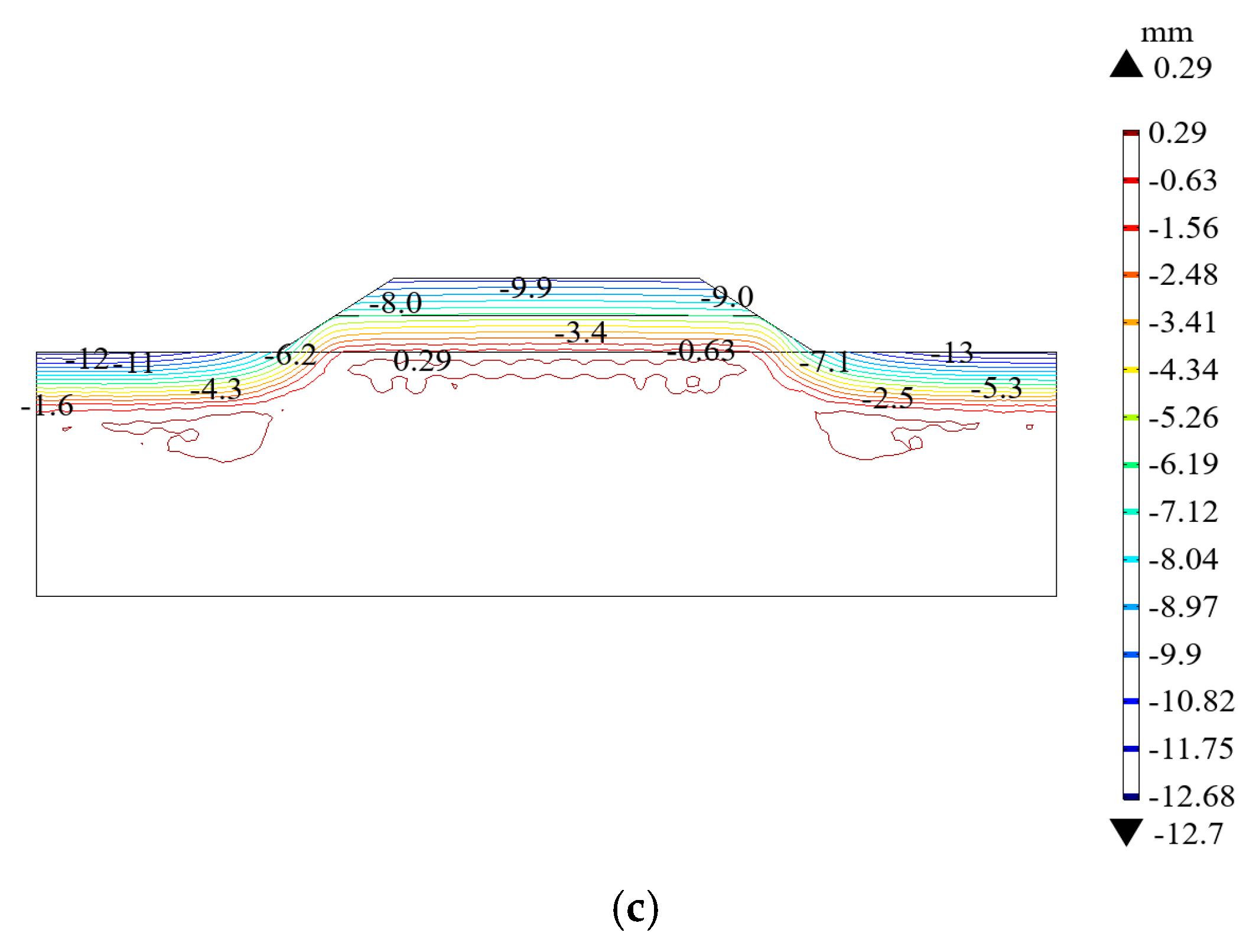
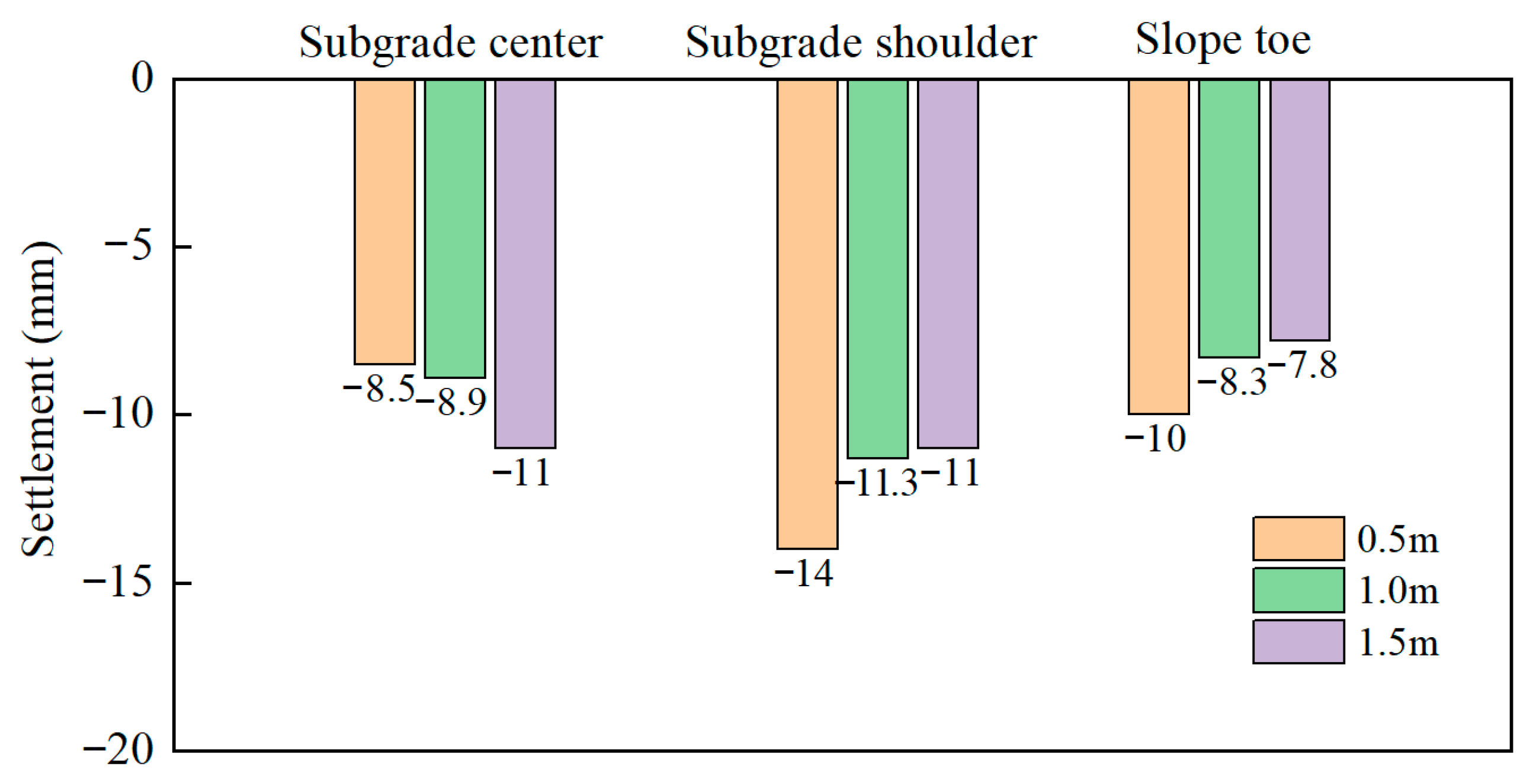
3.2. Analysis of the Optimal Permafrost Subgrade Structure
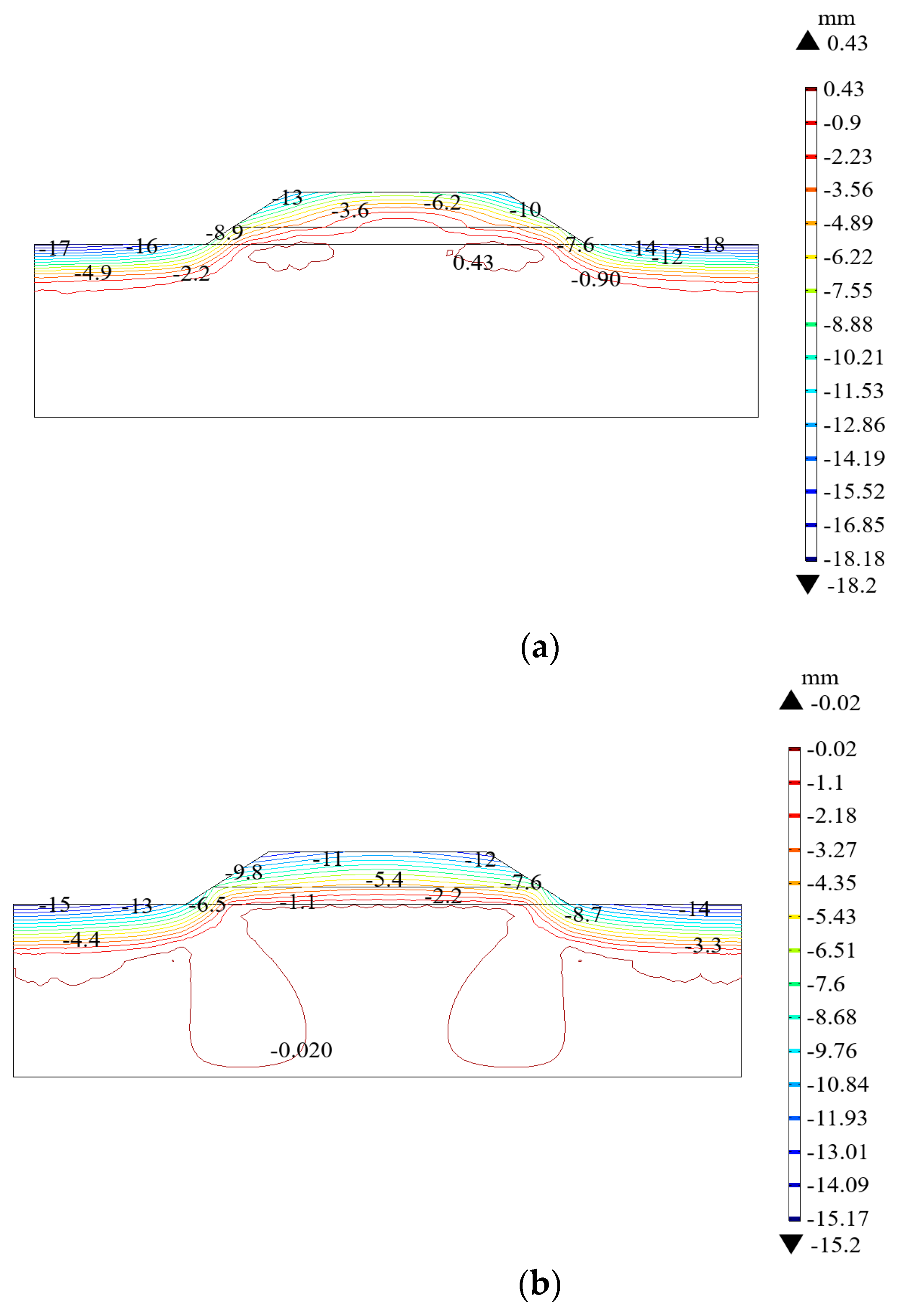
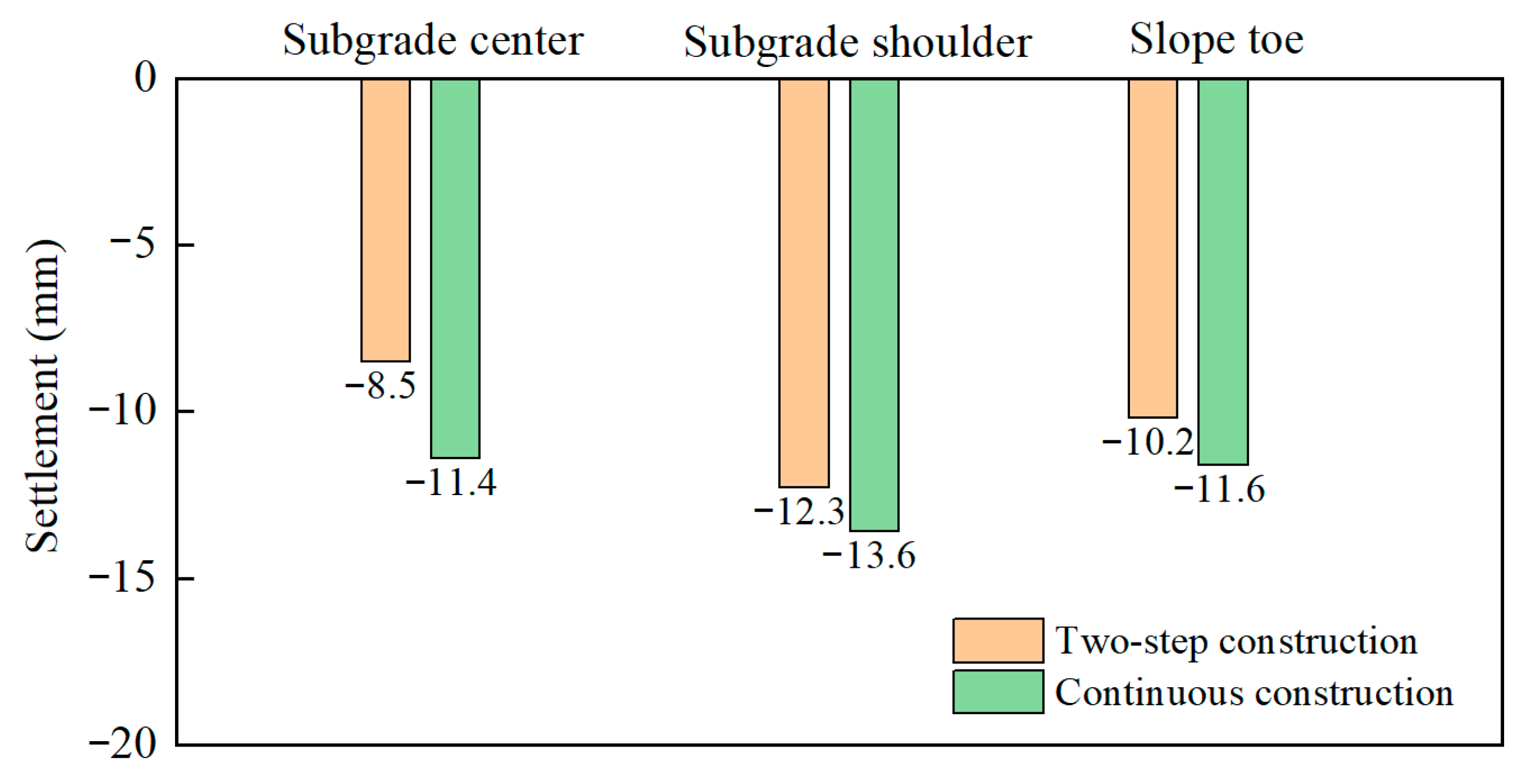
3.3. Analysis of the Optimal Construction Timing for Subgrade
4. Discussion
5. Conclusions
- (1)
- The addition of rubble stones to the subgrade structure has a significant cooling effect. The optimal subgrade structure includes a one-meter-thick layer of rubble stone stamping, a one-meter-thick layer of rubble stone filling, and a two-meter-thick layer of gravel.
- (2)
- The settlement of the subgrade after the two-step construction across the year is relatively smaller than that after continuous construction during the warm season. The optimal construction timing for subgrade is a two-step construction across the year. The stamping construction of the rubble stones is in November. The filling construction of rubble stones and gravel is in April and May of the next year.
- (3)
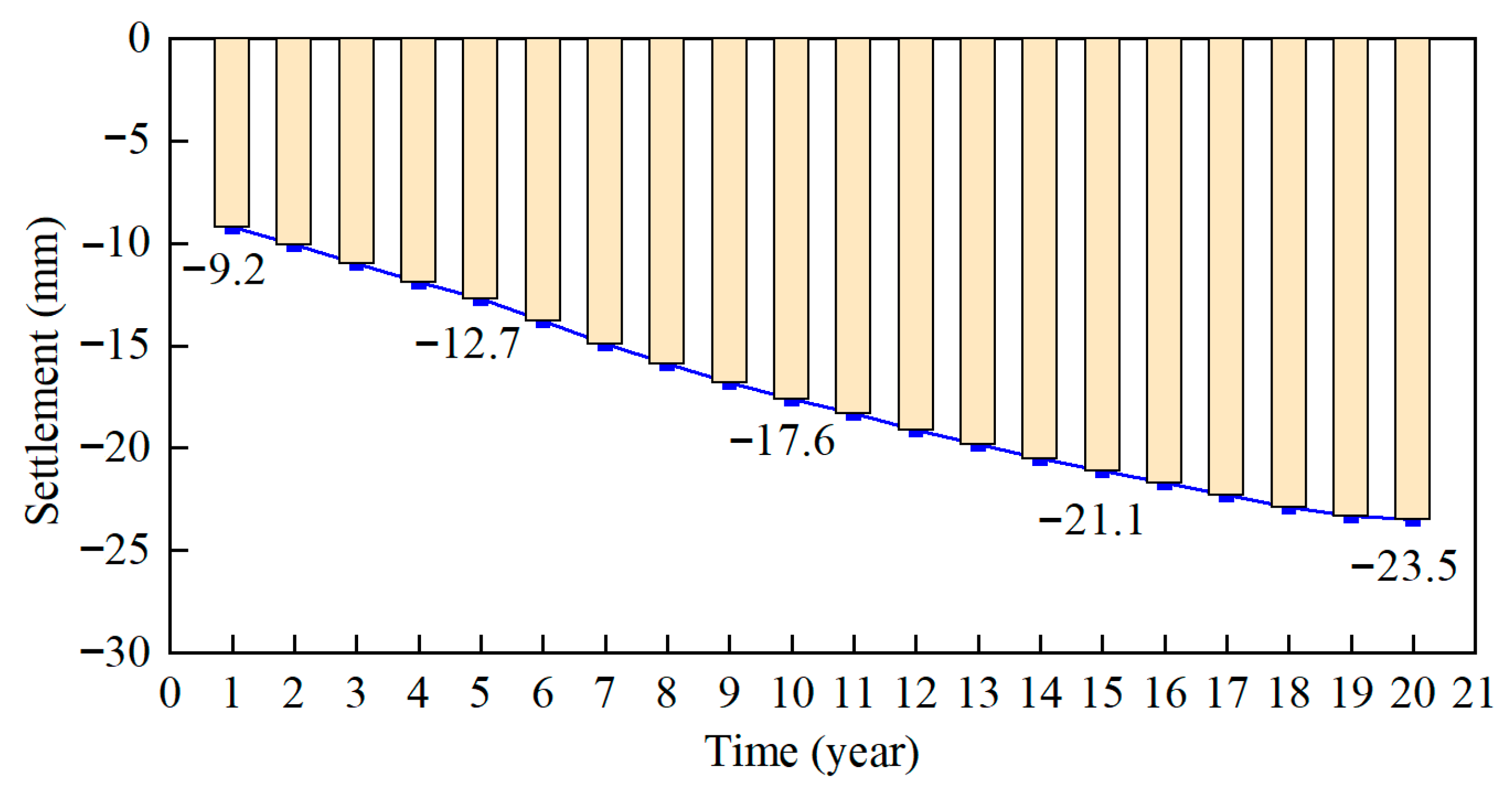
- The settlement of the subgrade increases rapidly at the beginning of road operation; As time goes by, the rate of increase in settlement slows down significantly. Finally, the settlement of the subgrade gradually tends to stabilize. The proposed construction countermeasure for freeze–thaw deformation of permafrost subgrade can ensure the long-term stability and safety of road operations.
Author Contributions
Funding
Institutional Review Board Statement
Informed Consent Statement
Data Availability Statement
Acknowledgments
Conflicts of Interest
References
- Gong, T.; Gao, B.; Ji, Z.; Cao, H. Variation of active layer thickness of permafrost in the Qinghai-Tibetan Plateau based on MODIS temperature product. Sci. Geogr. Sin. 2022, 42, 1848–1856. [Google Scholar] [CrossRef]
- Nitzbon, J.; Westermann, S.; Langer, M.; Martin, L.C.P.; Strauss, J.; Laboor, S.; Boike, J. Fast response of cold ice-rich permafrost in northeast Siberia to a warming climate. Nat. Commun. 2020, 11, 2201. [Google Scholar] [CrossRef]
- Grandpré, I.; Fortier, D.; Stephani, E. Degradation of permafrost beneath a road embankment enhanced by heat advected in groundwater. Can. J. Earth Sci. 2012, 49, 953–962. [Google Scholar] [CrossRef]
- Yang, L.; Shang, Y.; Dai, C.; Liu, Y.; Li, G.; Gao, K.; Wu, Y.; Wei, Y. Evaluating the effectiveness of high-frequency ground-penetrating radar in identifying active layer thickness in the Da Xing’anling Mountains. Remote Sens. 2025, 17, 3484. [Google Scholar] [CrossRef]
- Huang, Y.; Niu, F.; Chen, J.; He, P.; Yuan, K.; Su, W. Express highway embankment distress and occurring probability in permafrost regions on the Qinghai-Tibet Plateau. Transp. Geotech. 2023, 42, 101069. [Google Scholar] [CrossRef]
- Wang, X.; Petriaev, A.; Kolos, A.; Chetina, M. Prediction of thermal regime and frost heave deformations of subgrade soils during non-stationary heat and moisture transfer. Transp. Geotech. 2024, 48, 101338. [Google Scholar] [CrossRef]
- Ulitsky, V.; Gorodnova, E. The construction of transport infrastructure on permafrost soils. Procedia Eng. 2017, 189, 421–428. [Google Scholar] [CrossRef]
- Haghi, N.; Hashemian, L.; Bayat, A. Effects of seasonal variation on the load-bearing capacity of pavements composed of insulation layers. Transp. Res. Rec. 2016, 2579, 87–95. [Google Scholar] [CrossRef]
- Wang, Q.; Fang, J.; Zhao, X.; Hu, K. The influence of pavement type on the thermal stability of block-stone embankments in the warm permafrost region. Transp. Geotech. 2020, 23, 100334. [Google Scholar] [CrossRef]
- Huang, Y.; Niu, F.; He, P.; Pan, W.; Yuan, K.; Su, W. Effectiveness evaluation of cooling measures for express highway construction in permafrost regions based on GPR and ERT. Cold Reg. Sci. Technol. 2024, 228, 104339. [Google Scholar] [CrossRef]
- Hu, T.; Cui, C.; Yue, Z.; Liu, B.; Qi, L.; Cai, D. Literature review of prevention and control technologies of thermal thawing damage in subgrades of permafrost regions. China Rai. Sci. 2025, 46, 1–17. Available online: https://zgtk.publish.founderss.cn/thesisDetails#10.3969/j.issn.1001-4632.2025.02.01&lang=zh (accessed on 2 September 2025).
- Yuan, K.; Zhang, J.; Fan, K.; Zhu, D. Application effect and numerical simulation of hollow block ventilated roadbed in frozen soil areas. Hig. Transp. Technol. 2013, 30, 56–62. [Google Scholar] [CrossRef]
- Cheng, Z.; Zhang, Z.; Liu, G.; Wu, W. Study on the effect of non-linear ventilation pipe composite measures on the slope permafrost subgrade. Sustainability 2023, 15, 1180. [Google Scholar] [CrossRef]
- Jørgensen, A.; Ingeman-Nielsen, T. Optimization in the use of air convection embankments for the protection of underlying permafrost. Cold Reg. Eng. 2012, 10, 12–20. [Google Scholar] [CrossRef]
- Li, Y.; Wu, Z.; Wang, Y.; Sun, J. Test study on the application effect of the thermal pipes on the roadbed in the permafrost region along Qinghai-Tibet Railway. China Rai. Sci. 2008, 29, 6–11. [Google Scholar] [CrossRef]
- Liu, J.; Li, Z.; Li, Y.; Zhou, D. Research on the cooling control efficiency of hot rod roadbeds in permafrost regions. Highway 2021, 66, 20–27. Available online: https://link.cnki.net/urlid/11.1668.U.20210202.1606.008 (accessed on 7 May 2024).
- Tai, B.; Liu, J.; Fang, J.; Xu, A.; Liu, L. Calculation model of permafrost table of XPS insulated board subgrade in warm permafrost regions. J. Chang’an Univ. 2017, 37, 1–11. Available online: https://zzszrb.chd.edu.cn/oa/DArticle.aspx?type=view&id=201705026 (accessed on 9 June 2023).
- Zhang, B.; Fan, W. Application of insulation board in road engineering in permafrost regions of Inner Mongolia. J. Geomech. 2018, 24, 706–713. [Google Scholar] [CrossRef]
- Chen, D.; Wang, S.; Chen, J.; Dong, Y. Study of the factors influencing the thickness of residual thawed interlayers and cooling effect of block-stone embankment. J. Glaciol. Geocryol. 2014, 36, 854–861. [Google Scholar] [CrossRef]
- Ma, M.; Qi, Y.; Guo, Y.; Dong, Y. Numerical simulation of influence of different replacement materialson highway subgrade temperature in permafrost area. For. Eng. 2022, 4, 131–139. [Google Scholar] [CrossRef]
- Goering, D.J. Passively cooled railway embankments for use in permafrost areas. J. Cold Reg. Eng. 2003, 17, 119–133. [Google Scholar] [CrossRef]
- Pei, W.; Zhang, M.; Li, S.; Lai, Y.; Jin, L. Enhancement of convective cooling of the porous crushed-rock layer in cold regions based on experimental investigations. Int. Commun. Heat Mass Transfer. 2017, 87, 14–21. [Google Scholar] [CrossRef]
- Shang, Y.; Cao, Y.; Li, G.; Gao, K.; Zhang, H.; Sheng, J.; Chen, D.; Lin, J. Characteristics of meteorology and freeze-thaw in high-latitude cold regions: A case study in Da Xing’anling, Northeast China (2022–2023). Front. Earth Sci. 2025, 12, 1476234. [Google Scholar] [CrossRef]
- Anderson, J.; Douglas, T.; Barbato, R.; Saari, S.; Edwards, J.; Jones, R. Linking vegetation cover and seasonal thaw depths in interior Alaska permafrost terrains using remote sensing. Remote Sens. Environ. 2019, 233, 111363. [Google Scholar] [CrossRef]
- Szymański, W.; Jagi, K.; Drewnik, M.; Musielok, Ł.; Stolarczyk, M.; Gus-Stolarczyk, M.; Sikora, S. Impact of tundra vegetation type on topsoil temperature in central Spitsbergen (Svalbard, High Arctic). Geoderma 2022, 428, 116196. [Google Scholar] [CrossRef]
- Heijmans, M.M.P.D.; Magnússon, R.Í.; Lara, M.J.; Frost, G.V.; Myers-Smith, I.H.; van Huissteden, J.; Jorgenson, M.T.; Fedorov, A.N.; Epstein, H.E.; Lawrence, D.M.; et al. Tundra Vegetation Change and Impacts on Permafrost. Nat. Rev. Earth. Environ. 2022, 3, 68–84. [Google Scholar] [CrossRef]
- Grünberg, I.; Wilcox, E.; Zwieback, S.; Marsh, P.; Boike, J. Linking tundra vegetation, snow, soil temperature, and permafrost. Biogeosciences 2020, 17, 4261–4279. [Google Scholar] [CrossRef]
- Chang, X.; Jin, H.; Zhang, Y.; Li, X.; He, R.; Li, Y.; Lü, L.; Wang, H. Permafrost thermal dynamics at a local scale in northern Da Xing’anling Mountains. Environ. Res. Lett. 2024, 19, 064014. [Google Scholar] [CrossRef]
- Lara, R.; Berg, A.; Warland, J.; Tetlock, E. In situ estimates of freezing/melting point depression in agricultural soils using permittivity and temperature measurements. Water Resour. Res. 2020, 56, 5. [Google Scholar] [CrossRef]
- Watanabe, K.; Osada, Y. Simultaneous measurement of unfrozen water content and hydraulic conductivity of partially frozen soil near 0 °C. Cold Reg. Sci. Technol. 2017, 142, 79–84. [Google Scholar] [CrossRef]
- Li, C.; Vennapusa, P.K.R.; Ashlock, J.; White, D.J. Mechanistic-based comparisons for freeze-thaw performance of stabilized unpaved roads. Cold Reg. Sci. Technol. 2017, 141, 97–108. [Google Scholar] [CrossRef]
- Skierucha, W.; Wilczek, A.; Szypłowska, A.; Sławiński, C.; Lamorski, K. A TDR-based soil moisture monitoring system with simultaneous measurement of soil temperature and electrical conductivity. Sensors 2012, 12, 13545–13566. [Google Scholar] [CrossRef] [PubMed]
- Teltayev, B.; Oliviero Rossi, C.; Aitbayev, K.; Suppes, E.; Yelshibayev, A.; Nugmanova, A. Freezing and Thawing Processes of Highways in Kazakhstan. Appl. Sci. 2022, 12, 11938. [Google Scholar] [CrossRef]
- Hu, G.; Zhao, L.; Zhu, X.; Wu, X.; Wu, T.; Li, R.; Xie, C.; Hao, J. Review of algorithms and parameterizations to determine unfrozen water content in frozen soil. Geoderma 2020, 368, 114277. [Google Scholar] [CrossRef]
- Bai, Q.; Li, X.; Tian, Y.; Fang, J. Equations and numerical simulation for coupled water and heat transfer in frozen soil. J. Geotech. Eng. 2015, 37, 131–136. [Google Scholar] [CrossRef]
- Xu, Z.; Ma, M.; Chen, Y.; Shan, W.; Wu, K.; Ji, J. Study on hydrothermal migration and deformation characteristics of black soil during freeze-thaw processes driven by multi-factor couplings. Soils 2025, 57, 1152–1167. [Google Scholar] [CrossRef]
- Li, S.; Zhang, M.; Pei, W.; Lai, Y. Experimental and numerical simulations on heat-water-mechanics interaction mechanism in a freezing soil. Appl. Therm. Eng. 2018, 132, 209–220. [Google Scholar] [CrossRef]
- Wilczek, A.; Szypłowska, A.; Kafarski, M.; Skierucha, W. A time-domain reflectometry method with variable needle pulse width for measuring the dielectric properties of materials. Sensors 2016, 16, 191. [Google Scholar] [CrossRef]
- Chuvilin, E.; Davletshina, D.; Bukhanov, B.; Grebenkin, S. Thermal conductivity of frozen and unfrozen gas-saturated soils. Geosciences 2023, 13, 347. [Google Scholar] [CrossRef]
- Fu, J.; Zhu, D.; Zhang, H. Research on special subgrade base treatment method for Gonghe-Yushu Highway in permafrost regions. Highway 2016, 1, 36–42. Available online: https://xueshu.baidu.com/ndscholar/browse/detail?paperid=1698d9e2a213cc98c28c9fe22f649af1 (accessed on 4 March 2024).
- Liu, M.; Ma, W.; Niu, F.; Luo, J.; Yin, G. Thermal performance of a novel crushed-rock embankment structure for expressway in permafrost regions. Int. J. Heat Mass Transf. 2018, 127, 1178–1188. [Google Scholar] [CrossRef]
- Wu, Q.; Zhao, H.; Zhang, Z.; Chen, J.; Liu, Y. Long-term role of cooling the underlying permafrost of the crushed rock structure embankment along the Qinghai–Xizang railway. Permafr. Periglac. Process. 2020, 31, 172–183. [Google Scholar] [CrossRef]
- Li, X.; Ma, W.; Mu, Y.; Dong, J.; Chen, L. Wind field and thermal performances of an expressway constructed with two separated crushed-rock embankments in high-altitude permafrost zones. Transp. Geotech. 2021, 27, 100447. [Google Scholar] [CrossRef]
- Tian, Y.H.; Fang, J.H.; Shen, Y.P. Simulation on stability of large-width highway embankment in permafrost regions. China J. Highw. Transp. 2015, 28, 17–23. [Google Scholar] [CrossRef]
- Shan, W.; Ma, M.; Guo, Y.; Zhang, C. Numerical analysis of the influence of block-stone embankment filling height on the water, temperature, and deformation distributions of subgrade in permafrost regions. Water 2022, 14, 1382. [Google Scholar] [CrossRef]
- Schuur, E.A.G.; McGuire, A.D.; Schädel, C.; Grosse, G.; Harden, J.W.; Hayes, D.J.; Hugelius, G.; Koven, C.D.; Kuhry, P.; Lawrence, D.M.; et al. Climate change and the permafrost carbon feedback. Nature 2015, 520, 171–179. [Google Scholar] [CrossRef]
- Peng, X.; Zhang, T.; Frauenfeld, O.W.; Wang, K.; Cao, B.; Zhong, X.; Su, H.; Mu, C. Response of seasonal soil freeze depth to climate change across China. Cryosphere 2017, 11, 1059–1073. [Google Scholar] [CrossRef]
- Zhang, S.; Chen, J.; Huo, L.; Li, X.; Wu, C.; Zhang, H.; Feng, Q. The response of alpine permafrost to decadal human disturbance in the context of climate warming. Remote Sens. 2025, 17, 3482. [Google Scholar] [CrossRef]
- Wang, Y.; Zhao, Y.; Mao, X.; Yin, S. Impact of climate change on the performance of permafrost highway subgrade reinforced by concrete piles. Future Transp. 2023, 3, 996–1006. [Google Scholar] [CrossRef]



| Material | (kg/m3) | (Mpa) | (Mpa) | |
|---|---|---|---|---|
| Gravel | 2000 | 0.30 | 78 | 110 |
| Rubble stone | 2400 | 0.30 | 150 | 180 |
| Clay | 1700 | 0.23 | 2.05 | 58 |
| Round gravel | 2100 | 0.25 | 107 | 140 |
| Volcanic breccia | 1950 | 0.24 | 53 | 98 |
| Material | (W/(m·°C)) | (W/(m·°C)) | (J/(kg·°C)) | (J/(kg·°C)) |
|---|---|---|---|---|
| Gravel | 1.96 | 2.31 | 880 | 790 |
| Rubble stone | 1.04 | 2.84 | 820 | 740 |
| Clay | 1.32 | 1.83 | 1190 | 1080 |
| Round gravel | 1.56 | 1.97 | 1010 | 920 |
| Volcanic breccia | 1.78 | 2.19 | 940 | 840 |
Disclaimer/Publisher’s Note: The statements, opinions and data contained in all publications are solely those of the individual author(s) and contributor(s) and not of MDPI and/or the editor(s). MDPI and/or the editor(s) disclaim responsibility for any injury to people or property resulting from any ideas, methods, instructions or products referred to in the content. |
© 2025 by the authors. Licensee MDPI, Basel, Switzerland. This article is an open access article distributed under the terms and conditions of the Creative Commons Attribution (CC BY) license (https://creativecommons.org/licenses/by/4.0/).
Share and Cite
Xu, Z.; Wang, G.; Yang, Z. Research on Construction Countermeasures for Freeze–Thaw Deformation of Permafrost Subgrade in Forest Regions of Northeast China. Appl. Sci. 2025, 15, 12810. https://doi.org/10.3390/app152312810
Xu Z, Wang G, Yang Z. Research on Construction Countermeasures for Freeze–Thaw Deformation of Permafrost Subgrade in Forest Regions of Northeast China. Applied Sciences. 2025; 15(23):12810. https://doi.org/10.3390/app152312810
Chicago/Turabian StyleXu, Zhibo, Guihe Wang, and Zhu Yang. 2025. "Research on Construction Countermeasures for Freeze–Thaw Deformation of Permafrost Subgrade in Forest Regions of Northeast China" Applied Sciences 15, no. 23: 12810. https://doi.org/10.3390/app152312810
APA StyleXu, Z., Wang, G., & Yang, Z. (2025). Research on Construction Countermeasures for Freeze–Thaw Deformation of Permafrost Subgrade in Forest Regions of Northeast China. Applied Sciences, 15(23), 12810. https://doi.org/10.3390/app152312810