Article

Taxonomic and Genomic Characterization of Brevibacillus sp. JNUCC 42 from Baengnokdam Crater Lake, Mt. Halla, and Its Cosmeceutical Potential


Department of Chemistry and Cosmetics, Jeju Inside Agency and Cosmetic Science Center, Jeju National University, Jeju 63243, Republic of Korea
*
Author to whom correspondence should be addressed.
Appl. Sci. 2025, 15(23), 12681; https://doi.org/10.3390/app152312681
Submission received: 2 November 2025 / Revised: 25 November 2025 / Accepted: 27 November 2025 / Published: 29 November 2025

Abstract

Jeju Island, a volcanic island located off the southern coast of the Korean Peninsula, harbors highly specialized microbial communities shaped by its unique geological and climatic diversity. In particular, Baengnokdam Crater Lake at the summit of Mt. Halla represents an extreme, oligotrophic volcanic habitat characterized by intense UV radiation, temperature fluctuations, and limited nutrients. From this environment, a novel bacterial strain, Brevibacillus sp. JNUCC 42, was isolated and subjected to comprehensive taxonomic, genomic, and biochemical analyses. The strain is a Gram-positive, aerobic, rod-shaped bacterium that grows optimally at 30 °C and pH 7.0–9.0 with moderate NaCl tolerance (≤3%). Phylogenetic analysis based on 16S rRNA gene sequencing and genome-scale GBDP confirmed its affiliation to the genus Brevibacillus, forming a distinct lineage closely related to B. laterosporus DSM 25T. Whole-genome sequencing generated a 4.93 Mb circular chromosome with a GC content of 40.7%. Comparative genomic analyses revealed ANI (87.1%) and dDDH (32.8%) values far below the species threshold, supporting its delineation as a novel species. Chemotaxonomic data further distinguished JNUCC 42 by its predominance of anteiso-C15:0 (37.24%) and iso-C15:0 (27.78%) fatty acids and the presence of a unique unidentified aminolipid not detected in the type strain. Genome mining identified 21 biosynthetic gene clusters, including NRPS, PKS, and NRPS–PKS hybrids, suggesting its potential to produce structurally diverse secondary metabolites. One of these metabolites, the cyclic dipeptide maculosin [cyclo(L-Pro-L-Tyr)], was purified from the culture extract and structurally characterized by NMR spectroscopy. Functional assays demonstrated that maculosin significantly inhibited α-MSH-induced melanogenesis and intracellular tyrosinase activity in B16F10 melanoma cells without cytotoxicity up to 100 µM. Collectively, these findings indicate that Brevibacillus sp. JNUCC 42 represents a novel species within the genus Brevibacillus and a promising microbial source of bioactive compounds with potential cosmeceutical applications.

1. Introduction

Jeju Island, situated off the southern coast of the Korean Peninsula, is a volcanic landmass characterized by a mosaic of geological formations, rich mineral substrates, and diverse microclimates that have fostered the development of highly specialized microbial communities. Among its volcanic features, the summit crater lake of Mt. Halla at approximately 1850 m above sea level—Baengnokdam Crater Lake—stands out as one of the most isolated and pristine ecosystems in Korea. The crater is formed on basaltic–trachytic lava deposits and is exposed to intense ultraviolet radiation, strong diurnal and seasonal temperature fluctuations, and nutrient-limited conditions [1,2,3]. These extreme physicochemical stresses have shaped a distinct extremophilic microbiota that exploits adaptive metabolic strategies suited to low temperature, oligotrophy and mineral-rich habitats. Such volcanic soils therefore present promising reservoirs for the discovery of novel microbial taxa and bioactive compounds with biotechnological potential [4,5,6].
Microorganisms from extreme habitats—including volcanic soils, polar ice, or deep-sea sediments—have proven to be rich sources of structurally diverse secondary metabolites with applications in medicine, cosmetics, and biotechnology [7,8]. In particular, extremophilic bacteria frequently synthesize molecules associated with stress tolerance and cellular protection—such as antioxidants, anti-inflammatory agents, UV-protective compounds, and inhibitors of melanin biosynthesis [9,10]. The growing demand for nature-derived cosmeceutical and dermatological agents further elevates the relevance of such microorganisms. Moreover, cold- and stress-adapted bacteria often secrete enzymes and small molecules that remain stable and active under harsh environmental conditions, making them especially valuable for eco-friendly industrial and pharmaceutical applications [11].
The genus Brevibacillus offers notable relevance in this context. Originally reclassified from a cluster of Bacillus species in 1996, members of the genus are Gram-positive, aerobic, endospore-forming rod-shaped bacteria widely distributed in soil, water, and decaying organic matter [12,13]. They typically display a mesophilic growth profile, motility, and the formation of spores and are increasingly recognized for their functional versatility [13]. Importantly, several Brevibacillus species have been commercially exploited: for example, Brevibacillus brevis has been cultured in large-scale fermenters for the production of antimicrobial peptides and enzymes [14], while Brevibacillus choshinensis is used as a host in heterologous protein-expression systems owing to its capacity for high-yield secretion and low extracellular protease activity [15]. In agriculture, Brevibacillus laterosporus has been applied as a probiotic for crops and livestock, producing antimicrobial peptides and hydrolases that enhance nutrient uptake, suppress pathogens, and modulate gut microbiota in animals [16,17,18]. These examples underscore the genus’s commercial utility across agriculture, bioprocessing, and cosmetics.
Given this background, the volcanic soils of Baengnokdam offer a compelling target for isolation of novel Brevibacillus taxa with distinctive bio-metabolic potential. In the present study, we isolated strain Brevibacillus sp. JNUCC 42 from the soil of Baengnokdam Crater Lake, and conducted comprehensive taxonomic, genomic, and chemotaxonomic characterization. We explore its potential as a source of bioactive compounds for cosmeceutical applications and place our findings within the broader context of Brevibacillus-derived biotechnological innovation.

2. Materials and Methods

2.1. Chemicals and Reagents

Tryptic soy broth (TSB) and Luria–Bertani (LB) medium were obtained from BD Difco (Becton, Dickinson and Company, Franklin Lakes, NJ, USA). α-Melanocyte-stimulating hormone (α-MSH), sodium hydroxide (NaOH), arbutin, L-DOPA, and phosphate-buffered saline (PBS) were purchased from Sigma-Aldrich (St. Louis, MO, USA). Dimethyl sulfoxide (DMSO) and 3-(4,5-dimethylthiazol-2-yl)-2,5-diphenyltetrazolium bromide (MTT) were obtained from Biosesang (Seongnam, Gyeonggi-do, Republic of Korea). Dulbecco’s Modified Eagle’s Medium (DMEM) and penicillin–streptomycin (1%) were purchased from Thermo Fisher Scientific (Waltham, MA, USA), while fetal bovine serum (FBS) was supplied by Merck Millipore (Burlington, MA, USA). All reagents were of analytical grade or higher purity and used according to standard laboratory procedures.

2.2. Isolation and Cultivation of the Strain

Strain Brevibacillus sp. JNUCC 42 was obtained from a volcanic-soil sample collected near Baengnokdam Crater Lake (33.3611° N, 126.5356° E) at the summit area of Mt. Halla, Jeju Island, Republic of Korea, in September 2019. Soil sampling was conducted under official permission granted by the Jeju Special Self-Governing Province World Natural Heritage Headquarters. The sample was taken from a designated surface marker point, where approximately 1 g of volcanic soil was collected from a depth of 5–10 cm below the ground surface to minimize recent environmental disturbance and ensure environmental consistency. The collected sample was suspended in 20 mL of sterile physiological saline and vigorously mixed to release microbial cells into suspension. After sedimentation of coarse particles for approximately 30 min, the supernatant was serially diluted (10−5–10−9), and aliquots (100 µL) were spread onto Luria–Bertani (LB) agar plates. Distinct colonies that appeared after incubation were repeatedly streaked three to four times to ensure purity, yielding a single isolate designated JNUCC 42. The strain was routinely propagated on LB agar or in LB broth at 30 °C under aerobic conditions, and glycerol stocks (20%, v/v) were prepared for long-term storage at −80 °C. Cells harvested during the late-exponential growth phase were used for genomic DNA extraction. For comparative analyses, the type strain B. laterosporus DSM 25T was cultivated under the same conditions as JNUCC 42, using LB agar or LB broth at 30 °C under aerobic conditions.

2.3. Phylogenetic and Genomic Analysis

The phylogenetic position of strain Brevibacillus sp. JNUCC 42 was determined using both 16S rRNA gene sequence analysis and whole-genome-based phylogenomics. Genomic DNA was extracted from cells grown in LB broth at 30 °C for 24 h using the Qiagen DNeasy Blood & Tissue Kit (Qiagen, Germany) according to the manufacturer’s protocol. The 16S rRNA gene was amplified using universal bacterial primers 27F (5′-AGAGTTTGATCCTGGCTCAG-3′) and 1492R (5′-GGTTACCTTGTTACGACTT-3′). PCR products were purified, sequenced by Macrogen Inc. (Seoul, Republic of Korea), and assembled using BioEdit v7.2.6. The sequence was compared with available type-strain sequences in the EzBioCloud and NCBI GenBank databases for preliminary identification [19].
A phylogenetic tree was reconstructed using the Genome BLAST Distance Phylogeny (GBDP) method implemented in the Type Strain Genome Server (TYGS) platform [20]. For 16S rRNA-based analysis, evolutionary distances were calculated using BLAST (version 2.14.0) pairwise comparisons, and branch support values were inferred from 100 replications. In addition, a whole-genome-based GBDP tree was generated using intergenomic distances computed from the genome-scale BLAST comparison algorithm [21], providing a more robust taxonomic framework [22]. Representative type strains from closely related genera (Bacillus, Neobacillus, Peribacillus, Paenibacillus, and Allocoprobacillus) were included as outgroup references to validate the phylogenetic position of JNUCC 42.

2.4. Genome Sequencing and Assembly

Genomic DNA of Brevibacillus sp. JNUCC 42 was sequenced using a hybrid platform combining long-read PacBio RS II and short-read Illumina technology (Macrogen Inc., Seoul, Republic of Korea). PacBio libraries were prepared with SMRTbell templates and analyzed through single-molecule real-time (SMRT) sequencing [23], whereas Illumina paired-end libraries were constructed by random fragmentation followed by 5′ and 3′ adapter ligation and sequencing on the HiSeq platform [24].
Raw PacBio subreads were filtered using the PreAssembler Filter v1 (minimum subread length = 500 bp, polymerase read quality ≥ 0.8). The mean subread length after filtering was 10,948 bp (N50 = 17,298 bp) with a total of 131,367 reads corresponding to 1.44 Gb of sequence. Illumina reads (12.7 M raw reads; 1.92 Gb) were trimmed to remove adapters and low-quality bases [25], yielding 7.8 M filtered reads (1.18 Gb) with GC content 40.2%, Q20 = 99.46%, and Q30 = 97.91%.
De novo assembly of PacBio reads was carried out using HGAP v3.0 implemented in SMRT Portal v2.3 [26], followed by polishing with Quiver and Illumina-based error correction using Pilon v1.21 [27]. The assembly workflow included preassembly, seed read selection (minimum 6 kb), error correction, contig construction, and circularization checks. Post-assembly, Illumina reads were mapped back to the consensus genome for further correction and validation.

2.5. Assembly Validation and Annotation

Genome completeness and quality were evaluated by k-mer analysis (Jellyfish v2.2.10 and GenomeScope 2.0) [28,29], read mapping statistics, and BUSCO v3.0 assessment using the bacteria_odb9 database (148 single-copy orthologs) [30]. Sequence similarity searches were performed with BLASTN v2.7.1+ against the NCBI NT database to determine phylogenetic affiliation [21].
Functional genome annotation was conducted using Prokka v1.12b [31], identifying coding DNA sequences (CDS), tRNA, and rRNA genes. Circular genome maps were generated from the annotation results, showing forward/reverse CDS, tRNA, rRNA loci, GC content, and GC skew [32].

2.6. Physiological, Biochemical, and Chemotaxonomic Characterization

The physiological, biochemical, and chemotaxonomic characteristics of Brevibacillus sp. JNUCC 42 were determined in comparison with the nearest relative strain Brevibacillus laterosporus DSM 25T. For the evaluation of growth characteristics, both strains were cultivated in tryptic soy broth (TSB) under various environmental conditions, including different pH levels (4.0–10.0), NaCl concentrations (1–20%, w/v), and temperatures (10–42 °C). After 24 h of incubation, the growth intensity was quantified by measuring the optical density at 600 nm (OD600) and categorized as follows: +++ (OD600 ≥ 0.50), ++ (0.20 ≤ OD600 < 0.50), + (0.05 ≤ OD600 < 0.20), and – (OD600 < 0.05).
Carbohydrate utilization profiles and enzymatic activities were assessed using the API 50CHB and API ZYM test systems (bioMérieux, Marcy-l’Étoile, France) according to the manufacturer’s instructions. Reaction outcomes were visually evaluated after incubation at 30 °C for 24 h, and color development was interpreted following the standard API reference chart.
For cellular fatty acid composition, cells cultivated on TSB agar plates at 30 °C for 24 h were harvested and analyzed using the MIDI Sherlock Microbial Identification System (version 6.0). The extracted fatty acids were converted to methyl esters (FAMEs), separated by gas chromatography (GC), and identified based on equivalent chain length values and the Sherlock peak library. Relative abundances of individual fatty acids were expressed as percentages of total fatty acids, which were classified into straight-chain, branched-chain, or unsaturated types.
For polar lipid analysis, total lipids were extracted using a chloroform–methanol–water mixture (1:2:0.8, v/v/v) and subjected to two-dimensional thin-layer chromatography (TLC) on silica gel 60 plates (Merck, Darmstadt, Germany). The plates were developed in chloroform–methanol–water (65:25:4, v/v/v) for the first dimension and chloroform–acetic acid–methanol–water (80:12:15:4, v/v/v) for the second dimension. Lipid spots were visualized with 10% molybdophosphoric acid (for total lipids) and ninhydrin reagent (for detection of aminolipids and phospholipids). Major polar lipid classes were identified by their migration patterns and staining responses.

2.7. Digital DNA–DNA Hybridization (dDDH) Analysis Between Brevibacillus sp. JNUCC 42 and Related Species

Digital DNA–DNA hybridization (dDDH) values were calculated to evaluate the genomic relatedness between strain Brevibacillus sp. JNUCC 42 and its phylogenetically related type strains within the genus Brevibacillus. The analysis was performed using the Genome-to-Genome Distance Calculator (GGDC) version 3.0 available at the DSMZ web server (https://ggdc.dsmz.de, accessed on 11 August 2025) [33,34] based on pairwise genome sequence comparisons.
The GGDC computes three independent dDDH estimates—d0 (HSP length/total length), d4 (sum of identities/HSP length), and d6 (sum of identities/total length)—each providing a statistical confidence interval (C.I.) that reflects the degree of precision in estimating genomic similarity [33]. The recommended formula d4, which exhibits the highest correlation with wet-lab DDH values, was primarily considered to determine genomic relatedness [33,35].
Additionally, the G+C content difference between JNUCC 42 and reference genomes was calculated from whole-genome sequences to supplement the genomic delineation [36]. Species demarcation thresholds were applied according to accepted taxonomic standards—namely, 70% for DDH and 1% for G+C content difference—to evaluate whether JNUCC 42 represents a distinct genomic species [35,36].

2.8. Average Nucleotide Identity (ANI) Analysis Between Brevibacillus sp. JNUCC 42 and Brevibacillus laterosporus DSM 25

To further evaluate the genomic relatedness between Brevibacillus sp. JNUCC 42 and its closest phylogenetic relative Brevibacillus laterosporus DSM 25, the Average Nucleotide Identity (ANI) was calculated using the OrthoANIu algorithm [37] implemented in the CJ Bioscience OrthoANIu web service (https://www.ezbiocloud.net/tools/ani, accessed on 11 August 2025).
The OrthoANIu method computes pairwise nucleotide identity between orthologous genomic regions by fragmenting the genome sequences and performing reciprocal BLAST-based alignment [37,38]. The resulting ANI value represents the average nucleotide identity across all shared genomic segments, and a species boundary threshold of 95–96% ANI is generally accepted for prokaryotic species delineation [39,40].
The analysis used the assembled genome of Brevibacillus sp. JNUCC 42 (Genome A, 4,924,560 bp) and B. laterosporus DSM 25 (Genome B, 5,399,880 bp). The parameters retrieved from the OrthoANIu output included the overall ANI value, average aligned length, and coverage percentages for both genomes.

2.9. In Silico Prediction of Secondary Metabolite Biosynthetic Gene Clusters in Brevibacillus sp. JNUCC 42

The complete genome sequence of Brevibacillus sp. JNUCC 42 was analyzed to identify biosynthetic gene clusters (BGCs) responsible for the production of secondary metabolites. Genome mining was performed using antiSMASH version 8.0 (https://antismash.secondarymetabolites.org, accessed on 11 August 2025) [41], applying default parameters for detection of modular systems such as nonribosomal peptide synthetases (NRPS), polyketide synthases (PKS Types I, II, and III), hybrid PKS–NRPS clusters, as well as ribosomally synthesized and post-translationally modified peptides (RiPPs) and terpene biosynthetic pathways.
The predicted clusters were annotated based on sequence similarity to known BGCs deposited in the Minimum Information about a Biosynthetic Gene cluster (MIBiG) database [42], and their confidence levels (low, moderate, or high) were evaluated automatically by antiSMASH. The domain architecture and module organization of NRPS and PKS clusters were manually curated using antiSMASH output files and visualized according to catalytic domain composition—condensation (C), adenylation (A), peptidyl carrier protein (PCP/T), epimerization (E), ketosynthase (KS), acyltransferase (AT), and thioesterase (TE).
The substrate specificities of NRPS adenylation domains were inferred from the built-in NRPSpredictor2 tool [43] integrated within antiSMASH, while hybrid PKS/NRPS modules were further validated using NaPDoS2 [44].

2.10. Morphological Characterization of Brevibacillus sp. JNUCC 42

The cellular morphology of strain Brevibacillus sp. JNUCC 42 was examined using a high-resolution field emission scanning electron microscope (FE-SEM; Regulus 8100, Hitachi, Tokyo, Japan). The strain was cultivated on Luria–Bertani (LB) agar plates at 30 °C for 24 h. A loopful of cells was gently collected and fixed in 2.5% (v/v) glutaraldehyde prepared in 0.1 M phosphate buffer (pH 7.2) for 2 h at 4 °C.
The fixed samples were washed three times with the same buffer and sequentially dehydrated through a graded ethanol series (30%, 50%, 70%, 90%, and 100%, 10 min each). Following critical-point drying, the samples were mounted on aluminum stubs and sputter-coated with platinum (~10 nm thickness) to enhance conductivity. The samples were observed under an accelerating voltage of 5.0 kV and a working distance of 8.1 mm. Representative images were obtained at magnifications ranging from ×9000 to ×25,000.

2.11. Isolation, Purification, and Structural Identification of the Bioactive Compound from Brevibacillus sp. JNUCC 42

Brevibacillus sp. JNUCC 42 was cultivated in 500 mL of LB broth at 30 °C for 72 h with continuous agitation at 150 rpm. After incubation, the culture broth was extracted twice with an equal volume of ethyl acetate (EtOAc), and the combined organic layers were concentrated under reduced pressure to obtain a crude extract (160 mg). The EtOAc extract was subsequently subjected to column chromatography on Sephadex LH-20 using 100% methanol as the eluent, yielding six fractions (Fr. 1–Fr. 6). Each fraction was monitored by analytical high-performance liquid chromatography (HPLC) on a Waters Alliance e2695 system equipped with a 2998 PDA detector and Empower software (version 3.8.0, Waters, Milford, MA, USA). Chromatographic analyses were conducted for 60 min at a detection wavelength of 276 nm under the conditions summarized in Supplementary Table S1 and Supplementary Figures S2 and S3. Among the obtained fractions, Fr. 3 displayed a single major peak at 32.7 min and was designated as Compound 1 for further purification and structural characterization. Purity confirmation of Compound 1 was carried out under identical chromatographic conditions, revealing a single sharp peak at 32.747 min, thereby confirming high chemical purity. The UV absorption spectrum exhibited a maximum at 276 nm, consistent with aromatic dipeptide derivatives. Structural elucidation was performed by nuclear magnetic resonance (NMR) spectroscopy. 1H- and 13C-NMR spectra were recorded on JEOL JNM-LA 400 and JNM-ECX 400 FT-NMR spectrometers (JEOL Ltd., Tokyo, Japan) operating at 400 MHz for 1H and 100 MHz for 13C, respectively. Deuterated methanol (CD3OD; Cambridge Isotope Laboratories, Tewksbury, MA, USA) served as the solvent, and chemical shifts (δ) were expressed in ppm with coupling constants (J) in Hz. Spectral data obtained from both 1H and 13C NMR analyses were compared with published reference data to confirm the molecular identity of the isolated compound.

2.12. Assessment of Anti-Melanogenic Activity of Maculosin in B16F10 Melanoma Cells

The inhibitory effect of Maculosin on melanogenesis was evaluated using murine melanoma B16F10 cells. Cells were cultured in Dulbecco’s Modified Eagle’s Medium (DMEM; Thermo Fisher Scientific, USA) supplemented with 10% fetal bovine serum (FBS) and 1% penicillin–streptomycin at 37 °C under a humidified atmosphere of 5% CO2. For cytotoxicity assessment, B16F10 cells were seeded at 6 × 10⁴ cells per well in 96-well plates and incubated for 24 h. Various concentrations of maculosin (6.25–400 μM) were applied for 72 h, followed by the addition of 0.5 mg/mL MTT solution for 4 h. The formazan crystals were dissolved in DMSO, and absorbance was measured at 540 nm using a microplate reader (Epoch, BioTek Instruments, Winooski, VT, USA). Cell viability was expressed as a percentage of the untreated control.
To assess the effect of Maculosin on melanin synthesis, cells were seeded in 6-well plates and pre-stimulated with 100 nM α-MSH for 24 h, followed by treatment with Maculosin (25, 50, and 100 μM) for 72 h. Arbutin (300 μM) served as a positive control. After incubation, cells were lysed with 1 N NaOH containing 10% DMSO and incubated at 80 °C for 1 h to solubilize melanin. Absorbance was measured at 405 nm, and melanin levels were expressed as a percentage relative to α-MSH-treated controls.
For tyrosinase activity, cells were lysed in phosphate-buffered saline (PBS) containing 1% Triton X-100, and 90 μL of lysate was incubated with 10 μL of 0.1% L-DOPA solution at 37 °C for 1 h. The formation of dopachrome was monitored by absorbance at 475 nm, and tyrosinase activity was calculated relative to control values.

2.13. Statistical Analyses

All statistical analyses were conducted using IBM SPSS Statistics software (version 20; SPSS Inc., Armonk, NY, USA). Differences between groups were examined using either Student’s t-test or one-way analysis of variance (ANOVA), depending on the experimental design. Data are presented as the mean ± standard deviation (SD), obtained from at least three independent experiments or from triplicate measurements within a single experiment. Statistical significance was considered at ** p < 0.001 when compared with the control group.

3. Results

3.1. Phylogenetic Analysis

The 16S rRNA gene sequence of strain Brevibacillus sp. JNUCC 42 (1475 bp) exhibited 99.2% similarity to Brevibacillus laterosporus DSM 25T and 98.8% to Brevibacillus daliensis YIM B02290T, indicating that the isolate belongs to the genus Brevibacillus and represents a distinct species lineage. In the 16S rRNA-based GBDP tree, JNUCC 42 clustered within the Brevibacillus clade, forming a separate sublineage closely associated with B. laterosporus and B. daliensis (Figure S1).
Whole-genome phylogenetic analysis further supported these findings. In the genome-based GBDP tree, strain JNUCC 42 again grouped with B. laterosporus DSM 25T but formed a distinct and independent branch, separated from other Brevibacillus type strains by clear intergenomic distance (Figure S2). The tree topology, supported by high branch confidence values, confirmed that JNUCC 42 occupies a unique taxonomic position within the genus.

3.2. Taxonomic Characterization of Brevibacillus sp. JNUCC 42

Brevibacillus sp. JNUCC 42 exhibited distinctive physiological and chemotaxonomic features when compared with the nearest relative strain B. laterosporus DSM 25T. The strain grew optimally at 30 °C and within a pH range of 7.0–9.0, showing moderate tolerance to NaCl concentrations up to 3% (w/v), whereas the type strain failed to grow at pH 9.0 and displayed lower salt tolerance. No growth was detected for JNUCC 42 below 20 °C or above 37 °C, indicating that it is adapted to a mesophilic and mildly alkaline environment typical of its volcanic soil origin (Table 1). In the API 50CHB and API ZYM assays, both strains utilized D-glucose and esculin and exhibited activities of alkaline phosphatase and naphthol-AS-BI-phosphohydrolase, while only the nearest relative strain metabolized D-fructose. All other enzyme reactions were negative, revealing partial but distinct biochemical differentiation between the two taxa (Table 2). The cellular fatty-acid profile of JNUCC 42 was dominated by anteiso-C15:0 (37.24%), iso-C15:0 (27.78%), and iso-C16:0 (4.21%), representing the typical branched-chain pattern characteristic of the genus Brevibacillus. In addition, minor unsaturated components—C15:1 ω5c (2.27%) and C16:1 ω11c (1.40%)—were detected in JNUCC 42 but absent in B. laterosporus DSM 25T, suggesting species-level differentiation. Trace amounts (<0.1%) of C12:0, C13:0, and C14:0 2-OH were also observed only in the isolate. The predominance of branched-chain fatty acids confirmed its taxonomic placement within Brevibacillus, whereas the unique presence of unsaturated components supported its genomic distinctness (Table 3). Polar-lipid analysis showed that both JNUCC 42 and the type strain shared phosphatidylethanolamine (PE), phosphatidylglycerol (PG), phosphatidylcholine (PC), unidentified aminophospholipid (APL), unidentified phospholipid (PL), and unidentified lipid (L) as major constituents; however, JNUCC 42 uniquely contained an unidentified aminolipid (AL) that was absent in B. laterosporus DSM 25T (Table 4). The distinct AL spot was further verified through two-dimensional TLC, where a ninhydrin-positive signal corresponding to this aminolipid was detected exclusively in JNUCC 42, confirming its strain-specific chemotaxonomic feature (Table 4; Supplementary Figure S3). This distinctive aminolipid, together with the characteristic unsaturated fatty acids and differing biochemical traits, provides compelling evidence that strain JNUCC 42 represents a novel taxon within the genus Brevibacillus.

3.3. Morphological Features Under Scanning Electron Microscopy

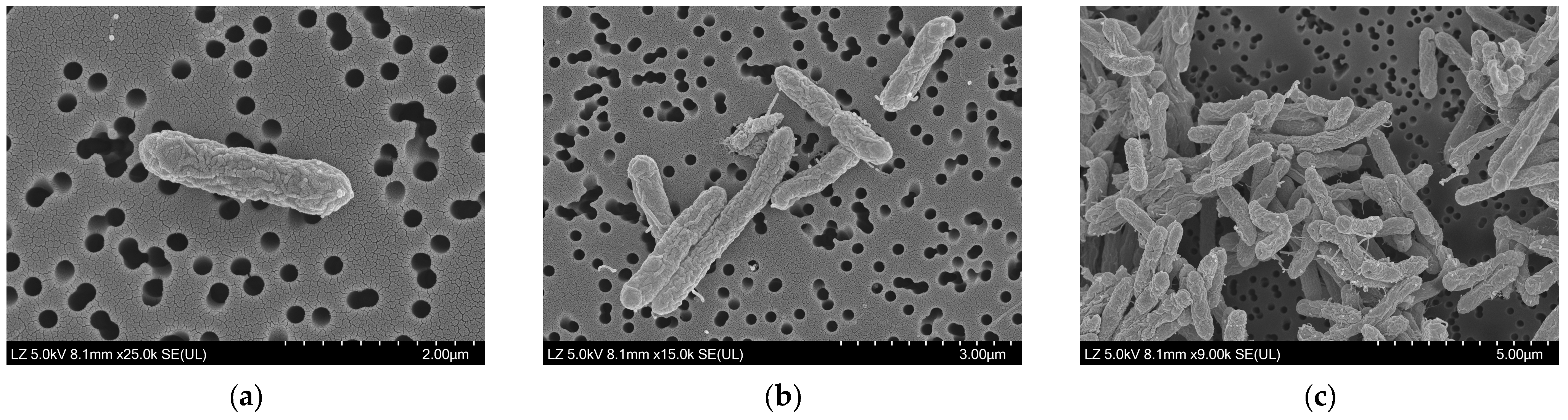
FE-SEM analysis revealed that Brevibacillus sp. JNUCC 42 exhibited typical rod-shaped morphology characteristic of the genus Brevibacillus. The cells were straight to slightly curved rods, occurring singly or in short chains, with smooth surfaces and rounded ends (Figure 1).
At higher magnification (Figure 1a, ×25,000), individual cells appeared with a uniform rod structure, approximately 0.6–0.8 μm in width and 2.0–4.5 μm in length. At moderate magnification (Figure 1b, ×15,000), the cells were often observed in pairs or small groups, occasionally aligned in parallel arrangements. At lower magnification (Figure 1c, ×9000), dense cellular aggregation was evident, likely due to surface adherence or partial sporulation.
No visible flagella or spore structures were clearly detected under the tested growth conditions, although surface irregularities were observed, possibly related to cell wall maturation. These morphological characteristics are consistent with members of the genus Brevibacillus, supporting its taxonomic affiliation inferred from 16S rRNA and genomic analyses.

3.4. Genome Assembly and Annotation of Brevibacillus sp. JNUCC 42

De novo assembly of Brevibacillus sp. JNUCC 42 generated three contigs with a total length of 4,942,230 bp and an average GC content of 40.73% (Table 5). The largest contig (Contig 1; 4,925,472 bp) and Contig 2 (10,318 bp) were circular, whereas Contig 3 (6440 bp) remained linear. The mean sequencing depth across the assembly was approximately 197×, and after Pilon-based correction, both N50 and the maximum contig length reached 4,925,472 bp, indicating high continuity and accuracy of the assembly. K-mer (21-mer) analysis estimated a genome size of 5.29 Mb with a heterozygosity rate of 0.009 and a repeat length of 689 kb, consistent with the assembled size. Mapping of 7.8 million Illumina reads to the PacBio-based assembly showed 99.88% alignment and 100% genome coverage with an average depth of 228×, confirming the accuracy and completeness of the assembly. BUSCO evaluation detected 148 out of 148 (100%) complete single-copy orthologs, verifying the overall completeness of the genome. Annotation identified 4602 protein-coding sequences (CDS), 111 tRNA genes, and 36 rRNA genes across the three contigs (Table 5). The major chromosome (Contig 1) contained 4586 CDS and all rRNA and tRNA genes, while Contig 2 and Contig 3 encoded nine and seven CDS, respectively. The circular genome map (Figure S4) revealed a balanced GC content and typical prokaryotic genomic organization. The complete genome of Brevibacillus sp. JNUCC 41 therefore consists of a 4.94 Mb chromosome with a GC content of 40.7% and a total of 4602 genes, exhibiting high assembly quality (BUSCO = 100%, Q30 > 97%) and sufficient sequence depth to support downstream comparative genomic and biosynthetic gene cluster analyses.

3.5. Characterization of Brevibacillus sp. JNUCC 42 as a Novel Strain via dDDH Analysis

The digital DNA–DNA hybridization (dDDH) results revealed that Brevibacillus sp. JNUCC 42 shared the highest genomic relatedness with B. laterosporus DSM 25, showing dDDH values of 52.5% (d0), 32.8% (d4), and 47.2% (d6) (Table 6). These values are below the 70% species boundary, suggesting that strain JNUCC 42 is distinct from B. laterosporus at the genomic level.
All other Brevibacillus species exhibited markedly lower relatedness, with d4 values ranging from 21.4% to 32.1% and corresponding confidence intervals overlapping within a similar low range. The G+C content difference between JNUCC 42 and related taxa varied from 0.23% to 11.42%, further supporting its taxonomic distinctiveness (Table 6).
Notably, strains such as B. formosus DSM 9885T, B. gelatini DSM 100115T, and B. panacihumi JCM 15085T showed d4 values around 30%, indicating moderate genomic proximity but still well below the interspecies threshold. In contrast, Bacillus timonensis and Peribacillus huizhouensis displayed lower genomic identity (<30%), confirming that these taxa are only distantly related.
Overall, the dDDH and G+C content analyses jointly demonstrate that Brevibacillus sp. JNUCC 42 represents a genomically distinct lineage within the genus Brevibacillus, corroborating the results of ANI and phylogenomic analyses.

3.6. Characterization of Brevibacillus sp. JNUCC 42 as a Novel Strain via ANI Analysis

The OrthoANIu analysis revealed an average nucleotide identity of 87.10% between Brevibacillus sp. JNUCC 42 and B. laterosporus DSM 25 (Table 7). The average aligned length between the two genomes was 2,587,651 bp, corresponding to 52.55% coverage of the JNUCC 42 genome and 47.92% coverage of the DSM 25 genome, respectively.
These results indicate that less than half of the total genomic content is homologous between the two strains, and the observed ANI value (87.10%) is substantially below the 95–96% cutoff typically used for species-level classification. Therefore, Brevibacillus sp. JNUCC 42 can be considered a genomically distinct taxon within the genus Brevibacillus (Table 7).
This genomic divergence corroborates the results of the digital DNA–DNA hybridization (dDDH) analysis, which also showed a low relatedness (32.8% by formula d4) between the same strains, providing further evidence that JNUCC 42 represents a novel genomic lineage.

3.7. In Silico Prediction of Secondary Metabolites and Biosynthetic Gene Cluster Analysis

Comprehensive genome mining of Brevibacillus sp. JNUCC 42 using antiSMASH 8.0 revealed 21 putative biosynthetic gene clusters (BGCs) distributed across the 4.92 Mb genome (Table 8). These clusters collectively encode a diverse array of secondary-metabolite pathways, including nonribosomal peptide synthetases (NRPSs), polyketide synthases (PKSs), hybrid PKS/NRPS systems, ribosomally synthesized and post-translationally modified peptides (RiPPs), siderophores, and terpenes. Among them, several clusters exhibited high sequence similarity to known bioactive metabolites, suggesting the strain’s potential for producing pharmacologically and cosmetically relevant compounds. Notably, an NRPS-like cluster (Region 1) showed strong homology to Kolossin, while Region 13 displayed high similarity to Bogorol A, a cyclic peptide antibiotic reported from Brevibacillus species. A siderophore-related BGC (Region 14) matched Petrobactin, indicating possible iron-chelating capacity. In contrast, clusters such as Regions 2, 5, 6, 7, and 10 exhibited low similarity scores, suggesting the presence of novel or cryptic metabolites. Region 10, a hybrid NRPS–PKS system, was partially homologous to the Zwittermicin A biosynthetic pathway, hinting at antibacterial potential.
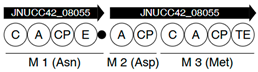
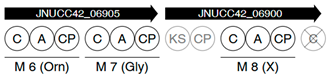
Detailed domain analysis of the NRPS clusters (Regions 2, 6, 8, 13, 17, and 18) revealed the presence of canonical catalytic modules—condensation (C), adenylation (A), peptidyl carrier protein (PCP/T), epimerase (E), ketoreductase (KR), and thioesterase (TE)—that together form multimodular assembly lines (Table 9). Substrate predictions based on the A-domain specificity codes suggested incorporation of various amino-acid residues such as D-Lys, Thr, Val, Leu, and Orn, while several adenylation domains marked with “X” were inactive or unassigned, implying incomplete or cryptic biosynthetic modules.
Hybrid PKS/NRPS clusters (Regions 5, 7, and 10) were composed of typical PKS core domains—ketosynthase (KS), acyltransferase (AT), dehydratase (DH), ketoreductase (KR)—coupled with NRPS modules harboring condensation and adenylation domains (Table 10). Crossed-out (×) domains indicated catalytically inactive or truncated motifs, while fully colored circles denoted active catalytic centers predicted by antiSMASH. The architecture of these hybrid clusters suggests the genetic capacity for polyketide–peptide hybrid scaffolds, a hallmark of compounds with antimicrobial, surface-active, or cytoprotective properties. Taken together, the in silico analysis highlights Brevibacillus sp. JNUCC 42 as a genetically versatile producer of diverse secondary metabolites, harboring both conserved and potentially novel biosynthetic pathways that warrant further chemical and functional characterization.

3.8. Isolation and Structural Identification of Maculosin [Cyclo(L-Pro-L-Tyr)] from Brevibacillus sp. JNUCC 42

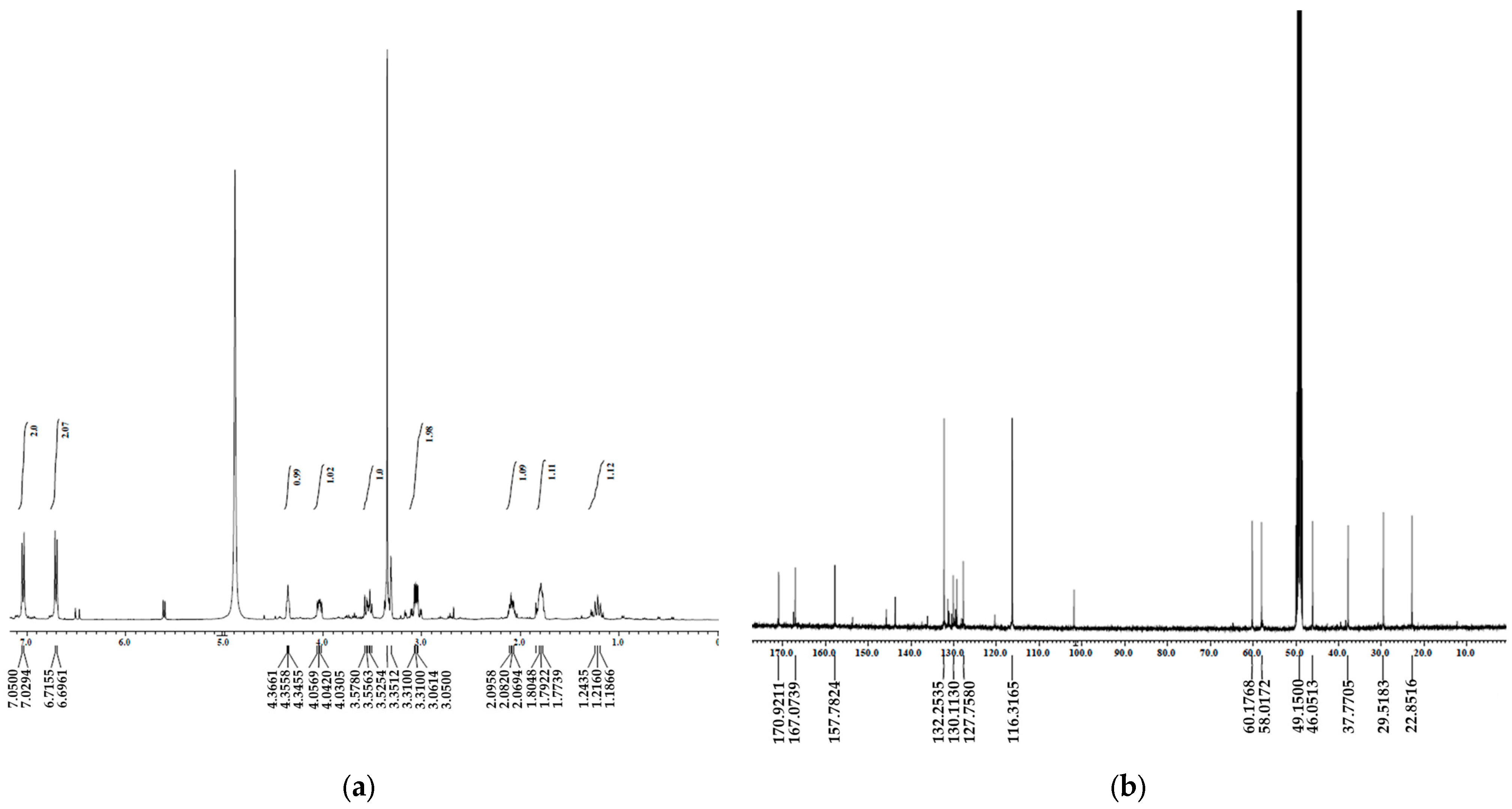
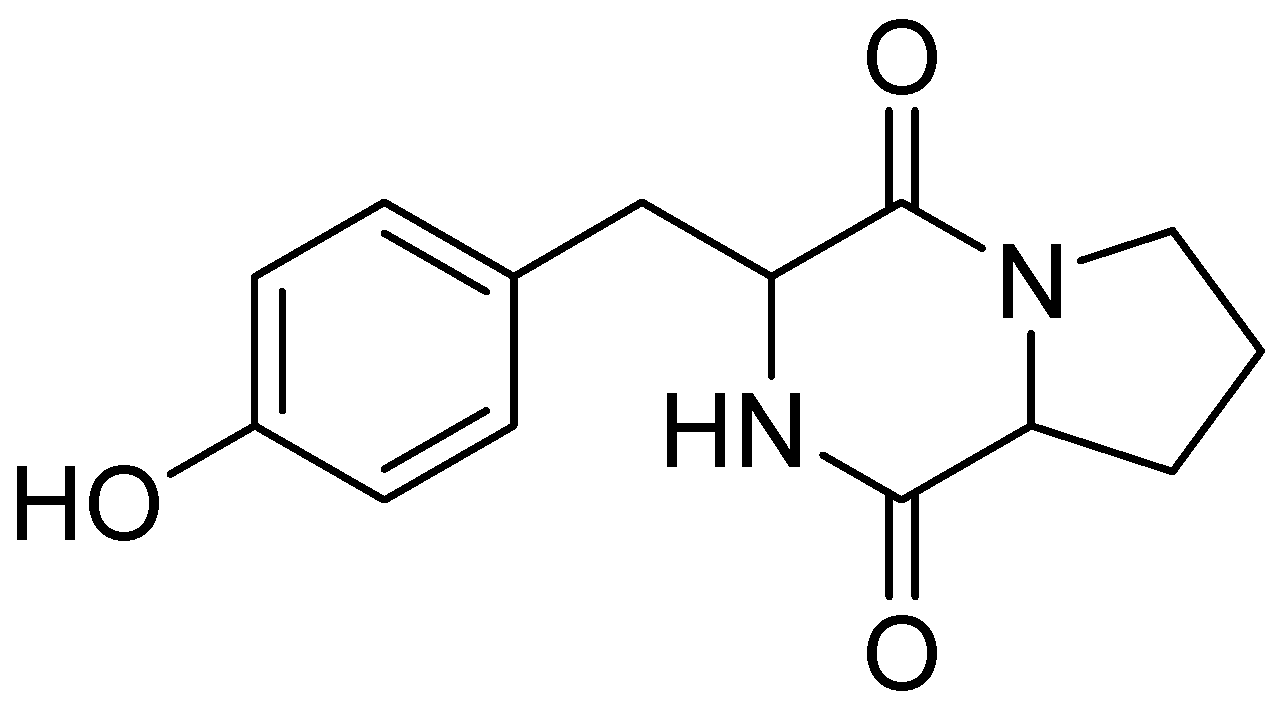
The culture broth of Brevibacillus sp. JNUCC 42 was extracted with ethyl acetate, yielding a 160 mg crude extract that exhibited distinct UV-absorbing components during HPLC analysis. The chromatogram recorded at 276 nm displayed a major peak at a retention time of 32.7 min, indicating the presence of a dominant secondary metabolite (Figure S5). The ethyl acetate extract was subjected to Sephadex LH-20 column chromatography using 100% methanol as the eluent, resulting in six fractions (Fr. 1–Fr. 6). Among them, Fraction 3 contained a single major compound, designated as Compound 1. HPLC re-analysis confirmed a sharp and symmetrical peak at 32.747 min (Figures S6 and S7), demonstrating the high purity of the isolated compound. The UV absorption maximum at 276 nm was consistent with aromatic amino acid–containing cyclic dipeptides such as diketopiperazines. Structural elucidation of Compound 1 was performed using 1H- and 13C-nuclear magnetic resonance (NMR) spectroscopy. The 1H-NMR spectrum (400 MHz, CD3OD) exhibited characteristic methylene proton signals corresponding to the proline residue at δ 1.8–3.6 ppm and aromatic proton resonances derived from the tyrosine residue at δ 6.7–7.1 ppm (Figure 2a). The 13C-NMR spectrum (100 MHz, CD3OD) displayed carbonyl carbon signals at δ 170.1 and 168.8 ppm and aromatic carbon signals at δ 125.2–155.0 ppm, confirming the presence of both proline and tyrosine moieties in a cyclic structure (Figure 2b). Comparison of these spectral data with those reported in the literature identified the compound as maculosin [cyclo(L-Pro-L-Tyr)], a diketopiperazine-type cyclic dipeptide (Figure 3; Table 11) [44,45]. This compound was isolated from Brevibacillus sp. JNUCC 42, representing the first report of maculosin production within the Brevibacillus genus.

3.9. Cytotoxicity and Anti-Melanogenic Effects of Maculosin in α-MSH-Stimulated B16F10 Melanocytes

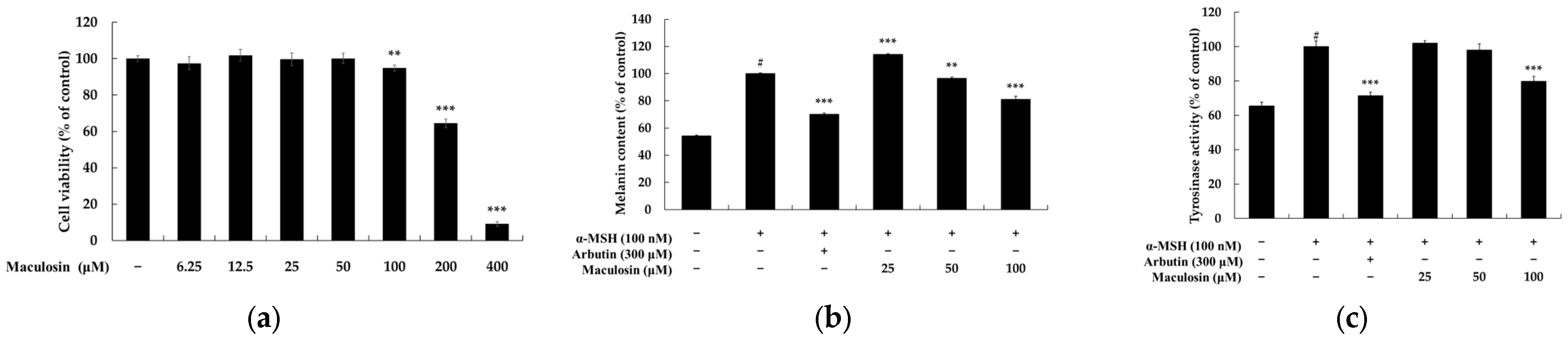
Maculosin exhibited no significant cytotoxicity up to a concentration of 100 μM, maintaining > 90% cell viability compared with untreated controls, whereas mild cytotoxic effects were observed at concentrations ≥ 200 μM. Therefore, subsequent anti-melanogenic assays were conducted at concentrations of 25, 50, and 100 μM (Figure 4a).
Stimulation with α-MSH markedly increased melanin synthesis to approximately 130% of the basal control. In contrast, maculosin treatment significantly reduced melanin accumulation in a concentration-dependent manner, with relative melanin contents of 84.6%, 68.2%, and 55.4% at 25, 50, and 100 μM, respectively (p < 0.001), comparable to the effect of 300 μM arbutin (approximately 60%) (Figure 4b).
Consistent with these findings, maculosin suppressed intracellular tyrosinase activity, reducing enzyme activity to 79.3%, 64.8%, and 53.6% of the α-MSH-induced level at 25, 50, and 100 μM, respectively (p < 0.001) (Figure 4c). These results collectively indicate that maculosin inhibits melanin biosynthesis primarily through the downregulation of tyrosinase activity, suggesting its efficacy as a safe and naturally derived skin-whitening compound isolated from Brevibacillus sp. JNUCC 42.

4. Discussion

The volcanic ecosystem of Jeju Island represents one of the most dynamic and ecologically distinctive microbial habitats in East Asia. The Baengnokdam Crater Lake, located at the summit of Mt. Halla, exhibits a combination of environmental extremes, including high ultraviolet radiation, fluctuating temperatures, and oligotrophic, mineral-rich soils. These physicochemical factors create selective pressures that promote the evolution of microbial species with unique physiological and metabolic traits [1,2,3]. Microorganisms that thrive under such volcanic conditions often display enhanced stress tolerance, specialized membrane compositions, and the ability to synthesize secondary metabolites that protect against oxidative damage and UV exposure [4,5,6]. In this context, the isolation of Brevibacillus sp. JNUCC 42 from Baengnokdam soil highlights the ecological potential of Jeju’s volcanic biotope as a reservoir for discovering novel microbial taxa with functional and industrial significance.
Phylogenetic analysis based on 16S rRNA gene sequencing placed strain JNUCC 42 within the genus Brevibacillus, which was separated from the genus Bacillus in 1996 following reclassification based on 16S rRNA and chemotaxonomic evidence. The genus Brevibacillus encompasses aerobic, endospore-forming, Gram-positive bacteria commonly found in soil, water, and insect habitats. Members of this genus exhibit considerable physiological versatility and produce an array of biologically active compounds, including antimicrobial peptides, proteases, chitinases, and surfactants. The phylogenetic tree constructed using both 16S rRNA and genome-based GBDP methods clearly demonstrated that JNUCC 42 forms a distinct clade within Brevibacillus, most closely related to B. laterosporus DSM 25T and B. daliensis YIM B02290T. Although the 16S rRNA gene similarity with the nearest relative is high (99.2%), the ANI and dDDH values, together with the clear genomic separation in the whole-genome phylogenetic tree, support the divergence of strain JNUCC 42 as an independent lineage.
Comparative genomic indices further validated this taxonomic distinction. The ANI (87.1%) and dDDH (32.8%) values between Brevibacillus sp. JNUCC 42 and B. laterosporus DSM 25T are well below the species delineation thresholds of 95–96% and 70%, respectively [33,40]. Such genomic divergence has also been observed among other Brevibacillus species, including B. brevis, B. parabrevis, and B. choshinensis, reflecting habitat-driven diversification and evolutionary adaptation within the genus [45,46,47,48]. The distinct genomic signature of JNUCC 42 is consistent with the ecological isolation of Baengnokdam Crater Lake, where selective pressures such as nutrient limitation, metal ion abundance, and strong UV radiation are likely to have promoted genetic drift and adaptive evolution [45,48].
Chemotaxonomic profiling provided further evidence for species-level differentiation. The major fatty acids of strain JNUCC 42, anteiso-C15:0 and iso-C15:0, are consistent with those typically found in Brevibacillus species [12], and are known to regulate membrane fluidity under fluctuating thermal conditions [45]. Interestingly, the detection of minor unsaturated fatty acids (C15:1 ω5c, C16:1 ω11c) and a unique unidentified aminolipid, absent in B. laterosporus DSM 25T, may represent an adaptive feature that enhances membrane stability in the slightly alkaline and metal-rich volcanic soil of Baengnokdam [46]. Similar lipid remodeling has been reported in other extremophilic bacteria as a protective mechanism against osmotic and oxidative stresses, further supporting the ecophysiological distinctiveness of JNUCC 42 [16]. These chemotaxonomic deviations, together with genome-based comparisons, reinforce the proposal that Brevibacillus sp. JNUCC 42 constitutes a novel species within the genus.
Beyond taxonomy, genome mining provided crucial insights into the strain’s metabolic potential. The draft genome of JNUCC 42 (4.93 Mb, 40.7 mol% G+C) revealed 21 BGCs, including NRPS, PKS, and NRPS–PKS hybrid systems. The abundance and diversity of BGCs indicate a high capacity for secondary metabolite biosynthesis. Similar genomic richness has been reported in B. laterosporus, which produces insecticidal proteins, antimicrobial lipopeptides, and sporulation-associated metabolites [16,17,18]. However, several BGCs detected in JNUCC 42 showed low similarity (<40%) to known clusters in antiSMASH databases, suggesting the possibility of undiscovered bioactive compounds. These unique biosynthetic pathways are likely shaped by selective pressures in the extreme volcanic microenvironment, driving the production of specialized metabolites involved in stress protection or interspecies competition.
Among the secondary metabolites predicted from Brevibacillus sp. JNUCC 42, the cyclic dipeptide maculosin [cyclo(L-Pro-L-Tyr)] was isolated and its structure was confirmed by NMR spectroscopy. Originally characterized as a host-specific phytotoxin produced by Alternaria alternata infecting spotted knapweed (Centaurea maculosa) [49], maculosin has since been identified in various bacterial taxa, including Streptomyces and Brevibacillus, where it is recognized as a non-toxic microbial metabolite exhibiting diverse biological activities [41,46,50]. Cyclic dipeptides such as maculosin have gained increasing attention due to their broad-spectrum antimicrobial, antioxidant, and signaling properties, which contribute to microbial defense, interspecies communication, and biocontrol of phytopathogens [51,52]. In particular, maculosin and other diketopiperazine derivatives exhibit remarkable free-radical scavenging activity, consistent with reports on the antioxidant potential of low-molecular-weight microbial metabolites isolated from marine and terrestrial environments [53]. Recent in silico investigations from our group further expanded the biological scope of maculosin into the dermatological field. Xu et al. [54] demonstrated through molecular docking and dynamics analyses that maculosin forms stable complexes with mushroom tyrosinase (mTYR), tyrosinase-related protein 1 (TYRP1), and Bacillus megaterium tyrosinase (BmTYR), showing strong binding affinities at the catalytic sites. These computational results support the hypothesis that maculosin acts as a natural tyrosinase inhibitor, suggesting its potential as a candidate molecule for the development of safe and effective skin-whitening or anti-pigmentation agents.
In the present study, the maculosin purified from Brevibacillus sp. JNUCC 42 indeed exhibited significant inhibition of α-MSH-induced melanin synthesis and intracellular tyrosinase activity in B16F10 melanoma cells, while maintaining cell viability above 90% at concentrations up to 100 μM [55,56]. This correlation between the strain’s genomic biosynthetic capacity and its observed bioactivity provides experimental validation of the in silico predictions. Given the increasing consumer and industrial demand for naturally derived whitening agents, the ability of Brevibacillus sp. JNUCC 42 to produce maculosin under mild culture conditions highlights its potential biotechnological and cosmeceutical relevance. Moreover, cyclic dipeptides are known for their chemical stability, water solubility, and facile synthesis, making them attractive candidates for formulation in dermatological and functional cosmetic products. Collectively, these findings suggest that maculosin represents a multifunctional diketopiperazine-type metabolite linking microbial ecological adaptation with human health applications. Its diverse bioactivities—spanning antioxidant, antimicrobial, and melanogenesis-inhibitory effects—underscore the potential of Brevibacillus sp. JNUCC 42 as a microbial resource for sustainable production of bioactive compounds with both ecological and cosmeceutical significance [57,58,59].
Although maculosin demonstrated promising anti-melanogenic activity in vitro, melanogenesis is regulated by complex upstream pathways involving MITF, tyrosinase-related proteins, and MAPK signaling cascades. Therefore, further molecular-level investigations are required to elucidate the precise mechanisms by which maculosin modulates melanogenic processes. In addition, in vivo studies or advanced skin-equivalent models will be essential to validate its efficacy and safety under physiologically relevant conditions. Such follow-up studies will not only strengthen the mechanistic understanding of maculosin’s biological activity but also support its development as a robust and clinically applicable cosmeceutical ingredient.
The discovery of Brevibacillus sp. JNUCC 42 also contributes to expanding the biotechnological importance of the genus. B. brevis has long been utilized for the production of the antibiotics tyrocidine and gramicidin [58], while B. choshinensis is employed as a host for heterologous protein expression due to its high secretion efficiency [15]. In contrast, relatively few studies have examined volcanic or extremophilic Brevibacillus strains as sources of secondary metabolites. Notably, genome mining of JNUCC 42 revealed several biosynthetic gene clusters that are absent in closely related Brevibacillus genomes, including a distinct NRPS–PKS hybrid cluster and a siderophore-associated BGC, suggesting the presence of unique metabolic capacities. In addition, the genome contains enriched stress-response pathways related to UV tolerance and oxidative stress adaptation—features consistent with survival in Baengnokdam’s high-UV, oligotrophic volcanic environment. Taken together, these unique biosynthetic and adaptive pathways indicate that Jeju’s volcanic isolates may serve as valuable reservoirs for novel bioactive molecules with applications in skincare, antioxidant therapy, and environmental biotechnology.
Ecologically, the isolation of JNUCC 42 supports the hypothesis that microbial diversity in volcanic soils is underexplored and that environmental stressors act as evolutionary drivers for novel metabolic innovation. The strain’s adaptation to slightly alkaline, mineral-rich, and oligotrophic conditions mirrors trends observed in other extremophilic actinobacteria, such as Streptomyces species isolated from volcanic ash, which often produce rare polyketides and phenazines. Thus, the discovery of JNUCC 42 provides a valuable model for understanding how geochemical gradients and ecological isolation influence the evolution of metabolic diversity in soil bacteria.
In summary, the polyphasic characterization of Brevibacillus sp. JNUCC 42 demonstrates that it constitutes a distinct genomic species closely related to B. laterosporus but differentiated by its unique fatty acid profile, lipid composition, and biosynthetic gene repertoire. The strain’s ability to produce maculosin with anti-melanogenic activity further highlights its potential as a source of functional ingredients for cosmeceutical applications. Continued exploration of its genomic resources, coupled with metabolomic and transcriptomic profiling under stress conditions, will provide deeper insights into its adaptive strategies and biosynthetic regulation. Moreover, integrating these findings into the context of Jeju’s volcanic biodiversity may contribute to the development of sustainable microbial platforms for natural product discovery and regional bioindustry innovation.

Supplementary Materials

The following supporting information can be downloaded at: https://www.mdpi.com/article/10.3390/app152312681/s1: Table S1. HPLC chromatographic conditions used for the analysis of ethyl acetate extract from Brevibacillus sp. JNUCC 42 culture broth; Figure S1. Phylogenetic tree of Brevibacillus and related taxa based on the 16S rRNA gene using the GBDP method; Figure S2. Genome-based phylogenetic tree of Brevibacillus and related taxa constructed using the GBDP method; Figure S3. Two-dimensional TLC profiles of polar lipids in Brevibacillus sp. JNUCC 42 and B. laterosporus DSM 25T; Figure S4. Circular genome map of Brevibacillus sp. JNUCC 42; Figure S5. HPLC chromatogram of the ethyl acetate extract from Brevibacillus sp. JNUCC 42 culture broth; Figure S6. Schematic representation of the fractionation and purification process of metabolites from Brevibacillus sp. JNUCC 42 culture broth; Figure S7. HPLC chromatogram of the purified compound isolated from Fraction 3 of the ethyl acetate extract of Brevibacillus sp. JNUCC 42.

Author Contributions

Conceptualization, C.-G.H.; methodology, J.-H.L., M.-Y.M., and M.-S.K.; investigation, J.-H.L., M.-Y.M., and M.-S.K.; resources, J.-H.L., M.-Y.M., and M.-S.K.; data curation, J.-H.L., M.-Y.M., and M.-S.K.; formal analysis, C.-G.H.; writing—original draft preparation, C.-G.H.; writing—review and editing, C.-G.H.; supervision, C.-G.H.; project administration, C.-G.H.; funding acquisition, C.-G.H. All authors have read and agreed to the published version of the manuscript.

Funding

This research was supported by the Regional Innovation System & Education (RISE) program through the Jeju RISE center, funded by the Ministry of Education (MOE) and the Jeju Special Self-Governing Province, Republic of Korea (2025-RISE-17-001).

Informed Consent Statement

Informed consent was obtained from all subjects involved in the study.

Data Availability Statement

All data supporting the findings of this study are contained within the article. The complete genome sequence of Brevibacillus sp. JNUCC-42 has been deposited in the NCBI database under BioProject accession number PRJNA666042, BioSample accession number SAMN16277625, and GenBank accession numbers CP062262, CP062263, and CP062264. No additional data are available.

Conflicts of Interest

The authors declare no conflicts of interest. The funders had no role in the design of the study; in the collection, analyses, or interpretation of data; in the writing of the manuscript; or in the decision to publish the results.

References

  1. Ahn, U.S.; Hong, S.S. Volcanological History of the Baengnokdam Summit Crater Area, Mt. Halla in Jeju Island, Korea. J. Petrol. Soc. Kor. 2017, 26, 221–234. [Google Scholar] [CrossRef]
  2. Albarracín, V.H.; Kurth, D.; Ordoñez, O.F.; Belfiore, C.; Luccini, E.; Salum, G.M.; Piacentini, R.D.; Farías, M.E. High-Up: A Remote Reservoir of Microbial Extremophiles in Central Andean Wetlands. Front. Microbiol. 2015, 6, 1404. [Google Scholar] [CrossRef] [PubMed]
  3. Albarracín, V.H.; Gärtner, W.; Farias, M.E. Forged Under the Sun: Life and Art of Extremophiles from Andean Lakes. Photochem. Photobiol. 2016, 92, 14–28. [Google Scholar] [CrossRef]
  4. Ko, M.N.; Hyun, C.G. Complete Genome Sequence and Cosmetic Potential of Viridibacillus sp. JNUCC6 Isolated from Baengnokdam, the Summit Crater of Mt. Halla. Cosmetics 2022, 9, 73. [Google Scholar] [CrossRef]
  5. Xu, Y.; Liang, X.; Hyun, C.G. Isolation, Characterization, Genome Annotation, and Evaluation of Hyaluronidase Inhibitory Activity in Secondary Metabolites of Brevibacillus sp. JNUCC 41: A Comprehensive Analysis through Molecular Docking and Molecular Dynamics Simulation. Int. J. Mol. Sci. 2024, 25, 4611. [Google Scholar] [CrossRef]
  6. Xu, Y.; Liang, X.; Hyun, C.G. Isolation, Characterization, Genome Annotation, and Evaluation of Tyrosinase Inhibitory Activity in Secondary Metabolites of Paenibacillus sp. JNUCC32: A Comprehensive Analysis through Molecular Docking and Molecular Dynamics Simulation. Int. J. Mol. Sci. 2024, 25, 2213. [Google Scholar] [CrossRef] [PubMed]
  7. Nikita, K.; Kavya, I.K.; Shrivastava, S.; Ghosh, A.; Rawat, V.S.; Sodhi, K.K.; Kumar, M. Perspectives on the microorganism of extreme environments and their applications. Curr. Res. Microb. Sci. 2022, 3, 100134. [Google Scholar] [CrossRef]
  8. Gallo, G.; Aulitto, M. Advances in Extremophile Research: Biotechnological Applications through Isolation and Identification Techniques. Life 2024, 14, 1205. [Google Scholar] [CrossRef]
  9. Kuzucu, M. Extremophilic Solutions: The Role of Deinoxanthin in Counteracting UV-Induced Skin Harm. Curr. Issues Mol. Biol. 2023, 45, 8372–8394. [Google Scholar] [CrossRef]
  10. Sepe, F.; Costanzo, E.; Ionata, E.; Marcolongo, L. Biotechnological Potential of Extremophiles: Environmental Solutions, Challenges, and Advancements. Biology 2025, 14, 847. [Google Scholar] [CrossRef]
  11. Multisanti, C.R.; Celi, V.; Dibra, A.; Pintus, A.; Calogero, R.; Rizzo, C.; Faggio, C. Microbial Blue Bioprospecting: Exploring the Advances of Compounds Post-Discovery. Mar. Drugs 2025, 23, 406. [Google Scholar] [CrossRef]
  12. Shida, O.; Takagi, H.; Kadowaki, K.; Komagata, K. Proposal for two new genera, Brevibacillus gen. nov. and Aneurinibacillus gen. nov. Int. J. Sys. Bacteriol. 1996, 46, 939–946. [Google Scholar] [CrossRef]
  13. Panda, A.K.; Bisht, S.S.; De Mondal, S.; Senthil Kumar, N.; Gurusubramanian, G.; Panigrahi, A.K. Brevibacillus as a biological tool: A short review. Antonie Van Leeuwenhoek 2014, 105, 623–639. [Google Scholar] [CrossRef]
  14. Song, L.; Shen, Y.; Zhang, H.; Zhang, H.; Zhang, Y.; Wang, M.; Zhang, M.; Wang, F.; Zhou, L.; Wen, C.; et al. Comprehensive genomic analysis of Brevibacillus brevis BF19 reveals its biocontrol potential against bitter gourd wilt. BMC Microbiol. 2024, 24, 415. [Google Scholar] [CrossRef] [PubMed]
  15. Mizukami, M.; Hanagata, H.; Miyauchi, A. Brevibacillus expression system: Host–vector system for efficient production of secretory proteins. Cur. Pharm. Biotechnol. 2010, 11, 251–258. [Google Scholar] [CrossRef] [PubMed]
  16. Baindara, P.; Dinata, R. Brevibacillus laterosporus: A co-evolving machinery of diverse antimicrobial agents. Crit. Rev. Microbiol. 2025, 1–20. [Google Scholar] [CrossRef]
  17. Liu, Y.; Zai, X.; Weng, G.; Ma, X.; Deng, D. Brevibacillus laterosporus: A probiotic with important applications in crop and animal production. Microorganisms 2024, 12, 564. [Google Scholar] [CrossRef]
  18. Cao, Y.; Wang, Z.; Dai, X.; Zhang, D.; Zeng, Y.; Ni, X.; Pan, K. Evaluation of probiotic properties of a Brevibacillus laterosporus strain. FASEB J. 2024, 38, e23530. [Google Scholar] [CrossRef] [PubMed]
  19. Yoon, S.H.; Ha, S.M.; Kwon, S.; Lim, J.; Kim, Y.; Seo, H.; Chun, J. Introducing EzBioCloud: A taxonomically united database of 16S rRNA gene sequences and whole-genome assemblies. Int. J. Syst. Evol. Microbiol. 2017, 67, 1613–1617. [Google Scholar] [CrossRef]
  20. Freese, H.M.; Meier-Kolthoff, J.P.; Carbasse, S.; Afolayan, A.O.; Göker, M. TYGS and LPSN in 2025: A Global Core Biodata Resource for genome-based classification and nomenclature of prokaryotes within DSMZ Digital Diversity. Nucleic Acids Res. 2025, gkaf1110. [Google Scholar] [CrossRef]
  21. Altschul, S.F.; Gish, W.; Miller, W.; Myers, E.W.; Lipman, D.J. Basic local alignment search tool. J. Mol. Biol. 1990, 215, 403–410. [Google Scholar] [CrossRef]
  22. Kim, M.; Oh, H.S.; Park, S.C.; Chun, J. Towards a taxonomic coherence between average nucleotide identity and 16S rRNA gene sequence similarity for species demarcation of prokaryotes. Int. J. Syst. Evol. Microbiol. 2014, 64, 346–351. [Google Scholar] [CrossRef]
  23. Korlach, J.; Bjornson, K.P.; Chaudhuri, B.P.; Cicero, R.L.; Flusberg, B.A.; Gray, J.J.; Holden, D.; Saxena, R.; Wegener, J.; Turner, S.W. Real-time DNA sequencing from single polymerase molecules. Methods Enzymol. 2010, 472, 431–455. [Google Scholar] [CrossRef] [PubMed]
  24. Bentley, D.R.; Balasubramanian, S.; Swerdlow, H.P.; Smith, G.P.; Milton, J.; Brown, C.G.; Hall, K.P.; Evers, D.J.; Barnes, C.L.; Bignell, H.R.; et al. Accurate whole human genome sequencing using reversible terminator chemistry. Nature 2008, 456, 53–59. [Google Scholar] [CrossRef] [PubMed]
  25. Bolger, A.M.; Lohse, M.; Usadel, B. Trimmomatic: A flexible trimmer for Illumina sequence data. Bioinformatics 2014, 30, 2114–2120. [Google Scholar] [CrossRef]
  26. Chin, C.S.; Alexander, D.H.; Marks, P.; Klammer, A.A.; Drake, J.; Heiner, C.; Clum, A.; Copeland, A.; Huddleston, J.; Eichler, E.E.; et al. Nonhybrid, finished microbial genome assemblies from long-read SMRT sequencing data. Nat. Methods. 2013, 10, 563–569. [Google Scholar] [CrossRef]
  27. Walker, B.J.; Abeel, T.; Shea, T.; Priest, M.; Abouelliel, A.; Sakthikumar, S.; Cuomo, C.A.; Zeng, Q.; Wortman, J.; Young, S.K.; et al. Pilon: An integrated tool for comprehensive microbial variant detection and genome assembly improvement. PLoS ONE 2014, 9, e112963. [Google Scholar] [CrossRef] [PubMed]
  28. Marçais, G.; Kingsford, C. A fast, lock-free approach for efficient parallel counting of occurrences of k-mers. Bioinformatics 2011, 27, 764–770. [Google Scholar] [CrossRef]
  29. Vurture, G.W.; Sedlazeck, F.J.; Nattestad, M.; Underwood, C.J.; Fang, H.; Gurtowski, J.; Schatz, M.C. GenomeScope: Fast reference-free genome profiling from short reads. Bioinformatics 2017, 33, 2202–2204. [Google Scholar] [CrossRef]
  30. Simão, F.A.; Waterhouse, R.M.; Ioannidis, P.; Kriventseva, E.V.; Zdobnov, E.M. BUSCO: Assessing genome assembly and annotation completeness with single-copy orthologs. Bioinformatics 2015, 31, 3210–3212. [Google Scholar] [CrossRef]
  31. Seemann, T. Prokka: Rapid prokaryotic genome annotation. Bioinformatics 2014, 30, 2068–2069. [Google Scholar] [CrossRef]
  32. Krzywinski, M.; Schein, J.; Birol, I.; Connors, J.; Gascoyne, R.; Horsman, D.; Jones, S.J.; Marra, M.A. Circos: An information aesthetic for comparative genomics. Genome Res. 2009, 19, 1639–1645. [Google Scholar] [CrossRef]
  33. Meier-Kolthoff, J.P.; Auch, A.F.; Klenk, H.P.; Göker, M. Genome sequence-based species delimitation with confidence intervals and improved distance functions. BMC Bioinform. 2013, 14, 60. [Google Scholar] [CrossRef] [PubMed]
  34. Meier-Kolthoff, J.P.; Göker, M. TYGS is an automated high-throughput platform for state-of-the-art genome-based taxonomy. Nat. Commun. 2019, 10, 2182. [Google Scholar] [CrossRef] [PubMed]
  35. Chun, J.; Oren, A.; Ventosa, A.; Christensen, H.; Arahal, D.R.; da Costa, M.S.; Rooney, A.P.; Yi, H.; Xu, X.W.; De Meyer, S.; et al. Proposed minimal standards for the use of genome data for the taxonomy of prokaryotes. Int. J. Syst. Evol. Microbiol. 2018, 68, 461–466. [Google Scholar] [CrossRef] [PubMed]
  36. Richter, M.; Rosselló-Móra, R. Shifting the genomic gold standard for the prokaryotic species definition. Proc. Natl. Acad. Sci. USA 2009, 106, 19126–19131. [Google Scholar] [CrossRef]
  37. Lee, I.; Ouk Kim, Y.; Park, S.C.; Chun, J. OrthoANI: An improved algorithm and software for calculating average nucleotide identity. Int. J. Syst. Evol. Microbiol. 2016, 66, 1100–1103. [Google Scholar] [CrossRef]
  38. Goris, J.; Konstantinidis, K.T.; Klappenbach, J.A.; Coenye, T.; Vandamme, P.; Tiedje, J.M. DNA-DNA hybridization values and their relationship to whole-genome sequence similarities. Int. J. Syst. Evol. Microbiol. 2007, 57, 81–91. [Google Scholar] [CrossRef]
  39. Varghese, N.J.; Mukherjee, S.; Ivanova, N.; Konstantinidis, K.T.; Mavrommatis, K.; Kyrpides, N.C.; Pati, A. Microbial species delineation using whole genome sequences. Nucleic Acids Res. 2015, 43, 6761–6771. [Google Scholar] [CrossRef]
  40. Riesco, R.; Trujillo, M.E. Update on the proposed minimal standards for the use of genome data for the taxonomy of prokaryotes. Int. J. Syst. Evol. Microbiol. 2024, 74, 6300. [Google Scholar] [CrossRef]
  41. Blin, K.; Shaw, S.; Vader, L.; Szenei, J.; Reitz, Z.L.; Augustijn, H.E.; Cediel-Becerra, J.D.D.; de Crécy-Lagard, V.; Koetsier, R.A.; Williams, S.E.; et al. antiSMASH 8.0: Extended gene cluster detection capabilities and analyses of chemistry, enzymology, and regulation. Nucleic Acids Res. 2025, 53, W32–W38. [Google Scholar] [CrossRef] [PubMed]
  42. Epstein, S.C.; Charkoudian, L.K.; Medema, M.H. A standardized workflow for submitting data to the Minimum Information about a Biosynthetic Gene cluster (MIBiG) repository: Prospects for research-based educational experiences. Stand. Genomic. Sci. 2018, 13, 16. [Google Scholar] [CrossRef]
  43. Röttig, M.; Medema, M.H.; Blin, K.; Weber, T.; Rausch, C.; Kohlbacher, O. NRPSpredictor2—A web server for predicting NRPS adenylation domain specificity. Nucleic Acids Res. 2011, 39, W362–W367. [Google Scholar] [CrossRef]
  44. Ziemert, N.; Podell, S.; Penn, K.; Badger, J.H.; Allen, E.; Jensen, P.R. The natural product domain seeker NaPDoS: A phylogeny based bioinformatic tool to classify secondary metabolite gene diversity. PLoS ONE 2012, 7, e34064. [Google Scholar] [CrossRef]
  45. Nam, Y.H.; Hwang, B.S.; Choi, A.; Chung, E.J. Isolation and characterization of strain Rouxiella sp. S1S-2 producing antibacterial compound. Korean J. Microbiol. 2020, 56, 152–159. [Google Scholar] [CrossRef]
  46. Paudel, B.; Maharjan, R.; Rajbhandari, P.; Aryal, N.; Aziz, S.; Bhattarai, K.; Baral, B.; Malla, R.; Bhattarai, H.D. Maculosin, a non-toxic antioxidant compound isolated from Streptomyces sp. KTM18. Pharm. Biol. 2021, 59, 933–936. [Google Scholar] [CrossRef]
  47. Suutari, M.; Laakso, S. Microbial fatty acids and thermal adaptation. Crit. Rev. Microbiol. 1994, 20, 285–328. [Google Scholar] [CrossRef] [PubMed]
  48. Siliakus, M.F.; van der Oost, J.; Kengen, S.W.M. Adaptations of archaeal and bacterial membranes to variations in temperature, pH and pressure. Extremophiles 2017, 21, 651–670. [Google Scholar] [CrossRef] [PubMed]
  49. Stierle, A.C.; Cardellina, J.H.; Strobel, G.A. Maculosin, a host-specific phytotoxin for spotted knapweed from Alternaria alternata. Proc. Natl. Acad. Sci. USA 1988, 85, 8008–8011. [Google Scholar] [CrossRef]
  50. Driche, E.H.; Badji, B.; Bijani, C.; Belghit, S.; Pont, F.; Mathieu, F.; Zitouni, A. A New Saharan Strain of Streptomyces sp. GSB-11 Produces Maculosin and N-acetyltyramine Active Against Multidrug-Resistant Pathogenic Bacteria. Curr. Microbiol. 2022, 79, 298. [Google Scholar] [CrossRef]
  51. Castaldi, S.; Cimmino, A.; Masi, M.; Evidente, A. Bacterial Lipodepsipeptides and Some of Their Derivatives and Cyclic Dipeptides as Potential Agents for Biocontrol of Pathogenic Bacteria and Fungi of Agrarian Plants. J. Agric. Food Chem. 2022, 70, 4591–4598. [Google Scholar] [CrossRef]
  52. Tran, C.; Horyanto, D.; Stanley, D.; Cock, I.E.; Chen, X.; Feng, Y. Antimicrobial Properties of Bacillus Probiotics as Animal Growth Promoters. Antibiotics 2023, 12, 407. [Google Scholar] [CrossRef]
  53. Wang, X.; Feng, Z.; Li, C.; Cai, X.; Long, H.; Zhang, X.; Huang, A.; Zeng, Y.; Ren, W.; Xie, Z. Analysis of the Antioxidant Composition of Low Molecular Weight Metabolites from the Agarolytic Bacterium Alteromonas macleodii QZ9-9: Possibilities for High-Added Value Utilization of Macroalgae. Antioxidants 2022, 11, 1977. [Google Scholar] [CrossRef] [PubMed]
  54. Xu, Y.; Liang, X.; Kim, H.M.; Hyun, C.G. In Vitro and In Silico Studies of Maculosin as a Melanogenesis and Tyrosinase Inhibitor. Molecules 2025, 30, 860. [Google Scholar] [CrossRef] [PubMed]
  55. d’Ischia, M.; Wakamatsu, K.; Napolitano, A.; Briganti, S.; Garcia-Borron, J.C.; Kovacs, D.; Meredith, P.; Pezzella, A.; Picardo, M.; Sarna, T.; et al. Melanins and melanogenesis: Methods, standards, protocols. Pigment Cell Melanoma Res. 2013, 26, 616–633. [Google Scholar] [CrossRef] [PubMed]
  56. Hosoi, J.; Abe, E.; Suda, T.; Kuroki, T. Regulation of melanin synthesis of B16 mouse melanoma cells by 1 alpha, 25-dihydroxyvitamin D3 and retinoic acid. Cancer Res. 1985, 45, 1474–1478. [Google Scholar] [PubMed]
  57. Meena, M.; Samal, S. Alternaria host-specific (HSTs) toxins: An overview of chemical characterization, target sites, regulation and their toxic effects. Toxicol. Rep. 2019, 6, 745–758. [Google Scholar] [CrossRef]
  58. Chen, S.; Zhang, D.; Chen, M.; Zhang, Z.; Lian, X.Y. A rare diketopiperazine glycoside from marine-sourced Streptomyces sp. ZZ446. Nat. Prod. Res. 2020, 34, 1046–1050. [Google Scholar] [CrossRef]
  59. Yang, X.; Yousef, A.E. Antimicrobial peptides produced by Brevibacillus spp.: Structure, classification and bioactivity: A mini review. World J. Microbiol. Biotechnol. 2018, 34, 57. [Google Scholar] [CrossRef]
Figure 1. Scanning electron micrographs of Brevibacillus sp. JNUCC 42 grown on LB agar at 30 °C for 24 h. (a) Single vegetative cell (×25,000); (b) Small cell clusters showing parallel alignment (×15,000); (c) Dense aggregation of rod-shaped cells (×9000). Images were captured using a Hitachi Regulus 8100 FE-SEM at 5.0 kV and 8.1 mm working distance.
Applsci 15 12681 g001
Figure 2. NMR spectra of maculosin isolated from the culture broth of strain JNUCC-42. (a) 1H NMR spectrum (400 MHz, CD3OD) and (b) 13C NMR spectrum (100 MHz, CD3OD) of maculosin purified from the fermentation broth of Brevibacillus sp. JNUCC-42. NMR analyses were performed using JEOL JNM-LA 400 and JNM-ECX 400 FT-NMR spectrometers with CD3OD as the solvent. The 1H and 13C NMR spectra exhibited characteristic chemical shifts corresponding to both aliphatic and aromatic moieties, confirming the structural features consistent with the cyclic dipeptide maculosin.
Applsci 15 12681 g002
Figure 3. Chemical structure of maculosin (C14H16N2O3, MW 260.29).
Applsci 15 12681 g003
Figure 4. Effects of Maculosin on cell viability, melanin synthesis, and tyrosinase activity in B16F10 melanoma cells. (a) Cell viability of B16F10 cells treated with various concentrations of maculosin (6.25–400 μM) for 72 h was determined by the MTT assay. Maculosin showed no cytotoxicity up to 100 μM. (b) Melanin content and (c) tyrosinase activity in B16F10 cells stimulated with α-MSH (100 nM) for 24 h and subsequently treated with maculosin (25, 50, or 100 μM) or arbutin (300 μM) for 72 h. Data represent the mean ± SD of three independent experiments. Significance levels: # p < 0.05 vs. control; ** p < 0.01, *** p < 0.001 vs. α-MSH-treated group.
Applsci 15 12681 g004
Table 1. Growth characteristics of Brevibacillus sp. JNUCC 42 and type strain B. laterosporus DSM 25T under different environmental conditions.
Characteristic(a) Brevibacillus sp. JNUCC 42(b) B. laterosporus DSM 25T
pH range
 pH 4.0~6.0+
 pH 7.0+++++
 pH 8.0++++
 pH 9.0+++
 pH 10.0+
NaCl tolerance
 1%+++++
 3%+++
 5~20%
Temperature range
 10~20 °C
 30 °C++++
 37 °C+
 40 °C
The table summarizes the temperature-dependent growth of Brevibacillus sp. JNUCC 42 and the type strain B. laterosporus DSM 25T across 10–42 °C. Growth was assessed after 24 h in tryptic soy broth by OD600. Categories were defined as follows: +++ (OD600 ≥ 0.50), ++ (0.20 ≤ OD600 < 0.50), + (0.05 ≤ OD600 < 0.20), and – (OD600 < 0.05). Brevibacillus sp. JNUCC 42 showed optimal growth at 30 °C, with no detectable growth at temperatures ≤20 °C or ≥37 °C.
Table 2. Differential API ZYM enzymatic profiles between Brevibacillus sp. JNUCC 42 and the type strain B. laterosporus DSM 25T.
Assay(a) Brevibacillus sp. JNUCC 42(b) B. laterosporus DSM 25TDiagnostic Value
API 50CHB
 D-Glucose++Shared trait
 D-Fructose+B. laterosporus DSM 25 specific
 Esculine++Shared trait
API ZYM:
 Alkine phosphatase++Shared trait
 Naphtol-AS-BI-phosphohydrolase++Shared trait
The table summarizes phenotypic characteristics of Brevibacillus sp. JNUCC 42 and the type strain B. laterosporus DSM 25T as determined by the API 50CHB (carbohydrate utilization) and API ZYM (enzyme activity) systems. Both strains were positive for D-glucose, D-fructose, and esculin utilization in the API 50CHB assay, and both exhibited activities for alkaline phosphatase and naphthol-AS-BI-phosphohydrolase in the API ZYM assay. All other listed reactions were negative in both strains and therefore non-differentiating. Note: “+” = positive; “–” = negative.
Table 3. Cellular fatty acid contents of Brevibacillus sp. JNUCC 42 and B. laterosporus DSM 25T.
Fatty Acid (%)(a) Brevibacillus sp. JNUCC 42(b) B. laterosporus DSM 25T
Straight-chain
 12:0Tr
 13:0 Tr
 14:0 2OHTr
Branched
 15:0 iso27.7835.39
 15:0 anteiso37.2438.62
 16:0 iso4.214.46
 15:1 anteiso ATr
 15:0 iso 3OHTr
Unsaturated
 14:1 ω5cTr
 15:1 ω5c2.27
 16:1 ω11c1.40
 18:1 ω9cTr
Cellular fatty acid compositions of Brevibacillus sp. JNUCC 42 and B. laterosporus DSM 25T. Values are presented as percentages of total fatty acids. Tr indicates a trace amount (<0.1%), and – indicates that the component was not detected. Fatty acids are grouped into straight-chain, branched-chain, and unsaturated categories.
Table 4. Polar Lipid Profile Comparison between Brevibacillus sp. JNUCC 42 and the type strain B. laterosporus DSM 25T.
Lipid Class(a) Brevibacillus sp. JNUCC 42(b) B. laterosporus DSM 25TDiagnostic Value
Phosphatidylethanolamine (PE)++Shared trait
Phosphatidylglycerol (PG)++Shared trait
Phosphatidylcholine (PC)++Shared trait
Unidentified aminophospholipid (APL)++Shared trait
Unidentified aminolipid (AL)+Brevibacillus sp. JNUCC 42 specific
Unidentified phospholipid (PL)++Shared trait
Unidentified lipid (L)++Shared trait
Polar lipid analysis of Brevibacillus sp. JNUCC 42 and B. laterosporus DSM 25T revealed six components—phosphatidylethanolamine (PE), phosphatidylglycerol (PG), phosphatidylcholine (PC), unidentified aminophospholipid (APL), unidentified phospholipid (PL), and unidentified lipid (L). In contrast, Brevibacillus sp. JNUCC 42 showed an unidentified aminolipid (AL). Results are based on TLC with molybdophosphoric acid and ninhydrin staining, and the presence or absence of each lipid is indicated as “+” (present) and “–” (absent).
Table 5. General Genomic Features of Brevibacillus sp. strain JNUCC 42.
Brevibacillus sp. Strain JNUCC 42
Genome size (bp)4,925,472
Total number of contigs1
Contigs N50 (bp)4,925,472
Plasmid2
G+C content (%)40.5
Genome coverage197×
Number of chromosomes1
Total number of predicted genes4674
Total number of protein coding genes4272
Total number of pseudogenes250
Total number of tRNA-coding genes111
Total number of rRNA-coding genes (5S, 16S, 23S)12, 12, 12
Total number of ncRNA-coding genes5
The table summarizes the genome assembly statistics and gene annotation features of strain JNUCC 42. The genome consists of a single chromosome and two plasmids, with a total size of 4.93 Mbp. Gene prediction identified 4674 genes, including 4272 protein-coding sequences, 250 pseudogenes, 111 tRNA genes, and 36 rRNA genes (12 copies each of 5S, 16S, and 23S rRNA).
Table 6. Digital DNA–DNA hybridization (dDDH) values between Brevibacillus sp. JNUCC 42 and related Brevibacillus species.
Subject StraindDDH
(d0, in %)
C.I.
(d0, in %)
dDDH
(d4, in %)
C.I.
(d4, in %)
dDDH
(d6, in %)
C.I.
(d6, in %)
G+C Content
Difference (in %)
Brevibacillus laterosporus DSM 2552.5[49.0–55.9]32.8[30.4–35.3]47.2[44.2–50.2]0.23
Brevibacillus schisleri ATCC 3569013[10.3–16.3]32.1[29.7–34.6]13.4[11.1–16.2]6.53
Brevibacillus gelatini DSM 10011512.8[10.1–16.1]30.2[27.8–32.7]13.2[10.9–16.0]11.25
Brevibacillus formosus DSM 988512.8[10.1–16.1]30[27.6–32.5]13.2[10.9–16.0]6.67
Brevibacillus panacihumi JCM 1508512.8[10.1–16.0]30[27.6–32.5]13.2[10.8–15.9]10.24
Bacillus timonensis MM1040318812.6[9.9–15.9]29.6[27.2–32.1]13[10.7–15.8]3.5
Brevibacillus invocatus JCM 1221512.9[10.2–16.2]29.4[27.0–31.9]13.3[10.9–16.0]8.18
Peribacillus huizhouensis DSM 10548112.7[10.0–15.9]29.3[27.0–31.8]13.1[10.7–15.8]3.51
Brevibacillus parabrevis NRRL NRS-60512.8[10.1–16.1]28.7[26.3–31.2]13.2[10.8–16.0]11.42
Bacillus cihuensis FJAT-14515T12.6[9.9–15.8]28.6[26.2–31.1]13[10.7–15.7]3.7
Brevibacillus fortis NRRL NRS-121012.9[10.2–16.2]28.1[25.7–30.6]13.3[10.9–16.1]6.4
Bacillus rhizoplanae CIP 111899T12.7[10.0–16.0]27.7[25.4–30.2]13.1[10.8–15.9]4.36
Paenibacillus roseopurpureus MBLB183212.7[10.0–16.0]27[24.7–29.5]13.1[10.8–15.9]6.12
Brevibacillus fluminis JCM 1571612.9[10.2–16.1]25.1[22.8–27.6]13.3[10.9–16.0]9.61
Neobacillus kokaensis ATCC 3138212.7[10.0–15.9]23.8[21.5–26.3]13[10.7–15.8]1.23
Brevibacillus dissolubilis CHY0113.1[10.4–16.4]22.6[20.3–25.0]13.4[11.1–16.2]9.81
Allocoprobacillus halotolerans LH106212.7[10.0–15.9]21.4[19.2–23.9]13.1[10.7–15.8]9.49
Brevibacillus daliensis YIM B0229014.9[12.0–18.3]21.1[18.9–23.5]15.1[12.6–17.9]0.14
Pairwise comparisons were performed using the Genome-to-Genome Distance Calculator (GGDC) with three formulas (d0, d4, d6). Confidence intervals (C.I.) are provided for each comparison.
Table 7. Average Nucleotide Identity (ANI) values between Brevibacillus sp. JNUCC 42 and B. laterosporus DSM 25 calculated using OrthoANIu.
MetricValue
OrthoANIu value (%)87.10%
Genome A length (bp)4,924,560
Genome B length (bp)5,399,880
Average aligned length (bp)2,587,651
Genome A coverage (%)52.55
Genome B coverage (%)47.92
Table 8. Biosynthetic gene clusters (BGCs) predicted in the genome of Brevibacillus sp. JNUCC 42 using antiSMASH.
RegionTypeFromToSimilarity ConfidenceMost Similar Known ClusterBGC Class
1NRPS-like21,62163,033HighKolossinNRPS: Type I
2NRPS, Betalactone77,952144,990LowPelgipeptin A/B/C/DNRPS: Type I
3Cyclic-lactone-autoinducer643,636664,148
4T3PKS875,138916,193
5NRPS, TransAT-PKS-like1,079,4471,175,950LowPelgipeptin A/B/C/DNRPS: Type I
6NRPS, NRPS-like1,250,2251,421,338LowTyrocidineNRPS: Type I
7NRPS, T1PKS, TransAT-PKS1,481,4931,587,122LowBasiliskamide A/BPKS
8NRPS1,748,3441,801,170
9NRPS-like, Terpene-precursor1,821,5781,872,358
10NRPS, T1PKS1,895,7121,963,165LowZwittermicin ANRPS: Type I + PKS
11Terpene1,965,0951,986,993
12Cyclic-lactone-autoinducer2,270,1722,290,830
13NRPS, NRPS-like, lanthipeptide-class-I2,669,6222,764,544HighBogorol ANRPS: Type I
14NIS-siderophore2,830,2982,861,989HighPetrobactinOther: Other
15Cyclic-lactone-autoinducer2,947,4462,968,092
16Cyclic-lactone-autoinducer3,549,5243,570,170
17NRPS4,039,4134,085,196
18NRPS4,228,9824,294,481
19Azole-containing RiPP4,543,3984,566,944
20RiPP-like4,739,1974,750,937
21NRPS4,865,9464,913,580
Table 9. Domain architecture and substrate specificity of NRPS clusters identified in Brevibacillus sp. JNUCC 42.
Region
2Applsci 15 12681 i001
6Applsci 15 12681 i002
Applsci 15 12681 i003
Applsci 15 12681 i004
8Applsci 15 12681 i005
13Applsci 15 12681 i006
Applsci 15 12681 i007
17Applsci 15 12681 i008
18Applsci 15 12681 i009
Each colored arrow represents an ORF, and circles indicate catalytic domains within NRPS modules, including condensation (C), adenylation (A), peptidyl carrier protein (PCP/T), epimerization (E), ketoreductase (KR), and thioesterase (TE). Predicted amino acids incorporated by each module are shown below (e.g., D-Leu, Thr, Pro), whereas “X” denotes an inactive or unassigned adenylation domain whose substrate could not be reliably predicted by antiSMASH 8.0.
Table 10. Domain organization of hybrid PKS/NRPS BGCs in Brevibacillus sp. JNUCC 42.
Region
5Applsci 15 12681 i010
Applsci 15 12681 i011
7Applsci 15 12681 i012
Applsci 15 12681 i013
10Applsci 15 12681 i014
Each ORF is represented by a black arrow, and circles indicate catalytic domains within the PKS or NRPS modules. Domain abbreviations: KS, ketosynthase; AT, acyltransferase; DH, dehydratase; KR, ketoreductase; C, condensation; A, adenylation; CP (or T), carrier protein; E, epimerase; TE, thioesterase; CMT, methyltransferase; AmT, amidotransferase; ER, enoylreductase. Crossed-out (×) domains indicate catalytically inactive or truncated domains predicted by antiSMASH 8.0.
Table 11. NMR spectroscopic data of the isolated compound maculosin (400 MHz, CD3OD).
PositionδH, Mult. (J in Hz)δC, Mult.
14.35 (1H, m)58.0
2 167.0
34.04 (1H, m)60.1
4 170.9
52.08 (1H, m)
1.24 (1H, m)
29.5
61.79 (1H, m)22.8
73.54 (1H, m)
3.35 (1H, m)
46.0
83.06 (2H, m)37.7
9 127.7
107.03 (1H, d, 8.2)132.2
116.70 (1H, d, 8.2)116.3
12 157.7
136.70 (1H, d, 8.2)116.3
147.03 (1H, d, 8.2)132.2
Chemical shifts (δ) are reported in ppm with multiplicity and coupling constants (J) in Hz. Assignments were made based on 1H and 13C NMR data. Maculosin was identified as Cyclo(L-Pro-L-Tyr), and its structure is shown in Figure 3.
Disclaimer/Publisher’s Note: The statements, opinions and data contained in all publications are solely those of the individual author(s) and contributor(s) and not of MDPI and/or the editor(s). MDPI and/or the editor(s) disclaim responsibility for any injury to people or property resulting from any ideas, methods, instructions or products referred to in the content.