Modeling Human–Robot Proxemics Based on Human Communication Theory: A Behavior–Interaction–Object-Dependent Approach

 , and
, and
Abstract
1. Introduction
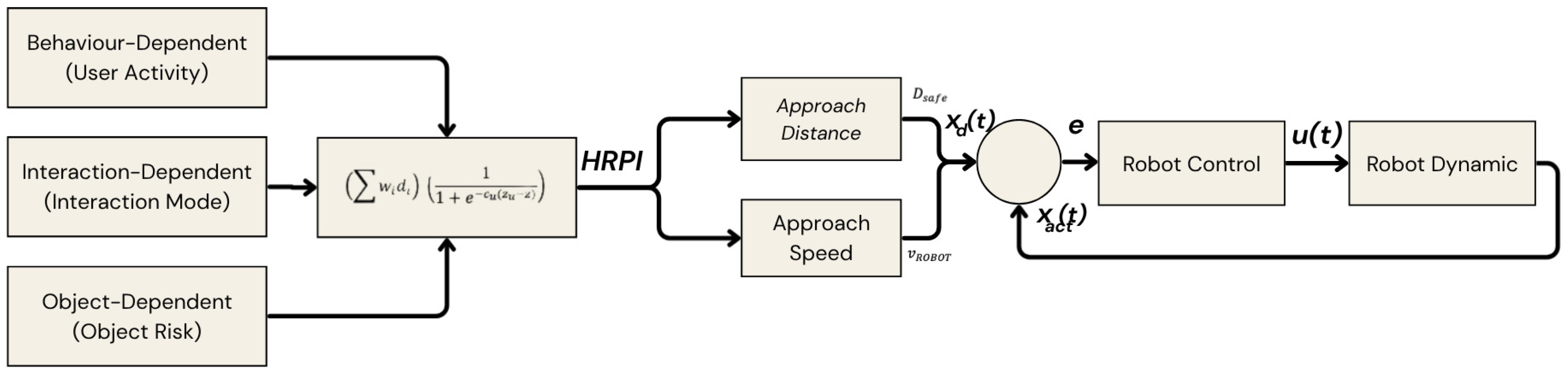
- Behavior-Dependent (BD): Impacted by user behaviors (e.g., working, resting, receiving objects);
- Interaction-Dependent (ID): Determined by the nature and direction of interaction (e.g., providing or receiving items);
- Object-Dependent (OD): Influenced by the attributes of objects and their associated risk levels.
2. Related Work
2.1. Human–Robot Proxemics
2.2. Comfort and Distance Models
2.3. Adaptive Robot Behavior Models
2.4. Summary and Research Gap
3. Methodology
3.1. HRPI Conceptual Framework
- Behavior-Dependent (BD): This describes how a person’s behavior (e.g., working, relaxing, retrieving an object) impacts their comfortable distance. Activities involving focused attention or manual operation generally require greater interpersonal space.
- Interaction-Dependent (ID): This captures the type and direction of interaction—whether the robot is giving or receiving an object—which influences how participants position themselves during the task exchange.
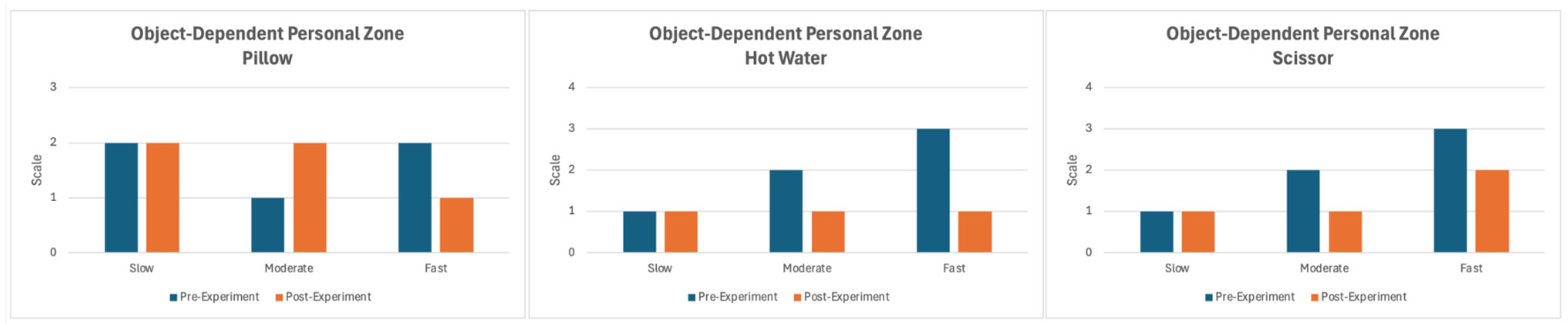
- Object-Dependent (OD): This measures the influence of an object’s physical characteristics and perceived risks (e.g., soft, hot, or sharp objects) on comfortable distance and movement safety.
3.2. Mathematical Formulation
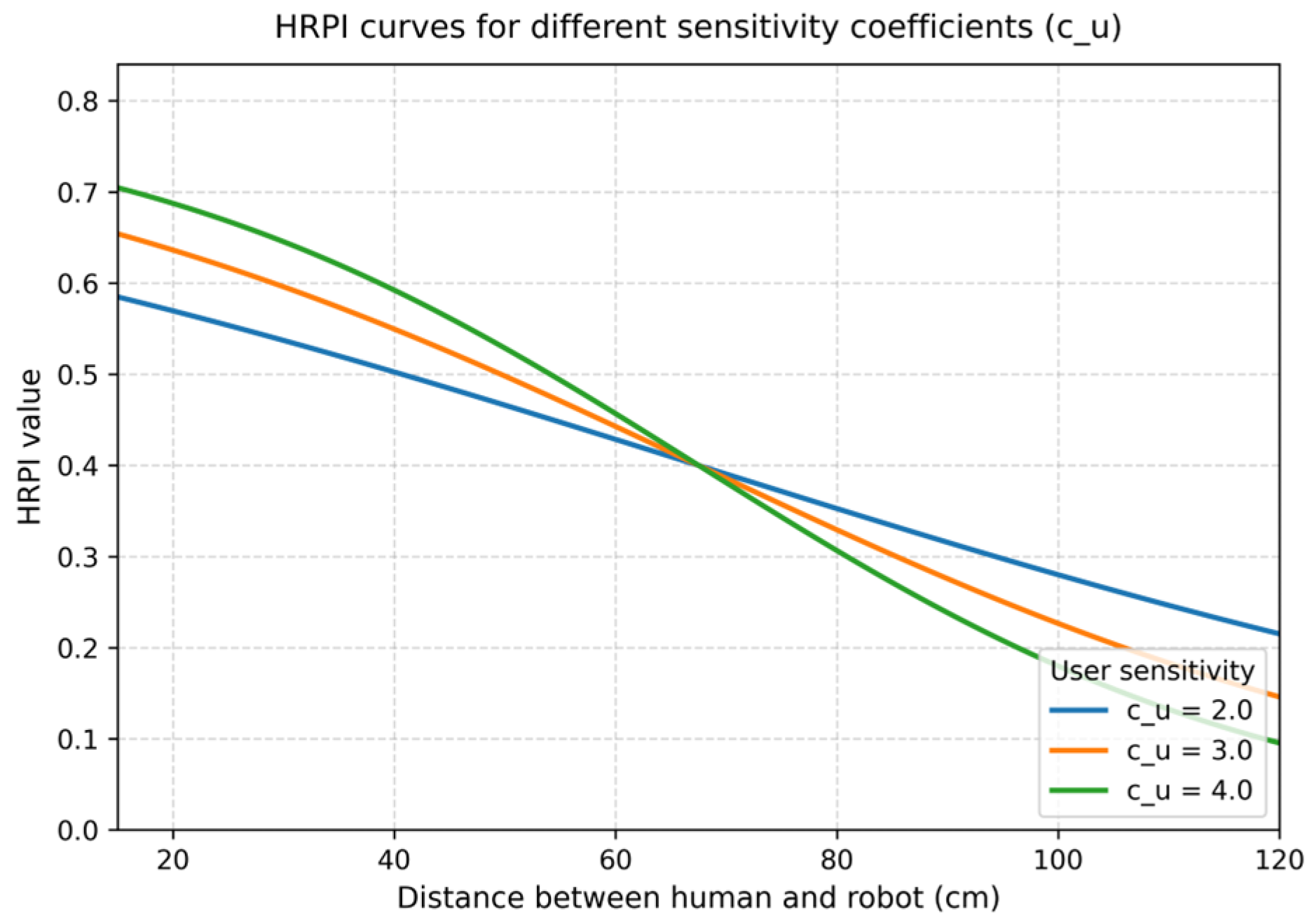
- is calculated from “” + “”. The activity function is adjusted according to ICF staging, with five activities analyzed: sitting, reading books, resting, working, and cooking, with weights of 0.1, 0.3, 0.4, 0.6, and 0.8, respectively. The value is added according to the actual distance in the experiment.
- is calculated from “” × “”, where is 1 if interaction is required (e.g., object handover) and 0 if not. The value is taken from the comfort level obtained from the experiment results.
- represents the type and level of risk of the object, with categories: non-hazardous (0.1), moderately hazardous (0.3), and hazardous (0.6).
4. Experimental Design
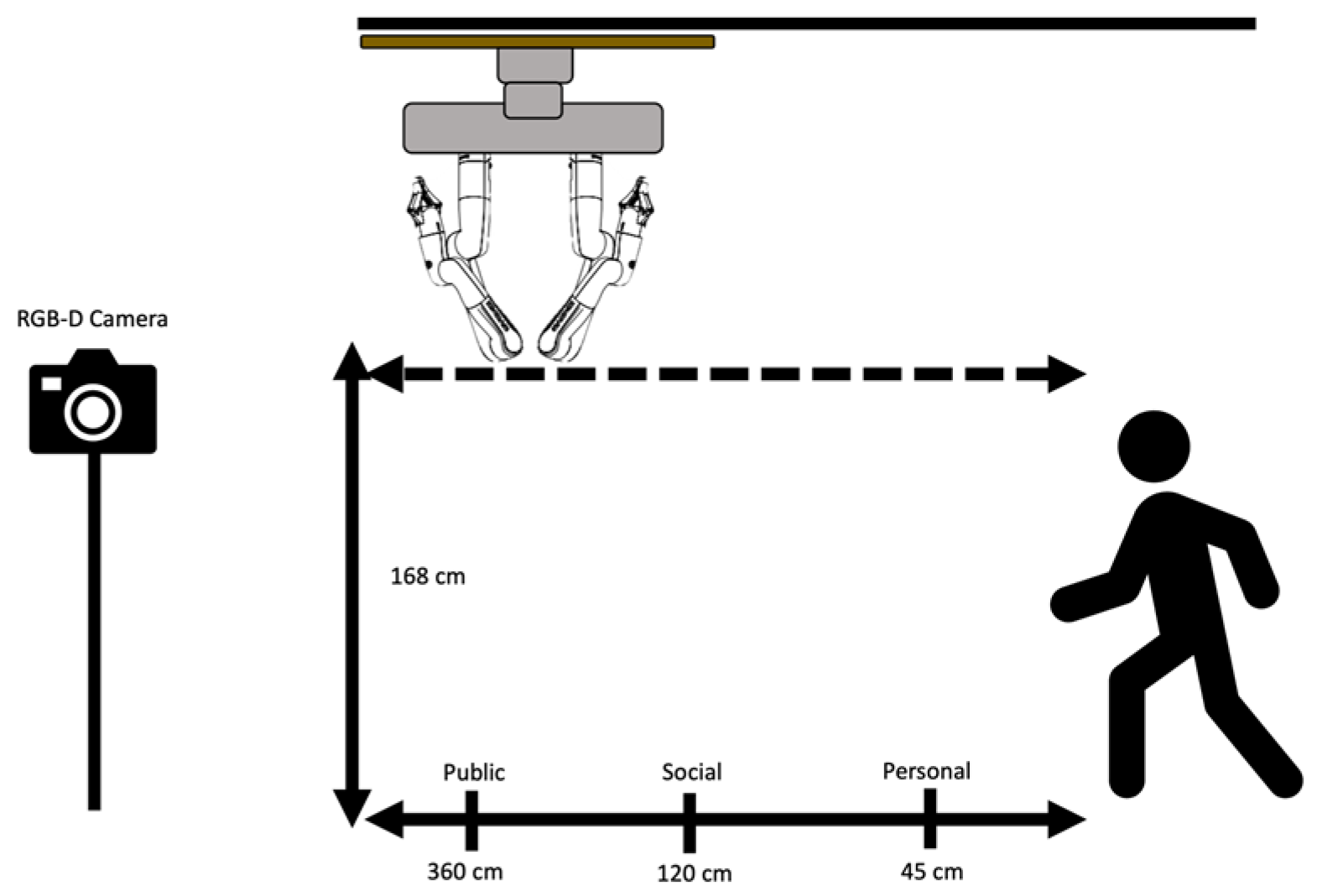
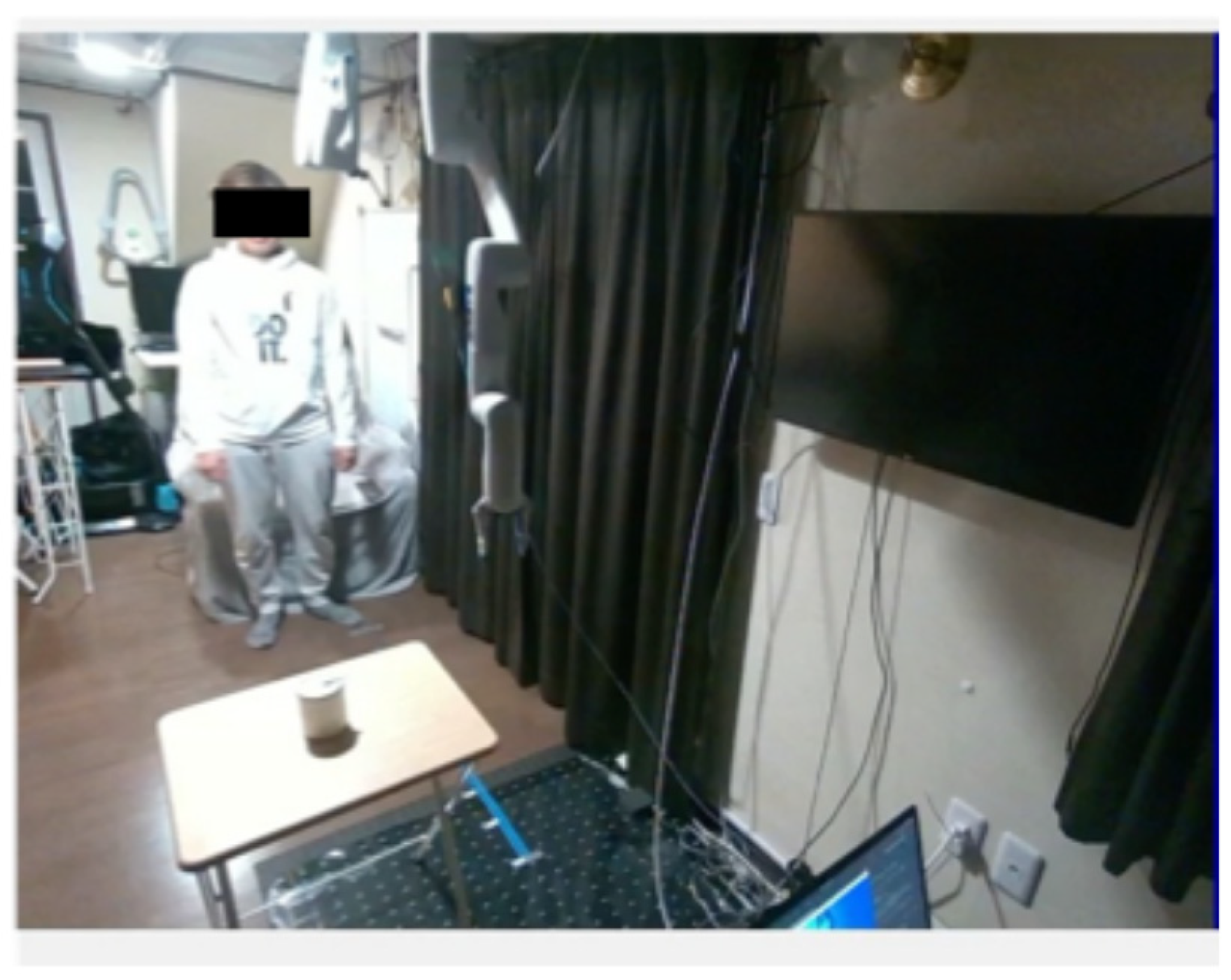
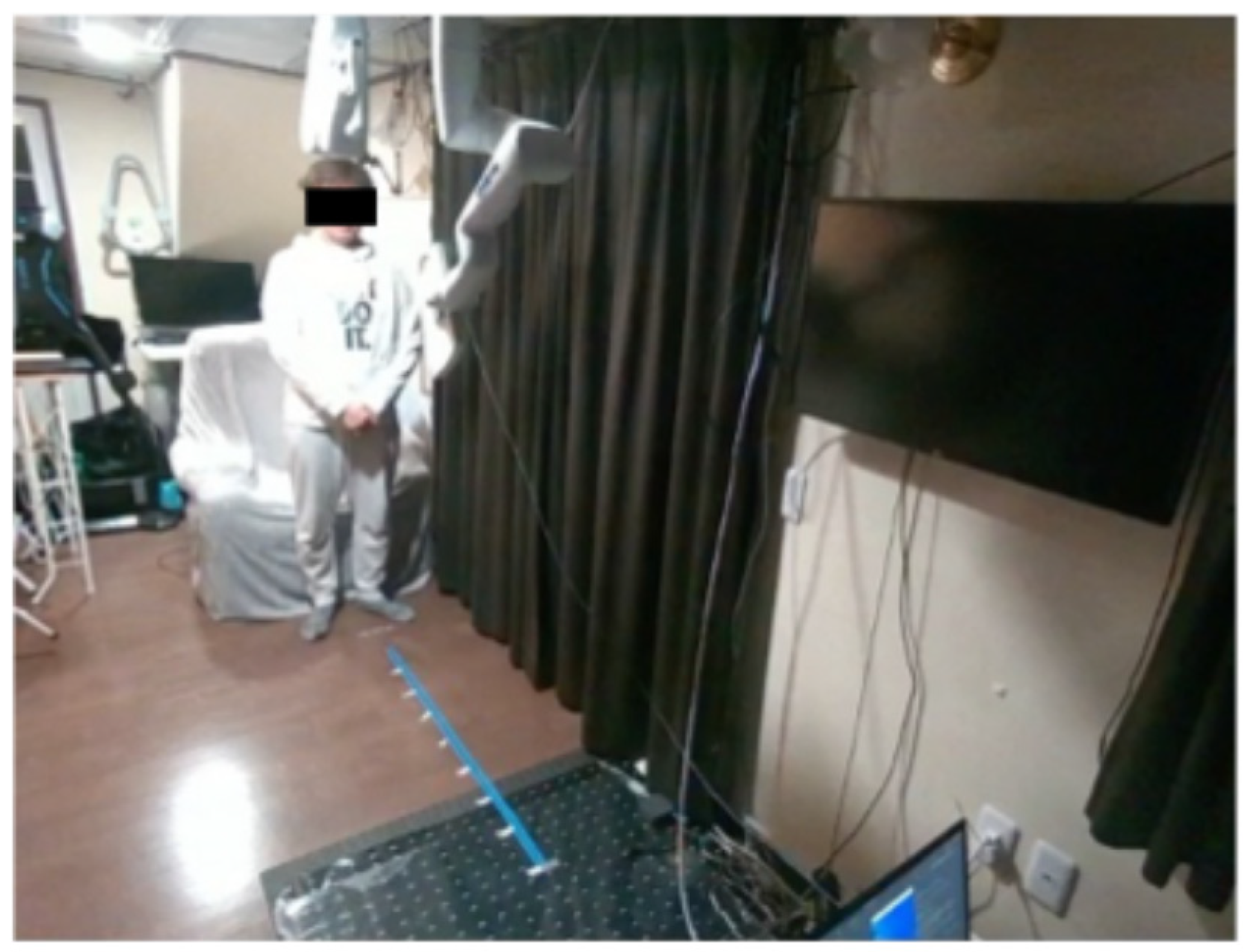
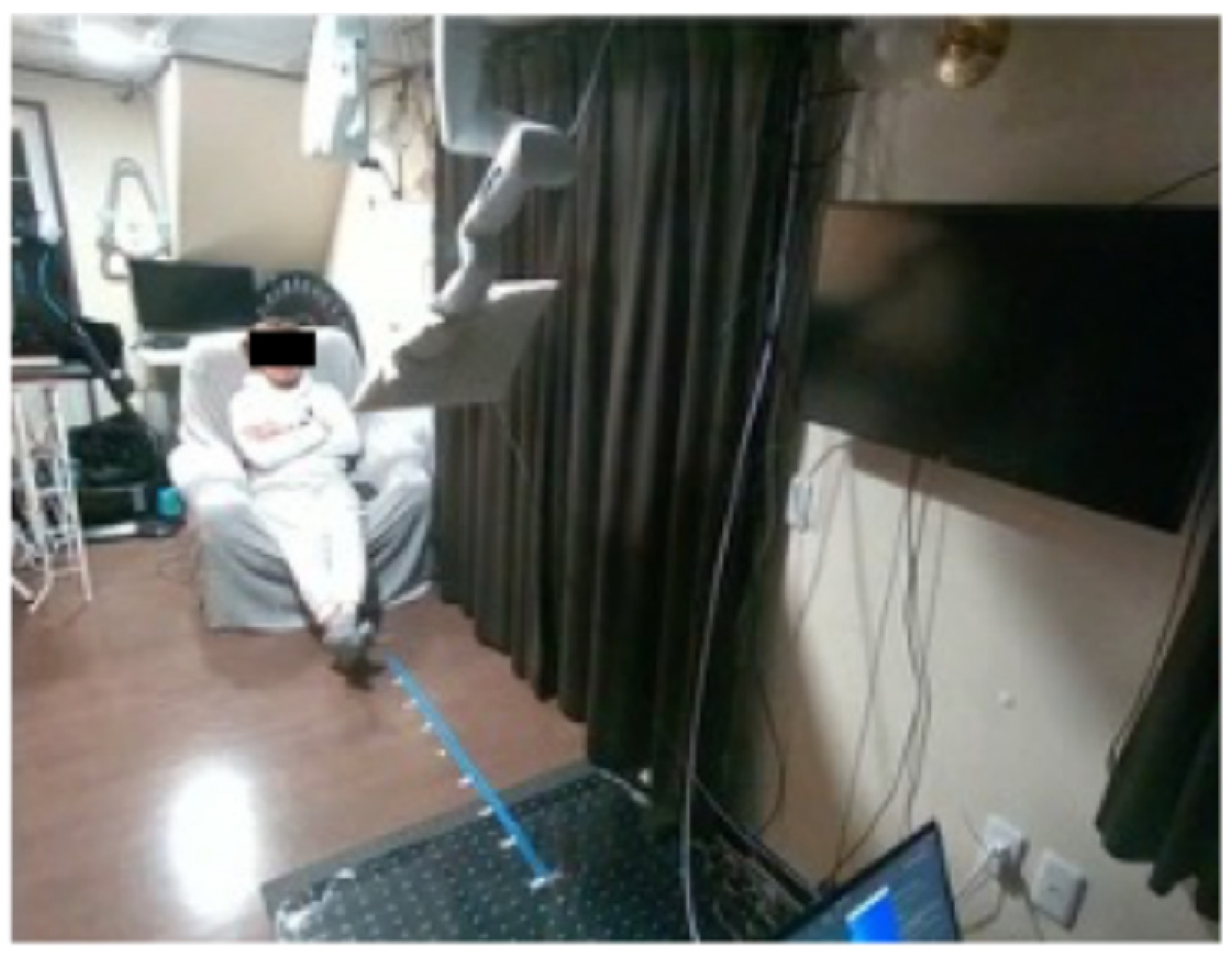
4.1. Participant and Setup
4.2. Questionnaire and Experimental Procedure
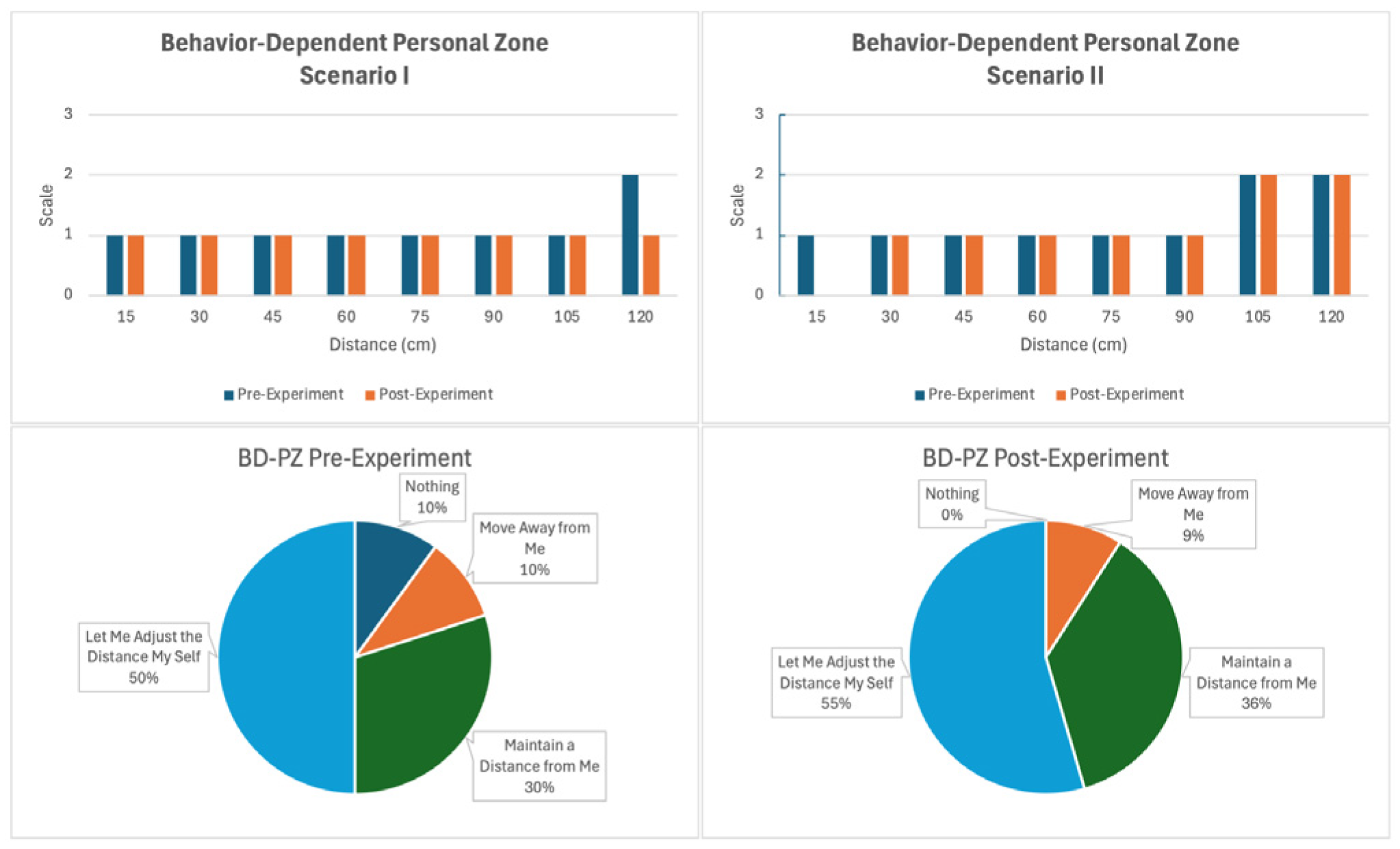
4.2.1. Behavior-Dependent Scenario
- BD1: Participant engaged in focused work.
- BD2: Participant in a resting or relaxation state.
- BD3: Participant retrieving an object located near the robot.
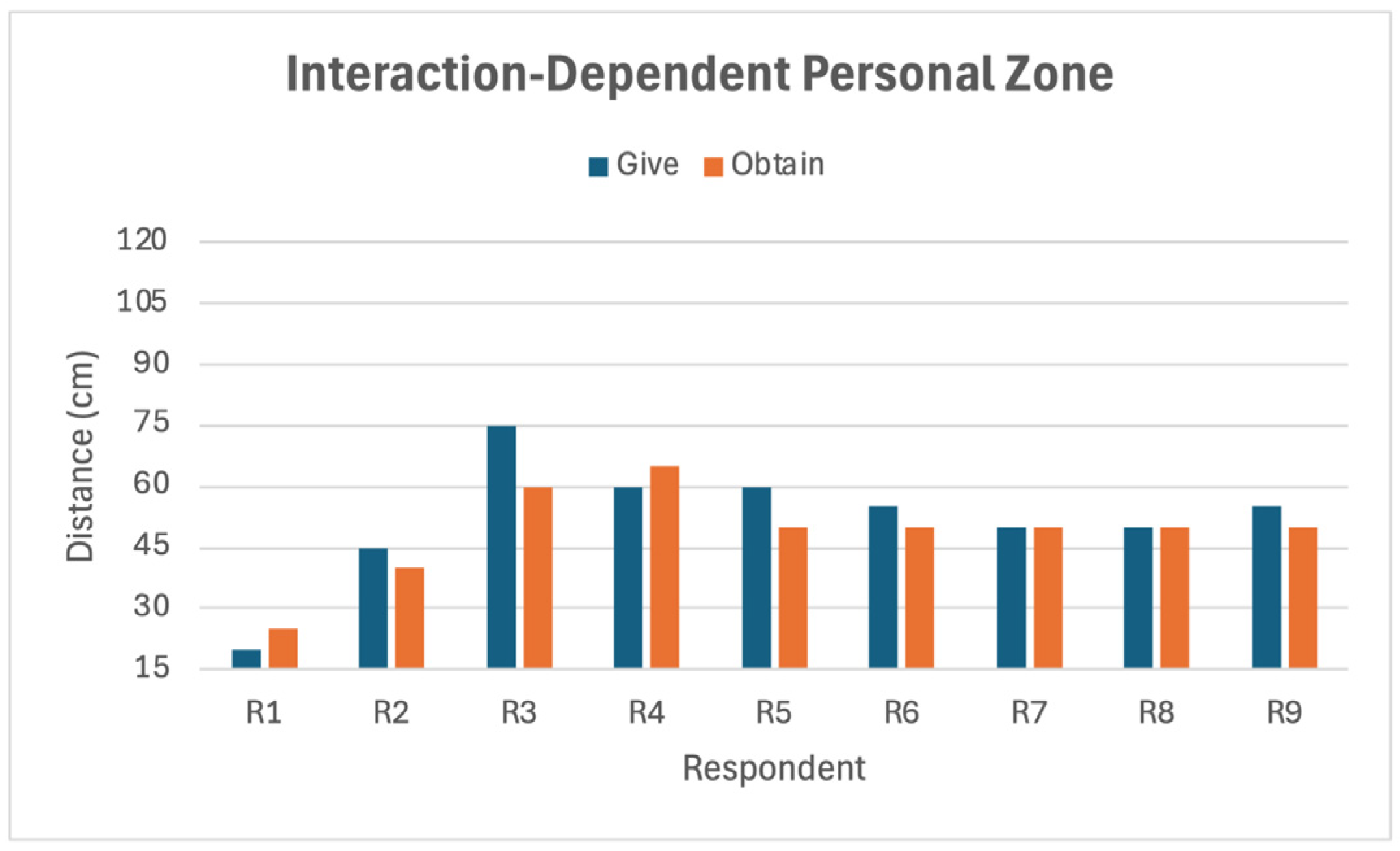
4.2.2. Interaction-Dependent Scenario
- ID1: Participant handing an object to the robot.
- ID2: Participant receiving an object from the robot.
4.2.3. Object-Dependent Scenario
- OD1: Pillow (non-hazardous).
- OD2: Cup filled with hot water (moderately hazardous).
- OD3: Scissors (highly hazardous).
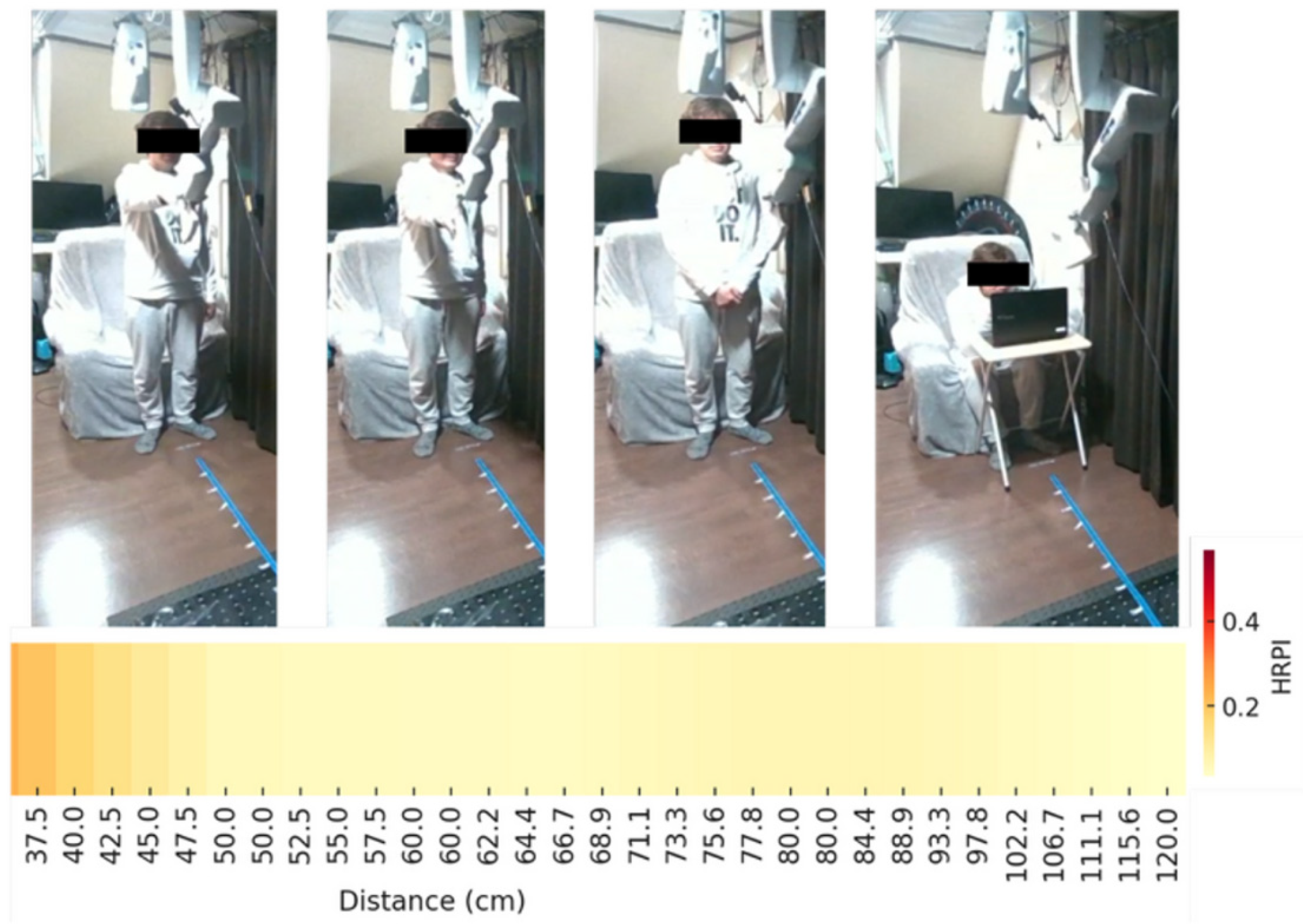
4.3. Simulation for HRPI-Based Robot Control
5. Results
5.1. Scenario Dependent on Behavior
5.2. Scenario Dependent on Interaction
5.3. Scenario Dependent on Objects
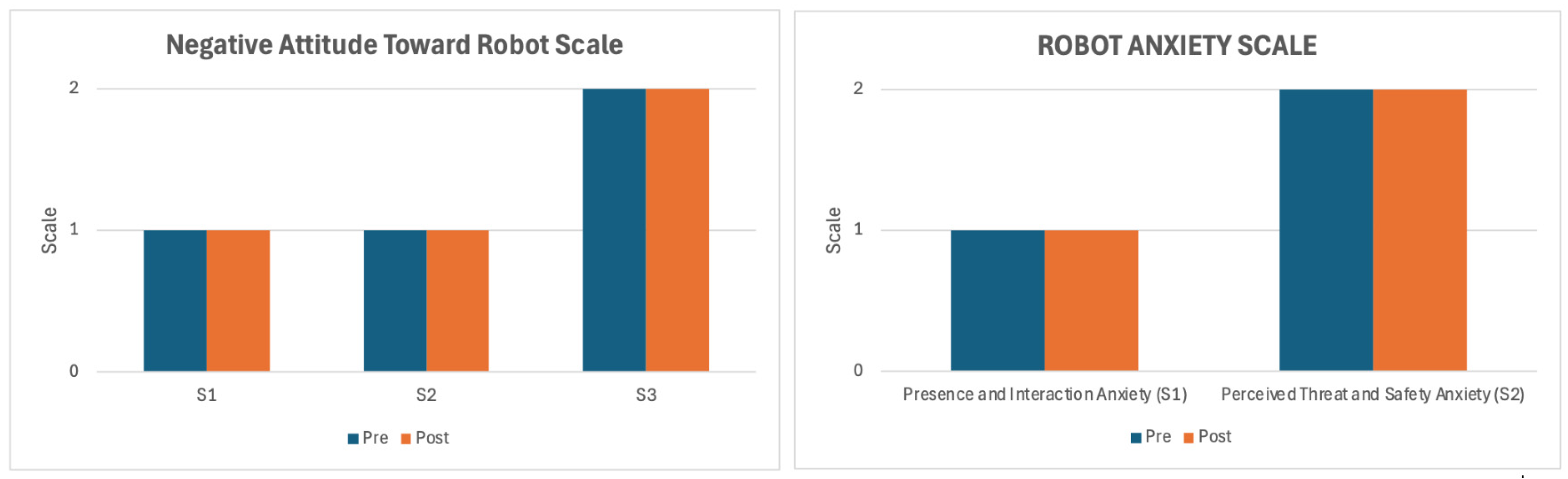
5.4. Personal Variations (NARS and RAS)
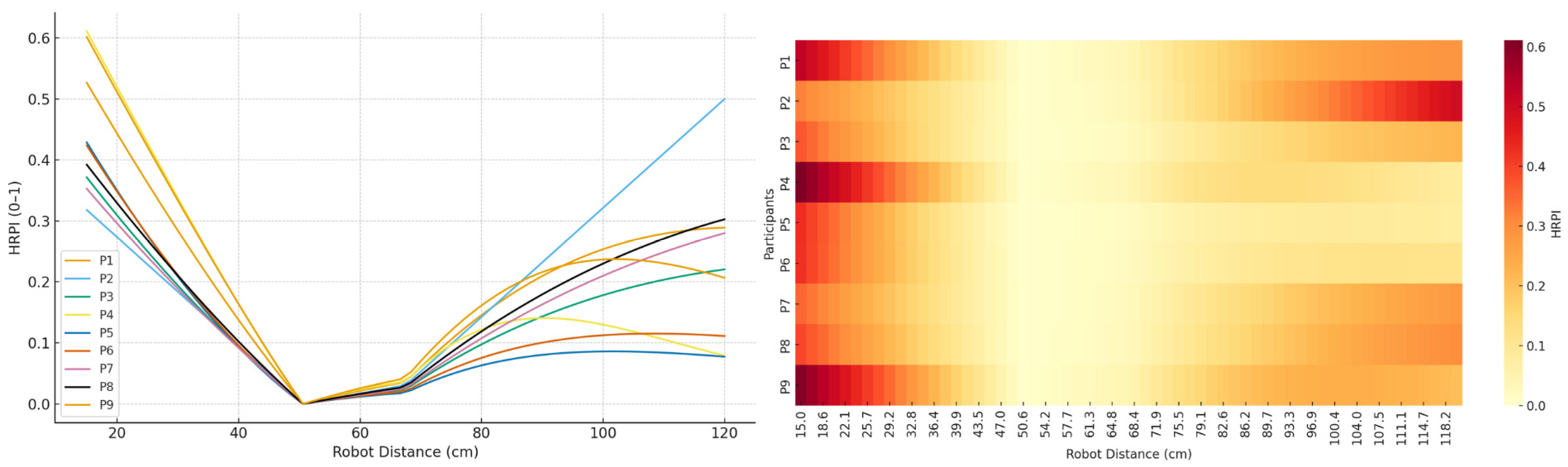
5.5. HRPI Simulation Results
6. Discussion
6.1. Analysis of HRPI Behavior
6.2. Implications for Adaptive Robot Control
6.3. Evaluation Regarding Established Models
6.4. Potential Directions and Constraints
6.5. Broader Implications
7. Conclusions and Future Work
Author Contributions
Funding
Institutional Review Board Statement
Informed Consent Statement
Data Availability Statement
Conflicts of Interest
References
- Hall, E.T. The Hidden Dimension; Anchor Books: New York, NY, USA, 1990. (Original work published 1966). [Google Scholar]
- Argyle, M.; Dean, J. Eye-Contact, Distance And Affiliation. Sociometry 1965, 28, 289–304. Available online: http://www.jstor.org/stable/2786027 (accessed on 26 September 2025). [CrossRef] [PubMed]
- Burgoon, J.K.; Guerrero, L.K.; Floyd, K. Nonverbal Communication, 2nd ed.; Routledge: New York, NY, USA, 2016. [Google Scholar]
- Kroczek, L.O.H.; Pfaller, M.; Lange, B.; Müller, M.; Mühlberger, A. Interpersonal distance during real-time social interaction: Insights from subjective experience, behavior, and physiology. Front. Psychiatry 2020, 11, 561. [Google Scholar] [CrossRef]
- Latané, B.; Liu, J.H.; Nowak, A.; Bonevento, M.; Zheng, L. Distance matters: Physical space and social impact. Pers. Soc. Psychol. Bull. 1995, 21, 795–805. [Google Scholar] [CrossRef]
- Walters, M.L.; Dautenhahn, K.; Woods, S.N.; Koay, K.L.; Nehaniv, C.L.; Lee, D.; Boekhorst, R.T.; Syrdal, D.S. An empirical framework for human–robot proxemics. Proc. AISB Symp. 2009, 144–149. Available online: https://www.researchgate.net/publication/277290091_An_Empirical_Framework_for_Human-Robot_Proxemics (accessed on 5 October 2025).
- Mumm, J.; Mutlu, B. Human–robot proxemics: Physical and psychological distancing in human–robot interaction. In Proceedings of the 6th International Conference on Human-Robot Interaction—HRI’11, Lausanne, Switzerland, 6–9 March 2011; pp. 331–338. [Google Scholar] [CrossRef]
- Takayama, L.; Pantofaru, C. Influences on proxemic behaviors in human–robot interaction. In Proceedings of the 2009 IEEE/RSJ International Conference on Intelligent Robots and Systems (IROS 2009), St. Louis, MO, USA, 10–15 October 2009; pp. 5495–5502. [Google Scholar] [CrossRef]
- Mead, R.; Matarić, M.J. Robots have needs too: How and why people adapt their proxemic behavior to improve robot social signal understanding. J. Hum.-Robot Interact. 2016, 5, 48–68. [Google Scholar] [CrossRef]
- Neggers, M.M.E.; Cuijpers, R.H.; Ruijten, P.A.M.; IJsselsteijn, W.A. The effect of robot speed on comfortable passing distances. Front. Robot. AI 2022, 9, 915972. [Google Scholar] [CrossRef]
- Su, Y.; Sun, X. A study of human proxemics on social robot light effects. In Human–Computer Interaction, HCII 2024; Kurosu, M., Hashizume, A., Eds.; Lecture Notes in Computer Science; Springer: Cham, Switzerland, 2024; Volume 14685, pp. 192–205. [Google Scholar] [CrossRef]
- Moujahid, M.; Robb, D.A.; Dondrup, C.; Hastie, H. Come closer: The effects of robot personality on human proxemics behaviours. In Proceedings of the 32nd IEEE International Conference on Robot and Human Interactive Communication (RO-MAN), Busan, Republic of Korea, 28–31 August 2023; pp. 1123–1128. [Google Scholar]
- Leoste, J.; Väljataga, T.; Ley, T.; Normak, P.; Tammets, K. Keeping distance with a telepresence robot: A pilot study. Front. Educ. 2023, 7, 1046461. [Google Scholar] [CrossRef]
- Złotowski, J.; Proudfoot, D.; Yogeeswaran, K.; Bartneck, C. Anthropomorphism: Opportunities and challenges in human–robot interaction. Int. J. Soc. Robot. 2015, 7, 347–360. [Google Scholar] [CrossRef]
- Yasuhara, A.; Takehara, T. Robot tears promote psychological anthropomorphism and empathy. Jpn. J. Cogn. Psychol. 2025, 23, 45–56. [Google Scholar]
- Torta, E.; Cuijpers, R.H.; Juola, J.F. Design of a Parametric Model of Personal Space for Robotic Social Navigation. Int. J. Soc. Robot. 2013, 5, 357–365. [Google Scholar] [CrossRef]
- Kim, Y.; Kim, S.; Chen, Y.; Yang, H.; Kim, S.; Ha, S.; Gombolay, M.; Ahn, Y.; Cho, Y.K. Understanding human–robot proxemic norms in construction: How do humans navigate around robots? Autom. Constr. 2024, 164, 105455. [Google Scholar] [CrossRef]
- Samarakoon, S.M.B.P.; Muthugala, M.A.V.J.; Jayasekara, A.G.B.P. A review on human–robot proxemics. Electronics 2022, 11, 2490. [Google Scholar] [CrossRef]
- Asif, S.; Callari, T.C.; Khan, F.; Eimontaite, I.; Hubbard, E.-M.; Bahraini, M.S.; Webb, P.; Lohse, N. Exploring tasks and challenges in human–robot collaborative systems. Adv. Eng. Inform. 2026, 62, 102274. [Google Scholar] [CrossRef]
- Maniscalco, U.; Minutolo, A.; Storniolo, P.; Esposito, M. Towards a more anthropomorphic interaction with robots in museum settings: An experimental study. Robot. Auton. Syst. 2024, 171, 104561. [Google Scholar] [CrossRef]
- Yang, Q.; Kachel, L.; Jung, M.; Al-Hamadi, A.; Wachsmuth, S. Learning human–robot proxemics models from experimental data. Electronics 2025, 14, 3704. [Google Scholar] [CrossRef]
- Kubota, N.; Nojima, Y.; Kojima, F.; Funabashi, M. Multiple fuzzy state-value functions for human evaluation through interactive trajectory planning of a partner robot. Soft Comput. 2006, 10, 891–901. [Google Scholar] [CrossRef]
- Hancock, P.A.; Billings, D.R.; Schaefer, K.E.; Chen, J.Y.C.; de Visser, E.J.; Parasuraman, R. A meta-analysis of factors affecting trust in human–robot interaction. Hum. Factors 2011, 53, 517–527. [Google Scholar] [CrossRef] [PubMed]
- Campagna, G.; Rehm, M. A systematic review of trust assessments in human–robot interaction. J. Hum.-Robot Interact. 2025, 14, 30. [Google Scholar] [CrossRef]
- Langer, A.; Feingold-Polak, R.; Mueller, O.; Kellmeyer, P.; Levy-Tzedek, S. Trust in socially assistive robots: Considerations for use in rehabilitation. Neurosci. Biobehav. Rev. 2019, 104, 231–239. [Google Scholar] [CrossRef] [PubMed]
- Rahmah, S.; Kubota, N. Estimation of object handover position using human–robot proxemics and unsupervised pattern recognition. J. Adv. Comput. Intell. Intell. Inform. 2024, 28, 371–377. [Google Scholar] [CrossRef]
- Kubota, N. Multiscopic topological twin in trailer living laboratory: Plenary talk. In Proceedings of the 2022 IEEE 22nd International Symposium on Computational Intelligence and Informatics and 8th IEEE International Conference on Recent Achievements in Mechatronics, Automation, Computer Science and Robotics (CINTI-MACRo), Budapest, Hungary, 17–19 November 2022; pp. 11–12. [Google Scholar] [CrossRef]
- Rossi, S.; Ercolano, G.; Raggioli, L.; Savino, E.; Ruocco, M. The disappearing robot: An analysis of disengagement and distraction during non-interactive tasks. In Proceedings of the 2018 27th IEEE International Symposium on Robot and Human Interactive Communication (RO-MAN), Nanjing, China, 27–31 August 2018; pp. 522–527. [Google Scholar] [CrossRef]
- Bishop, C.M. Pattern Recognition and Machine Learning; Springer: New York, NY, USA, 2006. [Google Scholar]



| Approach | Context Covariates | Personalization | Output to Control | Notes |
|---|---|---|---|---|
| Walters’ empirical proxemics [6] | Embodiment, approach patterns | No | Indirect (design rules) | Foundational empirical framework |
| Takayama & Pantofaru [8] | Direction, speed | No | Indirect (design guidance) | Kinematic factors on comfort |
| Torta et al. model [24] | Task/role rules | Limited | Heuristic distances | Rule-based zones |
| Neggers et al. [10] | Speed × passing | No | Velocity tuning (implied) | Speed–distance coupling |
| Yang et al. (learned) [29] | Data-driven spatial cues | Limited | Model-dependent | Toward learned proxemics |
| HRPI (this work) | BD, ID, OD (activity, interaction direction, object risk) | Yes (sigmoid, NARS/RAS) | Direct mapping: distance and speed | Unified, adaptive, lightweight |
| HRPI Range | Robot Speed | Stopping Distance | Interpretation |
|---|---|---|---|
| 0.10–0.30 | Slow (≈0.15 m/s) | ≈100–120 cm | User highly sensitive → maintain longer distance |
| 0.30–0.60 | Moderate (≈0.30 m/s) | ≈60–90 cm | Comfortable engagement zone |
| 0.60–1.00 | Fast (≈0.45 m/s) | ≈30–60 cm | High familiarity → closer interaction |
Disclaimer/Publisher’s Note: The statements, opinions and data contained in all publications are solely those of the individual author(s) and contributor(s) and not of MDPI and/or the editor(s). MDPI and/or the editor(s) disclaim responsibility for any injury to people or property resulting from any ideas, methods, instructions or products referred to in the content. |
© 2025 by the authors. Licensee MDPI, Basel, Switzerland. This article is an open access article distributed under the terms and conditions of the Creative Commons Attribution (CC BY) license (https://creativecommons.org/licenses/by/4.0/).
Share and Cite
Rahmah, S.A.; Setyawan, M.R.H.; Obo, T.; Takesue, N.; Kubota, N. Modeling Human–Robot Proxemics Based on Human Communication Theory: A Behavior–Interaction–Object-Dependent Approach. Appl. Sci. 2025, 15, 12516. https://doi.org/10.3390/app152312516
Rahmah SA, Setyawan MRH, Obo T, Takesue N, Kubota N. Modeling Human–Robot Proxemics Based on Human Communication Theory: A Behavior–Interaction–Object-Dependent Approach. Applied Sciences. 2025; 15(23):12516. https://doi.org/10.3390/app152312516
Chicago/Turabian StyleRahmah, Syadza Atika, Muhammad Ramadhan Hadi Setyawan, Takenori Obo, Naoyuki Takesue, and Naoyuki Kubota. 2025. "Modeling Human–Robot Proxemics Based on Human Communication Theory: A Behavior–Interaction–Object-Dependent Approach" Applied Sciences 15, no. 23: 12516. https://doi.org/10.3390/app152312516
APA StyleRahmah, S. A., Setyawan, M. R. H., Obo, T., Takesue, N., & Kubota, N. (2025). Modeling Human–Robot Proxemics Based on Human Communication Theory: A Behavior–Interaction–Object-Dependent Approach. Applied Sciences, 15(23), 12516. https://doi.org/10.3390/app152312516