Development and Evaluation of a Next-Generation Medication Safety Support System Based on AI and Mixed Reality: A Study from South Korea

 ,
,  , , , , and
Abstract
1. Introduction
2. Materials and Methods
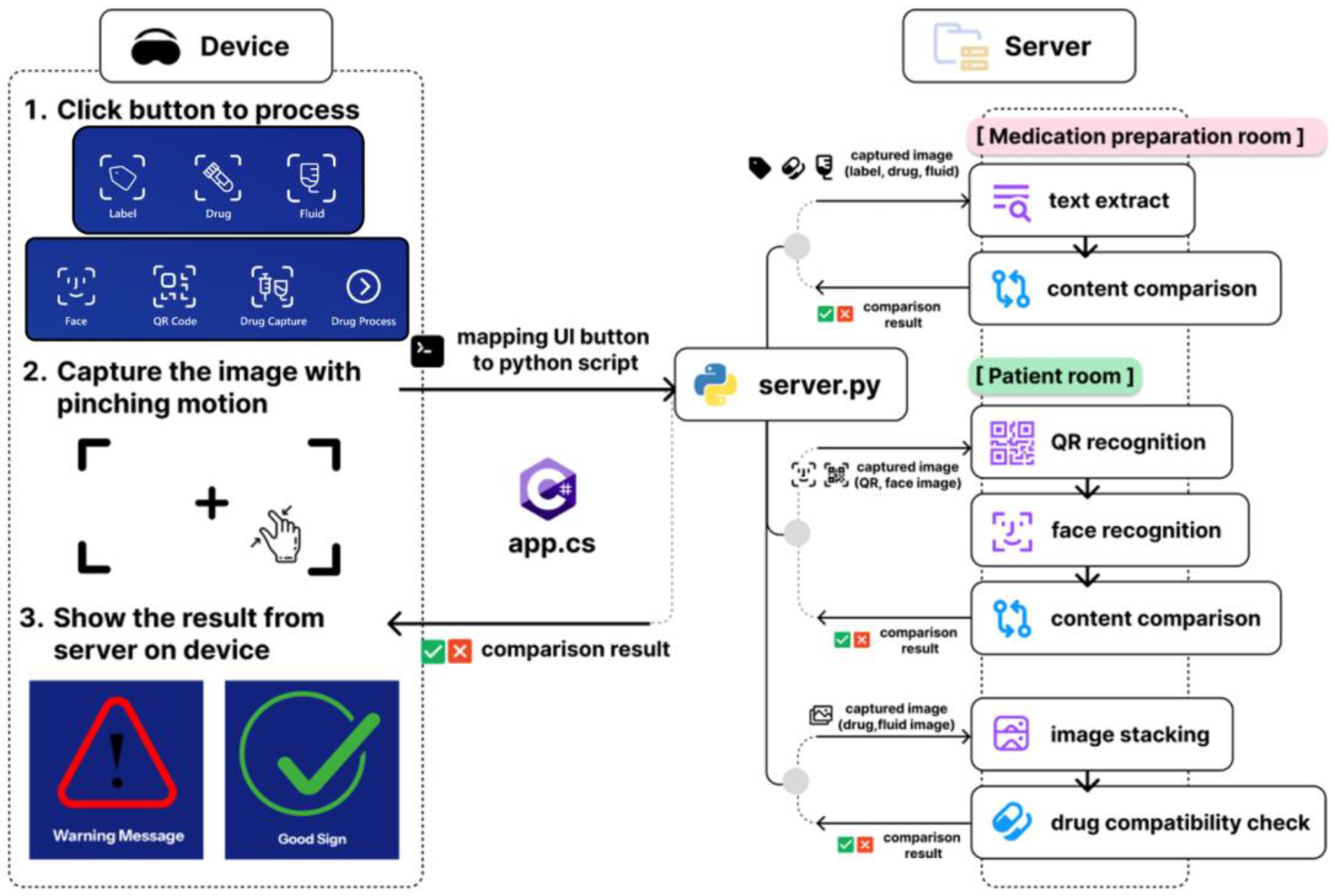
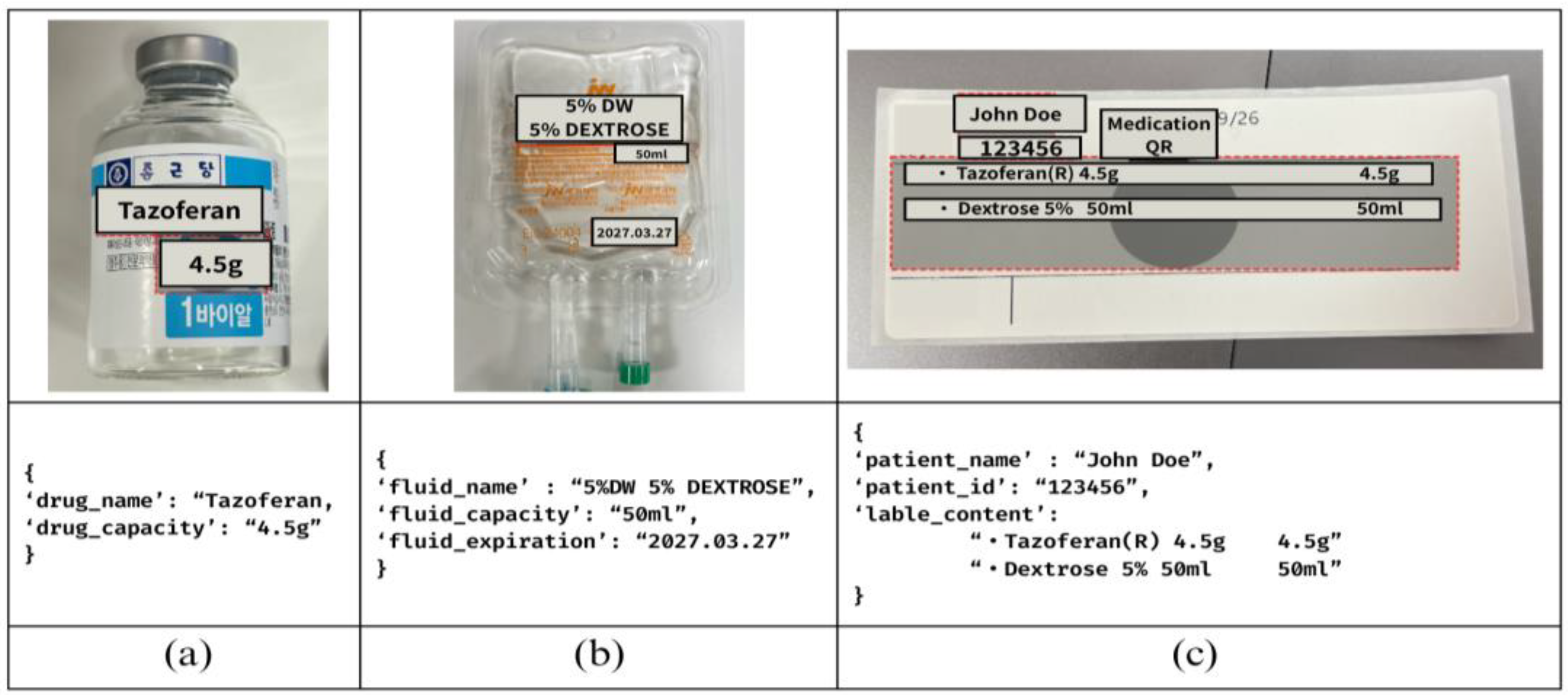
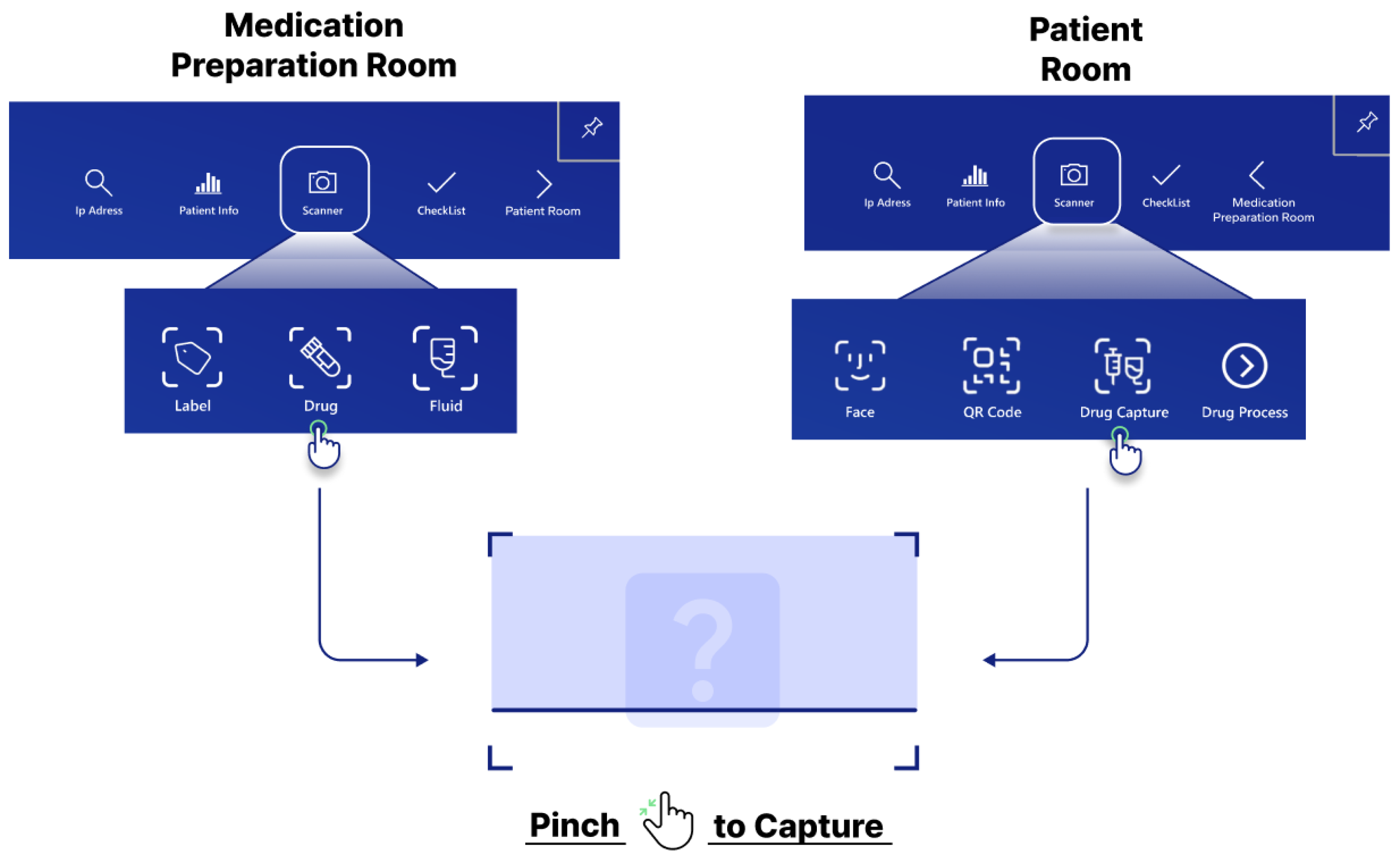
2.1. System Architecture
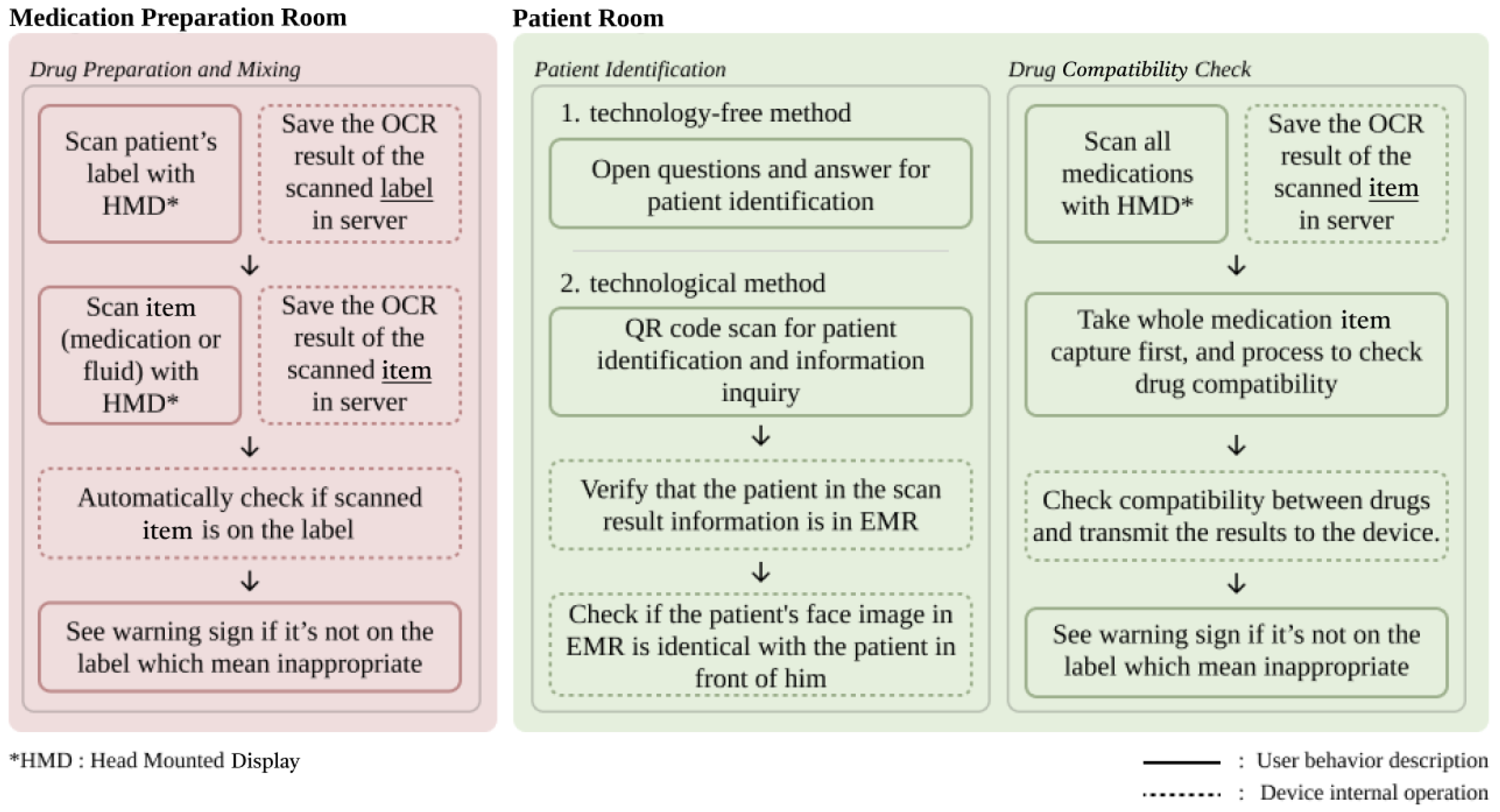
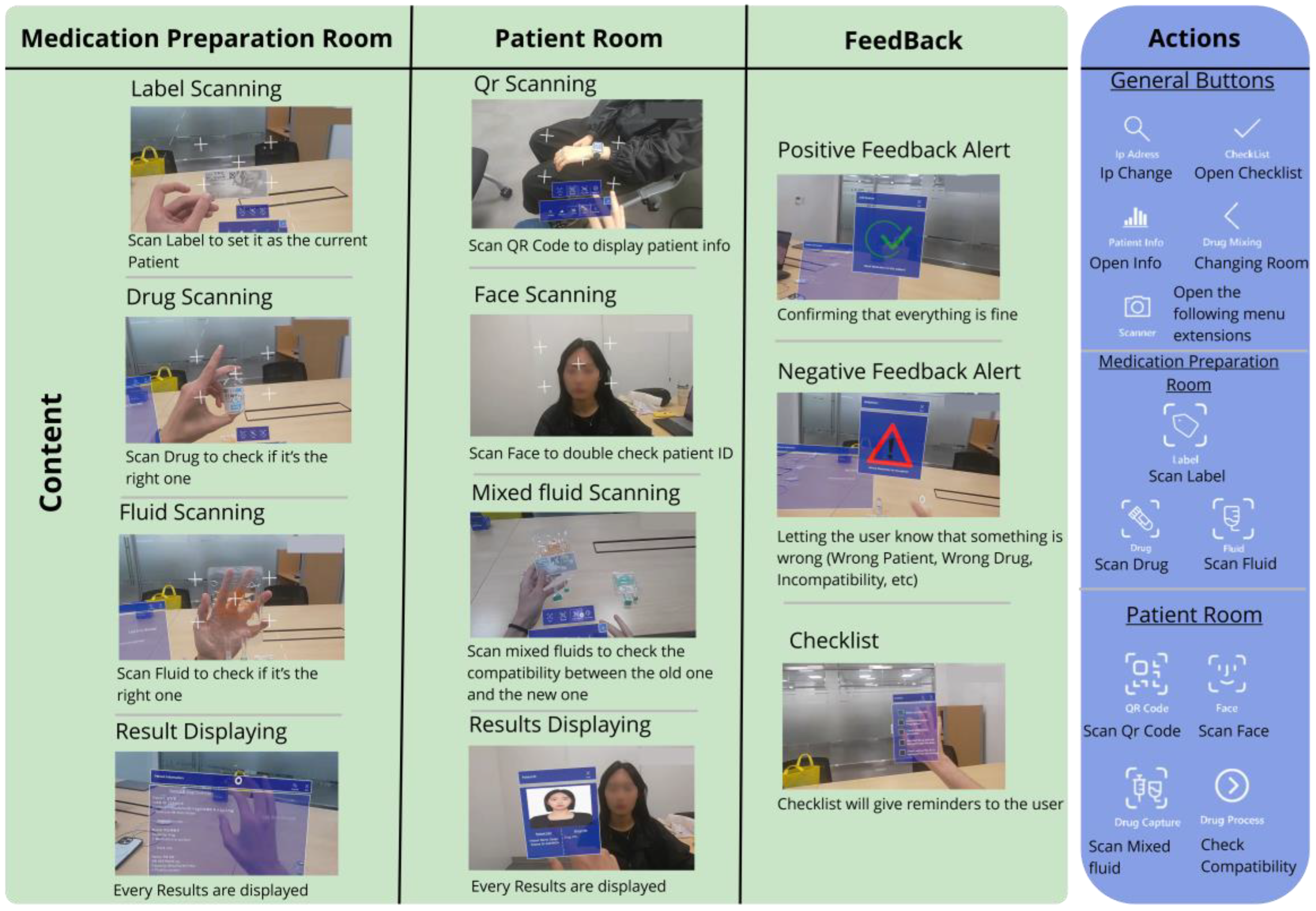
2.2. Clinical Workflow of the System
2.3. User Evaluation Procedure
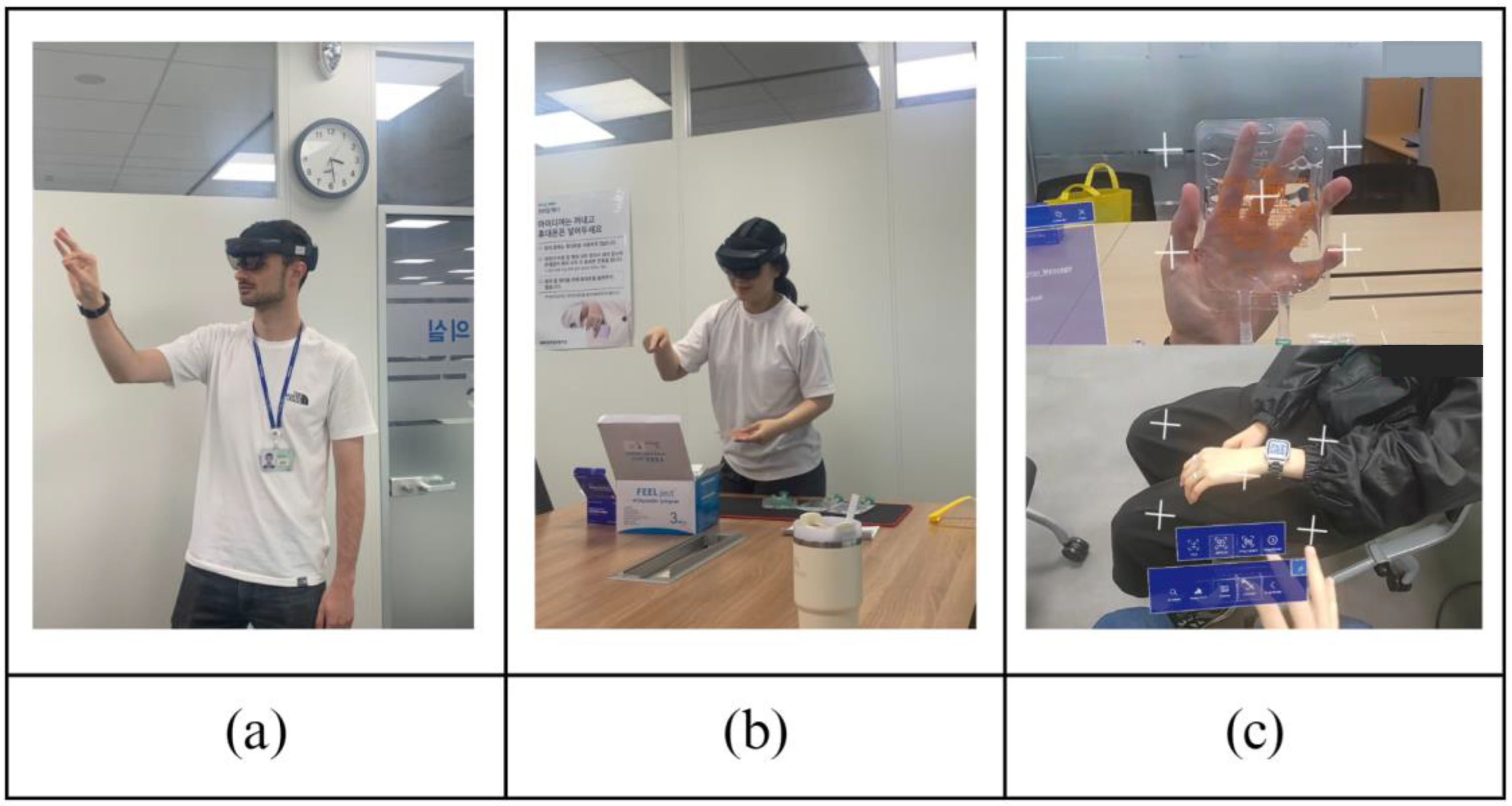
2.3.1. Simulation Test
2.3.2. Instruments Used for User Test
- What aspects of the system did you find most helpful?
- Was there any feature that stood out as particularly useful or innovative?
- How did the system improve the workflow or decision-making process?
- Is there anything else you would like to see added to or improved on the system?
2.4. Ethical Considerations
3. Results
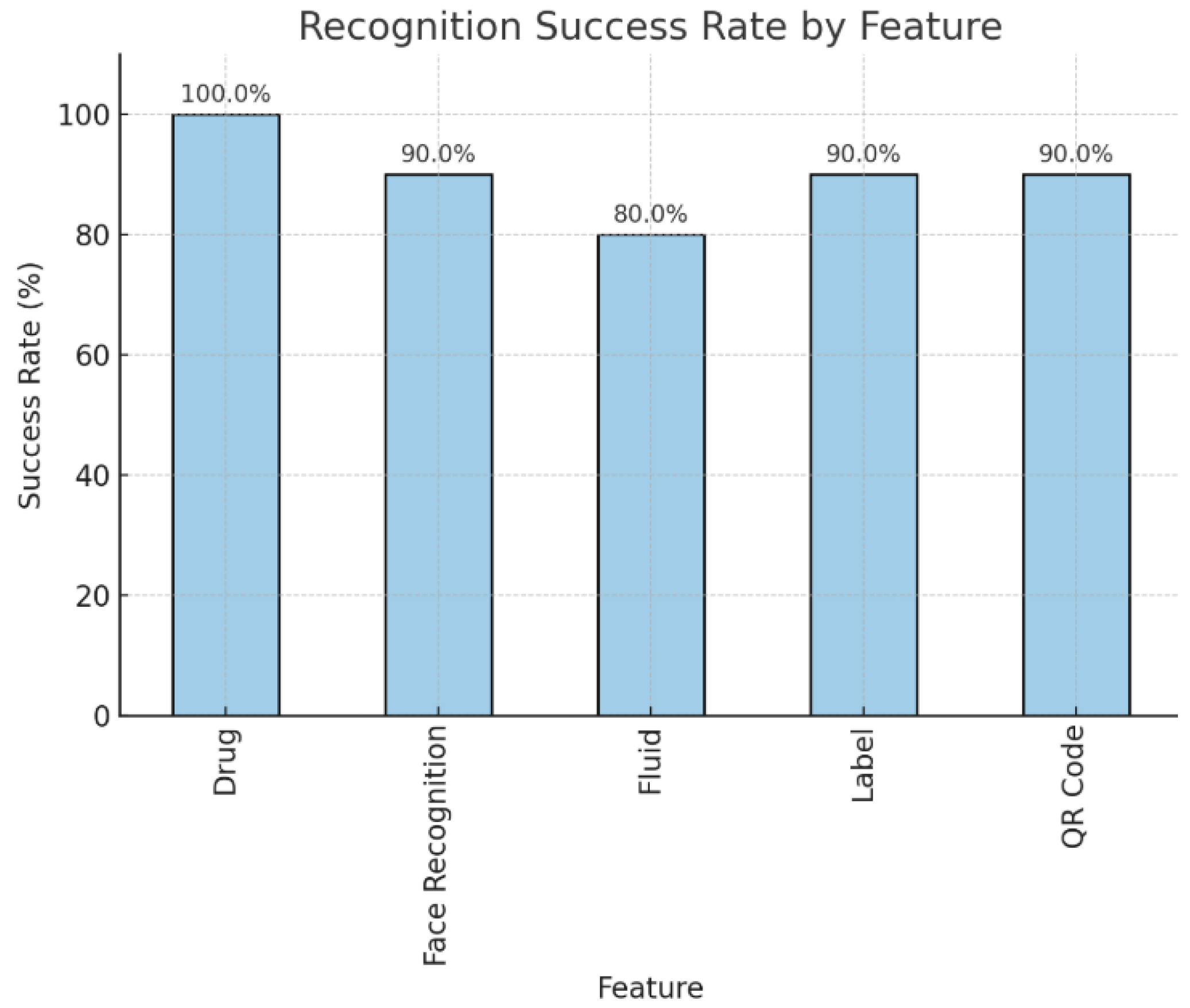
3.1. System Performance Evaluation: Recognition Accuracy
3.2. Results of User Evaluation
3.2.1. Cohort Characteristics
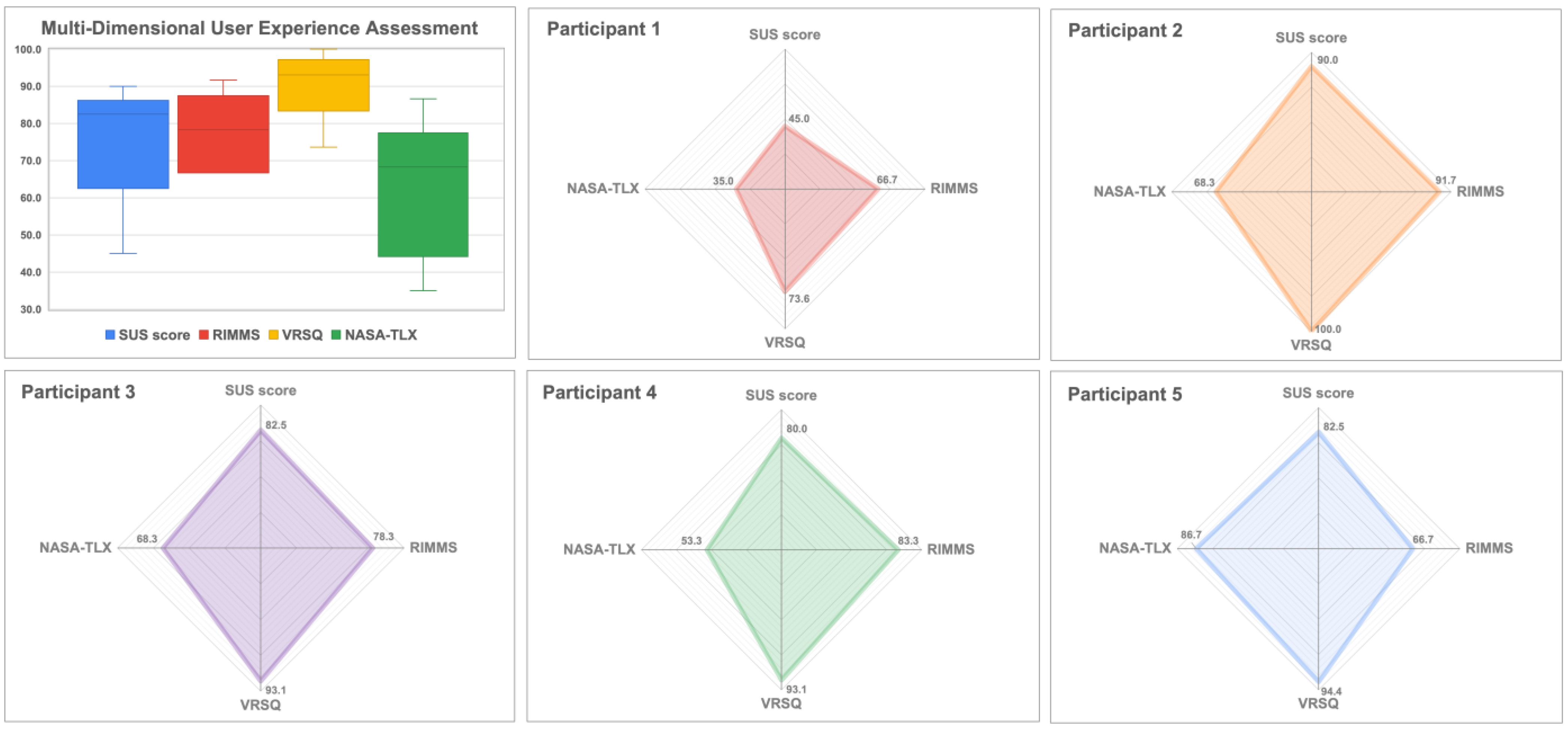
3.2.2. Multi-Dimensional User Experience Assessment
3.2.3. Qualitative Results—Open Questions
- Most Helpful Aspects
- Innovative or Useful Features
- Workflow and Decision-Making
- Suggestions for Improvement
4. Discussion
5. Conclusions
Author Contributions
Funding
Institutional Review Board Statement
Informed Consent Statement
Data Availability Statement
Conflicts of Interest
Abbreviations
| API | Application Programming Interface |
| BCMA | Bar-Code Medication Administration |
| GDPR | General Data Protection Regulation |
| HIPAA | Health Insurance Portability and Accountability Act |
| HTTP | Hypertext Transfer Protocol |
| IV Fluids | Intravenous Fluids |
| MR | Mixed Reality |
| MRTK3 | Mixed Reality Toolkit 3 |
| NASA-TLX | NASA Task Load Index |
| OCR | Optical Character Recognition |
| QR code | Quick Response code |
| RIMMS | Reduced Instructional Materials Motivation Survey |
| SUS | System Usability Scale |
| VRSQ | Virtual Reality Sickness Questionnaire |
Appendix A

| Survey Item | Median Score [Q1–Q3] |
|---|---|
| I would like to use this system frequently. | 4.0 [3.0–4.0] |
| The system was unnecessarily complex. | 2.0 [2.0–2.0] |
| The system was easy to use. | 4.0 [4.0–4.0] |
| I need technical support to use this system | 2.0 [1.0–4.0] |
| Functions were well integrated. | 5.0 [4.0–5.0] |
| There was too much inconsistency. | 1.0 [1.0–2.0] |
| Most people would learn to use this quickly. | 4.0 [4.0–5.0] |
| The system was cumbersome to use. | 1.0 [1.0–2.0] |
| I felt confident using the system. | 4.0 [4.0–4.5] |
| I needed to learn a lot before using it. | 1.0 [1.0–2.0] |
| SUS Score (1–100) | 82.5 [80-82.5] |
| Survey Content (Component) | Median Score [Q1–Q3] |
|---|---|
| Relevance (R) | 4.0 [3.7–4.7] |
| It is clear to me how the content is related to things I already know. The content will be useful to me. The content conveys the impression that its contents are worth knowing. | 5.0 [4.0–5.0] 3.0 [3.0–4.0] 4.0 [4.0–5.0] |
| Attention (A) | 2.7 [2.3–3.0] |
| The quality helped to hold my attention. The way the information is arranged helped keep my attention. The variety of digital content helped keep my attention on the lesson. | 4.0 [2.0–4.0] 2.0 [2.0–5.0] 3.0 [3.0–4.0] |
| Confidence (C) | 4.0 [3.7–4.3] |
| I was confident that I could understand the content. The good organization helped me be confident that I would learn the material. After a while, I was confident that I would be able to complete the tasks. | 4.0 [4.0–4.0] 4.0 [4.0–4.0] 5.0 [2.0–5.0] |
| Satisfaction (S) | 4.3 [3.3–4.3] |
| It was a pleasure to work with such a well-designed software. I really enjoyed working with this system. I enjoyed working so much that I think I will continue using it. | 4.0 [4.0–5.0] 4.0 [4.0–4.0] 4.0 [4.0–4.0] |
| Overall Mean Score (1–5) | 3.7 [3.7–4.1] |
| Symptom | Median Severity [Q1–Q3] |
|---|---|
| General Body Symptoms | |
| General discomfort | 0.0 [0.0–2.0] |
| Fatigue | 1.0 [0.0–2.0] |
| Boredom | 0.0 [0.0–0.0] |
| Drowsiness | 0.0 [0.0–0.0] |
| Dizziness | 1.0 [0.0–2.0] |
| Difficulty concentrating | 0.0 [0.0–1.0] |
| Nausea | 0.0 [0.0–0.0] |
| Eye-Related Symptoms | |
| Tired eyes | 0.0 [0.0–0.0] |
| Sore/aching eyes | 0.0 [0.0–0.0] |
| Eyestrain | 0.0 [0.0–0.0] |
| Blurred vision | 0.0 [0.0–1.0] |
| Difficulty focusing | 0.0 [0.0–2.0] |
| Overall VRSQ Score (0–6) | 0.4 [0.0–0.0] |
| Criteria | Median [Q1–Q3] |
|---|---|
| Mental demand | 20.0 [10.0–30.0] |
| Physical demand | 40.0 [10.0–40.0] |
| Temporal demand | 30.0 [30.0–30.0] |
| Effort | 70.0 [30.0–70.0] |
| Performance | 30.0 [10.0–30.0] |
| Frustration | 60.0 [40.0–70.0] |
| Overall Workload Score | 31.7 [31.7–46.7] |
References
- Tariq, R.A.; Vashisht, R.; Sinha, A.; Scherbak, Y. Medication dispensing errors and prevention. In StatPearls; StatPearls Publishing: Treasure Island, FL, USA, 2025. Available online: https://www.ncbi.nlm.nih.gov/books/NBK519065/ (accessed on 2 July 2025).
- Kohn, L.T.; Corrigan, J.M.; Donaldson, M.S. To Err Is Human: Building a Safer Health System; National Academies Press: Washington, DC, USA, 2000. [Google Scholar] [CrossRef]
- World Health Organization. Medication Without Harm. Available online: https://www.who.int/initiatives/medication-without-harm (accessed on 2 July 2025).
- Ministry of Health and Welfare; Korea Institute for Healthcare Accreditation. Korean Patient Safety Incident Report 2023; Korea Institute for Healthcare Accreditation: Seoul, Republic of Korea, 2024; Available online: http://www.kops.or.kr (accessed on 2 July 2025).
- Poon, E.G.; Keohane, C.A.; Yoon, C.S.; Ditmore, M.; Bane, A.; Levtzion-Korach, O.; Moniz, T.; Rothschild, J.M.; Kachalia, A.B.; Hayes, J.; et al. Effect of Bar-Code Technology on the Safety of Medication Administration. N. Engl. J. Med. 2010, 362, 1698–1707. [Google Scholar] [CrossRef] [PubMed]
- Son, E.S.; Kim, A.Y.; Lee, Y.W.; Kim, J.S.; Song, H.S.; Kim, S.E.; Lee, A.Y.; Seok, H.J.; Hwang, K.J.; Park, S.B. Medication Errors and Considerations Related to Injectable Drugs. J. Korean Soc. Health-Syst. Pharm. 2003, 20, 220–224. [Google Scholar]
- Tiu, M.G.; Ballarta, P.J.; De Leon, K.A.; Isulat, T.; Narvaez, R.A.; Salas, M. Impact on Use of Barcode Scanners in Medication Administration: An Integrative Review. Can. J. Nurs. Inform. 2025, 20, 1. Available online: https://cjni.net/journal/?p=14288 (accessed on 4 July 2025).
- Koppel, R.; Wetterneck, T.; Telles, J.L.; Karsh, B.T. Workarounds to Barcode Medication Administration Systems: Their Occurrences, Causes, and Threats to Patient Safety. J. Am. Med. Inform. Assoc. 2008, 15, 408–423. [Google Scholar] [CrossRef] [PubMed]
- Bates, D.W.; Levine, D.; Syrowatka, A.; Kuznetsova, M.; Craig, K.J.T.; Rui, A.; Jackson, G.P.; Rhee, K. The potential of artificial intelligence to improve patient safety: A scoping review. npj Digit. Med. 2021, 4, 54. [Google Scholar] [CrossRef]
- Eckert, M.; Volmerg, J.S.; Friedrich, C.M. Augmented Reality in Medicine: Systematic and Bibliographic Review. JMIR Mhealth Uhealth 2019, 7, e10967. [Google Scholar] [CrossRef] [PubMed]
- Alowais, S.A.; Alghamdi, S.S.; Alsuhebany, N.; Alqahtani, T.; Alshaya, A.I.; Almohareb, S.N.; Aldairem, A.; Alrashed, M.; Bin Saleh, K.; Badreldin, H.A.; et al. Revolutionizing Healthcare: The Role of Artificial Intelligence in Clinical Practice. BMC Med. Educ. 2023, 23, 689. [Google Scholar] [CrossRef] [PubMed]
- Huo, Y.; Gang, S.; Guan, C. FCIHMRT: Feature Cross-Layer Interaction Hybrid Method Based on Res2Net and Transformer for Remote Sensing Scene Classification. Electronics 2023, 12, 4362. [Google Scholar] [CrossRef]
- Ankam, V.S.S.; Hong, G.Y.; Fong, A.C. Design of a Mixed-Reality Application to Reduce Pediatric Medication Errors in Prehospital Emergency Care. Appl. Sci. 2024, 14, 8426. [Google Scholar] [CrossRef]
- Palumbo, A. Microsoft HoloLens 2 in Medical and Healthcare Context: State of the Art and Future Prospects. Sensors 2022, 22, 7709. [Google Scholar] [CrossRef] [PubMed]
- Microsoft. Mixed Reality Toolkit 3 (MRTK3) Overview. Microsoft Learn: Updated 10 February 2025. Available online: https://learn.microsoft.com/ko-kr/windows/mixed-reality/mrtk-unity/mrtk3-overview/ (accessed on 10 July 2025).
- Strecker, J.; García, K.; Bektaş, K.; Mayer, S.; Ramanathan, G. SOCRAR: Semantic OCR through Augmented Reality. In Proceedings of the ACM International Conference, Lisbon, Portugal, 6–8 September 2023; pp. 25–32. [Google Scholar] [CrossRef]
- NAVER Cloud Corporation. CLOVA OCR Overview. NAVER Cloud Platform Guide. Available online: https://guide.ncloud-docs.com/docs/clovaocr-overview (accessed on 2 July 2025).
- Ageitgey. Face_Recognition: The World’s Simplest Facial Recognition API for Python and the Command Line. Available online: https://github.com/ageitgey/face_recognition (accessed on 13 March 2025).
- Lunding, R.; Hubenschmid, S.; Feuchtner, T.; Grønbæk, K. ARTHUR: Authoring Human–Robot Collaboration Processes with Augmented Reality Using Hybrid User Interfaces. Virtual Real. 2025, 29, 73. [Google Scholar] [CrossRef]
- Brooke, J. SUS: A quick and dirty usability scale. Usability Eval. Ind. 1995, 189, 4–7. Available online: https://www.researchgate.net/publication/228593520_SUS_A_quick_and_dirty_usability_scale (accessed on 20 August 2025).
- Loorbach, N.; Peters, O.; Karreman, J.; Steehouder, M. Validation of the Instructional Materials Motivation Survey (IMMS) in a Self-Directed Instructional Setting Aimed at Working with Technology. Br. J. Educ. Technol. 2015, 46, 204–218. [Google Scholar] [CrossRef]
- Kim, H.K.; Park, J.; Choi, Y.; Choe, M. Virtual Reality Sickness Questionnaire (VRSQ): Motion Sickness Measurement Index in a Virtual Reality Environment. Appl. Ergon. 2018, 69, 66–73. [Google Scholar] [CrossRef] [PubMed]
- Hart, S.G.; Staveland, L.E. Development of NASA-TLX (Task Load Index): Results of Empirical and Theoretical Research. Adv. Psychol. 1988, 52, 139–183. [Google Scholar] [CrossRef]
- Bangor, A.; Kortum, P.T.; Miller, J.T. An Empirical Evaluation of the System Usability Scale. Int. J. Hum. Comput. Interact. 2008, 24, 574–594. [Google Scholar] [CrossRef]
- Huang, B.; Hew, K.F. Implementing a Theory-Driven Gamification Model in Higher Education Flipped Courses: Effects on Out-of-Class Activity Completion and Quality of Artifacts. Comput. Educ. 2018, 125, 254–272. [Google Scholar] [CrossRef]
- Johnston, M.; O’Mahony, M.; O’Brien, N.; Connolly, M.; Iohom, G.; Kamal, M.; Shehata, A.; Shorten, G. The Feasibility and Usability of Mixed Reality Teaching in a Hospital Setting Based on Self-Reported Perceptions of Medical Students. BMC Med. Educ. 2024, 24, 701. [Google Scholar] [CrossRef] [PubMed]
- Connolly, M.; Iohom, G.; O’Brien, N.; Volz, J.; O’Muircheartaigh, A.; Serchan, P.; Biculescu, A.; Gadre, K.G.; Soare, C.; Griseto, L.; et al. Delivering Clinical Tutorials to Medical Students Using the Microsoft HoloLens 2: A Mixed-Methods Evaluation. BMC Med. Educ. 2024, 24, 498. [Google Scholar] [CrossRef]
- Cecotti, H.; Huisinga, L.; Peláez, L.G. Fully Immersive Learning with Virtual Reality for Assessing Students in Art History. Virtual Real. 2024, 28, 33. [Google Scholar] [CrossRef]


Disclaimer/Publisher’s Note: The statements, opinions and data contained in all publications are solely those of the individual author(s) and contributor(s) and not of MDPI and/or the editor(s). MDPI and/or the editor(s) disclaim responsibility for any injury to people or property resulting from any ideas, methods, instructions or products referred to in the content. |
© 2025 by the authors. Licensee MDPI, Basel, Switzerland. This article is an open access article distributed under the terms and conditions of the Creative Commons Attribution (CC BY) license (https://creativecommons.org/licenses/by/4.0/).
Share and Cite
Vieira, N.L.; Kim, S.J.; Ahn, S.; Yoon, J.S.; Park, S.H.; Hong, J.H.; Kang, M.-J.; Kim, I.; Son, M.H.; Cha, W.C.; et al. Development and Evaluation of a Next-Generation Medication Safety Support System Based on AI and Mixed Reality: A Study from South Korea. Appl. Sci. 2025, 15, 12002. https://doi.org/10.3390/app152212002
Vieira NL, Kim SJ, Ahn S, Yoon JS, Park SH, Hong JH, Kang M-J, Kim I, Son MH, Cha WC, et al. Development and Evaluation of a Next-Generation Medication Safety Support System Based on AI and Mixed Reality: A Study from South Korea. Applied Sciences. 2025; 15(22):12002. https://doi.org/10.3390/app152212002
Chicago/Turabian StyleVieira, Nathan Lucien, Su Jin Kim, Sangah Ahn, Ji Sim Yoon, Sook Hyun Park, Jeong Hee Hong, Min-Jeoung Kang, Il Kim, Meong Hi Son, Won Chul Cha, and et al. 2025. "Development and Evaluation of a Next-Generation Medication Safety Support System Based on AI and Mixed Reality: A Study from South Korea" Applied Sciences 15, no. 22: 12002. https://doi.org/10.3390/app152212002
APA StyleVieira, N. L., Kim, S. J., Ahn, S., Yoon, J. S., Park, S. H., Hong, J. H., Kang, M.-J., Kim, I., Son, M. H., Cha, W. C., & Yoo, J. (2025). Development and Evaluation of a Next-Generation Medication Safety Support System Based on AI and Mixed Reality: A Study from South Korea. Applied Sciences, 15(22), 12002. https://doi.org/10.3390/app152212002