Article

Validity of Nebraska Tractor Test Laboratory (NTTL) Data for Estimating Drawbar Pull and Fuel Consumption of a Massey Ferguson Tractor Under Field Operating Conditions


by
Saleh M. Al-Sager
*,
Waleed A. Almasoud
,
Saad S. Almady
,
Saad A. Al-Hamed
and
Abdulwahed M. Aboukarima
*
Department of Agricultural Engineering, College of Food and Agriculture Sciences, King Saud University, P.O. Box 2460, Riyadh 11451, Saudi Arabia
*
Authors to whom correspondence should be addressed.
Appl. Sci. 2025, 15(20), 11204; https://doi.org/10.3390/app152011204
Submission received: 30 September 2025 / Revised: 15 October 2025 / Accepted: 17 October 2025 / Published: 19 October 2025

Abstract

The most critical aspect of farm mechanization management is determining the optimal capacity, including the size and type of implements, to efficiently perform agricultural operations within the available time frames while minimizing the operating costs of farming mechanisms. In this study, 30 test reports yielded 353 data points as each test had different values of drawbar pull, forward speed and fuel consumption for Massey Ferguson tractors were obtained from the Nebraska Tractor Test Laboratory (NTTL), USA. The tractors chassis type was front wheel assist tractor. These test reports were reviewed for the period from 1997 to 2016, except for 2002. Stepwise regression was applied, and two mathematical models were derived to predict drawbar pull (kN) (R2 = 0.907) and fuel consumption (lit/h) (R2 = 0.911). Through a field test on an asphalt track, data were obtained on the drawbar pull, forward speed, and fuel consumption of a Massey Ferguson tractor, model 440. The values of drawbar pull and fuel consumption were compared with those from the developed mathematical models after incorporating the appropriate independent variables. The average relative error for drawbar pull was found to be approximately 21.25%, and the average relative error for fuel consumption was approximately 12.38%. Therefore, the two developed models can be used in agricultural mechanization management.

1. Introduction

In most farming systems, tractors remain the primary source of mechanical power. Tractors are the energy source for farming operations [1]. Scientists in the past few decades have cited ongoing improvements in tractor technology and where most work remains ahead. One review by Lanças et al. [2] examined more than fifty years of tractor testing, covering the period from 1969 to 2023, with particular focus on energy use, efficiency, and overall performance.
Tractor tests are not limited to reporting the maximum engine output. They also provide farm managers with practical indicators, including drawbar power, traction, and fuel consumption. At the same time, they offer manufacturers structured data on engine systems, transmission, and tractor design. The Nebraska Tractor Test Laboratory (NTTL) in the United States is widely regarded as one of the leading facilities in this area. Standardized tests conducted on a concrete test track enable reliable comparisons of tractors from different brands and varieties [3,4].
Effective testing should reflect several performance attributes, including rated power, traction efficiency, and fuel economy. These results help verify that the official specifications are realistic and guide managers when matching tractors with field conditions. Nevertheless, values obtained under test settings are often affected by external influences. Temperature, atmospheric pressure, and altitude all play a role in changing tractor performance. Rao et al. [5] found that as altitude rises, power and torque of diesel engines both decrease, especially at altitude above 2000 m. Farmers often notice these effects during field operations, especially in highland areas. For this reason, standardized tests remain an essential reference, but their accuracy is not always guaranteed under different climatic and environmental situations.
Several testing options are available to match the various countries where tractors are sold and fulfill manufacturers’ promotional objectives. A tractor’s official test report should contain primary performance parameters such as engine power and fuel consumption. Results should be equivalent to or better than the manufacturer’s claims, particularly regarding rated power and fuel efficiency. Standard conditions’ measured performance value is definitive and objective for mechanization managers. However, deviations should be expected if environments vary from conditions within the testing area. For example, reductions or increases in air temperature and pressure can alter tractor output. Specific weather conditions, such as high pressure accompanied by low temperatures or low pressure accompanied by high temperatures, can increase or reduce a tractor’s ability by up to 8%. Additionally, a reduction in air pressure resulting from an increase in elevation can reduce tractor power by about 3% with respect to every addition of 300 m to altitude, with higher losses above 1.61 km [6].
Selecting a perfect tractor to pair with a prescribed implement is one of the critical decisions for managers of mechanized farms. Efficient management and scheduling of tractors and machines are crucial in influencing agricultural production level, operational schedules, and production scale. Of particular concern is identifying a prescribed tractor power comparable to available implements to enable the timely completion of tasks within a prescribed field and improve operational costs [7,8]. Of particular relevance here is drawbar power and fuel usage because they directly influence machine selection and cost estimation [9,10].
Designing a mathematical equation that includes variables affecting tractor performance to predict drawbar power and fuel consumption is therefore beneficial to managers of mechanized farms [11]. According to Harrigan and Rotz [12], a drawbar power measurement is paramount to selecting an adequate implement because managers can match tractors with machines, they can pull efficiently with such a measure, and they can estimate fuel consumption beforehand to guide field operations.
Fuel itself contributes about 16% to tractor operating costs and, under some circumstances, contributes about 45% [13]. Thus, various studies were conducted to estimate tractor drawbar power and fuel consumption from different independent variables. A few of such studies were carried out with the help of field measurements [14,15,16], while some were created with data obtained from tests conducted by the Nebraska Tractor Test Laboratory (NTTL). For instance, Özbayer and Özbayer [17] collected data from 418 tractors whose tests were conducted by NTTL between 2004 and 2017. These researchers attempted to gather standard data about PTO power, engine speed, specific fuel consumption, forward speed, drawbar power, and tractor weight. Mathematical formulas were developed using linear and nonlinear regression analysis to estimate fuel consumption and drawbar power. Evans et al. [18] developed an equation to estimate drawbar pull using tractor design parameters together with the soil cone index. Their results indicated a strong and satisfactory correlation between the measured drawbar pull and the values predicted by the proposed model for a class of two-wheel drive tractors. In a follow-up study, Rahimi-Ajdadi and Abbaspour-Gilandeh [19] employed NTTL data to predict fuel consumption as a function of engine speed, load condition, throttle setting, tractor frame type, weight of tractor, PTO power, and drawbar power. They used artificial neural networks (ANN) and multiple regression with coefficients of determination of 0.986 and 0.973, respectively. Harris [20] employed NTTL data to predict tractor engine performance parameters such as torque and fuel consumption by creating prediction models where the predictor parameters were engine speed and throttle setting. Other approaches extrapolated the prediction to the overall tractor–implement system. For example, Nagar et al. [21] presumed that a function for fuel usage and drawbar power could be formulated to explain a host of parameters influencing fuel usage and distinguish consumption patterns across tillage tasks.
Predicting tractor performance is a primary study area because tractor functioning is governed by many parameters, including ground conditions and implement type [22]. Several additional parameters have been proposed in previous studies. Şeflek et al. [23] demonstrated that the height of the drawbar above the ground has a regulating effect on drawbar power and fuel consumption. Moinfar et al. [24] showed that tire pressure, wheel weight, and drive type strongly affect fuel use. Alhassan et al. [25] added that tire pressure, speed, tractor power, and soil factors together shape how well a tractor performs.
A variety of modeling approaches have been explored in the literature to estimate drawbar power and fuel consumption. Some relied on linear regression [25]. Others used neural networks to capture nonlinear effects [26]. Additionally, several researchers employed statistical or numerical techniques to achieve comparable predictive objectives [27,28,29,30]. It can be possible to refer to their advantages and disadvantages, but most studies confirm that regression-based and ANN-based approaches hold reasonable error levels. Frequently used prediction equations to estimate drawbar power and fuel consumption include those formulated per ASABE Standards [31], D497, by the American Society of Agricultural and Biological Engineers. These equations would then be modified to be suitably aligned with local surroundings [32]. Kheir [33], for example, assessed the prospect of using ASABE criteria to assess machinery operating costs under Sudanese conditions. Plugging locally observed parameters into equations and comparing measured results with actual operating costs revealed that sizeable deviations emerged between predicted costs and real agricultural operations costs. Additionally, Ahmed [34] assessed a few ASABE standards [31] for various soils, tractors, and implements in actual operating conditions before comparing the values determined on the ground with those determined using the ASABE D497 equations. The calculated values using ASABE standards [31] and the measured drawbar pull values were found to agree. The error ranges for the rotovator, disk plow, and ridger were 22 to 66%, 38 to 55%, and 7.5 to 30%, respectively. Numerous techniques have been employed to forecast fuel consumption; some of these techniques are primarily based on power, while others are specific to individual engines and necessitate extensive engine testing for verification [35]. Grisso et al. [36] examined the most recent ASABE Standards fuel consumption data and contrasted it with 20 years of data from NTTL. A generalized model that forecasted fuel consumption during full and partial load conditions, as well as when engine speeds were lowered from full throttle, was also created by them.
This review highlights the need for locally adapted equations to predict tractor drawbar power and fuel consumption. Therefore, the primary aim of the present study is to derive mathematical models for estimating drawbar pull and fuel consumption rate based on NTTL test results for Massey Ferguson tractors, in particular for front wheel assist (FWA) tractors (sometimes called mechanical front-wheel drive, MFWD) using multiple linear regression. A secondary aim is to compare the predicted values with field measurements taken under local conditions for the same tractor type, thereby quantifying prediction errors. The unique advantages of this study compared to existing prediction models are relied on using actual data for developing the regression models and the impact of independent variables in the regression model of drawbar pull and fuel consumption are not considered before to develop such models in the mechanization field. The algorithm, however, specifies how the chosen parameters should be employed and is effective even in the absence of comprehensive tractor and implement information [37]. Moreover, the derived regression models in this study can be applied in farm mechanization management to estimate drawbar pull and power and fuel consumption, and similar regression models may also be developed for other tractor types. Furthermore, the findings would make it possible to choose the ideal combination of factors, namely those pertaining to operating conditions for a specific drawbar load and fuel consumption, in order to enhance a tractor’s performance under various field circumstances.

2. Materials and Methods

2.1. Collecting the Required Tractor Test Data

Nebraska Tractor Test Laboratory (NTTL), USA, has an online database with tractor test reports accessible through the NTTL website [38]. It has a database with a summarized report about tests on performance with different tractor models. A complete set of datasets is also available through the same portal.
For the present study, Massey Ferguson tractors were selected because of their widespread use on farms in Saudi Arabia, particularly for operating agricultural machinery. A total of 30 test reports of this tractor type were considered without any specifying of screening criteria, and the relevant performance variables were recorded. The investigated 30 test reports yielded 353 data points as each test had different values of drawbar pull, forward speed, and fuel consumption.

2.2. Procedure of the Research Work

All available test reports on the NTTL website for Massey Ferguson tractors conducted over several years were reviewed. These data were then loaded into a Microsoft Excel worksheet. The independent and dependent selected variables, including their symbols and units from the NTTL test reports for FWA Massey Ferguson tractors are presented in Table 1. All tractors work with diesel fuel and tested on standard concrete track according to official tractor test method. Twenty independent variables and two dependent variables were considered in this research.

2.3. Development of Multiple Linear Regression Models

The collected data were entered into the Statistical Package for Social Sciences (SPSS) software package Version 29 [39*] to undergo statistical analysis involving stepwise linear regression. Statistical software [39] carries out the selection process automatically in stepwise regression using different criteria for variable selection [40,41,42]. In SPSS Package [39], the criteria used for variables entered/removed stepwise is defend as Probability-of-F-to-enter ≤0.050, Probability-of-F-to-remove ≥0.100.
The statistical analysis identifies the strongest independent variables in the regression equation by gradually including or excluding predictor variables based on statistical rules. Typically, two forms of stepwise regression are employed: forward selection and backward elimination. In this present study, forward stepwise regression was used. The regression model looked as follows:
Y = B 0 + B 1 X 1   + B 2 X 2 + B 3 X 3 + B 4 X 4 + B 5 X 5 + B 6 X 6 + B 7 X 7 + B 8 X 8 + B 9 X 9   + B 10 X 10 + B 11 X 11 + B 12 X 12 + B 13 X 13 + B 14 X 14 + B 15 X 15 + B 16 X 16 + B 17 X 17   + B 18 X 18 + B 19 X 19 + B 20 X 20  
where Y is the variable to be predicted (dependent variable), X1 to X20 are independent variables, and B0 to B20 are unstandardized regression coefficients. However, all independent (X1 to X20) and dependent variables (Y1 and Y2), along with their symbols and units are shown in Table 1 as listed in the NTTL test reports for Massey Ferguson tractors. However, unstandardized regression coefficients (are often estimates of model variables derived from raw data analysis). Standardized regression coefficients, on the other hand, are estimates of model variables that are derived from the analysis of standardized data; that is, all variables are assumed to have unit variance. The relative importance of variables that are incommensurable—that is, assessed in different units on the same or separate scales—can be compared using standardized data, which are less impacted by the scales of measurement [43]. For instance, while performing multiple regression analysis, researchers are recommended to compare the relative significance of several incommensurable independent variables for the outcome using beta weights, also known as normalized regression coefficients [44]. However, standardized regression coefficients ( β i ) can be calculated as follows [45]:
β i = B i × S D X i / S D Y
where SDXi is the standard deviation of predictor i, SDY is the standard deviation of the outcome variable, β i is standardized regression coefficients of predictor i, and B i is unstandardized regression coefficients of predictor i.
The coefficient of determination (R2) was applied to measure model performance. R2 is a statistical value that indicates the proportion of the variation among the dependent variable explained by the variable(s) within the model. It has a value ranging from 0 to 1, where a higher value is better to indicate a good variable relationship. Nonetheless, R2 is sensitive to such things as sample size and outliers. Additionally, mean relative error (MRE) was also applied to measure model accuracy, where MRE was quantified using Sadek et al. [46] as:
MRE   ( % )   =   1 N × M e a s u r e   v a l u e P r e d i c t e d   v a l u e M e a s u r e d   v a l u e × 100
where N is number of data points.

2.4. Field Measurements

The field experiments measured drawbar pull, forward speed, and fuel consumption for a Massey Ferguson 440 tractor (MF 440). The tractor’s technical details are listed in Table 2. The experimental work was conducted on an asphalt track at the experimental farm of the College of Food and Agriculture Sciences, King Saud University, Riyadh, Saudi Arabia. However, from the tire size, we can obtain diameter of the front and rear wheel rims.
For drawbar pull measurement, two tractors were used in the tests with a load cell connected between them. The tractor in the front was Massey Ferguson 440 tractor and, another tractor (Volvo BM tractor) hitched behind it using an iron chain. The chain was placed horizontally tightly by tightening the chain [47]. However, a load cell (Omega, 0–10,000 lb capacity) between the two tractors registered the Massey Ferguson tractor’s drawbar pull. The measurements were conducted according to RNAM [48] on 20 February 2020.
During operation, the front tractor (Massey Ferguson 440) ran at a specific forward speed as the gear lever of the forward tractor was set to the second gear position. Different loading conditions were applied using the brake pedal of the rear tractor. The Massey Ferguson tractor was also driven for a constant distance, with time and distance measured to find the forward speed. The calculated forward speeds were 2.25, 3.10, and 3.60 km/h.
The tank refill approach was used to calculate fuel consumption [49]. The fuel tank was filled to a specified initial level before each experimental run. The tank was replenished to the same level when the field operation was finished, and the amount of fuel added was noted as the amount used during the test. Under a variety of operating circumstances, this technique offers a clear and accurate assessment of real fuel use. The fuel consumption rate was then calculated from the consumed fuel volume and the required time. Other parameters monitored, like tire air pressure; however, the front tire air pressure was adjusted to 10 bar, and the rear tire air pressure was adjusted to 5 bar. Rim diameter and engine speed were considered. Cooling water temperature after loading was taken with a thermometer, alongside atmospheric conditions, which were monitored from a weather site on an Android phone; however, the ambient air temperature was 20 °C, relative humidity 41%, and atmospheric pressure was 1.017 bar. Cooling water temperature was approximately 30 °C, with an assumed 70% of the tractor’s weight supported by the rear axle of the tractor, so the for the MF 440, static weight on the rear tires is 1518.3 kg.

3. Results and Discussion

3.1. Massey Ferguson Tractor Test Data Analysis

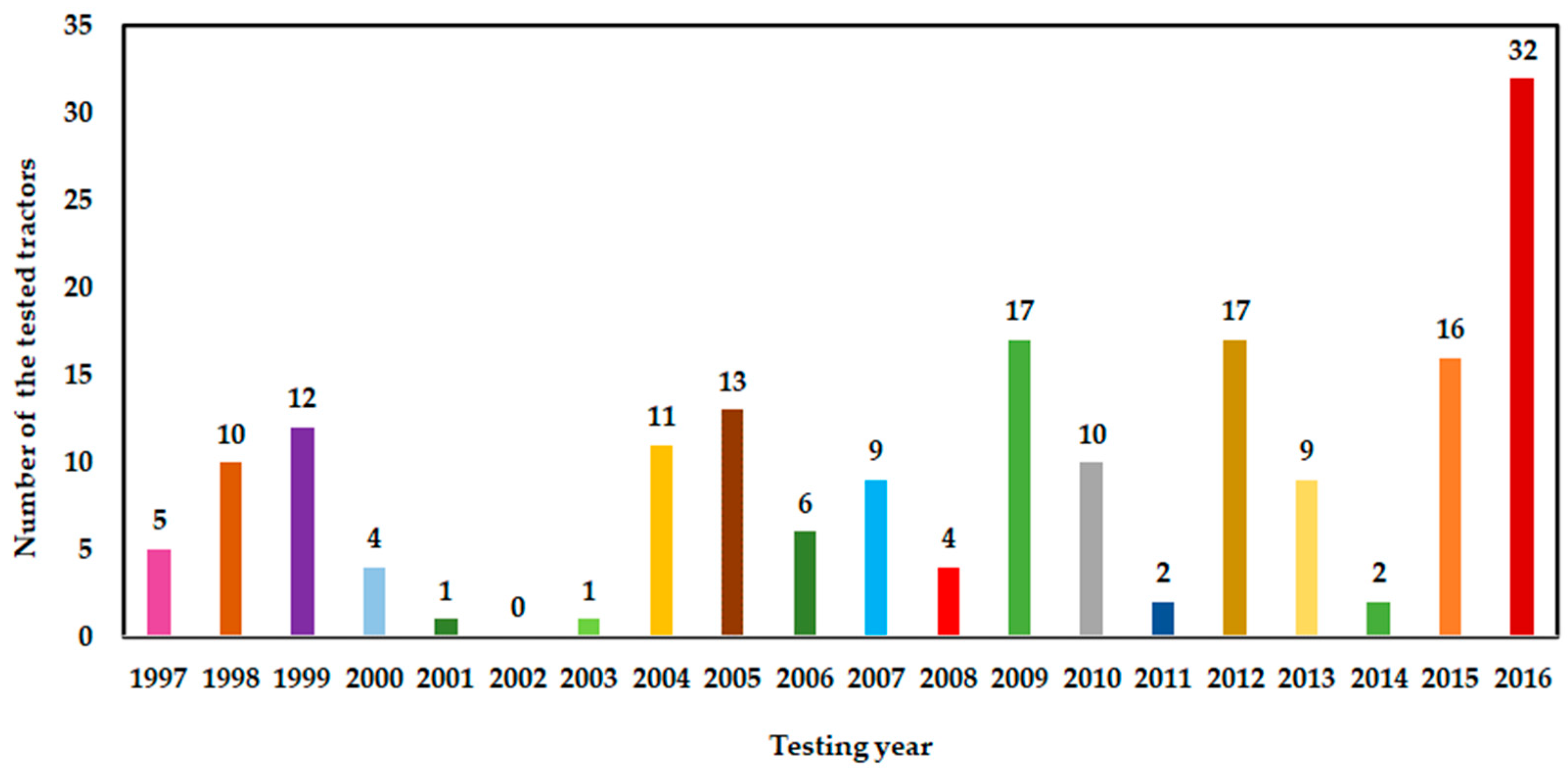
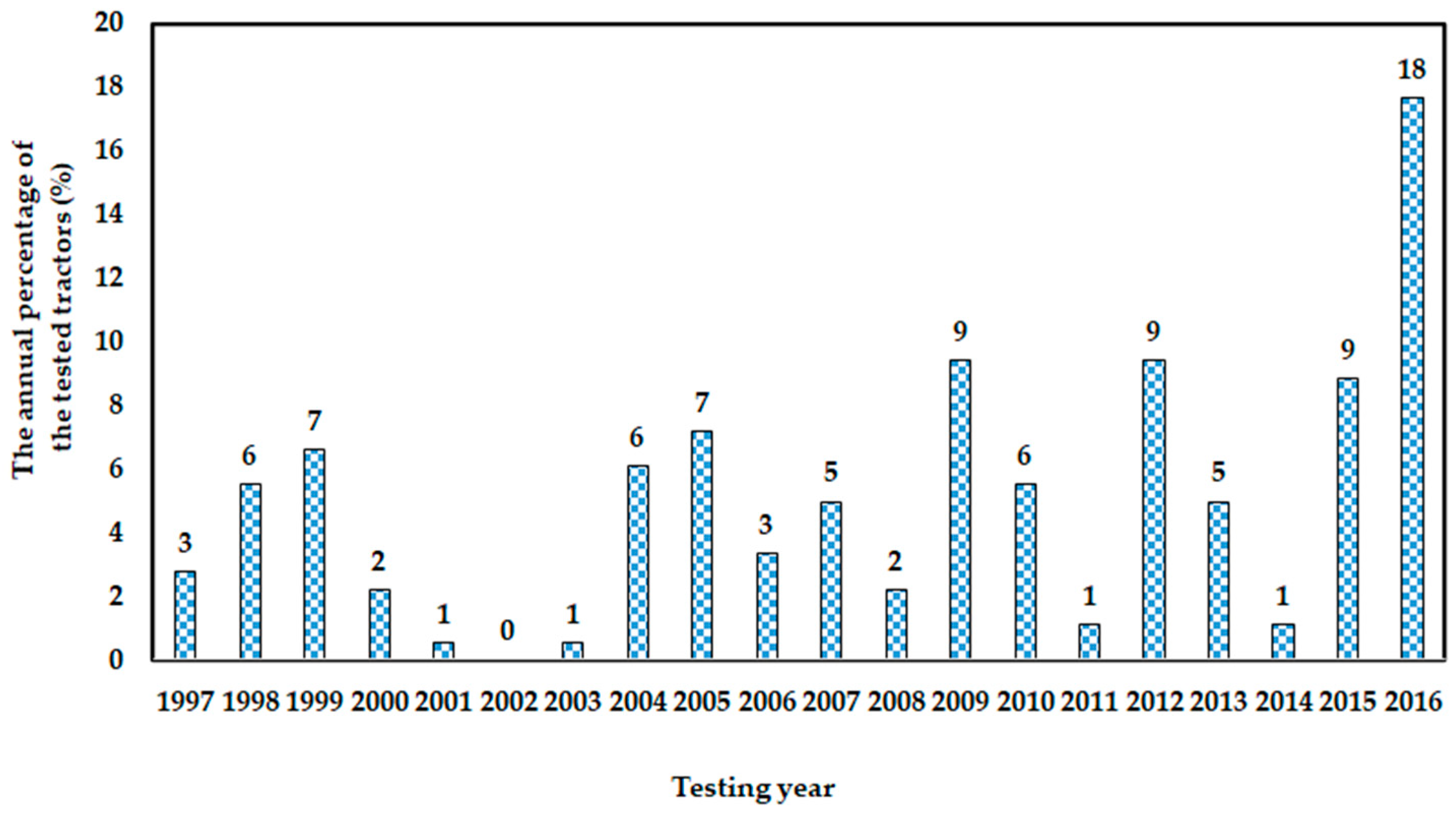
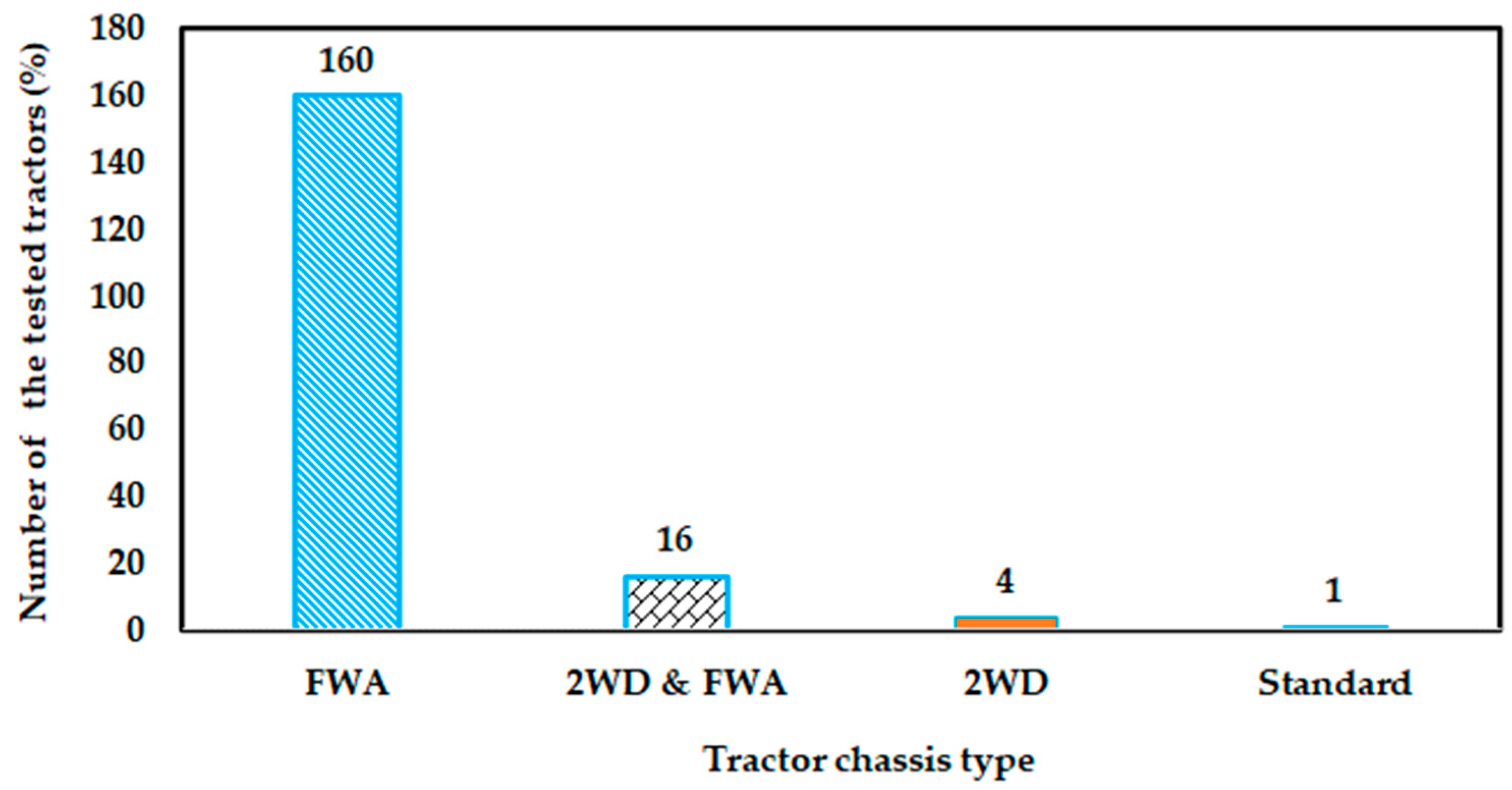
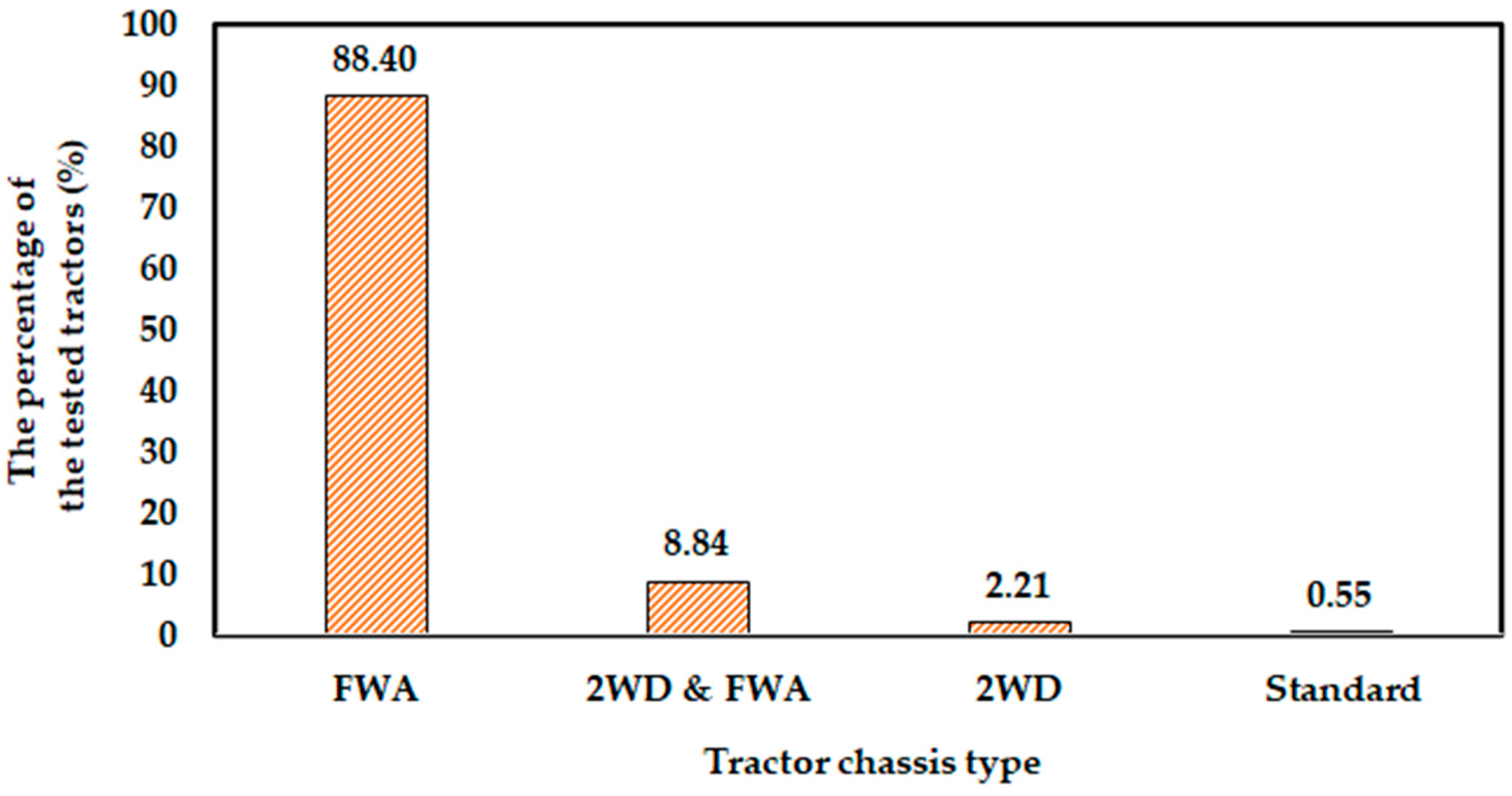
Analysis of the compiled Massey Ferguson tractor test data (using NTTL data from 1997 to 2016) showed that the records covered 1997 to 2016, except for 2002, where no testing data was available. Figure 1 illustrates the distribution of tested Massey Ferguson tractors at NTTL during these years, while Figure 2 shows the annual percentage of tested tractors. The curves in Figure 1 and Figure 2 demonstrate that the highest number of tractors tested was in 2016, with 32 tractors, representing 18% of the total tractors tested in the selected period. The data were grouped by tractor drive type (tractor chassis type): two-wheel drive (2WD), four-wheel drive (4WD), and front-wheel assist (FWA). Figure 3 and Figure 4 illustrate the distribution of chassis type for Massey Ferguson tractors tested from 1997 to 2016. The results show a clear trend: FWA tractors comprised about 88% of the tests, while no 4WD models were included. Data was recorded and analyzed for the front-wheel assist (FWA) tractors only. Summary of descriptive statistics of the independent and dependent variables is given in Table 3. For FWA tractors, the minimum drawbar pull was 7.3 kN, while the maximum reached 120.57 kN, with a mean of 42.7 kN. These tests were conducted on a standard concrete track. For FWA tractors, fuel consumption ranged from a minimum of 13.23 lit/h to a maximum of 68.7 lit/h, with an average of 32.37 lit/h.

3.2. Interrelationships Among Some Dependent and Independent Variables

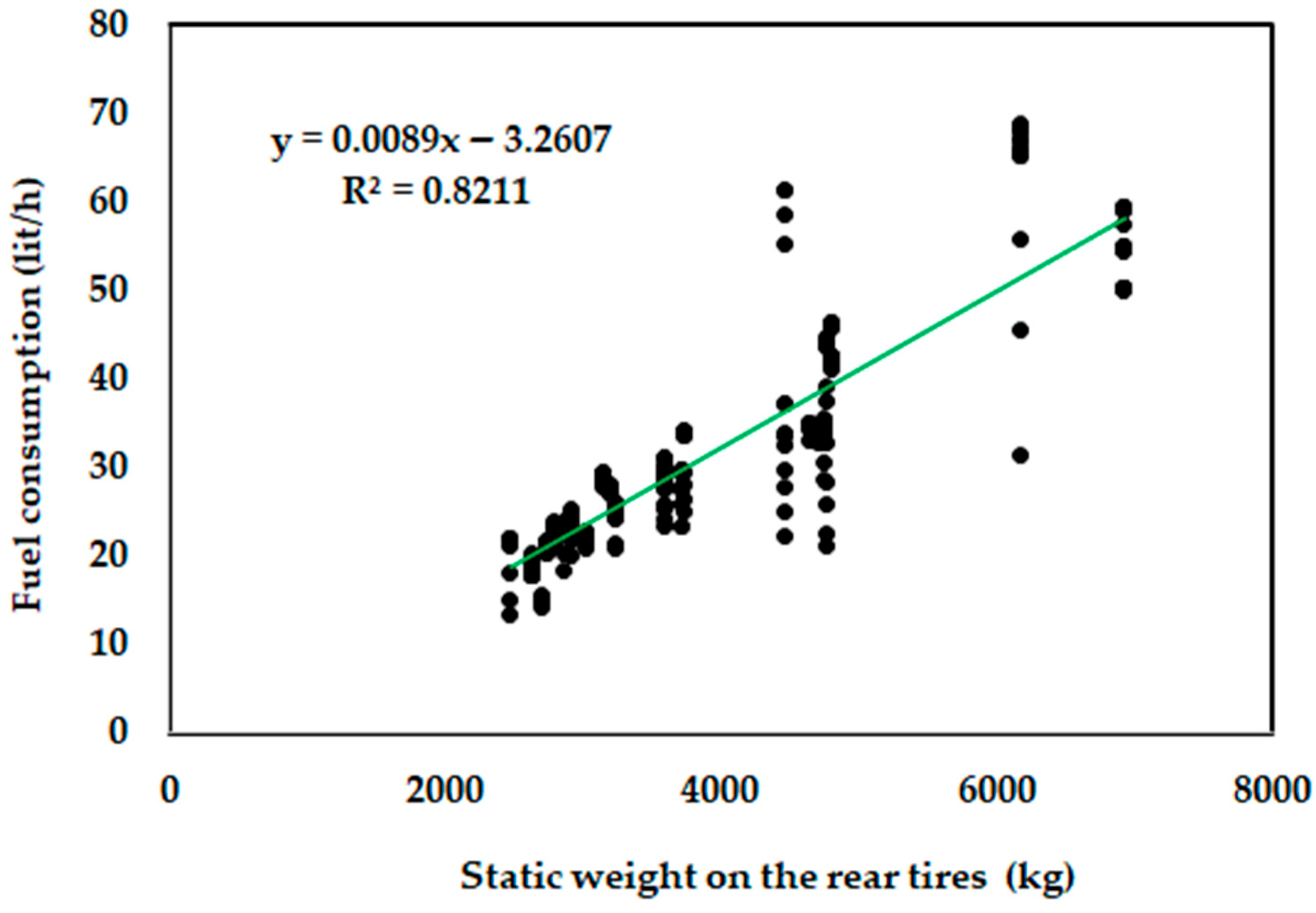
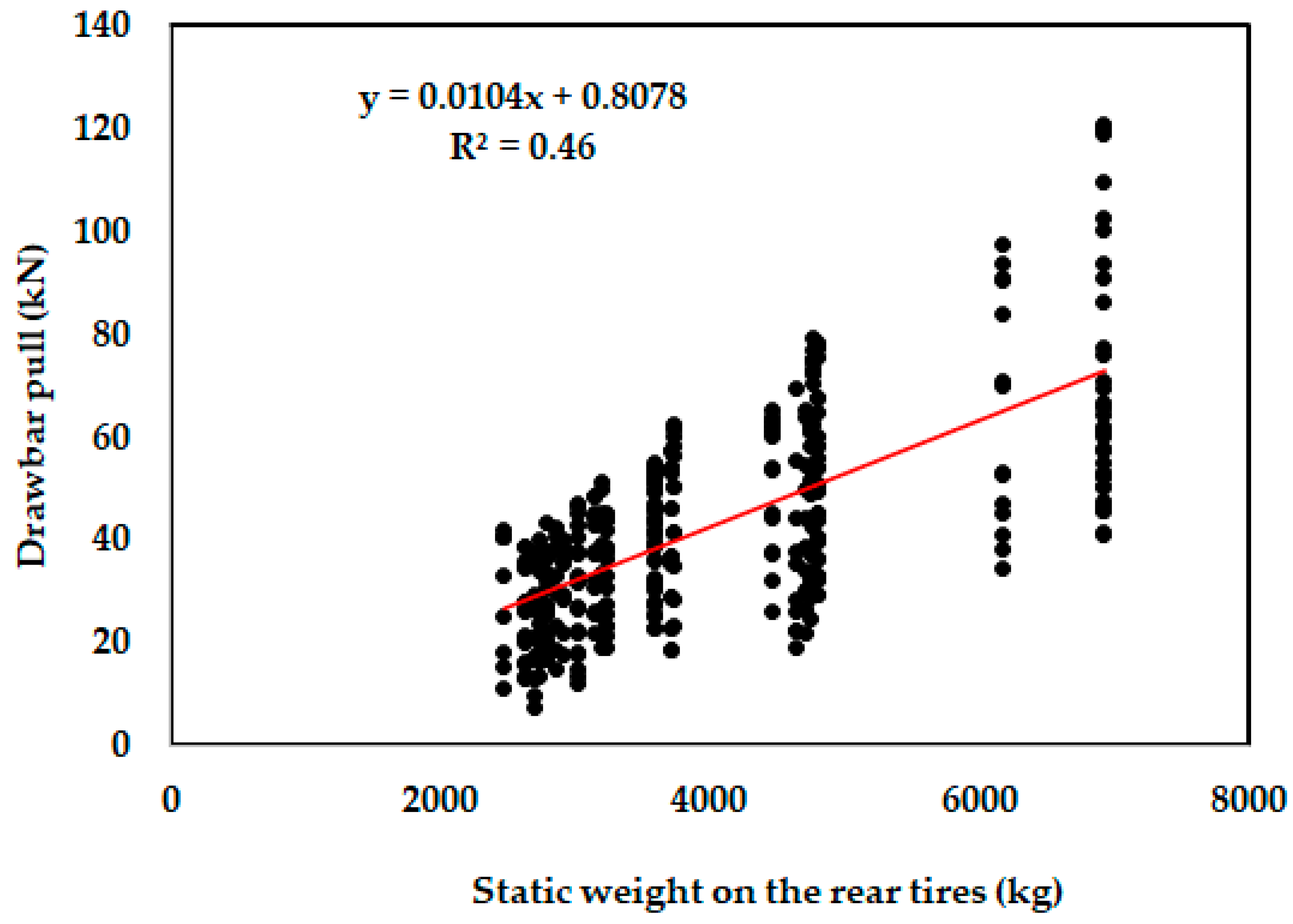
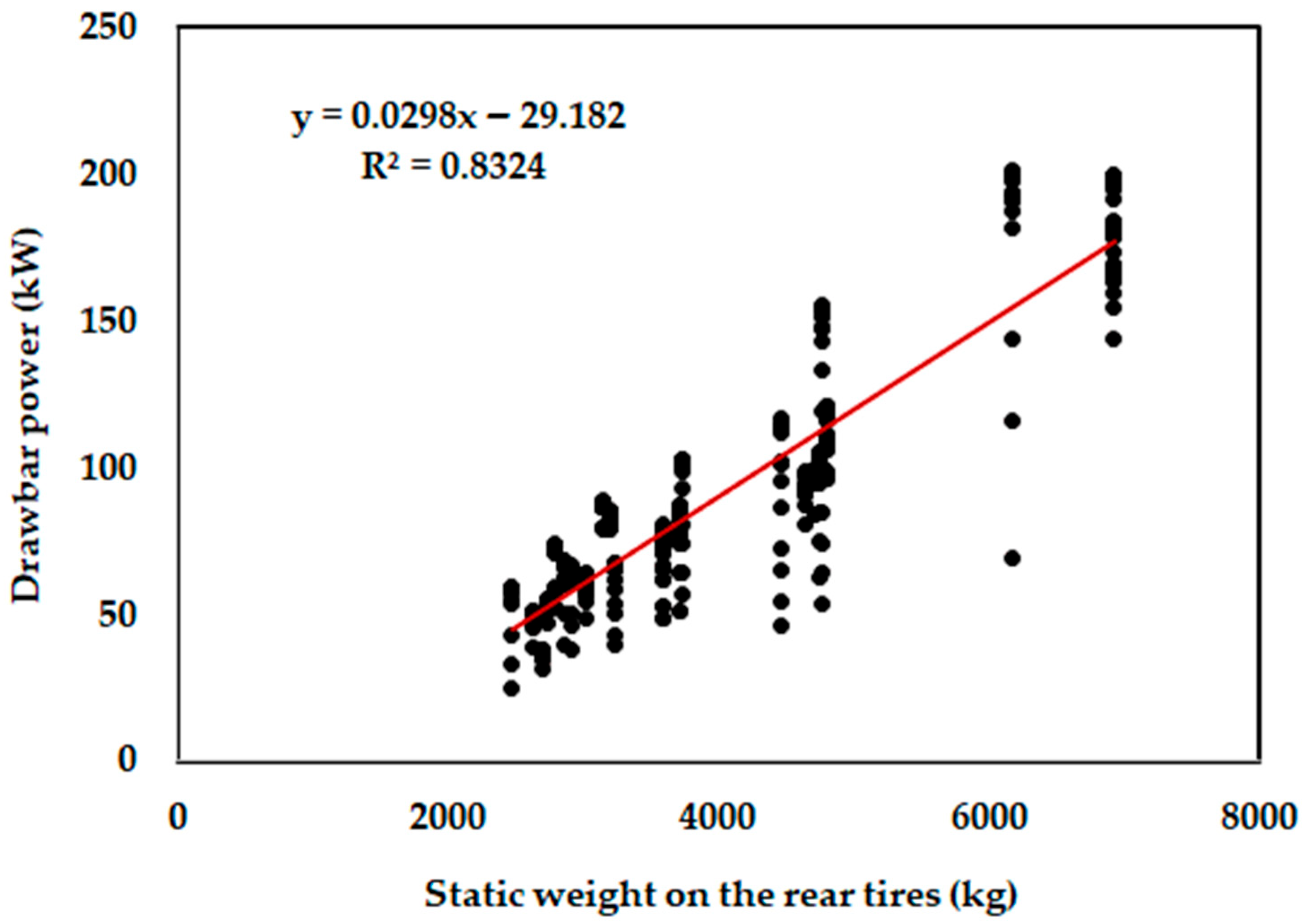
Some interrelationships among dependent and independent variables were explored using NTTL data. Figure 5 expresses the relationship between fuel consumption and static weight on the rear tires for FWA Massey Ferguson tractors. It was a positive interrelationship with a coefficient of determination (R2) value of 0.8211. Similarly, Figure 6 illustrates the positive interrelationship between static weight on the rear tires and drawbar pull, with an R2 value of 0.46. Figure 5 shows that with a rise in static weight on the rear tires, fuel consumption also rises due to an increase in the higher drawbar force required by the tractor, as seen from Figure 6. The findings are consistent with previous studies. Adam et al. [50] reported that increasing tractor weight increases drawbar pull and slippage, though the rise in slippage is relatively small. Likewise, Ghalehjoghi and Loghavi [51] found that adding weight to the rear tires increase drawbar pull and fuel consumption. Figure 7 further illustrates the relationship between static weight on the rear tires and drawbar power, with an R2 value of 0.8324. As static weight on the rear tires increases, the tractor generates a higher pulling force, generating higher drawbar power at constant speed.

3.3. Regression Analysis of Drawbar Pull and Fuel Consumption Parameters

Using stepwise regression, a forward scheme in SPSS software was applied [39]. The software program was employed for analysis on a personal computer. Two mathematical models were derived. For drawbar pull, eight models were delivered for the highest R2, as shown in Table 4, and for fuel consumption, twelve models were brought for the highest R2, as shown in Table 5. The unstandardized regression coefficients ( B ), which looked in Equation (1) are presented in Table 6 for drawbar pull and fuel consumption. However, the calculated standardized regression coefficients ( β ) were presented in Table 7 to identify the most important independent variables, which impact on the outcome. Additionally, Table 8 shows the values of independent variables for MF 440 tractor used to forecast drawbar pull and fuel consumption using the two established mathematical models.
The developed mathematical model for drawbar pull is as follows:
Y 1 = 54.138 + 0.012   X 20 + 3.784   X 9 2.934   X 6 0.051   X 18 + 0.004   X 19 + 2.046   X 2   R 2 = 0.907  
The developed mathematical model for fuel consumption is as follows:
Y 2 = 194.973 + 0.003   X 19 + 0.484   X 11 + 0.003   X 7 + 0.394   X 9 + 2.087   X 16 + 0.056   X 5 + 1.864   X 6     + 0.057   X 12 + 0.033   X 3 + 0.229   X 15   R 2 = 0.911
Overall, the outcomes specified that the selected input variables using SPSS [39] enhanced approximation accuracy. Model 8 for drawbar pull prediction and Model 10 for fuel consumption estimation accomplished the highest assessment accuracy, with R2 values ranging from 0.907 to 0.911. In general, an R2 value larger than 0.70 is measured to specify satisfactory performance [52], while values in the range of 0.80–0.90 or higher are viewed as indication of strong predictive capacity in agricultural and engineering sciences [53]. However, the cooling medium (water) temperature (X11) and ambient air temperature (X12) were selected to be significant variables in fuel consumption model (Equation (5)). However, repeated experiments after experiment day (20 February 2020), it will likely give similar results as no big differences in weather parameters were detected.
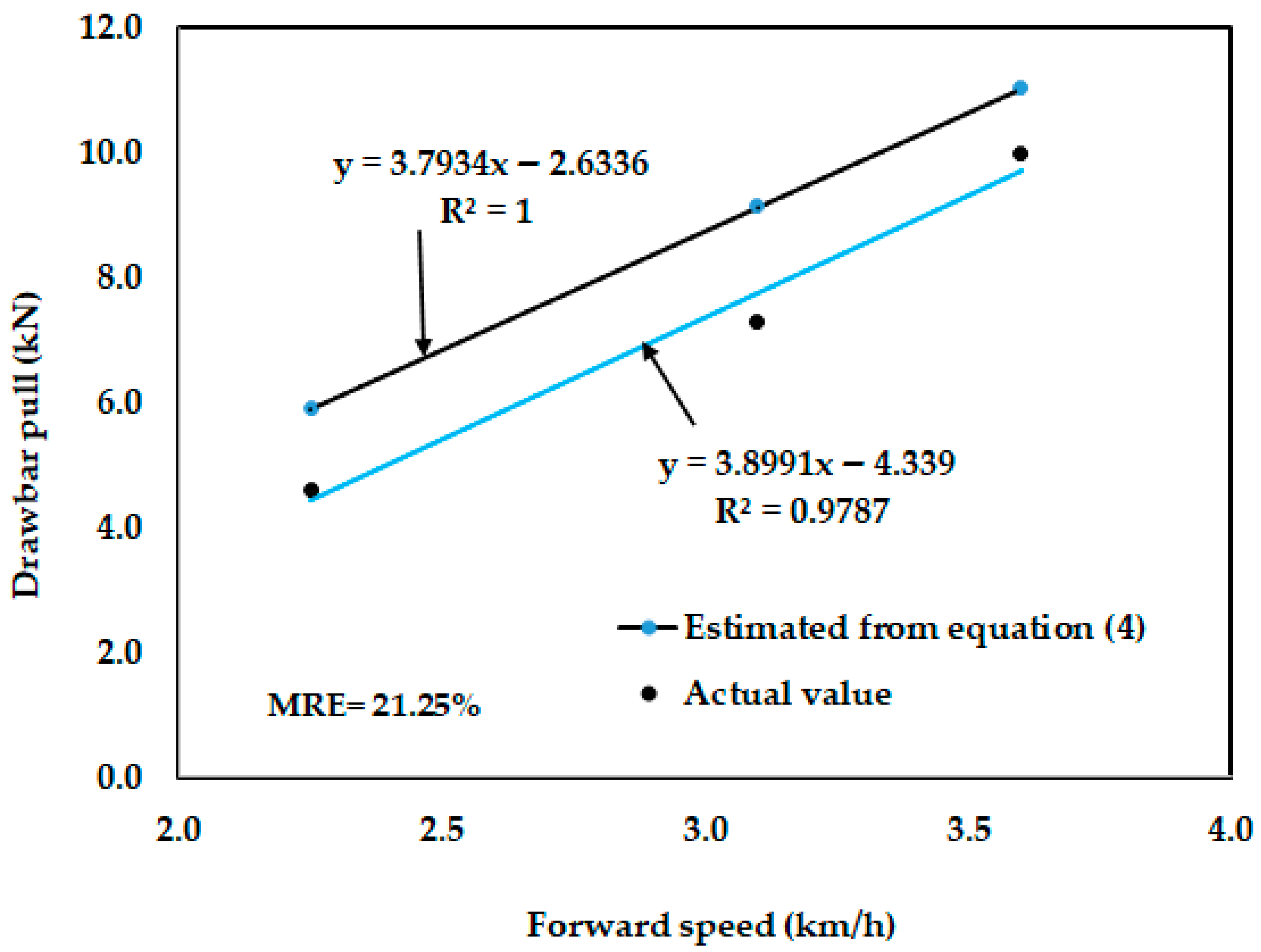
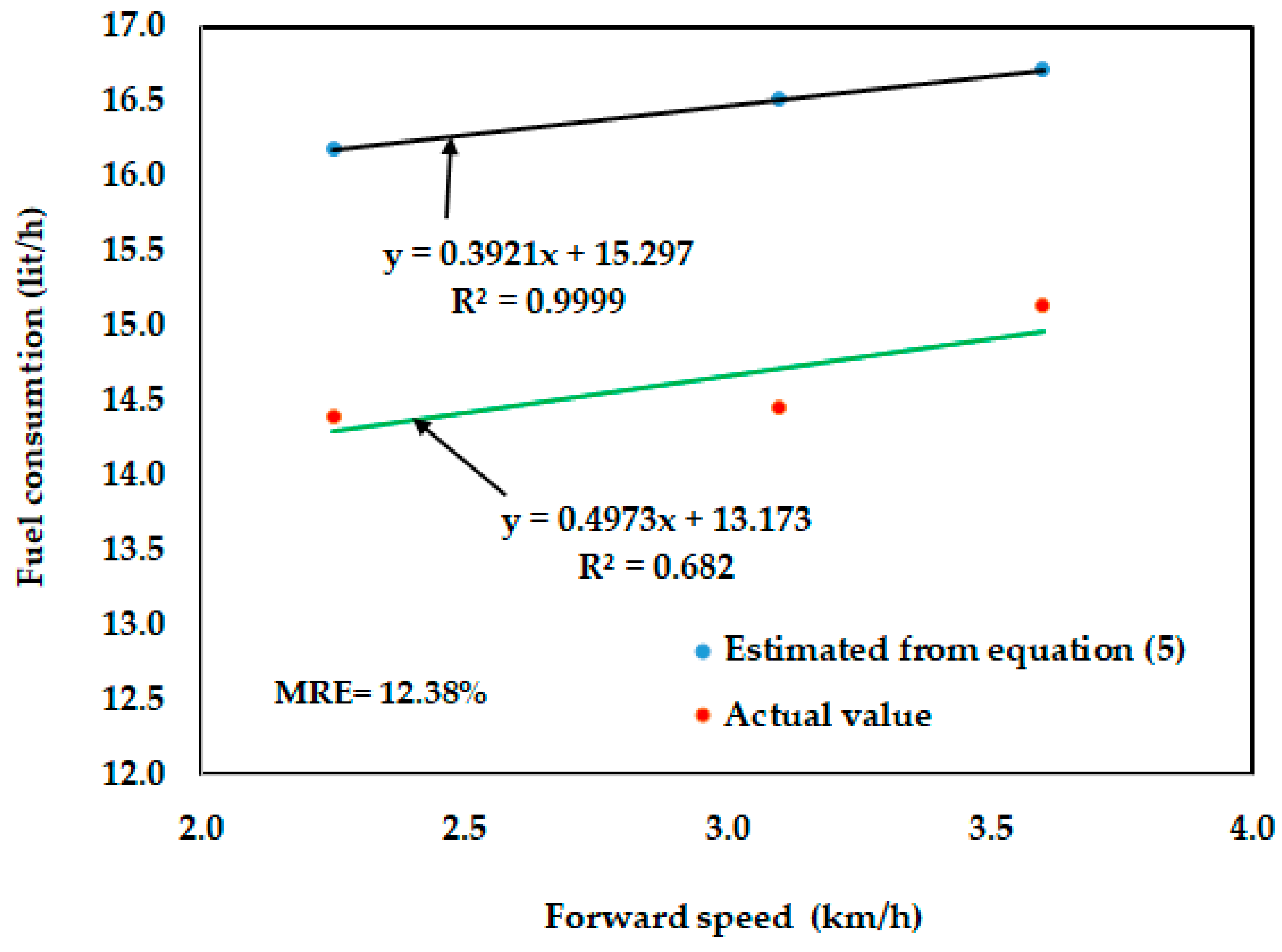
Figure 8 illustrates the relationship between drawbar pull values estimated by Equation (4) and the actual drawbar pull measured when the tractor operated on an asphalt track. Figure 9 presents the relationship between predicted fuel consumption, obtained from Equation (5), and the actual fuel consumption recorded during tractor operation on the asphalt track. The curves presented in Figure 8 show that the measured drawbar pull values followed a similar trend to those predicted by Equation (4) across different forward speeds. Likewise, Figure 9 demonstrates that the measured fuel consumption values showed a similar trend to those predicted by Equation (5). The variations observed between measured and predicted values may be attributed to differences in the conditions under which the predictive models were developed and the specific conditions of the field test, which was conducted in this study on an asphalt track.
The mean relative error (MRE), shown on both curves, averaged 21.25% when comparing drawbar pull and 12.38% when comparing fuel consumption. The higher unpredictability and increased susceptibility to external variables associated with traction, as well as inherent measurement problems, are the main causes of the larger mean relative error (MRE) for drawbar pull force as compared to fuel consumption.
The field results were close to the predicted values. This outcome is significant because the regression models were derived from NTTL data collected under controlled conditions. Those tests measured drawbar pull and fuel use under controlled conditions. The aim was to achieve the best tractor performance. According to Moreno et al. [54], a prediction error of less than 10% indicates high accuracy, 10–20% suggests good accuracy, 20–50% indicates acceptable accuracy, and values above 50% are considered unacceptable. Similarly, ASABE Standards [31] report that relative errors between ±12 and 50% are generally acceptable when drawbar pull equations are applied to agricultural equipment.
The regression analysis also showed strong relationships, with a coefficient of determination (R2) of 0.9787 for drawbar pull versus forward speed (Figure 8) and (R2) of 0.682 for fuel consumption versus forward speed (Figure 9). These findings confirm that drawbar pull and fuel consumption increase as forward speed increases. Similar trends were also reported [55,56,57]. In addition, the predicted drawbar pull values derived from Equation (4) followed a trend line comparable to the measured values. The slope of the predicted curve was 3.7934 compared to 3.8991 for the measured curve, as shown in Figure 8.

4. Conclusions

This study represents two effective mathematical models for estimating tractor fuel consumption and drawbar pull for FWA Massey Ferguson tractors using stepwise multiple regression. The empirical models were trained on a dataset from the Nebraska Tractor Test Laboratory (NTTL), in the USA, spanning the period from 1997 to 2016, and then evaluated using a dataset from a field experimentation. This helps to predict drawbar pull and fuel consumption with higher accuracy based on stepwise multiple linear regression. The influence of some independent variables on the outcomes were established using NTTL data. The developed final multiple linear regression models with all the selected independent variables having a significant effect on drawbar pull (R2 = 0.907) and fuel consumption (R2 = 0.911). The accuracy of the predicted models and the measured values for the response variables during the pull operation traced out each other as closely as possible, confirming good agreement.
However, there are inherent limitations to extrapolating the results to other tractor models because this study was based on data acquired from a particular tractor model and limited field conditions. Thus, to validate the behavior of the developed regression models, other experiments can be conducted on other tracks or field conditions. However, the variables range used was seen in the text, but to apply the developed model on other tracks or field condition, a series of validation experiments should be conducted. Moreover, in order to further enhance the mathematical model’s dependability and application, future research will concentrate on broadening the scope and variety of data for various tractor models and verifying the mathematical models under various operating circumstances. Finally, the developed regression models can be a viable tool for use in the planning of operational characteristics of a Massey Ferguson or other types within the investigated variables’ ranges and input variables. It can be used to predict drawbar pull and fuel consumption during field operation using the input variables to enhance work quality and energy efficiency.

Author Contributions

S.S.A., S.A.A.-H. and A.M.A.; conceptualization; W.A.A., A.M.A., S.S.A., S.M.A.-S. and S.A.A.-H.; methodology, analyzed the data, funding acquisition, authored and reviewed drafts of the paper, and approved the final draft. All authors have read and agreed to the published version of the manuscript.

Funding

This research was funded by the Ongoing Research Funding Program (ORF-2025-1224), King Saud University, Riyadh, Saudi Arabia.

Institutional Review Board Statement

Not applicable.

Informed Consent Statement

Not applicable.

Data Availability Statement

Data are contained within the article.

Acknowledgments

The authors would like to extend their sincere appreciation to the Ongoing Research Funding Program (ORF-2025-1224), King Saud University, Riyadh, Saudi Arabia.

Conflicts of Interest

The authors declare no conflicts of interest.

References

  1. Angelucci, L.; Varani, M.; Pinet, F.; Martin, V.; Vertua, A.; Molari, G.; Mattetti, M. The role of tyres and soil conditions in enhancing the efficiency of agricultural tractors. Soil Tillage Res. 2025, 251, 106570. [Google Scholar] [CrossRef]
  2. Lanças, K.P.; Marques Filho, A.C.; Santana, L.S.; Ferraz, G.A.e.S.; Faria, R.O.; Martins, M.B. Agricultural Tractor Test: A Bibliometric Review. AgriEngineering 2024, 6, 2229–2248. [Google Scholar] [CrossRef]
  3. Lanças, K.P.; Marques Filho, A.C.; Moura, M.D.S.; Damasceno, F.A.D.J.; Ba-lestrin, D.R. Agricultural tractor test. Rev. Ciência Agronômica 2020, 51, e20207750. [Google Scholar] [CrossRef]
  4. Roeber, J.B.; Pitla, S.K.; Hoy, R.M.; Luck, J.D.; Kocher, M.F. Development and validation of a tractor drawbar force measurement and data acquisition system (DAQ). Appl. Eng. Agric. 2017, 33, 781–789. [Google Scholar] [CrossRef]
  5. Rao, X.; Huang, R.; Zhou, P.; Zhang, Y.; Huang, S. Effect of altitude on thermal balance of a heavy-duty diesel engine. IOP Conf. Ser. Earth Environ. Sci. 2020, 467, 012001. [Google Scholar] [CrossRef]
  6. Hunt, D. Farm Power and Machinery Management, 9th ed.; Iowa State University Press: Ames, IA, USA, 1995. [Google Scholar]
  7. Shafaei, S.M.; Loghavi, M.; Kamgar, S. On the neurocomputing based intelligent simulation of tractor fuel efficiency parameters. Inf. Process. Agric. 2018, 5, 205–223. [Google Scholar] [CrossRef]
  8. Madzivanzira, T.; Mvumi, B.M.; Nazare, R.M.; Nyakudya, E.; Mtambanengwe, F.; Mapfumo, P. Evaluation of Two-Wheel Tractor Fuel Consumption Rates During Direct Seeding of Sorghum and Pearl Millet in Sandy and Clayey Soils. Adv. Agric. 2025, 2025, 4837619. [Google Scholar] [CrossRef]
  9. Jokiniemi, T.; Rossner, H.; Ahokas, J. Simple and cost effective method for fuel consumption measurements of agricultural machinery. Agron. Res. 2012, 10, 97–107. [Google Scholar]
  10. Al-miran, D.A.E.; Jasim, A.A. Evaluation of performance efficiency of a locally made electronic device for measuring fuel consumption in agricultural tractors. Adv. Sci. Technol. Res. J. 2025, 19, 381–388. [Google Scholar] [CrossRef]
  11. Igoni, A.H.; Ekemube, R.A.; Nkakini, S.O. Predicting tractor fuel consumption during ridging on a sandy loam soil in a humid tropical climate. J. Eng. Technol. Res. 2019, 11, 29–40. [Google Scholar] [CrossRef]
  12. Harrigan, T.M.; Rotz, C.A. Draft relationships for tillage and seeding equipment. Appl. Eng. Agric. 1995, 11, 773–783. [Google Scholar] [CrossRef]
  13. Siemens, J.C.; Bowers, W. Machinery Management: How to Select Machinery to Fit the Real Needs of Farm Managers; Farm Business Management (FMB) series; John Deere: East Moline, IL, USA, 1999; 5p. [Google Scholar]
  14. Aboukarima, A.M. Interactive computer application for predicting performance indicators of a tractor-chisel plow system in C-sharp environment. Misr J. Agric. Eng. 2016, 33, 751–788. [Google Scholar] [CrossRef]
  15. Kumawat, L.; Raheman, H. Development of draft force estimation model for hand tractor powered digger-cum-conveyor by rake angle and digging depth. J. Biosyst. Eng. 2023, 48, 152–164. [Google Scholar] [CrossRef]
  16. Bae, B.-M.; Kim, Y.-S.; Kim, W.-S.; Kim, Y.-J.; Lee, S.-D.; Kim, T.-J. The Development of a Draft Force Prediction Model for Agricultural Tractors Based on the Discrete Element Method in Loam and Clay Loam. Agriculture 2023, 13, 2205. [Google Scholar] [CrossRef]
  17. Özbayer, M.M.; Güner, M. Comparison of performance characteristics of agricultural tractors. J. Agric. Fac. Gaziosmanpaşa Univ. 2022, 39, 6–18. [Google Scholar] [CrossRef]
  18. Evans, M.D.; Clark, R.L.; Manor, G. An improved traction model for ballast selection. Trans. ASAE 1991, 34, 773–780. [Google Scholar] [CrossRef]
  19. Rahimi-Ajdadi, F.; Abbaspour-Gilandeh, Y. Artificial neural network and stepwise multiple range regression methods for prediction of tractor fuel consumption. Measurement 2011, 44, 2104–2111. [Google Scholar] [CrossRef]
  20. Harris, H.D. Prediction of tractor engine performance using OECD standard test data. J. Agric. Eng. Res. 1992, 53, 181–193. [Google Scholar] [CrossRef]
  21. Nagar, H.; Machavaram, R.; Kulkarni, P.; Soni, P. AI-based engine performance prediction cum advisory system to maximise fuel efficiency and field performance of the tractor for optimum tillage. Syst. Sci. Control Eng. 2024, 12, 2347936. [Google Scholar] [CrossRef]
  22. Brixius, W.W. Traction Prediction Equations for Bias Ply Tires; ASAE Paper No. 871622; ASAE: St. Joseph, MI, USA, 1987; 8p. [Google Scholar]
  23. Şeflek, A.Y.; Orhan, N.; Özkan, M. The impact of tractor drawbar height on performance and optimization using response surface methodology. Sci. Rep. 2025, 15, 5370. [Google Scholar] [CrossRef]
  24. Moinfar, A.; Shahgholi, G.; Gilandeh, Y.A.; Gundoshmian, T.M. The effect of the tractor driving system on its performance and fuel consumption. Energy 2020, 202, 117803. [Google Scholar] [CrossRef]
  25. Alhassan, E.A.; Olaoye, J.O.; Lukman, A.F.; Adekanye, T.A.; Abioye, O.M. Statistical modelling of a tractor tractive performance during ploughing operation on a tropical. Alfisol. Open Agric. 2024, 9, 20220282. [Google Scholar] [CrossRef]
  26. Al-Sager, S.M.; Almady, S.S.; Marey, S.A.; Al-Hamed, S.A.; Aboukarima, A.M. Prediction of Specific Fuel Consumption of a Tractor during the Tillage Process Using an Artificial Neural Network Method. Agronomy 2024, 14, 492. [Google Scholar] [CrossRef]
  27. Mahore, V.; Soni, P.; Paul, A.; Patidar, P.; Machavaram, R. Machine learning-based draft prediction for mouldboard ploughing in sandy clay loam soil. J. Terramechanics 2024, 111, 31–40. [Google Scholar] [CrossRef]
  28. Al-Hamed, S.A.; Grisso, R.D.; Zoz, F.M.; Von Bargen, K. Tractor performance spreadsheet for radial tires. Comput. Electron. Agric. 1994, 10, 45–62. [Google Scholar] [CrossRef]
  29. Godwin, R.J.; O’dogherty, M.J.; Saunders, C.; Balafoutis, A.T. A force prediction model for mouldboard ploughs incorporating the effects of soil character-istic properties, plough geometric factors and ploughing speed. Biosyst. Eng. 2007, 97, 117–129. [Google Scholar] [CrossRef]
  30. Naderi-Boldaji, M.; Karparvarfard, S.H.; Azimi-Nejadian, H. Investigation of the predictability of mouldboard plough draught from soil mechanical strength (cone index vs. shear strength) using finite element modelling. J. Terramechanics 2023, 108, 21–31. [Google Scholar] [CrossRef]
  31. ASABE Standards D497; Agricultural Machinery Management Data. ASAE: St. Joseph, MI, USA, 2000.
  32. Naji Al-Dosary, N.M.; Aboukarima, A.M.; Al-Hamed, S.A.; Zayed, M.F.; Marey, S.A.; Kayad, A. Modification of Values for the Horizontal Force of Tillage Implements Estimated from the ASABE form Using an Artificial Neural Network. Appl. Sci. 2023, 13, 7442. [Google Scholar] [CrossRef]
  33. Kheir, H.K.M. Validity of ASABE Standards in Estimating Total Operating Cost of Agricultural Machinery in Sudan. Doctoral Dissertation, University of Khartoum, Khartoum, Sudan, 2009. [Google Scholar]
  34. Ahmed, M.M. Evaluation of Some Standards for Tillage Implement’s Draft Requirements in Soba Area, Khartoum State, Sudan. Master’s Thesis, University of Khartoum, Khartoum, Sudan, 2009. [Google Scholar]
  35. Grisso, R.D.; Roberson, G.T.; Vaughan, D.H. Method for Fuel Prediction for Specific Tractor Models; an ASABE Meeting Presentation Paper Number: 061089. In Proceedings of the 2006 ASABE Annual International Meeting Sponsored by ASABE Portland Convention Center, Portland, Oregon, 9–12 July 2006. [Google Scholar]
  36. Grisso, R.D.; Kocher, M.F.; Vaughan, D.H. Predicting tractor fuel consumption. Appl. Eng. Agric. 2004, 20, 553–561. [Google Scholar] [CrossRef]
  37. Cutini, M.; Brambilla, M.; Pochi, D.; Fanigliulo, R.; Bisaglia, C. A Simplified Approach to the Evaluation of the Influences of Key Factors on Agricultural Tractor Fuel Consumption during Heavy Drawbar Tasks under Field Conditions. Agronomy 2022, 12, 1017. [Google Scholar] [CrossRef]
  38. Available online: https://tractortestlab.unl.edu/ (accessed on 1 December 2019).
  39. IBM Corp. IBM SPSS Statistics for Windows, version 27.0. Computer software. IBM Corp: Armonk, NY, USA, 2020.
  40. Hocking, R.R. A biometrics invited paper. The analysis and selection of variables in linear regression. Biometrics 1976, 32, 1–49. [Google Scholar] [CrossRef]
  41. Hosmer, D.W., Jr.; Lemeshow, S.; Sturdivant, R.X. Applied Logistic Regression; John Wiley & Sons, Inc.: Hoboken, NJ, USA, 2013. [Google Scholar]
  42. Zhang, Z. Variable selection with stepwise and best subset approaches. Ann. Transl. Med. 2016, 4, 136. [Google Scholar] [CrossRef]
  43. Kwan, J.L.Y.; Chan, W. Comparing standardized coefficients in structural equation modeling: A model reparameterization approach. Behav. Res. Methods 2011, 43, 730–745. [Google Scholar] [CrossRef]
  44. Fox, J. Applied Regression Analysis, Linear Models, and Related Methods; Sage Publications, Inc.: Thousand Oaks, CA, USA, 1997. [Google Scholar]
  45. Nieminen, P. Application of Standardized Regression Coefficient in Meta-Analysis. BioMedInformatics 2022, 2, 434–458. [Google Scholar] [CrossRef]
  46. Sadek, M.A.; Chen, Y.; Zeng, Z. Draft force prediction for a high-speed disc implement using discrete element modelling. Biosyst. Eng. 2021, 202, 133–141. [Google Scholar] [CrossRef]
  47. Ndisya, J.; Gitau, A.; Mbuge, D.; Hiuhu, A. The Effect of the Operational Parameters on the Draft Requirement of Ripping in a Sandy Clay Soil. Open J. Optim. 2016, 5, 1–13. [Google Scholar] [CrossRef][Green Version]
  48. Regional Network for Agricultural Machinery (RNAM). RNAM Test Code and Procedures for Agricultural Machinery; Technical series No. 12, regional network for agricultural machinery, Economic and Social Commission for Asia and the Pacific, United Nation (UN); RNAM: Los Baños, Philippines, 1995. [Google Scholar][Green Version]
  49. Vlădutoiu, L.C.; Marin, E.; Nenciu, F.; Lateș, D.; Persu, I.C.; Cristea, M.; Manea, D. Performance Assessment of a Vibratory-Enhanced Plowing System for Improved Energy Efficiency and Tillage Quality on Compacted Soils. AgriEngineering 2025, 7, 304. [Google Scholar] [CrossRef]
  50. Adam, P.; Lukáš, R.; Jiří, V. Drawbar Pull and Its Effect on the Weight Distribution of a Tractor. Acta Univ. Agric. Silvic. Mendelianae Brun. 2017, 65, 145–150. [Google Scholar] [CrossRef]
  51. Ghalehjoghi, A.S.; Loghavi, M. The effects of axle load and draft force on tractive efficiency and fuel consumption of two high performance tractors during plowing with a semi-mounted 4-bottom moldboard plow. J. Water Soil Sci. 2007, 11, 125–136. [Google Scholar]
  52. Gong, S.-Y.; Baek, S.-M.; Baek, S.-Y.; Kim, Y.-J.; Kim, W.-S. Machine Learning-Based Estimation of Tractor Performance in Tillage Operations Using Soil Physical Properties. Agronomy 2025, 15, 2228. [Google Scholar] [CrossRef]
  53. Sima, N.Q.; Harmel, R.D.; Fang, Q.X.; Ma, L.; Andales, A.A. A modified F-test for evaluating model performance by including both experimental and simulation uncertainties. Environ. Model. Softw. 2018, 104, 236–248. [Google Scholar] [CrossRef]
  54. Moreno, J.J.M.; Pol, A.P.; Abad, A.S.; Blasco, B.C. Using the R-MAPE index as a resistant measure of forecast accuracy. Psicothema 2013, 25, 500–506. [Google Scholar] [CrossRef] [PubMed]
  55. Safari, M.; Gazor, H.R. Comparison of conventional tractors performance during primary tillage in Iran. Agric. Eng. Int. CIGR J. 2014, 16, 61–68. [Google Scholar]
  56. Al-Janobi, A.A.; Al-Suhaibani, S.A. Draft of primary tillage implements in sandy loam soil. Appl. Eng. Agric. 1998, 14, 343–348. [Google Scholar] [CrossRef]
  57. Lisowski, A.; Lauryn, D.; Nowakowski, T.; Klonowski, J.; Świętochowski, A.; Sypuła, M.; Chlebowski, J.; Kamiński, J.; Kostyra, K.; Dąbrowska, M.; et al. Empirical Models for Estimating Draught and Vertical Reaction Forces of a Duckfoot Tool in Compacted Soil: Effects of Moisture Content, Depth, Width, and Speed. Appl. Sci. 2025, 15, 3573. [Google Scholar] [CrossRef]
Figure 1. The distribution of the tested Massey Ferguson tractors using NTTL data from 1997 to 2016.
Applsci 15 11204 g001
Figure 2. The annual percentage of the tested Massey Ferguson tractors using NTTL data from 1997 to 2016.
Applsci 15 11204 g002
Figure 3. The tractor chassis type of the tested Massey Ferguson tractors using NTTL data from 1997 to 2016.
Applsci 15 11204 g003
Figure 4. The percentage of tractor chassis type of the tested Massey Ferguson tractors using NTTL data from 1997 to 2016.
Applsci 15 11204 g004
Figure 5. Relationship between fuel consumption and static weight on the rear tires for FWA Massey Ferguson tractors using NTTL data from 1997 to 2016.
Applsci 15 11204 g005
Figure 6. Relationship between drawbar pull and static weight on the rear tires for FWA Massey Ferguson tractors using NTTL data from 1997 to 2016.
Applsci 15 11204 g006
Figure 7. Relationship between drawbar power and static weight on the rear tires for FWA Massey Ferguson tractors using NTTL data from 1997 to 2016.
Applsci 15 11204 g007
Figure 8. The relationship between drawbar pull values estimated by Equation (4) and the actual drawbar pull measured when the tractor operated on an asphalt track.
Applsci 15 11204 g008
Figure 9. The relationship between fuel consumption values estimated by Equation (5) and the actual fuel consumption measured when the tractor operated on an asphalt track.
Applsci 15 11204 g009
Table 1. The selected independent and dependent variables, along with their symbols and units as listed in the NTTL test reports for FWA Massey Ferguson tractors.
Independent VariablesSymbols of the Variables Measurement
Unit
Fuel densityX1(kg/lit)
Number of engine cylindersX2(Dimensionless)
Rated engine speedX3(rpm)
Cylinder diameterX4(mm)
Stroke lengthX5(mm)
Compression ratioX6(Dimensionless)
Engine displacementX7(ml)
WheelbaseX8(mm)
Forward speedX9(km/h)
Engine speedX10(rpm)
Cooling medium temperatureX11(°C)
Ambient air temperatureX12(°C)
BarometerX13(kPa)
Diameter of the rear wheel rimX14(in)
Inflation air inside rear tiresX15(kPa)
Diameter of the front wheel rimX16(in)
Inflation air inside front tiresX17(kPa)
Height of the drawbar above the groundX18(mm)
Static weight on rear tiresX19(kg)
Static weight on front tiresX20(kg)
Dependent Variables
Drawbar pullY1(kN)
Fuel consumptionY2(lit/h)
Table 2. Technical details of the Massey Ferguson 440 (MF 440) tractor.
Technical ItemsMeasurement
Unit
Value
Cylinder diameter(mm)100
Stroke length(mm)127
Rated engine speed(rpm)2200
Rated power(kW)61.1
Chassis typeFront wheel assistFWA
Number of engine cylinders(Dimensionless)4
Wheelbase(mm)2140
Tractor weight(kg)2619
Front tire size(in)7.5–16
Rear tire size(in)18.4–30
Engine displacement(ml)4000
Manufacture Brazil
Compression ratio(Dimensionless)17.3
Height of the drawbar above the ground(mm)550
Table 3. Descriptive statistics of the independent and dependent variables for FWA Massey Ferguson tractors tested using NTTL data from 1997 to 2016.
VariableUnitMinimumMaximumMeanStandard Deviation
X1(kg/lit)0.840.850.85±0.01
X2(Dimensionless)4.006.005.57±0.82
X3(rpm)2100.002200.002180.74±39.49
X4(mm)100.00111.00104.66±4.32
X5(mm)120.00145.00128.83±7.57
X6Dimensionless)16.0019.3017.24±0.72
X7(ml)3990.008419.006221.41±1320.72
X8(mm)2093.003105.002759.88±251.33
X9(km/h)2.1420.068.47±3.55
X10(rpm)1793.002282.002023.35±138.99
X11(°C)64.0095.0085.21±4.24
X12(°C)0.0027.0016.71±6.95
X13(kPa)95.73103.20100.90±1.52
X14(in)34.0046.0040.07±3.26
X15(kPa)65.00110.0094.35±11.33
X16(in)24.0034.0028.68±1.76
X17(kPa)60.00130.00102.40±15.53
X18(mm)500.00640.00554.77±37.86
X19(kg)2478.006930.004022.88±1304.85
X20(kg)1605.005090.002803.95±1038.50
Drawbar pull(kN)7.30120.5742.70±20.04
Fuel consumption(lit/h)13.2368.7032.37±12.75
Table 4. Eight regression models were tested for the highest R2 for drawbar pull prediction (data for FWA Massey Ferguson tractors using NTTL data from 1997 to 2016.
Model *Correlation
Coefficient
R2Adjusted R2 Std. Error of the Estimate
10.687 a0.4720.47114.57
20.936 b0.8760.8757.09
30.944 c0.8910.8906.64
40.949 d0.9000.8996.36
50.950 e0.9030.9026.28
60.952 f0.9060.9046.20
70.952 g0.9060.9046.20
80.952 h0.9070.9056.17
* All symbols refer to predictors in the model, however, the symbol h refers to (Constant), X20, X9, X6, X18, X19, and X2.
Table 5. Twelve regression models were tested for the highest R2 for fuel consumption prediction (data for FWA Massey Ferguson tractors using NTTL data from 1997 to 2016.
Model *Correlation
Coefficient
R2Adjusted R2 Std. Error of the Estimate
10.906 a0.8210.8215.40
20.930 b0.8640.8644.71
30.937 c0.8780.8774.47
40.942 d0.8870.8864.31
50.946 e0.8940.8934.18
60.948 f0.8990.8974.09
70.949 g0.9010.8994.05
80.951 h0.9040.9024.00
90.952 i0.9060.9033.96
100.955 j0.9110.9093.85
110.954 k0.9110.9093.85
120.954 l0.9110.9093.86
* All symbols refer to predictors in the model, however, the symbol j refers to (Constant), X19, X11, X7, X9, X16, X5.X6, X12, X3, and X15.
Table 6. Unstandardized regression coefficients (B) for drawbar pull (model 8) and for fuel consumption (model 10) (training data for FWA Massey Ferguson tractors using NTTL data from 1997 to 2016).
Independent Variables B (Unstandardized Regression Coefficients) for Drawbar PullIndependent VariablesB (Unstandardized Regression Coefficients) for Fuel Consumption
B0 (Constant)54.138 B0 (Constant)−194.973
B20 (X20)0.012B19 (X19)0.003
B9 (X9)3.784B11 (X11)0.484
B6 (X6)−2.934B7 (X7)0.003
B18 (X18)−0.051B9 (X9)0.394
B19 (X19)0.004B16 (X16)2.087
B2 (X2)2.046B5 (X5)0.056
B6 (X6)1.864
B12 (X12)0.057
B3 (X3)0.033
B15 (X15)0.229
Table 7. The calculated standardized regression coefficients (β) for drawbar pull (model 8) and for fuel consumption (model 10) (training data for FWA Massey Ferguson tractors using NTTL data from 1997 to 2016).
Independent
Variables
β (The Calculated Standardized Regression Coefficients) for Drawbar PullIndependent Variablesβ (The Calculated Standardized Regression Coefficients) for Fuel Consumption
β0 (Constant) β0 (Constant)
β20 (X20)0.622β19(X19)0.307
β9 (X9)0.671β11 (X11) 0.161
β6 (X6)−0.105β7(X7) 0.311
β18 (X18)−0.096β9 (X9) 0.110
β19 (X19)0.261β16 (X16) 0.287
β2 (X2)0.084β5 (X5) 0.033
β6 (X6) 0.105
β12 (X12) 0.031
β3 (X3) 0.102
β15 (X15)0.203
Table 8. The values of independent variables for MF 440 tractor used to forecast drawbar pull and fuel consumption using the two established mathematical models.
Independent VariablesSymbols of the Independent VariablesValue
Static weight on front tires (kg)X20650.7
Forward speed (km/h)X9Changeable
Compression ratio
(Dimensionless)
X617.3
Height of the drawbar above the ground (mm)X18550
Static weight on rear tires (kg) X191518.3
Number of engine cylinders ((Dimensionless)X24
Rated engine speed (rpm)X32200
Stroke length (mm)X5127
Engine displacement (ml)X74000
Cooling medium (water) temperature (°C)X1130
Ambient air temperature (°C)X1220
Inflation air inside rear tires (kPa)X1570
Diameter of the front wheel rim (in)X1624
Disclaimer/Publisher’s Note: The statements, opinions and data contained in all publications are solely those of the individual author(s) and contributor(s) and not of MDPI and/or the editor(s). MDPI and/or the editor(s) disclaim responsibility for any injury to people or property resulting from any ideas, methods, instructions or products referred to in the content.