You are currently viewing a new version of our website. To view the old version click .
Applied Sciences
  • Article
  • Open Access

16 October 2025

Investigation on the Sealing Performance of Vent Valves in Low-Temperature Marine Environments Based on Thermo-Mechanical Coupling

,
,
,
,
and
Naval University of Engineering, Wuhan 430030, China
*
Author to whom correspondence should be addressed.
This article belongs to the Special Issue Applied Numerical Analysis and Computing in Mechanical Engineering

Abstract

This study investigates the sealing performance of marine vent valves in low-temperature environments (−30 °C to −40 °C) via thermo-mechanical coupling analysis. Polytetrafluoroethylene (PTFE) was selected as the sealing material for its excellent cryogenic toughness, corrosion resistance, and cost-effectiveness. The total minimum specific sealing pressure ( q t o t a l ) of PTFE, corrected for marine vibrations (15–60 Hz), was 3.702 MPa. Using ANSYS Workbench 2022, finite element simulations of a DN200 globe valve showed that low temperatures caused non-uniform thermal contraction, reducing the gasket-poppet contact width (2.5 mm to 1.75 mm) and maximum specific pressure (16.967 MPa to 13.352 MPa), leading to leakage risks. Optimizing the stem preload to 36,000 N restored effective sealing: the maximum specific pressure rebounded to 16.601 MPa, with no pressure below 3.702 MPa. This research provides a method for evaluating low-temperature sealing performance and supports safe vessel operation in cold waters.

1. Introduction

The vent valve is one of the critical pieces of equipment aboard ships, serving to regulate gas flow and maintain pressure balance within cabin compartments. In practical operation, its sealing performance directly affects both operational efficacy and structural safety. Among various valve types, the globe valve—characterized by its simple structure, ease of operation, and suitability for low-pressure and flow-control applications—has emerged as the preferred technical solution for cabin vent valves in low-temperature marine environments, such as polar regions. Against the backdrop of increasing operational range and frequency of marine vessels, such valves face severe challenges posed by multiple extreme environmental factors, including low temperatures and ice formation.
Regarding seal selection for valves, metal-sealed safety valves often suffer from seat leakage due to surface roughness. In cryogenic applications, even minor seat leakage is unacceptable [1]. Mark Hermann [2] investigated the design and selection criteria for safety valves under low-temperature conditions based on standards from the American Society of Mechanical Engineers (ASME), the American Petroleum Institute (API), and international regulations [3,4]. Christophe [5] characterized the fluid leakage between rough metal contact surfaces through experiments and elaborated in detail on the method of measuring the fluid micro-leakage rate with high precision using mass spectrometry detection technology. Gorash [6] employed the Fluid Penetration Pathway (FPP) technique to investigate the deformation of contact surfaces in metal-to-metal seals and the fluid leakage characteristics at the safety valve seat from both micro- and macro-scales. Ledoux and Haruyama [7,8] conducted in-depth research on the effects of surface defects on static sealing efficiency, seal permeability, and diffusivity. They identified the characterization method for sealing efficiency under incompressible flow conditions, as well as the experimental approaches for leakage detection and quantitative analysis. The studies revealed that during the cyclic operation of the valve, the effective contact area of the valve seat undergoes significant changes, necessitating frequent adjustment of the spring. Furthermore, the results of finite element analysis confirmed that metal-sealed spring valves cannot maintain a leak-free state for a long period; they typically become damaged after several cycles of operation and are prone to leakage issues.
In contrast, polymer soft seals offer notable advantages over traditional metal seals under extreme conditions. Their self-lubricating properties eliminate the need for additional lubrication, thereby demonstrating greater applicability and reliability in complex environments [9,10,11]. B.D. Moore [12] developed a cryogenic check valve equipped with a polytetrafluoroethylene (PTFE) seal and characterized its performance using liquid nitrogen and gaseous helium. By measuring leakage rates with and without preload on the valve seat, the results indicated that at liquid nitrogen temperatures, the sealing performance of the PTFE seal significantly improved due to the deformation of microscopic surface defects under preload.
On the other hand, hull vibration further increases the risk of dynamic separation of sealing pairs and can cause severe damage to internal valve components [13]. Vibration issues become more pronounced when valves operate under extreme conditions [14].
The leakage behavior of seals is inherently linked to interfacial surface roughness. In engineering applications, the vast majority of sealing interfaces exhibit multi-scale roughness, spanning from centimeter to nanometer levels. Such roughness directly governs both leakage rates and tribological properties of the seal. B.N.J. Persson [15] proposed a leakage rate theory for seals based on percolation theory and recently developed contact mechanics, offering important insights into leakage phenomena occurring when two elastic solids with randomly rough surfaces are pressed together.
In the field of tribology, C. Müller [16] investigated the influence of commonly overlooked coupling between normal and in-plane elastic responses on tribological performance, particularly during sliding of Hertzian or randomly rough indenters on elastomers. Their study revealed that compressibility-induced coupling significantly increases the maximum tensile stress, leading to material failure while reducing friction, thereby causing Amontons’ law to break down at the macroscopic level even if it holds microscopically. Constraint-induced coupling, on the other hand, enhances friction and expands the region of high stress concentration. Furthermore, both forms of coupling were found to influence gap morphology, which in turn affects leakage behavior.
Additionally, W.B. Dapp [17] demonstrated that, compared to conventional sealing approaches, elastic deformation reduces the relative contact area at which percolation occurs within the contact patch. Even far from the percolation threshold, elastic deformation can suppress leakage through the contact zone. By integrating B.N.J. Persson’s contact mechanics theory with a slightly modified effective-medium solution of the Bruggeman–Reynolds equation, a reliable estimation of leakage rates can be achieved.
To investigate the operational performance of ventilation valves—specifically flat-valve-core shut-off air valves—in low-temperature environments, it is imperative to conduct comprehensive studies under simulated cryogenic and icing conditions, as well as harsh operational settings characterized by high salinity, elevated humidity, strong corrosion, and extreme cold typical of marine atmospheres. Such investigations are essential to verify the valve’s ability to meet the demands of prolonged maritime operations.
This paper begins by analyzing the structure and working principle of vent valves. Using ANSYS Workbench simulation software, we investigate the pressure distribution, thermal stress induced by large temperature differentials, and their effects on valve performance under cryogenic parameters. Simulations focus on contact behavior and deformation during operation, aiming to elucidate how structural parameters influence the operational performance of cabin vent valves. The study provides a reference methodology for researching the sealing performance of similar low-temperature pressure equipment. From an economic perspective, the proposed optimization can effectively reduce vessel downtime and maintenance costs caused by valve leakage, decrease spare part costs and labor hours associated with frequent seal replacement, and significantly lower operational expenses. Furthermore, it offers key technical support for the safe extended operation of vessels in low-temperature waters and establishes a theoretical and practical foundation for the future design optimization of marine vent valves.

2. Investigation of Valve Specific Sealing Pressure

The fundamental principle of valve sealing relies on the resultant force generated by fluid pressure, elastic force, and pre-compression to induce contact and embedding within the sealing pair, thereby minimizing clearance gaps. This mechanism is supplemented by effects such as the surface tension of the fluid within the clearance, ultimately reducing leakage to an acceptable level. A valve seal comprises a seat and a disk, achieving sealing through specific sealing pressure that ensures intimate contact between their sealing surfaces.
Specific sealing pressure, defined as the pressure per unit area on the sealing surface, serves as a critical metric for evaluating sealing performance. Its magnitude directly dictates the design of the valve actuator and the theoretical service life. Excessive specific pressure can damage the sealing surfaces, while insufficient pressure leads to leakage. In engineering design, the average specific sealing pressure is typically calculated using empirical formulas and must be rationally set according to the loading conditions of different valve types.
Regarding sealing material selection, various soft sealing materials—such as neoprene (CR), fluorocarbon rubber (FKM), and nitrile butadiene rubber (NBR)—are currently employed as seals in pressure-containing components to prevent fluid leakage. However, these elastomers, classified as soft materials, are unsuitable for extreme low-temperature conditions down to −40 °C encountered in low-temperature marine environments. In contrast, polymers have gained extensive application in modern engineering due to their exceptional mechanical properties. Under low-temperature, high-load, and high-vibration operating conditions, polymers demonstrate remarkable resistance to harsh environmental degradation, ensuring reliable valve operation.
Polychlorotrifluoroethylene (PCTFE), a thermoplastic chlorofluoropolymer, exhibits high tensile strength, a low coefficient of thermal expansion, excellent chemical resistance, zero hygroscopicity, and non-wettability. Its high fluorine content enables resistance to most chemicals and oxidizing agents [18,19,20]. Polyimide (PI) has been extensively studied for its outstanding tribological properties under extreme conditions. A notable advantage is its tendency to form transfer films when paired with metals, isolating direct sliding interfaces and thereby enhancing the tribological performance of friction systems [21,22,23].
Thermoplastics such as Polytetrafluoroethylene (PTFE) are widely used sealing materials for cryogenic applications. PTFE demonstrates excellent cryogenic toughness, withstanding temperatures as low as −200 °C, and possesses exceptional corrosion resistance. Compared to PCTFE and PI, PTFE offers lower processing costs, a lower coefficient of friction, and superior self-lubricating properties. Consequently, this study selected PTFE as the sealing material for the valve gasket.
The empirical formula for essential specific sealing pressure currently serves as a critical foundation for selecting specific sealing pressures in diverse valve designs. The design and research history of globe valves indicate that the determination of the valve core sealing force primarily relies on simplified calculation methods [24,25,26]. However, this formula possesses inherent limitations: it is fundamentally empirical and solely accounts for the influence of medium pressure and sealing width, thereby neglecting other significant factors in practical applications.
Key parameters influencing sealing conditions—such as the elastic modulus of the sealing surface material and surface roughness—are constrained within the constant terms c and K of the calculation formula. Based on experimental investigations involving varying sealing surface widths, pressures, and materials, and as expressed by the empirical formula [27], the values for these constants are determined as follows for PTFE sealing surfaces: c = 1.8 and K = 0.9. Consequently, the empirical formula for calculating the essential specific pressure is given by:
q M F = c + K P N 10 b m / 10
In the formula, q M F represents the essential specific pressure (MPa), PN denotes the nominal pressure (MPa), which is set to 0.5 MPa based on the operating conditions at the waterline and design specifications of the ballast water tank, and b m is the sealing surface width (mm); given that the sealing surface material is Polytetrafluoroethylene (PTFE) and utilizing valve body design data combined with measured contact region data, the width of the projected contact area perpendicular to the fluid flow direction is determined to be 2.5 mm, consequently calculating the essential specific pressure ( q M F ) for the contact region between the valve seat gasket and the poppet as 3.69 MPa.
This value represents the minimum specific pressure threshold for achieving effective sealing of the gasket under cryogenic conditions. It should be noted that in marine environments, temperature is not the only factor influencing the specific sealing pressure; coupled vibrations from hydraulic systems and hull structures further alter the stress state at the sealing interface. Research by Stosiak et al. [28] on marine hydraulic valves demonstrated that periodic vibrations in the marine environment (e.g., hull pitching and operational equipment-induced vibrations at 15–60 Hz) are transmitted through the valve body to the sealing assembly, resulting in relative displacement between the poppet and gasket. This subsequently induces harmonic variations in the pressure pulsation spectrum. Such dynamic loads are amplified under low-temperature conditions—due to increased stiffness and reduced toughness of PTFE gaskets at cryogenic temperatures, vibration-induced contact stress fluctuations are more likely to cause deviations of the specific sealing pressure from the design threshold of 3.69 MPa and may even lead to localized contact loss. Therefore, the essential specific pressure calculated in Equation (1) must be corrected to account for vibrational operational conditions.
In the previously calculated specific sealing pressure of 3.702 MPa, the dynamic influence of vibrations in the marine environment on the sealing pressure was not considered. However, studies by Stosiak et al. on marine hydraulic valves have shown that periodic vibrations in the range of 15–60 Hz (such as those caused by hull motion) are transmitted through the valve body to the sealing assembly. The external vibration displacement formula proposed by:
w t = w 0 · sin 2 π f t
In the above equation, w t represents the external mechanical vibration displacement function, w 0 denotes the vibration amplitude, which ranges from 0.00038 to 0.00058 m, and f signifies the vibration frequency. The dynamic force balance equation of the poppet indicates that vibration induces relative motion between the poppet and the gasket, thereby generating dynamic loads such as inertial forces and fluid friction forces. These dynamic effects result in additional fluctuations in the specific pressure at the sealing interface. Based on relevant parameters from the study by Stosiak et al. and in combination with the sealing contact area presented in this paper, the dynamic additional specific pressure is calculated as q = 0.012 MPa. Therefore, to ensure that the sealing interface still meets the effective sealing threshold under cryogenic vibrating conditions, the static essential sealing specific pressure must be corrected to the total essential sealing specific pressure that accounts for the dynamic additional specific pressure. The calculation is expressed as follows:
q t o t a l = q M F + q
In the above formula, q t o t a l denotes the total required sealing specific pressure, q M F represents the static required sealing specific pressure, and q stands for the dynamic additional specific pressure. Through calculation, the final value of q t o t a l is determined to be 3.702 MPa.

3. Finite Element Analysis

During operation in low-temperature marine environments, ship compartment vent valves are exposed to extreme cold air reaching temperatures as low as −30 °C to −40 °C; under these conditions, the influence of temperature on the stress and strain states of the actuator becomes predominant, necessitating a thermo-mechanical coupling analysis of the actuator to accurately represent service conditions. This section employs a DN200 ship compartment vent valve, utilizing the thermo-mechanical coupling approach to analyze its sealing performance, and conducts a comparative analysis between the finite element simulation results and theoretical calculation.

3.1. Model Establishment and Meshing

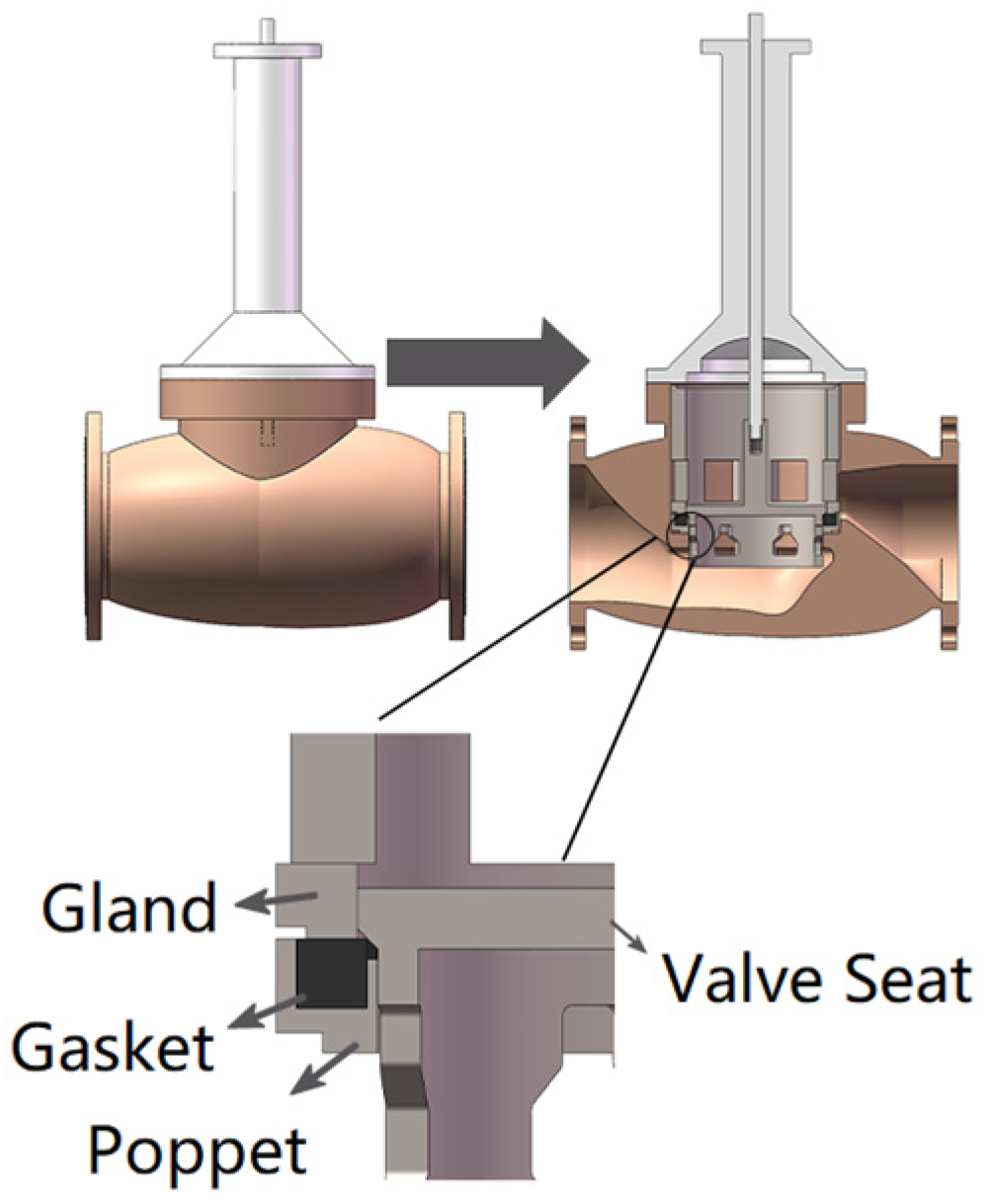
The experimental DN200 ship compartment vent valve, a planar poppet-type globe valve with a nominal bore of 200 mm, was modeled considering its constituent components, including the valve body, sleeve, poppet-stem sealing structure, gaskets, and packing; to simplify the analysis process and reduce computational demands while ensuring accuracy, the contact interface between the poppet and stem was defined with a bonded contact condition (preventing sliding and separation), and non-essential components such as nuts and bolts were omitted, as illustrated in Figure 1.
Figure 1. Schematic diagram of the simplified model and sealing structure of the DN200 ship compartment vent valve.
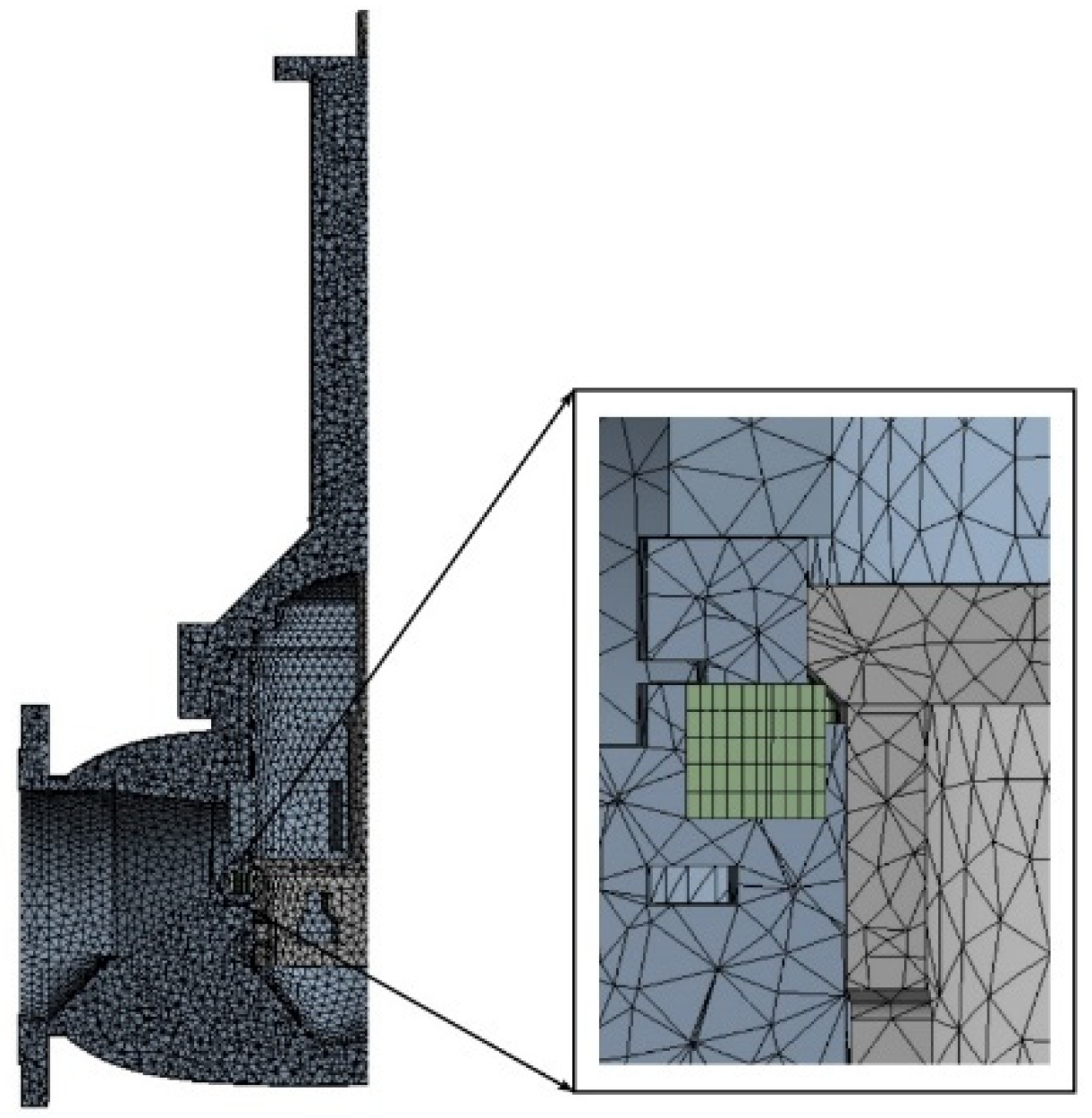
The model meshing was performed utilizing predominantly tetrahedral elements, with hexahedral elements employed in specific regions. This discretization strategy resulted in a computational mesh comprising 300,073 elements and 510,085 nodes, utilizing element type C3D4T. A localized mesh refinement was implemented in the critical contact zone between the poppet and the gasket to enhance computational accuracy. The resultant mesh configuration is presented in Figure 2.
Figure 2. Finite element meshing configuration of the DN200 ship compartment vent valve.

3.2. Boundary Conditions and Material Parameters

The boundary conditions applied in the finite element analysis were defined according to actual operational parameters. For the valve under investigation, the applied loads are relatively straightforward. During valve operation, the poppet surface is subjected to two primary external forces: (1) the medium pressure exerted by the gas and (2) the valve preload force applied by the stem. The maximum medium pressure from the gas corresponds to the peak pressure during ballast tank blowdown operations, set at 0.5 MPa [29]. The valve preload force applied by the stem was selected as 26,000 N based on valve design specifications. The gravitational effect on valve components was neglected due to its negligible influence.
Within the low-temperature marine environment, convective heat transfer occurs between the outer surface of the ship compartment vent valve poppet and the ambient cold air, with an environmental temperature of 233 K. The convective heat transfer coefficient on the poppet surface was set to 16.2 W/(m2·K). The inner valve wall boundary was defined as a standard third-type boundary condition (convection) with a temperature of 293 K.
Constraints were applied to the model: displacements in the vertical direction and rotational degrees of freedom about all three axes were constrained at the gasket locations. Material properties were assigned as follows: the poppet, stem, and sleeve components of the DN200 ship compartment vent valve are constructed from 304 stainless steel. The sealing gasket, per design specifications, utilizes Polytetrafluoroethylene (PTFE).

3.3. Analysis Results

In the simulation process, the Static Structural module of ANSYS was employed to compute stress and strain, while thermodynamic calculations were performed using the Steady-State Thermal module. The “steady-state thermomechanical coupling approach” employed in this study is defined as the process of obtaining coupled solutions to the heat conduction equation and the static equilibrium equation when the system satisfies condition T t = 0 (i.e., the temperature field remains time-invariant) and condition σ t = 0 (i.e., the stress field reaches a state of equilibrium). The mathematical criterion for this state is that the system achieves steady state when the nodal temperature change T < 0.1   K and the stress variation σ < 0.1   M Pa between consecutive time steps ( t = 10   s ) fall below specified thresholds.
Initially, the valve body is at ambient temperature. When exposed to a low-temperature environment, a significant temperature difference arises between the external medium and the valve components. This large gradient results in rapid heat transfer from the internal wall of the valve to the colder external medium. Subsequently, the cold energy propagates from the inner wall to the outer wall of the valve body and from the base of the valve core to the elongated valve stem. After an extended period of heat transfer, a stable temperature gradient is established along the valve stem, characterized by a gradual increase in temperature from the bottom to the top. The thermal analysis in this chapter focuses on the heat transfer and temperature distribution of the ventilation valve under steady-state conditions after exposure to the low-temperature air. Hence, the simulations conducted in ANSYS primarily consist of steady-state thermal analyses.
Thermo-structural coupling simulation involves the analysis of interactions between multiple physical fields, among which thermal stress analysis is the most critical issue in coupled thermo-mechanical problems. Thermal stress refers to the stress generated due to uneven thermal expansion or contraction when different parts of a structural model experience temperature variations during heating or cooling [30,31]. The thermo-structural coupling analysis of valve components under ultra-low temperature conditions falls under the category of thermal stress calculations in pressure vessel engineering. Excessive thermal stress can lead to significant deformation of the ball valve; therefore, theoretical analysis of thermal stress computation is essential.
First, a hexahedral infinitesimal element is extracted from the valve structure. Based on principles of material mechanics and thermodynamics, if the temperature distribution within the infinitesimal element is denoted as T x , y , z , the physical equation governing its thermal expansion can be expressed as follows:
ε x = 1 E σ x μ σ y + σ z + T ε y = 1 E σ y μ σ x + σ z + T ε z = 1 E σ z μ σ x + σ y + T γ x y = 1 G τ x y , γ y z = 1 G τ y z , γ z x = 1 G τ z x
In the above equation, ε x , ε y , ε z represent the strains in the x, y, and z directions, respectively; γ x y , γ y z , γ x z denote the shear strains on the xy, yz, and xz planes, respectively; σ x , σ y , σ z are the normal stresses in the x, y, and z directions, respectively; τ x y , τ y z , τ x z represent the shear stresses in the xy, yz, and xz directions, respectively; E is the elastic modulus; G is the shear modulus; and μ is Poisson’s ratio. It is known that G = E / 2 1 + μ represents the conversion relationship between the elastic moduli.
After introducing the thermal stress coefficient β = A E / 1 2 μ and the Lamé constant ρ = E μ / 1 + μ 1 2 μ , and due to the well-posed condition of the system of linear algebraic equations, the aforementioned system of equations admits a unique solution. By combining the expressions for volumetric strain and volumetric stress, the geometric equation for the hexahedral infinitesimal element under the coupled field can be derived as follows:
ε i j = 1 2 u i x j + u j x i
In the above formulation, the indices i and j must correspond to the three coordinate directions—x, y, and z—while the displacement vector u incorporates the three displacement components u, v, and w. Substituting these into the governing equations yields the geometric relationships for various planes and leads to the establishment of the simplified boundary conditions as follows:
σ x l + τ y z m + τ z x n = 0 σ y m + τ z x n + τ x y l = 0 σ z n + τ x y l + τ y z m = 0
In the above equation, l, m, and n represent the direction cosines of the normal to the boundary surface. The heat conduction differential equation in the cylindrical coordinate system is expressed as follows:
ρ c t τ = 1 r × r λ r t r + t λ r t r
In the above equation, ρ denotes the heat source density in W / m 2 , and c represents the specific heat capacity in J / kg · K . By coupling this heat conduction differential equation with the aforementioned system of equations, all thermal stress components— σ x , σ y ,   σ z , τ x y , τ y z , τ x z —as well as the thermal strain components— ε x , ε y , ε z , γ x y , γ y z , γ z x —along with the three displacement components u, v, and w, can be determined.
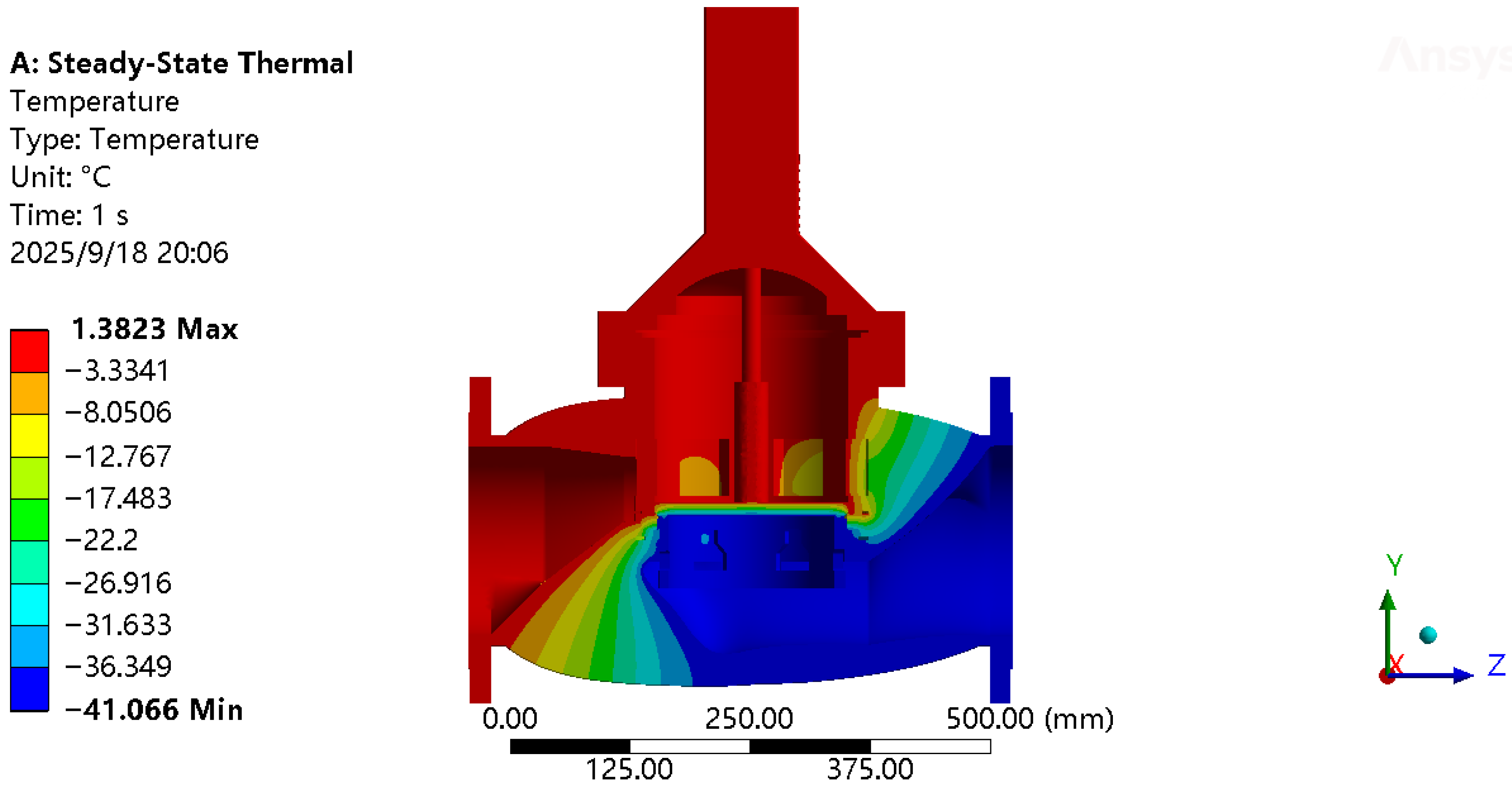
Regarding thermal stress analysis, ANSYS Workbench 2022 generally offers two methodologies: the direct method and the indirect method. The direct method employs coupled element types with both temperature and displacement degrees of freedom, enabling simultaneous computation of thermal and structural stresses. The indirect method, on the other hand, first performs a thermal analysis to obtain the nodal temperature field, which is then applied as a body load in subsequent structural stress analysis. This chapter primarily adopts the one-way coupled indirect approach for thermo-structural analysis. After applying constraints and boundary conditions, the temperature field is imported as a thermal load into the static structural module to perform the coupled simulation. The imported temperature distribution is illustrated in Figure 3.
Figure 3. Steady-state temperature distribution.
Figure 3 displays the steady-state temperature distribution of the ventilation valve under normal operating conditions. This non-uniform temperature field induces differential thermal contraction among internal components, leading to localized stress concentrations and alterations in the status of sealing contact surfaces. The current study focuses specifically on the sealing performance at the contact interface between the valve core and the sealing ring. Therefore, thermal stresses and strains in the valve housing are not analyzed herein. The contact behavior at the interface between the valve core and the sealing ring critically influences the operational performance of the ventilation valve, warranting further detailed analysis.
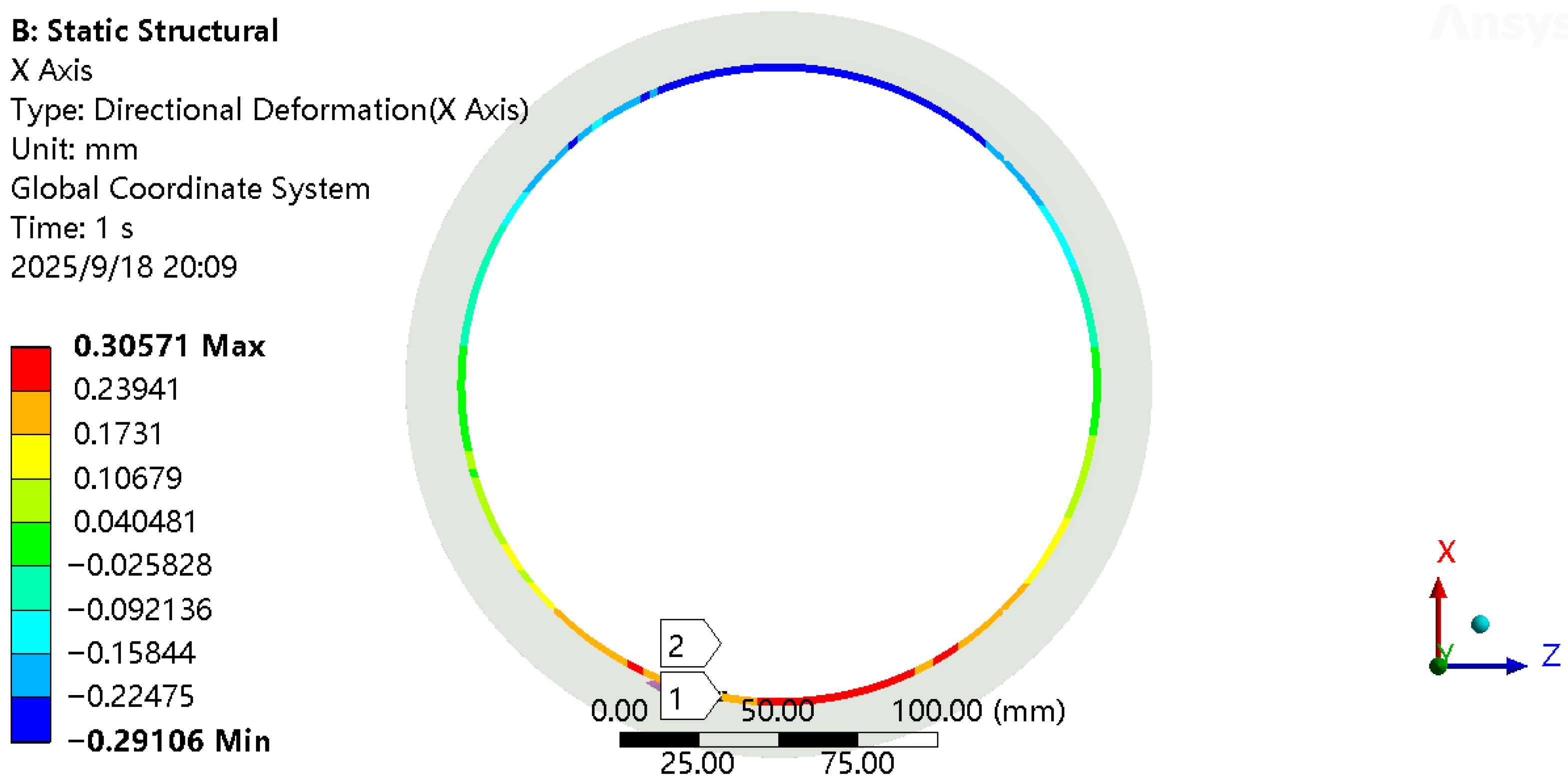
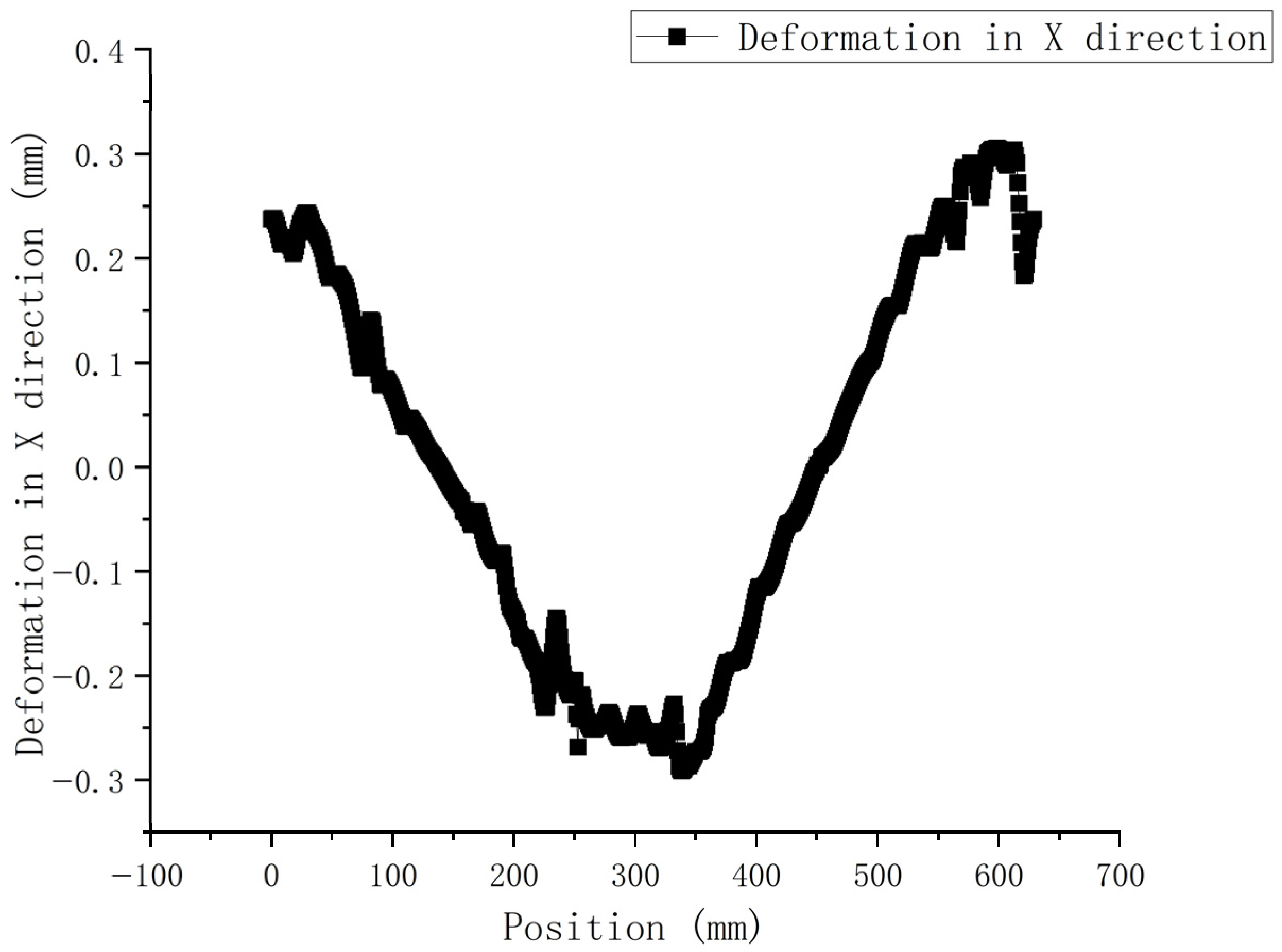
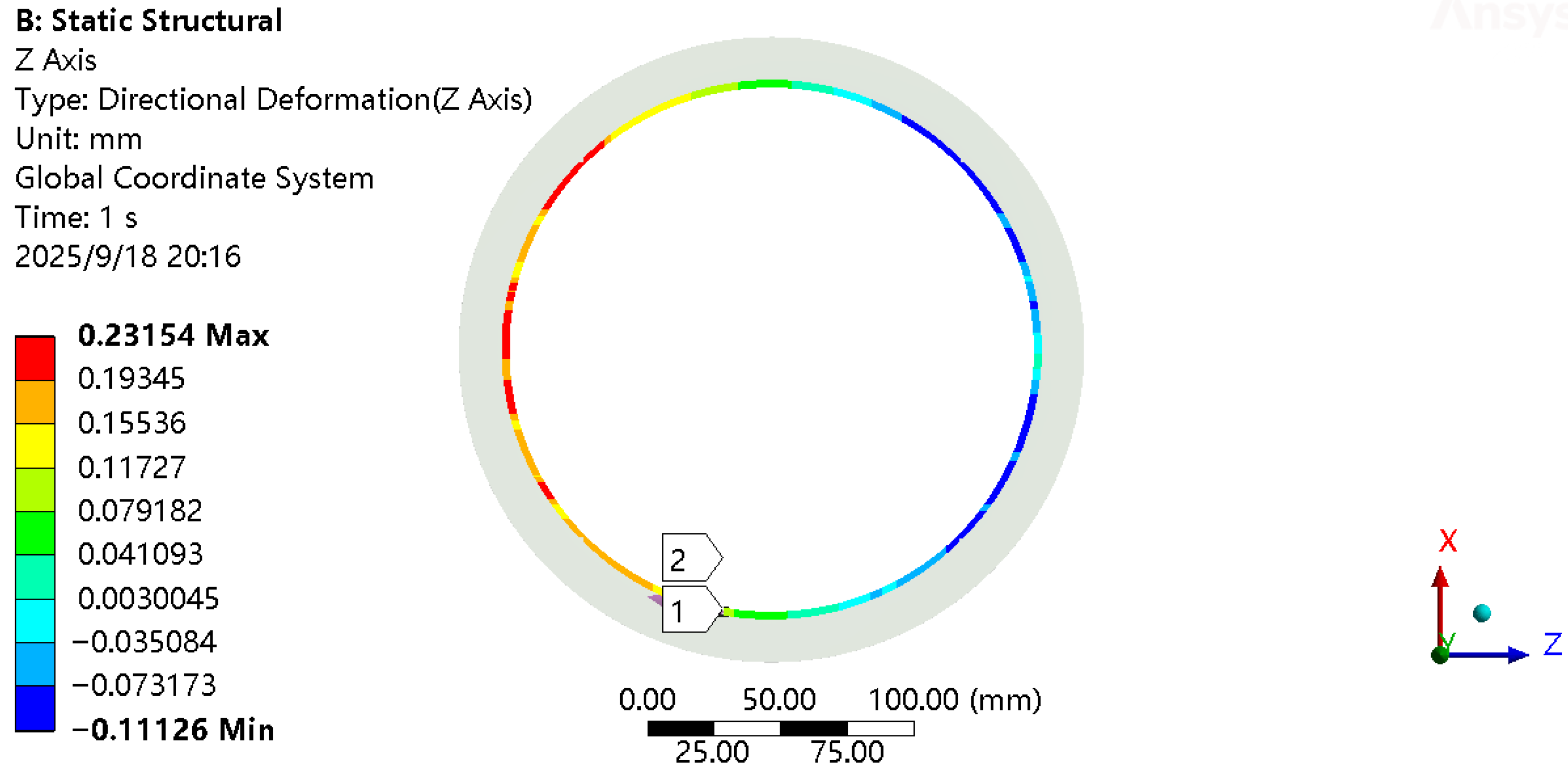
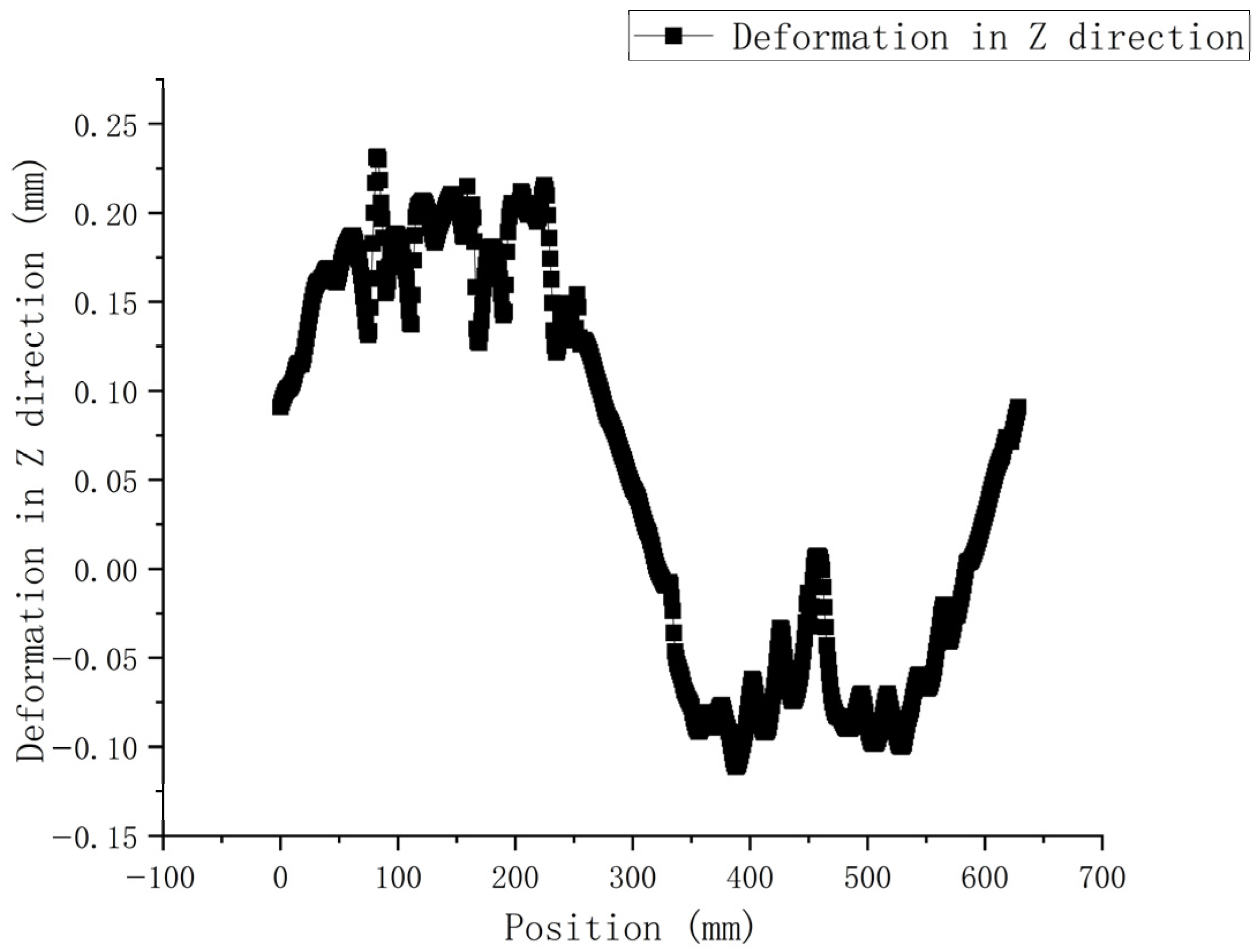
To further analyze the deformation within the valve sealing region under low-temperature operating conditions, an annular path along the contact interface between the gasket and poppet was extracted. The actual contraction magnitude was defined as the displacement difference along this path before and after operation under cryogenic conditions. Figure 4 and Figure 5 present the displacement contour plots in the X and Z directions, respectively, along this annular path obtained from finite element simulations of the vent valve under low-temperature operation. Figure 6 and Figure 7 are line plots with data points showing the distribution of displacements in the X and Z directions of the sealing ring along the circumference under low-temperature conditions for the vent valve. The contour plots reveal that the gasket experiences contraction within the X-Z plane along the extracted annular contact path. The maximum contraction magnitude reaches 0.306 mm in the X-direction and 0.232 mm in the Z-direction.
Figure 4. Displacement contour plot of the gasket along the X-direction under low-temperature steady-state conditions.
Figure 5. The point-line plot of the sealing ring’s displacement in the X-direction along the circumferential direction.
Figure 6. Displacement contour plot of the gasket along the Z-direction under low-temperature steady-state conditions.
Figure 7. The point-line plot of the sealing ring’s displacement in the Z-direction along the circumferential direction.
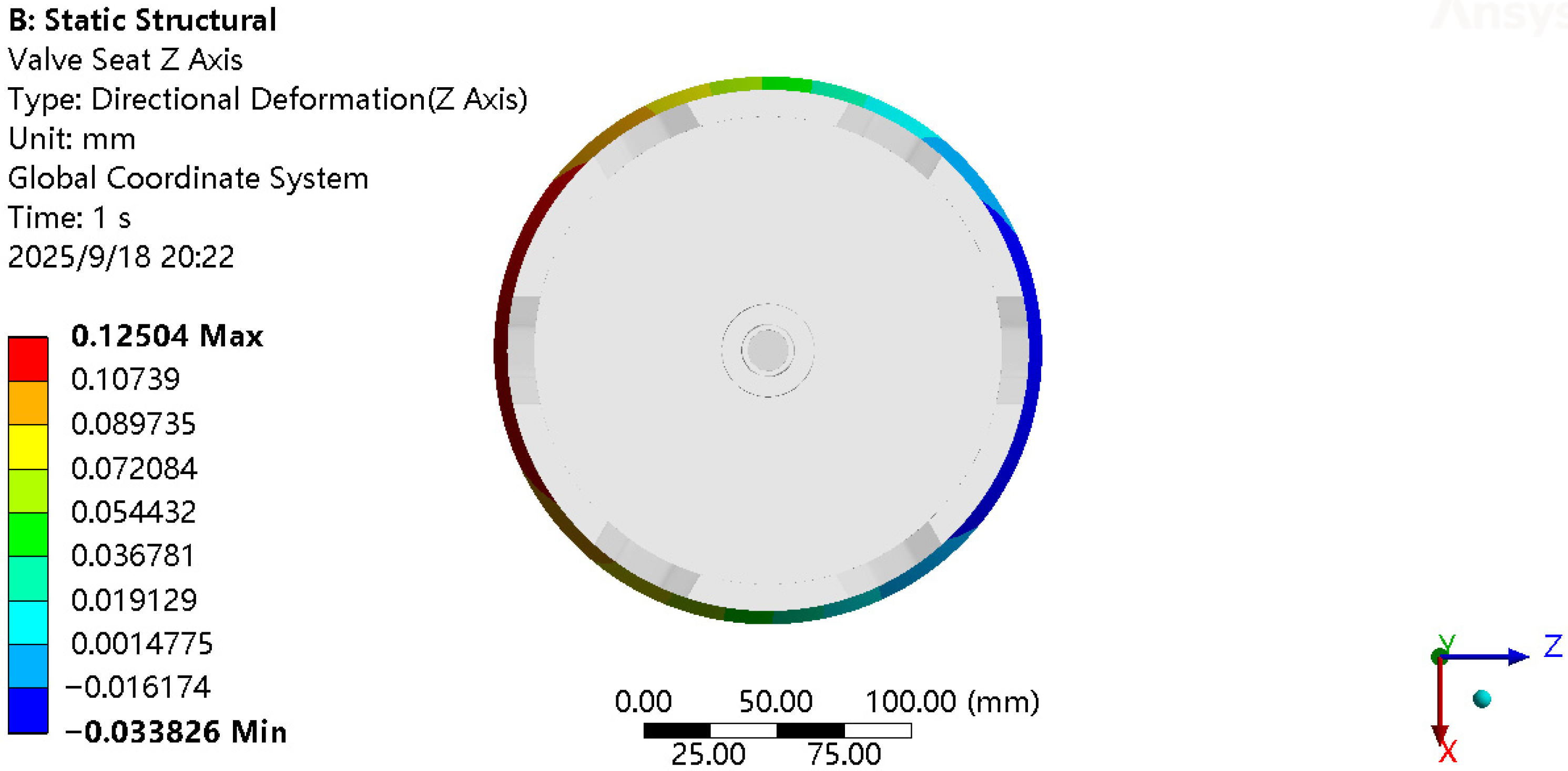
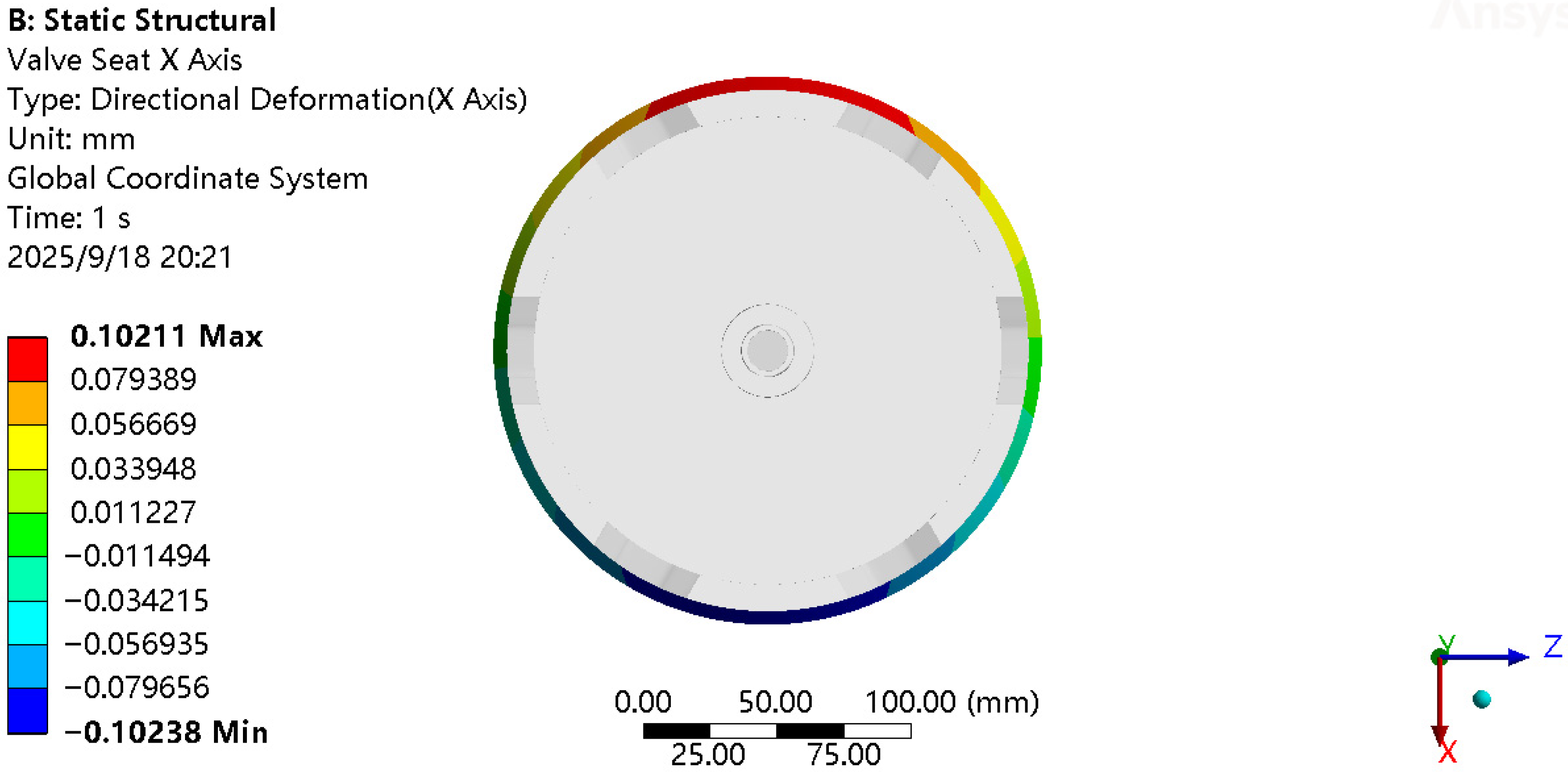
As illustrated in Figure 8 and Figure 9, analysis of the displacement contour plot on the poppet contact surface within the X-Z plane indicates a contraction pattern consistent with that of the gasket. The maximum contraction magnitude on the poppet surface is 0.102 mm in the X-direction and 0.125 mm in the Z-direction. Notably, the locations of maximum contraction on the poppet correspond to those on the gasket in both the X and Z directions, while the magnitude of poppet contraction is less than that of the gasket. Considering the inherent material properties of the sealing surfaces, both deformation types are identified as elastic deformation. Crucially, under the compensation effect of the valve seat, no distinct leakage occurs. This indicates that the thermal contraction phenomenon induced by the low-temperature marine environment on the gasket and poppet does not lead to their separation or a consequent degradation in sealing performance.
Figure 8. The cloud plot of the spool displacement along the X-direction under low-temperature steady-state conditions.
Figure 9. The cloud plot of the spool displacement along the Z-direction under low-temperature steady-state conditions.
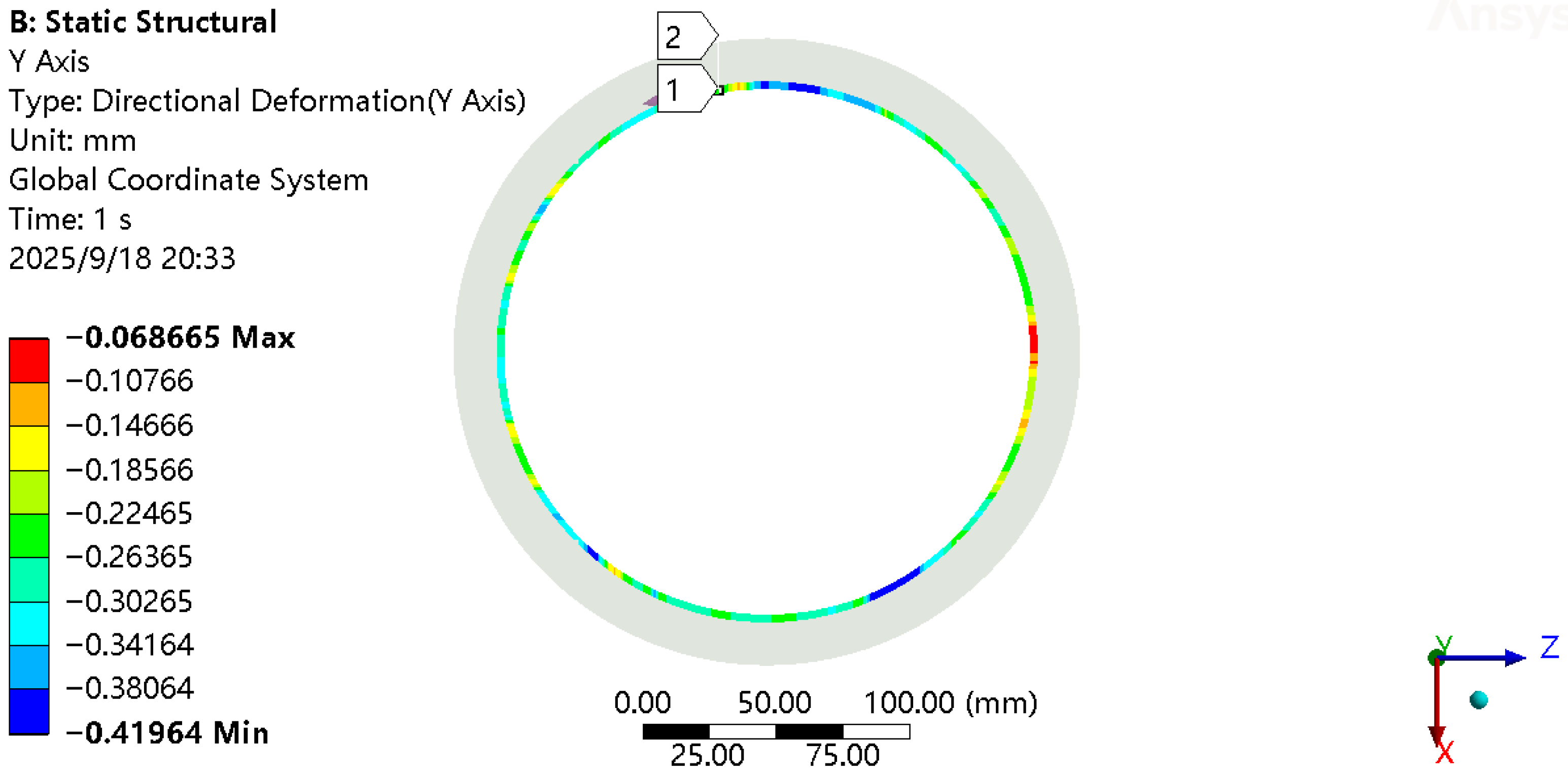
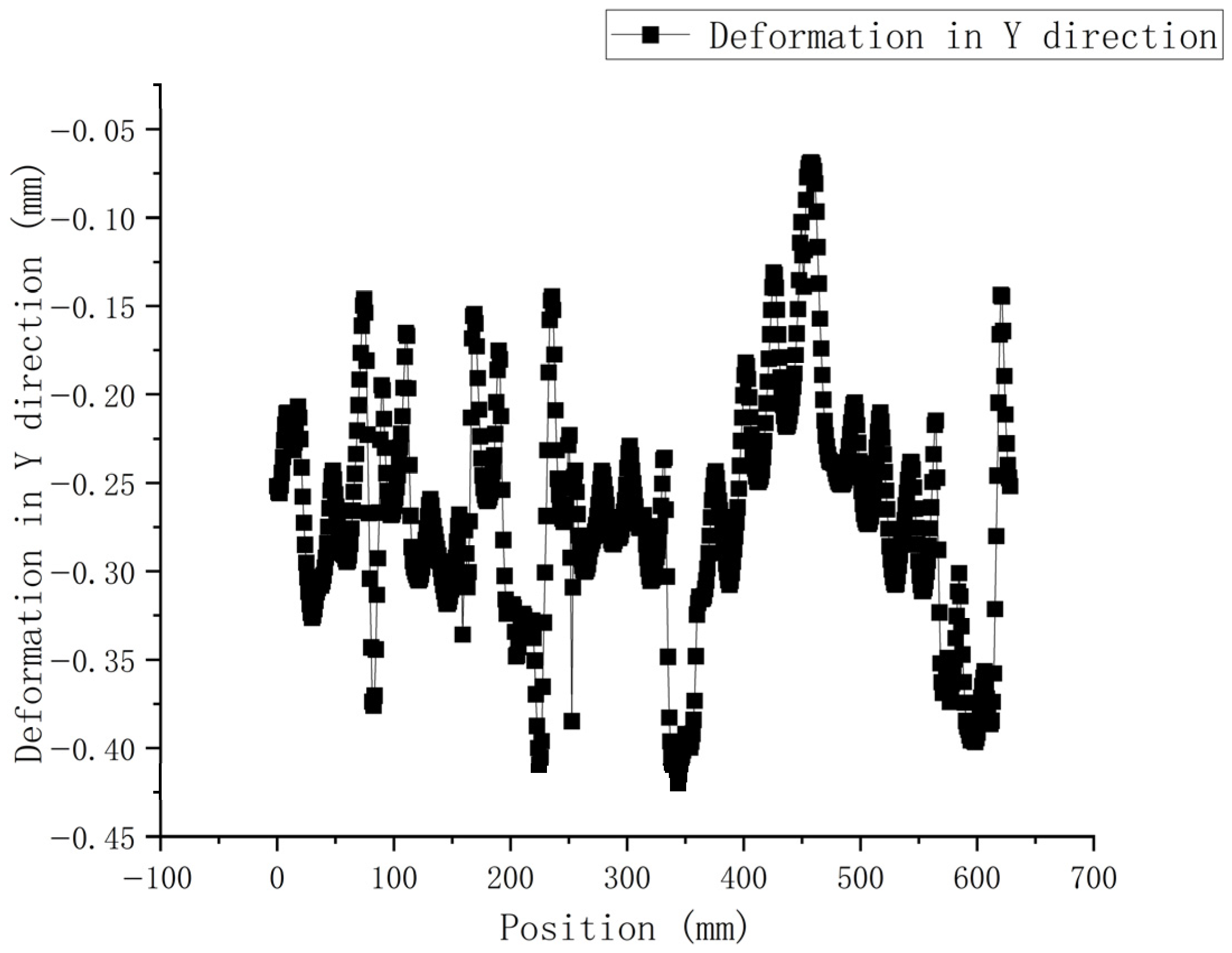
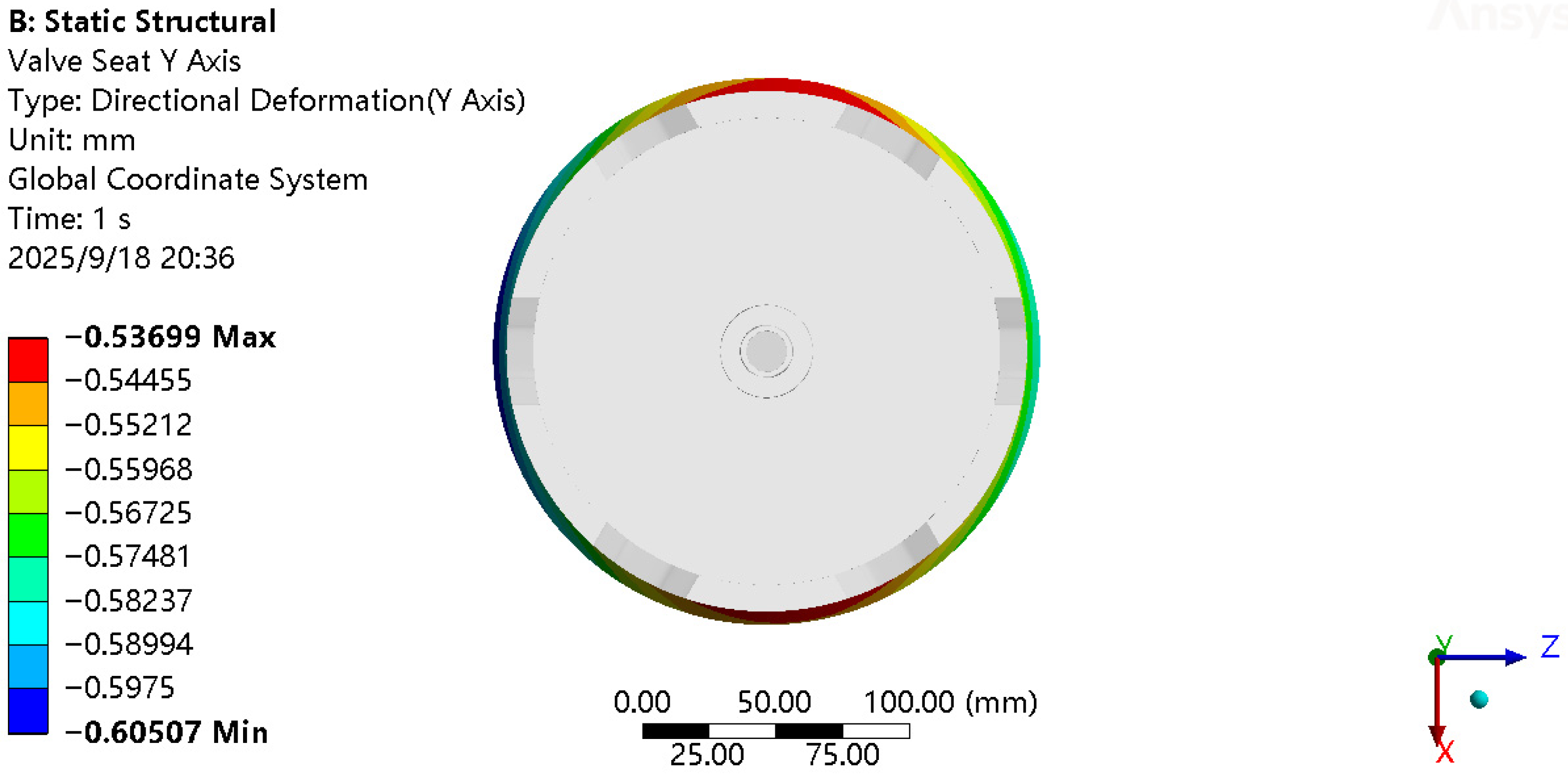
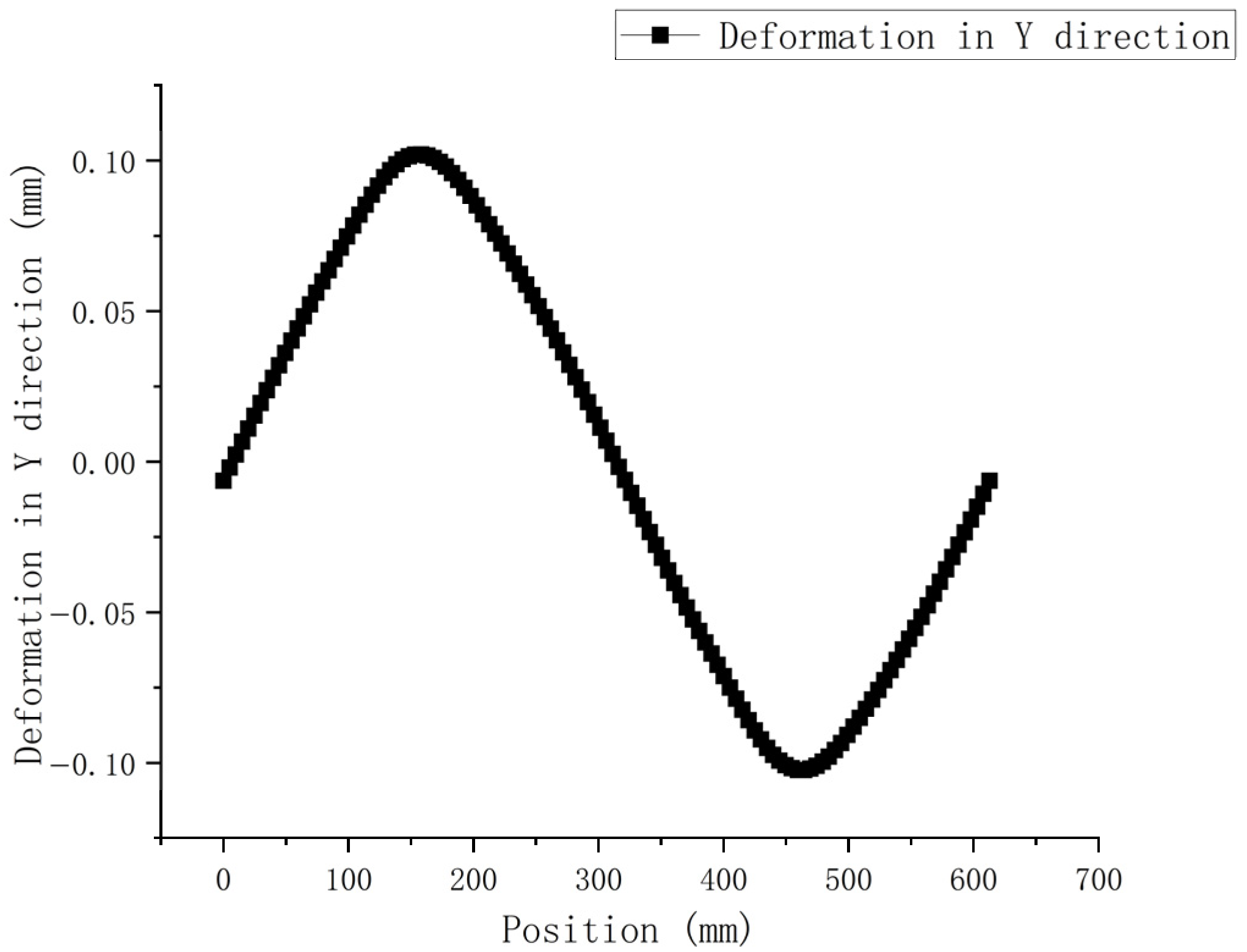
As shown in Figure 10 and Figure 11, analysis along the Y-direction at the contact interface with the poppet reveals non-uniform warping of the sealing surface under these operating conditions. Figure 12 and Figure 13 are point-line plots showing the distribution of displacements in the Y-direction for both the sealing ring and the spool along the circumferential position under low-temperature operating conditions of the vent valve. The minimum contraction magnitude is 0.067 mm, while the maximum contraction magnitude reaches 0.420 mm. This phenomenon results from heterogeneous thermal contraction within the gasket. Combined with the inherent non-uniform contraction of the poppet itself, the pressure distribution across the contact interface between the poppet and gasket becomes significantly more complex.
Figure 10. Displacement contour plot of the gasket along the Y-direction under low-temperature steady-state conditions.
Figure 11. The point-line plot of the sealing ring’s displacement in the Y-direction along the circumferential direction.
Figure 12. Displacement contour plot of the poppet along the Y-direction under low-temperature steady-state conditions.
Figure 13. The point-line plot of the spool displacement in the Y-direction along the circumferential direction.
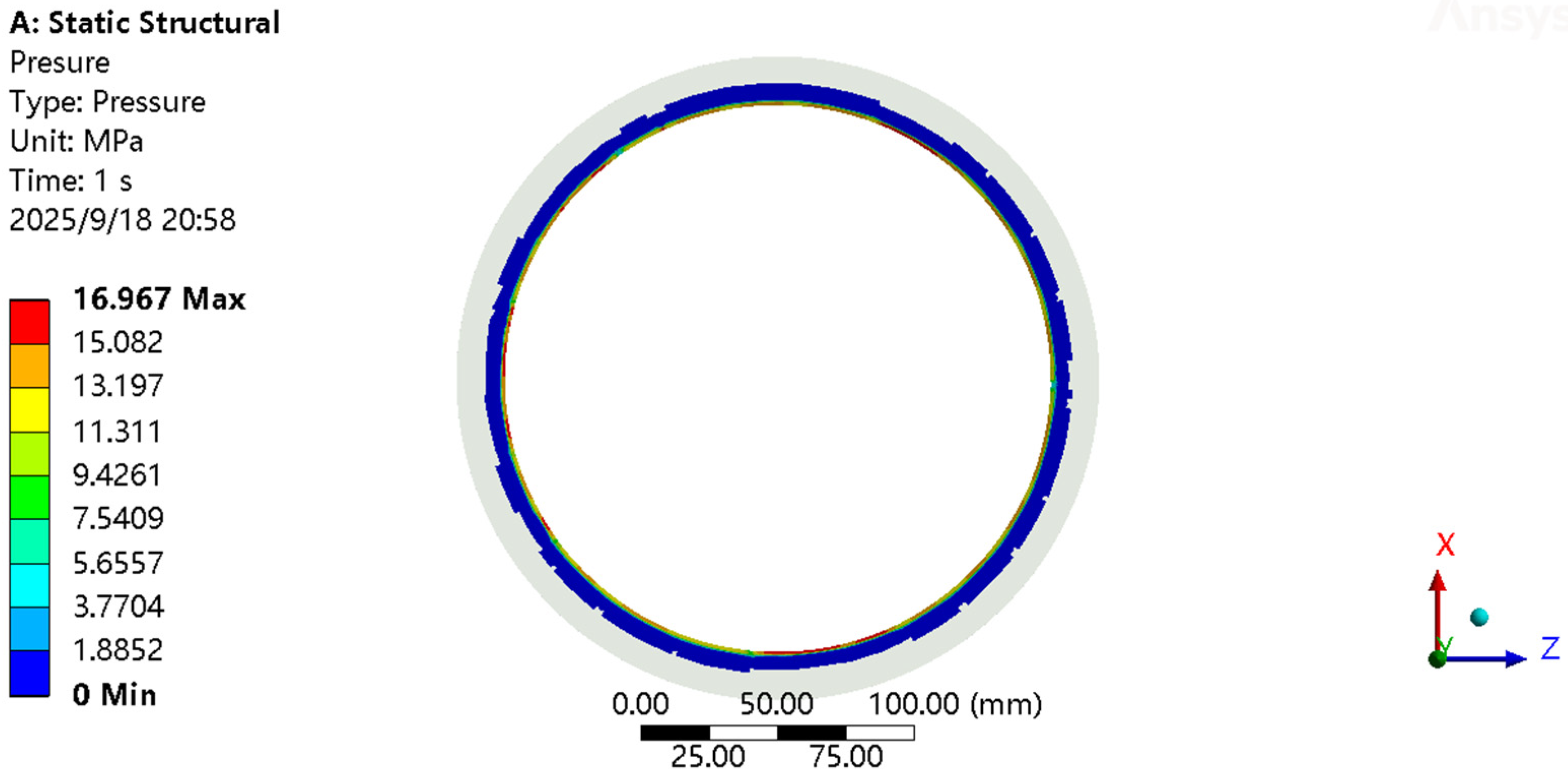
Figure 14 presents the pressure distribution on the sealing contact surface of the vent valve under both ambient and low-temperature operating conditions. As can be observed from Figure 14, under ambient temperature conditions, under the combined action of the working medium pressure and the preload force applied by the valve stem, the actual contact width between the gasket and the poppet is 2.5 mm. The maximum specific sealing pressure exerted by the poppet on the gasket reaches 16.967 MPa, with the pressure across the majority of the effective contact area distributed between 6 and 14 MPa. This exceeds the essential specific pressure of 3.702 MPa required to generate an effective seal for the PTFE gasket material.
Figure 14. Pressure distribution on the gasket under ambient temperature operating conditions.
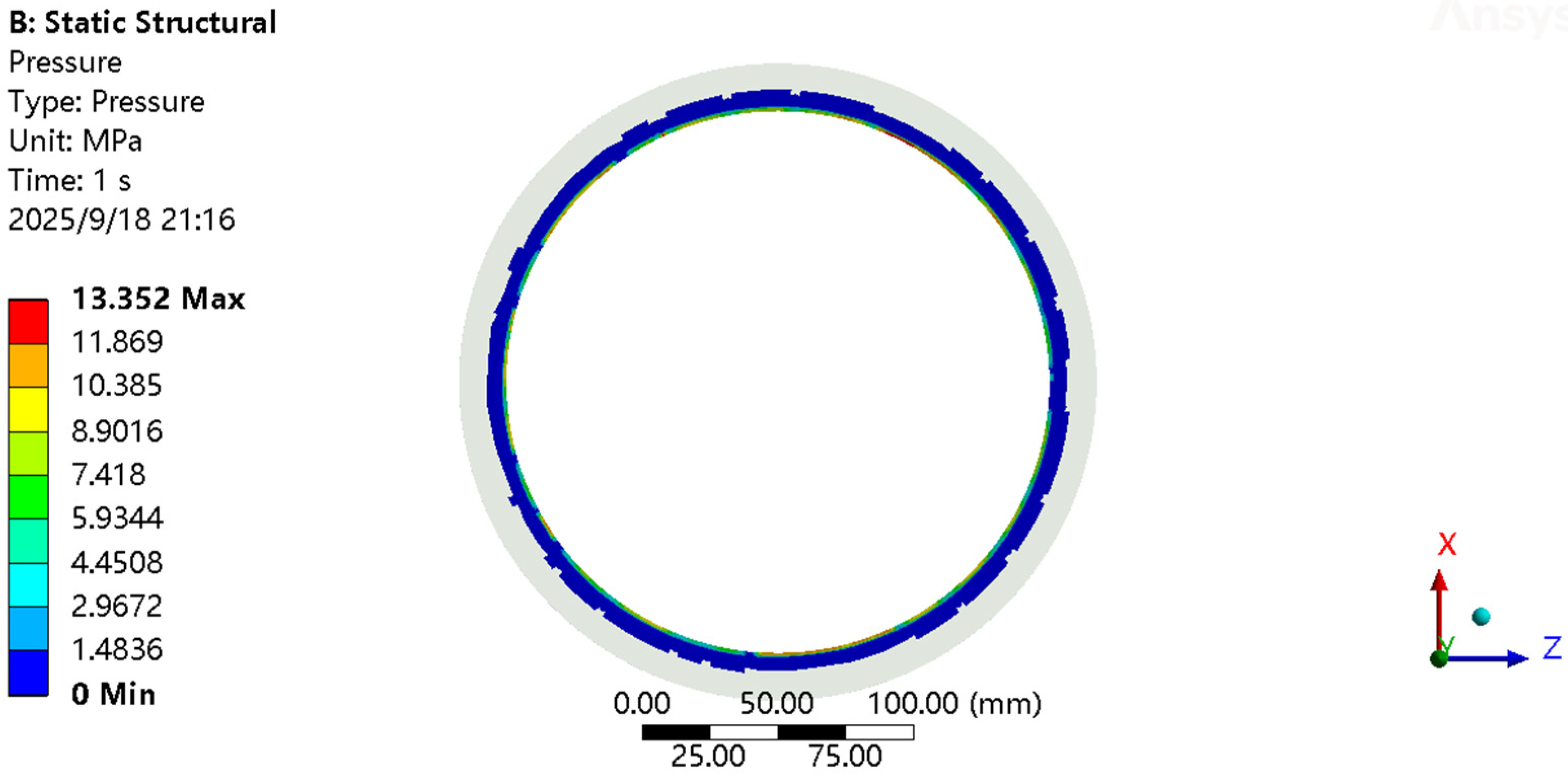
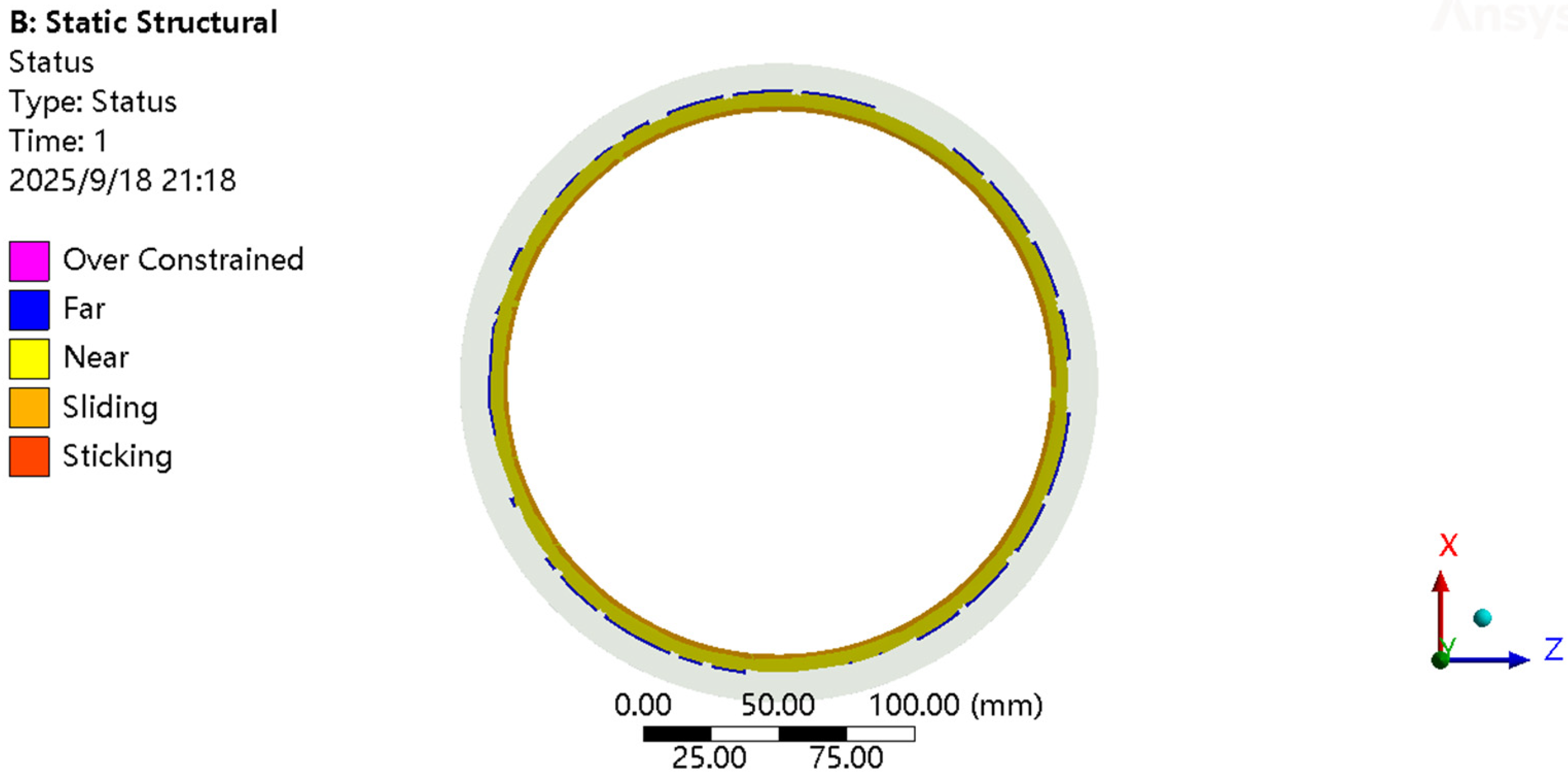
Figure 15 and Figure 16 depict the pressure contour plots and contact status diagrams of the sealing ring under cryogenic operating conditions, generated under the combined effects of working medium pressure, preload force applied by the valve stem, and significant internal-external temperature differential. Under these conditions, the actual contact width between the sealing ring and poppet is reduced to 1.75 mm, while the maximum specific pressure endured reaches 13.352 MPa. Due to cryogenic contraction effects, the pressure distribution across the sealing ring-poppet interface exhibits substantial non-uniformity. Furthermore, the maximum contact pressure demonstrates a notable decrease, resulting in the emergence of leakage-prone segments where the pressure falls below the essential specific pressure requirement of 3.702 MPa. As revealed in the contact status diagram (Figure 16), multiple separation zones between the sealing ring and poppet are observed. These findings indicate a significant degradation in the overall sealing performance of the valve under low-temperature conditions, suggesting considerable leakage risks during operational service.
Figure 15. Pressure distribution contour of the sealing ring under low-temperature operating conditions.
Figure 16. Distribution of contact status for the sealing ring under cryogenic operating conditions.

3.4. Mitigation Strategy

Analysis from the preceding section reveals that the DN200 ship compartment vent valve experiences a reduction in effective contact area following temperature decrease under actual service conditions, resulting in numerous leakage points and compromised sealing performance at low temperatures. Concurrently, the heterogeneous thermal contraction of the gasket induces an uneven pressure distribution across its contact interface with the poppet. This non-uniform pressure distribution can subsequently lead to asymmetrical friction, adversely affecting the long-term sealing performance during repeated valve cycling.
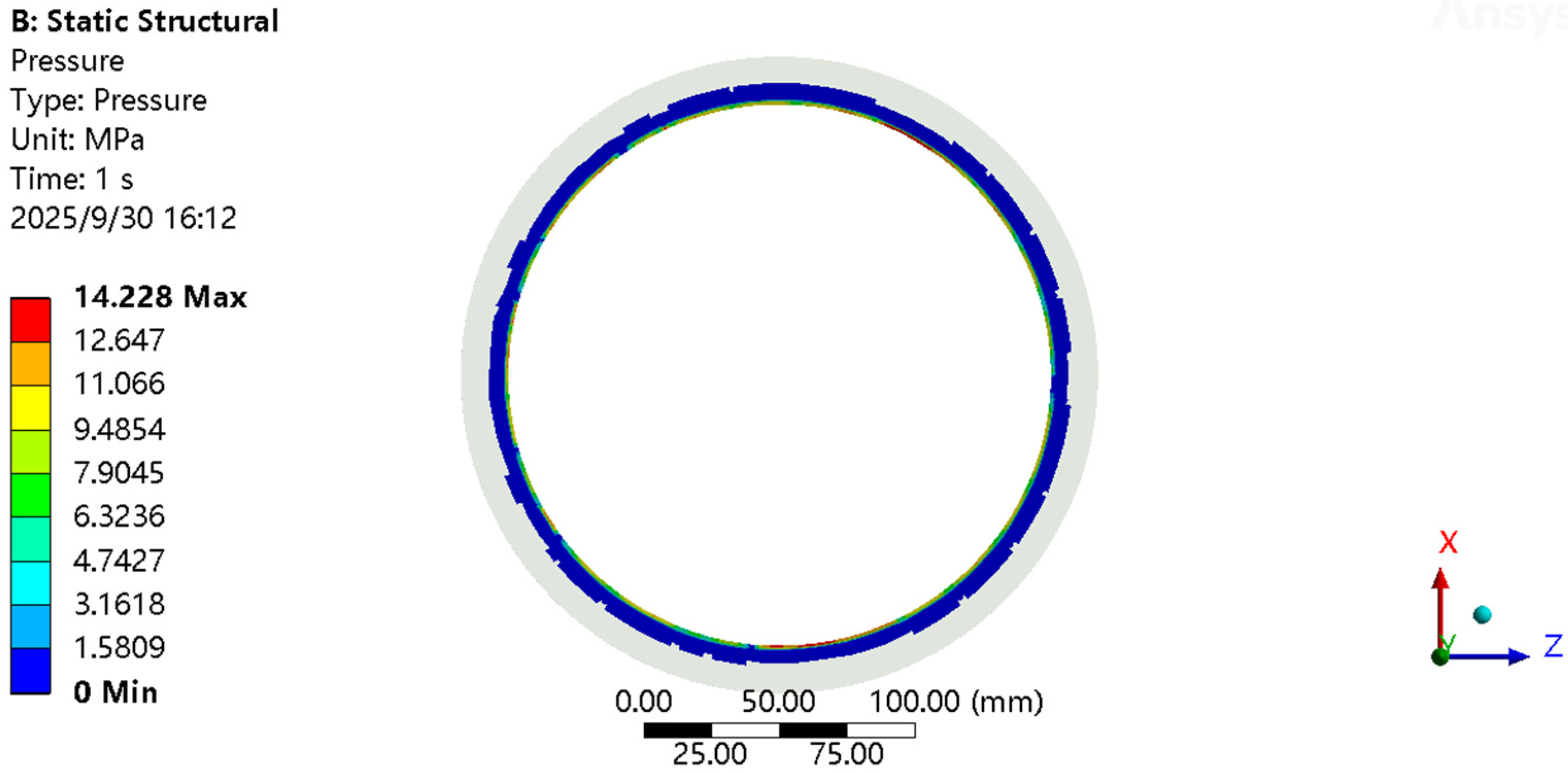
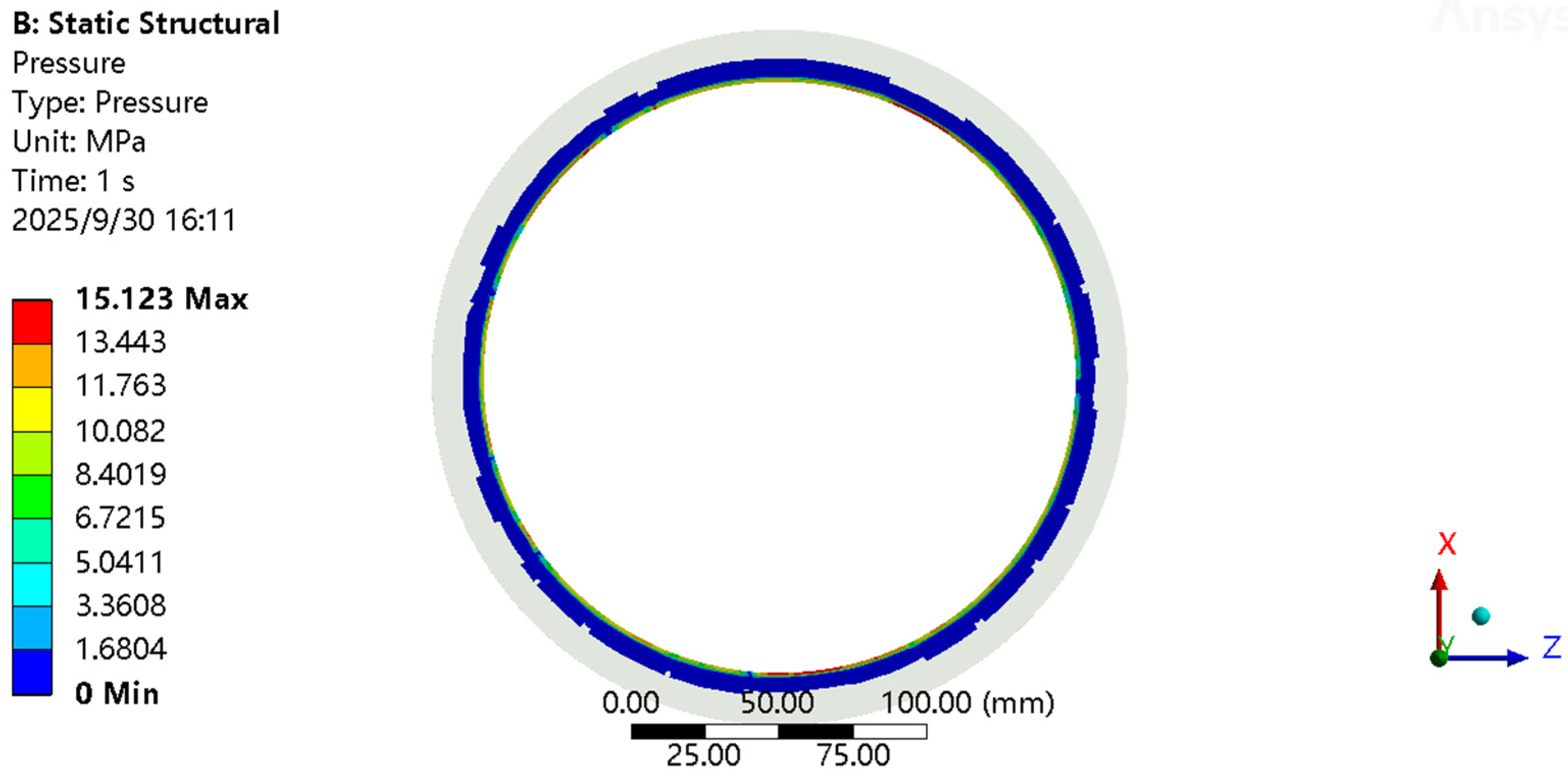
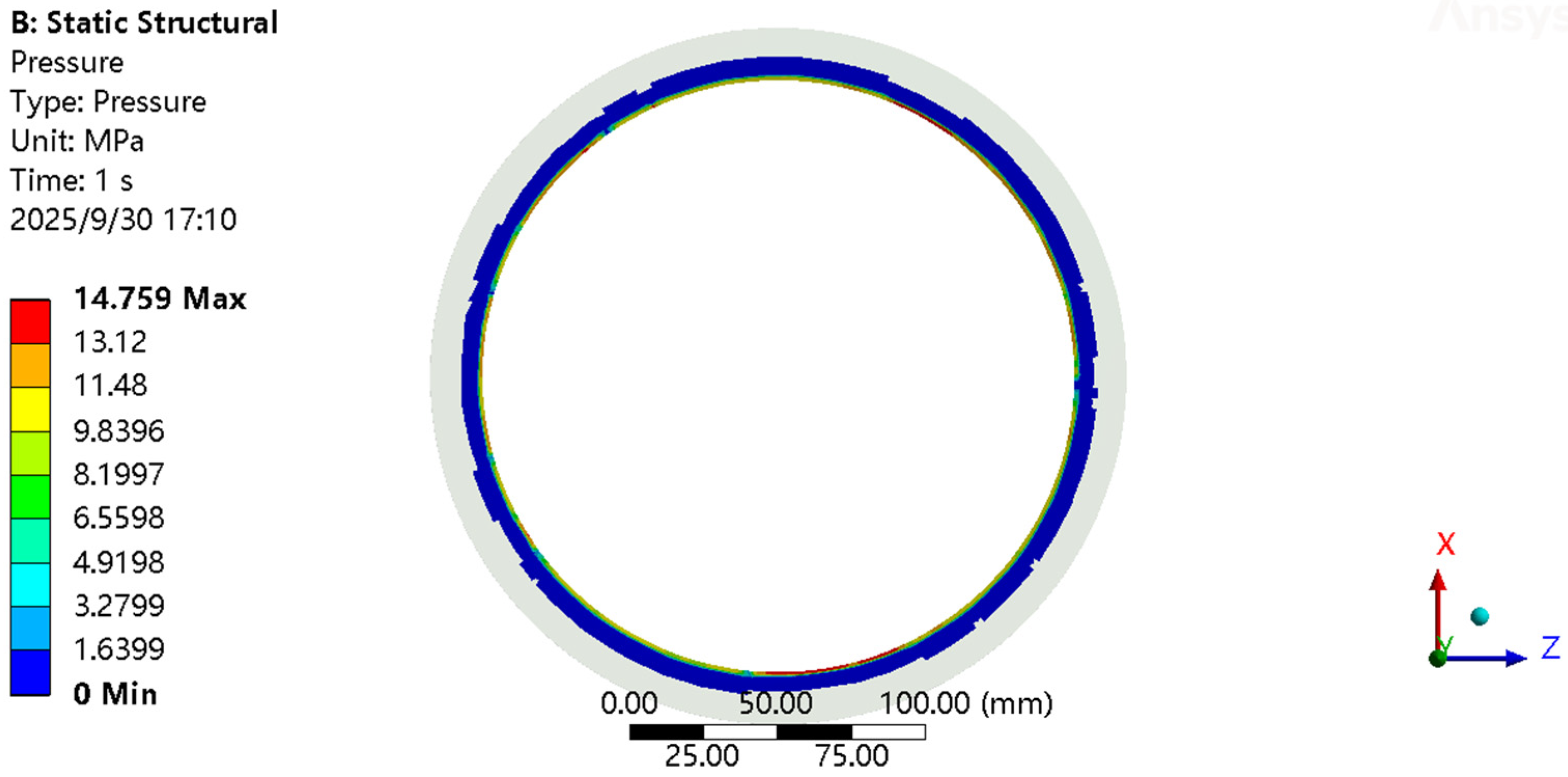
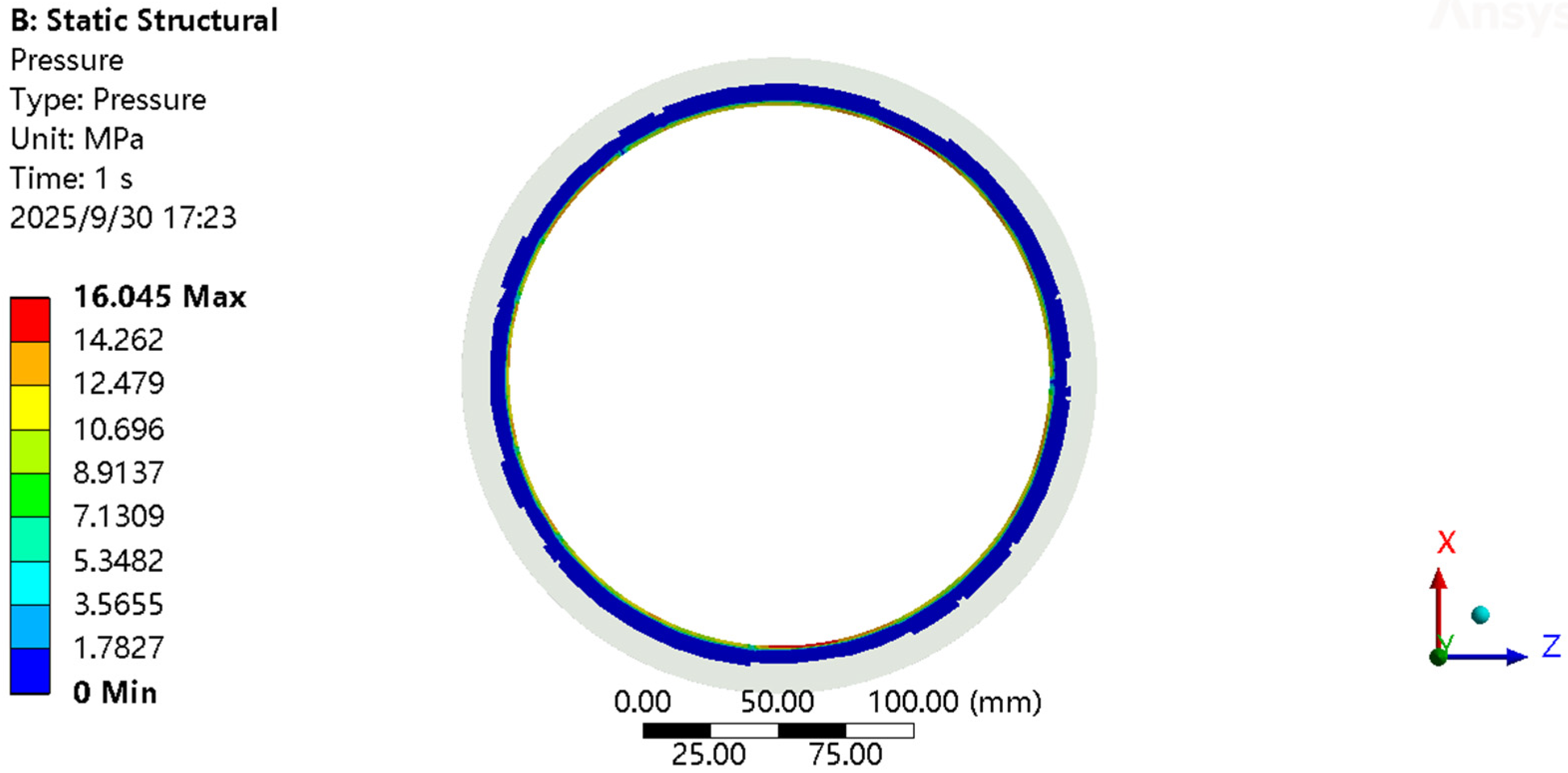
To improve the sealing performance of the valve under cryogenic operating conditions and ensure its operational capability, this study selected 28,000 N, 30,000 N, 32,000 N, 34,000 N, and 36,000 N as the newly set preload force parameters for simulation analysis. The results indicate that under the four preload force parameters of 28,000 N, 30,000 N, 32,000 N, and 34,000 N, leakage segments with specific pressure lower than the required 3.702 MPa are generated on the contact surface between the poppet and the sealing ring, and the simulation results are shown in Figure 17, Figure 18, Figure 19 and Figure 20. In contrast, under the preload force of 36,000 N, a favorable sealing effect is achieved.
Figure 17. Pressure Distribution of the Sealing Ring Under the Action of 28,000 N Preload Force.
Figure 18. Pressure Distribution of the Sealing Ring Under the Action of 30,000 N Preload Force.
Figure 19. Pressure Distribution of the Sealing Ring Under the Action of 32,000 N Preload Force.
Figure 20. Pressure Distribution of the Sealing Ring Under the Action of 34,000 N Preload Force.
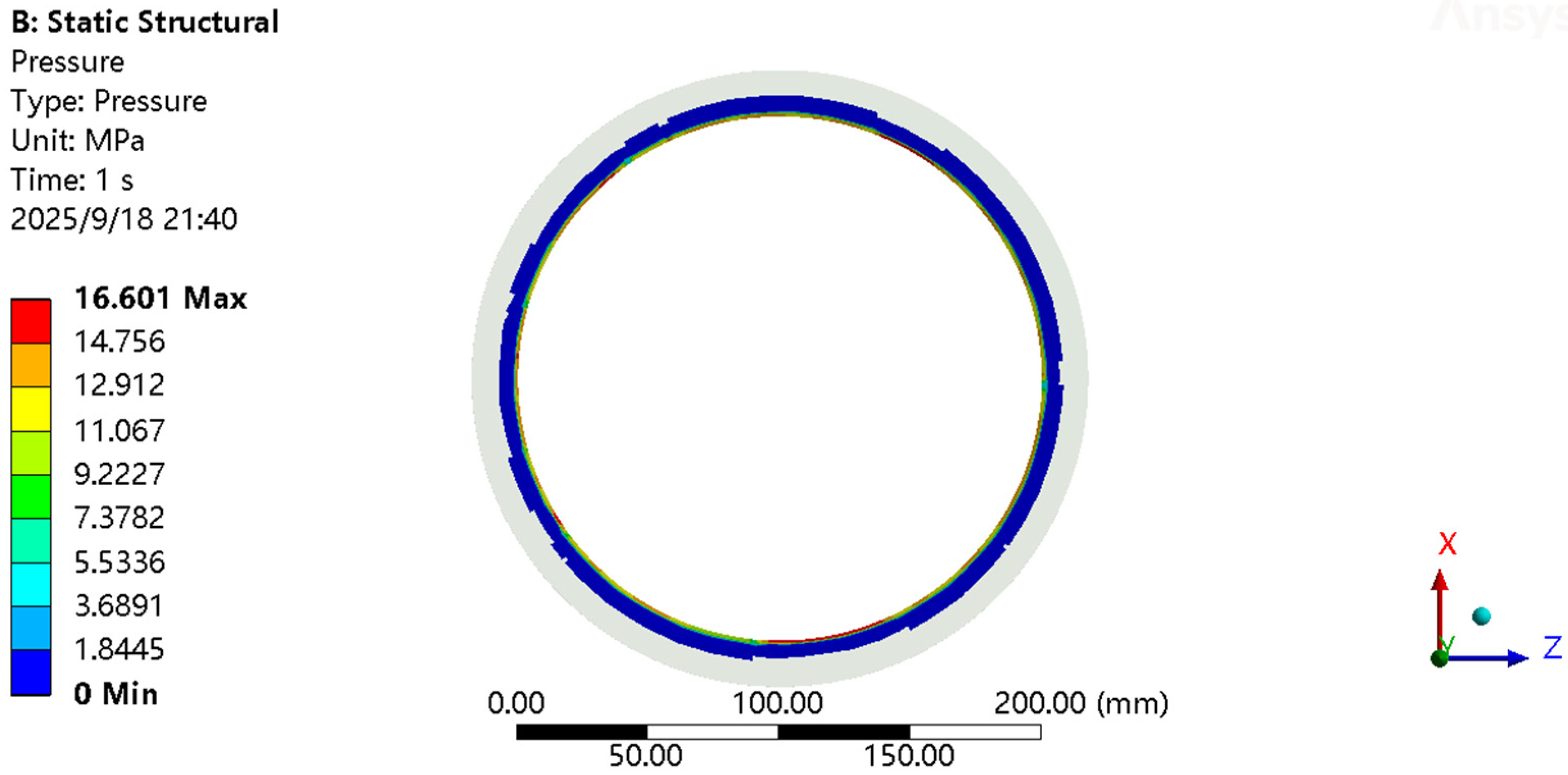
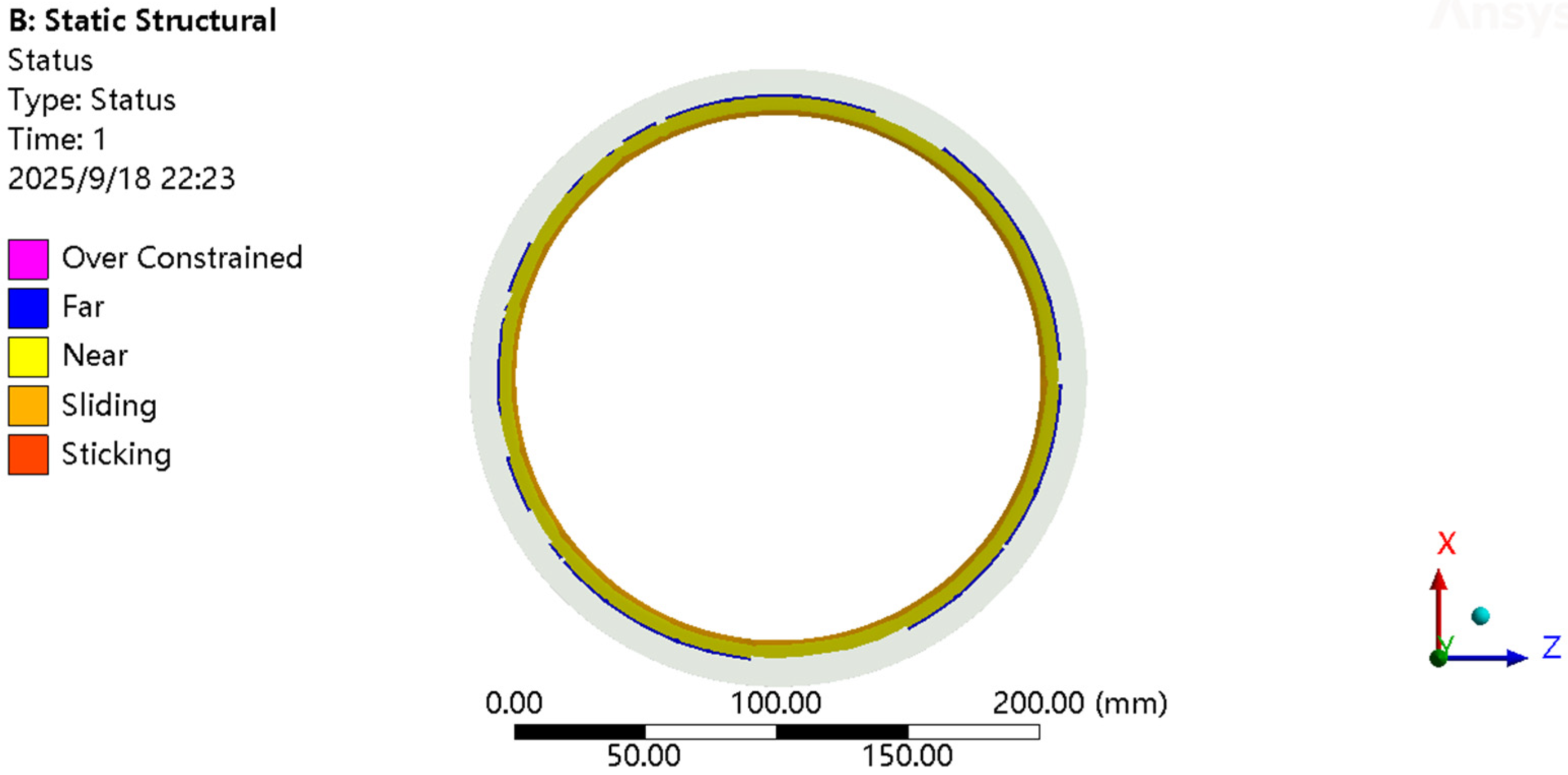
Figure 21 and Figure 22 below present the results when the preload force applied by the valve stem is increased to 36,000 N. It can be observed from Figure 21 that the actual contact surface width between the sealing ring and the poppet is 1.75 mm. Although the sealing ring still undergoes cryogenic shrinkage and deformation, no gaps are formed between the poppet and the sealing ring under the action of the preload force. The maximum specific pressure generated is 16.601 MPa, and the specific pressure in most areas ranges from 6 to 14 MPa. No low-pressure zones with specific pressure lower than the required 3.702 MPa are formed, thus achieving a favorable sealing effect.
Figure 21. Pressure distribution of the optimized sealing ring.
Figure 22. Contact status distribution of the optimized sealing ring.
Under these cryogenic conditions, PTFE exhibits a cryogenic strengthening effect in compression. Even PTFE with the lowest crystallinity demonstrates a compressive strength exceeding 22.5 MPa (reference value for low-crystallinity PTFE at 0 °C) [32,33,34]. Therefore, the maximum applied pressure of 16.601 MPa remains well within this enhanced strength limit and does not approach the critical condition for material failure. This ensures the structural integrity and operational reliability of the sealing assembly.

4. Conclusions

  • Selection and Performance Validation of Sealing Materials: In low-temperature marine environments (−30 °C to −40 °C), polytetrafluoroethylene (PTFE) outperforms elastomeric materials such as neoprene (CR) and fluorocarbon rubber (FKM) as a sealing gasket material for marine vent valves. It exhibits superior cryogenic toughness (withstanding temperatures as low as −200 °C), excellent corrosion resistance, and self-lubricating properties. Compared with polychlorotrifluoroethylene (PCTFE) and polyimide (PI), PTFE also has lower processing costs, making it an ideal choice. Based on empirical formula calculations, the static minimum specific sealing pressure ( q M F ) for the PTFE sealing surface is 3.69 MPa. Considering the dynamic additional specific pressure (0.012 MPa) induced by periodic vibrations (15–60 Hz) in the marine environment, the corrected total minimum specific sealing pressure ( q t o t a l ) is determined to be 3.702 MPa. This threshold value provides a critical quantitative standard for evaluating the sealing performance of PTFE gaskets in low-temperature scenarios.
  • Degradation Mechanism of Sealing Performance Under Low-Temperature Conditions: Thermo-mechanical coupling finite element analysis using ANSYS Workbench reveals that low-temperature environments trigger non-uniform thermal contraction of valve components, leading to significant deterioration of the sealing interface performance. For the DN200 vent valve, specific manifestations include a reduction in the contact width between the PTFE gasket and the poppet from 2.5 mm at ambient temperature to 1.75 mm under low temperatures and a decrease in the maximum specific pressure on the sealing surface from 16.967 MPa (ambient temperature) to 13.352 MPa (low temperature), accompanied by the emergence of multiple leakage-prone zones where the specific pressure falls below the critical threshold of 3.702 MPa. Additionally, the gasket exhibits non-uniform warping in the Y-direction with a deformation range of 0.067–0.420 mm. Although the poppet contraction (maximum 0.102 mm in the X-direction and 0.125 mm in the Z-direction) is smaller than that of the gasket (maximum 0.306 mm in the X-direction and 0.232 mm in the Z-direction), the difference in contraction behavior further exacerbates the uneven pressure distribution at the contact interface. Ultimately, separation zones form between the poppet and the gasket, resulting in a substantial decline in sealing performance.
  • Optimization of Preload Force to Enhance Low-Temperature Sealing Reliability: To address the sealing failure issue under low temperatures, parametric simulations of the valve stem preload force (ranging from 28,000 N to 36,000 N) were conducted. The results demonstrate that when the preload force is increased to 36,000 N, the sealing interface performance is significantly improved. Despite the contact width between the gasket and the poppet remaining at 1.75 mm under low temperatures, the maximum specific pressure at the interface rebounds to 16.601 MPa, and most of the contact area maintains a specific pressure within the range of 6–14 MPa. In conclusion, this study clarified the regulation law of preload force on low-temperature sealing performance through the “parametric simulation optimization method based on the sealing performance threshold” and finally determined 36,000 N as the optimal preload force parameter, effectively solving the sealing failure problem under low-temperature conditions. Notably, no leakage-prone zones with specific pressure below 3.702 MPa are observed. Moreover, PTFE exhibits a cryogenic strengthening effect in compression; the compressive strength of low-crystallinity PTFE (exceeding 22.5 MPa at 0 °C) is much higher than the maximum applied pressure of 16.601 MPa, ensuring no material failure of the sealing assembly after preload optimization and achieving effective sealing under low-temperature conditions.
  • Engineering Significance and Application Value: The thermo-mechanical coupling analysis method established in this study for vent valves in low-temperature marine environments clarifies the quantitative relationship between structural parameters (e.g., sealing material properties, preload force) and sealing performance. From an economic perspective, the proposed preload optimization strategy (36,000 N) can effectively reduce vessel downtime, maintenance costs caused by valve leakage, and expenses associated with frequent seal replacement, thereby lowering overall operational costs. Technically, this research provides key technical support for the safe and extended operation of marine vessels in low-temperature waters and lays a theoretical and practical foundation for the future design optimization of marine vent valves and similar low-temperature pressure equipment.

Author Contributions

Conceptualization, J.Z.; methodology, J.Z.; resources, Z.W. and L.Y.; data curation, H.C.; writing—original draft preparation, J.Z.; writing—review and editing, J.Z. and W.G.; software, J.Z.; investigation, S.Z. All authors have read and agreed to the published version of the manuscript.

Funding

This research received no external funding.

Institutional Review Board Statement

Not applicable.

Data Availability Statement

The original contributions presented in this study are included in the article. Further inquiries can be directed to the corresponding author.

Conflicts of Interest

The authors declare no conflicts of interest.

References

  1. Sreekanth, N.; Sankaran, S.; Kenned, J.J. Development of soft seal and experimental investigation of soft seated safety relief valves for cryogenic applications. Cryogenics 2025, 146, 104005. [Google Scholar] [CrossRef]
  2. Hellemans, M. The Safety Relief Valve Handbook: Design and Use of Process Safety Valves to ASME and International Codes and Standards; Elsevier: Amsterdam, The Netherlands, 2009. [Google Scholar]
  3. API 527; Seat Tightness of Pressure Relief Valves. American Petroleum Institute (API): Washington, DC, USA, 2020.
  4. ASME PTC 25-2014; ASME Pressure Relief Devices—Performance Test Codes. An American National Standard. The American Society of Mechanical Engineers: New York, NY, USA, 2014.
  5. Christophe, M.; Didier, L. Experimental Leak-Rate Measurement Through a Static Metal Seal. J. Fluids Eng. 2007, 129, 799–805. [Google Scholar]
  6. Gorash, Y.; Dempster, W.; Nicholls, W.D.; Hamilton, R.; Anwar, A.A. Study of mechanical aspects of leak tightness in a pressure relief valve using advanced FE-analysis. J. Loss Prev. Process Ind. 2016, 43, 61–74. [Google Scholar] [CrossRef]
  7. Ledoux, Y.; Lasseux, D.; Favreliere, H.; Samper, S.; Grandjean, J. On the dependence of static flat seal efficiency to surface defects. Int. J. Press. Vessel. Pip. 2011, 88, 518–529. [Google Scholar] [CrossRef]
  8. Haruyama, S.; Nurhadiyanto, D.; Choiron, M.A.; Kaminishi, K. Influence of surface roughness on leakage of new metal gasket. Int. J. Press. Vessel. Pip. 2013, 111–112, 146–154. [Google Scholar] [CrossRef]
  9. Deshwal, D.; Belgamwar, U.S.; Bekinal, I.S. Assessment of polytetrafluoroethylene composites for deep groove ball bearing applications through free run and rolling contact fatigue tests. Sci. Rep. 2025, 15, 10088. [Google Scholar] [CrossRef] [PubMed]
  10. Deshwal, D.; Belgamwar, S.U.; Bekinal, S.I.; Doddamani, M. Role of reinforcement on the tribological properties of polytetrafluoroethylene composites: A comprehensive review. Polym. Compos. 2024, 45, 14475–14497. [Google Scholar] [CrossRef]
  11. Deshwal, D.; Belgamwar, S.U.; Bekinal, S.I.; Doddamani, M. Critical Review of Reinforcement Effect in PEEK Tribology and Its Usage in Biomedical, Coating and Bearing Applications. Polym.-Plast. Technol. Mater. 2025, 64, 1071–1100. [Google Scholar] [CrossRef]
  12. Moore, B.; Maddocks, J.; Miller, F. Development and testing of a passive check valve for cryogenic applications. Cryogenics 2014, 64, 244–247. [Google Scholar] [CrossRef]
  13. Xu, D.; Ge, C.; Liu, J.; Zhu, C. Effect of valve plug shapes on vortex-induced vibration characteristics through a multistage pressure-reducing valve. Proc. Inst. Mech. Eng. Part E J. Process Mech. Eng. 2024, 238, 2908–2916. [Google Scholar] [CrossRef]
  14. Lin, Z.H.; Hou, C.W.; Zhang, L.; Guan, A.Q.; Jin, Z.J.; Qian, J.Y. Fluid-structure interaction analysis on vibration characteristics of sleeve control valve. Ann. Nucl. Energy 2023, 181, 109579. [Google Scholar] [CrossRef]
  15. Persson, B.N.J.; Yang, C. Theory of the leak-rate of seals. J. Phys. Condens. Matter 2008, 20, 315011. [Google Scholar] [CrossRef]
  16. Müller, C.; Müser, M.H.; Carbone, G. Significance of elastic coupling for stresses and leakage in frictional contacts. Phys. Rev. Lett. 2023, 131, 156201. [Google Scholar] [CrossRef] [PubMed]
  17. Dapp, W.B.; Lücke, A.; Persson, B.N.J. Self-affine elastic contacts: Percolation and leakage. Phys. Rev. Lett. 2012, 108, 244301. [Google Scholar] [CrossRef] [PubMed]
  18. Yavari, M.; Okamoto, Y.; Lin, H. The role of halogens in polychlorotrifluoroethylene (PCTFE) in membrane gas separations. J. Membr. Sci. 2018, 548, 380–389. [Google Scholar] [CrossRef]
  19. Terziiska, B.; Madge, H.; Lovtchinov, V. Specific heat of polytetrafluoroethylene and polychlorotrifluoroethylene within the temperature range 2.5–20 K. J. Therm. Anal. Calorim. 2005, 20, 33–37. [Google Scholar] [CrossRef]
  20. Soper, K.A.; Page, K.; Llobet, A. Empirical potential structure refinement of semi-crystalline polymer systems: Polytetrafluoroethylene and polychlorotrifluoroethylene. J. Phys. Condens. Matter 2013, 25, 454219. [Google Scholar] [CrossRef]
  21. Lv, M.; Wang, C.; Wang, Q.; Wang, T.; Liang, Y. Highly stable tribological performance and hydrophobicity of porous polyimide material filled with lubricants in a simulated space environment. RSC Adv. 2015, 5, 53543–53549. [Google Scholar] [CrossRef]
  22. Peng, Z.; Xiao, W.; Xiao, W. Tribology performances of molybdenum disulfide reinforced thermoplastic polyimide under dry and water lubrication conditions. Ind. Lubr. Tribol. 2006, 58, 195–201. [Google Scholar] [CrossRef]
  23. Wook, H.; Arup, C.; Tahseen, K. Effect of chemical modification of graphene on mechanical, electrical, and thermal properties of polyimide/graphene nanocomposites. ACS Appl. Mater. Interfaces 2012, 4, 4623–4630. [Google Scholar] [CrossRef]
  24. Kuzmin, O.V.; Orkina, K.P. Building Error-Correcting Codes Using a Pascal-Type Triangle Bull; Buryat State University: Buryatia, Russia, 2006; Volume 13, pp. 32–39. [Google Scholar]
  25. Solodusha, S.; Suslov, K.; Gerasimov, D. Applicability of Volterra integral polynomials in the control systems of electric power facilities. In Proceedings of the 2016 International Conference Stability and Oscillations of Nonlinear Control Systems (Pyatnitskiy’s Conference), Moscow, Russia, 1–3 June 2016; IEEE: New York, NY, USA, 2016; pp. 1–4. [Google Scholar]
  26. Suslov, K.V.; Solonina, N.N.; Smirnov, A.S. Distributed power quality monitoring. In Proceedings of the 2014 16th International Conference on Harmonics and Quality of Power (ICHQP), Bucharest, Romania, 25–28 May 2014; IEEE: New York, NY, USA, 2014; pp. 517–520. [Google Scholar]
  27. Philip, L.S. Valve Handbook; McGraw-Hill: New York, NY, USA, 2011. [Google Scholar]
  28. Stosiak, M.; Karpenko, M.; Deptuła, A.; Urbanowicz, K.; Skačkauskas, P.; Deptuła, A.M.; Danilevičius, A.; Šukevičius, Š.; Łapka, M. Research of Vibration Effects on a Hydraulic Valve in the Pressure Pulsation Spectrum Analysis. J. Mar. Sci. Eng. 2023, 11, 301. [Google Scholar] [CrossRef]
  29. Qi, Y.; Bo-Qun, L.; Wan-Liang, Z. CFD simulation and experimental verification of blowing process of main ballast tank. J. Ship Mech. 2023, 27, 218–226. [Google Scholar]
  30. Duan, J.; Xiang, Z.; Xue, M. Geometric Nonlinear Analyses for Large Space Frames Considering Thermal-Structural Coupling. J. Therm. Stress. 2008, 31, 40–58. [Google Scholar] [CrossRef]
  31. Chen, F.; Liu, H.; Zhang, S. Time-adaptive loosely coupled analysis on fluid–thermal–structural behaviors of hypersonic wing structures under sustained aeroheating. Aerosp. Sci. Technol. 2018, 78, 620–636. [Google Scholar] [CrossRef]
  32. Rae, P.; Dattelbaum, D. The properties of poly(tetrafluoroethylene) (PTFE) in compression. Polymer 2004, 45, 7615–7625. [Google Scholar] [CrossRef]
  33. Shah, Z.M.Q.; Chowdhury, A.M.; Kowser, A.M. Fretting & friction induced fatigue failure: Damage criterion of polytetrafluoroethylene. Heliyon 2020, 6, e04066. [Google Scholar] [CrossRef]
  34. Shah, Z.M.Q.; Chowdhury, A.M.; Kowser, A.M. Failure Mechanism of Polytetrafluoroethylene Under Friction Fatigue. J. Fail. Anal. Prev. 2019, 19, 245–249. [Google Scholar] [CrossRef]
Disclaimer/Publisher’s Note: The statements, opinions and data contained in all publications are solely those of the individual author(s) and contributor(s) and not of MDPI and/or the editor(s). MDPI and/or the editor(s) disclaim responsibility for any injury to people or property resulting from any ideas, methods, instructions or products referred to in the content.

Article Metrics

Citations

Article Access Statistics

Multiple requests from the same IP address are counted as one view.