Article

Numerical Analysis of Seepage Damage and Saturation Variation in Surrounding Soil Induced by Municipal Pipeline Leakage

1
Institute of Geotechnical Engineering, Xi’an University of Technology, Xi’an 710048, China
2
China Railway First Survey and Design Institute Group Co., Ltd., Xi’an 710043, China
3
Guangzhou Transportation Design & Research Institute Co., Ltd., Guangzhou 511430, China
*
Authors to whom correspondence should be addressed.
Appl. Sci. 2025, 15(20), 11088; https://doi.org/10.3390/app152011088
Submission received: 26 August 2025 / Revised: 1 October 2025 / Accepted: 2 October 2025 / Published: 16 October 2025
(This article belongs to the Special Issue Tunnel Construction and Underground Engineering)

Abstract

Surface subsidence and seepage damage in surrounding soils induced by leakage from municipal water supply pipelines pose significant risks to urban infrastructure. To clarify how leakage water diffuses in unsaturated soils and to assess seepage damage potential, this study established a numerical model based on the Richards equation combined with the van Genuchten (VG) model. The model was validated against physical model tests using remolded Q3 loess, ensuring consistency in soil parameters and leakage conditions. Simulation results reveal that soil saturation evolution follows three stages—initial, rising, and stable—with preferential flow paths forming above the leakage point before gradually evolving into radial diffusion controlled by both pressure and gravity. The extent of the saturated zone increases with pipeline pressure, but the enhancement effect diminishes as pressure rises, reflecting the nonlinear water-retention characteristics of loess. Seepage damage risk was evaluated using the Terzaghi critical hydraulic gradient criterion. The results show that higher pressures enlarge the critical zone more rapidly, yet its ultimate radius stabilizes within approximately 2.3 m around the leakage point. Moreover, this study proposes that potential seepage damage may occur once effective saturation reaches about 85%, corresponding to the air-entry value of loess, thus providing a more conservative criterion for engineering risk assessment. Overall, the validated Richards-based numerical model reproduces the key features of leakage-induced unsaturated diffusion and offers practical guidance for identifying seepage-prone zones and mitigating subsidence hazards in municipal water supply systems.

1. Introduction

Municipal underground pipelines are a critical component of urban infrastructure, yet leakage has become an increasingly pressing issue with rapid urban growth. Such leakage may result from material aging, construction defects, or overloading. Beyond causing water loss, leakage in pressurized pipelines alters the hydro-mechanical response of surrounding soils, reduces their bearing capacity, and may ultimately trigger ground settlement or collapse (Figure 1). Prolonged leakage can also erode soil particles, leading to seepage-induced failure. As the severity of these hazards depends strongly on leak-age pressure and the spatial extent of the affected zone, clarifying how leakage water diffuses in soil is essential for risk mitigation.
The diffusion of leakage water in soil is essentially an unsaturated seepage problem, which has been widely investigated through theoretical and numerical approach-es. Previous studies have introduced anomalous diffusion equations for water migration [1], peri-dynamic formulations of Richards’ equation [2], and models considering multifield coupling, hydro-mechanical interactions, or fractal effects [3,4,5,6,7,8]. These efforts have deepened the understanding of unsaturated flow processes, yet their direct applicability to buried pipelines remains limited. In addition, advanced methods have been developed to simulate saturated–unsaturated seepage in geotechnical contexts, including a discrete element approach for slope stability analysis under rainfall in-filtration [9], numerical manifold methods for soil–rock-mixture slopes [10], and discrete element simulations of slope seepage under complex boundary conditions [11]. Such contributions highlight the diversity of computational techniques available for seepage analysis, but few are tailored to pipeline leakage scenarios.
Other studies have investigated seepage fields around underground structures. Finite element analyses have revealed groundwater distribution patterns near buildings [12], while the coupled computational fluid dynamics–discrete element method (CFD-DEM) models have been applied to examine fluid migration in sandy soils [13]. Laboratory-scale experiments have observed cavity development at different burial depths [14], and additional research has clarified how seepage influences lateral earth pressure [15] or how cutoff walls affect leakage in multi-aquifer systems [16]. Hydraulic models have also been proposed to detect leaks in water supply networks [17]. More recently, subsurface model tests [18], combined model test–numerical studies of composite strata failures [19], and slope stability analyses of hydropower tunnels under seepage pressure [20], have expanded knowledge of structural safety under water migration. Parallel work has also examined the effect of seepage flow on tunnel support pressures, highlighting how hydraulic gradients alter design demands [21]. Collectively, these studies enhance understanding of soil–water interactions, although pipelines are seldom treated explicitly as a distinct type of underground structure.
In recent years, increasing attention has been paid to leakage in oil, natural gas, and hydrogen pipelines for their safety implications. Numerical models have captured transient pressure and velocity changes during leakage [22,23], while experimental studies have visualized petroleum diffusion using fluorescence techniques [24], and employed large-scale tank systems for hydrogen–natural gas mixtures [25]. Integrated studies combining theory, experiments, and simulations have further examined leak-age intensity, diffusion range, and the effects of pipeline diameter, leak geometry, pressure, and soil conditions [26,27,28,29]. Thermo-hydraulic coupling has also been considered, as in studies of heating pipeline leakage [30]. These works provide valuable insights into leakage mechanisms; however, the unique properties of oil, gas, and hydrogen differ fundamentally from those of water pipelines, limiting the direct applicability of their findings.
Beyond these broader contexts, specific investigations of municipal water supply networks have reported urban collapse phenomena and their influencing factors [31]. Taken together, existing research has advanced understanding of unsaturated seepage, underground structure leakage, and energy pipeline diffusion. However, studies focusing specifically on municipal water supply pipelines remain limited. In particular, the influence of pipeline pressure on the diffusion range of leakage water in unsaturated soils has not been systematically clarified.
This study applies numerical simulation to investigate water pressure distributions around pressurized pipeline leakage, emphasizing soil moisture migration during rupture and the relationship between pipeline pressure and seepage field evolution. The findings provide scientific support for the safe design of underground pipelines and offer guidance for urban infrastructure safety and management.

2. Establishment of the Numerical Model

In this study, the commercial finite element software COMSOL Multiphysics (COMSOL AB, Stockholm, Sweden; version 6.1) was employed to simulate unsaturated diffusion. This chapter first introduces the governing equations of the model, followed by the selection of simulation parameters. Considerable attention is then devoted to validating the numerical model through a physical model test. Finally, the conditions adopted in the subsequent numerical simulations are presented.

2.1. Theoretical Foundation

The Richards equation [32] is used to describe the diffusion behavior of water in unsaturated media and the resulting changes in the seepage field of surrounding soil caused by pipeline leakage. Its validity relies on two assumptions: (1) the fluid is incompressible, and (2) the soil does not undergo deformation during the seepage process.
Since the introduction of the Richards equation, various improved and simplified models have been developed for calculating variably saturated flow. The improved model implemented in COMSOL Multiphysics is expressed in Equation (1). Such enhanced models enable transient calculations and analyses under both saturated and unsaturated conditions.
ρ C m ρ g + S e S p p t + · ρ κ r κ s μ p + ρ g D = Q m
In this equation, p is the dependent variable; Cm is the specific moisture capacity; Se is the effective saturation; Sp is the water storage coefficient; κs is the intrinsic permeability; κr is the relative permeability; μ is the dynamic viscosity of the fluid; ρ is the fluid density; g is the acceleration due to gravity; D is the elevation; and Qm is the flow rate.
For this study, the VG model is used to describe the relationship between matrix suction h and moisture content in unsaturated soils, as expressed in Equation (2).
θ = θ r + θ s θ r 1 + α h m l , h 0
In this equation, θ denotes the volumetric water content; h is the matric suction; θs and θr are the saturated and residual water contents, respectively; and α, m, and l are the fitting parameters of the van Genuchten (VG) model.
It should be noted that the model adopted in this study is based on the Richards equation, whose fundamental assumption is that the pore structure of the porous medium remains unchanged during unsaturated seepage diffusion. Consequently, the effects of soil erosion and pore structure alteration induced by water flow are not considered, which may affect the accuracy of the simulation results.

2.2. Parameter Determination

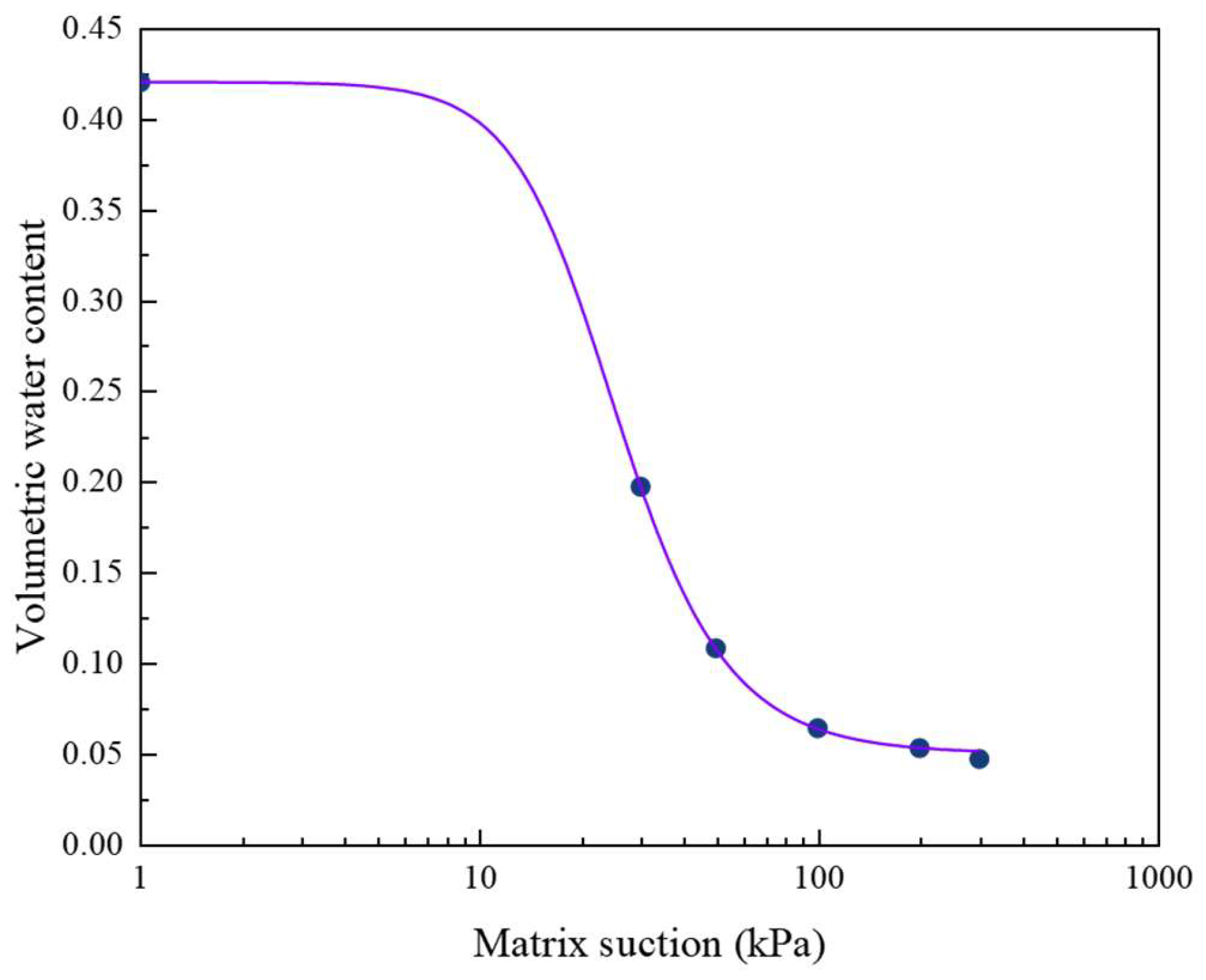
The key parameters in the numerical simulation, including soil porosity (n), permeability coefficient (k), and the VG model parameters (α, m, and l), were determined through a combination of theoretical analysis and preliminary experiments. The VG model parameters were selected following the previous study [33,34]. Q3 loess from a project site in Xi’an was used as the test material, and an unsaturated triaxial apparatus (GDS Instruments, Hook, UK) was employed to determine the VG model curve under the wetting path (Figure 2). This condition reflects the gradual increase in soil saturation caused by leakage from municipal water supply pipelines.
The porosity and permeability coefficient were determined through laboratory experiments. Previous studies have shown that the permeability coefficient of loess is related to burial depth, typically being less than 1 × 10⁻⁵ cm/s [35]. Considering that municipal water supply and sewage pipelines are generally buried at depths of no more than 3 m, this study adopts a permeability coefficient of 9.7 × 10⁻⁶ cm/s for the porous medium. In COMSOL Multiphysics, intrinsic permeability (m2) is used as a computational parameter, and its relationship with the permeability (m/s) as indicated as indicated in Equation (3).
k μ = κ ρ g
Each parameter is shown in Table 1.

2.3. Model Validation

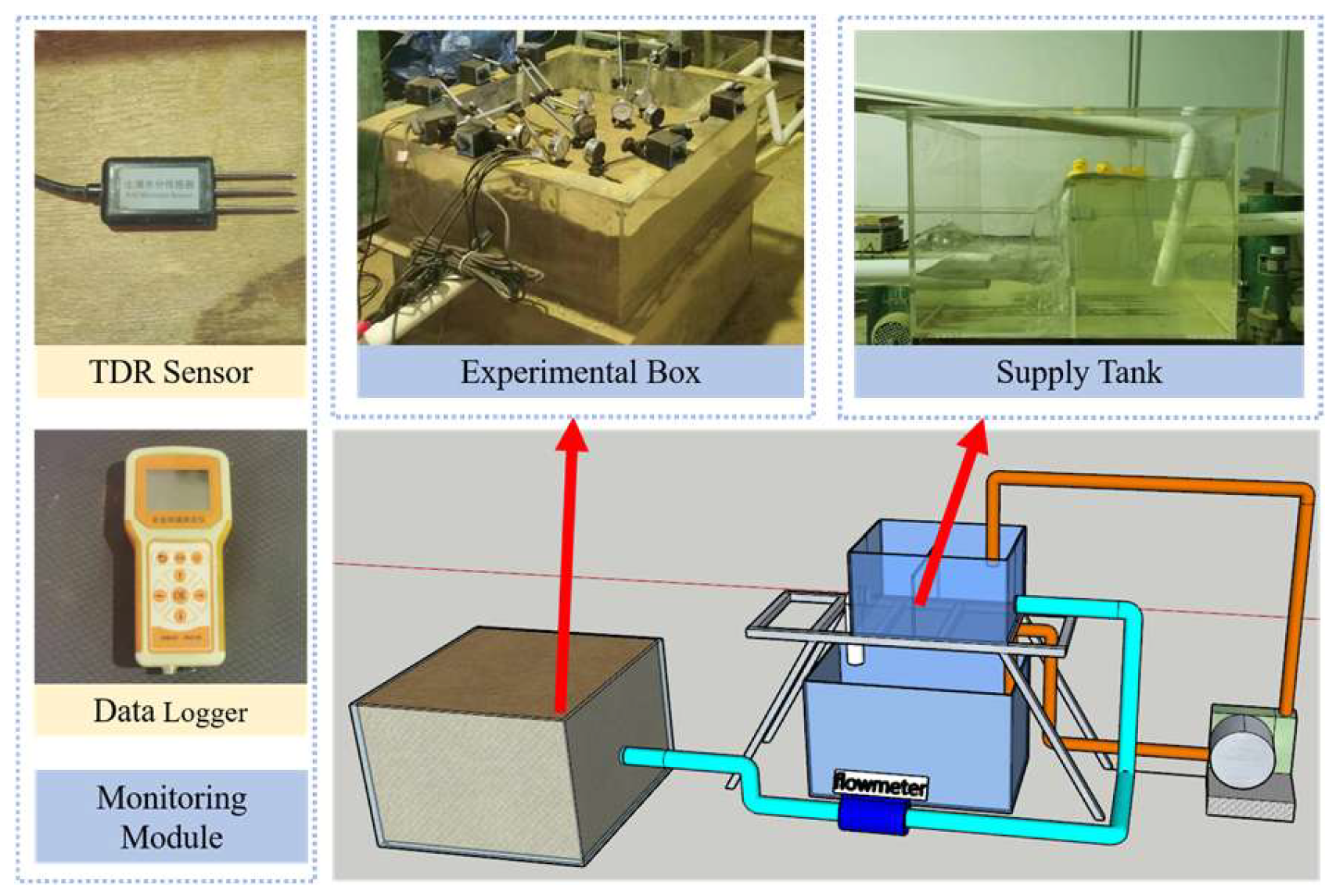
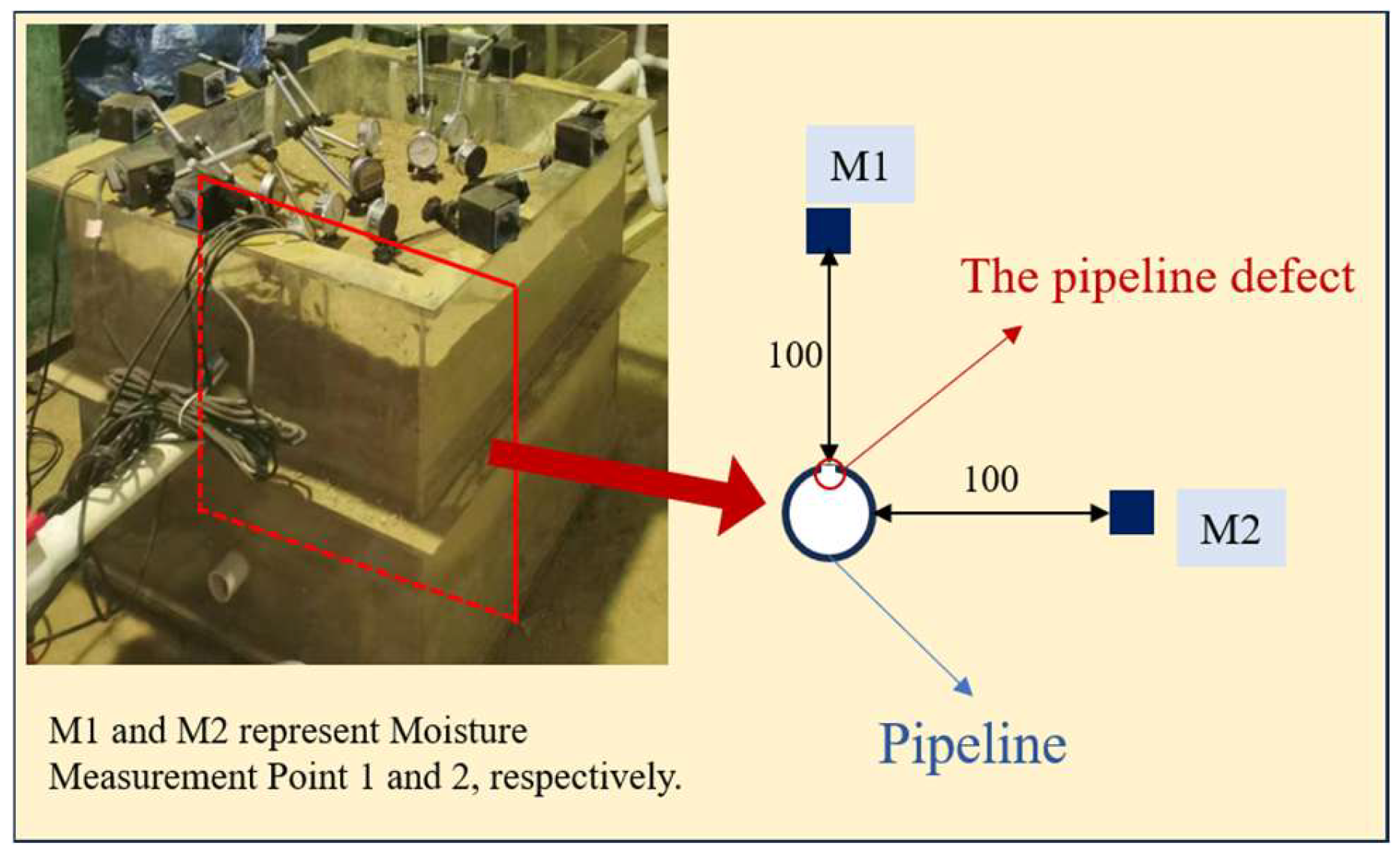
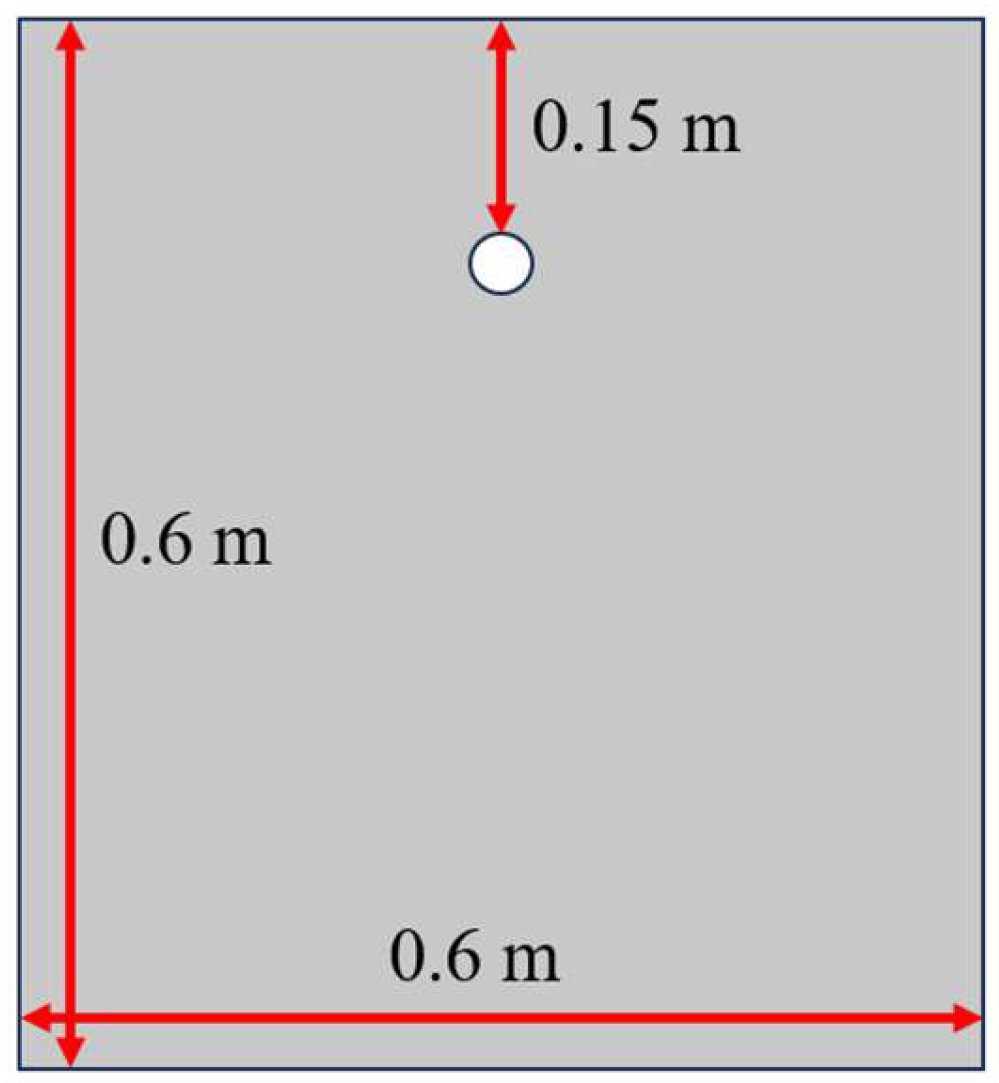
Although unsaturated seepage has been widely studied, its applicability under pipeline leakage conditions remains uncertain. To verify the reliability of the numerical model, a physical model test was conducted. To evaluate the reliability of the numerical model, a preliminary physical model test was conducted. The experimental box is fabricated from 10 mm-thick plexiglass, and measured 0.60 m × 0.60 m × 0.65 m (Figure 3). A PVC pipe with an outer diameter of 40 mm was embedded at a depth of 0.15 m below the soil surface. At the midpoint of the pipe section inside the box, a circular hole with a diameter of 3.2 mm was drilled on the pipe wall to simulate a leakage defect, and the opening was oriented upward to represent the typical leakage condition. During soil placement, layered compaction was adopted, and two TDR sensors were embedded at different depths to monitor temporal variations in volumetric water content (Figure 4).
The soil sample used in the model test was remolded Q3 loess collected from a construction site in Xi’an, China, with a measured porosity of n = 0.43. This porosity value was also adopted in the numerical simulations to ensure consistency between the physical and numerical models. Detailed geotechnical parameters of the soil are listed in Table 2. To ensure comparability, the soil parameters and leakage conditions used in the numerical simulations were kept consistent with the physical tests.
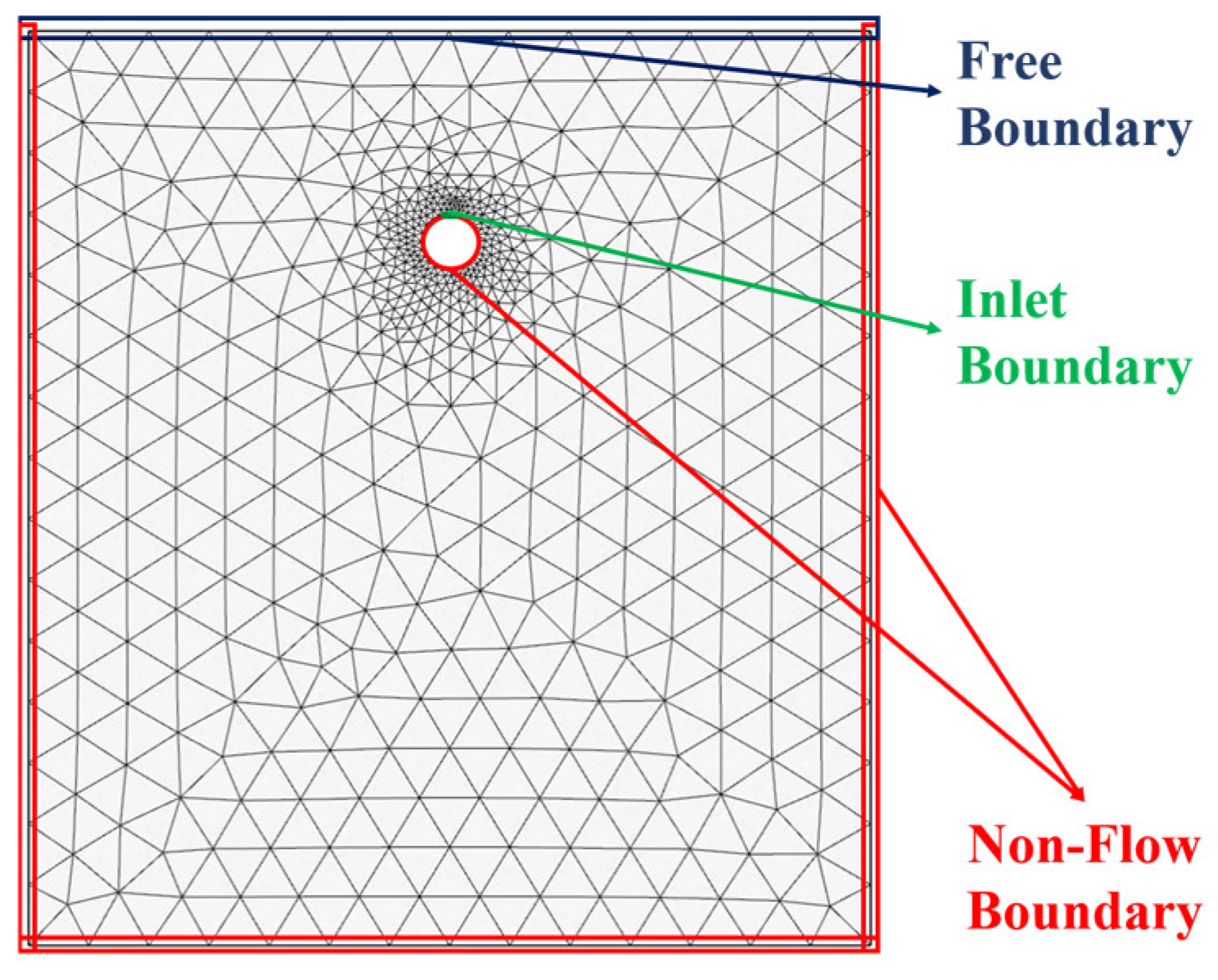
A numerical model with the same dimensions as the physical test was established in COMSOL Multiphysics, and the model geometry and mesh discretization are shown in Figure 5 and Figure 6. The boundary conditions were set to match those of the physical test: the top surface was defined as a free boundary, while the lateral and bottom surfaces were specified as non-flow boundaries. The leaking pipeline was embedded 0.15 m below the ground surface, and both the pipe diameter and the leakage orifice were identical to those in the physical test. The numerical simulation adopted the soil parameters listed in Table 1. In both the physical and numerical models, the leakage water pressure was set to 10 kPa, and the seepage process was simulated for a duration of 400 min.
The soil water retention curve describes the relationship between moisture content and saturation, with soil moisture ranging between residual and saturated states. This relationship is expressed by the normalized volumetric water content (Θ) and the normalized degree of saturation (ΘSr), as defined in Equations (4) and (5).
Θ = θ w θ r e s θ s θ r e s
Θ Sr = S r S r e s 1 S r e s
In these equations, θw, w, and Sr represent the volumetric water content, gravimetric water content, and degree of saturation of the soil sample, respectively. Θs denotes the volumetric water content under saturated conditions, while θres and Sres correspond to the volumetric water content and degree of saturation under residual conditions. If the effects of residual quantities are neglected and volume changes of the soil sample are ignored, then Θ = ΘSr [36].
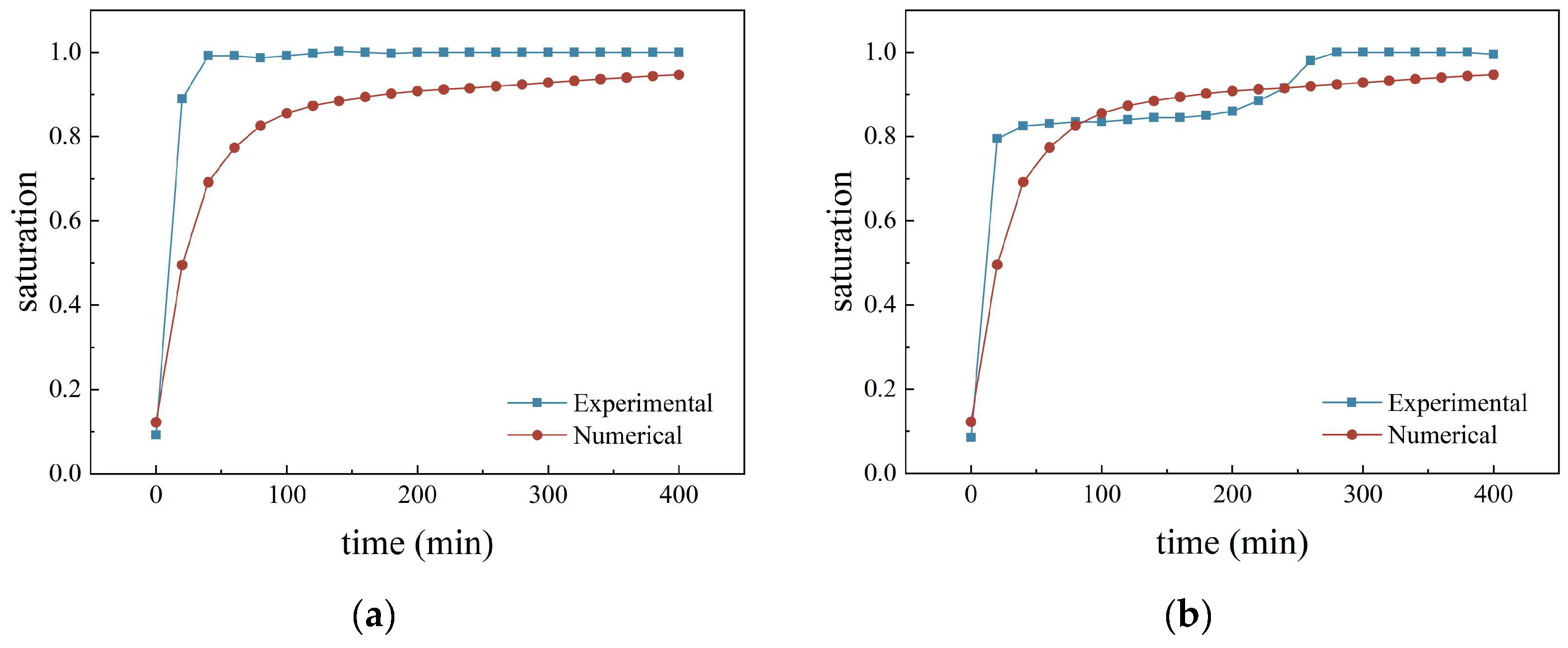
Using Equation (4), the normalized volumetric water content during the model test was calculated, while Equation (5) was used to derive the effective saturation in the COMSOL simulations. A comparison between the experimental Θ and the simulated ΘSr is presented in Figure 7. After pipeline leakage, the effective saturation at the measurement points rose rapidly and then gradually stabilized. With time, the simulated results increasingly converged with the experimental data, demonstrating that the numerical model effectively reproduced the observed saturation changes in the surrounding soil.
To further validate the accuracy of the numerical simulation, the relative error between the model test and the numerical simulation was calculated using Equation (6).
ε r = 1 N i = 1 N E i S i E i × 100 %
In Equation (6), N denotes the number of measurement points, with N = 21. Ei is the experimental value at the i-th measurement, and Si is the simulated value at the i-th measurement.
Table 3 presents a comparative analysis of saturation changes over time at two measurement points from both the numerical simulations and the experiments. The average relative error was 14% for measurement point 1 and 7% for measurement point 2. The primary reason for this discrepancy lies in the measurement locations. Point 1 was positioned directly above the leakage outlet, where the soil was directly impacted by the water flow. This impact caused greater alterations in the local pore structure, leading to a faster increase in saturation compared with Point 2. The differences were most evident during the initial phase of saturation increase, where the experimental data at Point 1 showed a more rapid rise than the smoother response obtained from the numerical simulation.
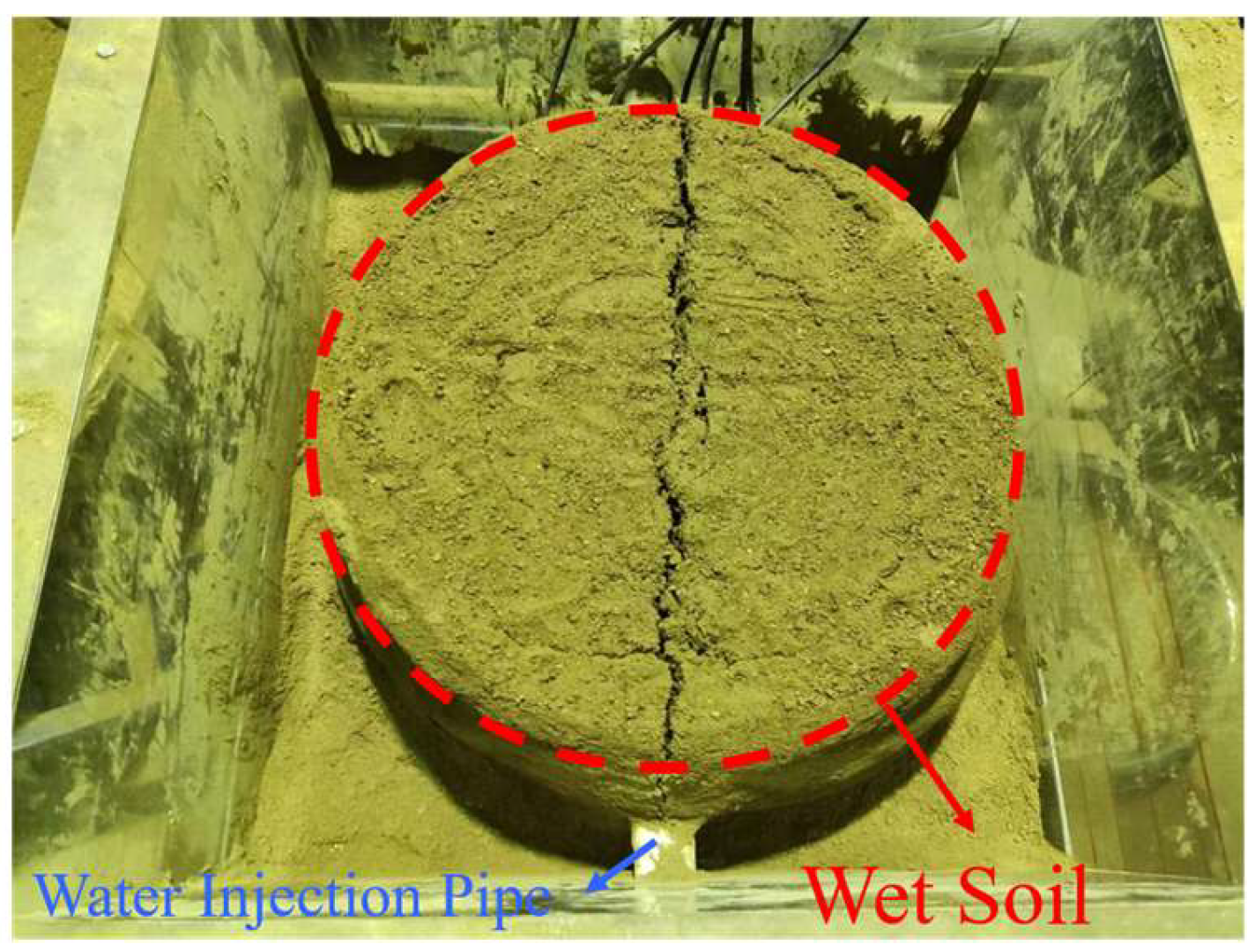
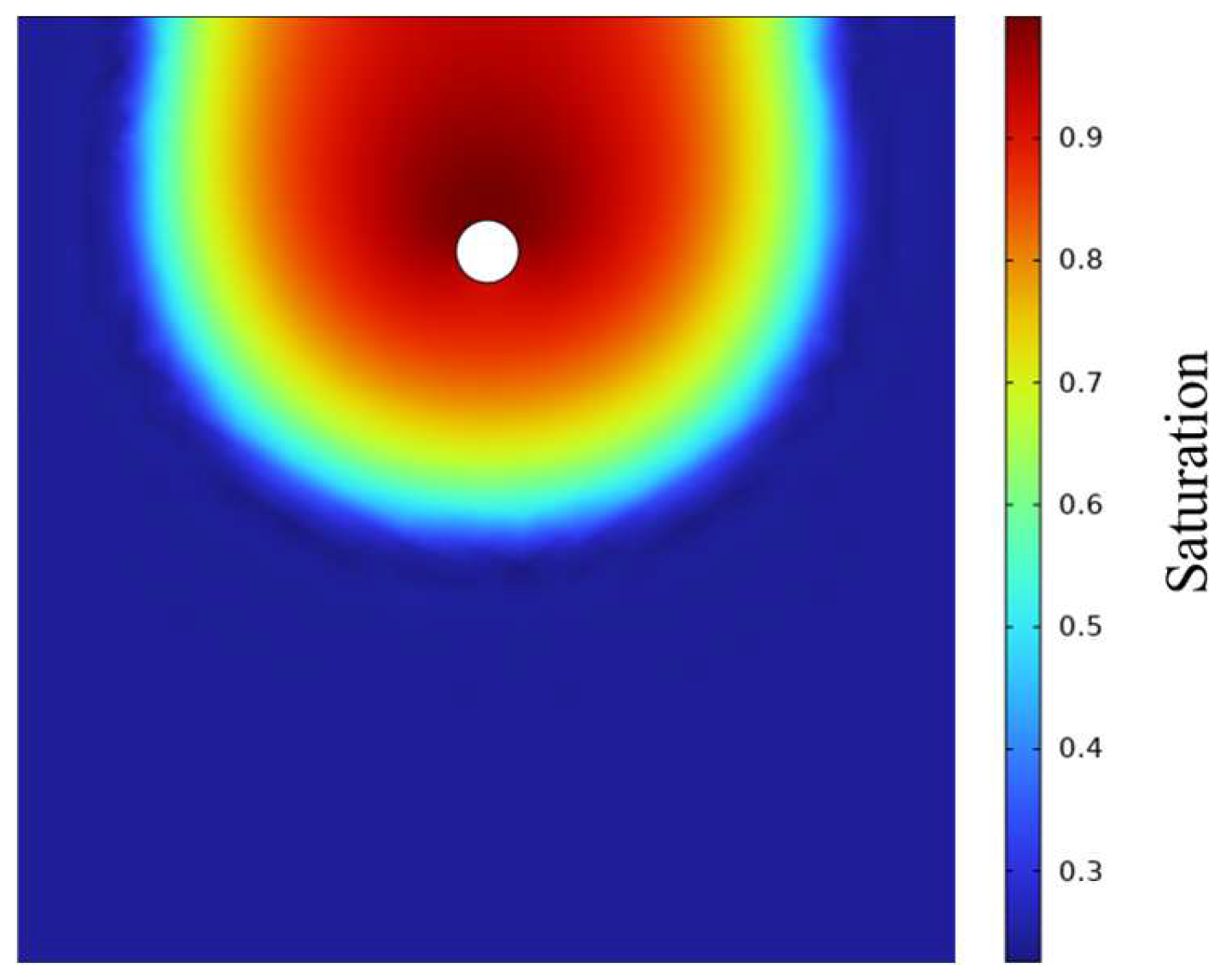
Figure 8 and Figure 9 compare the wet soil areas obtained from the physical model test and the numerical simulation, respectively. In Figure 8, the wet soil refers to the portion of soil that became visibly moist during leakage; it was revealed by carefully removing the surrounding dry soil after the experiment. The visible crack in the figure appeared during the excavation process, when the wet soil lost part of its surrounding support. The white pipe shown in the figure is the PVC pipeline embedded in the test box, in which a small circular opening was drilled to simulate the leakage point. Both the experimental and numerical results exhibit similar ellipsoidal patterns, confirming that the simulation reproduces the macroscopic diffusion shape observed in the experiment.
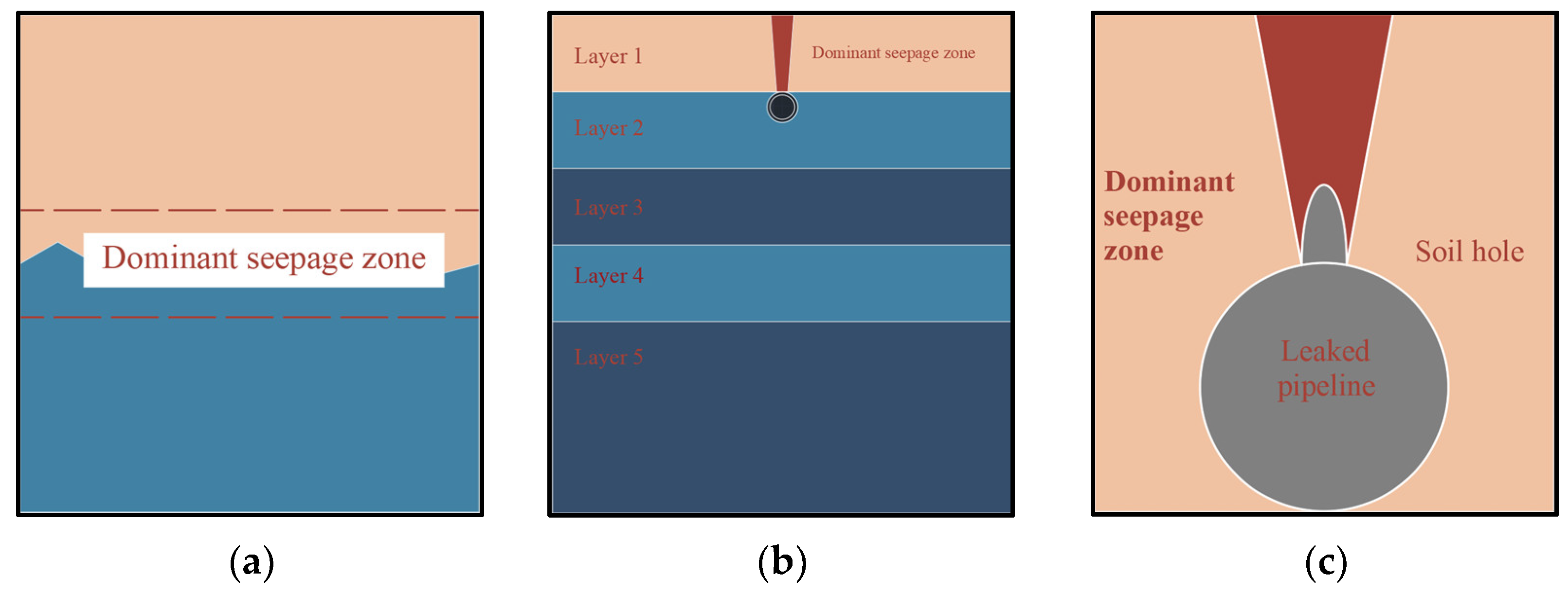
Beyond the difference between the two measurement points, additional discrepancies between the experimental and numerical results may be attributed to modeling assumptions. Firstly, the numerical simulation assumes that the soil is homogeneous and isotropic, implying that the resistance encountered by the fluid during diffusion is uniform in all directions. In the model experiments, however, the soil was compacted in layers, making it impossible to ensure complete uniformity and isotropy within the test box. As shown in Figure 10, the leaking water may preferentially flow along weaker zones at the interfaces between soil layers. Secondly, the numerical model assumes that soil porosity remains constant during leakage. In reality, the high-pressure flow of water can erode a small cavity at the leak site and alter the porosity of the surrounding soil, thereby creating preferential seepage paths that amplify the differences between experimental and simulated results.
Overall, the numerical simulation results derived from the Richards equation in this study show good agreement with the experimental observations of seepage field changes around the leaking pipeline. This consistency validates the reliability of the numerical model under pipeline leakage conditions and confirms its capability to reproduce unsaturated seepage processes with reasonable accuracy. In addition, the experimental dataset obtained in this study supplements existing research by providing benchmark data specific to pipeline leakage scenarios, offering a valuable reference for subsequent numerical analyses and practical engineering applications.

2.4. Boundary Conditions and Initial Conditions

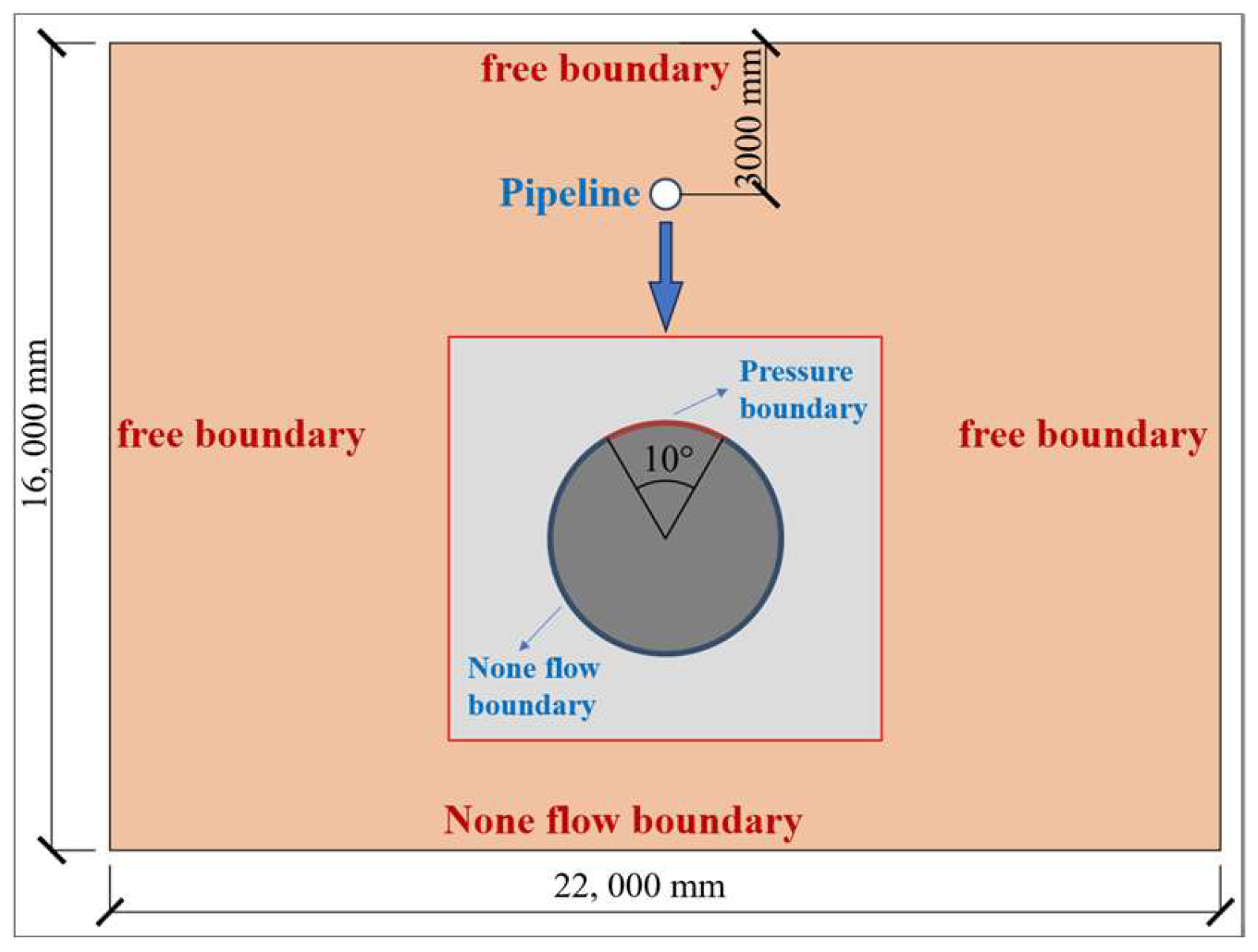
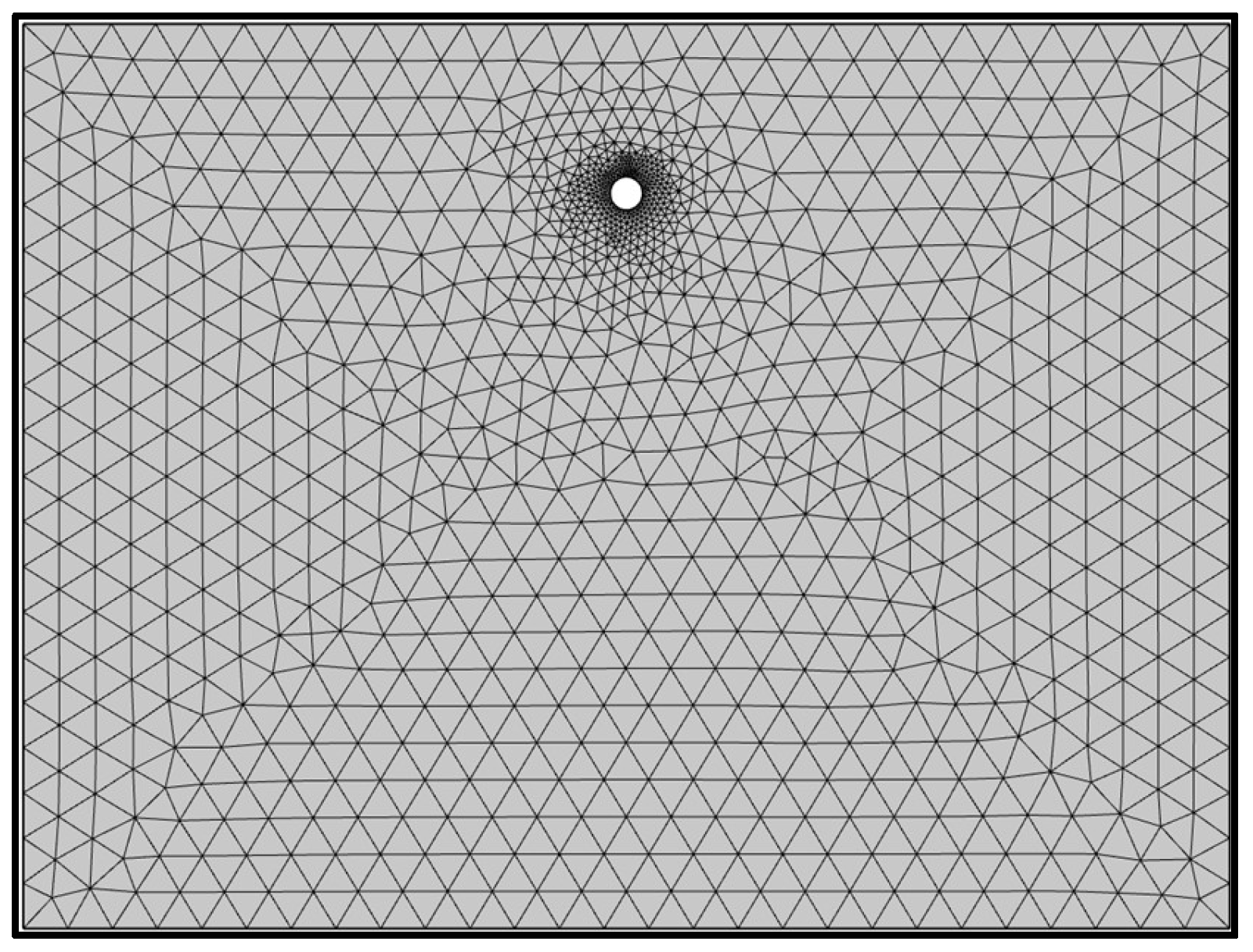
Although leakage is essentially a three-dimensional process, the two-dimensional formulation adopted here has been shown in recent studies to adequately capture the dominant seepage and diffusion mechanisms [9,37]. This study employs COMSOL Multiphysics software to simulate the diffusion behavior of pipeline leakage. The seepage model is constructed as a two-dimensional rectangular domain with a length of 22 m and a height of 16 m. As shown in Figure 11, the leaking pipeline is positioned inside the model, with a diameter of 600 mm and a burial depth of 3 m. The top surface of the model is set as a free boundary to represent the ground, allowing fluid to flow out freely. The left and right boundaries are also assigned as free boundaries. The bottom surface is specified as a no-flow boundary to simulate an impermeable layer in actual engineering conditions. For the pipeline itself, a small arc segment of the circular ring is defined as a pressure boundary to simulate the leakage point, while the remaining sections are set as no-flow boundaries to represent the pipe walls. The mesh discretization of the model is shown in Figure 12.
In terms of initial conditions, the initial soil saturation is set to 12%, consistent with the model tests described in Section 2.3. In those laboratory tests on remolded Q3 loess, the prepared soil had an initial water content of 3–7%, corresponding to an initial saturation of approximately 10–25%; thus, 12% ensures comparability between the simulations and experiments. This initial value is kept identical across all four numerical cases. To examine how leakage pressure influences diffusion behavior, the water pressure at the leakage boundary is varied. Considering that municipal water-supply pipelines typically operate between 150 and 300 kPa, the simulation pressures are selected within this range, as summarized in Table 4.

3. Numerical Simulation of Saturation Under Different Pressures

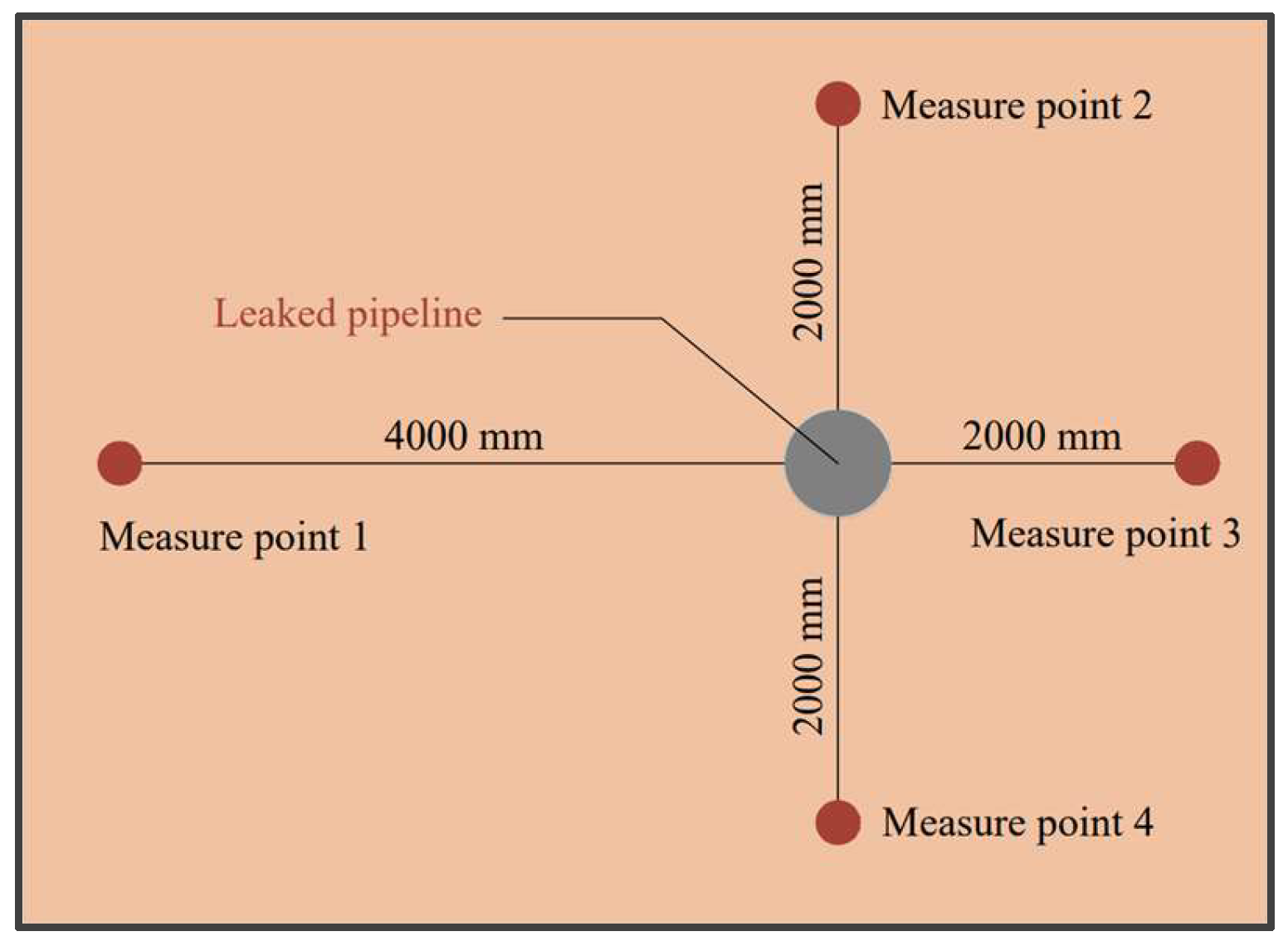
For the analysis, the pipeline location was set as the origin, and four measurement points were selected to examine the effects of different pipeline pressures on unsaturated seepage. The positions of these measurement points are shown in Figure 13.

3.1. Patterns of Saturation Change at Measurement Points

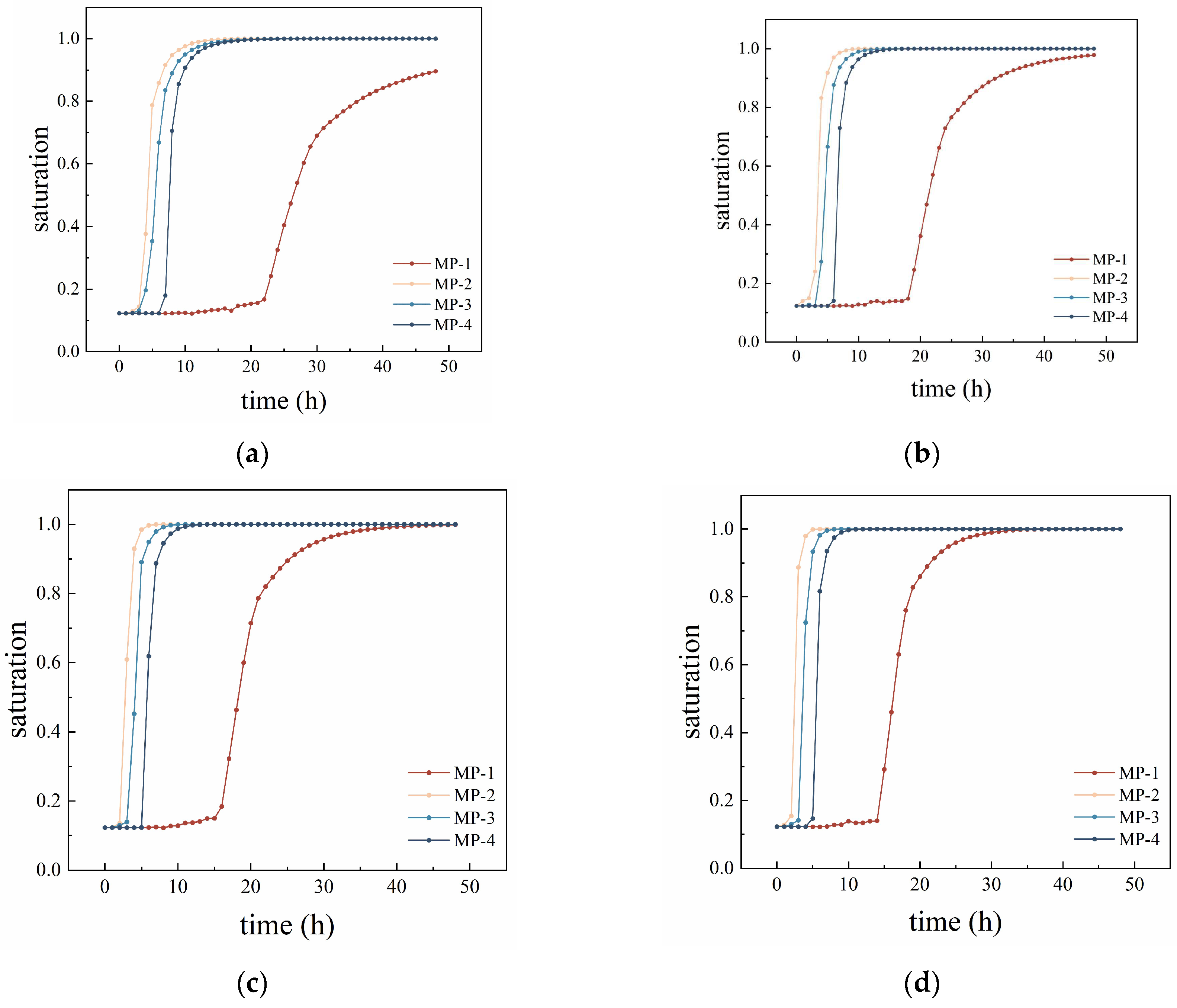
Figure 14 illustrates the patterns of saturation change over time at different measurement points under various water pressure conditions. The results indicate that, regardless of water pressure, the saturation evolution at the measurement points can generally be divided into three stages: initial, rising, and stable. In the initial stage, saturation remains at the starting value and then quickly enters the rising stage within a short period. During the rising stage, saturation increases steadily, with the rate of increase remaining nearly constant. As saturation approaches approximately 85%, the rate of increase begins to slow and continues until saturation reaches 100%. This stage may last for several hours or longer.
The saturation at each measurement point rises rapidly but, after reaching about 85%, requires considerable time to achieve full saturation (100%). This behavior is governed by the water retention characteristics of loess. When the soil moisture content is low, a significant soil water potential difference (matric suction gradient) exists between the dry soil and the moist soil near the leak, causing water from the pipeline to migrate toward regions of lower potential. As saturation in a region increases, the water potential difference relative to the leak site decreases, and consequently the rate of saturation growth slows.
Another factor that may slow the rate of saturation increase is that, once the soil in a region reaches a certain saturation level, a continuous water phase and interconnected hydraulic pathways are already formed within the soil matrix, while some air phase still remains. Further increases in saturation occur only when the pressure difference within the water phase is sufficient to overcome the resistance of the entrapped air bubbles in the capillaries, allowing them to move and enabling the soil to continue saturating.

3.2. Diffusion Patterns of the Saturated Area

Measurement points closer to the leak (points 2, 3, and 4 compared with point 1) exhibit changes in moisture content earlier and reach saturation sooner. Although points 2, 3, and 4 are equidistant from the pipeline, the onset times of saturation change are not uniform. As shown in Figure 7, points 2 and 3 are located at the same distance from the pipeline, but because the leak faces upward, the vertical component of water flow velocity is greater than the horizontal component. As a result, saturation at point 2 occurs earlier than at point 3, a trend that is more pronounced in the model experiment. Point 4, located below the pipeline, shows a later increase in saturation due to obstruction by the pipeline itself.
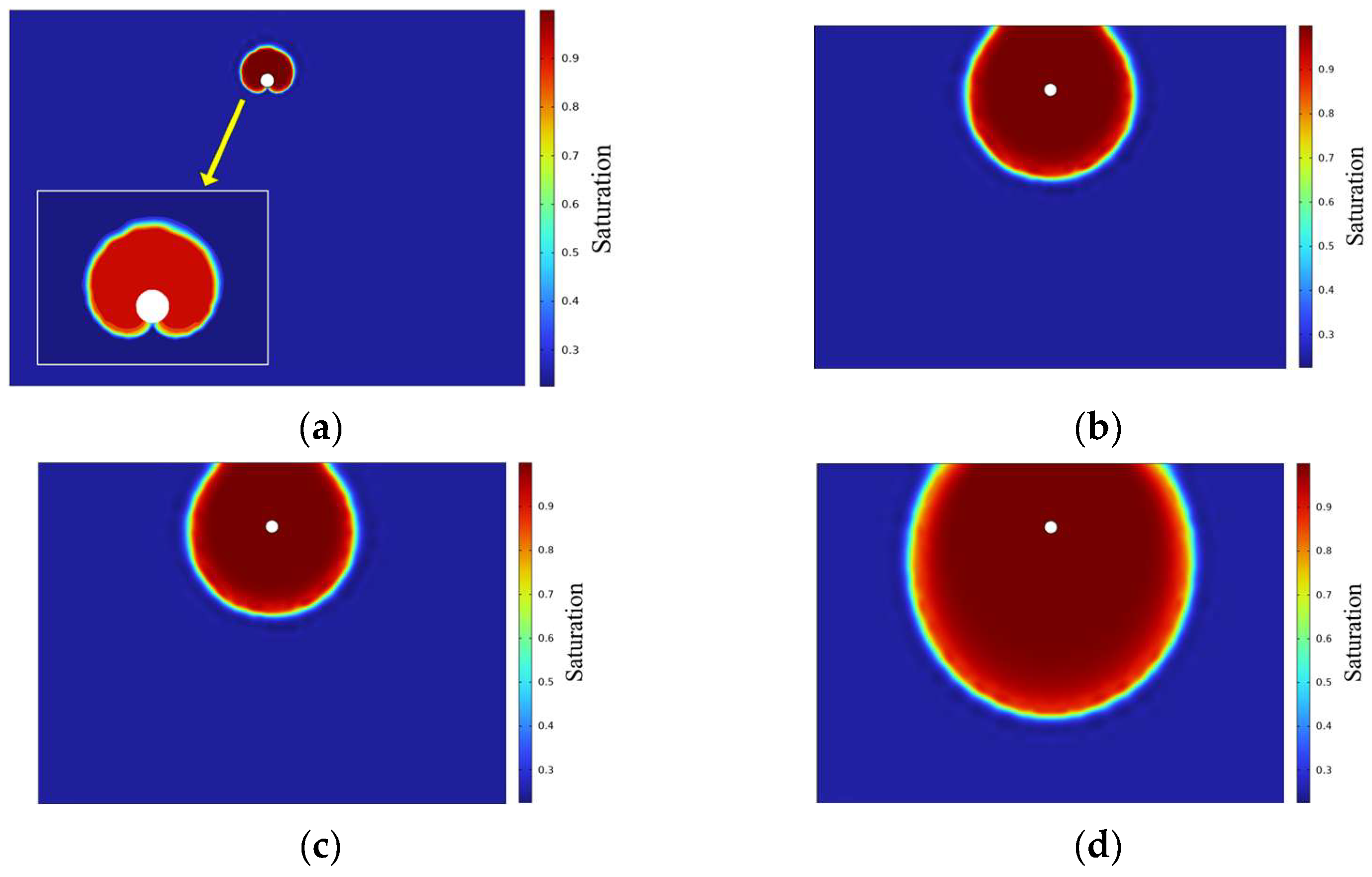
Experiments showed that 48 h after pipeline leakage, most areas within the soil had become saturated. The changes in saturation at 1, 4, 16, and 48 h after leakage are illustrated in Figure 15, where the dark red areas represent regions with saturation levels greater than 80%. Initially, an ellipse-shaped saturated zone forms above the pipeline. This zone expands vertically upward and horizontally, while also diffusing downward along the pipeline walls, and eventually develops into a circular saturated zone encompassing the pipeline. Saturated soil in this zone contains a continuous water phase, indicating the presence of complete and interconnected seepage channels.
At this stage, the spread of water can be regarded as that from a point source in an unsaturated homogeneous medium, with water pressure decreasing outward from the leak point as the center and equal pressure maintained along the boundary of the saturated area. When the saturated area is small, the water pressure at the leak point has a strong influence on its shape. As the area expands, the pressure at the leak point is more evenly dispersed to the boundary, and gravity becomes the dominant factor controlling the shape of the saturated zone.

3.3. Influence of Water Pressure on the Diffusion of Saturated Areas

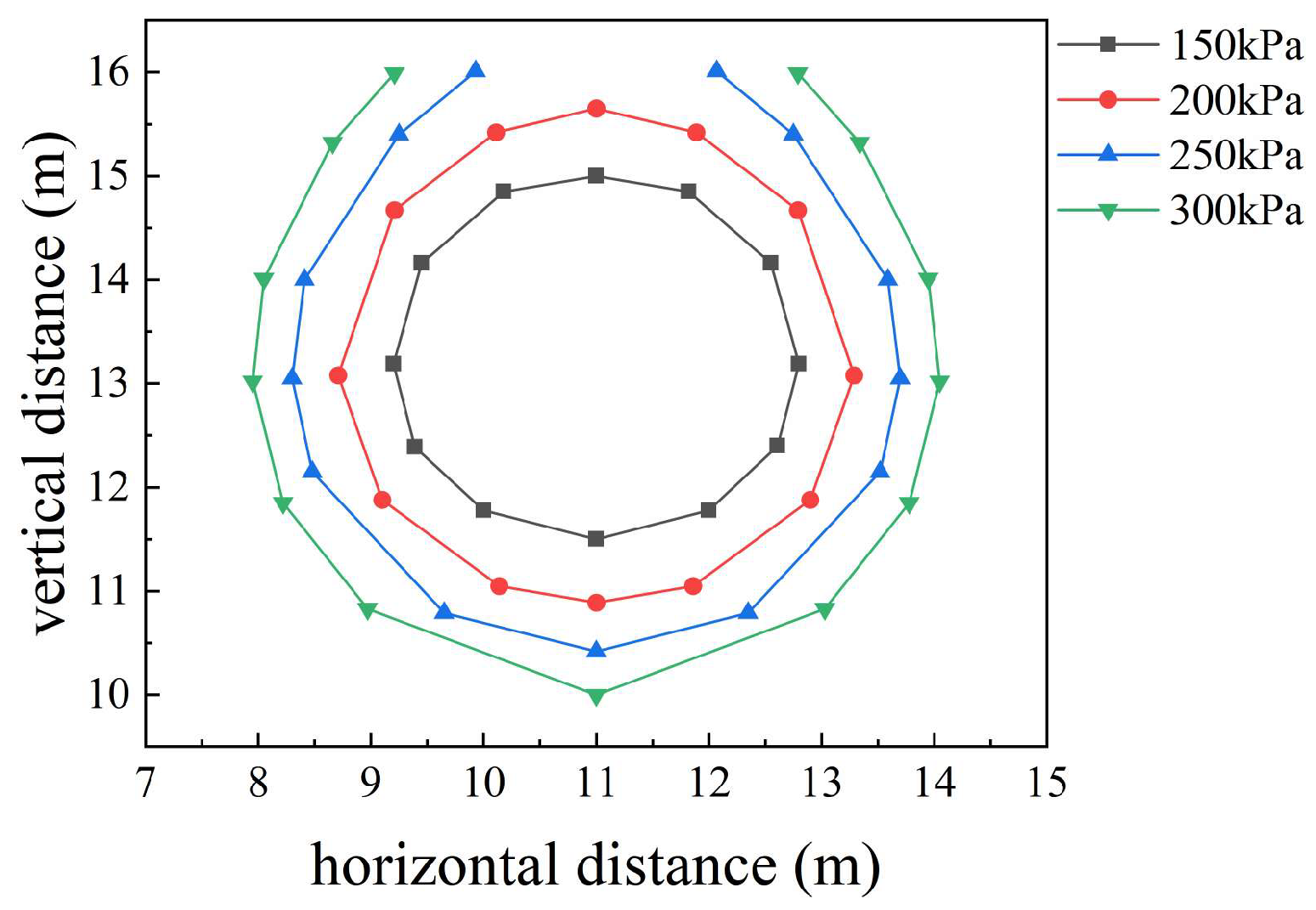
To examine the effect of water pressure on the diffusion of leaked water in the same soil type, the diffusion ranges of saturated areas under different pressures at t = 12 h are shown in Figure 16. The results indicate that pipeline pressure promotes the expansion of the saturated area; as pipeline pressure increases, the extent of the saturated region at the same time also increases. However, the relationship between pipeline pressure and diffusion rate is nonlinear.
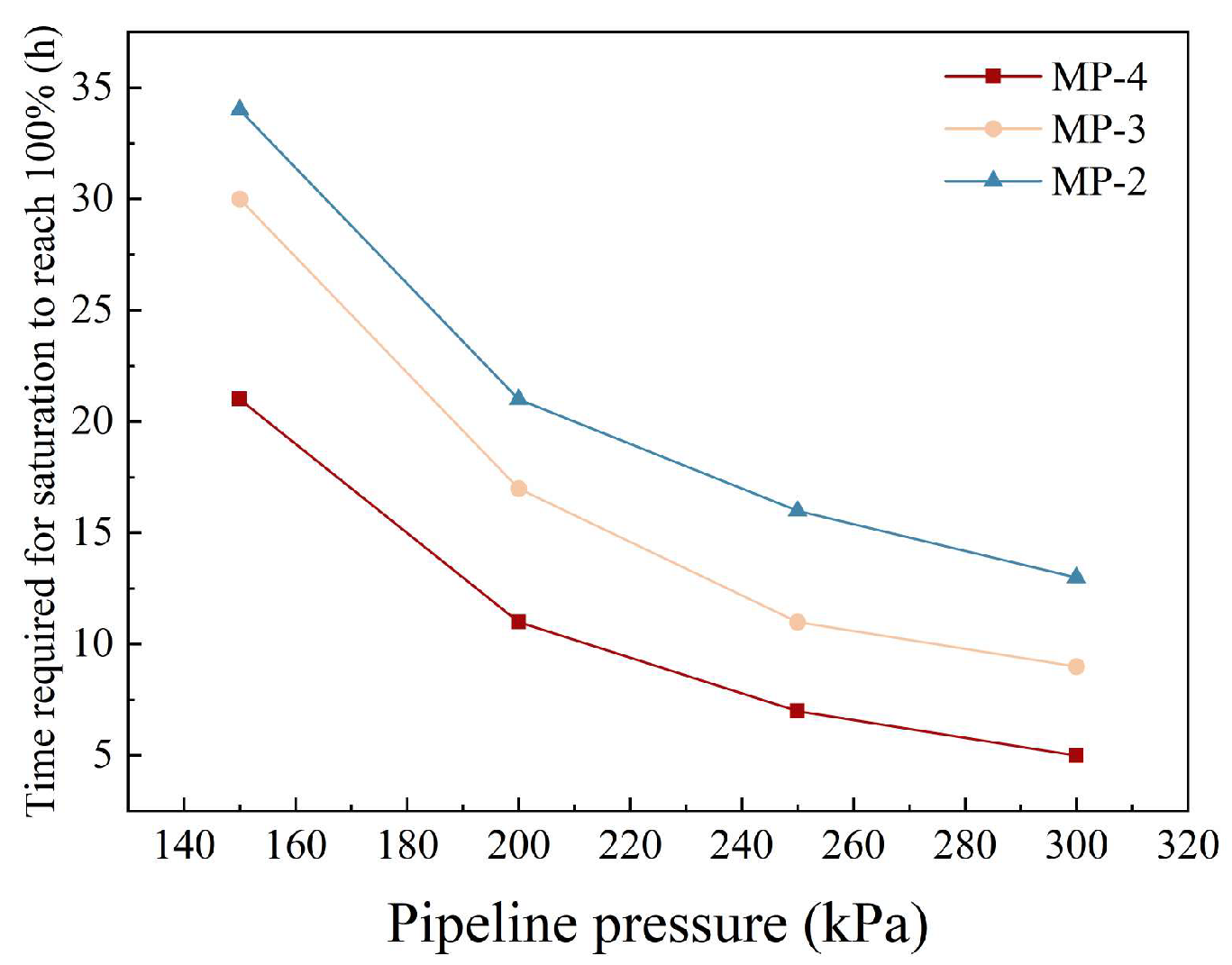
Figure 17 shows the time required for saturation to rise from its initial value to 100% at different measurement points under varying water pressure conditions. A shorter time corresponds to a faster rate of saturation. For measurement points in all directions, the relationship between saturation rate and water pressure is nonlinear. When water pressure increases from 150 kPa to 200 kPa, the saturation rate increases by approximately 91%; when pressure increases from 200 kPa to 250 kPa, the increase is about 57%; and when pressure increases from 250 kPa to 300 kPa, the increase is only 29%.
This phenomenon can be explained by the progressive activation of pores under different pressure levels. At lower pressures, only larger pores are activated, and water displaces air primarily through these limited pathways, resulting in slower saturation. As the applied pressure increases, more pores become involved, and the saturation process accelerates. At higher pressures, however, only finer pores remain to be activated, and the entry pressure required for these pores increases in a nonlinear fashion, similar to the soil-water retention curve: the smaller the pore size, the disproportionately greater the pressure required to fill it. Consequently, the relationship between saturation rate and applied water pressure is nonlinear, essentially reflecting the water-retention properties of the soil.

4. Analysis of Seepage Damage Risk Based on Numerical Results

After leakage from water supply pipelines, water-induced soil softening may trigger ground subsidence, while high-speed, high-pressure leakage flow diffusing through the soil can also cause seepage damage, eventually leading to subsidence or collapse. Such damage generally develops within saturated zones of soil. Accordingly, the discussion in this section on seepage damage and hydraulic gradients is confined to the saturated areas formed after pipeline leakage.
Traditionally, research assumes that seepage channels and potential seepage damage emerge only when the effective saturation reaches 100%, indicating full saturation. In this study, however, we propose that seepage channels and potential damage can develop once the effective saturation approaches about 85%. This level of saturation can be regarded as the air-entry phase threshold of loess, marking the point where continuous water pathways are already formed in the soil matrix while part of the pore space still contains air [38,39]. Two considerations support this criterion. First, adopting the air-entry phase as the onset of damage provides a more conservative estimate of the potentially affected zone, which is safer for engineering applications. Second, experimental observations show that once effective saturation reaches about 85%, the rate of further increase in saturation slows markedly, indicating a transition from the doubly drained phase to the air-entrapment phase. At this stage, stable seepage channels are already established, and the drag force exerted by water flow acts directly on the soil skeleton. The use of the classical critical hydraulic gradient criterion, which has been experimentally validated in recent studies, further ensures that the identification of seepage-prone areas remains conservative and practically meaningful. Thus, treating the air-entry phase (≈85% saturation) as the critical threshold for seepage damage is both physically reasonable and practically prudent.

4.1. Calculation Method for Hydraulic Gradient in Seepage Areas

The hydraulic gradient is generally calculated using Equation (7):
i = H 2 H 1 Δ L
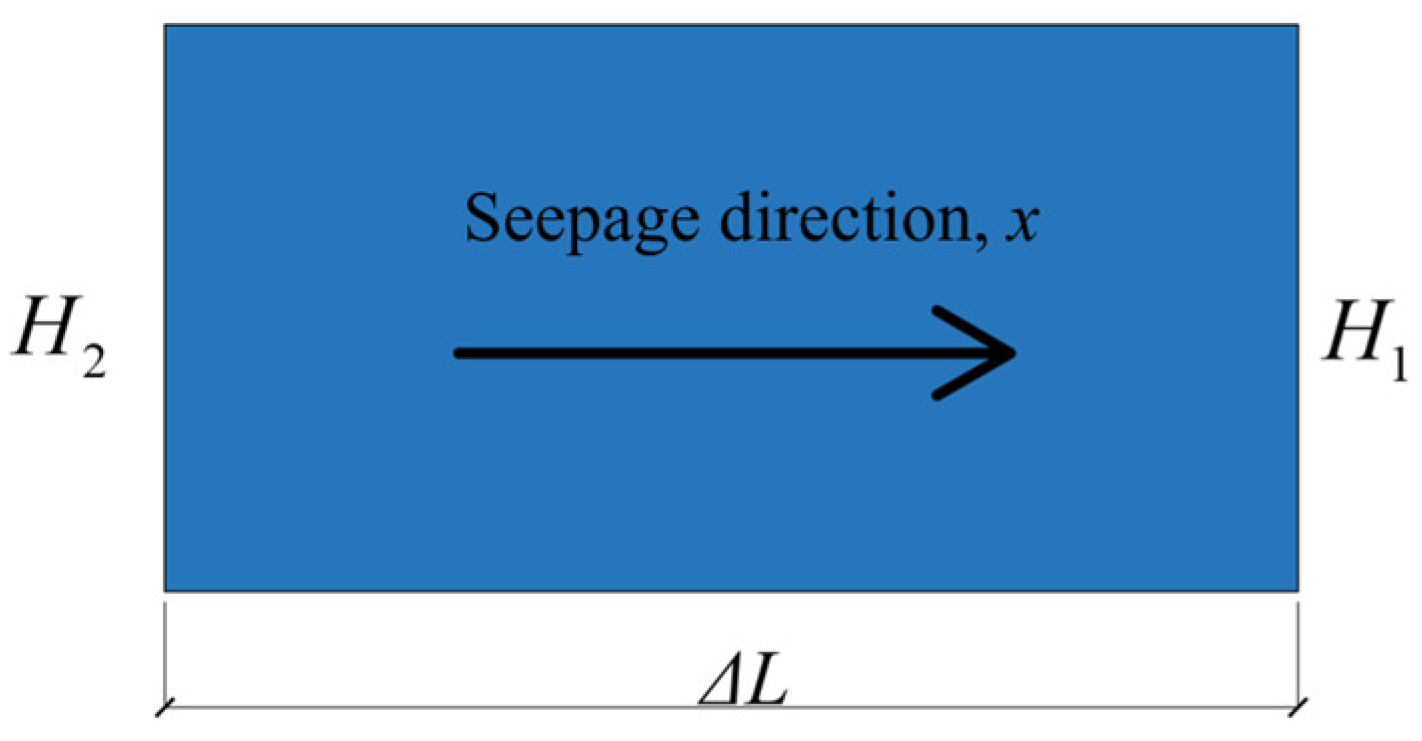
where i denotes the hydraulic gradient along a specific seepage path; H2 and H1 are the upstream and downstream water pressures, respectively; and ΔL is the length of the seepage path. Total head is given as summation of water pressure head and elevation head.
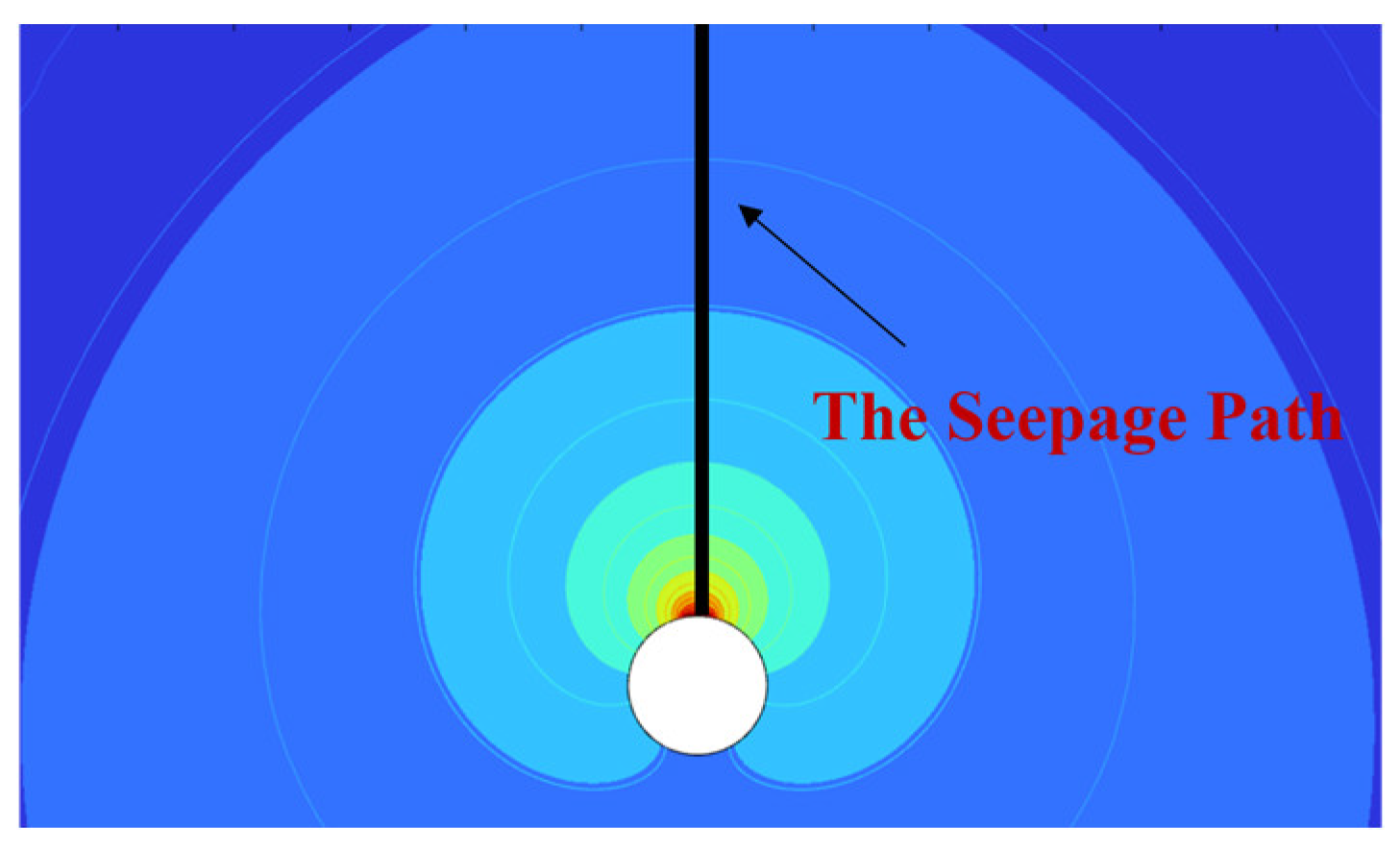
For a segment of the saturated region with length ΔL, as shown in Figure 18, if the pressure difference across the segment is ΔH = H2H1, then the hydraulic gradient for this segment can be expressed by Equation (7). This section assumes that the seepage path originates at the leak point and extends vertically upward to the surface, as shown in Figure 19.
In COMSOL Multiphysics, the water pressure at various points along the seepage path during the seepage process was calculated. By fitting these data, a pressure–distance function was established, and differentiating this function yielded the relationship between hydraulic gradient and distance. Taking the leak point as the origin, a coordinate system was defined in which the x-axis represents the distance from the leak point along the seepage path and the y-axis represents the corresponding water pressure head. Under a pipeline pressure of 150 kPa, three functional forms—rational, polynomial, and exponential—were applied to fit the pressure head–distance relationships at different time points. The parameter values and coefficients of determination (R2) are summarized in Table 5, Table 6 and Table 7.
(a)
Rational function fit
The rational function used is:
p ( x , t ) = a ( t ) x + b ( t ) x + c ( t ) , x [ 0 , L ( t ) ]
(b)
Polynomial function fit
The polynomial function used is:
p ( x , t ) = a 3 ( t ) x 3 + a 2 ( t ) x 2 + a 1 ( t ) x + a 0 ( t ) , x [ 0 , L ( t ) ]
(c)
Exponential function fit
The exponential function used is:
p ( x , t ) = A ( t ) e B ( t ) x , x [ 0 , L ( t ) ]
Among the three models, the rational function, expressed in Equation (8), provided the highest fitting accuracy (R2 > 0.95 for all time points), demonstrating strong reliability. Therefore, this function was adopted in subsequent analyses to describe the pressure head–distance relationship.
Differentiating Equation (8) with respect to x yields the general form of the hydraulic gradient:
i ( x , t ) = H ( x , t ) x
The fitted expressions for i(x,t) at different times, derived from Equation (11), are summarized in Table 8.
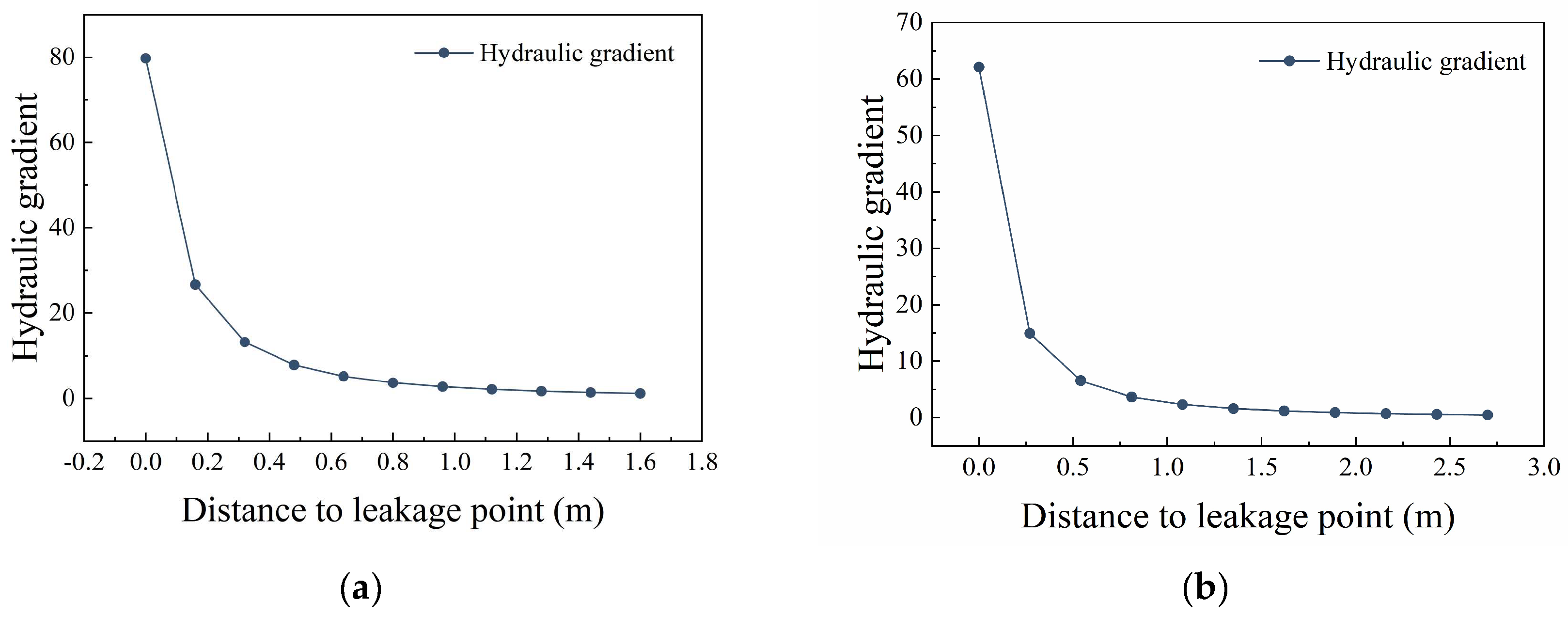
Based on these equations, the hydraulic gradient distributions at t = 6 h and t = 48 h were computed and are illustrated in Figure 20.

4.2. Calculation of Critical Hydraulic Gradient

Seepage failure in soil can generally be categorized into two forms: soil flow and piping. Many methods and formulas have been used to calculate the critical hydraulic gradient at which soil flow failure occurs in foundation soils. For example, the well-known Terzaghi critical hydraulic gradient equation (Equation (12)), considers the self-weight of soil particles, hydrostatic pressure, and seepage force. In the equation, icr represents the critical hydraulic gradient, Gs the relative density of soil particles, and n the porosity. Several empirical modifications of Terzaghi’s critical hydraulic gradient equation have been proposed in the literature, from which Equation (13) is derived [40].
i c r = γ γ w = ( 1 n ) ( G s 1 )
i c r = ( 1 n ) ( G s 1 ) + 0.5 n
The physical significance of the aforementioned equations is clear, and they are widely used in practical engineering applications. By substituting the parameters of the soil used in the experiment into Terzaghi’s method, the calculated critical hydraulic gradient is found to be 0.97, while the value obtained using Equation (13) is 1.19. For safety considerations, this study assumes the critical hydraulic gradient to be icr = 0.97.

4.3. Range of Seepage Damage Caused by Pipeline Leakage

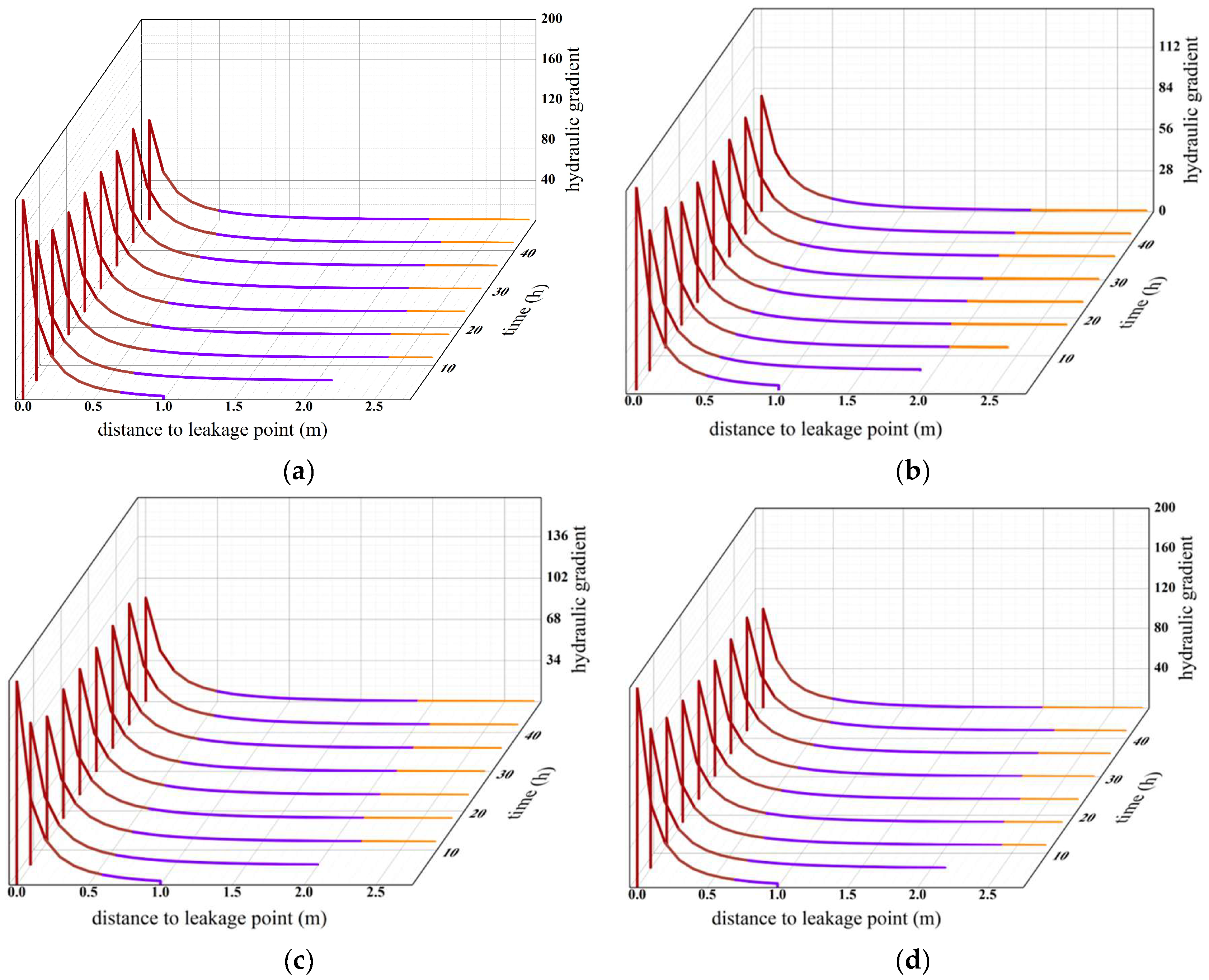
Extending the method for calculating hydraulic gradients described in Section 4.1, the distribution of hydraulic gradients along the seepage path under water pressures of 150, 200, 250, and 300 kPa over time is shown in Figure 21. At the initial stage of pipeline leakage, because the saturated zone is relatively small, the seepage paths within it are shorter, and the hydraulic gradients along these paths can reach values as high as 110. With continued leakage, the expansion of the saturated zone leads to longer seepage paths and reduced pressure differences, resulting in a gradual decline of the hydraulic gradient.
In this study, the critical zone was defined as the region where the local hydraulic gradient exceeded the critical value of 0.97, following Terzaghi’s classical criterion for the onset of seepage failure. This criterion implies that when the seepage force acting on soil particles becomes equal to or greater than their submerged weight, the soil skeleton may lose stability and initiate particle migration.
The pattern of hydraulic gradient variation within the critical zone differs under different water pressure conditions, with the maximum hydraulic gradient in the soil increasing as pipeline pressure rises. For example, under a pressure of 150 kPa, the maximum hydraulic gradient within the critical zone is 110, while the corresponding values at 200, 250, and 300 kPa are 139, 168, and 200, respectively. As the diffusion process continues, the pressure differences between adjacent areas along the seepage path gradually decrease, thereby reducing the hydraulic gradient and leading to a stabilization phase of water seepage through the soil.
At a pipeline pressure of 150 kPa, the maximum hydraulic gradient within the critical zone stabilized at 60 after 24 h of leakage. At 200 kPa, stabilization occurred after 36 h, with the gradient maintaining around 79. However, at 250 and 300 kPa, even after 48 h of leakage, the maximum hydraulic gradient within the critical zone continued to decline.
It is important to note that although leakage duration influences the maximum hydraulic gradient in the critical zone, it does not determine the ultimate extent of the zone. For example, at 150 kPa, the saturation zone extended to 2.0 m after 10 h of leakage, while the critical zone reached only 1.7 m. After 20 h, the saturation zone expanded to 2.7 m, yet the radius of the critical zone remained constant at 1.7 m. Similar patterns were observed at higher pressures: at 250 kPa, the radius of the critical zone stabilized at about 2.1 m, and at 300 kPa, it approximated 2.3 m.
Overall, when a municipal water supply pipeline leaks and the leak point faces upward, the surrounding soil is likely to experience seepage failure, with the affected area expanding as leakage time increases. At a pipeline pressure of 150 kPa, the seepage damage area becomes fully developed approximately 10 h after the leak begins. For pipeline pressures of 200, 250, and 300 kPa, the corresponding development time is about 5 h. Considering that the typical operating pressure in municipal water supply pipelines is around 280 kPa and that the permeability coefficient of saturated cohesive soils, particularly loess, is relatively low, the zone susceptible to seepage damage following a pipeline leak is usually confined within a 2.3 m radius of the leak point.
It should be emphasized that the critical hydraulic gradient in this study was calculated using Terzaghi’s method, which assumes a constant soil porosity during seepage. In reality, the critical hydraulic gradient is influenced by multiple factors, such as fine-grain fraction, degree of compaction, interface roughness, and grain-size distribution, and it may also evolve over time as soil erosion progresses [41,42,43,44,45]. Advanced approaches, such as CFD–DEM or FVM–DEM coupling, are better suited to capture the effects of pore-structure alterations on seepage diffusion. Nevertheless, the two-step method adopted in this work still provides useful references for preliminary screening and risk zoning.

5. Conclusions

This study investigated seepage failure induced by leakage from underground municipal water pipelines. Based on the Richards equation combined with the van Genuchten model, numerical simulations were carried out to analyze seepage field evolution in the surrounding soil under pipeline pressures of 150, 200, 250, and 300 kPa. The main findings are summarized as follows:
(1)
During pipeline leakage, the moisture content in the soil around the leak point responds progressively from near to far. At the early stage, a preferential seepage path forms vertically above the leak point, and saturation changes first at equidistant measurement points along this path. With continued seepage, the preferential path gradually weakens, and the overall seepage pattern evolves into radial diffusion centered on the leak point under the combined effects of water pressure and gravity.
(2)
The diffusion of the saturated zone is strongly influenced by pipeline pressure. Higher pressures promote both larger and faster expansion of the saturated area; however, the relationship is nonlinear. The incremental effect of pressure on diffusion diminishes as the pipeline pressure continues to increase.
(3)
The calculated distribution of hydraulic gradients shows that higher pipeline pressures and longer leakage durations enlarge the potential area of seepage damage. Nevertheless, the ultimate extent of the critical zone is not directly dependent on pipeline pressure or leakage duration. Within approximately 5–10 h after leakage initiation, the critical zone becomes fully developed, typically extending to a radius of about 2.3 m around the pipeline.
(4)
The study further proposes that potential seepage damage may occur once effective saturation reaches approximately 85%, which corresponds to the air-entry value of loess. At this stage, the soil transitions from the doubly drained phase to the air-entrapment phase. Although a certain amount of air remains in the pores, stable seepage channels have already formed and soil particles are subjected to drag forces from moving water. Using the air-entry value as a threshold provides a conservative and safer criterion for identifying seepage-prone conditions.
(5)
The adoption of a two-dimensional model allowed efficient simulation of unsaturated seepage and successfully reproduced the main diffusion patterns observed in laboratory tests. Nevertheless, the isotropic assumption and 2D boundary conditions introduce simplifications, and the results are not directly applicable to layered or heterogeneous soils. In longer-term leakage scenarios, the dominant mechanism may also shift from hydraulic-gradient-induced instability to strength degradation under prolonged high saturation. These aspects highlight the need for future research using fully three-dimensional, coupled hydro-mechanical models.
In conclusion, although this study employed a simplified two-step approach, the validated Richards-based numerical model reliably reproduces the seepage behavior induced by municipal pipeline leakage and reveals clear trends in saturation evolution, diffusion range, and hydraulic gradient under different pressures. The combined use of physical testing and numerical modeling thus provides a practical and dependable tool for rapid assessment of seepage-prone areas. Future work will incorporate coupled flow and erosion models to more comprehensively capture the dynamic nature of internal erosion.

Author Contributions

Conceptualization, K.W.; methodology, J.C.; software, S.W.; validation, S.W. and J.C.; writing—original draft preparation, S.W.; writing—review and editing, F.L. and X.Z.; supervision, X.Z. All authors have read and agreed to the published version of the manuscript.

Funding

This research was funded by the National Natural Science Foundation of China (Grant Nos. 51679198 and 12072260), and by the Project of China Railway First Survey and Design Institute Group Co., Ltd. (Grant No. 2021KY34ZD(XJJ)-02).

Data Availability Statement

The data presented in this study are available on request from the corresponding author.

Conflicts of Interest

Author Ke Wang was employed by the company China Railway First Survey and Design Institute Group Co., Ltd. Author Xuguang Zhao was employed by the company Guangzhou Transportation Design & Research Institute Co., Ltd. The remaining authors declare that the research was conducted in the absence of any commercial or financial relationships that could be construed as a potential conflict of interest.

References

  1. Liu, Q.; Wang, M. Numerical Investigation of Water Migration in a Closed Unsaturated Expansive Clay System. Bull. Eng. Geol. Environ. 2023, 82, 202. [Google Scholar] [CrossRef]
  2. Wang, C.; Diao, Y.; Guo, C.; Li, P.; Du, X.; Pan, Y. Two-Stage Column–Hemispherical Penetration Diffusion Model Considering Porosity Tortuosity and Time-Dependent Viscosity Behavior. Acta Geotech. 2022, 18, 2661–2680. [Google Scholar] [CrossRef]
  3. Ye, Z.; Wang, L.; Zhu, B.; Xu, W.; Chen, Y. A Model on Assessing Effects of Gas Diffusion in Multifield Coupled Process for Unsaturated Soils. Environ. Earth Sci. 2023, 82, 180. [Google Scholar] [CrossRef]
  4. Zhang, Y.; Madenci, E.; Gu, X.; Zhang, Q. A Coupled Hydro-Mechanical Peridynamic Model for Unsaturated Seepage and Crack Propagation in Unsaturated Expansive Soils Due to Moisture Change. Acta Geotech. 2023, 18, 6297–6313. [Google Scholar] [CrossRef]
  5. Wang, X.; Liu, L.; Duan, R.; Liu, Y.; Wei, Z.; Yang, X.; Liu, X.; Li, Z. A Method for Leak Detection in Buried Pipelines Based on Soil Heat and Moisture. Int. Commun. Heat Mass Transf. 2022, 135, 106123. [Google Scholar] [CrossRef]
  6. Wu, Y.; Ren, G.; Zhang, X.; Zhao, C.; Zhao, C. Spherical Permeation Grouting Model of a Power-Law Fluid Considering the Soil Unloading Effect. Int. J. Geomech. 2024, 24, 04023266. [Google Scholar] [CrossRef]
  7. Ying, K.; Ye, F.; Li, Y.; Liang, X.; Su, E.; Han, X. Backfill Grouting Diffusion Law of Shield Tunnel Considering Porous Media with Nonuniform Porosity. Tunn. Undergr. Space Technol. 2022, 127, 104607. [Google Scholar] [CrossRef]
  8. Fu, Y.; Wang, X.; Zhang, S.; Yang, Y. Modelling of Permeation Grouting Considering Grout Self-Gravity Effect: Theoretical and Experimental Study. Adv. Mater. Sci. Eng. 2019, 2019, 7968240. [Google Scholar] [CrossRef]
  9. Chen, Y.; Wang, S.; Wang, L.; Chen, Y.; Zhang, K.; Fan, Z.; Li, Q. A Discrete Element Method for Calculating Saturated and Unsaturated Seepage in Landslide Soils and a Case Study. Landslides 2025, 22, 2379–2395. [Google Scholar] [CrossRef]
  10. Sun, G.; Wang, W.; Shi, L. Steady Seepage Analysis in Soil-Rock-Mixture Slope Using the Numerical Manifold Method. Eng. Anal. Bound. Elem. 2021, 131, 27–40. [Google Scholar] [CrossRef]
  11. Zhou, J.; Qin, C. Stability Analysis of Unsaturated Soil Slopes under Reservoir Drawdown and Rainfall Conditions: Steady and Transient State Analysis. Comput. Geotech. 2022, 142, 104541. [Google Scholar] [CrossRef]
  12. Zhang, Y.; Yang, Y.; Wu, F.; Li, Q.; Wang, J.; Liu, H.; Che, D.; Huang, Z. Numerical Investigation on Pinhole Leakage and Diffusion Characteristics of Medium-Pressure Buried Hydrogen Pipeline. Int. J. Hydrogen Energy 2024, 51, 807–817. [Google Scholar] [CrossRef]
  13. Ma, Z.; Wang, Y.; Ren, N.; Shi, W. A Coupled CFD-DEM Simulation of Upward Seepage Flow in Coarse Sands. Mar. Georesour. Geotechnol. 2019, 37, 589–598. [Google Scholar] [CrossRef]
  14. Sato, M.; Kuwano, R. Influence of Location of Subsurface Structures on Development of Underground Cavities Induced by Internal Erosion. Soils Found. 2015, 55, 829–840. [Google Scholar] [CrossRef]
  15. Research of Seepage Influence on the Lateral Water-Earth Pressure in Underground Structures|Scientific.Net. Available online: https://www.scientific.net/AMR.838-841.1663 (accessed on 22 September 2025).
  16. Xu, Y.-S.; Shen, S.-L.; Chai, J.-C.; Hong, Z.-S. Analysis of Cutoff Effect on Groundwater Seepage of Underground Structures in Aquifers of Shanghai. Int. Conf. Comput. Exp. Eng. Sci. 2011, 20, 65–66. [Google Scholar] [CrossRef]
  17. Cui, J.; Liu, F.; Chen, R.; Wang, S.; Pu, C.; Zhao, X. Effects of Internal Pressure on Urban Water Supply Pipeline Leakage-Induced Soil Subsidence Mechanisms. Geofluids 2024, 2024, 9577375. [Google Scholar] [CrossRef]
  18. Tan, F.; Tan, W.; Yan, F.; Qi, X.; Li, Q.; Hong, Z. Model Test Analysis of Subsurface Cavity and Ground Collapse Due to Broken Pipe Leakage. Appl. Sci. 2022, 12, 13017. [Google Scholar] [CrossRef]
  19. Zhang, S.; Bao, T.; Liu, C. Model Tests and Numerical Modeling of the Failure Behavior of Composite Strata Caused by Tunneling under Pipeline Leakage Conditions. Eng. Fail. Anal. 2023, 149, 107287. [Google Scholar] [CrossRef]
  20. Wang, T.; Wu, H.; Li, Y.; Gui, H.; Zhou, Y.; Chen, M.; Xiao, X.; Zhou, W.; Zhao, X. Stability Analysis of the Slope around Flood Discharge Tunnel under Inner Water Exosmosis at Yangqu Hydropower Station. Comput. Geotech. 2013, 51, 1–11. [Google Scholar] [CrossRef]
  21. Yuan, S.; Feng, D.; Zhang, S.; Lin, R. Support Pressure Assessment of Tunnels in the Vicinity of Leaking Pipeline Using Unified Upper Bound Limit Analysis. Comput. Geotech. 2022, 144, 104662. [Google Scholar] [CrossRef]
  22. Zhang, B.; Kang, R.; Zhu, H.; Yuan, Q.; Zhang, Q.; Zhou, X. Numerical Simulation and Safety Evaluation of Multi-Source Leakage of Buried Product Oil Pipeline. Energy Sources Part A Recovery Util. Environ. Eff. 2022, 44, 6737–6757. [Google Scholar] [CrossRef]
  23. Bezaatpour, J.; Fatehifar, E.; Rasoulzadeh, A. CFD Investigation of Natural Gas Leakage and Propagation from Buried Pipeline for Anisotropic and Partially Saturated Multilayer Soil. J. Clean. Prod. 2020, 277, 123940. [Google Scholar] [CrossRef]
  24. Gu, Y.; Zuo, Z.; Shi, C.; Hu, X. Feasibility Study for Spatial Distribution of Diesel Oil in Contaminated Soils by Laser Induced Fluorescence. Appl. Sci. 2020, 10, 1103. [Google Scholar] [CrossRef]
  25. Zhu, J.; Pan, J.; Zhang, Y.; Li, Y.; Li, H.; Feng, H.; Chen, D.; Kou, Y.; Yang, R. Leakage and Diffusion Behavior of a Buried Pipeline of Hydrogen-Blended Natural Gas. Int. J. Hydrogen Energy 2023, 48, 11592–11610. [Google Scholar] [CrossRef]
  26. He, G.; Lyu, X.; Liao, K.; Li, Y.; Sun, L. A Method for Fast Simulating the Liquid Seepage-Diffusion Process Coupled with Internal Flow after Leaking from Buried Pipelines. J. Clean. Prod. 2019, 240, 118167. [Google Scholar] [CrossRef]
  27. Liu, C.; Liao, Y.; Liang, J.; Cui, Z.; Li, Y. Quantifying Methane Release and Dispersion Estimations for Buried Natural Gas Pipeline Leakages. Process Saf. Environ. Prot. 2021, 146, 552–563. [Google Scholar] [CrossRef]
  28. Ding, Y.; Xu, P.; Lu, Y.; Yang, M.; Zhang, J.; Liu, K. Research on Pipeline Leakage Calculation and Correction Method Based on Numerical Calculation Method. Energies 2023, 16, 7255. [Google Scholar] [CrossRef]
  29. Li, X.; Chen, Q.; Chen, M.; He, Q.; Christopher, D.M.; Cheng, X.; Chowdhury, B.R.; Hecht, E.S. Modeling of Underexpanded Hydrogen Jets through Square and Rectangular Slot Nozzles. Int. J. Hydrogen Energy 2019, 44, 6353–6365. [Google Scholar] [CrossRef]
  30. Wang, Y.; Sun, H.; Ni, T.; Zaccariotto, M.; Galvanetto, U. A Hybrid Fractional-Derivative and Peridynamic Model for Water Transport in Unsaturated Porous Media. Fractals 2023, 31, 2350080. [Google Scholar] [CrossRef]
  31. Wang, X.-W.; Xu, Y.-S. Investigation on the Phenomena and Influence Factors of Urban Ground Collapse in China. Nat. Hazards 2022, 113, 1–33. [Google Scholar] [CrossRef]
  32. Richards, L.A. Capillary Conduction of Liquids Through Porous Mediums. Physics 1931, 1, 318–333. [Google Scholar] [CrossRef]
  33. Wen, S.; Cheng, W.-C.; Hu, W.; Rahman, M.M. Changes in Air and Liquid Permeability Properties of Loess Due to the Effect of Lead Contamination. Front. Earth Sci. 2023, 11, 1165685. [Google Scholar] [CrossRef]
  34. Wen, S.; Cheng, W.-C.; Hu, W.; Li, D.; Shao, L. Effect of Temperature on Gas Breakthrough and Permeability of Compacted Loess in Landfill Cover. Geomech. Energy Environ. 2023, 36, 100515. [Google Scholar] [CrossRef]
  35. Gao, Y.; Qian, H.; Xu, P.; Wang, H. Experimental Study of Permeability of Malan and Lishi Loess in Yan’an New Area. J. Eng. Geol. 2017, 25, 134–138. [Google Scholar] [CrossRef]
  36. Chen, Z. On basic theories of unsaturated soils and special soils. Chin. J. Geotech. Eng. 2014, 36, 201–272. [Google Scholar] [CrossRef]
  37. Li, X.; Chen, R.; Liu, L.; Zhou, C.; Bate, B. A Non-Darcy Flow CFD–DEM Method for Simulating Ground Collapse Induced by Leakage through Underground Pipeline Defect. Comput. Geotech. 2023, 162, 105695. [Google Scholar] [CrossRef]
  38. van Genuchten, M.T. A Closed-form Equation for Predicting the Hydraulic Conductivity of Unsaturated Soils. Soil Sci. Soc. Am. J. 1980, 44, 892–898. [Google Scholar] [CrossRef]
  39. Fredlund, D.G.; Xing, A. Equations for the Soil-Water Characteristic Curve. Can. Geotech. J. 2011, 31, 521–532. [Google Scholar] [CrossRef]
  40. Liu, J. Soil Seepage Stability and Seepage Control; Water Resources and Electric Power Press: Beijing, China, 1992. (In Chinese) [Google Scholar]
  41. Huang, Z.; Bai, Y.; Xu, H.; Cao, Y.; Hu, X. A Theoretical Model to Predict the Critical Hydraulic Gradient for Soil Particle Movement under Two-Dimensional Seepage Flow. Water 2017, 9, 828. [Google Scholar] [CrossRef]
  42. Xie, Q.; Liu, J.; Han, B.; Li, H.; Li, Y.; Li, X. Critical Hydraulic Gradient of Internal Erosion at the Soil–Structure Interface. Processes 2018, 6, 92. [Google Scholar] [CrossRef]
  43. Yang, K.-H.; Wang, J.-Y. Experiment and Statistical Assessment on Piping Failures in Soils with Different Gradations. Mar. Georesour. Geotechnol. 2017, 35, 512–527. [Google Scholar] [CrossRef]
  44. Wang, B.; Chen, L.; Niu, Z. Critical Hydraulic Gradient and Fine Particle Migration of Sand under Upward Seepage Flow. Sci. Rep. 2022, 12, 14440. [Google Scholar] [CrossRef]
  45. Annapareddy, V.S.R.; Sufian, A.; Bore, T.; Scheuermann, A. Spatial and Temporal Evolution of Particle Migration in Gap-Graded Granular Soils: Insights from Experimental Observations. J. Geotech. Geoenviron. Eng. 2023, 149, 04022135. [Google Scholar] [CrossRef]
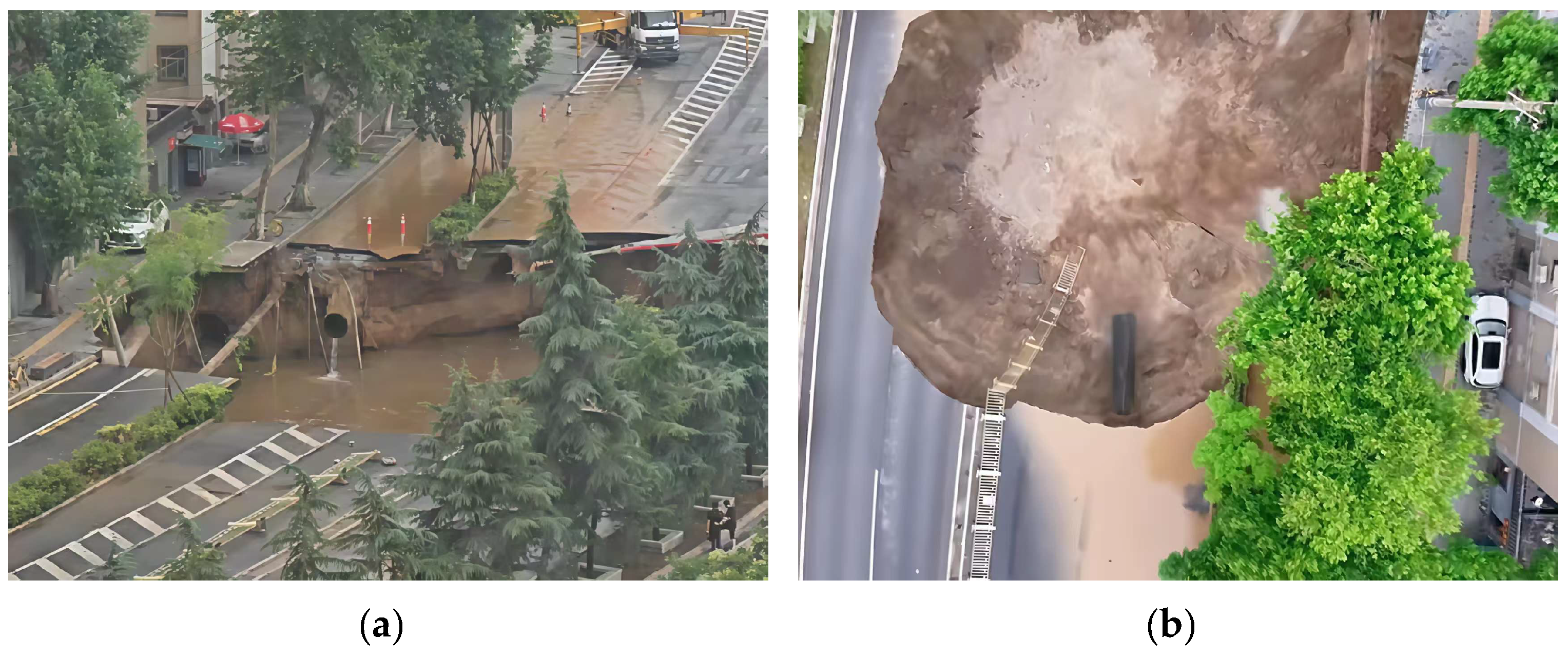
Figure 1. Urban ground collapse accident in Xi’an, Shaanxi Province, China: (a) panoramic view; (b) aerial photograph.
Applsci 15 11088 g001
Figure 2. SWRC curve of the soil.
Applsci 15 11088 g002
Figure 3. Experimental model.
Applsci 15 11088 g003
Figure 4. Layout of the moisture sensors.
Applsci 15 11088 g004
Figure 5. Model geometry.
Applsci 15 11088 g005
Figure 6. Mesh discretization.
Applsci 15 11088 g006
Figure 7. Comparison of the results between model test and numerical calculation: (a) measurement point 1. (b) measurement point 2.
Applsci 15 11088 g007
Figure 8. Physical model test showing wetted area.
Applsci 15 11088 g008
Figure 9. Numerical simulation of wetted area.
Applsci 15 11088 g009
Figure 10. Dominant seepage area in the model test: (a) Dominant zone at the interface. (b) Layers of the soil. (c) Dominant zone.
Applsci 15 11088 g010
Figure 11. Calculation model section.
Applsci 15 11088 g011
Figure 12. Numerical mesh.
Applsci 15 11088 g012
Figure 13. Location of measurement points.
Applsci 15 11088 g013
Figure 14. Change of saturation with time under different water pressure conditions: (a) pressure = 150 kPa. (b) pressure = 200 kPa. (c) pressure = 250 kPa. (d) pressure = 300 kPa.
Applsci 15 11088 g014
Figure 15. Diffusion range of the saturated region at different times: (a) time = 1 h. (b) time = 4 h. (c) time = 16 h. (d) time = 48 h.
Applsci 15 11088 g015
Figure 16. Saturate area under different pressure.
Applsci 15 11088 g016
Figure 17. Relation between pressure and time.
Applsci 15 11088 g017
Figure 18. Diagram explaining parameters for determining the hydraulic gradient along the seepage path (where the direction vector of the seepage path is denoted as vector x).
Applsci 15 11088 g018
Figure 19. Seepage path.
Applsci 15 11088 g019
Figure 20. Relationship between hydraulic gradient and seepage distance: (a) time = 6 h. (b) time = 24 h.
Applsci 15 11088 g020
Figure 21. Hydraulic gradient in seepage path with time under different pressure: (a) pressure = 150 kPa. (b) pressure = 200 kPa. (c) pressure = 250 kPa. (d) pressure = 300 kPa.
Applsci 15 11088 g021
Table 1. Numerical parameters.
ParametersSymbolValueUnit
VG model parameterα0.451/m
VG model parameterm3.31
VG model parameterl0.51
Porosityn0.431
Permeabilityk9.7 × 10−8m/s
Intrinsic permeabilityκ9.7 × 10⁻¹⁵m2
Table 2. Experimental soil parameters.
ParameterSymbolValue
Specific gravity of soil particlesds2.71
Densityρ1.53 g/cm3
Moisture contentw3%~7%
Plastic limitwP15.78%
Liquid limitwL26.11%
Table 3. Comparison of the results of numerical simulation and model tests.
Measurement PointMaximum Relative ErrorAverage Relative Error
142%13.5%
237%7%
Table 4. Case conditions.
Test ScenarioInitial SaturationPressure (kPa)
112%150
212%200
312%250
412%300
Table 5. Rational-function fit parameters for Equation (8) at a pipeline pressure of 150 kPa.
Time (h)Parameters
(a, b, c, l)
R2
1(−3.91, 2.58, 0.17, 0.86)0.9980
6(−2.79, 3.24, 0.22, 1.57)0.9779
12(−2.44, 3.52, 0.24, 2.00)0.9964
24(−1.94, 3.71, 0.26, 2.70)0.9954
48(−1.34, 3.73, 0.26, 2.70)0.9952
Table 6. Polynomial-function fit parameters for Equation (9) at a pipeline pressure of 150 kPa.
Time (h)Parameters
(a3, a2, a1, a0, L)
R2
1(−16.87, 42.42, −35.98, 13.25, 0.86)0.9828
6(−12.34, 36.39, −36.08, 12.72, 1.57)0.9779
12(−6.45, 23.79, −29.31, 12.32, 2.00)0.9700
24(−2.93, 14.19, −22.32, 11.81, 2.70)0.9572
48(−2.82, 13.63, −21.44, 11.92, 2.70)0.9486
Table 7. Exponential-function fit parameters for Equation (10) at a pipeline pressure of 150 kPa.
Time (h)Parameters
(A, B, L)
R2
1(14.28,5.466,0.86)0.9828
6(13.45,3.635,1.57)0.9779
12(13.24,3.007,2.00)0.9700
24(12.93,2.649,2.70)0.9572
48(12.68,2.301,2.70)0.9486
Table 8. Hydraulic gradient-distance relationships derived from Equation (11) at a pipeline pressure of 150 kPa.
Time (h)Expression of i(x,t)Domain of x (m)
1 i ( x ) = 3.24 ( x + 0.17 ) 2 [0, 0.86]
6 i ( x ) = 3.86 ( x + 0.22 ) 2 [0, 1.57]
12 i ( x ) = 4.11 ( x + 0.24 ) 2 [0, 2.00]
24 i ( x ) = 4.20 ( x + 0.26 ) 2 [0, 2.70]
48 i ( x ) = 4.08 ( x + 0.26 ) 2 [0, 2.70]
Disclaimer/Publisher’s Note: The statements, opinions and data contained in all publications are solely those of the individual author(s) and contributor(s) and not of MDPI and/or the editor(s). MDPI and/or the editor(s) disclaim responsibility for any injury to people or property resulting from any ideas, methods, instructions or products referred to in the content.