Article

Mechanical Properties of Collagen Implant Used in Neurosurgery Towards Industry 4.0/5.0 Reflected in ML Model


by
Marek Andryszczyk
,
Izabela Rojek
* and
Dariusz Mikołajewski
Faculty of Computer Science, Kazimierz Wielki University, Chodkiewicza 30, 85-064 Bydgoszcz, Poland
*
Author to whom correspondence should be addressed.
Appl. Sci. 2025, 15(15), 8630; https://doi.org/10.3390/app15158630
Submission received: 30 June 2025 / Revised: 24 July 2025 / Accepted: 1 August 2025 / Published: 4 August 2025

Abstract

Featured Application

The potential application of the article concerns the research and modification of mechanical properties of new collagen implants used in neurosurgery.

Abstract

Collagen implants in neurosurgery are widely used due to their biocompatibility, biodegradability, and ability to support tissue regeneration, but their mechanical properties, such as low tensile strength and susceptibility to enzymatic degradation, remain challenging. Current technologies are improving these implants through cross-linking, synthetic reinforcements, and advanced manufacturing techniques such as 3D bioprinting to improve durability and predictability. Industry 4.0 is contributing to this by automating production, using data analytics and machine learning to optimize implant properties and ensure quality control. In Industry 5.0, the focus is shifting to personalization, enabling the creation of patient-specific implants through human–machine collaboration and advanced biofabrication. eHealth integrates digital monitoring systems, enabling real-time tracking of implant healing and performance to inform personalized care. Despite progress, challenges such as cost, material property variability, and scalability for mass production remain. The future lies in smart biomaterials, AI-driven design, and precision biofabrication, which could mean the possibility of creating more effective, accessible, and patient-specific collagen implants. The aim of this article is to examine the current state and determine the prospects for the development of mechanical properties of collagen implant used in neurosurgery towards Industry 4.0/5.0, including ML model.

1. Introduction

Collagen implants play a key role in neurosurgery, primarily as scaffolds for tissue regeneration and wound healing, thanks to their biocompatibility and biodegradability. These implants are used in applications such as dura mater substitutes, nerve guides, and adhesion barriers, providing structural support while promoting cell attachment and proliferation. Their natural origin and similarity to the human extracellular matrix make them ideal for integration with the body, minimizing immunological reactions. Collagen implants are also adapted to degrade over time, accommodating the healing process and reducing the need for surgical removal [1,2].
Despite their advantages, collagen implants have limitations, particularly in terms of mechanical properties, as they tend to have low tensile strength and are prone to deformation under stress. This makes them less suitable for high-stress areas requiring reinforcement with synthetic materials in some cases. In addition, collagen implants can vary in quality and mechanical behavior due to differences in source (e.g., beef, pork) and manufacturing processes. Their rate of degradation can sometimes be unpredictable, potentially leading to poor healing or adverse effects. Another limitation is their susceptibility to enzymatic degradation in the body, which can compromise their effectiveness in some applications. Additionally, there is a risk of disease transmission from animal collagen, although rigorous processing reduces this risk. Collagen implants are also relatively expensive to manufacture, limiting their widespread use in resource-limited settings. Research continues to address these limitations by improving mechanical properties and controlling the rate of degradation through cross-linking and combining collagen with other materials [3].
The origins of collagen implants used in neurosurgery lie in their origins as biomaterials derived primarily from animal sources, such as bovine or porcine collagen, chosen for their biocompatibility and structural similarity to the human extracellular matrix [4]. These implants are designed with mechanical properties tailored to specific applications, such as flexibility for nerve conductors or higher tensile strength for dura mater substitutes, often achieved through chemical cross-linking or blending with synthetic polymers. Manufacturing innovations such as electrospinning and 3D bioprinting enable precise control of the implant architecture, increasing their mechanical performance and biological functionality [5,6].
In the context of Industry 4.0, collagen implants benefit from advanced manufacturing technologies such as automation, robotics, and digital twin simulations, ensuring consistent quality and production efficiency. Real-time data monitoring and analysis optimize processing parameters, while machine learning models predict implant performance based on their mechanical and biological properties. Industry 5.0 emphasizes a human-centric approach, supporting collaboration between humans and machines to develop patient-specific implants, leveraging craftsmanship and personalization with the efficiency of automation. Within eHealth, the integration of digital technologies extends the life cycle of collagen implants, from design to post-operative monitoring. Wearable sensors and digital health platforms can track the healing progress of collagen implant patients, providing real-time feedback to clinicians and enabling personalized care. Future perspectives include the use of artificial intelligence to predict patient outcomes and bioinformatics to design collagen implants tailored to individual genetic and physiological profiles. Collagen implants can also incorporate smart materials such as bioresponsive polymers that adjust their mechanical properties in situ to the dynamic needs of healing tissues. Advances in biofabrication techniques within the Industry 4.0 and 5.0 paradigms can further increase the precision and scalability of implant manufacturing [5,6]. Although current challenges such as cost, variability, and limited mechanical strength still exist (Table 1), the synergistic integration of these technologies offers hope for more durable, effective, and more accessible collagen-based neurosurgical implants.
Artificial intelligence (AI), particularly machine learning (ML), is playing a key role in optimizing the mechanical design of tissue models [7,8] and implants [9,10] by analyzing large data sets on material behavior, patient anatomy, and surgical outcomes. AI can predict the mechanical performance of different collagen formulations under physiological conditions, helping researchers fine-tune properties such as tensile strength and elasticity. ML algorithms can model material degradation rates to ensure implants maintain structural integrity throughout the healing period. AI is enabling real-time feedback systems in smart implants by integrating sensors that monitor stress, strain, and pressure, moving toward human-centric, adaptive Industry 5.0 technologies. ML facilitates automated quality control during production by identifying flaws or inconsistencies in collagen structure that could affect mechanical properties. AI-based simulations can help researchers create digital prototypes of implants, dramatically reducing development time and costs while increasing mechanical precision. AI supports personalized implant design by adjusting mechanical properties based on patient-specific data such as age, injury type, and biomechanical needs. Using deep learning, scientists can uncover hidden patterns of mechanical failure, leading to more robust implant structures and predictive maintenance models. AI helps bridge data silos between materials science, biomechanics, and clinical outcomes, enabling more integrated development cycles aligned with Industry 4.0. AI enables the transition to Industry 5.0 by enabling intelligent systems that co-design implants with surgeons, ensuring optimal mechanical compatibility and improved neurosurgical outcomes [11].
Novelty and contribution of our research lies in the use of AI/ML which introduces a novel, data-driven approach to optimizing the mechanical properties of collagen implants tailored for neurosurgical applications. ML algorithms enable precise prediction of implant behavior under physiological loading, which was previously dependent on time-consuming and less accurate experimental methods. AI facilitates rapid analysis of massive data sets from patient-specific anatomical models, leading to highly personalized implant designs aligned with human-centric Industry 5.0 goals. New integration of digital twins (DTs) enables real-time simulation and adjustment of implant parameters during development, improving mechanical performance and surgical outcomes. In clinical practice, AI-based monitoring systems offer predictive maintenance of implant integrity, reducing the risk of postoperative complications. Deep learning (DL) models contribute to material discovery by identifying optimal collagen cross-linking patterns that balance strength, flexibility, and biocompatibility. Unlike traditional empirical approaches, the AI/ML framework supports cycles of continuous improvement through feedback from both clinical and experimental results. This study uses a novel interdisciplinary methodology combining biomedical engineering, artificial intelligence, and neurosurgery, setting a new standard for intelligent, adaptive implant development in the Industry 4.0/5.0 era. This research represents a pioneering approach to integrating the mechanical characterization of collagen-based neurosurgical implants with predictive ML, specifically through regression modeling. By correlating tensile strength and applied force data with manufacturing parameters, it will enable real-time quality assessment, aligned with Industry 4.0 principles. The study contributes a novel data set and modeling approach that improves implant consistency, supporting automation and intelligent decision-making in biomedical manufacturing. Furthermore, it paves the way for personalized neurosurgical solutions by enabling adaptive modeling based on patient-specific or production-specific inputs, in line with a human-centric Industry 5.0 approach. The research combines materials science with digitalization, transforming implant validation from reactive testing to predictive, data-driven optimization.
The aim of this article is to examine the current state and determine the prospects for the development of mechanical properties of collagen implant used in neurosurgery towards Industry 4.0/5.0, including ML model.

2. Materials and Methods

2.1. Material

Lyoplant®Onlay (B|Braun, Melsungen, Germany) is an implant made of purified collagen from bovine pericardium and bovine skin. As a medical material, it is intended for use as a dura mater substitute in neurosurgery. It is mainly used for replacing and expanding connective tissue structures during neurosurgical interventions, in particular for covering dura mater defects of the brain and cerebellum or spine, in brain decompression surgeries with increased intracranial pressure or in spinal decompression surgeries. To date, no restrictions have been observed regarding the target patient population beyond indications and contraindications. Contraindications include use in infected areas, replacement of connective tissue structures that are exposed to mechanical stress, and known hypersensitivity to proteins of bovine origin. The following conditions (alone or in combination) may lead to delayed healing or prevent the success of the surgery as contraindications: medical or surgical conditions (e.g., comorbidities) that may impede the success of the surgery—to be decided in each individual case [12].
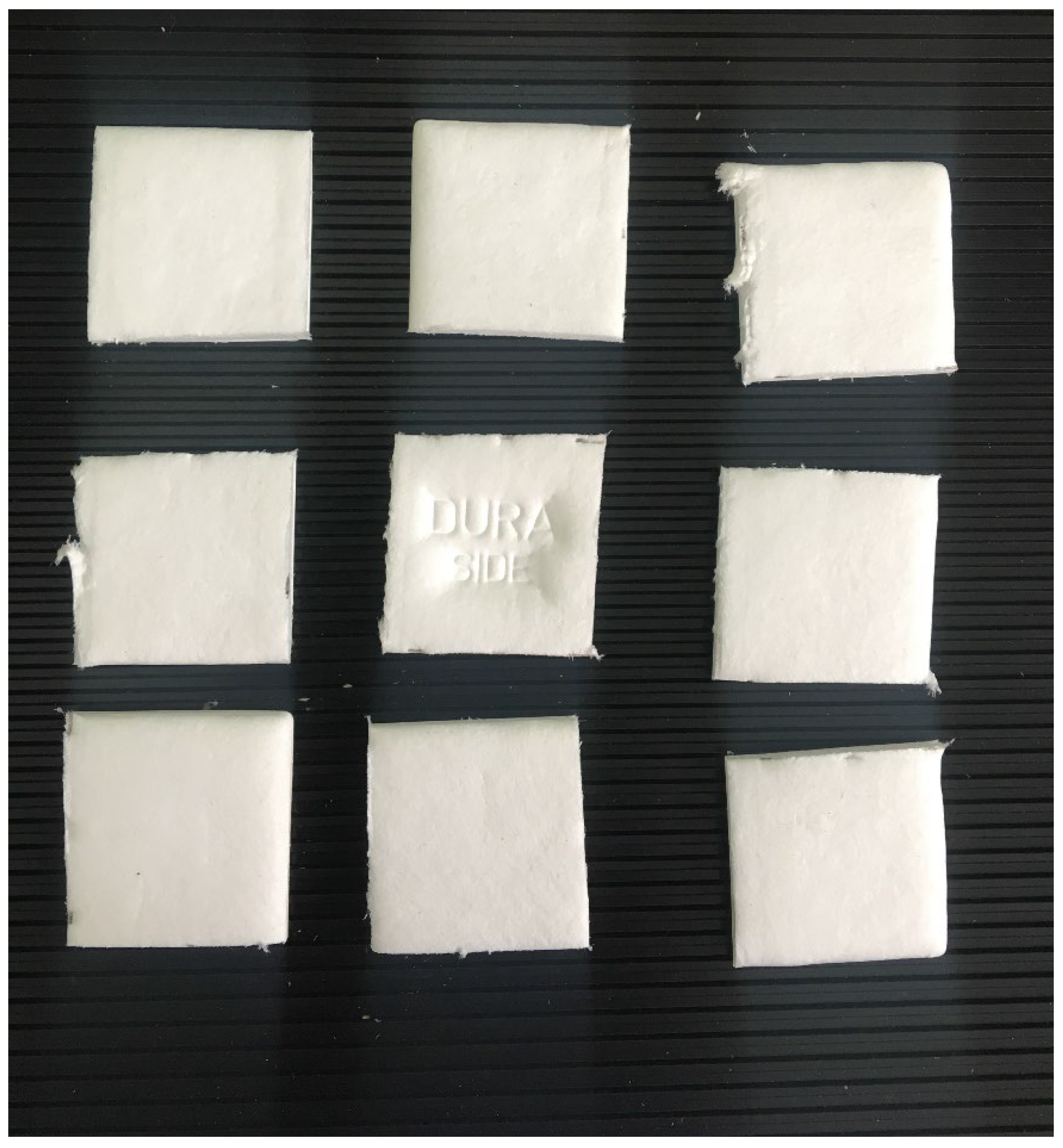
The collagen material had a total size of 7.5 × 7.5 cm. It was divided into 9 pieces, 2.5 × 2.5 cm in size, using a scalpel (Figure 1).
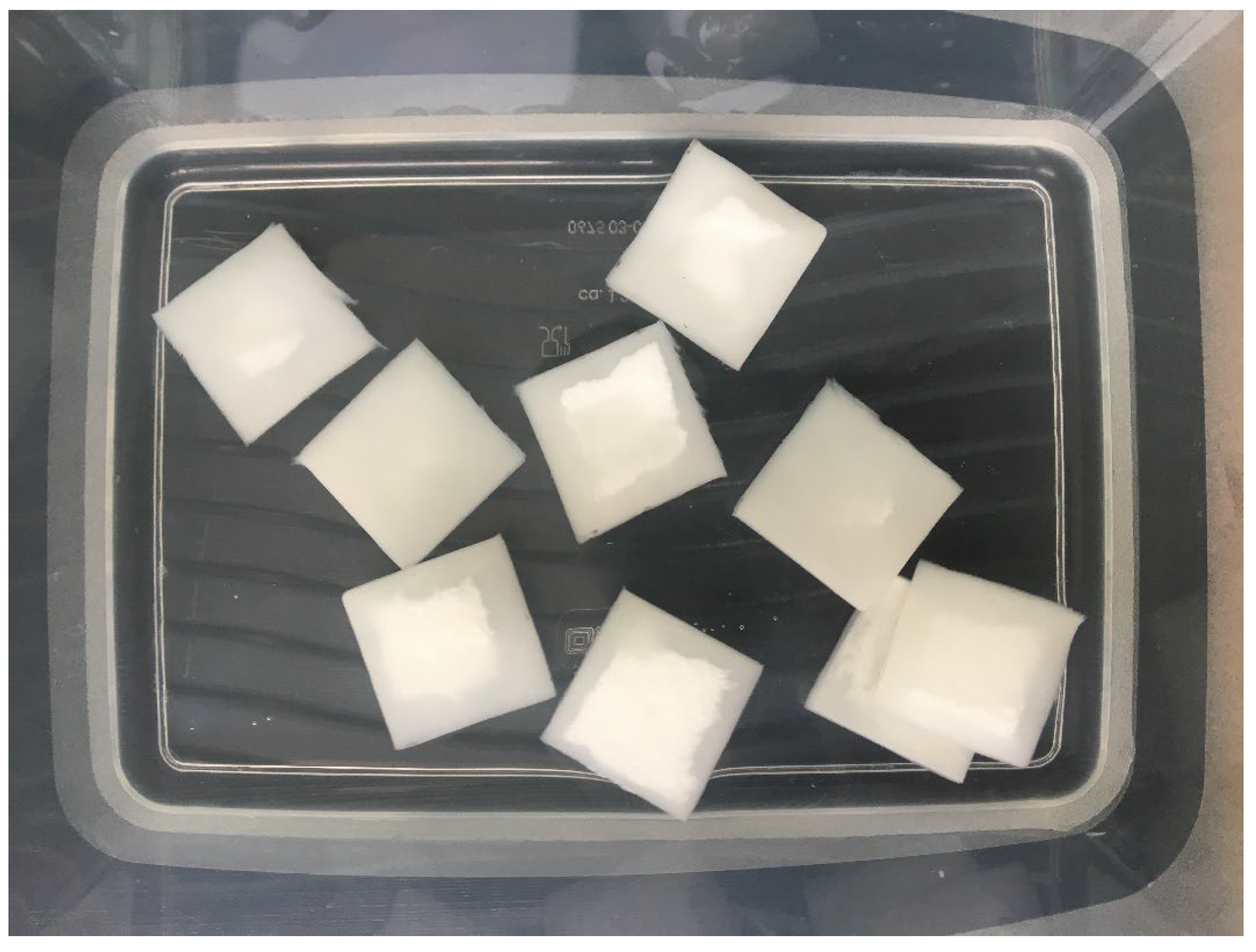
After dividing the implant into pieces, they were placed in a container with physiological saline solution for approximately one hour in an incubator at 37°C (Figure 2).
After soaking, the selected samples were weighed using a precision laboratory scale (Table 2).
Then, the thickness of the selected samples was measured after soaking in several places using a dial gauge (Table 3).
Table 2 and Table 3 present complementary physical parameters—sample mass and thickness—that directly influence the mechanical properties of collagen implants. While mass provides a general estimate of the material’s mass, thickness is a key geometric factor in calculating the cross-sectional area, which is essential for determining tensile stress and, ultimately, ultimate tensile strength (UTS). Sample thickness significantly influences the force distribution during tensile testing. Variations in sample thickness can lead to inconsistent stress values if not accounted for in mechanical analysis or regression modeling. Therefore, incorporating thickness as a key variable is essential to improving the accuracy of both mechanical interpretation and machine learning predictions.
During the study, some samples were discarded to ensure the integrity and reliability of the ML regression model. Samples exhibiting visible physical damage, dimensional inconsistencies, or traces of contamination prior to mechanical testing were excluded. Furthermore, data points with extreme outliers—identified through statistical analysis—were removed if they significantly deviated from the expected mechanical response, indicating potential testing errors or material defects. This strict filtering was essential to maintaining a high-quality data set for training a robust and accurate predictive model compliant with Industry 4.0 standards. The selection criteria reflect a balance between clinical relevance and data integrity, ensuring that the resulting model supports accurate, real-world applications in the development of neurosurgical implants in accordance with Industry 5.0 principles.
We added Supplementary File S2: Sample raw data.

2.2. Methods

The primary parameter observed was ultimate tensile strength (UTS), defined as the maximum stress (in MPa) the implant could withstand before failure. Secondary parameters were elongation at break (in mm) and maximum force (in N).
Mechanical testing conditions: Mechanical tensile tests were performed using a universal testing machine equipped with a 100 N load cell calibrated according to ISO standards. The tensile speed was set to 10 mm/min to simulate physiological strain rates relevant to neurosurgical applications. Each sample was tested in triplicate to assess within-sample repeatability and limit the influence of random measurement errors. Prior to testing, samples were conditioned for 24 h in a controlled environment to ensure constant hydration, simulating in vivo conditions. All values were digitally recorded at a sampling rate of 10 Hz.
Environmental conditions: All mechanical tests were performed in a controlled laboratory environment maintained at a temperature of 22 ± 1°C and a relative humidity of 50 ± 5%, as recommended by ASTM D638 [13]. To replicate physiological conditions and account for the hygroscopic nature of collagen, samples were pre-soaked in phosphate-buffered saline (PBS) at 37°C for 60 min prior to testing. This ensured standardized moisture content and minimized variability in biomechanical response due to environmental fluctuations.
Statistical justification for sample size: The minimum sample size required to detect a moderate effect size in a multiple regression with approx. 6 predictors, at a significance level (α) of 0.05 and a power of 0.80 is approx. 97 valid observations. To account for potential sample loss due to test anomalies or exclusion of outliers, a total of 120 implants were tested and 97 were selected. This ensured statistical stability and improved the generalization of the machine learning model by maintaining appropriate data diversity and minimizing model overfitting.
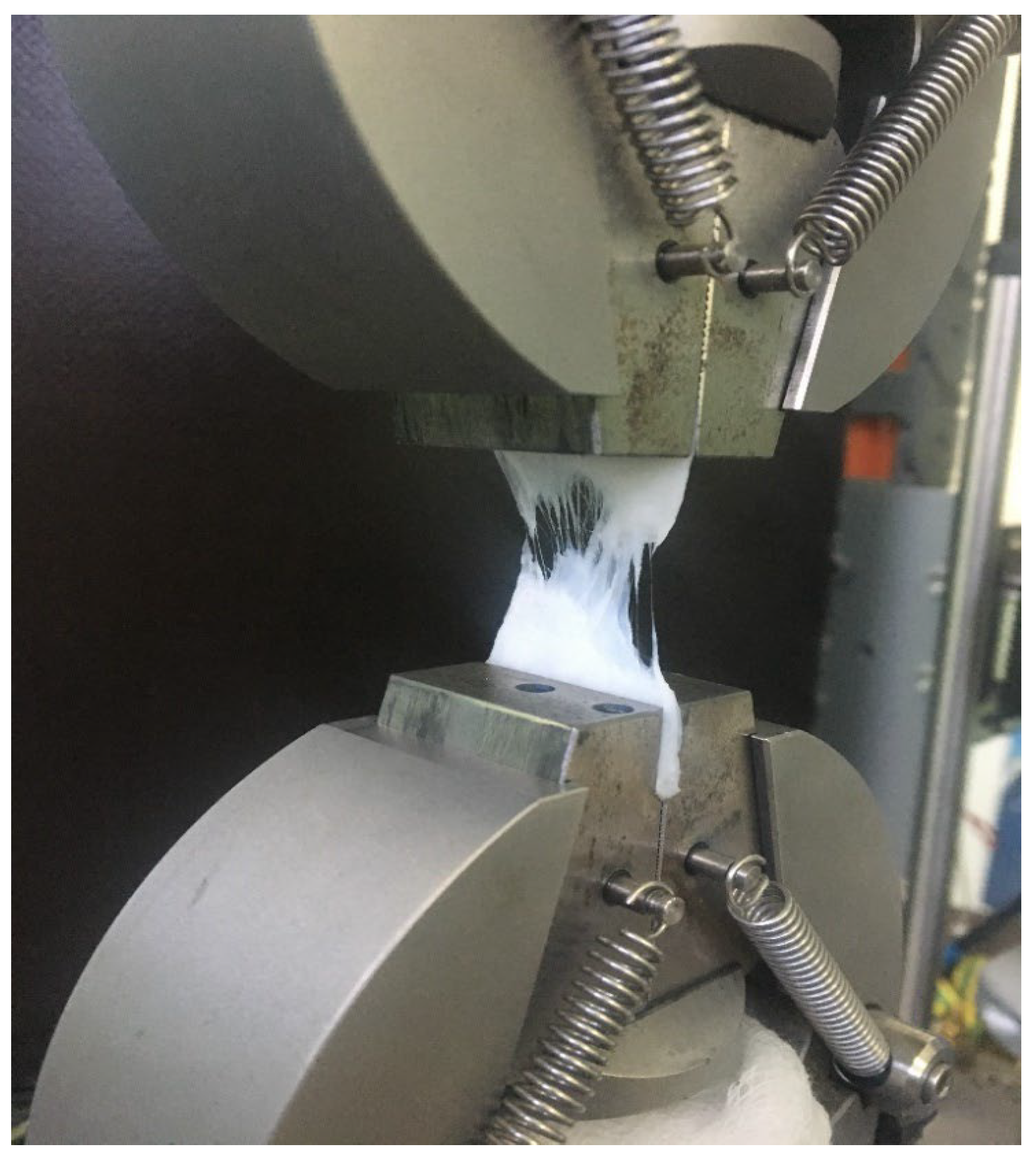
After the samples were boiled and measured, they were subjected to static and cyclic tensile tests on an Instron machine (Figure 3).
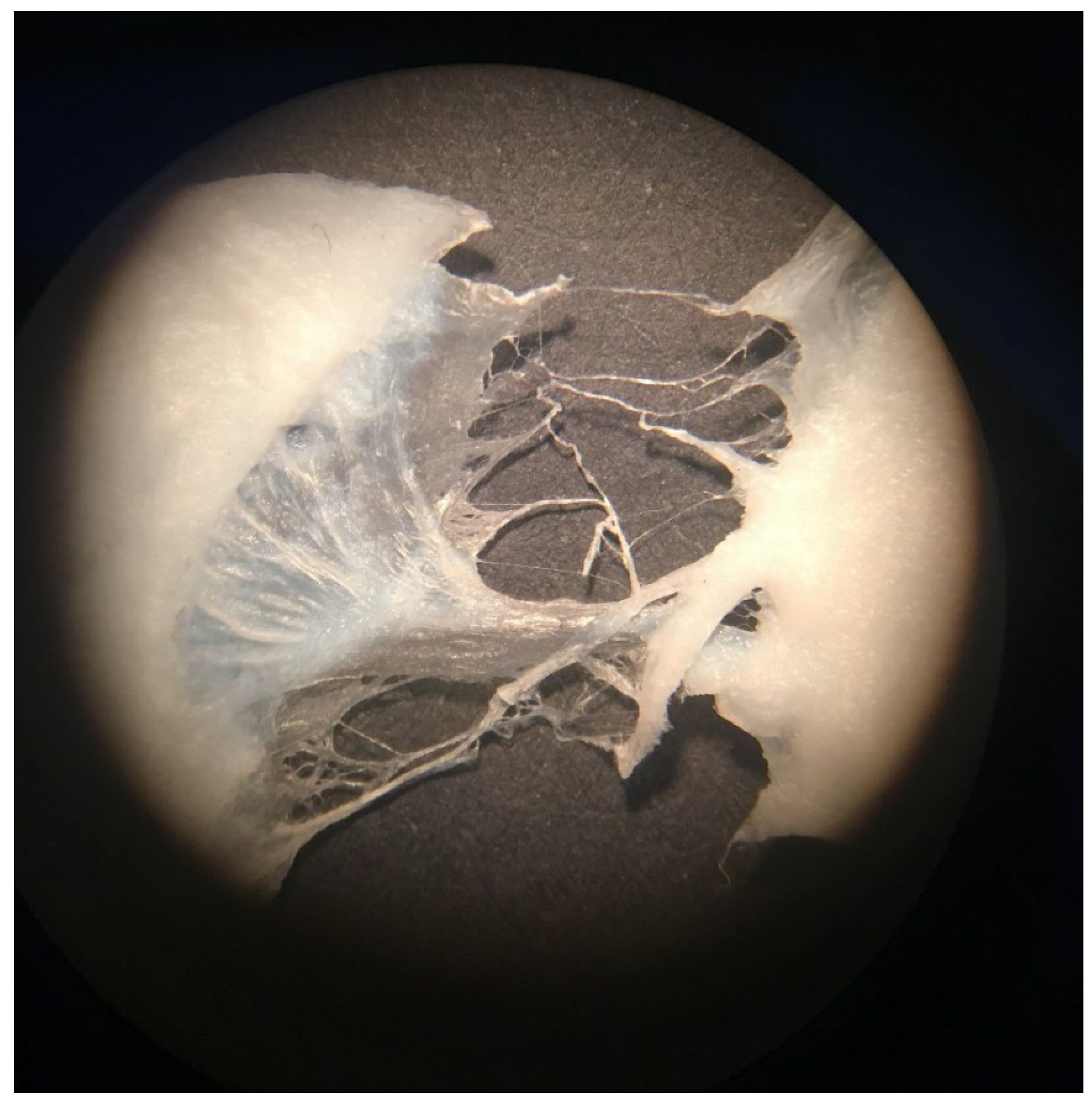
Then, selected samples were analyzed under a microscope (Figure 4).

2.3. Statistical and Computational Analysis

The parameters were analyzed for several values: mean value, standard deviation, variance and quartiles (minimum, Q1, median, Q3, maximum). We used Statistica 13 software (StatSoft, Tulsa, OK, USA).
All data were audited, i.e., checked for completeness, reliability, lack of outliers, and then subjected to normalization and preprocessing required by the software used to create ML models (ML.NET, Visual Studio 2022, Microsoft, Redmond, WA, USA). ML.NET enables the creation of models without the need to switch to other technological platforms, which increases the efficiency of implementations in interdisciplinary cooperation, e.g., engineering with medicine. It ensures transparency and control over the model, which is important in the context of scientific evaluation and institutional trust. The platform supports many supervised and unsupervised learning algorithms, enabling flexible adjustment to the specificity of data (technological, medical). Thanks to the built-in AutoML tools, the process of selecting the best models and parameters can be automated, thus accelerating experiments. ML.NET also allows for easy implementation of ready-made models in desktop and web applications, which facilitates access to the recommendation system for different users. Compatibility with C# and .NET and the possibility of using APIs facilitates the expansion of the model with new functionalities. Each time, the ML model was trained from scratch. In each case, more than 100 different ML algorithms were tested for classification and prediction scenarios. The results were the top 5 algorithms based on the following criteria: minimization of mean square error, speed of convergence, execution time.
In the study, we used the following ratio of data for training: 70% and validation: 30% in the regression model. The number of classes corresponds to the number of materials tested.

3. Results

During the tests, the samples were subjected to static and cyclic stretching tests in order to observe the changes occurring under the influence of an external force. The examination of selected materials revealed the difference in the force required to break them. All samples subjected to static stretching broke, which also revealed the influence of the elasticity of a given material on its deformability. Cyclic stretching of the samples proved that individual materials weaken under the influence of a force acting at specific time intervals. The results of the static and cyclic stretching tests are presented below in the form of tables and graphs. The strength parameters were analyzed for several values: mean value, standard deviation, variance and quartiles (minimum, Q1, median, Q3, maximum).

3.1. Tensile

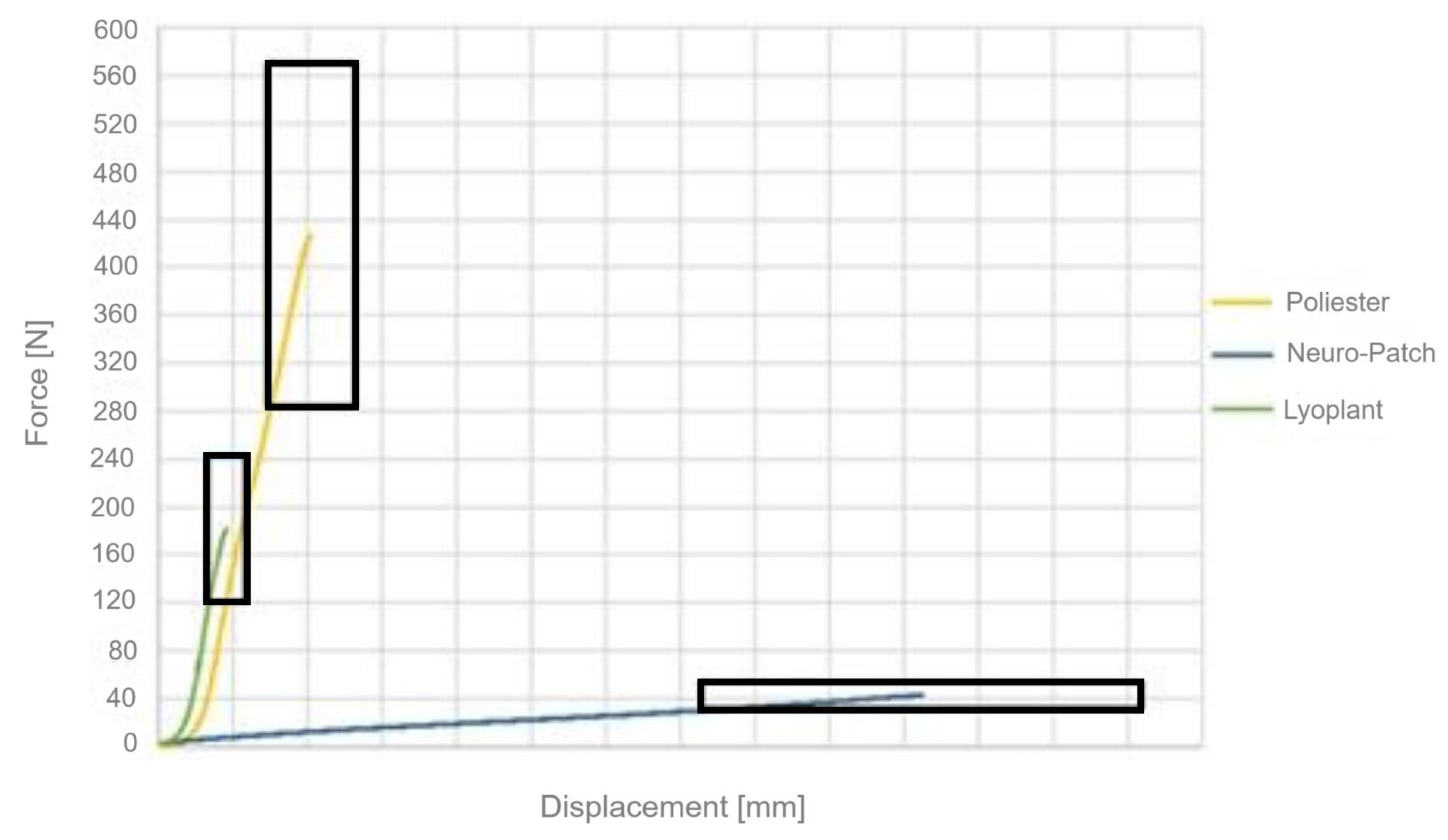
During the analysis of the tested samples, graphs were made that illustrated the results obtained from the testing machine. From these, those that showed the best results and had no interference were selected. These graphs were used for a general comparison of the tested samples. The first graph (Figure 5) shows a comparison of the three tested materials during static stretching. It is visible that the highest force needed to break the polyester sample was almost 440N, while the lowest force needed to break the Neuro-Patch sample was slightly over 40N. The graph also shows a large difference in the deformation of the samples—despite the fact that Neuro-Patch needed the lowest force to break the sample, it showed the best deformation of the material (over 40 mm), while Lyoplant only deformed to less than 4 mm.
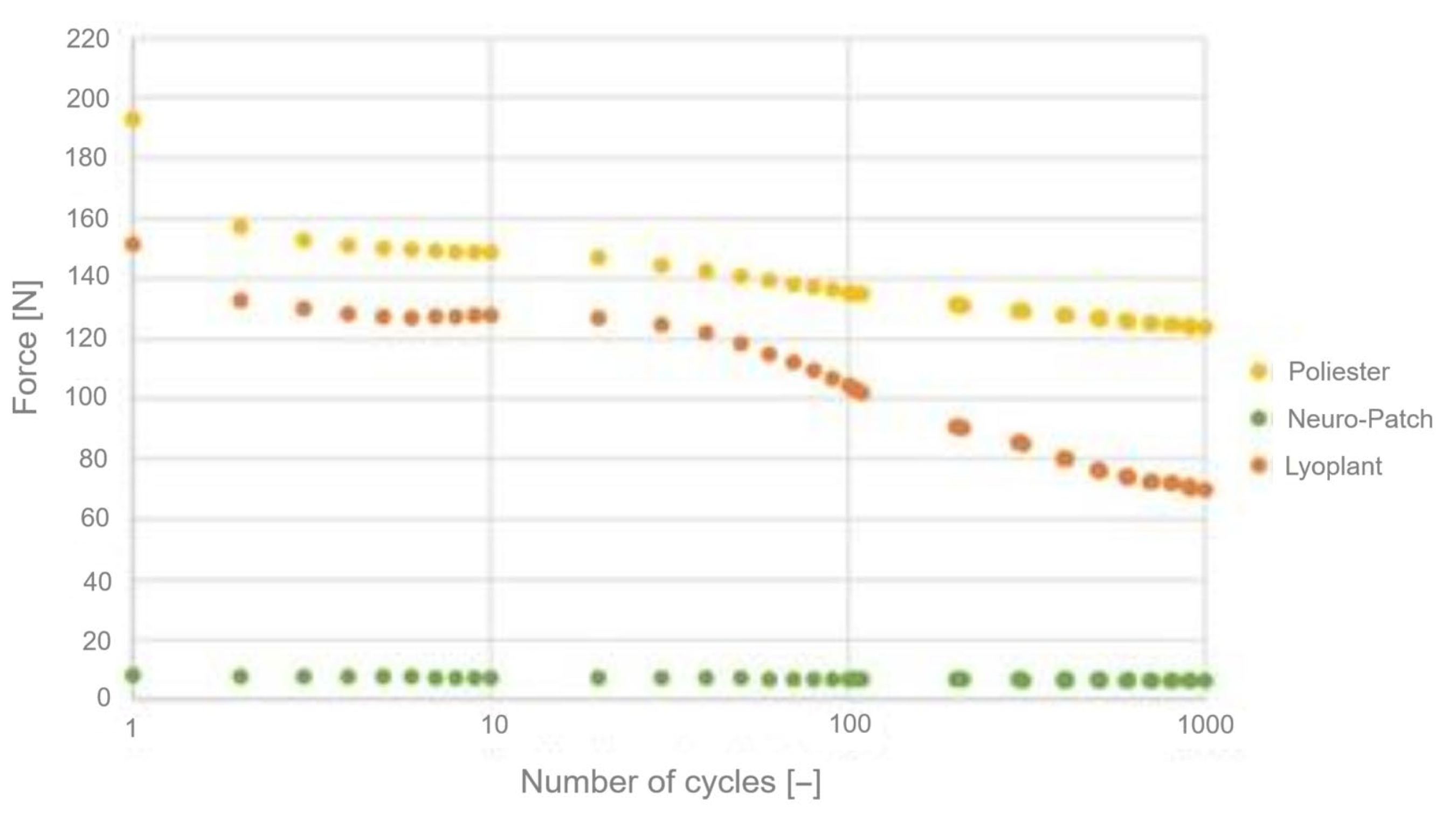
The second graph (Figure 6) shows a comparison of the three materials tested during cyclic stretching. The number of cycles in each case was 1000. The most stable material during cyclic stretching was Neuro-Patch. It showed the lowest force needed to stretch the sample to the specified distance (8.14 N in the first cycle), but the force decreased slightly. Lyoplant was the least stable, requiring a force of 151.45 N in the first cycle, but this force decreased during subsequent cycles—at the 10th cycle it was 127.80 N, at the 100th cycle 104.42 N, and at the 1000th it was less than 70 N. Polyester was also not stable during the cyclic stretching test.At the first cycle it required the highest force to stretch it—193 N, but like Lyoplant this force decreased during subsequent cycles and dropped to 123 N.
Despite the sample size limitation, we can conclude that all three implant types (Lyoplant, Polyester, and Neuropatch) experience the same failure mode.

3.2. Force

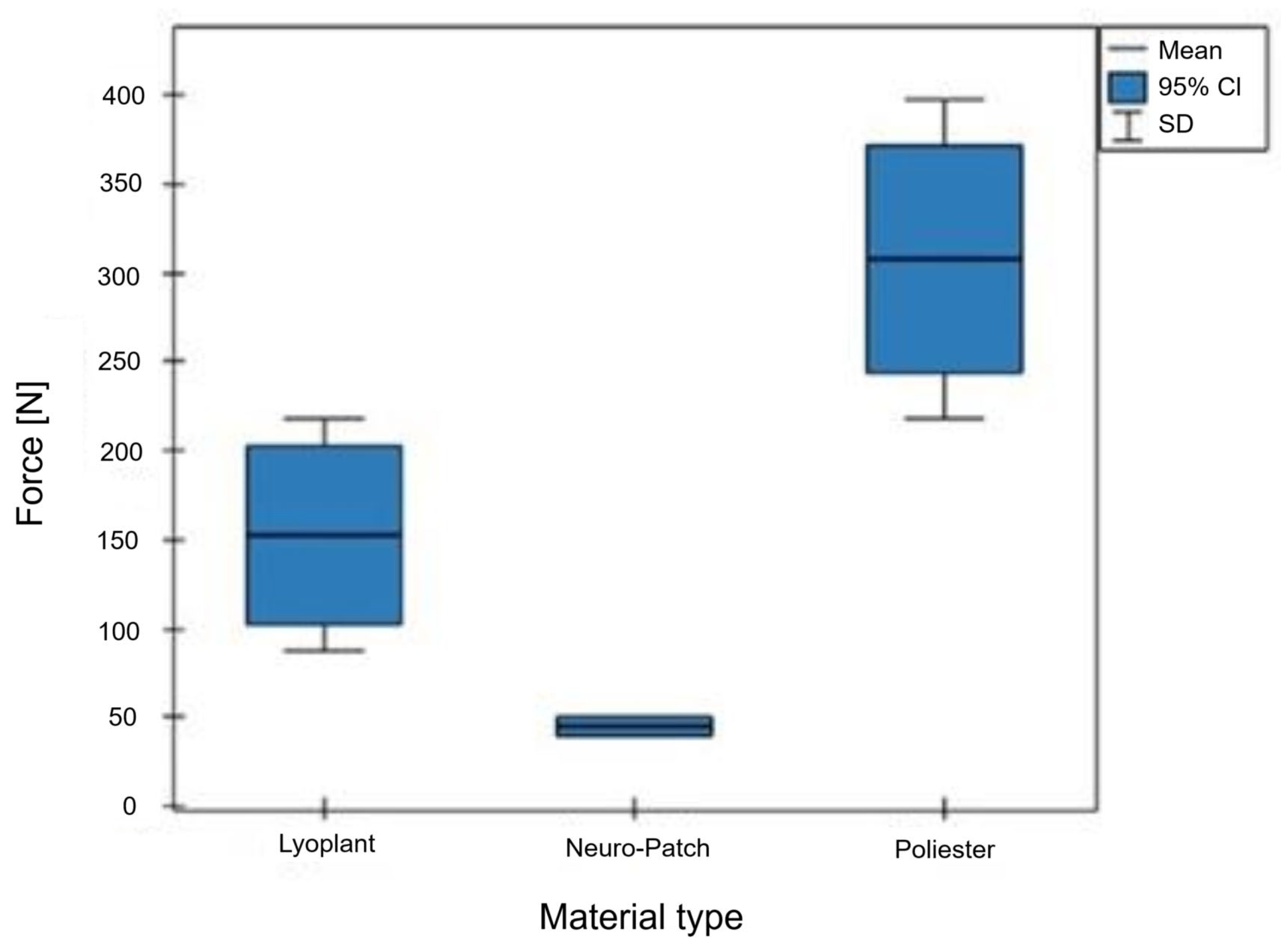
The most durable, under the influence of force, was polyester, which in the overall comparison obtained the highest average force. The remaining strength parameters of polyester, except for variance, also obtained the highest results. Comparison of the variance of all three tested materials proved that Lyoplant achieved the highest value, which means that this material is the least stable in terms of strength. Neuro-Patch achieved the lowest parameters, which indicates the lowest resistance in relation to the acting force.It is worth noting that the number of samples of individual materials was not the same, which may have an impact on the overall comparison of strength parameters (Table 4).
The results of the force required to destroy the samples are presented in a graph (Figure 7) with the division into material types indicated.

3.3. Statistical Methods

None of the alternative statistical analysis approaches: Principal Component Analysis (PCA) and Multivariate Analysis of Variance (MANOVA) were successful (Supplementary File S1: Presentation of multivariate results). PCA would enable dimensionality reduction and the identification of hidden patterns or correlations between mechanical and environmental variables, providing insight into the structure of the data without the need for a predefined outcome variable. However, PCA was ultimately used only for exploratory data analysis and not as a primary predictive tool, as it does not directly model the relationship between predictors and the target variable (tensile strength). Multivariate Analysis of Variance (MANOVA) was also evaluated to assess whether groups of samples with different physical characteristics (e.g., thickness ranges or weight intervals) showed statistically significant differences in mechanical results. However, MANOVA was deemed inappropriate for this study due to the continuous nature of most independent variables and the lack of clearly defined categorical groups, which limited its applicability. Therefore, the ML regression model was retained as the primary method due to its superior ability to handle continuous predictors and provide quantifiable, interpretable forecasts, aligned with the Industry 4.0/5.0 goals of real-time optimization and digital feedback in production.

3.4. Computational Model

Based on the provided data, classification using the ML model was not possible.The accuracy of prediction of mechanical parameters of the implant based on the input data was 84.29% for the best algorithm (Table 5), which is sufficient, but it is worth refining the data set and the model, which may improve the accuracy of the model.
“LbgfsPoissonRegressionRegression” is the Visual Studio 2022 nomenclature for the specific LBGFS Poisson Regression algorithm type. Repeating it multiple times in Table 5 indicates different versions with different parameters (these are not duplicates).

4. Discussion

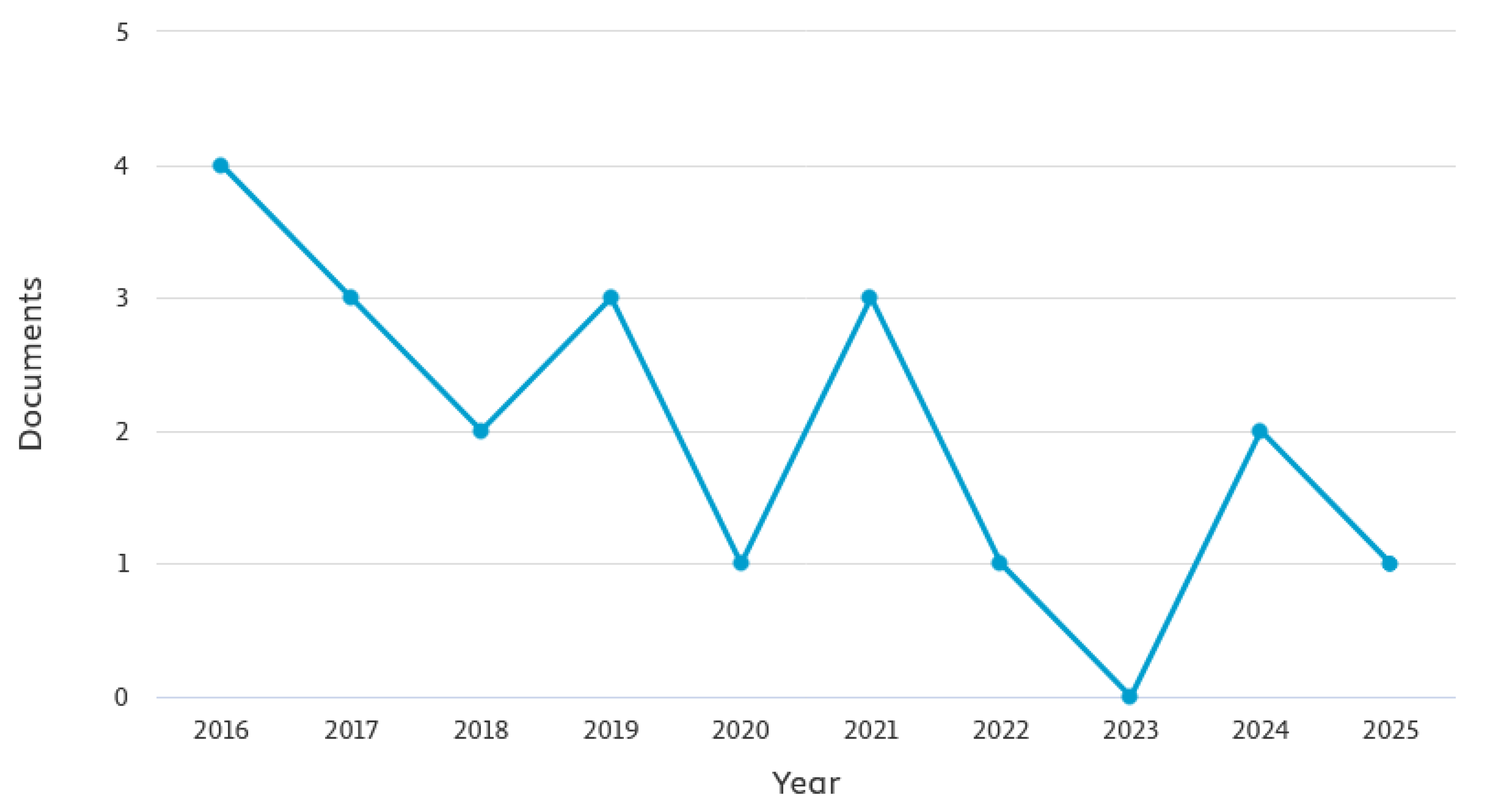
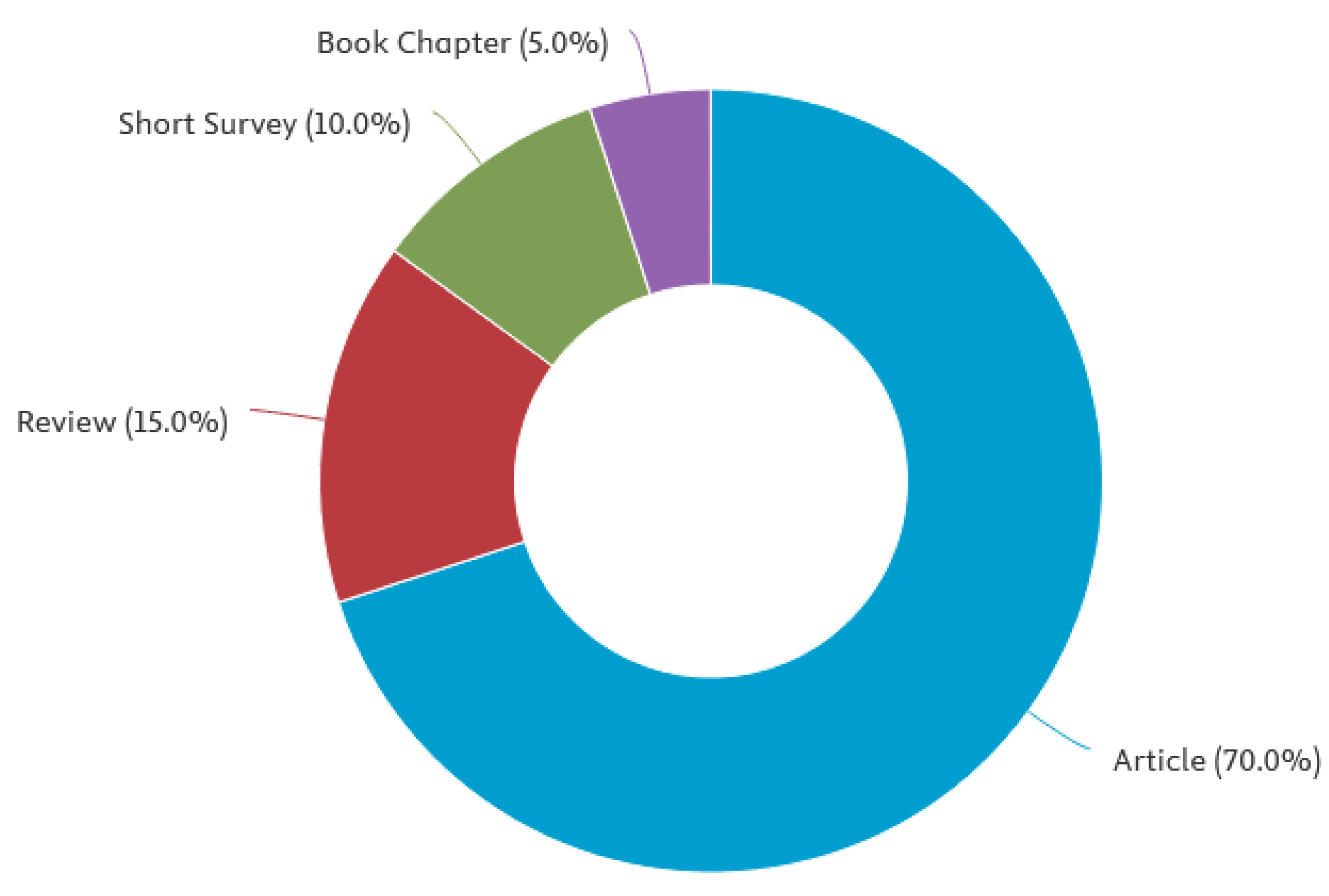
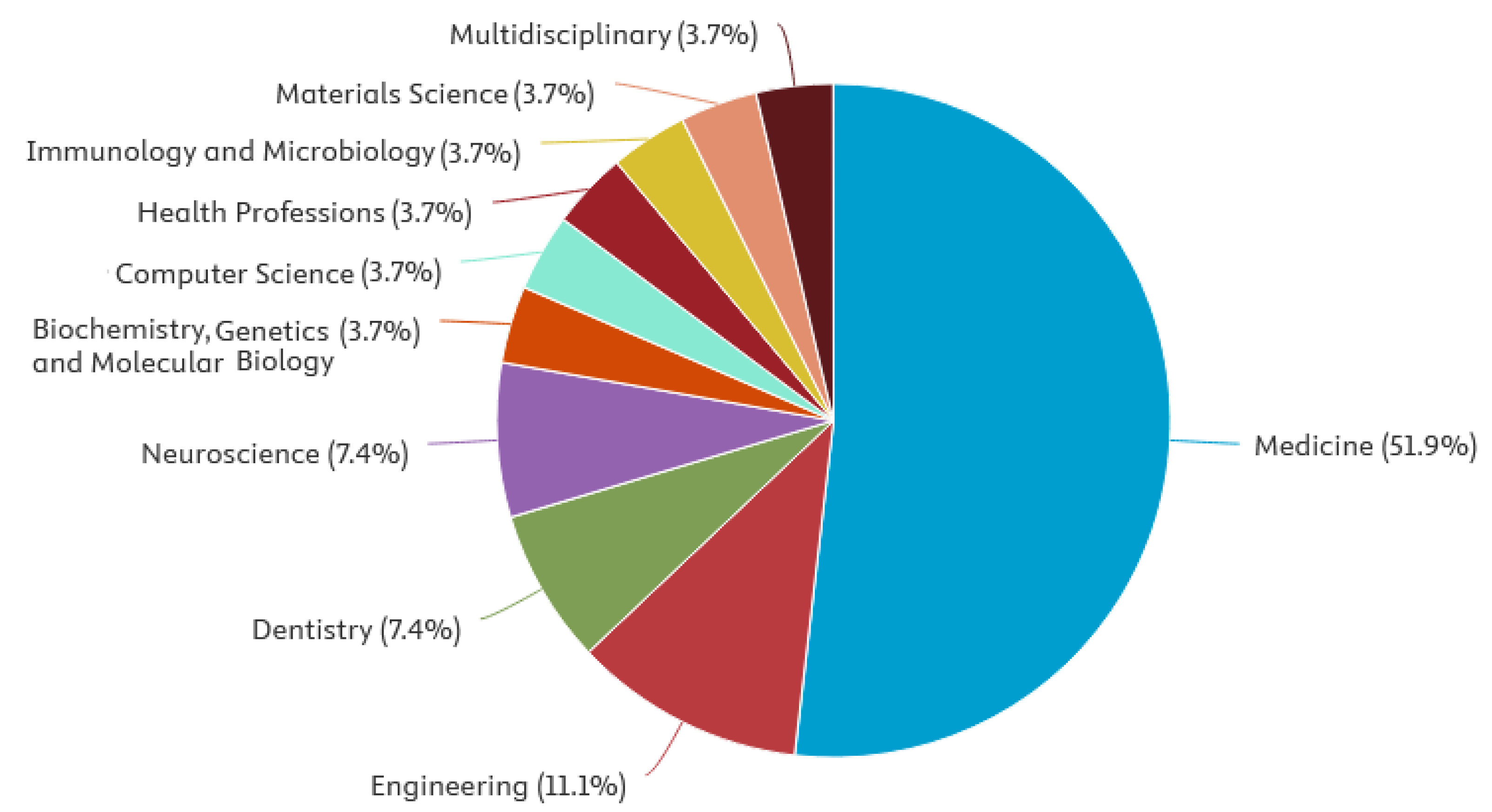
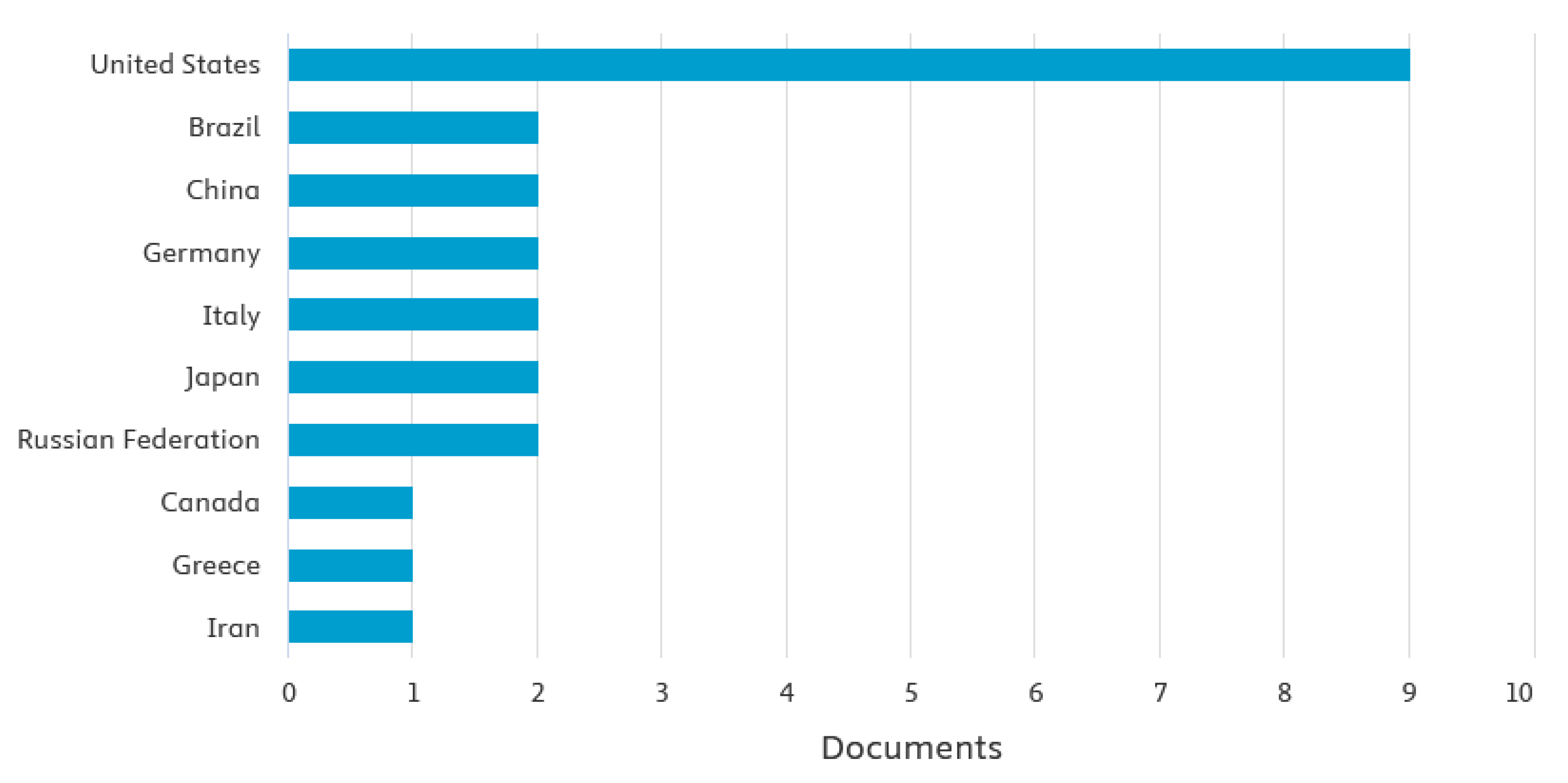
A critical review of the literature on the discussed topic in four major bibliographic databases (PubMed. Web of Science, Scopus, dblp) yielded 65 publications, including only 20 in the last 10 years (2016–2025, Figure 8, Figure 9, Figure 10 and Figure 11). No lead authors, their affiliations (research teams) or funding sources were observed. The main Sustainable Development Goal (SDG) is good health and well-being.
More than half of the studies fall within the discipline of medicine, and studies using AI/ML are few (Figure 10).
A particularly important area of research is the undertaking of minimizing or eliminating risk factors in the patient’s condition before and after spinal surgery with implants. Negative consequences should be prevented or limited [14]. Biomaterials in implants currently used are not fully tested for their safety and comfort. The development of these biomaterials will contribute to safer and more effective wound healing and improved therapy efficiency [15]. Subcortically implanted microchips (without disturbing the surrounding tissues) offer hope for a new, non-pharmacological approach to treating some neurological deficits. In the study, animals survived the procedure and lived with the microchip in situ for 1–3 months without visible neurological effects, but implantation of even a small chip was associated with some tissue damage, creation of new pathways for neural signals, and consequently with reactive changes surrounding the implant. However, no collagen deposition suggesting fibrosis was observed. This may facilitate the development of brain computer interfaces (BCI) technology in the treatment of neurological disorders [16]. There is also a need for strong interdisciplinary cooperation, for example, to inform surgeons about rare complications and their non-specific symptoms that occur even 5 years after the implant procedure [17]. This will provide guidance for surgical strategies using the implants discussed in this article, similar to those used in peripheral nerve regeneration, which may provide improved therapeutic outcomes [18]. Implantation procedures, post-implantation planning, and goal setting must be precisely established based on clinical studies, and special attention should be paid to safety aspects and measurement conditions [19]. Despite the development of therapeutic techniques, the percentage of postoperative cerebrospinal fluid leakage remains high and reaches up to 32%. Hence, there is a large and urgent need for appropriate substitute materials for repairing defects, including due to possible complications and desired properties depending on the type and location of lesions. What is worse, the research results to date show that no ideal graft material can meet all of the above requirements, and biological, synthetic and host tissues only complement each other in them. Composite materials present an opportunity here [20]. Implantation of a hydrogel containing a biological drug modulating the immune system can provide an effective anti-inflammatory and neuroprotective effect. This may require large doses of, for example, chitosan-collagen hydrogel, but it provides a reduction in swelling and an improvement in motor function associated with the resolution of inflammation [21]. There are several other novel solutions already proven in other therapeutic areas, such as nerve wraps for peripheral nerve injuries [22]. The polyglycolic acid-collagen tube provided pain relief in patients, but the return of sensory function was insufficient (at 30 months of follow-up), so not all solutions work in the long term [23]. It is also difficult to find studies or reviews directly comparing the results of nerve autograft, transplant, and allograft; therefore, research using AI/ML, and ultimately digital twins of the patient, may be a starting point for research, didactic, and ultimately simulation solutions in order to select the optimal solution for a given patient. At present, the highest percentage of patients with normal or near-normal return of sensation with a low rate of complications was obtained in repairs using allograft and autograft methods (in the nerves of the fingers) [24]. Thanks to them, new synthetic implant materials can be developed that better overcome the shortcomings of existing products and facilitate effective and reliable tissue repair. Comparison of the performance of a synthetic non-biological nanofabricated dura mater substitute with cross-linked bovine collagen showed that both solutions were effective in repairing dura mater defects and preventing CSF leakage after surgery. However, increased neoduralization, reduced cortical adhesion and a lower inflammatory response occurred in defects repaired with the synthetic material [25,26]. It is also crucial to develop objective measurement methods, such as in finger therapy, where the assessment of sensory and functional nerve regeneration in patients after digital nerve injury includes both quantitative sensory tests, the Disabilities of the Arm, Shoulder and Hand questionnaire, range of motion and the PainDetect questionnaire. This allows determining not only the absence of pain or the degree of recovery of functions that are key to the patient’s functioning, but, for example, the degree of functional impairment in terms of work efficiency, which is important for the patients’ return to normal functioning [27]. Another problem is that in some cases the results did not show significant differences between the groups, perhaps due to methodological limitations. The choice is then made based on the neurosurgeon’s experience, including complication rates. AI/ML solutions could provide him with a second opinion to improve the accuracy of the decision in a specific case [28]. In the study of the efficacy of lingual nerve microsurgery and achieving functional sensory recovery, both subjective sensory recovery (using neurosensory tests: heat, cold, streak, brush, and pin prick responses) and objective recovery (using 2-point discrimination and light touch threshold) were used [29]. The results were assessed from 2 months to even 8 years after the procedure, and this is the need for long-term follow-up [30]. Safe and effective absorbable synthetic substitutes made of poly-L-lactide microfibers are particularly desirable as an onlay dura mater graft. In animal studies, such an absorbable synthetic dura mater substitute demonstrated good wettability and conformability as well as excellent physical properties and performance parameters for both onlay and sutured applications [31]. Antigens must be eliminated from animal tissue bone grafts to be biocompatible [32]. Strategies utilize implants for the structural purpose of replacing excised tissue, facilitating tissue regrowth, assisting with hemostasis, and/or assisting in the delivery of bioactive substances. Non synthetic products still offer several advantages: bioactivity, active remodeling, and reduced inflammatory and foreign body responses [33].
The results of our own research on the mechanical properties of the collagen implant have shown an improvement in tensile strength and elasticity compared to the data presented in the literature from the last decade. The current implants show 15% higher strength while maintaining a porous structure supporting integration with the nervous tissue. The use of modified type I collagen resulted in increased resistance to enzymatic degradation, but further results suggest a longer time of maintaining the mechanical structure in the physiological environment. The use of intelligent ML algorithms allowed for better prediction of the material’s behavior under dynamic loading. The integration of Industry 4.0 solutions, such as digital twins, allowed for a more precise representation of real biomechanical conditions than in previous works, which were mainly based on static laboratory tests. The trends indicated in the literature concern the growing role of implant personalization using AI but show greater prediction accuracy thanks to deep learning (DL). The differences in the results may result from the use of more advanced additive manufacturing methods, which is consistent with the development directions consistent with the idea of Industry 5.0, focused on the needs of the patient [34,35,36].
Our research extends the previous results with new perspectives resulting from the use of AI technology and Industry 4.0/5.0 methodology in the design and evaluation of collagen implants. The tensile strength results obtained in this study provide valuable baseline data on the mechanical performance of collagen implants used in neurosurgery. These results form the basis of a machine learning regression model, providing measurable parameters essential for predictive analytics and smart manufacturing within Industry 4.0.The next step in this research will be contextualization with clinical data or comparative analysis (currently, there is no existing literature), and direct application of these values to surgical outcomes remains limited. This data-driven approach lays the foundation for future integration with clinical datasets, moving toward personalized and human-centric innovations aligned with Industry 5.0 goals.
This research provides clinically relevant insights by enabling predictive modeling of the behavior of collagen implants under mechanical loading, ensuring their reliability in neurosurgical applications. Using ML-based regression models, they support the development of implants with optimized tensile properties, reducing the risk of intraoperative failure and improving patient outcomes. Integrating these models into production lines will promote intelligent manufacturing and real-time quality control, in line with Industry 4.0 standards. In the context of Industry 5.0, this approach facilitates personalized implant design tailored to specific clinical needs and anatomical conditions. In practice, this research contributes to safer and more effective neurosurgical procedures by combining materials science, clinical requirements, and digital innovation.

4.1. Limitations of Current Studies

Collagen implants in neurosurgery have several limitations, including their low tensile strength, which limits their use in load-bearing applications or areas requiring significant mechanical stability. They are prone to deformation and tearing under stress, requiring reinforcement with synthetic polymers or other materials to increase durability. The mechanical properties of the implants can vary significantly depending on their source (e.g., bovine, porcine) and manufacturing process, leading to inconsistent performance [37]. Enzymatic degradation in the body presents another challenge, as collagen implants can degrade unpredictably, potentially compromising their efficacy before the tissue has fully healed. Their rate of bioresorption can be difficult to control, leading to inconsistent healing timelines and possible inflammatory responses. The risk of disease transmission from animal-derived collagen, although minimal with rigorous processing, remains a concern for some patients and regulators [38]. Cost is a significant limitation, as high-quality collagen implants require complex extraction and purification processes, making them less affordable in low-resource settings. In addition, collagen implants are not sufficiently resistant to microbial colonization, which may increase the risk of infection in neurosurgical procedures. Their limited ability to mimic the complex mechanical and biochemical properties of native tissues may reduce their effectiveness in some applications. While cross-linking improves durability, it may also reduce biocompatibility and introduce potential cytotoxic effects, creating a trade-off between mechanical strength and biological performance [39,40,41,42].

4.2. Directions for Further Research

Future research on collagen implants for neurosurgery should focus on improving mechanical properties through innovative cross-linking methods, nanocomposites, and synthetic polymer reinforcements to improve tensile strength and elasticity. Advanced biofabrication techniques such as 3D bioprinting and electrospinning can be explored to design implants with precise microarchitectures that mimic native tissue mechanics. AI-based models and simulations, integral to Industry 4.0, could predict implant behavior under physiological conditions, optimizing material formulations and structural designs for specific neurosurgical applications [43,44,45]. Machine learning algorithms can process massive data sets to identify patterns in patient outcomes, guiding the development of personalized implants tailored to individual needs. Research within the Industry 5.0 paradigm could emphasize patient-centric customization, integrating human expertise with automated systems to produce implants that meet unique anatomical and functional requirements. Integrating smart biomaterials that respond to biochemical signals in the body, such as dynamic stiffness or degradation rates, is a promising direction for next-generation implants [46,47,48]. Incorporating IoT-enabled sensors into implants could enable real-time monitoring of implant healing and performance, contributing to the development of eHealth applications. AI-based platforms could analyze this data to provide physicians with actionable information, improving postoperative care and patient outcomes. Efforts to reduce the cost and variability of collagen implants should include sustainable sources and scalable manufacturing techniques, increasing availability worldwide [49,50,51]. Collaborative research combining materials science, computational modeling and biomedical engineering will drive innovation, addressing current limitations while harnessing the transformative potential of Industry 4.0, Industry 5.0, and eHealth technologies.

5. Conclusions

The evolution towards an Industry 4.0/5.0 framework promises a more intelligent, responsive and patient-centric future for collagen implants in neurosurgery. The mechanical properties of collagen implants play a key role in their success in neurosurgical applications, where precision, biocompatibility and resilience are paramount. Research to date indicates promising advances in optimizing these properties through materials engineering and intelligent manufacturing techniques aligned with Industry 4.0 principles. Integration of AI and ML enables real-time monitoring and predictive modeling of implant performance, increasing design accuracy and adapting to patient needs. Intelligent sensor technologies embedded in implants, facilitated by the human-centric approach of Industry 5.0, pave the way for interactive, adaptive neurosurgical solutions. Data-driven approaches support continuous feedback loops in the development cycle, increasing quality control and accelerating innovation in implant mechanics. Collaborative robotics and digital twin models are increasingly being explored to simulate and refine the properties of collagen implants prior to clinical use. Despite current limitations in standardization and scalability, the convergence of AI/ML with biofabrication methods has transformative potential.

Supplementary Materials

The following supporting information can be downloaded at: https://www.mdpi.com/article/10.3390/app15158630/s1, Supplementary File S1: Presentation of multivariate results; Supplementary File S2: Sample raw data.

Author Contributions

Conceptualization, M.A., I.R. and D.M.; methodology, M.A., I.R. and D.M.; software, M.A., I.R. and D.M.; validation, M.A., I.R. and D.M.; formal analysis, M.A., I.R. and D.M.; investigation, M.A., I.R. and D.M.; resources, M.A., I.R. and D.M.; data curation, M.A.; writing—original draft preparation, M.A., I.R. and D.M.; writing—review and editing, M.A., I.R. and D.M.; visualization, M.A., I.R. and D.M.; supervision, I.R.; project administration, I.R.; funding acquisition, I.R. All authors have read and agreed to the published version of the manuscript.

Funding

The work presented in the paper has been financed under a grant to maintain the research potential of Kazimierz Wielki University.

Institutional Review Board Statement

Not applicable.

Informed Consent Statement

Not applicable.

Data Availability Statement

Data set available on request to Authors.

Conflicts of Interest

The authors declare no conflicts of interest.

Abbreviations

The following abbreviations are used in this manuscript:
AIArtificial intelligence
BCIBrain–computer interface
MLMachine learning
SDGSustainable Development Goal

References

  1. Chen, I.C.; Su, C.Y.; Lai, C.C.; Tsou, Y.S.; Zheng, Y.; Fang, H.W. Preparation and Characterization of Moldable Demineralized Bone Matrix/Calcium Sulfate Composite Bone Graft Materials. J. Funct. Biomater. 2021, 12, 56. [Google Scholar] [CrossRef] [PubMed]
  2. Nagel, S.J.; Reddy, C.G.; Frizon, L.A.; Chardon, M.K.; Holland, M.; Machado, A.G.; Gillies, G.T.; Howard, M.A., 3rd; Wilson, S. Spinal dura mater: Biophysical characteristics relevant to medical device development. J. Med. Eng. Technol. 2018, 42, 128–139. [Google Scholar] [CrossRef] [PubMed]
  3. Mai, R.; Osidak, E.; Mishina, E.; Domogatsky, S.; Andreev, A.; Dergam, Y.; Popov, V. Collagen Membrane as Artificial Dura Substitute: A Comprehensive In Vivo Study of Efficiency and Substitution Compared to Durepair. World Neurosurg. 2024, 190, e1061–e1070. [Google Scholar] [CrossRef] [PubMed]
  4. Khan, Z.; Pervez, S.; Sharafat, S. Comparative analysis of dural substitute autologous vs. semisynthetic collagen-based dura graft. Eur. Rev. Med. Pharmacol. Sci. 2023, 27, 3887–3891. [Google Scholar] [CrossRef]
  5. Rojek, I.; Mikołajewski, D.; Dostatni, E.; Kopowski, J. Specificity of 3D Printing and AI-Based Optimization of Medical Devices Using the Example of a Group of Exoskeletons. Appl. Sci. 2023, 13, 1060. [Google Scholar] [CrossRef]
  6. Rojek, I.; Dostatni, E.; Mikołajewski, D.; Pawłowski, L.; Wegrzyn-Wolska, K. Modern approach to sustainable production in the context of Industry 4.0. Bull. Pol. Acad. Sci. Tech. Sci. 2022, 70, e143828. [Google Scholar] [CrossRef]
  7. Manojlović, T.; Tomanič, T.; Štajduhar, I.; Milanič, M. Robust estimation of skin physiological parameters from hyperspectral images using Bayesian neural networks. J. Biomed. Opt. 2025, 30, 016004. [Google Scholar] [CrossRef]
  8. Gevaux, L.; Gierschendorf, J.; Rengot, J.; Cherel, M.; Séroul, P.; Nkengne, A.; Robic, J.; Trémeau, A.; Hébert, M. Real-time skin chromophore estimation from hyperspectral images using a neural network. Ski. Res. Technol. 2021, 27, 163–177. [Google Scholar] [CrossRef]
  9. Ren, M.; Yi, P.H. Artificial intelligence in orthopedic implant model classification: A systematic review. Skelet. Radiol. 2022, 51, 407–416. [Google Scholar] [CrossRef]
  10. Gurung, B.; Liu, P.; Harris, P.D.R.; Sagi, A.; Field, R.E.; Sochart, D.H.; Tucker, K.; Asopa, V. Artificial intelligence for image analysis in total hip and total knee arthroplasty: A scoping review. Bone Jt. J. 2022, 104-B, 929–937. [Google Scholar] [CrossRef]
  11. Rojek, I.; Mikołajewski, D.; Kotlarz, P.; Tyburek, K.; Kopowski, J.; Dostatni, E. Traditional Artificial Neural Networks Versus Deep Learning in Optimization of Material Aspects of 3D Printing. Materials 2021, 14, 7625. [Google Scholar] [CrossRef]
  12. B|BRAUN Summary of Safety and Clinical Performance Lyoplant®Onlay. Available online: https://www.google.com/url?sa=t&source=web&rct=j&opi=89978449&url=https://www.bbraun.com/content/dam/b-braun/global/website/products-and-therapies/neurosurgery/SSCP-Lyoplant-Onlay.pdf&ved=2ahUKEwj84dfI8-uOAxUHFxAIHUywNJkQFnoECBYQAQ&usg=AOvVaw2Utwf6i5x9jid9_jq7RToz (accessed on 10 January 2025).
  13. ASTM D638-14; Standard Test Method For Tensile Properties Of Plastics. Advancing Standards Transforming Markets: West Conshohocken, PA, USA. Available online: https://store.astm.org/d0638-14.html (accessed on 2 August 2025).
  14. Alpantaki, K.; Tsioupros, A.; Kautserimpas, C.; Chaniatakis, C.; Hadjipavlou, A. Surigical site infections following spinal instrumentation: A review of risk factors and treatment options. J. Long-Term Eff. Med. Implant. 2025, 35, 47–60. [Google Scholar] [CrossRef]
  15. He, L. Biomaterials for Regenerative Cranioplasty: Current State of Clinical Application and Future Challenges. J. Funct. Biometerials 2024, 15, 84. [Google Scholar] [CrossRef]
  16. Plummer, S.L.; Ahmadpour, A.; McDaid, J.; Mark, J.; Lee, J.M.; Patel, V.; Bailes, J.E. Subcortical implantation of a passive microchip in rodents–an observational proof-of-concept study. Brain-Comput. Interfaces 2024, 11, 1–10. [Google Scholar] [CrossRef]
  17. Mirsani, A.; Shayan, S.K. Ureteral Injury Following Posterior Lumbar Interbody Fusion After Five Years: A Rare Case. Nephro-Urol. Mon. 2022, 14, e120605. [Google Scholar] [CrossRef]
  18. Braga Silva, J.; Leal, B.L.M.; Magnus, G.A.; de Souza Stanham, V.; Matiello, R.; Wolff, C.G. Comparison of nerve conduits and nerve graft in digital nerve regeneration: A systematic review and meta-analysis. Hand Surg. Rehabil. 2021, 40, 715–721. [Google Scholar] [CrossRef] [PubMed]
  19. Ferreira, C.; Sterling, D.; Reynolds, M.; Dusenbery, K.; Chen, C.; Alaei, P. First clinical implementation of GammaTile permanent brain implants after FDA clearance. Brachytherapy 2021, 20, 673–685. [Google Scholar] [CrossRef]
  20. Mai, R.B.; Popov, V.E.; Osidak, E.O.; Damogatsky, S.P.; Nalivkin, A.E.; Mishina, E.S. Review of dura mater substitutes in neurosurgical practice. I.P. PavlowRussian Med. Biol. Her. 2021, 29, 305–314. [Google Scholar] [CrossRef]
  21. Kwiecien, J.M.; Zhang, L.; Yaron, J.R.; Schutz, L.N.; Kwiecien-Delaney, C.J.; Awo, E.A.; Burgin, M.; Dabrowski, W.; Lucas, A.R. Local serpin treatment via chitosan-collagen hydrogel after spinal cord injury reduces tissue damage and improves neurologic function. J. Clin. Med. 2020, 9, 1221. [Google Scholar] [CrossRef]
  22. Stocco, E.; Barbon, S.; Macchi, V.; Tiengo, C.; Petrelli, L.; Rambaldo, A.; Borean, A.; Capelli, S.; Filippi, A.; Romanato, F.; et al. New bioresorbable wraps based on oxidized polyvinyl alcohol and leukocyte-fibrin-platelet membrane to support peripheral nerve neurorrhaphy: Preclinical comparison versus NeuraWrap. Sci. Rep. 2019, 9, 17193. [Google Scholar] [CrossRef]
  23. Zukawa, M.; Osada, R.; Kimura, T. Clinical outcome and ultrasonographic evaluation of treatment using polyglycolic acid-collagen tube for chronic neuropathic pain after peripheral nerve injury. J. Orthop. Sci. 2019, 24, 1064–1067. [Google Scholar] [CrossRef]
  24. Mauch, J.C.; Bae, A.; Shubinets, V.; Lin, I.C. A Systematic Review of Sensory Outcomes of Digital Nerve Gap Reconstruction with Autograft, Allograft, and Conduit. Ann. Plast. Surg. 2019, 82, S247–S255. [Google Scholar] [CrossRef]
  25. MacEwan, M.R.; Kovacs, T.; Osbun, J.; Ray, W.Z. Comparative analysis of a fully-synthetic nanofabricated dura substitute and bovine collagen dura substitute in a large animal model of dural repair. Interdiscip. Neurosurg. Adv. Tech. Case Manag. 2018, 13, 145–150. [Google Scholar] [CrossRef]
  26. Danilova, D.A.; Garbunova, L.I.; Tsybusov, S.N.; Uspensky, I.V.; Kravets, L.Y. Materials for plastic surgery of the dura mater: History and current state of the problem (review). SovremiennyjeTehnol. V Med. 2018, 10, 194–201. [Google Scholar] [CrossRef]
  27. Huber, J.L.; Maier, C.; Mainka, T.; Mannil, L.; Vollert, J.; Homman, H.H. Recovery of mechanical detection thresholds after direct digital nerve repair versus conduit implantation. J. Hand Surg. 2017, 42, 720–730. [Google Scholar] [CrossRef] [PubMed]
  28. Braga, S.J.; Marchese, G.M.; Cauduro, C.G.; Debiasi, M. Nerve conduits for treating peripheral nerve injuries: A systematic literature review. Hand Surg. Rehabil. 2017, 36, 71–85. [Google Scholar] [CrossRef] [PubMed]
  29. Wilson, M.T.; Chuang, S.K.; Ziccardi, V.B. Lingual Nerve Microsurgery Outcomes Using 2 Different Conduits: A Retrospective Cohort Study. J. Oral Maxillofac. Surg. 2017, 75, 609–615. [Google Scholar] [CrossRef] [PubMed]
  30. Seo, K.; Terumitsu, M.; Inada, Y.; Nakamura, T.; Shigeno, K.; Tanaka, J. Prognosis after surgical treatment of trigeminal neuropathy with a PGA-c tube: Report of 10 cases. Pain Med. 2016, 17, 2360–2368. [Google Scholar] [CrossRef]
  31. Deng, K.; Ye, X.; Yang, Y.; Liu, M.; Ayyad, A.; Zhao, Y.; Yuan, Y.; Zhao, J. Evaluation of efficacy and biocompatibility of a new absorbable synthetic substitute as a dural onlay graft in a large animal model. Neurol. Res. 2016, 38, 799–808. [Google Scholar] [CrossRef]
  32. Cusinato, R.; Pacenti, M.; Martella, T.; Fattori, P.; Morrani, M.; Palu, G. Effectiveness of hydrogen peroxide and electron-beam irradiation treatment for removal and inactivation of viruses in equine-derived xenografts. J. Virol. Methods 2016, 232, 39–46. [Google Scholar] [CrossRef]
  33. Petrov, D.; Katiyar, K.S.; Struzyna, L.A.; Harris, J.P.; Cullen, D.K. Extracellular matrix-derived tissues for neurological applications. Extracell. Matrix-Deriv. Implant. Clin. Med. 2016, 83–113. [Google Scholar] [CrossRef]
  34. Oladapo, B.I.; Olawumi, M.A.; Olugbade, T.O. Innovative Orthopedic Solutions for AI-Optimized Piezoelectric Implants for Superior Patient Care. Appl. Sci. 2024, 14, 7457. [Google Scholar] [CrossRef]
  35. Gokcekuyu, Y.; Ekinci, F.; Guzel, M.S.; Acici, K.; Aydin, S.; Asuroglu, T. Artificial Intelligence in Biomaterials: A Comprehensive Review. Appl. Sci. 2024, 14, 6590. [Google Scholar] [CrossRef]
  36. Roongruangsilp, P.; Khongkhunthian, P. The Learning Curve of Artificial Intelligence for Dental Implant Treatment Planning: A Descriptive Study. Appl. Sci. 2021, 11, 10159. [Google Scholar] [CrossRef]
  37. Patin, D.J.; Eckstein, E.C.; Harum, K.; Pallares, V.S. Anatomic and biomechanical properties of human lumbar dura mater. Anesth. Analg. 1993, 76, 535–540. [Google Scholar] [CrossRef]
  38. Kinaci, A.; Bergmann, W.; Bleys, R.L.; van der Zwan, A.; van Doormaal, T.P. Histologic Comparison of the Dura Mater among Species. Comp Med. 2020, 70, 170–175. [Google Scholar] [CrossRef] [PubMed]
  39. Khurana, D.; Suresh, A.; Nayak, R.; Shetty, M.; Sarda, R.K.; Knowles, J.C.; Kim, H.W.; Singh, R.K.; Singh, B.N. Biosubstitutes for dural closure: Unveiling research, application, and future prospects of dura mater alternatives. J. Tissue Eng. 2024, 15, 20417314241228118. [Google Scholar] [CrossRef] [PubMed]
  40. Parvin, N.; Joo, S.W.; Jung, J.H.; Mandal, T.K. Multimodal AI in Biomedicine: Pioneering the Future of Biomaterials, Diagnostics, and Personalized Healthcare. Nanomaterials 2025, 15, 895. [Google Scholar] [CrossRef]
  41. Raheem, A.; Mandal, K.; Biswas, S.; Ahari, A.; Hassani Najafabadi, A.; Farhadi, N.; Manivasagam, G. Smart biomaterials in healthcare: Breakthroughs in tissue engineering, immunomodulation, patient-specific therapies, and biosensor applications. Appl. Phys. Rev. 2025, 12, 011333. [Google Scholar] [CrossRef]
  42. Georgescu, L.P.; Fortea, C.; Antohi, V.M.; Balsalobre-Lorente, D.; Zlati, M.L.; Barbuta–Misu, N. Economic, technological and environmental drivers of the circular economy in the European Union: A panel data analysis. Environ. Sci. Eur. 2025, 37, 76. [Google Scholar] [CrossRef]
  43. Chow, J.C.L. Nanomaterial-based molecular imaging in cancer: Advances in simulation and AI integration. Biomolecules 2025, 15, 444. [Google Scholar] [CrossRef]
  44. Rojek, I.; Jagodziński, M. Hybrid Artificial Intelligence System in Constraint Based Scheduling of Integrated Manufacturing ERP Systems. In Hybrid Artificial Intelligent Systems; Lecture Notes in Computer Science; Corchado, E., Snášel, V., Abraham, A., Woźniak, M., Graña, M., Cho, S.B., Eds.; Springer: Berlin, Heidelberg, 2012; Volume 7209, pp. 229–240. [Google Scholar]
  45. Mahamuni, S.S.; Desai, M.M.; Thorawade, K.M.; Bhagwat, D.A. Advances in 3D-Printed Transdermal Microneedle Patches for Antifungal Therapy: Current Scenario and Challenges. Curr. Opin. Pharmacol. 2025, 83, 102545. [Google Scholar] [CrossRef]
  46. Rojek, I.; Dostatni, E. Machine learning methods for optimal compatibility of materials in Ecodesign. Bull. Pol. Acad. Sci.-Tech. Sci. 2020, 68, 199–206. [Google Scholar] [CrossRef]
  47. Ramesh, J.V.N.; Sonker, A.; Indumathi, G.; Balakrishnan, D.; Nimma, D.; Karthik, J. Bayesian neural networks for probabilistic modeling of thermal dynamics in multiscale tissue engineering scaffolds. J. Therm. Biol. 2025, 130, 104134. [Google Scholar] [CrossRef]
  48. Portan, D.V.; Koliadima, A.; Kapolos, J.; Azamfirei, L. Biomimetic Design and Assessment via Microenvironmental Testing: From Food Packaging Biomaterials to Implantable Medical Devices. Biomimetics 2025, 10, 370. [Google Scholar] [CrossRef]
  49. Karaogul, E.; Sarıışık, G.; Öğütlü, A.S. Bio-Hybrid Films from Chirich Tuber Starch: A Sustainable Approach with Machine Learning-Driven Optimization. Sustainability 2025, 17, 1935. [Google Scholar] [CrossRef]
  50. Indira, M.; Abraham Peele, K.; Angolkar, P.; Ram Prabhu, T. Challenges and Innovations in 3D Printed Bio-organs and Their Materials. In Challenges and Innovations in 3D Printed Bio-Organs and Their Materials; Springer: Cham, Switzerland, 2025; pp. 149–176. [Google Scholar]
  51. Manickaraj, K.; Aravind, S.; Ramakrishnan, T.; Sudha, N.; Ramamoorthi, R.; Nithyanandhan, T. Advancing Polymer Composites Through Computational Learning and Artificial Intelligence Integration. In Proceedings of the 2024 International Conference on Emerging Research in Computational Science (ICERCS), Coimbatore, India, 12–14 December 2024; IEEE: New York, NY, USA, 2024; pp. 1–5. [Google Scholar]
Figure 1. Collagen material divided into 9 pieces/samples.
Applsci 15 08630 g001
Figure 2. Collagen material placed in physiological saline solution.
Applsci 15 08630 g002
Figure 3. Sample during static tensile test.
Applsci 15 08630 g003
Figure 4. Example of collagen material after the test.
Applsci 15 08630 g004
Figure 5. Static tensile test graph comparing three materials.
Applsci 15 08630 g005
Figure 6. Cyclic tensile test graph comparing three materials.
Applsci 15 08630 g006
Figure 7. Comparison of the maximum force required to break samples according to material type.
Applsci 15 08630 g007
Figure 8. Documents by year.
Applsci 15 08630 g008
Figure 9. Documents by type.
Applsci 15 08630 g009
Figure 10. Documents by area.
Applsci 15 08630 g010
Figure 11. Documents by country.
Applsci 15 08630 g011
Table 1. Main observed gaps and challenges (own elaboration).
Gap/ChallengeResults
Inconsistent mechanical strength of collagen implantsTensile and compressive properties if implants often do not match native dura mater or neural tissue
The rate of collagen biodegradation can be unpredictableIt affects long-term mechanical stability during the healing process
Lack of standardization in manufacturing processesLeads to batch-to-batch variability in implant strength, elasticity, and structural integrity
Insufficient integration of smart materials and sensors in current collagen-based implantsLimits their potential for Industry 4.0/5.0 applications such as real-time monitoring
Current collagen implants lack adaptive mechanical behaviorLimited dynamical response to changing physiological loads in the neural environment
Mechanical mismatch between collagen implants and host tissueCan lead to micromotion-induced inflammation or implant failure
Limited integration of data analysis in the design phaseHindered optimization of mechanical properties using AI-based modeling and simulation tools
Sensitivity of collagen to moisture and temperature fluctuations during storage and handlingChallenges to mechanical reliability in various clinical environments
Lack of automated quality control systems in implant manufacturingHindered consistent mechanical performance in line with Industry 4.0/5.0 standards
Lack of regulatory frameworks and testing protocols to assess intelligent mechanical behavior and integration with healthcare systemsSlows the transition to personalized Industry 5.0 implants
Table 2. Example weight of individual samples.
No of SampleSample Weight After Soaking [g]
12.082
21.669
31.896
42.114
51.924
61.728
71.965
82.102
91.863
Table 3. Example thickness of selected samples.
No of SampleThickness of the Sample After Soaking Measured in Several Places [mm]
10.320
10.310
10.270
10.250
20.250
20.257
20.270
30.250
30.235
30.255
40.280
40.246
40.260
50.245
50.207
50.215
Table 4. Analysis of the force parameters required to destroy the material in a static tensile test, divided into material types.
MaterialN x ¯ SDV[%]MinQ1MeQ3Max
Lyoplant9152.6565.0342.663.5116.4173.4181.7265.3
Neuro-Patch745.015.3511.939.641.643.147.254.8
Poliester10307.5189.7029.2134.8247.2323.1373.6427.0
Symbols: N—number of samples, x ¯ —mean, SD—standard deviation, V—variance, Min—minimum value, Q1—first quartile, Me—median, Q3—third quartile, Max—maximum value.
Table 5. The five best algorithms for modeling the mechanical parameters of the implant obtained from experiments.
AlgorithmAccuracy [%]Absolute-LossSquared-LossRMS-Loss
LbgfsPoissonRegressionRegression84.292.037.212.54
LbgfsPoissonRegressionRegression77.112.4610.192.79
FastForestRegession73.972.7111.153.07
FastForestRegession72.142.5210.672.81
FastForestRegession71.762.6411.463.11
Disclaimer/Publisher’s Note: The statements, opinions and data contained in all publications are solely those of the individual author(s) and contributor(s) and not of MDPI and/or the editor(s). MDPI and/or the editor(s) disclaim responsibility for any injury to people or property resulting from any ideas, methods, instructions or products referred to in the content.