1. Introduction
In human–machine systems, the accurate perception of system-generated information is essential for effective task performance. Visual perception, which provides over 80% of the information proceeded by humans use in both daily activities and goal-directed tasks [
1], plays a particularly vital role. With the increasing ubiquity of digital interfaces, the ability to process visual information efficiently has become more crucial than ever. However, visual stimuli required for task completion are frequently presented alongside irrelevant or distracting information [
2], which can hinder accurate perception and decision-making.
Numerous studies have explored the mechanisms of visual information processing. For example, Park [
3] found that distractor stimuli similar to a target negatively affect target identification accuracy. Kwon and Shin [
4] examined how variations in target shape and location influence visual search performance, while Smith [
5] demonstrated that shape impacts area perception. Lee [
6] further emphasized how design elements—such as number sequencing and button layout—can contribute to coherent visual interfaces, especially in applied contexts like elevator panels.
In today’s information-saturated environments, individuals frequently engage in visual decision-making tasks such as interpreting traffic signs, detecting abnormalities in medical imagery, and selectively focusing on relevant screen-based visual cues. In this context, visual perception should not be regarded merely as passive stimulus reception, but as a complex cognitive process involving selective attention, criterion setting, and response strategy formulation.
To analyze these perceptual processes, signal detection theory (SDT) offers a robust framework. Unlike traditional accuracy-based assessments, SDT distinguishes between sensitivity (the ability to detect signals) and decision criterion (the threshold for responding), enabling more precise evaluation of perceptual and cognitive strategies [
7]. This distinction is essential, as individuals with similar accuracy levels may employ fundamentally different perceptual or cognitive strategies [
8].
Building on this foundation, the current study applies SDT to examine gender differences in visual information perception. While early research suggested that males typically outperform females in visuospatial tasks [
9], more recent studies propose that such differences are minimal or statistically insignificant in younger adult populations [
10]. These evolving perspectives have been shaped by increasingly sophisticated experimental designs, improved measurement tools, and greater demographic diversity in research sampling.
Despite these trends, notable gender-based distinctions still emerge in specific visual abilities. For instance, males have consistently shown superior performance in mental rotation and spatial visualization tasks [
11,
12], whereas females tend to outperform males in perceptual speed and color discrimination [
13]. Chen [
14] further demonstrated that males and females exhibit different eye movement patterns during facial recognition, with females showing longer fixation durations and more targeted focus. Additionally, some studies indicate that males may perform better under conditions requiring low-light vision or rapid attentional shifts [
15].
Another critical dimension involves age-related variation. Some studies suggest that visual perceptual decline occurs more slowly in males than females in middle and older adulthood, indicating that the interaction between gender and age significantly affects visual processing ability [
10].
Against this backdrop, the present study seeks to explore gender-based differences in visual stimulus perception. Participants were asked to detect signal shapes embedded within complex visual figures. Given the well-documented differences in gaze patterns between males and females during visual processing tasks [
16], it is important to assess whether such differences extend to perceptual sensitivity and cognitive bias. This is particularly relevant in light of the increasing participation of women in industrial and high-performance sectors, where accurate visual perception is critical.
Therefore, this study quantifies sensitivity and decision criterion by applying signal detection theory to determine whether statistically significant gender differences exist in the perceptual and cognitive strategies used to process visual stimuli.
2. Signal Detection Theory
Accurate perception of information in ambiguous or uncertain environments is essential for effective user information processing. Signal detection theory (SDT) provides a powerful theoretical framework to explain how users detect and respond to visual stimuli under such conditions [
17]. SDT describes the decision-making process involved in distinguishing signal from noise and allows for the systematic analysis of perceptual accuracy and judgment criteria [
18]. Originally developed in neurophysiology, SDT has since been widely applied in fields such as psychology, aviation, and behavioral and cognitive science [
7,
8].
In psychology, SDT is frequently used to evaluate how individual or group characteristics affect perceptual tasks, such as the detection of social stimuli or facial emotion recognition [
19,
20]. For instance, SDT enables researchers to examine how different cognitive strategies are employed depending on task difficulty, emotional salience, or demographic variables.
According to SDT, human responses to stimuli are categorized into four types: hits, false alarms, misses, and correct rejections (See
Table 1). A false alarm occurs when a person detects a signal that is not present, while a miss refers to a failure to detect an actual signal [
8]. These classifications provide insight into both the accuracy of perception and the underlying decision strategy.
Signal detection performance is influenced by two core parameters: sensitivity (d′ = |Z
N| + |Z
S|) and response bias (β = P(N/S)/P(S/N)). Sensitivity reflects an individual’s ability to distinguish signal from noise and is typically calculated as the difference between the z-scores of the hit and false alarm rates [
21]. In contrast, response bias indicates the individual’s tendency to favor one type of response over another—whether they adopt a conservative or liberal decision criterion [
2]. For instance, a conservative criterion may reduce false alarms but increase misses, whereas a liberal one may increase hits at the cost of more false alarms.
Recent studies have applied SDT to a range of real-world contexts that demand visual decision-making, including medical image interpretation [
9], military surveillance [
22], driving safety and hazard alert detection [
23], and digital interface design [
24]. These applications demonstrate SDT’s versatility in measuring expert-novice differences, analyzing the influence of stress and fatigue on performance, and informing system design for enhanced human–machine interaction.
Against this backdrop, the present study adopts SDT as a methodological tool to quantify differences in visual information perception between genders. By measuring sensitivity and decision criteria in a signal detection task involving embedded visual stimuli, the study aims to examine whether meaningful differences exist in perceptual strategies and cognitive biases across male and female participants.
3. Experiment
3.1. Method
This study utilized the Cognitive Perceptual Assessment for Driving (CPAD) for the experiment. The CPAD was developed to assess the cognitive and perceptual functions essential for driving [
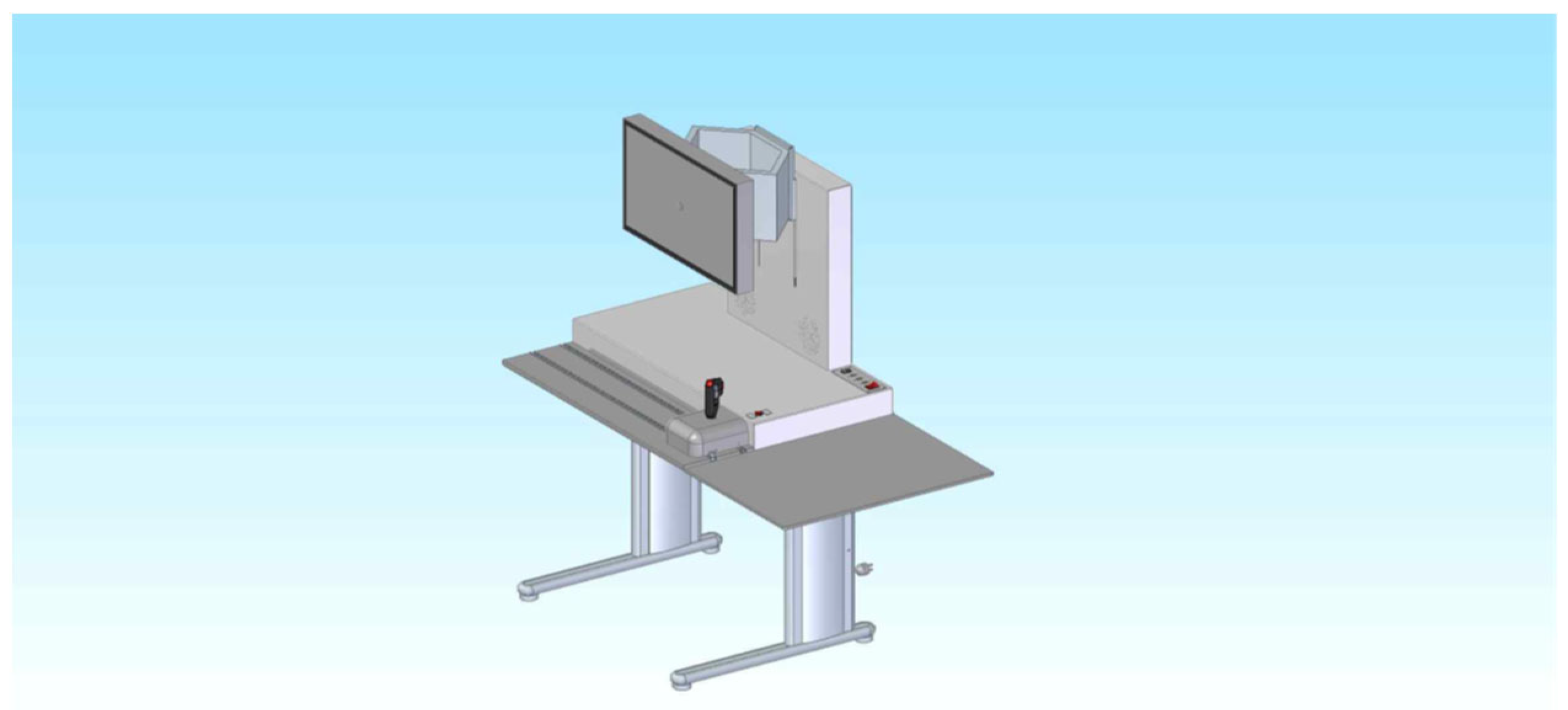
25]. The CPAD is designed as an all-in-one system, integrating a monitor, PC, desk, joystick, speakers, and computer, as shown in
Figure 1 below. To accommodate various participants’ conditions and physical differences, the monitor and joystick positions can be adjusted.
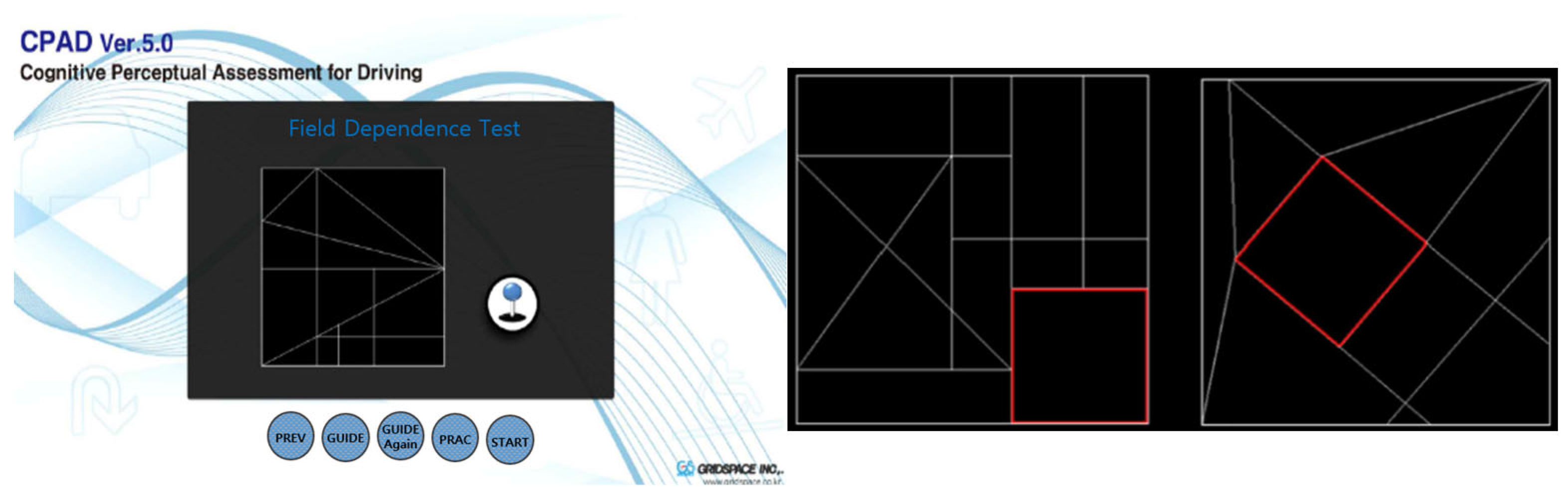
The CPAD provides various functions, including the depth perception test, sustained attention test, divided attention test, stroop test, digit span test, field dependency test, and trail making test. In this study, the field dependency test was utilized to assess whether a signal shape was embedded within various figures. The complex figures used in the field dependency test consisted of geometric shapes with varying configurations designed to mask or distract from the target signal (a specific rectangle). Each stimulus contained between 8 and 14 foil elements, arranged in a pseudo-random spatial pattern to increase visual complexity. The target rectangle was consistent in size (2.4 cm × 1.2 cm) and appeared with the same luminance to eliminate contrast bias. Neither orientation nor color of the target varied across trials. The signal-to-noise ratio was calculated based on the number of distractors relative to the presence of the target. Specifically, the SNR ranged from approximately 0.07 to 0.12, depending on the number of foil elements per trial. This variation allowed for minor perceptual difficulty differences while maintaining overall task consistency. The presentation order of the trials was randomized for each participant using a built-in randomization function in the CPAD version 5.0. The interval between trials was fixed to ensure consistency across conditions.
Participants were instructed to observe the images presented on the computer screen and operate the joystick based on their judgment. If they believed that the designated square was included in the figure, they moved the joystick to the left; if they believed it was not included, they moved the joystick to the right. A response was considered correct if the participant moved the joystick in the correct direction. If they moved it in the wrong direction or failed to respond within five seconds, it was recorded as incorrect.
Figure 2 shows a portion of the experimental screen of the CPAD and signal stimuli.
The participants were seated approximately 40 cm slightly from the screen while performing the experiment. They conducted the experiment with their hands comfortably positioned on the joystick.
Before starting the experiment, participants were required to enter their personal information, including name, address, age, gender, and date of birth, in the profile dialog box. After entering their personal information, each participant completed three preliminary trials to become familiar with the procedure before beginning the main experiment. Prior to the experiment, participants were shown two rectangular signal stimuli and instructed to memorize their size and shape. During the experiment, they assessed whether the displayed rectangle matched the memorized criteria. If the size and shape matched, they moved the joystick to the left; if not, they moved it to the right. Each participant completed a total of 40 trials.
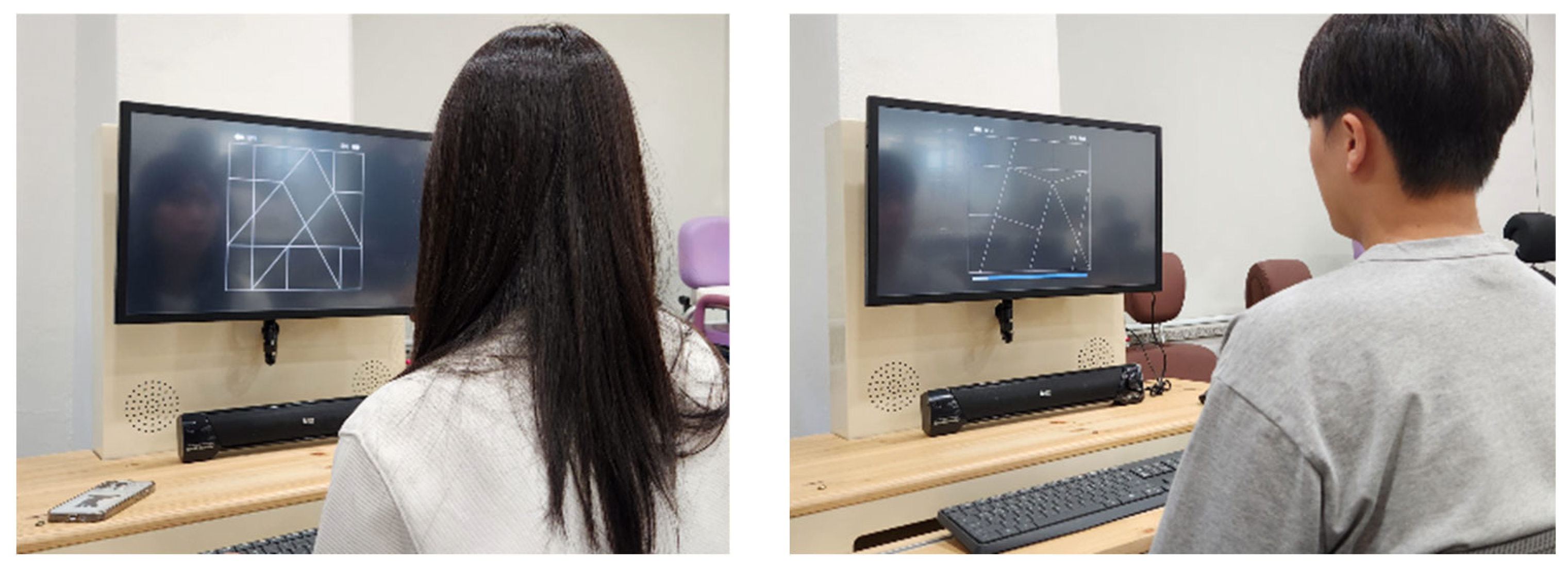
Figure 3 shows the experimental scenes.
3.2. Participants and Variables
Eighty undergraduate engineering students participated in the experiment, including 40 females and 40 male participants. Their average age was 22.0 (SD = 1.31) years, with males averaging 22.1 (SD = 1.13) years and females 20.9 (SD = 1.21) years. All participants had normal or corrected-to-normal vision in both eyes and voluntarily provided informed consent before participation. Prior to the experiment, participants received a full explanation of the experiment’s purpose and procedures and signed an informed consent form. Each participant took approximately 20 min to complete the experiment. To enhance engagement and focus, participants received a small reward upon completing the experiment. The independent variable in this experiment is gender, while the dependent variables include perception error, response time, sensitivity, and response bias.
The normality of data distribution was assessed using the Shapiro–Wilk test, and the homogeneity of variances was evaluated using Levene’s test. Although some deviations from these assumptions were observed, parametric tests were conducted, and this limitation has been noted in the discussion.
4. Results
4.1. Perception Error According to Gender
As shown in
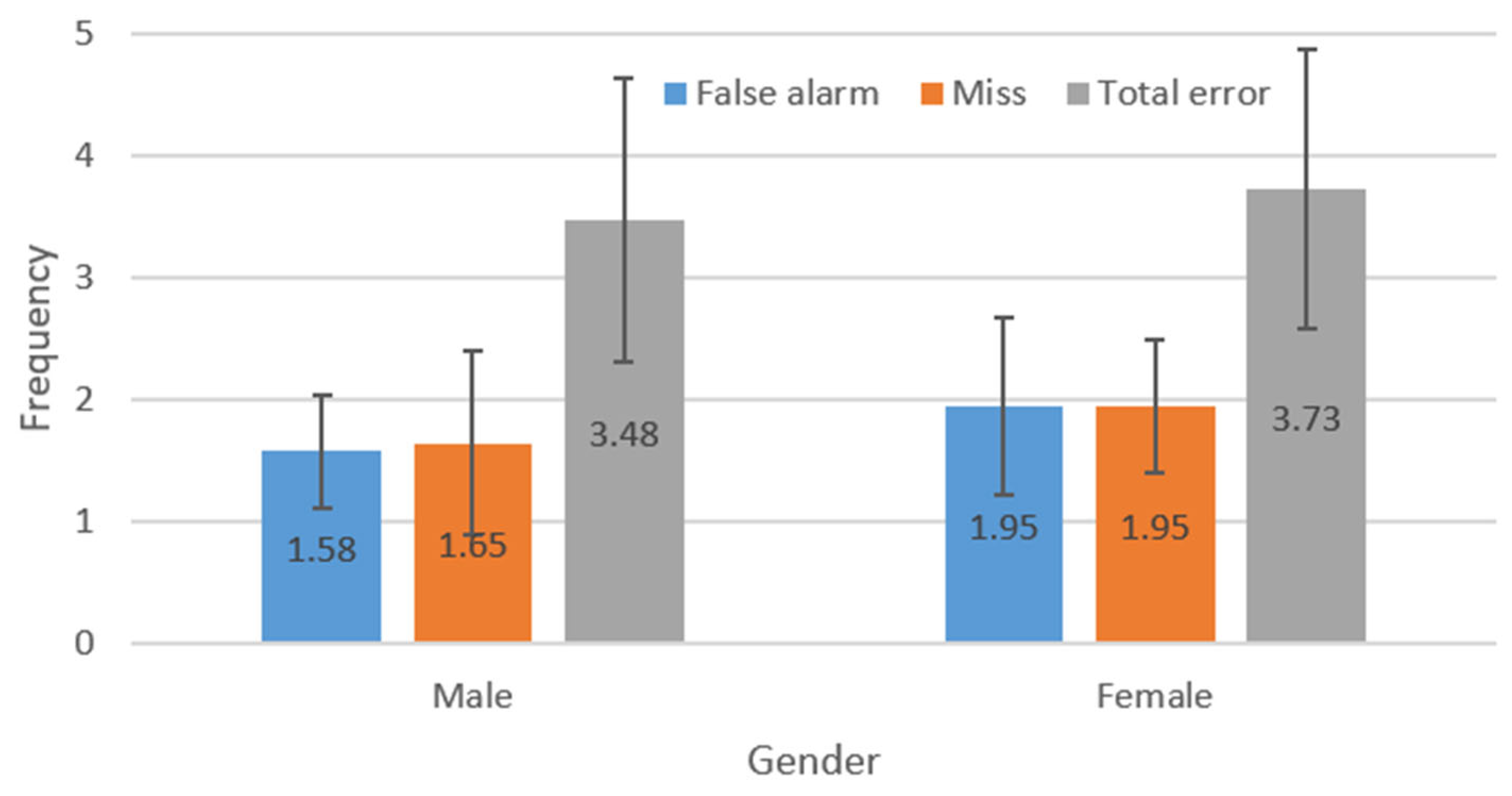
Figure 4, the frequency of errors in correctly perceiving visual signal stimuli was 3.48 times (SD = 3.78) for males and 3.72 times (SD = 3.70) for females, indicating that males made fewer errors than females. However, this difference was not statistically significant at the 0.05 significance level (F = 0.089,
p = 0.766).
Applying signal detection theory to the perception of visually presented signal stimuli allows human perception errors to be classified into two types: miss errors (failing to detect a signal) and false alarm errors (incorrectly identifying noise as a signal). As shown in
Figure 4, the average frequency of false alarm errors (incorrectly perceiving non-signal as signal) was 1.58 times (SD = 1.57) for males and 1.95 times (SD = 2.32) for females, indicating a slightly lower error rate for males. However, this difference was not statistically significant at the 0.05 level (F = 0.718,
p = 0.399), suggesting no meaningful difference in signal perception ability between genders.
Similarly, the frequency of miss errors (failing to recognize the presence of a signal) was 1.65 times (SD = 2.49) for males and 1.95 times (SD = 1.72) for females, also indicating a slightly lower error rate for males. Again, this difference was not statistically significant at the 0.05 level (F = 0.393, p = 0.532).
In summary, while these findings are not statistically significant, they suggest a tendency for males to exhibit fewer perception errors in visual information tasks than females.
4.2. Response Time According to Gender
In this study, response time was measured for the task of visually determining the presence of a signal stimulus to assess visual perception abilities.
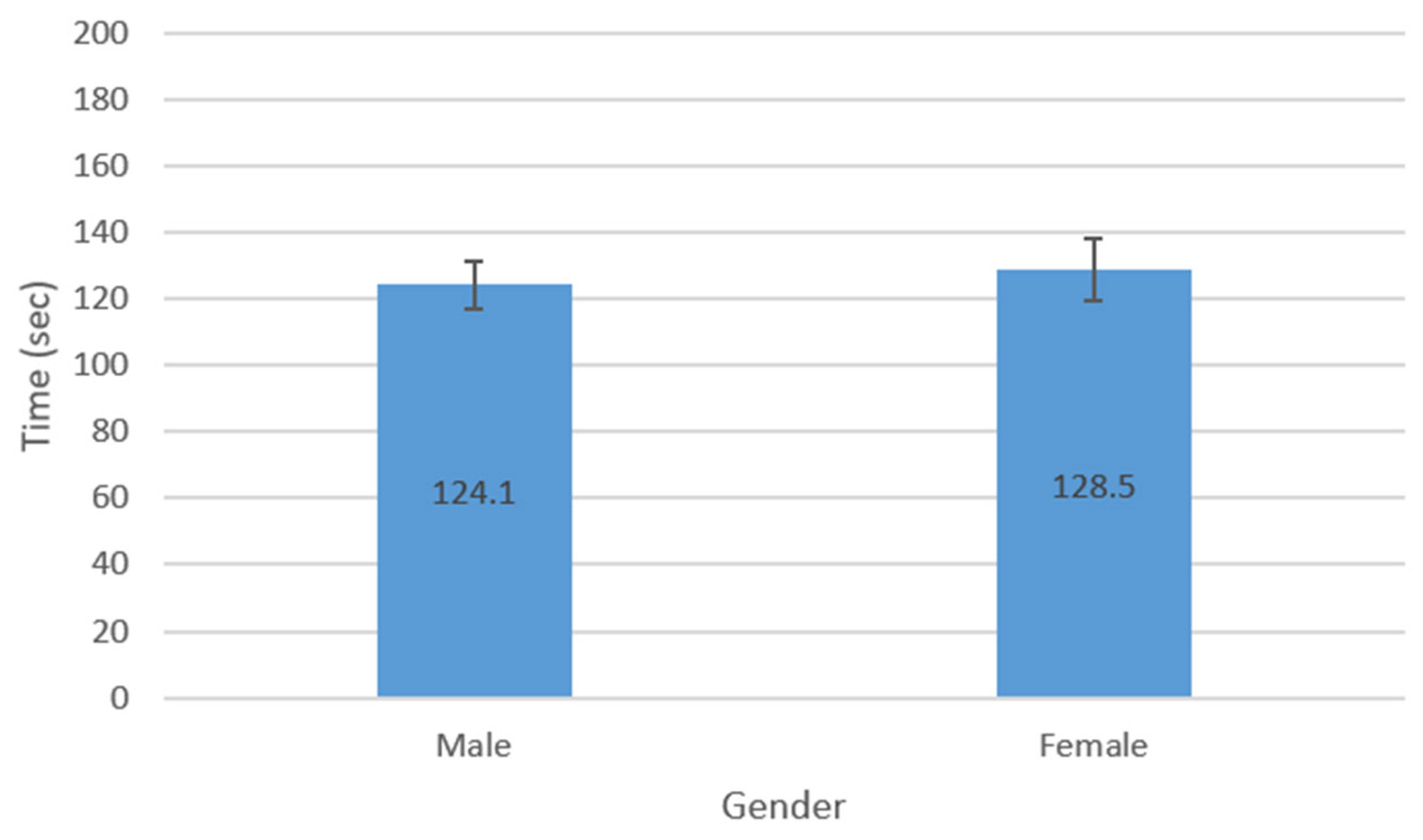
An analysis of response times by gender revealed that the average response time for males was 124.1 s (SD = 22.6), while for females, it was 128.5 s (SD = 30.0), indicating that females exhibited slightly longer response times. The results are presented in
Figure 5. However, this difference was not statistically significant at the 0.05 level (F = 0.549,
p = 0.461), suggesting no meaningful gender difference in response times for this task.
4.3. Sensitivity and Response Bias
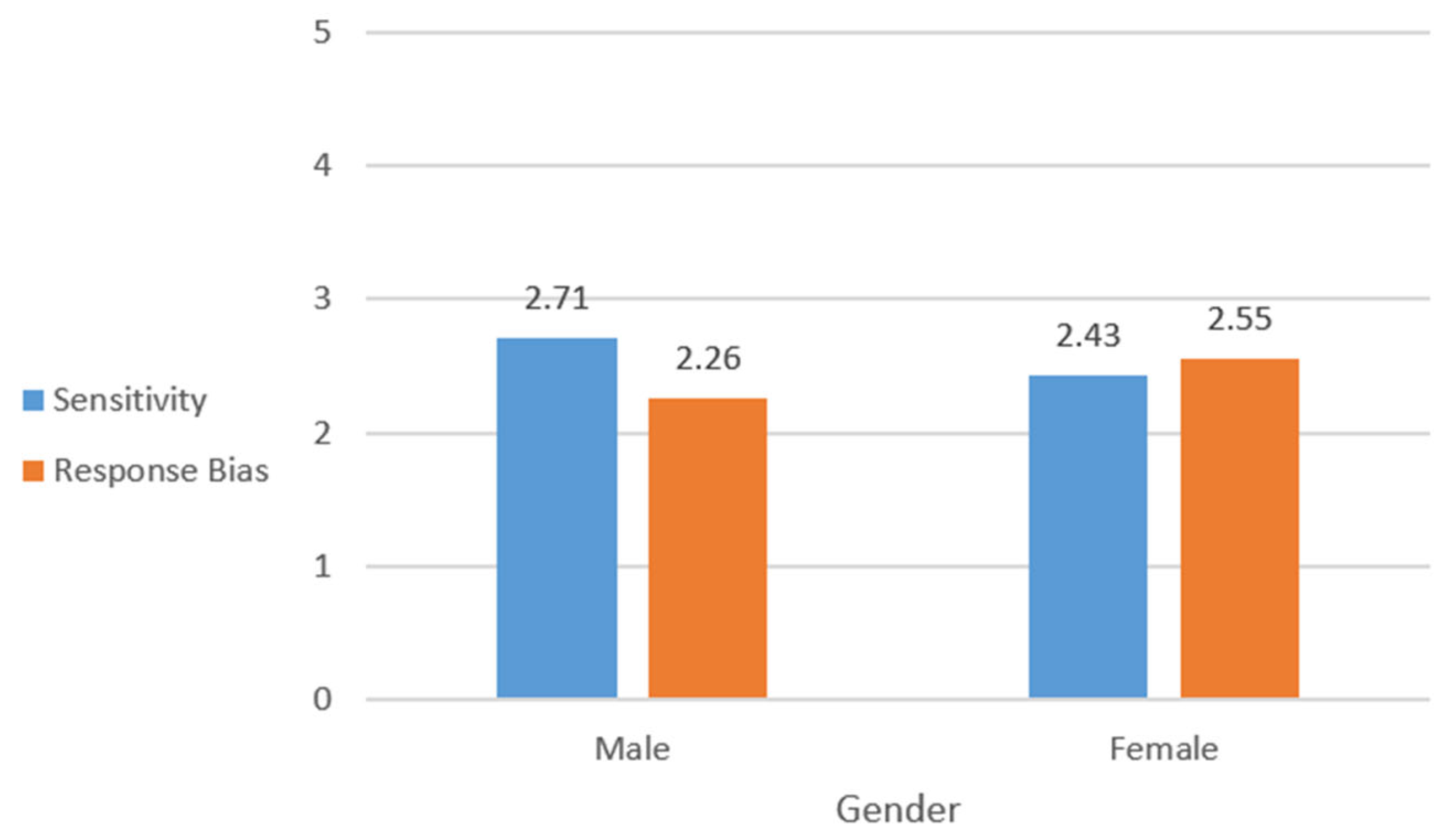
In this study, sensitivity and response bias—two key metrics from signal detection theory—were used to analyze gender differences in visual information perception abilities. Based on the experimental results, the sensitivity and response bias for visual information detection in males and females were calculated as follows.
Male: d1′ = |ZN1| + |ZS1| = 1.5632 + 1.1533 = 2.7165
Female: d2′ = |ZN2| + |ZS2| = 1.4908 + 0.9412 = 2.4320
Male: β1 = P(N/S)/P(S/N) = 0.1336/0.0590 = 2.264
Female: β2 = P(N/S)/P(S/N) = 0.1733/0.0680 = 2.549
Figure 6 illustrates the sensitivity and response bias for males and females. It can be observed that the sensitivity for signal detection is slightly higher in males (2.71) compared to females (2.43), suggesting that males may have a slightly better perceptual ability to detect visual information.
Regarding response bias, both males and females exhibit a response bias greater than 1, indicating that both groups make conservative decisions when judging visual information. However, females appear to make slightly more conservative (i.e., stricter) decisions compared to males.
4.4. The Relationship Between Perceptual Errors and Response Time
The correlation between response time and perceptual errors was analyzed for each participant. Response time was defined as the total time taken to judge whether a signal was present in 40 visual stimuli.
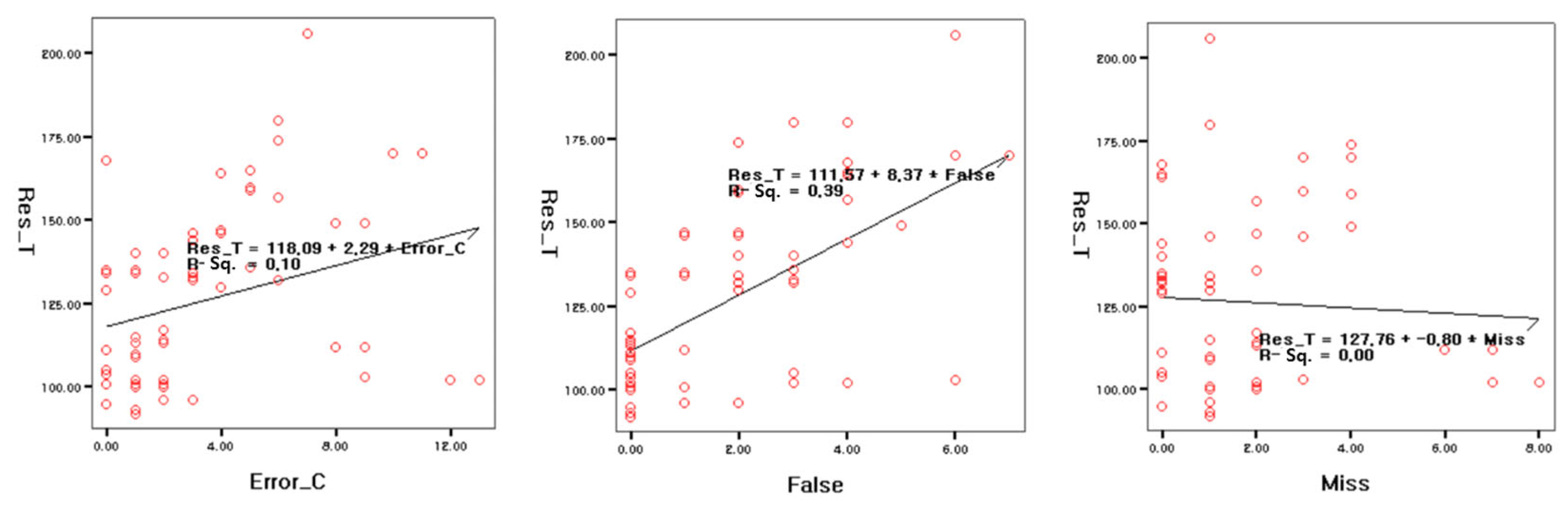
Figure 7 presents scatter plots illustrating these relationships. The left graph shows the scatter plot of the total number of perceptual errors versus response time, the middle graph shows the scatter plot of false alarm errors versus response time, and the right graph shows the scatter plot of miss errors versus response time. The scatter plots show that perceptual errors and false alarm errors exhibit a positive correlation with response time, whereas miss errors do not appear to have a clear relationship with response time.
Therefore, a correlation analysis was conducted to quantitatively examine the relationships among these variables. The results showed a correlation of 0.321 between response time and perceptual errors, which was statistically significant at the 0.05 level (p = 0.004).
Further analysis revealed that the correlation between response time and false alarm errors was 0.625, statistically significant at the 0.01 level (p = 0.000). However, the correlation between response time and miss errors was −0.064, indicating no statistically significant relationship (p = 0.571). These findings suggest that longer response times are associated with more frequent false alarms, whereas miss errors are not significantly correlated with response time.
In conclusion, there is a significant correlation between the overall number of perceptual errors and response time. Furthermore, the correlation between false alarm errors and miss errors was 0.343, statistically significant at the 0.01 level (p = 0.002), suggesting that individuals who make more false alarms are also more likely to make miss errors.
5. Conclusions
In human–machine systems, the accurate perception of visual stimuli is a crucial factor in enhancing task safety, usability, and performance. With the increasing reliance on visual interfaces driven by digital technologies, it is more important than ever to design systems that support users in effectively and accurately interpreting visual information. To support such advancements, research on visual perception should continue to be explored from multidisciplinary perspectives.
This study employed the field dependency test within the CPAD to examine gender differences in the perception of visual signals embedded in complex visual stimuli. The field dependency test is widely recognized in cognitive psychology and human factors research as a tool for measuring an individual’s ability to extract relevant visual signals from complex or distracting environments. This ability is directly relevant to human–machine interaction scenarios—such as operating digital interfaces, navigating control panels, or interpreting alerts in cluttered displays—where users must identify critical information amid non-essential visual stimuli. Thus, this task is considered appropriate for assessing general visual information perception capabilities within human–machine systems.
Although signal detection theory–based analysis showed that males performed slightly better than females in both sensitivity and response bias, there were no statistically significant differences in perceptual ability between male and female participants. Likewise, while females tended to exhibit slightly longer response times during visual judgment tasks compared to males, this difference was also not statistically significant. Therefore, no definitive conclusions can be drawn regarding gender-based differences in visual information perception. These observed trends may have been influenced by several factors, including the homogeneous cognitive characteristics of a university student sample, the potential ceiling effects of the task, and the limited number of trials. As such, the results should be interpreted with caution.
These trends, although subtle, suggest the presence of differing perceptual strategies or cognitive approaches between genders. The findings of this study carry important implications for the design of user interfaces and visual elements in human–machine systems, particularly in industrial and safety-critical environments. As more women enter such environments, understanding gender-related tendencies in visual processing can contribute to the development of more inclusive, efficient, and cognitively ergonomic interfaces.
Furthermore, while this study aimed to explore implications for user-interface design, it is important to note that no practical recommendations are proposed based on statistically non-significant results. Future research incorporating more diverse populations and varying task conditions is necessary to clarify whether such trends hold substantive or practical meaning in real-world human–machine system contexts.
In future studies, it will be necessary to validate and generalize the findings by conducting research involving diverse age groups and a broader spectrum of visual stimuli. By expanding upon these findings, future research can help build more intelligent, user-aware systems that accommodate a wider range of perceptual and cognitive profiles—ultimately leading to safer and more efficient human–machine collaboration. In addition, as the assumptions of normality and homogeneity were not fully satisfied, future studies should consider the use of non-parametric tests such as the Mann–Whitney U test to validate findings under less restrictive conditions.
Author Contributions
Conceptualization, Y.L. and K.J.; data curation, Y.L.; formal analysis, Y.L. and K.J.; funding acquisition, Y.L. and K.J.; investigation, Y.L.; methodology, K.J.; project administration, K.J.; resources, Y.L.; software, Y.L.; supervision, K.J.; validation, Y.L. and K.J.; visualization, Y.L.; writing—original draft, Y.L.; writing—review and editing, Y.L. and K.J. All authors have read and agreed to the published version of the manuscript.
Funding
This research received no external funding.
Institutional Review Board Statement
Not applicable.
Informed Consent Statement
Informed consent was obtained from all subjects involved in the study.
Data Availability Statement
The original contributions presented in the study are included in the article. Further inquiries can be directed to the corresponding authors.
Conflicts of Interest
The authors declare no conflicts of interest.
References
- Sanders, M.S.; McCormick, E.J. Human Factors in Engineering and Design; McGraw-Hill Education: New York, NY, USA, 1993. [Google Scholar]
- Nevin, J.A. Signal detection theory and operant behavior: A review of David M. Green and John A. Swets’ Signal detection theory and psychophysics. J. Exp. Anal. Behav. 1969, 12, 475–480. [Google Scholar] [CrossRef]
- Park, C. The Influence of Unattended Distractors on the Identification of Targets. Korean J. Cogn. Sci. 2013, 24, 365–391. (In Korean) [Google Scholar] [CrossRef]
- Kwon, O.; Shin, H. Effects of Target Types and Locations on Visual Detection Performance. Korean J. Exp. Cogn. Psychol. 2002, 14, 127–143. (In Korean) [Google Scholar]
- Smith, J.P. The effects of figural shape on the perception of area. Percept. Psychophys. 1969, 5, 49–52. [Google Scholar] [CrossRef]
- Lee, J.H. The Effect of Visual Perception for Elevator Button Search. Korean J. Animat. 2016, 12, 132–153. (In Korean) [Google Scholar]
- Green, D.M.; Swets, J.A. Signal Detection Theory and Psychophysics; Wiley: Hoboken, NJ, USA, 1966. [Google Scholar]
- Macmillan, N.A.; Creelman, C.D. Signal Detection Theory: A User’s Guide, 2nd ed.; Lawrence Erlbaum Associates: Mahwah, NJ, USA, 2005. [Google Scholar]
- Berbaum, K.S.; Franken, E.A., Jr.; Dorfman, D.D.; Rooholamini, S.A.; Kathol, M.H.; Barloon, T.J.; Behlke, F.M.; Sato, Y.; Lu, C.H.; El-Khoury, G.Y. Satisfaction of search in diagnostic radiology. Investig. Radiol. 1991, 26, 527–534. [Google Scholar]
- Shaqiri, G.; Haxhiu, B.; Shaqiri, A. Gender differences in visual perception among young and elderly adults. Eur. J. Public Health Stud. 2016, 2, 1–10. [Google Scholar]
- Ramirez-Ucles, I.M.; Ramirez-Ucles, R. Gender Differences in Visuospatial Abilities and Complex Mathematical Problem Solving. Front. Psychol. 2020, 11, 191. [Google Scholar] [CrossRef] [PubMed]
- Zhu, Z. Gender differences in mathematical problem solving patterns: A review of literature. Int. Educ. J. 2007, 8920, 187–203. [Google Scholar]
- Zheng, S. Gender differences in color and color words processing: Evidence from mixed-effects modeling. Contemp. Foreign Lang. Stud. 2024, 5, 163–178. [Google Scholar]
- Chen, S. Understanding Gender-Based Gaze Behaviors in Person Perception: An Eye-Tracking Study. Educ. Rev. 2022, 6, 545–548. [Google Scholar] [CrossRef]
- Inukai, T.; Kawahara, J.I. Sex Differences in Temporal but Not Spatial Attentional Capture. Front. Psychol. 2018, 9, 1893. [Google Scholar] [CrossRef]
- Kim, J.-H. A Study on Observation Characteristics by Sex shown in the process of Visual Appreciation of Space. J. Korean Inst. Inter. Des. 2013, 22, 152–161. (In Korean) [Google Scholar] [CrossRef][Green Version]
- Kwon, O. Analysis of the difference in pilot error by using the signal detection theory. J. Korean Soc. Aeronaut. Flight Oper. 2010, 18, 51–57. (In Korean) [Google Scholar]
- Lee, Y.; Jung, K. User Experience Analysis of SNS Native Advertising using Signal Detection Theory. J. Ergon. Soc. Korea 2019, 38, 49–60. (In Korean) [Google Scholar] [CrossRef]
- Shin, S.; Min, Y.; Lee, K.; Han, G. A study of attention-induced design dimension relating to optimal cognitive performance interface development for mentally retarded disorders. Korean Soc. Des. Sci. 2001, 12, 189–198. (In Korean) [Google Scholar]
- Shin, H.S.; Yang, J.H. Cognitive Biases of Facial Perception in Body Dysmorphic Symptoms: Sensitivity and Response Bias. Korean J. Psychol. Gen. 2017, 28, 3–18. (In Korean) [Google Scholar]
- Stanislaw, H.; Todorov, N. Calculation of signal detection theory measures. Behavior Research Methods. Instrum. Comput. 1999, 31, 137–149. [Google Scholar] [CrossRef]
- Wickens, C.D.; Hollands, J.G. Engineering Psychology and Human Performance, 3rd ed.; Prentice Hall: Englewood Cliffs, NJ, USA, 2000. [Google Scholar]
- Parasuraman, R.; Nestor, P.G. Attention and driving: Assessment in individuals with psychotic disorders. Am. J. Psychiatry 1991, 148, 232–236. [Google Scholar]
- Buser, R.; Schmid, U. Signal detection in user interface design. Univers. Access Inf. Soc. 2016, 15, 395–406. [Google Scholar]
- Jang, S.; Park, S.; Kim, D.; Lee, J.; Lee, J.; Jeong, W.K.; Lee, J.H.; Kim, S.I. Cognitive Perceptual Assessment Tool for Evaluation of Driving Ability of Persons with Brain Injury. J. Korean Acad. Rehabil. Med. 2006, 30, 128–134. (In Korean) [Google Scholar]
| Disclaimer/Publisher’s Note: The statements, opinions and data contained in all publications are solely those of the individual author(s) and contributor(s) and not of MDPI and/or the editor(s). MDPI and/or the editor(s) disclaim responsibility for any injury to people or property resulting from any ideas, methods, instructions or products referred to in the content. |
© 2025 by the authors. Licensee MDPI, Basel, Switzerland. This article is an open access article distributed under the terms and conditions of the Creative Commons Attribution (CC BY) license (https://creativecommons.org/licenses/by/4.0/).