1. Introduction
Composite materials are engineered systems created by combining different substances to achieve enhanced physical and mechanical properties. They are widely used in the automotive, aerospace, construction, and sports equipment industries due to their lightweight nature, high strength, corrosion resistance, and durability. However, conventional composites often rely on fossil fuel-derived polymers and fillers, raising significant environmental sustainability concerns. In response, bio-composites produced from renewable and natural sources have emerged as more sustainable alternatives, particularly those reinforced with naturally sourced polymers and fillers [
1,
2,
3,
4].
Among these natural waste sources, seashell residues represent a significant global environmental challenge. Improperly managed, they contribute to solid waste accumulation, unpleasant odors, and potential health hazards. Disposal is logistically complex and costly, with substantial production volumes reported worldwide: approximately 300,000 tonnes of oyster shells annually in China, over 160,000 tonnes in Taiwan [
5,
6], around 320,000 tonnes in South Korea (with only 30% reused) [
7], and additional large-scale outputs in Galicia, Spain [
8], and Peru [
9]. In Europe, seashell residues are classified as special waste, incurring disposal fees of up to 0.25 € per kilogram, thus imposing considerable costs on producers [
10].
Utilizing seashell waste as a reinforcing filler in bio-composites offers dual benefits: addressing waste management challenges and improving material properties. Previous studies have demonstrated that seashell-derived bio-fillers can enhance the mechanical, thermal, and acoustic performance of polymer matrices while supporting sustainability goals. For example, Maamoun et al. reported improved mechanical and acoustical properties in polyurethane foams [
11], while Fombuena et al. observed notable gains in mechanical strength and thermal performance in epoxy systems incorporating mollusk shell powders [
12]. Chandran et al. developed bio-epoxy composites with fish scale and seashell fillers, assessing structural properties across various loadings [
13]. Razali et al. reinforced 3D-printed polylactic acid with calcined seashell powder, achieving enhanced mechanical strength and thermal stability [
14]. Moustafa et al. utilized finely ground seashells in ABS matrices to improve flame retardancy and mechanical performance [
15]. Santulli et al. and others have highlighted the broader potential for integrating marine waste into bio-based polymer systems to promote sustainability [
16,
17,
18]. Additional research has demonstrated enhanced mechanical, thermal, and flame-retardant properties in ABS composites using seashell-derived bio-fillers [
19], with comprehensive reviews further underscoring the environmental and economic benefits of incorporating seashell and eggshell waste into polymer systems [
20].
Despite these advances, most existing research has focused on seashell waste generated by seafood processing industries, which typically undergoes chemical or thermal pre-treatment to ensure consistency and reduce organic contamination. By contrast, tidal seashell debris—naturally deposited along shorelines—remains largely unprocessed, mixed in origin, and variable in particle morphology and mineral composition. This unprocessed nature introduces challenges for preparation and bonding but offers a sustainable, low-cost, and underexplored resource.
Although seashell powder is primarily composed of calcium carbonate, tidal debris retains a natural layered nacreous microstructure, variable porosity, and trace mineral content (e.g., Mg, Sr), which can influence dispersion, crack deflection, and adhesion within an epoxy matrix [
4]. Understanding these characteristics is critical for developing optimized, sustainable composites with enhanced mechanical integrity. Additionally, employing eco-friendly binders such as modified castor oil (MCO) and applying predictive statistical tools like response surface methodology (RSM) can enable precise formulation design and performance optimization.
Therefore, this study aims to:
Investigate the use of unprocessed tidal seashell debris as a sustainable bio-filler in epoxy composites.
Optimize filler loading and resin composition using RSM to balance mechanical, thermal, and physical properties.
Characterize the resulting composites in terms of tensile strength, impact resistance, hardness, density, thermal conductivity, and microstructural features.
Evaluate the effects of tidal seashell filler morphology and dispersion on interfacial bonding and composite integrity.
2. Materials and Methods
2.1. Materials
The chemical reagents used in this study (methyl alcohol, hydrogen peroxide, and acetic acid) were supplied by Merck. Epoxy resin A (EPA) and Epoxy resin B (EPB) were procured from Polisan. The commercial castor oil used for the synthesis of the bio-based matrix had a density of 960 kg/m
3, a viscosity of 580 mPas, and a hydroxyl value of 160 mg KOH/g oil at 20 °C [
21].
Seashells used as filler material were collected from the shoreline of the Soli region in Mersin, Turkey. The shells were stored for 30 days in a shaded area at ambient temperature to remove residual moisture and organic content. Subsequently, they were ground using a ball mill to achieve a particle size distribution within the 100–200 mesh range. A sieve analysis confirmed that the average particle size ranged between 70 and 150 microns.
2.2. Material Preparation and Composite Fabrication
The synthesis protocol was optimized using RSM to identify the best formulation parameters. RSM enables systematic investigation of variable interactions and prediction of optimal outcomes through statistical modeling and design of experiments.
Castor oil was epoxidized under controlled acidic conditions by reacting 250 mL of oil with 62.5 mL of 80% acetic acid and 125 mL of 50% hydrogen peroxide at 60 °C for 4 h, with gradual peroxide addition to control the reaction rate. The epoxidized oil was then hydroxylated using 99% methanol under acidic conditions at 60 °C for 12 h, followed by neutralization and washing. The resulting MCO was stored in sealed containers for use as a bio-based binder.
Tidal seashell debris was thoroughly washed with distilled water and dried at 60 °C. The cleaned shells were ground using a ball mill and sieved to achieve a uniform particle size range of 100–200 mesh (approximately 70–150 µm). SSP was further dried at 100 °C for 24 h to remove residual moisture and stored in airtight containers until composite fabrication.
MCO was incorporated at a fixed ratio of 1.5 wt.%, with EPA and EPB added according to the design matrix in
Table 1. The resin blend, MCO, and SSP were premixed at 750 rpm for 5 min, followed by high-speed mixing at 1500 rpm for 2 min to ensure homogeneous dispersion. Mixtures were cast into standard molds and cured at room temperature for 24 h before demolding and testing [
22,
23,
24].
Unless otherwise specified, all measurements were performed in triplicate for each formulation, and average values were reported. Data were analyzed using RSM, with ANOVA applied to assess the significance of model terms. Statistical analysis was conducted using Design Expert software version 12. Details are given in
Table 1.
2.3. Charpy Impact Test
Impact tests were performed on notched specimens following the ASTM D6110-18 standard [
25]. All tests were conducted at room temperature to assess the composites’ energy absorption capacity and impact resistance. A Charpy impact testing machine (49.05 J capacity, Veb Werkstoffprüfmaschinen Leipzig) was used. Specimens were positioned on two anvils with a 40 mm span, and the pendulum-mounted striker was released to deliver the impact. The absorbed impact energy was directly read from the device dial and recorded for analysis of mechanical strength properties. Each formulation was tested in triplicate, and average impact energy values were reported.
In Equation (1), α represents the impact toughness (J/mm2), W denotes the absorbed impact energy (J), and A refers to the cross-sectional area of the fractured specimen (mm2). This formula was employed as a fundamental tool to quantitatively evaluate the energy absorption capacity of the tested materials. The calculations ensured consistent and reliable results for each specimen.
2.4. Activation Energy
The thermal degradation behavior of the SSP/bio-composite specimens was analyzed to determine the activation energy using advanced thermal analysis techniques, specifically the Coats–Redfern method. This method is widely recognized for evaluating non-isothermal thermogravimetric data by examining the relationship between heating rate (β) and peak decomposition temperature (T). To minimize oxidative degradation and ensure accurate measurement of the material’s thermal response, all thermogravimetric analyses were conducted under a nitrogen atmosphere.
The activation energy was calculated by plotting ln (β/T2) versus 1/T, where β is the heating rate (K/min) and T is the peak temperature (Kelvin). The slope of the resulting linear regression was used to determine the activation energy based on the Arrhenius equation. This approach provided a quantitative understanding of the thermal degradation kinetics of the composites and offered insights into their thermal stability and suitability for high-temperature applications.
2.5. Bulk Density
The bulk density of the SSP/bio-composite specimens was measured following the ASTM D1895 [
26] standard, which specifies procedures for determining the bulk density of granular and powdered materials. Composite specimens were prepared in cube-shaped molds with a volume of 1000 cm
3, consistent with those used for thermal conductivity testing. The specimens contained varying SSP contents, ranging from 0% to 3.5% by weight. Each specimen was weighed using a precision balance with an accuracy of 0.01 g. All density measurements were conducted in triplicate, with average values calculated. The bulk density (
) was calculated using Equation (2):
Here, m represents the mass of the specimen in grams, and V denotes the volume of the mold (1000 cm3). The results were recorded in units of g/cm3. The bulk density values were utilized to evaluate the influence of SSP content on the physical characteristics of the composites, offering insight into their structural integrity and potential applications in material engineering.
2.6. Hardness Test (Shore D)
The Shore D hardness of the bio-composite specimens was measured following the ASTM D2240 [
27] standard, which is widely used to assess the hardness of polymers, elastomers, and similar materials. To ensure reliability and reproducibility, specimens were prepared with dimensions of 60 mm × 60 mm × 10 mm, as specified in the standard. Measurements were conducted using a TIME TH-210 Digital Shore Meter equipped with a calibrated Shore D durometer. During testing, each specimen was firmly positioned on the device platform, and a standard force of 50 N was applied using the indenter. To account for surface variations, five measurements were taken at different positions on each specimen, and the final hardness value was calculated as the average of these readings. Three specimens were tested per formulation to ensure reproducibility.
2.7. Tensile Strength
Tensile tests were conducted to evaluate the mechanical strength of the SSP-reinforced bio-composites. A comparable approach was used by Owuamanam et al., who incorporated eggshell-based calcium carbonate into bio-epoxy matrices and reported improvements in flexural and tensile strength for sustainable composites [
28]. Testing was performed using a universal tensile testing machine (UTEST, Ankara, Turkey) with a maximum capacity of 1 kN. Specimens were prepared according to ASTM D638M-91a [
29], with a gauge length of 30 mm and a cross-sectional area of 5 × 5 mm. All tests were carried out at room temperature with a preload of 1 N and a constant crosshead speed of 1 mm/min. During testing, the lower grip remained fixed while the upper grip was displaced until specimen failure. Each formulation was tested in triplicate, and the average tensile strength values were reported to evaluate mechanical performance, including elasticity and ultimate tensile behavior.
2.8. Thermal Conductivity
Thermal conductivity measurements were performed following the ASTM D5334-14 [
30] standard using a portable thermal conductivity meter (Thermtest TLS-100). SSP-reinforced composites containing 0% to 3.5% SSP by weight were cast into cube-shaped molds with a volume of 1000 cm
3. To standardize testing, a central hole measuring 2.5 mm in diameter and 5 cm in depth was drilled into each cured specimen. The Thermtest sensor probe was inserted into this cavity to obtain direct real-time readings of the thermal conductivity coefficient. This non-destructive method ensured accurate and efficient evaluation of the composites’ heat transfer properties. Measurements were performed in triplicate for each formulation, and mean values were reported.
2.9. Fourier-Transform Infrared Spectroscopy (FT-IR)
FT-IR spectroscopy was conducted to investigate the chemical structure of the composites. Spectra were collected using a Shimadzu QATR-S spectrophotometer in attenuated total reflectance (ATR) mode. Each measurement comprised 32 scans at a spectral resolution of 4 cm−1 over the range of 4000–600 cm−1. Background air served as the reference to ensure accurate baseline correction. The resulting FT-IR data were used to identify functional groups and assess the dispersion and interaction of seashell powder within the epoxy matrix. Representative spectra were obtained for each formulation.
2.10. Digital Microscopy
The surface morphology of the SSP/bio-epoxy composites was examined using a Dcorn HDMI LCD digital microscope with a 16-megapixel sensor and up to 1200× magnification. This system enables real-time, non-destructive imaging under ambient conditions without the need for conductive coatings required in electron microscopy. All specimens were observed under consistent magnification, lighting, and working distance. Images were captured between 100× and 1000× to assess filler dispersion, surface roughness, agglomeration, and potential voids at the filler–matrix interface. These observations were critical for evaluating how varying SSP contents influenced interfacial adhesion and compatibility.
3. Results
Seventeen experimental formulations were developed to investigate the influence of tidal SSP content and epoxy resin ratios on the structural and functional performance of the bio-composites. The proportions of EPA, EPB, and SSP were systematically varied to optimize mixture composition, using RSM as the statistical design tool. These combinations were selected to evaluate both the linear and interactive effects of the components on properties such as mechanical strength, thermal conductivity, hardness, and density. The detailed composition of each experimental run is presented in
Table 1, with mid-point repetitions (e.g., Experiments 8 and 16) included to assess reproducibility and model reliability.
3.1. Charpy Impact Test
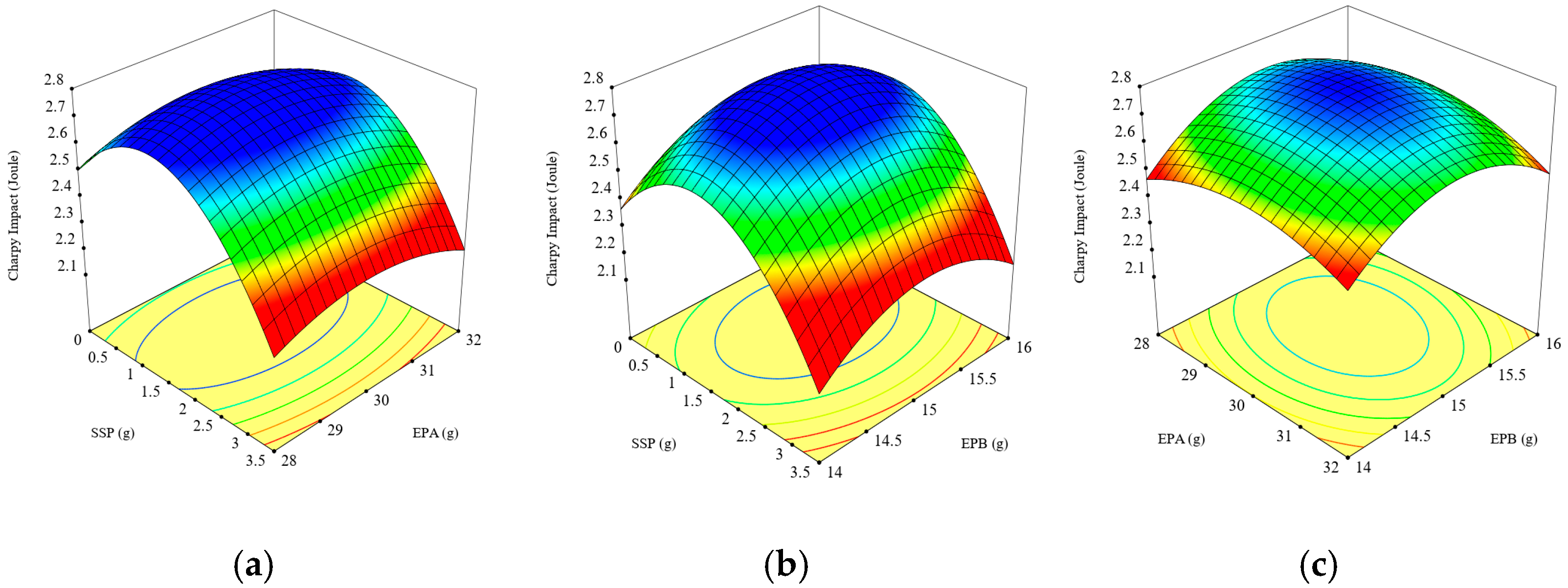
Figure 1 illustrates the effects of SSP, EPA, and EPB contents on Charpy impact resistance. The results indicate that each component has a distinct and significant influence on impact strength. An initial increase in SSP content enhances impact resistance; however, beyond a certain threshold, this effect reverses and impact strength declines. Moderate SSP levels reinforce mechanical integrity. Excessive amounts increase brittleness. Overloading SSP disrupts homogeneity, induces stresses, and reduces impact resistance by causing poor adhesion, agglomeration, and microvoids. EPA content generally shows a positive effect on impact performance, though this influence plateaus at higher levels. At low concentrations, EPA helps to preserve polymer network flexibility, enhancing impact strength; at higher concentrations, increased rigidity may contribute to brittleness. Similarly, EPB contributes positively to impact strength, but its effect diminishes at elevated levels. Balanced EPA and EPB levels maximize impact resistance, while excessive amounts compromise mechanical stability. Equation (3) presents the quadratic model developed using the RSM design for the Charpy impact test. This trend reflects improved filler dispersion and energy absorption at moderate SSP levels, while excessive loading causes agglomeration, stress concentrations, and reduced energy dissipation capacity.
Table 2 presents the effects of SSP, EPA, and EPB contents on the Charpy impact strength of the bio-composites. The overall model is highly significant (F = 105.94,
p < 0.0001), with SSP emerging as the most influential factor in determining impact resistance (F = 333.15). Both EPB (
p = 0.0052) and EPA (
p = 0.0342) also make statistically significant contributions. While the two-way interactions were found to be non-significant (
p > 0.05), all second-order terms (A
2, B
2, and C
2) were statistically significant, indicating that the variables exhibit non-linear effects on impact strength. The non-significant lack-of-fit test result (
p = 0.3719) confirms that the model fits the experimental data well and can be considered statistically reliable.
3.2. Activation Energy
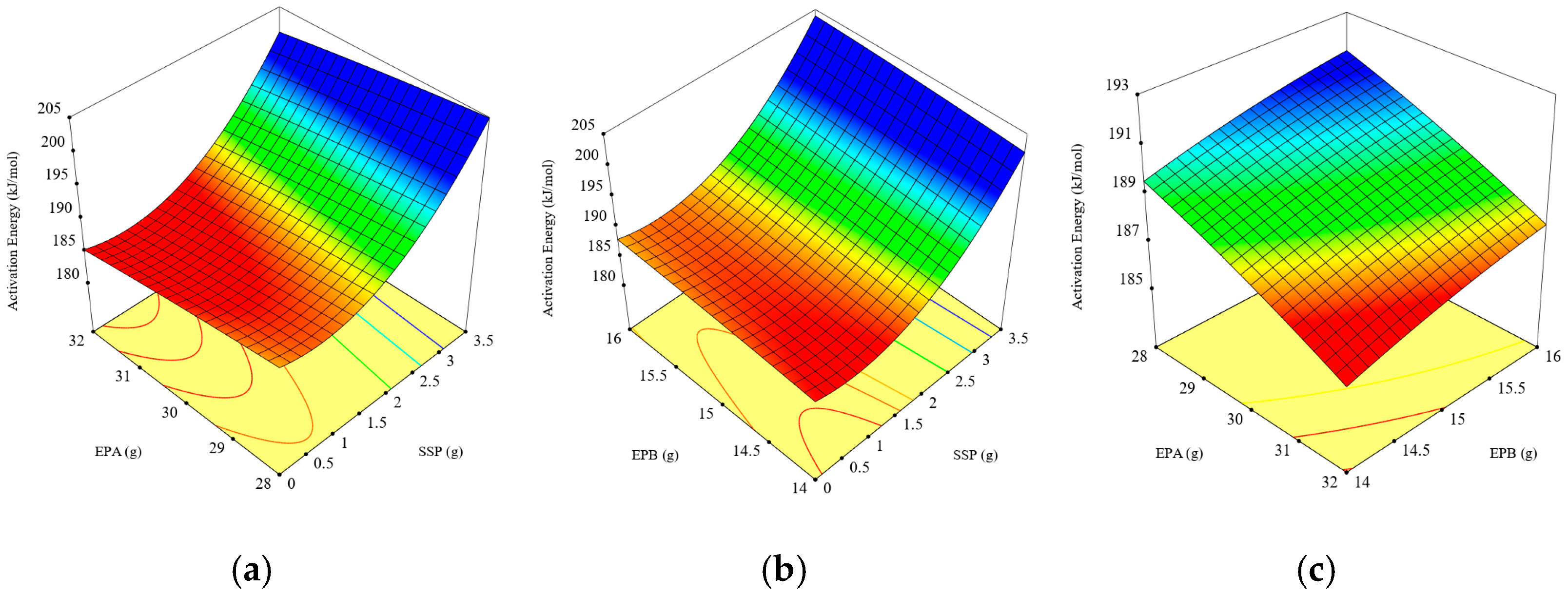
Figure 2 illustrates the effects of SSP, EPA, and EPB contents on the thermal degradation behavior of the composites. In the SSP–EPA interaction, increasing EPA content at both low and high SSP levels negatively affects thermal stability. This is due to insufficient reinforcement at low SSP levels and stress concentrations at high SSP levels. In the SSP–EPB interaction, increasing EPB content enhances thermal stability at low SSP levels; however, this effect becomes limited at higher SSP content. While EPB is known to improve heat resistance by increasing polymer network rigidity, this benefit is reduced when excessive SSP disrupts matrix homogeneity. The EPA–EPB interaction shows maximum thermal stability when both components are present at balanced levels. The activation energy achieves its highest values when EPA is at a minimum and EPB is at a maximum, with a similar trend observed under reverse conditions, suggesting a dual stability point. These results show that filler distribution, crosslink density, and interfacial interactions directly influence thermal stability. The optimal balance of these components is therefore critical for enhancing the composite’s thermal resistance. The quadratic model proposed by the RSM design for activation energy prediction is presented in Equation (4). These results can be explained by SSP acting as a bio-filler that raises the decomposition energy through physical barrier effects, improved filler–matrix bonding, and reduced mobility of volatile degradation products. Optimal SSP ratios promote uniform dispersion and strong interfacial adhesion, delaying thermal decomposition, while excessive loading may cause agglomeration or voids that reduce barrier effectiveness. Reported activation energy values for composites using mineral fillers such as calcium carbonate typically range from 120 to 160 kJ/mol [
15], while bio-fillers like eggshell and snail shell powders show comparable improvements in thermal stability [
13,
14], supporting the suitability of SSP as a sustainable filler in enhancing thermal resistance.
Table 3 confirms that the model is statistically significant (
p < 0.0001) and that SSP, EPA, and EPB contents have notable effects on the activation energy. SSP (A) exhibits the strongest influence (F = 1104.95,
p < 0.0001), followed by EPA (B) (F = 57.44,
p = 0.0001) and EPB (C) (F = 14.37,
p = 0.0068). The two-way interaction terms (AB, AC, and BC) were found to be non-significant (
p = 1.0000), indicating that the individual effects of the variables are more dominant than their combined interactions. The quadratic effect of SSP (A
2) was significant (
p < 0.0001), suggesting a non-linear relationship, while the quadratic effects of EPA (B
2) and EPB (C
2) were not statistically significant. The model fits the data well (lack of fit
p = 0.5263) and shows reliable predictive performance. This analysis highlights that a balanced optimization of SSP, EPA, and EPB is essential for enhancing the thermal stability of the bio-composite system.
3.3. Bulk Density Results
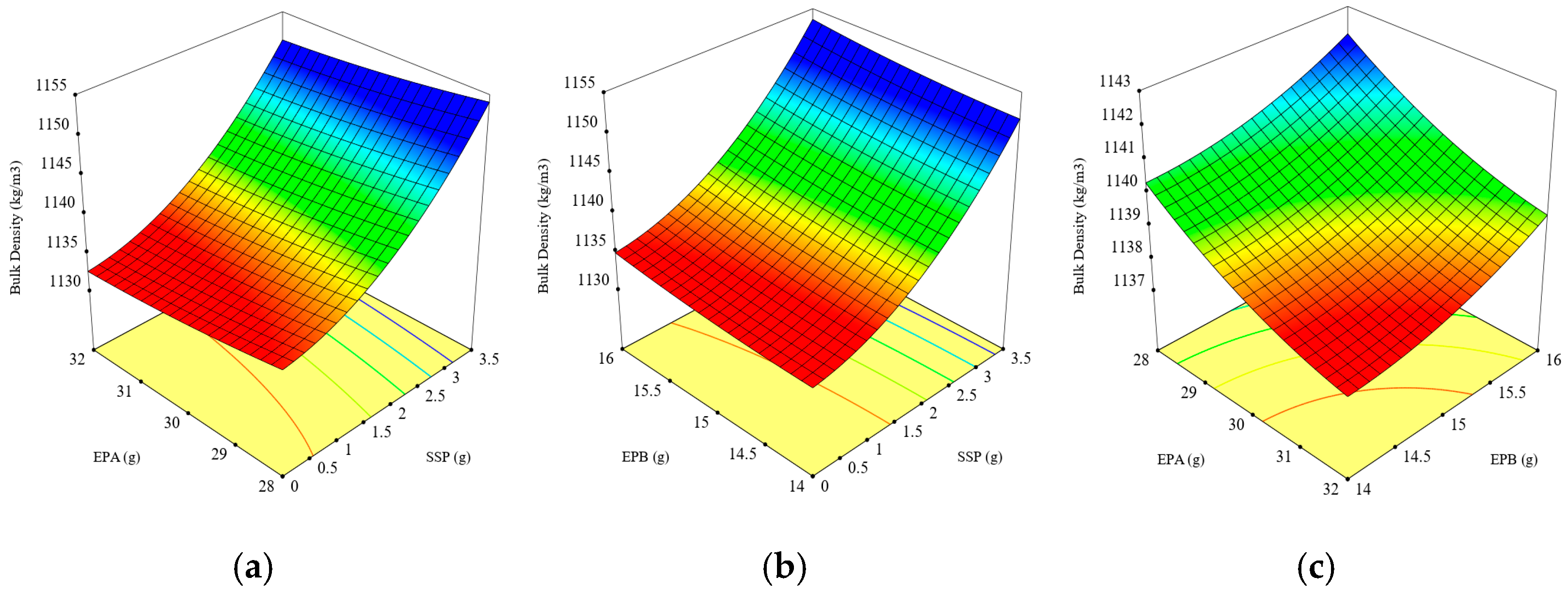
According to the results in
Figure 3, increasing SSP content leads to a clear rise in composite density due to the higher intrinsic density of the filler compared to the resin matrix. By contrast, EPA and EPB have minimal impact on density, acting mainly as matrix-forming agents rather than bulk fillers. The quadratic model for bulk density prediction is shown in Equation (5).
Table 4 shows that the contents of SSP, EPA, and EPB have statistically significant effects on bulk density (
p < 0.0001). SSP is the dominant variable, increasing density due to its high-density filler nature. EPA (F = 25.88,
p = 0.0014) and EPB (F = 10.87,
p = 0.0132) exhibit comparatively limited effects. The two-way interactions (AB, AC, and BC) were not significant (
p = 1.0000), indicating that the independent effects of each variable are more prominent. The quadratic effect of SSP (A
2) was significant (
p = 0.0001), suggesting a non-linear influence, whereas the quadratic effects of EPA and EPB were not statistically significant. Although the model generally fits the data, a significant lack of fit is observed (
p = 0.0259). Overall, SSP has the strongest impact on density, and careful optimization of its content is essential for achieving the desired material performance.
3.4. Shore-D Hardness
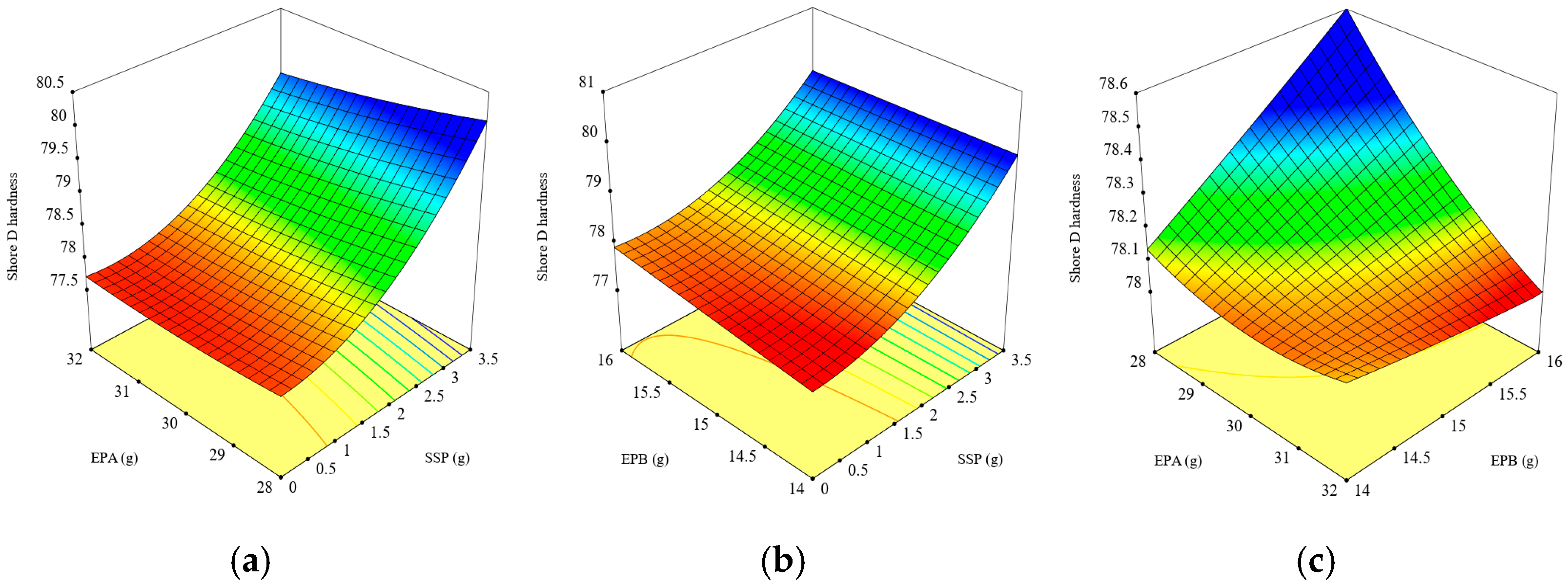
As illustrated in
Figure 4 and supported by the regression model, SSP exhibits the most significant influence on Shore D hardness, showing a strong increasing trend due to its high density and stiffening effects. EPB also contributes positively, with a greater effect than EPA, while EPA produces a modest increase that plateaus at higher concentrations. The interaction between SSP and EPB suggests additive benefits, though SSP remains the dominant factor. Optimal hardness occurs at balanced EPA and EPB levels, while excessive amounts reduce effectiveness. These results emphasize that a well-balanced formulation of SSP, EPA, and EPB is essential for maximizing Shore D hardness in the bio-composite system. The quadratic model developed using the RSM design for Shore D hardness prediction is presented in Equation (6). The increase in hardness is linked to rigid particulate reinforcement that limits polymer chain mobility, while balanced resin ratios help to disperse filler evenly and reduce defects.
Table 5 demonstrates that SSP, EPA, and EPB contents have statistically significant effects on Shore D hardness. The overall model significance is very high (
p < 0.0001), confirming that all three variables exert a strong influence on hardness. Among them, SSP has the most pronounced effect (F = 1045.62,
p < 0.0001) and plays a critical role in increasing Shore D hardness. EPA also has a statistically significant but comparatively lower effect (F = 25.63,
p = 0.0015), while EPB shows a weaker but still significant contribution (F = 8.17,
p = 0.0244). The two-way interaction terms (AB, AC, and BC) were not significant (
p > 0.05), indicating that the variables do not exhibit synergistic interactions and instead act independently. The quadratic effect of SSP was significant (
p < 0.0001), suggesting a non-linear relationship between SSP content and Shore D hardness, but its effect may change beyond a certain concentration. By contrast, the quadratic effects of EPA and EPB were not significant (
p > 0.05). The model exhibits good agreement with the data, as indicated by the non-significant lack of fit (
p = 0.3279), confirming the reliability of the predictions. In conclusion, SSP is the dominant factor in optimizing Shore D hardness, while EPA and EPB have more limited but statistically meaningful effects.
3.5. Tensile Strength
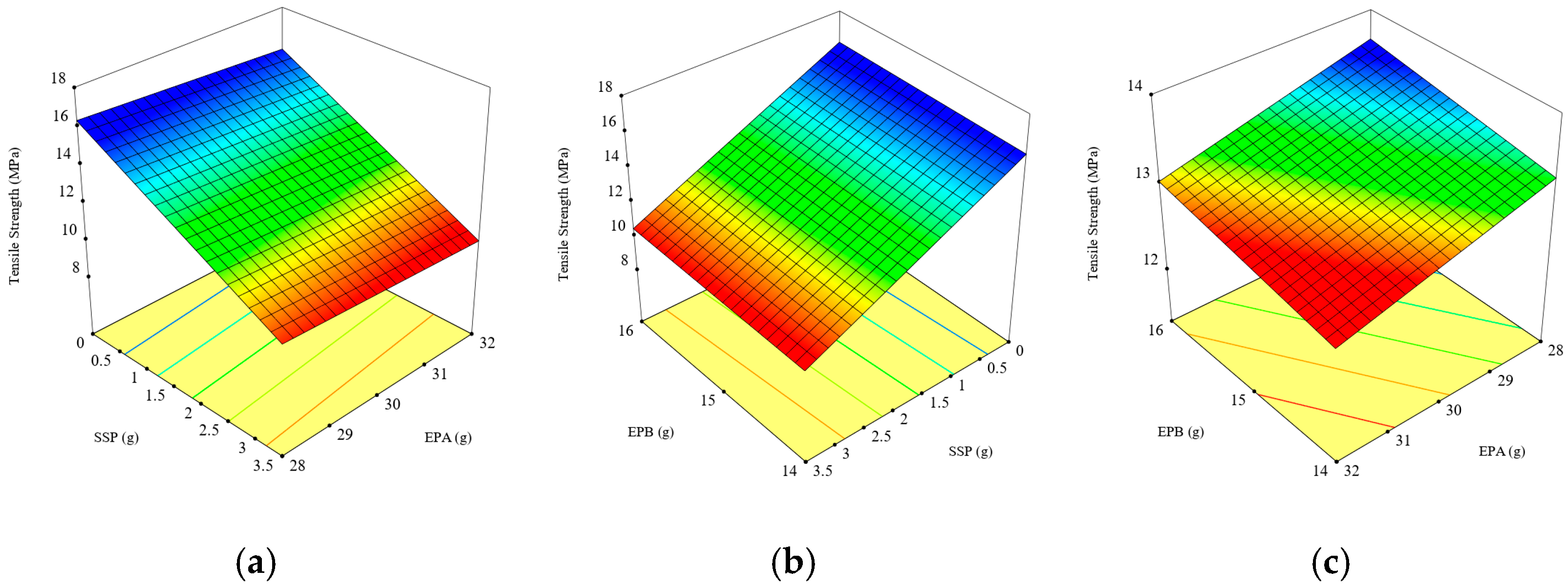
According to the surface plots presented in
Figure 5, an increase in SSP content exhibits a clear decreasing trend in tensile strength. This may be attributed to increased filler loading weakening the interfacial bonding between the matrix and filler within the composite structure. As the EPA content increases, a slight reduction in tensile strength is also observed; however, this effect appears to be limited and can be tolerated up to a certain threshold. By contrast, increasing EPB content has a positive influence, leading to an improvement in tensile strength. In the contour plots evaluating the combined effects of SSP and EPA, a decline in tensile performance is observed as the contents of both components increase. This indicates a negative synergy between the two parameters, which jointly deteriorate the mechanical properties. In the case of the combined effect of SSP and EPB, the opposing effects (SSP reducing and EPB enhancing tensile strength) tend to counterbalance each other, resulting in a more moderate performance profile. Tensile strength increases with rising EPB content. However, EPA limits this effect, so optimal strength occurs at moderate levels of both components. These findings suggest that optimizing EPB content is essential to improving tensile strength, while SSP and EPA contents must be carefully balanced to avoid compromising mechanical integrity. The quadratic model proposed by the RSM design for tensile strength prediction is presented in Equation (7). Excessive SSP disrupts matrix continuity and weakens bonding. EPB improves tensile strength by enhancing matrix flexibility and adhesion.
Table 6 summarizes the ANOVA results for the effects of SSP, EPA, and EPB contents on the tensile strength of the bio-composites. The model is statistically significant overall (F = 436.31,
p < 0.0001), indicating that the selected variables reliably capture their influence on tensile performance. SSP emerges as the dominant factor, with a notably high F-Value (F = 1288.26), confirming its substantial role in reducing tensile strength—likely due to matrix disruption and weakened interfacial bonding at higher filler loadings. EPA also demonstrates a statistically significant but less pronounced effect (F = 15.38,
p = 0.0018), suggesting it should be carefully controlled in formulation design. By contrast, EPB shows a positive contribution to tensile strength (F = 5.30,
p = 0.0384), albeit more limited in magnitude. While the lack of fit test was significant (
p = 0.0228), indicating that the model may not fully capture all system variability, the overall low residual error supports its general reliability. Therefore, the model provides a solid foundation for understanding the relative impacts of the input variables. Future enhancements, particularly the inclusion of interaction and quadratic terms, could improve the model’s accuracy and allow better prediction of complex behaviors in composite performance.
3.6. Thermal Conductivity
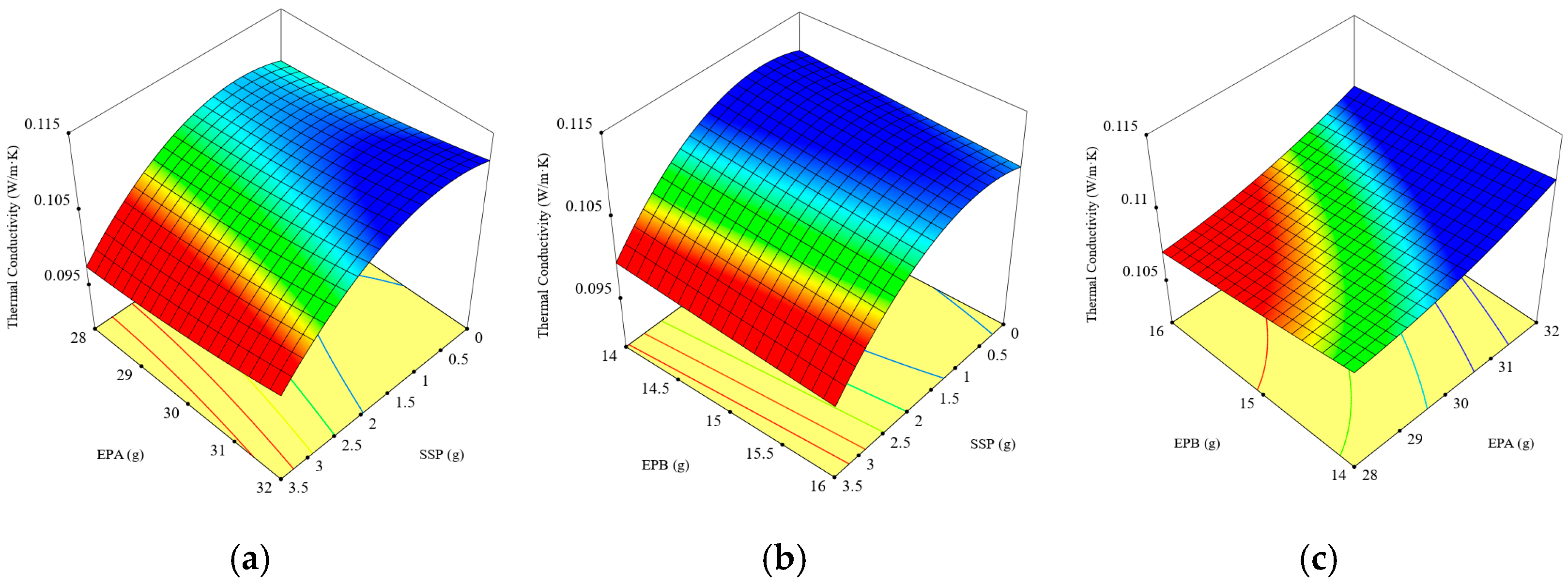
According to the surface plots in
Figure 6 and the regression model, SSP, EPA, and EPB contents have notable but predominantly negative effects on the thermal conductivity of the bio-composites. Contrary to initial assumptions, increasing SSP content results in a reduction in thermal conductivity due to its strong negative linear and quadratic contributions. Similarly, EPA initially reduces conductivity, but a slight positive quadratic term leads to a flattening of this effect at higher concentrations—producing a mild non-linear trend rather than a true increase. EPB shows the strongest negative effect, although its impact also levels off at higher contents due to a weak positive curvature. The interaction effects between the variables are minimal, indicating that their influences are largely independent. Overall, the findings suggest that higher SSP, EPA, or EPB contents diminish thermal conductivity, and optimizing thermal performance requires maintaining these components at moderate levels. The quadratic model proposed by the RSM design for thermal conductivity prediction is presented in Equation (8). Although seashell powder contains thermally conductive calcium carbonate, the decrease at high SSP loading is due to interfacial scattering and disrupted polymer homogeneity. Filler agglomeration and voids at high concentrations scatter heat and reduce thermal conductivity. This behavior is consistent with observations in other bio-filled and mineral-filled polymer composites, where excessive filler loading beyond an optimal threshold reduces thermal conductivity due to poor dispersion and increased interfacial defects [
13,
14,
15]. These results highlight the importance of achieving uniform filler distribution and strong interfacial adhesion to optimize thermal transport properties in SSP-reinforced composites.
Table 7 reveals that SSP, EPA, and EPB contents have statistically significant effects on the thermal conductivity of the bio-composites. The overall model significance is very high (
p < 0.0001), indicating that these variables strongly influence thermal conductivity. Among them, SSP has the most pronounced effect (F = 605.73,
p < 0.0001) and plays a major role in enhancing thermal transfer. EPA also shows a significant effect (F = 52.81,
p = 0.0002), although to a lesser extent compared to SSP. The effect of EPB is more limited (F = 16.84,
p = 0.0046) but remains statistically significant. Although EPB’s contribution appears to be statistically significant, its physical effect on thermal conductivity and hardness may be indirect—possibly related to changes in crosslink density or interfacial stiffness rather than bulk filler distribution. This warrants further microstructural or dynamic mechanical analysis to verify its underlying mechanism. The two-way interaction terms (AB and AC) were found to be non-significant (
p = 1.0000), suggesting that SSP, EPA, and EPB act independently, without exhibiting synergistic interactions. The quadratic effect of SSP (A
2) was significant (
p < 0.0001), indicating that its impact on thermal conductivity changes in a non-linear fashion. By contrast, the quadratic terms of EPA and EPB were not statistically significant. The model shows a good fit to the data, as confirmed by the non-significant lack of fit test result (
p = 0.5940), indicating high consistency between the model and experimental results. In conclusion, the optimization of thermal conductivity in bio-composites requires the proper adjustment of SSP and EPA contents, while the effect of EPB is relatively minor. The composites were thoroughly characterized using microscopy, FT-IR, thermal analysis, and mechanical testing.
3.7. Microscopy Analysis
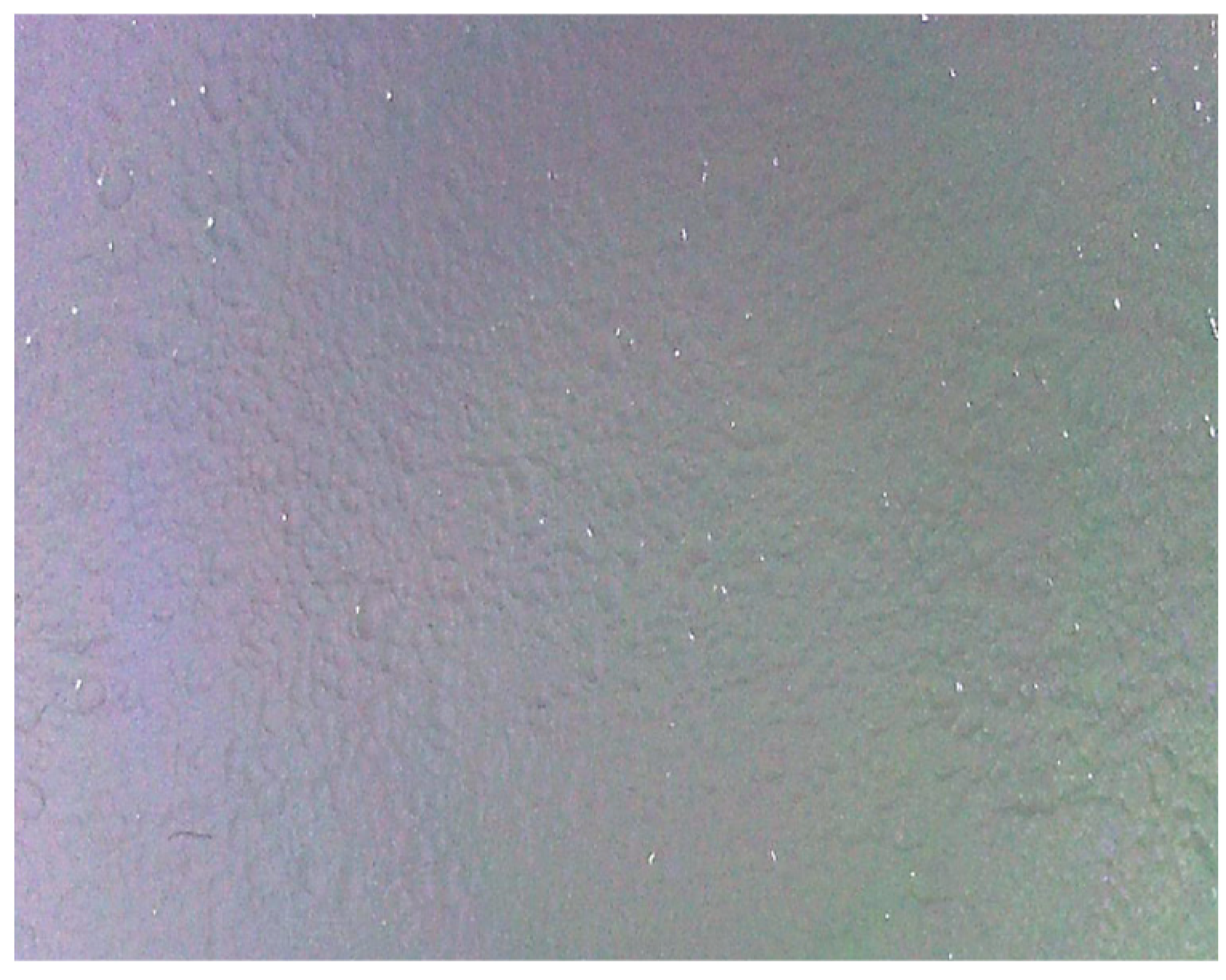
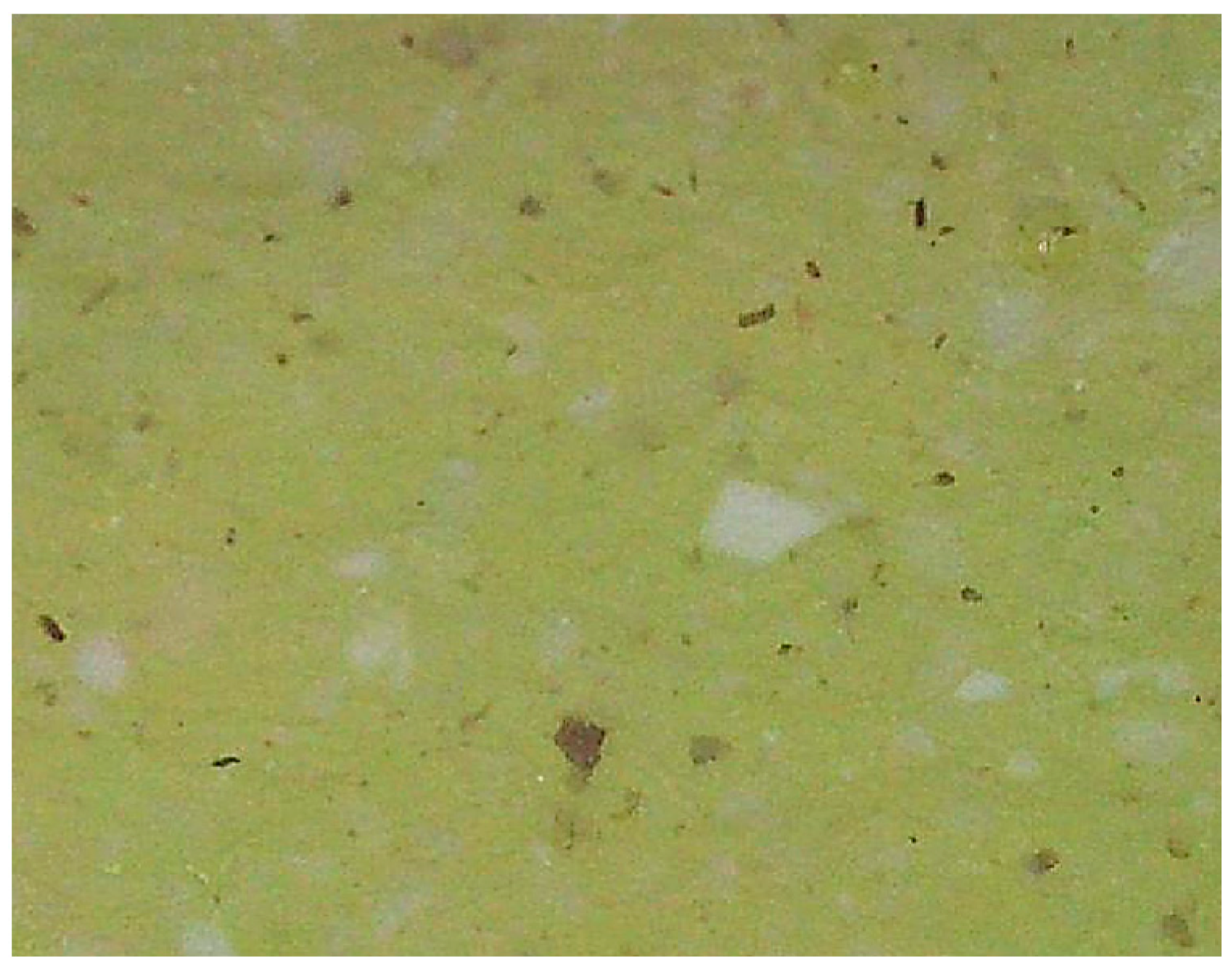
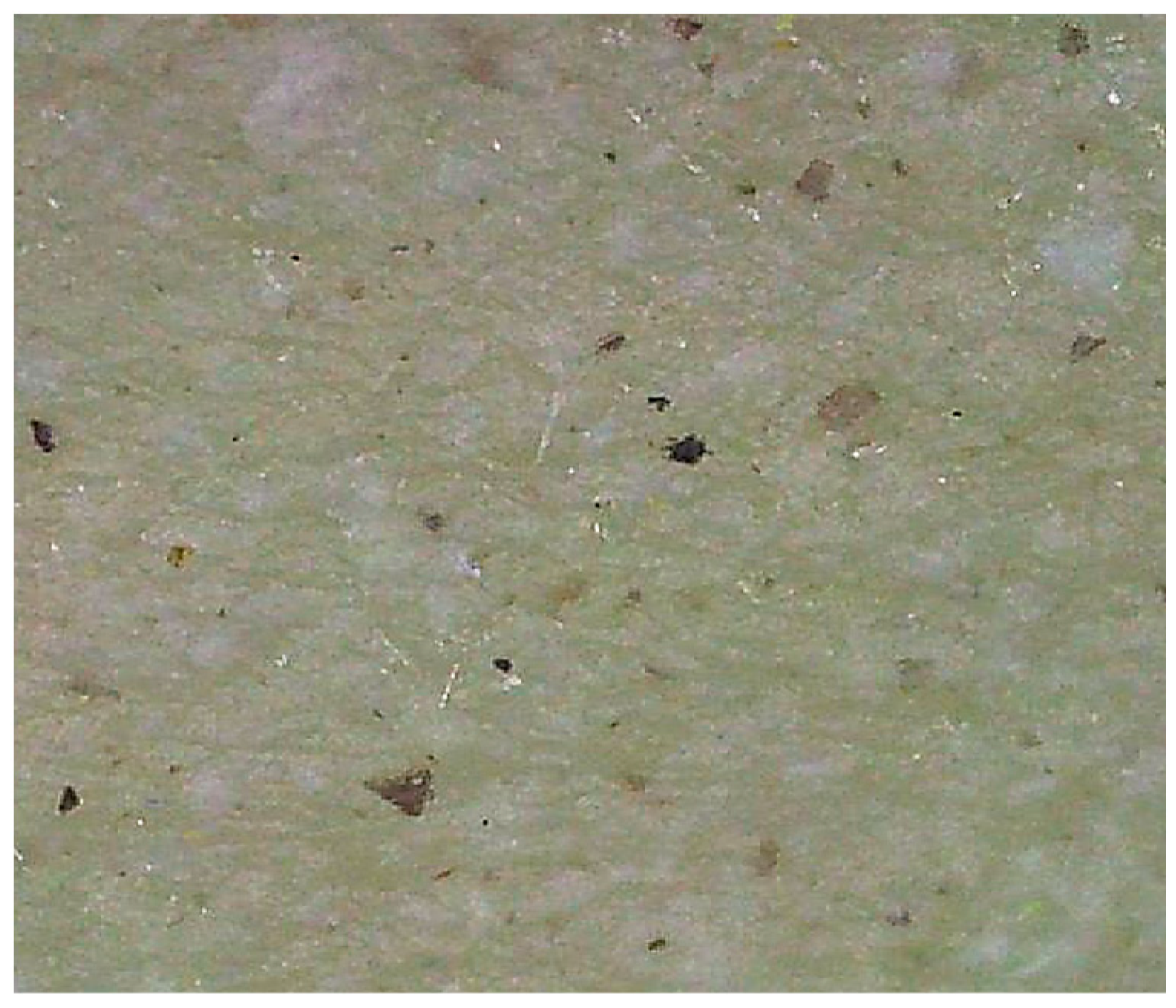
Microscopic characterization was performed to examine filler dispersion, morphology, and interfacial features in the epoxy composites across different seashell powder (SSP) loadings. Digital microscopy images (
Figure 7,
Figure 8,
Figure 9,
Figure 10 and
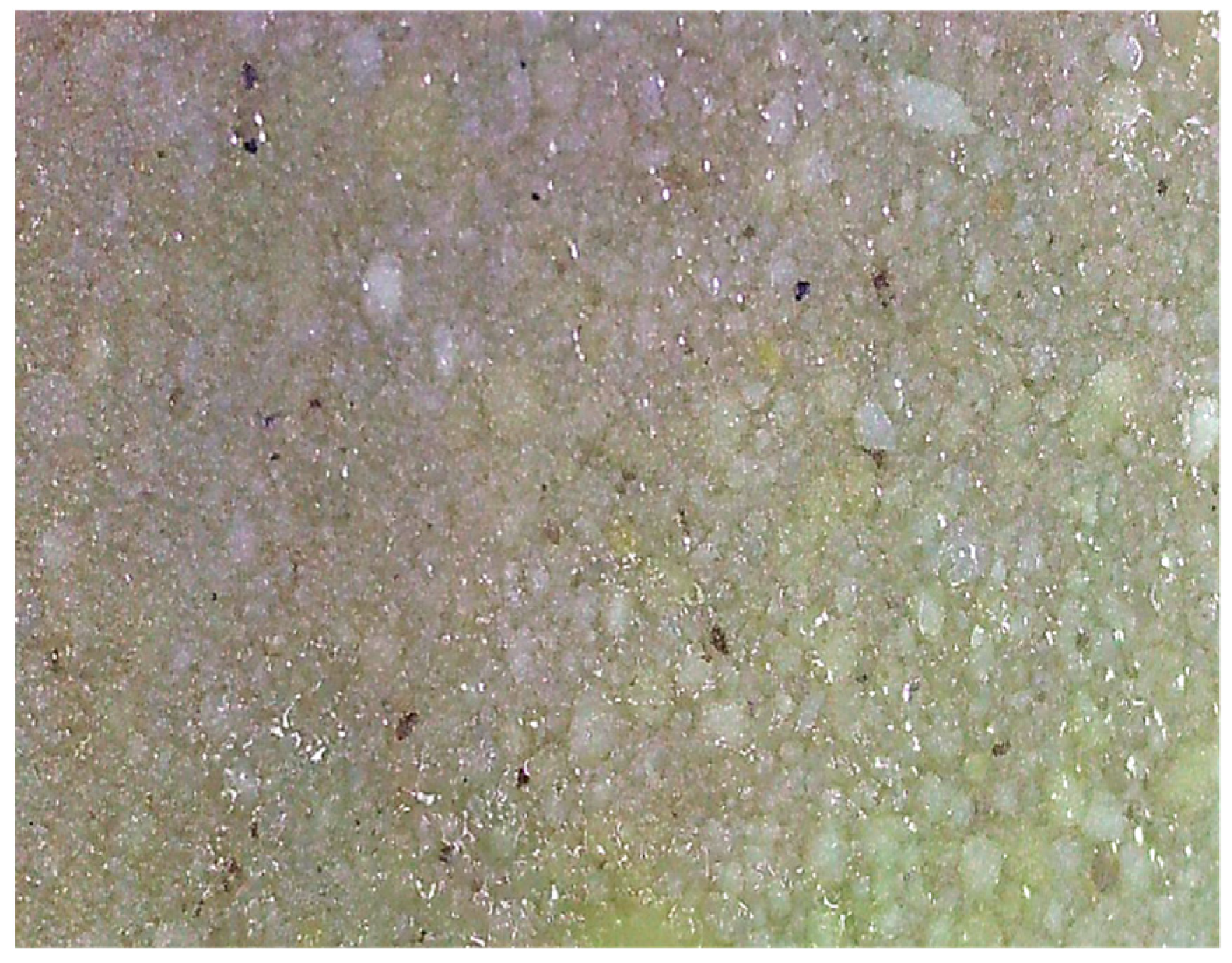
Figure 11) illustrate the progressive changes in surface morphology with increasing SSP content. The pure epoxy polymer (
Figure 7) exhibits a smooth and homogeneous surface without any particulate reinforcement, serving as a reference baseline. At 0.71 g (1.4 wt.%) SSP (
Figure 8), slight particle dispersion begins to appear, suggesting initial integration into the matrix. At 1.75 g (3.5 wt.%) (
Figure 9), the filler distribution becomes more pronounced, indicating improved but still moderate dispersion. At 2.79 g (5.5 wt.%) (
Figure 10), filler dispersion is more evident, but microvoids and localized clustering begin to appear. Finally, at 3.5 g (7 wt.%) SSP (
Figure 11), significant filler agglomeration and interfacial discontinuities are observed, indicating poor dispersion at higher loading levels.
Microscopic analysis confirmed that while moderate SSP loadings promote relatively uniform dispersion and acceptable interfacial bonding, higher loadings lead to clustering, voids, and degraded interfacial integrity. These morphological changes directly support the mechanical testing results and highlight the importance of optimizing SSP content to balance reinforcement effectiveness and matrix compatibility.
3.8. SEM
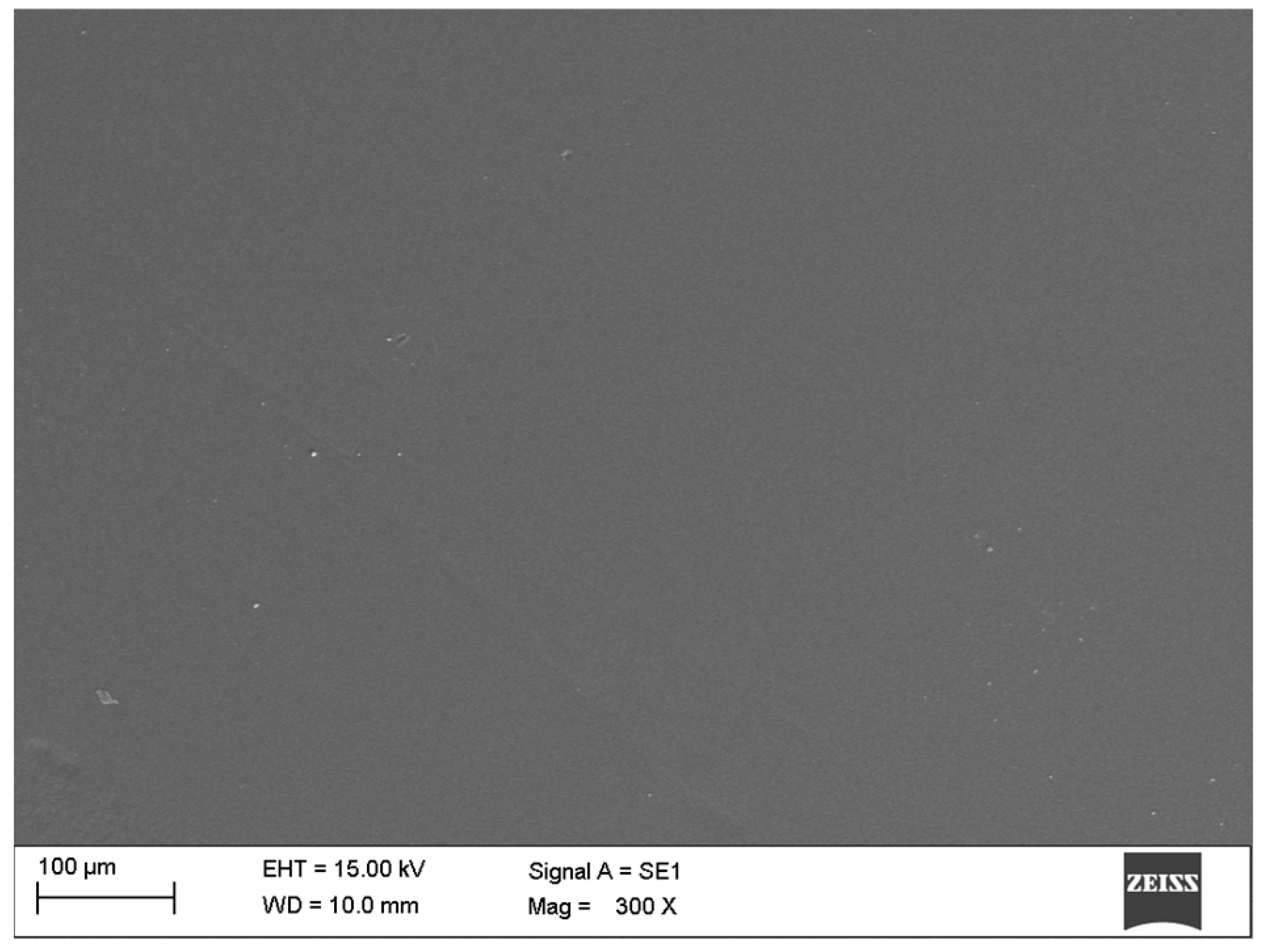
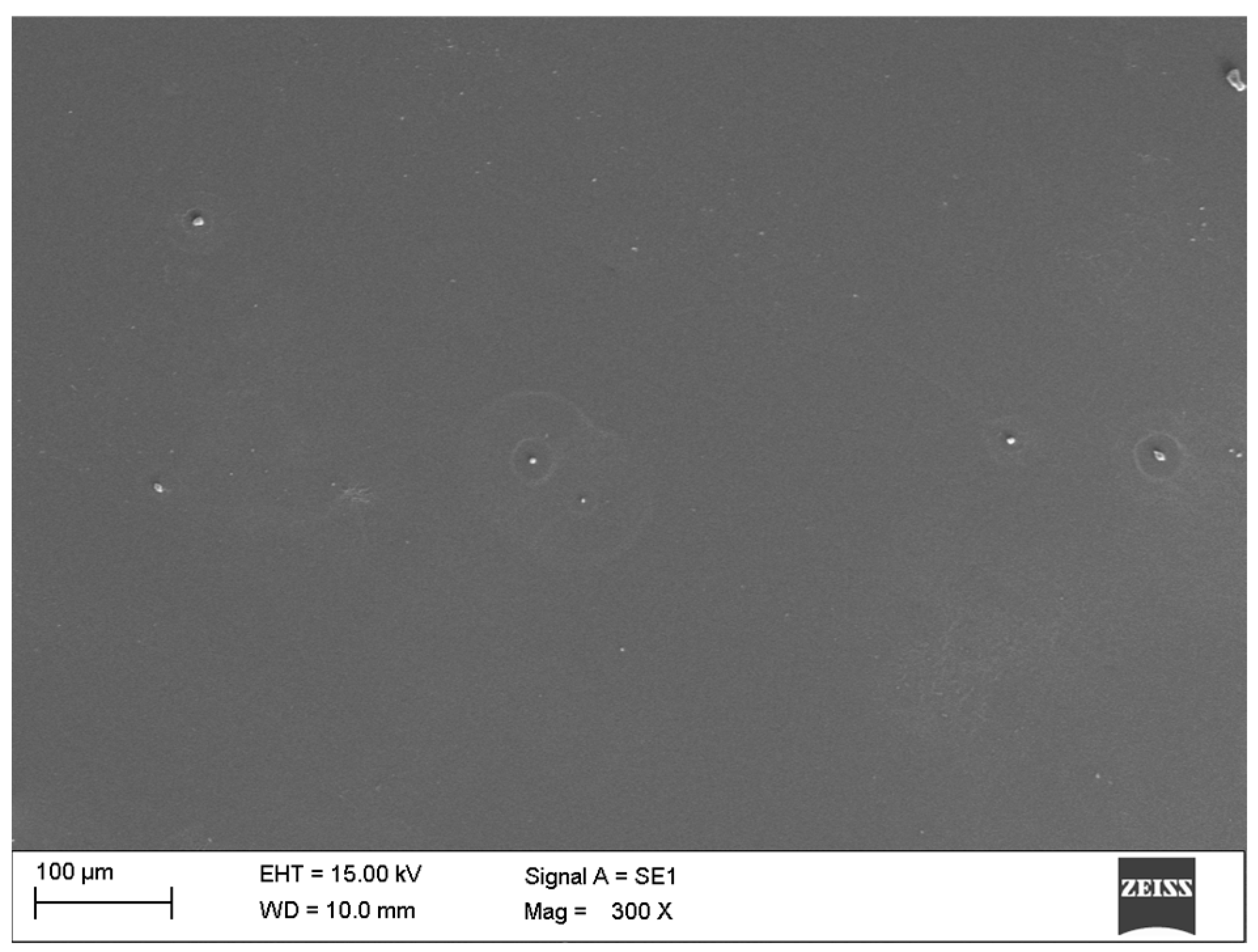
The scanning electron microscope (SEM) image presented in
Figure 12 provides a detailed view of the microstructure of the neat polymer derived from pure epoxy resin. The image reveals an overall homogeneous structure, indicating that the epoxy has cured properly without the formation of undesirable microstructural defects such as phase separation. No visible cracks, pores, or microvoids are observed on the surface, which suggests a mechanically cohesive structure. However, certain regions of the surface exhibit irregular undulations and folds, characteristic of the amorphous nature of the material. These features reflect the glassy and amorphous structure of the epoxy. Since no fibers, reinforcements, or fillers are present, there is no evidence of orientation or phase boundaries on the surface. Overall, the SEM image demonstrates that the neat epoxy polymer forms a uniform, compact, and defect-free microstructure, confirming that the material was successfully produced in terms of structural quality.
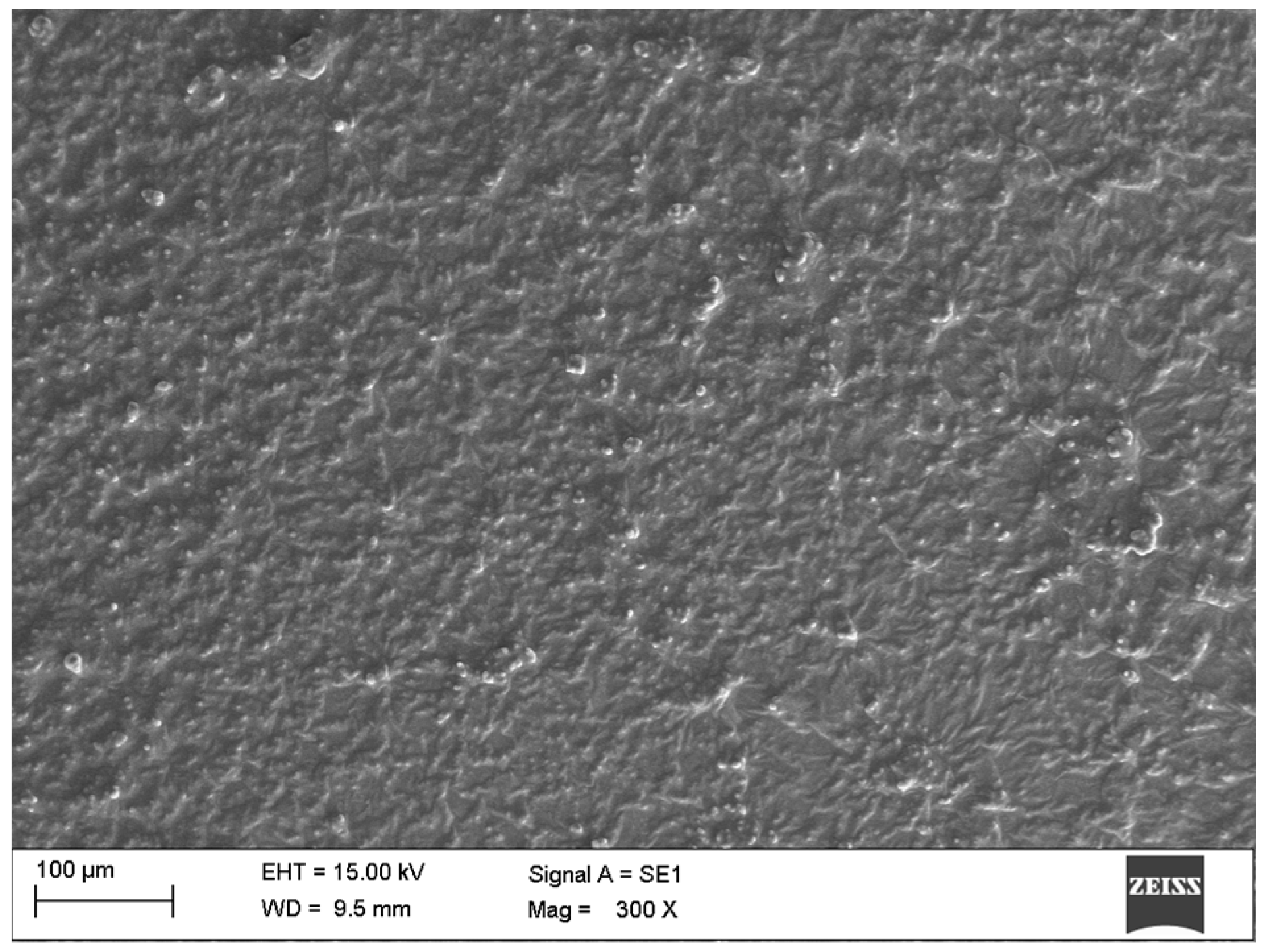
The SEM image shown in
Figure 13 illustrates the epoxy composite reinforced with 3.5 wt.% (1.75 g) seashell powder and demonstrates that this reinforcement level is optimal in terms of both microstructural integrity and mechanical performance. The image clearly shows that the seashell particles are homogeneously distributed within the matrix, and this distribution does not disrupt the surface morphology. The presence of porosity is minimal, and the reinforcement phase appears to form a good bond with the matrix. The absence of delamination, separation, or voids at the filler–matrix interfaces indicates that the load transfer mechanism functions efficiently and that the mechanical properties of the composite are not adversely affected. Furthermore, the smoothness and structural integrity of the surface contribute to improved processability and application potential. These findings suggest that a 3.5 wt.% seashell reinforcement effectively maintains microstructural stability while optimizing the overall performance of the composite.
The SEM image of the epoxy composite containing 3.5 g (7 wt.%) seashell reinforcement, shown in
Figure 14, clearly reveals that increased filler content adversely affects microstructural integrity. The image indicates that the seashell particles are not uniformly distributed within the matrix; instead, they accumulate in certain areas, forming agglomerations. These agglomerates create irregular regions that can lead to stress concentrations within the material, potentially compromising the mechanical performance of the composite. Additionally, the presence of irregular voids (pores) observed in the image suggests inadequate interaction at the filler–matrix interface and weakened bonding. The non-uniform surface morphology may result in reduced mechanical strength and long-term structural instability of the composite. In this context, it is evident that a 7 wt.% reinforcement level exceeds the optimal threshold for the epoxy matrix, leading to microstructural degradation. These findings highlight the importance of carefully optimizing filler content during the production process and demonstrate that higher reinforcement levels do not necessarily translate into improved mechanical properties.
3.9. FT-IR
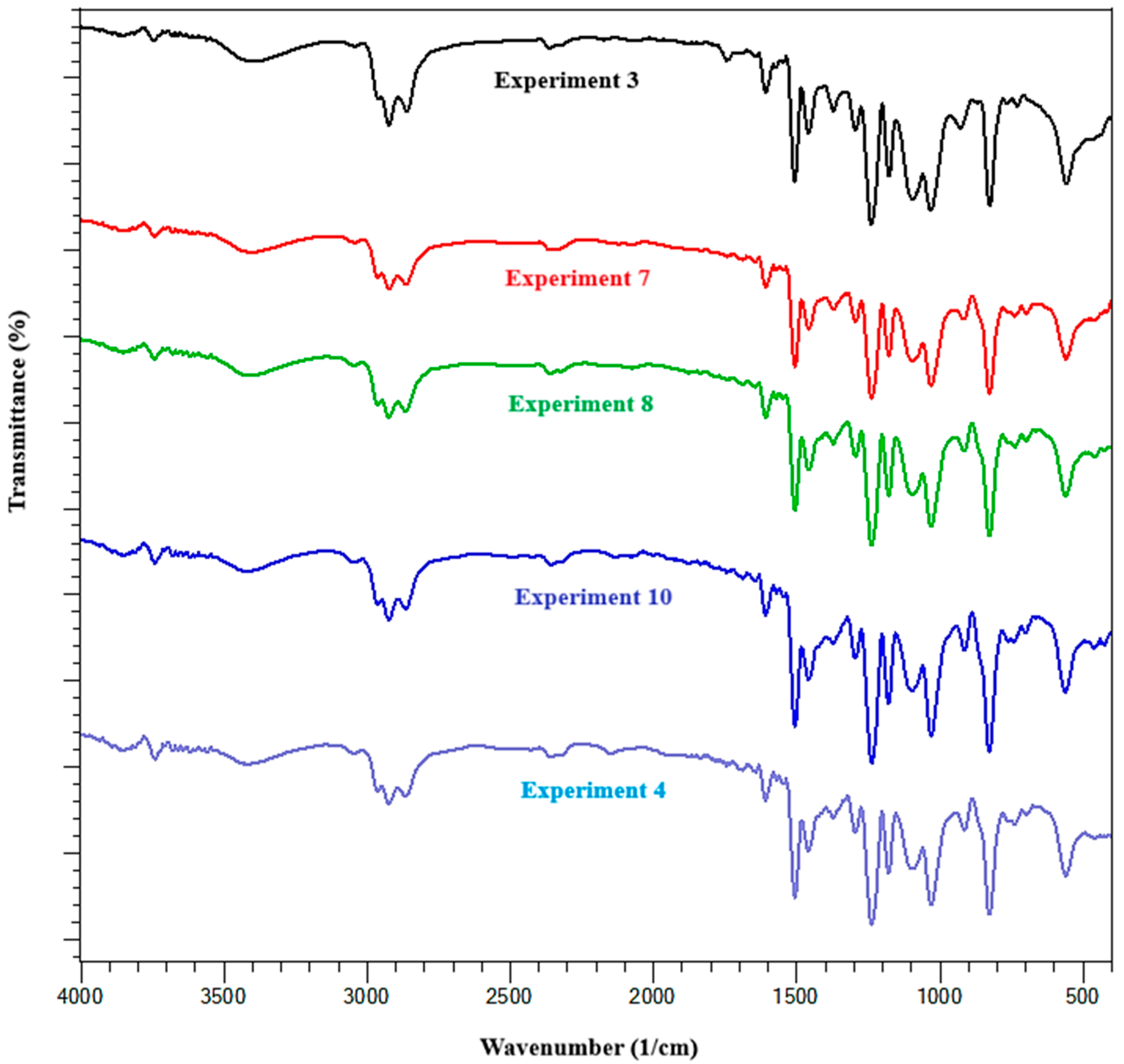
The FT-IR spectra given in
Figure 15 provide information about the physical and chemical structures and interactions between the epoxy resin and the seashell powder. Experiment 3, representing pure epoxy resin, exhibits characteristic peaks of epoxy groups, including absorption bands at approximately 915 cm
−1 (epoxy ring stretching), 1250 cm
−1 (C–O–C stretching), and 1500–1600 cm
−1 (aromatic ring vibrations). Additionally, a broad peak around 3200–3500 cm
−1 is present, which corresponds to hydroxyl (-OH) groups due to residual curing agents or slight moisture absorption. These peaks confirm the expected chemical structure of the cured epoxy resin.
As the proportion of seashell powder increases in Experiment 7, Experiment 8, Experiment 10, and Experiment 4, notable spectral changes can be observed, particularly in regions associated with calcium carbonate (CaCO3). Seashell powder shows characteristic carbonate bands at 1400–1500 cm−1 and 870 cm−1. However, the main peaks of epoxy remain unchanged, indicating that the seashell powder does not chemically react with the epoxy matrix but is instead physically embedded within the polymer structure. A gradual increase in the intensity of the carbonate peaks is observed as the seashell content increases, which confirms its successful dispersion within the epoxy matrix. The physical interaction is further supported by the absence of new peak formations or significant peak shifts, suggesting that the composite formation is primarily governed by mechanical reinforcement rather than chemical bonding. Consistent epoxy absorption bands show the polymer network stays intact despite seashell filler.
FT-IR analysis confirmed that ground seashell powder acts as an inert filler within the epoxy composite, modifying its physical properties without altering its chemical composition. This observation is consistent with a critical review where bio-epoxies showed similar inert behavior with shell-derived carbonate fillers, demonstrating minimal chemical interaction with the matrix [
31]. The increasing intensity of carbonate peaks with higher filler content supports the uniform distribution of seashell powder. This suggests that the addition of seashells can enhance the material’s mechanical performance, likely improving properties such as toughness and rigidity while maintaining the fundamental chemical characteristics of the epoxy resin. These results show that seashell powder can be effectively used as a bio-based filler in epoxy composites, offering potential environmental and economic benefits. The FT-IR spectra in
Figure 13 are labeled with key functional group assignments, including characteristic epoxy C–O stretching (around 1100 cm
−1), hydroxyl O–H stretching (near 3400 cm
−1), and SSP-derived carbonate peaks (around 1400–870 cm
−1). The presence of these bands confirms the incorporation of SSP while maintaining the expected functional groups of the epoxy matrix. The absence of new peaks or significant shifts indicates no unexpected chemical reactions between SSP and the epoxy system, supporting the conclusion that SSP acts as an inert, physically reinforcing filler. This analysis confirms the compatibility and stability of the bio-filler within the composite structure.
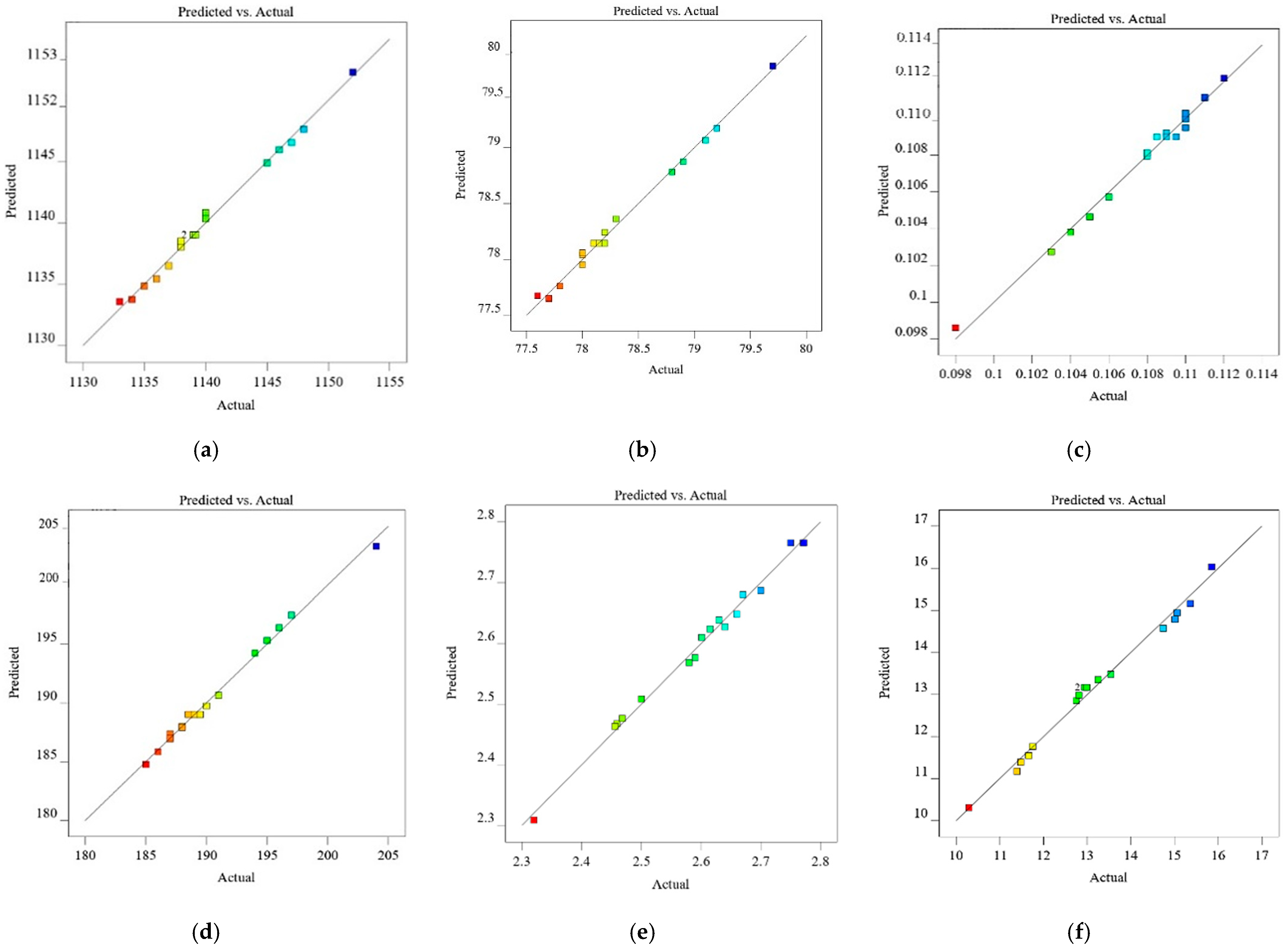
The correlations between the experimental results and the predicted values derived from the RSM model are presented in
Figure 16. Each subplot (a–f) compares actual versus predicted values for key material properties, including bulk density, Shore D hardness, thermal conductivity, thermal degradation, Charpy impact strength, and tensile strength. The close alignment of data points along the 45° reference line in all graphs reflects the strong agreement between experimental observations and model estimations. This consistency underscores the reliability and predictive accuracy of the RSM model across different performance metrics, affirming its suitability for optimizing the properties of the developed composite materials.
The statistical evaluation results summarized in
Table 8 indicate strong correlations between the experimental observations and the values predicted by the RSM model across all six response variables. The coefficient of determination (R
2) values range from 0.9902 (tensile strength) to 0.9951 (thermal degradation), confirming that the model explains more than 99% of the observed variability. Additionally, the adjusted R
2 and predicted R
2 values are consistently high for all responses, further supporting the robustness and predictive capability of the model. Notably, bulk density and thermal conductivity exhibit exceptionally low coefficient of variation (C.V.%) values (0.0530% and 0.4508%, respectively), highlighting the model’s precision in estimating these properties. The standard deviation values across all responses are also minimal, underscoring the internal consistency of the data. Furthermore, the adequate precision values, ranging from 36.95 to 67.37, are well above the acceptable threshold of 4.0, demonstrating strong signal-to-noise ratios and ensuring model reliability. Collectively, these statistical metrics validate the suitability of the RSM model for accurately representing and predicting the performance characteristics of the developed bio-composite materials.
4. Conclusions
This study confirms tidal SSP as an effective, sustainable bio-filler for epoxy composites. Optimized SSP content improved density and hardness. Excessive loading reduced tensile strength due to agglomeration. EPA and EPB balanced mechanical and thermal properties, while EPB enhanced impact and tensile strength. These results support SSP-reinforced composites for cost-effective, sustainable applications in construction, marine, and automotive sectors. Future work should focus on advanced interfacial characterization, long-term durability testing, and exploring alternative bio-based resins to further improve performance.
In this study, the potential use of a biologically derived material—namely, seashell waste, which poses environmental challenges but offers sustainable properties—as a reinforcement agent in epoxy-based composites was evaluated. Seashells were processed and ground into powder form, then incorporated into bio-based epoxy resin systems at varying concentrations. Using response surface methodology (RSM), the filler content and resin composition were optimized, after which the mechanical (tensile strength and impact resistance), physical (hardness and density), and thermal (thermal conductivity) properties of the resulting composites were determined through detailed testing. In addition, microscopic analyses were conducted to evaluate filler dispersion and the effectiveness of matrix–filler interfacial bonding. The results of the characterization revealed that composites produced with optimal filler content exhibited enhanced performance in terms of hardness, density, and thermal stability while maintaining acceptable levels of mechanical properties such as tensile and impact strength. Microscopic observations showed that the seashell powder was homogeneously distributed within the matrix up to a certain filler ratio. However, exceeding this ratio led to microstructural defects such as agglomeration and porosity. These defects were found to negatively affect the overall performance of the composites by reducing the efficiency of interfacial bonding. In conclusion, this study demonstrates a promising approach for both promoting environmental sustainability through the valorization of marine waste and producing lightweight, durable, and cost-effective composite materials. The findings offer encouraging perspectives regarding the applicability of such bio-based fillers in industrial, structural, and coating applications.