Article

Exploring High-Order Skeleton Correlations with Physical and Non-Physical Connection for Action Recognition


1
Beijing Key Laboratory of Information Service Engineering, Beijing Union University, Beijing 100101, China
2
Faculty of Information Technology, Beijing University of Technology, Beijing 100124, China
3
Engineering Research Center of Intelligence Perception and Autonomous Control, Ministry of Education, Beijing University of Technology, Beijing 100124, China
4
School of computer science, Beijing University of Posts and Telecommunications, Beijing 100876, China
*
Author to whom correspondence should be addressed.
Appl. Sci. 2024, 14(9), 3832; https://doi.org/10.3390/app14093832
Submission received: 12 December 2023 / Revised: 3 February 2024 / Accepted: 3 February 2024 / Published: 30 April 2024
(This article belongs to the Special Issue Autonomous Vehicles and Robotics)

Abstract

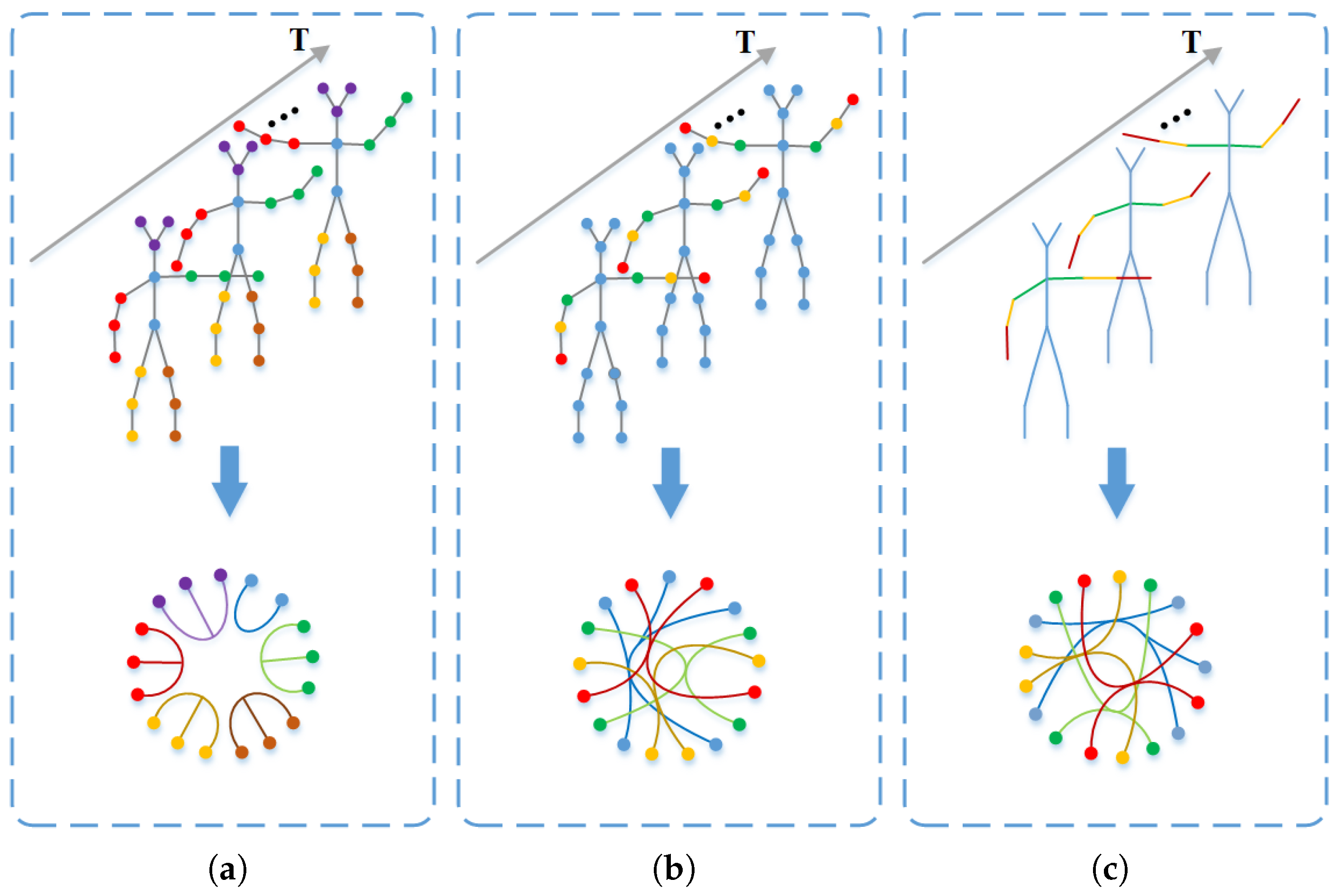
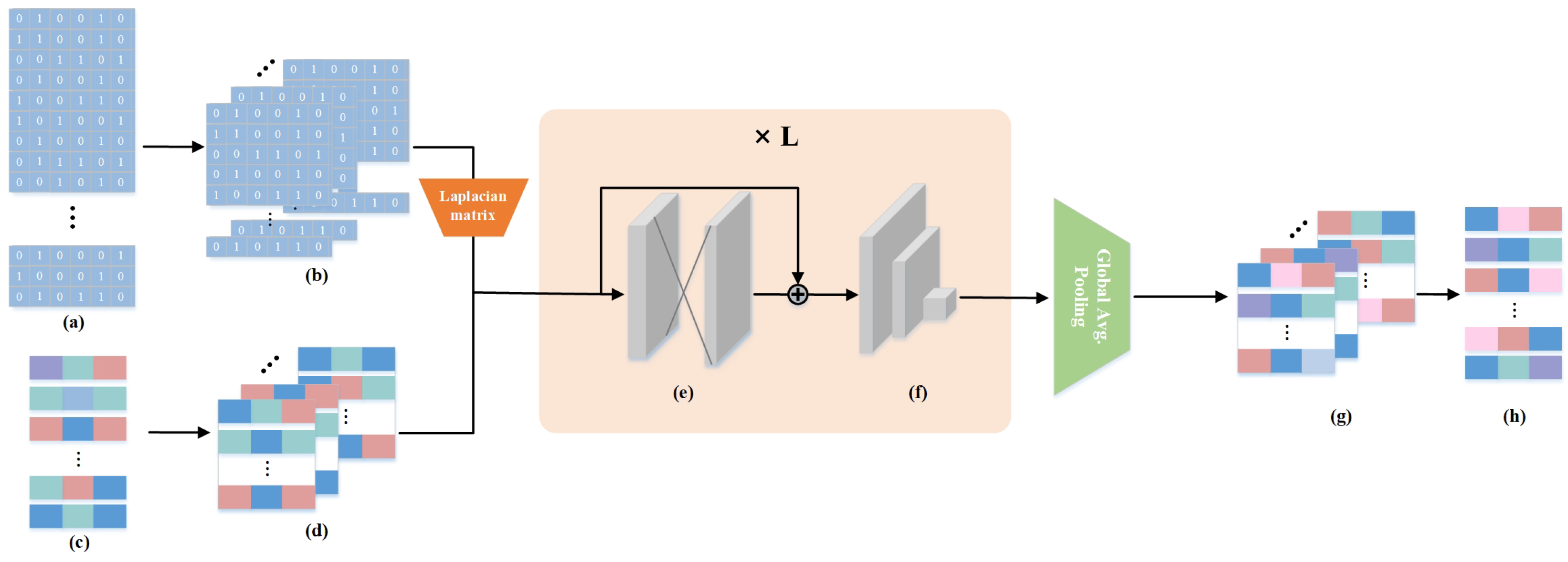
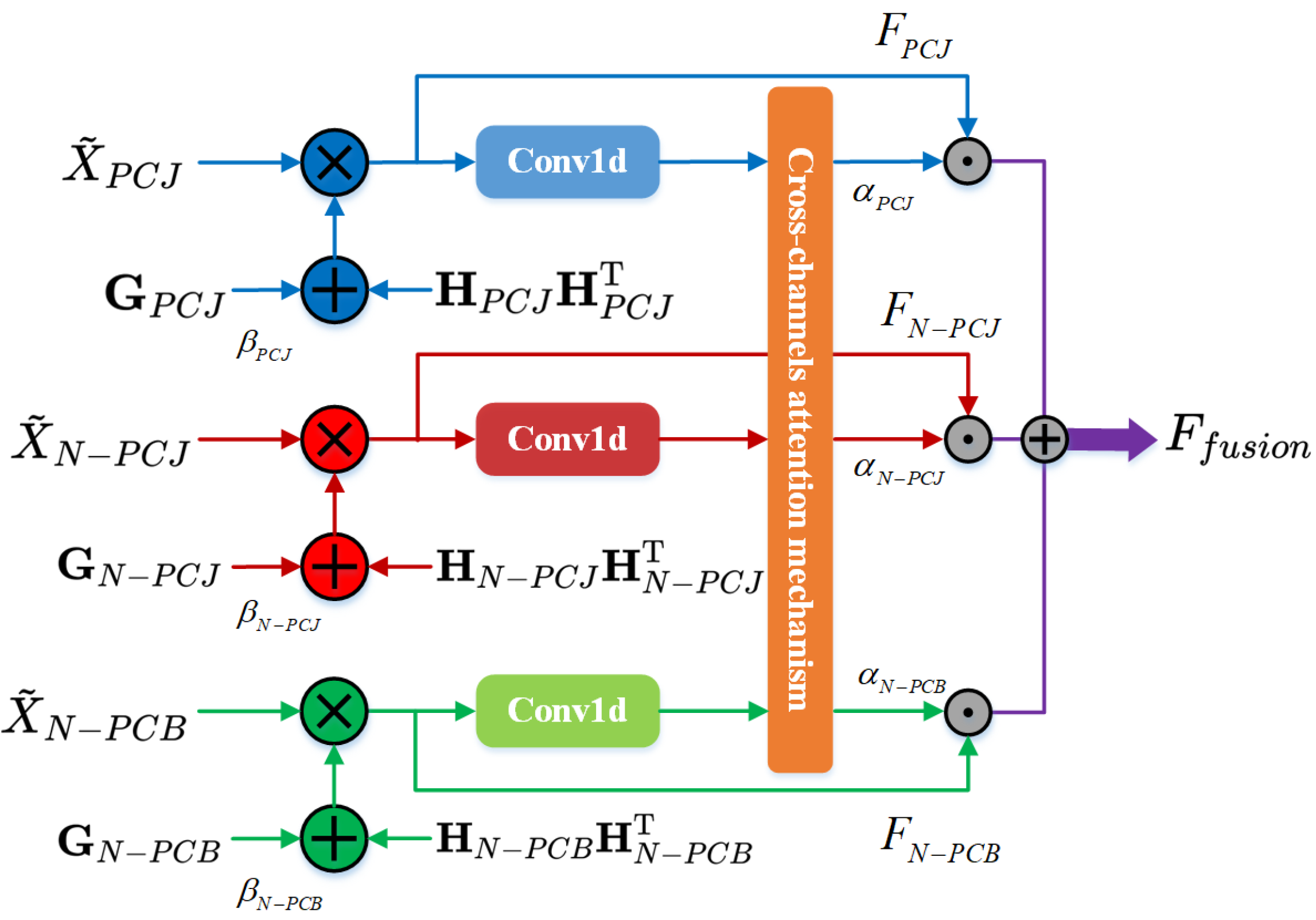
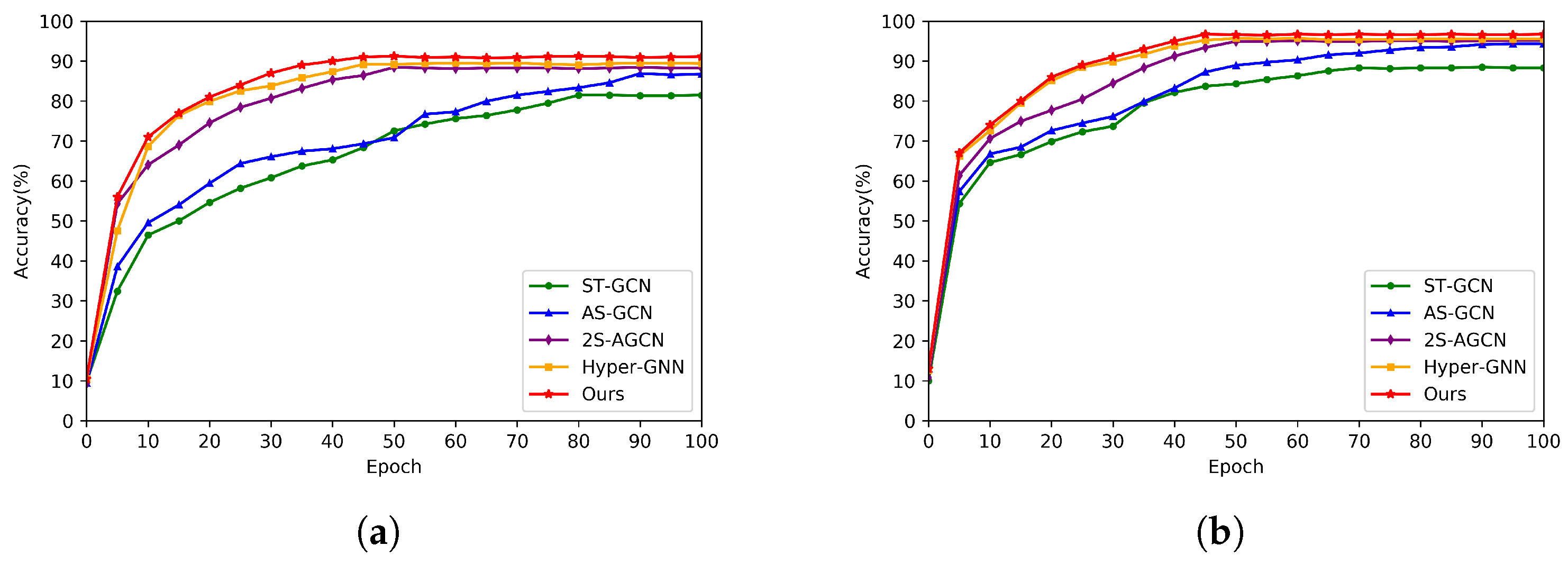
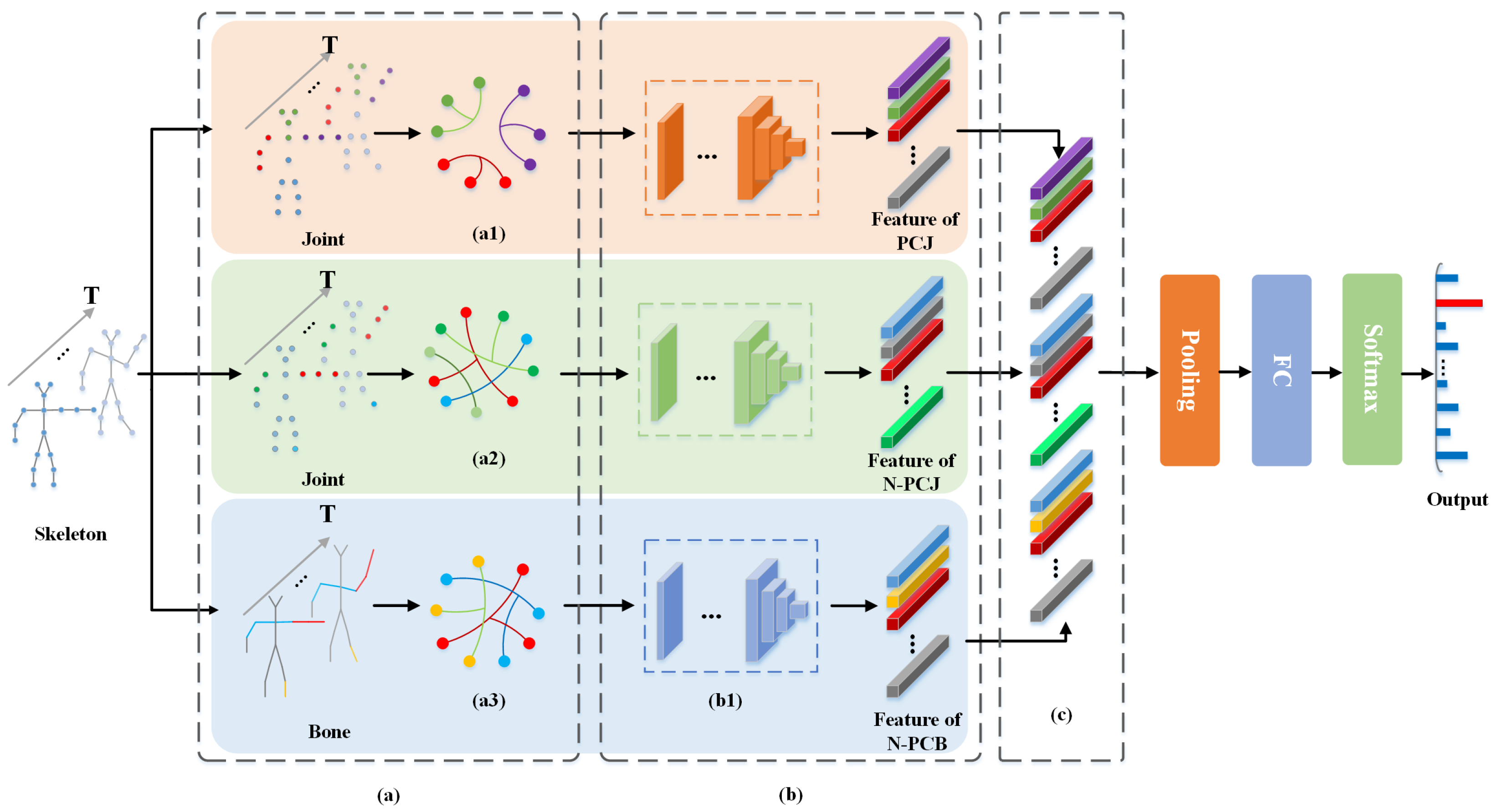
Hypergraphs have received widespread attention in modeling complex data correlations due to their superior performance. In recent years, some researchers have used hypergraph structures to characterize complex non-pairwise joints in the human skeleton and model higher-order correlations of the human skeleton. However, traditional methods of constructing hypergraphs based on physical connections ignore the dependencies among non-physically connected joints or bones, and it is difficult to model the correlation among joints or bones that are highly correlated in human action but are physically connected at long distances. To address these issues, we propose a skeleton-based action recognition method for hypergraph learning based on skeleton correlation, which explores the effects of physically and non-physically connected skeleton information on accurate action recognition. Specifically, in this paper, spatio-temporal correlation modeling is performed on the natural connections inherent in humans (physical connections) and the joints or bones that are more dependent but not directly connected (non-physical connection) during human actions. In order to better learn the hypergraph structure, we construct a spatio-temporal hypergraph neural network to extract the higher-order correlations of the human skeleton. In addition, we use an attentional mechanism to compute the attentional weights among different hypergraph features, and adaptively fuse the rich feature information in different hypergraphs. Extensive experiments are conducted on two datasets, NTU-RGB+D 60 and Kinetics-Skeleton, and the results show that compared with the state-of-the-art skeleton-based methods, our proposed method can achieve an optimal level of performance with significant advantages, providing a more accurate environmental perception and action analysis for the development of embodied intelligence.
Keywords: action recognition based on skeleton; multi-channel features; spatio-temporal hypergraph neural network; cross-channel attention mechanism; high-order semantic correlation; adaptive fusion action recognition based on skeleton; multi-channel features; spatio-temporal hypergraph neural network; cross-channel attention mechanism; high-order semantic correlation; adaptive fusion