Article

Evaluating Agility in Pre-Adolescent Basketball: A Comparative Analysis of CODAT, IAT, and RAT

1
Department of Coaching Education, Faculty of Sport Sciences, Gazi University, Ankara 06500, Turkey
2
Department of Coaching Education, Faculty of Sport Sciences, Trabzon University, Trabzon 61335, Turkey
*
Author to whom correspondence should be addressed.
Appl. Sci. 2024, 14(9), 3815; https://doi.org/10.3390/app14093815
Submission received: 27 March 2024 / Revised: 16 April 2024 / Accepted: 20 April 2024 / Published: 29 April 2024
(This article belongs to the Special Issue Advances in Sports, Exercise and Health)

Abstract

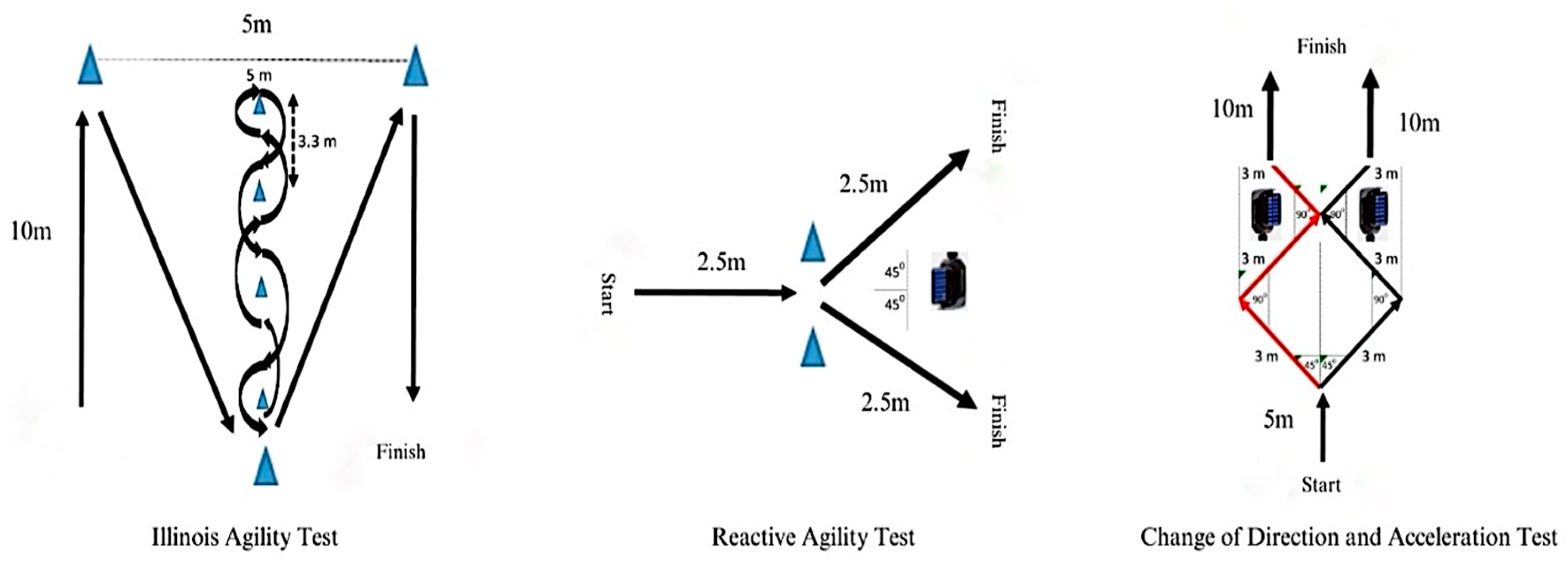
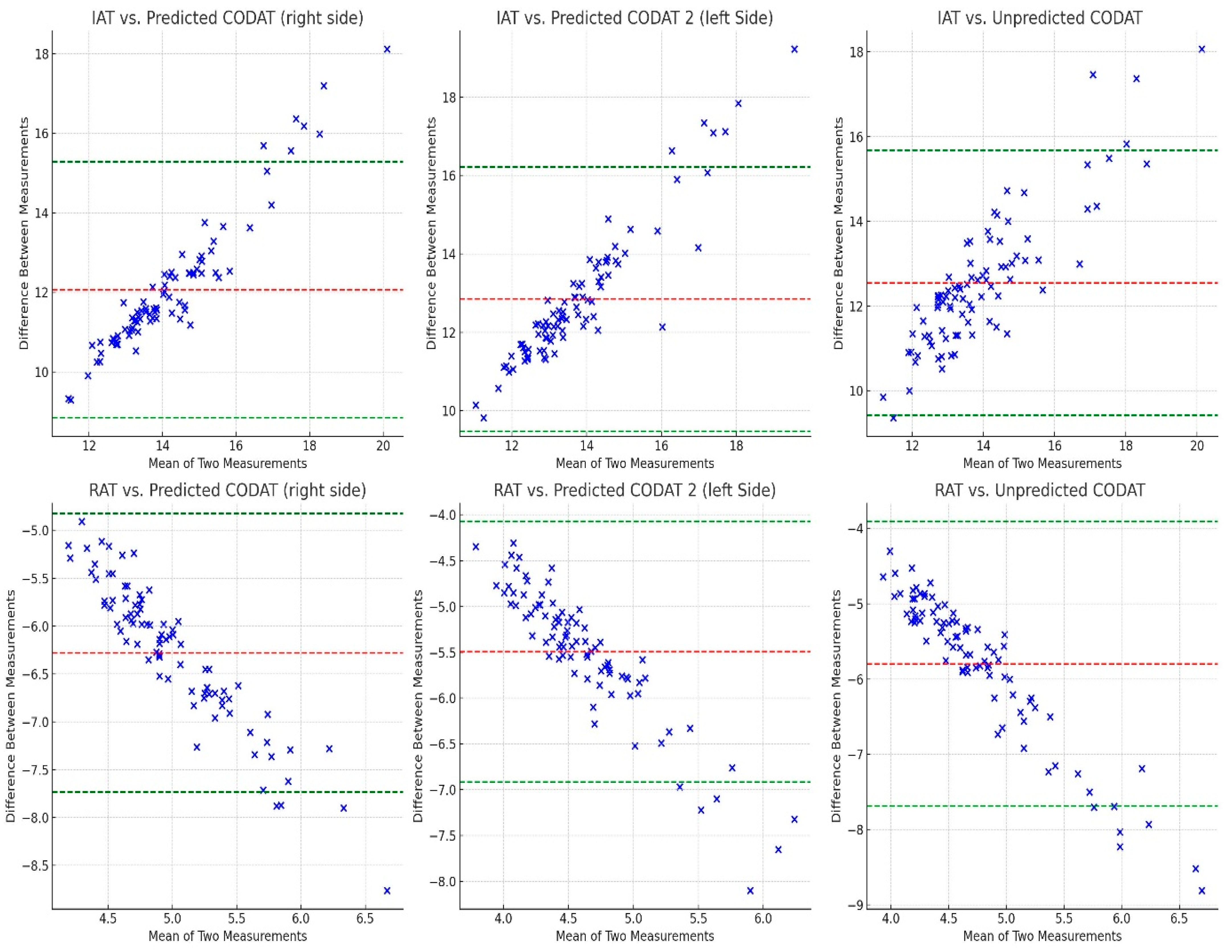
Background: In basketball, agility is essential, characterized by the ability to change direction swiftly and accelerate. Traditional tests like the Illinois Agility Test (IAT) and the Reactive Agility Test (RAT) may not fully capture the agility demands specific to basketball. Purpose: This study aimed to introduce the Change of Direction and Acceleration Test (CODAT), designed specifically for young basketball players. It evaluates CODAT’s effectiveness by comparing it with IAT and RAT through comprehensive analysis. Methods: We assessed 87 pre-adolescent male basketball players, aged 9 to 13 years, with an average biological age of 11.2 years and an average estimated Peak Height Velocity (PHV) of 12.5 ± 0.5 years, using CODAT, IAT, and RAT. We employed regression analysis and the Bland–Altman method to determine CODAT’s reliability and validity. Results: The findings indicate that CODAT offers superior reliability and validity in measuring basketball-specific agility. Consistent scores highlight its potential as an effective tool for agility assessment in basketball training and talent identification. Conclusions: CODAT represents a significant advancement in agility assessment for young basketball players, advocating for its integration into sports science practices to better address the specialized demands of basketball agility.
Keywords: basketball-specific agility; agility testing techniques; youth sports assessment; talent identification; sports training methodologies basketball-specific agility; agility testing techniques; youth sports assessment; talent identification; sports training methodologies