Article

Design of Additional Dissipative Structures for Seismic Retrofitting of Existing Buildings

by
Alessandro Vittorio Bergami
Department of Structural and Geotechnical Engineering, Sapienza University of Rome, 00184 Rome, Italy
Appl. Sci. 2024, 14(6), 2477; https://doi.org/10.3390/app14062477
Submission received: 14 February 2024 / Revised: 6 March 2024 / Accepted: 13 March 2024 / Published: 15 March 2024
(This article belongs to the Section Civil Engineering)

Abstract

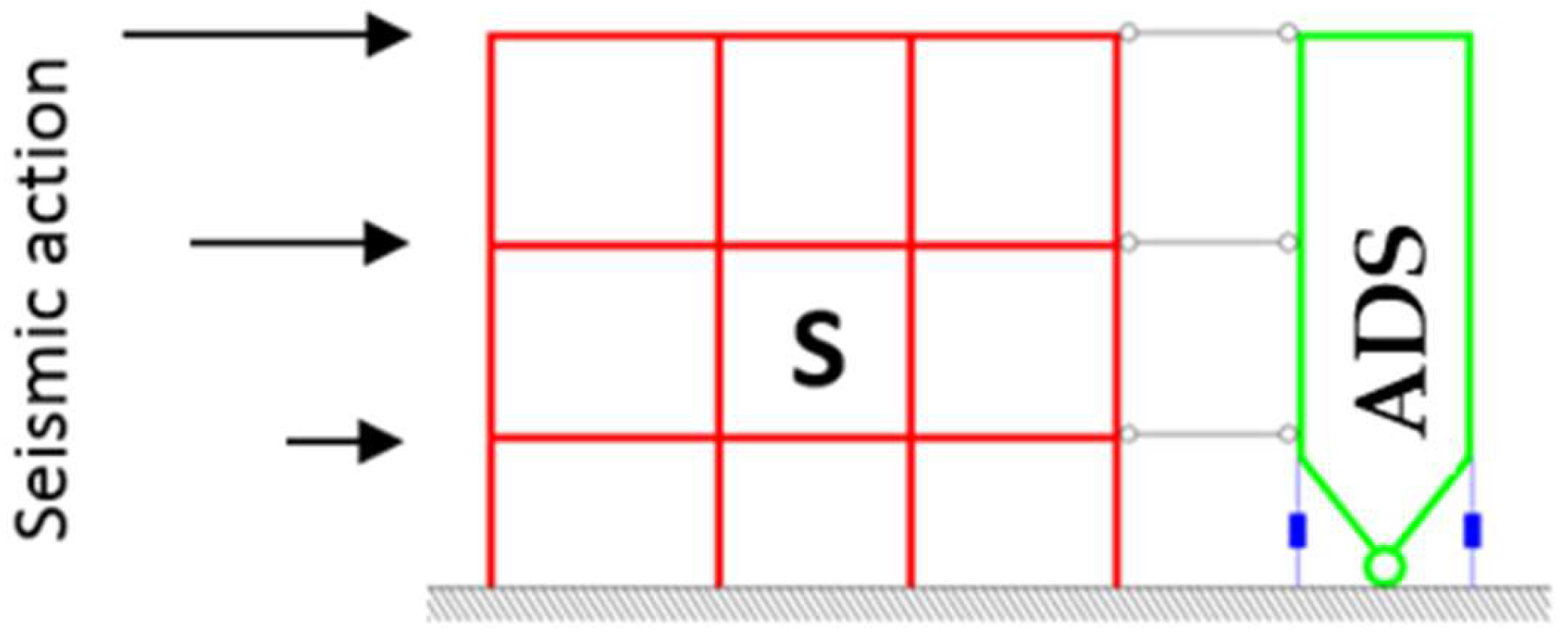
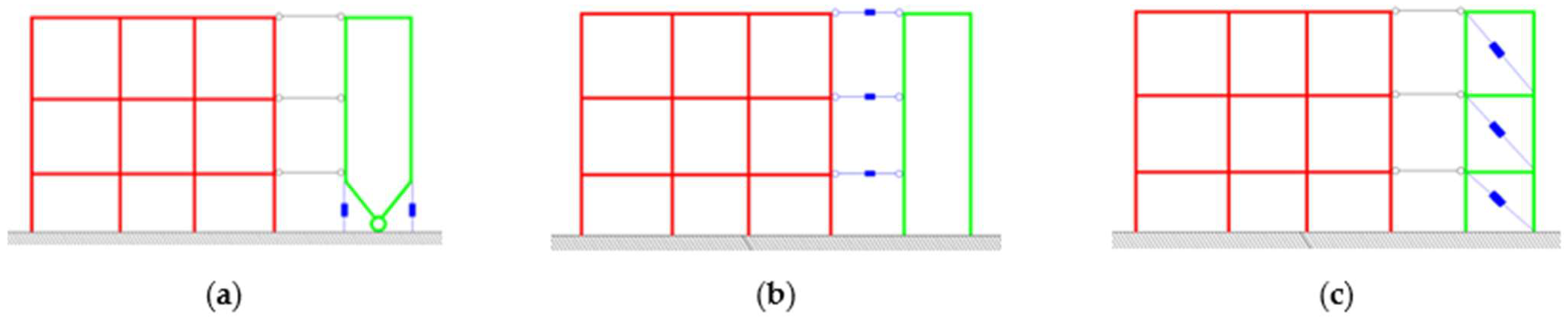
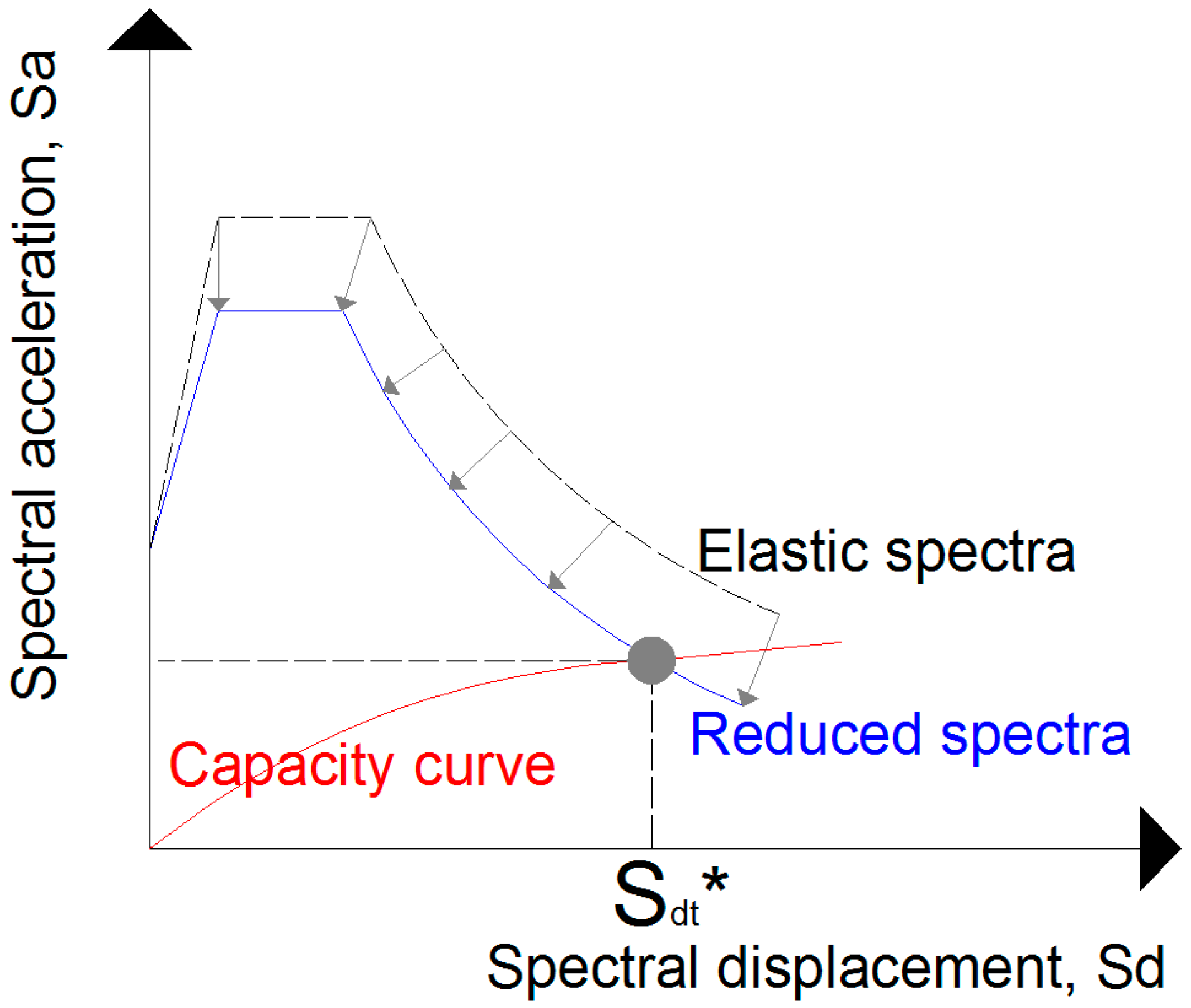
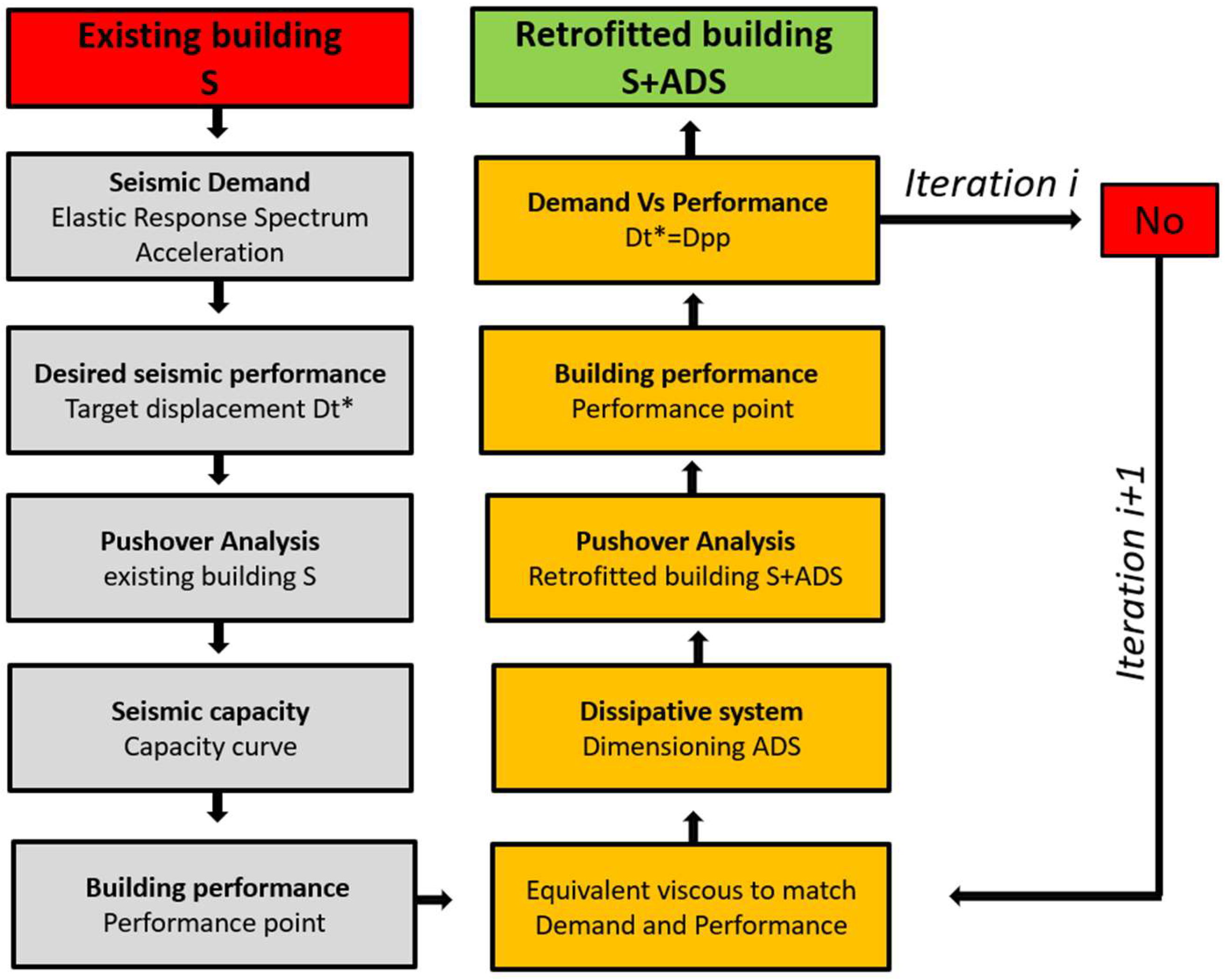
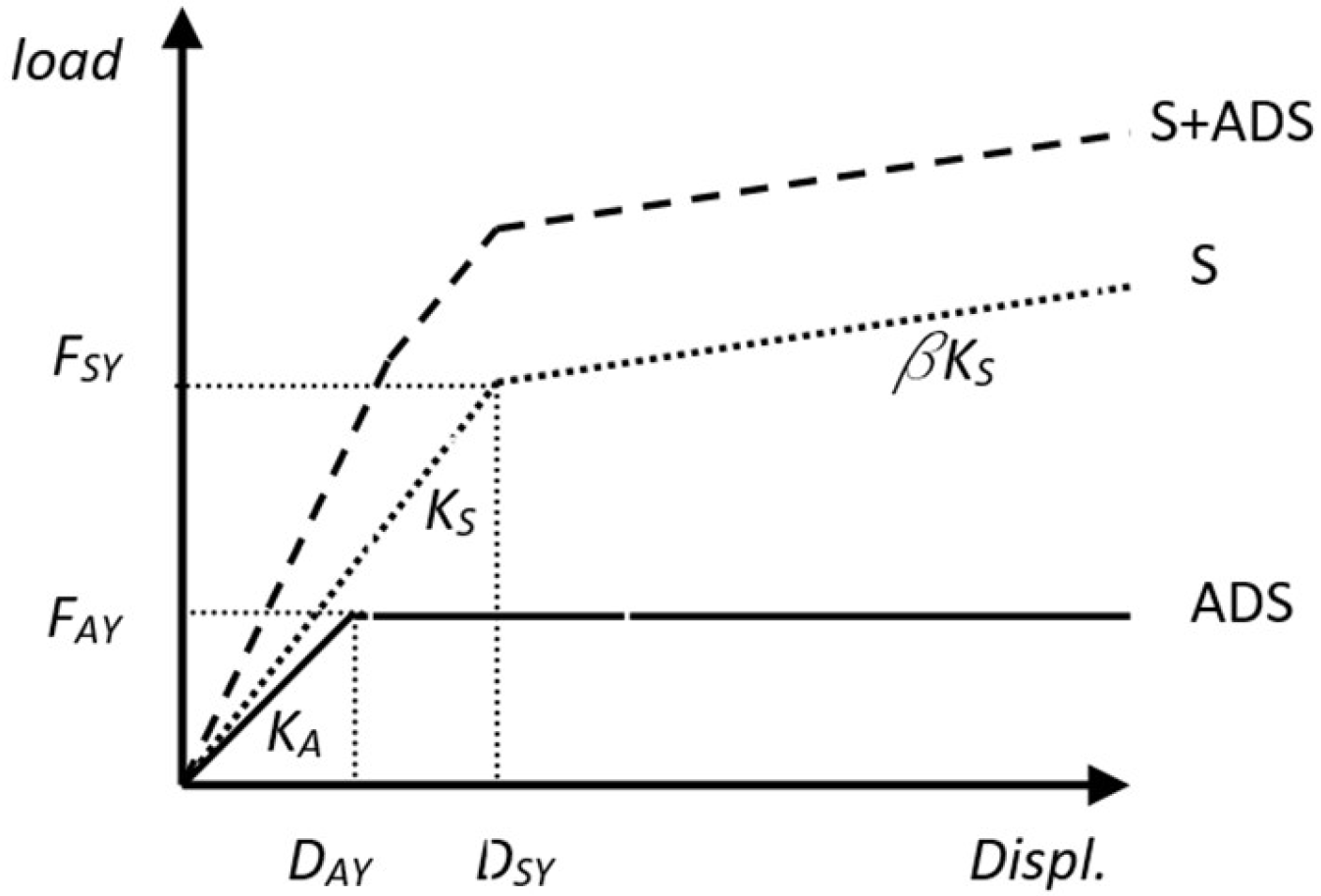
This paper presents an innovative approach for improving the seismic protection of existing structures by introducing an additional dissipative structure (ADS). The seismic energy impacting the building can be dissipated through the contribution provided by the ADS, thereby reducing the need for the existing building to ensure its seismic capacity. This retrofitting technique is well-suited for structures facing architectural restrictions or challenging-to-update elements. It can help to address foundational issues by applying loads to new external components. This paper describes the design of the ADS and proposes a displacement-based design procedure. The design process involves a nonlinear static analysis and a simple procedure that must be iteratively repeated until the retrofitting target is achieved. This approach is simple and computationally efficient and can also be used for complex and irregular structures. Such structures are frequently encountered, and existing structures often exhibit unusual geometries and materials requiring extensive numerical modeling. The efficacy of this technique was evaluated using the case study of a school building located in central Italy. The results of numerical analyses indicated that owing to the ADS’s contribution, the seismic capacity of both buildings was enhanced, addressing the challenges associated with complex foundational interventions.
Keywords: passive damping; dissipative devices; seismic retrofitting passive damping; dissipative devices; seismic retrofitting