Article

Revealing the Magmatic Impulse Emplacement and Evolution Path of Kimberlite in Southern Liaoning through Mineralogical Characteristics of the Phlogopite Zone

1
School of Resources and Civil Engineering, Northeastern University, Shenyang 110819, China
2
Liaoning Geological Exploration Mining Group, Shenyang 110032, China
*
Authors to whom correspondence should be addressed.
Appl. Sci. 2024, 14(4), 1340; https://doi.org/10.3390/app14041340
Submission received: 19 October 2023 / Revised: 26 November 2023 / Accepted: 27 November 2023 / Published: 6 February 2024
(This article belongs to the Section Earth Sciences)

Abstract

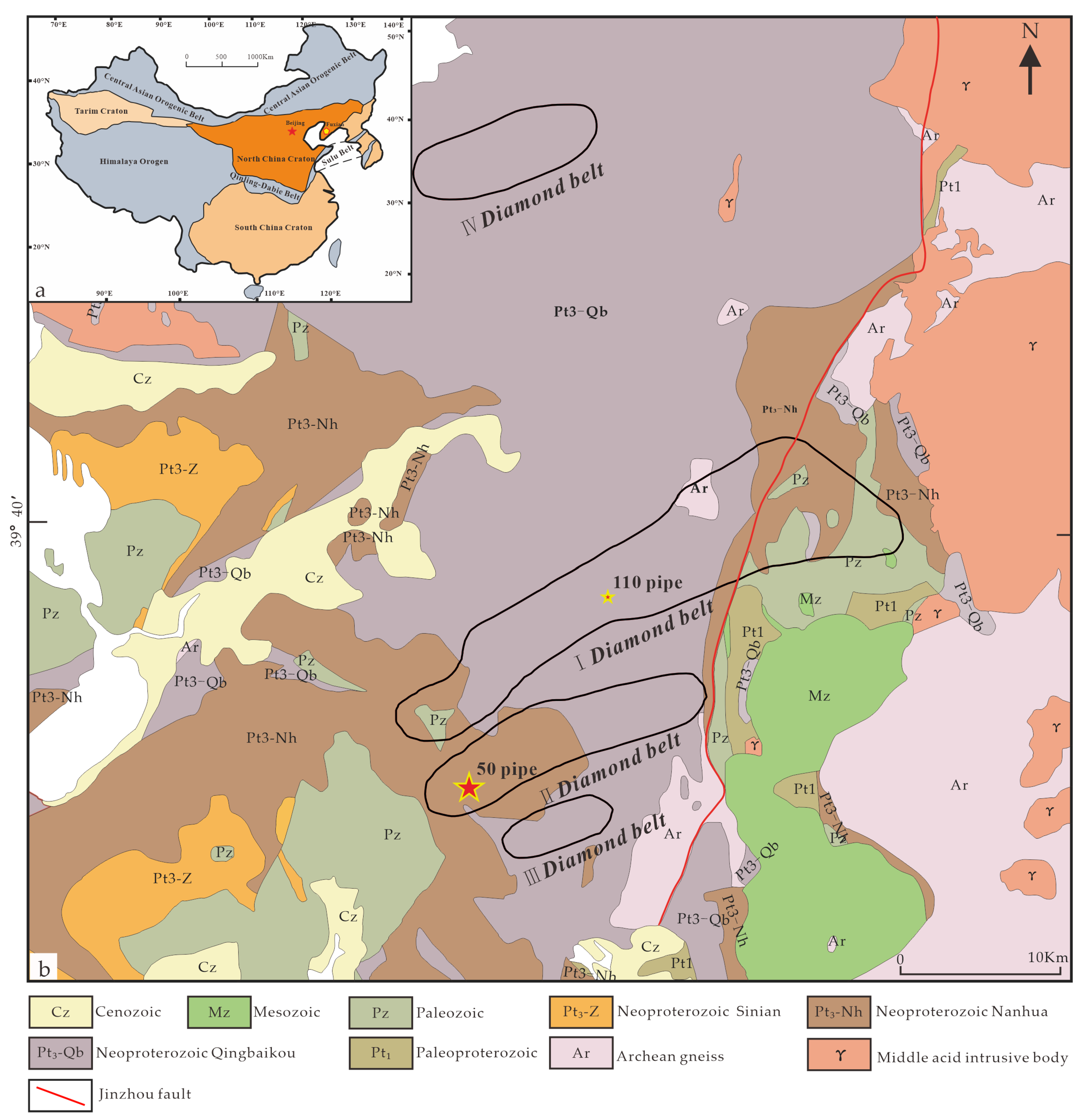
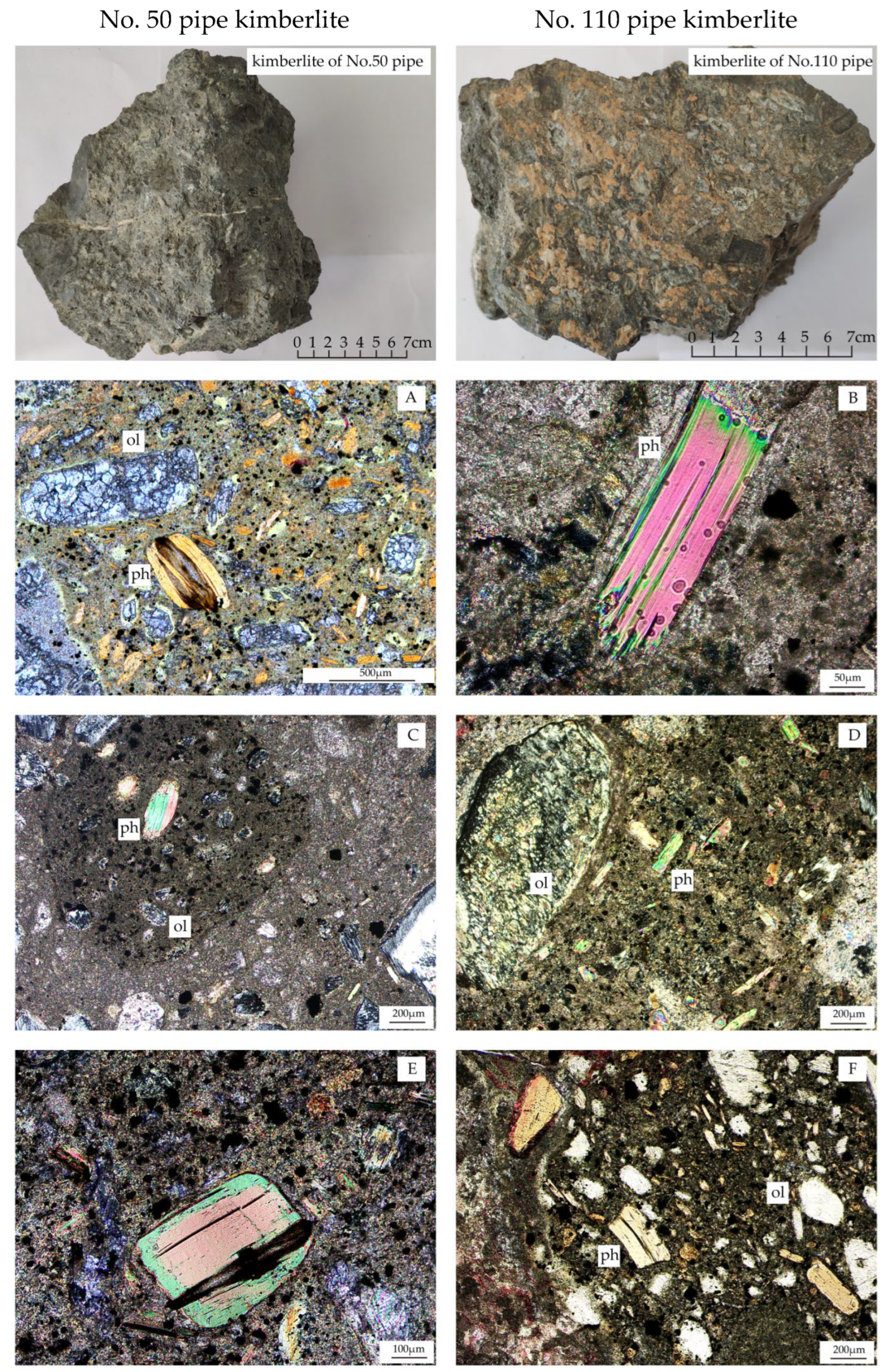
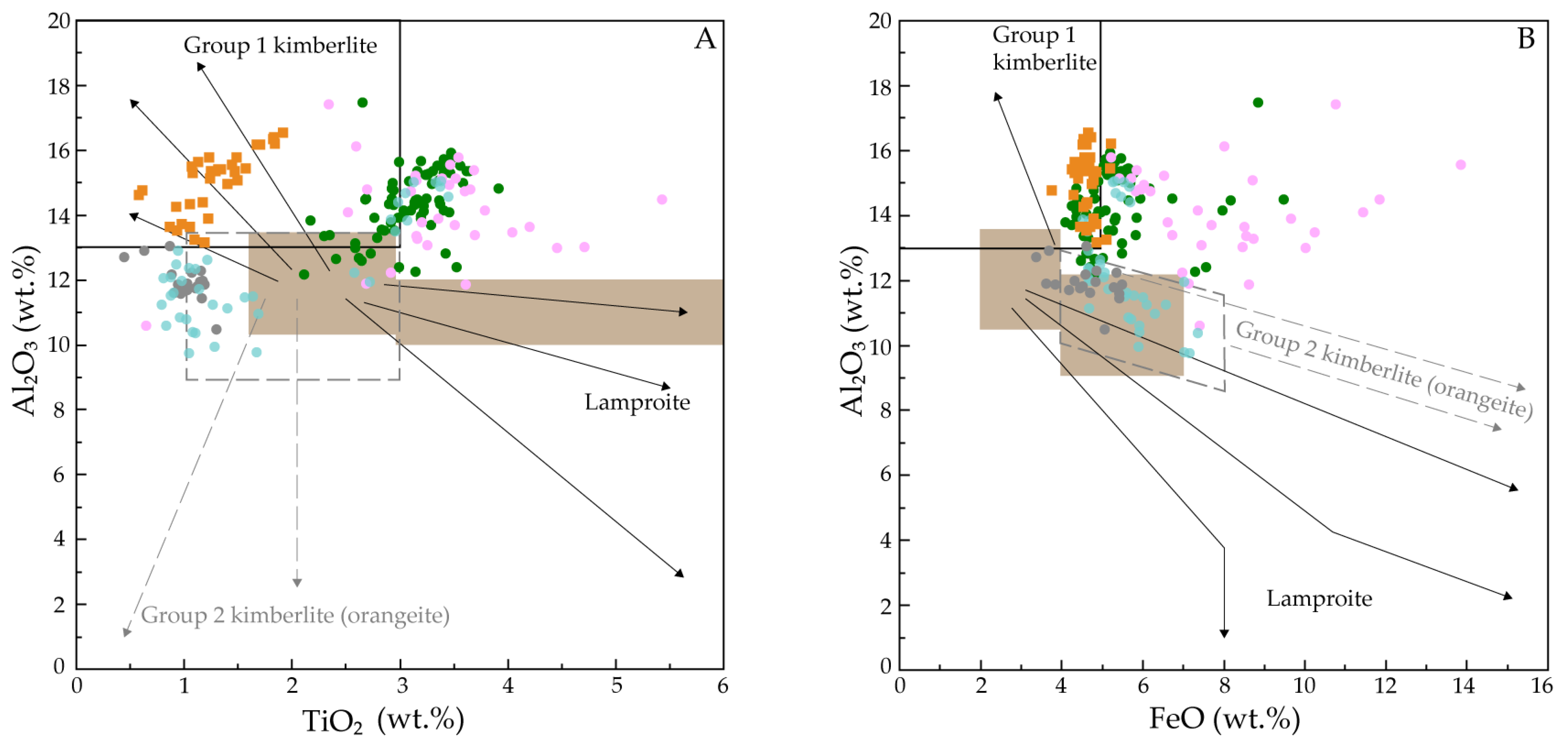
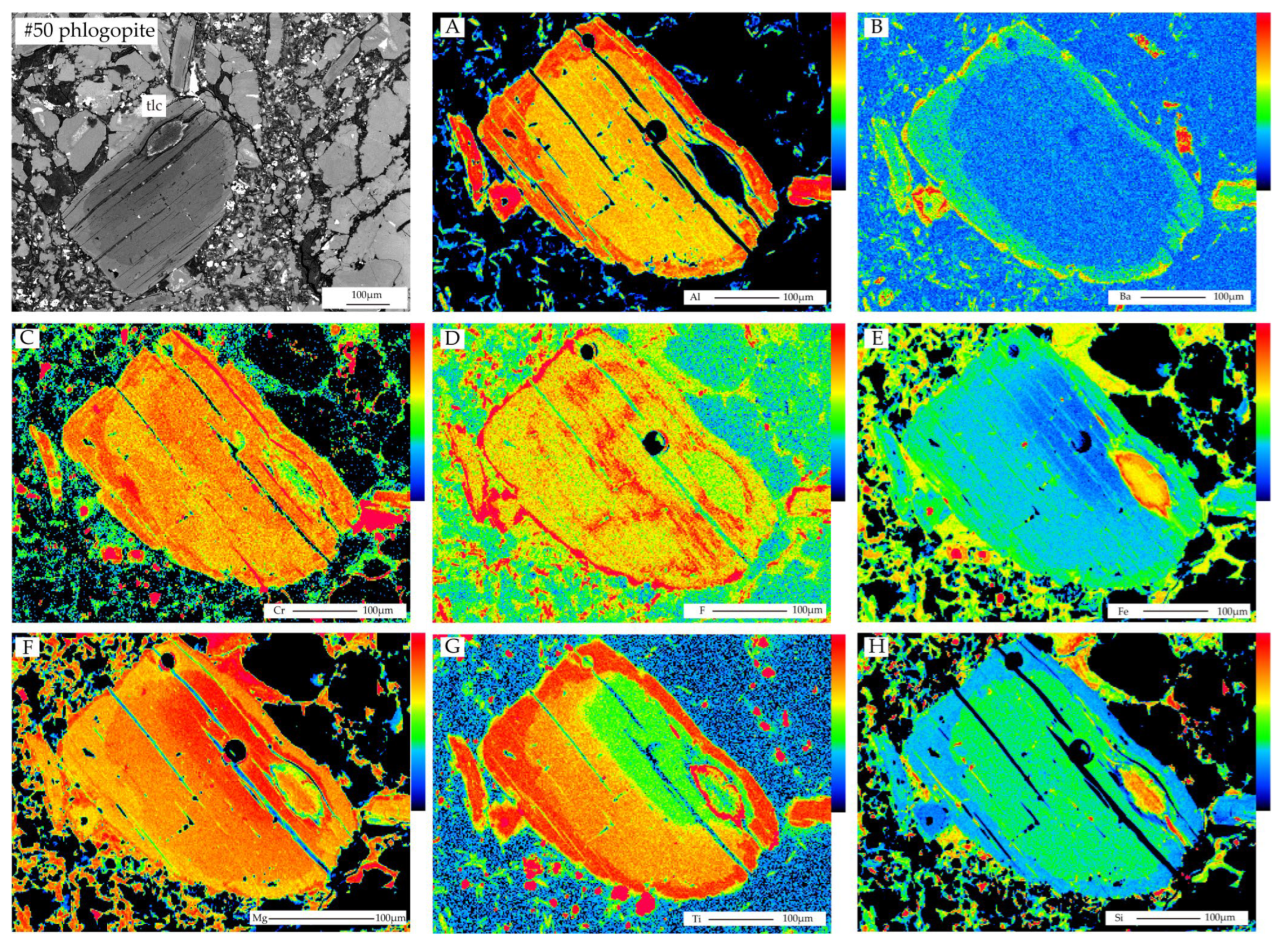
Phlogopite is a crucial indicator for effectively constraining the magmatic evolution and emplacement mechanism of kimberlite. In this study, samples were collected from the No. 110 kimberlite pipe within diamond belt I and the No. 50 kimberlite pipe within diamond belt II in the southern Liaoning diamond mining area in the eastern North China Craton (NCC). Zonation is highly developed in the phlogopite; the major and trace element compositions of the phlogopite zonation in the samples were analyzed. In this study, phlogopite from the No. 50 pipe kimberlite (#50 phlogopite) zonation is divided into the following components: (1) The cores, low Ti-Cr xenocryst, average Mg# = 90.6, has a resorption structure, the presence of serpentine and talc minerals in low Ti-Cr cores (xenocrysts) can be used as evidence for hydrothermal metasomatism; (2) cores/inner rims (between core and outer rim), high Ti-Cr, it is thought to be related to the assimilation of mantle materials by deep kimberlite magma, average Mg# = 88.2; (3) outer rims, low-Cr/Cr-poor, average Mg# = 82.4, Fe, Al and Ba contents increased, and there was a trend of evolution to biotite composition believed to be related to the metasomatic metamorphism of melt and wall rock during the late magmatic evolution or ascent; (4) rinds, it is characterized by re-enrichment of Mg, rind I (low-Ti-Cr, average Mg# = 88.4), rind II (high-Ti-Cr, Mg# = 88.6), rind II may be formed earlier than rind I. Rind is very rare and has been reported for the first time in southern Liaoning kimberlite. This study was only accidentally found in the outermost part of #50 phlogopite, the Mg-rich feature represents an environment in which oxygen fugacity has increased. The phlogopite in samples from pipe No. 110 (#110 phlogopite) exhibits relatively homogeneous characteristics across different zones and is more enriched in Al and Ba, which is likely the result of mantle metasomatism. Due to its euhedral characteristics and limited composition variation, it is considered that #110 phlogopite is more likely to be derived from direct crystallization from magma than from xenocrysts. In addition, based on the simultaneous enrichment of Al and Fe in phlogopite from the core to the outer rim, pipe No. 50 was determined to be a micaceous kimberlite, while pipe No. 110 more closely resembles group I kimberlites. This paper proposes that successive pulses of kimberlite magma emplacement gradually metasomatized the conduit, and subsequent kimberlite magma ascended along the metasomatized conduit, thereby minimizing the interaction between the later magma and the surrounding mantle lithosphere.
Keywords: phlogopite zone of kimberlite; magmatic evolution; emplacement mechanism phlogopite zone of kimberlite; magmatic evolution; emplacement mechanism