Cluster-Centered Visualization Techniques for Fuzzy Clustering Results to Judge Single Clusters



Abstract
1. Introduction
2. Clustering Methods
3. Cluster Validity and Visualization Techniques
3.1. Problem of Number of Clusters
3.2. Advantages of Membership Degrees
3.3. Visualization Techniques Literature Review
4. Cluster-Centered Visualization Techniques
4.1. Method: Compute-Points-Circular
4.2. Method: Angle-2-Clusters
4.3. Method: Angle-Mapping
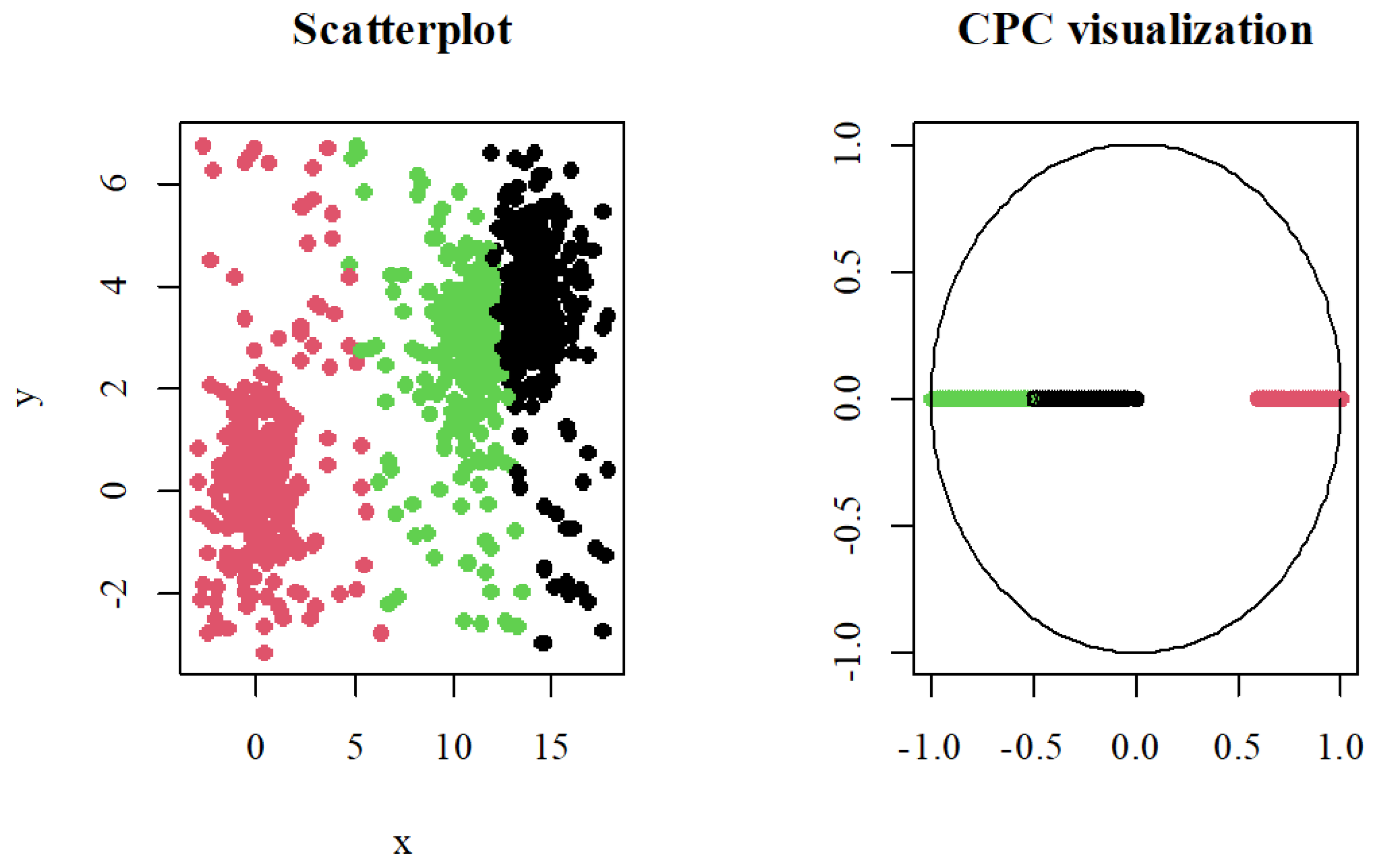
4.4. Visual Comparison with Other Techniques
5. Validation by Example
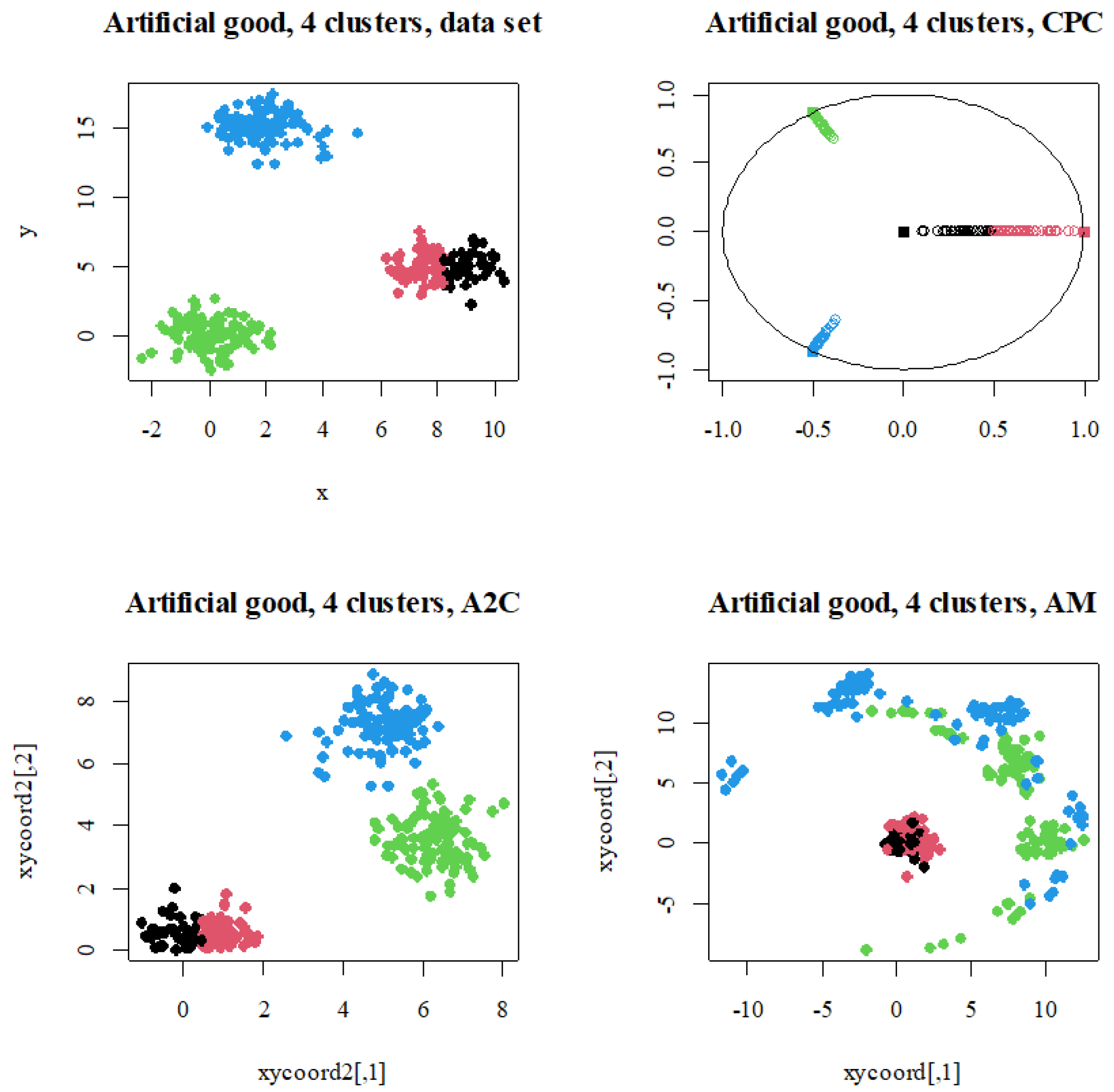
- An artificial data set with well-separated clusters is referred to as an artificial good data set in the following. The data set contains three clusters generated from multivariate normal distributions.
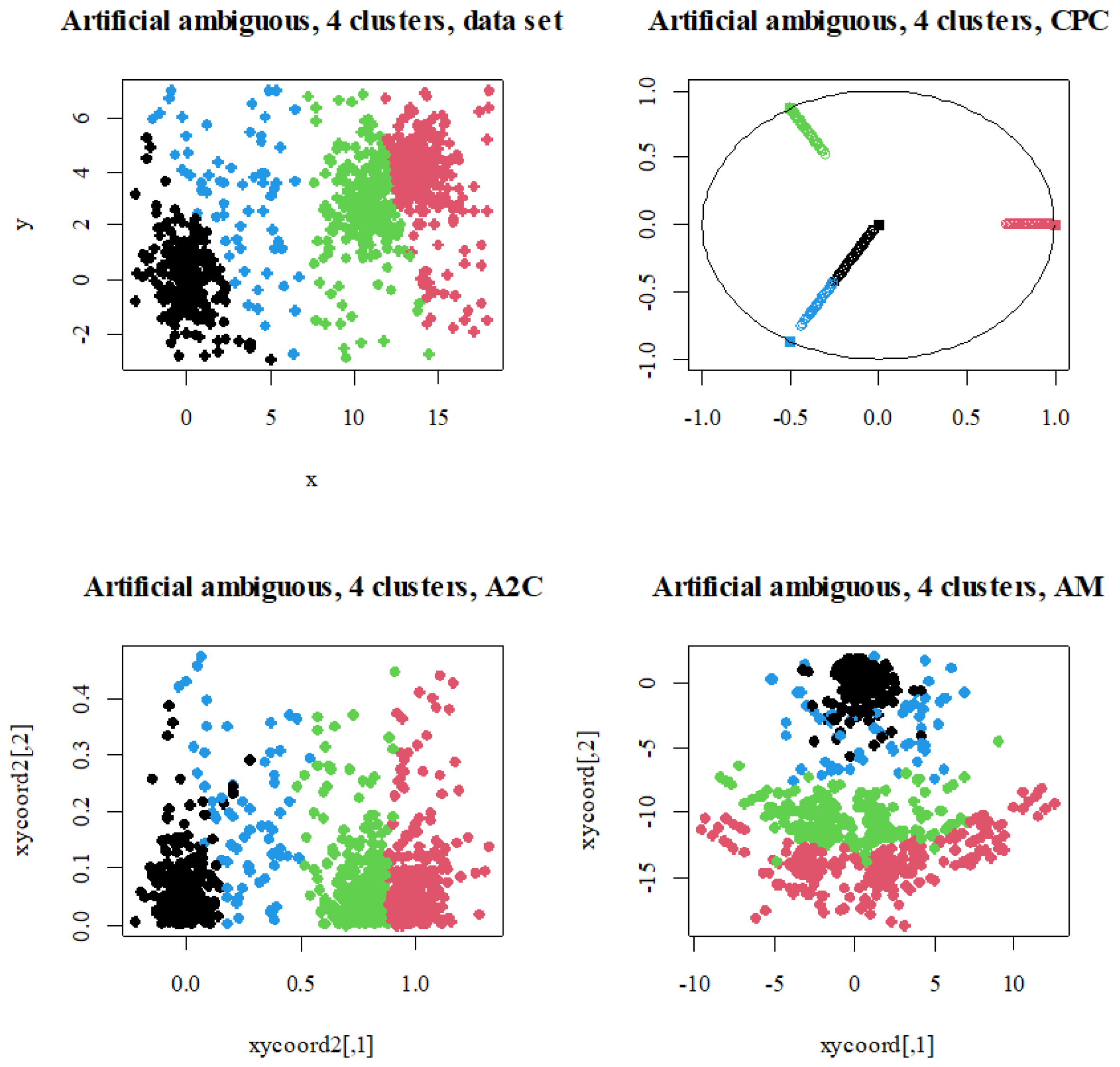
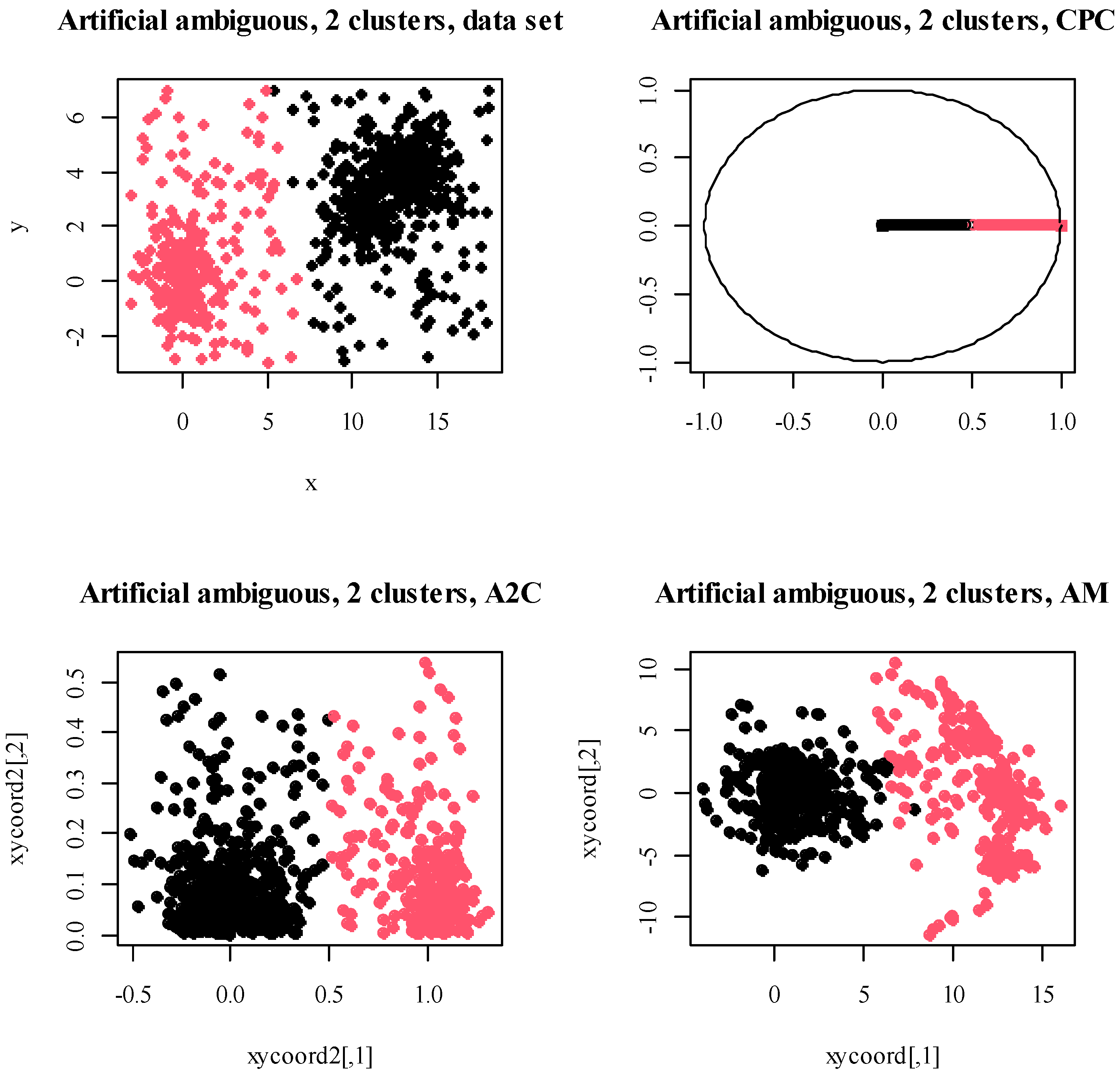
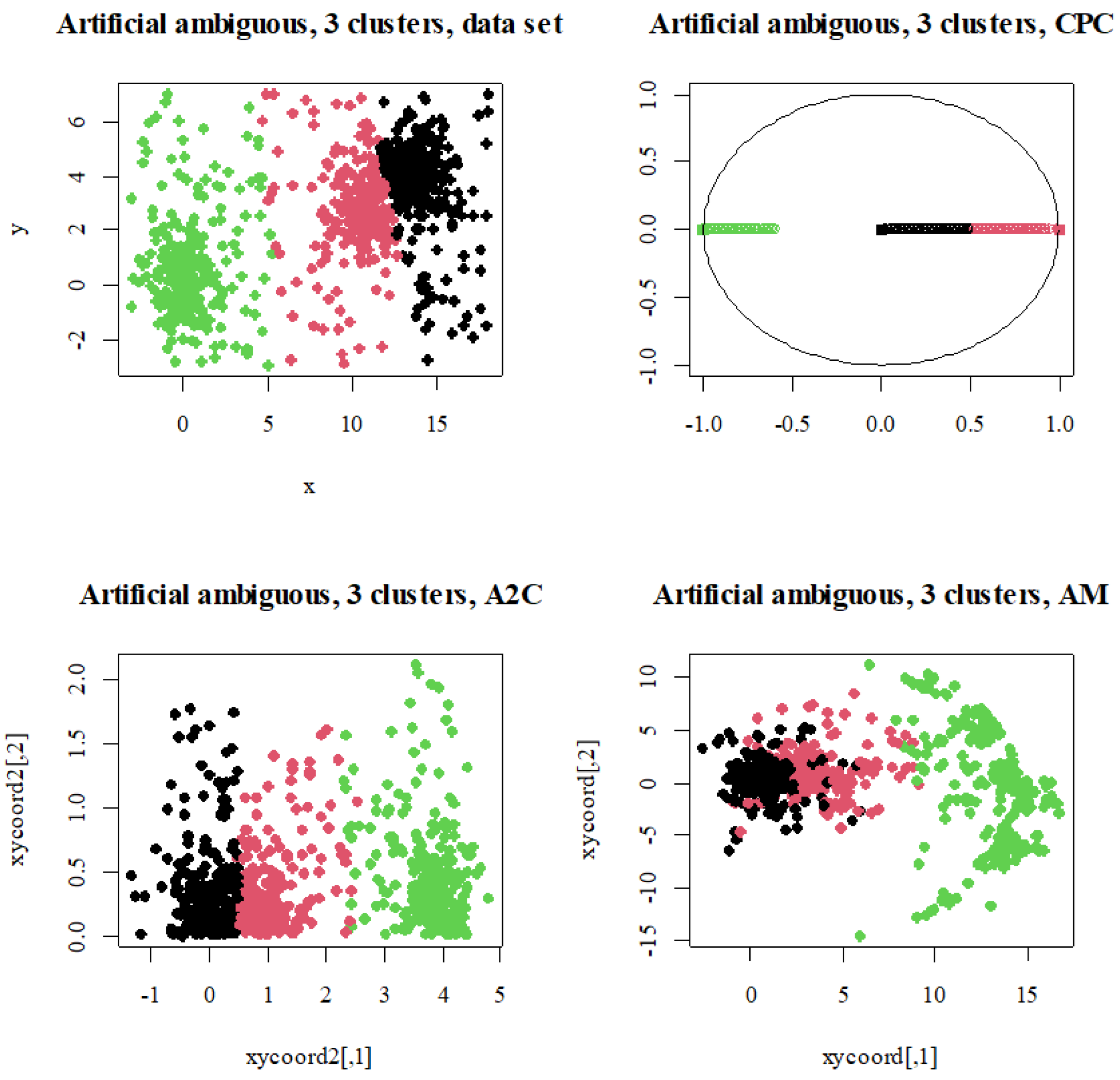
- An artificial data set with three clusters from multivariate normal distributions where two clusters show a strong overlap. In addition, uniform noise was added to the data set. We refer to this data set as an ambiguous artificial data set.
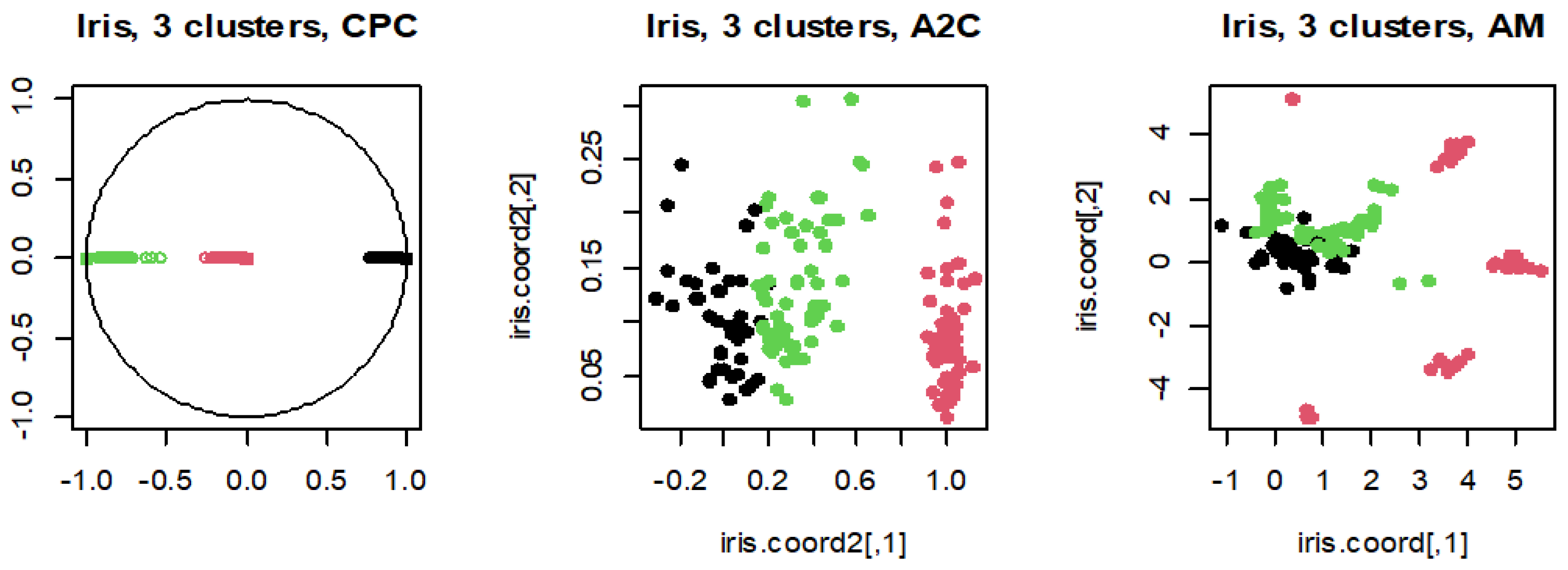
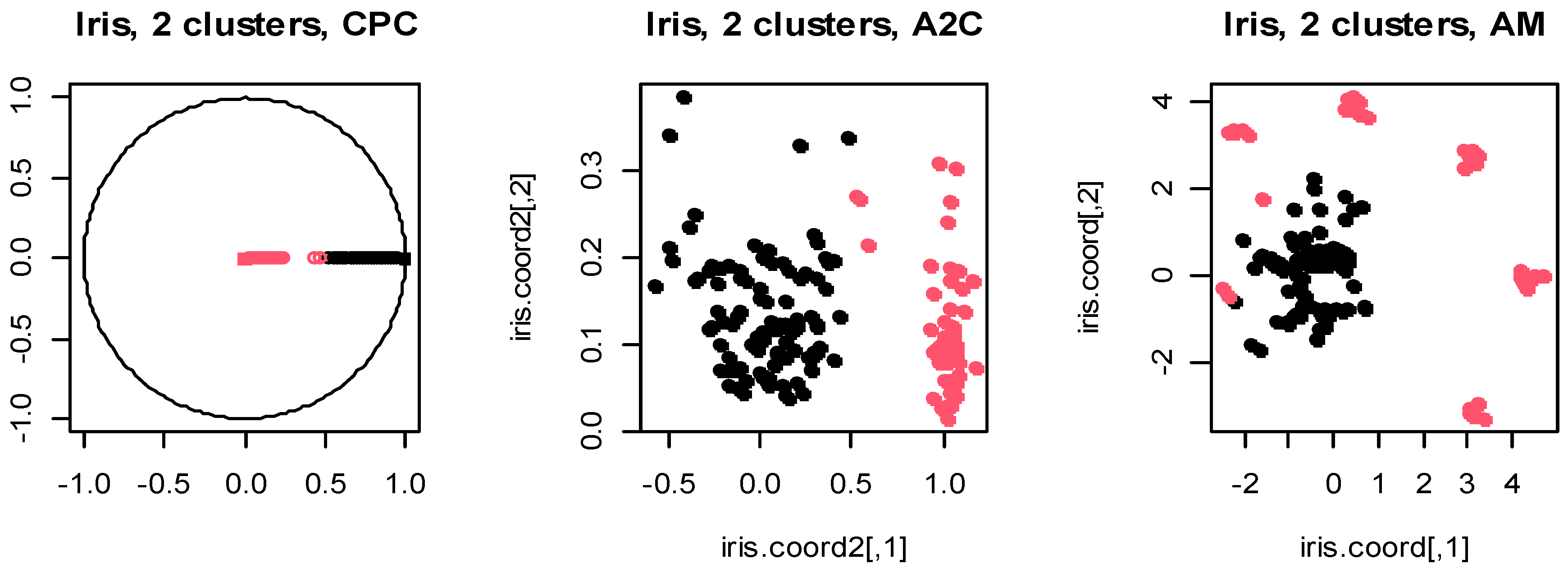
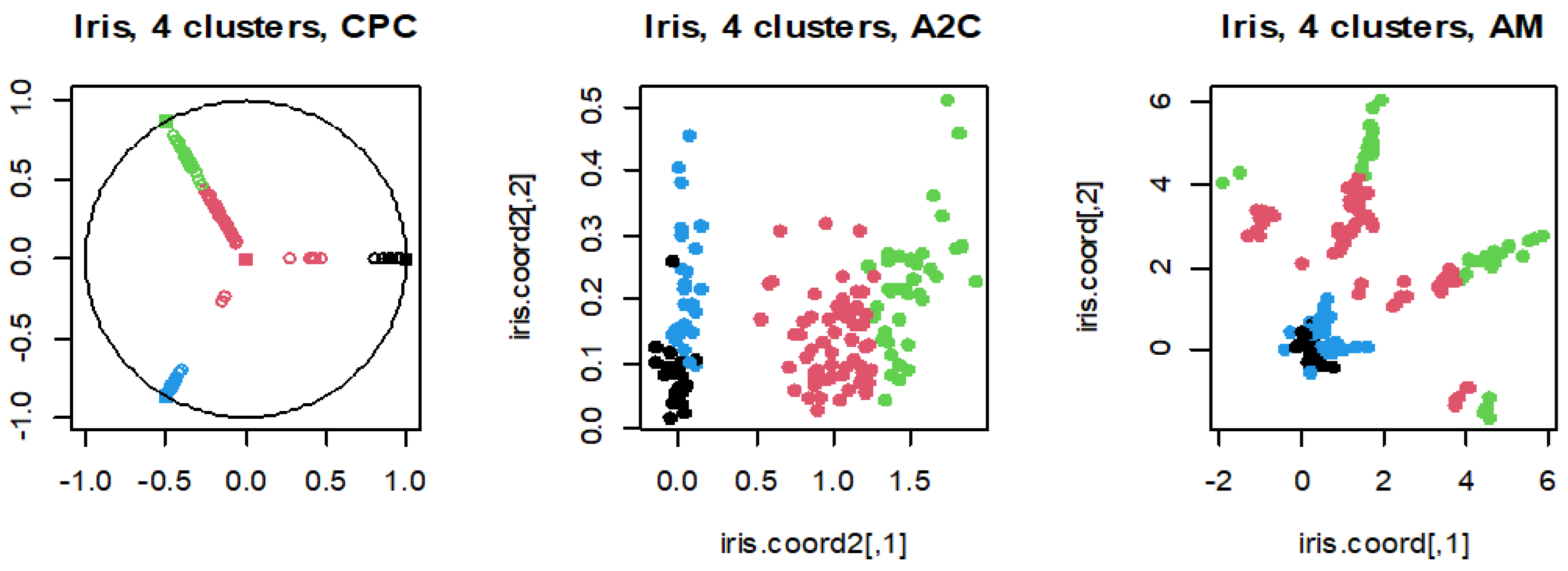
- The Iris data set.
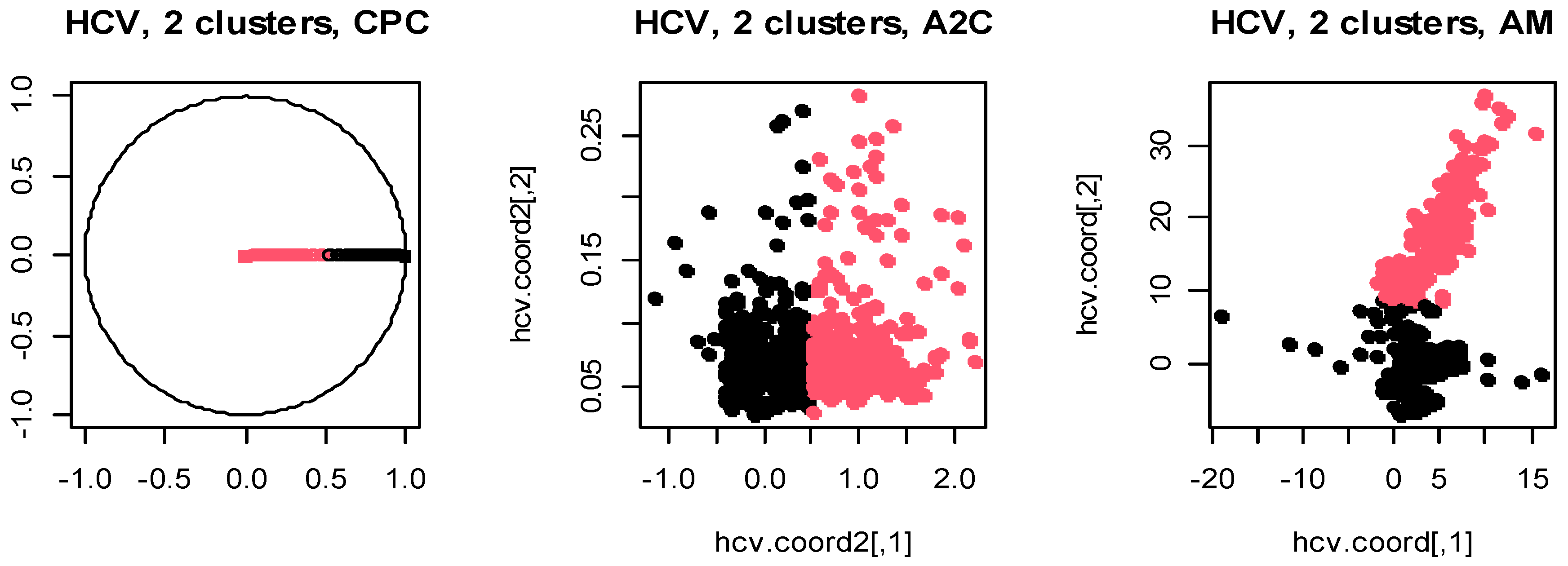
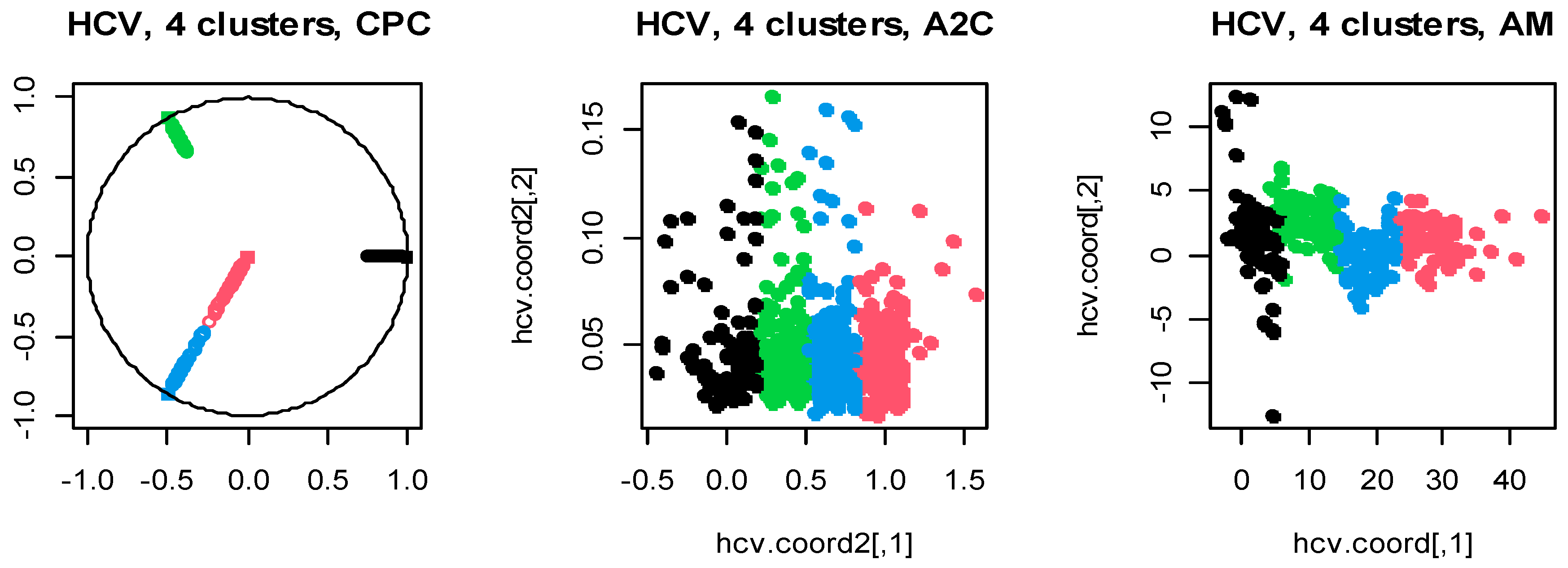
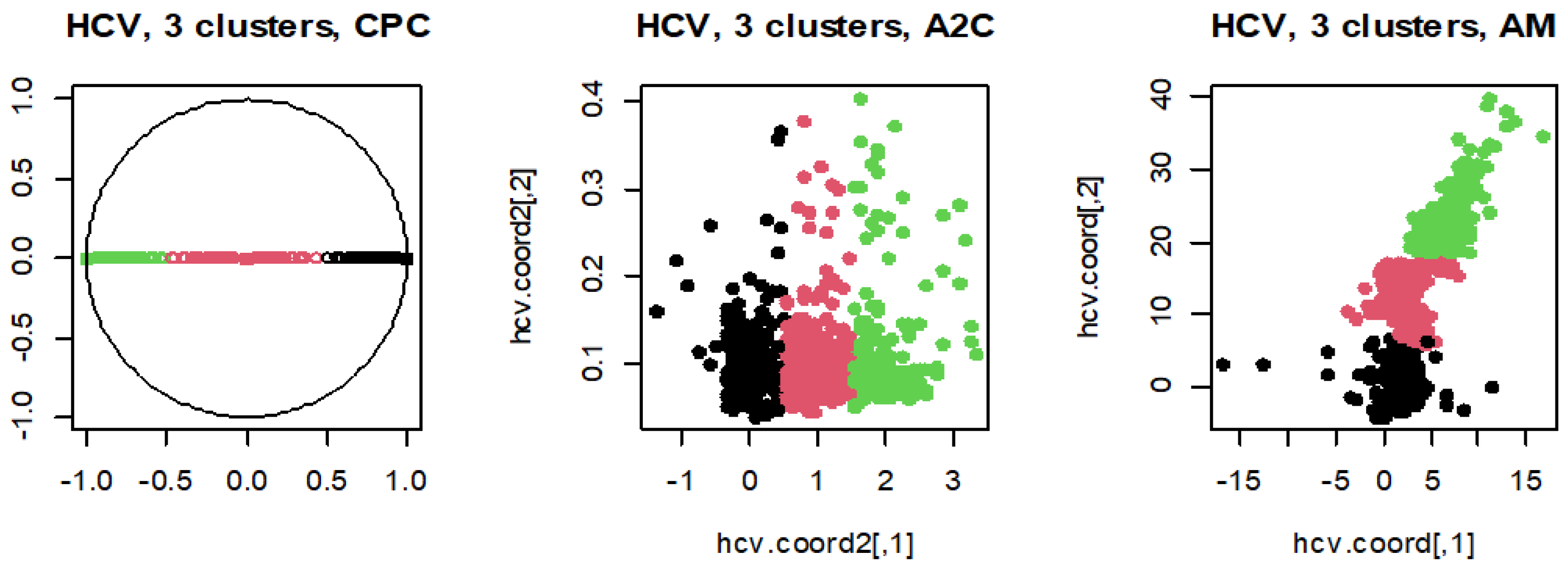
- A medical data set and
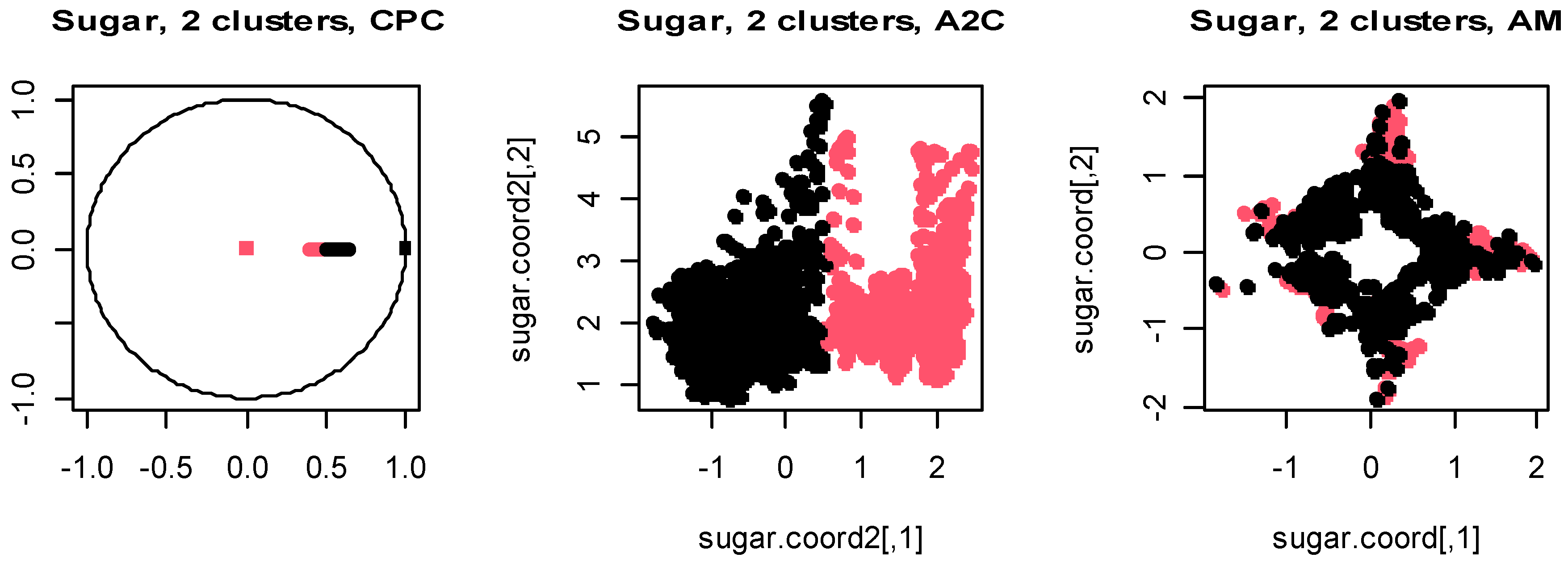
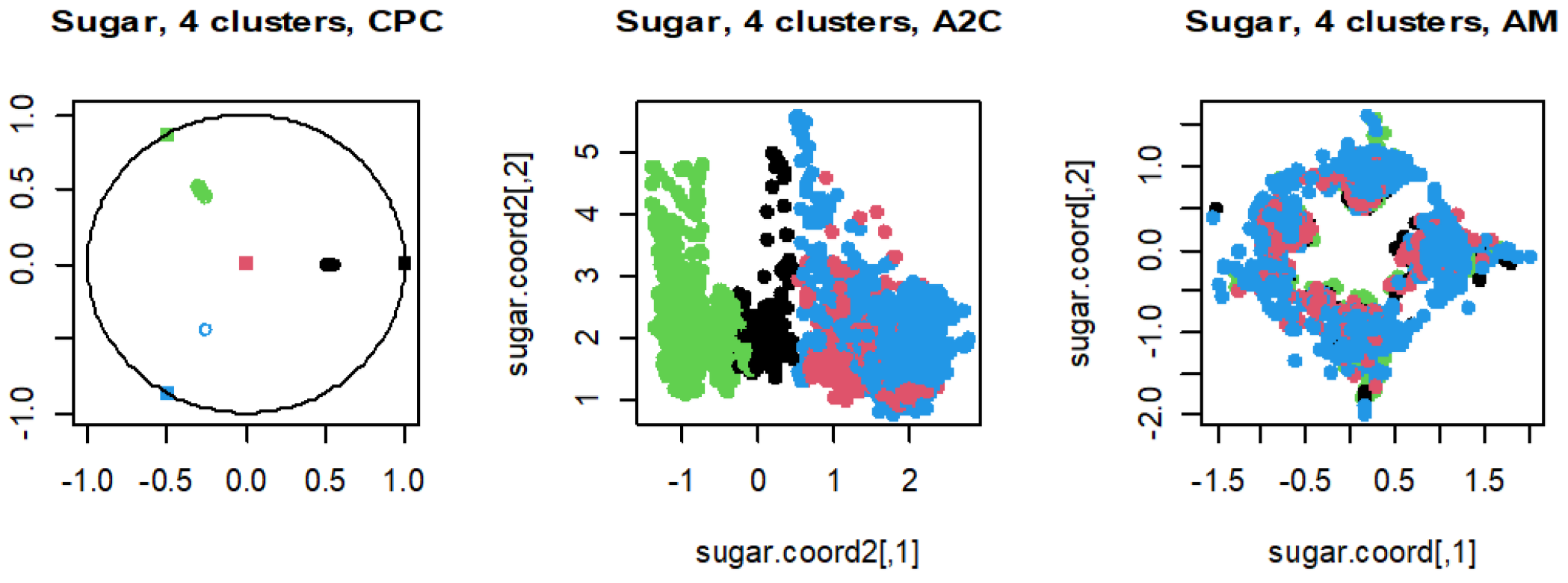
- A data from an industrial production line.
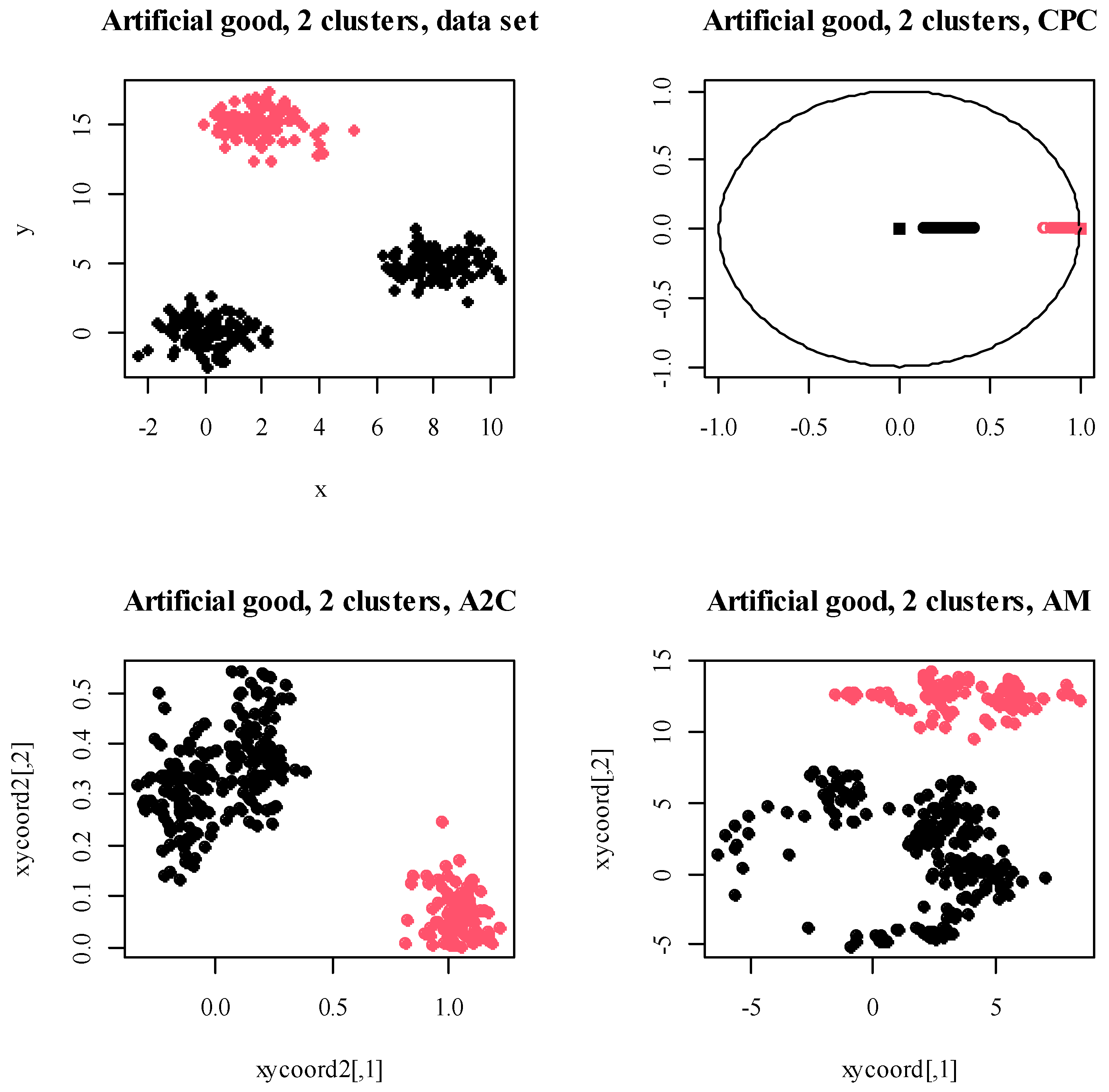
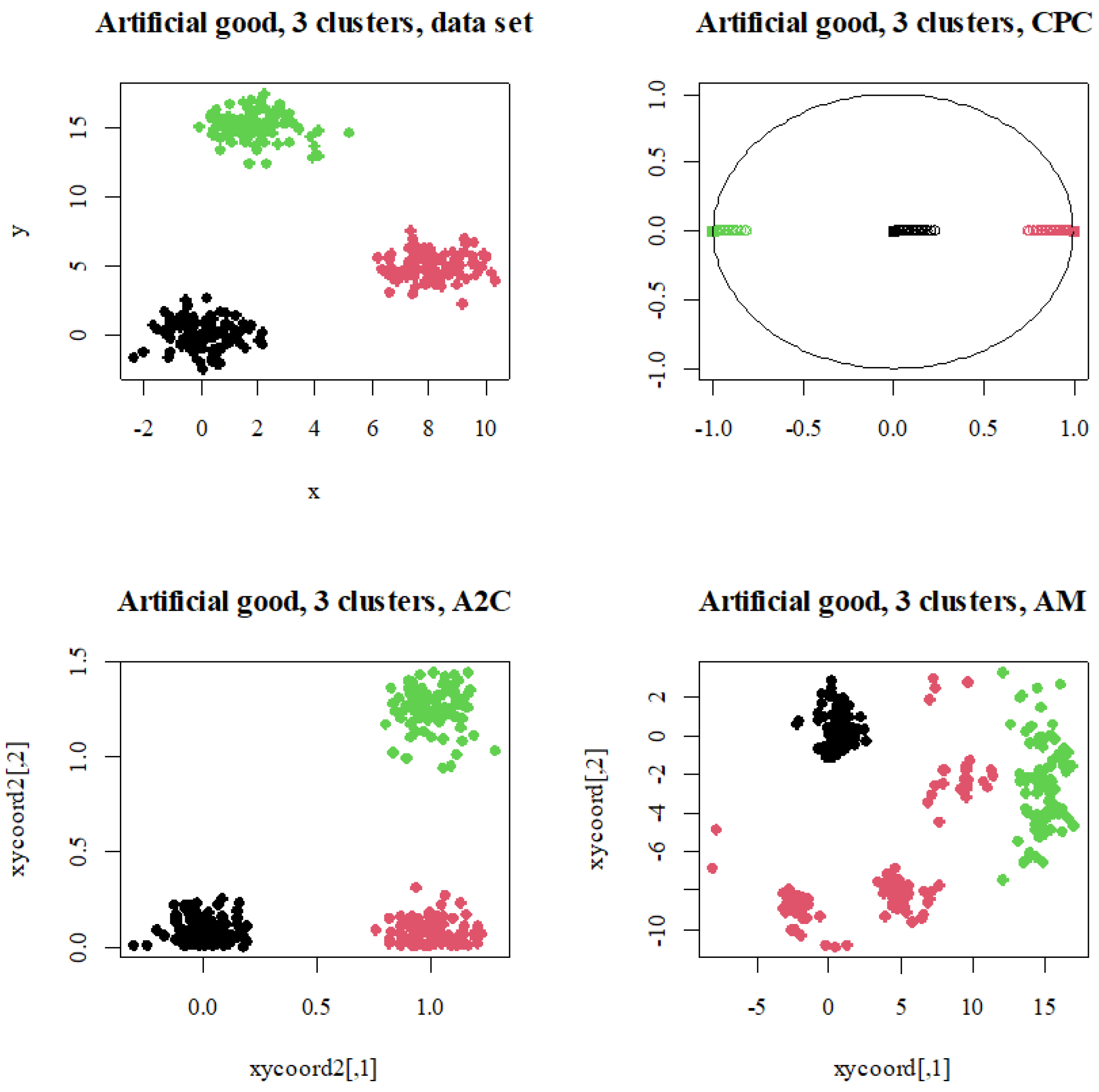
5.1. Artificial Data Sets
5.2. Iris Data Set
5.3. Hepatitis-C-Virus Data Set
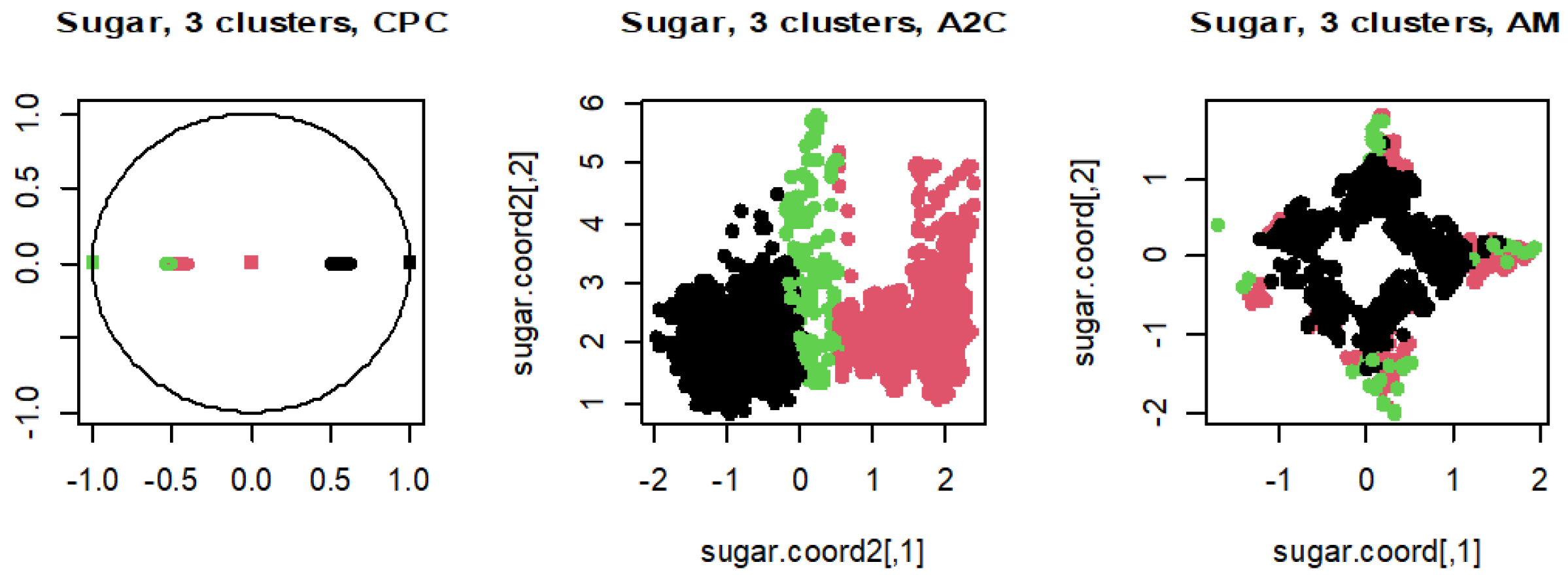
5.4. Sugar Production Data Set
6. Conclusions
Supplementary Materials
Author Contributions
Funding
Data Availability Statement
Conflicts of Interest
References
- Duda, R.O.; Stork, D.G.; Hart, P.E. Pattern Classification and Scene Analysis, 2nd ed.; Wiley: Chichester, UK; New York, NY, USA, 2000. [Google Scholar]
- Giordani, P. An Introduction to Clustering with R; Springer: Singapore, 2020. [Google Scholar]
- Tibshirani, R.; Hastie, T.; Witten, D.; James, G. An Introduction to Statistical Learning: With Applications in R; Springer: New York, NY, USA, 2021. [Google Scholar]
- Arbelaitz, O.; Gurrutxaga, I.; Muguerza, J.; Pérez, J.M.; Perona, I. An extensive comparative study of cluster validity indices. Pattern Recognit. 2013, 46, 243–256. [Google Scholar] [CrossRef] [Scilit]
- Hinton, G.; Roweis, S. Stochastic neighbor embedding. In Advances in Neural Information Processing Systems; The MIT Press: Cambridge, MA, USA, 2002. [Google Scholar]
- McInnes, L.; Healy, J.; Melville, J. UMAP: Uniform Manifold Approximation and Projection for Dimension Reduction. arXiv 2018, arXiv:1802.03426. [Google Scholar]
- Gustafson, D.; Kessel, W. Fuzzy clustering with a fuzzy covariance matrix. In Proceedings of the 1978 IEEE Conference on Decision and Control including the 17th Symposium on Adaptive Processes, San Diego, CA, USA, 10–12 January 1979; pp. 761–766. [Google Scholar]
- Lloyd, S. Least squares quantization in PCM. IEEE Trans. Inform. Theory 1982, 28, 129–137. [Google Scholar] [CrossRef] [Scilit]
- Bora, D.J.; Gupta, A.K. A Comparative study Between Fuzzy Clustering Algorithm and Hard Clustering Algorithm. IJCTT 2014, 10, 108–113. [Google Scholar] [CrossRef] [Scilit]
- Bezdek, J.C. Pattern Recognition with Fuzzy Objective Function Algorithms; Springer: New York, NY, USA, 1981. [Google Scholar]
- Larson, J.L.; Zhou, W.; Veliz, P.T.; Smith, S. Symptom Clusters in Adults with Post-COVID-19: A Cross-Sectional Survey. Clin. Nurs. Res. 2023, 32, 1071–1080. [Google Scholar] [CrossRef] [Scilit] [PubMed]
- Dubes, R.; Jain, A.K. Clustering Methodologies in Exploratory Data Analysis. In Advances in Computers Volume 19; Elsevier: Amsterdam, The Netherlands, 1980; pp. 113–228. [Google Scholar]
- Omatu, S.; Neves, J.; Rodríguez, J.M.C.; Santana, J.F.D.P.; González, S.R. Distributed Computing and Artificial Intelligence. In Proceedings of the 12th International Conference, Salamanca, Spain, 28–30 March 2012; Springer International Publishing: Cham, Switzerland, 2015. [Google Scholar]
- Ishioka, T. Extended K-Means with an Efficient Estimation of the Number of Clusters. In Intelligent Data Engineering and Automated Learning—IDEAL 2000. Data Mining, Financial Engineering, and Intelligent Agents; Goos, G., Hartmanis, J., van Leeuwen, J., Leung, K.S., Chan, L.-W., Meng, H., Eds.; Springer: Berlin/Heidelberg, Germany, 2000; pp. 17–22. [Google Scholar]
- Rousseeuw, P.J. Silhouettes: A graphical aid to the interpretation and validation of cluster analysis. J. Comput. Appl. Math. 1987, 20, 53–65. [Google Scholar] [CrossRef] [Scilit]
- Thorndike, R.L. Who belongs in the family? Psychometrika 1953, 18, 267–276. [Google Scholar] [CrossRef] [Scilit]
- Klawonn, F.; Höppner, F. What Is Fuzzy about Fuzzy Clustering? Understanding and Improving the Concept of the Fuzzifier. In Advances in Intelligent Data Analysis V; R. Berthold, M., Lenz, H.J., Bradley, E., Kruse, R., Borgelt, C., Eds.; Springer: Berlin/Heidelberg, Germany, 2003; pp. 254–264. [Google Scholar]
- Jiao, L.; Yang, H.; Liu, Z.; Pan, Q. Interpretable fuzzy clustering using unsupervised fuzzy decision trees. Inf. Sci. 2022, 611, 540–563. [Google Scholar] [CrossRef] [Scilit]
- Kumar, D.; Bezdek, J.C.; Rajasegarar, S.; Palaniswami, M.; Leckie, C.; Chan, J.; Gubbi, J. Adaptive Cluster Tendency Visualization and Anomaly Detection for Streaming Data. ACM Trans. Knowl. Discov. Data 2016, 11, 1–40. [Google Scholar] [CrossRef] [Scilit]
- Rueda, L.; Zhang, Y. Geometric visualization of clusters obtained from fuzzy clustering algorithms. Pattern Recognit. 2006, 39, 1415–1429. [Google Scholar] [CrossRef] [Scilit]
- Klawonn, F.; Chekhtman, V.; Janz, E. Visual Inspection of Fuzzy Clustering Results. In Advances in Soft Computing; Benítez, J.M., Cordón, O., Hoffmann, F., Roy, R., Eds.; Springer: London, UK, 2003; pp. 65–76. [Google Scholar]
- Park, L.A.F.; Bezdek, J.C.; Leckie, C.A. Visualization of clusters in very large rectangular dissimilarity data. In Proceedings of the 2009 4th International Conference on Autonomous Robots and Agents, Wellington, New Zealand, 10–12 February 2009; pp. 251–256. [Google Scholar]
- Sharko, J.; Grinstein, G. Visualizing Fuzzy Clusters Using RadViz. In Proceedings of the 2009 13th International Conference Information Visualisation, Barcelona, Spain, 15–17 July 2009; pp. 307–316. [Google Scholar]
- Zhou, F.; Bai, B.; Wu, Y.; Chen, M.; Zhong, Z.; Zhu, R.; Chen, Y.; Zhao, Y. FuzzyRadar: Visualization for understanding fuzzy clusters. J. Vis. 2019, 22, 913–926. [Google Scholar] [CrossRef] [Scilit]
- Bui, Q.T.; Vo, B.; Snasel, V.; Pedrycz, W.; Hong, T.P.; Nguyen, N.T.; Chen, M.Y. SFCM: A Fuzzy Clustering Algorithm of Extracting the Shape Information of Data. IEEE Trans. Fuzzy Syst. 2021, 29, 75–89. [Google Scholar] [CrossRef] [Scilit]
- Zhao, Y.; Luo, F.; Chen, M.; Wang, Y.; Xia, J.; Zhou, F.; Wang, Y.; Chen, Y.; Chen, W. Evaluating Multi-Dimensional Visualizations for Understanding Fuzzy Clusters. IEEE Trans. Vis. Comput. Graph. 2018, 25, 12–21. [Google Scholar] [CrossRef] [Scilit] [PubMed]
- Streit, M.; Gratzl, S.; Gillhofer, M.; Mayr, A.; Mitterecker, A.; Hochreiter, S. Furby: Fuzzy force-directed bicluster visualization. BMC Bioinform. 2014, 15 (Suppl. S6), S4. [Google Scholar] [CrossRef] [Scilit] [PubMed]
- Pedrycz, W.; Izakian, H. Cluster-Centric Fuzzy Modeling. IEEE Trans. Fuzzy Syst. 2014, 22, 1585–1597. [Google Scholar] [CrossRef] [Scilit]
- Ariza-Jiménez, L.; Villa, L.F.; Quintero, O.L. Memberships Networks for High-Dimensional Fuzzy Clustering Visualization. In Proceedings of the Applied Computer Sciences in Engineering: 6th Workshop on Engineering Applications, WEA 2019, Santa Marta, Colombia, 16–18 October 2019; Figueroa-García, J.C., Duarte-González, M., Jaramillo-Isaza, S., Orjuela-Cañon, A.D., Diaz-Gutierrez, Y., Eds.; Springer: Berlin/Heidelberg, Germany; New York, NY, USA, 2019; pp. 263–273. [Google Scholar]
- R Core Team. R: A Language and Environment for Statistical Computing; R Foundation: Vienna, Austria, 2021. [Google Scholar]
- Vahldiek, K.; Zhou, L.; Zhu, W.; Klawonn, F. Development of a data generator for multivariate numerical data with arbitrary correlations and distributions. IDA 2021, 25, 789–807. [Google Scholar] [CrossRef] [Scilit]
- Runkler, T.A. Data Analytics: Models and Algorithms for Intelligent Data Analysis; Vieweg+Teubner Verlag: Wiesbaden, Germany, 2012. [Google Scholar]
- Hoffmann, G.; Bietenbeck, A.; Lichtinghagen, R.; Klawonn, F. Using machine learning techniques to generate laboratory diagnostic pathways—A case study. J. Lab. Precis. Med. 2018, 3, 58. [Google Scholar] [CrossRef] [Scilit]






| Consideration of Clusters | ||
|---|---|---|
| Visualization Technique | Single | All |
| CPC | Yes | No |
| A2C | Yes | No |
| AM | Yes | No |
| Scatterplot | No | Yes |
| Heat map | No | Yes |
| Dendrogram | No | Yes |
Disclaimer/Publisher’s Note: The statements, opinions and data contained in all publications are solely those of the individual author(s) and contributor(s) and not of MDPI and/or the editor(s). MDPI and/or the editor(s) disclaim responsibility for any injury to people or property resulting from any ideas, methods, instructions or products referred to in the content. |
© 2024 by the authors. Licensee MDPI, Basel, Switzerland. This article is an open access article distributed under the terms and conditions of the Creative Commons Attribution (CC BY) license (https://creativecommons.org/licenses/by/4.0/).
Share and Cite
Vahldiek, K.; Klawonn, F. Cluster-Centered Visualization Techniques for Fuzzy Clustering Results to Judge Single Clusters. Appl. Sci. 2024, 14, 1102. https://doi.org/10.3390/app14031102
Vahldiek K, Klawonn F. Cluster-Centered Visualization Techniques for Fuzzy Clustering Results to Judge Single Clusters. Applied Sciences. 2024; 14(3):1102. https://doi.org/10.3390/app14031102
Chicago/Turabian StyleVahldiek, Kai, and Frank Klawonn. 2024. "Cluster-Centered Visualization Techniques for Fuzzy Clustering Results to Judge Single Clusters" Applied Sciences 14, no. 3: 1102. https://doi.org/10.3390/app14031102
APA StyleVahldiek, K., & Klawonn, F. (2024). Cluster-Centered Visualization Techniques for Fuzzy Clustering Results to Judge Single Clusters. Applied Sciences, 14(3), 1102. https://doi.org/10.3390/app14031102