Article

Carbon Quota Allocation Prediction for Power Grids Using PSO-Optimized Neural Networks

1
College of Management, Shenyang Jianzhu University, Shenyang 110168, China
2
School of Economics and Management, Beijing Jiaotong University, Beijing 100044, China
3
School of Materials Science and Engineering, Northeastern University, Shenyang 110819, China
4
International College, Shenyang Jianzhu University, Shenyang 110168, China
5
School of Materials Science and Engineering, Shenyang University of Technology, Shenyang 110870, China
6
School of Engineering, Design and Built Environment, Western Sydney University, Penrith, NSW 2751, Australia
7
Centre for Infrastructure Engineering and Safety, School of Civil and Environmental Engineering, The University of New South Wales, Sydney, NSW 2052, Australia
*
Authors to whom correspondence should be addressed.
Appl. Sci. 2024, 14(24), 11996; https://doi.org/10.3390/app142411996
Submission received: 16 November 2024 / Revised: 13 December 2024 / Accepted: 20 December 2024 / Published: 21 December 2024
(This article belongs to the Special Issue Artificial Intelligence Applications in Smart Energy Systems)

Abstract

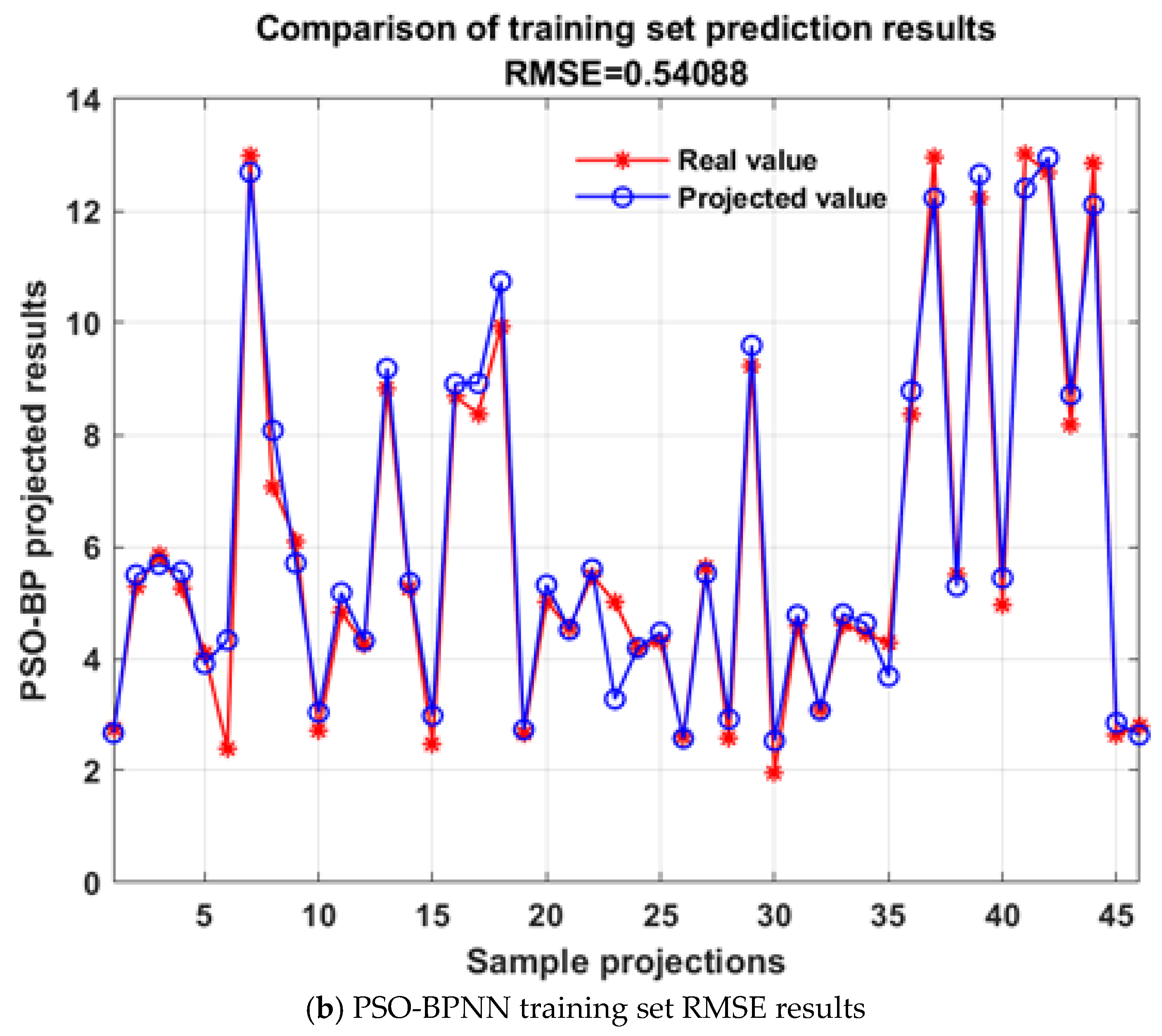
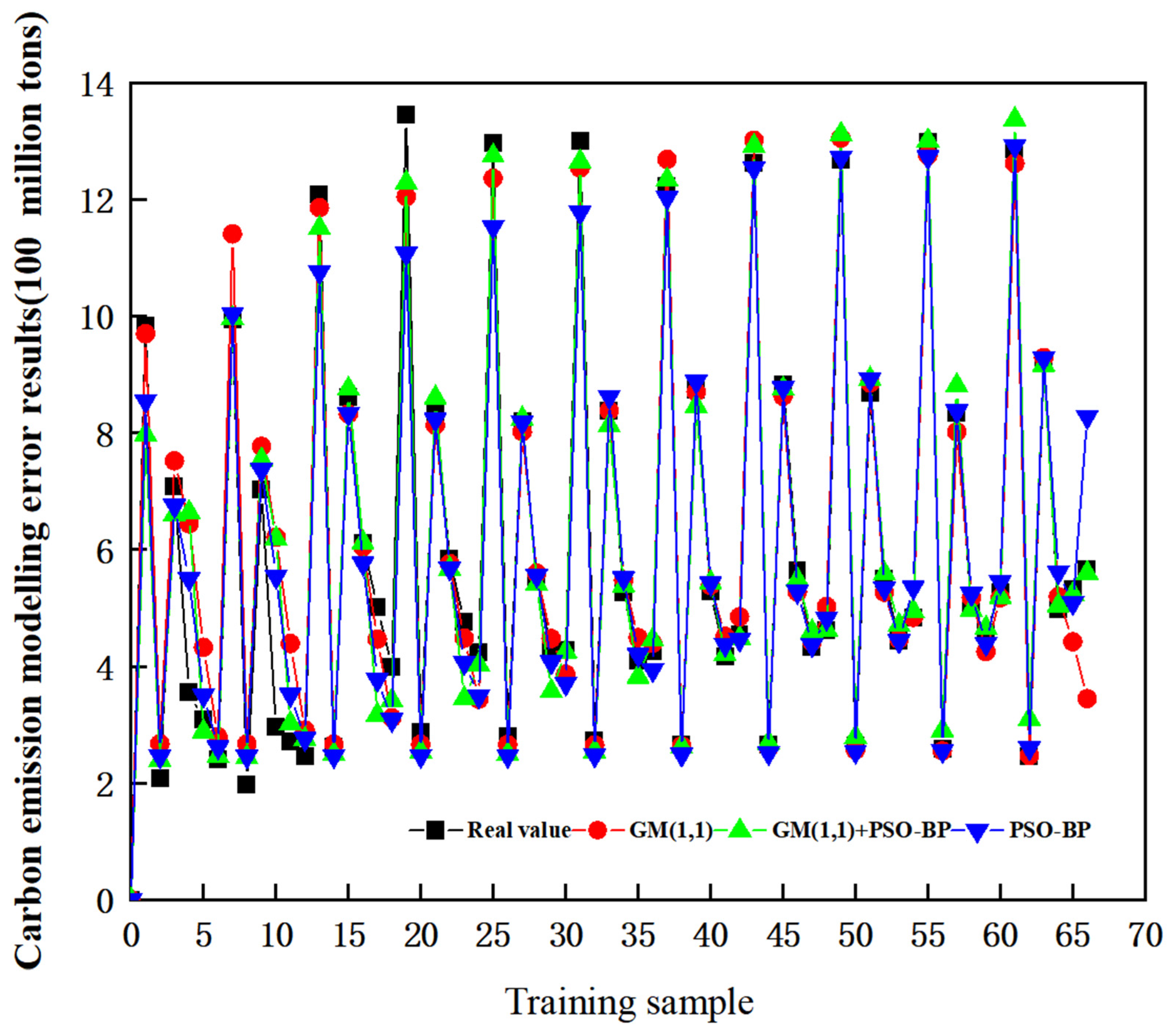
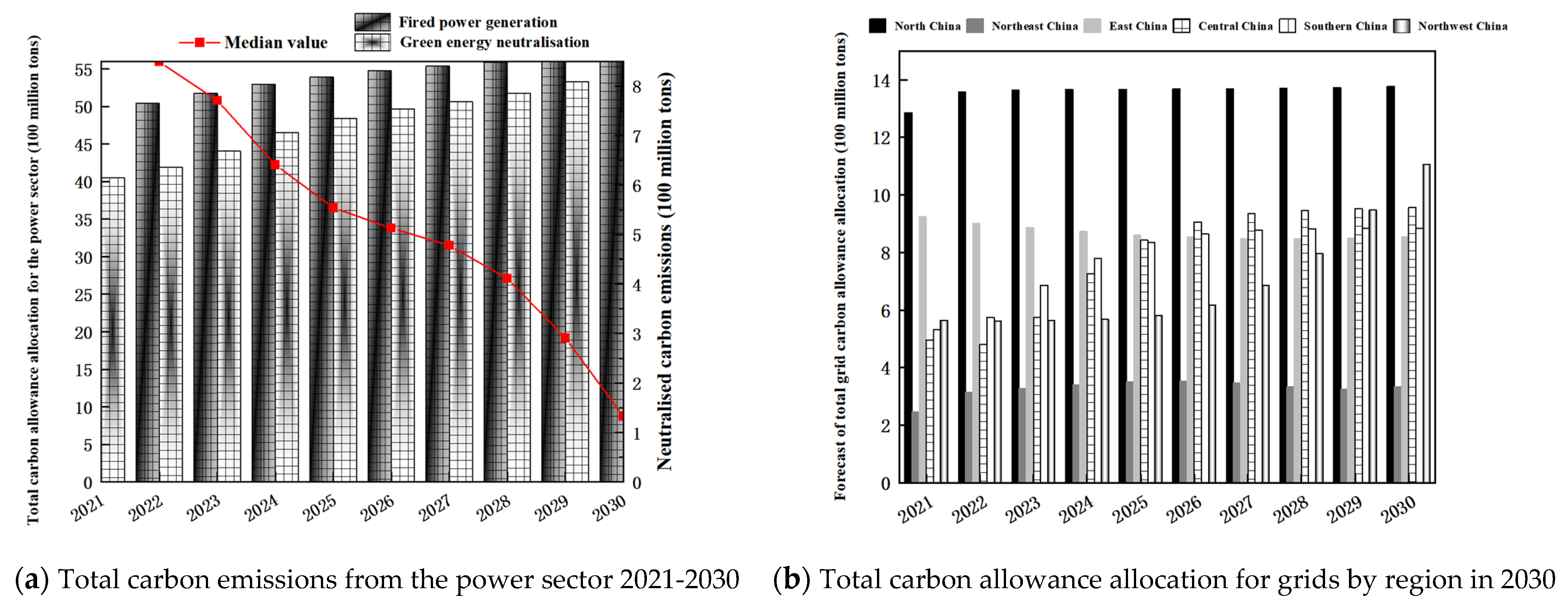
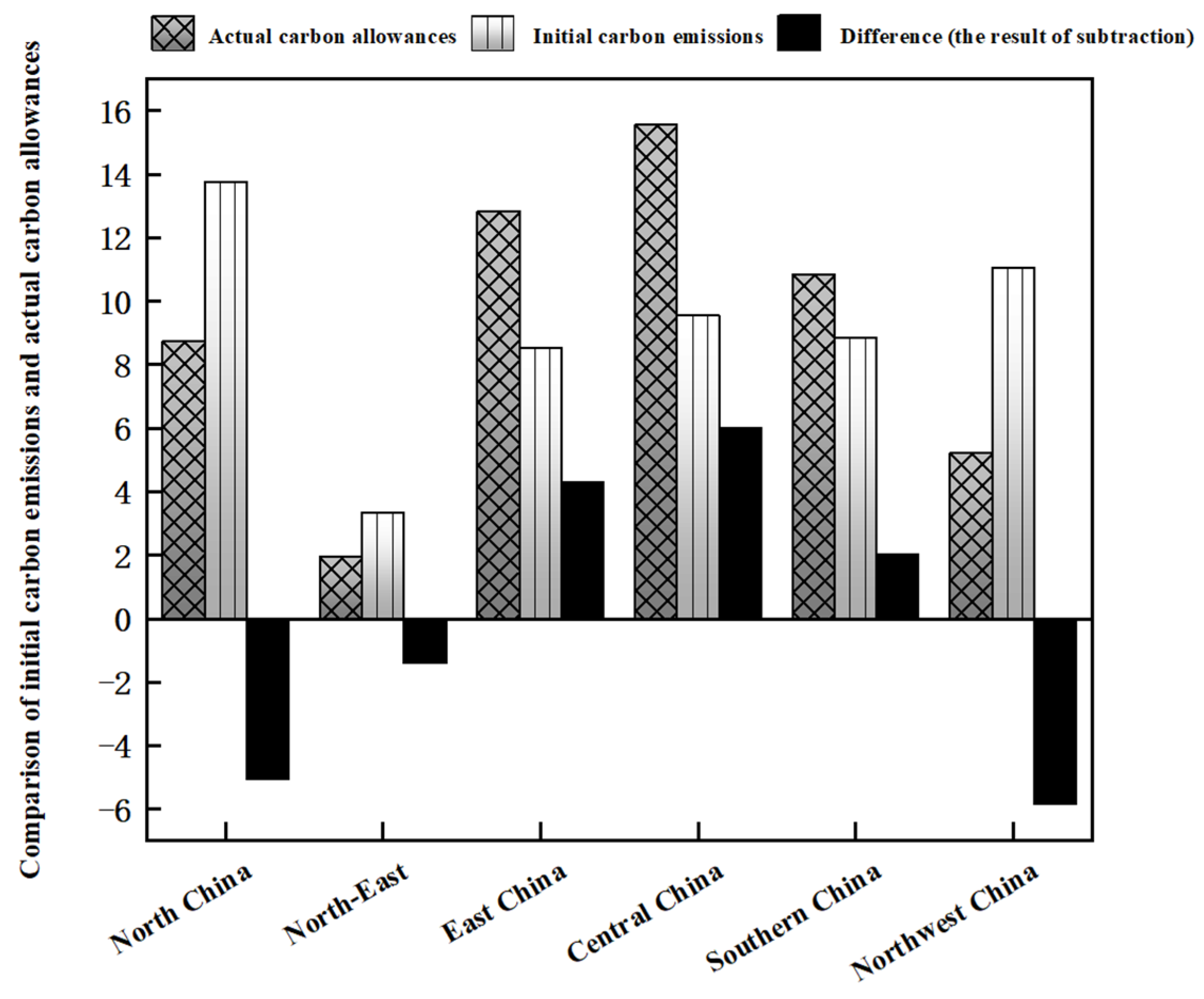
Formulating a scientifically sound and efficient approach to allocating carbon quota aligned with the carbon peaking goal is a fundamental theoretical and practical challenge within the context of climate-oriented trading in the power sector. Given the highly irrational allocation of carbon allowances in China’s power sector, as well as the expanding role of renewable energy, it is essential to rationalize the use of green energy in the development of carbon reduction in the power sector. This study addresses the risk of “carbon transfer” within the power industry and develops a predictive model for CO2 emission based on multiple influential factors, thereby proposing a carbon quota distribution scheme adapted to green energy growth. The proposed model employs a hybrid of the gray forecasting model-particle swarm optimization-enhanced back-propagation neural network (GM-PSO-BPNN) for forecasting and allocating the total carbon quota. Assuming consistent total volume control through 2030, carbon quota is distributed to regional power grids in proportion to actual production allocation. Results indicate that the PSO algorithm mitigates local optimization constraints of the standard BP algorithm; the prediction error of carbon emissions by the combined model is significantly smaller than that of the single model, while its identification accuracy reaches 99.46%. With the total national carbon emissions remaining unchanged in 2030, in the end, the regional grids received the following quota values: 873.29 million tons in North China, 522.69 million tons in Northwest China, 194.15 million tons in Northeast China, 1283.16 million tons in East China, 1556.40 million tons in Central China, and 1085.37 million tons in the Southern Power Grid. The power sector can refer to this carbon allowance allocation standard to control carbon emissions in order to meet the industry’s emission reduction standards.
Keywords: renewable energy; carbon quota; power sector; PSO-BP neural network; GM(1,1); carbon emission projection renewable energy; carbon quota; power sector; PSO-BP neural network; GM(1,1); carbon emission projection