Article

Downscaling of Remote Sensing Soil Moisture Products That Integrate Microwave and Optical Data

1
School of Surveying and Land Information Engineering, Henan Polytechnic University, Jiaozuo 454000, China
2
Heihe Water Resources and Ecological Protection Research Center, Lanzhou 730030, China
3
Yellow River Source Research Institute, Lanzhou 450003, China
*
Author to whom correspondence should be addressed.
Appl. Sci. 2024, 14(24), 11875; https://doi.org/10.3390/app142411875
Submission received: 1 November 2024 / Revised: 29 November 2024 / Accepted: 11 December 2024 / Published: 19 December 2024

Abstract

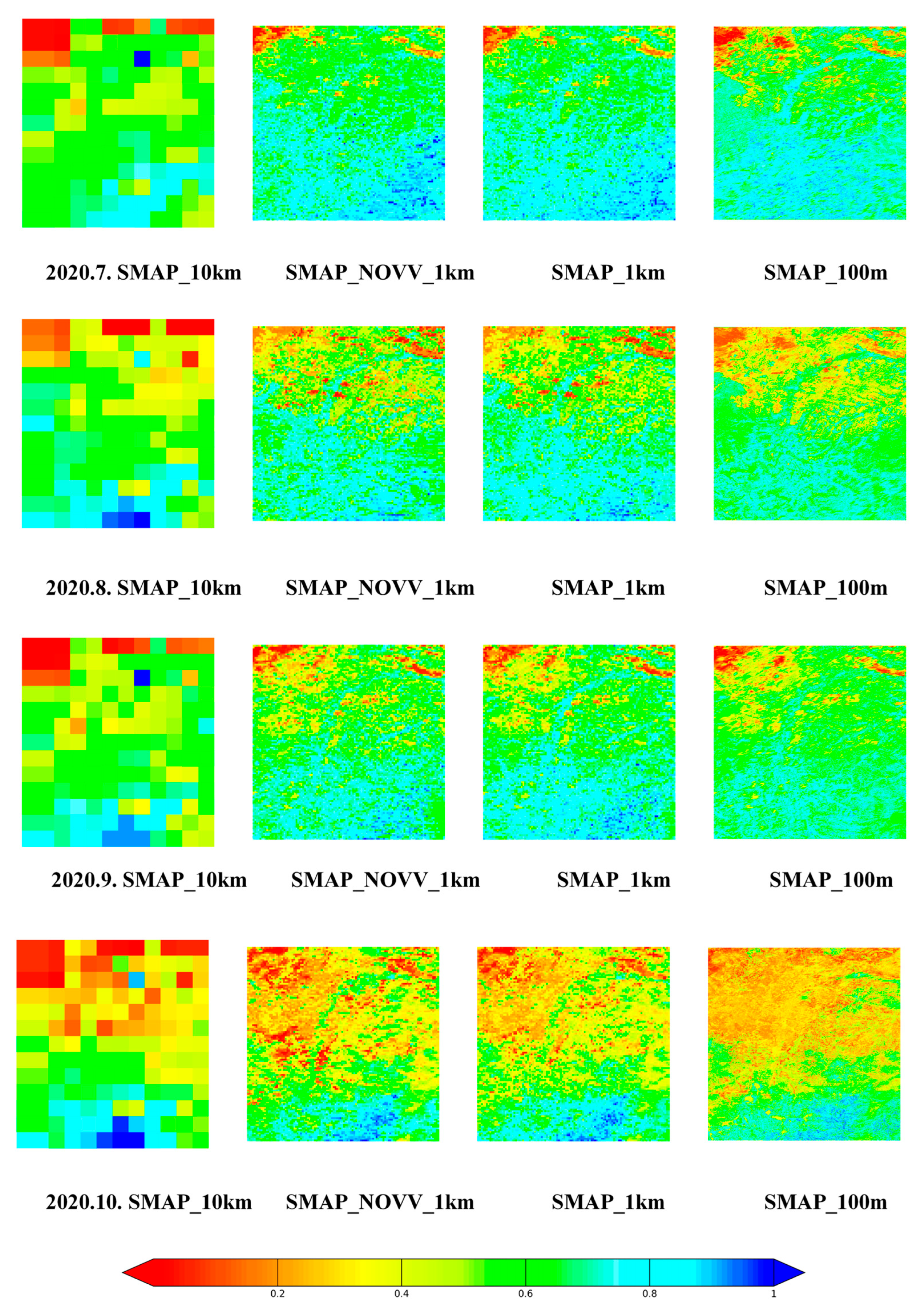
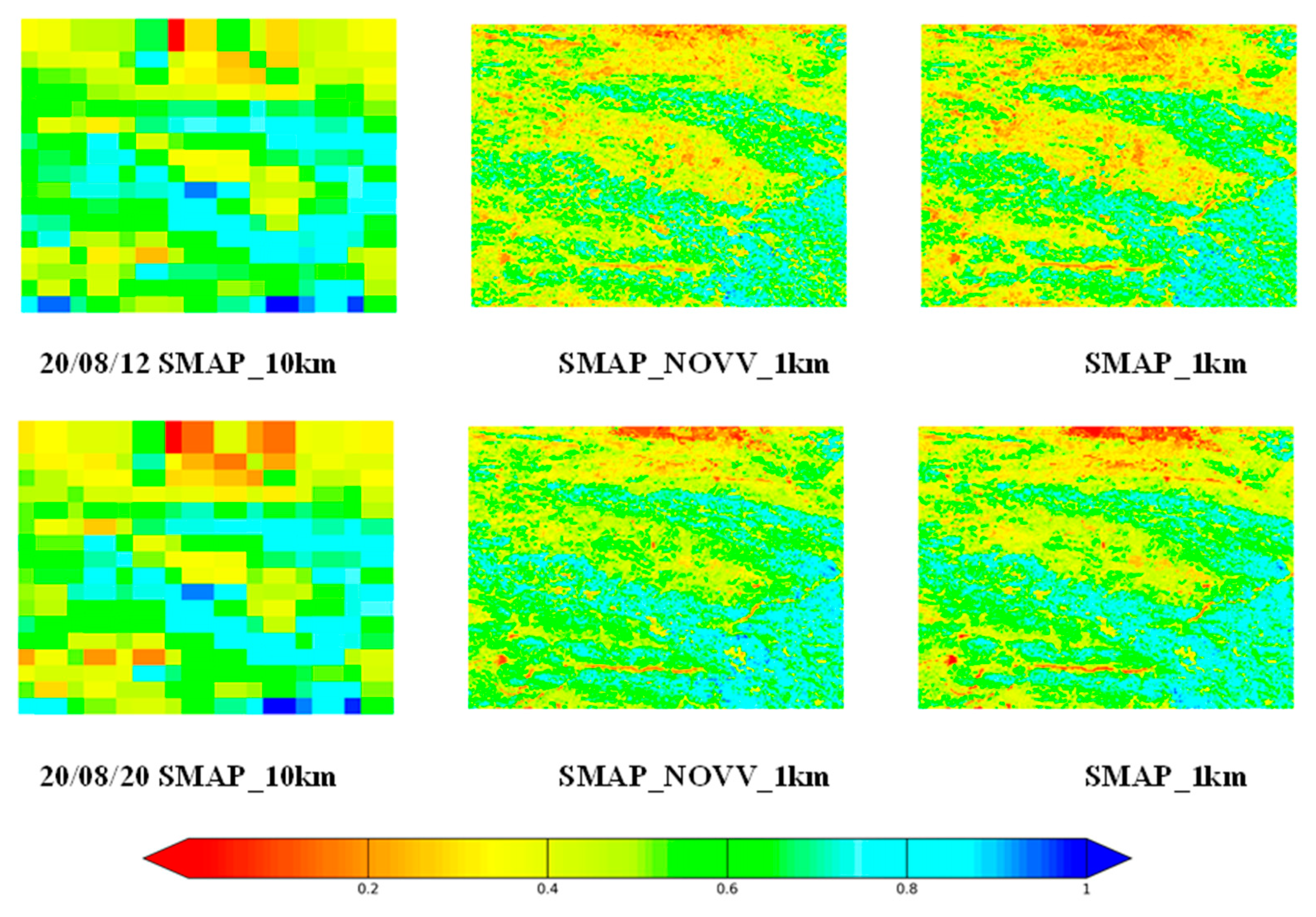
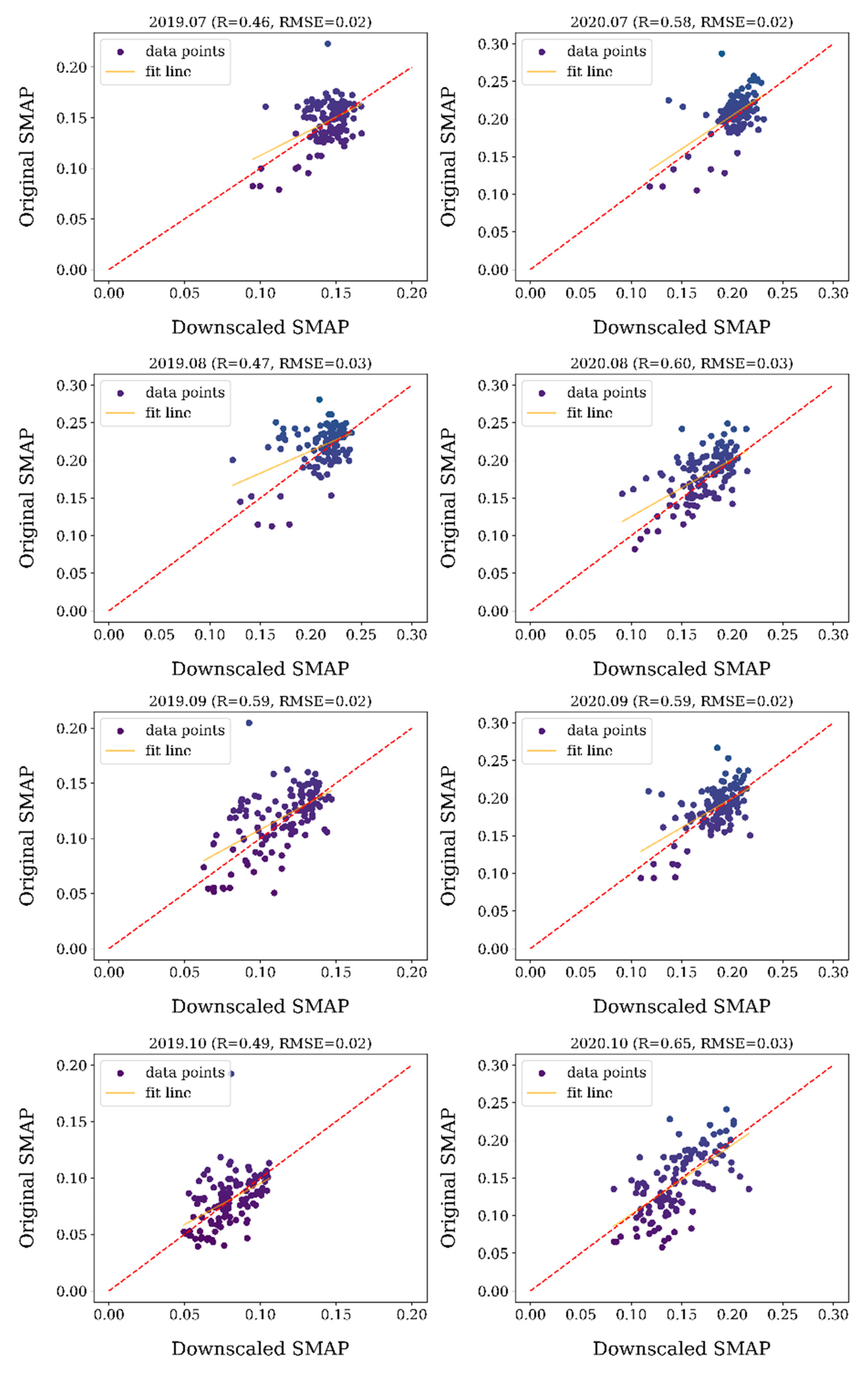
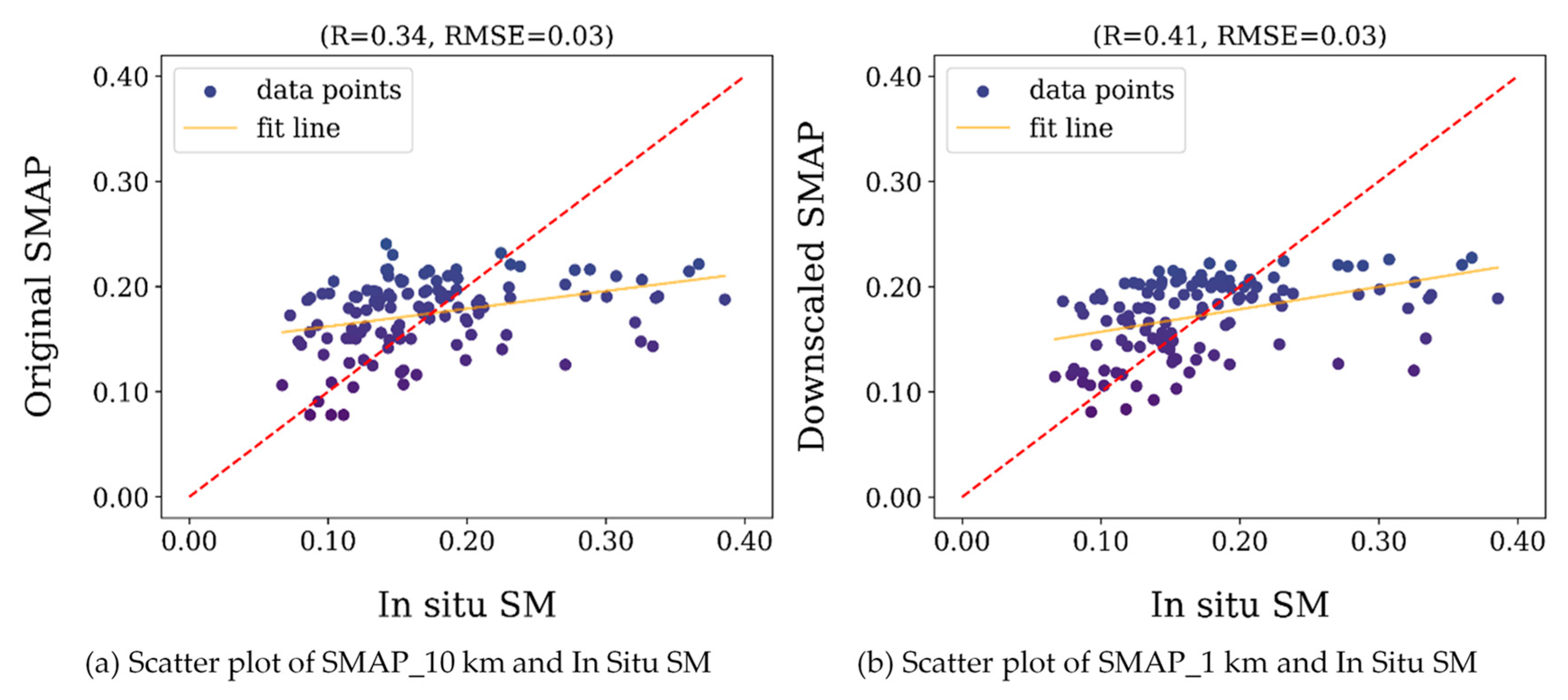
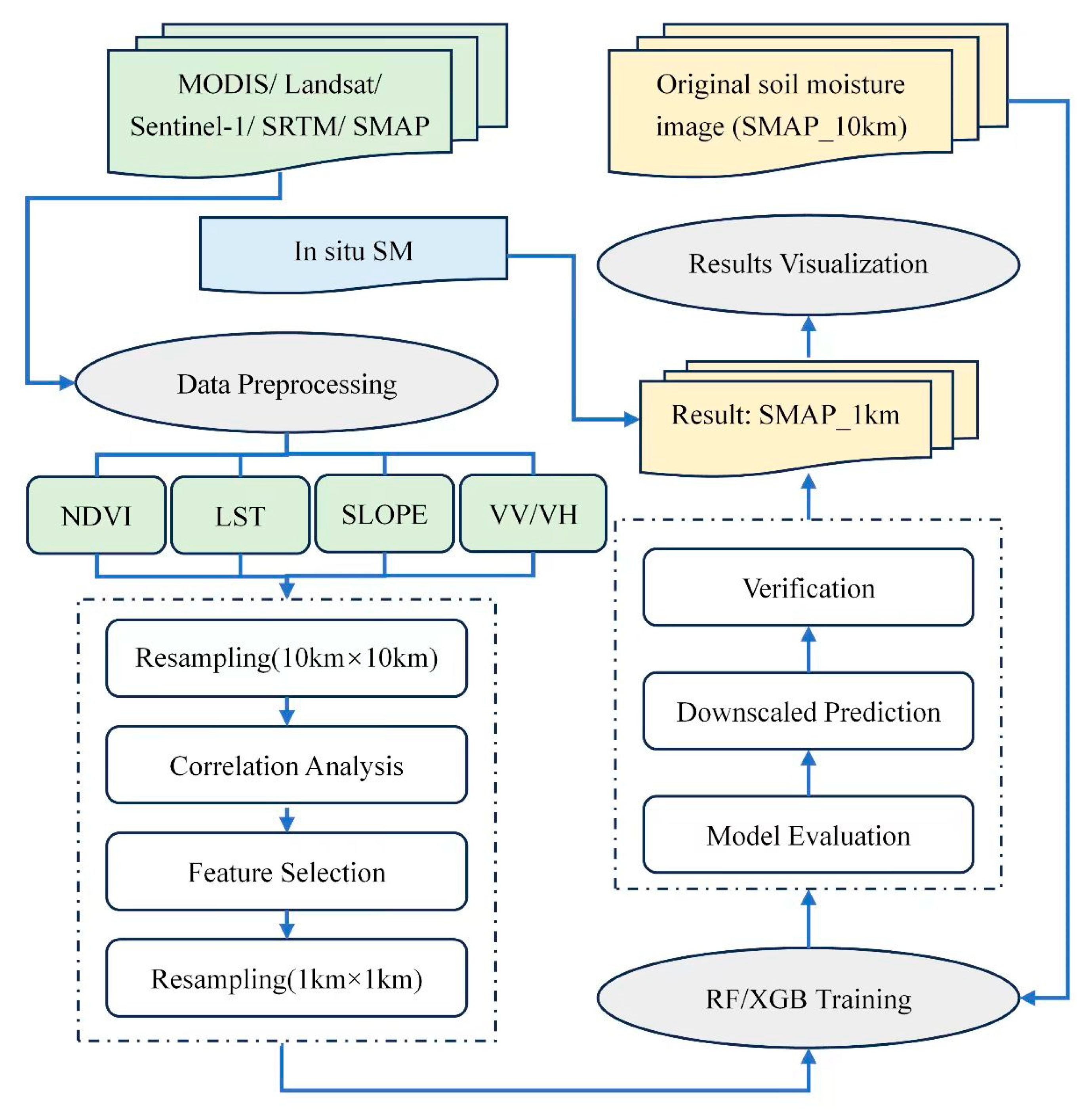
Soil moisture is a key variable that affects ecosystem carbon and water cycles and that can directly affect climate change. Remote sensing is the best way to obtain global soil moisture data. Currently, soil moisture remote sensing products have coarse spatial resolution, which limits their application in agriculture, the ecological environment, and urban planning. Soil moisture downscaling methods rely mainly on optical data. Affected by weather, the spatial discontinuity of optical data has a greater impact on the downscaling results. The synthetic aperture radar (SAR) backscatter coefficient is strongly correlated with soil moisture. This study was based on the Google Earth Engine (GEE) platform, which integrated Moderate-Resolution Imaging Spectroradiometer (MODIS) optical and SAR backscattering coefficients and used machine learning methods to downscale the soil moisture product, reducing the original soil moisture with a resolution of 10 km to 1 km and 100 m. The downscaling results were verified using in situ observation data from the Shandian River and Wudaoliang. The results show that in the two study areas, the downscaling results after adding SAR backscattering coefficients are better than before. In the Shandian River, the R increases from 0.28 to 0.42. In Wudaoliang, the R value increases from 0.54 to 0.70. The RMSE value is 0.03 (cm3/cm3). The downscaled soil moisture products play an important role in water resource management, natural disaster monitoring, ecological and environmental protection, and other fields. In the monitoring and management of natural disasters, such as droughts and floods, it can provide key information support for decision-makers and help formulate more effective emergency response plans. During droughts, affected areas can be identified in a timely manner, and the allocation and scheduling of water resources can be optimized, thereby reducing agricultural losses.
Keywords: backscatter coefficient; data integration; google earth engine; machine learning backscatter coefficient; data integration; google earth engine; machine learning